EP3313989B1 - Modified crispr rna and modified single crispr rna and uses thereof - Google Patents
Modified crispr rna and modified single crispr rna and uses thereof Download PDFInfo
- Publication number
- EP3313989B1 EP3313989B1 EP16818724.3A EP16818724A EP3313989B1 EP 3313989 B1 EP3313989 B1 EP 3313989B1 EP 16818724 A EP16818724 A EP 16818724A EP 3313989 B1 EP3313989 B1 EP 3313989B1
- Authority
- EP
- European Patent Office
- Prior art keywords
- modified
- crrna
- certain embodiments
- certain
- nucleosides
- Prior art date
- Legal status (The legal status is an assumption and is not a legal conclusion. Google has not performed a legal analysis and makes no representation as to the accuracy of the status listed.)
- Active
Links
Images



Classifications
-
- C—CHEMISTRY; METALLURGY
- C12—BIOCHEMISTRY; BEER; SPIRITS; WINE; VINEGAR; MICROBIOLOGY; ENZYMOLOGY; MUTATION OR GENETIC ENGINEERING
- C12N—MICROORGANISMS OR ENZYMES; COMPOSITIONS THEREOF; PROPAGATING, PRESERVING, OR MAINTAINING MICROORGANISMS; MUTATION OR GENETIC ENGINEERING; CULTURE MEDIA
- C12N15/00—Mutation or genetic engineering; DNA or RNA concerning genetic engineering, vectors, e.g. plasmids, or their isolation, preparation or purification; Use of hosts therefor
- C12N15/09—Recombinant DNA-technology
- C12N15/11—DNA or RNA fragments; Modified forms thereof; Non-coding nucleic acids having a biological activity
-
- A—HUMAN NECESSITIES
- A61—MEDICAL OR VETERINARY SCIENCE; HYGIENE
- A61P—SPECIFIC THERAPEUTIC ACTIVITY OF CHEMICAL COMPOUNDS OR MEDICINAL PREPARATIONS
- A61P43/00—Drugs for specific purposes, not provided for in groups A61P1/00-A61P41/00
-
- C—CHEMISTRY; METALLURGY
- C07—ORGANIC CHEMISTRY
- C07H—SUGARS; DERIVATIVES THEREOF; NUCLEOSIDES; NUCLEOTIDES; NUCLEIC ACIDS
- C07H21/00—Compounds containing two or more mononucleotide units having separate phosphate or polyphosphate groups linked by saccharide radicals of nucleoside groups, e.g. nucleic acids
-
- C—CHEMISTRY; METALLURGY
- C12—BIOCHEMISTRY; BEER; SPIRITS; WINE; VINEGAR; MICROBIOLOGY; ENZYMOLOGY; MUTATION OR GENETIC ENGINEERING
- C12N—MICROORGANISMS OR ENZYMES; COMPOSITIONS THEREOF; PROPAGATING, PRESERVING, OR MAINTAINING MICROORGANISMS; MUTATION OR GENETIC ENGINEERING; CULTURE MEDIA
- C12N15/00—Mutation or genetic engineering; DNA or RNA concerning genetic engineering, vectors, e.g. plasmids, or their isolation, preparation or purification; Use of hosts therefor
- C12N15/09—Recombinant DNA-technology
- C12N15/10—Processes for the isolation, preparation or purification of DNA or RNA
- C12N15/102—Mutagenizing nucleic acids
-
- C—CHEMISTRY; METALLURGY
- C12—BIOCHEMISTRY; BEER; SPIRITS; WINE; VINEGAR; MICROBIOLOGY; ENZYMOLOGY; MUTATION OR GENETIC ENGINEERING
- C12N—MICROORGANISMS OR ENZYMES; COMPOSITIONS THEREOF; PROPAGATING, PRESERVING, OR MAINTAINING MICROORGANISMS; MUTATION OR GENETIC ENGINEERING; CULTURE MEDIA
- C12N15/00—Mutation or genetic engineering; DNA or RNA concerning genetic engineering, vectors, e.g. plasmids, or their isolation, preparation or purification; Use of hosts therefor
- C12N15/09—Recombinant DNA-technology
- C12N15/11—DNA or RNA fragments; Modified forms thereof; Non-coding nucleic acids having a biological activity
- C12N15/111—General methods applicable to biologically active non-coding nucleic acids
-
- C—CHEMISTRY; METALLURGY
- C12—BIOCHEMISTRY; BEER; SPIRITS; WINE; VINEGAR; MICROBIOLOGY; ENZYMOLOGY; MUTATION OR GENETIC ENGINEERING
- C12N—MICROORGANISMS OR ENZYMES; COMPOSITIONS THEREOF; PROPAGATING, PRESERVING, OR MAINTAINING MICROORGANISMS; MUTATION OR GENETIC ENGINEERING; CULTURE MEDIA
- C12N15/00—Mutation or genetic engineering; DNA or RNA concerning genetic engineering, vectors, e.g. plasmids, or their isolation, preparation or purification; Use of hosts therefor
- C12N15/09—Recombinant DNA-technology
- C12N15/87—Introduction of foreign genetic material using processes not otherwise provided for, e.g. co-transformation
- C12N15/90—Stable introduction of foreign DNA into chromosome
- C12N15/902—Stable introduction of foreign DNA into chromosome using homologous recombination
- C12N15/907—Stable introduction of foreign DNA into chromosome using homologous recombination in mammalian cells
-
- C—CHEMISTRY; METALLURGY
- C12—BIOCHEMISTRY; BEER; SPIRITS; WINE; VINEGAR; MICROBIOLOGY; ENZYMOLOGY; MUTATION OR GENETIC ENGINEERING
- C12N—MICROORGANISMS OR ENZYMES; COMPOSITIONS THEREOF; PROPAGATING, PRESERVING, OR MAINTAINING MICROORGANISMS; MUTATION OR GENETIC ENGINEERING; CULTURE MEDIA
- C12N7/00—Viruses; Bacteriophages; Compositions thereof; Preparation or purification thereof
-
- C—CHEMISTRY; METALLURGY
- C12—BIOCHEMISTRY; BEER; SPIRITS; WINE; VINEGAR; MICROBIOLOGY; ENZYMOLOGY; MUTATION OR GENETIC ENGINEERING
- C12N—MICROORGANISMS OR ENZYMES; COMPOSITIONS THEREOF; PROPAGATING, PRESERVING, OR MAINTAINING MICROORGANISMS; MUTATION OR GENETIC ENGINEERING; CULTURE MEDIA
- C12N9/00—Enzymes; Proenzymes; Compositions thereof; Processes for preparing, activating, inhibiting, separating or purifying enzymes
- C12N9/14—Hydrolases (3)
- C12N9/16—Hydrolases (3) acting on ester bonds (3.1)
- C12N9/22—Ribonucleases [RNase]; Deoxyribonucleases [DNase]
-
- C—CHEMISTRY; METALLURGY
- C12—BIOCHEMISTRY; BEER; SPIRITS; WINE; VINEGAR; MICROBIOLOGY; ENZYMOLOGY; MUTATION OR GENETIC ENGINEERING
- C12N—MICROORGANISMS OR ENZYMES; COMPOSITIONS THEREOF; PROPAGATING, PRESERVING, OR MAINTAINING MICROORGANISMS; MUTATION OR GENETIC ENGINEERING; CULTURE MEDIA
- C12N9/00—Enzymes; Proenzymes; Compositions thereof; Processes for preparing, activating, inhibiting, separating or purifying enzymes
- C12N9/14—Hydrolases (3)
- C12N9/16—Hydrolases (3) acting on ester bonds (3.1)
- C12N9/22—Ribonucleases [RNase]; Deoxyribonucleases [DNase]
- C12N9/222—Clustered regularly interspaced short palindromic repeats [CRISPR]-associated [CAS] enzymes
-
- C—CHEMISTRY; METALLURGY
- C12—BIOCHEMISTRY; BEER; SPIRITS; WINE; VINEGAR; MICROBIOLOGY; ENZYMOLOGY; MUTATION OR GENETIC ENGINEERING
- C12N—MICROORGANISMS OR ENZYMES; COMPOSITIONS THEREOF; PROPAGATING, PRESERVING, OR MAINTAINING MICROORGANISMS; MUTATION OR GENETIC ENGINEERING; CULTURE MEDIA
- C12N9/00—Enzymes; Proenzymes; Compositions thereof; Processes for preparing, activating, inhibiting, separating or purifying enzymes
- C12N9/96—Stabilising an enzyme by forming an adduct or a composition; Forming enzyme conjugates
-
- A—HUMAN NECESSITIES
- A61—MEDICAL OR VETERINARY SCIENCE; HYGIENE
- A61K—PREPARATIONS FOR MEDICAL, DENTAL OR TOILETRY PURPOSES
- A61K38/00—Medicinal preparations containing peptides
-
- A—HUMAN NECESSITIES
- A61—MEDICAL OR VETERINARY SCIENCE; HYGIENE
- A61K—PREPARATIONS FOR MEDICAL, DENTAL OR TOILETRY PURPOSES
- A61K48/00—Medicinal preparations containing genetic material which is inserted into cells of the living body to treat genetic diseases; Gene therapy
-
- C—CHEMISTRY; METALLURGY
- C12—BIOCHEMISTRY; BEER; SPIRITS; WINE; VINEGAR; MICROBIOLOGY; ENZYMOLOGY; MUTATION OR GENETIC ENGINEERING
- C12N—MICROORGANISMS OR ENZYMES; COMPOSITIONS THEREOF; PROPAGATING, PRESERVING, OR MAINTAINING MICROORGANISMS; MUTATION OR GENETIC ENGINEERING; CULTURE MEDIA
- C12N2310/00—Structure or type of the nucleic acid
- C12N2310/10—Type of nucleic acid
- C12N2310/20—Type of nucleic acid involving clustered regularly interspaced short palindromic repeats [CRISPR]
-
- C—CHEMISTRY; METALLURGY
- C12—BIOCHEMISTRY; BEER; SPIRITS; WINE; VINEGAR; MICROBIOLOGY; ENZYMOLOGY; MUTATION OR GENETIC ENGINEERING
- C12N—MICROORGANISMS OR ENZYMES; COMPOSITIONS THEREOF; PROPAGATING, PRESERVING, OR MAINTAINING MICROORGANISMS; MUTATION OR GENETIC ENGINEERING; CULTURE MEDIA
- C12N2310/00—Structure or type of the nucleic acid
- C12N2310/30—Chemical structure
- C12N2310/31—Chemical structure of the backbone
-
- C—CHEMISTRY; METALLURGY
- C12—BIOCHEMISTRY; BEER; SPIRITS; WINE; VINEGAR; MICROBIOLOGY; ENZYMOLOGY; MUTATION OR GENETIC ENGINEERING
- C12N—MICROORGANISMS OR ENZYMES; COMPOSITIONS THEREOF; PROPAGATING, PRESERVING, OR MAINTAINING MICROORGANISMS; MUTATION OR GENETIC ENGINEERING; CULTURE MEDIA
- C12N2310/00—Structure or type of the nucleic acid
- C12N2310/30—Chemical structure
- C12N2310/31—Chemical structure of the backbone
- C12N2310/315—Phosphorothioates
-
- C—CHEMISTRY; METALLURGY
- C12—BIOCHEMISTRY; BEER; SPIRITS; WINE; VINEGAR; MICROBIOLOGY; ENZYMOLOGY; MUTATION OR GENETIC ENGINEERING
- C12N—MICROORGANISMS OR ENZYMES; COMPOSITIONS THEREOF; PROPAGATING, PRESERVING, OR MAINTAINING MICROORGANISMS; MUTATION OR GENETIC ENGINEERING; CULTURE MEDIA
- C12N2310/00—Structure or type of the nucleic acid
- C12N2310/30—Chemical structure
- C12N2310/32—Chemical structure of the sugar
- C12N2310/321—2'-O-R Modification
-
- C—CHEMISTRY; METALLURGY
- C12—BIOCHEMISTRY; BEER; SPIRITS; WINE; VINEGAR; MICROBIOLOGY; ENZYMOLOGY; MUTATION OR GENETIC ENGINEERING
- C12N—MICROORGANISMS OR ENZYMES; COMPOSITIONS THEREOF; PROPAGATING, PRESERVING, OR MAINTAINING MICROORGANISMS; MUTATION OR GENETIC ENGINEERING; CULTURE MEDIA
- C12N2310/00—Structure or type of the nucleic acid
- C12N2310/30—Chemical structure
- C12N2310/32—Chemical structure of the sugar
- C12N2310/323—Chemical structure of the sugar modified ring structure
- C12N2310/3231—Chemical structure of the sugar modified ring structure having an additional ring, e.g. LNA, ENA
-
- C—CHEMISTRY; METALLURGY
- C12—BIOCHEMISTRY; BEER; SPIRITS; WINE; VINEGAR; MICROBIOLOGY; ENZYMOLOGY; MUTATION OR GENETIC ENGINEERING
- C12N—MICROORGANISMS OR ENZYMES; COMPOSITIONS THEREOF; PROPAGATING, PRESERVING, OR MAINTAINING MICROORGANISMS; MUTATION OR GENETIC ENGINEERING; CULTURE MEDIA
- C12N2310/00—Structure or type of the nucleic acid
- C12N2310/30—Chemical structure
- C12N2310/33—Chemical structure of the base
- C12N2310/334—Modified C
- C12N2310/3341—5-Methylcytosine
-
- C—CHEMISTRY; METALLURGY
- C12—BIOCHEMISTRY; BEER; SPIRITS; WINE; VINEGAR; MICROBIOLOGY; ENZYMOLOGY; MUTATION OR GENETIC ENGINEERING
- C12N—MICROORGANISMS OR ENZYMES; COMPOSITIONS THEREOF; PROPAGATING, PRESERVING, OR MAINTAINING MICROORGANISMS; MUTATION OR GENETIC ENGINEERING; CULTURE MEDIA
- C12N2310/00—Structure or type of the nucleic acid
- C12N2310/30—Chemical structure
- C12N2310/34—Spatial arrangement of the modifications
- C12N2310/344—Position-specific modifications, e.g. on every purine, at the 3'-end
-
- C—CHEMISTRY; METALLURGY
- C12—BIOCHEMISTRY; BEER; SPIRITS; WINE; VINEGAR; MICROBIOLOGY; ENZYMOLOGY; MUTATION OR GENETIC ENGINEERING
- C12N—MICROORGANISMS OR ENZYMES; COMPOSITIONS THEREOF; PROPAGATING, PRESERVING, OR MAINTAINING MICROORGANISMS; MUTATION OR GENETIC ENGINEERING; CULTURE MEDIA
- C12N2310/00—Structure or type of the nucleic acid
- C12N2310/30—Chemical structure
- C12N2310/35—Nature of the modification
- C12N2310/351—Conjugate
-
- C—CHEMISTRY; METALLURGY
- C12—BIOCHEMISTRY; BEER; SPIRITS; WINE; VINEGAR; MICROBIOLOGY; ENZYMOLOGY; MUTATION OR GENETIC ENGINEERING
- C12N—MICROORGANISMS OR ENZYMES; COMPOSITIONS THEREOF; PROPAGATING, PRESERVING, OR MAINTAINING MICROORGANISMS; MUTATION OR GENETIC ENGINEERING; CULTURE MEDIA
- C12N2740/00—Reverse transcribing RNA viruses
- C12N2740/00011—Details
- C12N2740/10011—Retroviridae
- C12N2740/15011—Lentivirus, not HIV, e.g. FIV, SIV
- C12N2740/15041—Use of virus, viral particle or viral elements as a vector
- C12N2740/15043—Use of virus, viral particle or viral elements as a vector viral genome or elements thereof as genetic vector
-
- C—CHEMISTRY; METALLURGY
- C12—BIOCHEMISTRY; BEER; SPIRITS; WINE; VINEGAR; MICROBIOLOGY; ENZYMOLOGY; MUTATION OR GENETIC ENGINEERING
- C12N—MICROORGANISMS OR ENZYMES; COMPOSITIONS THEREOF; PROPAGATING, PRESERVING, OR MAINTAINING MICROORGANISMS; MUTATION OR GENETIC ENGINEERING; CULTURE MEDIA
- C12N2750/00—MICROORGANISMS OR ENZYMES; COMPOSITIONS THEREOF; PROPAGATING, PRESERVING, OR MAINTAINING MICROORGANISMS; MUTATION OR GENETIC ENGINEERING; CULTURE MEDIA ssDNA viruses
- C12N2750/00011—Details
- C12N2750/14011—Parvoviridae
- C12N2750/14311—Parvovirus, e.g. minute virus of mice
- C12N2750/14341—Use of virus, viral particle or viral elements as a vector
- C12N2750/14343—Use of virus, viral particle or viral elements as a vector viral genome or elements thereof as genetic vector
-
- C—CHEMISTRY; METALLURGY
- C12—BIOCHEMISTRY; BEER; SPIRITS; WINE; VINEGAR; MICROBIOLOGY; ENZYMOLOGY; MUTATION OR GENETIC ENGINEERING
- C12N—MICROORGANISMS OR ENZYMES; COMPOSITIONS THEREOF; PROPAGATING, PRESERVING, OR MAINTAINING MICROORGANISMS; MUTATION OR GENETIC ENGINEERING; CULTURE MEDIA
- C12N2800/00—Nucleic acids vectors
- C12N2800/80—Vectors containing sites for inducing double-stranded breaks, e.g. meganuclease restriction sites
Definitions
- CRISPR Cluster Regulatory Interspaced Short Palindromic Repeats
- the present invention provides a compound comprising a modified crRNA consisting of 29 linked nucleosides, wherein the modified crRNA has the following modification motif: f 7 r 6 kr 3 kr 3 kr 3 krk 2 ; wherein:
- references in the description to methods of treatment refer to the compounds, pharmaceutical compositions, and medicaments of the present invention for use in a method of treatment of the human (or animal) body by therapy (or for diagnosis).
- modified crRNA have improved stability relative to unmodified crRNA.
- modified crRNA is stabilized at the 5' end and/or the 3'. In certain embodiments, such stabilized crRNA is resistant to exonuclease and/or endonucleoase digestion.
- modified crRNA have improved affinity for target DNA relative to unmodified crRNA.
- Modified crRNA of the invention have improved selectivity for target DNA relative to unmodified crRNA.
- modified crRNA have improved affinity for tracrRNA relative to unmodified crRNA.
- modified crRNA have improved cellular uptake relative to unmodified crRNA.
- the modifications increase affinity for the target DNA allowing the modified crRNA to be shortened while retaining sufficient affinity to hybridize to target DNA and to tracrRNA.
- modified crRNA is shorter than unmodified crRNA.
- such shorter crRNA have improved uptake properties.
- modified crRNA are taken into cells without transfection reagents or electroporation.
- the cells are in an animal.
- the animal expresses Cas9.
- the animal is previously or concomitantly treated with a means of expressing Cas9.
- such treatment comprises administration of a vector for delivering Cas9.
- such vector is a viral vector, for example adeno-associated virus (AAV).
- the viral vector expresses a S . aureus derived Cas9 that fits into an AAV vector.
- Modified oligonucleotides for use as scrRNA in CRISPR systems are also disclosed herein.
- such modified scrRNA have improved stability relative to unmodified scrRNA.
- modified scrRNA is stabilized at the 5' end and/or the 3'.
- such stabilized scrRNA is resistant to exonuclease and/or endonucleoase digestion.
- modified scrRNA have improved affinity for scrRNA target DNA relative to unmodified scrRNA.
- modified scrRNA have improved selectivity for scrRNA target DNA relative to unmodified scrRNA.
- modified scrRNA have improved affinity for a nuclease relative to unmodified scrRNA.
- modified scrRNA have improved cellular uptake relative to unmodified scrRNA.
- the modifications increase affinity for the scrRNA target DNA allowing the modified scrRNA to be shortened while retaining sufficient affinity to hybridize to scrRNA target DNA and a nuclease.
- modified scrRNA is shorter than unmodified scrRNA.
- modified scrRNA are taken into cells without transfection reagents or electroporation.
- the cells are in an animal.
- the animal expresses a nuclease that is recognized by the scrRNA (e.g., a Cpfl nuclease).
- the animal is previously or concomitantly treated with a means of expressing a nuclease that is recognized by the scrRNA (e.g., a Cpfl nuclease).
- such treatment comprises administration of a vector for delivering a nuclease that is recognized by the scrRNA (e.g., a Cpfl nuclease).
- such vector is a viral vector, for example adeno-associated virus (AAV).
- AAV adeno-associated virus
- the CRISPR system is inhibited after the target gene is edited.
- the modified crRNA inside a cell is degraded after the target gene has been edited.
- the nuclease e.g., Cas9 nuclease
- off-target effects of the CRISPR system such as undesired cleavage of an off-target gene, are decreased relative to a CRISPR system in which all of the components necessary for nuclease activity continue to be expressed indefinitely, e.g. by a viral vector.
- degradation of the modified crRNA is facilitated by hybridization to an oligonucleotide complementary to the crRNA.
- degradation of the modified crRNA is facilitated by nucleases present in the cell.
- the CRISPR system is inhibited after the target gene is edited via degradation of a tracrRNA inside the cell.
- degradation of the tracrRNA is facilitated by hybridization to an oligonucleotide complementary to the tracrRNA.
- degradation of the tracrRNA is facilitated by nucleases present in the cell.
- the CRISPR system is inhibited after the target gene is edited via inhibition of the expression of a nuclease (e.g., Cas9 nuclease).
- a nuclease e.g., Cas9 nuclease
- the nuclease gene is edited by a modified crRNA.
- the nuclease transcript is degraded following hybridization of the nuclease transcript to an oligonucleotide complementary to the nuclease transcript.
- 2'-deoxynucleoside means a nucleoside comprising 2'-H(H) furanosyl sugar moiety, as found in naturally occurring deoxyribonucleic acids (DNA).
- a 2'-deoxynucleoside may comprise a modified nucleobase or may comprise an RNA nucleobase (e.g., uracil).
- 2'-substituted nucleoside or "2-modified nucleoside” means a nucleoside comprising a 2'-substituted or 2'-modified sugar moiety.
- “2'-substituted” or “2-modified” in reference to a sugar moiety means a furanosyl sugar moiety comprising a 2'-substituent group other than H or OH.
- 3'-stabilized in reference to a modified oligonucleotide means a modified oligonucleotide comprising a modification or modifications at the 3'-terminus that increase the stability of the oligonucleotide in cells or in an animal relative to a corresponding oligonucleotide that does not comprise the modification or modifications at the 3'-terminus.
- 5'-stabilized in reference to a modified oligonucleotide means a modified oligonucleotide comprising a modification or modifications at the 5'-terminus that increase the stability of the oligonucleotide in cells or in an animal relative to a corresponding oligonucleotide that does not comprise the modification or modifications at the 5'-terminus.
- bicyclic nucleoside or “BNA” means a nucleoside comprising a bicyclic sugar moiety.
- bicyclic sugar or “bicyclic sugar moiety” means a modified sugar moiety comprising two rings, wherein the second ring is formed via a bridge connecting two of the atoms in the first ring thereby forming a bicyclic structure.
- the first ring of the bicyclic sugar moiety is a furanosyl moiety.
- the bicyclic sugar moiety does not comprise a furanosyl moiety.
- Cas9 means a nuclease that recognizes and/or cleaves target DNA when in a complex with crRNA and tracrRNA.
- Cas9 is derived from S. pyogenes.
- Cas9 is derived from S. aureus.
- cell-targeting moiety means a conjugate group or portion of a conjugate group that is capable of binding to a particular cell type or particular cell types.
- nucleobase sequence of such oligonucleotide or one or more regions thereof matches the nucleobase sequence of another oligonucleotide or nucleic acid or one or more regions thereof when the two nucleobase sequences are aligned in opposing directions.
- Nucleobase matches or complementary nucleobases, as described herein, are limited to adenine (A) and thymine (T), adenine (A) and uracil (U), cytosine (C) and guanine (G), and 5-methyl cytosine ( m C) and guanine (G) unless otherwise specified.
- oligonucleotides and/or nucleic acids need not have nucleobase complementarity at each nucleoside. Rather, some mismatches are tolerated.
- "fully complementary” or “100% complementary” in reference to oligonucleotides means that such oligonucleotides are complementary to another oligonucleotide or nucleic acid at each nucleoside. In such embodiments, mismatches are not tolerated.
- conjugate group means a group of atoms that is directly or indirectly attached to a parent compound, e . g ., an oligonucleotide.
- conjugate linker means a group of atoms that connects a conjugate group to a parent compound, e . g ., an oligonucleotide.
- oligonucleotide refers to nucleosides, nucleobases, sugar moieties, or internucleoside linkages that are immediately adjacent to each other.
- contiguous nucleobases means nucleobases that are immediately adjacent to each other
- crRNA means an oligonucleotide or portion of an oligonucleotide that comprises a DNA recognition portion and a tracrRNA recognition portion.
- DNA recognition portion is nucleobase sequence that is complementary to a DNA target.
- tracrRNA recognition portion is a nucleobase sequence that is bound to or is capable of binding to tracrRNA. The tracRNA recognition portion of crRNA may bind to tracrRNA via hybridization or covalent attachment.
- oligonucleotide in which each sugar moiety is modified.
- Uniformly modified in reference to an oligonucleotide means a fully modified oligonucleotide in which each at least one modification of each sugar moiety is the same.
- nucleosides of a uniformly modified oligonucleotide can each have a 2'-MOE modification but different nucleobase modifications, and the internucleoside linkages may be different.
- gene editing means any process mediated by a Cas9/crRNA/tracrRNA or Cas9/sgRNA complex, including but not limited to gene knock-down, gene knock-out, gene disruption, deletion, insertion, and gene activation.
- gene alteration means any process mediated by a nuclease/scrRNA containing complex, including but not limited to gene knock-down, gene disruption, deletion, insertion, and gene activation.
- gRNA comprises both a crRNA and a tracrRNA.
- the crRNA and tracrRNA of a gRNA are distinct molecules.
- the crRNA and tracrRNA of a gRNA are portions of one oligonucleotide, wherein the oligonucleotide is referred to as a "sgRNA".
- hybridization means the pairing or annealing of complementary oligonucleotides and/or nucleic acids. While not limited to a particular mechanism, the most common mechanism of hybridization involves hydrogen bonding, which may be Watson-Crick, Hoogsteen or reversed Hoogsteen hydrogen bonding, between complementary nucleobases.
- internucleoside linkage means a group that forms a covalent linkage between adjacent nucleosides in an oligonucleotide.
- modified internucleoside linkage means any internucleoside linkage other than a naturally occurring, phosphate internucleoside linkage. Naturally occurring, non-phosphate linkages are referred to herein as modified internucleoside linkages.
- Phosphorothioate linkage means a linkage between nucleosides wherein the phosphodiester bond of a phosphate linkage is modified by replacing one of the non-bridging oxygen atoms with a sulfur atom.
- a phosphorothioate linkage is a modified internucleoside linkage.
- linearly modified sugar or “linearly modified sugar moiety” means a modified sugar moiety that comprises an acyclic or non-bridging modification. Such linear modifications are distinct from bicyclic sugar modifications.
- linked nucleosides are nucleosides that are connected in a continuous sequence ( i.e. no additional nucleosides are present between those that are linked). Linked nucleosides may or may not be linked by internucleoside linkages.
- mismatch or means a nucleobase of a first oligonucleotide that is not capable of pairing with the corresponding nucleobase of a second oligonucleotide or target nucleic acid when the first and second oligomeric compound are aligned.
- MOE means methoxyethyl.
- 2'-MOE means a -OCH 2 CH 2 OCH 3 group at the 2' position of a furanosyl ring.
- motif means the pattern of unmodified and/or modified sugar moieties, nucleobases, and/or internucleoside linkages, in an oligonucleotide.
- nucleobase means a heterocyclic moiety capable of pairing with a second, different nucleobase.
- nucleobase sequence means the order of contiguous nucleobases independent of any sugar or internucleoside linkage modification.
- modified nucleobase means a nucleobase other than adenine (A), thymine (T), cytosine (C), uracil (U), and guanine (G), herein defined as the five, unmodified nucleobases.
- a universal base is a nucleobase that can pair with any one of the five unmodified nucleobases.
- nucleoside means a compound comprising a nucleobase and a sugar moiety.
- the nucleobase and sugar moiety are each, independently, unmodified or modified.
- modified nucleoside means a nucleoside comprising a modified nucleobase and/or a modified sugar moiety. Modified nucleosides include abasic nucleosides.
- oligonucleotide means a strand of linked nucleosides connected via internucleoside linkages, wherein each nucleoside and internucleoside linkage may be modified or unmodified. Unless otherwise indicated, oligonucleotides consist of 8-50 linked nucleosides.
- modified oligonucleotide means an oligonucleotide, wherein at least one nucleoside or internucleoside linkage is modified.
- unmodified oligonucleotide means an oligonucleotide that does not comprise any nucleoside modifications or internucleoside modifications.
- pharmaceutically acceptable carrier or diluent means any substance suitable for use in administering to an animal. Certain such carriers enable pharmaceutical compositions to be formulated as, for example, tablets, pills, dragees, capsules, liquids, gels, syrups, slurries, suspension and lozenges for the oral ingestion by a subject.
- pharmaceutically acceptable salts means physiologically and pharmaceutically acceptable salts of compounds, such as oligomeric compounds, i.e., salts that retain the desired biological activity of the parent compound and do not impart undesired toxicological effects thereto.
- a pharmaceutical composition means a mixture of substances suitable for administering to a subject.
- a pharmaceutical composition may comprise an crRNA compound and a sterile aqueous solution.
- a pharmaceutical composition shows activity in free uptake assay in certain cell lines.
- phosphorus moiety means a group of atoms comprising a phosphorus atom.
- a phosphorus moiety comprises a mono-, di-, or tri-phosphate, or phosphorothioate.
- prodrug means a therapeutic agent in an inactive form that is converted to an active form within the body or cells thereof by the action of endogenous enzymes or other chemicals and/or physiologic conditions.
- scrRNA or “single crRNA” means an oligonucleotide that comprises a scrRNA target recognition portion and a nuclease recognition portion and does not comprise a tracrRNA recognition portion or a tracrRNA.
- scrRNAs comprise a self-complementary region.
- the nuclease recognition portion partially or completely overlaps with the self-complementary region.
- scrRNA target recognition portion is a portion of an oligonucleotide with a nucleobase sequence that is complementary to a scrRNA DNA target.
- nuclease recognition portion is a portion of an oligonucleotide that can bind to, associate with, or contribute to the binding to or association with a nuclease that is not a Cas9 nuclease. In certain instances, the nuclease recognition portion of an oligonucleotide binds to or associates with a Cpfl nuclease.
- self-complementary in reference to an oligonucleotide means an oligonucleotide that is at least partially complementary to itself.
- a self-complementary oligonucleotide forms a hairpin when a portion of the self-complementary oligonucleotide hybridizes to itself.
- sugar moiety means a group of atoms that can link a nucleobase to another group, such as an internucleoside linkage, conjugate group, or terminal group.
- a sugar moiety is attached to a nucleobase to form a nucleoside.
- unmodified sugar moiety means a 2'-OH(H) furanosyl moiety, as found in RNA, or a 2'-H(H) moiety, as found in DNA. Unmodified sugar moieties have one hydrogen at each of the 1', 3', and 4' positions, an oxygen at the 3' position, and two hydrogens at the 5' position.
- modified sugar moiety or “modified sugar” means a sugar surrogate or a furanosyl moiety comprising a non-hydrogen substituent in place of at least one hydrogen of an unmodified sugar moiety.
- a modified sugar moiety is a 2'-substituted sugar moiety.
- modified sugar moieties include bicyclic sugars and linearly modified sugars.
- sugar surrogate means a modified sugar moiety having other than a furanosyl moiety that can link a nucleobase to another group, such as an internucleoside linkage, conjugate group, or terminal group.
- Modified nucleosides comprising sugar surrogates can be incorporated into one or more positions within an oligonucleotide. In certain embodiments, such oligonucleotides are capable of hybridizing to complementary oligomeric compounds or nucleic acids.
- target nucleic acid means a nucleic acid that a crRNA is designed to affect.
- scrRNA target nucleic acid means a nucleic acid that a scrRNA is designed to affect.
- scrRNA target gene means a nucleic acid that a scrRNA is designed to affect.
- off-target gene is a gene that a crRNA or a scrRNA is not designed to affect. In certain embodiments, the editing or alteration of an off-target gene is deleterious.
- terminal group means a chemical group or group of atoms that is covalently linked to a terminus of an oligonucleotide.
- tracrRNA means an oligonucleotide or portion of an oligonucleotide that can non-covalently bind to a Cas9 protein and that can bind to a crRNA via hybridization or covalent attachment.
- oligonucleotides for use in a CRISPR system
- the present invention provides modified oligonucleotides for use in CRISPR, as defined in the claims.
- CRISPR employs CRSPR RNA (crRNA), which hybridizes to target DNA and also hybridizes to trans-activating RNA (tracrRNA), which in turn recruits a nuclease, cas9, which cleaves the target DNA.
- crRNA CRSPR RNA
- tracrRNA trans-activating RNA
- the crRNA in such systems has two functions: (1) recognition and hybridization to the target DNA and (2) recognition and hybridization to the tracrRNA.
- the crRNA has two portions which correspond to these two functions: a DNA recognition portion and a tracrRNA recognition portion.
- the present invention provides modified oligonulcleotides that may be used in crRNA as defined in the claims. Such modified oligonucleotides have modifications in the DNA recognition portion and/or tracrRNA recognition portion.
- the tracrRNA recognition portion of the crRNA comprises a portion of the direct repeat sequence from a bacterial species that has a Type II CRISPR system. In certain such embodiments, the tracrRNA recognition portion of the crRNA comprises a sequence selected from the table below. In certain embodiments, the tracrRNA recognition portion of the crRNA comprises the first 12 nucleobases of a sequence selected from the table below. In certain embodiments, the tracrRNA recognition portion of the crRNA comprises the first 13, 14, 15, 16, 17, 18, 19, 20, 21, or 22 nucleobases of a sequence selected from the table below. In certain embodiments, the sequence of the tracrRNA recognition portion of the crRNA consists of the first 12 nucleobases of a sequence selected from the table below.
- the sequence of the tracrRNA recognition portion of the crRNA consists of the first 13, 14, 15, 16, 17, 18, 19, 20, 21, or 22 nucleobases of a sequence selected from the table below.
- Table B Direct repeat sequences used in tracrRNA recognition portions of crRNA Species Sequence SEQ ID NO. S . pyogenes GUUUUAGAGCUAUGCUGUUUUG 19 S . aureus GUUUUAGUACUCUGUAAUUUUA 20 S . thermophiles GUUUUUGUACUCUCAAGAUUUA 21 S . pasteurianus GUUUUUGUACUCUCAAGAUUUA 21 N. cinerea GUUGUAGCUCCCAUUCUCAUUU 22 C. lari GUUUUAGUCUCUUUUUAAAUUU 23 P. lavamentivoran GCUGCGGAUUGCGGCCGUCUCU 24 C. diptheriae ACUGGGGUUCAGUUCAAAAA 25
- the crRNA and tracrRNA are joined to one another to form a single molecule referred to as a single guide RNA (sgRNA).
- sgRNA single guide RNA
- the modified oligonucleotides are for use in sgRNA.
- oligonucleotides for use in a CRISPR system that employs scrRNA, which hybridizes to a scrRNA target DNA and participates in recruitment of a nuclease other than Cas9.
- the nuclease is a Cpfl nuclease or a variant thereof.
- the nuclease e.g., the Cpfl nuclease
- the scrRNA in such systems has two functions: (1) recognition and hybridization to the scrRNA target DNA and (2) recognition and recruitment of the nuclease.
- the scrRNA has two portions which correspond to these two functions: a scrRNA target recognition portion and a nuclease recognition portion.
- Modified oligonucleotides that may be used in scrRNA are disclosed herein. Such modified oligonucleotides may have modifications in the scrRNA target recognition portion and/or nuclease recognition portion. In certain instances, the nuclease recognition portion is 5' to the scrRNA target recognition portion. In certain instances, the nuclease recognition portion is 3' to the scrRNA target recognition portion.
- the nuclease recognition portion of the scrRNA comprises a portion of the direct repeat sequence from a bacterial organism that has a Cpfl nuclease or a Cpfl ortholog. In certain such instances, the nuclease recognition portion of the scrRNA comprises a sequence selected from the table below. In certain instances, the nuclease recognition portion of the scrRNA comprises 12 nucleobases of a sequence selected from the table below. In certain instances, the tracrRNA recognition portion of the crRNA comprises 13, 14, 15, 16, 17, 18, or 19 nucleobases of a sequence selected from the table below. In certain instances, the sequence of the nuclease recognition portion of the scrRNA consists of 12 nucleobases of a sequence selected from the table below.
- sequence of the nuclease recognition portion of the scrRNA consists of 13, 14, 15, 16, 17, 18, 19, 20, or 21 nucleobases of a sequence selected from the table below.
- nuclease recognition portion of the scrRNA comprises the sequence UCUACU and GUAGAU.
- Table C Direct repeat sequences used in nuclease recognition portions of scrRNA Organism Sequence SEQ ID NO.
- modified crRNA comprise a modified oligonucleotide. In certain embodiments, modified crRNA consist of a modified oligonucleotide. Modified oligonucleotides described herein are suitable for use as crRNA.
- modified oligonucleotides have one or more asymmetric center and thus give rise to enantiomers, diastereomers, and other stereoisomeric configurations that may be defined, in terms of absolute stereochemistry, as (R) or (S), as ⁇ or ⁇ such as for sugar anomers, or as (D) or (L) such as for amino acids etc.
- R absolute stereochemistry
- S ⁇ or ⁇
- D sugar anomers
- L such as for amino acids etc.
- Included in the modified oligonucleotides provided herein are all such possible isomers, including their racemic and optically pure forms, unless specified otherwise. Likewise, all cis- and trans-isomers and tautomeric forms are also included.
- modified oligonucleotides may contain any combination of the modified sugar moieites, modified nucleobases, modified internucleoside linkages, motifs, and/or lengths described herein.
- modified scrRNA comprise a modified oligonucleotide.
- modified scrRNA consist of a modified oligonucleotide. Modified oligonucleotides described herein are suitable for use as scrRNA.
- modified oligonucleotides have one or more asymmetric center and thus give rise to enantiomers, diastereomers, and other stereoisomeric configurations that may be defined, in terms of absolute stereochemistry, as (R) or (S), as ⁇ or ⁇ such as for sugar anomers, or as (D) or (L) such as for amino acids etc.
- R absolute stereochemistry
- S ⁇ or ⁇
- D sugar anomers
- L such as for amino acids etc.
- Included in the modified oligonucleotides provided herein are all such possible isomers, including their racemic and optically pure forms, unless specified otherwise. Likewise, all cis- and trans-isomers and tautomeric forms are also included.
- modified oligonucleotides may contain any combination of the modified sugar moieites, modified nucleobases, modified internucleoside linkages, motifs, and/or lengths described herein.
- methods comprising contacting a cell with a compound comprising a modified crRNA are in vitro methods. In certain embodiments, methods comprising contacting a cell with a compound comprising a modified crRNA are ex vivo methods. In certain embodiments, methods comprising contacting a cell with a compound comprising a modified crRNA are in vivo methods.
- Cas9 variants both naturally occurring and genetically engineered, can be used in the methods of the present invention.
- Such Cas9 variants include but are not limited to inactive Cas9 mutants that are used in applications that do not require target nucleic acid cleavage, such as gene activation, and truncated Cas9 variants that are suitable for expression in certain vectors, such as AAV vectors.
- methods comprising contacting a cell with a compound comprising a modified crRNA further comprise contacting the cell with a second compound to inhibit (or turn off) the CRISPR system after the target gene is edited.
- gene editing methods comprising contacting a cell with a compound comprising a modified crRNA produce fewer and/or less deleterious off-target effects than gene editing methods that use of an unmodified crRNA in place of the modified crRNAs of the invention.
- modified nucleosides incorporate modified nucleosides.
- the following modified nucleosides are suitable for such incorporation into modifed oligonucleotides for use as crRNA or scrRNA.
- modified nucleosides comprise a modified sugar moiety or a modified nucleobase or both a modifed sugar moiety and a modified nucleobase.
- modified crRNAs comprise one or more modified nucleosides comprising a modified sugar moiety as defined in the claims.
- modified oligonucleotides may have desirable properties, such as enhanced nuclease stability or increased binding affinity with a target nucleic acid relative to oligonucleotides lacking such sugar-modified nucleosides.
- modified sugar moieties are linearly modified sugar moieties.
- modified sugar moieties are bicyclic or tricyclic sugar moieties.
- modified sugar moieties are sugar surrogates. Such sugar surrogates may comprise one or more substitutions corresponding to those of substituted sugar moieties.
- modified sugar moieties are linearly modified sugar moieties comprising a furanosyl ring with one or more acyclic substituent, including but not limited to substituents at the 2' and/or 5' positions.
- 2'-substituent groups suitable for linearly modified sugar moieties include but are not limited to: 2'-F, 2'-OCH 3 ("OMe” or "O-methyl"), and 2'-O(CH 2 ) 2 OCH 3 (“MOE").
- 2'-substituent groups are selected from among: halo, allyl, amino, azido, SH, CN, OCN, CF 3 , OCF 3 , O-C 1 -C 10 alkoxy, O-C 1 -C 10 substituted alkoxy, O-C 1 -C 10 alkyl, O-C 1 -C 10 substituted alkyl, S-alkyl, N(R m )-alkyl, O-alkenyl, S-alkenyl, N(R m )-alkenyl, O-alkynyl, S-alkynyl, N(R m )-alkynyl, O-alkylenyl-O-alkyl, alkynyl, alkaryl, aralkyl, O-alkaryl, O-aralkyl, O(CH2) 2 SCH 3 , 0(CH 2 ) 2 ON(R m )(R n ) or O(CH2) 2
- 2'-substituent groups can be further substituted with one or more substituent groups independently selected from among: hydroxyl, amino, alkoxy, carboxy, benzyl, phenyl, nitro (NOz), thiol, thioalkoxy, thioalkyl, halogen, alkyl, aryl, alkenyl and alkynyl.
- substituent groups independently selected from among: hydroxyl, amino, alkoxy, carboxy, benzyl, phenyl, nitro (NOz), thiol, thioalkoxy, thioalkyl, halogen, alkyl, aryl, alkenyl and alkynyl.
- substituent groups independently selected from among: hydroxyl, amino, alkoxy, carboxy, benzyl, phenyl, nitro (NOz), thiol, thioalkoxy, thioalkyl, halogen, alkyl, aryl, alkenyl and al
- linearly modified sugars comprise more than one non-bridging sugar substituent, for example, 2'-F-5'-methyl sugar moieties (see , e.g., PCT International Application WO 2008/101157 , for additional 2', 5'-bis substituted sugar moieties and nucleosides).
- a linear 2'-substituent group selected from
- a 2'-substituted nucleoside or 2'-linearly modified nucleoside comprises a sugar moiety comprising a linear 2'-substituent group selected from: F, OCH 3 , and OCH 2 CH 2 OCH 3 .
- Nucleosides comprising modified sugar moieties are referred to by the position(s) of the substitution(s) on the sugar moiety of the nucleoside.
- nucleosides comprising 2'-substituted or 2-modified sugar moieties are referred to as 2'-substituted nucleosides or 2-modified nucleosides.
- Certain modifed sugar moieties comprise a bridging sugar substituent that forms a second ring resulting in a bicyclic sugar moiety.
- the bicyclic sugar moiety comprises a bridge between the 4' and the 2' furanose ring atoms.
- 4' to 2' bridging sugar substituents include but are not limited to: 4'-CH 2 -2', 4'-(CH 2 ) 2 -2', 4'-(CH 2 ) 3 -2', 4'-CH 2 -O-2' ("LNA”), 4'-CH 2 -S-2', 4'-(CH 2 ) 2 -O-2' ("ENA”), 4'-CH(CH 3 )-O-2' (referred to as "constrained ethyl” or "cEt” when in the S configuration), 4'-CH 2 -O-CH 2 -2', 4'-CH 2 -N(R)-2', 4'-CH(CH 2 OCH 3 )-O-2' ("constrained MOE” or "cMOE”) and analogs thereof (see, e.g., U.S.
- Patent 7,399,845 4'-C(CH 3 )(CH 3 )-O-2' and analogs thereof ( see, e.g., WO2009/006478 ), 4'-CH 2 -N(OCH 3 )-2' and analogs thereof ( see, e.g., WO2008/150729 ), 4'-CH 2 -O-N(CH 3 )- 2' ( see, e.g., US2004/0171570 ), 4'-CH 2 -C(H)(CH 3 )-2' ( see , e.g., Chattopadhyaya, et al., J. Org.
- bicyclic sugar moieties and nucleosides incorporating such bicyclic sugar moieties are further defined by isomeric configuration.
- an LNA nucleoside (described above) may be in the ⁇ -L configuration or in the ⁇ -D configuration.
- ⁇ -L-methyleneoxy (4'-CH 2 -O-2') or ⁇ -L-LNA bicyclic nucleosides have been incorporated into oligonucleotides ( Frieden et al., Nucleic Acids Research, 2003, 21, 6365-6372 ).
- general descriptions of bicyclic nucleosides include both isomeric configurations. When the positions of specific bicyclic nucleosides (e . g ., LNA or cEt) are identified in exemplified embodiments herein, they are in the ⁇ -D configuration, unless otherwise specified.
- modified sugar moieties comprise one or more non-bridging sugar substituent and one or more bridging sugar substituent (e.g., 5'-substituted and 4'-2' bridged sugars).
- bridging sugar substituent e.g., 5'-substituted and 4'-2' bridged sugars.
- LNA nucleosides are further substituted with, for example, a 5'-methyl or a 5'-vinyl group, and see , e.g., U.S. Patents 7,547,684 ; 7,750,131 ; 8,030,467 ; 8,268,980 ; 7,666 , 854 ; and 8,088,746 ).
- modified sugar moieties are sugar surrogates.
- the oxygen atom of the sugar moiety is replaced, e . g ., with a sulfur, carbon or nitrogen atom.
- such modified sugar moieties also comprise bridging and/or non-bridging substituents as described above.
- certain sugar surrogates comprise a 4'-sulfur atom and a substitution at the 2'-position (see, e.g., US2005/0130923 ) and/or the 5' position.
- sugar surrogates comprise rings having other than 5 atoms.
- a sugar surrogate comprises a six-membered tetrahydropyran ("THP").
- THP tetrahydropyran
- Such tetrahydropyrans may be further modified or substituted.
- Nucleosides comprising such modified tetrahydropyrans include but are not limited to hexitol nucleic acid (“HNA”), anitol nucleic acid (“ANA”), manitol nucleic acid (“MNA”) (see Leumann, CJ. Bioorg. & Med. Chem.
- F-HNA fluoro HNA
- nucleosides comprising additional modified THP compounds having the formula: wherein, independently, for each of said modified THP nucleoside:
- modified THP nucleosides are provided wherein q 1 , q 2 , q 3 , q 4 , q 5 , q 6 and q 7 are each H. In certain embodiments, at least one of q 1 , q 2 , q 3 , q 4 , q 5 , q 6 and q 7 is other than H. In certain embodiments, at least one of q 1 , q 2 , q 3 , q 4 , q 5 , q 6 and q 7 is methyl. In certain embodiments, modified THP nucleosides are provided wherein one of R 1 and R 2 is F. In certain embodiments, R 1 is F and Rz is H, in certain embodiments, R 1 is methoxy and R 2 is H, and in certain embodiments, R 1 is methoxyethoxy and R 2 is H.
- sugar surrogates comprise rings having more than 5 atoms and more than one heteroatom.
- nucleosides comprising morpholino sugar moieties and their use in oligonucleotides have been reported (see, e.g., Braasch et al., Biochemistry, 2002, 41, 4503-4510 and U.S. Patents 5,698,685 ; 5,166,315 ; 5,185,444 ; and 5,034,506 ).
- morpholino means a sugar surrogate having the following structure:
- morpholinos may be modified, for example by adding or altering various substituent groups from the above morpholino structure.
- Such sugar surrogates are refered to herein as "modifed morpholinos.
- sugar surrogates comprise acyclic moieites.
- nucleosides and oligonucleotieds comprising such acyclic sugar surrogates include but are not limited to: peptide nucleic acid (“PNA”), acyclic butyl nucleic acid (see, e.g., Kumar et al., Org. Biomol. Chem., 2013, 11, 5853-5865 ), and nucleosides and oligonucleotides described in WO2011/133876 .
- modified crRNAs comprise one or more nucleoside comprising an unmodified nucleobase.
- modified oligonucleotides comprise one or more nucleoside comprising a modified nucleobase.
- modified oligonucleotides comprise one or more nucleoside that does not comprise a nucleobase, referred to as an abasic nucleoside.
- modified nucleobases are selected from: 5-substituted pyrimidines, 6-azapyrimidines, alkyl or alkynyl substituted pyrimidines, alkyl substituted purines, and N-2, N-6 and O-6 substituted purines.
- modified nucleobases are selected from: 2-aminopropyladenine, 5-hydroxymethyl cytosine, xanthine, hypoxanthine, 2-aminoadenine, 6-N-methylguanine, 6-N-methyladenine, 2-propyladenine , 2-thiouracil, 2-thiothymine and 2-thiocytosine, 5-propynyl (-C ⁇ C-CH 3 ) uracil, 5-propynylcytosine, 6-azouracil, 6-azocytosine, 6-azothymine, 5-ribosyluracil (pseudouracil), 4-thiouracil, 8-halo, 8-amino, 8-thiol, 8-thioalkyl, 8-hydroxyl, 8-aza and other 8-substituted purines, 5-halo, particularly 5-bromo, 5-trifluoromethyl, 5-halouracil, and 5-halocytosine, 7-methylguanine, 7-methyl
- nucleobases include tricyclic pyrimidines, such as 1,3-diazaphenoxazine-2-one, 1,3-diazaphenothiazine-2-one and 9-(2-aminoethoxy)-1,3-diazaphenoxazine-2-one (G-clamp).
- Modified nucleobases may also include those in which the purine or pyrimidine base is replaced with other heterocycles, for example, 7-deaza-adenine, 7-deazaguanosine, 2-aminopyridine and 2-pyridone.
- Further nucleobases include those disclosed in United States Patent No.
- nucleosides of modified oligonucleotides may be linked together using any internucleoside linkage.
- the two main classes of internucleoside linking groups are defined by the presence or absence of a phosphorus atom.
- Modified internucleoside linkages compared to naturally occurring phosphate linkages, can be used to alter, typically increase, nuclease resistance of the oligonucleotide.
- internucleoside linkages having a chiral atom can be prepared as a racemic mixture, or as separate enantiomers.
- Representative chiral internucleoside linkages include but are not limited to alkylphosphonates and phosphorothioates. Methods of preparation of phosphorous-containing and non-phosphorous-containing internucleoside linkages are well known to those skilled in the art.
- Further neutral internucleoside linkages include nonionic linkages comprising siloxane (dialkylsiloxane), carboxylate ester, carboxamide, sulfide, sulfonate ester and amides (See for example: Carbohydrate Modifications in Antisense Research; Y.S. Sanghvi and P.D. Cook, Eds., ACS Symposium Series 580; Chapters 3 and 4, 40-65 ). Further neutral internucleoside linkages include nonionic linkages comprising mixed N, O, S and CH 2 component parts.
- the crRNA has a modification motif selected from the table below.
- Table A crRNA modification motifs 29-mers f 7 r 6 kr 3 kr 3 kr 3 krk 2 Table A Legend: "f” indicates a 2'-F modified nucleoside, "r” indicates an unmodified 2'-hydroxy sugar containing nucleoside, and "k” indicates a cEt bicyclic sugar containing nucleoside.
- the number subscripts in the table above indicate the number of contiguous nucleosides that comprise the identified modification. The lack of a number subscript indicates one nucleoside.
- the motifs listed in the table above may be used with any crRNA nucleobase sequence and with any internucleoside linkage motif.
- nucleobases are unmodified. In certain embodiments, at least one nucleobase is a 5-methylcytosine modified nucleobase. In certain instances, the internucleoside linkages are all selected independently from among phosphate and phosphorothioate. In certain instances, one or more internucleoside linkages is a neutral internucleoside linkage.
- oligonucleotides for use as crRNA further comprise conjugate groups and/or terminal groups.
- compounds comprising oligonucleotides for use as crRNA further comprise a conjugate group or terminal group.
- oligonucleotides are covalently attached to one or more conjugate group.
- conjugate groups modify one or more properties of the attached oligonucleotide, including but not limited to pharmacodynamics, pharmacokinetics, stability, binding, absorption, cellular distribution, cellular uptake, charge and clearance.
- conjugate groups impart a new property on the attached oligonucleotide, e . g ., fluorophores or reporter groups that enable detection of the oligonucleotide.
- Conjugate groups and/or terminal groups may be added to oligonucleotides having any of the modifications or motifs described above.
- Conjugate groups include, without limitation, intercalators, reporter molecules, polyamines, polyamides, peptides, carbohydrates, vitamin moieties, polyethylene glycols, thioethers, polyethers, cholesterols, thiocholesterols, cholic acid moieties, folate, lipids, phospholipids, biotin, phenazine, phenanthridine, anthraquinone, adamantane, acridine, fluoresceins, rhodamines, coumarins, fluorophores, and dyes.
- Certain conjugate groups have been described previously, for example: cholesterol moiety ( Letsinger et al., Proc. Natl. Acad. Sci.
- cholic acid Manoharan et al., Bioorg. Med. Chem. Lett., 1994, 4, 1053-1060
- a thioether e.g., hexyl-S-tritylthiol
- Manoharan et al., Bioorg. Med. Chem. Let., 1993, 3, 2765-2770 Manoharan et al., Bioorg. Med. Chem. Let., 1993, 3, 2765-2770
- a thiocholesterol Oberhauser et al., Nucl.
- Acids Res., 1990, 18, 3777-3783 a polyamine or a polyethylene glycol chain ( Manoharan et al., Nucleosides & Nucleotides, 1995, 14, 969-973 ), or adamantane acetic acid ( Manoharan et al., Tetrahedron Lett., 1995, 36, 3651-3654 ), a palmityl moiety ( Mishra et al., Biochim. Biophys. Acta, 1995,1264, 229-237 ), an octadecylamine or hexylamino-carbonyl-oxycholesterol moiety ( Crooke et al., J. Pharmacol. Exp.
- a conjugate group comprises an active drug substance, for example, aspirin, warfarin, phenylbutazone, ibuprofen, suprofen, fen-bufen, ketoprofen, ( S )-(+)-pranoprofen, carprofen, dansylsarcosine, 2,3,5-triiodobenzoic acid, fingolimod, flufenamic acid, folinic acid, a benzothiadiazide, chlorothiazide, a diazepine, indo-methicin, a barbiturate, a cephalosporin, a sulfa drug, an antidiabetic, an antibacterial or an antibiotic.
- an active drug substance for example, aspirin, warfarin, phenylbutazone, ibuprofen, suprofen, fen-bufen, ketoprofen, ( S )-(+)-pranoprofen,
- Conjugate groups are attached directly or via an optional conjugate linker to a parent compound, such as a crRNA oligonucleotide.
- conjugate groups are directly attached to oligonucleotides.
- conjugate groups are indirectly attached to oligonucleotides via conjugate linkers.
- the conjugate linker comprises a chain structure, such as a hydrocarbyl chain, or an oligomer of repeating units such as ethylene glycol or amino acid units.
- conjugate groups comprise a cleavable moiety.
- conjugate groups are attached to oligonucleotides via a cleavable moiety.
- conjugate linkers comprise a cleavable moiety.
- conjugate linkers are attached to oligonucleotides via a cleavable moiety.
- oligonucleotides comprise a cleavable moiety, wherein the cleavable moiety is a nucleoside is attached to a cleavable internucleoside linkage, such as a phosphate internucleoside linkage.
- a conjugate group comprises a nucleoside or oligonucleotide, wherein the nucleoside or oligonucleotide of the conjugate group is indirectly attached to a parent oligonucleotide.
- a conjugate linker comprises one or more groups selected from alkyl, amino, oxo, amide, disulfide, polyethylene glycol, ether, thioether, and hydroxylamino. In certain such embodiments, the conjugate linker comprises groups selected from alkyl, amino, oxo, amide and ether groups. In certain embodiments, the conjugate linker comprises groups selected from alkyl and amide groups. In certain embodiments, the conjugate linker comprises groups selected from alkyl and ether groups. In certain embodiments, the conjugate linker comprises at least one phosphorus moiety. In certain embodiments, the conjugate linker comprises at least one phosphate group. In certain embodiments, the conjugate linker includes at least one neutral linking group.
- conjugate linkers including the conjugate linkers described above, are bifunctional linking moieties, e . g ., those known in the art to be useful for attaching conjugate groups to parent compounds, such as the crRNA oligonucleotides provided herein and the scrRNA oligonucleotides provided herein.
- a bifunctional linking moiety comprises at least two functional groups. One of the functional groups is selected to bind to a particular site on a parent compound and the other is selected to bind to a conjugate group. Examples of functional groups used in a bifunctional linking moiety include but are not limited to electrophiles for reacting with nucleophilic groups and nucleophiles for reacting with electrophilic groups.
- bifunctional linking moieties comprise one or more groups selected from amino, hydroxyl, carboxylic acid, thiol, alkyl, alkenyl, and alkynyl.
- conjugate linkers include but are not limited to pyrrolidine, 8-amino-3,6-dioxaoctanoic acid (ADO), succinimidyl 4-(N-maleimidomethyl) cyclohexane-1-carboxylate (SMCC) and 6-aminohexanoic acid (AHEX or AHA).
- ADO 8-amino-3,6-dioxaoctanoic acid
- SMCC succinimidyl 4-(N-maleimidomethyl) cyclohexane-1-carboxylate
- AHEX or AHA 6-aminohexanoic acid
- conjugate linkers include but are not limited to substituted or unsubstituted C 1 -C 10 alkyl, substituted or unsubstituted C 2 -C 10 alkenyl or substituted or unsubstituted C 2 -C 10 alkynyl, wherein a nonlimiting list of preferred substituent groups includes hydroxyl, amino, alkoxy, carboxy, benzyl, phenyl, nitro, thiol, thioalkoxy, halogen, alkyl, aryl, alkenyl and alkynyl.
- a cleavable moiety is a cleavable bond. In certain embodiments, a cleavable moiety comprises a cleavable bond. In certain embodiments, a cleavable moiety is a group of atoms comprising at least one cleavable bond. In certain embodiments, a cleavable moiety comprises a group of atoms having one, two, three, four, or more than four cleavable bonds. In certain embodiments, a cleavable moiety is selectively cleaved inside a cell or subcellular compartment, such as a lysosome. In certain embodiments, a cleavable moiety is selectively cleaved by endogenous enzymes, such as nucleases.
- a cleavable bond is selected from amoung: an amide, an ester, an ether, one or both esters of a phosphodiester, a phosphate ester, a carbamate, or a disulfide.
- a cleavable bond is one or both of the esters of a phosphodiester.
- a cleavable moiety comprises a phosphate or phosphodiester.
- the cleavable moiety is a phosphate linkage between an oligonucleotide and a conjugate linker or conjugate group.
- a cleavable moiety is a nucleoside.
- the unmodified or modified nucleoside comprises an optionally protected heterocyclic base selected from a purine, substituted purine, pyrimidine or substituted pyrimidine.
- a cleavable moiety is a nucleoside selected from uracil, thymine, cytosine, 4-N-benzoylcytosine, 5-methylcytosine, 4-N-benzoyl-5-methylcytosine, adenine, 6-N-benzoyladenine, guanine and 2-N-isobutyrylguanine.
- a cleavable moiety is 2'-deoxy nucleoside that is attached to either the 3' or 5'-terminal nucleoside of an oligonucleotide by a phosphate internucleoside linkage and covalently attached to the conjugate linker or conjugate group by a phosphate or phosphorothioate linkage.
- the cleavable moiety is 2'-deoxyadenosine.
- Conjugate groups may be attached to either or both ends of an oligonucleotide and/or at any internal position. In certain embodiments, conjugate groups are attached to the 2'-position of a nucleoside of a modified oligonucleotide. In certain embodiments, conjugate groups that are attached to either or both ends of an oligonucleotide are terminal groups. In certain such embodiments, conjugate groups or terminal groups are attached at the 3' and/or 5'-end of oligonucleotides. In certain such embodiments, conjugate groups (or terminal groups) are attached at the 3'-end of oligonucleotides. In certain embodiments, conjugate groups are attached near the 3'-end of oligonucleotides. In certain embodiments, conjugate groups (or terminal groups) are attached at the 5'-end of oligonucleotides. In certain embodiments, conjugate groups are attached near the 5'-end of oligonucleotides.
- terminal groups include but are not limited to conjugate groups, capping groups, phosphate moieties, protecting groups, modified or unmodified nucleosides, and two or more nucleosides that are independently modified or unmodified.
- a conjugate group is a cell-targeting moiety.
- a conjugate group, optional conjugate linker, and optional cleavable moiety have the general formula: wherein n is from 1 to about 3, m is 0 when n is 1, m is 1 when n is 2 or greater, j is 1 or 0, and k is 1 or 0.
- n is 1, j is 1 and k is 0. In certain embodiments, n is 1, j is 0 and k is 1. In certain embodiments, n is 1, j is 1 and k is 1. In certain embodiments, n is 2, j is 1 and k is 0. In certain embodiments, n is 2, j is 0 and k is 1. In certain embodiments, n is 2, j is 1 and k is 1. In certain embodiments, n is 3, j is 1 and k is 0. In certain embodiments, n is 3, j is 0 and k is 1. In certain embodiments, n is 3, j is 1 and k is 1. In certain embodiments, n is 3, j is 1 and k is 1. In certain embodiments, n is 3, j is 1 and k is 1.
- conjugate groups comprise cell-targeting moieties that have at least one tethered ligand.
- cell-targeting moieties comprise two tethered ligands covalently attached to a branching group.
- cell-targeting moieties comprise three tethered ligands covalently attached to a branching group.
- the cell-targeting moiety comprises a branching group comprising one or more groups selected from alkyl, amino, oxo, amide, disulfide, polyethylene glycol, ether, thioether and hydroxylamino groups.
- the branching group comprises a branched aliphatic group comprising groups selected from alkyl, amino, oxo, amide, disulfide, polyethylene glycol, ether, thioether and hydroxylamino groups.
- the branched aliphatic group comprises groups selected from alkyl, amino, oxo, amide and ether groups.
- the branched aliphatic group comprises groups selected from alkyl, amino and ether groups. In certain such embodiments, the branched aliphatic group comprises groups selected from alkyl and ether groups. In certain embodiments, the branching group comprises a mono or polycyclic ring system.
- each tether of a cell-targeting moiety comprises one or more groups selected from alkyl, substituted alkyl, ether, thioether, disulfide, amino, oxo, amide, phosphodiester, and polyethylene glycol, in any combination.
- each tether is a linear aliphatic group comprising one or more groups selected from alkyl, ether, thioether, disulfide, amino, oxo, amide, and polyethylene glycol, in any combination.
- each tether is a linear aliphatic group comprising one or more groups selected from alkyl, phosphodiester, ether, amino, oxo, and amide, in any combination.
- each tether is a linear aliphatic group comprising one or more groups selected from alkyl, ether, amino, oxo, and amid, in any combination. In certain embodiments, each tether is a linear aliphatic group comprising one or more groups selected from alkyl, amino, and oxo, in any combination. In certain embodiments, each tether is a linear aliphatic group comprising one or more groups selected from alkyl and oxo, in any combination. In certain embodiments, each tether is a linear aliphatic group comprising one or more groups selected from alkyl and phosphodiester, in any combination. In certain embodiments, each tether comprises at least one phosphorus linking group or neutral linking group.
- each tether comprises a chain from about 6 to about 20 atoms in length. In certain embodiments, each tether comprises a chain from about 10 to about 18 atoms in length. In certain embodiments, each tether comprises about 10 atoms in chain length.
- each ligand of a cell-targeting moiety has an affinity for at least one type of receptor on a target cell. In certain embodiments, each ligand has an affinity for at least one type of receptor on the surface of a mammalian liver cell. In certain embodiments, each ligand has an affinity for the hepatic asialoglycoprotein receptor (ASGP-R). In certain embodiments, each ligand is a carbohydrate. In certain embodiments, each ligand is, independently selected from galactose, N-acetyl galactoseamine (GalNAc), mannose, glucose, glucoseamine and fucose. In certain embodiments, each ligand is N-acetyl galactoseamine (GalNAc).
- the cell-targeting moiety comprises 3 GalNAc ligands. In certain embodiments, the cell-targeting moiety comprises 2 GalNAc ligands. In certain embodiments, the cell-targeting moiety comprises 1 GalNAc ligand.
- compositions comprising one or more crRNA of the invention are provided.
- such pharmaceutical composition comprises a tracrRNA.
- the pharmaceutical composition comprises a means of expressing Cas9.
- such means of expressing Cas9 is a plasmid or a viral vector.
- the pharmaceutical composition comprises a suitable pharmaceutically acceptable diluent or carrier.
- a pharmaceutical composition comprises a sterile saline solution and one or more antisense compound.
- such pharmaceutical composition consists of a sterile saline solution and one or more antisense compound.
- the sterile saline is pharmaceutical grade saline.
- a pharmaceutical composition comprises one or more antisense compound and sterile water. In certain embodiments, a pharmaceutical composition consists of one antisense compound and sterile water. In certain embodiments, the sterile water is pharmaceutical grade water. In certain embodiments, a pharmaceutical composition comprises one or more antisense compound and phosphate-buffered saline (PBS). In certain embodiments, a pharmaceutical composition consists of one or more antisense compound and sterile PBS. In certain embodiments, the sterile PBS is pharmaceutical grade PBS.
- PBS phosphate-buffered saline
- compositions comprising one or more scrRNA are also disclosed herein.
- the pharmaceutical composition comprises a means of expressing a nuclease.
- such means of expressing the nuclease is a plasmid or a viral vector.
- the pharmaceutical composition comprises a suitable pharmaceutically acceptable diluent or carrier.
- a pharmaceutical composition comprises a sterile saline solution and one or more antisense compound.
- such pharmaceutical composition consists of a sterile saline solution and one or more antisense compound.
- the sterile saline is pharmaceutical grade saline.
- a pharmaceutical composition comprises one or more antisense compound and sterile water.
- a pharmaceutical composition consists of one antisense compound and sterile water.
- the sterile water is pharmaceutical grade water.
- a pharmaceutical composition comprises one or more antisense compound and phosphate-buffered saline (PBS).
- PBS phosphate-buffered saline
- a pharmaceutical composition consists of one or more antisense compound and sterile PBS.
- the sterile PBS is pharmaceutical grade PBS.
- an oligonucleotide comprising a nucleoside comprising a 2'-OH sugar moiety and a thymine base
- a DNA having a modified sugar (2'-OH for the natural 2'-H of DNA) or as an RNA having a modified base (thymine (methylated uracil) for natural uracil of RNA).
- nucleic acid sequences provided herein are intended to encompass nucleic acids containing any combination of natural or modified RNA and/or DNA, including, but not limited to such nucleic acids having modified nucleobases.
- an oligomeric compound having the nucleobase sequence "ATCGATCG” encompasses any oligomeric compounds having such nucleobase sequence, whether modified or unmodified, including, but not limited to, such compounds comprising RNA bases, such as those having sequence "AUCGAUCG” and those having some DNA bases and some RNA bases such as “AUCGATCG” and oligomeric compounds having other modified or naturally occurring bases, such as "AT m CGAUCG,” wherein m C indicates a cytosine base comprising a methyl group at the 5-position.
- motifs of crRNA described herein can also be applied to scrRNAs.
- motifs of the DNA recognition portions of the crRNAs described herein may be applied to the scrRNA target recognition portions of scrRNAs.
- motifs of the tracrRNA recognition portions of the crRNAs described herein may be applied to the nuclease recognition portions of scrRNAs.
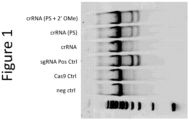
- Modified crRNAs comprising a DNA recognition portion that is complementary to hLDLR were designed and synthesized to test their effects on gene editing of the human LDLR locus.
- HEK 293T cells were transfected with a plasmid expressing Cas9 protein and tracrRNA using Lipofectamine 3000 (Life Technologies).
- cells were transfected with a plasmid expressing Cas9 protein and a highly active sgRNA as a positive control or no Cas9 (“Cas9 Ctrl”) as a negative control.
- RNAiMAX Life Technologies
- no crRNA as a control no crRNA as a control
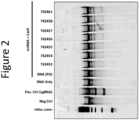
- genomic DNA was isolated from cells and used in a SURVEYOR assay (Integrated DNA Technologies) according to the manufacturer's directions.
- the PCR primers used to amplify the crRNA target site were forward: 5'- GGAGACCCAAATACAACAAATC-3' (SEQ ID NO: 1) and reverse: 5'-CTAGACTCCGTCTCAAAGAAG-3' (SEQ ID NO: 2).
- indel incidence percentage 100 x (1-(1-fraction cut of target gene) 0.5 ), wherein the fraction cut of target gene was determined by dividing the fluorescent signal of the cut target gene fragment(s) by the total fluorescent signal of the cut and intact target gene fragment(s).
- the indel incidence for each modified crRNA was normalized to the indel incidence of the positive control sgRNA, referred to as the gene disruption percentage.
- Modified crRNAs comprising a DNA recognition portion that is complementary to hVEGFA were designed and synthesized to test their effects on gene editing of the human VEGFA locus.
- HEK 293T cells were transfected as described in Example 1 using a crRNA described in the table below.
- the SURVEYOR assay was performed as described in Example 1, and the PCR primers used to amplify the crRNA target site were forward: 5'- TCCAGATGGCACATTGTCAG -3' (SEQ ID NO: 3) and reverse: 5'-AGGGAGCAGGAAAGTGAGGT -3' (SEQ ID NO: 4).
- Modified crRNAs comprising a DNA recognition portion that is complementary to hVEGFA were designed and synthesized to test their effects on gene editing of the human VEGFA locus.
- HEK 293T cells were transfected as described in Example 1 using a crRNA described in the table below, and the Cas9/tracrRNA load time was 24 hours.
- the SURVEYOR assay was performed as described in Example 1, and the PCR primers used to amplify the crRNA target site were forward: 5'- TCCAGATGGCACATTGTCAG -3' (SEQ ID NO: 3) and reverse: 5'- AGGGAGCAGGAAAGTGAGGT -3' (SEQ ID NO: 4).
- modified crRNAs comprising a DNA recognition portion that is under 20 nucleosides in length and/or a tracrRNA recognition portion that is under 22 nucleosides in length were designed and synthesized to test their effects on gene editing of the human VEGFA locus.
- HEK 293T cells were transfected as described in Example 1 using a crRNA described in the table below.
- the SURVEYOR assay was performed as described in Example 1, and the PCR primers used to amplify the crRNA target site were forward: 5'- TCCAGATGGCACATTGTCAG -3' (SEQ ID NO: 3) and reverse: 5'-AGGGAGCAGGAAAGTGAGGT -3' (SEQ ID NO: 4).
- Modified crRNAs having the motifs described in the table below can be used for any crRNA nucleobase sequence.
- the first 17 to 20 nucleosides of each motif represent the DNA recognition portion of the crRNA, and the remaining 12 to 22 nucleosides of each motif represent the tracrRNA recognition portion of the crRNA.
- the motifs labeled "29-mers” contain 29 linked nucleosides, and the motifs labeled "42-mers” contain 42 linked nucleosides.
- the motifs described below can also be applied to crRNAs of other lengths, wherein the pattern is extended or shortened as required to fit the oligonucleotide length. The modifications of the motifs are described using the same single letter identifiers used in the subscripts of Tables 1-4 above.
- the number subscripts indicate the number of contiguous nucleosides that comprise the identified modification. The lack of a number subscript indicates one nucleoside. Additional abbreviations are: “1" indicates an LNA modification, “(MOP)” indicates a methoxypropyl modified internucleoside linkage, “(MP)” indicates a methylphosphonate internucleoside linkage, “(MMI)” indicates an MMI N-methyl internucleoside linkage, "(5-propyne)” indicates a 5-propyne nucleobase modification, and "(G-clamp)” indicates a G-clamp modified nucleobase.
- Modified crRNAs comprising a DNA recognition portion that is complementary to hVEGFA were designed and synthesized to test their effects on gene editing of the human VEGFA locus.
- HEK 293T cells were transfected as described in Example 1 using a crRNA described in the table below.
- the SURVEYOR assay was performed as described in Example 1, and the PCR primers used to amplify the crRNA target site were forward: 5'- TCCAGATGGCACATTGTCAG -3' (SEQ ID NO: 3) and reverse: 5'-AGGGAGCAGGAAAGTGAGGT -3' (SEQ ID NO: 4).
- Isis Numbers 801193 (Example 3), 801381 (Example 4), and 834472 (Example 6) were tested for their effects on gene editing of the human Myc-associated factor X (MAX) locus.
- MAX Myc-associated factor X
- the MAX gene carries an 18 out of 20 nucleotide match to a portion of or all of the region of the VEGFA gene targeted by Isis Numbers 801193, 801381, and 834472.
- HEK 293T cells were transfected as described in Example 1 using Isis No. 801193, 801381, or 834472 as the modified crRNA.
- the SURVEYOR assay was performed as described in Example 1, and the PCR primers used to amplify the off-target site in the MAX gene were forward: 5'-TACCCGGGCCGTCTGTTAGA-3' (SEQ ID NO: 17) and reverse: 5'- GAGGGGGAAGTCACCGACAA-3' (SEQ ID NO: 18).
- the DNA was run on a gel to analyze the extent of gene editing of MAX. Quantification was performed as described in Example 1.
- the results for the modified crRNAs were normalized to a positive control sgRNA targeted to hVEGFA to determine the gene disruption percentage shown in the table below. The results indicate that the modified crRNAs exhibited less off-target effects than the sgRNA control.
- Modified crRNAs comprising a DNA recognition portion that is complementary to human TTR were designed and synthesized to test their effects on gene editing of the hTTR locus.
- HEK 293T cells were transfected as described in Example 1 using a crRNA described in the table below.
- the SURVEYOR assay was performed as described in Example 1, and the PCR primers used to amplify the crRNA target site were forward: 5'- GCTGACTAAGCAAAGCTTCCAAATGAC -3' (SEQ ID NO:41) and reverse: 5'-GATGTCACAGAAACACTCACCGTAG -3' (SEQ ID NO: 42).
- Truncated scrRNAs comprising a scrRNA target recognition portion that is complementary to DNA (cytosine-5)-methyltransferase 1 (DNMT1) were designed and synthesized to test their effects on alteration of the DNMT1 gene.
- HEK293T cells were transfected with a plasmid encoding Cpfl and a double-stranded gblock (IDT, Coralville, Iowa) encoding a scrRNA listed in the table below.
- the SURVEYOR assay was performed as described in Example 1, and the PCR primers used to amplify the scrRNA site in the DNMT1 gene were forward: 5'- CTGGGACTCAGGCGGGTCAC-3' (SEQ ID NO: 47) and reverse: 5'-CCTCACACAACAGCTTCATGTCAGC-3' (SEQ ID NO: ).
- the DNA was run on a gel to analyze the extent of gene alteration of DNMT1.
- the results are shown in Figures 4a and 4b . The results indicate that multiple truncated scrRNAs, including scrRNA containing only 36 nucleosides, altered the target gene.
- Table 9 scrRNA targeting DNMT1 Name Sequence (5' to 3') SEQ ID NO.
- nucleosides in the table above are unmodified ribonucleosides comprising 2'-hydroxy sugar moieties and phosphate internucleoside linkages.
- the underlined nucleosides represent the target recognition portion of the scrRNA, the nucleosides that are not underlined represent the nuclease recognition portion of the scrRNA.
- Truncated tracrRNAs were designed and synthesized to test their effects on editing of mouse Proprotein Convertase Subtilisin/Kexin Type 9 (Pcsk9).
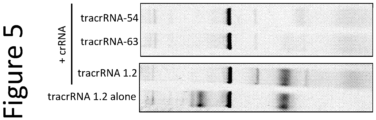
- Pcsk9 DNA To generate Pcsk9 DNA, a portion of the mouse genomic locus encompassing the CRISPR target site was amplified by PCR using primers 5'-CTGAGGCTAGAGGACTGAGC-3' (SEQ ID NO: 61) and 5'- CAGACGGCTAGATGAGCAGAG-3' (SEQ ID NO: 62). 30 nM of a modified crRNA, Ion No.
- 927720 shown in the table below and 30 nM of a tracrRNA shown in the table below and were used to test for Pcsk9 gene disruption in an in vitro biochemical assay. Following cleavage by Cas9, the DNA was run on a gel to analyze the extent of activity. The results are shown in Figure 5 . The results indicate that the truncated tracrRNAs exhibited activity in vitro.
- Table 10 Modified crRNA targeting human Pcsk9 and truncated tracrRNAs Ion No. or Name Sequence (5' to 3') SEQ ID NO. 927720 63 tracrRNA 1.2 (pos. ctrl) 64 tracrRNA 63 65 tracrRNA 54 66
- modified crRNAs to activate target genes was tested in a transcriptional activation assay, similar to that described in Konermann et al., Nature 517, 583-588 (2015 ). Briefly, one MS2 aptamer sequence was inserted at position 58 of tracrRNA.
- HEK 293 cells were transfected with PBS alone (negative control) or with a plasmids encoding catalytically inactive Cas9 fused to Tetrameric VP16 transcription activator domain (dCas9-VP64), MS2-p65-HSF1 activation helper protein as described in Konermann et al. and the MS2 aptamer containing tracrRNA1.2.
- Modified crRNA comprising a DNA recognition portion that is complementary to human TTR, listed in the table below, was added in PBS, in the absence of a transfection reagent, at a final concentration of 1uM. PBS without crRNA was added in the "no RNA" control. After 48 hours, total RNA was isolated, and gene activation was measured using RT-qPCR using forward primer 5'-CTTGCTGGACTGGTATTTGTGTCT-3'(SEQ ID NO: 67), reverse primer 5'-AGAACTTTGACCATCAGAGGACACT-3' (SEQ ID NO: 68) and probe 5'-CCCTACGGGCACCGGTGAATCC-3' (SEQ ID NO: 69).
- RT-qPCR results were normalized to GAPDH and are presented in the table below as the fold change relative to the negative control, which was set to 1.0.
- the results show that modified crRNA was taken up by the cells by free uptake and induced target gene activation.
- Table 11 Gene activation following free uptake of modified crRNA Name Sequence (5' to 3') Fold change (Rel. to Neg Ctrl) SEQ ID NO. Neg Ctrl n/a 1.0 No RNA n/a 2.6 crRNA 42 10.2 70
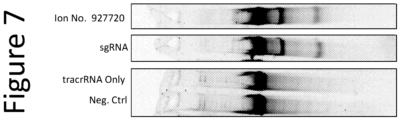
- Example 12 In vitro digestion of Pcsk9 DNA using compounds comprising modified crRNA
- Compounds comprising modified crRNAs shown in the tables below comprise a DNA recognition portion that is complementary to mouse Pcsk9.
- the modified crRNAs shown in Table 12 below are made and tested for their DNA cutting activity and/or gene disruption activity, as described herein.
- the modified crRNAs shown in Table 13 were synthesized and tested for DNA cutting activity in vitro.
- Ion No. 927722 comprises a GalNAc conjugate group ("LICA-1"), and the synthesis of Ion No. 927722 is shown below.
- the DNA cutting assay was carried out as described in Example 10. Ion No. 927720 or 927722 was used with a tracrRNA. An sgRNA was used alone as a positive control. The results are shown in Figure 6 .
- Standard phosphoramidites and solid supports were used for incorporation of A, U, G, and C nucleosides.
- a 0.2 M solution of the amidites in anhydrous acetonitrile was used for the synthesis.
- a 0.2 M solution of 2'-O-Me A Bz , U, G ibu and C Bz phosphoramidites in anhydrous acetonitrile were used for the incorporation of 2'- O -methyl modified nucleotides.
- the modified crRNAs (60 ⁇ mol scale) were synthesized using an AKTAOligopilot synthesizer (GE Healthcare Biosciences) on VIMAD UnyLinker TM solid support (100 ⁇ mol/g loading) and the appropriate amounts of solid supports were packed in the column for synthesis.
- Dichloroacetic acid (6%) in toluene was used as detritylating reagent.
- 4,5-Dicyanoimidazole in the presence of N-methylimidazole in CH 3 CN was used as activator during the coupling step.
- 0.1 M xanthane hydride solution in 50% pyridine in acetonitrile was used as sulfurizing agent with 3 min contact time.
- THA-GalNAc phosphoramidite 4 Twelve equivalents of THA-GalNAc phosphoramidite 4 was delivered in 3 portions, each followed by a 12 min coupling wait time. All other steps in the protocol supplied by the manufacturer were used without modification. The coupling efficiencies were more than 97%.
- solid support was treated with 20% diethylamine in toluene for 45 min to remove cyanoethyl group from phosphorothioate linkages. The solid support was then suspended in aqueous ammonium hydroxide (30 wt. %): ethanol (3: 1) and allowed to stir at room temperature for 4 h.
Landscapes
- Health & Medical Sciences (AREA)
- Life Sciences & Earth Sciences (AREA)
- Chemical & Material Sciences (AREA)
- Engineering & Computer Science (AREA)
- Genetics & Genomics (AREA)
- Organic Chemistry (AREA)
- Bioinformatics & Cheminformatics (AREA)
- Wood Science & Technology (AREA)
- Zoology (AREA)
- Biomedical Technology (AREA)
- Molecular Biology (AREA)
- Biotechnology (AREA)
- General Engineering & Computer Science (AREA)
- Biochemistry (AREA)
- General Health & Medical Sciences (AREA)
- Microbiology (AREA)
- Plant Pathology (AREA)
- Biophysics (AREA)
- Physics & Mathematics (AREA)
- Medicinal Chemistry (AREA)
- Crystallography & Structural Chemistry (AREA)
- Immunology (AREA)
- Cell Biology (AREA)
- Virology (AREA)
- Mycology (AREA)
- Animal Behavior & Ethology (AREA)
- Chemical Kinetics & Catalysis (AREA)
- Public Health (AREA)
- Veterinary Medicine (AREA)
- Pharmacology & Pharmacy (AREA)
- Nuclear Medicine, Radiotherapy & Molecular Imaging (AREA)
- General Chemical & Material Sciences (AREA)
- Pharmaceuticals Containing Other Organic And Inorganic Compounds (AREA)
- Medicines That Contain Protein Lipid Enzymes And Other Medicines (AREA)
- Saccharide Compounds (AREA)
- Enzymes And Modification Thereof (AREA)
- Measuring Or Testing Involving Enzymes Or Micro-Organisms (AREA)
- Medicines Containing Material From Animals Or Micro-Organisms (AREA)
Priority Applications (1)
| Application Number | Priority Date | Filing Date | Title |
|---|---|---|---|
| EP24222952.4A EP4545544A3 (en) | 2015-06-29 | 2016-06-29 | Modified crispr rna and modified single crispr rna and uses thereof |
Applications Claiming Priority (4)
| Application Number | Priority Date | Filing Date | Title |
|---|---|---|---|
| US201562186363P | 2015-06-29 | 2015-06-29 | |
| US201562233281P | 2015-09-25 | 2015-09-25 | |
| US201562256649P | 2015-11-17 | 2015-11-17 | |
| PCT/US2016/040191 WO2017004261A1 (en) | 2015-06-29 | 2016-06-29 | Modified crispr rna and modified single crispr rna and uses thereof |
Related Child Applications (1)
| Application Number | Title | Priority Date | Filing Date |
|---|---|---|---|
| EP24222952.4A Division EP4545544A3 (en) | 2015-06-29 | 2016-06-29 | Modified crispr rna and modified single crispr rna and uses thereof |
Publications (4)
| Publication Number | Publication Date |
|---|---|
| EP3313989A1 EP3313989A1 (en) | 2018-05-02 |
| EP3313989A4 EP3313989A4 (en) | 2018-12-05 |
| EP3313989C0 EP3313989C0 (en) | 2024-12-25 |
| EP3313989B1 true EP3313989B1 (en) | 2024-12-25 |
Family
ID=57609084
Family Applications (2)
| Application Number | Title | Priority Date | Filing Date |
|---|---|---|---|
| EP16818724.3A Active EP3313989B1 (en) | 2015-06-29 | 2016-06-29 | Modified crispr rna and modified single crispr rna and uses thereof |
| EP24222952.4A Pending EP4545544A3 (en) | 2015-06-29 | 2016-06-29 | Modified crispr rna and modified single crispr rna and uses thereof |
Family Applications After (1)
| Application Number | Title | Priority Date | Filing Date |
|---|---|---|---|
| EP24222952.4A Pending EP4545544A3 (en) | 2015-06-29 | 2016-06-29 | Modified crispr rna and modified single crispr rna and uses thereof |
Country Status (6)
| Country | Link |
|---|---|
| US (2) | US11414657B2 (enExample) |
| EP (2) | EP3313989B1 (enExample) |
| JP (1) | JP2018519811A (enExample) |
| AU (1) | AU2016285724A1 (enExample) |
| CA (1) | CA2990699A1 (enExample) |
| WO (1) | WO2017004261A1 (enExample) |
Families Citing this family (78)
| Publication number | Priority date | Publication date | Assignee | Title |
|---|---|---|---|---|
| BRPI0923225A2 (pt) | 2008-12-02 | 2016-10-04 | Chiralgen Ltd | metodo para sintese de acidos nucleicos modificados no atomo de fosforo |
| EP2451461A4 (en) | 2009-07-06 | 2013-05-29 | Ontorii Inc | NOVEL NUCLEIC ACID PRODRUGS AND METHOD OF USE THEREOF |
| DK2620428T3 (da) | 2010-09-24 | 2019-07-01 | Wave Life Sciences Ltd | Asymmetrisk hjælpegruppe |
| CN107365339A (zh) | 2011-07-19 | 2017-11-21 | 波涛生命科学有限公司 | 合成官能化核酸的方法 |
| WO2013066438A2 (en) | 2011-07-22 | 2013-05-10 | President And Fellows Of Harvard College | Evaluation and improvement of nuclease cleavage specificity |
| WO2014010250A1 (en) | 2012-07-13 | 2014-01-16 | Chiralgen, Ltd. | Asymmetric auxiliary group |
| DK2872147T3 (da) | 2012-07-13 | 2023-02-20 | Wave Life Sciences Ltd | Fremgangsmåde til fremstilling af kirale oligonukleotider |
| US9163284B2 (en) | 2013-08-09 | 2015-10-20 | President And Fellows Of Harvard College | Methods for identifying a target site of a Cas9 nuclease |
| US9359599B2 (en) | 2013-08-22 | 2016-06-07 | President And Fellows Of Harvard College | Engineered transcription activator-like effector (TALE) domains and uses thereof |
| US9340799B2 (en) | 2013-09-06 | 2016-05-17 | President And Fellows Of Harvard College | MRNA-sensing switchable gRNAs |
| US9322037B2 (en) | 2013-09-06 | 2016-04-26 | President And Fellows Of Harvard College | Cas9-FokI fusion proteins and uses thereof |
| US9526784B2 (en) | 2013-09-06 | 2016-12-27 | President And Fellows Of Harvard College | Delivery system for functional nucleases |
| US20150166984A1 (en) | 2013-12-12 | 2015-06-18 | President And Fellows Of Harvard College | Methods for correcting alpha-antitrypsin point mutations |
| EP3095461A4 (en) | 2014-01-15 | 2017-08-23 | Shin Nippon Biomedical Laboratories, Ltd. | Chiral nucleic acid adjuvant having immunity induction activity, and immunity induction activator |
| EP3095459A4 (en) | 2014-01-15 | 2017-08-23 | Shin Nippon Biomedical Laboratories, Ltd. | Chiral nucleic acid adjuvant having antitumor effect and antitumor agent |
| EP3094728B1 (en) | 2014-01-16 | 2022-03-09 | Wave Life Sciences Ltd. | Chiral design |
| LT3105328T (lt) | 2014-02-11 | 2020-07-10 | The Regents Of The University Of Colorado, A Body Corporate | Daugiakomponentis genomo konstravimas, sudarantis sąlygas crispr |
| AU2015298571B2 (en) | 2014-07-30 | 2020-09-03 | President And Fellows Of Harvard College | Cas9 proteins including ligand-dependent inteins |
| WO2016135558A2 (en) | 2015-02-23 | 2016-09-01 | Crispr Therapeutics Ag | Materials and methods for treatment of hemoglobinopathies |
| US12129471B2 (en) | 2015-02-23 | 2024-10-29 | Vertex Pharmaceuticals Incorporated | Materials and methods for treatment of human genetic diseases including hemoglobinopathies |
| JP2018519811A (ja) | 2015-06-29 | 2018-07-26 | アイオーニス ファーマシューティカルズ, インコーポレーテッドIonis Pharmaceuticals,Inc. | 修飾crispr rna及び修飾単一crispr rnaならびにその使用 |
| US11279928B2 (en) | 2015-06-29 | 2022-03-22 | Massachusetts Institute Of Technology | Compositions comprising nucleic acids and methods of using the same |
| WO2017070632A2 (en) | 2015-10-23 | 2017-04-27 | President And Fellows Of Harvard College | Nucleobase editors and uses thereof |
| EP3371306B8 (en) | 2015-11-04 | 2023-02-22 | Vertex Pharmaceuticals Incorporated | Materials and methods for treatment of hemoglobinopathies |
| WO2017136794A1 (en) | 2016-02-03 | 2017-08-10 | Massachusetts Institute Of Technology | Structure-guided chemical modification of guide rna and its applications |
| US10767175B2 (en) | 2016-06-08 | 2020-09-08 | Agilent Technologies, Inc. | High specificity genome editing using chemically modified guide RNAs |
| CN109688820B (zh) | 2016-06-24 | 2023-01-10 | 科罗拉多州立大学董事会(法人团体) | 用于生成条形码化组合文库的方法 |
| ES2908919T3 (es) | 2016-07-05 | 2022-05-04 | California Inst Of Techn | Reacción en cadena de hibridación de iniciador fraccionario |
| US11845929B2 (en) | 2016-07-08 | 2023-12-19 | Ohio State Innovation Foundation | Modified nucleic acids, hybrid guide RNAs, and uses thereof |
| WO2018027078A1 (en) | 2016-08-03 | 2018-02-08 | President And Fellows Of Harard College | Adenosine nucleobase editors and uses thereof |
| AU2017308889B2 (en) | 2016-08-09 | 2023-11-09 | President And Fellows Of Harvard College | Programmable Cas9-recombinase fusion proteins and uses thereof |
| WO2018039438A1 (en) | 2016-08-24 | 2018-03-01 | President And Fellows Of Harvard College | Incorporation of unnatural amino acids into proteins using base editing |
| WO2018067900A1 (en) * | 2016-10-06 | 2018-04-12 | Ionis Pharmaceuticals, Inc. | Method of conjugating oligomeric compounds |
| KR20240007715A (ko) | 2016-10-14 | 2024-01-16 | 프레지던트 앤드 펠로우즈 오브 하바드 칼리지 | 핵염기 에디터의 aav 전달 |
| WO2018119359A1 (en) | 2016-12-23 | 2018-06-28 | President And Fellows Of Harvard College | Editing of ccr5 receptor gene to protect against hiv infection |
| AU2017388379A1 (en) * | 2016-12-28 | 2019-06-06 | Ionis Pharmaceuticals, Inc. | Modified CRISPR RNA and uses thereof |
| KR20190123328A (ko) | 2017-03-09 | 2019-10-31 | 프레지던트 앤드 펠로우즈 오브 하바드 칼리지 | 암 백신 |
| WO2018165504A1 (en) | 2017-03-09 | 2018-09-13 | President And Fellows Of Harvard College | Suppression of pain by gene editing |
| CN110914310A (zh) | 2017-03-10 | 2020-03-24 | 哈佛大学的校长及成员们 | 胞嘧啶至鸟嘌呤碱基编辑器 |
| IL306092A (en) | 2017-03-23 | 2023-11-01 | Harvard College | Nucleic base editors that include nucleic acid programmable DNA binding proteins |
| CN108690845B (zh) * | 2017-04-10 | 2021-04-27 | 中国科学院动物研究所 | 基因组编辑系统和方法 |
| US11560566B2 (en) | 2017-05-12 | 2023-01-24 | President And Fellows Of Harvard College | Aptazyme-embedded guide RNAs for use with CRISPR-Cas9 in genome editing and transcriptional activation |
| CA3102054A1 (en) | 2017-06-05 | 2018-12-13 | Fred Hutchinson Cancer Research Center | Genomic safe harbors for genetic therapies in human stem cells and engineered nanoparticles to provide targeted genetic therapies |
| CN108977442B (zh) * | 2017-06-05 | 2023-01-06 | 广州市锐博生物科技有限公司 | 用于dna编辑的系统及其应用 |
| EP3638789A4 (en) * | 2017-06-12 | 2021-03-10 | California Institute of Technology | CONDITIONAL GUIDE RNAS |
| US10011849B1 (en) | 2017-06-23 | 2018-07-03 | Inscripta, Inc. | Nucleic acid-guided nucleases |
| US9982279B1 (en) | 2017-06-23 | 2018-05-29 | Inscripta, Inc. | Nucleic acid-guided nucleases |
| EP3652312A1 (en) | 2017-07-14 | 2020-05-20 | Editas Medicine, Inc. | Systems and methods for targeted integration and genome editing and detection thereof using integrated priming sites |
| EP3658573A1 (en) | 2017-07-28 | 2020-06-03 | President and Fellows of Harvard College | Methods and compositions for evolving base editors using phage-assisted continuous evolution (pace) |
| SG11201912024RA (en) * | 2017-07-31 | 2020-02-27 | Sigma Aldrich Co Llc | Synthetic guide rna for crispr/cas activator systems |
| EP3676376B1 (en) | 2017-08-30 | 2025-01-15 | President and Fellows of Harvard College | High efficiency base editors comprising gam |
| CA3082251A1 (en) | 2017-10-16 | 2019-04-25 | The Broad Institute, Inc. | Uses of adenosine base editors |
| MA50849A (fr) | 2017-10-26 | 2020-09-02 | Vertex Pharma | Substances et procédés pour le traitement d'hémoglobinopathies |
| JP2021505587A (ja) | 2017-12-05 | 2021-02-18 | バーテックス ファーマシューティカルズ インコーポレイテッドVertex Pharmaceuticals Incorporated | Crispr−cas9改変cd34+ヒト造血幹・前駆細胞及びその使用 |
| US12406749B2 (en) | 2017-12-15 | 2025-09-02 | The Broad Institute, Inc. | Systems and methods for predicting repair outcomes in genetic engineering |
| US20190233816A1 (en) * | 2018-01-26 | 2019-08-01 | Massachusetts Institute Of Technology | Structure-guided chemical modification of guide rna and its applications |
| US20240318171A1 (en) * | 2018-01-26 | 2024-09-26 | Integrated Dna Technologies, Inc. | Crispr-based compositions and methods of use |
| EP3749768A1 (en) | 2018-02-05 | 2020-12-16 | Vertex Pharmaceuticals Incorporated | Materials and methods for treatment of hemoglobinopathies |
| MA51787A (fr) | 2018-02-05 | 2020-12-16 | Vertex Pharma | Substances et méthodes de traitement d'hémoglobinopathies |
| CN112105732A (zh) * | 2018-05-10 | 2020-12-18 | 先正达参股股份有限公司 | 用于多核苷酸的靶向编辑的方法和组合物 |
| CN112654710A (zh) | 2018-05-16 | 2021-04-13 | 辛瑟高公司 | 用于指导rna设计和使用的方法和系统 |
| WO2019226953A1 (en) | 2018-05-23 | 2019-11-28 | The Broad Institute, Inc. | Base editors and uses thereof |
| AU2019291918B2 (en) | 2018-06-29 | 2025-06-12 | Editas Medicine, Inc. | Synthetic guide molecules, compositions and methods relating thereto |
| EP3820495A4 (en) | 2018-07-09 | 2022-07-20 | The Broad Institute Inc. | RNA-PROGRAMMABLE EPIGENETIC RNA MODIFIERS AND THEIR USES |
| WO2020092453A1 (en) | 2018-10-29 | 2020-05-07 | The Broad Institute, Inc. | Nucleobase editors comprising geocas9 and uses thereof |
| US12264323B2 (en) * | 2018-12-17 | 2025-04-01 | The Broad Institute, Inc. | CRISPR CPF1 direct repeat variants |
| US12351837B2 (en) | 2019-01-23 | 2025-07-08 | The Broad Institute, Inc. | Supernegatively charged proteins and uses thereof |
| WO2020191241A1 (en) | 2019-03-19 | 2020-09-24 | The Broad Institute, Inc. | Methods and compositions for editing nucleotide sequences |
| WO2020214842A1 (en) | 2019-04-17 | 2020-10-22 | The Broad Institute, Inc. | Adenine base editors with reduced off-target effects |
| US12435330B2 (en) | 2019-10-10 | 2025-10-07 | The Broad Institute, Inc. | Methods and compositions for prime editing RNA |
| CA3177481A1 (en) | 2020-05-08 | 2021-11-11 | David R. Liu | Methods and compositions for simultaneous editing of both strands of a target double-stranded nucleotide sequence |
| US20210388348A1 (en) * | 2020-05-12 | 2021-12-16 | University Of Massachusetts | Modified guide rnas for crispr genome editing |
| KR102493512B1 (ko) * | 2020-10-08 | 2023-02-01 | 주식회사 진코어 | CRISPR/Cas12a 시스템을 위한 엔지니어링 된 crRNA |
| EP4284925A4 (en) | 2021-01-26 | 2025-08-13 | California Inst Of Techn | ALLOSTERIC CONDITIONAL GUIDE RNAS FOR SELECTIVE REGULATION OF CRISPR/CAS CELLS |
| WO2023091466A1 (en) * | 2021-11-16 | 2023-05-25 | Integrated Dna Technologies, Inc. | Design of two-part guide rnas for crispra applications |
| TW202444388A (zh) * | 2023-04-07 | 2024-11-16 | 美商建南德克公司 | 經修飾的引導rna |
| JP2026523341A (ja) | 2023-05-15 | 2026-07-14 | エヌクロマ・バイオ,インコーポレーテッド | Hbv遺伝子発現のエピジェネティック調節のための組成物および方法 |
| CN119736370B (zh) * | 2025-03-05 | 2025-06-10 | 北京市农林科学院 | 基于crRNA“加尾自沉默”策略的通用型光控CRISPR-Cas12a的检测方法 |
Family Cites Families (146)
| Publication number | Priority date | Publication date | Assignee | Title |
|---|---|---|---|---|
| US7750A (en) | 1850-10-29 | Machine foe | ||
| US854A (en) | 1838-07-26 | Iixvi-lx n | ||
| US131A (en) | 1837-02-24 | Machine foe cutting eur fedm skins | ||
| US7666A (en) | 1850-09-24 | harris | ||
| US2699805A (en) | 1951-10-23 | 1955-01-18 | Richter Albert | Guiding attachment for hand planes |
| US3687808A (en) | 1969-08-14 | 1972-08-29 | Univ Leland Stanford Junior | Synthetic polynucleotides |
| US4583111A (en) | 1983-09-09 | 1986-04-15 | Fairchild Semiconductor Corporation | Integrated circuit chip wiring arrangement providing reduced circuit inductance and controlled voltage gradients |
| US5367066A (en) | 1984-10-16 | 1994-11-22 | Chiron Corporation | Oligonucleotides with selectably cleavable and/or abasic sites |
| FR2575751B1 (fr) | 1985-01-08 | 1987-04-03 | Pasteur Institut | Nouveaux nucleosides de derives de l'adenosine, leur preparation et leurs applications biologiques |
| US5034506A (en) | 1985-03-15 | 1991-07-23 | Anti-Gene Development Group | Uncharged morpholino-based polymers having achiral intersubunit linkages |
| US5166315A (en) | 1989-12-20 | 1992-11-24 | Anti-Gene Development Group | Sequence-specific binding polymers for duplex nucleic acids |
| US5185444A (en) | 1985-03-15 | 1993-02-09 | Anti-Gene Deveopment Group | Uncharged morpolino-based polymers having phosphorous containing chiral intersubunit linkages |
| US5506337A (en) | 1985-03-15 | 1996-04-09 | Antivirals Inc. | Morpholino-subunit combinatorial library and method |
| EP0366685B1 (en) | 1987-06-24 | 1994-10-19 | Howard Florey Institute Of Experimental Physiology And Medicine | Nucleoside derivatives |
| US5175273A (en) | 1988-07-01 | 1992-12-29 | Genentech, Inc. | Nucleic acid intercalating agents |
| US5134066A (en) | 1989-08-29 | 1992-07-28 | Monsanto Company | Improved probes using nucleosides containing 3-dezauracil analogs |
| US5130302A (en) | 1989-12-20 | 1992-07-14 | Boron Bilogicals, Inc. | Boronated nucleoside, nucleotide and oligonucleotide compounds, compositions and methods for using same |
| US5587470A (en) | 1990-01-11 | 1996-12-24 | Isis Pharmaceuticals, Inc. | 3-deazapurines |
| US5681941A (en) | 1990-01-11 | 1997-10-28 | Isis Pharmaceuticals, Inc. | Substituted purines and oligonucleotide cross-linking |
| US5459255A (en) | 1990-01-11 | 1995-10-17 | Isis Pharmaceuticals, Inc. | N-2 substituted purines |
| JPH0874B2 (ja) | 1990-07-27 | 1996-01-10 | アイシス・ファーマシューティカルス・インコーポレーテッド | 遺伝子発現を検出および変調するヌクレアーゼ耐性、ピリミジン修飾オリゴヌクレオチド |
| US5432272A (en) | 1990-10-09 | 1995-07-11 | Benner; Steven A. | Method for incorporating into a DNA or RNA oligonucleotide using nucleotides bearing heterocyclic bases |
| US5594121A (en) | 1991-11-07 | 1997-01-14 | Gilead Sciences, Inc. | Enhanced triple-helix and double-helix formation with oligomers containing modified purines |
| EP0637965B1 (en) | 1991-11-26 | 2002-10-16 | Isis Pharmaceuticals, Inc. | Enhanced triple-helix and double-helix formation with oligomers containing modified pyrimidines |
| TW393513B (en) | 1991-11-26 | 2000-06-11 | Isis Pharmaceuticals Inc | Enhanced triple-helix and double-helix formation with oligomers containing modified pyrimidines |
| US5484908A (en) | 1991-11-26 | 1996-01-16 | Gilead Sciences, Inc. | Oligonucleotides containing 5-propynyl pyrimidines |
| US5434257A (en) | 1992-06-01 | 1995-07-18 | Gilead Sciences, Inc. | Binding compentent oligomers containing unsaturated 3',5' and 2',5' linkages |
| WO1994014226A1 (en) | 1992-12-14 | 1994-06-23 | Honeywell Inc. | Motor system with individually controlled redundant windings |
| US5502177A (en) | 1993-09-17 | 1996-03-26 | Gilead Sciences, Inc. | Pyrimidine derivatives for labeled binding partners |
| US5457187A (en) | 1993-12-08 | 1995-10-10 | Board Of Regents University Of Nebraska | Oligonucleotides containing 5-fluorouracil |
| US5596091A (en) | 1994-03-18 | 1997-01-21 | The Regents Of The University Of California | Antisense oligonucleotides comprising 5-aminoalkyl pyrimidine nucleotides |
| US5525711A (en) | 1994-05-18 | 1996-06-11 | The United States Of America As Represented By The Secretary Of The Department Of Health And Human Services | Pteridine nucleotide analogs as fluorescent DNA probes |
| US5656408A (en) | 1996-04-29 | 1997-08-12 | Xerox Corporation | Coated carrier particles |
| JP3756313B2 (ja) | 1997-03-07 | 2006-03-15 | 武 今西 | 新規ビシクロヌクレオシド及びオリゴヌクレオチド類縁体 |
| US6770748B2 (en) | 1997-03-07 | 2004-08-03 | Takeshi Imanishi | Bicyclonucleoside and oligonucleotide analogue |
| US6794499B2 (en) | 1997-09-12 | 2004-09-21 | Exiqon A/S | Oligonucleotide analogues |
| US20060172925A1 (en) * | 1998-10-26 | 2006-08-03 | Board Of Regents, The University Of Texas System | Thio-siRNA aptamers |
| AU2982900A (en) | 1999-02-03 | 2000-08-25 | Children's Medical Center Corporation | Gene repair involving the induction of double-stranded dna cleavage at a chromosomal target site |
| ATE356824T1 (de) | 1999-05-04 | 2007-04-15 | Santaris Pharma As | L-ribo-lna analoge |
| US6525191B1 (en) | 1999-05-11 | 2003-02-25 | Kanda S. Ramasamy | Conformationally constrained L-nucleosides |
| US20030158403A1 (en) | 2001-07-03 | 2003-08-21 | Isis Pharmaceuticals, Inc. | Nuclease resistant chimeric oligonucleotides |
| US8604183B2 (en) | 2002-11-05 | 2013-12-10 | Isis Pharmaceuticals, Inc. | Compositions comprising alternating 2′-modified nucleosides for use in gene modulation |
| CA2504694C (en) | 2002-11-05 | 2013-10-01 | Isis Pharmaceuticals, Inc. | Polycyclic sugar surrogate-containing oligomeric compounds and compositions for use in gene modulation |
| WO2004106356A1 (en) | 2003-05-27 | 2004-12-09 | Syddansk Universitet | Functionalized nucleotide derivatives |
| DK1661905T3 (da) | 2003-08-28 | 2012-07-23 | Takeshi Imanishi | Hidtil ukendte syntetiske nukleinsyrer af N-O-krydsbindingstype |
| WO2005027962A1 (en) | 2003-09-18 | 2005-03-31 | Isis Pharmaceuticals, Inc. | 4’-thionucleosides and oligomeric compounds |
| US7919277B2 (en) | 2004-04-28 | 2011-04-05 | Danisco A/S | Detection and typing of bacterial strains |
| US20070028783A1 (en) | 2005-08-02 | 2007-02-08 | Chen Yee M | Brewing apparatus for preparing foam, froth, or crema under low pressure |
| DE602007009487D1 (de) | 2006-01-27 | 2010-11-11 | Isis Pharmaceutical Inc | 6-modifizierte bicyclische nukleinsäureanaloga |
| US7666854B2 (en) | 2006-05-11 | 2010-02-23 | Isis Pharmaceuticals, Inc. | Bis-modified bicyclic nucleic acid analogs |
| CA2651453C (en) | 2006-05-11 | 2014-10-14 | Isis Pharmaceuticals, Inc. | 5'-modified bicyclic nucleic acid analogs |
| JP4798093B2 (ja) | 2006-08-04 | 2011-10-19 | 日産自動車株式会社 | 流体改質装置及びこれを用いた流体改質方法 |
| US20100190837A1 (en) | 2007-02-15 | 2010-07-29 | Isis Pharmaceuticals, Inc. | 5'-Substituted-2-F' Modified Nucleosides and Oligomeric Compounds Prepared Therefrom |
| DK2170917T3 (da) | 2007-05-30 | 2012-10-08 | Isis Pharmaceuticals Inc | N-Substituerede bicycliske nukleinsyreanaloge med aminomethylenbro |
| WO2008154401A2 (en) | 2007-06-08 | 2008-12-18 | Isis Pharmaceuticals, Inc. | Carbocyclic bicyclic nucleic acid analogs |
| AU2008272918B2 (en) | 2007-07-05 | 2012-09-13 | Isis Pharmaceuticals, Inc. | 6-disubstituted bicyclic nucleic acid analogs |
| EP2188298B1 (en) | 2007-08-15 | 2013-09-18 | Isis Pharmaceuticals, Inc. | Tetrahydropyran nucleic acid analogs |
| FR2925918A1 (fr) | 2007-12-28 | 2009-07-03 | Pasteur Institut | Typage et sous-typage moleculaire de salmonella par identification des sequences nucleotidiques variables des loci crispr |
| US8546553B2 (en) | 2008-07-25 | 2013-10-01 | University Of Georgia Research Foundation, Inc. | Prokaryotic RNAi-like system and methods of use |
| EP2367938B1 (en) | 2008-12-12 | 2014-06-11 | DuPont Nutrition Biosciences ApS | Genetic cluster of strains of streptococcus thermophilus having unique rheological properties for dairy fermentation |
| WO2011133876A2 (en) | 2010-04-22 | 2011-10-27 | Alnylam Pharmaceuticals, Inc. | Oligonucleotides comprising acyclic and abasic nucleosides and analogs |
| US9070158B1 (en) | 2012-02-24 | 2015-06-30 | Amazon Technologies, Inc. | Adaptive information regions displaying content associated with an electronic commerce system |
| US9637739B2 (en) | 2012-03-20 | 2017-05-02 | Vilnius University | RNA-directed DNA cleavage by the Cas9-crRNA complex |
| ES2728782T3 (es) | 2012-05-25 | 2019-10-28 | Univ California | Métodos y composiciones para la modificación de ADN objetivo dirigida por ARN y para la modulación de la transcripción dirigida por ARN |
| WO2013188037A2 (en) | 2012-06-11 | 2013-12-19 | Agilent Technologies, Inc | Method of adaptor-dimer subtraction using a crispr cas6 protein |
| CN116622704A (zh) | 2012-07-25 | 2023-08-22 | 布罗德研究所有限公司 | 可诱导的dna结合蛋白和基因组干扰工具及其应用 |
| EP4397759A3 (en) | 2012-10-23 | 2024-10-09 | Toolgen Incorporated | Composition for cleaving a target dna comprising a guide rna specific for the target dna and cas protein-encoding nucleic acid or cas protein, and use thereof |
| US8697359B1 (en) | 2012-12-12 | 2014-04-15 | The Broad Institute, Inc. | CRISPR-Cas systems and methods for altering expression of gene products |
| CN105209621B (zh) | 2012-12-12 | 2021-05-25 | 布罗德研究所有限公司 | 对用于序列操纵的改进的系统、方法和酶组合物进行的工程化和优化 |
| PT2931898E (pt) | 2012-12-12 | 2016-06-16 | Harvard College | Manipulação e otimização de sistemas, métodos e composições para manipulação de sequências com domínios funcionais |
| MX380562B (es) | 2012-12-12 | 2025-03-12 | Broad Inst Inc | Modificaciones de sistemas, métodos y composiciones guía optimizadas para la manipulación de secuencias. |
| SG10201707569YA (en) | 2012-12-12 | 2017-10-30 | Broad Inst Inc | Delivery, Engineering and Optimization of Systems, Methods and Compositions for Sequence Manipulation and Therapeutic Applications |
| EP3064585B1 (en) | 2012-12-12 | 2020-02-05 | The Broad Institute, Inc. | Engineering and optimization of improved systems, methods and enzyme compositions for sequence manipulation |
| WO2014093694A1 (en) | 2012-12-12 | 2014-06-19 | The Broad Institute, Inc. | Crispr-cas nickase systems, methods and compositions for sequence manipulation in eukaryotes |
| KR102955556B1 (ko) | 2012-12-12 | 2026-04-22 | 더 브로드 인스티튜트, 인코퍼레이티드 | 서열 조작을 위한 crispr-cas 성분 시스템, 방법 및 조성물 |
| WO2014093709A1 (en) | 2012-12-12 | 2014-06-19 | The Broad Institute, Inc. | Methods, models, systems, and apparatus for identifying target sequences for cas enzymes or crispr-cas systems for target sequences and conveying results thereof |
| EP2931899A1 (en) | 2012-12-12 | 2015-10-21 | The Broad Institute, Inc. | Functional genomics using crispr-cas systems, compositions, methods, knock out libraries and applications thereof |
| IL308158A (en) | 2012-12-17 | 2023-12-01 | Harvard College | Rna-guided human genome engineering |
| CN105408483A (zh) | 2013-03-15 | 2016-03-16 | 通用医疗公司 | 遗传和表观遗传调节蛋白至特定基因组基因座的rna引导的靶向 |
| US11332719B2 (en) | 2013-03-15 | 2022-05-17 | The Broad Institute, Inc. | Recombinant virus and preparations thereof |
| PL2992098T3 (pl) | 2013-05-01 | 2019-09-30 | Ionis Pharmaceuticals, Inc. | Kompozycje i sposoby modulowania ekspresji hbv i ttr |
| JP6608807B2 (ja) * | 2013-05-29 | 2019-11-20 | セレクティス | Rnaガイドcasヌクレアーゼ系を用いることによって免疫療法のためにt細胞を操作するための方法 |
| EP3603679B1 (en) | 2013-06-04 | 2022-08-10 | President and Fellows of Harvard College | Rna-guided transcriptional regulation |
| EP3011033B1 (en) | 2013-06-17 | 2020-02-19 | The Broad Institute, Inc. | Functional genomics using crispr-cas systems, compositions methods, screens and applications thereof |
| WO2014204725A1 (en) | 2013-06-17 | 2014-12-24 | The Broad Institute Inc. | Optimized crispr-cas double nickase systems, methods and compositions for sequence manipulation |
| SG11201510327TA (en) | 2013-06-17 | 2016-01-28 | Broad Inst Inc | Delivery, engineering and optimization of systems, methods and compositions for targeting and modeling diseases and disorders of post mitotic cells |
| JP6738728B2 (ja) | 2013-06-17 | 2020-08-19 | ザ・ブロード・インスティテュート・インコーポレイテッド | 肝臓ターゲティングおよび治療のためのCRISPR−Cas系、ベクターおよび組成物の送達および使用 |
| KR20250012194A (ko) | 2013-06-17 | 2025-01-23 | 더 브로드 인스티튜트, 인코퍼레이티드 | 바이러스 구성성분을 사용하여 장애 및 질환을 표적화하기 위한 crispr-cas 시스템 및 조성물의 전달, 용도 및 치료 적용 |
| ES2777217T3 (es) | 2013-06-17 | 2020-08-04 | Broad Inst Inc | Suministro, modificación y optimización de sistemas de guía en tándem, métodos y composiciones para la manipulación de secuencias |
| PL3019619T3 (pl) | 2013-07-11 | 2022-01-10 | Modernatx, Inc. | Kompozycje zawierające syntetyczne polinkleotydy kodujące białka powiązane z crispr i syntetyczne sgrna oraz sposoby ich stosowania |
| US9163284B2 (en) | 2013-08-09 | 2015-10-20 | President And Fellows Of Harvard College | Methods for identifying a target site of a Cas9 nuclease |
| CN106133138A (zh) | 2013-08-22 | 2016-11-16 | 先锋国际良种公司 | 使用引导多核苷酸/cas内切核酸酶系统的基因组修饰及其使用方法 |
| WO2015048577A2 (en) | 2013-09-27 | 2015-04-02 | Editas Medicine, Inc. | Crispr-related methods and compositions |
| EP3052511A4 (en) | 2013-10-02 | 2017-05-31 | Moderna Therapeutics, Inc. | Polynucleotide molecules and uses thereof |
| WO2015051173A2 (en) | 2013-10-02 | 2015-04-09 | Moderna Therapeutics, Inc | Polynucleotide molecules and uses thereof |
| KR20160067219A (ko) | 2013-10-03 | 2016-06-13 | 모더나 세라퓨틱스, 인코포레이티드 | 저밀도 지단백질 수용체를 암호화하는 폴리뉴클레오타이드 |
| CN111218447B (zh) | 2013-11-07 | 2024-10-11 | 爱迪塔斯医药有限公司 | 使用统治型gRNA的CRISPR相关方法和组合物 |
| DE102013223172A1 (de) * | 2013-11-14 | 2015-05-21 | Aktiebolaget Skf | Maschinenanordnung |
| EP3760719A1 (en) | 2013-11-18 | 2021-01-06 | CRISPR Therapeutics AG | Crispr-cas system materials and methods |
| US9074199B1 (en) | 2013-11-19 | 2015-07-07 | President And Fellows Of Harvard College | Mutant Cas9 proteins |
| MX388127B (es) | 2013-12-11 | 2025-03-19 | Regeneron Pharma | Metodos y composiciones para la modificacion dirigida de un genoma. |
| CN105899658B (zh) | 2013-12-12 | 2020-02-18 | 布罗德研究所有限公司 | 针对hbv和病毒性疾病以及障碍的crispr-cas系统和组合物的递送、用途和治疗应用 |
| CN111206032B (zh) | 2013-12-12 | 2024-07-19 | 布罗德研究所有限公司 | 用于基因组编辑的crispr-cas系统和组合物的递送、用途和治疗应用 |
| KR20160097338A (ko) | 2013-12-12 | 2016-08-17 | 더 브로드 인스티튜트, 인코퍼레이티드 | 뉴클레오티드 반복 장애에서의 crispr-cas 시스템의 조성물 및 방법 및 용도 |
| US20150166984A1 (en) | 2013-12-12 | 2015-06-18 | President And Fellows Of Harvard College | Methods for correcting alpha-antitrypsin point mutations |
| WO2015089364A1 (en) | 2013-12-12 | 2015-06-18 | The Broad Institute Inc. | Crystal structure of a crispr-cas system, and uses thereof |
| JP6793547B2 (ja) | 2013-12-12 | 2020-12-02 | ザ・ブロード・インスティテュート・インコーポレイテッド | 最適化機能CRISPR−Cas系による配列操作のための系、方法および組成物 |
| CA2932439A1 (en) | 2013-12-12 | 2015-06-18 | The Broad Institute, Inc. | Crispr-cas systems and methods for altering expression of gene products, structural information and inducible modular cas enzymes |
| WO2015089419A2 (en) | 2013-12-12 | 2015-06-18 | The Broad Institute Inc. | Delivery, use and therapeutic applications of the crispr-cas systems and compositions for targeting disorders and diseases using particle delivery components |
| WO2015089473A1 (en) | 2013-12-12 | 2015-06-18 | The Broad Institute Inc. | Engineering of systems, methods and optimized guide compositions with new architectures for sequence manipulation |
| WO2015089489A1 (en) | 2013-12-13 | 2015-06-18 | Requis Pharmaceuticals Inc. | Antihistamines in combination with a range of substance for improved health |
| US11028388B2 (en) * | 2014-03-05 | 2021-06-08 | Editas Medicine, Inc. | CRISPR/Cas-related methods and compositions for treating Usher syndrome and retinitis pigmentosa |
| US9938521B2 (en) * | 2014-03-10 | 2018-04-10 | Editas Medicine, Inc. | CRISPR/CAS-related methods and compositions for treating leber's congenital amaurosis 10 (LCA10) |
| WO2015200555A2 (en) | 2014-06-25 | 2015-12-30 | Caribou Biosciences, Inc. | Rna modification to engineer cas9 activity |
| US9778707B1 (en) | 2014-08-08 | 2017-10-03 | Performance Contracting, Inc. | System for field access of data |
| EP3180426B1 (en) | 2014-08-17 | 2019-12-25 | The Broad Institute, Inc. | Genome editing using cas9 nickases |
| WO2016049258A2 (en) | 2014-09-25 | 2016-03-31 | The Broad Institute Inc. | Functional screening with optimized functional crispr-cas systems |
| WO2016073990A2 (en) | 2014-11-07 | 2016-05-12 | Editas Medicine, Inc. | Methods for improving crispr/cas-mediated genome-editing |
| CA2969619A1 (en) | 2014-12-03 | 2016-06-09 | Agilent Technologies, Inc. | Guide rna with chemical modifications |
| WO2016094874A1 (en) | 2014-12-12 | 2016-06-16 | The Broad Institute Inc. | Escorted and functionalized guides for crispr-cas systems |
| WO2016094880A1 (en) | 2014-12-12 | 2016-06-16 | The Broad Institute Inc. | Delivery, use and therapeutic applications of crispr systems and compositions for genome editing as to hematopoietic stem cells (hscs) |
| EP3230452B1 (en) | 2014-12-12 | 2025-06-11 | The Broad Institute, Inc. | Dead guides for crispr transcription factors |
| EP3985115A1 (en) | 2014-12-12 | 2022-04-20 | The Broad Institute, Inc. | Protected guide rnas (pgrnas) |
| JP2017538427A (ja) | 2014-12-18 | 2017-12-28 | インテグレイテッド ディーエヌエイ テクノロジーズ インコーポレイテッド | Crispr系組成物及び使用方法 |
| EP3234192B1 (en) | 2014-12-19 | 2021-07-14 | The Broad Institute, Inc. | Unbiased identification of double-strand breaks and genomic rearrangement by genome-wide insert capture sequencing |
| WO2016106236A1 (en) | 2014-12-23 | 2016-06-30 | The Broad Institute Inc. | Rna-targeting system |
| WO2016106244A1 (en) | 2014-12-24 | 2016-06-30 | The Broad Institute Inc. | Crispr having or associated with destabilization domains |
| AU2016211517B2 (en) | 2015-01-28 | 2021-05-13 | Caribou Biosciences, Inc. | CRISPR hybrid DNA/RNA polynucleotides and methods of use |
| BR112017020750A2 (en) | 2015-03-27 | 2018-06-26 | President And Fellows Of Harvard College | modified t-cells and methods of producing and using them |
| GB201506509D0 (en) | 2015-04-16 | 2015-06-03 | Univ Wageningen | Nuclease-mediated genome editing |
| CN107709555A (zh) | 2015-05-15 | 2018-02-16 | 达尔马科恩有限公司 | 用于Cas9介导的基因编辑的合成的单向导RNA |
| US9790490B2 (en) | 2015-06-18 | 2017-10-17 | The Broad Institute Inc. | CRISPR enzymes and systems |
| CA3012631A1 (en) | 2015-06-18 | 2016-12-22 | The Broad Institute Inc. | Novel crispr enzymes and systems |
| EP3929287A3 (en) | 2015-06-18 | 2022-04-13 | The Broad Institute, Inc. | Crispr enzyme mutations reducing off-target effects |
| WO2016205759A1 (en) | 2015-06-18 | 2016-12-22 | The Broad Institute Inc. | Engineering and optimization of systems, methods, enzymes and guide scaffolds of cas9 orthologs and variants for sequence manipulation |
| JP2018519811A (ja) | 2015-06-29 | 2018-07-26 | アイオーニス ファーマシューティカルズ, インコーポレーテッドIonis Pharmaceuticals,Inc. | 修飾crispr rna及び修飾単一crispr rnaならびにその使用 |
| US10369232B2 (en) | 2015-09-21 | 2019-08-06 | Arcturus Therapeutics, Inc. | Allele selective gene editing and uses thereof |
| WO2017053729A1 (en) | 2015-09-25 | 2017-03-30 | The Board Of Trustees Of The Leland Stanford Junior University | Nuclease-mediated genome editing of primary cells and enrichment thereof |
| AU2016359629B2 (en) | 2015-11-23 | 2023-03-09 | Ranjan BATRA | Tracking and manipulating cellular RNA via nuclear delivery of CRISPR/Cas9 |
| WO2017093969A1 (en) | 2015-12-04 | 2017-06-08 | Novartis Ag | Compositions and methods for immunooncology |
| WO2017136794A1 (en) | 2016-02-03 | 2017-08-10 | Massachusetts Institute Of Technology | Structure-guided chemical modification of guide rna and its applications |
| WO2017181107A2 (en) | 2016-04-16 | 2017-10-19 | Ohio State Innovation Foundation | Modified cpf1 mrna, modified guide rna, and uses thereof |
| WO2017190664A1 (zh) | 2016-05-05 | 2017-11-09 | 苏州吉玛基因股份有限公司 | 化学合成的crRNA和修饰crRNA在CRISPR/Cpf1基因编辑系统中的应用 |
| CN105907785B (zh) | 2016-05-05 | 2020-02-07 | 苏州吉玛基因股份有限公司 | 化学合成的crRNA用于CRISPR/Cpf1系统在基因编辑中的应用 |
| CA3044101A1 (en) | 2016-11-22 | 2018-05-31 | Integrated Dna Technologies, Inc. | Crispr/cpf1 systems and methods |
| GB2702733A (en) * | 2021-09-22 | 2026-06-24 | Verve Therapeutics Inc | Gene editing of PCSK9 or ANGPTL3 and compositions and methods of using same for treatment of disease |
-
2016
- 2016-06-29 JP JP2017563986A patent/JP2018519811A/ja active Pending
- 2016-06-29 AU AU2016285724A patent/AU2016285724A1/en not_active Abandoned
- 2016-06-29 WO PCT/US2016/040191 patent/WO2017004261A1/en not_active Ceased
- 2016-06-29 US US15/737,723 patent/US11414657B2/en active Active
- 2016-06-29 CA CA2990699A patent/CA2990699A1/en not_active Abandoned
- 2016-06-29 EP EP16818724.3A patent/EP3313989B1/en active Active
- 2016-06-29 EP EP24222952.4A patent/EP4545544A3/en active Pending
-
2022
- 2022-06-27 US US17/850,456 patent/US20230159919A1/en active Pending
Non-Patent Citations (1)
| Title |
|---|
| HAO YIN ET AL: "Partial DNA-guided Cas9 enables genome editing with reduced off-target activity", NATURE CHEMICAL BIOLOGY, vol. 14, no. 3, 29 January 2018 (2018-01-29), New York, pages 311 - 316, XP055515605, ISSN: 1552-4450, DOI: 10.1038/nchembio.2559 * |
Also Published As
| Publication number | Publication date |
|---|---|
| EP4545544A2 (en) | 2025-04-30 |
| EP3313989A4 (en) | 2018-12-05 |
| AU2016285724A1 (en) | 2017-11-16 |
| US11414657B2 (en) | 2022-08-16 |
| JP2018519811A (ja) | 2018-07-26 |
| CA2990699A1 (en) | 2017-01-05 |
| EP3313989A1 (en) | 2018-05-02 |
| US20230159919A1 (en) | 2023-05-25 |
| EP4545544A3 (en) | 2025-10-08 |
| EP3313989C0 (en) | 2024-12-25 |
| US20180179521A1 (en) | 2018-06-28 |
| WO2017004261A1 (en) | 2017-01-05 |
Similar Documents
| Publication | Publication Date | Title |
|---|---|---|
| US20230159919A1 (en) | Modified crispr rna and modified single crispr rna and uses thereof | |
| JP7803850B2 (ja) | 結合修飾オリゴマー化合物及びその使用 | |
| EP3011028B1 (en) | Compositions and methods for modulation of target nucleic acids | |
| EP2839006B1 (en) | Oligomeric compounds comprising bicyclic nucleotides and uses thereof | |
| EP2447274B1 (en) | Oligomeric compounds and methods | |
| EP4363572A1 (en) | Method for synthesis of linkage modified oligomeric compounds | |
| EP2751270B1 (en) | Oligomer-conjugate complexes and their use | |
| DK2920307T3 (en) | ANTI-APOB, ANTISENSE CONJUGATE RELATIONSHIPS | |
| EP3353306A1 (en) | Conjugated antisense compounds and their use | |
| WO2020072991A1 (en) | Modified oligomeric compounds and uses thereof | |
| WO2011139911A2 (en) | Lipid formulated single stranded rna | |
| US20190382751A1 (en) | Modified crispr rna and uses thereof | |
| WO2023023550A1 (en) | Linkage modified oligomeric compounds and uses thereof | |
| WO2014089146A1 (en) | Compositions and methods for in vivo delivery of antisense compounds | |
| KR20260005403A (ko) | 원형 프로드럭 핵산을 이용한 rna 치료제의 전달 | |
| CN118541483A (zh) | 用于降低psd3表达的化合物和方法 | |
| EP4555089A2 (en) | Hybrid oligonucleotides | |
| JP2026510983A (ja) | 環状アンチセンス治療薬 | |
| WO2023235817A1 (en) | Linkage modified oligomeric compounds and uses thereof |
Legal Events
| Date | Code | Title | Description |
|---|---|---|---|
| STAA | Information on the status of an ep patent application or granted ep patent |
Free format text: STATUS: THE INTERNATIONAL PUBLICATION HAS BEEN MADE |
|
| PUAI | Public reference made under article 153(3) epc to a published international application that has entered the european phase |
Free format text: ORIGINAL CODE: 0009012 |
|
| STAA | Information on the status of an ep patent application or granted ep patent |
Free format text: STATUS: REQUEST FOR EXAMINATION WAS MADE |
|
| 17P | Request for examination filed |
Effective date: 20180126 |
|
| AK | Designated contracting states |
Kind code of ref document: A1 Designated state(s): AL AT BE BG CH CY CZ DE DK EE ES FI FR GB GR HR HU IE IS IT LI LT LU LV MC MK MT NL NO PL PT RO RS SE SI SK SM TR |
|
| AX | Request for extension of the european patent |
Extension state: BA ME |
|
| DAV | Request for validation of the european patent (deleted) | ||
| DAX | Request for extension of the european patent (deleted) | ||
| A4 | Supplementary search report drawn up and despatched |
Effective date: 20181106 |
|
| RIC1 | Information provided on ipc code assigned before grant |
Ipc: C12N 9/22 20060101AFI20181030BHEP Ipc: C07H 19/00 20060101ALI20181030BHEP Ipc: A61K 31/7088 20060101ALI20181030BHEP Ipc: C12N 15/63 20060101ALI20181030BHEP |
|
| STAA | Information on the status of an ep patent application or granted ep patent |
Free format text: STATUS: EXAMINATION IS IN PROGRESS |
|
| 17Q | First examination report despatched |
Effective date: 20190722 |
|
| P01 | Opt-out of the competence of the unified patent court (upc) registered |
Effective date: 20230526 |
|
| GRAP | Despatch of communication of intention to grant a patent |
Free format text: ORIGINAL CODE: EPIDOSNIGR1 |
|
| STAA | Information on the status of an ep patent application or granted ep patent |
Free format text: STATUS: GRANT OF PATENT IS INTENDED |
|
| INTG | Intention to grant announced |
Effective date: 20240715 |
|
| GRAS | Grant fee paid |
Free format text: ORIGINAL CODE: EPIDOSNIGR3 |
|
| GRAA | (expected) grant |
Free format text: ORIGINAL CODE: 0009210 |
|
| STAA | Information on the status of an ep patent application or granted ep patent |
Free format text: STATUS: THE PATENT HAS BEEN GRANTED |
|
| AK | Designated contracting states |
Kind code of ref document: B1 Designated state(s): AL AT BE BG CH CY CZ DE DK EE ES FI FR GB GR HR HU IE IS IT LI LT LU LV MC MK MT NL NO PL PT RO RS SE SI SK SM TR |
|
| REG | Reference to a national code |
Ref country code: GB Ref legal event code: FG4D |
|
| REG | Reference to a national code |
Ref country code: CH Ref legal event code: EP |
|
| REG | Reference to a national code |
Ref country code: DE Ref legal event code: R096 Ref document number: 602016090748 Country of ref document: DE |
|
| REG | Reference to a national code |
Ref country code: IE Ref legal event code: FG4D |
|
| U01 | Request for unitary effect filed |
Effective date: 20250121 |
|
| U07 | Unitary effect registered |
Designated state(s): AT BE BG DE DK EE FI FR IT LT LU LV MT NL PT RO SE SI Effective date: 20250127 |
|
| P04 | Withdrawal of opt-out of the competence of the unified patent court (upc) registered |
Free format text: CASE NUMBER: APP_3704/2025 Effective date: 20250122 |
|
| PG25 | Lapsed in a contracting state [announced via postgrant information from national office to epo] |
Ref country code: HR Free format text: LAPSE BECAUSE OF FAILURE TO SUBMIT A TRANSLATION OF THE DESCRIPTION OR TO PAY THE FEE WITHIN THE PRESCRIBED TIME-LIMIT Effective date: 20241225 |
|
| PG25 | Lapsed in a contracting state [announced via postgrant information from national office to epo] |
Ref country code: NO Free format text: LAPSE BECAUSE OF FAILURE TO SUBMIT A TRANSLATION OF THE DESCRIPTION OR TO PAY THE FEE WITHIN THE PRESCRIBED TIME-LIMIT Effective date: 20250325 |
|
| PG25 | Lapsed in a contracting state [announced via postgrant information from national office to epo] |
Ref country code: GR Free format text: LAPSE BECAUSE OF FAILURE TO SUBMIT A TRANSLATION OF THE DESCRIPTION OR TO PAY THE FEE WITHIN THE PRESCRIBED TIME-LIMIT Effective date: 20250326 |
|
| PG25 | Lapsed in a contracting state [announced via postgrant information from national office to epo] |
Ref country code: RS Free format text: LAPSE BECAUSE OF FAILURE TO SUBMIT A TRANSLATION OF THE DESCRIPTION OR TO PAY THE FEE WITHIN THE PRESCRIBED TIME-LIMIT Effective date: 20250325 |
|
| U20 | Renewal fee for the european patent with unitary effect paid |
Year of fee payment: 10 Effective date: 20250509 |
|
| PG25 | Lapsed in a contracting state [announced via postgrant information from national office to epo] |
Ref country code: SM Free format text: LAPSE BECAUSE OF FAILURE TO SUBMIT A TRANSLATION OF THE DESCRIPTION OR TO PAY THE FEE WITHIN THE PRESCRIBED TIME-LIMIT Effective date: 20241225 |
|
| PG25 | Lapsed in a contracting state [announced via postgrant information from national office to epo] |
Ref country code: PL Free format text: LAPSE BECAUSE OF FAILURE TO SUBMIT A TRANSLATION OF THE DESCRIPTION OR TO PAY THE FEE WITHIN THE PRESCRIBED TIME-LIMIT Effective date: 20241225 |
|
| PG25 | Lapsed in a contracting state [announced via postgrant information from national office to epo] |
Ref country code: ES Free format text: LAPSE BECAUSE OF FAILURE TO SUBMIT A TRANSLATION OF THE DESCRIPTION OR TO PAY THE FEE WITHIN THE PRESCRIBED TIME-LIMIT Effective date: 20241225 |
|
| PG25 | Lapsed in a contracting state [announced via postgrant information from national office to epo] |
Ref country code: IS Free format text: LAPSE BECAUSE OF FAILURE TO SUBMIT A TRANSLATION OF THE DESCRIPTION OR TO PAY THE FEE WITHIN THE PRESCRIBED TIME-LIMIT Effective date: 20250425 |
|
| PG25 | Lapsed in a contracting state [announced via postgrant information from national office to epo] |
Ref country code: SK Free format text: LAPSE BECAUSE OF FAILURE TO SUBMIT A TRANSLATION OF THE DESCRIPTION OR TO PAY THE FEE WITHIN THE PRESCRIBED TIME-LIMIT Effective date: 20241225 |
|
| PG25 | Lapsed in a contracting state [announced via postgrant information from national office to epo] |
Ref country code: CZ Free format text: LAPSE BECAUSE OF FAILURE TO SUBMIT A TRANSLATION OF THE DESCRIPTION OR TO PAY THE FEE WITHIN THE PRESCRIBED TIME-LIMIT Effective date: 20241225 |
|
| PLBE | No opposition filed within time limit |
Free format text: ORIGINAL CODE: 0009261 |
|
| STAA | Information on the status of an ep patent application or granted ep patent |
Free format text: STATUS: NO OPPOSITION FILED WITHIN TIME LIMIT |
|
| REG | Reference to a national code |
Ref country code: CH Ref legal event code: L10 Free format text: ST27 STATUS EVENT CODE: U-0-0-L10-L00 (AS PROVIDED BY THE NATIONAL OFFICE) Effective date: 20251105 |
|
| 26N | No opposition filed |
Effective date: 20250926 |
|
| REG | Reference to a national code |
Ref country code: CH Ref legal event code: H13 Free format text: ST27 STATUS EVENT CODE: U-0-0-H10-H13 (AS PROVIDED BY THE NATIONAL OFFICE) Effective date: 20260127 |
|
| PG25 | Lapsed in a contracting state [announced via postgrant information from national office to epo] |
Ref country code: MC Free format text: LAPSE BECAUSE OF FAILURE TO SUBMIT A TRANSLATION OF THE DESCRIPTION OR TO PAY THE FEE WITHIN THE PRESCRIBED TIME-LIMIT Effective date: 20241225 |
|
| PG25 | Lapsed in a contracting state [announced via postgrant information from national office to epo] |
Ref country code: IE Free format text: LAPSE BECAUSE OF NON-PAYMENT OF DUE FEES Effective date: 20250629 |
|
| PG25 | Lapsed in a contracting state [announced via postgrant information from national office to epo] |
Ref country code: CH Free format text: LAPSE BECAUSE OF NON-PAYMENT OF DUE FEES Effective date: 20250630 |
|
| U20 | Renewal fee for the european patent with unitary effect paid |
Year of fee payment: 11 Effective date: 20260507 |
|
| PGFP | Annual fee paid to national office [announced via postgrant information from national office to epo] |
Ref country code: GB Payment date: 20260408 Year of fee payment: 11 |
|
| PG25 | Lapsed in a contracting state [announced via postgrant information from national office to epo] |
Ref country code: CY Free format text: LAPSE BECAUSE OF FAILURE TO SUBMIT A TRANSLATION OF THE DESCRIPTION OR TO PAY THE FEE WITHIN THE PRESCRIBED TIME-LIMIT Effective date: 20241225 |