EP3303468B1 - Oxygen-scavenging polymer compositions - Google Patents
Oxygen-scavenging polymer compositions Download PDFInfo
- Publication number
- EP3303468B1 EP3303468B1 EP16730489.8A EP16730489A EP3303468B1 EP 3303468 B1 EP3303468 B1 EP 3303468B1 EP 16730489 A EP16730489 A EP 16730489A EP 3303468 B1 EP3303468 B1 EP 3303468B1
- Authority
- EP
- European Patent Office
- Prior art keywords
- oxygen
- polymer
- scavenging
- beverage
- container
- Prior art date
- Legal status (The legal status is an assumption and is not a legal conclusion. Google has not performed a legal analysis and makes no representation as to the accuracy of the status listed.)
- Revoked
Links
Images



Classifications
-
- C—CHEMISTRY; METALLURGY
- C08—ORGANIC MACROMOLECULAR COMPOUNDS; THEIR PREPARATION OR CHEMICAL WORKING-UP; COMPOSITIONS BASED THEREON
- C08L—COMPOSITIONS OF MACROMOLECULAR COMPOUNDS
- C08L23/00—Compositions of homopolymers or copolymers of unsaturated aliphatic hydrocarbons having only one carbon-to-carbon double bond; Compositions of derivatives of such polymers
-
- B—PERFORMING OPERATIONS; TRANSPORTING
- B65—CONVEYING; PACKING; STORING; HANDLING THIN OR FILAMENTARY MATERIAL
- B65D—CONTAINERS FOR STORAGE OR TRANSPORT OF ARTICLES OR MATERIALS, e.g. BAGS, BARRELS, BOTTLES, BOXES, CANS, CARTONS, CRATES, DRUMS, JARS, TANKS, HOPPERS, FORWARDING CONTAINERS; ACCESSORIES, CLOSURES, OR FITTINGS THEREFOR; PACKAGING ELEMENTS; PACKAGES
- B65D51/00—Closures not otherwise provided for
- B65D51/24—Closures not otherwise provided for combined or co-operating with auxiliary devices for non-closing purposes
-
- C—CHEMISTRY; METALLURGY
- C08—ORGANIC MACROMOLECULAR COMPOUNDS; THEIR PREPARATION OR CHEMICAL WORKING-UP; COMPOSITIONS BASED THEREON
- C08L—COMPOSITIONS OF MACROMOLECULAR COMPOUNDS
- C08L23/00—Compositions of homopolymers or copolymers of unsaturated aliphatic hydrocarbons having only one carbon-to-carbon double bond; Compositions of derivatives of such polymers
- C08L23/02—Compositions of homopolymers or copolymers of unsaturated aliphatic hydrocarbons having only one carbon-to-carbon double bond; Compositions of derivatives of such polymers not modified by chemical after-treatment
- C08L23/18—Homopolymers or copolymers of hydrocarbons having four or more carbon atoms
- C08L23/20—Homopolymers or copolymers of hydrocarbons having four or more carbon atoms having four to nine carbon atoms
- C08L23/22—Copolymers of isobutene; Butyl rubber; Homopolymers or copolymers of other iso-olefins
-
- A—HUMAN NECESSITIES
- A23—FOODS OR FOODSTUFFS; TREATMENT THEREOF, NOT COVERED BY OTHER CLASSES
- A23B—PRESERVATION OF FOODS, FOODSTUFFS OR NON-ALCOHOLIC BEVERAGES; CHEMICAL RIPENING OF FRUIT OR VEGETABLES
- A23B2/00—Preservation of foods or foodstuffs, in general
- A23B2/70—Preservation of foods or foodstuffs, in general by treatment with chemicals
- A23B2/704—Preservation of foods or foodstuffs, in general by treatment with chemicals in the form of gases, e.g. fumigation; Compositions or apparatus therefor
- A23B2/708—Preservation of foods or foodstuffs, in general by treatment with chemicals in the form of gases, e.g. fumigation; Compositions or apparatus therefor in a controlled atmosphere, e.g. partial vacuum, comprising only CO2, N2, O2 or H2O
- A23B2/712—Preservation of foods or foodstuffs, in general by treatment with chemicals in the form of gases, e.g. fumigation; Compositions or apparatus therefor in a controlled atmosphere, e.g. partial vacuum, comprising only CO2, N2, O2 or H2O in which an absorbent is placed or used
- A23B2/717—Oxygen absorbent
-
- A—HUMAN NECESSITIES
- A23—FOODS OR FOODSTUFFS; TREATMENT THEREOF, NOT COVERED BY OTHER CLASSES
- A23B—PRESERVATION OF FOODS, FOODSTUFFS OR NON-ALCOHOLIC BEVERAGES; CHEMICAL RIPENING OF FRUIT OR VEGETABLES
- A23B70/00—Preservation of non-alcoholic beverages
-
- A—HUMAN NECESSITIES
- A23—FOODS OR FOODSTUFFS; TREATMENT THEREOF, NOT COVERED BY OTHER CLASSES
- A23L—FOODS, FOODSTUFFS OR NON-ALCOHOLIC BEVERAGES, NOT OTHERWISE PROVIDED FOR; PREPARATION OR TREATMENT THEREOF
- A23L2/00—Non-alcoholic beverages; Dry compositions or concentrates therefor; Preparation or treatment thereof
- A23L2/52—Adding ingredients
- A23L2/54—Mixing with gases
-
- B—PERFORMING OPERATIONS; TRANSPORTING
- B01—PHYSICAL OR CHEMICAL PROCESSES OR APPARATUS IN GENERAL
- B01J—CHEMICAL OR PHYSICAL PROCESSES, e.g. CATALYSIS OR COLLOID CHEMISTRY; THEIR RELEVANT APPARATUS
- B01J20/00—Solid sorbent compositions or filter aid compositions; Sorbents for chromatography; Processes for preparing, regenerating or reactivating thereof
- B01J20/02—Solid sorbent compositions or filter aid compositions; Sorbents for chromatography; Processes for preparing, regenerating or reactivating thereof comprising inorganic material
- B01J20/04—Solid sorbent compositions or filter aid compositions; Sorbents for chromatography; Processes for preparing, regenerating or reactivating thereof comprising inorganic material comprising compounds of alkali metals, alkaline earth metals or magnesium
- B01J20/045—Solid sorbent compositions or filter aid compositions; Sorbents for chromatography; Processes for preparing, regenerating or reactivating thereof comprising inorganic material comprising compounds of alkali metals, alkaline earth metals or magnesium containing sulfur, e.g. sulfates, thiosulfates, gypsum
-
- B—PERFORMING OPERATIONS; TRANSPORTING
- B01—PHYSICAL OR CHEMICAL PROCESSES OR APPARATUS IN GENERAL
- B01J—CHEMICAL OR PHYSICAL PROCESSES, e.g. CATALYSIS OR COLLOID CHEMISTRY; THEIR RELEVANT APPARATUS
- B01J20/00—Solid sorbent compositions or filter aid compositions; Sorbents for chromatography; Processes for preparing, regenerating or reactivating thereof
- B01J20/02—Solid sorbent compositions or filter aid compositions; Sorbents for chromatography; Processes for preparing, regenerating or reactivating thereof comprising inorganic material
- B01J20/10—Solid sorbent compositions or filter aid compositions; Sorbents for chromatography; Processes for preparing, regenerating or reactivating thereof comprising inorganic material comprising silica or silicate
-
- B—PERFORMING OPERATIONS; TRANSPORTING
- B01—PHYSICAL OR CHEMICAL PROCESSES OR APPARATUS IN GENERAL
- B01J—CHEMICAL OR PHYSICAL PROCESSES, e.g. CATALYSIS OR COLLOID CHEMISTRY; THEIR RELEVANT APPARATUS
- B01J20/00—Solid sorbent compositions or filter aid compositions; Sorbents for chromatography; Processes for preparing, regenerating or reactivating thereof
- B01J20/22—Solid sorbent compositions or filter aid compositions; Sorbents for chromatography; Processes for preparing, regenerating or reactivating thereof comprising organic material
-
- B—PERFORMING OPERATIONS; TRANSPORTING
- B01—PHYSICAL OR CHEMICAL PROCESSES OR APPARATUS IN GENERAL
- B01J—CHEMICAL OR PHYSICAL PROCESSES, e.g. CATALYSIS OR COLLOID CHEMISTRY; THEIR RELEVANT APPARATUS
- B01J20/00—Solid sorbent compositions or filter aid compositions; Sorbents for chromatography; Processes for preparing, regenerating or reactivating thereof
- B01J20/22—Solid sorbent compositions or filter aid compositions; Sorbents for chromatography; Processes for preparing, regenerating or reactivating thereof comprising organic material
- B01J20/26—Synthetic macromolecular compounds
- B01J20/265—Synthetic macromolecular compounds modified or post-treated polymers
-
- B—PERFORMING OPERATIONS; TRANSPORTING
- B65—CONVEYING; PACKING; STORING; HANDLING THIN OR FILAMENTARY MATERIAL
- B65D—CONTAINERS FOR STORAGE OR TRANSPORT OF ARTICLES OR MATERIALS, e.g. BAGS, BARRELS, BOTTLES, BOXES, CANS, CARTONS, CRATES, DRUMS, JARS, TANKS, HOPPERS, FORWARDING CONTAINERS; ACCESSORIES, CLOSURES, OR FITTINGS THEREFOR; PACKAGING ELEMENTS; PACKAGES
- B65D51/00—Closures not otherwise provided for
- B65D51/24—Closures not otherwise provided for combined or co-operating with auxiliary devices for non-closing purposes
- B65D51/244—Closures not otherwise provided for combined or co-operating with auxiliary devices for non-closing purposes provided with oxygen absorbers
-
- B—PERFORMING OPERATIONS; TRANSPORTING
- B65—CONVEYING; PACKING; STORING; HANDLING THIN OR FILAMENTARY MATERIAL
- B65D—CONTAINERS FOR STORAGE OR TRANSPORT OF ARTICLES OR MATERIALS, e.g. BAGS, BARRELS, BOTTLES, BOXES, CANS, CARTONS, CRATES, DRUMS, JARS, TANKS, HOPPERS, FORWARDING CONTAINERS; ACCESSORIES, CLOSURES, OR FITTINGS THEREFOR; PACKAGING ELEMENTS; PACKAGES
- B65D65/00—Wrappers or flexible covers; Packaging materials of special type or form
- B65D65/38—Packaging materials of special type or form
- B65D65/40—Applications of laminates for particular packaging purposes
-
- B—PERFORMING OPERATIONS; TRANSPORTING
- B65—CONVEYING; PACKING; STORING; HANDLING THIN OR FILAMENTARY MATERIAL
- B65D—CONTAINERS FOR STORAGE OR TRANSPORT OF ARTICLES OR MATERIALS, e.g. BAGS, BARRELS, BOTTLES, BOXES, CANS, CARTONS, CRATES, DRUMS, JARS, TANKS, HOPPERS, FORWARDING CONTAINERS; ACCESSORIES, CLOSURES, OR FITTINGS THEREFOR; PACKAGING ELEMENTS; PACKAGES
- B65D81/00—Containers, packaging elements, or packages, for contents presenting particular transport or storage problems, or adapted to be used for non-packaging purposes after removal of contents
- B65D81/24—Adaptations for preventing deterioration or decay of contents; Applications to the container or packaging material of food preservatives, fungicides, pesticides or animal repellants
- B65D81/26—Adaptations for preventing deterioration or decay of contents; Applications to the container or packaging material of food preservatives, fungicides, pesticides or animal repellants with provision for draining away, or absorbing, or removing by ventilation, fluids, e.g. exuded by contents; Applications of corrosion inhibitors or desiccators
- B65D81/266—Adaptations for preventing deterioration or decay of contents; Applications to the container or packaging material of food preservatives, fungicides, pesticides or animal repellants with provision for draining away, or absorbing, or removing by ventilation, fluids, e.g. exuded by contents; Applications of corrosion inhibitors or desiccators for absorbing gases, e.g. oxygen absorbers or desiccants
-
- C—CHEMISTRY; METALLURGY
- C08—ORGANIC MACROMOLECULAR COMPOUNDS; THEIR PREPARATION OR CHEMICAL WORKING-UP; COMPOSITIONS BASED THEREON
- C08J—WORKING-UP; GENERAL PROCESSES OF COMPOUNDING; AFTER-TREATMENT NOT COVERED BY SUBCLASSES C08B, C08C, C08F, C08G or C08H
- C08J3/00—Processes of treating or compounding macromolecular substances
- C08J3/20—Compounding polymers with additives, e.g. colouring
-
- C—CHEMISTRY; METALLURGY
- C08—ORGANIC MACROMOLECULAR COMPOUNDS; THEIR PREPARATION OR CHEMICAL WORKING-UP; COMPOSITIONS BASED THEREON
- C08K—Use of inorganic or non-macromolecular organic substances as compounding ingredients
- C08K3/00—Use of inorganic substances as compounding ingredients
- C08K3/18—Oxygen-containing compounds, e.g. metal carbonyls
- C08K3/20—Oxides; Hydroxides
- C08K3/22—Oxides; Hydroxides of metals
-
- C—CHEMISTRY; METALLURGY
- C08—ORGANIC MACROMOLECULAR COMPOUNDS; THEIR PREPARATION OR CHEMICAL WORKING-UP; COMPOSITIONS BASED THEREON
- C08K—Use of inorganic or non-macromolecular organic substances as compounding ingredients
- C08K3/00—Use of inorganic substances as compounding ingredients
- C08K3/30—Sulfur-, selenium- or tellurium-containing compounds
-
- C—CHEMISTRY; METALLURGY
- C08—ORGANIC MACROMOLECULAR COMPOUNDS; THEIR PREPARATION OR CHEMICAL WORKING-UP; COMPOSITIONS BASED THEREON
- C08K—Use of inorganic or non-macromolecular organic substances as compounding ingredients
- C08K3/00—Use of inorganic substances as compounding ingredients
- C08K3/34—Silicon-containing compounds
-
- C—CHEMISTRY; METALLURGY
- C08—ORGANIC MACROMOLECULAR COMPOUNDS; THEIR PREPARATION OR CHEMICAL WORKING-UP; COMPOSITIONS BASED THEREON
- C08K—Use of inorganic or non-macromolecular organic substances as compounding ingredients
- C08K5/00—Use of organic ingredients
- C08K5/04—Oxygen-containing compounds
- C08K5/09—Carboxylic acids; Metal salts thereof; Anhydrides thereof
- C08K5/098—Metal salts of carboxylic acids
-
- C—CHEMISTRY; METALLURGY
- C08—ORGANIC MACROMOLECULAR COMPOUNDS; THEIR PREPARATION OR CHEMICAL WORKING-UP; COMPOSITIONS BASED THEREON
- C08K—Use of inorganic or non-macromolecular organic substances as compounding ingredients
- C08K5/00—Use of organic ingredients
- C08K5/04—Oxygen-containing compounds
- C08K5/15—Heterocyclic compounds having oxygen in the ring
- C08K5/151—Heterocyclic compounds having oxygen in the ring having one oxygen atom in the ring
- C08K5/1535—Five-membered rings
-
- C—CHEMISTRY; METALLURGY
- C08—ORGANIC MACROMOLECULAR COMPOUNDS; THEIR PREPARATION OR CHEMICAL WORKING-UP; COMPOSITIONS BASED THEREON
- C08L—COMPOSITIONS OF MACROMOLECULAR COMPOUNDS
- C08L23/00—Compositions of homopolymers or copolymers of unsaturated aliphatic hydrocarbons having only one carbon-to-carbon double bond; Compositions of derivatives of such polymers
- C08L23/02—Compositions of homopolymers or copolymers of unsaturated aliphatic hydrocarbons having only one carbon-to-carbon double bond; Compositions of derivatives of such polymers not modified by chemical after-treatment
- C08L23/04—Homopolymers or copolymers of ethene
- C08L23/06—Polyethene
-
- C—CHEMISTRY; METALLURGY
- C08—ORGANIC MACROMOLECULAR COMPOUNDS; THEIR PREPARATION OR CHEMICAL WORKING-UP; COMPOSITIONS BASED THEREON
- C08L—COMPOSITIONS OF MACROMOLECULAR COMPOUNDS
- C08L23/00—Compositions of homopolymers or copolymers of unsaturated aliphatic hydrocarbons having only one carbon-to-carbon double bond; Compositions of derivatives of such polymers
- C08L23/02—Compositions of homopolymers or copolymers of unsaturated aliphatic hydrocarbons having only one carbon-to-carbon double bond; Compositions of derivatives of such polymers not modified by chemical after-treatment
- C08L23/04—Homopolymers or copolymers of ethene
- C08L23/08—Copolymers of ethene
- C08L23/0846—Copolymers of ethene with unsaturated hydrocarbons containing atoms other than carbon or hydrogen
-
- C—CHEMISTRY; METALLURGY
- C08—ORGANIC MACROMOLECULAR COMPOUNDS; THEIR PREPARATION OR CHEMICAL WORKING-UP; COMPOSITIONS BASED THEREON
- C08L—COMPOSITIONS OF MACROMOLECULAR COMPOUNDS
- C08L23/00—Compositions of homopolymers or copolymers of unsaturated aliphatic hydrocarbons having only one carbon-to-carbon double bond; Compositions of derivatives of such polymers
- C08L23/02—Compositions of homopolymers or copolymers of unsaturated aliphatic hydrocarbons having only one carbon-to-carbon double bond; Compositions of derivatives of such polymers not modified by chemical after-treatment
- C08L23/10—Homopolymers or copolymers of propene
- C08L23/12—Polypropene
-
- C—CHEMISTRY; METALLURGY
- C08—ORGANIC MACROMOLECULAR COMPOUNDS; THEIR PREPARATION OR CHEMICAL WORKING-UP; COMPOSITIONS BASED THEREON
- C08L—COMPOSITIONS OF MACROMOLECULAR COMPOUNDS
- C08L23/00—Compositions of homopolymers or copolymers of unsaturated aliphatic hydrocarbons having only one carbon-to-carbon double bond; Compositions of derivatives of such polymers
- C08L23/02—Compositions of homopolymers or copolymers of unsaturated aliphatic hydrocarbons having only one carbon-to-carbon double bond; Compositions of derivatives of such polymers not modified by chemical after-treatment
- C08L23/16—Ethene-propene or ethene-propene-diene copolymers
-
- C—CHEMISTRY; METALLURGY
- C08—ORGANIC MACROMOLECULAR COMPOUNDS; THEIR PREPARATION OR CHEMICAL WORKING-UP; COMPOSITIONS BASED THEREON
- C08L—COMPOSITIONS OF MACROMOLECULAR COMPOUNDS
- C08L29/00—Compositions of homopolymers or copolymers of compounds having one or more unsaturated aliphatic radicals, each having only one carbon-to-carbon double bond, and at least one being terminated by an alcohol, ether, aldehydo, ketonic, acetal or ketal radical; Compositions of hydrolysed polymers of esters of unsaturated alcohols with saturated carboxylic acids; Compositions of derivatives of such polymers
- C08L29/02—Homopolymers or copolymers of unsaturated alcohols
- C08L29/04—Polyvinyl alcohol; Partially hydrolysed homopolymers or copolymers of esters of unsaturated alcohols with saturated carboxylic acids
-
- C—CHEMISTRY; METALLURGY
- C08—ORGANIC MACROMOLECULAR COMPOUNDS; THEIR PREPARATION OR CHEMICAL WORKING-UP; COMPOSITIONS BASED THEREON
- C08L—COMPOSITIONS OF MACROMOLECULAR COMPOUNDS
- C08L33/00—Compositions of homopolymers or copolymers of compounds having one or more unsaturated aliphatic radicals, each having only one carbon-to-carbon double bond, and only one being terminated by only one carboxyl radical, or of salts, anhydrides, esters, amides, imides or nitriles thereof; Compositions of derivatives of such polymers
- C08L33/24—Homopolymers or copolymers of amides or imides
-
- C—CHEMISTRY; METALLURGY
- C08—ORGANIC MACROMOLECULAR COMPOUNDS; THEIR PREPARATION OR CHEMICAL WORKING-UP; COMPOSITIONS BASED THEREON
- C08L—COMPOSITIONS OF MACROMOLECULAR COMPOUNDS
- C08L67/00—Compositions of polyesters obtained by reactions forming a carboxylic ester link in the main chain; Compositions of derivatives of such polymers
- C08L67/02—Polyesters derived from dicarboxylic acids and dihydroxy compounds
-
- C—CHEMISTRY; METALLURGY
- C08—ORGANIC MACROMOLECULAR COMPOUNDS; THEIR PREPARATION OR CHEMICAL WORKING-UP; COMPOSITIONS BASED THEREON
- C08L—COMPOSITIONS OF MACROMOLECULAR COMPOUNDS
- C08L9/00—Compositions of homopolymers or copolymers of conjugated diene hydrocarbons
- C08L9/06—Copolymers with styrene
-
- C—CHEMISTRY; METALLURGY
- C12—BIOCHEMISTRY; BEER; SPIRITS; WINE; VINEGAR; MICROBIOLOGY; ENZYMOLOGY; MUTATION OR GENETIC ENGINEERING
- C12C—BEER; PREPARATION OF BEER BY FERMENTATION; PREPARATION OF MALT FOR MAKING BEER; PREPARATION OF HOPS FOR MAKING BEER
- C12C11/00—Fermentation processes for beer
- C12C11/11—Post fermentation treatments, e.g. carbonation, or concentration
-
- C—CHEMISTRY; METALLURGY
- C12—BIOCHEMISTRY; BEER; SPIRITS; WINE; VINEGAR; MICROBIOLOGY; ENZYMOLOGY; MUTATION OR GENETIC ENGINEERING
- C12H—PASTEURISATION, STERILISATION, PRESERVATION, PURIFICATION, CLARIFICATION OR AGEING OF ALCOHOLIC BEVERAGES; METHODS FOR ALTERING THE ALCOHOL CONTENT OF FERMENTED SOLUTIONS OR ALCOHOLIC BEVERAGES
- C12H1/00—Pasteurisation, sterilisation, preservation, purification, clarification, or ageing of alcoholic beverages
- C12H1/12—Pasteurisation, sterilisation, preservation, purification, clarification, or ageing of alcoholic beverages without precipitation
- C12H1/14—Pasteurisation, sterilisation, preservation, purification, clarification, or ageing of alcoholic beverages without precipitation with non-precipitating compounds, e.g. sulfiting; Sequestration, e.g. with chelate-producing compounds
-
- A—HUMAN NECESSITIES
- A23—FOODS OR FOODSTUFFS; TREATMENT THEREOF, NOT COVERED BY OTHER CLASSES
- A23V—INDEXING SCHEME RELATING TO FOODS, FOODSTUFFS OR NON-ALCOHOLIC BEVERAGES AND LACTIC OR PROPIONIC ACID BACTERIA USED IN FOODSTUFFS OR FOOD PREPARATION
- A23V2002/00—Food compositions, function of food ingredients or processes for food or foodstuffs
-
- C—CHEMISTRY; METALLURGY
- C08—ORGANIC MACROMOLECULAR COMPOUNDS; THEIR PREPARATION OR CHEMICAL WORKING-UP; COMPOSITIONS BASED THEREON
- C08K—Use of inorganic or non-macromolecular organic substances as compounding ingredients
- C08K2201/00—Specific properties of additives
- C08K2201/012—Additives improving oxygen scavenging properties
-
- C—CHEMISTRY; METALLURGY
- C08—ORGANIC MACROMOLECULAR COMPOUNDS; THEIR PREPARATION OR CHEMICAL WORKING-UP; COMPOSITIONS BASED THEREON
- C08L—COMPOSITIONS OF MACROMOLECULAR COMPOUNDS
- C08L2205/00—Polymer mixtures characterised by other features
- C08L2205/02—Polymer mixtures characterised by other features containing two or more polymers of the same C08L -group
-
- Y—GENERAL TAGGING OF NEW TECHNOLOGICAL DEVELOPMENTS; GENERAL TAGGING OF CROSS-SECTIONAL TECHNOLOGIES SPANNING OVER SEVERAL SECTIONS OF THE IPC; TECHNICAL SUBJECTS COVERED BY FORMER USPC CROSS-REFERENCE ART COLLECTIONS [XRACs] AND DIGESTS
- Y02—TECHNOLOGIES OR APPLICATIONS FOR MITIGATION OR ADAPTATION AGAINST CLIMATE CHANGE
- Y02C—CAPTURE, STORAGE, SEQUESTRATION OR DISPOSAL OF GREENHOUSE GASES [GHG]
- Y02C20/00—Capture or disposal of greenhouse gases
- Y02C20/40—Capture or disposal of greenhouse gases of CO2
Definitions
- the present invention pertains to oxygen-scavenging polymers, as well as to methods for manufacturing and using such polymers and apparatuses and containers composed of such polymers. More particularly, the present invention is directed to: a) oxygen-scavenging polymers comprising both a hydrophobic polymer and an oxygen scavenger; b) methods of manufacturing oxygen-scavenging polymers, by dispersing particles of an oxygen scavenger throughout a matrix of hydrophobic polymer; and c) apparatuses containing oxygen-scavenging polymers, wherein the oxygen-scavenging polymers comprise a combination of a hydrophobic polymer and an oxygen scavenger.
- the oxygen scavenging polymer also comprises a hydrophilic polymer component.
- oxidation the chemical reactions that occur between oxygen and the molecules of the various compounds within the food or beverage.
- molecules such as fusel alcohols, acetaldehyde, and trans-2-nonenal may be created by oxidation reactions, causing the beer to taste stale and improperly flavored (those tasting such a beer may describe it as having stale "cardboard” or “paper” flavors).
- Such effects are especially pronounced in lighter-bodied, less alcoholic beers, which have a delicate balance of flavors that can quickly be upset by oxidation.
- oxygen-scavenging materials that react with oxygen, consuming the oxygen in a storage container to reduce oxygen levels in that container in order to prevent that oxygen from reacting with food stored in the container.
- oxygen-scavenging materials that react immediately with oxygen under any conditions must be used immediately to both construct a container and to store food/beverage in that container-if not, the oxygen-scavenging capability of such materials will be used up while the oxygen-scavenging material is stored in a warehouse or other storage facility, awaiting use. As such, these materials have been found to be unsuitable for use in most food/beverage storage applications for logistical reasons.
- polyester materials suffer from yet another issue, as it takes too long for their oxygen-scavenging capabilities to be triggered by humidity, in some cases several hours. And for certain foods/beverages, a few hours is too long-by that time, the oxidation reactions have already done their damage, negatively altering the flavors that were stored within that container.
- Prior art documents: US5106886A ; US4702966 A ; US2006/102875 A1 ; JP2003192847 A ; US2015/118366 A1 ; and US6228284 B describe polymeric materials which comprise an oxygen scavenger suitable for use in packaging materials.
- Prior art document WO2015/040232 A1 describes polyester compositions suitable for food and beverage compositions.
- Prior art document US6210601 B1 describes a sealant composition comprising an oxygen scavenger.
- an oxygen-scavenging polymer according to claim 1.
- the oxygen-scavenging polymer further comprises a hydrophilic polymer.
- the hydrophilic polymer and particles of the oxygen scavenger are each dispersed throughout a matrix of the hydrophobic polymer.
- the hydrophilic polymer is selected from the group consisting of ethylene vinyl alcohol (EVOH), polyvinyl alcohol (PVOH), and polyesters such as polyamide.
- EVOH ethylene vinyl alcohol
- PVH polyvinyl alcohol
- polyesters such as polyamide.
- the oxygen-scavenging polymer comprises between 5% and 20% of an oxygen scavenger and between 1% and 6% of a hydrophilic polymer. In certain further embodiments of the invention, the oxygen-scavenging polymer comprises between 10% and about 15% oxygen scavenger, and between about 2% and about 5% hydrophilic polymer. In still further embodiments of the invention, the oxygen-scavenging polymer comprises about 12% oxygen scavenger, and about 3% hydrophilic polymer. In certain other further embodiments of the invention, the oxygen-scavenging polymer comprises about 12% oxygen scavenger, and about 4% hydrophilic polymer.
- Particles of the oxygen scavenger are dispersed throughout a matrix of the hydrophobic polymer.
- the oxygen-scavenging polymer comprises talc.
- the oxygen scavenger is a water-activated oxygen scavenger.
- the water-activated oxygen scavenger is selected from the group consisting of sodium sulphite, sodium ascorbate, potassium sulphite, and potassium ascorbate.
- the hydrophobic polymer is selected from the group consisting of: thermoplastic elastomers such as thermoplastic vulcanizate styrene isoprene butadiene, polymethylpentene, polybutene-1, polyisobutylene, ethylene propylene rubber, and ethylene propylene diene monomer rubber; and blends of two or more such hydrophobic polymers.
- the hydrophobic polymer is a thermoplastic vulcanizate.
- the oxygen-scavenging polymer comprises between about between about 5% and 20% oxygen scavenger. In certain further embodiments of the invention, the oxygen-scavenging polymer comprises between about 10% and about 15% oxygen scavenger. In still further embodiments of the invention, the oxygen-scavenging polymer comprises about 12% oxygen scavenger.
- methods of manufacturing oxygen-scavenging polymers comprising the step of dispersing particles of an oxygen scavenger throughout a matrix of a hydrophobic polymer.
- the methods further comprise the step of dispersing a hydrophilic polymer throughout the matrix of the hydrophobic polymer.
- the methods further comprise the step of dispersing talc throughout the matrix of the hydrophobic polymer.
- the oxygen-scavenging polymer comprises talc.
- the apparatus is a closure for a beverage container, the closure comprising a shell and sealing elements.
- the shell is comprised of the hydrophobic polymer
- the sealing elements are comprised of a thermoplastic elastomer
- the oxygen scavenger is dispersed within the shell and/or the sealing elements.
- the hydrophobic polymer is a polyolefin such as polyethylene or polypropylene.
- the apparatus is an apparatus selected from the group consisting of closures, liquid lines, packaging for liquids, and liquid reservoirs.
- a container comprising: a) at least one wall, the at least one wall comprising the oxygen-scavenging polymer of claim 1, and b) at least one beverage or beverage component.
- a capacity of the container is between about 0.01 liters and about 20 liters.
- the container further comprises ethanol and water.
- the at least one beverage or beverage component is selected from the group consisting of a beverage, a beverage concentrate, a beverage component, and a concentrated beverage component.
- a volume of the beverage concentrate comprises between about 2 times and about 6 times the sugar content and alcohol content of an equal volume of a beverage from which the beverage concentrate is derived.
- a volume of the beverage concentrate comprises between about 2.5 and about 3.5 times the sugar content and alcohol content of an equal volume of a beverage from which the beverage concentrate is derived.
- the container is a sealed container.
- the sealed container further comprises a gas.
- methods of preparing a beverage comprising the steps of providing an apparatus containing an oxygen-scavenging polymer, the oxygen-scavenging polymer comprising a hydrophilic polymer and an oxygen scavenger, and the apparatus comprising a first container with at least one wall and at least one beverage component, and diluting the beverage component with a liquid to prepare a beverage.
- the liquid comprises a water, a carbonated water, or a beer.
- the at least one beverage component is selected from the group consisting of a beverage, a beverage concentrate, a beverage component, and a concentrated beverage component.
- the beverage concentrate is a brewed concentrate.
- the brewed concentrate is a beer concentrate.
- the methods further comprise the step of carbonating the beverage.
- the methods further comprise the step of dispensing the beverage into a second container.
- the oxygen scavenger is selected from the group consisting of sodium sulphite, sodium ascorbate, potassium sulphite, and potassium ascorbate.
- the present invention is directed to oxygen-scavenging polymers that comprise both a hydrophobic polymer and an oxygen scavenger.
- oxygen-scavenging polymers reduce oxygen levels in an apparatus or container, helping to protect substances such as foods and beverages from the damage, alteration, and other effects caused by oxidation reactions.
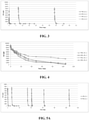
- FIG. 1 A depiction of oxygen levels over time in a sealed glass flask filled with oxygen-saturated water, and without any oxygen-scavenging material in the flask, is presented in the graph of FIG. 1 .
- the oxygen levels in the flask remain relatively constant over time. These constant oxygen levels, in the presence of food or beverage, result in oxidation reactions in the container, as well as the growth of microorganisms such as fungi or bacteria.
- FIGs. 2 and 4 depict oxygen levels over time in sealed glass flasks filled with oxygen-saturated water and with thermoplastic elastomer base resins (specifically, thermoplastic vulcanizates) inserted into the flasks
- FIG. 6 depicts oxygen levels over time in sealed glass flasks filled with demineralized tap water having an oxygen concentration of approximately 8000 ppm. and with thermoplastic elastomer base resins (specifically, thermoplastic vulcanizates) inserted into the flasks.
- FIG. 2 depicts the oxygen levels in a glass flask filled with water into which a sample of a first type of thermoplastic vulcanizate has been inserted
- FIG. 4 depicts the oxygen levels in a glass flask filled with water into which a sample of a second type of thermoplastic vulcanizate has been inserted
- FIG. 6 depicts the oxygen levels in a glass flask filled with water into which a sample of a third type of thermoplastic vulcanizate has been inserted. While the oxygen levels measured in FIGs. 2 , 4 , and 6 decrease gradually over time, the thermoplastic elastomer base resins, on their own, do not scavenge oxygen quickly enough for the purposes of the present invention.
- oxygen-scavenging refers to a material that reacts with ambient oxygen, reducing the amount of oxygen in a volume of gas or liquid that comes into contact with the "oxygen-scavenging” material.
- oxygen-scavenging material located in the interior of a closed container will reduce the ambient levels of oxygen in that closed container over time as oxygen within the container is consumed via oxidation reactions with the oxygen-scavenging material.
- an oxygen-scavenging material is an oxygen-scavenging polymer that comprises both a hydrophobic polymer and an oxygen scavenger.
- Hydrophobic polymers comprise relatively fewer polar functional groups than hydrophilic polymers, rendering these hydrophobic polymers insoluble in water.
- the hydrophobic polymer is a polyolefin such as polyethylene or polypropylene, a polyester such as polyamide or polyethylene terephthalate (PET), a thermoplastic elastomer such as thermoplastic vulcanizate, styrene isoprene butadiene, polymethylpentene, polybutene-1, polyisobutylene, ethylene propylene rubber, or ethylene propylene diene monomer rubber, or a blend of two or more such hydrophobic polymers.
- the hydrophobic polymer serves as a barrier to moisture and is relatively impermeable to water vapor at ambient temperatures.
- the hydrophobic polymer is a thermoplastic vulcanizate, such as (for example) one of a group of soft, colorable, specialty thermoplastic vulcanizates (TPVs) in the thermoplastic elastomer (TPE) family.
- thermoplastic vulcanizates can be used, for example, in non-fatty food contact applications.
- the oxygen scavenger may comprise particles of an oxygen-scavenging material dispersed throughout a matrix of the hydrophobic polymer.
- the oxygen scavenger dispersed throughout the hydrophobic polymer matrix may be a water-activated oxygen scavenging material that is activated by humidity/water absorption.
- water-activated oxygen scavenging materials include sodium sulphite, sodium ascorbate, potassium sulphite, and potassium ascorbate.
- the oxygen-scavenging material dispersed throughout the hydrophobic polymer matrix is sodium sulphite.
- the oxygen-scavenging polymer material may comprise between about 5% and 20% oxygen scavenger, between about 10% and about 15% oxygen scavenger or between about 12% and about 13% oxygen scavenger. In some preferred embodiments of the invention, the oxygen-scavenging polymer comprises about 12% sodium sulphite.
- oxygen scavenger such as, for example, sodium sulphite
- too little or too much oxygen scavenger will reduce the oxygen-scavenging rate of the oxygen-scavenging polymer to less effective levels.
- excessive amounts of sulfites in a food or beverage can cause negative reactions in sulfite-sensitive individuals, and therefore the levels of sodium sulphite in the oxygen-scavenging polymer may be limited in some embodiments of the invention.
- the oxygen-scavenging material also comprises one or more hydrophilic polymers.
- Hydrophilic polymers comprise polar or charged functional groups, which give these polymers a greater affinity for water, and may render the hydrophilic polymer water-soluble.
- the hydrophilic polymer is dispersed, along with the oxygen scavenger, throughout the matrix of hydrophobic polymer. It is believed that the hydrophilic polymer, when dispersed throughout the hydrophobic matrix, conducts moisture to the oxygen scavenger dispersed throughout the hydrophobic matrix. This results in the oxygen scavenger reacting with the water vapor to scavenge oxygen and quickly reduce the oxygen levels of the surrounding environment.
- the hydrophilic polymer comprises ethylene vinyl alcohol (EVOH), polyvinyl alcohol (PVOH), or a polyester such as polyamide.
- the oxygen-scavenging polymer material may comprise between about 1% and about 6% hydrophilic polymer, or between about 2% and about 5% hydrophilic polymer.
- the oxygen-scavenging polymer material comprises about 3% EVOH and about 12% sodium sulphite.
- the oxygen-scavenging polymer material comprises about 4% EVOH and about 12% sodium sulphite.
- the oxygen-scavenging polymer may comprise talc.
- the talc may facilitate the adsorption of moisture into the oxygen-scavenging polymer.
- the oxygen-scavenging polymer may comprise between about 1% and about 10% talc. In certain preferred embodiments, the oxygen-scavenging polymer may comprise between about 4% and about 6% talc.
- various apparatuses comprising the oxygen-scavenging polymer can be manufactured and used.
- the apparatus may be a device used to store, transport, or dispense beer.
- the apparatus may be a device used to store, transport, or dispense other beverages, such as a cider, a wine, a malt-based beverage, a fermented beverage, a cider-based beverage, a spirit, a juice, a syrup, a carbonated or non-carbonated soft drink, a coffee, or a tea.
- the apparatus may be a device used to store or transport foodstuffs, or ingredients for a food or a beverage, including solid or liquid ingredients such as hop concentrates, fruit concentrates, sweeteners, bittering additives, concentrated spices, foaming promoters, concentrated malt-based liquids, concentrated fermented liquids, concentrated beer, colorants, flavoring additives, and mixtures thereof.
- the ingredients for example, an alcoholic concentrated beer
- suitable flavor additives include (but are not limited to) a spice flavor, a fruit flavor, a hop flavor, a malt flavor, a nut flavor, a smoke flavor, other suitable flavors (such as a coffee flavor or a chocolate flavor), and mixtures of such flavors.
- the term "beer” is defined as a beverage produced by the brewing and fermentation of a starch source in water using yeast.
- suitable starch sources include, but are not limited to, grains such as barley, wheat, corn, rice, sorghum, and millet.
- Other starch sources such as cassava, sugarcane, and potato, can also be used as a starch source to produce a beer.
- various strains of yeast may be used to ferment a "beer,” including but not limited to ale yeast strains ("top-fermenting” yeast) and lager yeast strains ("bottom-fermenting” yeast).
- the term “beer” includes but is not limited to a particular subset of beverages defined as a "beer” under a particular state's laws, regulations, or standards.
- the German Rechsgebot states that a beverage having ingredients other than water, barley-malt, and hops cannot be considered a "beer"-but for the purposes of the present invention, the term “beer” has no such ingredient restrictions.
- the term “beer” does not import or imply a restriction on the alcoholic content of a beverage.
- the apparatus for storing, dispensing, or transporting beer is a closure for a beverage container (for example, a cap or tab), the closure comprising both a shell as well as sealing elements.
- the sealing elements are suitable for sealing the shell of the closure to a mouth of a container when the closure is fixed to the mouth of the container.
- the shell of the closure is comprised of the hydrophobic polymer, for example a polyolefin such as polyethylene or polypropylene, and the sealing elements are comprised of thermoplastic elastomer (such as a thermoplastic vulcanizate).
- an oxygen scavenger such as sodium sulfite, is dispersed throughout the sealing elements, the shell, or both.
- the apparatus for storing, dispensing, or transporting beer may be any of a bottle, can, or other container or packaging for storing one or more servings of beer or other beverages; a pod, pack, capsule, cartridge, or other container for storing beer flavors, beer concentrate, or other beverages, beverage concentrates, ingredients, or concentrated ingredients; a liquid line, or a portion thereof, for transporting beer or other beverages through the liquid line; and a reservoir or similar container for holding one or more servings of beer or other beverages.
- the capacity of the container may range from as little as 0.01 liters to as much as 20 liters.
- the container may comprise at least one wall, that at least one wall comprising the oxygen-scavenging polymer of the present invention.
- the container may comprise one or more beverages, concentrated beverages, beverage components, or concentrated beverage components, as described above.
- the container is a sealed container containing a gas.
- the gas may be a pressurized gas used to pressurize a beverage or concentrated beverage in the sealed container, including but not limited to one or more of carbon dioxide, nitrogen, nitrogen dioxide, and nitrous oxide.
- the pressurized gas dissolves into the concentrated beverage.
- the gas may be an inert gas.
- a beverage is produced by combining a liquid with a beverage or beverage component contained within the containers of the present invention.
- water is added to the concentrated beverage to produce a beverage suitable for consumption.
- the water is carbonated water or beer.
- the beverage produced by mixing the concentrated beverage with water is carbonated by dissolving (through sparging or equivalent processes known to those of skill in the art) additional carbon dioxide into the beverage.
- additional alcohol, flavors, colorants, or other ingredients may be added to the beverage as well.
- the oxygen-scavenging polymer may have one or more beneficial effects.
- the oxygen-scavenging polymer absorbs moisture and water vapor and scavenges oxygen in the apparatuses, reducing the effects of oxidation reactions on the taste of the beer that is contained, transported, and dispensed from these apparatuses.
- the oxygen-scavenging polymer also aids in the prevention of microorganism growth, such as the growth of fungi, bacteria, and other undesirable organisms. And the oxygen-scavenging polymer helps promote a desirable amount of foam on the surface of the beer.
- the following Examples describe exemplary embodiments of the oxygen-scavenging polymer of the present invention. These exemplary embodiments each comprise a sample of an oxygen-scavenging polymer cut from an injection-molded plate of the oxygen-scavenging polymer.
- FIG. 3 illustrates the oxygen levels in these four glass flasks measured over time (in parts per billion). Once the oxygen in a flask was depleted, the measurements were repeated twice with new volumes of oxygen-saturated water.
- the first exemplary embodiment of the oxygen-scavenging polymer, used in the experiment illustrated by FIG. 3 is comprised of the first type of thermoplastic vulcanizate used in the experiment depicted in FIG. 2 , as well as 12% sodium sulphite and 3% ethylene vinyl alcohol (EVOH).
- EVOH ethylene vinyl alcohol
- the first exemplary embodiment of the oxygen-scavenging polymer absorbed oxygen at a much greater rate (by a factor of thousands) than the thermoplastic elastomer base resin when the oxygen-scavenging polymer was first placed in the flask.
- the material utilized in the experiment depicted in FIG. 2 had a normalized reaction constant of 0.34 ⁇ 0.15, whereas the first exemplary oxygen-scavenging polymer used in the experiment depicted in FIG. 3 had a normalized reaction constant of 6244 ⁇ 838 during the first trial. Even when the flasks were refilled with oxygen-saturated water, the normalized reaction constant of the first exemplary oxygen-scavenging polymer was hundreds of times that of the thermoplastic elastomer base resin depicted in FIG. 2 .
- FIGs. 5A and 5B illustrates the oxygen levels in these four glass flasks measured over time (in parts per billion). Once the oxygen in a flask was depleted, the measurements were repeated six times with new volumes of oxygen-saturated water.
- the second exemplary embodiment of the oxygen-scavenging polymer used in the experiment illustrated by FIGs. 5A and 5B , is comprised of the second type of thermoplastic vulcanizate used in the experiment depicted in FIG. 4 , as well as 12% sodium sulphite and 3% ethylene vinyl alcohol (EVOH).
- EVOH ethylene vinyl alcohol
- the second exemplary embodiment of the oxygen-scavenging polymer absorbed oxygen at a much greater rate (by a factor of thousands) than the thermoplastic elastomer base resin when the oxygen-scavenging polymer was first placed in the flask.
- the material utilized in the experiment depicted in FIG. 4 had a normalized reaction constant of 0.35 ⁇ 0.21, whereas the second exemplary oxygen-scavenging polymer used in the experiment depicted in FIGs. 5A and 5B had a normalized reaction constant of 18420 ⁇ 8750 during the first trial. Even when the flasks were refilled with oxygen-saturated water, the normalized reaction constant of the second exemplary oxygen-scavenging polymer was still hundreds of times that of the thermoplastic elastomer base resin depicted in FIG. 4 .
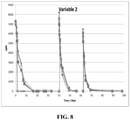
- FIGs. 7 and 8 each illustrate the oxygen levels over time in two separate groups of four glass flasks filled with demineralized tap water (having an oxygen content of 8000 ppm).
- demineralized tap water having an oxygen content of 8000 ppm.
- a sample of a third exemplary embodiment of the oxygen-scavenging polymer of the present invention was placed in each of the four glass flasks of the first group of four flasks, the flasks sealed, and the oxygen levels in the flasks measured over time (in parts per billion).
- the measurements were repeated twice with new volumes of oxygen-saturated water.
- the third exemplary embodiment of the oxygen-scavenging polymer, used in the experiment illustrated by FIG. 7 is comprised of the third type of thermoplastic vulcanizate used in the experiment depicted in FIG. 6 , as well as talc and 12% sodium sulphite.
- the fourth exemplary embodiment of the oxygen-scavenging polymer, used in the experiment illustrated by FIG. 8 is comprised of the third type of thermoplastic vulcanizate used in the experiment depicted in FIG. 6 , as well as talc, 12% sodium sulphite, and 4% ethylene vinyl alcohol (EVOH).
- the third and fourth exemplary oxygen-scavenging polymers absorbed oxygen at a much greater rate than the thermoplastic elastomer base resin when those exemplary oxygen-scavenging polymers were first placed in the flask. And even when the flasks were refilled with demineralized tap water, the third and fourth exemplary oxygen-scavenging polymers of FIGs. 7 and 8 reacted at a much faster rate than the thermoplastic elastomer base resin depicted in FIG. 6 .
Landscapes
- Chemical & Material Sciences (AREA)
- Organic Chemistry (AREA)
- Chemical Kinetics & Catalysis (AREA)
- Health & Medical Sciences (AREA)
- Polymers & Plastics (AREA)
- Engineering & Computer Science (AREA)
- Medicinal Chemistry (AREA)
- Life Sciences & Earth Sciences (AREA)
- Food Science & Technology (AREA)
- Analytical Chemistry (AREA)
- Zoology (AREA)
- Wood Science & Technology (AREA)
- General Engineering & Computer Science (AREA)
- General Health & Medical Sciences (AREA)
- Genetics & Genomics (AREA)
- Bioinformatics & Cheminformatics (AREA)
- Biochemistry (AREA)
- Mechanical Engineering (AREA)
- Inorganic Chemistry (AREA)
- Nutrition Science (AREA)
- Packages (AREA)
- Food Preservation Except Freezing, Refrigeration, And Drying (AREA)
- Solid-Sorbent Or Filter-Aiding Compositions (AREA)
- Compositions Of Macromolecular Compounds (AREA)
- Non-Alcoholic Beverages (AREA)
- Distillation Of Fermentation Liquor, Processing Of Alcohols, Vinegar And Beer (AREA)
- Addition Polymer Or Copolymer, Post-Treatments, Or Chemical Modifications (AREA)
Applications Claiming Priority (2)
| Application Number | Priority Date | Filing Date | Title |
|---|---|---|---|
| US201562167105P | 2015-05-27 | 2015-05-27 | |
| PCT/IB2016/053080 WO2016189483A1 (en) | 2015-05-27 | 2016-05-26 | Oxygen-scavenging polymer compositions |
Publications (2)
| Publication Number | Publication Date |
|---|---|
| EP3303468A1 EP3303468A1 (en) | 2018-04-11 |
| EP3303468B1 true EP3303468B1 (en) | 2022-03-02 |
Family
ID=56137469
Family Applications (1)
| Application Number | Title | Priority Date | Filing Date |
|---|---|---|---|
| EP16730489.8A Revoked EP3303468B1 (en) | 2015-05-27 | 2016-05-26 | Oxygen-scavenging polymer compositions |
Country Status (13)
| Country | Link |
|---|---|
| US (2) | US20160346760A1 (enExample) |
| EP (1) | EP3303468B1 (enExample) |
| JP (1) | JP2018524420A (enExample) |
| KR (1) | KR102554088B1 (enExample) |
| CN (1) | CN107787346B (enExample) |
| AR (1) | AR104739A1 (enExample) |
| AU (1) | AU2016268491B2 (enExample) |
| BR (1) | BR112017025171B1 (enExample) |
| CA (1) | CA2987381C (enExample) |
| ES (1) | ES2915385T3 (enExample) |
| MX (1) | MX2017015032A (enExample) |
| RU (1) | RU2716024C2 (enExample) |
| WO (1) | WO2016189483A1 (enExample) |
Families Citing this family (6)
| Publication number | Priority date | Publication date | Assignee | Title |
|---|---|---|---|---|
| KR102486388B1 (ko) | 2017-07-28 | 2023-01-09 | 삼성전자주식회사 | 그래핀 양자점의 제조방법, 상기 제조방법에 따라 얻어진 그래핀 양자점을 포함한 하드마스크 조성물, 이를 이용한 패턴의 형성방법 및 상기 하드마스크 조성물을 이용하여 형성된 하드마스크 |
| CA3148056A1 (en) | 2017-08-09 | 2019-02-14 | Ball Corporation | Beverage containers with controlled oxygen transmission features |
| DE102020205101A1 (de) | 2020-04-22 | 2021-10-28 | Fraunhofer-Gesellschaft zur Förderung der angewandten Forschung eingetragener Verein | Verwendung von anorganischen Sulfiten und/oder Thiosulfaten zur Stabilisierung von thermoplastischen Kondensationspolymeren, stabilisierte Formmasse und hieraus hergestellte Formmassen und Formteile |
| WO2023034938A1 (en) * | 2021-09-01 | 2023-03-09 | Csp Technologies, Inc. | Compositions comprising reducing and / or hydrolyzable sugars for oxygen scavenging and methods of their use in packaging |
| US20230189835A1 (en) * | 2021-12-20 | 2023-06-22 | Starbucks Corporation | Widgetless canned nitrogen infused beverages |
| EP4581121A1 (en) | 2022-09-02 | 2025-07-09 | Heineken Supply Chain B.V. | Liquid beer concentrate |
Citations (8)
| Publication number | Priority date | Publication date | Assignee | Title |
|---|---|---|---|---|
| US4702966A (en) | 1981-01-23 | 1987-10-27 | American Can Company | Oxygen scavenger |
| WO1991017044A1 (en) | 1990-05-02 | 1991-11-14 | Zapata Industries, Inc. | Polymer compositions containing oxygen scavenging compounds |
| EP0831128A1 (en) | 1995-05-17 | 1998-03-25 | Tetra Laval Holdings & Finance Sa | Resin composition and laminate for storage of liquid food |
| JP2003192847A (ja) | 2001-09-18 | 2003-07-09 | Nihon Tetra Pak Kk | 酸素捕集性包装材料の製造法及び酸素捕集性包装材料 |
| WO2009130200A1 (en) | 2008-04-25 | 2009-10-29 | Ineos Manufacturing Belgium Nv | Oxygen Barrier Composition |
| WO2013128145A1 (en) | 2012-03-01 | 2013-09-06 | Benson, John, Everett | Closure liner composition with improved oxygen reduction |
| US20140311099A1 (en) | 2013-04-17 | 2014-10-23 | E I Du Pont De Nemours And Company | Packaging containing oxygen scavenging compositions |
| WO2015040232A1 (en) | 2013-09-23 | 2015-03-26 | Anheuser-Busch Inbev Sa | Thermoplastic polyester having enhanced barrier and impact properties |
Family Cites Families (25)
| Publication number | Priority date | Publication date | Assignee | Title |
|---|---|---|---|---|
| US4536409A (en) * | 1981-01-23 | 1985-08-20 | American Can Company | Oxygen scavenger |
| GB8427334D0 (en) | 1984-10-29 | 1984-12-05 | Ag Patents Ltd | Production of alcoholic beverages |
| CA1280042C (en) * | 1985-09-13 | 1991-02-12 | Hiromichi Fukazawa | Membrane type artificial lung and method for manufacture thereof |
| GB8803062D0 (en) * | 1988-02-10 | 1988-03-09 | Grace W R & Co | Sealed containers & sealing compositions for them |
| JPH0733475B2 (ja) * | 1989-05-23 | 1995-04-12 | 東洋製罐株式会社 | 熱成形可能な酸素吸収性樹脂組成物 |
| EP0401666B1 (en) * | 1989-05-30 | 1995-02-22 | Kuraray Co., Ltd. | Resin composition |
| JPH0741930B2 (ja) * | 1991-04-19 | 1995-05-10 | 東洋製罐株式会社 | 迅速酸素吸収性容器蓋 |
| JP2867916B2 (ja) * | 1995-04-17 | 1999-03-10 | 東洋製罐株式会社 | 酸素吸収性樹脂組成物 |
| US6274210B1 (en) * | 1995-12-15 | 2001-08-14 | W. R. Grace & Co. -Conn | Oxygen scavenging compositions with low migration |
| US20030161985A1 (en) * | 1997-04-24 | 2003-08-28 | Eduardo Lauer | Synthetic closure |
| US5977212A (en) * | 1997-11-21 | 1999-11-02 | W. R. Grace & Co.-Conn. | Oxygen scavenging compositions |
| US6210601B1 (en) | 1999-04-21 | 2001-04-03 | Larry A. Hottle | Method of making an oxygen scavenging sealant composition |
| WO2001014219A1 (en) * | 1999-08-20 | 2001-03-01 | Supreme Corq. Inc. | Secondary synthetic closure for sealing corked bottles or containers |
| JP5143322B2 (ja) * | 2000-09-01 | 2013-02-13 | 株式会社クラレ | ガスバリア性に優れた樹脂組成物 |
| US6559205B2 (en) * | 2001-01-16 | 2003-05-06 | Chevron Phillips Chemical Company Lp | Oxygen scavenging polymer blends and emulsion-based methods for preparing same |
| US20030212167A1 (en) | 2002-05-08 | 2003-11-13 | Teknor Apex Company | Oxygen-scavenging polymer compositions |
| JP2003335358A (ja) * | 2002-05-17 | 2003-11-25 | Mitsubishi Chemicals Corp | 保護層を有するキャップライナー |
| US8192676B2 (en) * | 2004-02-12 | 2012-06-05 | Valspar Sourcing, Inc. | Container having barrier properties and method of manufacturing the same |
| US7399425B2 (en) * | 2004-11-17 | 2008-07-15 | Phoenix Closures, Inc. | Closure with oxygen scavenger |
| US8889201B2 (en) * | 2008-08-21 | 2014-11-18 | Pat's Backcountry Beverages, Inc. | Method of making alcohol concentrate |
| MY161840A (en) * | 2009-11-27 | 2017-05-15 | Mitsubishi Gas Chemical Co | Copolymerized polyamide resin, method for producing same, resin composition, and molded article formed from the copolymerized polyamide resin or the resin composition |
| CA2782488C (en) * | 2009-12-08 | 2017-09-05 | Actega Ds Gmbh | Sealing compounds with scavenger materials of small particle size |
| CN103917100A (zh) | 2011-09-09 | 2014-07-09 | 卡夫食品集团品牌有限责任公司 | 储存稳定的泡煮的饮料浓缩物及其制备方法 |
| US9248943B2 (en) * | 2012-02-18 | 2016-02-02 | Anheuser-Busch, Llc | Container closure |
| RU2640536C2 (ru) | 2012-04-30 | 2018-01-09 | Пластипэк Пэкэджинг Инк. | Композиции поглотителя кислорода |
-
2016
- 2016-05-26 AU AU2016268491A patent/AU2016268491B2/en not_active Ceased
- 2016-05-26 KR KR1020177036532A patent/KR102554088B1/ko active Active
- 2016-05-26 CA CA2987381A patent/CA2987381C/en active Active
- 2016-05-26 WO PCT/IB2016/053080 patent/WO2016189483A1/en not_active Ceased
- 2016-05-26 US US15/165,690 patent/US20160346760A1/en not_active Abandoned
- 2016-05-26 BR BR112017025171-0A patent/BR112017025171B1/pt active IP Right Grant
- 2016-05-26 CN CN201680029923.7A patent/CN107787346B/zh active Active
- 2016-05-26 US US15/576,843 patent/US10968337B2/en active Active
- 2016-05-26 EP EP16730489.8A patent/EP3303468B1/en not_active Revoked
- 2016-05-26 RU RU2017143358A patent/RU2716024C2/ru active
- 2016-05-26 JP JP2017561341A patent/JP2018524420A/ja active Pending
- 2016-05-26 ES ES16730489T patent/ES2915385T3/es active Active
- 2016-05-26 MX MX2017015032A patent/MX2017015032A/es unknown
- 2016-05-26 AR ARP160101506A patent/AR104739A1/es active IP Right Grant
Patent Citations (8)
| Publication number | Priority date | Publication date | Assignee | Title |
|---|---|---|---|---|
| US4702966A (en) | 1981-01-23 | 1987-10-27 | American Can Company | Oxygen scavenger |
| WO1991017044A1 (en) | 1990-05-02 | 1991-11-14 | Zapata Industries, Inc. | Polymer compositions containing oxygen scavenging compounds |
| EP0831128A1 (en) | 1995-05-17 | 1998-03-25 | Tetra Laval Holdings & Finance Sa | Resin composition and laminate for storage of liquid food |
| JP2003192847A (ja) | 2001-09-18 | 2003-07-09 | Nihon Tetra Pak Kk | 酸素捕集性包装材料の製造法及び酸素捕集性包装材料 |
| WO2009130200A1 (en) | 2008-04-25 | 2009-10-29 | Ineos Manufacturing Belgium Nv | Oxygen Barrier Composition |
| WO2013128145A1 (en) | 2012-03-01 | 2013-09-06 | Benson, John, Everett | Closure liner composition with improved oxygen reduction |
| US20140311099A1 (en) | 2013-04-17 | 2014-10-23 | E I Du Pont De Nemours And Company | Packaging containing oxygen scavenging compositions |
| WO2015040232A1 (en) | 2013-09-23 | 2015-03-26 | Anheuser-Busch Inbev Sa | Thermoplastic polyester having enhanced barrier and impact properties |
Also Published As
| Publication number | Publication date |
|---|---|
| WO2016189483A1 (en) | 2016-12-01 |
| MX2017015032A (es) | 2018-08-15 |
| RU2716024C2 (ru) | 2020-03-05 |
| KR20180011789A (ko) | 2018-02-02 |
| KR102554088B1 (ko) | 2023-07-12 |
| US20180163038A1 (en) | 2018-06-14 |
| CA2987381A1 (en) | 2016-12-01 |
| AR104739A1 (es) | 2017-08-09 |
| ES2915385T3 (es) | 2022-06-22 |
| BR112017025171A2 (pt) | 2018-07-31 |
| CN107787346A (zh) | 2018-03-09 |
| EP3303468A1 (en) | 2018-04-11 |
| RU2017143358A (ru) | 2019-07-02 |
| CA2987381C (en) | 2024-01-30 |
| US10968337B2 (en) | 2021-04-06 |
| JP2018524420A (ja) | 2018-08-30 |
| CN107787346B (zh) | 2021-05-07 |
| RU2017143358A3 (enExample) | 2019-07-26 |
| AU2016268491A1 (en) | 2017-11-30 |
| BR112017025171B1 (pt) | 2021-12-21 |
| US20160346760A1 (en) | 2016-12-01 |
| AU2016268491B2 (en) | 2020-05-07 |
Similar Documents
| Publication | Publication Date | Title |
|---|---|---|
| EP3303468B1 (en) | Oxygen-scavenging polymer compositions | |
| US9803163B2 (en) | Systems for carbonating customized beverages | |
| KR20170122191A (ko) | 가압 음료 농축액 및 이를 이용한 음료 제조장치 및 제조방법 | |
| US10023828B2 (en) | Methods for decarbonating fermented liquids | |
| US20240190628A1 (en) | Systems and methods for de-oxygenation of a closed container | |
| HU230183B1 (hu) | Csomagolóeszköz folyékony élesztőhöz | |
| US20140373487A1 (en) | Methods of transporting decarbonated liquid |
Legal Events
| Date | Code | Title | Description |
|---|---|---|---|
| STAA | Information on the status of an ep patent application or granted ep patent |
Free format text: STATUS: THE INTERNATIONAL PUBLICATION HAS BEEN MADE |
|
| PUAI | Public reference made under article 153(3) epc to a published international application that has entered the european phase |
Free format text: ORIGINAL CODE: 0009012 |
|
| STAA | Information on the status of an ep patent application or granted ep patent |
Free format text: STATUS: REQUEST FOR EXAMINATION WAS MADE |
|
| 17P | Request for examination filed |
Effective date: 20180102 |
|
| AK | Designated contracting states |
Kind code of ref document: A1 Designated state(s): AL AT BE BG CH CY CZ DE DK EE ES FI FR GB GR HR HU IE IS IT LI LT LU LV MC MK MT NL NO PL PT RO RS SE SI SK SM TR |
|
| AX | Request for extension of the european patent |
Extension state: BA ME |
|
| DAV | Request for validation of the european patent (deleted) | ||
| DAX | Request for extension of the european patent (deleted) | ||
| STAA | Information on the status of an ep patent application or granted ep patent |
Free format text: STATUS: EXAMINATION IS IN PROGRESS |
|
| 17Q | First examination report despatched |
Effective date: 20181017 |
|
| REG | Reference to a national code |
Ref country code: DE Ref legal event code: R079 Ref document number: 602016069570 Country of ref document: DE Free format text: PREVIOUS MAIN CLASS: C08L0023000000 Ipc: B01J0020100000 |
|
| GRAP | Despatch of communication of intention to grant a patent |
Free format text: ORIGINAL CODE: EPIDOSNIGR1 |
|
| STAA | Information on the status of an ep patent application or granted ep patent |
Free format text: STATUS: GRANT OF PATENT IS INTENDED |
|
| RIC1 | Information provided on ipc code assigned before grant |
Ipc: C12C 11/11 20190101ALI20210811BHEP Ipc: C08L 23/08 20060101ALI20210811BHEP Ipc: C08K 3/30 20060101ALI20210811BHEP Ipc: C12H 1/14 20060101ALI20210811BHEP Ipc: B01J 20/26 20060101ALI20210811BHEP Ipc: B01J 20/22 20060101ALI20210811BHEP Ipc: B01J 20/04 20060101ALI20210811BHEP Ipc: C08L 23/00 20060101ALI20210811BHEP Ipc: B01J 20/10 20060101AFI20210811BHEP |
|
| INTG | Intention to grant announced |
Effective date: 20210915 |
|
| GRAS | Grant fee paid |
Free format text: ORIGINAL CODE: EPIDOSNIGR3 |
|
| GRAA | (expected) grant |
Free format text: ORIGINAL CODE: 0009210 |
|
| STAA | Information on the status of an ep patent application or granted ep patent |
Free format text: STATUS: THE PATENT HAS BEEN GRANTED |
|
| AK | Designated contracting states |
Kind code of ref document: B1 Designated state(s): AL AT BE BG CH CY CZ DE DK EE ES FI FR GB GR HR HU IE IS IT LI LT LU LV MC MK MT NL NO PL PT RO RS SE SI SK SM TR |
|
| REG | Reference to a national code |
Ref country code: GB Ref legal event code: FG4D |
|
| REG | Reference to a national code |
Ref country code: CH Ref legal event code: EP Ref country code: AT Ref legal event code: REF Ref document number: 1471803 Country of ref document: AT Kind code of ref document: T Effective date: 20220315 |
|
| REG | Reference to a national code |
Ref country code: DE Ref legal event code: R096 Ref document number: 602016069570 Country of ref document: DE |
|
| REG | Reference to a national code |
Ref country code: IE Ref legal event code: FG4D |
|
| REG | Reference to a national code |
Ref country code: NL Ref legal event code: FP |
|
| REG | Reference to a national code |
Ref country code: ES Ref legal event code: FG2A Ref document number: 2915385 Country of ref document: ES Kind code of ref document: T3 Effective date: 20220622 |
|
| REG | Reference to a national code |
Ref country code: LT Ref legal event code: MG9D |
|
| PG25 | Lapsed in a contracting state [announced via postgrant information from national office to epo] |
Ref country code: SE Free format text: LAPSE BECAUSE OF FAILURE TO SUBMIT A TRANSLATION OF THE DESCRIPTION OR TO PAY THE FEE WITHIN THE PRESCRIBED TIME-LIMIT Effective date: 20220302 Ref country code: RS Free format text: LAPSE BECAUSE OF FAILURE TO SUBMIT A TRANSLATION OF THE DESCRIPTION OR TO PAY THE FEE WITHIN THE PRESCRIBED TIME-LIMIT Effective date: 20220302 Ref country code: NO Free format text: LAPSE BECAUSE OF FAILURE TO SUBMIT A TRANSLATION OF THE DESCRIPTION OR TO PAY THE FEE WITHIN THE PRESCRIBED TIME-LIMIT Effective date: 20220602 Ref country code: LT Free format text: LAPSE BECAUSE OF FAILURE TO SUBMIT A TRANSLATION OF THE DESCRIPTION OR TO PAY THE FEE WITHIN THE PRESCRIBED TIME-LIMIT Effective date: 20220302 Ref country code: HR Free format text: LAPSE BECAUSE OF FAILURE TO SUBMIT A TRANSLATION OF THE DESCRIPTION OR TO PAY THE FEE WITHIN THE PRESCRIBED TIME-LIMIT Effective date: 20220302 Ref country code: BG Free format text: LAPSE BECAUSE OF FAILURE TO SUBMIT A TRANSLATION OF THE DESCRIPTION OR TO PAY THE FEE WITHIN THE PRESCRIBED TIME-LIMIT Effective date: 20220602 |
|
| REG | Reference to a national code |
Ref country code: AT Ref legal event code: MK05 Ref document number: 1471803 Country of ref document: AT Kind code of ref document: T Effective date: 20220302 |
|
| PG25 | Lapsed in a contracting state [announced via postgrant information from national office to epo] |
Ref country code: PL Free format text: LAPSE BECAUSE OF FAILURE TO SUBMIT A TRANSLATION OF THE DESCRIPTION OR TO PAY THE FEE WITHIN THE PRESCRIBED TIME-LIMIT Effective date: 20220302 Ref country code: LV Free format text: LAPSE BECAUSE OF FAILURE TO SUBMIT A TRANSLATION OF THE DESCRIPTION OR TO PAY THE FEE WITHIN THE PRESCRIBED TIME-LIMIT Effective date: 20220302 Ref country code: GR Free format text: LAPSE BECAUSE OF FAILURE TO SUBMIT A TRANSLATION OF THE DESCRIPTION OR TO PAY THE FEE WITHIN THE PRESCRIBED TIME-LIMIT Effective date: 20220603 Ref country code: FI Free format text: LAPSE BECAUSE OF FAILURE TO SUBMIT A TRANSLATION OF THE DESCRIPTION OR TO PAY THE FEE WITHIN THE PRESCRIBED TIME-LIMIT Effective date: 20220302 |
|
| PG25 | Lapsed in a contracting state [announced via postgrant information from national office to epo] |
Ref country code: SM Free format text: LAPSE BECAUSE OF FAILURE TO SUBMIT A TRANSLATION OF THE DESCRIPTION OR TO PAY THE FEE WITHIN THE PRESCRIBED TIME-LIMIT Effective date: 20220302 Ref country code: SK Free format text: LAPSE BECAUSE OF FAILURE TO SUBMIT A TRANSLATION OF THE DESCRIPTION OR TO PAY THE FEE WITHIN THE PRESCRIBED TIME-LIMIT Effective date: 20220302 Ref country code: RO Free format text: LAPSE BECAUSE OF FAILURE TO SUBMIT A TRANSLATION OF THE DESCRIPTION OR TO PAY THE FEE WITHIN THE PRESCRIBED TIME-LIMIT Effective date: 20220302 Ref country code: PT Free format text: LAPSE BECAUSE OF FAILURE TO SUBMIT A TRANSLATION OF THE DESCRIPTION OR TO PAY THE FEE WITHIN THE PRESCRIBED TIME-LIMIT Effective date: 20220704 Ref country code: EE Free format text: LAPSE BECAUSE OF FAILURE TO SUBMIT A TRANSLATION OF THE DESCRIPTION OR TO PAY THE FEE WITHIN THE PRESCRIBED TIME-LIMIT Effective date: 20220302 Ref country code: CZ Free format text: LAPSE BECAUSE OF FAILURE TO SUBMIT A TRANSLATION OF THE DESCRIPTION OR TO PAY THE FEE WITHIN THE PRESCRIBED TIME-LIMIT Effective date: 20220302 Ref country code: AT Free format text: LAPSE BECAUSE OF FAILURE TO SUBMIT A TRANSLATION OF THE DESCRIPTION OR TO PAY THE FEE WITHIN THE PRESCRIBED TIME-LIMIT Effective date: 20220302 |
|
| PG25 | Lapsed in a contracting state [announced via postgrant information from national office to epo] |
Ref country code: IS Free format text: LAPSE BECAUSE OF FAILURE TO SUBMIT A TRANSLATION OF THE DESCRIPTION OR TO PAY THE FEE WITHIN THE PRESCRIBED TIME-LIMIT Effective date: 20220702 Ref country code: AL Free format text: LAPSE BECAUSE OF FAILURE TO SUBMIT A TRANSLATION OF THE DESCRIPTION OR TO PAY THE FEE WITHIN THE PRESCRIBED TIME-LIMIT Effective date: 20220302 |
|
| REG | Reference to a national code |
Ref country code: DE Ref legal event code: R026 Ref document number: 602016069570 Country of ref document: DE |
|
| REG | Reference to a national code |
Ref country code: DE Ref legal event code: R119 Ref document number: 602016069570 Country of ref document: DE |
|
| PLBI | Opposition filed |
Free format text: ORIGINAL CODE: 0009260 |
|
| PLAB | Opposition data, opponent's data or that of the opponent's representative modified |
Free format text: ORIGINAL CODE: 0009299OPPO |
|
| PLAX | Notice of opposition and request to file observation + time limit sent |
Free format text: ORIGINAL CODE: EPIDOSNOBS2 |
|
| REG | Reference to a national code |
Ref country code: CH Ref legal event code: PL |
|
| 26 | Opposition filed |
Opponent name: OXON IP B.V. Effective date: 20221130 |
|
| R26 | Opposition filed (corrected) |
Opponent name: OXON IP B.V. Effective date: 20221130 |
|
| PG25 | Lapsed in a contracting state [announced via postgrant information from national office to epo] |
Ref country code: MC Free format text: LAPSE BECAUSE OF FAILURE TO SUBMIT A TRANSLATION OF THE DESCRIPTION OR TO PAY THE FEE WITHIN THE PRESCRIBED TIME-LIMIT Effective date: 20220302 Ref country code: LU Free format text: LAPSE BECAUSE OF NON-PAYMENT OF DUE FEES Effective date: 20220526 Ref country code: LI Free format text: LAPSE BECAUSE OF NON-PAYMENT OF DUE FEES Effective date: 20220531 Ref country code: DK Free format text: LAPSE BECAUSE OF FAILURE TO SUBMIT A TRANSLATION OF THE DESCRIPTION OR TO PAY THE FEE WITHIN THE PRESCRIBED TIME-LIMIT Effective date: 20220302 Ref country code: CH Free format text: LAPSE BECAUSE OF NON-PAYMENT OF DUE FEES Effective date: 20220531 |
|
| PG25 | Lapsed in a contracting state [announced via postgrant information from national office to epo] |
Ref country code: SI Free format text: LAPSE BECAUSE OF FAILURE TO SUBMIT A TRANSLATION OF THE DESCRIPTION OR TO PAY THE FEE WITHIN THE PRESCRIBED TIME-LIMIT Effective date: 20220302 |
|
| PG25 | Lapsed in a contracting state [announced via postgrant information from national office to epo] |
Ref country code: IE Free format text: LAPSE BECAUSE OF NON-PAYMENT OF DUE FEES Effective date: 20220526 |
|
| PLBB | Reply of patent proprietor to notice(s) of opposition received |
Free format text: ORIGINAL CODE: EPIDOSNOBS3 |
|
| PG25 | Lapsed in a contracting state [announced via postgrant information from national office to epo] |
Ref country code: DE Free format text: LAPSE BECAUSE OF NON-PAYMENT OF DUE FEES Effective date: 20221201 |
|
| P01 | Opt-out of the competence of the unified patent court (upc) registered |
Effective date: 20230527 |
|
| PG25 | Lapsed in a contracting state [announced via postgrant information from national office to epo] |
Ref country code: HU Free format text: LAPSE BECAUSE OF FAILURE TO SUBMIT A TRANSLATION OF THE DESCRIPTION OR TO PAY THE FEE WITHIN THE PRESCRIBED TIME-LIMIT; INVALID AB INITIO Effective date: 20160526 |
|
| PG25 | Lapsed in a contracting state [announced via postgrant information from national office to epo] |
Ref country code: MK Free format text: LAPSE BECAUSE OF FAILURE TO SUBMIT A TRANSLATION OF THE DESCRIPTION OR TO PAY THE FEE WITHIN THE PRESCRIBED TIME-LIMIT Effective date: 20220302 Ref country code: CY Free format text: LAPSE BECAUSE OF FAILURE TO SUBMIT A TRANSLATION OF THE DESCRIPTION OR TO PAY THE FEE WITHIN THE PRESCRIBED TIME-LIMIT Effective date: 20220302 |
|
| RDAF | Communication despatched that patent is revoked |
Free format text: ORIGINAL CODE: EPIDOSNREV1 |
|
| REG | Reference to a national code |
Ref country code: DE Ref legal event code: R103 Ref document number: 602016069570 Country of ref document: DE Ref country code: DE Ref legal event code: R064 Ref document number: 602016069570 Country of ref document: DE |
|
| PGFP | Annual fee paid to national office [announced via postgrant information from national office to epo] |
Ref country code: NL Payment date: 20240521 Year of fee payment: 9 |
|
| PG25 | Lapsed in a contracting state [announced via postgrant information from national office to epo] |
Ref country code: TR Free format text: LAPSE BECAUSE OF FAILURE TO SUBMIT A TRANSLATION OF THE DESCRIPTION OR TO PAY THE FEE WITHIN THE PRESCRIBED TIME-LIMIT Effective date: 20220302 |
|
| PGFP | Annual fee paid to national office [announced via postgrant information from national office to epo] |
Ref country code: GB Payment date: 20240521 Year of fee payment: 9 |
|
| PGFP | Annual fee paid to national office [announced via postgrant information from national office to epo] |
Ref country code: ES Payment date: 20240627 Year of fee payment: 9 |
|
| PGFP | Annual fee paid to national office [announced via postgrant information from national office to epo] |
Ref country code: FR Payment date: 20240528 Year of fee payment: 9 |
|
| PGFP | Annual fee paid to national office [announced via postgrant information from national office to epo] |
Ref country code: BE Payment date: 20240521 Year of fee payment: 9 |
|
| PG25 | Lapsed in a contracting state [announced via postgrant information from national office to epo] |
Ref country code: MT Free format text: LAPSE BECAUSE OF FAILURE TO SUBMIT A TRANSLATION OF THE DESCRIPTION OR TO PAY THE FEE WITHIN THE PRESCRIBED TIME-LIMIT Effective date: 20220302 |
|
| PGFP | Annual fee paid to national office [announced via postgrant information from national office to epo] |
Ref country code: IT Payment date: 20240524 Year of fee payment: 9 |
|
| RDAF | Communication despatched that patent is revoked |
Free format text: ORIGINAL CODE: EPIDOSNREV1 |
|
| RDAG | Patent revoked |
Free format text: ORIGINAL CODE: 0009271 |
|
| STAA | Information on the status of an ep patent application or granted ep patent |
Free format text: STATUS: PATENT REVOKED |
|
| REG | Reference to a national code |
Ref country code: CH Ref legal event code: PL |
|
| 27W | Patent revoked |
Effective date: 20240506 |
|
| GBPR | Gb: patent revoked under art. 102 of the ep convention designating the uk as contracting state |
Effective date: 20240506 |