EP3296356B1 - Agens zur ausbildung von kanälen in einem beladenen polymer, beladenes polymer enthaltend ein solches agens, verfahren zur herstellung eines solchen beladenen polymers und erzeugnis dieses enthaltend - Google Patents
Agens zur ausbildung von kanälen in einem beladenen polymer, beladenes polymer enthaltend ein solches agens, verfahren zur herstellung eines solchen beladenen polymers und erzeugnis dieses enthaltend Download PDFInfo
- Publication number
- EP3296356B1 EP3296356B1 EP17193067.0A EP17193067A EP3296356B1 EP 3296356 B1 EP3296356 B1 EP 3296356B1 EP 17193067 A EP17193067 A EP 17193067A EP 3296356 B1 EP3296356 B1 EP 3296356B1
- Authority
- EP
- European Patent Office
- Prior art keywords
- polymer
- agent
- entrained
- base polymer
- entrained polymer
- Prior art date
- Legal status (The legal status is an assumption and is not a legal conclusion. Google has not performed a legal analysis and makes no representation as to the accuracy of the status listed.)
- Active
Links
Images


Classifications
-
- C—CHEMISTRY; METALLURGY
- C08—ORGANIC MACROMOLECULAR COMPOUNDS; THEIR PREPARATION OR CHEMICAL WORKING-UP; COMPOSITIONS BASED THEREON
- C08F—MACROMOLECULAR COMPOUNDS OBTAINED BY REACTIONS ONLY INVOLVING CARBON-TO-CARBON UNSATURATED BONDS
- C08F110/00—Homopolymers of unsaturated aliphatic hydrocarbons having only one carbon-to-carbon double bond
- C08F110/04—Monomers containing three or four carbon atoms
- C08F110/06—Propene
-
- B—PERFORMING OPERATIONS; TRANSPORTING
- B01—PHYSICAL OR CHEMICAL PROCESSES OR APPARATUS IN GENERAL
- B01J—CHEMICAL OR PHYSICAL PROCESSES, e.g. CATALYSIS OR COLLOID CHEMISTRY; THEIR RELEVANT APPARATUS
- B01J20/00—Solid sorbent compositions or filter aid compositions; Sorbents for chromatography; Processes for preparing, regenerating or reactivating thereof
- B01J20/28—Solid sorbent compositions or filter aid compositions; Sorbents for chromatography; Processes for preparing, regenerating or reactivating thereof characterised by their form or physical properties
- B01J20/28014—Solid sorbent compositions or filter aid compositions; Sorbents for chromatography; Processes for preparing, regenerating or reactivating thereof characterised by their form or physical properties characterised by their form
- B01J20/28026—Particles within, immobilised, dispersed, entrapped in or on a matrix, e.g. a resin
-
- B—PERFORMING OPERATIONS; TRANSPORTING
- B32—LAYERED PRODUCTS
- B32B—LAYERED PRODUCTS, i.e. PRODUCTS BUILT-UP OF STRATA OF FLAT OR NON-FLAT, e.g. CELLULAR OR HONEYCOMB, FORM
- B32B27/00—Layered products comprising a layer of synthetic resin
- B32B27/32—Layered products comprising a layer of synthetic resin comprising polyolefins
-
- C—CHEMISTRY; METALLURGY
- C08—ORGANIC MACROMOLECULAR COMPOUNDS; THEIR PREPARATION OR CHEMICAL WORKING-UP; COMPOSITIONS BASED THEREON
- C08L—COMPOSITIONS OF MACROMOLECULAR COMPOUNDS
- C08L23/00—Compositions of homopolymers or copolymers of unsaturated aliphatic hydrocarbons having only one carbon-to-carbon double bond; Compositions of derivatives of such polymers
- C08L23/02—Compositions of homopolymers or copolymers of unsaturated aliphatic hydrocarbons having only one carbon-to-carbon double bond; Compositions of derivatives of such polymers not modified by chemical after-treatment
- C08L23/10—Homopolymers or copolymers of propene
- C08L23/12—Polypropene
-
- C—CHEMISTRY; METALLURGY
- C08—ORGANIC MACROMOLECULAR COMPOUNDS; THEIR PREPARATION OR CHEMICAL WORKING-UP; COMPOSITIONS BASED THEREON
- C08L—COMPOSITIONS OF MACROMOLECULAR COMPOUNDS
- C08L71/00—Compositions of polyethers obtained by reactions forming an ether link in the main chain; Compositions of derivatives of such polymers
- C08L71/02—Polyalkylene oxides
-
- Y—GENERAL TAGGING OF NEW TECHNOLOGICAL DEVELOPMENTS; GENERAL TAGGING OF CROSS-SECTIONAL TECHNOLOGIES SPANNING OVER SEVERAL SECTIONS OF THE IPC; TECHNICAL SUBJECTS COVERED BY FORMER USPC CROSS-REFERENCE ART COLLECTIONS [XRACs] AND DIGESTS
- Y10—TECHNICAL SUBJECTS COVERED BY FORMER USPC
- Y10T—TECHNICAL SUBJECTS COVERED BY FORMER US CLASSIFICATION
- Y10T428/00—Stock material or miscellaneous articles
- Y10T428/13—Hollow or container type article [e.g., tube, vase, etc.]
- Y10T428/1352—Polymer or resin containing [i.e., natural or synthetic]
-
- Y—GENERAL TAGGING OF NEW TECHNOLOGICAL DEVELOPMENTS; GENERAL TAGGING OF CROSS-SECTIONAL TECHNOLOGIES SPANNING OVER SEVERAL SECTIONS OF THE IPC; TECHNICAL SUBJECTS COVERED BY FORMER USPC CROSS-REFERENCE ART COLLECTIONS [XRACs] AND DIGESTS
- Y10—TECHNICAL SUBJECTS COVERED BY FORMER USPC
- Y10T—TECHNICAL SUBJECTS COVERED BY FORMER US CLASSIFICATION
- Y10T428/00—Stock material or miscellaneous articles
- Y10T428/31504—Composite [nonstructural laminate]
- Y10T428/31855—Of addition polymer from unsaturated monomers
- Y10T428/31938—Polymer of monoethylenically unsaturated hydrocarbon
Definitions
- the invention pertains to channeling agents for entrained polymers, entrained polymers including such channeling agents, processes for producing entrained polymers, and products including such entrained polymers.
- channeling agents such as polyethylene glycol (PEG) for channeling moisture, oxygen, or other materials, through polymers
- PEG polyethylene glycol
- Such channeling agents may be incorporated into packaging by way of a polymeric sleeve, insert, or package formed of the polymer itself.
- the polymeric material containing the channeling agent is further entrained with an active agent, for example, an absorbing or releasing material.
- the channeling agent forms channels between the interior of package and the active agent located interior to the polymer, to transmit a selected material, which may be, for example a material absorbed or released by the absorbing or releasing material.
- Such polymers can be useful, for example, in packaging of pharmaceuticals, nutraceuticals, medical devices, foodstuffs, electronics and tobacco products.
- the entrained polymer, and as a result, some of the channeling agent incorporated therein, will contact the packaged material in these types of applications.
- the use of a channeling agent that does not migrate into the packaged product is desirable, so as to avoid contact with or possible consumption of the channeling agent by the consumer.
- a channeling agent may be, for example, a water insoluble polymer, so that contact with moisture in the product does not cause extraction of the channeling agent.
- the present invention is directed to an entrained polymer that includes a base polymer, an active agent and a channeling agent.
- the active agent is immiscible with the base polymer and acts on, interacts or reacts with a selected material.
- the active agent is a desiccant and the selected material is moisture.
- the channeling agent is a water insoluble polymer, is immiscible with the base polymer, and transmits the selected material through the entrained polymer at a faster rate than in solely the base polymer.
- the channeling agent is a propylene oxide polymerisate monobutyl ether.
- the present invention is directed to a method of producing said entrained polymer.
- the present invention is directed to a container with a plug or liner affixed to an interior surface thereof, wherein the plug or liner is formed of said entrained polymer.
- Preferred embodiments of the present invention are apparent from the dependent claims.
- active is defined as capable of acting on, interacting with or reacting with a selected material according to the invention. Examples of such actions or interactions may include absorption of the selected material.
- active agent is defined as a material that (1) is immiscible with the base polymer and when mixed and heated with the base polymer and the channeling agent, will not melt, i.e., has a melting point that is higher than the melting point for either the base polymer or the channeling agent, and (2) acts on, interacts or reacts with a selected material.
- active agent includes materials that absorb the selected material. Active agents according to the invention may be in the form of particles.
- base polymer is a polymer having a gas transmission rate of a selected material that is lower than that of the channeling agent. According to the present invention, where the selected material is moisture and the active agent is a water absorbing desiccant, this transmission rate would be a water vapor transmission rate.
- the primary function of the base polymer is to provide structure for the entrained polymer.
- the channeling agent has a water vapor transmission rate of at least two times that of the base polymer. In another embodiment, the channeling agent has a water vapor transmission rate of at least five times that of the base polymer. In another embodiment, the channeling agent has a water vapor transmission rate of at least ten times that of the base polymer. In still another embodiment, the channeling agent has a water vapor transmission rate of at least twenty times that of the base polymer. In still another embodiment, the channeling agent has a water vapor transmission rate of at least fifty times that of the base polymer. In still another embodiment, the channeling agent has a water vapor transmission rate of at least one hundred times that of the base polymer.
- channeling agent or “channeling agents” is defined as a material that is immiscible with the base polymer and has an affinity to transport a gas phase substance at a faster rate than the base polymer.
- a channeling agent is capable of forming channels through the entrained polymer when formed by mixing the channeling agent with the base polymer. Such channels are capable of transmitting a selected material through the entrained polymer at a faster rate than in solely the base polymer.
- channels or "interconnecting channels” is defined as passages formed of the channeling agent that penetrate through the base polymer and may be interconnected with each other.
- the term "entrained polymer” is defined as a monolithic material formed of at least a base polymer with an active agent and channeling agent entrained or distributed throughout.
- melting point is defined as the first order transition point of the material determined by differential scanning calorimetry (DSC).
- the term "monolithic,” “monolithic structure” or “monolithic composition” is defined as a composition or material that does not consist of two or more discrete macroscopic layers or portions. Accordingly, a “monolithic composition” does not include a multi-layer composite.
- phase is defined as a portion or component of a monolithic structure or composition that is uniformly distributed throughout, to give the structure or composition its monolithic characteristics.
- selected material is defined as a material that is acted upon by, or interacts or reacts with an active agent and is capable of being transmitted through the channels of the entrained polymer.
- a desiccant is used as the active agent, and the selected material is moisture.
- three phase is defined as a monolithic composition or structure comprising three or more phases.
- An example of a three phase composition according to the invention would be an entrained polymer formed of a base polymer, active agent, and channeling agent.
- a three phase composition or structure may include an additional phase, e.g., a colorant.
- FIGS. 1-10 show schematic illustrations of entrained polymers 10 and various packaging assemblies formed of entrained polymers according to the invention.
- the entrained polymers 10 each include a base polymer 25, a channeling agent 35 and an active agent 30.
- the channeling agent 35 forms interconnecting channels 45 through the entrained polymer 10.
- At least some of the active agent 30 is contained within these channels 45, such that the channels 45 communicate between the active agent 30 and the exterior of the entrained polymer 10 via channel openings 48 formed at outer surfaces of the entrained polymer 25.
- the active agent 30 is described in further detail below.
- the channeling agent 35 is a polymer with a migration in compliance with United States Pharmacopeia Standard 661 regarding physiochemical tests to plastics and heavy metals and nonvolatile residue in polyethylene containers, it being understood that the tests outlined in this standard could be applied to containers made of materials in accordance with the invention.
- the channeling agent 35 is a polymer with a migration in compliance with European Union Commission Regulation (EU) No. 10/2011 of January 14, 2011 on plastic materials and articles intended to come into contact with food.
- EU European Union Commission Regulation
- the channeling agent 35 is a polymer with a migration in compliance with Notification No. 20 of the Japanese Ministry of Welfare regarding food packaging and containers.
- the channeling agent 35 is a water insoluble propylene oxide polymerisate-monobutyl ether, such as Polyglykol B01/240, produced by CLARIANT.
- the channeling agent is a propylene oxide polymerisate monobutyl ether, such as Polyglykol B01/20, produced by CLARIANT.
- Suitable active agents according to the invention are absorbing materials, namely desiccating compounds.
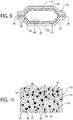
- Figure 10 illustrates an embodiment of an entrained polymer 10 according to the invention, in which the active agent 30 is an absorbing material.
- the arrows indicate the path of the selected material, which is moisture from an exterior of the entrained polymer 10, through the channels 45, to the particles of active agent 30, which absorb the selected material.
- hydrate forming desiccants comprises chemical compounds that can combine with water to form hydrates.
- examples of hydrate forming desiccants are anhydrous salts which tend to absorb water or moisture and form a stable hydrate. In this reaction with the moisture, a stable compound is formed within which the moisture is held and prevented from release by chemical interaction.
- reactive desiccants are those which are considered to be reactive. These compounds typically undergo a chemical reaction with water or moisture and form new compounds within which the water is combined. These newly formed compounds are generally irreversible at low temperature and require a significant amount of energy to be regenerated so that they may be reused as desiccants.
- reactive desiccants are mainly used in solvent drying and as active agents to polymers which must themselves be maintained in a moisture reduced state.
- the third type of desiccating compounds hereinafter referred to as "physical absorption desiccants,” obtain their moisture absorbing capabilities through physical absorption.
- the absorption process is accomplished because of a fine capillary morphology of the desiccant particles, which pulls moisture therethrough.
- the pore size of the capillaries, as well as the capillaries' density, determine the absorption properties of the desiccant.
- these physical absorption desiccants include molecular sieve, silica gels, clays (e.g. montmorillonite clay), certain synthetic polymers (e.g. those used in baby diapers), and starches. Because these types of physical absorption desiccants are both inert and non-water soluble, they are preferred for many applications.
- Exemplary molecular sieve pore sizes that are suitable for use in the present invention include between about 3 to 15 Angstroms; about 3 to 5 Angstroms, about 5 to 8.3 Angstroms; 4 Angstroms; 5 Angstroms; 8 Angstroms and 10 Angstroms.
- the pore size of silica gel is about 24 Angstroms.
- the absorbing material may be calcium oxide.
- the calcium oxide In the presence of moisture and carbon dioxide, the calcium oxide is converted to calcium carbonate. Accordingly, calcium oxide may be used as the absorbing material in applications where absorption of carbon dioxide is needed. Such applications include preserving fresh foods (e.g., fruits and vegetables) that give off carbon dioxide.
- many small interconnecting channels throughout the entrained polymer are produced by the channeling agent, as opposed to a few large interconnecting channels that will expose less surface area within the polymer.
- Dimer agents such as polypropylene maleic anhydride, or any plasticizer, may be optionally added to the mixture to reduce viscosities and increase the mixing compatibility of the base polymer and channeling agent, thereby increasing the dispersion of the channels throughout the entrained polymer.
- the active agent has a polarity that causes an affinity between the active agent and the channeling agent.
- a polar active agent is silica, an absorbing agent that is more compatible with the channeling agent than it is typically with the base polymer. For this reason, during the separating process when the interconnecting channels are formed throughout the entrained polymer, the active agent will congregate toward the channeling agent domains to which it has a greater affinity. In this manner, the channeling agent is permitted to act as a bridge between the vapor located exteriorly to the entrained polymer and the active agent that is located within the entrained polymer. This is particularly true with respect to active agent that is bound within the channeling agent filled passages.
- polar plasticizers such as glycerin may be further added to the mixture, in order to enhance the dispersion or mixing of the active agent into the channeling agent.
- the active agent loading level can range from 10% to 80%, preferably 40% to 70%, more preferably from 50% to 70%, and even more preferably from 55% to 65% by weight with respect to the total weight of the entrained polymer.
- the base polymer of the present invention may be a thermoplastic material.
- suitable thermoplastic materials include polyolefins such as polypropylene and polyethylene, polyisoprene, polybutadiene, polybutene, polysiloxane, polycarbonates, polyamides, ethylene-vinyl acetate copolymers, ethylene-methacrylate copolymer, poly(vinyl chloride), polystyrene, polyesters, polyanhydrides, polyacrylonitrile, polysulfones, polyacrylic ester, acrylic, polyurethane and polyacetal, or copolymers or mixtures thereof.
- a package may be molded so that an interior portion of the package is formed of an entrained polymer 10 of the present invention, while the exterior portions are formed from pure polymer or a composition of the present invention with a lower proportion of active agent 30.
- a package having an interior portion composed of an entrained polymer 10 of the present invention and an exterior portion composed of pure polymer will typically not only be more durable and less brittle, but the pure polymer exterior portion can also act as a vapor barrier that resists the transmission of undesirable vapors from the exterior into the interior of the package.
- the absorption capacity of the absorbing agent 30 is potentiated by exposing it exclusively to the interior of the package from which it is desired that the vapor be withdrawn and retained from.
- the entrained polymer 10 of the present invention has numerous applications.
- One exemplary application is the construction of rigid containers 61, which are suitable for containing relatively small volumes of product such as foodstuffs and medicines. In many cases, these types of products must be shipped and stored in controlled environments (e.g., reduced moisture and/or oxygen).
- the entrained polymer 10 of the present invention may be formed into an insert for inclusion within the interior of the container 61.
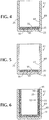
- An example of one form of an insert is a plug 55 of any suitable shape, such as that shown in FIGS. 4 and 5 . While the plug 55 would serve its purpose by being merely deposited within the container, it may also be fixed to an interior location so that it does not move about within the interior space.
- the plug 55 may be formed into a disc that is shaped and sized to be press fitted snugly into a receiving location at the bottom of a polymeric container 61, as shown in FIGS. 4 and 5 .
- a liner 70 may be formed from the entrained polymer 10 of the present invention, which has an exterior surface substantially conforming to an interior surface of the container body 60.
- the liner 70 may be sized so as to be press-fit into position within the container body 60 where it is held sufficiently snugly to prevent unintended disengagement therefrom.
- either the plug 55 or liner 70 may be initially constructed and allowed to harden, and then the container body 60 subsequently constructed thereabout so that the greater shrinkage characteristics of the polymeric container body 60 not containing entrained polymer, cause the container body 60 to tightly shrink fit about the plug 55 or liner 70 so that neither becomes easily disengaged from the other.
- the insert taking the form of either a plug 55 or a liner 70 may be simultaneously co-molded with the container body 60 so that each is integrally joined with the other.
- the viscosities of the entrained polymer 10 insert and the container body 60 may be approximately equal to facilitate the proper and desired location of the two phases of liquid or molten material that are molded together.
- entrained polymer 10 of the present invention may be used to form an entrained polymer sheet 75 that is joined with another sheet 80.
- the sheets 75, 80 are effectively laminated one to the other so that sheet 80 can form a substantially gas impermeable exterior layer.
- the laminate of sheets 75, 80 may then be used to wrap an item which is to be stored in a controlled environment. Sheets 75, 80 could be joined by, for example, thermal extrusion.
- Methods of producing entrained polymers 10 according to the present invention include blending a base polymer 25 and a channeling agent 35.
- the active agent 30 is blended into the base polymer 25 either before or after adding the channeling agent 35. All three components are uniformly distributed within the entrained polymer 10 mixture.
- Embodiments of entrained polymers 10 according to the invention may be formed as follows:
- entrained polymers 10 may be formed as follows:
- entrained polymers 10 may be formed as follows:
- the active agent 30 is taken up by the composition of base polymer 25 and active agent 35, to form a monolithic composition consisting of at least three phases including the base polymer 25, the channeling agent 35, and the active agent 30.
- immersing includes soaking, coating or other methods that result in an uptake of the active agent 30 by the composition of base polymer 25 and channeling agent 35.
- This embodiment may be well-suited for materials that are heat-sensitive and thus, that may not be capable of withstanding the temperatures required to melt the channeling agent 35 during processing. Such high temperatures may include, for example, the temperatures incurred during extrusion, which may occur during step d.
- the active agent 30 may be added after extrusion and thus, not subject to high extrusion temperatures, which may detrimentally affect the active agent 30.
- a further example of this embodiment relates to producing the solution for the active agent 30. In one embodiment, an aqueous solution of the active agent 30 is produced.
- the entrained polymer 10 After thorough blending and processing as described above, the entrained polymer 10 is cooled, may be formed into a shaped article such as a plug 55 or liner 70, and the channeling agent 35 forms interconnecting channels that act as transmission communicating passages, through which moisture is transmitted through the entrained polymer 10 between the active agent 30 and the exterior thereof.
- the entrained polymer 10 is monolithic, with the base polymer 25, active agent 30 and channeling agent 35 forming a three phase system.
- the components are first dry mixed in a mixer such as a HENSCHEL mixer, and then fed to a compounder.
- a mixer such as a HENSCHEL mixer
- a LEISTRITZ twin screw extruder, for example, or a WERNER PFLEIDER mixer can be used to achieve a good melt mix at about 140°C to about 170°C.
- the melt can then be either extruded to form, for example, a film or converted into pellets using dry air cooling on a vibrating conveyer.
- pellets containing channels are formed, they can, for example, then be either injection molded into beads, sieves, or co-injected with polypropylene as the inside layer of a container.
- the entrained polymer 10 of the present invention is used to form a plug 55 for inclusion within a container 61 constructed of a barrier substance. In other embodiments, the entrained polymer 10 of the present invention is used to form a liner 70 for inclusion within a container 61 constructed from a barrier substance. In other embodiments, the entrained polymer 10 of the present invention is used to form an absorption sheet 75. The absorption sheet 75 may optionally be combined with a barrier sheet 80 constructed of a barrier substance for use as a packaging wrap. In other embodiments, the entrained polymer 10 of the present invention is used to form an active insert 20 for a container 61.
- an insert 20, constructed from the entrained polymer of the present invention is illustrated.
- the insert 20 is in the form of a plug 55 that may be deposited into a container body 60 ( FIG. 5 ) thereby establishing an active container 61.
- the container body 60 could be constructed of a barrier substance, in particular a moisture impermeable material, which blocks transmission of moisture therethrough. The combination of the barrier substance container and the active plug minimizes the amount of moisture within the container 60.
- a container according to the invention such as a container formed of a barrier substance as described above, could be molded about the plug 55 so that at least a portion of the plug is exposed to the interior of the container.
- the plug 55 is co-molded with the container body 60 so that at least a portion of the plug 55 is exposed to the interior of the container 61.
- FIG. 2 a cross-sectional view is shown of the plug 55 that has been constructed from an entrained polymer 10 comprising the base polymer 25 that has been uniformly blended with the active agent 30 and the channeling agent 35.
- the entrained polymer of the present invention has been solidified so that interconnecting channels 45 have formed throughout the entrained polymer 10 to establish passages throughout the solidified plug 55.
- the passages terminate in channel openings 48 at exterior surfaces of the plug 55.
- FIG. 3 illustrates the embodiment of a plug 55 similar in construction and makeup to the plug 55 of FIG. 2 , where interconnecting channels 45 are very fine compared to those of FIG. 2 .
- a dimer agent i.e., a plasticizer
- the dimer agent may enhance the compatibility between the base polymer 25 and the channeling agent 35. This enhanced compatibility is facilitated by a lowered viscosity of the blend, which may promote a more thorough blending of the base polymer 25 and channeling agent 35, which under normal conditions can resist combination into a uniform solution.
- the interconnecting channels 45 which are formed therethrough have a greater dispersion and a smaller porosity, thereby establishing a greater density of interconnecting channels throughout the plug 55.
- Interconnecting channels 45 facilitate transmission of a desired material, such as moisture, gas or odor, through the base polymer 25, which generally resists permeation of these materials, thus acting as a barrier thereto. For this reason, the base polymer 25 itself acts as a barrier substance within which an active agent 30 may be entrained.
- the interconnecting channels 45 formed of the channeling agent 35 provide pathways for the desired material to move through the entrained polymer 10. Without these interconnecting channels 45, it is believed that relatively small quantities of the desired material would be transmitted through the base polymer 25 to or from the active agent 30. In the case in which the desired material is transmitted to the active agent 30, it may be absorbed by the active agent 30.
- the desired material is moisture and the active agent is a desiccant.
- FIG. 4 illustrates an embodiment of the present invention of a plug 55 which has been deposited into a container body 60, thereby establishing an active container 61.
- the container body 60 has an interior surface 65 and a plug 55 is affixed thereto, which is constructed substantially from the entrained polymer 10 of the present invention.
- the container body 60 may be formed of a polymeric or other material that is substantially impermeable to the material transmitted by the interconnecting channels 45 of the entrained polymer10.
- the container body 60 could be formed of the same material as that used for the base polymer 25 of the entrained polymer 10. In this manner, the transmitted material is resisted from being transmitted across the walls of the container 61 when the container 61 is closed. As may be seen in FIG.
- the plug 55 has been press fit into a bottom region of the container 61. It is contemplated that the plug 55 may be merely deposited in the container 61 for loose containment therein, or coupled to the body of the container 61 in a manner that fixes the plug 55 to the container 61.
- the coupling between the plug 55 and the container 61 is intended to prevent the dislocation and relative movement of the plug 55 within the container 61. This connection may be accomplished by a snug press fit between the plug 55 and the interior surface 65 of the container body 60, or a mechanical connection such as adhesives, prongs, lips or ridges that extend about the plug 55 to hold the plug 55 in place.
- the container body 60 may be molded about the plug 55 so that during the curing process of the container body 60, the container body 60 shrinks about the plug 55, thereby causing a shrink-fit to be established between the two components.
- This type of coupling may also be accomplished in a co-molding process or sequential molding process, in which the plug 55 will have less shrinkage than the polymer 25 comprised container body 60.
- FIG. 5 illustrates an active container 61 having the entrained polymer of the present invention formed of a plug 55 located at a bottom location of the container 60, similar to the configuration illustrated in FIG. 4 , but differing in that the plug 55 and container body 60 are co-molded so that a unified body 61 is formed with a less distinct interface between the plug 55 and container body 60 components.
- FIG. 6 illustrates a concept similar to those of FIGS. 4 and 5 , in which the proportions of the plug 55 have been extended so that a liner 70 is formed which covers a greater portion of the interior surface 65 of the desiccating container 61.
- the liner 70 is not localized in the bottom portion of the container body 60, but instead has walls that extend upwardly and cover portions of the walls of the container 61.
- the container body 60 could be formed of a barrier substance, as described above.
- the container body 60 could be molded about the liner 70, or the liner 70 and container body 60 could be co-molded, as described above.
- a liner 70 may be formed from the entrained polymer 10 and then be included within a container 60 constructed from a barrier substance.
- the liner 70 typically, but not necessarily, has an exterior surface configured for mating engagement with an interior surface 65 of the container 60.
- the liner 70 may be pressed into mating engagement with the container 60 so that a container 61 is created wherein at least a majority of the interior surface 65 of the container 61 is covered by the liner 70.
- the liner 70 may be formed from the entrained polymer and then a container 60 constructed from a barrier substance may be molded about the liner 70 so that at least a portion of the liner 70 is exposed to an interior of the container 60 and a majority of an interior surface 65 of the container 60 is covered by the liner 70.
- FIGS. 7 and 8 illustrate embodiments of the invention in which an active sheet 75 formed of the entrained polymer 10 of the invention is used in combination with a barrier sheet 80.
- the characteristics of the active sheet 75 are similar to those described with respect to the plug 55 and liner 70 and container body 60, while the characteristics of the barrier sheet 80 may be similar to the characteristics of the container body 60 described above.
- FIG. 7 illustrates an embodiment in which the two sheets 75, 80 are separately molded, and later combined to form a packaging wrap having active characteristics at an interior surface formed by the entrained polymer 10 active sheet 75, and vapor resistant characteristics at an exterior surface formed by the barrier sheet 80.
- FIG. 8 illustrates a co-molded arrangement in which an interface between the active sheet 75 and the barrier sheet 80 is less distinct than in the embodiment of FIG. 7 .
- This product can be produced by a thermal forming process. In such a process, the barrier sheet 80 layer is melted and partially formed into a sheet with the active sheet 75 being deposited on top of the barrier sheet 80 just prior to being pressed or extruded through a slit-like opening in a thermal forming machine.
- a laminate structure such as that shown in FIGS. 7 and 8 could also be formed by, for example, suction vacuum molding the barrier sheet 80 with the active sheet 75.
- the separate sheets 75, 80 of FIG. 7 may be joined together with an adhesive or other suitable means to form a laminate from the plurality of sheets 75, 80.
- the sheets 75, 80 may be manufactured from a thermal extrusion process whereby both sheets 75, 80 are manufactured at the same time and effectively co-molded together to form the embodiment illustrated in FIG. 8 .
- the sheets of FIG. 7 or 8 are joined together to form an active package 85, as shown in FIG. 9 .
- two laminates are provided, each formed of an active sheet 75 joined with a barrier sheet 80.
- the sheet laminates are stacked, with the active sheets 75 facing one another, so as to be disposed on an interior of the package, and are joined at a sealing region 90, formed about a perimeter of the sealed region of the package interior.
- the sheets may be affixed by adhesives, heat sealing, or other means known in the art.
- the purpose of the following example is to demonstrate that the entrained polymer of the present invention has interconnecting channels by subjecting films made of the following materials to moisture absorption testing.
- molecular sieve having an aperture size of 4 ⁇ was used as the active agent.
- Molecular sieve is a moisture and gas absorbing material, which in the case of the materials below, would absorb moisture or gas transmitted through any channels formed in the material.
- Each sample contains 69% active agent.
- Samples 1, 2, 3 and 4 each contain 5% channeling agent.
- Sample 1 contains PEG 4,000, a polyethylene glycol, which is a channeling agent known in the art.
- Sample 2 contains PEG 20,000, a polyethylene glycol, which is a channeling agent known in the art.
- Sample 3 contains Lutrol polyethylene oxide, which is a channeling agent known in the art.
- Sample 4 contains Polyglykol B01/240, made by CLARIANT, which is a propylene oxide polymerisate-monobutyl ether, which is a channeling agent according to the invention.
- Sample 5 is a control sample and contains no channeling agent.
- Samples 1, 2, 3 and 4 each contain 24% Basel HP548N, a polypropylene, as a base polymer.
- Sample 5 contains 29% Basel HP548N, a polypropylene, as a base polymer.
- Each of the samples contains 2% Colorant Polyone 3113.
- Sample 4 which includes a channeling agent according to the invention, exhibits greater moisture absorption capabilities during the first 100 hours of testing, when compared with other samples having the same composition, but with known channeling agents. After 100 hours, the moisture absorption of Sample 4 slows and then levels off, but the total moisture capacity of Sample 4 after 250 hours of testing is comparable to that of samples using known channeling agents. It is thus believed that propylene oxide polymerisate-monobutyl ether is at least as effective a channeling agent as the polyethylene glycols and polyethylene oxides known in the art. The absorption and capacity of all samples having channeling agents are substantially greater than that of control Sample 5, demonstrating the effectiveness of channeling agents in facilitating moisture absorption. It is believed that the enhanced absorption properties are attributable to moisture being transmitted via channels formed by the channeling agent, which penetrate the base polymer and connect the active agent, in this case molecular sieve desiccant, with the sample exterior.
- Extractable testing was performed in accordance with US Pharmacopoeia standard 661.
- Table 2 Weight loss of samples during USP 661 Extractable Testing Formulation Weight loss (g) Sample 2 0.020686 Sample 3 0.02123 Sample 4 0.00805
- the weight loss values found by USP 661 extractable testing of Sample 4 is substantially lower than that of Samples 2 and 3, indicating much lower extractable levels in Sample 4.
- One possible explanation is the hydrophilic nature of the known channeling agents used in Samples 2 and 3.
- the propylene oxide polymerisate-monobutyl ether is not hydrophilic, and therefore less likely to be extracted from the entrained polymer when exposed to moisture. It is believed that the 0.00805g of weight loss that does occur in testing of Sample 4 may be attributable to loss of molecular sieve, which is the active agent used in this formulation. Accordingly, the use of a nonextractable active agent in conjunction with the channeling agent of Sample 4 could potentially give rise to a formulation with no extractables.
- the present invention is directed to an entrained polymer that results in substantially lower (optionally at least 1.5 times lower, optionally at least 2 times lower, optionally at least 2.5 times lower, optionally at least 3 times lower, optionally from 1.5 times lower to 3 times lower, optionally from 2 times lower to 3 times lower) extractables than a reference entrained polymer having a reference channeling agent in a weight percentage substantially equivalent to that of the channeling agent, wherein the reference channeling agent is selected from the group consisting of a polyethylene glycol, a polyethylene oxide and a combination of a polyethylene glycol and a polyethylene oxide.
Landscapes
- Chemical & Material Sciences (AREA)
- Organic Chemistry (AREA)
- Chemical Kinetics & Catalysis (AREA)
- Health & Medical Sciences (AREA)
- Medicinal Chemistry (AREA)
- Polymers & Plastics (AREA)
- Dispersion Chemistry (AREA)
- Analytical Chemistry (AREA)
- Compositions Of Macromolecular Compounds (AREA)
- Packages (AREA)
- Wrappers (AREA)
- Details Of Rigid Or Semi-Rigid Containers (AREA)
Claims (12)
- Beladenes Polymer, umfassend:ein Grundpolymer;ein aktives Mittel, das mit dem Grundpolymer unmischbar ist und auf ein ausgewähltes Material wirkt, damit wechselwirkt oder reagiert, wobei das aktive Mittel ein Trockenmittel ist und das ausgewählte Material Feuchte ist; undein kanalbildendes Mittel, das mit dem Grundpolymer unmischbar ist und das ausgewählte Material mit einer schnelleren Rate als in dem Grundpolymer allein durch das beladene Polymer übermittelt, wobei das kanalbildende Mittel ein wasserunlöslicher Propylenoxidpolymerisat-Monobutylether ist, der eine Wanderung aufweist, die wenigstens einem Element ausgewählt aus der Gruppe bestehend aus: United States Pharmacopeia Standard 661 über physiochemische Tests für Kunststoffe und Schwermetalle und nichtflüchtige Rückstände in Polyethylenbehältern, Richtlinie der Europäischen Union Nr. 10/2011 vom 14. Januar 2011, und Bekanntgabe Nr. 20 des Japanese Ministry of Welfare zu Lebensmittelverpackungen und -behältern, entspricht.
- Beladenes Polymer gemäß Anspruch 1, wobei das Trockenmittel ausgewählt ist aus der Gruppe bestehend aus:einem hydratbildenden Trockenmittel, einem reaktiven Trockenmittel, einem physikalische-Absorption-Trockenmittel und einem Molekularsieb.
- Beladenes Polymer gemäß Anspruch 2, wobei das aktive Mittel ein Molekularsieb ist.
- Beladenes Polymer gemäß einem der vorstehenden Ansprüche 1 bis 3, wobei das aktive Mittel in einer Menge von 40 % bis 70 % vorhanden ist und/oder das kanalbildende Mittel in einer Menge von 2 % bis 10 % vorhanden ist.
- Beladenes Polymer gemäß Anspruch 4, wobei das aktive Mittel in einer Menge von 40 % bis 70 % vorhanden ist und das kanalbildende Mittel in einer Menge von 2 % bis 10 % vorhanden ist.
- Beladenes Polymer gemäß einem der vorstehenden Ansprüche 1 bis 5, wobei das aktive Mittel 50 Gew.-% bis 70 Gew.-% des Gesamtgewichts des beladenen Polymers, gegebenenfalls 55 Gew.-% bis 65 Gew.-% des Gesamtgewichts des beladenen Polymers, bildet.
- Beladenes Polymer gemäß einem der vorstehenden Ansprüche 1 bis 6, wobei das Grundpolymer ein thermoplastisches Material ist.
- Beladenes Polymer gemäß Anspruch 7, wobei das Grundpolymer Polypropylen ist.
- Verfahren zur Herstellung eines beladenen Polymers gemäß einem der vorstehenden Ansprüche 1 bis 8, umfassend:a. Erhitzen des Grundpolymers auf über seinen Schmelzpunkt, um einen geschmolzenen Zustand zu bilden; Mischen des aktiven Mittels und des kanalbildenden Mittels in das Grundpolymer bis zur Gleichmäßigkeit, um ein beladenes Polymergemisch zu bilden; und Abkühlen des beladenen Polymergemischs zur Erstarrung;b. Mischen des aktiven Mittels, des Grundpolymers und des kanalbildenden Mittels unterhalb der Schmelzpunkte davon bis zur Gleichmäßigkeit; Erhitzen des aktiven Mittels, des Grundpolymers und des kanalbildenden Mittels auf über den Schmelzpunkt von einem oder mehreren von dem Grundpolymer und dem kanalbildenden Mittel, um ein beladenes Polymergemisch in einem geschmolzenen Zustand zu bilden; und Abkühlen des beladenen Polymergemischs zur Erstarrung;c. Erhitzen des Grundpolymers auf über seinen Schmelzpunkt, um einen geschmolzenen Zustand zu bilden; Mischen des kanalbildenden Mittels in das Grundpolymer; Mischen des aktiven Mittels in das Grundpolymer und das kanalbildende Mittel, um ein beladenes Polymergemisch zu bilden; und Abkühlen des beladenen Polymergemischs zur Erstarrung;d. Mischen des kanalbildenden Mittels und des Grundpolymers unterhalb der Schmelzpunkte davon; Mischen des aktiven Mittels in das Grundpolymer und das kanalbildende Mittel bis zur Gleichmäßigkeit; Erhitzen des kanalbildenden Mittels, des Grundpolymers und des aktiven Mittels auf über den Schmelzpunkt von wenigstens einem von dem kanalbildenden Mittel und dem Grundpolymer, um ein beladenes Polymergemisch in einem geschmolzenen Zustand zu bilden; und Abkühlen des beladenen Polymergemischs zur Erstarrung; odere. Mischen des kanalbildenden Mittels und des Grundpolymers; Erhitzen des kanalbildenden Mittels und des Grundpolymers auf über den Schmelzpunkt von wenigstens einem von dem kanalbildenden Mittel und dem Grundpolymer, um ein beladenes Polymergemisch in einem geschmolzenen Zustand zu bilden; Abkühlen des beladenen Polymergemischs zur Erstarrung; und Eintauchen des festen beladenen Polymers in eine Lösung, die das aktive Mittel enthält.
- Behälter mit einem Stopfen oder einer Auskleidung, die an einer Innenoberfläche davon angebracht ist, wobei der Pfropfen oder die Auskleidung aus dem beladenen Polymer gemäß einem der vorstehenden Ansprüche 1 bis 8 gebildet ist.
- Behälter gemäß Anspruch 10, wobei der Behälter aus einem Barrierestoff gebildet ist, der für das ausgewählte Material undurchlässig ist.
- Behälter gemäß Anspruch 11, wobei der Barrierestoff das gleiche Material wie das Grundpolymer ist.
Applications Claiming Priority (3)
| Application Number | Priority Date | Filing Date | Title |
|---|---|---|---|
| US201361783029P | 2013-03-14 | 2013-03-14 | |
| EP14717355.3A EP2970647B1 (de) | 2013-03-14 | 2014-03-14 | Agens zur ausbildung von kanälen in einem beladenen polymer, beladenes polymer enthaltend ein solches agens, verfahren zur herstellung eines solchen beladenen polymers und erzeugnis dieses enthaltend |
| PCT/US2014/027452 WO2014152539A1 (en) | 2013-03-14 | 2014-03-14 | Agent for the formation of channels in an entrained polymer, entrained polymer containing such an agent, process for producing such an entrained polymer and product containing the same |
Related Parent Applications (1)
| Application Number | Title | Priority Date | Filing Date |
|---|---|---|---|
| EP14717355.3A Division EP2970647B1 (de) | 2013-03-14 | 2014-03-14 | Agens zur ausbildung von kanälen in einem beladenen polymer, beladenes polymer enthaltend ein solches agens, verfahren zur herstellung eines solchen beladenen polymers und erzeugnis dieses enthaltend |
Publications (2)
| Publication Number | Publication Date |
|---|---|
| EP3296356A1 EP3296356A1 (de) | 2018-03-21 |
| EP3296356B1 true EP3296356B1 (de) | 2020-05-06 |
Family
ID=50483584
Family Applications (2)
| Application Number | Title | Priority Date | Filing Date |
|---|---|---|---|
| EP14717355.3A Active EP2970647B1 (de) | 2013-03-14 | 2014-03-14 | Agens zur ausbildung von kanälen in einem beladenen polymer, beladenes polymer enthaltend ein solches agens, verfahren zur herstellung eines solchen beladenen polymers und erzeugnis dieses enthaltend |
| EP17193067.0A Active EP3296356B1 (de) | 2013-03-14 | 2014-03-14 | Agens zur ausbildung von kanälen in einem beladenen polymer, beladenes polymer enthaltend ein solches agens, verfahren zur herstellung eines solchen beladenen polymers und erzeugnis dieses enthaltend |
Family Applications Before (1)
| Application Number | Title | Priority Date | Filing Date |
|---|---|---|---|
| EP14717355.3A Active EP2970647B1 (de) | 2013-03-14 | 2014-03-14 | Agens zur ausbildung von kanälen in einem beladenen polymer, beladenes polymer enthaltend ein solches agens, verfahren zur herstellung eines solchen beladenen polymers und erzeugnis dieses enthaltend |
Country Status (6)
| Country | Link |
|---|---|
| US (2) | US9902788B2 (de) |
| EP (2) | EP2970647B1 (de) |
| JP (2) | JP6573597B2 (de) |
| CN (1) | CN105073876A (de) |
| CA (1) | CA2902941C (de) |
| WO (1) | WO2014152539A1 (de) |
Families Citing this family (60)
| Publication number | Priority date | Publication date | Assignee | Title |
|---|---|---|---|---|
| CN105073876A (zh) * | 2013-03-14 | 2015-11-18 | Csp技术公司 | 形成夹带聚合物中的通道的试剂、含有此种试剂的夹带聚合物、用于生产此种夹带聚合物的方法以及含有此种夹带聚合物的产品 |
| UA121895C2 (uk) * | 2015-09-29 | 2020-08-10 | Філіп Морріс Продактс С.А. | Пакувальні матеріали з регулюванням вологості |
| TWI730047B (zh) | 2016-02-09 | 2021-06-11 | 美商Csp技術股份有限公司 | 容器、容器插件及用於製作容器之相關方法 |
| AU2017228453B2 (en) | 2016-03-04 | 2020-04-30 | Csp Technologies, Inc. | Container and lid |
| JP6988165B2 (ja) * | 2016-05-26 | 2022-01-05 | 栗田工業株式会社 | ガス吸収性フィルム |
| CA3043339A1 (en) | 2016-11-09 | 2018-05-17 | Csp Technologies, Inc. | Film coated mineral-entrained polymers and methods of making the same |
| SG10202107513TA (en) | 2016-11-13 | 2021-08-30 | Csp Technologies Inc | Antimicrobial gas releasing agents and systems and methods for using the same |
| US20190335746A1 (en) * | 2016-11-13 | 2019-11-07 | Csp Technologies, Inc. | Antimicrobial gas releasing agents and systems and methods for using the same |
| BR112019016165B1 (pt) | 2017-02-06 | 2022-10-18 | Csp Technologies, Inc | Embalagens blister que contêm material ativo e métodos para produzir e usar as mesmas |
| ES2903371T3 (es) * | 2017-03-03 | 2022-04-01 | Csp Technologies Inc | Métodos para dispensar y adherir a sustratos polímeros ocluidos termoplásticos |
| CA3056636A1 (en) | 2017-03-15 | 2018-09-20 | Csp Technologies, Inc. | Inhaler and methods of using and making same |
| US11331836B2 (en) | 2017-03-31 | 2022-05-17 | Csp Technologies, Inc. | Methods of overmolding softer material with harder material and moisture tight container assemblies made by the methods |
| CA3061175A1 (en) | 2017-05-02 | 2018-11-08 | Csp Technologies, Inc. | Mineral entrained plastic formulations as puncturing elements |
| CA3067632A1 (en) | 2017-06-02 | 2018-12-06 | Csp Technologies, Inc. | Inhaler and methods of using and making same |
| EP3665102B1 (de) | 2017-08-08 | 2024-10-02 | CSP Technologies, Inc. | Feuchtigkeitsdichte behälter und verfahren zu ihrer verwendung |
| JP2020534224A (ja) | 2017-09-20 | 2020-11-26 | シーエスピー テクノロジーズ,インコーポレイティド | 包装アセンブリ及び包装アセンブリ用の容器、包装アセンブリの作製方法、及び活性剤を使用及び/又は活性化する関連方法 |
| AU2018415828B2 (en) | 2018-03-30 | 2024-01-25 | Csp Technologies, Inc. | Methods of overmolding softer material with harder material and moisture tight container assemblies made by the methods |
| EP3552986A1 (de) | 2018-04-11 | 2019-10-16 | Clariant Plastics & Coatings Ltd | Polymerzusammensetzung mit einem basispolymer, einem aktiven material und einem additiv |
| CA3093460A1 (en) * | 2018-04-24 | 2019-10-31 | Csp Technologies, Inc. | Blow molded containers and methods of making the same |
| CN112996550B (zh) | 2018-05-01 | 2023-02-28 | Csp技术公司 | 药物输送设备及其使用和制造方法 |
| TWM605214U (zh) | 2018-06-29 | 2020-12-11 | 美商Csp技術股份有限公司 | 低氣味或無氣味吸入器 |
| US11396413B2 (en) | 2018-09-20 | 2022-07-26 | Csp Technologies, Inc. | One or more blister packages containing active material and methods of making and using same |
| WO2020081811A1 (en) | 2018-10-18 | 2020-04-23 | Csp Technologies, Inc. | Apparatus and methods for packaging electronic components using a tape having desiccant entrained polymer on a reel |
| HRP20201836T1 (hr) | 2018-11-13 | 2021-01-08 | Csp Technologies, Inc. | Antimikrobna sredstva za oslobađanje plina i sustavi i postupci za njihovo korištenje |
| US20220211043A1 (en) * | 2018-11-13 | 2022-07-07 | Csp Technologies, Inc. | Antimicrobial gas releasing agents and systems and methods for using the same |
| CN113195376A (zh) * | 2018-12-18 | 2021-07-30 | 麦克斯威尔蔡斯技术有限公司 | 用于包装和保藏切好的菌菇产品的方法 |
| EP3898450A4 (de) * | 2018-12-19 | 2022-08-17 | Maxwell Chase Technologies, LLC. | Verfahren zum verpacken und konservieren von beerenprodukten |
| AR117777A1 (es) | 2019-01-09 | 2021-08-25 | Csp Technologies Inc | Envases alveolados que contienen un material activo y métodos para fabricarlos y usarlos |
| WO2020205895A1 (en) | 2019-04-01 | 2020-10-08 | Csp Technologies, Inc. | Polymer compositions containing zeolite for enhanced water adsorption |
| EP4659842A3 (de) | 2019-04-17 | 2026-03-11 | CSP Technologies, Inc. | Polymerzusammensetzungen mit aktivkohle zur formaldehydsorption |
| WO2020231448A1 (en) * | 2019-05-16 | 2020-11-19 | Csp Technologies, Inc. | Antimicrobial gas releasing agents and systems and methods for using the same |
| CA3144254A1 (en) * | 2019-06-20 | 2020-12-24 | Csp Technologies, Inc. | Compositions and methods for preventing and/or reducing melanosis in crustaceans |
| JP7623344B2 (ja) * | 2019-08-14 | 2025-01-28 | シーエスピー テクノロジーズ,インコーポレイティド | フィルムを切断し、かつ包装基板上に配置するための方法及び装置 |
| CN114829265B (zh) | 2019-10-17 | 2025-11-18 | Csp技术公司 | 瓶子螺旋盖及其制造和使用方法 |
| TWI787731B (zh) | 2020-02-13 | 2022-12-21 | 美商Csp技術股份有限公司 | 使用醛類抑制黑色素沉積之方法、系統及組合物 |
| US20230337703A1 (en) | 2020-03-06 | 2023-10-26 | Csp Technologies, Inc. | Tea-based compositions for oxygen modified packaging |
| KR20220150331A (ko) | 2020-03-06 | 2022-11-10 | 씨에스피 테크놀로지스, 인크. | 산소 변형 포장용 다우쿠스-기반 조성물 |
| WO2021217161A1 (en) | 2020-03-22 | 2021-10-28 | Csp Technologies, Inc. | Disinfection systems and methods using polymer compositions that form chlorine dioxide gas |
| JP2023519830A (ja) | 2020-04-02 | 2023-05-15 | シーエスピー テクノロジーズ,インコーポレイティド | 環境トリガに対して感受性である製品を保持する容器内の活性剤の遅延活性化のための装置及び方法 |
| CN115397744A (zh) * | 2020-04-22 | 2022-11-25 | Csp技术有限公司 | 被配置成保存产品或抑制产品上的病原体的包装以及制造和使用所述包装的至少各部分的方法 |
| WO2022006600A1 (en) * | 2020-07-02 | 2022-01-06 | Csp Technologies, Inc. | Ammonia adsorption entrained polymer |
| EP4188673B1 (de) | 2020-08-03 | 2024-12-04 | CSP Technologies, Inc. | Verfahren zur abgabe und formung von heissschmelzenden mitgeführten 3a-molekularsiebpolymeren auf substraten |
| CA3205375A1 (en) | 2021-01-22 | 2022-07-28 | Csp Technologies, Inc. | Package configured to preserve perishable product, and method of making and using same |
| CA3217685A1 (en) | 2021-05-06 | 2022-11-10 | James S. HOLLINGER | Blister packages containing active material and methods of making and using same |
| WO2022246448A1 (en) | 2021-05-19 | 2022-11-24 | Csp Technologies, Inc. | Active polymer liner for induction seal, and method of making and using same |
| US12414916B2 (en) | 2021-06-10 | 2025-09-16 | Belhaven BioPharma Inc. | Dry powder formulations of epinephrine and associated methods |
| US11617716B2 (en) | 2021-06-10 | 2023-04-04 | Belhaven BioPharma Inc. | Dry powder formulations of epinephrine and associated methods |
| US20250040558A1 (en) | 2021-10-26 | 2025-02-06 | Csp Technologies, Inc. | Antimicrobial activity of chlorite-entrained polymers |
| WO2023077060A1 (en) | 2021-10-29 | 2023-05-04 | Csp Technologies, Inc. | Container, dispenser, and method of making and using same |
| US12005185B2 (en) | 2021-12-17 | 2024-06-11 | Belhaven BioPharma Inc. | Medical counter measures including dry powder formulations and associated methods |
| EP4429719A2 (de) | 2022-02-17 | 2024-09-18 | CSP Technologies, Inc. | Systeme, vorrichtung und verfahren zur sterilisation eines objekts mit einer autonomen sterilisationskammer |
| CN222794194U (zh) | 2022-04-01 | 2025-04-25 | Csp技术有限公司 | 用于瓶子组合件的螺旋顶帽以及瓶子组合件 |
| CA3260045A1 (en) | 2022-06-23 | 2023-12-28 | Csp Technologies, Inc. | RECYCLABLE SHELL PACKAGING, METHOD FOR MANUFACTURING RECYCLABLE SHELL PACKAGING AND METHOD FOR RECYCLING RECYCLABLE SHELL PACKAGING |
| CA3254875A1 (en) | 2022-07-06 | 2024-01-11 | Csp Technologies, Inc. | SECONDARY PACKAGING DESIGNED TO CONTAIN A MEDICATION ADMINISTRATION DEVICE AND/OR PREVENT ITS ACCIDENTAL ACTIVATION |
| WO2024016017A1 (en) | 2022-07-15 | 2024-01-18 | Csp Technologies, Inc. | Blown films with active agent and methods of making the same |
| KR20250044315A (ko) | 2022-08-01 | 2025-03-31 | 씨에스피 테크놀로지스, 인크. | 약물을 투여하기 위한 적어도 하나의 디바이스를 유지하도록 구성된 2차 패키징, 약물을 투여하기 위한 적어도 하나의 디바이스를 2차 패키징에 부착하는 방법 및 환자를 치료하는 방법 |
| CN119907771A (zh) | 2022-10-14 | 2025-04-29 | Csp技术公司 | 用于储存和稳定水分敏感性产品的容器和方法 |
| CN120813331A (zh) | 2023-03-31 | 2025-10-17 | Csp技术有限公司 | 用于使用活性碳或其衍生物减轻包装中亚硝胺的存在的材料和方法 |
| WO2024263560A1 (en) | 2023-06-20 | 2024-12-26 | Csp Technologies, Inc. | Materials and methods for mitigating the presence of nitrosamines in packaging using an active agent |
| WO2025072515A1 (en) | 2023-09-29 | 2025-04-03 | Csp Technologies, Inc. | Recyclable blister pack with multilayer component, and method of recycling same |
Family Cites Families (29)
| Publication number | Priority date | Publication date | Assignee | Title |
|---|---|---|---|---|
| US2978431A (en) * | 1956-11-20 | 1961-04-04 | Union Carbide Corp | Composition containing polyethylene and a polypropylene glycol monoalkyl ether |
| DE2833675C2 (de) * | 1978-08-01 | 1982-06-24 | Degussa Ag, 6000 Frankfurt | Thermoplastische Mischungen zur Herstellung von Kunststoff-Folien mit Antiblocking-Eigenschaften |
| US4741779A (en) * | 1985-07-19 | 1988-05-03 | Nippon Chemical Industrial Co. Ltd. | Additives for resins and their composition |
| GB9116498D0 (en) * | 1991-07-31 | 1991-09-11 | Bp Chem Int Ltd | Film processing |
| US5891376A (en) * | 1993-09-17 | 1999-04-06 | Commonwealth Scientific And Industrial Research Organisation | Film process |
| JP3447834B2 (ja) * | 1994-03-04 | 2003-09-16 | 住化プラステック株式会社 | 薬剤含有樹脂組成物および樹脂成形品 |
| US6080350A (en) | 1995-04-19 | 2000-06-27 | Capitol Specialty Plastics, Inc. | Dessicant entrained polymer |
| US6279736B1 (en) * | 1995-04-19 | 2001-08-28 | Capitol Specialty Plastics, Inc. | Barrier pack having an absorbing agent applied to the interior of the pack |
| US5911937A (en) * | 1995-04-19 | 1999-06-15 | Capitol Specialty Plastics, Inc. | Desiccant entrained polymer |
| US6221446B1 (en) * | 1995-04-19 | 2001-04-24 | Capitol Specialty Plastics, Inc | Modified polymers having controlled transmission rates |
| US6486231B1 (en) | 1995-04-19 | 2002-11-26 | Csp Technologies, Inc. | Co-continuous interconnecting channel morphology composition |
| US6214255B1 (en) | 1995-04-19 | 2001-04-10 | Capitol Specialty Plastics, Inc. | Desiccant entrained polymer |
| US6130263A (en) | 1995-04-19 | 2000-10-10 | Capitol Specialty Plastics, Inc. | Desiccant entrained polymer |
| US6316520B1 (en) * | 1995-04-19 | 2001-11-13 | Capitol Specialty Plastics, Inc. | Monolithic polymer composition having a releasing material |
| US6124006A (en) | 1995-04-19 | 2000-09-26 | Capitol Specialty Plastics, Inc. | Modified polymers having controlled transmission rates |
| US6194079B1 (en) | 1995-04-19 | 2001-02-27 | Capitol Specialty Plastics, Inc. | Monolithic polymer composition having an absorbing material |
| CA2221353C (en) * | 1995-05-17 | 2008-02-12 | Tetra Laval Holdings & Finance S.A. | Resin composition and laminate for storage of liquid food |
| MY129168A (en) * | 1998-03-03 | 2007-03-30 | Otsuka Chemical Co Ltd | Substantially anhydrous blowing agent and process for producing the same |
| EP1038795B1 (de) * | 1999-03-23 | 2003-06-18 | Tosoh Corporation | Verpackung für einen Zeolith sowie ihre Verwendung zur Befüllung einer Adsorbtionseinheit |
| US6703439B2 (en) * | 2000-02-09 | 2004-03-09 | Mitsui Chemicals, Inc. | Polyolefin resin composition and polyolefin film prepared from the same |
| US20020071922A1 (en) * | 2000-12-11 | 2002-06-13 | Irwin Bailey | Two-ply laminate for flexible pouch |
| JP2005015568A (ja) * | 2003-06-24 | 2005-01-20 | Fujimori Kogyo Co Ltd | 吸湿性組成物、吸湿性成形体及び吸湿性積層体 |
| JP2005220149A (ja) * | 2004-02-03 | 2005-08-18 | Toppan Printing Co Ltd | 吸湿性樹脂組成物および湿分吸収容器 |
| JP4659523B2 (ja) * | 2005-04-26 | 2011-03-30 | 共同印刷株式会社 | ブリスター用フィルム及びブリスター用包装容器 |
| GB0608161D0 (en) * | 2006-04-25 | 2006-06-07 | Univ Reading The | Process For The Manufacture Of A Polymer Composition |
| US20090321981A1 (en) * | 2008-01-15 | 2009-12-31 | RheTech, Inc. | Cellulosic inclusion thermoplastic composition and molding thereof |
| US20120180785A1 (en) * | 2009-09-29 | 2012-07-19 | Helen Mary Trill | Pressurized Metered Dose Inhalers |
| US8708988B2 (en) * | 2010-12-03 | 2014-04-29 | Kimberly-Clark Worldwide, Inc. | Absorbent article configured for controlled deformation |
| CN105073876A (zh) * | 2013-03-14 | 2015-11-18 | Csp技术公司 | 形成夹带聚合物中的通道的试剂、含有此种试剂的夹带聚合物、用于生产此种夹带聚合物的方法以及含有此种夹带聚合物的产品 |
-
2014
- 2014-03-14 CN CN201480013877.2A patent/CN105073876A/zh active Pending
- 2014-03-14 WO PCT/US2014/027452 patent/WO2014152539A1/en not_active Ceased
- 2014-03-14 EP EP14717355.3A patent/EP2970647B1/de active Active
- 2014-03-14 US US14/211,703 patent/US9902788B2/en active Active
- 2014-03-14 US US14/778,727 patent/US20160039955A1/en not_active Abandoned
- 2014-03-14 EP EP17193067.0A patent/EP3296356B1/de active Active
- 2014-03-14 CA CA2902941A patent/CA2902941C/en active Active
- 2014-03-14 JP JP2016502447A patent/JP6573597B2/ja active Active
-
2019
- 2019-08-08 JP JP2019146783A patent/JP6816227B2/ja active Active
Non-Patent Citations (1)
| Title |
|---|
| None * |
Also Published As
| Publication number | Publication date |
|---|---|
| EP3296356A1 (de) | 2018-03-21 |
| JP2016513748A (ja) | 2016-05-16 |
| US20140287174A1 (en) | 2014-09-25 |
| JP6573597B2 (ja) | 2019-09-11 |
| US20160039955A1 (en) | 2016-02-11 |
| EP2970647A1 (de) | 2016-01-20 |
| US9902788B2 (en) | 2018-02-27 |
| HK1251599A1 (en) | 2019-02-01 |
| JP2019218555A (ja) | 2019-12-26 |
| HK1219289A1 (en) | 2017-03-31 |
| EP2970647B1 (de) | 2017-09-27 |
| CA2902941A1 (en) | 2014-09-25 |
| WO2014152539A1 (en) | 2014-09-25 |
| CN105073876A (zh) | 2015-11-18 |
| JP6816227B2 (ja) | 2021-01-20 |
| CA2902941C (en) | 2022-05-03 |
Similar Documents
| Publication | Publication Date | Title |
|---|---|---|
| EP2970647B1 (de) | Agens zur ausbildung von kanälen in einem beladenen polymer, beladenes polymer enthaltend ein solches agens, verfahren zur herstellung eines solchen beladenen polymers und erzeugnis dieses enthaltend | |
| CA2344189C (en) | Monolithic polymer composition having an absorbing material | |
| CA2337604C (en) | Modified polymers having controlled transmission rates | |
| US6174952B1 (en) | Monolithic polymer composition having a water absorption material | |
| CN1134644C (zh) | 混有干燥剂的聚合物 | |
| CN1145005C (zh) | 包含成形制品的制品 | |
| EP0892673B1 (de) | Polymer mit darin gebundenem trocknungsmittel | |
| US11141978B2 (en) | Agent for the formation of channels in an entrained polymer, entrained polymer containing such an agent, process for producing such an entrained polymer and product containing the same | |
| HK1251599B (en) | Agent for the formation of channels in an entrained polymer, entrained polymer containing such an agent, process for producing such an entrained polymer and product containing the same | |
| HK1219289B (en) | Agent for the formation of channels in an entrained polymer, entrained polymer containing such an agent, process for producing such an entrained polymer and product containing the same |
Legal Events
| Date | Code | Title | Description |
|---|---|---|---|
| PUAI | Public reference made under article 153(3) epc to a published international application that has entered the european phase |
Free format text: ORIGINAL CODE: 0009012 |
|
| STAA | Information on the status of an ep patent application or granted ep patent |
Free format text: STATUS: THE APPLICATION HAS BEEN PUBLISHED |
|
| AC | Divisional application: reference to earlier application |
Ref document number: 2970647 Country of ref document: EP Kind code of ref document: P |
|
| AK | Designated contracting states |
Kind code of ref document: A1 Designated state(s): AL AT BE BG CH CY CZ DE DK EE ES FI FR GB GR HR HU IE IS IT LI LT LU LV MC MK MT NL NO PL PT RO RS SE SI SK SM TR |
|
| STAA | Information on the status of an ep patent application or granted ep patent |
Free format text: STATUS: REQUEST FOR EXAMINATION WAS MADE |
|
| 17P | Request for examination filed |
Effective date: 20180807 |
|
| RBV | Designated contracting states (corrected) |
Designated state(s): AL AT BE BG CH CY CZ DE DK EE ES FI FR GB GR HR HU IE IS IT LI LT LU LV MC MK MT NL NO PL PT RO RS SE SI SK SM TR |
|
| STAA | Information on the status of an ep patent application or granted ep patent |
Free format text: STATUS: EXAMINATION IS IN PROGRESS |
|
| 17Q | First examination report despatched |
Effective date: 20181115 |
|
| REG | Reference to a national code |
Ref country code: HK Ref legal event code: DE Ref document number: 1251599 Country of ref document: HK |
|
| GRAP | Despatch of communication of intention to grant a patent |
Free format text: ORIGINAL CODE: EPIDOSNIGR1 |
|
| STAA | Information on the status of an ep patent application or granted ep patent |
Free format text: STATUS: GRANT OF PATENT IS INTENDED |
|
| INTG | Intention to grant announced |
Effective date: 20191107 |
|
| RIN1 | Information on inventor provided before grant (corrected) |
Inventor name: KLEIN, JULIEN Inventor name: SPANO, WILLIAM, FREDERICK Inventor name: KIBELE, RALF |
|
| GRAS | Grant fee paid |
Free format text: ORIGINAL CODE: EPIDOSNIGR3 |
|
| GRAA | (expected) grant |
Free format text: ORIGINAL CODE: 0009210 |
|
| STAA | Information on the status of an ep patent application or granted ep patent |
Free format text: STATUS: THE PATENT HAS BEEN GRANTED |
|
| AC | Divisional application: reference to earlier application |
Ref document number: 2970647 Country of ref document: EP Kind code of ref document: P |
|
| AK | Designated contracting states |
Kind code of ref document: B1 Designated state(s): AL AT BE BG CH CY CZ DE DK EE ES FI FR GB GR HR HU IE IS IT LI LT LU LV MC MK MT NL NO PL PT RO RS SE SI SK SM TR |
|
| REG | Reference to a national code |
Ref country code: GB Ref legal event code: FG4D |
|
| REG | Reference to a national code |
Ref country code: CH Ref legal event code: EP Ref country code: AT Ref legal event code: REF Ref document number: 1266655 Country of ref document: AT Kind code of ref document: T Effective date: 20200515 |
|
| REG | Reference to a national code |
Ref country code: IE Ref legal event code: FG4D |
|
| REG | Reference to a national code |
Ref country code: DE Ref legal event code: R096 Ref document number: 602014065336 Country of ref document: DE |
|
| REG | Reference to a national code |
Ref country code: LT Ref legal event code: MG4D |
|
| REG | Reference to a national code |
Ref country code: NL Ref legal event code: MP Effective date: 20200506 |
|
| PG25 | Lapsed in a contracting state [announced via postgrant information from national office to epo] |
Ref country code: NO Free format text: LAPSE BECAUSE OF FAILURE TO SUBMIT A TRANSLATION OF THE DESCRIPTION OR TO PAY THE FEE WITHIN THE PRESCRIBED TIME-LIMIT Effective date: 20200806 Ref country code: LT Free format text: LAPSE BECAUSE OF FAILURE TO SUBMIT A TRANSLATION OF THE DESCRIPTION OR TO PAY THE FEE WITHIN THE PRESCRIBED TIME-LIMIT Effective date: 20200506 Ref country code: FI Free format text: LAPSE BECAUSE OF FAILURE TO SUBMIT A TRANSLATION OF THE DESCRIPTION OR TO PAY THE FEE WITHIN THE PRESCRIBED TIME-LIMIT Effective date: 20200506 Ref country code: PT Free format text: LAPSE BECAUSE OF FAILURE TO SUBMIT A TRANSLATION OF THE DESCRIPTION OR TO PAY THE FEE WITHIN THE PRESCRIBED TIME-LIMIT Effective date: 20200907 Ref country code: SE Free format text: LAPSE BECAUSE OF FAILURE TO SUBMIT A TRANSLATION OF THE DESCRIPTION OR TO PAY THE FEE WITHIN THE PRESCRIBED TIME-LIMIT Effective date: 20200506 Ref country code: IS Free format text: LAPSE BECAUSE OF FAILURE TO SUBMIT A TRANSLATION OF THE DESCRIPTION OR TO PAY THE FEE WITHIN THE PRESCRIBED TIME-LIMIT Effective date: 20200906 Ref country code: GR Free format text: LAPSE BECAUSE OF FAILURE TO SUBMIT A TRANSLATION OF THE DESCRIPTION OR TO PAY THE FEE WITHIN THE PRESCRIBED TIME-LIMIT Effective date: 20200807 |
|
| PG25 | Lapsed in a contracting state [announced via postgrant information from national office to epo] |
Ref country code: RS Free format text: LAPSE BECAUSE OF FAILURE TO SUBMIT A TRANSLATION OF THE DESCRIPTION OR TO PAY THE FEE WITHIN THE PRESCRIBED TIME-LIMIT Effective date: 20200506 Ref country code: BG Free format text: LAPSE BECAUSE OF FAILURE TO SUBMIT A TRANSLATION OF THE DESCRIPTION OR TO PAY THE FEE WITHIN THE PRESCRIBED TIME-LIMIT Effective date: 20200806 Ref country code: LV Free format text: LAPSE BECAUSE OF FAILURE TO SUBMIT A TRANSLATION OF THE DESCRIPTION OR TO PAY THE FEE WITHIN THE PRESCRIBED TIME-LIMIT Effective date: 20200506 Ref country code: HR Free format text: LAPSE BECAUSE OF FAILURE TO SUBMIT A TRANSLATION OF THE DESCRIPTION OR TO PAY THE FEE WITHIN THE PRESCRIBED TIME-LIMIT Effective date: 20200506 |
|
| REG | Reference to a national code |
Ref country code: AT Ref legal event code: MK05 Ref document number: 1266655 Country of ref document: AT Kind code of ref document: T Effective date: 20200506 |
|
| PG25 | Lapsed in a contracting state [announced via postgrant information from national office to epo] |
Ref country code: AL Free format text: LAPSE BECAUSE OF FAILURE TO SUBMIT A TRANSLATION OF THE DESCRIPTION OR TO PAY THE FEE WITHIN THE PRESCRIBED TIME-LIMIT Effective date: 20200506 Ref country code: NL Free format text: LAPSE BECAUSE OF FAILURE TO SUBMIT A TRANSLATION OF THE DESCRIPTION OR TO PAY THE FEE WITHIN THE PRESCRIBED TIME-LIMIT Effective date: 20200506 |
|
| PG25 | Lapsed in a contracting state [announced via postgrant information from national office to epo] |
Ref country code: ES Free format text: LAPSE BECAUSE OF FAILURE TO SUBMIT A TRANSLATION OF THE DESCRIPTION OR TO PAY THE FEE WITHIN THE PRESCRIBED TIME-LIMIT Effective date: 20200506 Ref country code: DK Free format text: LAPSE BECAUSE OF FAILURE TO SUBMIT A TRANSLATION OF THE DESCRIPTION OR TO PAY THE FEE WITHIN THE PRESCRIBED TIME-LIMIT Effective date: 20200506 Ref country code: AT Free format text: LAPSE BECAUSE OF FAILURE TO SUBMIT A TRANSLATION OF THE DESCRIPTION OR TO PAY THE FEE WITHIN THE PRESCRIBED TIME-LIMIT Effective date: 20200506 Ref country code: IT Free format text: LAPSE BECAUSE OF FAILURE TO SUBMIT A TRANSLATION OF THE DESCRIPTION OR TO PAY THE FEE WITHIN THE PRESCRIBED TIME-LIMIT Effective date: 20200506 Ref country code: RO Free format text: LAPSE BECAUSE OF FAILURE TO SUBMIT A TRANSLATION OF THE DESCRIPTION OR TO PAY THE FEE WITHIN THE PRESCRIBED TIME-LIMIT Effective date: 20200506 Ref country code: CZ Free format text: LAPSE BECAUSE OF FAILURE TO SUBMIT A TRANSLATION OF THE DESCRIPTION OR TO PAY THE FEE WITHIN THE PRESCRIBED TIME-LIMIT Effective date: 20200506 Ref country code: EE Free format text: LAPSE BECAUSE OF FAILURE TO SUBMIT A TRANSLATION OF THE DESCRIPTION OR TO PAY THE FEE WITHIN THE PRESCRIBED TIME-LIMIT Effective date: 20200506 Ref country code: SM Free format text: LAPSE BECAUSE OF FAILURE TO SUBMIT A TRANSLATION OF THE DESCRIPTION OR TO PAY THE FEE WITHIN THE PRESCRIBED TIME-LIMIT Effective date: 20200506 |
|
| REG | Reference to a national code |
Ref country code: DE Ref legal event code: R097 Ref document number: 602014065336 Country of ref document: DE |
|
| PG25 | Lapsed in a contracting state [announced via postgrant information from national office to epo] |
Ref country code: SK Free format text: LAPSE BECAUSE OF FAILURE TO SUBMIT A TRANSLATION OF THE DESCRIPTION OR TO PAY THE FEE WITHIN THE PRESCRIBED TIME-LIMIT Effective date: 20200506 Ref country code: PL Free format text: LAPSE BECAUSE OF FAILURE TO SUBMIT A TRANSLATION OF THE DESCRIPTION OR TO PAY THE FEE WITHIN THE PRESCRIBED TIME-LIMIT Effective date: 20200506 |
|
| PLBE | No opposition filed within time limit |
Free format text: ORIGINAL CODE: 0009261 |
|
| STAA | Information on the status of an ep patent application or granted ep patent |
Free format text: STATUS: NO OPPOSITION FILED WITHIN TIME LIMIT |
|
| 26N | No opposition filed |
Effective date: 20210209 |
|
| PG25 | Lapsed in a contracting state [announced via postgrant information from national office to epo] |
Ref country code: SI Free format text: LAPSE BECAUSE OF FAILURE TO SUBMIT A TRANSLATION OF THE DESCRIPTION OR TO PAY THE FEE WITHIN THE PRESCRIBED TIME-LIMIT Effective date: 20200506 |
|
| PG25 | Lapsed in a contracting state [announced via postgrant information from national office to epo] |
Ref country code: MC Free format text: LAPSE BECAUSE OF FAILURE TO SUBMIT A TRANSLATION OF THE DESCRIPTION OR TO PAY THE FEE WITHIN THE PRESCRIBED TIME-LIMIT Effective date: 20200506 |
|
| REG | Reference to a national code |
Ref country code: BE Ref legal event code: MM Effective date: 20210331 |
|
| PG25 | Lapsed in a contracting state [announced via postgrant information from national office to epo] |
Ref country code: IE Free format text: LAPSE BECAUSE OF NON-PAYMENT OF DUE FEES Effective date: 20210314 Ref country code: LU Free format text: LAPSE BECAUSE OF NON-PAYMENT OF DUE FEES Effective date: 20210314 |
|
| PG25 | Lapsed in a contracting state [announced via postgrant information from national office to epo] |
Ref country code: BE Free format text: LAPSE BECAUSE OF NON-PAYMENT OF DUE FEES Effective date: 20210331 |
|
| PG25 | Lapsed in a contracting state [announced via postgrant information from national office to epo] |
Ref country code: CY Free format text: LAPSE BECAUSE OF FAILURE TO SUBMIT A TRANSLATION OF THE DESCRIPTION OR TO PAY THE FEE WITHIN THE PRESCRIBED TIME-LIMIT Effective date: 20200506 |
|
| P01 | Opt-out of the competence of the unified patent court (upc) registered |
Effective date: 20230621 |
|
| PG25 | Lapsed in a contracting state [announced via postgrant information from national office to epo] |
Ref country code: HU Free format text: LAPSE BECAUSE OF FAILURE TO SUBMIT A TRANSLATION OF THE DESCRIPTION OR TO PAY THE FEE WITHIN THE PRESCRIBED TIME-LIMIT; INVALID AB INITIO Effective date: 20140314 |
|
| PG25 | Lapsed in a contracting state [announced via postgrant information from national office to epo] |
Ref country code: MK Free format text: LAPSE BECAUSE OF FAILURE TO SUBMIT A TRANSLATION OF THE DESCRIPTION OR TO PAY THE FEE WITHIN THE PRESCRIBED TIME-LIMIT Effective date: 20200506 |
|
| PG25 | Lapsed in a contracting state [announced via postgrant information from national office to epo] |
Ref country code: MT Free format text: LAPSE BECAUSE OF FAILURE TO SUBMIT A TRANSLATION OF THE DESCRIPTION OR TO PAY THE FEE WITHIN THE PRESCRIBED TIME-LIMIT Effective date: 20200506 |
|
| PGFP | Annual fee paid to national office [announced via postgrant information from national office to epo] |
Ref country code: CH Payment date: 20250401 Year of fee payment: 12 |
|
| PG25 | Lapsed in a contracting state [announced via postgrant information from national office to epo] |
Ref country code: TR Free format text: LAPSE BECAUSE OF FAILURE TO SUBMIT A TRANSLATION OF THE DESCRIPTION OR TO PAY THE FEE WITHIN THE PRESCRIBED TIME-LIMIT Effective date: 20200506 |
|
| REG | Reference to a national code |
Ref country code: CH Ref legal event code: U11 Free format text: ST27 STATUS EVENT CODE: U-0-0-U10-U11 (AS PROVIDED BY THE NATIONAL OFFICE) Effective date: 20260401 |
|
| PGFP | Annual fee paid to national office [announced via postgrant information from national office to epo] |
Ref country code: GB Payment date: 20260327 Year of fee payment: 13 |
|
| PGFP | Annual fee paid to national office [announced via postgrant information from national office to epo] |
Ref country code: DE Payment date: 20260327 Year of fee payment: 13 |
|
| PGFP | Annual fee paid to national office [announced via postgrant information from national office to epo] |
Ref country code: FR Payment date: 20260325 Year of fee payment: 13 |