EP3247722B1 - Cytomegalovirus-antigene und verwendungen davon - Google Patents
Cytomegalovirus-antigene und verwendungen davon Download PDFInfo
- Publication number
- EP3247722B1 EP3247722B1 EP16702210.2A EP16702210A EP3247722B1 EP 3247722 B1 EP3247722 B1 EP 3247722B1 EP 16702210 A EP16702210 A EP 16702210A EP 3247722 B1 EP3247722 B1 EP 3247722B1
- Authority
- EP
- European Patent Office
- Prior art keywords
- protein
- fragment
- complex
- residue
- mutation
- Prior art date
- Legal status (The legal status is an assumption and is not a legal conclusion. Google has not performed a legal analysis and makes no representation as to the accuracy of the status listed.)
- Active
Links
Images

Classifications
-
- C—CHEMISTRY; METALLURGY
- C07—ORGANIC CHEMISTRY
- C07K—PEPTIDES
- C07K14/00—Peptides having more than 20 amino acids; Gastrins; Somatostatins; Melanotropins; Derivatives thereof
- C07K14/005—Peptides having more than 20 amino acids; Gastrins; Somatostatins; Melanotropins; Derivatives thereof from viruses
-
- A—HUMAN NECESSITIES
- A61—MEDICAL OR VETERINARY SCIENCE; HYGIENE
- A61K—PREPARATIONS FOR MEDICAL, DENTAL OR TOILETRY PURPOSES
- A61K39/00—Medicinal preparations containing antigens or antibodies
- A61K39/12—Viral antigens
-
- A—HUMAN NECESSITIES
- A61—MEDICAL OR VETERINARY SCIENCE; HYGIENE
- A61K—PREPARATIONS FOR MEDICAL, DENTAL OR TOILETRY PURPOSES
- A61K39/00—Medicinal preparations containing antigens or antibodies
- A61K39/12—Viral antigens
- A61K39/245—Herpetoviridae, e.g. herpes simplex virus
-
- A—HUMAN NECESSITIES
- A61—MEDICAL OR VETERINARY SCIENCE; HYGIENE
- A61P—SPECIFIC THERAPEUTIC ACTIVITY OF CHEMICAL COMPOUNDS OR MEDICINAL PREPARATIONS
- A61P31/00—Antiinfectives, i.e. antibiotics, antiseptics, chemotherapeutics
- A61P31/12—Antivirals
- A61P31/20—Antivirals for DNA viruses
-
- C—CHEMISTRY; METALLURGY
- C07—ORGANIC CHEMISTRY
- C07K—PEPTIDES
- C07K16/00—Immunoglobulins [IG], e.g. monoclonal or polyclonal antibodies
- C07K16/08—Immunoglobulins [IG], e.g. monoclonal or polyclonal antibodies against material from viruses
- C07K16/081—DNA viruses
- C07K16/082—Hepadnaviridae (F), e.g. hepatitis B virus
-
- A—HUMAN NECESSITIES
- A61—MEDICAL OR VETERINARY SCIENCE; HYGIENE
- A61K—PREPARATIONS FOR MEDICAL, DENTAL OR TOILETRY PURPOSES
- A61K39/00—Medicinal preparations containing antigens or antibodies
- A61K2039/51—Medicinal preparations containing antigens or antibodies comprising whole cells, viruses or DNA/RNA
- A61K2039/525—Virus
-
- A—HUMAN NECESSITIES
- A61—MEDICAL OR VETERINARY SCIENCE; HYGIENE
- A61K—PREPARATIONS FOR MEDICAL, DENTAL OR TOILETRY PURPOSES
- A61K39/00—Medicinal preparations containing antigens or antibodies
- A61K2039/555—Medicinal preparations containing antigens or antibodies characterised by a specific combination antigen/adjuvant
- A61K2039/55511—Organic adjuvants
- A61K2039/55566—Emulsions, e.g. Freund's adjuvant, MF59
-
- A—HUMAN NECESSITIES
- A61—MEDICAL OR VETERINARY SCIENCE; HYGIENE
- A61K—PREPARATIONS FOR MEDICAL, DENTAL OR TOILETRY PURPOSES
- A61K38/00—Medicinal preparations containing peptides
-
- A—HUMAN NECESSITIES
- A61—MEDICAL OR VETERINARY SCIENCE; HYGIENE
- A61K—PREPARATIONS FOR MEDICAL, DENTAL OR TOILETRY PURPOSES
- A61K39/00—Medicinal preparations containing antigens or antibodies
-
- A—HUMAN NECESSITIES
- A61—MEDICAL OR VETERINARY SCIENCE; HYGIENE
- A61K—PREPARATIONS FOR MEDICAL, DENTAL OR TOILETRY PURPOSES
- A61K39/00—Medicinal preparations containing antigens or antibodies
- A61K39/12—Viral antigens
- A61K39/245—Herpetoviridae, e.g. herpes simplex virus
- A61K39/25—Varicella-zoster virus
-
- A—HUMAN NECESSITIES
- A61—MEDICAL OR VETERINARY SCIENCE; HYGIENE
- A61K—PREPARATIONS FOR MEDICAL, DENTAL OR TOILETRY PURPOSES
- A61K39/00—Medicinal preparations containing antigens or antibodies
- A61K39/395—Antibodies; Immunoglobulins; Immune serum, e.g. antilymphocytic serum
- A61K39/42—Antibodies; Immunoglobulins; Immune serum, e.g. antilymphocytic serum viral
-
- C—CHEMISTRY; METALLURGY
- C07—ORGANIC CHEMISTRY
- C07K—PEPTIDES
- C07K16/00—Immunoglobulins [IG], e.g. monoclonal or polyclonal antibodies
- C07K16/08—Immunoglobulins [IG], e.g. monoclonal or polyclonal antibodies against material from viruses
- C07K16/081—DNA viruses
-
- C—CHEMISTRY; METALLURGY
- C12—BIOCHEMISTRY; BEER; SPIRITS; WINE; VINEGAR; MICROBIOLOGY; ENZYMOLOGY; MUTATION OR GENETIC ENGINEERING
- C12N—MICROORGANISMS OR ENZYMES; COMPOSITIONS THEREOF; PROPAGATING, PRESERVING, OR MAINTAINING MICROORGANISMS; MUTATION OR GENETIC ENGINEERING; CULTURE MEDIA
- C12N2710/00—MICROORGANISMS OR ENZYMES; COMPOSITIONS THEREOF; PROPAGATING, PRESERVING, OR MAINTAINING MICROORGANISMS; MUTATION OR GENETIC ENGINEERING; CULTURE MEDIA dsDNA viruses
- C12N2710/00011—Details
- C12N2710/16011—Herpesviridae
- C12N2710/16111—Cytomegalovirus, e.g. human herpesvirus 5
- C12N2710/16122—New viral proteins or individual genes, new structural or functional aspects of known viral proteins or genes
-
- C—CHEMISTRY; METALLURGY
- C12—BIOCHEMISTRY; BEER; SPIRITS; WINE; VINEGAR; MICROBIOLOGY; ENZYMOLOGY; MUTATION OR GENETIC ENGINEERING
- C12N—MICROORGANISMS OR ENZYMES; COMPOSITIONS THEREOF; PROPAGATING, PRESERVING, OR MAINTAINING MICROORGANISMS; MUTATION OR GENETIC ENGINEERING; CULTURE MEDIA
- C12N2710/00—MICROORGANISMS OR ENZYMES; COMPOSITIONS THEREOF; PROPAGATING, PRESERVING, OR MAINTAINING MICROORGANISMS; MUTATION OR GENETIC ENGINEERING; CULTURE MEDIA dsDNA viruses
- C12N2710/00011—Details
- C12N2710/16011—Herpesviridae
- C12N2710/16111—Cytomegalovirus, e.g. human herpesvirus 5
- C12N2710/16134—Use of virus or viral component as vaccine, e.g. live-attenuated or inactivated virus, VLP, viral protein
-
- C—CHEMISTRY; METALLURGY
- C12—BIOCHEMISTRY; BEER; SPIRITS; WINE; VINEGAR; MICROBIOLOGY; ENZYMOLOGY; MUTATION OR GENETIC ENGINEERING
- C12N—MICROORGANISMS OR ENZYMES; COMPOSITIONS THEREOF; PROPAGATING, PRESERVING, OR MAINTAINING MICROORGANISMS; MUTATION OR GENETIC ENGINEERING; CULTURE MEDIA
- C12N2710/00—MICROORGANISMS OR ENZYMES; COMPOSITIONS THEREOF; PROPAGATING, PRESERVING, OR MAINTAINING MICROORGANISMS; MUTATION OR GENETIC ENGINEERING; CULTURE MEDIA dsDNA viruses
- C12N2710/00011—Details
- C12N2710/16011—Herpesviridae
- C12N2710/16111—Cytomegalovirus, e.g. human herpesvirus 5
- C12N2710/16151—Methods of production or purification of viral material
-
- C—CHEMISTRY; METALLURGY
- C12—BIOCHEMISTRY; BEER; SPIRITS; WINE; VINEGAR; MICROBIOLOGY; ENZYMOLOGY; MUTATION OR GENETIC ENGINEERING
- C12N—MICROORGANISMS OR ENZYMES; COMPOSITIONS THEREOF; PROPAGATING, PRESERVING, OR MAINTAINING MICROORGANISMS; MUTATION OR GENETIC ENGINEERING; CULTURE MEDIA
- C12N7/00—Viruses; Bacteriophages; Compositions thereof; Preparation or purification thereof
Definitions
- This invention is in the field of cytomegalovirus (CMV) antigens that can be used for vaccines.
- CMV cytomegalovirus
- Cytomegalovirus is a genus of virus that belongs to the viral family known as Herpesviridae or herpesviruses.
- the species that infects humans is commonly known as human cytomegalovirus (HCMV) or human herpesvirus-5 (HHV-5).
- HCMV belongs to the Betaherpesvirinae subfamily, which also includes cytomegaloviruses from other mammals.
- HCMV infections are frequently associated with the salivary glands. HCMV infects between 50% and 80% of adults in the United States (40% worldwide), as indicated by the presence of antibodies in much of the general population. HCMV infection is typically unnoticed in healthy people, but can be life-threatening for the immunocompromised, such as HIV-infected persons, organ transplant recipients, or new born infants. HCMV is the virus most frequently transmitted to a developing fetus. After infection, HCMV has an ability to remain latent within the body for the lifetime of the host, with occasional reactivations from latency.
- HCMV strains have been sequenced, including those of both laboratory strains and clinical isolates.
- the following strains of HCMV have been sequenced: Towne (GL239909366), AD169 (GI:219879600), Toledo (GL290564358) and Merlin (GI: 155573956).
- HCMV strains AD169, Towne and Merlin can be obtained from the American Type Culture Collection (ATCC VR538, ATCC VR977 and ATCC VR1590, respectively).
- Cytomegalovirus contains an unknown number of membrane protein complexes. Of the approximately 30 known glycoproteins in the viral envelope, gH and gL have emerged as particularly interesting due to their presence in several different complexes: dimeric gH/gL, trimeric gH/gL/gO (also known as the gCIII complex), and the pentameric gH/gL/pUL128/pUL130/pUL131 (pUL131 is also referred to as "pUL131A”, “pUL131a", or "UL131A”; pUL128, pUL130, and pUL131 subunits sometimes are also referred as UL128, UL130, UL131).
- CMV is thought to use the pentameric complexes to enter epithelial and endothelial cells by endocytosis and low-pH-dependent fusion but it is thought to enter fibroblasts by direct fusion at the plasma membrane in a process involving gH/gL or possibly gH/gL/gO.
- the gH/gL and/or gH/gL/gO complex(es) is/are sufficient for fibroblast infection, whereas the pentameric complex is required to infect endothelial and epithelial cells.
- the pentameric complex is considered as a major target for CMV vaccination.
- Viral genes UL128, UL130 and UL131 are needed for endothelial entry ( Hahn, Journal of Virology 2004; 78:10023-33 ).
- Fibroblast-adapted non-endothelial tropic strains contain mutations in at least one of these three genes.
- Towne strain for example, contains a two base pair insertion causing a frame shift in UL130 gene, whereas AD169 contains a one base pair insertion in UL131 gene. Both Towne and AD169 could be adapted for growth in endothelial cells, and in both instances, the frame shift mutations in UL130 or UL131 genes were repaired.
- US7704510 discloses that pUL131A is required for epithelial cell tropism. US7704510 also discloses that pUL128 and pUL130 form a complex with gH/gL, which is incorporated into virions. This complex is required to infect endothelial and epithelial cells but not fibroblasts. Anti-CD46 antibodies were found to inhibit HCMV infection of epithelial cells.
- CMV vaccines tested in clinical trials include Towne vaccine, Towne-Toledo chimeras, an alpha virus replicon with gB as the antigen, gB/MF59 vaccine, a gB vaccine produced by GlaxoSmithKline, and a DNA vaccine using gB and pp65.
- pp65 is viral protein that is a potent inducer of CD8+ responses directed against CMV. These vaccines are all poor inducers of antibodies that block viral entry into endothelial/epithelial cells ( Adler, S. P. (2013), British Medical Bulletin, 107, 57-68. doi:10.1093/bmb/ldt023 ).
- Preclinical animal studies in CMV vaccines include an inactivated AD169 which has been repaired in the UL131 gene, a DNA vaccine using a wild-type UL130 gene and peptide vaccines using peptides from pUL130 and 131 ( Sauer, A, et al., Vaccine 2011;29:2705-1, doi:10.1016 ).
- CMV gB antigen is considered a poor inducer of antibodies that block entry into endothelial/epithelial cells.
- the gB/MF59 vaccine was only 50% effective at preventing primary infection among young women with a child at home ( Pass, RF, et al., N Engl J Med 2009;360:1191-9 ).
- CMV vaccines comprising other antigen targets, such as gH/gL, gH/gL/gO, or pentameric complex gH/gL/pUL128/pUL130/pUL131.
- the inventors discovered that when the cytomegalovirus antigen gL is recombinantly expressed and purified from a mammalian host (such as a CHO cell or a HEK cell), a significant portion of gL is cleaved.
- a mammalian host such as a CHO cell or a HEK cell
- mutations were introduced to reduce protease cleavage of gL.
- the mutants exhibit increased resistance to protease cleavage during recombination production.
- the invention provides a recombinant CMV gL protein, or a (i) gH/gL dimeric complex-forming fragment thereof, (ii) a gH/gL/gO trimeric complex-forming fragment thereof, or (iii) a gH/gL/pUL128/pUL130/pUL131 pentameric complex-forming fragment thereof, wherein said gL protein or fragment comprises a mutation at Protease Recognition Site residues 91-102 numbered according to SEQ ID NO: 1, wherein said mutation reduces protease cleavage at said Protease Recognition Site, as compared to a control, wherein said mutation is selected from:
- CMV protein complex comprising the recombinant CMV gL protein, or fragment, of the invention.
- nucleic acid comprising a polynucleotide sequence encoding the recombinant CMV gL protein, or fragment, of the invention.
- the invention also provides a host cell, preferably a mammalian host cell, comprising the nucleic acid of the invention.
- the invention also provides an immunogenic composition comprising the recombinant gL protein, or fragment, of the invention, or the CMV protein complex of the invention.
- immunogenic composition of the invention for use in inducing an immune response against CMV.
- cytomegalovirus antigen gL is recombinantly expressed and purified from a mammalian host (such as a CHO cell or a HEK cell), a significant portion of gL is cleaved (also referred to as "gL clipping") by an unknown protease.
- gL clipping occurred during the recombinant expression and purification of three different CMV complexes: gH/gL complex, gH/gL/gO complex, and pentameric complex gH/gL/pUL1 28/pUL130/pUL131.
- the clipping of gL caused non-homogeneity of antigen production, and potential loss of neutralizing sites on gL-based antigens.
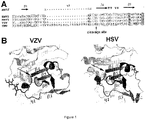
- the inventors Using western blot and N-terminal sequencing, the inventors identified and mapped the cleavage site to peptide bond between residues 97 and 98 of gL from the Merlin strain (SEQ ID NO:1) ( Figure 1 ). To solve the clipping problem, the inventors studied the structure features of gL proteins from several related herpes viruses, including HSV1, HSV2, and VZV. The gL proteins from HSV1, HSV2, and VZV do not appear to have clipping problem. Based on the structural studies, the inventors discovered that mutations can be introduced to Protease Recognition Site, comprising amino acid residues 91 and 102, to reduce the protease cleavage of recombinantly expressed gL.
- Protease Recognition Site comprising amino acid residues 91 and 102
- A96L/N97S/S98G triple mutation (the "LSG” mutant) and A96I/N97D/S98G triple mutation (the “IDG” mutant) substantially eliminated the gL clipping problem.
- Two other mutants, deletion of residue Asn97 (delta Asp97), and A96S/N97S/S98T (the "SST” mutant) also showed dramatically decreased gL clipping when gH and gL were co-expressed.
- ⁇ -strand is a structural unit of ⁇ -sheets in proteins. This is an extended stretch of polypeptide chain typically 3 to 10 amino acids long that forms hydrogen bonds with other ⁇ -strands in the same ⁇ -sheet.
- this ⁇ -strand ( ⁇ 4 in Figure 1 ) together with strands ⁇ 5 and ⁇ 6 from gL, as well as ⁇ -strands from gH, form a ⁇ -sheet. Therefore, in preferred embodiments, the mutation should maintain the secondary structure of the C-terminal portion of the Protease Recognition Site (i.e., the ⁇ -strand conformation is preserved, such as the interactions between ⁇ 4 and other ⁇ -strand(s) are substantially maintained). Maintaining the ⁇ -strand structure can potentially reduce any negative impact on the assembly of CMV complexes (such as pentameric complexes), and can also potentially preserve important immunogenic epitopes.
- one or more residues from the Protease Recognition Site can be substituted by a corresponding residue from another herpes virus (such as HSV-1, HSV-2, or VZV).
- a corresponding residue from another herpes virus such as HSV-1, HSV-2, or VZV.
- sequence and structural analysis shows that substituting a CMV residue with a corresponding HSV-1, HSV-2, or VZV residue does not change the ⁇ -strand conformation, while protease cleavage can be reduced.
- the short loop structure immediately preceding the ⁇ -strand may also be maintained.
- the disclosure describes a recombinant cytomegalovirus (CMV) gL protein, or a complex-forming fragment thereof, wherein said gL protein or fragment comprises a mutation at Protease Recognition Site, wherein said mutation reduces protease cleavage at said Protease Recognition Site, as compared to a control.
- Protease Recognition Site refers to residues 91-102 (numbering based on SEQ ID NO:1).
- the mutation reduces protease cleavage as compared to a control, without changing the ⁇ -strand structure at the C-terminal portion of the Protease Recognition Site.
- CMV complexes comprising the gL proteins or fragments described herein.
- Such complexes can be gH/gL complex, gH/gL/gO complex, and pentameric complex gH/gL/pUL128/pUL130/pUL131.
- gL clipping was observed in mammalian host cells during the recombinant production process. Therefore, the mutations disclosed herein are particularly suitable for recombinant production of CMV vaccines in mammalian hosts (which are preferred hosts for many biologics).
- mammalian hosts which are preferred hosts for many biologics.
- HEK-293 and CHO cells have long been used for commercial production of biological production. Therefore, incorporating mutations that reduce gL cleavage can improve production efficiency and yield, and reduce the formation of contaminating, partially degraded product.
- complex-forming fragment of a cytomegalovirus (CMV) protein refers to any part or portion of the protein that retain the ability to form a complex with another CMV protein.
- complexes include, e.g., gH/gL dimeric complex, gH/gL/gO trimeric complex, or gH/gL/pUL128/pUL130/pUL131 pentameric complex.
- a "pentamer-forming fragment" of a CMV protein (such as gL) refers to any part or portion of the protein that retain the ability to form gH/gL/pUL128/pUL130/pUL131 pentameric complex.
- pentameric complex refers to a CMV complex that comprises five different subunits: gH, gL, pUL128, pUL130, and pUL131.
- pentamer or pentameric complex comprising gH, gL, pUL128, pUL130, and pUL131 in the specification, each of the five subunits does not need to be full-length; the term also encompasses pentamers formed by complex-forming fragments of gH, gL, pUL128, pUL130, and pUL131.
- mutation refers to addition, deletion, or substitution of an amino acid residue.
- the term also includes modifications that introduce a non-naturally occurring amino acid or an amino acid analog into a polypeptide chain.
- Charged amino acid residues include: D, E, K, R, and H.
- Polar, non-charged residues include: S, T, C, Y, N, and Q.
- Nonpolar or hydrophobic residues include: A, V, L, I, M, W, F, and P.
- Amino acid residues comprising a large side chain include: W, F, M, Y, Q, R, E, H, and K.
- Amino acid residues lack of a side chain or comprising a small side chain include: G, A, V, S, T, C, D, and N.
- amino acid residue comprises a "bulky side chain” when the side chain comprises a branched or cyclic substituent.
- Examples of amino acid residues with a bulky side chain include tryptophan, tyrosine, phenylalanine, homophenylalanine, leucine, isoleucine, histidine, 1-methyltryptophan, ⁇ -methyltyrosine, ⁇ -methylphenylalanine, ⁇ -methylleucine, ⁇ -methylisoleucine, ⁇ -methylhistidine, cyclopentylalanine, cyclohexylalanine, naphthylalanine, etc.
- the present disclosure is applicable to gL proteins originating from any CMV strain, in order to facilitate its understanding, when referring to amino acid positions in the present specification, the numbering is given in relation to the amino acid sequence of the gL protein of SEQ ID NO:1 originating from the Merlin strain, unless otherwise stated.
- the present disclosure is not, however, limited to the Merlin strain.
- comparable amino acid positions in a gL protein of any other CMV strain can be determined by those of ordinary skill in the art by aligning the amino acid sequences using readily available and well-known alignment algorithms (such as BLAST, using default settings; ClustalW2, using default settings; or algorithm disclosed by Corpet, Nucleic Acids Research, 1998, 16(22):10881-10890 , using default parameters). Accordingly, when referring to a "CMV gL protein", it is to be understood as a CMV gL protein from any strain (in addition to Merlin strain). The actual number may have to be adjusted for gL proteins from other strains depending on the actual sequence alignment.
- CMV gL protein it is to be understood as a CMV gL protein from any strain (in addition to Merlin strain). The actual number may have to be adjusted for gL proteins from other strains depending on the actual sequence alignment.
- Protease Recognition Site is defined as consisting of amino acid residues 91-102 particularly consisting of residues 91, 92, 93, 94, 95, 96, 97, 98, 99, 100, 101 and 102. These numbers are in relation to the amino acid sequence of the gL protein of SEQ ID NO: 1.
- Protease Recognition Site from gL proteins of other CMV strains, or other gL mutants or variants, or fragments of gL can be ascertained using standard sequence alignment programs that align a query sequence with SEQ ID NO: 1, and identifies residues that match 91-102 of SEQ ID NO: 1.
- S98 refers to position 98 of SEQ ID NO: 1 (which is an S), as well as corresponding residues from other gL sequences (or variants or fragments) that match with S98 of SEQ ID NO: 1, when the sequence is aligned with SEQ ID NO: 1.
- any residue from a gL sequence (or variant or fragment) that corresponds to S98 of SEQ ID NO: 1 is referred to as S98, although the actual position of that residue may or may not be 98, and the actual residue may or may not be S.
- a conservative substitution e.g., T
- a conservative substitution is typically identified as "positive” or "+” by BLAST 2.
- S98G means that any residue from a gL sequence (or variant or fragment) that corresponds to S98 of SEQ ID NO: 1 is mutated to G.
- An amino acid residue of a query sequence "corresponds to" a designated position of a reference sequence (e.g., S98 of SEQ ID NO: 1) when, by aligning the query amino acid sequence with the reference sequence, the position of the residue matches the designated position.
- a reference sequence e.g., S98 of SEQ ID NO: 1
- Such alignments can be done by hand or by using well-known sequence alignment programs such as ClustalW2, or "BLAST 2 Sequences" using default parameters.
- the Insert Region comprises at least 11, at least 12, at least 13, at least 14, at least 15, at least 16, at least 17, at least 18, at least 19, or at least 20 residues, and/or is at least 60%, at least 65%, at least 70%, at least 75%, at least 80%, at least 85%, at least 90%, at least 95%, or 100% identical to SEQ ID NO: 5.
- the Insert Region comprises a sequence in which one to eight amino acid residues of SEQ ID NO: 5 are conservatively substituted.
- Constantly substituted means that a residue is replaced by another, biologically similar residue. Examples include substitution of amino acid residues with similar characteristics, e.g. small amino acids, acidic amino acids, polar amino acids, basic amino acids, hydrophobic amino acids and aromatic amino acids. An example of conservative amino acid substitutions includes those in the following Table 1, and analogous substitutions of the original residue by non-natural alpha amino acids which have similar characteristics.
- the percent identity of two sequences is determined over the entire length of the shorter of the two sequences.
- the disclosure describes a modified CMV gL protein, or a complex-forming fragment thereof, that reduces clipping (cleavage) at the peptide bond between residues N97 and S98.
- Human CMV glycoprotein L (gL) is encoded by the UL115 gene. gL is thought to be essential for viral replication and all known functional properties of gL are directly associated with its dimerization with gH. The gH/gL complex is required for the fusion of viral and plasma membranes leading to virus entry into the host cell. gL from HCMV strain Merlin (GI:39842115, SEQ ID NO: 1) and HCMV strain Towne (GI:239909463, SEQ ID NO: 2) have been reported to be 278 amino acids in length.
- gL from HCMV strain AD169 (GI:2506510, SEQ ID NO: 3) has been reported to be 278 amino acids in length, include a signal sequence at its N-terminus (amino acid residues 1-35), have two N-glycosylation sites (at residues 74 and 114) and lack a TM domain ( Rigoutsos, I, et al., Journal of Virology 77 (2003): 4326-44 ).
- the N-terminal signal sequence in SEQ ID NO: 1 is predicted to comprise amino acid residues 1-30.
- SEQ ID NO: 2 shares 98% amino acid identity with SEQ ID NO: 1.
- the N-terminal signal sequence of gL proteins is cleaved by a host cell signal peptidase to produce mature gL proteins.
- the gL proteins in HCMV membrane complexes of the disclosure may lack an N-terminal signal sequences.
- An example of gL protein lacking N-terminal signal sequences is SEQ ID NO: 4, which lacks an N-terminal signal sequence and consists of amino acid residues 31-278 of SEQ ID NO: 1.
- gL While gL is thought to be essential for viral replication, all known functional properties of gL are directly associated with its dimerization with gH.
- gL proteins of the disclosure can be gL variants that have various degrees of identity to SEQ ID NO: 1 such as at least 60%, 70%, 80%, 85%, 90%, 91%, 92%, 93%, 94%, 95%, 96%, 97%, 98% or 99% identical to the sequence recited in SEQ ID NO: 1, SEQ ID NO: 2, or SEQ ID NO: 3.
- gL proteins of the disclosure can have various degrees of identity to SEQ ID NO: 4 such as at least 60%, 70%, 80%, 85%, 90%, 91%, 92%, 93%, 94%, 95%, 96%, 97%, 98% or 99% identical to the sequence recited in SEQ ID NO: 4.
- the gL variant proteins (i) form part of the dimeric complex gH/gL; (ii) form part of the trimeric gH/gL/gO complex; (iii) form part of the pentameric gH/gL/pUL128/pUL130/pUL131 complex; (iv) comprise at least one epitope from SEQ ID NO: 1, SEQ ID NO: 2 , SEQ ID NO: 3, or SEQ ID NO: 4; and/or (v) can elicit antibodies in vivo which immunologically cross react with a CMV virion.
- a complex-forming fragment of gL can be any part or portion of the gL protein that retains the ability to form a complex with another CMV protein.
- a complex-forming fragment of gL forms part of the dimeric complex gH/gL.
- a complex-forming fragment of gL forms part of the trimeric gH/gL/gO complex.
- a complex-forming fragment of gL forms part of the pentameric gH/gL/pUL128/pUL130/pUL131 complex.
- a complex-forming fragment of gL can be obtained or determined by standard assays known in the art, such as co-immunoprecipitation assay, cross-linking, or co-localization by fluorescent staining, etc.
- the complex-forming fragment of gL also (i) comprises at least one epitope from SEQ ID NO: 1, SEQ ID NO: 2, SEQ ID NO: 3, or SEQ ID NO: 4; and/or (ii) can elicit antibodies in vivo which immunologically cross react with a CMV virion.
- the gL protein described herein, or a complex-forming fragment thereof comprises a mutation at Protease Recognition Site (residues 91-102), wherein said mutation reduces protease cleavage at said Protease Recognition Site, as compared to a control.
- a control may be a pre-determined level or a threshold level (e.g., 20%, 25%, or 30% of the total gL protein). The percentage refers to molar percentage.
- the mutation can result in a reduction in protease cleavage at the peptide bond between residues 97 and 98 by at least 10%, at least 20%, at least 30%, at least 40%, at least 50%, at least 60%, at least 65%, at least 70%, at least 75%, at least 80%, at least 85%, at least 90%, or at least 95% etc., as compared to that of wild type, when recombinantly expressed in a mammalian host cell under a standard culturing condition for that host cell.
- the protease cleavage is reduced by at least 3 fold, at least 5 fold, at least 10 fold, at least 20 fold, at least 30 fold, at least 40 fold, at least 50 fold, at least 60 fold, at least 70 fold, at least 75 fold, at least 80 fold, at least 90 fold or at least 100 fold, as compared to that of wild type, when recombinantly expressed in a mammalian host cell under a standard culturing condition for that host cell.
- the mutation can be one wherein no more than about 35% of the gL molecules, or complex-forming fragment thereof, are cleaved at a peptide bond between residues 97 and 98, when recombinantly expressed in a mammalian host cell under a standard culturing condition for that host cell.
- the mutation can result in no more than about 35%, no more than about 30%, no more than about 25%, no more than about 20%, no more than about 15%, no more than about 10%, no more than about 9%, no more than about 8%, no more than about 7%, no more than about 6%, no more than about 5%, no more than about 4%, no more than about 3%, no more than about 2%, or no more than about 1% of the gL molecules, or complex-forming fragment thereof, are cleaved at peptide bond between residues 97 and 98, when recombinantly expressed in a mammalian host cell under a standard culturing condition for that host cell.
- the percentage refers to molar percentage.
- Standard culturing conditions for commonly used mammalian host cells are known.
- a standard culturing condition can be temperature at 36.5°C in a pH 7.0 medium, with ⁇ 10% CO 2 .
- Expi293 cells were transfected to express pentameric complex (gH/gL/pUL128/pUL130/pUL131) at 37°C and in pH 7.0 under 8% CO 2 for three days, and supernatants of the cell culture were affinity purified and analyzed with western blots, as shown in examples below.
- the mutation comprises addition, deletion, substitution, or a combination thereof, of an amino acid residue.
- the mutation substantially preserves the secondary structure of the C-terminal portion of the Protease Recognition Site.
- residues of the C-terminal portion of said Protease Recognition Site form a ⁇ -strand, which is believed to interact with other ⁇ -strands to form a ⁇ -sheet.
- said mutation maintains this ⁇ -strand conformation.
- gL-containing complexes e.g., gH/gL, gH/gL/gO, or gH/gL/pIL128/pUL130/pUL131
- the short loop structure immediately preceding the ⁇ -strand is also preserved.
- the mutation comprises addition of one or more amino acid residues.
- the mutation can comprise addition of two to five amino acid residues.
- the two to five amino acid residues may comprise both polar residue(s) and non-polar residue(s).
- the mutation comprises the addition of one or more residues between residues N97 and S98.
- the peptide bond between N97 and S98 is cleaved by a protease; therefore, introducing one or more additional residues between N97 and S98 can result in a mutant gL (or fragment) that is more cleavage resistant.
- the mutation comprises addition of F, Q, or a combination thereof, between residues 97 and 98.
- the mutation comprises addition of FQ or QF between residues 97 and 98.
- the mutation comprises deletion of one or more amino acid residues, such as deletion of one to three amino acid residues.
- the mutation may comprise the deletion of at least one residue selected from the group consisting of: V91, T92, P93, E94, A95, A96, N97, S98, V99, L100, L101, D102, and a combination thereof.
- the mutation may comprise deletion of at least one residue selected from the group consisting of: E94, A95, A96, N97, S98, V99, L100, L101, D102 and a combination thereof.
- the mutation comprises deletion of at least one residue selected from the group consisting of: A96, N97, S98, and a combination thereof.
- the mutation may comprise deleting N97.
- the mutation may comprise substituting a residue with a corresponding residue from the gL protein of another herpes virus.
- Herpes virus (Herpesviridae) family include, e.g., herpes simplex viruses 1 and 2 (HSV-1 or HHV-1, HSV-2 or HHV-2), varicella-zoster virus (VZV or HHV-3), Epstein-Barr virus (EBV or HHV-4), human herpesvirus 6 (HHV-6), human herpesvirus 7 (HHV-7), and Kaposi's sarcoma-associated herpesvirus (HHV-8).
- the gL protein from another herpes virus is the gL protein from HSV1, HSV2, VZV, EBV, PrV, or bovine herpesvirus 5.
- HSV-1, HSV-2 and VZV all share substantially the same secondary structure, especially, the C-terminal portion of the Protease Recognition Sites all adopt a ⁇ -stand structure.
- the mutation may comprise a first amino acid residue substituted with a corresponding residue from a first other herpes virus gL protein, and a second amino acid residue substituted with a corresponding residue from a second other herpes virus gL protein, and/or a third amino acid residue substituted with a corresponding residue from a third other herpes virus gL protein, etc.
- the mutation may comprise substituting E94 with A.
- the mutation may comprise substituting A95 with R, L, or N.
- the mutation comprises substituting A96 with a non-polar residue or with a residue that comprises a large side chain, such as W, F, or M. In certain embodiments, the mutation comprises substituting A96 with I, L, or S.
- the mutation comprises substituting N97 with a polar residue or a non-polar residue.
- the polar residue can comprise a small side chain or a large side chain.
- the mutation may comprise substituting N97 with S, D, E, A, or Y.
- the mutation comprises substituting S98 with an amino acid residue with a small side chain, such as G, A, V, S, T, C, D, or N. In certain embodiments, the mutation comprises substituting S98 with G, T, V, or I.
- the mutation comprises substituting V99 with I.
- the mutation comprises substituting L100 with F or V.
- the mutation comprises substituting L101 with V.
- the gL mutant may comprise an addition at one position, a deletion at a second position, and a substitution at a third position.
- Described herein is also a gL protein or fragment comprising an Insert Region at the N-terminus of the Protease Recognition Site.
- the CMV gL protein comprises an extra 17-residue insert.
- the gL protein became more prone to protease cleavage. Therefore, the 17-residue insert appears to at least partially block the access of the protease to the Protease Recognition Site. Therefore, maintaining an Insert Region at the N-terminus of the Protease Recognition Site may be desirable.
- An "Insert Region” should be at least 10 amino acid residues long, and is at least 50% identical to SEQ ID NO: 5 (which is the original 17-residue fragment unique to CMV gL, as compared to HSV1, HSV2, and VZV).
- the mutation may comprise introducing a non-naturally occurring amino acid residue, which is believed to reduce the protease cleavage.
- the mutation may comprise introducing an amino acid residue comprising a bulky side chain, which is believed to at least partially block the access of the protease to the Protease Recognition Site, and reduces protease cleavage.
- the invention provides a complex comprising the modified CMV gL protein, or a complex-forming fragment thereof, of the invention.
- complexes may include, e.g., (i) isolated dimeric complexes comprising: the modified gL protein, or a complex-forming fragment thereof, described herein, and CMV proteins gH or a complex-forming fragment thereof; (ii) isolated trimeric complex comprising the modified gL protein, or a complex-forming fragment thereof, described herein, and CMV proteins gH or a complex-forming fragment thereof, and gO or a complex-forming fragment thereof; and (iii) isolated pentameric complexes comprising the modified gL protein, or a complex-forming fragment thereof, described herein, and CMV proteins pUL128 or a complex-forming fragment thereof, pUL130 or a complex-forming fragment thereof, pUL131 or a complex-forming fragment thereof, and gH or a complex-forming fragment thereof. Also included may be any other complexe
- glycoproteins Although gH, gL, gO, pUL128, pUL130, pUL131 may be referred to as glycoproteins, this nomenclature should not be taken to mean that these proteins must be glycosylated when used with the invention. On the contrary, one or more of polypeptides may not be glycosylated. Usually, however, one or more (or all) polypeptides in a complex of the disclosure are glycosylated. One or more (or all) polypeptides in a complex of the disclosure are glycosylated by glycosylation mutants of cultured cells, such as mutated mammalian cells. Such glycosylation mutants produce a pattern of polypeptide glycosylation which differs from a wild-type pattern of glycosylation, i.e. the resulting polypeptide glycoforms differ from wild-type glycoforms.
- the glycosylation pattern of the gL (or a complex-forming fragment thereof), or a complex comprising gL (or a complex-forming fragment thereof) may have a mammalian glycosylation pattern; and/or may not have an insect cell pattern of glycosylation.
- One or more of the proteins of the complex contain complex N-linked side chains with a penultimate galactose and terminal sialic acid.
- CMV gH protein comprises a transmembrane (TM) domain, but gL, gO, pUL128, pUL130, and pUL131 do not have transmembrane domains. So, to produce a soluble complex (e.g., pentameric complex), the gH subunit of the pentameric complex may lack the TM domain. For example, a gH fragment comprising the N-terminal signal sequence and the ectodomain, but not the TM domain, of gH can be used.
- the gH from CMV strain Towne is shown as SEQ ID NO: 6 (GI:138314, 742 amino acid residues).
- gH from Towne has been characterized as having: (i) six N-glycosylation sites (at residues 55, 62, 67, 192, 641 and 700); (ii) a hydrophobic signal sequence at its N-terminus (amino acid residues 1-23); (iii) an ectodomain (residues 24-717) that projects out of the cell into the extracellular space; (iv) a hydrophobic transmembrane (TM) domain (residues 718-736); and (v) a C-terminal cytoplasmic domain (residues 737-742).
- the TM domains of gH proteins from other strains, or of other gH variants and fragments, can be identified according to sequence alignment.
- the recombinantly produced CMV complex (such as pentameric complex) may be secreted from the host cell into culturing medium.
- Said pentameric complex is secreted from the host cell. It has been reported that the presence of all five subunits, gH, gL, pUL128, pUL131, and pUL131, is sufficient for the assembly of the pentameric complex in ER before it is exported to the Golgi apparatus. See, Ryckman et al., J Virol. Jan 2008; 82(1): 60-70 .
- an appropriate signal peptide may be used in one or more of the five subunits (e.g., by making a fusion protein with a secretory signal). Signal sequences (and expression cassette) for producing secretory proteins are known in the prior art.
- leader peptides are 5-30 amino acids long, and are typically present at the N-terminus of a newly synthesized protein.
- the core of the signal peptide generally contains a long stretch of hydrophobic amino acids that has a tendency to form a single alpha-helix.
- many signal peptides begin with a short positively charged stretch of amino acids, which may help to enforce proper topology of the polypeptide during translocation.
- At the end of the signal peptide there is typically a stretch of amino acids that is recognized and cleaved by signal peptidase. Signal peptidase may cleave either during or after completion of translocation to generate a free signal peptide and a mature protein.
- the invention provides a nucleic acid comprising a sequence that encodes the modified gL protein, or a complex-forming fragment thereof, of the invention.
- the nucleic acid can be DNA or RNA.
- the nucleic acid may be DNA.
- DNA-based expression systems for expression and purification of recombinant proteins are well-known in the art.
- the expression system may be a vector comprising a nucleotide sequence that encodes the modified gL or gL fragment described herein, which is operably linked to an expression control sequence that regulates the expression of the modified gL or gL fragment in a host cell, such as a mammalian host cell, a bacterial host cell, or an insect host cell.
- the expression control sequence may be a promoter, an enhancer, a ribosome entry site, or a polyadenylation sequence, for example.
- Other expression control sequences described in the disclosure include introns and 3' UTR sequences.
- the recombinantly expressed modified gL protein of fragment thereof, or a complex comprising the modified gL protein or fragment thereof can be purified using methods described herein, such as purification methods disclosed in WO 2014/005959 , or other methods known in the art.
- the nucleic acid molecule may be a vector derived from an adenovirus, an adeno-associated virus, a lentivirus, or an alphavirus.
- the nucleic acid molecule is a replication-deficient viral vector.
- the nucleic acid may be RNA.
- the nucleic acid may be a self-replicating RNA molecule, such as an alphavirus-derived RNA replicon.
- Self-replicating RNA molecules are well known in the art and can be produced by using replication elements derived from, e.g., alphaviruses, and substituting the structural viral proteins with a nucleotide sequence encoding a protein of interest.
- a self-replicating RNA molecule is typically a plus-strand molecule which can be directly translated after delivery to a cell, and this translation provides a RNA-dependent RNA polymerase which then produces both antisense and sense transcripts from the delivered RNA. Thus the delivered RNA leads to the production of multiple daughter RNAs.
- RNAs may be translated themselves to provide in situ expression of an encoded antigen, or may be transcribed to provide further transcripts with the same sense as the delivered RNA which are translated to provide in situ expression of the antigen.
- the overall result of this sequence of transcriptions is a huge amplification in the number of the introduced replicon RNAs and so the encoded antigen becomes a major polypeptide product of the cells.
- Cells transfected with self-replicating RNA briefly produce antigen before undergoing apoptotic death. This death is a likely result of requisite double-stranded (ds) RNA intermediates, which also have been shown to super-activate dendritic cells.
- the enhanced immunogenicity of self-replicating RNA may be a result of the production of pro-inflammatory dsRNA, which mimics an RNA-virus infection of host cells.
- Alphaviruses comprise a set of genetically, structurally, and serologically related arthropod-borne viruses of the Togaviridae family. Twenty-six known viruses and virus subtypes have been classified within the alphavirus genus, including, Sindbis virus, Semliki Forest virus, Ross River virus, and Venezuelan equine encephalitis virus.
- the self-replicating RNA of the disclosure may incorporate a RNA replicase derived from semliki forest virus (SFV), Sindbis virus (SIN), Venezuelan equine encephalitis virus (VEE), Ross-River virus (RRV), eastern equine encephalitis virus, or other viruses belonging to the alphavirus family.
- SFV semliki forest virus
- SI Sindbis virus
- VEE Venezuelan equine encephalitis virus
- RRV Ross-River virus
- eastern equine encephalitis virus or other viruses belonging to the alphavirus family.
- Replicon vectors may be utilized in several formats, including DNA, RNA, and recombinant replicon particles.
- Such replicon vectors have been derived from alphaviruses that include, for example, Sindbis virus ( Xiong et al. (1989) Science 243:1188-1191 ; Dubensky et al., (1996) J. Virol. 70:508-519 ; Hariharan et al. (1998) J. Virol. 72:950-958 ; Polo et al.
- Alphaviruses-derived replicons are generally quite similar in overall characteristics (e.g., structure, replication), individual alphaviruses may exhibit some particular property (e.g., receptor binding, interferon sensitivity, and disease profile) that is unique. Therefore, chimeric alphavirus replicons made from divergent virus families may also be useful.
- CMV gL proteins (or fragments thereof) described herein may be delivered using alphavirus replicon particles (VRP).
- VRP alphavirus replicon particles
- An "alphavirus replicon particle” (VRP) or “replicon particle” is an alphavirus replicon packaged with alphavirus structural proteins.
- RNA replicon Uses of alphavirus-based RNA replicon are known in the art, see, e.g., WO 2013006837 , paragraphs [0155] to [0179].
- the RNA replicon can be administered without the need for purification of the protein encoded therein.
- the nucleic acid molecule may be part of a vector derived from an adenovirus.
- the adenovirus genome is a linear double-stranded DNA molecule of approximately 36,000 base pairs with the 55-kDa terminal protein covalently bound to the 5' terminus of each strand.
- Adenoviral (“Ad") DNA contains identical Inverted Terminal Repeats ("ITRs") of about 100 base pairs with the exact length depending on the serotype. The viral origins of replication are located within the ITRs exactly at the genome ends.
- Adenoviral vectors may be derived from any of the various adenoviral serotypes, including, without limitation, any of the over 40 serotype strains of adenovirus, such as serotypes 2, 5, 12, 40, and 41.
- the nucleic acid molecule may be part of a vector derived from an Adeno Associated Virus (AAV).
- AAV Adeno Associated Virus
- the AAV genome is a linear single-stranded DNA molecule containing approximately 4681 nucleotides.
- the AAV genome generally comprises an internal nonrepeating genome flanked on each end by inverted terminal repeats (ITRs).
- ITRs are approximately 145 base pairs (bp) in length.
- the ITRs have multiple functions, including serving as origins of DNA replication and as packaging signals for the viral genome.
- AAV is a helper-dependent virus; that is, it requires co-infection with a helper virus (e.g., adenovirus, herpesvirus or vaccinia) in order to form AAV virions in the wild.
- helper virus e.g., adenovirus, herpesvirus or vaccinia
- AAV In the absence of co-infection with a helper virus, AAV establishes a latent state in which the viral genome inserts into a host cell chromosome, but infectious virions are not produced. Subsequent infection by a helper virus rescues the integrated genome, allowing it to replicate and package its genome into infectious AAV virions. While AAV can infect cells from different species, the helper virus must be of the same species as the host cell. Thus, for example, human AAV will replicate in canine cells co-infected with a canine adenovirus.
- the nucleic acid molecule may be part of a vector derived from a retroviruses.
- a selected gene can be inserted into a vector and packaged in retroviral particles using techniques known in the art.
- the recombinant virus can then be isolated and delivered to cells of the subject either in vivo or ex vivo.
- retroviral systems have been described. See, e.g., U.S. Pat. No. 5,219,740 ; Miller and Rosman (1989) BioTechniques 7:980-90 ; Miller, A. D. (1990) Human Gene Therapy 1 :5-14 ; Scarpa et al. (1991) Virology 180:849-52 ; Burns et al. (1993) Proc. Natl. Acad. Sci. USA 90:8033-37 ; Boris-Lawrie and Temin (1993) Curr. Opin. Genet. Develop. 3 : 102-09 .
- the disclosure also describes host cells comprising the nucleic acid molecules disclosed herein.
- Host cells suitable for harboring the nucleic acid molecules and/or for expressing recombinant proteins, and methods of introducing a nucleic acid into a suitable host cell, are known in the art.
- the invention also provides a host cell comprising the nucleic acids encoding the gL protein and fragment thereof, of the invention.
- the host cells are mammalian cells (e.g., human, non-human primate, horse, cow, sheep, dog, cat, and rodent (e.g., hamster), avian cells (e.g., chicken, duck, and geese).
- mammalian cells e.g., human, non-human primate, horse, cow, sheep, dog, cat, and rodent (e.g., hamster), avian cells (e.g., chicken, duck, and geese).
- Suitable mammalian cells include, for example, Chinese hamster ovary (CHO) cells, human embryonic kidney cells (HEK-293 cells, typically transformed by sheared adenovirus type 5 DNA), NIH-3T3 cells, 293-T cells, Vero cells, HeLa cells, PERC.6 cells (ECACC deposit number 96022940), Hep G2 cells, MRC-5 (ATCC CCL-171), WI-38 (ATCC CCL-75), fetal rhesus lung cells (ATCC CL-160), Madin-Darby bovine kidney (“MDBK”) cells, Madin-Darby canine kidney (“MDCK”) cells (e.g., MDCK (NBL2), ATCC CCL34; or MDCK 33016, DSM ACC 2219), baby hamster kidney (BHK) cells, such as BHK21-F, HKCC cells, and the like.
- CHO Chinese hamster ovary
- HEK-293 cells typically transformed by sheared aden
- the host cell may be a HEK-293 cell.
- the host cell may be a CHO cell.
- the polynucleotide encoding the gL protein (or fragment thereof) described herein may be integrated into the genomic DNA of the CHO cell.
- the nucleotide sequence encoding other subunits of the complex should also be integrated into the genomic DNA of the CHO cell.
- the host cell comprises one or more polynucleotide sequences encoding CMV pentameric complex, said pentameric complex comprising: gH or a pentamer-forming fragment thereof, gL or a pentamer-forming fragment thereof, pUL128 or a pentamer-forming fragment thereof, pUL130 or a pentamer-forming fragment thereof, and pUL131 or a pentamer-forming fragment thereof.
- the one or more polynucleotide sequences encoding CMV pentameric complex are integrated into the genomic DNA of said host cell.
- the host cell when cultured under a suitable condition, expresses said CMV pentameric complex (which is preferably soluble and/or secreted from the host cell).
- CHO cell lines available at European Collection of Cell Cultures are listed in Table 2. Any CHO cells listed in Table 2 may be used.
- Table 2 Cell Line Name Keywords CHO Hamster Chinese ovary CHO (PROTEIN FREE) Chinese hamster ovary CHO-CHRM1 Human cholinergic receptor muscarinic M1, CHRM1, G Protein Coupled Receptor, GPCR, Transfected, InSCREENeX SCREENflexTM, CHO-K1 Host.
- CHO-CHRM5 Human cholinergic receptor muscarinic M5, CHRM5, G Protein Coupled Receptor, GPCR, Transfected, InSCREENeX SCREENflexTM, CHO-K1 Host.
- CHO-CNR1 Human cannabinoid receptor I, CNR1 Gene ID 1268, G Protein Coupled Receptor, GPCR, Transfected, InSCREENeX SCREENflexTM, CHO-K1 Host.
- CHO-FFAR2 Human free fatty acid receptor 2, FFAR2, G Protein Coupled Receptor, GPCR, Transfected, InSCREENeX SCREENflexTM, CHO-K1 Host.
- CHO-K1 Hamster Chinese ovary CHO-K1-AC-free Hamster Chinese Ovary, serum-free CHO-K1/SF Hamster Chinese ovary (MEM adapted)
- CHO-OPRL1 Human opiate receptor-like 1, OPRL1, G Protein Coupled Receptor, GPCR, Transfected, InSCREENeX SCREENflexTM, CHO-K1 Host.
- CHO-SSTR1 Human Somatostatin Receptor 1, SSTR1 G Protein Coupled Receptor, GPCR, Transfected, InSCREENeX SCREENflexTM, CHO-K1 Host.
- CHO/dhFr- Hamster Chinese ovary CHO/dhFr-AC-free Hamster Chinese Ovary, serum-free RR-CHOKI Hamster Chinese ovary T02J-10/10 (CHO-GCGR (GCGR)) Human glucagon receptor, GCGR, G Protein Coupled Receptor, GPCR, Transfected, InSCREENeX SCREENflex TM , CHO-K1 Host.
- CHO cell lines are also available from American Type Culture Collection (ATCC), such as CHO cell lines hCBE11 (ATCC ® PTA-3357 TM ), E77.4 (ATCC ® PTA-3765 TM ), hLT-B: R-hG1 CHO #14 (ATCC ® CRL-11965 TM ), MOR-CHO- MORAb-003-RCB (ATCC ® PTA-7552 TM ), AQ.C2 clone 11B (ATCC ® PTA-3274 TM ), AQ.C2 clone 11B (ATCC ® PTA-3274 TM ), hsAQC2 in CHO-DG44 (ATCC ® PTA-3356 TM ), xrs5 (ATCC ® CRL-2348 TM ), CHO-K1 (ATCC ® CCL-61 TM ), Lec1 [originally named Pro-5WgaRI3C] (ATCC ® CRL-17
- CHO cell lines include, e.g., Freestyle TM CHO-S Cells and Flp-In TM -CHO Cell Line from Life Technologies.
- Suitable host cells include, e.g., a CHO cell in which the expression level or activity of C12orf35 protein is reduced, as compared to a control (see, e.g., WO2015/092735 , which provides a detailed description of mammalian cells wherein the expression level or activity of C12orf35 protein is reduced as compared to a control), a CHO cell in which the expression level or activity of FAM60A protein is reduced, as compared to a control (see, e.g., WO2015/092737 , which provides a detailed description of mammalian cells wherein the expression level or activity of FAM60A protein is reduced); a CHO cell in which the expression level or activity of matriptase is reduced, as compared to a control ( U.S.
- EP patent application EP14191385.5 filed October 31, 2014 discloses mammalian host cells, in particular CHO cells, in which the sequence(s) encoding CMV proteins gH, gL, pUL128, pUL130, pUL131 (or a complex-forming fragment thereof) are stably integrated into the genome.
- the cell culture can be large scale, e.g., at least about 10 L, at least about 20 L, at least about 30 L, at least about 40 L, at least about 50 L, at least about 60 L, at least about 70 L, at least about 80 L, at least about 90 L, at least about 100 L, at least about 150 L, at least about 200 L, at least about 250 L, at least about 300 L, at least about 400 L, at least about 500 L, at least about 600 L, at least about 700 L, at least about 800 L, at least about 900 L, at least about 1000 L, at least about 2000 L, at least about 3000 L, at least about 4000 L, at least about 5000 L, at least about 6000 L, at least about 10,000 L, at least about 15,000 L, at least about 20,000 L, at least about 25,000 L, at least about 30,000 L, at least about 35,000 L, at least about 40,000 L, at least about 45,000 L, at least about 50,000 L,
- the cell culture can be large scale, e.g., at
- the yield of CMV complex (such as pentameric complex) is at least about 0.01 g/L, at least about 0.02 g/L, at least about 0.03 g/L, at least about 0.05 g/L, at least about 0.06 g/L, at least about 0.07 g/L, at least about 0.08 g/L, at least about 0.09 g/L, at least about 0.1 g/L, at least about 0.15 g/L, at least about 0.20 g/L, at least about 0.25 g/L, at least about 0.3 g/L, at least about 0.35 g/L, at least about 0.4 g/L, at least about 0.45 g/L, at least about 0.5 g/L, at least about 0.55 g/L, at least about 0.6 g/L, at least about 0.65 g/L, at least about 0.7 g/L, at least about 0.75 g/L, at least about 0.8 g/L, at least about 0.01 g/
- CMV cytomegalovirus
- the gL protein (or fragment thereof), or complex comprising a complex comprising said gL protein or fragment described herein is purified.
- the gL protein (or fragment thereof) can be purified using any suitable methods, such as HPLC, various types of chromatography (such as hydrophobic interaction, ion exchange, affinity, chelating, and size exclusion), electrophoresis, density gradient centrifugation, solvent extraction, or the like.
- ion exchange may be used to purify the gL protein (or fragment thereof), or complex comprising a complex comprising said gL protein or fragment.
- materials useful in the ion exchange chromatography include DEAE-cellulose, QAE-cellulose, DEAE-cephalose, QAE-cephalose, DEAE-Toyopearl, QAE-Toyopearl, Mono Q, Mono S, Q sepharose, SP sepharose, etc.
- the method uses a Mono S column.
- the method uses a Mono Q column.
- affinity-based purification may be used.
- affinity-purification tags include, e.g., His tag (binds to metal ion), an antibody (binds to protein A or protein G), maltose-binding protein (MBP) (binds to amylose), glutathione-S-transferase (GST) (binds to glutathione), FLAG tag (Asp-Tyr-Lys-Asp-Asp-Asp-Asp-Lys) (SEQ ID NO: 8) (binds to an anti-flag antibody), Strep tag (binds to streptavidin or a derivative thereof).
- Strep tag (or streptavidin affinity tag), a tag that binds to streptavidin or a derivative thereof, such as Strep-Tactin.
- Strep tag comprises a peptide of nine amino acids: Ala-Trp-Arg-His-Pro-Gln-Phe-Gly-Gly (SEQ ID NO: 9), or eight amino acids (also called strep-tag II): Trp-Ser- His-Pro-Gln-Phe-Glu-Lys (SEQ ID NO: 10).
- Elution of a protein attached to a strep-tag from the column can be performed using biotin or a derivative or homologue thereof, such as desthio-biotin.
- the affinity-purification tag may be attached by any suitable means, and may be attached directly or indirectly.
- the tag may be covalently attached at the N-terminus of the polypeptide sequence, or at the C-terminus of the polypeptide sequence. This can be achieved by recombinant expression of a fusion protein comprising the polypeptide and the tag, or by standard conjugation techniques that links the polypeptide to the tag.
- the tag may be attached to the side chain functional group of an amino acid residue of the polypeptide using standard conjugation techniques. Alternatively, the tag may be attached non-covalently.
- Attachment of the tag may be direct, or indirect (through a linker).
- Suitable linkers are known to those skilled in the art and include, e.g., straight or branched-chain carbon linkers, heterocyclic carbon linkers, carbohydrate linkers and polypeptide linkers.
- cleavable linkers may be used to attach the molecule of interest to the tag. This allows for the tag to be separated from the purified complex, for example by the addition of an agent capable of cleaving the linker.
- an agent capable of cleaving the linker A number of different cleavable linkers are known to those of skill in the art. Such linkers may be cleaved for example, by irradiation of a photolabile bond or acid-catalyzed hydrolysis.
- polypeptide linkers which incorporate a protease recognition site and which can be cleaved by the addition of a suitable protease enzyme.
- the tag can be attached to other constituent(s) of the complex.
- a tag may be attached to pUL128, pUL130, or pUL131.
- the disclosure also describes pharmaceutical compositions comprising the CMV proteins, complexes, and nucleic acids described herein.
- pharmaceutical compositions comprising nucleic acid encoding CMV proteins, complexes, and nucleic acids described herein.
- the CMV proteins, complexes, and nucleic acids described herein can be incorporated into an immunogenic composition, or a vaccine composition. Such compositions can be used to raise antibodies in a mammal (e.g. a human).
- compositions comprising the CMV proteins, complexes, and nucleic acids described herein, and processes for making a pharmaceutical composition involving combining the CMV proteins, complexes, and nucleic acids described herein with a pharmaceutically acceptable carrier.
- the pharmaceutical compositions of the disclosure typically include a pharmaceutically acceptable carrier, and a thorough discussion of such carriers is available in Remington: The Science and Practice of Pharmacy.
- the pH of the composition is usually between about 4.5 to about 11, such as between about 5 to about 11, between about 5.5 to about 11, between about 6 to about 11, between about 5 to about 10.5, between about 5.5 to about 10.5, between about 6 to about 10.5, between about 5 to about 10, between about 5.5 to about 10, between about 6 to about 10, between about 5 to about 9.5, between about 5.5 to about 9.5, between about 6 to about 9.5, between about 5 to about 9, between about 5.5 to about 9, between about 6 to about 9, between about 5 to about 8.5, between about 5.5 to about 8.5, between about 6 to about 8.5, between about 5 to about 8, between about 5.5 to about 8, between about 6 to about 8, about 4.5, about 5, about 6.5, about 6, about 6.5, about 7, about 7.5, about 8, about 8.5, about 9, about 9.5, about 10, about 10.5, about 11, etc.
- Stable pH may be maintained by the use of a buffer e.g. a Tris buffer, a citrate buffer, a phosphate buffer, or a histidine buffer.
- compositions may be sterile and/or pyrogen free. Compositions may be isotonic with respect to humans.
- a composition comprises an immunologically effective amount of its antigen(s).
- An "immunologically effective amount” is an amount which, when administered to a subject, is effective for eliciting an antibody response against the antigen. This amount can vary depending upon the health and physical condition of the individual to be treated, their age, the capacity of the individual's immune system to synthesize antibodies, the degree of protection desired, the formulation of the vaccine, the treating doctor's assessment of the medical situation, and other relevant factors. It is expected that the amount will fall in a relatively broad range that can be determined through routine trials.
- the antigen content of compositions of the disclosure will generally be expressed in terms of the mass of protein per dose. A dose of 10-500 ⁇ g (e.g. 50 ⁇ g) per antigen can be useful.
- Immunogenic compositions may include an immunological adjuvant.
- exemplary adjuvants include mineral-containing compositions; oil emulsions; saponin formulations; virosomes and virus-like particles; bacterial or microbial derivatives; bioadhesives and mucoadhesives; liposomes; polyoxyethylene ether and polyoxyethylene ester formulations; polyphosphazene (pcpp); muramyl peptides; imidazoquinolone compounds; thiosemicarbazone compounds; tryptanthrin compounds; human immunomodulators; lipopeptides; benzonaphthyridines; microparticles; immunostimulatory polynucleotide (such as RNA or DNA; e.g., CpG-containing oligonucleotides).
- the composition may include an aluminum salt adjuvant, an oil in water emulsion (e.g. an oil-in-water emulsion comprising squalene, such as MF59 or AS03), a TLR7 agonist (such as imidazoquinoline or imiquimod), or a combination thereof.
- Suitable aluminum salts include hydroxides (e.g. oxyhydroxides), phosphates (e.g. hydroxyphosphates, orthophosphates), (e.g. see chapters 8 & 9 of Vaccine Design (1995) eds. Powell & Newman. ISBN: 030644867X. Plenum ), or mixtures thereof.
- the salts can take any suitable form (e.g.
- the concentration of Al +3 in a composition for administration to a patient may be less than 5mg/ml e.g. ⁇ 4 mg/ml, ⁇ 3 mg/ml, ⁇ 2 mg/ml, ⁇ 1 mg/ml, etc.
- a preferred range is between 0.3 and 1mg/ml.
- a maximum of 0.85mg/dose is preferred.
- Aluminum hydroxide and aluminum phosphate adjuvants are suitable for use with the invention.
- One suitable immunological adjuvant comprises a compound of Formula (I) as defined in WO2011/027222 , or a pharmaceutically acceptable salt thereof, adsorbed to an aluminum salt.
- Many further adjuvants can be used, including any of those disclosed in Powell & Newman (1995).
- Compositions may include an antimicrobial, particularly when packaged in multiple dose format.
- Antimicrobials such as thimerosal and 2 phenoxyethanol are commonly found in vaccines, but sometimes it may be desirable to use either a mercury-free preservative or no preservative at all.
- Compositions may comprise detergent e.g. a polysorbate, such as polysorbate 80.
- Detergents are generally present at low levels e.g. ⁇ 0.01%.
- Compositions may include sodium salts (e.g. sodium chloride) to give tonicity.
- sodium salts e.g. sodium chloride
- a concentration of 10 ⁇ 2 mg/ml NaCl is typical, e.g., about 9 mg/ml.
- the disclosure describes a method of inducing an immune response against cytomegalovirus (CMV), comprising administering to a subject in need thereof an immunologically effective amount of the immunogenic composition described herein, which comprises the proteins, DNA molecules, RNA molecules (e.g., self-replicating RNA molecules), or VRPs as described above.
- CMV cytomegalovirus
- the immune response comprises the production of neutralizing antibodies against CMV.
- the neutralizing antibodies are complement-independent.
- the immune response can comprise a humoral immune response, a cell-mediated immune response, or both.
- an immune response is induced against each delivered CMV protein.
- a cell-mediated immune response can comprise a Helper T-cell (Th) response, a CD8+ cytotoxic T-cell (CTL) response, or both.
- the immune response comprises a humoral immune response, and the antibodies are neutralizing antibodies.
- Neutralizing antibodies block viral infection of cells. CMV infects epithelial cells and also fibroblast cells.
- the immune response reduces or prevents infection of both cell types.
- Neutralizing antibody responses can be complement-dependent or complement-independent.
- the neutralizing antibody response is complement-independent.
- the neutralizing antibody response is cross-neutralizing; i.e., an antibody generated against an administered composition neutralizes a CMV virus of a strain other than the strain used in the composition.
- a useful measure of antibody potency in the art is "50% neutralization titer.”
- serum from immunized animals is diluted to assess how dilute serum can be yet retain the ability to block entry of 50% of viruses into cells.
- a titer of 700 means that serum retained the ability to neutralize 50% of virus after being diluted 700-fold.
- higher titers indicate more potent neutralizing antibody responses.
- this titer is in a range having a lower limit of about 200, about 400, about 600, about 800, about 1000, about 1500, about 2000, about 2500, about 3000, about 3500, about 4000, about 4500, about 5000, about 5500, about 6000, about 6500, or about 7000.
- the 50% neutralization titer range can have an upper limit of about 400, about 600, about 800, about 1000, about 1500, about 2000, about 2500, about 3000, about 3500, about 4000, about 4500, about 5000, about 5500, about 6000, about 6500, about 7000, about 8000, about 9000, about 10000, about 11000, about 12000, about 13000, about 14000, about 15000, about 16000, about 17000, about 18000, about 19000, about 20000, about 21000, about 22000, about 23000, about 24000, about 25000, about 26000, about 27000, about 28000, about 29000, or about 30000.
- the 50% neutralization titer can be about 3000 to about 25000.
- "About" means plus or minus 10% of the recited value.
- compositions described in the disclosure may generally be administered directly to a subject.
- Direct delivery may be accomplished by parenteral injection (e.g. subcutaneously, intraperitoneally, intravenously, intramuscularly, or to the interstitial space of a tissue), or by any other suitable route.
- parenteral injection e.g. subcutaneously, intraperitoneally, intravenously, intramuscularly, or to the interstitial space of a tissue
- intramuscular administration may be used e.g. to the thigh or the upper arm.
- Injection may be via a needle (e.g. a hypodermic needle), but needle-free injection may alternatively be used.
- a typical intramuscular dosage volume is about 0.5 ml.
- Dosage can be by a single dose schedule or a multiple dose schedule. Multiple doses may be used in a primary immunization schedule and/or in a booster immunization schedule. In a multiple dose schedule the various doses may be given by the same or different routes, e.g., a parenteral prime and mucosal boost, a mucosal prime and parenteral boost, etc. Multiple doses will typically be administered at least 1 week apart (e.g., about 2 weeks, about 3 weeks, about 4 weeks, about 6 weeks, about 8 weeks, about 10 weeks, about 12 weeks, about 16 weeks, etc.).
- the subject may be an animal, preferably a vertebrate, more preferably a mammal.
- exemplary subject includes, e.g., a human, a cow, a pig, a chicken, a cat or a dog, as the pathogens covered herein may be problematic across a wide range of species.
- the human is preferably a child (e.g., a toddler or infant), a teenager, or an adult; where the vaccine is for therapeutic use, the human is preferably a teenager or an adult.
- a vaccine intended for children may also be administered to adults, e.g., to assess safety, dosage, immunogenicity, etc..
- Vaccines described in the disclosure may be prophylactic (i.e. to prevent disease) or therapeutic (i.e. to reduce or eliminate the symptoms of a disease).
- the term prophylactic may be considered as reducing the severity of or preventing the onset of a particular condition.
- the term prophylactic vaccine may also refer to vaccines that ameliorate the effects of a future infection, for example by reducing the severity or duration of such an infection.
- RNA prime protein boost strategy as compared to a protein prime protein boost strategy, include, for example, increased antibody titers, a more balanced IgG1:IgG2a subtype profile, induction of TH1-type CD4+ T cell-mediated immune response that was similar to that of viral particles, and reduced production of non-neutralizing antibodies.
- the RNA prime can increase the immunogenicity of compositions regardless of whether they contain or do not contain an adjuvant.
- RNA prime-protein boost strategy the RNA and the protein are directed to the same target antigen.
- suitable modes of delivering RNAs include virus-like replicon particles (VRPs), alphavirus RNA, replicons encapsulated in lipid nanoparticles (LNPs) or formulated RNAs, such as replicons formulated with cationic nanoemulsions (CNEs).
- VRPs virus-like replicon particles
- LNPs lipid nanoparticles
- CNEs formulated RNAs, such as replicons formulated with cationic nanoemulsions
- Suitable cationic oil-in-water nanoemulsions are disclosed in WO2012/006380 e.g. comprising an oil core (e.g. comprising squalene) and a cationic lipid (e.g. DOTAP, DMTAP, DSTAP, DC-cholesterol, etc.).
- RNA prime-protein boost regimen may involve first (e.g. at weeks 0-8) performing one or more priming immunization(s) with RNA (which could be delivered as VRPs, LNPs, CNEs, etc.) that encodes one or more of the protein components of a CMV protein complex described herein and then perform one or more boosting immunization(s) later (e.g. at weeks 24-58) with: an isolated CMV protein complex described herein, optionally formulated with an adjuvant or a purified CMV protein complex described herein, optionally formulated with an adjuvant.
- RNA prime-protein boost regimen may involve first (e.g. at weeks 0-8) performing one or more priming immunization(s) with RNA (which could be delivered as VRPs, LNPs, CNEs, etc.) that encodes one or more of the protein components of a CMV protein complex described herein and then perform one or more boosting immunization(s) later (e.g. at weeks 24-58) with:
- the RNA molecule is encapsulated in, bound to or adsorbed on a cationic lipid, a liposome, a cochleate, a virosome, an immune-stimulating complex, a microparticle, a microsphere, a nanosphere, a unilamellar vesicle, a multilamellar vesicle, an oil-in-water emulsion, a water-in-oil emulsion, an emulsome, a polycationic peptide, a cationic nanoemulsion, or combinations thereof.
- kits for administration of nucleic acid e.g., RNA
- purified proteins e.g., purified proteins
- purified complexes described herein e.g., RNA
- instructions for use e.g., RNA
- the disclosure also describes a delivery device pre-filled with a composition or a vaccine disclosed herein.
- the pharmaceutical compositions described herein can be administered in combination with one or more additional therapeutic agents.
- the additional therapeutic agents may include, but are not limited to antibiotics or antibacterial agents, antiemetic agents, antifungal agents, anti-inflammatory agents, antiviral agents, immunomodulatory agents, cytokines, antidepressants, hormones, alkylating agents, antimetabolites, antitumor antibiotics, antimitotic agents, topoisomerase inhibitors, cytostatic agents, anti-invasion agents, antiangiogenic agents, inhibitors of growth factor function inhibitors of viral replication, viral enzyme inhibitors, anticancer agents, ⁇ -interferons, ⁇ -interferons, ribavirin, hormones, and other toll-like receptor modulators, immunoglobulins (Igs), and antibodies modulating Ig function (such as anti-IgE (omalizumab)).
- antibiotics or antibacterial agents include, but are not limited to antibiotics or antibacterial agents, antiemetic agents, antifungal agents, anti-
- compositions disclosed herein may be used as a medicament, e.g., for use in inducing or enhancing an immune response in a subject in need thereof, such as a mammal.
- compositions disclosed herein may be used in the manufacture of a medicament for inducing or enhancing an immune response in a subject in need thereof, such as a mammal.
- One way of checking the efficacy of therapeutic treatment involves monitoring pathogen infection after administration of the compositions or vaccines disclosed herein.
- Another way of checking the efficacy of prophylactic treatment involves monitoring immune responses, systemically (such as monitoring the level of IgG1 and IgG2a production) and/or mucosally (such as monitoring the level of IgA production), against the antigen.
- antigen-specific serum antibody responses are determined post-immunization but pre-challenge whereas antigen-specific mucosal antibody responses are determined post-immunization and post-challenge.
- penta and gH / gL complex Wild type (WT) pentameric complex (“penta") or penta with gL mutations (“LSG” and "IDG” mutant) were expressed using a two vector system with gH and gL in one vector, and three ULs in the other.
- the sequence of IRES internal ribosome entry site
- gH has a C-terminal 6xHis tag (SEQ ID NO: 11)
- UL130 has a cleavable C-terminal strep-tag.
- DNA of the two vectors with 1 mg of total DNA for every liter of culture were transfected into Expi293 cells using Expifectamine transfection kit (Life Technologies) following the manufacture's protocol.
- Cells were grown to ⁇ 2.5 ⁇ 10 6 cells/mL on the day of transfection with viability >97% in shaker flasks.
- the transfected cells were grown for three days to ⁇ 8 ⁇ 10 6 cells/mL with viability ⁇ 60% in shaker incubator operated at 37°C, 150 rpm and 8% CO 2 .
- Supernatants of the expression media were harvested by centrifugation at 4200 rpm for 30 minutes.
- WT gH/gL or gH/gL with gL mutations were expressed using the vector containing both gH and gL in the same way as described above.
- N-terminal sequencing was used to identify unknown bands visible by SDS pages and western blots (WBs) of affinity purified WT penta.
- WBs western blots
- Penta on a SDS page was transferred to an ethanol activated PVDF membrane, which was stained by 0.02% Coomassie Brilliant blue in 40% methanol, then washed in distilled water several times before air dried completely. Bands of interest were cut out and shipped to Tufts University Protein Core Facility for sequencing.
- mice Ten mice per group were immunized with purified WT or mutant pentameric complex gH/gL/pUL128/pUL130/pUL131 adjuvanted with MF59 at the three different doses 0.03 ⁇ g, 0.1 ⁇ g and 1 ⁇ g with three injections at three week intervals.
- Serum samples were heat-inactivated at 56 °C for 30 min, serially diluted in two-fold steps (two replicates per dilution), mixed with an equal volume of HCMV virus diluted to a target concentration of 200-250 infected cells/counting field in media ⁇ 10% guinea pig complement (Cedarlane Labs, Burlington, NC, USA), and incubated for 2 h at 37°C/5%CO 2 .
- These serum/virus samples were added to ARPE-19 cells or MRC-5 cells prepared in 96-well half-area cell culture plates (Corning Inc., Corning, NY, USA).
- the infected monolayers were incubated for 48 hours ( ⁇ 8 h) at 37 °C/5%CO2, fixed with 10% buffered formalin (EMD Chemicals Inc., Gibbstown, NJ, USA) for one hour and washed three times with wash buffer (PBS/0.05% Tween-20), blocked with PBS/2.5% fetal bovine serum, 0.5% saponin, 0.1% sodium azide for one hour at room temperature.
- the plates were washed three times, taped dry and incubated in a 25°C humid incubator for one hour. The plates were then incubated for one hour at room temperature with anti-HCMV IE1 antibody derived from hybridoma L14 (diluted in saponin buffer).
- N-terminal sequencing determined that a band in identified by western blot using an antibody to gL begins with gL residue 97.
- the gH/gL/pUL128/pUL130/pUL131 pentameric complex expressed in mammalian cells contains a population of gL proteins clipped between gL residues Asn97 and Ser98.
- Structure based sequence alignment further disclosed that the clipping site is in a loop region next to a ⁇ -strand conserved in both VZV and HSV-2 gH/gL structures ( Figure 1 ).
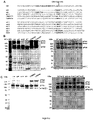
- FIG. 2A shows various mutant gL proteins that were tested.
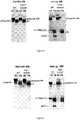
- gH/gL complexes containing various gL mutations were expressed in Expi293 cells and compared to WT gH/gL. Mutations at the Protease Recognition Site reduced gL clipping in the expressed gH/gL complexes.
- an anti-gL western blot of WT raw supernatant showed a clearly visible band of gL fragment with residue 98 at its N-terminus, as determined by N-terminal sequencing.
- a similar band was not detected in the "LSG” mutant and was either not detected or significantly reduced in the "delta Asn97" and "SST” mutants ( Figure 2 ).
- the three residue variants introduced in the vicinity of the clipping site reduced clipping to a greater extent than a single residue variant in the vicinity of the clipping site.
- the "LSG" mutant reduced the intensity of gL clipping band most significantly in anti-His western blot.
- removing the 17-residue insertion enhanced the intensity of the gL clipping band observed by western blot, gH/gL(N), suggesting that this insertion may protect the cleavage site ( Figure 2C ).
- affinity purified WT and mutant pentamer were analyzed by anti-His and anti-gL western blots.
- anti-His western blot of WT pentamer there is a pronounced band with smaller molecular weight than the full-length gH/gL, consistent with a complex of gH and the N-terminal region of gL after clipping. Note that this N-terminal fragment of gL is not recognized by the anti-gL antibody.
- the fragment of gL that resulted from clipping was detected during the expression of the gH/gL, gH/gL/gO (data not shown) and gH/gL/pUL128/pUL130/pUL131 complexes.
- the clipping sites in these three complexes are identical, between gL residues 97 and 98. Therefore, mutations that prevent gL clipping during the expression of gH/gL also prevent gL clipping during the expression of the gH/gL/gO and gH/gL/pUL128/pUL130/pUL131 pentamer complexes.
- gL clipping can, respectively, be eliminated or significantly reduced.
- the location of these mutations is not expected to affect the conserved secondary structure in their vicinity. This allows the production of homogenous gH/gL/pUL128/pUL130/pUL131 pentamer with its three dimensional structure, and antigenicity/ immunogenicity largely unaffected.
- compositions comprising
- X may consist exclusively of X or may include something additional, e.g. X + Y.
- compositions, method or structure may include additional ingredients, steps and/or parts, but only if the additional ingredients, steps and/or parts do no materially alter the basic and novel characteristics of the claimed composition, method or structure.
- Consisting of is generally taken to mean that the invention as claimed is limited to those elements specifically recited in the claim (and may include their equivalents, insofar as the doctrine of equivalents is applicable).
Landscapes
- Health & Medical Sciences (AREA)
- Life Sciences & Earth Sciences (AREA)
- Chemical & Material Sciences (AREA)
- Virology (AREA)
- General Health & Medical Sciences (AREA)
- Medicinal Chemistry (AREA)
- Organic Chemistry (AREA)
- Immunology (AREA)
- Animal Behavior & Ethology (AREA)
- Public Health (AREA)
- Pharmacology & Pharmacy (AREA)
- Veterinary Medicine (AREA)
- Molecular Biology (AREA)
- Microbiology (AREA)
- Mycology (AREA)
- Epidemiology (AREA)
- Proteomics, Peptides & Aminoacids (AREA)
- Genetics & Genomics (AREA)
- Biophysics (AREA)
- Biochemistry (AREA)
- Gastroenterology & Hepatology (AREA)
- Communicable Diseases (AREA)
- Biotechnology (AREA)
- Engineering & Computer Science (AREA)
- Oncology (AREA)
- Chemical Kinetics & Catalysis (AREA)
- General Chemical & Material Sciences (AREA)
- Nuclear Medicine, Radiotherapy & Molecular Imaging (AREA)
- Peptides Or Proteins (AREA)
- Micro-Organisms Or Cultivation Processes Thereof (AREA)
- Medicines Containing Antibodies Or Antigens For Use As Internal Diagnostic Agents (AREA)
Claims (14)
- Rekombinantes Cytomegalovirus gL-Protein oder ein (i) einen dimeren gH/gL-Komplex bildendes Fragment davon, (ii) einen trimeren gH/gL/gO-Komplex bildendes Fragment davon oder (iii) einen pentameren gH/gL/pUL128/pUL130/pUL131-Komplex bildendes Fragment davon, wobei das gL-Protein oder das Fragment eine Mutation an den Resten 91-102 der Proteaseerkennungsstelle umfasst, nummeriert gemäß SEQ ID NO: 1, wobei die Mutation die Proteasespaltung an der Proteaseerkennungsstelle im Vergleich zu einer Kontrolle reduziert, wobei die Mutation ausgewählt ist aus:a) Addition von F, Q, FQ oder QF zwischen den Resten N97 und S98;b) Deletion eines Rests, ausgewählt aus der Gruppe, bestehend aus: A95, A96, N97 und einer Kombination davon;c) Substitution von A96 mit einem nicht-polaren Rest oder mit einem Rest, der eine große Seitenkette umfasst;d) Substitution von A95 mit R, L, E oder N;e) Substitution von N97 mit einem polaren Rest oder einem nicht-polaren Rest;f) Substitution von S98 mit einem Aminosäurerest mit einer kleinen Seitenkette;g) Substitution von V99 mit I;h) Substitution von L100 mit F oder V;i) Substitution von L101 mit V oder I;oder einer Kombination davon.
- gL-Protein oder Fragment nach Anspruch 1, wobei die Substitution von A96 in c) mit I, L, V oder S erfolgt.
- gL-Protein oder Fragment nach irgendeinem der Ansprüche 1-2, wobei die Substitution von N97 in e) mit einem polaren Rest erfolgt, der eine kleine Seitenkette umfasst.
- gL-Protein oder Fragment nach irgendeinem der Ansprüche 1-2, wobei die Substitution von N97 in e) mit einem polaren Rest erfolgt, der eine große Seitenkette umfasst.
- gL-Protein oder Fragment nach irgendeinem der Ansprüche 1-4, wobei die Substitution von S98 in f) mit G, T, V oder I erfolgt.
- gL-Protein oder Fragment nach Anspruch 1, wobei die Mutation die Dreifachmutation A96L/N97S/S98G ist.
- gL-Protein oder Fragment nach Anspruch 1, wobei die Mutation die Dreifachmutation A96I/N97D/S98G ist.
- Cytomegalovirus-Proteinkomplex, welcher das rekombinante gL-Protein oder Fragment nach irgendeinem der Ansprüche 1-7 umfasst.
- Komplex nach Anspruch 8, wobei der Komplex ein pentamerer Komplex ist, welcher weiterhin umfasst: gH oder ein Pentamer-bildendes Fragment davon, pUL128 oder ein Pentamer-bildendes Fragment davon, pUL130 oder ein Pentamer-bildendes Fragment davon und pUL131 oder ein Pentamer-bildendes Fragment davon.
- Isolierte Nukleinsäure, umfassend eine Polynukleotidsequenz, welche das rekombinante Cytomegalovirus gL-Protein oder Fragment nach irgendeinem der Ansprüche 1-7 codiert.
- Wirtszelle, bevorzugt Säugetierwirtszelle, welche die Nukleinsäure nach Anspruch 10 umfasst.
- Wirtszelle nach Anspruch 11, wobei die Wirtszelle weiterhin eine oder mehrere Polynukleotidsequenzen umfasst, die gH oder ein Pentamer-bildendes Fragment davon, pUL128 oder ein Pentamer-bildendes Fragment davon, pUL130 oder ein Pentamer-bildendes Fragment davon und pUL131 oder ein Pentamer-bildendes Fragment davon codieren.
- Immunogene Zusammensetzung, umfassend das rekombinante Cytomegalovirus gL-Protein oder Fragment nach irgendeinem der Ansprüche 1-7 oder den Komplex nach irgendeinem der Ansprüche 8-9 und optional umfassend ein Adjuvans.
- Immunogene Zusammensetzung nach Anspruch 13 zur Verwendung beim Induzieren einer Immunantwort gegen Cytomegalovirus.
Priority Applications (3)
| Application Number | Priority Date | Filing Date | Title |
|---|---|---|---|
| SI201631665T SI3247722T1 (sl) | 2015-01-22 | 2016-01-22 | Antigeni citomegalovirusa in njihova uporaba |
| HRP20230177TT HRP20230177T1 (hr) | 2015-01-22 | 2016-01-22 | Antigeni citomegalovirusa i njihove uporabe |
| EP22203406.8A EP4180056A1 (de) | 2015-01-22 | 2016-01-22 | Cytomegalovirus-antigene und verwendungen davon |
Applications Claiming Priority (2)
| Application Number | Priority Date | Filing Date | Title |
|---|---|---|---|
| EP15152221.6A EP3048114A1 (de) | 2015-01-22 | 2015-01-22 | Cytomegalovirus-Antigene und Verwendungen davon |
| PCT/IB2016/050335 WO2016116904A1 (en) | 2015-01-22 | 2016-01-22 | Cytomegalovirus antigens and uses thereof |
Related Child Applications (2)
| Application Number | Title | Priority Date | Filing Date |
|---|---|---|---|
| EP22203406.8A Division EP4180056A1 (de) | 2015-01-22 | 2016-01-22 | Cytomegalovirus-antigene und verwendungen davon |
| EP22203406.8A Division-Into EP4180056A1 (de) | 2015-01-22 | 2016-01-22 | Cytomegalovirus-antigene und verwendungen davon |
Publications (2)
| Publication Number | Publication Date |
|---|---|
| EP3247722A1 EP3247722A1 (de) | 2017-11-29 |
| EP3247722B1 true EP3247722B1 (de) | 2022-11-30 |
Family
ID=52434568
Family Applications (3)
| Application Number | Title | Priority Date | Filing Date |
|---|---|---|---|
| EP15152221.6A Withdrawn EP3048114A1 (de) | 2015-01-22 | 2015-01-22 | Cytomegalovirus-Antigene und Verwendungen davon |
| EP16702210.2A Active EP3247722B1 (de) | 2015-01-22 | 2016-01-22 | Cytomegalovirus-antigene und verwendungen davon |
| EP22203406.8A Pending EP4180056A1 (de) | 2015-01-22 | 2016-01-22 | Cytomegalovirus-antigene und verwendungen davon |
Family Applications Before (1)
| Application Number | Title | Priority Date | Filing Date |
|---|---|---|---|
| EP15152221.6A Withdrawn EP3048114A1 (de) | 2015-01-22 | 2015-01-22 | Cytomegalovirus-Antigene und Verwendungen davon |
Family Applications After (1)
| Application Number | Title | Priority Date | Filing Date |
|---|---|---|---|
| EP22203406.8A Pending EP4180056A1 (de) | 2015-01-22 | 2016-01-22 | Cytomegalovirus-antigene und verwendungen davon |
Country Status (24)
| Country | Link |
|---|---|
| US (2) | US10167321B2 (de) |
| EP (3) | EP3048114A1 (de) |
| JP (1) | JP6717836B2 (de) |
| KR (1) | KR20170100039A (de) |
| CN (1) | CN107531761B (de) |
| AU (2) | AU2016210548B2 (de) |
| BE (1) | BE1023087B1 (de) |
| BR (1) | BR112017015567A2 (de) |
| CA (1) | CA2974041C (de) |
| DK (1) | DK3247722T5 (de) |
| EA (1) | EA038250B1 (de) |
| ES (1) | ES2937959T3 (de) |
| FI (1) | FI3247722T3 (de) |
| HR (1) | HRP20230177T1 (de) |
| HU (1) | HUE061175T2 (de) |
| IL (1) | IL253366B (de) |
| LT (1) | LT3247722T (de) |
| MX (1) | MX382518B (de) |
| PL (1) | PL3247722T3 (de) |
| PT (1) | PT3247722T (de) |
| SG (1) | SG11201705740UA (de) |
| SI (1) | SI3247722T1 (de) |
| WO (1) | WO2016116904A1 (de) |
| ZA (1) | ZA201704912B (de) |
Families Citing this family (30)
| Publication number | Priority date | Publication date | Assignee | Title |
|---|---|---|---|---|
| NO2772265T3 (de) * | 2010-05-14 | 2018-06-16 | ||
| CA2832109C (en) | 2011-06-10 | 2021-07-06 | Oregon Health & Science University | Cmv glycoproteins and recombinant vectors |
| US10023626B2 (en) | 2013-09-30 | 2018-07-17 | Modernatx, Inc. | Polynucleotides encoding immune modulating polypeptides |
| CA3113595A1 (en) | 2014-07-16 | 2016-01-21 | Oregon Health & Science University | Human cytomegalovirus comprising exogenous antigens |
| CN108064304A (zh) | 2015-02-10 | 2018-05-22 | 俄勒冈健康与科学大学 | 可用于产生非典型cd8+ t细胞应答的方法和组合物 |
| EP3324979B1 (de) | 2015-07-21 | 2022-10-12 | ModernaTX, Inc. | Impfstoffe gegen infektionserkrankungen |
| US11364292B2 (en) | 2015-07-21 | 2022-06-21 | Modernatx, Inc. | CHIKV RNA vaccines |
| WO2017070624A1 (en) | 2015-10-22 | 2017-04-27 | Modernatx, Inc. | Tropical disease vaccines |
| WO2017070613A1 (en) | 2015-10-22 | 2017-04-27 | Modernatx, Inc. | Human cytomegalovirus vaccine |
| AU2016355468B2 (en) | 2015-11-20 | 2022-12-15 | Oregon Health & Science University | CMV vectors comprising microRNA recognition elements |
| US11318197B2 (en) | 2016-03-03 | 2022-05-03 | Duke University | Compositions and methods for inducing HIV-1 antibodies |
| US11246920B2 (en) | 2016-03-03 | 2022-02-15 | Duke University | Compositions and methods for inducing HIV-1 antibodies |
| US11161895B2 (en) | 2016-10-03 | 2021-11-02 | Duke University | Methods to identify immunogens by targeting improbable mutations |
| EA201990937A1 (ru) | 2016-10-18 | 2019-09-30 | Орегон Хелс Энд Сайенс Юниверсити | Цитомегаловирусные векторы, выбирающие t-клетки, ограниченные по молекулам главного комплекса гистосовместимости e |
| MA46584A (fr) | 2016-10-21 | 2019-08-28 | Modernatx Inc | Vaccin contre le cytomégalovirus humain |
| WO2018151816A1 (en) | 2017-02-16 | 2018-08-23 | Modernatx, Inc. | High potency immunogenic compositions |
| WO2018193307A1 (en) | 2017-04-19 | 2018-10-25 | Glaxosmithkline Biologicals Sa | Modified cytomegalovirus proteins and stabilized complexes |
| EP3681514A4 (de) | 2017-09-14 | 2021-07-14 | ModernaTX, Inc. | Rna-vakzine gegen zika-virus |
| WO2019070730A1 (en) | 2017-10-02 | 2019-04-11 | Duke University | MOSAIC ENVELOPES OF HIV-1 TO INDUCE ADCC RESPONSES |
| US11771755B2 (en) | 2018-02-28 | 2023-10-03 | University Of Washington | Self-asssembling nanostructure vaccines |
| WO2019195314A2 (en) | 2018-04-03 | 2019-10-10 | Sanofi | Antigenic epstein barr virus polypeptides |
| CA3114870A1 (en) | 2018-10-01 | 2020-04-09 | Duke University | Hiv-1 envelope stabilizing mutations |
| MX2021004273A (es) | 2018-10-17 | 2021-12-10 | Glaxosmithkline Biologicals Sa | Proteinas de citomegalovirus modificadas y complejos estabilizados. |
| CN109627330A (zh) * | 2018-12-18 | 2019-04-16 | 马鞍山史记动物健康管理有限公司 | 一种猪伪狂犬病毒高效价阳性血清制备方法 |
| EP3938379A4 (de) | 2019-03-15 | 2023-02-22 | ModernaTX, Inc. | Hiv-rna-vakzine |
| EP4004018A1 (de) | 2019-07-24 | 2022-06-01 | GlaxoSmithKline Biologicals SA | Modifizierte humane cytomegalovirus-proteine |
| TWI810589B (zh) * | 2020-06-21 | 2023-08-01 | 美商輝瑞股份有限公司 | 人巨細胞病毒糖蛋白B(gB)多肽 |
| US11406703B2 (en) | 2020-08-25 | 2022-08-09 | Modernatx, Inc. | Human cytomegalovirus vaccine |
| US20250101067A1 (en) | 2022-01-28 | 2025-03-27 | Glaxosmithkline Biologicals Sa | Modified human cytomegalovirus proteins |
| CN118480118B (zh) * | 2022-10-21 | 2025-08-19 | 珠海泰诺麦博制药股份有限公司 | 抗人巨细胞病毒抗体及其用途 |
Family Cites Families (16)
| Publication number | Priority date | Publication date | Assignee | Title |
|---|---|---|---|---|
| US4816567A (en) | 1983-04-08 | 1989-03-28 | Genentech, Inc. | Recombinant immunoglobin preparations |
| US5219740A (en) | 1987-02-13 | 1993-06-15 | Fred Hutchinson Cancer Research Center | Retroviral gene transfer into diploid fibroblasts for gene therapy |
| AU635844B2 (en) | 1989-11-06 | 1993-04-01 | Cell Genesys, Inc. | Production of proteins using homologous recombination |
| EP2037959B1 (de) | 2006-06-07 | 2016-01-27 | The Trustees Of Princeton University | Cytomegalovirus-oberflächenprotein-komplex zur verwendung in impfstoffen und als arzneimittel-target |
| CA2730776C (en) * | 2008-07-16 | 2018-12-11 | Institute For Research In Biomedicine | Human cytomegalovirus neutralizing antibodies and use thereof |
| JP5988492B2 (ja) | 2009-09-02 | 2016-09-07 | ノバルティス アーゲー | Tlr活性モジュレーターを含む免疫原性組成物 |
| EP2590625B1 (de) | 2010-07-06 | 2017-09-20 | GlaxoSmithKline Biologicals SA | Kationische öl-in-wasser emulsionen |
| ES2716243T3 (es) | 2010-10-11 | 2019-06-11 | Glaxosmithkline Biologicals Sa | Plataformas de suministro de antígenos |
| ES2702318T3 (es) | 2011-07-06 | 2019-02-28 | Glaxosmithkline Biologicals Sa | Emulsiones catiónicas de aceite en agua |
| TWI570240B (zh) * | 2011-09-09 | 2017-02-11 | 默沙東公司 | 作為細胞巨大病毒疫苗之條件式複製cmv |
| US9683022B2 (en) | 2012-07-06 | 2017-06-20 | Glaxosmithkline Biologicals S.A. | Complexes of cytomegalovirus proteins |
| CN104853772A (zh) * | 2012-10-30 | 2015-08-19 | 雷德瓦克斯有限责任公司 | 抗人巨细胞病毒感染的基于重组颗粒的疫苗 |
| WO2015092735A1 (en) | 2013-12-20 | 2015-06-25 | Novartis Ag | Novel eukaryotic cells and methods for recombinantly expressing a product of interest |
| EP3083677B1 (de) | 2013-12-20 | 2019-08-28 | Novartis AG | Neuartige eukaryotische zellen und verfahren zur rekombinanten expression eines produkts von interesse |
| EP3015475A1 (de) | 2014-10-31 | 2016-05-04 | Novartis AG | Säugetierzellen zur Expression von Cytomegalovirus-Antigenen |
| EP3047856A1 (de) | 2015-01-23 | 2016-07-27 | Novartis AG | Cmv-antigene und ihre verwendungen |
-
2015
- 2015-01-22 EP EP15152221.6A patent/EP3048114A1/de not_active Withdrawn
-
2016
- 2016-01-22 AU AU2016210548A patent/AU2016210548B2/en not_active Ceased
- 2016-01-22 SG SG11201705740UA patent/SG11201705740UA/en unknown
- 2016-01-22 EP EP16702210.2A patent/EP3247722B1/de active Active
- 2016-01-22 US US15/544,730 patent/US10167321B2/en active Active
- 2016-01-22 DK DK16702210.2T patent/DK3247722T5/da active
- 2016-01-22 LT LTEPPCT/IB2016/050335T patent/LT3247722T/lt unknown
- 2016-01-22 FI FIEP16702210.2T patent/FI3247722T3/fi active
- 2016-01-22 BR BR112017015567A patent/BR112017015567A2/pt not_active Application Discontinuation
- 2016-01-22 EA EA201791562A patent/EA038250B1/ru unknown
- 2016-01-22 PL PL16702210.2T patent/PL3247722T3/pl unknown
- 2016-01-22 HU HUE16702210A patent/HUE061175T2/hu unknown
- 2016-01-22 PT PT167022102T patent/PT3247722T/pt unknown
- 2016-01-22 BE BE2016/5050A patent/BE1023087B1/fr not_active IP Right Cessation
- 2016-01-22 ES ES16702210T patent/ES2937959T3/es active Active
- 2016-01-22 MX MX2017009538A patent/MX382518B/es unknown
- 2016-01-22 EP EP22203406.8A patent/EP4180056A1/de active Pending
- 2016-01-22 KR KR1020177023123A patent/KR20170100039A/ko not_active Ceased
- 2016-01-22 CA CA2974041A patent/CA2974041C/en active Active
- 2016-01-22 SI SI201631665T patent/SI3247722T1/sl unknown
- 2016-01-22 CN CN201680017610.XA patent/CN107531761B/zh active Active
- 2016-01-22 HR HRP20230177TT patent/HRP20230177T1/hr unknown
- 2016-01-22 JP JP2017538387A patent/JP6717836B2/ja active Active
- 2016-01-22 WO PCT/IB2016/050335 patent/WO2016116904A1/en not_active Ceased
-
2017
- 2017-07-09 IL IL253366A patent/IL253366B/en unknown
- 2017-07-19 ZA ZA2017/04912A patent/ZA201704912B/en unknown
-
2018
- 2018-09-10 AU AU2018226521A patent/AU2018226521B2/en not_active Ceased
- 2018-11-15 US US16/192,347 patent/US20190276498A1/en not_active Abandoned
Also Published As
Similar Documents
| Publication | Publication Date | Title |
|---|---|---|
| AU2018226521B2 (en) | Cytomegalovirus antigens and uses thereof | |
| EP3230305B1 (de) | Cytomegalovirus-antigene | |
| WO2015181142A1 (en) | Cytomegalovirus complexes and uses thereof | |
| US20230174588A1 (en) | A vaccine against sars-cov-2 and preparation thereof | |
| EP3047856A1 (de) | Cmv-antigene und ihre verwendungen | |
| JP2025523631A (ja) | Sars-cov-2又はその変異体の感染に抵抗するための医薬組成物及びその併用薬剤 | |
| CA2944230A1 (en) | Human cytomegalovirus vaccine compositions and method of producing the same | |
| US20250026793A1 (en) | Chimeric betacoronavirus spike polypeptides | |
| WO2023236822A1 (zh) | H5n6禽流感广谱性疫苗的开发及其应用 | |
| HK40087930A (en) | Cytomegalovirus antigens and uses thereof | |
| WO2023179514A1 (zh) | 冠状病毒疫苗组合物、方法及其使用 | |
| WO2007010399A2 (en) | Purified trimeric s protein as vaccine against severe acute respiratory syndrome virus infections | |
| US20260083836A1 (en) | Modified coronavirus spike antigen protein and uses thereof | |
| TW202320845A (zh) | 用於預防及治療2019冠狀病毒病(COVID—19)之SARS—CoV—2多重表位肽/蛋白質疫苗 | |
| CN117062843A (zh) | 用于预防感染与治疗长期新冠肺炎的针对SARS-CoV-2变体的疫苗组合物 | |
| HK40086980A (zh) | 针对sars-cov-2的疫苗及其制备 | |
| HK1012415B (en) | Fusion glycoprotein from hcmv and hsv |
Legal Events
| Date | Code | Title | Description |
|---|---|---|---|
| REG | Reference to a national code |
Ref country code: HR Ref legal event code: TUEP Ref document number: P20230177T Country of ref document: HR |
|
| STAA | Information on the status of an ep patent application or granted ep patent |
Free format text: STATUS: THE INTERNATIONAL PUBLICATION HAS BEEN MADE |
|
| PUAI | Public reference made under article 153(3) epc to a published international application that has entered the european phase |
Free format text: ORIGINAL CODE: 0009012 |
|
| STAA | Information on the status of an ep patent application or granted ep patent |
Free format text: STATUS: REQUEST FOR EXAMINATION WAS MADE |
|
| 17P | Request for examination filed |
Effective date: 20170821 |
|
| AK | Designated contracting states |
Kind code of ref document: A1 Designated state(s): AL AT BE BG CH CY CZ DE DK EE ES FI FR GB GR HR HU IE IS IT LI LT LU LV MC MK MT NL NO PL PT RO RS SE SI SK SM TR |
|
| AX | Request for extension of the european patent |
Extension state: BA ME |
|
| DAV | Request for validation of the european patent (deleted) | ||
| STAA | Information on the status of an ep patent application or granted ep patent |
Free format text: STATUS: EXAMINATION IS IN PROGRESS |
|
| 17Q | First examination report despatched |
Effective date: 20180926 |
|
| GRAP | Despatch of communication of intention to grant a patent |
Free format text: ORIGINAL CODE: EPIDOSNIGR1 |
|
| STAA | Information on the status of an ep patent application or granted ep patent |
Free format text: STATUS: GRANT OF PATENT IS INTENDED |
|
| INTG | Intention to grant announced |
Effective date: 20220613 |
|
| GRAS | Grant fee paid |
Free format text: ORIGINAL CODE: EPIDOSNIGR3 |
|
| GRAA | (expected) grant |
Free format text: ORIGINAL CODE: 0009210 |
|
| STAA | Information on the status of an ep patent application or granted ep patent |
Free format text: STATUS: THE PATENT HAS BEEN GRANTED |
|
| AK | Designated contracting states |
Kind code of ref document: B1 Designated state(s): AL AT BE BG CH CY CZ DE DK EE ES FI FR GB GR HR HU IE IS IT LI LT LU LV MC MK MT NL NO PL PT RO RS SE SI SK SM TR |
|
| REG | Reference to a national code |
Ref country code: CH Ref legal event code: EP Ref country code: GB Ref legal event code: FG4D |
|
| REG | Reference to a national code |
Ref country code: AT Ref legal event code: REF Ref document number: 1534639 Country of ref document: AT Kind code of ref document: T Effective date: 20221215 |
|
| REG | Reference to a national code |
Ref country code: FR Ref legal event code: PLFP Year of fee payment: 8 |
|
| REG | Reference to a national code |
Ref country code: IE Ref legal event code: FG4D |
|
| REG | Reference to a national code |
Ref country code: DE Ref legal event code: R096 Ref document number: 602016076584 Country of ref document: DE |
|
| REG | Reference to a national code |
Ref country code: DK Ref legal event code: T3 Effective date: 20230127 |
|
| REG | Reference to a national code |
Ref country code: PT Ref legal event code: SC4A Ref document number: 3247722 Country of ref document: PT Date of ref document: 20230131 Kind code of ref document: T Free format text: AVAILABILITY OF NATIONAL TRANSLATION Effective date: 20230125 |
|
| REG | Reference to a national code |
Ref country code: NL Ref legal event code: FP |
|
| REG | Reference to a national code |
Ref country code: RO Ref legal event code: EPE |
|
| REG | Reference to a national code |
Ref country code: SE Ref legal event code: TRGR |
|
| REG | Reference to a national code |
Ref country code: GR Ref legal event code: EP Ref document number: 20230400239 Country of ref document: GR Effective date: 20230307 |
|
| REG | Reference to a national code |
Ref country code: NO Ref legal event code: T2 Effective date: 20221130 |
|
| REG | Reference to a national code |
Ref country code: SK Ref legal event code: T3 Ref document number: E 41182 Country of ref document: SK |
|
| REG | Reference to a national code |
Ref country code: HR Ref legal event code: ODRP Ref document number: P20230177T Country of ref document: HR Payment date: 20230217 Year of fee payment: 8 |
|
| REG | Reference to a national code |
Ref country code: ES Ref legal event code: FG2A Ref document number: 2937959 Country of ref document: ES Kind code of ref document: T3 Effective date: 20230403 |
|
| REG | Reference to a national code |
Ref country code: HR Ref legal event code: T1PR Ref document number: P20230177 Country of ref document: HR |
|
| REG | Reference to a national code |
Ref country code: EE Ref legal event code: FG4A Ref document number: E023100 Country of ref document: EE Effective date: 20230208 |
|
| REG | Reference to a national code |
Ref country code: HU Ref legal event code: AG4A Ref document number: E061175 Country of ref document: HU |
|
| PG25 | Lapsed in a contracting state [announced via postgrant information from national office to epo] |
Ref country code: RS Free format text: LAPSE BECAUSE OF FAILURE TO SUBMIT A TRANSLATION OF THE DESCRIPTION OR TO PAY THE FEE WITHIN THE PRESCRIBED TIME-LIMIT Effective date: 20221130 |
|
| P01 | Opt-out of the competence of the unified patent court (upc) registered |
Effective date: 20230331 |
|
| PG25 | Lapsed in a contracting state [announced via postgrant information from national office to epo] |
Ref country code: SM Free format text: LAPSE BECAUSE OF FAILURE TO SUBMIT A TRANSLATION OF THE DESCRIPTION OR TO PAY THE FEE WITHIN THE PRESCRIBED TIME-LIMIT Effective date: 20221130 |
|
| PG25 | Lapsed in a contracting state [announced via postgrant information from national office to epo] |
Ref country code: AL Free format text: LAPSE BECAUSE OF FAILURE TO SUBMIT A TRANSLATION OF THE DESCRIPTION OR TO PAY THE FEE WITHIN THE PRESCRIBED TIME-LIMIT Effective date: 20221130 |
|
| REG | Reference to a national code |
Ref country code: DE Ref legal event code: R097 Ref document number: 602016076584 Country of ref document: DE |
|
| PLBE | No opposition filed within time limit |
Free format text: ORIGINAL CODE: 0009261 |
|
| STAA | Information on the status of an ep patent application or granted ep patent |
Free format text: STATUS: NO OPPOSITION FILED WITHIN TIME LIMIT |
|
| 26N | No opposition filed |
Effective date: 20230831 |
|
| REG | Reference to a national code |
Ref country code: HR Ref legal event code: ODRP Ref document number: P20230177 Country of ref document: HR Payment date: 20240109 Year of fee payment: 9 |
|
| PG25 | Lapsed in a contracting state [announced via postgrant information from national office to epo] |
Ref country code: MC Free format text: LAPSE BECAUSE OF FAILURE TO SUBMIT A TRANSLATION OF THE DESCRIPTION OR TO PAY THE FEE WITHIN THE PRESCRIBED TIME-LIMIT Effective date: 20221130 |
|
| PG25 | Lapsed in a contracting state [announced via postgrant information from national office to epo] |
Ref country code: MC Free format text: LAPSE BECAUSE OF FAILURE TO SUBMIT A TRANSLATION OF THE DESCRIPTION OR TO PAY THE FEE WITHIN THE PRESCRIBED TIME-LIMIT Effective date: 20221130 |
|
| REG | Reference to a national code |
Ref country code: AT Ref legal event code: UEP Ref document number: 1534639 Country of ref document: AT Kind code of ref document: T Effective date: 20221130 |
|
| REG | Reference to a national code |
Ref country code: DK Ref legal event code: T5 Effective date: 20241003 |
|
| PGFP | Annual fee paid to national office [announced via postgrant information from national office to epo] |
Ref country code: CZ Payment date: 20241220 Year of fee payment: 10 |
|
| REG | Reference to a national code |
Ref country code: HR Ref legal event code: ODRP Ref document number: P20230177 Country of ref document: HR Payment date: 20250109 Year of fee payment: 10 |
|
| PGFP | Annual fee paid to national office [announced via postgrant information from national office to epo] |
Ref country code: SI Payment date: 20241227 Year of fee payment: 10 |
|
| PGFP | Annual fee paid to national office [announced via postgrant information from national office to epo] |
Ref country code: DE Payment date: 20241218 Year of fee payment: 10 Ref country code: HR Payment date: 20250109 Year of fee payment: 10 Ref country code: IS Payment date: 20250108 Year of fee payment: 10 |
|
| PGFP | Annual fee paid to national office [announced via postgrant information from national office to epo] |
Ref country code: RO Payment date: 20250113 Year of fee payment: 10 |
|
| PGFP | Annual fee paid to national office [announced via postgrant information from national office to epo] |
Ref country code: ES Payment date: 20250203 Year of fee payment: 10 |
|
| PGFP | Annual fee paid to national office [announced via postgrant information from national office to epo] |
Ref country code: AT Payment date: 20241220 Year of fee payment: 10 Ref country code: CH Payment date: 20250201 Year of fee payment: 10 |
|
| PGFP | Annual fee paid to national office [announced via postgrant information from national office to epo] |
Ref country code: IT Payment date: 20250107 Year of fee payment: 10 |
|
| PGFP | Annual fee paid to national office [announced via postgrant information from national office to epo] |
Ref country code: TR Payment date: 20250103 Year of fee payment: 10 |
|
| PGFP | Annual fee paid to national office [announced via postgrant information from national office to epo] |
Ref country code: CY Payment date: 20241219 Year of fee payment: 10 |
|
| PGFP | Annual fee paid to national office [announced via postgrant information from national office to epo] |
Ref country code: LT Payment date: 20251217 Year of fee payment: 11 Ref country code: GB Payment date: 20251219 Year of fee payment: 11 |
|
| PGFP | Annual fee paid to national office [announced via postgrant information from national office to epo] |
Ref country code: NO Payment date: 20251218 Year of fee payment: 11 |
|
| PGFP | Annual fee paid to national office [announced via postgrant information from national office to epo] |
Ref country code: PT Payment date: 20251218 Year of fee payment: 11 |
|
| PGFP | Annual fee paid to national office [announced via postgrant information from national office to epo] |
Ref country code: FI Payment date: 20251217 Year of fee payment: 11 Ref country code: DK Payment date: 20251217 Year of fee payment: 11 |
|
| PGFP | Annual fee paid to national office [announced via postgrant information from national office to epo] |
Ref country code: LU Payment date: 20251217 Year of fee payment: 11 Ref country code: FR Payment date: 20251217 Year of fee payment: 11 Ref country code: NL Payment date: 20251217 Year of fee payment: 11 |
|
| PGFP | Annual fee paid to national office [announced via postgrant information from national office to epo] |
Ref country code: GR Payment date: 20251218 Year of fee payment: 11 Ref country code: BE Payment date: 20251217 Year of fee payment: 11 |
|
| PGFP | Annual fee paid to national office [announced via postgrant information from national office to epo] |
Ref country code: SE Payment date: 20251217 Year of fee payment: 11 |
|
| PGFP | Annual fee paid to national office [announced via postgrant information from national office to epo] |
Ref country code: IE Payment date: 20251218 Year of fee payment: 11 |
|
| PGFP | Annual fee paid to national office [announced via postgrant information from national office to epo] |
Ref country code: MT Payment date: 20251230 Year of fee payment: 11 Ref country code: LV Payment date: 20251217 Year of fee payment: 11 |
|
| PGFP | Annual fee paid to national office [announced via postgrant information from national office to epo] |
Ref country code: PL Payment date: 20251222 Year of fee payment: 11 |
|
| PGFP | Annual fee paid to national office [announced via postgrant information from national office to epo] |
Ref country code: EE Payment date: 20251228 Year of fee payment: 11 Ref country code: BG Payment date: 20251229 Year of fee payment: 11 |
|
| PGFP | Annual fee paid to national office [announced via postgrant information from national office to epo] |
Ref country code: SK Payment date: 20251223 Year of fee payment: 11 |
|
| REG | Reference to a national code |
Ref country code: HR Ref legal event code: ODRP Ref document number: P20230177 Country of ref document: HR Payment date: 20260112 Year of fee payment: 11 |
|
| REG | Reference to a national code |
Ref country code: CH Ref legal event code: U11 Free format text: ST27 STATUS EVENT CODE: U-0-0-U10-U11 (AS PROVIDED BY THE NATIONAL OFFICE) Effective date: 20260201 |
|
| PGFP | Annual fee paid to national office [announced via postgrant information from national office to epo] |
Ref country code: HU Payment date: 20260119 Year of fee payment: 11 |