EP3200624B1 - Recovery of tobacco constituents from processing - Google Patents
Recovery of tobacco constituents from processing Download PDFInfo
- Publication number
- EP3200624B1 EP3200624B1 EP15790270.1A EP15790270A EP3200624B1 EP 3200624 B1 EP3200624 B1 EP 3200624B1 EP 15790270 A EP15790270 A EP 15790270A EP 3200624 B1 EP3200624 B1 EP 3200624B1
- Authority
- EP
- European Patent Office
- Prior art keywords
- tobacco
- gas stream
- compounds
- recovered
- derived compounds
- Prior art date
- Legal status (The legal status is an assumption and is not a legal conclusion. Google has not performed a legal analysis and makes no representation as to the accuracy of the status listed.)
- Active
Links
Images
Classifications
-
- A—HUMAN NECESSITIES
- A24—TOBACCO; CIGARS; CIGARETTES; SIMULATED SMOKING DEVICES; SMOKERS' REQUISITES
- A24B—MANUFACTURE OR PREPARATION OF TOBACCO FOR SMOKING OR CHEWING; TOBACCO; SNUFF
- A24B15/00—Chemical features or treatment of tobacco; Tobacco substitutes, e.g. in liquid form
- A24B15/18—Treatment of tobacco products or tobacco substitutes
- A24B15/24—Treatment of tobacco products or tobacco substitutes by extraction; Tobacco extracts
- A24B15/241—Extraction of specific substances
- A24B15/243—Nicotine
-
- A—HUMAN NECESSITIES
- A24—TOBACCO; CIGARS; CIGARETTES; SIMULATED SMOKING DEVICES; SMOKERS' REQUISITES
- A24B—MANUFACTURE OR PREPARATION OF TOBACCO FOR SMOKING OR CHEWING; TOBACCO; SNUFF
- A24B15/00—Chemical features or treatment of tobacco; Tobacco substitutes, e.g. in liquid form
- A24B15/10—Chemical features of tobacco products or tobacco substitutes
- A24B15/16—Chemical features of tobacco products or tobacco substitutes of tobacco substitutes
- A24B15/167—Chemical features of tobacco products or tobacco substitutes of tobacco substitutes in liquid or vaporisable form, e.g. liquid compositions for electronic cigarettes
-
- A—HUMAN NECESSITIES
- A24—TOBACCO; CIGARS; CIGARETTES; SIMULATED SMOKING DEVICES; SMOKERS' REQUISITES
- A24B—MANUFACTURE OR PREPARATION OF TOBACCO FOR SMOKING OR CHEWING; TOBACCO; SNUFF
- A24B3/00—Preparing tobacco in the factory
- A24B3/18—Other treatment of leaves, e.g. puffing, crimpling, cleaning
- A24B3/182—Puffing
-
- A—HUMAN NECESSITIES
- A24—TOBACCO; CIGARS; CIGARETTES; SIMULATED SMOKING DEVICES; SMOKERS' REQUISITES
- A24B—MANUFACTURE OR PREPARATION OF TOBACCO FOR SMOKING OR CHEWING; TOBACCO; SNUFF
- A24B3/00—Preparing tobacco in the factory
- A24B3/18—Other treatment of leaves, e.g. puffing, crimpling, cleaning
-
- A—HUMAN NECESSITIES
- A24—TOBACCO; CIGARS; CIGARETTES; SIMULATED SMOKING DEVICES; SMOKERS' REQUISITES
- A24B—MANUFACTURE OR PREPARATION OF TOBACCO FOR SMOKING OR CHEWING; TOBACCO; SNUFF
- A24B15/00—Chemical features or treatment of tobacco; Tobacco substitutes, e.g. in liquid form
- A24B15/10—Chemical features of tobacco products or tobacco substitutes
- A24B15/16—Chemical features of tobacco products or tobacco substitutes of tobacco substitutes
-
- A—HUMAN NECESSITIES
- A24—TOBACCO; CIGARS; CIGARETTES; SIMULATED SMOKING DEVICES; SMOKERS' REQUISITES
- A24B—MANUFACTURE OR PREPARATION OF TOBACCO FOR SMOKING OR CHEWING; TOBACCO; SNUFF
- A24B15/00—Chemical features or treatment of tobacco; Tobacco substitutes, e.g. in liquid form
- A24B15/18—Treatment of tobacco products or tobacco substitutes
- A24B15/28—Treatment of tobacco products or tobacco substitutes by chemical substances
-
- A—HUMAN NECESSITIES
- A24—TOBACCO; CIGARS; CIGARETTES; SIMULATED SMOKING DEVICES; SMOKERS' REQUISITES
- A24B—MANUFACTURE OR PREPARATION OF TOBACCO FOR SMOKING OR CHEWING; TOBACCO; SNUFF
- A24B15/00—Chemical features or treatment of tobacco; Tobacco substitutes, e.g. in liquid form
- A24B15/18—Treatment of tobacco products or tobacco substitutes
- A24B15/28—Treatment of tobacco products or tobacco substitutes by chemical substances
- A24B15/30—Treatment of tobacco products or tobacco substitutes by chemical substances by organic substances
-
- A—HUMAN NECESSITIES
- A24—TOBACCO; CIGARS; CIGARETTES; SIMULATED SMOKING DEVICES; SMOKERS' REQUISITES
- A24B—MANUFACTURE OR PREPARATION OF TOBACCO FOR SMOKING OR CHEWING; TOBACCO; SNUFF
- A24B3/00—Preparing tobacco in the factory
- A24B3/18—Other treatment of leaves, e.g. puffing, crimpling, cleaning
- A24B3/182—Puffing
- A24B3/185—Puffing by impregnating with a liquid and subsequently freezing and evaporating this liquid
-
- B—PERFORMING OPERATIONS; TRANSPORTING
- B01—PHYSICAL OR CHEMICAL PROCESSES OR APPARATUS IN GENERAL
- B01D—SEPARATION
- B01D5/00—Condensation of vapours; Recovering volatile solvents by condensation
- B01D5/0033—Other features
- B01D5/0036—Multiple-effect condensation; Fractional condensation
-
- B—PERFORMING OPERATIONS; TRANSPORTING
- B01—PHYSICAL OR CHEMICAL PROCESSES OR APPARATUS IN GENERAL
- B01D—SEPARATION
- B01D53/00—Separation of gases or vapours; Recovering vapours of volatile solvents from gases; Chemical or biological purification of waste gases, e.g. engine exhaust gases, smoke, fumes, flue gases, aerosols
- B01D53/002—Separation of gases or vapours; Recovering vapours of volatile solvents from gases; Chemical or biological purification of waste gases, e.g. engine exhaust gases, smoke, fumes, flue gases, aerosols by condensation
-
- B—PERFORMING OPERATIONS; TRANSPORTING
- B01—PHYSICAL OR CHEMICAL PROCESSES OR APPARATUS IN GENERAL
- B01D—SEPARATION
- B01D53/00—Separation of gases or vapours; Recovering vapours of volatile solvents from gases; Chemical or biological purification of waste gases, e.g. engine exhaust gases, smoke, fumes, flue gases, aerosols
- B01D53/34—Chemical or biological purification of waste gases
- B01D53/346—Controlling the process
-
- B—PERFORMING OPERATIONS; TRANSPORTING
- B01—PHYSICAL OR CHEMICAL PROCESSES OR APPARATUS IN GENERAL
- B01D—SEPARATION
- B01D53/00—Separation of gases or vapours; Recovering vapours of volatile solvents from gases; Chemical or biological purification of waste gases, e.g. engine exhaust gases, smoke, fumes, flue gases, aerosols
- B01D53/34—Chemical or biological purification of waste gases
- B01D53/46—Removing components of defined structure
Definitions
- This disclosure relates to, among other things, recovery of tobacco constituents or reaction products of constituents that are volatilized during processing of tobacco.
- the recovered constituents or reaction products can be added to compositions, such as aerosol-generating compositions for use in heated aerosol-generating smoking devices, to provide flavor or other desired attributes to the compositions.
- Electronic cigarettes have been developed as an alternative to traditional cigarettes as a means for volatizing active components, such as nicotine, for inhalation without combustion, while at the same time providing the user with an oral experience similar to that of traditional cigarette smoking.
- Many current e-cigarettes use a liquid (an "e-liquid") containing nicotine as the only component that is derived from tobacco.
- e-liquids are often not capable of providing flavor or other sensory attributes of traditional smoking articles such as cigarettes. Accordingly, it may be desirable to include tobacco flavorants in e-liquids for use in e-cigarettes.
- Volatile tobacco constituents may be lost during processing of tobacco.
- processing of tobacco to form expanded tobacco such as dry ice expanded tobacco ("DIET")
- DIET dry ice expanded tobacco
- the volatilized tobacco-derived compounds are typically carried in a waste gas stream and incinerated to produce energy for the tobacco expansion process.
- some compounds can react to form reaction products that are also carried in the waste gas stream and incinerated.
- Some of these reaction products are produced via Maillard reactions between reducing sugars and tobacco alkaloids and contribute to the flavor of tobacco when it is being smoked.
- EP 0 015 660 A1 and US 4,377,173 disclose methods and apparatus for expanding tobacco in which tobacco containing solid carbon dioxide is heated in an expansion chamber to expand the tobacco by sublimation of the solid carbon dioxide.
- Carbon dioxide gas together with volatilised water and organic materials, are evolved from tobacco into the expansion chamber to form a high thermal diffusivity atmosphere.
- a portion of the atmosphere is continuously removed with the expanded tobacco and separated therefrom.
- a portion of the separated atmosphere may be exhausted to ambient with the remainder recycled to the expansion chamber.
- the portion of the expansion chamber atmosphere exhausted to atmosphere may first be cooled to effect condensation and recovery of volatile organic materials evolved from the tobacco undergoing expansion. Such recovered materials may be added to expanded tobacco in later stages, e.g. reordering, of the tobacco treatment process.
- the tobacco alkaloids, reaction products, and other compounds produced or volatilized during a tobacco expansion process may be flavor compounds that can be used to add flavor, aroma, or other sensory attributes to compositions such as e-liquid compositions.
- One object of the present invention is to recover tobacco flavorants that are volatilized during tobacco processing. Such compounds are typically lost, or their content is reduced, with current tobacco processing methods. Another object is to provide compositions for use in heated aerosol-generating articles, which compositions include tobacco flavorants recovered during tobacco processing. The tobacco flavorants may provide flavor, aroma, or other sensory attributes to the compositions.
- Formulating means adjusting concentration of components, such as nicotine, flavorants and humectants, to levels that meet tobacco control regulations and produce an acceptable experience to adults when used in an aerosol-generating device.
- Any composition described herein for use in an aerosol-generating device may be a formulated composition.
- a method in various aspects of the present invention, includes volatilizing one or more tobacco-derived compounds into a gas stream and recovering a condensate comprising at least one of the one or more volatilized tobacco-derived compounds from the gas stream by techniques well known in the art.
- the method includes fractionating the recovered compounds by techniques well known in the art to selectively recover or enrich at least one of the one or more volatilized constituents or reaction products.
- at least one of the recovered tobacco-derived compounds is a tobacco flavorant.
- Volatilizing the tobacco-derived compounds may be done by raising the temperature of the tobacco in a tobacco expansion process, such as but not limited to a dry ice expansion tobacco (“DIET”) process.
- DIET dry ice expansion tobacco
- the method may further comprise introducing one or more of the recovered tobacco-derived compounds to an aerosol-generating composition for use in a heated aerosol-generating device.
- aspects of the method of the present invention may have one or more advantages relative to currently available tobacco processing and processes for forming aerosol-generating compositions for use in heated aerosol-generating devices.
- aspects of the method of the present invention recover tobacco flavorants, which may include key flavor compounds, during tobacco expansion processes rather than losing or burning such compounds as done with current tobacco expansion processes. Additional advantages of one or more aspects of the method described herein will be evident to those of skill in the art upon reading and understanding the present disclosure.
- a tobacco flavorant is a tobacco-derived compound that produces an odor or flavor when smelled or tasted.
- a "tobacco-derived compound” is a compound naturally occurring in tobacco or a reaction product of naturally occurring tobacco compounds that may be generated during processing of tobacco.
- the tobacco-derived compounds, which may include tobacco flavorants, volatilized in a tobacco expansion process are carried in a gas stream. Tobacco flavorants may be recovered from the gas stream and used to provide odor, aroma, flavor, or other sensory attributes to various compositions.
- Volatilization of tobacco-derived compounds can result from raising the temperature of a composition comprising tobacco. However, volatilization can occur without heating, and volatilized compounds may be captured in accordance with the method of the present invention. Volatilized tobacco-derived compounds may be captured and recovered from any suitable composition comprising tobacco constituents, such as dry tobacco compositions, tobacco suspensions, and the like. The volatilized tobacco-derived compounds are captured in a gas stream from which the compounds may be recovered. The volatilized compounds may be recovered by condensation. One or more tobacco flavorants volatilized in the gas stream may be selectively recovered, enriched, or both selectively recovered and enriched in one or more steps.
- the method of the invention includes subjecting a composition comprising tobacco to conditions that result in volatilization of a tobacco-derived compound into a gas stream, and recovering the tobacco-derived compound from the gas stream.
- the conditions to which the tobacco composition is subjected determines whether a tobacco-derived compound will be volatilized. It will be understood that temperature, gas stream flow rate, and pressure can affect the amount of a tobacco-derived compound that is volatilized into the gas stream. The same factors can also affect the number of different compounds that are volatilized into the gas stream. The vapor pressure of a tobacco-derived compound also contributes to whether the tobacco-derived compound will be volatilized under a given set of conditions.
- Tobacco compositions that can be subjected to conditions in which tobacco-derived compounds are volatilized include dry tobacco compositions, suspensions containing tobacco, such as slurries, and the like.
- tobacco is used herein to indicate a Nicotiana species plant or one or more components of a Nicotiana species plant.
- tobacco and tobacco are used herein to indicate both a single species of Nicotiana and two or more species of Nicotiana forming a tobacco blend.
- tobacco includes any component or subcomponent of a leaf, stem, stalk, flower, root, seed, or any other part of a Nicotiana species plant.
- tobacco is tobacco cut filler.
- tobacco cut filler is used herein to indicate tobacco material that is predominately formed from the lamina portion of the tobacco leaf.
- Tobacco compositions that can be subjected to conditions in which tobacco-derived compounds can be volatilized may include tobacco and a carrier.
- the carrier may be a solid, liquid or gas. If the carrier is a liquid, the composition may be a suspension.
- suitable liquid carriers for forming a suspension include water; ethanol; liquid carbon dioxide; Freon TM 11; ammonium carbonate; as well as supercritical fluids such as nitrogen, argon, helium, methane, propanol, pentane, and the like; or combinations of one or more of such liquid carriers.
- the carrier impregnates the tobacco.
- solid carriers include solid carbon dioxide, which is also known as dry ice.
- a preferred method to achieve a dry ice-tobacco composition is to contact the tobacco with liquid carbon dioxide under sufficiently high pressure to maintain the CO 2 in a liquid state and then to reduce pressure (such as to atmospheric pressure) to allow freezing of the CO 2 , which occurs at about -78°C. Pressure sufficient to maintain the CO 2 in a liquid state, in some embodiments, is about 30 Bar (g).
- the liquid CO 2 impregnates the tobacco.
- the tobacco is submerged in the liquid CO 2 for an amount of time sufficient for the CO 2 to impregnate the tobacco, which may be from about 10 seconds to about 30 minutes, preferably about 15 minutes or less. Such impregnation is routinely carried out in DIET processes resulting in tobacco that is impregnated with non-gaseous carbon dioxide.
- the temperature of a tobacco composition is increased and volatile constituents or reaction products are captured and carried in a gas stream.
- the tobacco composition may be heated at any suitable temperature.
- the tobacco composition may be heated at about 100°C to about 500°C; preferably at about 150°C to about 400°C; more preferably at about 180°C to about 300°C; even more preferably at about 220°C to about 290°C or at about 190°C to about 200°C.
- the tobacco composition may be contacted with a hot gas stream, where the hot gas is at a temperature of 100°C to about 500°C; preferably about 150°C to about 400°C; more preferably about 180°C to about 300°C; even more preferably about 220°C to about 290°C or about 190°C to about 200°C.
- temperature and other conditions to which a tobacco composition is subjected can affect the ratio of tobacco constituent reaction products to unreacted tobacco constituents. Accordingly, temperature and/or other conditions may be controlled to manipulate the ratio of unreacted to reacted constituents or the chemical composition of the resulting tobacco-derived compounds carried in a gas stream.
- tobacco-derived compounds include compounds resulting from Maillard reactions between reducing sugars and tobacco alkaloids.
- one or more of the following tobacco-derived terpenes is captured in, and recovered together or separately from, a gas stream: ⁇ -pinene, ⁇ -pinene, ⁇ -terpinene, limonene, eucalyptol, linalool, camphor, borneol, citronellol and ⁇ -canophyllene.
- one or more of the following tobacco alkaloids is captured in and recovered together or separately from a gas stream: I-nicotine, I-myosmine, nicotyrine, cotinine, and 3-cyanopyridine.
- one or more of the following tobacco-derived pyrazines which are Maillard reaction products is captured in and recovered together or separately from a gas stream: 2-methyl-pyrazine, 2-ethyl-pyrazine, 2,3-dimethyl-pyrazine, 6-ethyl-2-methyl-pyrazine, trimethyl-pyrazine, 2-ethyl-5-methyl-pyrazine, and dimethyethyl-pyrazine.
- the tobacco-derived pyrazines are alkyl-substituted pyrazines, or alkylpyrazines. Examples of the alkyl group(s) include one or more methyl or ethyl groups, typically having boiling points in the range of 135°C to 191 °C.
- the recovered tobacco-derived compounds comprise one or more terpenes, nicotine and one or more pyrazines.
- a recovered tobacco-derived compound includes a terpene, a tobacco alkaloid, or an alkylpyrazines.
- Tobacco alkaloids are well known in the art and include nicotine and its derivatives which include many heterocyclic derivatives of pyridine; the heterocyclic group can be, for example, a pyrrolidinyl group.
- tobacco alkaloids include I-nicotine, I-myosmine, nicotyrine, cotinine, and 3-cyanopyridine.
- any suitable gas may be used to carry volatile tobacco compounds to a suitable recovery apparatus.
- suitable gases for use in a gas stream include air, CO 2 , O 2 , inert gas such as N 2 , steam or combinations of one of more of air, CO 2 , O 2 , inert gas such as N 2 , and steam.
- the gas stream comprises steam.
- the gas may comprise steam and an inert gas, steam and air, or the like.
- the steam concentration of the gas stream is in the range of about 70% to about 95%; more preferably about 80% to about 90%; more preferably from about 82% to about 85%.
- the process plant is being operated continuously, and thus the gas stream may have any suitable speed as it is transported within the conduits of the process plants.
- the speed of the gas stream is in the range from about 10 meters per second (m/s) to about 100 m/s; more preferably from about 20 m/s to about 50 m/s; even more preferably from about 30 m/s to about 40 m/s.
- the gas stream delivered at such speeds is a stream comprising steam.
- the method of the present invention recovers tobacco flavorants from a tobacco expansion process.
- Tobacco expansion processes include converting solid or liquid phase components into gas phase within a plant cell, thereby resulting in expanded tobacco.
- Tobacco expansion methods according to the present invention include impregnating tobacco with a solid or liquid carrier, such as a carrier described above, and heating to cause expansion. Heating may be accomplished by placing impregnated tobacco in a hot gas stream, such as a gas stream described above. Tobacco-derived compounds carried in the gas stream can be directed to recovery apparatus, where tobacco flavorants can be recovered.
- DIET dry ice expanded tobacco
- DIET processes include impregnating tobacco with carbon dioxide under pressure and solidifying the carbon dioxide.
- the dry ice impregnated tobacco is introduced into a heated process gas which results in rapid expansion of the carbon dioxide or hydrates of carbon dioxide, such as CO 2 ⁇ 6H 2 O, and thus rapid expansion of the tobacco.
- the heated process gas can flow at any suitable velocity, such as in a range from about 10 meters/second to about 50 meters/second or other ranges as described above.
- the process gas may be at any suitable temperature, such as in a range from about 180°C to about 300°C or other ranges as described above. Any suitable process gas may be used, such as a gas comprising steam as described above.
- waste gas is fed through an incinerator where tobacco-derived compounds in the waste gas stream are incinerated.
- DIET processes can result in losses from the tobacco of reducing sugars in the range from about 5% to about 8% and result in losses of total alkaloids in the range from about 15% to greater than 20%.
- tobacco-derived compounds are recovered before the waste gas is passed through an incinerator. This can be accomplished by redirecting a waste gas stream from the main process gas stream to recovery apparatus.
- One preferred DIET process that may be employed or modified in accordance with the teachings presented herein is the AIRCO DIET process. Additional information on the AIRCO DIET process, plants and equipment can be found at the AIRCODIET website (aircodiet.com). More particular information regarding the AIRCO DIET process can be found in the AIRCO DIET publication, entitled “Dry Ice Expanded Tobacco” available at http://www.aircodiet.com/images/AIRCO DIET Process Description.pdf.
- Tobacco-derived compounds may be recovered from a gas stream by condensation such as cryogenic condensation, rotary condensation, and the like.
- tobacco-derived compounds are recovered from a gas stream, such as a re-directed waste gas stream, by condensation to form a liquid mixture, suspension, solution, or the like.
- a gas stream such as a re-directed waste gas stream
- Any suitable condenser may be employed.
- a condenser is operated at a temperature of about 10°C or less, preferably about 5°C, to condense water carried in the gas.
- the water may be derived from the tobacco composition, the gas stream, or both the tobacco composition and the gas stream.
- the condensed water may include tobacco-derived compounds.
- the de-watered inert gas that has been passed through the condenser may be fed to a cryogenic condenser to condense remaining tobacco-derived compounds as frost.
- the tobacco-derived compound-containing frost may then be recovered.
- cryogenic condensation may be employed without prior higher temperature condensation.
- Condensation may be carried out using conventional techniques.
- the gas stream may be led to a condenser system.
- the condenser system can be operated at a temperature sufficiently low to condense most of the tobacco compounds from the gas stream. A temperature of below about 50°C may be suitable although cooling to below 30°C is preferred.
- Preferably more than one condenser is used; each succeeding condenser being operated at a lower temperature than the previous condenser.
- the downstream-most condenser is operated at a temperature of about 0°C to about 10°C.
- the gas stream may be subjected to a first condensation step at a high temperature; for example at about 80°C to about 95°C. This will result in the condensation of primarily water.
- the non-condensing and concentrated tobacco-derived compounds may then be subjected to a second condensation step at a lower temperature; for example at about 0°C to about 50°C to provide a composition comprising the tobacco-derived compounds.
- composition comprising the tobacco-derived compounds removed from the condenser system contains tobacco-derived compounds which may be used to provide flavor, aroma, or other sensory attributes to other compositions, such as aerosol-generating compositions for use in heated aerosol-generating smoking devices.
- Tobacco-derived compounds that do not condense in the condenser system may be directed to a cryogenic condenser for collection.
- cryogenic condensers are known and have been reported in the literature. Examples include the cryogenic condensers described in U.S. Pat. Nos. 5,182,926 and 5,323,623 . Further details of the operation of such cryogenic condensers may be obtained from the disclosures in the patents. Of course other cryogenic aroma condensers may be used; for example those disclosed in U.S. Pat. No. 5,030,473 .
- the tobacco-derived compounds collected in the cryogenic condenser is in the form of a frost.
- the frost may be used to flavor or to provide aroma or other attributes to compositions such as aerosol-generating compositions for use in heated aerosol-generating smoking devices.
- the frost may be combined with a suitable carrier substrate such as an oil or an oil-containing emulsion.
- This tobacco-derived compound-containing carrier can be conveniently added to compositions to provide flavor or the like.
- the tobacco-derived compounds may be concentrated prior to being added to a composition to provide flavor, aroma or the like. Concentration may be carried out using conventional procedures such as partial condensation, rectification, membrane concentration and freeze concentration.
- tobacco-derived compounds recovered from a gas stream may be passed through oil which can extract or absorb one or more of the tobacco-derived compounds.
- the tobacco-derived compound enhanced oil can be included in aerosol-generating compositions for use in heated aerosol-generating devices.
- compositions containing tobacco-derived compounds can be fractionated to form compositions having different constitution of tobacco-derived compounds.
- fractionation can be accomplished by carrying out condensation of the gas stream composition at different temperatures to collect different fractions at different temperatures. It will be understood that a compound's vapor pressure or boiling point, or concentration, may affect the concentration of the compound in various fractions obtained via condensation at different temperatures. Compounds with similar vapor pressures or boiling points will tend to be present in the same fractions. Fractions may be subjected to testing for the presence of certain compounds that can serve as markers for other compounds that may be present in the fraction, regardless of the fractionation process employed. Boiling points of exemplary tobacco-derived compounds are provided in Table 1 and can be used to devise condensation or fractionation protocols by one of skill in the art.
- fractionation processes include distillation, extraction, and the like.
- fractionation is performed to obtain compositions having higher ratios of tobacco flavorants to non-flavorant tobacco-derived compounds.
- the concentration of one or more tobacco-derived compound in a fraction or a composition can be enhanced through any suitable method, if desired.
- One or more recovered tobacco-derived compounds or compositions, such as fractions, containing recovered tobacco-derived compounds may be included in an aerosol-generating composition for use in heated aerosol-generating device.
- Heated aerosol-generating devices include electronic cigarettes or electronic pipes that simulate one or more aspects of the act of tobacco smoking by producing an inhaled aerosol having the one or more of the appearance, the physical sensation, the flavor and the nicotine content of inhaled tobacco smoke.
- any suitable electronic smoking device may be employed.
- electronic smoking devices include an atomizing element, for example, a nebulizer or atomizer, which uses heat to vaporize contents of a cartridge containing an aerosol-generating composition which is inhaled by a user.
- the cartridge containing the aerosol- generating composition or e-liquid typically contains a propylene glycol- or glycerin-based aqueous solution.
- the heating element can be controlled by a computer chip that is activated by the inhalation or "draw" of the user on the end of electronic smoking devices.
- the heating element and the computer chip can be operably coupled to a battery or other suitable power source.
- the opposite end of electronic smoking devices will include a light that glows when the device is being "smoked" or drawn upon by the user to simulate the appearance of smoking.
- Aerosol-generating devices may be of a single-use or disposable type, or may be refillable with liquid compositions or cartridges containing aerosol-generating compositions for use in heated aerosol-generating devices.
- Embodiments of the present invention are directed to compositions for use in aerosol-generating devices that contain recovered tobacco-derived compounds, and cartridges for electronic smoking devices that contain compositions comprising recovered tobacco-derived compounds.
- a cartridge for an aerosol-generating device contains a liquid composition comprising a solvent or carrier and one or more recovered tobacco-derived compounds obtained by the method of the present invention as described above.
- Aerosol-generating compositions for use in heated aerosol-generating devices may include any suitable amount of recovered tobacco-derived compounds obtained by the method of the present invention.
- the composition comprises between about 0.5% to about 15%, often from about 1% to about 10%. Unless otherwise clear from context, all percentages referred to herein are expressed as percent by weight based on the total weight of the composition.
- the concentration of tobacco-derived compounds can be higher to allow for mixing of condensates, fractions, extracts or other such compositions containing recovered tobacco-derived products obtained by the method of the present invention with other compositions, such as flavor compositions, nicotine compositions, or the like by a consumer or a formulary.
- Aerosol-generating compositions comprising one or more recovered tobacco-derived compounds obtained by the method of the present invention may contain other components, such as one or more of water, organic solvents, sweetening agents, flavoring agents, and the like.
- solvents that are commonly used in such aerosol-generating compositions include polyhydric alcohols such as 1,2-propylene glycol (PG or MPG); monohydric alcohols such as ethanol; ethyl acetate; glycerol and the like.
- the amount of water present typically ranges from about 0.1% to about 10%, usually from about 0.5% to about 5%.
- the cumulative total of one or more organic solvent present typically ranges from about 50% to about 99%, often from about 75% to about 95%.
- an aerosol-generating composition comprising one or more recovered tobacco-derived compounds obtained by the method of the present invention comprises polyethylene glycol and glycerol.
- an aerosol-generating composition comprising one or more recovered tobacco-derived compounds obtained by the method of the present invention is formulated with one or more aqueous composition comprising nicotine, propylene glycol, glycerol or a combination of at least two or more of nicotine, propylene glycol and glycerol.
- one or more recovered tobacco-derived compounds obtained by the method of the present invention are added to a base composition to form an aerosol-generating composition.
- the base composition comprises propylene glycol, glycerol and water.
- the base composition may comprise about 48% to about 68%, preferably about 58%, propylene glycol, about 25% to about 45%, preferably about 35%, glycerol, and about 2% to about 12%, preferably about 7%, water.
- compositions comprising one or more recovered tobacco-derived compounds obtained by the method of the present invention may include one or more flavorants in addition to recovered tobacco-derived compounds that may be flavorants.
- additional flavorants include peppermint, menthol, wintergreen, spearmint, propolis, eucalyptus, cinnamon, or the like.
- the total amount of optional flavorants typically ranges from about 0.5% to about 15%, often from about 1% to about 10%.
- Aerosol-generating compositions comprising one or more recovered tobacco-derived compounds obtained by the method of the present invention may contain any suitable amount of nicotine.
- the compositions may contain 0% to about 30% nicotine.
- the compositions comprise about 0.5% to about 18% nicotine.
- Reference to a particular compound herein includes salts, polymorphs, isomers, and hydrates of the compound unless the content clearly dictates otherwise.
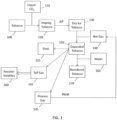
- FIG. 1 schematic drawings are depicted that illustrate various aspects of a process for recovering volatile tobacco compounds from a DIET process and a smoking device that may include an e-liquid composition comprising such recovered tobacco compounds.
- the drawings are not necessarily to scale and are presented for purposes of illustration and not limitation. The drawings depict various aspects described in this disclosure. However, it will be understood that other aspects not depicted in the drawings fall within the scope of this disclosure.
- FIG. 1 is a schematic flow diagram illustrating a process for recovering volatile compounds from a DIET process.
- the process includes contacting tobacco 100 with liquid carbon dioxide 110 to form liquid carbon dioxide impregnated tobacco 120 under pressure sufficient to maintain the carbon dioxide in liquid form.
- the pressure is then decreased, such as to atmospheric pressure, which results in freezing of the liquid carbon dioxide to form dry ice-impregnated tobacco 130.
- the dry ice-impregnated tobacco 130 is contacted with hot gas 140 to result in expanded tobacco 150.
- the resulting gas may be separated into tobacco dust 155, process gas 145, and tail gas 142 that contains volatile tobacco compounds.
- the process gas 145 may be heated and used as, at least a portion of, hot gas 140 in continued operation.
- the tail gas 142 is directed to recovery apparatus 200, such as condensers or the like, where the volatile tobacco compounds are recovered. Water may be added to the expanded tobacco 150 to produce reordered tobacco 170 having a moisture content similar to the starting tobacco material 100.
Landscapes
- Chemical & Material Sciences (AREA)
- Chemical Kinetics & Catalysis (AREA)
- General Chemical & Material Sciences (AREA)
- Engineering & Computer Science (AREA)
- Health & Medical Sciences (AREA)
- Analytical Chemistry (AREA)
- Oil, Petroleum & Natural Gas (AREA)
- General Health & Medical Sciences (AREA)
- Toxicology (AREA)
- Biomedical Technology (AREA)
- Environmental & Geological Engineering (AREA)
- Manufacture Of Tobacco Products (AREA)
Applications Claiming Priority (3)
| Application Number | Priority Date | Filing Date | Title |
|---|---|---|---|
| US201462057580P | 2014-09-30 | 2014-09-30 | |
| EP14187195 | 2014-09-30 | ||
| PCT/IB2015/057428 WO2016051334A1 (en) | 2014-09-30 | 2015-09-28 | Recovery of tobacco constituents from processing |
Publications (3)
| Publication Number | Publication Date |
|---|---|
| EP3200624A1 EP3200624A1 (en) | 2017-08-09 |
| EP3200624C0 EP3200624C0 (en) | 2023-11-01 |
| EP3200624B1 true EP3200624B1 (en) | 2023-11-01 |
Family
ID=51690238
Family Applications (1)
| Application Number | Title | Priority Date | Filing Date |
|---|---|---|---|
| EP15790270.1A Active EP3200624B1 (en) | 2014-09-30 | 2015-09-28 | Recovery of tobacco constituents from processing |
Country Status (11)
| Country | Link |
|---|---|
| US (1) | US20170273351A1 (enExample) |
| EP (1) | EP3200624B1 (enExample) |
| JP (1) | JP6917885B2 (enExample) |
| KR (1) | KR102544327B1 (enExample) |
| CN (2) | CN115104758A (enExample) |
| ES (1) | ES2964622T3 (enExample) |
| MX (1) | MX2017004145A (enExample) |
| PL (1) | PL3200624T3 (enExample) |
| RU (1) | RU2687759C2 (enExample) |
| SG (1) | SG11201701934VA (enExample) |
| WO (1) | WO2016051334A1 (enExample) |
Families Citing this family (15)
| Publication number | Priority date | Publication date | Assignee | Title |
|---|---|---|---|---|
| GB201716708D0 (en) * | 2017-10-12 | 2017-11-29 | British American Tobacco Investments Ltd | Aerosolisable product |
| CN108077992B (zh) * | 2017-12-18 | 2019-01-18 | 山东精彩香料科技开发有限公司 | 一种加热不燃烧卷烟用抽吸颗粒及制造方法 |
| US11690396B2 (en) | 2018-10-24 | 2023-07-04 | Zanoprima Lifesciences Limited | Electronic cigarette compositions, devices, and related methods |
| EP3840596B1 (en) * | 2018-10-24 | 2023-02-08 | Zanoprima Lifesciences Limited | Composition |
| WO2020245410A1 (en) | 2019-06-05 | 2020-12-10 | Philip Morris Products S.A. | Improved method of producing a liquid tobacco extract |
| WO2020260416A1 (en) * | 2019-06-25 | 2020-12-30 | Philip Morris Products S.A. | Carbonated liquid nicotine formulation |
| US12213510B2 (en) | 2019-09-11 | 2025-02-04 | Nicoventures Trading Limited | Pouched products with enhanced flavor stability |
| CN113115837A (zh) * | 2019-12-31 | 2021-07-16 | 益海嘉里(武汉)粮油工业有限公司 | 芝麻油及其风味化合物的提取方法 |
| GB202006642D0 (en) * | 2020-05-05 | 2020-06-17 | Nicoventures Holdings Ltd | Aerosol generating material |
| GB202006633D0 (en) * | 2020-05-05 | 2020-06-17 | Nicoventures Holdings Ltd | Aerosol generating material |
| EP3918927A1 (en) * | 2020-06-05 | 2021-12-08 | JT International SA | E-liquid for vaping comprising an aerosol-forming agent and a method of producing thereof |
| WO2022102542A1 (ja) | 2020-11-13 | 2022-05-19 | 日本たばこ産業株式会社 | たばこテルペン類を含むたばこ抽出物およびその製造方法 |
| EP4265128A4 (en) * | 2020-12-21 | 2024-11-06 | Japan Tobacco Inc. | TOBACCO COMPONENT CONCENTRATE AND METHOD FOR MANUFACTURING THE SAME, AND FLAVOR-PRODUCING ARTICLE AND METHOD FOR MANUFACTURING THE SAME |
| US20240099371A1 (en) | 2021-02-04 | 2024-03-28 | Jt International Sa | An Aerosol Forming Liquid for an Electronic Cigarette Having Two Different Phases and Methods and Devices for Using the Same |
| JP2025038254A (ja) * | 2021-12-21 | 2025-03-19 | 日本たばこ産業株式会社 | たばこスラリー、たばこ製品、及びたばこスラリーの保管方法 |
Citations (16)
| Publication number | Priority date | Publication date | Assignee | Title |
|---|---|---|---|---|
| US3151118A (en) | 1961-07-18 | 1964-09-29 | Reynolds Tobacco Co R | Process for removing nicotine from tobacco |
| US3174485A (en) | 1963-05-23 | 1965-03-23 | Brown & Williamson Tobacco Corp | Organoleptically improved tobacco product |
| US3424171A (en) | 1966-08-15 | 1969-01-28 | William A Rooker | Tobacco aromatics enriched nontobacco smokable product and method of making same |
| GB2031707A (en) | 1978-10-20 | 1980-04-30 | Philip Morris Inc | Treatment of tobacco |
| EP0015660A1 (en) | 1979-02-16 | 1980-09-17 | The BOC Group, Inc. | Method and apparatus for expanding tobacco |
| US5016654A (en) | 1988-12-21 | 1991-05-21 | R. J. Reynolds Tobacco Company | Flavor substances for smoking articles |
| US5101839A (en) | 1990-08-15 | 1992-04-07 | R. J. Reynolds Tobacco Company | Cigarette and smokable filler material therefor |
| US5197494A (en) | 1991-06-04 | 1993-03-30 | R.J. Reynolds Tobacco Company | Tobacco extraction process |
| US5235992A (en) | 1991-06-28 | 1993-08-17 | R. J. Reynolds Tobacco Company | Processes for producing flavor substances from tobacco and smoking articles made therewith |
| US5301694A (en) | 1991-11-12 | 1994-04-12 | Philip Morris Incorporated | Process for isolating plant extract fractions |
| US20060065279A1 (en) | 2003-05-06 | 2006-03-30 | Japan Tobacco Inc. | Method of manufacturing regenerated tobacco material |
| WO2011110843A1 (en) | 2010-03-09 | 2011-09-15 | British American Tobacco (Investments) Limited | Methods for extracting and isolating constituents of cellulosic material |
| US20120192882A1 (en) | 2011-01-28 | 2012-08-02 | R.J. Reynolds Tobacco Company | Polymeric materials derived from tobacco |
| WO2013180918A1 (en) | 2012-06-01 | 2013-12-05 | R.J. Reynolds Tobacco Company | Systems and methods for moist tobacco extract collection and isolation |
| EP2687110A1 (en) | 2011-03-15 | 2014-01-22 | Japan Tobacco Inc. | Method and device for producing regenerated tobacco material |
| WO2015021137A1 (en) | 2013-08-08 | 2015-02-12 | R. J. Reynolds Tobacco Company | Tobacco-derived pyrolysis oil |
Family Cites Families (26)
| Publication number | Priority date | Publication date | Assignee | Title |
|---|---|---|---|---|
| US4153063A (en) * | 1970-09-02 | 1979-05-08 | Studiengesellschaft Kohle Mbh | Process for the extraction of nicotine from tobacco |
| US4377173A (en) * | 1979-02-16 | 1983-03-22 | Airco, Inc. | Methods and apparatus for expanding tobacco |
| DE3148335C2 (de) * | 1981-12-07 | 1984-03-29 | Adam Dr. 8630 Coburg Müller | Verfahren zur Gewinnung von Aromastoffen aus Tabak und deren Verwendung |
| US5030473A (en) | 1985-05-01 | 1991-07-09 | Nestec S.A. | Cryogenic aroma recovery |
| US5018540A (en) * | 1986-12-29 | 1991-05-28 | Philip Morris Incorporated | Process for removal of basic materials |
| US5038802A (en) * | 1988-12-21 | 1991-08-13 | R. J. Reynolds Tobacco Company | Flavor substances for smoking articles |
| US5249588A (en) * | 1989-03-31 | 1993-10-05 | British-American Tobacco Company Limited | Smoking articles |
| GB9110873D0 (en) * | 1991-05-20 | 1991-07-10 | British American Tobacco Co | Improvements relating to smoking articles |
| US5182926A (en) | 1991-09-16 | 1993-02-02 | Nestec S.A. | Recovery of aroma gases |
| US6149957A (en) * | 1998-04-09 | 2000-11-21 | Nestec S.A. | Aroma recovery process |
| MXPA05003272A (es) | 2002-09-27 | 2005-07-05 | Nestec Sa | Aroma de cafe estabilizado, libre de estabilizante. |
| CN100381083C (zh) * | 2003-04-29 | 2008-04-16 | 韩力 | 一种非可燃性电子喷雾香烟 |
| US8887737B2 (en) * | 2005-07-29 | 2014-11-18 | Philip Morris Usa Inc. | Extraction and storage of tobacco constituents |
| CN101420873B (zh) * | 2006-04-14 | 2012-06-27 | 日本烟草产业株式会社 | 制造膨化烟叶原料用的香味的装置及其制造方法 |
| US7726320B2 (en) * | 2006-10-18 | 2010-06-01 | R. J. Reynolds Tobacco Company | Tobacco-containing smoking article |
| DE202008018338U1 (de) | 2008-02-29 | 2013-04-16 | Yunqiang Xiu | Elektronische Simulationszigarette und zugehörige Verneblungsflüssigkeit, Rauchgerät für die elektronische,simulierte Zigarette mit zugehöriger Flüssigkeitskapsel |
| US20100037903A1 (en) * | 2008-08-14 | 2010-02-18 | R. J. Reynolds Tobacco Company | Method for Preparing Flavorful and Aromatic Compounds |
| CN102048238A (zh) * | 2009-11-03 | 2011-05-11 | 程露 | 一种液态香烟的制作方法 |
| CN102711503B (zh) * | 2009-12-07 | 2014-03-19 | 荷兰联合利华有限公司 | 从植物材料中回收挥发性香气化合物的方法 |
| US9854839B2 (en) * | 2012-01-31 | 2018-01-02 | Altria Client Services Llc | Electronic vaping device and method |
| CN102613687B (zh) * | 2012-04-23 | 2014-03-12 | 四川宏普微波科技有限公司 | 一种采用气体热媒的微波膨胀烟梗的方法 |
| US9877508B2 (en) * | 2013-03-15 | 2018-01-30 | Altria Client Services Llc | Electronic cigarette |
| US9333229B2 (en) * | 2013-10-16 | 2016-05-10 | William Bjorncrantz | Winterized crude cannabis extracts and methods of preparation and use |
| CN105498386B (zh) * | 2014-01-29 | 2017-10-03 | 云南瑞洁生物技术有限公司 | 烟叶加工废气中烟草本香香料的提取装置 |
| CN203737075U (zh) * | 2014-01-29 | 2014-07-30 | 北京创联伍杰科技有限公司 | 一种烟叶加工废气治理与烟草本香香料回收装置 |
| US20150335070A1 (en) * | 2014-05-20 | 2015-11-26 | R.J. Reynolds Tobacco Company | Electrically-powered aerosol delivery system |
-
2015
- 2015-09-28 PL PL15790270.1T patent/PL3200624T3/pl unknown
- 2015-09-28 SG SG11201701934VA patent/SG11201701934VA/en unknown
- 2015-09-28 JP JP2017516888A patent/JP6917885B2/ja active Active
- 2015-09-28 ES ES15790270T patent/ES2964622T3/es active Active
- 2015-09-28 CN CN202210935899.0A patent/CN115104758A/zh active Pending
- 2015-09-28 CN CN201580049749.8A patent/CN107105755A/zh active Pending
- 2015-09-28 EP EP15790270.1A patent/EP3200624B1/en active Active
- 2015-09-28 KR KR1020177006644A patent/KR102544327B1/ko active Active
- 2015-09-28 US US15/506,810 patent/US20170273351A1/en not_active Abandoned
- 2015-09-28 MX MX2017004145A patent/MX2017004145A/es unknown
- 2015-09-28 WO PCT/IB2015/057428 patent/WO2016051334A1/en not_active Ceased
- 2015-09-28 RU RU2017114632A patent/RU2687759C2/ru active
Patent Citations (16)
| Publication number | Priority date | Publication date | Assignee | Title |
|---|---|---|---|---|
| US3151118A (en) | 1961-07-18 | 1964-09-29 | Reynolds Tobacco Co R | Process for removing nicotine from tobacco |
| US3174485A (en) | 1963-05-23 | 1965-03-23 | Brown & Williamson Tobacco Corp | Organoleptically improved tobacco product |
| US3424171A (en) | 1966-08-15 | 1969-01-28 | William A Rooker | Tobacco aromatics enriched nontobacco smokable product and method of making same |
| GB2031707A (en) | 1978-10-20 | 1980-04-30 | Philip Morris Inc | Treatment of tobacco |
| EP0015660A1 (en) | 1979-02-16 | 1980-09-17 | The BOC Group, Inc. | Method and apparatus for expanding tobacco |
| US5016654A (en) | 1988-12-21 | 1991-05-21 | R. J. Reynolds Tobacco Company | Flavor substances for smoking articles |
| US5101839A (en) | 1990-08-15 | 1992-04-07 | R. J. Reynolds Tobacco Company | Cigarette and smokable filler material therefor |
| US5197494A (en) | 1991-06-04 | 1993-03-30 | R.J. Reynolds Tobacco Company | Tobacco extraction process |
| US5235992A (en) | 1991-06-28 | 1993-08-17 | R. J. Reynolds Tobacco Company | Processes for producing flavor substances from tobacco and smoking articles made therewith |
| US5301694A (en) | 1991-11-12 | 1994-04-12 | Philip Morris Incorporated | Process for isolating plant extract fractions |
| US20060065279A1 (en) | 2003-05-06 | 2006-03-30 | Japan Tobacco Inc. | Method of manufacturing regenerated tobacco material |
| WO2011110843A1 (en) | 2010-03-09 | 2011-09-15 | British American Tobacco (Investments) Limited | Methods for extracting and isolating constituents of cellulosic material |
| US20120192882A1 (en) | 2011-01-28 | 2012-08-02 | R.J. Reynolds Tobacco Company | Polymeric materials derived from tobacco |
| EP2687110A1 (en) | 2011-03-15 | 2014-01-22 | Japan Tobacco Inc. | Method and device for producing regenerated tobacco material |
| WO2013180918A1 (en) | 2012-06-01 | 2013-12-05 | R.J. Reynolds Tobacco Company | Systems and methods for moist tobacco extract collection and isolation |
| WO2015021137A1 (en) | 2013-08-08 | 2015-02-12 | R. J. Reynolds Tobacco Company | Tobacco-derived pyrolysis oil |
Non-Patent Citations (11)
| Title |
|---|
| CAI, J. LIU, B. LING, P. SU, Q.: "Analysis of free and bound volatiles by gas chromatography and gas chromatography-mass spectrometry in uncased and cased tobaccos", JOURNAL OF CHROMATOGRAPHY A, ELSEVIER, AMSTERDAM, NL, vol. 947, no. 2, 22 February 2002 (2002-02-22), AMSTERDAM, NL, pages 267 - 275, XP004335258, ISSN: 0021-9673, DOI: 10.1016/S0021-9673(02)00015-8 |
| CALLAHAN-LYON PRISCILLA: "Electronic cigarettes: human health effects", TOBACCO CONTROL, BMJ, LONDON, GB, vol. 23, no. suppl 2, 1 May 2014 (2014-05-01), GB , pages ii36 - ii40, XP093202378, ISSN: 0964-4563, DOI: 10.1136/tobaccocontrol-2013-051470 |
| D. LAYTEN DAVIS AND MARK T. NIELSEN: "Tobacco: Production, Chemistry and Technology", 1 May 1999, BLACKWELL SCIENCE LTD , Oxford, GB , ISBN: 978-0-632-04791-8, article J.C. LEFFINGWELL: "Tobacco: Production, Chemistry and Technology, Chapter 8: 8 A Basic Chemical Constituents of Tobacco Leaf and Differences among Tobacco Types", pages: 265 - 284, XP002741649 |
| ERNEST GUENTHER: "The essential oils : Vol. 1: History : origin in plants; production - analysis", 1 January 1948, D. VAN NOSTRAND COMPANY, INC., Toronto, article ERNEST GUENTHER: "Introduction: CHAPTER 3. THE PRODUCTION OF ESSENTIAL OILS: METHODS OF DISTILLATION, ENFLEVRAGE, MACERA-TION, AND EXTRACTION WITH VOLATILE SOLVENT", pages: 85 - 87, XP009557172 |
| ERNEST GUENTHER: "The essential oils : Vol. 1: History : origin in plants; production - analysis", vol. 1, 1 January 1948, D. VAN NOSTRAND COMPANY, INC., article ERNEST GUENTHER: "Appendix: I. USE OF ESSENTIAL OILS", pages: 369 - 377, XP009557171 |
| LAYTEN DAVIS D., ET AL.: "Cigarette design and materials", TOBACCO PRODUCTION, CHEMISTRY AND TECHNOLOGY, 1 January 1999 (1999-01-01), pages 352 - 387, XP093014738, [retrieved on 20230117] |
| MATSUKURA MASAO, TAKAHASHI KYôKO, KAWAMOTO MASAE, ISHIGURO SHIGEO, MATSUSHITA HAJIME: "Comparison of Roasted Tobacco Volatiles with Tobacco Essential Oil and Cigarette Smoke Condensate", AGRICULTURAL AND BIOLOGICAL CHEMISTRY, AGRICULTURAL CHEMICAL SOCIETY OF JAPAN, JP, vol. 49, no. 3, 9 March 1985 (1985-03-09), JP , pages 711 - 718, XP009556914, ISSN: 0002-1369, DOI: 10.1080/00021369.1985.10866784 |
| PENG, F. SHENG, L. LIU, B. TONG, H. LIU, S.: "Comparison of different extraction methods: steam distillation, simultaneous distillation and extraction and headspace co-distillation, used for the analysis of the volatile components in aged flue-cured tobacco leaves", JOURNAL OF CHROMATOGRAPHY A, ELSEVIER, AMSTERDAM, NL, vol. 1040, no. 1, 18 June 2004 (2004-06-18), AMSTERDAM, NL, pages 1 - 17, XP004508914, ISSN: 0021-9673, DOI: 10.1016/j.chroma.2004.03.057 |
| SCHULTZ THOMAS H., FLATH ROBERT A., MON T. RICHARD, EGGLING SUE B., TERANISHI ROY: "Isolation of volatile components from a model system", JOURNAL OF AGRICULTURAL AND FOOD CHEMISTRY, AMERICAN CHEMICAL SOCIETY, US, vol. 25, no. 3, 1 May 1977 (1977-05-01), US , pages 446 - 449, XP093202375, ISSN: 0021-8561, DOI: 10.1021/jf60211a038 |
| THEOPHILUS EUGENIA H., POINDEXTER DALE B., MECKLEY DANIEL R., BOMBICK BETSY R., BORGERDING MICHAEL F., HIGUCHI MARK A., AYRES PAUL: "Toxicological evaluation of dry ice expanded tobacco", TOXICOLOGY LETTERS, ELSEVIER, AMSTERDAM, NL, vol. 145, no. 2, 1 November 2003 (2003-11-01), AMSTERDAM, NL, pages 107 - 119, XP093202376, ISSN: 0378-4274, DOI: 10.1016/S0378-4274(03)00235-2 |
| XIANZHONG ZHANG; HONGJIAN GAO; LIFEN ZHANG; DONGHONG LIU; XINGQIAN YE;: "Extraction of essential oil from discarded tobacco leaves by solvent extraction and steam distillation, and identification of its chemical composition", INDUSTRIAL CROPS AND PRODUCTS, ELSEVIER, NL, vol. 39, 18 February 2012 (2012-02-18), NL , pages 162 - 169, XP028478424, ISSN: 0926-6690, DOI: 10.1016/j.indcrop.2012.02.029 |
Also Published As
| Publication number | Publication date |
|---|---|
| JP2017530705A (ja) | 2017-10-19 |
| EP3200624A1 (en) | 2017-08-09 |
| CN107105755A (zh) | 2017-08-29 |
| CN115104758A (zh) | 2022-09-27 |
| PL3200624T3 (pl) | 2024-04-02 |
| SG11201701934VA (en) | 2017-04-27 |
| WO2016051334A1 (en) | 2016-04-07 |
| KR102544327B1 (ko) | 2023-06-19 |
| EP3200624C0 (en) | 2023-11-01 |
| MX2017004145A (es) | 2017-07-07 |
| US20170273351A1 (en) | 2017-09-28 |
| RU2687759C2 (ru) | 2019-05-16 |
| RU2017114632A (ru) | 2018-11-02 |
| ES2964622T3 (es) | 2024-04-08 |
| KR20170066333A (ko) | 2017-06-14 |
| RU2017114632A3 (enExample) | 2018-11-02 |
| JP6917885B2 (ja) | 2021-08-11 |
Similar Documents
| Publication | Publication Date | Title |
|---|---|---|
| EP3200624B1 (en) | Recovery of tobacco constituents from processing | |
| CN108601390B (zh) | 制造包含挥发物的蒸发前调配物的方法 | |
| JP2017530705A5 (enExample) | ||
| KR101851731B1 (ko) | 셀룰로오즈 물질의 구성성분을 추출하고 분리하는 방법 | |
| CN105011355B (zh) | 一种烟草精油及其提取方法和应用 | |
| JP7053462B2 (ja) | たばこ風味抽出物を獲得するためのプロセスおよび装置 | |
| TW201509317A (zh) | 含香吸味成分之嗜好品之構成要素的製造方法及含香吸味成分之嗜好品之構成要素 | |
| Machale et al. | Recovery of dissolved essential oils from condensate waters of basil and Mentha arvensis distillation | |
| EP4258907A1 (en) | Improved method of producing a liquid tobacco extract | |
| EP3979819B1 (en) | Improved method of producing a liquid tobacco extract | |
| CN104287084B (zh) | 一种电子烟液及电子烟 | |
| CN111122749B (zh) | 加热不燃烧卷烟烟气中香气组分的分离方法及检测方法 | |
| US20230413891A1 (en) | Improved method of producing a liquid tobacco extract | |
| JP4694884B2 (ja) | 水分の除去方法及び水分除去装置 | |
| UA120524C2 (uk) | Витягнення тютюнових компонентів при обробці | |
| RU2815279C2 (ru) | Способ получения жидкого экстракта табака | |
| RU2021135522A (ru) | Концентрирование влажных табачных экстрактов | |
| RU2820667C2 (ru) | Способ изготовления состава, готового к испарению, содержащего летучие вещества | |
| WO2025019040A1 (en) | Method for extraction of tobacco flavors from aged tobacco leaves | |
| JPS62143997A (ja) | 香気成分の抽出方法 | |
| HK1174224A (en) | Methods for extracting and isolating constituents of cellulosic material | |
| HK1174224B (en) | Methods for extracting and isolating constituents of cellulosic material |
Legal Events
| Date | Code | Title | Description |
|---|---|---|---|
| STAA | Information on the status of an ep patent application or granted ep patent |
Free format text: STATUS: THE INTERNATIONAL PUBLICATION HAS BEEN MADE |
|
| PUAI | Public reference made under article 153(3) epc to a published international application that has entered the european phase |
Free format text: ORIGINAL CODE: 0009012 |
|
| STAA | Information on the status of an ep patent application or granted ep patent |
Free format text: STATUS: REQUEST FOR EXAMINATION WAS MADE |
|
| 17P | Request for examination filed |
Effective date: 20170403 |
|
| AK | Designated contracting states |
Kind code of ref document: A1 Designated state(s): AL AT BE BG CH CY CZ DE DK EE ES FI FR GB GR HR HU IE IS IT LI LT LU LV MC MK MT NL NO PL PT RO RS SE SI SK SM TR |
|
| AX | Request for extension of the european patent |
Extension state: BA ME |
|
| DAV | Request for validation of the european patent (deleted) | ||
| DAX | Request for extension of the european patent (deleted) | ||
| STAA | Information on the status of an ep patent application or granted ep patent |
Free format text: STATUS: EXAMINATION IS IN PROGRESS |
|
| 17Q | First examination report despatched |
Effective date: 20181114 |
|
| GRAP | Despatch of communication of intention to grant a patent |
Free format text: ORIGINAL CODE: EPIDOSNIGR1 |
|
| STAA | Information on the status of an ep patent application or granted ep patent |
Free format text: STATUS: GRANT OF PATENT IS INTENDED |
|
| INTG | Intention to grant announced |
Effective date: 20230516 |
|
| GRAS | Grant fee paid |
Free format text: ORIGINAL CODE: EPIDOSNIGR3 |
|
| GRAA | (expected) grant |
Free format text: ORIGINAL CODE: 0009210 |
|
| STAA | Information on the status of an ep patent application or granted ep patent |
Free format text: STATUS: THE PATENT HAS BEEN GRANTED |
|
| AK | Designated contracting states |
Kind code of ref document: B1 Designated state(s): AL AT BE BG CH CY CZ DE DK EE ES FI FR GB GR HR HU IE IS IT LI LT LU LV MC MK MT NL NO PL PT RO RS SE SI SK SM TR |
|
| REG | Reference to a national code |
Ref country code: GB Ref legal event code: FG4D |
|
| REG | Reference to a national code |
Ref country code: CH Ref legal event code: EP |
|
| REG | Reference to a national code |
Ref country code: DE Ref legal event code: R096 Ref document number: 602015086363 Country of ref document: DE |
|
| REG | Reference to a national code |
Ref country code: IE Ref legal event code: FG4D |
|
| U01 | Request for unitary effect filed |
Effective date: 20231101 |
|
| U07 | Unitary effect registered |
Designated state(s): AT BE BG DE DK EE FI FR IT LT LU LV MT NL PT SE SI Effective date: 20231106 |
|
| PG25 | Lapsed in a contracting state [announced via postgrant information from national office to epo] |
Ref country code: GR Free format text: LAPSE BECAUSE OF FAILURE TO SUBMIT A TRANSLATION OF THE DESCRIPTION OR TO PAY THE FEE WITHIN THE PRESCRIBED TIME-LIMIT Effective date: 20240202 |
|
| REG | Reference to a national code |
Ref country code: ES Ref legal event code: FG2A Ref document number: 2964622 Country of ref document: ES Kind code of ref document: T3 Effective date: 20240408 |
|
| PG25 | Lapsed in a contracting state [announced via postgrant information from national office to epo] |
Ref country code: IS Free format text: LAPSE BECAUSE OF FAILURE TO SUBMIT A TRANSLATION OF THE DESCRIPTION OR TO PAY THE FEE WITHIN THE PRESCRIBED TIME-LIMIT Effective date: 20240301 |
|
| PG25 | Lapsed in a contracting state [announced via postgrant information from national office to epo] |
Ref country code: IS Free format text: LAPSE BECAUSE OF FAILURE TO SUBMIT A TRANSLATION OF THE DESCRIPTION OR TO PAY THE FEE WITHIN THE PRESCRIBED TIME-LIMIT Effective date: 20240301 Ref country code: GR Free format text: LAPSE BECAUSE OF FAILURE TO SUBMIT A TRANSLATION OF THE DESCRIPTION OR TO PAY THE FEE WITHIN THE PRESCRIBED TIME-LIMIT Effective date: 20240202 |
|
| PG25 | Lapsed in a contracting state [announced via postgrant information from national office to epo] |
Ref country code: RS Free format text: LAPSE BECAUSE OF FAILURE TO SUBMIT A TRANSLATION OF THE DESCRIPTION OR TO PAY THE FEE WITHIN THE PRESCRIBED TIME-LIMIT Effective date: 20231101 Ref country code: NO Free format text: LAPSE BECAUSE OF FAILURE TO SUBMIT A TRANSLATION OF THE DESCRIPTION OR TO PAY THE FEE WITHIN THE PRESCRIBED TIME-LIMIT Effective date: 20240201 Ref country code: HR Free format text: LAPSE BECAUSE OF FAILURE TO SUBMIT A TRANSLATION OF THE DESCRIPTION OR TO PAY THE FEE WITHIN THE PRESCRIBED TIME-LIMIT Effective date: 20231101 |
|
| PG25 | Lapsed in a contracting state [announced via postgrant information from national office to epo] |
Ref country code: CZ Free format text: LAPSE BECAUSE OF FAILURE TO SUBMIT A TRANSLATION OF THE DESCRIPTION OR TO PAY THE FEE WITHIN THE PRESCRIBED TIME-LIMIT Effective date: 20231101 |
|
| PG25 | Lapsed in a contracting state [announced via postgrant information from national office to epo] |
Ref country code: SK Free format text: LAPSE BECAUSE OF FAILURE TO SUBMIT A TRANSLATION OF THE DESCRIPTION OR TO PAY THE FEE WITHIN THE PRESCRIBED TIME-LIMIT Effective date: 20231101 |
|
| PG25 | Lapsed in a contracting state [announced via postgrant information from national office to epo] |
Ref country code: SM Free format text: LAPSE BECAUSE OF FAILURE TO SUBMIT A TRANSLATION OF THE DESCRIPTION OR TO PAY THE FEE WITHIN THE PRESCRIBED TIME-LIMIT Effective date: 20231101 Ref country code: SK Free format text: LAPSE BECAUSE OF FAILURE TO SUBMIT A TRANSLATION OF THE DESCRIPTION OR TO PAY THE FEE WITHIN THE PRESCRIBED TIME-LIMIT Effective date: 20231101 Ref country code: CZ Free format text: LAPSE BECAUSE OF FAILURE TO SUBMIT A TRANSLATION OF THE DESCRIPTION OR TO PAY THE FEE WITHIN THE PRESCRIBED TIME-LIMIT Effective date: 20231101 |
|
| REG | Reference to a national code |
Ref country code: DE Ref legal event code: R026 Ref document number: 602015086363 Country of ref document: DE |
|
| PLBI | Opposition filed |
Free format text: ORIGINAL CODE: 0009260 |
|
| PLAB | Opposition data, opponent's data or that of the opponent's representative modified |
Free format text: ORIGINAL CODE: 0009299OPPO |
|
| PLAX | Notice of opposition and request to file observation + time limit sent |
Free format text: ORIGINAL CODE: EPIDOSNOBS2 |
|
| PLAX | Notice of opposition and request to file observation + time limit sent |
Free format text: ORIGINAL CODE: EPIDOSNOBS2 |
|
| U1N | Appointed representative for the unitary patent procedure changed after the registration of the unitary effect |
Representative=s name: REDDIE & GROSE LLP; GB |
|
| 26 | Opposition filed |
Opponent name: NICOVENTURES TRADING LIMITED Effective date: 20240731 |
|
| R26 | Opposition filed (corrected) |
Opponent name: NICOVENTURES TRADING LIMITED Effective date: 20240731 |
|
| U20 | Renewal fee for the european patent with unitary effect paid |
Year of fee payment: 10 Effective date: 20240925 |
|
| PLBB | Reply of patent proprietor to notice(s) of opposition received |
Free format text: ORIGINAL CODE: EPIDOSNOBS3 |
|
| PGFP | Annual fee paid to national office [announced via postgrant information from national office to epo] |
Ref country code: ES Payment date: 20241028 Year of fee payment: 10 |
|
| PGFP | Annual fee paid to national office [announced via postgrant information from national office to epo] |
Ref country code: CH Payment date: 20241001 Year of fee payment: 10 |
|
| PG25 | Lapsed in a contracting state [announced via postgrant information from national office to epo] |
Ref country code: MC Free format text: LAPSE BECAUSE OF FAILURE TO SUBMIT A TRANSLATION OF THE DESCRIPTION OR TO PAY THE FEE WITHIN THE PRESCRIBED TIME-LIMIT Effective date: 20231101 |
|
| PG25 | Lapsed in a contracting state [announced via postgrant information from national office to epo] |
Ref country code: IE Free format text: LAPSE BECAUSE OF NON-PAYMENT OF DUE FEES Effective date: 20240928 |
|
| REG | Reference to a national code |
Ref country code: CH Ref legal event code: U11 Free format text: ST27 STATUS EVENT CODE: U-0-0-U10-U11 (AS PROVIDED BY THE NATIONAL OFFICE) Effective date: 20251001 |
|
| PGFP | Annual fee paid to national office [announced via postgrant information from national office to epo] |
Ref country code: PL Payment date: 20250929 Year of fee payment: 11 |
|
| PGFP | Annual fee paid to national office [announced via postgrant information from national office to epo] |
Ref country code: GB Payment date: 20250919 Year of fee payment: 11 |
|
| PGFP | Annual fee paid to national office [announced via postgrant information from national office to epo] |
Ref country code: RO Payment date: 20250922 Year of fee payment: 11 |
|
| U20 | Renewal fee for the european patent with unitary effect paid |
Year of fee payment: 11 Effective date: 20250924 |
|
| RDAF | Communication despatched that patent is revoked |
Free format text: ORIGINAL CODE: EPIDOSNREV1 |