EP3190899B1 - Verfahren zur verringerung von verunreinigungen in kakaobohnen - Google Patents
Verfahren zur verringerung von verunreinigungen in kakaobohnen Download PDFInfo
- Publication number
- EP3190899B1 EP3190899B1 EP15839736.4A EP15839736A EP3190899B1 EP 3190899 B1 EP3190899 B1 EP 3190899B1 EP 15839736 A EP15839736 A EP 15839736A EP 3190899 B1 EP3190899 B1 EP 3190899B1
- Authority
- EP
- European Patent Office
- Prior art keywords
- ozone
- cocoa beans
- cocoa
- effective amount
- beans
- Prior art date
- Legal status (The legal status is an assumption and is not a legal conclusion. Google has not performed a legal analysis and makes no representation as to the accuracy of the status listed.)
- Active
Links
Images

Classifications
-
- A—HUMAN NECESSITIES
- A23—FOODS OR FOODSTUFFS; TREATMENT THEREOF, NOT COVERED BY OTHER CLASSES
- A23B—PRESERVATION OF FOODS, FOODSTUFFS OR NON-ALCOHOLIC BEVERAGES; CHEMICAL RIPENING OF FRUIT OR VEGETABLES
- A23B2/00—Preservation of foods or foodstuffs, in general
- A23B2/70—Preservation of foods or foodstuffs, in general by treatment with chemicals
- A23B2/704—Preservation of foods or foodstuffs, in general by treatment with chemicals in the form of gases, e.g. fumigation; Compositions or apparatus therefor
-
- A—HUMAN NECESSITIES
- A23—FOODS OR FOODSTUFFS; TREATMENT THEREOF, NOT COVERED BY OTHER CLASSES
- A23B—PRESERVATION OF FOODS, FOODSTUFFS OR NON-ALCOHOLIC BEVERAGES; CHEMICAL RIPENING OF FRUIT OR VEGETABLES
- A23B7/00—Preservation of fruit or vegetables; Chemical ripening of fruit or vegetables
- A23B7/14—Preserving or ripening with chemicals not covered by group A23B7/08 or A23B7/10
- A23B7/144—Preserving or ripening with chemicals not covered by group A23B7/08 or A23B7/10 in the form of gases, e.g. fumigation; Compositions or apparatus therefor
-
- A—HUMAN NECESSITIES
- A23—FOODS OR FOODSTUFFS; TREATMENT THEREOF, NOT COVERED BY OTHER CLASSES
- A23B—PRESERVATION OF FOODS, FOODSTUFFS OR NON-ALCOHOLIC BEVERAGES; CHEMICAL RIPENING OF FRUIT OR VEGETABLES
- A23B9/00—Preservation of edible seeds, e.g. cereals
- A23B9/16—Preserving with chemicals
- A23B9/18—Preserving with chemicals in the form of gases, e.g. fumigation; Compositions or apparatus therefor
-
- A—HUMAN NECESSITIES
- A23—FOODS OR FOODSTUFFS; TREATMENT THEREOF, NOT COVERED BY OTHER CLASSES
- A23G—COCOA; COCOA PRODUCTS, e.g. CHOCOLATE; SUBSTITUTES FOR COCOA OR COCOA PRODUCTS; CONFECTIONERY; CHEWING GUM; ICE-CREAM; PREPARATION THEREOF
- A23G1/00—Cocoa; Cocoa products, e.g. chocolate; Substitutes therefor
- A23G1/0003—Processes of manufacture not relating to composition or compounding ingredients
- A23G1/002—Processes for preparing or treating cocoa beans or nibs
-
- A—HUMAN NECESSITIES
- A23—FOODS OR FOODSTUFFS; TREATMENT THEREOF, NOT COVERED BY OTHER CLASSES
- A23V—INDEXING SCHEME RELATING TO FOODS, FOODSTUFFS OR NON-ALCOHOLIC BEVERAGES AND LACTIC OR PROPIONIC ACID BACTERIA USED IN FOODSTUFFS OR FOOD PREPARATION
- A23V2002/00—Food compositions, function of food ingredients or processes for food or foodstuffs
Definitions
- the present invention relates generally to cocoa processing. More particularly, the present invention relates to methods for treating cocoa beans to reduce contaminants in the cocoa beans.
- Cocoa beans are grown and harvested from cocoa trees which typically grow in tropical regions, such as West Africa, Central America, South America, or South East Asia. The cocoa trees grow pods which include the cocoa beans. The harvesting and processing of the pods to obtain the cocoa beans is quite labor intensive.
- Ripe pods are gathered, may be split, and are allowed to ferment in order to remove the cocoa beans contained therein.
- the fermentation is often performed by placing the pods in a heap, covering the pod heap with banana leaves, and allowing the pods to ferment. The fermentation ultimately results in the color and flavor properties associated with chocolate.
- the fermented cocoa beans After fermentation, the fermented cocoa beans are allowed to dry, typically in the sun. However, at times, the fermented cocoa beans may be artificially dried by burning wood or other substances. Drying the fermented cocoa beans with burning results in cocoa beans that have a smoky off-flavor or smokiness. This smoky odor can remain with the cocoa bean all the through processing and result in cocoa products (i.e., cocoa liquor, cocoa powder, cocoa butter, or chocolate) that have a smoky odor. Such smoky odor may result in the cocoa beans and/or products produced therefrom to be rejected and/or de-valued.
- cocoa products i.e., cocoa liquor, cocoa powder, cocoa butter, or chocolate
- cocoa beans that originate from Cameroon often have increased levels of polycyclic aromatic hydrocarbons (PAH) that may be of concern and also may indicate exposure of the cocoa beans to smoke and smoke compounds.
- PAH polycyclic aromatic hydrocarbons
- the present invention helps fulfill these needs by disclosing methods of reducing contaminants in cocoa beans.
- the present invention relates to a method of reducing contaminants in cocoa beans comprises placing the cocoa beans in contact with an effective amount of ozone necessary to reduce the level of contaminants in the cocoa beans as defined in the appended claims.
- a method of treating cocoa beans with ozone comprises placing cocoa beans in contact with ozone.
- the treatment helps remove contaminants, such as smokiness, other off odors and/or polycyclic aromatic hydrocarbons, from the cocoa beans.
- the treatment may also help remove other contaminants, such as microbes, from the cocoa beans.
- an effective amount of ozone necessary to reduce a level of contaminants is placed in contact with the cocoa beans.
- the effective amount is at least 1,000 ppm of the ozone, such as at least 2,000 ppm of the ozone, at least 3,000 ppm of the ozone, at least 4,000 ppm of the ozone, at least 5,000 ppm of the ozone, between 1,000 and 10,000 ppm of the ozone, between 2,000 and 10,000 ppm of the ozone, between 4,000 and 10,000 ppm of the ozone, between 1,000 and 12,000 ppm of the ozone, between 2,000 and 12,000 ppm of the ozone, or between 4,000 and 12,000 ppm of the ozone.
- the effective amount of ozone may also be expressed in grams (g) of ozone per kilograms (kg) of material treated, such as the cocoa beans.
- the effect amount may be at least 1 g/kg, at least 2 g/kg, at least 3 g/kg, at least 4 g/kg, at least 5 g/kg, at least 6 g/kg, at least 7 g/kg, at least 8 g/kg, at least 9 g/kg, at least 10 g/kg, up to 15 g/kg, up to 26 g/kg, up to 30 g/kg, between 1-30 g/kg (including ranges including all integers between), between 2-25 g/kg, between 3-25 g/kg, between 3-25 g/kg, between 4-25 g/kg, or between 5-25 g/kg.
- the ozone may be placed in contact with cocoa beans for an effective amount of time necessary to reduce a level of contaminants.
- the necessary amount of time is at least 4 hours, such as at least 6 hours, between 4-55 hours, or between 6-55 hours.
- the ozone may be placed in contact with the cocoa beans at a relative humidity of at least 50%, at least 60%, at least 70%, at least 80%, at least 90%, between 50-90%, between 60-90%, between 70-90%, or between 80-90%.
- the ozone may be placed into contact with the cocoa beans by placing the cocoa beans in a container and introducing the ozone into the container.
- the ozone may be drawn into or forced into the cocoa beans using a negative pressure to suck the ozone into the cocoa beans, a positive pressure to force the ozone into the cocoa beans, or a combination thereof.
- the ozone may be passed through the cocoa beans with an air flow, which may range from 30-70 liters/minutes.
- the ozone may be contacted with the cocoa bean in a batch process where a set amount of cocoa beans are contacted with the ozone, or in a continuous process where cocoa beans are being introduced into and removed from the container simultaneously.
- the container may be a box, tank, or other container and may be constructed of wood, plastic, metal, or other material.
- a system for removing contaminants from cocoa beans comprises a first portion of cocoa beans having a contaminant, means for reducing the contaminant in the cocoa beans, and a second portion of cocoa beans having a reduce amount of the contaminant.
- the means for reducing the contaminant in the cocoa beans comprises ozone, a device for placing the ozone in contact with the cocoa beans, or a combination thereof.
- the system may further comprise a third portion of cocoa beans that is in contact with an effective amount of ozone that reduces the level of contaminants in the cocoa beans.
- the contaminant may be a smoky odor, a different off odor, microbes, or combinations of any thereof.
- the cocoa beans may further be processed by: breaking and winnowing the cocoa beans to produce cocoa nibs and cocoa shells; alkalizing the cocoa nibs; roasting the cocoa nibs; cooling the roasted, cocoa nibs; grinding the cocoa nibs to produce cocoa liquor; pressing the cocoa liquor to produce cocoa butter and cocoa cake; and/or grinding the cocoa cake to produce cocoa powder.
- lower cost, smoky cocoa beans may be obtained and treated with ozone to remove the smoky odor. Removal of the smoky odor will increase the value of the treated cocoa beans (and resulting cocoa products).
- the treated cocoa beans may be processed into various cocoa products (which would also have reduce smoky odor) or combined with non-smoky cocoa beans, thus, in effect producing higher quality and value cocoa beans from the lower quality/cost smoky cocoa beans.
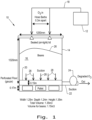
- a system to treat cocoa beans with ozone is shown generally at 10 in FIG. 1 .
- the system 10 includes an ozone generator 12 and a container 14 for holding cocoa beans 16.
- a conduit 18 is associated with the ozone generator 12 and container 14 in order to place ozone produced by the ozone generator 12 into the container 14 and in contact with the cocoa beans 16.
- the container 14 also includes a perforated floor 20 that the cocoa beans 16 sit on inside of the container 14.
- the container 14 is also associated with an exhaust 22 and a fan 24 that creates a negative pressure that draws or sucks the ozone introduced into the container 14 through an upper surface 26 of the cocoa beans 16 and through the performed floor 20 as illustrated by arrows 28.
- the ozone being pumped into the container 14 may also create a positive pressure that drives or forces the ozone into the cocoa beans 16.
- the combination of positive pressure and negative pressure helps force the ozone into the cocoa beans 16 such that an effective amount of ozone is able to reduce smoky odor and/or remove other contaminants within the cocoa beans 16.
- the system 10 for treating cocoa beans 16 of Example 1 was used to perform a number of trials of placing ozone in contact with smoky cocoa beans obtained from Cameroon. In these trials, batches of about 500 kg of smoky cocoa beans were placed into wooden boxes (i.e., the container 14 of FIG. 1 ) and treated with ozone.
- the cocoa beans were analyzed for smoky odor using a sensory panel.
- the smoky cocoa beans before and after treatment were compared against Ivory Coast cocoa beans.
- the treated and untreated cocoa beans were also processed into cocoa liquor and a sensory panel also evaluated the odor of the cocoa liquors from the treated and untreated cocoa beans.
- the cocoa liquor was produced by breaking and winnowing the cocoa beans. Boiling water was poured over the resulting cocoa nibs, mixed, and placed in an incubator at 100°C for 30 minutes. The nibs were dried in a fluid-bed dryer for 30 minutes at 120°C. Cocoa liquor was produced from these dried nibs. The cocoa liquor was subsequently analyzed for microbes and subjected to the sensory panel analysis for odor.
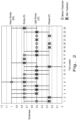
- FIG. 2 shows the results of the sensory panel analysis of the treated and untreated cocoa beans.
- the results shown are averages of the samples taken for the trials.
- the panelists were asked to grade the odor of the treated or untreated cocoa beans as heavy smoky (HS), smoky (S), light smoky (LS), or passed (P) (i.e., not smoky).
- the results show that the higher the concentration of the ozone, the less smokiness was present in the treated cocoa beans.
- treating the smoky cocoa beans with ozone effectively reduced the smokiness associated with the cocoa beans.
- Cocoa beans obtained from Cameroon having detected levels of polycyclic aromatic hydrocarbons (PAHs) were obtained. Some of these cocoa beans had a dry moisture content of less than 10%, and some of the cocoa beans were adjusted to 14% moisture (moist) with the addition of water and agitation. Samples of dry and moist beans were placed in chambers and exposed to dry ozone or humid ozone (having a relative humidity of greater than 60%) for 24 hours at a concentration of 20 g of ozone per kilogram of cocoa beans at a flow rate of ozone of 3.5 liters per minute. After treatment with ozone, samples of the untreated control and cocoa beans treated with ozone were evaluated for microbial content. Further, 100 grams of the untreated control and the ozone treated cocoa beans were fractionated by hand to separate the hull and nibs fractions of the cocoa beans. The hulls, nibs, and whole cocoa bean samples were analyzed for PAH content.
- PAHs polycyclic aromatic hydrocarbons
- Table 4 indicates that the use of ozone decreased the level of PAH contamination in whole cocoa beans and the hulls. PAH levels were also improved in the nib fractions. The microbial levels on the whole cocoa beans was also improved, particularly in the yeast and mold levels which would enable the improved stability of cocoa beans in storage and/or reduced exposure of processing facilities to the yeasts and molds.
- Cocoa beans obtained from Cameroon having detected levels of polycyclic aromatic hydrocarbons (PAHs) were obtained. Some of these cocoa beans had a dry moisture content of less than 10%, and some of the cocoa beans were adjusted to 14% moisture (moist) with the addition of water and agitation. Samples of dry and moist beans were placed in chambers and exposed to dry ozone or humid ozone (having a relative humidity of greater than 60%) for 24 hours at a concentration of 20 g of ozone per kilogram of cocoa beans at a flow rate of ozone of 3.5 liters per minute. After treatment with ozone, samples of the untreated control and cocoa beans treated with ozone were evaluated for microbial content.
- PHAs polycyclic aromatic hydrocarbons
- Table 5 indicates that the ozone was able to reduce the PAH content, and that the humid ozone was more able to significantly reduce the PAH content.
- Cocoa beans were loaded into a stainless steel tank having an 2.4 m (8 feet) diameter and a 3.0 m (10 feet) height. Each batch of cocoa beans treated with ozone in this example contained about 5,000 kg of beans. The tank had a single line or inlet of ozone that entered the tank on the top, and the ozone traveled through the cocoa beans and exhausted from the tank as shown in FIG. 3 . The cocoa beans were exposed to 1, 2.3, or k g of ozone per kg of cocoa beans. The relative humidity and process conditions of these trials are show in Table 6.
- Ozone Exposure (g 0 3 /kg beans) Airflow 1 (L/min) Run time (hr) Humidity RH (%) Batch size (lbs) Batch Size (kg) 1 4 634.5 23 yes 80 12082 5492 11877 5399 2 1 211.5 20.5 yes 100 11323 5147 12235 5561 3 2.3 423 20.5 yes 100 12309 5595 16* 12370 5623 4 (Ref) - - - - - 27097 12317 * In this trial, about 1 hour after starting the trial, the ozone generator stopped working and was restarted after about 4 hours. The obtain the right amount of ozone, the amount of ozone in the chambers was increased and the durations was shortened to about 14 hours a concentration of 4 grams of ozone per kilogram of cocoa beans.
- the cocoa beans were processed from cocoa beans and into cocoa liquor, cocoa cake, and cocoa butter using techniques known by those of ordinary skill in the art.
- Various properties of the cocoa beans, cocoa liquor, cocoa cake, and cocoa butter were analyzed in order to evaluate the effectiveness of the ozone treatment on reducing certain contaminants. The results of such analyses are presented in Table 7.
- the PAH content refers to the total amounts of benzo(a)anthracene, chrysene, benzo(b)fluoranthene, and benzo(a)pyrene. Table 7.
Landscapes
- Life Sciences & Earth Sciences (AREA)
- Engineering & Computer Science (AREA)
- Chemical & Material Sciences (AREA)
- Food Science & Technology (AREA)
- Polymers & Plastics (AREA)
- Wood Science & Technology (AREA)
- Zoology (AREA)
- Chemical Kinetics & Catalysis (AREA)
- General Chemical & Material Sciences (AREA)
- Confectionery (AREA)
Claims (9)
- Verfahren zum Reduzieren der Menge von Kontaminanten in Kakaobohnen, wobei das Verfahren umfasst:In-Kontakt-Bringen von Kakaobohnen mit einer wirksamen Menge Ozon, somit Reduzieren der Menge der Kontaminanten in den Kakaobohnen,wobei die Kontaminanten aus der Gruppe ausgewählt sind, die aus Rauchgerüchen, polycyclischen aromatischen Kohlenwasserstoffen und Kombinationen davon besteht,wobei die wirksame Menge Ozon wenigstens 1000 ppm beträgt,wobei die wirksame Menge Ozon im Bereich von 1000-12000 ppm oder zwischen 1 und 30 Gramm Ozon pro Kilogramm Kakaobohnen liegt undwobei die Kakaobohnen wenigstens 4 Stunden lang mit der wirksamen Menge Ozon in Kontakt sind.
- Verfahren gemäß Anspruch 1, wobei der Kontaminant ein Rauchgeruch ist.
- Verfahren gemäß einem der Ansprüche 1 oder 2, wobei die Kakaobohnen 4 bis 55 Stunden lang mit der wirksamen Menge Ozon in Kontakt sind.
- Verfahren gemäß einem der Ansprüche 1 bis 3, wobei die Kakaobohnen bei einer relativen Feuchtigkeit von wenigstens 50% mit der wirksamen Menge Ozon in Kontakt gebracht werden, wobei vorzugsweise die Kakaobohnen bei einer relativen Feuchtigkeit von 50-90% mit der wirksamen Menge Ozon in Kontakt gebracht werden.
- Verfahren gemäß einem der Ansprüche 1 bis 4, weiterhin umfassend:Platzieren der Kakobohnen, die den Kontaminanten aufweisen, in einem Behälter; undEinleiten der wirksamen Menge Ozon in den Behälter, somit In-Kontakt-Bringen der Kakaobohnen mit der wirksamen Menge Ozon.
- Verfahren gemäß einem der Ansprüche 1 bis 5, weiterhin umfassend das Leiten der wirksamen Menge Ozon durch die Kakaobohnen mit einem Luftstrom.
- Verfahren gemäß Anspruch 6, wobei der Luftstrom in einem Bereich von 30-70 Liter/Minute liegt.
- Verfahren gemäß einem der Ansprüche 1 bis 7, wobei das Leiten der wirksamen Menge Ozon durch die Kakaobohnen eine Wirkung umfasst, die aus der Gruppe ausgewählt ist, die aus dem Erzeugen eines Unterdrucks in dem Behälter, so dass das Ozon durch die Kakaobohnen strömt, dem Erzeugen eines Überdrucks in dem Behälter mit dem Ozon, so dass das Ozon durch die Kakaobohnen strömt, oder einer Kombination davon besteht.
- Verfahren gemäß einem der Ansprüche 1 bis 8, wobei das Verfahren ein diskontinuierliches Verfahren oder ein kontinuierliches Verfahren ist.
Applications Claiming Priority (2)
| Application Number | Priority Date | Filing Date | Title |
|---|---|---|---|
| US201462047359P | 2014-09-08 | 2014-09-08 | |
| PCT/US2015/048855 WO2016040269A1 (en) | 2014-09-08 | 2015-09-08 | Methods of reducing contaminants in cocoa beans |
Publications (4)
| Publication Number | Publication Date |
|---|---|
| EP3190899A1 EP3190899A1 (de) | 2017-07-19 |
| EP3190899A4 EP3190899A4 (de) | 2018-03-21 |
| EP3190899C0 EP3190899C0 (de) | 2023-08-16 |
| EP3190899B1 true EP3190899B1 (de) | 2023-08-16 |
Family
ID=55459464
Family Applications (1)
| Application Number | Title | Priority Date | Filing Date |
|---|---|---|---|
| EP15839736.4A Active EP3190899B1 (de) | 2014-09-08 | 2015-09-08 | Verfahren zur verringerung von verunreinigungen in kakaobohnen |
Country Status (5)
| Country | Link |
|---|---|
| US (1) | US20170295828A1 (de) |
| EP (1) | EP3190899B1 (de) |
| AP (1) | AP2017009813A0 (de) |
| BR (1) | BR112017004657A2 (de) |
| WO (1) | WO2016040269A1 (de) |
Families Citing this family (1)
| Publication number | Priority date | Publication date | Assignee | Title |
|---|---|---|---|---|
| AU2016321219A1 (en) * | 2015-09-08 | 2018-03-29 | Archer-Daniels-Midland Company | Methods for reducing contaminants in agricultural commodoties with humid ozone |
Citations (1)
| Publication number | Priority date | Publication date | Assignee | Title |
|---|---|---|---|---|
| US20020182104A1 (en) * | 1997-12-23 | 2002-12-05 | Cosmed Group, Inc. | Gaseous blend of CO2 and Ox and its use for biological burden reduction |
Family Cites Families (9)
| Publication number | Priority date | Publication date | Assignee | Title |
|---|---|---|---|---|
| US4331692A (en) * | 1971-07-23 | 1982-05-25 | Ulla Drevici | Cocoa fruits and products |
| AU610566B2 (en) * | 1987-03-13 | 1991-05-23 | Sharp Kabushiki Kaisha | Deodorizing apparatus |
| DE4426648A1 (de) * | 1994-07-16 | 1996-01-18 | Bundschuh Gerhard Dr | Verfahren und Vorrichtungen zur Behandlung von Nahrungs-, Genuß- und Futtermitteln |
| US6334979B1 (en) * | 1997-12-23 | 2002-01-01 | Cosmed Group, Inc. | Gaseous blend of Ox and its use for biological burden reduction |
| WO2002005665A1 (de) * | 2000-07-18 | 2002-01-24 | Contifer Trust Reg. | Sauerstoffradikale zur inaktivierung von schadstoffen und mikroorganismen |
| US20070134380A1 (en) * | 2005-12-13 | 2007-06-14 | Vetter William L | Method and system for sanitization of grain products |
| US20080268097A1 (en) * | 2007-04-26 | 2008-10-30 | Hurst W Jeffrey | Cocoa ingredients having enhanced levels of stilbene compounds and methods of producing them |
| WO2011044355A2 (en) * | 2009-10-08 | 2011-04-14 | Microlin, Llc | Apparatus and method for sterilizing and deodorizing |
| US20160000109A1 (en) * | 2013-02-20 | 2016-01-07 | Mars, Incorporated | Methods of processing unfermented fruit seeds |
-
2015
- 2015-09-08 WO PCT/US2015/048855 patent/WO2016040269A1/en not_active Ceased
- 2015-09-08 US US15/509,552 patent/US20170295828A1/en not_active Abandoned
- 2015-09-08 BR BR112017004657A patent/BR112017004657A2/pt not_active Application Discontinuation
- 2015-09-08 EP EP15839736.4A patent/EP3190899B1/de active Active
- 2015-09-08 AP AP2017009813A patent/AP2017009813A0/en unknown
Patent Citations (1)
| Publication number | Priority date | Publication date | Assignee | Title |
|---|---|---|---|---|
| US20020182104A1 (en) * | 1997-12-23 | 2002-12-05 | Cosmed Group, Inc. | Gaseous blend of CO2 and Ox and its use for biological burden reduction |
Also Published As
| Publication number | Publication date |
|---|---|
| AP2017009813A0 (en) | 2017-03-31 |
| WO2016040269A1 (en) | 2016-03-17 |
| BR112017004657A2 (pt) | 2018-01-30 |
| US20170295828A1 (en) | 2017-10-19 |
| EP3190899C0 (de) | 2023-08-16 |
| EP3190899A1 (de) | 2017-07-19 |
| EP3190899A4 (de) | 2018-03-21 |
Similar Documents
| Publication | Publication Date | Title |
|---|---|---|
| JP5291740B2 (ja) | 焙煎コーヒー豆の製造方法、焙煎コーヒー豆及びコーヒー抽出液 | |
| JP5149619B2 (ja) | pH制御によるコーヒー生豆の処理方法 | |
| CA2845734A1 (en) | Whole green coffee bean products and methods of production and use | |
| CN103314095B (zh) | 处理葡萄并酿造葡萄酒方法 | |
| JP4871865B2 (ja) | 熱水を用いるコーヒー果実の処理方法 | |
| JP2007000140A (ja) | 乳酸菌を用いたコーヒー生豆の処理方法 | |
| KR101454413B1 (ko) | 커피 생두 가공방법 | |
| CN108893239A (zh) | 一种野生菌酒的制备方法 | |
| EP3190899B1 (de) | Verfahren zur verringerung von verunreinigungen in kakaobohnen | |
| CN107087696B (zh) | 一种桑叶茶和桑叶茶粉及其生产工艺 | |
| US11297848B2 (en) | Compositions of whole green coffee bean products and whole hemp products | |
| US20210393728A1 (en) | Compositions of coffee bean products, whole hemp products and l-theanine | |
| EP4096421B1 (de) | Verfahren zum herstellen von entkoffeinierten rohkaffeebohnen, entkoffeinierten gerösteten kaffeebohnen oder daraus hergestellten zubereitungen, entsprechende entkoffeinierte rohkaffeebohne, entkoffeinierte geröstete kaffeebohne und daraus hergestellte zubereitung, entsprechende verwendungen und entsprechende anlagen | |
| JP3022885B1 (ja) | コ―ヒ―豆の処理方法およびコ―ヒ―豆 | |
| EP2898780B1 (de) | Medium zum reinigen | |
| KR101693756B1 (ko) | 커피 생두 가공 방법 | |
| US2190095A (en) | Degermination process | |
| KR20170111870A (ko) | 불순물과 오염물질 및 실버 스킨 제거를 위한 커피 생두 세척 및 로스팅 방법 | |
| EP4674274A2 (de) | Kaffeebohnen, von denen die silberhaut in der zentralen schnittposition getrennt und entfernt wird, und verfahren zur herstellung davon | |
| KR20230073770A (ko) | 커피콩의 가공 방법 및 그 가공물 | |
| DE102021126352A1 (de) | Verfahren zur Herstellung von Malz | |
| KR20230030299A (ko) | 유해 성분이 저감된 식용 기름 제조 방법 | |
| UA147493U (uk) | Спосіб виготовлення настою для ароматизації кондитерських виробів | |
| CA3049434A1 (en) | Compositions of whole green coffee bean products and whole hemp products | |
| JPS6156988B2 (de) |
Legal Events
| Date | Code | Title | Description |
|---|---|---|---|
| STAA | Information on the status of an ep patent application or granted ep patent |
Free format text: STATUS: THE INTERNATIONAL PUBLICATION HAS BEEN MADE |
|
| PUAI | Public reference made under article 153(3) epc to a published international application that has entered the european phase |
Free format text: ORIGINAL CODE: 0009012 |
|
| STAA | Information on the status of an ep patent application or granted ep patent |
Free format text: STATUS: REQUEST FOR EXAMINATION WAS MADE |
|
| 17P | Request for examination filed |
Effective date: 20170320 |
|
| AK | Designated contracting states |
Kind code of ref document: A1 Designated state(s): AL AT BE BG CH CY CZ DE DK EE ES FI FR GB GR HR HU IE IS IT LI LT LU LV MC MK MT NL NO PL PT RO RS SE SI SK SM TR |
|
| AX | Request for extension of the european patent |
Extension state: BA ME |
|
| DAV | Request for validation of the european patent (deleted) | ||
| DAX | Request for extension of the european patent (deleted) | ||
| A4 | Supplementary search report drawn up and despatched |
Effective date: 20180216 |
|
| RIC1 | Information provided on ipc code assigned before grant |
Ipc: A23B 9/18 20060101ALI20180212BHEP Ipc: A23L 3/3409 20060101ALI20180212BHEP Ipc: A23G 1/00 20060101AFI20180212BHEP Ipc: A23B 7/144 20060101ALI20180212BHEP Ipc: A23B 4/14 20060101ALI20180212BHEP |
|
| STAA | Information on the status of an ep patent application or granted ep patent |
Free format text: STATUS: EXAMINATION IS IN PROGRESS |
|
| 17Q | First examination report despatched |
Effective date: 20200403 |
|
| GRAP | Despatch of communication of intention to grant a patent |
Free format text: ORIGINAL CODE: EPIDOSNIGR1 |
|
| STAA | Information on the status of an ep patent application or granted ep patent |
Free format text: STATUS: GRANT OF PATENT IS INTENDED |
|
| INTG | Intention to grant announced |
Effective date: 20230316 |
|
| GRAS | Grant fee paid |
Free format text: ORIGINAL CODE: EPIDOSNIGR3 |
|
| GRAA | (expected) grant |
Free format text: ORIGINAL CODE: 0009210 |
|
| STAA | Information on the status of an ep patent application or granted ep patent |
Free format text: STATUS: THE PATENT HAS BEEN GRANTED |
|
| AK | Designated contracting states |
Kind code of ref document: B1 Designated state(s): AL AT BE BG CH CY CZ DE DK EE ES FI FR GB GR HR HU IE IS IT LI LT LU LV MC MK MT NL NO PL PT RO RS SE SI SK SM TR |
|
| REG | Reference to a national code |
Ref country code: GB Ref legal event code: FG4D |
|
| REG | Reference to a national code |
Ref country code: CH Ref legal event code: EP |
|
| REG | Reference to a national code |
Ref country code: DE Ref legal event code: R096 Ref document number: 602015085193 Country of ref document: DE |
|
| REG | Reference to a national code |
Ref country code: IE Ref legal event code: FG4D |
|
| U01 | Request for unitary effect filed |
Effective date: 20230915 |
|
| U07 | Unitary effect registered |
Designated state(s): AT BE BG DE DK EE FI FR IT LT LU LV MT NL PT SE SI Effective date: 20230922 |
|
| U20 | Renewal fee for the european patent with unitary effect paid |
Year of fee payment: 9 Effective date: 20230928 |
|
| PG25 | Lapsed in a contracting state [announced via postgrant information from national office to epo] |
Ref country code: GR Free format text: LAPSE BECAUSE OF FAILURE TO SUBMIT A TRANSLATION OF THE DESCRIPTION OR TO PAY THE FEE WITHIN THE PRESCRIBED TIME-LIMIT Effective date: 20231117 |
|
| PG25 | Lapsed in a contracting state [announced via postgrant information from national office to epo] |
Ref country code: IS Free format text: LAPSE BECAUSE OF FAILURE TO SUBMIT A TRANSLATION OF THE DESCRIPTION OR TO PAY THE FEE WITHIN THE PRESCRIBED TIME-LIMIT Effective date: 20231216 |
|
| PG25 | Lapsed in a contracting state [announced via postgrant information from national office to epo] |
Ref country code: RS Free format text: LAPSE BECAUSE OF FAILURE TO SUBMIT A TRANSLATION OF THE DESCRIPTION OR TO PAY THE FEE WITHIN THE PRESCRIBED TIME-LIMIT Effective date: 20230816 Ref country code: NO Free format text: LAPSE BECAUSE OF FAILURE TO SUBMIT A TRANSLATION OF THE DESCRIPTION OR TO PAY THE FEE WITHIN THE PRESCRIBED TIME-LIMIT Effective date: 20231116 Ref country code: IS Free format text: LAPSE BECAUSE OF FAILURE TO SUBMIT A TRANSLATION OF THE DESCRIPTION OR TO PAY THE FEE WITHIN THE PRESCRIBED TIME-LIMIT Effective date: 20231216 Ref country code: HR Free format text: LAPSE BECAUSE OF FAILURE TO SUBMIT A TRANSLATION OF THE DESCRIPTION OR TO PAY THE FEE WITHIN THE PRESCRIBED TIME-LIMIT Effective date: 20230816 Ref country code: GR Free format text: LAPSE BECAUSE OF FAILURE TO SUBMIT A TRANSLATION OF THE DESCRIPTION OR TO PAY THE FEE WITHIN THE PRESCRIBED TIME-LIMIT Effective date: 20231117 |
|
| PG25 | Lapsed in a contracting state [announced via postgrant information from national office to epo] |
Ref country code: PL Free format text: LAPSE BECAUSE OF FAILURE TO SUBMIT A TRANSLATION OF THE DESCRIPTION OR TO PAY THE FEE WITHIN THE PRESCRIBED TIME-LIMIT Effective date: 20230816 |
|
| PG25 | Lapsed in a contracting state [announced via postgrant information from national office to epo] |
Ref country code: ES Free format text: LAPSE BECAUSE OF FAILURE TO SUBMIT A TRANSLATION OF THE DESCRIPTION OR TO PAY THE FEE WITHIN THE PRESCRIBED TIME-LIMIT Effective date: 20230816 |
|
| PG25 | Lapsed in a contracting state [announced via postgrant information from national office to epo] |
Ref country code: SM Free format text: LAPSE BECAUSE OF FAILURE TO SUBMIT A TRANSLATION OF THE DESCRIPTION OR TO PAY THE FEE WITHIN THE PRESCRIBED TIME-LIMIT Effective date: 20230816 Ref country code: RO Free format text: LAPSE BECAUSE OF FAILURE TO SUBMIT A TRANSLATION OF THE DESCRIPTION OR TO PAY THE FEE WITHIN THE PRESCRIBED TIME-LIMIT Effective date: 20230816 Ref country code: ES Free format text: LAPSE BECAUSE OF FAILURE TO SUBMIT A TRANSLATION OF THE DESCRIPTION OR TO PAY THE FEE WITHIN THE PRESCRIBED TIME-LIMIT Effective date: 20230816 Ref country code: CZ Free format text: LAPSE BECAUSE OF FAILURE TO SUBMIT A TRANSLATION OF THE DESCRIPTION OR TO PAY THE FEE WITHIN THE PRESCRIBED TIME-LIMIT Effective date: 20230816 Ref country code: SK Free format text: LAPSE BECAUSE OF FAILURE TO SUBMIT A TRANSLATION OF THE DESCRIPTION OR TO PAY THE FEE WITHIN THE PRESCRIBED TIME-LIMIT Effective date: 20230816 |
|
| REG | Reference to a national code |
Ref country code: CH Ref legal event code: PL |
|
| REG | Reference to a national code |
Ref country code: DE Ref legal event code: R097 Ref document number: 602015085193 Country of ref document: DE |
|
| PG25 | Lapsed in a contracting state [announced via postgrant information from national office to epo] |
Ref country code: MC Free format text: LAPSE BECAUSE OF FAILURE TO SUBMIT A TRANSLATION OF THE DESCRIPTION OR TO PAY THE FEE WITHIN THE PRESCRIBED TIME-LIMIT Effective date: 20230816 |
|
| PLBE | No opposition filed within time limit |
Free format text: ORIGINAL CODE: 0009261 |
|
| STAA | Information on the status of an ep patent application or granted ep patent |
Free format text: STATUS: NO OPPOSITION FILED WITHIN TIME LIMIT |
|
| REG | Reference to a national code |
Ref country code: IE Ref legal event code: MM4A |
|
| PG25 | Lapsed in a contracting state [announced via postgrant information from national office to epo] |
Ref country code: IE Free format text: LAPSE BECAUSE OF NON-PAYMENT OF DUE FEES Effective date: 20230908 |
|
| PG25 | Lapsed in a contracting state [announced via postgrant information from national office to epo] |
Ref country code: CH Free format text: LAPSE BECAUSE OF NON-PAYMENT OF DUE FEES Effective date: 20230930 |
|
| 26N | No opposition filed |
Effective date: 20240517 |
|
| GBPC | Gb: european patent ceased through non-payment of renewal fee |
Effective date: 20231116 |
|
| PG25 | Lapsed in a contracting state [announced via postgrant information from national office to epo] |
Ref country code: IE Free format text: LAPSE BECAUSE OF NON-PAYMENT OF DUE FEES Effective date: 20230908 Ref country code: CH Free format text: LAPSE BECAUSE OF NON-PAYMENT OF DUE FEES Effective date: 20230930 |
|
| U20 | Renewal fee for the european patent with unitary effect paid |
Year of fee payment: 10 Effective date: 20240820 |
|
| PG25 | Lapsed in a contracting state [announced via postgrant information from national office to epo] |
Ref country code: GB Free format text: LAPSE BECAUSE OF NON-PAYMENT OF DUE FEES Effective date: 20231116 |
|
| PG25 | Lapsed in a contracting state [announced via postgrant information from national office to epo] |
Ref country code: GB Free format text: LAPSE BECAUSE OF NON-PAYMENT OF DUE FEES Effective date: 20231116 |
|
| PG25 | Lapsed in a contracting state [announced via postgrant information from national office to epo] |
Ref country code: CY Free format text: LAPSE BECAUSE OF FAILURE TO SUBMIT A TRANSLATION OF THE DESCRIPTION OR TO PAY THE FEE WITHIN THE PRESCRIBED TIME-LIMIT; INVALID AB INITIO Effective date: 20150908 |
|
| PG25 | Lapsed in a contracting state [announced via postgrant information from national office to epo] |
Ref country code: HU Free format text: LAPSE BECAUSE OF FAILURE TO SUBMIT A TRANSLATION OF THE DESCRIPTION OR TO PAY THE FEE WITHIN THE PRESCRIBED TIME-LIMIT; INVALID AB INITIO Effective date: 20150908 |
|
| U20 | Renewal fee for the european patent with unitary effect paid |
Year of fee payment: 11 Effective date: 20250820 |
|
| PG25 | Lapsed in a contracting state [announced via postgrant information from national office to epo] |
Ref country code: TR Free format text: LAPSE BECAUSE OF FAILURE TO SUBMIT A TRANSLATION OF THE DESCRIPTION OR TO PAY THE FEE WITHIN THE PRESCRIBED TIME-LIMIT Effective date: 20230816 |