EP3185881B1 - Methods, agents and compositions for treatment of inflammatory conditions - Google Patents
Methods, agents and compositions for treatment of inflammatory conditions Download PDFInfo
- Publication number
- EP3185881B1 EP3185881B1 EP15756614.2A EP15756614A EP3185881B1 EP 3185881 B1 EP3185881 B1 EP 3185881B1 EP 15756614 A EP15756614 A EP 15756614A EP 3185881 B1 EP3185881 B1 EP 3185881B1
- Authority
- EP
- European Patent Office
- Prior art keywords
- degarelix
- treatment
- patient
- administered
- weeks
- Prior art date
- Legal status (The legal status is an assumption and is not a legal conclusion. Google has not performed a legal analysis and makes no representation as to the accuracy of the status listed.)
- Active
Links
Images







Classifications
-
- A—HUMAN NECESSITIES
- A61—MEDICAL OR VETERINARY SCIENCE; HYGIENE
- A61K—PREPARATIONS FOR MEDICAL, DENTAL OR TOILETRY PURPOSES
- A61K38/00—Medicinal preparations containing peptides
- A61K38/04—Peptides having up to 20 amino acids in a fully defined sequence; Derivatives thereof
- A61K38/08—Peptides having 5 to 11 amino acids
- A61K38/09—Luteinising hormone-releasing hormone [LHRH], i.e. Gonadotropin-releasing hormone [GnRH]; Related peptides
-
- A—HUMAN NECESSITIES
- A61—MEDICAL OR VETERINARY SCIENCE; HYGIENE
- A61K—PREPARATIONS FOR MEDICAL, DENTAL OR TOILETRY PURPOSES
- A61K31/00—Medicinal preparations containing organic active ingredients
- A61K31/33—Heterocyclic compounds
- A61K31/395—Heterocyclic compounds having nitrogen as a ring hetero atom, e.g. guanethidine or rifamycins
- A61K31/41—Heterocyclic compounds having nitrogen as a ring hetero atom, e.g. guanethidine or rifamycins having five-membered rings with two or more ring hetero atoms, at least one of which being nitrogen, e.g. tetrazole
- A61K31/4164—1,3-Diazoles
- A61K31/4184—1,3-Diazoles condensed with carbocyclic rings, e.g. benzimidazoles
-
- A—HUMAN NECESSITIES
- A61—MEDICAL OR VETERINARY SCIENCE; HYGIENE
- A61K—PREPARATIONS FOR MEDICAL, DENTAL OR TOILETRY PURPOSES
- A61K31/00—Medicinal preparations containing organic active ingredients
- A61K31/33—Heterocyclic compounds
- A61K31/395—Heterocyclic compounds having nitrogen as a ring hetero atom, e.g. guanethidine or rifamycins
- A61K31/435—Heterocyclic compounds having nitrogen as a ring hetero atom, e.g. guanethidine or rifamycins having six-membered rings with one nitrogen as the only ring hetero atom
- A61K31/44—Non condensed pyridines; Hydrogenated derivatives thereof
- A61K31/4409—Non condensed pyridines; Hydrogenated derivatives thereof only substituted in position 4, e.g. isoniazid, iproniazid
-
- A—HUMAN NECESSITIES
- A61—MEDICAL OR VETERINARY SCIENCE; HYGIENE
- A61K—PREPARATIONS FOR MEDICAL, DENTAL OR TOILETRY PURPOSES
- A61K31/00—Medicinal preparations containing organic active ingredients
- A61K31/33—Heterocyclic compounds
- A61K31/395—Heterocyclic compounds having nitrogen as a ring hetero atom, e.g. guanethidine or rifamycins
- A61K31/495—Heterocyclic compounds having nitrogen as a ring hetero atom, e.g. guanethidine or rifamycins having six-membered rings with two or more nitrogen atoms as the only ring heteroatoms, e.g. piperazine or tetrazines
- A61K31/505—Pyrimidines; Hydrogenated pyrimidines, e.g. trimethoprim
- A61K31/513—Pyrimidines; Hydrogenated pyrimidines, e.g. trimethoprim having oxo groups directly attached to the heterocyclic ring, e.g. cytosine
-
- A—HUMAN NECESSITIES
- A61—MEDICAL OR VETERINARY SCIENCE; HYGIENE
- A61K—PREPARATIONS FOR MEDICAL, DENTAL OR TOILETRY PURPOSES
- A61K31/00—Medicinal preparations containing organic active ingredients
- A61K31/33—Heterocyclic compounds
- A61K31/395—Heterocyclic compounds having nitrogen as a ring hetero atom, e.g. guanethidine or rifamycins
- A61K31/495—Heterocyclic compounds having nitrogen as a ring hetero atom, e.g. guanethidine or rifamycins having six-membered rings with two or more nitrogen atoms as the only ring heteroatoms, e.g. piperazine or tetrazines
- A61K31/505—Pyrimidines; Hydrogenated pyrimidines, e.g. trimethoprim
- A61K31/519—Pyrimidines; Hydrogenated pyrimidines, e.g. trimethoprim ortho- or peri-condensed with heterocyclic rings
-
- A—HUMAN NECESSITIES
- A61—MEDICAL OR VETERINARY SCIENCE; HYGIENE
- A61K—PREPARATIONS FOR MEDICAL, DENTAL OR TOILETRY PURPOSES
- A61K31/00—Medicinal preparations containing organic active ingredients
- A61K31/56—Compounds containing cyclopenta[a]hydrophenanthrene ring systems; Derivatives thereof, e.g. steroids
- A61K31/565—Compounds containing cyclopenta[a]hydrophenanthrene ring systems; Derivatives thereof, e.g. steroids not substituted in position 17 beta by a carbon atom, e.g. estrane, estradiol
-
- A—HUMAN NECESSITIES
- A61—MEDICAL OR VETERINARY SCIENCE; HYGIENE
- A61K—PREPARATIONS FOR MEDICAL, DENTAL OR TOILETRY PURPOSES
- A61K31/00—Medicinal preparations containing organic active ingredients
- A61K31/56—Compounds containing cyclopenta[a]hydrophenanthrene ring systems; Derivatives thereof, e.g. steroids
- A61K31/565—Compounds containing cyclopenta[a]hydrophenanthrene ring systems; Derivatives thereof, e.g. steroids not substituted in position 17 beta by a carbon atom, e.g. estrane, estradiol
- A61K31/568—Compounds containing cyclopenta[a]hydrophenanthrene ring systems; Derivatives thereof, e.g. steroids not substituted in position 17 beta by a carbon atom, e.g. estrane, estradiol substituted in positions 10 and 13 by a chain having at least one carbon atom, e.g. androstanes, e.g. testosterone
-
- A—HUMAN NECESSITIES
- A61—MEDICAL OR VETERINARY SCIENCE; HYGIENE
- A61K—PREPARATIONS FOR MEDICAL, DENTAL OR TOILETRY PURPOSES
- A61K31/00—Medicinal preparations containing organic active ingredients
- A61K31/56—Compounds containing cyclopenta[a]hydrophenanthrene ring systems; Derivatives thereof, e.g. steroids
- A61K31/58—Compounds containing cyclopenta[a]hydrophenanthrene ring systems; Derivatives thereof, e.g. steroids containing heterocyclic rings, e.g. danazol, stanozolol, pancuronium or digitogenin
-
- A—HUMAN NECESSITIES
- A61—MEDICAL OR VETERINARY SCIENCE; HYGIENE
- A61K—PREPARATIONS FOR MEDICAL, DENTAL OR TOILETRY PURPOSES
- A61K39/00—Medicinal preparations containing antigens or antibodies
- A61K39/395—Antibodies; Immunoglobulins; Immune serum, e.g. antilymphocytic serum
- A61K39/39533—Antibodies; Immunoglobulins; Immune serum, e.g. antilymphocytic serum against materials from animals
- A61K39/3955—Antibodies; Immunoglobulins; Immune serum, e.g. antilymphocytic serum against materials from animals against proteinaceous materials, e.g. enzymes, hormones, lymphokines
-
- A—HUMAN NECESSITIES
- A61—MEDICAL OR VETERINARY SCIENCE; HYGIENE
- A61K—PREPARATIONS FOR MEDICAL, DENTAL OR TOILETRY PURPOSES
- A61K45/00—Medicinal preparations containing active ingredients not provided for in groups A61K31/00 - A61K41/00
- A61K45/06—Mixtures of active ingredients without chemical characterisation, e.g. antiphlogistics and cardiaca
-
- A—HUMAN NECESSITIES
- A61—MEDICAL OR VETERINARY SCIENCE; HYGIENE
- A61K—PREPARATIONS FOR MEDICAL, DENTAL OR TOILETRY PURPOSES
- A61K47/00—Medicinal preparations characterised by the non-active ingredients used, e.g. carriers or inert additives; Targeting or modifying agents chemically bound to the active ingredient
- A61K47/50—Medicinal preparations characterised by the non-active ingredients used, e.g. carriers or inert additives; Targeting or modifying agents chemically bound to the active ingredient the non-active ingredient being chemically bound to the active ingredient, e.g. polymer-drug conjugates
- A61K47/51—Medicinal preparations characterised by the non-active ingredients used, e.g. carriers or inert additives; Targeting or modifying agents chemically bound to the active ingredient the non-active ingredient being chemically bound to the active ingredient, e.g. polymer-drug conjugates the non-active ingredient being a modifying agent
- A61K47/56—Medicinal preparations characterised by the non-active ingredients used, e.g. carriers or inert additives; Targeting or modifying agents chemically bound to the active ingredient the non-active ingredient being chemically bound to the active ingredient, e.g. polymer-drug conjugates the non-active ingredient being a modifying agent the modifying agent being an organic macromolecular compound, e.g. an oligomeric, polymeric or dendrimeric molecule
- A61K47/59—Medicinal preparations characterised by the non-active ingredients used, e.g. carriers or inert additives; Targeting or modifying agents chemically bound to the active ingredient the non-active ingredient being chemically bound to the active ingredient, e.g. polymer-drug conjugates the non-active ingredient being a modifying agent the modifying agent being an organic macromolecular compound, e.g. an oligomeric, polymeric or dendrimeric molecule obtained otherwise than by reactions only involving carbon-to-carbon unsaturated bonds, e.g. polyureas or polyurethanes
- A61K47/60—Medicinal preparations characterised by the non-active ingredients used, e.g. carriers or inert additives; Targeting or modifying agents chemically bound to the active ingredient the non-active ingredient being chemically bound to the active ingredient, e.g. polymer-drug conjugates the non-active ingredient being a modifying agent the modifying agent being an organic macromolecular compound, e.g. an oligomeric, polymeric or dendrimeric molecule obtained otherwise than by reactions only involving carbon-to-carbon unsaturated bonds, e.g. polyureas or polyurethanes the organic macromolecular compound being a polyoxyalkylene oligomer, polymer or dendrimer, e.g. PEG, PPG, PEO or polyglycerol
-
- A—HUMAN NECESSITIES
- A61—MEDICAL OR VETERINARY SCIENCE; HYGIENE
- A61K—PREPARATIONS FOR MEDICAL, DENTAL OR TOILETRY PURPOSES
- A61K9/00—Medicinal preparations characterised by special physical form
- A61K9/0012—Galenical forms characterised by the site of application
- A61K9/0019—Injectable compositions; Intramuscular, intravenous, arterial, subcutaneous administration; Compositions to be administered through the skin in an invasive manner
-
- A—HUMAN NECESSITIES
- A61—MEDICAL OR VETERINARY SCIENCE; HYGIENE
- A61K—PREPARATIONS FOR MEDICAL, DENTAL OR TOILETRY PURPOSES
- A61K9/00—Medicinal preparations characterised by special physical form
- A61K9/0012—Galenical forms characterised by the site of application
- A61K9/0053—Mouth and digestive tract, i.e. intraoral and peroral administration
-
- A—HUMAN NECESSITIES
- A61—MEDICAL OR VETERINARY SCIENCE; HYGIENE
- A61P—SPECIFIC THERAPEUTIC ACTIVITY OF CHEMICAL COMPOUNDS OR MEDICINAL PREPARATIONS
- A61P1/00—Drugs for disorders of the alimentary tract or the digestive system
-
- A—HUMAN NECESSITIES
- A61—MEDICAL OR VETERINARY SCIENCE; HYGIENE
- A61P—SPECIFIC THERAPEUTIC ACTIVITY OF CHEMICAL COMPOUNDS OR MEDICINAL PREPARATIONS
- A61P1/00—Drugs for disorders of the alimentary tract or the digestive system
- A61P1/04—Drugs for disorders of the alimentary tract or the digestive system for ulcers, gastritis or reflux esophagitis, e.g. antacids, inhibitors of acid secretion, mucosal protectants
-
- A—HUMAN NECESSITIES
- A61—MEDICAL OR VETERINARY SCIENCE; HYGIENE
- A61P—SPECIFIC THERAPEUTIC ACTIVITY OF CHEMICAL COMPOUNDS OR MEDICINAL PREPARATIONS
- A61P13/00—Drugs for disorders of the urinary system
- A61P13/12—Drugs for disorders of the urinary system of the kidneys
-
- A—HUMAN NECESSITIES
- A61—MEDICAL OR VETERINARY SCIENCE; HYGIENE
- A61P—SPECIFIC THERAPEUTIC ACTIVITY OF CHEMICAL COMPOUNDS OR MEDICINAL PREPARATIONS
- A61P17/00—Drugs for dermatological disorders
- A61P17/06—Antipsoriatics
-
- A—HUMAN NECESSITIES
- A61—MEDICAL OR VETERINARY SCIENCE; HYGIENE
- A61P—SPECIFIC THERAPEUTIC ACTIVITY OF CHEMICAL COMPOUNDS OR MEDICINAL PREPARATIONS
- A61P19/00—Drugs for skeletal disorders
- A61P19/02—Drugs for skeletal disorders for joint disorders, e.g. arthritis, arthrosis
-
- A—HUMAN NECESSITIES
- A61—MEDICAL OR VETERINARY SCIENCE; HYGIENE
- A61P—SPECIFIC THERAPEUTIC ACTIVITY OF CHEMICAL COMPOUNDS OR MEDICINAL PREPARATIONS
- A61P19/00—Drugs for skeletal disorders
- A61P19/08—Drugs for skeletal disorders for bone diseases, e.g. rachitism, Paget's disease
- A61P19/10—Drugs for skeletal disorders for bone diseases, e.g. rachitism, Paget's disease for osteoporosis
-
- A—HUMAN NECESSITIES
- A61—MEDICAL OR VETERINARY SCIENCE; HYGIENE
- A61P—SPECIFIC THERAPEUTIC ACTIVITY OF CHEMICAL COMPOUNDS OR MEDICINAL PREPARATIONS
- A61P25/00—Drugs for disorders of the nervous system
-
- A—HUMAN NECESSITIES
- A61—MEDICAL OR VETERINARY SCIENCE; HYGIENE
- A61P—SPECIFIC THERAPEUTIC ACTIVITY OF CHEMICAL COMPOUNDS OR MEDICINAL PREPARATIONS
- A61P29/00—Non-central analgesic, antipyretic or antiinflammatory agents, e.g. antirheumatic agents; Non-steroidal antiinflammatory drugs [NSAID]
-
- A—HUMAN NECESSITIES
- A61—MEDICAL OR VETERINARY SCIENCE; HYGIENE
- A61P—SPECIFIC THERAPEUTIC ACTIVITY OF CHEMICAL COMPOUNDS OR MEDICINAL PREPARATIONS
- A61P3/00—Drugs for disorders of the metabolism
-
- A—HUMAN NECESSITIES
- A61—MEDICAL OR VETERINARY SCIENCE; HYGIENE
- A61P—SPECIFIC THERAPEUTIC ACTIVITY OF CHEMICAL COMPOUNDS OR MEDICINAL PREPARATIONS
- A61P3/00—Drugs for disorders of the metabolism
- A61P3/06—Antihyperlipidemics
-
- A—HUMAN NECESSITIES
- A61—MEDICAL OR VETERINARY SCIENCE; HYGIENE
- A61P—SPECIFIC THERAPEUTIC ACTIVITY OF CHEMICAL COMPOUNDS OR MEDICINAL PREPARATIONS
- A61P35/00—Antineoplastic agents
-
- A—HUMAN NECESSITIES
- A61—MEDICAL OR VETERINARY SCIENCE; HYGIENE
- A61P—SPECIFIC THERAPEUTIC ACTIVITY OF CHEMICAL COMPOUNDS OR MEDICINAL PREPARATIONS
- A61P43/00—Drugs for specific purposes, not provided for in groups A61P1/00-A61P41/00
-
- A—HUMAN NECESSITIES
- A61—MEDICAL OR VETERINARY SCIENCE; HYGIENE
- A61P—SPECIFIC THERAPEUTIC ACTIVITY OF CHEMICAL COMPOUNDS OR MEDICINAL PREPARATIONS
- A61P7/00—Drugs for disorders of the blood or the extracellular fluid
-
- A—HUMAN NECESSITIES
- A61—MEDICAL OR VETERINARY SCIENCE; HYGIENE
- A61P—SPECIFIC THERAPEUTIC ACTIVITY OF CHEMICAL COMPOUNDS OR MEDICINAL PREPARATIONS
- A61P9/00—Drugs for disorders of the cardiovascular system
-
- A—HUMAN NECESSITIES
- A61—MEDICAL OR VETERINARY SCIENCE; HYGIENE
- A61P—SPECIFIC THERAPEUTIC ACTIVITY OF CHEMICAL COMPOUNDS OR MEDICINAL PREPARATIONS
- A61P9/00—Drugs for disorders of the cardiovascular system
- A61P9/10—Drugs for disorders of the cardiovascular system for treating ischaemic or atherosclerotic diseases, e.g. antianginal drugs, coronary vasodilators, drugs for myocardial infarction, retinopathy, cerebrovascula insufficiency, renal arteriosclerosis
-
- A—HUMAN NECESSITIES
- A61—MEDICAL OR VETERINARY SCIENCE; HYGIENE
- A61P—SPECIFIC THERAPEUTIC ACTIVITY OF CHEMICAL COMPOUNDS OR MEDICINAL PREPARATIONS
- A61P9/00—Drugs for disorders of the cardiovascular system
- A61P9/12—Antihypertensives
-
- C—CHEMISTRY; METALLURGY
- C07—ORGANIC CHEMISTRY
- C07K—PEPTIDES
- C07K16/00—Immunoglobulins [IG], e.g. monoclonal or polyclonal antibodies
- C07K16/18—Immunoglobulins [IG], e.g. monoclonal or polyclonal antibodies against material from animals or humans
- C07K16/28—Immunoglobulins [IG], e.g. monoclonal or polyclonal antibodies against material from animals or humans against receptors, cell surface antigens or cell surface determinants
- C07K16/2869—Immunoglobulins [IG], e.g. monoclonal or polyclonal antibodies against material from animals or humans against receptors, cell surface antigens or cell surface determinants against hormone receptors
-
- G—PHYSICS
- G01—MEASURING; TESTING
- G01N—INVESTIGATING OR ANALYSING MATERIALS BY DETERMINING THEIR CHEMICAL OR PHYSICAL PROPERTIES
- G01N33/00—Investigating or analysing materials by specific methods not covered by groups G01N1/00 - G01N31/00
- G01N33/48—Biological material, e.g. blood, urine; Haemocytometers
- G01N33/50—Chemical analysis of biological material, e.g. blood, urine; Testing involving biospecific ligand binding methods; Immunological testing
- G01N33/53—Immunoassay; Biospecific binding assay; Materials therefor
- G01N33/564—Immunoassay; Biospecific binding assay; Materials therefor for pre-existing immune complex or autoimmune disease, i.e. systemic lupus erythematosus, rheumatoid arthritis, multiple sclerosis, rheumatoid factors or complement components C1-C9
-
- G—PHYSICS
- G01—MEASURING; TESTING
- G01N—INVESTIGATING OR ANALYSING MATERIALS BY DETERMINING THEIR CHEMICAL OR PHYSICAL PROPERTIES
- G01N33/00—Investigating or analysing materials by specific methods not covered by groups G01N1/00 - G01N31/00
- G01N33/48—Biological material, e.g. blood, urine; Haemocytometers
- G01N33/50—Chemical analysis of biological material, e.g. blood, urine; Testing involving biospecific ligand binding methods; Immunological testing
- G01N33/74—Chemical analysis of biological material, e.g. blood, urine; Testing involving biospecific ligand binding methods; Immunological testing involving hormones or other non-cytokine intercellular protein regulatory factors such as growth factors, including receptors to hormones and growth factors
-
- A—HUMAN NECESSITIES
- A61—MEDICAL OR VETERINARY SCIENCE; HYGIENE
- A61K—PREPARATIONS FOR MEDICAL, DENTAL OR TOILETRY PURPOSES
- A61K39/00—Medicinal preparations containing antigens or antibodies
- A61K2039/505—Medicinal preparations containing antigens or antibodies comprising antibodies
-
- C—CHEMISTRY; METALLURGY
- C07—ORGANIC CHEMISTRY
- C07K—PEPTIDES
- C07K2317/00—Immunoglobulins specific features
- C07K2317/70—Immunoglobulins specific features characterized by effect upon binding to a cell or to an antigen
- C07K2317/76—Antagonist effect on antigen, e.g. neutralization or inhibition of binding
-
- G—PHYSICS
- G01—MEASURING; TESTING
- G01N—INVESTIGATING OR ANALYSING MATERIALS BY DETERMINING THEIR CHEMICAL OR PHYSICAL PROPERTIES
- G01N2333/00—Assays involving biological materials from specific organisms or of a specific nature
- G01N2333/435—Assays involving biological materials from specific organisms or of a specific nature from animals; from humans
- G01N2333/575—Hormones
-
- G—PHYSICS
- G01—MEASURING; TESTING
- G01N—INVESTIGATING OR ANALYSING MATERIALS BY DETERMINING THEIR CHEMICAL OR PHYSICAL PROPERTIES
- G01N2800/00—Detection or diagnosis of diseases
- G01N2800/06—Gastro-intestinal diseases
- G01N2800/065—Bowel diseases, e.g. Crohn, ulcerative colitis, IBS
-
- G—PHYSICS
- G01—MEASURING; TESTING
- G01N—INVESTIGATING OR ANALYSING MATERIALS BY DETERMINING THEIR CHEMICAL OR PHYSICAL PROPERTIES
- G01N2800/00—Detection or diagnosis of diseases
- G01N2800/10—Musculoskeletal or connective tissue disorders
-
- G—PHYSICS
- G01—MEASURING; TESTING
- G01N—INVESTIGATING OR ANALYSING MATERIALS BY DETERMINING THEIR CHEMICAL OR PHYSICAL PROPERTIES
- G01N2800/00—Detection or diagnosis of diseases
- G01N2800/10—Musculoskeletal or connective tissue disorders
- G01N2800/101—Diffuse connective tissue disease, e.g. Sjögren, Wegener's granulomatosis
- G01N2800/102—Arthritis; Rheumatoid arthritis, i.e. inflammation of peripheral joints
-
- G—PHYSICS
- G01—MEASURING; TESTING
- G01N—INVESTIGATING OR ANALYSING MATERIALS BY DETERMINING THEIR CHEMICAL OR PHYSICAL PROPERTIES
- G01N2800/00—Detection or diagnosis of diseases
- G01N2800/20—Dermatological disorders
- G01N2800/205—Scaling palpular diseases, e.g. psoriasis, pytiriasis
-
- G—PHYSICS
- G01—MEASURING; TESTING
- G01N—INVESTIGATING OR ANALYSING MATERIALS BY DETERMINING THEIR CHEMICAL OR PHYSICAL PROPERTIES
- G01N2800/00—Detection or diagnosis of diseases
- G01N2800/28—Neurological disorders
- G01N2800/285—Demyelinating diseases; Multipel sclerosis
-
- G—PHYSICS
- G01—MEASURING; TESTING
- G01N—INVESTIGATING OR ANALYSING MATERIALS BY DETERMINING THEIR CHEMICAL OR PHYSICAL PROPERTIES
- G01N2800/00—Detection or diagnosis of diseases
- G01N2800/70—Mechanisms involved in disease identification
- G01N2800/7042—Aging, e.g. cellular aging
-
- G—PHYSICS
- G01—MEASURING; TESTING
- G01N—INVESTIGATING OR ANALYSING MATERIALS BY DETERMINING THEIR CHEMICAL OR PHYSICAL PROPERTIES
- G01N2800/00—Detection or diagnosis of diseases
- G01N2800/70—Mechanisms involved in disease identification
- G01N2800/7095—Inflammation
Definitions
- the present invention relates to the treatment or prevention of rheumatoid arthritis with degarelix.
- Ageing is among the largest known risk factors for human diseases. Roughly 100,000 people die each day of age-related causes. Between 2000 and 2050, the number of people aged 60 years and over is expected to increase from 605 million to 2 billion.
- Chronic inflammation is associated with normal and pathological ageing.
- Systemic chronic inflammation can accelerate ageing ( Jurk D, et al., Nat Comm, 2014; doi:10.1038/ncomms5172 ).
- Many age-related diseases and ageing itself are closely associated with low-level chronic inflammation ( Chung HY, et al., Ageing Res Rev 2009; 8: 18-30 ).
- Inflammatory markers are significant predictors of mortality in older humans.
- This pro-inflammatory status of the elderly underlies biological mechanisms responsible for the decline of physical function decline and age-related diseases such as Alzheimer's disease and atherosclerosis that are initiated or worsened by systemic inflammation. Understanding of the ageing process should have a prominent role in new strategies for extending the health of the older population.
- Inflammatory diseases themselves accelerate the ageing process due to systemic chronic inflammation. Many of these diseases, such as rheumatoid arthritis and multiple sclerosis accelerate cardiovascular disease and osteoporosis, both of which are examples of age-related conditions. Indeed, inflammatory diseases have on average a 10 year premature mortality largely due to increased cardiovascular disease.
- Rheumatoid arthritis is a chronic, systemic inflammatory disorder that may affect many tissues and organs, but principally attacks the joints, producing an inflammatory synovitis that progresses to cartilage and bone destruction. Rheumatoid arthritis can also produce diffuse inflammation in the lungs, pericardium, pleura and sclera, and also nodular lesions, most common in subcutaneous tissue under the skin. Although the cause of rheumatoid arthritis is unknown, autoimmunity plays a role in its chronicity and progression.
- rheumatoid arthritis Current treatments for rheumatoid arthritis include: corticosteroids, methotrexate, tumour necrosis factors inhibitors such as etanercept (Embrel ® ), adalimubab (Humira ® ), and infliximab (Remicade ® ), and other immunomodulatory and cytotoxic agents. Whilst these treatments can be effective many require close supervision because of hazardous side-effects. Response to treatment with these agents is variable and some patients will experience pain and joint degeneration. Thus there is a need for additional treatments for rheumatoid arthritis and related diseases. Other inflammatory diseases have no disease modifying therapies available, such as progressive multiple sclerosis.
- the present invention relates to the treatment or prevention of rheumatoid arthritis with degarelix..
- a first aspect of the invention provides degarelix for use in the treatment or prevention of rheumatoid arthritis in a subject, wherein degarelix is administered to said subject for a period of at least 12 weeks.
- a second aspect of the invention provides a product comprising degarelix and an additional active agent as a combined preparation for simultaneous, separate or sequential use in the treatment or prevention of rheumatoid arthritis in a subject, wherein degarelix and the additional active agent are administered to said subject for a period of at least 12 weeks.
- degarelix is administered in one or more repeated doses (e.g. several times daily, daily, weekly, monthly, or other interval) for a period of time.
- degarelix is administered for a period of at least 12 weeks, (e.g. at least three months, at least 6 months, at least 1 year, at least 3 years, at least 5 years, or at least 10 years, or longer).
- degarelix is administered at a dose of 0.1 mg to 1000 mg (e.g. 0.1, 0.25, 0.5, 1.0, 5.0, 10, 25, 50, 100, 200, 300, 400, 500, 750, or 1000 mg)
- degarelix is administered multiple times per day, daily, weekly, or monthly.
- degarelix is administered with an initial loading dose between 20 mg to 1000 mg (e.g. 20, 30, 40, 50, 60, 100, 200, 300, 400, 500, or 1000 mg) followed by a lower maintenance dose administered multiple times per day, daily, weekly, or monthly, or at least every 2-12 months.
- an initial loading dose between 20 mg to 1000 mg (e.g. 20, 30, 40, 50, 60, 100, 200, 300, 400, 500, or 1000 mg) followed by a lower maintenance dose administered multiple times per day, daily, weekly, or monthly, or at least every 2-12 months.
- degarelix is administered weekly, or every 2-4 week intervals, or monthly intervals or every 2-6 month intervals, or yearly, 10 mg to 1000 mg, in some embodiments, with an initial loading dose between 20 mg to 1000 mg. Further doses and dosage regimes are discussed below.
- Treatment or prevention of rheumatoid arthritis according to the present invention may lower the levels of cytokines and/or chemokines in the subject, e.g. TNF ⁇ , IFN ⁇ , IL-1 ⁇ and/or IL-2. Treatment or prevention of rheumatoid arthritis according to the present invention may also lower the levels of acute phase proteins such as CRP or high sensitivity CRP or the levels of auto-antibodies such as antibodies against cyclic citrullinated peptide (CCP).
- CRP cyclic citrullinated peptide
- the present invention provides for the use of combination therapy, particularly using titrated oestrogen or testosterone therapy to baseline or higher levels, or a disease modifying drug, or stable or tapered prednisolone, or local topical treatment, or a biologic drug, with degarelix.
- the present invention may be performed using a conjugate comprising degarelix linked to a polymer.
- GnRH antagonist refers to an agent or drug that decreases, blocks, inhibits, abrogates, or interferes with GnRH activity in vivo.
- GnRH antagonists prevent or inhibit GnRH synthesis, and/or GnRH release, and/or GnRH function or activity. They may inhibit the action of GnRH by inhibiting binding of GnRH at its receptor, and may act at the GnRH receptor or at the GnRH molecule.
- Degarelix is a GnRH antagonist.
- degarelix may be used in the form of a conjugate of degarelix with a polymeric partner, e.g. a polymer such as a polypeptide (e.g. a protein such as albumin), polysaccharide, or other polymer, such as polyethylene glycol (PEG), e.g. pegylated degarelix, or degarelix fused to proteins such as albumin.
- a polymer is defined broadly herein to include any compound having a multiplicity of repeating monomer units or residues and includes oligomers.
- a "multiplicity" may be 2 or more, e.g. 3, 4, 5, or 6 or more, but typically will be higher, e.g.
- a polypeptide may accordingly include longer polypeptide sequences such as proteins as well as shorter peptides. Such conjugates of degarelix with a polymer are discussed further below.
- Conjugates of a drug molecule/active agent with a polymer molecule are widely used and reported for drug delivery, as indeed is the use of polymers in formulation of drug delivery systems.
- the polymer may be water-soluble.
- the physical and chemical properties of the polymers typically used in polymer-drug conjugates are specially synthesized to flow through the kidneys and liver without getting filtered out, allowing the drugs to be used more effectively.
- the polymer may be degraded e.g. through enzymes and acidity.
- Polymers may be synthesized to be sensitive to specific enzymes that are very apparent with diseased tissue. The drugs remain attached to the polymer and are not activated until the enzymes associated with the diseased tissue are present. This process significantly minimizes damage to healthy tissue.
- Any such polymer as is typically used in such drug delivery formulations or conjugates may be used to prepare a conjugate of a polymer with degarelix for use according to the present invention.
- Examples include but are not limited to poly(ethylene glycol) (PEG), N-(2-hydroxypropyl)methacrylamide (HPMA), and poly(lactide-co-glycolide) (PLGA) copolymers.
- the polymer of the conjugate for use herein may act, or serve, to inhibit passage of degarelix across the blood brain barrier.
- inhibit includes reducing as well as preventing.
- Degarelix is a "peptide GnRH antagonist", i.e. an analogue of the GnRH decapeptide.
- Degarelix is a long acting antagonist, defined as having a prolonged duration of action when administered to a subject in a single dose, e.g. at least 7, 12, 14, 15, 20, 30, 40, or 60 days, or at least 2, 4, 6, or 8 months.
- a prolonged duration of action may be achieved by formulating the antagonist as a sustained release or "depot" preparation or conjugate, e.g. with a protein such as albumin or salts and esters of acid derivatives, according to principles and procedures known in the art.
- the term "subject” refers to any animal (e.g.
- a mammal including, but not limited to, humans, non-human primates, rodents, and the like, which is to be the recipient of a particular treatment.
- the terms “subject” and “patient” are used interchangeably herein in reference to a human subject.
- non-human animals refers to all non-human animals including, but not limited to, vertebrates such as rodents, non-human primates, ovines, bovines, ruminants, lagomorphs, porcines, caprines, equines, canines, felines, aves, etc.
- drug is meant to include any molecule, molecular complex, prodrug, or substance administered to an organism for diagnostic or therapeutic purposes, including medical imaging, monitoring, contraceptive, cosmetic, nutraceutical, pharmaceutical and prophylactic applications.
- drug is further meant to include any such molecule, molecular complex or substance that is chemically modified and/or operatively attached to a biologic or biocompatible structure.
- peripheral GnRH or "inflammatory peripheral GnRH” mean that the subject has a GnRH level in the periphery of the body, that is outside the brain, which is elevated, or particularly elevated as compared with a reference subject which does not have peripheral GnRH, or as compared to a normal reference peripheral GnRH (e.g. 0 to 160 pg/ml). Elevated peripheral levels of GnRH may be associated with inflammation or with an inflammatory condition (e.g. they may be indicative of an inflammatory condition, or may predispose to or cause or lead or contribute to an inflammatory condition), in particular with age-related inflammation, as part of the expected ageing process.
- an inflammatory condition e.g. they may be indicative of an inflammatory condition, or may predispose to or cause or lead or contribute to an inflammatory condition
- peripheral GnRH inflammatory peripheral GnRH
- a subject with peripheral GnRH may have a low level systemic inflammation (that is a generalised inflammation throughout the body), e.g. a chronic inflammation, but does not necessarily exhibit signs or symptoms of inflammatory disease. More particularly, such a subject may have a level of peripheral GnRH which is 160 pg/ml or above, e.g. in the plasma or serum.
- the GnRH may be secreted by immune cells, specifically peripheral immune cells, for example T-cells.
- the GnRH may act upon the T-cells in a cytokine-like way, stimulating T-cell proliferation and maturation. GnRH may also act on B cells.
- a GnRH antagonist may act to combat peripheral inflammation by inhibiting the action of GnRH on immune cells, e.g. T and/or B cells, e.g. by inhibiting the effect of GnRH on GnRH receptors on such cells.
- Chronic inflammation means an inflammation (e.g. an inflammatory condition) that is of persistent or prolonged duration in the body of a subject. Generally speaking this means an inflammatory response or condition of duration of 20, 25 or 30 days or more or 1 month or more, more particular of at least 2 or 3 months. Chronic inflammation leads to a progressive shift in the type of cells present at the site of inflammation. Chronic inflammation may occur as a result of persistent or prolonged injury or infection, prolonged exposure to toxic substances or by autoimmune responses or conditions. Chronic inflammation may be a factor in the development of a number of diseases or disorders, including particularly degenerative diseases, or diseases or conditions associated with loss of youthful function or ageing (e.g. as discussed above).
- Systemic inflammation is inflammation which is not confined to a particular tissue or site or location in the body. The inflammation may be generalised throughout the body. Systemic inflammation typically involves the endothelium and other organ systems.
- Low-level inflammation (which term is used herein as synonymous with “low-grade inflammation”) is characterised by a 2- to threefold increase in the systemic concentrations of cytokines such as TNF- ⁇ , IL-6 and CRP, e.g. as measured in the plasma or serum.
- the increase may be relative to, or as compared with, normal concentrations or reference concentrations, for example concentrations as determined in a particular reference cohort or population of subjects, e.g. young subjects (e.g. young adults) or healthy subjects, for example subjects who are not suffering from any disease or condition, including any inflammatory disease, or who do not have inflammation.
- the increase may also be relative to the level of concentration in a subject prior to development of the inflammation.
- Low-level inflammation may be observed in the absence of overt signs or symptoms of disease.
- low-level inflammation may be sub-clinical inflammation. In other words, there may be signs or symptoms of the effect of inflammation in the body, but this may not yet have progressed to an overt or recognised disease.
- Low-level inflammation may be peripheral inflammation, that is more particularly inflammation associated with peripheral GnRH, as discussed above.
- Age-related inflammation is an inflammation, typically a chronic, particularly a chronic systemic inflammation which occurs with increasing age. Such inflammation may be observed above the age of 30, 35 or 40 but typically is seen in subjects aged 45, 50, 55 or 60 or more. In many cases this may be a low level inflammation.
- Cancer inflammation is inflammation that occurs in the context of cancer and may alternatively be defined as “cancer-associated inflammation”. Inflammation has been identified as a hallmark of cancer and may be necessary for tumorgenesis and maintenance of the cancer state. Cancer symptoms are associated with inflammation. Thus a subject with cancer may have or exhibit inflammation, which can be a low-level or peripheral inflammation as discussed above, and in particular a chronic or systemic inflammation as discussed above.
- Long-term administration means that degarelix is administered for a period of at least 12 weeks. This includes that degarelix is administered such that it is effective over, or for, a period of at least 12 weeks and does not necessarily imply that the administration itself takes place for 12 weeks. Thus, the subject is treated for a period of at least 12 weeks. In many cases, long-term administration is for at least 4, 5, 6, 7, 8, 9 months or more, or for at least 1, 2, 3, 5, 7 or 10 years, or more.
- a "biologic" drug or agent for example as typically used to treat an inflammatory disease such as rheumatoid arthritis, is any agent which is derived from, based on, or comprises a biological molecule. Typically, this may be an antibody, which term includes monoclonal and polyclonal antibodies, antibody fragments, and antibody derivatives such as e.g. chimeric humanised antibodies or single chain antibodies etc., or another protein such as a receptor or receptor chain, domain or fragment.
- the present invention relates to treatment or prevention of rheumatoid arthritis with the GnRH inhibitor degarelix.
- hypothalamic-pituitary-gonadal (HPG) axis The stimulation of the hypothalamic-pituitary-gonadal (HPG) axis is related to systemic aging and lifespan. It has been shown that age-related hypothalamic changes occur independently of changes in gonadal hormones. GnRH pulse amplitude is increased and particularly erratic during the menopausal transition, when the risk for cardiovascular disease and osteoporosis is accelerated in females. Therefore, one may speculate that the pronounced rapid changes in GnRH and gonadotropin levels might be of particular importance in not only the pathogenesis of autoimmune diseases, where early menopause has been shown to be a risk factor, but also in the pathogenesis of cardiovascular disease and osteoporosis. This is also the time of the greatest and most erratic GnRH pulse amplitude as well as the greatest rate of unfavourable changes in lipid markers, and the greatest rate of bone mineral density loss in females.
- GnRH is transported in a unique hypothalamic portal system and is rapidly degraded after reaching the pituitary. It has been suggested that the isolated hypophyseal portal system may not only have evolved solely as a means to deliver hypothalamic peptides to the pituitary, but also as a way to prevent their delivery to extra-pituitary targets. This is in accordance with a detrimental inflammatory GnRH
- TNF ⁇ is acutely reduced by GnRH antagonists, as indicated in the AGRA study, does not show that GnRH antagonism is beneficial in rheumatoid arthritis or other inflammatory diseases using long term therapy.
- GnRH antagonism is beneficial in rheumatoid arthritis or other inflammatory diseases using long term therapy.
- GnRH antagonist therapy are believed to be osteoporosis and cardiovascular disease.
- patients with rheumatoid arthritis are much more prone to osteoporosis and cardiovascular disease due to their systemic inflammation, a person skilled in the art would not attempt to treat these patients with long term GnRH antagonist therapy without further safety data, which the present disclosure provides.
- GnRH antagonists which inhibit oestrogen, are expected to reduce bone density and contribute to cardiovascular disease.
- the AGRA study showed some short term anti-inflammatory effects in rheumatoid arthritis.
- the long term data with Degarelix, Cetrorelix and Ganirelix treatment in patients shows surprising unlikely improvements in severely ill patients.
- the mean disease activity score of the AGRA patients was 5.0, whereas the mean Degarelix disease activity score was 7.3 (scale 1.3-8.8 , with higher numbers denoting greater disease activity); this supports a substantially greater disease activity in the Degarelix patients compared to patients in the AGRA study. Due to these baseline differences, the effects of Degarelix are surprising compared to the short term study.
- Degarelix is a depot monthly GnRH antagonist injection licensed for prostate cancer in males with a loading dose of 240 mg, and 80 mg monthly injections thereafter.
- the present disclosure provides different dosing schedules for patients with rheumatoid arthritis.
- LH levels stay low throughout long term therapy.
- the present disclosure provides the unexpected result that rheumatoid arthritis patients and other subjects with an inflammatory condition can be treated safely with degarelix over the long term.
- Experiments described herein provide an example of a patient (patient 6 in Example 1) who did not improve in the short term study of 5 days, but improved surprisingly with long term treatment.
- the definition of long term treatment is treatment over 12 weeks according to FDA guidelines (Guidance for Industry Rheumatoid Arthritis: Developing Drug Products for Treatment May 2013).
- the disclosure also shows that long term therapy is safe and effective in postmenopausal females (previously contraindicated), premenopausal females, and males, without contributing to increased cardiovascular disease or osteoporosis as demonstrated by bone scans, laboratory variables and blood pressure, sometimes in combination with individual titration to baseline or higher levels of oestradiol or testosterone.
- the present description further shows that stably low levels of LH contribute to continued improvements in rheumatoid arthritis.
- Rheumatoid arthritis may develop, flare, or subside during hormonal changes in the HPG axis; for example, during pregnancy, postpartum, menopause, or aromatase inhibition therapy. These observations have prompted research into the effects of gonadal hormones of the HPG axis, such as oestrogen and testosterone in rheumatoid arthritis; but the results have been inconclusive.
- hypothalamic and pituitary hormones of the HPG axis control gonadal hormones.
- Gonadal hormones in both sexes are stimulated by pituitary LH and FSH.
- LH and FSH secretion are stimulated by the hypothalamic GnRH.
- GnRH, LH, and FSH have important physiological roles in both male and female reproduction. Therefore, these hormones may be involved in pathological processes in males as well as females.
- GnRH-antagonism produced sustained long term anti-inflammatory effects in rheumatoid arthritis patients.
- GnRH antagonists can be used to lower the amount of cytokines such as TNF- ⁇ , IL-1 ⁇ , IL-10, and IL-2.
- the inventors show that GnRH antagonists reduce the levels of the acute phase protein CRP.
- subjects to be treated do not respond to methotrexate. In some examples. subjects to be treated do not respond to anti-TNF treatment. In some examples, the subjects to be treated do not respond to biologics as described above.
- subjects are women (e.g. postmenopausal women or women over age 40).
- women are treated with degarelix at a specific point in the menstrual cycle (e.g. midcyle when LH and FSH levels reach a high point). While not limited to a particular mechanism, it is contemplated that such treatment prevents premenstrual flare ups of RA symptoms.
- subjects are men over age 40 (e.g. over age 50, 60, or 70).
- the patient population is defined as negative for CCP antibodies. In some examples, the patient population is defined as DMARD and/or TNF non responders.
- Degarelix may be obtained commercially: it is marketed under the name Firmagon by Ferring.
- degarelix may be used in a form in which it is coupled or conjugated to a polymer such that it is too large to cross the blood brain barrier (BBB), including particularly a polymer selected from a polypeptide, a polysaccharide, a polyethylene glycol or HPMA or a PLGA copolymer.
- BBB blood brain barrier
- the polypeptide may typically be a protein such as albumin, or the Fc part of an antibody.
- the polysaccharide may for example be a dextran etc.
- a non-BBB crossing degarelix conjugate may be pegylated or fused to proteins such as albumin.
- These conjugates may be administered via several routes, including but not limited to subcutaneous and oral routes.
- degarelix conjugates may readily be prepared using well known procedures and reagents, as described in the art.
- a variety of different methods and reagents for linking peptides or non-peptide small organic molecules to polymers such as proteins or other polypeptides, polysaccharides or polyethylene glycol are available and would be known to the person skilled in this art.
- Degarelix may be linked directly or indirectly, e.g. via a spacer or linker group, to the polymer.
- conjugates are advantageous in that by not being able to cross the BBB, they do not act centrally (in other words they are inhibited from acting at central GnRH receptors, that is GnRH receptors on the pituitary). In this way undesirable side-effects may be avoided, and in particular side-effects comprising or involving inhibition of sex hormone (e.g. oestrogen or testosterone) production and/or action.
- sex hormone e.g. oestrogen or testosterone
- degarelix is administered in combination with an additional treatment, i.e. additional active agent (e.g. treatments or agents known to be useful or effective in the treatment of autoimmune or inflammatory disease such as rheumatoid arthritis).
- additional active agent may accordingly be a disease-modifying drug and in particular a disease-modifying drug for use in treating or preventing inflammation or an inflammatory condition such as rheumatoid arthritis.
- agents include, but are not limited to, sex hormones, disease-modifying antirheumatic drugs (e.g. leflunomide, methotrexate, sulfasalazine, hydroxychloroquine), biologic agents (e.g.
- rituximab infliximab, etanercept, adalimumab, golimumab, tofacitinib, anakinra, abatacept
- nonsteroidal anti-inflammatory drugs e.g. ibuprofen, celecoxib, ketoprofen, naproxen, piroxicam, diclofenac
- analgesics e.g. acetaminophen, tramadol
- steroids and glucocorticoids e.g. prednisone, methylprednisone.
- a sex hormone may be oestrogen or testosterone or an oestrogen or testosterone derivative.
- oestrogen or testosterone derivatives are widely described in the art and available commercially.
- agents useful in sex hormone substitution therapy are also well known in the art and widely available, and include for example LH or FSH or LH or FSH derivatives or analogues.
- a further aspect of the invention provides a product containing or comprising degarelix and an additional active agent as a combined preparation for simultaneous, separate or sequential use in the treatment or prevention of rheumatoid arthritis in a subject, wherein degarelix and the additional active agent are administered to said subject for a period of at least 12 weeks.
- the degarelix and additional active agent may be formulated for administration together, e.g. in a single pharmaceutical composition, or they may be formulated for separate, e.g. sequential or simultaneous, or substantially simultaneous, administration.
- the kit or combined/combination product may comprise separate containers, each containing degarelix and a further active agent.
- degarelix and the additional active agent may be administered by the same route or by different routes.
- degarelix may be administered parenterally, e.g. by injection (e.g. subcutaneous or intramuscular injection) and the additional active agent may be administered orally.
- injection e.g. subcutaneous or intramuscular injection
- Both the components may be administered orally, or both may be administered parenterally e.g. by injection.
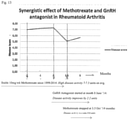
- GnRH antagonists when administered with an additional active agent may exhibit synergy. There may be an additional, e.g. greater than cumulative, effect when the additional active agent is co-administered with a GnRH antagonist. In other examples, the clinical benefit experienced by the subject may be improved or augmented in any way, when the degarelix is co-administered with the additional active agent. Synergistic combinations of degarelix and an additional active agent represent one preferred embodiment of the invention.
- the additional agent can be an agent effective in treating rheumatoid arthritis (e.g. TNF- ⁇ inhibitors such as anti-TNFa monoclonal antibodies (such as REMICADE ® , CDP-870 and HUMIRA TM (adalimumab) and TNF receptor-immunoglobulin fusion molecules (such as ENBREL ® )(entanercept), IL-1 inhibitors, receptor antagonists or soluble IL-1R ⁇ (e.g.
- TNF- ⁇ inhibitors such as anti-TNFa monoclonal antibodies (such as REMICADE ® , CDP-870 and HUMIRA TM (adalimumab) and TNF receptor-immunoglobulin fusion molecules (such as ENBREL ® )(entanercept), IL-1 inhibitors, receptor antagonists or soluble IL-1R ⁇ (e.g.
- TNF- ⁇ inhibitors such as anti-TNFa monoclonal antibodies (such as REMICADE
- KINERET TM or ICE inhibitors nonsteroidal anti-inflammatory agents
- piroxicam diclofenac, naproxen, flurbiprofen, fenoprofen, ketoprofen ibuprofen, fenamates, mefenamic acid, indomethacin, sulindac, apazone, pyrazolones, phenylbutazone, aspirin, COX-2 inhibitors (such as CELEBREX ® (celecoxib), VIOXX ® (rofecoxib), BEXTRA ® (valdecoxib) and etoricoxib, (preferably MMP-13 selective inhibitors), NEUROTIN ® , pregabalin, sulfasalazine, low dose methotrexate, leflunomide, hydroxychloroquine, d-penicillamine, auranofin, parenteral or oral gold), rituximab, roactemera
- degarelix is administered in combination with hormone substitution therapy (e.g. testosterone, such as Testogel 50mg every 1-5 days, oestrogen, such as Activelle 1mg/0.5mg every 1-5 days, luteinizing hormone, such as 75IE lutropin alfa daily, or every 2-5 days, or follicle stimulating hormone, such as 75-150IE follitropin alfa daily, or every 2-5 days.
- hormone substitution therapy e.g. testosterone, such as Testogel 50mg every 1-5 days, oestrogen, such as Activelle 1mg/0.5mg every 1-5 days, luteinizing hormone, such as 75IE lutropin alfa daily, or every 2-5 days, or follicle stimulating hormone, such as 75-150IE follitropin alfa daily, or every 2-5 days.
- the patients receive oestrogen or testosterone supplement daily or every 2-6 days or weekly, in addition to degarelix.
- the physician titrates the dose of oestrogen or testosterone to the patient's baseline or higher levels.
- the dose of the sex hormone or other agent is titrated to achieve a desired or selected oestrogen or testosterone level in the subject, for example a level which is substantially equal to or higher than a baseline level, or in some cases lower than a baseline level.
- a baseline level may be the level of the subject prior to administration of the GnRH antagonist, or it may be a reference baseline level, for example a level of oestrogen or testosterone which is a normal level or which is a typical level for that subject (e.g. an age- and/or sex-matched subject or a healthy subject of the appropriate gender).
- An appropriate or desired level may be selected according to need or circumstance, for example based on the age, sex and/or clinical condition of the patient. Thus, for example, as a patient ages a lower level may be appropriate, particularly over a long course of treatment over many years. Thus, the desired or appropriate level may change.
- degarelix is continually administered, or given as a vaccination with booster doses, or administered in one or more repeated doses (e.g. up to 6 times daily, e.g. 2, 3 or 4 to 6 times daily, daily, weekly, monthly, or other interval) for a period of time (e.g. at least three months, at least 6 months, at least 9 month, at least 12 months or longer).
- degarelix may be administered for at least 1, 2, 3, 5, 6, 7, 8, 9, 10 or 20 years or longer.
- short acting or long acting formulations are utilized.
- Degarelix may be administered by any convenient or desired route, including both parenterally or enterally.
- Degarelix may be administered subcutaneously, intramuscularly, intravenously, dermally, orally, infusion pump, or intraarticularly. Administration may be for example by injection or infusion or by other means of local or systemic delivery.
- degarelix is administered up to 6 times daily or weekly or every 2-4 week intervals, or monthly intervals or every 2-6 month intervals, or yearly, 0.1 mg to 3000 mg, e.g. 10 mg to 1000 mg. In some embodiments with an initial loading dose between 20 mg to 1000 mg.
- Degarelix is administered weekly, or every 2-4 week intervals, or monthly intervals or every 2-6 month intervals, or yearly, 10 mg to 1000 mg. In some embodiments, with an initial loading dose of degarelix between 20 mg to 1000 mg.
- degarelix is administered at an initial loading dose of 20 to 100 mg, followed by a maintenance dose of 40-1000 mg every 10-14 days, e.g. every 2 weeks.
- the maintenance dose may be 60-1000, 80-1000, 100-1000, 60-800, 60-500, 80-800, 80-500, 100-800, 100-500, 80-400, 80-320, 60-400, 60-320, 60-160, 80-160, 60-150, 80-150 mg or any range between any of the above-mentioned integers.
- a maintenance dose may be administered every 5 to 10 days, e.g. every 7 days or every week.
- the maintenance dose may be in the range as indicated above or may be 30-1000, 30-800, 30-500, 30-400, 30-320, 30-320, 30-200, 30-150 mg, or it may be 40 or 50 mg to any one of 1000, 800, 500, 400, 320, 300, 250, 200, 180, 160 or 150 mg.
- degarelix may be administered at a higher dose than is presently proposed for use in the art, particularly for use in treating prostate cancer.
- doses or concentrations may be 3 or 4 times higher than typical, conventional or normal doses or concentrations, e.g. doses or concentrations for such treatment.
- Variable Patient 1 Patient 2 Patient 3 Patient 4 Patient 5 Patient 6 Age (years) 56 58 45 71 78 71 Sex Female Female Premenopausal Female Male Female Female Disease Duration (years) 10 26 17 16 31 38 Disease activity 1 6.2 7.5 7.6 8.6 6.4 7.2 Number of biologics previously failed 6 7 5 3 1 2 5 Onset ? Menopause Postpartum Postpartum Acute onset at the time of ear infection Menopause Postpartum Duration/Effect of last biologic 4 infusions Rituximab (Mabthera) (each 6 months apart). No effect. 4 months. TNF-inhibitor (Simponi/golilimumab) Increasing disease activity documented.
- Patient 1 Patient 2
- Patient 3 Patient 4
- Patient 5 Patient 6
- ACR % Response 90% 60% 50% 50% 30% 80% Swollen joint count assessed with ultrasound; baseline, final 6, 0 17, 2 23, 4 24, 3 10, 2 16, 0 Tender joint; baseline, final 9, 0 17, 3 26, 11 28, 11 12, 0 24, 0
- Patient own assessment (0-100) 81, 0 90, 35 50, 30 90, 50 88, 88 3 60, 7 Physician
- ESR erythrocyte sedimentation rate
- CRP C-reactive protein
- CK creatinine kinase
- Hb Hemoglobin
- LH luteinizing hormone
- FSH follicle-stimulating hormone
- CCP cyclic citrullinated peptide
- HbA1C glycated hemoglobin: ACTH, adrenocorticotrophic hormone
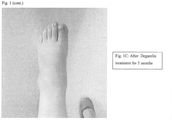
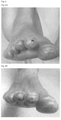
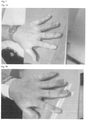
- the figures show differences before and after treatment with Degarelix. Patients have not increased their concomitant stable medications, and they have not intraarticular, intramuscular or intravenous cortisone therapy.
- FIGS 1A, 1B and 1C show images of arthritis in the foot of patient 1 before and during treatment with Degarelix.
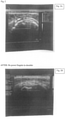
- Figure 2 shows ultrasound pictures of patient 5.
- Figure 2A shows white area highlighted by arrow, is power Doppler denoting inflammatory activity in shoulder.
- Figure 2B shows no power Doppler in same shoulder.
- Figure 2C shows white area highlighted by arrow, is power Doppler denoting inflammatory activity in right MCP 4 (finger joint) right side.
- Figure 2D shows no power Doppler in right MCP4 joint.
- Figure 2E shows white area highlighted by arrow, is power Doppler denoting inflammatory activity in right MCP 4 (finger joint) left side.
- Figure 2F shows no power Doppler in MCP 4 left side, and decreased joint fluid (oval).
- Figure 3 shows patient 6 before and after Degarelix treatment.
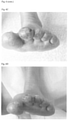
- Figure 4 shows ultrasounds of patient 6.
- the first ultrasound shows a large effusion (swelling indicated by black area) over the right wrist.
- the second ultrasound shows the same area by 3.5 weeks.
- the effusion on the right is much smaller, and no longer painful.
- She halved her long term stable prednisolone dose from 10mg til 5 mg within days of the first Degarelix injection (without informing the physician). She has reduced two shoe sizes, bought new shoes, and also halved her morphine and diuretic intake ('Oxycodone/Oxynorm' and 'Butemanide/Burinex' tablets).
- Figure 5A-F shows disease activity variables of Patient 2 whilst being treated with degarelix.
- This example describes the treatment of Lupus with a GnRH antagonist.
- the patient has a medical history of a multimorbid patient.
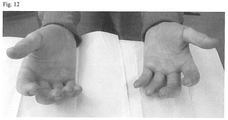
- Systemic lupus erythematosus (SLE) was diagnosed in 1988 based on Raynauds, skin changes, arthralgia, high titre lupus anticoagulant, ANA, SSA, and SSB. Chilblain type changes in hands and feet ( Figures 6-8 ).
- He has previously tried methotrexate, azathioprine, and mycophenolate mofetil, which were not effective in reducing the pain in his extremities, and gave intolerable side effects such as mouth ulcers.
- He has had a pacemaker since 1986, AV block II.
- the patient had kidney failure since 2012, required dialysis, stabilized creatinine around 150, osteoporosis, COPD, and is a smoker.
- the patient has had severe pain in his hands and feet for the last 10 years, especially under the soles of his feet. Has had continuous small ulcerations on his toes and hands, and pigmented skin. This pain was debilitating, and reduced his daily function. He walked with difficulty, and had atrophic musculature in both his lower extremities. He had ataxi in his lower extremities, especially left side, and minimal patellar and achilles reflexes. He was unbalanced, experienced numbness, and parasthesias, all documented in his medical journal from the neurology outpatients clinic April 2014. His electromyography findings from 2010 support a diagnosis of thin fiber neuropathy related to lupus. Due to his painful condition, he has been followed up by a pain clinic.
- amitriptyline 25mg in March 2014 for his painful condition. This had no effect on his pain.
- the amitriptyline was increased to 50mg with no effect. This was soon after increased to 150mg daily with no effect.
- GnRH antagonists have shown anti-inflammatory effects and therefore we considered that degarelix, a depot GnRH antagonist, may have a therapeutic effect in lupus.
- Proteinuria decline is linked to improved lupus nephritis outcomes.
- Korbet et al studied 61 patients in a controlled trial comparing standard therapy with plasmapheresis for severe lupus nephritis. Of these, 34 patients attained a 50% or greater reduction at 6 months and 27 did not.
- the patient described in this case report obtained a complete remission of proteinuria by 1 month, which continues to be in remission at 2 months. He had constant, increasing proteinuria in 2014.
- the example describes the treatment of ankylosing spondylitis with a GnRH antagonist.
- BASDAI Breast Ankylosing Spondylitis Disease Activity Index 1
- BASDAI Basal Ankylosing Spondylitis Disease Activity Index 1
- His BASDAI was at 8.7 at baseline.
- a BASDAI 50% improvement is defined as a major clinical response. He has also achieved an ASAS 80 (Ankylosing Spondylitis Assessment Group of at least 80% improvement) response. For comparison, approximately 50-60% of patients achieve a BASDAI 50 by 12 weeks on TNF inhibitors 4 . His ESR has decreased from 46mm to 23mm, which is his lowest ESR reading in 19 years.
- This example describes improvement in bone mineral density in patients taking a GnRH antagonist.
- Bone mineral density was measured in Patients 1 and 2 (See Example 1 for patient information).
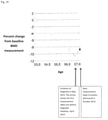
- Figure 9 shows that patient 1 shows an improvement in her bone mineral density in her hips for the first time in 3.5 years. She was not taking any therapies for osteoporosis during this period. This was unexpected as the summary of product characteristics states that a decrease in bone mineral density is expected under GnRH antagonist treatment. However, our data indicates the opposite. Despite having low oestrogen, using concomitant prednisolone and longstanding rheumatoid arthritis (all of which are independent risk factors for osteoporosis), her bone mineral density improved during GnRH antagonist treatment.
- Figure 10 shows an improvement in her bone mineral density in the hips of patient 2 for the first time in 4.5 years. This was unexpected as the summary of product characteristics states that a decrease in bone mineral density is expected under GnRH antagonist treatment. Despite using having low oestrogen, using concomitant prednisolone and longstanding rheumatoid arthritis (all of which are independent risk factors for osteoporosis), her bone mineral density improved during GnRH antagonist treatment.
- High HBA1c contributes to CVD (normal reference range 4.3-6.1%).
- HBA1c was 6.9%, high.
- the HBA1c had reduced to 6.6, by 2 months 6.4, and by 4 months 6.2, and by 12 months it was normalized to 5.9.
- His hospital records from a nearby hospital stated that his fasting glucose was high at 8.5mmol/l (reference range 4.0-6.0) in December 2013, and by April 2014 this was higher at 8.9. They asked the patient's family doctor to initiate treatment due to the development of diabetes type II. His fasting glucose had reduced to 6.6mmol/l by 3 months after starting Degarelix, and by 4 months has now normalised to 6.0 mmol/L. No other abnormalities baseline for assessment
- HBA1C blood pressure, lipids
- a level of ⁇ 50 mg/kg is considered normal or remission for IBD.
- This patient gave three fecal samples in total.
- This patient had a partial Mayo score of 3 at baseline; and 0 at 12 weeks. A score of 0 is clinical remission. This is supported by his high fecal calprotectin score around baseline, reduced fecal calprotectin level at 4 weeks and further reduced calprotectin level by 12 weeks.
- This example demonstrates GnRH antagonist treatment in a patient with colitis improved his disease activity, as well as normalizing his fecal calprotectin levels.
- GnRH antagonists are beneficial in IBD's in general.
- This example demonstrates improved signs and symptoms in a patient with psoriasis treated with a GnRH antagonist treatment.
- This example also demonstrates the effective combination of a GnRH antagonist with gonadal hormone replacement, in this case testosterone replacement, in an inflammatory disease.
- This example demonstrates improved signs and symptoms in a patient with systemic sclerosis treated with a GnRH antagonist.
- BASDAI Breast Ankylosing Spondylitis Disease Activity Index 1
- BASDAI Basal Ankylosing Spondylitis Disease Activity Index 1
- His BASDAI was at 3.8 at baseline.
- Degarelix 240mg sc In October 2014 he received his first dose of Degarelix 240mg sc.
- his BASDAI had reduced to 2.9, and by 8 weeks it had reduced to 1.3, remission.
- his BASDAI continues to be low at 1.5.
- This example demonstrates improved signs and symptoms in a patient with spondyloarthritis treated with a GnRH antagonist.
- MSWS-12 Multiple Sclerosis Walking Scale -12
- the significant improvement in the MSIS-29 is supported by her significantly improved fatigue in the MFIS-5, her improvement in the MSWS-12, shorter T25FW time, and stable EDSS.
- This example demonstrates improved signs and symptoms in a patient with MS treated with a GnRH antagonist.
- This improvement in progressive MS is likely to also be observed in the relapsing-remitting type of MS. This is because the relapsing-remitting type gives similar signs and symptoms as the progressive type to patients over time.
- Examples 13 and 14 describe the treatment of RA using particularly different dosing schedules.
- Relugolix a GnRH antagonist, improves signs and symptoms in a patient with rheumatoid arthritis.
- This example demonstrates how spiroindoline derivatives as GnRH antagonists, can improve signs and symptoms in a patient with rheumatoid arthritis shown with international response criteria.
- peripheral GnRH levels in patients with various autoimmune diseases were higher levels of peripheral GnRH than healthy controls.
- GnRH antagonist treatment over a period of months reduced peripheral GnRH levels to some extent in patients with various autoimmune diseases. Due to the nature of ELISA assays, the concentration in pg/mL should not necessarily be regarded as absolute, and may be interpreted as relative.
- RA Pt A Baseline GnRH 394 pg/mL, after 3 months of Degarelix with loading dose 240 mg, and maintenance doses 80 mg every 2 weeks, GnRH 359 pg/mL. During this period CRP was reduced from 142 mg/L to 54 mg/L and disease activity reduced significantly from 8.6 to 4.2 in DAS score.
- Multiple Sclerosis Patient B Baseline GnRH 318 pg/mL, reduced to 210 pg/mL after 1 month of GnRH antagonist treatment; Degarelix 240 mg loading dose and 80 mg every 2 weeks for maintenance. During that month/6 weeks her general function had improved, for example MSIS-29 had reduced from 121 to 110.
- Psoriasis Patient C Baseline GnRH 300 pg/mL reduced to 274 pg/mL after 3 months Degarelix treatment with loading dose 240 mg, and maintenance doses of 80 mg every 2 weeks. During that period his PASI score reduced by more than 20 %. Healthy control 1 baseline GnRH 162 pg/mL, healthy control 2 baseline GnRH 120 pg/mL, healthy control 3 baseline GnRH 153 pg/mL.
- This example shows that patients with inflammatory diseases may have higher peripheral GnRH levels than healthy controls, and this example shows how assessing peripheral levels of GnRH can be used to generally used to diagnose inflammatory diseases and evaluate treatment effect/prognostic evaluation.
- the chemically active or activated derivatives of the PEG polymer are prepared to attach the PEG to the desired molecule, the GnRH antagonist or drug to lower GnRH activity.
- the overall PEGylation process is either a solution phase batch process or an on-column fed-batch process. During the simple and commonly adopted batch process reagents are mixed together in a suitable buffer solution, preferably at a temperature between 4 and 6 °C.
- the choice of the suitable functional group for the PEG derivative is based on the type of available reactive group on the molecule that is coupled to the PEG.
- typical reactive amino acids include lysine, cysteine, histidine, arginine, aspartic acid, glutamic acid, serine, threonine, tyrosine.
- the N-terminal amino group and the C-terminal carboxylic acid can also be used as a site specific site by conjugation with aldehyde functional polymers.
- the PEG polymer reacts with a group that is reactive with hydroxyl groups, typically anhydrides, acid chlorides, chloroformates and carbonates.
- more efficient functional groups such as aldehyde, esters, amides etc. is made available for conjugation.
- Heterobifunctional PEGs are very useful in linking two entities, where a hydrophilic, flexible and biocompatible spacer is needed.
- Preferred end groups for heterobifunctional PEGs are maleimide, vinyl sulfones, pyridyl disulfide, amine, carboxylic acids and NHS esters.
- Third generation pegylation agents where the shape of the polymer has been branched, Y shaped or comb shaped are available which show reduced viscosity and lack of organ accumulation. These compounds are tested in animal studies, showing that they do not cross the blood brain barrier due to their physically large size. Some of these compounds can have extended half lives. They do not act upon the pituitary GnRH receptors.
Landscapes
- Health & Medical Sciences (AREA)
- Life Sciences & Earth Sciences (AREA)
- Chemical & Material Sciences (AREA)
- Medicinal Chemistry (AREA)
- General Health & Medical Sciences (AREA)
- Veterinary Medicine (AREA)
- Public Health (AREA)
- Animal Behavior & Ethology (AREA)
- Pharmacology & Pharmacy (AREA)
- Engineering & Computer Science (AREA)
- Epidemiology (AREA)
- Bioinformatics & Cheminformatics (AREA)
- Organic Chemistry (AREA)
- Nuclear Medicine, Radiotherapy & Molecular Imaging (AREA)
- General Chemical & Material Sciences (AREA)
- Chemical Kinetics & Catalysis (AREA)
- Immunology (AREA)
- Hematology (AREA)
- Molecular Biology (AREA)
- Biomedical Technology (AREA)
- Urology & Nephrology (AREA)
- Endocrinology (AREA)
- Rheumatology (AREA)
- Physical Education & Sports Medicine (AREA)
- Biochemistry (AREA)
- Microbiology (AREA)
- Proteomics, Peptides & Aminoacids (AREA)
- Cardiology (AREA)
- Orthopedic Medicine & Surgery (AREA)
- Diabetes (AREA)
- Heart & Thoracic Surgery (AREA)
- Physics & Mathematics (AREA)
- Biotechnology (AREA)
- Pathology (AREA)
- General Physics & Mathematics (AREA)
- Analytical Chemistry (AREA)
- Food Science & Technology (AREA)
- Cell Biology (AREA)
- Reproductive Health (AREA)
- Gastroenterology & Hepatology (AREA)
Applications Claiming Priority (5)
| Application Number | Priority Date | Filing Date | Title |
|---|---|---|---|
| US201462041873P | 2014-08-26 | 2014-08-26 | |
| US201462082200P | 2014-11-20 | 2014-11-20 | |
| US201562110731P | 2015-02-02 | 2015-02-02 | |
| US201562181289P | 2015-06-18 | 2015-06-18 | |
| PCT/EP2015/069369 WO2016030334A2 (en) | 2014-08-26 | 2015-08-24 | Methods, agents and compositions for treatment of inflammatory conditions |
Publications (2)
| Publication Number | Publication Date |
|---|---|
| EP3185881A2 EP3185881A2 (en) | 2017-07-05 |
| EP3185881B1 true EP3185881B1 (en) | 2022-03-09 |
Family
ID=54012190
Family Applications (1)
| Application Number | Title | Priority Date | Filing Date |
|---|---|---|---|
| EP15756614.2A Active EP3185881B1 (en) | 2014-08-26 | 2015-08-24 | Methods, agents and compositions for treatment of inflammatory conditions |
Country Status (5)
| Country | Link |
|---|---|
| US (2) | US10821152B2 (enExample) |
| EP (1) | EP3185881B1 (enExample) |
| JP (1) | JP2017529388A (enExample) |
| AU (1) | AU2015308987B2 (enExample) |
| WO (1) | WO2016030334A2 (enExample) |
Families Citing this family (10)
| Publication number | Priority date | Publication date | Assignee | Title |
|---|---|---|---|---|
| SMT202200255T1 (it) | 2012-09-28 | 2022-07-21 | Takeda Pharmaceuticals Co | Forma cristallina di 1-(4-1-(2,6-difluorobenzil)-5-dimetilamminometil-3-(6-metossipiridazin-3-il)-2,4-diosso-1,2,3,4-tetraidrotieno(2,3-d)-pirimidin-6il)fenil)-3-metossiurea |
| US20190321363A1 (en) * | 2016-06-20 | 2019-10-24 | Dr. Reddy's Laboratories Limited | Process for the preparation of elagolix sodium and its polymorph |
| SI3518932T1 (sl) | 2016-09-30 | 2025-03-31 | Takeda Pharmaceutical Company Limited | Zdravljenje raka prostate |
| CN109946467B (zh) * | 2017-12-21 | 2021-05-28 | 中国医学科学院北京协和医院 | 一种用于胸椎黄韧带骨化诊断的生物标记物 |
| CA3086642A1 (en) * | 2017-12-21 | 2019-06-27 | Resolys Bio, Inc. | Compositions and methods of treatment of ehlers-danlos syndromes |
| CN119112885A (zh) * | 2018-03-16 | 2024-12-13 | 脑科学香料株式会社 | 缺氧障碍、缺血再灌注障碍或炎症的预防或治疗剂,移植用细胞保护剂,及生物体防腐剂 |
| JP2022518019A (ja) * | 2019-01-15 | 2022-03-11 | ルパン インコーポレイテッド | 重水素化エラゴリクス様組成物及び方法 |
| CN112578125B (zh) * | 2019-09-27 | 2022-10-25 | 成都中医药大学 | 检测粪钙卫蛋白含量的试剂在制备卵巢病变筛查试剂盒中的用途 |
| WO2021251565A1 (en) | 2020-06-12 | 2021-12-16 | Hk Inno.N Corporation | Pharmaceutical composition comprising benzimidazole derivative compound |
| CN113750089B (zh) * | 2021-10-13 | 2023-09-19 | 南方医科大学南方医院 | 2-芳基-1,3二氢苯并咪唑衍生物在制备治疗慢性肝病的药物中的用途 |
Family Cites Families (36)
| Publication number | Priority date | Publication date | Assignee | Title |
|---|---|---|---|---|
| WO1997021435A1 (en) | 1995-12-14 | 1997-06-19 | Merck & Co., Inc. | Antagonists of gonadotropin releasing hormone |
| PL327146A1 (en) | 1995-12-14 | 1998-11-23 | Merck & Co Inc | Antagonists of the gonadotrophin liberating hormone |
| CA2254769A1 (en) | 1996-05-20 | 1997-11-27 | Merck & Co., Inc. | Antagonists of gonadotropin releasing hormone |
| WO1997044321A1 (en) | 1996-05-20 | 1997-11-27 | Merck & Co., Inc. | Antagonists of gonadotropin releasing hormone |
| EP0918522A4 (en) | 1996-05-20 | 1999-08-18 | Merck & Co Inc | GONADOLIBERIN ANTAGONISTS |
| EP0986550A1 (en) | 1997-06-05 | 2000-03-22 | Merck & Co., Inc. | Antagonists of gonadotropin releasing hormone |
| AU729663B2 (en) | 1997-06-05 | 2001-02-08 | Merck & Co., Inc. | Antagonists of gonadotropin releasing hormone |
| EP0986385A4 (en) | 1997-06-05 | 2001-05-16 | Merck & Co Inc | GONADORELIN ANTAGONISTS |
| US6346534B1 (en) | 1998-09-23 | 2002-02-12 | Neurocrine Biosciences, Inc. | Gonadotropin-releasing hormone receptor antagonists and methods relating thereto |
| US20040265285A1 (en) | 1999-04-15 | 2004-12-30 | Monash University | Normalization of defective T cell responsiveness through manipulation of thymic regeneration |
| US20020077327A1 (en) | 1999-09-23 | 2002-06-20 | Neurocrine Biosciences, Inc. | Gonadotropin-releasing hormone receptor antagonists and methods relating thereto |
| US20020065309A1 (en) | 1999-08-04 | 2002-05-30 | Ge Peng | Novel Bicyclic and tricyclic pyrrolidine derivatives as GnRH antagonists |
| PT1300398E (pt) | 2000-07-05 | 2006-07-31 | Astellas Pharma Inc | Processos e composicoes para terapias do cancro, utilizando genes que codificam o interferao-beta |
| US20020103131A1 (en) | 2001-01-26 | 2002-08-01 | Jacobson Jill D. | Prevention of diabetes by administration of GnRH antagonists |
| US20060287282A1 (en) | 2001-06-25 | 2006-12-21 | Steiner Mitchell S | Compositions comprising a SARM ad GnRH agonist or a GnRH antagonist, and methods of use thereof |
| DE10137174A1 (de) | 2001-07-31 | 2003-02-13 | Zentaris Ag | Verwendung von LHRH-Antagonisten in nichtkastrierenden Dosen zur Verbesserung der T-Zellen-vermittelten Immunität |
| US20040138138A1 (en) * | 2001-08-02 | 2004-07-15 | Jurgen Engel | Use of LHRH-antagonists in doses that do not cause castration for the improvement of T-cell mediated immunity |
| US20030144203A1 (en) | 2001-12-19 | 2003-07-31 | Voyager Pharmaceutical Corporation | Methods for slowing senescence and treating and preventing diseases associated with senescence |
| US7414043B2 (en) | 2002-06-11 | 2008-08-19 | Schering Ag | 9-α-substituted estratrienes as selectively active estrogens |
| DE10226326A1 (de) | 2002-06-11 | 2004-01-15 | Schering Ag | 9-alpha-substiuierte Estratriene als selektiv wirksame Estrogene |
| EP1646389B1 (en) | 2003-07-07 | 2008-09-10 | Neurocrine Biosciences, Inc. | Pyrimidine-2,4-dione derivatives as gonadotropin-releasing hormone receptor antagonists |
| AU2004255913B2 (en) | 2003-07-09 | 2007-10-11 | Takeda Pharmaceutical Company Limited | Organosilicon compounds and their use |
| MXPA06014131A (es) * | 2004-06-04 | 2007-03-07 | Astellas Pharma Inc | Derivado de propano-1,3-diona o su sal. |
| US20080261918A1 (en) | 2004-12-17 | 2008-10-23 | Graham Andrew Showell | Silicon Compounds and Their Use |
| US20090291915A1 (en) | 2004-12-17 | 2009-11-26 | Graham Andrew Showell | Silicon Compounds and Their Use |
| WO2007000582A1 (en) | 2005-06-28 | 2007-01-04 | Takeda Cambridge Limited | Heterocyclic non-peptide gnrh antagonists |
| JP2007325581A (ja) * | 2006-05-12 | 2007-12-20 | Takeda Chem Ind Ltd | 性ホルモン依存疾患の予防・治療剤 |
| WO2009059304A2 (en) | 2007-11-02 | 2009-05-07 | Taiga Biotechnologies, Inc. | Compounds for treating abnormal cellular proliferation |
| TWI442932B (zh) * | 2008-02-11 | 2014-07-01 | Ferring Int Ct Sa | 以GnRH拮抗劑治療攝護腺癌的方法 |
| EP2095818A1 (en) | 2008-02-29 | 2009-09-02 | AEterna Zentaris GmbH | Use of LHRH antagonists at non-castrating doses |
| US20100061976A1 (en) | 2008-07-24 | 2010-03-11 | Searete Llc, A Limited Liability Corporation Of The State Of Delaware | Method for treating or preventing osteoporosis by reducing follicle stimulating hormone to cyclic physiological levels in a mammalian subject |
| EP2350118B1 (en) * | 2008-09-19 | 2016-03-30 | Nektar Therapeutics | Carbohydrate-based drug delivery polymers and conjugates thereof |
| TW201130854A (en) | 2009-12-22 | 2011-09-16 | Bayer Schering Pharma Ag | Pyridinone derivatives and pharmaceutical compositions thereof |
| DK2571510T3 (en) | 2010-05-21 | 2018-11-19 | Xl Protein Gmbh | BIOSYNTHETIC PROLIN / ALANIN-RANDOM COIL POLYPEPTIDES AND THEIR APPLICATIONS |
| WO2012175514A1 (en) | 2011-06-21 | 2012-12-27 | Bayer Intellectual Property Gmbh | Pyridinone derivatives and pharmaceutical compositions thereof |
| KR101586791B1 (ko) * | 2012-12-28 | 2016-01-19 | 주식회사 종근당 | GnRH 유도체의 서방성 지질 초기제제 및 이를 포함하는 약제학적 조성물 |
-
2015
- 2015-08-24 AU AU2015308987A patent/AU2015308987B2/en active Active
- 2015-08-24 EP EP15756614.2A patent/EP3185881B1/en active Active
- 2015-08-24 US US15/506,210 patent/US10821152B2/en active Active
- 2015-08-24 WO PCT/EP2015/069369 patent/WO2016030334A2/en not_active Ceased
- 2015-08-24 JP JP2017530419A patent/JP2017529388A/ja active Pending
-
2016
- 2016-08-12 US US15/235,487 patent/US20160346255A1/en not_active Abandoned
Also Published As
| Publication number | Publication date |
|---|---|
| CA2958939A1 (en) | 2016-03-03 |
| EP3185881A2 (en) | 2017-07-05 |
| JP2017529388A (ja) | 2017-10-05 |
| WO2016030334A2 (en) | 2016-03-03 |
| AU2015308987B2 (en) | 2021-02-18 |
| US20160346255A1 (en) | 2016-12-01 |
| US10821152B2 (en) | 2020-11-03 |
| AU2015308987A1 (en) | 2017-03-23 |
| WO2016030334A3 (en) | 2016-04-21 |
| US20170258867A1 (en) | 2017-09-14 |
Similar Documents
| Publication | Publication Date | Title |
|---|---|---|
| US10821152B2 (en) | Methods, agents and compositions for treatment of inflammatory conditions | |
| Foster et al. | Intravenous immunoglobulin therapy for ocular cicatricial pemphigoid: a preliminary study | |
| TWI837532B (zh) | 治療潰瘍性結腸炎之方法 | |
| JP2013166765A5 (enExample) | ||
| CN116261463A (zh) | 治疗痛风的方法 | |
| JP2018537418A (ja) | インターロイキン17(il−17)アンタゴニストを用いてx線陰性体軸性脊椎関節炎を治療する方法 | |
| JP2017031209A (ja) | アタシセプトなどのTACI−Ig融合タンパク質を用いた自己免疫疾患を治療するための投薬法 | |
| KR20240043778A (ko) | 장시간-작용하는 glp1/글루카곤 수용체 작용제를 위한 용량 용법 | |
| Teyssonneau et al. | Gougerot-Sjogren-like syndrome under PD-1 inhibitor treatment | |
| Song et al. | Dermatomyositis associated with celiac disease: response to a gluten‐free diet | |
| JP2025148449A (ja) | クローン病を治療する方法に使用するためのミリキズマブ | |
| BR112021009225A2 (pt) | Análogos de gdf15 e métodos para uso na diminuição do peso corporal e/ou na redução da ingestão de alimentos | |
| CN120826223A (zh) | 鲨肌醇与免疫治疗剂组合用于治疗阿尔茨海默氏病 | |
| KR20210140780A (ko) | 건선성 관절염 대상체의 치료 방법 | |
| WO2009103312A1 (en) | Ezrin, serpin b5, peroxiredoxin-2 and heat shock protein beta-1 as autoantigens for psoriasis and poststreptococcal diseases | |
| Sulli et al. | Blunted coronary flow reserve in systemic sclerosis: a sign of cardiac involvement in asymptomatic patients | |
| Skoumal et al. | Serum osteoprotegerin but not receptor activator of NF-κB ligand correlates with Larsen score in rheumatoid arthritis | |
| CA2958939C (en) | Methods, agents and compositions for treatment of inflammatory conditions | |
| US20240301058A1 (en) | Inebilizumab and methods of using the same in the treatment or prevention of igg4-related disease | |
| CN117940161A (zh) | 伊奈利珠单抗及其在治疗或预防IgG4相关疾病中的使用方法 | |
| Ronen et al. | An asymptomatic case of radiologically active neurocysticercosis | |
| TW202535943A (zh) | 改善抗FcRn療法之方法 | |
| Busbaih et al. | Sever ulcerative colitis associated with coombs positive autoimmune haemolytic anemia (AIHA) response to infliximab | |
| Soler et al. | Treatment of Idiopathic Membranous Nephropathy (IMN) | |
| CA3229077A1 (en) | Inebilizumab and methods of using the same in the treatment or prevention of igg4-related disease |
Legal Events
| Date | Code | Title | Description |
|---|---|---|---|
| STAA | Information on the status of an ep patent application or granted ep patent |
Free format text: STATUS: THE INTERNATIONAL PUBLICATION HAS BEEN MADE |
|
| PUAI | Public reference made under article 153(3) epc to a published international application that has entered the european phase |
Free format text: ORIGINAL CODE: 0009012 |
|
| STAA | Information on the status of an ep patent application or granted ep patent |
Free format text: STATUS: REQUEST FOR EXAMINATION WAS MADE |
|
| 17P | Request for examination filed |
Effective date: 20170322 |
|
| AK | Designated contracting states |
Kind code of ref document: A2 Designated state(s): AL AT BE BG CH CY CZ DE DK EE ES FI FR GB GR HR HU IE IS IT LI LT LU LV MC MK MT NL NO PL PT RO RS SE SI SK SM TR |
|
| AX | Request for extension of the european patent |
Extension state: BA ME |
|
| DAV | Request for validation of the european patent (deleted) | ||
| DAX | Request for extension of the european patent (deleted) | ||
| STAA | Information on the status of an ep patent application or granted ep patent |
Free format text: STATUS: EXAMINATION IS IN PROGRESS |
|
| 17Q | First examination report despatched |
Effective date: 20190904 |
|
| GRAP | Despatch of communication of intention to grant a patent |
Free format text: ORIGINAL CODE: EPIDOSNIGR1 |
|
| STAA | Information on the status of an ep patent application or granted ep patent |
Free format text: STATUS: GRANT OF PATENT IS INTENDED |
|
| INTG | Intention to grant announced |
Effective date: 20211008 |
|
| GRAS | Grant fee paid |
Free format text: ORIGINAL CODE: EPIDOSNIGR3 |
|
| GRAA | (expected) grant |
Free format text: ORIGINAL CODE: 0009210 |
|
| STAA | Information on the status of an ep patent application or granted ep patent |
Free format text: STATUS: THE PATENT HAS BEEN GRANTED |
|
| AK | Designated contracting states |
Kind code of ref document: B1 Designated state(s): AL AT BE BG CH CY CZ DE DK EE ES FI FR GB GR HR HU IE IS IT LI LT LU LV MC MK MT NL NO PL PT RO RS SE SI SK SM TR |
|
| REG | Reference to a national code |
Ref country code: GB Ref legal event code: FG4D |
|
| REG | Reference to a national code |
Ref country code: CH Ref legal event code: EP Ref country code: AT Ref legal event code: REF Ref document number: 1473575 Country of ref document: AT Kind code of ref document: T Effective date: 20220315 |
|
| REG | Reference to a national code |
Ref country code: DE Ref legal event code: R096 Ref document number: 602015077411 Country of ref document: DE |
|
| REG | Reference to a national code |
Ref country code: IE Ref legal event code: FG4D |
|
| REG | Reference to a national code |
Ref country code: LT Ref legal event code: MG9D |
|
| REG | Reference to a national code |
Ref country code: NL Ref legal event code: MP Effective date: 20220309 |
|
| PG25 | Lapsed in a contracting state [announced via postgrant information from national office to epo] |
Ref country code: SE Free format text: LAPSE BECAUSE OF FAILURE TO SUBMIT A TRANSLATION OF THE DESCRIPTION OR TO PAY THE FEE WITHIN THE PRESCRIBED TIME-LIMIT Effective date: 20220309 Ref country code: RS Free format text: LAPSE BECAUSE OF FAILURE TO SUBMIT A TRANSLATION OF THE DESCRIPTION OR TO PAY THE FEE WITHIN THE PRESCRIBED TIME-LIMIT Effective date: 20220309 Ref country code: NO Free format text: LAPSE BECAUSE OF FAILURE TO SUBMIT A TRANSLATION OF THE DESCRIPTION OR TO PAY THE FEE WITHIN THE PRESCRIBED TIME-LIMIT Effective date: 20220609 Ref country code: LT Free format text: LAPSE BECAUSE OF FAILURE TO SUBMIT A TRANSLATION OF THE DESCRIPTION OR TO PAY THE FEE WITHIN THE PRESCRIBED TIME-LIMIT Effective date: 20220309 Ref country code: HR Free format text: LAPSE BECAUSE OF FAILURE TO SUBMIT A TRANSLATION OF THE DESCRIPTION OR TO PAY THE FEE WITHIN THE PRESCRIBED TIME-LIMIT Effective date: 20220309 Ref country code: BG Free format text: LAPSE BECAUSE OF FAILURE TO SUBMIT A TRANSLATION OF THE DESCRIPTION OR TO PAY THE FEE WITHIN THE PRESCRIBED TIME-LIMIT Effective date: 20220609 |
|
| REG | Reference to a national code |
Ref country code: AT Ref legal event code: MK05 Ref document number: 1473575 Country of ref document: AT Kind code of ref document: T Effective date: 20220309 |
|
| PG25 | Lapsed in a contracting state [announced via postgrant information from national office to epo] |
Ref country code: LV Free format text: LAPSE BECAUSE OF FAILURE TO SUBMIT A TRANSLATION OF THE DESCRIPTION OR TO PAY THE FEE WITHIN THE PRESCRIBED TIME-LIMIT Effective date: 20220309 Ref country code: GR Free format text: LAPSE BECAUSE OF FAILURE TO SUBMIT A TRANSLATION OF THE DESCRIPTION OR TO PAY THE FEE WITHIN THE PRESCRIBED TIME-LIMIT Effective date: 20220610 Ref country code: FI Free format text: LAPSE BECAUSE OF FAILURE TO SUBMIT A TRANSLATION OF THE DESCRIPTION OR TO PAY THE FEE WITHIN THE PRESCRIBED TIME-LIMIT Effective date: 20220309 |
|
| PG25 | Lapsed in a contracting state [announced via postgrant information from national office to epo] |
Ref country code: NL Free format text: LAPSE BECAUSE OF FAILURE TO SUBMIT A TRANSLATION OF THE DESCRIPTION OR TO PAY THE FEE WITHIN THE PRESCRIBED TIME-LIMIT Effective date: 20220309 |
|
| PG25 | Lapsed in a contracting state [announced via postgrant information from national office to epo] |
Ref country code: SM Free format text: LAPSE BECAUSE OF FAILURE TO SUBMIT A TRANSLATION OF THE DESCRIPTION OR TO PAY THE FEE WITHIN THE PRESCRIBED TIME-LIMIT Effective date: 20220309 Ref country code: SK Free format text: LAPSE BECAUSE OF FAILURE TO SUBMIT A TRANSLATION OF THE DESCRIPTION OR TO PAY THE FEE WITHIN THE PRESCRIBED TIME-LIMIT Effective date: 20220309 Ref country code: RO Free format text: LAPSE BECAUSE OF FAILURE TO SUBMIT A TRANSLATION OF THE DESCRIPTION OR TO PAY THE FEE WITHIN THE PRESCRIBED TIME-LIMIT Effective date: 20220309 Ref country code: PT Free format text: LAPSE BECAUSE OF FAILURE TO SUBMIT A TRANSLATION OF THE DESCRIPTION OR TO PAY THE FEE WITHIN THE PRESCRIBED TIME-LIMIT Effective date: 20220711 Ref country code: ES Free format text: LAPSE BECAUSE OF FAILURE TO SUBMIT A TRANSLATION OF THE DESCRIPTION OR TO PAY THE FEE WITHIN THE PRESCRIBED TIME-LIMIT Effective date: 20220309 Ref country code: EE Free format text: LAPSE BECAUSE OF FAILURE TO SUBMIT A TRANSLATION OF THE DESCRIPTION OR TO PAY THE FEE WITHIN THE PRESCRIBED TIME-LIMIT Effective date: 20220309 Ref country code: CZ Free format text: LAPSE BECAUSE OF FAILURE TO SUBMIT A TRANSLATION OF THE DESCRIPTION OR TO PAY THE FEE WITHIN THE PRESCRIBED TIME-LIMIT Effective date: 20220309 Ref country code: AT Free format text: LAPSE BECAUSE OF FAILURE TO SUBMIT A TRANSLATION OF THE DESCRIPTION OR TO PAY THE FEE WITHIN THE PRESCRIBED TIME-LIMIT Effective date: 20220309 |
|
| PG25 | Lapsed in a contracting state [announced via postgrant information from national office to epo] |
Ref country code: PL Free format text: LAPSE BECAUSE OF FAILURE TO SUBMIT A TRANSLATION OF THE DESCRIPTION OR TO PAY THE FEE WITHIN THE PRESCRIBED TIME-LIMIT Effective date: 20220309 Ref country code: IS Free format text: LAPSE BECAUSE OF FAILURE TO SUBMIT A TRANSLATION OF THE DESCRIPTION OR TO PAY THE FEE WITHIN THE PRESCRIBED TIME-LIMIT Effective date: 20220709 Ref country code: AL Free format text: LAPSE BECAUSE OF FAILURE TO SUBMIT A TRANSLATION OF THE DESCRIPTION OR TO PAY THE FEE WITHIN THE PRESCRIBED TIME-LIMIT Effective date: 20220309 |
|
| REG | Reference to a national code |
Ref country code: DE Ref legal event code: R097 Ref document number: 602015077411 Country of ref document: DE |
|
| PLBE | No opposition filed within time limit |
Free format text: ORIGINAL CODE: 0009261 |
|
| STAA | Information on the status of an ep patent application or granted ep patent |
Free format text: STATUS: NO OPPOSITION FILED WITHIN TIME LIMIT |
|
| PG25 | Lapsed in a contracting state [announced via postgrant information from national office to epo] |
Ref country code: DK Free format text: LAPSE BECAUSE OF FAILURE TO SUBMIT A TRANSLATION OF THE DESCRIPTION OR TO PAY THE FEE WITHIN THE PRESCRIBED TIME-LIMIT Effective date: 20220309 |
|
| 26N | No opposition filed |
Effective date: 20221212 |
|
| PG25 | Lapsed in a contracting state [announced via postgrant information from national office to epo] |
Ref country code: SI Free format text: LAPSE BECAUSE OF FAILURE TO SUBMIT A TRANSLATION OF THE DESCRIPTION OR TO PAY THE FEE WITHIN THE PRESCRIBED TIME-LIMIT Effective date: 20220309 |
|
| PG25 | Lapsed in a contracting state [announced via postgrant information from national office to epo] |
Ref country code: MC Free format text: LAPSE BECAUSE OF FAILURE TO SUBMIT A TRANSLATION OF THE DESCRIPTION OR TO PAY THE FEE WITHIN THE PRESCRIBED TIME-LIMIT Effective date: 20220309 |
|
| REG | Reference to a national code |
Ref country code: CH Ref legal event code: PL |
|
| PG25 | Lapsed in a contracting state [announced via postgrant information from national office to epo] |
Ref country code: LU Free format text: LAPSE BECAUSE OF NON-PAYMENT OF DUE FEES Effective date: 20220824 Ref country code: LI Free format text: LAPSE BECAUSE OF NON-PAYMENT OF DUE FEES Effective date: 20220831 Ref country code: CH Free format text: LAPSE BECAUSE OF NON-PAYMENT OF DUE FEES Effective date: 20220831 |
|
| REG | Reference to a national code |
Ref country code: BE Ref legal event code: MM Effective date: 20220831 |
|
| P01 | Opt-out of the competence of the unified patent court (upc) registered |
Effective date: 20230516 |
|
| PG25 | Lapsed in a contracting state [announced via postgrant information from national office to epo] |
Ref country code: IT Free format text: LAPSE BECAUSE OF FAILURE TO SUBMIT A TRANSLATION OF THE DESCRIPTION OR TO PAY THE FEE WITHIN THE PRESCRIBED TIME-LIMIT Effective date: 20220309 Ref country code: IE Free format text: LAPSE BECAUSE OF NON-PAYMENT OF DUE FEES Effective date: 20220824 |
|
| PG25 | Lapsed in a contracting state [announced via postgrant information from national office to epo] |
Ref country code: BE Free format text: LAPSE BECAUSE OF NON-PAYMENT OF DUE FEES Effective date: 20220831 |
|
| PG25 | Lapsed in a contracting state [announced via postgrant information from national office to epo] |
Ref country code: HU Free format text: LAPSE BECAUSE OF FAILURE TO SUBMIT A TRANSLATION OF THE DESCRIPTION OR TO PAY THE FEE WITHIN THE PRESCRIBED TIME-LIMIT; INVALID AB INITIO Effective date: 20150824 |
|
| PG25 | Lapsed in a contracting state [announced via postgrant information from national office to epo] |
Ref country code: CY Free format text: LAPSE BECAUSE OF FAILURE TO SUBMIT A TRANSLATION OF THE DESCRIPTION OR TO PAY THE FEE WITHIN THE PRESCRIBED TIME-LIMIT Effective date: 20220309 |
|
| PG25 | Lapsed in a contracting state [announced via postgrant information from national office to epo] |
Ref country code: MK Free format text: LAPSE BECAUSE OF FAILURE TO SUBMIT A TRANSLATION OF THE DESCRIPTION OR TO PAY THE FEE WITHIN THE PRESCRIBED TIME-LIMIT Effective date: 20220309 |
|
| PG25 | Lapsed in a contracting state [announced via postgrant information from national office to epo] |
Ref country code: MT Free format text: LAPSE BECAUSE OF FAILURE TO SUBMIT A TRANSLATION OF THE DESCRIPTION OR TO PAY THE FEE WITHIN THE PRESCRIBED TIME-LIMIT Effective date: 20220309 |
|
| REG | Reference to a national code |
Ref country code: DE Ref legal event code: R081 Ref document number: 602015077411 Country of ref document: DE Owner name: KAASS DISCOVERY AS, NO Free format text: FORMER OWNER: BETANIEN HOSPITAL, SKIEN, NO |
|
| PGFP | Annual fee paid to national office [announced via postgrant information from national office to epo] |
Ref country code: DE Payment date: 20250819 Year of fee payment: 11 |
|
| PGFP | Annual fee paid to national office [announced via postgrant information from national office to epo] |
Ref country code: GB Payment date: 20250818 Year of fee payment: 11 |
|
| PGFP | Annual fee paid to national office [announced via postgrant information from national office to epo] |
Ref country code: FR Payment date: 20250818 Year of fee payment: 11 |
|
| PG25 | Lapsed in a contracting state [announced via postgrant information from national office to epo] |
Ref country code: TR Free format text: LAPSE BECAUSE OF FAILURE TO SUBMIT A TRANSLATION OF THE DESCRIPTION OR TO PAY THE FEE WITHIN THE PRESCRIBED TIME-LIMIT Effective date: 20220309 |