EP3160483B1 - Mariendistelextrakt aus mariendistelfrüchteschalen, verfahren zur herstellung und verwendung - Google Patents
Mariendistelextrakt aus mariendistelfrüchteschalen, verfahren zur herstellung und verwendung Download PDFInfo
- Publication number
- EP3160483B1 EP3160483B1 EP15741130.7A EP15741130A EP3160483B1 EP 3160483 B1 EP3160483 B1 EP 3160483B1 EP 15741130 A EP15741130 A EP 15741130A EP 3160483 B1 EP3160483 B1 EP 3160483B1
- Authority
- EP
- European Patent Office
- Prior art keywords
- milk thistle
- liver
- extract
- fruit
- peels
- Prior art date
- Legal status (The legal status is an assumption and is not a legal conclusion. Google has not performed a legal analysis and makes no representation as to the accuracy of the status listed.)
- Not-in-force
Links
- 235000013399 edible fruits Nutrition 0.000 title claims description 68
- 235000020727 milk thistle extract Nutrition 0.000 title claims description 46
- 229940096421 milk thistle extract Drugs 0.000 title claims description 43
- 235000010841 Silybum marianum Nutrition 0.000 title claims description 32
- 238000000034 method Methods 0.000 title claims description 20
- 238000004519 manufacturing process Methods 0.000 title claims description 9
- 244000272459 Silybum marianum Species 0.000 title description 6
- SEBFKMXJBCUCAI-UHFFFAOYSA-N NSC 227190 Natural products C1=C(O)C(OC)=CC(C2C(OC3=CC=C(C=C3O2)C2C(C(=O)C3=C(O)C=C(O)C=C3O2)O)CO)=C1 SEBFKMXJBCUCAI-UHFFFAOYSA-N 0.000 claims description 49
- SEBFKMXJBCUCAI-HKTJVKLFSA-N silibinin Chemical compound C1=C(O)C(OC)=CC([C@@H]2[C@H](OC3=CC=C(C=C3O2)[C@@H]2[C@H](C(=O)C3=C(O)C=C(O)C=C3O2)O)CO)=C1 SEBFKMXJBCUCAI-HKTJVKLFSA-N 0.000 claims description 49
- 239000000284 extract Substances 0.000 claims description 47
- 229960004245 silymarin Drugs 0.000 claims description 41
- 235000017700 silymarin Nutrition 0.000 claims description 41
- 238000000605 extraction Methods 0.000 claims description 29
- 241000320380 Silybum Species 0.000 claims description 28
- IMNFDUFMRHMDMM-UHFFFAOYSA-N N-Heptane Chemical compound CCCCCCC IMNFDUFMRHMDMM-UHFFFAOYSA-N 0.000 claims description 19
- 239000002904 solvent Substances 0.000 claims description 19
- CURLTUGMZLYLDI-UHFFFAOYSA-N Carbon dioxide Chemical compound O=C=O CURLTUGMZLYLDI-UHFFFAOYSA-N 0.000 claims description 16
- XLYOFNOQVPJJNP-UHFFFAOYSA-N water Substances O XLYOFNOQVPJJNP-UHFFFAOYSA-N 0.000 claims description 13
- CSCPPACGZOOCGX-UHFFFAOYSA-N Acetone Chemical compound CC(C)=O CSCPPACGZOOCGX-UHFFFAOYSA-N 0.000 claims description 12
- 238000002360 preparation method Methods 0.000 claims description 11
- 230000008961 swelling Effects 0.000 claims description 11
- 238000011282 treatment Methods 0.000 claims description 10
- 239000007789 gas Substances 0.000 claims description 9
- 210000004185 liver Anatomy 0.000 claims description 9
- 239000001569 carbon dioxide Substances 0.000 claims description 8
- 229910002092 carbon dioxide Inorganic materials 0.000 claims description 8
- 238000001035 drying Methods 0.000 claims description 8
- 239000006228 supernatant Substances 0.000 claims description 8
- 206010067125 Liver injury Diseases 0.000 claims description 7
- 231100000234 hepatic damage Toxicity 0.000 claims description 7
- 230000008818 liver damage Effects 0.000 claims description 7
- 238000005406 washing Methods 0.000 claims description 7
- 206010028980 Neoplasm Diseases 0.000 claims description 6
- 239000000546 pharmaceutical excipient Substances 0.000 claims description 6
- 238000011321 prophylaxis Methods 0.000 claims description 5
- 102000004190 Enzymes Human genes 0.000 claims description 4
- 108090000790 Enzymes Proteins 0.000 claims description 4
- 239000002253 acid Substances 0.000 claims description 4
- 239000000654 additive Substances 0.000 claims description 4
- 208000019425 cirrhosis of liver Diseases 0.000 claims description 4
- 235000015872 dietary supplement Nutrition 0.000 claims description 4
- 239000007791 liquid phase Substances 0.000 claims description 4
- 201000007270 liver cancer Diseases 0.000 claims description 4
- 208000019423 liver disease Diseases 0.000 claims description 4
- 208000014018 liver neoplasm Diseases 0.000 claims description 4
- 208000004930 Fatty Liver Diseases 0.000 claims description 3
- 206010019708 Hepatic steatosis Diseases 0.000 claims description 3
- 235000005911 diet Nutrition 0.000 claims description 3
- 230000000378 dietary effect Effects 0.000 claims description 3
- 230000004064 dysfunction Effects 0.000 claims description 3
- 208000010706 fatty liver disease Diseases 0.000 claims description 3
- 206010019692 hepatic necrosis Diseases 0.000 claims description 3
- 208000006454 hepatitis Diseases 0.000 claims description 3
- 231100000283 hepatitis Toxicity 0.000 claims description 3
- 231100000240 steatosis hepatitis Toxicity 0.000 claims description 3
- 208000007788 Acute Liver Failure Diseases 0.000 claims description 2
- 206010000804 Acute hepatic failure Diseases 0.000 claims description 2
- 208000003174 Brain Neoplasms Diseases 0.000 claims description 2
- 206010009944 Colon cancer Diseases 0.000 claims description 2
- 208000005176 Hepatitis C Diseases 0.000 claims description 2
- 206010061218 Inflammation Diseases 0.000 claims description 2
- 231100000836 acute liver failure Toxicity 0.000 claims description 2
- 201000011510 cancer Diseases 0.000 claims description 2
- 208000029742 colonic neoplasm Diseases 0.000 claims description 2
- 230000004054 inflammatory process Effects 0.000 claims description 2
- 231100000149 liver necrosis Toxicity 0.000 claims description 2
- 231100000331 toxic Toxicity 0.000 claims description 2
- 230000002588 toxic effect Effects 0.000 claims description 2
- 229940126601 medicinal product Drugs 0.000 claims 3
- 241000233866 Fungi Species 0.000 claims 1
- 208000000857 Hepatic Insufficiency Diseases 0.000 claims 1
- 208000005374 Poisoning Diseases 0.000 claims 1
- 208000037265 diseases, disorders, signs and symptoms Diseases 0.000 claims 1
- 208000035475 disorder Diseases 0.000 claims 1
- 231100000572 poisoning Toxicity 0.000 claims 1
- 230000000607 poisoning effect Effects 0.000 claims 1
- 239000003814 drug Substances 0.000 description 14
- 239000000203 mixture Substances 0.000 description 14
- 229940079593 drug Drugs 0.000 description 13
- FDQAOULAVFHKBX-UHFFFAOYSA-N Isosilybin A Natural products C1=C(O)C(OC)=CC(C2C(OC3=CC(=CC=C3O2)C2C(C(=O)C3=C(O)C=C(O)C=C3O2)O)CO)=C1 FDQAOULAVFHKBX-UHFFFAOYSA-N 0.000 description 11
- 229940107126 milk thistle fruit Drugs 0.000 description 11
- 239000000126 substance Substances 0.000 description 11
- LFQSCWFLJHTTHZ-UHFFFAOYSA-N Ethanol Chemical compound CCO LFQSCWFLJHTTHZ-UHFFFAOYSA-N 0.000 description 10
- FDQAOULAVFHKBX-HKTJVKLFSA-N (2r,3r)-3,5,7-trihydroxy-2-[(2r,3r)-2-(4-hydroxy-3-methoxyphenyl)-3-(hydroxymethyl)-2,3-dihydro-1,4-benzodioxin-6-yl]-2,3-dihydrochromen-4-one Chemical compound C1=C(O)C(OC)=CC([C@@H]2[C@H](OC3=CC(=CC=C3O2)[C@@H]2[C@H](C(=O)C3=C(O)C=C(O)C=C3O2)O)CO)=C1 FDQAOULAVFHKBX-HKTJVKLFSA-N 0.000 description 9
- XEKOWRVHYACXOJ-UHFFFAOYSA-N Ethyl acetate Chemical compound CCOC(C)=O XEKOWRVHYACXOJ-UHFFFAOYSA-N 0.000 description 9
- 238000005238 degreasing Methods 0.000 description 9
- VLKZOEOYAKHREP-UHFFFAOYSA-N n-Hexane Chemical compound CCCCCC VLKZOEOYAKHREP-UHFFFAOYSA-N 0.000 description 9
- SEBFKMXJBCUCAI-WAABAYLZSA-N (2r,3r)-3,5,7-trihydroxy-2-[(2s,3s)-3-(4-hydroxy-3-methoxyphenyl)-2-(hydroxymethyl)-2,3-dihydro-1,4-benzodioxin-6-yl]-2,3-dihydrochromen-4-one Chemical compound C1=C(O)C(OC)=CC([C@H]2[C@@H](OC3=CC=C(C=C3O2)[C@@H]2[C@H](C(=O)C3=C(O)C=C(O)C=C3O2)O)CO)=C1 SEBFKMXJBCUCAI-WAABAYLZSA-N 0.000 description 8
- CYGIJEJDYJOUAN-UHFFFAOYSA-N Isosilychristin Natural products C1=C(O)C(OC)=CC(C2C3C=C(C4C(C3=O)(O)OCC42)C2C(C(=O)C3=C(O)C=C(O)C=C3O2)O)=C1 CYGIJEJDYJOUAN-UHFFFAOYSA-N 0.000 description 8
- 238000002474 experimental method Methods 0.000 description 8
- FDQAOULAVFHKBX-KMRPREKFSA-N (+)-Isosilybin A Natural products C1=C(O)C(OC)=CC([C@@H]2[C@H](OC3=CC(=CC=C3O2)[C@@H]2[C@@H](C(=O)C3=C(O)C=C(O)C=C3O2)O)CO)=C1 FDQAOULAVFHKBX-KMRPREKFSA-N 0.000 description 6
- CXQWRCVTCMQVQX-LSDHHAIUSA-N (+)-taxifolin Chemical compound C1([C@@H]2[C@H](C(C3=C(O)C=C(O)C=C3O2)=O)O)=CC=C(O)C(O)=C1 CXQWRCVTCMQVQX-LSDHHAIUSA-N 0.000 description 6
- 241000196324 Embryophyta Species 0.000 description 6
- OKKJLVBELUTLKV-UHFFFAOYSA-N Methanol Chemical compound OC OKKJLVBELUTLKV-UHFFFAOYSA-N 0.000 description 6
- DNIAPMSPPWPWGF-UHFFFAOYSA-N Propylene glycol Chemical compound CC(O)CO DNIAPMSPPWPWGF-UHFFFAOYSA-N 0.000 description 6
- VZGDMQKNWNREIO-UHFFFAOYSA-N tetrachloromethane Chemical compound ClC(Cl)(Cl)Cl VZGDMQKNWNREIO-UHFFFAOYSA-N 0.000 description 6
- 241001465754 Metazoa Species 0.000 description 5
- 235000019441 ethanol Nutrition 0.000 description 5
- 238000001727 in vivo Methods 0.000 description 5
- BMLIIPOXVWESJG-UHFFFAOYSA-N silychristin A Natural products C1=C(O)C(OC)=CC(C2C(C3=C(C(=CC(=C3)C3C(C(=O)C4=C(O)C=C(O)C=C4O3)O)O)O2)CO)=C1 BMLIIPOXVWESJG-UHFFFAOYSA-N 0.000 description 5
- HEMHJVSKTPXQMS-UHFFFAOYSA-M sodium hydroxide Inorganic materials [OH-].[Na+] HEMHJVSKTPXQMS-UHFFFAOYSA-M 0.000 description 5
- FDQAOULAVFHKBX-WAABAYLZSA-N (2r,3r)-3,5,7-trihydroxy-2-[(2s,3s)-2-(4-hydroxy-3-methoxyphenyl)-3-(hydroxymethyl)-2,3-dihydro-1,4-benzodioxin-6-yl]-2,3-dihydrochromen-4-one Chemical compound C1=C(O)C(OC)=CC([C@H]2[C@@H](OC3=CC(=CC=C3O2)[C@@H]2[C@H](C(=O)C3=C(O)C=C(O)C=C3O2)O)CO)=C1 FDQAOULAVFHKBX-WAABAYLZSA-N 0.000 description 4
- RIAZZJBPJQWPIS-UHFFFAOYSA-N Silychristin Natural products COc1cc(ccc1O)C2OC3C(C=C(C=C3O)C4Oc5cc(O)cc(O)c5C(=O)C4O)C2CO RIAZZJBPJQWPIS-UHFFFAOYSA-N 0.000 description 4
- MZBGBHVFCYCYLX-UHFFFAOYSA-N Silydianin Natural products COc1cc(ccc1O)C2C3COC4(O)C3C=C(C5Oc6cc(O)cc(O)c6C(=O)C5O)C2C4=O MZBGBHVFCYCYLX-UHFFFAOYSA-N 0.000 description 4
- 239000002775 capsule Substances 0.000 description 4
- 238000007922 dissolution test Methods 0.000 description 4
- 239000008298 dragée Substances 0.000 description 4
- 230000000694 effects Effects 0.000 description 4
- -1 glycerol formal Substances 0.000 description 4
- 239000000463 material Substances 0.000 description 4
- 239000006187 pill Substances 0.000 description 4
- BMLIIPOXVWESJG-LMBCONBSSA-N silychristin Chemical compound C1=C(O)C(OC)=CC([C@H]2[C@@H](C3=C(C(=CC(=C3)[C@@H]3[C@H](C(=O)C4=C(O)C=C(O)C=C4O3)O)O)O2)CO)=C1 BMLIIPOXVWESJG-LMBCONBSSA-N 0.000 description 4
- CYGIJEJDYJOUAN-JSGXPVSSSA-N silydianin Chemical compound C1=C(O)C(OC)=CC([C@H]2[C@H]3C=C([C@@H]4[C@@](C3=O)(O)OC[C@@H]42)[C@@H]2[C@H](C(=O)C3=C(O)C=C(O)C=C3O2)O)=C1 CYGIJEJDYJOUAN-JSGXPVSSSA-N 0.000 description 4
- 239000007787 solid Substances 0.000 description 4
- 239000003826 tablet Substances 0.000 description 4
- 238000012360 testing method Methods 0.000 description 4
- WFDIJRYMOXRFFG-UHFFFAOYSA-N Acetic anhydride Chemical compound CC(=O)OC(C)=O WFDIJRYMOXRFFG-UHFFFAOYSA-N 0.000 description 3
- WEVYAHXRMPXWCK-UHFFFAOYSA-N Acetonitrile Chemical compound CC#N WEVYAHXRMPXWCK-UHFFFAOYSA-N 0.000 description 3
- QGJOPFRUJISHPQ-UHFFFAOYSA-N Carbon disulfide Chemical compound S=C=S QGJOPFRUJISHPQ-UHFFFAOYSA-N 0.000 description 3
- PEDCQBHIVMGVHV-UHFFFAOYSA-N Glycerine Chemical compound OCC(O)CO PEDCQBHIVMGVHV-UHFFFAOYSA-N 0.000 description 3
- KFZMGEQAYNKOFK-UHFFFAOYSA-N Isopropanol Chemical compound CC(C)O KFZMGEQAYNKOFK-UHFFFAOYSA-N 0.000 description 3
- KDMGQPNVTKUNHV-UHFFFAOYSA-N Isosilybin Natural products C1=C(O)C(OC)=CC=C1C1C(CO)OC2=CC=C(C3C(C(=O)C4=C(O)C=C(O)C=C4O3)O)C=C2O1 KDMGQPNVTKUNHV-UHFFFAOYSA-N 0.000 description 3
- FDQAOULAVFHKBX-MNPDLOSFSA-N Isosilybin B Natural products C1=C(O)C(OC)=CC([C@@H]2[C@@H](OC3=CC(=CC=C3O2)[C@@H]2[C@H](C(=O)C3=C(O)C=C(O)C=C3O2)O)CO)=C1 FDQAOULAVFHKBX-MNPDLOSFSA-N 0.000 description 3
- ZMXDDKWLCZADIW-UHFFFAOYSA-N N,N-Dimethylformamide Chemical compound CN(C)C=O ZMXDDKWLCZADIW-UHFFFAOYSA-N 0.000 description 3
- 241000700159 Rattus Species 0.000 description 3
- VLGROHBNWZUINI-UHFFFAOYSA-N Silybin Natural products COc1cc(ccc1O)C2OC3C=C(C=CC3OC2CO)C4Oc5cc(O)cc(O)c5C(=O)C4O VLGROHBNWZUINI-UHFFFAOYSA-N 0.000 description 3
- 206010040844 Skin exfoliation Diseases 0.000 description 3
- 150000007513 acids Chemical class 0.000 description 3
- 229910052799 carbon Inorganic materials 0.000 description 3
- 239000000969 carrier Substances 0.000 description 3
- 230000000052 comparative effect Effects 0.000 description 3
- 230000029087 digestion Effects 0.000 description 3
- 238000004090 dissolution Methods 0.000 description 3
- 239000008187 granular material Substances 0.000 description 3
- 239000012535 impurity Substances 0.000 description 3
- 230000002757 inflammatory effect Effects 0.000 description 3
- 229940108312 milk thistle fruit extract Drugs 0.000 description 3
- 229920001223 polyethylene glycol Polymers 0.000 description 3
- 238000000926 separation method Methods 0.000 description 3
- 235000014899 silybin Nutrition 0.000 description 3
- 239000000243 solution Substances 0.000 description 3
- 239000000829 suppository Substances 0.000 description 3
- PUPZLCDOIYMWBV-UHFFFAOYSA-N (+/-)-1,3-Butanediol Chemical compound CC(O)CCO PUPZLCDOIYMWBV-UHFFFAOYSA-N 0.000 description 2
- AQRHXQBZDLTXPO-VNOPPTIDSA-N (2S)-5,7-dihydroxy-2-[(2R,3S)-7-hydroxy-2-(4-hydroxy-3-methoxyphenyl)-3-(hydroxymethyl)-2,3-dihydro-1-benzofuran-5-yl]-2,3-dihydrochromen-4-one Chemical compound O(C)c1c(O)ccc([C@H]2[C@H](CO)c3c(c(O)cc([C@H]4Oc5c(c(O)cc(O)c5)C(=O)C4)c3)O2)c1 AQRHXQBZDLTXPO-VNOPPTIDSA-N 0.000 description 2
- JNYAEWCLZODPBN-JGWLITMVSA-N (2r,3r,4s)-2-[(1r)-1,2-dihydroxyethyl]oxolane-3,4-diol Chemical compound OC[C@@H](O)[C@H]1OC[C@H](O)[C@H]1O JNYAEWCLZODPBN-JGWLITMVSA-N 0.000 description 2
- VBICKXHEKHSIBG-UHFFFAOYSA-N 1-monostearoylglycerol Chemical compound CCCCCCCCCCCCCCCCCC(=O)OCC(O)CO VBICKXHEKHSIBG-UHFFFAOYSA-N 0.000 description 2
- ZWEHNKRNPOVVGH-UHFFFAOYSA-N 2-Butanone Chemical compound CCC(C)=O ZWEHNKRNPOVVGH-UHFFFAOYSA-N 0.000 description 2
- 229920001817 Agar Polymers 0.000 description 2
- VTYYLEPIZMXCLO-UHFFFAOYSA-L Calcium carbonate Chemical compound [Ca+2].[O-]C([O-])=O VTYYLEPIZMXCLO-UHFFFAOYSA-L 0.000 description 2
- XDTMQSROBMDMFD-UHFFFAOYSA-N Cyclohexane Chemical compound C1CCCCC1 XDTMQSROBMDMFD-UHFFFAOYSA-N 0.000 description 2
- 102000004127 Cytokines Human genes 0.000 description 2
- 108090000695 Cytokines Proteins 0.000 description 2
- 241000206672 Gelidium Species 0.000 description 2
- VEXZGXHMUGYJMC-UHFFFAOYSA-N Hydrochloric acid Chemical compound Cl VEXZGXHMUGYJMC-UHFFFAOYSA-N 0.000 description 2
- GUBGYTABKSRVRQ-QKKXKWKRSA-N Lactose Natural products OC[C@H]1O[C@@H](O[C@H]2[C@H](O)[C@@H](O)C(O)O[C@@H]2CO)[C@H](O)[C@@H](O)[C@H]1O GUBGYTABKSRVRQ-QKKXKWKRSA-N 0.000 description 2
- 241000699670 Mus sp. Species 0.000 description 2
- 229910004298 SiO 2 Inorganic materials 0.000 description 2
- VYPSYNLAJGMNEJ-UHFFFAOYSA-N Silicium dioxide Chemical compound O=[Si]=O VYPSYNLAJGMNEJ-UHFFFAOYSA-N 0.000 description 2
- CDBYLPFSWZWCQE-UHFFFAOYSA-L Sodium Carbonate Chemical compound [Na+].[Na+].[O-]C([O-])=O CDBYLPFSWZWCQE-UHFFFAOYSA-L 0.000 description 2
- CZMRCDWAGMRECN-UGDNZRGBSA-N Sucrose Chemical compound O[C@H]1[C@H](O)[C@@H](CO)O[C@@]1(CO)O[C@@H]1[C@H](O)[C@@H](O)[C@H](O)[C@@H](CO)O1 CZMRCDWAGMRECN-UGDNZRGBSA-N 0.000 description 2
- 229930006000 Sucrose Natural products 0.000 description 2
- QAOWNCQODCNURD-UHFFFAOYSA-N Sulfuric acid Chemical compound OS(O)(=O)=O QAOWNCQODCNURD-UHFFFAOYSA-N 0.000 description 2
- 235000010419 agar Nutrition 0.000 description 2
- 238000004458 analytical method Methods 0.000 description 2
- 239000000440 bentonite Substances 0.000 description 2
- 235000012216 bentonite Nutrition 0.000 description 2
- 229910000278 bentonite Inorganic materials 0.000 description 2
- SVPXDRXYRYOSEX-UHFFFAOYSA-N bentoquatam Chemical compound O.O=[Si]=O.O=[Al]O[Al]=O SVPXDRXYRYOSEX-UHFFFAOYSA-N 0.000 description 2
- SESFRYSPDFLNCH-UHFFFAOYSA-N benzyl benzoate Chemical compound C=1C=CC=CC=1C(=O)OCC1=CC=CC=C1 SESFRYSPDFLNCH-UHFFFAOYSA-N 0.000 description 2
- 210000000941 bile Anatomy 0.000 description 2
- 239000003795 chemical substances by application Substances 0.000 description 2
- JMFRWRFFLBVWSI-NSCUHMNNSA-N coniferol Chemical compound COC1=CC(\C=C\CO)=CC=C1O JMFRWRFFLBVWSI-NSCUHMNNSA-N 0.000 description 2
- KQNGHARGJDXHKF-UHFFFAOYSA-N dihydrotamarixetin Natural products C1=C(O)C(OC)=CC=C1C1C(O)C(=O)C2=C(O)C=C(O)C=C2O1 KQNGHARGJDXHKF-UHFFFAOYSA-N 0.000 description 2
- 239000003085 diluting agent Substances 0.000 description 2
- 239000000839 emulsion Substances 0.000 description 2
- 239000003925 fat Substances 0.000 description 2
- 239000000945 filler Substances 0.000 description 2
- 238000001914 filtration Methods 0.000 description 2
- 235000013312 flour Nutrition 0.000 description 2
- 238000009472 formulation Methods 0.000 description 2
- BXWNKGSJHAJOGX-UHFFFAOYSA-N hexadecan-1-ol Chemical compound CCCCCCCCCCCCCCCCO BXWNKGSJHAJOGX-UHFFFAOYSA-N 0.000 description 2
- 239000004615 ingredient Substances 0.000 description 2
- 239000008101 lactose Substances 0.000 description 2
- 239000007788 liquid Substances 0.000 description 2
- HQKMJHAJHXVSDF-UHFFFAOYSA-L magnesium stearate Chemical compound [Mg+2].CCCCCCCCCCCCCCCCCC([O-])=O.CCCCCCCCCCCCCCCCCC([O-])=O HQKMJHAJHXVSDF-UHFFFAOYSA-L 0.000 description 2
- 239000011159 matrix material Substances 0.000 description 2
- 235000013336 milk Nutrition 0.000 description 2
- 239000008267 milk Substances 0.000 description 2
- 210000004080 milk Anatomy 0.000 description 2
- 239000008194 pharmaceutical composition Substances 0.000 description 2
- 239000000419 plant extract Substances 0.000 description 2
- 239000000047 product Substances 0.000 description 2
- 229940043175 silybin Drugs 0.000 description 2
- 241000894007 species Species 0.000 description 2
- 229960004793 sucrose Drugs 0.000 description 2
- 239000000725 suspension Substances 0.000 description 2
- 239000001993 wax Substances 0.000 description 2
- 229940058015 1,3-butylene glycol Drugs 0.000 description 1
- 208000007848 Alcoholism Diseases 0.000 description 1
- GUBGYTABKSRVRQ-XLOQQCSPSA-N Alpha-Lactose Chemical compound O[C@@H]1[C@@H](O)[C@@H](O)[C@@H](CO)O[C@H]1O[C@@H]1[C@@H](CO)O[C@H](O)[C@H](O)[C@H]1O GUBGYTABKSRVRQ-XLOQQCSPSA-N 0.000 description 1
- 239000005995 Aluminium silicate Substances 0.000 description 1
- 241000416162 Astragalus gummifer Species 0.000 description 1
- 102100021943 C-C motif chemokine 2 Human genes 0.000 description 1
- 101710155857 C-C motif chemokine 2 Proteins 0.000 description 1
- OYPRJOBELJOOCE-UHFFFAOYSA-N Calcium Chemical compound [Ca] OYPRJOBELJOOCE-UHFFFAOYSA-N 0.000 description 1
- 229920002134 Carboxymethyl cellulose Polymers 0.000 description 1
- 102000005575 Cellulases Human genes 0.000 description 1
- 108010084185 Cellulases Proteins 0.000 description 1
- FBPFZTCFMRRESA-FSIIMWSLSA-N D-Glucitol Natural products OC[C@H](O)[C@H](O)[C@@H](O)[C@H](O)CO FBPFZTCFMRRESA-FSIIMWSLSA-N 0.000 description 1
- FBPFZTCFMRRESA-KVTDHHQDSA-N D-Mannitol Chemical compound OC[C@@H](O)[C@@H](O)[C@H](O)[C@H](O)CO FBPFZTCFMRRESA-KVTDHHQDSA-N 0.000 description 1
- FBPFZTCFMRRESA-JGWLITMVSA-N D-glucitol Chemical compound OC[C@H](O)[C@@H](O)[C@H](O)[C@H](O)CO FBPFZTCFMRRESA-JGWLITMVSA-N 0.000 description 1
- 206010013786 Dry skin Diseases 0.000 description 1
- 239000004606 Fillers/Extenders Substances 0.000 description 1
- 108010010803 Gelatin Proteins 0.000 description 1
- WQZGKKKJIJFFOK-GASJEMHNSA-N Glucose Natural products OC[C@H]1OC(O)[C@H](O)[C@@H](O)[C@@H]1O WQZGKKKJIJFFOK-GASJEMHNSA-N 0.000 description 1
- 102000004366 Glucosidases Human genes 0.000 description 1
- 108010056771 Glucosidases Proteins 0.000 description 1
- 206010019663 Hepatic failure Diseases 0.000 description 1
- 206010019695 Hepatic neoplasm Diseases 0.000 description 1
- 206010019842 Hepatomegaly Diseases 0.000 description 1
- 206010019851 Hepatotoxicity Diseases 0.000 description 1
- 229930195725 Mannitol Natural products 0.000 description 1
- 229920000168 Microcrystalline cellulose Polymers 0.000 description 1
- 229930184911 Neosilyhermin Natural products 0.000 description 1
- 235000019483 Peanut oil Nutrition 0.000 description 1
- 229920003171 Poly (ethylene oxide) Polymers 0.000 description 1
- YBGWTZSEYYMFJI-AXUSBXICSA-N Silymonin Chemical compound C1=C(O)C(OC)=CC([C@H]2[C@H]3C=C([C@@H]4[C@@](C3=O)(O)OC[C@@H]42)[C@H]2OC3=CC(O)=CC(O)=C3C(=O)C2)=C1 YBGWTZSEYYMFJI-AXUSBXICSA-N 0.000 description 1
- LNLXUVRWFZAUFM-XLXRPKQLSA-N Silymonin Natural products O(C)c1c(O)ccc([C@H]2[C@@H]3C(=O)[C@]4(O)OC[C@H]2[C@@H]4C=C3[C@H]2Oc3c(c(O)cc(O)c3)C(=O)C2)c1 LNLXUVRWFZAUFM-XLXRPKQLSA-N 0.000 description 1
- 229920002472 Starch Polymers 0.000 description 1
- 244000299461 Theobroma cacao Species 0.000 description 1
- 235000009470 Theobroma cacao Nutrition 0.000 description 1
- 229920001615 Tragacanth Polymers 0.000 description 1
- 239000001089 [(2R)-oxolan-2-yl]methanol Substances 0.000 description 1
- 239000003655 absorption accelerator Substances 0.000 description 1
- 238000009825 accumulation Methods 0.000 description 1
- 239000004480 active ingredient Substances 0.000 description 1
- 239000013543 active substance Substances 0.000 description 1
- 230000001154 acute effect Effects 0.000 description 1
- 239000002671 adjuvant Substances 0.000 description 1
- 239000003463 adsorbent Substances 0.000 description 1
- 206010001584 alcohol abuse Diseases 0.000 description 1
- 208000025746 alcohol use disease Diseases 0.000 description 1
- 235000010443 alginic acid Nutrition 0.000 description 1
- 229920000615 alginic acid Polymers 0.000 description 1
- XAGFODPZIPBFFR-UHFFFAOYSA-N aluminium Chemical compound [Al] XAGFODPZIPBFFR-UHFFFAOYSA-N 0.000 description 1
- 229910052782 aluminium Inorganic materials 0.000 description 1
- 235000012211 aluminium silicate Nutrition 0.000 description 1
- 239000006286 aqueous extract Substances 0.000 description 1
- 229960002903 benzyl benzoate Drugs 0.000 description 1
- WQZGKKKJIJFFOK-VFUOTHLCSA-N beta-D-glucose Chemical compound OC[C@H]1O[C@@H](O)[C@H](O)[C@@H](O)[C@@H]1O WQZGKKKJIJFFOK-VFUOTHLCSA-N 0.000 description 1
- 239000011230 binding agent Substances 0.000 description 1
- 238000010241 blood sampling Methods 0.000 description 1
- 239000007853 buffer solution Substances 0.000 description 1
- 235000019437 butane-1,3-diol Nutrition 0.000 description 1
- 229910052791 calcium Inorganic materials 0.000 description 1
- 229910000019 calcium carbonate Inorganic materials 0.000 description 1
- 235000013539 calcium stearate Nutrition 0.000 description 1
- 239000008116 calcium stearate Substances 0.000 description 1
- QGJOPFRUJISHPQ-NJFSPNSNSA-N carbon disulfide-14c Chemical compound S=[14C]=S QGJOPFRUJISHPQ-NJFSPNSNSA-N 0.000 description 1
- 239000001768 carboxy methyl cellulose Substances 0.000 description 1
- 235000010948 carboxy methyl cellulose Nutrition 0.000 description 1
- 239000008112 carboxymethyl-cellulose Substances 0.000 description 1
- 239000004359 castor oil Substances 0.000 description 1
- 235000019438 castor oil Nutrition 0.000 description 1
- 235000013339 cereals Nutrition 0.000 description 1
- 229960000541 cetyl alcohol Drugs 0.000 description 1
- 238000012512 characterization method Methods 0.000 description 1
- 238000000576 coating method Methods 0.000 description 1
- 239000003086 colorant Substances 0.000 description 1
- 229940119526 coniferyl alcohol Drugs 0.000 description 1
- 239000000470 constituent Substances 0.000 description 1
- 239000000356 contaminant Substances 0.000 description 1
- 238000007796 conventional method Methods 0.000 description 1
- 235000005687 corn oil Nutrition 0.000 description 1
- 239000002285 corn oil Substances 0.000 description 1
- 235000012343 cottonseed oil Nutrition 0.000 description 1
- 239000002385 cottonseed oil Substances 0.000 description 1
- 230000003111 delayed effect Effects 0.000 description 1
- 235000014113 dietary fatty acids Nutrition 0.000 description 1
- 239000007884 disintegrant Substances 0.000 description 1
- 239000012738 dissolution medium Substances 0.000 description 1
- 238000004821 distillation Methods 0.000 description 1
- 239000002552 dosage form Substances 0.000 description 1
- 239000003995 emulsifying agent Substances 0.000 description 1
- 150000002148 esters Chemical class 0.000 description 1
- 229940093499 ethyl acetate Drugs 0.000 description 1
- 239000010642 eucalyptus oil Substances 0.000 description 1
- 229940044949 eucalyptus oil Drugs 0.000 description 1
- 238000011156 evaluation Methods 0.000 description 1
- 239000000194 fatty acid Substances 0.000 description 1
- 229930195729 fatty acid Natural products 0.000 description 1
- 239000010685 fatty oil Substances 0.000 description 1
- 239000012530 fluid Substances 0.000 description 1
- 235000003599 food sweetener Nutrition 0.000 description 1
- 238000009415 formwork Methods 0.000 description 1
- 238000005194 fractionation Methods 0.000 description 1
- 229940068517 fruit extracts Drugs 0.000 description 1
- 235000011389 fruit/vegetable juice Nutrition 0.000 description 1
- 230000002538 fungal effect Effects 0.000 description 1
- 210000001035 gastrointestinal tract Anatomy 0.000 description 1
- 229920000159 gelatin Polymers 0.000 description 1
- 239000008273 gelatin Substances 0.000 description 1
- 235000019322 gelatine Nutrition 0.000 description 1
- 235000011852 gelatine desserts Nutrition 0.000 description 1
- 239000008103 glucose Substances 0.000 description 1
- 235000001727 glucose Nutrition 0.000 description 1
- YQEMORVAKMFKLG-UHFFFAOYSA-N glycerine monostearate Natural products CCCCCCCCCCCCCCCCCC(=O)OC(CO)CO YQEMORVAKMFKLG-UHFFFAOYSA-N 0.000 description 1
- 235000011187 glycerol Nutrition 0.000 description 1
- 229940074076 glycerol formal Drugs 0.000 description 1
- SVUQHVRAGMNPLW-UHFFFAOYSA-N glycerol monostearate Natural products CCCCCCCCCCCCCCCCC(=O)OCC(O)CO SVUQHVRAGMNPLW-UHFFFAOYSA-N 0.000 description 1
- ZEMPKEQAKRGZGQ-XOQCFJPHSA-N glycerol triricinoleate Natural products CCCCCC[C@@H](O)CC=CCCCCCCCC(=O)OC[C@@H](COC(=O)CCCCCCCC=CC[C@@H](O)CCCCCC)OC(=O)CCCCCCCC=CC[C@H](O)CCCCCC ZEMPKEQAKRGZGQ-XOQCFJPHSA-N 0.000 description 1
- 230000007866 hepatic necrosis Effects 0.000 description 1
- 231100000304 hepatotoxicity Toxicity 0.000 description 1
- 230000007686 hepatotoxicity Effects 0.000 description 1
- 241000411851 herbal medicine Species 0.000 description 1
- IPCSVZSSVZVIGE-UHFFFAOYSA-N hexadecanoic acid Chemical compound CCCCCCCCCCCCCCCC(O)=O IPCSVZSSVZVIGE-UHFFFAOYSA-N 0.000 description 1
- 238000004128 high performance liquid chromatography Methods 0.000 description 1
- 238000000589 high-performance liquid chromatography-mass spectrometry Methods 0.000 description 1
- 239000009458 iberogast Substances 0.000 description 1
- 210000002865 immune cell Anatomy 0.000 description 1
- 239000003112 inhibitor Substances 0.000 description 1
- 229910052500 inorganic mineral Inorganic materials 0.000 description 1
- 230000035987 intoxication Effects 0.000 description 1
- 231100000566 intoxication Toxicity 0.000 description 1
- 238000002955 isolation Methods 0.000 description 1
- NLYAJNPCOHFWQQ-UHFFFAOYSA-N kaolin Chemical compound O.O.O=[Al]O[Si](=O)O[Si](=O)O[Al]=O NLYAJNPCOHFWQQ-UHFFFAOYSA-N 0.000 description 1
- 231100000835 liver failure Toxicity 0.000 description 1
- 208000007903 liver failure Diseases 0.000 description 1
- 239000000314 lubricant Substances 0.000 description 1
- 238000002803 maceration Methods 0.000 description 1
- 235000019359 magnesium stearate Nutrition 0.000 description 1
- 239000000594 mannitol Substances 0.000 description 1
- 235000010355 mannitol Nutrition 0.000 description 1
- 238000005259 measurement Methods 0.000 description 1
- 239000002609 medium Substances 0.000 description 1
- 239000001525 mentha piperita l. herb oil Substances 0.000 description 1
- 229940016286 microcrystalline cellulose Drugs 0.000 description 1
- 235000019813 microcrystalline cellulose Nutrition 0.000 description 1
- 239000008108 microcrystalline cellulose Substances 0.000 description 1
- 239000011707 mineral Substances 0.000 description 1
- CQDGTJPVBWZJAZ-UHFFFAOYSA-N monoethyl carbonate Chemical compound CCOC(O)=O CQDGTJPVBWZJAZ-UHFFFAOYSA-N 0.000 description 1
- 239000012454 non-polar solvent Substances 0.000 description 1
- 231100000252 nontoxic Toxicity 0.000 description 1
- 230000003000 nontoxic effect Effects 0.000 description 1
- 239000003921 oil Substances 0.000 description 1
- 235000019198 oils Nutrition 0.000 description 1
- 239000004006 olive oil Substances 0.000 description 1
- 235000008390 olive oil Nutrition 0.000 description 1
- 210000000056 organ Anatomy 0.000 description 1
- 239000012188 paraffin wax Substances 0.000 description 1
- 239000000312 peanut oil Substances 0.000 description 1
- 235000019477 peppermint oil Nutrition 0.000 description 1
- 238000005325 percolation Methods 0.000 description 1
- 239000000825 pharmaceutical preparation Substances 0.000 description 1
- 230000003285 pharmacodynamic effect Effects 0.000 description 1
- WVDDGKGOMKODPV-ZQBYOMGUSA-N phenyl(114C)methanol Chemical compound O[14CH2]C1=CC=CC=C1 WVDDGKGOMKODPV-ZQBYOMGUSA-N 0.000 description 1
- 229920000642 polymer Polymers 0.000 description 1
- 239000000244 polyoxyethylene sorbitan monooleate Substances 0.000 description 1
- 235000010482 polyoxyethylene sorbitan monooleate Nutrition 0.000 description 1
- 229920000136 polysorbate Polymers 0.000 description 1
- 229940068968 polysorbate 80 Drugs 0.000 description 1
- 229920000053 polysorbate 80 Polymers 0.000 description 1
- 239000001267 polyvinylpyrrolidone Substances 0.000 description 1
- 235000013855 polyvinylpyrrolidone Nutrition 0.000 description 1
- 229920000036 polyvinylpyrrolidone Polymers 0.000 description 1
- 239000000843 powder Substances 0.000 description 1
- 239000003755 preservative agent Substances 0.000 description 1
- 230000000770 proinflammatory effect Effects 0.000 description 1
- 229960004063 propylene glycol Drugs 0.000 description 1
- 238000000746 purification Methods 0.000 description 1
- 238000011002 quantification Methods 0.000 description 1
- 150000003856 quaternary ammonium compounds Chemical class 0.000 description 1
- 239000002994 raw material Substances 0.000 description 1
- 238000003753 real-time PCR Methods 0.000 description 1
- 230000000979 retarding effect Effects 0.000 description 1
- 238000012552 review Methods 0.000 description 1
- CVHZOJJKTDOEJC-UHFFFAOYSA-N saccharin Chemical compound C1=CC=C2C(=O)NS(=O)(=O)C2=C1 CVHZOJJKTDOEJC-UHFFFAOYSA-N 0.000 description 1
- 229940081974 saccharin Drugs 0.000 description 1
- 235000019204 saccharin Nutrition 0.000 description 1
- 239000000901 saccharin and its Na,K and Ca salt Substances 0.000 description 1
- 238000005070 sampling Methods 0.000 description 1
- 239000008159 sesame oil Substances 0.000 description 1
- 235000011803 sesame oil Nutrition 0.000 description 1
- RMAQACBXLXPBSY-UHFFFAOYSA-N silicic acid Chemical compound O[Si](O)(O)O RMAQACBXLXPBSY-UHFFFAOYSA-N 0.000 description 1
- 239000000377 silicon dioxide Substances 0.000 description 1
- 235000012239 silicon dioxide Nutrition 0.000 description 1
- 229950004304 silidianin Drugs 0.000 description 1
- 229910000029 sodium carbonate Inorganic materials 0.000 description 1
- 239000007901 soft capsule Substances 0.000 description 1
- 239000011877 solvent mixture Substances 0.000 description 1
- 239000000600 sorbitol Substances 0.000 description 1
- 238000001228 spectrum Methods 0.000 description 1
- 238000012453 sprague-dawley rat model Methods 0.000 description 1
- 235000020202 standardised milk Nutrition 0.000 description 1
- 235000019698 starch Nutrition 0.000 description 1
- 238000003756 stirring Methods 0.000 description 1
- 239000005720 sucrose Substances 0.000 description 1
- 238000000194 supercritical-fluid extraction Methods 0.000 description 1
- 239000000375 suspending agent Substances 0.000 description 1
- 239000003765 sweetening agent Substances 0.000 description 1
- 239000000454 talc Substances 0.000 description 1
- 229910052623 talc Inorganic materials 0.000 description 1
- 235000012222 talc Nutrition 0.000 description 1
- HLZKNKRTKFSKGZ-UHFFFAOYSA-N tetradecan-1-ol Chemical compound CCCCCCCCCCCCCCO HLZKNKRTKFSKGZ-UHFFFAOYSA-N 0.000 description 1
- BSYVTEYKTMYBMK-UHFFFAOYSA-N tetrahydrofurfuryl alcohol Chemical compound OCC1CCCO1 BSYVTEYKTMYBMK-UHFFFAOYSA-N 0.000 description 1
- 238000002560 therapeutic procedure Methods 0.000 description 1
- 230000000451 tissue damage Effects 0.000 description 1
- 231100000827 tissue damage Toxicity 0.000 description 1
- 235000010487 tragacanth Nutrition 0.000 description 1
- 239000000196 tragacanth Substances 0.000 description 1
- 229940116362 tragacanth Drugs 0.000 description 1
- 239000003981 vehicle Substances 0.000 description 1
- 239000000341 volatile oil Substances 0.000 description 1
- 239000000080 wetting agent Substances 0.000 description 1
Images




Classifications
-
- A—HUMAN NECESSITIES
- A61—MEDICAL OR VETERINARY SCIENCE; HYGIENE
- A61K—PREPARATIONS FOR MEDICAL, DENTAL OR TOILETRY PURPOSES
- A61K36/00—Medicinal preparations of undetermined constitution containing material from algae, lichens, fungi or plants, or derivatives thereof, e.g. traditional herbal medicines
- A61K36/18—Magnoliophyta (angiosperms)
- A61K36/185—Magnoliopsida (dicotyledons)
- A61K36/28—Asteraceae or Compositae (Aster or Sunflower family), e.g. chamomile, feverfew, yarrow or echinacea
-
- A—HUMAN NECESSITIES
- A61—MEDICAL OR VETERINARY SCIENCE; HYGIENE
- A61P—SPECIFIC THERAPEUTIC ACTIVITY OF CHEMICAL COMPOUNDS OR MEDICINAL PREPARATIONS
- A61P1/00—Drugs for disorders of the alimentary tract or the digestive system
- A61P1/16—Drugs for disorders of the alimentary tract or the digestive system for liver or gallbladder disorders, e.g. hepatoprotective agents, cholagogues, litholytics
-
- A—HUMAN NECESSITIES
- A61—MEDICAL OR VETERINARY SCIENCE; HYGIENE
- A61K—PREPARATIONS FOR MEDICAL, DENTAL OR TOILETRY PURPOSES
- A61K2236/00—Isolation or extraction methods of medicinal preparations of undetermined constitution containing material from algae, lichens, fungi or plants, or derivatives thereof, e.g. traditional herbal medicine
Definitions
- the present invention relates to a process for the preparation of a milk thistle extract from milk thistle fruit peel and its use, in particular for the therapy and prophylaxis of liver diseases and cancer and tumor diseases.
- the milk thistle (Milk thistle, Silybum marianum or Carduus marianus) is a cultivated plant particularly widespread in southeastern and central Europe and naturalized in Eurasia, North America and South America. Other growing areas are located in China.
- the effectiveness of the drug for the prophylaxis and treatment of various forms of liver and bile dysfunction as well as cancer and tumor diseases is known.
- the drug consists of mature, pappus-free fruits with a minimum content of 1.5% silymarin (Pharmacopoea Europaea (Ph. Eur. 6.0 / 1860), European Pharmacopoeia 2007).
- tinctures mostly alcoholic-aqueous extracts from the drug
- milk thistle is particularly important and suitable (eg DE 1 923 082 (Madaus )).
- Milk thistle extracts are common medicines and are also part of combined preparations, such as the herbal medicine Iberogast®.
- a standardized milk thistle fruit dry extract in the form of soft capsules.
- a well known milk thistle dry extract product is eg Legalon forte®.
- Silymarin is a flavonolignan complex or Polyhydroxyphenylchromanonen and was first isolated from the plant in the 1960's (Doctoral thesis Janiak Bernhard, June 1960, FU-Berlin ( DE 2020407 ) Pelter A., Hansel R., Tetrahedron Letters, 25, (1968 )).
- Silymarin consists of an isobaric mixture of flavonolignans with the main constituents silybin A and B (silibinin A and B), isosilybin A and B (isosilibinin A and B), silydianin (silidianin) and silychristin (silichristin).
- taxifolin (1) is linked to coniferyl alcohol (1a), see illustration 1 ( See Kim, N.-C .; Graf, TN; Sparacino, CM; Wani, MC; Wall, ME, Complete isolation and characterization of silybins and isosilybins from milk thistle (Silybum marianum).
- coniferyl alcohol (1a) see illustration 1 ( See Kim, N.-C .; Graf, TN; Sparacino, CM; Wani, MC; Wall, ME, Complete isolation and characterization of silybins and isosilybins from milk thistle (Silybum marianum).
- flavonolignans are insoluble or sparingly soluble in water (solubility of pure silymarin at pH 6.9 is approx. 0.08 mg / ml) and show low bioavailability.
- the raw material here: plant drug
- the raw material here: plant drug
- the object is to provide a milk thistle extract containing silymarin in an improved process.
- the native character should be maintained.
- silymarin is highly enriched in the skins of the milk thistle fruits, even after the first mechanical separation of the shell from the kernel.
- simarin refers to a substance mixture which contains (at least) the four substances silybin, silydianin, silychristin and isosilybin in different concentrations. It is immaterial in what proportions these substances are present to each other and whether other substances are present in the mixture. This variation may depend on the origin and genotype and phenotype of the milk thistle (plant drug) used. However, it is preferred that these substances meet the requirements of Ph. Eur. Or DAB as amended. This is the case according to the invention.
- the silymarin must be obtained by suitable extraction techniques from the shell. By embedding the silymarin in the woody matrix, however, these are only insufficiently accessible by direct extraction.
- the present invention also has the object to solve this technical problem.
- the invention relates to a process for the preparation of a milk thistle extract from milk thistle bowls containing silymarin by means of extraction (process according to the invention).
- (milk thistle) fruit bowls is to read synonymously with the term “seed shells” above and below.
- seed shells the term “(milk thistle) fruit bowls” is understood to mean the shells of the fruit as well as the seeds of the milk thistle, including the achenes, which are freed from the core (hereinafter referred to as "shell").
- the inventive method allows the production of a milk thistle extract from fruit bowls.
- the invention further relates to a milk thistle extract which can be obtained from shells of the milk thistle fruits according to the method of the invention or is available, in particular a dry extract.
- the milk thistle fruit bowls can be pre- or post-treated with acids or alkalis for easier digestion.
- Suitable acids are, for example, mineral acids, such as sulfuric acid or hydrochloric acid.
- Suitable lye is eg sodium hydroxide solution.
- the shell-bearing milk thistle fruits can be heated for better formwork and digestion.
- Suitable solvents for degreasing the shells according to step b.) are, in particular, those nonpolar solvents having a dipole moment of 0.0.times.10.sup.-30 cm, such as hexane, heptane, cyclohexane, carbon dioxide, carbon disulfide, with heptane and carbon dioxide being preferred.
- the extraction method or washing to be used is known and common to the person skilled in the art. It is preferred that the extraction or washing is at least one hour and at temperatures of 30 to 80 degrees C, in particular 35 to 70 degrees C is performed. Optionally, a vacuum can be applied.
- degreasing according to step b.) can advantageously be carried out by means of supercritical and subcritical gases, in particular in the context of the so-called superfluids (SF) in an SF extraction, such as carbon dioxide, inter alia.
- SF extraction methods are known and commonly used by the person skilled in the art for plant extracts.
- essential oils at temperatures around 40 ° C and pressures around 85 bar are technically derived from plants (drugs) material, which are obtained separately from waxes and fatty oils, which are extracted at pressures above 280 bar at the same temperature (see eg: Ernesto Reverchon and Iolanda De Marco: Supercritical fluid extraction and fractionation of natural matter (Review), Journal of Supercritical Fluids 38 (2006) 146-166 ).
- step b. there is also an increase in the purity of the milk thistle extract from fruit skins when the skins are degreased, preferably with heptane or supercritical CO 2 (step b.)), The silymarin content being increased (see Figure 7 ).
- the purity of the resulting milk thistle extract from fruit bowls according to the method of the invention increases by 35%, reported at Silymaringehalt.
- the defatted trays are treated with water according to step c.), This can be done by means of extraction or washing, if necessary with stirring.
- a desired swelling of the fruit bowls takes place. This is of particular advantage, since by means of sources in the subsequent step, the silymarin can be released from the fruit bowls particularly efficiently.
- the treatment of the dishes with (hot) water with swelling in step c.) Influences a subsequent extraction extremely positively.
- the yield of extract obtained after extraction increases by 63% (see Figure 8 ) calculated according to the starting amount of the drug.
- the extraction or the washing is at least one hour and at temperatures of 50 to 90 degrees C, in particular 70 degrees C is performed.
- a vacuum can be applied.
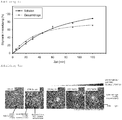
- Swelling causes shell disruption and additional washing with removal of hydrophilic impurities ( Figure 10 ) with enrichment of silymarin.
- step d. An extraction of the wet dishes in acetone (dipole moment: 10.0 ⁇ 10E-30 cm) or a solvent having a dipole moment of 8-12 ⁇ 10E-30 cm (for example acetic anhydride, acetonitrile, butanone). It is preferred that the extraction or washing is at least 3 hours and is carried out at temperatures of 20 to 30 degrees C, in particular 25 degrees C. Optionally, a vacuum can be applied.
- the supernatant obtained is separated off, if necessary concentrated, and dried.
- the supernatant obtained according to step d.) can optionally by means of a liquid phase extraction with heptane (dipole moment: 0.0 x 10E-30 Cm) or with a solvent with a dipole moment of 0.0 x 10E-30 Cm (eg hexane, heptane, cyclohexane , Carbon dioxide, carbon disulfide) or supercritical and subcritical gases, in particular carbon dioxide, are degreased again.
- This extraction can be carried out by means of one or more solvents.
- the degreasing can advantageously take place by means of supercritical and subcritical gases, in particular in the context of the so-called superfluids (SF) in an SF extraction, such as carbon dioxide and the like.
- SF extraction methods are well known and appreciated by those skilled in the art for plant extracts (Ernesto Reverchon and Iolanda De Marco (supra)).
- the supernatant obtained is separated off, if necessary concentrated, and dried.
- the invention likewise relates to a dry extract obtainable by the process according to the invention comprising a silymarin content of more than 65%, in particular more than 67.5%, in particular more than 70%, in particular more than 75%.
- the dry extract according to the invention has a yellowish to beige color and a max. Moisture of 5%, preferably 2-3%.
- process step c.) causes the color of the dry extract according to the invention is always lighter than if no step c) is carried out. This is due to the increased purity and accumulation of silymarin, especially white silylbin.
- Dry extracts according to step e. Can be prepared in the usual manner, extracted using a solvent or solvent mixture, for example by (mobile) maceration or percolation - which are included in the invention - and after separation of the extraction residue, the extract obtained is evaporated to dryness ,
- Conventional drying methods include fluidized bed drying or concentration to a thick or spissum extract followed by vacuum belt drying or tray drying of this spissum extract.
- Spissumex Extract viscous extract
- Addvants and / or additives such as Lactose, polyvinylpyrrolidone, sucrose, silica, etc. may be added.
- This moist, viscous mass is then brought in Horden cabinets or dryers to the desired dry extract preparation.
- the method according to the invention makes it possible to provide a new milk thistle extract from fruit peelings, whereby an increased content of silymarin is always obtained, which is based in particular on step c.).
- the inventive method certainly allows the maximum enrichment of silymarin over the prior art. This surprisingly leads to an improved release of silymarin, as dissolution tests in the examples show.
- the invention also relates to a milk thistle extract from fruit peel and a corresponding medicament or dietary supplement and its use or application for the prophylaxis and treatment of liver diseases, cancer and tumor diseases, liver and bile dysfunctions, in particular of toxic liver damage, especially as a result of fatty liver or alcohol abuse, hepatoses such as fungal intoxication, acute liver failure, hepatic necrosis, liver dystrophy, liver cirrhosis, liver fibrosis, hepatitis, liver enlargement and fatty liver, liver failure, hepatitis, especially hepatitis C, colon cancer, liver cancer, brain tumor.
- hepatoses such as fungal intoxication, acute liver failure, hepatic necrosis, liver dystrophy, liver cirrhosis, liver fibrosis, hepatitis, liver enlargement and fatty liver, liver failure, hepatitis, especially hepatitis C, colon cancer, liver cancer, brain tumor.
- the invention further relates to a pharmaceutical formulation comprising a milk thistle extract of fruit peels according to the invention.
- the milk thistle fruit peel extracts according to the invention can be used in the form of pharmaceutical preparations in Dosage units are prepared.
- the preparation is in the form of individual parts, for example tablets, dragees, capsules, pills, suppositories and ampoules, whose active substance content corresponds to a fraction or a multiple of a single dose.
- the dosage units may contain, for example, 1, 2, 3 or 4 single doses or 1/2, 1/3 or 1/4 of a single dose.
- a single dose preferably contains the amount of active ingredient which is administered in one application and which usually corresponds to a whole, a half, a third or a quarter of a daily dose.
- non-toxic, inert pharmaceutically acceptable excipients are meant solid, semi-solid or liquid diluents, fillers and formulation aids of any kind.
- Preferred pharmaceutical formulations are tablets, dragees, capsules, pills, granules, suppositories, solutions, juice, suspensions and emulsions.
- Tablets, dragees, capsules, pills and granules may contain the milk thistle fruit peel extract in addition to the usual excipients, such as a) fillers and extenders, for example starches, lactose, cane sugar, glucose, mannitol and silicic acid, b) binders, for example carboxymethylcellulose, alginates, gelatin, D) disintegrants, eg agar-agar, calcium carbonate and sodium carbonate, e) delay inhibitors, eg paraffin and f) absorption accelerators, eg quaternary ammonium compounds, g) wetting agents, eg cetyl alcohol, glycerol monostearate, h) adsorbents, eg kaolin and bentonite and i) lubricants
- the tablets, dragees, capsules, pills and granules may be provided with the usual coatings and sheaths optionally containing opacifying agents and may also be formulated so as to deliver the milk thistle-peel extract only or preferably delayed in a certain part of the intestinal tract, optionally as retarding masses e.g. Polymer substances and waxes can be used.
- the milk thistle fruit peel extract may optionally also be in microencapsulated form with one or more of the excipients listed above.
- Suppositories may contain, in addition to the milk thistle-peel extract, the usual water-soluble or water-insoluble carriers, e.g. Polyethylene glycols, fats, e.g. Cocoa fat and higher esters (e.g., C14 alcohol with C16 fatty acid) or mixtures of these substances.
- water-soluble or water-insoluble carriers e.g. Polyethylene glycols, fats, e.g. Cocoa fat and higher esters (e.g., C14 alcohol with C16 fatty acid) or mixtures of these substances.
- Solutions and emulsions may contain, besides the milk thistle fruit peel extract, the usual carriers such as solvents, solubilizers and emulsifiers, e.g. Water, ethyl alcohol, isopropyl alcohol, ethyl carbonate, ethyl acetate, benzyl alcohol, benzyl benzoate, propylene glycol, 1,3-butylene glycol, dimethylformamide, oils, especially cottonseed oil, peanut oil, corn oil, olive oil, castor oil and sesame oil, glycerol, glycerol formal, tetrahydrofurfuryl alcohol, polyethylene glycols and fatty acid esters of sorbitan or mixtures of these substances.
- solvents e.g. Water, ethyl alcohol, isopropyl alcohol, ethyl carbonate, ethyl acetate, benzyl alcohol, benzyl benzoate, propylene glycol, 1,3-but
- suspensions may contain the customary carriers such as liquid diluents, for example water, ethyl alcohol, Propylene glycol, suspending agents, for example ethoxylated isostearyl alcohols, polyoxyethylene sorbitol and sorbitan esters, microcrystalline cellulose, aluminum metahydroxide, bentonite, agar-agar and tragacanth or mixtures of these substances.
- the formulation forms mentioned can also contain colorants, preservatives and odor and taste-improving additives, for example peppermint oil and eucalyptus oil, and sweeteners, for example saccharin.
- the invention further relates to a dietetic preparation containing a physiologically effective dose of milk thistle extract of fruit peels according to the invention and a physiologically acceptable carrier.
- dietetic preparations are compositions which, in addition to the milk thistle extract of fruit peels according to the invention, comprise a foodstuff or foodstuff (see, for example, not conclusive EU Directive 2002/46 / EC of 10 June 2002), if appropriate containing Auxiliaries and additives.
- the milk thistle extract of fruit peels according to the invention is compared with a commercially available Finzelberg extract from whole fruits.
- Blade stirrer apparatus dissolution tester of Sotax AG AT, 7smart
- milk thistle extract from fruit peels causes a significant reduction in liver necrosis and a reduction in immigration to immune cells.
- the milk thistle extract from fruit bowls protects against carbon tetrachloride (CCl 4 ) -induced liver damage.
- the milk thistle extract from fruit peels shows a tendency to reduce the expression of the proinflammatory cytokines TNF and MCP-1.
- the milk thistle extract from fruit bowls prevents carbon tetrachloride (CCl 4 ) -induced inflammation.
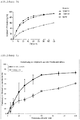
- the milk thistle extract from fruit bowls according to the invention shows a 2.9-fold increase in the AUC as compared to a milk thistle fruit extract, as well as a 3.4-fold increase in C max (see also US Pat Figure 6 ).
Landscapes
- Health & Medical Sciences (AREA)
- Natural Medicines & Medicinal Plants (AREA)
- Life Sciences & Earth Sciences (AREA)
- Engineering & Computer Science (AREA)
- Veterinary Medicine (AREA)
- Chemical & Material Sciences (AREA)
- Public Health (AREA)
- Medicinal Chemistry (AREA)
- General Health & Medical Sciences (AREA)
- Animal Behavior & Ethology (AREA)
- Pharmacology & Pharmacy (AREA)
- General Chemical & Material Sciences (AREA)
- Biotechnology (AREA)
- Nuclear Medicine, Radiotherapy & Molecular Imaging (AREA)
- Chemical Kinetics & Catalysis (AREA)
- Bioinformatics & Cheminformatics (AREA)
- Gastroenterology & Hepatology (AREA)
- Alternative & Traditional Medicine (AREA)
- Organic Chemistry (AREA)
- Botany (AREA)
- Medical Informatics (AREA)
- Microbiology (AREA)
- Mycology (AREA)
- Epidemiology (AREA)
- Medicines Containing Plant Substances (AREA)
- Medicinal Preparation (AREA)
Description
- Die vorliegende Erfindung betrifft ein Verfahren zur Herstellung eines Mariendistelextrakts aus Mariendistelfrüchteschalen und dessen Verwendung, insbesondere zur Therapie und Prophylaxe von Lebererkrankungen und Krebs-und Tumorerkrankungen.
- Die Mariendistel (Milk thistle, Silybum marianum oder Carduus marianus) ist eine besonders in Südwest- und Mitteleuropa verbreitete kultivierte Pflanze und in Eurasien, Nordamerika und Südamerika naturalisiert. Weitere Anbaugebiete befinden sich in China.
- Die Wirksamkeit der Droge zur Prophylaxe und Behandlung von verschiedenen Formen der Leber- und Gallendysfunktionen als auch von Krebs- und Tumorerkrankungen ist bekannt. Die Droge besteht aus den reifen, vom Pappus befreiten Früchten mit einem Mindestgehalt von 1,5 % Silymarin (Pharmacopoea Europaea (Ph. Eur. 6.0/1860), europäisches Arzneibuch 2007). Bereits aus dem Altertum sind Tinkturen (zumeist alkoholisch-wässrige Auszüge aus der Droge) aus Mariendistel bekannt. Insbesondere isoliertes Silymarin ist besonders bedeutend und geeignet (z.B.
DE 1 923 082 (Madaus )). Mariendistelextrakte sind gängige Arzneimittel und ebenfalls Bestandteil von Kombinationspräparaten, wie das Phytopharmakon Iberogast®. Die Anmelderin selbst vertreibt z.B. das Präparat Silimarit® auf der Basis eines standardisierten Mariendistelfrüchte-Trockenextraktes in Form von Weichkapseln. Der Hersteller Finzelberg GmbH & Co. KG stellt beispielsweise solche Mariendistelfrüchte-Trockenextrakte in unterschiedlichen Arzneiformen her. Ein bekanntes MariendistelfrüchteTrockenextrakt-Produkt ist z.B. Legalon forte®. - Silymarin ist ein Flavonolignan-Komplex bzw. Polyhydroxyphenylchromanonen und wurde erstmals aus der Pflanze in den 1960 -iger Jahren isoliert (Dissertation Janiak Bernhard, Juni 1960, FU-Berlin (
DE 2020407 ), Pelter A., Hänsel R., Tetrahedron Letters, 25, (1968)). - Silymarin besteht aus einem isobaren Gemisch von Flavonolignanen mit den Hauptbestandteilen Silybin A und B (Silibinin A und B), Isosilybin A und B (Isosilibinin A und B), Silydianin (Silidianin) und Silychristin (Silichristin). Bei diesen Flavonolignanen ist das Taxifolin (1) mit Coniferyl-Alkohol (1a) verknüpft, siehe
Abbildung 1 (Vgl. Kim, N.-C.; Graf, T. N.; Sparacino, C. M.; Wani, M. C.; Wall, M. E., Complete isolation and characterization of silybins and isosilybins from milk thistle (Silybum marianum). Organic & Biomolecular Chemistry 2003, 1, 1684-1689.; Smith, W. A.; Lauren, D. R.; Burgess, E. J.; Nigel, B. P.; Martin, R. J., A Silychristin Isomer and Variation of Falavonolignan Levels in Milk Thistle (Silybum marianum) Fruits Planta Medica 2005, 71, 877-880). - Weitere bekannte Nebenbestandteile sind 2,3-Dehydrosilybin, Desoxysilydianin (Silymonin), Silandrin, Silybinom, Silyhermin und Neosilyhermin.
- Im Stand der Technik werden zumeist die gesamten Früchte der Mariendistel zur Extraktherstellung verwendet.
- Bekannt ist zudem ein Mariendistelfrüchtetrockenextrakt (Extr. Cardui mariae fruct. Siccum), welcher u.a. mit dem Extraktionsmittel Ethylacetat aus der Pflanzendroge erhalten wird und nach der geltenden Ph. Eur. standardisiert ist (Monographie).
- Die deklarierten Anforderungen an einen Trockenextrakt belaufen sich auf einen Gehalt von vorzugsweise 30 - 65 Gew. % Silymarin (andere Gehaltsspannen sind möglich), wobei der Anteil an Silymarin folgendermaßen zusammengesetzt ist:
- 40-65 Gew.% (relativer Anteil am Gesamtsilymarin): Silybin A und B (Diastereomerengemisch, C25H22OH10 MG 482,4 (CAS 22888-70-6)) und
- 10-20 Gew.% (relativer Anteil am Gesamtsilymarin): Isosilybin A und B (Diastereomerengemisch , C25H22OH10 MG 482,4 (CAS 72581-71-6)) und
- 20-45 Gew.% (relativer Anteil am Gesamtsilymarin): Silydanin und Silychristin (C25H22OH10 MG 482,4).
- Diese Flavonolignane sind in Wasser unlöslich bis schwer löslich (Löslichkeit von reinem Silymarin beträgt bei pH 6,9 ca. 0,08 mg/ml) und zeigen eine geringe Bioverfügbarkeit.
- Zur Herstellung eines Extraktes wird das Rohmaterial (hier: Pflanzendroge) im Stand der Technik in hochaufwändiger Weise entfettet, extrahiert, filtriert, (auf)konzentriert und gereinigt.
- Üblicherweise wird nach kontinuierlicher Extraktion mit Ethylacetat / Ethanol / Aceton / Methanol (ggfs. wässrig) oder wässrigen Mischungen mit den vorher genannten Lösungsmitteln eine Filtration durchgeführt mit anschließender (Auf)Konzentration. Nachfolgend erfolgt zumeist eine Aufreinigung mit Ethanol und Hexan (weitere Entfettung), so dass der oben genannte Gehalt an Silymarin erhalten werden kann.
- Daher besteht die Aufgabe einen Mariendistelextrakt enthaltend Silymarin in einem verbesserten Verfahren bereit zu stellen. Insbesondere soll der native Charakter beibehalten werden.
- Überraschender Weise wurde gefunden, dass Silymarin in den Schalen der Mariendistelfrüchte hochangereichert ist, auch nach erster mechanischer Trennung der Schale vom Kern. Zwar beschäftigt sich
CN102219781 A mit der Herstellung eines Extraktes aus Früchteschalen, jedoch ohne Angabe einer geeigneten Extraktion und eines Solvens als auch ohne Produktspezifikation. - Im Rahmen der vorliegenden Erfindung wird unter "Silymarin" ein Stoffgemisch bezeichnet, welches (mindestens) die vier Substanzen Silybin, Silydianin, Silychristin und Isosilybin in unterschiedlichen Konzentrationen enthält. Dabei ist es unwesentlich, in welchen Verhältnissen diese Stoffe zueinander vorliegen und ob weitere Substanzen in dem Gemisch vorhanden sind. Diese Variation kann von der Herkunft und vom Geno- und Phänotyp der eingesetzten Mariendistel (Pflanzendroge) abhängen. Bevorzugt ist jedoch, dass diese Stoffe den Anforderungen des Ph. Eur. oder DAB in der jeweils geltenden Fassung erfüllen. Dies ist erfindungsgemäß der Fall.
- Das Silymarin muss durch geeignete Extraktionstechniken aus der Schale gewonnen werden. Durch die Einbettung des Silymarins in die holzige Matrix sind diese durch direkte Extraktion jedoch nur unzureichend zugänglich. Die vorliegende Erfindung stellt sich ebenfalls die Aufgabe dieses technische Problem zu lösen.
- Daher betrifft die Erfindung ein Verfahren zur Herstellung eines Mariendistelextraktes aus Mariendistelfrüchteschalen enthaltend Silymarin mittels Extraktion (nachstehend erfindungsgemäßes Verfahren).
- Der Begriff "(Mariendistel)Früchteschalen" ist mit dem Begriff "Samenschalen" vor- und nachstehend synonym zu lesen. Im Rahmen dieser Erfindung wird unter dem Begriff "(Mariendistel)Früchteschalen" die Schalen der Früchte als auch der Samen der Mariendistel, einschließlich der Achänen, verstanden, welche vom Kern befreit sind (Im Folgenden kurz: "Schale").
- Besonders vorteilhaft ist, dass der Gehalt von Silymarin am Gesamtmaterial der Schalen gegenüber den herkömmlichen Verfahren erhöht ist, da im Kern der Früchte bzw. Samen sehr wenig Silymarin enthalten ist. Zudem ist eine aufwändige Entfettung der Mariendistelfrüchteschalen wie z.B. bei einem herkömmlichen Mariendistelextrakt nicht erforderlich. Daher können mittels des erfindungsgemäßen Verfahrens höhere Raum-Zeit-Ausbeuten bzw. Extraktausbeuten erreicht werden. Zudem zeigen Vergleichsversuche, dass eine verbesserte Qualität und Reinheit der erhaltenen erfindungsgemäßen Mariendistelfrüchteschalenextrakte erreicht werden kann (siehe Beispiele und Abbildungen).
- Die Erfindung betrifft daher ein Verfahren zur Herstellung eines Mariendistelextrakts aus Früchteschalen, mit den folgenden Schritten
- a) Schälen der Früchte der Mariendistel, und Abtrennen der erhaltenen Schalen,
- b) Entfetten der Schalen aus a.), und
- c) Quellen der Schalen in Wasser,
- d) Extraktion der feuchten Schalen aus c.) in Aceton (Dipolmoment: 10,0 x 10E-30 Cm) oder einem Lösungsmittel mit einem Dipolmoment von 8 - 12 x 10E-30 Cm,
- e) Optionale Flüssigphasenextraktion des Überstandes aus d.) mit Heptan (Dipolmoment: 0,0 x 10E-30 Cm) oder mit einem Lösungsmittel oder Gas mit einem Dipolmoment von 0,0 x 10E-30 Cm,
- f) Trocknen der Überstände aus d.) und / oder e.).
- Das erfindungsgemäße Verfahren erlaubt die Herstellung eines Mariendistelextrakts aus Früchteschalen.
- Daher betrifft die Erfindung weiterhin einen Mariendistelextrakt, der aus Schalen der Mariendistelfrüchte gemäß dem erfindungsgemäßen Verfahren erhalten werden kann oder erhältlich ist, insbesondere ein Trockenextrakt.
- In weiteren bevorzugten Ausführungsformen umfasst die Erfindung die folgenden Schritte:
- Weiterhin ist bevorzugt, dass die Schalen gemäß Schritt a.) mechanisch zerkleinert werden, insbesondere können diese in Form eines Mehls oder Pulvers vorliegen. In einer weiteren bevorzugten Ausführungsform können die Schalen zum leichteren Aufschluss mit Enzymen vor- oder nachbehandelt werden, insbesondere solche wie Cellulasen (Enzymklasse 3.2.1.4) oder Glucosidasen (Enzymklasse 3.2.1.21).
- Desweiteren können die Mariendistelfrüchteschalen mit Säuren oder Laugen zum leichteren Aufschluss vor- oder nachbehandelt werden. Geeignete Säuren sind z.B. Mineralsäuren, wie Schwefelsäure oder Salzsäure. Geeignete Lauge ist z.B. Natronlauge.
- Weiterhin können die schalentragenden Mariendistelfrüchte zur besseren Schalung und Aufschluss erhitzt werden.
- Geeignete Lösungsmittel zum Entfetten der Schalen gemäß Schritt b.) sind insbesondere solche unpolaren Lösungsmittel mit einem Dipolmoment von 0,0 x 10E-30 Cm, wie Hexan, Heptan, Cyclohexan, Kohlendioxid, Kohlenstoffdisulfid, wobei Heptan und Kohlendioxid bevorzugt ist. Das anzuwendende Extraktionsverfahren oder Waschen ist dem Fachmann einschlägig bekannt und gängig. Bevorzugt ist, dass die Extraktion bzw. das Waschen mindestens eine Stunde beträgt und bei Temperaturen von 30 bis 80 Grad C, insbesondere 35 bis 70 Grad C durchgeführt wird. Fakultativ kann ein Vakuum angelegt werden.
- Weiterhin kann das Entfetten gemäß Schritt b.) vorteilhaft mittels über- und unterkritischen Gasen erfolgen, insbesondere im Rahmen der so genannten Superfluiden (SF) in einer SF-Extraktion, wie Kohlendioxid u.a. SF-Extraktionsverfahren sind für Pflanzenextrakte dem Fachmann einschlägig bekannt und gängig. So werden zum Beispiel ätherische Öle bei Temperaturen um 40°C und Drücken um 85 bar technisch aus Pflanzen(drogen)material gewonnen, wobei diese separat von Wachsen und fetten Ölen anfallen, die bei gleicher Temperatur erst ab Drücken über 280 bar extrahiert werden (siehe z.B.: Ernesto Reverchon und Iolanda De Marco: Supercritical fluid extraction and fractionation of natural matter (Review), Journal of Supercritical Fluids 38 (2006) 146 - 166). Vorteilhaft erfolgt ebenfalls eine Steigerung der Reinheit des Mariendistelextrakts aus Früchteschalen bei Entfettung der Schalen vorzugsweise mit Heptan oder superkritischem CO2 (Schritt b.)), wobei der Silymaringehalt erhöht ist (siehe
Abbildung 7 ). Die Reinheit des erhaltenen Mariendistelextrakts aus Früchteschalen gemäß dem erfindungsgemäßen Verfahren steigt um 35%, ausgewiesen am Silymaringehalt. - Nach dem Entfetten wird das entsprechende Lösungsmittel oder Gas von der Vorlage (Früchteschalen) entfernt.
- In einer weiteren bevorzugten Ausführungsform werden die entfetteten Schalen mit Wasser gemäß Schritt c.) behandelt, dies kann mittels Extraktion oder Waschen ggfs. unter Rühren erfolgen. Erfindungsgemäß erfolgt ein gewünschtes Aufquellen der Früchteschalen. Dies ist von besonderem Vorteil, da mittels Quellen im Folgeschritt das Silymarin besonders effizient aus den Früchteschalen gelöst werden kann. Die Behandlung der Schalen mit (Heiß-)Wasser unter Quellung in Schritt c.) beeinflusst eine nachfolgende Extraktion äußerst positiv. Die Ausbeute des erhaltenen Extrakts nach Extraktion steigt um 63% (siehe
Abbildung 8 ) berechnet nach der Ausgangsmenge der Droge. - Vorteilhaft erfolgt ebenfalls eine Steigerung der Reinheit des Mariendistelextrakts aus Früchteschalen bei Behandlung der Schalen mit (Heiß-)Wasser (= Quellung, Schritt c.)), wobei der Silymaringehalt signifikant immer erhöht ist (siehe
Abbildung 9 ). - Bevorzugt ist, dass die Extraktion bzw. das Waschen mindestens eine Stunde beträgt und bei Temperaturen von 50 bis 90 Grad C, insbesondere 70 Grad C durchgeführt wird. Fakultativ kann ein Vakuum angelegt werden.
- Das Aufquellen bewirkt ein Aufschließen der Schalen und zusätzliches Waschen unter Entzug von hydrophilen Verunreinigungen (
Abbildung 10 ) unter Anreicherung von Silymarin. - Nach dem Quellen wird das Wasser inkl. Verunreinigungen von der Vorlage (Früchteschalen) entfernt, wobei feuchte Früchteschalen zurückbleiben.
- Anschließend erfolgt gemäß Schritt d.) eine Extraktion der feuchten Schalen in Aceton (Dipolmoment: 10,0 x 10E-30 Cm) oder einem Lösungsmittel mit einem Dipolmoment von 8 - 12 x 10E-30 Cm (z.B. Essigsäureanhydrid, Acetonitril, Butanon). Bevorzugt ist, dass die Extraktion bzw. Waschen mindestens 3 Stunden beträgt und bei Temperaturen von 20 bis 30 Grad C, insbesondere 25 Grad C durchgeführt wird. Fakultativ kann ein Vakuum angelegt werden.
- Der erhaltene Überstand wird abgetrennt, ggfs. aufkonzentriert, und getrocknet.
- Der gemäß Schritt d.) erhaltene Überstand kann optional mittels einer Flüssigphasenextraktion mit Heptan (Dipolmoment: 0,0 x 10E-30 Cm) oder mit einem Lösungsmittel mit einem Dipolmoment von 0,0 x 10E-30 Cm (z.B. Hexan, Heptan, Cyclohexan, Kohlendioxid, Kohlenstoffdisulfid) oder über- und unterkritischen Gasen, insbesondere Kohlendioxid, erneut entfettet werden. Diese Extraktion kann mittels einem oder mehreren Lösungsmitteln erfolgen.
- Insbesondere kann das Entfetten vorteilhaft mittels über- und unterkritischen Gasen erfolgen, insbesondere im Rahmen der so genannten Superfluiden (SF) in einer SF-Extraktion, wie Kohlendioxid u.a. SF-Extraktionsverfahren sind für Pflanzenextrakte dem Fachmann einschlägig bekannt und gängig (Ernesto Reverchon und Iolanda De Marco (supra)).
- Nach dem Entfetten wird das entsprechende Lösungsmittel oder Gas von der vorgelegten Flüssigphase entfernt.
- Der erhaltene Überstand wird abgetrennt, ggfs. aufkonzentriert, und getrocknet.
- Daher betrifft die Erfindung ebenfalls einen Trockenextrakt erhältlich nach dem erfindungsgemäßen Verfahren enthaltend einen Silymaringehalt von mehr als 65%, insbesondere mehr als 67,5%, insbesondere mehr als 70%, insbesondere mehr als 75%.
- Der erfindungsgemäße Trockenextrakt weist eine gelbliche bis beige Farbe auf und eine max. Feuchtigkeit von 5%, vorzugsweise 2-3 %. Insbesondere der Verfahrensschritt c.) bewirkt, dass die Farbe des erfindungsgemäßen Trockenextrakts immer heller ist, als wenn kein Schritt c) erfolgt. Dies liegt an der erhöhten Reinheit und Anreicherung von Silymarin, insbesondere des weißen Silybins.
- Trockenextrakte gemäß Schritt e.) können in üblicher Weise hergestellt werden, wobei mit Hilfe eines Lösungsmittels oder Lösungsmittelgemisches extrahiert, beispielsweise mittels (Bewegungs-)Mazeration oder Perkolation - welche erfindungsgemäß mitumfasst sind - und nach Abtrennung des Extraktionsrückstandes, der erhaltene Extrakt zur Trockne eingeengt wird.
- Herkömmliche Trocknungsverfahren sind erfindungsgemäß ebenfalls umfasst und schließen die Wirbelschichttrocknung oder die Einengung zu einem Dick- oder Spissumextrakt und anschließende Vakuumbandtrocknung oder Hordentrocknung dieses Spissumextraktes ein.
- Ebenfalls können klassische Verfahren zur Herstellung von erfindungsgemäßen Trockenextrakten berücksichtigt werden; wobei nach anschließender Destillation der Lösungsmittel ein so genannter Spissumextrakt (zähflüssiger Extrakt) erhalten wird, dem häufig Hilfsstoffe und/oder Zusatzstoffe wie z.B. Lactose, Polyvinylpyrrolidon, Saccharose, Siliciumdioxid usw. zugesetzt werden. Diese feuchte, zähe Masse wird dann in Hordenschränken oder Trocknern zur gewünschten Trockenextraktzubereitung gebracht.
- Das erfindungsgemäße Verfahren erlaubt die Bereitstellung eines neuen Mariendistelextrakts aus Früchteschalen, wobei immer ein gesteigerter Gehalt an Silymarin erhalten wird, welches insbesondere auf Schritt c.) beruht. Das erfindungsgemäße Verfahren erlaubt sicher die maximale Anreicherung von Silymarin gegenüber dem Stand der Technik. Dies führt zudem in überraschender Weise zu einer verbesserten Freisetzung des Silymarins, wie Dissolutionstests in den Beispielen zeigen.
- Ferner betrifft die Erfindung ebenfalls einen Mariendistelextrakt aus Früchteschalen und ein entsprechendes Arzneimittel oder Nahrungsergänzungsmittel und dessen Verwendung oder Anwendung zur Prophylaxe und Behandlung von Lebererkrankungen, Krebs- und Tumorerkrankungen, Leber- und Gallendysfunktionen, insbesondere von toxischen Leberschäden, insbesondere infolge einer Fettleber oder Alkoholmissbrauch, Hepatosen wie Pilzvergiftungen, akutes Leberversagen, Lebernekrose, Leberdystrophie, Leberzirrhose, Leberfibrose, Leberentzündung, Lebervergrößerung und Leberverfettung, Leberinsuffizienz, Hepatitis, insbesondere Hepatitis C, Darmkrebs, Leberkrebs, Hirntumor.
- Ferner betrifft die Erfindung eine pharmazeutische Formulierung enthaltend einen erfindungsgemäßen Mariendistelextrakt aus Früchteschalen.
- Die erfindungsgemäßen Mariendistelfrüchteschalenextrakte können in Form von pharmazeutischen Zubereitungen in Dosierungseinheiten zubereitet werden. Dies bedeutet, dass die Zubereitung in Form einzelner Teile, z.B. Tabletten, Dragees, Kapseln, Pillen, Suppositorien und Ampullen vorliegen, deren Wirkstoffgehalt einem Bruchteil oder einem Vielfachen einer Einzeldosis entsprechen. Die Dosierungseinheiten können z.B. 1, 2, 3 oder 4 Einzeldosen oder 1/2, 1/3 oder 1/4 einer Einzeldosis enthalten. Eine Einzeldosis enthält vorzugsweise die Menge Wirkstoff, die bei einer Applikation verabreicht wird und die gewöhnlich einer ganzen, einer halben, einem Drittel oder einem Viertel einer Tagesdosis entspricht. Unter nicht-toxischen, inerten pharmazeutisch geeigneten Trägerstoffen sind feste, halbfeste oder flüssige Verdünnungsmittel, Füllstoffe und Formulierungshilfsmittel jeder Art zu verstehen.
- Als bevorzugte pharmazeutische Formulierungen seien Tabletten, Dragees, Kapseln, Pillen, Granulate, Suppositorien, Lösungen, Saft, Suspensionen und Emulsionen genannt. Tabletten, Dragees, Kapseln, Pillen und Granulate können den Mariendistelfrüchteschalenextrakt neben den üblichen Trägerstoffen enthalten, wie a) Füll- und Streckmittel, z.B. Stärken, Milchzucker, Rohrzucker, Glukose, Mannit und Kieselsäure, b) Bindemittel, z.B. Carboxymethylcellulose, Alginate, Gelatine, Polyvinylpyrrolidon, c) Feuchthaltemittel, z.B. Glycerin, d) Sprengmittel, z.B. Agar-Agar, Calciumcarbonat und Natriumcarbonat, e) Lösungsverzögerer, z.B. Paraffin und f) Resorptionsbeschleuniger, z.B. quartäre Ammoniumverbindungen, g) Netzmittel, z.B. Cetylalkohol, Glycerinmonostearat, h) Adsorptionsmittel, z.B. Kaolin und Bentonit und i) Gleitmittel, z.B. Talkum, Calcium- und Magnesiumstearat und feste Polyethylenglykole oder Gemische der unter a) bis i) aufgeführten Stoffe.
- Die Tabletten, Dragees, Kapseln, Pillen und Granulate können mit den üblichen, gegebenenfalls Opakisierungsmittel enthaltenden Überzügen und Hüllen versehen sein und auch so zusammengesetzt sein, daß sie den Mariendistelfrüchteschalenextrakt nur oder bevorzugt in einem bestimmten Teil des Intestinaltraktes gegebenenfalls verzögert abgeben, wobei als Einbettungsmassen z.B. Polymersubstanzen und Wachse verwendet werden können.
- Der Mariendistelfrüchteschalenextrakt kann gegebenenfalls mit einem oder mehreren der oben angegebenen Trägerstoffe auch in mikroverkapselter Form vorliegen.
- Suppositorien können neben dem Mariendistelfrüchteschalenextrakt die üblichen wasserlöslichen oder wasserunlöslichen Trägerstoffe enthalten, z.B. Polyethylenglykole, Fette, z.B. Kakaofett und höhere Ester (z.B. C14-Alkohol mit C16-Fettsäure) oder Gemische dieser Stoffe.
- Lösungen und Emulsionen können neben dem Mariendistelfrüchteschalenextrakt die üblichen Trägerstoffe wie Lösungsmittel, Lösungsvermittler und Emulgatoren, z.B. Wasser, Ethylalkohol, Isopropylalkohol, Ethylcarbonat, Ethylacetat, Benzylalkohol, Benzylbenzoat, Propylenglykol, 1,3- Butylenglykol, Dimethylformamid, Öle, insbesondere Baumwollsaatöl, Erdnußöl, Maiskeimöl, Olivenöl, Ricinusöl und Sesamöl, Glycerin, Glycerinformal, Tetrahydrofurfurylalkohol, Polyethylenglykole und Fettsäureester des Sorbitans oder Gemische dieser Stoffe enthalten.
- Suspensionen können neben dem Mariendistelfrüchteschalenextrakt die üblichen Trägerstoffe wie flüssige Verdünnungsmittel, z.B. Wasser, Ethylalkohol, Propylenglykol, Suspendiermittel, z.B. ethoxylierte Isostearylalkohole, Polyoxyethylensorbit- und Sorbitan-Ester, mikrokristalline Cellulose, Aluminiummetahydroxid, Bentonit, Agar-Agar und Tragant oder Gemische dieser Stoffe enthalten. Die genannten Formulierungsformen können auch Färbemittel, Konservierungsstoffe sowie geruchs- und geschmacksverbessernde Zusätze, z.B. Pfefferminzöl und Eukalyptusöl und Süßmittel, z.B. Saccharin, enthalten.
- Die Erfindung betrifft des Weiteren eine diätetische Zubereitung enthaltend eine physiologisch wirksame Dosis an erfindungsgemäßem Mariendistelextrakt aus Früchteschalen sowie einen physiologisch verträglichen Träger. Bei diätetischen Zubereitungen im Sinne der vorliegenden Erfindung handelt es sich um Zusammensetzungen, welche neben dem erfindungsgemäßen Mariendistelextrakt aus Früchteschalen ein Nahrungs- oder Lebensmittel (siehe z.B. nicht abschließend EU-Richtlinie 2002/46/EG vom 10. Juni 2002) umfassen, ggfs. enthaltend Hilfs- und Zusatzstoffe.
- Diese Beispiele dienen ausschließlich zur Erläuterung der Erfindung, ohne die Erfindung auf diese Beispiele zu beschränken.
- Die Extraktion von Silybi mariani fructus nach Arzneibuch (Ph. Eur. 6.0/1860) ergibt einen deutlich gelb-gefärbten Extrakt, der die gleichen Hauptkomponenten wie der kommerziell erhältliche Mariendistelfrüchtetrockenextrakt enthält. Lediglich im vorderen Bereich des Chromatogramms sind neue Signale bei 22,5; 33,8 und 35,7 min sowie zahlreiche Minorkomponenten zwischen 0 und 20 min zu erkennen.
- 5,35 g Früchte wurden mechanisch gespalten und die Schalen von den Kernen getrennt. Dabei ergab sich ein recht ausgewogenes Verhältnis von 2,59 g Schalen (48 %) zu 2,76 g Kernen (52 %). Es wurden größere Mengen der jeweiligen Fraktionen bereitgestellt.
- Es konnten aus 1 kg Mariendistelfrüchten 281 g Schalen und 341 g Kerne erhalten werden. Der Rest des Materials teilt sich in vier Mischfraktionen auf, die nicht weiter aufgereinigt werden können (5 g Leichtgut, 10 g Leichtkorn, 105 g Mischfraktion (ganz) und 255 g Mischfraktion (Mehl)).
- Für eine Bewertung des Inhaltsstoffprofils der Schalen und Kerne der Mariendistelfrüchte wurden die Proben pulverisiert und gemäß Arzneibuch (Ph. Eur. 6.0/1860) aufgearbeitet und nach Trocknen in 75 % Methanol aufgenommen wurde. In
Abbildung 2 sind die erhaltenen HPLC-Chromatogramme dargestellt. - Erwartungsgemäß zeigt der Extrakt aus der Gesamtdroge (
Abbildung 2A ) ein Inhaltsstoffspektrum, dass der Summe der Extrakte aus Schalen (2B) und Kernen (2C) entspricht. Bemerkenswert ist hierbei jedoch, dass die Zusammensetzung von Schalen und Kernen grundsätzlich verschieden ist und nur in den Schalen Silymarin gefunden werden kann. - Der erfindungsgemäße Mariendistelextrakt aus Früchteschalen wird mit einem kommerziell erhältlichen Finzelberg-Extrakt aus gesamten Früchten verglichen.
-
- Dissolutionmedium: Pufferlösung pH 7,5 (0,02 M) R mit Zusatz von 5,0 % (m/V) Polysorbat 80 (Tween)
- Mediumtemperatur: 37 Grad C
- Umdrehungen pro Minute: 120
- Probenentnahme: 15 ml (automatsch), solvent addition mit Entnahmezeitpunkte 0, 10, 20, 30, 45, 60, 90 und 120 Minuten
- Feststoffabtrennung: automatische Filtration mit Filter GF/D, Fa. Whatman
-
Mat.-/EE-Nr. Ch.-Bez. Bezeichnung Lieferant EE 0481 730279-3 Cardui mariae Bionorica-TE EE 0481 730280-2 Cardui mariae Bionorica-TE 2047301 063716 Cardui mariae fruct. sicc. Finzelberg - Die Ergebnisse sind in
Abbildung 3A dargelegt. Die Mariendistelextrakte aus Früchteschalen 730279-3 und 730280-2 verhalten sich gegenüber dem eingesetzten Finzelberg Mariendistelextrakt aus Gesamtfrüchten 063716 in der Freisetzung (Dissolution) überlegen. - Ein weiterer entsprechender Dissolutionstest ist in
Abbildung 3B ausgewiesen, wobei ein Mariendistelextrakt aus Früchteschalen gegenüber einem eingesetzten Mariendistelextrakt aus Gesamtfrüchten ("Komparator") (jeweils 3 Prüflinge) zum Endzeitpunkt (120 min.) eine um 22% (absolut), beziehungsweise 36% (relativ) gesteigerte Freisetzung von Silymarin aus einem Trockenextrakt zeigt. - Mariendisteltrockenextrakte aus Schalen weisen 3-4 % höhere Silymaringehalte als Extrakte aus Gesamtfrüchten auf. Die Extrakte aus den Kernen (geschälte Früchte) sind frei von Silymarin (Spuren aus den anhaftenden Schalenresten nachweisbar). Die Ergebnisse sind in
Abbildung 4 dargestellt. - Aus den Freisetzungsexperimenten gemäß
Abbildung 4 geht hervor, dass der Mariendisteltrockenextrakt aus Schalen eine bessere Freisetzung von Silymarin aufweist. -
- Prüfmuster: Ch.Bez.:730332
-
- Spezies: Sprague Dawley CD® Ratten, Männchen
- Dosierungen: 3 (20, 100, 500 mg/kg per os); Gabe 3h vor der CCl4-Behandlung
- Anzahl: N=22, (4 Tiere Vehikel Kontrolle, 6 CCl4-Kontrolltiere, je 4 Tiere in der Behandlungsgruppe)
- Zeitpunkt der Organentnahme: 24 h
-
- Parameter: Gewebeschädigung
- Methode: Histologie
- Parameter: Expression von Entzündungsmediatoren
- Methode: quantitative PCR
- Der Effekt von Mariendistelextrakt aus Früchteschalen auf CCl4-induzierten Leberschaden (in vivo) ist in
Abbildung 5a dargestellt. - Die Behandlung mit dem Mariendistelextrakt aus Früchteschalen bewirkt eine deutliche Verringerung der Lebernekrosen und eine Reduktion der Einwanderung an Immunzellen. Folglich schützt der Mariendistelextrakt aus Früchteschalen vor Tetrachlorkohlenstoff (CCl4)-induziertem Leberschaden.
- Die Ergebnisse sind in
Abbildung 5b dargestellt. - Der Mariendistelextrakt aus Früchteschalen zeigt eine tendenzielle Reduktion der Expression der proinflammatorischen Zytokine TNF und MCP-1.
- Der Mariendistelextrakt aus Früchteschalen beugt der Tetrachlorkohlenstoff (CCl4)-induzierten Entzündung vor.
-
- Bionorica SE: Ch.Bez.:730332 (+6% SiO2) (erfindungsgemäßer Mariendistelextrakt aus Früchteschalen),
- Handelspräparat Legalon forte®: Ch.Bez.: B1201886 (+ ≈ 49% Hilfsstoffe) (Mariendistelfrüchteextrakt).
-
- Spezies: CD® Ratten m/w (1:1),
- Dosierung: einmalig per os 500 mg/kg bezogen auf den
- jeweiligen Extrakt,
- Anzahl: N=90, d.h. 6 Werte pro Blutabnahmezeitpunkt,
- Abnahmezeitraum: 0- 12 h.
-
- Methode: HPLC-MS/MS (validiert),
- Matrix: Plasma Ratte,
- Bioanalyt: Silybin, Isosilybin (Silymarin),
- LLOQ (untere Quantifizierungsgrenze): 12.5 ng/mL.
- Die Ergebnisse sind in
Abbildung 6 dargestellt und Gegenstand nachstehender Tabelle 5.1.*geometrischer Mittelwert **Median PK-Parameter Silymarin Dosis mg/kg AUC* [h*ng/mL] Cmax* [ng/mL] tmax** [h] Ch.Bez.: 730332 (+6% SiO2) 500 3099 1876 1.00 Ch.Bez.: B1201886 (+ ≈ 49% Hilfsstoffe) 500 1081 553 1.00 - Der erfindungsgemäße Mariendistelextrakt aus Früchteschalen zeigt gegenüber einem Mariendistelfrüchteextrakt eine 2,9 fache Erhöhung des AUC als auch eine 3,4 fache Erhöhung von Cmax (siehe auch
Abbildung 6 ). -
-
Abbildung 1 zeigt die wesentlichen Flavonolignane. -
Abbildung 2 zeigt HPLC-UV Chrommatogramme (λ0288 nm) von Silybi mariani fructus (Extraktion nach Ph. Eur. 6.0/1860); pulverisiert Früchte (A), pulverisierte Schalen (B), pulverisierte Kerne (C) mit Zuweisung für Taxifolin (1), Silychristin (2), Silydianin (3), Silybin A (4), Silybin B (5), Isosilybin A (6), Isosilybin B (7). - Abbildungen 3A und 3B zeigen jeweils einen Dissolution-Test gemäß Beispiel 2.
-
Abbildung 4 zeigt Dissolutionexperimente von nativen Trockenextrakten aus Silybum marianum (aus Schalen durchgezogene Linie, aus Gesamtdroge gepunktete Linie), Mittelwertkurven aus je 3 Bestimmungen. -
Abbildung 5A zeigt den Effekt von Mariendistelextrakt aus Früchteschalen auf CCl4-induzierten Leberschaden (in vivo). -
Abbildung 5B zeigt den Effekt von Mariendistelextrakt aus Früchteschalen auf die Expression von inflammatorischen Zytokinen in der Leber im Modell des CCl4-induzierten Leberschadens (in vivo). -
Abbildung 6 zeigt Vergleichsversuche zur Silymarin Konzentration im Plasma von CD Mäusen zwischen dem erfindungsgemäßen Mariendistelextrakt aus Früchteschalen mit handelsüblichem Legalon forte® (Mariendistelfrüchteextrakt). -
Abbildung 7 : Steigerung der Reinheit des Mariendistelextrakts aus Früchteschalen bei Behandlung der Schalen mit oder ohne Entfettung, vorzugsweise Heptan oder superkritischem CO2 (Schritt b.)) ausgewiesen am Silymaringehalt. -
Abbildung 8 : Vergleich der Extraktausbeuten mit und ohne Behandlung der Schalen mit (Heiß-)Wasser (= Quellung, Schritt c.)), berechnet nach der Ausgangsmenge der Droge. -
Abbildung 9 : Steigerung der Reinheit des Extrakts bei Behandlung der Schalen mit (Heiß-)Wasser (= Quellung, Schritt c.)) ausgewiesen am Silymaringehalt. -
Abbildung 10 zeigt den Entzug von hydrophilen Verunreinigungen / Substanzen aus den Schalen beim Quellen (oben, Waschwasser der Quellung) und unten, dem erhaltenen erfindungsgemäßen Trockenextrakt (Silybin a und B sind deutlich sichtbar). Dies beweist die hohe Reinheit und wie effizient diese hydrophilen Verunreinigungen durch den Schritt c) entfernt werden.
Claims (11)
- Verfahren zur Herstellung eines Mariendistelextrakts aus Früchteschalen, mit den folgenden Schritten:a.) Schälen der Früchte der Mariendistel, und Abtrennen der erhaltenen Schalen,b.) Entfetten der Schalen aus a.), undc.) Quellen der Schalen in Wasser,d.) Extraktion der feuchten Schalen aus c.) in Aceton (Dipolmoment: 10,0 x 10E-30 Cm) oder einem Lösungsmittel mit einem Dipolmoment von 8 - 12 x 10E-30 Cm,e.) Trocknen des Überstandes.
- Verfahren zur Herstellung eines Mariendistelextrakts aus Früchteschalen nach Anspruch 1, wobei eine Flüssigphasenextraktion des Überstandes aus d.) mit Heptan (Dipolmoment: 0,0 x 10E-30 Cm) oder mit einem Lösungsmittel mit einem Dipolmoment von 0,0 x 10E-30 Cm oder über- und unterkritischen Gasen, insbesondere Kohlendioxid, und anschließend gemäß e.) ein Trocknen des Überstandes erfolgt.
- Verfahren zur Herstellung eines Mariendistelextrakts aus Früchteschalen nach einem der vorstehenden Ansprüche, dadurch gekennzeichnet, dass in Schritt a.) die Schalen wahlweise i.) erhitzt und/oder ii.) mit einem Enzym behandelt und/oder iii.) mit Säure oder Lauge behandelt werden.
- Verfahren zur Herstellung eines Mariendistelextrakts aus Früchteschalen nach einem der vorstehenden Ansprüche, wobei ein Entfetten der Früchteschalen gemäß Schritt b.) mittels Extraktion oder Waschen mit einem oder mehreren Lösungsmitteln, insbesondere Heptan (Dipolmoment: 0,0 x 10E-30 Cm) oder mit einem Lösungsmittel mit einem Dipolmoment von 0,0 x 10E-30 Cm, oder über- und unterkritischen Gasen, insbesondere Kohlendioxid, erfolgt.
- Mariendistelextrakt aus Früchteschalen erhältlich nach einem Verfahren nach einem der Ansprüche 1 bis 4, insbesondere ein Trockenextrakt davon.
- Trockenextrakt erhältlich aus einem Mariendistelextrakt aus Früchteschalen nach Anspruch 5, enthaltend einen Silymaringehalt von mehr als 65 %, insbesondere mehr als 67,5 %, insbesondere mehr als 70 %, insbesondere mehr als 75 %.
- Trockenextrakt erhältlich aus einem Mariendistelextrakt aus Früchteschalen nach Anspruch 5, wobei die Feuchtigkeit max. 5 % beträgt.
- Arzneimittel oder Nahrungsergänzungsmittel enthaltend einen Mariendistelextrakt aus Früchteschalen nach einem der Ansprüche 5 bis 7.
- Arzneimittel oder Nahrungsergänzungsmittel enthaltend einen Mariendistelextrakt aus Früchteschalen nach einem der Ansprüche 5 bis 7 zur Verwendung in der Prophylaxe und/oder Behandlung von Leber- und Gallendysfunktionen, insbesondere von toxischen Leberschäden, Hepatosen wie Pilzvergiftungen, akutes Leberversagen, Lebernekrose, Leberdystrophie, Leberzirrhose, Leberfibrose, Leberentzündung, Lebervergrößerung und Leberverfettung, Leberinsuffizienz, Hepatitis, insbesondere Hepatitis C.
- Arzneimittel oder Nahrungsergänzungsmittel enthaltend einen Mariendistelextrakt aus Früchteschalen nach einem der Ansprüche 5 bis 7 zur Verwendung in der Prophylaxe und/oder Behandlung von Krebs- und Tumorerkrankungen, insbesondere Darmkrebs, Leberkrebs, Hirntumor.
- Pharmazeutische oder diätetische Zubereitung enthaltend einen Mariendistelextrakt nach einem der Ansprüche 5 bis 7, ggfs. Hilfs- und Zusatzstoffe.
Applications Claiming Priority (2)
| Application Number | Priority Date | Filing Date | Title |
|---|---|---|---|
| EP14174384.9A EP2959910A1 (de) | 2014-06-26 | 2014-06-26 | Mariendistelextrakt aus Mariendistelfrüchteschalen, Verfahren zur Herstellung und Verwendung |
| PCT/EP2015/064600 WO2015197854A1 (de) | 2014-06-26 | 2015-06-26 | Mariendistelextrakt aus mariendistelfrüchteschalen, verfahren zur herstellung und verwendung |
Publications (2)
| Publication Number | Publication Date |
|---|---|
| EP3160483A1 EP3160483A1 (de) | 2017-05-03 |
| EP3160483B1 true EP3160483B1 (de) | 2018-02-28 |
Family
ID=50981264
Family Applications (2)
| Application Number | Title | Priority Date | Filing Date |
|---|---|---|---|
| EP14174384.9A Withdrawn EP2959910A1 (de) | 2014-06-26 | 2014-06-26 | Mariendistelextrakt aus Mariendistelfrüchteschalen, Verfahren zur Herstellung und Verwendung |
| EP15741130.7A Not-in-force EP3160483B1 (de) | 2014-06-26 | 2015-06-26 | Mariendistelextrakt aus mariendistelfrüchteschalen, verfahren zur herstellung und verwendung |
Family Applications Before (1)
| Application Number | Title | Priority Date | Filing Date |
|---|---|---|---|
| EP14174384.9A Withdrawn EP2959910A1 (de) | 2014-06-26 | 2014-06-26 | Mariendistelextrakt aus Mariendistelfrüchteschalen, Verfahren zur Herstellung und Verwendung |
Country Status (3)
| Country | Link |
|---|---|
| EP (2) | EP2959910A1 (de) |
| EA (1) | EA201692538A1 (de) |
| WO (1) | WO2015197854A1 (de) |
Families Citing this family (1)
| Publication number | Priority date | Publication date | Assignee | Title |
|---|---|---|---|---|
| KR102568412B1 (ko) * | 2022-05-18 | 2023-08-18 | 한국자연한방 주식회사 | 실리마린 생체이용률이 증대된 밀크씨슬 추출물 제조방법 |
Family Cites Families (8)
| Publication number | Priority date | Publication date | Assignee | Title |
|---|---|---|---|---|
| DE1923082C3 (de) | 1969-05-06 | 1985-08-22 | Dr. Madaus & Co, 5000 Koeln | Verfahren zur Gewinnung von Polyhydroxyphenylchromanonen (Silymarin I-IV) und Arzneimittel enthaltend das Polyhydroxyphenylchromanon (Silymarin I-IV = Silymarin I-IV-Gruppe)Gemisch |
| DE2020407A1 (de) | 1970-04-27 | 1971-11-11 | Bernhard Dr Janiak | Technisches Verfahren zur Isolierung von Silimarin |
| RU2038091C1 (ru) * | 1990-01-22 | 1995-06-27 | Харьковская фармацевтическая фирма "Здоровье" | Способ получения суммы полиоксифенилхроманонов |
| CZ305673B6 (cs) * | 2007-08-02 | 2016-02-03 | Irel, Spol. S R. O. | Mechanicky upravený plod ostropestřce mariánského a způsob jeho úpravy |
| CN102079745B (zh) * | 2009-12-01 | 2013-09-11 | 白心亮 | 一种水飞蓟素的生产方法 |
| CN102174041B (zh) * | 2011-03-24 | 2016-06-29 | 江苏中兴药业有限公司 | 一种水飞蓟宾及其制备方法 |
| CN102219781A (zh) | 2011-04-29 | 2011-10-19 | 邸凤阁 | 在水飞蓟种皮中提取水飞蓟素的方法 |
| CN103408539B (zh) * | 2013-08-28 | 2016-04-06 | 天津泰阳制药有限公司 | 高纯度水飞蓟宾的生产方法 |
-
2014
- 2014-06-26 EP EP14174384.9A patent/EP2959910A1/de not_active Withdrawn
-
2015
- 2015-06-26 EP EP15741130.7A patent/EP3160483B1/de not_active Not-in-force
- 2015-06-26 WO PCT/EP2015/064600 patent/WO2015197854A1/de not_active Ceased
- 2015-06-26 EA EA201692538A patent/EA201692538A1/ru unknown
Also Published As
| Publication number | Publication date |
|---|---|
| WO2015197854A1 (de) | 2015-12-30 |
| EP2959910A1 (de) | 2015-12-30 |
| EA201692538A1 (ru) | 2017-05-31 |
| EP3160483A1 (de) | 2017-05-03 |
Similar Documents
| Publication | Publication Date | Title |
|---|---|---|
| Desai et al. | Charantin: An important lead compound from Momordica charantia for the treatment of diabetes | |
| Diallo et al. | An ethnobotanical survey of herbal drugs of Gourma district, Mali | |
| EP2222320B1 (de) | Neuer mariendistelextrakt, verfahren zur herstellung und verwendung | |
| Sarker et al. | Analgesic and anti-inflammatory activities of flower extracts of Punica granatum Linn.(Punicaceae) | |
| US10251927B2 (en) | Process to enhance the bioactivity of Ashwagandha extracts | |
| US20130046082A1 (en) | Polar organic extract of eurycoma longifolia | |
| CN111117773B (zh) | 一种从蒜头果油中分离神经酸的方法及应用 | |
| CA2886887C (en) | Novel extracts of cynara scolymus, coffea spp. and olea europaea for the treatment of metabolic syndrome | |
| Adanlawo | Tissue lipid profile of rats administered saponin extract from the root of bitter kola | |
| Iwuji et al. | Comparative effects of solvents on the herbal extraction of antidiabetic phytochemicals | |
| EP2959910A1 (de) | Mariendistelextrakt aus Mariendistelfrüchteschalen, Verfahren zur Herstellung und Verwendung | |
| WO2013007807A1 (de) | Ausgewählte cimicifuga-fraktionen zur behandlung von osteoporose | |
| Seba et al. | Umbelliferous fruits-a brief review on Chemical constituents and Pharmacological Action | |
| EP2793917B1 (de) | Extrakt aus rhus copallina zur verwendung als arzneimittel | |
| Chattopadhyay et al. | Preliminary phytochemical screening and in vitro evaluation of anthelmintic activity of leaves and stem bark of Mangifera Indica L.(Anacardiaceae) | |
| Jiwantare et al. | Studies on the histological changes in testes and analysis of serum hormonal level of Aloe vera treatd male albino rat, Rattus norvegicus | |
| WO2005070441A1 (de) | Zwiebelextrakte | |
| JP7592939B2 (ja) | 抗アレルギー用組成物 | |
| Rani et al. | Pharmacognostic and Phytopharmaceutical Studies of Aloscasia Fornicata and its Anti-Diarrheal Effect on Castor Oil Induced Diarrhea in Rats | |
| US20230233642A1 (en) | Process to enhance the bioactivity of ashwagandha extracts | |
| Rajwar et al. | Diabetic effects of polyherbal formulation of Lawsonia inermis and Azadirachta indica | |
| Aminabee et al. | Antidiabetic activity of ethanolic extract of Michelia nilagirica in wistar albino rats | |
| KR100703596B1 (ko) | 연수추출물 또는 그로부터 분리한캠프페롤-3-글루쿠로나이드를 함유하는 고지혈증의 예방 및치료용 조성물 | |
| Rathod et al. | NELUMBO NUCIFERA: A PLANT WITH MULTIPLE PHARMACOLOGICAL ACTIVITIES | |
| Lalsare et al. | Anti-inflammatory and anthihyperlipidemic activity of various extract of fruits Withania coagulance |
Legal Events
| Date | Code | Title | Description |
|---|---|---|---|
| STAA | Information on the status of an ep patent application or granted ep patent |
Free format text: STATUS: THE INTERNATIONAL PUBLICATION HAS BEEN MADE |
|
| PUAI | Public reference made under article 153(3) epc to a published international application that has entered the european phase |
Free format text: ORIGINAL CODE: 0009012 |
|
| STAA | Information on the status of an ep patent application or granted ep patent |
Free format text: STATUS: REQUEST FOR EXAMINATION WAS MADE |
|
| 17P | Request for examination filed |
Effective date: 20170126 |
|
| AK | Designated contracting states |
Kind code of ref document: A1 Designated state(s): AL AT BE BG CH CY CZ DE DK EE ES FI FR GB GR HR HU IE IS IT LI LT LU LV MC MK MT NL NO PL PT RO RS SE SI SK SM TR |
|
| AX | Request for extension of the european patent |
Extension state: BA ME |
|
| RIN1 | Information on inventor provided before grant (corrected) |
Inventor name: INTELMANN, DANIEL Inventor name: KARLSEDER, ALBAN |
|
| DAV | Request for validation of the european patent (deleted) | ||
| DAX | Request for extension of the european patent (deleted) | ||
| GRAP | Despatch of communication of intention to grant a patent |
Free format text: ORIGINAL CODE: EPIDOSNIGR1 |
|
| STAA | Information on the status of an ep patent application or granted ep patent |
Free format text: STATUS: GRANT OF PATENT IS INTENDED |
|
| INTG | Intention to grant announced |
Effective date: 20171120 |
|
| GRAS | Grant fee paid |
Free format text: ORIGINAL CODE: EPIDOSNIGR3 |
|
| GRAA | (expected) grant |
Free format text: ORIGINAL CODE: 0009210 |
|
| STAA | Information on the status of an ep patent application or granted ep patent |
Free format text: STATUS: THE PATENT HAS BEEN GRANTED |
|
| AK | Designated contracting states |
Kind code of ref document: B1 Designated state(s): AL AT BE BG CH CY CZ DE DK EE ES FI FR GB GR HR HU IE IS IT LI LT LU LV MC MK MT NL NO PL PT RO RS SE SI SK SM TR |
|
| REG | Reference to a national code |
Ref country code: GB Ref legal event code: FG4D Free format text: NOT ENGLISH Ref country code: CH Ref legal event code: EP |
|
| REG | Reference to a national code |
Ref country code: AT Ref legal event code: REF Ref document number: 973398 Country of ref document: AT Kind code of ref document: T Effective date: 20180315 |
|
| REG | Reference to a national code |
Ref country code: IE Ref legal event code: FG4D Free format text: LANGUAGE OF EP DOCUMENT: GERMAN |
|
| REG | Reference to a national code |
Ref country code: DE Ref legal event code: R096 Ref document number: 502015003256 Country of ref document: DE |
|
| REG | Reference to a national code |
Ref country code: NL Ref legal event code: MP Effective date: 20180228 |
|
| REG | Reference to a national code |
Ref country code: LT Ref legal event code: MG4D |
|
| PG25 | Lapsed in a contracting state [announced via postgrant information from national office to epo] |
Ref country code: ES Free format text: LAPSE BECAUSE OF FAILURE TO SUBMIT A TRANSLATION OF THE DESCRIPTION OR TO PAY THE FEE WITHIN THE PRESCRIBED TIME-LIMIT Effective date: 20180228 Ref country code: NO Free format text: LAPSE BECAUSE OF FAILURE TO SUBMIT A TRANSLATION OF THE DESCRIPTION OR TO PAY THE FEE WITHIN THE PRESCRIBED TIME-LIMIT Effective date: 20180528 Ref country code: HR Free format text: LAPSE BECAUSE OF FAILURE TO SUBMIT A TRANSLATION OF THE DESCRIPTION OR TO PAY THE FEE WITHIN THE PRESCRIBED TIME-LIMIT Effective date: 20180228 Ref country code: NL Free format text: LAPSE BECAUSE OF FAILURE TO SUBMIT A TRANSLATION OF THE DESCRIPTION OR TO PAY THE FEE WITHIN THE PRESCRIBED TIME-LIMIT Effective date: 20180228 Ref country code: LT Free format text: LAPSE BECAUSE OF FAILURE TO SUBMIT A TRANSLATION OF THE DESCRIPTION OR TO PAY THE FEE WITHIN THE PRESCRIBED TIME-LIMIT Effective date: 20180228 Ref country code: FI Free format text: LAPSE BECAUSE OF FAILURE TO SUBMIT A TRANSLATION OF THE DESCRIPTION OR TO PAY THE FEE WITHIN THE PRESCRIBED TIME-LIMIT Effective date: 20180228 Ref country code: CY Free format text: LAPSE BECAUSE OF FAILURE TO SUBMIT A TRANSLATION OF THE DESCRIPTION OR TO PAY THE FEE WITHIN THE PRESCRIBED TIME-LIMIT Effective date: 20180228 |
|
| PG25 | Lapsed in a contracting state [announced via postgrant information from national office to epo] |
Ref country code: BG Free format text: LAPSE BECAUSE OF FAILURE TO SUBMIT A TRANSLATION OF THE DESCRIPTION OR TO PAY THE FEE WITHIN THE PRESCRIBED TIME-LIMIT Effective date: 20180528 Ref country code: GR Free format text: LAPSE BECAUSE OF FAILURE TO SUBMIT A TRANSLATION OF THE DESCRIPTION OR TO PAY THE FEE WITHIN THE PRESCRIBED TIME-LIMIT Effective date: 20180529 Ref country code: LV Free format text: LAPSE BECAUSE OF FAILURE TO SUBMIT A TRANSLATION OF THE DESCRIPTION OR TO PAY THE FEE WITHIN THE PRESCRIBED TIME-LIMIT Effective date: 20180228 Ref country code: SE Free format text: LAPSE BECAUSE OF FAILURE TO SUBMIT A TRANSLATION OF THE DESCRIPTION OR TO PAY THE FEE WITHIN THE PRESCRIBED TIME-LIMIT Effective date: 20180228 Ref country code: RS Free format text: LAPSE BECAUSE OF FAILURE TO SUBMIT A TRANSLATION OF THE DESCRIPTION OR TO PAY THE FEE WITHIN THE PRESCRIBED TIME-LIMIT Effective date: 20180228 |
|
| PG25 | Lapsed in a contracting state [announced via postgrant information from national office to epo] |
Ref country code: MT Free format text: LAPSE BECAUSE OF FAILURE TO SUBMIT A TRANSLATION OF THE DESCRIPTION OR TO PAY THE FEE WITHIN THE PRESCRIBED TIME-LIMIT Effective date: 20180228 |
|
| PG25 | Lapsed in a contracting state [announced via postgrant information from national office to epo] |
Ref country code: PL Free format text: LAPSE BECAUSE OF FAILURE TO SUBMIT A TRANSLATION OF THE DESCRIPTION OR TO PAY THE FEE WITHIN THE PRESCRIBED TIME-LIMIT Effective date: 20180228 Ref country code: EE Free format text: LAPSE BECAUSE OF FAILURE TO SUBMIT A TRANSLATION OF THE DESCRIPTION OR TO PAY THE FEE WITHIN THE PRESCRIBED TIME-LIMIT Effective date: 20180228 Ref country code: IT Free format text: LAPSE BECAUSE OF FAILURE TO SUBMIT A TRANSLATION OF THE DESCRIPTION OR TO PAY THE FEE WITHIN THE PRESCRIBED TIME-LIMIT Effective date: 20180228 Ref country code: AL Free format text: LAPSE BECAUSE OF FAILURE TO SUBMIT A TRANSLATION OF THE DESCRIPTION OR TO PAY THE FEE WITHIN THE PRESCRIBED TIME-LIMIT Effective date: 20180228 Ref country code: RO Free format text: LAPSE BECAUSE OF FAILURE TO SUBMIT A TRANSLATION OF THE DESCRIPTION OR TO PAY THE FEE WITHIN THE PRESCRIBED TIME-LIMIT Effective date: 20180228 |
|
| REG | Reference to a national code |
Ref country code: DE Ref legal event code: R097 Ref document number: 502015003256 Country of ref document: DE |
|
| PG25 | Lapsed in a contracting state [announced via postgrant information from national office to epo] |
Ref country code: CZ Free format text: LAPSE BECAUSE OF FAILURE TO SUBMIT A TRANSLATION OF THE DESCRIPTION OR TO PAY THE FEE WITHIN THE PRESCRIBED TIME-LIMIT Effective date: 20180228 Ref country code: SM Free format text: LAPSE BECAUSE OF FAILURE TO SUBMIT A TRANSLATION OF THE DESCRIPTION OR TO PAY THE FEE WITHIN THE PRESCRIBED TIME-LIMIT Effective date: 20180228 Ref country code: SK Free format text: LAPSE BECAUSE OF FAILURE TO SUBMIT A TRANSLATION OF THE DESCRIPTION OR TO PAY THE FEE WITHIN THE PRESCRIBED TIME-LIMIT Effective date: 20180228 Ref country code: DK Free format text: LAPSE BECAUSE OF FAILURE TO SUBMIT A TRANSLATION OF THE DESCRIPTION OR TO PAY THE FEE WITHIN THE PRESCRIBED TIME-LIMIT Effective date: 20180228 |
|
| REG | Reference to a national code |
Ref country code: DE Ref legal event code: R119 Ref document number: 502015003256 Country of ref document: DE |
|
| PLBE | No opposition filed within time limit |
Free format text: ORIGINAL CODE: 0009261 |
|
| STAA | Information on the status of an ep patent application or granted ep patent |
Free format text: STATUS: NO OPPOSITION FILED WITHIN TIME LIMIT |
|
| REG | Reference to a national code |
Ref country code: CH Ref legal event code: PL |
|
| 26N | No opposition filed |
Effective date: 20181129 |
|
| REG | Reference to a national code |
Ref country code: BE Ref legal event code: MM Effective date: 20180630 |
|
| REG | Reference to a national code |
Ref country code: IE Ref legal event code: MM4A |
|
| PG25 | Lapsed in a contracting state [announced via postgrant information from national office to epo] |
Ref country code: LU Free format text: LAPSE BECAUSE OF NON-PAYMENT OF DUE FEES Effective date: 20180626 Ref country code: MC Free format text: LAPSE BECAUSE OF FAILURE TO SUBMIT A TRANSLATION OF THE DESCRIPTION OR TO PAY THE FEE WITHIN THE PRESCRIBED TIME-LIMIT Effective date: 20180228 |
|
| PG25 | Lapsed in a contracting state [announced via postgrant information from national office to epo] |
Ref country code: DE Free format text: LAPSE BECAUSE OF NON-PAYMENT OF DUE FEES Effective date: 20190101 Ref country code: FR Free format text: LAPSE BECAUSE OF NON-PAYMENT OF DUE FEES Effective date: 20180630 Ref country code: LI Free format text: LAPSE BECAUSE OF NON-PAYMENT OF DUE FEES Effective date: 20180630 Ref country code: IE Free format text: LAPSE BECAUSE OF NON-PAYMENT OF DUE FEES Effective date: 20180626 Ref country code: CH Free format text: LAPSE BECAUSE OF NON-PAYMENT OF DUE FEES Effective date: 20180630 |
|
| PG25 | Lapsed in a contracting state [announced via postgrant information from national office to epo] |
Ref country code: BE Free format text: LAPSE BECAUSE OF NON-PAYMENT OF DUE FEES Effective date: 20180630 |
|
| GBPC | Gb: european patent ceased through non-payment of renewal fee |
Effective date: 20190626 |
|
| PG25 | Lapsed in a contracting state [announced via postgrant information from national office to epo] |
Ref country code: TR Free format text: LAPSE BECAUSE OF FAILURE TO SUBMIT A TRANSLATION OF THE DESCRIPTION OR TO PAY THE FEE WITHIN THE PRESCRIBED TIME-LIMIT Effective date: 20180228 |
|
| PG25 | Lapsed in a contracting state [announced via postgrant information from national office to epo] |
Ref country code: GB Free format text: LAPSE BECAUSE OF NON-PAYMENT OF DUE FEES Effective date: 20190626 |
|
| PG25 | Lapsed in a contracting state [announced via postgrant information from national office to epo] |
Ref country code: PT Free format text: LAPSE BECAUSE OF FAILURE TO SUBMIT A TRANSLATION OF THE DESCRIPTION OR TO PAY THE FEE WITHIN THE PRESCRIBED TIME-LIMIT Effective date: 20180228 |
|
| PG25 | Lapsed in a contracting state [announced via postgrant information from national office to epo] |
Ref country code: HU Free format text: LAPSE BECAUSE OF FAILURE TO SUBMIT A TRANSLATION OF THE DESCRIPTION OR TO PAY THE FEE WITHIN THE PRESCRIBED TIME-LIMIT; INVALID AB INITIO Effective date: 20150626 Ref country code: MK Free format text: LAPSE BECAUSE OF NON-PAYMENT OF DUE FEES Effective date: 20180228 |
|
| PG25 | Lapsed in a contracting state [announced via postgrant information from national office to epo] |
Ref country code: IS Free format text: LAPSE BECAUSE OF FAILURE TO SUBMIT A TRANSLATION OF THE DESCRIPTION OR TO PAY THE FEE WITHIN THE PRESCRIBED TIME-LIMIT Effective date: 20180628 |
|
| PG25 | Lapsed in a contracting state [announced via postgrant information from national office to epo] |
Ref country code: SI Free format text: LAPSE BECAUSE OF NON-PAYMENT OF DUE FEES Effective date: 20180626 |
|
| REG | Reference to a national code |
Ref country code: AT Ref legal event code: MM01 Ref document number: 973398 Country of ref document: AT Kind code of ref document: T Effective date: 20200626 |
|
| PG25 | Lapsed in a contracting state [announced via postgrant information from national office to epo] |
Ref country code: AT Free format text: LAPSE BECAUSE OF NON-PAYMENT OF DUE FEES Effective date: 20200626 |