EP3094079B1 - Vorrichtung zur verarbeitung von videosignalen, verfahren zur verarbeitung von videosignalen und kameravorrichtung - Google Patents
Vorrichtung zur verarbeitung von videosignalen, verfahren zur verarbeitung von videosignalen und kameravorrichtung Download PDFInfo
- Publication number
- EP3094079B1 EP3094079B1 EP14877618.0A EP14877618A EP3094079B1 EP 3094079 B1 EP3094079 B1 EP 3094079B1 EP 14877618 A EP14877618 A EP 14877618A EP 3094079 B1 EP3094079 B1 EP 3094079B1
- Authority
- EP
- European Patent Office
- Prior art keywords
- signal
- edge
- frame
- video signal
- frame rate
- Prior art date
- Legal status (The legal status is an assumption and is not a legal conclusion. Google has not performed a legal analysis and makes no representation as to the accuracy of the status listed.)
- Active
Links
Images



Classifications
-
- H—ELECTRICITY
- H04—ELECTRIC COMMUNICATION TECHNIQUE
- H04N—PICTORIAL COMMUNICATION, e.g. TELEVISION
- H04N23/00—Cameras or camera modules comprising electronic image sensors; Control thereof
- H04N23/95—Computational photography systems, e.g. light-field imaging systems
- H04N23/951—Computational photography systems, e.g. light-field imaging systems by using two or more images to influence resolution, frame rate or aspect ratio
-
- H—ELECTRICITY
- H04—ELECTRIC COMMUNICATION TECHNIQUE
- H04N—PICTORIAL COMMUNICATION, e.g. TELEVISION
- H04N5/00—Details of television systems
- H04N5/14—Picture signal circuitry for video frequency region
- H04N5/142—Edging; Contouring
-
- G—PHYSICS
- G06—COMPUTING OR CALCULATING; COUNTING
- G06T—IMAGE DATA PROCESSING OR GENERATION, IN GENERAL
- G06T2207/00—Indexing scheme for image analysis or image enhancement
- G06T2207/10—Image acquisition modality
- G06T2207/10016—Video; Image sequence
-
- H—ELECTRICITY
- H04—ELECTRIC COMMUNICATION TECHNIQUE
- H04N—PICTORIAL COMMUNICATION, e.g. TELEVISION
- H04N7/00—Television systems
- H04N7/01—Conversion of standards, e.g. involving analogue television standards or digital television standards processed at pixel level
- H04N7/0127—Conversion of standards, e.g. involving analogue television standards or digital television standards processed at pixel level by changing the field or frame frequency of the incoming video signal, e.g. frame rate converter
Definitions
- the present technology relates to a video signal processing device, a video signal processing method, and a camera device and, in particular, relates to a video signal processing device that processes a high-frame-rate video signal.
- Camera devices that can capture a video at a high frame rate have been proposed (for example, see Patent Document 1).
- the camera device acquires a video signal for a viewfinder display by converting the high-frame-rate video signal into a normal-frame-rate video signal (a normal speed video signal).
- a function to highlight the edge signal (high-frequency components) extracted from the video signal for a viewfinder display in order to use the edge signal as a marker to facilitate the operation of manually bringing the camera into focus with the viewfinder has been known (for example, see Patent Document 2) .
- Using this technique can check whether the camera is in focus by checking the highlighted edge because there is a drastic change in the signal level of the part in focus (edge).
- US 2011/122286 A1 (YAMADA TOKUICHIRO [JP] ET AL) 26 May 2011 (2011-05-26) discloses an image pickup apparatus e.g. digital still camera, the apparatus has a manual focus adjusting unit controlling a focus lens in response to a user's input operation, and an edge detecting unit detecting edge components from an image signal obtained by an image pickup device and outputting detection levels of the detected edge components.
- a colour signal replacement unit replaces a signal of a pixel corresponding to the detection level with a predetermined colour signal when the detection level satisfies a predetermined condition.
- a display unit displays an image based on an output image signal from the replacement unit.
- a H Clarke ET AL "Using high frame rate CMOS sensors for three-dimensional eye tracking", Behavior research methods, instruments, & computers : a journal of the Psychonomic Society, Inc, 1 November 2002 (2002-11-01), pages 549-560, XP055136469, United States DOI: 10.3758/ BF03195484 Retrieved from the Internet: URL:http://www.ncbi.nlm.nih.gov/pubmed/12564559 discloses a real time eye tracking system, wherein the eye is tracked in high frame rate.
- JP 2007 124279 A (NIPPON KOGAKU KK) 17 May 2007 (2007-05-17 ) discloses a camera that highlights the boundary part of the area/region corresponding to a main photographed object which does not add an image blur so that a photographer can visually recognize easily the area/region where the image blur was added.
- US 2007/070221 A1 (NISHI TORU [JP] ET AL) 29 March 2007 (2007-03-29 ) discloses an image processing apparatus for television system, corrects pixel values of each motion image frame, after subjecting motion image to higher frame rate conversion process, based on values of parameters indicating detected imaging blur.
- Moving image blurring occurs in the part that moves fast on a screen.
- edge signal high-frequency components
- edge signal is used in the camera device capable of capturing a video at a high frame rate in order to show the part moving fast in slow motion.
- An obj ective of the present technology is to allow for easily checking whether a moving part is in focus.
- Fig. 1 is an exemplary configuration of a camera device 100 as an embodiment.
- the camera device 100 includes a control unit 101, a user operation unit 102, an imaging unit 103, a frame rate conversion unit 104, an edge signal detection unit 105, an edge signal detection unit 106, an edge signal generation unit 107, and a VF signal processing unit 108.
- the control unit (camera CPU) 101 controls the operation of each unit in the camera device 100.
- the user operation unit 102 is connected to the control unit 101 so as to form a user interface for various types of user operation.
- the imaging unit 103 includes an image sensor such as a Complementary Metal-Oxide Semiconductor (CMOS) or a Charge Coupled Device (CCD) so as to output a high-frame-rate video signal (HFR video signal).
- CMOS Complementary Metal-Oxide Semiconductor
- CCD Charge Coupled Device
- the output HFR video signal is transmitted to a main-channel signal processing unit.
- the frame rate of the HFR video signal is N times higher than the frame rate of a normal speed video signal (normal-frame-rate video signal).
- N is an integer larger than or equal to two.
- the frame rate of the normal speed video signal is 60 Hz
- the frame rate of the HFR video signal is four times higher than the frame rate and thus is 240 Hz.
- the frame rate conversion unit 104 is configured with, for example, a frame memory so as to provide a normal speed video signal at a frame rate of 60 Hz from an HFR video signal at a frame rate of 240 Hz.
- the frame rate conversion unit 104 generates a video signal of a frame of the normal speed video signal by summing the video signals of four frames every four frames in the HFR video signal.
- a video signal of a frame of the normal speed video signal can be provided every four frames in the HFR video signal with video signals of three or two frames or a video signal of a frame instead of all of the video signals of the four frames.
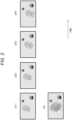
- Figs. 2(a1) to 2(a4) illustrate exemplary images of four frames in an HFR video signal output from the imaging unit 103.
- a "person” forms a moving part and "cylinders" form a stationary part.
- Fig. 2 (b) illustrates an exemplary image of a frame in a normal speed video signal provided by the frame rate conversion unit 104. The example illustrates that the video signals of four frames are summed in a unit of four frames in the HFR video signal so that a video signal of a frame in the normal speed video signal.
- the edge signal detection unit 105 filters each frame in the normal speed video signal at a frame rate of 60 Hz provided by the frame rate conversion unit 104 in horizontal and vertical high pass filter processes so as to detect an edge signal corresponding to each frame at the frame rate of 60 Hz.
- Fig. 3 (a) illustrates an exemplary edge signal of a frame detected with the edge signal detection unit 105.
- This example illustrates that a focused point is near the stationary part of the front "cylinder".
- the edge signal corresponding to the edge of the "cylinder” is detected (see an arrow P1).
- moving image blurring occurs because the "person” is the moving part.
- the edge signal corresponding to the edge of the "person” is not detected.
- the edge signal detection unit 106 filters each frame in the HFR video signal at a frame rate of 240 Hz output from the imaging unit 103 in horizontal and vertical high pass filter processes so as to detect an edge signal corresponding to each frame at the frame rate of 240 Hz.
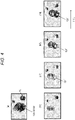
- Figs. 3(b1) to 3(b4) illustrate exemplary edge signals of the four frames detected with the edge signal detection unit 106.
- FIG. 4(a) illustrates the state in which the edge signals of the four frame detected with the edge signal detection unit 106 and illustrated in Figs. 3(b1) to 3(b4) are summed. Note that the "cylinder” and "person” are illustrated as references indicating the detection positions at which the edge signals (difference absolute values) are detected in Figs. 3(a), 3(b1) to 3(b4), and 4(a) .
- the edge signal generation unit 107 performs an arithmetic process to find the difference absolute value between the edge signals of each frame and the adjacent frame, using the edge signal of each frame detected with the edge signal detection unit 106. Taking the difference absolute values as described above can offset and remove the edge signals corresponding to the stationary part.
- Figs. 4 (b1) to 4 (b4) illustrates exemplary difference absolute values among the four frames generated with the edge signal generation unit 107.
- the edge signals corresponding to the edge of the "cylinder” that is the stationary part are removed and the edge signals corresponding to the edge of the "person” that is the moving part remain as illustrated in the drawings (see arrows Q1' , Q2', and Q3').
- the "cylinder” and "person” are illustrated as references indicating the detection positions at which the edge signals (difference absolute values) are detected in Figs. 4(b1) to 4(b4) .
- the edge signal generation unit 107 sums the difference absolute values of the four frames every four frames, and generates an edge signal corresponding to each frame at a frame rate of 60 Hz. Note that the edge signal generation unit 107 can generate the edge signal of a frame every four frames using the difference absolute values of three or two frames, or the difference absolute value of a frame instead of all of the difference absolute values of the four frames.
- the VF signal processing unit 108 synthesizes the edge signal corresponding to each frame at a frame rate of 60 Hz and generated with the edge signal generation unit 107 onto the normal speed video signal at a frame rate of 60 Hz provided by the frame rate conversion unit 104 so as to generate a first video signal for a viewfinder display.
- the VF signal processing unit 108 synthesizes the edge signal onto the video signal so that the edge is highlighted (for example, by a bright display or a display with a predetermined color including white).
- the VF signal processing unit 108 converts the edge signal into a color signal of a predetermined color and synthesizes the color signal onto the video signal.
- the VF signal processing unit 108 determines the predetermined color in accordance with the selection signal from the user operation unit 102. In other words, the user can set the color that the user desires as the predetermined color by operating the user operation unit 102.
- the VF signal processing unit 108 synthesizes the edge signal corresponding to each frame at a frame rate of 60 Hz and detected with the edge signal detection unit 105 onto the normal speed video signal at a frame rate of 60 Hz provided by the frame rate conversion unit 104 so as to generate a second video signal for a viewfinder display.
- the VF signal processing unit 108 synthesizes the edge signal onto the video signal so that the edge is highlighted (for example, by a bright display or a display with a predetermined color including white).
- the VF signal processing unit 108 synthesizes both of the edge signal corresponding to each frame at a frame rate of 60 Hz and generated with the edge signal generation unit 107 (the first edge signal) and the edge signal corresponding to each frame at a frame rate of 60 Hz and detected with the edge signal detection unit 105 (the second edge signal) onto the normal speed video signal at a frame rate of 60 Hz provided by the frame rate conversion unit 104 so as to generate a third video signal for a viewfinder display.
- the VF signal processing unit 108 synthesizes the edge signal onto the video signal so that the edge is highlighted (for example, by a bright display or a display with a predetermined color including white) .
- the VF signal processing unit 108 can distinguish the highlighted edge with the first edge signal from the highlighted edge with the second edge signal by changing the color phases.
- the VF signal processing unit 108 outputs one of the first video signal, the second video signal, and the third video signal and transmits the output signal to a VF display unit (the viewfinder) .
- the VF signal processing unit 108 determines the video signal for a viewfinder display to be output in accordance with the selection signal from the user operation unit 102.
- the user can set the video signal for a viewfinder display to be transmitted to the VF display unit (the viewfinder) by operating the user operation unit 102.
- An HFR video signal at a frame rate of 240 Hz is provided from the imaging unit 103 (see Figs. 2 (a1) to 2 (a4)).
- the HFR video signal is transmitted to the main-channel signal processing unit and provided to the frame rate conversion unit 104 and the edge signal detection unit 106.
- the frame rate conversion unit 104 coverts the frame rates in a conversion process so that a normal speed video signal at a frame rate of 60 Hz is acquired from the HFR video signal at a frame rate of 240 Hz (see Fig. 2 (b) .
- the acquired normal speed video signal is provided to the edge signal detection unit 105 and the VF signal processing unit 108.
- the edge signal detection unit 105 filters each frame in the normal speed video signal at a frame rate of 60 Hz in horizontal and vertical high pass filter processes so as to detect an edge signal corresponding to each frame at a frame rate of 60 Hz (see Fig. 3(a) ).
- the detected edge signal is provided to the VF signal processing unit 108.
- the edge signal detection unit 106 filters each frame in the HFR video signal at a frame rate of 240 Hz in horizontal and vertical high pass filter processes so as to detect an edge signal corresponding to each frame at a frame rate of 240 Hz (see Figs. 3 (b1) to 3 (b4)).
- the detected edge signal is provided to the edge signal generation unit 107.
- the edge signal generation unit 107 finds the difference absolute value between the edge signals of each frame and the adjacent frame, using the edge signal of each frame (see Figs. 4(b1) to 4(b4) ) . Then, the edge signal generation unit 107 generates an edge signal corresponding to each frame at a frame rate of 60 Hz by summing the difference absolute values of the four frames every four frames. The generated edge signal is provided to the VF signal processing unit 108.
- the VF signal processing unit 108 synthesizes the edge signal corresponding to each frame at a frame rate of 60 Hz and generated with the edge signal generation unit 107 onto the normal speed video signal at a frame rate of 60 Hz provided by the frame rate conversion unit 104 so as to generate the first video signal for a viewfinder display.
- the VF signal processing unit 108 synthesizes the edge signal onto the video signal so that the edge is highlighted (for example, by a bright display or a display with a predetermined color including white).
- the VF signal processing unit 108 synthesizes the edge signal corresponding to each frame at a frame rate of 60 Hz and detected with the edge signal detection unit 105 onto the normal speed video signal at a frame rate of 60 Hz provided by the frame rate conversion unit 104 so as to generate the second video signal for a viewfinder display.
- the VF signal processing unit 108 synthesizes the edge signal onto the video signal so that the edge is highlighted (for example, by a bright display or a display with a predetermined color including white).
- the VF signal processing unit 108 synthesizes both of the edge signal corresponding to each frame at a frame rate of 60 Hz and generated with the edge signal generation unit 107 (the first edge signal) and the edge signal corresponding to each frame at a frame rate of 60 Hz and detected with the edge signal detection unit 105 (the second edge signal) onto the normal speed video signal at a frame rate of 60 Hz provided by the frame rate conversion unit 104 so as to generate a third video signal for a viewfinder display.
- the VF signal processing unit 108 synthesizes the edge signals onto the video signal so that the edge is highlighted (for example, by a bright display or a display with a predetermined color including white).
- the VF signal processing unit 108 selectively outputs one of the first videosignal, the second video signal, and the third video signal, for example, in response to the user's selection operation. As described above, the video signal for a viewfinder display output from the VF signal processing unit 108 is transmitted to the VF display unit (the viewfinder).
- Fig. 5 (a) illustrates an exemplary image of a frame of the first video signal for a viewfinder display to be displayed in the viewfinder. This example illustrates that a focused point is near the stationary part of the front "cylinder". As illustrated in the drawing, only the edge of the "person” that is the moving part is highlighted (see an arrow R1).
- Fig. 5(b) illustrates an exemplary image of a frame of the second video signal for a viewfinder display to be displayed in the viewfinder. This example illustrates that a focused point is near the stationary part of the front "cylinder". As illustrated in the drawing, only the edge of the "cylinder" that is the stationary part is highlighted (see an arrow R2) .
- Fig. 5 (c) illustrates an exemplary image of a frame of the third video signal for a viewfinder display to be displayed in the viewfinder.
- This example illustrates that a focused point is near the stationary part of the front "cylinder".
- both of the edge of the "person” that is the moving part and the edge of the "cylinder” that is the stationary part are highlighted (see arrows R1 and R2).
- the camera device 100 illustrated in Fig. 1 provides the video signal (the first video signal) for a viewfinder display by generating an edge signal corresponding to each frame at a frame rate of 60 Hz in accordance with the edge signal detected in each frame of the HFR video signal at a frame rate of 240 Hz and synthesizing the generated edge signal onto the normal speed video signal at a frame rate of 60 Hz.
- This can, for example, prevent the effect of moving image blurring, and can provide the edge signal of the moving part as the edge signal corresponding to each frame at a frame rate of 60 Hz with good condition.
- the edge of the moving part can also be highlighted with the edge signal.
- the camera device 100 illustrated in Fig. 1 finds the difference absolute value between the edge signals of each frame and the adjacent frame, using the edge signal detected in each frame of the HFR video signal at a frame rate of 240 Hz, and then generates the edge signal of a frame from some or all of the difference absolute values of the edge signals of the frames every four frames. This enables, for example, an edge highlight display corresponding only to the edge of the moving part.
- the VF signal processing unit 108 in the camera device 100 illustrated in Fig. 1 generates the first, second, and third video signals as a video signal for a viewfinder display and selectively outputs one of the first, second, and third video signals. This enables the camera device 100, for example, to display an image in which only the edge of the moving part, only the edge of the stationary part, or both edges of the parts are highlighted by the edge highlight display with the edge signals in the viewfinder.
- the edge signal generation unit 107 in the embodiment finds the difference absolute value between the edge signals of each frame and the adjacent frame, using the edge signal detected in each frame of the HFR video signal at a frame rate of 240 Hz, and then generates the edge signal of a frame from some or all of the difference absolute values of the edge signals of the frames every four frames.
- the edge signal generation unit 107 can also generate the edge signal of a frame from some or all of the absolute values of the edge signals of the frames every four frames, using the edge signal detected in each frame of the HFR video signal at a frame rate of 240 Hz.
- the generated edge signal includes the edge signal corresponding to the edge of the stationary part in addition to the edge signal corresponding to the edge of the moving part (see Fig. 4(a) ).
- the first video signal for a viewfinder display provided in this exemplary variation by synthesizing the edge signal corresponding to each frame at a frame rate of 60 Hz and generated with the edge signal generation unit 107 onto the normal speed video signal of at a frame rate of 60 Hz provided by the frame rate conversion unit 104 generated with the VF signal processing unit 108 is identical to the third video signal described in the embodiment.
- the normal frame rate using the present technology is not limited to 60 Hz, and can be, for example, 59.94 Hz or 50 Hz.
Landscapes
- Engineering & Computer Science (AREA)
- Multimedia (AREA)
- Signal Processing (AREA)
- Computing Systems (AREA)
- Theoretical Computer Science (AREA)
- Studio Devices (AREA)
- Indication In Cameras, And Counting Of Exposures (AREA)
- Color Television Image Signal Generators (AREA)
Claims (9)
- Videosignalverarbeitungsvorrichtung, umfassend:eine Bildratenumwandlungseinheit, die dafür ausgelegt ist, ein Videosignal mit einer ersten Bildrate aus einem aufgenommenen Videosignal mit einer zweiten Bildrate bereitzustellen, die N-mal höher ist als die erste Bildrate, wobei N eine ganze Zahl größer oder gleich zwei ist;eine Kantensignalerfassungseinheit, die dafür ausgelegt ist, für jedes Bild im aufgenommenen Videosignal ein Kantensignal zu erfassen, das einer Kante eines sich bewegenden Objekts entspricht, und zwar durch Filtern jedes Bildes im aufgenommenen Videosignal mit der zweiten Bildrate in Horizontal- und Vertikal-Hochpassfilterprozessen;eine Kantensignalerzeugungseinheit, die dafür ausgelegt ist, einen arithmetischen Prozess zum Ermitteln eines Differenz-Absolutwertes zwischen den erfassten Kantensignalen jedes Bildes und eines benachbarten Bildes durchzuführen, unter Verwendung des mit der Kantensignalerfassungseinheit erfassten Kantensignals jedes erfassten Bildes, und ein erstes Kantensignal zu erzeugen, das den einzelnen Bildern mit der ersten Bildrate entspricht, und zwar durch Summieren einiger oder aller Differenz-Absolutwerte der erfassten Kantensignale der Bilder alle N Bilder; undeine Signalsyntheseeinheit, die dafür ausgelegt ist, das erste Kantensignal auf das Videosignal mit der ersten Bildrate zu synthetisieren, zum Erzeugen eines ersten Videosignals für eine Sucheranzeige, in dem die Kante des sich bewegenden Objekts hervorgehoben ist.
- Videosignalverarbeitungsvorrichtung nach Anspruch 1, ferner umfassend:
eine Farbumwandlungseinheit, die dafür ausgelegt ist, das erste Kantensignal jedes mit der Kantensignalerzeugungseinheit erzeugten Bildes in ein Farbsignal einer vorbestimmten Farbe umzuwandeln und das Farbsignal auszugeben. - Videosignalverarbeitungsvorrichtung nach Anspruch 1, wobei die zweite Bildrate größer oder gleich 200 Hz ist.
- Kameravorrichtung, umfassend:eine Videosignalverarbeitungsvorrichtung nach Anspruch 1,wobei die Signalsyntheseeinheit dafür ausgelegt ist, das Videosignal mit der ersten Bildrate für die Sucheranzeige bereitzustellen, und zwar durch Synthetisieren des ersten Kantensignals, das den einzelnen Bildern mit der ersten Bildrate entspricht und mit der Kantensignalerzeugungseinheit erzeugt wird, auf das Videosignal mit der ersten Bildrate, das von der Bildratenumwandlungseinheit bereitgestellt wird.
- Kameravorrichtung nach Anspruch 4, ferner umfassend:eine Farbumwandlungseinheit, die dafür ausgelegt ist, das erste Kantensignal jedes mit der Kantensignalerzeugungseinheit erzeugten Bildes in ein Farbsignal einer vorbestimmten Farbe umzuwandeln und das Farbsignal auszugeben,wobei die Signalsyntheseeinheit dafür ausgelegt ist, das Videosignal mit der ersten Bildrate für die Sucheranzeige bereitzustellen, und zwar durch Synthetisieren des Farbsignals der vorbestimmten Farbe, das den einzelnen Bildern mit der ersten Bildrate entspricht und von der Farbumwandlungseinheit ausgegeben wird, auf das Videosignal mit der ersten Bildrate, das von der Bildratenumwandlungseinheit bereitgestellt wird.
- Kameravorrichtung nach Anspruch 5,
wobei die Farbumwandlungseinheit dafür ausgelegt ist, die vorbestimmte Farbe gemäß einem Auswahlsignal von einer Benutzerbedienungseinheit zu bestimmen. - Kameravorrichtung nach Anspruch 4, wobei die zweite Bildrate größer oder gleich 200 Hz ist.
- Videosignalverarbeitungsverfahren, wobei das Verfahren umfasst:einen Bildratenumwandlungsschritt, in dem ein Videosignal mit einer ersten Bildrate aus einem aufgenommenen Videosignal mit einer zweiten Bildrate bereitgestellt wird, die N-mal höher ist als die erste Bildrate, wobei das N eine ganze Zahl größer oder gleich zwei ist;einen Kantensignalerfassungsschritt, in dem für jedes Bild im aufgenommenen Videosignal ein Kantensignal erfasst wird, das einer Kante eines sich bewegenden Objekts entspricht, und zwar durch Filtern jedes Bildes im aufgenommenen Videosignal mit der zweiten Bildrate in Horizontal- und Vertikal-Hochpassfilterprozessen mit einem Hochpassfilter;einen Kantensignalerzeugungsschritt, in dem ein arithmetischer Prozess zum Ermitteln eines Differenz-Absolutwertes zwischen den erfassten Kantensignalen jedes Bildes und eines benachbarten Bildes durchgeführt wird, unter Verwendung des mit der Kantensignalerfassungseinheit erfassten Kantensignals jedes erfassten Bildes, und ein erstes Kantensignal erzeugt wird, das den einzelnen Bildern mit der ersten Bildrate entspricht, und zwar durch Summieren einiger oder aller Differenz-Absolutwerte der erfassten Kantensignale der Bilder alle N Bilder; undeinen Signalsyntheseschritt, in dem das erste Kantensignal auf das Videosignal mit der ersten Bildrate synthetisiert wird, zum Erzeugen eines ersten Videosignals für eine Sucheranzeige, in dem die Kante des sich bewegenden Objekts hervorgehoben ist.
- Videosignalverarbeitungsverfahren nach Anspruch 10, wobei der Signalsyntheseschritt das Videosignal mit der ersten Bildrate für die Sucheranzeige bereitstellt, und zwar durch Synthetisieren des ersten Kantensignals, das den einzelnen Bildern mit der ersten Bildrate entspricht und im Kantensignalerzeugungsschritt erzeugt wird, auf das Videosignal mit der ersten Bildrate, das im Bildratenumwandlungsschritt bereitgestellt wird.
Applications Claiming Priority (2)
| Application Number | Priority Date | Filing Date | Title |
|---|---|---|---|
| JP2014002202 | 2014-01-09 | ||
| PCT/JP2014/083487 WO2015104969A1 (ja) | 2014-01-09 | 2014-12-17 | 映像信号処理装置、映像信号処理方法およびカメラ装置 |
Publications (3)
| Publication Number | Publication Date |
|---|---|
| EP3094079A1 EP3094079A1 (de) | 2016-11-16 |
| EP3094079A4 EP3094079A4 (de) | 2017-08-16 |
| EP3094079B1 true EP3094079B1 (de) | 2023-03-29 |
Family
ID=53523807
Family Applications (1)
| Application Number | Title | Priority Date | Filing Date |
|---|---|---|---|
| EP14877618.0A Active EP3094079B1 (de) | 2014-01-09 | 2014-12-17 | Vorrichtung zur verarbeitung von videosignalen, verfahren zur verarbeitung von videosignalen und kameravorrichtung |
Country Status (4)
| Country | Link |
|---|---|
| US (2) | US10469729B2 (de) |
| EP (1) | EP3094079B1 (de) |
| JP (2) | JP6443346B2 (de) |
| WO (1) | WO2015104969A1 (de) |
Families Citing this family (5)
| Publication number | Priority date | Publication date | Assignee | Title |
|---|---|---|---|---|
| JP6443346B2 (ja) * | 2014-01-09 | 2018-12-26 | ソニー株式会社 | 映像信号処理装置、映像信号処理方法およびカメラ装置 |
| US10598972B2 (en) * | 2017-12-25 | 2020-03-24 | Huizhou China Star Optoelectronics Technology Co., Ltd. | Liquid crystal panel protective cover and liquid crystal panel packaging component |
| TWI808970B (zh) * | 2018-04-30 | 2023-07-21 | 圓剛科技股份有限公司 | 影像訊號轉換裝置 |
| WO2020195246A1 (ja) * | 2019-03-28 | 2020-10-01 | ソニー株式会社 | 撮像装置、撮像方法、及びプログラム |
| US12236608B2 (en) * | 2021-09-22 | 2025-02-25 | Samsung Electronics Co., Ltd. | Judder detection for dynamic frame rate conversion |
Citations (1)
| Publication number | Priority date | Publication date | Assignee | Title |
|---|---|---|---|---|
| US20070070221A1 (en) * | 2004-08-11 | 2007-03-29 | Sony Corporation | Image processing apparatus and method, recording medium, and program |
Family Cites Families (21)
| Publication number | Priority date | Publication date | Assignee | Title |
|---|---|---|---|---|
| US5496106A (en) * | 1994-12-13 | 1996-03-05 | Apple Computer, Inc. | System and method for generating a contrast overlay as a focus assist for an imaging device |
| JP4031122B2 (ja) * | 1998-09-30 | 2008-01-09 | 本田技研工業株式会社 | 差分画像を用いた被写体の検出装置 |
| WO2001026051A1 (en) * | 1999-10-04 | 2001-04-12 | Hamamatsu Photonic K.K. | Camera system for high-speed image processing |
| JP4228947B2 (ja) | 2003-05-20 | 2009-02-25 | 日産自動車株式会社 | 撮像装置 |
| JP4836065B2 (ja) | 2005-03-31 | 2011-12-14 | 株式会社国際電気通信基礎技術研究所 | エッジトラッキング方法及びそのコンピュータプログラム |
| JP4325599B2 (ja) | 2005-08-25 | 2009-09-02 | ソニー株式会社 | 撮像装置および表示制御方法 |
| JP4982997B2 (ja) | 2005-10-28 | 2012-07-25 | 株式会社ニコン | 画像処理装置 |
| JP4984915B2 (ja) * | 2006-03-27 | 2012-07-25 | セイコーエプソン株式会社 | 撮像装置、撮像システム及び撮像方法 |
| JP4139430B1 (ja) | 2007-04-27 | 2008-08-27 | シャープ株式会社 | 画像処理装置及び方法、画像表示装置及び方法 |
| JP2008283442A (ja) * | 2007-05-10 | 2008-11-20 | Olympus Corp | 撮像装置 |
| JP4869218B2 (ja) * | 2007-12-28 | 2012-02-08 | オリンパス株式会社 | 撮像表示装置 |
| JP4730412B2 (ja) * | 2008-08-12 | 2011-07-20 | ソニー株式会社 | 画像処理装置及び画像処理方法 |
| JP2010268354A (ja) | 2009-05-18 | 2010-11-25 | Olympus Corp | イメージセンサ及びそのイメージセンサを備える撮像装置 |
| JP4620163B2 (ja) * | 2009-06-30 | 2011-01-26 | 株式会社東芝 | 静止字幕検出装置、静止字幕を含む画像を表示する映像機器、および静止字幕を含んだ画像の処理方法 |
| WO2011047214A2 (en) * | 2009-10-14 | 2011-04-21 | Optimum Technologies, Inc. | Portable retinal camera and image acquisition method |
| KR101630303B1 (ko) * | 2010-02-02 | 2016-06-14 | 삼성전자주식회사 | 디지털 영상 처리 장치 및 그 제어 방법 |
| US9013584B2 (en) * | 2010-03-01 | 2015-04-21 | Stmicroelectronics, Inc. | Border handling for motion compensated temporal interpolator using camera model |
| JP5799690B2 (ja) * | 2011-09-07 | 2015-10-28 | 株式会社リコー | 撮像装置及びその制御方法 |
| JP2013072923A (ja) * | 2011-09-27 | 2013-04-22 | Sanyo Electric Co Ltd | 撮像装置 |
| JP6443346B2 (ja) * | 2014-01-09 | 2018-12-26 | ソニー株式会社 | 映像信号処理装置、映像信号処理方法およびカメラ装置 |
| JP2017507421A (ja) | 2014-02-21 | 2017-03-16 | タレリス・グローバル・エルエルピーTaleris Global LLP | 航空機の客室温度制御システムの障害を予測するための方法 |
-
2014
- 2014-12-17 JP JP2015556756A patent/JP6443346B2/ja not_active Expired - Fee Related
- 2014-12-17 WO PCT/JP2014/083487 patent/WO2015104969A1/ja not_active Ceased
- 2014-12-17 US US15/107,526 patent/US10469729B2/en active Active
- 2014-12-17 EP EP14877618.0A patent/EP3094079B1/de active Active
-
2018
- 2018-11-30 JP JP2018224409A patent/JP6665918B2/ja active Active
-
2019
- 2019-08-26 US US16/550,619 patent/US10778881B2/en active Active
Patent Citations (1)
| Publication number | Priority date | Publication date | Assignee | Title |
|---|---|---|---|---|
| US20070070221A1 (en) * | 2004-08-11 | 2007-03-29 | Sony Corporation | Image processing apparatus and method, recording medium, and program |
Also Published As
| Publication number | Publication date |
|---|---|
| US20190379820A1 (en) | 2019-12-12 |
| EP3094079A4 (de) | 2017-08-16 |
| EP3094079A1 (de) | 2016-11-16 |
| US20160323500A1 (en) | 2016-11-03 |
| US10469729B2 (en) | 2019-11-05 |
| WO2015104969A1 (ja) | 2015-07-16 |
| JPWO2015104969A1 (ja) | 2017-03-23 |
| JP6443346B2 (ja) | 2018-12-26 |
| JP6665918B2 (ja) | 2020-03-13 |
| JP2019071619A (ja) | 2019-05-09 |
| US10778881B2 (en) | 2020-09-15 |
Similar Documents
| Publication | Publication Date | Title |
|---|---|---|
| US10778881B2 (en) | Video signal processing device, video signal processing method, and camera device | |
| US20110080494A1 (en) | Imaging apparatus detecting foreign object adhering to lens | |
| JP2010141653A (ja) | 画像処理装置及び撮像装置 | |
| JP5523124B2 (ja) | 撮像装置 | |
| CN101502098A (zh) | 从场景到成像传感器的动态范围压缩的可调中灰过滤系统 | |
| JP2010050737A (ja) | ビデオ撮像装置および露光ガイド表示方法 | |
| US8988562B2 (en) | Image processing apparatus and image processing method | |
| US10621703B2 (en) | Image processing apparatus, image processing method, and program | |
| US12348889B2 (en) | Image processing apparatus, method of controlling image processing apparatus, and program storage | |
| JP2016054423A (ja) | 撮像装置、その制御方法およびプログラム | |
| JP7442989B2 (ja) | 撮像装置、該撮像装置の制御方法、及びプログラム | |
| EP3570533B1 (de) | Bildverarbeitungsvorrichtung, steuerungsverfahren, programm und aufzeichnungsmedium | |
| US11330192B2 (en) | Acquisition method, computer readable recording medium and image apparatus | |
| JP2014049895A (ja) | 画像処理方法 | |
| JP5014277B2 (ja) | フォーカス補助信号処理装置 | |
| JP5944246B2 (ja) | 撮像装置 | |
| JP2009232348A (ja) | 撮像装置、距離情報取得方法、画像処理方法及び光学系の駆動制御方法 | |
| JP2017125985A (ja) | 撮像装置 | |
| JP2019129472A (ja) | 撮像装置 | |
| JP2014131188A (ja) | 撮像装置、その制御方法、および制御プログラム | |
| JP7570912B2 (ja) | 撮像装置、撮像方法およびプログラム | |
| JP2010050657A (ja) | 映像信号処理装置及び撮像装置 | |
| JP5704069B2 (ja) | 画像入力装置 | |
| JP2025005091A (ja) | 報知装置、撮像装置、報知方法、プログラムおよび記憶媒体 | |
| TWI648982B (zh) | 影像串流畫質處理方法 |
Legal Events
| Date | Code | Title | Description |
|---|---|---|---|
| PUAI | Public reference made under article 153(3) epc to a published international application that has entered the european phase |
Free format text: ORIGINAL CODE: 0009012 |
|
| 17P | Request for examination filed |
Effective date: 20160702 |
|
| AK | Designated contracting states |
Kind code of ref document: A1 Designated state(s): AL AT BE BG CH CY CZ DE DK EE ES FI FR GB GR HR HU IE IS IT LI LT LU LV MC MK MT NL NO PL PT RO RS SE SI SK SM TR |
|
| AX | Request for extension of the european patent |
Extension state: BA ME |
|
| DAX | Request for extension of the european patent (deleted) | ||
| A4 | Supplementary search report drawn up and despatched |
Effective date: 20170717 |
|
| RIC1 | Information provided on ipc code assigned before grant |
Ipc: H04N 5/14 20060101ALI20170711BHEP Ipc: G03B 17/20 20060101ALI20170711BHEP Ipc: G06T 5/00 20060101ALI20170711BHEP Ipc: G03B 17/18 20060101ALI20170711BHEP Ipc: H04N 7/01 20060101ALI20170711BHEP Ipc: H04N 5/225 20060101ALI20170711BHEP Ipc: G03B 13/02 20060101ALI20170711BHEP Ipc: H04N 5/232 20060101AFI20170711BHEP |
|
| STAA | Information on the status of an ep patent application or granted ep patent |
Free format text: STATUS: EXAMINATION IS IN PROGRESS |
|
| 17Q | First examination report despatched |
Effective date: 20190411 |
|
| RAP3 | Party data changed (applicant data changed or rights of an application transferred) |
Owner name: SONY GROUP CORPORATION |
|
| GRAP | Despatch of communication of intention to grant a patent |
Free format text: ORIGINAL CODE: EPIDOSNIGR1 |
|
| STAA | Information on the status of an ep patent application or granted ep patent |
Free format text: STATUS: GRANT OF PATENT IS INTENDED |
|
| INTG | Intention to grant announced |
Effective date: 20221025 |
|
| GRAS | Grant fee paid |
Free format text: ORIGINAL CODE: EPIDOSNIGR3 |
|
| GRAA | (expected) grant |
Free format text: ORIGINAL CODE: 0009210 |
|
| STAA | Information on the status of an ep patent application or granted ep patent |
Free format text: STATUS: THE PATENT HAS BEEN GRANTED |
|
| AK | Designated contracting states |
Kind code of ref document: B1 Designated state(s): AL AT BE BG CH CY CZ DE DK EE ES FI FR GB GR HR HU IE IS IT LI LT LU LV MC MK MT NL NO PL PT RO RS SE SI SK SM TR |
|
| REG | Reference to a national code |
Ref country code: GB Ref legal event code: FG4D |
|
| REG | Reference to a national code |
Ref country code: CH Ref legal event code: EP |
|
| REG | Reference to a national code |
Ref country code: DE Ref legal event code: R096 Ref document number: 602014086572 Country of ref document: DE |
|
| REG | Reference to a national code |
Ref country code: AT Ref legal event code: REF Ref document number: 1557468 Country of ref document: AT Kind code of ref document: T Effective date: 20230415 |
|
| REG | Reference to a national code |
Ref country code: IE Ref legal event code: FG4D |
|
| REG | Reference to a national code |
Ref country code: LT Ref legal event code: MG9D |
|
| PG25 | Lapsed in a contracting state [announced via postgrant information from national office to epo] |
Ref country code: RS Free format text: LAPSE BECAUSE OF FAILURE TO SUBMIT A TRANSLATION OF THE DESCRIPTION OR TO PAY THE FEE WITHIN THE PRESCRIBED TIME-LIMIT Effective date: 20230329 Ref country code: NO Free format text: LAPSE BECAUSE OF FAILURE TO SUBMIT A TRANSLATION OF THE DESCRIPTION OR TO PAY THE FEE WITHIN THE PRESCRIBED TIME-LIMIT Effective date: 20230629 Ref country code: LV Free format text: LAPSE BECAUSE OF FAILURE TO SUBMIT A TRANSLATION OF THE DESCRIPTION OR TO PAY THE FEE WITHIN THE PRESCRIBED TIME-LIMIT Effective date: 20230329 Ref country code: LT Free format text: LAPSE BECAUSE OF FAILURE TO SUBMIT A TRANSLATION OF THE DESCRIPTION OR TO PAY THE FEE WITHIN THE PRESCRIBED TIME-LIMIT Effective date: 20230329 Ref country code: HR Free format text: LAPSE BECAUSE OF FAILURE TO SUBMIT A TRANSLATION OF THE DESCRIPTION OR TO PAY THE FEE WITHIN THE PRESCRIBED TIME-LIMIT Effective date: 20230329 |
|
| REG | Reference to a national code |
Ref country code: NL Ref legal event code: MP Effective date: 20230329 |
|
| REG | Reference to a national code |
Ref country code: AT Ref legal event code: MK05 Ref document number: 1557468 Country of ref document: AT Kind code of ref document: T Effective date: 20230329 |
|
| PG25 | Lapsed in a contracting state [announced via postgrant information from national office to epo] |
Ref country code: SE Free format text: LAPSE BECAUSE OF FAILURE TO SUBMIT A TRANSLATION OF THE DESCRIPTION OR TO PAY THE FEE WITHIN THE PRESCRIBED TIME-LIMIT Effective date: 20230329 Ref country code: NL Free format text: LAPSE BECAUSE OF FAILURE TO SUBMIT A TRANSLATION OF THE DESCRIPTION OR TO PAY THE FEE WITHIN THE PRESCRIBED TIME-LIMIT Effective date: 20230329 Ref country code: GR Free format text: LAPSE BECAUSE OF FAILURE TO SUBMIT A TRANSLATION OF THE DESCRIPTION OR TO PAY THE FEE WITHIN THE PRESCRIBED TIME-LIMIT Effective date: 20230630 Ref country code: FI Free format text: LAPSE BECAUSE OF FAILURE TO SUBMIT A TRANSLATION OF THE DESCRIPTION OR TO PAY THE FEE WITHIN THE PRESCRIBED TIME-LIMIT Effective date: 20230329 |
|
| PG25 | Lapsed in a contracting state [announced via postgrant information from national office to epo] |
Ref country code: SM Free format text: LAPSE BECAUSE OF FAILURE TO SUBMIT A TRANSLATION OF THE DESCRIPTION OR TO PAY THE FEE WITHIN THE PRESCRIBED TIME-LIMIT Effective date: 20230329 Ref country code: RO Free format text: LAPSE BECAUSE OF FAILURE TO SUBMIT A TRANSLATION OF THE DESCRIPTION OR TO PAY THE FEE WITHIN THE PRESCRIBED TIME-LIMIT Effective date: 20230329 Ref country code: PT Free format text: LAPSE BECAUSE OF FAILURE TO SUBMIT A TRANSLATION OF THE DESCRIPTION OR TO PAY THE FEE WITHIN THE PRESCRIBED TIME-LIMIT Effective date: 20230731 Ref country code: ES Free format text: LAPSE BECAUSE OF FAILURE TO SUBMIT A TRANSLATION OF THE DESCRIPTION OR TO PAY THE FEE WITHIN THE PRESCRIBED TIME-LIMIT Effective date: 20230329 Ref country code: EE Free format text: LAPSE BECAUSE OF FAILURE TO SUBMIT A TRANSLATION OF THE DESCRIPTION OR TO PAY THE FEE WITHIN THE PRESCRIBED TIME-LIMIT Effective date: 20230329 Ref country code: AT Free format text: LAPSE BECAUSE OF FAILURE TO SUBMIT A TRANSLATION OF THE DESCRIPTION OR TO PAY THE FEE WITHIN THE PRESCRIBED TIME-LIMIT Effective date: 20230329 |
|
| PG25 | Lapsed in a contracting state [announced via postgrant information from national office to epo] |
Ref country code: SK Free format text: LAPSE BECAUSE OF FAILURE TO SUBMIT A TRANSLATION OF THE DESCRIPTION OR TO PAY THE FEE WITHIN THE PRESCRIBED TIME-LIMIT Effective date: 20230329 Ref country code: PL Free format text: LAPSE BECAUSE OF FAILURE TO SUBMIT A TRANSLATION OF THE DESCRIPTION OR TO PAY THE FEE WITHIN THE PRESCRIBED TIME-LIMIT Effective date: 20230329 Ref country code: IS Free format text: LAPSE BECAUSE OF FAILURE TO SUBMIT A TRANSLATION OF THE DESCRIPTION OR TO PAY THE FEE WITHIN THE PRESCRIBED TIME-LIMIT Effective date: 20230729 |
|
| REG | Reference to a national code |
Ref country code: DE Ref legal event code: R097 Ref document number: 602014086572 Country of ref document: DE |
|
| PG25 | Lapsed in a contracting state [announced via postgrant information from national office to epo] |
Ref country code: DK Free format text: LAPSE BECAUSE OF FAILURE TO SUBMIT A TRANSLATION OF THE DESCRIPTION OR TO PAY THE FEE WITHIN THE PRESCRIBED TIME-LIMIT Effective date: 20230329 Ref country code: CZ Free format text: LAPSE BECAUSE OF FAILURE TO SUBMIT A TRANSLATION OF THE DESCRIPTION OR TO PAY THE FEE WITHIN THE PRESCRIBED TIME-LIMIT Effective date: 20230329 |
|
| PLBE | No opposition filed within time limit |
Free format text: ORIGINAL CODE: 0009261 |
|
| STAA | Information on the status of an ep patent application or granted ep patent |
Free format text: STATUS: NO OPPOSITION FILED WITHIN TIME LIMIT |
|
| 26N | No opposition filed |
Effective date: 20240103 |
|
| PG25 | Lapsed in a contracting state [announced via postgrant information from national office to epo] |
Ref country code: SI Free format text: LAPSE BECAUSE OF FAILURE TO SUBMIT A TRANSLATION OF THE DESCRIPTION OR TO PAY THE FEE WITHIN THE PRESCRIBED TIME-LIMIT Effective date: 20230329 |
|
| PG25 | Lapsed in a contracting state [announced via postgrant information from national office to epo] |
Ref country code: SI Free format text: LAPSE BECAUSE OF FAILURE TO SUBMIT A TRANSLATION OF THE DESCRIPTION OR TO PAY THE FEE WITHIN THE PRESCRIBED TIME-LIMIT Effective date: 20230329 Ref country code: IT Free format text: LAPSE BECAUSE OF FAILURE TO SUBMIT A TRANSLATION OF THE DESCRIPTION OR TO PAY THE FEE WITHIN THE PRESCRIBED TIME-LIMIT Effective date: 20230329 |
|
| REG | Reference to a national code |
Ref country code: CH Ref legal event code: PL |
|
| PG25 | Lapsed in a contracting state [announced via postgrant information from national office to epo] |
Ref country code: LU Free format text: LAPSE BECAUSE OF NON-PAYMENT OF DUE FEES Effective date: 20231217 |
|
| PG25 | Lapsed in a contracting state [announced via postgrant information from national office to epo] |
Ref country code: MC Free format text: LAPSE BECAUSE OF FAILURE TO SUBMIT A TRANSLATION OF THE DESCRIPTION OR TO PAY THE FEE WITHIN THE PRESCRIBED TIME-LIMIT Effective date: 20230329 |
|
| GBPC | Gb: european patent ceased through non-payment of renewal fee |
Effective date: 20231217 |
|
| REG | Reference to a national code |
Ref country code: BE Ref legal event code: MM Effective date: 20231231 |
|
| PG25 | Lapsed in a contracting state [announced via postgrant information from national office to epo] |
Ref country code: MC Free format text: LAPSE BECAUSE OF FAILURE TO SUBMIT A TRANSLATION OF THE DESCRIPTION OR TO PAY THE FEE WITHIN THE PRESCRIBED TIME-LIMIT Effective date: 20230329 Ref country code: LU Free format text: LAPSE BECAUSE OF NON-PAYMENT OF DUE FEES Effective date: 20231217 |
|
| REG | Reference to a national code |
Ref country code: IE Ref legal event code: MM4A |
|
| PG25 | Lapsed in a contracting state [announced via postgrant information from national office to epo] |
Ref country code: IE Free format text: LAPSE BECAUSE OF NON-PAYMENT OF DUE FEES Effective date: 20231217 |
|
| PG25 | Lapsed in a contracting state [announced via postgrant information from national office to epo] |
Ref country code: GB Free format text: LAPSE BECAUSE OF NON-PAYMENT OF DUE FEES Effective date: 20231217 |
|
| PG25 | Lapsed in a contracting state [announced via postgrant information from national office to epo] |
Ref country code: BE Free format text: LAPSE BECAUSE OF NON-PAYMENT OF DUE FEES Effective date: 20231231 |
|
| PG25 | Lapsed in a contracting state [announced via postgrant information from national office to epo] |
Ref country code: FR Free format text: LAPSE BECAUSE OF NON-PAYMENT OF DUE FEES Effective date: 20231231 |
|
| PG25 | Lapsed in a contracting state [announced via postgrant information from national office to epo] |
Ref country code: CH Free format text: LAPSE BECAUSE OF NON-PAYMENT OF DUE FEES Effective date: 20231231 |
|
| PG25 | Lapsed in a contracting state [announced via postgrant information from national office to epo] |
Ref country code: IE Free format text: LAPSE BECAUSE OF NON-PAYMENT OF DUE FEES Effective date: 20231217 Ref country code: GB Free format text: LAPSE BECAUSE OF NON-PAYMENT OF DUE FEES Effective date: 20231217 Ref country code: FR Free format text: LAPSE BECAUSE OF NON-PAYMENT OF DUE FEES Effective date: 20231231 Ref country code: CH Free format text: LAPSE BECAUSE OF NON-PAYMENT OF DUE FEES Effective date: 20231231 Ref country code: BE Free format text: LAPSE BECAUSE OF NON-PAYMENT OF DUE FEES Effective date: 20231231 |
|
| PG25 | Lapsed in a contracting state [announced via postgrant information from national office to epo] |
Ref country code: BG Free format text: LAPSE BECAUSE OF FAILURE TO SUBMIT A TRANSLATION OF THE DESCRIPTION OR TO PAY THE FEE WITHIN THE PRESCRIBED TIME-LIMIT Effective date: 20230329 |
|
| PG25 | Lapsed in a contracting state [announced via postgrant information from national office to epo] |
Ref country code: BG Free format text: LAPSE BECAUSE OF FAILURE TO SUBMIT A TRANSLATION OF THE DESCRIPTION OR TO PAY THE FEE WITHIN THE PRESCRIBED TIME-LIMIT Effective date: 20230329 |
|
| PG25 | Lapsed in a contracting state [announced via postgrant information from national office to epo] |
Ref country code: CY Free format text: LAPSE BECAUSE OF FAILURE TO SUBMIT A TRANSLATION OF THE DESCRIPTION OR TO PAY THE FEE WITHIN THE PRESCRIBED TIME-LIMIT; INVALID AB INITIO Effective date: 20141217 |
|
| PG25 | Lapsed in a contracting state [announced via postgrant information from national office to epo] |
Ref country code: HU Free format text: LAPSE BECAUSE OF FAILURE TO SUBMIT A TRANSLATION OF THE DESCRIPTION OR TO PAY THE FEE WITHIN THE PRESCRIBED TIME-LIMIT; INVALID AB INITIO Effective date: 20141217 |
|
| PG25 | Lapsed in a contracting state [announced via postgrant information from national office to epo] |
Ref country code: TR Free format text: LAPSE BECAUSE OF FAILURE TO SUBMIT A TRANSLATION OF THE DESCRIPTION OR TO PAY THE FEE WITHIN THE PRESCRIBED TIME-LIMIT Effective date: 20230329 |
|
| PGFP | Annual fee paid to national office [announced via postgrant information from national office to epo] |
Ref country code: DE Payment date: 20251126 Year of fee payment: 12 |