EP3083339B1 - Elektronische schlosseinheit für ein fahrzeug - Google Patents
Elektronische schlosseinheit für ein fahrzeug Download PDFInfo
- Publication number
- EP3083339B1 EP3083339B1 EP14871760.6A EP14871760A EP3083339B1 EP 3083339 B1 EP3083339 B1 EP 3083339B1 EP 14871760 A EP14871760 A EP 14871760A EP 3083339 B1 EP3083339 B1 EP 3083339B1
- Authority
- EP
- European Patent Office
- Prior art keywords
- rotor
- unit
- lock unit
- electronic lock
- authentication
- Prior art date
- Legal status (The legal status is an assumption and is not a legal conclusion. Google has not performed a legal analysis and makes no representation as to the accuracy of the status listed.)
- Not-in-force
Links
Images


Classifications
-
- B—PERFORMING OPERATIONS; TRANSPORTING
- B60—VEHICLES IN GENERAL
- B60R—VEHICLES, VEHICLE FITTINGS, OR VEHICLE PARTS, NOT OTHERWISE PROVIDED FOR
- B60R25/00—Fittings or systems for preventing or indicating unauthorised use or theft of vehicles
- B60R25/01—Fittings or systems for preventing or indicating unauthorised use or theft of vehicles operating on vehicle systems or fittings, e.g. on doors, seats or windscreens
- B60R25/02—Fittings or systems for preventing or indicating unauthorised use or theft of vehicles operating on vehicle systems or fittings, e.g. on doors, seats or windscreens operating on the steering mechanism
- B60R25/021—Fittings or systems for preventing or indicating unauthorised use or theft of vehicles operating on vehicle systems or fittings, e.g. on doors, seats or windscreens operating on the steering mechanism restraining movement of the steering column or steering wheel hub, e.g. restraining means controlled by ignition switch
Definitions
- the present invention generally relates to the field of vehicles. More specifically, the present invention relates to a multilevel authentication based electronic lock unit for vehicles.
- the conventional technique of using a mechanical key has a number of disadvantages.
- One of disadvantages of using a mechanical key is that it is cumbersome for the user to take out the key and insert the key in the lock every time the vehicle is to be used.
- an electronic lock unit for a vehicle comprises an electronic control unit communicating with an electronic key by receiving ID codes transmitted by the electronic key and comparing the received ID codes with ID codes stored in the electronic control unit for determining electronically, whether a user is an authorized user to then enable the user to unlock the steering at a first level of authentication and to enable the user to start the vehicle at a second level of authentication.
- an object of the present invention is to provide a multilevel authentication based electronic lock unit for a vehicle which provides prevention from theft, which is user friendly and inexpensive to install.
- the present invention relates to a multilevel authentication based electronic lock unit for a vehicle, said lock unit working in conjunction with an electronic control unit, the lock unit comprising: a first switch operatively coupled to the electronic control unit for initiating first level of authentication; a rotor having a top end, a bottom end and at least two sideward protruding arms which are spaced apart; a knob rigidly fixed to the top end of the rotor for facilitating steering LOCK/UNLOCK and ignition ON/OFF of the vehicle; a ring having at least two plates protruding from inner circumference of the ring, the plates being spaced apart so as to form a slot between any two adjacent plates to allow the rotor and its protruding arms to pass through; the bottom side of each plate being provided with projections to engage the arms of the rotor within the said projections; a cam unit comprising: a cylindrical body which mates with the bottom end of the rotor; and a cam element rigidly connected to the cylindrical body; a movable stopper
- FIG. 1 illustrates the perspective view of the multilevel authentication based electronic or electro-mechanical lock unit (100) for a vehicle according to an embodiment of the present invention.
- the electronic lock unit (100) comprises of a housing (110) for accommodating various elements/components of the lock unit (100), cover (120) for casing/covering the top surface of the housing (110), a knob (130) for operating the lock unit (100) for facilitating steering LOCK/UNLOCK and ignition ON/OFF of the vehicle, a first switch (140) for initiating the multilevel authentication and an electronic control unit (ECU) (150) for facilitating the multilevel authentication.
- a housing (110) for accommodating various elements/components of the lock unit (100)
- cover (120) for casing/covering the top surface of the housing (110)
- a knob (130) for operating the lock unit (100) for facilitating steering LOCK/UNLOCK and ignition ON/OFF of the vehicle
- a first switch (140) for initiating the multilevel authentication
- an electronic control unit (ECU) (150) for facilitating the multilevel authentication.
- the electronic lock unit (100) works in conjunction with the electronic control unit (150) for facilitating multilevel authentication.
- the cover (120) has a circular opening for the allowing the knob (130) to pass through and the first switch (140) is placed in a slot provided in the cover (120) next to the circular opening. It is to be noted that, the first switch (140) can be located at any suitable place on the steering of the vehicle.
- the ECU (150) is attached to the housing (110) of the lock unit (100). It is to be noted that, the ECU (150) can be located at any place in the vehicle and coupled with the electronic lock unit (100).
- Figure 2 illustrates the exploded view of the multilevel authentication based electronic lock unit according to an embodiment of the present invention.
- the electronic lock unit (200) comprises of the following elements/components: housing (205), cover (210), rotor (215), knob (220), ring (225), first switch (230), actuator unit (235), movable stopper (240), cam unit (245), cam follower (250), locking bar (255) and second micro switch (260).
- the first switch (230) may be positioned on the housing (205) or at any place on the steering of the vehicle.
- the first switch (230) is actuated by the user and initiates first level of authentication.
- the second switch (260) is positioned inside the housing (205) and is actuated by the movement of the cam unit (245).
- the second switch (260) initiates second level of authentication.
- the first and second switches (230, 260) are operatively coupled to an electric control unit (ECU) (265) which facilitates the first and second levels of authentication.
- ECU electric control unit
- the housing (205) is provided with an opening on its top surface for encompassing the rotor (215).
- the ring (225) rests on the top surface of the housing (205) and allows the rotor (215) to pass through in the opening of the housing (205).
- the cover (210) provides a casing/covering to the top surface of the housing (205) such that the ring (225) is sandwiched between the top surface of the housing (205) and the cover (210).
- the housing (205) is also provided with an opening on its bottom surface for encompassing the cam unit (245), cam follower (250), locking bar (255), second micro switch (260) and movable stopper (240).
- the movable stopper (240) is provided between the bottom surface of the rotor (215) and the cam unit (245) for separating the rotor (215) from the cam unit (245).
- the movable stopper (240) is connected to the actuating unit (235) which enables the push-pull movement of the stopper (240).
- the pull movement of the movable stopper (240) causes engagement of the rotor (215) with the cam unit (245).
- the actuator unit (235) comprises of a plunger (270) whose one end is connected to the movable stopper (240) and whose other end is connected to a spring means.
- the plunger (270) is surrounded with coils. The coils when energized enables the plunger (270) to move backwards thereby allowing engagement of the rotor (215) with the cam unit (245). Also, when the coils are dis-energized the plunger (270) is pushed by the spring force.
- the cam follower (250) is coupled to the cam unit (245) and follows the movement of the cam unit (245).
- the cam unit (245) comprises of a cylindrical body and a cam element rigidly fixed to the cylindrical body.
- the cam follower (250) accommodates the cam element and moves to and fro in response to the movement of the cam element.
- the second switch (260) is positioned inside the housing (205) and is actuated by the movement of the cam element.
- the locking bar/member (255) is coupled to the cam follower (250). More specifically, the locking bar (255) has its one end connected to the cam follower (250) and moves with the movement of the cam follower (250). The locking bar moves to and fro with the movement of the cam follower to engage/disengage with the steering of the vehicle.
- Figure 3 shows the housing of the electronic lock unit according to an embodiment of the present invention.
- the housing (300) shown in figure 3 comprises of a top surface (310), a bottom surface (320), a chamber (330) on one side and a hole (340) on the other side. It can be noticed from figure 3 , each of the top and bottom surfaces of the housing (300) is provided with an opening.
- the top surface (310) has an opening (350) and the bottom surface (320) has an opening (360).
- the chamber (330) accommodates the actuation unit (235) and the hole (340) allows the locking bar (255) to move to and fro for engaging/disengaging with the steering.
- corner (370) of the bottom surface (320) of the housing (300) accommodates the second switch.
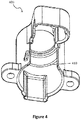
- Figure 4 shows the cover that cases the top surface of the housing according to an embodiment of the present invention.
- the cover (400) shown in figure 4 is used to provide a covering/casing to the top surface of the housing.
- the cover (400) is provided with a step (410) on its inner surface.
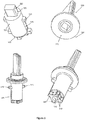
- Figure 5 shows the rotor-knob assembly of the electronic lock unit according to the present invention.
- the rotor (500) comprises of a top end (505), a bottom end (510) and at least two sideward protruding arms (515) which are spaced apart.
- the top end (505) of the rotor (500) is provided with a protrusion (520) which is fixed inside a depression/cavity (525) provided in a bottom surface (530) of the knob (550).
- the knob (550) is rigidly fixed to the top end (505) of the rotor (500).
- the bottom end (510) of the rotor (500) is provided with a hole (535) at its center and at least two protruding legs (540) spaced apart in radial direction from the hole (535).
- the rotor (500) is provided with at least one groove (545) on its periphery.
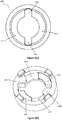
- Figures 6a and 6b shows the top surface and bottom surface of the ring of the electronic lock unit according to an embodiment of the present invention respectively.
- the ring (600) is provided with at least two plates (610) protruding from inner circumference of the ring (600), the plates (610) being spaced apart so as to form a slot (620) between any two adjacent plates (610).
- each plate (610) is provided with projections (630) to engage the arms (515) of the rotor (500) within the said projections (630).
- the ring rests on the top surface (310) of the housing in such a manner that the ring is sandwiched between the top surface (310) of the housing and the step (410) on the inner surface of the cover (400).
- the ring (600) when sandwiched between the top surface (310) of the housing and the step (410) on the inner surface of the cover (400) allows the rotor (500) and its protruding arms (515) to pass through the opening (350) provided in the top surface (310) of the housing.
- the projections (630) define the movement i.e. rotation of the knob from: steering LOCK to ignition OFF, ignition OFF to ignition ON and vice versa.
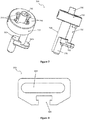
- Figure 7 shows the cam unit or cam assembly of the electronic lock unit according to an embodiment of the present invention.
- the cam unit (700) comprises of a cylindrical body (710) and a cam element (720) rigidly connected to the cylindrical body (710).
- the cylindrical body (710) is also termed as cam cavity and makes contact with the rotor (500).
- the cylindrical body (710) is provided with a vertical pillar (730) protruding from its center and at least two slots (740) in the radial direction from the vertical pillar (730).
- the said vertical pillar (730) is provided with a spring means located on its top surface.
- the vertical pillar (730) mates with the central hole (535) of the rotor (500) and the at least two slots (740) mate with the at least two legs (540) of the rotor (500).
- the cam element (720) is constituted of a first pillar (750) rigidly fixed to the bottom of the cylindrical body (710) and L shaped member connected to the first pillar (750).
- the first pillar (750) is offset from the center of the cylindrical body (710).
- the L shaped member is divided into a horizontal portion (760) and a vertical portion (770). As shown in figure 7 , the first pillar (750) divides the horizontal potion (760) into substantially two equal sections (760a, 760b).
- Figure 8 shows the cam follower of the electronic lock unit according to an embodiment of the present invention.
- the cam follower (800) comprises of a channel (810) and a T shaped groove (820) located at its circumference.
- the channel (810) accommodates the cam element (720) and allows rotation of the first pillar (750) of the cam element (720).
- the T shaped groove (820) accommodates one end of the locking bar/member (255) such that the locking member (255) moves with the movement of the cam follower (800).
- the said arrangement converts rotation of the cam element (720) into linear to and fro motion of the locking bar/member (255) for engaging/disengaging with the steering of the vehicle.
- the opening (350) in the top surface (310) of the housing (300) is provided with at least one spring loaded ball (275) which engages with the at least one groove (545) provided on the periphery of the rotor (500).
- the said arrangement enables the user to correctly identify the steering LOCK position i.e. the position where the user has to press the knob (550).
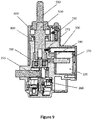
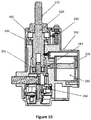
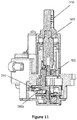
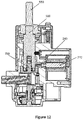
- FIGS 9-12 illustrate the cross sectional views of the electronic lock unit according to an embodiment of the present invention.
- the lock unit of the present invention works in conjunction with the electronic control unit (150, 265) which receives signals from an electronic key or FOB key for facilitating steering LOCK/UNLOCK and ignition ON/OFF of the vehicle.
- the key may be a battery operated key and is held by the user of the vehicle.
- the present invention implies that the users need not insert the key in the lock for steering LOCK/UNLOCK and engine ON/OFF of the vehicle.
- the lock unit of the present invention allows multilevel authentication process/methodology to run which permit steering UNLOCK and engine ON of the vehicle.
- the first level of authentication allows steering UNLOCK of the vehicle and the second level of authentication allows ignition ON of the vehicle.
- the user having the electronic key or FOB key must remain in a predetermined distance of the vehicle for the authentication process to complete successfully.
- the electronic key or FOB key is pre-programmed with specific ID codes which are transmitted continuously.
- the electronic control unit (150, 265) is in sleep mode (for instance when the vehicle is not in use) and is not able to detect the ID codes transmitted by the electronic key.
- the electronic control unit (150, 265) comes in active mode when a trigger signal is provided to the same.
- the trigger signal is provided by the first switch (230).
- the first switch (230) is provided either on the lock unit or at any place on the steering of the vehicle.
- the first switch (230) is actuated by the user of the vehicle.
- the actuation of the first switch (230) provides a trigger signal to the electronic control unit (150, 265) and initiates the multilevel authentication.
- the electronic control unit (150, 265) comes in active mode when a trigger signal is provided to it.
- the electronic control unit (150, 265) After the electronic control unit (150, 265) is in active mode, it receives ID codes transmitted by the electronic key and compares the received ID codes with ID coded stored in it. If the ID codes received by the electronic control unit (150, 265) matches with the ID codes previously stored in it, first level of authentication is said to be complete.
- the electronic control unit (150, 265) provides an electric pulse to the actuator unit (235).
- the plunger (270) of the actuator unit (235) is pulled back. More specifically, the movable stopper (240) provided between the bottom surface of the rotor (500) and the cylindrical body (710) is pulled backward for allowing the rotor (500) to engage with the cam unit (700), as shown in figures 10 and 12 .
- the movable stopper (240) prohibiting the engagement between the rotor (500) and the cam unit (700) as shown in figure 9 is pulled backward for allowing the rotor (500) to engage with the cam unit (700).
- the user is able to push the knob (550). More specifically, the user is able to push the knob-rotor assembly.
- the knob-rotor assembly is pushed if the arms (515) of the rotor match with the slots (620) of the ring (600) thereby allowing the rotor (500) to pass through the opening (350) in the top surface (310) of the housing (300).
- the pushing of the knob (550) establishes the engagement between the rotor (500) and the cam unit (700) as shown in figures 10 and 12 .
- the central hole (535) of the rotor (500) mates with the vertical pillar (730) of the cylindrical body (710) thereby energizing the spring means and the at least two legs (540) of the rotor (500) mate with the at least two slots (740) provided in the cylindrical body (710).
- the user After, engagement of the rotor (500) with the cam unit (700), the user is able to rotate the knob (550) from steering LOCK to engine OFF position.
- the rotation of the knob (550) from steering LOCK to engine OFF is defined by the projections (630) of the ring (600).
- the rotation of the knob (550) from steering LOCK to engine OFF position causes rotation of the cam element (720) due to the engagement of the rotor (500) with the cam unit (700).
- the cam follower (800) accommodates the cam element (720) which is divided into first pillar (750) and L shaped member.
- the first pillar (750) being offset from the center of the cylindrical body (710) converts the rotation of the cam unit (700) into linear to and fro motion of the cam follower (800).
- the cam follower (800) is engaged with the locking bar/member (255).
- rotation of cam unit (700) in response to rotation of the knob (550) from steering LOCK to engine OFF) causes linear motion of the locking bar/member (255) for releasing the steering of the vehicle.
- the locking bar/member (255) holds the steering in the LOCK position.
- the locking bar (255) is moved inwards in response to the rotation of the knob (550) from steering LOCK to engine OFF, thereby unlocking or releasing the steering to move freely.
- the vehicle is now in engine OFF position.
- the user can further rotate the knob (550) to start the vehicle, i.e. the user can rotate the knob (550) from engine OFF to engine ON position.
- the rotation of the knob (550) from engine OFF to engine ON position is defined by the projections (630) of the ring (600).
- the horizontal portion (760) of the cam element (720) actuates the second micro switch (260). More specifically, one of the sections of the horizontal portion (760) of the cam element (720) actuates the second micro switch (260). With reference to figures 6 and 11 , section (760b) actuates the second micro switch (260).
- the actuation of the second micro switch (260) sends a trigger signal to the electronic control unit (150, 265) which initiates the second level of authentication.
- the electronic control unit (150, 265) again receives ID codes transmitted by the electronic key and compares the received ID codes with ID coded stored in it. If the ID codes received by the electronic control unit (150, 265) matches with the ID codes previously stored in it, second level of authentication is said to be complete. If the second level of authentication is complete or successful, the engine of the vehicle will start. If the second level of authentication fails the engine will not start.
- the knob (550) is an integrated part of the lock unit which is free to rotate with the rotor (500) when an unauthorized user attempts to access the vehicle. The rotation is transferred to the cam unit (700) only in a condition when the authorized users operate the lock i.e. when the authentication process is completed. In this way, unauthorized users can only rotate the knob (550) but cannot operate the lock unit at steering LOCK position.
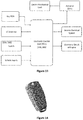
- Figure 14 shows the electronic key.
- the electronic key may be provided with a spare key to operate other accessories in the vehicle (i.e. seat lock, tool box lock, etc.)
- Figure 13 shows the block diagram of the electronic system of the lock unit according to an embodiment of the present invention.
- the electronic control unit (150, 265) receives ID codes from the FOB key for establishing the authentication process.
- the LF antenna which receives the ID codes may be an integral part of the electronic control unit (150, 265). In another embodiment, the LF antenna may be external to the electronic control unit (150, 265).
- the electronic control unit (150, 265) receives the trigger signals from the switches for initiating the multilevel authentication process. Furthermore, the electronic control unit (150, 265) receives input signals from other units of the vehicle.
- the electronic control unit (150, 265) provides an output in the form of electrical pulses to the actuator unit (235) for retracting the stopper (240). Moreover, the electronic control unit (150, 265) provides output signals to the vehicle electrical system and electronic circuit of the engine.
Landscapes
- Engineering & Computer Science (AREA)
- Mechanical Engineering (AREA)
- Lock And Its Accessories (AREA)
Claims (10)
- Elektronische Schlosseinheit (100, 200) für ein Fahrzeug mit einer mehrstufigen Authentifizierung, wobei die elektronische Schlosseinheit (100, 200) Folgendes aufweist:eine elektronische Steuereinheit (150, 265);einen ersten Schalter (140, 230), der arbeitsmäßig mit der elektronischen Steuereinheit (150) gekoppelt ist, um eine erste Stufe einer Authentifizierung einzuleiten;einen Rotor (215, 500), der ein oberes Ende (505), ein unteres Ende (510) und wenigstens zwei seitlich hervorstehende Arme (515) aufweist, die voneinander beabstandet sind;einen Knopf (130, 220, 550), der starr an dem oberen Ende (505) des Rotors (215, 500) befestigt ist, um ein Steuern von VERRIEGELN/ENTRIEGELN und Zündung EIN/AUS des Fahrzeugs zu erlauben;einen Ring (225, 600), der wenigstens zwei Platten (610) aufweist, die von einem Innenumfang des Ring (225, 600) hervorstehen, wobei die Platten (610) voneinander entfernt sind, um so einen Schlitz (620) zwischen zwei benachbarten Platten (610) zu bilden, um es zu erlauben, dass der Rotor (215, 500) und seine hervorstehenden Arme (515) hier durchgelangen;wobei die Bodenseite jeder Platte (610) mit Vorsprüngen (630) versehen ist, um an den Armen (515) des Rotors (215, 500) mit den beiden Vorsprüngen (630) anzugreifen;eine Nockeneinheit (245, 700), die Folgendes aufweist:einen zylindrischen Körper (710), der auf das untere Ende (510) des Rotors (215, 500) angepasst ist; undein Nockenelement (720), das starr mit dem zylindrischen Körper (710) verbunden ist;einen beweglichen Stopper (240), der zwischen dem unteren Ende (510) des Rotors (215, 500) und dem zylindrischen Körper (710) positioniert ist, um den Rotor (215, 500) von der Nockeneinheit (245, 700) zu trennen; undeinen zweiten Schalter (260), der arbeitsmäßig mit der elektronischen Steuereinheit (150, 265) gekoppelt ist und durch die Bewegung des Nockenelementes (720) aktiviert wird, um eine zweite Stufe der Authentifizierung einzuleiten; wobei der erste Schalter (140, 230) von einem Benutzer aktiviert wird, die erste Stufe der Authentifizierung eine Steuerung des Fahrzeugs in ENTRIEGELN erlaubt, die zweite Stufe der Authentifizierung eine Schaltung der Zündung des Fahrzeugs auf EIN erlaubt, wobei:
die elektronische Steuereinheit (150, 265) dazu ausgebildet ist:ID-Codes, die von einem elektronischen Schlüssel übertragen werden, zum empfangen; unddie erhaltenen ID-Codes mit darin gespeicherten ID-Codes zu vergleichen,wobei die erste Stufe der Authentifizierung als vollständig angesehen wird, falls die von der elektronischen Steuereinheit (150, 265) erhaltenen ID-Codes mit den darin gespeicherten ID-Codes übereinstimmen;wobei das Nockenelement (720) Folgendes aufweist:eine erste Säule (750), die starr an dem Boden des zylindrischen Körpers befestigt ist und gegenüber seinem Zentrum außermittig angeordnet ist; undein L-förmiges Element, das einen horizontalen (760) und einen vertikalen Abschnitt aufweist, wobei die erste Säule (750) starr über dem horizontalen Abschnitt (760) derart angeordnet ist, dass der horizontale Abschnitt (760) im Wesentlichen in zwei gleiche Abschnitte (760 a,b) aufgeteilt ist;wobei einer der Abschnitte (760 a,b) des horizontalen Abschnitts (760) des L-förmigen Elementes den zweiten Schalter (260) aktiviert, und wobei die zweite Stufe der Authentifizierung Folgendes aufweist:
dass die elektronische Steuereinheit (150, 265) dazu ausgebildet ist:von dem elektronischen Schlüssel übertragene ID-Codes zu empfangen; unddie erhaltenen ID-Codes mit darin gespeicherten ID-Codes zu vergleichen,
wobei die zweite Stufe der Authentifizierung als vollständig angesehen wird, falls die von der elektronische Steuereinheit (150, 265) erhaltenen ID-Codes mit den darin gespeicherten ID-Codes übereinstimmen. - Elektronische Schlosseinheit nach Anspruch 1, bei der:das obere Ende des Rotors (215, 500) einen Vorsprung (520) aufweist;das untere Ende des Rotors ein Loch (535) in seiner Mitte aufweist, sowie wenigstens zwei hervorstehende Arme (540), die in radialer Richtung von dem Loch (535) beabstandet sind; undwobei der Knopf (550) einen kreisförmigen Boden mit einem Eindruck zur Aufnahme des Vorsprungs (520) des Rotors (215, 500) aufweist.
- Elektronische Schlosseinheit nach Anspruch 1 und 2, bei der:
der zylindrische Körper (710) eine vertikale Säule (730) aufweist, die von seiner Mitte hervorsteht, um auf das mittige Loch (535) des Rotors (215, 500) angepasst zu sein, und wobei wenigstens zwei Schlitze (620) die wenigstens zwei Arme (540) des Rotors (215, 500) aufnehmen können. - Elektronische Schlosseinheit nach Anspruch 1, die ferner Folgendes aufweist:
ein Gehäuse (110, 205, 300) mit einer oberen Fläche (310), einer unteren Fläche (320), einer Kammer (330) auf einer Seite und einem Loch (340) auf einer anderen Seite, wobei die obere und die Fläche (310, 320) mit Öffnungen (350) versehen sind. - Elektronische Schlosseinheit nach Anspruch 4, die ferner Folgendes aufweist:
eine Aktivierungseinheit (235), die in der Kammer (330) vorgesehen ist, wobei die Aktivierungseinheit (235) Folgendes aufweist:
einen Stößel, der mit dem beweglichen Stopper (240) verbunden ist, um eine Drück-Zieh-Bewegung des Stoppers (240) zu erlauben. - Elektronische Schlosseinheit nach Anspruch 1 und 4, bei der der Ring (225, 600) auf der oberen Fläche (310) des Gehäuses (110, 205, 300) aufliegt, und wobei der Rotor (215, 500) von der Öffnung (350) in der oberen Fläche (310) umschlossen wird.
- Elektronische Schlosseinheit nach Anspruch 6, die ferner Folgendes aufweist:eine Abdeckung (210) zur Einhausung der oberen Fläche (310) des Gehäuses (110, 205, 300), wobei die Abdeckung (210) mit einer Stufe (410) auf ihrer inneren Oberfläche versehen ist,wobei der Ring (225, 600) zwischen der oberen Fläche (310) des Gehäuses und der Stufe (410) auf der inneren Oberfläche der Abdeckung (210) beidseitig eingeschlossen ist.
- Elektronische Schlosseinheit nach Anspruch 1, die ferner Folgendes aufweist:einen Nocken-Folger (250, 800), der einen Kanal (810) aufweist, um das Nockenelement (720) und eine T-förmige Nut (820), die an ihrer Innenoberfläche vorgesehen ist, aufzunehmen, wobei das Nockenelement (720) den Nocken-Folger (250, 800) als Reaktion auf eine Drehung des Knopfes (130, 550) hin und her bewegt; undein Verriegelungselement (255), das an einem Ende mit der T-förmigen Nut (820) verbunden ist, um sich hin und her zu bewegen, um an der Steuerung anzugreifen/sich davon zu lösen.
- Elektronische Schlosseinheit nach Anspruch 4, bei der der zweite Schalter (260) in einer der Ecken (370) der unteren Fläche (320) des Gehäuses (110, 205, 300) platziert ist.
- Elektronische Schlosseinheit nach Anspruch 4, bei der die Öffnung (350) in der oberen Fläche (310) wenigstens eine federbelastete Kugel (275) aufweist, um in wenigsten eine Nut (545) einzugreifen, die am Umfang des Rotors (215, 500) vorgesehen ist.
Applications Claiming Priority (2)
| Application Number | Priority Date | Filing Date | Title |
|---|---|---|---|
| IN3655DE2013 | 2013-12-19 | ||
| PCT/IB2014/067115 WO2015092754A1 (en) | 2013-12-19 | 2014-12-19 | Improved ignition switch cum steering lock |
Publications (3)
| Publication Number | Publication Date |
|---|---|
| EP3083339A1 EP3083339A1 (de) | 2016-10-26 |
| EP3083339A4 EP3083339A4 (de) | 2017-05-17 |
| EP3083339B1 true EP3083339B1 (de) | 2019-10-16 |
Family
ID=53402207
Family Applications (1)
| Application Number | Title | Priority Date | Filing Date |
|---|---|---|---|
| EP14871760.6A Not-in-force EP3083339B1 (de) | 2013-12-19 | 2014-12-19 | Elektronische schlosseinheit für ein fahrzeug |
Country Status (3)
| Country | Link |
|---|---|
| EP (1) | EP3083339B1 (de) |
| JP (1) | JP6276421B2 (de) |
| WO (1) | WO2015092754A1 (de) |
Families Citing this family (5)
| Publication number | Priority date | Publication date | Assignee | Title |
|---|---|---|---|---|
| EP3600977B1 (de) * | 2017-03-29 | 2022-09-07 | Minda Corporation Limited | Intelligente zylinderschlossvorrichtung |
| CN107575099B (zh) * | 2017-09-29 | 2023-04-25 | 锐库(上海)机电科技有限公司 | 用于二轮车的电子锁系统和二轮车及其解锁控制方法 |
| WO2019092740A1 (en) * | 2017-11-07 | 2019-05-16 | Minda Corporation Limited | A multi-function smart ignition lock for vehicles |
| CN108898705A (zh) * | 2018-06-14 | 2018-11-27 | 贵州大学 | 一种具有权限分享的家庭门禁系统及其授权方法 |
| CN112448816B (zh) | 2019-08-31 | 2021-10-19 | 华为技术有限公司 | 一种身份验证方法及装置 |
Family Cites Families (7)
| Publication number | Priority date | Publication date | Assignee | Title |
|---|---|---|---|---|
| JPS5436424Y2 (de) * | 1976-03-27 | 1979-11-02 | ||
| JPS62231853A (ja) * | 1986-04-02 | 1987-10-12 | Nissan Motor Co Ltd | ステアリングロツク装置 |
| DE4240283C1 (de) * | 1992-12-01 | 1993-11-25 | Daimler Benz Ag | Lenkschloß für Kraftfahrzeuge |
| KR20030096944A (ko) * | 2002-06-18 | 2003-12-31 | 현대자동차주식회사 | 차량의 도난 방지 시스템 |
| JP4405903B2 (ja) * | 2004-12-24 | 2010-01-27 | 株式会社アルファ | ステアリングロック装置 |
| JP4572729B2 (ja) * | 2005-04-20 | 2010-11-04 | マツダ株式会社 | 車両用アイドルストップスタート制御装置 |
| JP4767593B2 (ja) * | 2005-06-02 | 2011-09-07 | 株式会社ホンダロック | 車両用イグニッションスイッチの操作装置 |
-
2014
- 2014-12-19 JP JP2016559688A patent/JP6276421B2/ja not_active Expired - Fee Related
- 2014-12-19 EP EP14871760.6A patent/EP3083339B1/de not_active Not-in-force
- 2014-12-19 WO PCT/IB2014/067115 patent/WO2015092754A1/en not_active Ceased
Non-Patent Citations (1)
| Title |
|---|
| None * |
Also Published As
| Publication number | Publication date |
|---|---|
| EP3083339A1 (de) | 2016-10-26 |
| JP6276421B2 (ja) | 2018-02-07 |
| EP3083339A4 (de) | 2017-05-17 |
| WO2015092754A1 (en) | 2015-06-25 |
| JP2017509535A (ja) | 2017-04-06 |
Similar Documents
| Publication | Publication Date | Title |
|---|---|---|
| CN105604413B (zh) | 具有可取下的盖的门把手 | |
| EP3529437B1 (de) | Elektromechanischer schlosskern | |
| WO2015092754A1 (en) | Improved ignition switch cum steering lock | |
| US6516640B2 (en) | Steering column lock apparatus and method | |
| KR101840259B1 (ko) | 차량 순정리모콘을 이용한 원격도어시스템 및 원격도어제어방법 | |
| US11447976B2 (en) | Two-wheeler lock having an alarm function | |
| US7823427B2 (en) | Cylinder lock device | |
| KR0157244B1 (ko) | 원격 제어식 도난 방지 장치 | |
| US8770453B2 (en) | Power lock assembly for vehicle roof rack | |
| US4425770A (en) | Steering lock assembly | |
| US20030079509A1 (en) | Steering lock apparatus | |
| CN111094676A (zh) | 机电锁芯 | |
| US20220145670A1 (en) | Lock assembly for a bicycle | |
| US20150015362A1 (en) | Remote Control Unlocking and Locking System | |
| US20090206990A1 (en) | Aftermarket convenience entry and start system | |
| US20200122682A1 (en) | Locking device, in particular, for a motor vehicle | |
| JP6437888B2 (ja) | Obdポートのロック装置 | |
| CN109891039B (zh) | 机动车用锁闭单元 | |
| WO2016103210A1 (en) | A keyless fuel tank cover locking mechanism | |
| EP3707034B1 (de) | Intelligentes multifunktions-zündschloss für fahrzeuge | |
| WO2018179008A1 (en) | Smart cylinder lock device | |
| JP2020138678A (ja) | ステアリングロック装置 | |
| JP4733455B2 (ja) | ステアリングロック装置 | |
| KR100818223B1 (ko) | 전자인증시스템과 연동되는 스티어링 로크장치 및 그 제작방법 | |
| JP4154283B2 (ja) | 錠装置 |
Legal Events
| Date | Code | Title | Description |
|---|---|---|---|
| PUAI | Public reference made under article 153(3) epc to a published international application that has entered the european phase |
Free format text: ORIGINAL CODE: 0009012 |
|
| 17P | Request for examination filed |
Effective date: 20160620 |
|
| AK | Designated contracting states |
Kind code of ref document: A1 Designated state(s): AL AT BE BG CH CY CZ DE DK EE ES FI FR GB GR HR HU IE IS IT LI LT LU LV MC MK MT NL NO PL PT RO RS SE SI SK SM TR |
|
| AX | Request for extension of the european patent |
Extension state: BA ME |
|
| DAX | Request for extension of the european patent (deleted) | ||
| A4 | Supplementary search report drawn up and despatched |
Effective date: 20170421 |
|
| RIC1 | Information provided on ipc code assigned before grant |
Ipc: B60R 25/021 20130101AFI20170413BHEP |
|
| GRAP | Despatch of communication of intention to grant a patent |
Free format text: ORIGINAL CODE: EPIDOSNIGR1 |
|
| STAA | Information on the status of an ep patent application or granted ep patent |
Free format text: STATUS: GRANT OF PATENT IS INTENDED |
|
| INTG | Intention to grant announced |
Effective date: 20190424 |
|
| GRAS | Grant fee paid |
Free format text: ORIGINAL CODE: EPIDOSNIGR3 |
|
| GRAA | (expected) grant |
Free format text: ORIGINAL CODE: 0009210 |
|
| STAA | Information on the status of an ep patent application or granted ep patent |
Free format text: STATUS: THE PATENT HAS BEEN GRANTED |
|
| AK | Designated contracting states |
Kind code of ref document: B1 Designated state(s): AL AT BE BG CH CY CZ DE DK EE ES FI FR GB GR HR HU IE IS IT LI LT LU LV MC MK MT NL NO PL PT RO RS SE SI SK SM TR |
|
| REG | Reference to a national code |
Ref country code: GB Ref legal event code: FG4D |
|
| REG | Reference to a national code |
Ref country code: CH Ref legal event code: EP |
|
| REG | Reference to a national code |
Ref country code: DE Ref legal event code: R096 Ref document number: 602014055406 Country of ref document: DE |
|
| REG | Reference to a national code |
Ref country code: IE Ref legal event code: FG4D |
|
| REG | Reference to a national code |
Ref country code: AT Ref legal event code: REF Ref document number: 1190967 Country of ref document: AT Kind code of ref document: T Effective date: 20191115 |
|
| REG | Reference to a national code |
Ref country code: NL Ref legal event code: MP Effective date: 20191016 |
|
| REG | Reference to a national code |
Ref country code: LT Ref legal event code: MG4D |
|
| REG | Reference to a national code |
Ref country code: AT Ref legal event code: MK05 Ref document number: 1190967 Country of ref document: AT Kind code of ref document: T Effective date: 20191016 |
|
| PG25 | Lapsed in a contracting state [announced via postgrant information from national office to epo] |
Ref country code: NL Free format text: LAPSE BECAUSE OF FAILURE TO SUBMIT A TRANSLATION OF THE DESCRIPTION OR TO PAY THE FEE WITHIN THE PRESCRIBED TIME-LIMIT Effective date: 20191016 Ref country code: PL Free format text: LAPSE BECAUSE OF FAILURE TO SUBMIT A TRANSLATION OF THE DESCRIPTION OR TO PAY THE FEE WITHIN THE PRESCRIBED TIME-LIMIT Effective date: 20191016 Ref country code: GR Free format text: LAPSE BECAUSE OF FAILURE TO SUBMIT A TRANSLATION OF THE DESCRIPTION OR TO PAY THE FEE WITHIN THE PRESCRIBED TIME-LIMIT Effective date: 20200117 Ref country code: LT Free format text: LAPSE BECAUSE OF FAILURE TO SUBMIT A TRANSLATION OF THE DESCRIPTION OR TO PAY THE FEE WITHIN THE PRESCRIBED TIME-LIMIT Effective date: 20191016 Ref country code: AT Free format text: LAPSE BECAUSE OF FAILURE TO SUBMIT A TRANSLATION OF THE DESCRIPTION OR TO PAY THE FEE WITHIN THE PRESCRIBED TIME-LIMIT Effective date: 20191016 Ref country code: PT Free format text: LAPSE BECAUSE OF FAILURE TO SUBMIT A TRANSLATION OF THE DESCRIPTION OR TO PAY THE FEE WITHIN THE PRESCRIBED TIME-LIMIT Effective date: 20200217 Ref country code: FI Free format text: LAPSE BECAUSE OF FAILURE TO SUBMIT A TRANSLATION OF THE DESCRIPTION OR TO PAY THE FEE WITHIN THE PRESCRIBED TIME-LIMIT Effective date: 20191016 Ref country code: BG Free format text: LAPSE BECAUSE OF FAILURE TO SUBMIT A TRANSLATION OF THE DESCRIPTION OR TO PAY THE FEE WITHIN THE PRESCRIBED TIME-LIMIT Effective date: 20200116 Ref country code: SE Free format text: LAPSE BECAUSE OF FAILURE TO SUBMIT A TRANSLATION OF THE DESCRIPTION OR TO PAY THE FEE WITHIN THE PRESCRIBED TIME-LIMIT Effective date: 20191016 Ref country code: LV Free format text: LAPSE BECAUSE OF FAILURE TO SUBMIT A TRANSLATION OF THE DESCRIPTION OR TO PAY THE FEE WITHIN THE PRESCRIBED TIME-LIMIT Effective date: 20191016 Ref country code: NO Free format text: LAPSE BECAUSE OF FAILURE TO SUBMIT A TRANSLATION OF THE DESCRIPTION OR TO PAY THE FEE WITHIN THE PRESCRIBED TIME-LIMIT Effective date: 20200116 |
|
| PGFP | Annual fee paid to national office [announced via postgrant information from national office to epo] |
Ref country code: GB Payment date: 20191220 Year of fee payment: 6 |
|
| PG25 | Lapsed in a contracting state [announced via postgrant information from national office to epo] |
Ref country code: IS Free format text: LAPSE BECAUSE OF FAILURE TO SUBMIT A TRANSLATION OF THE DESCRIPTION OR TO PAY THE FEE WITHIN THE PRESCRIBED TIME-LIMIT Effective date: 20200224 Ref country code: HR Free format text: LAPSE BECAUSE OF FAILURE TO SUBMIT A TRANSLATION OF THE DESCRIPTION OR TO PAY THE FEE WITHIN THE PRESCRIBED TIME-LIMIT Effective date: 20191016 Ref country code: RS Free format text: LAPSE BECAUSE OF FAILURE TO SUBMIT A TRANSLATION OF THE DESCRIPTION OR TO PAY THE FEE WITHIN THE PRESCRIBED TIME-LIMIT Effective date: 20191016 |
|
| PG25 | Lapsed in a contracting state [announced via postgrant information from national office to epo] |
Ref country code: AL Free format text: LAPSE BECAUSE OF FAILURE TO SUBMIT A TRANSLATION OF THE DESCRIPTION OR TO PAY THE FEE WITHIN THE PRESCRIBED TIME-LIMIT Effective date: 20191016 |
|
| REG | Reference to a national code |
Ref country code: DE Ref legal event code: R097 Ref document number: 602014055406 Country of ref document: DE |
|
| PG2D | Information on lapse in contracting state deleted |
Ref country code: IS |
|
| PG25 | Lapsed in a contracting state [announced via postgrant information from national office to epo] |
Ref country code: CZ Free format text: LAPSE BECAUSE OF FAILURE TO SUBMIT A TRANSLATION OF THE DESCRIPTION OR TO PAY THE FEE WITHIN THE PRESCRIBED TIME-LIMIT Effective date: 20191016 Ref country code: RO Free format text: LAPSE BECAUSE OF FAILURE TO SUBMIT A TRANSLATION OF THE DESCRIPTION OR TO PAY THE FEE WITHIN THE PRESCRIBED TIME-LIMIT Effective date: 20191016 Ref country code: ES Free format text: LAPSE BECAUSE OF FAILURE TO SUBMIT A TRANSLATION OF THE DESCRIPTION OR TO PAY THE FEE WITHIN THE PRESCRIBED TIME-LIMIT Effective date: 20191016 Ref country code: EE Free format text: LAPSE BECAUSE OF FAILURE TO SUBMIT A TRANSLATION OF THE DESCRIPTION OR TO PAY THE FEE WITHIN THE PRESCRIBED TIME-LIMIT Effective date: 20191016 Ref country code: DK Free format text: LAPSE BECAUSE OF FAILURE TO SUBMIT A TRANSLATION OF THE DESCRIPTION OR TO PAY THE FEE WITHIN THE PRESCRIBED TIME-LIMIT Effective date: 20191016 Ref country code: IS Free format text: LAPSE BECAUSE OF FAILURE TO SUBMIT A TRANSLATION OF THE DESCRIPTION OR TO PAY THE FEE WITHIN THE PRESCRIBED TIME-LIMIT Effective date: 20200216 |
|
| REG | Reference to a national code |
Ref country code: CH Ref legal event code: PL |
|
| PLBE | No opposition filed within time limit |
Free format text: ORIGINAL CODE: 0009261 |
|
| STAA | Information on the status of an ep patent application or granted ep patent |
Free format text: STATUS: NO OPPOSITION FILED WITHIN TIME LIMIT |
|
| REG | Reference to a national code |
Ref country code: BE Ref legal event code: MM Effective date: 20191231 |
|
| PG25 | Lapsed in a contracting state [announced via postgrant information from national office to epo] |
Ref country code: SK Free format text: LAPSE BECAUSE OF FAILURE TO SUBMIT A TRANSLATION OF THE DESCRIPTION OR TO PAY THE FEE WITHIN THE PRESCRIBED TIME-LIMIT Effective date: 20191016 Ref country code: MC Free format text: LAPSE BECAUSE OF FAILURE TO SUBMIT A TRANSLATION OF THE DESCRIPTION OR TO PAY THE FEE WITHIN THE PRESCRIBED TIME-LIMIT Effective date: 20191016 Ref country code: SM Free format text: LAPSE BECAUSE OF FAILURE TO SUBMIT A TRANSLATION OF THE DESCRIPTION OR TO PAY THE FEE WITHIN THE PRESCRIBED TIME-LIMIT Effective date: 20191016 |
|
| 26N | No opposition filed |
Effective date: 20200717 |
|
| PG25 | Lapsed in a contracting state [announced via postgrant information from national office to epo] |
Ref country code: LU Free format text: LAPSE BECAUSE OF NON-PAYMENT OF DUE FEES Effective date: 20191219 Ref country code: FR Free format text: LAPSE BECAUSE OF NON-PAYMENT OF DUE FEES Effective date: 20191231 Ref country code: IE Free format text: LAPSE BECAUSE OF NON-PAYMENT OF DUE FEES Effective date: 20191219 |
|
| PG25 | Lapsed in a contracting state [announced via postgrant information from national office to epo] |
Ref country code: BE Free format text: LAPSE BECAUSE OF NON-PAYMENT OF DUE FEES Effective date: 20191231 Ref country code: SI Free format text: LAPSE BECAUSE OF FAILURE TO SUBMIT A TRANSLATION OF THE DESCRIPTION OR TO PAY THE FEE WITHIN THE PRESCRIBED TIME-LIMIT Effective date: 20191016 Ref country code: LI Free format text: LAPSE BECAUSE OF NON-PAYMENT OF DUE FEES Effective date: 20191231 Ref country code: CH Free format text: LAPSE BECAUSE OF NON-PAYMENT OF DUE FEES Effective date: 20191231 |
|
| PG25 | Lapsed in a contracting state [announced via postgrant information from national office to epo] |
Ref country code: CY Free format text: LAPSE BECAUSE OF FAILURE TO SUBMIT A TRANSLATION OF THE DESCRIPTION OR TO PAY THE FEE WITHIN THE PRESCRIBED TIME-LIMIT Effective date: 20191016 |
|
| PG25 | Lapsed in a contracting state [announced via postgrant information from national office to epo] |
Ref country code: HU Free format text: LAPSE BECAUSE OF FAILURE TO SUBMIT A TRANSLATION OF THE DESCRIPTION OR TO PAY THE FEE WITHIN THE PRESCRIBED TIME-LIMIT; INVALID AB INITIO Effective date: 20141219 Ref country code: MT Free format text: LAPSE BECAUSE OF FAILURE TO SUBMIT A TRANSLATION OF THE DESCRIPTION OR TO PAY THE FEE WITHIN THE PRESCRIBED TIME-LIMIT Effective date: 20191016 |
|
| PGFP | Annual fee paid to national office [announced via postgrant information from national office to epo] |
Ref country code: IT Payment date: 20210625 Year of fee payment: 7 Ref country code: DE Payment date: 20210624 Year of fee payment: 7 |
|
| GBPC | Gb: european patent ceased through non-payment of renewal fee |
Effective date: 20201219 |
|
| PG25 | Lapsed in a contracting state [announced via postgrant information from national office to epo] |
Ref country code: GB Free format text: LAPSE BECAUSE OF NON-PAYMENT OF DUE FEES Effective date: 20201219 |
|
| PG25 | Lapsed in a contracting state [announced via postgrant information from national office to epo] |
Ref country code: TR Free format text: LAPSE BECAUSE OF FAILURE TO SUBMIT A TRANSLATION OF THE DESCRIPTION OR TO PAY THE FEE WITHIN THE PRESCRIBED TIME-LIMIT Effective date: 20191016 |
|
| PG25 | Lapsed in a contracting state [announced via postgrant information from national office to epo] |
Ref country code: MK Free format text: LAPSE BECAUSE OF FAILURE TO SUBMIT A TRANSLATION OF THE DESCRIPTION OR TO PAY THE FEE WITHIN THE PRESCRIBED TIME-LIMIT Effective date: 20191016 |
|
| REG | Reference to a national code |
Ref country code: DE Ref legal event code: R119 Ref document number: 602014055406 Country of ref document: DE |
|
| PG25 | Lapsed in a contracting state [announced via postgrant information from national office to epo] |
Ref country code: DE Free format text: LAPSE BECAUSE OF NON-PAYMENT OF DUE FEES Effective date: 20220701 |
|
| PG25 | Lapsed in a contracting state [announced via postgrant information from national office to epo] |
Ref country code: IT Free format text: LAPSE BECAUSE OF NON-PAYMENT OF DUE FEES Effective date: 20211219 |