EP2969098B1 - Methods for purifying antibodies - Google Patents
Methods for purifying antibodies Download PDFInfo
- Publication number
- EP2969098B1 EP2969098B1 EP14713926.5A EP14713926A EP2969098B1 EP 2969098 B1 EP2969098 B1 EP 2969098B1 EP 14713926 A EP14713926 A EP 14713926A EP 2969098 B1 EP2969098 B1 EP 2969098B1
- Authority
- EP
- European Patent Office
- Prior art keywords
- protein
- acid
- sodium
- tris
- wash buffer
- Prior art date
- Legal status (The legal status is an assumption and is not a legal conclusion. Google has not performed a legal analysis and makes no representation as to the accuracy of the status listed.)
- Active
Links
Images


Classifications
-
- C—CHEMISTRY; METALLURGY
- C07—ORGANIC CHEMISTRY
- C07K—PEPTIDES
- C07K1/00—General methods for the preparation of peptides, i.e. processes for the organic chemical preparation of peptides or proteins of any length
- C07K1/14—Extraction; Separation; Purification
- C07K1/16—Extraction; Separation; Purification by chromatography
- C07K1/22—Affinity chromatography or related techniques based upon selective absorption processes
-
- B—PERFORMING OPERATIONS; TRANSPORTING
- B01—PHYSICAL OR CHEMICAL PROCESSES OR APPARATUS IN GENERAL
- B01D—SEPARATION
- B01D15/00—Separating processes involving the treatment of liquids with solid sorbents; Apparatus therefor
- B01D15/08—Selective adsorption, e.g. chromatography
- B01D15/26—Selective adsorption, e.g. chromatography characterised by the separation mechanism
- B01D15/38—Selective adsorption, e.g. chromatography characterised by the separation mechanism involving specific interaction not covered by one or more of groups B01D15/265 and B01D15/30 - B01D15/36, e.g. affinity, ligand exchange or chiral chromatography
- B01D15/3804—Affinity chromatography
- B01D15/3809—Affinity chromatography of the antigen-antibody type, e.g. protein A, G or L chromatography
-
- C—CHEMISTRY; METALLURGY
- C07—ORGANIC CHEMISTRY
- C07K—PEPTIDES
- C07K16/00—Immunoglobulins [IG], e.g. monoclonal or polyclonal antibodies
- C07K16/06—Immunoglobulins [IG], e.g. monoclonal or polyclonal antibodies from serum
- C07K16/065—Purification, fragmentation
-
- C—CHEMISTRY; METALLURGY
- C07—ORGANIC CHEMISTRY
- C07K—PEPTIDES
- C07K2317/00—Immunoglobulins specific features
- C07K2317/50—Immunoglobulins specific features characterized by immunoglobulin fragments
- C07K2317/56—Immunoglobulins specific features characterized by immunoglobulin fragments variable (Fv) region, i.e. VH and/or VL
- C07K2317/569—Single domain, e.g. dAb, sdAb, VHH, VNAR or nanobody®
Definitions
- the present invention relates to the field of protein purification using Protein A, Protein G, or Protein L immobilized to a solid support.
- the invention relates to wash buffer components and methods of using the wash buffers to remove host cell contaminants during wash steps, minimizing loss of the desired protein product.
- protein A affinity chromatography has become well established as the primary method of choice for the capture of monoclonal antibodies (mAbs) from mammalian cell culture feed streams.
- This highly specific affinity step is able to remove 98% of impurities in a single step due to the specific binding between the protein A ligand and the Fc-region of the antibody.
- clarified cell culture feed streams are applied to the column until a certain load mass of antibody is achieved.
- the column is then typically washed with a high ionic strength buffer, a chaotropic agent, a hydrophobic modifier, or a detergent (See WO2007109163 ) to remove host cell contaminants bound to the resin through nonspecific interactions.
- the antibody is then normally eluted from the column by a shift in pH and collected for further processing.
- the primary objective of this work is therefore to investigate the use of detergents combined with salts to disrupt both ionic and hydrophobic interactions and enhance removal of host cell contaminants, thereby reducing the purification burden on downstream unit operations.
- wash buffers For large-scale purification much effort is placed on optimizing the components of wash and elution buffers to maximize product yield.
- developing a unique wash buffer for each individual protein product requires significant time and resources to screen various buffer components to determine an appropriate wash buffer for each particular protein product.
- a "generic" intermediate wash buffer that could be used effectively with different types of proteins would be useful and desirable.
- the present invention provides a method of protein purification using such wash buffer components.
- the present invention is directed to a method for purifying a protein from a solution containing at least one process impurity comprising: a) adsorbing the protein to Protein A, Protein G, or Protein L immobilized on a solid support; b) removing the at least one process impurity by contacting the solid support containing the adsorbed protein with a first wash buffer comprising an aliphatic carboxylate wherein said aliphatic carboxylate comprises a 6-12 carbon backbone; and c) eluting the protein from the solid support, wherein the solution is a cell culture feedstream, wherein the at least one process impurity is a host cell protein or host cell DNA, wherein the protein is selected from one of: antibody, antibody fragment, immunoglobulin single variable domain, Fab, F(ab')2, Fv,disulphide linked Fv, scFv, disulphide-linked scFv, or diabody, and wherein the aliphatic carboxylate is selected from one of:
- the present invention is directed to a method as described above comprising:
- the Protein A wash buffer may further comprise about 1 mM to about 500 mM sodium acetate.
- the Protein A wash buffer may comprise about 300 mM sodium acetate.
- the present invention is directed to a method as described above comprising:
- the Protein L wash buffer may further comprise about 1 mM to about 500 mM sodium acetate.
- the Protein L wash buffer may comprise about 300 mM sodium acetate.
- Polypeptide “peptide” and “protein” are used interchangeably herein to refer to a polymer of amino acid residues.
- a polypeptide can be of natural (tissue-derived) origins, recombinant or natural expression from prokaryotic or eukaryotic cellular preparations, or produced chemically via synthetic methods.
- the terms apply to amino acid polymers in which one or more amino acid residue is an artificial chemical mimetic of a corresponding naturally occurring amino acid, as well as to naturally occurring amino acid polymers and non-naturally occurring amino acid polymer.
- Amino acid mimetics refers to chemical compounds that have a structure that is different from the general chemical structure of an amino acid, but that functions in a manner similar to a naturally occurring amino acid.
- Non-natural residues are well described in the scientific and patent literature; a few exemplary non-natural compositions useful as mimetics of natural amino acid residues and guidelines are described below.
- Mimetics of aromatic amino acids can be generated by replacing by, e.g., D- or L-naphylalanine; D- or L-phenylglycine; D- or L-2 thieneylalanine; D- or L-1, -2,3-, or 4-pyreneylalanine; D- or L-3 thieneylalanine; D- or L-(2-pyridinyl)-alanine; D- or L-(3-pyridinyl)-alanine; D- or L-(2-pyrazinyl)-alanine; D- or L-(4-isopropyl)-phenylglycine: D-(trifluoromethyl)-phenylglycine; D-(trifluoromethyl)-phenylalanine: D-p-fluoro-phen
- Aromatic rings of a non-natural amino acid include, e.g., thiazolyl, thiophenyl, pyrazolyl, benzimidazolyl, naphthyl, furanyl, pyrrolyl, and pyridyl aromatic rings.
- Protein as used herein includes peptides which are conservative variations of those peptides specifically exemplified herein.
- Consservative variation as used herein denotes the replacement of an amino acid residue by another, biologically similar residue. Examples of conservative variations include, but are not limited to, the substitution of one hydrophobic residue such as isoleucine, valine, leucine, alanine, cysteine, glycine, phenylalanine, proline, tryptophan, tyrosine, norleucine or methionine for another, or the substitution of one polar residue for another, such as the substitution of arginine for lysine, glutamic for aspartic acids, or glutamine for asparagine, and the like.
- Neutral hydrophilic amino acids which can be substituted for one another include asparagine, glutamine, serine and threonine.
- Constant variation also includes the use of a substituted amino acid in place of an unsubstituted parent amino acid provided that antibodies raised to the substituted polypeptide also immunoreact with the unsubstituted polypeptide. Such conservative substitutions are within the definition of the classes of the peptides of the invention.
- “Cationic” as used herein refers to any peptide that possesses a net positive charge at pH 7.4. The biological activity of the peptides can be determined by standard methods known to those of skill in the art and described herein.
- Recombinant when used with reference to a protein indicates that the protein has been modified by the introduction of a heterologous nucleic acid or protein or the alteration of a native nucleic acid or protein.
- a "therapeutic protein” refers to any protein and/or polypeptide that can be administered to a mammal to elicit a biological or medical response of a tissue, system, animal or human that is being sought, for instance, by a researcher or clinician.
- a therapeutic protein may elicit more than one biological or medical response.
- therapeutically effective amount means any amount which, as compared to a corresponding subject who has not received such amount, results in, but is not limited to, healing, prevention, or amelioration of a disease, disorder, or side effect, or a decrease in the rate of advancement of a disease or disorder.
- the term also includes within its scope amounts effective to enhance normal physiological function as well as amounts effective to cause a physiological function in a patient which enhances or aids in the therapeutic effect of a second pharmaceutical agent.
- amino acid residues identified herein are in the natural L-configuration. In keeping with standard polypeptide nomenclature, abbreviations for amino acid residues are as shown in the following table. Table 1. Amino acid abbreviations. 1 Letter 3 Letter Amino Acid Y Tvr L-tyrosine G Gly L-glycine F Phe L-phenylalanine M Met L-methionine A Ala L-alanine s Ser L-serine I Ile L-isoleucine L Leu leucine T Thr L-threonine V Val L-valine P Pro L-proline K Lys L-lysine H His L-histidine Q Gin L-glutamine E Glu L-glutamic acid W Trp L-tryptohan R Arg L-arginine D Asp L-aspartic acid N Asn L-asparagine C Cys L-cysteine
- the protein is an antigen binding polypeptide.
- the antigen binding polypeptide is selected from the group consisting of antibody, antibody fragment, immunoglobulin single variable domain, Fab, F(ab')2, Fv, disulphide linked Fv, scFv, disulphide-linked scFv, or diabody.
- antigen binding polypeptide refers to antibodies, antibody fragments and other protein constructs which are capable of binding to an antigen.
- Fv, Fc, Fd, Fab, or F(ab)2 are used with their standard meanings (see, e.g., Harlow et al., Antibodies A Laboratory Manual, Cold Spring Harbor Laboratory, (1988 )).
- a “chimeric antibody” refers to a type of engineered antibody which contains a naturally-occurring variable region (light chain and heavy chains) derived from a donor antibody in association with light and heavy chain constant regions derived from an acceptor antibody.
- a “humanized antibody” refers to a type of engineered antibody having its CDRs derived from a non-human donor immunoglobulin, the remaining immunoglobulin-derived parts of the molecule being derived from one (or more) human immunoglobulin(s).
- framework support residues may be altered to preserve binding affinity (see, e.g., Queen et al., Proc. Natl. Acad Sci USA, 86:10029-10032 (1989 ), Hodgson et al., Bio/Technology, 9:421 (1991 )).
- a suitable human acceptor antibody may be one selected from a conventional database, e.g., the KABAT.RTM.
- a human antibody characterized by a homology to the framework regions of the donor antibody (on an amino acid basis) may be suitable to provide a heavy chain constant region and/or a heavy chain variable framework region for insertion of the donor CDRs.
- a suitable acceptor antibody capable of donating light chain constant or variable framework regions may be selected in a similar manner. It should be noted that the acceptor antibody heavy and light chains are not required to originate from the same acceptor antibody.
- the prior art describes several ways of producing such humanized antibodies--see for example EP-A-0239400 and EP-A-054951 .
- donor antibody refers to an antibody (monoclonal, and/or recombinant) which contributes the amino acid sequences of its variable regions, CDRs, or other functional fragments or analogs thereof to a first immunoglobulin partner, so as to provide the altered immunoglobulin coding region and resulting expressed altered antibody with the antigenic specificity and neutralizing activity characteristic of the donor antibody.
- acceptor antibody refers to an antibody (monoclonal and/or recombinant) heterologous to the donor antibody, which contributes all (or any portion, but in some methods all) of the amino acid sequences encoding its heavy and/or light chain framework regions and/or its heavy and/or light chain constant regions to the first immunoglobulin partner.
- a human antibody is the acceptor antibody.
- CDRs are defined as the complementarity determining region amino acid sequences of an antibody which are the hypervariable regions of immunoglobulin heavy and light chains. See, e.g., Kabat et al., Sequences of Proteins of Immunological Interest, 4th Ed., U.S. Department of Health and Human Services, National Institutes of Health (1987 ). There are three heavy chain and three light chain CDRs (or CDR regions) in the variable portion of an immunoglobulin. Thus, “CDRs” as used herein refers to all three heavy chain CDRs, or all three light chain CDRs (or both all heavy and all light chain CDRs, if appropriate).
- the structure and protein folding of the antibody may mean that other residues are considered part of the antigen binding region and would be understood to be so by a skilled person. See for example Chothia et al., (1989) Conformations of immunoglobulin hypervariable regions; Nature 342, p 877-883 .
- domain refers to a folded protein structure which has tertiary structure independent of the rest of the protein. Generally, domains are responsible for discrete functional properties of proteins and in many cases may be added, removed or transferred to other proteins without loss of function of the remainder of the protein and/or of the domain.
- An "antibody single variable domain” is a folded polypeptide domain comprising sequences characteristic of antibody variable domains.
- variable domains and modified variable domains, for example, in which one or more loops have been replaced by sequences which are not characteristic of antibody variable domains, or antibody variable domains which have been truncated or comprise N- or C-terminal extensions, as well as folded fragments of variable domains which retain at least the binding activity and specificity of the full-length domain.
- immunoglobulin single variable domain refers to an antibody variable domain (V H , V HH , V L ) that specifically binds an antigen or epitope independently of a different V region or domain.
- An immunoglobulin single variable domain can be present in a format (e.g., homo- or hetero-multimer) with other, different variable regions or variable domains where the other regions or domains are not required for antigen binding by the single immunoglobulin variable domain (i.e., where the immunoglobulin single variable domain binds antigen independently of the additional variable domains).
- a “domain antibody” or “dAb” is the same as an "immunoglobulin single variable domain" which is capable of binding to an antigen as the term is used herein.
- An immunoglobulin single variable domain may be a human antibody variable domain, but also includes single antibody variable domains from other species such as rodent (for example, as disclosed in WO 00/29004 ), nurse shark and Camelid V HH dAbs (nanobodies).
- Camelid V HH are immunoglobulin single variable domain polypeptides that are derived from species including camel, llama, alpaca, dromedary, and guanaco, which produce heavy chain antibodies naturally devoid of light chains.
- Such V HH domains may be humanized according to standard techniques available in the art, and such domains are still considered to be "domain antibodies" according to the invention.
- V H includes camelid V HH domains.
- NARV are another type of immunoglobulin single variable domain which were identified in cartilaginous fish including the nurse shark. These domains are also known as Novel Antigen Receptor variable region (commonly abbreviated to V(NAR) or NARV). For further details see Mol. Immunol. 44, 656-665 (2006 ) and US20050043519A .
- Epitope-binding domain refers to a domain that specifically binds an antigen or epitope independently of a different V region or domain, this may be a domain antibody (dAb), for example a human, camelid or shark immunoglobulin single variable domain.
- dAb domain antibody
- the term "antigen-binding site” refers to a site on a protein which is capable of specifically binding to antigen, this may be a single domain, for example an epitope-binding domain, or it may be paired V H /V L domains as can be found on a standard antibody.
- single-chain Fv (ScFv) domains can provide antigen-binding sites.
- mAbdAb and dAbmAb are used herein to refer to antigen-binding proteins of the present invention.
- the two terms can be used interchangeably, and are intended to have the same meaning as used herein.
- Described is a method for purifying a protein comprising an antibody, antibody fragment, or immunoglobulin single variable domain, from a solution containing at least one contaminant by superantigen chromatography comprising: a) adsorbing the protein to the superantigen immobilized on a solid support; b) removing the at least one contaminant by contacting the immobilized superantigen containing the adsorbed protein with a first wash buffer comprising an aliphatic carboxylate; and c) eluting the protein from the superantigen immobilized on the solid support.
- Superantigen refers to generic ligands that interact with members of the immunoglobulin superfamily at a site that is distinct from the target ligand-binding sites of these proteins. Staphylococcal enterotoxins are examples of superantigens which interact with T-cell receptors.
- Superantigens that bind antibodies include, but are not limited to, Protein G, which binds the IgG constant region ( Bjorck and Kronvall, J. Immunol., 133:969 (1984 )); Protein A which binds the IgG constant region and V H domains ( Forsgren and Sjoquist, J.
- the superantigen is selected from the group consisting of Protein A, Protein G, and Protein L.
- Protein A encompasses Protein A recovered from a native source thereof, Protein A produced synthetically (e.g. by peptide synthesis or by recombinant techniques), and variants thereof which retain the ability to bind proteins which have a C H 2/C H 3 region. Protein A can be purchased commercially from Repligen, Pharmacia and Fermatech.
- affinity chromatography is a chromatographic method that makes use of the specific, reversible interactions between biomolecules rather than general properties of the biomolecule such as isoelectric point, hydrophobicity, or size, to effect chromatographic separation.
- Protein A affinity chromatography or “Protein A chromatography” refers to a specific affinity chromatographic method that makes use of the affinity of the IgG binding domains of Protein A for the Fc portion of an immunoglobulin molecule. This Fc portion comprises human or animal immunoglobulin constant domains C H 2 and C H 3 or immunoglobulin domains substantially similar to these.
- Protein A encompasses native protein from the cell wall of Staphylococcus aureas, Protein A produced by recombinant or synthetic methods, and variants that retain the ability to bind to an Fc region.
- Protein A chromatography involves using Protein A immobilized to a solid support. See Gagnon, Protein A Affinity Chromotography, Purification Tools for Monoclonal Antibodies, pp. 155-198, Validated Biosystems, 1996 . Protein G and Protein L may also be used for affinity chromotography.
- the solid support is a non-aqueous matrix onto which Protein A adheres (for example, a column, resin, matrix, bead, gel, etc).
- Such supports include agarose, sepharose, glass, silica, polystyrene, collodion charcoal, sand, polymethacrylate, cross-linked poly(styrene-divinylbenzene), and agarose with dextran surface extender and any other suitable material.
- agarose sepharose
- glass silica
- polystyrene collodion charcoal
- sand polymethacrylate
- cross-linked poly(styrene-divinylbenzene) agarose with dextran surface extender and any other suitable material.
- Any suitable method can be used to affix the superantigen to the solid support. Methods for affixing proteins to suitable solid supports are well known in the art. See e.g. Ostrove, in Guide to Protein Purification, Methods in Enzymology, 182: 357-371, 1990 .
- Such solid supports with and without immobilized Protein A or Protein L, are readily available from many commercial sources including such as Vector Laboratory (Burlingame, Calif.), Santa Cruz Biotechnology (Santa Cruz, Calif.), BioRad (Hercules, Calif.), Amersham Biosciences (part of GE Healthcare, Uppsala, Sweden) and Millipore (Billerica, Mass.).
- the aliphatic carboxylate can be either straight chained or branched.
- the aliphatic carboxylate is an aliphatic carboxylic acid or salt thereof, or the source of the aliphatic carboxylate is an aliphatic carboxylic acid or salt thereof.
- the aliphatic carboxylate may be straight chained and selected from the group consisting of hexanoic (caproic) acid, heptanoic (enanthic) acid, octanoic (caprylic) acid, decanoic (capric) acid, or any salts thereof
- the aliphatic carboxylate comprises a 6-12 carbon backbone.
- the aliphatic carboxylate is selected from the group consisting of caproate, heptanoate, caprylate, and decanoate.
- the source of the aliphatic carboxylate is selected from the group consisting of an aliphatic carboxylic acid, a sodium salt of an aliphatic carboxylic acid, and a potassium salt of an aliphatic carboxylic acid.
- the wash buffer may comprise sodium caprylate, or sodium decanoate.
- the wash buffer may comprise 15 mM to 125 mM sodium caprylate, or 1 mM to 30 mM sodium decanoate.
- the wash buffer may comprise about 100 mM sodium caprylate, or about 20 mM sodium decanoate. In one method the wash buffer comprises about 1 mM to about 500 mM sodium acetate.
- the wash buffer may comprise about 300 mM sodium acetate.
- the at least one contaminant is a host cell protein or host cell DNA.
- the host cell is selected from the group consisting of selected from the group consisting of CHO cells, NS0 cells, Sp2/0 cells, COS cells, K562 cells, BHK cells, PER.C6 cells, and HEK cells.
- the host cell may be a bacterial cell selected from the group consisting of E. Coli (for example, W3110, BL21), B.
- subtilis and/or other suitable bacteria eukaryotic cells, such as fungal or yeast cells (e.g., Pichia pastoris, Aspergillus sp., Saccharomyces cerevisiae, Schizosaccharomyces pombe, Neurospora crassa).
- fungal or yeast cells e.g., Pichia pastoris, Aspergillus sp., Saccharomyces cerevisiae, Schizosaccharomyces pombe, Neurospora crassa.
- a “buffer” is a buffered solution that resists changes in pH by the action of its acid-base conjugate components.
- An “equilibration buffer” herein is that used to prepare the solid phase for chromatography.
- the "loading buffer” is that which is used to load the mixture of the protein and contaminant(s) onto the chromatography matrix.
- the equilibration and loading buffers can be the same.
- the "elution buffer” is used to elute proteins from the chromatography matrix.
- a “salt” is a compound formed by the interaction of an acid and a base.
- the wash buffer comprises an organic acid, an alkaline metal or ammonium salt of the conjugate base of the organic acid, and an organic base.
- the wash buffer is made without the addition of NaCl.
- the organic acid includes, but is not limited to, formic acid, acetic acid, lactic acid, citric acid, malic acid, maleic acid, glycine, phosphoric acid, glycylclycine, succinic acid, TES (2- ⁇ [tris(hydroxymethyl)methyl]amino ⁇ ethanesulfonic acid), MOPS (3-(N-morpholino)propanesulfonic acid), PIPES (piperazine-N,N'-bis(2-ethanesulfonic acid)), and MES (2-(N-morpholino)ethanesulfonic acid).
- the organic base includes, but is not limited to, the group consisting of tris base, arginine, Bis-tris, Bis-tris-Propane, Bicine (N,N-bis(2-hydroxyethyl)glycine), HEPES (4-2-hydroxyethyl-1-piperazineethanesulfonic acid), TAPS (3- ⁇ [tris(hydroxymethyl)methyl]amino ⁇ propanesulfonic acid), and Tricine (N-tris(hydroxymethyl)methylglycine).
- the conjugate base of the organic acid is the sodium, potassium, or ammonium salt of the conjugate base of the organic acid.
- the organic acid is acetic acid and the conjugate base of acetic acid is the sodium salt.
- the protein is an antigen binding protein.
- the antigen binding protein is an antibody.
- the antibody is of the IgG class.
- the antigen binding protein is an immunoglobulin single variable domain.
- Described is a method for purifying a protein from a contaminated solution thereof by Protein A chromatography comprising:
- the equilibration buffer comprises about 50 mM to about 55 mM tris base, about 45 mM to about 50 mM acetic acid, at about pH 7.2; and the elution buffer comprises 1.8 mM sodium acetate and about 28.2 mM to about 300 mM acetic acid, at about pH 2.4 to about pH 3.6.
- the method may further comprise the following step after step (c) and before step (d): removing contaminants by washing the solid phase with a second Protein A wash buffer comprising 55 mM tris base, 45 mM acetic acid, at about pH 7.2.
- the second Protein A wash buffer is made without the addition of NaCl.
- the method may further comprise the following steps after step (d): (e) titrating the solution containing the recovered protein to about pH 3.0 with 30 mM acetic acid, 100 mM HCl; (f) allowing the solution of step (e) to remain at about pH 3.0 for about 30 to about 60 minutes; and (g) adjusting the pH of the solution of step (f) to about pH 7.5 with 1 M tris.
- the method may further comprise filtering the solution produced by step (g).
- Described is a method for purifying a protein from a contaminated solution thereof by Protein L chromatography comprising:
- the equilibration buffer comprises about 50 mM to about 55 mM tris base, about 45 mM to about 50 mM acetic acid, at about pH 7.2; and the elution buffer comprises 1.8 mM sodium acetate and about 28.2 mM to about 300 mM acetic acid, at about pH 2.4 to about pH 3.6.
- the method may further comprise the following step after step (c) and before step (d): removing contaminants by washing the solid phase with a second Protein L wash buffer comprising 55 mM tris base, 45 mM acetic acid, at about pH 7.2.
- the second Protein L wash buffer is made without the addition of NaCl.
- the method may further comprise the following steps after step (d): (e) titrating the solution containing the recovered protein to about pH 3.0 with 30 mM acetic acid, 100 mM HCl; (f) allowing the solution of step (e) to remain at about pH 3.0 for about 30 to about 60 minutes; and (g) adjusting the pH of the solution of step (f) to about pH 7.5 with 1 M tris.
- the method may further comprise the filtering the solution produced by step (g).
- the "solution” may be a cell culture medium, for example a cell culture feedstream.
- the feedstream may be filtered.
- the solution may be a Clarified Unprocessed Broth (CUB) (or clarified fermentation broth/supernatant).
- CUB Clarified Unprocessed Broth
- the CUB is also known as a cell culture supernatant with any cells and/or cellular debris removed by clarification.
- at least one periplasmic extract is harvested using methods known in the art.
- the solution may be a lysed preparation of cells expressing the protein (eg solution is a lysate).
- Constant refers to any foreign or undesirable molecule that is present in the load sample prior to superantigen chromatography or following superantigen chromatography in the eluate.
- process impurities present. These are impurities that are present as a result of the process in which the protein of interest is produced.
- these include host cell proteins (HCP), RNA, and DNA (for example viruses).
- HCP refers to proteins, not related to the protein of interest, produced by the host cell during cell culture or fermentation, including intracellular and/or secreted proteins.
- An example of a host cell protein is a protease, which can cause damage to the protein of interest if still present during and after purification.
- a protease remains in the sample comprising the protein of interest, it can create product-related substances or impurities which were not originally present.
- the presence of proteases can cause decay of the protein of interest over time during the purification process, and/or in the final formulation.
- Removal of HCP, or reduced levels of HCP, by definition equals removal or reduction of proteases.
- Process impurities also include components used to grow the cells or to ensure expression of the protein of interest, for example, solvents (eg methanol used to culture yeast cells), antibiotics, methotrexate (MTX), media components, flocculants, etc. Also included are molecules that are part of the superantigen solid phase that leach into the sample during prior steps, for example, Protein A, Protein G, or Protein L. Contaminants also include "product-related substances” which include proteins that retain their activity but are different in their structure; and “product-related impurities” which include proteins that have lost their activity because of their difference in structure.
- HMWs high molecular weight species
- LMWs low molecular weight species
- aggregated proteins prescursors
- degraded proteins misfolded proteins
- underdisulfide-bonded proteins fragments, and deamidated species.
- the presence of any one of these impurities in the eluate can be measured to establish whether the wash step has been successful. For example, we have shown a reduction in the level of HCP detected measured by ng HCP per mg of protein (see the Examples).
- the eluate from the superantigen solid support may contain the protein in a sample with HCP or DNA present in about 5000 parts per million (ppm) or less, 4000 parts per million (ppm) or less, 3000 parts per million (ppm) or less, 2,500 parts per million (ppm) or less, 2000 parts per million (ppm) or less, 1500 parts per million (ppm) or less, 1000 parts per million (ppm) or less, about 900 parts per million (ppm) or less, about 800 parts per million (ppm) or less, about 700 parts per million (ppm) or less, about 600 parts per million (ppm) or less, about 500 parts per million (ppm) or less, about 400 parts per million (ppm) or less, about 300 parts per million (ppm) or less, about 200 parts per million (ppm) or less, about 100 parts per million (ppm) or less, about 90 ppm or less, about 80 ppm or less, about 70 ppm or less, about 60 ppm or less, or about 50
- a reduction may be shown when compared to a control wash step without an aliphatic carboxylate.
- the reduction may be shown when compared to a control wash step without an aliphatic carboxylate and sodium acetate.
- the amount of contaminant present in the eluate may be determined by ELISA, OCTET, or other methods to determine the level or one or more of the contaminants described above.
- an ELISA method is used to determine the level of HCP in a sample.
- Turbidity measurements were taken using a 2100P Tubidimeter with glass sample cells catalog # 24347-06 obtained from HACH Company (Loveland, CO, USA). All chemicals were obtained from JT Baker (Phillipsburg, NJ) or Sigma Aldrich (St Louis, MO) and were of USP grade.
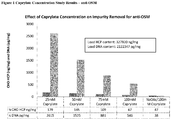
- Buffers were prepared by titrating to specific pHs using acetic acid or tris base. As a control, screening conditions were compared to results from a wash buffer similar to a standard high-salt protein A wash buffer, 50 mM tris, acetic acid, 1 M NaCl, pH 7.2. Refer to Figure 1 for a complete list of the five experimental conditions tested and Tables 3 and 4 for the corresponding results.
- the wash buffers were tested in protein A chromatography of GSK assets anti-OSM (GSK315234) and anti-IL13 (GSK679586) cell culture filtrate. These two separate cases resulted in similar HCP and DNA reduction trends.
- the maximum sodium caprylate concentration tested in this study was 100 mM sodium caprylate due to an empirically determined solubility of approximately 125 mM sodium caprylate at a pH of 7.2. Since solubility is expected to increase at higher pH, higher concentrations of caprylate could be tested by adjusting the buffer system and components, if greater host cell contaminant removal were required. Based on this work, however, we determined that 100 mM sodium caprylate in combination with 0.3 M sodium acetate gave adequate removal of host cell impurities.
- Sodium caprylate is the sodium salt of caprylic acid, consisting of an eight carbon long aliphatic chain belonging to a class of carboxylic acids. These amphipathic saturated unbranched salts act as a detergent due to their saturated carbon tails and charged carboxyl head group. To determine the effect of the carbon tail length on contaminant removal several other sodium salts were tested. These other salts tested include sodium caproate, sodium heptanoate, sodium caprylate, sodium decanoate, and sodium dodecanoate. The experimental design is summarized in Table 6. The results of this experiment are summarized in Figure 3 . Sodium dodecanoate was excluded from the analysis due to the low yield and altered elution behaviour observed in preliminary experiments.
- Anti-IL13 cell culture filtrate from anti-IL13 cell culture filtrate at 1.16 g/L was processed over a 2.6 x 27 cm MabSelect SuRe column using two different wash regimes. Half of this material was processed through protein A chromatography using the optimized wash regime incorporating sodium caprylate. The other half of the material was processed with equilibration buffer in place of the caprylate wash. Using turbidity as a determinate of filterability, turbidity measurements of the eluate pools were recorded.
- the eluates were then titrated to pH 3.5 with 30 mM acetic acid, 100 mM hydrochloric acid. The turbidity measurements were again measured and recorded. Following a one hour incubation of the eluate samples at pH 3.5 they were then titrated to pH 6.0 in preparation for the next unit operation. Turbidity measurements of the pH adjusted pools were measured and recorded. The resulting data is summarized in Table and the impurity profile is presented in Table . Considering turbidity as an indicator of filterability, the caprylate wash would reduce some of the burden on filtration due to a 50% decrease in turbidity of the anion exchange load material.
- DOM0100 a 25kDa (V k -V H albudAb+TNFR1dAb) dAb molecule expressed in E. coli was purified using protein A, MabSelect Xtra from GE Healthcare packed in a 0.5x20cm column. The flow rate was 300cm/hr for all the steps. After equilibration with 55mM tris-base, 45mM acetic acid, pH7.5, cell culture filtrate was loaded on the column at 13.5mg/mL of resin. The load titer was 1.88mg/mL.
- the column was then washed using 5 column volumes of 55mM tris-base, 45mM acetic acid, 300mM sodium acetate, 100mM sodium caprylate, pH7.5.
- the protein was then eluted and thereafter the column was cleaned, sanitized and stored.
- the analysis of the elution peak gave 1,440ppm HCPs (host cell proteins) by ELISA for a 74.9% yield.
- the same experiment repeated twice under the same conditions but with a high salt wash instead of the caprylate wash gave 2,398ppm and 2,456ppm HCPs by ELISA for a yield of 77.2% and 76.0% respectively.
- DAT06 a 11.5kDa (V k ) dAb molecule expressed in E. coli was purified using protein L (Capto L from GE Healthcare) packed in a 0.5cmx20cm column. The flow rate was 300cm/hr for all the steps. After equilibration with 52mM tris-base, 48mM acetic acid, pH7, cell culture filtrate was loaded at 13mg/mL of resin. The column was then washed using 5CV, 52mM tris-base, 48mM acetic acid, 100mM sodium caprylate, pH7, before to be re-equilibrated, eluted, cleaned, sanitized and stored.
Landscapes
- Chemical & Material Sciences (AREA)
- Organic Chemistry (AREA)
- Health & Medical Sciences (AREA)
- Life Sciences & Earth Sciences (AREA)
- Molecular Biology (AREA)
- Biophysics (AREA)
- Biochemistry (AREA)
- Analytical Chemistry (AREA)
- General Health & Medical Sciences (AREA)
- Genetics & Genomics (AREA)
- Medicinal Chemistry (AREA)
- Proteomics, Peptides & Aminoacids (AREA)
- Immunology (AREA)
- Chemical Kinetics & Catalysis (AREA)
- Peptides Or Proteins (AREA)
- Solid-Sorbent Or Filter-Aiding Compositions (AREA)
- Treatment Of Liquids With Adsorbents In General (AREA)
- Preparation Of Compounds By Using Micro-Organisms (AREA)
Priority Applications (3)
| Application Number | Priority Date | Filing Date | Title |
|---|---|---|---|
| EP24155364.3A EP4371996A3 (en) | 2013-03-15 | 2014-03-13 | Methods for purifying antibodies |
| DK19198005.1T DK3680000T3 (da) | 2013-03-15 | 2014-03-13 | Fremgangsmåder til oprensning af antistoffer |
| EP19198005.1A EP3680000B1 (en) | 2013-03-15 | 2014-03-13 | Methods for purifying antibodies |
Applications Claiming Priority (2)
| Application Number | Priority Date | Filing Date | Title |
|---|---|---|---|
| US201361787309P | 2013-03-15 | 2013-03-15 | |
| PCT/IB2014/059755 WO2014141150A1 (en) | 2013-03-15 | 2014-03-13 | Methods for purifying antibodies |
Related Child Applications (3)
| Application Number | Title | Priority Date | Filing Date |
|---|---|---|---|
| EP24155364.3A Division EP4371996A3 (en) | 2013-03-15 | 2014-03-13 | Methods for purifying antibodies |
| EP19198005.1A Division-Into EP3680000B1 (en) | 2013-03-15 | 2014-03-13 | Methods for purifying antibodies |
| EP19198005.1A Division EP3680000B1 (en) | 2013-03-15 | 2014-03-13 | Methods for purifying antibodies |
Publications (2)
| Publication Number | Publication Date |
|---|---|
| EP2969098A1 EP2969098A1 (en) | 2016-01-20 |
| EP2969098B1 true EP2969098B1 (en) | 2019-10-30 |
Family
ID=50391244
Family Applications (3)
| Application Number | Title | Priority Date | Filing Date |
|---|---|---|---|
| EP14713926.5A Active EP2969098B1 (en) | 2013-03-15 | 2014-03-13 | Methods for purifying antibodies |
| EP24155364.3A Pending EP4371996A3 (en) | 2013-03-15 | 2014-03-13 | Methods for purifying antibodies |
| EP19198005.1A Active EP3680000B1 (en) | 2013-03-15 | 2014-03-13 | Methods for purifying antibodies |
Family Applications After (2)
| Application Number | Title | Priority Date | Filing Date |
|---|---|---|---|
| EP24155364.3A Pending EP4371996A3 (en) | 2013-03-15 | 2014-03-13 | Methods for purifying antibodies |
| EP19198005.1A Active EP3680000B1 (en) | 2013-03-15 | 2014-03-13 | Methods for purifying antibodies |
Country Status (15)
| Country | Link |
|---|---|
| US (3) | US10676503B2 (https=) |
| EP (3) | EP2969098B1 (https=) |
| JP (2) | JP6599773B2 (https=) |
| KR (1) | KR102114021B1 (https=) |
| CN (1) | CN105188872B (https=) |
| AU (1) | AU2014229280B2 (https=) |
| BR (1) | BR112015022321A2 (https=) |
| CA (1) | CA2902287A1 (https=) |
| DK (2) | DK3680000T3 (https=) |
| ES (2) | ES2765206T3 (https=) |
| IL (1) | IL240753B (https=) |
| RU (1) | RU2651483C2 (https=) |
| SG (1) | SG11201506494XA (https=) |
| TW (1) | TWI625335B (https=) |
| WO (1) | WO2014141150A1 (https=) |
Families Citing this family (14)
| Publication number | Priority date | Publication date | Assignee | Title |
|---|---|---|---|---|
| EP2969098B1 (en) | 2013-03-15 | 2019-10-30 | Glaxosmithkline Intellectual Property (No. 2) Limited | Methods for purifying antibodies |
| EP2997036B1 (en) | 2013-05-15 | 2021-03-03 | Medimmune Limited | Purification of recombinantly produced polypeptides |
| US20170044210A1 (en) | 2014-04-30 | 2017-02-16 | Novo Nordisk A/S | Methods for the purification of proteins using caprylic acid |
| CN108064286A (zh) | 2015-01-26 | 2018-05-22 | 株式会社钟化 | 突变型免疫球蛋白κ链可变区结合性肽 |
| WO2016121701A1 (ja) | 2015-01-26 | 2016-08-04 | 株式会社カネカ | 免疫グロブリンκ鎖可変領域含有タンパク質精製用アフィニティー分離マトリックス |
| WO2017195638A1 (ja) * | 2016-05-09 | 2017-11-16 | 株式会社カネカ | 抗体またはκ鎖可変領域含有抗体断片の精製方法 |
| RU2759909C2 (ru) * | 2016-09-07 | 2021-11-18 | Глэксосмитклайн Интеллекчуал Проперти Дивелопмент Лимитед | Способы очистки антител |
| CN106939045B (zh) * | 2017-05-01 | 2020-03-31 | 深圳市国创纳米抗体技术有限公司 | 一种单克隆抗体细胞培养液澄清的方法 |
| CN108085358A (zh) * | 2018-02-08 | 2018-05-29 | 保定冀中药业有限公司 | 一种犬细小病毒单克隆抗体IgG2b-Fab片段的制备方法 |
| TW202003555A (zh) * | 2018-03-07 | 2020-01-16 | 英商葛蘭素史克智慧財產發展有限公司 | 用於純化重組多肽之方法 |
| TW202000891A (zh) | 2018-03-07 | 2020-01-01 | 英商葛蘭素史克智慧財產發展有限公司 | 純化抗體之方法 |
| US20230302381A1 (en) * | 2020-08-18 | 2023-09-28 | Sartorius Bia Separations D.O.O. | Metal-affinity extraction of host cell dna |
| CN114133446A (zh) * | 2021-12-31 | 2022-03-04 | 方坦思(上海)生物医药有限公司 | 单克隆抗体的纯化方法 |
| CN116179582A (zh) * | 2022-09-27 | 2023-05-30 | 南京医事达生物科技有限公司 | 一种通用型基因重组蛋白质a亲和纯化填料制备方法和应用 |
Citations (3)
| Publication number | Priority date | Publication date | Assignee | Title |
|---|---|---|---|---|
| WO2007109163A2 (en) | 2006-03-16 | 2007-09-27 | Amgen Inc | Wash buffer and method of using |
| WO2014141150A1 (en) | 2013-03-15 | 2014-09-18 | Glaxosmithkline Intellectual Property (No.2) Limited | Methods for purifying antibodies |
| WO2014186350A1 (en) | 2013-05-15 | 2014-11-20 | Medimmune Limited | Purification of recombinantly produced polypeptides |
Family Cites Families (14)
| Publication number | Priority date | Publication date | Assignee | Title |
|---|---|---|---|---|
| JPS57106673A (en) | 1980-12-24 | 1982-07-02 | Chugai Pharmaceut Co Ltd | Dibenzo(b,f)(1,4)oxazepin derivative |
| GB8607679D0 (en) | 1986-03-27 | 1986-04-30 | Winter G P | Recombinant dna product |
| US5429746A (en) * | 1994-02-22 | 1995-07-04 | Smith Kline Beecham Corporation | Antibody purification |
| US6955917B2 (en) | 1997-06-20 | 2005-10-18 | Bayer Healthcare Llc | Chromatographic method for high yield purification and viral inactivation of antibodies |
| IL127127A0 (en) | 1998-11-18 | 1999-09-22 | Peptor Ltd | Small functional units of antibody heavy chain variable regions |
| DE60203176T2 (de) * | 2001-06-01 | 2006-04-27 | Upfront Chromatography A/S, Kopenhagen | Fraktionierung von proteinhaltigen mischungen |
| PT1419179E (pt) | 2001-08-10 | 2010-03-16 | Univ Aberdeen | Domínios de ligação de antigenes |
| MXPA04011769A (es) | 2002-05-31 | 2005-07-26 | Indian Agricultural Council | Deteccion rapida de toxinas cry de bacillus thuringiensis. |
| CA2557229C (en) | 2004-02-27 | 2012-07-10 | Octapharma Ag | A method of providing a purified, virus safe antibody preparation |
| WO2005113604A2 (en) * | 2004-05-14 | 2005-12-01 | Hematech, Llc | Methods for immunoglobulin purification |
| CN101511387A (zh) | 2006-09-08 | 2009-08-19 | 惠氏公司 | 使用亲和色谱法纯化蛋白质的精氨酸洗涤液 |
| WO2008085988A1 (en) * | 2007-01-05 | 2008-07-17 | Amgen Inc. | Methods of purifying proteins |
| CN107915769A (zh) * | 2011-03-29 | 2018-04-17 | 葛兰素史密斯克莱有限责任公司 | 用于蛋白纯化的缓冲液体系 |
| CN120904322A (zh) | 2013-09-13 | 2025-11-07 | 豪夫迈·罗氏有限公司 | 包含纯化的重组多肽的方法和组合物 |
-
2014
- 2014-03-13 EP EP14713926.5A patent/EP2969098B1/en active Active
- 2014-03-13 BR BR112015022321A patent/BR112015022321A2/pt not_active Application Discontinuation
- 2014-03-13 EP EP24155364.3A patent/EP4371996A3/en active Pending
- 2014-03-13 AU AU2014229280A patent/AU2014229280B2/en not_active Ceased
- 2014-03-13 CN CN201480016016.XA patent/CN105188872B/zh active Active
- 2014-03-13 DK DK19198005.1T patent/DK3680000T3/da active
- 2014-03-13 KR KR1020157029042A patent/KR102114021B1/ko active Active
- 2014-03-13 RU RU2015136860A patent/RU2651483C2/ru active
- 2014-03-13 TW TW103108898A patent/TWI625335B/zh active
- 2014-03-13 WO PCT/IB2014/059755 patent/WO2014141150A1/en not_active Ceased
- 2014-03-13 ES ES14713926T patent/ES2765206T3/es active Active
- 2014-03-13 DK DK14713926.5T patent/DK2969098T3/da active
- 2014-03-13 US US14/775,868 patent/US10676503B2/en active Active
- 2014-03-13 EP EP19198005.1A patent/EP3680000B1/en active Active
- 2014-03-13 CA CA2902287A patent/CA2902287A1/en not_active Abandoned
- 2014-03-13 JP JP2015562513A patent/JP6599773B2/ja active Active
- 2014-03-13 ES ES19198005T patent/ES2978309T3/es active Active
- 2014-03-13 SG SG11201506494XA patent/SG11201506494XA/en unknown
-
2015
- 2015-08-23 IL IL240753A patent/IL240753B/en active IP Right Grant
-
2019
- 2019-10-03 JP JP2019182562A patent/JP7002511B2/ja active Active
-
2020
- 2020-05-13 US US15/931,062 patent/US12358945B2/en active Active
-
2025
- 2025-06-12 US US19/235,815 patent/US20250353878A1/en active Pending
Patent Citations (3)
| Publication number | Priority date | Publication date | Assignee | Title |
|---|---|---|---|---|
| WO2007109163A2 (en) | 2006-03-16 | 2007-09-27 | Amgen Inc | Wash buffer and method of using |
| WO2014141150A1 (en) | 2013-03-15 | 2014-09-18 | Glaxosmithkline Intellectual Property (No.2) Limited | Methods for purifying antibodies |
| WO2014186350A1 (en) | 2013-05-15 | 2014-11-20 | Medimmune Limited | Purification of recombinantly produced polypeptides |
Non-Patent Citations (11)
| Title |
|---|
| AMITH D. NAIK ET AL.: "Performance of hexamer peptide ligands for affinity purification of immunoglobulin G from commercial cell culture media", JOURNAL OF CHROMATOGRAPHY A, vol. 1218, 2011, pages 1691 - 1700, XP028175206, DOI: 10.1016/j.chroma.2010.11.071 |
| ANONYMOUS: "Albumin in Cell Culture", SIGMA-ALDRICH, 26 October 2008 (2008-10-26), pages 1 - 2, XP055751730 |
| ANONYMOUS: "Single Step Clarification & Capture of a Recombinant Protein from E. coli Osmotic Shock by Crossflow Chromatography", NATRIX, 2010, pages 1 - 5, XP055751724 |
| ELIN MONIE: "Evaluation of the 96-well format for screening of chromatographic buffer conditions", UPTEC X 03 030 MASTER'S DEGREE PROJECT, 2006, pages 1 - 58, XP055495100 |
| FRASER JOHN D ET AL: "The bacterial superantigen and superantigen-like proteins.", IMMUNOLOGICAL REVIEWS OCT 2008, vol. 225, October 2008 (2008-10-01), pages 226 - 243, XP055306250, ISSN: 1600-065X, DOI: 10.1111/j.1600-065X.2008.00681.x * |
| HAIOU YANG ET AL.: "Purification of human immunoglobulin G via Fc-specific small peptide ligand affinity chromatography", JOURNAL OF CHROMATOGRAPHY A, vol. 1216, 2009, pages 910 - 918, XP025872882, DOI: 10.1016/j.chroma.2008.12.004 |
| KEVIN A. HENRY ET AL: "A Rational Engineering Strategy for Designing Protein A-Binding Camelid Single-Domain Antibodies", PLOS ONE, vol. 11, no. 9, 15 September 2016 (2016-09-15), pages e0163113, XP055471386, DOI: 10.1371/journal.pone.0163113 |
| NEWCOMBE A R; CRESSWELL C; DAVIES S; WATSON K; HARRIS G; O'DONOVAN K; FRANCIS R: "Optimised affinity purification of polyclonal antibodies from hyper immunized ovine serum using synthetic Protein A adsorbent, MAbsorbenf A2P", JOURNAL OF CHROMATOGRAPHY B, vol. 814, no. 2, 2005, pages 209 - 215, XP027626838 |
| SARAH LE MERDY: "Selection of Clarification Methods for Improved Downstream Performance and Economics", BIOPROCESSING: ADVANCES AND TRENDS IN BIOLOGICAL PRODUCTDEVELOPMENT, vol. 14, no. 3, 9 October 2015 (2015-10-09), US , pages 50 - 55, XP055641737, ISSN: 1538-8786, DOI: 10.12665/J143.LeMerdy |
| SUNIL CHHATRE ET AL.: "Purification of antibodies using the synthetic affinity ligand absorbent MAbsorbent A2P", NATURE PROTOCOLS, vol. 2, no. 7, 2007, pages 1763 - 1769, XP037115886, DOI: 10.1038/nprot.2007.253 |
| ZHUO LIU ET AL.: "Effects of peptide density and elution pH on affinity chromatographic purification of human immunoglobulins A and M", JOURNAL OF CHROMATOGRAPHY A, vol. 1218, 2011, pages 8344 - 8352, XP028325423, DOI: 10.1016/j.chroma.2011.09.038 |
Also Published As
Similar Documents
| Publication | Publication Date | Title |
|---|---|---|
| US20250353878A1 (en) | Methods of Purifying Antibodies | |
| US9868761B2 (en) | Buffer system for protein purification | |
| US20230046182A1 (en) | Methods for purifying antibodies | |
| US20210054051A1 (en) | Methods for purifying recombinant polypeptides |
Legal Events
| Date | Code | Title | Description |
|---|---|---|---|
| PUAI | Public reference made under article 153(3) epc to a published international application that has entered the european phase |
Free format text: ORIGINAL CODE: 0009012 |
|
| 17P | Request for examination filed |
Effective date: 20151008 |
|
| AK | Designated contracting states |
Kind code of ref document: A1 Designated state(s): AL AT BE BG CH CY CZ DE DK EE ES FI FR GB GR HR HU IE IS IT LI LT LU LV MC MK MT NL NO PL PT RO RS SE SI SK SM TR |
|
| AX | Request for extension of the european patent |
Extension state: BA ME |
|
| RAP1 | Party data changed (applicant data changed or rights of an application transferred) |
Owner name: GLAXOSMITHKLINE INTELLECTUAL PROPERTY (NO. 2) LIMI |
|
| DAX | Request for extension of the european patent (deleted) | ||
| STAA | Information on the status of an ep patent application or granted ep patent |
Free format text: STATUS: EXAMINATION IS IN PROGRESS |
|
| 17Q | First examination report despatched |
Effective date: 20170223 |
|
| GRAP | Despatch of communication of intention to grant a patent |
Free format text: ORIGINAL CODE: EPIDOSNIGR1 |
|
| STAA | Information on the status of an ep patent application or granted ep patent |
Free format text: STATUS: GRANT OF PATENT IS INTENDED |
|
| INTG | Intention to grant announced |
Effective date: 20181220 |
|
| RIN1 | Information on inventor provided before grant (corrected) |
Inventor name: SUDA, ERIC J. Inventor name: GOKLEN, KENT E. Inventor name: UBIERA, ANTONIO RAUL |
|
| GRAJ | Information related to disapproval of communication of intention to grant by the applicant or resumption of examination proceedings by the epo deleted |
Free format text: ORIGINAL CODE: EPIDOSDIGR1 |
|
| STAA | Information on the status of an ep patent application or granted ep patent |
Free format text: STATUS: EXAMINATION IS IN PROGRESS |
|
| INTC | Intention to grant announced (deleted) | ||
| GRAP | Despatch of communication of intention to grant a patent |
Free format text: ORIGINAL CODE: EPIDOSNIGR1 |
|
| STAA | Information on the status of an ep patent application or granted ep patent |
Free format text: STATUS: GRANT OF PATENT IS INTENDED |
|
| INTG | Intention to grant announced |
Effective date: 20190524 |
|
| GRAS | Grant fee paid |
Free format text: ORIGINAL CODE: EPIDOSNIGR3 |
|
| GRAA | (expected) grant |
Free format text: ORIGINAL CODE: 0009210 |
|
| STAA | Information on the status of an ep patent application or granted ep patent |
Free format text: STATUS: THE PATENT HAS BEEN GRANTED |
|
| AK | Designated contracting states |
Kind code of ref document: B1 Designated state(s): AL AT BE BG CH CY CZ DE DK EE ES FI FR GB GR HR HU IE IS IT LI LT LU LV MC MK MT NL NO PL PT RO RS SE SI SK SM TR |
|
| REG | Reference to a national code |
Ref country code: GB Ref legal event code: FG4D |
|
| REG | Reference to a national code |
Ref country code: CH Ref legal event code: EP |
|
| REG | Reference to a national code |
Ref country code: AT Ref legal event code: REF Ref document number: 1195536 Country of ref document: AT Kind code of ref document: T Effective date: 20191115 |
|
| REG | Reference to a national code |
Ref country code: DE Ref legal event code: R096 Ref document number: 602014055894 Country of ref document: DE |
|
| REG | Reference to a national code |
Ref country code: IE Ref legal event code: FG4D |
|
| REG | Reference to a national code |
Ref country code: CH Ref legal event code: NV Representative=s name: ISLER AND PEDRAZZINI AG, CH |
|
| REG | Reference to a national code |
Ref country code: DK Ref legal event code: T3 Effective date: 20200122 |
|
| REG | Reference to a national code |
Ref country code: NL Ref legal event code: FP |
|
| REG | Reference to a national code |
Ref country code: LT Ref legal event code: MG4D |
|
| PG25 | Lapsed in a contracting state [announced via postgrant information from national office to epo] |
Ref country code: PT Free format text: LAPSE BECAUSE OF FAILURE TO SUBMIT A TRANSLATION OF THE DESCRIPTION OR TO PAY THE FEE WITHIN THE PRESCRIBED TIME-LIMIT Effective date: 20200302 Ref country code: LT Free format text: LAPSE BECAUSE OF FAILURE TO SUBMIT A TRANSLATION OF THE DESCRIPTION OR TO PAY THE FEE WITHIN THE PRESCRIBED TIME-LIMIT Effective date: 20191030 Ref country code: GR Free format text: LAPSE BECAUSE OF FAILURE TO SUBMIT A TRANSLATION OF THE DESCRIPTION OR TO PAY THE FEE WITHIN THE PRESCRIBED TIME-LIMIT Effective date: 20200131 Ref country code: PL Free format text: LAPSE BECAUSE OF FAILURE TO SUBMIT A TRANSLATION OF THE DESCRIPTION OR TO PAY THE FEE WITHIN THE PRESCRIBED TIME-LIMIT Effective date: 20191030 Ref country code: NO Free format text: LAPSE BECAUSE OF FAILURE TO SUBMIT A TRANSLATION OF THE DESCRIPTION OR TO PAY THE FEE WITHIN THE PRESCRIBED TIME-LIMIT Effective date: 20200130 Ref country code: SE Free format text: LAPSE BECAUSE OF FAILURE TO SUBMIT A TRANSLATION OF THE DESCRIPTION OR TO PAY THE FEE WITHIN THE PRESCRIBED TIME-LIMIT Effective date: 20191030 Ref country code: LV Free format text: LAPSE BECAUSE OF FAILURE TO SUBMIT A TRANSLATION OF THE DESCRIPTION OR TO PAY THE FEE WITHIN THE PRESCRIBED TIME-LIMIT Effective date: 20191030 Ref country code: BG Free format text: LAPSE BECAUSE OF FAILURE TO SUBMIT A TRANSLATION OF THE DESCRIPTION OR TO PAY THE FEE WITHIN THE PRESCRIBED TIME-LIMIT Effective date: 20200130 Ref country code: FI Free format text: LAPSE BECAUSE OF FAILURE TO SUBMIT A TRANSLATION OF THE DESCRIPTION OR TO PAY THE FEE WITHIN THE PRESCRIBED TIME-LIMIT Effective date: 20191030 |
|
| PG25 | Lapsed in a contracting state [announced via postgrant information from national office to epo] |
Ref country code: RS Free format text: LAPSE BECAUSE OF FAILURE TO SUBMIT A TRANSLATION OF THE DESCRIPTION OR TO PAY THE FEE WITHIN THE PRESCRIBED TIME-LIMIT Effective date: 20191030 Ref country code: HR Free format text: LAPSE BECAUSE OF FAILURE TO SUBMIT A TRANSLATION OF THE DESCRIPTION OR TO PAY THE FEE WITHIN THE PRESCRIBED TIME-LIMIT Effective date: 20191030 |
|
| REG | Reference to a national code |
Ref country code: ES Ref legal event code: FG2A Ref document number: 2765206 Country of ref document: ES Kind code of ref document: T3 Effective date: 20200608 |
|
| PG25 | Lapsed in a contracting state [announced via postgrant information from national office to epo] |
Ref country code: AL Free format text: LAPSE BECAUSE OF FAILURE TO SUBMIT A TRANSLATION OF THE DESCRIPTION OR TO PAY THE FEE WITHIN THE PRESCRIBED TIME-LIMIT Effective date: 20191030 |
|
| REG | Reference to a national code |
Ref country code: DE Ref legal event code: R026 Ref document number: 602014055894 Country of ref document: DE |
|
| PG25 | Lapsed in a contracting state [announced via postgrant information from national office to epo] |
Ref country code: EE Free format text: LAPSE BECAUSE OF FAILURE TO SUBMIT A TRANSLATION OF THE DESCRIPTION OR TO PAY THE FEE WITHIN THE PRESCRIBED TIME-LIMIT Effective date: 20191030 Ref country code: RO Free format text: LAPSE BECAUSE OF FAILURE TO SUBMIT A TRANSLATION OF THE DESCRIPTION OR TO PAY THE FEE WITHIN THE PRESCRIBED TIME-LIMIT Effective date: 20191030 Ref country code: CZ Free format text: LAPSE BECAUSE OF FAILURE TO SUBMIT A TRANSLATION OF THE DESCRIPTION OR TO PAY THE FEE WITHIN THE PRESCRIBED TIME-LIMIT Effective date: 20191030 |
|
| PLBI | Opposition filed |
Free format text: ORIGINAL CODE: 0009260 |
|
| PLAX | Notice of opposition and request to file observation + time limit sent |
Free format text: ORIGINAL CODE: EPIDOSNOBS2 |
|
| PG25 | Lapsed in a contracting state [announced via postgrant information from national office to epo] |
Ref country code: SM Free format text: LAPSE BECAUSE OF FAILURE TO SUBMIT A TRANSLATION OF THE DESCRIPTION OR TO PAY THE FEE WITHIN THE PRESCRIBED TIME-LIMIT Effective date: 20191030 Ref country code: SK Free format text: LAPSE BECAUSE OF FAILURE TO SUBMIT A TRANSLATION OF THE DESCRIPTION OR TO PAY THE FEE WITHIN THE PRESCRIBED TIME-LIMIT Effective date: 20191030 |
|
| 26 | Opposition filed |
Opponent name: WALLINGER RICKER SCHLOTTER TOSTMANN Effective date: 20200730 |
|
| REG | Reference to a national code |
Ref country code: AT Ref legal event code: UEP Ref document number: 1195536 Country of ref document: AT Kind code of ref document: T Effective date: 20191030 |
|
| PG25 | Lapsed in a contracting state [announced via postgrant information from national office to epo] |
Ref country code: MC Free format text: LAPSE BECAUSE OF FAILURE TO SUBMIT A TRANSLATION OF THE DESCRIPTION OR TO PAY THE FEE WITHIN THE PRESCRIBED TIME-LIMIT Effective date: 20191030 |
|
| PG25 | Lapsed in a contracting state [announced via postgrant information from national office to epo] |
Ref country code: SI Free format text: LAPSE BECAUSE OF FAILURE TO SUBMIT A TRANSLATION OF THE DESCRIPTION OR TO PAY THE FEE WITHIN THE PRESCRIBED TIME-LIMIT Effective date: 20191030 |
|
| PLBB | Reply of patent proprietor to notice(s) of opposition received |
Free format text: ORIGINAL CODE: EPIDOSNOBS3 |
|
| PG25 | Lapsed in a contracting state [announced via postgrant information from national office to epo] |
Ref country code: LU Free format text: LAPSE BECAUSE OF NON-PAYMENT OF DUE FEES Effective date: 20200313 |
|
| RDAF | Communication despatched that patent is revoked |
Free format text: ORIGINAL CODE: EPIDOSNREV1 |
|
| PG25 | Lapsed in a contracting state [announced via postgrant information from national office to epo] |
Ref country code: TR Free format text: LAPSE BECAUSE OF FAILURE TO SUBMIT A TRANSLATION OF THE DESCRIPTION OR TO PAY THE FEE WITHIN THE PRESCRIBED TIME-LIMIT Effective date: 20191030 Ref country code: MT Free format text: LAPSE BECAUSE OF FAILURE TO SUBMIT A TRANSLATION OF THE DESCRIPTION OR TO PAY THE FEE WITHIN THE PRESCRIBED TIME-LIMIT Effective date: 20191030 Ref country code: CY Free format text: LAPSE BECAUSE OF FAILURE TO SUBMIT A TRANSLATION OF THE DESCRIPTION OR TO PAY THE FEE WITHIN THE PRESCRIBED TIME-LIMIT Effective date: 20191030 |
|
| APBM | Appeal reference recorded |
Free format text: ORIGINAL CODE: EPIDOSNREFNO |
|
| APBP | Date of receipt of notice of appeal recorded |
Free format text: ORIGINAL CODE: EPIDOSNNOA2O |
|
| APAH | Appeal reference modified |
Free format text: ORIGINAL CODE: EPIDOSCREFNO |
|
| PG25 | Lapsed in a contracting state [announced via postgrant information from national office to epo] |
Ref country code: MK Free format text: LAPSE BECAUSE OF FAILURE TO SUBMIT A TRANSLATION OF THE DESCRIPTION OR TO PAY THE FEE WITHIN THE PRESCRIBED TIME-LIMIT Effective date: 20191030 |
|
| APBQ | Date of receipt of statement of grounds of appeal recorded |
Free format text: ORIGINAL CODE: EPIDOSNNOA3O |
|
| RAP2 | Party data changed (patent owner data changed or rights of a patent transferred) |
Owner name: GLAXOSMITHKLINE INTELLECTUAL PROPERTY DEVELOPMENT LIMITED |
|
| P01 | Opt-out of the competence of the unified patent court (upc) registered |
Effective date: 20230331 |
|
| APBU | Appeal procedure closed |
Free format text: ORIGINAL CODE: EPIDOSNNOA9O |
|
| REG | Reference to a national code |
Ref country code: BE Ref legal event code: PD Owner name: GLAXOSMITHKLINE INTELLECTUAL PROPERTY (NO. 2) LIMITED; GB Free format text: DETAILS ASSIGNMENT: CHANGE OF OWNER(S), OTHER; FORMER OWNER NAME: KIRKPATRICK Effective date: 20240924 |
|
| PGFP | Annual fee paid to national office [announced via postgrant information from national office to epo] |
Ref country code: NL Payment date: 20250219 Year of fee payment: 12 |
|
| PGFP | Annual fee paid to national office [announced via postgrant information from national office to epo] |
Ref country code: IS Payment date: 20250304 Year of fee payment: 12 Ref country code: DE Payment date: 20250218 Year of fee payment: 12 |
|
| PGFP | Annual fee paid to national office [announced via postgrant information from national office to epo] |
Ref country code: DK Payment date: 20250218 Year of fee payment: 12 |
|
| PGFP | Annual fee paid to national office [announced via postgrant information from national office to epo] |
Ref country code: IE Payment date: 20250220 Year of fee payment: 12 |
|
| PGFP | Annual fee paid to national office [announced via postgrant information from national office to epo] |
Ref country code: AT Payment date: 20250220 Year of fee payment: 12 Ref country code: BE Payment date: 20250218 Year of fee payment: 12 |
|
| PGFP | Annual fee paid to national office [announced via postgrant information from national office to epo] |
Ref country code: FR Payment date: 20250218 Year of fee payment: 12 |
|
| PGFP | Annual fee paid to national office [announced via postgrant information from national office to epo] |
Ref country code: GB Payment date: 20250221 Year of fee payment: 12 Ref country code: IT Payment date: 20250218 Year of fee payment: 12 |
|
| PGFP | Annual fee paid to national office [announced via postgrant information from national office to epo] |
Ref country code: ES Payment date: 20250401 Year of fee payment: 12 |
|
| PGFP | Annual fee paid to national office [announced via postgrant information from national office to epo] |
Ref country code: CH Payment date: 20250401 Year of fee payment: 12 |
|
| RAP4 | Party data changed (patent owner data changed or rights of a patent transferred) |
Owner name: GLAXOSMITHKLINE INTELLECTUAL PROPERTY DEVELOPMENTLIMITED |
|
| RDAD | Information modified related to despatch of communication that patent is revoked |
Free format text: ORIGINAL CODE: EPIDOSCREV1 |
|
| RDAD | Information modified related to despatch of communication that patent is revoked |
Free format text: ORIGINAL CODE: EPIDOSCREV1 |