EP2964012B1 - Photon modulation management system - Google Patents
Photon modulation management system Download PDFInfo
- Publication number
- EP2964012B1 EP2964012B1 EP14761009.1A EP14761009A EP2964012B1 EP 2964012 B1 EP2964012 B1 EP 2964012B1 EP 14761009 A EP14761009 A EP 14761009A EP 2964012 B1 EP2964012 B1 EP 2964012B1
- Authority
- EP
- European Patent Office
- Prior art keywords
- photon
- pulse
- duration
- additional
- intensity
- Prior art date
- Legal status (The legal status is an assumption and is not a legal conclusion. Google has not performed a legal analysis and makes no representation as to the accuracy of the status listed.)
- Active
Links
Images




Classifications
-
- A—HUMAN NECESSITIES
- A01—AGRICULTURE; FORESTRY; ANIMAL HUSBANDRY; HUNTING; TRAPPING; FISHING
- A01G—HORTICULTURE; CULTIVATION OF VEGETABLES, FLOWERS, RICE, FRUIT, VINES, HOPS OR SEAWEED; FORESTRY; WATERING
- A01G7/00—Botany in general
- A01G7/04—Electric or magnetic or acoustic treatment of plants for promoting growth
- A01G7/045—Electric or magnetic or acoustic treatment of plants for promoting growth with electric lighting
-
- A—HUMAN NECESSITIES
- A01—AGRICULTURE; FORESTRY; ANIMAL HUSBANDRY; HUNTING; TRAPPING; FISHING
- A01G—HORTICULTURE; CULTIVATION OF VEGETABLES, FLOWERS, RICE, FRUIT, VINES, HOPS OR SEAWEED; FORESTRY; WATERING
- A01G33/00—Cultivation of seaweed or algae
-
- A—HUMAN NECESSITIES
- A01—AGRICULTURE; FORESTRY; ANIMAL HUSBANDRY; HUNTING; TRAPPING; FISHING
- A01G—HORTICULTURE; CULTIVATION OF VEGETABLES, FLOWERS, RICE, FRUIT, VINES, HOPS OR SEAWEED; FORESTRY; WATERING
- A01G9/00—Cultivation in receptacles, forcing-frames or greenhouses; Edging for beds, lawn or the like
- A01G9/20—Forcing-frames; Lights, i.e. glass panels covering the forcing-frames
-
- A—HUMAN NECESSITIES
- A01—AGRICULTURE; FORESTRY; ANIMAL HUSBANDRY; HUNTING; TRAPPING; FISHING
- A01H—NEW PLANTS OR NON-TRANSGENIC PROCESSES FOR OBTAINING THEM; PLANT REPRODUCTION BY TISSUE CULTURE TECHNIQUES
- A01H3/00—Processes for modifying phenotypes, e.g. symbiosis with bacteria
- A01H3/02—Processes for modifying phenotypes, e.g. symbiosis with bacteria by controlling duration, wavelength, intensity, or periodicity of illumination
-
- C—CHEMISTRY; METALLURGY
- C12—BIOCHEMISTRY; BEER; SPIRITS; WINE; VINEGAR; MICROBIOLOGY; ENZYMOLOGY; MUTATION OR GENETIC ENGINEERING
- C12M—APPARATUS FOR ENZYMOLOGY OR MICROBIOLOGY; APPARATUS FOR CULTURING MICROORGANISMS FOR PRODUCING BIOMASS, FOR GROWING CELLS OR FOR OBTAINING FERMENTATION OR METABOLIC PRODUCTS, i.e. BIOREACTORS OR FERMENTERS
- C12M31/00—Means for providing, directing, scattering or concentrating light
- C12M31/02—Means for providing, directing, scattering or concentrating light located outside the reactor
-
- C—CHEMISTRY; METALLURGY
- C12—BIOCHEMISTRY; BEER; SPIRITS; WINE; VINEGAR; MICROBIOLOGY; ENZYMOLOGY; MUTATION OR GENETIC ENGINEERING
- C12M—APPARATUS FOR ENZYMOLOGY OR MICROBIOLOGY; APPARATUS FOR CULTURING MICROORGANISMS FOR PRODUCING BIOMASS, FOR GROWING CELLS OR FOR OBTAINING FERMENTATION OR METABOLIC PRODUCTS, i.e. BIOREACTORS OR FERMENTERS
- C12M35/00—Means for application of stress for stimulating the growth of microorganisms or the generation of fermentation or metabolic products; Means for electroporation or cell fusion
- C12M35/02—Electrical or electromagnetic means, e.g. for electroporation or for cell fusion
-
- C—CHEMISTRY; METALLURGY
- C12—BIOCHEMISTRY; BEER; SPIRITS; WINE; VINEGAR; MICROBIOLOGY; ENZYMOLOGY; MUTATION OR GENETIC ENGINEERING
- C12M—APPARATUS FOR ENZYMOLOGY OR MICROBIOLOGY; APPARATUS FOR CULTURING MICROORGANISMS FOR PRODUCING BIOMASS, FOR GROWING CELLS OR FOR OBTAINING FERMENTATION OR METABOLIC PRODUCTS, i.e. BIOREACTORS OR FERMENTERS
- C12M41/00—Means for regulation, monitoring, measurement or control, e.g. flow regulation
- C12M41/44—Means for regulation, monitoring, measurement or control, e.g. flow regulation of volume or liquid level
-
- C—CHEMISTRY; METALLURGY
- C12—BIOCHEMISTRY; BEER; SPIRITS; WINE; VINEGAR; MICROBIOLOGY; ENZYMOLOGY; MUTATION OR GENETIC ENGINEERING
- C12N—MICROORGANISMS OR ENZYMES; COMPOSITIONS THEREOF; PROPAGATING, PRESERVING, OR MAINTAINING MICROORGANISMS; MUTATION OR GENETIC ENGINEERING; CULTURE MEDIA
- C12N13/00—Treatment of microorganisms or enzymes with electrical or wave energy, e.g. magnetism, sonic waves
Definitions
- Artificial light is often used in buildings, such a greenhouses and tissue culture labs, to promote organism growth, such as plant growth. Growing organisms within buildings and vertical farms require the usage of powered lighting to provide essential light for growth. These lights often are electrically powered and emit photons used for biological processes such as photosynthesis. Examples of various light or photon sources include but are not limited to metal halide light, fluorescent light, high-pressure sodium light, incandescent light and LEDs (light emitting diodes).
- US 2009/0047722 A1 describes a bioreactor system that is operable for growing photosynthetic organisms comprising light-emitting substrates received in the isolated space of a container, where each light-emitting substrate has a first surface and a second surface.
- WO 2011/115123 A1 describes a plant cultivation method and lighting device that can repel insects while also controlling the flowering reaction or avoiding delaying the flowering of short-day plants.
- EP 2 044 835 A1 , WO 2013/021952 A1 , DE 20 2006 001686 U1 , US 2011/016785 A1 and US 2012/042419 A1 illustrate alternative lighting systems for enhancing growth of a photosynthetic organism.
- the present invention is about a system for enhancing growth, destruction or repair in a photosynthetic organism as defined in claim 1 and a method for inducing a desired response in an photosynthetic organism as defined in claim 11.
- Embodiments of the present disclosure provide systems, apparatuses and methods for inducing a desired effect in an organism by creating electro-magnetic wave emission pulses (photons) of individual color spectrums in sufficient intensity to drive photochemical activation or desired response in an organism, using a characteristic frequency or pattern to minimize the required input power necessary to create organism growth, destruction and or repair, while also allowing for the monitoring of the power consumption and other variables of the system.
- photons electro-magnetic wave emission pulses
- the germination, growth, and reproduction rates of an organism can not only be influenced by a human, but germination, growth and reproduction rates, repair and destruction of an organism can be controlled and increased through the cycling between blue, yellow, near-red, far-red, infrared and ultra violet photon modulation.
- the systems, apparatuses and methods of the present disclosure provide energy, including individual color spectrums or ranges of color spectrums, at a frequency, intensity and duty cycle, which can be customized, monitored and optimized for the specific and optimal required growing, destruction and or repair characteristics of the target organism with the goal of maximizing growth, destruction and or repair while minimizing energy used in the system.
- energy including individual color spectrums or ranges of color spectrums, at a frequency, intensity and duty cycle, which can be customized, monitored and optimized for the specific and optimal required growing, destruction and or repair characteristics of the target organism with the goal of maximizing growth, destruction and or repair while minimizing energy used in the system.
- Photons are massless, elementary particles with no electric charge. Photons are emitted from a variety of sources such as molecular and nuclear processes, the quantum of light and all other forms of electromagnetic radiation. Photon energy can be absorbed by molecules called pigments, such as chromophores found in living organisms, and convert it into an electric potential.
- the resulting excited pigment molecules are unstable and the energy must be dissipated in one of three possible ways. 1. as heat; 2. remitted as light; or 3. utilized through participation in a photo chemical reaction which is the focus of the present disclosure.
- a chlorophyll pigment it has many different electrons, each of which may absorb a photon of different energy levels and consequently, different wavelengths. Moreover, each electron may exist in a variety of excitation states.
- a normal excited molecule has a very short lifetime (on the order of a nanosecond) and in the absence of any chemical interaction with other molecules in its environment, it must rid itself of any excess energy and return to the ground (non-excited) state. This dissipation of excess energy is accomplished in several ways however the conversion to triplet or metastable state is the primary mechanism of the present disclosure.
- the excited electron is transferred to an acceptor molecule or photo-oxidation. This energy is then utilized as the primary photochemical act in photosynthesis or conformational change as in the phytochrome molecule.
- the most common pigments utilized for plant growth are chlorophyll a, b, c, and d, phycobilins, terpenoids, carotenoids, cryptochromes, UV-B receptors (such as riboflavinoids), flavinoids, and betacyanins. These photoreceptors transfer their electrochemical energy to the electron transport chain.
- the photon absorbing photoreceptors such as chlorophyll, terpenoids, carotenoids etc. are actually conjugated molecules known as chromophores that allow for the conversion of photons into electrical potentials. Chromophores exist in many biological functions including melanocytosis and color sensing cells in human vision.
- This phenomenon can be seen in the vision opsin chromophore in humans.
- the absorption of a photon of light results in the photoisomerisation of the chromophore from the 11- cis to an all-trans conformation.
- the photoisomerization induces a conformational change in the opsin protein, causing the activation of the phototransduction cascade.
- the result is the conversion of rhodopsin into prelumirhodopsin with an all-trans chromophore.
- the opsin remains insensitive to light in the trans form. The change is followed by several rapid shifts in the structure of the opsin and also changes in the relation of the chromophore to the opsin.
- the photochrome molecule is made up of an open group of atoms closely related to the rings in the chlorophyll molecule. It has two side groups that can change from the cis form to the trans when they are excited by specific pulses of light, however, a shift in the position of the molecule's hydrogen atoms is more likely.
- the changes in the phytochrome molecule following excitation by a flash of light is similar to those in rhodopsin.
- These intermediate stages also involve alterations in the molecular form of the protein associated with phytochrome, just as there are alterations in the form of opsin, the protein of rhodopsin.
- phytochrome differs from rhodopsin in that the molecule of phytochrome remains linked to the protein rather than being dissociated from it.
- Far-red light will reverse the process and convert the final form of phytochrome back to its initial red-absorbing form, although a different series of intermediate molecular forms is involved. Again, these are just a few examples of how controlling the modulated pulsing of light can control/enhance growth, repair and destruction of biological organisms.
- the efficiency of photosynthesis is decreased and can even damage components of the electron transport chain.
- the chlorophyll may not rapidly transfer its excitation energy to another pigment molecule and thus will react with molecular oxygen to produce a highly reactive and damaging free radical superoxide.
- the plant must then spend energy otherwise reserved for growth to create protecting molecules such as Carotenoids and superoxide dismutase to absorb the excess superoxides.
- Chromophores of chlorophyll for example absorb protons and through the electron transport chain and redox reactions to convert the energy to sugars.
- chlorophyll In each lamellae structure in chlorophyll, there is on average one sink for this energy for every 500 chlorophyll molecules. This is one example where the bottleneck in an organism is created insofar as energy transfer is concerned. Giving a plant more light does not directly mean that the plant will be able to process the extra light.
- phytochrome molecules are not only involved in the very slow (more hormone based) influence of germination, growth, and reproduction rates of various organisms, but also perform and regulate very fast membrane and energy sink reactions within the lamellae. Therefore, it can be assumed that controlling and altering the natural timing and synchronization of photon pulses to photochromic response will effect germination, growth, and reproduction rates of various organisms.
- the present disclosure also provides methods and systems for the amount of electric power used in the process of organism growth, destruction or repair to be monitored and reduced, where the amount of energy delivered can be defined by calculating the total area under the graph of power over time.
- the present disclosure further provides methods and systems that allow for the monitoring, reporting and control of the amount of electric power used to grow, destroy or repair an organism, allowing an end user or energy provider to identify trends in energy use.
- the system comprises at least one photon emitter, such as a light emitting diode in communication with a photon emission modulation controller, including but not limited to a digital output signal or a solid-state relay.
- Photon emitters are modulated to send a pulse of photons, where each individual pulse comprises at least one color spectrum or wavelength or multiple color spectrums or a wavelength band.
- Each photon pulse is directed toward an organism for a duration of time, such as two milliseconds, with a duration of delay between photon pulses, such as two hundred milliseconds or up to 24 hours.
- organism includes an assembly of molecules functioning as a more or less stable whole that exhibits the properties of life.
- organisms may include but are not limited to unicells and multicellular life forms, viruses, sponges; microorganisms, algae, bacteria, gymnosperms, angiosperms and pteridophytes, cyanobacteria or eukaryotic green algae.
- duty cycle is the length of time it takes for a device to go through a complete on/off cycle. Duty cycle is the percent of time that an entity spends in an active state as a fraction of the total time under consideration.
- the term duty cycle is often used pertaining to electrical devices, such as switching power supplies. In an electrical device, a 60% duty cycle means the power is on 60% of the time and off 40% of the time.
- the duty cycle of the present disclosure may range from 0% to 93%.
- Far-red light will reverse the process and convert the final form of phytochrome back to its initial red-absorbing form, although a different series of intermediate molecular forms is involved..
- One view is that it regulates enzyme production by controlling the genetic material in cell nuclei.
- Another view is that the molecule's lipid solubility results in its being attached to membranes in the cell, such as the cell wall and the membrane of the nucleus. Attachment to the nucleus would then affect the permeability of the membranes and therefor the function of the cell. It is thought that in nature, the continuous exposure of an organism such as a plant to blue/near red and far-red wavelengths in the visible spectrum opposes the action of the far-red absorbing form of the phytochrome molecules. It may be that excitation by far-red light causes a continuous displacement of the far-red absorbing molecules from the cell membranes. Continuous excitation of this kind is what happens, for example during the long light periods that so markedly influence the growth of fir trees (Abies sp.).
- fir trees are exposed to 12 hours of dark and 12 hours of light, they remain dormant. However, if the length of day increased they grow continuously. If this is intrinsically true, then the manipulation of the dosing of color spectrums to the plant can either interfere with, control, or change the natural cycles of plants that grow in natural sunlight. If for example, far-red light is dosed to the plant followed by near red dosing of the plant at shorter durations than that found in nature, the displacement of far-red absorbing molecules can be modified to accept more near red light and influence the dormancy cycles of some plants.
- frequency is the number of occurrences of a repeating event per unit time and any frequency may be used in the system of the present disclosure. Frequency may also refer to a temporal frequency.
- the repeated period is the duration of one cycle in a repeating event, so the period is the reciprocal of the frequency.
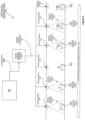
- Figure 1 provides a block diagram showing an example of a photon modulation growth system 100.
- a photon emitter 106, 108, 110, 112, 114 and 116 is shown over a period of time in communication with a photon emission modulation controller 104 for the purpose of modulating the emission of photons to an organism for a wide range of growing applications including but not limited to algal cultures, tissue cultures, germination and growth chambers, green houses, aquatic plants, supplemental lighting in such facilities and the like or tissue production.
- the modulated application of photons to an organism by providing photon pulses of one or more frequencies followed by pulses of one or more other frequencies for a duration along with a delay between pulses, allows for peak stimulation of an organism's biological components and responses, such as a photosynthetic organism's stoma or chlorophyll pigments and other aspects of growth regulation. Further the modulation of photons allow for the optimization of photon absorption during photosynthesis without oversaturation of the stoma or pigments.
- the modulation of the photon pulses increase energy and heat efficiency of current growth systems by reducing the overall power draw by the system of the present disclosure as much as 99% or more of the photon source when compared to conventional growing systems, such as a 60 watt grow light, thereby reducing the amount of power and cost used to grow an organism.
- the system pulses 49.2 watts of photons for two microseconds per 200 microseconds creating an effective power consumption of 0.49 watt-hrs/hr on the power payment meter or 0.82% of the power in a 60 watt standard incandescent bulb.
- the photon emitter is not continuously emitting photons, the amount of heat produced from the photon emitter will be significantly reduced, thereby significantly reducing the cost of cooling a facility to compensate for the increased heat from lighting.
- the system of the present disclosure may be customized based upon organism-specific requirements for photon intensity, pulse ON duration, pulse OFF (or duty cycle), the light spectrum of the pulse including but not limited to white, near-red, yellow and blue, orange, far-red, infrared, and ultra-violet to encourage optimal growth or destruction for selected organism such as a specific plant species.
- a master logic controller (MLC) 102 such as solid-state circuit with digital output control or a central processing unit (CPU) is in communication with a photon emission modulation controller 104 by means of a communication signal 134.
- the MLC 102 provides the system of the present disclosure with input/output of the parameters and the appropriate instructions or the specialized functions for the modulation of photons from a photon emitter 106, 108, 110, 112, 114 and 116.
- the MLC 102 may be hard wired or wireless to an external source such as a host, allowing external access to the MLC 102 by a host. This allows remote access by a user to monitor the input and output of the MLC 102, provide instructions or control to the systems while also allowing for remote programming and monitoring of the MLC 102.
- a power measurement or power consumption sensor may be integrated or embedded into the MLC 102 in the form of an integrated circuit allowing for the measurement and reporting of the power consumption of the system based on the voltage and the current draw of the system of the present disclosure.
- the power consumption of the system can then be communicated either wirelessly or by hardwire from the MLC to a host. Data, including power consumption may also be sent to an outside receiver such as a database that is not connected to the system.
- the photon emission modulation controller 104 receives commands and instructions from the MLC 102 including but not limited to the intensity, duty cycle, wavelength band and frequency of a photon pulse 118 from a photon emitter 106, 108, 110, 112, 114 and 116.
- the photon emission modulation controller 104 is any device that modulates the quanta and provides the control and command for the intensity, duty cycle, wavelength band and frequency of a photon pulse from a photon emitter 106, 108, 110, 112, 114 and 116.
- a variety of devices may be used as the photon emission modulation controller 104, including but not limited to a solid-state relay (SSR), such as the Magnacraft 70S2 3V solid-state relay from Magnacraft Inc., a incandescent (Tungsten-halogen and Xenon), Fluorescent (CFL's), high intensity discharge (Metal Halide, High-Pressure Sodium, Low-Pressure Sodium, Mercury Vapor), sunlight, light emitting diodeoptical chopper and a device that induces modulation of a photon pulse.
- SSR solid-state relay
- SSR solid-state relay
- Magnacraft 70S2 3V solid-state relay from Magnacraft Inc. a incandescent (Tungsten-halogen and Xenon), Fluorescent (CFL's), high intensity discharge (Metal Halide, High-Pressure Sodium, Low-Pressure Sodium, Mercury Vapor), sunlight, light emitting diodeoptical chopper and a device that induces modulation
- the photon emission modulation controller 104 sends a photon emission control signal 136 to a photon emitter 106 or 112.
- the photon emission control signal 136 sent to the photon emitter 106 or 112 goes ON, the photon emitter 106 or 112 emits at least one photon pulse 118 where each photon pulse comprises one color section or multiple color spectrums of light, which is transmitted to an organism 122.
- Figure 1 provides a photon pulse 118 emitted from a photon emitter 106 for two (2) milliseconds with a duration of delay of two hundred (200) milliseconds before a second photon pulse 118 is emitted from the same photon emitter 112 for two milliseconds (please note that Figure 1 is a descriptive example of photon pulses emitted over time. Figure 1 is not drawn to scale and the amount of growth by the organism between pulses in Figure 1 is not necessarily accurate).
- the system as described in Figure 1 may be completely housed in an individual photon emitter, allowing each individual photon emitter to be self-sufficient, without the need for an external control or logic unit.
- An example self-sufficient photon emitter may be in the form of a unit that may be connected to a light socket, or light fixtures that may be suspended above one or more organisms and connected to a power source.
- the systems as shown in Figure 1 may also take the form of a master/slave system, as will be discussed in Figure 4 , where by example, a master photon emitter containing all logic and controls for the emission of photon from master photon emitter as well as any additional photon emitters in communication with the master photon emitter.
- a variety of power supplies may be used in the present disclosure, many of which would be obvious to one skilled in the art. These sources of power may include but are not limited to battery, converters for line power, solar and/or wind power. As will be understand by one skilled in the art, the intensity of the photon pulse may be static with distinct on/off cycles or the intensity may be changes of 5% or larger of the quanta of the photon pulse. The intensity of the photon pulse from the photon emitter can be controlled through the variance of voltage and/or current from the power supplies and delivered to the light source. It will also be appreciated by one skilled in the art as to the support circuitry that will be required for the system of the present disclosure, including the photon emitter control unit and the photon emitters.
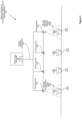
- FIG. 2 provides a second block diagram showing an example of a photon modulation growth system 200.
- a photon emitter 106, 108, 110, 112, 114 and 116 is shown over a period of time in communication with a photon emission modulation controller 104 for the purpose of modulating individual pulses of photons comprising individual color spectrums to an organism, including but not limited to white, near-red, blue, yellow orange, far-red, infrared, and ultra-violet color spectrums, wavelength between 0.1 nm and 1 cm.
- the present disclosure may include color spectrums of specific, individual wavelengths between 0.1 nm and 1.0 cm, or may include a range or band of wavelengths 0.1 to 200 nm in width, herein "wavelength band.”
- the modulation of individual color spectrums of photons to an organism by providing specific color spectrum pulses for a duration along with a delay between pulses allows for peak stimulation of an organism's biological components and responses, such as a photosynthetic organism's stoma, chromophores, chlorophyll pigments, phototropism and other aspects of growth regulation.
- an organism's biological components and responses such as a photosynthetic organism's stoma, chromophores, chlorophyll pigments, phototropism and other aspects of growth regulation.
- Examples of the ability to control specific aspects of an organism's biological components or responses through the pulsing of individual color spectrums, specific color wavelength or a range of color wavelengths may include but are not limited to:
- a master logic controller (MLC) 102 is in communication with a photon emission modulation controller 104 by means of a communication signal 134.
- the MLC 102 provides the system of the present disclosure with input/output of the parameters and the appropriate instructions or the specialized functions for the modulation of a specific individual color spectrum of photons from a photon emitter 106, 108, 110, 112, 114 and 116.
- the photon emission modulation controller 104 receives commands and instructions from the MLC 102 including but not limited to the intensity, duty cycle, color spectrum and frequency of each specific color spectrum photon pulse 202 and 204 or a plurality of pulses of a specific color spectrum from a photon emitter 106, 108, 110, 112, 114 and 116.
- the photon emission modulation controller 104 provides the control and command for the intensity, duty cycle, color spectrum and frequency of each specific color spectrum photon pulse 202 and 204 or plurality of pulses from a photon emitter 106, 108, 110, 112, 114 and 116.
- the photon emission modulation controller 104 sends a photon emission control signal 136 to a photon emitter 106, 108, 112 or 114.
- the photon emission control signal 136 sent to the photon emitter 106, 108, 112 or 114 goes ON, the photon emitter 106, 108, 112 or 114 emits one or more photon pulses of a specific color spectrum 202 or 204, which is transmitted to an organism 122.
- the example of Figure 2 provides a photon pulse or plurality of pulses of a near red color spectrum 202 emitted from a photon emitter 106 for two (2) milliseconds, followed by a photon pulse or plurality of pulses of a far-red color spectrum 204 for a duration of two (2) milliseconds with a duration of delay of two hundred (200) milliseconds of each pulse before a second photon pulse or plurality of pulses 202 is emitted from the same photon emitter 112 for two milliseconds followed by a second photon pulse or plurality of pulses of a far-red color spectrum 204 for a duration of two milliseconds from the same photon emitter 114 (please note that Figure 2 is a descriptive example of photon pulses emitted over time. Figure 2 is not drawn to scale and the amount of growth by the organism between pulses in Figure 2 is not necessarily to scale ).
- the system of the present disclosure as described in Figures 1 and 2 allows for the manipulation and control of various responses by an organism through the cycling of one or more colors or spectrums of light at different times, durations and intensities, such as near red, blue and far-red, allowing single pulses or multiple pulses of one spectrum before pulsing another spectrum.
- the pulsing of individual color spectrums in unison or individually for a duration with a delay between pulses allows for increased efficiency and speed from seed to harvest/finish through enhanced germination and control of the progression from one plant growth stage to the next, such as control of the progression from growth, to flowering and then seed production.
- the system described herein provides the ability to hold a plant in a particular growth stage.
- photon emitters may be used to provide photons, many of which are known in the art.
- a photon emitter appropriate for the present discussion is a light emitting diode (LED), which may be packaged within an LED array designed to create a desired spectrum of photons. While LEDs are shown in this example, it will be understood by one skilled in the art that a variety of sources may be used for the emission of photons including but not limited to metal halide light, fluorescent light, high-pressure sodium light, incandescent light and LEDs (light emitting diode).
- Embodiments of the present disclosure can apply to LEDs having various durations of photon emissions, including durations of photon emissions of specific color spectrums and intensity.
- the pulsed photon emissions of specific color spectrums may be longer or shorter depending on the organism in question, the age of the organism and how the emission will be used in facilitating biochemical processes for organism growth.
- an array of LEDs may be controlled to provide the optimal photon pulse of one or more color spectrums for specific organism growth such as growing lettuce or for tomato growth.
- the user may simply select the photon pulse intensity, color spectrum, frequency and duty cycle for a particular type of organism to encourage efficient biological responses such as photosynthetic process in plants.
- LED packages can be customized to meet each organism's specific requirements.
- embodiments described herein may be used to control light to alter the vitamin, salt, acid, antioxidant, flavonoid, carotenoid, water, chloroplast and accessory pigment and absorption levels within the target organism.
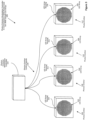
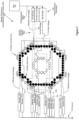
- FIG 3 is a diagram of an example of a plurality of photon emitters 106, 108, 110 and 112 with LED arrays 300.
- a photon emission modulation controller 104 is in communication by means of a plurality of photon emitter control signals 136 with a plurality of photon emitters 106, 108, 110 and 112 (which are the same photon emitters that are shown in Figure 1 ).
- each photon emitter 106, 108, 110 and 112 comprises an array of LEDs 302, 304, 306 and 308.
- Each array of LEDs 302, 304, 306 and 308 and the circuitry to allow for the array of LEDs to communicate with the photon emission modulation controller 104 are contained in an LED array housing 310, 312, 314 and 316.
- the shape of LED array is a circle, however as will be understood by one skilled in the art, the shape of the array may take a variety of forms based upon the needs of the organisms such as plants, the volume of organisms such as plants to receive a pulse of photons and a variety of other conditions.
- the shape of the array may include but is not limited to, circular, square, rectangular, triangular, octagonal, pentagonal and a variety of other shapes.
- the LED array housing 310, 312, 314 and 316 for each photon emitter 106, 108, 110 and 112 may be made of a variety of suitable materials including, but are not limited to, plastic, thermoplastic, and other types of polymeric materials. Composite materials or other engineered materials may also be used.
- the housing may be made by a plastic injection molding manufacturing process.
- the housing may be transparent or semi-transparent and in any color.
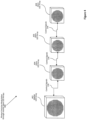
- FIG 4 is a diagram of an example of a plurality of photon emitters with a master photon emitter in communication and control of one or more slave photon emitters, 400.
- a master photon emitter 402 is in communication by means of a photon control signal 136 with a series of slave photon emitters 404, 406, and 408.
- the master photon emitter 402 contains a controller, such as the MLC (102 of Figure 1 and 2 ), as well as photon emission modulation controller (shown as 104 Figures 1 and 2 ) which controls the intensity, duty cycle and frequency of each specific color spectrum photon pulse from an array of LEDs housed within the master photon emitter 402 while also allowing the master photon emitter to control the intensity, duty cycle and frequency of each specific color spectrum photon pulse from each slave photon emitters 404, 406, and 408.
- a controller such as the MLC (102 of Figure 1 and 2 )
- photon emission modulation controller shown as 104 Figures 1 and 2
- each slave photon emitter 404, 406, and 408 contains the circuitry to receive command signals 136 from the master photon emitter 402 and the circuitry necessary to emit a pulse of a specific spectrum from an array of LEDs (such as near red, far-red, blue or yellow) housed within each slave photon emitter 404, 406, and 408.
- each slave photon emitter does not contain a controller such as the MLC nor does the slave photon emitter 404, 406, and 408 contain a photon emission modulation controller. All commands and controls for the slave photon emitter 404, 406, and 408 are received from the master photon emitter 402.
- This master/slave system allows for sharing of a single power supply and microcontroller. Master has the power supply and that power is also transferred to the slaves. Additionally, the master/slave system can be utilized to pulse photons in patterns to help stimulate the photoperiodism or phototrophic response in other organisms response in plants.
- a bus system may be included in MLC of the master photon emitter 402 or in each slave photon emitter 404, 406 and 408 to allow for the specific control by the master photon emitter 402 of each individual slave photon emitter 402, 404 and 408.
- the master photon emitter 402 may send a signal 136 to a specific slave photon emitter 404 commanding the slave photon emitter 404 to emit a far-red pulse for a specific duration, while the master photon emitter 402 simultaneously sends a command signal 136 to a second slave photon emitter 406 to emit a near red pulse for a specific duration.
- the master photon emitter 402 may be hard wired or wireless to allow external access to the master photon emitter 402 by a host, allowing remote access to monitor the input and output of the master photon emitter 402 while also allowing for remote programming of the master photon emitter.
- FIG. 5 is a diagram of an example of a master logic controller in communication and control of one or more photon emitters, 500.
- a master logic controller 102 is in communication by means of a photon emission control signal 136 with a series of photon emitters 106, 502, 504 and 506 located above four plants 512, 514, 516 or 518.
- the master logic controller or MLC 102 (as previously discussed in Figures 1 , 2 and 3 ) also contains a photon emission modulation controller 104 (shown discussed in Figures 1 , 2 and 3 ) which allows the MLC 102 to control the intensity, duty cycle and frequency of each specific color spectrum photon pulse from an array of LEDs housed within each photon emitter 106, 502, 504 and 506.
- the MLC 102 communicates commands and instructions to each photon emitter 106, 502, 504 and 506 including but not limited to the intensity, duty cycle and frequency of each specific color spectrum photon pulse 508 and 510 from each photon emitter 106, 502, 504 and 506.
- the MLC 102 also maintains control of the power supply to the system and control the transfer of power to each individual photon emitter 106, 502, 504 and 506.
- the photon emission modulation controller 104 sends a photon emission control signal 136 to each individual photon emitter 106, 502, 504 and 506.
- individual photon emitters 106 or 506 may pulse one or more specific color spectrums 508 and 510 to an organism 512, 514, 516 or 518 (such as a pulse of both far-red and near red 508 at various durations or a pulse of far-red, near red and blue at various durations 510).
- other individual photon emitters 502 or 504 may not emit a photon pulse toward an organism 122 for a duration.
- the MLC 102 may be programmed to issue a signal to a specific emitter for modulation of pulses of far-red light for a period of time followed by pulses of blue light in combination with near red light for the control of seed germination in some higher plants or the MLC may issue a command to a specific photon emitter for the cycling of pulses of near red light with pulses of blue light and far-red light to increase the growth of specific plants.
- the MLC may issue a signal to a specific photon emitter for the pulsing of blue light after an exposure of pulses of near red light in repetition in order to induce a plant to produce seed or the MLC may send a signal to a specific photon emitter for a pulse of far-red light after the exposure to pulses of near red light in repetition in order to induce a plant to flower.
- all commands and controls for each photon emitter 106, 502, 504 and 506 are received externally from the MLC 102.
- the logic and hardware associated with the MLC 102 and photon emission modulation controller 104 may also be housed within each individual photon emitter, allowing each individual photon emitter to be self-sufficient, without the need for an external control or logic unit.
- the MLC 102 may be hard wired or wireless, allowing external access to the MLC 102 by a user. This allows remote access by a user to monitor the input and output of the MLC 102 while also allowing for remote programming of the MLC.
- Figure 6 provides an example of a further embodiment, showing the photon modulation system of the present disclosure where one or more sensors are used to monitor an organism's environmental conditions as well as the organism's responses 600.
- one or more sensors 602, 604, 606 and 608 are associated with each plant 618, 620, 622, and 624 in order to monitor various conditions associated with the plant 618, 620, 622, and 624.
- the conditions associated with the plant or organism which may be monitored include but are not limited to, soil moisture, air temperature, leaf temperature, pH, stem or fruit diameter, gas, photorespiration, respiration of an organism or sap flow within the plant.
- the system of the present disclosure may also include a watering system, fertilizing system and/or a fertigation system (not shown in Figure 7 ) in communication and under the control of the MLC 102 or a separate logic controller.
- the MLC 102 is able to communicate with an irrigation system, nutrient system, nutrient source or fertigation system in order stop and start an irrigation, fertilizing or fertigation event to a plant or an organism, as well adjust the timing or concentration of a watering, fertilizing or fertigation event that will be sent to a plant or an organism.
- Data, including power can be sent to an outside receiver such as a database that is not connected to the system.
- FIG 7 is an example of one embodiment of an array of LEDs in communication with a series of solid-state relays or SSRs 700.
- a MLC 102 is in communication by means of a communication signal 134 with a photon emission modulation controller 104.
- the photon emission modulation controller 104 of this example contains three solid-state relays.
- the MLC 102 outputs a signal to control the SSRs.
- the first solid-state relay controls an array of near red LEDs 702
- the second solid-state relay controls an array of far-red LEDs 704
- the third solid-state relay to controls an array of blue LEDs 706.
- Each solid-state relay 702, 704 and 706 is in communication with an array of LEDs, 714, 716 and 718 by means of a photon emission signal 136.
- the near red solid-state relay 702 sends a photon emission signal 136 to initiate a photon pulse of the near red LEDS 714 comprising a near red voltage 708 to an array of near red LEDs 714.
- the near red voltage 708 is then transmitted from the array of near red LEDs 714 to a series of resistors 720, 742, 738, such as a 68 ohm resistor, with each resistor 720, 742 and 738 connected to a ground 744.
- the far-red solid-state relay 704 sends a photon emission signal 136 to initiate a photon pulse of far-red LEDs comprising a far-red voltage 710 to an array of red LEDs 718.
- the red voltage 710 is then transmitted from the red LED array 718 and a series of resistors 724, 728, 732 and 734, such as 390 ohm resistor with each resistor 724, 728, 732 and 734 connected to a ground 744.
- Figure 8 also shows the blue solid-state relay 706 sending a photon emission signal 136 to initiate a photon pulse of blue LEDs comprising a blue voltage 712 to an array of blue LEDs 716.
- the blue voltage 712 is then transmitted from the array of blue LEDs 716 and transmitted to a series of resistors 722, 726, 730, 736 and 740, such as a 150 ohm resistor, with each resistor 722, 726, 730, 736 and 740 connected to a ground 744.
- the system of the present disclosure may be successfully employed with a wide variety of organisms, including but not limited to wide variety of algae, bacteria, gymnosperms, angiosperms and pteridophytes, or eukaryotic green algae.
- This list of organisms may further include but is not limited to Arthrospira spp., Spirulina spp., Calothrix spp., Anabaena flos-aquae, Aphanizomenon spp., Anadaena spp., Gleotrichia spp., Oscillatoria spp., Nostoc spp., Synechococcus elongatus, Synechococcus spp., Synechosystis spp.
- cut flowers including, but not limited to, Alstroemeria, Anthurium, Aster, bird of paradise/Strelitzia, calla lily, carnation, Chrysanthemum, Daffodil/Narcissus, daisy, Delphinium, Freesia, gerbera daisy, ginger, Gladiolus, Godetia, Gypsophila, heather, iris, Leptospermum, Liatris, lily, Limonium, Lisianthus, Orchid, Protea, Rose, , Statice, Stephanotis, Stock, Sunflower, Tulip,; cut cultivated greens including, but not limited to, plumosus, tree fern, boxwood, soniferous greens, Cordyline, Eucalyptus, hedera/Ivy, holly, leatherleaf ferns, Liriope/Lilyturf, Myrtle, Pittosporum, Podocarpus; deciduous shade trees including
- This cycle of a two (2)-millisecond photon pulse with a two hundred millisecond delay between photon pulses may be repeated indefinitely or until the organism growing under and receiving the photon pulses has reached its desired size or maturity or is destroy or repaired. While in this descriptive example of a photon pulse of two milliseconds and a duration between photon pulses of 200 milliseconds, it should be understood that this description is applicable to any such system with other emissions of photon pulses over a period of time, excluding the standard analog frequency lighting emission standards of the United States of 60 Hz and Europe of 50 Hz. Examples of the photon pulse duration may include but is not limited to, 0.01 microseconds to 5000 milliseconds and all integers in between.
- the system of the present disclosure also allows for other durations between photon pulses including but not limited one microsecond to 24 hours (mimicking natural dark cycles), and all integers in between.
- the system of the present disclosure may be programmed to allow for variations of photon emission as well as variations of photon emission delay to allow for events such as extended dark cycles.
- Figure 9 is a graph showing an example of the duration of a photon pulse versus the duration of the delay between photon pulses of three color spectrums 900.
- the time scale on this chart is not to scale but serves as an example embodiment exhibiting the variation of color spectrum, frequency and duty cycle that may be utilized for growth or destruction of an organism as shown in as Options 10 and 11 in Examples 1-7.
- Figure 9 and previously described in Figures 1-7 another example of the cycling of photon pulses of various color spectrum of the present disclosure is provided where photon pulses of three color spectrums are emitted from a photon emitter.
- a far-red spectrum is pulsed first followed by a delay and then a dual pulse of a near red spectrum and a blue spectrum together is then dosed followed by a delay creating a first set of photon pulses.
- a second set of dual pulses comprising of near red spectrum and blue spectrum are pulsed together again followed by a delay.
- a near red spectrum and blue spectrum are pulsed together once again followed by an additional longer delay.
- This cycle may be repeated indefinitely or until the organism growing under and receiving the photon pulses has reached its desired size or maturity or is destroy or repaired or a change is desired for a new phase of growth or destruction.
- this example may also be used to increase seed germination rates in various types of plants.
- photon pulse set comprising offset pulsing of one color spectrum and two color spectrums
- this description is applicable to any such system with other emissions of photon pulses over a period of time, as various combinations of pulses of color spectrums including but not limited to near red, far-red, infra-red, blue, yellow, orange and ultraviolet excluding the standard analog frequency lighting emission standards of the United States of 60 Hz and Europe of 50 Hz.
- Examples of the photon pulse duration between pulses of each individual color spectrum or color spectrum combinations may include but is not limited to, 0.01 microseconds to 5000 milliseconds and all integers in between.
- Figure 10 is a graph showing an example of the duration of a photon pulse versus the duration of the delay between photon pulses of three color spectrums 1000.
- the time scale on this chart is not to scale but serves as an example embodiment exhibiting the variation of color spectrum, frequency and duty cycle that may be utilized for growth or destruction of an organism.
- Figure 10 and previously described in Figures 1-7 another example of the cycling of photon pulses of various color spectrum of the present disclosure is provided where photon pulses of three color spectrums are emitted from a photon emitter.
- a far red spectrum is pulsed simultaneously with a blue spectrum pulse.
- the far red spectrum is pulsed for twice the time as the blue spectrum.
- a pulse of a near red spectrum is then dosed followed by a delay creating a first set of photon pulses.
- a second set of pulses comprising first of far red spectrum then a near red spectrum followed by a blue spectrum are pulsed in rapid succession again followed by a delay.
- a near red spectrum and blue spectrum are pulsed together once again followed by an additional longer delay.
- This cycle may be repeated indefinitely or until the organism growing under and receiving the photon pulses has reached its desired size or maturity or is destroy or repaired or a change is desired for a new phase of growth or destruction.
- this example may also be used to increase seed germination rates in various types of plants.
- photon pulse set comprising off set pulsing of one color spectrum and two color spectrums
- this description is applicable to any such system with other emissions of photon pulses over a period of time, as various combinations of pulses of color spectrums including but not limited to near red, far red, infra-red, blue, yellow, orange and ultraviolet excluding the standard analog frequency lighting emission standards of the United States of 60 Hz and Europe of 50 Hz.
- Examples of the photon pulse duration between pulses of each individual color spectrum or color spectrum combinations may include but is not limited to, 0.01 microseconds to 5000 milliseconds and all integers in between.
- the system of the present disclosure also allows for other durations between pulses of each individual color spectrum or color spectrum combinations including but not limited 0.1 microsecond to 24 hours, and all integers in between.
- the system of the present disclosure may be programmed to allow for variations of photon emission as well as variations of photon emission delay to allow for events such as extends dark cycles.
- the master logic controller sends instructions to the photon emission modulation controller the regarding each color spectrum to be pulsed, the duration of each pulse of each color spectrum, combination of colors pulse and duration of delay between different color spectrums.
- the photon emission modulation controller sends at least one signal to one or more photon emitters capable of emitting pulses of one or more individual color spectrums toward an organism, such as near red LEDs, far-red LEDs, blue LEDs and yellow LEDs.
- one or more photon emitters emit one or more photon pulses of individual color spectrums directed to an organism.
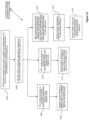
- Figure 12 provides an additional embodiment of the present disclosure, showing a flowing diagram of the growth, repair or destruction of an organism based on information from plant sensors 1200.
- a plant sensor monitors one or more conditions associated with growing environment of an organism.
- the conditions to be monitored include but is not limited to the air or soil temperature associated with the plant or organism, soil moisture, humidity levels, soil pH, fruit diameter, stem diameter, leaf size, leaf shape, or leaf temperature.
- the plant sensor sends data regarding the growing conditions associated with the an organism to the MLC.
- the MLC analyzes the data sent from the plant sensor or the analysis may be done by a third party software program that is remote to the system.
- step 1206 based on the information from the plant sensor, the MLC sends instructions to an irrigation system, such as a drip or fog system, regarding the timing and/or duration of an irrigation event.
- irrigation system initiates an irrigation event to one or more organisms based on the analysis of the data from the plant sensor.
- the adjustment of the irrigation event can be on a micro level, such as an adjustment to the irrigation to one specific organism or the adjustment can be on a macro level such as an entire growth chamber or operation.
- step 1210 based on the information from the plant sensor the MLC sends instructions to a nutrient system or nutrient source, such as a drip, nutrient film or nutrient injection system, regarding the timing and/or concentration of the nutrient to be distributed to an organism during a nutrient event.
- nutrient system initiates a nutrient event where nutrients are directed to an organism based on the analysis of the data from the plant sensor.
- the adjustment of the nutrient event can be on a micro level, such as an adjustment to the nutrients to one specific organism or the adjustment can be on a macro level such as an entire growth chamber or operation.
- Table 1 shows the growth rate of two sets of plants over time (beans, Phaseolus vulgaris var. nanus ).
- One set of plants was grown under the growth system of the present invention and one set of plants grown under a conventional plant grow light system (a 60 watt incandescent growing light). Plant growth was measured by measuring the height of each plant in millimeters.
- the plants were grown under an automated system where the plants grown under the photon modulation system of the present invention was established at a two-millisecond photon pulse of near-red, blue, and yellow with a duration of the delay between pulses of 200 milliseconds.
- This rate of photon pulse and photon pulse delay is estimated to have an energy usage of less than 1% of the energy used the by conventional grow light.
- the plants grown under the conventional growing light were exposed to the light of the conventional growing light for a period of 12 hours per day. Plants were grown in nine (9) oz. plastic cups with small holes located at the base of the cup for drainage. Seed were planted in a soil mixture (MiracleGro Moisture control potting mix).
- a manual watering system provided an adequate amount of moisture for the plants.
- the plant containers were placed in a black container or box with a lid that did not allow light to enter unless the lid was removed.
- a photon emitter comprising an array of LEDs or the 60 watt grow lights were affixed to the top of the respective black containers.
- the LEDs comprised an array of red LEDs (640 nm and 700 nm), an array of yellow round LEDs (590 nm) and an array of blue round LEDs (450 nm).
- the photon emitter was wired to a solid-state relay, comprising a Magnacraft 70S2 3V solid-state relay, to allow for communication between the photon emitter and the solid-state relay.
- the solid-state relay was in communication with a central processing unit to provide input and output instructions to the solid-state relay.
- the central processing unit was programmed to instruct the solid-state relay to modulate the signals to the photon emitter in order to produce a two millisecond pulse of photons every 200 milliseconds.
- column one provides the type of growing system used.
- Column two provides the type of plant and the individual plant number for each plant.
- Columns 3 to 8 provide the day of measurement of the plant from the original planting of the seeds.
- using the photon modulation growing system within day eight from planting Bean1, Bean2 and Bean3 had grown to a height between 77 mm and 136 mm.
- day fourteen Bean1, Bean2 and Bean3 grown under the photon modulation growth system to a height between 200 mm and 220 mm.
- under the conventional 60 watt growing lights by day eight Bean1 and Bean2 had grown between 155 mm and 185 mm and by day fourteen Bean1, Bean2 and Bean3 had grown between 160 mm and 220 mm.
- Table 2 shows the leaf size of two sets of plants over time (beans, Phaseolus vulgaris var. nanus ) with one set of plants grown under the photon modulation growth system of the present invention and one set of plants grown under a conventional growing light (a 60 watt incandescent growing light) by measuring the leaf size of each plant in millimeters.
- Example 1 is repeated and as shown in Table 2, a measurement of leaf size in millimeters is provided with column one providing the type of growing system used.
- Column 2 provides the type of plant and the individual plant number.
- Columns 3 to 8 provides the day of leaf measurement from the date of the original planting of the seeds.
- Bean2 and Bean3 had a leaf size between 50 mm ⁇ 47 mm and 59 mm ⁇ 55 mm and by day fourteen Bean1, Bean2 and Bean3 had a leaf size between 55 ⁇ 52 mm and 64 mm ⁇ 58 mm.
- Bean1 and Bean3 had a leaf size between 26 mm ⁇ 22 mm and 57 mm ⁇ 50 mm and by day fourteen Bean1 and Bean3 had a leaf size between 33 mm ⁇ 30 mm and 62 mm ⁇ 55 mm.
- Table 3 below shows the height of beans, ( Phaseolus vulgaris var. nanus ) in millimeters to the first leaf node.
- Box 1 shows beans grown under the color spectrum photon emissions of Option 11, where Option 11 is based on the example photon emission shown in Figure 9 , however the duration of the pulse of near red is extend and the frequency of the all three pulses (far red, near red and blue) are not drawn to scale.
- Box 2 and Box 3 show beans grown under color spectrum emissions of Options 10, where Option 10 is based on the example photon emission shown in Figure 9 , however the duration of the pulse of far red is extend and the duty cycle of Option 10 of the all three pulses (far red, near red and blue) are not drawn to scale, and Options 10a.
- Box 4 shows beans grown under color spectrum emissions of a control comprising plants grown under a conventional growing light (a 60 watt incandescent growing light) with no modulation of pulses of individual color spectrums.
- Table 3 shows the ability of the system of the present disclosure to control plant growth through the modulation of pulses of individual color spectrums to a plant.
- plants grown in all four boxes showed measureable growth five days after planting. Plants grown under Option 10 and Option 11 showed consistent growth, with a measurable increase in growth after 13 days over plants grown under the control. Plants grown under Option 10 and Option 11 had a maximum height over 450 mm with a lower maximum height of just under 400 mm. Conversely, plants grown under the control had a maximum height under 300 mm.
- Table 4 shows the ability of the system of the present disclosure to increase and improve plant growth through the modulation of pulse of individual color spectrums to a plant.
- Table 5 below shows the size of the first node of beans, ( Phaseolus vulgaris var. nanus ) in millimeters.
- Box 1 shows beans grown under the color spectrum photon emissions of Option 11.
- Option 10 and Option 11 are both based on the example photon emission shown in Figure 9 .
- Box 2 and Box 3 show beans grown under color spectrum emissions of Options 10 and Options 10a.
- Box 4 shows beans grown under color spectrum emissions of a control comprising plants grown under a conventional growing light (a 60 watt incandescent growing light) with no modulation of pulses of individual color spectrums.
- Table 5 shows the ability of the system of the present disclosure to improve the quality plant growth through the modulation of pulses of individual color spectrums to a plant.
- Table 6 below shows the size of the first leaf node of peppers, (Cayenne) in millimeters.
- Box 1 shows peppers grown under the color spectrum photon emissions of Option 11.
- Option 10 and Option 11 are both based on the example photon emission shown in Figure 9 .
- Box 2 and Box 3 show peppers grown under color spectrum emissions of Options 10 and Options 10a.
- Box 4 shows peppers grown under color spectrum emissions of a control comprising plants grown under a conventional growing light (a 60 watt incandescent growing light) with no modulation of pulses of individual color spectrums.
- Table 6 shows the ability of the system of the present disclosure to improve the quality plant growth through the modulation of pulses of individual color spectrums to a plant.
- Table 7 shows the ability of the system of the present disclosure to control plant growth through the modulation of pulses of individual color spectrums to a plant.
Landscapes
- Life Sciences & Earth Sciences (AREA)
- Engineering & Computer Science (AREA)
- Health & Medical Sciences (AREA)
- Chemical & Material Sciences (AREA)
- Zoology (AREA)
- Bioinformatics & Cheminformatics (AREA)
- Organic Chemistry (AREA)
- Wood Science & Technology (AREA)
- Genetics & Genomics (AREA)
- Environmental Sciences (AREA)
- Biotechnology (AREA)
- Biochemistry (AREA)
- General Engineering & Computer Science (AREA)
- General Health & Medical Sciences (AREA)
- Biomedical Technology (AREA)
- Microbiology (AREA)
- Botany (AREA)
- Sustainable Development (AREA)
- Forests & Forestry (AREA)
- Ecology (AREA)
- Biodiversity & Conservation Biology (AREA)
- Marine Sciences & Fisheries (AREA)
- Developmental Biology & Embryology (AREA)
- Cell Biology (AREA)
- Electromagnetism (AREA)
- Physics & Mathematics (AREA)
- Analytical Chemistry (AREA)
- Cultivation Of Plants (AREA)
- Cultivation Of Seaweed (AREA)
- Radiation-Therapy Devices (AREA)
- Micro-Organisms Or Cultivation Processes Thereof (AREA)
- Circuit Arrangement For Electric Light Sources In General (AREA)
- Apparatus Associated With Microorganisms And Enzymes (AREA)
Applications Claiming Priority (3)
| Application Number | Priority Date | Filing Date | Title |
|---|---|---|---|
| US201361772856P | 2013-03-05 | 2013-03-05 | |
| US201461929872P | 2014-01-21 | 2014-01-21 | |
| PCT/US2014/020809 WO2014138262A1 (en) | 2013-03-05 | 2014-03-05 | Photon modulation management system |
Publications (4)
| Publication Number | Publication Date |
|---|---|
| EP2964012A1 EP2964012A1 (en) | 2016-01-13 |
| EP2964012A4 EP2964012A4 (en) | 2016-10-12 |
| EP2964012C0 EP2964012C0 (en) | 2024-11-27 |
| EP2964012B1 true EP2964012B1 (en) | 2024-11-27 |
Family
ID=51486043
Family Applications (1)
| Application Number | Title | Priority Date | Filing Date |
|---|---|---|---|
| EP14761009.1A Active EP2964012B1 (en) | 2013-03-05 | 2014-03-05 | Photon modulation management system |
Country Status (9)
| Country | Link |
|---|---|
| US (3) | US9526215B2 (enExample) |
| EP (1) | EP2964012B1 (enExample) |
| JP (2) | JP6746867B2 (enExample) |
| KR (2) | KR102107067B1 (enExample) |
| CN (2) | CN105142392B (enExample) |
| CA (1) | CA2901762C (enExample) |
| IL (2) | IL240604B (enExample) |
| MX (2) | MX392973B (enExample) |
| WO (1) | WO2014138262A1 (enExample) |
Families Citing this family (78)
| Publication number | Priority date | Publication date | Assignee | Title |
|---|---|---|---|---|
| US20130062534A1 (en) | 2010-05-10 | 2013-03-14 | Ted Cole | Uv germicidal system, method, and device thereof |
| US9974873B2 (en) | 2010-05-10 | 2018-05-22 | Uv Partners, Inc. | UV germicidal system, method, and device thereof |
| DE11158693T8 (de) | 2011-03-17 | 2013-04-25 | Valoya Oy | Pflanzenbeleuchtungsvorrichtung und Verfahren |
| EP2499900A1 (en) * | 2011-03-17 | 2012-09-19 | Valoya Oy | Method and means for enhancing greenhouse lights |
| KR20130049567A (ko) * | 2011-11-04 | 2013-05-14 | 한국전자통신연구원 | 작물 관측 장치 및 그 방법 |
| US10028448B2 (en) * | 2012-07-10 | 2018-07-24 | Once Innovations, Inc. | Light sources adapted to spectral sensitivity of plants |
| EP2871931A4 (en) | 2012-07-10 | 2016-12-21 | Once Innovations Inc | SOURCES OF LIGHT ADAPTED TO THE SPECTRAL SENSITIVITY OF A PLANT |
| US11140879B2 (en) | 2012-12-11 | 2021-10-12 | Signify North America Corporation | Methods for controlling sex of oviparous embryos using light sources |
| US10455819B2 (en) * | 2012-12-11 | 2019-10-29 | Signify North America Corporation | Methods for controlling sex of oviparous embryos using light sources |
| US11172656B2 (en) | 2012-12-11 | 2021-11-16 | Signify Holding B.V. | Methods for controlling sex of oviparous embryos using light sources |
| JP2016507219A (ja) | 2012-12-11 | 2016-03-10 | ワンス イノヴェイションズ, インコーポレイテッドOnce Innovations, Inc. | 光を用いた卵の胚の性別制御 |
| US9363951B2 (en) * | 2013-02-04 | 2016-06-14 | Showa Denko K.K | Method for cultivating plant |
| US9560837B1 (en) | 2013-03-05 | 2017-02-07 | Xiant Technologies, Inc. | Photon modulation management system for stimulation of a desired response in birds |
| US9844209B1 (en) * | 2014-11-24 | 2017-12-19 | Xiant Technologies, Inc. | Photon modulation management system for stimulation of a desired response in birds |
| US11278009B2 (en) | 2013-03-05 | 2022-03-22 | Xiant Technologies, Inc. | Photon modulation management system for stimulation of a desired response in birds |
| US10182557B2 (en) | 2013-03-05 | 2019-01-22 | Xiant Technologies, Inc. | Photon modulation management system for stimulation of a desired response in birds |
| JP6418697B2 (ja) * | 2013-03-25 | 2018-11-07 | 国立大学法人東京農工大学 | 植物の栽培方法 |
| JP2016524470A (ja) * | 2013-06-06 | 2016-08-18 | フロラ フォトニカ エルティーディーFlora Fotonica Ltd | 植物への照明システム及びその方法 |
| US9247688B1 (en) * | 2013-06-19 | 2016-02-02 | Michael H Gurin | Nutrient blend optimization system |
| US9558915B2 (en) * | 2014-01-13 | 2017-01-31 | Frederick A. Flitsch | Method and apparatus for a high resolution imaging system |
| DK2923561T3 (en) * | 2014-03-28 | 2018-02-12 | Plantui Oy | Method for hydroponic indoor gardening |
| KR20170058915A (ko) * | 2014-07-21 | 2017-05-29 | 온스 이노베이션스, 인코포레이티드 | 광합성 전자전달계를 작동시키는 광자 엔진 시스템 |
| US10244595B2 (en) * | 2014-07-21 | 2019-03-26 | Once Innovations, Inc. | Photonic engine system for actuating the photosynthetic electron transport chain |
| CA2959136C (en) | 2014-08-29 | 2020-12-29 | Xiant Technologies, Inc. | Photon modulation management system |
| US10149439B2 (en) | 2014-12-18 | 2018-12-11 | Spectra Harvest Lighting, LLC | LED grow light system |
| US10492375B2 (en) | 2015-01-09 | 2019-12-03 | Grow Solutions Tech Llc | Systems and methods for providing grow lighting |
| EP3045033A1 (en) * | 2015-01-14 | 2016-07-20 | Heliospectra AB | Method and system for growth status determination of a plant |
| CN107872952B (zh) * | 2015-03-31 | 2021-06-15 | 昕诺飞控股有限公司 | 照射植物的系统和方法 |
| EP3280248A4 (en) | 2015-04-09 | 2018-12-26 | Growx Inc. | Systems, methods, and devices for light emitting diode array and horticulture apparatus |
| US10334796B2 (en) * | 2015-05-19 | 2019-07-02 | Mj Brain Bank, Llc | Methods and systems of cultivation |
| US9826689B2 (en) * | 2015-06-08 | 2017-11-28 | Tartan Equipment Corp. | System and method for manufacturing a botanical extract |
| US10743480B2 (en) * | 2015-07-02 | 2020-08-18 | Astro Space, Llc | Agile spectrum greenhouse LED lighting fixture and control |
| US10180248B2 (en) | 2015-09-02 | 2019-01-15 | ProPhotonix Limited | LED lamp with sensing capabilities |
| EP3349572A4 (en) | 2015-09-15 | 2019-08-14 | Once Innovations, Inc. | ACTIVATION OF BIOLOGICAL RESPONSES IN INCUBATED EGGS |
| EP3143869A1 (en) * | 2015-09-17 | 2017-03-22 | Université d'Avignon et des Pays de Vaucluse | Method for stimulating the resistance of plants to biotic stress by uv radiation exposure |
| CN105941073A (zh) * | 2016-05-16 | 2016-09-21 | 句容市绿润苗木有限公司 | 北方寒冷地区葡萄种植方法 |
| US10624978B2 (en) * | 2016-07-26 | 2020-04-21 | Sensor Electronic Technology, Inc. | Ultraviolet-based mildew control |
| US11166415B2 (en) | 2016-07-26 | 2021-11-09 | Sensor Electronic Technology, Inc. | Plant growth with radiation-based mildew and/or bacteria control |
| JP6761970B2 (ja) * | 2016-08-18 | 2020-09-30 | パナソニックIpマネジメント株式会社 | 病害虫防除装置 |
| CN106612734A (zh) * | 2016-12-15 | 2017-05-10 | 李玉龙 | 一种提高山茱萸种子萌发率的方法 |
| US11058889B1 (en) | 2017-04-03 | 2021-07-13 | Xiant Technologies, Inc. | Method of using photon modulation for regulation of hormones in mammals |
| EP3621426B1 (en) * | 2017-05-08 | 2023-06-07 | Daniel S. Spiro | Automated vertical plant cultivation system |
| US11071266B2 (en) * | 2017-06-14 | 2021-07-27 | Grow Solutions Tech Llc | Devices, systems, and methods for providing and using one or more pressure valves in an assembly line grow pod |
| US11019773B2 (en) * | 2017-06-14 | 2021-06-01 | Grow Solutions Tech Llc | Systems and methods for molecular air control in a grow pod |
| US10085321B1 (en) | 2017-06-28 | 2018-09-25 | Centurylink Intellectual Property Llc | Method and system for implementing transient state computing with optics |
| US10356872B2 (en) * | 2017-06-28 | 2019-07-16 | Centurylink Intellectual Property Llc | Method and system for implementing data transmission utilizing techniques used for transient state computing with optics |
| WO2019031559A1 (ja) * | 2017-08-08 | 2019-02-14 | Agcグリーンテック株式会社 | 植物栽培方法、及び植物栽培装置 |
| US20190082610A1 (en) * | 2017-09-21 | 2019-03-21 | Osram Sylvania Inc. | Light engine circuit with configurable pulsed light output and horticulture lighting device using same |
| US10631469B2 (en) * | 2018-01-10 | 2020-04-28 | Science Cadets, Inc. | Intelligent web-enabled plant growing system and method of growing plant |
| WO2019202127A1 (en) | 2018-04-18 | 2019-10-24 | Explorentis | Algorithms and systems for generating photon patterns and inducing response in organism |
| US11483981B1 (en) * | 2018-05-14 | 2022-11-01 | Crop One Holdings, Inc. | Systems and methods for providing a low energy use farm |
| JP7139729B2 (ja) * | 2018-06-29 | 2022-09-21 | オムロン株式会社 | 栽培システム及び栽培システムにおける照度制御方法 |
| KR20210041035A (ko) | 2018-08-07 | 2021-04-14 | 다이닛본 스미토모 세이야꾸 가부시끼가이샤 | 알츠하이머병의 판정약 및 판정 방법 |
| US11125405B2 (en) | 2018-08-10 | 2021-09-21 | Seoul Viosys Co., Ltd. | Light source for plant cultivation and plant cultivation device |
| US11291164B2 (en) | 2018-08-24 | 2022-04-05 | Seoul Viosys Co., Ltd. | Light source for plant cultivation |
| US10820532B2 (en) | 2018-08-24 | 2020-11-03 | Seoul Viosys Co., Ltd. | Light source for plant cultivation |
| DE102018122649A1 (de) * | 2018-09-17 | 2020-03-19 | Infineon Technologies Ag | Elektronische Schaltung mit einem Led-Modul |
| CN113163727A (zh) * | 2018-10-22 | 2021-07-23 | 普罗威特斯知识产权有限公司 | 控制系统 |
| EP3685656A1 (en) * | 2019-01-23 | 2020-07-29 | Merck Patent GmbH | System for controlling a light-dependent condition of an organism and method of determining a configuration of the system |
| PL432494A1 (pl) * | 2019-05-15 | 2020-11-16 | Trawiński Andrzej Perfand | Sposób i układ oświetlania roślin |
| JP7462139B2 (ja) * | 2019-07-10 | 2024-04-05 | 日亜化学工業株式会社 | 植物処理装置 |
| CN110447497A (zh) * | 2019-08-16 | 2019-11-15 | 厦门市园林植物园 | 一种促进贵妇人秋海棠开花的方法 |
| CN110495318B (zh) * | 2019-09-25 | 2021-07-20 | 福建省中科生物股份有限公司 | 一种调控植物生殖发育的光照方法 |
| US20220375571A1 (en) * | 2019-10-10 | 2022-11-24 | Signify Holding B.V. | A control system for adapting a light recipe |
| WO2021127193A1 (en) * | 2019-12-20 | 2021-06-24 | Xiant Technologies, Inc. | Mobile real time location unit |
| DE112021001473T5 (de) | 2020-03-06 | 2023-01-05 | Uv Partners, Inc. | Uv-desinfektionsplattform |
| US20230403986A1 (en) * | 2020-03-26 | 2023-12-21 | Signify Holding B.V. | Horticulture master and slave lighting devices |
| WO2021262751A1 (en) | 2020-06-24 | 2021-12-30 | Shanghai Yanfeng Jinqiao Automotive Trim Systems Co. Ltd. | Vehicle interior component |
| US12048277B2 (en) * | 2020-06-26 | 2024-07-30 | Gardyn Inc. | Preservation mode for plant-growing system |
| US12446138B2 (en) | 2020-12-16 | 2025-10-14 | Xiant Technologies, Inc. | Pulsed lighting network facility |
| TWI832149B (zh) * | 2022-01-27 | 2024-02-11 | 京冠科技有限公司 | 自動化植栽系統及其方法 |
| US20250194470A1 (en) * | 2022-04-01 | 2025-06-19 | Benson Hill Company | Method to produce seeds rapidly through asexual propagation of cuttings in legumes |
| CN115316199B (zh) * | 2022-05-12 | 2023-06-27 | 昆明理工大学 | 一种火石花叶片纤维周年采收的栽培方法 |
| CN115976252B (zh) * | 2022-09-27 | 2024-06-14 | 华南农业大学 | 一种利用ssr分子标记提早选择红掌有香后代单株的方法 |
| CN115669568B (zh) * | 2022-10-09 | 2025-04-22 | 郑州金宏兴机械有限公司 | 一种蛋鸡智能化养殖设备 |
| WO2024081730A1 (en) * | 2022-10-11 | 2024-04-18 | Local Bounti Operating Company Llc | System and method for specializing light spectra and optimizing photosynthetic capacity to adjust plant diurnal cycle |
| PL443016A1 (pl) * | 2022-12-01 | 2024-06-03 | Bilberry Spółka Z Ograniczoną Odpowiedzialnością | Urządzenie i metoda oświetlania i uprawy roślin pomidora w pomieszczeniach bez dostępu naturalnego światła oraz w warunkach szklarniowych |
| CN116234120A (zh) * | 2023-03-14 | 2023-06-06 | 江苏第二师范学院 | 一种景观照明系统 |
Citations (4)
| Publication number | Priority date | Publication date | Assignee | Title |
|---|---|---|---|---|
| DE202006001686U1 (de) * | 2006-02-01 | 2006-07-13 | Brunnengräber, Stefan, Dipl.-Ing. (FH) | Leuchteneinheit mit frei definierbaren, zeitabhängigen Lichtfarben zur Beleuchtung von Tieren und Pflanzen |
| US20110016785A1 (en) * | 2008-04-24 | 2011-01-27 | Panasonic Electric Works Co., Ltd., | Lighting apparatus for controlling plant disease |
| US20120042419A1 (en) * | 2008-02-26 | 2012-02-16 | Horizon Seed Technologies, Inc. | Ultraviolet light treatments for increasing seed yields |
| WO2013021952A1 (ja) * | 2011-08-05 | 2013-02-14 | 昭和電工株式会社 | 植物栽培方法及び植物栽培装置 |
Family Cites Families (73)
| Publication number | Priority date | Publication date | Assignee | Title |
|---|---|---|---|---|
| US2300727A (en) | 1942-11-03 | Juradiation of seeds | ||
| US3089280A (en) | 1959-06-12 | 1963-05-14 | Klaas Ruth Elizabeth Barry | Treatment of plants with lightaffecting compositions |
| US2986842A (en) | 1959-07-07 | 1961-06-06 | Basic Res Corp | Method and mechanism for regulating and increasing photosynthesis of growing plants;also for irrigating the plants |
| US3352058A (en) | 1966-12-08 | 1967-11-14 | Harry P Locklin | Organic fluorescent colorants for stimulating the growth of plants |
| US3876907A (en) | 1970-12-10 | 1975-04-08 | Controlled Environment Syst | Plant growth system |
| US3703051A (en) | 1971-07-29 | 1972-11-21 | Pearl Weinberger | Methods for improving the growth characteristics of plant material such as seeds and growing plants |
| US3930335A (en) | 1973-04-02 | 1976-01-06 | Controlled Environment Systems, Inc. | Plant growth system |
| US3931695A (en) | 1975-01-09 | 1976-01-13 | Controlled Environment Systems Inc. | Plant growth method and apparatus |
| US4396872A (en) | 1981-03-30 | 1983-08-02 | General Mills, Inc. | Ballast circuit and method for optimizing the operation of high intensity discharge lamps in the growing of plants |
| US4749916A (en) | 1984-12-19 | 1988-06-07 | Mitsubishi Denki Kabushiki Kaisha | Illuminator for cultivating plant |
| CN85201521U (zh) * | 1985-05-12 | 1986-07-30 | 吕林方 | 刺激植物生长的复合光脉冲辐照装置 |
| US5012609A (en) * | 1988-12-12 | 1991-05-07 | Automated Agriculture Associates, Inc. | Method and apparatus for irradiation of plants using optoelectronic devices |
| JP2817368B2 (ja) | 1990-07-13 | 1998-10-30 | 凸版印刷株式会社 | アーク溶接システム |
| US5381075A (en) | 1992-03-20 | 1995-01-10 | Unisyn | Method and apparatus for driving a flashing light systems using substantially square power pulses |
| US5675931A (en) | 1992-10-02 | 1997-10-14 | Wasserman; Kurt J. | Plant tender |
| US5454187A (en) | 1992-10-02 | 1995-10-03 | Wasserman; Kurt J. | Plant tender |
| JP2608668B2 (ja) * | 1993-01-22 | 1997-05-07 | シーケーディ株式会社 | 補光装置 |
| JPH08242694A (ja) * | 1995-03-09 | 1996-09-24 | Mitsubishi Chem Corp | 植物の栽培方法 |
| JP3763160B2 (ja) | 1996-04-17 | 2006-04-05 | 岩崎電気株式会社 | 植物育成方法および育成装置 |
| US5818734A (en) | 1996-06-12 | 1998-10-06 | Cornell Research Foundation, Inc. | Method for controlling greenhouse light |
| JPH10178899A (ja) | 1996-12-20 | 1998-07-07 | Matsushita Electric Ind Co Ltd | 植物栽培装置及びそれを用いた栽培方法及びそれを記録した記録媒体 |
| US6514722B2 (en) * | 1997-03-27 | 2003-02-04 | Oncosis | Method and apparatus for selectively targeting specific cells within a cell population |
| IL129004A0 (en) | 1999-03-15 | 2000-02-17 | Seed Tech Temed Ltd | Process and apparatus for promoting the germination of plant seeds and the production of agricultural crops |
| JP2001000044A (ja) * | 1999-06-17 | 2001-01-09 | Leben Co Ltd | 植物育成のための人工光の照射制御方法 |
| JP2001086860A (ja) * | 1999-09-22 | 2001-04-03 | Matsushita Electronics Industry Corp | 植物栽培用の半導体発光照明設備 |
| AU2001234111A1 (en) * | 2000-02-22 | 2001-09-03 | Ccs Inc. | Illuminator for plant growth |
| JP2002223636A (ja) * | 2001-01-29 | 2002-08-13 | Rabo Sufia Kk | バルク型レンズを用いた植物栽培装置 |
| WO2002067660A1 (en) * | 2001-02-28 | 2002-09-06 | Ccs Inc. | Method of cultivating plant and illuminator for cultivating plant |
| CN1493183A (zh) * | 2002-01-29 | 2004-05-05 | 愈 陈 | 一种调控植物生长的光物理方法 |
| US20030150394A1 (en) * | 2002-02-12 | 2003-08-14 | Jared Wolfe | Self-contained tropical rainforest vivarium system |
| US6680200B2 (en) | 2002-02-22 | 2004-01-20 | Biolex, Inc. | Led array for illuminating cell well plates and automated rack system for handling the same |
| JP2004000146A (ja) | 2002-04-24 | 2004-01-08 | Kitaokagumi:Kk | 植物の栽培方法および植物の栽培装置 |
| US20070151149A1 (en) | 2003-05-23 | 2007-07-05 | Stanislaw Karpinski | Methods for altering the level of phytochemicals in plant cells by applying wave lengths of light from 400 nm to 700 nm and apparatus therefore |
| CN1889824A (zh) | 2003-10-10 | 2007-01-03 | 瑞威欧公司 | 多层面耕种模块和系统 |
| TWI231852B (en) * | 2004-01-08 | 2005-05-01 | Beam Gene Corp | Lighting device with hybrid light source |
| US7600343B2 (en) | 2004-10-22 | 2009-10-13 | General Patent, Llc | Method of stimulating plant growth |
| US20090047722A1 (en) * | 2005-12-09 | 2009-02-19 | Bionavitas, Inc. | Systems, devices, and methods for biomass production |
| US20110209404A1 (en) | 2006-01-26 | 2011-09-01 | Lionel Scott | Plant treatment method and means therefor |
| EP2007231B1 (en) | 2006-04-11 | 2011-12-07 | Lionel Scott | Produce treatment method |
| JP5155536B2 (ja) | 2006-07-28 | 2013-03-06 | 一般財団法人電力中央研究所 | SiC結晶の質を向上させる方法およびSiC半導体素子の製造方法 |
| EP2076113B1 (en) | 2006-10-19 | 2012-12-12 | Philips Intellectual Property & Standards GmbH | Plant growth device |
| US7832144B2 (en) | 2006-12-21 | 2010-11-16 | Marie-Christine Steffanetti | Hydroponic growing system |
| WO2008118080A1 (en) | 2007-03-23 | 2008-10-02 | Heliospectra Aktiebolag | System for modulating plant growth or attributes |
| CN101682953A (zh) | 2007-06-05 | 2010-03-24 | 皇家飞利浦电子股份有限公司 | 用于园艺应用的照明系统 |
| EP2044835A1 (en) * | 2007-10-03 | 2009-04-08 | Nederlandse Organisatie voor toegepast- natuurwetenschappelijk onderzoek TNO | Greenhouse system |
| CN201129692Y (zh) * | 2007-12-25 | 2008-10-08 | 浙江林学院 | 用于室内光合作用的发光二极管组合灯 |
| WO2009155369A1 (en) | 2008-06-17 | 2009-12-23 | The Board Of Trustees Of The Leland Stanford Junior University | Apparatus and methods for controlling cellular development |
| WO2010002745A1 (en) | 2008-06-26 | 2010-01-07 | Solix Biofuels, Inc. | Model based controls for use with bioreactors |
| CN102088840B (zh) * | 2008-07-11 | 2014-03-05 | 皇家飞利浦电子股份有限公司 | 用于照射园艺生长物的照射装置 |
| US20100121131A1 (en) | 2008-11-11 | 2010-05-13 | Mathes Richard A | Apparatus and methods for stimulating a body's natural healing mechanisms |
| WO2009046548A2 (en) | 2008-12-15 | 2009-04-16 | Michael Herbert Williamson | Method and assembly using emitting dioded (leds) for plant-growing |
| CN102597211B (zh) | 2009-03-19 | 2014-11-26 | Solix生物系统公司 | 用于输送气体到藻类培养物中的系统和方法 |
| CN102460864B (zh) * | 2009-06-30 | 2016-08-10 | 特林布尔公司 | 光脉冲发射机 |
| DK2493723T3 (da) * | 2009-10-29 | 2021-11-15 | Signify North America Corp | Led-belysning til husdyropdræt |
| US8384047B2 (en) | 2009-12-21 | 2013-02-26 | Sensor Electronic Technology, Inc. | Fluorescence-based ultraviolet illumination |
| GB201000593D0 (en) | 2010-01-14 | 2010-03-03 | Morris Peter J | Photo-bioreactor and method for cultivating biomass by photosynthesis |
| US8302346B2 (en) * | 2010-01-26 | 2012-11-06 | University Of Georgia Research Foundation, Inc. | Biological optimization systems for enhancing photosynthetic efficiency and methods of use |
| JP5930516B2 (ja) * | 2010-03-16 | 2016-06-08 | シャープ株式会社 | 植物の照明栽培方法、防虫用照明装置、および防虫用照明システム |
| ES2537930T3 (es) | 2010-12-21 | 2015-06-15 | Valoya Oy | Procedimiento y medios de aclimatación de plantones a la vida en el exterior |
| DE11158693T8 (de) | 2011-03-17 | 2013-04-25 | Valoya Oy | Pflanzenbeleuchtungsvorrichtung und Verfahren |
| ES2894833T3 (es) | 2011-03-17 | 2022-02-16 | Valoya Oy | Dispositivo y método de iluminación de plantas para cámaras de crecimiento oscuras |
| EP2499900A1 (en) | 2011-03-17 | 2012-09-19 | Valoya Oy | Method and means for enhancing greenhouse lights |
| US9587211B2 (en) | 2011-04-20 | 2017-03-07 | Arizona Technology Innovation Group, Inc. | Photo-bioreactor system and method |
| US8681137B2 (en) * | 2011-05-17 | 2014-03-25 | Avago Technologies General Ip (Singapore) Pte. Ltd. | Ambient light sensor configured to determine the direction of a beam of ambient light incident thereon |
| US20130023044A1 (en) | 2011-07-19 | 2013-01-24 | Cornel Gleason | System and Method for Fuel Generation from Algae |
| KR20130020377A (ko) | 2011-08-19 | 2013-02-27 | 한국전자통신연구원 | 온실 작물 재배 제어 시스템 및 방법 및 방법 |
| US8779660B2 (en) | 2011-09-22 | 2014-07-15 | Paragon Semiconductor Lighting Technology Co., Ltd. | Illumination device for enhancing plant growth |
| US9137874B2 (en) * | 2011-12-02 | 2015-09-15 | Biological Illumination, Llc | Illumination and grow light system and associated methods |
| KR101222145B1 (ko) | 2011-12-29 | 2013-01-14 | 조선대학교산학협력단 | 태양광을 이용한 광생물 반응기 |
| RU2014135376A (ru) | 2012-01-30 | 2016-03-20 | Вертикал Дизайнз Лтд. | Способ и устройство для автоматизированного ведения садоводства и сельского хозяйства |
| BR112015004461A2 (pt) * | 2012-09-04 | 2017-07-04 | Koninklijke Philips Nv | método para melhorar o valor nutricional de uma primeira parte de uma planta de uma plantação; e dispositivo de iluminação |
| CN102917493B (zh) * | 2012-09-29 | 2015-03-04 | 杭州汉徽光电科技有限公司 | 用于植物生长的智能半导体光照系统的光谱调制方法 |
| CN103025010A (zh) * | 2012-11-30 | 2013-04-03 | 杨夏芳 | Led植物生长照射系统 |
-
2014
- 2014-03-05 CA CA2901762A patent/CA2901762C/en active Active
- 2014-03-05 WO PCT/US2014/020809 patent/WO2014138262A1/en not_active Ceased
- 2014-03-05 US US14/197,949 patent/US9526215B2/en active Active
- 2014-03-05 MX MX2019013388A patent/MX392973B/es unknown
- 2014-03-05 MX MX2015011360A patent/MX369489B/es active IP Right Grant
- 2014-03-05 CN CN201480011700.9A patent/CN105142392B/zh active Active
- 2014-03-05 KR KR1020157026243A patent/KR102107067B1/ko active Active
- 2014-03-05 CN CN201910053753.1A patent/CN109924024B/zh active Active
- 2014-03-05 EP EP14761009.1A patent/EP2964012B1/en active Active
- 2014-03-05 JP JP2015561614A patent/JP6746867B2/ja active Active
- 2014-03-05 KR KR1020207011931A patent/KR102509518B1/ko active Active
-
2015
- 2015-08-17 IL IL240604A patent/IL240604B/en active IP Right Grant
-
2016
- 2016-12-20 US US15/385,517 patent/US20170094911A1/en not_active Abandoned
-
2018
- 2018-06-06 JP JP2018108738A patent/JP6777327B2/ja active Active
- 2018-11-28 IL IL263333A patent/IL263333B/en active IP Right Grant
-
2020
- 2020-08-12 US US16/991,358 patent/US20200367444A1/en active Pending
Patent Citations (5)
| Publication number | Priority date | Publication date | Assignee | Title |
|---|---|---|---|---|
| DE202006001686U1 (de) * | 2006-02-01 | 2006-07-13 | Brunnengräber, Stefan, Dipl.-Ing. (FH) | Leuchteneinheit mit frei definierbaren, zeitabhängigen Lichtfarben zur Beleuchtung von Tieren und Pflanzen |
| US20120042419A1 (en) * | 2008-02-26 | 2012-02-16 | Horizon Seed Technologies, Inc. | Ultraviolet light treatments for increasing seed yields |
| US20110016785A1 (en) * | 2008-04-24 | 2011-01-27 | Panasonic Electric Works Co., Ltd., | Lighting apparatus for controlling plant disease |
| WO2013021952A1 (ja) * | 2011-08-05 | 2013-02-14 | 昭和電工株式会社 | 植物栽培方法及び植物栽培装置 |
| EP2740348A1 (en) * | 2011-08-05 | 2014-06-11 | Showa Denko K.K. | Plant cultivation method and plant cultivation equipment |
Also Published As
| Publication number | Publication date |
|---|---|
| EP2964012C0 (en) | 2024-11-27 |
| WO2014138262A1 (en) | 2014-09-12 |
| MX369489B (es) | 2019-11-11 |
| US20200367444A1 (en) | 2020-11-26 |
| IL240604B (en) | 2018-12-31 |
| CN105142392B (zh) | 2019-02-22 |
| US9526215B2 (en) | 2016-12-27 |
| KR102107067B1 (ko) | 2020-05-06 |
| KR102509518B1 (ko) | 2023-03-14 |
| MX392973B (es) | 2025-03-24 |
| JP6746867B2 (ja) | 2020-08-26 |
| JP6777327B2 (ja) | 2020-10-28 |
| EP2964012A4 (en) | 2016-10-12 |
| US20140250778A1 (en) | 2014-09-11 |
| IL240604A0 (en) | 2015-09-24 |
| KR20200046132A (ko) | 2020-05-06 |
| KR20150125685A (ko) | 2015-11-09 |
| IL263333B (en) | 2021-01-31 |
| US20170094911A1 (en) | 2017-04-06 |
| MX2015011360A (es) | 2016-04-27 |
| CA2901762C (en) | 2021-10-19 |
| EP2964012A1 (en) | 2016-01-13 |
| CN109924024A (zh) | 2019-06-25 |
| JP2018148924A (ja) | 2018-09-27 |
| JP2016518106A (ja) | 2016-06-23 |
| CN105142392A (zh) | 2015-12-09 |
| CN109924024B (zh) | 2021-11-23 |
| MX2019013388A (es) | 2020-02-07 |
| IL263333A (en) | 2018-12-31 |
| CA2901762A1 (en) | 2014-09-12 |
Similar Documents
| Publication | Publication Date | Title |
|---|---|---|
| US20240147916A1 (en) | Photon modulation management system | |
| EP2964012B1 (en) | Photon modulation management system | |
| EP3278020B1 (en) | Method and apparatus for stimulation of plant growth and development with near infrared and visible lights | |
| US10028448B2 (en) | Light sources adapted to spectral sensitivity of plants | |
| KR102285707B1 (ko) | 식물 재배용 광원을 이용한 식물 재배 장치 및 식물 재배 방법 | |
| KR101935591B1 (ko) | IoT 기반 LED와 센서를 사용한 배양 용기 | |
| CN110234222A (zh) | 通过人工光进行植物苗的栽培方法 | |
| JP2001258389A (ja) | 植物栽培方法 | |
| JP7236186B1 (ja) | 植物栽培方法、及び植物栽培装置 |
Legal Events
| Date | Code | Title | Description |
|---|---|---|---|
| PUAI | Public reference made under article 153(3) epc to a published international application that has entered the european phase |
Free format text: ORIGINAL CODE: 0009012 |
|
| 17P | Request for examination filed |
Effective date: 20150814 |
|
| AK | Designated contracting states |
Kind code of ref document: A1 Designated state(s): AL AT BE BG CH CY CZ DE DK EE ES FI FR GB GR HR HU IE IS IT LI LT LU LV MC MK MT NL NO PL PT RO RS SE SI SK SM TR |
|
| AX | Request for extension of the european patent |
Extension state: BA ME |
|
| DAX | Request for extension of the european patent (deleted) | ||
| A4 | Supplementary search report drawn up and despatched |
Effective date: 20160912 |
|
| RIC1 | Information provided on ipc code assigned before grant |
Ipc: C12N 13/00 20060101ALI20160906BHEP Ipc: A01G 7/04 20060101AFI20160906BHEP Ipc: A01H 3/02 20060101ALI20160906BHEP Ipc: A01G 33/00 20060101ALI20160906BHEP |
|
| STAA | Information on the status of an ep patent application or granted ep patent |
Free format text: STATUS: EXAMINATION IS IN PROGRESS |
|
| 17Q | First examination report despatched |
Effective date: 20180119 |
|
| GRAP | Despatch of communication of intention to grant a patent |
Free format text: ORIGINAL CODE: EPIDOSNIGR1 |
|
| STAA | Information on the status of an ep patent application or granted ep patent |
Free format text: STATUS: GRANT OF PATENT IS INTENDED |
|
| INTG | Intention to grant announced |
Effective date: 20240619 |
|
| GRAS | Grant fee paid |
Free format text: ORIGINAL CODE: EPIDOSNIGR3 |
|
| GRAA | (expected) grant |
Free format text: ORIGINAL CODE: 0009210 |
|
| STAA | Information on the status of an ep patent application or granted ep patent |
Free format text: STATUS: THE PATENT HAS BEEN GRANTED |
|
| AK | Designated contracting states |
Kind code of ref document: B1 Designated state(s): AL AT BE BG CH CY CZ DE DK EE ES FI FR GB GR HR HU IE IS IT LI LT LU LV MC MK MT NL NO PL PT RO RS SE SI SK SM TR |
|
| REG | Reference to a national code |
Ref country code: GB Ref legal event code: FG4D |
|
| REG | Reference to a national code |
Ref country code: CH Ref legal event code: EP |
|
| REG | Reference to a national code |
Ref country code: IE Ref legal event code: FG4D |
|
| REG | Reference to a national code |
Ref country code: DE Ref legal event code: R096 Ref document number: 602014091228 Country of ref document: DE |
|
| U01 | Request for unitary effect filed |
Effective date: 20241213 |
|
| U07 | Unitary effect registered |
Designated state(s): AT BE BG DE DK EE FI FR IT LT LU LV MT NL PT RO SE SI Effective date: 20250102 |
|
| PG25 | Lapsed in a contracting state [announced via postgrant information from national office to epo] |
Ref country code: IS Free format text: LAPSE BECAUSE OF FAILURE TO SUBMIT A TRANSLATION OF THE DESCRIPTION OR TO PAY THE FEE WITHIN THE PRESCRIBED TIME-LIMIT Effective date: 20250327 Ref country code: HR Free format text: LAPSE BECAUSE OF FAILURE TO SUBMIT A TRANSLATION OF THE DESCRIPTION OR TO PAY THE FEE WITHIN THE PRESCRIBED TIME-LIMIT Effective date: 20241127 |
|
| PG25 | Lapsed in a contracting state [announced via postgrant information from national office to epo] |
Ref country code: ES Free format text: LAPSE BECAUSE OF FAILURE TO SUBMIT A TRANSLATION OF THE DESCRIPTION OR TO PAY THE FEE WITHIN THE PRESCRIBED TIME-LIMIT Effective date: 20241127 |
|
| PG25 | Lapsed in a contracting state [announced via postgrant information from national office to epo] |
Ref country code: NO Free format text: LAPSE BECAUSE OF FAILURE TO SUBMIT A TRANSLATION OF THE DESCRIPTION OR TO PAY THE FEE WITHIN THE PRESCRIBED TIME-LIMIT Effective date: 20250227 |
|
| PG25 | Lapsed in a contracting state [announced via postgrant information from national office to epo] |
Ref country code: GR Free format text: LAPSE BECAUSE OF FAILURE TO SUBMIT A TRANSLATION OF THE DESCRIPTION OR TO PAY THE FEE WITHIN THE PRESCRIBED TIME-LIMIT Effective date: 20250228 |
|
| PG25 | Lapsed in a contracting state [announced via postgrant information from national office to epo] |
Ref country code: PL Free format text: LAPSE BECAUSE OF FAILURE TO SUBMIT A TRANSLATION OF THE DESCRIPTION OR TO PAY THE FEE WITHIN THE PRESCRIBED TIME-LIMIT Effective date: 20241127 |
|
| PG25 | Lapsed in a contracting state [announced via postgrant information from national office to epo] |
Ref country code: RS Free format text: LAPSE BECAUSE OF FAILURE TO SUBMIT A TRANSLATION OF THE DESCRIPTION OR TO PAY THE FEE WITHIN THE PRESCRIBED TIME-LIMIT Effective date: 20250227 |
|
| U20 | Renewal fee for the european patent with unitary effect paid |
Year of fee payment: 12 Effective date: 20250327 |
|
| PG25 | Lapsed in a contracting state [announced via postgrant information from national office to epo] |
Ref country code: SM Free format text: LAPSE BECAUSE OF FAILURE TO SUBMIT A TRANSLATION OF THE DESCRIPTION OR TO PAY THE FEE WITHIN THE PRESCRIBED TIME-LIMIT Effective date: 20241127 |
|
| PG25 | Lapsed in a contracting state [announced via postgrant information from national office to epo] |
Ref country code: SK Free format text: LAPSE BECAUSE OF FAILURE TO SUBMIT A TRANSLATION OF THE DESCRIPTION OR TO PAY THE FEE WITHIN THE PRESCRIBED TIME-LIMIT Effective date: 20241127 |
|
| PG25 | Lapsed in a contracting state [announced via postgrant information from national office to epo] |
Ref country code: CZ Free format text: LAPSE BECAUSE OF FAILURE TO SUBMIT A TRANSLATION OF THE DESCRIPTION OR TO PAY THE FEE WITHIN THE PRESCRIBED TIME-LIMIT Effective date: 20241127 |
|
| PLBE | No opposition filed within time limit |
Free format text: ORIGINAL CODE: 0009261 |
|
| STAA | Information on the status of an ep patent application or granted ep patent |
Free format text: STATUS: NO OPPOSITION FILED WITHIN TIME LIMIT |
|
| REG | Reference to a national code |
Ref country code: CH Ref legal event code: L10 Free format text: ST27 STATUS EVENT CODE: U-0-0-L10-L00 (AS PROVIDED BY THE NATIONAL OFFICE) Effective date: 20251008 |
|
| PG25 | Lapsed in a contracting state [announced via postgrant information from national office to epo] |
Ref country code: MC Free format text: LAPSE BECAUSE OF FAILURE TO SUBMIT A TRANSLATION OF THE DESCRIPTION OR TO PAY THE FEE WITHIN THE PRESCRIBED TIME-LIMIT Effective date: 20241127 |
|
| REG | Reference to a national code |
Ref country code: CH Ref legal event code: H13 Free format text: ST27 STATUS EVENT CODE: U-0-0-H10-H13 (AS PROVIDED BY THE NATIONAL OFFICE) Effective date: 20251024 |
|
| 26N | No opposition filed |
Effective date: 20250828 |
|
| GBPC | Gb: european patent ceased through non-payment of renewal fee |
Effective date: 20250305 |