EP2960331A1 - Nukleinsäuremolekül zur expression fremder gene in pflanzen und verfahren dafür - Google Patents
Nukleinsäuremolekül zur expression fremder gene in pflanzen und verfahren dafür Download PDFInfo
- Publication number
- EP2960331A1 EP2960331A1 EP14754539.6A EP14754539A EP2960331A1 EP 2960331 A1 EP2960331 A1 EP 2960331A1 EP 14754539 A EP14754539 A EP 14754539A EP 2960331 A1 EP2960331 A1 EP 2960331A1
- Authority
- EP
- European Patent Office
- Prior art keywords
- plant
- sequence
- nucleic acid
- genome
- acid molecule
- Prior art date
- Legal status (The legal status is an assumption and is not a legal conclusion. Google has not performed a legal analysis and makes no representation as to the accuracy of the status listed.)
- Withdrawn
Links
Images


Classifications
-
- C—CHEMISTRY; METALLURGY
- C12—BIOCHEMISTRY; BEER; SPIRITS; WINE; VINEGAR; MICROBIOLOGY; ENZYMOLOGY; MUTATION OR GENETIC ENGINEERING
- C12N—MICROORGANISMS OR ENZYMES; COMPOSITIONS THEREOF; PROPAGATING, PRESERVING, OR MAINTAINING MICROORGANISMS; MUTATION OR GENETIC ENGINEERING; CULTURE MEDIA
- C12N15/00—Mutation or genetic engineering; DNA or RNA concerning genetic engineering, vectors, e.g. plasmids, or their isolation, preparation or purification; Use of hosts therefor
- C12N15/09—Recombinant DNA-technology
- C12N15/63—Introduction of foreign genetic material using vectors; Vectors; Use of hosts therefor; Regulation of expression
- C12N15/79—Vectors or expression systems specially adapted for eukaryotic hosts
- C12N15/82—Vectors or expression systems specially adapted for eukaryotic hosts for plant cells, e.g. plant artificial chromosomes (PACs)
- C12N15/8241—Phenotypically and genetically modified plants via recombinant DNA technology
- C12N15/8242—Phenotypically and genetically modified plants via recombinant DNA technology with non-agronomic quality (output) traits, e.g. for industrial processing; Value added, non-agronomic traits
- C12N15/8257—Phenotypically and genetically modified plants via recombinant DNA technology with non-agronomic quality (output) traits, e.g. for industrial processing; Value added, non-agronomic traits for the production of primary gene products, e.g. pharmaceutical products, interferon
-
- C—CHEMISTRY; METALLURGY
- C12—BIOCHEMISTRY; BEER; SPIRITS; WINE; VINEGAR; MICROBIOLOGY; ENZYMOLOGY; MUTATION OR GENETIC ENGINEERING
- C12N—MICROORGANISMS OR ENZYMES; COMPOSITIONS THEREOF; PROPAGATING, PRESERVING, OR MAINTAINING MICROORGANISMS; MUTATION OR GENETIC ENGINEERING; CULTURE MEDIA
- C12N15/00—Mutation or genetic engineering; DNA or RNA concerning genetic engineering, vectors, e.g. plasmids, or their isolation, preparation or purification; Use of hosts therefor
- C12N15/09—Recombinant DNA-technology
- C12N15/63—Introduction of foreign genetic material using vectors; Vectors; Use of hosts therefor; Regulation of expression
- C12N15/79—Vectors or expression systems specially adapted for eukaryotic hosts
- C12N15/82—Vectors or expression systems specially adapted for eukaryotic hosts for plant cells, e.g. plant artificial chromosomes (PACs)
- C12N15/8201—Methods for introducing genetic material into plant cells, e.g. DNA, RNA, stable or transient incorporation, tissue culture methods adapted for transformation
- C12N15/8202—Methods for introducing genetic material into plant cells, e.g. DNA, RNA, stable or transient incorporation, tissue culture methods adapted for transformation by biological means, e.g. cell mediated or natural vector
- C12N15/8203—Virus mediated transformation
-
- C—CHEMISTRY; METALLURGY
- C12—BIOCHEMISTRY; BEER; SPIRITS; WINE; VINEGAR; MICROBIOLOGY; ENZYMOLOGY; MUTATION OR GENETIC ENGINEERING
- C12N—MICROORGANISMS OR ENZYMES; COMPOSITIONS THEREOF; PROPAGATING, PRESERVING, OR MAINTAINING MICROORGANISMS; MUTATION OR GENETIC ENGINEERING; CULTURE MEDIA
- C12N15/00—Mutation or genetic engineering; DNA or RNA concerning genetic engineering, vectors, e.g. plasmids, or their isolation, preparation or purification; Use of hosts therefor
- C12N15/09—Recombinant DNA-technology
- C12N15/63—Introduction of foreign genetic material using vectors; Vectors; Use of hosts therefor; Regulation of expression
- C12N15/79—Vectors or expression systems specially adapted for eukaryotic hosts
- C12N15/82—Vectors or expression systems specially adapted for eukaryotic hosts for plant cells, e.g. plant artificial chromosomes (PACs)
- C12N15/8201—Methods for introducing genetic material into plant cells, e.g. DNA, RNA, stable or transient incorporation, tissue culture methods adapted for transformation
- C12N15/8206—Methods for introducing genetic material into plant cells, e.g. DNA, RNA, stable or transient incorporation, tissue culture methods adapted for transformation by physical or chemical, i.e. non-biological, means, e.g. electroporation, PEG mediated
-
- C—CHEMISTRY; METALLURGY
- C12—BIOCHEMISTRY; BEER; SPIRITS; WINE; VINEGAR; MICROBIOLOGY; ENZYMOLOGY; MUTATION OR GENETIC ENGINEERING
- C12N—MICROORGANISMS OR ENZYMES; COMPOSITIONS THEREOF; PROPAGATING, PRESERVING, OR MAINTAINING MICROORGANISMS; MUTATION OR GENETIC ENGINEERING; CULTURE MEDIA
- C12N15/00—Mutation or genetic engineering; DNA or RNA concerning genetic engineering, vectors, e.g. plasmids, or their isolation, preparation or purification; Use of hosts therefor
- C12N15/09—Recombinant DNA-technology
- C12N15/63—Introduction of foreign genetic material using vectors; Vectors; Use of hosts therefor; Regulation of expression
- C12N15/79—Vectors or expression systems specially adapted for eukaryotic hosts
- C12N15/82—Vectors or expression systems specially adapted for eukaryotic hosts for plant cells, e.g. plant artificial chromosomes (PACs)
- C12N15/8201—Methods for introducing genetic material into plant cells, e.g. DNA, RNA, stable or transient incorporation, tissue culture methods adapted for transformation
- C12N15/8206—Methods for introducing genetic material into plant cells, e.g. DNA, RNA, stable or transient incorporation, tissue culture methods adapted for transformation by physical or chemical, i.e. non-biological, means, e.g. electroporation, PEG mediated
- C12N15/8207—Methods for introducing genetic material into plant cells, e.g. DNA, RNA, stable or transient incorporation, tissue culture methods adapted for transformation by physical or chemical, i.e. non-biological, means, e.g. electroporation, PEG mediated by mechanical means, e.g. microinjection, particle bombardment, silicon whiskers
Definitions
- the present invention relates to a nucleic acid molecule and a method for expressing a foreign gene in a plant.
- Transient expression technique which can express a target gene in a plant in about one to two weeks, is an effective means for producing a substance using a plant.
- a sequence corresponding to the RNA2 genome of cucumber mosaic virus (CMV), of which the gene coding for 2b protein has been partly or entirely replaced with a foreign gene, is operably linked to an Agrobacterium T-DNA sequence to construct a nucleic acid molecule, which is then introduced into a host plant which effectively expresses the RNA1 genome and the RNA3 genome of the CMV as well as the protein 2b of the CMV, and the resultant plant is cultured to cause expression of the foreign gene.
- This method allows for systemic transition of the foreign gene into cells throughout the plant, thereby improving the expression efficiency of the foreign gene in each cell to achieve increased expression of the foreign gene in the plant as a whole.
- This method also expands the freedom of choice for the type of host plant to be used and the size of target gene to be inserted, compared with the MagnICON ® system based on TMV or PVX.
- the present inventors have arrived at the present invention.
- aspects of the present invention include the following:
- the present invention allows for systemic transition of a foreign gene into the cells throughout the plant and systemic expression of the foreign gene with increasing expression efficiency of the foreign gene from each cell, thereby achieving high level expression of the plant as a whole.
- the present invention also allows for transient expression using a variety of host plants and a variety of foreign genes different in size.
- Agrobacterium is the generic name for Gram-negative soil bacteria belonging to the genus Rhizobium that demonstrate pathogenicity against plants.
- Agrobacterium is Agrobacterium tumefaciens that is associated with crown gall.
- Ti plasmid has a domain referred to as a transfer DNA (T-DNA) sequence, and has the property of being incorporated in a plant genome by random insertion as a result of a DNA fragment corresponding to that domain migrating to a cell in plant.
- T-DNA transfer DNA
- Ti plasmid can be used for the purpose of, for example, introducing and expressing a foreign gene in a plant by transformation.
- the T-DNA sequence has a right border sequence (to be abbreviated as “RB sequence” or simply “RB”) and a left border sequence (to be abbreviated as “LB sequence” or simply “LB”) on both ends thereof that are required for incorporation into a genome, and has plant hormone biosynthesis genes and opine biosynthesis genes between the RB sequence and LB sequence.
- RB sequence right border sequence
- LB sequence left border sequence
- Ti plasmid contains sequences essential for plant transformation, including the aforementioned plant hormone biosynthesis genes and opine biosynthesis genes, it is quite large, resulting in poor manipulability. Accordingly, introduction of a foreign gene by plant transformation is currently primarily carried out using a T-DNA binary system combining two types of modified Ti plasmids, namely a binary plasmid and a helper plasmid.
- the binary plasmid serves as a shuttle vector enabling replication of both Agrobacterium and other microorganisms by incorporating a sequence from which domains not required for plant transformation have been removed from the T-DNA domain (such as the domains of the aforementioned plant hormone biosynthesis genes and opine biosynthesis genes), and a replication origin capable of functioning in both Agrobacterium and other microorganisms (such as Escherichia coli).
- the binary plasmid normally does not have the entire T-DNA sequence, but rather only has an RB sequence and LB sequence (along with their neighboring domains) derived from the T-DNA sequence, and optionally has a nos promoter and nos terminator, which regulate expression of removed genes such as plant hormone biosynthesis genes and opine biosynthesis genes, between the RB sequence and LB sequence.
- the foreign gene to be introduced into a plant is arranged between the RB sequence and LB sequence and optionally arranged downstream from the aforementioned nos promoter and nos terminator.
- a "T-DNA vector" refers to this binary plasmid.
- the helper plasmid refers to a plasmid that has been reduced in size by removing the T-DNA sequence and other domains not required for host recombination and so forth of the T-DNA sequence from a Ti plasmid while leaving behind a gene cluster in the form of a vir domain that induces random incorporation of the T-DNA sequence into a genome.
- the function of the vir domain of inducing recombination of the T-DNA domain into a genome is known to be trans-acting.
- the T-DNA domain present in the T-DNA vector can be induced to be incorporated into a genome, and in turn, a foreign gene arranged between the RB sequence and LB sequence can be expressed by incorporating into a plant genome.
- a vir domain can be incorporated in the aforementioned T-DNA vector and be made to function as an independent vector without using this type of helper plasmid having a vir domain.
- the plant is normally infected by introducing the vector into plant tissue by a physical method (see, for example, the aforementioned Non-Patent Document 1: Grimsley, N. et al.). Since vectors derived from Agrobacterium exhibit potent infectious capacity due to the action of the T-DNA domain, if infected by allowing to spread extensively throughout the entire plant by a physical method (such as injection or infiltration), a foreign gene can be uniformly expressed throughout all plant tissue. However, as was previously described, since the expression level of the foreign gene in each cell ends up being limited by the abilities of Agrobacterium regulatory sequences (such as nos promoter and nos terminator), it was difficult to improve expression level in the entire plant.
- Agrobacterium regulatory sequences such as nos promoter and nos terminator
- CMV Cucumber mosaic virus
- RNA1, RNA2 and RNA3 three single-stranded RNA
- RNA1, 2 and 3 have been developed into plasmids in the form of pCY1, pCY2 and pCY3, respectively ( Suzuki, M., et al., Virology, Vol. 183, p. 106-113 (1991 )).
- RNA1 contains a gene that encodes 1a protein (replicase).
- RNA2 contains a gene that encodes 2a protein (RNA polymerase) and a gene that encodes 2b protein.
- RNA3 contains a gene that encodes 3a protein (intercellular transfer-associated protein) and a gene that encodes a membrane protein.
- plasmid vector (C2-H1) has been developed that enables recombination of a foreign gene by introducing a multicloning site into the gene of pCY2 that encodes 2b protein ( Matsuo, K., et al., Planta, Vol. 225, p. 277-286 (2007 )).
- Use of this plasmid makes it possible to transiently express a foreign gene in cells in plant.
- the expression level of a foreign gene per cell in plant can be enhanced since the foreign gene is expressed using the high self-replication ability of CMV.
- migration to each tissue and cell of a plant is dependent upon the migration ability of the virus, it is extremely difficult to express a foreign gene by infecting the cells of an entire plant with a virus.
- the plant ends up in a chimeric (mosaic) state consisting of cells to which the virus has migrated that express the foreign gene and cells to which the virus has not migrated that do not express the foreign gene. Accordingly, it has remained difficult to improve expression level in an entire plant.
- a nucleic acid molecule for expressing a foreign gene in a plant.
- this nucleic acid molecule is subsequently suitably referred to as the "nucleic acid molecule of the present invention”.
- a plant serving as the target of expression of a foreign gene using the nucleic acid molecule of the present invention is hereinafter suitably referred to as the "target plant”.
- sequence (d) may be optionally selected:
- sequences (a) and (e), namely the right border sequence (RB) and the left border sequence (LB) derived from Agrobacterium T-DNA, are sequences involved in random incorporation of the Agrobacterium T-DNA sequence in a genome as previously described.
- the aforementioned expression promoter sequence of (b) is a sequence that functions in the genome of the target plant and initiates transcription of the coding sequence of the foreign gene.
- a promoter is preferably used that possesses activity that is more potent than an nos promoter derived from Agrobacterium. Examples of such promoters include 35S RNA promoter of cauliflower mosaic virus (CaMV) ( Odell, et al., Nature, Vol. 313, p.
- casaba mosaic virus promoter casaba mosaic virus promoter, figwort mosaic virus promoter, badnavirus promoter, strawberry vein banding virus (SVBV) promoter, mirabilis mosaic virus (MMV) promoter, rubisco promoter, actin promoter and ubiquitin promoter.
- SVBV strawberry vein banding virus
- MMV mirabilis mosaic virus
- rubisco actin promoter
- actin promoter ubiquitin promoter.
- a promoter derived from 35S RNA of cauliflower mosaic virus (CaMV) is preferable.
- the cDNA sequence of the RNA2 genome is normally used for the sequence corresponding to the RNA2 genome of CMV in the sequence corresponding to the RNA2 genome containing a foreign gene of the aforementioned (c).
- the RNA2 genome of CMV contains a gene encoding 2a protein and a gene encoding 2b protein.
- a part or all of the sequence corresponding to the gene encoding the 2b protein in the cDNA sequence of the RNA2 genome is replaced with a foreign gene.
- the start codon of the coding sequence of the foreign gene is preferably replaced starting downstream of the subgenomic promoter for expressing RNA2b.
- the length of the foreign gene preferably coincides with the length of the sequence replaced in the gene encoding 2b protein so that the lengths of the sequences before and after replacement are the same, the length of the foreign gene may be longer or shorter than the length of the replaced sequence and it is not necessary to align the lengths before and after replacement provided incorporation of the RNA2 genome into CMV particles is not inhibited.
- modifications may be added to this sequence for the purpose of, for example, improving transcription/translation efficiency in a virus.
- modifications include incorporation of a specific sequence near the start codon (AUG (such as "A/TXXAUGXC", where X represents an arbitrary base), incorporation of an internal ribosomal entry site (IRES) sequence, and incorporation of a sequence capable of being cleaved by ribosome.
- the aforementioned terminator sequence of (d) is an optionally selected element as previously described.
- the nucleic acid molecule of the present invention preferably has a terminator sequence.
- the expression promoter sequence of the aforementioned (b) and the sequence corresponding to CMV RNA2 containing a foreign protein of the aforementioned (c) are operably linked so as to enable expression of a functional gene contained in (c) (namely, a gene encoding 2a protein and the foreign gene).
- a functional gene contained in (c) namely, a gene encoding 2a protein and the foreign gene.
- the aforementioned sequences of (b) and (c) (and optionally sequence (d)) compose an expression cassette capable of autonomous expression in a plant genome.
- the expression cassette of the present invention results in autonomous expression of 2a protein and foreign gene by being incorporated into a plant genome by random incorporation of the right border sequence (RB) and the left border sequence (LB).
- the nucleic acid molecule of the present invention may also have other sequences provided they do not substantially impair the function thereof.
- sequences include other arbitrary sequences derived from Agrobacterium Ti plasmid (such as a vir domain) and selection marker genes. Selection marker genes are used for the purpose of introducing the nucleic acid molecule of the present invention.
- selection marker genes are used for the purpose of introducing the nucleic acid molecule of the present invention.
- typical examples thereof include various types of antibiotic resistance genes and drug resistance genes, such as genes resulting in resistance to ampicillin, streptomycin, gentamycin, picromycin, actinonin (PDF1 gene), bialaphos herbicide, glyphosphate herbicide, sulfonamide or mannose.
- selection markers normally being operably linked with a unique regulatory sequence such as a promoter and composed in the form of an expression cassette capable of autonomic expression in a plant genome (to be subsequently suitably referred to as a "selection marker expression cassette"
- selection marker expression cassette is incorporated into a plant genome (along with the expression cassette of the present invention) resulting in autonomic expression as a result of random incorporation of the right border sequence (RB) and left border sequence (LB) into a genome.
- the nucleic acid molecule of the present invention may have a linear form or cyclic form. However, it preferably is in a cyclic form such as in the form of a plasmid, and particularly is in the form of a T-DNA vector capable of replicating in Agrobacterium.
- nucleic acid molecule of the present invention having the aforementioned composition can easily be produced by suitably combining and using various types of gene recombination technologies known among persons with ordinary skill in the art.
- the nucleic acid molecule of the present invention can be used to express a foreign gene in a target plant.
- the following provides a detailed explanation of the method thereof.
- a method for expressing a foreign gene in a plant using the previously described nucleic acid molecule of the present invention is provided. (Furthermore, this method is subsequently suitably referred to as the "method of the present invention”.)
- the method of the present invention at least comprises the following steps (i) to (iii):
- target plant used in the method of the present invention there are no particular limitations on the target plant used in the method of the present invention and any arbitrary species of plant can be used.
- tissue of a portion thereof as well as a culture of cells and the like can also be used in addition to the plant.
- plants to which the present invention can be applied include alfalfa, barley, kidney beans, canola, cowpeas, cotton, corn, clover, lotus flower, lentil, lupine, sugar cane, oats, peas, peanuts, rice, rye, sweet clover, sunflower, sweet peas, soybeans, sorghum, triticale, yam beans, velvet beans, broad beans, wheat, wisteria and nut plants.
- Preferable examples include gramineous plants, asteraceae plants, solanaceous plants and Rosaceae plants.
- plants include plants belonging to the following genii: Arabidopsis, Agrostis, Allium, Antirrhinum, Apium, Arachis, Asparagus, Atropa, Avena, Bambusa, Brassica, Bromus, Browallia, Camellia, Cannabis, Capsicum, Cicer, Chenopodium, Cichorium, Citrus, Coffea, Coix, Cucumis, Cucurbita, Cynodon, Dactylis, Datura, Dacus, Digitalis, Dioscorea, Elaeis, Eleusine, Festuca, Fragaria, Geranium, Glycine, Helianthus, Hemerocallis, Hevea, Hordeum, Hyoscyamus, Ipomoea, Lactuca, Lens, Lilium, Linum, Lolium, Nelumbo, Lycopersicon, Majorana, Malus, Mangifera, Manihot, Medicago, Nemesia, Nicotiana, Ono
- foreign gene used in the method of the present invention there are also no particular limitations on the foreign gene used in the method of the present invention, and any arbitrary gene can be used. Examples thereof include naturally-occurring and synthetic genes along with fragments, mutants and variants thereof.
- foreign genes include various types of cytokines, immunogenic substances, antibodies, enzymes, blood-derived components, adjuvant agonists, virus-derived components and pathogenic microorganism-derived components.
- step (i) the RNA1 genome of CMV, the RNA3 genome of CMV and 2b protein of CMV are respectively and functionally expressed in a target plant.
- This step is achieved by, for example, introducing a sequence corresponding to the RNA1 genome of CMV, a sequence corresponding to a gene that encodes 2b protein of the RNA2 genome of CMV and a sequence corresponding to the RNA3 genome of CMV into a target plant and functionally expressing by incorporating into the plant genome.
- a sequence corresponding to the RNA1 genome of CMV a sequence corresponding to a gene that encodes 2b protein of the RNA2 genome of CMV and a sequence corresponding to the RNA3 genome of CMV
- a target plant There are no limitations on the timing or order in which these sequences are introduced into the target plant. Namely, these sequences may be introduced simultaneously or may be introduced separately in any arbitrary order.
- step (i) additionally remaining sequences may be introduced as necessary using an existing plant such as a recombinant plant already having a part of all of these sequences followed by using them in the following step (ii).
- introduction of a part or all of these sequences in step (i) into a target plant may also be carried out simultaneous to introduction of the nucleic acid molecule of the present invention into the target plant in step (ii).
- step (i) a method based on transformation using a plant expression vector is normally used to introduce the sequence corresponding to the RNA1 genome of CMV, the sequence corresponding to a gene that encodes 2b protein of the RNA2 genome of CMV and the sequence corresponding to the RNA3 genome of CMV into a target plant.
- Any arbitrary plant expression vector can be used for the plant expression vector.
- examples thereof include various types of virus vectors, phage vectors and plasmid vectors.
- virus vectors include vectors derived from various types of single-stranded RNA viruses such as tobacco mosaic virus (TMV), cucumber mosaic virus (CMV), cauliflower mosaic virus (CaMV), potato virus X (PVX) or clover yellow vein virus (CLYVV).
- TMV tobacco mosaic virus
- CMV cucumber mosaic virus
- CaMV cauliflower mosaic virus
- PVX potato virus X
- CLYVV clover yellow vein virus
- a particularly preferable example thereof is a vector derived from cucumber mosaic virus (CMV).
- methods used to transform target cells in plant using these plant expression vectors include microinjection, electroporation, PEG-mediated protoplast transformation and particle gun method.
- the plant expression vector and specific transformation conditions may be suitably selected from among known conditions corresponding to the target plant, introduced sequences and the like.
- RNA1 genome of CMV 2b protein of the RNA2 genome of CMV and the RNA3 genome of CMV can also be introduced and expressed in a target plant by respectively using the following nucleic acid molecules A, B and C having the same composition as the previously described nucleic acid molecule of the present invention.
- Nucleic acid molecule A has the following sequences (a), (b), (c'), (d) and (e) in the order indicated below. However, sequence (d) may be optionally selected:
- RNA1 genome of CMV is normally used for sequence (c'), namely the sequence corresponding to the RNA1 genome of CMV.
- sequence (c') namely the sequence corresponding to the RNA1 genome of CMV.
- Various modifications may be applied to this sequence for the purpose of improving virus transcription/translation efficiency and the like. Examples of preferable modifications include the various types of modifications previously described with respect to sequence (c) of the nucleic acid molecule of the present invention.
- the expression promoter sequence of the aforementioned (b) and the sequence corresponding to the RNA1 genome of CMV of the aforementioned (c') (and the optional sequence of the aforementioned (d) in the form of a terminator sequence) are operably linked so as to enable expression of the RNA1 genome of (c'), and compose an expression cassette that enables autonomous expression in a plant genome.
- this expression cassette is subsequently suitably referred to as "expression cassette A".
- This expression cassette A autonomously expresses the RNA1 genome by being incorporated into a plant genome by random incorporation of the right border sequence (RB) of (a) and the left border sequence (LB) of (e).
- Nucleic acid molecule B has the following sequences (a), (b), (c''), (d) and (e) in the order indicated below. However, sequence (d) may be optionally selected:
- sequence (c) The cDNA sequence of the RNA2b of CMV is normally used for sequence (c"), namely the sequence corresponding to the 2b domain of the RNA2 genome of CMV.
- sequence (c) namely the sequence corresponding to the 2b domain of the RNA2 genome of CMV.
- Various modifications may be applied to this sequence as well for the purpose of improving virus transcription/translation efficiency and the like. Examples of preferable modifications include the various types of modifications previously described with respect to sequence (c) of the nucleic acid molecule of the present invention.
- the expression promoter sequence of the aforementioned (b) and the sequence corresponding to the RNA3 genome of CMV of the aforementioned (c") (and the optional sequence of the aforementioned (d) in the form of a terminator sequence) are operably linked so as to enable expression of 2b domain of the RNA2 genome of (c"), and compose an expression cassette that enables autonomous expression in a plant genome.
- this expression cassette is subsequently suitably referred to as "expression cassette B".
- This expression cassette B autonomously expresses the RNA3 genome by being incorporated into a plant genome by random incorporation of the right border sequence (RB) of (a) and the left border sequence (LB) of (e).
- Nucleic acid molecule C has the following sequences (a), (b), (c"'), (d) and (e) in the order indicated below. However, sequence (d) may be optionally selected:
- RNA3 genome of CMV is normally used for sequence (c'''), namely the sequence corresponding to the RNA3 genome of CMV.
- Various modifications may also be applied to this sequence for the purpose of improving virus transcription/translation efficiency and the like. Examples of preferable modifications include the various types of modifications previously described with respect to sequence (c) of the nucleic acid molecule of the present invention.
- the expression promoter sequence of the aforementioned (b) and the sequence corresponding to the RNA3 genome of CMV of the aforementioned (c''') (and the optional sequence of the aforementioned (d) in the form of a terminator sequence) are operably linked so as to enable expression of the RNA3 genome of (c"'), and compose an expression cassette that enables autonomous expression in a plant genome.
- this expression cassette is subsequently suitably referred to as "expression cassette C".
- This expression cassette C autonomously expresses the RNA3 genome by being incorporated into a plant genome by random incorporation of the right border sequence (RB) of (a) and the left border sequence (LB) of (e).
- Nucleic acid molecules A, B and C may also have other sequences provided they do not substantially impair the functions thereof.
- Examples of other sequences include other arbitrary sequences derived from Agrobacterium Ti plasmid (such as a vir domain) and selection marker genes. Selection marker genes are as previously described.
- Nucleic acid molecules A, B and C may have a linear form or cyclic form. However, they are preferably in a cyclic form such as in the form of a plasmid, and particularly preferably are in the form of a T-DNA vector having the ability to replicate in Agrobacterium.
- Nucleic acid molecules A and B exhibit potent infectious capacity against cells in plant due to the action of the right border sequence (RB) and left border sequence (LB) derived from Agrobacterium T-DNA sequence. Namely, a sequence that induces highly efficient random incorporation into the genome of cells in plant interposed between the right border sequence (RB) and the left border sequence (LB) (such as the RNA1 genome or RNA3 genome) is incorporated into a plant genome and is expressed in the plant. Accordingly, if infected by allowing to spread extensively throughout the entire plant by a physical method (such as injection or infiltration), a foreign gene can be uniformly expressed through the cells of all plant tissue.
- a physical method such as injection or infiltration
- RNA1 genome and/or the 2b domain of the RNA2 genome and/or the RNA3 genome of CMV into a target plant using nucleic acid molecule A and/or nucleic acid molecule B and/or nucleic acid molecule C although there are no limitations on the introduction method used, a solution containing these nucleic acid molecules is prepared and that solution is preferably introduced into plant tissue by various types of physical methods such as injection or infiltration.
- the same method and conditions as those used to introduce the nucleic acid molecule of the present invention into a target plant can be used for the specific conditions of the method used.
- nucleic acid molecules A, B and C as well as various other vectors can be easily produced by suitably combining and using various types of gene recombination technologies known among persons with ordinary skill in the art.
- step (ii) the nucleic acid molecule of the present invention is introduced into a target plant.
- a preferable example thereof consists of preparing a solution containing the nucleic acid molecule of the present invention and introducing that solution into plant tissue using various types of physical methods such as injection or infiltration.
- a solution containing the nucleic acid molecule of the present invention can be prepared by culturing a microorganism such as Agrobacterium that produces the nucleic acid molecule of the present invention and then using the resulting culture (such as an overnight culture). Normally, an overnight culture reaches an optical density at a wavelength of 600 nm (OD 600 ) of 3 to 3.5 units. This culture is then diluted 3 to 5 times prior to agroinfiltration to typically form 5 ⁇ 10 9 to 9 ⁇ 10 9 colony forming units ( Turpen, et al., J. Virol. Methods, Vol. 42, p. 227-240 (1993 )).
- the resulting culture is then diluted 10 2 -fold, preferably 10 3 -fold and more preferably 10 4 -fold using a buffer such as MES buffer to suspend at an OD 600 value of 0.2 to 0.8 units.
- a buffer such as MES buffer
- suspensions are prepared at an OD 600 value of 0.2 to 0.6 units.
- equal amounts of each of the bacterial cells are mixed followed by adjusting the final amount of the bacterial cells in the microbial solutions to an OD 600 value of 0.3 to 1.2 units.
- introduction is carried out by forcibly injecting the solution into the target plant using a syringe and the like.
- introduction is carried out by first allowing the solution containing the nucleic acid molecule of the present invention to contact the target plant followed by forcibly causing the solution to infiltrate the target plant under reduced pressure conditions using, for example, a vacuum desiccator.
- the nucleic acid molecule of the present invention is preferably allowed to uniformly spread throughout all tissue of the target plant by using the aforementioned techniques.
- a vir domain derived from Ti plasmid as previously described is required to induce random incorporation of the right border sequence (RB) and left border sequence (LB) derived from the T-DNA sequence into a plant genome. Accordingly, in the case the nucleic acid molecule of the present invention does not have a vir domain, a helper plasmid having that vir domain is introduced together with the nucleic acid molecule of the present invention. On the other hand, a helper plasmid is not required in the case the nucleic acid molecule of the present invention has a vir domain.
- introduction may be carried out simultaneous to introduction of the nucleic acid molecule of the present invention into the target plant in step (ii).
- a solution containing the nucleic acid molecule of the present invention and a solution containing nucleic acid molecule A and/or nucleic acid molecule B are prepared, and those solutions are preferably simultaneously introduced into plant tissue by a single procedure such as injection or infiltration.
- a nucleic acid molecule cassette composed of the nucleic acid molecule of the present invention and nucleic acid molecule A and/or nucleic acid molecule B, such as a Ti vector cassette, is also an object of the present invention.
- step (iii) the target plant introduced with the nucleic acid molecule of the present invention is cultivated to express a foreign gene incorporated in the nucleic acid molecule of the present invention.
- the method used to cultivate the target plant may be suitably selected corresponding to the type of target plant and purpose of expressing the foreign gene.
- the nucleic acid molecule of the present invention as explained above has potent infectious capacity against cells in plant due to the action of a right border sequence (RB) and left border sequence (LB) derived from Agrobacterium T-DNA sequence. Namely, a sequence that induces highly efficient random incorporation into the genome of cells in plant interposed between the right border sequence (RB) and the left border sequence (LB) (such as previously described expression cassette of the present invention) is incorporated into a plant genome and is expressed in the plant. Accordingly, according to the present invention, if infected by allowing to spread extensively throughout the entire plant by a physical method (such as injection or infiltration), a foreign gene can be uniformly expressed throughout the cells of all plant tissue.
- a physical method such as injection or infiltration
- the nucleic acid molecule of the present invention has a foreign gene within a gene that encodes 2b protein of the RNA2 genome of CMV, and is composed so as to autonomously express the foreign gene together with the 2a protein of CMV under the control of its own expression promoter sequence. Accordingly, by infecting a plant that respectively and functionally expresses the RNA1 genome of CMV, the RNA3 genome of CMV and the 2b protein of CMV with the nucleic acid of the present invention, the CMV genome expression product undergoes trans compensation, enabling the foreign gene to be expressed by using the high self-replication ability of CMV. In turn, the expression level of the foreign gene per cell in plant can be enhanced and the degree of freedom can be increased with respect to the type of host plant targeted by the nucleic acid molecule of the present invention.
- nucleic acid molecule of the present invention is able to minimize sequences other than that of a foreign gene to a greater degree than that of a conventional MagnICON ® system, it offers the advantage over the prior art of enabling the insertion of large foreign genes.
- GFP fluorescence was carried out by acquiring fluorescence micrographs using a GFP epifluorescence illumination system (Model SZX-RFL2 SZX Fluorescence Illumination System, Olympus Corp.).
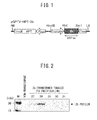
- CMV2b gene was inserted downstream from an internal promoter sequence derived from a virus inserted with a plant expression promoter having a hygromycin resistance gene expression cassette (pGPTV-HPT).
- PRC was then carried out using the RNA2 genome of CMV as template and using CMV-2b-F1 (SEQ ID NO: 1: 5'-ATGGAATTGAACGTAGGTGCAATG-3') and CMV-2b-R1 (SEQ ID NO: 2: 5'-TCAGAAAGCACCTTCCGCC-3') designed on both ends of the 2b gene as primers to obtain an amplification product having a length of 333 bp.
- TA cloning was then carried out to obtain an XbaI-2b gene-SacI fragment imparted with a restrictase sequence.
- the plant expression vector pGPTV-HPT was linearized by cleaving with restrictases XbaI and SacI followed by ligation of the XbaI-2b gene-SacI fragment to construct pGPTV-HPT-2b (nucleic acid molecule B). Restrictase site confirmation and ligation were then carried out on the sequence of this cDNA clone using the ABI PRISM Big Dye Terminator (Applied Biosystems Inc. USA) to confirm the absence of sequence errors.
- the structure of the plant expression vector of the CMV2b gene is schematically shown in FIG. 1 .
- the freeze thaw method using liquid nitrogen ( Holsters, M. et al., Mol. Gen. Genet., Vol. 163(2), p. 181-187 (1978 )) was used to transform Agrobacterium (LBA4404) with plant binary vector.
- the resulting transformed Agrobacterium cells (LBA4404) were shake-cultured overnight at 28°C in LB medium containing 100 mg/l of rifampicin, 300 mg/l of streptomycin and 50 mg/l of kanamycin to obtain a cell liquid.
- Transformation of tobacco was carried out according to the leaf disk method ( Horsch, R.B., et al., Science, Vol. 233, p. 496-498 (1984 )) using Agrobacterium tumefaciens strain LBA4404.
- a leaf disk measuring about 1 cm in diameter was cut out from a tobacco leaf and immersed in a cell liquid of Agrobacterium tumefaciens strain LBA4404 retaining pGPTV-HPT-2b followed by co-culturing for 2 days on Murashige-Skoog (MS) agar medium.
- the co-cultured leaf disk was rinsed of Agrobacterium adhering thereto 3 days later followed by culturing (23°C, light/dark cycle: 16 hours of light, 8 hours of darkness) on MS redifferentiation medium containing 15 mg/l of hygromycin and 500 mg/l of carbenicillin and subculturing every 2 weeks.
- the resulting redifferentiated chutes were induced to take root in MS root formation medium containing 15 mg/l of hygromycin and 500 mg/l of carbenicillin followed by acclimating the cultured individuals to the recombination room temperature and growing by soil cultivation to obtain next-generation seeds (T1 individuals).
- Plasmids pBI-CR1, pBI-CR2 and pBI-CR3, in which full-length cDNA of genome segments of CMV was inserted into binary vector pBI121, were constructed in accordance with the method described in the doctoral thesis of Masashi Suzuki ("Research on the Functions of Cucumber Mosaic Virus", 1997, Tokyo University Doctoral Thesis, National Diet Library, bibliographic ID: 000000343707 ).
- cDNA was respectively amplified using the genome segments RNA1, RNA2 and RNA3 (virus genomes) possessed by CMV as templates, and each of the amplification products was incorporated between a CMV35S promoter (P35S) and nopaline synthase terminator (Tnos) followed by inserting into pBI121 to obtain plasmids pBI-CR1, pBI-CR2 and pBI-CR3.
- P35S CMV35S promoter
- Tnos nopaline synthase terminator
- the 2b gene domain of pBI-CR2 was replaced with jellyfish green fluorescent protein (GFP) gene, which is also used as a marker gene, to produce pBI-CR2 ⁇ 2b-GFP.
- GFP jellyfish green fluorescent protein
- this vector was amplified by PCR using primers FW2a-Sal (SEQ ID NO: 3: 5'-TAGTTACGGTGTCGACACTCCC-3') and RVCS-pBi (SEQ ID NO: 4: 5'-GATCGGGGAAATTCGAGCTCACCGGGGTGGCGG-3') that amplify the region from the SalI restrictase site within the 2a gene of this vector to SacI on the 3'-terminal of the RNA2 virus genome.
- primers FW2a-Sal SEQ ID NO: 3: 5'-TAGTTACGGTGTCGACACTCCC-3'
- RVCS-pBi SEQ ID NO: 4: 5'-GATCGGGGAAATTCGAGCTCACCGGGGTGGCGG-3'
- cDNA having a length of about 3290 bp was obtained.
- the previously constructed vector pBI-CR2 was linearized by digesting with restrictases SalI and SacI. After ligating the linearized vector and the roughly 3290 bp insert amplified by PCR using the In-Fusion Kit (Takara Bio Co.), the resulting ligation product was used to transform competent cells (HB101) and obtain pBI-CR2 ⁇ 2b-GFP clones. The sequence of these cDNA clones was confirmed for restrictase sites and confirmed to be free of sequencing errors.
- FIG. 3(a) shows a vector containing CMV genome 1 (nucleic acid molecule A)
- FIG. 3(b) shows a vector containing CMV genome 2
- FIG. 3(c) shows a vector containing CMV genome 2 in which the 2b gene domain has been replaced with a target protein in the form of GFP (nucleic acid molecule of the present invention)
- FIG. 3(d) shows a vector containing CMV genome 3 (nucleic acid molecule C).
- a modified version of the method described in Grimsley, N. et al., Proc. Natl. Acad. Sci. USA, Vol. 83, p. 3282-3286 (1986 ) was used for the agroinfiltration method.
- Agrobacterium respectively retaining binary vectors inserted with genome segments of CMV and GFP gene in the form of pBI-CR1, pBI-CR2 ⁇ 2b-GFP and pBI-CR3 were transformed using the method described in Experiment 2 to obtain liquids of recombinant Agrobacterium individuals.
- each liquid was centrifuged (20°C, 4800 rpm, 15 minutes) and the resulting cell pellets were suspended in MES buffer (final concentrations: MES 10 mM, MgCl 2 10 mM, acetosyringone 150 ⁇ M, pH 5.7) to an OD 600 value of 0.3 to 1.2 units.
- MES buffer final concentrations: MES 10 mM, MgCl 2 10 mM, acetosyringone 150 ⁇ M, pH 5.7
- suspensions are prepared to an OD 600 value of 0.2 to 0.6 units, while in the case of using by mixing a plurality of the cell solutions, equal amounts of each of the cells are mixed followed by adjusting the amount of cells in the suspension to an OD 600 value of 0.3 to 1.2 units.
- Nicotiana benthamiana was inoculated with the cell solutions by forced injection using a needle-free syringe or vacuum desiccator. A mixture of the Agrobacterium cells retaining 2b gene obtained using the methods of Experiment 1 and Experiment 2 was used in this procedure. Combinations of these inoculation vectors are shown in Table 1. [Table 1] Table 1 Combinations of Inoculated Plants and Inoculated Agrobacterium Individuals (Retained Vectors) ("Yes”: mixture of equal amounts, "-”: unmixed individual) Introduced Gene (Plasmid Name) Sets of Mixed Individuals used in Agroinfiltration 2b gene (pGPTV-HPT-2b) (nucleic acid molecule B, FIG.
- FIG. 3(a) CMV-RNA1 + target gene (pBI-CR2 ⁇ 2b-GFP) (nucleic acid molecule of present invention
- FIG. 3(c) CMV-RNA3 (pBI-CR3) (nucleic acid molecule C, FIG. 3(d) )
- Nicotiana benthamiana or recombinant plant bodies inoculated with transgenic Agrobacterium by agroinfiltration, were cultivated in an environmentally-controlled room or illuminated plant growth incubator at 23°C using a light-dark cycle consisting of 16 hours of daylight and 8 hours of darkness.
- the plant bodies were irradiated with blue light in the wavelength region that enables visualization of GFP followed by confirming fluorescence of GFP in the plant bodies after cultivating for 3 to 14 days.
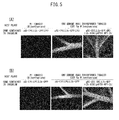
- FIGS. 4(A) and 4(B) Fluorescence micrographs indicating the results of detecting GFP in the leaves of the inoculated plant bodies are shown in FIGS. 4(A) and 4(B).
- FIG. 4(A) depicts fluorescence micrographs of leaves following agroinfiltration (5th day after inoculation) in wild type plant bodies and a 2b transgenic plant.
- FIG. 4(B) depicts fluorescence micrographs of the leaves of uninoculated plant bodies (negative controls).
- GFP fluorescence micrographs were acquired using a GFP epifluorescence illumination system (Model SZX-RFL2 SZX Fluorescence Illumination System, Olympus Corp.).
- FIGS. 4(A) and 4(B) are photographs of fluorescence microscopic images of leaves in inoculated plant bodies.
- transgenic plant bodies retaining CMV genome segment RNA1 or RNA3 were first produced.
- Nicotiana benthamiana was transformed according to the leaf disk method ( Horsch, R.B. et al., Science, Vol. 223, p. 496-498 (1984 )) using the same procedure as that of Experiment 3 with the exception of changing the antibiotic from hygromycin to kanamycin.
- Leaf disks measuring about 1 cm in diameter were cut out from the tobacco leaves and immersed in a cell liquid of Agrobacterium tumefaciens strain LBA4404 retaining pBI-CR1 or pBI-CR3 followed by co-culturing for 2 days on Murashige-Skoog (MS) agar medium.
- the co-cultured leaf disks were rinsed of Agrobacterium adhering thereto 3 days later followed by culturing (23°C, light/dark cycle: 16 hours of light, 8 hours of darkness) on MS redifferentiation medium containing 50 mg/l of kanamycin and 500 mg/l of carbenicillin and subculturing every 2 weeks.
- the resulting redifferentiated chutes were induced to take root in MS root formation medium containing 50 mg/l of kanamycin and 500 mg/l of carbenicillin followed by acclimating the cultured individuals to the recombination room temperature and growing by soil cultivation to obtain next-generation seeds (T1 individuals).
- Next-generation seeds (T1 individuals) of CMV genome RNA1 or RNA3 transformants were aseptically inoculated into medium containing 125 mg/l of kanamycin followed by selecting those T1 individuals that were imparted with kanamycin resistance. The sprouts were grown indoors by cultivating in soil. After seeding, agroinfiltration was carried out on plant bodies that had been cultivated for about two months using the method described in Experiment 6. T1 individuals of CMV genome RNA1 transformants were prepared so that the OD 600 value of the final concentration of the amount of cells in a suspension obtained by mixing equal amounts of two types of Agrobacterium cell solutions having pBI-CR2 ⁇ 2b-GFP and pBI-CR3 at a 1:1 ratio was 0.6 units.
- T1 individuals of CMV genome RNA3 transformants were prepared so that the OD 600 value of the final concentration of the amount of cells in a suspension obtained by mixing equal amounts of two types of Agrobacterium cell solutions having pBI-CR1 and pBI-CR2 ⁇ 2b-GFP at a 1:1 ratio was 0.6 units.
- inoculation of the recombinant plant bodies was carried out by forced injection using a needle-free syringe or vacuum desiccator.
- transient expression was carried out by agroinfiltration in order to supply these transgenic plant bodies with the 2b gene required by the present invention.
- T1 individuals of CMV genome RNA1 transformants were prepared so that the OD 600 value of the final concentration of the amount of cells in a suspension obtained by mixing equal amounts of three types of Agrobacterium cell solutions having pBI-CR2 ⁇ 2b-GFP, pB-CR3 and pGPTV-HPT-2b at a 1:1:1 ratio was 0.9 units.
- T1 individuals of CMV genome RNA3 transformants were prepared so that the OD 600 value of the final concentration of the amount of cells in a suspension obtained by mixing equal amounts of three types of Agrobacterium cell solutions having pBI-CR1, pBI-CR2 ⁇ 2b-GFP and pGPTV-HPT-2b at a 1:1:1 ratio was 0.9 units, followed by forced injection into plant bodies. Following inoculation by agroinfiltration, the plant bodies were cultivated for 5 to 7 days according to the method described in Experiment 7.
- FIG. 3(a) CMV-RNA2 + target gene (pBI-CR2 ⁇ 2b-GFP) (nucleic acid molecule of present invention
- FIG. 3(c) CMV-RNA3 (pBI-CR3) (nucleic acid molecule C
- FIG. 3(d) Name of Inoculated Plant CR1 transgenic plant - - Yes Yes CR1 transgenic plant Yes - Yes Yes CR3 transgenic plant - Yes Yes - CR3 transgenic plant Yes Yes Yes -
- the resulting seeds were aseptically seeded in MS medium containing 125 mg/l of kanamycin and 15 mg/l of hygromycin, and after selecting those plant bodies imparted with resistance to both kanamycin and hygromycin, the sprouts were transplanted and grown indoors by cultivating in soil.
- Genomic DNA was extracted from the leaves of these individuals followed by carrying out genomic PCR analysis, and the CR1 + 2b transformants were confirmed to be transgenic plant bodies having both pBI-CR1 and 2b gene, while the CR3 + 2b transformants were confirmed to be transgenic plant bodies having both pBI-CR3 and 2b gene.
- T1 individuals of CR3 + 2b transformants were prepared so that the OD 600 value of the final concentration of the amount of cells in a suspension obtained by mixing equal amounts of two types of Agrobacterium cell solutions having pBI-CR1 and pBI-CR2 ⁇ 2b-GFP at a 1:1 ratio was 0.6 units.
- inoculation of the recombinant plant bodies was carried out by forced injection using a needle-free syringe or vacuum desiccator. Following inoculation by agroinfiltration, the plant bodies were cultivated for 5 to 7 days according to the method described in Experiment 7. The results are shown in the following Table 3.
- Table 3 Combinations of Inoculated Plants and Inoculated Agrobacterium Individuals (Retained Vectors) ("Yes”: mixture of equal amounts, "-”: unmixed individual) Introduced Gene (Plasmid Name) Sets of Mixed Individuals used in Agroinfiltration Target gene + CMV-RNA3 (pBI-CR2 ⁇ 2b-GFP, pBI-CR3) (nucleic acid molecule of present invention, FIG. 3(c) and nucleic acid molecule C ( FIG. 3(d) ) Target gene + CMV-RNA1 (pBI-CR2 ⁇ 2b-GFP, pBI-CR1) (nucleic acid molecule of present invention, FIG. 3(c) and nucleic acid molecule A ( FIG. 3(a) ) Name of Inoculated Plant CR1 transgenic plant Yes - CR3 transgenic plant - Yes
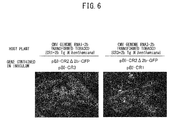
- FIG. 6 Fluorescence micrographs indicating the results of detecting GFP in the leaves of the inoculated plant bodies are shown in FIG. 6.
- FIG. 6 respectively depicts fluorescence micrographs of a leaf following agroinfiltration (5th day after inoculation) in a CR1 + 2b transformant (left side) and CR3 + 2b transformation (right side).
- GFP fluorescence micrographs were acquired in both cases using a GFP epifluorescence illumination system (Model SZX-RFL2 SZX Fluorescence Illumination System, Olympus Corp.). Expression of GFP fluorescence was clearly determined to be occurring in leaf tissue and leaf veins in both transformants.
- the method according to the present invention employing a specific gene expression vector in combination with a transgenic plant allows for systemic transition of the vector into cells throughout the plant to cause infection, whereby high level expression of the target gene is achieved.
- transient expression can be achieved using various host plants and various target genes different in size. Accordingly, the present invention is highly applicable in the industrial fields of, e.g., agriculture, agricultural production engineering, resource production science, and biological production engineering.
Landscapes
- Health & Medical Sciences (AREA)
- Life Sciences & Earth Sciences (AREA)
- Genetics & Genomics (AREA)
- Engineering & Computer Science (AREA)
- Biomedical Technology (AREA)
- Biotechnology (AREA)
- Chemical & Material Sciences (AREA)
- Molecular Biology (AREA)
- Zoology (AREA)
- Wood Science & Technology (AREA)
- Organic Chemistry (AREA)
- Bioinformatics & Cheminformatics (AREA)
- General Engineering & Computer Science (AREA)
- Plant Pathology (AREA)
- Biophysics (AREA)
- Microbiology (AREA)
- Physics & Mathematics (AREA)
- Biochemistry (AREA)
- General Health & Medical Sciences (AREA)
- Cell Biology (AREA)
- Virology (AREA)
- Pharmacology & Pharmacy (AREA)
- Medicinal Chemistry (AREA)
- Breeding Of Plants And Reproduction By Means Of Culturing (AREA)
- Micro-Organisms Or Cultivation Processes Thereof (AREA)
Applications Claiming Priority (2)
| Application Number | Priority Date | Filing Date | Title |
|---|---|---|---|
| JP2013031355 | 2013-02-20 | ||
| PCT/JP2014/054083 WO2014129560A1 (ja) | 2013-02-20 | 2014-02-20 | 植物において外来遺伝子を発現させるための核酸分子及び方法 |
Publications (2)
| Publication Number | Publication Date |
|---|---|
| EP2960331A1 true EP2960331A1 (de) | 2015-12-30 |
| EP2960331A4 EP2960331A4 (de) | 2016-11-23 |
Family
ID=51391341
Family Applications (1)
| Application Number | Title | Priority Date | Filing Date |
|---|---|---|---|
| EP14754539.6A Withdrawn EP2960331A4 (de) | 2013-02-20 | 2014-02-20 | Nukleinsäuremolekül zur expression fremder gene in pflanzen und verfahren dafür |
Country Status (4)
| Country | Link |
|---|---|
| US (1) | US20160002654A1 (de) |
| EP (1) | EP2960331A4 (de) |
| JP (1) | JP6350995B2 (de) |
| WO (1) | WO2014129560A1 (de) |
Families Citing this family (2)
| Publication number | Priority date | Publication date | Assignee | Title |
|---|---|---|---|---|
| CN112639096B (zh) | 2018-07-25 | 2024-12-31 | 国立研究开发法人产业技术综合研究所 | 抑制植物中的靶dna的甲基化的方法 |
| JP7745878B2 (ja) | 2019-12-26 | 2025-09-30 | 国立研究開発法人産業技術総合研究所 | 植物における標的dnaのメチル化を抑制する方法 |
Family Cites Families (5)
| Publication number | Priority date | Publication date | Assignee | Title |
|---|---|---|---|---|
| US4669508A (en) | 1985-10-31 | 1987-06-02 | The Gates Rubber Company | Formable and curve shape retentive hose |
| JP4009663B2 (ja) * | 2003-06-27 | 2007-11-21 | 独立行政法人産業技術総合研究所 | 植物ウイルスベクター |
| ATE469231T1 (de) | 2003-11-10 | 2010-06-15 | Icon Genetics Gmbh | Von rna-virus abgeleitetes pflanzenexpressionssystem |
| EP1686176A1 (de) | 2005-01-28 | 2006-08-02 | Icon Genetics AG | Produktion von Antikörpern in Pflanzen mit plus-sense einzelsträngigen RNA Vektoren |
| EP1897953A1 (de) * | 2006-09-06 | 2008-03-12 | Icon Genetics GmbH | Replicon von Potexviren stammend |
-
2014
- 2014-02-20 EP EP14754539.6A patent/EP2960331A4/de not_active Withdrawn
- 2014-02-20 WO PCT/JP2014/054083 patent/WO2014129560A1/ja not_active Ceased
- 2014-02-20 JP JP2015501506A patent/JP6350995B2/ja active Active
- 2014-02-20 US US14/769,055 patent/US20160002654A1/en not_active Abandoned
Also Published As
| Publication number | Publication date |
|---|---|
| US20160002654A1 (en) | 2016-01-07 |
| WO2014129560A1 (ja) | 2014-08-28 |
| EP2960331A4 (de) | 2016-11-23 |
| JPWO2014129560A1 (ja) | 2017-02-02 |
| JP6350995B2 (ja) | 2018-07-04 |
Similar Documents
| Publication | Publication Date | Title |
|---|---|---|
| ES2389783T3 (es) | Replicón derivado de potexvirus | |
| CN104962580B (zh) | 一种重组植物弹状病毒载体及其构建方法 | |
| JP6850041B2 (ja) | 植物細胞でのタンパク質発現システム及びその使用 | |
| CN113652447B (zh) | 基于vigs的高效桃叶片基因沉默方法 | |
| CN107974454A (zh) | 橡胶树白粉菌内源启动子wy193及其用途 | |
| CN113174389A (zh) | 一种岷江百合诱导型启动子pr4及其应用 | |
| CN101063139B (zh) | 一种种子特异性高效启动子及其应用 | |
| CN110592086B (zh) | 一种植物维管束组织特异性表达的启动子及其应用 | |
| EP2960331A1 (de) | Nukleinsäuremolekül zur expression fremder gene in pflanzen und verfahren dafür | |
| CN101851284B (zh) | 一种植物抗逆性相关膜蛋白BjCRP1及其基因和应用 | |
| CN105039388A (zh) | 重组单链负义植物病毒侵染性克隆构建方法及质粒和病毒 | |
| JP7782793B2 (ja) | キュウリモザイクウイルス基盤改良型組換えベクター | |
| CN103045637A (zh) | 植物根部特异表达Bt-cry6A晶体蛋白在根结线虫防治中的应用 | |
| US20260062711A1 (en) | Method for producing desired substance using plant having suppressed resistance | |
| WO2011154611A2 (en) | A method for enhanced protein synthesis | |
| CN117778462A (zh) | 卫星RNA系统表达siRNA的构建方法及应用 | |
| Cazzonelli et al. | Analysis of RNA-mediated gene silencing using a new vector (pKNOCKOUT) and an in planta Agrobacterium transient expression system | |
| US20190062767A1 (en) | Method and system for expressing foreign gene in a plant | |
| JP5360702B2 (ja) | 植物の篩管を通して遺伝子の転写物を輸送する方法 | |
| US6664384B1 (en) | Duplicated cassava vein mosaic virus enhancers and uses thereof | |
| CN105177008B (zh) | 玉米ⅱ型h+-焦磷酸酶基因启动子的缺失突变体及其应用 | |
| CN116121244B (zh) | 一种浮萍内源性强启动子及其载体与应用 | |
| CN101864422B (zh) | 赛葵黄脉病毒卫星的组成型表达启动子 | |
| CN103087167B (zh) | 来源于硅藻的与植物氮利用和生长相关的蛋白质及其编码基因与应用 | |
| CN102732521B (zh) | 一种中国番茄黄曲叶病毒卫星的组成型表达启动子 |
Legal Events
| Date | Code | Title | Description |
|---|---|---|---|
| PUAI | Public reference made under article 153(3) epc to a published international application that has entered the european phase |
Free format text: ORIGINAL CODE: 0009012 |
|
| 17P | Request for examination filed |
Effective date: 20150915 |
|
| AK | Designated contracting states |
Kind code of ref document: A1 Designated state(s): AL AT BE BG CH CY CZ DE DK EE ES FI FR GB GR HR HU IE IS IT LI LT LU LV MC MK MT NL NO PL PT RO RS SE SI SK SM TR |
|
| AX | Request for extension of the european patent |
Extension state: BA ME |
|
| DAX | Request for extension of the european patent (deleted) | ||
| A4 | Supplementary search report drawn up and despatched |
Effective date: 20161024 |
|
| RIC1 | Information provided on ipc code assigned before grant |
Ipc: C12N 5/10 20060101ALI20161018BHEP Ipc: C12N 15/09 20060101AFI20161018BHEP Ipc: A01H 1/00 20060101ALI20161018BHEP Ipc: A01H 5/00 20060101ALI20161018BHEP Ipc: C12N 15/82 20060101ALI20161018BHEP |
|
| 17Q | First examination report despatched |
Effective date: 20190212 |
|
| STAA | Information on the status of an ep patent application or granted ep patent |
Free format text: STATUS: THE APPLICATION IS DEEMED TO BE WITHDRAWN |
|
| 18D | Application deemed to be withdrawn |
Effective date: 20200603 |