EP2937503B1 - Brandschutzschrank, insbesondere sicherheitsschrank - Google Patents
Brandschutzschrank, insbesondere sicherheitsschrank Download PDFInfo
- Publication number
- EP2937503B1 EP2937503B1 EP15157923.2A EP15157923A EP2937503B1 EP 2937503 B1 EP2937503 B1 EP 2937503B1 EP 15157923 A EP15157923 A EP 15157923A EP 2937503 B1 EP2937503 B1 EP 2937503B1
- Authority
- EP
- European Patent Office
- Prior art keywords
- cabinet according
- thermal insulation
- cabinet
- insulation board
- fire protection
- Prior art date
- Legal status (The legal status is an assumption and is not a legal conclusion. Google has not performed a legal analysis and makes no representation as to the accuracy of the status listed.)
- Active
Links
Images

Classifications
-
- A—HUMAN NECESSITIES
- A62—LIFE-SAVING; FIRE-FIGHTING
- A62C—FIRE-FIGHTING
- A62C3/00—Fire prevention, containment or extinguishing specially adapted for particular objects or places
- A62C3/002—Fire prevention, containment or extinguishing specially adapted for particular objects or places for warehouses, storage areas or other installations for storing goods
-
- B—PERFORMING OPERATIONS; TRANSPORTING
- B01—PHYSICAL OR CHEMICAL PROCESSES OR APPARATUS IN GENERAL
- B01L—CHEMICAL OR PHYSICAL LABORATORY APPARATUS FOR GENERAL USE
- B01L1/00—Enclosures; Chambers
- B01L1/50—Enclosures; Chambers for storing hazardous materials in the laboratory, e.g. cupboards, waste containers
-
- C—CHEMISTRY; METALLURGY
- C04—CEMENTS; CONCRETE; ARTIFICIAL STONE; CERAMICS; REFRACTORIES
- C04B—LIME, MAGNESIA; SLAG; CEMENTS; COMPOSITIONS THEREOF, e.g. MORTARS, CONCRETE OR LIKE BUILDING MATERIALS; ARTIFICIAL STONE; CERAMICS; REFRACTORIES; TREATMENT OF NATURAL STONE
- C04B28/00—Compositions of mortars, concrete or artificial stone, containing inorganic binders or the reaction product of an inorganic and an organic binder, e.g. polycarboxylate cements
- C04B28/02—Compositions of mortars, concrete or artificial stone, containing inorganic binders or the reaction product of an inorganic and an organic binder, e.g. polycarboxylate cements containing hydraulic cements other than calcium sulfates
-
- C—CHEMISTRY; METALLURGY
- C04—CEMENTS; CONCRETE; ARTIFICIAL STONE; CERAMICS; REFRACTORIES
- C04B—LIME, MAGNESIA; SLAG; CEMENTS; COMPOSITIONS THEREOF, e.g. MORTARS, CONCRETE OR LIKE BUILDING MATERIALS; ARTIFICIAL STONE; CERAMICS; REFRACTORIES; TREATMENT OF NATURAL STONE
- C04B28/00—Compositions of mortars, concrete or artificial stone, containing inorganic binders or the reaction product of an inorganic and an organic binder, e.g. polycarboxylate cements
- C04B28/24—Compositions of mortars, concrete or artificial stone, containing inorganic binders or the reaction product of an inorganic and an organic binder, e.g. polycarboxylate cements containing alkyl, ammonium or metal silicates; containing silica sols
- C04B28/26—Silicates of the alkali metals
-
- E—FIXED CONSTRUCTIONS
- E05—LOCKS; KEYS; WINDOW OR DOOR FITTINGS; SAFES
- E05G—SAFES OR STRONG-ROOMS FOR VALUABLES; BANK PROTECTION DEVICES; SAFETY TRANSACTION PARTITIONS
- E05G1/00—Safes or strong-rooms for valuables
- E05G1/02—Details
- E05G1/024—Wall or panel structure
-
- E—FIXED CONSTRUCTIONS
- E05—LOCKS; KEYS; WINDOW OR DOOR FITTINGS; SAFES
- E05Y—INDEXING SCHEME ASSOCIATED WITH SUBCLASSES E05D AND E05F, RELATING TO CONSTRUCTION ELEMENTS, ELECTRIC CONTROL, POWER SUPPLY, POWER SIGNAL OR TRANSMISSION, USER INTERFACES, MOUNTING OR COUPLING, DETAILS, ACCESSORIES, AUXILIARY OPERATIONS NOT OTHERWISE PROVIDED FOR, APPLICATION THEREOF
- E05Y2800/00—Details, accessories and auxiliary operations not otherwise provided for
- E05Y2800/40—Physical or chemical protection
- E05Y2800/414—Physical or chemical protection against high or low temperatures
- E05Y2800/416—Physical or chemical protection against high or low temperatures against fire
-
- Y—GENERAL TAGGING OF NEW TECHNOLOGICAL DEVELOPMENTS; GENERAL TAGGING OF CROSS-SECTIONAL TECHNOLOGIES SPANNING OVER SEVERAL SECTIONS OF THE IPC; TECHNICAL SUBJECTS COVERED BY FORMER USPC CROSS-REFERENCE ART COLLECTIONS [XRACs] AND DIGESTS
- Y02—TECHNOLOGIES OR APPLICATIONS FOR MITIGATION OR ADAPTATION AGAINST CLIMATE CHANGE
- Y02W—CLIMATE CHANGE MITIGATION TECHNOLOGIES RELATED TO WASTEWATER TREATMENT OR WASTE MANAGEMENT
- Y02W30/00—Technologies for solid waste management
- Y02W30/50—Reuse, recycling or recovery technologies
- Y02W30/91—Use of waste materials as fillers for mortars or concrete
Definitions
- the invention relates to a fire protection cabinet, in particular a safety cabinet and preferably a hazardous material cabinet, with a body and with at least one door connected to the body, the body largely having a sandwich structure with at least one wood-based material layer facing inwards and an outward-facing fire protection layer, and wherein the fire protection layer is designed as one or more thermal insulation panels on a mineral basis.
- Fire protection cabinets in particular safety cabinets and preferably hazardous materials cabinets or laboratory cabinets, environmental cabinets and the like, are generally used to store safety-relevant products such as chemicals, flammable liquids, etc.
- safety-relevant products such as chemicals, flammable liquids, etc.
- fire protection requirements must be met.
- the individual fire protection cabinets are differentiated according to their fire resistance times, which are classified according to the DIN EN 14470 regulation.
- the cabinet concerned is exposed to a flame from the outside and its temperature inside is measured at the same time.
- a total of four levels are distinguished from one another, namely a fire resistance duration of 15 minutes, 30 minutes, 60 minutes and finally 90 minutes.
- the fire resistance period is of particular importance for such safety cabinets if flammable liquids or pressurized gas cylinders are stored inside. Because the higher the fire resistance, the longer and better the stored materials are protected in the event of a fire.
- each side wall of the body has a composite panel.
- the composite panel consists of an inner panel, an outer panel and an additional vacuum insulation panel between the inner and outer panels.
- Such a vacuum insulation panel is a panel with a core made of a salt or salt mixture within a metallized plastic film.
- This salt or salt mixture can, for example, be designed so that it melts at 30 ° C and absorbs a lot of energy, as is supplementary in the DE 10 2008 052 329 A1 is described.
- a generic cabinet which in the present case is designed as a fire protection cabinet and achieves a fire resistance duration of 30 minutes.
- the vacuum insulation panels used in both cases have a high weight due to the salt that is inside, which is mostly mechanically highly compressed.
- appropriately constructed safety cabinets in, for example, a double-leaf design and taking standard dimensions into account, achieve a weight that is generally well above 350 kg and usually even more than 400 kg.
- the known teaching relies on an inner body which is designed as a self-supporting insulating housing.
- the outer body is a sheet metal housing like a standard tool cabinet or metal locker.
- the outer body is also designed as a self-supporting cabinet. Due to the assembly and manufacturing tolerances, spaces remain between the inner body and outer body, which are filled by the introduction of solidifying foams.
- the invention is based on the technical problem of further developing a generic fire protection cabinet in such a way that the weight is significantly reduced compared to previously known embodiments while the fire resistance duration is largely constant.
- a generic fire protection cabinet and in particular a safety cabinet within the scope of the invention is characterized in that the body is clad on the outside with a sheet steel shell and is completely and finally composed of the sandwich structure and the sheet steel shell without further layers and without gaps, that is, from the inside Seen from the outside, the wood-based material layer, the thermal insulation board (s) and finally the sheet steel shell are implemented.
- the sandwich structure of the fire protection cabinet is consequently composed, on the one hand, of the wood-based material layer and, on the other hand, of the outwardly facing fire protection layer in the form of the one or more mineral-based thermal insulation panels.
- the invention is initially based on the knowledge that such mineral-based thermal insulation panels typically have a density that is generally well below 800 g / m 3 and preferably even below 600 kg / m 3 .
- the water-containing mineral building boards used at this point in the prior art preferably gypsum plasterboard
- weight savings of more than 30% and in particular even of up to 50% are observed at this point if the total weight of the body according to the invention is compared with that of a conventional body with the same dimensions.
- the total weight of the fire protection cabinets produced in this way can then also be significantly reduced.
- weights can be achieved that are in the range of approx. 250 kg to 270 kg with a double-leaf design and taking standard dimensions into account, whereas the previous safety cabinets have a weight that is usually well above 350 kg and usually even more than 400 kg. This means that a weight saving of more than 20% and preferably even more than 30% can be expected for the entire fire protection cabinet.
- thermal insulation board for realizing the fire protection layer is designed entirely on a silicate basis.
- thermal insulation board means one whose specific thermal conductivity is below 0.05 W / (m ⁇ K) and preferably below 0.04 W / (m ⁇ K).
- the thermal insulation board regularly contains a fibrous material and a binding agent.
- the fibrous material is reinforcement fibers. These reinforcing fibers can be composed of cellulose, for example. In principle, however, glass fibers, carbon fibers or even plastic fibers are also conceivable. As a rule, however, cellulose fibers are used because they are available at particularly low cost.
- the binding agent used can in principle be any suitable binding agent, in particular one which is suitable for high temperatures such as cement, water glass or the like.
- the invention recommends the use of a natural calcium silicate such as wollastonite as the silicate.
- other filling materials such as silicon dioxide, potassium oxide, dolomite, etc. can be used.
- the production of the thermal insulation board according to the invention based on mineral and in particular silicate takes place in such a way that the mineral silicate as raw material, the filler materials as well as the reinforcing fibers and optionally the binding agent are mixed and molded with simultaneous dehydration.
- the shaping then takes place by, for example, calendering, as is also known from paper processing.
- the mineral-based and especially silicate-based thermal insulation panels produced in this way preferably the silicate fire protection panels and particularly preferably the cement-bound silicate fire protection panels, are characterized by a high specific load capacity, low weight and, in particular, the heat resistance required for the application at hand.
- thermal insulation boards used according to the invention are explained in such a way that physical damage such as cracks or peeling off layers occurs only to a minor extent.
- thermal insulation panels can be classified as non-flammable, as is stored and described in the relevant standards.
- the aforementioned prior publication also describes the detailed structure of a calcium silicate board and a method for its production, to which reference is expressly made.
- the wood material layer is generally composed of one or more wood material panels.
- the overall design is such that the wood-based material layer in question defines the entire inner wall of the fire protection cabinet according to the invention. In this way, the desired stability of the fire protection cabinet is set and ensured. This is because the wood-based material layer or the wood-based panels connected to one another ultimately form the framework that bears the entire weight of the fire protection cabinet in question.
- the density of the one or more wood-based panels used at this point is regularly below 800 kg / m 3 .
- the wood-based panel typically has a material thickness which corresponds to about a third to half the material thickness of the thermal insulation panel. This measure also contributes overall to the fact that the fire protection cabinet according to the invention is equipped with clear weight advantages compared to the prior art.
- Particle boards have proven to be particularly favorable as conceivable wood-based panels.
- Such chipboard can in principle also be designed to be flame-retardant.
- the inwardly facing wood-based material layer or the wood-based panels defining it not only have the entire load-bearing function of the fire protection cabinet according to the invention.
- the wood-based panels also function as fastening elements for the attachment of fixtures, the inclusion of one or more bearings for the door etc.
- the mineral-based or silicate-based thermal insulation board that defines the fire protection layer is generally connected to the associated wood-based panel or the wood-based material layer.
- Typical connection techniques can be used.
- the thermal insulation board can be coupled to the associated wood-based panel using screws.
- the thermal insulation board can also be coupled to the associated wood-based panel with the aid of an adhesive. This is possible because such thermal insulation boards based on silicate and in particular cement-bound silicate fire protection boards have a high specific load capacity and can ultimately be processed in a similar way to concrete. That is, the thermal insulation panels in question can be sawn, drilled or otherwise processed in the desired manner.
- the body usually consists of side, back, top and bottom walls.
- the design is such that at least each side wall has the previously described sandwich structure made of the wood material layer or the wood material panels and the one or more thermal insulation panels attached to them.
- the back wall and the head wall are usually also equipped with the sandwich structure.
- the fire protection cabinet according to the invention only the bottom wall of the body has a different and different structure. At this point it has proven to be useful if the fire protection layer of the floor wall is composed of one or more mineral building boards instead of the silicate-based thermal insulation board.
- the door connected to the body can be designed as a swing door, folding door or the like.
- configurations with only one door, with two doors or even more doors are conceivable and are encompassed by the invention.
- each of the doors usually has the sandwich structure already described, consisting of the wood-based material layer or the wood-based material panels and the one or more thermal insulation panels attached to them. That is, the structure of the door is comparable to that of the side wall of the body or the side walls, back wall and top wall of the body.
- the door usually still has a sheet steel shell on the outside.
- the body is clad on the outside and according to the invention with the sheet steel casing.
- the sheet steel shell largely fulfills an optical function and ensures an attractive appearance.
- the sheet steel shell protects the sandwich structure inside from damage.
- the sheet steel casing is generally composed of individual sheet steel plates that are coupled to one another.
- the individual sheet steel plates can be riveted together.
- Aluminum rivets in particular have proven to be beneficial here. This is because such aluminum rivets melt when the melting temperature of aluminum (approx. 600 ° C) is reached, so that the sheet steel plates can easily expand when exposed to fire. This avoids tension, cracks, etc. in the sheet steel casing, particularly in the event of fire.
- the body according to the invention is completely and finally composed of the sandwich structure and the sheet steel shell without further layers.
- the wood-based material layer, the silicate-based thermal insulation board and finally the sheet steel shell are implemented with the specifications described above, without the need for further interposed layers, building boards, etc.
- a fire resistance of F90 can be achieved with such a fire protection cabinet constructed according to the invention. This corresponds to the desired fire resistance duration of at least 90 minutes. In contrast to the prior art, all of this is achieved, for example according to the DE 10 2011 000 258 B4 with a significantly simpler structure and without additional (heavy) vacuum insulation panels.
- the costs and the weight of the fire protection cabinets produced and constructed in this way are reduced.
- the assembly can also be carried out more easily than before, because the individual walls forming the body can practically only be processed by one person during assembly. All of this succeeds with still high fire resistance, great mechanical stability and at the same time an appealing exterior. This is where the main advantages can be seen.
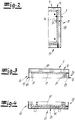
- a fire protection cabinet in the present case a safety cabinet, is shown in the figures.
- the safety cabinet is a hazardous substance cabinet, inside of which liquid hazardous substances such as chemicals can usually be stored and stocked.
- the fire protection cabinet shown has a body 1, 2, 3, 4, to which two doors 5 are connected in the example shown.
- the doors 5 are swing doors.
- a self-closing mechanism is not expressly shown, which ensures that the two doors or swing doors 5 are closed when a predetermined temperature is exceeded.
- the self-closing mechanism works in a known manner with a fusible link that melts when a certain temperature is exceeded and thereby initiates a spring-loaded closing process of the two doors or swing doors 5.
- the doors 5 are swing doors 5, although in principle folding doors or other doors can also be implemented at this point.
- a gas suction 6 can also be seen, which ensures that any vapors of the chemicals stored there or generally hazardous substances that may arise inside the body 1, 2, 3, 4 are suctioned off.
- the body 1, 2, 3, 4 is composed of a top wall 1, a bottom wall 2, two side walls 3 and finally a rear wall or back wall 4.
- the two side walls 3 as well as the head wall 1 and finally the back wall 4 are equipped with a largely matching wall structure.
- only the bottom wall 2 has a slightly different wall structure, as will be described in more detail below.
- the body 1, 2, 3, 4 largely has a sandwich structure.
- the two side walls 3, the head wall 1 and the back wall 4 are equipped with the sandwich structure in question and to be described in more detail below.
- the sandwich structure is composed of at least one wood-based material layer 7 pointing inwards or into the interior of the body 1, 2, 3, 4 on the one hand and an outward-pointing fire protection layer 8 on the other.
- the fire protection layer 8 is designed as one or more thermal insulation panels 8 on a mineral basis.
- the thermal insulation board 8 concerned is a silicate-based one and preferably a silicate fire protection board. Since in the present case the individual silicate crystals for producing the thermal insulation board 8 are connected or bound together with a fibrous material using cement as a binding agent, in the exemplary embodiment and not by way of limitation, the thermal insulation board 8 is a cement-bound silicate fire protection board. As a fibrous material in the production of the thermal insulation board 8, cellulose has proven itself as reinforcing fibers.
- the overall structure is selected such that the thermal insulation board 8 is arranged adjacent to the wood-based material layer 7.
- a sheet steel casing 9 that clad the body 1, 2, 3, 4 on the outside.
- the doors or revolving doors 5 also have a comparable sandwich structure with an inwardly facing wood-based material layer 7, followed by the thermal insulation panel 8 and finally the outer sheet steel shell 9.
- the detailed structure of the doors or revolving doors 5 is designed exactly like that of the two Side walls 3, the head wall 1 and finally the back wall 4 of the body 1, 2, 3, 4. This is of course only an example.
- the wood-based material layer 7 has a material thickness s which corresponds to approximately one third to half the material thickness t of the thermal insulation board 8. That means that: s ⁇ 0.3 to 0.5 t .
- thermo insulation board 8 is designed to be heat-resistant overall and typically has a density of less than 800 kg / m 3 .
- the density is very particularly preferably even below 600 kg / m 3 .
- the wood-based material layer 7 has a density of up to 800 kg / m 3 .
- the total weight of the fire protection cabinet shown can be reduced to well below 300 kg preferably even to less than 270 kg.
- conventional fire protection cabinets of comparable dimensions have a weight of more than 350 kg up to 400 kg at this point with an otherwise identical structure and comparable volume. That is, a weight reduction of approx. 20%, in particular even 30% and more of the total weight of the fire protection cabinet, is observed due to the structure according to the invention.
- the wood-based material layer 7 or the wood-based panels that define it represent the primary load-bearing element of the fire protection cabinet shown.
- the thermal insulation panels 8 have no load-bearing function.
- the individual thermal insulation panels 8 are connected to the wood-based panels or the associated wood-based panel 7 or generally to the wood-based material layer 7. This can be done, for example, by screws and / or an intermediate adhesive.
- the sheet steel casing 9 is in turn composed of individual sheet steel plates that are coupled to one another.
- the sheet steel plates are regularly connected to one another by rivets 10, which are particularly in the Fig. 1 recognizes.
- the rivets 10 are aluminum rivets which melt at the melting temperature of aluminum and consequently release the individual sheet steel plates from this temperature.
- the sheet steel plates can then move freely and in particular expand freely with regard to their length. In this way, even at extreme temperatures, there are practically no tensions and cracks and the basic structure of the fire protection cabinet shown is retained.
- the bottom wall 2 is equipped with a fire protection layer 8, which in the exemplary embodiment is composed of two mineral building boards 11.
- the mineral building boards 11 are plasterboard or fire protection plasterboard.
- the body 1, 2, 3, 4 in the fire protection cabinet according to the invention completely and finally has the described sandwich structure of the wood material layer 7 and the fire protection layer 8, without the need for further layers and finally the body 1, 2, 3, 4 surrounding sheet steel casing 9.
- This not only enables small wall thicknesses to be achieved, but also, in particular, by using the particularly light thermal insulation panel 8, the overall weight can be significantly reduced as described. Nevertheless, the fire protection cabinet shown has a fire resistance of 90 minutes.
Landscapes
- Chemical & Material Sciences (AREA)
- Engineering & Computer Science (AREA)
- Ceramic Engineering (AREA)
- Chemical Kinetics & Catalysis (AREA)
- Health & Medical Sciences (AREA)
- Materials Engineering (AREA)
- Structural Engineering (AREA)
- Organic Chemistry (AREA)
- Inorganic Chemistry (AREA)
- Clinical Laboratory Science (AREA)
- Operations Research (AREA)
- Public Health (AREA)
- Business, Economics & Management (AREA)
- Emergency Management (AREA)
- Special Wing (AREA)
- Building Environments (AREA)
Priority Applications (1)
| Application Number | Priority Date | Filing Date | Title |
|---|---|---|---|
| PL15157923T PL2937503T3 (pl) | 2014-04-24 | 2015-03-06 | Szafka ognioodporna, zwłaszcza szafka bezpieczeństwa |
Applications Claiming Priority (1)
| Application Number | Priority Date | Filing Date | Title |
|---|---|---|---|
| DE202014101935.9U DE202014101935U1 (de) | 2014-04-24 | 2014-04-24 | Brandschutzschrank, insbesondere Sicherheitsschrank |
Publications (2)
| Publication Number | Publication Date |
|---|---|
| EP2937503A1 EP2937503A1 (de) | 2015-10-28 |
| EP2937503B1 true EP2937503B1 (de) | 2021-02-17 |
Family
ID=50821930
Family Applications (1)
| Application Number | Title | Priority Date | Filing Date |
|---|---|---|---|
| EP15157923.2A Active EP2937503B1 (de) | 2014-04-24 | 2015-03-06 | Brandschutzschrank, insbesondere sicherheitsschrank |
Country Status (3)
| Country | Link |
|---|---|
| EP (1) | EP2937503B1 (pl) |
| DE (1) | DE202014101935U1 (pl) |
| PL (1) | PL2937503T3 (pl) |
Families Citing this family (11)
| Publication number | Priority date | Publication date | Assignee | Title |
|---|---|---|---|---|
| DE202015105167U1 (de) | 2015-09-30 | 2015-10-13 | Düperthal Sicherheitstechnik Gmbh & Co. Kg | Vorrichtung zur Aufnahme von Gefahrstoffen |
| DE202015105170U1 (de) | 2015-09-30 | 2015-10-15 | Düperthal Sicherheitstechnik Gmbh & Co. Kg | Vorrichtung zur Aufnahme von Gefahrstoffen |
| ES2746539T3 (es) | 2015-10-01 | 2020-03-06 | Dueperthal Sicherheitstechnik Gmbh & Co Kg | Armario de seguridad |
| DE202017102440U1 (de) | 2017-04-25 | 2017-05-15 | Düperthal Sicherheitstechnik Gmbh & Co. Kg | Vorrichtung zur Aufnahme von Gefahrstoffen |
| DE202017102432U1 (de) | 2017-04-25 | 2017-05-15 | Düperthal Sicherheitstechnik Gmbh & Co. Kg | Sicherheitsschrank |
| EP3441141A1 (de) | 2017-08-08 | 2019-02-13 | Düperthal Sicherheitstechnik GmbH & Co.KG | Kombination aus zumindest einer steuereinheit und einem oder mehreren sicherheitsschränken |
| CN113200218B (zh) * | 2021-05-07 | 2022-03-15 | 广东人峰实业有限公司 | 一种基于大数据的试剂安全储放柜 |
| EP4098635A1 (en) * | 2021-06-04 | 2022-12-07 | ImerTech SAS | Anti-breaking element comprising a geopolymer combining fire resistance and break-in resistance |
| CN115477096B (zh) * | 2022-09-26 | 2023-08-18 | 江西金辰科技有限公司 | 一种带有防火功能的智能镀锌板存放架 |
| EP4391256A1 (de) * | 2022-12-20 | 2024-06-26 | Swibox AG | Brandschutzgehäuse |
| DE102024117605A1 (de) | 2024-06-21 | 2025-12-24 | Energy24 UG (haftungsbeschränkt) | Havarieschutzgehäuse für Heim-Batteriespeicher |
Family Cites Families (5)
| Publication number | Priority date | Publication date | Assignee | Title |
|---|---|---|---|---|
| GB2071636B (en) * | 1980-02-04 | 1984-01-25 | Heit Ltd | Thermally insulating container |
| DE29500142U1 (de) * | 1995-01-05 | 1995-06-08 | MSG GmbH, 63825 Schöllkrippen | Quaderförmiges Behältnis, insbesondere hitzebeständiger Schrank |
| JP2001226166A (ja) | 2000-02-15 | 2001-08-21 | Nichias Corp | 珪酸カルシウム質成形板 |
| DE102008052329A1 (de) | 2008-10-20 | 2010-05-20 | Format Tresorbau Gmbh & Co. Kg | Tresor, insbesondere Brandschutzschrank und Verfahren zu seiner Herstellung |
| DE102011000258B4 (de) | 2010-11-29 | 2012-10-11 | Asecos Gmbh Sicherheit Und Umweltschutz | Sicherheitsschrank |
-
2014
- 2014-04-24 DE DE202014101935.9U patent/DE202014101935U1/de not_active Expired - Lifetime
-
2015
- 2015-03-06 PL PL15157923T patent/PL2937503T3/pl unknown
- 2015-03-06 EP EP15157923.2A patent/EP2937503B1/de active Active
Non-Patent Citations (1)
| Title |
|---|
| None * |
Also Published As
| Publication number | Publication date |
|---|---|
| EP2937503A1 (de) | 2015-10-28 |
| DE202014101935U1 (de) | 2014-05-08 |
| PL2937503T3 (pl) | 2021-07-19 |
Similar Documents
| Publication | Publication Date | Title |
|---|---|---|
| EP2937503A1 (de) | Brandschutzschrank, insbesondere sicherheitsschrank | |
| EP3060725B1 (de) | Durchbruchhemmender verbund sowie ständerwand-, dach- oder deckenkonstruktion | |
| DE102018106990A1 (de) | Verfahren zur Herstellung eines Sicherungsschrankes, Sicherungsschrank und Tür für einen Sicherungsschrank | |
| EP1538297B2 (de) | Geteilte Feuerschutztüreinlage | |
| DE202013104664U1 (de) | Kassettenförmiges Wand- und/oder Deckenelement für Brandschutzzwecke, sowie Wand, Wand- und/oder Deckenverkleidung mit solchen Wand- und/oder Deckenelementen | |
| EP1944432B1 (de) | Explosionshemmendes Bauelement | |
| DE102011000258B4 (de) | Sicherheitsschrank | |
| DE202013007295U1 (de) | Feuerbeständiger Revisionsabschluss zur Unterputz-Montage | |
| EP3012395A1 (de) | Streifenförmiges Stütz- und Isolierelement zur Abstützung und Isolierung eines Fensterrahmens | |
| CH617486A5 (en) | Fire-resistant lightweight partition wall for inner rooms of buildings | |
| DE202014101934U1 (de) | Brandschutzschrank, insbesondere Sicherheitsschrank | |
| DE102014208294A1 (de) | Mobiles Gebäudeelement, insbesondere Gebäude-Raumzelle oder Wand- oder Decken-Teil hierfür | |
| DE102011053560A1 (de) | Brandschutzsystem sowie Brandschutztür, Brandschutz-Wandelement und Brandschutzplatte hierfür | |
| DE102015107035B4 (de) | Brandschutzschiebetor | |
| DE102008006127A1 (de) | Mehrschaliges Halbfertig-Bauteil | |
| DE102008035937A1 (de) | Transportables Haus aus Modulelementen | |
| DE102008023364A1 (de) | Türe | |
| DE202014105269U1 (de) | Gebäudewand | |
| WO2008098691A1 (de) | Mehrteilige, in der flächenausdehnung variable revisionsvorrichtung | |
| DE102013112338A1 (de) | Dämmelement | |
| AT523183B1 (de) | Brandschutztür | |
| EP2855789A1 (de) | Hochleistungswärmedämmplatte | |
| DE102006054616A1 (de) | Rangierverteiler | |
| EP2136028B1 (de) | Feuerschutzbauelement | |
| DE202024002017U1 (de) | Innenraum-Bau- und/oder Brandschutzplatte |
Legal Events
| Date | Code | Title | Description |
|---|---|---|---|
| PUAI | Public reference made under article 153(3) epc to a published international application that has entered the european phase |
Free format text: ORIGINAL CODE: 0009012 |
|
| AK | Designated contracting states |
Kind code of ref document: A1 Designated state(s): AL AT BE BG CH CY CZ DE DK EE ES FI FR GB GR HR HU IE IS IT LI LT LU LV MC MK MT NL NO PL PT RO RS SE SI SK SM TR |
|
| AX | Request for extension of the european patent |
Extension state: BA ME |
|
| 17P | Request for examination filed |
Effective date: 20160114 |
|
| RBV | Designated contracting states (corrected) |
Designated state(s): AL AT BE BG CH CY CZ DE DK EE ES FI FR GB GR HR HU IE IS IT LI LT LU LV MC MK MT NL NO PL PT RO RS SE SI SK SM TR |
|
| STAA | Information on the status of an ep patent application or granted ep patent |
Free format text: STATUS: EXAMINATION IS IN PROGRESS |
|
| 17Q | First examination report despatched |
Effective date: 20181128 |
|
| RIC1 | Information provided on ipc code assigned before grant |
Ipc: B01L 1/00 20060101ALI20200123BHEP Ipc: E05G 1/024 20060101AFI20200123BHEP Ipc: A62C 3/00 20060101ALI20200123BHEP |
|
| GRAP | Despatch of communication of intention to grant a patent |
Free format text: ORIGINAL CODE: EPIDOSNIGR1 |
|
| STAA | Information on the status of an ep patent application or granted ep patent |
Free format text: STATUS: GRANT OF PATENT IS INTENDED |
|
| GRAS | Grant fee paid |
Free format text: ORIGINAL CODE: EPIDOSNIGR3 |
|
| INTG | Intention to grant announced |
Effective date: 20201119 |
|
| GRAA | (expected) grant |
Free format text: ORIGINAL CODE: 0009210 |
|
| STAA | Information on the status of an ep patent application or granted ep patent |
Free format text: STATUS: THE PATENT HAS BEEN GRANTED |
|
| AK | Designated contracting states |
Kind code of ref document: B1 Designated state(s): AL AT BE BG CH CY CZ DE DK EE ES FI FR GB GR HR HU IE IS IT LI LT LU LV MC MK MT NL NO PL PT RO RS SE SI SK SM TR |
|
| REG | Reference to a national code |
Ref country code: GB Ref legal event code: FG4D Free format text: NOT ENGLISH |
|
| REG | Reference to a national code |
Ref country code: CH Ref legal event code: EP |
|
| REG | Reference to a national code |
Ref country code: DE Ref legal event code: R096 Ref document number: 502015014232 Country of ref document: DE |
|
| REG | Reference to a national code |
Ref country code: AT Ref legal event code: REF Ref document number: 1361680 Country of ref document: AT Kind code of ref document: T Effective date: 20210315 |
|
| REG | Reference to a national code |
Ref country code: IE Ref legal event code: FG4D Free format text: LANGUAGE OF EP DOCUMENT: GERMAN |
|
| REG | Reference to a national code |
Ref country code: NL Ref legal event code: FP |
|
| REG | Reference to a national code |
Ref country code: LT Ref legal event code: MG9D |
|
| PG25 | Lapsed in a contracting state [announced via postgrant information from national office to epo] |
Ref country code: HR Free format text: LAPSE BECAUSE OF FAILURE TO SUBMIT A TRANSLATION OF THE DESCRIPTION OR TO PAY THE FEE WITHIN THE PRESCRIBED TIME-LIMIT Effective date: 20210217 Ref country code: FI Free format text: LAPSE BECAUSE OF FAILURE TO SUBMIT A TRANSLATION OF THE DESCRIPTION OR TO PAY THE FEE WITHIN THE PRESCRIBED TIME-LIMIT Effective date: 20210217 Ref country code: GR Free format text: LAPSE BECAUSE OF FAILURE TO SUBMIT A TRANSLATION OF THE DESCRIPTION OR TO PAY THE FEE WITHIN THE PRESCRIBED TIME-LIMIT Effective date: 20210518 Ref country code: LT Free format text: LAPSE BECAUSE OF FAILURE TO SUBMIT A TRANSLATION OF THE DESCRIPTION OR TO PAY THE FEE WITHIN THE PRESCRIBED TIME-LIMIT Effective date: 20210217 Ref country code: PT Free format text: LAPSE BECAUSE OF FAILURE TO SUBMIT A TRANSLATION OF THE DESCRIPTION OR TO PAY THE FEE WITHIN THE PRESCRIBED TIME-LIMIT Effective date: 20210617 Ref country code: BG Free format text: LAPSE BECAUSE OF FAILURE TO SUBMIT A TRANSLATION OF THE DESCRIPTION OR TO PAY THE FEE WITHIN THE PRESCRIBED TIME-LIMIT Effective date: 20210517 Ref country code: NO Free format text: LAPSE BECAUSE OF FAILURE TO SUBMIT A TRANSLATION OF THE DESCRIPTION OR TO PAY THE FEE WITHIN THE PRESCRIBED TIME-LIMIT Effective date: 20210517 |
|
| PG25 | Lapsed in a contracting state [announced via postgrant information from national office to epo] |
Ref country code: SE Free format text: LAPSE BECAUSE OF FAILURE TO SUBMIT A TRANSLATION OF THE DESCRIPTION OR TO PAY THE FEE WITHIN THE PRESCRIBED TIME-LIMIT Effective date: 20210217 Ref country code: RS Free format text: LAPSE BECAUSE OF FAILURE TO SUBMIT A TRANSLATION OF THE DESCRIPTION OR TO PAY THE FEE WITHIN THE PRESCRIBED TIME-LIMIT Effective date: 20210217 Ref country code: LV Free format text: LAPSE BECAUSE OF FAILURE TO SUBMIT A TRANSLATION OF THE DESCRIPTION OR TO PAY THE FEE WITHIN THE PRESCRIBED TIME-LIMIT Effective date: 20210217 |
|
| PG25 | Lapsed in a contracting state [announced via postgrant information from national office to epo] |
Ref country code: IS Free format text: LAPSE BECAUSE OF FAILURE TO SUBMIT A TRANSLATION OF THE DESCRIPTION OR TO PAY THE FEE WITHIN THE PRESCRIBED TIME-LIMIT Effective date: 20210617 |
|
| PG25 | Lapsed in a contracting state [announced via postgrant information from national office to epo] |
Ref country code: SM Free format text: LAPSE BECAUSE OF FAILURE TO SUBMIT A TRANSLATION OF THE DESCRIPTION OR TO PAY THE FEE WITHIN THE PRESCRIBED TIME-LIMIT Effective date: 20210217 Ref country code: EE Free format text: LAPSE BECAUSE OF FAILURE TO SUBMIT A TRANSLATION OF THE DESCRIPTION OR TO PAY THE FEE WITHIN THE PRESCRIBED TIME-LIMIT Effective date: 20210217 Ref country code: CZ Free format text: LAPSE BECAUSE OF FAILURE TO SUBMIT A TRANSLATION OF THE DESCRIPTION OR TO PAY THE FEE WITHIN THE PRESCRIBED TIME-LIMIT Effective date: 20210217 |
|
| REG | Reference to a national code |
Ref country code: CH Ref legal event code: PL |
|
| REG | Reference to a national code |
Ref country code: DE Ref legal event code: R097 Ref document number: 502015014232 Country of ref document: DE |
|
| PG25 | Lapsed in a contracting state [announced via postgrant information from national office to epo] |
Ref country code: SK Free format text: LAPSE BECAUSE OF FAILURE TO SUBMIT A TRANSLATION OF THE DESCRIPTION OR TO PAY THE FEE WITHIN THE PRESCRIBED TIME-LIMIT Effective date: 20210217 Ref country code: RO Free format text: LAPSE BECAUSE OF FAILURE TO SUBMIT A TRANSLATION OF THE DESCRIPTION OR TO PAY THE FEE WITHIN THE PRESCRIBED TIME-LIMIT Effective date: 20210217 Ref country code: MC Free format text: LAPSE BECAUSE OF FAILURE TO SUBMIT A TRANSLATION OF THE DESCRIPTION OR TO PAY THE FEE WITHIN THE PRESCRIBED TIME-LIMIT Effective date: 20210217 Ref country code: ES Free format text: LAPSE BECAUSE OF FAILURE TO SUBMIT A TRANSLATION OF THE DESCRIPTION OR TO PAY THE FEE WITHIN THE PRESCRIBED TIME-LIMIT Effective date: 20210217 Ref country code: DK Free format text: LAPSE BECAUSE OF FAILURE TO SUBMIT A TRANSLATION OF THE DESCRIPTION OR TO PAY THE FEE WITHIN THE PRESCRIBED TIME-LIMIT Effective date: 20210217 |
|
| REG | Reference to a national code |
Ref country code: BE Ref legal event code: MM Effective date: 20210331 |
|
| PLBE | No opposition filed within time limit |
Free format text: ORIGINAL CODE: 0009261 |
|
| STAA | Information on the status of an ep patent application or granted ep patent |
Free format text: STATUS: NO OPPOSITION FILED WITHIN TIME LIMIT |
|
| 26N | No opposition filed |
Effective date: 20211118 |
|
| GBPC | Gb: european patent ceased through non-payment of renewal fee |
Effective date: 20210517 |
|
| PG25 | Lapsed in a contracting state [announced via postgrant information from national office to epo] |
Ref country code: IE Free format text: LAPSE BECAUSE OF NON-PAYMENT OF DUE FEES Effective date: 20210306 Ref country code: CH Free format text: LAPSE BECAUSE OF NON-PAYMENT OF DUE FEES Effective date: 20210331 Ref country code: AL Free format text: LAPSE BECAUSE OF FAILURE TO SUBMIT A TRANSLATION OF THE DESCRIPTION OR TO PAY THE FEE WITHIN THE PRESCRIBED TIME-LIMIT Effective date: 20210217 Ref country code: LU Free format text: LAPSE BECAUSE OF NON-PAYMENT OF DUE FEES Effective date: 20210306 Ref country code: LI Free format text: LAPSE BECAUSE OF NON-PAYMENT OF DUE FEES Effective date: 20210331 |
|
| PG25 | Lapsed in a contracting state [announced via postgrant information from national office to epo] |
Ref country code: SI Free format text: LAPSE BECAUSE OF FAILURE TO SUBMIT A TRANSLATION OF THE DESCRIPTION OR TO PAY THE FEE WITHIN THE PRESCRIBED TIME-LIMIT Effective date: 20210217 |
|
| PG25 | Lapsed in a contracting state [announced via postgrant information from national office to epo] |
Ref country code: GB Free format text: LAPSE BECAUSE OF NON-PAYMENT OF DUE FEES Effective date: 20210517 |
|
| REG | Reference to a national code |
Ref country code: AT Ref legal event code: MM01 Ref document number: 1361680 Country of ref document: AT Kind code of ref document: T Effective date: 20210306 |
|
| PG25 | Lapsed in a contracting state [announced via postgrant information from national office to epo] |
Ref country code: IS Free format text: LAPSE BECAUSE OF FAILURE TO SUBMIT A TRANSLATION OF THE DESCRIPTION OR TO PAY THE FEE WITHIN THE PRESCRIBED TIME-LIMIT Effective date: 20210617 |
|
| PG25 | Lapsed in a contracting state [announced via postgrant information from national office to epo] |
Ref country code: BE Free format text: LAPSE BECAUSE OF NON-PAYMENT OF DUE FEES Effective date: 20210331 |
|
| PG25 | Lapsed in a contracting state [announced via postgrant information from national office to epo] |
Ref country code: AT Free format text: LAPSE BECAUSE OF NON-PAYMENT OF DUE FEES Effective date: 20210306 |
|
| PG25 | Lapsed in a contracting state [announced via postgrant information from national office to epo] |
Ref country code: HU Free format text: LAPSE BECAUSE OF FAILURE TO SUBMIT A TRANSLATION OF THE DESCRIPTION OR TO PAY THE FEE WITHIN THE PRESCRIBED TIME-LIMIT; INVALID AB INITIO Effective date: 20150306 |
|
| PG25 | Lapsed in a contracting state [announced via postgrant information from national office to epo] |
Ref country code: CY Free format text: LAPSE BECAUSE OF FAILURE TO SUBMIT A TRANSLATION OF THE DESCRIPTION OR TO PAY THE FEE WITHIN THE PRESCRIBED TIME-LIMIT Effective date: 20210217 |
|
| PG25 | Lapsed in a contracting state [announced via postgrant information from national office to epo] |
Ref country code: MK Free format text: LAPSE BECAUSE OF FAILURE TO SUBMIT A TRANSLATION OF THE DESCRIPTION OR TO PAY THE FEE WITHIN THE PRESCRIBED TIME-LIMIT Effective date: 20210217 |
|
| PG25 | Lapsed in a contracting state [announced via postgrant information from national office to epo] |
Ref country code: MT Free format text: LAPSE BECAUSE OF FAILURE TO SUBMIT A TRANSLATION OF THE DESCRIPTION OR TO PAY THE FEE WITHIN THE PRESCRIBED TIME-LIMIT Effective date: 20210217 |
|
| PGFP | Annual fee paid to national office [announced via postgrant information from national office to epo] |
Ref country code: DE Payment date: 20260325 Year of fee payment: 12 |
|
| PGFP | Annual fee paid to national office [announced via postgrant information from national office to epo] |
Ref country code: IT Payment date: 20260324 Year of fee payment: 12 |
|
| PGFP | Annual fee paid to national office [announced via postgrant information from national office to epo] |
Ref country code: NL Payment date: 20260319 Year of fee payment: 12 |
|
| PGFP | Annual fee paid to national office [announced via postgrant information from national office to epo] |
Ref country code: FR Payment date: 20260320 Year of fee payment: 12 |
|
| PGFP | Annual fee paid to national office [announced via postgrant information from national office to epo] |
Ref country code: TR Payment date: 20260302 Year of fee payment: 12 |
|
| PGFP | Annual fee paid to national office [announced via postgrant information from national office to epo] |
Ref country code: PL Payment date: 20260226 Year of fee payment: 12 |