EP2874166B1 - Relais, Flaggenstruktur und Flaggenanordnung - Google Patents
Relais, Flaggenstruktur und Flaggenanordnung Download PDFInfo
- Publication number
- EP2874166B1 EP2874166B1 EP14306764.3A EP14306764A EP2874166B1 EP 2874166 B1 EP2874166 B1 EP 2874166B1 EP 14306764 A EP14306764 A EP 14306764A EP 2874166 B1 EP2874166 B1 EP 2874166B1
- Authority
- EP
- European Patent Office
- Prior art keywords
- arm
- relay
- flag structure
- flag
- open ended
- Prior art date
- Legal status (The legal status is an assumption and is not a legal conclusion. Google has not performed a legal analysis and makes no representation as to the accuracy of the status listed.)
- Active
Links
Images



Classifications
-
- H—ELECTRICITY
- H01—ELECTRIC ELEMENTS
- H01H—ELECTRIC SWITCHES; RELAYS; SELECTORS; EMERGENCY PROTECTIVE DEVICES
- H01H45/00—Details of relays
- H01H45/08—Indicators; Distinguishing marks
-
- H—ELECTRICITY
- H01—ELECTRIC ELEMENTS
- H01H—ELECTRIC SWITCHES; RELAYS; SELECTORS; EMERGENCY PROTECTIVE DEVICES
- H01H50/00—Details of electromagnetic relays
- H01H50/08—Indicators; Distinguishing marks
-
- H—ELECTRICITY
- H01—ELECTRIC ELEMENTS
- H01H—ELECTRIC SWITCHES; RELAYS; SELECTORS; EMERGENCY PROTECTIVE DEVICES
- H01H49/00—Apparatus or processes specially adapted to the manufacture of relays or parts thereof
-
- H—ELECTRICITY
- H01—ELECTRIC ELEMENTS
- H01H—ELECTRIC SWITCHES; RELAYS; SELECTORS; EMERGENCY PROTECTIVE DEVICES
- H01H50/00—Details of electromagnetic relays
- H01H50/02—Bases; Casings; Covers
- H01H50/06—Bases; Casings; Covers having windows; Transparent cases or covers
-
- H—ELECTRICITY
- H01—ELECTRIC ELEMENTS
- H01H—ELECTRIC SWITCHES; RELAYS; SELECTORS; EMERGENCY PROTECTIVE DEVICES
- H01H50/00—Details of electromagnetic relays
- H01H50/16—Magnetic circuit arrangements
- H01H50/18—Movable parts of magnetic circuits, e.g. armature
-
- H—ELECTRICITY
- H01—ELECTRIC ELEMENTS
- H01H—ELECTRIC SWITCHES; RELAYS; SELECTORS; EMERGENCY PROTECTIVE DEVICES
- H01H50/00—Details of electromagnetic relays
- H01H50/16—Magnetic circuit arrangements
- H01H50/36—Stationary parts of magnetic circuit, e.g. yoke
-
- H—ELECTRICITY
- H01—ELECTRIC ELEMENTS
- H01H—ELECTRIC SWITCHES; RELAYS; SELECTORS; EMERGENCY PROTECTIVE DEVICES
- H01H9/00—Details of switching devices, not covered by groups H01H1/00 - H01H7/00
- H01H9/16—Indicators for switching condition, e.g. "on" or "off"
-
- Y—GENERAL TAGGING OF NEW TECHNOLOGICAL DEVELOPMENTS; GENERAL TAGGING OF CROSS-SECTIONAL TECHNOLOGIES SPANNING OVER SEVERAL SECTIONS OF THE IPC; TECHNICAL SUBJECTS COVERED BY FORMER USPC CROSS-REFERENCE ART COLLECTIONS [XRACs] AND DIGESTS
- Y10—TECHNICAL SUBJECTS COVERED BY FORMER USPC
- Y10T—TECHNICAL SUBJECTS COVERED BY FORMER US CLASSIFICATION
- Y10T29/00—Metal working
- Y10T29/49—Method of mechanical manufacture
- Y10T29/49002—Electrical device making
- Y10T29/49105—Switch making
Definitions
- the present disclosure relates broadly to a flag structure and a flag assembly for use in relays; and relays comprising the flag structure or flag assembly.
- a flag structure is typically used in a relay to indicate to a user whether the relay is in an energized or de-energized state (i.e. switched on or off). Through mechanical interactions, the flag structure is typically actuated about one or more pivot points in response to the switching on/off operations to provide an indication of the switching states of the relay to the user.
- the flag structure is assembled by exerting a compressive or tensile force to at least partially deform a portion of the flag structure before aligning the deformed part to a support structure on the relay. Thereafter, the compressive or tensile force is released to allow the deformed part to recoil and urge against the support structure such that it engages with the support structure.
- the engagement with the support structure typically provides one or more pivot points for movement of the flag structure to provide an indication of the switching states of the relay to the user.
- a significant problem that may arise from such conventional relay is that because a compressive or tensile force needs to be applied to the flag structure during assembly of the relay, the flag structure may sustain permanent deformation. In this case, the flag structure is not able to return to its original state. This can result in insufficient engagement of the flag structure with the support structure which in turn may hamper the movement of the flag structure in response to the switching of states of the relay. Consequently, there may be reduced efficiency or reduced accuracy in indicating the energization or de-energization of the relay. There is also a risk that the flag structure can be broken when excessive force is applied to the flag structure. This in turn can lead to unnecessary costs being incurred to replace the damaged components during assembly of the relay.
- the part of the flag structure that receives the mechanical force to enable the flag structure to actuate about one or more pivot points in response to the switching on/off operations is often far from being structurally optimal. This may reduce the effectiveness in transmission of the mechanical force required for actuating the flag structure.
- EP 1 471 556 A2 discloses an electromagnetic relay with an indicator for indicating an operative status of a relay switch. To mount the Indicator to a base plate, arms of the indicator are elastically deformed so that pivots can engage with bearing holes of the base plate.
- DE 28 18 604 A1 discloses a relay with indicator means for indicating an operative status of a relay switch.
- the indicator means are pivoted with the help of a toggle button that is formed on one end of the indicator means.
- US 4 890 080 A discloses an electromagnetic relay with an operation indicating member.
- a pair of supports are formed on a case of the relay.
- fulcrum bars of the operation indicating member are sandwiched between the supports and the case.
- the object is satisfied by a relay according to claim 1, and a method of assembling a relay according to claim 17.
- a relay inter alia comprising: a relay switch configured to operate in a first switch mode and a second switch mode; a flag structure for indicating an operative status of the relay switch, the flag structure capable of being orientated in a first position for indicating the relay switch being in the first switch mode and in a second position for indicating the relay switch being in the second switch mode; a card structure coupled to the flag structure for changing the orientation of the flag structure from the first position to the second position or from the second position to the first position; and a base plate coupled to the flag structure and the card structure, the base plate comprising an open ended slot for allowing part of the flag structure to be received therein.
- the first switch mode may correspond to the relay operatively providing electrical communication to an external circuit and the second switch mode may correspond to the relay operatively disrupting electrical communication to the external circuit
- the open ended slot is configured to allow part of the flag structure to be received therein without substantial deformation of the flag structure
- the flag structure comprises projections for slotting into the open ended slot of the base to provide a pivoting point for changing the orientation of the flag structure.
- the card structure may comprise a supporting platform for receiving part of the flag structure and for transmitting a force to the flag structure to change the orientation of the flag structure.
- the flag structure may further comprise: a first arm and a second arm; a lip coupled to the first arm and the second arm for indicating the operative status of the relay switch; and a shaft coupled to the first arm and the second arm, the shaft configured to engage the supporting platform of the card structure, wherein the projections for being received in the open ended slot of the base plate comprises a projection extending from the first arm and a projection extending from the second arm.
- the shaft may extend from the first arm to the second arm.
- the projections may be disposed at the ends of the first and second arms.
- the projection of the first arm and the projection of the second arm may extend outwards away from each other.
- the relay further comprises a housing for coupling with the base plate and for substantially preventing the projections of the flag structure from dislodging from the open ended slot of the base plate through the opened end.
- the housing may comprise a window for allowing visual access to the lip of the flag structure when it is in the first position or the second position or both.
- the window may be substantially transparent.
- the flag structure may be substantially non-deformable.
- a flag structure comprises in a relay as disclosed herein, the flag structure comprising: a first arm and a second arm; a lip coupled to the first arm and the second arm for indicating the operative status of the relay switch; a shaft coupled to the first arm and the second arm, the shaft configured to engage the supporting platform of the card structure of the relay; a projection extending from the first arm; and a projection extending from the second arm, wherein the projection of the first arm and the projection of the second arm are arranged to be received by the open ended slot of the base of the relay.
- the shaft may extend from the first arm to the second arm.
- the projections may be disposed at the ends of the first and second arms.
- the projection of the first arm and the projection of the second arm may extend outwards away from each other.
- the flag structure may be substantially non-deformable.
- a flag assembly comprised in a relay as disclosed herein, the flag assembly comprising: a flag structure for indicating an operative status of a relay switch of the relay, the flag structure comprising: a first arm and a second arm; a lip coupled to the first arm and the second arm for indicating the operative status of the relay switch; and a shaft coupled to the first arm to the second arm for receiving a force to thereby change the orientation of the flag structure; and a card structure coupled to the flag structure, the card structure comprising a supporting platform for receiving the shaft of the flag structure and for transmitting the force to the flag structure to change the orientation of the flag structure.
- the flag structure may further comprise: a projection extending from the first arm; and a projection extending from the second arm, wherein the projection of the first arm and the projection of the second arm are arranged to be received by the open ended slot of the base of the relay.
- the projections may be disposed at the ends of the first and second arms.
- the projection of the first arm and the projection of the second arm may extend outwards away from each other.
- the flag structure may be substantially non-deformable.
- a method of assembling a relay as disclosed herein, the method inter alia comprising: providing a base plate comprising an open ended slot; providing a flag structure for indicating an operative status of the relay switch, wherein the flag structure is capable of being orientated in a first position for indicating the relay switch being in the first switch mode and in a second position for indicating the relay switch being in the second switch mode; coupling a card structure to the base plate, wherein the card structure is capable of changing the orientation of the flag structure from the first position to the second position or from the second position to the first position; and receiving part of the flag structure with the open ended slot of the base plate.
- the step of receiving part of the flag structure with the open ended slot of the base plate comprises receiving the part of the flag structure with the open ended slot without substantially deforming the flag structure.
- the method may further comprise engaging the supporting platform of the card structure with the shaft of the flag structure when the card structure comprises a supporting platform and the flag structure comprises a shaft.
- Example embodiments disclosed herein provide relays comprising the flag structure or flag assembly.
- the relays may be used for providing or disrupting electrical communication to an external circuit.
- the relays may be electromagnetic relays. Accordingly, in some embodiments, apart from the flag structure or flag assembly disclosed herein, the relays also comprise a coil block, an armature and a contact switching mechanism for electromagnetically switching on/off an electrical connection of the relay to an external circuitry.
- the relay for providing or disrupting electrical communication to a circuit comprise a relay switch configured to operate in a first switch mode and a second switch mode; a flag structure for indicating an operative status of the relay switch, the flag structure capable of being orientated in a first position for indicating the relay switch being in the first switch mode and in a second position for indicating the relay switch being in the second switch mode; a card structure coupled to the flag structure for changing the orientation of the flag structure from the first position to the second position or from the second position to the first position; and a base plate coupled to the flag structure and the card structure, the base plate comprising an open ended slot for allowing part of the flag structure to be received therein.
- the first switch mode and second switch mode may be independently selected to correspond to one of a mode for operatively providing electrical communication to an external circuit and a mode for operatively disrupting electrical communication to the external circuit.
- the open ended slot is configured to allow part of the flag structure to be received or slotted therein without substantial deformation of the flag structure.
- the card structure and the base plate may be removably coupled to the flag structure.
- that open ended slot of the base plate is disposed on an extended structure of the base plate.
- the open ended slot may comprise at least one of a valley, trough, depression, or channel.
- the flag structure comprises projections for slotting into the open ended slot of the base to provide a pivoting point for changing the orientation of the flag structure.
- the flag structure may further comprise a first arm and a second arm; a lip coupled to the first arm and the second arm for indicating the operative status of the relay switch; and a shaft coupled to the first arm and the second arm, the shaft configured to engage the supporting platform of the card structure, wherein the projections for slotting into the open ended slot of the base plate comprises a projection extending from the first arm and a projection extending from the second arm.
- the first arm and second arm may be part of a frame structure that is bridged at the ends of the first and second arms by an elongate portion running across the two arms.
- the elongate portion may be disposed at an angle that is substantially perpendicular to the first, the second arms or both.
- the lip may also be coupled to the first and second arms via the elongate portion such that the lip may be an extension of part of the elongate portion.
- the lip or part of the lip is an extension of the middle part of the elongate portion.
- the lip or part of the lip is also made with a material or colour that is sufficiently conspicuous to the user so that the user is able to have a better visual indication on the switching status of the relay when in use.
- the lip may also be angled such that a small arc movement of the legs of the flag may result in a large arc movement of the lip.
- this can improve the mechanical sensitivity of the flag in that a small movement may be needed to show the change in switching status of the relay.
- the lip is also interchangeably termed as an indicator.
- the projections for slotting into the open ended slot of the base plate are disposed at the ends of the first and second arms.
- the projection of the first arm and the projection of the second arm may extend outwards away from each other or inwards towards each other.
- the projections of the first and second arms may be of a shape that is complementary to the shape of the open ended slot of the base plate so that the projections may engage with the open ended slot to provide one or more pivot points to actuate the flag structure.
- the cross-section of the projections is circular in shape.
- the flag may be dropped or slotted into the open ended slot of the base plate such that the projections are in contact with the open ended slot.
- the flag structure can be fitted into the open ended slot of the base plate without a need for substantial deformation of the flag structure. This provides ease in assembly of the flag structure in the relay. Accordingly, in some embodiments, the flag structure can be made of substantially non-deformable material. Advantageously, this may provide rigidity and structural integrity to the flag structure.
- the shaft of the flag structure may be at least one of a bar, a rod, or a straight elongated member. In other embodiments, the shaft of the flag structure may be non-straight. It will be appreciated that in various embodiments, the shaft of the flag structure can assume any shape so long as the shaft can engage with the corresponding supporting platform of the card structure.
- the shaft of the flag structure may extend from the first arm to the second arm. In various embodiments, the shaft of the flag structure is to be distinguished from the elongate portion bridging the ends of the first and second arms. The shaft of the flag structure may be positioned between the elongate portion and the projections at the ends of the first and second arms.
- the shaft may provide a means for receiving a mechanical force for the flag structure to move it. Even more advantageously, the shaft also provides additional support for the arms of the flag structure so that overall rigidity and structural integrity to the flag structure is further enhanced.
- the card structure of the relay may comprise a supporting platform for receiving part of the flag structure and for transmitting a force to the flag structure to change the orientation of the flag structure.
- the shaft may be of a shape that is complementary to the shape of the supporting platform of the card structure so that the shaft may sufficiently engage with the supporting platform of the card structure to receive the mechanical force required to actuate the flag structure.
- the supporting platform of the card structure when the supporting platform of the card structure is sufficiently engaged with the shaft, the incidence of imbalance of the flag structure, particularly during movement is substantially reduced.
- the supporting platform of the card structure may be a valley or a groove.
- the shaft is tubular in shape to sufficiently engage with the supporting platform.
- the shaft coupling the first arm and the second arm may be a separate component that is attached (removably or otherwise) to the first arm and second arm or the shaft may be a part of the entire flag structure that is formed, for instance, through extrusion molding.
- the lip, the elongate portion bridging the ends of the first and second arms and the projections at the ends of the first and second arms may be separate components that are attached (removably or otherwise) to the other components or part of the entire flag structure that is formed.
- the relay comprises a housing for coupling with the base plate to contain the relay switch, the flag structure and the card structure.
- the housing prevents the projections of the flag structure from dislodging from the open ended slot of the base plate through the opened end of the open ended slot.
- the housing comprises a window for allowing visual access to the lip of the flag structure when it is in the first position or the second position or both.
- the window may be substantially transparent.
- a flag structure comprised in a relay disclosed herein, the flag structure comprises a first arm and a second arm; a lip coupled to the first arm and the second arm for indicating the operative status of the relay switch; a projection extending from the first arm; and a projection extending from the second arm, wherein the projection of the first arm and the projection of the second arm are arranged to slot into the open ended slot of the base of the relay.
- the flag structure may also comprise additional features or configurations that are similar to those discussed above.
- a flag assembly comprised in a relay disclosed herein, the flag assembly comprises a flag structure for indicating an operative status of a relay switch of the relay and a card structure coupled to the flag structure, the card structure comprising a supporting platform for receiving the shaft of the flag structure and for transmitting the force to the flag structure to change the orientation of the flag structure.
- the flag structure and card structure may also comprise additional features or configurations that are similar to those discussed above.
- a method of assembling a relay comprising inter alia providing a base plate comprising an open ended slot, providing a flag structure for indicating an operative status of the relay switch, wherein the flag structure is capable of being orientated in a first position for indicating the relay switch being in the first switch mode and in a second position for indicating the relay switch being in the first switch mode, coupling a card structure to the base plate, wherein the card structure is capable of changing the orientation of the flag structure from the first position to the second position or from the second position to the first position, and slotting part of the flag structure into the open ended slot of the base plate.
- the step of slotting part of the flag structure into the open ended slot of the base plate may comprise slotting the part of the flag structure into the open ended slot without substantially deforming the flag structure.
- the card structure may comprise a supporting platform and the flag structure may comprise a shaft.
- the method of assembling a relay may comprise engaging the supporting platform of the card structure with the shaft of the flag structure.
- Coupled or “connected” as used in this description are intended to cover both directly connected or connected through one or more intermediate means, unless otherwise stated.
- Such apparatus may be specifically constructed for the purposes of the methods, or may comprise a general purpose computer/processor or other device selectively activated or reconfigured by a computer program stored in a storage member.
- the algorithms and displays described herein are not inherently related to any particular computer or other apparatus. It is understood that general purpose devices/machines may be used in accordance with the teachings herein. Alternatively, the construction of a specialized device/apparatus to perform the method steps may be desired.
- the disclosure may have disclosed a method and/or process as a particular sequence of steps. However, unless otherwise required, it will be appreciated the method or process should not be limited to the particular sequence of steps disclosed. Other sequences of steps may be possible. The particular order of the steps disclosed herein should not be construed as undue limitations. Unless otherwise required, a method and/or process disclosed herein should not be limited to the steps being carried out in the order written. The sequence of steps may be varied and still remain within the scope of the disclosure.
- Example embodiments of the disclosure will be better understood and readily apparent to one of ordinary skill in the art from the following discussions and if applicable, in conjunction with the Figures. It should be appreciated that other modifications related to structural, electrical and optical changes may be made without deviating from the scope of the appended claims. Example embodiments are not necessarily mutually exclusive as some may be combined with one or more embodiments to form new exemplary embodiments.
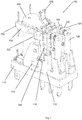
- Fig. 1 is a schematic drawing illustrating a relay in an example embodiment.
- the relay 100 comprises a base 110, a contact switching mechanism 120, a flag structure 200, a card structure 300 and an armature 400.
- the base 110 comprises a supporting structure 112 for receiving the flag structure 200 and the contact switching mechanism 120.
- the supporting structure 112 further comprises an open ended slot 116 in the form of a top open ended slot (only one of the top open ends is shown in Fig. 1 ).
- the base 110 and the supporting structure 112 may be collectively termed as the base plate in this example embodiment.
- the supporting structure 112 further comprises a locking portion 114.
- the locking portion 114 extends out towards an exterior of the relay 100.
- the flag structure 200 is supported on the card structure 300.
- the flag structure is configured to be dropped into a top open end 116 of the supporting structure 112.
- the contact switching mechanism 120 comprises a movable contact piece 122, a first non-movable contact piece 124 and a second non-movable contact piece 126.
- the card structure 300 is in fitting contact with the armature 400 and the card structure 300 is coupled to the movable contact piece 122.
- the contact switching mechanism 120 is coupled to the supporting structure 112, for example, by fitting the movable contact piece 122, the first non-movable contact piece 124 and the second non-movable contact piece 126 into corresponding receiving guides in the supporting structure 112 of the base 110.
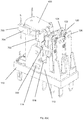
- Fig. 2(a) is a schematic drawing illustrating a part of the relay 100 before assembly of a flag structure in the example embodiment of Fig. 1 .
- the card structure 300 is placed between a contact switching mechanism 120 and an armature 400.
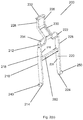
- Fig. 2(b) is a schematic drawing illustrating the flag structure 200 in the example embodiment of Fig. 1 .
- the flag structure 200 comprises a first arm 210, a second arm 220 and a lip in the form of an indicator portion 230.
- the indicator portion 230 is connected to a first end 212 and 222 of the first arm 210 and the second arm 220.
- the two arms 210 and 220 are substantially parallel to each other.
- the first arm 210 comprises a first end 212, a second end 214, an inner wall 216 and an outer wall 218.
- the second arm 220 comprises a first end 222, a second end 224, an inner wall 226 and an outer wall 228.
- the inner wall 216 of the first arm 210 faces the inner wall 226 of the second arm 220.
- a first projection 240 extends out from the outer wall 218 at the second end 214 of the first arm 210.
- a second projection 250 extends out from the outer wall 228 at the second end 224 of the second arm 220.
- the first projection 240 and the second projection 250 have a circular cross-section.
- Each of the two projections 240 and 250 is configured for dropping into a top open end 116 of the supporting structure 112 of base 110 of the relay 100.
- the indicator portion 230 extends from an elongate portion that bridges the first arm 210 and second arm 220.
- the elongate portion is in the form of a connector bar 234.
- the indicator portion 230 also comprises an indication point 232 and a connector piece 226.
- the indication point 232 is connected to the connector bar 234 by the connector piece 226.
- the connector bar 234 is substantially perpendicular to each of the two arms 210 and 220.
- the indication point 232 is formed at a substantially centre position of the connector bar 234.
- the flag structure 200 further comprises a shaft 260.
- the shaft 260 extends from one arm to another arm.
- the shaft 260 is substantially perpendicular to each of the arm 210 and 220.
- the shaft 260 is integral with the two arms 210 and 220.
- the shaft 260 may be a part that is attached to the two arms 210 and 220.
- a large surface is provided for engaging with a card structure. This allows the flag structure to be in better contact and alignment with the card structure during movement of the card structure so that less stress is being exerted on the flag structure during said movement.
- the flag structure 200 can be molded as single structure and in other embodiments the flag structure 200 can be assembled together from different parts.
- the flag structure 200 is capable of cooperating with a card structure 300 of a relay 100 in the example embodiment.
- the flag structure 200 is made of a substantially non-deformable material.
- the substantially non-deformable material can be a plastic, such as polybutylene terephthalate, polyphenylene sulfide, polyamides or polyoxymethylene, but is not limited to such material.
- the structure design does not allow the flag structure 200 or part thereof to be substantially deformed.
- multiple shafts can be disposed between the first arm 210 and the second arm 220 to make it more difficult for the first arm 210 and the second arm 220 to move towards or away from each other when a compressive or tensile force is exerted on the first arm 210 and the second arm 220. This helps to increase the rigidity of the flag structure 200.
- the first projection 240 and the second projection 250 of the flag structure 200 operate as bearing/pivot points.
- the first arm 210 and the second arm 220 can rotate about the first projection 240 and the second projection 250 respectively.
- the shaft 260 is being supported on the card structure 300 and can be pushed or pulled along with the card structure 300.
- the flag structure 200 is thus enabled to move forward and backward with respect to the contact mechanism 120 accordingly.
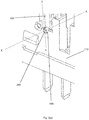
- Fig. 3(a) is a schematic drawing illustrating an exploded view of the arm of the flag structure within the open ended slot 116 of the support structure 112 in the example embodiment of Fig. 1 .
- Fig. 3(b) is a schematic drawing illustrating an exploded view of the open ended slot 116 of the support structure 112 of Fig. 1 but in the absence of a flag structure.
- the top end of the slot 116 is opened to allow access into the slot from the top by the first projection 240.
- the open ended slot 116 has a substantially "U" shape.
- the flag structure 200 is dropped, slotted into or rested on the top open ended slot 116 of the support structure 112 (only one of the top open ends is shown in Fig. 3(a) ).
- the top open ends 116 are substantially complementary to the first projection 240 and the second projection (not shown in Fig. 3(a) and (b) ) of the flag structure 200.
- the open ended slot 116 for allowing part of the flag structure to be slotted therein is not an enclosed opening where the circumference of the opening is closed and access to the opening is provided only along a single axis (for example only the X-axis shown in Fig. 3(a) and 3(b) ).
- two axes of entry into the slot that is, the X-axis and Y-axis shown in Fig. 3(a) and 3(b) are possible.
- the point of entry along the Y-axis is preferred (i.e. through the top open end) as substantial force or deformation of the flag structure is not required.
- the projections 240 and 250 can be slidably fitted into the top open ends 116.
- the open ended slot can also have a single point of entry, such that entry is from a top down manner.
- side walls can be provided to cover up entry access along the X-axis and allow entry only via the Y-axis.
- Fig. 4(a) is a schematic drawing illustrating the card structure in the example embodiment of Fig. 1 .
- the card structure 300 comprises an upright wall 310, a supporting platform in the form of an extended portion 320 and two arms 330.
- the extended portion 320 extends from a first surface 340 and the two arms 330 extend from a second surface 350 of the upright wall 310.
- the extended portion 320 further comprises a groove which can be better seen in Fig. 4(b) and Fig. 4(c) .
- Fig. 4(b) and Fig. 4(c) are schematic drawings illustrating other perspectives of the card structure in an example embodiment.
- the extended portion 320 of the card structure 300 further comprises a groove 360.
- the groove 360 is disposed between the first surface 340 and a panel 370.
- the groove 360, together with the first surface 340 and the panel 370 helps to prevent accidental movement or dislocation of the flag structure 200 from the card structure 300.
- the groove 360 can be an indentation made on the extended portion 320 or any complementary structure to engage the corresponding shaft 260 of the flag structure 200.
- the shaft 260 of the flag structure 200 is placed onto the extended portion 320 of a card structure 300.
- the shaft 260 of the flag structure 200 can be fitted onto a groove 360 on the extended portion 320 of the card structure 300.
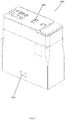
- Fig. 5 is a schematic drawing illustrating a relay structure being covered with a housing in an example embodiment.
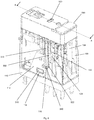
- Fig. 6 is a detailed schematic drawing of Fig. 5 , where the internal components of the relay are shown for better illustration.
- a shell 500 is of a shape and size complementary to a relay 100.
- the housing/shell 500 comprises a window in the form of a recess 520 and a rib 522 (only one is shown in Fig. 6 ).
- the position of the rib 522 is such that when the shell 500 is coupled to the relay 100, the rib 522 rests on top of the projections 240 and 250 (not shown) of the flag structure. This substantially prevents the flag structure from being dislodged from the top open ended slot.
- the rib 522 is urged within a top open end of the supporting structure 112 and rests on top of the projections 240 and 250.
- the projections 240 and 250 allow the flag structure 200 to rotate about the space formed by each rib 522 and the corresponding top open ended slot 116.
- the shell further comprises a locking hole 510. The locking portion 114 of the relay 100 locks into the locking hole 510. The shell 500 is thereby coupled to the relay 100.
- the recess 520 is substantially transparent.
- the recess 520 is positioned such that it corresponds to a position of an indication point (for example 232 of Fig. 2(b) ) when the relay is in an energized state.
- the recess 520 no longer corresponds to a position of the indication point (for example 232 of Fig. 2(b) ).
- the recess 520 can be positioned such that it corresponds to a position of an indication point when the relay is in a de-energized state. In such alternative embodiments, when the relay is in an energized state, the recess 520 no longer corresponds to a position of the indication point.
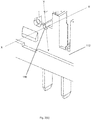
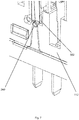
- Fig. 7 is a schematic drawing illustrating an exploded view of the arm of the flag structure with the rib of the housing/shell in the example embodiment of Fig. 5 .
- the rib 522 is placed on top of a protrusion of a flag structure in the example embodiment.
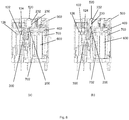
- Fig. 8 is a sectional view along the line AA of Fig. 6 .
- the armature 400 when the relay is in a de-energized state, the armature 400 is not in contact with an iron core 600.
- the movable contact 122 is in contact with the first unmovable contact 124.
- the indicator portion 230 of the flag structure 200 lies at a position such that the indication point 232 is not aligned with the position of the recess 520 of the shell 500. In this position, the indication point 232 is not visible through the recess 520.
- a user is able to know that the relay is in a de-energized state due to the non-visibility of the indication point 232.
- the armature 400 rotates in a clockwise direction.
- the armature 400 thus comes in contact with the iron core 600.
- the movable contact 122 comes into contact with the second unmovable contact 126.
- Movement of the armature 400 causes the card structure 300 to move in a direction that is away from the iron core 600.
- This movement of the card structure 300 translates to a rotation of the flag structure 300 in an anti-clockwise direction.
- the indicator portion 230 of the flag structure 200 lies at a position such that the indication point 232 is aligned with the position of the recess 520 of the shell 500. In this position, the indication point 232 is visible through the recess 520.
- a user is able to know that the relay is in an energized state due to the visibility of the indication point 232.
- a contact switching mechanism 120 and a coil subassembly 700 are assembled on a base 110.
- the coil subassembly 700 comprises a yoke 702, an iron core 600 and a frame 704.
- the contact switching mechanism is inserted into corresponding receiving guides in the base 110.
- An armature 400 is inserted into corresponding receiving guides in the coil subassembly 700.
- a card structure 300 is slotted between the armature 400 and the contact switching mechanism 120.
- An extended portion 320 of the card structure 300 is in fitting contact with the armature 400 and two arms 330 of the card structure 300 are coupled to a movable contact piece 122.
- a flag structure 200 is placed on top of the extended portion 320 of the card structure.
- a shaft 260 of the flag structure 200 is fitted into a groove on the extended portion 320.
- a first arm 210 and a second arm 220 of the flag structure 200 are dropped into top open ended slot 116 of the projection 112 by slotting a first projection 240 and a second projection 250 of the flag structure 200 into the top open ends 116.
- a shell 500 is coupled to the relay 100 by placing ribs 522 of the shell 500 on top of the first projection 240 and the second projection 250. In the example embodiment, the ribs 522 are urged into the top open ends 116. In this position, a locking portion 114 of the base 110 locks into a locking hole 510 of the shell 500
- Fig. 9(a) and (b) are schematic drawings illustrating cross-sections of possible open ended slots in accordance with various embodiments disclosed herein.
- Fig. 9(c) is a schematic drawing illustrating a cross-section of a non-open ended slot as a comparison against open ended slots of the various embodiments disclosed herein.
- an open ended slot 800 having a substantially "U" shape is shown. It will be appreciated that the open ended slot 800 can also comprise at least one of a trough, valley, depression or channel in various embodiments.
- One end of the open ended slot is open to allow access by an arm of a flag structure.
- the shape of the open ended slot may be complementary to a projection of the flag structure.
- the open ended slot comprises a top open end. Access of the arm of the flag structure into the open ended slot is in a substantially top to bottom direction (e.g. substantially along the Y-axis) as shown by the arrow in Fig. 9(a) .
- the open ended slot may be opening that is defined by one face of a wall 802 of a base to an opposing face of another wall 804 of the base.
- the open ended slot may also be made such that a side wall blocks the slot to prevent the arm of the flag structure from accessing the slot along the Z-axis.
- FIG. 9(b) another example embodiment of an open ended slot 900 having a non-symmetrical shape is shown. Access of the arm of the flag structure into the open ended slot is in a substantially top to bottom direction (as shown by the arrows in Fig. 9(b) .
- the open ended slot can be substantially straight near the top open end and ends at an angle to the substantially straight portion.
- the bottom part of the open ended slot is offset from the top part of the open ended slot.
- this reduces the likelihood of the projection of the flag structure being accidentally dislodged from the open ended slot.
- a non-open ended slot 920 is fully closed and in this case, is defined by a closed circle. Access of an arm of a flag structure into the open ended slot in a substantially top to bottom direction (e.g. Y-axis) is no longer possible due to the closed ends. In fact, access in any direction (shown by the arrows in Fig. 9(c) ) along the X-Y plane is not possible.
- the flag structure can only be inserted through the circular opening via the Z-axis.
- an open ended slot also allows a rib of a housing to rest on a projection of the flag structure to prevent the flag structure from being accidentally dislodged. This allows the flag structure to better engage with the open ended slot to pivot about a projection of the flag structure.
- the flag structure may only be inserted into the slot by firstly deforming the flag structure.
- the arms of the flag structure are urged against walls defining the non-open ended slot (for e.g. walls 922 of Fig. 9(c) ). This may also hamper the movement of the flag structure due to increased contact friction and may make the relay more susceptible to damage.
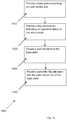
- Fig. 10 is a schematic drawing for broadly illustrating an exemplary embodiment of a method of assembling a relay disclosed herein.
- a method of assembling 1000 a relay disclosed herein comprises step 1010 wherein a base plate comprising an open ended slot is provided.
- a flag structure for indicating an operative status of the relay switch is provided.
- the flag structure is capable of being orientated in a first position for indicating the relay switch being in the first switch mode and in a second position for indicating the relay switch being in the second switch mode.
- a card structure is coupled to the base plate.
- the card structure is capable of changing the orientation of the flag structure from the first position to the second position or from the second position to the first position.
- step 1040 part of the flag structure is slotted into the open ended slot of the base plate.
- Step 1040 may comprise slotting the part of the flag structure into the open ended slot without substantially deforming the flag structure.
- step 1030 may be carried out after step 1040.
- the card structure may comprise a supporting platform and the flag structure may comprise a shaft.
- the method of assembling a relay may further comprise engaging the supporting platform of the card structure with the shaft of the flag structure.
Landscapes
- Physics & Mathematics (AREA)
- Electromagnetism (AREA)
- Engineering & Computer Science (AREA)
- Manufacturing & Machinery (AREA)
- Switch Cases, Indication, And Locking (AREA)
- Telephone Set Structure (AREA)
- General Physics & Mathematics (AREA)
- Theoretical Computer Science (AREA)
- Casings For Electric Apparatus (AREA)
- Displays For Variable Information Using Movable Means (AREA)
Claims (18)
- Relais (100), umfassend:einen Relaisschalter (120), der ausgestaltet ist, um in einem ersten Schaltmodus und in einem zweiten Schaltmodus zu arbeiten;eine Flaggenstruktur (200), um einen Betriebsstatus des Relaisschalters (120) anzuzeigen, wobei die Flaggenstruktur (200) in eine erste Position, um anzuzeigen, dass sich der Relaisschalter (120) in dem ersten Schaltmodus befindet, und in eine zweite Position orientiert sein kann, um anzuzeigen, dass sich der Relaisschalter (120) in dem zweiten Schaltmodus befindet;eine Kartenstruktur (300), die mit der Flaggenstruktur (200) gekoppelt ist, um die Orientierung der Flaggenstruktur (200) aus der ersten Position in die zweite Position oder aus der zweiten Position in die erste Position zu verändern; undeine Basisplatte (110), die mit der Flaggenstruktur (200) und der Kartenstruktur (300) gekoppelt ist, wobei die Basisplatte (110) Nuten (116; 800; 900) mit offener Seite in der Form von Nuten mit nach oben hin offener Seite umfasst, um zu ermöglichen, dass ein Teil der Flaggenstruktur (200) ohne Verformung der Flaggenstruktur (200) darin aufgenommen werden kann,wobei die Flaggenstruktur (200) Vorsprünge (240, 250) zum Einschieben in die Nuten (116; 800; 900) mit offener Seite der Basis (110) umfasst, um einen Schwenkpunkt zum Verändern der Orientierung der Flaggenstruktur (200) bereitzustellen, und wobeidas Relais (100) ferner ein Gehäuse (500) zur Kopplung mit der Basisplatte (110) und zum Verhindern, dass die Vorsprünge (240, 250) der Flaggenstruktur (200) aus den Nuten (116; 800; 900) mit offener Seite der Basisplatte (110) durch die nach oben hin offene Seite entfernt werden, umfasst.
- Relais nach Anspruch 1,
wobei der erste Schaltmodus dem entspricht, dass das Relais wirksam eine elektrische Verbindung mit einer externen Schaltung bereitstellt, und der zweite Schaltmodus dem entspricht, dass das Relais wirksam eine elektrische Verbindung mit der externen Schaltung unterbricht. - Relais nach einem der Ansprüche 1 - 2,
wobei die Kartenstruktur (300) eine Stützplattform (320) zur Aufnahme eines Teils der Flaggenstruktur (200) und zum Übertragen einer Kraft auf die Flaggenstruktur (200) zum Verändern der Orientierung der Flaggenstruktur (200) umfasst. - Relais nach Anspruch 3,
wobei die Flaggenstruktur (200) ferner umfasst:einen ersten Schenkel (210) und einen zweiten Schenkel (220);einen Schnabel (230), der mit dem ersten Schenkel (210) und mit dem zweiten Schenkel (220) gekoppelt ist, um den Betriebsstatus des Relaisschalters (120) anzuzeigen; undeine mit dem ersten Schenkel (210) und mit dem zweiten Schenkel (220) gekoppelte Welle (260), wobei die Welle ausgestaltet ist, um in die Stützplattform (320) der Kartenstruktur (300) einzugreifen,wobei die Vorsprünge (240, 250) zur Aufnahme in den Nuten (116; 800; 900) mit offener Seite der Basisplatte (110) einen Vorsprung (240), der sich von dem ersten Schenkel (210) weg erstreckt, und einen Vorsprung (250) umfassen, der sich von dem zweiten Schenkel (220) weg erstreckt. - Relais nach Anspruch 4,
wobei sich die Welle (260) von dem ersten Schenkel (210) zu dem zweiten Schenkel (220) erstreckt. - Relais nach einem der Ansprüche 4 - 5,
wobei die Vorsprünge (240, 250) an den Enden (214, 224) der ersten und zweiten Schenkel (210, 220) angeordnet sind. - Relais nach einem der Ansprüche 4 - 6,
wobei der Vorsprung (240) des ersten Schenkels (210) und der Vorsprung (250) des zweiten Schenkels (220) sich voneinander weg nach außen erstrecken. - Relais nach Anspruch 1,
wobei das Gehäuse (500) ein Fenster (520) umfasst, um einen visuellen Zugang zu einem Schnabel (230) der Flaggenstruktur (200) zu ermöglichen, wenn sie sich in der ersten Position oder in der zweiten Position oder in beiden befindet. - Relais nach Anspruch 8,
wobei das Fenster (520) transparent ist. - Relais nach Anspruch 1,
wobei die Flaggenstruktur umfasst:einen ersten Schenkel (210) und einen zweiten Schenkel (220);einen Schnabel (230), der mit dem ersten Schenkel (210) und mit dem zweiten Schenkel (220) gekoppelt ist, um den Betriebsstatus des Relaisschalters (120) anzuzeigen;eine Welle (260), die mit dem ersten Schenkel (210) und mit dem zweiten Schenkel (220) gekoppelt ist, wobei die Welle für einen Eingriff mit einer Stützplattform (320) der Kartenstruktur (300) ausgestaltet ist;einen Vorsprung (240), der sich von dem ersten Schenkel (210) weg erstreckt; undeinen Vorsprung (250), der sich von dem zweiten Schenkel (220) weg erstreckt,wobei der Vorsprung (240) des ersten Schenkels (210) und der Vorsprung (250) des zweiten Schenkels (220) angeordnet sind, um von den Nuten (116; 800; 900) mit offener Seite der Basis (110) des Relais (100) ohne Verformung der Flaggenstruktur (200) aufgenommen zu werden, und durch das Gehäuse (500), das mit der Basis (110) gekoppelt ist, verhindert wird, dass sie aus den Nuten (116; 800; 900) mit offener Seite der Basis (110) durch die nach oben hin offene Seite entfernt werden. - Relais nach Anspruch 10,
wobei sich die Welle (260) von dem ersten Schenkel (210) zu dem zweiten Schenkel (220) erstreckt. - Relais nach einem der Ansprüche 10 - 11,
wobei die Vorsprünge (240, 250) an den Enden (214, 224) der ersten und zweiten Schenkel (210, 220) angeordnet sind. - Relais nach einem der Ansprüche 10 - 12,
wobei der Vorsprung (240) des ersten Schenkels (210) und der Vorsprung (250) des zweiten Schenkels (220) sich voneinander weg nach außen erstrecken. - Relais nach Anspruch 10,
wobei die Kartenstruktur (300) eine Stützplattform (320) zur Aufnahme der Welle (260) der Flaggenstruktur (200) und zum Übertragen der Kraft auf die Flaggenstruktur (200) umfasst, um die Orientierung der Flaggenstruktur (200) zu verändern. - Relais nach Anspruch 14,
wobei die Vorsprünge (240, 250) an den Enden (214, 224) der ersten und zweiten Schenkel (210, 220) angeordnet sind. - Relais nach einem der Ansprüche 14 - 15,
wobei der Vorsprung (240) des ersten Schenkels (210) und der Vorsprung (250) des zweiten Schenkels (220) sich voneinander weg nach außen erstrecken. - Verfahren zum Montieren eines Relais (100) nach Anspruch 1, wobei das Verfahren umfasst, dass:eine Basisplatte bereitgestellt wird (1010), die Nuten mit offener Seite in der Form von Nuten mit nach oben hin offener Seite umfasst;eine Flaggenstruktur zum Anzeigen eines Betriebsstatus des Relaisschalters bereitgestellt wird (1020), wobei die Flaggenstruktur (200) in eine erste Position, um anzuzeigen, dass sich der Relaisschalter (120) in dem ersten Schaltmodus befindet, und in eine zweite Position, um anzuzeigen, dass sich der Relaisschalter (120) in dem zweiten Schaltmodus befindet, orientiert werden kann und einen Vorsprung (240), der sich von dem ersten Schenkel (210) weg erstreckt, und einen Vorsprung (250), der sich von dem zweiten Schenkel (220) weg erstreckt, umfasst;eine Kartenstruktur mit der Basisplatte gekoppelt wird (1030),wobei die Kartenstruktur (300) die Orientierung der Flaggenstruktur (200) aus der ersten Position in die zweite Position oder aus der zweiten Position in die erste Position verändern kann;die Vorsprünge (240, 250) der Flaggenstruktur in den Nuten mit offener Seite der Basisplatte aufgenommen werden (1040), ohne die Flaggenstruktur (200) zu verformen; undein Gehäuse (500) mit der Basisplatte (110) gekoppelt wird, um durch das Gehäuse (500) zu verhindern, dass die Vorsprünge (240, 250) aus den Nuten (116; 800; 900) mit offener Seite der Basisplatte (110) durch die nach oben hin offene Seite entfernt werden.
- Verfahren nach Anspruch 17,
wobei die Kartenstruktur (300) eine Stützplattform (320) umfasst und die Flaggenstruktur (200) eine Welle (260) umfasst, wobei das Verfahren ferner umfasst, dass
die Stützplattform (320) der Kartenstruktur (300) mit der Welle (260) der Flaggenstruktur (200) in Eingriff gestellt wird.
Applications Claiming Priority (1)
| Application Number | Priority Date | Filing Date | Title |
|---|---|---|---|
| SG2013082466A SG2013082466A (en) | 2013-11-06 | 2013-11-06 | A relay, a flag structure and a flag assembly |
Publications (2)
| Publication Number | Publication Date |
|---|---|
| EP2874166A1 EP2874166A1 (de) | 2015-05-20 |
| EP2874166B1 true EP2874166B1 (de) | 2017-11-01 |
Family
ID=55173642
Family Applications (1)
| Application Number | Title | Priority Date | Filing Date |
|---|---|---|---|
| EP14306764.3A Active EP2874166B1 (de) | 2013-11-06 | 2014-11-04 | Relais, Flaggenstruktur und Flaggenanordnung |
Country Status (4)
| Country | Link |
|---|---|
| US (1) | US9530598B2 (de) |
| EP (1) | EP2874166B1 (de) |
| CN (1) | CN104637731B (de) |
| SG (1) | SG2013082466A (de) |
Families Citing this family (11)
| Publication number | Priority date | Publication date | Assignee | Title |
|---|---|---|---|---|
| USD772819S1 (en) * | 2014-03-04 | 2016-11-29 | Omron Corporation | Relay |
| USD763200S1 (en) * | 2014-03-04 | 2016-08-09 | Omron Corporation | Relay |
| JP6458705B2 (ja) * | 2015-10-29 | 2019-01-30 | オムロン株式会社 | リレー |
| JP7003788B2 (ja) * | 2018-03-27 | 2022-01-21 | オムロン株式会社 | リレー |
| CN108832356B (zh) * | 2018-07-05 | 2024-04-30 | 申乐股份有限公司 | 一种带有标记牌的继电器插座固定座和继电器插座 |
| CN111266838B (zh) * | 2020-03-27 | 2021-09-21 | 湖南三易精工科技有限公司 | 一种温度继电器多工位快速组装工装 |
| JP7533114B2 (ja) * | 2020-10-20 | 2024-08-14 | オムロン株式会社 | 電磁継電器 |
| JP7452375B2 (ja) * | 2020-10-20 | 2024-03-19 | オムロン株式会社 | 電磁継電器 |
| JP7533113B2 (ja) * | 2020-10-20 | 2024-08-14 | オムロン株式会社 | 電磁継電器 |
| JP7392626B2 (ja) * | 2020-10-20 | 2023-12-06 | オムロン株式会社 | 電磁継電器 |
| USD1021815S1 (en) * | 2022-03-23 | 2024-04-09 | Song Chuan Precision Co., Ltd. | Relay base |
Family Cites Families (7)
| Publication number | Priority date | Publication date | Assignee | Title |
|---|---|---|---|---|
| AT349560B (de) * | 1977-05-02 | 1979-04-10 | Schrack Elektrizitaets Ag E | Anzeigevorrichtung fuer elektromagnetische relais |
| JPH0614385Y2 (ja) * | 1986-05-28 | 1994-04-13 | 和泉電気株式会社 | 電磁継電器の動作表示装置 |
| JPH0723875Y2 (ja) | 1987-09-04 | 1995-05-31 | オムロン株式会社 | 動作表示付リレー |
| DK1059652T3 (de) * | 1998-10-20 | 2006-08-21 | Releco Sa | |
| JP4168821B2 (ja) * | 2003-04-24 | 2008-10-22 | オムロン株式会社 | 電磁継電器 |
| JP4140432B2 (ja) * | 2003-04-24 | 2008-08-27 | オムロン株式会社 | 電磁継電器 |
| JP4677916B2 (ja) * | 2006-02-08 | 2011-04-27 | オムロン株式会社 | 電磁継電器 |
-
2013
- 2013-11-06 SG SG2013082466A patent/SG2013082466A/en unknown
-
2014
- 2014-10-28 CN CN201410588700.7A patent/CN104637731B/zh active Active
- 2014-10-28 US US14/525,463 patent/US9530598B2/en active Active
- 2014-11-04 EP EP14306764.3A patent/EP2874166B1/de active Active
Non-Patent Citations (1)
| Title |
|---|
| None * |
Also Published As
| Publication number | Publication date |
|---|---|
| CN104637731B (zh) | 2018-10-26 |
| EP2874166A1 (de) | 2015-05-20 |
| SG2013082466A (en) | 2015-06-29 |
| US20150123750A1 (en) | 2015-05-07 |
| US9530598B2 (en) | 2016-12-27 |
| CN104637731A (zh) | 2015-05-20 |
Similar Documents
| Publication | Publication Date | Title |
|---|---|---|
| EP2874166B1 (de) | Relais, Flaggenstruktur und Flaggenanordnung | |
| CN203983058U (zh) | 开关 | |
| EP1835573B1 (de) | Elektrischer Steckverbinder | |
| EP1471556B1 (de) | Elektromagnetisches Relais | |
| US9865945B2 (en) | Attachment structure for housing | |
| CN213687256U (zh) | 过滤网安装组件和空调器 | |
| KR100364822B1 (ko) | 인출형 기중차단기의 인터록장치 | |
| KR20190125767A (ko) | 카드 커넥터 및 이의 제조 방법 | |
| CN101783475A (zh) | 具有端子半插入检测功能的连接器组装用装置 | |
| JP2019088103A (ja) | 電気接続箱及びワイヤハーネス | |
| JP5830405B2 (ja) | レバー式コネクタ | |
| CN101316977A (zh) | 锁筒 | |
| JP4288131B2 (ja) | リレーソケット | |
| JP6116288B2 (ja) | 車載用電子装置 | |
| JP5247631B2 (ja) | 電子機器 | |
| CN210403605U (zh) | 电磁继电器手动测试开关结构及电磁继电器 | |
| JP2019088105A (ja) | 電気接続箱及びワイヤハーネス | |
| JP2011184875A (ja) | ハンドル装置 | |
| JP2007073839A (ja) | 無線基地局の筐体構造 | |
| CN219163309U (zh) | 一种断路器的驱动机构及断路器 | |
| KR20150132569A (ko) | 카드 스위치 | |
| CN102782509A (zh) | 具有用于固定到支承件的背面的壳体 | |
| US7317170B2 (en) | Electronic function relay | |
| JP5161830B2 (ja) | シリンダ錠ユニット | |
| JPH0794070A (ja) | 回路遮断器 |
Legal Events
| Date | Code | Title | Description |
|---|---|---|---|
| PUAI | Public reference made under article 153(3) epc to a published international application that has entered the european phase |
Free format text: ORIGINAL CODE: 0009012 |
|
| 17P | Request for examination filed |
Effective date: 20141104 |
|
| AK | Designated contracting states |
Kind code of ref document: A1 Designated state(s): AL AT BE BG CH CY CZ DE DK EE ES FI FR GB GR HR HU IE IS IT LI LT LU LV MC MK MT NL NO PL PT RO RS SE SI SK SM TR |
|
| AX | Request for extension of the european patent |
Extension state: BA ME |
|
| R17P | Request for examination filed (corrected) |
Effective date: 20151120 |
|
| RBV | Designated contracting states (corrected) |
Designated state(s): AL AT BE BG CH CY CZ DE DK EE ES FI FR GB GR HR HU IE IS IT LI LT LU LV MC MK MT NL NO PL PT RO RS SE SI SK SM TR |
|
| 17Q | First examination report despatched |
Effective date: 20160620 |
|
| STAA | Information on the status of an ep patent application or granted ep patent |
Free format text: STATUS: EXAMINATION IS IN PROGRESS |
|
| GRAP | Despatch of communication of intention to grant a patent |
Free format text: ORIGINAL CODE: EPIDOSNIGR1 |
|
| STAA | Information on the status of an ep patent application or granted ep patent |
Free format text: STATUS: GRANT OF PATENT IS INTENDED |
|
| INTG | Intention to grant announced |
Effective date: 20170517 |
|
| RAP1 | Party data changed (applicant data changed or rights of an application transferred) |
Owner name: SCHNEIDER ELECTRIC LOGISTICS ASIA PTE LTD. |
|
| GRAS | Grant fee paid |
Free format text: ORIGINAL CODE: EPIDOSNIGR3 |
|
| GRAA | (expected) grant |
Free format text: ORIGINAL CODE: 0009210 |
|
| STAA | Information on the status of an ep patent application or granted ep patent |
Free format text: STATUS: THE PATENT HAS BEEN GRANTED |
|
| AK | Designated contracting states |
Kind code of ref document: B1 Designated state(s): AL AT BE BG CH CY CZ DE DK EE ES FI FR GB GR HR HU IE IS IT LI LT LU LV MC MK MT NL NO PL PT RO RS SE SI SK SM TR |
|
| REG | Reference to a national code |
Ref country code: GB Ref legal event code: FG4D |
|
| REG | Reference to a national code |
Ref country code: CH Ref legal event code: EP Ref country code: AT Ref legal event code: REF Ref document number: 942799 Country of ref document: AT Kind code of ref document: T Effective date: 20171115 |
|
| REG | Reference to a national code |
Ref country code: FR Ref legal event code: PLFP Year of fee payment: 4 Ref country code: IE Ref legal event code: FG4D |
|
| REG | Reference to a national code |
Ref country code: DE Ref legal event code: R096 Ref document number: 602014016528 Country of ref document: DE |
|
| REG | Reference to a national code |
Ref country code: ES Ref legal event code: FG2A Ref document number: 2656116 Country of ref document: ES Kind code of ref document: T3 Effective date: 20180223 |
|
| REG | Reference to a national code |
Ref country code: NL Ref legal event code: MP Effective date: 20171101 |
|
| REG | Reference to a national code |
Ref country code: LT Ref legal event code: MG4D |
|
| REG | Reference to a national code |
Ref country code: AT Ref legal event code: MK05 Ref document number: 942799 Country of ref document: AT Kind code of ref document: T Effective date: 20171101 |
|
| PG25 | Lapsed in a contracting state [announced via postgrant information from national office to epo] |
Ref country code: LT Free format text: LAPSE BECAUSE OF FAILURE TO SUBMIT A TRANSLATION OF THE DESCRIPTION OR TO PAY THE FEE WITHIN THE PRESCRIBED TIME-LIMIT Effective date: 20171101 Ref country code: NL Free format text: LAPSE BECAUSE OF FAILURE TO SUBMIT A TRANSLATION OF THE DESCRIPTION OR TO PAY THE FEE WITHIN THE PRESCRIBED TIME-LIMIT Effective date: 20171101 Ref country code: FI Free format text: LAPSE BECAUSE OF FAILURE TO SUBMIT A TRANSLATION OF THE DESCRIPTION OR TO PAY THE FEE WITHIN THE PRESCRIBED TIME-LIMIT Effective date: 20171101 Ref country code: SE Free format text: LAPSE BECAUSE OF FAILURE TO SUBMIT A TRANSLATION OF THE DESCRIPTION OR TO PAY THE FEE WITHIN THE PRESCRIBED TIME-LIMIT Effective date: 20171101 Ref country code: NO Free format text: LAPSE BECAUSE OF FAILURE TO SUBMIT A TRANSLATION OF THE DESCRIPTION OR TO PAY THE FEE WITHIN THE PRESCRIBED TIME-LIMIT Effective date: 20180201 |
|
| PG25 | Lapsed in a contracting state [announced via postgrant information from national office to epo] |
Ref country code: BG Free format text: LAPSE BECAUSE OF FAILURE TO SUBMIT A TRANSLATION OF THE DESCRIPTION OR TO PAY THE FEE WITHIN THE PRESCRIBED TIME-LIMIT Effective date: 20180201 Ref country code: RS Free format text: LAPSE BECAUSE OF FAILURE TO SUBMIT A TRANSLATION OF THE DESCRIPTION OR TO PAY THE FEE WITHIN THE PRESCRIBED TIME-LIMIT Effective date: 20171101 Ref country code: AT Free format text: LAPSE BECAUSE OF FAILURE TO SUBMIT A TRANSLATION OF THE DESCRIPTION OR TO PAY THE FEE WITHIN THE PRESCRIBED TIME-LIMIT Effective date: 20171101 Ref country code: GR Free format text: LAPSE BECAUSE OF FAILURE TO SUBMIT A TRANSLATION OF THE DESCRIPTION OR TO PAY THE FEE WITHIN THE PRESCRIBED TIME-LIMIT Effective date: 20180202 Ref country code: IS Free format text: LAPSE BECAUSE OF FAILURE TO SUBMIT A TRANSLATION OF THE DESCRIPTION OR TO PAY THE FEE WITHIN THE PRESCRIBED TIME-LIMIT Effective date: 20180301 Ref country code: LV Free format text: LAPSE BECAUSE OF FAILURE TO SUBMIT A TRANSLATION OF THE DESCRIPTION OR TO PAY THE FEE WITHIN THE PRESCRIBED TIME-LIMIT Effective date: 20171101 Ref country code: HR Free format text: LAPSE BECAUSE OF FAILURE TO SUBMIT A TRANSLATION OF THE DESCRIPTION OR TO PAY THE FEE WITHIN THE PRESCRIBED TIME-LIMIT Effective date: 20171101 |
|
| PG25 | Lapsed in a contracting state [announced via postgrant information from national office to epo] |
Ref country code: CY Free format text: LAPSE BECAUSE OF FAILURE TO SUBMIT A TRANSLATION OF THE DESCRIPTION OR TO PAY THE FEE WITHIN THE PRESCRIBED TIME-LIMIT Effective date: 20171101 Ref country code: EE Free format text: LAPSE BECAUSE OF FAILURE TO SUBMIT A TRANSLATION OF THE DESCRIPTION OR TO PAY THE FEE WITHIN THE PRESCRIBED TIME-LIMIT Effective date: 20171101 Ref country code: SK Free format text: LAPSE BECAUSE OF FAILURE TO SUBMIT A TRANSLATION OF THE DESCRIPTION OR TO PAY THE FEE WITHIN THE PRESCRIBED TIME-LIMIT Effective date: 20171101 Ref country code: LI Free format text: LAPSE BECAUSE OF NON-PAYMENT OF DUE FEES Effective date: 20171130 Ref country code: CZ Free format text: LAPSE BECAUSE OF FAILURE TO SUBMIT A TRANSLATION OF THE DESCRIPTION OR TO PAY THE FEE WITHIN THE PRESCRIBED TIME-LIMIT Effective date: 20171101 Ref country code: CH Free format text: LAPSE BECAUSE OF NON-PAYMENT OF DUE FEES Effective date: 20171130 Ref country code: DK Free format text: LAPSE BECAUSE OF FAILURE TO SUBMIT A TRANSLATION OF THE DESCRIPTION OR TO PAY THE FEE WITHIN THE PRESCRIBED TIME-LIMIT Effective date: 20171101 |
|
| REG | Reference to a national code |
Ref country code: DE Ref legal event code: R097 Ref document number: 602014016528 Country of ref document: DE |
|
| PG25 | Lapsed in a contracting state [announced via postgrant information from national office to epo] |
Ref country code: PL Free format text: LAPSE BECAUSE OF FAILURE TO SUBMIT A TRANSLATION OF THE DESCRIPTION OR TO PAY THE FEE WITHIN THE PRESCRIBED TIME-LIMIT Effective date: 20171101 Ref country code: RO Free format text: LAPSE BECAUSE OF FAILURE TO SUBMIT A TRANSLATION OF THE DESCRIPTION OR TO PAY THE FEE WITHIN THE PRESCRIBED TIME-LIMIT Effective date: 20171101 Ref country code: LU Free format text: LAPSE BECAUSE OF NON-PAYMENT OF DUE FEES Effective date: 20171104 Ref country code: SM Free format text: LAPSE BECAUSE OF FAILURE TO SUBMIT A TRANSLATION OF THE DESCRIPTION OR TO PAY THE FEE WITHIN THE PRESCRIBED TIME-LIMIT Effective date: 20171101 |
|
| REG | Reference to a national code |
Ref country code: BE Ref legal event code: MM Effective date: 20171130 |
|
| REG | Reference to a national code |
Ref country code: IE Ref legal event code: MM4A |
|
| PLBE | No opposition filed within time limit |
Free format text: ORIGINAL CODE: 0009261 |
|
| STAA | Information on the status of an ep patent application or granted ep patent |
Free format text: STATUS: NO OPPOSITION FILED WITHIN TIME LIMIT |
|
| PG25 | Lapsed in a contracting state [announced via postgrant information from national office to epo] |
Ref country code: MT Free format text: LAPSE BECAUSE OF NON-PAYMENT OF DUE FEES Effective date: 20171104 |
|
| 26N | No opposition filed |
Effective date: 20180802 |
|
| PG25 | Lapsed in a contracting state [announced via postgrant information from national office to epo] |
Ref country code: IE Free format text: LAPSE BECAUSE OF NON-PAYMENT OF DUE FEES Effective date: 20171104 |
|
| PG25 | Lapsed in a contracting state [announced via postgrant information from national office to epo] |
Ref country code: SI Free format text: LAPSE BECAUSE OF FAILURE TO SUBMIT A TRANSLATION OF THE DESCRIPTION OR TO PAY THE FEE WITHIN THE PRESCRIBED TIME-LIMIT Effective date: 20171101 Ref country code: BE Free format text: LAPSE BECAUSE OF NON-PAYMENT OF DUE FEES Effective date: 20171130 |
|
| PG25 | Lapsed in a contracting state [announced via postgrant information from national office to epo] |
Ref country code: HU Free format text: LAPSE BECAUSE OF FAILURE TO SUBMIT A TRANSLATION OF THE DESCRIPTION OR TO PAY THE FEE WITHIN THE PRESCRIBED TIME-LIMIT; INVALID AB INITIO Effective date: 20141104 Ref country code: MC Free format text: LAPSE BECAUSE OF FAILURE TO SUBMIT A TRANSLATION OF THE DESCRIPTION OR TO PAY THE FEE WITHIN THE PRESCRIBED TIME-LIMIT Effective date: 20171101 |
|
| PG25 | Lapsed in a contracting state [announced via postgrant information from national office to epo] |
Ref country code: MK Free format text: LAPSE BECAUSE OF FAILURE TO SUBMIT A TRANSLATION OF THE DESCRIPTION OR TO PAY THE FEE WITHIN THE PRESCRIBED TIME-LIMIT Effective date: 20171101 |
|
| PG25 | Lapsed in a contracting state [announced via postgrant information from national office to epo] |
Ref country code: TR Free format text: LAPSE BECAUSE OF FAILURE TO SUBMIT A TRANSLATION OF THE DESCRIPTION OR TO PAY THE FEE WITHIN THE PRESCRIBED TIME-LIMIT Effective date: 20171101 |
|
| PG25 | Lapsed in a contracting state [announced via postgrant information from national office to epo] |
Ref country code: PT Free format text: LAPSE BECAUSE OF FAILURE TO SUBMIT A TRANSLATION OF THE DESCRIPTION OR TO PAY THE FEE WITHIN THE PRESCRIBED TIME-LIMIT Effective date: 20171101 |
|
| PG25 | Lapsed in a contracting state [announced via postgrant information from national office to epo] |
Ref country code: AL Free format text: LAPSE BECAUSE OF FAILURE TO SUBMIT A TRANSLATION OF THE DESCRIPTION OR TO PAY THE FEE WITHIN THE PRESCRIBED TIME-LIMIT Effective date: 20171101 |
|
| PGFP | Annual fee paid to national office [announced via postgrant information from national office to epo] |
Ref country code: ES Payment date: 20241230 Year of fee payment: 11 |
|
| PGFP | Annual fee paid to national office [announced via postgrant information from national office to epo] |
Ref country code: DE Payment date: 20250128 Year of fee payment: 11 |
|
| PGFP | Annual fee paid to national office [announced via postgrant information from national office to epo] |
Ref country code: GB Payment date: 20251121 Year of fee payment: 12 |
|
| PGFP | Annual fee paid to national office [announced via postgrant information from national office to epo] |
Ref country code: IT Payment date: 20251125 Year of fee payment: 12 |
|
| PGFP | Annual fee paid to national office [announced via postgrant information from national office to epo] |
Ref country code: FR Payment date: 20251125 Year of fee payment: 12 |