EP2870986B1 - Alkali metal and/or alkali earth metal extraction method - Google Patents
Alkali metal and/or alkali earth metal extraction method Download PDFInfo
- Publication number
- EP2870986B1 EP2870986B1 EP13813289.9A EP13813289A EP2870986B1 EP 2870986 B1 EP2870986 B1 EP 2870986B1 EP 13813289 A EP13813289 A EP 13813289A EP 2870986 B1 EP2870986 B1 EP 2870986B1
- Authority
- EP
- European Patent Office
- Prior art keywords
- amino acid
- aqueous solution
- solid
- earth metal
- alkali
- Prior art date
- Legal status (The legal status is an assumption and is not a legal conclusion. Google has not performed a legal analysis and makes no representation as to the accuracy of the status listed.)
- Active
Links
Images





Classifications
-
- C—CHEMISTRY; METALLURGY
- C22—METALLURGY; FERROUS OR NON-FERROUS ALLOYS; TREATMENT OF ALLOYS OR NON-FERROUS METALS
- C22B—PRODUCTION AND REFINING OF METALS; PRETREATMENT OF RAW MATERIALS
- C22B7/00—Working up raw materials other than ores, e.g. scrap, to produce non-ferrous metals and compounds thereof; Methods of a general interest or applied to the winning of more than two metals
- C22B7/006—Wet processes
- C22B7/007—Wet processes by acid leaching
-
- B—PERFORMING OPERATIONS; TRANSPORTING
- B01—PHYSICAL OR CHEMICAL PROCESSES OR APPARATUS IN GENERAL
- B01D—SEPARATION
- B01D11/00—Solvent extraction
- B01D11/02—Solvent extraction of solids
- B01D11/0215—Solid material in other stationary receptacles
- B01D11/0253—Fluidised bed of solid materials
- B01D11/0257—Fluidised bed of solid materials using mixing mechanisms, e.g. stirrers, jets
-
- B—PERFORMING OPERATIONS; TRANSPORTING
- B01—PHYSICAL OR CHEMICAL PROCESSES OR APPARATUS IN GENERAL
- B01D—SEPARATION
- B01D11/00—Solvent extraction
- B01D11/02—Solvent extraction of solids
- B01D11/0288—Applications, solvents
-
- B—PERFORMING OPERATIONS; TRANSPORTING
- B09—DISPOSAL OF SOLID WASTE; RECLAMATION OF CONTAMINATED SOIL
- B09B—DISPOSAL OF SOLID WASTE NOT OTHERWISE PROVIDED FOR
- B09B3/00—Destroying solid waste or transforming solid waste into something useful or harmless
- B09B3/70—Chemical treatment, e.g. pH adjustment or oxidation
-
- B—PERFORMING OPERATIONS; TRANSPORTING
- B09—DISPOSAL OF SOLID WASTE; RECLAMATION OF CONTAMINATED SOIL
- B09B—DISPOSAL OF SOLID WASTE NOT OTHERWISE PROVIDED FOR
- B09B3/00—Destroying solid waste or transforming solid waste into something useful or harmless
- B09B3/80—Destroying solid waste or transforming solid waste into something useful or harmless involving an extraction step
-
- C—CHEMISTRY; METALLURGY
- C01—INORGANIC CHEMISTRY
- C01F—COMPOUNDS OF THE METALS BERYLLIUM, MAGNESIUM, ALUMINIUM, CALCIUM, STRONTIUM, BARIUM, RADIUM, THORIUM, OR OF THE RARE-EARTH METALS
- C01F11/00—Compounds of calcium, strontium, or barium
- C01F11/18—Carbonates
-
- C—CHEMISTRY; METALLURGY
- C01—INORGANIC CHEMISTRY
- C01F—COMPOUNDS OF THE METALS BERYLLIUM, MAGNESIUM, ALUMINIUM, CALCIUM, STRONTIUM, BARIUM, RADIUM, THORIUM, OR OF THE RARE-EARTH METALS
- C01F5/00—Compounds of magnesium
- C01F5/24—Magnesium carbonates
-
- C—CHEMISTRY; METALLURGY
- C22—METALLURGY; FERROUS OR NON-FERROUS ALLOYS; TREATMENT OF ALLOYS OR NON-FERROUS METALS
- C22B—PRODUCTION AND REFINING OF METALS; PRETREATMENT OF RAW MATERIALS
- C22B26/00—Obtaining alkali, alkaline earth metals or magnesium
-
- C—CHEMISTRY; METALLURGY
- C22—METALLURGY; FERROUS OR NON-FERROUS ALLOYS; TREATMENT OF ALLOYS OR NON-FERROUS METALS
- C22B—PRODUCTION AND REFINING OF METALS; PRETREATMENT OF RAW MATERIALS
- C22B26/00—Obtaining alkali, alkaline earth metals or magnesium
- C22B26/10—Obtaining alkali metals
-
- C—CHEMISTRY; METALLURGY
- C22—METALLURGY; FERROUS OR NON-FERROUS ALLOYS; TREATMENT OF ALLOYS OR NON-FERROUS METALS
- C22B—PRODUCTION AND REFINING OF METALS; PRETREATMENT OF RAW MATERIALS
- C22B26/00—Obtaining alkali, alkaline earth metals or magnesium
- C22B26/20—Obtaining alkaline earth metals or magnesium
Definitions
- the present invention relates to a method for extracting an alkali metal and/or alkali earth metal from a solid containing the alkali metal and/or alkali earth metal.
- Patent Document 1 discloses a method in which magnesium and calcium are extracted from steel slag or the like by adding steel slag or the like to an aqueous solution containing formic acid or citric acid so as to elute magnesium and calcium, and thereafter injecting carbonic acid gas to the aqueous solution so as to precipitate out as carbonates (magnesium carbonate and calcium carbonate).
- WO0003949 (A1) relates to particulate calcitic calcium carbonate being prepared by introducing carbon dioxide into an aqueous slurry of calcium hydroxide and a soluble organic chelating agent such as sodium citrate or glycine.
- CN101993104 (A ) relates to a method for preparing superfine calcium carbonate by adopting glycine as a dissolving agent, a modifying agent and an acid-binding agent, extracting effective calcium from calcium sources, such as carbide slag or lime, and charging carbon dioxide into a reactor for calcifying, filtering and washing and application of the superfine calcium carbonate to paper making or paint production.
- WO2011040231 (A1 ) relates a carbon dioxide gas processing apparatus which is provided with: an oxidation container for producing magnesium oxide by oxidizing a powder that contains magnesium in an atmosphere of a gas such as a carbon dioxide gas that contains oxygen as a constituent element; a carbonate production bath, which holds water or an aqueous solution, and into which the magnesium oxide that is produced in the oxidation container and contains oxygen as a constituent element is introduced; and a carbon dioxide gas supply means for supplying a carbon dioxide gas to the carbonate production bath.
- a gas such as a carbon dioxide gas that contains oxygen as a constituent element
- a carbonate production bath which holds water or an aqueous solution, and into which the magnesium oxide that is produced in the oxidation container and contains oxygen as a constituent element is introduced
- a carbon dioxide gas supply means for supplying a carbon dioxide gas to the carbonate production bath.
- Patent Document 1 JP 2007-222713 A (see the claims)
- Patent Document 1 significantly reduces the extraction capability of extracting magnesium and calcium if the dissolution of magnesium and calcium and the injection of carbonic acid gas are repeated. Accordingly, Patent Document 1 is problematic in that the aqueous solution cannot be used repeatedly, which increases the cost.
- the present inventors found that the use of an amino acid-containing aqueous solution when extracting an alkali metal and/or alkali earth metal from a solid makes it difficult to cause the reduction of extraction capability even if the amino acid-containing aqueous solution is repeatedly used, and arrived at the present invention. This is because the combination of an amino acid and an alkali metal and/or alkali earth metal promotes the occurrence of chelate reaction, and the injection of an acidic gas separates and restores the amino acid.
- a characteristic configuration of a method for extracting an alkali metal and/or alkali earth metal according to the present invention lies in a method for extracting an alkali metal and/or alkali earth metal from a solid containing the alkali metal and/or alkali earth metal, the method comprising: an elution step in which the solid is added to a neutral amino acid-containing aqueous solution so as to elute the alkali metal and/or alkali earth metal in the neutral amino acid-containing aqueous solution; a precipitation step in which, after the elution step, the neutral amino acid-containing aqueous solution is brought into contact with an acidic gas so as to precipitate the alkali metal and/or alkali earth metal as a salt, and a recovery step in which the salt is recovered; and wherein the neutral amino acid-containing aqueous solution has an isoelectric point within a range of ⁇ 1.5 with respect to a first acid dissociation constant of the acidic gas.
- the introduction of the solid to a neutral amino acid-containing aqueous solution causes the carboxyl group and the amino group that are contained in the neutral amino acid to react with the alkali metal and/or alkali earth metal so as to form a chelated complex, and the alkali metal and/or alkali earth metal are eluted from the solid.
- the neutral amino acid-containing aqueous solution in particular has a high saturated solubility in water, and thus the chelate reaction can be promoted by increasing the concentration of amino acid in the solution, and the elution capability of eluting an alkali metal and/or alkali earth metal can be increased. Accordingly, more amount of alkali metal and/or alkali earth metal can be eluted from the solid, and solid residues such as, for example, industrial waste matter can be efficiently reduced.
- Another characteristic configuration lies in a method for extracting an alkali metal and/or alkali earth metal from a solid containing the alkali metal and/or alkali earth metal, the method comprising: an elution step in which the solid is added to an amino acid-containing mixed aqueous solution produced by mixing a pH adjusting agent with an aqueous solution containing at least one of a neutral amino acid, an acidic amino acid and a basic amino acid so as to elute the alkali metal and/or alkali earth metal in the amino acid-containing mixed aqueous solution; a precipitation step in which, after the elution step, the amino acid-containing mixed aqueous solution is brought into contact with an acidic gas so as to precipitate the alkali metal and/or alkali earth metal as a salt, and a recovery step in which the salt is recovered; and wherein the amino acid-containing mixed aqueous solution has an isoelectric point within a range of ⁇ 1.5 with respect to a first acid dissociation constant
- an amino acid-containing mixed aqueous solution having an isoelectric point near neutral pH by mixing a pH adjusting agent with an aqueous solution containing at least one of a neutral amino acid, an acidic amino acid and a basic amino acid.
- the amino acid-containing mixed aqueous solution having an isoelectric point near neutral pH has a high saturated solubility in water, and thus the chelate reaction can be promoted by increasing the concentration of amino acid in the solution, and the elution capability of eluting an alkali metal and/or alkali earth metal can be increased. Accordingly, more amount of alkali metal and/or alkali earth metal can be eluted from the solid, and solid residues such as, for example, industrial waste matter can be efficiently reduced.
- the method includes, after the elution step, a precipitation step in which the neutral amino acid-containing aqueous solution or the amino acid-containing mixed aqueous solution is brought into contact with an acidic gas so as to precipitate the alkali metal and/or alkali earth metal as a salt, and a recovery step in which the salt is recovered.
- the neutral amino acid-containing aqueous solution or the amino acid-containing mixed aqueous solution has an isoelectric point within a range of ⁇ 1.5 with respect to a first acid dissociation constant of the acidic gas.
- the acidic gas can have a desired buffer capacity within a range of ⁇ 1.5 with respect to the first acid dissociation constant.
- the isoelectric point of the neutral amino acid-containing aqueous solution or the amino acid-containing mixed aqueous solution is within a range of ⁇ 1.5 with respect to the first acid dissociation constant of the acidic gas, and thus the range of the buffer capacity of the acidic gas and the range of the buffer capacity of the amino acid overlap with each other, which promotes the precipitation of salt and the separation and restoration of the amino acid. Accordingly, with the high precipitation capability of precipitating a salt in addition to the high elution capability of eluting an alkali metal and/or alkali earth metal, solid residues can be further reduced.
- the acidic gas is carbonic acid gas. Because the range of the buffer capacity of the carbonic acid gas and the range of the buffer capacity of the amino acid overlap with each other, the amount of consumption of the carbonic acid gas increases as the precipitation of salt is promoted. That is, the amount of carbon dioxide, which is a greenhouse gas, can be reduced along with the reduction of solid residues, and thus the present invention is effective.
- Another characteristic configuration lies in that the method includes a second elution step in which another solid containing an alkali metal and/or alkali earth metal is added to the neutral amino acid-containing aqueous solution or the amino acid-containing mixed aqueous solution that has undergone the recovery step so as to elute the alkali metal and/or alkali earth metal in the neutral amino acid-containing aqueous solution or the amino acid-containing mixed aqueous solution.
- the neutral amino acid-containing aqueous solution or the amino acid-containing mixed aqueous solution after a single use can be used again, and it is also possible to carry out extraction processing of extracting an alkali metal and/or alkali earth metal from another solid, and thus the configuration is convenient.
- the neutral amino acid-containing aqueous solution or the amino acid-containing mixed aqueous solution can be used repeatedly with the addition of an acidic gas because the separation/restoration capability of amino acid from the chelated complex is high.
- An alkali metal and/or alkali earth metal extraction method includes an elution step in which a solid containing an alkali metal and/or alkali earth metal is added to a neutral amino acid-containing aqueous solution containing a neutral amino acid or an amino acid-containing mixed aqueous solution produced by mixing a pH adjusting agent with an aqueous solution containing at least one of a neutral amino acid, an acidic amino acid and a basic amino acid so as to elute the alkali metal and/or alkali earth metal in the neutral amino acid-containing aqueous solution or the amino acid-containing mixed aqueous solution.
- Solid as used in the present invention refers to a solid containing at least one selected from the group consisting of alkali metals such as lithium, sodium, potassium, rubidium and cesium, and alkali earth metals such as magnesium, calcium, strontium, barium and radium.
- alkali metals such as lithium, sodium, potassium, rubidium and cesium
- alkali earth metals such as magnesium, calcium, strontium, barium and radium.
- the solid can be, for example, a natural mineral, a waste material, a by-product discharged from a production process, or the like.
- the natural mineral can be, for example, any one of carbonates, phosphates, silicates, aluminates, sulfates, hydroxides, chlorides and the like of alkali metals or a hydrate thereof, or any one of carbonates, phosphates, silicates, aluminates, sulfates, hydroxides, chlorides and the like of alkali earth metals or a hydrate thereof.
- the natural mineral include a rock composed mainly of at least one selected from the group consisting of calcium silicate, sodium silicate, sodium phosphate, magnesium silicate, calcium phosphate, magnesium phosphate, calcium aluminate and magnesium aluminate, a weathered product of such a rock, and the pulverized form of such a rock.
- waste material or the by-product discharged from a production process include a concrete solidified with a solid hydrated cement, a construction waste material containing such a concrete, a pulverized form of such a concrete, by-products discharged from a steelmaking process such as steel slag, cupola slag, soda lime glass and potash lime glass, fly ash or molten slag thereof generated during incineration of waste matter, paper sludge generated during a papermaking process, municipal waste, sludge, and the like.
- the solid used in the present invention is preferably pulverized to a particle size of approximately 1 ⁇ m to 100 ⁇ m because the alkali metal and/or alkali earth metal can be easily eluted.
- a neutral amino acid-containing aqueous solution as used in the present invention refers to an aqueous solution containing at least a predetermined amount of neutral amino acid.
- the aqueous solution may further contain, if necessary, in addition to the neutral amino acid, a basic amino acid or an acidic amino acid, or may further contain a known additive and the like that are usually used to stabilize the solution.
- neutral amino acid refers to an organic compound that has two functional groups: an amino group and a carboxyl group, and has an isoelectric point at a pH of about 5 to 7.
- examples of the neutral amino acid include isoleucine, leucine, valine, threonine, tryptophan, methionine, phenylalanine, asparagine, cysteine, tyrosine, alanine, glucosamine, glycine, proline and serine that are contained in the proteins of organisms, but it is particularly preferable to use alanine as the neutral amino acid in order to more repeatedly use the neutral amino acid-containing aqueous solution in a stable manner.
- Basic amino acid refers to an organic compound that has two or more amino groups and has an isoelectric point on the alkaline side. Specific examples of the basic amino acid include lysine, arginine and histidine that are contained in the proteins of organisms. Acidic amino acid refers to an amino acid that has two carboxyl groups and has an isoelectric point on the acid side. Examples of the acidic amino acid include glutamic acid and aspartic acid. The acidic amino acid is not limited to the amino acids listed above, and it is also possible to use an N protected amino acid such as N-acetyl-D-glucosamine or a C protected amino acid.
- a pH adjusting agent there is no particular limitation on the pH adjusting agent, and a basic amino acid may be mixed with an acidic amino acid. Alternatively, for example, sodium hydroxide or potassium hydroxide may be mixed. If necessary, a known additive and the like that are usually used to stabilize the solution may be contained.
- the neutral amino acid-containing aqueous solution and the amino acid-containing mixed aqueous solution are expressed as the neutral amino acid-containing aqueous solution or the like.
- the amount of amino acid contained in the neutral amino acid-containing aqueous solution or the like depends on the amount of solid that is added to the neutral amino acid-containing aqueous solution or the like, and thus the operator can make adjustment as appropriate so that, for example, amino acid is added in an amount approximately 0.01 times or more the total moles of alkali metal and alkali earth metal contained in the solid.
- the amino acid concentration is preferably higher.
- the saturated solubility in water varies according to the type of amino acid, and the saturated solubility of neutral amino acid tends to be higher than that of acidic amino acid or basic amino acid. For this reason, various types of amino acids with which a neutral amino acid or a pH adjusting agent is mixed so as to have an isoelectric point near neutral pH are used to efficiently increase the concentration of amino acid contained in the aqueous solution.
- a neutral amino acid-containing aqueous solution containing a predetermined amount of neutral amino acid, or an amino acid-containing mixed aqueous solution produced by mixing, for example, a predetermined amount of basic amino acid and a predetermined amount of acidic amino acid is prepared.
- a solid containing an alkali metal and/or alkali earth metal is added to the prepared neutral amino acid-containing aqueous solution or the like, and the resulting mixture is then, for example, allowed to stand for a while or stirred/mixed by using a known stirrer so as to elute the alkali metal and/or alkali earth metal in the neutral amino acid-containing aqueous solution or the like.
- L represents a ligand of the neutral amino acid.
- the alkali metal and/or alkali earth metal contained in the solid causes a chelate reaction with the carboxyl group and amino group of the amino acid so as to produce a chelated complex (Ca(HL) 2 2+ , CaL 2 ).
- a chelated complex Ca(HL) 2 2+ , CaL 2 .
- hydroxide ions (OH - ) bonded to calcium ions (Ca 2+ ) are dissociated, and thus the aqueous solution shifts toward the alkaline side.
- the stirring speed of the stirrer is approximately 300 to 500 rpm
- the temperature during stirring is approximately 10 to 70°C
- the stirring time is approximately 0.5 minutes or more.
- the present invention includes, after the elution step, a precipitation step in which the neutral amino acid-containing aqueous solution or the like is brought into contact with an acidic gas so as to precipitate the alkali metal and/or alkali earth metal as a salt, and a recovery step in which the precipitated salt is recovered.
- acidic gas examples include CO 2 , NO x , SO x , hydrogen sulfide and the like.
- CO 2 carbonic acid gas
- CO 2 is not limited to pure carbonic acid gas, and any gas can be used as long as it contains carbonic acid gas.
- a combustion exhaust gas generated by burning a gaseous fuel such as liquefied natural gas (LNG) or liquefied petroleum gas (LP), a liquid fuel such as gasoline or light oil, a solid fuel such as coal, or the like can be used as the carbonic acid gas.
- LNG liquefied natural gas
- LP liquefied petroleum gas
- a liquid fuel such as gasoline or light oil
- solid fuel such as coal, or the like
- the method for bringing the neutral amino acid-containing aqueous solution or the like into contact with an acidic gas in the precipitation step there is no particular limitation on the method for bringing the neutral amino acid-containing aqueous solution or the like into contact with an acidic gas in the precipitation step, and any known method can be used. It is possible to use, for example, a method in which an acidic gas is bubbled (injected) into the neutral amino acid-containing aqueous solution or the like, a method in which the neutral amino acid-containing aqueous solution or the like and an acidic gas are contained in the same container and then shaken, or any other method.
- the combustion exhaust gas may be allowed to pass through an adsorbent filter or the like so as to remove dust and the like before it is brought into contact with the neutral amino acid-containing aqueous solution or the like.
- the precipitation step can be carried out at an arbitrary temperature, but it is preferable to set the temperature to be 70°C or lower because the acidic gas is more unlikely to be dissolved as the temperature becomes higher.
- the neutral amino acid and the like are useful because they function as a catalyst for separating an alkali metal and/or alkali earth metal from the solid and producing a carbonate, and can be used repeatedly.
- the range in which an acidic gas can provide a desired buffer capacity is a range of ⁇ 1.5 with respect to the first acid dissociation constant. Accordingly, in the present invention, the isoelectric point of the neutral amino acid-containing aqueous solution or the like is within a range of ⁇ 1.5 with respect to the first acid dissociation constant of the acidic gas. This is because the balance is achieved as a result of the range of the buffer capacity of the acidic gas (the left-side part of (3) and (4)) and the range of the buffer capacity of the amino acid that is restored (the right-side part of (3) and (4)) overlapping with each other, and the consumption of the acidic gas and the precipitation of the carbonate are promoted.
- the first acid dissociation constant of the acidic gas is, in the case of carbonic acid gas, a pH when the following reaction occurs: H 2 CO 3 ⁇ HCO 3 - + H + , and the pKa1 is 6.35.
- H 2 S or H 2 SO 3 as the acidic gas has a pKa1 of about 6 to 7. Accordingly, for example, in the case where carbonic acid gas is used as the acidic gas, the isoelectric point of the neutral amino acid-containing aqueous solution or the like is within a range of 4.75 to 7.85.
- the amino acid can provide a certain level of buffer capacity, and thus it is sufficient that the isoelectric point of the neutral amino acid-containing aqueous solution or the like is within a range of about 4 to 8 such that the range of the buffer capacity of the acidic gas and the range of the buffer capacity of the amino acid overlap with each other.
- the salt precipitated in the precipitation step can be recovered by a known method such as filtration in the subsequent recovery step.
- the recovered salt can be used as, for example, a filler in papermaking and the industries of pigment, paint, plastic, rubber, fabric, and the like.
- a second elution step may be carried out in which another solid containing an alkali metal and/or alkali earth metal is added to the neutral amino acid-containing aqueous solution or the like that has undergone the recovery step so as to elute the alkali metal and/or alkali earth metal in the neutral amino acid-containing aqueous solution or the like, and thereafter a second precipitation step and a second recovery step may also be carried out.
- the present invention it is possible to repeatedly carry out a series of processing steps including an elution step, a precipitation step and a recovery step on the same neutral amino acid-containing aqueous solution or the like by carrying out a second elution step, a second precipitation step and a second recovery step, thereafter a third elution step, a third precipitation step, and a third recovery step, and thereafter a fourth elution step, and so forth on the neutral amino acid-containing aqueous solution or the like used in a first elution step.
- the solid there is no particular limitation on the solid that is added to the neutral amino acid-containing aqueous solution or the like, and the solid may be the same as that used in the previous elution step, or may be different.
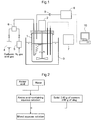
- the apparatus includes a reaction vessel 1, a stirrer 2, a water bath 3 for adjusting the temperature of the solution in the reaction vessel 1, flow regulators 4 and 5, a mixing apparatus 6, a measuring device 7, a gas chromatograph 8, a backflow preventing apparatus 9, and a calculator 10.
- a neutral amino acid-containing aqueous solution (100 mL) was prepared, and 2.40 g of cement (Portland cement for chemical analysis, the Japan Cement Association, 211R reference sample for chemical analysis) or 3.66 g of slag (blast furnace slag reference material, the Japan Iron and Steel Federation, Standardization Center, blast furnace slag No. 6) was added as a solid so as to prepare a mixed aqueous solution.
- the amounts of calcium contained in the cement and the slag were 64.2 wt% and 42 wt%, respectively, on a CaO basis.
- a neutral amino acid-containing aqueous solution in an amount of 100 mL was introduced into the reaction vessel 1, then a predetermined amount of solid was introduced so as to prepare a mixed aqueous solution, and the resulting mixed aqueous solution was stirred with the stirrer 2 at 400 rpm for 10 minutes so as to elute calcium ions (elution step).
- the pH, oxidation-reduction potential and temperature of the mixed aqueous solution in the reaction vessel 1 was measured by using the measuring device 7 so as to obtain the pH of each mixed aqueous solution and the rate of elution of calcium ions (the amount (mole) of substance of CaO in the mixed aqueous solution / the amount (mole) of substance of CaO in the solid (cement or slag) x 100 (%)).
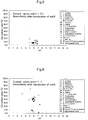
- FIGS. 5 to 8 show the relationship between the pH of a mixed aqueous solution and the rate of elution of calcium ions immediately after introduction of a solid
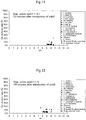
- FIGS. 9 to 12 show the relationship between the pH of a mixed aqueous solution and the rate of elution of calcium ions measured 10 minutes after introduction of a solid.
- the pH of a mixed aqueous solution immediately after introduction of a solid to the amino acid-containing aqueous solution is determined by the isoelectric point of the amino acid used. Accordingly, the pH of the mixed aqueous solutions containing a neutral amino acid (L-proline, L-alanine or the like) is around neutral pH, and thus a wide range of pH is exhibited as a whole according to the type of amino acid contained in each mixed aqueous solution.
- CaO contained in the solid is eluted into the mixed aqueous solution overtime and turned into Ca(OH) 2 , which is dissociated to increase hydroxide ions (OH-). For this reason, the pH becomes high, and the pH of the mixed aqueous solution shifts toward the alkaline side.
- an alkali metal and/or alkali earth metal can be extracted from a solid by using an amino acid-containing aqueous solution.
- the pH of a mixed aqueous solution measured 10 minutes after introduction of a solid is determined based on the point of neutralization of calcium ions eluted from the solid and the isoelectric point of the amino acid used. That is, it is considered that in each mixed aqueous solution shown in FIGS. 9 to 11 , the amount (mole) of substance of calcium ions eluted was higher than the amount (mole) of substance of the amino acid, and the pH was determined mainly by the point of neutralization of calcium ions so that all of the mixed aqueous solutions were alkaline, and thus the pH range was narrow. On the other hand, in each mixed aqueous solution shown in FIG.
- the amount (mole) of substance of the amino acid was substantially the same as or higher than the amount (mole) of substance of calcium ions eluted, and the pH was determined mainly by the isoelectric point of the amino acid used, and thus the pH range was wide.
- the rate of elution of calcium ions tends to be higher as the concentration of amino acid in the mixed aqueous solution increases. Also, as shown in FIGS. 11 and 12 , the tendency that the rate of elution of calcium ions is higher as the concentration of amino acid in the mixed aqueous solution increases applies to the case where slag is used as the solid, except L-proline. That is, it can be seen that the rate of elution of Ca in the case of using the same type of solid is proportional to the amino acid concentration.
- the pH range immediately after introduction of cement was approximately 5 to 7, and after 10 minutes, the pH range varied to approximately 11 to 12.
- the pH range immediately after introduction of slag was approximately 5 to 8, and after 10 minutes, the pH range varied to approximately 9 to 11.
- the pH varies more significantly during a period immediately after introduction until 10 minutes after introduction when cement is added.
- the driving force for moving a substance is proportional to the concentration of the substance
- the difference with respect to the initial calcium concentration in the mixed aqueous solution increases as the amount of calcium contained in the solid increases (in the present embodiment, as the initial CaO content in the solid increases), and thus the driving force for moving calcium increases.
- the calcium content in cement is higher than that in slag, and thus a greater driving force acts to move calcium.
- a greater driving force acts to move calcium.
- calcium is more easily eluted from cement than from slag. For this reason, it is considered that the pH of the mixed aqueous solutions into which cement was introduced shifted more toward the alkaline side, and thus the pH varied significantly.
- a neutral amino acid-containing aqueous solution 100 mL containing 2.40 g of DL-alanine as a neutral amino acid was prepared, and 2.40 g of cement (Portland cement for chemical analysis, the Japan Cement Association, 211R reference sample for chemical analysis) was added as a solid so as to prepare a mixed aqueous solution, and the resulting mixed aqueous solution was stirred for 10 minutes in the same manner as in Example 1 so as to elute calcium ions (elution step).
- the ratio of the number of moles of CaO in the cement to the number of moles of DL-alanine added was set to 1:1.
- the pH, oxidation-reduction potential and temperature of the mixed aqueous solution in the reaction vessel 1 were measured by using the measuring device 7 so as to obtain the rate of elution of calcium ions (Ca elution rate).
- the simulated combustion exhaust gas As the simulated combustion exhaust gas, a mixed gas of carbonic acid gas (CO 2 ) and nitrogen (N 2 ) gas was used.
- the simulated combustion exhaust gas was supplied by mixing carbonic acid gas and nitrogen gas at a predetermined mixing ratio by the mixing apparatus 6 while adjusting the flow rate of the carbonic acid gas and the nitrogen gas by the flow regulators 4 and 5, respectively.
- the precipitated calcium carbonate was recovered through vacuum filtration so as to collect a filtrate (neutral amino acid-containing aqueous solution) (recovery step).
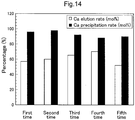
- the recovered calcium carbonate was dried and weighed so as to obtain the rate of precipitation of calcium ions (Ca precipitation rate: the proportion of calcium in the calcium carbonate with respect to the amount of calcium ions eluted in the elution step).
- FIG. 14 shows the rate of elution of calcium ions (Ca elution rate) and the rate of precipitation of calcium ions (Ca precipitation rate) that were obtained in each series of processing steps.
- Ca elution rate the rate of elution of calcium ions
- Ca precipitation rate the rate of precipitation of calcium ions
- Examples 1 and 2 have confirmed that an alkali metal and/or alkali earth metal is eluted from a solid in proportion to the amino acid concentration by using a neutral amino acid as a catalyst, and the neutral amino acid can be repeatedly used.
- This example is performed so as to confirm that amino acids having an isoelectric point within a range of ⁇ 1.5 with respect to the first acid dissociation constant of the acidic gas (pKa1) are superior to other amino acids in terms of the amount of alkali metal and/or alkali earth metal eluted from a solid prior to a precipitation step of precipitating a salt.
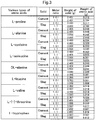
- amino acid-containing aqueous solutions 100 mL were prepared using each of various types of amino acids, the amino acid-containing aqueous solutions containing amino acids (L-cysteine, L-alanine, DL-alanine, L-proline and glycine) having an isoelectric point within a range of ⁇ 1.5 with respect to the first acid dissociation constant of the carbonic acid gas, and amino acid-containing aqueous solutions containing other amino acids (L-aspartic acid, L-glutamic acid and L-arginine).
- amino acids L-cysteine, L-alanine, DL-alanine, L-proline and glycine
- amino acid-containing aqueous solutions containing other amino acids L-aspartic acid, L-glutamic acid and L-arginine
- the ratio of the amount (mole) of substance of CaO contained in each of cement and slag and the amount (mole) of substance of each of the various types of amino acids was set to 1:1, and the concentration (mol/L) of Ca eluted in the mixed aqueous solution was measured 10 minutes after introduction of the solid in the elution step performed in the same manner as in Example 1.
- the measured concentration (mol/L) of eluted Ca was converted to the saturated solubility of the amino acid used (the amount of substance of amino acid when saturated with respect to 1 L of water) ( FIG. 15 ), and the relationship between the isoelectric point (pH) of the amino acid and the amount (mol/L) of elution of calcium ions was plotted ( FIGS. 16 and 17 ).
- the saturated solubility of amino acid having an isoelectric point near neutral pH tends to be higher than that of acidic amino acid or basic amino acid. That is, even when the rate of elution of calcium ions is small, if the saturated solubility of amino acid that can be dissolved in the amino acid-containing aqueous solution is high, the absolute value of the amount of elution of calcium ions becomes high. Accordingly, if the neutral amino acid-containing aqueous solution or the like is brought into contact with carbonic acid gas in the subsequent precipitation step, the amount of salt precipitated increases in proportion to the amount of calcium ions eluted.
- the range of the buffer capacity of amino acid having an isoelectric point near neutral pH overlaps the range of ⁇ 1.5 with respect to the first acid dissociation constant of the carbonic acid gas, and thus the precipitation of salt and the separation and restoration of amino acid are promoted. Accordingly, as a result of the isoelectric point of the amino acid-containing aqueous solution falling within a range of ⁇ 1.5 with respect to the first acid dissociation constant of the carbonic acid gas, the increase in the amount of consumption of carbon dioxide can be achieved together with the reduction of solid residues.
- the alkali metal and/or alkali earth metal extraction efficiency can be increased with the use of a neutral amino acid-containing aqueous solution or the like.
- the amount of amino acid that can be dissolved per liter of water is a value unique to each of the various types of amino acids, and thus the amino acid concentration cannot be increased without limitation. For this reason, if the amount of water is excessively increased to increase the amount of amino acid, the apparatus becomes large in size. Conversely, the amount of solid introduced may be reduced, but this is inefficient to recover an alkali metal and/or alkali earth metal from a large amount of solid.
- the peak values of the rate of elution and the amount of salt precipitated are matched, or the integrated value of the rate of elution and the amount of salt precipitated is maximized by optimizing the mixing ratio of water, amino acid and the solid.
- the reason why focus is given to the rate of elution is that the rate of elution is inversely proportional to solid residues
- the reason why focus is given to the amount of precipitation is that the amount of precipitation is proportional to the amount of consumption of greenhouse gas such as carbon dioxide in the precipitation step.
- the mixing ratio varies depending on the type of amino acid and the type of solid, and thus the mixing ratio is determined as appropriate when the present invention is carried out.
- the present invention is suitably used to recover an alkali metal and/or alkali earth metal from construction waste material including concrete and industrial waste matter such as steel slag.
Landscapes
- Chemical & Material Sciences (AREA)
- Engineering & Computer Science (AREA)
- Organic Chemistry (AREA)
- Geology (AREA)
- Life Sciences & Earth Sciences (AREA)
- Environmental & Geological Engineering (AREA)
- Chemical Kinetics & Catalysis (AREA)
- Materials Engineering (AREA)
- General Life Sciences & Earth Sciences (AREA)
- Manufacturing & Machinery (AREA)
- Mechanical Engineering (AREA)
- Metallurgy (AREA)
- Inorganic Chemistry (AREA)
- General Chemical & Material Sciences (AREA)
- Health & Medical Sciences (AREA)
- General Health & Medical Sciences (AREA)
- Toxicology (AREA)
- Processing Of Solid Wastes (AREA)
- Extraction Or Liquid Replacement (AREA)
- Manufacture And Refinement Of Metals (AREA)
- Organic Low-Molecular-Weight Compounds And Preparation Thereof (AREA)
Applications Claiming Priority (2)
| Application Number | Priority Date | Filing Date | Title |
|---|---|---|---|
| JP2012151744 | 2012-07-05 | ||
| PCT/JP2013/068377 WO2014007332A1 (ja) | 2012-07-05 | 2013-07-04 | アルカリ金属及び/又はアルカリ土類金属の抽出方法 |
Publications (3)
| Publication Number | Publication Date |
|---|---|
| EP2870986A1 EP2870986A1 (en) | 2015-05-13 |
| EP2870986A4 EP2870986A4 (en) | 2015-06-24 |
| EP2870986B1 true EP2870986B1 (en) | 2019-09-25 |
Family
ID=49882083
Family Applications (1)
| Application Number | Title | Priority Date | Filing Date |
|---|---|---|---|
| EP13813289.9A Active EP2870986B1 (en) | 2012-07-05 | 2013-07-04 | Alkali metal and/or alkali earth metal extraction method |
Country Status (6)
| Country | Link |
|---|---|
| US (1) | US10113214B2 (enExample) |
| EP (1) | EP2870986B1 (enExample) |
| JP (1) | JP6013480B2 (enExample) |
| AU (1) | AU2013285918B2 (enExample) |
| IN (1) | IN2015DN00532A (enExample) |
| WO (1) | WO2014007332A1 (enExample) |
Families Citing this family (11)
| Publication number | Priority date | Publication date | Assignee | Title |
|---|---|---|---|---|
| CN104944719B (zh) * | 2015-06-09 | 2017-03-29 | 武汉钢铁(集团)公司 | 从冷轧铬泥中提取回收铬的方法 |
| CN105347635B (zh) * | 2015-10-29 | 2018-03-06 | 嘉兴学院 | 一种从皮革工业含铬污泥中提取铬及资源化利用方法 |
| CN106148730B (zh) * | 2016-07-05 | 2018-05-25 | 广东道氏技术股份有限公司 | 一种从锂云母中提取碱金属的方法 |
| US20180223392A1 (en) * | 2017-02-09 | 2018-08-09 | Lixivia, Inc. | Compositions and methods for recovery of alkaline metals |
| JP6718934B2 (ja) * | 2018-09-11 | 2020-07-08 | 豊田市 | 水素ガスの製造方法 |
| JP7191317B2 (ja) * | 2018-11-20 | 2022-12-19 | 株式会社アイシン | 炭酸カルシウムの製造方法 |
| JP7148066B2 (ja) * | 2018-11-20 | 2022-10-05 | 株式会社アイシン | ケイ酸カルシウムを含む固形物の改質方法 |
| CN112725630A (zh) * | 2020-12-31 | 2021-04-30 | 江西赣锋循环科技有限公司 | 一种从氯化钠渣提取铷铯锂的方法 |
| JP2023095082A (ja) * | 2021-12-24 | 2023-07-06 | 株式会社トクヤマ | アルカリ金属が低減された廃コンクリート粉末の製造方法 |
| NL2033973B1 (en) | 2023-01-17 | 2024-07-26 | Greencovery B V | Solid extraction process |
| CN117142704B (zh) * | 2023-09-14 | 2025-07-18 | 河北诚信集团有限公司 | 一种n-酰基肌氨酸高盐废水的处理方法 |
Family Cites Families (19)
| Publication number | Priority date | Publication date | Assignee | Title |
|---|---|---|---|---|
| JPS5742532A (en) | 1980-08-28 | 1982-03-10 | Nippon Kokan Kk <Nkk> | Treatment of smelting slag containing alkali metal compound |
| JPS621832A (ja) | 1985-02-07 | 1987-01-07 | Sumitomo Metal Ind Ltd | 溶銑処理スラグからのアルカリ金属回収方法 |
| GB9815289D0 (en) * | 1998-07-14 | 1998-09-09 | Unilever Plc | Speroidal calcitic calcium carbonate |
| JP2000154996A (ja) * | 1998-08-19 | 2000-06-06 | Miura Co Ltd | ボイラのスケ―ル除去方法 |
| JP2001121188A (ja) | 1999-10-28 | 2001-05-08 | Ajinomoto Co Inc | 新規なスケール防止剤 |
| JP2003159583A (ja) | 2001-11-27 | 2003-06-03 | Kurita Water Ind Ltd | 重金属汚染土壌又は廃棄物の処理方法 |
| JP3954009B2 (ja) | 2003-08-18 | 2007-08-08 | 財団法人地球環境産業技術研究機構 | 炭酸ガスの固定化方法 |
| JP2005219013A (ja) | 2004-02-09 | 2005-08-18 | National Institute Of Advanced Industrial & Technology | 重金属汚染土壌浄化剤 |
| JP4671646B2 (ja) | 2004-09-03 | 2011-04-20 | 柳 沢 幸 雄 | カルシウムを含む廃棄物からの高純度炭酸カルシウムの製造方法 |
| JP2007056308A (ja) | 2005-08-24 | 2007-03-08 | Japan Science & Technology Agency | ペプチドを用いた貴金属の回収方法 |
| JP2007222713A (ja) | 2006-02-21 | 2007-09-06 | Tohoku Univ | 鉄鋼産業副生成物からのマグネシウム及びカルシウム除去回収とa型ゼオライト製造方法 |
| JP5083748B2 (ja) * | 2006-05-23 | 2012-11-28 | 独立行政法人物質・材料研究機構 | 炭酸カルシウム・ゼオライト系化合物複合体の製造方法 |
| CN101293663B (zh) | 2007-04-28 | 2011-05-25 | 北京紫光英力化工技术有限公司 | 微细碳酸钙制备工艺 |
| JP5072090B2 (ja) | 2007-12-06 | 2012-11-14 | 日本コンクリート工業株式会社 | コンクリートスラッジ処理装置 |
| CN101993104A (zh) * | 2009-08-21 | 2011-03-30 | 北京紫光英力化工技术有限公司 | 一种以电石渣为原料生产超微细碳酸钙的新方法 |
| JP5630629B2 (ja) * | 2009-09-29 | 2014-11-26 | アイシン精機株式会社 | 炭酸ガス処理装置及び炭酸ガスの処理方法 |
| JP5523169B2 (ja) * | 2010-03-31 | 2014-06-18 | 三井造船環境エンジニアリング株式会社 | メタン発酵システム |
| CN102398910B (zh) * | 2010-11-25 | 2014-07-16 | 兰州大学 | 一种除去电池级碳酸锂中钙、镁、铁、钠、钾阳离子杂质的方法 |
| JP6020565B2 (ja) * | 2012-07-05 | 2016-11-02 | アイシン精機株式会社 | アルカリ金属及び/又はアルカリ土類金属の抽出方法 |
-
2013
- 2013-07-04 IN IN532DEN2015 patent/IN2015DN00532A/en unknown
- 2013-07-04 EP EP13813289.9A patent/EP2870986B1/en active Active
- 2013-07-04 AU AU2013285918A patent/AU2013285918B2/en active Active
- 2013-07-04 US US14/412,267 patent/US10113214B2/en active Active
- 2013-07-04 JP JP2014523787A patent/JP6013480B2/ja active Active
- 2013-07-04 WO PCT/JP2013/068377 patent/WO2014007332A1/ja not_active Ceased
Non-Patent Citations (1)
| Title |
|---|
| None * |
Also Published As
| Publication number | Publication date |
|---|---|
| AU2013285918A1 (en) | 2014-12-04 |
| EP2870986A1 (en) | 2015-05-13 |
| JPWO2014007332A1 (ja) | 2016-06-02 |
| IN2015DN00532A (enExample) | 2015-06-26 |
| US10113214B2 (en) | 2018-10-30 |
| AU2013285918B2 (en) | 2015-11-05 |
| US20150167118A1 (en) | 2015-06-18 |
| WO2014007332A1 (ja) | 2014-01-09 |
| JP6013480B2 (ja) | 2016-10-25 |
| EP2870986A4 (en) | 2015-06-24 |
Similar Documents
| Publication | Publication Date | Title |
|---|---|---|
| EP2870986B1 (en) | Alkali metal and/or alkali earth metal extraction method | |
| EP2870987B1 (en) | Alkali metal and/or alkali earth metal extraction method | |
| JP7148066B2 (ja) | ケイ酸カルシウムを含む固形物の改質方法 | |
| KR101758518B1 (ko) | 중조 및 탄산칼슘 제조 설비 및 그 제조방법 | |
| Wang et al. | Sustainable process for enhanced CO2 mineralization of calcium silicates using a recyclable chelating agent under alkaline conditions | |
| JP5908992B2 (ja) | カルシウム抽出とpcc製造を継続的に行うための回収方法 | |
| KR101877920B1 (ko) | 알칼리 산업부산물의 간접탄산화를 이용한 고순도 탄산칼슘 생성 및 용제 재사용 방법 | |
| TWI534105B (zh) | 使水軟化以供滌氣器使用之系統和方法 | |
| WO2015114703A1 (ja) | リンおよびカルシウムの回収方法および前記回収方法によって得られる混合物 | |
| JP5637345B2 (ja) | 炭酸ガスの処理方法 | |
| Ji et al. | CO2 sequestration and recovery of high-purity CaCO3 from bottom ash of masson pine combustion using a multifunctional reagent—amino acid | |
| Shu et al. | Cooperative removal of Mn2+, NH4+− N, PO43−− P and F− from electrolytic manganese residue leachate and phosphogypsum leachate | |
| KR102731289B1 (ko) | 소각 비산재를 이용한 온실가스 포집형 고품위 탄산칼슘의 제조방법 | |
| Wei et al. | Innovative methods for capturing CO2 from semi-dry flue gas desulfurization ash: An efficient and valorization approach | |
| JP7191317B2 (ja) | 炭酸カルシウムの製造方法 | |
| CN105967222A (zh) | 钢铁厂含锌烟尘湿法处理直接制备氧化锌的方法 | |
| KR102282158B1 (ko) | 탈황 폐기물의 중금속 용출 억제 조성물 및 이를 이용한 탈황 폐기물의 중금속 용출 억제 방법 | |
| Soong et al. | Utilization of multiple waste streams for acid gas sequestration and multi‐pollutant control | |
| JP4717018B2 (ja) | 土壌浄化剤、及び、土壌浄化剤の製造方法 | |
| KR102762214B1 (ko) | Cbs 더스트를 이용한 탄산칼슘 제조 방법 | |
| JP2025020801A (ja) | 二酸化炭素の固定化方法及びアミノ酸水溶液 | |
| KR20250016940A (ko) | 이산화탄소 고정화 탄산마그네슘 제조 및 고순도 재생 석고 제조 방법 | |
| JP5748925B1 (ja) | リンおよびカルシウムの回収方法および前記回収方法によって得られる混合物 | |
| KR20240146262A (ko) | 이산화탄소 고정화 탄산칼슘 제조 및 고순도 재생 석고 제조 방법 | |
| CA2423126A1 (en) | Method for producing calcium carbonate |
Legal Events
| Date | Code | Title | Description |
|---|---|---|---|
| PUAI | Public reference made under article 153(3) epc to a published international application that has entered the european phase |
Free format text: ORIGINAL CODE: 0009012 |
|
| 17P | Request for examination filed |
Effective date: 20141125 |
|
| AK | Designated contracting states |
Kind code of ref document: A1 Designated state(s): AL AT BE BG CH CY CZ DE DK EE ES FI FR GB GR HR HU IE IS IT LI LT LU LV MC MK MT NL NO PL PT RO RS SE SI SK SM TR |
|
| AX | Request for extension of the european patent |
Extension state: BA ME |
|
| RA4 | Supplementary search report drawn up and despatched (corrected) |
Effective date: 20150526 |
|
| RIC1 | Information provided on ipc code assigned before grant |
Ipc: B09B 3/00 20060101ALI20150519BHEP Ipc: C01F 11/18 20060101ALI20150519BHEP Ipc: C22B 7/00 20060101ALI20150519BHEP Ipc: C02F 11/00 20060101ALI20150519BHEP Ipc: B01D 11/02 20060101AFI20150519BHEP Ipc: C22B 26/00 20060101ALI20150519BHEP |
|
| DAX | Request for extension of the european patent (deleted) | ||
| STAA | Information on the status of an ep patent application or granted ep patent |
Free format text: STATUS: EXAMINATION IS IN PROGRESS |
|
| 17Q | First examination report despatched |
Effective date: 20170718 |
|
| REG | Reference to a national code |
Ref country code: DE Ref legal event code: R079 Ref document number: 602013061029 Country of ref document: DE Free format text: PREVIOUS MAIN CLASS: B01D0011020000 Ipc: C01F0005240000 |
|
| GRAP | Despatch of communication of intention to grant a patent |
Free format text: ORIGINAL CODE: EPIDOSNIGR1 |
|
| STAA | Information on the status of an ep patent application or granted ep patent |
Free format text: STATUS: GRANT OF PATENT IS INTENDED |
|
| RIC1 | Information provided on ipc code assigned before grant |
Ipc: B09B 3/00 20060101ALI20190312BHEP Ipc: C22B 26/00 20060101ALI20190312BHEP Ipc: C01F 5/24 20060101AFI20190312BHEP Ipc: B01D 11/02 20060101ALI20190312BHEP Ipc: C22B 26/10 20060101ALI20190312BHEP Ipc: C22B 26/20 20060101ALI20190312BHEP Ipc: C22B 7/00 20060101ALI20190312BHEP Ipc: C01F 11/18 20060101ALI20190312BHEP |
|
| INTG | Intention to grant announced |
Effective date: 20190408 |
|
| GRAS | Grant fee paid |
Free format text: ORIGINAL CODE: EPIDOSNIGR3 |
|
| GRAA | (expected) grant |
Free format text: ORIGINAL CODE: 0009210 |
|
| STAA | Information on the status of an ep patent application or granted ep patent |
Free format text: STATUS: THE PATENT HAS BEEN GRANTED |
|
| AK | Designated contracting states |
Kind code of ref document: B1 Designated state(s): AL AT BE BG CH CY CZ DE DK EE ES FI FR GB GR HR HU IE IS IT LI LT LU LV MC MK MT NL NO PL PT RO RS SE SI SK SM TR |
|
| REG | Reference to a national code |
Ref country code: GB Ref legal event code: FG4D |
|
| REG | Reference to a national code |
Ref country code: CH Ref legal event code: EP |
|
| REG | Reference to a national code |
Ref country code: AT Ref legal event code: REF Ref document number: 1183662 Country of ref document: AT Kind code of ref document: T Effective date: 20191015 |
|
| REG | Reference to a national code |
Ref country code: IE Ref legal event code: FG4D |
|
| REG | Reference to a national code |
Ref country code: DE Ref legal event code: R096 Ref document number: 602013061029 Country of ref document: DE |
|
| REG | Reference to a national code |
Ref country code: NL Ref legal event code: MP Effective date: 20190925 |
|
| PG25 | Lapsed in a contracting state [announced via postgrant information from national office to epo] |
Ref country code: FI Free format text: LAPSE BECAUSE OF FAILURE TO SUBMIT A TRANSLATION OF THE DESCRIPTION OR TO PAY THE FEE WITHIN THE PRESCRIBED TIME-LIMIT Effective date: 20190925 Ref country code: LT Free format text: LAPSE BECAUSE OF FAILURE TO SUBMIT A TRANSLATION OF THE DESCRIPTION OR TO PAY THE FEE WITHIN THE PRESCRIBED TIME-LIMIT Effective date: 20190925 Ref country code: SE Free format text: LAPSE BECAUSE OF FAILURE TO SUBMIT A TRANSLATION OF THE DESCRIPTION OR TO PAY THE FEE WITHIN THE PRESCRIBED TIME-LIMIT Effective date: 20190925 Ref country code: HR Free format text: LAPSE BECAUSE OF FAILURE TO SUBMIT A TRANSLATION OF THE DESCRIPTION OR TO PAY THE FEE WITHIN THE PRESCRIBED TIME-LIMIT Effective date: 20190925 Ref country code: NO Free format text: LAPSE BECAUSE OF FAILURE TO SUBMIT A TRANSLATION OF THE DESCRIPTION OR TO PAY THE FEE WITHIN THE PRESCRIBED TIME-LIMIT Effective date: 20191225 Ref country code: BG Free format text: LAPSE BECAUSE OF FAILURE TO SUBMIT A TRANSLATION OF THE DESCRIPTION OR TO PAY THE FEE WITHIN THE PRESCRIBED TIME-LIMIT Effective date: 20191225 |
|
| REG | Reference to a national code |
Ref country code: LT Ref legal event code: MG4D |
|
| PG25 | Lapsed in a contracting state [announced via postgrant information from national office to epo] |
Ref country code: LV Free format text: LAPSE BECAUSE OF FAILURE TO SUBMIT A TRANSLATION OF THE DESCRIPTION OR TO PAY THE FEE WITHIN THE PRESCRIBED TIME-LIMIT Effective date: 20190925 Ref country code: RS Free format text: LAPSE BECAUSE OF FAILURE TO SUBMIT A TRANSLATION OF THE DESCRIPTION OR TO PAY THE FEE WITHIN THE PRESCRIBED TIME-LIMIT Effective date: 20190925 Ref country code: GR Free format text: LAPSE BECAUSE OF FAILURE TO SUBMIT A TRANSLATION OF THE DESCRIPTION OR TO PAY THE FEE WITHIN THE PRESCRIBED TIME-LIMIT Effective date: 20191226 |
|
| REG | Reference to a national code |
Ref country code: AT Ref legal event code: MK05 Ref document number: 1183662 Country of ref document: AT Kind code of ref document: T Effective date: 20190925 |
|
| PG25 | Lapsed in a contracting state [announced via postgrant information from national office to epo] |
Ref country code: PL Free format text: LAPSE BECAUSE OF FAILURE TO SUBMIT A TRANSLATION OF THE DESCRIPTION OR TO PAY THE FEE WITHIN THE PRESCRIBED TIME-LIMIT Effective date: 20190925 Ref country code: AT Free format text: LAPSE BECAUSE OF FAILURE TO SUBMIT A TRANSLATION OF THE DESCRIPTION OR TO PAY THE FEE WITHIN THE PRESCRIBED TIME-LIMIT Effective date: 20190925 Ref country code: EE Free format text: LAPSE BECAUSE OF FAILURE TO SUBMIT A TRANSLATION OF THE DESCRIPTION OR TO PAY THE FEE WITHIN THE PRESCRIBED TIME-LIMIT Effective date: 20190925 Ref country code: ES Free format text: LAPSE BECAUSE OF FAILURE TO SUBMIT A TRANSLATION OF THE DESCRIPTION OR TO PAY THE FEE WITHIN THE PRESCRIBED TIME-LIMIT Effective date: 20190925 Ref country code: RO Free format text: LAPSE BECAUSE OF FAILURE TO SUBMIT A TRANSLATION OF THE DESCRIPTION OR TO PAY THE FEE WITHIN THE PRESCRIBED TIME-LIMIT Effective date: 20190925 Ref country code: NL Free format text: LAPSE BECAUSE OF FAILURE TO SUBMIT A TRANSLATION OF THE DESCRIPTION OR TO PAY THE FEE WITHIN THE PRESCRIBED TIME-LIMIT Effective date: 20190925 Ref country code: PT Free format text: LAPSE BECAUSE OF FAILURE TO SUBMIT A TRANSLATION OF THE DESCRIPTION OR TO PAY THE FEE WITHIN THE PRESCRIBED TIME-LIMIT Effective date: 20200127 Ref country code: IT Free format text: LAPSE BECAUSE OF FAILURE TO SUBMIT A TRANSLATION OF THE DESCRIPTION OR TO PAY THE FEE WITHIN THE PRESCRIBED TIME-LIMIT Effective date: 20190925 Ref country code: AL Free format text: LAPSE BECAUSE OF FAILURE TO SUBMIT A TRANSLATION OF THE DESCRIPTION OR TO PAY THE FEE WITHIN THE PRESCRIBED TIME-LIMIT Effective date: 20190925 |
|
| PG25 | Lapsed in a contracting state [announced via postgrant information from national office to epo] |
Ref country code: SM Free format text: LAPSE BECAUSE OF FAILURE TO SUBMIT A TRANSLATION OF THE DESCRIPTION OR TO PAY THE FEE WITHIN THE PRESCRIBED TIME-LIMIT Effective date: 20190925 Ref country code: SK Free format text: LAPSE BECAUSE OF FAILURE TO SUBMIT A TRANSLATION OF THE DESCRIPTION OR TO PAY THE FEE WITHIN THE PRESCRIBED TIME-LIMIT Effective date: 20190925 Ref country code: IS Free format text: LAPSE BECAUSE OF FAILURE TO SUBMIT A TRANSLATION OF THE DESCRIPTION OR TO PAY THE FEE WITHIN THE PRESCRIBED TIME-LIMIT Effective date: 20200224 Ref country code: CZ Free format text: LAPSE BECAUSE OF FAILURE TO SUBMIT A TRANSLATION OF THE DESCRIPTION OR TO PAY THE FEE WITHIN THE PRESCRIBED TIME-LIMIT Effective date: 20190925 |
|
| REG | Reference to a national code |
Ref country code: DE Ref legal event code: R097 Ref document number: 602013061029 Country of ref document: DE |
|
| PG2D | Information on lapse in contracting state deleted |
Ref country code: IS |
|
| PG25 | Lapsed in a contracting state [announced via postgrant information from national office to epo] |
Ref country code: DK Free format text: LAPSE BECAUSE OF FAILURE TO SUBMIT A TRANSLATION OF THE DESCRIPTION OR TO PAY THE FEE WITHIN THE PRESCRIBED TIME-LIMIT Effective date: 20190925 Ref country code: IS Free format text: LAPSE BECAUSE OF FAILURE TO SUBMIT A TRANSLATION OF THE DESCRIPTION OR TO PAY THE FEE WITHIN THE PRESCRIBED TIME-LIMIT Effective date: 20200126 |
|
| PLBE | No opposition filed within time limit |
Free format text: ORIGINAL CODE: 0009261 |
|
| STAA | Information on the status of an ep patent application or granted ep patent |
Free format text: STATUS: NO OPPOSITION FILED WITHIN TIME LIMIT |
|
| 26N | No opposition filed |
Effective date: 20200626 |
|
| PG25 | Lapsed in a contracting state [announced via postgrant information from national office to epo] |
Ref country code: SI Free format text: LAPSE BECAUSE OF FAILURE TO SUBMIT A TRANSLATION OF THE DESCRIPTION OR TO PAY THE FEE WITHIN THE PRESCRIBED TIME-LIMIT Effective date: 20190925 |
|
| PG25 | Lapsed in a contracting state [announced via postgrant information from national office to epo] |
Ref country code: MC Free format text: LAPSE BECAUSE OF FAILURE TO SUBMIT A TRANSLATION OF THE DESCRIPTION OR TO PAY THE FEE WITHIN THE PRESCRIBED TIME-LIMIT Effective date: 20190925 |
|
| REG | Reference to a national code |
Ref country code: CH Ref legal event code: PL |
|
| GBPC | Gb: european patent ceased through non-payment of renewal fee |
Effective date: 20200704 |
|
| REG | Reference to a national code |
Ref country code: BE Ref legal event code: MM Effective date: 20200731 |
|
| PG25 | Lapsed in a contracting state [announced via postgrant information from national office to epo] |
Ref country code: CH Free format text: LAPSE BECAUSE OF NON-PAYMENT OF DUE FEES Effective date: 20200731 Ref country code: LI Free format text: LAPSE BECAUSE OF NON-PAYMENT OF DUE FEES Effective date: 20200731 Ref country code: GB Free format text: LAPSE BECAUSE OF NON-PAYMENT OF DUE FEES Effective date: 20200704 Ref country code: IE Free format text: LAPSE BECAUSE OF NON-PAYMENT OF DUE FEES Effective date: 20200704 Ref country code: FR Free format text: LAPSE BECAUSE OF NON-PAYMENT OF DUE FEES Effective date: 20200731 Ref country code: LU Free format text: LAPSE BECAUSE OF NON-PAYMENT OF DUE FEES Effective date: 20200704 |
|
| PG25 | Lapsed in a contracting state [announced via postgrant information from national office to epo] |
Ref country code: BE Free format text: LAPSE BECAUSE OF NON-PAYMENT OF DUE FEES Effective date: 20200731 |
|
| PG25 | Lapsed in a contracting state [announced via postgrant information from national office to epo] |
Ref country code: TR Free format text: LAPSE BECAUSE OF FAILURE TO SUBMIT A TRANSLATION OF THE DESCRIPTION OR TO PAY THE FEE WITHIN THE PRESCRIBED TIME-LIMIT Effective date: 20190925 Ref country code: MT Free format text: LAPSE BECAUSE OF FAILURE TO SUBMIT A TRANSLATION OF THE DESCRIPTION OR TO PAY THE FEE WITHIN THE PRESCRIBED TIME-LIMIT Effective date: 20190925 Ref country code: CY Free format text: LAPSE BECAUSE OF FAILURE TO SUBMIT A TRANSLATION OF THE DESCRIPTION OR TO PAY THE FEE WITHIN THE PRESCRIBED TIME-LIMIT Effective date: 20190925 |
|
| PG25 | Lapsed in a contracting state [announced via postgrant information from national office to epo] |
Ref country code: MK Free format text: LAPSE BECAUSE OF FAILURE TO SUBMIT A TRANSLATION OF THE DESCRIPTION OR TO PAY THE FEE WITHIN THE PRESCRIBED TIME-LIMIT Effective date: 20190925 |
|
| PGFP | Annual fee paid to national office [announced via postgrant information from national office to epo] |
Ref country code: DE Payment date: 20250528 Year of fee payment: 13 |