EP2867288B1 - Process for manufacturing a filled polymeric materials with modified filler particles - Google Patents
Process for manufacturing a filled polymeric materials with modified filler particles Download PDFInfo
- Publication number
- EP2867288B1 EP2867288B1 EP13736732.2A EP13736732A EP2867288B1 EP 2867288 B1 EP2867288 B1 EP 2867288B1 EP 13736732 A EP13736732 A EP 13736732A EP 2867288 B1 EP2867288 B1 EP 2867288B1
- Authority
- EP
- European Patent Office
- Prior art keywords
- filler
- ath
- modified
- sample
- pigment
- Prior art date
- Legal status (The legal status is an assumption and is not a legal conclusion. Google has not performed a legal analysis and makes no representation as to the accuracy of the status listed.)
- Active
Links
Images












Classifications
-
- C—CHEMISTRY; METALLURGY
- C09—DYES; PAINTS; POLISHES; NATURAL RESINS; ADHESIVES; COMPOSITIONS NOT OTHERWISE PROVIDED FOR; APPLICATIONS OF MATERIALS NOT OTHERWISE PROVIDED FOR
- C09C—TREATMENT OF INORGANIC MATERIALS, OTHER THAN FIBROUS FILLERS, TO ENHANCE THEIR PIGMENTING OR FILLING PROPERTIES ; PREPARATION OF CARBON BLACK ; PREPARATION OF INORGANIC MATERIALS WHICH ARE NO SINGLE CHEMICAL COMPOUNDS AND WHICH ARE MAINLY USED AS PIGMENTS OR FILLERS
- C09C1/00—Treatment of specific inorganic materials other than fibrous fillers; Preparation of carbon black
- C09C1/40—Compounds of aluminium
- C09C1/407—Aluminium oxides or hydroxides
-
- C—CHEMISTRY; METALLURGY
- C08—ORGANIC MACROMOLECULAR COMPOUNDS; THEIR PREPARATION OR CHEMICAL WORKING-UP; COMPOSITIONS BASED THEREON
- C08J—WORKING-UP; GENERAL PROCESSES OF COMPOUNDING; AFTER-TREATMENT NOT COVERED BY SUBCLASSES C08B, C08C, C08F, C08G or C08H
- C08J3/00—Processes of treating or compounding macromolecular substances
- C08J3/20—Compounding polymers with additives, e.g. colouring
- C08J3/203—Solid polymers with solid and/or liquid additives
-
- C—CHEMISTRY; METALLURGY
- C08—ORGANIC MACROMOLECULAR COMPOUNDS; THEIR PREPARATION OR CHEMICAL WORKING-UP; COMPOSITIONS BASED THEREON
- C08K—Use of inorganic or non-macromolecular organic substances as compounding ingredients
- C08K3/00—Use of inorganic substances as compounding ingredients
- C08K3/01—Use of inorganic substances as compounding ingredients characterized by their specific function
- C08K3/013—Fillers, pigments or reinforcing additives
-
- C—CHEMISTRY; METALLURGY
- C08—ORGANIC MACROMOLECULAR COMPOUNDS; THEIR PREPARATION OR CHEMICAL WORKING-UP; COMPOSITIONS BASED THEREON
- C08K—Use of inorganic or non-macromolecular organic substances as compounding ingredients
- C08K3/00—Use of inorganic substances as compounding ingredients
- C08K3/02—Elements
- C08K3/04—Carbon
-
- C—CHEMISTRY; METALLURGY
- C08—ORGANIC MACROMOLECULAR COMPOUNDS; THEIR PREPARATION OR CHEMICAL WORKING-UP; COMPOSITIONS BASED THEREON
- C08K—Use of inorganic or non-macromolecular organic substances as compounding ingredients
- C08K3/00—Use of inorganic substances as compounding ingredients
- C08K3/18—Oxygen-containing compounds, e.g. metal carbonyls
- C08K3/20—Oxides; Hydroxides
- C08K3/22—Oxides; Hydroxides of metals
-
- C—CHEMISTRY; METALLURGY
- C08—ORGANIC MACROMOLECULAR COMPOUNDS; THEIR PREPARATION OR CHEMICAL WORKING-UP; COMPOSITIONS BASED THEREON
- C08K—Use of inorganic or non-macromolecular organic substances as compounding ingredients
- C08K9/00—Use of pretreated ingredients
- C08K9/02—Ingredients treated with inorganic substances
-
- C—CHEMISTRY; METALLURGY
- C08—ORGANIC MACROMOLECULAR COMPOUNDS; THEIR PREPARATION OR CHEMICAL WORKING-UP; COMPOSITIONS BASED THEREON
- C08L—COMPOSITIONS OF MACROMOLECULAR COMPOUNDS
- C08L33/00—Compositions of homopolymers or copolymers of compounds having one or more unsaturated aliphatic radicals, each having only one carbon-to-carbon double bond, and only one being terminated by only one carboxyl radical, or of salts, anhydrides, esters, amides, imides or nitriles thereof; Compositions of derivatives of such polymers
-
- C—CHEMISTRY; METALLURGY
- C09—DYES; PAINTS; POLISHES; NATURAL RESINS; ADHESIVES; COMPOSITIONS NOT OTHERWISE PROVIDED FOR; APPLICATIONS OF MATERIALS NOT OTHERWISE PROVIDED FOR
- C09C—TREATMENT OF INORGANIC MATERIALS, OTHER THAN FIBROUS FILLERS, TO ENHANCE THEIR PIGMENTING OR FILLING PROPERTIES ; PREPARATION OF CARBON BLACK ; PREPARATION OF INORGANIC MATERIALS WHICH ARE NO SINGLE CHEMICAL COMPOUNDS AND WHICH ARE MAINLY USED AS PIGMENTS OR FILLERS
- C09C1/00—Treatment of specific inorganic materials other than fibrous fillers; Preparation of carbon black
- C09C1/22—Compounds of iron
- C09C1/24—Oxides of iron
-
- C—CHEMISTRY; METALLURGY
- C09—DYES; PAINTS; POLISHES; NATURAL RESINS; ADHESIVES; COMPOSITIONS NOT OTHERWISE PROVIDED FOR; APPLICATIONS OF MATERIALS NOT OTHERWISE PROVIDED FOR
- C09C—TREATMENT OF INORGANIC MATERIALS, OTHER THAN FIBROUS FILLERS, TO ENHANCE THEIR PIGMENTING OR FILLING PROPERTIES ; PREPARATION OF CARBON BLACK ; PREPARATION OF INORGANIC MATERIALS WHICH ARE NO SINGLE CHEMICAL COMPOUNDS AND WHICH ARE MAINLY USED AS PIGMENTS OR FILLERS
- C09C1/00—Treatment of specific inorganic materials other than fibrous fillers; Preparation of carbon black
- C09C1/28—Compounds of silicon
- C09C1/30—Silicic acid
- C09C1/3045—Treatment with inorganic compounds
-
- C—CHEMISTRY; METALLURGY
- C09—DYES; PAINTS; POLISHES; NATURAL RESINS; ADHESIVES; COMPOSITIONS NOT OTHERWISE PROVIDED FOR; APPLICATIONS OF MATERIALS NOT OTHERWISE PROVIDED FOR
- C09C—TREATMENT OF INORGANIC MATERIALS, OTHER THAN FIBROUS FILLERS, TO ENHANCE THEIR PIGMENTING OR FILLING PROPERTIES ; PREPARATION OF CARBON BLACK ; PREPARATION OF INORGANIC MATERIALS WHICH ARE NO SINGLE CHEMICAL COMPOUNDS AND WHICH ARE MAINLY USED AS PIGMENTS OR FILLERS
- C09C1/00—Treatment of specific inorganic materials other than fibrous fillers; Preparation of carbon black
- C09C1/40—Compounds of aluminium
-
- C—CHEMISTRY; METALLURGY
- C09—DYES; PAINTS; POLISHES; NATURAL RESINS; ADHESIVES; COMPOSITIONS NOT OTHERWISE PROVIDED FOR; APPLICATIONS OF MATERIALS NOT OTHERWISE PROVIDED FOR
- C09C—TREATMENT OF INORGANIC MATERIALS, OTHER THAN FIBROUS FILLERS, TO ENHANCE THEIR PIGMENTING OR FILLING PROPERTIES ; PREPARATION OF CARBON BLACK ; PREPARATION OF INORGANIC MATERIALS WHICH ARE NO SINGLE CHEMICAL COMPOUNDS AND WHICH ARE MAINLY USED AS PIGMENTS OR FILLERS
- C09C1/00—Treatment of specific inorganic materials other than fibrous fillers; Preparation of carbon black
- C09C1/44—Carbon
- C09C1/48—Carbon black
- C09C1/56—Treatment of carbon black ; Purification
-
- C—CHEMISTRY; METALLURGY
- C01—INORGANIC CHEMISTRY
- C01P—INDEXING SCHEME RELATING TO STRUCTURAL AND PHYSICAL ASPECTS OF SOLID INORGANIC COMPOUNDS
- C01P2002/00—Crystal-structural characteristics
- C01P2002/50—Solid solutions
- C01P2002/52—Solid solutions containing elements as dopants
-
- C—CHEMISTRY; METALLURGY
- C01—INORGANIC CHEMISTRY
- C01P—INDEXING SCHEME RELATING TO STRUCTURAL AND PHYSICAL ASPECTS OF SOLID INORGANIC COMPOUNDS
- C01P2004/00—Particle morphology
- C01P2004/01—Particle morphology depicted by an image
- C01P2004/03—Particle morphology depicted by an image obtained by SEM
-
- C—CHEMISTRY; METALLURGY
- C01—INORGANIC CHEMISTRY
- C01P—INDEXING SCHEME RELATING TO STRUCTURAL AND PHYSICAL ASPECTS OF SOLID INORGANIC COMPOUNDS
- C01P2004/00—Particle morphology
- C01P2004/60—Particles characterised by their size
- C01P2004/61—Micrometer sized, i.e. from 1-100 micrometer
-
- C—CHEMISTRY; METALLURGY
- C01—INORGANIC CHEMISTRY
- C01P—INDEXING SCHEME RELATING TO STRUCTURAL AND PHYSICAL ASPECTS OF SOLID INORGANIC COMPOUNDS
- C01P2004/00—Particle morphology
- C01P2004/60—Particles characterised by their size
- C01P2004/62—Submicrometer sized, i.e. from 0.1-1 micrometer
-
- C—CHEMISTRY; METALLURGY
- C01—INORGANIC CHEMISTRY
- C01P—INDEXING SCHEME RELATING TO STRUCTURAL AND PHYSICAL ASPECTS OF SOLID INORGANIC COMPOUNDS
- C01P2006/00—Physical properties of inorganic compounds
- C01P2006/22—Rheological behaviour as dispersion, e.g. viscosity, sedimentation stability
-
- C—CHEMISTRY; METALLURGY
- C08—ORGANIC MACROMOLECULAR COMPOUNDS; THEIR PREPARATION OR CHEMICAL WORKING-UP; COMPOSITIONS BASED THEREON
- C08F—MACROMOLECULAR COMPOUNDS OBTAINED BY REACTIONS ONLY INVOLVING CARBON-TO-CARBON UNSATURATED BONDS
- C08F220/00—Copolymers of compounds having one or more unsaturated aliphatic radicals, each having only one carbon-to-carbon double bond, and only one being terminated by only one carboxyl radical or a salt, anhydride ester, amide, imide or nitrile thereof
- C08F220/02—Monocarboxylic acids having less than ten carbon atoms; Derivatives thereof
- C08F220/10—Esters
- C08F220/12—Esters of monohydric alcohols or phenols
- C08F220/14—Methyl esters, e.g. methyl (meth)acrylate
-
- C—CHEMISTRY; METALLURGY
- C08—ORGANIC MACROMOLECULAR COMPOUNDS; THEIR PREPARATION OR CHEMICAL WORKING-UP; COMPOSITIONS BASED THEREON
- C08J—WORKING-UP; GENERAL PROCESSES OF COMPOUNDING; AFTER-TREATMENT NOT COVERED BY SUBCLASSES C08B, C08C, C08F, C08G or C08H
- C08J2333/00—Characterised by the use of homopolymers or copolymers of compounds having one or more unsaturated aliphatic radicals, each having only one carbon-to-carbon double bond, and only one being terminated by only one carboxyl radical, or of salts, anhydrides, esters, amides, imides, or nitriles thereof; Derivatives of such polymers
- C08J2333/04—Characterised by the use of homopolymers or copolymers of compounds having one or more unsaturated aliphatic radicals, each having only one carbon-to-carbon double bond, and only one being terminated by only one carboxyl radical, or of salts, anhydrides, esters, amides, imides, or nitriles thereof; Derivatives of such polymers esters
- C08J2333/06—Characterised by the use of homopolymers or copolymers of compounds having one or more unsaturated aliphatic radicals, each having only one carbon-to-carbon double bond, and only one being terminated by only one carboxyl radical, or of salts, anhydrides, esters, amides, imides, or nitriles thereof; Derivatives of such polymers esters of esters containing only carbon, hydrogen, and oxygen, the oxygen atom being present only as part of the carboxyl radical
- C08J2333/10—Homopolymers or copolymers of methacrylic acid esters
- C08J2333/12—Homopolymers or copolymers of methyl methacrylate
-
- C—CHEMISTRY; METALLURGY
- C08—ORGANIC MACROMOLECULAR COMPOUNDS; THEIR PREPARATION OR CHEMICAL WORKING-UP; COMPOSITIONS BASED THEREON
- C08K—Use of inorganic or non-macromolecular organic substances as compounding ingredients
- C08K3/00—Use of inorganic substances as compounding ingredients
- C08K3/18—Oxygen-containing compounds, e.g. metal carbonyls
- C08K3/20—Oxides; Hydroxides
- C08K3/22—Oxides; Hydroxides of metals
- C08K2003/2227—Oxides; Hydroxides of metals of aluminium
-
- C—CHEMISTRY; METALLURGY
- C08—ORGANIC MACROMOLECULAR COMPOUNDS; THEIR PREPARATION OR CHEMICAL WORKING-UP; COMPOSITIONS BASED THEREON
- C08K—Use of inorganic or non-macromolecular organic substances as compounding ingredients
- C08K3/00—Use of inorganic substances as compounding ingredients
- C08K3/18—Oxygen-containing compounds, e.g. metal carbonyls
- C08K3/20—Oxides; Hydroxides
- C08K3/22—Oxides; Hydroxides of metals
- C08K2003/2265—Oxides; Hydroxides of metals of iron
-
- C—CHEMISTRY; METALLURGY
- C08—ORGANIC MACROMOLECULAR COMPOUNDS; THEIR PREPARATION OR CHEMICAL WORKING-UP; COMPOSITIONS BASED THEREON
- C08L—COMPOSITIONS OF MACROMOLECULAR COMPOUNDS
- C08L33/00—Compositions of homopolymers or copolymers of compounds having one or more unsaturated aliphatic radicals, each having only one carbon-to-carbon double bond, and only one being terminated by only one carboxyl radical, or of salts, anhydrides, esters, amides, imides or nitriles thereof; Compositions of derivatives of such polymers
- C08L33/04—Homopolymers or copolymers of esters
- C08L33/06—Homopolymers or copolymers of esters of esters containing only carbon, hydrogen and oxygen, which oxygen atoms are present only as part of the carboxyl radical
- C08L33/10—Homopolymers or copolymers of methacrylic acid esters
- C08L33/12—Homopolymers or copolymers of methyl methacrylate
-
- C—CHEMISTRY; METALLURGY
- C09—DYES; PAINTS; POLISHES; NATURAL RESINS; ADHESIVES; COMPOSITIONS NOT OTHERWISE PROVIDED FOR; APPLICATIONS OF MATERIALS NOT OTHERWISE PROVIDED FOR
- C09C—TREATMENT OF INORGANIC MATERIALS, OTHER THAN FIBROUS FILLERS, TO ENHANCE THEIR PIGMENTING OR FILLING PROPERTIES ; PREPARATION OF CARBON BLACK ; PREPARATION OF INORGANIC MATERIALS WHICH ARE NO SINGLE CHEMICAL COMPOUNDS AND WHICH ARE MAINLY USED AS PIGMENTS OR FILLERS
- C09C3/00—Treatment in general of inorganic materials, other than fibrous fillers, to enhance their pigmenting or filling properties
- C09C3/04—Physical treatment, e.g. grinding or treatment with ultrasonic vibrations
- C09C3/041—Grinding
-
- C—CHEMISTRY; METALLURGY
- C09—DYES; PAINTS; POLISHES; NATURAL RESINS; ADHESIVES; COMPOSITIONS NOT OTHERWISE PROVIDED FOR; APPLICATIONS OF MATERIALS NOT OTHERWISE PROVIDED FOR
- C09C—TREATMENT OF INORGANIC MATERIALS, OTHER THAN FIBROUS FILLERS, TO ENHANCE THEIR PIGMENTING OR FILLING PROPERTIES ; PREPARATION OF CARBON BLACK ; PREPARATION OF INORGANIC MATERIALS WHICH ARE NO SINGLE CHEMICAL COMPOUNDS AND WHICH ARE MAINLY USED AS PIGMENTS OR FILLERS
- C09C3/00—Treatment in general of inorganic materials, other than fibrous fillers, to enhance their pigmenting or filling properties
- C09C3/10—Treatment with macromolecular organic compounds
-
- H—ELECTRICITY
- H10—SEMICONDUCTOR DEVICES; ELECTRIC SOLID-STATE DEVICES NOT OTHERWISE PROVIDED FOR
- H10K—ORGANIC ELECTRIC SOLID-STATE DEVICES
- H10K30/00—Organic devices sensitive to infrared radiation, light, electromagnetic radiation of shorter wavelength or corpuscular radiation
- H10K30/80—Constructional details
- H10K30/87—Light-trapping means
Definitions
- filled polymer materials are desirable for use in a variety of applications, such as consumer products and polymer composite building materials.
- Filled polymer materials often employ colorants to improve the appearance and aesthetic character of the objects into which they are formed.
- pigments or dyes are added to the polymer before it is blended with the filler.
- colored filled polymer materials are known to fade and undergo aesthetically displeasing color changes.
- One form of aesthetically displeasing color change is known as "whitening".
- objects formed from colored filled polymer materials are exposed to physical damage, such as scratching, impact, and bending, they are known to change to a white color.
- the typical mineral fillers that are used are white in color and it is generally understood that the whitening is a result of the white filler becoming exposed at the surface of the object.
- Bianchi et al disclose a colored filled polymer material formed of a polymer matrix and a pigment.
- the pigment includes alumina hydrate particulate having a dye covalently bonded to the surface of the alumina hydrate particulate.
- materials made according to the disclosure of Bianchi are known to blotch and whiten to an unacceptable degree.
- compatibilizers are typically used to disperse pigment within a polymer material. Such compatibilizers include a variety of organic compounds that aid in dispersing the pigment. However, compatibilizers typically are expensive and may also negatively influence mechanical properties of the filled polymer material. In addition, pigments are dispersed in liquid prepolymer mixture using high shear mechanical processes which negatively impact the prepolymer and require the prepolymer mixture to be deaerated.
- Kaide discloses a colored resin composite made from abundant blending of colorant with a hydrate of metal oxide beforehand, from which damaged parts do not experience a whitening phenomenon.
- Kaide discloses a colored hydrate of a metal oxide that is blended with a high molecular weight plastic or rubber material to yield a composite.
- the present invention is a filler modified with particles with an association that is strong enough to withstand subsequent processing, in particular suspension and mixing in a polar liquid medium (e.g. methyl methacrylate).
- a polar liquid media provides a more aggressive environment than the one disclosed in Kaide, and therefore a more challenging one for modified filler to persist.
- the present invention is related to filler material for polymer composites.
- One embodiment of the invention is a modified filler particle comprising a filler particle modified with discrete functional particles that are sufficiently bound, adhered, or otherwise associated to the filler such that they are able to remain associated during subsequent manufacturing steps.
- Another embodiment of the invention is a modified filler particle comprising a filler particle modified with pigment particles that are sufficiently bound, adhered, or otherwise associated to the filler such that they are able to remain associated during subsequent manufacturing steps.
- Another embodiment of the invention is a filled polymeric material comprising polymer at least partially filled with filler particles that are modified with functional particles by blending them in a blending process wherein the collisions are of sufficient energy to bound, adhere, or otherwise associate the functional particles to the filler.
- solid surface material is employed in its normal meaning and represents a three dimensional material such as a material particularly useful in the building trades for kitchen countertops, sinks and wall coverings wherein both functionality and an attractive appearance are necessary.
- solid surface materials are composite materials comprised of a polymeric matrix and mineral filler.
- the term "dye” means a colorant that, in general, is soluble in the medium in which it is used, and therefore not of a particulate nature but rather a multiplicity of solvated molecules.
- pigment means a colorant that is insoluble in the medium in which it is used, and therefore of a particulate nature encompassing the physical and chemical properties thereof (e.g. surface charge, surface chemistry, and topology).
- filler means any material that is solid at room temperature and atmospheric pressure, used alone or in combination, and which is insoluble in the various ingredients of the composition, even when these ingredients are raised to a temperature above room temperature and in particular to their softening point or their melting point.
- calcined ATH means, alumina trihydrate (ATH) which has been prepared by a thermal treatment process to remove water from its surface.
- discrete functional particle means a material that is 1) not soluble in the medium in which it is used and therefore in that medium does not exist as a multiplicity of individual solvated molecules and 2) one that can modify another solid material.
- modified means having associated one or more discrete functional particles.
- association means held in close proximity to a surface via an interaction including both non-bonding interactions, such as van der waals forces, ion-dipole interactions, dipole-dipole interactions, capillarity, and electrostatic interactions, and also bonding interactions, such as covalent bonding, ionic bonding, hydrogen bonding, metallic bonding, acid-base interactions, Pearson-type acid-base interactions, and dative (coordinate covalent) bonding.
- non-bonding interactions such as van der waals forces, ion-dipole interactions, dipole-dipole interactions, capillarity, and electrostatic interactions
- bonding interactions such as covalent bonding, ionic bonding, hydrogen bonding, metallic bonding, acid-base interactions, Pearson-type acid-base interactions, and dative (coordinate covalent) bonding.
- a first embodiment of the invention provides a filler particle modified with discrete functional particles for incorporation into filled polymer materials.
- the filler particle is modified with discrete functional particles by dry-blending discrete functional particles and filler in a high energy mixing process prior to incorporating the resulting modified filler into a liquid prepolymer mix. It is found that the dry-blending of discrete functional particles with filler prior to incorporation into a liquid prepolymerized mixture provides for a modified filler particle with improved processing and performance characteristics.
- the energy imparted by the blending process must be of sufficient energy to bound, adhere, or otherwise associate the functional particles to the filler.
- Another embodiment of the invention provides a filler particle modified with pigment particles for incorporation into filled polymer materials.
- the filler particle is modified with pigment by dry-blending discrete pigment particles and the filler by employing a high energy mixing process prior to incorporating the resulting modified filler into a liquid prepolymer mix.
- the energy imparted by the dry-blending process must be of sufficient energy to bound, adhere, or otherwise associate the pigment particles to the filler. It is found that the dry-blending of pigment particles with filler prior to incorporation into a liquid prepolymerized mixture provides for a pigmented filler particle with improved processing and performance characteristics when compared to dyeing the filler, or by incorporating a liquid pigment dispersion to a prepolymerized mix.
- High pigment loading via dry-blended filler is found to be economical and convenient, whereas it is found that adding a high level of pigment via a traditional dispersion is costly and impractical given the relatively low concentration of pigment that can be dispersed by those skilled in the art.
- Another embodiment of the invention provides filled polymeric materials comprising polymer at least partially filled with filler particles that are modified with functional particles by blending them in a dry-blending process wherein the collisions are of sufficient energy to bound, adhere, or otherwise associate the functional particles to the filler.
- the dry-blending process is done prior to incorporating the resulting modified filler into a liquid prepolymer mix.
- Various functional properties are incorporated into the filled polymer material dependent on the material used to modify the filler.
- the modified filler particle includes particulate filler.
- this filler increases the hardness, stiffness or strength of the final article relative to the pure polymer or combination of pure polymers.
- the filler is insoluble in the various ingredients of typical liquid prepolymers.
- Some representative fillers include alumina, alumina trihydrate (ATH), alumina monohydrate, aluminum hydroxide, aluminum oxide, aluminum sulfate, aluminum phosphate, aluminum silicate, Bayer hydrate, borosilicates, calcium sulfate, calcium silicate, calcium phosphate, calcium carbonate, calcium hydroxide, calcium oxide, apatite, quartz, quartzite, silica (SiO 2 , including sand), glass bubbles, glass microspheres, glass fibers, glass beads, glass flakes, glass powder, glass spheres, carbon fibers, ceramic fibers, metal fibers, polymer fibers, nano-wood fibers, carbon nanotubes, graphene, clay, barium carbonate, barium hydroxide, barium
- the modified filler particle includes discrete functional particles.
- the functional particles may be any natural or synthetic, organic or inorganic matter, usually in the form of an insoluble powder.
- Functional particles may be any combination of functional particles.
- a preferred discrete functional particle is pigment.
- the filler is modified with pigment and the subsequent modified filler particle is incorporated into a polymeric material, it is found to impart improved colorant characteristics.
- the preferred pigments are iron oxides and carbon black.
- Energy absorption modifiers include UV absorption modifiers, UV stabilization modifiers, IR absorption modifiers, radiofrequency wave absorption modifiers, fluorescent response modifiers, phosphorescent response modifiers, thermochromism modifiers, electrical conductivity modifiers, magnetic characteristic modifiers, or any combination thereof.
- Mechanical property modifiers include surface hardness modifiers, lubricity modifiers, strength modifiers, toughness modifiers, impact resistance modifiers, scratch resistance modifiers, mar resistance modifiers, and any combination thereof.
- Other useful discrete functional particles are materials that modify the surface properties of the filler particles.
- Surface property modifiers include stain resistance modifiers, lubricity modifiers, adhesion modifiers, absorbability modifiers, flame retardants, antimicrobial agents, modifiers of self-cleanability, modifiers of self-healing of a polymeric matrix comprising the modified filler particle, acidity or alkalinity modifiers, modifiers of electrical characteristics, modifiers of magnetic properties, or any combination thereof.
- useful discrete functional particles are materials that modify the interaction of the filler particles with a surrounding medium when the modified filler particle is added to the medium.
- Useful materials include surface tension modifiers, rheology modifiers, modifiers of the agglomeration state of the modified filler particle, modifiers of the packing efficiency of the modified filler particle, compatibilizers, dispersants, or any combination thereof.
- particles are present in two different size distributions. It is considered that the benefits of modifying the filler particle with functional particles do not occur to the desired degree if the particle size distribution is not present.
- a particle size distribution for the filler is in a range from 0.1 micron to 100 microns, more preferably 7 to 100, and most preferably 10 to 50 microns.
- a particle size distribution for the functional particles is from 0.005 microns to 4 microns, more preferably from 0.01 to 3 microns. It is believed that most commercial pigments are in the 0.2 to 3 micron range.
- the ratio of the filler to the functional particles may range on a weight basis from 99.9 : 0.1 up to 10:90.
- the dry-blending process employs a high energy mixing process.
- a high energy mixing process mixes the functional particles and filler to a homogeneous mixture in 60 minutes or less. Without being bound to theory, it is believed that a high energy mixing process creates a bond between pigment and filler that is stronger than low energy mixing processes.
- a suitable high shear mixing process is an air driven pitch-blade turbine with a high shaft speed.
- a suitable shaking process employs a paint shaker run at a high speed.
- Optional mixing processes include microwave blending, shaking, tumbling, milling (jet, ball), supercritical fluids, homogenizer, electrostatic fields, magnetic fields, : horizontal plough mixer, vertical high intensity mixer, horizontal or vertical blade mixer, EIRICH-type mixer, pin mill, hammer mill, fluidized bed, vibratory, sonication, blenders (V-shaped, double cone), or a combination thereof.
- the preferred use of the dry-blended modified filler of the present invention is in a solid surface material.
- Solid surface materials are filled polymeric materials and various methods for their manufacture are known in the art.
- the preferred solid surface material is an acrylic containing composition.
- the preparation of a polymerizable acrylic composition consisting essentially of a sirup containing methyl methacrylate polymer dissolved in monomeric methyl methacrylate (polymer-in-monomer syrup), a polymerization initiator, and inorganic filler, preferably alumina trihydrate, is disclosed in U.S. Patent No. 3,847,865 issued to Ray B. Duggins .
- the composition can be cast or molded and cured to produce a sheet structure with an important combination of properties including translucency, weather resistance, resistance to staining by common household materials, flame resistance, and resistance to stress cracking.
- the cured article can be easily machined by conventional techniques including sawing and sanding. This particular combination of properties makes such a structure particularly useful as kitchen or bathroom countertops, back splash panels, molded articles such as towel racks, and the like.
- the polymer constituent comprises 15 to 80%, preferably 20 to 45% by weight of the filled article and may comprise methyl methacrylate homopolymers and copolymers of methyl methacrylate with other ethylenically unsaturated compounds (e.g., vinyl acetate, styrene, alkyl acrylates, acrylonitrile, alkyl methacrylates, multifunctional acrylic monomers such as alkylene dimethacrylates and alkylene diacrylates).
- the polymer constituent can contain small amounts of other polymers including minor amounts of polyester.
- the solid surface material also contains 20 to 85%, preferably about 55 to 80% of filler.
- the preferred filler is the dry-blended filler of the present invention.
- Optional materials generally used as fillers may be combined in the liquid prepolymer mixture along with the dry-blended filler, for example, titanates, barium sulfates, calcium carbonate, lithopone, china clays, magnesite, mica, iron oxides, silicone dioxide, and various siennas.
- the solid surface material may contain macroscopic decorative particles known to the industry as "crunchies".
- Crunchies are various filled and unfilled, pigmented or dyed, insoluble or crosslinked chips of polymers such as ABS resins, cellulose esters, cellulose ethers, epoxy resins, polyethylene, ethylene copolymers, melamine resins, phenolic resins, polyacetals, polyacrylics, polydienes, polyesters, polyisobutylenes, polypropylenes, polystyrenes, urea/formaldehyde resins, polyureas, polyurethanes, polyvinyl chloride, polyvinylidene chloride, polyvinyl esters and the like.
- polymers such as ABS resins, cellulose esters, cellulose ethers, epoxy resins, polyethylene, ethylene copolymers, melamine resins, phenolic resins, polyacetals, polyacrylics, polydienes, polyesters, polyisobutylenes, polypropylenes, polystyrenes, urea/formaldehyde resins
- Other useful macroscopic translucent and transparent decorative particles are natural or synthetic minerals or materials such as agate, alabaster, albite, calcite, chalcedony, chert, feldspar, flint quartz, glass, malachite, marble, mica, obsidian, opal, quartz, quartzite, rock gypsum, sand, silica, travertine, wollastonite and the like; cloth, natural and synthetic fibers; and pieces of metal.
- various filler materials modified with various pigment materials may be combined.
- Optional uses of the dry-blended filler include cable coating, carpet backing, and concrete.
- the dry-blended modified filler may be combined with polymeric matrices using processes other than liquid prepolymer, such as casting, melt processing, powder coating, solution processing, slip casting, tape casting, vibrocompaction, compression molding, sintering, extrusion, and injection molding.
- a 1-quart vessel was charged with 217.5 g of alumina trihydrate (Alcan WH-311). While stirring at 500 RPM with a four-blade air driven pitch-blade turbine, 32.5 g of a given solid pigment was added over the course of 15 minutes. Mixing was continued until the mixture appeared to be homogenously colored.
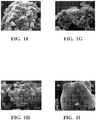
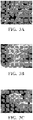
- micrographs demonstrate that a shearing process is effective in modifying a filler with a pigment, and that the dry-blending process works on organic, inorganic and carbon black pigments.
- each of the eight samples of the dry-blended pigment-modified fillers was then subjected to washing in methyl methacrylate to ensure persistence of the pigment modification in a manufacturing process.
- the test is designed to determine if the pigment would disassociate from the filler and cause color blotches in objects made from liquid prepolymers incorporating the modified filler.
- 10.0 g of the modified filler was placed in a 40-mL glass vial.
- 30.0 g of methyl methacrylate was added to this was added 30.0 g of methyl methacrylate.
- the vials were capped and placed on a wrist-action shaker table for four hours.
- the fully-suspended mixtures were cast into shallow aluminum pans.
- the bulk methyl methacrylate was allowed to evaporate.
- a one-gallon paint can was charged with 1,500 g ATH and 714.3 g Bayferrox 318NM (iron oxide black). The vessel was sealed and then shaken on a Red Devil single-arm paint shaker for 30 minutes at which point the components appeared to be homogeneously blended. The sample was analyzed by SEM ( Figure 3C ). The micrograph shows the presence of relatively small iron oxide black particles on the surface of the relatively large ATH particles. This demonstrates that a shaking process is effective in modifying a filler with a functional particle.
- a one-gallon paint can was charged with 217.5 g of Blackburn 84 mesh quartz and 32.5 g of Bayferrox 318NM (iron oxide black). The vessel was sealed and then shaken on a Red Devil single-arm paint shaker for 30 minutes at which point the components appeared to be homogeneously blended. The sample was analyzed by SEM ( Figure 4B ) along with an unmodified sample of quartz ( Figure 4A ) The micrographs show the presence of relatively small iron oxide black particles evenly distributed on the surface of the large quartz particles, indicating a homogeneous blend.
- the modified sample was subjected to the methyl methacrylate washing procedure of Example 1.
- An SEM micrograph of the washed, cast, and dried sample was acquired ( Figure 4C ).
- the micrograph shows that the pigment modification persisted with an association that is strong enough to withstand subsequent processing, in particular suspension and mixing in a polar liquid medium.
- a one-gallon paint can was charged with 1,224 g Portland cement (Quikrete) and 576 g iron oxide black (Bayferrox 318). The vessel was sealed and then shaken on a Red Devil single-arm paint shaker for 60 minutes. The sample was a fine free-flowing uniformly dark black powder. Analysis by SEM revealed the presence of small iron oxide particles on the surface of the cement (see Figure 5 (unmodified cement) versus Figure 6 (cement modified with iron oxide black)).
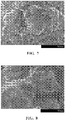
- a one-gallon paint can was charged with 1,757.5 g alumina (C-1, 87 micron, Rio Tinto Alcan) and 42.5 g Arosperse F138 carbon black. The vessel was sealed and then shaken on a Red Devil single-arm paint shaker for 60 minutes. The sample was a fine free-flowing uniformly dark black powder. Analysis by SEM revealed the presence of small carbon black particles on the surface of the alumina (see Figure 7 (unmodified alumina) versus Figure 8 (alumina modified with carbon black)).
- a one-gallon paint can was charged with 1,757.5 g silicon carbide (Black Silicon Carbide Grain, 80 micron, Silicon Carbide Products) and 42.5 g Arosperse F138 carbon black. The vessel was sealed and then shaken on a Red Devil single-arm paint shaker for 60 minutes. The sample was a fine free-flowing uniformly dark black powder. Analysis by SEM revealed the presence of small particles on the surface of the silicon carbide (see Figure 9 (unmodified silicon carbide) versus Figure 10 (silicon carbide modified with carbon black)).
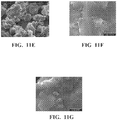
- a one-gallon paint can was charged with 1,500 g ATH and 36.3 g Arosperse F138 (carbon black). The vessel was sealed and then shaken on a Red Devil single-arm paint shaker for 30 minutes to create a dry-blended modified filler. A sample of the modified filler was analyzed by SEM ( Figure 11 C) . The micrograph shows the presence of relatively small carbon black particles evenly distributed on the surface of the relatively large ATH particles.
- a first test sample was prepared by combining a first 125g sample of the above mixture with 125g of unmodified ATH in a one quart vessel and dry-blending them in a Red Devil single-arm paint shaker for 30 minutes to create dry-blended modified filler.
- a second sample was prepared by combing a second 125g sample of the above mixture combined with 125g of calcined ATH in a one quart vessel and dry-blending them in a Red Devil single-arm paint shaker for 30 minutes to create dry-blended modified filler.
- the calcined ATH had been prepared by heating ATH to 800 °C for 24 hours to remove all three water molecules of hydration. Both samples were analyzed by SEM.
- the micrograph of the first sample comprised of carbon black-modified ATH dry-blended with an equal weight of unmodified ATH shows an even coating of carbon black particles on all ATH particles, similar to what is shown in Figure 11C .
- the micrograph of the second sample comprised of carbon black-modified ATH dry-blended with an equal weight of calcined ATH shows a mixture of particles with different surface morphologies, some exhibiting rigidly geometric and sharp edges ( Figure 11F ), others exhibiting relatively smooth edges ( Figure 11 G) .
- the former are unmodified particles of calcined ATH, the latter being intact modified particles of ATH.
- a one-gallon paint can was charged with 1,500g of ATH (Alcan WH-311) and 24.20g of quinacridone red violet 19 (Lansco Colors). The vessel was sealed and then shaken on a Red Devil single-arm paint shaker for 30 minutes to create a first batch. This procedure was repeated a second time to create a second batch. The first batch and the second batch were combined to form a test batch of dry-blended filler.
- Test Plaque 8A An experimental Test Plaque (Test Plaque 8A) was prepared from a liquid prepolymer mixture consisting of 87.0 g methyl methacrylate (MMA), 260.9 g of a 24 wt.% acrylic polymer solution (polymethyl methacrylate of molecular weight approximately 30 kg/mol dissolved in MMA), 4.3 g trimethylolpropane trimethacrylate, 10.0 g tert -butylperoxymaleic acid (PMA-25, Arkema), 0.7g of Zelec PH unsaturated phosphoric acid ester (Stepan Co.) and 1.5g AOT-S (Cytec) was blended at room temperature.
- MMA methyl methacrylate
- acrylic polymer solution polymethyl methacrylate of molecular weight approximately 30 kg/mol dissolved in MMA
- PMA-25, Arkema 4.3 g trimethylolpropane trimethacrylate
- PMA-25, Arkema tert -butylper
- a control Test Plaque (Test Plaque 8B) of a liquid dispersion pigmented filled polymeric material was prepared from a liquid prepolymer mixture prepared in the same manner as above. While stirring at 300 rpm with an air-driven pitch blade turbine, 620.0 g of unmodified ATH (Alcan WH-311) was added over one minute. Mixing was continued for two additional minutes. Afterwards, 10.0 g of quinacridone red violet 19 (Lansco Color) was added to the stirring mixture over one minute. Mixing was again continued for two additional minutes. The resultant mixture was transferred to an enclosed vessel where dissolved gases were removed in vacuo (24 inHg) over a period of two minutes while stirring at 1,000 rpm.
- a Hunter Miniscan spectrophotometer was used to measure the color of both Test Plaques.
- the L, a, b color space is used to describe the color measurement where the 'L' value is a measure of lightness (low 'L' is dark, high 'L' is light), the 'a' value represents the red/green axis (negative 'a' is toward a green hue, positive 'a' is toward a red hue) and the 'b' value represents the yellow/blue axis (negative 'b' is toward a blue hue, positive 'b' is toward a yellow hue).
- the difference in color between two samples can be represented as the change in each color axis: ⁇ L, ⁇ a, and ⁇ b.
- the root-mean-square average of the three delta-values can be calculated to give a total color difference, ⁇ E.
- Table 1 there is a significant difference in the color of the composites, despite an equal loading of pigment.
- the L value for the composite of Test Plaque 8B is two units higher (lighter) than that of Test Plaque 8A. This represents a difference in tinting strength of the pigment, indicating a poor dispersion of pigment particles in 5B.
- Table 1 Lab color values L a b Test Plaque 8A (dry-blended) 31.15 28.02 8.23 Test Plaque 8B (liquid dispersion) 33.22 31.25 8.92
- a one-gallon paint can was charged with 1,500 g ATH (Alcan WH-311) and 36.3 g Arosperse F138 carbon black (Evonik). The vessel was sealed and then shaken on a Red Devil single-arm paint shaker for 30 minutes to create a first batch of modified filler. This procedure was repeated a second time, the resulting batch of modified filler being combined with the first batch to create a total batch of dry-blended filler.
- Test Plaque 9A An experimental Test Plaque (Test Plaque 9A) was prepared from a liquid prepolymer mixture consisting of 85.8 g methyl methacrylate (MMA), 257.3 g of a 24 wt.% acrylic polymer solution (polymethyl methacrylate of molecular weight approximately 30 kg/mol dissolved in MMA), 4.2 g trimethylolpropane trimethacrylate, 9.9 g tert -butylperoxymaleic acid (PMA-25, Arkema), 0.7 g of Zelec PH unsaturated phosphoric acid ester (Stepan Co.) and 1.5 g AOT-S (Cytec) was blended at room temperature.
- MMA methyl methacrylate
- a 24 wt.% acrylic polymer solution polymethyl methacrylate of molecular weight approximately 30 kg/mol dissolved in MMA
- PMA-25, Arkema 2.3 g
- Zelec PH unsaturated phosphoric acid ester Steppan Co.
- a control Test Plaque (Test Plaque 9B) was prepared from a liquid prepolymer mixture prepared in the same manner as above. While stirring at 300 rpm with an air-driven pitch blade turbine, 620.0 g of unmodified ATH (Alcan WH-311) was added over one minute. Mixing was continued for two additional minutes. Afterwards, 15.0 g of Arosperse F138 was added to the stirring mixture over one minute. Mixing was again continued for two additional minutes. Brookfield viscosity of the mixture was measured at this point (RV-DV-II, S-72 vane spindle, 21-22 °C) and is shown in Figure 12 .
- the mixture was then transferred to an enclosed vessel where dissolved gases were removed in vacuo (24 inHg) over a period of two minutes while stirring at 1,000 rpm. While still under vacuum, 4.1 g of a calcium hydroxide suspension (45 wt.% in solvent) was added via syringe through a rubber septum. This was immediately followed by addition of 1.6 g ethylene glycol dimercaptoacetate (GDMA). After mixing for 30 seconds, the vacuum was released and the mixture was poured into a film-lined casting cavity which was pre-heated to 35 °C. Film was placed on the backside of the casting, and an insulated cover was placed on top. The mixture cured within 15 minutes.
- Test Plaque 9B a filled polymeric material with pigment added directly to the liquid prepolymer mixture.
- a plot of the viscosity of the liquid prepolymer mixture vs. the spindle speed of the air-driven pitch blade turbine is given in Figure 12 for both of the Test Plaques.
- the mixture of Test Plaque 9B (where carbon black was added directly to the batch) exhibits a higher viscosity at all spindle speeds and, further, exhibits significant shear thinning behavior than that of Test Plaque 9A.
- Test Plaque 9A was of high visual quality, exhibiting a uniform black appearance.
- Test Plaque 9B was of poor visual quality, exhibiting dark spots visible on all surfaces of the plaque. The dark spots were determined to be agglomerated pigment under visual inspection.
- dry-blending provides a means for introducing a functional particle (such as a pigment) into a liquid prepolymer mixture in a manner that achieves enhanced color characteristics when compared to traditional direct addition to the liquid prepolymer mixture.
- a functional particle such as a pigment
- a 130-L Littleford Day horizontal plough mixer (model FM-130), equipped with an 4-blade inverted Christmas tree chopper (4 inch, 6 inch, 7 inch, 7 inch) was charged with 172.5 lbs of ATH (Alcan WH-311) and 4.13 lbs of Arosperse F-138 carbon black (Evonik).
- the mixer was run with a plough speed of 155 rpm and a chopper speed of 3,400 rpm.
- a sample of the mixture was taken after 5 minutes. The sample was a fine free-flowing uniformly dark powder. Analysis by SEM revealed the presence of carbon black on the surface of the ATH, comparable to what is depicted for materials generated using small scale methods, such as shaking.
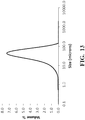
- the sample was subjected to particle size analysis via light scattering using a Malvern Mastersizer 2000.
- the sample was measured in water with sodium metaphosphate as dispersant.
- PSD particle size distribution
- Figure 13 It nearly overlays the PSD of the unmodified ATH which is depicted in Figure 14 .
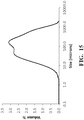
- a sample made by combining ATH and carbon black (1:1 by weight) and then gently and manually mixing yields a sample with a bimodal and broad PSD ( Figure 15 ).
- a functional particle-modified filler made by the processes described here gives a single unimodal PSD curve while a simple mixture of the same two components gives a broad, bimodal PSD curve.
- Test Plaque 10-A This was prepared from a liquid prepolymer mixture consisting of 83.4 g methyl methacrylate (MMA), 264.00 g of a 24 wt.% acrylic polymer solution (polymethyl methacrylate of molecular weight approximately 30 kg/mol dissolved in MMA), 4.26 g trimethylolpropane trimethacrylate, 7.10 g tert -butylperoxymaleic acid (PMA-25, Arkema), 0.68 g of Zelec PH unsaturated phosphoric acid ester (Stepan Co.) and 1.50 g AOT-S (Cytec) which were blended at room temperature.
- MMA methyl methacrylate
- 264.00 g a 24 wt.% acrylic polymer solution
- PMA-25, Arkema 4.26 g trimethylolpropane trimethacrylate
- PMA-25, Arkema tert -butylperoxymaleic acid
- Test Plaque 10-A a filled polymeric material pigmented with dry-blended filler.
- the Test Plaque was of high quality, exhibiting uniform coloration and no visual defects.
- a 180-L Littleford Day vertical high intensity mixer (Model W-180) was charged with 200 lbs of ATH (Alcan WH-311) and 4.92 lbs of Arosperse F-138 carbon black (Evonik). The mixer was run with a plough speed of 900 rpm. A sample of the mixture was taken after 5 minutes. The sample was a fine free-flowing uniformly dark powder.
- the sample was subjected to particle size analysis using the same technique as described in Example 10.
- the PSD is depicted in Figure 16 .
- the curve is relatively narrow and unimodal indicating that a single particulate material was generated through modification of the filler (ATH) with a functional particle (carbon black).
- Test Plaque 11-A The sample was used to cast an experimental Test Plaque (Test Plaque 11-A). The same formulation, casting procedure, and plaque finishing procedure described in Example 10 were used. The Test Plaque was of high quality, exhibiting uniform coloration and no visual defects.
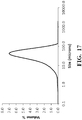
- the sample was subjected to particle size analysis using the same technique as described in Example 10.
- the PSD is depicted in Figure 17 .
- the curve is relatively narrow and unimodal indicating that a single particulate material was generated through modification of the filler (ATH) with a functional particle (carbon black).
- Test Plaque 12-A The sample was used to cast an experimental Test Plaque (Test Plaque 12-A). The same formulation, casting procedure, and plaque finishing procedure described in Example 10 were used. The Test Plaque was of high quality, exhibiting uniform coloration and no visual defects.
- an EIRCH-type mixer is an effective machine to modify a filler with a functional particle.
- a one-gallon paint can was charged with 1,758.42 g ATH (Alcan WH-311) and 9.54 g Arosperse F138 carbon black (Evonik), 16.02 g iron oxide red (Rockwood, Kroma Red, R03097) and 16.02 g iron oxide yellow (Rockwood, Ultra Yellow, YL01888D).
- the vessel was sealed and then shaken on a Red Devil single-arm paint shaker for 60 minutes.
- the sample was a fine free-flowing uniformly dark brown powder.
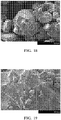
- Analysis by SEM revealed the presence of a multitude of particles on the surface of the ATH (see Figure 1A (unmodified ATH) versus Figure 18 (ATH modified with carbon black, iron oxide red, and iron oxide yellow)).
- Test Plaque 13-A An experimental Test Plaque (Test Plaque 13-A) was prepared from a liquid prepolymer mixture consisting of 83.4 g methyl methacrylate (MMA), 264.00 g of a 24 wt.% acrylic polymer solution (polymethyl methacrylate of molecular weight approximately 30 kg/mol dissolved in MMA), 4.26 g trimethylolpropane trimethacrylate, 7.10 g tert -butylperoxymaleic acid (PMA-25, Arkema), 0.68 g of Zelec PH unsaturated phosphoric acid ester (Stepan Co.) and 1.50 g AOT-S (Cytec) which were blended at room temperature.
- MMA methyl methacrylate
- 264.00 g a 24 wt.% acrylic polymer solution
- polymethyl methacrylate polymethyl methacrylate of molecular weight approximately 30 kg/mol dissolved in MMA
- Test Plaque 13-A a filled polymeric material pigmented with dry-blended filler.
- the Test Plaque was of high quality, exhibiting uniform coloration and no visual defects.
- a one-gallon paint can was charged with 1,746.00 g ATH (Alcan WH-311) and 54.00 g Graphtol Fire Red 3RLP (Clariant). The vessel was sealed and then shaken on a Red Devil single-arm paint shaker for 60 minutes. The sample was a fine free-flowing uniformly bright red/orange powder. Analysis by SEM revealed the presence of small pigment particles on the surface of the ATH (see Figure 1A (unmodified ATH) versus Figure 19 (ATH modified with Graphtol Fire Red)).
- Test Plaque 14-A The sample was used to cast an experimental Test Plaque (Test Plaque 14-A). The same formulation, casting procedure, and plaque finishing procedure as described in Example 13 were used, except for a substitution with the modified ATH prepared in this example.
- the Test Plaque was of high quality, exhibiting uniform coloration and no visual defects.
- a one-gallon paint can was charged with 1,746.00 g ATH (Alcan WH-311) and 54.00 g Titanium Dioxide (TiPure R960, DuPont). The vessel was sealed and then shaken on a Red Devil single-arm paint shaker for 60 minutes. The sample was a fine free-flowing uniformly white powder. Analysis by SEM revealed the presence of small titanium dioxide particles on the surface of the ATH (see Figure 1A (unmodified ATH) versus Figure 20 (ATH modified with titanium dioxide)).
- Test Plaque 15-A The sample was used to cast an experimental Test Plaque (Test Plaque 15-A). The same formulation, casting procedure, and plaque finishing procedure as described in Example 13 were used, except for a substitution with the modified ATH prepared in this example.
- the Test Plaque was of high quality, exhibiting uniform coloration and no visual defects.
- a one-gallon paint can was charged with 1,757.5 g ATH (Alcan WH-311) and 42.5 g fumed silica, (0.2-0.3 microns, Aldrich). The vessel was sealed and then shaken on a Red Devil single-arm paint shaker for 60 minutes. The sample was a fine free-flowing uniformly white powder. Analysis by SEM revealed the presence of small silica particles on the surface of the ATH (see Figure 1A (unmodified ATH) versus Figure 21 (ATH modified with 0.2-0.3 micron fumed silica)).
- Test Plaque 16-A The sample was used to cast an experimental Test Plaque (Test Plaque 16-A). The same formulation, casting procedure, and plaque finishing procedure as described in Example 13 were used, except for a substitution with the modified ATH prepared in this example.
- the Test Plaque was of high quality, exhibiting uniform coloration and no visual defects.
- Example 16 The procedures for filler modification and formation of a filled acrylic composite described in Example 16 were repeated exactly, except fumed silica of particle size 0.007 microns (Aldrich) was used as the functional particle. Analysis by SEM again revealed the presence of small silica particles on the surface of the ATH (see Figure 1A (unmodified ATH) versus Figure 22 (ATH modified with 0.007 micron fumed silica)).
- Test Plaque 18-A The sample was used to cast an experimental Test Plaque (Test Plaque 18-A). The same formulation, casting procedure, and plaque finishing procedure as described in Example 13 were used, except for a substitution with the modified ATH prepared in this example.
- the Test Plaque was of high quality, exhibiting uniform coloration and no visual defects.
- a one-gallon paint can was charged with 1,757.5 g ATH (Alcan WH-311) and 42.5 g Tinuvin 328 (BASF). The vessel was sealed and then shaken on a Red Devil single-arm paint shaker for 60 minutes. The sample was a fine free-flowing uniformly white powder.
- Test Plaque 19-A The sample was used to cast an experimental Test Plaque (Test Plaque 19-A). The same formulation, casting procedure, and plaque finishing procedure as described in Example 13 were used, except for a substitution with the ATH prepared in this example.
- the Test Plaque was of high quality, exhibiting uniform coloration and no visual defects.
- a one-gallon paint can was charged with 1,757.5 g ATH (Alcan WH-311) and 42.5 g fluorinated ethylene-propylene copolymer powder (FEP, DuPont). The vessel was sealed and then shaken on a Red Devil single-arm paint shaker for 60 minutes. The sample was a fine free-flowing uniformly white powder.
- Test Plaque 20-A The sample was used to cast an experimental Test Plaque (Test Plaque 20-A). The same formulation, casting procedure, and plaque finishing procedure as described in Example 13 were used, except for a substitution with the modified ATH prepared in this example.
- the Test Plaque was of high quality, exhibiting uniform coloration and no visual defects.
- a one-gallon paint can was charged with 1,757.5 g ATH (Alcan WH-311) and 42.5 g perfluoroalkoxy polymer powder (PFA, DuPont). The vessel was sealed and then shaken on a Red Devil single-arm paint shaker for 60 minutes. The sample was a fine free-flowing uniformly white powder.
- Test Plaque 21-A The sample was used to cast an experimental Test Plaque (Test Plaque 21-A). The same formulation, casting procedure, and plaque finishing procedure as described in Example 13 were used, except for a substitution with the modified ATH prepared in this example.
- the Test Plaque was of high quality, exhibiting uniform coloration and no visual defects.
- a control sample was prepared for comparative analysis against the experimental samples prepared for Examples 22 and 23, described below.
- the control sample is a commercially sold ATH-filled acrylic solid surface material (Corian®, available from DuPont) composite sheet that is a highly saturated black color.
- the material is pigmented with carbon black at a level of 0.058 wt%.
- the carbon black was introduced to a liquid prepolymer mixture via a dispersion of general composition known to those skilled in the art.
- the control sample was sanded identically to the experimental samples, as described below in Example 22.
- control sample After measuring the color values of the control sample (Table 7) it was sawn into ten Test Plaques, Comparative Test Plaques 1A, 1B, 1C, 1D, 1E, 1F, 1G, 1H, 1I, and 1J.
- the control sample provides a comparison of filled polymeric materials that are pigmented by traditional liquid dispersions against filled polymeric materials that are pigmented by dry-blending the pigment and filler prior to incorporation into a liquid prepolymer mixture, and also to filler that is dyed before incorporation into a liquid prepolymer mixture.
- a batch of ATH modified with Arosperse F138 carbon black at a low level (0.094 wt.%) was made by dry-blending via shaking as described in Example 3 to make dry-blended carbon black modified ATH.
- a liquid prepolymer mixture consisting of 2.5 kg methyl methacrylate (MMA), 10.1 kg of a 24 wt.% acrylic polymer solution (polymethyl methacrylate of molecular weight approximately 30 kg/mol dissolved in MMA), 152.8 g trimethylolpropane trimethacrylate, 280.2 g tert-butylperoxymaleic acid (PMA-25, Arkema), 23.8 g of Zelec PH unsaturated phosphoric acid ester (Stepan Co.) and 52.5 g AOT-S (Cytec) was blended at room temperature in a lined, 10-gallon steel vessel using a combination marine prop/pitch blade turbine impeller.
- MMA methyl methacrylate
- a 24 wt.% acrylic polymer solution polymethyl methacrylate of molecular weight approximately 30 kg/mol dissolved in MMA
- 152.8 g trimethylolpropane trimethacrylate 280.2 g tert-butylperoxymaleic acid (PM
- Test Plaques 22A, 22B, and 22C The low level experimental sample was then sawn into three pieces to create Test Plaques 22A, 22B, and 22C.
- Test Plaque 22A and Comparative Test Plaque 1A were subjected to water blush testing by immersion in 72 °C water for 16 hours. Color measurements were made on each sample before and after the test and ⁇ E values were calculated (Table 4). The data shows that Comparative Test Plaque 1A had significantly more whitening due to water blush than was observed for Test Plaque 22A. This demonstrates that dry-blended filler provides colored filled polymer materials having improved resistance to whitening due to water blush. Table 4. Calculated Color Change After Water Blush Testing. ⁇ E Comparative Test Plaque 1A 5.75 Test Plaque 22A 1.18
- Comparative Test Plaque 1B and Test Plaque 22B were subjected to a thermobending test. Both samples were heated to 160 °C in a double platen oven. Afterwards, they were placed over a curved form with a 3 inch radius. The specimens were allowed to cool completely in a vacuum press. The color of the center region of each sample was read before and after the test. The results provided in Table 5 below show a significantly lower color change for Test Plaque 22B compared to Comparative Test Plaque 1B. This demonstrates that dry-blended filler provides colored filled polymer materials having improved resistance to whitening due to thermobending. Table 5. Calculated Color Change After Thermobending ⁇ E Comparative Test Plaque 1B 2.70 Test Plaque 22B 0.64
- a batch of ATH modified by with Arosperse F138 carbon black at a high level (2.36 wt.%) was made by dry-blending via shaking as described in Example 3, to make dry-blended carbon black modified ATH.
- a liquid premix consisting of 2.4 kg methyl methacrylate (MMA), 9.7 kg of a 24 wt.% acrylic polymer solution (polymethyl methacrylate of molecular weight approximately 30 kg/mol dissolved in MMA), 147.0 g trimethylolpropane trimethacrylate, 269.5 g tert-butylperoxymaleic acid (PMA-25, Arkema), 23.8 g of Zelec PH unsaturated phosphoric acid ester (Stepan Co.) and 52.5 g AOT-S (Cytec) was blended at room temperature in a lined, 10-gallon steel vessel using a combination marine prop/pitch blade turbine impeller.
- MMA methyl methacrylate
- 24 wt.% acrylic polymer solution polymethyl methacrylate of molecular weight approximately 30 kg/mol dissolved in MMA
- PMA-25, Arkema tert-butylperoxymaleic acid
- Zelec PH unsaturated phosphoric acid ester Steppan
- the mixture cured within 15 minutes. After allowing the resultant sheet to cool to room temperature, it was rough-finished in a drum sander and then sanded with progressively finer grit sand paper ending with 240-grit to create a high level experimental sample.
- the experimental sample with a high level of pigment dry-blended onto filler was of high visually quality, exhibiting uniform color throughout the specimen, with no blemishes or other defects.
- Test Plaques 23A, 23B, 23C, 23D and 23E After measuring the color values of the high level experimental sample it was sawn into five pieces to create Test Plaques 23A, 23B, 23C, 23D and 23E.
- Test Plaque 23A and Comparative Test Plaque 1C were subjected to a water blush test by immersion in 72 °C water for 16 hours. Color measurements were made after the test and ⁇ E values were calculated compared to the initial values (Table 7). A significant decrease in whitening due to water blush was observed for Test Plaque 23A as compared to the control of Comparative Test Plaque 1C. This demonstrates an improvement in water blush whitening for dry-blended pigment modified filler than for pigments incorporated by traditional liquid dispersions. Table 7. Calculated Color Change After Water Blush Testing. ⁇ E Comparative Test Plaque 1C 5.75 Test Plaque 23A 0.52
- Test Plaque 23B and Comparative Test Plaque 1D were subjected to a thermobending test. Both Test Plaques were heated to 160 °C in a double platen oven. Afterwards, the Test Plaques were placed over a curved form with a 3 inch radius. The specimens were allowed to cool completely in a vacuum press. The color of the center region of each Test Plaque was read after the test and compared to the initial value as shown in Table 6. The results provided in Table 8 below show a significantly lower color change for the Test Plaque 23B as compared to the control sample of Comparative Test Plaque 1D. Table 8. Calculated Color Change After Thermobending ⁇ E Comparative Test Plaque 1D 2.70 Test Plaque 23B 0.20
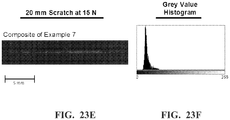
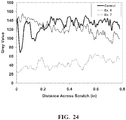
- a control sample (Comparative Test Plaque 1E), a low level experimental sample (Test Plaque 22C), and a high level experimental sample (Test Plaque 23C) were subjected to constant force scratch testing.
- a Micro-Scratch Tester (CSM Instruments) equipped with a 1 mm steel ball was used to scratch each specimen using a constant force of 15 N over a path length of 20 mm.
- Figure 23 shows the resulting scratch on each Test Plaque.
- the control sample scratch whitens considerably. While the low level experimental sample scratch whitens in a similar manner to the control, scratch whitening is dramatically reduced for the high level experimental sample. Images of the scratched specimens were analyzed using the ImageJ software (version 1.45 s) (an image processing program available from the National Institutes of Health).
- Control sample Comparative Test Plaque 1E, and experimental samples Test Plaque 22D and Test Plaque 23D were subjected to an impact whitening test.
- a Gardner impact tester fitted with a 2-lb tip was used to strike each sample successively along its length with increasing force. A visual determination was made as to the minimum force required to cause a whitening defect. While the force required to impart a whitening defect in the control sample was in the 2-4 in-lb range, the force required to impart a whitening defect in the experimental sample was in the 6-8 in-lb range indicating a resistance to whitening due to impact. This demonstrates an improvement in impact whitening for dry-blended pigment modified filler compared to pigments incorporated by traditional liquid dispersions.
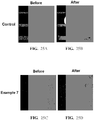
- Control sample Comparative Test Plaque 1F and the experimental sample Test Plaque 23E were subjected to a temperature resistance test. A heated block, thermostatically controlled to 250 °C, was placed on the surface of each sample for 5 minutes. The color of the sample where the test was conducted was read before and after. Table 10 below shows a significant difference in whitening due to incidence with high temperature for the experimental sample versus the control (3.98 versus 13.02 ⁇ E units). Figure 25 depicts the appearance of each sample before and after the test. The results provided in Table 10 below show a significantly lower color change for the Test Plaque 23E as compared to the control sample of Comparative Test Plaque 1F.
- a dyed aluminum trihydrate filler was synthesized as described in Example 2 of United States Patent 7,863,369 .
- a four liter reaction kettle was charged with an aqueous suspension of Alumina Trihydrate (ATH, Rio-Tinto-Alcan, WH311 - 540g) in de-ionized water (3,377 g).
- the pH of the aqueous suspension was adjusted to ⁇ 3.5 using a dilute solution of nitric acid in water ( ⁇ 1 mL of a 14% solution).
- Reactive Red 198 powder (4.22 g, Reactive Red 198 is a triazine dye having a sulfatoethylsulfone functional group, and was obtained from Organic Dyestuffs Corp, 1015 Highway 29 N, Concord, NC 28025, Product No. 16198OR12) was added to the reaction kettle.
- the resulting ATH-dye suspension was warmed to 65 °C for a one hour interval with constant stirring.
- the aqueous suspension was maintained at a temperature of between 60 °C and 70 °C for two hours with constant stirring. After the two hour heating interval was complete, the suspension was allowed to cool and settle overnight without stirring.
- a dyed-filler control sample of filled polymeric material comprised of an acrylic matrix and dyed aluminum trihydrate filler was synthesized in a 1500 mL resin kettle (10.5 x 23cm) fitted with kettle top having ports for a temperature probe, air-driven stirrer, rubber septum and an AllihnTM type reflux condenser. The following ingredients were sequentially weighed into the kettle:
- HSD High Speed Disperser
- 1116.0 g of dyed ATH prepared as described above was added portion wise over a two minute interval.
- the rpm of the HSD was incrementally increased to about 1,500 rpm.
- the HSD speed was increased to 2,000 rpm and maintained for 10 minutes.
- the resulting mixture was then evacuated (Reflux condenser cooled to - 10 °C) at 75 Torr (about 27 inches of Hg) for two minutes with 1,000 rpm stirring (3' - four blade prop).
- the mixture was warmed to 45 °C using a waterbath.
- the mixing rpm was increased to 1,500 rpm and the following ingredients were sequentially injected via syringe in rapid succession:
- the resulting slurry was allowed to mixture (1,500 rpm) at 45 °C for about 10 sec. Stirring was discontinued and the vacuum was released with air. The initiated mixture was poured into a 15 mm thick sheet casting mold within a one minute interval. The time required to achieve a peak temperature of 138 °C was approximately 6 minutes. The addition of the GDMA was considered "Time Zero".
- the hardened, polymerized composite plaque was removed from the mold after about one hour and rough-finished on a drum sander and then sanded with progressively finer grit sand paper ending with 240-grit to create a dyed-filler control sample. After measuring the color values of the dyed-filler control sample it was sawn into four Test Plaques, Comparative Test Plaques 2A, 2B, 2C, and 2D.
- Comparative Test Plaque 1G as a control sample
- Comparative Test Plaque 2A as the experimental sample were subjected to a water blush test by immersion in 72 °C water for 16 hours. Color measurements were made on each sample after the immersion and ⁇ E values were calculated (Table 11). Comparative Test Plaque 2A (dyed ATH) exhibits a significantly larger color change after hot water immersion, compared to the control (Comparative Test Plaque 1G - liquid dispersion). Table11. Calculated Color Change after Hot Water Immersion ⁇ E Comparative Test Plaque 1G 1.99 Comparative Test Plaque 2A 9.56
- Comparative Test Plaque 1H as a control sample, and Comparative Test Plaque 2B as the experimental sample were subjected to a thermobending test. Each piece was heated to 160 °C in a double platen oven. Afterwards, the specimens were placed over a curved form with a 3 inch radius. The Test Plaques were allowed to cool completely in a vacuum press. The color of the center region of each Test Plaque was read before and after the test. The results provided in Table 12 below indicate that there is no significant difference in the color change due to thermobending between each sample. Table12. Calculated Color Change After Thermobending ⁇ E Comparative Test Plaque 1H 2.56 Comparative Test Plaque 2B 3.10
- Comparative Test Plaque 1I and Comparative Test Plaque 2B were subjected to constant force scratch testing.
- a Micro-Scratch Tester CSM Instruments
- CSM Instruments equipped with a 1 mm steel ball was used to scratch each specimen using a constant force of 15 N over a path length of 20 mm.
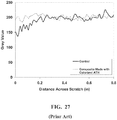
- Figure 26 shows the resulting scratch on each specimen.
- Both the liquid dispersion sample (Comparative Example 1I) and the sample made using the dyed filler (Comparative Example 2B) scratch-whiten considerably. Images of the scratched Test Plaques were analyzed using the ImageJ software (version 1.45 s). Histograms of the grey values found within an area inscribed about each scratch were generated ( Figure 26 ).
- Comparative Test Plaque 1J and Comparative Test Plaque 2C were subjected to a temperature resistance test. A heated block, thermostatically controlled to 250 °C, was placed on the surface of each sample for 5 minutes. The color of the Test Plaques were measured after the hot block was removed. The results provided in Table 14 below indicate that there is no significant difference in the color change due to incidence with high temperature between each sample. Table14. Calculated Color Change after Hot Block Test ⁇ E Comparative Test Plaque 1J 1.99 Comparative Test Plaque 2C 9.56
Landscapes
- Chemical & Material Sciences (AREA)
- Organic Chemistry (AREA)
- Health & Medical Sciences (AREA)
- Chemical Kinetics & Catalysis (AREA)
- Medicinal Chemistry (AREA)
- Polymers & Plastics (AREA)
- Compositions Of Macromolecular Compounds (AREA)
- Pigments, Carbon Blacks, Or Wood Stains (AREA)
- Processes Of Treating Macromolecular Substances (AREA)
- Polymerisation Methods In General (AREA)
- Paints Or Removers (AREA)
Applications Claiming Priority (2)
| Application Number | Priority Date | Filing Date | Title |
|---|---|---|---|
| US201261667163P | 2012-07-02 | 2012-07-02 | |
| PCT/US2013/048847 WO2014008149A1 (en) | 2012-07-02 | 2013-07-01 | Process for manufacturing a filled polymeric materials with modified filler particles |
Publications (2)
| Publication Number | Publication Date |
|---|---|
| EP2867288A1 EP2867288A1 (en) | 2015-05-06 |
| EP2867288B1 true EP2867288B1 (en) | 2016-12-28 |
Family
ID=48783380
Family Applications (1)
| Application Number | Title | Priority Date | Filing Date |
|---|---|---|---|
| EP13736732.2A Active EP2867288B1 (en) | 2012-07-02 | 2013-07-01 | Process for manufacturing a filled polymeric materials with modified filler particles |
Country Status (8)
| Country | Link |
|---|---|
| US (1) | US9371425B2 (enExample) |
| EP (1) | EP2867288B1 (enExample) |
| JP (1) | JP6212116B2 (enExample) |
| KR (1) | KR102124431B1 (enExample) |
| CN (1) | CN104583294A (enExample) |
| AU (1) | AU2013286933A1 (enExample) |
| CA (1) | CA2877991A1 (enExample) |
| WO (1) | WO2014008149A1 (enExample) |
Families Citing this family (7)
| Publication number | Priority date | Publication date | Assignee | Title |
|---|---|---|---|---|
| ITUB20150293A1 (it) * | 2015-05-06 | 2016-11-06 | Delta Srl | Materiale composito autopulente per la produzione di articoli stampati per l'arredo cucina e bagno. |
| US10221302B2 (en) | 2016-12-13 | 2019-03-05 | E I Du Pont De Nemours And Company | Solid polymeric highly durable surfacing |
| US10927238B2 (en) | 2016-12-13 | 2021-02-23 | Dupont Safety & Construction, Inc. | Solid polymeric highly durable surfacing |
| CN114630848A (zh) * | 2019-10-02 | 2022-06-14 | 盛禧奥欧洲有限责任公司 | 具有改善的颜色和划痕外观的丙烯酸类固体表面的制备方法 |
| US11938235B2 (en) | 2020-09-02 | 2024-03-26 | Dupont Electronics, Inc. | Self-sanitizing structure for automatically neutralizing infectious agents on the structure's commonly touched surfaces |
| CN112358653B (zh) * | 2020-11-06 | 2022-04-26 | 中北大学 | 一种硅藻土基表面有机化氢氧化镁阻燃剂的制备方法 |
| CN114044939B (zh) * | 2021-11-01 | 2023-03-31 | 山东理工大学 | 一种轮胎用高分散防老化纳米填料的制备方法 |
Family Cites Families (16)
| Publication number | Priority date | Publication date | Assignee | Title |
|---|---|---|---|---|
| US3847865A (en) | 1972-04-28 | 1974-11-12 | Du Pont | Use of alumina trihydrate in a polymethyl methacrylate article |
| JPS6230133A (ja) | 1985-07-30 | 1987-02-09 | Mitsubishi Cable Ind Ltd | 着色された金属酸化物の水和物 |
| EP0224659B1 (en) * | 1985-10-07 | 1992-12-02 | Nara Machinery Co., Ltd. | Method of improving quality of surface of solid particles and apparatus thereof |
| JPS6463035A (en) * | 1987-09-02 | 1989-03-09 | Soken Kagaku Kk | Powdery body having compound structure and production thereof |
| CA2029068A1 (en) * | 1990-01-09 | 1991-07-10 | Nobuo Suzuki | Cement product and method of producing the same and composition for producing cement product as well as mass concrete and method of producing the same together with cement for producing mass concret |
| JPH03273039A (ja) * | 1990-03-20 | 1991-12-04 | Toyo Ink Mfg Co Ltd | 高熱伝導性封止材料 |
| CA2069074C (en) * | 1991-05-23 | 2002-01-08 | Yuzo Itakura | Wood meal and method of manufacturing the same |
| JP2835796B2 (ja) * | 1992-02-06 | 1998-12-14 | メルク・ジヤパン株式会社 | 新規な薄片状顔料 |
| US5286290A (en) | 1992-04-16 | 1994-02-15 | Avonite, Inc. | Filler and artificial stone made therewith |
| JP2002363410A (ja) * | 2001-06-08 | 2002-12-18 | Ge Toshiba Silicones Co Ltd | エネルギー高伝導性シリコーンゴム組成物 |
| US6773643B2 (en) | 2001-10-15 | 2004-08-10 | E. I. Du Pont De Nemours And Company | Continuous method for formation of three dimensional burls in a solid surface material |
| WO2003033596A1 (en) * | 2001-10-17 | 2003-04-24 | Kabushiki Kaisha Sangi | Anti-bacterial composite particles and anti-bacterial resin composition |
| US20060116279A1 (en) * | 2003-01-09 | 2006-06-01 | Hisao Kogoi | Composite particles and method for production thereof and use thereof |
| RU2005121138A (ru) * | 2003-06-12 | 2006-01-20 | Зюд-Хеми Аг (De) | Способ получения нанокомпозитных добавок с улучшенным расслоением в полимерах |
| US7479324B2 (en) | 2005-11-08 | 2009-01-20 | Saint-Gobain Ceramics & Plastics, Inc. | Pigments comprising alumina hydrate and a dye, and polymer composites formed thereof |
| JP6030894B2 (ja) | 2011-09-20 | 2016-11-24 | 住友理工株式会社 | エラストマー成形体およびその製造方法 |
-
2013
- 2013-07-01 CN CN201380044378.5A patent/CN104583294A/zh active Pending
- 2013-07-01 US US14/410,855 patent/US9371425B2/en active Active
- 2013-07-01 EP EP13736732.2A patent/EP2867288B1/en active Active
- 2013-07-01 WO PCT/US2013/048847 patent/WO2014008149A1/en not_active Ceased
- 2013-07-01 JP JP2015520610A patent/JP6212116B2/ja active Active
- 2013-07-01 AU AU2013286933A patent/AU2013286933A1/en not_active Abandoned
- 2013-07-01 KR KR1020157000035A patent/KR102124431B1/ko active Active
- 2013-07-01 CA CA2877991A patent/CA2877991A1/en not_active Abandoned
Non-Patent Citations (1)
| Title |
|---|
| None * |
Also Published As
| Publication number | Publication date |
|---|---|
| US9371425B2 (en) | 2016-06-21 |
| AU2013286933A1 (en) | 2015-01-29 |
| JP6212116B2 (ja) | 2017-10-11 |
| EP2867288A1 (en) | 2015-05-06 |
| KR102124431B1 (ko) | 2020-06-18 |
| CA2877991A1 (en) | 2014-01-09 |
| WO2014008149A1 (en) | 2014-01-09 |
| US20150166739A1 (en) | 2015-06-18 |
| JP2015522093A (ja) | 2015-08-03 |
| KR20150035989A (ko) | 2015-04-07 |
| CN104583294A (zh) | 2015-04-29 |
Similar Documents
| Publication | Publication Date | Title |
|---|---|---|
| EP2867290B1 (en) | Modified filler particle | |
| US9371425B2 (en) | Process for manufactuing a filled polymeric materials with modified filler particles | |
| US9365724B2 (en) | Process for manufacturing coated filler particles | |
| EP3411439A1 (en) | Preparation of matt paints and printing inks | |
| CN114630848A (zh) | 具有改善的颜色和划痕外观的丙烯酸类固体表面的制备方法 | |
| JPH07196884A (ja) | 変性ジケトピロロピロールとアミノアルキルアクリレート樹脂との顔料組成物 | |
| KR102381571B1 (ko) | 효과적인 불투명도를 갖는 저 광택 페인트 조성물 |
Legal Events
| Date | Code | Title | Description |
|---|---|---|---|
| PUAI | Public reference made under article 153(3) epc to a published international application that has entered the european phase |
Free format text: ORIGINAL CODE: 0009012 |
|
| 17P | Request for examination filed |
Effective date: 20141231 |
|
| AK | Designated contracting states |
Kind code of ref document: A1 Designated state(s): AL AT BE BG CH CY CZ DE DK EE ES FI FR GB GR HR HU IE IS IT LI LT LU LV MC MK MT NL NO PL PT RO RS SE SI SK SM TR |
|
| AX | Request for extension of the european patent |
Extension state: BA ME |
|
| DAX | Request for extension of the european patent (deleted) | ||
| 17Q | First examination report despatched |
Effective date: 20160115 |
|
| REG | Reference to a national code |
Ref country code: DE Ref legal event code: R079 Ref document number: 602013015889 Country of ref document: DE Free format text: PREVIOUS MAIN CLASS: C08K0009020000 Ipc: C09C0001560000 |
|
| GRAP | Despatch of communication of intention to grant a patent |
Free format text: ORIGINAL CODE: EPIDOSNIGR1 |
|
| RIC1 | Information provided on ipc code assigned before grant |
Ipc: C09C 1/40 20060101ALI20160804BHEP Ipc: C08K 3/04 20060101ALI20160804BHEP Ipc: C08J 3/20 20060101ALI20160804BHEP Ipc: C08L 33/12 20060101ALI20160804BHEP Ipc: C09C 1/30 20060101ALI20160804BHEP Ipc: C08K 9/02 20060101ALI20160804BHEP Ipc: C08K 3/22 20060101ALI20160804BHEP Ipc: C09C 1/24 20060101ALI20160804BHEP Ipc: C08F 220/14 20060101ALI20160804BHEP Ipc: C09C 3/10 20060101ALI20160804BHEP Ipc: C09C 1/56 20060101AFI20160804BHEP Ipc: H01L 51/44 20060101ALI20160804BHEP Ipc: C09C 3/04 20060101ALI20160804BHEP |
|
| INTG | Intention to grant announced |
Effective date: 20160902 |
|
| GRAS | Grant fee paid |
Free format text: ORIGINAL CODE: EPIDOSNIGR3 |
|
| GRAA | (expected) grant |
Free format text: ORIGINAL CODE: 0009210 |
|
| AK | Designated contracting states |
Kind code of ref document: B1 Designated state(s): AL AT BE BG CH CY CZ DE DK EE ES FI FR GB GR HR HU IE IS IT LI LT LU LV MC MK MT NL NO PL PT RO RS SE SI SK SM TR |
|
| REG | Reference to a national code |
Ref country code: GB Ref legal event code: FG4D |
|
| REG | Reference to a national code |
Ref country code: CH Ref legal event code: EP |
|
| REG | Reference to a national code |
Ref country code: AT Ref legal event code: REF Ref document number: 857268 Country of ref document: AT Kind code of ref document: T Effective date: 20170115 |
|
| REG | Reference to a national code |
Ref country code: IE Ref legal event code: FG4D |
|
| REG | Reference to a national code |
Ref country code: DE Ref legal event code: R096 Ref document number: 602013015889 Country of ref document: DE |
|
| PG25 | Lapsed in a contracting state [announced via postgrant information from national office to epo] |
Ref country code: LV Free format text: LAPSE BECAUSE OF FAILURE TO SUBMIT A TRANSLATION OF THE DESCRIPTION OR TO PAY THE FEE WITHIN THE PRESCRIBED TIME-LIMIT Effective date: 20161228 |
|
| REG | Reference to a national code |
Ref country code: LT Ref legal event code: MG4D |
|
| PG25 | Lapsed in a contracting state [announced via postgrant information from national office to epo] |
Ref country code: NO Free format text: LAPSE BECAUSE OF FAILURE TO SUBMIT A TRANSLATION OF THE DESCRIPTION OR TO PAY THE FEE WITHIN THE PRESCRIBED TIME-LIMIT Effective date: 20170328 Ref country code: LT Free format text: LAPSE BECAUSE OF FAILURE TO SUBMIT A TRANSLATION OF THE DESCRIPTION OR TO PAY THE FEE WITHIN THE PRESCRIBED TIME-LIMIT Effective date: 20161228 Ref country code: SE Free format text: LAPSE BECAUSE OF FAILURE TO SUBMIT A TRANSLATION OF THE DESCRIPTION OR TO PAY THE FEE WITHIN THE PRESCRIBED TIME-LIMIT Effective date: 20161228 Ref country code: GR Free format text: LAPSE BECAUSE OF FAILURE TO SUBMIT A TRANSLATION OF THE DESCRIPTION OR TO PAY THE FEE WITHIN THE PRESCRIBED TIME-LIMIT Effective date: 20170329 |
|
| REG | Reference to a national code |
Ref country code: NL Ref legal event code: MP Effective date: 20161228 |
|
| REG | Reference to a national code |
Ref country code: AT Ref legal event code: MK05 Ref document number: 857268 Country of ref document: AT Kind code of ref document: T Effective date: 20161228 |
|
| PG25 | Lapsed in a contracting state [announced via postgrant information from national office to epo] |
Ref country code: RS Free format text: LAPSE BECAUSE OF FAILURE TO SUBMIT A TRANSLATION OF THE DESCRIPTION OR TO PAY THE FEE WITHIN THE PRESCRIBED TIME-LIMIT Effective date: 20161228 Ref country code: HR Free format text: LAPSE BECAUSE OF FAILURE TO SUBMIT A TRANSLATION OF THE DESCRIPTION OR TO PAY THE FEE WITHIN THE PRESCRIBED TIME-LIMIT Effective date: 20161228 Ref country code: FI Free format text: LAPSE BECAUSE OF FAILURE TO SUBMIT A TRANSLATION OF THE DESCRIPTION OR TO PAY THE FEE WITHIN THE PRESCRIBED TIME-LIMIT Effective date: 20161228 |
|
| REG | Reference to a national code |
Ref country code: FR Ref legal event code: PLFP Year of fee payment: 5 |
|
| PG25 | Lapsed in a contracting state [announced via postgrant information from national office to epo] |
Ref country code: NL Free format text: LAPSE BECAUSE OF FAILURE TO SUBMIT A TRANSLATION OF THE DESCRIPTION OR TO PAY THE FEE WITHIN THE PRESCRIBED TIME-LIMIT Effective date: 20161228 |
|
| PG25 | Lapsed in a contracting state [announced via postgrant information from national office to epo] |
Ref country code: CZ Free format text: LAPSE BECAUSE OF FAILURE TO SUBMIT A TRANSLATION OF THE DESCRIPTION OR TO PAY THE FEE WITHIN THE PRESCRIBED TIME-LIMIT Effective date: 20161228 Ref country code: RO Free format text: LAPSE BECAUSE OF FAILURE TO SUBMIT A TRANSLATION OF THE DESCRIPTION OR TO PAY THE FEE WITHIN THE PRESCRIBED TIME-LIMIT Effective date: 20161228 Ref country code: EE Free format text: LAPSE BECAUSE OF FAILURE TO SUBMIT A TRANSLATION OF THE DESCRIPTION OR TO PAY THE FEE WITHIN THE PRESCRIBED TIME-LIMIT Effective date: 20161228 Ref country code: SK Free format text: LAPSE BECAUSE OF FAILURE TO SUBMIT A TRANSLATION OF THE DESCRIPTION OR TO PAY THE FEE WITHIN THE PRESCRIBED TIME-LIMIT Effective date: 20161228 Ref country code: IS Free format text: LAPSE BECAUSE OF FAILURE TO SUBMIT A TRANSLATION OF THE DESCRIPTION OR TO PAY THE FEE WITHIN THE PRESCRIBED TIME-LIMIT Effective date: 20170428 |
|
| PG25 | Lapsed in a contracting state [announced via postgrant information from national office to epo] |
Ref country code: ES Free format text: LAPSE BECAUSE OF FAILURE TO SUBMIT A TRANSLATION OF THE DESCRIPTION OR TO PAY THE FEE WITHIN THE PRESCRIBED TIME-LIMIT Effective date: 20161228 Ref country code: SM Free format text: LAPSE BECAUSE OF FAILURE TO SUBMIT A TRANSLATION OF THE DESCRIPTION OR TO PAY THE FEE WITHIN THE PRESCRIBED TIME-LIMIT Effective date: 20161228 Ref country code: BE Free format text: LAPSE BECAUSE OF FAILURE TO SUBMIT A TRANSLATION OF THE DESCRIPTION OR TO PAY THE FEE WITHIN THE PRESCRIBED TIME-LIMIT Effective date: 20161228 Ref country code: BG Free format text: LAPSE BECAUSE OF FAILURE TO SUBMIT A TRANSLATION OF THE DESCRIPTION OR TO PAY THE FEE WITHIN THE PRESCRIBED TIME-LIMIT Effective date: 20170328 Ref country code: IT Free format text: LAPSE BECAUSE OF FAILURE TO SUBMIT A TRANSLATION OF THE DESCRIPTION OR TO PAY THE FEE WITHIN THE PRESCRIBED TIME-LIMIT Effective date: 20161228 Ref country code: PT Free format text: LAPSE BECAUSE OF FAILURE TO SUBMIT A TRANSLATION OF THE DESCRIPTION OR TO PAY THE FEE WITHIN THE PRESCRIBED TIME-LIMIT Effective date: 20170428 Ref country code: PL Free format text: LAPSE BECAUSE OF FAILURE TO SUBMIT A TRANSLATION OF THE DESCRIPTION OR TO PAY THE FEE WITHIN THE PRESCRIBED TIME-LIMIT Effective date: 20161228 Ref country code: AT Free format text: LAPSE BECAUSE OF FAILURE TO SUBMIT A TRANSLATION OF THE DESCRIPTION OR TO PAY THE FEE WITHIN THE PRESCRIBED TIME-LIMIT Effective date: 20161228 |
|
| REG | Reference to a national code |
Ref country code: DE Ref legal event code: R097 Ref document number: 602013015889 Country of ref document: DE |
|
| PLBE | No opposition filed within time limit |
Free format text: ORIGINAL CODE: 0009261 |
|
| STAA | Information on the status of an ep patent application or granted ep patent |
Free format text: STATUS: NO OPPOSITION FILED WITHIN TIME LIMIT |
|
| PG25 | Lapsed in a contracting state [announced via postgrant information from national office to epo] |
Ref country code: DK Free format text: LAPSE BECAUSE OF FAILURE TO SUBMIT A TRANSLATION OF THE DESCRIPTION OR TO PAY THE FEE WITHIN THE PRESCRIBED TIME-LIMIT Effective date: 20161228 |
|
| 26N | No opposition filed |
Effective date: 20170929 |
|
| PG25 | Lapsed in a contracting state [announced via postgrant information from national office to epo] |
Ref country code: SI Free format text: LAPSE BECAUSE OF FAILURE TO SUBMIT A TRANSLATION OF THE DESCRIPTION OR TO PAY THE FEE WITHIN THE PRESCRIBED TIME-LIMIT Effective date: 20161228 |
|
| REG | Reference to a national code |
Ref country code: CH Ref legal event code: PL |
|
| GBPC | Gb: european patent ceased through non-payment of renewal fee |
Effective date: 20170701 |
|
| REG | Reference to a national code |
Ref country code: IE Ref legal event code: MM4A |
|
| PG25 | Lapsed in a contracting state [announced via postgrant information from national office to epo] |
Ref country code: IE Free format text: LAPSE BECAUSE OF NON-PAYMENT OF DUE FEES Effective date: 20170701 Ref country code: GB Free format text: LAPSE BECAUSE OF NON-PAYMENT OF DUE FEES Effective date: 20170701 Ref country code: CH Free format text: LAPSE BECAUSE OF NON-PAYMENT OF DUE FEES Effective date: 20170731 Ref country code: LI Free format text: LAPSE BECAUSE OF NON-PAYMENT OF DUE FEES Effective date: 20170731 |
|
| REG | Reference to a national code |
Ref country code: FR Ref legal event code: PLFP Year of fee payment: 6 |
|
| PG25 | Lapsed in a contracting state [announced via postgrant information from national office to epo] |
Ref country code: LU Free format text: LAPSE BECAUSE OF NON-PAYMENT OF DUE FEES Effective date: 20170701 |
|
| PG25 | Lapsed in a contracting state [announced via postgrant information from national office to epo] |
Ref country code: MT Free format text: LAPSE BECAUSE OF NON-PAYMENT OF DUE FEES Effective date: 20170701 |
|
| PG25 | Lapsed in a contracting state [announced via postgrant information from national office to epo] |
Ref country code: MC Free format text: LAPSE BECAUSE OF FAILURE TO SUBMIT A TRANSLATION OF THE DESCRIPTION OR TO PAY THE FEE WITHIN THE PRESCRIBED TIME-LIMIT Effective date: 20161228 Ref country code: HU Free format text: LAPSE BECAUSE OF FAILURE TO SUBMIT A TRANSLATION OF THE DESCRIPTION OR TO PAY THE FEE WITHIN THE PRESCRIBED TIME-LIMIT; INVALID AB INITIO Effective date: 20130701 |
|
| PG25 | Lapsed in a contracting state [announced via postgrant information from national office to epo] |
Ref country code: CY Free format text: LAPSE BECAUSE OF FAILURE TO SUBMIT A TRANSLATION OF THE DESCRIPTION OR TO PAY THE FEE WITHIN THE PRESCRIBED TIME-LIMIT Effective date: 20161228 |
|
| PG25 | Lapsed in a contracting state [announced via postgrant information from national office to epo] |
Ref country code: MK Free format text: LAPSE BECAUSE OF FAILURE TO SUBMIT A TRANSLATION OF THE DESCRIPTION OR TO PAY THE FEE WITHIN THE PRESCRIBED TIME-LIMIT Effective date: 20161228 |
|
| PG25 | Lapsed in a contracting state [announced via postgrant information from national office to epo] |
Ref country code: TR Free format text: LAPSE BECAUSE OF FAILURE TO SUBMIT A TRANSLATION OF THE DESCRIPTION OR TO PAY THE FEE WITHIN THE PRESCRIBED TIME-LIMIT Effective date: 20161228 |
|
| PG25 | Lapsed in a contracting state [announced via postgrant information from national office to epo] |
Ref country code: AL Free format text: LAPSE BECAUSE OF FAILURE TO SUBMIT A TRANSLATION OF THE DESCRIPTION OR TO PAY THE FEE WITHIN THE PRESCRIBED TIME-LIMIT Effective date: 20161228 |
|
| REG | Reference to a national code |
Ref country code: DE Ref legal event code: R081 Ref document number: 602013015889 Country of ref document: DE Owner name: DUPONT SAFETY & CONSTRUCTION, INC., WILMINGTON, US Free format text: FORMER OWNER: E.I. DU PONT DE NEMOURS AND COMPANY, WILMINGTON, DEL., US Ref country code: DE Ref legal event code: R082 Ref document number: 602013015889 Country of ref document: DE Representative=s name: MARKS & CLERK (LUXEMBOURG) LLP, LU |
|
| P01 | Opt-out of the competence of the unified patent court (upc) registered |
Effective date: 20230528 |
|
| PGFP | Annual fee paid to national office [announced via postgrant information from national office to epo] |
Ref country code: DE Payment date: 20250604 Year of fee payment: 13 |
|
| PGFP | Annual fee paid to national office [announced via postgrant information from national office to epo] |
Ref country code: FR Payment date: 20260608 Year of fee payment: 14 |