EP2864501B1 - Mutational analysis of plasma dna for cancer detection - Google Patents
Mutational analysis of plasma dna for cancer detection Download PDFInfo
- Publication number
- EP2864501B1 EP2864501B1 EP13807105.5A EP13807105A EP2864501B1 EP 2864501 B1 EP2864501 B1 EP 2864501B1 EP 13807105 A EP13807105 A EP 13807105A EP 2864501 B1 EP2864501 B1 EP 2864501B1
- Authority
- EP
- European Patent Office
- Prior art keywords
- sequence
- tumor
- dna
- mutations
- cancer
- Prior art date
- Legal status (The legal status is an assumption and is not a legal conclusion. Google has not performed a legal analysis and makes no representation as to the accuracy of the status listed.)
- Active
Links
Images









Classifications
-
- C—CHEMISTRY; METALLURGY
- C12—BIOCHEMISTRY; BEER; SPIRITS; WINE; VINEGAR; MICROBIOLOGY; ENZYMOLOGY; MUTATION OR GENETIC ENGINEERING
- C12Q—MEASURING OR TESTING PROCESSES INVOLVING ENZYMES, NUCLEIC ACIDS OR MICROORGANISMS; COMPOSITIONS OR TEST PAPERS THEREFOR; PROCESSES OF PREPARING SUCH COMPOSITIONS; CONDITION-RESPONSIVE CONTROL IN MICROBIOLOGICAL OR ENZYMOLOGICAL PROCESSES
- C12Q1/00—Measuring or testing processes involving enzymes, nucleic acids or microorganisms; Compositions therefor; Processes of preparing such compositions
- C12Q1/68—Measuring or testing processes involving enzymes, nucleic acids or microorganisms; Compositions therefor; Processes of preparing such compositions involving nucleic acids
-
- B—PERFORMING OPERATIONS; TRANSPORTING
- B01—PHYSICAL OR CHEMICAL PROCESSES OR APPARATUS IN GENERAL
- B01J—CHEMICAL OR PHYSICAL PROCESSES, e.g. CATALYSIS OR COLLOID CHEMISTRY; THEIR RELEVANT APPARATUS
- B01J19/00—Chemical, physical or physico-chemical processes in general; Their relevant apparatus
- B01J19/0046—Sequential or parallel reactions, e.g. for the synthesis of polypeptides or polynucleotides; Apparatus and devices for combinatorial chemistry or for making molecular arrays
-
- C—CHEMISTRY; METALLURGY
- C12—BIOCHEMISTRY; BEER; SPIRITS; WINE; VINEGAR; MICROBIOLOGY; ENZYMOLOGY; MUTATION OR GENETIC ENGINEERING
- C12N—MICROORGANISMS OR ENZYMES; COMPOSITIONS THEREOF; PROPAGATING, PRESERVING, OR MAINTAINING MICROORGANISMS; MUTATION OR GENETIC ENGINEERING; CULTURE MEDIA
- C12N15/00—Mutation or genetic engineering; DNA or RNA concerning genetic engineering, vectors, e.g. plasmids, or their isolation, preparation or purification; Use of hosts therefor
- C12N15/09—Recombinant DNA-technology
- C12N15/10—Processes for the isolation, preparation or purification of DNA or RNA
- C12N15/1034—Isolating an individual clone by screening libraries
- C12N15/1065—Preparation or screening of tagged libraries, e.g. tagged microorganisms by STM-mutagenesis, tagged polynucleotides, gene tags
-
- C—CHEMISTRY; METALLURGY
- C12—BIOCHEMISTRY; BEER; SPIRITS; WINE; VINEGAR; MICROBIOLOGY; ENZYMOLOGY; MUTATION OR GENETIC ENGINEERING
- C12Q—MEASURING OR TESTING PROCESSES INVOLVING ENZYMES, NUCLEIC ACIDS OR MICROORGANISMS; COMPOSITIONS OR TEST PAPERS THEREFOR; PROCESSES OF PREPARING SUCH COMPOSITIONS; CONDITION-RESPONSIVE CONTROL IN MICROBIOLOGICAL OR ENZYMOLOGICAL PROCESSES
- C12Q1/00—Measuring or testing processes involving enzymes, nucleic acids or microorganisms; Compositions therefor; Processes of preparing such compositions
- C12Q1/68—Measuring or testing processes involving enzymes, nucleic acids or microorganisms; Compositions therefor; Processes of preparing such compositions involving nucleic acids
- C12Q1/6806—Preparing nucleic acids for analysis, e.g. for polymerase chain reaction [PCR] assay
-
- C—CHEMISTRY; METALLURGY
- C12—BIOCHEMISTRY; BEER; SPIRITS; WINE; VINEGAR; MICROBIOLOGY; ENZYMOLOGY; MUTATION OR GENETIC ENGINEERING
- C12Q—MEASURING OR TESTING PROCESSES INVOLVING ENZYMES, NUCLEIC ACIDS OR MICROORGANISMS; COMPOSITIONS OR TEST PAPERS THEREFOR; PROCESSES OF PREPARING SUCH COMPOSITIONS; CONDITION-RESPONSIVE CONTROL IN MICROBIOLOGICAL OR ENZYMOLOGICAL PROCESSES
- C12Q1/00—Measuring or testing processes involving enzymes, nucleic acids or microorganisms; Compositions therefor; Processes of preparing such compositions
- C12Q1/68—Measuring or testing processes involving enzymes, nucleic acids or microorganisms; Compositions therefor; Processes of preparing such compositions involving nucleic acids
- C12Q1/6813—Hybridisation assays
- C12Q1/6827—Hybridisation assays for detection of mutation or polymorphism
-
- C—CHEMISTRY; METALLURGY
- C12—BIOCHEMISTRY; BEER; SPIRITS; WINE; VINEGAR; MICROBIOLOGY; ENZYMOLOGY; MUTATION OR GENETIC ENGINEERING
- C12Q—MEASURING OR TESTING PROCESSES INVOLVING ENZYMES, NUCLEIC ACIDS OR MICROORGANISMS; COMPOSITIONS OR TEST PAPERS THEREFOR; PROCESSES OF PREPARING SUCH COMPOSITIONS; CONDITION-RESPONSIVE CONTROL IN MICROBIOLOGICAL OR ENZYMOLOGICAL PROCESSES
- C12Q1/00—Measuring or testing processes involving enzymes, nucleic acids or microorganisms; Compositions therefor; Processes of preparing such compositions
- C12Q1/68—Measuring or testing processes involving enzymes, nucleic acids or microorganisms; Compositions therefor; Processes of preparing such compositions involving nucleic acids
- C12Q1/6844—Nucleic acid amplification reactions
- C12Q1/6853—Nucleic acid amplification reactions using modified primers or templates
- C12Q1/6855—Ligating adaptors
-
- C—CHEMISTRY; METALLURGY
- C12—BIOCHEMISTRY; BEER; SPIRITS; WINE; VINEGAR; MICROBIOLOGY; ENZYMOLOGY; MUTATION OR GENETIC ENGINEERING
- C12Q—MEASURING OR TESTING PROCESSES INVOLVING ENZYMES, NUCLEIC ACIDS OR MICROORGANISMS; COMPOSITIONS OR TEST PAPERS THEREFOR; PROCESSES OF PREPARING SUCH COMPOSITIONS; CONDITION-RESPONSIVE CONTROL IN MICROBIOLOGICAL OR ENZYMOLOGICAL PROCESSES
- C12Q1/00—Measuring or testing processes involving enzymes, nucleic acids or microorganisms; Compositions therefor; Processes of preparing such compositions
- C12Q1/68—Measuring or testing processes involving enzymes, nucleic acids or microorganisms; Compositions therefor; Processes of preparing such compositions involving nucleic acids
- C12Q1/6876—Nucleic acid products used in the analysis of nucleic acids, e.g. primers or probes
- C12Q1/6883—Nucleic acid products used in the analysis of nucleic acids, e.g. primers or probes for diseases caused by alterations of genetic material
- C12Q1/6886—Nucleic acid products used in the analysis of nucleic acids, e.g. primers or probes for diseases caused by alterations of genetic material for cancer
-
- G—PHYSICS
- G01—MEASURING; TESTING
- G01N—INVESTIGATING OR ANALYSING MATERIALS BY DETERMINING THEIR CHEMICAL OR PHYSICAL PROPERTIES
- G01N33/00—Investigating or analysing materials by specific methods not covered by groups G01N1/00 - G01N31/00
- G01N33/48—Biological material, e.g. blood, urine; Haemocytometers
- G01N33/50—Chemical analysis of biological material, e.g. blood, urine; Testing involving biospecific ligand binding methods; Immunological testing
- G01N33/53—Immunoassay; Biospecific binding assay; Materials therefor
- G01N33/575—Immunoassay; Biospecific binding assay; Materials therefor for cancer
-
- G—PHYSICS
- G16—INFORMATION AND COMMUNICATION TECHNOLOGY [ICT] SPECIALLY ADAPTED FOR SPECIFIC APPLICATION FIELDS
- G16B—BIOINFORMATICS, i.e. INFORMATION AND COMMUNICATION TECHNOLOGY [ICT] SPECIALLY ADAPTED FOR GENETIC OR PROTEIN-RELATED DATA PROCESSING IN COMPUTATIONAL MOLECULAR BIOLOGY
- G16B20/00—ICT specially adapted for functional genomics or proteomics, e.g. genotype-phenotype associations
-
- G—PHYSICS
- G16—INFORMATION AND COMMUNICATION TECHNOLOGY [ICT] SPECIALLY ADAPTED FOR SPECIFIC APPLICATION FIELDS
- G16B—BIOINFORMATICS, i.e. INFORMATION AND COMMUNICATION TECHNOLOGY [ICT] SPECIALLY ADAPTED FOR GENETIC OR PROTEIN-RELATED DATA PROCESSING IN COMPUTATIONAL MOLECULAR BIOLOGY
- G16B20/00—ICT specially adapted for functional genomics or proteomics, e.g. genotype-phenotype associations
- G16B20/20—Allele or variant detection, e.g. single nucleotide polymorphism [SNP] detection
-
- G—PHYSICS
- G16—INFORMATION AND COMMUNICATION TECHNOLOGY [ICT] SPECIALLY ADAPTED FOR SPECIFIC APPLICATION FIELDS
- G16B—BIOINFORMATICS, i.e. INFORMATION AND COMMUNICATION TECHNOLOGY [ICT] SPECIALLY ADAPTED FOR GENETIC OR PROTEIN-RELATED DATA PROCESSING IN COMPUTATIONAL MOLECULAR BIOLOGY
- G16B30/00—ICT specially adapted for sequence analysis involving nucleotides or amino acids
-
- G—PHYSICS
- G16—INFORMATION AND COMMUNICATION TECHNOLOGY [ICT] SPECIALLY ADAPTED FOR SPECIFIC APPLICATION FIELDS
- G16B—BIOINFORMATICS, i.e. INFORMATION AND COMMUNICATION TECHNOLOGY [ICT] SPECIALLY ADAPTED FOR GENETIC OR PROTEIN-RELATED DATA PROCESSING IN COMPUTATIONAL MOLECULAR BIOLOGY
- G16B30/00—ICT specially adapted for sequence analysis involving nucleotides or amino acids
- G16B30/10—Sequence alignment; Homology search
-
- C—CHEMISTRY; METALLURGY
- C12—BIOCHEMISTRY; BEER; SPIRITS; WINE; VINEGAR; MICROBIOLOGY; ENZYMOLOGY; MUTATION OR GENETIC ENGINEERING
- C12Q—MEASURING OR TESTING PROCESSES INVOLVING ENZYMES, NUCLEIC ACIDS OR MICROORGANISMS; COMPOSITIONS OR TEST PAPERS THEREFOR; PROCESSES OF PREPARING SUCH COMPOSITIONS; CONDITION-RESPONSIVE CONTROL IN MICROBIOLOGICAL OR ENZYMOLOGICAL PROCESSES
- C12Q2525/00—Reactions involving modified oligonucleotides, nucleic acids, or nucleotides
- C12Q2525/10—Modifications characterised by
- C12Q2525/191—Modifications characterised by incorporating an adaptor
-
- C—CHEMISTRY; METALLURGY
- C12—BIOCHEMISTRY; BEER; SPIRITS; WINE; VINEGAR; MICROBIOLOGY; ENZYMOLOGY; MUTATION OR GENETIC ENGINEERING
- C12Q—MEASURING OR TESTING PROCESSES INVOLVING ENZYMES, NUCLEIC ACIDS OR MICROORGANISMS; COMPOSITIONS OR TEST PAPERS THEREFOR; PROCESSES OF PREPARING SUCH COMPOSITIONS; CONDITION-RESPONSIVE CONTROL IN MICROBIOLOGICAL OR ENZYMOLOGICAL PROCESSES
- C12Q2535/00—Reactions characterised by the assay type for determining the identity of a nucleotide base or a sequence of oligonucleotides
- C12Q2535/122—Massive parallel sequencing
-
- C—CHEMISTRY; METALLURGY
- C12—BIOCHEMISTRY; BEER; SPIRITS; WINE; VINEGAR; MICROBIOLOGY; ENZYMOLOGY; MUTATION OR GENETIC ENGINEERING
- C12Q—MEASURING OR TESTING PROCESSES INVOLVING ENZYMES, NUCLEIC ACIDS OR MICROORGANISMS; COMPOSITIONS OR TEST PAPERS THEREFOR; PROCESSES OF PREPARING SUCH COMPOSITIONS; CONDITION-RESPONSIVE CONTROL IN MICROBIOLOGICAL OR ENZYMOLOGICAL PROCESSES
- C12Q2537/00—Reactions characterised by the reaction format or use of a specific feature
- C12Q2537/10—Reactions characterised by the reaction format or use of a specific feature the purpose or use of
- C12Q2537/16—Assays for determining copy number or wherein the copy number is of special importance
-
- C—CHEMISTRY; METALLURGY
- C12—BIOCHEMISTRY; BEER; SPIRITS; WINE; VINEGAR; MICROBIOLOGY; ENZYMOLOGY; MUTATION OR GENETIC ENGINEERING
- C12Q—MEASURING OR TESTING PROCESSES INVOLVING ENZYMES, NUCLEIC ACIDS OR MICROORGANISMS; COMPOSITIONS OR TEST PAPERS THEREFOR; PROCESSES OF PREPARING SUCH COMPOSITIONS; CONDITION-RESPONSIVE CONTROL IN MICROBIOLOGICAL OR ENZYMOLOGICAL PROCESSES
- C12Q2537/00—Reactions characterised by the reaction format or use of a specific feature
- C12Q2537/10—Reactions characterised by the reaction format or use of a specific feature the purpose or use of
- C12Q2537/165—Mathematical modelling, e.g. logarithm, ratio
-
- C—CHEMISTRY; METALLURGY
- C12—BIOCHEMISTRY; BEER; SPIRITS; WINE; VINEGAR; MICROBIOLOGY; ENZYMOLOGY; MUTATION OR GENETIC ENGINEERING
- C12Q—MEASURING OR TESTING PROCESSES INVOLVING ENZYMES, NUCLEIC ACIDS OR MICROORGANISMS; COMPOSITIONS OR TEST PAPERS THEREFOR; PROCESSES OF PREPARING SUCH COMPOSITIONS; CONDITION-RESPONSIVE CONTROL IN MICROBIOLOGICAL OR ENZYMOLOGICAL PROCESSES
- C12Q2539/00—Reactions characterised by analysis of gene expression or genome comparison
- C12Q2539/10—The purpose being sequence identification by analysis of gene expression or genome comparison characterised by
- C12Q2539/107—Representational Difference Analysis [RDA]
-
- C—CHEMISTRY; METALLURGY
- C12—BIOCHEMISTRY; BEER; SPIRITS; WINE; VINEGAR; MICROBIOLOGY; ENZYMOLOGY; MUTATION OR GENETIC ENGINEERING
- C12Q—MEASURING OR TESTING PROCESSES INVOLVING ENZYMES, NUCLEIC ACIDS OR MICROORGANISMS; COMPOSITIONS OR TEST PAPERS THEREFOR; PROCESSES OF PREPARING SUCH COMPOSITIONS; CONDITION-RESPONSIVE CONTROL IN MICROBIOLOGICAL OR ENZYMOLOGICAL PROCESSES
- C12Q2600/00—Oligonucleotides characterized by their use
- C12Q2600/106—Pharmacogenomics, i.e. genetic variability in individual responses to drugs and drug metabolism
-
- C—CHEMISTRY; METALLURGY
- C12—BIOCHEMISTRY; BEER; SPIRITS; WINE; VINEGAR; MICROBIOLOGY; ENZYMOLOGY; MUTATION OR GENETIC ENGINEERING
- C12Q—MEASURING OR TESTING PROCESSES INVOLVING ENZYMES, NUCLEIC ACIDS OR MICROORGANISMS; COMPOSITIONS OR TEST PAPERS THEREFOR; PROCESSES OF PREPARING SUCH COMPOSITIONS; CONDITION-RESPONSIVE CONTROL IN MICROBIOLOGICAL OR ENZYMOLOGICAL PROCESSES
- C12Q2600/00—Oligonucleotides characterized by their use
- C12Q2600/112—Disease subtyping, staging or classification
-
- C—CHEMISTRY; METALLURGY
- C12—BIOCHEMISTRY; BEER; SPIRITS; WINE; VINEGAR; MICROBIOLOGY; ENZYMOLOGY; MUTATION OR GENETIC ENGINEERING
- C12Q—MEASURING OR TESTING PROCESSES INVOLVING ENZYMES, NUCLEIC ACIDS OR MICROORGANISMS; COMPOSITIONS OR TEST PAPERS THEREFOR; PROCESSES OF PREPARING SUCH COMPOSITIONS; CONDITION-RESPONSIVE CONTROL IN MICROBIOLOGICAL OR ENZYMOLOGICAL PROCESSES
- C12Q2600/00—Oligonucleotides characterized by their use
- C12Q2600/156—Polymorphic or mutational markers
-
- C—CHEMISTRY; METALLURGY
- C12—BIOCHEMISTRY; BEER; SPIRITS; WINE; VINEGAR; MICROBIOLOGY; ENZYMOLOGY; MUTATION OR GENETIC ENGINEERING
- C12Q—MEASURING OR TESTING PROCESSES INVOLVING ENZYMES, NUCLEIC ACIDS OR MICROORGANISMS; COMPOSITIONS OR TEST PAPERS THEREFOR; PROCESSES OF PREPARING SUCH COMPOSITIONS; CONDITION-RESPONSIVE CONTROL IN MICROBIOLOGICAL OR ENZYMOLOGICAL PROCESSES
- C12Q2600/00—Oligonucleotides characterized by their use
- C12Q2600/166—Oligonucleotides used as internal standards, controls or normalisation probes
-
- Y—GENERAL TAGGING OF NEW TECHNOLOGICAL DEVELOPMENTS; GENERAL TAGGING OF CROSS-SECTIONAL TECHNOLOGIES SPANNING OVER SEVERAL SECTIONS OF THE IPC; TECHNICAL SUBJECTS COVERED BY FORMER USPC CROSS-REFERENCE ART COLLECTIONS [XRACs] AND DIGESTS
- Y02—TECHNOLOGIES OR APPLICATIONS FOR MITIGATION OR ADAPTATION AGAINST CLIMATE CHANGE
- Y02A—TECHNOLOGIES FOR ADAPTATION TO CLIMATE CHANGE
- Y02A90/00—Technologies having an indirect contribution to adaptation to climate change
- Y02A90/10—Information and communication technologies [ICT] supporting adaptation to climate change, e.g. for weather forecasting or climate simulation
Definitions
- tumor heterogeneity Gerlinger M et al. N Engl J Med 2012; 366: 883-892 ; Yap TA et al. Sci Transl Med 2012; 4: 127ps10 ).
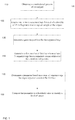
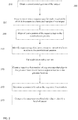
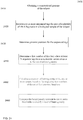
- a method for detecting cancer or premalignant change in a subject comprising: obtaining a consensus sequence of a genome of the subject, wherein the consensus sequence is derived using sequence tags from a sample of the subject that contains more than 50% DNA from healthy cells; receiving one or more sequence tags for each of a plurality of DNA fragments in a biological sample of the subject, the biological sample including cell-free DNA; determining genomic positions for the sequence tags; comparing the sequence tags to the consensus sequence to determine a first number of first loci, wherein: at each of the first loci, a number of the sequence tags having a sequence variant relative to the consensus sequence is above a cutoff value, the cutoff value being greater than one; determining a parameter based on a count of sequence tags having a sequence variant at the first loci; and comparing the parameter to a threshold value to determine a classification of a level of cancer in the subject, the threshold value corresponding to a range of the parameter for subjects having the classification of the level of cancer.
- a method detects cancer or premalignant change in a subject.
- a constitutional genome of the subject is obtained.
- One or more sequence tags are received for each of a plurality of DNA fragments in a biological sample of the subject, where the biological sample includes cell-free DNA.
- Genomic positions are determined for the sequence tags.
- the sequence tags are compared to the constitutional genome to determine a first number of first loci. At each first loci, a number of the sequence tags having a sequence variant relative to the constitutional genome is above a cutoff value, where the cutoff value is greater than one.
- a parameter is determined based on a count of sequence tags having a sequence variant at the first loci. The parameter is compared to a threshold value to determine a classification of a level of cancer in the subject.
- sequence tag refers to string of nucleotides sequenced from any part or all of a nucleic acid molecule.
- a sequenced tag may be a short string of nucleotides (e.g., ⁇ 30) sequenced from a nucleic acid fragment, a short string of nucleotides at both ends of a nucleic acid fragment, or the sequencing of the entire nucleic acid fragment that exists in the biological sample.
- a nucleic acid fragment is any part of a larger nucleic acid molecule.
- a fragment (e.g. a gene) may exist separately (i.e. not connected) to the other parts of the larger nucleic acid molecule.
- sample genome is a collection of sequence reads that have been aligned to locations of a genome (e.g., a human genome).
- the sample genome (SG) is not a consensus sequence, but includes nucleotides that may appear in only a sufficient number of reads (e.g., at least 2 or 3, or higher cutoff values). If an allele appears a sufficient number of times and it is not part of the CG (i.e., not part of the consensus sequence), then that allele can indicate a "single nucleotide mutation" (also referred to as an SNM). Other types of mutations can also be detected using the current invention, e.g.
- the term "level of cancer” can refer to whether cancer exists, a stage of a cancer, a size of tumor, and/or other measure of a severity of a cancer.
- the level of cancer could be a number or other characters. The level could be zero.
- the level of cancer also includes premalignant or precancerous conditions (states) associated with mutations or a number of mutations.
- the level of cancer can be used in various ways. For example, screening can check if cancer is present in someone who is not known previously to have cancer. Assessment can investigate someone who has been diagnosed with cancer. Detection can mean 'screening' or can mean checking if someone, with suggestive features of cancer (e.g. symptoms or other positive tests), has cancer.
- the number of SNMs detectable in a bodily fluid would be higher than the polymorphisms present in the constitutional genome of the same person.
- a comparison can be made between the amounts of variations detected in a bodily fluid sample containing tumor-derived DNA and a DNA sample containing mostly constitutional DNA.
- the term 'mostly' would mean more than 90%. In another preferred embodiment, the term 'mostly' would mean more than 95, 97%, 98%, or 99%.
- genomic positions for the sequence tags are determined.
- the sequence tags are aligned to a reference genome, which is obtained from one or more other subjects.
- the genomic sequence tags are aligned to the constitutional genome of the tested subject.
- the alignment can be performed using techniques known to one skilled in the art, e.g., using Basic Local Alignment Search Tool (BLAST).
- BLAST Basic Local Alignment Search Tool
- embodiments can look for types of mutations that are particularly prevalent in a specific population group, e.g. mutations that are especially common in subjects who are carriers of hepatitis B virus (for liver cancer) or human papillomavirus (for cervical cancer) or who have genetic predisposition to somatic mutations or subjects with germline mutations in a DNA mismatch repair gene.
- the technology would also be useful to screen for mutations in ovarian and breast cancers in subjects with BRCA1 or BRCA2 mutations.
- the technology would similarly be useful to screen for mutations in colorectal cancer in subjects with APC mutations.
- threshold value may be a normal value, a normal range, or indicate a statistically significant deviation from a normal value or range.
- the number of mutations relative to the CG of a specific subject, detectable in the plasma of subjects without a cancer or with a low risk of cancer can be used as the normal range to determine if the number of mutations detected in the tested subject is normal.
- the other subjects could be known to have cancer, and thus a similar number of mutations can indicate cancer.
- Infection with the Epstein-Barr virus has been associated with nasopharyngeal carcinoma, gastric cancer, Hodgkin's lymphoma and non-Hodgkin's lymphoma.
- Infection with Helicobacter pylori has been associated with gastric cancer.
- Infection with Clonorchis sinensis has been associated with cholangiocarcinoma.
- the 4x10 7 DNA fragments could have come from 4x10 7 different cells. If these cells do not bear a recent (as opposed to distant, e.g., the original zygote) clonal relationship to each other (i.e. that they do not share a recent ancestral cell), then it is statistically likely that no mutation will be seen more than once amongst these fragments.
- the cutoff value can be any value (integer or non-integer) greater than one, and may be dynamic for different loci and regions.
- the sequencing depth and fractional concentration of tumor DNA can also affect the sensitivity of detecting mutations (e.g., percentage of mutations detectable) from cancer cells or pre-neoplastic cells.
- At block 230 at least a portion of the sequence tags are aligned to the constitutional genome.
- the alignment can account for the CG being heterozygous at various loci. The alignment would not require an exact match so that variants could be detected.
- sequence tags that have a sequence variant at a locus relative to the constitutional genome are identified. It is possible that a sequence tag could have more than one variant.
- the variants for each locus and for each sequence tag can be tracked.
- a variant could be any allele that is not in the CG.
- the CG could be heterozygous for A/T and the variant could be G or C.
- a constitutional genome is determined by aligning sequence tags obtained by sequencing DNA fragments from a constitutional sample to a reference genome. This step could have been performed at any time previously and using a constitutional sample obtained at any time previously. The CG could simply be read from memory, where the aligning was previously done.
- the constitutional sample could be blood cells.
- the chance of having a sequencing error is exponentially lower when one observes the same change at the same nucleotide position in multiple DNA fragments.
- the chance of detecting a genuine cancer-associated mutational change in the sample is affected by the sequencing depth and the fractional concentration of the tumoral DNA in the sample.
- the chance of observing the mutation in multiple DNA fragments would increase with the sequencing depth and fractional concentration of tumoral DNA.
- the fractional concentration can be 5%, 10%, 20%, and 30%. In one embodiment, the fractional concentration is less than 50%.
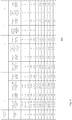
- a threshold could be used across samples, and may or may not account for pre-treatment values for the parameter. For example, a threshold of 100 SNVs could be used to classify the subject as having no cancer or a low level of cancer. This threshold of 100 SNVs is satisfied by each of the four cases in table 800. If the fractional concentration was used as the parameter, a threshold of 1.0% would classify HCC1-HCC3 as practically zero level of cancer, and a second threshold of 1.5 % would classify HCC4 as a low level of cancer. Thus, more than one threshold may be used to obtain more than two classifications.
- reference levels can be generated for different subject groups, e.g. different age, sex, ethnicity, and other parameters (e.g. smoking status, hepatitis status, alcohol, drug history).
- the fractional concentration of tumor DNA can be used to determine the cutoff value for the required number of variations at a locus before the locus is identified as a mutation. For example, if the fractional concentration was known to be relatively high, then a high cutoff could be used to filter out more false positives, since one knows that a relatively high number of variant reads should exist for true SNVs. On the other hand, if the fractional concentration was low, then a lower cutoff might be needed so that some SNVs are not missed. In this case, the fractional concentration would be determined by a different method than the SNV analysis, where it is used as a parameter.
- a normal mixture model McLachlan G and Peel D. Multvariate normal mixtures. In Finite mixture models 2004: p81-116. John Wiley & Sons Press ) can be used.
- Other statistical models for example the binomial mixture model and Poisson regression model ( McLachlan G and Peel D. Mixtures with non-normal components, Finite mixture models 2004: p135-174. John Wiley & Sons Press ), can also be used.
- the distribution of the z-scores of all the bins can be constructed to identify regions with different numbers of copy gain and loss, for example, deletion of 1 or 2 copies of a chromosome; and amplification, resulting in of 1, 2, 3 and 4 additional copies of a chromosome. In some cases, more than one chromosome or more than one regions of a chromosome may be involved.
- the fractional concentration of the cancer DNA in the sample (F) can then be inferred from the sequence read densities of the bins that exhibit one-copy gain or one-copy loss.
- F
- F
- the fractional concentrations of tumor-derived DNA in the plasma of the four HCC patients were determined using GAAL analysis and this GR-based approach. The results are shown in Table 4. As can be seen, the deduced fractional representation correlates well between the GAAL analysis and the GR analysis. Table 4. Fractional concentration of tumor-derived DNA in plasma deduced by the analysis of chromosomal aberrations. Fractional concentration of tumor-derived DNA in plasma Samples GAAL analysis GR analysis case11 4.3% 4.5% case13 5% 5.5% case23 52% 62% case27 7.6% 6.1%
- HCC hepatocellular carcinoma
- Sequencing libraries of the genomicDNAsamples were constructed with the Paired-End Sample Preparation Kit (Illumina) according to the manufacturer's instructions.
- 1-5 micrograms of genomic DNA was first sheared with a Covaris S220 Focused-ultrasonicator to 200-bp fragments.
- DNA molecules were end-repaired with T4 DNA polymerase and Klenow polymerase; T4 polynucleotide kinase was then used to phosphorylate the 5' ends.
- a 3' overhang was created with a 3'-to-5' exonuclease- deficient Klenow fragment.
- Illumina adapter oligonucleotides were ligated to the sticky ends.
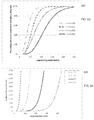
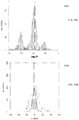
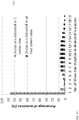
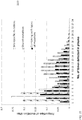
- FIG. 22 is a graph 2200 showing predicted distribution of occurrence in plasma for mutations coming from a heterogeneous tumor.
- the tumor contains two groups of mutations. One group of mutations are present in all tumor cells and the other group of mutations are only present in 1 ⁇ 4 of the tumor cells, based on an approximation that two sites are representative of each ovarian tumor.
- the total fractional concentration of tumor-derived DNA in plasma is assumed to be 40%.
- the plasma sample is assumed to be sequenced to an average depth of 50 times per nucleotide position. According to this predicted distribution of occurrence in plasma, the mutations that are present in all tumor tissues can be differentiated from the mutations only present in 1 ⁇ 4 tumor cells by their occurrence in plasma.
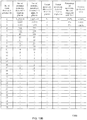
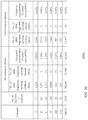
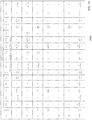
- FIG. 23 is a table 2300 demonstrating the specificity of embodiments for 16 healthy control subjects. Their plasma DNA samples were sequenced to a median coverage of 30 folds. Detection of the mutations that were present in the plasma of the above ovarian cancer patient was performed in the plasma samples of these healthy subjects. The mutations present in the tumor of the ovarian cancer patient were very infrequently detected in the sequencing data of the plasma of the healthy control subjects and none of the category of mutations had an apparent fractional concentration of >1%. These results show that this detection method is highly specific.
- the histogram is a plot with Y-axis being the amount (e.g., number or proportion) of loci and x-axis being the fractional concentration. Mutations that are shared by all or some tumors would result in a higher fractional concentration.
- the peak size would represent the amount of loci that give rise to a particular fractional concentration.
- the relative size of the peaks at low and high concentration would reflect the degree of heterogeneity of the tumors (or clones of a tumor).
- a larger peak at the high concentration reflects that most mutations are shared by most or all tumors (or clones of a tumor) and indicate a lower degree of tumor heterogeneity. If the peak at the low concentration is larger, then most mutations are shared by a few tumors (or a few clones of a tumor). This would indicate a higher degree of tumor heterogeneity
- Such a procedure can provide a calibration of thresholds relative to heterogeneity levels. If the test heterogeneity measure falls between two thresholds, then the level of heterogeneity can be estimated as being between the levels corresponding to the thresholds.
- the respective densities are used for the histogram, one would have gains and losses separated.
- the regions showing a gain could be analyzed separately by creating a histogram just for gains, and a separate histogram can be created just for losses.
- the fractional concentration is used, then the peaks of losses and gains can be analyzed together.
- the fractional concentrations use a difference (e.g., as an absolute value) to the reference density, and thus the fractional concentrations for gains and losses can contribute to the same peak.
- Such programs may also be encoded and transmitted using carrier signals adapted for transmission via wired, optical, and/or wireless networks conforming to a variety of protocols, including the Internet.
- a computer readable medium may be created using a data signal encoded with such programs.
- Computer readable media encoded with the program code may be packaged with a compatible device or provided separately from other devices (e.g., via Internet download). Any such computer readable medium may reside on or within a single computer program product (e.g. a hard drive, a CD, or an entire computer system), and may be present on or within different computer program products within a system or network.
- a computer system may include a monitor, printer, or other suitable display for providing any of the results mentioned herein to a user.
Landscapes
- Chemical & Material Sciences (AREA)
- Life Sciences & Earth Sciences (AREA)
- Health & Medical Sciences (AREA)
- Engineering & Computer Science (AREA)
- Organic Chemistry (AREA)
- Proteomics, Peptides & Aminoacids (AREA)
- Physics & Mathematics (AREA)
- Bioinformatics & Cheminformatics (AREA)
- Analytical Chemistry (AREA)
- Wood Science & Technology (AREA)
- Zoology (AREA)
- Genetics & Genomics (AREA)
- Biotechnology (AREA)
- General Health & Medical Sciences (AREA)
- Biophysics (AREA)
- Molecular Biology (AREA)
- Immunology (AREA)
- General Engineering & Computer Science (AREA)
- Microbiology (AREA)
- Biochemistry (AREA)
- Bioinformatics & Computational Biology (AREA)
- Medical Informatics (AREA)
- Evolutionary Biology (AREA)
- Spectroscopy & Molecular Physics (AREA)
- Theoretical Computer Science (AREA)
- Pathology (AREA)
- Biomedical Technology (AREA)
- Chemical Kinetics & Catalysis (AREA)
- Oncology (AREA)
- Hospice & Palliative Care (AREA)
- Hematology (AREA)
- Urology & Nephrology (AREA)
- Crystallography & Structural Chemistry (AREA)
- Plant Pathology (AREA)
- Cell Biology (AREA)
- General Physics & Mathematics (AREA)
- Medicinal Chemistry (AREA)
- Food Science & Technology (AREA)
- Measuring Or Testing Involving Enzymes Or Micro-Organisms (AREA)
- Investigating Or Analysing Biological Materials (AREA)
Priority Applications (4)
| Application Number | Priority Date | Filing Date | Title |
|---|---|---|---|
| EP18185290.6A EP3456843B1 (en) | 2012-06-21 | 2013-06-14 | Mutational analysis of plasma dna for cancer detection |
| EP24201699.6A EP4512907A3 (en) | 2012-06-21 | 2013-06-14 | Mutational analysis of plasma dna for cancer detection |
| EP21185002.9A EP3919627B1 (en) | 2012-06-21 | 2013-06-14 | Mutational analysis of plasma dna for cancer detection |
| DK18185290.6T DK3456843T3 (da) | 2012-06-21 | 2013-06-14 | Mutationsanalyse af plasma-DNA til påvisning af cancer |
Applications Claiming Priority (6)
| Application Number | Priority Date | Filing Date | Title |
|---|---|---|---|
| US201261662878P | 2012-06-21 | 2012-06-21 | |
| US201261682725P | 2012-08-13 | 2012-08-13 | |
| US201261695795P | 2012-08-31 | 2012-08-31 | |
| US201261711172P | 2012-10-08 | 2012-10-08 | |
| US13/801,748 US11261494B2 (en) | 2012-06-21 | 2013-03-13 | Method of measuring a fractional concentration of tumor DNA |
| PCT/IB2013/054898 WO2013190441A2 (en) | 2012-06-21 | 2013-06-14 | Mutational analysis of plasma dna for cancer detection |
Related Child Applications (3)
| Application Number | Title | Priority Date | Filing Date |
|---|---|---|---|
| EP18185290.6A Division EP3456843B1 (en) | 2012-06-21 | 2013-06-14 | Mutational analysis of plasma dna for cancer detection |
| EP21185002.9A Division EP3919627B1 (en) | 2012-06-21 | 2013-06-14 | Mutational analysis of plasma dna for cancer detection |
| EP24201699.6A Division EP4512907A3 (en) | 2012-06-21 | 2013-06-14 | Mutational analysis of plasma dna for cancer detection |
Publications (3)
| Publication Number | Publication Date |
|---|---|
| EP2864501A2 EP2864501A2 (en) | 2015-04-29 |
| EP2864501A4 EP2864501A4 (en) | 2016-03-16 |
| EP2864501B1 true EP2864501B1 (en) | 2018-08-08 |
Family
ID=52274459
Family Applications (4)
| Application Number | Title | Priority Date | Filing Date |
|---|---|---|---|
| EP13807105.5A Active EP2864501B1 (en) | 2012-06-21 | 2013-06-14 | Mutational analysis of plasma dna for cancer detection |
| EP24201699.6A Pending EP4512907A3 (en) | 2012-06-21 | 2013-06-14 | Mutational analysis of plasma dna for cancer detection |
| EP21185002.9A Active EP3919627B1 (en) | 2012-06-21 | 2013-06-14 | Mutational analysis of plasma dna for cancer detection |
| EP18185290.6A Active EP3456843B1 (en) | 2012-06-21 | 2013-06-14 | Mutational analysis of plasma dna for cancer detection |
Family Applications After (3)
| Application Number | Title | Priority Date | Filing Date |
|---|---|---|---|
| EP24201699.6A Pending EP4512907A3 (en) | 2012-06-21 | 2013-06-14 | Mutational analysis of plasma dna for cancer detection |
| EP21185002.9A Active EP3919627B1 (en) | 2012-06-21 | 2013-06-14 | Mutational analysis of plasma dna for cancer detection |
| EP18185290.6A Active EP3456843B1 (en) | 2012-06-21 | 2013-06-14 | Mutational analysis of plasma dna for cancer detection |
Country Status (18)
| Country | Link |
|---|---|
| US (3) | US11261494B2 (enExample) |
| EP (4) | EP2864501B1 (enExample) |
| JP (4) | JP6371280B2 (enExample) |
| KR (7) | KR102096611B1 (enExample) |
| CN (3) | CN107779506B (enExample) |
| AU (4) | AU2013278994C1 (enExample) |
| CA (2) | CA2876327C (enExample) |
| DK (2) | DK2864501T3 (enExample) |
| EA (2) | EA037292B1 (enExample) |
| ES (2) | ES2687847T3 (enExample) |
| HU (1) | HUE056915T2 (enExample) |
| IL (5) | IL311127B2 (enExample) |
| MX (3) | MX360264B (enExample) |
| PT (1) | PT3456843T (enExample) |
| SG (2) | SG11201408113QA (enExample) |
| TW (4) | TWI636255B (enExample) |
| WO (1) | WO2013190441A2 (enExample) |
| ZA (1) | ZA201409281B (enExample) |
Families Citing this family (129)
| Publication number | Priority date | Publication date | Assignee | Title |
|---|---|---|---|---|
| US9424392B2 (en) | 2005-11-26 | 2016-08-23 | Natera, Inc. | System and method for cleaning noisy genetic data from target individuals using genetic data from genetically related individuals |
| US11111543B2 (en) | 2005-07-29 | 2021-09-07 | Natera, Inc. | System and method for cleaning noisy genetic data and determining chromosome copy number |
| US12054776B2 (en) | 2007-07-23 | 2024-08-06 | The Chinese University Of Hong Kong | Diagnosing fetal chromosomal aneuploidy using massively parallel genomic sequencing |
| EP3216874A1 (en) | 2008-09-05 | 2017-09-13 | TOMA Biosciences, Inc. | Methods for stratifying and annotating cancer drug treatment options |
| US11408031B2 (en) | 2010-05-18 | 2022-08-09 | Natera, Inc. | Methods for non-invasive prenatal paternity testing |
| US20190010543A1 (en) | 2010-05-18 | 2019-01-10 | Natera, Inc. | Methods for simultaneous amplification of target loci |
| US12655483B2 (en) | 2010-05-18 | 2026-06-16 | Natera, Inc. | Methods for simultaneous amplification of target loci |
| US9677118B2 (en) | 2014-04-21 | 2017-06-13 | Natera, Inc. | Methods for simultaneous amplification of target loci |
| US12152275B2 (en) | 2010-05-18 | 2024-11-26 | Natera, Inc. | Methods for non-invasive prenatal ploidy calling |
| US10316362B2 (en) | 2010-05-18 | 2019-06-11 | Natera, Inc. | Methods for simultaneous amplification of target loci |
| US11939634B2 (en) | 2010-05-18 | 2024-03-26 | Natera, Inc. | Methods for simultaneous amplification of target loci |
| US11322224B2 (en) | 2010-05-18 | 2022-05-03 | Natera, Inc. | Methods for non-invasive prenatal ploidy calling |
| US12221653B2 (en) | 2010-05-18 | 2025-02-11 | Natera, Inc. | Methods for simultaneous amplification of target loci |
| AU2011305445B2 (en) | 2010-09-24 | 2017-03-16 | The Board Of Trustees Of The Leland Stanford Junior University | Direct capture, amplification and sequencing of target DNA using immobilized primers |
| EP3225697A3 (en) | 2010-12-30 | 2017-11-22 | Foundation Medicine, Inc. | Optimization of multigene analysis of tumor samples |
| JP6153874B2 (ja) | 2011-02-09 | 2017-06-28 | ナテラ, インコーポレイテッド | 非侵襲的出生前倍数性呼び出しのための方法 |
| US9892230B2 (en) | 2012-03-08 | 2018-02-13 | The Chinese University Of Hong Kong | Size-based analysis of fetal or tumor DNA fraction in plasma |
| US11261494B2 (en) | 2012-06-21 | 2022-03-01 | The Chinese University Of Hong Kong | Method of measuring a fractional concentration of tumor DNA |
| US20150011396A1 (en) | 2012-07-09 | 2015-01-08 | Benjamin G. Schroeder | Methods for creating directional bisulfite-converted nucleic acid libraries for next generation sequencing |
| US20140100126A1 (en) | 2012-08-17 | 2014-04-10 | Natera, Inc. | Method for Non-Invasive Prenatal Testing Using Parental Mosaicism Data |
| US11913065B2 (en) | 2012-09-04 | 2024-02-27 | Guardent Health, Inc. | Systems and methods to detect rare mutations and copy number variation |
| US10876152B2 (en) | 2012-09-04 | 2020-12-29 | Guardant Health, Inc. | Systems and methods to detect rare mutations and copy number variation |
| PL2893040T3 (pl) | 2012-09-04 | 2019-05-31 | Guardant Health Inc | Sposoby wykrywania rzadkich mutacji i wariantu liczby kopii |
| US20160040229A1 (en) | 2013-08-16 | 2016-02-11 | Guardant Health, Inc. | Systems and methods to detect rare mutations and copy number variation |
| US20130309666A1 (en) | 2013-01-25 | 2013-11-21 | Sequenom, Inc. | Methods and processes for non-invasive assessment of genetic variations |
| EP2971130A4 (en) | 2013-03-15 | 2016-10-05 | Nugen Technologies Inc | SEQUENTIAL SEQUENCING |
| US20160032396A1 (en) * | 2013-03-15 | 2016-02-04 | The Board Of Trustees Of The Leland Stanford Junior University | Identification and Use of Circulating Nucleic Acid Tumor Markers |
| JP6525473B2 (ja) | 2013-11-13 | 2019-06-05 | ニューゲン テクノロジーズ, インコーポレイテッド | 複製物配列決定リードを同定するための組成物および方法 |
| CN111534580B (zh) | 2013-12-28 | 2024-06-04 | 夸登特健康公司 | 用于检测遗传变异的方法和系统 |
| US12492429B2 (en) * | 2014-04-21 | 2025-12-09 | Natera, Inc. | Detecting mutations and ploidy in chromosomal segments |
| RU2717641C2 (ru) | 2014-04-21 | 2020-03-24 | Натера, Инк. | Обнаружение мутаций и плоидности в хромосомных сегментах |
| US20180173845A1 (en) | 2014-06-05 | 2018-06-21 | Natera, Inc. | Systems and Methods for Detection of Aneuploidy |
| TWI758011B (zh) | 2014-07-18 | 2022-03-11 | 香港中文大學 | Dna混合物中之組織甲基化模式分析 |
| CN107002122B (zh) * | 2014-07-25 | 2023-09-19 | 华盛顿大学 | 确定导致无细胞dna的产生的组织和/或细胞类型的方法以及使用其鉴定疾病或紊乱的方法 |
| EP3177740B1 (en) * | 2014-08-06 | 2021-01-13 | Nugen Technologies, Inc. | Digital measurements from targeted sequencing |
| SI3198026T1 (sl) * | 2014-08-07 | 2020-02-28 | Pharmassist Ltd | Metoda za analiziranje DNA PIK3CA mutantnega statusa v vzorcu |
| US12391985B2 (en) | 2014-08-07 | 2025-08-19 | Pharmassist Ltd | Method of determining PIK3CA mutational status in a sample |
| WO2016040901A1 (en) | 2014-09-12 | 2016-03-17 | The Board Of Trustees Of The Leland Stanford Junior University | Identification and use of circulating nucleic acids |
| ES2989276T3 (es) * | 2014-12-05 | 2024-11-25 | Found Medicine Inc | Análisis multigénico de muestras tumorales |
| DK3230469T3 (da) | 2014-12-12 | 2019-07-15 | Verinata Health Inc | Anvendelse af cellefri DNA-fragmentstørrelse til bestemmelse af kopiantalsvariationer |
| WO2016109452A1 (en) | 2014-12-31 | 2016-07-07 | Guardant Health , Inc. | Detection and treatment of disease exhibiting disease cell heterogeneity and systems and methods for communicating test results |
| US10364467B2 (en) | 2015-01-13 | 2019-07-30 | The Chinese University Of Hong Kong | Using size and number aberrations in plasma DNA for detecting cancer |
| DK3256605T3 (da) * | 2015-02-10 | 2022-03-14 | Univ Hong Kong Chinese | Påvisning af mutationer til cancerscreening og føtal analyse |
| EP3288455B1 (en) * | 2015-05-01 | 2023-12-06 | Guardant Health, Inc. | Diagnostic methods |
| EP4428863A3 (en) | 2015-05-11 | 2024-12-11 | Natera, Inc. | Methods and compositions for determining ploidy |
| CN104894268B (zh) * | 2015-06-05 | 2018-02-09 | 上海美吉生物医药科技有限公司 | 定量样本中源自细胞凋亡的dna浓度的方法及其应用 |
| CN107849556A (zh) * | 2015-07-01 | 2018-03-27 | 学校法人庆应义塾 | 癌组织的异质性标记物及其使用 |
| JP2017016665A (ja) * | 2015-07-03 | 2017-01-19 | 国立大学法人東北大学 | 配列のデータからの変異情報の選択方法、システム、及び、コンピュータプログラム |
| WO2017012544A1 (en) | 2015-07-20 | 2017-01-26 | The Chinese University Of Hong Kong | Methylation pattern analysis of haplotypes in tissues in dna mixture |
| US10453556B2 (en) | 2015-07-23 | 2019-10-22 | The Chinese University Of Hong Kong | Analysis of fragmentation patterns of cell-free DNA |
| US11319586B2 (en) * | 2015-08-12 | 2022-05-03 | The Chinese University Of Hong Kong | Single-molecule sequencing of plasma DNA |
| US11908588B2 (en) | 2015-08-25 | 2024-02-20 | Nantomics Llc | Systems and methods for genetic analysis of metastases |
| US12540351B2 (en) * | 2015-09-02 | 2026-02-03 | Guardant Health, Inc. | Identification of somatic mutations versus germline variants for cell-free DNA variant calling applications |
| SG11201805119QA (en) | 2015-12-17 | 2018-07-30 | Guardant Health Inc | Methods to determine tumor gene copy number by analysis of cell-free dna |
| EP4779643A2 (en) * | 2016-02-02 | 2026-07-22 | Guardant Health, Inc. | Cancer evolution detection and diagnostic |
| US10095831B2 (en) | 2016-02-03 | 2018-10-09 | Verinata Health, Inc. | Using cell-free DNA fragment size to determine copy number variations |
| KR101810528B1 (ko) * | 2016-03-29 | 2017-12-21 | 한국과학기술원 | 단백질을 변화시키지 않는 암 돌연변이의 기능적 recurrence를 구하는 방법 및 장치 |
| WO2017181146A1 (en) * | 2016-04-14 | 2017-10-19 | Guardant Health, Inc. | Methods for early detection of cancer |
| JP7280044B2 (ja) | 2016-04-15 | 2023-05-23 | ナテラ, インコーポレイテッド | 肺癌の検出方法 |
| GB2555765A (en) * | 2016-05-01 | 2018-05-16 | Genome Res Ltd | Method of detecting a mutational signature in a sample |
| US12062416B2 (en) | 2016-05-01 | 2024-08-13 | Genome Research Limited | Method of characterizing a DNA sample |
| WO2017191074A1 (en) | 2016-05-01 | 2017-11-09 | Genome Research Limited | Method of characterising a dna sample |
| CN105969656B (zh) * | 2016-05-13 | 2019-09-10 | 万康源(天津)基因科技有限公司 | 一种单细胞外显子测序肿瘤体细胞突变检测及分析平台 |
| CN105969856B (zh) * | 2016-05-13 | 2019-11-12 | 万康源(天津)基因科技有限公司 | 一种单细胞外显子测序肿瘤体细胞突变检测方法 |
| CN106355045B (zh) * | 2016-08-30 | 2019-03-15 | 天津诺禾致源生物信息科技有限公司 | 一种基于扩增子二代测序小片段插入缺失检测的方法及装置 |
| EP3792922A1 (en) * | 2016-09-30 | 2021-03-17 | Guardant Health, Inc. | Methods for multi-resolution analysis of cell-free nucleic acids |
| TWI797095B (zh) | 2016-10-24 | 2023-04-01 | 美商格瑞爾有限責任公司 | 腫瘤檢測之方法及系統 |
| GB201618485D0 (en) * | 2016-11-02 | 2016-12-14 | Ucl Business Plc | Method of detecting tumour recurrence |
| US11142798B2 (en) * | 2016-11-17 | 2021-10-12 | GenomiCare Biotechnology (Shanghai) Co. Ltd | Systems and methods for monitoring lifelong tumor evolution field of invention |
| IL266347B2 (en) | 2016-11-30 | 2025-01-01 | Univ Hong Kong Chinese | Analysis of cell-free DNA in urine and other samples |
| CN110383385B (zh) * | 2016-12-08 | 2023-07-25 | 生命科技股份有限公司 | 从肿瘤样品中检测突变负荷的方法 |
| CN106845153A (zh) * | 2016-12-29 | 2017-06-13 | 安诺优达基因科技(北京)有限公司 | 一种用于利用循环肿瘤dna样本检测体细胞突变的装置 |
| CN106874710A (zh) * | 2016-12-29 | 2017-06-20 | 安诺优达基因科技(北京)有限公司 | 一种用于利用肿瘤ffpe样本检测体细胞突变的装置 |
| WO2018137685A1 (en) | 2017-01-25 | 2018-08-02 | The Chinese University Of Hong Kong | Diagnostic applications using nucleic acid fragments |
| US12492430B2 (en) | 2017-04-11 | 2025-12-09 | Tecan Genomics, Inc. | Library quantitation and qualification |
| US11342047B2 (en) * | 2017-04-21 | 2022-05-24 | Illumina, Inc. | Using cell-free DNA fragment size to detect tumor-associated variant |
| CN118711654A (zh) * | 2017-05-16 | 2024-09-27 | 夸登特健康公司 | 无细胞dna的体细胞来源或种系来源的鉴定 |
| KR102145417B1 (ko) * | 2017-05-24 | 2020-08-19 | 지니너스 주식회사 | 무세포 핵산으로부터 수득된 서열 분석 데이터에 대한 배경 대립인자의 빈도 분포를 생성하는 방법 및 이를 이용하여 무세포 핵산으로부터 변이를 검출하는 방법 |
| WO2019020057A1 (en) | 2017-07-26 | 2019-01-31 | The Chinese University Of Hong Kong | ENHANCING CANCER SCREENING WITH ACELLULAR VIRAL NUCLEIC ACIDS |
| EP3682035B1 (en) * | 2017-09-15 | 2025-02-05 | The Regents of the University of California | Detecting somatic single nucleotide variants from cell-free nucleic acid with application to minimal residual disease monitoring |
| KR20240157126A (ko) * | 2017-09-20 | 2024-10-31 | 가던트 헬쓰, 인크. | 체세포 및 생식세포계열 변이체를 구별하기 위한 방법 및 시스템 |
| KR20200044123A (ko) * | 2017-10-10 | 2020-04-28 | 난토믹스, 엘엘씨 | 암 환자에서의 향상된 정밀도를 위한 포괄적 게놈 트랜스크립톰 종양-정상 유전자 패널 분석 (comprehensive genomic transcriptomic tumor-normal gene panel analysis for enhanced precision in patients with cancer) |
| US11099202B2 (en) | 2017-10-20 | 2021-08-24 | Tecan Genomics, Inc. | Reagent delivery system |
| EP3704268B1 (en) | 2017-11-03 | 2025-01-22 | Guardant Health, Inc. | Normalizing tumor mutation burden |
| EP3718113B1 (en) * | 2017-11-30 | 2025-07-02 | Illumina, Inc. | Validation methods and systems for sequence variant calls |
| WO2019118926A1 (en) | 2017-12-14 | 2019-06-20 | Tai Diagnostics, Inc. | Assessing graft suitability for transplantation |
| EP3737773B1 (en) | 2018-01-12 | 2023-04-12 | Natera, Inc. | Novel primers and uses thereof |
| US20190249229A1 (en) * | 2018-02-12 | 2019-08-15 | Nant Holdings Ip, Llc | Bam signatures from liquid and solid tumors and uses therefor |
| US12626780B2 (en) | 2018-03-13 | 2026-05-12 | Grail, Inc. | Method and system for selecting, managing, and analyzing data of high dimensionality |
| DK3781714T3 (da) | 2018-04-14 | 2026-03-30 | Natera Inc | Fremgangsmåder til cancerpåvisning og -overvågning ved personlig påvisning af cirkulerende tumor-dna |
| CN121137125A (zh) * | 2018-04-16 | 2025-12-16 | 格里尔公司 | 用于确定在无细胞核酸中的肿瘤分数的系统及方法 |
| CN112888459B (zh) | 2018-06-01 | 2023-05-23 | 格里尔公司 | 卷积神经网络系统及数据分类方法 |
| US20190385700A1 (en) * | 2018-06-04 | 2019-12-19 | Guardant Health, Inc. | METHODS AND SYSTEMS FOR DETERMINING The CELLULAR ORIGIN OF CELL-FREE NUCLEIC ACIDS |
| KR20210035167A (ko) | 2018-06-11 | 2021-03-31 | 파운데이션 메디신 인코포레이티드 | 게놈 변경을 평가하기 위한 조성물 및 방법 |
| US12234509B2 (en) | 2018-07-03 | 2025-02-25 | Natera, Inc. | Methods for detection of donor-derived cell-free DNA |
| CN120193081A (zh) * | 2018-07-23 | 2025-06-24 | 夸登特健康公司 | 用于通过肿瘤分数和覆盖率调整肿瘤突变负荷的方法和系统 |
| CN112424380B (zh) | 2018-11-01 | 2025-03-04 | Illumina公司 | 用于体细胞变体检测的方法和组合物 |
| JP7499239B2 (ja) * | 2018-11-13 | 2024-06-13 | ミリアド・ジェネティックス・インコーポレイテッド | 体細胞変異のための方法およびシステム、ならびにそれらの使用 |
| US11581062B2 (en) | 2018-12-10 | 2023-02-14 | Grail, Llc | Systems and methods for classifying patients with respect to multiple cancer classes |
| CN113366122B (zh) | 2018-12-19 | 2024-01-12 | 香港中文大学 | 游离dna末端特征 |
| US20200219587A1 (en) * | 2018-12-21 | 2020-07-09 | Grail, Inc. | Systems and methods for using fragment lengths as a predictor of cancer |
| CN109616198A (zh) * | 2018-12-28 | 2019-04-12 | 陈洪亮 | 仅用于肝癌单一癌种筛查的特异甲基化检测位点组合的选取方法 |
| CN109686414A (zh) * | 2018-12-28 | 2019-04-26 | 陈洪亮 | 仅用于肝癌筛查的特异甲基化检测位点组合的选取方法 |
| CN109817279B (zh) * | 2019-01-18 | 2022-11-04 | 臻悦生物科技江苏有限公司 | 肿瘤突变负荷的检测方法、装置、存储介质及处理器 |
| KR102381252B1 (ko) * | 2019-02-19 | 2022-04-01 | 주식회사 녹십자지놈 | 혈중 무세포 dna 기반 간암 치료 예후예측 방법 |
| CN109841265B (zh) * | 2019-02-22 | 2021-09-21 | 清华大学 | 使用片段化模式确定血浆游离核酸分子组织来源的方法和系统及应用 |
| CN109920480B (zh) * | 2019-03-14 | 2020-02-21 | 深圳市海普洛斯生物科技有限公司 | 一种校正高通量测序数据的方法和装置 |
| CN111755075B (zh) * | 2019-03-28 | 2023-09-29 | 深圳华大生命科学研究院 | 对免疫组库高通量测序样本间序列污染进行过滤的方法 |
| US12497662B2 (en) | 2019-04-16 | 2025-12-16 | Grail, Inc. | Systems and methods for tumor fraction estimation from small variants |
| KR20220031860A (ko) | 2019-05-03 | 2022-03-14 | 울티마 제노믹스, 인크. | 핵산 변이체를 검출하는 방법 |
| US12437839B2 (en) | 2019-05-03 | 2025-10-07 | Ultima Genomics, Inc. | Methods for detecting nucleic acid variants |
| WO2020236630A1 (en) * | 2019-05-17 | 2020-11-26 | Ultima Genomics, Inc. | Methods and systems for detecting residual disease |
| CA3140066A1 (en) * | 2019-05-20 | 2020-11-26 | Foundation Medicine, Inc. | Systems and methods for evaluating tumor fraction |
| EP3795685A1 (en) | 2019-09-20 | 2021-03-24 | Sophia Genetics S.A. | Methods for dna library generation to facilitate the detection and reporting of low frequency variants |
| CN111223525A (zh) * | 2020-01-07 | 2020-06-02 | 广州基迪奥生物科技有限公司 | 一种肿瘤外显子测序数据分析方法 |
| EP3851542A1 (en) | 2020-01-20 | 2021-07-21 | Tecan Genomics, Inc. | Depletion of abundant uninformative sequences |
| CN113275053A (zh) | 2020-02-03 | 2021-08-20 | 帝肯基因组学公司 | 试剂存储系统 |
| US11475981B2 (en) | 2020-02-18 | 2022-10-18 | Tempus Labs, Inc. | Methods and systems for dynamic variant thresholding in a liquid biopsy assay |
| US11211147B2 (en) | 2020-02-18 | 2021-12-28 | Tempus Labs, Inc. | Estimation of circulating tumor fraction using off-target reads of targeted-panel sequencing |
| US11211144B2 (en) | 2020-02-18 | 2021-12-28 | Tempus Labs, Inc. | Methods and systems for refining copy number variation in a liquid biopsy assay |
| CN117063239A (zh) * | 2021-03-05 | 2023-11-14 | 夸登特健康公司 | 用于分析分子响应的方法和相关方面 |
| JP7022861B1 (ja) * | 2021-06-25 | 2022-02-18 | 株式会社日立パワーソリューションズ | アレイ型超音波送受信装置 |
| US20240321396A1 (en) * | 2021-06-30 | 2024-09-26 | Memorial Sloan-Kettering Cancer Center | Detection of somatic mutational signatures from whole genome sequencing of cell-free dna |
| WO2023284260A1 (zh) * | 2021-07-12 | 2023-01-19 | 广州燃石医学检验所有限公司 | 基于血液测序的肿瘤内异质性的评估方法及其用于预测免疫疗法的应答 |
| KR102935486B1 (ko) * | 2021-12-06 | 2026-03-10 | 주식회사 지씨지놈 | 혈중 무세포 dna 기반 유방암 치료 예후예측 방법 |
| CN115064212B (zh) * | 2022-06-24 | 2023-03-14 | 哈尔滨星云生物信息技术开发有限公司 | 基于wgs数据的预设区域人群肿瘤特异突变识别方法 |
| WO2024003936A1 (en) | 2022-06-29 | 2024-01-04 | Raman Govindarajan | Method for detecting cancer susceptibility, early detection and predicting cancer behaviour |
| KR102923761B1 (ko) * | 2022-10-13 | 2026-02-04 | 인하대학교 산학협력단 | cfDNA의 구조 변이 서열 검출을 통한 미세잔존질환 진단 방법 |
| CN117012274B (zh) * | 2023-10-07 | 2024-01-16 | 北京智因东方转化医学研究中心有限公司 | 基于高通量测序识别基因缺失的装置 |
Family Cites Families (48)
| Publication number | Priority date | Publication date | Assignee | Title |
|---|---|---|---|---|
| ATE399793T1 (de) | 1999-04-02 | 2008-07-15 | Corixa Corp | Verbindungen und verfahren für therapie und diagnose von lungenkrebs |
| US20030219765A1 (en) | 2000-03-23 | 2003-11-27 | Jose Costa | Methods for evaluating cancer risk |
| US20030211522A1 (en) | 2002-01-18 | 2003-11-13 | Landes Gregory M. | Methods for fetal DNA detection and allele quantitation |
| WO2003095664A2 (en) | 2002-05-10 | 2003-11-20 | City Of Hope | Pyrophosphorolysis activated polymerization (pap) |
| US7704687B2 (en) | 2002-11-15 | 2010-04-27 | The Johns Hopkins University | Digital karyotyping |
| US20060188889A1 (en) * | 2003-11-04 | 2006-08-24 | Christopher Burgess | Use of differentially expressed nucleic acid sequences as biomarkers for cancer |
| EP1599608A4 (en) | 2003-03-05 | 2007-07-18 | Genetic Technologies Ltd | Identification of fetal DNA and fetal cell marker in maternal plasma or serum |
| PL201608B1 (pl) | 2003-06-13 | 2009-04-30 | Cezary Cybulski | Sposób i zestaw do wykrywania wysokiej genetycznie uwarunkowanej predyspozycji do raka prostaty oraz zastosowanie zmiany germinalnej w obrębie genu NBS1 |
| DE60328193D1 (de) | 2003-10-16 | 2009-08-13 | Sequenom Inc | Nicht invasiver Nachweis fötaler genetischer Merkmale |
| US20050282196A1 (en) | 2004-04-30 | 2005-12-22 | Jose Costa | Methods and compositions for cancer diagnosis |
| JP5219516B2 (ja) * | 2005-03-18 | 2013-06-26 | ザ チャイニーズ ユニバーシティー オブ ホンコン | 染色体異数性の検出方法 |
| US20070122823A1 (en) | 2005-09-01 | 2007-05-31 | Bianchi Diana W | Amniotic fluid cell-free fetal DNA fragment size pattern for prenatal diagnosis |
| WO2007092473A2 (en) | 2006-02-02 | 2007-08-16 | The Board Of Trustees Of The Leland Stanford Junior University | Non-invasive fetal genetic screening by digital analysis |
| SI1996728T1 (sl) | 2006-02-28 | 2011-10-28 | Univ Louisville Res Found | Prepoznavanje kromosomskih nenormalnosti pri zarodku s pomočjo dvojnih mononukleotidnih polimorfizmov |
| WO2008024009A1 (en) | 2006-08-15 | 2008-02-28 | Institut Molekulyarnoi Genetiki Rossiiskoi Akademii Nauk (Img Ran) | Transcriptional level of a timp3 gene in the form of a diagnosis marker of a non-small cell carcinoma of lung |
| EP2535425A1 (en) | 2007-05-25 | 2012-12-19 | Decode Genetics EHF. | Variantes génétiques sur les chr 10q26 utilisées comme marqueurs dans l'évaluation, le diagnostic, le pronostic et le traitement d'un risque de cancer du sein |
| US12054776B2 (en) | 2007-07-23 | 2024-08-06 | The Chinese University Of Hong Kong | Diagnosing fetal chromosomal aneuploidy using massively parallel genomic sequencing |
| US20090053719A1 (en) | 2007-08-03 | 2009-02-26 | The Chinese University Of Hong Kong | Analysis of nucleic acids by digital pcr |
| WO2009051842A2 (en) * | 2007-10-18 | 2009-04-23 | The Johns Hopkins University | Detection of cancer by measuring genomic copy number and strand length in cell-free dna |
| US20100041048A1 (en) | 2008-07-31 | 2010-02-18 | The Johns Hopkins University | Circulating Mutant DNA to Assess Tumor Dynamics |
| WO2010033578A2 (en) * | 2008-09-20 | 2010-03-25 | The Board Of Trustees Of The Leland Stanford Junior University | Noninvasive diagnosis of fetal aneuploidy by sequencing |
| WO2010053980A2 (en) * | 2008-11-04 | 2010-05-14 | The Johns Hopkins University | Dna integrity assay (dia) for cancer diagnostics, using confocal fluorescence spectroscopy |
| US20100136560A1 (en) | 2008-12-02 | 2010-06-03 | The Johns Hopkins University | Integrated Analyses of Breast and Colorectal Cancers |
| WO2010091046A2 (en) * | 2009-02-03 | 2010-08-12 | President & Fellows Of Harvard College | Systems and methods for high throughput, high fidelity, single molecule nucleic acid sequencing using time multiplexed excitation |
| US20120021428A1 (en) | 2009-03-31 | 2012-01-26 | Marcus Otte | Method for diagnosis of cancer and monitoring of cancer treatments |
| WO2011038507A1 (en) | 2009-10-02 | 2011-04-07 | Centre For Addiction And Mental Health | Method for analysis of dna methylation profiles of cell-free circulating dna in bodily fluids |
| WO2011053790A2 (en) | 2009-10-30 | 2011-05-05 | Fluidigm Corporation | Assay of closely linked targets in fetal diagnosis and coincidence detection assay for genetic analysis |
| LT3241914T (lt) | 2009-11-05 | 2019-04-25 | The Chinese University Of Hong Kong | Vaisiaus genomo analizė iš motinos biologinio mėginio |
| CA2780016C (en) | 2009-11-06 | 2017-09-19 | The Chinese University Of Hong Kong | Size-based genomic analysis |
| GB0922006D0 (en) | 2009-12-17 | 2010-02-03 | Genome Res Ltd | Diagnostic |
| AU2011207544A1 (en) | 2010-01-19 | 2012-09-06 | Verinata Health, Inc. | Identification of polymorphic sequences in mixtures of genomic DNA by whole genome sequencing |
| ES2704701T3 (es) | 2010-01-19 | 2019-03-19 | Verinata Health Inc | Nuevo protocolo de preparación de bibliotecas de secuenciación |
| WO2011103236A2 (en) | 2010-02-18 | 2011-08-25 | The Johns Hopkins University | Personalized tumor biomarkers |
| EP2426217A1 (en) | 2010-09-03 | 2012-03-07 | Centre National de la Recherche Scientifique (CNRS) | Analytical methods for cell free nucleic acids and applications |
| KR102040307B1 (ko) | 2010-11-30 | 2019-11-27 | 더 차이니즈 유니버시티 오브 홍콩 | 암과 연관된 유전적 또는 분자적 이상들의 검출 |
| GB2485635B (en) | 2011-07-26 | 2012-11-28 | Verinata Health Inc | Method for determining the presence or absence of different aneuploidies in a sample |
| WO2013052913A2 (en) | 2011-10-06 | 2013-04-11 | Sequenom, Inc. | Methods and processes for non-invasive assessment of genetic variations |
| WO2013060762A1 (en) * | 2011-10-25 | 2013-05-02 | Roche Diagnostics Gmbh | Method for diagnosing a disease based on plasma-dna distribution |
| US10214775B2 (en) | 2011-12-07 | 2019-02-26 | Chronix Biomedical | Prostate cancer associated circulating nucleic acid biomarkers |
| US9892230B2 (en) | 2012-03-08 | 2018-02-13 | The Chinese University Of Hong Kong | Size-based analysis of fetal or tumor DNA fraction in plasma |
| US9862995B2 (en) | 2012-03-13 | 2018-01-09 | Abhijit Ajit Patel | Measurement of nucleic acid variants using highly-multiplexed error-suppressed deep sequencing |
| US11261494B2 (en) | 2012-06-21 | 2022-03-01 | The Chinese University Of Hong Kong | Method of measuring a fractional concentration of tumor DNA |
| PL2893040T3 (pl) | 2012-09-04 | 2019-05-31 | Guardant Health Inc | Sposoby wykrywania rzadkich mutacji i wariantu liczby kopii |
| HK1217971A1 (zh) | 2013-02-21 | 2017-01-27 | Toma Biosciences Inc | 用於核酸分析的方法、組合物和試劑盒 |
| WO2014145078A1 (en) | 2013-03-15 | 2014-09-18 | Verinata Health, Inc. | Generating cell-free dna libraries directly from blood |
| US10174375B2 (en) | 2013-09-20 | 2019-01-08 | The Chinese University Of Hong Kong | Sequencing analysis of circulating DNA to detect and monitor autoimmune diseases |
| US10262755B2 (en) | 2014-04-21 | 2019-04-16 | Natera, Inc. | Detecting cancer mutations and aneuploidy in chromosomal segments |
| CN107002122B (zh) | 2014-07-25 | 2023-09-19 | 华盛顿大学 | 确定导致无细胞dna的产生的组织和/或细胞类型的方法以及使用其鉴定疾病或紊乱的方法 |
-
2013
- 2013-03-13 US US13/801,748 patent/US11261494B2/en active Active
- 2013-06-14 CN CN201711070698.4A patent/CN107779506B/zh active Active
- 2013-06-14 CA CA2876327A patent/CA2876327C/en active Active
- 2013-06-14 EP EP13807105.5A patent/EP2864501B1/en active Active
- 2013-06-14 KR KR1020187021883A patent/KR102096611B1/ko active Active
- 2013-06-14 IL IL311127A patent/IL311127B2/en unknown
- 2013-06-14 KR KR1020157001225A patent/KR101884909B1/ko active Active
- 2013-06-14 EP EP24201699.6A patent/EP4512907A3/en active Pending
- 2013-06-14 MX MX2014016058A patent/MX360264B/es active IP Right Grant
- 2013-06-14 JP JP2015517896A patent/JP6371280B2/ja active Active
- 2013-06-14 EP EP21185002.9A patent/EP3919627B1/en active Active
- 2013-06-14 CN CN201380042981.XA patent/CN104662168B/zh active Active
- 2013-06-14 KR KR1020227008276A patent/KR102521842B1/ko active Active
- 2013-06-14 KR KR1020217009799A patent/KR102375645B1/ko active Active
- 2013-06-14 AU AU2013278994A patent/AU2013278994C1/en active Active
- 2013-06-14 HU HUE18185290A patent/HUE056915T2/hu unknown
- 2013-06-14 PT PT18185290T patent/PT3456843T/pt unknown
- 2013-06-14 CA CA3080937A patent/CA3080937A1/en active Pending
- 2013-06-14 DK DK13807105.5T patent/DK2864501T3/en active
- 2013-06-14 KR KR1020247011005A patent/KR102720785B1/ko active Active
- 2013-06-14 ES ES13807105.5T patent/ES2687847T3/es active Active
- 2013-06-14 KR KR1020207009028A patent/KR102237923B1/ko active Active
- 2013-06-14 WO PCT/IB2013/054898 patent/WO2013190441A2/en not_active Ceased
- 2013-06-14 KR KR1020237012164A patent/KR102656030B1/ko active Active
- 2013-06-14 EA EA201500027A patent/EA037292B1/ru unknown
- 2013-06-14 EP EP18185290.6A patent/EP3456843B1/en active Active
- 2013-06-14 CN CN202110493949.XA patent/CN113151474A/zh active Pending
- 2013-06-14 EA EA202092900A patent/EA202092900A3/ru unknown
- 2013-06-14 ES ES18185290T patent/ES2894479T3/es active Active
- 2013-06-14 SG SG11201408113QA patent/SG11201408113QA/en unknown
- 2013-06-14 DK DK18185290.6T patent/DK3456843T3/da active
- 2013-06-14 IL IL298810A patent/IL298810B2/en unknown
- 2013-06-14 SG SG10201808217WA patent/SG10201808217WA/en unknown
- 2013-06-20 TW TW102122036A patent/TWI636255B/zh active
- 2013-06-20 TW TW107128593A patent/TWI803505B/zh active
- 2013-06-20 TW TW111143054A patent/TW202328458A/zh unknown
- 2013-06-20 TW TW109127987A patent/TWI786428B/zh active
-
2014
- 2014-11-27 IL IL235967A patent/IL235967B/en active IP Right Grant
- 2014-12-17 ZA ZA2014/09281A patent/ZA201409281B/en unknown
- 2014-12-19 MX MX2018013085A patent/MX2018013085A/es unknown
- 2014-12-19 MX MX2023001154A patent/MX2023001154A/es unknown
-
2017
- 2017-07-04 AU AU2017204558A patent/AU2017204558B2/en active Active
- 2017-12-22 US US15/853,288 patent/US20180202003A1/en active Pending
-
2018
- 2018-07-12 JP JP2018132118A patent/JP6930948B2/ja not_active Expired - Fee Related
-
2019
- 2019-05-08 US US16/406,715 patent/US20190264291A1/en not_active Abandoned
- 2019-08-12 IL IL26864519A patent/IL268645A/en active IP Right Grant
-
2020
- 2020-01-08 AU AU2020200122A patent/AU2020200122B2/en active Active
- 2020-11-19 IL IL278867A patent/IL278867B2/en unknown
-
2021
- 2021-08-12 JP JP2021131682A patent/JP7408161B2/ja active Active
-
2022
- 2022-07-28 AU AU2022209294A patent/AU2022209294A1/en not_active Abandoned
-
2023
- 2023-12-13 JP JP2023210140A patent/JP2024026360A/ja active Pending
Non-Patent Citations (1)
| Title |
|---|
| None * |
Also Published As
Similar Documents
| Publication | Publication Date | Title |
|---|---|---|
| AU2020200122B2 (en) | Mutational analysis of plasma DNA for cancer detection | |
| HK40065246A (en) | Mutational analysis of plasma dna for cancer detection | |
| HK40065246B (en) | Mutational analysis of plasma dna for cancer detection | |
| HK40006067B (en) | Mutational analysis of plasma dna for cancer detection | |
| HK40006067A (en) | Mutational analysis of plasma dna for cancer detection | |
| HK1204013B (en) | Mutational analysis of plasma dna for cancer detection | |
| HK1246830B (en) | Mutational analysis of plasma dna for cancer detection | |
| EA048297B1 (ru) | Мутационный анализ днк в плазме для детектирования рака | |
| EA047100B1 (ru) | Мутационный анализ днк в плазме для детектирования рака | |
| EA042093B1 (ru) | Мутационный анализ днк в плазме для детектирования рака |
Legal Events
| Date | Code | Title | Description |
|---|---|---|---|
| PUAI | Public reference made under article 153(3) epc to a published international application that has entered the european phase |
Free format text: ORIGINAL CODE: 0009012 |
|
| 17P | Request for examination filed |
Effective date: 20150108 |
|
| AK | Designated contracting states |
Kind code of ref document: A2 Designated state(s): AL AT BE BG CH CY CZ DE DK EE ES FI FR GB GR HR HU IE IS IT LI LT LU LV MC MK MT NL NO PL PT RO RS SE SI SK SM TR |
|
| AX | Request for extension of the european patent |
Extension state: BA ME |
|
| DAX | Request for extension of the european patent (deleted) | ||
| REG | Reference to a national code |
Ref country code: HK Ref legal event code: DE Ref document number: 1204013 Country of ref document: HK |
|
| A4 | Supplementary search report drawn up and despatched |
Effective date: 20160215 |
|
| RIC1 | Information provided on ipc code assigned before grant |
Ipc: C12Q 1/68 20060101AFI20160209BHEP |
|
| STAA | Information on the status of an ep patent application or granted ep patent |
Free format text: STATUS: EXAMINATION IS IN PROGRESS |
|
| 17Q | First examination report despatched |
Effective date: 20170227 |
|
| GRAP | Despatch of communication of intention to grant a patent |
Free format text: ORIGINAL CODE: EPIDOSNIGR1 |
|
| STAA | Information on the status of an ep patent application or granted ep patent |
Free format text: STATUS: GRANT OF PATENT IS INTENDED |
|
| INTG | Intention to grant announced |
Effective date: 20180221 |
|
| RAP1 | Party data changed (applicant data changed or rights of an application transferred) |
Owner name: THE CHINESE UNIVERSITY OF HONG KONG |
|
| GRAS | Grant fee paid |
Free format text: ORIGINAL CODE: EPIDOSNIGR3 |
|
| GRAA | (expected) grant |
Free format text: ORIGINAL CODE: 0009210 |
|
| STAA | Information on the status of an ep patent application or granted ep patent |
Free format text: STATUS: THE PATENT HAS BEEN GRANTED |
|
| AK | Designated contracting states |
Kind code of ref document: B1 Designated state(s): AL AT BE BG CH CY CZ DE DK EE ES FI FR GB GR HR HU IE IS IT LI LT LU LV MC MK MT NL NO PL PT RO RS SE SI SK SM TR |
|
| REG | Reference to a national code |
Ref country code: GB Ref legal event code: FG4D |
|
| REG | Reference to a national code |
Ref country code: CH Ref legal event code: EP Ref country code: AT Ref legal event code: REF Ref document number: 1027060 Country of ref document: AT Kind code of ref document: T Effective date: 20180815 |
|
| REG | Reference to a national code |
Ref country code: IE Ref legal event code: FG4D |
|
| REG | Reference to a national code |
Ref country code: DE Ref legal event code: R096 Ref document number: 602013041753 Country of ref document: DE |
|
| REG | Reference to a national code |
Ref country code: SE Ref legal event code: TRGR |
|
| REG | Reference to a national code |
Ref country code: NL Ref legal event code: FP |
|
| REG | Reference to a national code |
Ref country code: ES Ref legal event code: FG2A Ref document number: 2687847 Country of ref document: ES Kind code of ref document: T3 Effective date: 20181029 Ref country code: NO Ref legal event code: T2 Effective date: 20180808 |
|
| REG | Reference to a national code |
Ref country code: DK Ref legal event code: T3 Effective date: 20181022 |
|
| REG | Reference to a national code |
Ref country code: LT Ref legal event code: MG4D |
|
| REG | Reference to a national code |
Ref country code: AT Ref legal event code: MK05 Ref document number: 1027060 Country of ref document: AT Kind code of ref document: T Effective date: 20180808 |
|
| PG25 | Lapsed in a contracting state [announced via postgrant information from national office to epo] |
Ref country code: RS Free format text: LAPSE BECAUSE OF FAILURE TO SUBMIT A TRANSLATION OF THE DESCRIPTION OR TO PAY THE FEE WITHIN THE PRESCRIBED TIME-LIMIT Effective date: 20180808 Ref country code: IS Free format text: LAPSE BECAUSE OF FAILURE TO SUBMIT A TRANSLATION OF THE DESCRIPTION OR TO PAY THE FEE WITHIN THE PRESCRIBED TIME-LIMIT Effective date: 20181208 Ref country code: PL Free format text: LAPSE BECAUSE OF FAILURE TO SUBMIT A TRANSLATION OF THE DESCRIPTION OR TO PAY THE FEE WITHIN THE PRESCRIBED TIME-LIMIT Effective date: 20180808 Ref country code: AT Free format text: LAPSE BECAUSE OF FAILURE TO SUBMIT A TRANSLATION OF THE DESCRIPTION OR TO PAY THE FEE WITHIN THE PRESCRIBED TIME-LIMIT Effective date: 20180808 Ref country code: BG Free format text: LAPSE BECAUSE OF FAILURE TO SUBMIT A TRANSLATION OF THE DESCRIPTION OR TO PAY THE FEE WITHIN THE PRESCRIBED TIME-LIMIT Effective date: 20181108 Ref country code: LT Free format text: LAPSE BECAUSE OF FAILURE TO SUBMIT A TRANSLATION OF THE DESCRIPTION OR TO PAY THE FEE WITHIN THE PRESCRIBED TIME-LIMIT Effective date: 20180808 Ref country code: FI Free format text: LAPSE BECAUSE OF FAILURE TO SUBMIT A TRANSLATION OF THE DESCRIPTION OR TO PAY THE FEE WITHIN THE PRESCRIBED TIME-LIMIT Effective date: 20180808 Ref country code: GR Free format text: LAPSE BECAUSE OF FAILURE TO SUBMIT A TRANSLATION OF THE DESCRIPTION OR TO PAY THE FEE WITHIN THE PRESCRIBED TIME-LIMIT Effective date: 20181109 |
|
| PG25 | Lapsed in a contracting state [announced via postgrant information from national office to epo] |
Ref country code: HR Free format text: LAPSE BECAUSE OF FAILURE TO SUBMIT A TRANSLATION OF THE DESCRIPTION OR TO PAY THE FEE WITHIN THE PRESCRIBED TIME-LIMIT Effective date: 20180808 Ref country code: AL Free format text: LAPSE BECAUSE OF FAILURE TO SUBMIT A TRANSLATION OF THE DESCRIPTION OR TO PAY THE FEE WITHIN THE PRESCRIBED TIME-LIMIT Effective date: 20180808 Ref country code: LV Free format text: LAPSE BECAUSE OF FAILURE TO SUBMIT A TRANSLATION OF THE DESCRIPTION OR TO PAY THE FEE WITHIN THE PRESCRIBED TIME-LIMIT Effective date: 20180808 |
|
| PG25 | Lapsed in a contracting state [announced via postgrant information from national office to epo] |
Ref country code: RO Free format text: LAPSE BECAUSE OF FAILURE TO SUBMIT A TRANSLATION OF THE DESCRIPTION OR TO PAY THE FEE WITHIN THE PRESCRIBED TIME-LIMIT Effective date: 20180808 Ref country code: CZ Free format text: LAPSE BECAUSE OF FAILURE TO SUBMIT A TRANSLATION OF THE DESCRIPTION OR TO PAY THE FEE WITHIN THE PRESCRIBED TIME-LIMIT Effective date: 20180808 Ref country code: IT Free format text: LAPSE BECAUSE OF FAILURE TO SUBMIT A TRANSLATION OF THE DESCRIPTION OR TO PAY THE FEE WITHIN THE PRESCRIBED TIME-LIMIT Effective date: 20180808 Ref country code: EE Free format text: LAPSE BECAUSE OF FAILURE TO SUBMIT A TRANSLATION OF THE DESCRIPTION OR TO PAY THE FEE WITHIN THE PRESCRIBED TIME-LIMIT Effective date: 20180808 |
|
| REG | Reference to a national code |
Ref country code: DE Ref legal event code: R097 Ref document number: 602013041753 Country of ref document: DE |
|
| PG25 | Lapsed in a contracting state [announced via postgrant information from national office to epo] |
Ref country code: SM Free format text: LAPSE BECAUSE OF FAILURE TO SUBMIT A TRANSLATION OF THE DESCRIPTION OR TO PAY THE FEE WITHIN THE PRESCRIBED TIME-LIMIT Effective date: 20180808 Ref country code: SK Free format text: LAPSE BECAUSE OF FAILURE TO SUBMIT A TRANSLATION OF THE DESCRIPTION OR TO PAY THE FEE WITHIN THE PRESCRIBED TIME-LIMIT Effective date: 20180808 |
|
| PLBE | No opposition filed within time limit |
Free format text: ORIGINAL CODE: 0009261 |
|
| STAA | Information on the status of an ep patent application or granted ep patent |
Free format text: STATUS: NO OPPOSITION FILED WITHIN TIME LIMIT |
|
| 26N | No opposition filed |
Effective date: 20190509 |
|
| PG25 | Lapsed in a contracting state [announced via postgrant information from national office to epo] |
Ref country code: SI Free format text: LAPSE BECAUSE OF FAILURE TO SUBMIT A TRANSLATION OF THE DESCRIPTION OR TO PAY THE FEE WITHIN THE PRESCRIBED TIME-LIMIT Effective date: 20180808 |
|
| PG25 | Lapsed in a contracting state [announced via postgrant information from national office to epo] |
Ref country code: MC Free format text: LAPSE BECAUSE OF FAILURE TO SUBMIT A TRANSLATION OF THE DESCRIPTION OR TO PAY THE FEE WITHIN THE PRESCRIBED TIME-LIMIT Effective date: 20180808 |
|
| PG25 | Lapsed in a contracting state [announced via postgrant information from national office to epo] |
Ref country code: TR Free format text: LAPSE BECAUSE OF FAILURE TO SUBMIT A TRANSLATION OF THE DESCRIPTION OR TO PAY THE FEE WITHIN THE PRESCRIBED TIME-LIMIT Effective date: 20180808 |
|
| PG25 | Lapsed in a contracting state [announced via postgrant information from national office to epo] |
Ref country code: LU Free format text: LAPSE BECAUSE OF NON-PAYMENT OF DUE FEES Effective date: 20190614 |
|
| PG25 | Lapsed in a contracting state [announced via postgrant information from national office to epo] |
Ref country code: PT Free format text: LAPSE BECAUSE OF FAILURE TO SUBMIT A TRANSLATION OF THE DESCRIPTION OR TO PAY THE FEE WITHIN THE PRESCRIBED TIME-LIMIT Effective date: 20181208 |
|
| PG25 | Lapsed in a contracting state [announced via postgrant information from national office to epo] |
Ref country code: CY Free format text: LAPSE BECAUSE OF FAILURE TO SUBMIT A TRANSLATION OF THE DESCRIPTION OR TO PAY THE FEE WITHIN THE PRESCRIBED TIME-LIMIT Effective date: 20180808 |
|
| PG25 | Lapsed in a contracting state [announced via postgrant information from national office to epo] |
Ref country code: MT Free format text: LAPSE BECAUSE OF FAILURE TO SUBMIT A TRANSLATION OF THE DESCRIPTION OR TO PAY THE FEE WITHIN THE PRESCRIBED TIME-LIMIT Effective date: 20180808 Ref country code: HU Free format text: LAPSE BECAUSE OF FAILURE TO SUBMIT A TRANSLATION OF THE DESCRIPTION OR TO PAY THE FEE WITHIN THE PRESCRIBED TIME-LIMIT; INVALID AB INITIO Effective date: 20130614 |
|
| PG25 | Lapsed in a contracting state [announced via postgrant information from national office to epo] |
Ref country code: MK Free format text: LAPSE BECAUSE OF FAILURE TO SUBMIT A TRANSLATION OF THE DESCRIPTION OR TO PAY THE FEE WITHIN THE PRESCRIBED TIME-LIMIT Effective date: 20180808 |
|
| REG | Reference to a national code |
Ref country code: FR Ref legal event code: PLFP Year of fee payment: 11 |
|
| P01 | Opt-out of the competence of the unified patent court (upc) registered |
Effective date: 20230413 |
|
| PGFP | Annual fee paid to national office [announced via postgrant information from national office to epo] |
Ref country code: ES Payment date: 20250703 Year of fee payment: 13 |
|
| PGFP | Annual fee paid to national office [announced via postgrant information from national office to epo] |
Ref country code: CH Payment date: 20250701 Year of fee payment: 13 |
|
| PGFP | Annual fee paid to national office [announced via postgrant information from national office to epo] |
Ref country code: NL Payment date: 20260408 Year of fee payment: 14 |
|
| REG | Reference to a national code |
Ref country code: CH Ref legal event code: U11 Free format text: ST27 STATUS EVENT CODE: U-0-0-U10-U11 (AS PROVIDED BY THE NATIONAL OFFICE) Effective date: 20260701 |
|
| PGFP | Annual fee paid to national office [announced via postgrant information from national office to epo] |
Ref country code: GB Payment date: 20260408 Year of fee payment: 14 Ref country code: DK Payment date: 20260611 Year of fee payment: 14 |
|
| PGFP | Annual fee paid to national office [announced via postgrant information from national office to epo] |
Ref country code: DE Payment date: 20260331 Year of fee payment: 14 |
|
| PGFP | Annual fee paid to national office [announced via postgrant information from national office to epo] |
Ref country code: NO Payment date: 20260610 Year of fee payment: 14 |
|
| PGFP | Annual fee paid to national office [announced via postgrant information from national office to epo] |
Ref country code: SE Payment date: 20260402 Year of fee payment: 14 |
|
| PGFP | Annual fee paid to national office [announced via postgrant information from national office to epo] |
Ref country code: IE Payment date: 20260402 Year of fee payment: 14 Ref country code: BE Payment date: 20260413 Year of fee payment: 14 |
|
| PGFP | Annual fee paid to national office [announced via postgrant information from national office to epo] |
Ref country code: FR Payment date: 20260401 Year of fee payment: 14 |