EP2846896B1 - Metallorganische gerüstmaterialien (mof) zur gaserfassung - Google Patents
Metallorganische gerüstmaterialien (mof) zur gaserfassung Download PDFInfo
- Publication number
- EP2846896B1 EP2846896B1 EP13721988.7A EP13721988A EP2846896B1 EP 2846896 B1 EP2846896 B1 EP 2846896B1 EP 13721988 A EP13721988 A EP 13721988A EP 2846896 B1 EP2846896 B1 EP 2846896B1
- Authority
- EP
- European Patent Office
- Prior art keywords
- iii
- metal
- nott
- organic framework
- framework
- Prior art date
- Legal status (The legal status is an assumption and is not a legal conclusion. Google has not performed a legal analysis and makes no representation as to the accuracy of the status listed.)
- Active
Links
Images
































Classifications
-
- C—CHEMISTRY; METALLURGY
- C07—ORGANIC CHEMISTRY
- C07F—ACYCLIC, CARBOCYCLIC OR HETEROCYCLIC COMPOUNDS CONTAINING ELEMENTS OTHER THAN CARBON, HYDROGEN, HALOGEN, OXYGEN, NITROGEN, SULFUR, SELENIUM OR TELLURIUM
- C07F5/00—Compounds containing elements of Groups 3 or 13 of the Periodic Table
- C07F5/003—Compounds containing elements of Groups 3 or 13 of the Periodic Table without C-Metal linkages
-
- B—PERFORMING OPERATIONS; TRANSPORTING
- B01—PHYSICAL OR CHEMICAL PROCESSES OR APPARATUS IN GENERAL
- B01D—SEPARATION
- B01D53/00—Separation of gases or vapours; Recovering vapours of volatile solvents from gases; Chemical or biological purification of waste gases, e.g. engine exhaust gases, smoke, fumes, flue gases, aerosols
- B01D53/02—Separation of gases or vapours; Recovering vapours of volatile solvents from gases; Chemical or biological purification of waste gases, e.g. engine exhaust gases, smoke, fumes, flue gases, aerosols by adsorption, e.g. preparative gas chromatography
-
- B—PERFORMING OPERATIONS; TRANSPORTING
- B01—PHYSICAL OR CHEMICAL PROCESSES OR APPARATUS IN GENERAL
- B01D—SEPARATION
- B01D53/00—Separation of gases or vapours; Recovering vapours of volatile solvents from gases; Chemical or biological purification of waste gases, e.g. engine exhaust gases, smoke, fumes, flue gases, aerosols
- B01D53/02—Separation of gases or vapours; Recovering vapours of volatile solvents from gases; Chemical or biological purification of waste gases, e.g. engine exhaust gases, smoke, fumes, flue gases, aerosols by adsorption, e.g. preparative gas chromatography
- B01D53/04—Separation of gases or vapours; Recovering vapours of volatile solvents from gases; Chemical or biological purification of waste gases, e.g. engine exhaust gases, smoke, fumes, flue gases, aerosols by adsorption, e.g. preparative gas chromatography with stationary adsorbents
- B01D53/0407—Constructional details of adsorbing systems
-
- B—PERFORMING OPERATIONS; TRANSPORTING
- B01—PHYSICAL OR CHEMICAL PROCESSES OR APPARATUS IN GENERAL
- B01J—CHEMICAL OR PHYSICAL PROCESSES, e.g. CATALYSIS OR COLLOID CHEMISTRY; THEIR RELEVANT APPARATUS
- B01J20/00—Solid sorbent compositions or filter aid compositions; Sorbents for chromatography; Processes for preparing, regenerating or reactivating thereof
- B01J20/22—Solid sorbent compositions or filter aid compositions; Sorbents for chromatography; Processes for preparing, regenerating or reactivating thereof comprising organic material
- B01J20/223—Solid sorbent compositions or filter aid compositions; Sorbents for chromatography; Processes for preparing, regenerating or reactivating thereof comprising organic material containing metals, e.g. organo-metallic compounds, coordination complexes
- B01J20/226—Coordination polymers, e.g. metal-organic frameworks [MOF], zeolitic imidazolate frameworks [ZIF]
-
- C—CHEMISTRY; METALLURGY
- C07—ORGANIC CHEMISTRY
- C07F—ACYCLIC, CARBOCYCLIC OR HETEROCYCLIC COMPOUNDS CONTAINING ELEMENTS OTHER THAN CARBON, HYDROGEN, HALOGEN, OXYGEN, NITROGEN, SULFUR, SELENIUM OR TELLURIUM
- C07F11/00—Compounds containing elements of Groups 6 or 16 of the Periodic Table
- C07F11/005—Compounds containing elements of Groups 6 or 16 of the Periodic Table compounds without a metal-carbon linkage
-
- C—CHEMISTRY; METALLURGY
- C07—ORGANIC CHEMISTRY
- C07F—ACYCLIC, CARBOCYCLIC OR HETEROCYCLIC COMPOUNDS CONTAINING ELEMENTS OTHER THAN CARBON, HYDROGEN, HALOGEN, OXYGEN, NITROGEN, SULFUR, SELENIUM OR TELLURIUM
- C07F15/00—Compounds containing elements of Groups 8, 9, 10 or 18 of the Periodic Table
- C07F15/02—Iron compounds
- C07F15/025—Iron compounds without a metal-carbon linkage
-
- C—CHEMISTRY; METALLURGY
- C07—ORGANIC CHEMISTRY
- C07F—ACYCLIC, CARBOCYCLIC OR HETEROCYCLIC COMPOUNDS CONTAINING ELEMENTS OTHER THAN CARBON, HYDROGEN, HALOGEN, OXYGEN, NITROGEN, SULFUR, SELENIUM OR TELLURIUM
- C07F5/00—Compounds containing elements of Groups 3 or 13 of the Periodic Table
- C07F5/06—Aluminium compounds
- C07F5/069—Aluminium compounds without C-aluminium linkages
-
- C—CHEMISTRY; METALLURGY
- C07—ORGANIC CHEMISTRY
- C07F—ACYCLIC, CARBOCYCLIC OR HETEROCYCLIC COMPOUNDS CONTAINING ELEMENTS OTHER THAN CARBON, HYDROGEN, HALOGEN, OXYGEN, NITROGEN, SULFUR, SELENIUM OR TELLURIUM
- C07F9/00—Compounds containing elements of Groups 5 or 15 of the Periodic Table
- C07F9/90—Antimony compounds
- C07F9/902—Compounds without antimony-carbon linkages
-
- C—CHEMISTRY; METALLURGY
- C07—ORGANIC CHEMISTRY
- C07F—ACYCLIC, CARBOCYCLIC OR HETEROCYCLIC COMPOUNDS CONTAINING ELEMENTS OTHER THAN CARBON, HYDROGEN, HALOGEN, OXYGEN, NITROGEN, SULFUR, SELENIUM OR TELLURIUM
- C07F9/00—Compounds containing elements of Groups 5 or 15 of the Periodic Table
- C07F9/90—Antimony compounds
- C07F9/92—Aromatic compounds
-
- F—MECHANICAL ENGINEERING; LIGHTING; HEATING; WEAPONS; BLASTING
- F17—STORING OR DISTRIBUTING GASES OR LIQUIDS
- F17C—VESSELS FOR CONTAINING OR STORING COMPRESSED, LIQUEFIED OR SOLIDIFIED GASES; FIXED-CAPACITY GAS-HOLDERS; FILLING VESSELS WITH, OR DISCHARGING FROM VESSELS, COMPRESSED, LIQUEFIED, OR SOLIDIFIED GASES
- F17C11/00—Use of gas-solvents or gas-sorbents in vessels
-
- B—PERFORMING OPERATIONS; TRANSPORTING
- B01—PHYSICAL OR CHEMICAL PROCESSES OR APPARATUS IN GENERAL
- B01D—SEPARATION
- B01D2253/00—Adsorbents used in seperation treatment of gases and vapours
- B01D2253/20—Organic adsorbents
- B01D2253/204—Metal organic frameworks (MOF's)
-
- B—PERFORMING OPERATIONS; TRANSPORTING
- B01—PHYSICAL OR CHEMICAL PROCESSES OR APPARATUS IN GENERAL
- B01D—SEPARATION
- B01D2256/00—Main component in the product gas stream after treatment
- B01D2256/24—Hydrocarbons
-
- B—PERFORMING OPERATIONS; TRANSPORTING
- B01—PHYSICAL OR CHEMICAL PROCESSES OR APPARATUS IN GENERAL
- B01D—SEPARATION
- B01D2257/00—Components to be removed
- B01D2257/30—Sulfur compounds
- B01D2257/302—Sulfur oxides
-
- B—PERFORMING OPERATIONS; TRANSPORTING
- B01—PHYSICAL OR CHEMICAL PROCESSES OR APPARATUS IN GENERAL
- B01D—SEPARATION
- B01D2257/00—Components to be removed
- B01D2257/40—Nitrogen compounds
- B01D2257/404—Nitrogen oxides other than dinitrogen oxide
-
- B—PERFORMING OPERATIONS; TRANSPORTING
- B01—PHYSICAL OR CHEMICAL PROCESSES OR APPARATUS IN GENERAL
- B01D—SEPARATION
- B01D2257/00—Components to be removed
- B01D2257/50—Carbon oxides
- B01D2257/504—Carbon dioxide
-
- B—PERFORMING OPERATIONS; TRANSPORTING
- B01—PHYSICAL OR CHEMICAL PROCESSES OR APPARATUS IN GENERAL
- B01D—SEPARATION
- B01D2257/00—Components to be removed
- B01D2257/70—Organic compounds not provided for in groups B01D2257/00 - B01D2257/602
- B01D2257/702—Hydrocarbons
- B01D2257/7022—Aliphatic hydrocarbons
-
- Y—GENERAL TAGGING OF NEW TECHNOLOGICAL DEVELOPMENTS; GENERAL TAGGING OF CROSS-SECTIONAL TECHNOLOGIES SPANNING OVER SEVERAL SECTIONS OF THE IPC; TECHNICAL SUBJECTS COVERED BY FORMER USPC CROSS-REFERENCE ART COLLECTIONS [XRACs] AND DIGESTS
- Y02—TECHNOLOGIES OR APPLICATIONS FOR MITIGATION OR ADAPTATION AGAINST CLIMATE CHANGE
- Y02C—CAPTURE, STORAGE, SEQUESTRATION OR DISPOSAL OF GREENHOUSE GASES [GHG]
- Y02C20/00—Capture or disposal of greenhouse gases
- Y02C20/40—Capture or disposal of greenhouse gases of CO2
-
- Y—GENERAL TAGGING OF NEW TECHNOLOGICAL DEVELOPMENTS; GENERAL TAGGING OF CROSS-SECTIONAL TECHNOLOGIES SPANNING OVER SEVERAL SECTIONS OF THE IPC; TECHNICAL SUBJECTS COVERED BY FORMER USPC CROSS-REFERENCE ART COLLECTIONS [XRACs] AND DIGESTS
- Y02—TECHNOLOGIES OR APPLICATIONS FOR MITIGATION OR ADAPTATION AGAINST CLIMATE CHANGE
- Y02P—CLIMATE CHANGE MITIGATION TECHNOLOGIES IN THE PRODUCTION OR PROCESSING OF GOODS
- Y02P20/00—Technologies relating to chemical industry
- Y02P20/151—Reduction of greenhouse gas [GHG] emissions, e.g. CO2
Definitions
- This invention relates to coordination polymers, and in particular to metal organic frameworks, and the use of such metal organic frameworks for gas capture.
- the invention also relates to a method of making such metal organic frameworks
- MOF Metal organic frameworks
- US patent application US2007/0068389 describes the use of a number of Copper and Zinc based MOF materials to store carbon dioxide at room temperature. These materials show high uptakes of CO 2 and have been shown to perform better than zeolites and activated carbons as carbon dioxide storage media inside gas canisters.
- a metal organic framework comprising a metal (III) ion (M) and a biphenyl-3, 3',5,5' tetracarboxylate organic ligand, wherein more than one hydroxy ligand are present about the metal (III) ion, and wherein hydroxyl ligands point into the channels of the framework.
- a method for producing a metal-organic framework according to the first aspect comprising the steps of:
- a metal organic framework according to the first aspect to capture one or more of CO 2 and SO 2 by the formation of a weak electrostatic interaction between the CO 2 and/or SO 2 molecule and the metal organic framework.
- a metal organic framework according to the first aspect to capture NO 2 by the formation of a weak electrostatic interaction between the NO 2 molecule and the metal organic framework.
- a solid crystalline metal-organic framework comprising of a metal ion, preferably one of Al(III), Cr(III), Sb(III), In(III), Ga(III), and Fe(III) and an organic ligand.
- said organic ligand is a polycarboxylate.
- the organic ligand is a tetracarboxylate; preferably a biphenyl tetracarboxylate.
- the metal ion (M) is octahedrally coordinated as the moiety MO 4 (OH) 2 via six oxygen atoms. Four of the oxygen atoms are from the carboxylate groups and two of the oxygen atoms are from the hydroxyl groups.
- the resulting crystalline MOF structure has channels between the repeating units of the metal-hydroxyl[tetracarboxylate] complexes.
- the hydrocarbon molecule may be one or more of C 2 H 2 , C 2 H 4 , C 2 H 6 or one of the isomers of xylene.
- Gases, such as methane, nitrogen, hydrogen, carbon monoxide, argon and oxygen do not interact with the framework and thus are not adsorbed by the material.
- This weak interaction is advantageous when compared to the formation of chemical bonds between amine substrates and gas molecules in amine-containing solutions/solids.
- the isoteric heats of adsorption are 40-90 kJ mol -1 for physisorption and 85-105 kJ mol -1 for chemisorption.
- these MOFs in industrial scale capture and separation of acidic gases due to the potentially significant energy savings available.
- PCC Post Combustion Capture
- the MOF materials have also shown adsorption of short chain hydrocarbons gases such as ethylene and acetylene. Notably a preference for acetylene adsorption over ethylene and ethane has been observed and this selectivity is an important property which may make these MOFs suitable candidates for gas separation.
- the hydrocarbon may also be a substituted hydrocarbon such as a halogenated hydrocarbon.
- embodiments of the invention may also be applied to the capture of other small molecules such as "C3" molecules (i.e. molecules having three carbon atoms).
- Embodiments of the invention may also be used to capture other Volatile Organic Compounds (VOCs).
- Anaesthetic systems comprise of a rebreather system in which CO 2 is scrubbed from the anaesthetic gas during the cycling of the gas.
- soda lime is used for this process.
- the MOF may be used for scrubbing the CO 2 from the recycled gas.
- the potential for MOFs in this area is the reduction of medical/chemical waste as soda lime has a finite life and, once depleted, it is disposed of as contaminated waste.
- decomposition of the anaesthetic gases due to reaction with the caustic soda lime which may lead to patient inhalation of potentially harmful by-products. Additives are used to prevent this.
- NOTT-300 may provide CO 2 scrubbing where no reaction between the anaesthetic gas and the MOF material is observed.
- the present invention may also find use in: diving rebreathers (i.e. SCUBA); personal protective equipment (PPE), gas masks etc. (acidic gas scrubbing); military applications (PPE, gas scrubbing air in closed environments e.g. bunkers, submarines etc.), syn-gas purification; driving the water gas shift to completion for more efficient production of hydrogen from CO and water; mixed matrix materials i.e. the impregnation of MOFs into membranes for gas separation.
- diving rebreathers i.e. SCUBA
- PPE personal protective equipment
- gas masks etc. acidic gas scrubbing
- military applications PPE, gas scrubbing air in closed environments e.g. bunkers, submarines etc.
- syn-gas purification driving the water gas shift to completion for more efficient production of hydrogen from CO and water
- mixed matrix materials i.e. the impregnation of MOFs into membranes for gas separation.
- the organic ligand used in the first and second aspects of the invention is biphenyl-3,3',5,5'-tetracarboxylic acid.
- organic ligands described herein more generally include a tetracarboxylic acid; a phenyl tetracarboxylic acid; and a phenyl tetracarboxylic acid selected from the group having the general formula (I): wherein R is one of: wherein A, B, C, D, E, F, G, H, I, and J are selected from the group consisting of H, F, Cl, Br, I, CH3, CH2CH3, CH(CH3)2, C(CH3)3, NH2, NHR', NR'R", OH, OR', CO2H, CO2R', CF3, NHCOR', NHCONHR', NHSO2R', SO3H; and wherein S, T, U and V are selected from the group consisting of H, F, Cl, Br, I, CH3, CH2CH3, CH(CH3)2, C(CH3)3, NH2, NHR', NR'R", OH, OR', CO2H, CO2R', CF
- two of A,B,C,D, or E are -COOH and two of F, G, H, I or J are -COOH.
- two of T, S, U and V are -COOH or
- the biphenyl-3,3',5,5'-tetracarboxylic acid organic ligand used in the first and second aspects of the invention has the structure:
- organic ligands described herein more generally include:
- the MOF contains more than a single type metal (III) ion preferably the metal ion being selected from Al(III), Cr(III), Sb(III), In(III), Ga(III), and Fe(III)
- the complex may comprise of both gallium and iron and have the formula (Ga 2-x Fe x )(OH) 2 (C 16 O 8 H 6 ) with x being greater than zero.
- the present invention provides a method for producing a metal-organic framework according to the first aspect, the method comprising the steps of:
- the synthesis of the aluminum MOF is particularly advantageous as it requires water as the only solvent and avoids the use of toxic solvents such as N,N-dimethylformamide that are commonly used to synthesise MOF materials. Additionally aluminium is a relatively cheap metal in comparison to some other metal (III) ions.
- the method may comprise reacting biphenyl-3,3',5,5'-tetracarboxylic acid with Al(NO 3 ) 3 .9H 2 O; for the MOF complex In 2 (OH) 2 (C 16 O 8 H 6 ) the method may comprises reacting biphenyl-3,3',5,5'-tetracarboxylic acid with In(NO 3 ) 3 .5H 2 O; for the MOF complex Cr 2 (OH) 2 (C 16 O 8 H 6 ) and the method comprises reacting biphenyl-3,3',5,5'-tetracarboxylic acid with Cr(NO 3 ) 3 .9H 2 O.
- the MOF contains more than one single type metal (III) ion preferably with the metal ion(s) being selected from Al(III), Cr(III), Sb(III), In(III), Ga(III), and Fe(III).
- the complex may comprise of both gallium and iron and have the formula (Ga 2-x Fe x )(OH) 2 (C 16 O 8 H 6 ) with x being greater than zero.
- the MOF complex is (Ga 2-x Fe x )(OH) 2 (C 16 O 8 H 8 ), x >0, and the method comprises reacting a stoichiometric mixture of gallium nitrate, iron nitrate, hydrochloric acid and biphenyl-3,3',5,5'-tetracarboxylic acid under solvothermal conditions.
- the invention provides use of the MOF to capture two different gases in one pore of the MOF.
- the present invention provides a use of a metal organic framework according to the first aspect to capture one or more of CO 2 and SO 2 by the formation of a weak electrostatic interaction between the CO 2 and/or SO 2 molecule and the metal organic framework.
- the present invention provides a use of a metal organic framework according to the first aspect to capture NO 2 by the formation of a weak electrostatic interaction between the NO 2 molecule and the metal organic framework.
- the organic ligand C 16 O 8 H 6 takes the form of biphenyl-3, 3',5,5' tetracarboxylate. Such structures are discussed in detail herein-below.
- Biphenyl-3,3',5,5'-tetracarboxylic acid (0.06 g, 0.182 mmol), Al(NO 3 ) 3 ⁇ 9H 2 O (0.34 g, 0.906 mmol), and piperazine (0.10 g, 1.26 mmol) were mixed and dispersed in a water (10.0 ml) and HNO 3 (2.8M, 2.0 ml) was then added to the resulting white slurry.
- the slurry was transferred into a 23 ml autoclave which was sealed and heated to 210°C for 3 days. After cooling over 12 h to room temperature, the resulting white microcrystalline product was separated by filtration, washed with water and dried in air. Yield: 0.095 g (75%).
- Elemental analysis (% calc/found): Al 2 O 16 C 16 H 20 (C 36.8/36.3, H 3.8/4.0, N 0.0/0.0).
- the synthetic conditions developed here for NOTT-300-(Al) can be viewed as constituting a green synthesis, not only because no organic solvent (e.g., DMF) is involved, but also because the ligand can be prepared from a simple oxidation reaction without using the toxic Pd(0) catalysts typically applied in Suzuki-coupling reactions to synthesise such polycarboxylate ligands. 18,19 Thus, this synthesis offers potential for inexpensive, feasible and environmentally-friendly scale-up.
- organic solvent e.g., DMF
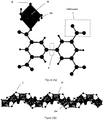
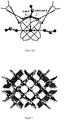
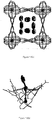
- NOTT-300 (Al)-solvate exhibits an open structure comprising chains of [AlO 4 (OH) 2 ] moieties bridged by tetracarboxylate ligands L 4- .
- Bond valence sum calculations give a valence of approximately 0.87 for this bridging oxygen atom, confirming its protonation to form a dangling ⁇ 2 -OH group.
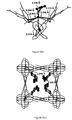
- This overall connectivity affords a porous 3D framework structure with 1D channels ( Fig. 2 ) formed by corner-sharing [AlO 4 (OH) 2 ] octahedra linked via two mutually cis - ⁇ 2 -OH groups.
- the observed cis -configuration of ⁇ 2 -OH groups is responsible for the observed chirality and rigidity of the framework in NOTT-300 (Al).
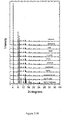
- the rigidity of the framework structure of NOTT-300 (Al) has been confirmed by in situ variable temperature (100-483 K) PXRD data (Fig.
- NOTT-300 (Al)
- PXRD Thermogravimetric analysis
- TGA confirms NOTT-300 (Al) to have high thermal stability with a decomposition temperature at 400 °C (Fig. S13).
- NOTT-300 (Al) also shows good chemical stability towards air, moisture and common organic solvents, and can be re-hydrated with retention of the framework structure (Fig. S14).
- the framework porosity and surface area of NOTT-300 (Al) is retained upon multiple hydration-dehydration cycles (Fig. S25), thereby confirming the stability of this material to water.
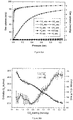
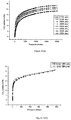
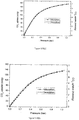
- Al-NOTT-300 exhibits highly selective uptake for CO 2 and SO 2 compared with CH 4 , CO, N 2 , H 2 , O 2 , and Ar.
- the CO 2 selectivities, calculated from the ratio of initial slopes of the isotherm are 100, 86, 180, >10 5 , 70, and 137 for CH 4 , CO, N 2 , H 2 , O 2 , and Ar, respectively.
- the SO 2 selectivities, calculated from the ratio of the initial slopes of the isotherms are 3620, 3105, 6522, >10 5 , 2518, and 4974 for CH 4 , CO, N 2 , H 2 , O 2 , and Ar, respectively.
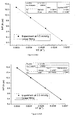
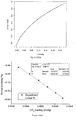
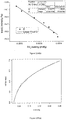
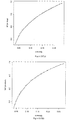
- thermodynamic parameters Q st and ⁇ S were calculated using the van't Hoff isochore on CO 2 adsorption isotherms measured at 273-303 K.
- the Q st values lie in the range 27.5-28 kJ mol -1 for CO 2 uptakes of 1-2 mmol g -1 and increase continuously thereafter to ⁇ 30 kJ mol -1 at 4.5 mmol g -1 .
- the error in Q st is estimated as 0.05-0.5 kJ mol -1 as shown by the error bars.
- ⁇ S decreases continuously with increasing surface coverage over the whole loading range.
- the error in ⁇ S is estimated as 0.2-1.6 J Kmol -1 as shown by the error bars.
- H 3 BTTri 1,3,5-tris(1 H -1,2,3-triazol-5-yl)benzene
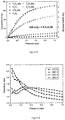
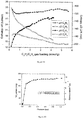
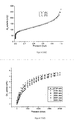
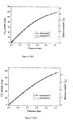
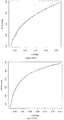
- the isotherm for SO 2 (kinetic diameter 4.11 ⁇ ) exhibits higher uptakes with a maximum capacity of 8.1 mmol g -1 at 273 K and 1.0 bar, representing the highest value observed in the current literature.
- the SO 2 uptake increases sharply at low pressure (below 50 mbar) and reaches saturation at around 0.10 bar, giving a typical type-I isotherm.
- the very rapid uptake observed at low pressure indicates the presence of stronger interactions in NOTT-300 (Al)-SO 2 compared with NOTT-300 (Al)-CO 2 .
- Inelastic neutron scattering is a powerful neutron spectroscopy technique which has been used widely to investigate the H 2 binding interactions within various storage systems by exploiting the high neutron scattering cross-section of hydrogen (82.02 barns).
- this technique cannot directly detect the CO 2 binding interaction within a carbon capture system because the scattering cross-sections for carbon (5.551 barns) and oxygen (4.232 barns) are too small to obtain a clear neutron scattering signal.
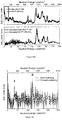
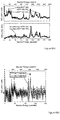
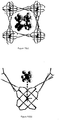
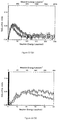
- INS and DFT were successfully combined to visualise captured CO 2 molecules within NOTT-300 (Al) by investigating the change in the dynamics of the hydrogen atoms of the local MOF structure, including those of the hydroxyl groups and benzene rings of the ligand ( Fig. 4 ).
- Calculation of the INS spectra from DFT vibrational analysis can be readily achieved, and the DFT calculations relate directly to the INS spectra, and, in the case of solid state calculations, there are no approximations other than the use of DFT eigenvectors and eigenvalues to determine the spectral intensities.
- peak I can be assigned to the O-H groups wagging perpendicular to the Al-O-Al direction, attributed to the presence of the CO 2
- peak II to the wagging of the four aromatic C-H groups on four benzene rings adjacent to each CO 2 molecule in conjunction with the wagging of the OH group along the Al-O-Al direction ( Fig. 4d and film in SI).
- a total of five hydrogen atoms H( ⁇ +) interact cooperatively with the O( ⁇ -) charge centres of CO 2 molecules in the channel via moderate-to-weak hydrogen bonds and supramolecular interactions.
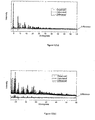
- This PXRD analysis is in excellent agreement with the INS model obtained independently from DFT modelling with regard to both hydrogen-bonding and the combination of supramolecular binding interactions.
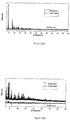
- a second CO 2 (II) site has been identified in NOTT-300 (Al) ⁇ 3.2CO 2 studied by PXRD.
- the preferred binding sites for SO 2 molecules within NOTT-300 (Al) have been determined by in situ PXRD.
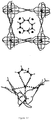
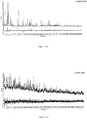
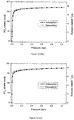
- the in situ PXRD confirms the retention of the structure of NOTT-300 (Al) upon inclusion and subsequent removal of SO 2 ( Fig. 5a ), thereby confirming the high stability of NOTT-300 (Al) in the presence of corrosive SO 2 .
- the uptake of SO 2 in NOTT-300 (Al) is entirely reversible with no apparent loss of capacity on recycling.
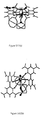
- two distinct, equally-occupied binding sites (I and II) were located within the channel ( Fig.
- OSO ⁇ HC 2.806(14), 2.841(17), 3.111(16), 3.725(18) ⁇ .
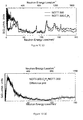
- the INS/DFT results are entirely consistent with the PXRD analysis and provide key insights into the dynamics of the NOTT-300 (Al) host upon SO 2 inclusion.
- High resolution powder diffraction data were collected on Beamline I11 at Diamond Light Source by using multi-analysing-crystal detectors (MACs) 28 and an in-situ gas cell system.
- the powder pattern was firstly indexed on a body-centred tetragonal lattice and the independent unit cell parameters were refined using TOPAS. 29
- the structure solution was initially established in space group I 4 1 22 by charge flipping using the program Superflip, 30 and further developed from subsequent difference Fourier analysis using TOPAS.
- the final structure refinement was carried out using the Rietveld method 29 with isotropic displacement parameters for all atoms.
- a total of 40 disordered water molecules per unit cell were found within the pore channel and included in the final structure refinement for NOTT-300 (Al)-solvate.
- SO 2 loading we observe neither major changes to cell parameters nor extra features in the patterns, suggesting that there is no structural phase change during the experiment.
- the occupancy of the first CO 2 site was determined to be 0.865(9) and the second CO 2 site 0.727(7), leading to a total refined CO 2 stoichiometry of 1.592(12) in excellent agreement with the experimental value of 1.6 CO 2 per Al.
- the final stage of the Rietveld refinement involved soft restraints to the C-C bond lengths within the benzene rings. Rigid body refinement was applied to the CO 2 and SO 2 molecules in the pore.
- a TEM image shows the crystals to have uniform morphology of ⁇ 1 ⁇ m plates (Fig. S7a,b), and a high resolution (HRTEM) image confirms the presence of extended crystalline planes (Fig. S7c).
- variable temperature PXRD patterns were collected at 100-483 K for NOTT-300 (Al)-solvate (Fig. S16). Comparison of the PXRD patterns confirms that there is no framework phase transition over this temperature range and the framework of NOTT-300 (Al) remains intact after removal of the water molecules in the channels.
- the lattice parameters were refined via Le Bail methods, and results are summarised in Table S3. The overall change in the unit cell volume is less than 1.0 %, confirming the rigidity of the framework.
- Unit cell parameters for NOTT-300 (Al)-solvate as a function of temperature Table S4 provides a summary of Le Bail refinement results and unit cell parameters for NOTT-300 (Al)-solvate.
- Table S4 a, b ( ⁇ ) c ( ⁇ ) V ( ⁇ 3 ) Unit cell change (%) 100 K 14.78200(30) 11.76100(35) 2569.87(13) 0.000 140 K 14.78821(29) 11.76287(33) 2572.44(12) 0.100 180 K 14.79348(30) 11.76458(34) 2574.64(13) 0.186 220 K 14.80187(30) 11.76717(34) 2578.13(13) 0.321 260 K 14.81512(30) 11.77028(35) 2583.43(13) 0.527 273 K 14.82847(31) 11.77667(37) 2589.50(13) 0.764 303 K 14.83686(30) 11.77726(36) 2592.56(13
- the NOTT-300 (Al)-solvate material was loaded into an IGA and degassed at 120 °C and 10 -10 bar for 24 h to give the fully desolvated NOTT-300 (Al) material.
- a CO 2 adsorption isotherm was then measured at 273 K and up to 1.0 bar (noted as first cycle).
- the desolvated sample was then exposed to high temperature (90-100 °C) water vapour for 1 h as a humidity treatment.
- the hydrated sample was then loaded into IGA and degassed again at 120 °C and 10 -10 bar for 24 h to give desolvated NOTT-300 (Al) material.
- a second CO 2 adsorption isotherm was then measured at 273 K and up to 1.0 bar (noted as the second cycle).
- the vibrational properties of the NOTT-300 were calculated using a combination of density functional theory (DFT) and plane-wave pseudopotential methods as implemented in the CASTEP code, 2 using ultra-soft pseudopotentials with a plane-wave energy cutoff of 380 eV. Calculations were performed under the PBE approximation 3 for exchange and correlation.
- the unit cell used has a volume of 2589.2 ⁇ 3 and contains 144 and 156 atoms for the bare and CO 2 -loaded materials, respectively.
- the wave functions were sampled according to the Monkhorst-Pack scheme with a k-points mesh of spacing ⁇ 0.05 ⁇ -1 .
- the normal modes of the solid were determined from dynamical matrices calculated using finite displacements, by numerical differentiation.
- the INS spectra was the calculated using the aClimax software. 4
- Figure S1 illustrates the potential energy surface along the first vibrational eigenvector of the hydrogen bond between CO 2 and the -OH moieties. At the centre it is clear that the potential would give an unstable configuration from a classical point of view.
- the calculated solution of the Schrödinger equation gives the energy levels at 14.2 and 81 cm -1 .
- the zero point energy is higher than the local maximum so that from a quantum point of view, the system is in a stable equilibrium.
- the MOF material loaded with four CO 2 molecules per unit cell Fig. S1
- corresponding to NOTT-300 (Al) ⁇ 1.0CO 2 8 imaginary frequency modes were found.
- the location of SO 2 molecules in NOTT-300 has been optimised by DFT modelling based on the measured INS spectra.
- the DFT calculation was performed using the same settings as in the case of CO 2 .
- a high symmetry configuration which does not take into account the disorder of SO 2 molecules in the channel, was used.
- Figure S29 provides linear fitting of Van't Hoff plots for the CO 2 adsorption isotherms at 0.5, 1.0, 1.5 and 2.0 mmol g -1 loadings.
- K H exp A 0
- Table S6 provides virial fitting results and Henry's constants K H for CO 2 , SO 2 , CH 4 , N 2 , H 2 , O 2 and Ar in NOTT-300 (Al) from isotherm data at 283 K.
- Table S7 Virial fitting results and Henry's constants K H for CO 2 , SO 2 , CH 4 , N 2 , H 2 , O 2 and Ar in NOTT-300 (Al) from isotherm data at 293 K.
- Table S7 CO 2 SO 2 CO CH 4 N 2 H 2 O 2 Ar A 0 / ln( mol g -1 Pa -1 ) - 15.52(3) 5.46(126) - 20.37(2) - 20.23(3) - 20.78(3) n.a.* - 19.98(2) - 20.69(2) K H / mol g -1 Pa -1 1.82(6) x10 -7 235(168) 1.42(2) x10 -9 1.63(4) x10 -9 9.42(22) x10 -10 2.10(5) x10 -9 1.03(2) x10 -9 Fitting R 2 0.997 0.977 >0.999 >0.999 >0.999 >0.999 >0.999 Residual error 0.000030 0.024 0.020 0.013
- Table S8 provides virial fitting results and Henry's constants K H for CO 2 , SO 2 , 5 CH 4 , N 2 , H 2 , O 2 and Ar in NOTT-300 (Al) from isotherm data at 303 K.
- Table S9 provides a summary of gas adsorption selectivity data obtained by two methods: (i) a the ratio of slopes of initial adsorption isotherm plot; (ii) b Henry's Law analysis at 273 K. Table S9 Selectivity ratio Isotherm plot slop Henry's Law analysis CO 2 /CO 86 475 CO 2 /CH 4 100 510 CO 2 /N 2 180 815 CO 2 /H 2 >10 5 >10 5 CO 2 /O 2 70 376 CO 2 /Ar 137 642 SO 2 /CO 3105 >10 5 SO 2 /CH 4 3620 >10 5 SO 2 /N 2 6522 >10 5 SO 2 /H 2 >10 5 >10 5 SO 2 /O 2 2518 >10 5 SO 2 /Ar 4974 >10 5 a This method represents the selectivity at low pressure region (50-350 mbar) and is close to the situation from the direct comparison of gas uptakes. b This method represents the extreme selectivity at zero surface coverage of a given
- Table S10 Summary of gas adsorption selectivity data obtained by two methods: (i) a the ratio of slopes of initial adsorption isotherm plot; (ii) b Henry's Law analysis at 283 K. Table S10 Selectivity ratio Isotherm plot slop Henry's Law analysis CO 2 /CO 67 333 CO 2 /CH 4 57 305 CO 2 /N 2 110 529 CO 2 /H 2 >10 5 >10 5 CO 2 /O 2 54 254 CO 2 /Ar 90 456 SO 2 /CO 3586 >10 5 SO 2 /CH 4 3061 >10 5 SO 2 /N 2 5864 >10 5 SO 2 /H 2 >10 5 >10 5 SO 2 /O 2 2880 >10 5 SO 2 /Ar 4831 >10 5 a This method represents the selectivity at low pressure region (50-350 mbar) and is close to the situation from the direct comparison of gas uptakes. b This method represents the extreme selectivity at zero surface coverage of a given material,
- Table S11 Summary of gas adsorption selectivity data obtained by two methods: (i) a the ratio of slopes of initial adsorption isotherm plot; (ii) b Henry's Law analysis at 293 K. Table S11 Selectivity ratio Isotherm plot slop Henry's Law analysis CO 2 /CO 45 128 CO 2 /CH 4 39 112 CO 2 /N 2 72 193 CO 2 /H 2 >10 5 >10 5 CO 2 /O 2 39 87 CO 2 /Ar 64 177 SO 2 /CO 2854 >10 5 SO 2 /CH 4 2464 >10 5 SO 2 /N 2 4545 >10 5 SO 2 /H 2 >10 5 >10 5 SO 2 /O 2 2490 >10 5 SO 2 /Ar 4070 >10 5 a This method represents the selectivity at low pressure region (50-350 mbar) and is close to the situation from the direct comparison of gas uptakes. b This method represents the extreme selectivity at zero surface coverage of a given material, and therefore is
- Table S12 provides a summary of gas adsorption selectivity data obtained by two methods: (i) a the ratio of slopes of initial adsorption isotherm plot; (ii) b Henry's Law analysis at 303 K. Table S12 Selectivity ratio Isotherm plot slop Henry's Law analysis CO 2 /CO 32 46 CO 2 /CH 4 31 41 CO 2 /N 2 46 73 CO 2 /H 2 >10 5 >10 5 CO 2 /O 2 30 36 CO 2 /Ar 41 54 SO 2 /CO 1586 >10 5 SO 2 /CH 4 1510 >10 5 SO 2 /N 2 2252 >10 5 SO 2 /H 2 >10 5 >10 5 SO 2 /O 2 1458 >10 5 SO 2 /Ar 2002 >10 5 a This method represents the selectivity at low pressure region (50-350 mbar) and is close to the situation from the direct comparison of gas uptakes. b This method represents the extreme selectivity at zero surface coverage of a given material, and therefore is higher than
- a hydrogen bond system is conventionally represented as a linear A-H...B arrangement of a hydrogen donor (A-H) and an acceptor (B). Relevant properties of the different strengths of hydrogen bonds are given in Table C1.
- the hydrogen bond length H ⁇ O is around 2.3 ⁇ ( Figure 4d ), and therefore it can be classed as a moderate-to-weak hydrogen bond.
- the four C-H supramolecular contacts are likely to be of lower energies. Based on this analysis, we view the observed value of Q st as entirely reasonable and consistent with the likely hydrogen bond energies.
- electrostatic Al(III)/XO 2 interactions The high CO 2 uptakes also reflect the relatively narrow pore size of the host which provides strong overlap potentials.
- Table S13 provides properties of strong, moderate and weak H-bonds. Properties Strong H-bonds Moderate H-bonds Weak H-bonds Bond energy (kJ mol -1 4-10 1-3 ⁇ 1 Bond nature mostly covalent mostly electrostatic electrostatic Bond linearity, AH ⁇ B always linear mostly linear sometimes linear Bond length A-H ( ⁇ ) 1.2 to 1.5 ca 1.0 ca 1.0 Bond length H ⁇ B ( ⁇ ) 1.2 to 1.5 1.5 to 2.2 2.2 to 3.2 Bond length A ⁇ B ( ⁇ ) 2.2 to 2.5 2.5 to 3.2 3.2 to 4.0
- Biphenyl-3,3',5,5'-tetracarboxylic acid (0.015 g, 0.045 mmol), In(NO 3 )-(H 2 O) 5 (0.014 mg, 0.045 mmol) and piperazine (7.0 mg, 0.081 mmol) were mixed and dispersed in DMF/MeCN mixture (1.3 mL, 1:0.3 v/v).
- the white slurry was acidified with dilute nitric acid (5 %, 0.3 mL) and heated to 100 °C. Upon reaching 60 °C the white slurry was observed to fully dissolve resulting in a colourless solution followed by precipitation of a white crystalline powder which was washed sequentially with DMF and dried briefly in air.
- Powder diffraction data confirm that the parent MOF NOTT-300 (In)-solv is iso-structural to NOTT-300(Al)-solv. Yield: 20 mg (75 %). Elemental analysis (% calc/found): [In 2 (C 16 H 6 O 8 ) 2 ⁇ (DMF) 0.75 ⁇ (H 2 O) 1.75 (C 33.02/33.02, H 2.20/2.53 N 1.58/1.58).
- Biphenyl-3,3',5,5'-tetracarboxylic acid (0.015 g, 0.045 mmol) and SbCl3 (0.010 mg, 0.045 mmol) were mixed and dispersed in DMF/MeCN mixture (1.3 mL, 1:0.3 v/v).
- the white slurry was acidified with dilute nitric acid (5 %, 0.3 mL) and heated to 100 °C. Upon reaching 60 °C the white slurry was observed to fully dissolve resulting in a colourless solution followed by precipitation of a white crystalline powder which was washed sequentially with DMF and dried briefly in air.
- Chromium nitrate, Cr(NO 3 ) 3 ⁇ 9H 2 O, (0.36g, 0.9mmol) was dissolved in water (10mL), biphenyl-3,3',5,5'-tetracarboxylic acid (0.06g, 0.18mmol) was then added.
- Piperazine (0.1g) was added followed by addition of 2.8 M nitric acid (2 mL).
- the reaction mixture was transferred to a 2 mL autoclave which was sealed and heated to 210 °C for 72-96 h.
- the resulting powder product was separated by filtration and washed with water.
- NOTT-300(Ga 2 ) ⁇ [Ga 2 (OH) 2 (C 16 H 6 O 8 )] ⁇ was synthesised under solvothermal conditions by reacting biphenyl-3,3',5,5'-tetracarboxylic acid (0.02 g, 0.06 mmol) and gallium nitrate, Ga(NO 3 ) 3 •xH 2 O, (0.1 g, 0.36 mmol), in a mixture of DMF, THF and water (8 mL, 2:5:1, v/v) which was then acidified with 5-15 drops of hydrochloric acid and heated at 75°C for 72 h.
- the Ga(III) ion is octahedrally coordinated via six O-donors: four from carboxylate groups and two from bridging hydroxyl groups ⁇ 2 -OH which are aligned in cis confirmation.
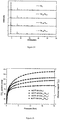
- a mixed Ga-Fe material was obtained using a similar procedure but incorporating stoichiometric mixtures of gallium nitrate Ga(NO 3 ) 3 •xH 2 O and iron nitrate Fe(NO 3 ) 3 •9H 2 O in the following ratios: [Ga 1.87 Fe 0.13 (OH) 2 (C 16 H 6 O 8 )]: (0.09g, 0.34mmol), (0.007g, 0.18mmol); [Ga 1.79 Fe 0.21 (OH) 2 (C 16 H 6 O 8 )]: (0.083g, 0.32mmol), (0.015g, 0.036mmol); [Ga 1.55 Fe 0.45 (OH) 2 (C 16 H 6 O 8 )]: (0.078g, 0.31mmol), (0.022g, 0.054mmol), respectively.
- Figure 27 illustrates a gas capture apparatus comprising a container 10 in which the MOF 40 is contained.
- the container 10 may have one or more inlets 20 in which gases may enter the container 10.
- the gases may be flue gases produced be a power station or from some other combustion or industrial processes for example in the production of iron, steel, ammonia and cement.
- the MOF 40 may be regenerated.
- the MOF 40 in container 10 may be heated using a heater 80 so as drive-off adsorbed gases and regenerate the MOF 40 for its re-use.
- desorption of gasses from the MOF 40 may proceed through the application of vacuum to the vessel containing the MOF.
- the container 10 may be in fluid connection with a vacuum pump 50 configured to draw off the gases (eg.
- An inlet valve 60 may be closed and an outlet valve 70 may be opened whilst the MOF 40 is being heated so that the captured are not released back into the flue. Or a vacuum may be applied through valve 70 to desorb the gas from MOF 40 where heating is not used. Whilst the apparatus is being used to capture gases the inlet valve 60 will be open and the outlet valve 60 may be closed.
- the MOF may also be used as part of a cartridge system in which a cartridge 90 (or other container/ mechanism to support or hold the MOF) is placed in the gas stream to be processed. The cartridge 90 may then be removed from the gas stream so as to be regenerated off-line from the gas stream.
- Figure 28(a) illustrates such a cartridge 90 placed within a gas stream.
- the cartridge 90 may cover the majority of the cross section of a conduit 100 carrying the gas stream or may be adapted to cover substantially all of the conduit cross section as illustrated in Figure 28(a) .
- the conduit 100 may form both the inlet 20 and the outlet 30 (as illustrated in Figure 28(a) ).
- Such a cartridge system may be useful for anaesthetic systems and exhausts systems from combustion.
- Figure 28(b) illustrates a cartridge at the end of a flue or exhaust pipe. In this case the side or sides of the cartridge distal from the flue may act as the outlet 30.
- TEM samples were prepared by casting several drops of a suspension of the NOTT-300 solvate complex in water onto copper-grid mounted lacy carbon film before drying under a stream of nitrogen.
- INS spectra were recorded on the TOSCA spectrometer at the ISIS Facility at the Rutherford Appleton Laboratory (UK) for energy transfers between ⁇ -2 and 500 meV. In this region TOSCA has a resolution of ⁇ 1% ⁇ E / E.
- the desolvated NOTT-300 (Al) sample was loaded into a cylindrical vanadium sample container with an annealed copper vacuum seal and connected to a gas handling system. The sample was degassed at 10 -7 mbar and 140 °C for 1 day to remove any remaining trace guest water molecules. The temperature during data collection was controlled using a helium cryostat (7 ⁇ 0.2 K).
- the loading of CO 2 was performed at room temperature in order to ensure that CO 2 was present in the gas phase when not adsorbed and also to ensure sufficient mobility of CO 2 inside the crystalline structure of NOTT-300 (Al).
- the loading of H 2 was performed at 40-50 K in order ensure that H 2 was adsorbed into NOTT-300 (Al). Subsequently, the temperature was reduced to below 10 K in order to perform the scattering measurements with the minimum achievable thermal motion for CO 2 or H 2 . Background spectra (sample can plus NOTT-300 (Al)) were subtracted to obtain the difference spectra.
- INS was used to study the binding interaction and structure dynamics in this case, because it has several unique advantages:
Landscapes
- Chemical & Material Sciences (AREA)
- Organic Chemistry (AREA)
- Engineering & Computer Science (AREA)
- Analytical Chemistry (AREA)
- Chemical Kinetics & Catalysis (AREA)
- General Chemical & Material Sciences (AREA)
- Oil, Petroleum & Natural Gas (AREA)
- Inorganic Chemistry (AREA)
- Mechanical Engineering (AREA)
- General Engineering & Computer Science (AREA)
- Solid-Sorbent Or Filter-Aiding Compositions (AREA)
Claims (16)
- Metallorganisches Gerüst, umfassend ein Metall-(III)-Ion (M) und einen organischen Liganden Biphenyl-3,3',5,5'-tetracarboxylat, wobei mehr als ein Hydroxy-Ligand um das Metall-(III)-Ion vorhanden ist, und wobei Hydroxy-Liganden in die Kanäle des Gerüsts weisen.
- Metallorganisches Gerüst nach Anspruch 1, wobei das metallorganische Gerüst ein dreidimensionales Gerüst bildet, das ein eckteilendes MO4(OH)2-Oktaeder integriert.
- Metallorganisches Gerüst nach Anspruch 1 oder 2, wobei das Metall (III)-Ion eines von Al(III), Cr(III), Sb(III), In(III), Ga(III), Co(III) und Fe(III) ist.
- Metallorganisches Gerüst nach einem der Ansprüche 1, 2 oder 3, wobei das Metall (III)-Ion wie folgt ist:i) eines von Al(III), Cr(III), In(III), Ga(III) und Fe(III); oderii) eines von Al(III), Cr(III), Ga(III), Ga(III) und Fe(III).
- Metallorganisches Gerüst nach einem der Ansprüche 1, 2 oder 3, wobei das metallorganische Gerüst ein metallorganisches Gerüst mit der Formel M2(OH)2(C16O8H6) ist, wobei M = Al, In, Sb, Ga, Cr.
- Metallorganisches Gerüst nach einem vorherigen Anspruch, wobei das Metall(III)-Ion Al(III) ist.
- Verfahren zur Herstellung eines metallorganischen Gerüsts nach einem vorherigen Anspruch, wobei das Verfahren die folgenden Schritte umfasst:a. Bereitstellen eines Metallsalzes;b. Bereitstellen eines organischen Liganden;c. Mischen des Metallsalzes und des organischen Liganden; undd. Reagieren des Metallsalzes mit dem organischem Liganden, um ein metallorganisches Gerüst zu bilden,wobei das Metallsalz ein Metall(III)-Salz ist und wobei der organische Ligand Biphenyl-3,3',5,5'-tetracarbonsäure ist.
- Verfahren nach Anspruch 7, wobei das Metall (III)-Salz wie folgt ist:i) ein Metall-(III)-Nitrat oder ein Metall-(III)-Chlorid; oderii) ein Metall-(III)-Nitrat.
- Verfahren nach Anspruch 7 oder 8, wobei das Metall des Metallsalzes ausgewählt ist aus Al(III), Cr(III), Sb(III), In(III), Ga(III), Co(III) und Fe(III).
- Verfahren nach Anspruch 7, 8 oder 9, wobei das Metall des Metallsalzes ausgewählt ist ausi) Al(III), Cr(III), In(III), Ga(III) und Fe(III); oderii) Cr(III); oderiii) Al(III).
- Verfahren nach einem der Ansprüche 7 bis 10, wobei das metallorganische Gerüst M2(OH)2(C16O8H6) ist und das Verfahren ein Reagieren von Biphenyl-3,3',5,5'-tetracarbonsäure mit einem M(III)-Salz, ausgewählt aus Al(III)-Nitrat, In(III)-Nitrat, Ga(III)-Nitrat, Cr(III)-Nitrat, Fe(III)-Nitrat, Co(III)-Nitrat und Sb(III)Cl3 umfasst.
- Verfahren nach Anspruch 7, wobei das metallorganische Gerüst (Ga2-xFex)(OH)2(C16O8H8) ist, x > 0, und das Verfahren ein Reagieren eines stöchiometrischen Gemischs aus Galliumnitrat, Eisennitrat, Salzsäure und Biphenyl-3,3',5,5'-tetracarbonsäure unter solvothermischen Bedingungen umfasst.
- Verfahren nach einem der Ansprüche 7 bis 12, wobei die Reaktion von Schritt d in Wasser durchgeführt wird.
- Verwendung eines metallorganischen Gerüsts nach einem der Ansprüche 1 bis 6, um eines oder mehrere von CO2 und SO2 durch die Bildung einer schwachen elektrostatischen Wechselwirkung zwischen dem CO2 - und/oder SO2-Molekül und dem metallorganischen Gerüst anzulagern.
- Verwendung eines metallorganischen Gerüsts nach einem der Ansprüche 1 bis 6, um NO2 durch die Bildung einer schwachen elektrostatischen Wechselwirkung zwischen dem NO2-Molekül und dem metallorganischen Gerüst anzulagern.
- Verwendung eines metallorganischen Gerüsts nach einem der Ansprüche 1 bis 6, um ein Molekül C2Hn (n = 2, 4, 6) durch die Bildung einer schwachen elektrostatischen Wechselwirkung zwischen dem Molekül C2Hnund dem metallorganischen Gerüst anzulagern.
Applications Claiming Priority (2)
| Application Number | Priority Date | Filing Date | Title |
|---|---|---|---|
| GBGB1205365.8A GB201205365D0 (en) | 2012-03-27 | 2012-03-27 | Frameworks |
| PCT/GB2013/050811 WO2013144628A1 (en) | 2012-03-27 | 2013-03-27 | Metal -organic frameworks (mof) for gas capture |
Publications (2)
| Publication Number | Publication Date |
|---|---|
| EP2846896A1 EP2846896A1 (de) | 2015-03-18 |
| EP2846896B1 true EP2846896B1 (de) | 2019-04-24 |
Family
ID=46087192
Family Applications (1)
| Application Number | Title | Priority Date | Filing Date |
|---|---|---|---|
| EP13721988.7A Active EP2846896B1 (de) | 2012-03-27 | 2013-03-27 | Metallorganische gerüstmaterialien (mof) zur gaserfassung |
Country Status (4)
| Country | Link |
|---|---|
| US (1) | US9593132B2 (de) |
| EP (1) | EP2846896B1 (de) |
| GB (1) | GB201205365D0 (de) |
| WO (1) | WO2013144628A1 (de) |
Cited By (1)
| Publication number | Priority date | Publication date | Assignee | Title |
|---|---|---|---|---|
| CN113292736A (zh) * | 2021-06-10 | 2021-08-24 | 北京工业大学 | 一种三维In的金属-有机框架材料、制备方法及其应用 |
Families Citing this family (44)
| Publication number | Priority date | Publication date | Assignee | Title |
|---|---|---|---|---|
| US10722863B2 (en) | 2011-10-18 | 2020-07-28 | The Regents Of The University Of California | Cooperative chemical adsorption of acid gases in functionalized metal-organic frameworks |
| WO2015164543A1 (en) * | 2014-04-22 | 2015-10-29 | The Regents Of The University Of California | Cooperative chemical adsorption of acid gases in functionalized metal-organic frameworks |
| EP2768608A4 (de) | 2011-10-18 | 2015-06-03 | Univ California | Alkylaminfunktionalisierte metallorganische gerüstmaterialien für verbundgastrennungen |
| US11439944B2 (en) | 2012-08-10 | 2022-09-13 | University Of South Florida | Metal-organic materials for CO2 adsorption |
| GB201414113D0 (en) * | 2013-11-26 | 2014-09-24 | Texas A & M Univ Sys | Process for preparing metal organic framework materials |
| US9511348B2 (en) | 2014-01-07 | 2016-12-06 | University Of South Florida | Functionalized porous organic polymers for olefin/paraffin separations |
| EP3107638B1 (de) * | 2014-02-18 | 2023-07-05 | University Of South Florida | Metallorganischen materialien für c02-adsorption |
| WO2015171791A1 (en) | 2014-05-06 | 2015-11-12 | Massachusetts Institute Of Technology | Compositions and methods comprising conductive metal organic frameworks and uses thereof |
| EP3777997A1 (de) * | 2014-09-02 | 2021-02-17 | King Abdullah University Of Science And Technology | Verfahren und vorrichtung zur entfernung von spuren und niedrigen konzentrationen von co2 unter verwendung metallorganischer gerüstmaterialien |
| CN104258814B (zh) * | 2014-09-09 | 2016-06-29 | 西北大学 | 一种具有co2选择性吸附分离的金属有机骨架材料及其制备方法 |
| CN104650125B (zh) * | 2015-03-13 | 2017-10-13 | 辽宁大学 | 一种基于InIII的金属有机阴离子骨架及其应用 |
| BR112018004265A2 (pt) | 2015-09-14 | 2018-10-09 | Massachusetts Inst Technology | composições e métodos para oligomerização seletiva de olefinas compreendendo estruturas metal-orgânicas |
| US10442875B2 (en) | 2015-09-14 | 2019-10-15 | Massachusetts Institute Of Technology | Compositions and methods for olefin polymerization comprising metal organic frameworks |
| CN105536574B (zh) * | 2015-12-15 | 2019-12-03 | 中能科泰(北京)科技有限公司 | 过滤膜及其制备方法和用途 |
| US10413858B2 (en) * | 2015-12-28 | 2019-09-17 | Arizona Board Of Regents On Behalf Of Arizona State University | Metal-organic framework-based sorbents and methods of synthesis thereof |
| CN109414688A (zh) | 2016-05-27 | 2019-03-01 | 麻省理工学院 | 用于化合物吸收的包含金属有机骨架的组合物和相关方法 |
| CN106064087B (zh) * | 2016-06-08 | 2018-08-17 | 南京工业大学 | 一种制备VOCs催化燃烧催化剂的方法 |
| JP6972102B2 (ja) | 2016-08-10 | 2021-11-24 | リサーチ トライアングル インスティテュート | メソポーラス材料内における金属−有機構造体の固相結晶化方法及びそのハイブリッド材料 |
| US10266272B2 (en) | 2016-08-16 | 2019-04-23 | Hamilton Sundstrand Corporation | Catalytic ozone removal |
| US11179708B2 (en) | 2016-10-04 | 2021-11-23 | Massachusetts Institute Of Technology | Compositions and methods for selective carbonylation of heterocyclic compounds |
| WO2019010517A1 (en) * | 2017-07-13 | 2019-01-17 | The University Of Melbourne | METHODS FOR CAPTURING AND STORING ANESTHETICS WITH ORGANOMETALLIC STRUCTURES |
| KR102148513B1 (ko) | 2017-09-28 | 2020-08-26 | 주식회사 엘지화학 | 탄소-황 복합체, 그의 제조방법 및 이를 포함하는 리튬 이차전지 |
| US11857910B2 (en) * | 2018-06-11 | 2024-01-02 | King Abdullah University Of Science And Technology | Metal-organic frameworks for sorption and sensing applications |
| WO2019241281A1 (en) * | 2018-06-11 | 2019-12-19 | Ohio State Innovation Foundation | Metal-organic frameworks containing metal-hydroxide moieties and methods of making and using thereof |
| CN111151145B (zh) * | 2018-11-08 | 2022-04-05 | 中国石油化工股份有限公司 | 超疏水分离膜及其制备方法和应用 |
| US20200171482A1 (en) | 2018-11-30 | 2020-06-04 | International Business Machines Corporation | Moisture and volatile organic compound content measuring |
| CN111375274B (zh) * | 2018-12-31 | 2022-10-11 | 中国石油化工股份有限公司 | 一种含so2气体的处理方法及装置 |
| CN110038517B (zh) * | 2019-03-21 | 2022-03-15 | 中山大学 | 一种室温室内甲醛净化的UiO-66基金属有机骨架材料及其应用 |
| WO2020214814A1 (en) * | 2019-04-18 | 2020-10-22 | Massachusetts Institute Of Technology | Compositions and methods for carbon dioxide sensing |
| CN110180501B (zh) * | 2019-05-09 | 2022-02-18 | 南京理工大学 | 直径可调的磁基金属-有机纳米核壳材料及其制备方法 |
| CN112029104B (zh) * | 2019-06-03 | 2021-05-25 | 中国科学院大连化学物理研究所 | 一种蒸气辅助外延生长法制备金属有机骨架膜及其应用 |
| CN110253970B (zh) * | 2019-06-27 | 2021-01-19 | 福建船政交通职业学院 | 铁铟环状复合微晶磁盘 |
| CN110253980B (zh) * | 2019-06-27 | 2021-04-06 | 福建船政交通职业学院 | 铁铟环状复合微晶磁盘制造方法 |
| CN111318126A (zh) * | 2020-02-19 | 2020-06-23 | 浙江大学衢州研究院 | 一种脱除含硫酸性气体的方法 |
| JP7633229B2 (ja) * | 2020-02-27 | 2025-02-19 | 学校法人立教学院 | ターフェニル骨格を有するカルボン酸イオンを配位子とする金属有機構造体 |
| CN111499879A (zh) | 2020-04-24 | 2020-08-07 | 苏州大学 | 电离辐射源在制备多孔结晶材料中的应用 |
| US11493180B2 (en) | 2020-07-08 | 2022-11-08 | Abdullah Alrasheed | Cleansing lamp utilizing metal-organic framework |
| CN114130177B (zh) * | 2020-09-03 | 2022-11-15 | 中国科学院大连化学物理研究所 | 一种利用水合物生成分解的四氢呋喃气体捕集方法 |
| CN112225904B (zh) * | 2020-11-09 | 2022-06-10 | 西安工程大学 | 基于v-型羧酸配体金属有机框架材料及制备方法和应用 |
| CN112812320A (zh) * | 2021-03-08 | 2021-05-18 | 沈阳大学 | 氮取代金属有机骨架材料的制备及其高压甲烷储存应用 |
| CN113354828A (zh) * | 2021-05-08 | 2021-09-07 | 沈阳大学 | 新型稳定型金属有机骨架材料的制备及应用 |
| WO2023044364A1 (en) | 2021-09-15 | 2023-03-23 | Enko Chem, Inc. | Protoporphyrinogen oxidase inhibitors |
| CN116693877B (zh) * | 2023-07-04 | 2025-09-23 | 南开大学 | 一种三维铟有机框架化合物及合成方法和荧光识别槐果碱的应用 |
| CN117736724B (zh) * | 2023-12-04 | 2025-11-14 | 浙江大学 | 同时检测羟基自由基和铁离子的双功能荧光探针及方法 |
Family Cites Families (7)
| Publication number | Priority date | Publication date | Assignee | Title |
|---|---|---|---|---|
| US7799120B2 (en) | 2005-09-26 | 2010-09-21 | The Regents Of The University Of Michigan | Metal-organic frameworks with exceptionally high capacity for storage of carbon dioxide at room-temperature |
| US7556673B2 (en) | 2006-11-24 | 2009-07-07 | Basf Aktiengesellschaft | Method for the separation of carbon dioxide using a porous metal-organic framework material |
| WO2008129051A2 (de) | 2007-04-24 | 2008-10-30 | Basf Se | Metallorganische gerüstmaterialien mit hexagonal-trigonaler struktur basierend auf aluminium, eisen oder chrom, sowie einer dicarbonsäure |
| FR2927911A1 (fr) * | 2008-02-27 | 2009-08-28 | Inst Francais Du Petrole | Nouveau materiau hybride organique-inorganique im-19 et son procede de preparation. |
| EP2437867A4 (de) | 2009-06-19 | 2012-12-05 | Univ California | Kohlendioxiderfassung und -lagerung mithilfe offener rahmenwerke |
| FR2951725B1 (fr) * | 2009-10-23 | 2011-10-28 | Inst Francais Du Petrole | Nouveau solide hybride organique-inorganique mil-53-ai-n3 pourvu d'une fonction azoture et son procede de preparation |
| GB201017095D0 (en) * | 2010-10-11 | 2010-11-24 | Univ St Andrews | Novel large pore MOFs |
-
2012
- 2012-03-27 GB GBGB1205365.8A patent/GB201205365D0/en not_active Ceased
-
2013
- 2013-03-27 WO PCT/GB2013/050811 patent/WO2013144628A1/en not_active Ceased
- 2013-03-27 EP EP13721988.7A patent/EP2846896B1/de active Active
- 2013-03-27 US US14/388,466 patent/US9593132B2/en active Active
Non-Patent Citations (2)
| Title |
|---|
| FINSY V ET AL: "Separation of CO"2/CH"4 mixtures with the MIL-53(Al) metal-organic framework", MICROPOROUS AND MESOPOROUS MATERIALS, ELSEVIER, AMSTERDAM, NL, vol. 120, no. 3, 15 April 2009 (2009-04-15), pages 221 - 227, XP025995549, ISSN: 1387-1811, [retrieved on 20090227], DOI: 10.1016/J.MICROMESO.2008.11.007 * |
| MATTHIAS MENDT ET AL: "Structural Phase Transitions and Thermal Hysteresis in the Metal Organic Framework Compound MIL-53 As Studied by Electron Spin Resonance Spectroscopy", J. PHYS. CHEM. C,, vol. 114, no. 45, 18 November 2010 (2010-11-18), pages 19443 - 19451, XP002698449, DOI: 10.1021/JP107487G * |
Cited By (1)
| Publication number | Priority date | Publication date | Assignee | Title |
|---|---|---|---|---|
| CN113292736A (zh) * | 2021-06-10 | 2021-08-24 | 北京工业大学 | 一种三维In的金属-有机框架材料、制备方法及其应用 |
Also Published As
| Publication number | Publication date |
|---|---|
| US9593132B2 (en) | 2017-03-14 |
| WO2013144628A1 (en) | 2013-10-03 |
| GB201205365D0 (en) | 2012-05-09 |
| US20150047505A1 (en) | 2015-02-19 |
| EP2846896A1 (de) | 2015-03-18 |
Similar Documents
| Publication | Publication Date | Title |
|---|---|---|
| US9593132B2 (en) | Metal-organic frameworks (MOF) for gas capture | |
| Forster et al. | Hydrogen adsorption in nanoporous nickel (II) phosphates | |
| US10821417B2 (en) | Zeolitic imidazolate frameworks | |
| Yang et al. | Selectivity and direct visualization of carbon dioxide and sulfur dioxide in a decorated porous host | |
| Sumida et al. | Carbon dioxide capture in metal–organic frameworks | |
| US8227375B2 (en) | Gas adsorption on metal-organic frameworks | |
| US11058985B2 (en) | Methods for gas separation | |
| US9138719B1 (en) | Metal-organic materials (MOMs) for CO2 adsorption and methods of using MOMs | |
| US11318409B2 (en) | Ultramicro to mesopore frameworks for selective separation and storage of noble gases | |
| US9127025B2 (en) | Zn5(BTA)6(TDA)2—a robust highly interpenetrated metal-organic framework constructed from pentanuclear clusters for selective sorption of gas molecules | |
| US9604195B2 (en) | Metal-organic materials (MOMs) for CO2 adsorption and methods of using MOMs | |
| Lee et al. | Highly efficient bromine capture and storage using N-containing porous organic cages | |
| US9504986B2 (en) | Metal-organic materials (MOMS) for polarizable gas adsorption and methods of using MOMS | |
| WO2014074679A1 (en) | Metal-organic materials (moms) for polarizable gas adsorption and methods of using moms | |
| Pandey et al. | Revisiting Competitive Adsorption of Small Molecules in the Metal–Organic Framework Ni-MOF-74 | |
| EP4471319A2 (de) | Multifunktionale koordinationsrahmenmaterialien | |
| US20170113204A1 (en) | Metal-organic materials for c02 adsorption | |
| US20230294033A1 (en) | Ultramicro to mesopore frameworks for selective separation and storage of noble gases | |
| EP3107638B1 (de) | Metallorganischen materialien für c02-adsorption | |
| Xue et al. | Efficient C2H2/CO2 separation in anion-functionalized metal–organic framework with high C2H2 packing density | |
| US11439944B2 (en) | Metal-organic materials for CO2 adsorption | |
| Applegate | Structure-function relationships and design principles of metal-organic nanotubular materials | |
| Assen | Mixed-metal approach towards assembling highly stable metal organic framework based adsorbent for simultaneous capture of CO2 and H2S | |
| Robles | Cyclobenzoins for Energy Industries | |
| Asgari | Characterization of metal organic frameworks of interest for gas adsorption/separation applications |
Legal Events
| Date | Code | Title | Description |
|---|---|---|---|
| PUAI | Public reference made under article 153(3) epc to a published international application that has entered the european phase |
Free format text: ORIGINAL CODE: 0009012 |
|
| 17P | Request for examination filed |
Effective date: 20141025 |
|
| AK | Designated contracting states |
Kind code of ref document: A1 Designated state(s): AL AT BE BG CH CY CZ DE DK EE ES FI FR GB GR HR HU IE IS IT LI LT LU LV MC MK MT NL NO PL PT RO RS SE SI SK SM TR |
|
| AX | Request for extension of the european patent |
Extension state: BA ME |
|
| DAX | Request for extension of the european patent (deleted) | ||
| STAA | Information on the status of an ep patent application or granted ep patent |
Free format text: STATUS: EXAMINATION IS IN PROGRESS |
|
| 17Q | First examination report despatched |
Effective date: 20161208 |
|
| GRAP | Despatch of communication of intention to grant a patent |
Free format text: ORIGINAL CODE: EPIDOSNIGR1 |
|
| STAA | Information on the status of an ep patent application or granted ep patent |
Free format text: STATUS: GRANT OF PATENT IS INTENDED |
|
| INTG | Intention to grant announced |
Effective date: 20180627 |
|
| RAP1 | Party data changed (applicant data changed or rights of an application transferred) |
Owner name: THE UNIVERSITY OF NOTTINGHAM |
|
| GRAS | Grant fee paid |
Free format text: ORIGINAL CODE: EPIDOSNIGR3 |
|
| RAP1 | Party data changed (applicant data changed or rights of an application transferred) |
Owner name: THE UNIVERSITY OF MANCHESTER |
|
| GRAA | (expected) grant |
Free format text: ORIGINAL CODE: 0009210 |
|
| STAA | Information on the status of an ep patent application or granted ep patent |
Free format text: STATUS: THE PATENT HAS BEEN GRANTED |
|
| AK | Designated contracting states |
Kind code of ref document: B1 Designated state(s): AL AT BE BG CH CY CZ DE DK EE ES FI FR GB GR HR HU IE IS IT LI LT LU LV MC MK MT NL NO PL PT RO RS SE SI SK SM TR |
|
| REG | Reference to a national code |
Ref country code: GB Ref legal event code: FG4D |
|
| REG | Reference to a national code |
Ref country code: CH Ref legal event code: EP |
|
| REG | Reference to a national code |
Ref country code: AT Ref legal event code: REF Ref document number: 1123448 Country of ref document: AT Kind code of ref document: T Effective date: 20190515 Ref country code: IE Ref legal event code: FG4D |
|
| REG | Reference to a national code |
Ref country code: DE Ref legal event code: R096 Ref document number: 602013054286 Country of ref document: DE |
|
| REG | Reference to a national code |
Ref country code: NL Ref legal event code: MP Effective date: 20190424 |
|
| REG | Reference to a national code |
Ref country code: LT Ref legal event code: MG4D |
|
| PG25 | Lapsed in a contracting state [announced via postgrant information from national office to epo] |
Ref country code: NL Free format text: LAPSE BECAUSE OF FAILURE TO SUBMIT A TRANSLATION OF THE DESCRIPTION OR TO PAY THE FEE WITHIN THE PRESCRIBED TIME-LIMIT Effective date: 20190424 |
|
| PG25 | Lapsed in a contracting state [announced via postgrant information from national office to epo] |
Ref country code: SE Free format text: LAPSE BECAUSE OF FAILURE TO SUBMIT A TRANSLATION OF THE DESCRIPTION OR TO PAY THE FEE WITHIN THE PRESCRIBED TIME-LIMIT Effective date: 20190424 Ref country code: NO Free format text: LAPSE BECAUSE OF FAILURE TO SUBMIT A TRANSLATION OF THE DESCRIPTION OR TO PAY THE FEE WITHIN THE PRESCRIBED TIME-LIMIT Effective date: 20190724 Ref country code: PT Free format text: LAPSE BECAUSE OF FAILURE TO SUBMIT A TRANSLATION OF THE DESCRIPTION OR TO PAY THE FEE WITHIN THE PRESCRIBED TIME-LIMIT Effective date: 20190824 Ref country code: AL Free format text: LAPSE BECAUSE OF FAILURE TO SUBMIT A TRANSLATION OF THE DESCRIPTION OR TO PAY THE FEE WITHIN THE PRESCRIBED TIME-LIMIT Effective date: 20190424 Ref country code: FI Free format text: LAPSE BECAUSE OF FAILURE TO SUBMIT A TRANSLATION OF THE DESCRIPTION OR TO PAY THE FEE WITHIN THE PRESCRIBED TIME-LIMIT Effective date: 20190424 Ref country code: LT Free format text: LAPSE BECAUSE OF FAILURE TO SUBMIT A TRANSLATION OF THE DESCRIPTION OR TO PAY THE FEE WITHIN THE PRESCRIBED TIME-LIMIT Effective date: 20190424 Ref country code: HR Free format text: LAPSE BECAUSE OF FAILURE TO SUBMIT A TRANSLATION OF THE DESCRIPTION OR TO PAY THE FEE WITHIN THE PRESCRIBED TIME-LIMIT Effective date: 20190424 Ref country code: ES Free format text: LAPSE BECAUSE OF FAILURE TO SUBMIT A TRANSLATION OF THE DESCRIPTION OR TO PAY THE FEE WITHIN THE PRESCRIBED TIME-LIMIT Effective date: 20190424 |
|
| PG25 | Lapsed in a contracting state [announced via postgrant information from national office to epo] |
Ref country code: LV Free format text: LAPSE BECAUSE OF FAILURE TO SUBMIT A TRANSLATION OF THE DESCRIPTION OR TO PAY THE FEE WITHIN THE PRESCRIBED TIME-LIMIT Effective date: 20190424 Ref country code: RS Free format text: LAPSE BECAUSE OF FAILURE TO SUBMIT A TRANSLATION OF THE DESCRIPTION OR TO PAY THE FEE WITHIN THE PRESCRIBED TIME-LIMIT Effective date: 20190424 Ref country code: BG Free format text: LAPSE BECAUSE OF FAILURE TO SUBMIT A TRANSLATION OF THE DESCRIPTION OR TO PAY THE FEE WITHIN THE PRESCRIBED TIME-LIMIT Effective date: 20190724 Ref country code: PL Free format text: LAPSE BECAUSE OF FAILURE TO SUBMIT A TRANSLATION OF THE DESCRIPTION OR TO PAY THE FEE WITHIN THE PRESCRIBED TIME-LIMIT Effective date: 20190424 Ref country code: GR Free format text: LAPSE BECAUSE OF FAILURE TO SUBMIT A TRANSLATION OF THE DESCRIPTION OR TO PAY THE FEE WITHIN THE PRESCRIBED TIME-LIMIT Effective date: 20190725 |
|
| REG | Reference to a national code |
Ref country code: AT Ref legal event code: MK05 Ref document number: 1123448 Country of ref document: AT Kind code of ref document: T Effective date: 20190424 |
|
| PG25 | Lapsed in a contracting state [announced via postgrant information from national office to epo] |
Ref country code: IS Free format text: LAPSE BECAUSE OF FAILURE TO SUBMIT A TRANSLATION OF THE DESCRIPTION OR TO PAY THE FEE WITHIN THE PRESCRIBED TIME-LIMIT Effective date: 20190824 |
|
| REG | Reference to a national code |
Ref country code: DE Ref legal event code: R097 Ref document number: 602013054286 Country of ref document: DE |
|
| PG25 | Lapsed in a contracting state [announced via postgrant information from national office to epo] |
Ref country code: AT Free format text: LAPSE BECAUSE OF FAILURE TO SUBMIT A TRANSLATION OF THE DESCRIPTION OR TO PAY THE FEE WITHIN THE PRESCRIBED TIME-LIMIT Effective date: 20190424 Ref country code: DK Free format text: LAPSE BECAUSE OF FAILURE TO SUBMIT A TRANSLATION OF THE DESCRIPTION OR TO PAY THE FEE WITHIN THE PRESCRIBED TIME-LIMIT Effective date: 20190424 Ref country code: EE Free format text: LAPSE BECAUSE OF FAILURE TO SUBMIT A TRANSLATION OF THE DESCRIPTION OR TO PAY THE FEE WITHIN THE PRESCRIBED TIME-LIMIT Effective date: 20190424 Ref country code: SK Free format text: LAPSE BECAUSE OF FAILURE TO SUBMIT A TRANSLATION OF THE DESCRIPTION OR TO PAY THE FEE WITHIN THE PRESCRIBED TIME-LIMIT Effective date: 20190424 Ref country code: RO Free format text: LAPSE BECAUSE OF FAILURE TO SUBMIT A TRANSLATION OF THE DESCRIPTION OR TO PAY THE FEE WITHIN THE PRESCRIBED TIME-LIMIT Effective date: 20190424 Ref country code: CZ Free format text: LAPSE BECAUSE OF FAILURE TO SUBMIT A TRANSLATION OF THE DESCRIPTION OR TO PAY THE FEE WITHIN THE PRESCRIBED TIME-LIMIT Effective date: 20190424 |
|
| PG25 | Lapsed in a contracting state [announced via postgrant information from national office to epo] |
Ref country code: IT Free format text: LAPSE BECAUSE OF FAILURE TO SUBMIT A TRANSLATION OF THE DESCRIPTION OR TO PAY THE FEE WITHIN THE PRESCRIBED TIME-LIMIT Effective date: 20190424 Ref country code: SM Free format text: LAPSE BECAUSE OF FAILURE TO SUBMIT A TRANSLATION OF THE DESCRIPTION OR TO PAY THE FEE WITHIN THE PRESCRIBED TIME-LIMIT Effective date: 20190424 |
|
| PLBE | No opposition filed within time limit |
Free format text: ORIGINAL CODE: 0009261 |
|
| STAA | Information on the status of an ep patent application or granted ep patent |
Free format text: STATUS: NO OPPOSITION FILED WITHIN TIME LIMIT |
|
| PG25 | Lapsed in a contracting state [announced via postgrant information from national office to epo] |
Ref country code: TR Free format text: LAPSE BECAUSE OF FAILURE TO SUBMIT A TRANSLATION OF THE DESCRIPTION OR TO PAY THE FEE WITHIN THE PRESCRIBED TIME-LIMIT Effective date: 20190424 |
|
| 26N | No opposition filed |
Effective date: 20200127 |
|
| PG25 | Lapsed in a contracting state [announced via postgrant information from national office to epo] |
Ref country code: SI Free format text: LAPSE BECAUSE OF FAILURE TO SUBMIT A TRANSLATION OF THE DESCRIPTION OR TO PAY THE FEE WITHIN THE PRESCRIBED TIME-LIMIT Effective date: 20190424 |
|
| PG25 | Lapsed in a contracting state [announced via postgrant information from national office to epo] |
Ref country code: MC Free format text: LAPSE BECAUSE OF FAILURE TO SUBMIT A TRANSLATION OF THE DESCRIPTION OR TO PAY THE FEE WITHIN THE PRESCRIBED TIME-LIMIT Effective date: 20190424 |
|
| REG | Reference to a national code |
Ref country code: CH Ref legal event code: PL |
|
| REG | Reference to a national code |
Ref country code: BE Ref legal event code: MM Effective date: 20200331 |
|
| PG25 | Lapsed in a contracting state [announced via postgrant information from national office to epo] |
Ref country code: LU Free format text: LAPSE BECAUSE OF NON-PAYMENT OF DUE FEES Effective date: 20200327 |
|
| PG25 | Lapsed in a contracting state [announced via postgrant information from national office to epo] |
Ref country code: CH Free format text: LAPSE BECAUSE OF NON-PAYMENT OF DUE FEES Effective date: 20200331 Ref country code: IE Free format text: LAPSE BECAUSE OF NON-PAYMENT OF DUE FEES Effective date: 20200327 Ref country code: LI Free format text: LAPSE BECAUSE OF NON-PAYMENT OF DUE FEES Effective date: 20200331 |
|
| PG25 | Lapsed in a contracting state [announced via postgrant information from national office to epo] |
Ref country code: BE Free format text: LAPSE BECAUSE OF NON-PAYMENT OF DUE FEES Effective date: 20200331 |
|
| PG25 | Lapsed in a contracting state [announced via postgrant information from national office to epo] |
Ref country code: MT Free format text: LAPSE BECAUSE OF FAILURE TO SUBMIT A TRANSLATION OF THE DESCRIPTION OR TO PAY THE FEE WITHIN THE PRESCRIBED TIME-LIMIT Effective date: 20190424 Ref country code: CY Free format text: LAPSE BECAUSE OF FAILURE TO SUBMIT A TRANSLATION OF THE DESCRIPTION OR TO PAY THE FEE WITHIN THE PRESCRIBED TIME-LIMIT Effective date: 20190424 |
|
| PG25 | Lapsed in a contracting state [announced via postgrant information from national office to epo] |
Ref country code: MK Free format text: LAPSE BECAUSE OF FAILURE TO SUBMIT A TRANSLATION OF THE DESCRIPTION OR TO PAY THE FEE WITHIN THE PRESCRIBED TIME-LIMIT Effective date: 20190424 |
|
| P01 | Opt-out of the competence of the unified patent court (upc) registered |
Effective date: 20230518 |
|
| PGFP | Annual fee paid to national office [announced via postgrant information from national office to epo] |
Ref country code: DE Payment date: 20250319 Year of fee payment: 13 |
|
| PGFP | Annual fee paid to national office [announced via postgrant information from national office to epo] |
Ref country code: FR Payment date: 20250324 Year of fee payment: 13 |
|
| PGFP | Annual fee paid to national office [announced via postgrant information from national office to epo] |
Ref country code: GB Payment date: 20250317 Year of fee payment: 13 |