EP2824752A1 - Elektrolyt für li-speicherbatterie sowie li-speicherbatterie - Google Patents
Elektrolyt für li-speicherbatterie sowie li-speicherbatterie Download PDFInfo
- Publication number
- EP2824752A1 EP2824752A1 EP13757332.5A EP13757332A EP2824752A1 EP 2824752 A1 EP2824752 A1 EP 2824752A1 EP 13757332 A EP13757332 A EP 13757332A EP 2824752 A1 EP2824752 A1 EP 2824752A1
- Authority
- EP
- European Patent Office
- Prior art keywords
- electrolyte
- carbonate
- storage battery
- diphenylethane
- battery according
- Prior art date
- Legal status (The legal status is an assumption and is not a legal conclusion. Google has not performed a legal analysis and makes no representation as to the accuracy of the status listed.)
- Withdrawn
Links
Images
Classifications
-
- H—ELECTRICITY
- H01—ELECTRIC ELEMENTS
- H01M—PROCESSES OR MEANS, e.g. BATTERIES, FOR THE DIRECT CONVERSION OF CHEMICAL ENERGY INTO ELECTRICAL ENERGY
- H01M10/00—Secondary cells; Manufacture thereof
- H01M10/05—Accumulators with non-aqueous electrolyte
- H01M10/052—Li-accumulators
- H01M10/0525—Rocking-chair batteries, i.e. batteries with lithium insertion or intercalation in both electrodes; Lithium-ion batteries
-
- H—ELECTRICITY
- H01—ELECTRIC ELEMENTS
- H01M—PROCESSES OR MEANS, e.g. BATTERIES, FOR THE DIRECT CONVERSION OF CHEMICAL ENERGY INTO ELECTRICAL ENERGY
- H01M10/00—Secondary cells; Manufacture thereof
- H01M10/05—Accumulators with non-aqueous electrolyte
- H01M10/056—Accumulators with non-aqueous electrolyte characterised by the materials used as electrolytes, e.g. mixed inorganic/organic electrolytes
- H01M10/0564—Accumulators with non-aqueous electrolyte characterised by the materials used as electrolytes, e.g. mixed inorganic/organic electrolytes the electrolyte being constituted of organic materials only
- H01M10/0566—Liquid materials
- H01M10/0567—Liquid materials characterised by the additives
-
- H—ELECTRICITY
- H01—ELECTRIC ELEMENTS
- H01M—PROCESSES OR MEANS, e.g. BATTERIES, FOR THE DIRECT CONVERSION OF CHEMICAL ENERGY INTO ELECTRICAL ENERGY
- H01M10/00—Secondary cells; Manufacture thereof
- H01M10/42—Methods or arrangements for servicing or maintenance of secondary cells or secondary half-cells
- H01M10/4235—Safety or regulating additives or arrangements in electrodes, separators or electrolyte
-
- H—ELECTRICITY
- H01—ELECTRIC ELEMENTS
- H01M—PROCESSES OR MEANS, e.g. BATTERIES, FOR THE DIRECT CONVERSION OF CHEMICAL ENERGY INTO ELECTRICAL ENERGY
- H01M4/00—Electrodes
- H01M4/02—Electrodes composed of, or comprising, active material
- H01M4/13—Electrodes for accumulators with non-aqueous electrolyte, e.g. for lithium-accumulators; Processes of manufacture thereof
- H01M4/131—Electrodes based on mixed oxides or hydroxides, or on mixtures of oxides or hydroxides, e.g. LiCoOx
-
- H—ELECTRICITY
- H01—ELECTRIC ELEMENTS
- H01M—PROCESSES OR MEANS, e.g. BATTERIES, FOR THE DIRECT CONVERSION OF CHEMICAL ENERGY INTO ELECTRICAL ENERGY
- H01M4/00—Electrodes
- H01M4/02—Electrodes composed of, or comprising, active material
- H01M4/13—Electrodes for accumulators with non-aqueous electrolyte, e.g. for lithium-accumulators; Processes of manufacture thereof
- H01M4/133—Electrodes based on carbonaceous material, e.g. graphite-intercalation compounds or CFx
-
- H—ELECTRICITY
- H01—ELECTRIC ELEMENTS
- H01M—PROCESSES OR MEANS, e.g. BATTERIES, FOR THE DIRECT CONVERSION OF CHEMICAL ENERGY INTO ELECTRICAL ENERGY
- H01M50/00—Constructional details or processes of manufacture of the non-active parts of electrochemical cells other than fuel cells, e.g. hybrid cells
- H01M50/40—Separators; Membranes; Diaphragms; Spacing elements inside cells
- H01M50/409—Separators, membranes or diaphragms characterised by the material
- H01M50/411—Organic material
- H01M50/414—Synthetic resins, e.g. thermoplastics or thermosetting resins
- H01M50/417—Polyolefins
-
- H—ELECTRICITY
- H01—ELECTRIC ELEMENTS
- H01M—PROCESSES OR MEANS, e.g. BATTERIES, FOR THE DIRECT CONVERSION OF CHEMICAL ENERGY INTO ELECTRICAL ENERGY
- H01M10/00—Secondary cells; Manufacture thereof
- H01M10/05—Accumulators with non-aqueous electrolyte
- H01M10/056—Accumulators with non-aqueous electrolyte characterised by the materials used as electrolytes, e.g. mixed inorganic/organic electrolytes
- H01M10/0564—Accumulators with non-aqueous electrolyte characterised by the materials used as electrolytes, e.g. mixed inorganic/organic electrolytes the electrolyte being constituted of organic materials only
- H01M10/0566—Liquid materials
- H01M10/0569—Liquid materials characterised by the solvents
-
- H—ELECTRICITY
- H01—ELECTRIC ELEMENTS
- H01M—PROCESSES OR MEANS, e.g. BATTERIES, FOR THE DIRECT CONVERSION OF CHEMICAL ENERGY INTO ELECTRICAL ENERGY
- H01M4/00—Electrodes
- H01M4/02—Electrodes composed of, or comprising, active material
- H01M2004/026—Electrodes composed of, or comprising, active material characterised by the polarity
- H01M2004/027—Negative electrodes
-
- H—ELECTRICITY
- H01—ELECTRIC ELEMENTS
- H01M—PROCESSES OR MEANS, e.g. BATTERIES, FOR THE DIRECT CONVERSION OF CHEMICAL ENERGY INTO ELECTRICAL ENERGY
- H01M4/00—Electrodes
- H01M4/02—Electrodes composed of, or comprising, active material
- H01M2004/026—Electrodes composed of, or comprising, active material characterised by the polarity
- H01M2004/028—Positive electrodes
-
- H—ELECTRICITY
- H01—ELECTRIC ELEMENTS
- H01M—PROCESSES OR MEANS, e.g. BATTERIES, FOR THE DIRECT CONVERSION OF CHEMICAL ENERGY INTO ELECTRICAL ENERGY
- H01M4/00—Electrodes
- H01M4/02—Electrodes composed of, or comprising, active material
- H01M4/36—Selection of substances as active materials, active masses, active liquids
- H01M4/48—Selection of substances as active materials, active masses, active liquids of inorganic oxides or hydroxides
- H01M4/52—Selection of substances as active materials, active masses, active liquids of inorganic oxides or hydroxides of nickel, cobalt or iron
- H01M4/525—Selection of substances as active materials, active masses, active liquids of inorganic oxides or hydroxides of nickel, cobalt or iron of mixed oxides or hydroxides containing iron, cobalt or nickel for inserting or intercalating light metals, e.g. LiNiO2, LiCoO2 or LiCoOxFy
-
- H—ELECTRICITY
- H01—ELECTRIC ELEMENTS
- H01M—PROCESSES OR MEANS, e.g. BATTERIES, FOR THE DIRECT CONVERSION OF CHEMICAL ENERGY INTO ELECTRICAL ENERGY
- H01M4/00—Electrodes
- H01M4/02—Electrodes composed of, or comprising, active material
- H01M4/36—Selection of substances as active materials, active masses, active liquids
- H01M4/58—Selection of substances as active materials, active masses, active liquids of inorganic compounds other than oxides or hydroxides, e.g. sulfides, selenides, tellurides, halogenides or LiCoFy; of polyanionic structures, e.g. phosphates, silicates or borates
- H01M4/583—Carbonaceous material, e.g. graphite-intercalation compounds or CFx
- H01M4/587—Carbonaceous material, e.g. graphite-intercalation compounds or CFx for inserting or intercalating light metals
-
- H—ELECTRICITY
- H01—ELECTRIC ELEMENTS
- H01M—PROCESSES OR MEANS, e.g. BATTERIES, FOR THE DIRECT CONVERSION OF CHEMICAL ENERGY INTO ELECTRICAL ENERGY
- H01M50/00—Constructional details or processes of manufacture of the non-active parts of electrochemical cells other than fuel cells, e.g. hybrid cells
- H01M50/40—Separators; Membranes; Diaphragms; Spacing elements inside cells
- H01M50/489—Separators, membranes, diaphragms or spacing elements inside the cells, characterised by their physical properties, e.g. swelling degree, hydrophilicity or shut down properties
- H01M50/491—Porosity
-
- Y—GENERAL TAGGING OF NEW TECHNOLOGICAL DEVELOPMENTS; GENERAL TAGGING OF CROSS-SECTIONAL TECHNOLOGIES SPANNING OVER SEVERAL SECTIONS OF THE IPC; TECHNICAL SUBJECTS COVERED BY FORMER USPC CROSS-REFERENCE ART COLLECTIONS [XRACs] AND DIGESTS
- Y02—TECHNOLOGIES OR APPLICATIONS FOR MITIGATION OR ADAPTATION AGAINST CLIMATE CHANGE
- Y02E—REDUCTION OF GREENHOUSE GAS [GHG] EMISSIONS, RELATED TO ENERGY GENERATION, TRANSMISSION OR DISTRIBUTION
- Y02E60/00—Enabling technologies; Technologies with a potential or indirect contribution to GHG emissions mitigation
- Y02E60/10—Energy storage using batteries
-
- Y—GENERAL TAGGING OF NEW TECHNOLOGICAL DEVELOPMENTS; GENERAL TAGGING OF CROSS-SECTIONAL TECHNOLOGIES SPANNING OVER SEVERAL SECTIONS OF THE IPC; TECHNICAL SUBJECTS COVERED BY FORMER USPC CROSS-REFERENCE ART COLLECTIONS [XRACs] AND DIGESTS
- Y02—TECHNOLOGIES OR APPLICATIONS FOR MITIGATION OR ADAPTATION AGAINST CLIMATE CHANGE
- Y02P—CLIMATE CHANGE MITIGATION TECHNOLOGIES IN THE PRODUCTION OR PROCESSING OF GOODS
- Y02P70/00—Climate change mitigation technologies in the production process for final industrial or consumer products
- Y02P70/50—Manufacturing or production processes characterised by the final manufactured product
Definitions
- the present invention relates to an electrolyte for a Li storage battery comprising a compound that can improve safety of the storage battery without causing the degradation in performances thereof and a Li storage battery comprising such an electrolyte.
- Patent Literature 1 Japanese Patent No. 3061756
- Patent Literature 2 Japanese Patent No. 3061759
- This function provides a protection for a secondary battery against overcharge, wherein the compound electrochemically oxidized when exposed to a high potential and undergoes to collapse of its structure, involved with behaviors such as increase in molecular weight (polymerized) or lowered in molecular weight (gasified), during which the pressure-sensing overcurrent breaker equipped in the battery secondarily actuates to physically disconnect the terminals thereby shutting the charging current (Patent Literature 2).
- the aforesaid function is a nature derived from the structure composed of the elements constituting the compound and thus is affected in reactivity by a slight difference in the structure.
- the compound When the compound is mixed with an electrolyte, it must not adversely affect the functions of the electrolyte and furthermore the characteristics of the secondary battery.
- the output characteristics or low temperature discharge characteristics of the secondary battery are adversely affected by physical properties such as viscosity and melting point of the compound depending on the type thereof.
- phenyl-R-phenyl compounds (R is an aliphatic hydrocarbon) described in Japanese Patent No. 3942134 (Patent Literature 3), diphenylmethane, 1 , 2-diphenylethane and 2,2-diphenylpropane used in the examples are suitable compounds, and 2,2-diphenylpropane is particularly suitable.
- diphenylmethane, 1,2-diphenylethane and 2,2-diphenylpropane have higher melting points and when mixed with an electrolyte, increase the viscosity thereof and are likely to hinder the migration of lithium ions and furthermore have a strong possibility of adversely affecting the output characteristics, low temperature discharge characteristics and the like.
- diphenylmethane the withstanding voltage measured using a practical electrode (LiCoO 2 cathode), the voltage is higher than the normal operation voltage of the secondary battery (4.2 V or lower).
- the secondary battery in use is likely to be degraded when exposed to an unexpected high voltage upon generation of overvoltage and would be possibly degraded in reliability.
- the present invention has an object to provide an electrolyte for a Li storage battery that exhibits a function of protection when a secondary battery is overcharged, unlikely causes a reaction to degrade the secondary battery even when it is overcharged, thus does not degrade the battery reliability as well as provides the battery with output characteristics that are practical in a wide temperature range.
- the present invention was accomplished on the basis of the finding that among the compounds represented by a general formula of phenyl-R-phenyl (R is an aliphatic hydrocarbon), 1,1-diphenylethane that is not specified in the above patent literatures has the highest performances in terms of the secondary battery practical characteristics and also the finding that performances can be further enhanced by defining the contents of the solvent and electrolyte salt that are constituents of the electrolyte in a specific range.
- the present invention relates to an electrolyte for a Li storage battery comprising 1,1-diphenylethane.
- the present invention also relates to an electrolyte for a Li storage battery comprising 1,1-diphenylethane, a cyclic carbonate, a chain carbonate and a Li salt.
- the present invention also relates to a Li storage battery comprising the above-described electrolyte.
- Table 1 below sets forth the melting point of each compounds, and 1,1-diphenylethane used in the present invention has a lower melting point than 1,2-diphenylethane and 2,2-diphenylpropan, is unlikely to hinder the migration of lithium ions even though it is mixed with an electrolyte, and furthermore is extremely unlikely to adversely affect the output characteristics, low temperature discharge characteristics and the like.
- 1, 1-diphenylethane used in the present invention exhibits the voltage in a comparable level of 1,2-diphenylethane and 2,2-diphenylpropane and thus is unlikely to cause a reaction that degrade the battery even upon generation of overvoltage when the secondary battery is in use and to degrade the reliability of the battery.
- 1,1-diphenylethane used in the present invention performs a function of protecting a secondary battery when it is overcharged and does not degrade the reliability thereof because the withstanding voltage is sufficiently higher than the battery driving voltage. In particular, it does not adversely affect the output characteristics due to its lower melting point and can obtain a higher effect of protecting against overcharge because it can be mixed in a large amount. Furthermore, adjusting of the composition of the electrolyte in a specific ratio makes it possible to accomplish a useful electrolyte that has both an output at low temperature and overcharge safety.
- a secondary battery comprising the electrolyte according to the present invention can be large in scale and capacity and can provide an automobile storage battery/a stationary storage battery which are excellent in input-output characteristics such that they can absorb rapid output fluctuation caused by boost charge /regeneration upon sudden braking in an automobile and natural phenomena.
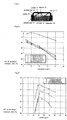
- FIG. 1 shows an example of the cross-sectional structure of the secondary battery according to the present invention.
- This secondary battery comprises a disc-shaped cathode 12 accommodated in a metallic exterior part 11 and a disc-shaped anode 14 accommodated in a metallic exterior part 13, laminated to each other via a separator 15.
- a metal spring 18 and a spacer 19 are disposed between the exterior part 13 and the anode 14.
- the interior defined by the exterior parts 11, 13 is filled with a liquid electrolyte, and the periphery of the exterior parts 11, 13 is sealed by clumping a seal gasket 17.
- the electrolyte comprises a solute dissolved in an organic solvent and these are generally main components.
- the electrolyte of the present invention is characterized by containing 1,1-diphenylethane.
- Inclusion of 1,1-diphenylethane in the electrolyte can provide a secondary battery that exhibits a function of protection when the secondary battery is overcharged and is unlikely to produce a reaction that degrades the battery even upon generation of overvoltage while in use and thus to be degraded in reliability.
- composition of the electrolyte should be determined, taking into consideration of the sum of the physical actions of the organic solvent involved in the migration of Li ions and the abundance or requisite amount of Li ions.
- 1,1-diphenylethane used in the present invention can be suitably used in the form of a mixture with an electrolyte.
- the amount should be limited to an extent that does not hinder the basic functions of the electrolyte.
- the content of 1,1-diphenylethane in the electrolyte is preferably from 3 to 35 percent by mass, more preferably from 5 to 30 percent by mass, most preferably from 7 to 25 percent by mass.
- One of the components of the electrolyte is a solute generating ions, i.e., a Li salt.
- solute No particular limitation is imposed on the type of solute if it is known to be used for a secondary battery and thus any solute can be used. Specific examples are as follows.
- Examples include inorganic salts such as LiPF 6 and LiBF 4 , fluorine-containing organic Li salts such as LiCF 3 SO 3 , LiN(CF 3 SO 2 , LiN(C 2 F 5 SO 2 , Li cyclic 1,2-perfluoro ethanedisulfonylimide, Li cyclic 1,3-perfluoro propanedisulfonylimide, LiN(CF 3 SO 2 )(C 4 F 9 SO 2 ), LiC(CF 3 SO 2 ) 3 , LiPF 4 (CF 3 ) 2 , LiPF 4 (C 2 F 5 ) 2 , LiPF 4 (CF 3 SO 2 ) 2 , LiPF 4 (C 2 F 5 SO 2 ) 2 , LiBF 2 (CF 3 ) 2 , LiBF 2 (C 2 F 5 ) 2 , LiBF 2 (CF 3 SO 2 ) 2 and LiBF 2 (C 2 F 5 SO 2 ) 2 and Li bis(oxalate)borate.
- fluorine-containing organic Li salts
- LiPF 6 LiBF 4 , LiN(CF 3 SO 2 ) 2 and LiN(C 2 F 5 SO 2 ) 2 because they exhibit battery properties and particularly preferred are LiPF 6 and LiBF 4 .
- LiPF 6 and LiBF 4 are preferred.
- These Li salts may be used alone or in combination.
- the content of the Li salt in the electrolyte is associated with the content of 1,1-diphenylethane.
- the content of the Li salt in the electrolyte varies depending on the type or mixed composition of the solvent dissolving the Li salt but is preferably from 7 to 35 percent by mass, more preferably from 10 to 30 percent by mass, more preferably 13 to 25 percent by mass.
- solvents which may be arbitrarily selected from conventional solvents.
- solvents include cyclic carbonates, chain carbonates, cyclic ethers, chain ethers, cyclic carboxylic acid esters, chain carboxylic acid esters, phosphorus-containing organic solvents, which have no unsaturated bond.
- examples of factors affecting the migration of Li ions include the viscosity and solvating ability of the organic solvent.
- the solvating ability is a power to dissociate the dissolved ions and thus the optimum value thereof exists because a too strong solvating ability hinders the migration of ions.
- a practicable secondary battery is used an wide environmental conditions and thus it is particularly necessary to keep the physical characteristics such as the melting point or boiling point of the organic solvent in a certain definite range.
- Realistic solutions for the above-described factors is to use a mixture of plurality of organic solvents, and thus the mixed composition is determined, taking into consideration of practical characteristics from combinations of physical properties such as higher and lower melting points or higher and lower solvating abilities.
- the electrolyte used in the present invention is preferably a mixture of a cyclic carbonate and a chain carbonate, having no carbon-carbon unsaturated bond.
- cyclic carbonates examples include alkylene carbonates having an alkylene group having 2 to 4 carbon atoms such as ethylene carbonate, propylene carbonate and butylene carbonate.
- alkylene carbonates having an alkylene group having 2 to 4 carbon atoms such as ethylene carbonate, propylene carbonate and butylene carbonate.
- the chain carbonates are preferably dialkyl carbonates, and the carbon number of the alkyl group constituting the chain carbonates is preferably from 1 to 5, particularly preferably from 1 to 4.
- Specific examples include dialkyl carbonates, which may be symmetric chain alkyl carbonates such as dimethyl carbonate, diethyl carbonate and di-n-propyl carbonate and asymmetric chain alkyl carbonates such as ethylmethyl carbonate, methyl-n-propyl carbonate and ethyl-n-propyl carbonate.
- dimethyl carbonate is preferable because of its viscosity which is lowest.
- dimethyl carbonate has a rather low boiling point, it can provide more suitable characteristics when mixed with chain carbonates which exhibit a higher boiling point.
- a higher boiling point is diethyl carbonate but other chain carbonates can be used without any problem.
- the mixed ratio varies also depending on the desired practical characteristics.
- the ratio of the chain carbonate to the cyclic carbonate exists in the form of the optimum composition also including the Li salt ratio.
- the content of the cyclic carbonate in the electrolyte is preferably from 1 to 35 percent by mass, more preferably from 3 to 30 percent by mass, more preferably from 4 to 25 percent by mass.
- a plurality of cyclic carbonates may be mixed.
- the content of the chain carbonate in the electrolyte is preferably from 40 to 70 percent by mass, more preferably 43 to 68 percent by mass.
- a plurality of chain carbonates may be mixed.
- ethylene carbonate and dialkyl carbonates preferred is the combination of ethylene carbonate and dimethyl carbonate, which may further contain symmetric chain dialkyl carbonates and/or asymmetric chain dialkyl carbonates.
- a solvent comprising ethylene carbonate, symmetric chain dialkyl carbonates and asymmetric chain dialkyl carbonates such as the combination of ethylene carbonate, dimethyl carbonate and diethyl carbonate, the combination of ethylene carbonate, dimethyl carbonate and ethylmethyl carbonate, and the combination of ethylene carbonate, dimethyl carbonate, diethyl carbonate and ethylmethyl carbonate because they have a good balance of cycle characteristics and high output discharge characteristics.
- asymmetric chain dialkyl carbonates are preferably ethylmethyl carbonate and the alkyl group of the alkyl carbonate has preferably 1 or 2 carbon atoms.
- cyclic ethers, chain ethers, cyclic carboxylic acid esters or chain carboxylic acid esters as solvents assisting the dissociation or migration of ions may be added to the above-described main organic solvents.
- Examples of the cyclic ethers include tetrahydrofuran and 2-methyltetrahydrofuran while examples of the chain ethers include dimethoxyethane and dimethoxymethane.
- Examples of the cyclic carboxylic acid esters include ⁇ -butyrolactone and ⁇ -valerolactone while examples of the chain carboxylic acid esters include methyl acetate, methyl propionate, ethyl propionate and methyl butyrate.
- chain carboxylic acid esters are suitable.
- a fluorine-containing cyclic carbonate having 2 or more fluorine atoms is suitably added to the electrolyte of the present invention.
- the lower limit is usually 2 or more and the upper limit is usually 6 or fewer, preferably 5 or fewer.
- those having 2 or more fluorine atoms bonding to carbons forming the cyclic structure are preferable with the objective of improving cycle characteristic and storage characteristics.
- fluorine-containing cyclic carbonate having 2 or more fluorine atoms include fluorinated ethylene carbonates such as cis-4,5-difluoro-1,3-dioxolan-2-on, trans-4,5-difluoro-1,3-dioxolan-2-on, 4,4-difluoro-dioxolan-2-on, trifluoro-1,3-dioxolan-2-on and tetrafluoro-1,3-dioxolan-2-on and fluorinated propylene carbonates such as 4,5-difluoro-4-methyl-1,3-dioxolan-2-on, 4,4-difluoro-4-methyl-1,3-dioxolan-2-on, 4,4,5-trifluoro-5-methyl-1,3-dioxolan-2-on and 4,5-difluoro-4-trifluoromethyl-1,3-dioxolan-2-on.
- fluorinated ethylene carbonates having 2 or more fluorine atoms are preferable with the objective of improving battery characteristics, among which cis-4,5-difluoro-1,3-dioxolan-2-on, trans-4,5-difluoro-1,3-dioxolan-2-on and 4,4-difluoro-dioxolan-2-on are particularly preferable.
- the fluorine-containing cyclic carbonate having 2 or more fluorine atoms may be used alone or in combination. No particular limitation is imposed on the content of the fluorine-containing cyclic carbonate compound having 2 or more fluorine atoms in a non-water based electrolyte solution in order to achieve the advantageous effects of the present invention, which is, however, usually 0.001 percent by mass or more, preferably 0.01 percent by mass or more, more preferably 0.1 percent by mass or more, particularly preferably 0.2 percent by mass or more, most preferably 0.25 percent by mass or more. If the content is lower than these ranges, the advantageous effects of the present invention are unlikely to be exhibited. If the content is too large, the internal pressure of the battery when stored at a high temperature may be increased. Therefore, the upper limit is usually 10 percent by mass or less, preferably 4 percent by mass or less, more preferably 2 percent by mass or less, particularly preferably 1 percent by mass or less, most preferably 0.5 percent by mass or less.
- cyclic carbonates having an unsaturated bond or an aromatic compound with a total carbon number of 7 or more and 18 or fewer may be added to the electrolyte.
- Examples of the cyclic carbonates having an unsaturated bond include vinylene carbonate compounds such as vinylene carbonate, methylvinylene carbonate, ethylvinylene carbonate, 4,5-dimethylvinylene carbonate, 4,5-diethylvinylene carbonate and fluorovinylene carbonate, vinylethylene carbonate compounds such as vinylethylene carbonate, 4-methyl-4-vinylethylene carbonate, 4-ethyl-4-vinylethylene carbonate, 4-n-propyl-4-vinylethylene carbonate, 5-methyl-4-vinylethylene carbonate, 4,4-divinylethylene carbonate, 4,5-divinylethylene carbonate and methyleneethylene carbonate compounds such as 4,4-dimethyl-5-methyleneethylene carbonate and 4,4-diethyl-5-methylene carbonate.
- vinylene carbonate compounds such as vinylene carbonate, methylvinylene carbonate, ethylvinylene carbonate, 4,5-dimethylvinylene carbonate, 4,5-
- vinylene carbonate preferred are vinylene carbonate, vinylethylene carbonate, 4-methyl-4-vinylethylene carbonate and 4,5-divinylethylene carbonate, among which more preferred are vinylene carbonate and vinylethylene carbonate with the objective of improving the cycle characteristic.
- vinylene carbonate preferred are vinylethylene carbonate, 4-methyl-4-vinylethylene carbonate and 4,5-divinylethylene carbonate, among which more preferred are vinylene carbonate and vinylethylene carbonate with the objective of improving the cycle characteristic.
- These compounds may be used alone or in combination.
- aromatic compounds having 7 or more carbon atoms and 18 or fewer carbon atoms in total include biphenyl, alkylbiphenyls such as 2-methylbiphenyl, aromatic compound such as terphenyl, partial hydrogenated substance of terphenyl, cyclopentylbenzene, cyclohexylbenzene, t-butylbenzene, t-amylbenzene, diphenylether and dibenzofuran, partial fluorinated products of the aforesaid aromatic compounds such as 2-fluorobiphenyl, 3-fluorobiphenyl, 4-fluorobiphenyl, o-cyclohexylfluorobenzene and p-cyclohexylfluorobenzene, and fluorine-containing anisole compounds such as 2,4-difluoroanisole, 2,5-difluoroanisole, 2,6-difluoroanisole and 3,5-difluoroanisole.
- aromatic compounds such as biphenyl, alkylbiphenyls, terphenyl, partial hydrogenated substance of terphenyl, cyclohexylbenzene, t-butylbenzene, t-amylbenzene, diphenylether, and dibenzofuran.
- the battery can be suppressed from being significantly degraded in discharge characteristics after storage at a high temperature by suppressing a side reaction between the aromatic compound having 7 or more carbon atoms and 18 or fewer carbon atoms in total and the anode and cathode.
- the content of the aromatic compounds having 7 or more carbon atoms and 18 or fewer carbon atoms in total in the electrolyte is usually 0.001 percent by mass or more, preferably 0.1 percent by mass or more, particularly preferably 0.3 percent by mass or more, most preferably 0.5 percent by mass or more so that the electrolyte of the invention exhibits the advantageous effects of the present invention.
- the upper limit is usually 5 percent by mass or less, preferably 3 percent by mass or less, particularly preferably 2 percent by mass or less. If the content is less than the lower limit, the electrolyte of the present invention may be unlikely to exhibit an effect of improving the safety against overcharge. If the content is too large, the electrolyte would degrade battery characteristics such as storage characteristics at high temperatures.
- the cyclic carbonate, chain carbonate, Li salt and, 1,1-diphenylethane were used, varied in the mix ratio to change the composition of the electrolyte.
- the cathode will be described.
- the cathode 12 may be produced by coating a slurry which is a mixture of for example, a metal compound based-material, a conductive assisting material assisting electron conductivity, a binder and a solvent over a metal foil body for power collection such as a rolled aluminum foil, heat-drying the slurry to remove the solvent and forming the dried coating into a desired dimension and density.
- a slurry which is a mixture of for example, a metal compound based-material, a conductive assisting material assisting electron conductivity, a binder and a solvent
- a metal foil body for power collection such as a rolled aluminum foil
- Metal compound-based material usable for a cathode active material is a material that can release electrons to the external circuit of the battery and at the same time release Li ions to the electrolyte and is varied in the amount of Li ion depending on the chemical composition or crystalline structure of the material.
- the metal-based compound material is preferably a material that can reversibly let many Li ions in and out.
- Such a material examples include transition metal oxide, complex oxide of lithium and transition metal and transition metal sulfide.
- the transition metal may be Fe, Co, Ni or Mn.
- Specific examples include transition metal oxides such as MnO, V 2 O 5 , V 6 O 13 and TriO 2 and inorganic compounds such as LiNiO 2 , LiCoO 2 , LiMn 2 O 4 , TiS 2 , FeS and MoS 2 . Materials produced by substituting partially specific elements of these materials with an element so as to improve the characteristics thereof may be used.
- organic compound-based cathode materials may also be used.
- examples of such materials include polyaniline, polypyrrole, polyacene, disulfide-based compounds, polysulfide-based compounds and N-fluoropyridinium salt.
- the cathode material may be a mixture of the above-described inorganic compound and organic compound.
- the physical properties of the above-described cathode material is determined by requisite items in the battery design and the production process caused by constrained conditions such as the utility format of a secondary battery. When the material is produced, the process is designed to achieve the physical properties. Examples of the physical properties include powder particle diameter and distribution, specific surface area and density.
- the powder particle diameter is arbitrarily selected in view of other constituent features of a secondary battery but in general the average value is preferably from 1 to 30 ⁇ m, more preferably from 1 to 10 ⁇ m with the objective of improving battery characteristics such as rate characteristics and cycle characteristics.
- LiCoO 2 with an average particle diameter of 5 ⁇ m was used in an amount of 90 percent by mass in the cathode.
- the above-described cathode materials have a lower electron conductivity, and thus a conductive assistant material assisting electron conductivity preferably coexists in the cathode.
- the material is suitably a carbon material or a metallic material, and also other materials with a high electron conductivity may also be used.
- the amount of the material to be coexisted is limited to the minimum necessary so as to raise the content of the cathode material defining the capacity of a secondary battery to the maximum.
- suitable carbon materials include soot, acetylene black, Ketjen black, lampblack, furnace black, carbon black, graphite, carbon fiber, graphite fiber, nanofibers, nanotube, coke, hard carbon and amorphous carbon.
- the metallic material is desirously a material which is not electrochemically dissolved by potential to which the material is exposed in the cathode and is suitably aluminum, nickel, titanium, stainless steel or the like.
- acetylene black was used as a conductive assistant material in an amount of 5 percent by mass in the cathode.
- cathode materials and conductive assistant materials are in powdery form, and thus a small amount of a binder is preferably used to bind the cathode materials and the conductive assistant materials to each other and fix them on a metal foil body for power collection.
- the binder is required to be chemically or electrochemically inactive and have slight flexibility and affinity and is preferably a plastic-resin material.
- plastic-resin material examples include fluorinated resins such as polyvinyl fluoride, polyvinylidene fluoride and polytetrafluoroethylene, CN group-containing polymers such as polyacrylonitrile and polyvinylidenedicyanide, polyvinyl alcohol-based polymers such as polyvinyl acetate and polyvinyl alcohol, halogen-containing polymers such as polyvinyl chloride and polyvinylidene chloride, conductive polymers such as polyaniline, alkane-based polymers such as polyethylene, polypropylene and poly-1,1-dimethylethylene, unsaturated polymers such as polybutadiene and polyisoprene, polymers having a ring such as polystyrene, polymethylstyrene, polyvinylpyridine and poly-N-vinylpyrrolidone, and acrylic polymers such as polymethylmethacrylate, polyethylmethacrylate, polybutylmethacrylate, polymethyl methyl
- the plastic-resin material may be a mixture, modified product, derivative, random copolymer, alternate copolymer, graft copolymer or block copolymer of the above resin materials.
- the weight-average molecular weight of these resins is usually from 10,000 to 3,000,000, preferably from 100,000 to 1,000,000. If the molecular weight is too low, the coating would be reduced in strength. If the molecular weight is too high, the viscosity increases, making it difficult to form an electrode.
- An appropriate slurry solvent may be used, which dissolves only the binder resin but does not other materials so as to distribute sufficiently uniformly the binder or form the slurry into film with a predetermined size.
- a slurry solvent may be used, which dissolves only the binder resin but does not other materials so as to distribute sufficiently uniformly the binder or form the slurry into film with a predetermined size.
- dimethylformamide is suitably used as the solvent.
- N-methylpyrrolidone may also be used, and the solvent may be arbitrarily selected depending on the production process.
- polyvinylidene fluoride was used as the resin in an amount of 5 percent by mass in the cathode.
- the metal foil body for power collection is preferably a material that is available inexpensively and can withstand the industrial use and suitably a material that has electrochemical resistance against potential that the cathode generates.
- the material is preferably aluminum foil, nickel foil, titanium foil or stainless steel foil. More preferred is rolled aluminum foil that is easily available.
- the method for coating the slurry may be a common printing technique.
- gravure printing may be used.
- a printing method such as doctor blade printing or die printing is suitably used.
- the coating is then dried by heating, and any drying method may be used.
- a drying method that can accomplish the desired binding strength with a binder is suitably used.
- the coating formation was carried out with a doctor blade method.
- the drying was carried out in an internal air circulation type oven at a temperature of 110oC.
- the coating was allowed to pass through a roll-type pressurizer and then punched out into a 15 mm diameter disk-shape thereby producing a cathode 11.
- the amount of the cathode active material was about 23 mg.
- the anode 14 may be produced by coating a slurry which is a mixture of for example, a carbonaceous material, a binder and a solvent over a metal foil body for power collection such as a rolled copper foil, heat-drying the slurry to remove the solvent and forming the dried coating into a desired dimension and density.
- a slurry which is a mixture of for example, a carbonaceous material, a binder and a solvent
- a metal foil body for power collection such as a rolled copper foil
- the carbonaceous material usable for the anode refers to a material that can bind and stabilize the Li ions and the electrons floating out from the external circuit and is preferably a material having many stabilizing sites therein.
- the carbonaceous material may be any material originating from organic substances regardless of whether the crystallinity is high or low and is suitably graphite, coke, amorphous carbon, hard carbon or polymer carbon.
- graphite coke
- amorphous carbon amorphous carbon
- hard carbon or polymer carbon.
- Li ions sandwiched between graphene layers bond to electrons and are stabilized.
- an electrochemically intermetallic compound may be employed as other stabilizing systems, and for such a method, silicon, tin, zinc, bismuth, antimony, cadmium, lead, germanium or the like is suitably used.
- materials exhibiting a low electrochemical reaction potential and thus managing the anode side of a secondary battery may also be used.
- the materials include compounds of metal and oxygen, sulfur, halogen, nitrogen or phosphorus.
- a number of the above anode materials mixed at a predetermined ratio may be used in order to obtain any discharge profile.
- the physical properties of the anode material is determined by requisite items in the battery design production process caused by constrained conditions such as the utility format of a secondary battery. When the material is produced, the process is designed to achieve the physical properties. Examples of the physical properties include powder particle diameter and distribution, specific surface area and density.
- the powder particle diameter is arbitrarily selected in view of other constituent features of a secondary battery but in general the average value is preferably from 1 to 70 ⁇ m, more preferably from 5 to 10 ⁇ m with the objective of improving battery characteristics such as rate characteristics and cycle characteristics.
- graphite with an average particle diameter of 20 ⁇ m was used in an amount of 94 percent by mass in the anode.
- a conductive assistant material assisting electron conductivity preferably coexists in the case of insufficient contact between the particles due to a smooth surface of the anode material.
- the material is suitably a carbon material or a metallic material, and also other materials with a high electron conductivity may also be used.
- the amount of the material to be coexisted is limited to the minimum necessary so as to raise the content of the anode material defining the capacity of a secondary battery to the maximum.
- the above-described carbonaceous material is suitably soot, acetylene black, Ketjen black, lampblack, furnace black, carbon black, graphite, carbon fiber, graphite fiber nanofibers, nanotube, coke, hard carbon or amorphous carbon.
- the metallic material is desirously a material that does not electrochemically react with potential to which it is exposed in the anode and is suitably copper, nickel, titanium or stainless steel.
- acetylene black was used as a conductive assistant material in an amount of 1 percent by mass in the anode.
- anode materials and conductive assistant materials are in powdery form, and thus a small amount of a binder is preferably used to bind the anode materials and the conductive assistant materials to each other and fix them on a metal foil body for power collection.
- the binder is required to be chemically or electrochemically inactive and have slight flexibility and affinity and is preferably a plastic-resin material.
- plastic-resin material examples include fluorinated resins such as polyvinyl fluoride, polyvinylidene fluoride and polytetrafluoroethylene, CN group-containing polymers such as polyacrylonitrile and polyvinylidenedicyanide, polyvinyl alcohol-based polymers such as polyvinyl acetate and polyvinyl alcohol, halogen-containing polymers such as polyvinyl chloride and polyvinylidene chloride, conductive polymers such as polyaniline, alkane-based polymers such as polyethylene, polypropylene and poly-1,1-dimethylethylene, unsaturated polymers such as polybutadiene and polyisoprene, polymers having a ring such as polystyrene, polymethylstyrene, polyvinylpyridine and poly-N-vinylpyrrolidone, and acrylic polymers such as polymethylmethacrylate, polyethylmethacrylate, polybutylmethacrylate, polymethyl methyl
- the plastic-resin material may be a mixture, modified product, derivative, random copolymer, alternate copolymer, graft copolymer or block copolymer of the above resin materials.
- the weight-average molecular weight of these resins is usually from 10,000 to 3,000,000, preferably from 100,000 to 1,000,000. If the molecular weight is too low, the coating would be reduced in strength. If the molecular weight is too high, the viscosity increases, making it difficult to form an electrode.
- An appropriate slurry solvent may be used, which dissolves only the binder resin but does not other materials so as to distribute sufficiently uniformly the binder and form the slurry into film with a predetermined size.
- a slurry solvent may be used, which dissolves only the binder resin but does not other materials so as to distribute sufficiently uniformly the binder and form the slurry into film with a predetermined size.
- dimethylformamide is suitably used as the solvent.
- N-methylpyrrolidone may also be used, and the solvent may be arbitrarily selected depending on the production process.
- polyvinylidene fluoride was used as the resin in an amount of 5 percent by mass in the anode.
- the metal foil body for power collection is preferably a material that is available inexpensively and can withstand the industrial use and suitably a material that does not exhibit an electrochemical reactivity with potential that the anode generates.
- the material is preferably copper foil, nickel foil, titanium foil or stainless steel foil. More preferred are electrolysis copper foil and rolled copper foil that are easily available.
- the method for coating of the slurry may be a common printing technique.
- gravure printing may be used.
- a printing method such as doctor blade printing or die printing is suitably used.
- the coating is then dried by heating, and any drying method may be used.
- a drying method that can accomplish the desired binding strength with a binder is suitably used.
- the coating formation was carried out with a doctor blade method.
- the drying was carried out in an internal air circulation type oven at a temperature of 110oC.
- the coating was allowed to pass through a roll-type pressurizer and then punched out into a 15 mm diameter disk-shape thereby producing an anode 14.
- the amount of the anode active material was about 14 mg.
- the separator 15 separates the cathode 12 from the anode 14 to prevent short-circuit of current caused by contact between the cathode and anode and allows the lithium ions to pass through.
- the separator is suitably a porous film of resin.
- the film is suitably a stretched film produced by stretching a bulk resin to be opened or a nonwoven fabric produced by multi-laminating fibrous resin fibers so as to be formed into a hole structure like a porous film.
- Examples of the materials of the resin include polyolefins, among which polyethylene is particularly suitable.
- Polyethylene has a relatively lower melting point and thus when the temperature of a battery is raised for some reasons (e.g., becomes unstable due to short-circuiting), the pores of the polyethylene film are closed by thermal melting so as to prevent the migration of driving ions thereby terminating the reaction and ensuring the safety.
- a stretch type microporous film is usually formed by adding a plasticizer to polyolefin and remove the plasticizer before and after stretching thereby forming a relatively uniform microporous structure originating sites where the plasticizer have been presented.
- Stretching is usually carried out in both the longitudinal and transverse directions suitably together with the aforesaid plasticizer removal in combination with any of the atmosphere medium, temperature, speed, stress and repeating number of process thereby providing a suitable stretched film.
- a high quality stretched film can be produced through the above-described process.
- the process is a multi-stage process and thus makes it difficult to reduce the production cost incurred by these stages, it would a negative factor for spread of secondary batteries.
- the process can be simplified by stretching the resin only in the longitudinal direction without using a plasticizer thereby producing a porous film that can be used at an industrial level with a reduced production cost.
- the resin is polyolefin, and polypropylene is suitably used.
- a microporous film was used produced by stretching biaxially polyethylene used as the resin in the transverse and longitudinal directions.
- the film had a film thickness of 25 ⁇ m, a porosity of 45% and a melting point of about 120oC.
- a secondary battery having a structure as described above operates as follows.
- Li ions contained in the cathode 12 pass through the separator 15 and then are inserted between the layers of the layered graphite contained in the anode 14.
- the Li ions are deinserted from the layered graphite contained in the anode 14 and return to the cathode 12 via the separator 15.
- the secondary battery of the present invention is similarly applicable to those having other shapes such as button type, paper type, prismatic type, and cylindrical type with a spiral structure.
- the secondary battery of the present invention can be made in various sizes such as thin, large and the like.
- the present invention is illustrated with embodiments envisaging that the electrolyte of the present invention is used for a secondary battery produced by a usual method where the electrode or separator is impregnated with liquid.
- the present invention can be applied to any other electrolytes and for example can be suitably used for gel-like electrolyte and solid electrolyte.
- Secondary batteries were produced using electrolytes each having a composition set forth in Table 3 in accordance with the embodiment of the present invention.
- the resulting secondary batteries were charged with a constant electric current of 0.875 mA to 4.2 V and then charged at a constant voltage for 8 hours. Thereafter, the secondary batteries were discharged at a constant electric current of 0.875 mA to 3.0 V at room temperature. Furthermore, after the secondary batteries were charged again under the same conditions as the above and left in an oven kept at 0oC for 2 hours, the batteries were discharged at a constant electric current of 7.00 mA.
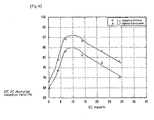
- the ratio of the second discharge capacity to the first discharge capacity was calculated and defined as a capacity retention ratio derived from the 2C discharge test at 0oC. The results were set forth in Table 3 and also shown in Figure 2 .
- 1,1-diphenylethane exhibited excellent characteristics for a practical low temperature high output discharge even when the amount thereof is increased as shown in Figure 2 .
- a secondary battery was produced with the same procedures of Example 1 except that an electrolyte having a composition set forth in Table 4 was used and a microporous film produced by uniaxially stretching polypropylene was used as a separator.
- a secondary battery was produced using an electrolyte having a composition set forth in Table 4 with the same procedures of Example 2 and the capacity retention ratio in the 2C discharge test at 0oC was calculated. The result was set forth in Table 4.
- Example 2 In the same manner as Example 1, the capacity retention ratio in the 2C discharge test at 0oC was calculated. The results were set forth in Table 5 and also shown in Figure 3 .
- Example 1-2 Comparative Example 1-5, Comparative Example 1-6, the characteristics were improved at a specific Li salt concentration and this was significant particularly when 1, 1-diphenylethane was used as shown in Figure 3 .
- Example 2 In the same manner as Example 1, the capacity retention ratio in the 2C discharge test at 0oC was calculated. The results were set forth in Table 6 and also shown in Figure 4 .
- Example 3-2 and Comparative Example 3-4 From the results of this example, Example 3-2 and Comparative Example 3-4, it is apparent that excellent characteristics were obtained within a specific cyclic carbonate concentration range and in particular excellent characteristics were obtained with 1,1-diphenylethane as shown in Figure 4 .
Landscapes
- Chemical & Material Sciences (AREA)
- Chemical Kinetics & Catalysis (AREA)
- Electrochemistry (AREA)
- General Chemical & Material Sciences (AREA)
- Engineering & Computer Science (AREA)
- Manufacturing & Machinery (AREA)
- Inorganic Chemistry (AREA)
- Materials Engineering (AREA)
- General Physics & Mathematics (AREA)
- Condensed Matter Physics & Semiconductors (AREA)
- Physics & Mathematics (AREA)
- Secondary Cells (AREA)
- Cell Separators (AREA)
Applications Claiming Priority (2)
| Application Number | Priority Date | Filing Date | Title |
|---|---|---|---|
| JP2012049022 | 2012-03-06 | ||
| PCT/JP2013/054872 WO2013133079A1 (ja) | 2012-03-06 | 2013-02-26 | Li蓄電池用電解質およびLi蓄電池 |
Publications (2)
| Publication Number | Publication Date |
|---|---|
| EP2824752A1 true EP2824752A1 (de) | 2015-01-14 |
| EP2824752A4 EP2824752A4 (de) | 2015-10-21 |
Family
ID=49116561
Family Applications (1)
| Application Number | Title | Priority Date | Filing Date |
|---|---|---|---|
| EP13757332.5A Withdrawn EP2824752A4 (de) | 2012-03-06 | 2013-02-26 | Elektrolyt für li-speicherbatterie sowie li-speicherbatterie |
Country Status (8)
| Country | Link |
|---|---|
| US (1) | US9287584B2 (de) |
| EP (1) | EP2824752A4 (de) |
| JP (1) | JP6130354B2 (de) |
| KR (1) | KR20140142697A (de) |
| CN (1) | CN104321923B (de) |
| CA (1) | CA2866365A1 (de) |
| TW (1) | TW201349625A (de) |
| WO (1) | WO2013133079A1 (de) |
Families Citing this family (3)
| Publication number | Priority date | Publication date | Assignee | Title |
|---|---|---|---|---|
| CN105633463B (zh) * | 2016-01-08 | 2018-03-02 | 九江迅通新能源科技有限公司 | 一种适用于低温环境放电的锂离子二次电池电解液 |
| US10164292B2 (en) * | 2017-02-24 | 2018-12-25 | Wildcat Discovery Technologies, Inc. | Electrolyte additives |
| US10147974B2 (en) * | 2017-05-01 | 2018-12-04 | Dioxide Materials, Inc | Battery separator membrane and battery employing same |
Family Cites Families (10)
| Publication number | Priority date | Publication date | Assignee | Title |
|---|---|---|---|---|
| CA2156800C (en) | 1995-08-23 | 2003-04-29 | Huanyu Mao | Polymerizable aromatic additives for overcharge protection in non-aqueous rechargeable lithium batteries |
| CA2163187C (en) | 1995-11-17 | 2003-04-15 | Huanyu Mao | Aromatic monomer gassing agents for protecting non-aqueous lithium batteries against overcharge |
| CA2216898C (en) * | 1997-09-26 | 2005-03-22 | Moli Energy (1990) Limited | Improved additives for overcharge protection in non-aqueous rechargeable lithium batteries |
| JP5062459B2 (ja) * | 2001-05-15 | 2012-10-31 | 株式会社Gsユアサ | 非水電解質二次電池 |
| JP4348908B2 (ja) | 2002-07-25 | 2009-10-21 | 三菱化学株式会社 | 電解液及び二次電池 |
| EP1528616B1 (de) * | 2003-10-31 | 2017-03-08 | Samsung SDI Co., Ltd. | Elektrolyt für aufladbare lithium-batterie und aufladbare lithium-batterie enthaltend eine solche elektrode |
| JP4196207B2 (ja) * | 2004-06-07 | 2008-12-17 | 宇部興産株式会社 | 非水電解液二次電池 |
| US9419307B2 (en) * | 2011-11-22 | 2016-08-16 | Jx Nippon Oil & Energy Corporation | Organic electrolyte and organic electrolyte storage battery |
| KR20140116070A (ko) * | 2011-12-22 | 2014-10-01 | 제이엑스 닛코닛세키에너지주식회사 | 유기 전해질 및 유기 전해질 축전지 |
| CA2858809A1 (en) | 2011-12-22 | 2013-06-27 | Jx Nippon Oil & Energy Corporation | Organic electrolyte and organic electrolyte storage battery |
-
2013
- 2013-02-26 CA CA2866365A patent/CA2866365A1/en not_active Abandoned
- 2013-02-26 WO PCT/JP2013/054872 patent/WO2013133079A1/ja not_active Ceased
- 2013-02-26 CN CN201380023765.0A patent/CN104321923B/zh not_active Expired - Fee Related
- 2013-02-26 KR KR1020147024671A patent/KR20140142697A/ko not_active Withdrawn
- 2013-02-26 JP JP2014503774A patent/JP6130354B2/ja active Active
- 2013-02-26 EP EP13757332.5A patent/EP2824752A4/de not_active Withdrawn
- 2013-02-26 US US14/383,126 patent/US9287584B2/en not_active Expired - Fee Related
- 2013-03-06 TW TW102107803A patent/TW201349625A/zh unknown
Also Published As
| Publication number | Publication date |
|---|---|
| CA2866365A1 (en) | 2013-09-12 |
| TW201349625A (zh) | 2013-12-01 |
| US9287584B2 (en) | 2016-03-15 |
| JP6130354B2 (ja) | 2017-05-17 |
| KR20140142697A (ko) | 2014-12-12 |
| US20150079482A1 (en) | 2015-03-19 |
| JPWO2013133079A1 (ja) | 2015-07-30 |
| CN104321923A (zh) | 2015-01-28 |
| WO2013133079A1 (ja) | 2013-09-12 |
| CN104321923B (zh) | 2016-10-12 |
| EP2824752A4 (de) | 2015-10-21 |
Similar Documents
| Publication | Publication Date | Title |
|---|---|---|
| EP1361622B1 (de) | Wasserfreie elektrolytische lösung und lithium-sekundärbatterien | |
| KR102889485B1 (ko) | 전해액, 이차 전지, 전지 모듈, 전지 팩 및 전기 장치 | |
| CN110112465B (zh) | 富锂锰基正极材料体系电池用电解液及锂离子电池 | |
| CN1196218C (zh) | 非水电化学装置及其电解质 | |
| CN103125042A (zh) | 锂离子电池 | |
| KR102849717B1 (ko) | 이차 전지, 전지 모듈, 전지 팩 및 전기 장치 | |
| JP2016048624A (ja) | リチウム二次電池 | |
| CN103140980A (zh) | 锂离子二次电池 | |
| KR101800930B1 (ko) | 비수계 리튬이차전지용 첨가제와, 이를 포함하는 비수계 전해액, 전극 및 비수계 리튬이차전지 | |
| KR102872288B1 (ko) | 리튬 이차전지용 전해질 및 이를 포함하는 리튬 이차전지 | |
| KR102911589B1 (ko) | 이차 전지 및 이를 포함하는 전지 모듈, 전지 팩과 전기 장치 | |
| US9287584B2 (en) | Electrolyte for Li storage battery and Li storage battery | |
| KR102888063B1 (ko) | 리튬이온 이차전지, 전지모듈, 전지팩 및 전기장치 | |
| KR20230172520A (ko) | 전해액, 이차 전지, 전지 모듈, 전지 팩 및 전기 장치 | |
| JP2024500003A (ja) | 二次電池、電池モジュール、電池パック及び電力消費装置 | |
| CN115911551B (zh) | 电解液、二次电池和用电设备 | |
| KR20160058598A (ko) | 이차전지 전해액 및 이를 함유하는 이차전지 | |
| KR100693288B1 (ko) | 리튬이차전지용 전해액 및 이를 채용하는 리튬이차전지 | |
| EP4718555A1 (de) | Zusammensetzung zur herstellung eines festelektrolyten, festelektrolyt und lithiumsekundärbatterie | |
| KR20190124505A (ko) | 전해질 및 이를 포함하는 리튬 금속전지 | |
| JP2008192593A (ja) | リチウムポリマー電池 | |
| KR20260009922A (ko) | 비수성 전해액, 이차 전지 및 전기 장치 | |
| KR20230165235A (ko) | 이차 전지 및 이를 포함하는 전지 모듈, 전지 팩과 전기 장치 | |
| WO2024183071A1 (zh) | 电解液、含有其的电池和用电装置 | |
| CN121439911A (zh) | 一种锂离子电池 |
Legal Events
| Date | Code | Title | Description |
|---|---|---|---|
| PUAI | Public reference made under article 153(3) epc to a published international application that has entered the european phase |
Free format text: ORIGINAL CODE: 0009012 |
|
| 17P | Request for examination filed |
Effective date: 20140911 |
|
| AK | Designated contracting states |
Kind code of ref document: A1 Designated state(s): AL AT BE BG CH CY CZ DE DK EE ES FI FR GB GR HR HU IE IS IT LI LT LU LV MC MK MT NL NO PL PT RO RS SE SI SK SM TR |
|
| AX | Request for extension of the european patent |
Extension state: BA ME |
|
| DAX | Request for extension of the european patent (deleted) | ||
| RA4 | Supplementary search report drawn up and despatched (corrected) |
Effective date: 20150918 |
|
| RIC1 | Information provided on ipc code assigned before grant |
Ipc: H01M 4/525 20100101ALN20150914BHEP Ipc: H01M 10/0525 20100101ALI20150914BHEP Ipc: H01M 10/0567 20100101AFI20150914BHEP Ipc: H01M 10/42 20060101ALI20150914BHEP Ipc: H01M 10/0569 20100101ALN20150914BHEP Ipc: H01M 2/16 20060101ALN20150914BHEP Ipc: H01M 4/587 20100101ALN20150914BHEP |
|
| STAA | Information on the status of an ep patent application or granted ep patent |
Free format text: STATUS: THE APPLICATION IS DEEMED TO BE WITHDRAWN |
|
| 18D | Application deemed to be withdrawn |
Effective date: 20160419 |