EP2776584B1 - Method and primers for the detection of microcystin-producing toxic cyanobacteria - Google Patents
Method and primers for the detection of microcystin-producing toxic cyanobacteria Download PDFInfo
- Publication number
- EP2776584B1 EP2776584B1 EP12795832.0A EP12795832A EP2776584B1 EP 2776584 B1 EP2776584 B1 EP 2776584B1 EP 12795832 A EP12795832 A EP 12795832A EP 2776584 B1 EP2776584 B1 EP 2776584B1
- Authority
- EP
- European Patent Office
- Prior art keywords
- microcystin
- seq
- mcyb
- sample
- dna
- Prior art date
- Legal status (The legal status is an assumption and is not a legal conclusion. Google has not performed a legal analysis and makes no representation as to the accuracy of the status listed.)
- Not-in-force
Links
Images




Classifications
-
- C—CHEMISTRY; METALLURGY
- C12—BIOCHEMISTRY; BEER; SPIRITS; WINE; VINEGAR; MICROBIOLOGY; ENZYMOLOGY; MUTATION OR GENETIC ENGINEERING
- C12Q—MEASURING OR TESTING PROCESSES INVOLVING ENZYMES, NUCLEIC ACIDS OR MICROORGANISMS; COMPOSITIONS OR TEST PAPERS THEREFOR; PROCESSES OF PREPARING SUCH COMPOSITIONS; CONDITION-RESPONSIVE CONTROL IN MICROBIOLOGICAL OR ENZYMOLOGICAL PROCESSES
- C12Q1/00—Measuring or testing processes involving enzymes, nucleic acids or microorganisms; Compositions therefor; Processes of preparing such compositions
- C12Q1/68—Measuring or testing processes involving enzymes, nucleic acids or microorganisms; Compositions therefor; Processes of preparing such compositions involving nucleic acids
- C12Q1/6876—Nucleic acid products used in the analysis of nucleic acids, e.g. primers or probes
- C12Q1/6888—Nucleic acid products used in the analysis of nucleic acids, e.g. primers or probes for detection or identification of organisms
- C12Q1/6895—Nucleic acid products used in the analysis of nucleic acids, e.g. primers or probes for detection or identification of organisms for plants, fungi or algae
-
- C—CHEMISTRY; METALLURGY
- C12—BIOCHEMISTRY; BEER; SPIRITS; WINE; VINEGAR; MICROBIOLOGY; ENZYMOLOGY; MUTATION OR GENETIC ENGINEERING
- C12Q—MEASURING OR TESTING PROCESSES INVOLVING ENZYMES, NUCLEIC ACIDS OR MICROORGANISMS; COMPOSITIONS OR TEST PAPERS THEREFOR; PROCESSES OF PREPARING SUCH COMPOSITIONS; CONDITION-RESPONSIVE CONTROL IN MICROBIOLOGICAL OR ENZYMOLOGICAL PROCESSES
- C12Q1/00—Measuring or testing processes involving enzymes, nucleic acids or microorganisms; Compositions therefor; Processes of preparing such compositions
- C12Q1/68—Measuring or testing processes involving enzymes, nucleic acids or microorganisms; Compositions therefor; Processes of preparing such compositions involving nucleic acids
- C12Q1/6844—Nucleic acid amplification reactions
- C12Q1/6851—Quantitative amplification
-
- C—CHEMISTRY; METALLURGY
- C12—BIOCHEMISTRY; BEER; SPIRITS; WINE; VINEGAR; MICROBIOLOGY; ENZYMOLOGY; MUTATION OR GENETIC ENGINEERING
- C12Q—MEASURING OR TESTING PROCESSES INVOLVING ENZYMES, NUCLEIC ACIDS OR MICROORGANISMS; COMPOSITIONS OR TEST PAPERS THEREFOR; PROCESSES OF PREPARING SUCH COMPOSITIONS; CONDITION-RESPONSIVE CONTROL IN MICROBIOLOGICAL OR ENZYMOLOGICAL PROCESSES
- C12Q1/00—Measuring or testing processes involving enzymes, nucleic acids or microorganisms; Compositions therefor; Processes of preparing such compositions
- C12Q1/68—Measuring or testing processes involving enzymes, nucleic acids or microorganisms; Compositions therefor; Processes of preparing such compositions involving nucleic acids
- C12Q1/6876—Nucleic acid products used in the analysis of nucleic acids, e.g. primers or probes
- C12Q1/6883—Nucleic acid products used in the analysis of nucleic acids, e.g. primers or probes for diseases caused by alterations of genetic material
-
- C—CHEMISTRY; METALLURGY
- C12—BIOCHEMISTRY; BEER; SPIRITS; WINE; VINEGAR; MICROBIOLOGY; ENZYMOLOGY; MUTATION OR GENETIC ENGINEERING
- C12Q—MEASURING OR TESTING PROCESSES INVOLVING ENZYMES, NUCLEIC ACIDS OR MICROORGANISMS; COMPOSITIONS OR TEST PAPERS THEREFOR; PROCESSES OF PREPARING SUCH COMPOSITIONS; CONDITION-RESPONSIVE CONTROL IN MICROBIOLOGICAL OR ENZYMOLOGICAL PROCESSES
- C12Q1/00—Measuring or testing processes involving enzymes, nucleic acids or microorganisms; Compositions therefor; Processes of preparing such compositions
- C12Q1/68—Measuring or testing processes involving enzymes, nucleic acids or microorganisms; Compositions therefor; Processes of preparing such compositions involving nucleic acids
- C12Q1/6844—Nucleic acid amplification reactions
- C12Q1/686—Polymerase chain reaction [PCR]
-
- C—CHEMISTRY; METALLURGY
- C12—BIOCHEMISTRY; BEER; SPIRITS; WINE; VINEGAR; MICROBIOLOGY; ENZYMOLOGY; MUTATION OR GENETIC ENGINEERING
- C12Q—MEASURING OR TESTING PROCESSES INVOLVING ENZYMES, NUCLEIC ACIDS OR MICROORGANISMS; COMPOSITIONS OR TEST PAPERS THEREFOR; PROCESSES OF PREPARING SUCH COMPOSITIONS; CONDITION-RESPONSIVE CONTROL IN MICROBIOLOGICAL OR ENZYMOLOGICAL PROCESSES
- C12Q2600/00—Oligonucleotides characterized by their use
- C12Q2600/142—Toxicological screening, e.g. expression profiles which identify toxicity
-
- C—CHEMISTRY; METALLURGY
- C12—BIOCHEMISTRY; BEER; SPIRITS; WINE; VINEGAR; MICROBIOLOGY; ENZYMOLOGY; MUTATION OR GENETIC ENGINEERING
- C12Q—MEASURING OR TESTING PROCESSES INVOLVING ENZYMES, NUCLEIC ACIDS OR MICROORGANISMS; COMPOSITIONS OR TEST PAPERS THEREFOR; PROCESSES OF PREPARING SUCH COMPOSITIONS; CONDITION-RESPONSIVE CONTROL IN MICROBIOLOGICAL OR ENZYMOLOGICAL PROCESSES
- C12Q2600/00—Oligonucleotides characterized by their use
- C12Q2600/158—Expression markers
Definitions
- the present invention relates to the field of detection of microcystin-producing toxic cyanobacteria from environmental samples. Particularly, the present invention provides a polymerase chain reaction (PCR) based assay method for the detection of said toxic cyanobacteria. The present invention further provides materials such as primers, primer pairs and probes designed for the method of the invention.
- PCR polymerase chain reaction
- Microcystins, cyclic heptapeptide hepatotoxins that form a major cyanotoxin group with over 90 known structural variants are produced by strains of Anabaena, Microcystis, Planktothrix and Nostoc (Sivonen and Jones, 1999), although isolated occurrences of microcystin-producing Hapalosiphon (Prinsep et al., 1992), Phormidium (Izaguirre et al., 2007) and Fischerella (Fiore et al., 2009) have been described.
- WO2011003184 discloses primers designed for the detection of microcystin-producing cyanobacteria.
- the primers disclosed are complementary to the conserved region of the ss-ketoacyl synthase (KS) domain of the mcyD gene of Microcystis aeruginosa strain UTCC 299, or to the conserved region of the first dehydratase domain of the mcyD gene of Microcystis aeruginosa UTCC 300.
- KS ss-ketoacyl synthase
- the target sequences for amplification are located in hepatotoxin-associated aminotransferase domain sequences derived from the mcyE gene of the microcystin synthetase gene complex and the ndaF gene of the nodularin synthetase gene complex.
- Sample preparation and label technology choices are important in qPCR. Sample loss during multi-step DNA extraction processes combined with inefficient amplification caused by incomplete removal of PCR inhibitors can result in significant quantification error (Wilson, 1997). Addressing these problems would improve PCR reliability. Increased specificity, in turn, can be achieved with sequence-specific labelled probes (e.g., TaqMan), and unlike the more commonly used prompt fluorophores, lanthanide chelate labels allow detection by time-resolved fluorometry, leading to improved sensitivity due to lower background signals, since any autofluorescence decays during the time window between excitation and measurement (Soini and Lövgren, 1987)
- sequence-specific labelled probes e.g., TaqMan
- lanthanide chelate labels allow detection by time-resolved fluorometry, leading to improved sensitivity due to lower background signals, since any autofluorescence decays during the time window between excitation and measurement (Soini and Lövgren, 1987)
- the aim of this study was to develop a quantitative real-time PCR method for the detection of potentially microcystin-producing Anabaena, Microcystis and Planktothrix.
- DNA extraction and simple cell lysis were compared in terms of qPCR performance and template yield.
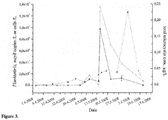
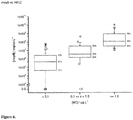
- the developed qPCR assay was applied to environmental sample analysis, and the correlation between gene copy numbers and microcystin concentrations examined.
- the present invention is directed to a method for detecting the presence of microcystin-producing toxic cyanobacteria in a sample comprising the steps of:
- the samples prepared for the method of the invention comprising cyanobacterial material are preferably environmental samples, such as water samples which can be seawater samples or freshwater samples or other suitable environmental samples. While the method is mainly directed to the detection of toxic cyanobacteria, such as Microcystis aeruginosa, Planktothrix agardhii and Anabaena sp ., it can also be used for the quantification of the microcystin-producing toxic cyanobacteria in said samples. This can be done by performing quantitative-PCR (qPCR) on the extracted DNA using the primers of the present invention, and determining the gene copy number of the mcyB gene. Further, the toxic microcystin concentration in the sample may also be monitored by correlating said gene copy number obtained by qPCR to a corresponding microcystin concentration.
- qPCR quantitative-PCR
- the nucleic acid which is used as template in the PCR of step b) can be extracted and purified from the lysed cells by conventional methods.
- the suspension obtained from the lysed cells is preferably used directly as PCR template.
- an undiluted water sample suspected to comprise toxic cyanobacteria can be first filtered. Then filtered cells are suspended in sterile deionized water and cell lysis is carried out by heat treatment. The obtained suspension and nucleic acid therein can be used as such for the reaction mix of step b).
- step b) said primers amplify at least part of the target sequence in the mcyB gene as set forth in SEQ ID NO:1 corresponding to positions 6147-6251 of Microcystis aeruginosa genome described in Figure 4 , or as set forth in SEQ ID NO:2 corresponding to positions 6203-6305 of Planktothrix agardhii genome described in Figure 4 , or as set forth in SEQ ID NO:3 corresponding to positions 6170-6272 of Anabaena sp. described in Figure 4 .
- the amplicon i.e. the target sequence, which is amplified in step b
- the amplicon comprises at least 20, preferably at least 50, more preferably at least 80, and most preferably 103 or 105 consecutive nucleotides of the target sequence as defined by SEQ ID NO:1, SEQ ID NO:2 or SEQ ID NO:3.
- the primers used in the method comprise or consist of one of the following sequences:
- primers comprising or consisting of any of the sequences as set forth in SEQ ID NOS:4-7.
- the primer has 28-40 nucleotides. More preferably, the primer comprises less than 30, 35 or 40 nucleotides.
- probes comprising or consisting of any of the sequences as set forth in SEQ ID NOS:8-13.
- the probe has less than 40 nucleotides.
- the oligonucleotide primers and probes are short sequences of nucleotides (such as RNA or DNA, preferably DNA), typically with twenty-five to thirty or fewer bases.
- automated synthesizers allow the synthesis of oligonucleotides up to 160 to 200 bases and the present oligonucleotides may be elongated to add, e.g., a restriction enzyme cleavage site, to the oligonucleotide.
- the typical length of the primers is preferably 26-32, more preferably 28-30 nucleotides.
- kits for the detection of the presence of microcystin-producing toxic cyanobacteria may comprise primers and probes as defined above. Such primers and probes are described above and in the Examples below.
- said kit comprises means for a real-time polymerase chain reaction, such as labelled probes, polymerase enzymes, buffers and nucleotides.
- specifically hybridizing means complementary hybridization between an oligonucleotide and a target sequence.
- specifically refers to the specificity shown by the complementary hybridization, which allows for minor mismatches between the oligonucleotide and the sequence that may not jeopardize the annealing for detection of hybridization signals.
- Cyanobacterial strains used in this study are listed in Table 1. Strains were purchased from the Pasteur Culture Collection (PCC, Paris, France) and the Norwegian Institute for Water Research Cyanobacterial Culture Collection (NIVA, Oslo, Norway) and maintained as recommended by the providers. All NIVA strains were cultured in Z8 (Staub, 1961, modified NIVA 1972, 1976). Strains from PCC were cultured in either BG 11 (Sigma), nitrate omitted BG11 0 , or BG11 0 with added NaNO 3 and NaHCO 3 using formulations described by PCC. Three additional strains from other sources were also maintained.
- Microcystis aeruginosa NIES-107 (National Institute of Environmental Studies, Tsukuba, Japan) was cultured in Z8.
- Anabaena lapponica strain 966 (Finnish Environment Institute, Dr. Jarkko Rapala) as well as Anabaena sp. 90 (University of Helsinki, Prof. Kaarina Sivonen) were cultured in modified Z8 with no added nitrogen. All cultures were maintained at 23 °C using PowerGlo 20 W aquarium bulbs (Hagen, Japan) as the light source.
- Cyanobacterial cells were microscopically counted from 2.5 week old cultures of NIVA-CYA 267/4, NIVA-CYA 140 and NIVA-CYA 299.
- Samples were diluted 1:100-1:200 in deionized water and preserved in Lugol's iodine. After a 16 h sedimentation of 10 ml sample aliquots counting was carried out on a Nikon TE-200 inverted microscope (Nikon, Japan) with 10x and 40x objectives. Cells from enumerated cultures were harvested for mcyB quantification. Environmental samples were collected from Hauninen reservoir, Raisio, Finland during April-June 2008 (11 samples) and from freshwater lakes at ⁇ land Islands during July 2008 (13 samples). All samples, including extracted DNA and other PCR templates, were kept frozen at -20 °C until further analysis. Culture and environmental samples were either frozen fresh or freeze-dried.
- the mobile phase consisted of acetonitrile (HPLC S grade, Rathburn, Walkerburn, UK) (solvent B) - Milli-Q ultrapure water (Millipore, Molsheim, France) (solvent A) both containing 0.05% trifluoroacetic acid (TFA; Fluka, Buchs, Switzerland) with the following linear gradient programme: 0 min 25% B, 7 min 70% B, 10 min 70% B, 10.1 min 25% B; stop time 15 min; flow-rate 1 ml/min. Injection volumes were 10 ⁇ l. Additionally, the samples were analysed on a Merck Purospher STAR RP-18e column, 55 mm ⁇ 4 mm I.D. with 3 ⁇ m particles (Spoof and Meriluoto, 2005).
- microcystins a) extract of Microcystis aeruginosa PCC 7820 and b) extract of Microcystis aeruginosa NIES-107 as described in (Spoof et al., 2003).
- LC-MS experiments were performed on an Agilent 1100 Series HPLC system coupled to a Waters Micromass (Manchester, UK) Quattro Micro triple-quadrupole mass spectrometer equipped with an electrospray interface. Toxins were quantified on a Merck Purospher STAR RP-18 endcapped column (30 mm ⁇ 4 mm, 3 ⁇ m particles).
- the mobile phase consisted of a gradient of 0.1% aqueous formic acid (solvent A) and acetonitrile (solvent B) with the following linear gradient program: 25% B to 70% B over 10 min, then to 90% B over 2 min, where it was held for 1 min.
- Injection interval was 16 min, injection volume 10 ⁇ l, flow rate 0.5 ml/min, and column oven temperature 40 °C.
- Capillary voltage was set at 3.8 kV and cone voltage at 40 V (dmMC-RR and MC-RR) or 75 V (rest of the microcystins and nodularin).
- Desolvation gas (nitrogen) temperature and flow rate were set at 300 °C and 650 L/h, respectively.
- Ion source temperature was set at 150 °C. Ions were detected in the positive electrospray ionization mode.
- the monitored signals in the selected ion recording (SIR) mode were m / z [dmMC-RR+2H] 2+ 512.8, [MC-RR+2H] 2+ 519.8, [MC-LF+H] + 986.5 and [MC-LF+Na] + 1008.5, [dmMC-LR+H] + 986.5, [MC-LR+H] + 995.5, [MC-LY+H] + 1002.5, [MC-LW+H] + 1025.5 and [MC-LW+Na] + 1047.5, [MC-YR+H] + 1045.5, [dmNod+H] + 811.5 and [Nod+H] + 825.5. Data acquisition was done with Masslynx v.
- LC-MS-MS experiments were carried out on an Agilent 1200 Rapid Resolution (RR) LC coupled to a Bruker Daltonics HCT Ultra ion trap mass spectrometer (Bremen, Germany) with electrospray ion (ESI) source.
- the 1200 RR LC system included a binary pump, a vacuum degasser, a SL autosampler, and a thermostatted column compartment.
- the ion trap was operated in the positive electrospray ion mode.
- Ion source parameters were set as follows: dry temperature 350 °C, nebulizer pressure 40 psi, dry gas flow 10.0 L/min, capillary voltage 4.0 kV.
- An MS scan range from 500 to 1200 m/z with the Smart Parameter Setting (SPS) function was employed.
- the ICC target was set to 300 000 with a maximum accumulation time of 100 ms.
- Abundant MS-MS fragmentation was assisted by the SmartFrag setting. Separation of toxins was achieved on Ascentis C 18 , 50 mm ⁇ 3 mm I.D. column with 3 ⁇ m particles (Supelco) at 40°C. Injection volumes were 5 ⁇ l.
- the mobile phase consisted of water-acetonitrile-formic acid (99:1:0.1; solvent A) and acetonitrile-formic acid (100:0.1; solvent B) with the following linear gradient programme: 0 min 25% B, 5 min 70% B, 6 min 70% B, 6.1 min 25% B; stop time 10 min: flow-rate 0.5 ml/min.
- Primary monitored signals were the same as with the Quattro micro instrument but mass spectra acquired with the HCT Ultra instrument allowed for identification of additional toxins based on fragmentation patterns. Data acquisition was done with Bruker Compass 1.3 software.
- Extracts were diluted with water according to HPLC results to adjust the microcystin concentrations to the working range of the assay. Two different dilutions were made of some samples.
- Genomic DNA was extracted from freeze-dried cells of cultured strains or freeze-dried ⁇ land Islands environmental samples using the NucleoSpin Plant II DNA extraction kit (Macherey-Nagel, Düren, Germany) according to the manufacturer's instructions. DNA concentration and quality were determined spectrophotometrically (ND-1000, NanoDrop Technologies, Wilmington, DE, USA). Filtering and cell lysis was performed as follows: 10 ml of harvested cell culture was suspended in 90 ml of sterile deionized water, and vacuum filtered on a fiberglass filter ( ⁇ 47 mm GF/C, Whatman). In the case of Hauninen reservoir samples, 50 ml of undiluted water was filtered.
- Pieces of each filter were cut out and suspended in 100 ⁇ l of sterile deionized water. Cell lysis was carried out at 80 °C for 5 min. The suspension was thereafter used directly as PCR template. Filter piece dimensions were recorded for quantification purposes. Microscopically counted culture samples were treated using both methods described above, with a few modifications: cells were harvested as aliquots of both 5 ml and 10 ml, and subjected either to filtration or DNA extraction. Sample preparation was carried out on freshly harvested cells. Cells were collected for DNA extraction by centrifugation (4 °C, 3220 g, 20 min, Eppendorf 5810R, Hamburg, Germany).
- mcyB sequences (Nishizawa et al., 1999; Tillett et al., 2000; Christiansen et al., 2003; Rouhiainen et al., 2004; Kaneko et al., 2007) were retrieved from the GenBank Nucleotide database, and primers and probes were designed based on the sequence alignment. Oligonucleotides were manufactured by Thermo Scientific (Ulm, Germany) and biomers.net (Ulm, Germany) (Table 2). Probes were synthesized with 5'-C6-aminolinkers and 3'-phosphate groups.
- All detection probes were labeled at the 5' end aminolinker with an organic Tb 3+ chelate (2,2',2",2'"- ⁇ 6,6'- ⁇ 4"-[2-(4-Isothiocyanatophenyl)ethyl]pyratzole-1",3"-diyl ⁇ bis(pyridine)-2,2'-diyl ⁇ bis(methylenenitrilo) ⁇ tetrakis(acetato) ⁇ terbium(III)) as described previously (Nurmi et al., 2002). All quencher probes had a BHQ1 (Black hole quencher® 1) molecule conjugated at their 3'-ends by the oligonucleotide manufacturer.
- BHQ1 Black hole quencher® 1
- Thermocycling was performed using a PTC-200 Thermal Cycler (MJ Research, Watertown, MA, USA), starting with 10 min at 95 °C, followed by 35 cycles of 30 s at 95 °C, 30 s at 58 °C and 1 min at 72 °C, and ending with 10 min at 72 °C.
- the PCR products were analyzed on a 2 % agarose gel stained with ethidium bromide (0.5 ng L -1 ).
- amplification product accumulation is monitored by measuring the long-life fluorescence obtained from chelate moieties freed from detection probes by the 5' ⁇ 3' exonuclease activity of the DNA polymerase. Background fluorescence is kept at minimum with the help of quencher probes. Detection probe specificity was confirmed using qPCR and purified genomic DNA from all cultured strains.
- Each qPCR reaction contained 4 nmol of dNTPs, 2 pmol of each forward primer and 6 pmol of the reverse primer, 0.2 units of DyNAzyme II HotStart DNA polymerase, 1X DyNAzyme II HotStart buffer, 0.25 pmol detection probe (either mcyB-mP, mcyB-pP or mcyB-aP), 2.5 pmol of corresponding quencher probe (mcyB-mQ or mcyB-pQ, for mcyB-aQ the amount 3.0 pmol was used) and 1 ng of template DNA.
- the reactions were filled with sterile Milli-Q water to 20 ⁇ l.
- mcyB primers and detection probes were tested on extracted DNA and heat-treated cells of 30 cyanobacterial strains. Probe specificities, microcystins and other toxins produced by the strains are listed in Table 1. No false negatives were observed. No amplification products were observed from non-microcystin-producing strains, except for nodularin-producing Nodularia harveyana PCC 7804. However, the Nodularia amplification product was not detected by any of the detection probes in qPCR. Thus, all genus-specific detection probes performed with 100 % specificity and sensitivity.
- Each of the three possible primer combinations could be used to amplify the target mcyB sequence from all microcystin-producing strains independent of genus, but amplification efficiences varied from strain to strain (data not shown). When the three forward primers were used together, efficient amplification was achieved.
- Sensitivities and amplification efficiencies were determined using standards prepared from purified PCR products.
- the analytical sensitivity was 10 mcyB copies per reaction and log-linear range 10 to 10 7 copies of mcyB for all three target genera ( Figure 1 ).
- PCR templates were prepared from culture samples of known cell density.
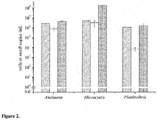
- the quality of extracted DNA varied, A 260 /A 280 ratios ranged from 1.7 to 2.0. Heat-treated samples were too dilute to be examined spectrophotometrically. Filtration and heat-treatment of samples yielded 4-330 times the mcyB copy numbers of the corresponding extracted DNA ( Figure 2 ).
- the target sequence is located within the second thiolation motif of mcyB , in a peptidyl carrier protein domain coding sequence, the domain that serves to transfer the growing polypeptide chain from McyB to McyC for further elongation (Nishizawa et al., 1999; Tillett et al., 2000) To our knowledge, this is the first time it has been used as a target for qPCR detection. Unlike the mcyB first adenylation domain targeted in many studies (e.g.
- the second condensation, adenylation and thiolation motifs of mcyB have their counterparts in the ndaA gene (Moffitt and Neilan, 2004), and the amplicon in Nodularia shares 80%, 75% and 76% sequence identity with the corresponding amplicons in Anabaena, Microcystis and Planktothrix, respectively.
- the detection probes were shown to hybridize only with their intended targets, mcyB qPCR specificity was not compromised by the amplification of ndaA.
- generel primers provide information about the abundance of all toxic species (Al-Tebrineh et al., 2011), genus-specific detection has the added benefit of population dynamics monitoring.
- the sensitive label technology (Nurmi et al., 2002) used provides the assay with good sensitivity and a broad quantification range.
- microcystins are relatively stable and can persist in the water for weeks (Lahti et al., 1997), thus trace amounts could have been present in the samples, even after the producing organism no longer was.
- a qPCR method to detect and quantify all potentially microcystin-producing members of three major bloom-forming genera, coupled to efficient sample preparation, provides a means for fast early-warning monitoring.
- Potentially microcystin-producing cyanobacteria can be detected with good sensitivity and a broad quantification range, responding to the significant variance in cell densities in the environment.
- the ⁇ land Islands gene quantification results show that small separated sample collection points are not enough to provide us with general gene copy number guidelines.
- Cyanobacterial species Strain a Cyanotoxins produced b mcyB amplicon detected with genus-specific probes mcyB- aP, Anabaena mcyB -mP, Microcystis mcyB- pP, Planktothrix Anabaena sp. 90 MC-RR, MC-LR, dmMC-LR, dmMC-RR + - - Anabaena lemmermannii var. minor NIVA-CYA 83/1 dm-MC-LR , MC-RR, dmMC-RR, MC-LR + - - Anabaena lemmermannii var.
- PCC 7422 - - - - Planktothrix agardhii NIVA-CYA 15 didmMC-RR , dmMC-RR - - + Planktothrix agardhii NIVA-CYA 59/1 dmMC-RR , MC-LR, dmMC-LR - - + Planktothrix agardhii NIVA-CYA 299 dmMC-RR - - + Planktothrix agardhii PCC 7805 - - - - Planktothrix agardhii NIVA-CYA 12 - - - - Planktothrix agardhii NIVA-CYA 21 - - - - Planktothrix agardhii NIVA-CYA 21 - - - - Plan
- Oligonucleotide 5'-3' sequence T m /°C Oligonucleotide type Specificity mcyBHF03A GCTTTAATCCACAAGAAGCTTTATTAGC 56,1 forward primer Anabaena mcyBHF03M AGATTTTAATCCACAAGAAGCTTTATTAGC 56,1 forward primer Microcystis mcyBHF03P GGTTTAATCAACAAGAGGCTTTATTAGC 55,9 forward primer Planktothrix mcyBHR04 CTGTTGCCTCCTAGTTCAAAAAATGACT 58,5 reverse primer All three target genera mcyB-aP ACTGAATTATTGGAGGTAGAGGTGAGTGATAC 58,9 detection probe Anabaena mcyB-aQ CCTCTACCTCCAATAATTCA 43,6 quencher probe Anabaena mcyB-mP GGGTGAGTTATTAGAAG
Landscapes
- Chemical & Material Sciences (AREA)
- Life Sciences & Earth Sciences (AREA)
- Organic Chemistry (AREA)
- Proteomics, Peptides & Aminoacids (AREA)
- Health & Medical Sciences (AREA)
- Engineering & Computer Science (AREA)
- Analytical Chemistry (AREA)
- Zoology (AREA)
- Wood Science & Technology (AREA)
- Genetics & Genomics (AREA)
- Biotechnology (AREA)
- Microbiology (AREA)
- Bioinformatics & Cheminformatics (AREA)
- Molecular Biology (AREA)
- Biophysics (AREA)
- Physics & Mathematics (AREA)
- General Health & Medical Sciences (AREA)
- Biochemistry (AREA)
- Immunology (AREA)
- General Engineering & Computer Science (AREA)
- Pathology (AREA)
- Botany (AREA)
- Mycology (AREA)
- Chemical Kinetics & Catalysis (AREA)
- Measuring Or Testing Involving Enzymes Or Micro-Organisms (AREA)
Priority Applications (2)
| Application Number | Priority Date | Filing Date | Title |
|---|---|---|---|
| HRP20190129TT HRP20190129T1 (hr) | 2011-11-09 | 2012-11-09 | Postupak i početnice namijenjeni detektiranju toksičnih cijanobakterija koje proizvode mikrocistin |
| PL12795832T PL2776584T3 (pl) | 2011-11-09 | 2012-11-09 | Sposób i startery do wykrywania toksycznych cyjanobakterii wytwarzających mikrocystynę |
Applications Claiming Priority (3)
| Application Number | Priority Date | Filing Date | Title |
|---|---|---|---|
| US201161557496P | 2011-11-09 | 2011-11-09 | |
| FI20116109 | 2011-11-09 | ||
| PCT/FI2012/051098 WO2013068654A1 (en) | 2011-11-09 | 2012-11-09 | Method and primers for the detection of microcystin-producing toxic cyanobacteria |
Publications (2)
| Publication Number | Publication Date |
|---|---|
| EP2776584A1 EP2776584A1 (en) | 2014-09-17 |
| EP2776584B1 true EP2776584B1 (en) | 2019-01-02 |
Family
ID=48288593
Family Applications (1)
| Application Number | Title | Priority Date | Filing Date |
|---|---|---|---|
| EP12795832.0A Not-in-force EP2776584B1 (en) | 2011-11-09 | 2012-11-09 | Method and primers for the detection of microcystin-producing toxic cyanobacteria |
Country Status (6)
| Country | Link |
|---|---|
| US (1) | US20150093748A1 (enExample) |
| EP (1) | EP2776584B1 (enExample) |
| JP (1) | JP2014532438A (enExample) |
| CN (1) | CN104145025A (enExample) |
| PL (1) | PL2776584T3 (enExample) |
| WO (1) | WO2013068654A1 (enExample) |
Families Citing this family (10)
| Publication number | Priority date | Publication date | Assignee | Title |
|---|---|---|---|---|
| CN104278081A (zh) * | 2013-07-03 | 2015-01-14 | 宁波大学 | 一种用lamp-lfd芯片高通量检测微囊藻毒素的方法 |
| CN103484394B (zh) * | 2013-07-04 | 2015-02-18 | 河南师范大学 | 有毒微囊藻菌株及其毒素纯化方法 |
| EP3526234A4 (en) * | 2016-10-17 | 2020-06-24 | Newsouth Innovations Pty Limited | PRODUCTION OF RECOMBINANT MICROCYSTINE |
| WO2018219619A1 (en) * | 2017-05-09 | 2018-12-06 | Cyano Biotech Gmbh | Method for modifying microcystins and nodularins |
| US12391996B2 (en) | 2018-09-26 | 2025-08-19 | The U.S. Epa | Early warning genetic testing of toxic cyanobacteria in water supply |
| CN110157725A (zh) * | 2019-05-21 | 2019-08-23 | 武汉藻优生物科技有限公司 | 使不产毒微藻产生微囊藻毒素的方法及得到的产毒微藻 |
| CN111518936A (zh) * | 2019-09-02 | 2020-08-11 | 广州微芯生物科技有限公司 | 用于检测产毒铜绿微囊藻的荧光定量pcr方法及相应的试剂盒 |
| KR102421942B1 (ko) * | 2020-10-20 | 2022-07-19 | 한국수자원공사 | 마이크로시스티스, 독성 마이크로시스티스 검출용 프라이머 세트 및 이를 이용한 독성 마이크로시스티스 검출방법 |
| CN113652472B (zh) * | 2021-07-27 | 2022-07-26 | 壹健生物科技(苏州)有限公司 | 一种检测产毒微囊藻菌型的探针组合、芯片、试剂盒及方法 |
| CN118979117A (zh) * | 2024-10-22 | 2024-11-19 | 水利部交通运输部国家能源局南京水利科学研究院 | 一种特异性引物探针组合及其检测试剂盒和应用 |
Family Cites Families (5)
| Publication number | Priority date | Publication date | Assignee | Title |
|---|---|---|---|---|
| CN1428434A (zh) * | 2002-11-14 | 2003-07-09 | 中国科学院水生生物研究所 | 一种检测微囊藻产毒的方法 |
| FI20030771A7 (fi) * | 2003-05-21 | 2004-11-22 | Helsingin Yliopisto | Menetelmä toksisten syanobakteerien määrittämiseksi |
| US8927217B2 (en) | 2005-05-31 | 2015-01-06 | Newsouth Innovations Pty Limited | Detection of hepatotoxic cyanobacteria |
| WO2007005649A2 (en) * | 2005-06-30 | 2007-01-11 | Applera Corporation | Proximity probing of target proteins comprising restriction and/or extension field |
| WO2011003184A1 (en) | 2009-07-08 | 2011-01-13 | National Research Council Of Canada | Detection of microcystin-producing cyanobacteria |
-
2012
- 2012-11-09 JP JP2014540530A patent/JP2014532438A/ja active Pending
- 2012-11-09 CN CN201280066592.6A patent/CN104145025A/zh active Pending
- 2012-11-09 US US14/357,124 patent/US20150093748A1/en not_active Abandoned
- 2012-11-09 EP EP12795832.0A patent/EP2776584B1/en not_active Not-in-force
- 2012-11-09 PL PL12795832T patent/PL2776584T3/pl unknown
- 2012-11-09 WO PCT/FI2012/051098 patent/WO2013068654A1/en not_active Ceased
Non-Patent Citations (1)
| Title |
|---|
| None * |
Also Published As
| Publication number | Publication date |
|---|---|
| JP2014532438A (ja) | 2014-12-08 |
| WO2013068654A1 (en) | 2013-05-16 |
| CN104145025A (zh) | 2014-11-12 |
| US20150093748A1 (en) | 2015-04-02 |
| PL2776584T3 (pl) | 2019-05-31 |
| EP2776584A1 (en) | 2014-09-17 |
Similar Documents
| Publication | Publication Date | Title |
|---|---|---|
| EP2776584B1 (en) | Method and primers for the detection of microcystin-producing toxic cyanobacteria | |
| Hautala et al. | Quantitative PCR detection and improved sample preparation of microcystin-producing Anabaena, Microcystis and Planktothrix | |
| Furukawa et al. | Highly sensitive real-time PCR assay for quantification of toxic cyanobacteria based on microcystin synthetase A gene | |
| AU2018236835B2 (en) | Compositions and methods for detecting gastrointestinal pathogen nucleic acid | |
| Cai et al. | Label-free technology for the amplified detection of microRNA based on the allosteric hairpin DNA switch and hybridization chain reaction | |
| KR101990163B1 (ko) | 독소 산생성 클로스트리듐·디피실의 검출 방법 | |
| AU2006209416A1 (en) | Method of quantitatively analysing microorganism targeting rRNA | |
| EP3255155B1 (en) | Compositions and methods for detecting bv-associated bacterial nucleic acid | |
| US20130011831A1 (en) | Compositions And Methods For The Rapid Detection Of Legionella pneumophila | |
| CN106801103B (zh) | 一种无乳链球菌的检测引物组、检测试剂盒和多重pcr检测方法 | |
| DE102015012691A1 (de) | Verfahren zum quantitativen Nachweis von Vibrio parahaemolyticus, Vibrio vulnificus und Vibrio cholerae | |
| DK2776584T3 (en) | METHOD AND PRIMARY FOR DETECTING MICROCYSTIN-PRODUCING TOXIC CYANOBACTERIES | |
| EP1329522B2 (en) | Method of detecting norwalk-like virus (gi) | |
| EP1922415A1 (en) | Use of both rd9 and is6110 as nucleic acid targets for the diagnosis of tuberculosis, and provision of multiplex-compliant is6110 and rd9 targets | |
| Yen et al. | Detection and quantification of major toxigenic Microcystis genotypes in Moo-Tan reservoir and associated water treatment plant | |
| KR102719722B1 (ko) | 에쿠올 산생능의 측정 방법 | |
| WO2011003184A1 (en) | Detection of microcystin-producing cyanobacteria | |
| CN112375836B (zh) | 河流弧菌实时荧光pcr检测方法及应用 | |
| Pedro et al. | Polymerase chain reaction (PCR) detection of the predominant microcystin-producing genotype of cyanobacteria in Mozambican lakes | |
| Tomioka et al. | Quantification of Microcystis in a eutrophic lake by simple DNA extraction and SYBR Green real-time PCR | |
| JP2017099361A (ja) | 核酸増幅法 | |
| JP7734504B2 (ja) | 土壌中からの鉄酸化能を有する細菌の菌数測定方法 | |
| US20170137868A1 (en) | Process control strains and methods of detecting | |
| EP2510125B1 (en) | Hyperprimers | |
| Chang et al. | Evaluation of DNA extraction methods and dilution treatment for detection and quantification of Acanthamoeba in water and biofilm by real-time PCR |
Legal Events
| Date | Code | Title | Description |
|---|---|---|---|
| PUAI | Public reference made under article 153(3) epc to a published international application that has entered the european phase |
Free format text: ORIGINAL CODE: 0009012 |
|
| 17P | Request for examination filed |
Effective date: 20140606 |
|
| AK | Designated contracting states |
Kind code of ref document: A1 Designated state(s): AL AT BE BG CH CY CZ DE DK EE ES FI FR GB GR HR HU IE IS IT LI LT LU LV MC MK MT NL NO PL PT RO RS SE SI SK SM TR |
|
| DAX | Request for extension of the european patent (deleted) | ||
| STAA | Information on the status of an ep patent application or granted ep patent |
Free format text: STATUS: EXAMINATION IS IN PROGRESS |
|
| 17Q | First examination report despatched |
Effective date: 20170609 |
|
| GRAP | Despatch of communication of intention to grant a patent |
Free format text: ORIGINAL CODE: EPIDOSNIGR1 |
|
| STAA | Information on the status of an ep patent application or granted ep patent |
Free format text: STATUS: GRANT OF PATENT IS INTENDED |
|
| GRAJ | Information related to disapproval of communication of intention to grant by the applicant or resumption of examination proceedings by the epo deleted |
Free format text: ORIGINAL CODE: EPIDOSDIGR1 |
|
| GRAP | Despatch of communication of intention to grant a patent |
Free format text: ORIGINAL CODE: EPIDOSNIGR1 |
|
| GRAJ | Information related to disapproval of communication of intention to grant by the applicant or resumption of examination proceedings by the epo deleted |
Free format text: ORIGINAL CODE: EPIDOSDIGR1 |
|
| GRAP | Despatch of communication of intention to grant a patent |
Free format text: ORIGINAL CODE: EPIDOSNIGR1 |
|
| INTG | Intention to grant announced |
Effective date: 20180528 |
|
| INTG | Intention to grant announced |
Effective date: 20180608 |
|
| INTG | Intention to grant announced |
Effective date: 20180621 |
|
| GRAS | Grant fee paid |
Free format text: ORIGINAL CODE: EPIDOSNIGR3 |
|
| GRAA | (expected) grant |
Free format text: ORIGINAL CODE: 0009210 |
|
| STAA | Information on the status of an ep patent application or granted ep patent |
Free format text: STATUS: THE PATENT HAS BEEN GRANTED |
|
| AK | Designated contracting states |
Kind code of ref document: B1 Designated state(s): AL AT BE BG CH CY CZ DE DK EE ES FI FR GB GR HR HU IE IS IT LI LT LU LV MC MK MT NL NO PL PT RO RS SE SI SK SM TR |
|
| REG | Reference to a national code |
Ref country code: GB Ref legal event code: FG4D |
|
| REG | Reference to a national code |
Ref country code: CH Ref legal event code: EP Ref country code: AT Ref legal event code: REF Ref document number: 1084430 Country of ref document: AT Kind code of ref document: T Effective date: 20190115 |
|
| REG | Reference to a national code |
Ref country code: DE Ref legal event code: R096 Ref document number: 602012055470 Country of ref document: DE |
|
| REG | Reference to a national code |
Ref country code: HR Ref legal event code: TUEP Ref document number: P20190129 Country of ref document: HR |
|
| REG | Reference to a national code |
Ref country code: IE Ref legal event code: FG4D |
|
| REG | Reference to a national code |
Ref country code: PT Ref legal event code: SC4A Ref document number: 2776584 Country of ref document: PT Date of ref document: 20190214 Kind code of ref document: T Free format text: AVAILABILITY OF NATIONAL TRANSLATION Effective date: 20190208 |
|
| REG | Reference to a national code |
Ref country code: DK Ref legal event code: T3 Effective date: 20190221 |
|
| REG | Reference to a national code |
Ref country code: HR Ref legal event code: T1PR Ref document number: P20190129 Country of ref document: HR |
|
| REG | Reference to a national code |
Ref country code: SE Ref legal event code: TRGR |
|
| REG | Reference to a national code |
Ref country code: NL Ref legal event code: FP |
|
| REG | Reference to a national code |
Ref country code: NO Ref legal event code: T2 Effective date: 20190102 |
|
| REG | Reference to a national code |
Ref country code: ES Ref legal event code: FG2A Ref document number: 2710206 Country of ref document: ES Kind code of ref document: T3 Effective date: 20190423 |
|
| REG | Reference to a national code |
Ref country code: LT Ref legal event code: MG4D |
|
| REG | Reference to a national code |
Ref country code: HU Ref legal event code: AG4A Ref document number: E041275 Country of ref document: HU |
|
| REG | Reference to a national code |
Ref country code: AT Ref legal event code: MK05 Ref document number: 1084430 Country of ref document: AT Kind code of ref document: T Effective date: 20190102 |
|
| PG25 | Lapsed in a contracting state [announced via postgrant information from national office to epo] |
Ref country code: LT Free format text: LAPSE BECAUSE OF FAILURE TO SUBMIT A TRANSLATION OF THE DESCRIPTION OR TO PAY THE FEE WITHIN THE PRESCRIBED TIME-LIMIT Effective date: 20190102 |
|
| PG25 | Lapsed in a contracting state [announced via postgrant information from national office to epo] |
Ref country code: BG Free format text: LAPSE BECAUSE OF FAILURE TO SUBMIT A TRANSLATION OF THE DESCRIPTION OR TO PAY THE FEE WITHIN THE PRESCRIBED TIME-LIMIT Effective date: 20190402 Ref country code: RS Free format text: LAPSE BECAUSE OF FAILURE TO SUBMIT A TRANSLATION OF THE DESCRIPTION OR TO PAY THE FEE WITHIN THE PRESCRIBED TIME-LIMIT Effective date: 20190102 Ref country code: GR Free format text: LAPSE BECAUSE OF FAILURE TO SUBMIT A TRANSLATION OF THE DESCRIPTION OR TO PAY THE FEE WITHIN THE PRESCRIBED TIME-LIMIT Effective date: 20190403 Ref country code: IS Free format text: LAPSE BECAUSE OF FAILURE TO SUBMIT A TRANSLATION OF THE DESCRIPTION OR TO PAY THE FEE WITHIN THE PRESCRIBED TIME-LIMIT Effective date: 20190502 Ref country code: LV Free format text: LAPSE BECAUSE OF FAILURE TO SUBMIT A TRANSLATION OF THE DESCRIPTION OR TO PAY THE FEE WITHIN THE PRESCRIBED TIME-LIMIT Effective date: 20190102 |
|
| REG | Reference to a national code |
Ref country code: DE Ref legal event code: R097 Ref document number: 602012055470 Country of ref document: DE |
|
| PG25 | Lapsed in a contracting state [announced via postgrant information from national office to epo] |
Ref country code: AL Free format text: LAPSE BECAUSE OF FAILURE TO SUBMIT A TRANSLATION OF THE DESCRIPTION OR TO PAY THE FEE WITHIN THE PRESCRIBED TIME-LIMIT Effective date: 20190102 Ref country code: AT Free format text: LAPSE BECAUSE OF FAILURE TO SUBMIT A TRANSLATION OF THE DESCRIPTION OR TO PAY THE FEE WITHIN THE PRESCRIBED TIME-LIMIT Effective date: 20190102 Ref country code: EE Free format text: LAPSE BECAUSE OF FAILURE TO SUBMIT A TRANSLATION OF THE DESCRIPTION OR TO PAY THE FEE WITHIN THE PRESCRIBED TIME-LIMIT Effective date: 20190102 Ref country code: SK Free format text: LAPSE BECAUSE OF FAILURE TO SUBMIT A TRANSLATION OF THE DESCRIPTION OR TO PAY THE FEE WITHIN THE PRESCRIBED TIME-LIMIT Effective date: 20190102 Ref country code: RO Free format text: LAPSE BECAUSE OF FAILURE TO SUBMIT A TRANSLATION OF THE DESCRIPTION OR TO PAY THE FEE WITHIN THE PRESCRIBED TIME-LIMIT Effective date: 20190102 Ref country code: CZ Free format text: LAPSE BECAUSE OF FAILURE TO SUBMIT A TRANSLATION OF THE DESCRIPTION OR TO PAY THE FEE WITHIN THE PRESCRIBED TIME-LIMIT Effective date: 20190102 |
|
| PLBE | No opposition filed within time limit |
Free format text: ORIGINAL CODE: 0009261 |
|
| STAA | Information on the status of an ep patent application or granted ep patent |
Free format text: STATUS: NO OPPOSITION FILED WITHIN TIME LIMIT |
|
| REG | Reference to a national code |
Ref country code: HR Ref legal event code: ODRP Ref document number: P20190129 Country of ref document: HR Payment date: 20191011 Year of fee payment: 8 |
|
| PG25 | Lapsed in a contracting state [announced via postgrant information from national office to epo] |
Ref country code: SM Free format text: LAPSE BECAUSE OF FAILURE TO SUBMIT A TRANSLATION OF THE DESCRIPTION OR TO PAY THE FEE WITHIN THE PRESCRIBED TIME-LIMIT Effective date: 20190102 |
|
| 26N | No opposition filed |
Effective date: 20191003 |
|
| PG25 | Lapsed in a contracting state [announced via postgrant information from national office to epo] |
Ref country code: SI Free format text: LAPSE BECAUSE OF FAILURE TO SUBMIT A TRANSLATION OF THE DESCRIPTION OR TO PAY THE FEE WITHIN THE PRESCRIBED TIME-LIMIT Effective date: 20190102 |
|
| PG25 | Lapsed in a contracting state [announced via postgrant information from national office to epo] |
Ref country code: TR Free format text: LAPSE BECAUSE OF FAILURE TO SUBMIT A TRANSLATION OF THE DESCRIPTION OR TO PAY THE FEE WITHIN THE PRESCRIBED TIME-LIMIT Effective date: 20190102 |
|
| PG25 | Lapsed in a contracting state [announced via postgrant information from national office to epo] |
Ref country code: LU Free format text: LAPSE BECAUSE OF NON-PAYMENT OF DUE FEES Effective date: 20191109 Ref country code: MC Free format text: LAPSE BECAUSE OF FAILURE TO SUBMIT A TRANSLATION OF THE DESCRIPTION OR TO PAY THE FEE WITHIN THE PRESCRIBED TIME-LIMIT Effective date: 20190102 |
|
| REG | Reference to a national code |
Ref country code: HR Ref legal event code: ODRP Ref document number: P20190129 Country of ref document: HR Payment date: 20201014 Year of fee payment: 9 |
|
| PG25 | Lapsed in a contracting state [announced via postgrant information from national office to epo] |
Ref country code: CY Free format text: LAPSE BECAUSE OF FAILURE TO SUBMIT A TRANSLATION OF THE DESCRIPTION OR TO PAY THE FEE WITHIN THE PRESCRIBED TIME-LIMIT Effective date: 20190102 |
|
| PG25 | Lapsed in a contracting state [announced via postgrant information from national office to epo] |
Ref country code: MT Free format text: LAPSE BECAUSE OF FAILURE TO SUBMIT A TRANSLATION OF THE DESCRIPTION OR TO PAY THE FEE WITHIN THE PRESCRIBED TIME-LIMIT Effective date: 20190102 |
|
| REG | Reference to a national code |
Ref country code: HR Ref legal event code: ODRP Ref document number: P20190129 Country of ref document: HR Payment date: 20211014 Year of fee payment: 10 |
|
| PGFP | Annual fee paid to national office [announced via postgrant information from national office to epo] |
Ref country code: NO Payment date: 20211119 Year of fee payment: 10 Ref country code: HR Payment date: 20211014 Year of fee payment: 10 Ref country code: IE Payment date: 20211119 Year of fee payment: 10 Ref country code: NL Payment date: 20211118 Year of fee payment: 10 Ref country code: DE Payment date: 20211119 Year of fee payment: 10 Ref country code: FI Payment date: 20211118 Year of fee payment: 10 Ref country code: ES Payment date: 20211209 Year of fee payment: 10 Ref country code: DK Payment date: 20211117 Year of fee payment: 10 Ref country code: FR Payment date: 20211115 Year of fee payment: 10 Ref country code: SE Payment date: 20211117 Year of fee payment: 10 Ref country code: PT Payment date: 20211019 Year of fee payment: 10 Ref country code: GB Payment date: 20211118 Year of fee payment: 10 |
|
| PGFP | Annual fee paid to national office [announced via postgrant information from national office to epo] |
Ref country code: IT Payment date: 20211118 Year of fee payment: 10 Ref country code: HU Payment date: 20211019 Year of fee payment: 10 Ref country code: CH Payment date: 20211118 Year of fee payment: 10 Ref country code: BE Payment date: 20211118 Year of fee payment: 10 |
|
| PGFP | Annual fee paid to national office [announced via postgrant information from national office to epo] |
Ref country code: PL Payment date: 20211104 Year of fee payment: 10 |
|
| PG25 | Lapsed in a contracting state [announced via postgrant information from national office to epo] |
Ref country code: MK Free format text: LAPSE BECAUSE OF FAILURE TO SUBMIT A TRANSLATION OF THE DESCRIPTION OR TO PAY THE FEE WITHIN THE PRESCRIBED TIME-LIMIT Effective date: 20190102 |
|
| REG | Reference to a national code |
Ref country code: HR Ref legal event code: PBON Ref document number: P20190129 Country of ref document: HR Effective date: 20221109 |
|
| REG | Reference to a national code |
Ref country code: DE Ref legal event code: R119 Ref document number: 602012055470 Country of ref document: DE |
|
| REG | Reference to a national code |
Ref country code: DK Ref legal event code: EBP Effective date: 20221130 |
|
| REG | Reference to a national code |
Ref country code: NO Ref legal event code: MMEP |
|
| REG | Reference to a national code |
Ref country code: CH Ref legal event code: PL |
|
| REG | Reference to a national code |
Ref country code: SE Ref legal event code: EUG |
|
| REG | Reference to a national code |
Ref country code: NL Ref legal event code: MM Effective date: 20221201 |
|
| GBPC | Gb: european patent ceased through non-payment of renewal fee |
Effective date: 20221109 |
|
| REG | Reference to a national code |
Ref country code: BE Ref legal event code: MM Effective date: 20221130 |
|
| PG25 | Lapsed in a contracting state [announced via postgrant information from national office to epo] |
Ref country code: PT Free format text: LAPSE BECAUSE OF NON-PAYMENT OF DUE FEES Effective date: 20230509 Ref country code: NO Free format text: LAPSE BECAUSE OF NON-PAYMENT OF DUE FEES Effective date: 20221130 Ref country code: LI Free format text: LAPSE BECAUSE OF NON-PAYMENT OF DUE FEES Effective date: 20221130 Ref country code: HU Free format text: LAPSE BECAUSE OF NON-PAYMENT OF DUE FEES Effective date: 20221110 Ref country code: HR Free format text: LAPSE BECAUSE OF NON-PAYMENT OF DUE FEES Effective date: 20221109 Ref country code: CH Free format text: LAPSE BECAUSE OF NON-PAYMENT OF DUE FEES Effective date: 20221130 |
|
| PG25 | Lapsed in a contracting state [announced via postgrant information from national office to epo] |
Ref country code: SE Free format text: LAPSE BECAUSE OF NON-PAYMENT OF DUE FEES Effective date: 20221110 Ref country code: NL Free format text: LAPSE BECAUSE OF NON-PAYMENT OF DUE FEES Effective date: 20221201 |
|
| PG25 | Lapsed in a contracting state [announced via postgrant information from national office to epo] |
Ref country code: IT Free format text: LAPSE BECAUSE OF NON-PAYMENT OF DUE FEES Effective date: 20221109 Ref country code: IE Free format text: LAPSE BECAUSE OF NON-PAYMENT OF DUE FEES Effective date: 20221109 Ref country code: GB Free format text: LAPSE BECAUSE OF NON-PAYMENT OF DUE FEES Effective date: 20221109 Ref country code: DK Free format text: LAPSE BECAUSE OF NON-PAYMENT OF DUE FEES Effective date: 20221130 Ref country code: DE Free format text: LAPSE BECAUSE OF NON-PAYMENT OF DUE FEES Effective date: 20230601 |
|
| PG25 | Lapsed in a contracting state [announced via postgrant information from national office to epo] |
Ref country code: FR Free format text: LAPSE BECAUSE OF NON-PAYMENT OF DUE FEES Effective date: 20221130 Ref country code: BE Free format text: LAPSE BECAUSE OF NON-PAYMENT OF DUE FEES Effective date: 20221130 |
|
| REG | Reference to a national code |
Ref country code: ES Ref legal event code: FD2A Effective date: 20231228 |
|
| PG25 | Lapsed in a contracting state [announced via postgrant information from national office to epo] |
Ref country code: ES Free format text: LAPSE BECAUSE OF NON-PAYMENT OF DUE FEES Effective date: 20221110 |
|
| PG25 | Lapsed in a contracting state [announced via postgrant information from national office to epo] |
Ref country code: ES Free format text: LAPSE BECAUSE OF NON-PAYMENT OF DUE FEES Effective date: 20221110 |
|
| PG25 | Lapsed in a contracting state [announced via postgrant information from national office to epo] |
Ref country code: FI Free format text: LAPSE BECAUSE OF NON-PAYMENT OF DUE FEES Effective date: 20221109 |
|
| PG25 | Lapsed in a contracting state [announced via postgrant information from national office to epo] |
Ref country code: PL Free format text: LAPSE BECAUSE OF NON-PAYMENT OF DUE FEES Effective date: 20221109 |