EP2744896B1 - Pichia ciferrii zellen und deren verwendung - Google Patents
Pichia ciferrii zellen und deren verwendung Download PDFInfo
- Publication number
- EP2744896B1 EP2744896B1 EP12738448.5A EP12738448A EP2744896B1 EP 2744896 B1 EP2744896 B1 EP 2744896B1 EP 12738448 A EP12738448 A EP 12738448A EP 2744896 B1 EP2744896 B1 EP 2744896B1
- Authority
- EP
- European Patent Office
- Prior art keywords
- seq
- group
- analogue
- gene
- dna
- Prior art date
- Legal status (The legal status is an assumption and is not a legal conclusion. Google has not performed a legal analysis and makes no representation as to the accuracy of the status listed.)
- Active
Links
Images


Classifications
-
- C—CHEMISTRY; METALLURGY
- C12—BIOCHEMISTRY; BEER; SPIRITS; WINE; VINEGAR; MICROBIOLOGY; ENZYMOLOGY; MUTATION OR GENETIC ENGINEERING
- C12P—FERMENTATION OR ENZYME-USING PROCESSES TO SYNTHESISE A DESIRED CHEMICAL COMPOUND OR COMPOSITION OR TO SEPARATE OPTICAL ISOMERS FROM A RACEMIC MIXTURE
- C12P13/00—Preparation of nitrogen-containing organic compounds
- C12P13/02—Amides, e.g. chloramphenicol or polyamides; Imides or polyimides; Urethanes, i.e. compounds comprising N-C=O structural element or polyurethanes
-
- C—CHEMISTRY; METALLURGY
- C07—ORGANIC CHEMISTRY
- C07K—PEPTIDES
- C07K14/00—Peptides having more than 20 amino acids; Gastrins; Somatostatins; Melanotropins; Derivatives thereof
- C07K14/37—Peptides having more than 20 amino acids; Gastrins; Somatostatins; Melanotropins; Derivatives thereof from fungi
- C07K14/39—Peptides having more than 20 amino acids; Gastrins; Somatostatins; Melanotropins; Derivatives thereof from fungi from yeasts
-
- C—CHEMISTRY; METALLURGY
- C12—BIOCHEMISTRY; BEER; SPIRITS; WINE; VINEGAR; MICROBIOLOGY; ENZYMOLOGY; MUTATION OR GENETIC ENGINEERING
- C12N—MICROORGANISMS OR ENZYMES; COMPOSITIONS THEREOF; PROPAGATING, PRESERVING, OR MAINTAINING MICROORGANISMS; MUTATION OR GENETIC ENGINEERING; CULTURE MEDIA
- C12N15/00—Mutation or genetic engineering; DNA or RNA concerning genetic engineering, vectors, e.g. plasmids, or their isolation, preparation or purification; Use of hosts therefor
- C12N15/09—Recombinant DNA-technology
- C12N15/63—Introduction of foreign genetic material using vectors; Vectors; Use of hosts therefor; Regulation of expression
- C12N15/79—Vectors or expression systems specially adapted for eukaryotic hosts
- C12N15/80—Vectors or expression systems specially adapted for eukaryotic hosts for fungi
- C12N15/81—Vectors or expression systems specially adapted for eukaryotic hosts for fungi for yeasts
- C12N15/815—Vectors or expression systems specially adapted for eukaryotic hosts for fungi for yeasts for yeasts other than Saccharomyces
-
- C—CHEMISTRY; METALLURGY
- C12—BIOCHEMISTRY; BEER; SPIRITS; WINE; VINEGAR; MICROBIOLOGY; ENZYMOLOGY; MUTATION OR GENETIC ENGINEERING
- C12N—MICROORGANISMS OR ENZYMES; COMPOSITIONS THEREOF; PROPAGATING, PRESERVING, OR MAINTAINING MICROORGANISMS; MUTATION OR GENETIC ENGINEERING; CULTURE MEDIA
- C12N9/00—Enzymes; Proenzymes; Compositions thereof; Processes for preparing, activating, inhibiting, separating or purifying enzymes
- C12N9/0004—Oxidoreductases (1.)
- C12N9/0006—Oxidoreductases (1.) acting on CH-OH groups as donors (1.1)
-
- C—CHEMISTRY; METALLURGY
- C12—BIOCHEMISTRY; BEER; SPIRITS; WINE; VINEGAR; MICROBIOLOGY; ENZYMOLOGY; MUTATION OR GENETIC ENGINEERING
- C12N—MICROORGANISMS OR ENZYMES; COMPOSITIONS THEREOF; PROPAGATING, PRESERVING, OR MAINTAINING MICROORGANISMS; MUTATION OR GENETIC ENGINEERING; CULTURE MEDIA
- C12N9/00—Enzymes; Proenzymes; Compositions thereof; Processes for preparing, activating, inhibiting, separating or purifying enzymes
- C12N9/0004—Oxidoreductases (1.)
- C12N9/0071—Oxidoreductases (1.) acting on paired donors with incorporation of molecular oxygen (1.14)
- C12N9/0073—Oxidoreductases (1.) acting on paired donors with incorporation of molecular oxygen (1.14) with NADH or NADPH as one donor, and incorporation of one atom of oxygen 1.14.13
-
- C—CHEMISTRY; METALLURGY
- C12—BIOCHEMISTRY; BEER; SPIRITS; WINE; VINEGAR; MICROBIOLOGY; ENZYMOLOGY; MUTATION OR GENETIC ENGINEERING
- C12N—MICROORGANISMS OR ENZYMES; COMPOSITIONS THEREOF; PROPAGATING, PRESERVING, OR MAINTAINING MICROORGANISMS; MUTATION OR GENETIC ENGINEERING; CULTURE MEDIA
- C12N9/00—Enzymes; Proenzymes; Compositions thereof; Processes for preparing, activating, inhibiting, separating or purifying enzymes
- C12N9/10—Transferases (2.)
- C12N9/1003—Transferases (2.) transferring one-carbon groups (2.1)
- C12N9/1014—Hydroxymethyl-, formyl-transferases (2.1.2)
-
- C—CHEMISTRY; METALLURGY
- C12—BIOCHEMISTRY; BEER; SPIRITS; WINE; VINEGAR; MICROBIOLOGY; ENZYMOLOGY; MUTATION OR GENETIC ENGINEERING
- C12N—MICROORGANISMS OR ENZYMES; COMPOSITIONS THEREOF; PROPAGATING, PRESERVING, OR MAINTAINING MICROORGANISMS; MUTATION OR GENETIC ENGINEERING; CULTURE MEDIA
- C12N9/00—Enzymes; Proenzymes; Compositions thereof; Processes for preparing, activating, inhibiting, separating or purifying enzymes
- C12N9/10—Transferases (2.)
- C12N9/1025—Acyltransferases (2.3)
- C12N9/1029—Acyltransferases (2.3) transferring groups other than amino-acyl groups (2.3.1)
-
- C—CHEMISTRY; METALLURGY
- C12—BIOCHEMISTRY; BEER; SPIRITS; WINE; VINEGAR; MICROBIOLOGY; ENZYMOLOGY; MUTATION OR GENETIC ENGINEERING
- C12N—MICROORGANISMS OR ENZYMES; COMPOSITIONS THEREOF; PROPAGATING, PRESERVING, OR MAINTAINING MICROORGANISMS; MUTATION OR GENETIC ENGINEERING; CULTURE MEDIA
- C12N9/00—Enzymes; Proenzymes; Compositions thereof; Processes for preparing, activating, inhibiting, separating or purifying enzymes
- C12N9/10—Transferases (2.)
- C12N9/12—Transferases (2.) transferring phosphorus containing groups, e.g. kinases (2.7)
- C12N9/1205—Phosphotransferases with an alcohol group as acceptor (2.7.1), e.g. protein kinases
-
- C—CHEMISTRY; METALLURGY
- C12—BIOCHEMISTRY; BEER; SPIRITS; WINE; VINEGAR; MICROBIOLOGY; ENZYMOLOGY; MUTATION OR GENETIC ENGINEERING
- C12N—MICROORGANISMS OR ENZYMES; COMPOSITIONS THEREOF; PROPAGATING, PRESERVING, OR MAINTAINING MICROORGANISMS; MUTATION OR GENETIC ENGINEERING; CULTURE MEDIA
- C12N9/00—Enzymes; Proenzymes; Compositions thereof; Processes for preparing, activating, inhibiting, separating or purifying enzymes
- C12N9/88—Lyases (4.)
-
- C—CHEMISTRY; METALLURGY
- C12—BIOCHEMISTRY; BEER; SPIRITS; WINE; VINEGAR; MICROBIOLOGY; ENZYMOLOGY; MUTATION OR GENETIC ENGINEERING
- C12Y—ENZYMES
- C12Y114/00—Oxidoreductases acting on paired donors, with incorporation or reduction of molecular oxygen (1.14)
- C12Y114/13—Oxidoreductases acting on paired donors, with incorporation or reduction of molecular oxygen (1.14) with NADH or NADPH as one donor, and incorporation of one atom of oxygen (1.14.13)
- C12Y114/13169—Sphinganine C4-monooxygenase (1.14.13.169)
-
- C—CHEMISTRY; METALLURGY
- C12—BIOCHEMISTRY; BEER; SPIRITS; WINE; VINEGAR; MICROBIOLOGY; ENZYMOLOGY; MUTATION OR GENETIC ENGINEERING
- C12Y—ENZYMES
- C12Y203/00—Acyltransferases (2.3)
- C12Y203/01—Acyltransferases (2.3) transferring groups other than amino-acyl groups (2.3.1)
- C12Y203/0105—Serine C-palmitoyltransferase (2.3.1.50)
-
- C—CHEMISTRY; METALLURGY
- C12—BIOCHEMISTRY; BEER; SPIRITS; WINE; VINEGAR; MICROBIOLOGY; ENZYMOLOGY; MUTATION OR GENETIC ENGINEERING
- C12Y—ENZYMES
- C12Y207/00—Transferases transferring phosphorus-containing groups (2.7)
- C12Y207/01—Phosphotransferases with an alcohol group as acceptor (2.7.1)
- C12Y207/01091—Sphinganine kinase (2.7.1.91)
-
- C—CHEMISTRY; METALLURGY
- C12—BIOCHEMISTRY; BEER; SPIRITS; WINE; VINEGAR; MICROBIOLOGY; ENZYMOLOGY; MUTATION OR GENETIC ENGINEERING
- C12Y—ENZYMES
- C12Y401/00—Carbon-carbon lyases (4.1)
- C12Y401/02—Aldehyde-lyases (4.1.2)
- C12Y401/02027—Sphinganine-1-phosphate aldolase (4.1.2.27)
-
- Y—GENERAL TAGGING OF NEW TECHNOLOGICAL DEVELOPMENTS; GENERAL TAGGING OF CROSS-SECTIONAL TECHNOLOGIES SPANNING OVER SEVERAL SECTIONS OF THE IPC; TECHNICAL SUBJECTS COVERED BY FORMER USPC CROSS-REFERENCE ART COLLECTIONS [XRACs] AND DIGESTS
- Y02—TECHNOLOGIES OR APPLICATIONS FOR MITIGATION OR ADAPTATION AGAINST CLIMATE CHANGE
- Y02P—CLIMATE CHANGE MITIGATION TECHNOLOGIES IN THE PRODUCTION OR PROCESSING OF GOODS
- Y02P20/00—Technologies relating to chemical industry
- Y02P20/50—Improvements relating to the production of bulk chemicals
- Y02P20/52—Improvements relating to the production of bulk chemicals using catalysts, e.g. selective catalysts
Definitions
- the invention relates to genetically modified Pichia ciferrii cells, their use and a process for the preparation of sphingoid bases and sphingolipids.
- Pichia ciferrii has been used since the beginning of the sixties for the production of sphingoid bases and sphingolipids, cf. Wickerham et al. 1960, J. Bacteriol. 80, 484-91 ,
- the yields of wild-type strains on sphingoid bases and sphingolipids can always be improved.
- the object of the invention was to provide Pichia ciferrii cells which have an increased productivity of sphingoid bases and sphingolipids.
- the present invention therefore relates to genetically modified Pichia ciferrii cells with reduced compared to their wild type activities of the enzymes as described in present claim 1.
- Another object of the invention is the use of the aforementioned cells and a method for the production of sphingoid bases and sphingolipids.
- An advantage of the present invention is that the cells according to the invention can be attracted to high cell densities.
- Another advantage of the present invention is that the cells when grown in suitable nutrient media produce significantly increased titers of acetylated sphingoid bases.
- Another advantage of the present invention is the high genetic stability of the strains which precludes reversion to the original genotype.
- the high genetic stability also allows the cultivation in the absence of antibiotics, since no selection pressure must be maintained.
- Another advantage of the present invention is that the cells can be used for the biotechnological, environmentally friendly production of sphingoid bases from inexpensive and renewable raw materials.
- nucleic acid sequence group according to the invention is group A).
- a wild type of a cell is preferably understood to mean the starting strain from which the cell according to the invention is obtained by manipulation of the elements (for example the genes comprising the mentioned nucleic acid sequences coding for corresponding enzymes or the promoters contained in corresponding genes, which are functionally linked to said nucleic acid sequences), which has resulted in the activities of the enzymes encoded by said nucleic acid Seq ID Nr.
- the known Smith-Waterman algorithm can also be used to determine the nucleotide identity.
- the above parameters are the default parameters in nucleotide sequence comparison.
- the GAP program is also suitable for use with the above parameters.
- An identity of 80% according to the above algorithm means 80% identity in the context of the present invention. The same applies to higher identities.
- the term "which are encoded by the intron-free nucleic acid sequences" clearly states that in a sequence comparison with the sequences given here, the nucleic acid sequences to be compared must first be purified by any introns. All percentages (%) are by mass unless otherwise specified.
- Preferred cells according to the invention are characterized in that the reduction of the enzymatic activity is achieved by modification of at least one gene comprising one of the sequences selected from the aforementioned nucleic acid sequence groups A) and B), wherein the modification is selected from the group comprising, preferably consisting of Insertion of foreign DNA into the gene, deletion of at least part of the gene, point mutations in the gene sequence and exposure of the gene under the influence of RNA interference or replacement of parts of the gene with foreign DNA, in particular the promoter region.
- foreign DNA is to be understood as any DNA sequence which is "foreign” to the gene (and not to the organism), ie also Pichia ciferrii endogenous DNA sequences can function as "foreign DNA” in this connection.
- the gene is disrupted by insertion of a selection marker gene
- the foreign DNA is a selection marker gene, in particular one comprising a sequence coding for the nat1 gene from Streptomyces noursei , which is preferably flanked by the sequence of Pichia PDA1 promoter and the sequence of the Pichia TEF terminator, as described in, for example Schorsch et al., 2009; Current Genetics (2009), 55 (4), 381-389 in which the sequence coding for the nat1 gene from Streptomyces noursei is preferably optimized for P. ciferrii kodon, the insertion preferably taking place by homologous recombination into the gene locus.
- the selection marker gene is extended by further functionalities, which in turn allow subsequent removal from the gene, this can be, for example, by the organism foreign recombination systems, such as a Cre / loxP system or FRT ( Flippase Recognition Target ) System or the organism own homologous recombination system can be achieved.
- the organism foreign recombination systems such as a Cre / loxP system or FRT ( Flippase Recognition Target ) System or the organism own homologous recombination system can be achieved.
- Pichia ciferrii cell is derived from strains selected from the group consisting of Pichia ciferrii NRRL Y-1031 F-60-10 , and the strain Pichia ciferri CS.PC ⁇ Pro2 described in Schorsch et al., 2009, Curr Genet. 55, 381-9 ,
- Preferred cells according to the invention are characterized in that the cell has an increased enzymatic activity of at least one of the enzymes selected compared with its wild-type an enzyme E 1 which catalyzes the reaction of serine and palmitoyl-CoA to 3-ketosphinganine, in particular a serine palmitoyltransferase, in particular those encoded by Seq ID No. 13 and / or Seq ID No. 15, an enzyme E 2 which catalyzes the reaction of sphinganine to phytosphingosine, in particular a sphinganine C4 hydroxylase, in particular those encoded by Seq ID No. 17.
- an enzyme E 1 which catalyzes the reaction of serine and palmitoyl-CoA to 3-ketosphinganine, in particular a serine palmitoyltransferase, in particular those encoded by Seq ID No. 13 and / or Seq ID No. 15
- an enzyme E 2 which catalyzes the reaction of s
- an increase in enzymatic activity can be achieved by increasing the copy number of the gene sequence or gene sequences which code for the enzyme, using a strong promoter, changing the codon usage of the gene, in various ways the half-life of the mRNA or of the enzyme, modifies the regulation of the expression of the gene or uses a gene or allele which codes for a corresponding enzyme with an increased activity and optionally combines these measures.
- Genetically modified cells according to the invention are produced, for example, by transformation, transduction, conjugation or a combination of these methods with a vector which contains the desired gene, an allele of this gene or parts thereof and a promoter which enables the expression of the gene.
- heterologous expression is achieved by integration of the gene or alleles into the chromosome of the cell or an extrachromosomally replicating vector.
- the expression of the above and all of the enzymes or genes mentioned below can be detected in the gel with the aid of 1- and 2-dimensional protein gel separation and subsequent optical identification of the protein concentration with appropriate evaluation software. If the increase in enzyme activity is based solely on an increase in the expression of the corresponding gene, the quantification of the increase in enzyme activity can be determined in a simple manner by comparing the 1- or 2-dimensional protein separations between wild type and genetically modified cell.
- a common method for preparing the protein gels in bacteria and for identifying the proteins is the by Hermann et al. (Electrophoresis, 22: 1712.23 (2001 ) procedure described.
- Protein concentration can also be assessed by Western blot hybridization with a for the protein to be detected specific antibody ( Sambrook et al., Molecular Cloning: a laboratory manual, 2nd ed. Cold Spring Harbor Laboratory Press, Cold Spring Harbor, NY USA, 1989 ) and subsequent optical evaluation with appropriate software for concentration determination ( Lohaus and Meyer (1989) Biospektrum, 5: 32-39 ; Lottspeich (1999), Angewandte Chemie 111: 2630-2647 ) to be analyzed.
- P. ciferri cells according to the invention are those as described in US Pat WO2006048458 and WO2007131720 and additionally have the enzymatic activity changes described above in connection with the present inventive cells.
- sphingoid bases in the context of the present invention are phytosphingosine, sphingosine, sphingadienin, 6-hydroxysphingosine and Sphinganine (dihydrosphingosine), also in the acetylated form, such as tetraacetylphytosphingosine, Triacetylphytosphingosin, Diacetylphytosphingosin, O-acetylphytosphingosine, Triacetylsphinganin, Diacetylsphinganin, O-Acetylsphinganin, Triacetylsphingosin, Diacetylsphingosin, O-acetylsphingosine, tetraacetyl-6-Hyd
- sphingolipids in the context of the present invention are meant compounds comprising covalently linked via a amide bond to a fatty acid-linked sphingoid bases.
- the fatty acid may be saturated or monounsaturated or polyunsaturated.
- the length of the fatty acid side chain can vary.
- the fatty acid side chain may further have functional groups such as hydroxy groups.
- the sphingolipids include, for example, phytoceramides, ceramides and dihydroceramides, as well as the more complex glucosylceramides (cerebrosides) and the inositol phosphorylceramides, mannosyl-inositol phosphorylceramides and mannosyl-di-inositol phosphorylceramides.
- the sphingolipids also include sphingoid bases linked via an amide bond with an acetyl radical, such as N-acetyl-phytosphingosine, N-acetyl-sphinganine, N-acetyl-sphingosine, N-acetyl-6-hydroxysphingosine. These compounds are also known by the term short chain ceramides.
- sphingoid bases and sphingolipids selected from the group phytosphingosine, sphingosine, sphingadienin, 6-hydroxysphingosine, sphinganine (dihydrosphingosine), tetraacetylphytosphingosine (TAPS), triacetylphytosphingosine, diacetylphytosphingosine, O-acetylphytosphingosine, N-acetylphytosphingosine, triacetylsphinganine (TriASa), diacetylsphinganine, O-acetylsphinganine, N-acetylsphinganine, triacetylsphingosine (TriASo), diacetylsphingosine, O-acetylsphingosine, N-acetylsphingosine, tetraacet
- TAPS tetraacetylphytosphingosine
- P. ciferri cells which are used in particular for the production of the above-described sphingosine and sphinganine derivatives are those as described in US Pat WO2006048458 and WO2007131720 and additionally have the enzymatic activity changes described above in connection with the present inventive cells.
- p426HXT7-6HIS was first cut with BamHI and EcoRI to give a 5.69 kb fragment which served as a backbone for subsequent cloning.
- P ciferrii deletion cassette were first generated by PCR three overlapping DNA fragments: As a middle part of a later again eliminable dominant clonNAT marker ( nat1 resistance cassette) (see. Schorsch et al., Curr Genet.
- promoter (PR) and the Terminator region (TR) of the gene to be deleted from genomic P. ciferrii wild-type DNA amplified by PCR, each gene-specific primers were used.
- Primer pairs P1 / P2 for the PR and P3 / P4 for the TR were used for this purpose.
- the primers were chosen such that at the 5 'end they had approximately 30-35 bps long regions which were overlapping with the DNA elements to be fused: primer Overlapping the 5'-end with: P1 Cloning vector p426HXT7-6HIS P2 nat1 resistance cassette (PCR amplicon of the plasmid pCS.LoxP.nat1 with the primers LPNTL.fw and LPNTL.rv) P3 nat1 resistance cassette P4 Cloning vector p426HXT7-6HIS
- primer pairs 426L.fw GCTTCCGGCTCCTATGTTG, SEQ ID NO: 23
- 426R.rv ACCCTATGCGGTGTGAAATAC, SEQ ID NO: 24
- HXT7 GCCAATACTTCACAATGTTCGAATC, SEQ ID NO: 25
- CYC CGTGAATGTAAGCGTGACATAAC
- a marker rescue was performed after each deletion. This was accomplished by transformation with plasmid pCS.opt.Cre (SEQ ID NO: 20) as described previously ( Schorsch et al., Curr Genet. 2009 Aug; 55 (4): 381-9 ). Verification of gene deletions was performed by PCR analysis with genomic DNA of the transformants as template.
- the respective gene deletion cassettes of the genes having sequences Seq ID No. 1, Seq ID No. 3, Seq ID No. 5, Seq ID No. 7, Seq ID No. 9, and Seq ID No. 11 were used with the primers in the table below constructed.
- the first two listed primers SH11 and SH12 or SH21 and SH22 or C1 and C2 or HXT7-LCB4.fw and LCB4.HXT7.rv or HXT7-DPL1.fw and DPL1.
- rv2 or ORM-426L.fw and ORM-LPNTL.rv were used to amplify the PR, the next two listed primers (SH13 and SH14 or SH23 and SH24 or C3 and C4 or LCB4.rv and LCB4.fw respectively DPL1.fw2 and CYC-DPL1.rv and ORM-LPNTL.fw2 and ORM-426R.rv) to amplify TR.
- the two last-mentioned primers (SHMT1.pop-in.fw and SHMT1.veri.rv or SHMT2.pop-in.fw and SHMT2.veri.rv or CHA1.pop-in.fw and CHA1.veri.rv respectively LCB4.pop-in.fw and LCB4.veri.rv or DPL1.pop-in.fw and DPL1.veri.rv or ORM1.pop-in.fw and ORM.veri.rv) are used for the proof of integration or the detection of the wild-type allele. gene primer name Sequence (5 '->3') SH11 Seq ID No. 27 Seq ID No. 1 SH12 Seq ID No. 28 SH13 Seq ID No.
- SH14 Seq ID No. 30 SHMT1.pop-in.fw Seq ID No. 31 TTGATAGGGCAAATTCTCCAAC SHMT1.veri.rv TTCACCTGGATAACCTTCTG Seq ID No. 32 SH21 Seq ID No. 33 SH22 Seq ID No. 34 Seq ID No. 3 SH23 Seq ID No. 35 SH24 Seq ID No. 36 SHMT2.pop-in.fw Seq ID No. 37 AAGTTTCAGCAAATGGTTTGAC SHMT2.veri.rv Seq ID No. 38 TATCTTGCACCTGGATAACC C1 Seq ID No. 39 C2 Seq ID No. 40 Seq ID No. 5 C3 Seq ID No. 41 C4 Seq ID No.
- overexpression cassettes were in principle analogous to the method used for the deletion cassettes. However, in the case of overexpression cassettes, an additional fourth PCR product was generated (promoter fragment, PF) representing a fragment of the PcTDH3 or PcENO1 promoter. This was later linked in vivo to the nat1 resistance cassette and the third PCR fragment, which in this case had an overlap with the onset of the overexpressing ORF. (please refer Fig. 2 ).
- promoter fragment, PF promoter fragment representing a fragment of the PcTDH3 or PcENO1 promoter. This was later linked in vivo to the nat1 resistance cassette and the third PCR fragment, which in this case had an overlap with the onset of the overexpressing ORF.
- the primer pair LPNTL.fw and LPNTL.rv were used for the amplification of the nat1 resistance cassette, wherein the plasmid pCS.LoxP.nat1 (FIG. Schorsch et al., 2009; Curr. Genet. 55, 381-9 ) was used as a template.
- the PCR products of the primer pairs P5 / P6, P7 / P8, P9 / P10 and LPNTL.fw / LPNTL.rv were transformed into the S. cerevisiae strain K26 together with the plasmid p426HXT7-6HIS previously linearized by Hpal and NgoMIV digestion.
- the PCR products were assembled with the linearized vector via homologous recombination, whereby the linearized vector was recircularized and transformed into S. cerevisiae could be propagated.
- Transformants obtained were selected by means of the marker gene ( nat1 ) on YEPD plates with clonNAT, their DNA was isolated, transformed into E. coli and the plasmids isolated therefrom were verified by restriction mapping or sequencing.
- the primer pair "426L.fw &426R.rv" was used in each case.
- a marker rescue was performed after each step (deletion of a target gene or chromosomal integration of an overexpression cassette). This was accomplished by transformation with plasmid pCS.opt.Cre as described previously ( Schorsch et al., Curr Genet. 2009 Aug; 55 (4): 381-9 ). Verification of the integration of the overexpression cassettes was performed by PCR analyzes with genomic DNA of the transformants as template.
- the respective overexpression cassettes for enzymes encoded by the sequences SEQ ID NO: 13, SEQ ID NO: 15 and SEQ ID NO: 17 were constructed with the primers in the table below.
- the first two listed primers (LCB1.426L.fw and LCB1.LPNTL.rv or LCB2-426L.fw and LCB2-LPNTL.rv or SYR2oe.426L and SYR2oe.LPNTL.rv) were used for each of the Seq IDs. used to amplify the PR.
- the next two listed primers (P-ENO.LPNTL.fw and LCB1.P-ENO.rv and TDH3-LPNTL.fw and P-TDH3.rv and TDH3-LPNTL.fw and P-TDH3.rv, respectively) were used for used the amplification of the respective PcENO1 -584-1 or PcTDH3 -420-1 promoter fragment.
- the two last-mentioned primers serve the proof of integration or the proof of the wild type allele gene primer name Sequence (5 '->3') Seq ID No. 13 LCB1.426L.fw Seq ID No. 63 LCB1.LPNTL.rv Seq ID No. 64 P-ENO.LPNTL.fw Seq ID No. 65 LCB1.P-ENO.rv Seq ID No.
- the following tables show the titers of acetylated sphingoid bases (tetraacetylphytosphingosine, TAPS and, if appropriate, triacetylsphinganine, TriASa) of the various recombinant P. ciferrii strains after cultivation in the shake flask up to the stationary phase . Details (media used, culture conditions, extraction, quantification by HPLC analysis) are in Schorsch et al., Curr Genet. 2009 Aug; 55 (4): 381-9 , described. The strain used in the present case corresponds to the Pichia ciferri CS.PC ⁇ Pro2 designated in the aforementioned reference, hereinafter also referred to as "CS" for short.
- CS Pichia ciferri CS.PC ⁇ Pro2
Landscapes
- Chemical & Material Sciences (AREA)
- Life Sciences & Earth Sciences (AREA)
- Health & Medical Sciences (AREA)
- Organic Chemistry (AREA)
- Genetics & Genomics (AREA)
- Engineering & Computer Science (AREA)
- Zoology (AREA)
- Wood Science & Technology (AREA)
- Bioinformatics & Cheminformatics (AREA)
- Biochemistry (AREA)
- General Health & Medical Sciences (AREA)
- General Engineering & Computer Science (AREA)
- Microbiology (AREA)
- Molecular Biology (AREA)
- Biotechnology (AREA)
- Medicinal Chemistry (AREA)
- Biomedical Technology (AREA)
- Mycology (AREA)
- Biophysics (AREA)
- Chemical Kinetics & Catalysis (AREA)
- General Chemical & Material Sciences (AREA)
- Gastroenterology & Hepatology (AREA)
- Proteomics, Peptides & Aminoacids (AREA)
- Physics & Mathematics (AREA)
- Plant Pathology (AREA)
- Micro-Organisms Or Cultivation Processes Thereof (AREA)
- Preparation Of Compounds By Using Micro-Organisms (AREA)
- Oil, Petroleum & Natural Gas (AREA)
Description
- Gegenstand der Erfindung sind gentechnisch modifizierte Pichia ciferrii Zellen, deren Verwendung sowie ein Verfahren zur Herstellung von Sphingoidbasen und Sphingolipiden.
- Pichia ciferrii wird bereits seit Anfang der 60er Jahre zur Herstellung von Sphingoidbasen und Sphingolipiden verwendet, vgl. Wickerham et al. 1960, J Bacteriol. 80, 484-91.
- Die Ausbeuten der Wildtypstämme an Sphingoidbasen und Sphingolipiden ist stets verbesserungswürdig.
- Aufgabe der Erfindung war es, Pichia ciferrii Zellen zur Verfügung zu stellen, die eine erhöhte Produktivität an Sphingoidbasen und Sphingolipiden aufweisen.
- Überraschenderweise wurde gefunden, dass die im Folgenden beschriebenen Zellen mit reduzierten, spezifischen Enzymaktivitäten die der Erfindung gestellte Aufgabe zu lösen vermögen.
- Gegenstand der vorliegenden Erfindung sind daher gentechnisch modifizierte Pichia ciferrii Zellen mit im Vergleich zu Ihrem Wildtyp verminderten Aktivitäten der Enzyme wie im vorliegenden Anspruch 1 beschrieben.
Ein weiterer Gegenstand der Erfindung ist die Verwendung der vorgenannten Zellen sowie ein Verfahren zur Herstellung von Sphingoidbasen und Sphingolipiden. - Ein Vorteil der vorliegenden Erfindung ist es, dass sich die erfindungsgemäßen Zellen zu hohen Zelldichten anziehen lassen.
- Noch ein Vorteil der vorliegenden Erfindung ist es, dass die Zellen bei Anzucht in geeigneten Nährmedien deutlich erhöhte Titer an acetylierten Sphingoidbasen produzieren.
- Ein weiterer Vorteil der vorliegenden Erfindung ist die hohe genetische Stabilität der Stämme, welche eine Reversion zum ursprünglichen Genotyp ausschließt. Die hohe genetische Stabilität erlaubt außerdem die Kultivierung in Abwesenheit von Antibiotika, da kein Selektionsdruck aufrechterhalten werden muss.
- Ein weiterer Vorteil der vorliegenden Erfindung ist es, dass die Zellen zur biotechnologischen, umweltschonenden Produktion von Sphingoidbasen aus kostengünstigen und nachwachsenden Rohstoffen eingesetzt werden können.
- Gegenstand der vorliegenden Erfindung ist eine Pichia ciferrii Zelle, welche dadurch gekennzeichnet ist, dass die Zelle im Vergleich zu Ihrem Wildtyp eine verminderte Aktivität mindestens eines der Enzyme aufweist,
welche kodiert werden durch die intronfreien Nukleinsäuresequenzen ausgewählt aus den beiden Gruppen A) und B) bestehend aus - A) Seq ID Nr. 1, Seq ID Nr. 3, Seq ID Nr. 5, Seq ID Nr. 7, Seq ID Nr. 9, Seq ID Nr. 11,
- B) eine Sequenz, die zu mindestens 80 %, besonders bevorzugt zu mindestens 90 %, darüber hinaus bevorzugt zu mindestens 95 % und am meisten bevorzugt zu mindestens 99 % identisch zu einer der Sequenzen Seq ID Nr. 1, Seq ID Nr. 3, Seq ID Nr. 5, Seq ID Nr. 7, Seq ID Nr. 9, Seq ID Nr. 11 ist,
- In diesem Zusammenhang erfindungsgemäß bevorzugte Nukleinsäuresequenzgruppe ist Gruppe A).
- Unter einem "Wildtyp" einer Zelle wird im Zusammenhang mit der vorliegenden Erfindung bevorzugt der Ausgangsstamm verstanden, aus dem die erfindungsgemäße Zelle durch Manipulation an den Elementen (wie beispielsweise die Gene umfassend die genannten Nukleinsäuresequenzen kodierend für entsprechende Enzyme oder die in entsprechenden Genen enthaltenen Promotoren, die mit den genannten Nukleinsäuresequenzen funktional verknüpft sind), die die Aktivitäten der Enzyme kodiert durch die genannten Nukleinsäure Seq ID Nr. beeinflussen, hervorgegangen ist.
- Unter dem Begriff "Aktivität eines Enzyms" im Zusammenhang mit dem durch Seq ID Nr. 1 oder 3 oder durch eine zu Seq ID Nr. 1 oder 3 zu mindestens 80 %, besonders bevorzugt zu mindestens 90 %, darüber hinaus bevorzugt zu mindestens 95 % und am meisten bevorzugt zu mindestens 99 % identische Sequenz kodierten Enzym ist immer die enzymatische Aktivität zu verstehen, die die Umsetzung 5,10-Methylentetrahydrofolat + L-Glycin + H2O <=> Tetrahydrofolat + L-Serin katalysiert. Diese Aktivität wird bevorzugt bestimmt nach dem in Schlüpen, 2003 beschriebenen Verfahren.
- Unter dem Begriff "Aktivität eines Enzyms" im Zusammenhang mit dem durch Seq ID Nr. 5 oder durch ein zu Seq ID Nr. 5 zu mindestens 80 %, besonders bevorzugt zu mindestens 90 %, darüber hinaus bevorzugt zu mindestens 95 % und am meisten bevorzugt zu mindestens 99 % identische Sequenz kodierten Enzym ist immer die enzymatische Aktivität zu verstehen, die die Umsetzung L-Serin <=> Pyruvat + NH3 katalysiert.
Diese Aktivität wird bevorzugt bestimmt nach dem in Ramos and Wiame, Eur J Biochem. 1982 Apr;123(3):571-6 beschriebenen Verfahren - Unter dem Begriff "Aktivität eines Enzyms" im Zusammenhang mit dem durch Seq ID Nr. 7 oder durch ein zu Seq ID Nr. 7 zu mindestens 80 %, besonders bevorzugt zu mindestens 90 %, darüber hinaus bevorzugt zu mindestens 95 % und am meisten bevorzugt zu mindestens 99 % identische Sequenz kodierten Enzym ist immer die enzymatische Aktivität zu verstehen, die die Umsetzung ATP + Sphinganin <=> ADP + Sphinganin 1-phosphat katalysiert.
Diese Aktivität wird bevorzugt bestimmt nach dem in Lanterman and Saba, Biochem J. 1998 Jun 1;332 ( Pt 2):525-31 beschriebenen Verfahren. - Unter dem Begriff "Aktivität eines Enzyms" im Zusammenhang mit dem durch Seq ID Nr. 9 oder durch ein zu Seq ID Nr. 9 zu mindestens 80 %, besonders bevorzugt zu mindestens 90 %, darüber hinaus bevorzugt zu mindestens 95 % und am meisten bevorzugt zu mindestens 99 % identische Sequenz kodierten Enzym ist immer die enzymatische Aktivität zu verstehen, die die Umsetzung Sphinganin 1-Phosphat <=> Phosphoethanolamin + Palmitaldehyd katalysiert.
Diese Aktivität wird bevorzugt bestimmt nach dem in Van Veldhoven and Mannaerts, J Biol Chem. 1991 Jul 5;266(19):12502-7 beschriebenen Verfahren. - Unter dem Begriff "Aktivität eines Enzyms" im Zusammenhang mit dem durch Seq ID Nr. 11 oder durch ein zu Seq ID Nr. 11 zu mindestens 80 %, besonders bevorzugt zu mindestens 90 %, darüber hinaus bevorzugt zu mindestens 95 % und am meisten bevorzugt zu mindestens 99 % identische Sequenz kodierten Enzym ist die Höhe der Expressionsrate des betrachteten Enzyms, insbesondere die intrazelluläre Konzentration, zu verstehen. Bestimmt wird diese über unten beschriebene 2-D-Gel Technik oder Western-Blot-Verfahren.
- Unter der Formulierung "im Vergleich zu ihrem Wildtyp verminderte Aktivität" wird vorzugsweise eine um mindestens 50% verminderte, besonders bevorzugt um mindestens 90%, darüber hinaus bevorzugt um mindestens 99.9%, darüber hinaus noch mehr bevorzugt um mindestens 99,99% und am meisten bevorzugt um mindestens 99,999% verminderte Aktivität bezogen auf die Wildtyp-Aktivität verstanden.
Die Verminderung der jeweiligen Aktivitäten der erfindungsgemäßen Zelle im Vergleich zu ihrem Wildtyp wird bestimmt nach oben beschriebenen Verfahren zur Bestimmung der Aktivität unter Einsatz von möglichst gleichen Zellzahlen/-konzentrationen, wobei die Zellen unter gleichen Bedingungen wie beispielsweise Medium, Begasung, Agitation angezogen wurden.
Die "Nukleotid-Identität" relativ zu den angebenden Sequenzen, kann mit Hilfe bekannter Verfahren bestimmt werden. Generell werden besondere Computerprogramme mit Algorithmen unter Berücksichtigung spezieller Erfordernisse verwendet.
Bevorzugte Verfahren zur Bestimmung der Identität erzeugen zunächst die größte Übereinstimmung zwischen den zu vergleichenden Sequenzen. Computer-Programme zur Bestimmung der Identität umfassen, sind jedoch nicht beschränkt auf, das GCG-Programmpaket, einschließlich - GAP (Deveroy, J. et al., Nucleic Acid Research 12 (1984), Seite 387, Genetics Computer Group University of Wisconsin, Medicine (Wi), und
- BLASTP, BLASTN und FASTA (Altschul, S. et al., Journal of Molecular Biology 215 (1990), Seiten 403-410. Das BLAST-Programm kann erhalten werden vom National Center For Biotechnology Information (NCBI) und aus weiteren Quellen (BLAST Handbuch, Altschul S. et al., NCBI NLM NIH Bethesda ND 22894; Altschul S. et al., vorstehend).
- Der bekannte Smith-Waterman Algorithmus kann ebenso zur Bestimmung der Nukleotid-Identität verwendet werden.
- Bevorzugte Parameter für die Bestimmung der "Nukleotid-Identität" sind bei Verwendung des BLASTN-Programms (Altschul, S. et al., Journal of Molecular Biology 215 (1990), Seiten 403-410:
Expect Threshold: 10 Word size: 28 Match Score: 1 Mismatch Score: -2 Gap costs: Linear - Die vorstehenden Parameter sind die default-Parameter im Nukleotidsequenzvergleich.
Das GAP-Programm ist ebenso zur Verwendung mit den vorstehenden Parametern geeignet.
Eine Identität von 80 % gemäß dem vorstehenden Algorithmus bedeutet im Zusammenhang mit der vorliegenden Erfindung 80 % Identität. Das gleiche gilt für höhere Identitäten.
Durch den Begriff "welche kodiert werden durch die intronfreien Nukleinsäuresequenzen" ist klar herausgestellt, dass bei einem Sequenzvergleich mit den hier angegebenen Sequenzen die zu vergleichenden Nukleinsäuresequenzen zuvor um etwaige Introns bereinigt werden müssen.
Alle angegebenen Prozent (%) sind, wenn nicht anders angegeben, Massenprozent. Erfindungsgemäß bevorzugte Zellen sind dadurch gekennzeichnet, dass die Verminderung der enzymatischen Aktivität erreicht wird durch Modifikation mindestens eines Genes umfassend eine der Sequenzen ausgewählt aus den zuvor genannten Nukleinsäuresequenzgruppen A) und B), wobei die Modifikation ausgewählt ist aus der Gruppe umfassend, bevorzugt bestehend aus, Insertion von Fremd-DNA in das Gen, Deletion mindestens von Teilen des Gens, Punktmutationen in der Gensequenz und Aussetzen des Gens unter den Einfluss von RNA-Interferenz oder Austausch von Teilen des Gens mit Fremd-DNA, insbesondere des Promoterbereichs.
Unter Fremd-DNA ist in diesem Zusammenhang jegliche DNA-Sequenz zu verstehen, die dem Gen (und nicht dem Organismus) "fremd" ist, d.h. auch Pichia ciferrii endogene DNA-Sequenzen können in diesem Zusammenhang als "Fremd-DNA" fungieren.
In diesem Zusammenhang ist es insbesondere bevorzugt, dass das Gen durch Insertion eines Selektionsmarkergens unterbrochen wird, somit die Fremd-DNA ein Selektionsmarkergen ist, insbesondere eines umfassend eine für das nat1 Gen aus Streptomyces noursei kodierende Sequenz, welche bevorzugt flankiert ist durch die Sequenz des Pichia PDA1-Promotors und die Sequenz des Pichia TEF-Terminators, wie beispielsweise beschrieben in Schorsch et al., 2009; Current Genetics (2009), 55(4), 381-389, wobei die für das nat1 Gen aus Streptomyces noursei kodierende Sequenz bevorzugt für P. ciferrii kodon optimiert ist, wobei bevorzugt die Insertion durch homologe Rekombination in den Genlocus erfolgte.
In diesem Zusammenhang kann es vorteilhaft sein, wenn das Selektionsmarkergen durch weitere Funktionalitäten erweitert wird, die wiederum eine anschließende Entfernung aus dem Gen ermöglichen, dies kann beispielsweise durch dem Organismus fremde Rekombinationssysteme, wie etwa ein Cre/loxP-System oder FRT (Flippase Recognition Target)-System oder das dem Organismus eigene homologe Rekombinationssystem erreicht werden. - In dem Zusammenhang mit den oben gelisteten Kombinationen ist es bevorzugt, die durch die Mitglieder der Gruppe A kodierten Enzymaktivitäten zu vermindern.
- Erfindungsgemäß bevorzugte Zellen sind dadurch gekennzeichnet, dass die Pichia ciferrii Zelle sich ableitet von Stämmen ausgewählt aus der Gruppe bestehend aus Pichia ciferrii NRRL Y-1031 F-60-10, und dem Stamm Pichia ciferri CS.PCΔPro2, beschrieben in Schorsch et al., 2009, Curr Genet. 55, 381-9.
- Erfindungsgemäß bevorzugte Zellen sind dadurch gekennzeichnet, dass die Zelle verglichen zu ihrem Wildtyp eine erhöhte enzymatische Aktivität mindestens eines der Enzyme ausgewählt aus
einem Enzym E1, welches die Reaktion von Serin und Palmitoyl-CoA zu 3-Ketosphinganin katalysiert, insbesondere einer Serin-Palmitoyltransferase, insbesondere solche kodiert durch Seq ID Nr. 13 und /oder Seq ID Nr. 15,
einem Enzym E2, welches die Reaktion von Sphinganin zu Phytosphingosin katalysiert, insbesondere einer Sphinganin C4-Hydroxylase, insbesondere solcher kodiert durch Seq ID Nr. 17.
Unter dem Begriff "Aktivität eines Enzyms" im Zusammenhang mit dem Enzym E1 ist immer die enzymatische Aktivität zu verstehen, die die Umsetzungen von Palmitoyl-CoA + L-Serine <=> CoA + 3-Dehydro-D-Sphinganine + CO2 katalysiert.
Diese Aktivität wird bevorzugt bestimmt nach dem in Zweerink et al., J Biol Chem. 1992 Dec 15;267(35):25032-8 beschriebenen Verfahren. - Unter dem Begriff "Aktivität eines Enzyms" im Zusammenhang mit dem Enzym E2 ist immer die enzymatische Aktivität zu verstehen, die Umsetzung Sphinganin + NADPH + H+ + O2 <=> Phytosphingosine + NADP+ + H2O katalysiert.
- Diese Aktivität wird bevorzugt bestimmt nach dem in Grilley et al., J Biol Chem. 1998 May 1;273(18):11062-8 beschriebenen Verfahren.
- Der Begriff "gesteigerte Aktivität eines Enzyms", wie er vorstehend und in den nachfolgenden Ausführungen im Zusammenhang mit der vorliegenden Erfindung verwendet wird, ist vorzugsweise als gesteigerte intrazelluläre Aktivität zu verstehen. Die nun folgenden Ausführungen zur Erhöhung der Enzymaktivität in Zellen gelten sowohl für die Erhöhung der Aktivität des Enzyms E1 bis 2 als auch für alle nachfolgend genannten Enzyme, deren Aktivität gegebenenfalls erhöht werden kann. Grundsätzlich lässt sich eine Steigerung der enzymatischen Aktivität dadurch erzielen, dass man die Kopienzahl der Gensequenz bzw. der Gensequenzen erhöht, welche für das Enzym kodieren, einen starken Promotor verwendet, die Kodonnutzung des Gens verändert, auf verschiedene Art und Weise die Halbwertszeit der mRNA oder des Enzyms erhöht, die Regulation der Expression des Gens modifiziert oder ein Gen oder Allel nutzt, das für ein entsprechendes Enzym mit einer gesteigerten Aktivität kodiert und gegebenenfalls diese Maßnahmen kombiniert. Erfindungsgemäß gentechnisch veränderte Zellen werden beispielsweise durch Transformation, Transduktion, Konjugation oder eine Kombination dieser Methoden mit einem Vektor erzeugt, der das gewünschte Gen, ein Allel dieses Gens oder Teile davon und einen die Expression des Gens ermöglichenden Promotor enthält. Die heterologe Expression wird insbesondere durch Integration des Gens oder der Allele in das Chromosom der Zelle oder einen extrachromosomal replizierenden Vektor erzielt. Einen Überblick über die Möglichkeiten zur Erhöhung der Enzym-Aktivität in Zellen am Beispiel der Pyruvat-Carboxylase gibt
DE-A-100 31 999 , die hiermit als Referenz eingeführt wird und deren Offenbarungsgehalt hinsichtlich der Möglichkeiten zur Erhöhung der Enzym-Aktivität in Zellen einen Teil der Offenbarung der vorliegenden Erfindung bildet.
Die Expression der vorstehend und aller nachfolgend genannten Enzyme bzw. Gene ist mit Hilfe von 1- und 2-dimensionaler Proteingelauftrennung und anschließender optischer Identifizierung der Proteinkonzentration mit entsprechender Auswertesoftware im Gel nachweisbar.
Wenn die Erhöhung einer Enzymaktivität ausschließlich auf einer Erhöhung der Expression des entsprechenden Gens basiert, so kann die Quantifizierung der Erhöhung der Enzymaktivität in einfacher Weise durch einen Vergleich der 1- oder 2-dimensionalen Proteinauftrennungen zwischen Wildtyp und gentechnisch veränderter Zelle bestimmt werden. Eine gebräuchliche Methode zur Präparation der Proteingele bei Bakterien und zur Identifizierung der Proteine ist die von Hermann et al. (Electrophoresis, 22: 1712.23 (2001) beschriebene Vorgehensweise. Die Proteinkonzentration kann ebenfalls durch Western-Blot-Hybridisierung mit einem für das nachzuweisende Protein spezifischen Antikörper (Sambrook et al., Molecular Cloning: a laboratory manual, 2nd Ed. Cold Spring Harbor Laboratory Press, Cold Spring Harbor, N.Y. USA, 1989) und anschließender optischer Auswertung mit entsprechender Software zur Konzentrationsbestimmung (Lohaus und Meyer (1989) Biospektrum, 5: 32-39; Lottspeich (1999), Angewandte Chemie 111: 2630-2647) analysiert werden. - Es ist erfindungsgemäß bevorzugt, dass die Zelle, die verglichen zu ihrem Wildtyp eine erhöhte enzymatische Aktivität des Enzyms E1 aufweist, im Vergleich zu Ihrem Wildtyp eine Kombination verminderter Aktivitäten der Enzyme aufweist, welche kodiert werden durch die intronfreien Nukleinsäuresequenzen:
- in der Kombination Seq ID Nr. 1 oder deren Gruppe B Analoge und Seq ID Nr. 3 oder
- deren Gruppe B Analoge und Seq ID Nr. 5 oder deren Gruppe B Analoge,
- oder in der Kombination Seq ID Nr. 1 oder deren Gruppe B Analoge und Seq ID Nr. 3 oder deren Gruppe B Analoge und Seq ID Nr. 5 oder deren Gruppe B Analoge und Seq ID Nr. 7 oder deren Gruppe B Analoge und Seq ID Nr. 11 oder deren Gruppe B Analoge.
- Es ist erfindungsgemäß bevorzugt, dass die Zelle, die verglichen zu ihrem Wildtyp eine erhöhte enzymatische Aktivität der Enzyme E1 und E2, aufweist, im Vergleich zu Ihrem Wildtyp eine Kombination verminderter Aktivitäten der Enzyme aufweist, welche kodiert werden durch die intronfreien Nukleinsäuresequenzen:
- Seq ID Nr. 1 oder deren Gruppe B Analoge und Seq ID Nr. 3 oder deren Gruppe B Analoge und Seq ID Nr. 5 oder deren Gruppe B Analoge und Seq ID Nr. 7 oder deren Gruppe B Analoge und Seq ID Nr. 11 oder deren Gruppe B Analoge.
- In einer Ausführungsvariante stellen erfindungsgemäße P. ciferri Zellen, solche dar, wie sie in der
WO2006048458 undWO2007131720 beschreiben sind und zusätzlich über die oben, im Zusammenhang mit den vorliegenden, erfindungsgemäßen Zellen beschriebenen enzymatischen Aktivitätsänderungen verfügen. - Ein weiteren Beitrag zur Lösung der der Erfindung gestellten Aufgabe leistet die Verwendung der erfindungsgemäßen Zellen zur Herstellung von Sphingoidbasen und Sphingolipiden.
Unter dem Begriff "Sphingoidbasen" im Zusammenhang mit der vorliegenden Erfindung sind Phytosphingosin, Sphingosin, Sphingadienin, 6-Hydroxysphingosin und Sphinganin (Dihydrosphingosin), auch in der acetylierten Form, wie z.B. Tetraacetylphytosphingosin, Triacetylphytosphingosin, Diacetylphytosphingosin, O-Acetylphytosphingosin, Triacetylsphinganin, Diacetylsphinganin, O-Acetylsphinganin, Triacetylsphingosin, Diacetylsphingosin, O-Acetylsphingosin, Tetraacetyl-6-Hydroxysphingosin, Triacetyl-6-Hydroxysphingosin, Diacetyl-6-Hydroxysphingosin, O-Acetyl-6-Hydroxysphingosin, Triacetylsphingadienin, Diacetylsphingadienin, O-Acetylsphingadienin zu verstehen.
Unter dem Begriff "Sphingolipide" im Zusammenhang mit der vorliegenden Erfindung sind Verbindungen zu verstehen, welche kovalent über eine Amidbindung mit einer Fettsäure verknüpfte Sphingoidbasen umfassen. Die Fettsäure kann gesättigt oder einfach bzw. mehrfach ungesättigt sein. Die Länge der Fettsäureseitenkette kann variieren. Die Fettsäureseitenkette kann ferner funktionelle Gruppen wie Hydroxygruppen aufweisen. Zu den Sphingolipiden zählen z.B. Phytoceramide, Ceramide und Dihydroceramide, sowie die komplexeren Glucosylceramide (Cerebroside) und die Inositolphosphorylceramide, Mannosyl-Inositolphosphorylceramide und Mannosyl-Di-Inositolphosphorylceramide. Zu den Sphingolipiden werden hier auch über eine Amidbindung mit einem Acetylrest verknüpfte Sphingoidbasen gezählt, wie z.B. N-Acetylphytosphingosin, N-Acetylsphinganin, N-Acetylsphingosin, N-Acetyl-6-Hydroxysphingosin. Diese Verbindungen sind auch unter dem Begriff Kurzkettenceramide bekannt. - Insbesondere die Verwendung der erfindungsgemäßen Zellen zur Herstellung von Sphingoidbasen und Sphingolipiden ausgewählt aus der Gruppe, Phytosphingosin, Sphingosin, Sphingadienin, 6-Hydroxysphingosin, Sphinganin (Dihydrosphingosin), Tetraacetylphytosphingosin (TAPS), Triacetylphytosphingosin, Diacetylphytosphingosin, O-Acetylphytosphingosin, N-Acetylphytosphingosin, Triacetylsphinganin (TriASa), Diacetylsphinganin, O-Acetylsphinganin, N-Acetylsphinganin, Triacetylsphingosin (TriASo), Diacetylsphingosin, O-Acetylsphingosin, N-Acetylsphingosin, Tetraacetyl-6-Hydroxysphingosin, Triacetyl-6-Hydroxysphingosin, Diacetyl-6-Hydroxysphingosin, O-Acetyl-6-Hydroxysphingosin, N-Acetyl-6-Hydroxysphingosin, Triacetylsphingadienin, Diacetylsphingadienin, O-Acetylsphingadienin ist vorteilhaft. Ganz besonders bevorzugt ist die Verwendung der erfindungsgemäßen Zellen zur Herstellung von Tetraacetylphytosphingosin (TAPS). Eine erfindungsgemäß bevorzugte Verwendung ist erfindungsgemäß dadurch gekennzeichnet, dass erfindungsgemäß bevorzugte, wie oben beschriebene Zellen verwendet werden.
- P. ciferri Zellen welche insbesondere zu Herstellung von den oben beschriebenen Sphingsosin- und Sphinganin-Derivaten verwendet werden sind solche, wie sie in der
WO2006048458 undWO2007131720 beschreiben sind und zusätzlich über die oben im Zusammenhang mit den vorliegenden, erfindungsgemäßen Zellen beschriebenen enzymatischen Aktivitätsänderungen verfügen. - Einen weiteren Beitrag zur Lösung der der Erfindung gestellten Aufgabe leistet ein Verfahren zur Herstellung der zuvor beschriebenen erfindungsgemäßen Zelle umfassend die Verfahrensschritte:
- I) Bereitstellen einer Pichia ciferri Zelle und
- II) Modifikation mindestens eines Genes umfassend eine der Sequenzen ausgewählt aus den in Anspruch 1 genannten Nukleinsäuresequenzgruppen A) und B) durch
Insertion von Fremd-DNA, insbesondere von DNA kodierend für ein Selektionsmarkergen, bevorzugt eins, welches rückstandslos entfernt werden kann und eine Deletion im Ziel-Gen hinterlässt, in das Gen,
Deletion mindestens von Teilen des Gens,
Punktmutationen in der Gensequenz,
Aussetzen des Gens unter den Einfluss von RNA-Interferenz und Austausch von Teilen des Gens mit Fremd-DNA, insbesondere des Promoterbereichs. - Einen weiteren Beitrag zur Lösung der der Erfindung gestellten Aufgabe leistet ein Verfahren zur Herstellung von Sphingoidbasen und Sphingolipide umfassend die Verfahrensschritte
- a) In Kontakt bringen der erfindungsgemäßen Zelle mit einem Medium beinhaltend eine Kohlenstoffquelle,
- b) Kultivieren der Zelle unter Bedingungen, die es der Zelle ermöglichen aus der Kohlenstoffquelle Sphingoidbasen und Sphingolipide zu bilden und
- c) gegebenenfalls Isolierung der gebildeten Sphingoidbasen und Sphingolipide. Erfindungsgemäß bevorzugte Verfahren setzen oben als erfindungsgemäß bevorzugt genannte Zellen ein.
-
Abbildung 1 : Konstruktionsprinzip der Gendeletionskassetten -
Abbildung 2 : Konstruktionsprinzip der Überexpressionskassetten - Gendeletionen wurden, wenn nicht anders angegeben, mittels klassischem "one-step gene replacement" durchgeführt wie in Rothstein 1983, Methods Enzymol 101: 202-211 beschrieben
Deletionskassetten wurden über in vivo Klonierung konstruiert, wodurch schlussendlich Plasmide erhalten wurden, die als Matrize zur PCR basierten Amplifikation der Deletionskassetten eingesetzt wurden. Diese PCR Produkte wurden anschließend in P. ciferrii transformiert, mit dem Ziel ein bestimmtes Gen zu deletieren.
Für die Konstruktion der Deletionskassetten wurde das Plasmid p426HXT7-6HIS (Hamacher et al., 2000; Microbiology 148, 2783-8) als Shuttle-Vektor eingesetzt. p426HXT7-6HIS wurde zunächst mit BamHI und EcoRI geschnitten, wodurch ein 5,69 kb Fragment erhalten wurde, das als Grundgerüst für die nachfolgenden Klonierungen eingesetzt wurde. Für jede P. ciferrii-Deletionskassette wurden zunächst per PCR drei überlappende DNA-Fragmente generiert: Als Mittelteil ein später wieder eliminierbarer dominanter clonNAT-Marker (nat1-Resistenzkassette) (vgl. Schorsch et al., Curr Genet. 2009 Aug;55(4):381-9), ein zweites Fragment von etwa 500 bp Länge repräsentierend die 5'-untranslatierte Region des zu deletierenden ORFs (Promoter-Region, PR) und mit Überlappung zum Beginn des clonNAT-Marker-Fragments, sowie ein drittes Fragment von etwa 500 bp Länge repräsentierend die 3'-untranslatierte Region (Terminator-Region, TR) des zu deletierenden ORFs und mit Überlappung zum Ende des clonNAT-Marker-Fragments.
Für die Konstruktion jeder Deletionskassette wurden die Promoter- (PR) und die
Terminator-Region (TR) des zu deletierenden Gens aus genomischer P. ciferrii Wildtyp DNA mittels PCR amplifiziert, wobei jeweils Gen-spezifische Primer eingesetzt wurden. Hierzu wurden jeweils Primerpaare P1/P2 für die PR und P3/P4 für die TR verwendet. Die Primer wurden so gewählt, dass diese am 5' Ende etwa 30-35 bps lange Bereiche besaßen, die überlappend mit den zu fusionierenden DNA Elementen waren:Primer Überlappung des 5'-Endes mit: P1 Klonierungsvektor p426HXT7-6HIS P2 nat1-Resistenzkassette (PCR-Amplifikat des Plasmids pCS.LoxP.nat1 mit den Primern LPNTL.fw und LPNTL.rv) P3 nat1-Resistenzkassette P4 Klonierungsvektor p426HXT7-6HIS - Für die Amplifizierung des mittleren Fragments (nat1-Resistenzkassette, Seq ID Nr. 19) wurde in jedem Fall das Primerpaar LPNTL.fw (TGGCGCTTCGTACCACTGGGTAAC) und LPNTL.rv (GAAATTAATACGACTCACTATAGG) eingesetzt, wobei das Plasmid pCS.LoxP.nat1 (Schorsch et al., 2009; Curr. Genet. 55, 381-9) als Matrize eingesetzt wurde (alle Primersequenzen sind in 5' → 3'-Orientierung angegeben).
Die PCR Produkte der Primerpaare P1/P2, P3/P4 und LPNTL.fw/LPNTL.rv wurden zusammen mit dem zuvor durch BamHI und EcoRI -Verdau linearisierten Plasmid p426HXT7-6HIS in den S. cerevisiae Stamm K26 transformiert. In vivo wurden die PCR Produkte mit dem linearisierten Vektor über homologe Rekombination zusammengefügt, wodurch der linearisierte Vektor rezirkularisiert wurde und in S. cerevisiae vermehrt werden konnte. Erhaltene Transformanten wurden mittels des Markergens (nat1) auf YEPD Platten mit clonNAT selektiert, deren DNA isoliert, in E. coli transformiert und die daraus reisolierten Plasmide durch Restriktionskartierung bzw. Sequenzierung verifiziert. Zur Amplifikation der Deletionskassetten wurden (wenn nicht anders erwähnt) die Primer-Paare 426L.fw (GCTTCCGGCTCCTATGTTG, Seq ID Nr. 23 ) und 426R.rv (ACCCTATGCGGTGTGAAATAC, Seq ID Nr. 24) oder HXT7 (GCCAATACTTCACAATGTTCGAATC, Seq ID Nr. 25) und CYC (CGTGAATGTAAGCGTGACATAAC, Seq ID Nr. 26) verwendet. Zur Verdeutlichung vergleicheAbbildung 1 . - Für die sukzessive Deletion mehrerer Gene wurde nach jeder Deletion ein Marker-Rescue durchgeführt. Dies wurde durch Transformation mit Plasmid pCS.opt.Cre (Seq ID. No 20) bewerkstelligt wie zuvor beschrieben (Schorsch et al., Curr Genet. 2009 Aug;55(4):381-9). Verifizierungen der Gendeletionen wurden durch PCR-Analysen mit genomischer DNA der Transformanten als Matrize vorgenommen.
- Die jeweiligen Gendeletionskassetten der Gene mit Sequenzen Seq ID Nr. 1, Seq ID Nr. 3, Seq ID Nr. 5, Seq ID Nr. 7, Seq ID Nr. 9 und Seq ID Nr. 11 wurden mit den Primern in unten stehender Tabelle konstruiert. Dabei wurden für jede der Seq IDs jeweils die ersten beiden aufgeführten Primer (SH11 und SH12 bzw. SH21 und SH22 bzw. C1 und C2 bzw. HXT7-LCB4.fw und LCB4.HXT7.rv bzw. HXT7-DPL1.fw und DPL1.rv2 bzw. ORM-426L.fw und ORM-LPNTL.rv) zur Amplifizierung der PR genutzt, die nächsten beiden aufgeführten Primer (SH13 und SH14 bzw. SH23 und SH24 bzw. C3 und C4 bzw. LCB4.rv und LCB4.fw bzw. DPL1.fw2 und CYC-DPL1.rv bzw. ORM-LPNTL.fw2 und ORM-426R.rv) zur Amplifizierung der TR. Die jeweils beiden letztgenannten Primer (SHMT1.pop-in.fw und SHMT1.veri.rv bzw. SHMT2.pop-in.fw und SHMT2.veri.rv bzw. CHA1.pop-in.fw und CHA1.veri.rv bzw. LCB4.pop-in.fw und LCB4.veri.rv bzw. DPL1.pop-in.fw und DPL1.veri.rv bzw. ORM1.pop-in.fw und ORM.veri.rv) dienen dem Integrationsnachweis bzw. dem Nachweis des Wildtypallels.
Gen Primername Sequenz (5' -> 3') SH11 Seq ID Nr. 27 
Seq ID Nr. 1 SH12 Seq ID Nr. 28 
SH13 Seq ID Nr. 29 
SH14 Seq ID Nr. 30 
SHMT1.pop-in.fw Seq ID Nr. 31 TTGATAGGGCAAATTCTCCAAC SHMT1.veri.rv TTCACCTGGATAACCTTCTG Seq ID Nr. 32 SH21 Seq ID Nr. 33 
SH22 Seq ID Nr. 34 
Seq ID Nr. 3 SH23 Seq ID Nr. 35 
SH24 Seq ID Nr. 36 
SHMT2.pop-in.fw Seq ID Nr. 37 AAGTTTCAGCAAATGGTTTGAC SHMT2.veri.rv Seq ID Nr. 38 TATCTTGCACCTGGATAACC C1 Seq ID Nr. 39 
C2 Seq ID Nr. 40 
Seq ID Nr. 5 C3 Seq ID Nr. 41 
C4 Seq ID Nr. 42 
CHA1.pop-in.fw Seq ID Nr. 43 ATTTAGAAGCTAGAGGTTCAGAAAG CHA1.veri.rv Seq ID Nr. 44 TAGAAGAATGACCATGCCATATAG HXT7-LCB4.fw Seq ID Nr. 45 
LCB4.HXT7.rv Seq ID Nr. 46 
Seq ID Nr. 7 LCB4.rv Seq ID Nr. 47 
LCB4.fw Seq ID Nr. 48 
LCB4.pop-in.fw Seq ID Nr. 49 GTGAATGGTTAATAGTGCGCTATG LCB4.veri.rv Seq ID Nr. 50 CTAACAAATACCACTTCGACATCAG HXT7-DPL1.fw Seq ID Nr. 51 
DPL1.rv2 Seq ID Nr. 52 
Seq ID Nr. 9 DPL1.fw2 Seq ID Nr. 53 
CYC-DPL1.rv Seq ID Nr. 54 
DPL1.pop-in.fw Seq ID Nr. 55 AAACAAGAGCAGCATGCAACTTGAG DPL1.veri.rv Seq ID Nr. 56 AGTGACACCAGGAACTCTAAAG ORM-426L.fw Seq ID Nr. 57 
ORM-LPNTL.rv Seq ID Nr. 58 
Seq ID Nr. 11 ORM-LPNTL.fw2 Seq ID Nr. 59 
ORM-426R.rv Seq ID Nr. 60 
ORM1.pop-in.fw Seq ID Nr. 61 TACCCACCTTTGACATAATCAG ORM.veri.rv Seq ID Nr. 62 ATTCAAATGGCGTACCTTTAAC - Die Konstruktion von Überexpressionskassetten erfolgte prinzipiell analog zu dem für die Deletionskassetten angewandten Verfahren. Allerdings wurde im Falle der Überexpressionskassetten ein zusätzliches viertes PCR-Produkt generiert (Promotor-Fragment, PF), welches ein Fragment des PcTDH3- oder des PcENO1-Promotors repräsentiert. Dieses wurde später in vivo mit der nat1-Resistenzkassette und dem dritten PCR-Fragment verknüpft, welches in diesem Fall eine Überlappung mit dem Beginn des überzuexprimierenden ORFs aufwies. (siehe
Abb. 2 ). - Für eine Überexpression des Genprodukts Seq ID Nr. 13 wurde in P. ciferrii der native Promotor durch das PcEANO1 -584-1 (Seq ID Nr. 21) Promoter-Fragment ausgetauscht. Für eine Überexpression der Genprodukte Seq ID Nr. 15 und Seq ID Nr. 17 hingegen wurde in P. ciferrii der jeweilige native Promotor durch das PcTDH3 -420-1 Promoter-Fragment ausgetauscht (Seq ID Nr. 22).
Grundsätzlich wurden für die Konstruktion der jeweiligen Überexpressionskassetten 3 verschiedene Gen-spezifische Primer-Paare verwendet. Die Primer wurden so gewählt, dass diese am 5' Ende etwa 30-35 bps lange Bereiche besaßen, die überlappend mit den zu fusionierenden DNA Elementen waren.Primer Überlappung des 5'-Endes mit: P5 Klonierungsvektor p426HXT7-6HIS P6 nat1-Resistenzkassette (PCR-Amplifikat des Plasmids pCS.LoxP.nat1 mit den Primern LPNTL.fw und LPNTL.rv) P9 nat1-Resistenzkassette P10 5'-Ende des überzuexprimierenden ORFs P7 3'-Ende des PcENO1 -514-1 bzw. des PcTDH3-420-1 Promoter-Fragments P8 Klonierungsvektor p426HXT7-6HIS - Für die Amplifizierung der nat1-Resistenzkassette wurde in jedem Fall das Primer-Paar LPNTL.fw und LPNTL.rv eingesetzt, wobei das Plasmid pCS.LoxP.nat1 (Schorsch et al., 2009; Curr. Genet. 55, 381-9) als Matrize eingesetzt wurde. Die PCR Produkte der Primerpaare P5/P6, P7/P8, P9/P10 und LPNTL.fw/LPNTL.rv wurden zusammen mit dem zuvor durch Hpal- und NgoMIV-Verdau linearisierten Plasmid p426HXT7-6HIS in den S. cerevisiae Stamm K26 transformiert. In vivo wurden die PCR Produkte mit dem linearisierten Vektor über homologe Rekombination zusammengefügt, wodurch der linearisierte Vektor rezirkularisiert wurde und in S. cerevisiae vermehrt werden konnte. Erhaltene Transformanden wurden mittels des Markergens (nat1) auf YEPD Platten mit clonNAT selektiert, deren DNA isoliert, in E. coli transformiert und die daraus reisolierten Plasmide durch Restriktionskartierung bzw. Sequenzierung verifiziert. Zur Amplifikation der Überexpressionskassetten wurde in jedem Fall das Primer-Paar "426L.fw & 426R.rv" verwendet.
- Für die kombinierte Überexpression mehrerer Gene, bzw. für die Kombination von Überexpressionen eines oder mehrerer Ziel-Gene mit einer oder mehrerer Gendeletionen, wurde nach jedem Schritt (Deletion eines Ziel-Gens bzw. chromosomale Integration einer Überexpressionskassette) ein Marker-Rescue durchgeführt. Dies wurde durch Transformation mit Plasmid pCS.opt.Cre bewerkstelligt wie zuvor beschrieben (Schorsch et al., Curr Genet. 2009 Aug;55(4):381-9). Verifizierungen der Integration der Überexpressionskassetten wurden durch PCR-Analysen mit genomischer DNA der Transformanten als Matrize vorgenommen.
- Die jeweiligen Überexpressionskassetten für Enzyme kodiert durch die Sequenzen Seq ID Nr. 13, Seq ID Nr. 15 und Seq ID Nr. 17 wurden mit den Primern in unten stehender Tabelle konstruiert. Dabei wurden für jede der Seq IDs jeweils die ersten beiden aufgeführten Primer (LCB1.426L.fw und LCB1.LPNTL.rv bzw. LCB2-426L.fw und LCB2-LPNTL.rv bzw. SYR2oe.426L und SYR2oe.LPNTL.rv) zur Amplifizierung der PR genutzt. Die nächsten beiden aufgeführten Primer (P-ENO.LPNTL.fw und LCB1.P-ENO.rv bzw. TDH3-LPNTL.fw und P-TDH3.rv bzw. TDH3-LPNTL.fw und P-TDH3.rv) wurden für die Amplifizierung des jeweiligen PcENO1 -584-1 bzw. PcTDH3 -420-1 Promoter-Fragments genutzt. Die nächsten beiden aufgeführten Primer (P-ENO.LCB1.fw und LCB1.426R.rv bzw. LCB2.P-TDH3.fw und LCB2-426R.rv bzw. SYR2oe.P-TDH3.fw und SYR2oe.426R) wurden zur Amplifizierung der 5'-ORF-Fragmente der jeweils überzuexprimierenden Ziel-Gene genutzt. Die jeweils beiden letztgenannte Primer (P-ENO.veri.rv und LCB1üe.veri.rv bzw. P-TDH3.pop.fw und LCB2üe.veri.rv bzw. P-TDH3.pop.fw und SYR2oe.veri.rv ) dienen dem Integrationsnachweis bzw. dem Nachweis des Wildtypallels
Gen Primername Sequenz (5' -> 3') Seq ID Nr. 13 LCB1.426L.fw Seq ID Nr. 63 
LCB1.LPNTL.rv Seq ID Nr. 64 
P-ENO.LPNTL.fw Seq ID Nr. 65 
LCB1.P-ENO.rv Seq ID Nr. 66 
P-ENO.LCB1.fw Seq ID Nr. 67 
LCB1.426R.rv Seq ID Nr. 68 
P-ENO.veri.rv Seq ID Nr. 69 GTTGTGCGTGGCTTGAC LCB1üe.veri.rv Seq ID Nr. 70 ATAATACAGCACCACCAACTTC LCB2-426L.fw Seq ID Nr. 71 
LCB2-LPNTL.rv Seq ID Nr. 72 
TDH3-LPNTL.fw Seq ID Nr. 73 
Seq ID Nr. 15 P-TDH3.rv Seq ID Nr. 74 TGTTAATTAATTATTTGTTTGTTTG LCB2.P-TDH3.fw Seq ID Nr. 75 
LCB2-426R.rv Seq ID Nr. 76 
P-TDH3.pop.fw Seq ID Nr. 77 AACTGACGTTTCAAGAACATC LCB2üe.veri.rv Seq ID Nr. 78 ATAAACTTGCATTTGTTGCATACC Seq ID Nr. 17 SYR2oe.426L Seq ID Nr. 79 
SYR2oe.LPNTL.rv Seq ID Nr. 80 
TDH3-LPNTL.fw Seq ID Nr. 81 
P-TDH3.rv Seq ID Nr. 82 TGTTAATTAATTATTTGTTTGTTTG SYR2oe.P-TDH3.fw Seq ID Nr. 83 
SYR2oe.426R Seq ID Nr. 84 
P-TDH3 pop fw AACTGACGTTTCAAGAACATC Seq ID Nr. 85 SYR2oe.veri.rv Seq ID Nr. 86 AGTAACAATTGCAGCAATACC - Erhöhte Titer acetylierter Sphingoidbasen wurden durch folgende genetische Modifikationen erreicht:
- In den folgenden Tabellen werden die Titer acetylierter Sphingoidbasen (Tetraacetylphytosphingosin, TAPS und ggf. Triacetylsphinganin, TriASa) der verschiedenen rekombinanten P. ciferrii-Stämme nach Anzucht im Schüttelkolben bis zur Stationärphase gezeigt.
Details (verwendete Medien, Anzuchtbedingungen, Extraktion, Quantifizierung mittels HPLC-Analytik) sind in Schorsch et al., Curr Genet. 2009 Aug;55(4):381-9, beschrieben. Der vorliegend eingesetzte Stamm entspricht dem in der vorgenannten Literaturstelle bezeichneten Pichia ciferri CS.PCΔPro2, im Folgenden auch kurz "CS" bezeichnet. - Zunächst wurde der Einfluss von Deletionen verschiedener Gene auf die Produktion acetylierter Sphingoidbasen untersucht. Die Ergebnisse sind in der folgenden Tabelle gezeigt. Es zeigte sich, dass einzeln v.a. die Deletion von PcSHM2 zu einer deutlich gesteigerten Produktion acetylierter Sphingoidbasen führte. Dieser Effekt wurde noch verstärkt durch die Kombination mit einer PcSHM1-Deletion. Eine weitere Verstärkung wurde durch eine zusätzliche Deletion von PcCHA1 erzielt. Dieser Stamm mit dem relevanten Genotyp cha1 shm1 shm2 ergab den mit Abstand höchsten Titer von 64 mg TAPS * g-1 (CDW) zzgl. 3 mg TriASa * g-1 (CDW).
- Einfluss von Deletionen verschiedener Gene auf die Produktion acetylierter Sphingoidbasen:
Stamm relevanter Genotyp1 mg TAPS * g-1 (CDW) mg TriASa * g-1 (CDW)2 CS 21 CS.S1 shm1 20 CS.S2 shm2 26 CS.SS shm1shm2 42 CS.C cha1 23 CS.CS1 cha1 shm1 23 CS.CS2 cha1 shm2 29 CS.CSS cha1 shm1 shm2 65 3 Bezug zu den SEQ-IDs: shm1, SEQ-ID Nr. 1; shm2, SEQ-ID Nr. 3; cha1, SEQ-ID Nr. 5
2 Titer unterhalb 2 mg/g Zelltrockenmasse werden nicht gezeigt - Als nächstes wurde der Einfluss verschiedener genetischer Modifikationen zur Verstärkung von Enzymaktivitäten untersucht, und zwar im Hintergrund des Stammes CS.CSS (cha1 shm1 shm2). Dazu wurden, einzeln und in ausgewählten Kombinationen, folgende gentechnischen Modifikationen im Stamm CS.CSS vorgenommen:
- Deletion von PcLCB4, Seq ID Nr. 7
- Deletion von PcDPL1, Seq ID Nr. 9
- Deletion von PcORM12, Seq ID Nr. 11
- Überexpression von PcLCB1 Seq ID Nr. 13
- Überexpression von PcLCB2 Seq ID Nr. 15
- Überexpression von PcSYR2 Seq ID Nr. 17
- Die Effekte der Deletionen von PcLCB4 bzw PcDPL1 wurden zudem auch für sich, also ohne Kombination mit dem cha1 shm1 shm2 Genotyp adressiert.
- Um additive oder synergistische Effekte zu erzielen, wurden zahlreiche der für die Sphingoidbasenproduktion förderlichen genetischen Modifikationen in unterschiedlichen Kombinationen in einem Stamm vereint. Dabei erwies sich der Stamm mit folgendem Genotyp als am besten:
- cha1 shm1 shm2 Icb4 orm12 TDH3p:LCB2 ENO1p:LCB1 TDH3p:SYR2.
- Dieser Stamm lieferte im Schüttelkolben einen Titer von 199 mg TAPS * g-1 (CDW) (zzgl. 12 mg Triacetyl-Sphinganin (TriASa) * g-1 (CDW), während der Referenzstamm CS lediglich 21 mg TAPS * g-1 (CDW) lieferte.
- Die Ergebnisse sind in der folgenden Tabelle gezeigt.
- Einfluss von gentechnischen Veränderungen des Sphingolipid-Stoffwechsels auf die Produktion acetylierter Sphingoidbasen
Stamm relevanter Genotyp1; 2 mg TAPS * g-1 (CDW) mg TriASa * g-1 (CDW)3 CS 21 CS.L4 Icb4 54 CS.DPL1 dpl1 28 CS.S2 shm2 26 CS.SS shm1 shm2 42 CS.CSS cha1 shm1 shm2 65 3 CSS.L1 cha1 shm1 shm2 NO1p:LCB1 74 2 CSS.L2 cha1 shm1 shm2 TDH3p:LCB2 82 4 CSS.L1.L2 cha1 shm1 shm2 ENO1p:LCB1 TDH3p:LCB2 102 8 CSS.L4 cha1 shm1 shm2 Icb4 116 8 CSS.O cha1 shm1 shm2 orm12 104 6 CSS.D cha1 shm1 shm2 dpl1 84 3 CSS.L4.O cha1 shm1 shm2 Icb4 orm12 172 8 CSS.L4.O.L2 cha1 shm1 shm2 Icb4 orm12 182 16 TDH3p:LCB2 CSS.L4.O.L2.L1 cha1 shm1 shm2 Icb4 orm12 178 44 TDH3p:LCB2 ENO1p:LCB1 CSS.L4.O.L2.L1.S2 cha1 shm1 shm2 Icb4 orm12 199 12 TDH3p:LCB2 ENO1p:LCB1 TDH3p:SYR2 1 Bezug zu den SEQ-IDs: shm1, SEQ-ID Nr. 1; shm2, SEQ-ID Nr. 3; cha1, SEQ-ID Nr. Icb4, SEQ-ID Nr. 7; dpl1, SEQ-ID Nr. 9; orm12, SEQ-ID Nr. 11; LCB1, SEQ-ID Nr. 13; LCB2, SEQ-ID Nr. 15; SYR2, SEQ-ID Nr. 17
2 Inaktivierte Gene sind in Kleinbuchstaben aufgeführt. Überexprimierte Gene sind in Grossbuchstaben und mit dem jeweiligen Promotor (Abkürzung "p") aufgeführt, unter dessen Kontrolle sie stehen.
3 Titer unterhalb 2 mg/g Zelltrockenmasse werden nicht gezeigt -
- <110> Evonik Degussa GmbH
- <120> Pichia ciferrii Zellen und deren Verwendung
- <130> 201100231
- <160> 86
- <170> PatentIn version 3.5
- <210> 1
<211> 1347
<212> DNA
<213> Pichia ciferrii - <220>
<221> CDS
<222> (1)..(1347) - <400> 1


- <210> 2
<211> 448
<212> PRT
<213> Pichia ciferrii - <400> 2


- <210> 3
<211> 1410
<212> DNA
<213> Pichia ciferrii - <220>
<221> CDS
<222> (1)..(1410) - <400> 3


- <210> 4
<211> 469
<212> PRT
<213> Pichia ciferrii - <400> 4


- <210> 5
<211> 1029
<212> DNA
<213> Pichia ciferrii - <220>
<221> CDS
<222> (1)..(1029) - <400> 5


- <210> 6
<211> 342
<212> PRT
<213> Pichia ciferrii - <400> 6


- <210> 7
<211> 1530
<212> DNA
<213> Pichia ciferrii - <220>
<221> CDS
<222> (1)..(1530) - <400> 7


- <210> 8
<211> 509
<212> PRT
<213> Pichia ciferrii - <400> 8
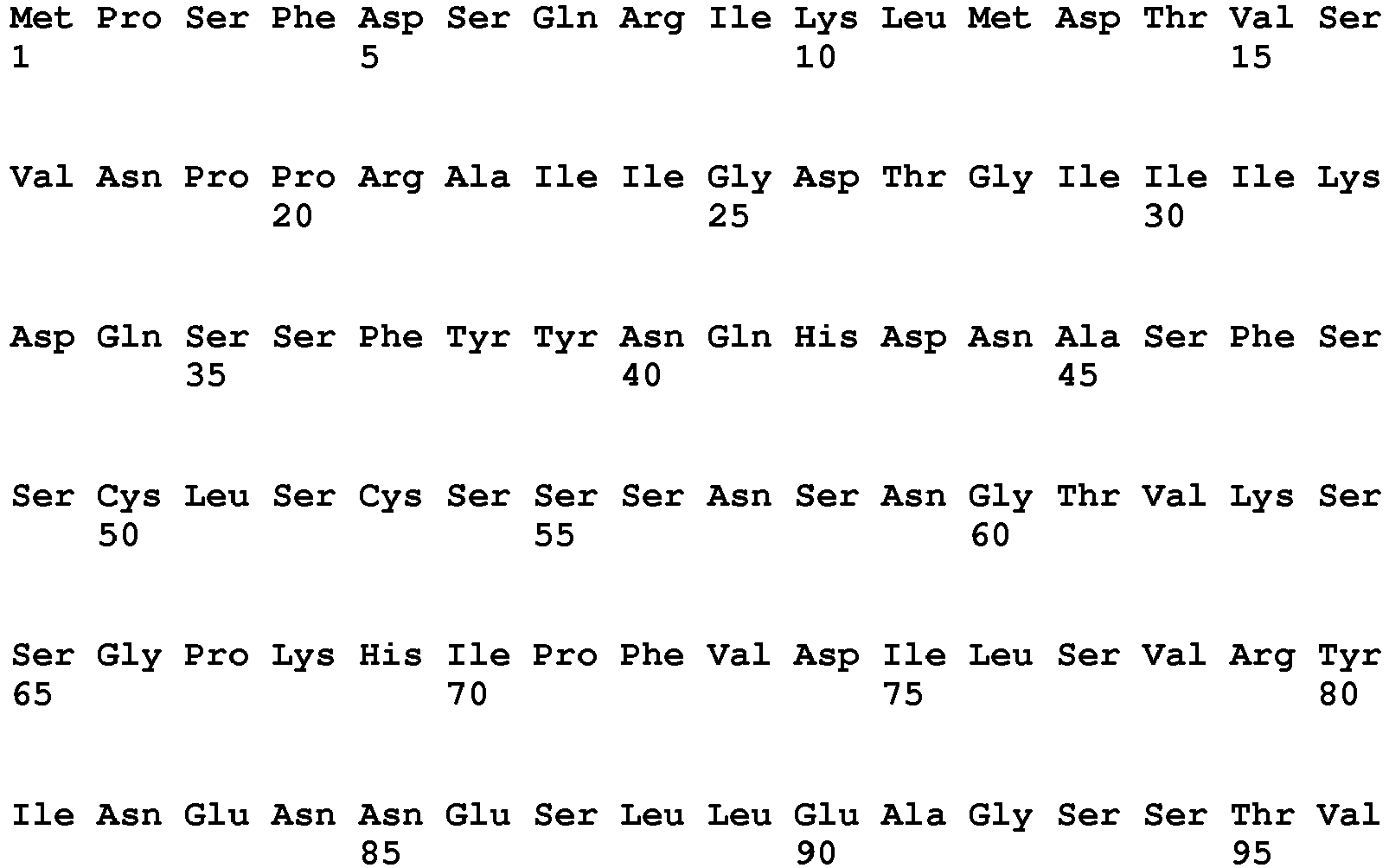


- <210> 9
<211> 1515
<212> DNA
<213> Pichia ciferrii - <220>
<221> CDS
<222> (1)..(1515) - <400> 9


- <210> 10
<211> 504
<212> PRT
<213> Pichia ciferrii - <400> 10



- <210> 11
<211> 576
<212> DNA
<213> Pichia ciferrii - <220>
<221> CDS
<222> (1)..(576) - <400> 11

- <210> 12
<211> 191
<212> PRT
<213> Pichia ciferrii - <400> 12

- <210> 13
<211> 1713
<212> DNA
<213> Pichia ciferrii - <220>
<221> CDS
<222> (1)..(1713) - <400> 13


- <210> 14
<211> 570
<212> PRT
<213> Pichia ciferrii - <400> 14


- <210> 15
<211> 1689
<212> DNA
<213> Pichia ciferrii - <220>
<221> CDS
<222> (1)..(1689) - <400> 15


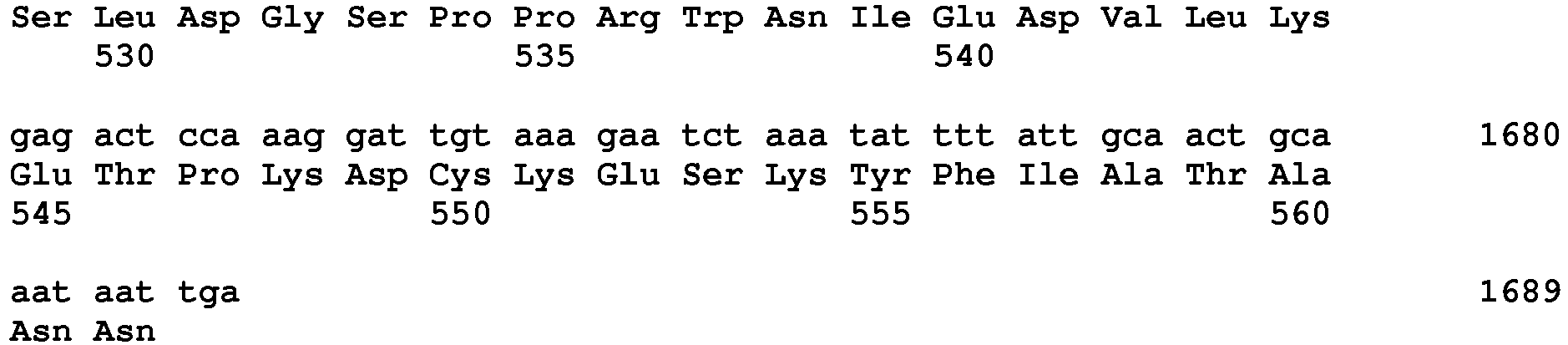
- <210> 16
<211> 562
<212> PRT
<213> Pichia ciferrii - <400> 16


- <210> 17
<211> 978
<212> DNA
<213> Pichia ciferrii - <220>
<221> CDS
<222> (1)..(978) - <400> 17


- <210> 18
<211> 325
<212> PRT
<213> Pichia ciferrii - <400> 18


- <210> 19
<211> 1681
<212> DNA
<213> Artificial - <220>
<223> Kassette - <400> 19


- <210> 20
<211> 3872
<212> DNA
<213> Artificial - <220>
<223> Kassette - <400> 20


- <210> 21
<211> 584
<212> DNA
<213> Pichia ciferrii - <400> 21


- <210> 22
<211> 420
<212> DNA
<213> Pichia ciferrii - <400> 22

- <210> 23
<211> 19
<212> DNA
<213> Artificial Sequence - <220>
<223> Primer - <400> 23
gcttccggct cctatgttg 19 - <210> 24
<211> 21
<212> DNA
<213> Artificial Sequence - <220>
<223> Primer - <400> 24
accctatgcg gtgtgaaata c 21 - <210> 25
<211> 25
<212> DNA
<213> Artificial Sequence - <220>
<223> Primer - <400> 25
gccaatactt cacaatgttc gaatc 25 - <210> 26
<211> 23
<212> DNA
<213> Artificial Sequence - <220>
<223> Primer - <400> 26
cgtgaatgta agcgtgacat aac 23 - <210> 27
<211> 57
<212> DNA
<213> Artificial Sequence - <220>
<223> Primer - <400> 27
caaaaagtta acatgcatca ccatcaccat cacactaacc caactaggct cattaac 57 - <210> 28
<211> 58
<212> DNA
<213> Artificial Sequence - <220>
<223> Primer - <400> 28
gttatctgca ggttacccag tggtacgaag cgccatcagc catttctgga tcaatttc 58 - <210> 29
<211> 58
<212> DNA
<213> Artificial Sequence - <220>
<223> Primer - <400> 29
tgccggtctc cctatagtga gtcgtattaa tttcatccag ttccaggtga attataag 58 - <210> 30
<211> 58
<212> DNA
<213> Artificial Sequence - <220>
<223> Primer - <400> 30
taactaatta catgactcga ggtcgacggt atcccatact atgcttggca tcttaaac 58 - <210> 31
<211> 22
<212> DNA
<213> Artificial Sequence - <220>
<223> Primer - <400> 31
ttgatagggc aaattctcca ac 22 - <210> 32
<211> 20
<212> DNA
<213> Artificial Sequence - <220>
<223> Primer - <400> 32
ttcacctgga taaccttctg 20 - <210> 33
<211> 54
<212> DNA
<213> Artificial Sequence - <220>
<223> Primer - <400> 33
caaaaagtta acatgcatca ccatcaccat cacatgtcct tgcaggtggt attc 54 - <210> 34
<211> 55
<212> DNA
<213> Artificial Sequence - <220>
<223> Primer - <400> 34
ttatctgcag gttacccagt ggtacgaagc gccaggtaaa gcgtatggca tgttg 55 - <210> 35
<211> 57
<212> DNA
<213> Artificial Sequence - <220>
<223> Primer - <400> 35
ctgccggtct ccctatagtg agtcgtatta atttcgctgg tgaattccca ttatctg 57 - <210> 36
<211> 58
<212> DNA
<213> Artificial Sequence - <220>
<223> Primer - <400> 36
taactaatta catgactcga ggtcgacggt atccataacc atctaaagca ttatagtc 58 - <210> 37
<211> 22
<212> DNA
<213> Artificial Sequence - <220>
<223> Primer - <400> 37
aagtttcagc aaatggtttg ac 22 - <210> 38
<211> 20
<212> DNA
<213> Artificial Sequence - <220>
<223> Primer - <400> 38
tatcttgcac ctggataacc 20 - <210> 39
<211> 59
<212> DNA
<213> Artificial Sequence - <220>
<223> Primer - <400> 39
caaaaagtta acatgcatca ccatcaccat cacaatctaa gaggtaaagt tcaacattc 59 - <210> 40
<211> 55
<212> DNA
<213> Artificial Sequence - <220>
<223> Primer - <400> 40
gttatctgca ggttacccag tggtacgaag cgccattggt ttgccgtgtg gattg 55 - <210> 41
<211> 56
<212> DNA
<213> Artificial Sequence - <220>
<223> Primer - <400> 41
ctgccggtct ccctatagtg agtcgtatta atttcggagt tcaacaaccg ttcaag 56 - <210> 42
<211> 54
<212> DNA
<213> Artificial Sequence - <220>
<223> Primer - <400> 42
taactaatta catgactcga ggtcgacggt atcatgaagt tgatgctgct ttgg 54 - <210> 43
<211> 25
<212> DNA
<213> Artificial Sequence - <220>
<223> Primer - <400> 43
atttagaagc tagaggttca gaaag 25 - <210> 44
<211> 24
<212> DNA
<213> Artificial Sequence - <220>
<223> Primer - <400> 44
tagaagaatg accatgccat atag 24 - <210> 45
<211> 73
<212> DNA
<213> Artificial Sequence - <220>
<223> Primer - <400> 45

- <210> 46
<211> 75
<212> DNA
<213> Artificial Sequence - <220>
<223> Primer - <400> 46

- <210> 47
<211> 60
<212> DNA
<213> Artificial Sequence - <220>
<223> Primer - <400> 47
gttatctgca ggttacccag tggtaaagtg tatggatggg ttgaagtatg tctttatatc 60 - <210> 48
<211> 58
<212> DNA
<213> Artificial Sequence - <220>
<223> Primer - <400> 48
acgaagttat gagctcgaat tcatcgatgc tacccggtgc tgcaaagact ttactaag 58 - <210> 49
<211> 24
<212> DNA
<213> Artificial Sequence - <220>
<223> Primer - <400> 49
gtgaatggtt aatagtgcgc tatg 24 - <210> 50
<211> 25
<212> DNA
<213> Artificial Sequence - <220>
<223> Primer - <400> 50
ctaacaaata ccacttcgac atcag 25 - <210> 51
<211> 73
<212> DNA
<213> Artificial Sequence - <220>
<223> Primer - <400> 51

- <210> 52
<211> 58
<212> DNA
<213> Artificial Sequence - <220>
<223> Primer - <400> 52
tatacgaagt tatctgcagg ttacccagtg gtataaccca taaccagtga tgttaacc 58 - <210> 53
<211> 47
<212> DNA
<213> Artificial Sequence - <220>
<223> Primer - <400> 53
gaagttatga gctcgaattc atcgatgacc actggtgttg ttgatcg 47 - <210> 54
<211> 75
<212> DNA
<213> Artificial Sequence - <220>
<223> Primer - <400> 54

- <210> 55
<211> 25
<212> DNA
<213> Artificial Sequence - <220>
<223> Primer - <400> 55
aaacaagagc agcatgcaac ttgag 25 - <210> 56
<211> 22
<212> DNA
<213> Artificial Sequence - <220>
<223> Primer - <400> 56
agtgacacca ggaactctaa ag 22 - <210> 57
<211> 57
<212> DNA
<213> Artificial Sequence - <220>
<223> Primer - <400> 57
gctttacact ttatgcttcc ggctcctatg ttgaactatg tcaatatcga tcgtatg 57 - <210> 58
<211> 56
<212> DNA
<213> Artificial Sequence - <220>
<223> Primer - <400> 58
tatctgcagg ttacccagtg gtacgaagcg ccaaacagaa attggttcat gtgttg 56 - <210> 59
<211> 56
<212> DNA
<213> Artificial Sequence - <220>
<223> Primer - <400> 59
gccggtctcc ctatagtgag tcgtattaat ttctggtgta ccaatttggt tatttc 56 - <210> 60
<211> 58
<212> DNA
<213> Artificial Sequence - <220>
<223> Primer - <400> 60
atatcagtta ttaccctatg cggtgtgaaa tacacaagta caacaacaac agatttag 58 - <210> 61
<211> 22
<212> DNA
<213> Artificial Sequence - <220>
<223> Primer - <400> 61
tacccacctt tgacataatc ag 22 - <210> 62
<211> 22
<212> DNA
<213> Artificial Sequence - <220>
<223> Primer - <400> 62
attcaaatgg cgtaccttta ac 22 - <210> 63
<211> 55
<212> DNA
<213> Artificial Sequence - <220>
<223> Primer - <400> 63
gctttacact ttatgcttcc ggctcctatg ttgggactgc tacactccaa atatg 55 - <210> 64
<211> 59
<212> DNA
<213> Artificial Sequence - <220>
<223> Primer - <400> 64
ttatctgcag gttacccagt ggtacgaagc gccataatag aagaaacacg tcaaatacc 59 - <210> 65
<211> 54
<212> DNA
<213> Artificial Sequence - <220>
<223> Primer - <400> 65
gccggtctcc ctatagtgag tcgtattaat ttccagatca aaccacatca tgag 54 - <210> 66
<211> 41
<212> DNA
<213> Artificial Sequence - <220>
<223> Primer - <400> 66
gtagcagtga cgttcattgt gtaatgtgta tatgttttat c 41 - <210> 67
<211> 37
<212> DNA
<213> Artificial Sequence - <220>
<223> Primer - <400> 67
catatacaca ttacacaatg aacgtcactg ctacaac 37 - <210> 68
<211> 53
<212> DNA
<213> Artificial Sequence - <220>
<223> Primer - <400> 68
atatcagtta ttaccctatg cggtgtgaaa tacacaagca ccaacaccat tac 53 - <210> 69
<211> 17
<212> DNA
<213> Artificial Sequence - <220>
<223> Primer - <400> 69
gttgtgcgtg gcttgac 17 - <210> 70
<211> 22
<212> DNA
<213> Artificial Sequence - <220>
<223> Primer - <400> 70
ataatacagc accaccaact tc 22 - <210> 71
<211> 55
<212> DNA
<213> Artificial Sequence - <220>
<223> Primer - <400> 71
gctttacact ttatgcttcc ggctcctatg ttgggccatg agatgacttt gtacg 55 - <210> 72
<211> 57
<212> DNA
<213> Artificial Sequence - <220>
<223> Primer - <400> 72
ttatctgcag gttacccagt ggtacgaagc gccagttctt gtttgaattc gcgtttg 57 - <210> 73
<211> 55
<212> DNA
<213> Artificial Sequence - <220>
<223> Primer - <400> 73
gttatgagct cgaattcatc gatgatatca gggaccgtta attaccaaca atctc 55 - <210> 74
<211> 25
<212> DNA
<213> Artificial Sequence - <220>
<223> Primer - <400> 74
tgttaattaa ttatttgttt gtttg 25 - <210> 75
<211> 55
<212> DNA
<213> Artificial Sequence - <220>
<223> Primer - <400> 75
acaaacaaac aaacaaataa ttaattaaca atgtcattgg taatacctca aatag 55 - <210> 76
<211> 53
<212> DNA
<213> Artificial Sequence - <220>
<223> Primer - <400> 76
atatcagtta ttaccctatg cggtgtgaaa tacaaagcgg cttgagtaca tgc 53 - <210> 77
<211> 21
<212> DNA
<213> Artificial Sequence - <220>
<223> Primer - <400> 77
aactgacgtt tcaagaacat c 21 - <210> 78
<211> 24
<212> DNA
<213> Artificial Sequence - <220>
<223> Primer - <400> 78
ataaacttgc atttgttgca tacc 24 - <210> 79
<211> 56
<212> DNA
<213> Artificial Sequence - <220>
<223> Primer - <400> 79
gctttacact ttatgcttcc ggctcctatg ttgaaagtgt aaatagacgt catgag 56 - <210> 80
<211> 58
<212> DNA
<213> Artificial Sequence - <220>
<223> Primer - <400> 80
ttatctgcag gttacccagt ggtacgaagc gccactgtgt actaaacgtg ataaatcc 58 - <210> 81
<211> 55
<212> DNA
<213> Artificial Sequence - <220>
<223> Primer - <400> 81
gttatgagct cgaattcatc gatgatatca gggaccgtta attaccaaca atctc 55 - <210> 82
<211> 25
<212> DNA
<213> Artificial Sequence - <220>
<223> Primer - <400> 82
tgttaattaa ttatttgttt gtttg 25 - <210> 83
<211> 54
<212> DNA
<213> Artificial Sequence - <220>
<223> Primer - <400> 83
aaaacaaaca aacaaacaaa taattaatta acaatgagct ctcatcagtt tttg 54 - <210> 84
<211> 54
<212> DNA
<213> Artificial Sequence - <220>
<223> Primer - <400> 84
atatcagtta ttaccctatg cggtgtgaaa tacaagacga tgatgtcttg aatg 54 - <210> 85
<211> 21
<212> DNA
<213> Artificial Sequence - <220>
<223> Primer - <400> 85
aactgacgtt tcaagaacat c 21 - <210> 86
<211> 21
<212> DNA
<213> Artificial Sequence - <220>
<223> Primer - <400> 86
agtaacaatt gcagcaatac c 21
Seq ID Nr. 5 oder deren Gruppe B Analoge;
Seq ID Nr. 7 oder deren Gruppe B Analoge;
Seq ID Nr. 9 oder deren Gruppe B Analoge;
Seq ID Nr. 11 oder deren Gruppe B Analoge;
Seq ID Nr. 1 oder deren Gruppe B Analoge und Seq ID Nr. 3 oder deren Gruppe B Analoge;
Seq ID Nr. 1 oder deren Gruppe B Analoge und Seq ID Nr. 5 oder deren Gruppe B Analoge;
Seq ID Nr. 3 oder deren Gruppe B Analoge und Seq ID Nr. 5 oder deren Gruppe B Analoge;
Seq ID Nr. 1 oder deren Gruppe B Analoge und Seq ID Nr. 3 oder deren Gruppe B Analoge und Seq ID Nr. 5 oder deren Gruppe B Analoge;
Seq ID Nr. 1 oder deren Gruppe B Analoge und Seq ID Nr. 3 oder deren Gruppe B Analoge und Seq ID Nr. 5 oder deren Gruppe B Analoge und Seq ID Nr. 7 oder deren Gruppe B Analoge;
Seq ID Nr. 1 oder deren Gruppe B Analoge und Seq ID Nr. 3 oder deren Gruppe B Analoge und Seq ID Nr. 5 oder deren Gruppe B Analoge und Seq ID Nr. 11 oder deren Gruppe B Analog und
Seq ID Nr. 1 oder deren Gruppe B Analoge und Seq ID Nr. 3 oder deren Gruppe B Analoge und Seq ID Nr. 5 oder deren Gruppe B Analoge und Seq ID Nr. 7 oder deren Gruppe B Analoge und Seq ID Nr. 11 oder deren Gruppe B Analoge,
darstellt.
Das erfindungsgemäße Verfahren ist insbesondere zur Herstellung von Tetraacetylphytosphingosine (TAPS) geeignet.
In den nachfolgend aufgeführten Beispielen wird die vorliegende Erfindung beispielhaft beschrieben, ohne dass die Erfindung, deren Anwendungsbreite sich aus der gesamten Beschreibung und den Ansprüchen ergibt, auf die in den Beispielen genannten Ausführungsformen beschränkt sein soll.
Folgende Abbildungen sind Bestandteil der Beispiele:
Claims (8)
- Pichia ciferrii Zelle, dadurch gekennzeichnet, dass die Zelle im Vergleich zu Ihrem Wildtyp eine verminderte Aktivität mindestens eines der Enzyme aufweist, welche kodiert werden durch die intronfreien Nukleinsäuresequenzen ausgewählt aus den beiden Gruppen A) und B) bestehend ausA) Seq ID Nr. 1, Seq ID Nr. 3, Seq ID Nr. 5, Seq ID Nr. 7, Seq ID Nr. 9, Seq ID Nr. 11,B) eine Sequenz, die zu mindestens 80 % identisch zu einer der Sequenzen Seq ID Nr. 1, Seq ID Nr. 3, Seq ID Nr. 5, Seq ID Nr. 7, Seq ID Nr. 9, Seq ID Nr. 11 ist,
dadurch gekennzeichnet, dass die verminderte Aktivität mindestens eines der Enzyme eine Kombination verminderter Aktivitäten der Enzyme ausgewählt aus der Gruppe:Seq ID Nr. 3 oder deren Gruppe B Analoge;Seq ID Nr. 5 oder deren Gruppe B Analoge;Seq ID Nr. 7 oder deren Gruppe B Analoge;Seq ID Nr. 9 oder deren Gruppe B Analoge;Seq ID Nr. 11 oder deren Gruppe B Analoge;Seq ID Nr. 1 oder deren Gruppe B Analoge und Seq ID Nr. 3 oder deren Gruppe B Analoge;Seq ID Nr. 1 oder deren Gruppe B Analoge und Seq ID Nr. 5 oder deren Gruppe B Analoge;Seq ID Nr. 3 oder deren Gruppe B Analoge und Seq ID Nr. 5 oder deren Gruppe B Analoge;Seq ID Nr. 1 oder deren Gruppe B Analoge und Seq ID Nr. 3 oder deren Gruppe B Analoge und Seq ID Nr. 5 oder deren Gruppe B Analoge;Seq ID Nr. 1 oder deren Gruppe B Analoge und Seq ID Nr. 3 oder deren Gruppe B Analoge und Seq ID Nr. 5 oder deren Gruppe B Analoge und Seq ID Nr. 7 oder deren Gruppe B Analoge;Seq ID Nr. 1 oder deren Gruppe B Analoge und Seq ID Nr. 3 oder deren Gruppe B Analoge und Seq ID Nr. 5 oder deren Gruppe B Analoge und Seq ID Nr. 11 oder deren Gruppe B Analog undSeq ID Nr. 1 oder deren Gruppe B Analoge und Seq ID Nr. 3 oder deren Gruppe B Analoge und Seq ID Nr. 5 oder deren Gruppe B Analoge und Seq ID Nr. 7 oder deren Gruppe B Analoge und Seq ID Nr. 11 oder deren Gruppe B Analoge,darstellt. - Pichia ciferrii Zelle gemäß Anspruch 1, dadurch gekennzeichnet, dass die Verminderung der enzymatischen Aktivität erreicht wird durch Modifikation eines Genes umfassend eine der in Anspruch 1 genannten Nukleinsäuresequenzen, wobei die Modifikation ausgewählt ist aus der Gruppe umfassend Insertion von Fremd-DNA in das Gen, Deletion mindestens von Teilen des Gens, Punktmutationen in der Gensequenz, Aussetzen des Gens unter den Einfluss von RNA-Interferenz und Austausch von Teilen des Gens mit Fremd-DNA, insbesondere des Promoterbereichs.
- Pichia ciferrii Zelle gemäß Anspruch 2, dadurch gekennzeichnet, dass die Fremd-DNA ein Selektionsmarkergen, bevorzugt eins, welches rückstandslos entfernt werden kann und eine Deletion im Ziel-Gen hinterlässt, ist.
- Pichia ciferrii Zelle gemäß mindestens einem der vorherigen Ansprüche, dadurch gekennzeichnet, dass die Pichia ciferrii Zelle sich ableitet von Stämmen ausgewählt aus der Gruppe bestehend aus Pichia ciferrii NRRL Y-1031 F-60-10, Pichia ciferrii CS.PCΔPro2.
- Pichia ciferrii Zelle gemäß mindestens einem der vorherigen Ansprüche, dadurch gekennzeichnet, dass die Zelle verglichen zu ihrem Wildtyp eine erhöhte enzymatische Aktivität mindestens eines der Enzyme ausgewählt aus
einem Enzym E1, welches die Reaktion von Serin und Palmitoyl-CoA zu 3-Ketosphinganin katalysiert, insbesondere einer Serin-Palmitoyltransferase, insbesondere solche kodiert durch Seq ID Nr. 13 und /oder Seq ID Nr. 15, einem Enzym E2, welches die Reaktion von Sphinganin zu Phytosphingosin katalysiert, insbesondere einer Sphinganin C4-Hydroxylase, insbesondere solcher kodiert durch Seq ID Nr. 17, - Verwendung der Zellen gemäß mindestens einem der vorherigen Ansprüche zur Herstellung von Sphingoidbasen und Sphingolipiden.
- Verfahren zur Herstellung einer Pichia ciferri Zelle nach mindestens einem der Ansprüche 1 bis 5 umfassend die Verfahrensschritte:I) Bereitstellen einer Pichia ciferrii Zelle undII) Modifikation mindestens eines Genes umfassend eine der Sequenzen ausgewählt aus den in Anspruch 1 genannten Nukleinsäuresequenzgruppen A) und B) durch Insertion von Fremd-DNA, insbesondere von DNA kodierend für ein Selektionsmarkergen, in das Gen, Deletion mindestens von Teilen des Gens, Punktmutationen in der Gensequenz, Aussetzen des Gens unter den Einfluss von RNA-Interferenz und Austausch von Teilen des Gens mit Fremd-DNA, insbesondere des Promoterbereichs.
- Verfahren zur Herstellung von Sphingoidbasen und Sphingolipiden umfassend die Verfahrensschrittea) In Kontakt bringen der Zelle gemäß mindestens einem der Ansprüche 1 bis 5 mit einem Medium beinhaltend eine Kohlenstoffquelle,b) Kultivieren der Zelle unter Bedingungen, die es der Zelle ermöglichen aus der Kohlenstoffquelle Sphingoidbasen und Sphingolipide zu bilden undc) gegebenenfalls Isolierung der gebildeten Sphingoidbasen und Sphingolipide.
Applications Claiming Priority (2)
| Application Number | Priority Date | Filing Date | Title |
|---|---|---|---|
| DE102011110959A DE102011110959A1 (de) | 2011-08-18 | 2011-08-18 | Pichia ciferrii Zellen und deren Verwendung |
| PCT/EP2012/064369 WO2013023878A1 (de) | 2011-08-18 | 2012-07-23 | Pichia ciferrii zellen und deren verwendung |
Publications (2)
| Publication Number | Publication Date |
|---|---|
| EP2744896A1 EP2744896A1 (de) | 2014-06-25 |
| EP2744896B1 true EP2744896B1 (de) | 2016-03-16 |
Family
ID=46579017
Family Applications (1)
| Application Number | Title | Priority Date | Filing Date |
|---|---|---|---|
| EP12738448.5A Active EP2744896B1 (de) | 2011-08-18 | 2012-07-23 | Pichia ciferrii zellen und deren verwendung |
Country Status (7)
| Country | Link |
|---|---|
| US (2) | US9404118B2 (de) |
| EP (1) | EP2744896B1 (de) |
| JP (1) | JP6023807B2 (de) |
| KR (1) | KR102056651B1 (de) |
| CN (1) | CN103748218B (de) |
| DE (1) | DE102011110959A1 (de) |
| WO (1) | WO2013023878A1 (de) |
Families Citing this family (23)
| Publication number | Priority date | Publication date | Assignee | Title |
|---|---|---|---|---|
| DE102006025821A1 (de) * | 2006-06-02 | 2007-12-06 | Degussa Gmbh | Ein Enzym zur Herstellung von Mehylmalonatsemialdehyd oder Malonatsemialdehyd |
| DE102007060705A1 (de) | 2007-12-17 | 2009-06-18 | Evonik Degussa Gmbh | ω-Aminocarbonsäuren oder ihre Lactame, herstellende, rekombinante Zellen |
| DE102008002715A1 (de) * | 2008-06-27 | 2009-12-31 | Evonik Röhm Gmbh | 2-Hydroxyisobuttersäure produzierende rekombinante Zelle |
| DE102009046626A1 (de) | 2009-11-11 | 2011-05-12 | Evonik Degussa Gmbh | Candida tropicalis Zellen und deren Verwendung |
| DE102010015807A1 (de) | 2010-04-20 | 2011-10-20 | Evonik Degussa Gmbh | Biokatalytisches Oxidationsverfahren mit alkL-Genprodukt |
| DE102010043470A1 (de) | 2010-11-05 | 2012-05-10 | Evonik Degussa Gmbh | Zusammensetzung aus Polyamiden mit niedriger Konzentration an Carbonsäureamidgruppen und elektrisch leitfähigem Kohlenstoff |
| BR112014000947A2 (pt) | 2011-07-20 | 2017-06-13 | Evonik Degussa Gmbh | oxidação e aminação de álcoois primários |
| DE102011110959A1 (de) | 2011-08-18 | 2013-02-21 | Evonik Degussa Gmbh | Pichia ciferrii Zellen und deren Verwendung |
| EP2602328A1 (de) | 2011-12-05 | 2013-06-12 | Evonik Industries AG | Verfahren zur Oxidation von Alkanen unter Verwendung einer AlkB Alkan 1-Monooxygenase |
| EP2607479A1 (de) | 2011-12-22 | 2013-06-26 | Evonik Industries AG | Biotechnologische Herstellung von Alkoholen und Derivaten davon |
| EP2631298A1 (de) | 2012-02-22 | 2013-08-28 | Evonik Industries AG | Biotechnologisches Verfahren zur Herstellung von Butanol und Buttersäure |
| EP2639308A1 (de) | 2012-03-12 | 2013-09-18 | Evonik Industries AG | Enzymatische omega-Oxidation und -Aminierung von Fettsäuren |
| EP2647696A1 (de) | 2012-04-02 | 2013-10-09 | Evonik Degussa GmbH | Verfahren zur aeroben Herstellung von Alanin oder einer unter Verbrauch von Alanin entstehenden Verbindung |
| DE102012007491A1 (de) | 2012-04-11 | 2013-10-17 | Evonik Industries Ag | Neue Enzyme |
| EP2746400A1 (de) | 2012-12-21 | 2014-06-25 | Evonik Industries AG | Herstellung von Aminen und Diaminen aus einer Carbonsäure oder Dicarbonsäure oder eines Monoesters davon |
| WO2017033463A1 (en) | 2015-08-24 | 2017-03-02 | Ajinomoto Co., Inc. | Method for producing sphingoid base or sphingolipid |
| EP3341476B1 (de) | 2015-08-24 | 2019-08-07 | Ajinomoto Co., Inc. | Verfahren zur herstellung von phytosphingosin oder sphinganin |
| WO2018177730A1 (de) | 2017-03-27 | 2018-10-04 | Evonik Degussa Gmbh | Verfahren und erzeugnis zur herstellung ceramidhaltiger formulierungen |
| KR102343479B1 (ko) * | 2020-06-23 | 2021-12-27 | 한국생명공학연구원 | 스핑고지질 및 스핑고이드 염기의 생산성이 향상된 피키아 시페라이 변이 균주 및 이의 제조방법 |
| JP2024503900A (ja) | 2021-01-20 | 2024-01-29 | 味の素株式会社 | フィトスフィンゴシンまたはフィトセラミドの製造法 |
| CN115300410A (zh) * | 2022-02-23 | 2022-11-08 | 广州源燊创生物科技有限公司 | 水溶性神经酰胺的原料组成配比及其生产方法 |
| KR20260016925A (ko) | 2023-05-29 | 2026-02-04 | 카타야 바이오 (상하이) 씨오., 엘티디. | 지질 블렌드 |
| CN117947119B (zh) * | 2024-01-29 | 2025-01-24 | 重庆智合生物医药有限公司 | 一种四乙酰植物鞘氨醇和三乙酰二氢鞘氨醇混合物的发酵方法 |
Family Cites Families (5)
| Publication number | Priority date | Publication date | Assignee | Title |
|---|---|---|---|---|
| EP0726960B1 (de) | 1993-11-03 | 2003-02-19 | Cosmoferm B.V. | Mikrobielle stämme zur produktion von sphingolipidbasen |
| DE10031999A1 (de) | 1999-09-09 | 2001-04-19 | Degussa | Verfahren zur fermentativen Herstellung von D-Pantothensäure unter Verwendung coryneformer Bakterien |
| WO2006048458A2 (en) | 2004-11-05 | 2006-05-11 | Cosmoferm B.V. | Microbial strains producing sphingoid bases or derivatives thereof |
| CN101490260B (zh) | 2006-05-11 | 2016-08-17 | 赢创工业股份公司 | 使用遗传工程化的微生物菌株的改进的鞘氨醇类碱的生产 |
| DE102011110959A1 (de) | 2011-08-18 | 2013-02-21 | Evonik Degussa Gmbh | Pichia ciferrii Zellen und deren Verwendung |
-
2011
- 2011-08-18 DE DE102011110959A patent/DE102011110959A1/de not_active Withdrawn
-
2012
- 2012-07-23 KR KR1020147003745A patent/KR102056651B1/ko active Active
- 2012-07-23 CN CN201280039973.5A patent/CN103748218B/zh active Active
- 2012-07-23 EP EP12738448.5A patent/EP2744896B1/de active Active
- 2012-07-23 WO PCT/EP2012/064369 patent/WO2013023878A1/de not_active Ceased
- 2012-07-23 JP JP2014525378A patent/JP6023807B2/ja active Active
- 2012-07-23 US US14/238,248 patent/US9404118B2/en active Active
-
2016
- 2016-06-27 US US15/193,513 patent/US9598711B2/en active Active
Also Published As
| Publication number | Publication date |
|---|---|
| KR102056651B1 (ko) | 2019-12-17 |
| US9598711B2 (en) | 2017-03-21 |
| US9404118B2 (en) | 2016-08-02 |
| US20140199736A1 (en) | 2014-07-17 |
| WO2013023878A1 (de) | 2013-02-21 |
| CN103748218B (zh) | 2016-10-12 |
| CN103748218A (zh) | 2014-04-23 |
| US20160304916A1 (en) | 2016-10-20 |
| JP6023807B2 (ja) | 2016-11-09 |
| DE102011110959A1 (de) | 2013-02-21 |
| EP2744896A1 (de) | 2014-06-25 |
| KR20140063599A (ko) | 2014-05-27 |
| JP2014529400A (ja) | 2014-11-13 |
Similar Documents
| Publication | Publication Date | Title |
|---|---|---|
| DE102011110959A1 (de) | Pichia ciferrii Zellen und deren Verwendung | |
| EP2602311B1 (de) | Candida tropicalis Zellen und deren Verwendung | |
| JP6869960B2 (ja) | スフィンゴイド塩基またはスフィンゴ脂質の製造法 | |
| JP6973702B2 (ja) | フィトスフィンゴシンまたはスフィンガニンの製造法 | |
| DE112009000453T5 (de) | Vektor zur Transformation unter Verwendung von Transposons, durch den Vektor transformierte Mikroorganismen und Verfahren zum Herstellen von L-Lysin unter Verwendung derselben | |
| EP2836592B1 (de) | Acetyltransferase von wickerhamomyces ciferrii | |
| DE102011056290A1 (de) | Pilzstämme mit genetischer modifikation betreffend einen carbonsäure-transporter | |
| EP4198123A1 (de) | Besonders geeignete 3-desoxyarabinoheptulosanat-7-phosphat-synthase zur fermentativen herstellung von ortho-aminobenzoesäure | |
| EP2185710B1 (de) | Eukaryotische promotoren zur genexpression | |
| EP4448780A2 (de) | Mischungen von glucose und xylose zur fermentativen herstellung von ortho-aminobenzoesäure | |
| EP3625336B1 (de) | Pyruvatcarboxylase und für die pyruvatcarboxylase kodierende dna, plasmid enthaltend die dna, sowie mikroorganismus zur produktion und verfahren zur herstellung von produkten, deren biosynthese oxalacetat als vorstufe beinhaltet und chromosom | |
| DE10333144B4 (de) | Verfahren zur biotechnologischen Herstellung von Citronensäure mit einer genetisch veränderten Hefe Yarrowia lipolytica | |
| EP3622058B1 (de) | Pyruvatcarboxylase | |
| DE102021113602A1 (de) | Gentechnisch veränderte hefe zur biotechnologischen herstellung von bernsteinsäure aus glycerol | |
| EP1280893B1 (de) | Verfahren zum herstellen von proteinen in einer hefe der gattung arxula und dafür geeignete promotoren | |
| EP1918379B1 (de) | Expressionsvektoren zur multiplen Gen-Integration und Überexpression von homologen und heterologen Proteinen in Hefen der Gattung Arxula | |
| AT515155A1 (de) | Mutante | |
| DE10254074A1 (de) | Verfahren zur mikrobiellen Herstellung von Stoffwechselprodukten |
Legal Events
| Date | Code | Title | Description |
|---|---|---|---|
| PUAI | Public reference made under article 153(3) epc to a published international application that has entered the european phase |
Free format text: ORIGINAL CODE: 0009012 |
|
| 17P | Request for examination filed |
Effective date: 20140117 |
|
| AK | Designated contracting states |
Kind code of ref document: A1 Designated state(s): AL AT BE BG CH CY CZ DE DK EE ES FI FR GB GR HR HU IE IS IT LI LT LU LV MC MK MT NL NO PL PT RO RS SE SI SK SM TR |
|
| DAX | Request for extension of the european patent (deleted) | ||
| 17Q | First examination report despatched |
Effective date: 20150326 |
|
| RIC1 | Information provided on ipc code assigned before grant |
Ipc: C12N 9/88 20060101ALI20151016BHEP Ipc: C12P 13/02 20060101ALI20151016BHEP Ipc: C12N 9/00 20060101ALI20151016BHEP Ipc: C12N 9/10 20060101AFI20151016BHEP Ipc: C12N 9/12 20060101ALI20151016BHEP Ipc: C07K 14/39 20060101ALI20151016BHEP Ipc: C12N 9/04 20060101ALI20151016BHEP |
|
| GRAP | Despatch of communication of intention to grant a patent |
Free format text: ORIGINAL CODE: EPIDOSNIGR1 |
|
| INTG | Intention to grant announced |
Effective date: 20151207 |
|
| GRAS | Grant fee paid |
Free format text: ORIGINAL CODE: EPIDOSNIGR3 |
|
| GRAA | (expected) grant |
Free format text: ORIGINAL CODE: 0009210 |
|
| AK | Designated contracting states |
Kind code of ref document: B1 Designated state(s): AL AT BE BG CH CY CZ DE DK EE ES FI FR GB GR HR HU IE IS IT LI LT LU LV MC MK MT NL NO PL PT RO RS SE SI SK SM TR |
|
| REG | Reference to a national code |
Ref country code: GB Ref legal event code: FG4D Free format text: NOT ENGLISH |
|
| REG | Reference to a national code |
Ref country code: CH Ref legal event code: EP |
|
| REG | Reference to a national code |
Ref country code: IE Ref legal event code: FG4D Free format text: LANGUAGE OF EP DOCUMENT: GERMAN |
|
| REG | Reference to a national code |
Ref country code: AT Ref legal event code: REF Ref document number: 781273 Country of ref document: AT Kind code of ref document: T Effective date: 20160415 |
|
| REG | Reference to a national code |
Ref country code: DE Ref legal event code: R096 Ref document number: 502012006304 Country of ref document: DE |
|
| REG | Reference to a national code |
Ref country code: NL Ref legal event code: MP Effective date: 20160316 |
|
| REG | Reference to a national code |
Ref country code: FR Ref legal event code: PLFP Year of fee payment: 5 |
|
| REG | Reference to a national code |
Ref country code: LT Ref legal event code: MG4D |
|
| PG25 | Lapsed in a contracting state [announced via postgrant information from national office to epo] |
Ref country code: FI Free format text: LAPSE BECAUSE OF FAILURE TO SUBMIT A TRANSLATION OF THE DESCRIPTION OR TO PAY THE FEE WITHIN THE PRESCRIBED TIME-LIMIT Effective date: 20160316 Ref country code: NO Free format text: LAPSE BECAUSE OF FAILURE TO SUBMIT A TRANSLATION OF THE DESCRIPTION OR TO PAY THE FEE WITHIN THE PRESCRIBED TIME-LIMIT Effective date: 20160616 Ref country code: HR Free format text: LAPSE BECAUSE OF FAILURE TO SUBMIT A TRANSLATION OF THE DESCRIPTION OR TO PAY THE FEE WITHIN THE PRESCRIBED TIME-LIMIT Effective date: 20160316 Ref country code: GR Free format text: LAPSE BECAUSE OF FAILURE TO SUBMIT A TRANSLATION OF THE DESCRIPTION OR TO PAY THE FEE WITHIN THE PRESCRIBED TIME-LIMIT Effective date: 20160617 |
|
| PG25 | Lapsed in a contracting state [announced via postgrant information from national office to epo] |
Ref country code: LV Free format text: LAPSE BECAUSE OF FAILURE TO SUBMIT A TRANSLATION OF THE DESCRIPTION OR TO PAY THE FEE WITHIN THE PRESCRIBED TIME-LIMIT Effective date: 20160316 Ref country code: LT Free format text: LAPSE BECAUSE OF FAILURE TO SUBMIT A TRANSLATION OF THE DESCRIPTION OR TO PAY THE FEE WITHIN THE PRESCRIBED TIME-LIMIT Effective date: 20160316 Ref country code: SE Free format text: LAPSE BECAUSE OF FAILURE TO SUBMIT A TRANSLATION OF THE DESCRIPTION OR TO PAY THE FEE WITHIN THE PRESCRIBED TIME-LIMIT Effective date: 20160316 Ref country code: RS Free format text: LAPSE BECAUSE OF FAILURE TO SUBMIT A TRANSLATION OF THE DESCRIPTION OR TO PAY THE FEE WITHIN THE PRESCRIBED TIME-LIMIT Effective date: 20160316 Ref country code: NL Free format text: LAPSE BECAUSE OF FAILURE TO SUBMIT A TRANSLATION OF THE DESCRIPTION OR TO PAY THE FEE WITHIN THE PRESCRIBED TIME-LIMIT Effective date: 20160316 |
|
| PG25 | Lapsed in a contracting state [announced via postgrant information from national office to epo] |
Ref country code: PL Free format text: LAPSE BECAUSE OF FAILURE TO SUBMIT A TRANSLATION OF THE DESCRIPTION OR TO PAY THE FEE WITHIN THE PRESCRIBED TIME-LIMIT Effective date: 20160316 Ref country code: IS Free format text: LAPSE BECAUSE OF FAILURE TO SUBMIT A TRANSLATION OF THE DESCRIPTION OR TO PAY THE FEE WITHIN THE PRESCRIBED TIME-LIMIT Effective date: 20160716 Ref country code: EE Free format text: LAPSE BECAUSE OF FAILURE TO SUBMIT A TRANSLATION OF THE DESCRIPTION OR TO PAY THE FEE WITHIN THE PRESCRIBED TIME-LIMIT Effective date: 20160316 |
|
| PG25 | Lapsed in a contracting state [announced via postgrant information from national office to epo] |
Ref country code: PT Free format text: LAPSE BECAUSE OF FAILURE TO SUBMIT A TRANSLATION OF THE DESCRIPTION OR TO PAY THE FEE WITHIN THE PRESCRIBED TIME-LIMIT Effective date: 20160718 Ref country code: SM Free format text: LAPSE BECAUSE OF FAILURE TO SUBMIT A TRANSLATION OF THE DESCRIPTION OR TO PAY THE FEE WITHIN THE PRESCRIBED TIME-LIMIT Effective date: 20160316 Ref country code: SK Free format text: LAPSE BECAUSE OF FAILURE TO SUBMIT A TRANSLATION OF THE DESCRIPTION OR TO PAY THE FEE WITHIN THE PRESCRIBED TIME-LIMIT Effective date: 20160316 Ref country code: RO Free format text: LAPSE BECAUSE OF FAILURE TO SUBMIT A TRANSLATION OF THE DESCRIPTION OR TO PAY THE FEE WITHIN THE PRESCRIBED TIME-LIMIT Effective date: 20160316 Ref country code: CZ Free format text: LAPSE BECAUSE OF FAILURE TO SUBMIT A TRANSLATION OF THE DESCRIPTION OR TO PAY THE FEE WITHIN THE PRESCRIBED TIME-LIMIT Effective date: 20160316 Ref country code: ES Free format text: LAPSE BECAUSE OF FAILURE TO SUBMIT A TRANSLATION OF THE DESCRIPTION OR TO PAY THE FEE WITHIN THE PRESCRIBED TIME-LIMIT Effective date: 20160316 |
|
| REG | Reference to a national code |
Ref country code: DE Ref legal event code: R097 Ref document number: 502012006304 Country of ref document: DE |
|
| PG25 | Lapsed in a contracting state [announced via postgrant information from national office to epo] |
Ref country code: BE Free format text: LAPSE BECAUSE OF NON-PAYMENT OF DUE FEES Effective date: 20160731 Ref country code: IT Free format text: LAPSE BECAUSE OF FAILURE TO SUBMIT A TRANSLATION OF THE DESCRIPTION OR TO PAY THE FEE WITHIN THE PRESCRIBED TIME-LIMIT Effective date: 20160316 |
|
| PLBE | No opposition filed within time limit |
Free format text: ORIGINAL CODE: 0009261 |
|
| STAA | Information on the status of an ep patent application or granted ep patent |
Free format text: STATUS: NO OPPOSITION FILED WITHIN TIME LIMIT |
|
| PG25 | Lapsed in a contracting state [announced via postgrant information from national office to epo] |
Ref country code: DK Free format text: LAPSE BECAUSE OF FAILURE TO SUBMIT A TRANSLATION OF THE DESCRIPTION OR TO PAY THE FEE WITHIN THE PRESCRIBED TIME-LIMIT Effective date: 20160316 |
|
| 26N | No opposition filed |
Effective date: 20161219 |
|
| REG | Reference to a national code |
Ref country code: CH Ref legal event code: PL |
|
| PG25 | Lapsed in a contracting state [announced via postgrant information from national office to epo] |
Ref country code: MC Free format text: LAPSE BECAUSE OF FAILURE TO SUBMIT A TRANSLATION OF THE DESCRIPTION OR TO PAY THE FEE WITHIN THE PRESCRIBED TIME-LIMIT Effective date: 20160316 |
|
| PG25 | Lapsed in a contracting state [announced via postgrant information from national office to epo] |
Ref country code: LI Free format text: LAPSE BECAUSE OF NON-PAYMENT OF DUE FEES Effective date: 20160731 Ref country code: CH Free format text: LAPSE BECAUSE OF NON-PAYMENT OF DUE FEES Effective date: 20160731 |
|
| REG | Reference to a national code |
Ref country code: IE Ref legal event code: MM4A |
|
| PG25 | Lapsed in a contracting state [announced via postgrant information from national office to epo] |
Ref country code: SI Free format text: LAPSE BECAUSE OF FAILURE TO SUBMIT A TRANSLATION OF THE DESCRIPTION OR TO PAY THE FEE WITHIN THE PRESCRIBED TIME-LIMIT Effective date: 20160316 |
|
| REG | Reference to a national code |
Ref country code: FR Ref legal event code: PLFP Year of fee payment: 6 |
|
| PG25 | Lapsed in a contracting state [announced via postgrant information from national office to epo] |
Ref country code: IE Free format text: LAPSE BECAUSE OF NON-PAYMENT OF DUE FEES Effective date: 20160723 |
|
| PG25 | Lapsed in a contracting state [announced via postgrant information from national office to epo] |
Ref country code: LU Free format text: LAPSE BECAUSE OF NON-PAYMENT OF DUE FEES Effective date: 20160723 |
|
| PG25 | Lapsed in a contracting state [announced via postgrant information from national office to epo] |
Ref country code: CY Free format text: LAPSE BECAUSE OF FAILURE TO SUBMIT A TRANSLATION OF THE DESCRIPTION OR TO PAY THE FEE WITHIN THE PRESCRIBED TIME-LIMIT Effective date: 20160316 Ref country code: HU Free format text: LAPSE BECAUSE OF FAILURE TO SUBMIT A TRANSLATION OF THE DESCRIPTION OR TO PAY THE FEE WITHIN THE PRESCRIBED TIME-LIMIT; INVALID AB INITIO Effective date: 20120723 |
|
| PG25 | Lapsed in a contracting state [announced via postgrant information from national office to epo] |
Ref country code: MT Free format text: LAPSE BECAUSE OF FAILURE TO SUBMIT A TRANSLATION OF THE DESCRIPTION OR TO PAY THE FEE WITHIN THE PRESCRIBED TIME-LIMIT Effective date: 20160316 Ref country code: MK Free format text: LAPSE BECAUSE OF FAILURE TO SUBMIT A TRANSLATION OF THE DESCRIPTION OR TO PAY THE FEE WITHIN THE PRESCRIBED TIME-LIMIT Effective date: 20160316 |
|
| REG | Reference to a national code |
Ref country code: FR Ref legal event code: PLFP Year of fee payment: 7 |
|
| REG | Reference to a national code |
Ref country code: AT Ref legal event code: MM01 Ref document number: 781273 Country of ref document: AT Kind code of ref document: T Effective date: 20170723 |
|
| PG25 | Lapsed in a contracting state [announced via postgrant information from national office to epo] |
Ref country code: AL Free format text: LAPSE BECAUSE OF FAILURE TO SUBMIT A TRANSLATION OF THE DESCRIPTION OR TO PAY THE FEE WITHIN THE PRESCRIBED TIME-LIMIT Effective date: 20160316 Ref country code: TR Free format text: LAPSE BECAUSE OF FAILURE TO SUBMIT A TRANSLATION OF THE DESCRIPTION OR TO PAY THE FEE WITHIN THE PRESCRIBED TIME-LIMIT Effective date: 20160316 |
|
| PG25 | Lapsed in a contracting state [announced via postgrant information from national office to epo] |
Ref country code: AT Free format text: LAPSE BECAUSE OF NON-PAYMENT OF DUE FEES Effective date: 20170723 |
|
| REG | Reference to a national code |
Ref country code: DE Ref legal event code: R081 Ref document number: 502012006304 Country of ref document: DE Owner name: EVONIK OPERATIONS GMBH, DE Free format text: FORMER OWNER: EVONIK DEGUSSA GMBH, 45128 ESSEN, DE |
|
| P01 | Opt-out of the competence of the unified patent court (upc) registered |
Effective date: 20230526 |
|
| PGFP | Annual fee paid to national office [announced via postgrant information from national office to epo] |
Ref country code: DE Payment date: 20250722 Year of fee payment: 14 |
|
| PGFP | Annual fee paid to national office [announced via postgrant information from national office to epo] |
Ref country code: BG Payment date: 20250722 Year of fee payment: 14 Ref country code: GB Payment date: 20250722 Year of fee payment: 14 |
|
| PGFP | Annual fee paid to national office [announced via postgrant information from national office to epo] |
Ref country code: FR Payment date: 20250725 Year of fee payment: 14 |