EP2743800B1 - Haptic system with increased LRA bandwidth - Google Patents
Haptic system with increased LRA bandwidth Download PDFInfo
- Publication number
- EP2743800B1 EP2743800B1 EP13197135.0A EP13197135A EP2743800B1 EP 2743800 B1 EP2743800 B1 EP 2743800B1 EP 13197135 A EP13197135 A EP 13197135A EP 2743800 B1 EP2743800 B1 EP 2743800B1
- Authority
- EP
- European Patent Office
- Prior art keywords
- frequency
- resonant
- actuator
- linear resonance
- haptic
- Prior art date
- Legal status (The legal status is an assumption and is not a legal conclusion. Google has not performed a legal analysis and makes no representation as to the accuracy of the status listed.)
- Not-in-force
Links
Images




Classifications
-
- H—ELECTRICITY
- H02—GENERATION; CONVERSION OR DISTRIBUTION OF ELECTRIC POWER
- H02N—ELECTRIC MACHINES NOT OTHERWISE PROVIDED FOR
- H02N2/00—Electric machines in general using piezoelectric effect, electrostriction or magnetostriction
- H02N2/02—Electric machines in general using piezoelectric effect, electrostriction or magnetostriction producing linear motion, e.g. actuators; Linear positioners ; Linear motors
- H02N2/06—Drive circuits; Control arrangements or methods
-
- G—PHYSICS
- G08—SIGNALLING
- G08B—SIGNALLING SYSTEMS, e.g. PERSONAL CALLING SYSTEMS; ORDER TELEGRAPHS; ALARM SYSTEMS
- G08B6/00—Tactile signalling systems, e.g. tactile personal calling systems
-
- G—PHYSICS
- G06—COMPUTING OR CALCULATING; COUNTING
- G06F—ELECTRIC DIGITAL DATA PROCESSING
- G06F3/00—Input arrangements for transferring data to be processed into a form capable of being handled by the computer; Output arrangements for transferring data from processing unit to output unit, e.g. interface arrangements
- G06F3/01—Input arrangements or combined input and output arrangements for interaction between user and computer
- G06F3/016—Input arrangements with force or tactile feedback as computer generated output to the user
-
- G—PHYSICS
- G06—COMPUTING OR CALCULATING; COUNTING
- G06F—ELECTRIC DIGITAL DATA PROCESSING
- G06F3/00—Input arrangements for transferring data to be processed into a form capable of being handled by the computer; Output arrangements for transferring data from processing unit to output unit, e.g. interface arrangements
- G06F3/01—Input arrangements or combined input and output arrangements for interaction between user and computer
- G06F3/048—Interaction techniques based on graphical user interfaces [GUI]
- G06F3/0487—Interaction techniques based on graphical user interfaces [GUI] using specific features provided by the input device, e.g. functions controlled by the rotation of a mouse with dual sensing arrangements, or of the nature of the input device, e.g. tap gestures based on pressure sensed by a digitiser
- G06F3/0488—Interaction techniques based on graphical user interfaces [GUI] using specific features provided by the input device, e.g. functions controlled by the rotation of a mouse with dual sensing arrangements, or of the nature of the input device, e.g. tap gestures based on pressure sensed by a digitiser using a touch-screen or digitiser, e.g. input of commands through traced gestures
Definitions
- One embodiment is directed generally to a system that generates haptic effects, and in particular to a system that generates haptic effects using a linear resonance actuator.
- Portable/mobile electronic devices such as mobile phones, smartphones, camera phones, cameras, personal digital assistants ("PDA"s), etc.
- PDA personal digital assistants
- a cell phone normally includes a speaker for audibly notifying the user of an incoming telephone call event.
- the audible signal may include specific ringtones, musical ditties, sound effects, etc.
- cell phones may include display screens that can be used to visually notify the users of incoming phone calls.
- kinesthetic feedback such as active and resistive force feedback
- tactile feedback such as vibration, texture, and heat
- Haptic feedback can provide cues that enhance and simplify the user interface.
- vibration effects, or vibrotactile haptic effects may be useful in providing cues to users of electronic devices to alert the user to specific events, or provide realistic feedback to create greater sensory immersion within a simulated or virtual environment.
- actuator/motor or haptic output device In order to generate vibration effects, many devices utilize some type of actuator/motor or haptic output device.
- actuators used for this purpose include a linear resonance actuator.
- US 2005/134561 A1 describes a system and method for mapping instructions associated with haptic feedback as well as an apparatus having a controller including an effect mapper.
- the controller is configured to receive effect instructions from at least one application.
- the effect mapper is in communication with the controller, and is configured to produce multiple haptic instructions in response to at least a portion of the received effect instructions.
- the haptic instructions are at least partially based on a physical characteristic of a haptic device.
- US 2005/134562 A1 describes a system and method for controlling haptic devices having multiple operational modes.
- a haptic device is having a first and a second operational mode. The operational modes are associated with different frequency ranges.
- a controller is coupled to the haptic device and is configured to send a plurality of control schemes to the haptic device.
- US 2002/0030663 A1 describes a method and apparatus for providing high strength, low frequency tactile sensations using an inertial actuator in a haptic feedback interface device, such as an actuator driving an oscillating inertial mass.
- a commanded low frequency is modulated or combined with a higher frequency at which the tactile sensations feel stronger, where the resulting signal is used to output a tactile sensation at the higher frequency and convey the commanded low frequency to the user.
- One embodiment provides higher frequency pulse bursts at the desired low frequency; other embodiments modulate or otherwise vary the amplitude of the higher frequency signal according to the desired low frequency.
- One embodiment is a system that generates haptic effects using a linear resonance actuator ("LRA").
- Embodiments combine multiple signals in order to drive the LRA at off-resonant frequencies to increase the bandwidth of the LRA.
- LRA may use a movable mass, permanent magnet, voice coil and spring to generate vibrations.
- the voice coil produces a magnetic field which interacts with the permanent magnet, causing it to move, which compresses or stretches the spring to which it is attached.
- the drive signal needs to alternate the direction of current (i.e., an alternating current ("AC") signal) and generate the magnetic field to make the permanent magnet oscillate back and forth with the spring.
- the moving mass is attached to the magnet, and the moving of the mass back and forth generates the vibrations.
- Another type of LRA may include two or more layers of piezo-electric ceramics with a mass attached so that when the piezo bends, the mass moves in a linear/oscillating fashion. Additional types of LRAs that include a vibrating motor that is driven with an oscillating signal can also be used with embodiments disclosed herein.
- AC drive signals can have a frequency and an amplitude. The higher the amplitude the greater the vibration output for a given frequency. However, the frequency of the drive signal can be an important factor.
- An LRA has a resonant frequency which the input signal should operate at, in order to maximize the vibration generated. Vibration performance drops off significantly when the input signal frequency is moved too far from the resonant frequency. Therefore, most haptic devices apply a drive signal at the resonant frequency of the LRA when generating haptic effects. Most LRAs used to generate haptic effects have a resonant frequency within the 150-200 Hz range.
- Fig. 1 is a block diagram of a haptically-enabled system 10 in accordance with one embodiment of the present invention.
- System 10 includes a touch sensitive surface 11 or other type of user interface mounted within a housing 15.
- System 10 further includes a pen/stylus 13 that is in communication with the rest of system 10 using a wireless (e.g., Bluetooth) or wired communication link.
- a wireless e.g., Bluetooth
- a haptic feedback system Internal to system 10 is a haptic feedback system that generates vibrations 30, 31 on stylus 13, as well as optionally on other areas of system 10, such as on touch surface 11 or housing 15.
- the haptic feedback system includes a processor or controller 12. Coupled to processor 12 is a memory 20 and an actuator drive circuit 16, which is coupled to an LRA 18.
- Processor 12 may be any type of general purpose processor, or could be a processor specifically designed to provide haptic effects, such as an application-specific integrated circuit ("ASIC").
- ASIC application-specific integrated circuit
- Processor 12 may be the same processor that operates the entire system 10, or may be a separate processor. Processor 12 can decide what haptic effects are to be played and the order in which the effects are played based in part on high level parameters.
- the high level parameters that define a particular haptic effect include magnitude, frequency and duration.
- Low level parameters such as streaming motor commands could also be used to determine a particular haptic effect.
- a haptic effect may be considered "dynamic" if it includes some variation of these parameters when the haptic effect is generated or a variation of these parameters based on a user's interaction.
- Processor 12 outputs the control signals to actuator drive circuit 16, which includes electronic components and circuitry used to supply LRA 18 with the required electrical current and voltage (i.e., "motor signals") to cause the desired haptic effects.
- System 10 may include more than one LRA 18, or other type of actuator, and each actuator may include a separate drive circuit 16, all coupled to a common processor 12.
- Memory device 20 can be any type of storage device or computer-readable medium, such as random access memory (“RAM”) or read-only memory (“ROM”).
- Memory 20 stores instructions executed by processor 12.
- memory 20 includes a haptic effects module 22 which are instructions that, when executed by processor 12, generate drive signals for LRA 18 that increase the output bandwidth of LRA 18, as disclosed in more detail below.
- Memory 20 may also be located internal to processor 12, or may be any combination of internal and external memory.
- Touch surface 11 recognizes touches, and may also recognize the position and magnitude of touches on the surface.
- the data corresponding to the touches is sent to processor 12, or another processor within system 10, and processor 12 interprets the touches and in response can generate haptic effect signals.
- Touch surface 11 may sense touches using any sensing technology, including capacitive sensing, resistive sensing, surface acoustic wave sensing, pressure sensing, optical sensing, etc.
- Touch surface 11 may sense multi-touch contacts and may be capable of distinguishing multiple touches that occur at the same time.
- Touch surface 11 may be a touchscreen that generates and displays images for the user to interact with, such as keys, dials, etc., or may be a touchpad with minimal or no images.
- System 10 may be a handheld device, such a cellular telephone, personal digital assistant ("PDA"), smartphone, computer tablet/pad, gaming console, etc., or may be any other type of device that includes a haptic effect system that includes one or more LRAs.
- System 10 may also be a wearable device (e.g., a bracelet, armband, glove, jacket, vest, pair of glasses, shoes, belt, etc.) that includes one or more LRAs that generate haptic effects.
- the user interface may be a touch sensitive surface, or can be any other type of user interface such as a mouse, touchpad, mini-joystick, scroll wheel, trackball, game pads or game controllers, etc.
- LRA 18 and drive circuit 16 are located within stylus 13, and generate haptic effects directly on stylus 13.
- the remaining elements of the haptic effect system are located within housing 15, and are in communication with stylus 13.
- system 10 requires LRA 18 to have a wider frequency response range than standard LRAs because it has a need to generate a wide variety of haptic effects to be designed off-resonance.
- one embodiment generates haptic effects on stylus 13 to simulate a texture when used by a user to "draw" on screen 11.
- haptic effects by LRA 18 can cause stylus 13 to simulate a pen or pencil using different off-resonance haptic signals (i.e., stylus 13 can feel to a user like a pencil or a pen, depending on which haptic effect is generated by LRA 18). These types of haptic effects may further require the independent variation of the frequency and strength of the vibration.
- Known haptic effect systems e.g., the "Touchsense 3000" from Immersion Corp.
- LRA liquid crystal display
- PWM pulse-width modulation
- AC drive signal whose frequency generally corresponds to the actuator's resonant frequency (typically 175 Hz).
- one embodiment allows for the independent control of frequency and strength on the LRA to increase the bandwidth of the LRA.
- Fig. 2 illustrates the handling of the frequency parameter of a haptic effect in accordance with one embodiment of the present invention.
- the haptic effect is ultimately rendered or played by a "TS5000 Player" from Immersion Corp. and will be interpreted in different ways based on its frequency characteristics.
- the frequency and wave shape will be interpreted as an envelope.
- the effect is a sine wave
- the strength of the effect will rise and fall following the shape of the sine wave.
- the output effect 208 will be at the resonant frequency of the LRA and will be modulated by the input effect 202.
- this pulsing effect can only be done if the designed frequency is around 20Hz or lower in one embodiment. The exact frequency for this pulsing range depends on the LRA's resonant frequency and the rise time (or the time it takes the actuator to reach nominal acceleration).
- SPI 213 In one embodiment, is responsible for sending the frequency and strength values to stylus 13 (over Bluetooth or other medium), and scales the effect strength to match the envelope. This technique is effective for a range of frequencies near the resonance frequency of the LRA (e.g., approximately 150-250 Hz).
- embodiments transition between the above modes.
- the frequency range depends upon the actuator used and could be lower than a typical or common medium frequency range for an LRA.
- the lower end of the middle range could be less than or equal to 2 Hz and a high end of the middle range could be equal to or greater than 200 Hz.
- Embodiments implement one or more of the below techniques for transitioning between the high and low frequency in order to generated increased LRA bandwidth haptic effects.
- a single point in the critical range i.e., "mid-range” frequencies, for example, 20-150Hz
- Any desired frequency below that point is rendered by enveloping a signal at resonant frequency with a sine wave at the desired frequency.
- Any desired frequency above this point is used to directly drive the actuator.
- the transition from one drive mode to the other may be abrupt and the strength of the vibration may be very weak near the transition point. The greater the disparity between the wavelength of the signal at resonance and rise time plus fall time, the less effective the single transition point becomes.
- the transition point may be determined algorithmically by measuring acceleration using an accelerometer mounted to the device, such as being mounted on LRA 18.
- the drive signal for the test is made up of a sine or square wave at the device's resonant frequency multiplied by a sine wave that varies in frequency from low to high (frequency sweep), spanning the critical range.
- the acceleration will rise and fall with the envelope wave and the peak acceleration during each period decreases as the envelope frequency increases.
- a sine wave frequency sweep (without the resonant component) is played, generating a second acceleration trace that generally increases in strength as the frequency increases until it reaches the resonant frequency of the device.
- the best transition point for optimizing strength is where the graphs of these two accelerometer traces cross.
- the transition point may be determined manually by a user feeling these two frequency sweeps. It may be desirable to have a lower or higher transition point based on personal preference or other factors.
- the transition point can be a design-time decision, so that the haptic effect designer (using, e.g., the "Haptic Studio” from Immersion Corp.) may choose which mode to use for the effect.
- the haptic effect designer using, e.g., the "Haptic Studio” from Immersion Corp.
- Embodiments may implement this decision by providing an additional parameter to the definition of the effect, expanding existing parameters to include additional discrete values, or repurposing or redefining existing parameters.
- FIG. 3 illustrates a complex waveform 300 using a carrier wave in accordance with one embodiment.
- Waveform 300 of Fig. 3 is the sum of two sine waves, although the higher frequency wave can also be a square wave.
- One embodiment determines f resonant by multiplying the desired frequency f desired by an integer so that the result is as close as possible to the true resonant frequency. For example, if the actual resonant frequency is 175Hz and the desired is 55Hz, a factor of 3 will result in a 165Hz value for f resonant . A factor of 4 would result in a 220Hz value. 165 Hz is closer to the true resonant frequency, so that is what would be used.
- a and B are scaled inversely over the transitional range such that the enveloped resonant signal is dominant at the low end of the range, and the direct-drive signal is dominant near the high end of the range.
- V desired is the desired driving voltage of the actuator
- f resonant is a multiple of f desired that is as close as possible to the true resonant frequency of the actuator in order to avoid phasing waveforms.
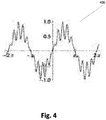
- Fig. 4 illustrates a complex waveform 400 using a scaled product in accordance with a embodiment.
- Figs. 5a-5d illustrate various waveforms of the scaled product in accordance with one embodiment.
- Fig. 5a illustrates a resonant frequency waveform 501 and a slow enveloped waveform 502 to which it will be multiplied by in accordance with one embodiment.
- Fig. 5b illustrates a scaled envelope waveform 503 of Fig. 5a in accordance with one embodiment.
- Fig. 5c illustrates a scaled direct drive waveform 504 in accordance with one embodiment.
- Fig. 5d illustrates a scaled composite waveform 505 formed from the scaled envelope waveform 503 of Fig. 5b added to the scaled direct drive waveform 504 of Fig. 5c in accordance with one embodiment.
- some embodiments boost the off-resonance drive signals to achieve a flatter response curve (i.e., the graph of acceleration measured by accelerometer vs. drive frequency).
- Embodiments can boost the signal using one or more of the following, in addition to other known methods:
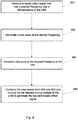
- Fig. 6 is a flow diagram of the functionality of system 10 of Fig. 1 when generating haptic effects using an LRA in accordance with one embodiment.
- the functionality of the flow diagram of Fig. 6 is implemented by software stored in memory or other computer readable or tangible medium, and executed by a processor.
- the functionality may be performed by hardware (e.g., through the use of an application specific integrated circuit ("ASIC"), a programmable gate array (“PGA”), a field programmable gate array (“FPGA”), etc.), or any combination of hardware and software.
- ASIC application specific integrated circuit
- PGA programmable gate array
- FPGA field programmable gate array
- the haptic effect signal is received.
- the haptic effect signal has a frequency (i.e., the desired frequency or "f desired ”) that is an off-resonant frequency of the LRA (i.e., not at the LRA's resonant frequency) that will generate the haptic effect.
- a sine wave at or near the resonant frequency of the LRA is generated.
- the sine wave frequency is the frequency that is an integer multiple of the off-resonant frequency but is as close to the resonant frequency as possible ( "f resonant " ).
- the sine waves from 604 and 606 are combined and multiplied by the maximum rated driving voltage of the LRA to generate the resultant haptic effect signal.
- the calculations are between 0 and 1, so this resulting scalar would be multiplied by the maximum drive voltage the LRA can handle.
- the calculations use integer math in the range of -127..127 rather than floating point from 0..1.
- embodiments generate haptic effects that include an off-resonant frequency component.
- the bandwidth of the LRA that generates the haptic effect is expanded so that it can render the haptic effects.
- Fig. 7 illustrates an example graph 702 of an LRA generating haptic effects primarily at resonant frequency, and a graph 704 of an LRA generating haptic effects with an increased range/bandwidth in accordance with embodiments of the present invention.
Landscapes
- Engineering & Computer Science (AREA)
- General Engineering & Computer Science (AREA)
- Theoretical Computer Science (AREA)
- Physics & Mathematics (AREA)
- General Physics & Mathematics (AREA)
- Human Computer Interaction (AREA)
- User Interface Of Digital Computer (AREA)
- Apparatuses For Generation Of Mechanical Vibrations (AREA)
Priority Applications (1)
| Application Number | Priority Date | Filing Date | Title |
|---|---|---|---|
| EP18206808.0A EP3480681A1 (en) | 2012-12-13 | 2013-12-13 | Haptic system with increased lra bandwidth |
Applications Claiming Priority (2)
| Application Number | Priority Date | Filing Date | Title |
|---|---|---|---|
| US201261736912P | 2012-12-13 | 2012-12-13 | |
| US201361790190P | 2013-03-15 | 2013-03-15 |
Related Child Applications (2)
| Application Number | Title | Priority Date | Filing Date |
|---|---|---|---|
| EP18206808.0A Division EP3480681A1 (en) | 2012-12-13 | 2013-12-13 | Haptic system with increased lra bandwidth |
| EP18206808.0A Division-Into EP3480681A1 (en) | 2012-12-13 | 2013-12-13 | Haptic system with increased lra bandwidth |
Publications (3)
| Publication Number | Publication Date |
|---|---|
| EP2743800A2 EP2743800A2 (en) | 2014-06-18 |
| EP2743800A3 EP2743800A3 (en) | 2015-05-06 |
| EP2743800B1 true EP2743800B1 (en) | 2019-02-20 |
Family
ID=49841500
Family Applications (2)
| Application Number | Title | Priority Date | Filing Date |
|---|---|---|---|
| EP13197135.0A Not-in-force EP2743800B1 (en) | 2012-12-13 | 2013-12-13 | Haptic system with increased LRA bandwidth |
| EP18206808.0A Withdrawn EP3480681A1 (en) | 2012-12-13 | 2013-12-13 | Haptic system with increased lra bandwidth |
Family Applications After (1)
| Application Number | Title | Priority Date | Filing Date |
|---|---|---|---|
| EP18206808.0A Withdrawn EP3480681A1 (en) | 2012-12-13 | 2013-12-13 | Haptic system with increased lra bandwidth |
Country Status (5)
| Country | Link |
|---|---|
| US (3) | US9524624B2 (enExample) |
| EP (2) | EP2743800B1 (enExample) |
| JP (2) | JP6498863B2 (enExample) |
| KR (1) | KR20140077125A (enExample) |
| CN (2) | CN103870060B (enExample) |
Families Citing this family (35)
| Publication number | Priority date | Publication date | Assignee | Title |
|---|---|---|---|---|
| CN105745031A (zh) * | 2013-12-06 | 2016-07-06 | 富士通株式会社 | 驱动装置、电子设备、驱动控制程序、以及驱动信号的生成方法 |
| KR101667107B1 (ko) * | 2014-08-12 | 2016-10-18 | 한국표준과학연구원 | 고주파와 저주파를 갖는 입력전압파형을 공급하기 위한 액추에이터 구동장치, 그 액추에이터 구동장치를 이용한 촉각피드백 생성장치 및 생성방법 |
| EP3263195B1 (en) * | 2015-02-27 | 2024-08-14 | Sony Group Corporation | Information processing device, information processing method, information processing system |
| KR102267474B1 (ko) | 2015-05-11 | 2021-06-21 | 삼성전자주식회사 | 진동 제어 장치와 이를 포함하는 컴퓨팅 장치 |
| CN105841706B (zh) * | 2015-06-25 | 2019-01-22 | 维沃移动通信有限公司 | 一种导航的方法和终端 |
| US10109161B2 (en) * | 2015-08-21 | 2018-10-23 | Immersion Corporation | Haptic driver with attenuation |
| CN105204542B (zh) * | 2015-09-11 | 2018-02-02 | 小米科技有限责任公司 | 马达的振动控制方法及装置 |
| US10606355B1 (en) * | 2016-09-06 | 2020-03-31 | Apple Inc. | Haptic architecture in a portable electronic device |
| EP3321933B1 (en) * | 2016-11-14 | 2021-08-25 | Goodix Technology (HK) Company Limited | Linear resonant actuator controller |
| US10277154B2 (en) | 2017-05-01 | 2019-04-30 | Apple Inc. | Closed-loop control of linear resonant actuator using back EMF data and hall sensing |
| US10601355B2 (en) | 2017-09-29 | 2020-03-24 | Apple Inc. | Closed-loop control of linear resonant actuator using back EMF and inertial compensation |
| US10110152B1 (en) | 2017-09-29 | 2018-10-23 | Apple Inc. | Integrated driver and controller for haptic engine |
| KR102367747B1 (ko) * | 2017-09-29 | 2022-02-25 | 엘지디스플레이 주식회사 | 포스센서를 구비하는 표시장치 및 그의 제조방법 |
| US20190103004A1 (en) * | 2017-10-02 | 2019-04-04 | Immersion Corporation | Haptic pitch control |
| CN108181988B (zh) * | 2017-12-29 | 2020-12-11 | 上海艾为电子技术股份有限公司 | 一种lra马达驱动芯片的控制方法以及装置 |
| US10360774B1 (en) * | 2018-01-05 | 2019-07-23 | Immersion Corporation | Method and device for enabling pitch control for a haptic effect |
| US10216231B1 (en) * | 2018-02-20 | 2019-02-26 | Nvf Tech Ltd | Moving magnet actuator for haptic alerts |
| US10991499B2 (en) * | 2018-03-22 | 2021-04-27 | Cirrus Logic, Inc. | Drive waveform adjustments to compensate for transducer resonant frequency |
| US10831276B2 (en) | 2018-09-07 | 2020-11-10 | Apple Inc. | Tungsten frame of a haptic feedback module for a portable electronic device |
| US11726568B2 (en) * | 2019-05-31 | 2023-08-15 | Apple Inc. | Haptics application programming interface |
| US11641546B2 (en) * | 2019-06-17 | 2023-05-02 | Cirrus Logic, Inc. | Frequency-domain haptic waveform compensation for haptic transducers |
| JP2021084074A (ja) * | 2019-11-28 | 2021-06-03 | 太陽誘電株式会社 | 駆動装置、振動発生装置、電子機器及び駆動方法 |
| US11086415B1 (en) * | 2020-01-24 | 2021-08-10 | Dell Products L.P. | Haptic pen for an information handling system |
| CN111831114B (zh) * | 2020-06-09 | 2024-02-20 | 瑞声科技(新加坡)有限公司 | 一种驱动电压生成方法、装置、存储介质和电子设备 |
| JP2022012375A (ja) * | 2020-07-01 | 2022-01-17 | 株式会社東海理化電機製作所 | 触感呈示装置、触感呈示システム、制御装置、およびコンピュータプログラム |
| US11281298B1 (en) * | 2020-12-22 | 2022-03-22 | Dell Products L.P. | System and method for dynamically disabling haptic feedback with recognition of pen on touch sensitive area of an information handling system |
| CN115378302B (zh) * | 2021-05-20 | 2023-12-12 | 荣耀终端有限公司 | 线性马达的控制方法、装置、设备及可读存储介质 |
| EP4117170B1 (en) | 2021-05-20 | 2025-05-07 | Honor Device Co., Ltd. | Method and device for adjusting vibration waveform of linear motor |
| CN115395827B (zh) | 2021-05-20 | 2025-11-07 | 荣耀终端股份有限公司 | 驱动波形的调整方法、装置、设备及可读存储介质 |
| CN115378303B (zh) | 2021-05-20 | 2026-01-20 | 荣耀终端股份有限公司 | 驱动波形的调整方法及装置、电子设备、可读存储介质 |
| CN115372819B (zh) | 2021-05-20 | 2025-09-30 | 荣耀终端股份有限公司 | 振动波形的处理方法、装置、设备及可读存储介质 |
| US11797091B2 (en) | 2021-06-24 | 2023-10-24 | Microsoft Technology Licensing, Llc | Computing device with haptic trackpad |
| EP4212997B1 (en) | 2022-01-17 | 2025-04-16 | Société BIC | Writing instrument providing a virtual texture sensation and method therefor |
| KR102705989B1 (ko) * | 2022-03-10 | 2024-09-11 | 주식회사 지니틱스 | Lra 제품별 구동력 편차를 줄이는 방법 |
| WO2023204277A1 (ja) * | 2022-04-21 | 2023-10-26 | 株式会社ワコム | ハプティクスペン及びハプティクス制御波形生成方法 |
Citations (2)
| Publication number | Priority date | Publication date | Assignee | Title |
|---|---|---|---|---|
| US20050134562A1 (en) * | 2003-12-22 | 2005-06-23 | Grant Danny A. | System and method for controlling haptic devices having multiple operational modes |
| US20080198139A1 (en) * | 2007-02-20 | 2008-08-21 | Immersion Corporation | Haptic Feedback System with Stored Effects |
Family Cites Families (21)
| Publication number | Priority date | Publication date | Assignee | Title |
|---|---|---|---|---|
| US5701140A (en) | 1993-07-16 | 1997-12-23 | Immersion Human Interface Corp. | Method and apparatus for providing a cursor control interface with force feedback |
| US6281651B1 (en) | 1997-11-03 | 2001-08-28 | Immersion Corporation | Haptic pointing devices |
| US6088019A (en) * | 1998-06-23 | 2000-07-11 | Immersion Corporation | Low cost force feedback device with actuator for non-primary axis |
| DE20080209U1 (de) | 1999-09-28 | 2001-08-09 | Immersion Corp | Steuerung von haptischen Empfindungen für Schnittstellenvorrichtungen mit Vibrotaktiler Rückkopplung |
| WO2001091100A1 (en) | 2000-05-24 | 2001-11-29 | Immersion Corporation | Haptic devices using electroactive polymers |
| JP3949912B2 (ja) * | 2000-08-08 | 2007-07-25 | 株式会社エヌ・ティ・ティ・ドコモ | 携帯型電子機器、電子機器、振動発生器、振動による報知方法および報知制御方法 |
| JP2003288158A (ja) * | 2002-01-28 | 2003-10-10 | Sony Corp | タクタイル・フィードバック機能を持つ携帯型機器 |
| US7369115B2 (en) * | 2002-04-25 | 2008-05-06 | Immersion Corporation | Haptic devices having multiple operational modes including at least one resonant mode |
| US7791588B2 (en) | 2003-12-22 | 2010-09-07 | Immersion Corporation | System and method for mapping instructions associated with haptic feedback |
| EP1817121B1 (en) | 2004-11-30 | 2021-01-06 | Immersion Corporation | Systems and methods for controlling a resonant device for generating vibrotactile haptic effects |
| US8981682B2 (en) * | 2005-06-27 | 2015-03-17 | Coactive Drive Corporation | Asymmetric and general vibration waveforms from multiple synchronized vibration actuators |
| US7919945B2 (en) * | 2005-06-27 | 2011-04-05 | Coactive Drive Corporation | Synchronized vibration device for haptic feedback |
| US8325144B1 (en) * | 2007-10-17 | 2012-12-04 | Immersion Corporation | Digital envelope modulator for haptic feedback devices |
| US8156809B2 (en) * | 2008-03-27 | 2012-04-17 | Immersion Corporation | Systems and methods for resonance detection |
| US7843277B2 (en) * | 2008-12-16 | 2010-11-30 | Immersion Corporation | Haptic feedback generation based on resonant frequency |
| KR101030389B1 (ko) * | 2008-12-17 | 2011-04-20 | 삼성전자주식회사 | 휴대용 단말기의 햅틱 기능 제어 방법 |
| KR101719507B1 (ko) | 2009-11-17 | 2017-03-24 | 임머숀 코퍼레이션 | 전자 디바이스에서 촉각 대역폭을 증가시키는 시스템들 및 방법들 |
| US9501145B2 (en) * | 2010-05-21 | 2016-11-22 | Disney Enterprises, Inc. | Electrovibration for touch surfaces |
| WO2012135373A2 (en) * | 2011-04-01 | 2012-10-04 | Analog Devices, Inc. | A dedicated user interface controller for feedback responses |
| US9996199B2 (en) * | 2012-07-10 | 2018-06-12 | Electronics And Telecommunications Research Institute | Film haptic system having multiple operation points |
| US9122330B2 (en) * | 2012-11-19 | 2015-09-01 | Disney Enterprises, Inc. | Controlling a user's tactile perception in a dynamic physical environment |
-
2013
- 2013-12-13 EP EP13197135.0A patent/EP2743800B1/en not_active Not-in-force
- 2013-12-13 US US14/105,481 patent/US9524624B2/en not_active Expired - Fee Related
- 2013-12-13 KR KR1020130155583A patent/KR20140077125A/ko not_active Ceased
- 2013-12-13 EP EP18206808.0A patent/EP3480681A1/en not_active Withdrawn
- 2013-12-13 CN CN201310757351.2A patent/CN103870060B/zh not_active Expired - Fee Related
- 2013-12-13 CN CN201710802686.XA patent/CN107621876B/zh not_active Expired - Fee Related
- 2013-12-13 JP JP2013257676A patent/JP6498863B2/ja not_active Expired - Fee Related
-
2016
- 2016-11-30 US US15/364,951 patent/US10026276B2/en not_active Expired - Fee Related
-
2018
- 2018-06-18 US US16/010,916 patent/US10586431B2/en not_active Expired - Fee Related
- 2018-08-22 JP JP2018155413A patent/JP2019016364A/ja active Pending
Patent Citations (2)
| Publication number | Priority date | Publication date | Assignee | Title |
|---|---|---|---|---|
| US20050134562A1 (en) * | 2003-12-22 | 2005-06-23 | Grant Danny A. | System and method for controlling haptic devices having multiple operational modes |
| US20080198139A1 (en) * | 2007-02-20 | 2008-08-21 | Immersion Corporation | Haptic Feedback System with Stored Effects |
Also Published As
| Publication number | Publication date |
|---|---|
| JP2019016364A (ja) | 2019-01-31 |
| US20190066459A1 (en) | 2019-02-28 |
| US20140167941A1 (en) | 2014-06-19 |
| EP3480681A1 (en) | 2019-05-08 |
| US10586431B2 (en) | 2020-03-10 |
| JP2014120170A (ja) | 2014-06-30 |
| US20170084139A1 (en) | 2017-03-23 |
| US10026276B2 (en) | 2018-07-17 |
| US9524624B2 (en) | 2016-12-20 |
| CN107621876A (zh) | 2018-01-23 |
| JP6498863B2 (ja) | 2019-04-10 |
| CN107621876B (zh) | 2020-09-08 |
| KR20140077125A (ko) | 2014-06-23 |
| EP2743800A2 (en) | 2014-06-18 |
| CN103870060B (zh) | 2017-09-12 |
| CN103870060A (zh) | 2014-06-18 |
| EP2743800A3 (en) | 2015-05-06 |
Similar Documents
| Publication | Publication Date | Title |
|---|---|---|
| US10586431B2 (en) | Haptic system with increased LRA bandwidth | |
| US10318006B2 (en) | High definition haptic effects generation using primitives | |
| US10296092B2 (en) | Generating haptic effects while minimizing cascading | |
| US8619051B2 (en) | Haptic feedback system with stored effects | |
| US8981915B2 (en) | System and method for display of multiple data channels on a single haptic display | |
| US8570296B2 (en) | System and method for display of multiple data channels on a single haptic display | |
| EP2762999B1 (en) | Overdrive voltage for an actuator to generate haptic effects | |
| EP2713241A2 (en) | Generating Haptic Effects for Dynamic Events | |
| KR102207669B1 (ko) | 향상된 동적 햅틱 효과 | |
| EP3379384A1 (en) | Haptic effects using a high bandwidth thin actuation system | |
| HK1140275B (en) | Haptic feedback system with stored effects |
Legal Events
| Date | Code | Title | Description |
|---|---|---|---|
| PUAI | Public reference made under article 153(3) epc to a published international application that has entered the european phase |
Free format text: ORIGINAL CODE: 0009012 |
|
| 17P | Request for examination filed |
Effective date: 20131213 |
|
| AK | Designated contracting states |
Kind code of ref document: A2 Designated state(s): AL AT BE BG CH CY CZ DE DK EE ES FI FR GB GR HR HU IE IS IT LI LT LU LV MC MK MT NL NO PL PT RO RS SE SI SK SM TR |
|
| AX | Request for extension of the european patent |
Extension state: BA ME |
|
| PUAL | Search report despatched |
Free format text: ORIGINAL CODE: 0009013 |
|
| AK | Designated contracting states |
Kind code of ref document: A3 Designated state(s): AL AT BE BG CH CY CZ DE DK EE ES FI FR GB GR HR HU IE IS IT LI LT LU LV MC MK MT NL NO PL PT RO RS SE SI SK SM TR |
|
| AX | Request for extension of the european patent |
Extension state: BA ME |
|
| RIC1 | Information provided on ipc code assigned before grant |
Ipc: G08B 6/00 20060101ALI20150327BHEP Ipc: G06F 3/0488 20130101ALI20150327BHEP Ipc: G06F 3/01 20060101AFI20150327BHEP |
|
| RAP1 | Party data changed (applicant data changed or rights of an application transferred) |
Owner name: IMMERSION CORPORATION |
|
| R17P | Request for examination filed (corrected) |
Effective date: 20151104 |
|
| RBV | Designated contracting states (corrected) |
Designated state(s): AL AT BE BG CH CY CZ DE DK EE ES FI FR GB GR HR HU IE IS IT LI LT LU LV MC MK MT NL NO PL PT RO RS SE SI SK SM TR |
|
| 17Q | First examination report despatched |
Effective date: 20160311 |
|
| STAA | Information on the status of an ep patent application or granted ep patent |
Free format text: STATUS: EXAMINATION IS IN PROGRESS |
|
| GRAP | Despatch of communication of intention to grant a patent |
Free format text: ORIGINAL CODE: EPIDOSNIGR1 |
|
| STAA | Information on the status of an ep patent application or granted ep patent |
Free format text: STATUS: GRANT OF PATENT IS INTENDED |
|
| INTG | Intention to grant announced |
Effective date: 20180627 |
|
| GRAS | Grant fee paid |
Free format text: ORIGINAL CODE: EPIDOSNIGR3 |
|
| GRAJ | Information related to disapproval of communication of intention to grant by the applicant or resumption of examination proceedings by the epo deleted |
Free format text: ORIGINAL CODE: EPIDOSDIGR1 |
|
| GRAL | Information related to payment of fee for publishing/printing deleted |
Free format text: ORIGINAL CODE: EPIDOSDIGR3 |
|
| STAA | Information on the status of an ep patent application or granted ep patent |
Free format text: STATUS: EXAMINATION IS IN PROGRESS |
|
| GRAR | Information related to intention to grant a patent recorded |
Free format text: ORIGINAL CODE: EPIDOSNIGR71 |
|
| STAA | Information on the status of an ep patent application or granted ep patent |
Free format text: STATUS: GRANT OF PATENT IS INTENDED |
|
| INTC | Intention to grant announced (deleted) | ||
| GRAA | (expected) grant |
Free format text: ORIGINAL CODE: 0009210 |
|
| STAA | Information on the status of an ep patent application or granted ep patent |
Free format text: STATUS: THE PATENT HAS BEEN GRANTED |
|
| INTG | Intention to grant announced |
Effective date: 20181214 |
|
| AK | Designated contracting states |
Kind code of ref document: B1 Designated state(s): AL AT BE BG CH CY CZ DE DK EE ES FI FR GB GR HR HU IE IS IT LI LT LU LV MC MK MT NL NO PL PT RO RS SE SI SK SM TR |
|
| REG | Reference to a national code |
Ref country code: GB Ref legal event code: FG4D |
|
| REG | Reference to a national code |
Ref country code: CH Ref legal event code: EP |
|
| REG | Reference to a national code |
Ref country code: DE Ref legal event code: R096 Ref document number: 602013050950 Country of ref document: DE |
|
| REG | Reference to a national code |
Ref country code: AT Ref legal event code: REF Ref document number: 1099060 Country of ref document: AT Kind code of ref document: T Effective date: 20190315 |
|
| REG | Reference to a national code |
Ref country code: IE Ref legal event code: FG4D |
|
| REG | Reference to a national code |
Ref country code: NL Ref legal event code: MP Effective date: 20190220 |
|
| REG | Reference to a national code |
Ref country code: LT Ref legal event code: MG4D |
|
| PG25 | Lapsed in a contracting state [announced via postgrant information from national office to epo] |
Ref country code: FI Free format text: LAPSE BECAUSE OF FAILURE TO SUBMIT A TRANSLATION OF THE DESCRIPTION OR TO PAY THE FEE WITHIN THE PRESCRIBED TIME-LIMIT Effective date: 20190220 Ref country code: NO Free format text: LAPSE BECAUSE OF FAILURE TO SUBMIT A TRANSLATION OF THE DESCRIPTION OR TO PAY THE FEE WITHIN THE PRESCRIBED TIME-LIMIT Effective date: 20190520 Ref country code: SE Free format text: LAPSE BECAUSE OF FAILURE TO SUBMIT A TRANSLATION OF THE DESCRIPTION OR TO PAY THE FEE WITHIN THE PRESCRIBED TIME-LIMIT Effective date: 20190220 Ref country code: PT Free format text: LAPSE BECAUSE OF FAILURE TO SUBMIT A TRANSLATION OF THE DESCRIPTION OR TO PAY THE FEE WITHIN THE PRESCRIBED TIME-LIMIT Effective date: 20190620 Ref country code: NL Free format text: LAPSE BECAUSE OF FAILURE TO SUBMIT A TRANSLATION OF THE DESCRIPTION OR TO PAY THE FEE WITHIN THE PRESCRIBED TIME-LIMIT Effective date: 20190220 Ref country code: LT Free format text: LAPSE BECAUSE OF FAILURE TO SUBMIT A TRANSLATION OF THE DESCRIPTION OR TO PAY THE FEE WITHIN THE PRESCRIBED TIME-LIMIT Effective date: 20190220 |
|
| PG25 | Lapsed in a contracting state [announced via postgrant information from national office to epo] |
Ref country code: LV Free format text: LAPSE BECAUSE OF FAILURE TO SUBMIT A TRANSLATION OF THE DESCRIPTION OR TO PAY THE FEE WITHIN THE PRESCRIBED TIME-LIMIT Effective date: 20190220 Ref country code: HR Free format text: LAPSE BECAUSE OF FAILURE TO SUBMIT A TRANSLATION OF THE DESCRIPTION OR TO PAY THE FEE WITHIN THE PRESCRIBED TIME-LIMIT Effective date: 20190220 Ref country code: BG Free format text: LAPSE BECAUSE OF FAILURE TO SUBMIT A TRANSLATION OF THE DESCRIPTION OR TO PAY THE FEE WITHIN THE PRESCRIBED TIME-LIMIT Effective date: 20190520 Ref country code: GR Free format text: LAPSE BECAUSE OF FAILURE TO SUBMIT A TRANSLATION OF THE DESCRIPTION OR TO PAY THE FEE WITHIN THE PRESCRIBED TIME-LIMIT Effective date: 20190521 Ref country code: IS Free format text: LAPSE BECAUSE OF FAILURE TO SUBMIT A TRANSLATION OF THE DESCRIPTION OR TO PAY THE FEE WITHIN THE PRESCRIBED TIME-LIMIT Effective date: 20190620 Ref country code: RS Free format text: LAPSE BECAUSE OF FAILURE TO SUBMIT A TRANSLATION OF THE DESCRIPTION OR TO PAY THE FEE WITHIN THE PRESCRIBED TIME-LIMIT Effective date: 20190220 |
|
| REG | Reference to a national code |
Ref country code: AT Ref legal event code: MK05 Ref document number: 1099060 Country of ref document: AT Kind code of ref document: T Effective date: 20190220 |
|
| PG25 | Lapsed in a contracting state [announced via postgrant information from national office to epo] |
Ref country code: ES Free format text: LAPSE BECAUSE OF FAILURE TO SUBMIT A TRANSLATION OF THE DESCRIPTION OR TO PAY THE FEE WITHIN THE PRESCRIBED TIME-LIMIT Effective date: 20190220 Ref country code: DK Free format text: LAPSE BECAUSE OF FAILURE TO SUBMIT A TRANSLATION OF THE DESCRIPTION OR TO PAY THE FEE WITHIN THE PRESCRIBED TIME-LIMIT Effective date: 20190220 Ref country code: EE Free format text: LAPSE BECAUSE OF FAILURE TO SUBMIT A TRANSLATION OF THE DESCRIPTION OR TO PAY THE FEE WITHIN THE PRESCRIBED TIME-LIMIT Effective date: 20190220 Ref country code: CZ Free format text: LAPSE BECAUSE OF FAILURE TO SUBMIT A TRANSLATION OF THE DESCRIPTION OR TO PAY THE FEE WITHIN THE PRESCRIBED TIME-LIMIT Effective date: 20190220 Ref country code: RO Free format text: LAPSE BECAUSE OF FAILURE TO SUBMIT A TRANSLATION OF THE DESCRIPTION OR TO PAY THE FEE WITHIN THE PRESCRIBED TIME-LIMIT Effective date: 20190220 Ref country code: IT Free format text: LAPSE BECAUSE OF FAILURE TO SUBMIT A TRANSLATION OF THE DESCRIPTION OR TO PAY THE FEE WITHIN THE PRESCRIBED TIME-LIMIT Effective date: 20190220 Ref country code: AL Free format text: LAPSE BECAUSE OF FAILURE TO SUBMIT A TRANSLATION OF THE DESCRIPTION OR TO PAY THE FEE WITHIN THE PRESCRIBED TIME-LIMIT Effective date: 20190220 Ref country code: SK Free format text: LAPSE BECAUSE OF FAILURE TO SUBMIT A TRANSLATION OF THE DESCRIPTION OR TO PAY THE FEE WITHIN THE PRESCRIBED TIME-LIMIT Effective date: 20190220 |
|
| REG | Reference to a national code |
Ref country code: DE Ref legal event code: R097 Ref document number: 602013050950 Country of ref document: DE |
|
| PG25 | Lapsed in a contracting state [announced via postgrant information from national office to epo] |
Ref country code: SM Free format text: LAPSE BECAUSE OF FAILURE TO SUBMIT A TRANSLATION OF THE DESCRIPTION OR TO PAY THE FEE WITHIN THE PRESCRIBED TIME-LIMIT Effective date: 20190220 Ref country code: PL Free format text: LAPSE BECAUSE OF FAILURE TO SUBMIT A TRANSLATION OF THE DESCRIPTION OR TO PAY THE FEE WITHIN THE PRESCRIBED TIME-LIMIT Effective date: 20190220 |
|
| PLBE | No opposition filed within time limit |
Free format text: ORIGINAL CODE: 0009261 |
|
| STAA | Information on the status of an ep patent application or granted ep patent |
Free format text: STATUS: NO OPPOSITION FILED WITHIN TIME LIMIT |
|
| PG25 | Lapsed in a contracting state [announced via postgrant information from national office to epo] |
Ref country code: AT Free format text: LAPSE BECAUSE OF FAILURE TO SUBMIT A TRANSLATION OF THE DESCRIPTION OR TO PAY THE FEE WITHIN THE PRESCRIBED TIME-LIMIT Effective date: 20190220 |
|
| 26N | No opposition filed |
Effective date: 20191121 |
|
| PG25 | Lapsed in a contracting state [announced via postgrant information from national office to epo] |
Ref country code: SI Free format text: LAPSE BECAUSE OF FAILURE TO SUBMIT A TRANSLATION OF THE DESCRIPTION OR TO PAY THE FEE WITHIN THE PRESCRIBED TIME-LIMIT Effective date: 20190220 |
|
| PG25 | Lapsed in a contracting state [announced via postgrant information from national office to epo] |
Ref country code: TR Free format text: LAPSE BECAUSE OF FAILURE TO SUBMIT A TRANSLATION OF THE DESCRIPTION OR TO PAY THE FEE WITHIN THE PRESCRIBED TIME-LIMIT Effective date: 20190220 |
|
| REG | Reference to a national code |
Ref country code: CH Ref legal event code: PL |
|
| REG | Reference to a national code |
Ref country code: BE Ref legal event code: MM Effective date: 20191231 |
|
| PG25 | Lapsed in a contracting state [announced via postgrant information from national office to epo] |
Ref country code: MC Free format text: LAPSE BECAUSE OF FAILURE TO SUBMIT A TRANSLATION OF THE DESCRIPTION OR TO PAY THE FEE WITHIN THE PRESCRIBED TIME-LIMIT Effective date: 20190220 |
|
| PG25 | Lapsed in a contracting state [announced via postgrant information from national office to epo] |
Ref country code: IE Free format text: LAPSE BECAUSE OF NON-PAYMENT OF DUE FEES Effective date: 20191213 Ref country code: LU Free format text: LAPSE BECAUSE OF NON-PAYMENT OF DUE FEES Effective date: 20191213 |
|
| PG25 | Lapsed in a contracting state [announced via postgrant information from national office to epo] |
Ref country code: CH Free format text: LAPSE BECAUSE OF NON-PAYMENT OF DUE FEES Effective date: 20191231 Ref country code: BE Free format text: LAPSE BECAUSE OF NON-PAYMENT OF DUE FEES Effective date: 20191231 Ref country code: LI Free format text: LAPSE BECAUSE OF NON-PAYMENT OF DUE FEES Effective date: 20191231 |
|
| PGFP | Annual fee paid to national office [announced via postgrant information from national office to epo] |
Ref country code: FR Payment date: 20201227 Year of fee payment: 8 Ref country code: GB Payment date: 20201228 Year of fee payment: 8 |
|
| PG25 | Lapsed in a contracting state [announced via postgrant information from national office to epo] |
Ref country code: CY Free format text: LAPSE BECAUSE OF FAILURE TO SUBMIT A TRANSLATION OF THE DESCRIPTION OR TO PAY THE FEE WITHIN THE PRESCRIBED TIME-LIMIT Effective date: 20190220 |
|
| PGFP | Annual fee paid to national office [announced via postgrant information from national office to epo] |
Ref country code: DE Payment date: 20201229 Year of fee payment: 8 |
|
| PG25 | Lapsed in a contracting state [announced via postgrant information from national office to epo] |
Ref country code: MT Free format text: LAPSE BECAUSE OF FAILURE TO SUBMIT A TRANSLATION OF THE DESCRIPTION OR TO PAY THE FEE WITHIN THE PRESCRIBED TIME-LIMIT Effective date: 20190220 Ref country code: HU Free format text: LAPSE BECAUSE OF FAILURE TO SUBMIT A TRANSLATION OF THE DESCRIPTION OR TO PAY THE FEE WITHIN THE PRESCRIBED TIME-LIMIT; INVALID AB INITIO Effective date: 20131213 |
|
| PG25 | Lapsed in a contracting state [announced via postgrant information from national office to epo] |
Ref country code: MK Free format text: LAPSE BECAUSE OF FAILURE TO SUBMIT A TRANSLATION OF THE DESCRIPTION OR TO PAY THE FEE WITHIN THE PRESCRIBED TIME-LIMIT Effective date: 20190220 |
|
| REG | Reference to a national code |
Ref country code: DE Ref legal event code: R119 Ref document number: 602013050950 Country of ref document: DE |
|
| GBPC | Gb: european patent ceased through non-payment of renewal fee |
Effective date: 20211213 |
|
| PG25 | Lapsed in a contracting state [announced via postgrant information from national office to epo] |
Ref country code: GB Free format text: LAPSE BECAUSE OF NON-PAYMENT OF DUE FEES Effective date: 20211213 Ref country code: DE Free format text: LAPSE BECAUSE OF NON-PAYMENT OF DUE FEES Effective date: 20220701 |
|
| PG25 | Lapsed in a contracting state [announced via postgrant information from national office to epo] |
Ref country code: FR Free format text: LAPSE BECAUSE OF NON-PAYMENT OF DUE FEES Effective date: 20211231 |