EP2742013B1 - Process for drying concrete dispersants - Google Patents
Process for drying concrete dispersants Download PDFInfo
- Publication number
- EP2742013B1 EP2742013B1 EP12740989.4A EP12740989A EP2742013B1 EP 2742013 B1 EP2742013 B1 EP 2742013B1 EP 12740989 A EP12740989 A EP 12740989A EP 2742013 B1 EP2742013 B1 EP 2742013B1
- Authority
- EP
- European Patent Office
- Prior art keywords
- polymer
- process according
- polymers
- comb
- dispersant
- Prior art date
- Legal status (The legal status is an assumption and is not a legal conclusion. Google has not performed a legal analysis and makes no representation as to the accuracy of the status listed.)
- Active
Links
Images

Classifications
-
- C—CHEMISTRY; METALLURGY
- C04—CEMENTS; CONCRETE; ARTIFICIAL STONE; CERAMICS; REFRACTORIES
- C04B—LIME, MAGNESIA; SLAG; CEMENTS; COMPOSITIONS THEREOF, e.g. MORTARS, CONCRETE OR LIKE BUILDING MATERIALS; ARTIFICIAL STONE; CERAMICS; REFRACTORIES; TREATMENT OF NATURAL STONE
- C04B24/00—Use of organic materials as active ingredients for mortars, concrete or artificial stone, e.g. plasticisers
- C04B24/24—Macromolecular compounds
- C04B24/28—Macromolecular compounds obtained otherwise than by reactions only involving carbon-to-carbon unsaturated bonds
- C04B24/30—Condensation polymers of aldehydes or ketones
- C04B24/305—Melamine-formaldehyde condensation polymers
-
- C—CHEMISTRY; METALLURGY
- C04—CEMENTS; CONCRETE; ARTIFICIAL STONE; CERAMICS; REFRACTORIES
- C04B—LIME, MAGNESIA; SLAG; CEMENTS; COMPOSITIONS THEREOF, e.g. MORTARS, CONCRETE OR LIKE BUILDING MATERIALS; ARTIFICIAL STONE; CERAMICS; REFRACTORIES; TREATMENT OF NATURAL STONE
- C04B40/00—Processes, in general, for influencing or modifying the properties of mortars, concrete or artificial stone compositions, e.g. their setting or hardening ability
- C04B40/0028—Aspects relating to the mixing step of the mortar preparation
- C04B40/0039—Premixtures of ingredients
- C04B40/0042—Powdery mixtures
-
- C—CHEMISTRY; METALLURGY
- C04—CEMENTS; CONCRETE; ARTIFICIAL STONE; CERAMICS; REFRACTORIES
- C04B—LIME, MAGNESIA; SLAG; CEMENTS; COMPOSITIONS THEREOF, e.g. MORTARS, CONCRETE OR LIKE BUILDING MATERIALS; ARTIFICIAL STONE; CERAMICS; REFRACTORIES; TREATMENT OF NATURAL STONE
- C04B2103/00—Function or property of ingredients for mortars, concrete or artificial stone
- C04B2103/48—Foam stabilisers
-
- Y—GENERAL TAGGING OF NEW TECHNOLOGICAL DEVELOPMENTS; GENERAL TAGGING OF CROSS-SECTIONAL TECHNOLOGIES SPANNING OVER SEVERAL SECTIONS OF THE IPC; TECHNICAL SUBJECTS COVERED BY FORMER USPC CROSS-REFERENCE ART COLLECTIONS [XRACs] AND DIGESTS
- Y10—TECHNICAL SUBJECTS COVERED BY FORMER USPC
- Y10T—TECHNICAL SUBJECTS COVERED BY FORMER US CLASSIFICATION
- Y10T428/00—Stock material or miscellaneous articles
- Y10T428/29—Coated or structually defined flake, particle, cell, strand, strand portion, rod, filament, macroscopic fiber or mass thereof
- Y10T428/2982—Particulate matter [e.g., sphere, flake, etc.]
Definitions
- the invention relates to processes for the production of solid dispersants for a hydraulically binding composition, solid dispersants obtained according to such processes and uses thereof.
- Dispersants are important additives for hydraulically binding compositions, such as cements. They are added to improve the workability of hydraulically binding compositions and the mechanical properties of the resulting concrete.
- An important class of dispersants are fluidizers, also referred to as plasticizers. Fluidizers are added in order to reduce the water content of hydraulically binding compositions. By reducing the water content, concretes with improved mechanical properties, such as pressure resistance and tightness against liquids are obtainable.
- Typical dispersants with fluidizing properties are organic polymers.
- melamine sulfonates, naphthalene sulfonates, lignin sulfonates or derivatives thereof are well known fluidizers. These dispersants mostly increase the initial flow of mortar compositions after preparations. However, they tend to decrease the flow shortly after, for example after about 30 min or 60 min. Thus they are of limited use for large scale applications, in which a good workability of the mortar is required over an extended time period.
- dispersants with fluidizing properties emerged, which are organic comb polymers with a polycarboxylate backbone.
- the polycarboxylate backbone is covalently linked to side chains by ether, ester or amide bonds.
- the side chains usually comprise polyether groups.
- Such dispersants are also referred to as polycarboxylate ethers or esters (PCE) or as superfluidizers. Modifications and derivatives have been described, which confer specific properties to various hydraulically binding compositions.
- Aqueous solutions comprising about weight 40% comb polymers are commercially available.
- Such comb polymers are highly hydrophilic. Upon removal of water from an aqueous comb polymer solution, a waxy or syrup-like composition is obtained. Such a waxy composition is not well suited for technical application, because the workability is low and partitioning and distribution of the polymer into a cement composition is difficult and time-consuming.
- EP 1829839 A1 discloses the preparation of a powdered polycarboxylic acid-based cement dispersant, wherein the drying process is carried out with a mixture of a comb polymer with an inorganic powder.
- silica is added during the drying process.
- specific chemical modifications of the comb polymers are required, namely polyamide-polyamine modifications.
- inorganic additives and silica in the dry comb polymer composition may affect the cement composition.
- US 6,437,027 B1 suggests a process for producing a powdery dispersant, in which a reducing agent, specifically sulfite, nitrite and thiosulfate salts, are added to a comb polymer and in which the comb polymer comprises specific chemical modifications.
- a reducing agent specifically sulfite, nitrite and thiosulfate salts
- naphthalene sulfonates are used as dispersants for hydraulically binding compositions for their fluidizing properties for improving the initial flow. It is also known in the art that some polymer dispersions can be dried if admixed with such naphthalene sulfonate condensates. Such processes are disclosed in DE 2049114 , DE 3143070 or WO 03/097721 .
- Polymer dispersions, also named latex comprise solid particles of water-insoluble polymers, especially thermoplastic polymers. Polymer dispersions of thermoplastic polymers can be dried easily. They are chemically and physically very different from water-soluble hydrophilic comb polymers.
- WO2011/029711 discloses a formulation containing a) at least one component having dispersing properties and being selected from branched comb polymers having polyether side chains, a naphthalene sulphonate-formaldehyde condensate and a melamine sulphonate-formaldehyde condensate, and b) a phosphatized polycondensate. All inventive examples relate to liquid aqueous formulations comprising the phosphatized polycondensate b) and a single dispersant a). A mixture of two dispersants a) is used only in comparative example C4, but does not yield a stable solution, but a gel.
- the subject of the invention is to provide methods and solid comb polymer based dispersants, which overcome the above-mentioned drawbacks.
- the invention shall provide a simple and efficient method for providing solid comb polymers dispersants for hydraulically binding compositions.
- the dispersants and compositions shall have high workability. Preferably, they shall be in a form which can be portioned and mixed easily, preferably a fine powder.
- the comb polymer dispersant shall have good fluidizing properties in hydraulically binding compositions and confer advantageous mechanical properties to the resulting concrete. Specifically, they should confer good initial flow to a mortar composition, but also preserve good flow after extended time, such as 30 min or 60 min.
- Subject of the invention is a process for the production of a solid dispersant for a hydraulically binding composition, comprising the steps of
- the invention provides a solid dispersant for a hydraulically binding composition.
- the solid dispersant is dry.
- the water content is low, preferably below 2 wt.%, below 1 wt.% or below 0.5 wt.%.
- the solid dispersant is a powder.
- a "dispersant” is an additive for a hydraulically binding composition, which improves its workability.
- the dispersant of the invention is a fluidizer or plasticizer. Since it contains comb polymer superfluidizers, it is also a superfluidizer.
- a "hydraulically binding composition” is a composition, which comprises a binder, which hardens in the presence of water.
- binders are well-known to the skilled person in the technical field of construction.
- Such binders are typically inorganic binders.
- the binder is selected from the group consisting of cement, gypsum, preferably in the form of anhydrous or semi-hydrous gypsum, and lime, especially burnt lime.
- An especially preferred hydraulic binder is cement.
- the compositions may comprise fillers, such as fly ash, silica fume, slack, slack cent or lime filler.
- the hydraulically binding composition comprises at least one first polymer, which is a comb polymer.
- the comb polymer has a polymer backbone, which comprises carboxyl groups.
- the first polymer is a dispersant for a hydraulically binding composition. Specifically, it is a fluidizer, more specifically a superfluidizer. It is known in the art that such "superfluidizers” or “ultra-high water reducers” can confer a water reduction of more than 20% to a hydraulically binding composition, such as cement.
- Comb polymer superfluidizers for hydraulically binding compositions are well known in the art. It is assumed the carboxyl groups of the backbone are adsorbed by the binder particles, whereas the side chains are oriented away from the binder particles. Thus the fluidizing properties seem to be conferred to the binder particles by steric repulsion of the side chains, and thus the particles, away from each other.
- the backbone of the comb polymer is a polycarboxylic acid and at least some of the side chains of the comb polymer are polyethers.
- the polyethers are polyethyleneglycol and/or polypropyleneglykol, or at least comprise polyethyleneglycol or polypropyleneglykol structural units.
- the side chains are covalently linked to the polycarboxylic acid backbone by ester, ether and/or amide bonds.
- ester, ether and/or amide bonds are known in the art as polycarboxylate esters or polycarboxylate ethers (PCEs).
- the polycarboxylic acid is polyacrylic acid, polymethacrylic acid or a copolymer of acrylic acid and methacrylic acid.
- other monomeric units may be included into the polycarboxylic acid backbone, such as organic acids, preferably dicarboxylic acids, such as maleic acid, or fatty acids.
- the comb polymer may be provided in the form of a salt (with neutralized carboxyl groups), a free acid, or partially neutralized.
- the comb polymer is neutralized or at least partially neutralized, because the solubility in aqueous solution is higher and the ionic carboxyl groups are advantageous for the dispersant function.
- the comb polymer comprises or consists of:
- R u represents a methyl group
- R v stands for hydrogen
- a in -[AO] n -R 4 represents a C 2 -alkylene.
- the average molecular weight (Mw) of the comb polymer is 5'000 - 150'000 g/mol, in particular 10'000 - 100'000 g/mol.
- the average molecular weight is in particular measured using gel permeation chromatography (GPC) with polyethylenglycol (PEG) as standard.
- the structural units S1, S2, S3, and S4 together have a combined molecular weight, which amounts to at least 50 wt.-%, in particular at least 90 wt.-%, preferably at least 95 wt.-%, of the total weight of the comb polymer.
- such comb polymers are those as disclosed in US 2006/0229388 A1 .
- Methods for producing such comb polymers are known in the art. Two main methods are industrially used for synthesizing such comb polymers. The first method is radical polymerisation of ethylenically unsaturated monomers. Side chains of the resulting comb polymer are already attached to monomer units. Comb polymers with a desired structure and properties are obtained by specific selection and ratio of the monomers, especially the amount of acrylic and methacrylic acid monomers in the polymerization reaction solution.
- a polycarboxylic acid backbone is synthesized in a first step. Subsequently, side chains are attached to the polycarboxylic acid backbone, for example by esterification, amidation or etherisation reactions with alcohols, amines and the like.
- Such polymer analogous reactions, as well as resulting comb polymers are described, for example, in WO 97/35814 , WO 95/09821 , DE 100 15 135 A1 , EP 1 138 697 A1 , EP 1 348 729 A1 and WO 2005/090416 .
- the comb polymers are those which were obtained by polymer analogous reaction:
- a "condensate” is a compound, which was obtained by at least one condensation reaction. Typically, the synthesis of such condensates comprises a subsequent polymerisation step from condensate precursor units. Since the condensation reaction yields condensates of multiple monomeric precursors, the overall reaction is a polymerization reaction and the condensate is a polymer. As used herein, a “polymer” is obtained by polymerization, but may comprise only a low number of monomeric units, such as 2 or 3 monomeric units.
- the second polymer is a sulfonate.
- Sulfonates are anions with the general formula R-SO 2 O - , wherein R is an organic residue, such as methyl or phenyl.
- Sulfonates are the conjugate bases of sulfonic acids with formula RSO 2 OH.
- the second polymer is a melamine sulfonate, naphthalene sulfonate or lignin sulfonate.
- it is a melamine sulfonate formaldehyde condensate, a naphthalene sulfonate formaldehyde condensate, or a lignosulfonate.
- the condensates may comprise additional chemical moieties which were included by condensation, or other modifications.
- the second polymer is a melamine-sulfonate-formaldehyde condensate.
- the condensate comprises between about 2 to 50, more preferably between about 3 to 20 melamine subunits.
- the second polymer is a linear polymer.
- the melamine subunits are aligned in a linear molecular chain.
- the condensate may be synthesized in a multiple step reaction, in which at first melamine is reacted with formaldehyde and pyrosulfite, and subsequently sulfonated with sulfanilic acid, to obtain a primary condensate.
- the primary condensate is of relatively small size and may comprise an average of about two melamines per molecule. Subsequently, the primary condensates can be polymerized to obtain a condensate of desired length.
- Melamine-sulfonate-formaldehyde condensates are known dispersants for cement compositions. Such condensates are commercially available, for example under the trademark Sikament from Sika, CH.
- the second polymer is a naphthalene sulfonate formaldehyde condensate. Similar as described above for the melamine condensate, the naphthalene condensate is obtained from formaldehyde and naphthalene and sulfonated in order to introduce a desired amount of sulfonic groups. Such naphthalene sulfonates are also known dispersants for hydraulically binding compositions, specifically as fluidizers.
- the second polymer is a lignosulfonate.
- Lignosulfonates are water-soluble anionic polymers, which are by-products from the production of wood pulp. They are also used as dispersants and fluidizers for hydraulically binding compositions.
- the average molecular weight (Mw) of the condensate is 1'000 - 50'000 g/mol, in particular 2'000 - 10'000 g/mol.
- the condensate is in the form of a salt (with neutralized carboxyl groups), a free acid, or partially neutralized.
- the condensate is neutralized or at least partially neutralized, because the solubility in aqueous solution is higher and ionic carboxyl groups are advantageous for the dispersant function.
- the second polymer provided in step b) is not phosphatized. More specifically, the second polymer provided in step b) is preferably not a polycondensation product containing (I) at least one structural unit with an aromatic or heteroaromatic sub-unit and at least one polyether side chain, and (II) at least one phosphated structural unit with an aromatic or heteroaromatic sub-unit.
- the second polymer provided in step b) preferably is not a phosphatized polycondensate according to WO2011/029711 , claim 1, b).
- the second polymer is thus preferably not a polycondensation product containing (I) at least one structural unit with an aromatic or heteroaromatic sub-unit and at least one polyether side chain, and (II) at least one phosphated structural unit with an aromatic or heteroaromatic sub-unit, and (III) at least one structural unit with an aromatic or heteroaromatic sub-unit; structural unit (II) and structural unit (III) differing exclusively in that the OP(OH) 2 group of the structural unit (II) is replaced by H in structural unit (III), and structural unit (III) is not the same as structural unit (I).
- the spray-dried solution and/or the solid dispersant produced according to the inventive process do not comprise a phosphatized polycondensate. More specifically, the spray-dried solution and/or solid dispersant produced according to the inventive process preferably do not comprise a polycondensation product containing (I) at least one structural unit with an aromatic or heteroaromatic sub-unit and at least one polyether side chain, and (II) at least one phosphated structural unit with an aromatic or heteroaromatic sub-unit.
- the spray-dried solution and/or solid dispersant produced according to the inventive process do not comprise a phosphatized polycondensate according to WO2011/029711 , claim 1, b).
- the spray-dried solution and/or solid dispersant produced according to the inventive process preferably do not comprise not a polycondensation product containing (I) at least one structural unit with an aromatic or heteroaromatic sub-unit and at least one polyether side chain, and (II) at least one phosphated structural unit with an aromatic or heteroaromatic sub-unit, and (III) at least one structural unit with an aromatic or heteroaromatic sub-unit; structural unit (II) and structural unit (III) differing exclusively in that the OP(OH) 2 group of the structural unit (II) is replaced by H in structural unit (III), and structural unit (III) is not the same as structural unit (I).
- an aqueous solution which comprises the first and second polymer.
- the solution may comprise two or more different first polymers and/or second polymers. If necessary the aqueous solution is mixed, for example stirred, until the comb polymers and condensates are dissolved. Since the salts of the comb polymer and condensate are anionic, they are soluble in water up to relatively high concentrations.
- the solution is a true solution, in which the comb polymer and condensate molecules are dissolved.
- the aqueous solution prepared in step c) of the invention is not a particle dispersion. In other words, it is not a latex.
- the solution does not comprise insoluble particles, for example of thermoplastic polymers, such as particles above 1 ⁇ m or above 10 nm diameter.
- aqueous solution is spray-dried.
- Spray-drying is a known method for producing a dry powder from a liquid by spraying in combination with rapidly drying the solution with a hot gas. The process is carried out in a spray-dryer apparatus. The liquid is dispersed with a spray nozzle or an atomizer.
- the aqueous solution is pre-heated before entering the spray dryer.
- the spray-drying may be carried out at an inlet temperature between 100 and 300°C, preferably between 150 and 250°C.
- the outlet temperature may be between 80 and 200°C, more preferably between 120 and 150°C.
- the resulting powder product may be sieved in order to remove small agglomerates, which might potentially be formed.
- a dry powder is obtained, which has a good flowability.
- the comb polymer itself i.e. the polycarboxylate esters or ethers
- the comb polymer itself is not spray-dryable from aqueous solutions.
- spray-drying aqueous solutions of comb polymers without condensate additives at best wax-like products were obtained.
- the solid dispersant is a powder.
- the powder may be converted into another solid forms, for example by pressing.
- the inventive solid dispersant may also be a granulate, a shaped block, a tab or the like.
- the aqueous solution before spray-drying, comprises
- the aqueous solution may comprise other soluble additives.
- solutions of the respective comb polymers and condensates comprise small amounts of additives.
- Additives may be residual chemicals or side products from the production process, or substances which stabilize comb polymer solutions.
- the additives might be salts, especially buffer salts, alcohols, polysaccharides or sulfonate salts.
- the additives might be functional additives, such as antifoaming agents or colorants.
- the content of solid additives is below 10 weight %, more preferably below 5 weight % or below 3 weight %.
- the (w/w) ratio of the first polymer and the second polymer in the spray-dried aqueous solution is between 2 to 1 and 1 to 2, more preferably between 1.5 to 1 and 1 to 1.5, or between 1.2 to 1 and 1 to 1.2. In a specific preferred embodiment, the ratio is about 1 to 1 (about equal).
- the pH of the spray-dried aqueous solution is between 5 and 9, more preferably between 6 and 8.
- the aqueous solution for spray-drying may be obtained by admixing a solution of the first polymer, having at a pH between 2 and 7, preferably between 3.5 and 6.5, with a solution of the second polymer, having a pH between 8 and 14, preferably between 10 and 13; without further adaptation of the pH prior to spray drying.
- the aqueous solution for spray drying is prepared by mixing aqueous solutions of the first polymer and the second polymer.
- the aqueous solution for spray-drying is prepared at a temperature between 15°C and 40°C, preferably at room temperature.
- the aqueous solution is pre-heated before spray-drying, for example to a temperature between 50°C and 80°C.
- Another subject of the invention is a solid dispersant for a hydraulically binding composition, wherein the solid dispersant is obtainable by the inventive process.
- the solid dispersant of the invention comprises
- the solid dispersant of the invention comprises
- the solid dispersant is in the form of a fine powder.
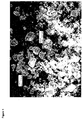
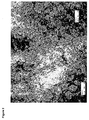
- the inventive spray dried powder has a unique microstructure, which is distinct from that of conventionally dried PCEs and confers advantageous properties to the powder.
- the overall particle size of the spray-dried powder (of at least 98% of the particles) is below 700 ⁇ m, preferably below 500 ⁇ m, or more preferably below 250 ⁇ m.
- the particle size can be measured by laser diffraction, preferably with a Mastersizer 2000 device (trademark of Malvern Instruments Ltd, GB).
- the average particle size (d50%) is between 40 ⁇ m and 100 ⁇ m, more preferably between 60 ⁇ m and 80 ⁇ m.
- Commercially available dried PCE products have higher mean particle sizes, for example between 100 ⁇ m and 400 ⁇ m.
- the average particle size can be measured by laser diffraction, preferably with a Mastersizer 2000 device (trademark of Malvern Instruments Ltd, GB).
- conventional PCE powders are prepared by slow water depletion and tend to have larger particles.
- solid PCE powders which are available under the trademark Viscocrete 125 or 111 from Sika, CH, have average particle sizes of about 370 and 140 ⁇ m.
- the inventive powder has a high powder flow and can be admixed homogeneously with other components, such as a mortar.
- the pH of the inventive dispersant is between 5 and 9, more preferably between 6 and 8, for example about 7 (measured in 4% (w/w) aqueous solution).
- dried PCE products have pH values between 3 and 4.
- dry PCEs available under the trademark Viscocrete 125 or 225 from Sika, CH have pH values of about 3.8 and 3.2.
- the pH-neutral inventive dispersant does not significantly alter the pH of a composition, such as a mortar.
- the neutral pH is also expected to confer to the polymer an increased long time storage stability.
- spray-dried particles typically have a unique microstructure, which is distinct from particles dried by other methods, such as slow water depletion. Usually, spray dried particles resemble spheres. In contrast, conventionally dried PCE particles, such as VC 125 and VC 111, have predominantly amorphous shapes with irregular edges and corners.
- spray dried particles have a relatively low density. Specifically, they tend to have a relatively low density in the interior and outer sections of relatively higher density. Spray dried particles thus resemble "hollow spheres" to a certain extent.
- the overall bulk density of the inventive powder is between 0.4 and 0.75, specifically between 0.5 and 0.7.
- the bulk density of VC111 is about 0.78 and of VC125 is about 0.81.
- the bulk density can be measured manually or automatically, for example applying 10taps, or preferable until constant values are obtained. It is believed that the overall structure and small particles size mediate rapid and even dissolving in water, whereas aggregation and clumping are avoided.
- Another subject of the invention is the use of an inventive solid dispersant as a dispersant for a hydraulically binding composition, preferably as a fluidizer.
- the use is for increasing the flow of the hydraulically binding composition, more preferably after at least 30 min or at least 60 min after preparation of the mortar composition.
- the hydraulic binder composition is cement, for example a Portland cement.
- the hydraulic binder may also be gypsum or lime.
- the hydraulic binder composition may comprise other known additives, such as fillers.
- the inventive process and solid dispersant solve the above-mentioned problems.
- the invention provides a simple and efficient process for the production of dry solid dispersants comprising comb polymers.
- the sole additive required is a polymer fluidizer.
- the solid dispersant composition of the invention is an efficient fluidizer.
- the inclusion of other additives, such as inorganic salts or reducing agents, which could detrimentally affect the properties of the hydraulically binding composition, is not necessary.
- specific chemical modifications of the comb polymers are not necessary and the solid dispersant may comprise any desired PCE comb polymer.
- the dry solid dispersant is available as a fine powder having a high powder flowablity and low water content. It can be dissolved rapidly and homogeneously in water. Thus, the workability is good. It can be stored and transported economically, compared to liquid comb polymer solutions, which usually comprise about 60 wt.% water.
- the inventive dispersant is an efficient fluidizer.
- the fluidizing properties in a cement composition are comparable to those of other PCEs and better than those of melamine sulfonate formaldehyde condensate alone, especially after extended times, such as 30 min or 60 min after mortar preparation.
- the first and second polymers can be adapted towards each other, such that solid dispersants with specific desired properties are obtained.
- 500 kg Sikament R-550C (trademark of Sika, CH), a polycarboxylate of comb class with a polyacrylic backbone and a PEG side chain combined by an ester, Mw about 21500, 40 % s.c., pH 5.5-6.5, was mixed with 500 kg Sikament FF-86 (trademark of Sika, CH), a sulfonated melamine formaldehyde (SMF) resin at 40% s.c., pH 10-13, at room temperature (25°C) in a conventional reactor of 1.5 m 3 capacity with a paddle stirrer for 20 minutes until a homogenous mixture has been obtained. This mixture was slightly heated to 60°C to decrease viscosity and energy costs during spray drying.
- Sikament FF-86 trademark of Sika, CH
- SMF sulfonated melamine formaldehyde
- Spray drying was performed at 200°C inlet temperature and 120-150°C in outlet (using air heated).
- the resulting product passed through a sieve to separate eventually formed waxy or syrupy parts ( ⁇ 1 % w/w).
- the final spray-dried product can be stored within 25 kg coated bags for about 1 year.
- Viscocrete PC-2 (trademark of Sika, CH), a polycarboxylate and comb polymer with a polymethacrylic backbone and a PEG side chain attached by an ether bond, 50 % s.c., pH 3.5-5.5, was mixed with 800 kg Sikament FF-86, a sulfonated melamine formaldehyde (SMF) resin at 40% s.c., pH 10-13, at room temperature (25°C) in a conventional reactor of 1.5 m 3 capacity with a paddle stirrer for 20 minutes until a homogenous mixture has been obtained. This mixture was slightly heated to 60°C to decrease viscosity and energy costs during spray drying. Spray drying was performed at 200°C inlet temperature and 120-150°C in outlet (using air heated). The final spray-dried product can be stored within 25 kg coated bags for about 1 year.
- Sikament FF-86 a sulfonated melamine formaldehyde (SMF) resin at 40% s.c
- Mortar compositions were prepared with various PCEs and PCE compositions.
- the cement used was Portland pozzolanic cement (Cement Melon Plus) with a ratio cement:aggregates of 1:3.
- Mortar flow tests were carried out according to ASTM C1437 standard test method for flow of hydraulic cement mortars. The flow of the standard mortar, without addition of PCE, was 10-12 cm.
- inventive examples 3 and 8 spray-dried dispersant compositions prepared according to example 1 were used.
- comparative examples 4 to 7 commercially available powder PCEs were added (Trademark Viscocrete, Sika, CH). The fluidizers and conditions are shown in table 1.
- W/C is the water content
- A/C is the PCE content of the mortar compositions (in weight-%, respectively).
- the results are summarized in table 1.
- the inventive solid dispersant is referred to as "spray dried PCE”.
- the results show that spray dried PCEs have good dispersant properties.
- the initial flow or the mortar compositions is similar to that of comparative powder PCEs.
- the mortar compositions comprising spray dried PCEs are able to maintain their flow. This finding was surprising, because melamine sulfonate formaldehyde condensates are known to decrease the flow of mortar compositions after 30 min or 60 min.
Landscapes
- Chemical & Material Sciences (AREA)
- Engineering & Computer Science (AREA)
- Ceramic Engineering (AREA)
- Materials Engineering (AREA)
- Structural Engineering (AREA)
- Organic Chemistry (AREA)
- Chemical Kinetics & Catalysis (AREA)
- Curing Cements, Concrete, And Artificial Stone (AREA)
- Compositions Of Macromolecular Compounds (AREA)
- Emulsifying, Dispersing, Foam-Producing Or Wetting Agents (AREA)
Priority Applications (1)
| Application Number | Priority Date | Filing Date | Title |
|---|---|---|---|
| EP12740989.4A EP2742013B1 (en) | 2011-08-10 | 2012-07-31 | Process for drying concrete dispersants |
Applications Claiming Priority (3)
| Application Number | Priority Date | Filing Date | Title |
|---|---|---|---|
| EP11177136 | 2011-08-10 | ||
| EP12740989.4A EP2742013B1 (en) | 2011-08-10 | 2012-07-31 | Process for drying concrete dispersants |
| PCT/EP2012/064969 WO2013020862A1 (en) | 2011-08-10 | 2012-07-31 | Process for drying concrete dispersants |
Publications (2)
| Publication Number | Publication Date |
|---|---|
| EP2742013A1 EP2742013A1 (en) | 2014-06-18 |
| EP2742013B1 true EP2742013B1 (en) | 2016-10-26 |
Family
ID=46598534
Family Applications (1)
| Application Number | Title | Priority Date | Filing Date |
|---|---|---|---|
| EP12740989.4A Active EP2742013B1 (en) | 2011-08-10 | 2012-07-31 | Process for drying concrete dispersants |
Country Status (8)
| Country | Link |
|---|---|
| US (1) | US9309152B2 (enExample) |
| EP (1) | EP2742013B1 (enExample) |
| JP (1) | JP6082003B2 (enExample) |
| CN (1) | CN103748054B (enExample) |
| BR (1) | BR112013032651B1 (enExample) |
| CL (1) | CL2014000200A1 (enExample) |
| ES (1) | ES2611927T3 (enExample) |
| WO (1) | WO2013020862A1 (enExample) |
Cited By (1)
| Publication number | Priority date | Publication date | Assignee | Title |
|---|---|---|---|---|
| EP4667444A1 (en) | 2024-06-20 | 2025-12-24 | Sika Technology AG | Waterglass for use in the spray-drying of comb polymer solutions |
Families Citing this family (9)
| Publication number | Priority date | Publication date | Assignee | Title |
|---|---|---|---|---|
| PL2862625T3 (pl) * | 2013-10-18 | 2017-09-29 | Sika Technology Ag | Poddana działaniu alkaliów inwertowana melasa jako dyspergator zawiesin mineralnych |
| AU2016301696B2 (en) * | 2015-08-05 | 2020-10-01 | Toho Chemical Industry Co., Ltd. | Polycondensation product containing phenolic copolymer and dispersant for hydraulic composition containing the same |
| JP6863971B2 (ja) * | 2015-09-24 | 2021-04-21 | シーカ テクノロジー アクチェンゲゼルシャフト | 流動化剤及びコポリマーを含有する添加剤 |
| EP3279230A1 (en) * | 2016-08-03 | 2018-02-07 | Sika Technology AG | Polymer blends for epoxy resins compositions |
| WO2018029095A1 (de) | 2016-08-11 | 2018-02-15 | Basf Se | Dispergiermittelzusammensetzung für anorganische feststoffsuspensionen |
| CN111747671B (zh) * | 2019-03-26 | 2025-02-18 | Sika技术股份公司 | 用于干燥砂浆的高减水粉末制剂 |
| US20230040757A1 (en) * | 2019-12-25 | 2023-02-09 | Kao Corporation | Method for producing powder dispersant composition for hydraulic compositions |
| AU2022299262A1 (en) * | 2021-06-22 | 2023-12-14 | Construction Research & Technology Gmbh | Cement dispersant comprising a naphthalenesulfonic acid polycondensate and at least one of a phosphorylated polycondensate and a polycarboxylate ether, and construction composition |
| JP2024037230A (ja) * | 2022-09-07 | 2024-03-19 | 日本製紙株式会社 | 締固め不要コンクリートの製造方法 |
Family Cites Families (29)
| Publication number | Priority date | Publication date | Assignee | Title |
|---|---|---|---|---|
| DE2049114C3 (de) | 1970-10-06 | 1974-03-21 | Wacker-Chemie Gmbh, 8000 Muenchen | Herstellen freifließender, blockfester,redispergierbarer Kunststoffpulver |
| US3784648A (en) | 1971-10-01 | 1974-01-08 | Wacker Chemie Gmbh | Process for the preparation of free-flowing,lump-free,redispersible,synthetic resin powders |
| DE3143070A1 (de) | 1981-10-30 | 1983-05-11 | Basf Ag, 6700 Ludwigshafen | Verfahren zum herstellen von blockfesten, in wasser redispergierbaren polymerisat-pulvern durch verspruehen von waessrigen polymerisat-dispersionen |
| JPH01308854A (ja) * | 1988-06-07 | 1989-12-13 | Dainippon Ink & Chem Inc | セメント分散剤 |
| PL183101B1 (pl) | 1993-09-29 | 2002-05-31 | Grace W R & Co | Mieszanka hydraulicznego cementu, imidyzowany polimer akrylowy i sposób wytwarzania imidyzowanego polimeru akrylowego |
| MY114306A (en) * | 1995-07-13 | 2002-09-30 | Mbt Holding Ag | Cement dispersant method for production thereof and cement composition using dispersant |
| CA2250139C (en) | 1996-03-26 | 2005-09-13 | Arco Chemical Technology, L.P. | Cement additives |
| NO314995B1 (no) * | 1996-11-29 | 2003-06-23 | Sika Ag | Ligninsulfonat betongtilsetningsstoff |
| CA2318090A1 (en) | 1998-11-30 | 2000-06-08 | Kenjiro Makino | Process for producing dispersant for powdery hydraulic composition |
| DE19905488A1 (de) * | 1999-02-10 | 2000-08-17 | Sueddeutsche Kalkstickstoff | Pulverförmige Polymerzusammensetzungen auf der Basis von Polyethercarboxylaten |
| DE1061089T1 (de) | 1999-06-15 | 2001-07-19 | Sika Ag, Vormals Kaspar Winkler & Co | Mehrzweck-, Polymer-Zementdispergiermittel für Beton mit hoher Fliessfähigkeit und Festigkeit |
| DE19936810A1 (de) * | 1999-08-04 | 2001-02-08 | Clariant Gmbh | Verwendung von Dispersionspulvern, enthaltend wasserlösliche Salze sulfonierter Formaldehyd-Kondensationsprodukte, in hydraulisch abbindenden Massen |
| DE10015135A1 (de) | 2000-03-29 | 2001-10-04 | Basf Ag | Verfahren zur Modifizierung von Säuregruppen enthaltenden Polymerisaten |
| EP1138696A1 (en) | 2000-03-29 | 2001-10-04 | Sika AG, vorm. Kaspar Winkler & Co. | Polymers for cement dispersing admixtures |
| DE10122629C1 (de) | 2001-05-10 | 2002-10-02 | Wacker Chemie Gmbh | Verwendung einer Pulverzusammensetzung als rheologisches Additiv |
| EP1348729A1 (de) | 2002-03-25 | 2003-10-01 | Sika Schweiz AG | Polymere in festem Aggregatzustand |
| ATE380840T1 (de) | 2002-05-22 | 2007-12-15 | Basf Constr Polymers Gmbh | Verwendung von wasserlöslichen polymeren als trocknungshilfmittel für die herstellung polymerer dispergiermittel |
| US20040072939A1 (en) * | 2002-10-11 | 2004-04-15 | Cornman Charles R. | Viscosity modifying agents and water reducers |
| US6869988B2 (en) | 2003-04-16 | 2005-03-22 | Arco Chemical Technology, L.P. | Solid supported comb-branched copolymers as an additive for gypsum compositions |
| EP1577327A1 (de) | 2004-03-19 | 2005-09-21 | Sika Technology AG | Amid-und Estergruppen aufweisendes Polymer, dessen Herstellung und Verwendung |
| CN101124177A (zh) | 2004-12-02 | 2008-02-13 | 日本西卡株式会社 | 粉末状聚羧酸系水泥分散剂及含有该分散剂的分散剂组合物 |
| US20060229388A1 (en) | 2005-03-31 | 2006-10-12 | Nippon Shokubai Co., Ltd. | Powdery cement dispersant |
| DE102006027035A1 (de) * | 2005-06-14 | 2007-01-11 | Basf Construction Polymers Gmbh | Polyether-haltiges Copolymer |
| FR2897057B1 (fr) * | 2006-02-06 | 2008-06-13 | Lafarge Sa | Adjuvant pour compositions hydrauliques. |
| JP2008208016A (ja) * | 2007-02-28 | 2008-09-11 | Nippon Shokubai Co Ltd | 粉体状セメント分散剤 |
| JP5249138B2 (ja) * | 2008-06-17 | 2013-07-31 | 花王株式会社 | 水硬性組成物用分散剤 |
| JP5122501B2 (ja) * | 2009-01-30 | 2013-01-16 | 花王株式会社 | 水硬性組成物 |
| US20110054081A1 (en) * | 2009-09-02 | 2011-03-03 | Frank Dierschke | Formulation and its use |
| JP2013503926A (ja) * | 2009-09-02 | 2013-02-04 | ビーエーエスエフ コンストラクション ポリマース ゲゼルシャフト ミット ベシュレンクテル ハフツング | 配合物及びその使用 |
-
2012
- 2012-07-31 ES ES12740989.4T patent/ES2611927T3/es active Active
- 2012-07-31 CN CN201280038942.8A patent/CN103748054B/zh not_active Expired - Fee Related
- 2012-07-31 EP EP12740989.4A patent/EP2742013B1/en active Active
- 2012-07-31 BR BR112013032651-4A patent/BR112013032651B1/pt not_active IP Right Cessation
- 2012-07-31 JP JP2014524331A patent/JP6082003B2/ja active Active
- 2012-07-31 WO PCT/EP2012/064969 patent/WO2013020862A1/en not_active Ceased
- 2012-07-31 US US14/235,597 patent/US9309152B2/en active Active
-
2014
- 2014-01-27 CL CL2014000200A patent/CL2014000200A1/es unknown
Cited By (1)
| Publication number | Priority date | Publication date | Assignee | Title |
|---|---|---|---|---|
| EP4667444A1 (en) | 2024-06-20 | 2025-12-24 | Sika Technology AG | Waterglass for use in the spray-drying of comb polymer solutions |
Also Published As
| Publication number | Publication date |
|---|---|
| EP2742013A1 (en) | 2014-06-18 |
| CL2014000200A1 (es) | 2014-07-04 |
| US20140135427A1 (en) | 2014-05-15 |
| CN103748054A (zh) | 2014-04-23 |
| BR112013032651A2 (pt) | 2017-01-24 |
| ES2611927T3 (es) | 2017-05-11 |
| CN103748054B (zh) | 2017-03-29 |
| WO2013020862A1 (en) | 2013-02-14 |
| JP6082003B2 (ja) | 2017-02-15 |
| BR112013032651B1 (pt) | 2020-06-02 |
| JP2014524402A (ja) | 2014-09-22 |
| US9309152B2 (en) | 2016-04-12 |
Similar Documents
| Publication | Publication Date | Title |
|---|---|---|
| US9309152B2 (en) | Process for drying concrete dispersants | |
| JP6381551B2 (ja) | 硬化促進剤組成物 | |
| JP6226986B2 (ja) | 硬化促進剤組成物 | |
| JP6584415B2 (ja) | 水硬性組成物用の添加剤 | |
| HK1044785A1 (en) | Copolymers based on unsaturated mono- or dicarboxylic acid derivatives and oxyalkylene glycol alkenyl ethers, method for the production and use thereof | |
| US20080139701A1 (en) | Powdered Polycarboxylic Acid-Based Cement Dispersant and Dispersant Composition Containing the Dispersant | |
| CN102596849A (zh) | 包含磺酸和芳族基团的硬化促进剂组合物 | |
| EP1507819A1 (de) | Verwendung von wasserlöslichen polymeren als trocknungshilfmittel für die herstellung polymerer dispergiermittel | |
| JP2018528908A (ja) | セメント混和物で使用するための合成保水剤及びレオロジー調整剤 | |
| AU2009214300A1 (en) | Aqueous solution containing copolymers with polyether side chains | |
| CN108218284B (zh) | 混凝土减水剂组合物 | |
| EP2292567B1 (en) | Dispersant for a hydraulic composite | |
| JP2001294463A (ja) | 粉体セメント分散剤 | |
| CN105934417A (zh) | 包含添加剂的硫酸钙组合物 | |
| JP2000169206A (ja) | 粉末状セメント分散剤及びその製造方法並びにセメント混合物 | |
| JP2000233956A (ja) | セメント分散剤 | |
| CN103987760A (zh) | 具有改善的热稳定性的增塑剂聚合物 | |
| EP4667444A1 (en) | Waterglass for use in the spray-drying of comb polymer solutions | |
| JP4295392B2 (ja) | 粉末状水硬性組成物用分散剤およびその製造法並びにこれを用いた粉粒状水硬性組成物 | |
| CN108779255B (zh) | 含有至少两种不同梳形聚合物的聚合物混合物 | |
| JP5350135B2 (ja) | 水硬性組成物用分散剤 |
Legal Events
| Date | Code | Title | Description |
|---|---|---|---|
| PUAI | Public reference made under article 153(3) epc to a published international application that has entered the european phase |
Free format text: ORIGINAL CODE: 0009012 |
|
| 17P | Request for examination filed |
Effective date: 20140310 |
|
| AK | Designated contracting states |
Kind code of ref document: A1 Designated state(s): AL AT BE BG CH CY CZ DE DK EE ES FI FR GB GR HR HU IE IS IT LI LT LU LV MC MK MT NL NO PL PT RO RS SE SI SK SM TR |
|
| DAX | Request for extension of the european patent (deleted) | ||
| RIN1 | Information on inventor provided before grant (corrected) |
Inventor name: OLIVARES, HUGO Inventor name: HAACK, THOMAS Inventor name: ARANCIBIA, LILI Inventor name: GALLEGOS, PEDRO Inventor name: CROQUEVIELLE, ERNESTO |
|
| TPAC | Observations filed by third parties |
Free format text: ORIGINAL CODE: EPIDOSNTIPA |
|
| GRAP | Despatch of communication of intention to grant a patent |
Free format text: ORIGINAL CODE: EPIDOSNIGR1 |
|
| INTG | Intention to grant announced |
Effective date: 20160509 |
|
| GRAS | Grant fee paid |
Free format text: ORIGINAL CODE: EPIDOSNIGR3 |
|
| GRAA | (expected) grant |
Free format text: ORIGINAL CODE: 0009210 |
|
| AK | Designated contracting states |
Kind code of ref document: B1 Designated state(s): AL AT BE BG CH CY CZ DE DK EE ES FI FR GB GR HR HU IE IS IT LI LT LU LV MC MK MT NL NO PL PT RO RS SE SI SK SM TR |
|
| REG | Reference to a national code |
Ref country code: GB Ref legal event code: FG4D |
|
| REG | Reference to a national code |
Ref country code: CH Ref legal event code: EP |
|
| REG | Reference to a national code |
Ref country code: AT Ref legal event code: REF Ref document number: 839872 Country of ref document: AT Kind code of ref document: T Effective date: 20161115 |
|
| REG | Reference to a national code |
Ref country code: IE Ref legal event code: FG4D |
|
| REG | Reference to a national code |
Ref country code: DE Ref legal event code: R096 Ref document number: 602012024586 Country of ref document: DE |
|
| REG | Reference to a national code |
Ref country code: LT Ref legal event code: MG4D |
|
| PG25 | Lapsed in a contracting state [announced via postgrant information from national office to epo] |
Ref country code: LV Free format text: LAPSE BECAUSE OF FAILURE TO SUBMIT A TRANSLATION OF THE DESCRIPTION OR TO PAY THE FEE WITHIN THE PRESCRIBED TIME-LIMIT Effective date: 20161026 |
|
| REG | Reference to a national code |
Ref country code: NL Ref legal event code: MP Effective date: 20161026 |
|
| REG | Reference to a national code |
Ref country code: AT Ref legal event code: MK05 Ref document number: 839872 Country of ref document: AT Kind code of ref document: T Effective date: 20161026 |
|
| PG25 | Lapsed in a contracting state [announced via postgrant information from national office to epo] |
Ref country code: NO Free format text: LAPSE BECAUSE OF FAILURE TO SUBMIT A TRANSLATION OF THE DESCRIPTION OR TO PAY THE FEE WITHIN THE PRESCRIBED TIME-LIMIT Effective date: 20170126 Ref country code: LT Free format text: LAPSE BECAUSE OF FAILURE TO SUBMIT A TRANSLATION OF THE DESCRIPTION OR TO PAY THE FEE WITHIN THE PRESCRIBED TIME-LIMIT Effective date: 20161026 Ref country code: GR Free format text: LAPSE BECAUSE OF FAILURE TO SUBMIT A TRANSLATION OF THE DESCRIPTION OR TO PAY THE FEE WITHIN THE PRESCRIBED TIME-LIMIT Effective date: 20170127 Ref country code: SE Free format text: LAPSE BECAUSE OF FAILURE TO SUBMIT A TRANSLATION OF THE DESCRIPTION OR TO PAY THE FEE WITHIN THE PRESCRIBED TIME-LIMIT Effective date: 20161026 |
|
| REG | Reference to a national code |
Ref country code: ES Ref legal event code: FG2A Ref document number: 2611927 Country of ref document: ES Kind code of ref document: T3 Effective date: 20170511 |
|
| PG25 | Lapsed in a contracting state [announced via postgrant information from national office to epo] |
Ref country code: BE Free format text: LAPSE BECAUSE OF FAILURE TO SUBMIT A TRANSLATION OF THE DESCRIPTION OR TO PAY THE FEE WITHIN THE PRESCRIBED TIME-LIMIT Effective date: 20161026 Ref country code: PL Free format text: LAPSE BECAUSE OF FAILURE TO SUBMIT A TRANSLATION OF THE DESCRIPTION OR TO PAY THE FEE WITHIN THE PRESCRIBED TIME-LIMIT Effective date: 20161026 Ref country code: IS Free format text: LAPSE BECAUSE OF FAILURE TO SUBMIT A TRANSLATION OF THE DESCRIPTION OR TO PAY THE FEE WITHIN THE PRESCRIBED TIME-LIMIT Effective date: 20170226 Ref country code: AT Free format text: LAPSE BECAUSE OF FAILURE TO SUBMIT A TRANSLATION OF THE DESCRIPTION OR TO PAY THE FEE WITHIN THE PRESCRIBED TIME-LIMIT Effective date: 20161026 Ref country code: NL Free format text: LAPSE BECAUSE OF FAILURE TO SUBMIT A TRANSLATION OF THE DESCRIPTION OR TO PAY THE FEE WITHIN THE PRESCRIBED TIME-LIMIT Effective date: 20161026 Ref country code: RS Free format text: LAPSE BECAUSE OF FAILURE TO SUBMIT A TRANSLATION OF THE DESCRIPTION OR TO PAY THE FEE WITHIN THE PRESCRIBED TIME-LIMIT Effective date: 20161026 Ref country code: PT Free format text: LAPSE BECAUSE OF FAILURE TO SUBMIT A TRANSLATION OF THE DESCRIPTION OR TO PAY THE FEE WITHIN THE PRESCRIBED TIME-LIMIT Effective date: 20170227 Ref country code: HR Free format text: LAPSE BECAUSE OF FAILURE TO SUBMIT A TRANSLATION OF THE DESCRIPTION OR TO PAY THE FEE WITHIN THE PRESCRIBED TIME-LIMIT Effective date: 20161026 Ref country code: FI Free format text: LAPSE BECAUSE OF FAILURE TO SUBMIT A TRANSLATION OF THE DESCRIPTION OR TO PAY THE FEE WITHIN THE PRESCRIBED TIME-LIMIT Effective date: 20161026 |
|
| REG | Reference to a national code |
Ref country code: FR Ref legal event code: PLFP Year of fee payment: 6 |
|
| REG | Reference to a national code |
Ref country code: DE Ref legal event code: R097 Ref document number: 602012024586 Country of ref document: DE |
|
| PG25 | Lapsed in a contracting state [announced via postgrant information from national office to epo] |
Ref country code: DK Free format text: LAPSE BECAUSE OF FAILURE TO SUBMIT A TRANSLATION OF THE DESCRIPTION OR TO PAY THE FEE WITHIN THE PRESCRIBED TIME-LIMIT Effective date: 20161026 Ref country code: RO Free format text: LAPSE BECAUSE OF FAILURE TO SUBMIT A TRANSLATION OF THE DESCRIPTION OR TO PAY THE FEE WITHIN THE PRESCRIBED TIME-LIMIT Effective date: 20161026 Ref country code: EE Free format text: LAPSE BECAUSE OF FAILURE TO SUBMIT A TRANSLATION OF THE DESCRIPTION OR TO PAY THE FEE WITHIN THE PRESCRIBED TIME-LIMIT Effective date: 20161026 Ref country code: CZ Free format text: LAPSE BECAUSE OF FAILURE TO SUBMIT A TRANSLATION OF THE DESCRIPTION OR TO PAY THE FEE WITHIN THE PRESCRIBED TIME-LIMIT Effective date: 20161026 Ref country code: SK Free format text: LAPSE BECAUSE OF FAILURE TO SUBMIT A TRANSLATION OF THE DESCRIPTION OR TO PAY THE FEE WITHIN THE PRESCRIBED TIME-LIMIT Effective date: 20161026 |
|
| PG25 | Lapsed in a contracting state [announced via postgrant information from national office to epo] |
Ref country code: BG Free format text: LAPSE BECAUSE OF FAILURE TO SUBMIT A TRANSLATION OF THE DESCRIPTION OR TO PAY THE FEE WITHIN THE PRESCRIBED TIME-LIMIT Effective date: 20170126 Ref country code: SM Free format text: LAPSE BECAUSE OF FAILURE TO SUBMIT A TRANSLATION OF THE DESCRIPTION OR TO PAY THE FEE WITHIN THE PRESCRIBED TIME-LIMIT Effective date: 20161026 Ref country code: IT Free format text: LAPSE BECAUSE OF FAILURE TO SUBMIT A TRANSLATION OF THE DESCRIPTION OR TO PAY THE FEE WITHIN THE PRESCRIBED TIME-LIMIT Effective date: 20161026 |
|
| PLBE | No opposition filed within time limit |
Free format text: ORIGINAL CODE: 0009261 |
|
| STAA | Information on the status of an ep patent application or granted ep patent |
Free format text: STATUS: NO OPPOSITION FILED WITHIN TIME LIMIT |
|
| 26N | No opposition filed |
Effective date: 20170727 |
|
| PG25 | Lapsed in a contracting state [announced via postgrant information from national office to epo] |
Ref country code: SI Free format text: LAPSE BECAUSE OF FAILURE TO SUBMIT A TRANSLATION OF THE DESCRIPTION OR TO PAY THE FEE WITHIN THE PRESCRIBED TIME-LIMIT Effective date: 20161026 |
|
| REG | Reference to a national code |
Ref country code: CH Ref legal event code: PL |
|
| GBPC | Gb: european patent ceased through non-payment of renewal fee |
Effective date: 20170731 |
|
| PG25 | Lapsed in a contracting state [announced via postgrant information from national office to epo] |
Ref country code: CH Free format text: LAPSE BECAUSE OF NON-PAYMENT OF DUE FEES Effective date: 20170731 Ref country code: LI Free format text: LAPSE BECAUSE OF NON-PAYMENT OF DUE FEES Effective date: 20170731 Ref country code: GB Free format text: LAPSE BECAUSE OF NON-PAYMENT OF DUE FEES Effective date: 20170731 |
|
| REG | Reference to a national code |
Ref country code: IE Ref legal event code: MM4A |
|
| REG | Reference to a national code |
Ref country code: FR Ref legal event code: PLFP Year of fee payment: 7 |
|
| PG25 | Lapsed in a contracting state [announced via postgrant information from national office to epo] |
Ref country code: LU Free format text: LAPSE BECAUSE OF NON-PAYMENT OF DUE FEES Effective date: 20170731 |
|
| PG25 | Lapsed in a contracting state [announced via postgrant information from national office to epo] |
Ref country code: IE Free format text: LAPSE BECAUSE OF NON-PAYMENT OF DUE FEES Effective date: 20170731 |
|
| PG25 | Lapsed in a contracting state [announced via postgrant information from national office to epo] |
Ref country code: MT Free format text: LAPSE BECAUSE OF NON-PAYMENT OF DUE FEES Effective date: 20170731 |
|
| PG25 | Lapsed in a contracting state [announced via postgrant information from national office to epo] |
Ref country code: HU Free format text: LAPSE BECAUSE OF FAILURE TO SUBMIT A TRANSLATION OF THE DESCRIPTION OR TO PAY THE FEE WITHIN THE PRESCRIBED TIME-LIMIT; INVALID AB INITIO Effective date: 20120731 Ref country code: MC Free format text: LAPSE BECAUSE OF FAILURE TO SUBMIT A TRANSLATION OF THE DESCRIPTION OR TO PAY THE FEE WITHIN THE PRESCRIBED TIME-LIMIT Effective date: 20161026 |
|
| PG25 | Lapsed in a contracting state [announced via postgrant information from national office to epo] |
Ref country code: CY Free format text: LAPSE BECAUSE OF NON-PAYMENT OF DUE FEES Effective date: 20161026 |
|
| PG25 | Lapsed in a contracting state [announced via postgrant information from national office to epo] |
Ref country code: MK Free format text: LAPSE BECAUSE OF FAILURE TO SUBMIT A TRANSLATION OF THE DESCRIPTION OR TO PAY THE FEE WITHIN THE PRESCRIBED TIME-LIMIT Effective date: 20161026 |
|
| PG25 | Lapsed in a contracting state [announced via postgrant information from national office to epo] |
Ref country code: TR Free format text: LAPSE BECAUSE OF FAILURE TO SUBMIT A TRANSLATION OF THE DESCRIPTION OR TO PAY THE FEE WITHIN THE PRESCRIBED TIME-LIMIT Effective date: 20161026 |
|
| PG25 | Lapsed in a contracting state [announced via postgrant information from national office to epo] |
Ref country code: AL Free format text: LAPSE BECAUSE OF FAILURE TO SUBMIT A TRANSLATION OF THE DESCRIPTION OR TO PAY THE FEE WITHIN THE PRESCRIBED TIME-LIMIT Effective date: 20161026 |
|
| PGFP | Annual fee paid to national office [announced via postgrant information from national office to epo] |
Ref country code: FR Payment date: 20240619 Year of fee payment: 13 |
|
| PGFP | Annual fee paid to national office [announced via postgrant information from national office to epo] |
Ref country code: DE Payment date: 20240619 Year of fee payment: 13 |
|
| PGFP | Annual fee paid to national office [announced via postgrant information from national office to epo] |
Ref country code: ES Payment date: 20240802 Year of fee payment: 13 |
|
| REG | Reference to a national code |
Ref country code: DE Ref legal event code: R119 Ref document number: 602012024586 Country of ref document: DE |
|
| PG25 | Lapsed in a contracting state [announced via postgrant information from national office to epo] |
Ref country code: DE Free format text: LAPSE BECAUSE OF NON-PAYMENT OF DUE FEES Effective date: 20260203 |
|
| PG25 | Lapsed in a contracting state [announced via postgrant information from national office to epo] |
Ref country code: FR Free format text: LAPSE BECAUSE OF NON-PAYMENT OF DUE FEES Effective date: 20250731 |