EP2707029B1 - Methods of treating or preventing cholesterol related disorders - Google Patents
Methods of treating or preventing cholesterol related disorders Download PDFInfo
- Publication number
- EP2707029B1 EP2707029B1 EP12722044.0A EP12722044A EP2707029B1 EP 2707029 B1 EP2707029 B1 EP 2707029B1 EP 12722044 A EP12722044 A EP 12722044A EP 2707029 B1 EP2707029 B1 EP 2707029B1
- Authority
- EP
- European Patent Office
- Prior art keywords
- pcsk9
- seq
- antibody
- antigen binding
- certain embodiments
- Prior art date
- Legal status (The legal status is an assumption and is not a legal conclusion. Google has not performed a legal analysis and makes no representation as to the accuracy of the status listed.)
- Active
Links
Images










































Classifications
-
- C—CHEMISTRY; METALLURGY
- C07—ORGANIC CHEMISTRY
- C07K—PEPTIDES
- C07K16/00—Immunoglobulins [IGs], e.g. monoclonal or polyclonal antibodies
- C07K16/40—Immunoglobulins [IGs], e.g. monoclonal or polyclonal antibodies against enzymes
-
- A—HUMAN NECESSITIES
- A61—MEDICAL OR VETERINARY SCIENCE; HYGIENE
- A61K—PREPARATIONS FOR MEDICAL, DENTAL OR TOILETRY PURPOSES
- A61K39/00—Medicinal preparations containing antigens or antibodies
- A61K39/395—Antibodies; Immunoglobulins; Immune serum, e.g. antilymphocytic serum
- A61K39/39533—Antibodies; Immunoglobulins; Immune serum, e.g. antilymphocytic serum against materials from animals
- A61K39/3955—Antibodies; Immunoglobulins; Immune serum, e.g. antilymphocytic serum against materials from animals against proteinaceous materials, e.g. enzymes, hormones, lymphokines
-
- A—HUMAN NECESSITIES
- A61—MEDICAL OR VETERINARY SCIENCE; HYGIENE
- A61P—SPECIFIC THERAPEUTIC ACTIVITY OF CHEMICAL COMPOUNDS OR MEDICINAL PREPARATIONS
- A61P3/00—Drugs for disorders of the metabolism
- A61P3/06—Antihyperlipidemics
-
- A—HUMAN NECESSITIES
- A61—MEDICAL OR VETERINARY SCIENCE; HYGIENE
- A61P—SPECIFIC THERAPEUTIC ACTIVITY OF CHEMICAL COMPOUNDS OR MEDICINAL PREPARATIONS
- A61P9/00—Drugs for disorders of the cardiovascular system
- A61P9/10—Drugs for disorders of the cardiovascular system for treating ischaemic or atherosclerotic diseases, e.g. antianginal drugs, coronary vasodilators, drugs for myocardial infarction, retinopathy, cerebrovascula insufficiency, renal arteriosclerosis
-
- A—HUMAN NECESSITIES
- A61—MEDICAL OR VETERINARY SCIENCE; HYGIENE
- A61K—PREPARATIONS FOR MEDICAL, DENTAL OR TOILETRY PURPOSES
- A61K39/00—Medicinal preparations containing antigens or antibodies
- A61K2039/505—Medicinal preparations containing antigens or antibodies comprising antibodies
-
- A—HUMAN NECESSITIES
- A61—MEDICAL OR VETERINARY SCIENCE; HYGIENE
- A61K—PREPARATIONS FOR MEDICAL, DENTAL OR TOILETRY PURPOSES
- A61K39/00—Medicinal preparations containing antigens or antibodies
- A61K2039/54—Medicinal preparations containing antigens or antibodies characterised by the route of administration
-
- A—HUMAN NECESSITIES
- A61—MEDICAL OR VETERINARY SCIENCE; HYGIENE
- A61K—PREPARATIONS FOR MEDICAL, DENTAL OR TOILETRY PURPOSES
- A61K39/00—Medicinal preparations containing antigens or antibodies
- A61K2039/545—Medicinal preparations containing antigens or antibodies characterised by the dose, timing or administration schedule
-
- A—HUMAN NECESSITIES
- A61—MEDICAL OR VETERINARY SCIENCE; HYGIENE
- A61K—PREPARATIONS FOR MEDICAL, DENTAL OR TOILETRY PURPOSES
- A61K2300/00—Mixtures or combinations of active ingredients, wherein at least one active ingredient is fully defined in groups A61K31/00 - A61K41/00
-
- C—CHEMISTRY; METALLURGY
- C07—ORGANIC CHEMISTRY
- C07K—PEPTIDES
- C07K2317/00—Immunoglobulins specific features
- C07K2317/20—Immunoglobulins specific features characterized by taxonomic origin
- C07K2317/21—Immunoglobulins specific features characterized by taxonomic origin from primates, e.g. man
-
- C—CHEMISTRY; METALLURGY
- C07—ORGANIC CHEMISTRY
- C07K—PEPTIDES
- C07K2317/00—Immunoglobulins specific features
- C07K2317/20—Immunoglobulins specific features characterized by taxonomic origin
- C07K2317/24—Immunoglobulins specific features characterized by taxonomic origin containing regions, domains or residues from different species, e.g. chimeric, humanized or veneered
-
- C—CHEMISTRY; METALLURGY
- C07—ORGANIC CHEMISTRY
- C07K—PEPTIDES
- C07K2317/00—Immunoglobulins specific features
- C07K2317/30—Immunoglobulins specific features characterized by aspects of specificity or valency
- C07K2317/33—Crossreactivity, e.g. for species or epitope, or lack of said crossreactivity
-
- C—CHEMISTRY; METALLURGY
- C07—ORGANIC CHEMISTRY
- C07K—PEPTIDES
- C07K2317/00—Immunoglobulins specific features
- C07K2317/50—Immunoglobulins specific features characterized by immunoglobulin fragments
- C07K2317/56—Immunoglobulins specific features characterized by immunoglobulin fragments variable (Fv) region, i.e. VH and/or VL
- C07K2317/565—Complementarity determining region [CDR]
-
- C—CHEMISTRY; METALLURGY
- C07—ORGANIC CHEMISTRY
- C07K—PEPTIDES
- C07K2317/00—Immunoglobulins specific features
- C07K2317/70—Immunoglobulins specific features characterized by effect upon binding to a cell or to an antigen
- C07K2317/76—Antagonist effect on antigen, e.g. neutralization or inhibition of binding
-
- C—CHEMISTRY; METALLURGY
- C07—ORGANIC CHEMISTRY
- C07K—PEPTIDES
- C07K2317/00—Immunoglobulins specific features
- C07K2317/90—Immunoglobulins specific features characterized by (pharmaco)kinetic aspects or by stability of the immunoglobulin
- C07K2317/92—Affinity (KD), association rate (Ka), dissociation rate (Kd) or EC50 value
-
- C—CHEMISTRY; METALLURGY
- C07—ORGANIC CHEMISTRY
- C07K—PEPTIDES
- C07K2317/00—Immunoglobulins specific features
- C07K2317/90—Immunoglobulins specific features characterized by (pharmaco)kinetic aspects or by stability of the immunoglobulin
- C07K2317/94—Stability, e.g. half-life, pH, temperature or enzyme-resistance
Definitions
- Statins hydroxymethylglutaryl coenzyme A [HMG CoA] reductase inhibitors
- HMG CoA hydroxymethylglutaryl coenzyme A
- reductase inhibitors are currently the treatment of choice for hypercholesterolemia.
- emerging data indicate that more aggressive treatment of hypercholesterolemia is associated with lower risk for CHD events.
- a subset of patients are intolerant to, or do not respond adequately to, statin therapy.
- novel therapies that can be used alone or in combination with existing agents to more effectively reduce LDL-C may be useful.
- the invention relates to treating or preventing a cholesterol related disorder in a patient having a serum LDL cholesterol level comprising administering at least one anti-PCSK9 antibody to the patient in need thereof at a dose of 70 mg to 450 mg, thereby treating or preventing the cholesterol related disorder in the patient.
- the cholesterol related disorder to be treated or prevented is familial hypercholesterolemia, including heterozygous familial hypercholesterolemia and homozygous familial hypercholesterolemia, non-familial hypercholesterolemia, elevated lipoprotein (a), heart disease, metabolic syndrome, diabetes, coronary heart disease, stroke, cardiovascular disease, Alzheimer's disease, peripheral arterial disease, hyperlipidemia or dyslipidemia.
- the serum LDL cholesterol level of said patient is lowered by at least 15%, at least about 20%, at least about 25%, at least about 30%, at least about 35%, at least about 40%, at least about 45%, at least about 50%, at least about 55%, at least about 60%, at least about 65%, at least about 70%, at least about 75%, at least about 80%, at least about 85%, or at least about 90% as compared to a predose level of serum LDL cholesterol in said patient.
- the anti-PCSK9 antibody is administered to a patient on a schedule selected from the group consisting of: (1) once a week, (2) once every two weeks, (3) once a month, (4) once every other month, (5) once every three months (6) once every six months and (7) once every twelve months.
- the ant-PCSK9 antibody is administered parenterally.
- the anti-PCSK9 antibody is administered intravenously.
- the anti-PCSK9 antibody is administered subcutaneously.
- the dose is about 280 mg to about 420 mg of at least one anti-PCSK9 antibody administered once every 4 weeks (Q4W). In some embodiments, the dose is about 350 mg to about 420 mg of at least one anti-PCSK9 antibody administered once every 4 weeks (Q4W).
- the invention comprises lowering the serum LDL cholesterol level in a patient, and comprises administering to a patient in need thereof, a dose of at least one anti-PCSK9 antibody, and wherein the dose of anti-PCSK9 antibody is administered on a schedule selected from the group consisting of: (1) at least an amount of about 70 mg every other week (Q2W); (2) at least an amount of about 105 mg every two weeks or every other week (Q2W); (3) at least an amount of about 140 mg every two weeks or every other week (Q2W); (4) at least an amount of about 150 mg every two weeks or every other week (Q2W) (5) at least an amount of about 280 mg every two weeks or every other week (Q2W); and (6) at least an amount of about 150 mg every four weeks (Q4W); (7) at least an amount of about 160 mg every four weeks (Q4W); (8) at least an amount of about 170 mg every four weeks (Q4W); (9) at least an amount of about 180 mg every four weeks (Q4W); (10) at least
- the serum LDL cholesterol level is reduced by at least about 15% as compared to a predose serum LDL cholesterol level. In some embodiments, the serum LDL cholesterol level is reduced by at least about 20%. In some embodiments, the serum LDL cholesterol level is reduced by at least about 25%. In some embodiments, the serum LDL cholesterol level is reduced by at least about 30%. In some embodiments, the serum LDL cholesterol level is reduced by at least about 35%. In some embodiments, the serum LDL cholesterol level is reduced by at least about 40%. In some embodiments, the serum LDL cholesterol level is reduced by at least about 45%. In some embodiments, the serum LDL cholesterol level is reduced by at least about 50%. In some embodiments, the serum LDL cholesterol level is reduced by at least about 55%.
- the invention comprises the total cholesterol level in a patient, and comprises administering to a patient in need thereof, a dose of at least one anti-PCSK9 antibody, and wherein the dose of anti-PCSK9 antibody is administered on a schedule selected from the group consisting of: (1) at least an amount of about 70 mg every other week (Q2W); (2) at least an amount of about 105 mg every two weeks (Q2W); (3) at least an amount of about 140 mg every other week (Q2W); (4) at least an amount of about 150 mg every two weeks or every other week (Q2W); (5) at least an amount of about 280 mg every two weeks or every other week (Q2W); (6) at least an amount of about 150 mg every four weeks (Q4W); (7) at least an amount of about 160 mg every four weeks (Q4W); (8) at least an amount of about 170 mg every four weeks (Q4W); (9) at least an amount of about 180 mg every four weeks (Q4W); (10) at least an amount of about 190 mg every four weeks (Q4W);
- the Lp(a) level is reduced by at least about 50%. In some embodiments, the Lp(a) level is reduced by at least about 55%. In some embodiments, the Lp(a) level is reduced by at least about 60%. In some embodiments, the Lp(a) level is reduced by at least about 65%.
- the cholesterol related disorder is heterozygous familial hypercholesterolemia, homozygous familial hypercholesterolemia, non-familial hypercholesterolemia, hyperlipidemia or dyslipidemia.
- the invention comprises pharmaceutical formulations comprising at least one anti-PCSK9 antibody wherein said antibody is 21B12.
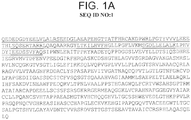
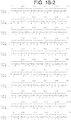
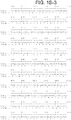
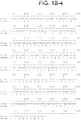
- PCSK9 also encompasses PCSK9 molecules incorporating post-translational modifications of the PCSK9 amino acid sequence, such as PCSK9 sequences that have been glycosylated, PEGylated, PCSK9 sequences from which its signal sequence has been cleaved, PCSK9 sequence from which its pro domain has been cleaved from the catalytic domain but not separated from the catalytic domain (e.g., FIGs. 1A and 1B ).
- the term "host cell” means a cell that has been transformed, or is capable of being transformed, with a nucleic acid sequence and thereby expresses a gene of interest.
- the term includes the progeny of the parent cell, whether or not the progeny is identical in morphology or in genetic make-up to the original parent cell, so long as the gene of interest is present.
- identity refers to a relationship between the sequences of two or more polypeptide molecules or two or more nucleic acid molecules, as determined by aligning and comparing the sequences. "Percent identity” means the percent of identical residues between the amino acids or nucleotides in the compared molecules and is calculated based on the size of the smallest of the molecules being compared. For these calculations, gaps in alignments (if any) are preferably addressed by a particular mathematical model or computer program (i.e., an "algorithm”). Methods that can be used to calculate the identity of the aligned nucleic acids or polypeptides include those described in Computational Molecular Biology, (Lesk, A.
- Certain alignment schemes for aligning two amino acid sequences may result in matching of only a short region of the two sequences, and this small aligned region may have very high sequence identity even though there is no significant relationship between the two full-length sequences. Accordingly, the selected alignment method (GAP program) can be adjusted if so desired to result in an alignment that spans at least 50 or other number of contiguous amino acids of the target polypeptide.
- a derivative antigen binding protein is covalently modified to include one or more water soluble polymer attachments, including, but not limited to, polyethylene glycol, polyoxyethylene glycol, or polypropylene glycol. See, e.g., U.S. Patent Nos: 4,640,835 , 4,496,689 , 4,301,144 , 4,670,417 , 4,791,192 and 4,179,337 .
- an antigen binding protein can include nonprotein components.
- ABPs are described herein in terms of "number/letter/number" (e.g., 25A7). In these cases, the exact name denotes a specific antibody.
- a "Fab fragment” comprises one light chain and the C H 1 and variable regions of one heavy chain.
- the heavy chain of a Fab molecule cannot form a disulfide bond with another heavy chain molecule.
- a "bispecific,” “dual-specific” or “bifunctional” antigen binding protein or antibody is a hybrid antigen binding protein or antibody, respectively, having two different antigen binding sites.
- Bispecific antigen binding proteins and antibodies are a species of multispecific antigen binding protein antibody and can be produced by a variety of methods including, but not limited to, fusion of hybridomas or linking of Fab' fragments. See, e.g., Songsivilai and Lachmann, 1990, Clin. Exp. Immunol. 79:315-321 ; Kostelny et al., 1992, J. Immunol. 148:1547-1553 .
- the two binding sites of a bispecific antigen binding protein or antibody will bind to two different epitopes, which can reside on the same or different protein targets.
- recombinant antigen binding proteins that bind PCSK9, for example human PCSK9
- a "recombinant antigen binding protein” is a protein made using recombinant techniques, i.e., through the expression of a recombinant nucleic acid as described herein. Methods and techniques for the production of recombinant proteins are well known in the art.
- Naturally occurring antibody structural units typically comprise a tetramer.
- Each such tetramer typically is composed of two identical pairs of polypeptide chains, each pair having one full-length "light” (in certain embodiments, about 25 kDa) and one full-length "heavy” chain (in certain embodiments, about 50-70 kDa).
- the amino-terminal portion of each chain typically includes a variable region of about 100 to 110 or more amino acids that typically is responsible for antigen recognition.
- the carboxy-terminal portion of each chain typically defines a constant region that can be responsible for effector function.
- Human light chains are typically classified as kappa and lambda light chains.
- PCSK9 proteins can also include fragments of the full length PCSK9 protein.
- the structure of the PCSK9 protein was solved by two groups ( Cunningham et al., Nature Structural & Molecular Biology, 2007 , and Piper et al., Structure, 15:1-8, 2007 ).
- PCSK9 includes a signal sequence, a N-terminal prodomain, a subtilisin-like catalytic domain and a C-terminal domain.
- the antigen binding proteins provided herein are capable of inhibiting PCSK9-mediated activity (including binding). In some embodiments, antigen binding proteins binding to these epitopes inhibit, inter alia, interactions between PCSK9 and LDLR and other physiological effects mediated by PCSK9. In some embodiments, the antigen binding proteins are human, such as fully human antibodies to PCSK9.
- the antigen binding proteins that are disclosed herein have a variety of utilities. Some of the antigen binding proteins, for instance, are useful in specific binding assays, affinity purification of PCSK9, in particular human PCSK9 or its ligands and in screening assays to identify other antagonists of PCSK9 activity. Some of the antigen binding proteins are useful for inhibiting binding of PCSK9 to LDLR, or inhibiting PCSK9-mediated activities.
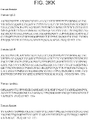
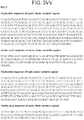
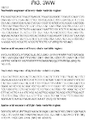
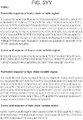
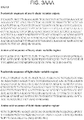
- IgG2 heavy chain constant domain of an anti-PCSK9 antibody of the present invention has the amino acid sequence as shown in SEQ ID NO: 154, FIG. 3KK .
- Variable regions of immunoglobulin chains generally exhibit the same overall structure, comprising relatively conserved framework regions (FR) joined by three hypervariable regions, more often called “complementarity determining regions” or CDRs.
- the CDRs from the two chains of each heavy chain/light chain pair mentioned above typically are aligned by the framework regions to form a structure that binds specifically with a specific epitope on the target protein (e.g., PCSK9).
- target protein e.g., PCSK9
- From N-terminal to C-terminal, naturally-occurring light and heavy chain variable regions both typically conform with the following order of these elements: FR1, CDR1, FR2, CDR2, FR3, CDR3 and FR4.
- a numbering system has been devised for assigning numbers to amino acids that occupy positions in each of these domains.
- Optional light chain variable sequences can be selected from the following: 5, 7, 9, 10, 12, 13, 15, 16, 17, 18, 19, 20, 21, 22, 23, 24, 26, 28, 30, 31, 32, 33, 35, 36, 37, 38, 39, 40, 42, 44, 46, 421, 425, 429, 433, 437, 441, 445, 449, 453, 457, 461,465, 469, 473, 477, 481, and 485..
- the ABP binds to the catalytic domain and restricts the mobility of the prodomain. In some embodiments, the ABP binds to the catalytic domain without binding to the pro-domain. In some embodiments, the ABP binds to the catalytic domain, without binding to the pro-domain, while preventing the pro-domain from reorienting to allow PCSK9 to bind to LDLR. In some embodiments, the ABP binds in the same epitope as those surrounding residues 149-152 of the pro-domain in Piper et al. In some embodiments, the ABPs bind to the groove (as outlined in Piper et al.) on the V domain.
- the antibody binds selectively to variant PCSK9 proteins, e.g ., D374Y over wild type PCSK9. In some embodiments, these antibodies bind to the variant at least twice as strongly as the wild type, and preferably 2-5, 5-10, 10-100, 100-1000, 1000-10,000 fold or more to the mutant than the wild type (as measured via a K d ). In some embodiments, the antibody selectively inhibits variant D374Y PCSK9 from interacting with LDLR over wild type PCSK9's ability to interact with LDLR.
- modification of an antibody by methods known in the art is typically designed to achieve increased binding affinity for a target and/or to reduce immunogenicity of the antibody in the recipient.
- humanized antibodies are modified to eliminate glycosylation sites in order to increase affinity of the antibody for its cognate antigen. See, e.g., Co et al., Mol. Immunol., 30:1361-1367 (1993 ).
- techniques such as "reshaping,” “hyperchimerization,” or “veneering/resurfacing” are used to produce humanized antibodies. See, e.g., Vaswami et al., Annals of Allergy, Asthma, & Immunol.
- Humanized antibodies are those antibodies that, while initially starting off containing antibody amino acid sequences that are not human, have had at least some of these nonhuman antibody amino acid sequences replaced with human antibody sequences. This is in contrast with human antibodies, in which the antibody is encoded (or capable of being encoded) by genes possessed a human.
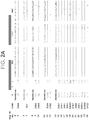
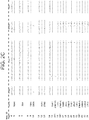
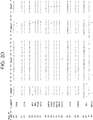
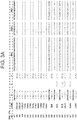
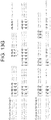
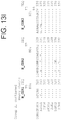
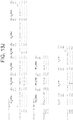
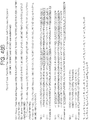
- 2A-3D (and 13A-13J, other embodiments in 15A-15D and FIGs. 48A and 48B ) can be used in order to identify sections of the antibodies that can be modified by observing those variations that impact binding and those variations that do not appear to impact binding. For example, by comparing similar sequences, one can identify those sections (e.g., particular amino acids) that can be modified and how they can be modified while still retaining (or improving) the functionality of the ABP.
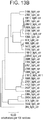
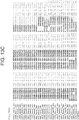
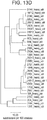
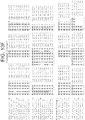
- variants of ABPs include those consensus groups and sequences depicted in FIGs. 13A , 13C , 13F , 13G , 13H , 13I , 13J , and/or 48A and 48B and variations are allowed in the positions identified as variable in the figures.
- an antigen binding protein comprises a heavy chain comprising a variable region comprising an amino acid sequence at least 90% identical to an amino acid sequence selected from at least one of the sequences of SEQ ID NO: 74, 85, 71, 72, 67, 87, 58, 52, 51, 53, 48, 54, 55, 56, 49, 57, 50, 91, 64, 62, 89, 65, 79, 80, 76, 77, 78, 83, 69, 81, and 60.
- the antigen binding protein comprises a sequence that is at least 90%, 90-95%, and/or 95-99% identical to one or more CDRs from the CDRs in at least one of sequences of SEQ ID NO: 74, 85, 71, 72, 67, 87, 58, 52, 51, 53, 48, 54, 55, 56, 49, 57, 50, 91, 64, 62, 89, 65, 79, 80, 76, 77, 78, 83, 69, 81, and 60.
- 1, 2, 3, 4, 5, or 6 CDR (each being at least 90%, 90-95%, and/or 95-99% identical to the above sequences) is present.
- the antigen binding protein comprises a sequence that is at least 90%, 90-95%, and/or 95-99% identical to one or more FRs from the FRs in at least one of sequences of SEQ ID NO: 74, 85, 71, 72, 67, 87, 58, 52, 51, 53, 48, 54, 55, 56, 49, 57, 50, 91, 64, 62, 89, 65, 79, 80, 76, 77, 78, 83, 69, 81, and 60.
- 1, 2, 3, or 4 FR (each being at least 90%, 90-95%, and/or 95-99% identical to the above sequences) is present.
- an antigen binding protein comprises a light chain comprising a variable region comprising an amino acid sequence at least 90% identical to an amino acid sequence selected from at least one of the sequences of SEQ ID NO: 5, 7, 9, 10, 12, 13, 15, 16, 17, 18, 19, 20, 21, 22, 23, 24, 26, 28, 30, 31, 32, 33, 35, 36, 37, 38, 39, 40, 42, 44, and 46.
- an antigen binding protein comprises a light chain comprising a variable region comprising an amino acid sequence at least 95% identical to an amino acid sequence selected from at least one of the sequences of SEQ ID NO: 5, 7, 9, 10, 12, 13, 15, 16, 17, 18, 19, 20, 21, 22, 23, 24, 26, 28, 30, 31, 32, 33, 35, 36, 37, 38, 39, 40, 42, 44, and 46.
- the antigen binding protein comprises a sequence that is at least 90%, 90-95%, and/or 95-99% identical to one or more FRs from the FRs in at least one of sequences of SEQ ID NO: 5, 7, 9, 10, 12, 13, 15, 16, 17, 18, 19, 20, 21, 22, 23, 24, 26, 28, 30, 31, 32, 33, 35, 36, 37, 38, 39, 40, 42, 44, and 46.
- 1, 2, 3, or 4 FR (each being at least 90%, 90-95%, and/or 95-99% identical to the above sequences) is present.
- Additional methods of predicting secondary structure include “threading” ( Jones, D., Curr. Opin. Struct. Biol., 7(3):377-87 (1997 ); Sippl et al., Structure, 4(1):15-19 (1996 )), “profile analysis” ( Bowie et al., Science, 253:164-170 (1991 ); Gribskov et al., Meth. Enzym., 183:146-159 (1990 ); Gribskov et al., Proc. Nat. Acad. Sci. USA, 84(13):4355-4358 (1987 )), and “evolutionary linkage” (See Holm, supra (1999), and Brenner, supra (1997)).
- antigen binding protein variants include glycosylation variants wherein the number and/or type of glycosylation site has been altered compared to the amino acid sequences of a parent polypeptide.
- protein variants comprise a greater or a lesser number of N-linked glycosylation sites than the native protein.
- An N-linked glycosylation site is characterized by the sequence: Asn-X-Ser or Asn-X-Thr, wherein the amino acid residue designated as X can be any amino acid residue except proline.
- the substitution of amino acid residues to create this sequence provides a potential new site for the addition of an N-linked carbohydrate chain. Alternatively, substitutions which eliminate this sequence will remove an existing N-linked carbohydrate chain.
- a conservative amino acid substitution typically may not substantially change the structural characteristics of the parent sequence (e.g., a replacement amino acid should not tend to break a helix that occurs in the parent sequence, or disrupt other types of secondary structure that characterizes the parent sequence).
- a replacement amino acid should not tend to break a helix that occurs in the parent sequence, or disrupt other types of secondary structure that characterizes the parent sequence.
- Examples of art-recognized polypeptide secondary and tertiary structures are described in Proteins, Structures and Molecular Principles (Creighton, Ed., W. H. Freeman and Company, New York (1984 )); Introduction to Protein Structure (C. Branden & J. Tooze, eds., Garland Publishing, New York, N.Y. (1991 )); and Thornton et al., Nature, 354:105 (1991 ).
- the variants are variants of the nucleic acid sequences of the ABPs disclosed herein.
- the above discussion can be used for identifying, evaluating, and/creating ABP protein variants and also for nucleic acid sequences that can encode for those protein variants.
- nucleic acid sequences encoding for those protein variants are contemplated.
- nucleic acid sequence homology between the polynucleotides, oligonucleotides, and fragments of the disclosure and a nucleic acid sequence of interest will be at least 80%, and more typically with preferably increasing homologies of at least 85%, 90%, 95%, 99%, and 100%.
- Two amino acid sequences are homologous if there is a partial or complete identity between their sequences. For example, 85% homology means that 85% of the amino acids are identical when the two sequences are aligned for maximum matching.
- the two sequences or parts thereof are more preferably homologous if their amino acids are greater than or equal to 50% identical when optimally aligned using the ALIGN program.
- the term "corresponds to” is used herein to mean that a polynucleotide sequence is homologous (i.e., is identical, not strictly evolutionarily related) to all or a portion of a reference polynucleotide sequence, or that a polypeptide sequence is identical to a reference polypeptide sequence.
- the term “complementary to” is used herein to mean that the complementary sequence is homologous to all or a portion of a reference polynucleotide sequence.
- the nucleotide sequence "TATAC” corresponds to a reference sequence "TATAC” and is complementary to a reference sequence "GTATA".
- antigen binding proteins are produced by immunization with an antigen (e.g., PCSK9).
- an antigen e.g., PCSK9
- antibodies can be produced by immunization with full-length PCSK9, a soluble form of PCSK9, the catalytic domain alone, the mature form of PCSK9 shown in FIG. 1A , a splice variant form of PCSK9, or a fragment thereof.
- the antibodies described herein can be polyclonal or monoclonal, and/or can be recombinant antibodies.
- antibodies of the invention are human antibodies prepared, for example, by immunization of transgenic animals capable of producing human antibodies (see, for example, PCT Published Application No. WO 93/12227 ).
- certain strategies can be employed to manipulate inherent properties of an antibody, such as the affinity of an antibody for its target.
- Such strategies include, but are not limited to, the use of site-specific or random mutagenesis of the polynucleotide molecule encoding an antibody to generate an antibody variant.
- such generation is followed by screening for antibody variants that exhibit the desired change, e.g. increased or decreased affinity.
- smaller and more effectively screened libraries of antibody variants are produced by restricting random or site-directed mutagenesis to hyper-mutation sites in the CDRs, which are sites that correspond to areas prone to mutation during the somatic affinity maturation process. See, e.g., Chowdhury & Pastan, Nature Biotech., 17: 568-572 (1999 ) and references therein.
- certain types of DNA elements can be used to identify hyper-mutation sites including, but not limited to, certain direct and inverted repeats, certain consensus sequences, certain secondary structures, and certain palindromes.
- a phage display technique is used to generate monoclonal antibodies. In certain embodiments, such techniques produce fully human monoclonal antibodies.
- a polynucleotide encoding a single Fab or Fv antibody fragment is expressed on the surface of a phage particle. See, e.g., Hoogenboom et al., J. Mol. Biol., 227: 381 (1991 ); Marks et al., J Mol Biol 222: 581 (1991 ); U.S. Patent No. 5,885,793 .
- phage are "screened" to identify those antibody fragments having affinity for target.
- Fully human monoclonal ABPs e.g., antibodies
- PCSK9 monoclonal ABPs
- a hybridoma cell line that produces antibodies specific to PCSK9 is provided.
- Human antibodies can also be derived by in vitro methods. Suitable examples include but are not limited to phage display (CAT, Morphosys, Dyax, Biosite/Medarex, Xoma, Symphogen, Alexion (formerly Proliferon), Affimed) ribosome display (CAT), yeast display, and the like.
- the antibodies described herein possess human IgG4 heavy chains as well as IgG2 heavy chains.
- Antibodies can also be of other human isotypes, including IgG1.
- the antibodies possessed high affinities, typically possessing a Kd of from about 10 -6 through about 10 -13 M or below, when measured by various techniques.
- Mammalian cell lines available as hosts for expression are well known in the art and include many immortalized cell lines available from the American Type Culture Collection (ATCC), including but not limited to Chinese hamster ovary (CHO) cells, HeLa cells, baby hamster kidney (BHK) cells, monkey kidney cells (COS), human hepatocellular carcinoma cells (e.g., Hep G2), human epithelial kidney 293 cells, and a number of other cell lines. Cell lines of particular preference are selected through determining which cell lines have high expression levels and produce antibodies with constitutive PCSK9 binding properties.
- ATCC American Type Culture Collection
- antigen binding proteins comprise an immunoglobulin molecule of at least one of the IgG1, IgG2, IgG3, IgG4, Ig E, IgA, IgD, and IgM isotype.
- antigen binding proteins comprise a human kappa light chain and/or a human heavy chain.
- the heavy chain is of the IgG1, IgG2, IgG3, IgG4, IgE, IgA, IgD, or IgM isotype.
- antigen binding proteins have been cloned for expression in mammalian cells.
- antigen binding proteins comprise a constant region other than any of the constant regions of the IgG1, IgG2, IgG3, IgG4, IgE, IgA, IgD, and IgM isotype.
- conservative modifications to the heavy and light chains of antibodies from at least one of the hybridoma lines: 21B12, 31H4 and 16F12 will produce antibodies to PCSK9 having functional and chemical characteristics similar to those of the antibodies from the hybridoma lines: 21B12, 31H4 and 16F12.
- polypeptides comprising one or more ABP components or the ABP itself made in bacterial cells are produced as insoluble inclusion bodies in the bacteria.
- host cells comprising such inclusion bodies are collected by centrifugation; washed in 0.15 M NaCl, 10 mM Tris, pH 8, 1 mM EDTA; and treated with 0.1 mg/ml lysozyme (Sigma, St. Louis, MO) for 15 minutes at room temperature.
- the lysate is cleared by sonication, and cell debris is pelleted by centrifugation for 10 minutes at 12,000 X g.
- the polypeptide-containing pellet is resuspended in 50 mM Tris, pH 8, and 10 mM EDTA; layered over 50% glycerol; and centrifuged for 30 minutes at 6000 X g.
- that pellet can be resuspended in standard phosphate buffered saline solution (PBS) free of Mg ++ and Ca ++ .
- PBS standard phosphate buffered saline solution
- the polypeptide is further purified by fractionating the resuspended pellet in a denaturing SDS polyacrylamide gel ( See, e.g., Sambrook et al ., supra ).
- Exemplary methods include, but are not limited to, exposing the solubilized polypeptide agent to a pH typically above 7 in the presence of a chaotropic agent.
- An exemplary chaotropic agent is guanidine.
- the refolding/oxidation solution also contains a reducing agent and the oxidized form of that reducing agent.
- the reducing agent and its oxidized form are present in a ratio that will generate a particular redox potential that allows disulfide shuffling to occur. In certain embodiments, such shuffling allows the formation of cysteine bridges.
- a PCSK9 epitope can be utilized to isolate antibodies or antigen binding proteins that bind to PCSK9. In certain embodiments, a PCSK9 epitope can be utilized to generate antibodies or antigen binding proteins which bind to PCSK9. In certain embodiments, a PCSK9 epitope or a sequence comprising a PCSK9 epitope can be utilized as an immunogen to generate antibodies or antigen binding proteins that bind to PCSK9. In certain embodiments, a PCSK9 epitope can be administered to an animal, and antibodies that bind to PCSK9 can subsequently be obtained from the animal. In certain embodiments, a PCSK9 epitope or a sequence comprising a PCSK9 epitope can be utilized to interfere with normal PCSK9-mediated activity, such as association of PCSK9 with the LDLR.
- binding of an antigen binding protein is significantly reduced or increased for a variant PCSK9 protein having any one or more (e.g., 1, 2, 3, 4, 5, 6, 7, 8, 9, 10, or 244) of the following mutations: R207E, D208R, R185E, R439E, E513R, V538R, E539R, T132R, S351R, A390R, A413R, E582R, D162R, R164E, E167R, S123R, E129R, A311R, D313R, D337R, R519E, H521R, and Q554R as compared to a wild-type PCSK9 protein (e.g ., SEQ ID NO: 1 or SEQ ID NO: 303.
- the format is: Wild type residue: Position in polypeptide: Mutant residue, with the numbering of the residues as indicated in SEQ ID NO: 1or SEQ ID NO: 303.
- residues directly involved in binding or covered by an antigen binding protein can be identified from scanning results. These residues can thus provide an indication of the domains or regions of SEQ ID NO: 1 (or SEQ ID NO: 303 or SEQ ID NO: 3) that contain the binding region(s) to which antigen binding proteins bind.
- the pharmaceutical formulation comprises polysorbate 80 at a concentration that ranges from about 0.004% to about 0.1% w/v of the formulation. In certain embodiments, the pharmaceutical formulation comprises polysorbate 20 at a concentration that ranges from about 0.004% to about 0.1% w/v of the formulation.
- the pharmaceutical formulation comprises a a stabilizing agent at a concentration of about 1%, about 2%, about 3%, about 4%, about 5% proline, arginine, lysine, methionine, and/or taurine. In certain embodiments, the pharmaceutical formulation comprises a stabilizing agent at a concentration of between about 2-3% proline. In certain embodiments, the pharmaceutical formulation comprises a a stabilizing agent at a concentration of about 1%, about 2%, about 3%, about 4%, about 5% benzyl alcohol. In certain embodiments, the pharmaceutical formulation comprises a stabilizing agent at a concentration of between about 1-2% benzyl alcohol.
- a stable pharmaceutical formulation should exhibit no more than about a 3% to about a 5% decrease in the main isoform peak as compared to a control sample. In certain embodiments, the pharmaceutical formulation should exhibit no more than about a 4% decrease, no more than about a 3% decrease, no more than about a 2% decrease, no more than about a 1% decrease, no more than about a 0.5% decrease in the main isoform peak as compared to a control sample.
- pharmaceutical formulations comprise (i) at least about 70 mg/ml, about 100 mg/ml, about 120 mg/ml, about 140 mg/ml, about 150 mg/ml, about 160 mg/ml, about 170 mg/ml, about 180 mg/ml, about 190 mg/ml, about 200 mg/ml of an anti-PCSK9 antibody; (ii) about 10 mM NAOAC; (iii) about 0.01% polysorbate 80; and (iv) between about 2%-3% proline (or about 250 mM to about 270 mM proline), wherein the formulation has a pH of about 5.
- pharmaceutical formulations comprise (i) at least about 70 mg/ml, about 100 mg/ml, about 120 mg/ml, about 140 mg/ml of the anti-PCSK9 antibody, 21B12, 26H5 and/or 31H4; (ii) about 10 mM NAOAC; (iii) about 0.01% polysorbate 80; and (iv) between about 2%-3% proline (or about 250 mM to about 270 mM proline), wherein the formulation has a pH of about 5.
- One aspect is a pharmaceutical formulation which comprises (i) at least about 70 mg/ml to about 250 mg/ml of an anti-PCSK9 antibody; (ii) about 5 mM to about 20 mM of a buffer, such as NAOAC; (iii) about 1% to about 10% w/v of the formulation comprises a polyhydroxy hydrocarbon such as sorbitol, or a disaccharide such as sucrose; and (iv) about 0.004% to about 10% w/v of the formulation of a surfactant, such as polysorbate 20 or polysorbate 80; wherein said formulation has a pH in the range of about 4.8 to 5.8; and wherein the pharmaceutical formulation optionally comprises about 80 mM to about 300 mM proline, arginine, lysine, methionine, or taurine and/or 0.5% to about 5% benzyl alcohol which serves to reduce viscosity.
- a buffer such as NAOAC
- 1% to about 10% w/v of the formulation comprises
- pharmaceutical formulations comprise (i) at least about 70 mg/ml to about 250 mg/ml of the anti-PCSK9 antibody; (ii) about 10 mM NAOAC; (iii) about 9% sucrose; and (iv) about 0.004% polysorbate 20, wherein the formulation has a pH of about 5.2.
- pharmaceutical formulations comprise (i) at least about 70 mg/ml, about 100 mg/ml, about 120 mg/ml, about 140 mg/ml, about 160 mg/ml, about 180 mg/ml, about 200 mg/ml of an anti-PCSK9 antibody; (ii) about 15 mM NAOAC; (iii) about 9% sucrose; and (iv) about 0.01% polysorbate 20, wherein the formulation has a pH of about 5.2.
- pharmaceutical formulations comprise (i) at least about 70 mg/ml, about 100 mg/ml, about 120 mg/ml, about 140 mg/ml, about 160 mg/ml, about 180 mg/ml, about 200 mg/ml of an anti-PCSK9 antibody; (ii) about 20 mM NAOAC; (iii) about 9% sucrose; and (iv) about 0.01% polysorbate 20, wherein the formulation has a pH of about 5.2.
- an antigen binding protein to PCSK9 can be administered prior to, concurrent with, and subsequent to treatment with a cholesterol-lowering (serum and/or total cholesterol) agent.
- an antigen binding protein to PCSK9 can be administered prophylacticly to prevent or mitigate the onset of hypercholesterolemia, heart disease, diabetes, and/or any of the cholesterol related disorder.
- an antigen binding protein to PCSK9 can be administered for the treatment of an existing hypercholesterolemia condition.
- the ABP delays the onset of the disorder and/or symptoms associated with the disorder.
- the ABP is provided to a subject lacking any symptoms of any one of the cholesterol related disorders or a subset thereof.
- a pharmaceutical formulation can involve an effective quantity of an antigen binding protein to PCSK9, with or without at least one additional therapeutic agent, in a mixture with non-toxic excipients which are suitable for the manufacture of tablets.
- suitable excipients include, but are not limited to, inert diluents, such as calcium carbonate, sodium carbonate or bicarbonate, lactose, or calcium phosphate; or binding agents, such as starch, gelatin, or acacia; or lubricating agents such as magnesium stearate, stearic acid, or talc.
- Sustained release matrices can include polyesters, hydrogels, polylactides ( U.S. 3,773,919 and EP 058,481 ), copolymers of L-glutamic acid and gamma ethyl-L-glutamate ( Sidman et al., Biopolymers, 22:547-556 (1983 )), poly (2-hydroxyethyl-methacrylate) ( Langer et al., J. Biomed. Mater. Res., 15:167-277 (1981 ) and Langer, Chem.
- sustained release formulations can also include liposomes, which can be prepared by any of several methods known in the art. See, e.g., Eppstein et al., Proc. Natl. Acad. Sci. USA, 82:3688-3692 (1985 ); EP 036,676 ; EP 088,046 and EP 143,949 .
- the pharmaceutical formulation to be used for in vivo administration typically is sterile. In certain embodiments, this can be accomplished by filtration through sterile filtration membranes. In certain embodiments, where the formulation is lyophilized, sterilization using this method can be conducted either prior to or following lyophilization and reconstitution. In certain embodiments, the formulation for parenteral administration can be stored in lyophilized form or in a solution. In certain embodiments, parenteral formulations generally are placed into a container having a sterile access port, for example, an intravenous solution bag or vial having a stopper pierceable by a hypodermic injection needle.
- the pharmaceutical formulation once the pharmaceutical formulation has been formulated, it can be stored in sterile vials as a solution, suspension, gel, emulsion, solid, or as a dehydrated or lyophilized powder. In certain embodiments, such formulations can be stored either in a ready-to-use form or in a form ( e.g., lyophilized) that is reconstituted prior to administration.
- the pharmaceutical formulation once the pharmaceutical formulation has been formulated, it can be stored in pre-filled syringes as a solution or suspension in a ready-to-use form
- kits are provided for producing a single-dose administration unit.
- the kit can contain both a first container having a dried protein and a second container having an aqueous formulation.
- kits containing single and multi-chambered pre-filled syringes e.g., liquid syringes and lyosyringes are included.
- any of the antigen binding proteins to PCSK9 depicted in Table 2 and FIGs. 2 and/or 3 and/or FIG.48A and 48B can be administered to a patient according to the methods described herein.
- the antigen binding proteins to PCSK9 include 21B12, 26H5, 31H4, 8A3, 11F1 or 8A1.
- the amount of an antigen binding protein to PCSK9 (e.g., an anti-PCSK9 antibody) administered to a patient according to the present invention is, generally, a therapeutically effective amount.
- the amount of ABP may be expressed in terms of milligrams of antibody (i.e., mg) or milligrams of antibody per kilogram of patient body weight (i.e., mg/kg).
- a typical dosage of a PCSK9 antigen binding protein can range from about 0.1 ⁇ g/kg to up to about 100 mg/kg or more of antigen binding protein to PCSK9,.
- the dosage can range from 0.1 ⁇ g/kg up to about 100 mg/kg; or 1 ⁇ g/kg up to about 100 mg/kg; or 5 ⁇ g/kg up to about 100 mg/kg of antigen binding protein to PCSK9; or 1 mg/kg to about 50 mg/kg of antigen binding protein to PCSK9; or 2 mg/kg to about 20 mg/kg of antigen binding protein to PCSK9; or 2 mg/kg to about 10 mg/kg of antigen binding protein to PCSK9 .
- a dose of at least about 10 mg; or up to about 14 mg; or up to about 20 mg; or up to about 35 mg; or up to about 40 mg, or up to about 45 mg, or up to about 50 mg; or up to about 70 mg of an antigen binding protein to PCSK9 is administered once a week (QW) to a patient in need thereof.
- a dose of at least about 250 mg; or up to about 280 mg; or up to about 300 mg; or up to about 350 mg; or up to about 400 mg; or up to about 420 mg; or up to about 450 mg; or up to 480 mg of a an antigen binding protein to PCSK9 is administered once every four weeks, (or once a month), to a patient in need thereof.
- the serum LDL cholesterol level is reduced by at least about 70%. In some embodiments, the serum LDL cholesterol level is reduced by at least about 75%. In some embodiments, the serum LDL cholesterol level is reduced by at least about 80%. In some embodiments, the serum LDL cholesterol level is reduced by at least about 85%. In some embodiments, the serum LDL cholesterol level is reduced by at least about 90%.
- the serum LDL cholesterol level is reduced by at least about 35%, as compared to a predose serum LDL cholesterol level, and the reduction is sustained for a period of at least about 3 days, at least about 5 days, at least about 7 days, at least about 10 days, at least about 14 days, at least about 21 days, at least about 25 days, at least about 28 days, or at least about 31 days relative to a predose level.
- the serum LDL cholesterol level is reduced by at least about 60%, as compared to a predose serum LDL cholesterol level, and the reduction is sustained for a period of at least about 3 days, at least about 5 days, at least about 7 days, at least about 10 days, at least about 14 days, at least about 21 days, at least about 25 days, at least about 28 days, or at least about 31 days relative to a predose level.
- the serum LDL cholesterol level is reduced by at least about 65%, as compared to a predose serum LDL cholesterol level, and the reduction is sustained for a period of at least about 3 days, at least about 5 days, at least about 7 days, at least about 10 days, at least about 14 days, at least about 21 days, at least about 25 days, at least about 28 days, or at least about 31 days relative to a predose level.
- the serum LDL cholesterol level is reduced by at least about 70%, as compared to a predose serum LDL cholesterol level, and the reduction is sustained for a period of at least about 3 days, at least about 5 days, at least about 7 days, at least about 10 days, at least about 14 days, at least about 21 days, at least about 25 days, at least about 28 days, or at least about 31 days relative to a predose level.
- the serum LDL cholesterol level is reduced by at least about 80%, as compared to a predose serum LDL cholesterol level, and the reduction is sustained for a period of at least about 3 days, at least about 5 days, at least about 7 days, at least about 10 days, at least about 14 days, at least about 21 days, at least about 25 days, at least about 28 days, or at least about 31 days relative to a predose level.
- antigen binding proteins to PCSK9 can be used in methods to treat and/or prevent and/or reduce the risk of disorders that relate to elevated ApoB levels or in which elevated ApoB levels are relevant.
- antigen binding proteins to PCSK9 can be used in methods to treat and/or prevent and/or reduce the risk of disorders that relate to elevated Lp(a) levels or in which elevated Lp(a) levels are relevant.
- antigen binding proteins to PCSK9 can be used in methods to treat and/or prevent and/or reduce the risk of disorders that relate to elevated triglyceride levels or in which elevated triglyceride levels are relevant.
- antigen binding proteins to PCSK9 can be used in methods to treat and/or prevent and/or reduce the risk of disorders that relate to elevated VLDL-C levels or in which elevated VLDL-C levels are relevant.
- the serum LDL cholesterol level is reduced by at least about 60%. In some embodiments, the serum LDL cholesterol level is reduced by at least about 65%. In some embodiments, the serum LDL cholesterol level is reduced by at least about 70%. In some embodiments, the serum LDL cholesterol level is reduced by at least about 75%. In some embodiments, the serum LDL cholesterol level is reduced by at least about 80%. In some embodiments, the serum LDL cholesterol level is reduced by at least about 85%. In some embodiments, the serum LDL cholesterol level is reduced by at least about 90%.
- antigen binding proteins to PCSK9 are used to treat or prevent hypercholesterolemia, hyperlipidemia or dyslipidemia and/or in the preparation of medicaments therefore and/or for other cholesterol related disorders (such as those noted herein).
- an antigen binding protein to PCSK9 is used to treat or prevent conditions such as hypercholesterolemia in which PCSK9 activity is normal. In such conditions, for example, reduction of PCSK9 activity to below normal can provide a therapeutic effect.
- Therapeutic agents include, but are not limited to, at least one other cholesterol-lowering (serum and/or total body cholesterol) agent.
- the agent increases the expression of LDLR, have been observed to increase serum HDL levels, lower LDL levels or lower triglyceride levels.
- the ABP is combined with PPAR gamma agonsits, PPAR alpha/gamma agonists, squalene synthase inhibitors, CETP inhibitors, anti-hypertensives, anti-diabetic agents (such as sulphonyl ureas, insulin, GLP-1 analogs, DDPIV inhibitors, e.g., metaformin), ApoB modulators, such as mipomersan, MTP inhibitoris and /or arteriosclerosis obliterans treatments.
- PPAR gamma agonsits PPAR alpha/gamma agonists
- squalene synthase inhibitors CETP inhibitors
- anti-hypertensives such as sulphonyl ureas, insulin, GLP-1 analogs, DDPIV inhibitors, e.g., metaformin
- ApoB modulators such as mipomersan, MTP inhibitoris and /or arteriosclerosis obliterans treatments.
- an antigen binding protein to PCSK9 can be used with at least one therapeutic agent for inflammation.
- an antigen binding protein to PCSK9 can be used with at least one therapeutic agent for an immune disorder.
- exemplary therapeutic agents for inflammation and immune disorders include, but are not limited to cyclooxygenase type 1 (COX-1) and cyclooxygenase type 2 (COX-2) inhibitors small molecule modulators of 38 kDa mitogen-activated protein kinase (p38-MAPK); small molecule modulators of intracellular molecules involved in inflammation pathways, wherein such intracellular molecules include, but are not limited to, jnk, IKK, NF- ⁇ B, ZAP70, and lck.
- the ABPs disclosed herein are used or provided in an assay kit and/or method for the detection of PCSK9 in mammalian tissues or cells in order to screen/diagnose for a disease or disorder associated with changes in levels of PCSK9.
- the kit comprises an ABP that binds PCSK9 and means for indicating the binding of the ABP with PCSK9, if present, and optionally PCSK9 protein levels.
- Various means for indicating the presence of an ABP can be used. For example, fluorophores, other molecular probes, or enzymes can be linked to the ABP and the presence of the ABP can be observed in a variety of ways.
- Antibodies to the mature form of PCSK9 were raised in XenoMouse® mice (Abgenix, Fremont, CA), which are mice containing human immunoglobulin genes.
- XenoMouse® mice Two groups of XenoMouse® mice, group 1 and 2, were used to produce antibodies to PCSK9.
- Group 1 included mice of the XenoMouse® strain XMG2-KL, which produces fully human IgG2 ⁇ and IgG2 ⁇ antibodies.
- Group 1 mice were immunized with human PCSK9.
- PCSK9 was prepared using standard recombinant techniques using the GenBank sequence as reference (NM_174936).
- Group 2 involved mice of the XenoMouse® strain XMG4-KL, which produce fully human IgG4 ⁇ and IgG4 ⁇ antibodies.
- Group 2 mice were also immunized with human PCSK9.
- each mouse was injected with a total of 5 ⁇ g of antigen in the adjuvant alum gel.
- a final injection of 5 ⁇ g of antigen per mouse is delivered in Phospho buffered saline and delivered into 2 sites 50% IP into the abdomen and 50% SQ at the base of tail.
- the immunization programs are summarized in Table 3, shown below.
- ELISA assays were as follows: For samples comprising b-PCSK9 with no V5His tag the following protocol was employed: Costar 3368 medium binding plates (Corning Life Sciences) were employed. The plates were coated with neutravadin at 8 ⁇ g/ml in 1XPBS/0.05%Azide, (50 ⁇ l/well). The plates were incubated at 4°C overnight. The plates were then washed using a Titertek M384 plate washer (Titertek, Huntsville, AL). A 3-cycle wash was performed. The plates were blocked with 250 ⁇ l of 1XPBS/1% milk and incubated approximately 30 minutes at room temperature. The plates were then washed using the M384 plate washer. A 3-cycle wash was performed.
- Goat anti Human IgG Fc HRP at 100 ng/ml (1:4000) in 1XPBS/1%milk/10mM Ca 2+ (50 ⁇ l/well) was added to the plate and was incubated 1 hour at room temperature. The plates were washed once again, using a 3-cycle wash. The plates were then patted dry with paper towel. Finally, 1 step TMB (Neogen, Lexington, Kentucky) (50 ⁇ l/well) was added to the plate and was quenched with IN hydrochloric acid (50 ⁇ l/well) after 30 minutes at room temperature. OD's were read immediately at 450 nm using a Titertek plate reader.
- Positive controls to detect plate bound PCSK9 were soluble LDL receptor (R&D Systems, Cat #2148LD/CF) and a polyclonal rabbit anti-PCSK9 antibody (Caymen Chemical #10007185) titrated 1:3 in duplicate from 3 ⁇ g/ml in assay diluent.
- LDLR was detected with goat anti LDLR (R&D Systems, Cat #AF2148) and rabbit anti goat IgGFc HRP at a concentration of 400 ng/ml; the rabbit polyclonal was detected with goat anti-rabbit IgG Fc at a concentration of 400 ng/ml in assay diluent.
- Negative control was naive XMG2-KL and XMG4-KL sera titrated 1:3 in duplicate from 1:100 in assay diluent.
- samples comprising b-PCSK9 with a V5His tag were employed: Costar 3368 medium binding plates (Corning Life Sciences) were employed. The plates were coated with neutravadin at 8 ⁇ g/ml in 1XPBS/0.05%Azide, (50 ⁇ l/well). The plates were incubated at 4°C overnight. The plates were then washed using a Titertek M384 plate washer (Titertek, Huntsville, AL). A 3-cycle wash was performed. The plates were blocked with 250 ⁇ l of 1XPBS/1% milk and incubated approximately 30 minutes at room temperature. The plates were then washed using the M384 plate washer. A 3-cycle wash was performed.
- the capture was b-hu PCSK9, with a V5 tag, and was added at 2 ⁇ g/ml in 1XPBS/1%milk/10mM Ca 2+ (40 ⁇ l/well). The plates were then incubated for 1 hour at room temperature. A 3-cycle wash was performed. Sera were titrated 1:3 in duplicate from 1:100, and row H was blank for sera. The titration was done in assay diluent, at a volume of 50 ⁇ l/well. The plates were incubated for 1 hour at room temperature. Next, the plates were washed using the M384 plate washer operated using a 3-cycle wash.
- LDLR positive control was LDLR, rabbit anti-PCSK9 titrated 1:3 in duplicate from 3 ⁇ g/ml in assay diluent.
- LDLR detect with goat anti-LDLR (R&D Systems, Cat #AF2148) and rabbit anti-goat IgG Fc HRP at a concentration of 400 ng/ml; rabbit poly detected with goat anti-rabbit IgG Fc at a concentration of 400 ng/ml in assay diluent.
- This example outlines how the immune cells were recovered and the hybridomas were generated.
- Selected immunized mice were sacrificed by cervical dislocation and the draining lymph nodes were harvested and pooled from each cohort.
- the B cells were dissociated from lymphoid tissue by grinding in DMEM to release the cells from the tissues, and the cells were suspended in DMEM. The cells were counted, and 0.9 ml DMEM per 100 million lymphocytes was added to the cell pellet to resuspend the cells gently but completely.
- IDMEM insulin-derived neurotrophic factor
- B cells Preheated IDMEM (2 ml per million of B cells) (DMEM without glutamine, L-glutamine, pen/strep, MEM non-essential amino acids (all from Invitrogen), was then added over 2 minutes with gentle agitation. Finally preheated IDMEM (8 ml per 10 6 B-cells) was added over 3 minutes.
- the fused cells were spun down 400 x g 6 min and resuspended in 20 ml selection media (DMEM (Invitrogen), 15 % FBS (Hyclone), supplemented with L-glutamine, pen/strep, MEM Non-essential amino acids, Sodium Pyruvate, 2-Mercaptoethanol (all from Invitrogen), HA-Azaserine Hypoxanthine and OPI (oxaloacetate, pyruvate, bovine insulin) (both from Sigma) and IL-6 (Boehringer Mannheim)) per million B-cells.
- the present example outlines how the various PCSK9 antigen binding proteins were characterized and selected.
- the binding of secreted antibodies produced from the hybridomas produced in Examples 1 and 2) to PCSK9 was assessed. Selection of antibodies was based on binding data and inhibition of PCSK9 binding to LDLR and affinity. Binding to soluble PCSK9 was analyzed by ELISA, as described below. BIAcore® (surface plasmon resonance) was used to quantify binding affinity.
- a primary screen for antibodies which bind to wild-type PCSK9 was performed.
- the primary screen was performed on two harvests.
- the primary screen comprised an ELISA assay and was performed using the following protocol: Costar 3702 medium binding 384 well plates (Corning Life Sciences) were employed. The plates were coated with neutravadin at a concentration of 4 ⁇ g/ml in 1XPBS/0.05%Azide, at a volume of 40 ⁇ l/well. The plates were incubated at 4°C overnight. The plates were then washed using a Titertek plate washer (Titertek, Huntsville, AL). A 3-cycle wash was performed. The plates were blocked with 90 ⁇ l of 1XPBS/1%milk and incubated approximately 30 minutes at room temperature. The plates were then washed.
- the capture sample was biotinylated-PCSK9, without a V5 tag, and was added at 0.9 ⁇ g/ml in 1XPBS/1%milk/10mM Ca 2+ at a volume of 40 ul/well. The plates were then incubated for 1 hour at room temperature. Next, the plates were washed using the Titertek plate washer operated using a 3-cycle wash. 10 ⁇ l of supernatant was transferred into 40 ⁇ l of 1XPBS/1%milk/10mM Ca 2+ and incubated 1.5 hours at room temperature. Again the plates were washed using the Titertek plate washer operated using a 3-cycle wash.
- the 3000 positives were then rescreened for binding to wild-type PCSK9 to confirm stable hybridomas were established.
- the screen was performed as follows: Costar 3702 medium binding 384 well plates (Corning Life Sciences) were employed. The plates were coated with neutravadin at 3 ⁇ g/ml in 1XPBS/0.05%Azide at a volume of 40 ⁇ l/well. The plates were incubated at 4°C overnight. The plates were then washed using a Titertek plate washer (Titertek, Huntsville, AL). A 3-cycle wash was performed. The plates were blocked with 90 ⁇ l of 1XPBS/1%milk and incubated approximately 30 minutes at room temperature. The plates were then washed using the M384 plate washer. A 3-cycle wash was performed.
- the capture sample was b-PCSK9, without a V5 tag, and was added at 0.9 ⁇ g/ml in 1XPBS/1%milk/10mM Ca 2+ at a volume of 40 ⁇ l/well.
- the plates were then incubated for 1 hour at room temperature. Next, the plates were washed using a 3-cycle wash. 10 ⁇ l of supernatant was transferred into 40 ⁇ l of 1XPBS/1%milk/10mM Ca 2+ and incubated 1.5 hours at room temperature. Again the plates were washed using the Titertek plate washer operated using a 3-cycle wash.
- the panel of hybridomas was then screened for cross-reactivity to mouse PCSK9 to make certain that the antibodies could bind to both human and mouse PCSK9.
- the following protocol was employed in the cross-reactivity screen: Costar 3702 medium binding 384 well plates (Corning Life Sciences) were employed. The plates were coated with neutravadin at 3 ⁇ g/ml in 1XPBS/0.05%Azide at a volume of 40 ⁇ l/well. The plates were incubated at 4°C overnight. The plates were then washed using a Titertek plate washer (Titertek, Huntsville, AL). A 3-cycle wash was performed. The plates were blocked with 90 ⁇ l of 1XPBS/1%milk and incubated approximately 30 minutes at room temperature.
- the plates were then washed using the Titertek plate washer. A 3-cycle wash was performed.
- the capture sample was biotinylated-mouse PCSK9, and was added at 1 ⁇ g/ml in 1XPBS/1%milk/10mM Ca 2+ at a volume of 40 ⁇ l/well.
- the plates were then incubated for 1 hour at room temperature.
- the plates were washed using the Titertek plate washer operated using a 3-cycle wash. 50 ⁇ l of supernatant was transferred to the plates and incubated 1 hour at room temperature. Again the plates were washed using a 3-cycle wash.
- the D374Y mutation in PCSK9 has been documented in the human population (e.g., Timms KM et al, "A mutation in PCSK9 causing autosomal-dominant hypercholesterolemia in a Utah pedigree", Hum. Genet. 114: 349-353, 2004 ).
- the samples were then screened for binding to the mutant PCSK9 sequence comprising the mutation D374Y.
- the protocol for the screen was as follows: Costar 3702 medium binding 384 well plates (Corning Life Sciences) were employed in the screen.
- the plates were coated with neutravadin at 4 ⁇ g/ml in 1XPBS/0.05% Azide at a volume of 40 ⁇ l/well. The plates were incubated at 4°C overnight. The plates were then washed using a Titertek plate washer (Titertek, Huntsville, AL). A 3-cycle wash was performed. The plates were blocked with 90 ⁇ l of 1XPBS/1%milk and incubated approximately 30 minutes at room temperature. The plates were then washed using the Titertek plate washer. A 3-cycle wash was performed. The plates were coated with biotinylated human PCSK9 D374Y at a concentration of 1 ⁇ g/ml in 1XPBS/1%milk/10mMCa 2+ and incubated for 1 hour at room temperature.
- Late exhaust hybridoma culture supernatant was diluted 1:5 in PBS/milk/Ca 2+ (10 ml plus 40 ml) and incubated for 1 hour at room temperature.
- 40 ⁇ l/well of rabbit anti-human PCSK9 (Cayman Chemical) and human anti-His 1.2.3 1:2 at 1ug/ml in 1XPBS/1%milk/10mMCa 2+ was titrated onto the plates, which were then incubated for 1 hour at room temperature.
- the plates were then washed using a Titertek plate washer. A 3-cycle wash was performed.
- an assay was developed using the D374Y PCSK9 mutant.
- the mutant was used for this assay because it has a higher binding affinity to LDLR allowing a more sensitive receptor ligand blocking assay to be developed.
- the following protocol was employed in the receptor ligand blocking screen: Costar 3702 medium binding 384 well plates (Corning Life Sciences) were employed in the screen. The plates were coated with goat anti-LDLR (R&D Cat #AF2148) at 2 ⁇ g/ml in 1XPBS/0.05%Azide at a volume of 40 ⁇ l/well. The plates were incubated at 4°C overnight.
- the plates were then washed using a Titertek plate washer (Titertek, Huntsville, AL). A 3-cycle wash was performed. The plates were blocked with 90 ⁇ l of 1XPBS/1% milk and incubated approximately 30 minutes at room temperature. The plates were then washed using the Titertek plate washer. A 3-cycle wash was performed. The capture sample was LDLR (R&D, Cat #2148LD/CF), and was added at 0.4 ⁇ g/ml in 1XPBS/1%milk/10mM Ca 2+ at a volume of 40 ⁇ l/well. The plates were then incubated for 1 hour and 10 minutes at room temperature.
- LDLR R&D, Cat #2148LD/CF
- the receptor ligand assay was then repeated using the mutant enzyme on the 384 member subset of neutralizers identified in the first large scale receptor ligand inhibition assay.
- the same protocol was employed in the screen of the 384 member blocker subset assay as was done in the large scale receptor ligand blocking screen. This repeat screen confirmed the initial screening data.
- This screen of the 384 member subset identified 85 antibodies that blocked interaction between the PCSK9 mutant enzyme and the LDLR greater than 90%.
- the plates were blocked with 90 ⁇ l of 1XPBS/1%milk and incubated approximately 30 minutes at room temperature. The plates were then washed using the Titertek plate washer. A 3-cycle wash was performed. LDLR (R&D Systems, #2148LD/CF or R&D Systems, #2148LD) was added at 5 ⁇ g/ml in 1XPBS/1%milk/10mM Ca 2+ at a volume of 40 ⁇ l/well. The plates were then incubated for 1 hour at room temperature. Next, the plates were washed using the Titertek plate washer operated using a 3-cycle wash. Contemporaneously, biotinylated human wild-type PCSK9 was pre-incubated with hybridoma exhaust supernatant in Nunc polypropylene plates.
- the plates were pre-incubated for approximately 1 hour and 30 minutes at room temperature. 50 ⁇ l/well of the preincubated mixture was transferred onto LDLR captured ELISA plates and incubated for 1 hour at room temperature. The plates were then washed using the Titertek plate washer. A 3-cycle wash was performed.
- hybridoma line number e.g. 21B12
- clone number e.g. 21B12.1
- 25A7.1 was found not to block PCSK9/LDLR but 25A7.3 (referred to herein as 25A7) was neutralizing.
- the isolated clones were each expanded in 50-100 ml of hybridoma media and allowed to grow to exhaustion, (i.e., less than about 10% cell viability).
- concentration and potency of the antibodies to PCSK9 in the supernatants of those cultures were determined by ELISA and by in vitro functional testing, as described herein.
- the hybridomas with the highest titer of antibodies to PCSK9 were identified.
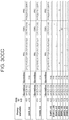
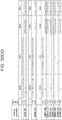
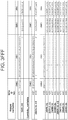
- the selected hybridomas are shown in FIGS 2A-3D and Table 2.
- the Integra flask is a cell culture flask that is divided by a membrane into two chambers, a small chamber and a large chamber.
- a volume of 20-30 ml hybridoma cells at a minimum cell density of 1x10 6 cells per ml from the 31H4 hybridoma line was placed into the small chamber of an Integra flask in Integra media (see Table 5 for components of Integra media).
- Integra media alone (1L) was placed in the large chambers of the Integra flasks.
- the membrane separating the two chambers is permeable to small molecular weight nutrients but is impermeable to hybridoma cells and to antibodies produced by those cells. Thus, the hybridoma cells and the antibodies produced by those hybridoma cells were retained in the small chamber.
- Bound antibody proteins on the Protein A column were recovered by standard acidic antibody elution from Protein A columns (such as 50 mM Citrate, pH 3.0). Aggregated antibody proteins in the Protein A Sepharose pool were removed by size exclusion chromatography or binding ion exchange chromatography on anion exchanger resin such as Q Sepharose resin. The specific IEX conditions for the 31H4 proteins are Q-Sepharose HP at pH 7.8-8.0. Antibody was eluted with a NaCl gradient of 10 mM-500 mM in 25 column volumes. TABLE 5 Composition of Media INTEGRA MEDIA HSFM 10% Ultra Low IgG serum 2mmol/L L-glutamine 1% NEAA 4g/L glucose
- Aggregated antibody proteins in the Protein A Sepharose pool were removed by size exclusion chromatography or binding ion exchange chromatography on anion exchanger resin such as Q Sepharose resin.
- the specific IEX conditions for the 31H4 proteins are Q-Sepharose HP at pH 7.8-8.0.
- the antibody was eluted with a NaCl gradient of 10 mM-500 mM in 25 column volumes.
- Hybridoma line 21B12 was grown in T75 flasks in media (Integra Media, Table 5). When the hybridomas were nearly confluent in the T75 flasks, they were transferred to Integra flasks (Integra Biosciences, Integra CL1000, cat# 90 005).
- Bound antibody proteins on the Protein A column were recovered by standard acidic antibody elution from Protein A columns (such as 50 mM Citrate, pH 3.0). Aggregated antibody proteins in the Protein A Sepharose pool were removed by size exclusion chromatography or binding ion exchange chromatography on anion exchanger resin such as Q Sepharose resin. The specific IEX conditions for the 21B12 proteins are Q-Sepharose HP at pH 7.8-8.0. The antibody was eluted with a NaCl gradient of 10 mM-500 mM in 25 column volumes.
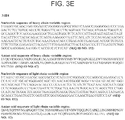
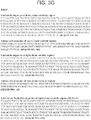
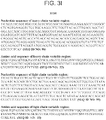
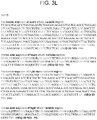
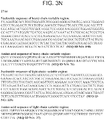
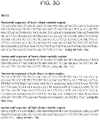
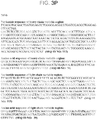
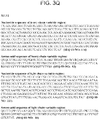
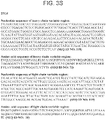
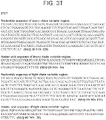
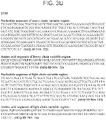
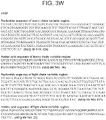
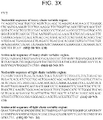
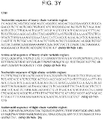
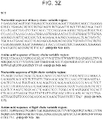
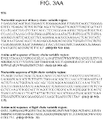
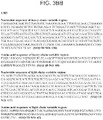
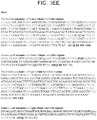
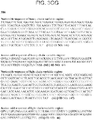
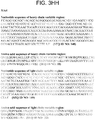
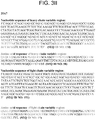
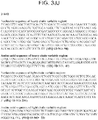
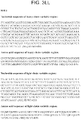
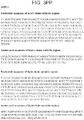
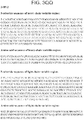
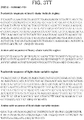
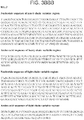
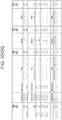
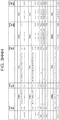
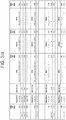
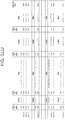
- nucleic acid and amino acid sequences for the light and heavy chains of the above antibodies were then determined by Sanger (dideoxy) nucleotide sequencing. Amino acid sequences were then deduced for the nucleic acid sequences. The nucleic acid sequences for the variable domains are depicted in FIG.s 3E-3JJ .
- the cDNA sequences for the heavy chain variable regions of 31H4, 21B12, and 16F12 were determined and are disclosed as SEQ ID NOs: 152, 94, and 104 respectively.
- the lambda light chain constant region (SEQ ID NO: 156), and the IgG2 and IgG4 heavy chain constant regions (SEQ ID NOs: 154 and 155) are shown in FIG. 3KK .
- the polypeptide sequences predicted from each of those cDNA sequences were determined.
- the predicted polypeptide sequences for the lambda light chain variable regions of 31H4, 21B12, and 16F12 were predicted and are disclosed as SEQ ID NOs: 12, 23, and 35 respectively, the lambda light chain constant region (SEQ ID NO: 156), the heavy chain variable regions of 31H4, 21B12, and 16F12 were predicted and are disclosed as (SEQ. ID NOs. 67, 49, and 79 respectively.
- the IgG2 and IgG4 heavy chain constant regions SEQ ID NOs: 154 and 155).
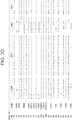
- the FR1, CDR1, FR2, CDR2, FR3, CDR3, FR4 divisions are shown in FIG 2A-3D .
- FIGs. 2A-3D Based on the sequence data, the germline genes from which each heavy chain or light chain variable region was derived was determined. The identity of the germline genes are indicated next to the corresponding hybridoma line in FIGs. 2A-3D and each is represented by a unique SEQ ID NO. FIGs. 2A-3D also depict the determined amino acid sequences for additional antibodies that were characterized.
- a BIAcore® surface plasmon resonance device, Biacore, Inc., Piscataway, NJ affinity analysis of the 21B12 antibodies to PCSK9 described in this Example was performed according to the manufacturer's instructions.
- the binding affinities of antibody to human PCSK9 were also measured at pH 6.0 with the pH 6.0 HBS-P buffer (pH 6.0, 0.01 M Hepes, 0.15 M NaCl, 0.005% surfactant P-20, Biacore) supplemented with 0.01% BSA.
- the binding signal obtained was proportional to the free PCSK9 in solution.
- the antibodies appeared to display a tighter binding affinity at the lower pH (where the Kd was 12.5, 7.3, and 29 pM for 31H4, 21B12, and 16F12 respectively).
- Antibody binding kinetic parameters including k a (association rate constant), k d (dissociation rate constant), and K D (dissociation equilibrium constant) were determined using the BIA evaluation 3.1 computer program (BIAcore, Inc. Piscataway, NJ). Lower dissociation equilibrium constants indicate greater affinity of the antibody for PCSK9.
- the K D values determined by the BIAcore® affinity analysis are presented in Table 7.1, shown below.
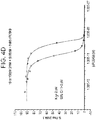
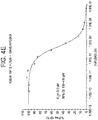
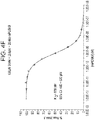
- a KinExA® (Sapidyne Instruments, Inc., Boise, ID) affinity analysis of 16F12 and 31H4 was performed according to the manufacturer's instructions. Briefly, Reacti-GelTM (6x) (Pierce) was pre-coated with one of human, V5-tagged cyno or His-tagged mouse PCSK9 proteins and blocked with BSA. 10 or 100 pM of antibody 31H4 and one of the PCSK9 proteins was then incubated with various concentrations (0.1 pM - 25 nM) of PCSK9 proteins at room temperature for 8 hours before being passed through the PCSK9-coated beads.
- the amount of the bead-bound 31H4 was quantified by fluorescently (Cy5) labeled goat anti-human IgG (H+L) antibody (Jackson Immuno Research).
- the binding signal is proportional to the concentration of free 31H4 at binding equilibrium.
- Equilibrium dissociation constant (K D ) were obtained from nonlinear regression of the two sets of competition curves using a one-site homogeneous binding model.
- the KinExA® Pro software was employed in the analysis. Binding curves generated in this analysis are presented as FIGs. 4A-4F .
- Both the 16F12 and 31H4 antibodies showed similar affinity to human and cyno PCSK9, but approximately 10-250 fold lower affinity to mouse PCSK9.
- antibody 31H4 showed higher affinity to both human and cyno PCSK9 with 3 and 2 pM K D , respectively.
- 16F12 showed slightly weaker affinity at 15pM K D to human PCSK9 and 16 pM K D to cyno PCSK9.
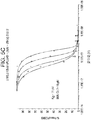
- a SDS PAGE was run to check the quality and quantity of the samples and is shown in FIG. 5A .
- cPCSK9 showed around 50% less on the gel and also from the active binding concentration calculated from KinExA® assay. Therefore, the K D of the mAbs to cPCSK9 was adjusted as 50% of the active cPCSK9 in the present.
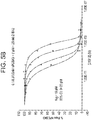
- a BIAcore solution equilibrium binding assay was used to measure the Kd values for ABP 21B12. 21B12.1 showed little signal using KinExA assay, therefore, biacore solution equilibrium assay was applied. Since no significant binding was observed on binding of antibodies to immobilized PCSK9 surface, 21B12 antibody was immobilized on the flow cell 4 of a CM5 chip using amine coupling with density around 7000 RU. Flow cell 3 was used as a background control. 0.3, 1, and 3 nM of human PCSK9 or cyno PCSK9 were mixed with a serial dilutions of 21B12.1 antibody samples (ranged from 0.001 ⁇ 25 nM) in PBS plus 0.1mg/ml BSA, 0.005% P20.
- Binding of the free PCSK9 in the mixed solutions were measured by injecting over the 21B12.1 antibody surface. 100% PCSK9 binding signal on 21B12.1 surface was determined in the absence of mAb in the solution. A decreased PCSK9 binding response with increasing concentrations of mAb indicated that PCSK9 binding to mAb in solution, which blocked PCSK9 from binding to the immobilized peptibody surface. Plotting the PCSK9 binding signal versus mAb concentrations, K D was calculated from three sets of curves (0.3, 1 and 3nM fixed PCSK9 concentration) using a one-site homogeneous binding model in KinExA ProTM software.
- FIG. 5B depicts the results from the solution equilibrium assay at three different hPCSK9 concentrations for hPCSK9.
- FIG. 5C depicts a similar set of results for mPCSK9.
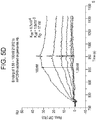
- FIG. 5D depicts the results from the above biacore capture assay.
- This example provides the IC50 values for two of the antibodies in blocking PCSK9 D374Y's ability to bind to LDLR.
- Clear 384 well plates (Costar) were coated with 2 micrograms/ml of goat anti-LDL receptor antibody (R&D Systems) diluted in buffer A (100 mM sodium cacodylate, pH 7.4). Plates were washed thoroughly with buffer A and then blocked for 2 hours with buffer B (1% milk in buffer A). After washing, plates were incubated for 1.5 hours with 0.4 micrograms/ml of LDL receptor (R&D Systems) diluted in buffer C (buffer B supplemented with 10 mM CaC12).
- biotinylated D374Y PCSK9 was incubated with various concentrations of the 31H4 IgG2, 31H4 IgG4, 21B12 IgG2 or 21B12 IgG4 antibody, which was diluted in buffer A, or buffer A alone (control).
- the LDL receptor containing plates were washed and the biotinylated D374Y PCSK9/antibody mixture was transferred to them and incubated for 1 hour at room temperature. Binding of the biotinylated D374Y to the LDL receptor was detected by incubation with streptavidin-HRP (Biosource) at 500 ng/ml in buffer C followed by TMB substrate (KPL). The signal was quenched with IN HCl and the absorbance read at 450 nm.
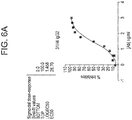
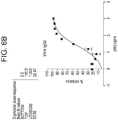
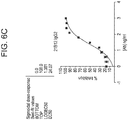
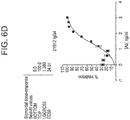
- FIGs. 6A-6D The results of this binding study are shown in FIGs. 6A-6D .
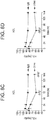
- IC 50 values were determined for each antibody and found to be 199 pM for 31H4 IgG2 ( FIG. 6A ), 156 pM for 31H4 IgG4 ( FIG. 6B ), 170 pM for 21B12 IgG2 ( FIG. 6C ), and 169 pM for 21B12 IgG4 ( FIG. 6D ).
- the antibodies also blocked the binding of wild-type PCSK9 to the LDLR in this assay.
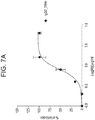
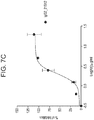
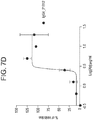
- FIGs. 7A-7D The results of the cellular uptake assay are shown in FIGs. 7A-7D .
- IC 50 values were determined for each antibody and found to be 16.7 nM for 31H4 IgG2 ( FIG. 7A ), 13.3 nM for 31H4 IgG4 ( FIG. 7B ), 13.3 nM for 21B12 IgG2 ( FIG. 7C ), and 18 nM for 21B12 IgG4 ( FIG. 7D ).
- These results demonstrate that the applied antigen binding proteins can reduce the effect of PCSK9 (D374Y) to block LDL uptake by cells
- the antibodies also blocked the effect of wild-type PCSK9 in this assay.
- HDL in contrast, does not contain apoE and is not a ligand for the LDLR.
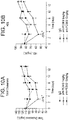
- PCSK9 antibodies increase LDLR expression in mouse, the liver can clear more HDL and therefore lowers serum HDL-C levels.
- the present example demonstrates that an antigen binding protein alters the level of LDLR in a subject, as predicted, over time.
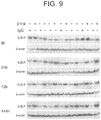
- a Western blot analysis was performed in order to ascertain the effect of antibody 31H4 on LDLR levels.
- 50-100 mg of liver tissue obtained from the sacrificed mice described in Example 13 was homogenized in 0.3 ml of RIPA buffer (Santa Cruz Biotechnology Inc.) containing complete protease inhibitor (Roche). The homogenate was incubated on ice for 30 minutes and centrifuged to pellet cellular debris. Protein concentration in the supernatant was measured using BioRad protein assay reagents (BioRad laboratories).
- the blot was washed briefly and incubated with bovine anti-goat IgG-HRP (Santa Cruz Biotechnology Inc.) 1:2000 or goat anti-mouse IgG-HRP (Upstate) 1:2000. After a 1 hour incubation at room temperature, the blot was washed thoroughly and immunoreactive bands were detected using ECL plus kit (Amersham biosciences). The Western blot showed an increase in LDLR protein levels in the presence of antibody 31H4, as depicted in FIG. 9 .
- Dosing groups and time of sacrifice are shown in Table 10. Animals were sacrificed and livers were extracted and prepared as in Example 13. TABLE 10 Group Treatment Time point after dosing Number Dose 1 IgG 72 hr 6 10mg/kg 2 31H4 72 hr 6 10mg/kg 3 31H4 72 hr 6 1mg/kg 4 IgG 144 hr 6 10mg/kg 5 31H4 144 hr 6 10mg/kg 6 31H4 144 hr 6 1mg/kg 7 IgG 192 hr 6 10mg/kg 8 31H4 192 hr 6 10mg/kg 9 31H4 192 hr 6 1mg/kg 10 IgG 240 hr 6 10mg/kg 11 31H4 240hr 6 10mg/kg 12 31H4 240hr 6 10mg/kg 13 IgG 312 hr 6 10mg/kg 14 31H4 312 hr 6 10mg/kg 15 31H4 3
- Example 15 The HDL levels for the animals in Example 15 were also examined. HDL levels decreased in the mice. More specifically, animals dosed at 10 mg/kg demonstrated a 33% decrease in HDL levels on day 3, which gradually returned to pre-dosing levels by day 13.
- FIG. 10B depicts the results of the experiment. There was a decrease in HDL levels of 34% on day 3.
- FIG. 10B depicts the results of the repeated 13 day experiment.
- mice will lower mouse HDL, this is not expected to occur in humans because of the differences in HDL in humans and other organisms (such as mice). Thus, the decrease in mouse HDL is not indicative of a decrease in human HDL.
- the Experiments in Examples 15 and 16 were repeated with the dosing schedule depicted in FIG. 11A .
- the results are displayed in FIG. 11B .
- both sets of mice displayed a significant decrease in total serum cholesterol because all of the mice received an initial injection of the 31H4 antigen binding protein
- the mice that received additional injections of the 31H4 ABP displayed a continued reduction in total serum cholesterol
- those mice that only received the control injection eventually displayed an increase in their total serum cholesterol.
- a human patient exhibiting a Cholesterol Related Disorder is administered a therapeutically effective amount of PCSK9 antibody, 31H4 (or, for example, 21B12).
- PCSK9 antibody 31H4 (or, for example, 21B12).
- the patient is monitored to determine whether the symptoms of the disorder have subsided. Following treatment, it is found that patients undergoing treatment with the PCSK9 antibody have reduced serum cholesterol levels, in comparison to patients that are not treated.
- a human patient exhibiting symptoms of hypercholesterolemia is administered a therapeutcially effective amount of PCSK9 antibody, such as 31H4 (or, for example, 21B12).
- PCSK9 antibody such as 31H4 (or, for example, 21B12).
- the human patient is monitored to determine whether the serum cholesterol level has declined.
- the patient receiving the treatment with the PCSK9 antibodies has reduced serum cholesterol levels in comparison to arthritis patients not receiving the treatment.
- PCSK9 Antibodies for the Prevention of Coronary Heart Disease and/or Recurrent Cardiovascular Events
- a human patient exhibiting a risk of developing hypercholesterolemia is identified via family history analysis and/or lifestyle, and/or current cholesterol levels.
- the subject is regularly administered (e.g., one time weekly) a therapeutically effective amount of PCSK9 antibody, 31H4 (or, for example, 21B12).
- a therapeutically effective amount of PCSK9 antibody, 31H4 or, for example, 21B12.
- the patient is monitored to determine whether serum cholesterol levels have decreased. Following treatment, it is found that subjects undergoing preventative treatment with the PCSK9 antibody have lowered serum cholesterol levels, in comparison to subjects that are not treated.
- This Study was a randomized, double-blind, placebo-controlled, ascending-single-dose study to evaluate the safety, tolerability, PK, pharmacodynamics (PD) (LDL-C), and immunogenicity of a human anti-PCSK9 antibody (monoclonal antibody 21B12) in healthy subjects.
- Subjects were randomized in a 3:1 ratio (21B12:placebo; 8 subjects per dose cohort for a total of 56 subjects in 7 cohorts) to receive 21B12 at doses of 7, 21, 70, 210, or 420 mg SC, or corresponding placebo; or 21B12 at doses of 21 or 420 mg IV, or corresponding placebo.
- the study population was primarily composed of men (54 [96%]) and had a mean age of 31.2 (range: 20 to 45) years. Eighty-six percent of subjects were white, followed by 9% Hispanic/Latino, 4% black and 1% other. Mean baseline LDL-C values were similar between treatment groups and ranged from 113 to 143 mg/dL.
- 21B12 reduced LDL-C by an average of 55% to 60% at single doses ⁇ 70 mg SC with the duration of effect being dose dependent.
- the LDL-C nadir was observed within 2 weeks of dosing.
- Complete suppression of PCSK9 was observed at single doses ⁇ 70 mg SC, which correlated well with the effects seen on circulating LDL-C.
- PK analyses demonstrated that 21B12 exhibited nonlinear (concentration-dependent) elimination.
- the mean t max ranged from 4 to 6 days.
- the highest median maximum observed concentration (C max ) and area under the concentration-time curve from time 0 to infinity (AUC 0-inf ) occurred in the 420 mg IV group and were 139 ⁇ g/mL and 1550 day• ⁇ g/mL, respectively.
- Treatment-emergent adverse events were reported for 29 of the 42 subjects (69%) who received 21B12 at any dose, and for 10 of the 14 subjects (71%) who received placebo. No relationship was apparent between the subject incidence of adverse events and the dose of 21B12, or between the subject incidence of adverse events and the route of administration of 21B12 (SC versus IV).
- Serum samples from subjects enrolled in this study were tested for the presence (baseline) or development (post-treatment) of anti-21B12 antibodies. Samples from all 42 of the subjects who received 21B12 were negative for anti-21B12 antibodies.
- This Study is a phase 1b, randomized, double-blind, placebo controlled, ascending, multiple-dose study using a human anti-PCSK9 antibody (monoclonal antibody 21B12) in hyperlipidemic (e.g., hypercholesterolemic) subjects currently on stable doses of a statin.
- the study had seven cohorts. Objectives for all cohorts included characterization of the safety, tolerability, and immunogenicity of 21B12, and characterization of the PK and PD (LDL-C and PCSK9). Cohorts 1 to 5 of the study represented the 21B12 dose-escalation portion, in hypercholesterolemic subjects on stable low to moderate doses of a statin.
- Cohort 6 was conducted in hypercholesterolemic subjects on high doses of a statin (atorvastatin 80 mg or rosuvastatin 40 mg).
- Subjects in this cohort were on either rosuvastatin 40 mg or atorvastatin 80 mg and were randomized in a 3:1 ratio to receive 21B12 (140 mg SC Q2W 3 times) or corresponding placebo, respectively.
- Cohort 1 received SC doses of 14 mg 21B12 once a week, 6 times.
- Cohort 2 received SC doses of 35 mg 21B12 once a week, 6 times.
- Cohort 3 received SC doses of 140 mg 21B12 once every other week, 3 times.
- Cohort 4 received SC doses of 280 mg 21B12 once every other week, 3 times.
- Cohort 5 received SC doses of 420 mg 21B12every 4 weeks, 2 times.
- Subjects in cohorts 1-5 on low to moderate doses of statins had mean LDL-C reductions of up to 81% vs placebo at maximal reduction and 75% vs placebo at the end of the dosing interval (i.e., at week 6) after 3 biweekly SC doses of 21B12, and 66% at the end of the dosing interval (i.e., at week 8) after 2, every 4 week SC doses.
- Subjects in cohorts 1-5 on low to moderate doses of statins had maximum LDL-C reductions of up to 81% vs placebo at maximal reduction and 75% vs placebo at the end of the dosing interval ( Figure 14 ). The magnitude and duration of effect were dose-dependent. Plasma PCSK9 was undetectable at higher doses.
- Subjects in cohorts 1-5 on low to moderate doses of statins had mean reduction of PCSK9 levels of up to 94% vs placebo at the end of the dosing interval, data not shown.
- Subjects in cohorts 1-5 on low-to-moderate doses of statins had mean ApoB reductions of up to 54% vs placebo at the end of the dosing interval, and maximum reductions ranging from 48% (35 mg QW) to 59% (140 mg and 280 mg Q2W and 420 mg Q4W) during the study (p ⁇ 0.001)( Figure 16 ).
- Subjects in cohorts 1-6 on low-to-moderate and high-doses of statins had mean Lp(a) reductions of up to 43% vs placebo at the end of the dosing interval ( Figure 17 ).
- Subjects in cohort 7 with heFH had a mean reduction in LDL-C of 65% vs placebo at the end of the dosing interval (i.e., week 6, 2 weeks after the third biweekly SC dose of 21B12), and a maximum LDL-C reduction of 70% versus placebo ( Figure 18 ). LDL-C reductions during the dosing interval were comparable to those observed in subjects without heFH. After 21B12 treatment, circulating PCSK9 was undetectable in heFH subjects.
- Subjects in cohort 7 with heFH had a mean reduction in serum PCSK9 values of 78% vs placebo at the end of the dosing interval (i.e., week 6, 2 weeks after the third biweekly SC dose of 21B12)( Figure 19 ).
- Subjects in cohort 7 with heFH had a mean reduction in total cholesterol of up to 42% vs placebo at the end of the dosing interval (i.e., week 6, 2 weeks after the third biweekly SC dose of 21B12), and a maximum total cholesterol reduction of 47% versus placebo ( Figure 20 ).
- Subjects in cohort 7 with heFH had a mean reduction in non-HDL cholesterol of 61% vs placebo at the end of the dosing interval (i.e., week 6, 2 weeks after the third biweekly SC dose of 21B12), and a maximum reduction of non-HDL cholesterol of 67% versus placebo ( Figure 21 ).
- Subjects in cohort 7 with heFH had a mean reduction in ApoB levels of up to 47% vs placebo at the end of the dosing interval (i.e., week 6, 2 weeks after the third biweekly SC dose of 21B12), and a maximum reduction of ApoB of 57% versus placebo ( Figure 22 ).
- 21B12 decreased unbound PCSK9 levels and substantially lowered circulating LDL-C levels in subjects with heFH and hyperlipidemia who were receiving standard-of-care therapy.
- the bi-weekly dose tested provided LDL-C reductions in heFH subjects that were comparable to those in non-heFH subjects. No serious AEs were reported.
- This study is a double-blind, randomized, stratified, placebo-controlled clinical trial evaluating the safety, tolerability, and efficacy of monocloncal antibody 21B12 in subjects having a diagnosis of HeFH.
- a total enrollment of 150 subjects is planned.
- Subjects who meet all inclusion/exclusion criteria will be randomized with equal allocation into 3 treatment groups: monoclonal antibody, 21B12 at 350 mg or 420 mg Q4W SC (once every 4 weeks, subcutaneous) or placebo Q4W SC. Randomization will be stratified by screening LDL-C level ( ⁇ 130 mg/dL [3.4 mmol/L] vs ⁇ 130 mg/dL) and ezetimibe use at baseline (yes vs no).
- Randomization should occur within 5 - 10 days of the screening LDL-C evaluation used to determine eligibility.
- Monoclonal antibody, 21B12, and placebo will be blinded. Study visits are at weeks 2, 4, 8, and 12. Final administration of monoclonal antibody, 21B12, or placebo is at week 8. The end-of-study (EOS) visit and the last evaluation of lipids is at week 12.
- Preliminary data demonstrated that subjects treated with 350 mg 21B12 had a least squares (LS) mean percent reduction from baseline in LDL-C of 38.46% at the end of the dosing interval, and subjects treated with 420 mg 21B12 had a LS mean percent reduction from baseline in LDL-C of 45.68%. Subjects treated with 350 mg 21B12 had a LS mean percent reduction from baseline in Lp(a) of 21.69% at the end of the dosing interval, and subjects treated with 420 mg 21B12 had a LS mean percent reduction from baseline in Lp(a) of 28.23%.
- LS least squares
- Figures 25A-25D are bar graphs showing the beneficial effects of doses of 21B12 on Lp(a), HDL-C, triglycerides and VLDL-C, respectively, derived from the aggregate data from the studies described in Examples 22-25 .
- dose dependent reductions from baseline were observed for total cholesterol (25-37%, p values ⁇ 0.001), non-HDL-C (36-53%, p values ⁇ 0.001), and ApoB (36-53%, p values ⁇ 0.001) (data not shown).
- the objective of this study is to evaluate the effect of 12 weeks of subcutaneous (SC) human, anti-PCSK9 antibody (monoclonal antibody 21B12) compared with ezetimibe, on percent change from baseline in low-density lipoprotein cholesterol (LDL-C) in hypercholesterolemic subjects unable to tolerate an effective dose of an HMG-CoA reductase inhibitor.
- SC subcutaneous
- anti-PCSK9 antibody monoclonal antibody 21B12
- This study is a randomized, stratified, parallel group clinical trial for the human anti-PCSK9 antibody, monoclonal antibody, 21B12. It is planned to enroll 150 subjects. Subjects who meet all inclusion/exclusion criteria will be randomized with equal allocation into 5 treatment groups: monoclonal antibody, 21B12 at 280 mg, 350 mg or 420 mg Q4W SC (once every 4 weeks, subcutaneous); ezetimibe at 10 mg daily (QD) oral (PO) with monoclonal antibody, 21B12 at 420 mg Q4W SC; or ezetimibe 10 mg QD PO with placebo Q4W SC.
- Randomization will be stratified by screening LDL-C level ( ⁇ 130 mg/dL [3.4 mmol/L] vs ⁇ 130 mg/dL) and statin use at baseline (yes vs no). Randomization should occur within 5 -10 days of the screening LDL-C evaluation used to determine eligibility. Monoclonal antibody, 21B12, and placebo will be blinded. Ezetimibe is not blinded. Study visits are at weeks 2, 4, 8, and 12. Final administration of monoclonal antibody, 21B12, or placebo is at week 8. The end-of-study visit and the last evaluation of lipids is at week 12.
- statin ⁇ 70 mg simvastatin ⁇ 140 mg
- pravastatin ⁇ 140 mg rosuvastatin ⁇ 35 mg
- lovastatin ⁇ 140 mg fluvastatin ⁇ 280 mg.
- the maximal total weekly dose should not exceed 7 times the smallest available tablet size. Symptoms must have resolved when statin was discontinued or the dose reduced.
- the dose(s) must be stable for at least 4 weeks prior to LDL-C screening. If the subject is on ezetimibe at start of screening, ezetimibe must be discontinued for ⁇ 4 weeks before LDL -C screening.
- subjects Depending on their risk category (based on NCEP ATP III treatment goals) subjects must meet the following fasting LDL-C (by central laboratory) criteria at screening: ⁇ 100 mg/dL (2.6 mmol/L) for subjects with diagnosed coronary heart disease (CHD) or CHD risk equivalent; ⁇ 130 mg/dL (3.4 mmol/L) for subjects without diagnosed CHD or risk equivalent and 2 or more risk factors; ⁇ 160 mg/dL (4.1 mmol/L) for subjects without diagnosed CHD or risk equivalent and with 1 or no risk factors.
- Fasting triglycerides must be ⁇ 400 mg/dL (4.5 mmol/L) as determined by the central laboratory analysis at screening.
- Preliminary data demonstrated that subjects treated with 280 mg 21B12 had a LS mean percent reduction from baseline in LDL-C of 38.79% at the end of the dosing interval; subjects treated with 350 mg 21B12 had a LS mean percent reduction from baseline in LDL-C of 40.01% at the end of the dosing interval; and subjects treated with 420 mg 21B12 had a LS mean percent reduction from baseline in LDL-C of 50.63%
- Preliminary data demonstrated that subjects treated with 280 mg 21B12 had a LS mean percent reduction from baseline in Lp(a) of 27.38% at the end of the dosing interval; subjects treated with 350 mg 21B12 had a LS mean percent reduction from baseline in Lp(a) of 16.04% at the end of the dosing interval; and subjects treated with 420 mg 21B12 had a LS mean percent reduction from baseline in Lp(a) of 23.84%.
- the objective of this study was to evaluate the effect of 12 weeks of subcutaneous (SC) human, anti-PCSK9 antibody (monoclonal antibody 21B12) every 2 weeks (Q2W) or every 4 weeks (Q4W), compared with placebo, on percent change from baseline in low-density lipoprotein cholesterol (LDL-C) when used as monotherapy in hypercholesterolemic subjects with a 10 year Framingham risk score of 10% or less.
- SC subcutaneous
- anti-PCSK9 antibody monoclonal antibody 21B12
- Randomization was stratified by screening LDL-C level ( ⁇ 130 mg/dL [3.4 mmol/L] vs > 130 mg/dL). Randomization occurred within 5 -10 days of the screening LDL-C evaluation used to determine eligibility. Study visits were every 2 weeks, irrespective whether the subject receives Q2W SC or Q4W treatment or ezetimibe. The 3 Q2W dose groups of monoclonal antibody, 21B12, and 1 Q2W placebo group was blinded against each other, and the 3 Q4W dose groups and 1 Q4W placebo group was blinded against each other. Ezetimibe was not blinded. The end-of-study visit and the last estimation of lipids was at week 12 for subjects on Q4W IP schedule or on ezetimibe and week 14 for subjects on Q2W IP schedule.
- the primary endpoint was the percent change from baseline in LDL-C at week 12. Secondary endpoints included percent changes in apolipoprotein B (ApoB), lipoprotein (a) (Lp(a)), and in the ratio of total cholesterol to high-density lipoprotein (HDL)-C. Tolerability and safety were also evaluated.
- This study is a double-blind, randomized, stratified, placebo controlled, parallel group dose ranging clinical trial for the human anti-PCSK9 antibody, monoclonal antibody, 21B12, enrolling 631 subjects.
- Subjects who are on stable dose(s) for at least 4 weeks of statin therapy with or without ezetimibe and who meet all inclusion/exclusion criteria will be randomized with equal allocation into 8 treatment groups: monoclonal antibody, 21B12 subcutaneous (SC) (70 mg Q2W, 105 mg Q2W, 140 mg Q2W, 280 mg Q4W, 350 mg Q4W, and 420 mg Q4W, placebo Q2W SC, or placebo Q4W SC).
- SC subcutaneous
- Randomization will be stratified by screening LDL-C level ( ⁇ 130 mg/dL [3.4 mmol/L] vs ⁇ 130 mg/dL) and ezetimibe use at baseline (yes vs no). Randomization should occur within 5 -10 days of the screening LDL-C evaluation used to determine eligibility. Study visits are every 2 weeks, irrespective whether the subject receives Q2W SC or Q4W treatment. The 3 Q2W dose groups of monoclonal antibody, 21B12, and 1 Q2W placebo group will be blinded against each other, and the 3 Q4W dose groups and 1 Q4W placebo group will be blinded against each other. The end-of-study visit and the last estimation of lipids is at week 12 for subjects on Q4W IP schedule and week 14 for subjects on Q2W IP schedule.
- PCSK9 ABPs Further Upregulated LDLR in the Presence of Statins
- HepG2 cells were seeded in DMEM with 10% fetal bovine serum (FBS) and grown to -90% confluence. The cells were treated with indicated amounts of mevinolin (a statin, Sigma) and PCSK9 ABPs ( FIGs. 12A-12C ) in DMEM with 3% FBS for 48 hours. Total cell lysates were prepared. 50 mg of total proteins were separated by gel electrophoresis and transferred to PVDF membrane. Immunoblots were performed using rabbit anti-human LDL receptor antibody (Fitzgerald) or rabbit anti-human b-actin antibody. The enhanced chemiluminescent results are shown in the top panels of FIGs. 12A-12C .
- FBS fetal bovine serum
- ABPs 21B12 and 31H4 are PCSK9 neutralizing antibodies, while 25A7.1 is a non-neutralizing antibody.
- HepG2-PCSK9 cells were also created. These were stable HepG2 cell line transfected with human PCSK9. The cells were seeded in DMEM with 10% fetal bovine serum (FBS) and grew to -90% confluence. The cells were treated with indicated amounts of mevinolin (Sigma) and PCSK9 ABPs ( FIGs. 12D-12F ) in DMEM with 3% FBS for 48 hours. Total cell lysates were prepared. 50 mg of total proteins were separated by gel electrophoresis and transferred to PVDF membrane. Immunoblots were performed using rabbit anti-human LDL receptor antibody (Fitzgerald) or rabbit anti-human b-actin antibody. The enhanced chemiluminescent results are shown in the top panels. The intensity of the bands were quantified by ImageJ software and normalized by b-actin.
- FBS fetal bovine serum
- Consensus sequences were determined using standard phylogenic analyses of the CDRs corresponding to the V H and V L of anti-PCSK9 ABPs. The consensus sequences were determined by keeping the CDRs contiguous within the same sequence corresponding to a V H or V L . Briefly, amino acid sequences corresponding to the entire variable domains of either V H or V L were converted to FASTA formatting for ease in processing comparative alignments and inferring phylogenies.
- a viscosity, stability and solubility screening assay was used to explore excipient viscosity modulators for high concentration protein formulations.
- all sample preparation e.g., antibody 21B12 sample
- Lyophilization of the samples to be tested allowed a simple method for achieving high protein concentrations.
- 1.5 mL of 70mg/mL protein e.g., 21B12
- compositions of 21B12 were formulated in six different formulations shown in Table 29.2 below.
- the concentration of 21B12 in all formulations was 134 mg/ml.
- Compositions were filled to a final volume of 1.0 ml in vials.
- Compositions were incubated at room temperature (i.e., 25°C) .
- Buffer for dialysis contained 10 mM sodium acetate (made from acetic acid) at pH 5.0.
- Viscosity was measured using Brookfield LV-DVII cone and plate viscometer (Middleboro, Massachusetts) with a CPE-40 spindle with matching sample cup temperature regulated by a circulating water bath at constant 25C. 500 ul of sample was added to sample cup with positive displacement pipettor. After sample cup was secured the rotational speed of the spindle was gradually increased until about 80% torque was achieved. At this point the rotational speed was stopped and a viscosity reading was generated by Rheocalc software.
- Viscosity 10 mM Na acetate 42.4 10 mM Na acetate 9.0 % sucrose 2% L-Proline (174 mM) 20.3 10 mM Na acetate 9.0 % sucrose 3% L-Proline (261 mM) 17.9 10 mM Na acetate 9.0 % sucrose 3% Benzyl alcohol 17.8 10 mM Na acetate 9.0 % sucrose 150 mM Creatinine 11.97 10 mM Na acetate 9.0 % sucrose 150 mM L-Methionine 16.0 10 mM Na acetate 9.0 % sucrose 150 mM L-Taurine 16.8
- compositions of 21B12 were formulated in different formulations shown in Table 15 below.
- the formulations fall into three groups: (1) a set of various concentrations of 21B12 in 10 mM sodium acetate buffer, pH 5.2, (2) a set of various concentrations of 21B12 in 10 mM sodium acetate buffer, pH 5.2 with 3% (approximately 261 mM) L-Proline spiked into each sample, and (3) a set of 21B12 samples concentrated at about 117-134 mg/mL in 10 mM sodium acetate buffer at different pH levels (4.0 to 5.5) plus two samples in 10 mM sodium acetate buffer, pH 5.2 with either NaCl or a L-Methionine/Benzyl alcohol combination added.
- compositions of 21B12 were formulated in different formulations shown in Table 16 below.
- Table 16 Formulation Excipients Viscosity (cP) @ 25°C Osmolality (mOsmol/kg) 116 10 mM sodium acetate, pH 4.8 N/A 10.4 72 116 10 mM sodium acetate, pH 4.8 50 mM methionine + 2% benzyl alcohol 7 329 116 10 mM sodium acetate, pH 4.8 150 mM arginine 3.7 241 116 10 mM sodium acetate, pH 4.8 2% proline + 1% benzyl alcohol 7 313 116 10 mM sodium acetate, pH 4.8 1.5% proline + 1% benzyl alcohol 7.3 277
- compositions of 21B12 were formulated in different formulations shown in Table 17 below.
- Figure 28A is a graph showing the viscosity of various concentrations of anti-PCSK9 antibody, 21B12, in a formulation comprising 10 mM sodium acetate, and 9% Sucrose pH 5.2 at 25°C and 40°C.
- Figure 28B is a graph showing the viscosity of various concentrations of anti-PCSK9 antibody, 21B12, in a formulation comprising 10 mM sodium acetate, and 9% Sucrose pH 5.2 at 25°C and 40°C, as compared to a formulation comprising 10 mM sodium acetate, 125 mM arginine, and 3% Sucrose pH 5.0 at 25°C and 40°C.
- Figure 28D is a graph showing the viscosity of various concentrations of anti-PCSK9 antibody, 21B12, in a formulation comprising 10 mM sodium acetate, and 9% Sucrose pH 5.2 at 25°C and 40°C, as compared to a formulation comprising 10 mM sodium acetate and 250 mM proline, pH 5.0 at 25°C and 40°C.
- Table 30 shows the viscosity of the 11F1 antibody at 25 degrees Celsius at various antibody concentrations and in various formulations.
- High concentration stock solution of 11F1 was prepared similarly as described for 21B12 in Example 29 above. Concentration determination was then carried out by measuring absorbance at A280 using an Agilent 8453 Spectrophotometer (Santa Clara, California). Protein concentration was calculated using the appropriate extinction coefficient. The appropriate amount of buffer was then added to the sample to dilute it back down to the desired concentration and another A280 was performed to obtain the final concentration for the experiment. Excipients were added individually to the 11F1 formulations samples derived from the high concentration stock solutions.
- Viscosity was measured using Brookfield LV-DVII cone and plate viscometer (Middleboro, Massachusetts) with a CPE-40 spindle with matching sample cup temperature regulated by a circulating water bath at constant 25°C. 500 ⁇ L of sample was added to sample cup with positive displacement pipettor. After sample cup was secured the rotational speed of the spindle was gradually increased until about 80% torque was achieved. At this point the rotational speed was stopped and a viscosity reading was generated by Rheocalc software.
- Table 30 demonstrate the ability to attain high concentrations of the 11F1 antibody with relatively low viscosity in formulations having specific stabilizers/excipients.
- Formulations comprising the stabilizers methionine, proline, arginine, glycine, serine and alanine exhibited particularly lower viscosity.
- Table 31.2 shows the results of native SEC-HPLC analysis of 21B12 formulations listed in Table 31.1 incubated at X°C for 0 weeks, 1 month, 2 months, 3 months, and 6 months.
- "% HMW” reflects the quantity of high molecular weight 21B12 monomer in a sample.
- An electronic, liquid-borne particle-counting system (HIAC/Royco 9703 or equivalent) containing a light-obscuration sensor (HIAC/Royco HRLD-150 or equivalent) with a liquid sampler quantifies the number of particles and their size range in a given test sample.
- a light-obscuration sensor (HIAC/Royco HRLD-150 or equivalent) with a liquid sampler quantifies the number of particles and their size range in a given test sample.
- HIAC analysis was performed using samples that had been stored at 4°C.
- samples of 21B12 formulations in Table 31.1 were subject to vacuum (also called “degassing") in order to remove air bubbles that could be detected as particles in the particle-counting system.
- vacuum also called "degassing”
- the method was to subject the samples to vacuum at 75 torr for 1 to 2 hours. Particle counting was performed within 2 hours of completing the degassing process.
- Figure 29A and 29B shows the results of the HIAC assays for the above-identified formulations incubated in containers for 0 weeks, 1 month, 2 months, 3 months, and 6 months. 10 ⁇ m, and 25 ⁇ m particles were counted.
- Figures 29A and 29B demonstrate that all of the formulations of 21B12 were stable as measured with HIAC. Although the formulations in glass syringes, i.e., formulations 4-6, showed higher levels of particles across protein concentration and formulation, those particle counts are below USP limits for each particle size (10 ⁇ m and 25 ⁇ m). USP limits for 10 ⁇ m particles is 6000 per container and for 25 ⁇ m particles, 600 per container.
- Table 32B shows the results of native SEC-HPLC analysis of 11F1 formulations listed in Table 32A incubated at 4°C or -30°C for 0 weeks, 2 months, 4 months, or 6 months.
- "% HMW” reflects the quantity of high molecular weight 11F1 in a sample.
- Cation-exchange HPLC separates proteins based on differences in their surface charge.
- charged isoforms of 11F1 are separated on a cation-exchange column and eluted using a salt gradient. The eluent is monitored by UV absorbance. The charged isoform distribution is evaluated by determining the peak area of each isoform as a percent of the total peak area.
- Native CEX-HPLC was performed using a Dionex G3000SWXL 4.0 mm ID x 250 mm column (Tosoh Bioscience), with 10 ⁇ m particle size, on an Agilent HPLC with a Variable Wavelength Detector.
- the mobile phase was a linear gradient of 20 mM MES, pH 6.0 +/-0.1 and the same buffer with 500 mM Sodium Chloride. The flow rate was 0.6 mL/minute.
- the column eluate was monitored at 280 nm. Integrated peak areas in the chromatograms were used to quantify the amounts of differently charged isoforms.
- An electronic, liquid-borne particle-counting system (HIAC/Royco 9703 or equivalent) containing a light-obscuration sensor (HIAC/Royco HRLD-150 or equivalent) with a liquid sampler quantifies the number of particles and their size range in a given test sample.
- a light-obscuration sensor (HIAC/Royco HRLD-150 or equivalent) with a liquid sampler quantifies the number of particles and their size range in a given test sample.
- HIAC analysis was performed using samples that had been stored at 4°C.
- samples of 11F1 formulations in Table 32a were subject to vacuum (also called “degassing") in order to remove air bubbles that could be detected as particles in the particle-counting system.
- vacuum also called "degassing”
- the method was to subject the samples to vacuum at 75 torr for 1 to 2 hours. Particle counting was performed within 2 hours of completing the degassing process.
- Figure 30A and 30B show the results of the HIAC assays for the above-identified formulations incubated in containers for 0 weeks, and four months. 10 ⁇ m, and 25 ⁇ m particles were counted. Figures 30A and 30B demonstrate that all of the formulations of 11F1 were stable as measured with HIAC. Particle counts for all formulations are below USP limits for each particle size (10 ⁇ mand 25 ⁇ m). USP limits for 10 ⁇ m particles is 6000 per container and for 25 ⁇ m particles, 600 per container.
- Results from this assay demonstrate that 11F1 binds to PCSK9 and not to PCSK1, PCSK2, PCSK7, or furin, demonstrating the specificity of 11F1 for PCSK9.
- Biotinylated PCSK9 diluted in buffer A (25 mM Tris, 150 mM NaCl, 0.1% BSA, 0.05% tween, pH 7.5) was bound to neutravidin coated 96 well plates at a concentration of 0.2 ⁇ g/mL, for one hour incubation at room temperature. Separately, 0.4 ⁇ g/mL of 11F1 was incubated for one hour at room temperature with various concentrations (ranging from 0 to 20 ⁇ g/mL) of either PCSK1, PCSK2, PCSK7, PCSK9 or furin (R&D Systems, Minneapolis, MN) (diluted in buffer A w/o tween).
- buffer A 25 mM Tris, 150 mM NaCl, 0.1% BSA, 0.05% tween, pH 7.5
- Furin inhibitor at 4.5 ⁇ g/mL, was included with all furin containing reactions.
- the PCSK9 coated streptavidin plate was washed with buffer A and the antibody/proprotein convertase mixture was added to the plate and incubated at room temperature for one hour. After washing, bound antibody was detected by incubation with goat- ⁇ -human Fc-HRP (160 ng/mL, diluted in buffer A) (Jackson Laboratories, Bar Harbor, ME) followed by TMB substrate.
- the reaction was stopped with 1 N HCl and the absorbance was read at a wavelength of 450 nm on a Spectramax Plus 384 spectrophotometer (Molecular Devices Inc., Sunnyvale, CA).
- This assay relied on the ability of proprotein convertase in solution to compete for the binding of 11F1 to plate-captured PCSK9.
- Pre-incubation of 11F1 and PCSK9 in solution dose dependently and robustly reduced the amount of 11F1 binding to plate-captured PCSK9 detected as reduced OD450 ( Figure 31 ). All results were expressed as the mean OD450 value ⁇ standard deviation versus concentration of the proprotein convertase.
- Pre-incubation of 11F1 with PCSK1, PCSK2, PCSK7, or furin, in solution did not significantly impact the binding of 11F1 to plate-captured PCSK9. Therefore, at the protein concentrations studied, 11F1 binds only to PCSK9 and not to the other proprotein convertase family members tested.
- the example demonstrates that nanomolar concentrations of 11F1 can inhibit binding of both D374Y and wild-type PCSK9 to the LDLR under the conditions of this assay.
- Binding of the biotinylated PCSK9 to the LDLR was detected by incubation with streptavidin-HRP (500 ng/mL in buffer C) followed by TMB substrate. The reaction was stopped with IN HCl and the absorbance was read at a wavelength of 450 nm on a SpectraMax Plus 384 Spectrophotometer (Molecular Devices Inc., Sunnyvale, CA). GraphPad Prism (v 4.01) software was used to plot log of antibody concentration versus OD450 to determine IC50 values by nonlinear regression.
- 11F1 inhibited LDLR:PCSK9 binding.
- a representative dose response curve for both the D374Y and wild-type assays are presented in Figure 32 and Figure 33 , respectively.
- 11F1 blocks the interaction between PCSK9 and LDLR in vitro and can prevent the PCSK9-mediated reduction of LDL uptake in HepG2 cells.
- human HepG2 cells were seeded in black, clear bottom 96-well plates (Fisher Scientific CO LLC, Santa Clara, CA) at a density of 5x10⁴ cells per well in DMEM (Mediatech Inc., Herndon, VA) supplemented with 10% FBS and 1% of antibiotic-antimycotic solution (Mediatech Inc., Herndon, VA). Cells were incubated at 37°C (5% CO2) overnight.
- serial dilutions (1:2) of 11F1 from 666.7 nM to 0.7 nM (for blocking D374Y PCSK9) or from 3.3 ⁇ m to 3.3 nM (for blocking WT PCSK9), were prepared in formulation buffer (25 mM HEPES, pH 7.5, 0.15 M NaCL).
- Either D374Y PCSK9 (2 ⁇ g/mL) or WT PCSK9 (25 ⁇ g/mL) were diluted in uptake buffer (DMEM containing 1% FBS) and incubated with the various concentrations of 11F1 or uptake buffer alone (negative control) for 1 hour at room temperature with shaking.
- BODIPY-LDL (Invitrogen, Carlsbad, CA) was diluted in uptake buffer to a concentration of 12 ⁇ g/mL. Following overnight incubation, HepG2 cells were rinsed twice with DPBS (Mediatech Inc., Herndon, VA). Twenty-five microliters of the D374Y PCSK9 or WT PCSK9 complex with 11F1 and 25 ⁇ L of diluted BODIPY-LDL (Invitrogen, Carlsbad, CA) were added to the cells and incubated at 37°C (5% CO2) for 3 hours. Cells were washed with DPBS 5 times and resuspended in 100 ⁇ L DPBS. Fluorescent signals were detected using a Safire plate reader (Tecan Systems Inc., San Jose, CA) at 480-520 nm (excitation) and 520-600 nm (emission) and expressed as relative fluorescence unit (RFU).
- GraphPad Prism (Version 4.02, GraphPad Software Inc., San Diego, CA) software was used to plot log of antibody concentration versus RFU and to determine EC50 values by nonlinear regression using the sigmoidal dose-response (variable slope) curve fitting program.
- This example shows that 11F1 blocked D374Y PCSK9 or WT PCSK9 -mediated decrease of LDL uptake in HepG2 cells in a dose-dependent manner.
- Adding recombinant purified D374Y PCSK9 (2 ⁇ g/mL) or WT PCSK9 (25 ⁇ g/mL) to HepG2 cells reduced the uptake of BODIPY-LDL to -50 to 60% and -40% of the level measured in untreated cells, respectively.
- the EC50 value is lower against D374Y PCSK9 than WT PCSK9 since less D374Y PCSK9 was used in the assay because its binding affinity to the LDLR is 5- to 30-fold greater than that of WT PCSK9 (Cunningham et al, 2007; Fisher et al, 2007; Kwon et al, 2008).
- the EC50 values reported here are representative for mean values derived from 3 to 6 separate measurements for 11F1.
- a single intravenous bolus administration of the anti-PCSK9 antibodies 11F1 or 8A3 leads to a significant decrease in serum non-HDL-C and TC in mice expressing human PCSK9 by AAV.
- This example demonstrates the effectiveness of both anti-PCSK9 antibodies in blocking the function of human PCSK9 in vivo.
- mice expressing human PCSK9 were generated by infection with an engineered adeno associated virus (AAV) coding for human PCSK9, resulting in elevated levels of circulating low density lipoprotein cholesterol (LDL-C).
- AAV engineered adeno associated virus
- mice were then administered 11F1, 8A3 or anti-keyhole limpethemocyanin (KLH) IgG2 control antibody at 30 mg/kg. via tail vein injection.
- KLH anti-keyhole limpethemocyanin
- mice were euthanized and whole blood was collected from the vena cava and allowed to coagulate for 30 minutes at room temperature. Following centrifugation at 12,000 rpm with a bench top centrifuge for 10 minutes, serum was collected. Serum cholesterol analysis was performed using the Cobas Integra 400 plus chemistry analyzer.
- Serum concentrations of antibody were determined using a sandwich ELISA assay.
- Polyclonal goat anti-human Fc IgG and an HRP-labeled goat anti-human IgG Fc ⁇ polyclonal reagent both from Jackson ImmunoResearch Laboratories Inc, West Grove, PA were used as the capture and the detection antibody, respectively.
- a 3,3',5,5'tetramethylbenzidine (TMB) substrate solution reacted with peroxide, and in the presence of horse radish peroxidase (HRP), created a colorimetric signal that was proportional to the amount of the respective anti-PCSK9 antibody bound by the capture reagent.
- TMB horse radish peroxidase
- the intensity of the color was measured at 450 nm minus 650 nm using a microplate reader (Spectra Max Plus 384). Data was analyzed using Watson version 7.0.0.01 (Thermo Scientific, Waltham, MA) data reduction package with a Logistic (auto-estimate) regression of separately prepared standard curves. The lower limit of quantification (LLOQ) for the assay was ng/mL. 34.4.
- Non-compartmental analysis was performed on serum concentrations using the pre-determined nominal time points for each subject using WinNonlin Enterprise, version 5.1.1 (Pharsight, St. Louis, MO). Data points for estimating the terminal elimination rate constants and half-lives were chosen by visual inspection of the concentration-time profiles. NCA parameters reported include: apparent half-life (t1/2), area under the serum concentration-time curve from time zero to the last measured concentration (AUC0-t), and apparent serum clearance (CL0-t). AUC0-t was determined using the linear log-linear trapezoidal method, and CL0-t was calculated by Dose/AUC0-t. For 11F1, 8A3, and 31H4 antibodies. Post-study dose solution analysis showed actual doses were within 20% of the 30 mg/kg target.
- mice expressing human PCSK9 were euthanized prior to injection of antibodies and blood was collected.
- Non-HDL-C, HDL-C and TC levels in these animals were 33 ⁇ 4, 117 ⁇ 4 and 183 ⁇ 9 mg/dL, respectively (mean ⁇ SEM).
- Levels of PCSK9 in naive animals were determined to be 4921 ng/mL ⁇ 2044 ng/mL.
- Anti-KLH IgG2 control antibody CL0-t was similar to that of 11F1 and 8A3, when calculated using the corrected dose, and the apparent half-life of the anti-KLH IgG2 control antibody was estimated at >120 hours. These data suggested that affects of the PCSK9 ligand on antibody disposition are less pronounced for 11F1 and 8A3 when compared to other antibodies dosed in the AAV model because 11F1 and 8A3 CL0-t values are more similar to anti-KLH IgG2 control antibody.
- the reagents for the assay were obtained from DiaSorin (Stillwater, MN).
- Antibody concentrations in serum were determined using an enzyme-linked immunosorbent assay (ELISA) with an assay range of 34.4 to 3000 ng/mL (34.4 ng/mL being the lower limit of quantitation [LLOQ]).
- ELISA enzyme-linked immunosorbent assay
- NCA Non-compartmental analysis
- Maximal TC lowering for 11F1 was observed 9 days after injection, with a 27% lowering of TC as compared to anti-KLH IgG2 control antibody-treated monkeys (control animals). TC returned to levels similar to those observed in control animals by day 27. Maximal TC lowering for 21B12 was observed 3 days after injection, with a 20% lowering of TC as compared to control animals. TC transiently returned to levels similar to those observed in vehicle-treated monkeys by day 4, but were significantly lower between days 14 and 18, inclusively. Maximal TC lowering for 8A3 was observed 9 days after injection, with a 22% lowering of TC as compared to control animals. TC returned to levels similar to those observed in control animals by day 30 ( Figure 42 ).
- 21B12 did induce a statistically significant change in HDL-C at a single time point (day 18 following injection) ( Figure 43 and Figure 45 ).
- Serum ApoB levels were measured at days 3, 6, 15, 24 and 33, post-injection. 11F1 and 8A3 were associated with ApoB lowering at days 3 to 24, as compared to anti-KLH IgG2 control antibody-treated monkeys ( Figure 46 ). 21B12 was associated with statistically significant lower ApoB levels at day 3 only.
- a summary plot of the mean concentration-time profiles by treatment is shown in 748.
- the estimated mean pharmacokinetic parameters for animals receiving 11F1, 21B12, 8A3, and anti-KLH IgG2 control antibody are displayed in Table of Figure 47 .
- 11F1 achieved a maximal lowering of LDL-C (vs anti-KLH IgG2 control antibody at the same time point) 9 days following injection (-57%).
- 21B12 achieved a maximal lowering of LDL-C (vs anti-KLH IgG2 control antibody at the same time point) 3 days following injection (-64%).
- 8A3 achieved a maximal lowering of LDL-C (vs anti-KLH IgG2 control antibody at the same time point) 4 days following injection (-54%).
- 21B12 lowered HDL-C at a single time point, 18 days after injection. No statistically significant changes were observed in HDL-C levels following 11F1 or 8A3 administration. No statistically significant changes were observed in triglycerides levels following 11F1, 21B12, or 8A3 administration.
- Part A is an open label, single arm, multicenter pilot study.
- Part B is a double-blind, randomized, placebo-controlled, multicenter, study of human antibody, 21B12, with expanded enrollment but otherwise identical design to Part A. Both inclusion/exclusion criteria and the Schedule of Assessments will be the same for Parts A and B.
- Inclusion Criteria includes:
- Exclusion Criteria includes:
- Schedule of Assessments include, but are not limited to, collection of adverse event (AE) and significant adverse event (SAE) data, vital signs, concomitant medication, laboratory tests, etc.
- AE adverse event
- SAE significant adverse event
- Part A between 4-16 subjects will be enrolled and receive open label 21B12 formulation (420 mg Q4W). Study visits will occur every 4 weeks. These visits will entail collection of adverse event (AE) and significant adverse event (SAE) data, vital signs, concomitant medication, laboratory tests, etc. A fasting lipid panel will be collected at week 6 to assess the nadir LDL-C level in response to treatment with 21B12 formulation.
- the 21B12 formulation will be administered at day 1, week 4, and week 8.
- the end-of-study (EOS) visit and the last estimation of lipids will occur at week 12.
- Approximately 51 new subjects will be enrolled into Part B. Subjects enrolled will be randomized to a 2:1 allocation into 2 treatment groups: 420 mg 21B12 Q4W SC or placebo Q4W SC. Randomization will be stratified by baseline LDL-C levels. Study visits will occur every 4 weeks, with two optional visits occurring at week 2 and week 10. Visits will entail collection of AE and SAE data, vital signs, concomitant medication, laboratory tests, etc. A fasting lipid panel will be collected at week 6 to assess the nadir LDL-C level in response to 21B12 treatment. 21B12 formulation will be administered at day 1, week 4, and week 8. The end-of-study (EOS) visit and the last estimation of lipids will occur at week 12 for all subjects.
- EOS end-of-study
Landscapes
- Health & Medical Sciences (AREA)
- Chemical & Material Sciences (AREA)
- Medicinal Chemistry (AREA)
- Life Sciences & Earth Sciences (AREA)
- Organic Chemistry (AREA)
- General Health & Medical Sciences (AREA)
- Engineering & Computer Science (AREA)
- Bioinformatics & Cheminformatics (AREA)
- Immunology (AREA)
- Animal Behavior & Ethology (AREA)
- Veterinary Medicine (AREA)
- Public Health (AREA)
- Pharmacology & Pharmacy (AREA)
- Proteomics, Peptides & Aminoacids (AREA)
- Biochemistry (AREA)
- Biophysics (AREA)
- Genetics & Genomics (AREA)
- Molecular Biology (AREA)
- Chemical Kinetics & Catalysis (AREA)
- Nuclear Medicine, Radiotherapy & Molecular Imaging (AREA)
- General Chemical & Material Sciences (AREA)
- Obesity (AREA)
- Hematology (AREA)
- Diabetes (AREA)
- Epidemiology (AREA)
- Mycology (AREA)
- Microbiology (AREA)
- Endocrinology (AREA)
- Urology & Nephrology (AREA)
- Vascular Medicine (AREA)
- Cardiology (AREA)
- Heart & Thoracic Surgery (AREA)
- Medicines Containing Antibodies Or Antigens For Use As Internal Diagnostic Agents (AREA)
- Peptides Or Proteins (AREA)
- Medicines That Contain Protein Lipid Enzymes And Other Medicines (AREA)
- Medicinal Preparation (AREA)
- Preparation Of Compounds By Using Micro-Organisms (AREA)
- Steroid Compounds (AREA)
- Pharmaceuticals Containing Other Organic And Inorganic Compounds (AREA)
Priority Applications (7)
| Application Number | Priority Date | Filing Date | Title |
|---|---|---|---|
| HRP20200545TT HRP20200545T1 (hr) | 2011-05-10 | 2012-05-10 | Postupci liječenja ili sprječavanja poremećaja povezanih sa kolesterolom |
| SM20200183T SMT202000183T1 (it) | 2011-05-10 | 2012-05-10 | Metodi di trattamento o prevenzione di disturbi correlati al colesterolo |
| MEP-2020-67A ME03765B (me) | 2011-05-10 | 2012-05-10 | Postupci liječenja ili prevencije poremećaja povezanih sa holesterolom |
| PL12722044T PL2707029T3 (pl) | 2011-05-10 | 2012-05-10 | Sposoby leczenia lub zapobiegania zaburzeniom związanym z cholesterolem |
| EP19175489.4A EP3597218A1 (en) | 2011-05-10 | 2012-05-10 | Methods of treating or preventing cholesterol related disorders |
| RS20200403A RS60292B1 (sr) | 2011-05-10 | 2012-05-10 | Postupci lečenja ili prevencije poremećaja povezanih sa holesterolom |
| SI201231760T SI2707029T1 (sl) | 2011-05-10 | 2012-05-10 | Metode zdravljenja ali preprečevanja s holesterolom povezanih motenj |
Applications Claiming Priority (6)
| Application Number | Priority Date | Filing Date | Title |
|---|---|---|---|
| US201161484610P | 2011-05-10 | 2011-05-10 | |
| US201161562303P | 2011-11-21 | 2011-11-21 | |
| US201261595526P | 2012-02-06 | 2012-02-06 | |
| US201261614417P | 2012-03-22 | 2012-03-22 | |
| US201261642363P | 2012-05-03 | 2012-05-03 | |
| PCT/US2012/037394 WO2012154999A1 (en) | 2011-05-10 | 2012-05-10 | Methods of treating or preventing cholesterol related disorders |
Related Child Applications (2)
| Application Number | Title | Priority Date | Filing Date |
|---|---|---|---|
| EP19175489.4A Division-Into EP3597218A1 (en) | 2011-05-10 | 2012-05-10 | Methods of treating or preventing cholesterol related disorders |
| EP19175489.4A Division EP3597218A1 (en) | 2011-05-10 | 2012-05-10 | Methods of treating or preventing cholesterol related disorders |
Publications (2)
| Publication Number | Publication Date |
|---|---|
| EP2707029A1 EP2707029A1 (en) | 2014-03-19 |
| EP2707029B1 true EP2707029B1 (en) | 2020-01-15 |
Family
ID=46124771
Family Applications (2)
| Application Number | Title | Priority Date | Filing Date |
|---|---|---|---|
| EP19175489.4A Pending EP3597218A1 (en) | 2011-05-10 | 2012-05-10 | Methods of treating or preventing cholesterol related disorders |
| EP12722044.0A Active EP2707029B1 (en) | 2011-05-10 | 2012-05-10 | Methods of treating or preventing cholesterol related disorders |
Family Applications Before (1)
| Application Number | Title | Priority Date | Filing Date |
|---|---|---|---|
| EP19175489.4A Pending EP3597218A1 (en) | 2011-05-10 | 2012-05-10 | Methods of treating or preventing cholesterol related disorders |
Country Status (36)
| Country | Link |
|---|---|
| US (2) | US20130064825A1 (OSRAM) |
| EP (2) | EP3597218A1 (OSRAM) |
| JP (3) | JP6166717B2 (OSRAM) |
| KR (5) | KR20230066480A (OSRAM) |
| CN (3) | CN103841992B (OSRAM) |
| AP (1) | AP2013007303A0 (OSRAM) |
| AR (1) | AR086344A1 (OSRAM) |
| AU (5) | AU2012253434B2 (OSRAM) |
| CA (1) | CA2835294C (OSRAM) |
| CL (2) | CL2013003214A1 (OSRAM) |
| CR (1) | CR20130640A (OSRAM) |
| CY (1) | CY1122967T1 (OSRAM) |
| DK (1) | DK2707029T3 (OSRAM) |
| EA (1) | EA031228B1 (OSRAM) |
| ES (1) | ES2781749T3 (OSRAM) |
| HR (1) | HRP20200545T1 (OSRAM) |
| HU (1) | HUE049018T2 (OSRAM) |
| IL (4) | IL288048B2 (OSRAM) |
| JO (2) | JOP20200043A1 (OSRAM) |
| LT (1) | LT2707029T (OSRAM) |
| ME (1) | ME03765B (OSRAM) |
| MX (2) | MX378241B (OSRAM) |
| MY (2) | MY198324A (OSRAM) |
| PE (3) | PE20141159A1 (OSRAM) |
| PH (2) | PH12013502287A1 (OSRAM) |
| PL (1) | PL2707029T3 (OSRAM) |
| PT (1) | PT2707029T (OSRAM) |
| RS (1) | RS60292B1 (OSRAM) |
| SG (1) | SG194855A1 (OSRAM) |
| SI (1) | SI2707029T1 (OSRAM) |
| SM (1) | SMT202000183T1 (OSRAM) |
| TW (5) | TWI877669B (OSRAM) |
| UA (2) | UA126229C2 (OSRAM) |
| UY (1) | UY34063A (OSRAM) |
| WO (1) | WO2012154999A1 (OSRAM) |
| ZA (1) | ZA201309173B (OSRAM) |
Families Citing this family (161)
| Publication number | Priority date | Publication date | Assignee | Title |
|---|---|---|---|---|
| JOP20080381B1 (ar) | 2007-08-23 | 2023-03-28 | Amgen Inc | بروتينات مرتبطة بمولدات مضادات تتفاعل مع بروبروتين كونفيرتاز سيتيليزين ككسين من النوع 9 (pcsk9) |
| JO3672B1 (ar) | 2008-12-15 | 2020-08-27 | Regeneron Pharma | أجسام مضادة بشرية عالية التفاعل الكيماوي بالنسبة لإنزيم سبتيليسين كنفرتيز بروبروتين / كيكسين نوع 9 (pcsk9). |
| US20130064834A1 (en) | 2008-12-15 | 2013-03-14 | Regeneron Pharmaceuticals, Inc. | Methods for treating hypercholesterolemia using antibodies to pcsk9 |
| MX347602B (es) | 2011-01-28 | 2017-05-03 | Sanofi Biotechnology | Composiciones farmaceuticas que comprenden anticuerpos humanos frente a pcsk9. |
| WO2013008185A1 (en) * | 2011-07-14 | 2013-01-17 | Pfizer Inc. | Treatment with anti-pcsk9 antibodies |
| AR087305A1 (es) | 2011-07-28 | 2014-03-12 | Regeneron Pharma | Formulaciones estabilizadas que contienen anticuerpos anti-pcsk9, metodo de preparacion y kit |
| PL4252857T3 (pl) | 2011-09-16 | 2025-03-03 | Regeneron Pharmaceuticals, Inc. | Sposoby redukowania poziomów lipoproteiny(a) poprzez podawanie inhibitora proproteinowej konwertazy subtylizyny keksyny-9 (pcsk9) |
| EA039663B1 (ru) * | 2012-05-03 | 2022-02-24 | Амген Инк. | Применение антитела против pcsk9 для снижения сывороточного холестерина лпнп и лечения связанных с холестерином расстройств |
| US9255154B2 (en) | 2012-05-08 | 2016-02-09 | Alderbio Holdings, Llc | Anti-PCSK9 antibodies and use thereof |
| EP2861624A1 (en) | 2012-06-15 | 2015-04-22 | F. Hoffmann-La Roche AG | Anti-pcsk9 antibodies, formulations, dosing, and methods of use |
| JP6309521B2 (ja) | 2012-08-13 | 2018-04-11 | リジェネロン・ファーマシューティカルズ・インコーポレイテッドRegeneron Pharmaceuticals, Inc. | pH依存性結合特性を有する抗PCSK9抗体 |
| US20160032014A1 (en) * | 2013-03-15 | 2016-02-04 | Amgen Inc. | Human antigen binding proteins that bind to proprotein convertase subtilisin kexin type 9 |
| GB2523527A (en) * | 2013-04-05 | 2015-09-02 | Weiming Xu | Screen compounds for the modulation of proprotein convertase subtilisin/kexin type 9(PCSK9) |
| TWI679019B (zh) * | 2013-04-29 | 2019-12-11 | 法商賽諾菲公司 | 抗il-4/抗il-13之雙特異性抗體調配物 |
| US10111953B2 (en) * | 2013-05-30 | 2018-10-30 | Regeneron Pharmaceuticals, Inc. | Methods for reducing remnant cholesterol and other lipoprotein fractions by administering an inhibitor of proprotein convertase subtilisin kexin-9 (PCSK9) |
| EP2810955A1 (en) | 2013-06-07 | 2014-12-10 | Sanofi | Methods for inhibiting atherosclerosis by administering an inhibitor of PCSK9 |
| CA2914721A1 (en) | 2013-06-07 | 2014-12-11 | Regeneron Pharmaceuticals, Inc. | Methods for inhibiting atherosclerosis by administering an inhibitor of pcsk9 |
| EP2862877A1 (en) | 2013-10-18 | 2015-04-22 | Sanofi | Methods for inhibiting atherosclerosis by administering an inhibitor of PCSK9 |
| WO2014209384A1 (en) * | 2013-06-28 | 2014-12-31 | Amgen Inc. | Methods for treating homozygous familial hypercholesterolema |
| CN104371019B (zh) * | 2013-08-13 | 2019-09-10 | 鸿运华宁(杭州)生物医药有限公司 | 一种能与glp-1r特异性结合的抗体及其与glp-1的融合蛋白质 |
| PT3055333T (pt) * | 2013-10-11 | 2020-03-11 | Regeneron Pharma | Uso de um inibidor de pcsk9 para tratar a hiperlipidemia |
| PL3055333T4 (pl) * | 2013-10-11 | 2020-07-27 | Sanofi Biotechnology | Wykorzystanie inhibitora pcsk9 do leczenia hyperlipidemii |
| JP6616298B2 (ja) * | 2013-11-12 | 2019-12-04 | サノフィ・バイオテクノロジー | Pcsk9阻害剤と共に使用するための投薬レジメン |
| EP3071198A1 (en) * | 2013-11-20 | 2016-09-28 | Cymabay Therapeutics, Inc. | Treatment of homozygous familial hypercholesterolemia |
| US9914769B2 (en) | 2014-07-15 | 2018-03-13 | Kymab Limited | Precision medicine for cholesterol treatment |
| US8883157B1 (en) * | 2013-12-17 | 2014-11-11 | Kymab Limited | Targeting rare human PCSK9 variants for cholesterol treatment |
| US8980273B1 (en) | 2014-07-15 | 2015-03-17 | Kymab Limited | Method of treating atopic dermatitis or asthma using antibody to IL4RA |
| WO2015092394A1 (en) * | 2013-12-17 | 2015-06-25 | Kymab Limited | Antibodies for use in treating conditions related to specific pcsk9 variants in specific patients populations |
| US9017678B1 (en) | 2014-07-15 | 2015-04-28 | Kymab Limited | Method of treating rheumatoid arthritis using antibody to IL6R |
| US9045548B1 (en) | 2014-07-15 | 2015-06-02 | Kymab Limited | Precision Medicine by targeting rare human PCSK9 variants for cholesterol treatment |
| US9051378B1 (en) | 2014-07-15 | 2015-06-09 | Kymab Limited | Targeting rare human PCSK9 variants for cholesterol treatment |
| US8986694B1 (en) | 2014-07-15 | 2015-03-24 | Kymab Limited | Targeting human nav1.7 variants for treatment of pain |
| US8992927B1 (en) | 2014-07-15 | 2015-03-31 | Kymab Limited | Targeting human NAV1.7 variants for treatment of pain |
| US9023359B1 (en) | 2014-07-15 | 2015-05-05 | Kymab Limited | Targeting rare human PCSK9 variants for cholesterol treatment |
| US9034332B1 (en) | 2014-07-15 | 2015-05-19 | Kymab Limited | Precision medicine by targeting rare human PCSK9 variants for cholesterol treatment |
| DE112014005975T5 (de) * | 2013-12-17 | 2016-09-15 | Kymab Limited | Menschliche Ziele |
| US9045545B1 (en) | 2014-07-15 | 2015-06-02 | Kymab Limited | Precision medicine by targeting PD-L1 variants for treatment of cancer |
| US8986691B1 (en) | 2014-07-15 | 2015-03-24 | Kymab Limited | Method of treating atopic dermatitis or asthma using antibody to IL4RA |
| US9067998B1 (en) | 2014-07-15 | 2015-06-30 | Kymab Limited | Targeting PD-1 variants for treatment of cancer |
| EP2975058A1 (en) * | 2014-07-15 | 2016-01-20 | Kymab Limited | Antibodies for use in treating conditions related to specific PCSK9 variants in specific patient populations |
| US8945560B1 (en) | 2014-07-15 | 2015-02-03 | Kymab Limited | Method of treating rheumatoid arthritis using antibody to IL6R |
| EP2886558A1 (en) * | 2013-12-17 | 2015-06-24 | Kymab Limited | Antibodies for use in treating conditions related to specific PCSK9 variants in specific patient populations |
| TWI713444B (zh) * | 2013-12-17 | 2020-12-21 | 英商凱美寶有限公司 | 人類標靶 |
| EP3107937A4 (en) * | 2014-02-21 | 2017-11-15 | MedImmune, LLC | Anti-pcsk9~glp-1 fusions and methods for use |
| GB201403775D0 (en) | 2014-03-04 | 2014-04-16 | Kymab Ltd | Antibodies, uses & methods |
| PL3119384T3 (pl) | 2014-03-20 | 2019-03-29 | Cymabay Therapeutics, Inc. | Leczenie wewnątrzwątrobowych chorób cholestatycznych |
| US10272058B2 (en) | 2014-03-20 | 2019-04-30 | Cymabay Therapeutics, Inc. | Treatment of intrahepatic cholestatic diseases |
| PL3129018T3 (pl) | 2014-04-11 | 2020-05-18 | Cymabay Therapeutics, Inc. | Leczenie NAFLD i NASH |
| CA3193070A1 (en) | 2014-05-07 | 2015-11-12 | Amgen Inc. | Autoinjector with shock reducing elements |
| JP6817074B2 (ja) | 2014-06-03 | 2021-01-20 | アムジエン・インコーポレーテツド | 制御可能な薬物送達システム及び使用方法 |
| CA2950768C (en) | 2014-06-11 | 2023-03-28 | Mallinckrodt Llc | Oxidative dearomatization of berbines |
| US10611850B2 (en) * | 2014-07-14 | 2020-04-07 | Amgen Inc. | Crystalline antibody formulations |
| WO2016010927A1 (en) * | 2014-07-14 | 2016-01-21 | Amgen Inc. | Crystalline antibody formulations |
| US9150660B1 (en) | 2014-07-15 | 2015-10-06 | Kymab Limited | Precision Medicine by targeting human NAV1.8 variants for treatment of pain |
| EP4328245A3 (en) * | 2014-07-15 | 2024-06-05 | Kymab Ltd. | Antibodies for use in treating conditions related to specific pcsk9 variants in specific patients populations |
| EP2975059A1 (en) * | 2014-07-15 | 2016-01-20 | Kymab Limited | Antibodies for use in treating conditions related to specific pcsk9 variants in specific patients populations |
| US9139648B1 (en) | 2014-07-15 | 2015-09-22 | Kymab Limited | Precision medicine by targeting human NAV1.9 variants for treatment of pain |
| EP3753575A1 (en) * | 2014-07-16 | 2020-12-23 | Sanofi Biotechnology | Methods for treating high cardiovascular risk patients with hypercholesterolemia using inhibitors of pcsk9 |
| CA2955294A1 (en) | 2014-07-16 | 2016-01-21 | Sanofi Biotechnology | Methods for treating patients with heterozygous familial hypercholesterolemia (hefh) |
| JP6766040B2 (ja) | 2014-10-14 | 2020-10-07 | アムジエン・インコーポレーテツド | 視覚および可聴インジケータを備える薬剤注射装置 |
| CA2964470A1 (en) * | 2014-10-17 | 2016-04-21 | Amgen Inc. | Antibodies directed to angiopoietin-1 and angiopoietin-2 for ocular therapies |
| EP3209332B1 (en) | 2014-10-23 | 2021-05-26 | Amgen Inc. | Reducing viscosity of pharmaceutical formulations |
| JP2017538512A (ja) | 2014-12-19 | 2017-12-28 | アムジエン・インコーポレーテツド | ライブボタンまたはユーザインタフェースフィールドを含む薬物送達装置 |
| AR103173A1 (es) | 2014-12-22 | 2017-04-19 | Novarits Ag | Productos farmacéuticos y composiciones líquidas estables de anticuerpos il-17 |
| WO2016133947A1 (en) | 2015-02-17 | 2016-08-25 | Amgen Inc. | Drug delivery device with vacuum assisted securement and/or feedback |
| WO2016131892A1 (en) * | 2015-02-18 | 2016-08-25 | Universität Zürich | Acetylated pcsk9 |
| EA039310B1 (ru) * | 2015-02-26 | 2022-01-12 | Санофи Байотекнолоджи | Способы снижения сердечно-сосудистого риска |
| ES2905870T3 (es) | 2015-02-27 | 2022-04-12 | Amgen Inc | Dispositivo de suministro de fármacos que tiene un mecanismo de protección de aguja con un umbral de resistencia ajustable al movimiento de la protección de aguja |
| US12168070B2 (en) | 2015-03-02 | 2024-12-17 | Medlab Clinical U.S., Inc. | Transmucosal and transdermal delivery systems |
| LT3265140T (lt) * | 2015-03-02 | 2021-09-27 | Medlab Clinical U.S., Inc. | Transmukozinės ir transderminės pristatymo sistemos |
| WO2016169454A1 (zh) * | 2015-04-21 | 2016-10-27 | 舒泰神(北京)生物制药股份有限公司 | 一种神经生长因子组合物及注射粉剂 |
| US20170044516A1 (en) | 2015-08-11 | 2017-02-16 | Industrial Technology Research Institute | Biochemistry reactive material and device for eliminating electronegative low-density lipoprotein (ldl) and method for treating blood or plasma ex vivo to eliminate electronegative low-density lipoprotein therein |
| US10772956B2 (en) | 2015-08-18 | 2020-09-15 | Regeneron Pharmaceuticals, Inc. | Methods for reducing or eliminating the need for lipoprotein apheresis in patients with hyperlipidemia by administering alirocumab |
| HK1257102A1 (zh) * | 2015-08-21 | 2019-10-11 | Portola Pharmaceuticals, Inc. | 苯基哌嗪前蛋白转化酶枯草杆菌蛋白酶/kexin9型(pcsk9)调节剂及其应用 |
| US10821106B2 (en) | 2015-08-21 | 2020-11-03 | Srx Cardio, Llc | Composition and methods of use of novel phenylalanine small organic compounds to directly modulate PCSK9 protein activity |
| WO2017034990A1 (en) | 2015-08-21 | 2017-03-02 | Portola Pharmaceuticals, Inc. | Composition and methods of use of tetrahydroisoquinoline small molecules to bind and modulate pcsk9 protein activity |
| WO2017039786A1 (en) | 2015-09-02 | 2017-03-09 | Amgen Inc. | Syringe assembly adapter for a syringe |
| CN106810609A (zh) | 2015-11-27 | 2017-06-09 | 苏州君盟生物医药科技有限公司 | 抗pcsk9抗体及其应用 |
| EP3386573B1 (en) | 2015-12-09 | 2019-10-02 | Amgen Inc. | Auto-injector with signaling cap |
| US10793643B2 (en) | 2015-12-31 | 2020-10-06 | Jiangsu Hengrui Medicine Co., Ltd. | PCSK9 antibody, antigen-binding fragment thereof, and medical application thereof |
| US20200270365A1 (en) | 2016-01-05 | 2020-08-27 | Jiangsu Hengrui Medicine Co., Ltd. | Pcsk9 antibody, antigen-binding fragment thereof, and medical uses thereof |
| US11154661B2 (en) | 2016-01-06 | 2021-10-26 | Amgen Inc. | Auto-injector with signaling electronics |
| US20190119236A1 (en) | 2016-02-23 | 2019-04-25 | Portola Pharmaceuticals, Inc. | Compounds for binding proprotein convertase subtilisin/kexin type 9 (pcsk9) |
| US11200298B2 (en) | 2016-03-15 | 2021-12-14 | Amgen Inc. | Reducing probability of glass breakage in drug delivery devices |
| WO2017189089A1 (en) | 2016-04-29 | 2017-11-02 | Amgen Inc. | Drug delivery device with messaging label |
| US11389588B2 (en) | 2016-05-02 | 2022-07-19 | Amgen Inc. | Syringe adapter and guide for filling an on-body injector |
| GB201608323D0 (en) * | 2016-05-12 | 2016-06-29 | Ucb Biopharma Sprl | Pharmaceutical compositions |
| EP3455142B1 (en) | 2016-05-13 | 2023-08-09 | Amgen Inc. | Vial sleeve assembly |
| US11238150B2 (en) | 2016-05-16 | 2022-02-01 | Amgen Inc. | Data encryption in medical devices with limited computational capability |
| WO2017200715A1 (en) * | 2016-05-19 | 2017-11-23 | Cymabay Therapeutics, Inc. | Treatment of severe hyperlipidemia |
| WO2017209899A1 (en) | 2016-06-03 | 2017-12-07 | Amgen Inc. | Impact testing apparatuses and methods for drug delivery devices |
| JP7461741B2 (ja) | 2016-06-20 | 2024-04-04 | カイマブ・リミテッド | 抗pd-l1およびil-2サイトカイン |
| WO2018004842A1 (en) | 2016-07-01 | 2018-01-04 | Amgen Inc. | Drug delivery device having minimized risk of component fracture upon impact events |
| US20190328965A1 (en) | 2016-08-17 | 2019-10-31 | Amgen Inc. | Drug delivery device with placement detection |
| CA3038909A1 (en) | 2016-09-29 | 2018-04-05 | Amgen Inc. | Low-viscosity antigen binding proteins and methods of making them |
| US11459401B2 (en) | 2016-10-06 | 2022-10-04 | Amgen Inc. | Reduced viscosity protein pharmaceutical formulations |
| WO2018081234A1 (en) | 2016-10-25 | 2018-05-03 | Amgen Inc. | On-body injector |
| EP3534947A1 (en) | 2016-11-03 | 2019-09-11 | Kymab Limited | Antibodies, combinations comprising antibodies, biomarkers, uses & methods |
| JOP20190112A1 (ar) * | 2016-11-14 | 2019-05-14 | Amgen Inc | علاجات مدمجة لتصلب الشرايين، شاملة مرض قلبي وعائي تصلبي |
| CN108239150A (zh) | 2016-12-24 | 2018-07-03 | 信达生物制药(苏州)有限公司 | 抗pcsk9抗体及其用途 |
| MX2019008432A (es) | 2017-01-17 | 2019-11-18 | Amgen Inc | Dispositivos de inyeccion y metodos relacionados de uso y ensamblaje. |
| EP3582825A1 (en) | 2017-02-17 | 2019-12-25 | Amgen Inc. | Drug delivery device with sterile fluid flowpath and related method of assembly |
| CA3052204A1 (en) | 2017-02-17 | 2018-08-23 | Amgen Inc. | Insertion mechanism for drug delivery device |
| JP7377596B2 (ja) * | 2017-02-22 | 2023-11-10 | アムジエン・インコーポレーテツド | 低粘度、高濃度エボロクマブ製剤及びそれらの製造方法 |
| BR112019018401A2 (pt) * | 2017-03-06 | 2020-04-07 | Merck Patent Gmbh | formulação aquosa de anticorpo anti-pd-l1 |
| JP2020508803A (ja) | 2017-03-06 | 2020-03-26 | アムジエン・インコーポレーテツド | 作動防止特徴部を備える薬物送達デバイス |
| AU2018230546B2 (en) | 2017-03-07 | 2024-03-21 | Amgen Inc. | Needle insertion by overpressure |
| CA3052310A1 (en) | 2017-03-09 | 2018-09-13 | Amgen Inc. | Insertion mechanism for drug delivery device |
| KR20240042212A (ko) | 2017-03-28 | 2024-04-01 | 암겐 인코포레이티드 | 플런저 로드 및 주사기 조립 시스템 및 방법 |
| CA3058567A1 (en) | 2017-04-13 | 2018-10-18 | Cadila Healthcare Limited | Novel peptide based pcsk9 vaccine |
| WO2018226515A1 (en) | 2017-06-08 | 2018-12-13 | Amgen Inc. | Syringe assembly for a drug delivery device and method of assembly |
| AU2018282077B2 (en) | 2017-06-08 | 2023-11-23 | Amgen Inc. | Torque driven drug delivery device |
| JP7195276B2 (ja) | 2017-06-22 | 2022-12-23 | アムジエン・インコーポレーテツド | デバイス起動による衝突/衝撃の低減 |
| EP3641861A1 (en) | 2017-06-23 | 2020-04-29 | Amgen Inc. | Electronic drug delivery device comprising a cap activated by a switch assembly |
| AU2018291702A1 (en) * | 2017-06-30 | 2020-02-06 | Jiangsu Hengrui Medicine Co., Ltd. | Pharmaceutical composition comprising PCSK-9 antibody and use thereof |
| WO2019014014A1 (en) | 2017-07-14 | 2019-01-17 | Amgen Inc. | NEEDLE INSERTION-RETRACTING SYSTEM HAVING DOUBLE TORSION SPRING SYSTEM |
| IL271173B2 (en) | 2017-07-21 | 2024-04-01 | Amgen Inc | Gas permeable sealing member for drug container and methods of assembly |
| EP4085942A1 (en) | 2017-07-25 | 2022-11-09 | Amgen Inc. | Drug delivery device with gear module and related method of assembly |
| MA49676A (fr) | 2017-07-25 | 2020-06-03 | Amgen Inc | Dispositif d'administration de médicament doté d'un système d'accès à un récipient et procédé d'assemblage associé |
| WO2019032482A2 (en) | 2017-08-09 | 2019-02-14 | Amgen Inc. | HYDRAULIC-PNEUMATIC PRESSURE CHAMBER DELIVERY SYSTEM |
| WO2019036181A1 (en) | 2017-08-18 | 2019-02-21 | Amgen Inc. | BODY INJECTOR WITH STERILE ADHESIVE PATCH |
| US11103636B2 (en) | 2017-08-22 | 2021-08-31 | Amgen Inc. | Needle insertion mechanism for drug delivery device |
| EP3691717B1 (en) | 2017-10-04 | 2023-02-08 | Amgen Inc. | Flow adapter for drug delivery device |
| EP3691716B1 (en) | 2017-10-06 | 2023-11-29 | Amgen Inc. | Drug delivery device with interlock assembly and related method of assembly |
| EP3694578B1 (en) | 2017-10-09 | 2025-09-24 | Amgen Inc. | Drug delivery device with drive assembly and related method of assembly |
| EP3703779A1 (en) | 2017-11-03 | 2020-09-09 | Amgen Inc. | Systems and approaches for sterilizing a drug delivery device |
| US20200261648A1 (en) | 2017-11-06 | 2020-08-20 | Amgen Inc. | Drug delivery device with placement and flow sensing |
| MA50569A (fr) | 2017-11-06 | 2020-09-16 | Amgen Inc | Ensembles de remplissage-finition et procédés associés |
| EP3706826A1 (en) | 2017-11-10 | 2020-09-16 | Amgen Inc. | Plungers for drug delivery devices |
| SG11202003004RA (en) | 2017-11-16 | 2020-04-29 | Amgen Inc | Door latch mechanism for drug delivery device |
| JP6639463B2 (ja) * | 2017-12-21 | 2020-02-05 | アムジエン・インコーポレーテツド | ホモ接合性家族性高コレステロール血症の治療方法 |
| CN110464842B (zh) * | 2018-05-11 | 2022-10-14 | 信达生物制药(苏州)有限公司 | 包含抗pcsk9抗体的制剂及其用途 |
| US10835685B2 (en) | 2018-05-30 | 2020-11-17 | Amgen Inc. | Thermal spring release mechanism for a drug delivery device |
| US11083840B2 (en) | 2018-06-01 | 2021-08-10 | Amgen Inc. | Modular fluid path assemblies for drug delivery devices |
| US12303677B2 (en) | 2018-07-24 | 2025-05-20 | Amgen Inc. | Hybrid drug delivery devices with optional grip portion and related method of preparation |
| WO2020023336A1 (en) | 2018-07-24 | 2020-01-30 | Amgen Inc. | Hybrid drug delivery devices with grip portion |
| CA3103681A1 (en) | 2018-07-24 | 2020-01-30 | Amgen Inc. | Delivery devices for administering drugs |
| WO2020023451A1 (en) | 2018-07-24 | 2020-01-30 | Amgen Inc. | Delivery devices for administering drugs |
| CA3103105A1 (en) | 2018-07-31 | 2020-02-06 | Amgen Inc. | Fluid path assembly for a drug delivery device |
| WO2020041799A1 (en) * | 2018-08-24 | 2020-02-27 | Esperion Therapeutics, Inc. | Methods for reducing the risk of diabetes in patients being treated for high cholesterol-related illnesses |
| WO2020068623A1 (en) | 2018-09-24 | 2020-04-02 | Amgen Inc. | Interventional dosing systems and methods |
| IL281469B2 (en) | 2018-09-28 | 2024-08-01 | Amgen Inc | Muscle wire escapement activation assembly for a drug delivery device |
| JP2022503983A (ja) | 2018-10-02 | 2022-01-12 | アムジエン・インコーポレーテツド | 内力伝達を伴う薬物送達用の注入システム |
| EP3860686A1 (en) | 2018-10-05 | 2021-08-11 | Amgen Inc. | Drug delivery device having dose indicator |
| KR102848295B1 (ko) | 2018-10-15 | 2025-08-20 | 암젠 인크 | 댐핑 메커니즘을 갖는 약물 전달 장치 |
| EA202191038A1 (ru) | 2018-10-15 | 2021-07-06 | Эмджен Инк. | Способ платформенной сборки для устройства доставки лекарственного средства |
| TWI831847B (zh) | 2018-11-01 | 2024-02-11 | 美商安進公司 | 部分針頭縮回之藥物遞送裝置及其操作方法 |
| EP3873566B1 (en) | 2018-11-01 | 2024-11-27 | Amgen Inc. | Drug delivery devices with partial drug delivery member retraction |
| MA54057A (fr) | 2018-11-01 | 2022-02-09 | Amgen Inc | Dispositifs d'administration de médicament à rétraction partielle d'élément d'administration de médicament |
| CR20210441A (es) | 2019-01-18 | 2022-03-11 | Astrazeneca Ab | Inhibidores de la pcsk9 y métodos de uso de los mismos |
| CN120241997A (zh) | 2019-02-18 | 2025-07-04 | 伊莱利利公司 | 治疗性抗体制剂 |
| MX2021012557A (es) | 2019-04-24 | 2021-11-12 | Amgen Inc | Conjuntos y metodos de verificacion de esterilizacion de jeringuillas. |
| EP4017560A2 (en) | 2019-08-23 | 2022-06-29 | Amgen, Inc | Drug delivery device with configurable needle shield engagement components and related methods |
| AU2020388182A1 (en) * | 2019-11-18 | 2022-06-02 | Ad Pharmaceuticals Co., Ltd. | Anti-PCSK9 antibody and use thereof |
| KR20210095781A (ko) | 2020-01-24 | 2021-08-03 | 주식회사 에이프릴바이오 | 항원결합 단편 및 생리활성 이펙터 모이어티로 구성된 융합 컨스트럭트를 포함하는 다중결합항체 및 이를 포함하는 약학조성물 |
| US12115154B2 (en) | 2020-12-16 | 2024-10-15 | Srx Cardio, Llc | Compounds for the modulation of proprotein convertase subtilisin/kexin type 9 (PCSK9) |
| BR112023024278A2 (pt) | 2021-05-21 | 2024-01-30 | Amgen Inc | Método de otimizar uma receita de enchimento para um recipiente de fármacos |
| WO2023286766A1 (ja) * | 2021-07-13 | 2023-01-19 | 浩志 貴田 | 抗体と遺伝子に結合能を有するポリペプチド |
| CN114438075A (zh) * | 2022-02-25 | 2022-05-06 | 刘博巽 | 一种枯草芽孢杆菌前蛋白酶9靶向结合蛋白的筛选方法与应用 |
| WO2024002357A1 (zh) * | 2022-06-30 | 2024-01-04 | 康融东方(广东)医药有限公司 | 抗pcsk9抗体的制剂及其应用 |
| CN116983434B (zh) * | 2023-09-28 | 2024-03-15 | 康霖生物科技(杭州)有限公司 | 用于基因治疗的核酸构建体及其用途 |
Citations (1)
| Publication number | Priority date | Publication date | Assignee | Title |
|---|---|---|---|---|
| WO2009100297A1 (en) * | 2008-02-07 | 2009-08-13 | Merck & Co., Inc. | 1d05 pcsk9 antagonists |
Family Cites Families (85)
| Publication number | Priority date | Publication date | Assignee | Title |
|---|---|---|---|---|
| US3180193A (en) | 1963-02-25 | 1965-04-27 | Benedict David | Machines for cutting lengths of strip material |
| US3773919A (en) | 1969-10-23 | 1973-11-20 | Du Pont | Polylactide-drug mixtures |
| US4179337A (en) | 1973-07-20 | 1979-12-18 | Davis Frank F | Non-immunogenic polypeptides |
| US4263428A (en) | 1978-03-24 | 1981-04-21 | The Regents Of The University Of California | Bis-anthracycline nucleic acid function inhibitors and improved method for administering the same |
| JPS6023084B2 (ja) | 1979-07-11 | 1985-06-05 | 味の素株式会社 | 代用血液 |
| US4399216A (en) | 1980-02-25 | 1983-08-16 | The Trustees Of Columbia University | Processes for inserting DNA into eucaryotic cells and for producing proteinaceous materials |
| IE52535B1 (en) | 1981-02-16 | 1987-12-09 | Ici Plc | Continuous release pharmaceutical compositions |
| US4640835A (en) | 1981-10-30 | 1987-02-03 | Nippon Chemiphar Company, Ltd. | Plasminogen activator derivatives |
| EP0088046B1 (de) | 1982-02-17 | 1987-12-09 | Ciba-Geigy Ag | Lipide in wässriger Phase |
| JPS58166633A (ja) | 1982-03-29 | 1983-10-01 | Toshiba Corp | 有機溶媒電池用正極 |
| JPS58166634A (ja) | 1982-03-29 | 1983-10-01 | Toshiba Corp | 有機溶媒電池用正極 |
| HUT35524A (en) | 1983-08-02 | 1985-07-29 | Hoechst Ag | Process for preparing pharmaceutical compositions containing regulatory /regulative/ peptides providing for the retarded release of the active substance |
| EP0143949B1 (en) | 1983-11-01 | 1988-10-12 | TERUMO KABUSHIKI KAISHA trading as TERUMO CORPORATION | Pharmaceutical composition containing urokinase |
| US4496689A (en) | 1983-12-27 | 1985-01-29 | Miles Laboratories, Inc. | Covalently attached complex of alpha-1-proteinase inhibitor with a water soluble polymer |
| US4740461A (en) | 1983-12-27 | 1988-04-26 | Genetics Institute, Inc. | Vectors and methods for transformation of eucaryotic cells |
| EP0206448B1 (en) | 1985-06-19 | 1990-11-14 | Ajinomoto Co., Inc. | Hemoglobin combined with a poly(alkylene oxide) |
| JPS62170639A (ja) | 1986-01-22 | 1987-07-27 | 株式会社システムメンテナンス | 防蟻板の取付け工法 |
| US4791192A (en) | 1986-06-26 | 1988-12-13 | Takeda Chemical Industries, Ltd. | Chemically modified protein with polyethyleneglycol |
| US4959455A (en) | 1986-07-14 | 1990-09-25 | Genetics Institute, Inc. | Primate hematopoietic growth factors IL-3 and pharmaceutical compositions |
| EP0281604B1 (en) | 1986-09-02 | 1993-03-31 | Enzon Labs Inc. | Single polypeptide chain binding molecules |
| US4946778A (en) | 1987-09-21 | 1990-08-07 | Genex Corporation | Single polypeptide chain binding molecules |
| US5260203A (en) | 1986-09-02 | 1993-11-09 | Enzon, Inc. | Single polypeptide chain binding molecules |
| US4912040A (en) | 1986-11-14 | 1990-03-27 | Genetics Institute, Inc. | Eucaryotic expression system |
| GB8823869D0 (en) | 1988-10-12 | 1988-11-16 | Medical Res Council | Production of antibodies |
| US5175384A (en) | 1988-12-05 | 1992-12-29 | Genpharm International | Transgenic mice depleted in mature t-cells and methods for making transgenic mice |
| US5530101A (en) | 1988-12-28 | 1996-06-25 | Protein Design Labs, Inc. | Humanized immunoglobulins |
| US5859205A (en) | 1989-12-21 | 1999-01-12 | Celltech Limited | Humanised antibodies |
| ATE139258T1 (de) | 1990-01-12 | 1996-06-15 | Cell Genesys Inc | Erzeugung xenogener antikörper |
| US6075181A (en) | 1990-01-12 | 2000-06-13 | Abgenix, Inc. | Human antibodies derived from immunized xenomice |
| US6150584A (en) | 1990-01-12 | 2000-11-21 | Abgenix, Inc. | Human antibodies derived from immunized xenomice |
| US6673986B1 (en) | 1990-01-12 | 2004-01-06 | Abgenix, Inc. | Generation of xenogeneic antibodies |
| FR2664073A1 (fr) | 1990-06-29 | 1992-01-03 | Thomson Csf | Moyens de marquage d'objets, procede de realisation et dispositif de lecture. |
| US5661016A (en) | 1990-08-29 | 1997-08-26 | Genpharm International Inc. | Transgenic non-human animals capable of producing heterologous antibodies of various isotypes |
| US6255458B1 (en) | 1990-08-29 | 2001-07-03 | Genpharm International | High affinity human antibodies and human antibodies against digoxin |
| US5633425A (en) | 1990-08-29 | 1997-05-27 | Genpharm International, Inc. | Transgenic non-human animals capable of producing heterologous antibodies |
| AU8507191A (en) | 1990-08-29 | 1992-03-30 | Genpharm International, Inc. | Transgenic non-human animals capable of producing heterologous antibodies |
| US5770429A (en) | 1990-08-29 | 1998-06-23 | Genpharm International, Inc. | Transgenic non-human animals capable of producing heterologous antibodies |
| US5789650A (en) | 1990-08-29 | 1998-08-04 | Genpharm International, Inc. | Transgenic non-human animals for producing heterologous antibodies |
| US5545806A (en) | 1990-08-29 | 1996-08-13 | Genpharm International, Inc. | Ransgenic non-human animals for producing heterologous antibodies |
| US5877397A (en) | 1990-08-29 | 1999-03-02 | Genpharm International Inc. | Transgenic non-human animals capable of producing heterologous antibodies of various isotypes |
| US5874299A (en) | 1990-08-29 | 1999-02-23 | Genpharm International, Inc. | Transgenic non-human animals capable of producing heterologous antibodies |
| AU664976B2 (en) | 1990-08-29 | 1995-12-14 | Gene Pharming Europe Bv | Homologous recombination in mammalian cells |
| US5814318A (en) | 1990-08-29 | 1998-09-29 | Genpharm International Inc. | Transgenic non-human animals for producing heterologous antibodies |
| US5625126A (en) | 1990-08-29 | 1997-04-29 | Genpharm International, Inc. | Transgenic non-human animals for producing heterologous antibodies |
| US6300129B1 (en) | 1990-08-29 | 2001-10-09 | Genpharm International | Transgenic non-human animals for producing heterologous antibodies |
| WO1992022670A1 (en) | 1991-06-12 | 1992-12-23 | Genpharm International, Inc. | Early detection of transgenic embryos |
| WO1994004679A1 (en) | 1991-06-14 | 1994-03-03 | Genentech, Inc. | Method for making humanized antibodies |
| WO1992022645A1 (en) | 1991-06-14 | 1992-12-23 | Genpharm International, Inc. | Transgenic immunodeficient non-human animals |
| AU2515992A (en) | 1991-08-20 | 1993-03-16 | Genpharm International, Inc. | Gene targeting in animal cells using isogenic dna constructs |
| US5565332A (en) | 1991-09-23 | 1996-10-15 | Medical Research Council | Production of chimeric antibodies - a combinatorial approach |
| ES2341666T3 (es) | 1991-12-02 | 2010-06-24 | Medimmune Limited | Produccion de autoanticuerpos de repertorios de segmentos de anticue rpos expresados en la superficie de fagos. |
| US5869619A (en) | 1991-12-13 | 1999-02-09 | Xoma Corporation | Modified antibody variable domains |
| ATE249840T1 (de) | 1991-12-13 | 2003-10-15 | Xoma Corp | Verfahren und materialien zur herstellung von modifizierten variablen antikörperdomänen und ihre therapeutische verwendung |
| EP0746609A4 (en) | 1991-12-17 | 1997-12-17 | Genpharm Int | NON-HUMAN TRANSGENIC ANIMALS CAPABLE OF PRODUCING HETEROLOGOUS ANTIBODIES |
| WO1994000569A1 (en) | 1992-06-18 | 1994-01-06 | Genpharm International, Inc. | Methods for producing transgenic non-human animals harboring a yeast artificial chromosome |
| NZ255101A (en) | 1992-07-24 | 1997-08-22 | Cell Genesys Inc | A yeast artificial chromosome (yac) vector containing an hprt minigene expressible in murine stem cells and genetically modified rodent therefor |
| US6066718A (en) | 1992-09-25 | 2000-05-23 | Novartis Corporation | Reshaped monoclonal antibodies against an immunoglobulin isotype |
| US5981175A (en) | 1993-01-07 | 1999-11-09 | Genpharm Internation, Inc. | Methods for producing recombinant mammalian cells harboring a yeast artificial chromosome |
| JPH08509612A (ja) | 1993-04-26 | 1996-10-15 | ジェンファーム インターナショナル インコーポレイテッド | 異種抗体を産生することができるトランスジェニック非ヒト動物 |
| US5625825A (en) | 1993-10-21 | 1997-04-29 | Lsi Logic Corporation | Random number generating apparatus for an interface unit of a carrier sense with multiple access and collision detect (CSMA/CD) ethernet data network |
| US5643763A (en) | 1994-11-04 | 1997-07-01 | Genpharm International, Inc. | Method for making recombinant yeast artificial chromosomes by minimizing diploid doubling during mating |
| EP0823941A4 (en) | 1995-04-28 | 2001-09-19 | Abgenix Inc | HUMAN ANTIBODIES DERIVED FROM IMMUNIZED XENO MOUSES |
| US6127977A (en) | 1996-11-08 | 2000-10-03 | Cohen; Nathan | Microstrip patch antenna with fractal structure |
| ATE352613T1 (de) | 1995-08-29 | 2007-02-15 | Kirin Brewery | Chimäres tier und methode zu dessen herstellung |
| EP1500329B1 (en) | 1996-12-03 | 2012-03-21 | Amgen Fremont Inc. | Human antibodies that specifically bind human TNF alpha |
| US6133426A (en) | 1997-02-21 | 2000-10-17 | Genentech, Inc. | Humanized anti-IL-8 monoclonal antibodies |
| US6660843B1 (en) | 1998-10-23 | 2003-12-09 | Amgen Inc. | Modified peptides as therapeutic agents |
| US6833268B1 (en) | 1999-06-10 | 2004-12-21 | Abgenix, Inc. | Transgenic animals for producing specific isotypes of human antibodies via non-cognate switch regions |
| AU5943201A (en) | 2000-05-03 | 2001-11-12 | Amgen Inc | Modified peptides as therapeutic agents |
| BR0206984A (pt) * | 2001-11-14 | 2004-02-03 | Alza Corp | Composições de depósito injetáveis e uso destas |
| CN1897918A (zh) * | 2003-11-17 | 2007-01-17 | 阿尔萨公司 | 包含两亲性分子作为混悬载体的组合物和剂型 |
| US9084777B2 (en) * | 2005-12-28 | 2015-07-21 | Chugai Seiyaku Kabushiki Kaisha | Stabilized antibody-containing formulations |
| CL2008000058A1 (es) * | 2007-01-09 | 2008-05-23 | Wyeth Corp | Formulacion que comprende un anticuerpo anti-il13, un criprotector, y una solucion amortiguadora; composicion farmaceutica que la comprende; metodo para tratar un trastorno relacionado con il13; y formas farmaceuticas que la comprenden. |
| WO2008121615A2 (en) * | 2007-03-30 | 2008-10-09 | Medimmune, Inc. | Antibody formulation |
| JOP20080381B1 (ar) * | 2007-08-23 | 2023-03-28 | Amgen Inc | بروتينات مرتبطة بمولدات مضادات تتفاعل مع بروبروتين كونفيرتاز سيتيليزين ككسين من النوع 9 (pcsk9) |
| SG2013014352A (en) * | 2007-10-26 | 2014-09-26 | Merck Sharp & Dohme | Anti-pcsk9 and methods for treating lipid and cholesterol disorders |
| CA2738243C (en) * | 2008-10-29 | 2020-09-29 | Wyeth Llc | Formulations of single domain antigen binding molecules |
| JO3672B1 (ar) * | 2008-12-15 | 2020-08-27 | Regeneron Pharma | أجسام مضادة بشرية عالية التفاعل الكيماوي بالنسبة لإنزيم سبتيليسين كنفرتيز بروبروتين / كيكسين نوع 9 (pcsk9). |
| WO2011028938A1 (en) * | 2009-09-02 | 2011-03-10 | Alnylam Pharmaceuticals, Inc. | Methods for lowering serum cholestrol in a subject using inhibition of pcsk9 |
| WO2011088120A1 (en) * | 2010-01-15 | 2011-07-21 | Amgen Inc. | Antibody formulation and therapeutic regimens |
| US20130171128A1 (en) * | 2010-03-02 | 2013-07-04 | Amgen Inc. | Reducing viscosity of pharmaceutical formulations |
| WO2013180295A1 (ja) | 2012-06-01 | 2013-12-05 | 日本電信電話株式会社 | パケット転送処理方法およびパケット転送処理装置 |
| JP6071725B2 (ja) | 2013-04-23 | 2017-02-01 | カルソニックカンセイ株式会社 | 電気自動車の駆動力制御装置 |
| US9300829B2 (en) | 2014-04-04 | 2016-03-29 | Canon Kabushiki Kaisha | Image reading apparatus and correction method thereof |
| US11284893B2 (en) | 2019-04-02 | 2022-03-29 | Covidien Lp | Stapling device with articulating tool assembly |
-
2011
- 2011-05-10 JO JOP/2020/0043A patent/JOP20200043A1/ar unknown
-
2012
- 2012-05-10 UA UAA201703902A patent/UA126229C2/uk unknown
- 2012-05-10 EP EP19175489.4A patent/EP3597218A1/en active Pending
- 2012-05-10 HU HUE12722044A patent/HUE049018T2/hu unknown
- 2012-05-10 ME MEP-2020-67A patent/ME03765B/me unknown
- 2012-05-10 JO JOP/2012/0112A patent/JO3520B1/ar active
- 2012-05-10 SM SM20200183T patent/SMT202000183T1/it unknown
- 2012-05-10 PE PE2013002471A patent/PE20141159A1/es not_active Application Discontinuation
- 2012-05-10 PE PE2023003011A patent/PE20240547A1/es unknown
- 2012-05-10 TW TW112124153A patent/TWI877669B/zh active
- 2012-05-10 KR KR1020237014430A patent/KR20230066480A/ko not_active Ceased
- 2012-05-10 JP JP2014510478A patent/JP6166717B2/ja active Active
- 2012-05-10 MY MYPI2018000605A patent/MY198324A/en unknown
- 2012-05-10 WO PCT/US2012/037394 patent/WO2012154999A1/en not_active Ceased
- 2012-05-10 CA CA2835294A patent/CA2835294C/en active Active
- 2012-05-10 EA EA201391668A patent/EA031228B1/ru active Protection Beyond IP Right Term
- 2012-05-10 ES ES12722044T patent/ES2781749T3/es active Active
- 2012-05-10 UA UAA201314464A patent/UA114602C2/uk unknown
- 2012-05-10 MY MYPI2013004036A patent/MY173860A/en unknown
- 2012-05-10 DK DK12722044.0T patent/DK2707029T3/da active
- 2012-05-10 KR KR1020217027670A patent/KR102528752B1/ko active Active
- 2012-05-10 SG SG2013082854A patent/SG194855A1/en unknown
- 2012-05-10 CN CN201280034417.9A patent/CN103841992B/zh active Active
- 2012-05-10 CN CN202110835168.4A patent/CN113786482A/zh active Pending
- 2012-05-10 EP EP12722044.0A patent/EP2707029B1/en active Active
- 2012-05-10 AR ARP120101655A patent/AR086344A1/es not_active Application Discontinuation
- 2012-05-10 PH PH1/2013/502287A patent/PH12013502287A1/en unknown
- 2012-05-10 MX MX2013013187A patent/MX378241B/es unknown
- 2012-05-10 PT PT127220440T patent/PT2707029T/pt unknown
- 2012-05-10 TW TW104120418A patent/TWI610683B/zh active
- 2012-05-10 PE PE2018001494A patent/PE20181790A1/es unknown
- 2012-05-10 TW TW109115264A patent/TWI809272B/zh active
- 2012-05-10 TW TW106130882A patent/TWI705826B/zh active
- 2012-05-10 RS RS20200403A patent/RS60292B1/sr unknown
- 2012-05-10 KR KR1020257027452A patent/KR20250127346A/ko active Pending
- 2012-05-10 CN CN201710556773.1A patent/CN107261139A/zh active Pending
- 2012-05-10 LT LTEP12722044.0T patent/LT2707029T/lt unknown
- 2012-05-10 KR KR1020207019200A patent/KR20200086745A/ko not_active Ceased
- 2012-05-10 KR KR1020137032805A patent/KR102132496B1/ko active Active
- 2012-05-10 HR HRP20200545TT patent/HRP20200545T1/hr unknown
- 2012-05-10 US US13/469,032 patent/US20130064825A1/en active Pending
- 2012-05-10 AP AP2013007303A patent/AP2013007303A0/xx unknown
- 2012-05-10 SI SI201231760T patent/SI2707029T1/sl unknown
- 2012-05-10 IL IL288048A patent/IL288048B2/en unknown
- 2012-05-10 AU AU2012253434A patent/AU2012253434B2/en active Active
- 2012-05-10 PL PL12722044T patent/PL2707029T3/pl unknown
- 2012-05-10 UY UY0001034063A patent/UY34063A/es active IP Right Grant
- 2012-05-10 TW TW101116742A patent/TWI609695B/zh active
-
2013
- 2013-11-06 IL IL229276A patent/IL229276B/en active IP Right Grant
- 2013-11-08 CL CL2013003214A patent/CL2013003214A1/es unknown
- 2013-11-11 MX MX2019004264A patent/MX2019004264A/es unknown
- 2013-12-05 ZA ZA2013/09173A patent/ZA201309173B/en unknown
- 2013-12-06 CR CR20130640A patent/CR20130640A/es unknown
-
2017
- 2017-03-29 JP JP2017065349A patent/JP6400768B2/ja active Active
- 2017-09-20 AU AU2017232084A patent/AU2017232084B2/en active Active
- 2017-12-20 CL CL2017003288A patent/CL2017003288A1/es unknown
-
2018
- 2018-09-04 JP JP2018165074A patent/JP6599527B2/ja active Active
-
2019
- 2019-06-06 PH PH12019501274A patent/PH12019501274A1/en unknown
-
2020
- 2020-02-20 AU AU2020201219A patent/AU2020201219B2/en active Active
- 2020-04-07 CY CY20201100330T patent/CY1122967T1/el unknown
- 2020-09-03 US US17/011,433 patent/US20210047434A1/en active Pending
-
2021
- 2021-03-01 IL IL281178A patent/IL281178B/en unknown
-
2022
- 2022-08-11 AU AU2022215259A patent/AU2022215259A1/en not_active Abandoned
-
2024
- 2024-03-05 IL IL311262A patent/IL311262B2/en unknown
-
2025
- 2025-09-16 AU AU2025234149A patent/AU2025234149A1/en active Pending
Patent Citations (1)
| Publication number | Priority date | Publication date | Assignee | Title |
|---|---|---|---|---|
| WO2009100297A1 (en) * | 2008-02-07 | 2009-08-13 | Merck & Co., Inc. | 1d05 pcsk9 antagonists |
Also Published As
Similar Documents
| Publication | Publication Date | Title |
|---|---|---|
| US20210047434A1 (en) | Methods of treating or preventing cholesterol related disorders | |
| EP2844285B1 (en) | Stable formulations containing anti-pcsk9 antibodies | |
| US20150004174A1 (en) | Methods for treating homozygous familial hypercholesterolemia | |
| US20140004122A1 (en) | Methods for treating or preventing cholesterol related disorders | |
| AU2013396206B2 (en) | Methods for treating homozygous familial hypercholesterolemia | |
| HK40029896A (en) | Stable formulations containing anti-pcsk9 antibodies | |
| HK40021639A (en) | Methods of treating or preventing cholesterol related disorders | |
| HK1195504B (en) | Methods of treating or preventing cholesterol related disorders | |
| HK1195504A (en) | Methods of treating or preventing cholesterol related disorders | |
| HK1207592B (en) | Stable formulations containing anti-pcsk9 antibodies | |
| NZ734570B2 (en) | Methods of treating or preventing cholesterol related disorders | |
| NZ618300B2 (en) | Methods of treating or preventing cholesterol related disorders |
Legal Events
| Date | Code | Title | Description |
|---|---|---|---|
| PUAI | Public reference made under article 153(3) epc to a published international application that has entered the european phase |
Free format text: ORIGINAL CODE: 0009012 |
|
| 17P | Request for examination filed |
Effective date: 20131210 |
|
| AK | Designated contracting states |
Kind code of ref document: A1 Designated state(s): AL AT BE BG CH CY CZ DE DK EE ES FI FR GB GR HR HU IE IS IT LI LT LU LV MC MK MT NL NO PL PT RO RS SE SI SK SM TR |
|
| AX | Request for extension of the european patent |
Extension state: BA ME |
|
| REG | Reference to a national code |
Ref country code: HK Ref legal event code: DE Ref document number: 1195504 Country of ref document: HK |
|
| STAA | Information on the status of an ep patent application or granted ep patent |
Free format text: STATUS: EXAMINATION IS IN PROGRESS |
|
| 17Q | First examination report despatched |
Effective date: 20161025 |
|
| GRAP | Despatch of communication of intention to grant a patent |
Free format text: ORIGINAL CODE: EPIDOSNIGR1 |
|
| STAA | Information on the status of an ep patent application or granted ep patent |
Free format text: STATUS: GRANT OF PATENT IS INTENDED |
|
| INTG | Intention to grant announced |
Effective date: 20190709 |
|
| GRAJ | Information related to disapproval of communication of intention to grant by the applicant or resumption of examination proceedings by the epo deleted |
Free format text: ORIGINAL CODE: EPIDOSDIGR1 |
|
| STAA | Information on the status of an ep patent application or granted ep patent |
Free format text: STATUS: EXAMINATION IS IN PROGRESS |
|
| GRAR | Information related to intention to grant a patent recorded |
Free format text: ORIGINAL CODE: EPIDOSNIGR71 |
|
| GRAS | Grant fee paid |
Free format text: ORIGINAL CODE: EPIDOSNIGR3 |
|
| STAA | Information on the status of an ep patent application or granted ep patent |
Free format text: STATUS: GRANT OF PATENT IS INTENDED |
|
| GRAA | (expected) grant |
Free format text: ORIGINAL CODE: 0009210 |
|
| STAA | Information on the status of an ep patent application or granted ep patent |
Free format text: STATUS: THE PATENT HAS BEEN GRANTED |
|
| INTC | Intention to grant announced (deleted) | ||
| AK | Designated contracting states |
Kind code of ref document: B1 Designated state(s): AL AT BE BG CH CY CZ DE DK EE ES FI FR GB GR HR HU IE IS IT LI LT LU LV MC MK MT NL NO PL PT RO RS SE SI SK SM TR |
|
| AX | Request for extension of the european patent |
Extension state: BA ME |
|
| INTG | Intention to grant announced |
Effective date: 20191209 |
|
| REG | Reference to a national code |
Ref country code: GB Ref legal event code: FG4D Ref country code: CH Ref legal event code: EP |
|
| REG | Reference to a national code |
Ref country code: IE Ref legal event code: FG4D |
|
| REG | Reference to a national code |
Ref country code: AT Ref legal event code: REF Ref document number: 1224577 Country of ref document: AT Kind code of ref document: T Effective date: 20200215 |
|
| REG | Reference to a national code |
Ref country code: DE Ref legal event code: R096 Ref document number: 602012067264 Country of ref document: DE |
|
| REG | Reference to a national code |
Ref country code: DK Ref legal event code: T3 Effective date: 20200327 Ref country code: RO Ref legal event code: EPE |
|
| REG | Reference to a national code |
Ref country code: HR Ref legal event code: TUEP Ref document number: P20200545T Country of ref document: HR |
|
| REG | Reference to a national code |
Ref country code: FI Ref legal event code: FGE |
|
| REG | Reference to a national code |
Ref country code: PT Ref legal event code: SC4A Ref document number: 2707029 Country of ref document: PT Date of ref document: 20200422 Kind code of ref document: T Free format text: AVAILABILITY OF NATIONAL TRANSLATION Effective date: 20200409 Ref country code: NL Ref legal event code: FP |
|
| REG | Reference to a national code |
Ref country code: CH Ref legal event code: NV Representative=s name: VALIPAT S.A. C/O BOVARD SA NEUCHATEL, CH |
|
| REG | Reference to a national code |
Ref country code: SE Ref legal event code: TRGR |
|
| REG | Reference to a national code |
Ref country code: NO Ref legal event code: T2 Effective date: 20200115 |
|
| REG | Reference to a national code |
Ref country code: HR Ref legal event code: ODRP Ref document number: P20200545T Country of ref document: HR Payment date: 20200504 Year of fee payment: 9 |
|
| REG | Reference to a national code |
Ref country code: AT Ref legal event code: UEP Ref document number: 1224577 Country of ref document: AT Kind code of ref document: T Effective date: 20200115 |
|
| REG | Reference to a national code |
Ref country code: GR Ref legal event code: EP Ref document number: 20200401020 Country of ref document: GR Effective date: 20200615 |
|
| REG | Reference to a national code |
Ref country code: SK Ref legal event code: T3 Ref document number: E 33990 Country of ref document: SK |
|
| REG | Reference to a national code |
Ref country code: EE Ref legal event code: FG4A Ref document number: E019077 Country of ref document: EE Effective date: 20200409 |
|
| REG | Reference to a national code |
Ref country code: HU Ref legal event code: AG4A Ref document number: E049018 Country of ref document: HU |
|
| REG | Reference to a national code |
Ref country code: ES Ref legal event code: FG2A Ref document number: 2781749 Country of ref document: ES Kind code of ref document: T3 Effective date: 20200907 |
|
| REG | Reference to a national code |
Ref country code: HR Ref legal event code: T1PR Ref document number: P20200545 Country of ref document: HR |
|
| REG | Reference to a national code |
Ref country code: DE Ref legal event code: R097 Ref document number: 602012067264 Country of ref document: DE |
|
| PLBE | No opposition filed within time limit |
Free format text: ORIGINAL CODE: 0009261 |
|
| STAA | Information on the status of an ep patent application or granted ep patent |
Free format text: STATUS: NO OPPOSITION FILED WITHIN TIME LIMIT |
|
| 26N | No opposition filed |
Effective date: 20201016 |
|
| REG | Reference to a national code |
Ref country code: HR Ref legal event code: ODRP Ref document number: P20200545 Country of ref document: HR Payment date: 20210504 Year of fee payment: 10 |
|
| REG | Reference to a national code |
Ref country code: HR Ref legal event code: ODRP Ref document number: P20200545 Country of ref document: HR Payment date: 20220503 Year of fee payment: 11 |
|
| REG | Reference to a national code |
Ref country code: HR Ref legal event code: ODRP Ref document number: P20200545 Country of ref document: HR Payment date: 20230508 Year of fee payment: 12 |
|
| P01 | Opt-out of the competence of the unified patent court (upc) registered |
Effective date: 20230522 |
|
| REG | Reference to a national code |
Ref country code: HR Ref legal event code: ODRP Ref document number: P20200545 Country of ref document: HR Payment date: 20240425 Year of fee payment: 13 |
|
| PGFP | Annual fee paid to national office [announced via postgrant information from national office to epo] |
Ref country code: CY Payment date: 20240419 Year of fee payment: 13 |
|
| PGFP | Annual fee paid to national office [announced via postgrant information from national office to epo] |
Ref country code: NL Payment date: 20250423 Year of fee payment: 14 |
|
| PGFP | Annual fee paid to national office [announced via postgrant information from national office to epo] |
Ref country code: LU Payment date: 20250423 Year of fee payment: 14 |
|
| REG | Reference to a national code |
Ref country code: HR Ref legal event code: ODRP Ref document number: P20200545 Country of ref document: HR Payment date: 20250429 Year of fee payment: 14 |
|
| PGFP | Annual fee paid to national office [announced via postgrant information from national office to epo] |
Ref country code: SM Payment date: 20250424 Year of fee payment: 14 |
|
| PGFP | Annual fee paid to national office [announced via postgrant information from national office to epo] |
Ref country code: MC Payment date: 20250429 Year of fee payment: 14 |
|
| PGFP | Annual fee paid to national office [announced via postgrant information from national office to epo] |
Ref country code: FI Payment date: 20250423 Year of fee payment: 14 |
|
| PGFP | Annual fee paid to national office [announced via postgrant information from national office to epo] |
Ref country code: PL Payment date: 20250425 Year of fee payment: 14 Ref country code: DE Payment date: 20250423 Year of fee payment: 14 |
|
| PGFP | Annual fee paid to national office [announced via postgrant information from national office to epo] |
Ref country code: GB Payment date: 20250423 Year of fee payment: 14 Ref country code: ES Payment date: 20250602 Year of fee payment: 14 Ref country code: DK Payment date: 20250423 Year of fee payment: 14 |
|
| PGFP | Annual fee paid to national office [announced via postgrant information from national office to epo] |
Ref country code: LT Payment date: 20250423 Year of fee payment: 14 |
|
| PGFP | Annual fee paid to national office [announced via postgrant information from national office to epo] |
Ref country code: RS Payment date: 20250430 Year of fee payment: 14 Ref country code: IS Payment date: 20250509 Year of fee payment: 14 Ref country code: HU Payment date: 20250515 Year of fee payment: 14 Ref country code: NO Payment date: 20250424 Year of fee payment: 14 |
|
| PGFP | Annual fee paid to national office [announced via postgrant information from national office to epo] |
Ref country code: AL Payment date: 20250527 Year of fee payment: 14 Ref country code: IT Payment date: 20250423 Year of fee payment: 14 Ref country code: BE Payment date: 20250423 Year of fee payment: 14 |
|
| PGFP | Annual fee paid to national office [announced via postgrant information from national office to epo] |
Ref country code: HR Payment date: 20250429 Year of fee payment: 14 |
|
| PGFP | Annual fee paid to national office [announced via postgrant information from national office to epo] |
Ref country code: LV Payment date: 20250423 Year of fee payment: 14 Ref country code: PT Payment date: 20250423 Year of fee payment: 14 |
|
| PGFP | Annual fee paid to national office [announced via postgrant information from national office to epo] |
Ref country code: FR Payment date: 20250423 Year of fee payment: 14 Ref country code: EE Payment date: 20250429 Year of fee payment: 14 |
|
| PGFP | Annual fee paid to national office [announced via postgrant information from national office to epo] |
Ref country code: MT Payment date: 20250506 Year of fee payment: 14 Ref country code: GR Payment date: 20250424 Year of fee payment: 14 Ref country code: BG Payment date: 20250429 Year of fee payment: 14 |
|
| PGFP | Annual fee paid to national office [announced via postgrant information from national office to epo] |
Ref country code: CH Payment date: 20250601 Year of fee payment: 14 |
|
| PGFP | Annual fee paid to national office [announced via postgrant information from national office to epo] |
Ref country code: AT Payment date: 20250424 Year of fee payment: 14 Ref country code: RO Payment date: 20250505 Year of fee payment: 14 |
|
| PGFP | Annual fee paid to national office [announced via postgrant information from national office to epo] |
Ref country code: TR Payment date: 20250429 Year of fee payment: 14 Ref country code: SK Payment date: 20250429 Year of fee payment: 14 |
|
| PGFP | Annual fee paid to national office [announced via postgrant information from national office to epo] |
Ref country code: CZ Payment date: 20250429 Year of fee payment: 14 |
|
| PGFP | Annual fee paid to national office [announced via postgrant information from national office to epo] |
Ref country code: IE Payment date: 20250424 Year of fee payment: 14 |
|
| PGFP | Annual fee paid to national office [announced via postgrant information from national office to epo] |
Ref country code: SI Payment date: 20250429 Year of fee payment: 14 Ref country code: SE Payment date: 20250423 Year of fee payment: 14 |
|
| PGFP | Annual fee paid to national office [announced via postgrant information from national office to epo] |
Ref country code: MK Payment date: 20250428 Year of fee payment: 14 |