EP2665486B1 - Compositions for modulating gamma-c-cytokine activity - Google Patents
Compositions for modulating gamma-c-cytokine activity Download PDFInfo
- Publication number
- EP2665486B1 EP2665486B1 EP12736203.6A EP12736203A EP2665486B1 EP 2665486 B1 EP2665486 B1 EP 2665486B1 EP 12736203 A EP12736203 A EP 12736203A EP 2665486 B1 EP2665486 B1 EP 2665486B1
- Authority
- EP
- European Patent Office
- Prior art keywords
- peptide
- cytokine
- isolated
- cells
- amino acid
- Prior art date
- Legal status (The legal status is an assumption and is not a legal conclusion. Google has not performed a legal analysis and makes no representation as to the accuracy of the status listed.)
- Active
Links
Images






Classifications
-
- C—CHEMISTRY; METALLURGY
- C07—ORGANIC CHEMISTRY
- C07K—PEPTIDES
- C07K7/00—Peptides having 5 to 20 amino acids in a fully defined sequence; Derivatives thereof
- C07K7/04—Linear peptides containing only normal peptide links
- C07K7/08—Linear peptides containing only normal peptide links having 12 to 20 amino acids
-
- A—HUMAN NECESSITIES
- A61—MEDICAL OR VETERINARY SCIENCE; HYGIENE
- A61K—PREPARATIONS FOR MEDICAL, DENTAL OR TOILETRY PURPOSES
- A61K38/00—Medicinal preparations containing peptides
- A61K38/16—Peptides having more than 20 amino acids; Gastrins; Somatostatins; Melanotropins; Derivatives thereof
- A61K38/17—Peptides having more than 20 amino acids; Gastrins; Somatostatins; Melanotropins; Derivatives thereof from animals; from humans
- A61K38/19—Cytokines; Lymphokines; Interferons
- A61K38/20—Interleukins [IL]
-
- A—HUMAN NECESSITIES
- A61—MEDICAL OR VETERINARY SCIENCE; HYGIENE
- A61K—PREPARATIONS FOR MEDICAL, DENTAL OR TOILETRY PURPOSES
- A61K47/00—Medicinal preparations characterised by the non-active ingredients used, e.g. carriers or inert additives; Targeting or modifying agents chemically bound to the active ingredient
- A61K47/50—Medicinal preparations characterised by the non-active ingredients used, e.g. carriers or inert additives; Targeting or modifying agents chemically bound to the active ingredient the non-active ingredient being chemically bound to the active ingredient, e.g. polymer-drug conjugates
- A61K47/51—Medicinal preparations characterised by the non-active ingredients used, e.g. carriers or inert additives; Targeting or modifying agents chemically bound to the active ingredient the non-active ingredient being chemically bound to the active ingredient, e.g. polymer-drug conjugates the non-active ingredient being a modifying agent
- A61K47/62—Medicinal preparations characterised by the non-active ingredients used, e.g. carriers or inert additives; Targeting or modifying agents chemically bound to the active ingredient the non-active ingredient being chemically bound to the active ingredient, e.g. polymer-drug conjugates the non-active ingredient being a modifying agent the modifying agent being a protein, peptide or polyamino acid
- A61K47/64—Drug-peptide, drug-protein or drug-polyamino acid conjugates, i.e. the modifying agent being a peptide, protein or polyamino acid which is covalently bonded or complexed to a therapeutically active agent
- A61K47/642—Drug-peptide, drug-protein or drug-polyamino acid conjugates, i.e. the modifying agent being a peptide, protein or polyamino acid which is covalently bonded or complexed to a therapeutically active agent the peptide or protein in the drug conjugate being a cytokine, e.g. IL2, chemokine, growth factors or interferons being the inactive part of the conjugate
-
- A—HUMAN NECESSITIES
- A61—MEDICAL OR VETERINARY SCIENCE; HYGIENE
- A61K—PREPARATIONS FOR MEDICAL, DENTAL OR TOILETRY PURPOSES
- A61K47/00—Medicinal preparations characterised by the non-active ingredients used, e.g. carriers or inert additives; Targeting or modifying agents chemically bound to the active ingredient
- A61K47/50—Medicinal preparations characterised by the non-active ingredients used, e.g. carriers or inert additives; Targeting or modifying agents chemically bound to the active ingredient the non-active ingredient being chemically bound to the active ingredient, e.g. polymer-drug conjugates
- A61K47/51—Medicinal preparations characterised by the non-active ingredients used, e.g. carriers or inert additives; Targeting or modifying agents chemically bound to the active ingredient the non-active ingredient being chemically bound to the active ingredient, e.g. polymer-drug conjugates the non-active ingredient being a modifying agent
- A61K47/62—Medicinal preparations characterised by the non-active ingredients used, e.g. carriers or inert additives; Targeting or modifying agents chemically bound to the active ingredient the non-active ingredient being chemically bound to the active ingredient, e.g. polymer-drug conjugates the non-active ingredient being a modifying agent the modifying agent being a protein, peptide or polyamino acid
- A61K47/64—Drug-peptide, drug-protein or drug-polyamino acid conjugates, i.e. the modifying agent being a peptide, protein or polyamino acid which is covalently bonded or complexed to a therapeutically active agent
- A61K47/643—Albumins, e.g. HSA, BSA, ovalbumin or a Keyhole Limpet Hemocyanin [KHL]
-
- A—HUMAN NECESSITIES
- A61—MEDICAL OR VETERINARY SCIENCE; HYGIENE
- A61K—PREPARATIONS FOR MEDICAL, DENTAL OR TOILETRY PURPOSES
- A61K8/00—Cosmetics or similar toiletry preparations
- A61K8/18—Cosmetics or similar toiletry preparations characterised by the composition
- A61K8/30—Cosmetics or similar toiletry preparations characterised by the composition containing organic compounds
- A61K8/64—Proteins; Peptides; Derivatives or degradation products thereof
-
- A—HUMAN NECESSITIES
- A61—MEDICAL OR VETERINARY SCIENCE; HYGIENE
- A61P—SPECIFIC THERAPEUTIC ACTIVITY OF CHEMICAL COMPOUNDS OR MEDICINAL PREPARATIONS
- A61P1/00—Drugs for disorders of the alimentary tract or the digestive system
- A61P1/04—Drugs for disorders of the alimentary tract or the digestive system for ulcers, gastritis or reflux esophagitis, e.g. antacids, inhibitors of acid secretion, mucosal protectants
-
- A—HUMAN NECESSITIES
- A61—MEDICAL OR VETERINARY SCIENCE; HYGIENE
- A61P—SPECIFIC THERAPEUTIC ACTIVITY OF CHEMICAL COMPOUNDS OR MEDICINAL PREPARATIONS
- A61P11/00—Drugs for disorders of the respiratory system
-
- A—HUMAN NECESSITIES
- A61—MEDICAL OR VETERINARY SCIENCE; HYGIENE
- A61P—SPECIFIC THERAPEUTIC ACTIVITY OF CHEMICAL COMPOUNDS OR MEDICINAL PREPARATIONS
- A61P11/00—Drugs for disorders of the respiratory system
- A61P11/02—Nasal agents, e.g. decongestants
-
- A—HUMAN NECESSITIES
- A61—MEDICAL OR VETERINARY SCIENCE; HYGIENE
- A61P—SPECIFIC THERAPEUTIC ACTIVITY OF CHEMICAL COMPOUNDS OR MEDICINAL PREPARATIONS
- A61P11/00—Drugs for disorders of the respiratory system
- A61P11/06—Antiasthmatics
-
- A—HUMAN NECESSITIES
- A61—MEDICAL OR VETERINARY SCIENCE; HYGIENE
- A61P—SPECIFIC THERAPEUTIC ACTIVITY OF CHEMICAL COMPOUNDS OR MEDICINAL PREPARATIONS
- A61P11/00—Drugs for disorders of the respiratory system
- A61P11/08—Bronchodilators
-
- A—HUMAN NECESSITIES
- A61—MEDICAL OR VETERINARY SCIENCE; HYGIENE
- A61P—SPECIFIC THERAPEUTIC ACTIVITY OF CHEMICAL COMPOUNDS OR MEDICINAL PREPARATIONS
- A61P17/00—Drugs for dermatological disorders
-
- A—HUMAN NECESSITIES
- A61—MEDICAL OR VETERINARY SCIENCE; HYGIENE
- A61P—SPECIFIC THERAPEUTIC ACTIVITY OF CHEMICAL COMPOUNDS OR MEDICINAL PREPARATIONS
- A61P17/00—Drugs for dermatological disorders
- A61P17/02—Drugs for dermatological disorders for treating wounds, ulcers, burns, scars, keloids, or the like
-
- A—HUMAN NECESSITIES
- A61—MEDICAL OR VETERINARY SCIENCE; HYGIENE
- A61P—SPECIFIC THERAPEUTIC ACTIVITY OF CHEMICAL COMPOUNDS OR MEDICINAL PREPARATIONS
- A61P17/00—Drugs for dermatological disorders
- A61P17/06—Antipsoriatics
-
- A—HUMAN NECESSITIES
- A61—MEDICAL OR VETERINARY SCIENCE; HYGIENE
- A61P—SPECIFIC THERAPEUTIC ACTIVITY OF CHEMICAL COMPOUNDS OR MEDICINAL PREPARATIONS
- A61P17/00—Drugs for dermatological disorders
- A61P17/10—Anti-acne agents
-
- A—HUMAN NECESSITIES
- A61—MEDICAL OR VETERINARY SCIENCE; HYGIENE
- A61P—SPECIFIC THERAPEUTIC ACTIVITY OF CHEMICAL COMPOUNDS OR MEDICINAL PREPARATIONS
- A61P17/00—Drugs for dermatological disorders
- A61P17/14—Drugs for dermatological disorders for baldness or alopecia
-
- A—HUMAN NECESSITIES
- A61—MEDICAL OR VETERINARY SCIENCE; HYGIENE
- A61P—SPECIFIC THERAPEUTIC ACTIVITY OF CHEMICAL COMPOUNDS OR MEDICINAL PREPARATIONS
- A61P19/00—Drugs for skeletal disorders
- A61P19/02—Drugs for skeletal disorders for joint disorders, e.g. arthritis, arthrosis
-
- A—HUMAN NECESSITIES
- A61—MEDICAL OR VETERINARY SCIENCE; HYGIENE
- A61P—SPECIFIC THERAPEUTIC ACTIVITY OF CHEMICAL COMPOUNDS OR MEDICINAL PREPARATIONS
- A61P25/00—Drugs for disorders of the nervous system
-
- A—HUMAN NECESSITIES
- A61—MEDICAL OR VETERINARY SCIENCE; HYGIENE
- A61P—SPECIFIC THERAPEUTIC ACTIVITY OF CHEMICAL COMPOUNDS OR MEDICINAL PREPARATIONS
- A61P25/00—Drugs for disorders of the nervous system
- A61P25/02—Drugs for disorders of the nervous system for peripheral neuropathies
-
- A—HUMAN NECESSITIES
- A61—MEDICAL OR VETERINARY SCIENCE; HYGIENE
- A61P—SPECIFIC THERAPEUTIC ACTIVITY OF CHEMICAL COMPOUNDS OR MEDICINAL PREPARATIONS
- A61P25/00—Drugs for disorders of the nervous system
- A61P25/28—Drugs for disorders of the nervous system for treating neurodegenerative disorders of the central nervous system, e.g. nootropic agents, cognition enhancers, drugs for treating Alzheimer's disease or other forms of dementia
-
- A—HUMAN NECESSITIES
- A61—MEDICAL OR VETERINARY SCIENCE; HYGIENE
- A61P—SPECIFIC THERAPEUTIC ACTIVITY OF CHEMICAL COMPOUNDS OR MEDICINAL PREPARATIONS
- A61P27/00—Drugs for disorders of the senses
- A61P27/02—Ophthalmic agents
-
- A—HUMAN NECESSITIES
- A61—MEDICAL OR VETERINARY SCIENCE; HYGIENE
- A61P—SPECIFIC THERAPEUTIC ACTIVITY OF CHEMICAL COMPOUNDS OR MEDICINAL PREPARATIONS
- A61P27/00—Drugs for disorders of the senses
- A61P27/16—Otologicals
-
- A—HUMAN NECESSITIES
- A61—MEDICAL OR VETERINARY SCIENCE; HYGIENE
- A61P—SPECIFIC THERAPEUTIC ACTIVITY OF CHEMICAL COMPOUNDS OR MEDICINAL PREPARATIONS
- A61P29/00—Non-central analgesic, antipyretic or antiinflammatory agents, e.g. antirheumatic agents; Non-steroidal antiinflammatory drugs [NSAID]
-
- A—HUMAN NECESSITIES
- A61—MEDICAL OR VETERINARY SCIENCE; HYGIENE
- A61P—SPECIFIC THERAPEUTIC ACTIVITY OF CHEMICAL COMPOUNDS OR MEDICINAL PREPARATIONS
- A61P3/00—Drugs for disorders of the metabolism
- A61P3/08—Drugs for disorders of the metabolism for glucose homeostasis
- A61P3/10—Drugs for disorders of the metabolism for glucose homeostasis for hyperglycaemia, e.g. antidiabetics
-
- A—HUMAN NECESSITIES
- A61—MEDICAL OR VETERINARY SCIENCE; HYGIENE
- A61P—SPECIFIC THERAPEUTIC ACTIVITY OF CHEMICAL COMPOUNDS OR MEDICINAL PREPARATIONS
- A61P35/00—Antineoplastic agents
- A61P35/02—Antineoplastic agents specific for leukemia
-
- A—HUMAN NECESSITIES
- A61—MEDICAL OR VETERINARY SCIENCE; HYGIENE
- A61P—SPECIFIC THERAPEUTIC ACTIVITY OF CHEMICAL COMPOUNDS OR MEDICINAL PREPARATIONS
- A61P37/00—Drugs for immunological or allergic disorders
- A61P37/02—Immunomodulators
-
- A—HUMAN NECESSITIES
- A61—MEDICAL OR VETERINARY SCIENCE; HYGIENE
- A61P—SPECIFIC THERAPEUTIC ACTIVITY OF CHEMICAL COMPOUNDS OR MEDICINAL PREPARATIONS
- A61P37/00—Drugs for immunological or allergic disorders
- A61P37/02—Immunomodulators
- A61P37/06—Immunosuppressants, e.g. drugs for graft rejection
-
- A—HUMAN NECESSITIES
- A61—MEDICAL OR VETERINARY SCIENCE; HYGIENE
- A61P—SPECIFIC THERAPEUTIC ACTIVITY OF CHEMICAL COMPOUNDS OR MEDICINAL PREPARATIONS
- A61P37/00—Drugs for immunological or allergic disorders
- A61P37/08—Antiallergic agents
-
- A—HUMAN NECESSITIES
- A61—MEDICAL OR VETERINARY SCIENCE; HYGIENE
- A61P—SPECIFIC THERAPEUTIC ACTIVITY OF CHEMICAL COMPOUNDS OR MEDICINAL PREPARATIONS
- A61P43/00—Drugs for specific purposes, not provided for in groups A61P1/00-A61P41/00
-
- A—HUMAN NECESSITIES
- A61—MEDICAL OR VETERINARY SCIENCE; HYGIENE
- A61P—SPECIFIC THERAPEUTIC ACTIVITY OF CHEMICAL COMPOUNDS OR MEDICINAL PREPARATIONS
- A61P5/00—Drugs for disorders of the endocrine system
- A61P5/14—Drugs for disorders of the endocrine system of the thyroid hormones, e.g. T3, T4
-
- A—HUMAN NECESSITIES
- A61—MEDICAL OR VETERINARY SCIENCE; HYGIENE
- A61Q—SPECIFIC USE OF COSMETICS OR SIMILAR TOILETRY PREPARATIONS
- A61Q19/00—Preparations for care of the skin
-
- A—HUMAN NECESSITIES
- A61—MEDICAL OR VETERINARY SCIENCE; HYGIENE
- A61Q—SPECIFIC USE OF COSMETICS OR SIMILAR TOILETRY PREPARATIONS
- A61Q19/00—Preparations for care of the skin
- A61Q19/004—Aftersun preparations
-
- A—HUMAN NECESSITIES
- A61—MEDICAL OR VETERINARY SCIENCE; HYGIENE
- A61Q—SPECIFIC USE OF COSMETICS OR SIMILAR TOILETRY PREPARATIONS
- A61Q19/00—Preparations for care of the skin
- A61Q19/08—Anti-ageing preparations
-
- A—HUMAN NECESSITIES
- A61—MEDICAL OR VETERINARY SCIENCE; HYGIENE
- A61Q—SPECIFIC USE OF COSMETICS OR SIMILAR TOILETRY PREPARATIONS
- A61Q3/00—Manicure or pedicure preparations
-
- A—HUMAN NECESSITIES
- A61—MEDICAL OR VETERINARY SCIENCE; HYGIENE
- A61Q—SPECIFIC USE OF COSMETICS OR SIMILAR TOILETRY PREPARATIONS
- A61Q7/00—Preparations for affecting hair growth
-
- C—CHEMISTRY; METALLURGY
- C07—ORGANIC CHEMISTRY
- C07K—PEPTIDES
- C07K14/00—Peptides having more than 20 amino acids; Gastrins; Somatostatins; Melanotropins; Derivatives thereof
- C07K14/435—Peptides having more than 20 amino acids; Gastrins; Somatostatins; Melanotropins; Derivatives thereof from animals; from humans
- C07K14/52—Cytokines; Lymphokines; Interferons
-
- C—CHEMISTRY; METALLURGY
- C07—ORGANIC CHEMISTRY
- C07K—PEPTIDES
- C07K14/00—Peptides having more than 20 amino acids; Gastrins; Somatostatins; Melanotropins; Derivatives thereof
- C07K14/435—Peptides having more than 20 amino acids; Gastrins; Somatostatins; Melanotropins; Derivatives thereof from animals; from humans
- C07K14/52—Cytokines; Lymphokines; Interferons
- C07K14/54—Interleukins [IL]
-
- C—CHEMISTRY; METALLURGY
- C07—ORGANIC CHEMISTRY
- C07K—PEPTIDES
- C07K7/00—Peptides having 5 to 20 amino acids in a fully defined sequence; Derivatives thereof
- C07K7/04—Linear peptides containing only normal peptide links
- C07K7/06—Linear peptides containing only normal peptide links having 5 to 11 amino acids
-
- C—CHEMISTRY; METALLURGY
- C12—BIOCHEMISTRY; BEER; SPIRITS; WINE; VINEGAR; MICROBIOLOGY; ENZYMOLOGY; MUTATION OR GENETIC ENGINEERING
- C12N—MICROORGANISMS OR ENZYMES; COMPOSITIONS THEREOF; PROPAGATING, PRESERVING, OR MAINTAINING MICROORGANISMS; MUTATION OR GENETIC ENGINEERING; CULTURE MEDIA
- C12N15/00—Mutation or genetic engineering; DNA or RNA concerning genetic engineering, vectors, e.g. plasmids, or their isolation, preparation or purification; Use of hosts therefor
-
- A—HUMAN NECESSITIES
- A61—MEDICAL OR VETERINARY SCIENCE; HYGIENE
- A61K—PREPARATIONS FOR MEDICAL, DENTAL OR TOILETRY PURPOSES
- A61K38/00—Medicinal preparations containing peptides
-
- A—HUMAN NECESSITIES
- A61—MEDICAL OR VETERINARY SCIENCE; HYGIENE
- A61K—PREPARATIONS FOR MEDICAL, DENTAL OR TOILETRY PURPOSES
- A61K38/00—Medicinal preparations containing peptides
- A61K38/04—Peptides having up to 20 amino acids in a fully defined sequence; Derivatives thereof
- A61K38/10—Peptides having 12 to 20 amino acids
Definitions
- the present embodiments relate to peptide antagonists of ⁇ c-family cytokines, a group of mammalian cytokines that are mainly produced by epithelial, stromal and immune cells and control the normal and pathological activation of a diverse array of lymphocytes.
- the present embodiments also relate to the therapeutic uses of such peptides for the treatment of certain human diseases.
- the present embodiments also relate to the cosmeceutical applications of such peptides. Description of target diseases, cosmeceutical applications, as well as methods of administration, production, and commercialization of the peptides are disclosed.
- Cytokines are a diverse group of soluble factors that mediate various cell functions, such as, growth, functional differentiation, and promotion or prevention of programmed cell death (apoptotic cell death). Cytokines, unlike hormones, are not produced by specialized glandular tissues, but can be produced by a wide variety of cell types, such as epithelial, stromal or immune cells.
- cytokines More than 100 cytokines have been identified so far and are considered to have developed by means of gene duplications from a pool of primordial genes (See Bazan, J.F. 1990, Immunol. Today 11:350-354 ). In support of this view, it is common for a group of cytokines to share a component in their multi-subunit receptor system. The most well-documented shared cytokine subunit in T cells is the common ⁇ subunit (yc-subunit).
- the ⁇ c-subunit is shared by 6 known cytokines (Interleukin-2 (IL-2), Interleukin-4 (IL-4), Interleukin-7 (IL-7), Interleukin-9 (IL-9), Interleukin-15 (IL-15), and Interleukin-21 (IL-21), collectively called the " ⁇ c-cytokines” or " ⁇ c-family cytokines”) and plays an indispensable role in transducing cell activation signals for all these cytokines. Additionally, for each of the ⁇ c-cytokines, there are one or two private cytokine-specific receptor subunits that when complexed with the ⁇ c-subunit, give rise to a fully functional receptor. (See Rochman et al., 2009, Nat Rev Immunol. 9: 480-90 .)
- the ⁇ c-family cytokines are a group of mammalian cytokines that are mainly produced by epithelial, stromal and immune cells and control the normal and pathological activation of a diverse array of lymphocytes. These cytokines are critically required for the early development of T cells in the thymus as well as their homeostasis in the periphery. For example, in the absence of the ⁇ c-subunit, T, B and NK cells do not develop in mice. (See Sugamura et al., 1996, Annu. Rev. Immunol.14:179-205 ).
- T-regs the regulatory T cells
- T-regs suppress the immune responses of other cells and thus act to maintain peripheral tolerance
- T-regs T-regs have also been implicated in cancer, where solid tumors and hematologic malignancies have been associated with elevated numbers of T-regs (See De Rezende et al., 2010, Arch. Immunol. Ther. Exp. 58:179-190 ).
- IL-4 is a non-redundant cytokine involved in the differentiation of T helper cells into the Th2 (T-helper type 2) subset, which promotes the differentiation of premature B cells into IgE producing plasma cells. IgE levels are elevated in allergic asthma. Thus, IL-4 is implicated in the development of allergic Asthma. Antibodies targeting IL-4 can be used to treat or even prevent the onset of allergic asthma. (See Le Buanec et al., 2007, Vaccine 25:7206-16 .)
- IL-7 is essential for B cell development and the early development of T cells in the thymus.
- the abnormal expression of IL-7 causes T-cell-associated leukemia.
- misregulation of IL-7 does not appear to cause T-cell-associated leukemia.
- up-regulation of IL-7 either alone or in combination with another ⁇ c-cytokine family member, IL-15, has been implicated in Large Granular Lymphocyte (LGL) leukemia.
- LGL Large Granular Lymphocyte
- IL-9 The role of IL-9 is still rather uncharacterized compared to other ⁇ c-cytokine family members. Mice depleted of the IL-9 gene appear normal and do not lack any subsets of cells in the lymphoid and hematopoietic compartments. Recent studies, however, reveal an in vivo role for IL-9 in the generation of Th17 (T-helper induced by interleukin-17) cells (See Littman et al., 2010, Cell 140(6):845-58 ; and Nowak et al., 2009, J. Exp. Med. 206: 1653-60 ).
- IL-15 is critically involved in the development of NK cells, NK-T cells, some subsets of intraepithelial lymphocytes (IELs), ⁇ -T cells, and memory-phenotype CD8 T-cells (See Waldmann, 2007, J. Clin. Immunol. 27:1-18 ; and Tagaya et al., 1996, EMBO J. 15:4928-39 .)
- IELs intraepithelial lymphocytes
- ⁇ -T cells ⁇ -T cells
- CD8 T-cells See Waldmann, 2007, J. Clin. Immunol. 27:1-18 ; and Tagaya et al., 1996, EMBO J. 15:4928-39 .
- NK-T cell and CD8 cell type T cell leukemia See Fehniger et al., 2001, J. Exp. Med. 193:219-31 ; Sato et al. 2011 Blood in press ).
- LGL large-granular lymphocyte
- CD4-tropic HTLV-I which causes Adult T cell leukemia in humans, induces autocrine growth of virus-transformed T cells through the production of IL-15 and IL-15R ⁇ ( Azimi et al., 1998, Proc. Natl. Acad. Sci. 95:2452-7 ).
- Celiac disease an autoimmune disease.
- IL-15 is known to stimulate the differentiation of NK, CD8 and intestinal intraepithelial lymphocyte (IEL) cells into lymphokine-activated killer (LAK) cells by inducing the expression of cytolytic enzymes (i.e., Granzyme and Perforin) as well as interferon- ⁇ .
- Celiac Disease denoted CD from herein is an immune-mediated enteropathy that is triggered by the consumption of gluten-containing food in individuals that express specific HLA-DQ alleles. The prevalence of this disease is 1% in the western population. The only current treatment for CD is the complete elimination of gluten from the patient's diet.
- CD8 T cells The pathology of CD is mainly caused by extensive damage to the intestinal mucosa, which is caused by activated CD8 T cells that have infiltrated to the intestinal lamina intestinal. These CD8 T cells appear to be activated through mechanisms involving IL-15.
- IL-15 One recent publication demonstrated in mice that ectopic over-expression of IL-15 by enterocytes leads to the development of enteropathy, which closely resembles the lesions in CD patients. Neutralization of IL-15 activity dramatically diminished the pathological changes.
- an intervention blocking the activation of CD8 T cells by IL-15 appears to provide an alternative strategy in managing CD to the conventional gluten-free diet.
- IL-21 is the most recently discovered member of the yc-family. Unlike other family members, IL-21 does not appear to have potent growth-promoting effects. Instead, IL-21 is thought to function more as a differentiation factor than a factor controlling cellular proliferation (See Tagaya, 2010, J. Leuk. Biol. 87:13-15 ).
- cytokine-specific monoclonal antibodies to neutralize the targeted cytokine's activity in vivo
- use of monoclonal antibodies targeting the private cytokine-specific receptor subunits (subunits other than the shared ⁇ c-subunit) to selectively inhibit cytokine activity and use of chemical inhibitors that block the downstream intracellular cytokine signal transduction pathway.
- cytokine-specific antibodies are often the first choice in designing therapeutics
- cytokines that share receptor components display overlapping functions (See Paul, W.E., 1989, Cell 57:521-24 ) and more than one cytokine can co-operate to cause a disease (see example described below).
- approaches involving neutralization of a single cytokine may not be effective in the treatment of cytokine-implicated human diseases.
- a functional IL-15 receptor can be either IL-15R ⁇ / ⁇ c or IL-15R ⁇ / ⁇ / ⁇ c.
- TM ⁇ 1 An antibody against the IL-15R ⁇ receptor (TM ⁇ 1), is an efficient inhibitor of the IL-15 function, but only when the IL-15R ⁇ molecule is absent from the receptor complex.
- monoclonal antibodies are usually generated by immunizing rodents with human proteins, so the generated antibody is a foreign protein and thus highly immunogenic.
- the amino acid sequence of the monoclonal antibody is molecularly modified so that the antibody molecule is recognized as a human immunoglobulin (a process called humanization), but this process requires time and expense.
- Jak3 an intracellular protein tyrosine kinase called Janus kinase 3 (Jak3).
- Jak3 in turn, phosphorylates multiple signaling molecules including STAT5, and PI3 kinase.
- the interaction of the ⁇ c-subunit and Jak3 is very specific. In fact, there is no other receptor molecule that recruits Jak3 for signal transduction. (See O'Shea, 2004, Ann. Rheum. Dis. 63:(suppl. II):ii67-7 .)
- the inhibition of cytokine signaling through the ⁇ c-subunit can be accomplished by blocking the activity of Jak3 kinase.
- Jak3 kinase inhibitors The major shortcoming of these protein kinase inhibitors is the lack of specificity to Jak3 kinase. These drugs intercept the binding of ATP (adenosine-triphosphate) molecules to Jak3 kinase, a common biochemical reaction for many protein kinases, and thus tend to block the action of multiple intracellular protein kinases that are unrelated to Jak3 kinase whose actions are critically needed for the well-being of normal cells in various tissues. Thus, more specific inhibitors of signaling through the ⁇ c-subunit are needed.
- ATP adenosine-triphosphate
- An aspect of the invention relates to an isolated or purified peptide, comprising a core ⁇ c-box amino acid sequence I-K-E-F-L-Q-R-F-I-H-I-V-Q-S-I-I-N-T-S (SEQ ID NO:1) (BNZ-gamma), and wherein the peptide can inhibit the activity of one or more yc-cytokines selected from the group consisting of: IL-2, IL-4, IL-7, IL-9, IL-15 or IL-21.
- One embodiment relates to an isolated or purified peptide, consisting essentially of a 19-mer amino acid sequence I-K-E-F-L-Q-R-F-I-H-I-V-Q-S-I-I-N-T-S (SEQ ID NO: 1) (referred to herein as "BNZ- ⁇ " (BNZ-gamma)).
- Another embodiment relates to an in vitro method for blocking signaling by one or more ⁇ c-cytokine family members, comprising contacting a cell with an isolated or purified peptide consisting essentially of amino acid sequence I-K-E-F-L-Q-R-F-I-H-I-V-Q-S-I-I-N-T-S (SEQ ID NO: 1).
- Another embodiment relates to an in vitro method for blocking signaling by one or more ⁇ c-cytokine family members, comprising contacting a cell with an isolated or purified peptide consisting essentially of amino acid sequence I-K-E-F-L-Q-R-F-I-H-I-V-Q-S-I-I-N-T-S (SEQ ID NO: 1), wherein the cell is an immune cell.
- Another embodiment relates to an in vitro method for blocking signaling by one or more ⁇ c-cytokine family members, comprising contacting a cell with an isolated or purified peptide consisting essentially of amino acid sequence I-K-E-F-L-Q-R-F-I-H-I-V-Q-S-I-I-N-T-S (SEQ ID NO: 1), wherein the yc-cytokine family member is selected from the group consisting of: IL-2, IL-4, IL-7, IL-9, IL-15, or IL-21.
- Another part of this disclosure relates to derivative peptides of a peptide consisting of amino acid sequence I-K-E-F-L-Q-R-F-I-H-I-V-Q-S-I-I-N-T-S (SEQ ID NO: 1), wherein the derivative peptide has similar physico-chemical properties as the peptide consisting of amino acid sequence I-K-E-F-L-Q-R-F-I-H-I-V-Q-S-I-I-N-T-S (SEQ ID NO: 1), but the derivative peptide has distinct biological activity.
- Another part of this disclosure relates to a custom peptide wherein the amino acid sequence of the custom peptide differs from amino acid sequence I-K-E-F-L-Q-R-F-I-H-I-V-Q-S-I-I-N-T-S (SEQ ID NO: 1) by conservative substitution of one or more amino acids.
- Another embodiment relates to a custom peptide, consisting essentially of a 19-mer amino acid sequence I-K-E-F-L-Q-R-F-I-H-I-V-Q-S-I-I-N-T-S (SEQ ID NO: 1).
- Another part of this disclosure relates to a custom peptide wherein the amino acid sequence of the custom peptide differs from amino acid sequence I-K-E-F-L-Q-R-F-I-H-I-V-Q-S-I-I-N-T-S (SEQ ID NO: 1) by substituting another polar amino acid for the glutamine (Q) at the 6-position.
- Another part of this disclosure relates to a custom peptide wherein the amino acid sequence of the custom peptide differs from the amino acid sequence I-K-E-F-L-Q-R-F-I-H-I-V-Q-S-I-I-N-T-S (SEQ ID NO: 1) by substitution of one or more amino acids with similar biochemical properties to the amino acids comprising sequence I-K-E-F-L-Q-R-F-I-H-I-V-Q-S-I-I-N-T-S (SEQ ID NO: 1).
- Another part of this disclosure relates to custom peptide derivatives of the amino acid sequence I-K-E-F-L-Q-R-F-I-H-I-V-Q-S-I-I-N-T-S, wherein the amino acid sequence of the custom peptide has similar physico-chemical properties as a peptide of the amino acid sequence I-K-E-F-L-Q-R-F-I-H-I-V-Q-S-I-I-N-T-S (SEQ ID NO: 1), but has distinct biological activity, wherein the amino acid sequence of the custom peptide shares at least 50% sequence homology to the amino acid sequence I-K-E-F-L-Q-R-F-I-H-I-V-Q-S-I-I-N-T-S (SEQ ID NO: 1).
- Another embodiment relates to a conjugation of a peptide consisting essentially of amino acid sequence I-K-E-F-L-Q-R-F-I-H-I-V-Q-S-I-I-N-T-S (SEQ ID NO: 1) to the N-termini, C-termini and/or to the side residues of existing biological proteins/peptides for efficient delivery and improved biological stability in vivo.
- conjugations are BSA, albumin, Fc region of IgG, other biological proteins that function as scaffold, Poly Ethylene Glycol or (PEG) at different molecular weights or other similar moieties.
- Another part of this disclosure relates to conjugation of custom peptide derivatives of the amino acid sequence I-K-E-F-L-Q-R-F-I-H-I-V-Q-S-I-I-N-T-S (SEQ ID NO: 1) to the N-termini, C-termini and/or to the side residues of existing biological proteins/peptides, wherein the amino acid sequence of the custom peptide has similar physico-chemical properties as a peptide of the amino acid sequence I-K-E-F-L-Q-R-F-I-H-I-V-Q-S-I-I-N-T-S (SEQ ID NO: 1), but has distinct biological activity, wherein the amino acid sequence of the custom peptide shares at least 50% sequence homology to the amino acid sequence I-K-E-F-L-Q-R-F-I-H-I-V-Q-S-I-IN-T-S (SEQ ID NO: 1).
- Examples of such conjugations are albumin
- Another embodiment relates an in vitro method of inhibiting ⁇ c-cytokine activity comprising, contacting a ⁇ c-cytokine with a peptide consisting essentially of amino acid sequence I-K-E-F-L-Q-R-F-I-H-I-V-Q-S-I-I-N-T-S (SEQ ID NO: 1).
- Another part of this disclosure relates to polyclonal and monoclonal antibodies raised against an immunogenic peptide comprising amino acid sequence I-K-E-F-L-Q-R-F-I-H-I-V-Q-S-I-I-N-T-S (SEQ ID NO: 1).
- Another part of this disclosure relates to polyclonal and monoclonal antibodies raised against custom peptide derivatives of the amino acid sequence I-K-E-F-L-Q-R-F-I-H-I-V-Q-S-I-I-N-T-S (SEQ ID NO: 1), wherein the amino acid sequence of the custom peptide has similar physico-chemical properties as a peptide of the amino acid sequence I-K-E-F-L-Q-R-F-I-H-I-V-Q-S-I-I-N-T-S (SEQ ID NO: 1), but has distinct biological activity, and wherein the amino acid sequence of the custom peptide shares at least 50% sequence homology to the amino acid sequence I-K-E-F-L-Q-R-F-I-H-I-V-Q-S-I-I-N-T-S (SEQ ID NO: 1).
- ⁇ c-cytokines are important players in the development of the lymphoid cells that constitute the immune system, particularly T, B, and NK cells. Further, ⁇ c-cytokines have been implicated in various human diseases. Thus, factors that inhibit ⁇ c-cytokine activity would provide useful tools to elucidate the developmental mechanism of subsets of lymphocytes and to treat immune disorders and ⁇ c-cytokine-mediated diseases.
- Germ line depletion of the genes encoding the ⁇ c-subunit in mice or mutations of ⁇ c-subunit in humans are known to cause severe combine immunodeficiency (SCID) by disrupting the normal appearance or function of NK, T, and B cells.
- SCID severe combine immunodeficiency
- the importance of the ⁇ c-subunit in the signal transduction of the ⁇ c-cytokines, IL-2, -4, -7, -9, 15, -21, is indicated in studies demonstrating the a of response of lymphocytes from these mice and human patients to the ⁇ c-cytokines (reviewed in Sugamura et al., 1995 Adv. Immunol. 59:225-277 ).
- antagonist peptides according to the present embodiments are expected to effectively block the pathogenic changes in humans suffering from the diseases mediated by misregulation of the ⁇ c-cytokine family members.
- Simul-Block novel, low molecular weight compounds herein referred to as "Simul-Block", which suppress the activity of multiple ⁇ c-cytokines.
- These low molecular weight compounds which include both chemicals and peptides, are less immunogenic than antibodies.
- the C-terminus (the D-helix) of the ⁇ c-cytokines contains the proposed site for interacting with the common ⁇ c-subunit of the multi-unit cytokine receptors.
- Comparison of the biochemical properties of the amino acids of all ⁇ c-cytokines identified in mice and humans revealed that the chemical nature of the amino acids, for example, hydrophobicity, hydrophilicity, base/acidic nature, are conserved, if not identical, at many positions in the D-helix across the members of the ⁇ c-cytokine family.
- the sequence of IL-13 which is related to the ⁇ c-cytokine, IL-4, but does not bind to the ⁇ c-subunit, does not exhibit significant homology in the D-helix region to the ⁇ c-cytokines, suggesting that the sequence homology in the D-helix region is correlated with binding to the ⁇ c-subunit.
- alignment of the amino acid sequences of the D-helix region of ⁇ c-cytokine family members in humans reveals a motif of moderate sequence homology in these cytokines referred to herein as "the ⁇ c-box".
- the ⁇ c-box comprises 19 amino acids where out of the 19 positions, positions 4, 5, and 13 are fully conserved as Phenylalanine, Leucine, and Asparagine, respectively. Less conservation is observed at positions 6, 7 and 11 of the ⁇ c-box where the amino acid is one of two or three related amino acids that share physico-chemical properties: position 6 may be occupied by the polar amino acids Glutamate, Asparagine or Glutamine; non-polar amino acids Serine or Arginine can occupy position 7; and position 11 is occupied by either of the non-polar aliphatic amino acids Leucine or Isoleucine. Positions 9 and 16 may be occupied by the either the non-polar amino acid Isoleucine or the polar amino acid Lysine.
- the activity of ⁇ c-family cytokines may be blocked by disrupting the interaction between the ⁇ c-cytokine and the ⁇ c-subunit, for example by introducing a competitive inhibitor which can interact with the ⁇ c-subunit without stimulating signaling through the multi-subunit cytokine receptors.
- a competitive inhibitor which can interact with the ⁇ c-subunit without stimulating signaling through the multi-subunit cytokine receptors.
- the conserved ⁇ c-box motif which participates in binding of the ⁇ c-family cytokines to the ⁇ c-subunit, presents a core base amino acid sequence which can be utilized to design peptide inhibitors of ⁇ c-cytokine signaling.
- the core ⁇ c-box amino acid sequence comprises: D/E-F-L-E/Q/N-S/R-X-I/K-X-L/I-X-Q (SEQ ID NO: 2) (where X denotes any amino acid).
- SEQ ID NO: 2 D/E-F-L-E/Q/N-S/R-X-I/K-X-L/I-X-Q (SEQ ID NO: 2) (where X denotes any amino acid).
- Custom peptide derivatives include any peptide whose partial amino acid sequence shows approximately 50%, 50-60%, 60-70%, 70-80%, 80%, 90%, 95%, 97%, 98%, 99% or 99.8% identity to the core ⁇ c-box amino acid sequence.
- Custom peptide derivatives further include any peptide wherein a partial amino acid sequence of that peptide derivative comprises amino acids with similar physico-chemical properties to the amino acids of the core ⁇ c-box.
- amino acids with similar physico-chemical properties would include Phenylalanine, Tyrosine, Tryptophan, and Histidine, which are aromatic amino acids.
- Figure 2 shows a diagrammed representation of amino acids with similar physico-chemical properties which may be may be substituted for the amino acids comprising the core ⁇ c-box.
- Peptide derivatives of the core ⁇ c-box may be 11, 12, 13, 14, 15, 16, 17, 18, 19, 20, 21, 22, 24, 25-30, 30-35, 35-40, 40-45, 45-50, or more than 50 amino acids in length.
- the custom peptide derivatives may be conjugated to the N-termini, C-termini and/or to the side residues of existing biological proteins/peptides.
- the 19-mer peptide herein referred to as BNZ- ⁇ , consists of the amino acid sequence: I- K- E - F - L -Q- R -F-I-H- I - V - Q -S- I - I - N - T - S (SEQ ID NO: 1), where the amino acids depicted by bold characters are conserved between IL-2 and IL-15 and the underlined amino acids represent positions where the physico-chemical properties of the amino acids are conserved.
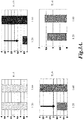
- BNZ- ⁇ suppresses IL-15 and IL-9 induced cellular proliferation, but not IL-2 or IL-4 induced cellular proliferation. See Figure 3A and Example 2. Applicants further demonstrated that BNZ- ⁇ inhibits IL-15 mediated phosphorylation of the intracellular cytokine signal transduction molecule, STAT-5. See Figure 3C and Example 5. These results demonstrate that custom peptide derivatives of the conserved ⁇ c-box motif can inhibit the activity of multiple ⁇ c-cytokines.
- Custom peptide derivatives of the 19-mer BNZ- ⁇ amino acid sequence include any peptide whose partial amino acid sequence shows approximately 50%, 50-60%, 60-70%, 70-80%, 80%, 90%, 95%, 97%, 98%, 99% or 99.8% identity to amino acid sequence: I-K-E-F-L-Q-R-F-I-H-I-V-Q-S-I-I-N-T-S (SEQ ID NO: 1).
- Custom peptide derivatives further include any peptide wherein a partial amino acid sequence of that peptide derivative comprises amino acids with similar physico-chemical properties to the amino acids of sequence: I-K-E-F-L-Q-R-F-I-H-I-V-Q-S-I-I-N-T-S (SEQ ID NO: 1).
- the amino acid residues of the custom derivative peptides retain similar physico-chemical properties with the amino acid residues of BNZ- ⁇ , but exhibit different biological inhibition specificity to the 6 ⁇ c-cytokine family members from that of the original 19-mer peptide.
- Peptide derivatives of BNZ- ⁇ may be 19, 20, 21, 22, 24, 25-30, 30-35, 35-40, 40-45, 45-50, or more than 50 amino acids in length.
- the custom peptide derivatives may be conjugated to the N-termini, C-termini and/or to the side residues of existing biological proteins/peptides.
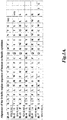
- custom peptide derivatives of the ⁇ c-box motifs of IL-5, IL-2, IL-21, IL-4, IL-9, or IL-7 which are depicted in Figure 1A .
- Other parts of this disclosure relate to custom derivative peptides which are artificial composite peptides combining the amino acid sequence of two or more of the human IL-5, IL-2, IL-21, IL-4, IL-9, and IL-7 ⁇ c-box motifs.
- custom peptide derivatives of the of the ⁇ c-box motifs of IL-5, IL-2, IL-21, IL-4, IL-9, or IL-7 having a partial amino acid 15sequence that shows approximately 50%, 50-60%, 60-70%, 70-80%, 80%, 90%, 95%, 97%, 98%, 99% or 99.8% identity to amino acid sequences of the of the ⁇ c-box motifs of IL-5, IL-2, IL-21, IL-4, IL-9, or IL-7.
- Custom peptide derivatives of the of the ⁇ c-box motifs of IL-5, IL-2, IL-21, IL-4, IL-9, or IL-7 further include any peptide wherein a partial amino acid sequence of that peptide derivative comprises amino acids with similar physico-chemical properties to the amino acids of sequence of the ⁇ c-box motifs of IL-5, IL-2, IL-21, IL-4, IL-9, or IL-7.
- custom peptide derivatives that would inhibit the function of one, all, or selective members of the ⁇ c-cytokines.
- the custom peptide derivatives selectively target individual ⁇ c-cytokine family members.
- a custom peptide derivative can selectively inhibit the function of IL-2, IL-4, IL-7, IL-9, IL-15, or IL-21.
- a custom peptide derivative can inhibit 2 or more ⁇ c-cytokine family members.
- the custom peptide derivatives of the present disclosure can selectively inhibit the function of IL-2 in combination with one or more of IL-4, IL-7, IL-9, IL-15, and IL-21; IL-4 in combination with one or more of IL-7, IL-9, IL-15, and IL-21; IL-7 in combination with one or more of IL-9, IL-15, and IL-21; IL-9 in combination with one or more of IL-2, IL-4, IL-7, IL-15, and IL-21; IL-15 in combination with one or more of IL-2, IL-4, IL-7, IL-9, and IL-21; or IL-21 in combination with one or more of IL-2, IL-4, IL-7, IL-9, and IL-15.
- custom peptide derivatives can comprehensively target all ⁇ c-cytokine family members.
- the custom peptide derivatives can inhibit the function of all or selective members of the ⁇ c-cytokines by diminishing the binding of ⁇ c-cytokines to the ⁇ c-subunit, for example, as a competitive inhibitor.
- Such custom peptide derivatives may be used in diverse applications, including as a clinical drug.
- oligopeptide polypeptide
- peptide protein
- linker elements can be joined to the peptides of the present embodiments through peptide bonds or via chemical bonds.
- the peptides of the present embodiments may be linear or cyclic, and may include (D) as well as (L) amino acids.
- Peptides of the present embodiments may also contain one or more rare amino acids (such as 4-hydroxyproline or hydroxylysine), organic acids or amides and/or derivatives of common amino acids, such as amino acids having the C-terminal carboxylate esterified (e.g., benzyl, methyl or ethyl ester) or amidated and/or having modifications of the N-terminal amino group (e.g., acetylation or alkoxycarbonylamino), with or without any of a wide variety of side chain modifications and/or substitutions (e.g., methylation, benzylation, t-butylation, tosylation, alkoxycarbonylamino, and the like).
- rare amino acids such as 4-hydroxyproline or hydroxylysine
- organic acids or amides and/or derivatives of common amino acids such as amino acids having the C-terminal carboxylate esterified (e.g., benzyl, methyl or ethyl ester) or amid
- Residues other than common amino acids include, but are not limited to, penicillamine, tetramethylene cysteine, pentamethylene cysteine, mercaptopropionic acid, pentamethylene-mercaptopropionic acid, 2-mercaptobenzene, 2-mercaptoaniline, 2-mercaptoproline, ornithine, diaminobutyric acid, aminoadipic acid, m-aminomethylbenzoic acid, and diaminopropionic acid.
- Peptides of the present embodiments can be produced and obtained by various methods known to those skilled in the art.
- the peptide may be produced by genetic engineering, based on the nucleotide sequence coding for the peptide of the present embodiments, or chemically synthesized by means of peptide solid-phase synthesis and the like, or produced and obtained in their combination.
- One skilled in the art can synthesize the custom peptide derivatives based on the present disclosure of the conserved ⁇ c-box motif and knowledge of the biochemical properties of amino acids as described in Figure 2 .
- Some embodiments also relate to polynucleotides comprising nucleotide sequences encoding the peptides of the present invention.
- Nucleotide sequence can be used interchangeably, and are understood to mean either double-stranded DNA, a single-stranded DNA or products of transcription of the said DNAs (e.g., RNA molecules).
- Polynucleotides can be administered to cells or subjects and expressed by the cells or subjects, rather than administering the peptides themselves.
- Genetic constructs comprising a polynucleotide sequence encoding the peptides of the present invention. Genetic constructs can also contain additional regulatory elements such as promoters and enhancers and, optionally, selectable markers.
- ⁇ c-antagonist peptides in the treatment of ⁇ c-cytokine mediated diseases.
- Use of custom peptide derivative according to the present embodiments allows for flexibility in the design of the therapeutic agent (custom design of the peptide) and enables more comprehensive outcomes, which would not be accomplished by conventional strategies employing anti-cytokine or anti-cytokine receptor antibodies.
- Described herein is a novel method of blocking the action of ⁇ c-family cytokines.
- Such manipulations can yield effective methods of clinical interventions in treating diseases related to the dysregulation or dysfunction of ⁇ c-cytokines.
- diseases that may be treated by disrupting the interaction between the ⁇ c-cytokine and the ⁇ c-subunit include autoimmune diseases such as systemic lupus erythematosis, Sjoegren's syndrome, Wegener's granulomatosis Celiac disease, Hashimoto's or auto-immune thyroiditis; collagen diseases including rheumatoid arthritis, inflammatory bowel disease, diabetes mellitus, autoimmune diseases of the skin such as psoriasis; degenerative neuronal diseases such as multiple sclerosis, uvietis or inflammation of the eye and sympathetic ophthalmia, graft-versus-host disease (GvHD) and myasthenia gravis.
- autoimmune diseases such as systemic lupus erythe
- the ⁇ c-antagonist peptides described herein may be used in the treatment of 1- Human T-cell Lymphotropic type I and II (HTLV-I and HTLV-II)-associated diseases including Adult T-cell Leukemia (ATL), HTLV-associated Myelopathy/Tropical Spastic Paraparesis (HAM/TSP), and other non-neoplastic inflammatory diseases associated with HTLV such as uveitis (HU), arthropathy, pneumopathy, dermatitis, exocrinopathy and myositis.
- the ⁇ c-antagonist peptides described herein may be used in the treatment of other viral diseases such as influenza, AIDS, HBV and Herpes or parasitic diseases.
- the ⁇ c-antagonist peptides may be administered before, during, and or after transplantation of various organs as an immunosuppressant agent.
- the ⁇ c-antagonist peptides described herein may be used in the treatment of immune-mediated diseases such as asthma and other inflammatory respiratory diseases, such as, but not limited to sinusitis, hay fever, bronchitis, chronic obstructive pulmonary disease (COPD), allergic rhinitis, acute and chronic otitis, lung fibrosis.
- ⁇ c-antagonist peptides may be administered to treat or prevent allergic reactions due to exposure to allergens, chemical agents or other common causes of acute respiratory disease.
- ⁇ c-antagonist peptides may be administered to treat or prevent inflammatory responses caused by viruses, bacteria, chemical reagents, and biochemical reagents.
- the ⁇ c-antagonist peptides may be administered to treat some types of malignancies such as LGL-leukemia, Intraepithelial lymphoma and leukemia in Refractory Celiac Disease, NK leukemia/lymphoma and NK-T leukemia/lymphoma
- custom peptide derivatives according to the present disclosure can be used for cosmetic purposes, such as the treatment of acne, hair loss, sunburn and nail maintenance, included to ointment as anti-aging component because of the anti-inflammatory nature of them.
- therapeutic antagonist peptides that would inhibit the function of all or selective members of the ⁇ c-cytokines.
- therapeutic antagonist peptides selectively inhibit individual ⁇ c-cytokine family members (custom peptides).
- therapeutic antagonist peptides can comprehensively inhibit all ⁇ c-cytokine family members (Simul-Block).
- therapeutic antagonist peptides selectively inhibit subsets of the ⁇ c-cytokines.
- the peptide antagonists can inhibit the function of all or selective members of the ⁇ c-cytokines by diminishing the binding of ⁇ c-cytokines to the ⁇ c-subunit, for example, as a competitive inhibitor.
- IL-2 IL-2
- IL-7 IL-15
- IL-4 graft versus host disease
- One embodiment relates to the use of therapeutic antagonist peptides that selectively inhibit IL-2, IL-7, and IL-15 activity for the treatment of GvHD in humans, allowing survival of the grafted tissues or bone marrow cells.
- Other embodiments relate to the use of therapeutic antagonist peptides that selectively inhibit a combination of IL-2 and IL-7, IL-2, and IL-15, or IL-7 and IL-15 to treat GvHD.
- Other embodiments relate to the use of a combination of therapeutic antagonist peptides that selectively inhibit IL-2, IL-7, or IL-15.
- Some embodiments relate to the use of therapeutic antagonist peptides that selectively inhibit IL-2 function for the treatment of autoimmune disorders where T-regs have been implicated as playing a role.
- peptide-mediated inhibition of T-regs can enhance the natural anti-cancer immunity in humans, providing a novel means of anti-cancer therapy.
- Several embodiments relate to the use of therapeutic antagonist peptides that selectively inhibit IL-4 to treat asthma.
- Some embodiments relate to the use of therapeutic antagonist peptides that selectively inhibit IL-7 either alone or in combination with therapeutic antagonist peptides that selectively inhibit the ⁇ c-cytokine family member, IL-15, as a therapeutic agent for LGL leukemia.
- therapeutic antagonist peptides that selectively inhibit both IL-7 and IL-15 activity can be used to treat LGL leukemia.
- BNZ- ⁇ to treat LGL leukemia.
- specific ⁇ c-antagonist peptides that selectively IL-15 alone or specific ⁇ c-antagonist peptides that selectively IL-15 and IL-7 are used as a therapeutic agent for CD4/CD8 T lymphocyte-associated leukemia including that caused by the HTLV-I.
- ⁇ c-antagonist peptides that selectively inhibit the activity of IL-9, either alone or in combination with the other ⁇ c-cytokine family members, as a therapeutic agent for human diseases that involve the abnormal development of Th17 cells.
- IL-15 in addition to IL-15, may play a role in CD pathogenesis.
- IL-21 in addition to IL-15, may play a role in CD pathogenesis.
- custom derivative antagonist peptides that selectively inhibit both IL-15 and IL-21 activity are used as a therapeutic agent for treating CD.
- ⁇ c-antagonist peptides have applications in consumer products as well.
- Several embodiments relate to the use of ⁇ c-antagonist peptides in skin care products such as anti-aging, anti-inflammatory, anti-acne, and other related applications.
- Some embodiments relate to the use of ⁇ c-antagonist peptides in hair products as anti-hair loss ingredient to treat hair loss caused by autoimmune disorders.
- Another parts of this disclosure relates to the development of chemical 5compounds (non-peptide, non-protein) that have a spatial structure which resembles the 19-mer amino acid sequence I-K-E-F-L-Q-R-F-I-H-I-V-Q-S-I-I-N-T-S (SEQ ID NO: 1) and can fit into the pocket of the ⁇ c-subunit to structurally hinder the access of a ⁇ c-cytokine to the ⁇ c-subunit for binding.
- Some embodiments relate to the use of structurally similar chemical compounds as inhibitors of yc-cytokine activity.
- peptide of amino acid sequence I-K-E-F-L-Q-R-F-I-H-I-V-Q-S-I-I-N-T-S (SEQ ID NO: 1) to treat ⁇ c-cytokine-mediated diseases.
- Another part of this disclosure relates to the administration of derivative peptides of amino acid sequence I-K-E-F-L-Q-R-F-I-H-I-V-Q-S-I-I-N-T-S (SEQ ID NO: 1), wherein the amino acid sequence of the derivative peptide has similar physico-chemical properties as a peptide of the amino acid sequence I-K-E-F-L-Q-R-F-I-H-I-V-Q-S-I-I-N-T-S (SEQ ID NO: 1), but has distinct biological activity, to treat ⁇ c-cytokine-mediated diseases.
- Another part of this disclosure relates to administration of a peptide of amino acid sequence I-K-E-F-L-Q-R-F-I-H-I-V-Q-S-I-I-N-T-S (SEQ ID NO: 1) conjugated to the N- and C-termini or to the side residues of existing biological proteins/peptides into patients to treat ⁇ c-cytokine-mediated diseases.
- Several parts of this disclosure relate to administration of polyclonal and monoclonal antibodies raised against a peptide comprising of amino acid sequence I-K-E-F-L-Q-R-F-I-H-I-V-Q-S-I-I-N-T-S (SEQ ID NO: 1) into patients as an immunogen to treat ⁇ c-cytokine-mediated diseases.
- Another part of this disclosure relates to administration of polyclonal and monoclonal antibodies that were raised against derivative peptides of amino acid sequence I-K-E-F-L-Q-R-F-I-H-I-V-Q-S-I-I-N-T-S (SEQ ID NO: 1) wherein the amino acid sequence of the derivative peptide has similar physico-chemical properties as a peptide of the amino acid sequence I-K-E-F-L-Q-R-F-I-H-I-V-Q-S-I-I-N-T-S (SEQ ID NO: 1), but has distinct biological activity, into patients as an immunogen to treat ⁇ c-cytokine-mediated diseases.
- the present embodiments also encompass the use of yc-antagonist peptides for the manufacture of a medicament for the treatment of a disease.
- the present embodiments also encompass a pharmaceutical composition that includes ⁇ c-antagonist peptides in combination with a pharmaceutically acceptable carrier.
- the pharmaceutical composition can include a pharmaceutically acceptable carrier and a non-toxic therapeutically effective amount of yc-antagonist peptides, or other compositions of the present embodiments.
- the present embodiments provide methods of using pharmaceutical compositions comprising an effective amount of antagonists for ⁇ c-cytokines in a suitable diluent or carrier.
- a ⁇ c-antagonist of the present embodiments can be formulated according to known methods used to prepare pharmaceutically useful compositions.
- a ⁇ c-antagonist can be combined in admixture, either as the sole active material or with other known active materials, with pharmaceutically suitable diluents (e.g., phosphate, acetate, Tris-HCl), preservatives (e.g., thimerosal, benzyl alcohol, parabens), emulsifying compounds, solubilizers, adjuvants, and/or carriers such as bovine serum albumin.
- pharmaceutically suitable diluents e.g., phosphate, acetate, Tris-HCl
- preservatives e.g., thimerosal, benzyl alcohol, parabens
- emulsifying compounds
- compositions can contain a ⁇ c-antagonist complexed with polyethylene glycol (PEG), metal ions, or incorporated into polymeric compounds such as polyacetic acid, polyglycolic acid, hydrogels etc., or incorporated into liposomes, microemulsions, micelles, unilamellar or multilamellar vesicles, erythrocyte ghosts, or spheroblasts.
- PEG polyethylene glycol
- metal ions or incorporated into polymeric compounds such as polyacetic acid, polyglycolic acid, hydrogels etc.
- liposomes such as polyacetic acid, polyglycolic acid, hydrogels etc.
- Such compositions will influence the physical state, solubility, stability, rate of in vivo release, and rate of in vivo clearance or a ⁇ c-antagonist.
- a ⁇ c-antagonist can be conjugated to antibodies against cell-specific antigens, receptors, ligands, or coupled to ligands for tissue
- Methods of administrating ⁇ c-antagonists of the present embodiments may be selected as appropriate, depending on factors, such as the type of diseases, the condition of subjects, and/or the site to be targeted.
- the ⁇ c-antagonists can be administered topically, orally, parenterally, rectally, or by inhalation.
- parenteral includes subcutaneous injections, intravenous, intramuscular, intraperitoneal, intracisternal injection, or infusion techniques. These compositions will typically include an effective amount of a ⁇ c-antagonist, alone or in combination with an effective amount of any other active material.
- the amount of the peptide contained in pharmaceutical compositions of the present embodiments, dosage form of the pharmaceutical compositions, frequency of administration, and the like may be selected as appropriate, depending on factors, such as the type of diseases, the condition of subjects, and/or the site to be targeted. Such dosages and desired drug concentrations contained in the compositions may vary affected by many parameters, including the intended use, patient's body weight and age, and the route of administration. Pilot studies will first be conducted using animal studies and the scaling to human administration will be performed according to art-accepted practice.
- host cells that have been genetically modified with a polynucleotide encoding at least one ⁇ c-antagonist peptide are administered to a subject to treat a proliferation disorder and/or to reduce the growth of malignant cells.
- the polynucleotide is expressed by the host cells, thereby producing the peptides within the subject.
- the host cells are allogeneic or autogeneic to the subject.
- ⁇ c-antagonist peptides can be used in combination with other therapies, for example, therapies inhibiting cancer cell proliferation and growth.
- the phrase "combination therapy" embraces the administration of ⁇ c-antagonist peptides and an additional therapeutic agent as part of a specific treatment regimen intended to provide a beneficial effect from the co-action of these therapeutic agents. Administration of these therapeutic agents in combination typically is carried out over a defined time period (usually minutes, hours, days or weeks depending upon the combination selected).
- a combination therapy is intended to embrace administration of these therapeutic agents in a sequential manner, that is, wherein each therapeutic agent is administered at a different time, as well as administration of these therapeutic agents, or at least two of the therapeutic agents, in a substantially simultaneous manner.
- Substantially simultaneous administration can be accomplished, for example, by administering to the subject a single capsule having a fixed ratio of each therapeutic agent or in multiple, single capsules for each of the therapeutic agents.
- Sequential or substantially simultaneous administration of each therapeutic agent can be effected by an appropriate route including, but not limited to, oral routes, intravenous routes, intramuscular routes, and direct absorption through mucous membrane tissues.
- There therapeutic agents can be administered by the same route or by different routes. The sequence in which the therapeutic agents are administered is not narrowly critical.
- Combination therapy also can embrace the administration of the therapeutic agents as described above in further combination with other biologically active ingredients (such as, but not limited to, a second and different therapeutic agent) and non-drug therapies (such as, but not limited to, surgery or radiation treatment).
- the combination therapy further comprises radiation treatment
- the radiation treatment may be conducted at any suitable time so long as a beneficial effect from the co-action of the combination of the therapeutic agents and radiation treatment is achieved. For example, in appropriate cases, the beneficial effect is still achieved when the radiation treatment is temporarily removed from the administration of the therapeutic agents, perhaps by days or even weeks.
- ⁇ c-antagonist peptides can be administered in combination with at least one anti-proliferative agent selected from the group consisting of chemotherapeutic agent, an antimetabolite, and antitumorgenic agent, and antimitotic agent, and antiviral agent, and antineoplastic agent, an immunotherapeutic agent, and a radiotherapeutic agent.
- at least one anti-proliferative agent selected from the group consisting of chemotherapeutic agent, an antimetabolite, and antitumorgenic agent, and antimitotic agent, and antiviral agent, and antineoplastic agent, an immunotherapeutic agent, and a radiotherapeutic agent.
- ⁇ c-antagonist peptides can be administered in combination with at least one anti-inflammatory agent selected from the group consisting of steroids, corticosteroids, and nonsteroidal anti-inflammatory drugs.
- Kits may include a ⁇ c-antagonist according to the present embodiments.
- the kit may include instructions. Instructions may be in written or pictograph form, or may be on recorded media including audio tape, audio CD, video tape, DVD, CD-ROM, or the like.
- the kits may comprise packaging.
- the term "patient” refers to the recipient of a therapeutic treatment and includes all organisms within the kingdom animalia.
- the animal is within the family of mammals, such as humans, bovine, ovine, porcine, feline, buffalo, canine, goat, equine, donkey, deer, and primates. The most preferred animal is human.
- the term "treat” or any variation thereof refers to any treatment of a patient diagnosed with a biological condition, such as CD4-, CD8-, and LGL-leukemia, an autoimmune disease, systemic lupus erythematosis, Sjoegren's syndrome, Wegener's granulomatosis, Celiac disease, Hashimoto's thyroiditis, a collagen disease, rheumatoid arthritis, inflammatory bowel disease, diabetes mellitus, psoriasis, a degenerative neuronal disease, multiple sclerosis, uvietis, inflammation of the eye, graft-versus-host disease (GvHD), myasthenia gravis, 1- Human T-cell Lymphotropic type I and II (HTLV-I and HTLV-II)-associated diseases, Adult T-cell Leukemia (ATL), HTLV-associated Myelopathy/Tropical Spastic Para
- a biological condition such as CD4-, CD8-, and LGL-
- treat includes: (i) preventing or delaying the presentation of symptoms associated with the biological condition of interest in an at-risk patient who has yet to display symptoms associated with the biological condition; (ii) ameliorating the symptoms associated with the biological condition of interest in a patient diagnosed with the biological condition; (iii) preventing, delaying, or ameliorating the presentation of symptoms associated with complications, conditions, or diseases associated with the biological condition of interest in either an at-risk patient or a patient diagnosed with the biological condition; (iv) slowing, delaying or halting the progression of the biological condition; and/or (v) preventing, delaying, slowing, halting or ameliorating the cellular events of inflammation.
- symptom(s) refers to common signs or indications that a patient is suffering from a specific condition or disease.
- an effective amount of a ⁇ c-antagonist refers to the amount necessary to elicit the desired biological response.
- an effective amount of a ⁇ c-antagonist is the amount necessary to provide an observable effect in at least one biological factor for use in treating a biological condition.
- Recombinant DNA technology refers to the use of techniques and processes for producing specific polypeptides from microbial (e.g., bacterial, yeast), invertebrate (insect), mammalian cells or organisms (e.g., transgenic animals or plants) that have been transformed or transfected with cloned or synthetic DNA sequences to enable biosynthesis of heterologous peptides.
- microbial e.g., bacterial, yeast
- invertebrate invertebrate
- mammalian cells or organisms e.g., transgenic animals or plants
- Native glycosylation pattern will only be achieved with mammalian cell expression system.
- Prokaryotic expression systems lack the ability to add glycosylation to the synthesized proteins.
- Yeast and insect cells provide a unique glycosylation pattern that may be different from the native pattern.
- Nucleotide sequence refers to a polynucleotide in the form of a separate fragment or as a component of a larger DNA construct that has been derived from DNA or RNA isolated at least once in substantially pure form, free of contaminating endogenous materials and in a quantity or concentration enabling identification, manipulation, and recovery of its component nucleotide sequences by standard molecular biology methods (as outlined in Current Protocols in Molecular Biology).
- Recombinant expression vector refers to a plasmid comprising a transcriptional unit containing an assembly of (1) a genetic clement or elements that have a regulatory role in gene expression including promoters and enhances, (2) a structure or coding sequence that encodes the polypeptide according to the present embodiments, and (3) appropriate transcription and translation initiation sequence and, if desired, termination sequences.
- Structural elements intended for use in yeast and mammalian system preferably include a signal sequence enabling extracellular secretion of translated polypeptides by yeast or mammalian host cells.
- Recombinant microbial expression system refers to a substantially homogenous monoculture of suitable hot microorganisms, for example, bacteria such as E. coli, or yeast such as S. cerevisiae, that have stably integrated a recombinant transcriptional unit into chromosomal DNA or carry the recombinant transcriptional unit as a component of a residual plasmid.
- suitable hot microorganisms for example, bacteria such as E. coli, or yeast such as S. cerevisiae
- host cells constituting a recombinant microbial expression system are the progeny of a single ancestral transformed cell.
- Recombinant microbial expression systems will express heterologous polypeptides upon induction of the regulatory elements linked to a structural nucleotide sequence to be expressed.
- any custom derivative peptide prepared according to the present embodiments for inhibiting the action of one ⁇ c-cytokine family member is determined using mammalian cellular assays to measure their proliferative response to the ⁇ c-cytokine family member.
- indicator cell lines CTLL-2, a murine CD8 T cells line available from American Type Culture Collection, and PT-18, a murine mast cell line and its subclone PT-18 ⁇ , is transfected with human IL-2R ⁇ gene to make the cells responsive to IL-2 and IL-15 ( Tagaya et al., 1996, EMBO J. 15:4928-39 ), and is used to quantitatively determine the ⁇ c-cytokine's growth-promoting activity (See Current protocols in Immunology from Wiley and Sons for a methodological reference).
- the indicator cells demonstrate semi-linear dose-dependent response when measured by a colorimetric WST-1 assay over a range of concentrations (See Clontech PT3946-1 and associated user manual, , for a detailed description of the reagents and methods).
- various concentrations ranging from 1 pM to 10 ⁇ M
- the reduction in light absorbance at 450nm is used as an indicator of inhibition of cytokine-stimulated cellular proliferation.
- the cells are stimulated by the cytokines such that the absorbance of the well containing indicator cell line and the cytokine is between 2.0 and 3.0, which is reduced to a range of 0.1 to 0.5 by the addition of inhibitory peptides.
- BNZ- ⁇ Peptide Specifically Inhibits the Growth-Promoting Activities of IL-9 and IL-15
- PT-18 ⁇ cells were incubated either with two different dilutions of BNZ- ⁇ peptide produced by HEK293T cells (1:20 or 1:50 dilution of the original supernatant of HEK293T cells transfected with a BNZ- ⁇ expression construct) or without BNZ- ⁇ peptide in the presence of IL-3, IL-9, IL-15, or IL-4 (1 nM of each cytokine in the culture).
- the growth-responses of the cells were determined 2 days after the introduction of BNZ- ⁇ peptide and the cytokine using the WST-1 assay.
- the murine cell line CTTL2 was used.
- the cells were cultured with 0.5 nM of recombinant IL-2 in RPMI 10% fetal Calf Serum.
- RPMI 10% fetal Calf Serum To set up the proliferation assay, cells were washed from the cytokines 3 times. Cells were seeded at 1 x 10(5) cells per well of a 96-well plate with final concentration of 50 pM of IL-2 or IL-15. Various concentration of BNZ- ⁇ peptide (0.1, 1, and 10 ug/ml) was added to each well. Cells were cultured for 20 hours and in the last 4 hours, 3 H-thymidine was added to the plates. Cells were harvested using a plate reader. The data is shown in Figure 3B .
- Inhibition of ⁇ c-cytokine-induced proliferation of an indicator cell population by antagonist custom derivative peptides is measured by the 3 H-thymidine incorporation assay. Briefly, radiolabeled thymidine (1 microCi) is given to 20-50,000 cells undergoing proliferation in the presence of cytokines. The cell-incorporated radioactivity is measured by trapping cell-bound radioactivity to a glass-fiber filter using a conventional harvester machines (Example, Filtermate Universal Harvester from Perkin-Elmer), after which the radioactivity is measured using a b-counter (Example 1450, Trilux microplate scintillation counter).
- a conventional harvester machines Example, Filtermate Universal Harvester from Perkin-Elmer
- Indicator cells are incubated in the presence of a selected ⁇ c-cytokine or in the presence of a selected ⁇ c-cytokine and a selected custom derivative peptide.
- the cell population is then labeled in vitro using a cell-tracker dye, for example, CMFDA, C2925 from Invitrogen, and the decay of cellular green fluorescence at each cellular division is monitored using a flow-cytometer (for example, Beckton-Dickinson FACScalibur).
- a cell-tracker dye for example, CMFDA, C2925 from Invitrogen
- a flow-cytometer for example, Beckton-Dickinson FACScalibur
- 7 ⁇ 10 different peaks corresponding to the number of divisions that the cells have undergone will appear on the green fluorescence channel.
- Incubation of the cells with the selected yc-cytokine and antagonist custom derivative peptide reduces the number of peaks to only 1 to 3, depending on the degree of the inhibition.
- This kinase phosphorylates the tyrosine residues of multiple proteins including the ⁇ c-subunit, STAT5 (Signal Transducer and Activator of Transcription 5) and subunits of the PI3 (Phosphatidylinositol 3) kinase.
- STAT5 Signal Transducer and Activator of Transcription 5
- PI3 Phosphatidylinositol 3
- PT-18 ⁇ cells were stimulated by IL-15 in the presence or absence of BNZ- ⁇ peptide.
- Cytoplasmic proteins were extracted from the cells according to a conventional method as described in Tagaya et al. 1996 EMBO J. 15:4928-39 . The extracted cytoplasmic proteins were resolved using a standard SDS-PAGE (Sodium Dodecyl-Sulfate PolyAcrylamide Gel Electrophoresis) and the phorphorylation status was confirmed by an anti-phospho-STAT5 antibody (Cell Signaling Technology, Catalog # 9354, Danvers MA) using immunoblotting (see Figure 3C , top panel). To confirm that each lane represented a similar total protein load, the membrane was then stripped, and re-probed with an anti-STAT5 antibody (Cell Signaling Technology, Catalog # 9358) (see Figure 3C , bottom panel).
- Derivative peptides are prepared based from the core sequence D/E-F-L-E/Q/N-S/R-X-I/K-X-L/I-X-Q (SEQ ID NO: 2) (where X denotes any amino acid) by substituting the defined amino acids of the core sequence with amino acids having identical physico-chemical properties as designated in Figure 2 .
- the yc-cytokine inhibitory specificity of antagonistic custom derivative peptides is determined by assaying the ability of a custom derivative peptide to inhibit the proliferative response of a cytokine-responsive cell line to each of the 6 ⁇ c-cytokines.
- a mouse cell line, CTLL-2 is used to determine if a candidate peptide inhibits the function of IL-2 and IL-15.
- PT-18( ⁇ ) cells are used to determine if a candidate peptide inhibits the function of IL-4 and IL-9.
- PT-18 (7 ⁇ ) cells are used to determine if a candidate peptide inhibits the function of IL-7
- PT-18(21 ⁇ ) cells are used to determine if a candidate peptide inhibits the function of IL-21.
- PT-18( ⁇ ) denotes a subclone of PT-18 cells that exogenously express human IL-2R ⁇ by gene transfection (See Tagaya et al. 1996)
- PT-18(7 ⁇ ) denotes a subclone that expresses human IL-7R ⁇ by gene transfection
- PT-18(21R ⁇ ) cells express human IL-21R ⁇ .
- Another alternative is to use other cell lines that respond to an array of cytokines.
- This cell line is an IL-2 dependent cell line that responds to other cytokines including IL-9, IL-7, IL-15, IL-12, IL-18, IL-21 ( Gong et al. 1994 Leukemia 8: 652-658 ,, Kingemann et al., 1996, Biol Blood Marrow Transplant 2:68;75 , Hodge DL et al., 2002 J. Immunol. 168:9090-8 )
- Custom derivative ⁇ c-antagonist peptides are synthesized chemically by manual and automated processes.
- Automated synthesis Many commercial companies provide automated peptide synthesis for a cost. These companies use various commercial peptide synthesizers, including synthesizers provided by Applied Biosystems (ABI). Custom derivative ⁇ c-antagonist peptides are synthesized by automated peptide synthesizers.
- a custom derivative ⁇ c-antagonist peptides is synthesized biologically as a propeptide that consists of an appropriate tagging peptide, a signal peptide, or a peptide derived from a known human protein that enhances or stabilizes the structure of the BNZ- ⁇ peptide and improves its biological activity.
- an appropriate enzyme-cleavage sequence proceeding to the N-terminus of the peptide shall be designed to remove the tag or any part of the peptide from the final protein.
- a nucleotide sequence encoding the custom derivative peptide with a stop codon at the 3' end is inserted into a commercial vector with a tag portion derived from thioredoxin of E. coli and a special peptide sequence that is recognized and digested by an appropriate proteolytic enzyme (for example, enterokinase) intervening between the tag portion and the nucleotide sequence encoding the custom derivative peptide and stop codon.
- an appropriate proteolytic enzyme for example, enterokinase
- a suitable vector is the pThioHis plasmid available from Invitrogen, CA. Other expression vectors may be used.
- BNZ- ⁇ and other custom derivative peptides are used to immunize animals to obtain polyclonal and monoclonal antibodies.
- Peptides are conjugated to the N- or the C-terminus of appropriate carrier proteins (for example, bovine serum albumin, Keyhold Limpet Hemocyanin (KLH), etc.) by conventional methods using Glutaraldehyde or m-Maleimidobenzoyl-N-Hydroxysuccinimide Ester.
- the conjugated peptides in conjunction with an appropriate adjuvant are then used to immunize animals such as rabbits, rodents, or donkeys.
- the resultant antibodies are examined for specificity using conventional methods.
- the resultant antibodies react with the immunogenic peptide, they are then tested for the ability to inhibit individual ⁇ c-cytokine activity according to the cellular proliferation assays described in Examples 1-3. Due to the composite nature of the derivative peptides it is possible to generate a single antibody that recognizes two different cytokines simultaneously, because of the composite nature of these peptides.
- Recombinant proteins are produced in large scale by the use of cell-free system as described elsewhere. (See Takai et al., 2010 Curr. Pharm. Biotechnol. 11(3):272-8 .) Briefly, cDNAs encoding the ⁇ c-antagonist peptide and a tag are subcloned into an appropriate vector (See Takai et al., 2010 Curr. Pharm. Biotechnol. 11(3):272-8 ), which is subjected to in vitro transcription, followed immediately by an in vitro translation to produce the tagged peptide.
- the pro-polypeptide is then purified using an immobilized antibody recognizing the tagged epitope, treated by the proteolytic enzyme and the eluate (which mostly contains the custom derivative peptide of interest) is tested for purity using conventional 18% Tricine-SDS-PAGE (Invitrogen) and conventional comassie staining. Should the desired purity of the peptide not be met (>98%), the mixture is subjected to conventional HPLC (high-performance liquid chromatography) for further purification.
- HPLC high-performance liquid chromatography
- HTLV-1-associated myelopathy HAM/ tropical spastic paraparesis (TSP) is a chronic progressive myelopathy seen in some people infected with Human T-Lymphotropic Virus Type I (HTLV-I).
- HTLV-I Human T-Lymphotropic Virus Type I
- Infiltration of lymphocytes in the spinal cord is associated with the immune response to HTLV-I and results in the release of certain cytokines. Some of these cytokines may also damage nerves.
- HAM/TSP Patients with HAM/TSP show an elevated state of the immune system that is similar to that observed in autoimmune diseases ( Oh et al. 2008 Neurol Clin. 26:781-785 ). This elevated state is demonstrated by the ability of HAM/TSP patient's T-cells to undergo spontaneous proliferation in an ex vivo culture for about a week in the absence of exogenously added cytokines.
- the spontaneous proliferation of T-cells in HAM/TSP patients is attributed, at least partly, to autocrine/paracrine loops of IL-2, IL-9, and IL-15. It has been shown that adding blocking antibody against the IL-2 or IL-15 receptors can inhibit spontaneous T-cell proliferation in a HAM/TSP ex vivo culture system.
- Anti-cytokine receptor antagonists according to the embodiments described herein would not only be valuable as a therapeutic immuno-modulatory agent for treatment of HAM/TSP, but modulation of immune response in HAM/TSP by anti-cytokine receptor antagonists according to the present embodiments acts proof-of-concept for the use of the anti-cytokine receptor antagonists according to the present embodiments in the treatment of other auto-immune diseases.
- BNZ- ⁇ peptide to block immune response to HTLV-I in a spontaneous T-cell proliferation assay using a HAM/TSP ex vivo culture system.
- Proliferation assays were performed on HAM/TSP patient blood samples with and without the addition of BNZ- ⁇ . These assays evaluated the ability of BNZ- ⁇ to block the function of cytokines, such as IL-2 and IL-15, present in the ex vivo HAM/TSP patient blood culture and prevent spontaneous T-cell proliferation in these samples.
- PBMC from HAM/TSP patient was cultured at 1 x 10(6) cells per well of a 96 well plate in RPMI-10% FCS. Increasing concentrations of BNZ- ⁇ peptide were added to each well. As a control, an irrelevant peptide was used in similar fashion. The cells were incubated in a 37°C CO2 incubator for 3, 4, and 6 days. The amount of 1 uCi of 3 H-thymidine was added to the cells. After an additional 6 hour incubation, cells were harvested their proliferation rate was measured. The data for a representative HAM/TSP patient is shown in Figure 4A-D . As indicated in Figure 4 , BNZ- ⁇ peptide inhibits the spontaneous proliferation of T-cells in HAM/TSP culture at a concentration of about 1 ug/ml.
- the percentage of the viral specific CD8 cells was measured during the ex vivo culture using viral protein tetramers.
- conjugated BNZ- ⁇ peptide derivative can be used in a similar future assay. They include albumin, BSA, PEG that can be conjugated to the peptide after chemical synthesis. Other biological forms of the BNZ- ⁇ peptide conjugate may include regions of known protein entities (including but not limited to Fc region of human IgG) that are fused to the BNZ- ⁇ peptide derivative.
- a human patient suffering from Adult T-cell Leukemia is identified.
- An effective dose, as determined by the physician, of custom derivative ⁇ c-antagonist peptide, for example, BNZ- ⁇ is administered to the patient for a period of time determined by the physician. Treatment is determined to be effective if patient enters remission.
- a human patient suffering from HAM/TSP is identified.
- An effective dose, as determined by the physician, of custom derivative ⁇ c-antagonist peptide, for example, BNZ- ⁇ is administered to the patient for a period of time determined by the physician.
- Treatment is determined to be effective if patient's symptoms improve or if the progression of the disease has been stopped or slowed down.
Landscapes
- Health & Medical Sciences (AREA)
- Life Sciences & Earth Sciences (AREA)
- General Health & Medical Sciences (AREA)
- Chemical & Material Sciences (AREA)
- Public Health (AREA)
- Animal Behavior & Ethology (AREA)
- Veterinary Medicine (AREA)
- Organic Chemistry (AREA)
- Engineering & Computer Science (AREA)
- Bioinformatics & Cheminformatics (AREA)
- Medicinal Chemistry (AREA)
- Pharmacology & Pharmacy (AREA)
- Chemical Kinetics & Catalysis (AREA)
- Nuclear Medicine, Radiotherapy & Molecular Imaging (AREA)
- General Chemical & Material Sciences (AREA)
- Proteomics, Peptides & Aminoacids (AREA)
- Dermatology (AREA)
- Molecular Biology (AREA)
- Immunology (AREA)
- Genetics & Genomics (AREA)
- Epidemiology (AREA)
- Zoology (AREA)
- Biochemistry (AREA)
- Biophysics (AREA)
- Biomedical Technology (AREA)
- Pulmonology (AREA)
- Gastroenterology & Hepatology (AREA)
- Neurology (AREA)
- Neurosurgery (AREA)
- Diabetes (AREA)
- Toxicology (AREA)
- Birds (AREA)
- Gerontology & Geriatric Medicine (AREA)
- General Engineering & Computer Science (AREA)
- Biotechnology (AREA)
- Wood Science & Technology (AREA)
- Rheumatology (AREA)
- Hematology (AREA)
- Endocrinology (AREA)
- Physics & Mathematics (AREA)
Priority Applications (8)
| Application Number | Priority Date | Filing Date | Title |
|---|---|---|---|
| SI201231746T SI2665486T1 (sl) | 2011-01-18 | 2012-01-17 | Sestavki za moduliranje aktivnosti gama-C-citokina |
| HRP20200470TT HRP20200470T1 (hr) | 2011-01-18 | 2012-01-17 | Pripravci za modulaciju aktivnosti gama-c-citokina |
| RS20200324A RS60050B1 (sr) | 2011-01-18 | 2012-01-17 | Kompozicije za modulaciju aktivnosti gama-c-citokina |
| DK19206731.2T DK3636274T3 (da) | 2011-01-18 | 2012-01-17 | Sammensætninger til modulering af gamma-c-cytokin-aktivitet |
| EP24188657.1A EP4461742A3 (en) | 2011-01-18 | 2012-01-17 | Compositions and methods for modulating gamma-c-cytokine activity |
| SM20200142T SMT202000142T1 (it) | 2011-01-18 | 2012-01-17 | Composizioni per modulare l'attivita' di gamma-c-citochina |
| PL12736203T PL2665486T3 (pl) | 2011-01-18 | 2012-01-17 | Kompozycje do modulowania aktywności gamma-c-cytokiny |
| EP19206731.2A EP3636274B1 (en) | 2011-01-18 | 2012-01-17 | Compositions for modulating gamma-c-cytokine activity |
Applications Claiming Priority (3)
| Application Number | Priority Date | Filing Date | Title |
|---|---|---|---|
| US201161433890P | 2011-01-18 | 2011-01-18 | |
| US201161527049P | 2011-08-24 | 2011-08-24 | |
| PCT/US2012/021566 WO2012099886A1 (en) | 2011-01-18 | 2012-01-17 | Compositions and mehthods for modulating gamma-c-cytokine activity |
Related Child Applications (3)
| Application Number | Title | Priority Date | Filing Date |
|---|---|---|---|
| EP24188657.1A Division EP4461742A3 (en) | 2011-01-18 | 2012-01-17 | Compositions and methods for modulating gamma-c-cytokine activity |
| EP19206731.2A Division EP3636274B1 (en) | 2011-01-18 | 2012-01-17 | Compositions for modulating gamma-c-cytokine activity |
| EP19206731.2A Division-Into EP3636274B1 (en) | 2011-01-18 | 2012-01-17 | Compositions for modulating gamma-c-cytokine activity |
Publications (3)
| Publication Number | Publication Date |
|---|---|
| EP2665486A1 EP2665486A1 (en) | 2013-11-27 |
| EP2665486A4 EP2665486A4 (en) | 2014-06-25 |
| EP2665486B1 true EP2665486B1 (en) | 2019-12-25 |
Family
ID=46516044
Family Applications (3)
| Application Number | Title | Priority Date | Filing Date |
|---|---|---|---|
| EP12736203.6A Active EP2665486B1 (en) | 2011-01-18 | 2012-01-17 | Compositions for modulating gamma-c-cytokine activity |
| EP19206731.2A Active EP3636274B1 (en) | 2011-01-18 | 2012-01-17 | Compositions for modulating gamma-c-cytokine activity |
| EP24188657.1A Pending EP4461742A3 (en) | 2011-01-18 | 2012-01-17 | Compositions and methods for modulating gamma-c-cytokine activity |
Family Applications After (2)
| Application Number | Title | Priority Date | Filing Date |
|---|---|---|---|
| EP19206731.2A Active EP3636274B1 (en) | 2011-01-18 | 2012-01-17 | Compositions for modulating gamma-c-cytokine activity |
| EP24188657.1A Pending EP4461742A3 (en) | 2011-01-18 | 2012-01-17 | Compositions and methods for modulating gamma-c-cytokine activity |
Country Status (19)
| Country | Link |
|---|---|
| US (10) | US9133244B2 (sr) |
| EP (3) | EP2665486B1 (sr) |
| JP (4) | JP6395379B2 (sr) |
| CN (2) | CN103501805B (sr) |
| AU (3) | AU2012207456C1 (sr) |
| BR (1) | BR112013018046B1 (sr) |
| CA (1) | CA2824515C (sr) |
| CY (1) | CY1122846T1 (sr) |
| DK (2) | DK2665486T3 (sr) |
| ES (2) | ES2989085T3 (sr) |
| FI (1) | FI3636274T3 (sr) |
| HR (1) | HRP20200470T1 (sr) |
| LT (1) | LT2665486T (sr) |
| PL (2) | PL2665486T3 (sr) |
| PT (2) | PT2665486T (sr) |
| RS (1) | RS60050B1 (sr) |
| SI (1) | SI2665486T1 (sr) |
| SM (1) | SMT202000142T1 (sr) |
| WO (1) | WO2012099886A1 (sr) |
Cited By (2)
| Publication number | Priority date | Publication date | Assignee | Title |
|---|---|---|---|---|
| US11845801B2 (en) | 2019-06-12 | 2023-12-19 | AskGene Pharma, Inc. | IL-15 prodrugs and methods of use thereof |
| US12459980B2 (en) | 2018-07-25 | 2025-11-04 | AskGene Pharma, Inc. | IL-21 prodrugs and methods of use thereof |
Families Citing this family (21)
| Publication number | Priority date | Publication date | Assignee | Title |
|---|---|---|---|---|
| SI2665486T1 (sl) | 2011-01-18 | 2020-07-31 | Bioniz, Llc | Sestavki za moduliranje aktivnosti gama-C-citokina |
| US9959384B2 (en) | 2013-12-10 | 2018-05-01 | Bioniz, Llc | Methods of developing selective peptide antagonists |
| CN104789527B (zh) * | 2015-05-15 | 2018-05-29 | 江苏杰晟生物科技有限公司 | 一种自体自然杀伤细胞鸡尾酒式培养的制备方法及其试剂盒产品 |
| PT3359556T (pt) * | 2015-10-09 | 2021-08-30 | Bioniz Llc | Modulação da atividade de citocinas gama-c |
| WO2017190684A1 (zh) * | 2016-05-06 | 2017-11-09 | 王牧林 | 白细胞介素组合及其用途 |
| EP3606940A4 (en) * | 2017-04-07 | 2020-11-18 | Bioniz, LLC | STABLE MODULATORS OF CYTOKINE GAMMA-C ACTIVITY |
| WO2020017629A1 (ja) * | 2018-07-19 | 2020-01-23 | 国立大学法人東京大学 | Htlv-1関連脊髄症(ham)治療又は予防剤、及びhamの治療方法 |
| WO2020033312A1 (en) | 2018-08-06 | 2020-02-13 | Medikine, Inc. | Il-2 receptor binding compounds |
| EP3930687A4 (en) | 2019-02-25 | 2023-06-07 | The University of Chicago | METHODS AND COMPOSITIONS FOR THE TREATMENT OF INFLAMMATORY AND AUTOIMMUNE CONDITIONS USING ECM AFFINITY PEPTIDES LINKED TO ANTI-INFLAMMATORY AGENTS |
| BR112021021878A2 (pt) * | 2019-05-03 | 2022-01-18 | Bioniz Llc | Modulação dos efeitos de sinalização da gama-c-citocina para tratamento da alopecia e distúrbios associados |
| KR102265435B1 (ko) * | 2019-08-20 | 2021-06-15 | 주식회사 케어젠 | 피부 미백 활성을 갖는 펩타이드 및 이의 용도 |
| BR112022008750A2 (pt) | 2019-11-05 | 2022-07-19 | Medikine Inc | Composto de ligação de receptor duplo, composição farmacêutica, método para tratar uma doença em um paciente, método para expandir células imunes, método para reforçar uma vacina, método para modificar a resposta imune e ácido nucleico |
| BR112022008744A2 (pt) | 2019-11-05 | 2022-07-19 | Medikine Inc | Ligante de il-2rss, ligante de il-2r¿c, composto de ligação a il-2r¿¿c, composição farmacêutica, método para tratar uma doença em um paciente, método para expandir células imunes, método de uma terapia celular, método para reforçar uma vacina, método para modificar a resposta imune e ácido nucleico |
| MX2022009302A (es) | 2020-02-03 | 2022-11-16 | Medikine Inc | Compuestos de unión a il-7r¿. |
| TW202342505A (zh) | 2020-02-03 | 2023-11-01 | 美商麥地金公司 | IL-7Rαγc結合化合物 |
| CA3174786A1 (en) | 2020-04-10 | 2021-10-14 | Sayantan Mitra | Activatable cytokine constructs and related compositions and methods |
| US20230338473A1 (en) * | 2020-06-24 | 2023-10-26 | Bioniz, Llc | Antagonistic peptide targeting il-2, il-9, and il-15 signaling for the treatment of cytokinerelease syndrome and cytokine storm associated disorders |
| WO2022054565A1 (ja) | 2020-09-08 | 2022-03-17 | デクソンファーマシューティカルズ株式会社 | サイトカインストーム抑制剤、サイトカインストーム抑制剤の使用方法およびスクリーニング方法 |
| BR112023018735A2 (pt) | 2021-03-16 | 2023-11-28 | Cytomx Therapeutics Inc | Construtos de citocinas ativáveis mascarados e composições e métodos relacionados |
| JP6974892B1 (ja) | 2021-05-27 | 2021-12-01 | デクソンファーマシューティカルズ株式会社 | 癌悪液質の改善剤および癌悪液質の改善方法 |
| US11999771B2 (en) | 2022-04-07 | 2024-06-04 | Medikine, Inc. | IL-7Rαγc ligand immunoglobulin fusion proteins |
Citations (1)
| Publication number | Priority date | Publication date | Assignee | Title |
|---|---|---|---|---|
| WO2012006585A2 (en) * | 2010-07-09 | 2012-01-12 | The Regents Of The University Of California | Use of interleukin-15 to treat cardiovascular diseases |
Family Cites Families (86)
| Publication number | Priority date | Publication date | Assignee | Title |
|---|---|---|---|---|
| US5700913A (en) | 1982-12-15 | 1997-12-23 | Ajinomoto Co., Inc. | Unglycosylated human interleukin-2 polypeptides |
| US4518584A (en) | 1983-04-15 | 1985-05-21 | Cetus Corporation | Human recombinant interleukin-2 muteins |
| IL80678A (en) | 1985-11-19 | 1999-05-09 | Schering Biotech Corp | Human interleukin-4 |
| US6028186A (en) | 1991-06-10 | 2000-02-22 | Nexstar Pharmaceuticals, Inc. | High affinity nucleic acid ligands of cytokines |
| US7008624B1 (en) | 1995-02-22 | 2006-03-07 | Immunex Corporation | Antagonists of interleukin-15 |
| US5795966A (en) | 1995-02-22 | 1998-08-18 | Immunex Corp | Antagonists of interleukin-15 |
| ZA967182B (en) | 1995-08-24 | 1998-05-25 | Magainin Pharma | Asthma associated factors as targets for treating atopic allergies including asthma and related disorders. |
| IL130238A0 (en) | 1999-06-01 | 2000-06-01 | Peptor Ltd | Conformationally constrained backbone cyclized interleukin-6 antagonists |
| WO1997043416A1 (en) | 1996-05-10 | 1997-11-20 | Biogen, Inc. | Common gamma chain blocking agents |
| US6127387A (en) | 1996-12-10 | 2000-10-03 | Thomas Jefferson University | Use of CD4-binding small molecules to inhibit immune responses |
| CA2296770A1 (en) * | 1997-07-14 | 1999-01-28 | Bolder Biotechnology, Inc. | Derivatives of growth hormone and related proteins |
| US7198789B2 (en) | 1998-03-17 | 2007-04-03 | Genetics Institute, Llc | Methods and compositions for modulating interleukin-21 receptor activity |
| US7189400B2 (en) | 1998-03-17 | 2007-03-13 | Genetics Institute, Llc | Methods of treatment with antagonists of MU-1 |
| US6861227B2 (en) | 1998-03-19 | 2005-03-01 | Human Genome Sciences, Inc. | Antibodies to cytokine receptor common gamma chain like |
| US6955807B1 (en) | 1998-05-15 | 2005-10-18 | Bayer Pharmaceuticals Corporation | IL-2 selective agonists and antagonists |
| EP0972780A1 (en) * | 1998-05-18 | 2000-01-19 | Applied Research Systems ARS Holding N.V. | Il-6 antagonist peptides |
| US6307024B1 (en) | 1999-03-09 | 2001-10-23 | Zymogenetics, Inc. | Cytokine zalpha11 Ligand |
| US7192713B1 (en) | 1999-05-18 | 2007-03-20 | President And Fellows Of Harvard College | Stabilized compounds having secondary structure motifs |
| RU2270691C2 (ru) | 2000-05-12 | 2006-02-27 | Бет Израел Диконесс Медикал Сентер, Инк. | Композиции и способы достижения иммунной супрессии |
| MXPA03002278A (es) * | 2000-09-14 | 2004-12-03 | Beth Israel Hospital | Modulacion de respuestas de la celula t mediadas por il-2 e il-15. |
| MXPA03003407A (es) * | 2000-10-18 | 2004-05-04 | Immunex Corp | Metodos para el tratamiento de artritis reumatoide usando antagonistas il-17. |
| US20040126900A1 (en) | 2001-04-13 | 2004-07-01 | Barry Stephen E | High affinity peptide- containing nanoparticles |
| JP2005502621A (ja) | 2001-07-06 | 2005-01-27 | スキャンポ アーゲー | インターロイキン2阻害剤および抗菌剤を含む局所投与用組成物 |
| AU2002356858A1 (en) | 2001-10-24 | 2003-05-06 | National Jewish Medical And Research Center | Structure of tall-1 and its cognate receptor |
| AU2002336676A1 (en) * | 2001-11-05 | 2003-05-19 | Zymogenetics, Inc | Il-21 antagonists |
| ATE547430T1 (de) | 2002-01-18 | 2012-03-15 | Zymogenetics Inc | Multimere des cytokinrezeptors zcytor17 |
| EP1589990B1 (en) | 2002-03-27 | 2012-11-14 | The Government of the United States of America, represented by The Secretary Department of Health and Human services | Il-21 for use in treating cancer |
| WO2003087320A2 (en) * | 2002-04-09 | 2003-10-23 | Beth Israel Deaconess Medical Center, Inc. | Antagonists of il-21 and modulation of il-21-mediated t cell responses |
| AU2003243189B2 (en) | 2002-05-01 | 2008-01-24 | Regeneron Pharmaceuticals, Inc. | Methods of using cytokine antagonists to treat HIV infection and AIDS |
| AU2003243415A1 (en) * | 2002-06-07 | 2003-12-22 | Zymogenetics, Inc. | Use of il-21 in cancer and other therapeutic applications |
| JP2005535636A (ja) | 2002-06-28 | 2005-11-24 | アメリカ合衆国 | インターフェロンβおよびIL−2Rアンタゴニストを用いて自己免疫疾患を治療する方法 |
| WO2004003156A2 (en) | 2002-07-01 | 2004-01-08 | The Government Of The United States Of America As Represented By The Secretary Of The Department Of Health And Human Services | Il-21 as a regulator of immunoglobin production |
| MXPA05000655A (es) | 2002-07-15 | 2006-02-22 | Harvard College | Metodos y composiciones para modular el desarrollo y la funcion de las celulas t helper (th). |
| EP1554307A2 (de) * | 2002-10-14 | 2005-07-20 | F. Hoffmann-La Roche Ag | Il-15 antagonisten |
| EP1444989A1 (en) | 2003-02-07 | 2004-08-11 | Giorgio Dr. Stassi | Sensitizing cells for apoptosis by selectively blocking cytokines |
| WO2004084835A2 (en) | 2003-03-21 | 2004-10-07 | Wyeth | Treating immunological disorder using agonists of interleukin-21/ interleukin-21 receptor |
| WO2004103295A2 (en) * | 2003-05-14 | 2004-12-02 | Bayer Pharmaceuticals Corporation | Interleukin-9 antagonist muteins and their pharmacological methods of use |
| US20050124044A1 (en) | 2003-06-19 | 2005-06-09 | Cunningham Mark R. | Interleukin-21 analogs |
| DE602004031681D1 (de) | 2003-07-21 | 2011-04-14 | Transgene Sa | Multifunktionelle Cytokine |
| WO2005019258A2 (en) | 2003-08-11 | 2005-03-03 | Genentech, Inc. | Compositions and methods for the treatment of immune related diseases |
| US7785580B2 (en) | 2003-08-29 | 2010-08-31 | Aerovance, Inc. | Modified IL-4 mutein receptor antagonists |
| CA2538083A1 (en) | 2003-09-25 | 2005-04-07 | Zymogenetics, Inc. | Methods of treating autoimmune diseases using il-21 |
| US20060228331A1 (en) | 2003-10-10 | 2006-10-12 | Novo Nordisk A/S | IL-21 Derivatives and variants |
| EP1708737A2 (en) | 2004-01-15 | 2006-10-11 | Novo Nordisk A/S | Use of interleukin-21 for the treatment of autoimmune diseases and allograft rejection |
| ES2395087T3 (es) | 2004-05-05 | 2013-02-08 | Valorisation-Recherche, Société en Commandite | Antagonistas del receptor de interleuquina-1, composiciones y métodos de tratamiento |
| AU2005244942A1 (en) | 2004-05-19 | 2005-12-01 | Wyeth | Modulation of immunoglobulin production and atopic disorders |
| WO2006135385A2 (en) | 2004-08-05 | 2006-12-21 | Wyeth | Antagonizing interleukin-21 receptor activity |
| CU23472A1 (es) | 2004-09-17 | 2009-12-17 | Ct Ingenieria Genetica Biotech | Péptido antagonista de la interleucina-15 |
| WO2006105538A2 (en) | 2005-03-31 | 2006-10-05 | Centocor, Inc. | Methods and compositions for treating il-21 related pathologies |
| GT200600148A (es) | 2005-04-14 | 2006-11-22 | Metodos para el tratamiento y la prevencion de fibrosis | |
| RU2412199C2 (ru) | 2005-04-18 | 2011-02-20 | Ново Нордиск А/С | Варианты ил-21 |
| EP1899364B2 (en) | 2005-05-17 | 2024-10-30 | University of Connecticut | Compositions and methods for immunomodulation in an organism |
| US8512946B2 (en) * | 2005-08-10 | 2013-08-20 | Northwestern University | Composite particles |
| EP1777294A1 (en) | 2005-10-20 | 2007-04-25 | Institut National De La Sante Et De La Recherche Medicale (Inserm) | IL-15Ralpha sushi domain as a selective and potent enhancer of IL-15 action through IL-15Rbeta/gamma, and hyperagonist (IL15Ralpha sushi -IL15) fusion proteins |
| PL1963369T3 (pl) | 2005-11-28 | 2013-10-31 | Zymogenetics Inc | Antagoniści IL-21 |
| EP2066689A4 (en) | 2006-09-07 | 2010-04-28 | Univ South Florida | HYD1-PEPTIDE AS ANTICREMENT |
| CA2666426A1 (en) | 2006-10-26 | 2008-05-02 | Novo Nordisk A/S | Il-21 variants |
| EP2109620B1 (en) * | 2006-12-21 | 2012-08-22 | Novo Nordisk A/S | Interleukin-21 variants with altered binding to the il-21 receptor |
| US7910123B2 (en) | 2007-09-05 | 2011-03-22 | Warsaw Orthopedic | Methods of treating a trauma or disorder of the knee joint by local administration and sustained-delivery of a biological agent |
| WO2009100035A2 (en) | 2008-02-01 | 2009-08-13 | Wyeth | Interleukin-21 (il-21) and il-21 receptor (il-21r) modulation of regulatory t cells and forkhead box p3 (foxp3) |
| US8513208B2 (en) | 2008-02-28 | 2013-08-20 | Argos Therapeutics, Inc. | Transient expression of immunomodulatory polypeptides for the prevention and treatment of autoimmune disease, allergy and transplant rejection |
| WO2009132821A1 (en) | 2008-04-28 | 2009-11-05 | Giuliani International Limited | Interleukin (il-21) binding proteins and methods of making and using same |
| WO2009150650A2 (en) * | 2008-06-12 | 2009-12-17 | Ramot At Tel Aviv University Ltd. | Drug-eluting medical devices |
| EP2356139A4 (en) | 2008-07-23 | 2013-01-09 | Harvard College | LIGURE COMBINED POLYPEPTIDES |
| CA2739357A1 (en) | 2008-09-23 | 2010-04-08 | Wyeth Llc | Methods for predicting production of activating signals by cross-linked binding proteins |
| ES2620437T3 (es) | 2008-11-17 | 2017-06-28 | Københavns Universitet | Péptidos derivados de IL-4 para la modulación de la respuesta inflamatoria crónica y el tratamiento de enfermedades autoinmunes |
| EP2384337A1 (en) | 2009-01-05 | 2011-11-09 | Fraunhofer-Gesellschaft zur Förderung der angewandten Forschung e.V. | Means and method for the treatment of antibody deficiency diseases based on il-21 and il-21 variants |
| RU2011140335A (ru) | 2009-03-05 | 2013-04-10 | Эбботт Лэборетриз | Связывающие il-17 белки |
| EP2406282A1 (en) | 2009-03-11 | 2012-01-18 | Novo Nordisk A/S | Interleukin-21 variants having antagonistic binding to the il-21 receptor |
| GB0908613D0 (en) | 2009-05-20 | 2009-06-24 | Immunocore Ltd | T Cell Reseptors |
| AU2010273220B2 (en) | 2009-07-13 | 2015-10-15 | President And Fellows Of Harvard College | Bifunctional stapled polypeptides and uses thereof |
| RU2597989C2 (ru) | 2009-12-11 | 2016-09-20 | Проекто Де Биомедисина Сима С.Л. | Конъюгаты и композиции для иммунотерапии и противоопухолевого лечения |
| JP5835741B2 (ja) * | 2010-02-26 | 2015-12-24 | 国立大学法人 長崎大学 | 抗原または薬物送達複合体 |
| US9782454B2 (en) | 2010-04-22 | 2017-10-10 | Longevity Biotech, Inc. | Highly active polypeptides and methods of making and using the same |
| CN103168048B (zh) | 2010-06-09 | 2017-02-15 | 酶原遗传学有限公司 | 二聚vstm3融合蛋白和相关的组合物和方法 |
| US20130224109A1 (en) | 2010-07-20 | 2013-08-29 | Beth Israel Deaconess Medical Center, Inc. | Compositions and methods featuring il-6 and il-21 antagonists |
| SI2665486T1 (sl) | 2011-01-18 | 2020-07-31 | Bioniz, Llc | Sestavki za moduliranje aktivnosti gama-C-citokina |
| EP2537933A1 (en) | 2011-06-24 | 2012-12-26 | Institut National de la Santé et de la Recherche Médicale (INSERM) | An IL-15 and IL-15Ralpha sushi domain based immunocytokines |
| US9959384B2 (en) | 2013-12-10 | 2018-05-01 | Bioniz, Llc | Methods of developing selective peptide antagonists |
| US9670672B2 (en) | 2014-12-03 | 2017-06-06 | Aleksandar Stevanov | Roof panel system |
| US10858452B2 (en) | 2015-09-16 | 2020-12-08 | Insitut National de la Sante et de la Recherche Medicale (INSERM) | Specific interleukin-15 (IL-15) antagonist polypeptide and uses thereof for the treatment of inflammatory and auto-immune diseases |
| US20170104927A1 (en) | 2015-10-07 | 2017-04-13 | Little Star Media, Inc. | Systems, methods and software programs for 360 degree video distribution platforms |
| PT3359556T (pt) | 2015-10-09 | 2021-08-30 | Bioniz Llc | Modulação da atividade de citocinas gama-c |
| JP2019532996A (ja) | 2016-11-08 | 2019-11-14 | デリニア,インコーポレーテッド | 自己免疫疾患を処置するためのil−2変異体 |
| EP3606940A4 (en) | 2017-04-07 | 2020-11-18 | Bioniz, LLC | STABLE MODULATORS OF CYTOKINE GAMMA-C ACTIVITY |
| BR112021021878A2 (pt) | 2019-05-03 | 2022-01-18 | Bioniz Llc | Modulação dos efeitos de sinalização da gama-c-citocina para tratamento da alopecia e distúrbios associados |
-
2012
- 2012-01-17 SI SI201231746T patent/SI2665486T1/sl unknown
- 2012-01-17 DK DK12736203.6T patent/DK2665486T3/da active
- 2012-01-17 PT PT127362036T patent/PT2665486T/pt unknown
- 2012-01-17 PT PT192067312T patent/PT3636274T/pt unknown
- 2012-01-17 LT LTEP12736203.6T patent/LT2665486T/lt unknown
- 2012-01-17 RS RS20200324A patent/RS60050B1/sr unknown
- 2012-01-17 ES ES19206731T patent/ES2989085T3/es active Active
- 2012-01-17 CN CN201280010348.8A patent/CN103501805B/zh not_active Expired - Fee Related
- 2012-01-17 WO PCT/US2012/021566 patent/WO2012099886A1/en not_active Ceased
- 2012-01-17 BR BR112013018046-3A patent/BR112013018046B1/pt not_active IP Right Cessation
- 2012-01-17 US US13/980,305 patent/US9133244B2/en active Active
- 2012-01-17 PL PL12736203T patent/PL2665486T3/pl unknown
- 2012-01-17 ES ES12736203T patent/ES2778053T3/es active Active
- 2012-01-17 FI FIEP19206731.2T patent/FI3636274T3/fi active
- 2012-01-17 AU AU2012207456A patent/AU2012207456C1/en not_active Ceased
- 2012-01-17 EP EP12736203.6A patent/EP2665486B1/en active Active
- 2012-01-17 CN CN201810863447.XA patent/CN109021069A/zh active Pending
- 2012-01-17 PL PL19206731.2T patent/PL3636274T3/pl unknown
- 2012-01-17 DK DK19206731.2T patent/DK3636274T3/da active
- 2012-01-17 HR HRP20200470TT patent/HRP20200470T1/hr unknown
- 2012-01-17 EP EP19206731.2A patent/EP3636274B1/en active Active
- 2012-01-17 CA CA2824515A patent/CA2824515C/en active Active
- 2012-01-17 JP JP2013550541A patent/JP6395379B2/ja active Active
- 2012-01-17 SM SM20200142T patent/SMT202000142T1/it unknown
- 2012-01-17 EP EP24188657.1A patent/EP4461742A3/en active Pending
- 2012-08-17 US US13/589,017 patent/US8455449B2/en not_active Expired - Fee Related
-
2013
- 2013-04-23 US US13/868,725 patent/US9133243B2/en active Active
-
2015
- 2015-09-11 US US14/852,240 patent/US9675672B2/en not_active Expired - Fee Related
-
2016
- 2016-06-10 US US15/179,900 patent/US9951105B2/en active Active
-
2017
- 2017-01-25 AU AU2017200489A patent/AU2017200489B2/en not_active Ceased
- 2017-03-30 US US15/474,312 patent/US10227382B2/en active Active
- 2017-04-28 JP JP2017090501A patent/JP6820230B2/ja not_active Expired - Fee Related
-
2018
- 2018-04-19 US US15/957,806 patent/US10808009B2/en active Active
-
2019
- 2019-03-06 US US16/294,733 patent/US11834519B2/en active Active
- 2019-04-11 AU AU2019202527A patent/AU2019202527B2/en not_active Ceased
- 2019-08-23 JP JP2019152602A patent/JP2020002154A/ja active Pending
-
2020
- 2020-03-20 CY CY20201100269T patent/CY1122846T1/el unknown
- 2020-09-04 US US17/012,724 patent/US11708392B2/en active Active
-
2023
- 2023-11-06 US US18/502,536 patent/US20240209025A1/en not_active Abandoned
-
2024
- 2024-01-04 JP JP2024000335A patent/JP2024029182A/ja active Pending
Patent Citations (1)
| Publication number | Priority date | Publication date | Assignee | Title |
|---|---|---|---|---|
| WO2012006585A2 (en) * | 2010-07-09 | 2012-01-12 | The Regents Of The University Of California | Use of interleukin-15 to treat cardiovascular diseases |
Cited By (2)
| Publication number | Priority date | Publication date | Assignee | Title |
|---|---|---|---|---|
| US12459980B2 (en) | 2018-07-25 | 2025-11-04 | AskGene Pharma, Inc. | IL-21 prodrugs and methods of use thereof |
| US11845801B2 (en) | 2019-06-12 | 2023-12-19 | AskGene Pharma, Inc. | IL-15 prodrugs and methods of use thereof |
Also Published As
Similar Documents
| Publication | Publication Date | Title |
|---|---|---|
| US20240209025A1 (en) | Compositions and methods for modulating gamma-c-cytokine activity | |
| US20230060637A1 (en) | Modulating gamma-c-cytokine activity | |
| HK40071579A (en) | Modulating gamma-c-cytokine activity | |
| HK40028404A (en) | Compositions for modulating gamma-c-cytokine activity | |
| HK40028404B (en) | Compositions for modulating gamma-c-cytokine activity | |
| Class et al. | Patent application title: COMPOSITIONS AND METHODS FOR MODULATING GAMMA-C-CYTOKINE ACTIVITY Inventors: Yutaka Tagaya (Rockville, MD, US) Nazli Azimi (San Juan Capistrano, CA, US) Nazli Azimi (San Juan Capistrano, CA, US) | |
| HK1259668A1 (en) | Modulating gamma - c -cytokine activity | |
| HK1259668B (en) | Modulating gamma - c -cytokine activity |
Legal Events
| Date | Code | Title | Description |
|---|---|---|---|
| PUAI | Public reference made under article 153(3) epc to a published international application that has entered the european phase |
Free format text: ORIGINAL CODE: 0009012 |
|
| 17P | Request for examination filed |
Effective date: 20130719 |
|
| AK | Designated contracting states |
Kind code of ref document: A1 Designated state(s): AL AT BE BG CH CY CZ DE DK EE ES FI FR GB GR HR HU IE IS IT LI LT LU LV MC MK MT NL NO PL PT RO RS SE SI SK SM TR |
|
| DAX | Request for extension of the european patent (deleted) | ||
| A4 | Supplementary search report drawn up and despatched |
Effective date: 20140522 |
|
| RIC1 | Information provided on ipc code assigned before grant |
Ipc: A61P 17/00 20060101ALI20140516BHEP Ipc: A61P 11/00 20060101ALI20140516BHEP Ipc: A61K 38/20 20060101AFI20140516BHEP Ipc: C07K 7/08 20060101ALI20140516BHEP Ipc: A61P 3/10 20060101ALI20140516BHEP Ipc: C07K 14/52 20060101ALI20140516BHEP Ipc: A61P 29/00 20060101ALI20140516BHEP Ipc: A61Q 5/00 20060101ALI20140516BHEP Ipc: C07K 14/55 20060101ALI20140516BHEP Ipc: A61P 35/02 20060101ALI20140516BHEP Ipc: A61Q 19/00 20060101ALI20140516BHEP Ipc: C07K 7/06 20060101ALI20140516BHEP |
|
| STAA | Information on the status of an ep patent application or granted ep patent |
Free format text: STATUS: EXAMINATION IS IN PROGRESS |
|
| 17Q | First examination report despatched |
Effective date: 20161026 |
|
| REG | Reference to a national code |
Ref country code: DE Ref legal event code: R079 Ref document number: 602012066700 Country of ref document: DE Free format text: PREVIOUS MAIN CLASS: A61K0038200000 Ipc: C07K0014540000 |
|
| RIC1 | Information provided on ipc code assigned before grant |
Ipc: A61P 17/00 20060101ALI20190520BHEP Ipc: A61Q 19/00 20060101ALI20190520BHEP Ipc: A61P 29/00 20060101ALI20190520BHEP Ipc: A61Q 5/00 20060101ALI20190520BHEP Ipc: C07K 14/54 20060101AFI20190520BHEP Ipc: A61K 38/20 20060101ALI20190520BHEP Ipc: A61P 3/10 20060101ALI20190520BHEP Ipc: A61P 11/00 20060101ALI20190520BHEP Ipc: A61P 35/02 20060101ALI20190520BHEP |
|
| GRAP | Despatch of communication of intention to grant a patent |
Free format text: ORIGINAL CODE: EPIDOSNIGR1 |
|
| STAA | Information on the status of an ep patent application or granted ep patent |
Free format text: STATUS: GRANT OF PATENT IS INTENDED |
|
| INTG | Intention to grant announced |
Effective date: 20190705 |
|
| GRAS | Grant fee paid |
Free format text: ORIGINAL CODE: EPIDOSNIGR3 |
|
| GRAA | (expected) grant |
Free format text: ORIGINAL CODE: 0009210 |
|
| STAA | Information on the status of an ep patent application or granted ep patent |
Free format text: STATUS: THE PATENT HAS BEEN GRANTED |
|
| AK | Designated contracting states |
Kind code of ref document: B1 Designated state(s): AL AT BE BG CH CY CZ DE DK EE ES FI FR GB GR HR HU IE IS IT LI LT LU LV MC MK MT NL NO PL PT RO RS SE SI SK SM TR |
|
| REG | Reference to a national code |
Ref country code: GB Ref legal event code: FG4D |
|
| REG | Reference to a national code |
Ref country code: CH Ref legal event code: EP |
|
| REG | Reference to a national code |
Ref country code: DE Ref legal event code: R096 Ref document number: 602012066700 Country of ref document: DE |
|
| REG | Reference to a national code |
Ref country code: AT Ref legal event code: REF Ref document number: 1217008 Country of ref document: AT Kind code of ref document: T Effective date: 20200115 |
|
| REG | Reference to a national code |
Ref country code: IE Ref legal event code: FG4D |
|
| REG | Reference to a national code |
Ref country code: DK Ref legal event code: T3 Effective date: 20200304 |
|
| REG | Reference to a national code |
Ref country code: SE Ref legal event code: TRGR Ref country code: RO Ref legal event code: EPE |
|
| REG | Reference to a national code |
Ref country code: FI Ref legal event code: FGE |
|
| REG | Reference to a national code |
Ref country code: HR Ref legal event code: TUEP Ref document number: P20200470T Country of ref document: HR |
|
| REG | Reference to a national code |
Ref country code: NO Ref legal event code: T2 Effective date: 20191225 Ref country code: PT Ref legal event code: SC4A Ref document number: 2665486 Country of ref document: PT Date of ref document: 20200330 Kind code of ref document: T Free format text: AVAILABILITY OF NATIONAL TRANSLATION Effective date: 20200319 |
|
| REG | Reference to a national code |
Ref country code: NL Ref legal event code: FP |
|
| REG | Reference to a national code |
Ref country code: EE Ref legal event code: FG4A Ref document number: E018966 Country of ref document: EE Effective date: 20200320 |
|
| REG | Reference to a national code |
Ref country code: GR Ref legal event code: EP Ref document number: 20200400820 Country of ref document: GR Effective date: 20200615 |
|
| REG | Reference to a national code |
Ref country code: HR Ref legal event code: ODRP Ref document number: P20200470T Country of ref document: HR Payment date: 20200603 Year of fee payment: 9 |
|
| REG | Reference to a national code |
Ref country code: SK Ref legal event code: T3 Ref document number: E 34022 Country of ref document: SK |
|
| REG | Reference to a national code |
Ref country code: ES Ref legal event code: FG2A Ref document number: 2778053 Country of ref document: ES Kind code of ref document: T3 Effective date: 20200807 |
|
| REG | Reference to a national code |
Ref country code: AT Ref legal event code: UEP Ref document number: 1217008 Country of ref document: AT Kind code of ref document: T Effective date: 20191225 |
|
| REG | Reference to a national code |
Ref country code: DE Ref legal event code: R097 Ref document number: 602012066700 Country of ref document: DE |
|
| REG | Reference to a national code |
Ref country code: HR Ref legal event code: T1PR Ref document number: P20200470 Country of ref document: HR |
|
| PLBE | No opposition filed within time limit |
Free format text: ORIGINAL CODE: 0009261 |
|
| STAA | Information on the status of an ep patent application or granted ep patent |
Free format text: STATUS: NO OPPOSITION FILED WITHIN TIME LIMIT |
|
| 26N | No opposition filed |
Effective date: 20200928 |
|
| REG | Reference to a national code |
Ref country code: HR Ref legal event code: ODRP Ref document number: P20200470 Country of ref document: HR Payment date: 20210114 Year of fee payment: 10 |
|
| REG | Reference to a national code |
Ref country code: HR Ref legal event code: ODRP Ref document number: P20200470 Country of ref document: HR Payment date: 20220114 Year of fee payment: 11 |
|
| REG | Reference to a national code |
Ref country code: HR Ref legal event code: ODRP Ref document number: P20200470 Country of ref document: HR Payment date: 20230112 Year of fee payment: 12 |
|
| P01 | Opt-out of the competence of the unified patent court (upc) registered |
Effective date: 20230530 |
|
| PGFP | Annual fee paid to national office [announced via postgrant information from national office to epo] |
Ref country code: SK Payment date: 20231213 Year of fee payment: 13 |
|
| PGFP | Annual fee paid to national office [announced via postgrant information from national office to epo] |
Ref country code: GB Payment date: 20231130 Year of fee payment: 13 Ref country code: GR Payment date: 20231213 Year of fee payment: 13 |
|
| PGFP | Annual fee paid to national office [announced via postgrant information from national office to epo] |
Ref country code: MC Payment date: 20231228 Year of fee payment: 13 |
|
| REG | Reference to a national code |
Ref country code: HR Ref legal event code: ODRP Ref document number: P20200470 Country of ref document: HR Payment date: 20231212 Year of fee payment: 13 |
|
| PGFP | Annual fee paid to national office [announced via postgrant information from national office to epo] |
Ref country code: IS Payment date: 20231218 Year of fee payment: 13 |
|
| PGFP | Annual fee paid to national office [announced via postgrant information from national office to epo] |
Ref country code: SM Payment date: 20231218 Year of fee payment: 13 Ref country code: SE Payment date: 20231213 Year of fee payment: 13 Ref country code: RS Payment date: 20231212 Year of fee payment: 13 Ref country code: RO Payment date: 20231220 Year of fee payment: 13 Ref country code: NL Payment date: 20231215 Year of fee payment: 13 Ref country code: LV Payment date: 20231205 Year of fee payment: 13 Ref country code: LT Payment date: 20231218 Year of fee payment: 13 Ref country code: IE Payment date: 20231211 Year of fee payment: 13 Ref country code: HR Payment date: 20231212 Year of fee payment: 13 Ref country code: FR Payment date: 20231212 Year of fee payment: 13 Ref country code: FI Payment date: 20231218 Year of fee payment: 13 Ref country code: EE Payment date: 20231205 Year of fee payment: 13 Ref country code: BG Payment date: 20231219 Year of fee payment: 13 |
|
| PGFP | Annual fee paid to national office [announced via postgrant information from national office to epo] |
Ref country code: PL Payment date: 20231215 Year of fee payment: 13 Ref country code: BE Payment date: 20231219 Year of fee payment: 13 |
|
| PGFP | Annual fee paid to national office [announced via postgrant information from national office to epo] |
Ref country code: LU Payment date: 20240112 Year of fee payment: 13 |
|
| PGFP | Annual fee paid to national office [announced via postgrant information from national office to epo] |
Ref country code: MK Payment date: 20231206 Year of fee payment: 13 |
|
| PGFP | Annual fee paid to national office [announced via postgrant information from national office to epo] |
Ref country code: ES Payment date: 20240206 Year of fee payment: 13 |
|
| PGFP | Annual fee paid to national office [announced via postgrant information from national office to epo] |
Ref country code: AT Payment date: 20231227 Year of fee payment: 13 |
|
| PGFP | Annual fee paid to national office [announced via postgrant information from national office to epo] |
Ref country code: HU Payment date: 20231213 Year of fee payment: 13 Ref country code: DE Payment date: 20231205 Year of fee payment: 13 Ref country code: CZ Payment date: 20240103 Year of fee payment: 13 Ref country code: CY Payment date: 20240116 Year of fee payment: 13 Ref country code: PT Payment date: 20240115 Year of fee payment: 13 Ref country code: CH Payment date: 20240201 Year of fee payment: 13 |
|
| PGFP | Annual fee paid to national office [announced via postgrant information from national office to epo] |
Ref country code: SI Payment date: 20231221 Year of fee payment: 13 |
|
| PGFP | Annual fee paid to national office [announced via postgrant information from national office to epo] |
Ref country code: TR Payment date: 20240116 Year of fee payment: 13 Ref country code: NO Payment date: 20240108 Year of fee payment: 13 Ref country code: MT Payment date: 20240123 Year of fee payment: 13 Ref country code: IT Payment date: 20231212 Year of fee payment: 13 Ref country code: DK Payment date: 20240111 Year of fee payment: 13 |
|
| PGFP | Annual fee paid to national office [announced via postgrant information from national office to epo] |
Ref country code: AL Payment date: 20240104 Year of fee payment: 13 |
|
| REG | Reference to a national code |
Ref country code: HR Ref legal event code: PBON Ref document number: P20200470 Country of ref document: HR Effective date: 20250117 |
|
| REG | Reference to a national code |
Ref country code: DE Ref legal event code: R119 Ref document number: 602012066700 Country of ref document: DE |
|
| REG | Reference to a national code |
Ref country code: LT Ref legal event code: MM4D Effective date: 20250117 |
|
| REG | Reference to a national code |
Ref country code: DK Ref legal event code: EBP Effective date: 20250131 |
|
| REG | Reference to a national code |
Ref country code: CH Ref legal event code: PL |
|
| REG | Reference to a national code |
Ref country code: SE Ref legal event code: EUG |
|
| REG | Reference to a national code |
Ref country code: NL Ref legal event code: MM Effective date: 20250201 |
|
| REG | Reference to a national code |
Ref country code: SK Ref legal event code: MM4A Ref document number: E 34022 Country of ref document: SK Effective date: 20250117 |
|
| PG25 | Lapsed in a contracting state [announced via postgrant information from national office to epo] |
Ref country code: MC Free format text: LAPSE BECAUSE OF NON-PAYMENT OF DUE FEES Effective date: 20250131 Ref country code: LU Free format text: LAPSE BECAUSE OF NON-PAYMENT OF DUE FEES Effective date: 20250117 |
|
| REG | Reference to a national code |
Ref country code: AT Ref legal event code: MM01 Ref document number: 1217008 Country of ref document: AT Kind code of ref document: T Effective date: 20250117 |
|
| PG25 | Lapsed in a contracting state [announced via postgrant information from national office to epo] |
Ref country code: HU Free format text: LAPSE BECAUSE OF NON-PAYMENT OF DUE FEES Effective date: 20250118 |
|
| GBPC | Gb: european patent ceased through non-payment of renewal fee |
Effective date: 20250117 |
|
| PG25 | Lapsed in a contracting state [announced via postgrant information from national office to epo] |
Ref country code: SM Free format text: LAPSE BECAUSE OF NON-PAYMENT OF DUE FEES Effective date: 20250812 |
|
| PG25 | Lapsed in a contracting state [announced via postgrant information from national office to epo] |
Ref country code: PT Free format text: LAPSE BECAUSE OF NON-PAYMENT OF DUE FEES Effective date: 20250717 |
|
| PG25 | Lapsed in a contracting state [announced via postgrant information from national office to epo] |
Ref country code: DE Free format text: LAPSE BECAUSE OF NON-PAYMENT OF DUE FEES Effective date: 20250801 Ref country code: LT Free format text: LAPSE BECAUSE OF NON-PAYMENT OF DUE FEES Effective date: 20250117 Ref country code: FI Free format text: LAPSE BECAUSE OF NON-PAYMENT OF DUE FEES Effective date: 20250117 |
|
| PG25 | Lapsed in a contracting state [announced via postgrant information from national office to epo] |
Ref country code: GR Free format text: LAPSE BECAUSE OF NON-PAYMENT OF DUE FEES Effective date: 20250805 Ref country code: NO Free format text: LAPSE BECAUSE OF NON-PAYMENT OF DUE FEES Effective date: 20250131 |
|
| PG25 | Lapsed in a contracting state [announced via postgrant information from national office to epo] |
Ref country code: NL Free format text: LAPSE BECAUSE OF NON-PAYMENT OF DUE FEES Effective date: 20250201 |
|
| PG25 | Lapsed in a contracting state [announced via postgrant information from national office to epo] |
Ref country code: BE Free format text: LAPSE BECAUSE OF NON-PAYMENT OF DUE FEES Effective date: 20250131 Ref country code: BG Free format text: LAPSE BECAUSE OF NON-PAYMENT OF DUE FEES Effective date: 20250117 Ref country code: GB Free format text: LAPSE BECAUSE OF NON-PAYMENT OF DUE FEES Effective date: 20250117 |
|
| PG25 | Lapsed in a contracting state [announced via postgrant information from national office to epo] |
Ref country code: HR Free format text: LAPSE BECAUSE OF NON-PAYMENT OF DUE FEES Effective date: 20250117 |
|
| PG25 | Lapsed in a contracting state [announced via postgrant information from national office to epo] |
Ref country code: AT Free format text: LAPSE BECAUSE OF NON-PAYMENT OF DUE FEES Effective date: 20250117 Ref country code: FR Free format text: LAPSE BECAUSE OF NON-PAYMENT OF DUE FEES Effective date: 20250131 |
|
| PG25 | Lapsed in a contracting state [announced via postgrant information from national office to epo] |
Ref country code: CH Free format text: LAPSE BECAUSE OF NON-PAYMENT OF DUE FEES Effective date: 20250131 |
|
| PG25 | Lapsed in a contracting state [announced via postgrant information from national office to epo] |
Ref country code: CZ Free format text: LAPSE BECAUSE OF NON-PAYMENT OF DUE FEES Effective date: 20250117 Ref country code: EE Free format text: LAPSE BECAUSE OF NON-PAYMENT OF DUE FEES Effective date: 20250131 Ref country code: RS Free format text: LAPSE BECAUSE OF NON-PAYMENT OF DUE FEES Effective date: 20250117 |
|
| REG | Reference to a national code |
Ref country code: BE Ref legal event code: MM Effective date: 20250131 |
|
| PG25 | Lapsed in a contracting state [announced via postgrant information from national office to epo] |
Ref country code: RO Free format text: LAPSE BECAUSE OF NON-PAYMENT OF DUE FEES Effective date: 20250117 |
|
| PG25 | Lapsed in a contracting state [announced via postgrant information from national office to epo] |
Ref country code: SK Free format text: LAPSE BECAUSE OF NON-PAYMENT OF DUE FEES Effective date: 20250117 |
|
| PG25 | Lapsed in a contracting state [announced via postgrant information from national office to epo] |
Ref country code: LV Free format text: LAPSE BECAUSE OF NON-PAYMENT OF DUE FEES Effective date: 20250117 |
|
| PG25 | Lapsed in a contracting state [announced via postgrant information from national office to epo] |
Ref country code: DK Free format text: LAPSE BECAUSE OF NON-PAYMENT OF DUE FEES Effective date: 20250131 |
|
| PG25 | Lapsed in a contracting state [announced via postgrant information from national office to epo] |
Ref country code: IT Free format text: LAPSE BECAUSE OF NON-PAYMENT OF DUE FEES Effective date: 20250117 |
|
| PG25 | Lapsed in a contracting state [announced via postgrant information from national office to epo] |
Ref country code: IE Free format text: LAPSE BECAUSE OF NON-PAYMENT OF DUE FEES Effective date: 20250117 |
|
| REG | Reference to a national code |
Ref country code: SI Ref legal event code: KO00 Effective date: 20250118 |