EP2663398B1 - Z-selective olefin metathesis catalysts and their synthetic procedure - Google Patents
Z-selective olefin metathesis catalysts and their synthetic procedure Download PDFInfo
- Publication number
- EP2663398B1 EP2663398B1 EP12734668.2A EP12734668A EP2663398B1 EP 2663398 B1 EP2663398 B1 EP 2663398B1 EP 12734668 A EP12734668 A EP 12734668A EP 2663398 B1 EP2663398 B1 EP 2663398B1
- Authority
- EP
- European Patent Office
- Prior art keywords
- substituted
- heteroatom
- compound
- aryl
- hydrocarbyl
- Prior art date
- Legal status (The legal status is an assumption and is not a legal conclusion. Google has not performed a legal analysis and makes no representation as to the accuracy of the status listed.)
- Active
Links
Images
Classifications
-
- B—PERFORMING OPERATIONS; TRANSPORTING
- B01—PHYSICAL OR CHEMICAL PROCESSES OR APPARATUS IN GENERAL
- B01J—CHEMICAL OR PHYSICAL PROCESSES, e.g. CATALYSIS OR COLLOID CHEMISTRY; THEIR RELEVANT APPARATUS
- B01J31/00—Catalysts comprising hydrides, coordination complexes or organic compounds
- B01J31/16—Catalysts comprising hydrides, coordination complexes or organic compounds containing coordination complexes
- B01J31/22—Organic complexes
-
- B—PERFORMING OPERATIONS; TRANSPORTING
- B01—PHYSICAL OR CHEMICAL PROCESSES OR APPARATUS IN GENERAL
- B01J—CHEMICAL OR PHYSICAL PROCESSES, e.g. CATALYSIS OR COLLOID CHEMISTRY; THEIR RELEVANT APPARATUS
- B01J31/00—Catalysts comprising hydrides, coordination complexes or organic compounds
- B01J31/16—Catalysts comprising hydrides, coordination complexes or organic compounds containing coordination complexes
- B01J31/22—Organic complexes
- B01J31/2204—Organic complexes the ligands containing oxygen or sulfur as complexing atoms
- B01J31/2208—Oxygen, e.g. acetylacetonates
-
- B—PERFORMING OPERATIONS; TRANSPORTING
- B01—PHYSICAL OR CHEMICAL PROCESSES OR APPARATUS IN GENERAL
- B01J—CHEMICAL OR PHYSICAL PROCESSES, e.g. CATALYSIS OR COLLOID CHEMISTRY; THEIR RELEVANT APPARATUS
- B01J31/00—Catalysts comprising hydrides, coordination complexes or organic compounds
- B01J31/16—Catalysts comprising hydrides, coordination complexes or organic compounds containing coordination complexes
- B01J31/22—Organic complexes
- B01J31/2282—Unsaturated compounds used as ligands
- B01J31/2295—Cyclic compounds, e.g. cyclopentadienyls
-
- B—PERFORMING OPERATIONS; TRANSPORTING
- B01—PHYSICAL OR CHEMICAL PROCESSES OR APPARATUS IN GENERAL
- B01J—CHEMICAL OR PHYSICAL PROCESSES, e.g. CATALYSIS OR COLLOID CHEMISTRY; THEIR RELEVANT APPARATUS
- B01J31/00—Catalysts comprising hydrides, coordination complexes or organic compounds
- B01J31/02—Catalysts comprising hydrides, coordination complexes or organic compounds containing organic compounds or metal hydrides
- B01J31/12—Catalysts comprising hydrides, coordination complexes or organic compounds containing organic compounds or metal hydrides containing organo-metallic compounds or metal hydrides
-
- B—PERFORMING OPERATIONS; TRANSPORTING
- B01—PHYSICAL OR CHEMICAL PROCESSES OR APPARATUS IN GENERAL
- B01J—CHEMICAL OR PHYSICAL PROCESSES, e.g. CATALYSIS OR COLLOID CHEMISTRY; THEIR RELEVANT APPARATUS
- B01J31/00—Catalysts comprising hydrides, coordination complexes or organic compounds
- B01J31/16—Catalysts comprising hydrides, coordination complexes or organic compounds containing coordination complexes
- B01J31/22—Organic complexes
- B01J31/2265—Carbenes or carbynes, i.e.(image)
- B01J31/2269—Heterocyclic carbenes
- B01J31/2273—Heterocyclic carbenes with only nitrogen as heteroatomic ring members, e.g. 1,3-diarylimidazoline-2-ylidenes
-
- B—PERFORMING OPERATIONS; TRANSPORTING
- B01—PHYSICAL OR CHEMICAL PROCESSES OR APPARATUS IN GENERAL
- B01J—CHEMICAL OR PHYSICAL PROCESSES, e.g. CATALYSIS OR COLLOID CHEMISTRY; THEIR RELEVANT APPARATUS
- B01J31/00—Catalysts comprising hydrides, coordination complexes or organic compounds
- B01J31/16—Catalysts comprising hydrides, coordination complexes or organic compounds containing coordination complexes
- B01J31/22—Organic complexes
- B01J31/2265—Carbenes or carbynes, i.e.(image)
- B01J31/2278—Complexes comprising two carbene ligands differing from each other, e.g. Grubbs second generation catalysts
-
- C—CHEMISTRY; METALLURGY
- C07—ORGANIC CHEMISTRY
- C07C—ACYCLIC OR CARBOCYCLIC COMPOUNDS
- C07C6/00—Preparation of hydrocarbons from hydrocarbons containing a different number of carbon atoms by redistribution reactions
- C07C6/02—Metathesis reactions at an unsaturated carbon-to-carbon bond
-
- C—CHEMISTRY; METALLURGY
- C07—ORGANIC CHEMISTRY
- C07C—ACYCLIC OR CARBOCYCLIC COMPOUNDS
- C07C6/00—Preparation of hydrocarbons from hydrocarbons containing a different number of carbon atoms by redistribution reactions
- C07C6/02—Metathesis reactions at an unsaturated carbon-to-carbon bond
- C07C6/04—Metathesis reactions at an unsaturated carbon-to-carbon bond at a carbon-to-carbon double bond
-
- C—CHEMISTRY; METALLURGY
- C07—ORGANIC CHEMISTRY
- C07C—ACYCLIC OR CARBOCYCLIC COMPOUNDS
- C07C67/00—Preparation of carboxylic acid esters
- C07C67/30—Preparation of carboxylic acid esters by modifying the acid moiety of the ester, such modification not being an introduction of an ester group
- C07C67/333—Preparation of carboxylic acid esters by modifying the acid moiety of the ester, such modification not being an introduction of an ester group by isomerisation; by change of size of the carbon skeleton
- C07C67/343—Preparation of carboxylic acid esters by modifying the acid moiety of the ester, such modification not being an introduction of an ester group by isomerisation; by change of size of the carbon skeleton by increase in the number of carbon atoms
-
- C—CHEMISTRY; METALLURGY
- C07—ORGANIC CHEMISTRY
- C07F—ACYCLIC, CARBOCYCLIC OR HETEROCYCLIC COMPOUNDS CONTAINING ELEMENTS OTHER THAN CARBON, HYDROGEN, HALOGEN, OXYGEN, NITROGEN, SULFUR, SELENIUM OR TELLURIUM
- C07F15/00—Compounds containing elements of Groups 8, 9, 10 or 18 of the Periodic Table
- C07F15/0006—Compounds containing elements of Groups 8, 9, 10 or 18 of the Periodic Table compounds of the platinum group
- C07F15/0046—Ruthenium compounds
-
- B—PERFORMING OPERATIONS; TRANSPORTING
- B01—PHYSICAL OR CHEMICAL PROCESSES OR APPARATUS IN GENERAL
- B01J—CHEMICAL OR PHYSICAL PROCESSES, e.g. CATALYSIS OR COLLOID CHEMISTRY; THEIR RELEVANT APPARATUS
- B01J2231/00—Catalytic reactions performed with catalysts classified in B01J31/00
- B01J2231/50—Redistribution or isomerisation reactions of C-C, C=C or C-C triple bonds
- B01J2231/54—Metathesis reactions, e.g. olefin metathesis
- B01J2231/543—Metathesis reactions, e.g. olefin metathesis alkene metathesis
-
- B—PERFORMING OPERATIONS; TRANSPORTING
- B01—PHYSICAL OR CHEMICAL PROCESSES OR APPARATUS IN GENERAL
- B01J—CHEMICAL OR PHYSICAL PROCESSES, e.g. CATALYSIS OR COLLOID CHEMISTRY; THEIR RELEVANT APPARATUS
- B01J2531/00—Additional information regarding catalytic systems classified in B01J31/00
- B01J2531/02—Compositional aspects of complexes used, e.g. polynuclearity
- B01J2531/0261—Complexes comprising ligands with non-tetrahedral chirality
-
- B—PERFORMING OPERATIONS; TRANSPORTING
- B01—PHYSICAL OR CHEMICAL PROCESSES OR APPARATUS IN GENERAL
- B01J—CHEMICAL OR PHYSICAL PROCESSES, e.g. CATALYSIS OR COLLOID CHEMISTRY; THEIR RELEVANT APPARATUS
- B01J2531/00—Additional information regarding catalytic systems classified in B01J31/00
- B01J2531/80—Complexes comprising metals of Group VIII as the central metal
- B01J2531/82—Metals of the platinum group
- B01J2531/821—Ruthenium
-
- B—PERFORMING OPERATIONS; TRANSPORTING
- B01—PHYSICAL OR CHEMICAL PROCESSES OR APPARATUS IN GENERAL
- B01J—CHEMICAL OR PHYSICAL PROCESSES, e.g. CATALYSIS OR COLLOID CHEMISTRY; THEIR RELEVANT APPARATUS
- B01J31/00—Catalysts comprising hydrides, coordination complexes or organic compounds
- B01J31/16—Catalysts comprising hydrides, coordination complexes or organic compounds containing coordination complexes
- B01J31/22—Organic complexes
- B01J31/2204—Organic complexes the ligands containing oxygen or sulfur as complexing atoms
- B01J31/2208—Oxygen, e.g. acetylacetonates
- B01J31/2226—Anionic ligands, i.e. the overall ligand carries at least one formal negative charge
-
- B—PERFORMING OPERATIONS; TRANSPORTING
- B01—PHYSICAL OR CHEMICAL PROCESSES OR APPARATUS IN GENERAL
- B01J—CHEMICAL OR PHYSICAL PROCESSES, e.g. CATALYSIS OR COLLOID CHEMISTRY; THEIR RELEVANT APPARATUS
- B01J31/00—Catalysts comprising hydrides, coordination complexes or organic compounds
- B01J31/16—Catalysts comprising hydrides, coordination complexes or organic compounds containing coordination complexes
- B01J31/22—Organic complexes
- B01J31/2204—Organic complexes the ligands containing oxygen or sulfur as complexing atoms
- B01J31/2208—Oxygen, e.g. acetylacetonates
- B01J31/2226—Anionic ligands, i.e. the overall ligand carries at least one formal negative charge
- B01J31/223—At least two oxygen atoms present in one at least bidentate or bridging ligand
-
- C—CHEMISTRY; METALLURGY
- C07—ORGANIC CHEMISTRY
- C07C—ACYCLIC OR CARBOCYCLIC COMPOUNDS
- C07C2531/00—Catalysts comprising hydrides, coordination complexes or organic compounds
- C07C2531/16—Catalysts comprising hydrides, coordination complexes or organic compounds containing coordination complexes
- C07C2531/22—Organic complexes
-
- Y—GENERAL TAGGING OF NEW TECHNOLOGICAL DEVELOPMENTS; GENERAL TAGGING OF CROSS-SECTIONAL TECHNOLOGIES SPANNING OVER SEVERAL SECTIONS OF THE IPC; TECHNICAL SUBJECTS COVERED BY FORMER USPC CROSS-REFERENCE ART COLLECTIONS [XRACs] AND DIGESTS
- Y02—TECHNOLOGIES OR APPLICATIONS FOR MITIGATION OR ADAPTATION AGAINST CLIMATE CHANGE
- Y02P—CLIMATE CHANGE MITIGATION TECHNOLOGIES IN THE PRODUCTION OR PROCESSING OF GOODS
- Y02P20/00—Technologies relating to chemical industry
- Y02P20/50—Improvements relating to the production of bulk chemicals
- Y02P20/52—Improvements relating to the production of bulk chemicals using catalysts, e.g. selective catalysts
Definitions
- This invention relates generally to C-H activated olefin metathesis catalyst compounds, to the preparation of such compounds, and the use of such catalysts in the metathesis of olefins and olefin compounds, more particularly, in the use of such catalysts in Z selective olefin metathesis reactions.
- the invention has utility in the fields of catalysis, organic synthesis, polymer chemistry, and industrial and fine chemicals chemistry.
- CM olefin cross metathesis
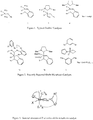
- ruthenium-based alkylidene complex represented by the ruthenium catalyst (1-4) ( Figure 1 ). Because of their high efficiency in catalysis and high tolerance towards various functional groups, they are most widely used in both academic and industrial fields. Typical ruthenium catalysts are known to give more E isomer than Z isomer in CM and other olefin metathesis reactions (see Chatterjee, A. K.; Choi, T.-L.; Sanders, D. P.; Grubbs, R. H. J. Am. Chem. Soc. 2003, 125, 11360 ). Kuznetsov V.F. et al.
- the invention is directed to addressing one or more of the aforementioned concerns, and, in one embodiment, provides an olefin metathesis catalyst complex which is a C-H activated catalyst compound composed of a Group 8 transition metal complex and a chelating ligand structure formed from the metal center M, a neutral electron donor ligand L 1 , and a 2-electron anionic donor bridging moiety, Q*.
- olefin metathesis catalyst complex which is a C-H activated catalyst compound composed of a Group 8 transition metal complex and a chelating ligand structure formed from the metal center M, a neutral electron donor ligand L 1 , and a 2-electron anionic donor bridging moiety, Q*.
- a general structure of catalyst compounds is shown below.
- M is a Group 8 transition metal (e.g., Ru or Os);
- X 1 is any anionic ligand (e.g., halogen, alkyl, aryl, carboxylate, alkoxy, aryloxy, sulfonate, phosphate, or nitrate);
- L 1 , L 2 , and L 3 are, independently, any neutral two electron ligand, where L 2 may connect with R 2 ;
- R 1 and R 2 are independently selected from hydrogen, hydrocarbyl, substituted hydrocarbyl, heteroatom-containing hydrocarbyl, substituted heteroatom-containing hydrocarbyl, and functional groups, and wherein R 1 may connect with R 2 and/or L 2 ;
- Q* is a 2-electron anionic donor bridging moiety, (e.g., alkyl, aryl, carboxylate, alkoxy, aryloxy, or sulfonate, etc.);
- n and k are independently 0 or 1, such that L
- M Group 8 metal
- X 1 alkylidene moiety
- L 1 , L 2 , and L 3 two or three neutral ligands
- Q* 2-electron anionic donor bridging moiety
- these group 8 metal-based alkylidene catalysts of the invention are intrinsically tolerant towards various functional groups and impurities in reaction media.
- the C-H activated catalyst compounds of the invention may be used to catalyze Z selection olefin metathesis reactions.
- M is a Group 8 transition metal (e.g., Ru or Os); M 1 is a metal such as silver, lithium, sodium, potassium, rubidium, cesium, magnesium, calcium, strontium, barium, iron, zinc, or thalium; X 1 and X 2 are independently any anionic ligand (e.g., halogen, alkyl, aryl, carboxylate, alkoxy, aryloxy, sulfonate, phosphate, or nitrate); L 1 , L 2 , and L 3 are, independently, any neutral two electron ligand, where L 2 may connect with R 2 ; R 1 and R 2 are independently selected from hydrogen, hydrocarbyl, substituted hydrocarbyl, heteroatom-containing hydrocarbyl, substituted heteroatom-containing hydrocarbyl, and functional groups, and wherein R 1 may connect with R 2 and/or L 2 ; Q* is a 2-electron anionic donor bridging moiety, (e.g., Ru or Os); M 1 is
- an ⁇ -olefin includes a single ⁇ -olefin as well as a combination or mixture of two or more ⁇ -olefins
- reference to "a substituent” encompasses a single substituent as well as two or more substituents, and the like.
- alkyl refers to a linear, branched, or cyclic saturated hydrocarbon group typically although not necessarily containing 1 to about 24 carbon atoms, preferably 1 to about 12 carbon atoms, such as methyl, ethyl, n -propyl, isopropyl, n -butyl, isobutyl, t -butyl, octyl, decyl, and the like, as well as cycloalkyl groups such as cyclopentyl, cyclohexyl and the like. Generally, although again not necessarily, alkyl groups herein contain 1 to about 12 carbon atoms.
- lower alkyl intends an alkyl group of 1 to 6 carbon atoms
- cycloalkyl intends a cyclic alkyl group, typically having 4 to 8, preferably 5 to 7, carbon atoms.
- substituted alkyl refers to alkyl substituted with one or more substituent groups
- heteroatom-containing alkyl and “heteroalkyl” refer to alkyl in which at least one carbon atom is replaced with a heteroatom. If not otherwise indicated, the terms “alkyl” and “lower alkyl” include linear, branched, cyclic, unsubstituted, substituted, and/or heteroatom-containing alkyl and lower alkyl, respectively.
- alkylene refers to a difunctional linear, branched, or cyclic alkyl group, where "alkyl” is as defined above.
- alkenyl refers to a linear, branched, or cyclic hydrocarbon group of 2 to about 24 carbon atoms containing at least one double bond, such as ethenyl, n -propenyl, isopropenyl, n-butenyl, isobutenyl, octenyl, decenyl, tetradecenyl, hexadecenyl, eicosenyl, tetracosenyl, and the like.
- Preferred alkenyl groups herein contain 2 to about 12 carbon atoms.
- lower alkenyl intends an alkenyl group of 2 to 6 carbon atoms
- specific term “cycloalkenyl” intends a cyclic alkenyl group, preferably having 5 to 8 carbon atoms.
- substituted alkenyl refers to alkenyl substituted with one or more substituent groups
- heteroatom-containing alkenyl and “heteroalkenyl” refer to alkenyl in which at least one carbon atom is replaced with a heteroatom. If not otherwise indicated, the terms “alkenyl” and “lower alkenyl” include linear, branched, cyclic, unsubstituted, substituted, and/or heteroatom-containing alkenyl and lower alkenyl, respectively.
- alkenylene refers to a difunctional linear, branched, or cyclic alkenyl group, where "alkenyl” is as defined above.
- alkynyl refers to a linear or branched hydrocarbon group of 2 to about 24 carbon atoms containing at least one triple bond, such as ethynyl, n -propynyl, and the like. Preferred alkynyl groups herein contain 2 to about 12 carbon atoms. The term “lower alkynyl” intends an alkynyl group of 2 to 6 carbon atoms.
- substituted alkynyl refers to alkynyl substituted with one or more substituent groups
- heteroatom-containing alkynyl and “heteroalkynyl” refer to alkynyl in which at least one carbon atom is replaced with a heteroatom.
- alkynyl and “lower alkynyl” include linear, branched, unsubstituted, substituted, and/or heteroatom-containing alkynyl and lower alkynyl, respectively.
- alkoxy intends an alkyl group bound through a single, terminal ether linkage; that is, an “alkoxy” group may be represented as -O-alkyl where alkyl is as defined above.
- a "lower alkoxy” group intends an alkoxy group containing 1 to 6 carbon atoms.
- alkenyloxy and lower alkenyloxy respectively refer to an alkenyl and lower alkenyl group bound through a single, terminal ether linkage
- alkynyloxy and “lower alkynyloxy” respectively refer to an alkynyl and lower alkynyl group bound through a single, terminal ether linkage.
- aryl refers to an aromatic substituent containing a single aromatic ring or multiple aromatic rings that are fused together, directly linked, or indirectly linked (such that the different aromatic rings are bound to a common group such as a methylene or ethylene moiety).
- Preferred aryl groups contain 5 to 24 carbon atoms, and particularly preferred aryl groups contain 5 to 14 carbon atoms.
- Exemplary aryl groups contain one aromatic ring or two fused or linked aromatic rings, e.g., phenyl, naphthyl, biphenyl, diphenylether, diphenylamine, benzophenone, and the like.
- Substituted aryl refers to an aryl moiety substituted with one or more substituent groups
- heteroatom-containing aryl and “heteroaryl” refer to aryl substituents in which at least one carbon atom is replaced with a heteroatom, as will be described in further detail infra .
- aryloxy refers to an aryl group bound through a single, terminal ether linkage, wherein "aryl” is as defined above.
- An "aryloxy” group may be represented as -O-aryl where aryl is as defined above.
- Preferred aryloxy groups contain 5 to 24 carbon atoms, and particularly preferred aryloxy groups contain 5 to 14 carbon atoms.
- aryloxy groups include, without limitation, phenoxy, o-halo-phenoxy, m-halo-phenoxy, p-halo-phenoxy, o-methoxy-phenoxy, m-methoxy-phenoxy, p-methoxy-phenoxy, 2,4-dimethoxy-phenoxy, 3,4,5-trimethoxy-phenoxy, and the like.
- alkaryl refers to an aryl group with an alkyl substituent
- aralkyl refers to an alkyl group with an aryl substituent, wherein “aryl” and “alkyl” are as defined above.
- Preferred alkaryl and aralkyl groups contain 6 to 24 carbon atoms, and particularly preferred alkaryl and aralkyl groups contain 6 to 16 carbon atoms.
- Alkaryl groups include, for example, p-methylphenyl, 2,4-dimethylphenyl, p-cyclohexylphenyl, 2,7-dimethylnaphthyl, 7-cyclooctylnaphthyl, 3-ethyl-cyclopenta-1,4-diene, and the like.
- aralkyl groups include, without limitation, benzyl, 2-phenyl-ethyl, 3-phenyl-propyl, 4-phenyl-butyl, 5-phenyl-pentyl, 4-phenylcyclohexyl, 4-benzylcyclohexyl, 4-phenylcyclohexylmethyl, 4-benzylcyclohexylmethyl, and the like.
- alkaryloxy and aralkyloxy refer to substituents of the formula -OR wherein R is alkaryl or aralkyl, respectively, as just defined.
- acyl refers to substituents having the formula -(CO)-alkyl, -(CO)-aryl, or -(CO)-aralkyl
- acyloxy refers to substituents having the formula -O(CO)-alkyl, -O(CO)-aryl,or - O(CO)-aralkyl, wherein "alkyl,” “aryl, and “aralkyl” are as defined above.
- cyclic and ring refer to alicyclic or aromatic groups that may or may not be substituted and/or heteroatom containing, and that may be monocyclic, bicyclic, or polycyclic.
- alicyclic is used in the conventional sense to refer to an aliphatic cyclic moiety, as opposed to an aromatic cyclic moiety, and may be monocyclic, bicyclic, or polycyclic.
- halo and halogen are used in the conventional sense to refer to a chloro, bromo, fluoro, or iodo substituent.
- Hydrocarbyl refers to univalent hydrocarbyl radicals containing 1 to about 30 carbon atoms, preferably 1 to about 24 carbon atoms, most preferably 1 to about 12 carbon atoms, including linear, branched, cyclic, saturated, and unsaturated species, such as alkyl groups, alkenyl groups, aryl groups, and the like.
- lower hydrocarbyl intends a hydrocarbyl group of 1 to 6 carbon atoms, preferably 1 to 4 carbon atoms
- hydrocarbylene intends a divalent hydrocarbyl moiety containing 1 to about 30 carbon atoms, preferably 1 to about 24 carbon atoms, most preferably 1 to about 12 carbon atoms, including linear, branched, cyclic, saturated and unsaturated species.
- lower hydrocarbylene intends a hydrocarbylene group of 1 to 6 carbon atoms.
- Substituted hydrocarbyl refers to hydrocarbyl substituted with one or more substituent groups
- heteroatom-containing hydrocarbyl and “heterohydrocarbyl” refer to hydrocarbyl in which at least one carbon atom is replaced with a heteroatom
- substituted hydrocarbylene refers to hydrocarbylene substituted with one or more substituent groups
- heteroatom-containing hydrocarbylene and heterohydrocarbylene refer to hydrocarbylene in which at least one carbon atom is replaced with a heteroatom.
- hydrocarbyl and hydrocarbylene are to be interpreted as including substituted and/or heteroatom-containing hydrocarbyl and hydrocarbylene moieties, respectively.
- heteroatom-containing refers to a hydrocarbon molecule or a hydrocarbyl molecular fragment in which one or more carbon atoms is replaced with an atom other than carbon, e.g., nitrogen, oxygen, sulfur, phosphorus or silicon, typically nitrogen, oxygen or sulfur.
- heteroalkyl refers to an alkyl substituent that is heteroatom-containing
- heterocyclic refers to a cyclic substituent that is heteroatom-containing
- heteroaryl and heteroaromatic respectively refer to "aryl” and “aromatic” substituents that are heteroatom-containing, and the like.
- heterocyclic group or compound may or may not be aromatic, and further that “heterocycles” may be monocyclic, bicyclic, or polycyclic as described above with respect to the term "aryl.”
- heteroalkyl groups include alkoxyaryl, alkylsulfanyl-substituted alkyl, N-alkylated amino alkyl, and the like.
- heteroaryl substituents include pyrrolyl, pyrrolidinyl, pyridinyl, quinolinyl, indolyl, pyrimidinyl, imidazolyl, 1,2,4-triazolyl, tetrazolyl, etc., and examples of heteroatom-containing alicyclic groups are pyrrolidino, morpholino, piperazino, piperidino, etc.
- substituted as in “substituted hydrocarbyl,” “substituted alkyl,” “substituted aryl,” and the like, as alluded to in some of the aforementioned definitions, is meant that in the hydrocarbyl, alkyl, aryl, or other moiety, at least one hydrogen atom bound to a carbon (or other) atom is replaced with one or more non-hydrogen substituents.
- substituents include, without limitation: functional groups referred to herein as "Fn,” such as halo, hydroxyl, sulfhydryl, C 1 -C 24 alkoxy, C 2 -C 24 alkenyloxy, C 2 -C 24 alkynyloxy, C 5 -C 24 aryloxy, C 6 -C 24 aralkyloxy, C 6 -C 24 alkaryloxy, acyl (including C 2 -C 24 alkylcarbonyl (-CO-alkyl) and C 6 -C 24 arylcarbonyl (-CO-aryl)), acyloxy (-O-acyl, including C 2 -C 24 alkylcarbonyloxy (-O-CO-alkyl) and C 6 -C 24 arylcarbonyloxy (-O-CO-aryl)), C 2 -C 24 alkoxycarbonyl (-(CO)-O-alkyl), C 6 -C 24 aryloxycarbonyl (--C
- “functionalized” as in “functionalized hydrocarbyl,” “functionalized alkyl,” “functionalized olefin,” “functionalized cyclic olefin,” and the like, is meant that in the hydrocarbyl, alkyl, olefin, cyclic olefin, or other moiety, at least one hydrogen atom bound to a carbon (or other) atom is replaced with one or more functional groups such as those described hereinabove.
- the term “functional group” is meant to include any functional species that is suitable for the uses described herein. In particular, as used herein, a functional group would necessarily possess the ability to react with or bond to corresponding functional groups on a substrate surface.
- the aforementioned functional groups may, if a particular group permits, be further substituted with one or more additional functional groups or with one or more hydrocarbyl moieties such as those specifically enumerated above.
- the above-mentioned hydrocarbyl moieties may be further substituted with one or more functional groups or additional hydrocarbyl moieties such as those specifically enumerated.
- Optional or “optionally” means that the subsequently described circumstance may or may not occur, so that the description includes instances where the circumstance occurs and instances where it does not.
- the phrase “optionally substituted” means that a non-hydrogen substituent may or may not be present on a given atom, and, thus, the description includes structures wherein a non-hydrogen substituent is present and structures wherein a non-hydrogen substituent is not present.
- M Group 8 metal
- CR 1 R 2 alkylidene moiety
- X 1 anionic ligand
- L 1 , L 2 , and L 3 two or three neutral ligands
- Q* 2-electron anionic donor bridging moiety
- the olefin metathesis catalyst complex according to the invention is a Group 8 transition metal complex having the structure of formula (II) in which:
- Preferred catalysts contain Ru or Os as the Group 8 transition metal, with Ru particularly preferred.
- Catalysts according to formula (II) may be conveniently described according to certain structural features. Catalysts are commonly referred to as Second Generation Grubbs-type catalysts, when L 1 in formula (II) is a carbene ligand having the structure of formula (III) such that the complex may have the structure of formula (IV) wherein M, m, n, X 1 , L 2 , L 3 , R 1 , and R 2 are as defined above and the remaining substituents are as follows.
- X and Y are heteroatoms typically selected from N, O, S, and P. Since O and S are divalent, p is necessarily zero when X is O or S, q is necessarily zero when Y is O or S, and k is zero or 1. However, when X is N or P, then p is 1, and when Y is N or P, then q is 1. In certain embodiments, both X and Y are N.
- Q* is a 2-electron anionic donor bridging moiety linking L 1 and M, and may be hydrocarbylene (including substituted hydrocarbylene, heteroatom-containing hydrocarbylene, and substituted heteroatom-containing hydrocarbylene, such as substituted and/or heteroatom-containing alkylene) or -(CO)-, and w, x, y, and z are independently zero or 1, meaning that each linker is optional.
- Q* may link Q 1 to M by a carbon-metal bond.
- Q 1 , Q 2 , Q 3 , and Q 4 are linkers, selected from hydrocarbylene, substituted hydrocarbylene, heteroatom-containing hydrocarbylene, substituted heteroatom-containing hydrocarbylene (such as substituted and/or heteroatom-containing alkylene) and -(CO)-, and w, x, y, and z are independently zero or 1, meaning that each linker is optional.
- Q 1 may be linked to M by Q* through a carbon-metal bond.
- Two or more substituents on adjacent atoms within Q 1 , Q 2 , Q 3 , and Q 4 may also be linked to form an additional cyclic group.
- R 3 , R 3A , R 4 , and R 4A are independently selected from hydrogen, hydrocarbyl, substituted hydrocarbyl, heteroatom-containing hydrocarbyl, and substituted heteroatom-containing, hydrocarbyl (e.g., C 1 -C 20 alkyl, C 2 -C 20 alkenyl, C 2 -C 20 alkynyl, C 5 -C 24 aryl, C 5 -C 24 alkaryl, C 6 -C 24 aralkyl, etc.), substituted hydrocarbyl (e.g., substituted C 1 -C 20 alkyl, C 2 -C 20 alkenyl, C 2 -C 20 alkynyl, C 5 -C 24 aryl, C 6 -C 24 alkaryl, C 6 -C 24 aralkyl, etc.), heteroatom-containing hydrocarbyl (e.g., heteroatom-containing C 1 -C 20 alkyl, C 2 -C 20 alkenyl, C 2
- X 1 is an anionic ligand, and, as described below, may be linked together to form a cyclic group, typically although not necessarily a five- to eight-membered ring.
- X 1 is hydrogen, halide, nitrate, or one of the following groups: C 1 -C 20 alkyl, C 3 -C 24 aryl, C 1 -C 20 alkoxy, C 1 -C 20 alkylcarboxylate, C 5 -C 24 aryloxy, C 2 -C 20 alkoxycarbonyl, C 6 -C 24 aryloxycarbonyl, C 6 -C 24 arylcarboxylate, C 2 -C 24 acyl, C 2 -C 24 acyloxy, C 1 -C 20 alkylsulfonato, C 5 -C 24 arylsulfonato, C 1 -C 20 alkylsulfanyl, C 5 -C 24 arylsulfanyl, C 1 -
- X 1 may be optionally substituted with one or more moieties selected from C 1 -C 12 alkyl, C 1 -C 20 alkylcarboxylate, C 1 -C 12 alkoxy, C 5 -C 24 aryl, C 6 -C 24 arylcarboxylate, and halide, which may, in turn, with the exception of halide, be further substituted with one or more groups selected from halide, C 1 -C 6 alkyl, C 1 -C 20 alkylcarboxylate, C 1 -C 6 alkoxy, and phenyl.
- X 1 is benzoate, pivalate, C 2 -C 6 acyl, C 2 -C 6 alkoxycarbonyl, C 1 -C 6 alkyl, phenoxy, C 1 -C 6 alkoxy, C 1 -C 6 alkylsulfanyl, aryl, or C 1 -C 6 alkylsulfonyl.
- X 1 may be is CF 3 CO 2 , CH 3 CO 2 , CH 3 CH 2 CO 2 CFH 2 CO 2 , (CH 3 ) 3 CO 2 , (CH 3 ) 2 CHCO 2 , (CF 3 ) 2 (CH 3 )CO 2 , (CF 3 )(CH 3 ) 2 CO 2 , benzoate, naphthylate, tosylate, mesylate, or trifluoromethane-sulfonate.
- X 1 is nitrate (NO 3 - ).
- R 1 and R 2 are independently selected from hydrogen, hydrocarbyl (e.g., C 1 -C 20 alkyl, C 2 -C 20 alkenyl, C 2 -C 20 alkynyl, C 5 -C 24 aryl, C 6 -C 24 alkaryl, C 6 -C 24 aralkyl, etc.), substituted hydrocarbyl (e.g., substituted C 1- C 20 alkyl, C 2 -C 20 alkenyl, C 2 -C 20 alkynyl, C 5 -C 24 aryl, C 6 -C 24 alkaryl, C 6 -C 24 aralkyl, etc.), heteroatom-containing hydrocarbyl (e.g., heteroatom-containing C 1 -C 20 alkyl, C 2 -C 20 alkenyl, C 2 -C 20 alkynyl, C 5 -C 24 aryl, C 6 -C 24 alkaryl, C 6 -C 24 aralkyl, etc.
- R 1 and R 2 may also be linked to form a cyclic group, which may be aliphatic or aromatic, and may contain substituents and/or heteroatoms. Generally, such a cyclic group will contain 4 to 12, preferably 5, 6, 7, or 8 ring atoms.
- R 1 is hydrogen and R 2 is selected from C 1 -C 20 alkyl, C 2 -C 20 alkenyl, and C 5 -C 24 aryl, more preferably C 1 -C 6 alkyl, C 2 -C 6 alkenyl, and C 5 -C 14 aryl. Still more preferably, R 2 is phenyl, vinyl, methyl, isopropyl, or t-butyl, optionally substituted with one or more moieties selected from C 1 -C 6 alkyl, C 1 -C 6 alkoxy, and phenyl.
- Any two or more (typically two, three, or four) of X 1 , Q*, L 1 , L 2 , L 3 , R 1 , and R 2 can be taken together to form a cyclic group, including bidentate or multidentate ligands, as disclosed, for example, in U.S. Patent No. 5,312,940 to Grubbs et al.
- a cyclic group including bidentate or multidentate ligands, as disclosed, for example, in U.S. Patent No. 5,312,940 to Grubbs et al.
- those cyclic groups may contain 4 to 12, preferably 4, 5, 6, 7 or 8 atoms, or may comprise two or three of such rings, which may be either fused or linked.
- Any two or more of X 1 , Q*, L 1 , L 2 , L 3 , R 1 , R 2 , R 3 , R 3A , R 4 , and R 4A can be taken together to form a cyclic group.
- R 3A and R 4A are linked to form a cyclic group so that the carbene ligand has the structure of formula (V) wherein R 3 and R 4 are defined above, with preferably R 3 being alicyclic and R 4 being aromatic.
- Q is a linker, typically a hydrocarbylene linker, including substituted hydrocarbylene, heteroatom-containing hydrocarbylene, and substituted heteroatom-containing hydrocarbylene linkers, wherein two or more substituents on adjacent atoms within Q may also be linked to form an additional cyclic structure, which may be similarly substituted to provide a fused polycyclic structure of two to about five cyclic groups.
- Q is often, although again not necessarily, a two-atom linkage or a three-atom linkage.
- Suitable functional groups include carboxyl, C 1 -C 20 alkoxy, C 5 -C 24 aryloxy, C 2 -C 20 alkoxycarbonyl, C 5 -C 24 alkoxycarbonyl, C 2 -C 24 acyloxy, C 1 -C 20 alkylthio, C 5 -C 24 arylthio, C 1 -C 20 alkylsulfonyl, and C 1 -C 20 alkylsulfinyl, optionally substituted with one or more moieties selected from C 1 -C 12 alkyl, C 1 -C 12 alkoxy, C 5 -C 14 aryl, hydroxyl, sulfhydryl, formyl, and halide.
- R 11 , R 12 , R 13 , and R 14 are preferably independently selected from hydrogen, C 1 -C 12 alkyl, substituted C 1 -C 12 alkyl, C 1 -C 12 heteroalkyl, substituted C 1 -C 12 heteroalkyl, phenyl, and substituted phenyl.
- any two of R 11 , R 12 , R 13 , and R 14 may be linked together to form a substituted or unsubstituted, saturated or unsaturated ring structure, e.g., a C 4 -C 12 alicyclic group or a C 5 or C 6 aryl group, which may itself be substituted, e.g., with linked or fused alicyclic or aromatic groups, or with other substituents.
- any one or more of R 11 , R 12 , R 13 , and R 14 comprises one or more of the linkers.
- R 3 and R 4 maybe alkyl or aryl, and may be independently selected from alkyl, aryl, cycloalkyl, heteroalkyl, alkenyl, alkynyl, and halo or halogen- containing groups. More specifically, R 3 and R 4 may be independently selected from C 1 -C 20 alkyl, C 3 -C 14 cycloalkyl, C 1 -C 20 heteroalkyl, or halide.
- Suitable alkyl groups include, without limitation, methyl, ethyl, n-propyl, isopropyl, isopropyl, n-butyl, isobutyl, t-butyl, octyl, decyl, and the like;
- suitable cycloalkyl groups include cyclopentyl, cyclohexyl, adamantyl, pinenyl, terpenes and terpenoid derivatives and the like;
- suitable alkenyl groups include ethenyl, n-propenyl, isopropenyl, n-butenyl, isobutenyl, octenyl, decenyl, tetradecenyl, hexadecenyl, eicosenyl, tetracosenyl, and the like;
- suitable alkynyl groups include ethynyl, n-propyn
- R 3 and R 4 are aromatic, each can be independently composed of one or two aromatic rings, which may or may not be substituted, e.g., R 3 and R 4 may be phenyl, substituted phenyl, biphenyl, substituted biphenyl, or the like.
- R 3 and R 4 are independently an unsubstituted phenyl or phenyl substituted with up to three substituents selected from C 1 -C 20 alkyl, C 1 -C 20 alkylcarboxylate, substituted C 1 -C 20 alkyl, C 1 -C 20 heteroalkyl, substituted C 1 -C 20 heteroalkyl, C 5 -C 24 aryl, substituted C 5 -C 24 aryl, C 5 -C 24 heteroaryl, C 6 -C 24 aralkyl, C 6 -C 24 alkaryl, or halide.
- any substituents present are hydrogen C 1 -C 12 alkyl, C 1 -C 12 alkoxy, C 5 -C 14 aryl, substituted, C 5 -C 14 aryl, or halide. More particularly, R 3 and R 4 may be independently substituted with hydrogen, C 1 -C 4 alkyl, C 1 -C 4 alkylcarboxylate, C 1 -C 4 alkoxy, C 5 -C 14 aryl, substituted C 5 -C 14 aryl, or halide.
- R 3 and R 4 are selected from cyclopentyl, cyclohexyl, adamantyl, norbonenyl, pinenyl, terpenes and terpenoid derivatives, mesityl, diisopropylphenyl or, more generally, cycloalkyl substituted with one, two or three C 1 -C 4 alkyl or C 1 -C 4 alkoxy groups, or a combination thereof.
- M, m, n, X 1 , Q*, R 1 , and R 2 are as definedabove
- L 1 is a strongly coordinating neutral electron donor ligand such as any of those described for the first and second group of catalysts
- L 2 and L 3 are weakly coordinating neutral electron donor ligands in the form of optionally substituted heterocyclic groups.
- n is zero or 1, such that L 3 may or may not be present.
- L 2 and L 3 are optionally substituted five- or six-membered monocyclic groups containing 1 to 4, preferably 1 to 3, most preferably 1 to 2 heteroatoms, or are optionally substituted bicyclic or polycyclic structures composed of 2 to 5 such five- or six-membered monocyclic groups. If the heterocyclic group is substituted, it should not be substituted on a coordinating heteroatom, and any one cyclic moiety within a heterocyclic group will generally not be substituted with more than 3 substituents.
- examples of L 2 and L 3 include, without limitation, heterocycles containing nitrogen, sulfur, oxygen, or a mixture thereof.
- Grubbs-Hoveyda metathesis-active metal carbene complexes may be described by the formula VIII below wherein Q* is a 2-electron anionic donor bridging moiety between L 1 and M forming a carbon-metal bond between L 1 and M.
- Q* is a 2-electron anionic donor bridging moiety between L 1 and M forming a carbon-metal bond between L 1 and M.
- the compound has the structure wherein,
- Such C-H activation reactions may be conducted under conditions effective to promote the exchange of X 2 anions for the X 1 anionic ligands, such that a C-H activated olefin metathesis catalyst compound is produced in which M and L 1 are linked together by a 2-electron anionic bridging moiety Q* in a M-Q*-L 1 chelating ligand ring structure having a ring size of 5, 6, or 7 atoms, and the catalyst compound contains an X 2 anionic ligand.
- M is directly bonded to a carbon atom of Q* in the M-Q*-L 1 chelating ligand ring structure.
- M 1 is silver or sodium
- the carboxylate may be of the formula (R) 3 COOM 1 , wherein R is independently selected from hydrogen, C 1 -C 12 alkyl, substituted C 1 -C 12 alkyl, C 3 -C 12 cycloalkyl, substituted C 3 -C 12 cycloalkyl, aryl or substituted aryl, wherein at least one R is not hydrogen.
- the R groups may be more particularly independently selected from hydrogen, C 1 -C 12 alkyl or aryl, such as, e.g., where the (R) 3 groups together form t -butyl, PhMe 2 C, Ph 2 MeC, or Ph 3 C.
- the method of making such C-H activated catalyst compounds may further comprise additional steps, such as anionic ligand exchange reactions.
- the C-H activated olefin metathesis catalyst compound may be contacted with an anionic ligand exchange compound of the formula M 2 X 3 , wherein M 2 is a cation and X 3 is an anion; under conditions effective to promote the exchange of X 3 anions for the X 2 anionic ligands, such that the C-H activated olefin metathesis catalyst compound contains a M-Q*-L 1 chelating ligand ring structure having a ring size of 5, 6, or 7 atoms and an X 3 anionic ligand.
- M 2 and X 3 are not necessarily limited, typically M 2 may be selected from hydrogen, ammonium, silver, lithium, sodium, potassium, rubidium, cesium, magnesium, calcium, strontium, barium, iron, zinc, or thalium, and X 3 may be selected from halogen, alkyl, aryl, carboxylate, alkoxy, aryloxy, sulfonate, phosphate, or nitrate.
- Atmosphere All reactions were carried out in dry glassware under an argon atmosphere using standard Schlenk techniques or in a Vacuum Atmospheres Glovebox under a nitrogen atmosphere unless otherwise specified.
- disubstituted complex ( 12 ) was formed and none of the complexes resulting from C-H bond activation in the 2,6-diisopropylphenyl group were observed.
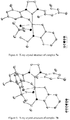
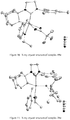
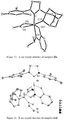
- the crystal structure of 11 determined by X-ray crystallography ( Figure 6 ) showed a 6-membered chelate and clearly indicated that C-H bond activation had occurred at the methyl group of the mesityl group in the NHC ligand.
- Asymmetric NHC salts 17a-f containing an adamantyl group were synthesized by modifying a reported procedure ( Paczal, A.; Benyei, A. C.; Kotschy, A. J. Org. Chem. 2006, 71, 5069 ) as outlined in Scheme 7. All products were obtained in good to excellent yield.
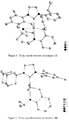
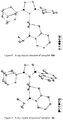
- Dichloro ruthenium alkylidene catalysts ( 18a-f ) having the NHC's 17a-f were also synthesized by modifying a reported procedure ( Jafarpour, L.; Hillier, A. C.; Nolan, S. P. Organometallics 2002, 21, 442 ) as outlined in Scheme 8. They were obtained as air-stable green solids in excellent yield. Structures of 18a-c were determined by X-ray crystallography and are shown in Figures 7-9 .
- the pivalyl ligand of 19a was easily replaced by other anionic ligands.
- Scheme 17 describes the synthesis starting from complex 19a and performing the ligand substitution with NH 4 NO 3 in thf.
- Scheme 18 describes the synthesis starting from the dichloride complex 18a and performing a two-step sequence with NaOPiv in thf/MeOH and then subsequent ligand substitution with NH 4 NO 3 in thf. In both cases, characterization data for 22e matches that presented previously below Scheme 12.
- RuCl 2 complexes 31 and 33 were synthesized and then converted to the C-H activated nitrate complexes 32 and 34 by the treatment with AgOPiv and subsequent anion exchange with NH 4 NO 3 .
Landscapes
- Chemical & Material Sciences (AREA)
- Organic Chemistry (AREA)
- Chemical Kinetics & Catalysis (AREA)
- Engineering & Computer Science (AREA)
- Materials Engineering (AREA)
- Inorganic Chemistry (AREA)
- Catalysts (AREA)
- Organic Low-Molecular-Weight Compounds And Preparation Thereof (AREA)
Priority Applications (1)
| Application Number | Priority Date | Filing Date | Title |
|---|---|---|---|
| PL12734668T PL2663398T3 (pl) | 2011-01-14 | 2012-01-17 | Katalizatory Z-selektywnej metatezy olefin i sposób ich syntezy |
Applications Claiming Priority (4)
| Application Number | Priority Date | Filing Date | Title |
|---|---|---|---|
| US201161432849P | 2011-01-14 | 2011-01-14 | |
| US201161433949P | 2011-01-18 | 2011-01-18 | |
| US201161515262P | 2011-08-04 | 2011-08-04 | |
| PCT/US2012/021609 WO2012097379A2 (en) | 2011-01-14 | 2012-01-17 | Z-selective olefin metathesis catalysts and their synthetic procedure |
Publications (3)
| Publication Number | Publication Date |
|---|---|
| EP2663398A2 EP2663398A2 (en) | 2013-11-20 |
| EP2663398A4 EP2663398A4 (en) | 2014-07-23 |
| EP2663398B1 true EP2663398B1 (en) | 2018-07-18 |
Family
ID=46507707
Family Applications (1)
| Application Number | Title | Priority Date | Filing Date |
|---|---|---|---|
| EP12734668.2A Active EP2663398B1 (en) | 2011-01-14 | 2012-01-17 | Z-selective olefin metathesis catalysts and their synthetic procedure |
Country Status (13)
| Country | Link |
|---|---|
| US (1) | US9597674B2 (enExample) |
| EP (1) | EP2663398B1 (enExample) |
| JP (1) | JP5893646B2 (enExample) |
| KR (1) | KR101835170B1 (enExample) |
| CN (1) | CN103402628B (enExample) |
| AU (1) | AU2012206966B2 (enExample) |
| BR (1) | BR112013017938B1 (enExample) |
| CA (1) | CA2824518C (enExample) |
| IL (1) | IL227432A (enExample) |
| PL (1) | PL2663398T3 (enExample) |
| SG (1) | SG191980A1 (enExample) |
| WO (1) | WO2012097379A2 (enExample) |
| ZA (2) | ZA201305726B (enExample) |
Families Citing this family (24)
| Publication number | Priority date | Publication date | Assignee | Title |
|---|---|---|---|---|
| WO2013134192A1 (en) | 2012-03-05 | 2013-09-12 | California Institute Of Technology | Syntheses of z-olefin-containing lepidopteran insect pheromones |
| EP2867243B1 (en) | 2012-06-29 | 2016-04-13 | Apeiron Synthesis S.A. | Metal complexes, their application and methods of carrying out of metathesis reaction |
| WO2014022482A1 (en) | 2012-08-01 | 2014-02-06 | California Institute Of Technology | Solvent-free enyne metathesis polymerization |
| US9234985B2 (en) | 2012-08-01 | 2016-01-12 | California Institute Of Technology | Birefringent polymer brush structures formed by surface initiated ring-opening metathesis polymerization |
| WO2014093687A1 (en) * | 2012-12-12 | 2014-06-19 | California Institute Of Technology | Z-selective metathesis catalysts |
| ES2699416T3 (es) * | 2013-04-09 | 2019-02-11 | Materia Inc | Preparación de tensioactivos mediante metátesis cruzada |
| US9758445B2 (en) | 2013-04-09 | 2017-09-12 | Materia, Inc. | Preparation of surfactants via cross-metathesis |
| US9663440B2 (en) | 2013-04-09 | 2017-05-30 | Materia, Inc. | Cross metathesis of poly-branched poly-olefins |
| WO2014186631A1 (en) * | 2013-05-15 | 2014-11-20 | California Institute Of Technology | Highly z-selective and enantioselective ring opening/cross metathesis |
| US9938253B2 (en) | 2013-06-12 | 2018-04-10 | Trustees Of Boston College | Catalysts for efficient Z-selective metathesis |
| WO2016014954A1 (en) * | 2014-07-25 | 2016-01-28 | California Institute Of Technology | Tandem z-selective metathesis / dihydroxylation |
| CA2999864A1 (en) * | 2015-09-24 | 2017-03-30 | Materia, Inc. | Metal carbene olefin metathesis catalysts |
| CA3006976A1 (en) | 2015-12-10 | 2017-06-15 | California Institute Of Technology | Olefin metathesis catalysts |
| CN114106057B (zh) * | 2016-10-19 | 2023-06-23 | 优美科股份公司及两合公司 | Ru亚烷基络合物的合成与表征 |
| US10320390B1 (en) | 2016-11-17 | 2019-06-11 | X Development Llc | Field programmable gate array including coupled lookup tables |
| EP3630741A1 (en) | 2017-05-30 | 2020-04-08 | Verbio Vereinigte Bioenergie AG | Methods of making olefinic e- and z-isomers |
| RU2020133186A (ru) * | 2018-03-09 | 2022-04-12 | Ппг Индастриз Огайо, Инк. | Составы для координирования с металлом, композиции, содержащие такие составы, и способы катализирования реакций |
| WO2019222244A1 (en) * | 2018-05-15 | 2019-11-21 | California Institute Of Technology | Total synthesis of prostaglandin j natural products by stereoretentive metathesis |
| US11939410B2 (en) * | 2018-06-29 | 2024-03-26 | Apeiron Synthesis S.A. | Organoruthenium complexes as precatalysts for olefin metathesis |
| WO2021011221A1 (en) * | 2019-07-17 | 2021-01-21 | California Institute Of Technology | New syntheses of z-selective olefin metathesis catalysts |
| MX2022008954A (es) * | 2020-03-05 | 2022-08-15 | Firmenich & Cie | Proceso para preparar un compuesto intermediario perfumante. |
| CN115298191A (zh) * | 2020-03-13 | 2022-11-04 | 伊利诺伊大学评议会 | 催化氢化硅烷化的方法 |
| CN114478166B (zh) * | 2020-10-26 | 2024-09-27 | 中国石油天然气股份有限公司 | 一种制备端烯烃的方法 |
| CN118056617B (zh) * | 2022-11-15 | 2026-06-23 | 中国石油天然气股份有限公司 | 一种用于1-己烯自歧化的负载型催化剂及其制备方法 |
Family Cites Families (10)
| Publication number | Priority date | Publication date | Assignee | Title |
|---|---|---|---|---|
| US5312940A (en) | 1992-04-03 | 1994-05-17 | California Institute Of Technology | Ruthenium and osmium metal carbene complexes for olefin metathesis polymerization |
| US6284852B1 (en) * | 1997-10-30 | 2001-09-04 | California Institute Of Technology | Acid activation of ruthenium metathesis catalysts and living ROMP metathesis polymerization in water |
| WO2002014376A2 (en) | 2000-08-10 | 2002-02-21 | Trustees Of Boston College | Recyclable metathesis catalysts |
| EP1455937B1 (en) | 2001-11-15 | 2018-04-11 | Materia, Inc. | Chelating carbene ligand precursors and their use in the synthesis of metathesis catalysts |
| CN1659172B (zh) * | 2002-04-05 | 2012-08-01 | 加州理工学院 | 直接被吸电子基团取代的烯烃使用过渡金属卡宾催化剂的交叉-易位 |
| JP5081620B2 (ja) * | 2004-06-09 | 2012-11-28 | ユーティーアイ リミテッド パートナーシップ | オレフィン複分解反応の触媒としてのカチオン性置換基を含む遷移金属カルベン錯体 |
| FR2878246B1 (fr) | 2004-11-23 | 2007-03-30 | Inst Francais Du Petrole | Procede de co-production d'olefines et d'esters par ethenolyse de corps gras insatures dans des liquides ioniques non-aqueux |
| JP5406525B2 (ja) * | 2005-07-04 | 2014-02-05 | ツァナン・サイテック・カンパニー・リミテッド | ルテニウム錯体配位子、ルテニウム錯体、固定化ルテニウム錯体触媒及びその調製方法と用途 |
| US8877936B2 (en) * | 2008-04-09 | 2014-11-04 | California Institute Of Technology | Ruthenium olefin metathesis catalysts bearing N-heterocyclic carbene ligands with substituted backbone |
| EP2255877B1 (en) | 2009-05-07 | 2014-09-24 | Umicore AG & Co. KG | Method for preparation of ruthenium-based metathesis catalysts with chelating alkylidene ligands |
-
2012
- 2012-01-17 KR KR1020137021063A patent/KR101835170B1/ko not_active Expired - Fee Related
- 2012-01-17 AU AU2012206966A patent/AU2012206966B2/en not_active Ceased
- 2012-01-17 SG SG2013054085A patent/SG191980A1/en unknown
- 2012-01-17 EP EP12734668.2A patent/EP2663398B1/en active Active
- 2012-01-17 CA CA2824518A patent/CA2824518C/en not_active Expired - Fee Related
- 2012-01-17 US US13/978,940 patent/US9597674B2/en active Active
- 2012-01-17 CN CN201280010878.2A patent/CN103402628B/zh active Active
- 2012-01-17 PL PL12734668T patent/PL2663398T3/pl unknown
- 2012-01-17 JP JP2013549616A patent/JP5893646B2/ja not_active Expired - Fee Related
- 2012-01-17 BR BR112013017938-4A patent/BR112013017938B1/pt active IP Right Grant
- 2012-01-17 WO PCT/US2012/021609 patent/WO2012097379A2/en not_active Ceased
-
2013
- 2013-07-11 IL IL227432A patent/IL227432A/en active IP Right Grant
- 2013-07-29 ZA ZA2013/05726A patent/ZA201305726B/en unknown
-
2014
- 2014-11-04 ZA ZA2014/08071A patent/ZA201408071B/en unknown
Non-Patent Citations (3)
| Title |
|---|
| C. ELSCHENBROICH: "Organometallics", 1989, WILEY-VCH, pages: 439 * |
| JANOWICZ A.H. ET AL.: "C-H activation in completely saturated hydrocarbons: direct observation of M + R-H -> M(R)(H)", J.AM.CHEM.SOC., vol. 104, 1982, pages 352 - 354 * |
| K. I. GOLDBERG, A. S. GOLDMAN: "Activation and Functionalization of C-H Bonds", 12 July 2004, ISBN: 9780841238497, article "Organometallic C-H Bond Activation: An Introduction", pages: 1 - 43 * |
Also Published As
| Publication number | Publication date |
|---|---|
| CN103402628B (zh) | 2015-12-23 |
| IL227432A0 (en) | 2013-09-30 |
| US20140106960A1 (en) | 2014-04-17 |
| IL227432A (en) | 2017-12-31 |
| CA2824518A1 (en) | 2012-07-19 |
| BR112013017938B1 (pt) | 2019-10-15 |
| EP2663398A4 (en) | 2014-07-23 |
| BR112013017938A2 (pt) | 2018-11-27 |
| JP2014503356A (ja) | 2014-02-13 |
| CA2824518C (en) | 2019-03-26 |
| EP2663398A2 (en) | 2013-11-20 |
| ZA201408071B (en) | 2019-06-26 |
| KR101835170B1 (ko) | 2018-03-06 |
| KR20140021995A (ko) | 2014-02-21 |
| JP5893646B2 (ja) | 2016-03-23 |
| WO2012097379A3 (en) | 2012-10-11 |
| ZA201305726B (en) | 2018-12-19 |
| AU2012206966B2 (en) | 2016-11-17 |
| PL2663398T3 (pl) | 2019-01-31 |
| CN103402628A (zh) | 2013-11-20 |
| US9597674B2 (en) | 2017-03-21 |
| WO2012097379A2 (en) | 2012-07-19 |
| SG191980A1 (en) | 2013-08-30 |
Similar Documents
| Publication | Publication Date | Title |
|---|---|---|
| US9597674B2 (en) | Z-selective olefin metathesis catalysts and their synthetic procedure | |
| AU2012206966A1 (en) | Z-selective olefin metathesis catalysts and their synthetic procedure | |
| JP4271942B2 (ja) | シクロオレフィンの選択的開環クロス−メタセシス | |
| EP3386936B1 (en) | Olefin metathesis catalysts | |
| US20030100782A1 (en) | One-pot synthesis of group 8 transition metal carbene complexes useful as olefin metathesis catalysts | |
| US9403854B2 (en) | Cross-metathesis reaction of functionalized and substituted olefins using group 8 transition metal carbene complexes as metathesis catalysts | |
| EP3164409B1 (en) | Group 8 transition metal catalysts and method for making same and process for use of same in metathesis reaction | |
| KR101291468B1 (ko) | 양이온성 치환기를 함유하는 올레핀 복분해 반응의촉매로서의 전이 금속 카르벤 착물 | |
| US20130296511A1 (en) | Latent, high-activity olefin metathesis catalysts containing an n-heterocyclic carbene ligand | |
| EP2506972B1 (en) | Supported olefin metathesis catalysts | |
| US9273081B2 (en) | Method for in-situ formation of metathesis catalysts | |
| EP3496855B1 (en) | Metathesis catalysts | |
| US9676676B2 (en) | Selective olefin metathesis with cyclometalated ruthenium complexes | |
| JP7368381B2 (ja) | 立体保持メタセシスによるプロスタグランジンj天然物の全合成 | |
| US9586981B2 (en) | Z-selective metathesis catalysts | |
| Siano et al. | Activity and stereoselectivity of Ru-based catalyst bearing a fluorinated imidazolinium ligand | |
| CN114106057B (zh) | Ru亚烷基络合物的合成与表征 | |
| CN101090915A (zh) | 含有n-杂环卡宾配体的潜伏的高活性烯烃置换催化剂 | |
| Benetsky et al. | [(1 S)-endo]-(−)-borneol-tethered oxazoline phosphite as a P, N-bidentate ligand in palladium-catalyzed enantioselective allylic amination | |
| Tancu | Monofunctional and dendritic schiff base (N, N′) ruthenium carbene |
Legal Events
| Date | Code | Title | Description |
|---|---|---|---|
| PUAI | Public reference made under article 153(3) epc to a published international application that has entered the european phase |
Free format text: ORIGINAL CODE: 0009012 |
|
| 17P | Request for examination filed |
Effective date: 20130814 |
|
| AK | Designated contracting states |
Kind code of ref document: A2 Designated state(s): AL AT BE BG CH CY CZ DE DK EE ES FI FR GB GR HR HU IE IS IT LI LT LU LV MC MK MT NL NO PL PT RO RS SE SI SK SM TR |
|
| DAX | Request for extension of the european patent (deleted) | ||
| RIN1 | Information on inventor provided before grant (corrected) |
Inventor name: ENDO, KOJI Inventor name: PATEL, PARESMA RASIKLAL Inventor name: KEITZ, BENJAMIN KEITH Inventor name: HERBERT, MYLES BENTON Inventor name: GRUBBS, ROBERT HOWARD |
|
| A4 | Supplementary search report drawn up and despatched |
Effective date: 20140620 |
|
| RIC1 | Information provided on ipc code assigned before grant |
Ipc: B01J 23/46 20060101AFI20140613BHEP Ipc: C07F 15/00 20060101ALI20140613BHEP Ipc: C07C 6/02 20060101ALI20140613BHEP |
|
| 17Q | First examination report despatched |
Effective date: 20151027 |
|
| STAA | Information on the status of an ep patent application or granted ep patent |
Free format text: STATUS: EXAMINATION IS IN PROGRESS |
|
| GRAP | Despatch of communication of intention to grant a patent |
Free format text: ORIGINAL CODE: EPIDOSNIGR1 |
|
| STAA | Information on the status of an ep patent application or granted ep patent |
Free format text: STATUS: GRANT OF PATENT IS INTENDED |
|
| INTG | Intention to grant announced |
Effective date: 20180205 |
|
| GRAS | Grant fee paid |
Free format text: ORIGINAL CODE: EPIDOSNIGR3 |
|
| GRAA | (expected) grant |
Free format text: ORIGINAL CODE: 0009210 |
|
| STAA | Information on the status of an ep patent application or granted ep patent |
Free format text: STATUS: THE PATENT HAS BEEN GRANTED |
|
| AK | Designated contracting states |
Kind code of ref document: B1 Designated state(s): AL AT BE BG CH CY CZ DE DK EE ES FI FR GB GR HR HU IE IS IT LI LT LU LV MC MK MT NL NO PL PT RO RS SE SI SK SM TR |
|
| REG | Reference to a national code |
Ref country code: GB Ref legal event code: FG4D |
|
| REG | Reference to a national code |
Ref country code: CH Ref legal event code: EP |
|
| REG | Reference to a national code |
Ref country code: IE Ref legal event code: FG4D |
|
| REG | Reference to a national code |
Ref country code: AT Ref legal event code: REF Ref document number: 1018777 Country of ref document: AT Kind code of ref document: T Effective date: 20180815 |
|
| REG | Reference to a national code |
Ref country code: DE Ref legal event code: R096 Ref document number: 602012048598 Country of ref document: DE |
|
| REG | Reference to a national code |
Ref country code: CH Ref legal event code: NV Representative=s name: SCHMAUDER AND PARTNER AG PATENT- UND MARKENANW, CH |
|
| REG | Reference to a national code |
Ref country code: NL Ref legal event code: MP Effective date: 20180718 |
|
| REG | Reference to a national code |
Ref country code: LT Ref legal event code: MG4D |
|
| REG | Reference to a national code |
Ref country code: AT Ref legal event code: MK05 Ref document number: 1018777 Country of ref document: AT Kind code of ref document: T Effective date: 20180718 |
|
| PG25 | Lapsed in a contracting state [announced via postgrant information from national office to epo] |
Ref country code: NL Free format text: LAPSE BECAUSE OF FAILURE TO SUBMIT A TRANSLATION OF THE DESCRIPTION OR TO PAY THE FEE WITHIN THE PRESCRIBED TIME-LIMIT Effective date: 20180718 |
|
| PG25 | Lapsed in a contracting state [announced via postgrant information from national office to epo] |
Ref country code: BG Free format text: LAPSE BECAUSE OF FAILURE TO SUBMIT A TRANSLATION OF THE DESCRIPTION OR TO PAY THE FEE WITHIN THE PRESCRIBED TIME-LIMIT Effective date: 20181018 Ref country code: SE Free format text: LAPSE BECAUSE OF FAILURE TO SUBMIT A TRANSLATION OF THE DESCRIPTION OR TO PAY THE FEE WITHIN THE PRESCRIBED TIME-LIMIT Effective date: 20180718 Ref country code: GR Free format text: LAPSE BECAUSE OF FAILURE TO SUBMIT A TRANSLATION OF THE DESCRIPTION OR TO PAY THE FEE WITHIN THE PRESCRIBED TIME-LIMIT Effective date: 20181019 Ref country code: RS Free format text: LAPSE BECAUSE OF FAILURE TO SUBMIT A TRANSLATION OF THE DESCRIPTION OR TO PAY THE FEE WITHIN THE PRESCRIBED TIME-LIMIT Effective date: 20180718 Ref country code: AT Free format text: LAPSE BECAUSE OF FAILURE TO SUBMIT A TRANSLATION OF THE DESCRIPTION OR TO PAY THE FEE WITHIN THE PRESCRIBED TIME-LIMIT Effective date: 20180718 Ref country code: NO Free format text: LAPSE BECAUSE OF FAILURE TO SUBMIT A TRANSLATION OF THE DESCRIPTION OR TO PAY THE FEE WITHIN THE PRESCRIBED TIME-LIMIT Effective date: 20181018 Ref country code: IS Free format text: LAPSE BECAUSE OF FAILURE TO SUBMIT A TRANSLATION OF THE DESCRIPTION OR TO PAY THE FEE WITHIN THE PRESCRIBED TIME-LIMIT Effective date: 20181118 Ref country code: FI Free format text: LAPSE BECAUSE OF FAILURE TO SUBMIT A TRANSLATION OF THE DESCRIPTION OR TO PAY THE FEE WITHIN THE PRESCRIBED TIME-LIMIT Effective date: 20180718 Ref country code: LT Free format text: LAPSE BECAUSE OF FAILURE TO SUBMIT A TRANSLATION OF THE DESCRIPTION OR TO PAY THE FEE WITHIN THE PRESCRIBED TIME-LIMIT Effective date: 20180718 |
|
| PG25 | Lapsed in a contracting state [announced via postgrant information from national office to epo] |
Ref country code: LV Free format text: LAPSE BECAUSE OF FAILURE TO SUBMIT A TRANSLATION OF THE DESCRIPTION OR TO PAY THE FEE WITHIN THE PRESCRIBED TIME-LIMIT Effective date: 20180718 Ref country code: AL Free format text: LAPSE BECAUSE OF FAILURE TO SUBMIT A TRANSLATION OF THE DESCRIPTION OR TO PAY THE FEE WITHIN THE PRESCRIBED TIME-LIMIT Effective date: 20180718 Ref country code: HR Free format text: LAPSE BECAUSE OF FAILURE TO SUBMIT A TRANSLATION OF THE DESCRIPTION OR TO PAY THE FEE WITHIN THE PRESCRIBED TIME-LIMIT Effective date: 20180718 |
|
| REG | Reference to a national code |
Ref country code: DE Ref legal event code: R097 Ref document number: 602012048598 Country of ref document: DE |
|
| PG25 | Lapsed in a contracting state [announced via postgrant information from national office to epo] |
Ref country code: RO Free format text: LAPSE BECAUSE OF FAILURE TO SUBMIT A TRANSLATION OF THE DESCRIPTION OR TO PAY THE FEE WITHIN THE PRESCRIBED TIME-LIMIT Effective date: 20180718 Ref country code: EE Free format text: LAPSE BECAUSE OF FAILURE TO SUBMIT A TRANSLATION OF THE DESCRIPTION OR TO PAY THE FEE WITHIN THE PRESCRIBED TIME-LIMIT Effective date: 20180718 Ref country code: CZ Free format text: LAPSE BECAUSE OF FAILURE TO SUBMIT A TRANSLATION OF THE DESCRIPTION OR TO PAY THE FEE WITHIN THE PRESCRIBED TIME-LIMIT Effective date: 20180718 Ref country code: ES Free format text: LAPSE BECAUSE OF FAILURE TO SUBMIT A TRANSLATION OF THE DESCRIPTION OR TO PAY THE FEE WITHIN THE PRESCRIBED TIME-LIMIT Effective date: 20180718 |
|
| PLBE | No opposition filed within time limit |
Free format text: ORIGINAL CODE: 0009261 |
|
| STAA | Information on the status of an ep patent application or granted ep patent |
Free format text: STATUS: NO OPPOSITION FILED WITHIN TIME LIMIT |
|
| PG25 | Lapsed in a contracting state [announced via postgrant information from national office to epo] |
Ref country code: SK Free format text: LAPSE BECAUSE OF FAILURE TO SUBMIT A TRANSLATION OF THE DESCRIPTION OR TO PAY THE FEE WITHIN THE PRESCRIBED TIME-LIMIT Effective date: 20180718 Ref country code: DK Free format text: LAPSE BECAUSE OF FAILURE TO SUBMIT A TRANSLATION OF THE DESCRIPTION OR TO PAY THE FEE WITHIN THE PRESCRIBED TIME-LIMIT Effective date: 20180718 Ref country code: SM Free format text: LAPSE BECAUSE OF FAILURE TO SUBMIT A TRANSLATION OF THE DESCRIPTION OR TO PAY THE FEE WITHIN THE PRESCRIBED TIME-LIMIT Effective date: 20180718 |
|
| 26N | No opposition filed |
Effective date: 20190423 |
|
| PG25 | Lapsed in a contracting state [announced via postgrant information from national office to epo] |
Ref country code: MC Free format text: LAPSE BECAUSE OF FAILURE TO SUBMIT A TRANSLATION OF THE DESCRIPTION OR TO PAY THE FEE WITHIN THE PRESCRIBED TIME-LIMIT Effective date: 20180718 Ref country code: SI Free format text: LAPSE BECAUSE OF FAILURE TO SUBMIT A TRANSLATION OF THE DESCRIPTION OR TO PAY THE FEE WITHIN THE PRESCRIBED TIME-LIMIT Effective date: 20180718 |
|
| PG25 | Lapsed in a contracting state [announced via postgrant information from national office to epo] |
Ref country code: LU Free format text: LAPSE BECAUSE OF NON-PAYMENT OF DUE FEES Effective date: 20190117 |
|
| REG | Reference to a national code |
Ref country code: BE Ref legal event code: MM Effective date: 20190131 |
|
| PG25 | Lapsed in a contracting state [announced via postgrant information from national office to epo] |
Ref country code: BE Free format text: LAPSE BECAUSE OF NON-PAYMENT OF DUE FEES Effective date: 20190131 |
|
| PG25 | Lapsed in a contracting state [announced via postgrant information from national office to epo] |
Ref country code: TR Free format text: LAPSE BECAUSE OF FAILURE TO SUBMIT A TRANSLATION OF THE DESCRIPTION OR TO PAY THE FEE WITHIN THE PRESCRIBED TIME-LIMIT Effective date: 20180718 |
|
| PG25 | Lapsed in a contracting state [announced via postgrant information from national office to epo] |
Ref country code: PT Free format text: LAPSE BECAUSE OF FAILURE TO SUBMIT A TRANSLATION OF THE DESCRIPTION OR TO PAY THE FEE WITHIN THE PRESCRIBED TIME-LIMIT Effective date: 20181118 Ref country code: MT Free format text: LAPSE BECAUSE OF NON-PAYMENT OF DUE FEES Effective date: 20190117 |
|
| PG25 | Lapsed in a contracting state [announced via postgrant information from national office to epo] |
Ref country code: CY Free format text: LAPSE BECAUSE OF FAILURE TO SUBMIT A TRANSLATION OF THE DESCRIPTION OR TO PAY THE FEE WITHIN THE PRESCRIBED TIME-LIMIT Effective date: 20180718 |
|
| PG25 | Lapsed in a contracting state [announced via postgrant information from national office to epo] |
Ref country code: HU Free format text: LAPSE BECAUSE OF FAILURE TO SUBMIT A TRANSLATION OF THE DESCRIPTION OR TO PAY THE FEE WITHIN THE PRESCRIBED TIME-LIMIT; INVALID AB INITIO Effective date: 20120117 |
|
| PG25 | Lapsed in a contracting state [announced via postgrant information from national office to epo] |
Ref country code: MK Free format text: LAPSE BECAUSE OF FAILURE TO SUBMIT A TRANSLATION OF THE DESCRIPTION OR TO PAY THE FEE WITHIN THE PRESCRIBED TIME-LIMIT Effective date: 20180718 |
|
| PGFP | Annual fee paid to national office [announced via postgrant information from national office to epo] |
Ref country code: IE Payment date: 20231211 Year of fee payment: 13 Ref country code: FR Payment date: 20231212 Year of fee payment: 13 |
|
| PGFP | Annual fee paid to national office [announced via postgrant information from national office to epo] |
Ref country code: IT Payment date: 20231212 Year of fee payment: 13 |
|
| PG25 | Lapsed in a contracting state [announced via postgrant information from national office to epo] |
Ref country code: FR Free format text: LAPSE BECAUSE OF NON-PAYMENT OF DUE FEES Effective date: 20250131 |
|
| PGFP | Annual fee paid to national office [announced via postgrant information from national office to epo] |
Ref country code: GB Payment date: 20251204 Year of fee payment: 15 |
|
| PG25 | Lapsed in a contracting state [announced via postgrant information from national office to epo] |
Ref country code: IT Free format text: LAPSE BECAUSE OF NON-PAYMENT OF DUE FEES Effective date: 20250117 |
|
| PG25 | Lapsed in a contracting state [announced via postgrant information from national office to epo] |
Ref country code: IE Free format text: LAPSE BECAUSE OF NON-PAYMENT OF DUE FEES Effective date: 20250117 |
|
| REG | Reference to a national code |
Ref country code: CH Ref legal event code: U11 Free format text: ST27 STATUS EVENT CODE: U-0-0-U10-U11 (AS PROVIDED BY THE NATIONAL OFFICE) Effective date: 20260201 |
|
| PGFP | Annual fee paid to national office [announced via postgrant information from national office to epo] |
Ref country code: DE Payment date: 20251203 Year of fee payment: 15 |
|
| PGFP | Annual fee paid to national office [announced via postgrant information from national office to epo] |
Ref country code: CH Payment date: 20260201 Year of fee payment: 15 |
|
| PGFP | Annual fee paid to national office [announced via postgrant information from national office to epo] |
Ref country code: PL Payment date: 20251212 Year of fee payment: 15 |