EP2639207A1 - Granularer Bims sowie Verfahren zur Herstellung von granularem Bims - Google Patents
Granularer Bims sowie Verfahren zur Herstellung von granularem Bims Download PDFInfo
- Publication number
- EP2639207A1 EP2639207A1 EP13171174.9A EP13171174A EP2639207A1 EP 2639207 A1 EP2639207 A1 EP 2639207A1 EP 13171174 A EP13171174 A EP 13171174A EP 2639207 A1 EP2639207 A1 EP 2639207A1
- Authority
- EP
- European Patent Office
- Prior art keywords
- pumice
- radical
- general formula
- emulsion
- silane
- Prior art date
- Legal status (The legal status is an assumption and is not a legal conclusion. Google has not performed a legal analysis and makes no representation as to the accuracy of the status listed.)
- Granted
Links
Classifications
-
- C—CHEMISTRY; METALLURGY
- C08—ORGANIC MACROMOLECULAR COMPOUNDS; THEIR PREPARATION OR CHEMICAL WORKING-UP; COMPOSITIONS BASED THEREON
- C08J—WORKING-UP; GENERAL PROCESSES OF COMPOUNDING; AFTER-TREATMENT NOT COVERED BY SUBCLASSES C08B, C08C, C08F, C08G or C08H
- C08J7/00—Chemical treatment or coating of shaped articles made of macromolecular substances
- C08J7/04—Coating
- C08J7/06—Coating with compositions not containing macromolecular substances
-
- C—CHEMISTRY; METALLURGY
- C04—CEMENTS; CONCRETE; ARTIFICIAL STONE; CERAMICS; REFRACTORIES
- C04B—LIME, MAGNESIA; SLAG; CEMENTS; COMPOSITIONS THEREOF, e.g. MORTARS, CONCRETE OR LIKE BUILDING MATERIALS; ARTIFICIAL STONE; CERAMICS; REFRACTORIES; TREATMENT OF NATURAL STONE
- C04B14/00—Use of inorganic materials as fillers, e.g. pigments, for mortars, concrete or artificial stone; Treatment of inorganic materials specially adapted to enhance their filling properties in mortars, concrete or artificial stone
- C04B14/02—Granular materials, e.g. microballoons
- C04B14/04—Silica-rich materials; Silicates
- C04B14/14—Minerals of vulcanic origin
- C04B14/16—Minerals of vulcanic origin porous, e.g. pumice
-
- C—CHEMISTRY; METALLURGY
- C04—CEMENTS; CONCRETE; ARTIFICIAL STONE; CERAMICS; REFRACTORIES
- C04B—LIME, MAGNESIA; SLAG; CEMENTS; COMPOSITIONS THEREOF, e.g. MORTARS, CONCRETE OR LIKE BUILDING MATERIALS; ARTIFICIAL STONE; CERAMICS; REFRACTORIES; TREATMENT OF NATURAL STONE
- C04B20/00—Use of materials as fillers for mortars, concrete or artificial stone according to more than one of groups C04B14/00 - C04B18/00 and characterised by shape or grain distribution; Treatment of materials according to more than one of the groups C04B14/00 - C04B18/00 specially adapted to enhance their filling properties in mortars, concrete or artificial stone; Expanding or defibrillating materials
- C04B20/0016—Granular materials, e.g. microballoons
- C04B20/002—Hollow or porous granular materials
- C04B20/004—Hollow or porous granular materials inorganic
-
- C—CHEMISTRY; METALLURGY
- C04—CEMENTS; CONCRETE; ARTIFICIAL STONE; CERAMICS; REFRACTORIES
- C04B—LIME, MAGNESIA; SLAG; CEMENTS; COMPOSITIONS THEREOF, e.g. MORTARS, CONCRETE OR LIKE BUILDING MATERIALS; ARTIFICIAL STONE; CERAMICS; REFRACTORIES; TREATMENT OF NATURAL STONE
- C04B20/00—Use of materials as fillers for mortars, concrete or artificial stone according to more than one of groups C04B14/00 - C04B18/00 and characterised by shape or grain distribution; Treatment of materials according to more than one of the groups C04B14/00 - C04B18/00 specially adapted to enhance their filling properties in mortars, concrete or artificial stone; Expanding or defibrillating materials
- C04B20/10—Coating or impregnating
- C04B20/1018—Coating or impregnating with organic materials
- C04B20/1029—Macromolecular compounds
- C04B20/1037—Macromolecular compounds obtained otherwise than by reactions only involving carbon-to-carbon unsaturated bonds
-
- C—CHEMISTRY; METALLURGY
- C04—CEMENTS; CONCRETE; ARTIFICIAL STONE; CERAMICS; REFRACTORIES
- C04B—LIME, MAGNESIA; SLAG; CEMENTS; COMPOSITIONS THEREOF, e.g. MORTARS, CONCRETE OR LIKE BUILDING MATERIALS; ARTIFICIAL STONE; CERAMICS; REFRACTORIES; TREATMENT OF NATURAL STONE
- C04B28/00—Compositions of mortars, concrete or artificial stone, containing inorganic binders or the reaction product of an inorganic and an organic binder, e.g. polycarboxylate cements
-
- C—CHEMISTRY; METALLURGY
- C08—ORGANIC MACROMOLECULAR COMPOUNDS; THEIR PREPARATION OR CHEMICAL WORKING-UP; COMPOSITIONS BASED THEREON
- C08J—WORKING-UP; GENERAL PROCESSES OF COMPOUNDING; AFTER-TREATMENT NOT COVERED BY SUBCLASSES C08B, C08C, C08F, C08G or C08H
- C08J7/00—Chemical treatment or coating of shaped articles made of macromolecular substances
- C08J7/04—Coating
- C08J7/0427—Coating with only one layer of a composition containing a polymer binder
-
- C—CHEMISTRY; METALLURGY
- C08—ORGANIC MACROMOLECULAR COMPOUNDS; THEIR PREPARATION OR CHEMICAL WORKING-UP; COMPOSITIONS BASED THEREON
- C08K—Use of inorganic or non-macromolecular organic substances as compounding ingredients
- C08K3/00—Use of inorganic substances as compounding ingredients
- C08K3/34—Silicon-containing compounds
- C08K3/36—Silica
-
- C—CHEMISTRY; METALLURGY
- C09—DYES; PAINTS; POLISHES; NATURAL RESINS; ADHESIVES; COMPOSITIONS NOT OTHERWISE PROVIDED FOR; APPLICATIONS OF MATERIALS NOT OTHERWISE PROVIDED FOR
- C09D—COATING COMPOSITIONS, e.g. PAINTS, VARNISHES OR LACQUERS; FILLING PASTES; CHEMICAL PAINT OR INK REMOVERS; INKS; CORRECTING FLUIDS; WOODSTAINS; PASTES OR SOLIDS FOR COLOURING OR PRINTING; USE OF MATERIALS THEREFOR
- C09D183/00—Coating compositions based on macromolecular compounds obtained by reactions forming in the main chain of the macromolecule a linkage containing silicon, with or without sulfur, nitrogen, oxygen, or carbon only; Coating compositions based on derivatives of such polymers
- C09D183/04—Polysiloxanes
-
- C—CHEMISTRY; METALLURGY
- C09—DYES; PAINTS; POLISHES; NATURAL RESINS; ADHESIVES; COMPOSITIONS NOT OTHERWISE PROVIDED FOR; APPLICATIONS OF MATERIALS NOT OTHERWISE PROVIDED FOR
- C09D—COATING COMPOSITIONS, e.g. PAINTS, VARNISHES OR LACQUERS; FILLING PASTES; CHEMICAL PAINT OR INK REMOVERS; INKS; CORRECTING FLUIDS; WOODSTAINS; PASTES OR SOLIDS FOR COLOURING OR PRINTING; USE OF MATERIALS THEREFOR
- C09D4/00—Coating compositions, e.g. paints, varnishes or lacquers, based on organic non-macromolecular compounds having at least one polymerisable carbon-to-carbon unsaturated bond ; Coating compositions, based on monomers of macromolecular compounds of groups C09D183/00 - C09D183/16
-
- C—CHEMISTRY; METALLURGY
- C08—ORGANIC MACROMOLECULAR COMPOUNDS; THEIR PREPARATION OR CHEMICAL WORKING-UP; COMPOSITIONS BASED THEREON
- C08J—WORKING-UP; GENERAL PROCESSES OF COMPOUNDING; AFTER-TREATMENT NOT COVERED BY SUBCLASSES C08B, C08C, C08F, C08G or C08H
- C08J2483/00—Characterised by the use of macromolecular compounds obtained by reactions forming in the main chain of the macromolecule a linkage containing silicon with or without sulfur, nitrogen, oxygen, or carbon only; Derivatives of such polymers
- C08J2483/04—Polysiloxanes
-
- Y—GENERAL TAGGING OF NEW TECHNOLOGICAL DEVELOPMENTS; GENERAL TAGGING OF CROSS-SECTIONAL TECHNOLOGIES SPANNING OVER SEVERAL SECTIONS OF THE IPC; TECHNICAL SUBJECTS COVERED BY FORMER USPC CROSS-REFERENCE ART COLLECTIONS [XRACs] AND DIGESTS
- Y10—TECHNICAL SUBJECTS COVERED BY FORMER USPC
- Y10T—TECHNICAL SUBJECTS COVERED BY FORMER US CLASSIFICATION
- Y10T428/00—Stock material or miscellaneous articles
- Y10T428/29—Coated or structually defined flake, particle, cell, strand, strand portion, rod, filament, macroscopic fiber or mass thereof
- Y10T428/2982—Particulate matter [e.g., sphere, flake, etc.]
- Y10T428/2991—Coated
-
- Y—GENERAL TAGGING OF NEW TECHNOLOGICAL DEVELOPMENTS; GENERAL TAGGING OF CROSS-SECTIONAL TECHNOLOGIES SPANNING OVER SEVERAL SECTIONS OF THE IPC; TECHNICAL SUBJECTS COVERED BY FORMER USPC CROSS-REFERENCE ART COLLECTIONS [XRACs] AND DIGESTS
- Y10—TECHNICAL SUBJECTS COVERED BY FORMER USPC
- Y10T—TECHNICAL SUBJECTS COVERED BY FORMER US CLASSIFICATION
- Y10T428/00—Stock material or miscellaneous articles
- Y10T428/29—Coated or structually defined flake, particle, cell, strand, strand portion, rod, filament, macroscopic fiber or mass thereof
- Y10T428/2982—Particulate matter [e.g., sphere, flake, etc.]
- Y10T428/2991—Coated
- Y10T428/2993—Silicic or refractory material containing [e.g., tungsten oxide, glass, cement, etc.]
-
- Y—GENERAL TAGGING OF NEW TECHNOLOGICAL DEVELOPMENTS; GENERAL TAGGING OF CROSS-SECTIONAL TECHNOLOGIES SPANNING OVER SEVERAL SECTIONS OF THE IPC; TECHNICAL SUBJECTS COVERED BY FORMER USPC CROSS-REFERENCE ART COLLECTIONS [XRACs] AND DIGESTS
- Y10—TECHNICAL SUBJECTS COVERED BY FORMER USPC
- Y10T—TECHNICAL SUBJECTS COVERED BY FORMER US CLASSIFICATION
- Y10T428/00—Stock material or miscellaneous articles
- Y10T428/29—Coated or structually defined flake, particle, cell, strand, strand portion, rod, filament, macroscopic fiber or mass thereof
- Y10T428/2982—Particulate matter [e.g., sphere, flake, etc.]
- Y10T428/2991—Coated
- Y10T428/2993—Silicic or refractory material containing [e.g., tungsten oxide, glass, cement, etc.]
- Y10T428/2995—Silane, siloxane or silicone coating
-
- Y—GENERAL TAGGING OF NEW TECHNOLOGICAL DEVELOPMENTS; GENERAL TAGGING OF CROSS-SECTIONAL TECHNOLOGIES SPANNING OVER SEVERAL SECTIONS OF THE IPC; TECHNICAL SUBJECTS COVERED BY FORMER USPC CROSS-REFERENCE ART COLLECTIONS [XRACs] AND DIGESTS
- Y10—TECHNICAL SUBJECTS COVERED BY FORMER USPC
- Y10T—TECHNICAL SUBJECTS COVERED BY FORMER US CLASSIFICATION
- Y10T428/00—Stock material or miscellaneous articles
- Y10T428/29—Coated or structually defined flake, particle, cell, strand, strand portion, rod, filament, macroscopic fiber or mass thereof
- Y10T428/2982—Particulate matter [e.g., sphere, flake, etc.]
- Y10T428/2991—Coated
- Y10T428/2993—Silicic or refractory material containing [e.g., tungsten oxide, glass, cement, etc.]
- Y10T428/2996—Glass particles or spheres
-
- Y—GENERAL TAGGING OF NEW TECHNOLOGICAL DEVELOPMENTS; GENERAL TAGGING OF CROSS-SECTIONAL TECHNOLOGIES SPANNING OVER SEVERAL SECTIONS OF THE IPC; TECHNICAL SUBJECTS COVERED BY FORMER USPC CROSS-REFERENCE ART COLLECTIONS [XRACs] AND DIGESTS
- Y10—TECHNICAL SUBJECTS COVERED BY FORMER USPC
- Y10T—TECHNICAL SUBJECTS COVERED BY FORMER US CLASSIFICATION
- Y10T428/00—Stock material or miscellaneous articles
- Y10T428/29—Coated or structually defined flake, particle, cell, strand, strand portion, rod, filament, macroscopic fiber or mass thereof
- Y10T428/2982—Particulate matter [e.g., sphere, flake, etc.]
- Y10T428/2991—Coated
- Y10T428/2998—Coated including synthetic resin or polymer
Definitions
- Granular pumice is primarily used as a lightweight aggregate for a wide variety of construction and construction chemical products. These include plasters and mortars, fine concretes, facades and lightweight building boards as well as fire and sound insulation boards, insulation products and the like. But granular pumice is also used as a lightweight additive for plastics. The advantages of the granular pumice are its very low weight, high pressure resistance and very good thermal insulation. It is also well suited for sound absorption, shows high breathability, is non-flammable and solvent-free as well as odorless, moreover 100% mineral and recyclable.
- pumice as a mineral, porous natural product shows a certain water absorption capacity.
- the pumice when using the pumice as a lightweight aggregate wherever water is used for mixing, slightly more water is to be mixed, compared with a no or a significantly lower water absorption capacity having light aggregate, such as the silicatic foams also often used. This also results in that the yield of the added mass with the added pumice is slightly lower than the yield of a mass with, for example, silicate foam as a lightweight aggregate.
- the invention is therefore based on the problem to provide a granular pumice, the properties of which is improved in particular with a view to use as a lightweight aggregate to be mixed with a liquid mass.
- the granular pumice according to the invention which inherently possesses a certain water absorption capacity as a natural material, is coated according to the invention with a hydrophobic surface layering, that is, it is hydrophobic.
- a hydrophobic surface layering that is, it is hydrophobic.
- the hydrophobized pumene according to the invention can be used in a wide variety of liquid systems or a fluid such as, for example, a mixing water and the like or a solvent or the like.
- a fluid such as, for example, a mixing water and the like or a solvent or the like.
- these include tile or board adhesives, light plasters, putty mortar, as well as paints, paints and pasty systems.
- Many of these systems are not first installed on site, but are already factory-made and bottled to ensure that they retain their fluid or pasty properties for a long time. This can be advantageously ensured by using the granular hydrophobized pumice according to the invention, in contrast to the use of silicate foam which, as described, has a water absorption capacity, albeit a slight one.
- the pumice according to the invention no longer possesses any water absorption capacity makes it possible to achieve a more accurate setting of the water cement value when using the pumice as a lightweight aggregate to mortar and similar masses.
- the grain density of the pumice according to the invention compared with pure pumice, can be significantly reduced, namely from about 0.9 kg / dm 3 for non-hydrophobicized pumice to about 0.5 kg / dm 3 for inventive hydrophobicized pumice.
- the hydrophobicity of the pumice can achieve an improved distribution thereof in cementitious systems, allowing improved because homogeneous hydrophobing of the final product. That is, the water absorption capacity of the final product is lower compared to other lightweight aggregates.
- the granular hydrophobicized pumice according to the invention offers an essential extension of the property spectrum and thus also of the spectrum of use.
- the pumice can be occupied in development of the invention with a silane and / or siloxane, which is hydrophobic.
- a silane or siloxane layer can be applied using various silanes or siloxanes, be it cyclic or linear silanes or siloxanes, in particular the linear or branched silanes or mixtures thereof or siloxanes which are practically insoluble in water are suitable.
- silanes or siloxanes include, for example, silicone resins or silicone resin solutions, oligomeric and polymeric siloxanes. The use of silicones is possible.
- any type of alkylpolysiloxanes and / or alkylalkoxysilanes and siloxane mixtures of reactive organosiloxanes and polydimethylsiloxanes can be used as a hydrophobic coating of the pumice surface.
- a mixture of reactive organosiloxane compounds and polydimethylsiloxanes, more preferably present as an emulsion, is preferably used to form the coating.
- the pumice may additionally or alternatively also be coated with a coating of at least one organic fatty acid or at least one salt of an organic fatty acid.
- organic fatty acid or at least one salt of an organic fatty acid.
- stearic acid or various salts of stearic acid ie stearates (eg Na, K, Ca, Al, Zn, Zr, NH 4 stearate or triethanolammonium stearate) oleic acid or various salts of oleic acid, ie Oleate (For example, Na, NH 4 -Oleat), but also tall oil fatty acid or salts thereof and resin acids or salts of resin acids.
- the coating of the pumice surface may also consist of a mineral oil or a mineral oil emulsion.
- Essentially mineral oils consist of a mixture of paraffinic, naphthenic and aromatic constituents as well as alkenes.
- the coating of the pumice surface consists of at least one alkane.
- alkanes also include waxes and wax oil emulsions, optionally paraffin-based.
- PE / HDPE waxes, microwaxes, Fischer-Tropsch waxes, montan waxes, ester waxes, amide waxes, natural waxes, carnauba waxes, PTFE waxes, wax compounds, polymer wax compounds or PP waxes are also conceivable.
- the pumice surface can also be made with a coating of bitumen or a bituminous emulsion. This likewise has a strongly water-repellent or hydrophobic behavior.
- the invention relates to a process for the preparation of pumice of the type described according to claim 6.
- the inventive method is characterized in that the granular pumice with an emulsion containing at least one distributed in the outer phase, the inner phase-forming hydrophobing agent is wetted and then dried, wherein the hydrophobizing agent forms a hydrophobic coating on the surface of the pumice granules.
- the hydrophobizing agent is preferably used as an emulsion.
- the pumice is continuously mixed, for example, in a plowshare mixer and in this case continuously or intermittently sprayed with a suitable spraying device, the emulsion which is mixed in as a result of the continuous mixture and so fine and homogeneous on the surface of the Pumice granules distributed. If the emulsion, measured in relation to the quantity of pumice to be treated, which contains in sufficient quantity, likewise adapted to the pumice to be treated, added hydrophobing agent, is completely sprayed on and mixed in, further mixing of the emulsion distribution can be continued for homogenization. At the end of the mixing, the pumice is dried in order to expel the outer phase of the emulsion, ie to evaporate the water, so that the anhydrous hydrophobing layer is formed.
- the basic mixing time should be between 1 minute and 25 minutes, in particular between 10 minutes and 15 minutes, during which only during part of the entire mixing time the emulsion is sprayed on. For example, with a total mixing time of 20 minutes, the spraying can be carried out during the first 5 minutes, and then mixed for a further 15 minutes to homogenize the emulsion or water repellent distribution.
- the baking that is, the drying of the pumice is advantageously carried out at a temperature between 0 ° - 200 ° C, preferably at 130 ° - 180 ° C, so that it is ensured that the water used usually as the outer phase is expelled as soon as possible.
- a preferred drying temperature is about 150 ° C.
- hydrophobizing agent according to the invention preferably at least one silane and at least one siloxane is used, wherein as already described both cyclic and linear or branched silanes and mixtures thereof are used.
- linear silanes or siloxanes show no water solubility.
- radicals R 3 those having the meaning - (CH 2 ) 3 -NH 2 , - (CH 2 ) 2 -NH- (CH 2 ) 3 -NH 2 or (4) are particularly preferred.
- Component A2) is an ⁇ , ⁇ -siloxanol of the general formula in which R 5 is a methyl or phenyl radical. At least 90% of the radicals R 5 must be methyl radicals. Particularly preferred are ⁇ , ⁇ -dimethylsiloxanols.
- m has a value of 20 to 250 and preferably has a value of 30 to 80.
- the ratio of the components A1) and A2) is set so that an SiOH group of the compound A2)> 1 correspond to 2 groups of the compound A1) to 3 OR.
- the ratio OH: OR 2 is preferably 1: 2.
- silanes A1 and / or siloxanols A2 can be used alone or in any desired mixtures with one another.
- the mixtures may be present as solutions of solvents such as alcohols, especially in the absence of water, or in the presence of water in the form of emulsions.
- These products can be dissolved in water at 0.1-100% active as an emulsion or dissolved in solvents such as alcohols, hydrocarbons.
- These products can be an active content of 0.1 to 99.9 wt .-% of silanes A1 and / or siloxanols A2 dissolved or emulsified in water or in solvents such. As alcohols or hydrocarbons, dissolved.
- a modification of the preparation according to the present invention is characterized in that the components A1) and A2) are not contained individually, but their reaction product, which is obtainable by prior to emulsification, the components A1) and A2) taking into account the stoichiometric Conditions by heating to 150 to 200 ° C completely or partially reacted with each other. It has been found that when using such a modified inventive preparation also good results with respect to the beading effect can be achieved.
- At least one organic fatty acid or at least one salt of an organic fatty acid may also be used as the hydrophobizing agent.
- bitumen as a hydrophobing agent is additionally or alternatively conceivable.
- the content of water repellents, measured in g, in the emulsion should, according to the invention, be from 0.1% to 2.5%, in particular from 0.3% to 1%, of the amount of pum to be wetted in g. That is, for the hydrophobing of 1 kg of pumice, for example, when weighing 0.5% hydrophobing agent, an amount of 5 g, for example, of water repellents in the emulsion.
- the amount of external phase to be used, for example water is expediently also measured by the amount of pumice to be wetted.
- the amount of external phase, in particular water, measured in g should be 1/5 - 1/3, in particular 1/4 of the amount of pum to be wetted, also measured in g.
- 250 g of water should be used, in which, for example, the abovementioned 5 g of hydrophobizing agent are emulsified.
- pumice of the designation "ROTOCELL” from ROTEC GmbH & Co. KG with a grain size of 0.09-0.3 mm and a bulk density of 390 kg / m 3 +/- 15%. From this pumice 400 g were weighed dry.
- the pumice was placed in a mixer, which mixes the pumice with a dough hook.
- the emulsion was sprayed using a spray bottle while mixing continuously. After completion of Aufsprühvorgangs after about 5 minutes was still stirred for 15 minutes.
- the wetted pumice was removed and placed in a tray in a drying oven at 150 ° C for drying. Subsequently, the dried pumice was removed and cooled to room air.
- the non-hydrophobized pumice went down immediately after addition. After the escape of air from the pore volume of the pumice, a reading volume of 620 ml was detected.
- the pumice hydrophobized according to the invention did not decrease. A reading volume of 720 ml was detected.
- the pedestal cylinders were sealed airtight by means of films and placed vibration-free.
- hydrophobized pumice according to the invention does not absorb any water, that is, that it is completely hydrophobic.
- the starting material was a commercial tile adhesive (adhesive mortar) based essentially on cement (Portland cement), fine-grained aggregates (limestone powder, quartz sand) and additives (methylcellulose, Dispersion powder, cellulose fibers, alumina cement). Of these, three quantities of mortar, each weighing exactly 600 g, were weighed.
- each sample was dressed with water. 345 g of water were added to the first sample, 375 g to the second sample and 345 g of water to the third sample.
- the yield in the first sample containing the silicate foam was 870 ml.
- the sample containing the untreated pumice had a yield of 815 ml.
- the sample containing the pumice according to the invention showed a yield of 900 ml. That is to say, the pumice according to the invention became a mortar composition with the greatest yield, which is due to the hydrophobic nature of the pumice and, as a result, its water displacement and its homogeneous distribution in the mass.
- the fresh raw densities of the prepared samples were measured. This was 1.27 kg / dm 3 wherein the silicate foam containing sample, the second sample containing the untreated pumice 1.27 kg / dm 3 and in the pumice-containing sample according to the invention 1.22 kg / dm 3. This means that the sample containing the pumice according to the invention had a lower density.
- a test specimen in the form of a mortar prism was prepared from each material to investigate the deformation behavior of the mortar.
- the respective Prisma had a length of 160 mm, a width of 80 mm and a height of 80 mm.
- the respective prisms were dried for several days and then measured.
- the dry weight of the body was measured. This was 229 g for the test specimen containing the silicate foam, 227 g for the untreated pumice specimens and 223 g for the test specimen containing pumice according to the invention. That means that the The test piece containing the pumice according to the invention was the lightest of all test pieces.
- the dry bulk density was measured. This amounted to 0.224 kg / dm 3 when contained the silicate foam sample body in which contained the untreated pumice specimen 0.221 kg / dm 3 and in which the present invention pumice specimen 0.218 kg / dm 3.
- the test piece containing the pumice according to the invention showed the lowest dry bulk density.
- the breaking load of the sample containing the silicate foam was 0.487 kN. While the breaking load of the 0.888 kN sample contained in the untreated pumice was clearly below the value of the siliceous lightweight foam sample, the 0.449 kN sample of the pumice according to the invention had a reading which was approximately in the range of the silicate lightweight foam sample.
- the flexural tensile strength of the siliceous foam sample was 0.143 N / mm 2 .
- the sample containing the untreated pumice was more clearly below it at 0.12 N / mm 2
- the sample containing the pumice according to the invention was again in the range of the silicate foam sample at 0.132 N / mm 2 .
- the sample containing the pumice of the present invention shows the highest reading of 4.52 kN, while the sample containing the siliceous foam had a value of 4.39 kN and the sample containing the untreated pumice had a value of 3.56 kN , Also in the compressive strength, the sample according to the invention having the pumice with 0.71 N / mm 2 had the highest value compared to 0.7 N / mm 2 for the silicate foam sample and 0.6 N / mm 2 for the untreated pumice sample.
- the comparative experiment shows that using the pumice according to the invention, for example, a tile adhesive can be mixed, on the one hand has a very good yield, and on the other hand, as the various specimens showed very good mechanical properties, compared with in particular the mortar / specimen, the contained the silicate foam.
Landscapes
- Chemical & Material Sciences (AREA)
- Engineering & Computer Science (AREA)
- Organic Chemistry (AREA)
- Ceramic Engineering (AREA)
- Materials Engineering (AREA)
- Chemical Kinetics & Catalysis (AREA)
- Structural Engineering (AREA)
- Polymers & Plastics (AREA)
- Medicinal Chemistry (AREA)
- Health & Medical Sciences (AREA)
- Life Sciences & Earth Sciences (AREA)
- Wood Science & Technology (AREA)
- Inorganic Chemistry (AREA)
- Civil Engineering (AREA)
- Curing Cements, Concrete, And Artificial Stone (AREA)
- Compositions Of Macromolecular Compounds (AREA)
- Aftertreatments Of Artificial And Natural Stones (AREA)
- Biological Treatment Of Waste Water (AREA)
- Road Paving Structures (AREA)
- Investigating Strength Of Materials By Application Of Mechanical Stress (AREA)
- Physics & Mathematics (AREA)
- Thermal Sciences (AREA)
- Oil, Petroleum & Natural Gas (AREA)
Abstract
Description
- Granularer Bims wird primär als Leichtzuschlag für unterschiedlichste bau- und bauchemische Produkte eingesetzt. Zu nennen sind Putze und Mörtel, Feinbetone, Fassaden- und Leichtbauplatten sowie Brand- und Schallschutzplatten, Dämmprodukte und Ähnliches. Aber auch als Leichtzuschlag für Kunststoffe kommt granularer Bims zum Einsatz. Die Vorteile des granularen Bims liegen in seinem sehr niedrigen Gewicht, der hohen Druckfestigkeit sowie einer sehr guten Wärmedämmung. Er eignet sich auch gut zur Schallabsorption, zeigt eine hohe Atmungsaktivität, ist nicht brennbar und lösungsmittelfrei sowie geruchsneutral, darüber hinaus zu 100 % mineralisch sowie recyclingfähig.
- Allerdings zeigt Bims als mineralisches, poröses Naturprodukt eine gewisse Wasseraufnahmefähigkeit. Hieraus resultiert, dass bei Verwendung des Bimses als Leichtzuschlag überall dort, wo Wasser zum Anmachen verwendet wird, etwas mehr Wasser zuzumischen ist, verglichen mit einem kein oder ein deutlich geringeres Wasseraufnahmevermögen aufweisenden Leichtzuschlag, wie beispielsweise den ebenfalls häufig verwendeten silikatischen Schäumen. Hieraus resultiert auch, dass die Ergiebigkeit der angesetzten Masse mit dem zugegebenen Bims etwas geringer ist als die Ergiebigkeit einer Masse mit beispielsweise silikatischem Schaum als Leichtzuschlag.
- Der Erfindung liegt damit das Problem zugrunde, einen granularen Bims anzugeben, dessen Eigenschaften insbesondere im Hinblick auf eine Verwendung als Leichtzuschlag zu einer mit einer Flüssigkeit anzumachenden Masse verbessert ist.
- Zur Lösung dieses Problems ist erfindungsgemäß ein granularer Bims gemäß dem Hauptanspruch vorgesehen.
- Der erfindungsgemäße granulare Bims, der von Haus aus als natürliches Material ein gewisses Wasseraufnahmevermögen besitzt, ist erfindungsgemäß mit einer hydrophoben Oberflächenschichtung belegt, mithin also hydrophobiert. Diese durch eine entsprechende Behandlung des Bimses aufgebrachte Oberflächenschicht bewirkt, dass die Bimsgranule vollkommen hydrophob ist und ihre hydrophobe Eigenschaft auch beibehält, was Langzeitversuche gezeigt haben. Die hydrophobe Oberflächenbeschichtung verleiht folglich dem erfindungsgemäßen granularen Bims eine bisher nicht gegebene Eigenschaft, die sich entscheidend auf das Einsatzspektrum des Bimses respektive auf die Eigenschaften der Produkte, denen der erfindungsgemäße Bims zugeschlagen ist, auswirkt. Zum einen kann der erfindungsgemäße hydrophobierte Bims in unterschiedlichsten flüssigen oder ein Fluid wie beispielsweise ein Anmachwasser und Ähnliches oder ein Lösemittel oder dergleichen enthaltenden Systemen verwendet werden. Zu nennen sind Fliesen- oder Plattenkleber, Leichtputze, Spachtelarmierungsmörtel, aber auch Lacke, Farben sowie pastöse Systeme. Viele dieser Systeme werden nicht erst vor Ort angemacht, sondern werden bereits werkseitig angemacht und abgefüllt, so dass sichergestellt werden muss, dass sie ihre fluiden oder pastösen Eigenschaften für lange Zeit unverändert beibehalten. Dies kann durch Verwendung des erfindungsgemäßen granularen hydrophobierten Bimses vorteilhaft gewährleistet werden, im Unterschied zur Verwendung von silikatischem Schaum, der wie beschrieben ein wenngleich geringes Wasseraufnahmevermögen besitzt. Darüber hinaus lässt der Umstand, dass der erfindungsgemäße Bims keinerlei Wasseraufnahmevermögen mehr besitzt, eine genauere Einstellung des Wasserzementwertes bei Verwendung des Bimses als Leichtzuschlag zu Mörtel und ähnlichen Massen zu. Ferner kann die Kornrohdichte des erfindungsgemäßen Bimses, verglichen mit reinem Bims, deutlich reduziert werden, und zwar von ca. 0,9 kg/dm3 für nicht hydrophobierten Bims auf ca. 0,5 kg/dm3 für erfindungsgemäßen hydrophobierten Bims. Dies führt zu einer erhöhten Ergiebigkeit und einer geringeren Trockenrohdichte beispielsweise des Mörtels oder Fliesenklebers, der mit dem erfindungsgemäßen Bims versetzt ist. Auch kann durch die hydrophobe Eigenschaft des Bimses eine verbesserte Verteilung desselben in zementgebundenen Systemen erreicht werden, was eine verbesserte weil homogene Hydrophobierung des Endprodukts ermöglicht. Das heißt, das Wasseraufnahmevermögen des Endprodukts ist geringer verglichen mit anderen Leichtzuschlägen.
- Insgesamt bietet der erfindungsgemäße granulare hydrophobierte Bims eine essentielle Erweiterung des Eigenschafts- und damit auch des Einsatzspektrums.
- Der Bims kann in Weiterbildung der Erfindung mit einer Silan- und/oder Siloxanschicht, die hydrophob ist, belegt sein. Eine solche Silan- beziehungsweise Siloxanschicht kann unter Verwendung verschiedener Silane beziehungsweise Siloxane, seien es cyclische oder lineare Silane beziehungsweise Siloxane, aufgebracht werden, wobei insbesondere die linearen oder verzweigten Silane oder deren Mischungen beziehungsweise Siloxane, die praktisch unlöslich in Wasser sind, geeignet sind. Hierunter sind beispielsweise Silikonharze beziehungsweise Silikonharzlösungen, oligomere sowie polymere Siloxane zu verstehen. Auch die Verwendung von Silikonen ist möglich. Im Allgemeinen lässt sich jedwede Art von Alkylpolysiloxanen und/oder Alkylalkoxysilanen sowie Siloxangemische aus reaktiven Organosiloxanen und Polydimethylsiloxanen als hydrophobe Beschichtung der Bimsoberfläche einsetzen. Unter diesen wird bevorzugt eine Mischung aus reaktiven Organosiloxanverbindungen und Polydimethylsiloxanen, besonders bevorzugt als Emulsion vorliegend, zur Bildung der Beschichtung verwendet.
- Der Bims kann ergänzend oder alternativ auch mit einer Beschichtung aus wenigstens einer organischen Fettsäure oder wenigstens einem Salz einer organischen Fettsäure belegt sein. Hierunter fallen beispielsweise Stearinsäure beziehungsweise verschiedene Salze der Stearinsäure, das heißt Stearate (z.B. Na-, K-, Ca-, Al-, Zn-, Zr-, NH4-Stearat oder Trieethanolammoniumstearat) Ölsäure beziehungsweise verschiedene Salze der Ölsäure, das heißt Oleate (z. B. Na-, NH4-Oleat), aber auch Tallölfettsäure beziehungsweise deren Salze sowie Harzsäuren beziehungsweise Salze der Harzsäuren.
- Ergänzend oder alternativ kann die Beschichtung der Bimsoberfläche auch aus einem Mineralöl oder einer Mineralölemulsion bestehen. Mineralöle bestehen im Wesentlichen aus einem Gemisch aus paraffinischen, naphthenischen und aromatischen Bestandteilen sowie Alkenen.
- Es ist ferner ergänzend oder alternativ möglich, dass die Beschichtung der Bimsoberfläche aus wenigstens einem Alkan besteht. Hierunter sind auch Wachse und Wachsölemulsionen, gegebenenfalls auf Paraffinbasis zu verstehen. Auch PE/HDPE-Wachse, Mikrowachse, Fischer-Tropsch-Wachse, Montanwachse, Esterwachse, Amidwachse, natürliche Wachse, Carnauba-Wachse, PTFE-Wachse, Wachs-Compounds, Polymer-Wachs-Compounds oder PP-Wachse sind denkbar.
- Ergänzend oder alternativ kann die Bimsoberfläche auch mit einer Beschichtung aus Bitumen oder einer bituminösen Emulsion bestehen. Diese weist ebenfalls ein stark wasserabweisendes beziehungsweise hydrophobes Verhalten auf.
- Neben dem erfindungsgemäßen Bims selbst betrifft die Erfindung ein Verfahren zur Herstellung von Bims der beschriebenen Art gemäß Anspruch 6. Das erfindungsgemäße Verfahren zeichnet sich dadurch aus, dass der granulare Bims mit einer Emulsion enthaltend wenigstens ein in der äußeren Phase verteiltes, die innere Phase bildendes Hydrophobierungsmittel benetzt und anschließend getrocknet wird, wobei das Hydrophobierungsmittel auf der Oberfläche der Bimsgranulen eine hydrophobe Beschichtung bildet. Das Hydrophobierungsmittel wird bevorzugt als Emulsion eingesetzt.
- Wenngleich die Möglichkeit besteht, den Bims durch Tauchen in die Emulsion zu benetzen, mithin also den Bims in eine hinreichend große Emulsionsmenge zu schütten, dort zu rühren und die Emulsion respektive das Hydrophobierungsmittel aufziehen bzw. anbinden zu lassen, und den Bims nach einer hinreichenden Einwirkzeit zu entnehmen, abtropfen zu lassen und zu trocknen, sieht eine zweckmäßige Weiterbildung der Erfindung vor, die Hydrophobierungsemulsion oder deren Verdünnung aufzusprühen. Das Aufsprühen erfolgt zweckmäßigerweise während der Bims gemischt wird. Das heißt, dass der Bims kontinuierlich beispielsweise in einem Pflugscharmischer gemischt und hierbei kontinuierlich oder intermittierend mit einer geeigneten Aufsprüheinrichtung die Emulsion aufgesprüht wird, die infolge der kontinuierlichen Mischung untergemischt wird und sich so fein und homogen auf der Oberfläche der Bimsgranulen verteilt. Ist die bezogen auf die zu behandelnde Bimsmenge abgemessene Emulsion, die in hinreichender Menge, ebenfalls abgestimmt auf die zu behandelnde Bimsmenge, zugegebenes Hydrophobierungsmittel enthält, vollständig aufgesprüht und untergemischt, so kann zur weiteren Homogenisierung der Emulsionsverteilung noch weitergemischt werden. Am Ende des Mischens wird der Bims getrocknet, um die äußere Phase der Emulsion auszutreiben, mithin also das Wasser zu verdunsten, so dass sich die wasserfreie Hydrophobierungsschicht ausbildet.
- Die grundsätzliche Mischdauer sollte zwischen 1 Minuten - 25 Minuten, insbesondere zwischen 10 Minuten - 15 Minuten betragen, wobei nur während eines Teils der gesamten Mischdauer die Emulsion aufgesprüht wird. Beispielsweise kann bei einer Gesamtmischzeit von 20 Minuten das Aufsprühen während der ersten 5 Minuten erfolgen, und anschließend zur Homogenisierung der Emulsions- respektive Hydrophobierungsmittelverteilung noch für weitere 15 Minuten gemischt werden.
- Das Ausheizen, also das Trocknen des Bimses erfolgt zweckmäßigerweise bei einer Temperatur zwischen 0° - 200 °C, vorzugsweise bei 130° - 180 °C, so dass sichergestellt ist, dass das in der Regel als äußere Phase verwendete Wasser schnellstmöglich ausgetrieben wird. Eine bevorzugte Trocknungstemperatur beträgt etwa 150 °C.
- Als Hydrophobierungsmittel wird erfindungsgemäß vorzugsweise zumindest ein Silan und zumindest ein Siloxan verwendet, wobei wie bereits beschrieben sowohl cyclische als auch lineare oder verzweigte Silane und deren Mischungen verwendet werden. Insbesondere lineare Silane beziehungsweise Siloxane zeigen keinerlei Wasserlöslichkeit.
- Zudem ist die Verwendung eines oder mehrerer der vorweg genannten silan- und/oder siloxanbasierenden Stoffe möglich.
- Erfindungsgemäß eingesetzt werden können Silane, Siloxane und deren beliebige Gemische, wobei verwendet werden
- A1) Silan der allgemeinen Formel
R3-Si-(OR2)3
wobei
R2 ein Methyl oder Ethylrest ist und
R3 ein Alkylrest mit 3 bis 12 Kohlenstoffatomen,
oder ein Aminoalkylrest mit 1 bis 6 Kohlenstoffatomen, oder ein Rest der allgemeinen Formel H2N-(CH2)xR4-(CH2)y-, in der R4 einen Sauerstoff-, Schwefel-, -NH-
oder
-NH-CH2-CH2-NH-Rest bedeutet und
x≧ 2 und
y ≧ 2ist, oder
ein Rest der allgemeinen Formel (R2O)3Si-(CH2)x-NH-(CH2)x-,
R2 und x wie vorstehend definiert,

und - A2) ein Polysiloxan bzw. Siloxanol der allgemeinen Formel

R5 ein Methyl- oder Phenylrest ist, jedoch mindestens 90 % der Reste R5 Methylreste sind und m = 20 bis 250 ist,
wobei ein Gemisch aus A1) und A2) besteht,
wobei das Verhältnis von A1) zu A2) so gehalten ist, dass einer SiOH-Gruppe der Verbindung A2) > 1 bis 3 OR2-Gruppen der Verbindung A1) entsprechen und R2 ein Alkylrest mit 1 bis 4 Kohlenstoffatomen ist. Beispiele für den Rest R2 sind Methyl, Ethyl, Propyl- und der Butylrest. Bevorzugt ist der Methyl- und Ethylrest. Bestandteil A1) ist ein Alkoxysilan der allgemeinen Formel R3-Si-(OR2)3. Während der Rest R2 die bereits angegebene
Bedeutung hat, ist der Rest R3 dadurch gekennzeichnet, dass er eine reaktive Gruppe hat und über Kohlenstoff mit dem Siliciumatom verbunden ist. R3 kann dabei folgende Bedeutung haben: - (1) R3 = Aminoalkylrest, dessen Alkylrest 1 bis 6 Kohlenstoffatome aufweist. Beispiele solcher Reste sind der Ethyl-, Propyl-, Butyl- und Hexylaminrest, wobei die Reste
-(CH2)3-NH2 und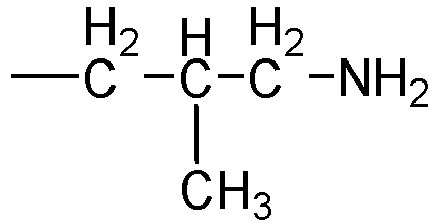
- (2) R3 = Rest der allgemeinen Formel H2N-(CH2)xR4-(CH2)y-, in der R4 einen Sauerstoff-, Schwefel-, -NH- oder -NH-CH2-CH2-NH-Rest bedeutet und x ≧ 2 und y ≧ 2 ist. Beispiele solcher Reste sind H2N-(CH2-)3- und H2N-(CH2)2-NH-(CH2)3-.
- (3) (R2O)3Si-(CH2)x-NH-(CH2)x-. Beispiele solcher Reste sind (C2H5O)3Si-(CH2)3-NH-(CH2)3- und (CH3)3Si-(CH2)2-NH-(CH2)2-.
- (4) R3 = Rest der allgemeinen Formel


- Dabei sind als Reste R3 diejenigen mit der Bedeutung -(CH2)3-NH2, -(CH2)2-NH-(CH2)3-NH2 oder (4) besonders bevorzugt.
- Bestandteil A2) ist ein a, ω-Siloxanol der allgemeinen Formel

- Das Verhältnis der Bestandteile A1) und A2) ist so einzustellen, dass einer SiOH-Gruppe der Verbindung A2) > 1 bis 3 OR2-Gruppen der Verbindung A1) entsprechen. Vorzugsweise beträgt das Verhältnis OH : OR2 = 1 : 2.
- Die Silane A1 und/oder Siloxanole A2 können allein oder in beliebigen Mischungen miteinander eingesetzt werden.
- Die Mischungen können als Lösungen Lösungsmitteln wie beispielsweise Alkohole, insbesondere in Abwesenheit von Wasser, oder in Anwesenheit von Wasser in Form von Emulsionen vorliegen.
- Diese Produkte können mit 0,1 -100 % aktiv in Wasser gelöst als Emulsion oder in Lösemittel wie Alkohole, Kohlenwasserstoffen gelöst vorliegen.
- Diese Produkte können einen Aktivgehalt von 0,1 bis 99,9 Gew.-% an Silanen A1 und/oder an Siloxanolen A2 in Wasser gelöst bzw. emulgiert oder in Lösungsmitteln, wie z. B. Alkoholen oder Kohlenwasserstoffen, gelöst enthalten.
- Eine Abänderung der Zubereitung nach der vorliegenden Erfindung ist dadurch gekennzeichnet, dass die Komponenten A1) und A2) nicht einzeln, sondern deren Umsetzungsprodukt enthalten ist, welches dadurch erhältlich ist, dass man vor der Emulgierung die Komponenten A1) und A2) unter Berücksichtigung der stöchiometrischen Verhältnisse durch Erhitzen auf 150 bis 200 °C ganz oder teilweise miteinander umsetzt. Es hat sich gezeigt, dass bei Verwendung einer solchen abgeänderten erfindungsgemäßen Zubereitung ebenfalls gute Ergebnisse in Bezug auf den Abperleffekt erzielt werden.
- Als Hydrophobierungsmittel kann gegebenenfalls zusätzlich oder alternativ auch wenigstens eine organische Fettsäure oder wenigstens ein Salz einer organischen Fettsäure verwendet werden. Hierbei ist gleichermaßen auf die vorweg beispielhaft angeführten organischen Fettsäuren respektive Salze der organischen Fettsäuren zu verweisen.
- Auch die Verwendung eines Mineralöls als Hydrophobierungsmittel ist alternativ oder ergänzend denkbar.
- Gleiches gilt für die Verwendung eines Alkans als Hydrophobierungsmittel.
- Auch die Verwendung von Bitumen als Hydrophobierungsmittel ist ergänzend oder alternativ denkbar.
- Der Gehalt an Hydrophobierungsmitteln, gemessen in g, in der Emulsion sollte erfindungsgemäß 0,1 % - 2,5 %, insbesondere 0,3 % - 1 % der Menge an zu benetzendem Bims in g getragen. Das heißt, zur Hydrophobierung von 1 kg Bims ist beispielsweise bei Einwaage von 0,5 % Hydrophobierungsmittel eine Menge von 5 g beispielsweise an Hydrophobierungsmittel in der Emulsion. Auch die Menge an zu verwendender äußerer Phase, also beispielsweise Wasser, bemisst sich zweckmäßigerweise an Hand der Menge an zu benetzendem Bims. So sollte die Menge an äußerer Phase, insbesondere Wasser, gemessen in g, 1/5 - 1/3, insbesondere ¼ der Menge an zu benetzendem Bims, ebenfalls gemessen in g, betragen. Bezogen auf das Beispiel von 1 kg Bims sollten beispielsweise 250 g Wasser (= 250 ml Wasser) verwendet werden, in denen beispielsweise die oben angegebenen 5 g Hydrophobierungsmittel emulgiert werden.
- In verschiedenen Untersuchungen und Vergleichstests wurden die Eigenschaften des erfindungsgemäßen Bimses überprüft und mit verschiedenen Vergleichsmaterialien verglichen.
- Zunächst wurde eine bestimmte Menge an erfindungsgemäßem Bims hergestellt. Als Ausgangsmaterial wurde Bims der Bezeichnung "ROTOCELL" der ROTEC GmbH & Co. KG mit einer Körnung von 0,09 - 0,3 mm und einem Schüttgewicht von 390 kg/m3 +/- 15 % verwendet. Von diesem Bims wurden 400 g trocken eingewogen.
- Sodann wurden zur Herstellung einer Emulsion 100 ml Wasser (= 100 g ≙ 25 % an Bimsmasse) abgemessen. Zu dem Wasser wurden 2 g Hydrophobierungsmittel, nämlich ein reaktives Organosiloxan/PDMS-Gemisch, erhältlich unter der Bezeichnung "Sitren 595" von der Firma Evonik Goldschmidt GmbH (2 g ≙ 0,5 % an Bimsmasse), zugegeben. Das Wasser und das Hydrophobierungsmittel wurden durch Schütteln vermischt und so das Hydrophobierungsmittel fein emulgiert. Die Menge an Wasser kann natürlich variiert werden. Wichtig ist, dass der zugegebene Gehalt an Hydrophobierungsmittel stets im geforderten Verhältnis zur zu benetzende Bimsmasse steht, und auch vollständig dem Bims zugeführt wird. Je mehr Emulsion hergestellt wird, in der die bimsmassenbezogene Siloxanmenge emulgiert ist, desto mehr Emulsion muss also auch mit dem Bims vermischt werden.
- Im nächsten Schritt wurde der Bims in einen Mischer gegeben, der den Bims mit einem Knethaken durchmischt. Mit Beginn des Mischens wurde die Emulsion unter Verwendung einer Sprühflasche aufgesprüht, während kontinuierlich gemischt wurde. Nach Beendigung des Aufsprühvorgangs nach ca. 5 Minuten wurde noch für 15 Minuten weitergerührt.
- Am Ende des Rührens wurde der benetzte Bims entnommen und in einer Schale in einen Trockenschrank bei 150 °C zum Trocknen gegeben. Anschließend wurde der getrocknete Bims entnommen und an Raumluft abgekühlt.
- In einem Langzeitversuch wurde zunächst das Wasseraufnahmevermögen des erfindungsgemäßen Bimses untersucht.
- Hierzu wurde in zwei Standzylinder mit jeweils einem Ablesevolumen von 1000 ml jeweils eine Menge von exakt 500 ml destiliertem Wasser gegeben. In den einen Standzylinder wurden exakt 100 g Bims, erhältlich unter der Bezeichnung "ROTOCELL", mit einer Körnung von 0,09 - 0,3 mm, gegeben, der nicht erfindungsgemäß hydrophobiert war. In den anderen Standzylinder wurden exakt 100 g des wie oben beschrieben hergestellten hydrophobierten "ROTOCELL"-Bimses gegeben.
- Der nicht hydrophobierte Bims ging nach Zugabe direkt unter. Nach Entweichen der Luft aus dem Porenvolumen des Bimses wurde ein Ablesevolumen von 620 ml festgestellt.
- Der erfindungsgemäß hydrophobierte Bims hingegen sank nicht ab. Es wurde ein Ablesevolumen von 720 ml festgestellt.
- Nach Aufgabe des Bimses und Erfassung der Ablesevolumina wurden die Standzylinder luftdicht mittels Folien verschlossen und erschütterungsfrei aufgestellt.
- Die Proben wurden eine Woche stehen gelassen, wonach erneut die Ablesevolumina festgestellt wurden. Es wurden dieselben Ablesevolumina wie bei der ersten Ablesung unmittelbar nach Bimsaufgabe erfasst, d.h. beim den nichthydrophobierten Bims enthaltenden Standzylinder ein Volumen von 620 ml, beim den erfindungsgemäßen hydrophobierten Bims enthaltenden Zylinder ein Volumen von 720 ml. Es traten also keine Veränderungen auf.
- Hieraus ergibt sich, dass der erfindungsgemäße hydrophobierte Bims keinerlei Wasser aufnimmt, das heißt, dass er vollständig hydrophob ist.
- In einem weiteren Versuch wurden anhand dreier verschiedener Probekörper, von denen einer den erfindungsgemäßen und wie oben beschrieben hergestellten Bims enthielt, während die anderen zwei andere Zuschlagstoffe enthielten, hergestellt, wobei Eigenschaften der zunächst hergestellten Körpermasse sowie Eigenschaften der fertigen Körper untersucht wurden.
- Als Ausgangsmaterial wurde ein handelsüblicher Fliesenkleber (Klebemörtel) basierend im Wesentlichen auf Zement (Portlandzement), feinkörnigen Zuschlagstoffen (Kalksteinmehl, Quarzsand) und Zusatzmitteln(Methylcellulose, Dispersionspulver, Cellulosefasern, Tonerdeschmelzzement) verwendet. Hiervon wurden drei Mörtelmengen zu jeweils exakt 600 g abgewogen.
- Zur ersten Menge wurden 150 g eines handelsüblichen silikatischen Schaumes (Leichtschaum) mit einer Körnung von 0,1 - 0,3 mm hinzugegeben. Zur zweiten Mörtelmenge wurden 150 g des "ROTOCELL"-Bimses mit einer Körnung von 0,09 -0,3 mm, jedoch nicht hydrophobiert, zugegeben. Zur dritten Mörtelmenge wurden 150 g des oben beschriebenen erfindungsgemäßen "ROTOCELL"-Bimses, hydrophobiert, zugegeben.
- Anschließend wurde jede Probe mit Wasser angemacht. Zur ersten Probe wurden 345 g Wasser gegeben, zur zweiten Probe 375 g und zur dritten Probe 345 g Wasser.
- Sodann wurde zunächst die Ergiebigkeit der jeweiligen Proben vermessen. Die Ergiebigkeit betrug bei der ersten Probe enthaltend den silikatischen Schaum 870 ml. Die den unbehandelnden Bims enthaltende Probe zeigte eine Ergiebigkeit von 815 ml. Die den erfindungsgemäßen Bims enthaltende Probe zeigte eine Ergiebigkeit von 900 ml. Das heißt, dass der erfindungsgemäße Bims zu einer Mörtelmasse mit der größten Ergiebigkeit geführt hat, was auf die hydrophobe Eigenschaft des Bimses und daraus resultierend seine Wasserverdrängung und seine homogene Verteilung in der Masse zurückzuführen ist.
- Im Folgenden wurden die Frischrohdichten der angemachten Proben vermessen. Diese betrug bei der den silikatischen Schaum enthaltenden Probe 1,27 kg/dm3, bei der zweiten Probe, die den unbehandelten Bims enthält 1,27 kg/dm3 und bei der den erfindungsgemäßen Bims enthaltenden Probe 1,22 kg/dm3. Das heißt, dass die den erfindungsgemäßen Bims enthaltende Probe eine geringere Dichte aufwies.
- Im nächsten Schritt wurden, gestützt auf die Testreihe für Fliesenkleber gemäß DIN EN12002, aus jeder Masse ein Probekörper in Form eines Mörtelprismas erstellt, um das Verformungsverhalten der Mörtel zu untersuchen. Das jeweilige Prisma hatte eine Länge von 160 mm, eine Breite von 80 mm und eine Höhe von 80 mm. Die jeweils hergestellten Prismen wurden über mehrere Tage getrocknet und anschließend vermessen.
- Die einzelnen Messwerte sind, zusammen mit den jeweiligen Mengen der verwendeten Massebestandteile, in der nachfolgenden Tabelle wiedergegeben.
Probe: I II III Leichtzuschlag: Silikat. Schaum Körnung: 0,1-0,3 mm Bims nicht hydrophobiert Körnung: 0,09-0,3 mm Bims hydrophobiert Körnung: 0,09-0,3 mm Klebemörtel (g): 600 600 600 Masse Zuschlag (g) 150 150 150 Wassermenge (g) 345 375 345 Ergiebigkeit (ml) 870 850 900 Frischrohdichte Mörtel (kg/dm3): 1,27 1,27 1,22 Probenkörper: Mörtelprisma L x B x H (mm): 160 x 80 x 80 160 x 80 x 80 160 x 80 x 80 Gewicht trocken (g) 229 227 223 Trockenrohdichte (kg/dm3): 0,224 0,221 0,218 Bruchlast Biegung (kN): 0,487 0,408 0,449 Biegezugfestigkeit (N/mm2): 0,143 0,12 0,132 Bruchlast Druck (kN): 4,39 3,56 4,52 Druckfestigkeit (N/mm2): 0,7 0,6 0,71 - Vermessen wurde zum einen das Trockengewicht der Körper. Dieses betrug bei dem den silikatischen Schaum enthaltende Probekörper 229 g, bei dem den unbehandelten Bims enthaltenden Probekörper 227 g und bei dem erfindungsgemäßen Bims enthaltenden Probekörper 223 g. Das heißt, dass der den erfindungsgemäßen Bims enthaltende Probekörper der leichteste aller Probekörper war.
- Weiterhin wurde die Trockenrohdichte gemessen. Diese betrug beim den silikatischen Schaum enthaltenen Probekörper 0,224 kg/dm3, bei dem den unbehandelten Bims enthaltenen Probekörper 0,221 kg/dm3 und bei dem den erfindungsgemäßen Bims enthaltenen Probekörper 0,218 kg/dm3. Mithin zeigte der den erfindungsgemäßen Bims enthaltende Probekörper die niedrigste Trockenrohdichte.
- Sodann wurde die Bruchlast bei Biegung, die Biegezugfestigkeit, die Bruchlast bei Druck sowie die Bruchfestigkeit vermessen. Die Messwerte sind im Einzelnen der Tabelle zu entnehmen.
- Die Bruchlast der den silikatischen Schaum enthaltenden Probe betrug 0,487 kN. Während die Bruchlast der den unbehandelnden Bims enthaltenen Probe mit 0,408 kN deutlicher unterhalb des Wertes der silikatischen Leichtschaum -Probe lag, wies die den erfindungsgemäßen Bims aufweisende Probe mit 0,449 kN einen Messwert auf, der annähernd im Bereich der silikatischen Leichtschaum -Probe lag.
- Die Biegezugfestigkeit der silikatischen Schaum -Probe betrug 0,143 N/mm2. Auch hier lag die den unbehandelnden Bims aufweisende Probe mit 0,12 N/mm2 deutlicher darunter, während die den erfindungsgemäßen Bims aufweisende Probe mit 0,132 N/mm2 wiederum genähert im Bereich der silikatischen Schaum - Probe lag.
- Bei der Bruchlast unter Druck zeigt die den erfindungsgemäßen Bims enthaltende Probe den höchsten Messwert mit 4,52 kN, während die den silikatischen Schaum enthaltende Probe einen Wert von 4,39 kN aufwies und die dem unbehandelnden Bims aufweisende Probe einen Wert von 3,56 kN. Auch bei der Druckfestigkeit wies die den erfindungsgemäßen Bims aufweisende Probe mit 0,71 N/mm2 den höchsten Wert auf, verglichen mit 0,7 N/mm2 bei der silikatischen Schaum -Probe und 0,6 N/mm2 bei der den unbehandelnden Bims aufweisenden Probe.
- Der Vergleichsversuch zeigt, dass unter Verwendung des erfindungsgemäßen Bimses beispielsweise ein Fliesenkleber angemischt werden kann, der einerseits eine sehr gute Ergiebigkeit aufweist, und der andererseits, wie die verschiedenen Probekörper zeigten, sehr gute mechanische Eigenschaften aufweist, verglichen mit insbesondere dem Mörtel/Probekörper, der den silikatischen Schaum enthielt.
Claims (17)
- Granularer Bims, dadurch gekennzeichnet, dass die Oberfläche mit einer hydrophoben Beschichtung belegt ist, welche aus einem Silan, Siloxan besteht, wobei als Silan verwendet ist:A1) Silan der allgemeinen Formel
R3-Si-(OR2)3
wobei
R2 ein Methyl oder Ethylrest ist und
R3 ein Alkylrest mit 3 bis 12 Kohlenstoffatomen,
oder ein Aminoalkylrest mit 1 bis 6 Kohlenstoffatomen, oder ein Rest der allgemeinen Formel H2N-(CH2)xR4-(CH2)y-, in der R4 einen Sauerstoff-, Schwefel-, -NH-
oder
-NH-CH2-CH2-NH-Rest bedeutet und
x≧ 2 und
y ≧ 2ist, oder
ein Rest der allgemeinen Formel
(R2O)3Si-(CH2)x-NH-(CH2)x-,
R2 und x wie vorstehend definiert,
 A2) ein Polysiloxan bzw. Siloxanol der allgemeinen Formel
und dass ein verwendetes Gemisch aus einem Silan nach A1) und einem Siloxan nach A2) besteht, wobei das Verhältnis von A1) zu A2) so gehalten ist, dass einer SiOH-Gruppe der Verbindung A) > 1 bis 3 OR2-Gruppen der Verbindung A1) entsprechen und R2 ein Alkylrest mit 1 bis 4 Kohlenstoffatomen ist. - Bims nach Anspruch 1, dadurch gekennzeichnet, dass die Beschichtung zusätzlich aus wenigstens einer organischen Fettsäure oder wenigstens einem Salz einer organischen Fettsäure besteht.
- Bims nach Anspruch 1, dadurch gekennzeichnet, dass die Beschichtung zusätzlich aus einem Mineralöl oder einer Mineralölemulsion besteht.
- Bims nach Anspruch 1, dadurch gekennzeichnet, dass die Beschichtung zusätzlich aus wenigstens einem Alkan besteht.
- Bims nach Anspruch 1, dadurch gekennzeichnet, dass die Beschichtung zusätzlich aus Bitumen oder einer bituminösen Emulsion besteht.
- Verfahren zur Herstellung von Bims nach einem der vorangehenden Ansprüche, dadurch gekennzeichnet, dass der granulare Bims mit einer Emulsion enthaltend wenigstens ein in der äußeren Phase verteiltes, die innere Phase bildendes Hydrophobierungsmittel benetzt und anschließend getrocknet wird, wobei das Hydrophobierungsmittel auf der Oberfläche der Bimsgranulen eine hydrophobe Beschichtung bildet, welche als einem Silan und einem Siloxan besteht, wobei als Silan verwendet wird:A1) Silan der allgemeinen Formel
R3-Si-(OR2)3
wobei
R2 ein Methyl oder Ethylrest ist und
R3 ein Alkylrest mit 3 bis 12 Kohlenstoffatomen,
oder ein Aminoalkylrest mit 1 bis 6 Kohlenstoffatomen, oder ein Rest der allgemeinen Formel H2N-(CH2)xR4-(CH2)y-, in der R4 einen Sauerstoff-, Schwefel-, -NH-
oder
-NH-CH2-CH2-NH-Rest bedeutet und
x≧ 2 und
y ≧ 2 ist, oder
ein Rest der allgemeinen Formel
(R2O)3Si-(CH2)x-NH-(CH2)x-,
R2 und x wie vorstehend definiert,
 A2) ein Polysiloxan bzw. Siloxanol der allgemeinen Formel
R5 ein Methyl- oder Phenylrest ist, jedoch mindestens 90 % der Reste R5 Methylreste sind und m = 20 bis 250 ist, - Verfahren nach Anspruch 6, dadurch gekennzeichnet, dass die Emulsion aufgesprüht wird.
- Verfahren nach Anspruch 6 oder 7, dadurch gekennzeichnet, dass der Bims während und nach Zugabe der Emulsion gemischt wird.
- Verfahren nach Anspruch 8, dadurch gekennzeichnet, dass die Mischdauer zwischen 1 min - 25 min, insbesondere 10 min - 15 min beträgt.
- Verfahren nach einem der Ansprüche 6 bis 9, dadurch gekennzeichnet, dass der benetzte Bims bei einer Temperatur zwischen 0° - 200°C, bevorzugt zwischen 130° - 180°C, insbesondere bei etwa 150°C getrocknet wird.
- Verfahren nach einem der Ansprüche 6 bis 10, dadurch gekennzeichnet, dass ein Hydrophobierungsmittel aus wenigstens einer organischen Fettsäure oder wenigstens einem Salz einer organischen Fettsäure verwendet wird.
- Verfahren nach einem der Ansprüche 6 bis 10, dadurch gekennzeichnet, dass als Hydrophobierungsmittel zusätzlich Mineralöl verwendet wird.
- Verfahren nach einem der Ansprüche 6 bis 10, dadurch gekennzeichnet, dass als Hydrophobierungsmittel zusätzlich ein Alkan verwendet wird.
- Verfahren nach einem der Ansprüche 6 bis 10, dadurch gekennzeichnet, dass als Hydrophobierungsmittel zusätzlich Bitumen verwendet wird.
- Verfahren nach einem der Ansprüche 6 bis 14, dadurch gekennzeichnet, dass die äußere Phase Wasser ist.
- Verfahren nach einem der Ansprüche 6 bis 15, dadurch gekennzeichnet, dass der Gehalt in g an Hydrophobierungsmittel in der Emulsion 0,1% - 2,5%, insbesondere 0,3% - 1 % der Menge an zu benetzendem Bims in g beträgt.
- Verfahren nach einem der Ansprüche 6 bis 16, dadurch gekennzeichnet, dass die Menge in g an äußerer Phase, insbesondere Wasser 1/5 - 1/3, insbesondere 1/4 der Menge in g an zu benetzendem Bims beträgt.
Applications Claiming Priority (2)
| Application Number | Priority Date | Filing Date | Title |
|---|---|---|---|
| DE102010021532A DE102010021532A1 (de) | 2010-05-26 | 2010-05-26 | Granularer Bims sowie Verfahren zur Herstellung von granularem Bims |
| EP11706816.3A EP2576477B3 (de) | 2010-05-26 | 2011-03-04 | Granularer bims sowie verfahren zur herstellung von granularem bims |
Related Parent Applications (3)
| Application Number | Title | Priority Date | Filing Date |
|---|---|---|---|
| EP11706816.3 Division | 2011-03-04 | ||
| EP11706816.3A Division-Into EP2576477B3 (de) | 2010-05-26 | 2011-03-04 | Granularer bims sowie verfahren zur herstellung von granularem bims |
| EP11706816.3A Division EP2576477B3 (de) | 2010-05-26 | 2011-03-04 | Granularer bims sowie verfahren zur herstellung von granularem bims |
Publications (2)
| Publication Number | Publication Date |
|---|---|
| EP2639207A1 true EP2639207A1 (de) | 2013-09-18 |
| EP2639207B1 EP2639207B1 (de) | 2016-08-03 |
Family
ID=44041676
Family Applications (2)
| Application Number | Title | Priority Date | Filing Date |
|---|---|---|---|
| EP11706816.3A Active EP2576477B3 (de) | 2010-05-26 | 2011-03-04 | Granularer bims sowie verfahren zur herstellung von granularem bims |
| EP13171174.9A Active EP2639207B1 (de) | 2010-05-26 | 2011-03-04 | Granularer Bims sowie Verfahren zur Herstellung von granularem Bims |
Family Applications Before (1)
| Application Number | Title | Priority Date | Filing Date |
|---|---|---|---|
| EP11706816.3A Active EP2576477B3 (de) | 2010-05-26 | 2011-03-04 | Granularer bims sowie verfahren zur herstellung von granularem bims |
Country Status (11)
| Country | Link |
|---|---|
| US (2) | US8859096B2 (de) |
| EP (2) | EP2576477B3 (de) |
| JP (1) | JP2013529171A (de) |
| CN (1) | CN102971272B (de) |
| BR (1) | BR112012029925A2 (de) |
| CA (1) | CA2799983C (de) |
| DE (1) | DE102010021532A1 (de) |
| DK (2) | DK2639207T3 (de) |
| ES (2) | ES2600642T3 (de) |
| PL (2) | PL2576477T6 (de) |
| WO (1) | WO2011147599A1 (de) |
Families Citing this family (18)
| Publication number | Priority date | Publication date | Assignee | Title |
|---|---|---|---|---|
| DE102010021532A1 (de) * | 2010-05-26 | 2011-12-01 | Evonik Goldschmidt Gmbh | Granularer Bims sowie Verfahren zur Herstellung von granularem Bims |
| US8915033B2 (en) | 2012-06-29 | 2014-12-23 | Intellectual Gorilla B.V. | Gypsum composites used in fire resistant building components |
| US20140000193A1 (en) | 2012-06-29 | 2014-01-02 | 820 Industrial Loop Partners Llc | Fire rated door core |
| US9375899B2 (en) | 2012-06-29 | 2016-06-28 | The Intellectual Gorilla Gmbh | Gypsum composites used in fire resistant building components |
| WO2014138283A1 (en) | 2013-03-05 | 2014-09-12 | Intellectual Gorilla B.V. | Extruded gypsum-based materials |
| JP6207859B2 (ja) * | 2013-03-29 | 2017-10-04 | 三商株式会社 | 表面保護剤及び表面保護工法 |
| CN105392753A (zh) | 2013-04-24 | 2016-03-09 | 知识产权古里亚有限责任公司 | 由玻璃或浮石制备的膨胀轻质骨料 |
| CN111003958A (zh) | 2013-04-24 | 2020-04-14 | 知识产权古里亚有限责任公司 | 挤出的轻质热绝缘水泥基材料 |
| WO2014186687A1 (en) * | 2013-05-16 | 2014-11-20 | Bnz Materials, Inc. | Refractory castables with hydrophobic aggregates |
| US10125046B2 (en) * | 2013-10-15 | 2018-11-13 | S & B Industrial Minerals S.A. | Expanded, micronized surface treated aluminosilicate volcanic glass as lamellar functional filler for plastics and special coatings |
| AU2014337246A1 (en) | 2013-10-17 | 2016-05-05 | The Intellectual Gorilla Gmbh | High temperature lightweight thermal insulating cement and silica based materials |
| DE102013019681A1 (de) | 2013-11-22 | 2015-06-11 | Klb Klimaleichtblock Gmbh | Oberflächenbeschichter bims, verfahren zum oberflächenbeschichten von bims, verwendung einer flüssigglas-zusammensetzung zum oberflächen-beschichten von bims |
| EP3102551B1 (de) | 2014-02-04 | 2025-04-02 | The Intellectual Gorilla GmbH | Verfahren zur herstellung eines isolierenden materials |
| EP3157884A4 (de) | 2014-06-05 | 2018-02-28 | The Intellectual Gorilla GmbH | Extrudierte materialien auf zementbasis |
| US11072562B2 (en) | 2014-06-05 | 2021-07-27 | The Intellectual Gorilla Gmbh | Cement-based tile |
| DE102015102530A1 (de) * | 2015-02-23 | 2016-08-25 | Monier Roofing Gmbh | Dachstein sowie Verfahren zur Herstellung eines solchen Dachsteins |
| CN110204277A (zh) * | 2019-06-04 | 2019-09-06 | 东方雨虹民用建材有限责任公司 | 一种防结块瓷砖胶及其制备方法 |
| CN113604087B (zh) * | 2021-07-27 | 2022-07-05 | 四川纵横交安科技有限公司 | 一种环保吸音蓄能发光材料及其制备方法及应用 |
Citations (1)
| Publication number | Priority date | Publication date | Assignee | Title |
|---|---|---|---|---|
| DE2046395A1 (de) * | 1970-09-19 | 1972-03-30 | Strabit-Werke Gmbh, 5450 Neuwied | Bindemittel für Öl und organische Lösungsmittel und Verfahren zu seiner Herstellung |
Family Cites Families (9)
| Publication number | Priority date | Publication date | Assignee | Title |
|---|---|---|---|---|
| DE2049361A1 (en) * | 1970-10-08 | 1972-04-13 | Strabit-Werke Gmbh, 5450 Neuwied | Bitument coated pumice stone granulate - insulating material |
| DE2142879C3 (de) * | 1971-08-27 | 1978-06-15 | Strabit-Werke Gmbh, 5450 Neuwied | Putz- und Mauermörtel, sowie Verfahren zu seiner Herstellung |
| US4231884A (en) * | 1979-01-16 | 1980-11-04 | American Gilsonite Company | Water retardant insulation composition comprising treated low density granular mineral material and finely divided limestone or similar carbonate or silicate mineral particles and method for using same |
| JPS5964565A (ja) * | 1982-09-30 | 1984-04-12 | 松下電工株式会社 | 無機質板 |
| JPS6227360A (ja) * | 1985-07-24 | 1987-02-05 | 積水化成品工業株式会社 | 低吸水性無機多孔質ビ−ズ |
| NL8903092A (nl) * | 1989-12-18 | 1991-07-16 | Aardelite Holding Bv | Werkwijze voor het verminderen van de uitloogbaarheid van korrelvormig materiaal en daarmee verkregen korrelvormig materiaal. |
| JP2003342054A (ja) * | 2002-05-23 | 2003-12-03 | Matsushita Electric Works Ltd | 無機質板とその製造方法 |
| US8142856B2 (en) * | 2005-07-15 | 2012-03-27 | Dow Corning Corporation | Hydrophobing minerals and filler materials |
| DE102010021532A1 (de) * | 2010-05-26 | 2011-12-01 | Evonik Goldschmidt Gmbh | Granularer Bims sowie Verfahren zur Herstellung von granularem Bims |
-
2010
- 2010-05-26 DE DE102010021532A patent/DE102010021532A1/de not_active Withdrawn
-
2011
- 2011-03-04 PL PL11706816T patent/PL2576477T6/pl unknown
- 2011-03-04 DK DK13171174.9T patent/DK2639207T3/en active
- 2011-03-04 CN CN201180025953.8A patent/CN102971272B/zh not_active Expired - Fee Related
- 2011-03-04 ES ES13171174.9T patent/ES2600642T3/es active Active
- 2011-03-04 CA CA2799983A patent/CA2799983C/en not_active Expired - Fee Related
- 2011-03-04 EP EP11706816.3A patent/EP2576477B3/de active Active
- 2011-03-04 DK DK11706816.3T patent/DK2576477T6/en active
- 2011-03-04 PL PL13171174T patent/PL2639207T3/pl unknown
- 2011-03-04 JP JP2013511580A patent/JP2013529171A/ja active Pending
- 2011-03-04 ES ES11706816.3T patent/ES2493092T7/es active Active
- 2011-03-04 EP EP13171174.9A patent/EP2639207B1/de active Active
- 2011-03-04 US US13/699,894 patent/US8859096B2/en active Active
- 2011-03-04 WO PCT/EP2011/053287 patent/WO2011147599A1/de not_active Ceased
- 2011-03-04 BR BR112012029925A patent/BR112012029925A2/pt not_active Application Discontinuation
-
2014
- 2014-09-04 US US14/477,348 patent/US9388075B2/en not_active Expired - Fee Related
Patent Citations (1)
| Publication number | Priority date | Publication date | Assignee | Title |
|---|---|---|---|---|
| DE2046395A1 (de) * | 1970-09-19 | 1972-03-30 | Strabit-Werke Gmbh, 5450 Neuwied | Bindemittel für Öl und organische Lösungsmittel und Verfahren zu seiner Herstellung |
Also Published As
| Publication number | Publication date |
|---|---|
| DE102010021532A1 (de) | 2011-12-01 |
| PL2576477T3 (pl) | 2014-11-28 |
| DK2576477T3 (da) | 2014-08-18 |
| EP2576477B1 (de) | 2014-06-18 |
| CA2799983A1 (en) | 2011-12-01 |
| DK2576477T6 (en) | 2015-10-12 |
| EP2576477B3 (de) | 2015-07-01 |
| WO2011147599A1 (de) | 2011-12-01 |
| ES2600642T3 (es) | 2017-02-10 |
| DK2639207T3 (en) | 2016-11-28 |
| US20140370294A1 (en) | 2014-12-18 |
| EP2639207B1 (de) | 2016-08-03 |
| PL2576477T6 (pl) | 2015-12-31 |
| JP2013529171A (ja) | 2013-07-18 |
| PL2639207T3 (pl) | 2017-01-31 |
| US9388075B2 (en) | 2016-07-12 |
| US20130143044A1 (en) | 2013-06-06 |
| US8859096B2 (en) | 2014-10-14 |
| ES2493092T3 (es) | 2014-09-11 |
| CA2799983C (en) | 2017-04-18 |
| CN102971272A (zh) | 2013-03-13 |
| EP2576477A1 (de) | 2013-04-10 |
| ES2493092T7 (es) | 2015-10-22 |
| CN102971272B (zh) | 2015-12-09 |
| BR112012029925A2 (pt) | 2017-02-21 |
Similar Documents
| Publication | Publication Date | Title |
|---|---|---|
| EP2576477B3 (de) | Granularer bims sowie verfahren zur herstellung von granularem bims | |
| DE102008063965B4 (de) | Hydrophobierte zementhaltige Zusammensetzungen | |
| DE60121164T2 (de) | Wasserabweisende Organosilikonzusammensetzung | |
| EP0476452A2 (de) | Zubereitung zur wasserabweisenden Imprägnierung poröser mineralischer Baustoffe | |
| DE19744612A1 (de) | Emulsionen von Organosiliciumverbindungen für die Hydrophobierung von Baustoffen | |
| EP1983019A2 (de) | Organisch modifizierte Siloxane und deren Verwendung zur Herstellung von Zubereitungen für wasserabweisende Imprägnierungen | |
| DE2405891A1 (de) | Hochfester, wasserbestaendiger silicatschaum | |
| EP0053223B1 (de) | Verfahren zum Herstellen von Bausteinen oder Bauteilen | |
| EP3707107B1 (de) | Alkylsiliconharz als additiv zur hydrophobierung von faserzement | |
| EP0124748A1 (de) | Zubereitung zum Wasserabweisendmachen anorganischer Baustoffe | |
| WO2010089166A1 (de) | Fluorfreie zusammensetzung zur wasserabweisenden beschichtung von oberflächen mit verbesserten abperleigenschaften | |
| DE69704312T2 (de) | Gipsmischung, die ein hydrophobes Additiv enthält, und Verfahren zur Hydrophobierung von Gips | |
| DE102005005259B4 (de) | Mineralisches Dämmelement und Verfahren zu seiner Herstellung | |
| WO2019081344A1 (de) | Disalz als robustes primärtensid für recyclinggipshaltige calciumsulfatmischungen | |
| EP0977716B1 (de) | Verwendung von alkoholen als additive für putze und/oder mörtel | |
| EP2796436A1 (de) | Verfahren zur Behandlung von Gips | |
| DE2606273B2 (de) | Verfahren zur Herstellung von Hydrophobiermittel!! | |
| DE102009047582A1 (de) | Siliconharzemulsion und deren Einsatz bei der Hydrophobierung von Gips | |
| EP4263462B1 (de) | Verdünnungsstabile wässrige zusammensetzung zur massenhydrophobierung von mineralischen baustoffen | |
| WO2010018017A2 (de) | Pulverförmige baustoffzusammensetzungen enthaltend langkettige dialkylether | |
| DE102015203685A1 (de) | Verfahren zur Herstellung pulverförmiger Alkaliorganosiliconat- Baustoffhydrophobiermittel | |
| DE1646414A1 (de) | Verwendung von Sulfoniumsalzen zum Hydrophobieren von hydraulischen Bindemitteln | |
| WO2023280401A1 (de) | Zementhaltige zusammensetzung enthaltend oligomere dialkoxysilane | |
| DE102023207658A1 (de) | Bindemittelmischung für eine gebundene Dämmstoffschüttung, gebundene Dämmstoffschüttung mit der Bindemittelmischung und deren Verwendung, Verfahren zur Herstellung eines Poren- und/oder Schaumbetongranulats für die Dämmstoffschüttung und dessen Verwendung sowie Verfahren zur Herstellung einer verfestigten Dämmstoffschüttung | |
| WO2018177909A1 (de) | Hydrophobierungsmittel für trockenmörtel |
Legal Events
| Date | Code | Title | Description |
|---|---|---|---|
| PUAI | Public reference made under article 153(3) epc to a published international application that has entered the european phase |
Free format text: ORIGINAL CODE: 0009012 |
|
| AC | Divisional application: reference to earlier application |
Ref document number: 2576477 Country of ref document: EP Kind code of ref document: P |
|
| AK | Designated contracting states |
Kind code of ref document: A1 Designated state(s): AL AT BE BG CH CY CZ DE DK EE ES FI FR GB GR HR HU IE IS IT LI LT LU LV MC MK MT NL NO PL PT RO RS SE SI SK SM TR |
|
| AX | Request for extension of the european patent |
Extension state: BA ME |
|
| RAP1 | Party data changed (applicant data changed or rights of an application transferred) |
Owner name: EVONIK DEGUSSA GMBH Owner name: ROTEC ROHSTOFF-TECHNIK GMBH & CO. KG |
|
| 17P | Request for examination filed |
Effective date: 20140317 |
|
| RBV | Designated contracting states (corrected) |
Designated state(s): AL AT BE BG CH CY CZ DE DK EE ES FI FR GB GR HR HU IE IS IT LI LT LU LV MC MK MT NL NO PL PT RO RS SE SI SK SM TR |
|
| 17Q | First examination report despatched |
Effective date: 20140617 |
|
| GRAP | Despatch of communication of intention to grant a patent |
Free format text: ORIGINAL CODE: EPIDOSNIGR1 |
|
| INTG | Intention to grant announced |
Effective date: 20160408 |
|
| GRAS | Grant fee paid |
Free format text: ORIGINAL CODE: EPIDOSNIGR3 |
|
| GRAA | (expected) grant |
Free format text: ORIGINAL CODE: 0009210 |
|
| AC | Divisional application: reference to earlier application |
Ref document number: 2576477 Country of ref document: EP Kind code of ref document: P |
|
| AK | Designated contracting states |
Kind code of ref document: B1 Designated state(s): AL AT BE BG CH CY CZ DE DK EE ES FI FR GB GR HR HU IE IS IT LI LT LU LV MC MK MT NL NO PL PT RO RS SE SI SK SM TR |
|
| REG | Reference to a national code |
Ref country code: GB Ref legal event code: FG4D Free format text: NOT ENGLISH |
|
| REG | Reference to a national code |
Ref country code: CH Ref legal event code: EP Ref country code: AT Ref legal event code: REF Ref document number: 817222 Country of ref document: AT Kind code of ref document: T Effective date: 20160815 |
|
| REG | Reference to a national code |
Ref country code: IE Ref legal event code: FG4D Free format text: LANGUAGE OF EP DOCUMENT: GERMAN |
|
| REG | Reference to a national code |
Ref country code: DE Ref legal event code: R096 Ref document number: 502011010329 Country of ref document: DE |
|
| REG | Reference to a national code |
Ref country code: NL Ref legal event code: FP |
|
| REG | Reference to a national code |
Ref country code: DK Ref legal event code: T3 Effective date: 20161125 |
|
| REG | Reference to a national code |
Ref country code: SE Ref legal event code: TRGR |
|
| REG | Reference to a national code |
Ref country code: LT Ref legal event code: MG4D |
|
| PG25 | Lapsed in a contracting state [announced via postgrant information from national office to epo] |
Ref country code: RS Free format text: LAPSE BECAUSE OF FAILURE TO SUBMIT A TRANSLATION OF THE DESCRIPTION OR TO PAY THE FEE WITHIN THE PRESCRIBED TIME-LIMIT Effective date: 20160803 Ref country code: HR Free format text: LAPSE BECAUSE OF FAILURE TO SUBMIT A TRANSLATION OF THE DESCRIPTION OR TO PAY THE FEE WITHIN THE PRESCRIBED TIME-LIMIT Effective date: 20160803 Ref country code: FI Free format text: LAPSE BECAUSE OF FAILURE TO SUBMIT A TRANSLATION OF THE DESCRIPTION OR TO PAY THE FEE WITHIN THE PRESCRIBED TIME-LIMIT Effective date: 20160803 Ref country code: LT Free format text: LAPSE BECAUSE OF FAILURE TO SUBMIT A TRANSLATION OF THE DESCRIPTION OR TO PAY THE FEE WITHIN THE PRESCRIBED TIME-LIMIT Effective date: 20160803 Ref country code: NO Free format text: LAPSE BECAUSE OF FAILURE TO SUBMIT A TRANSLATION OF THE DESCRIPTION OR TO PAY THE FEE WITHIN THE PRESCRIBED TIME-LIMIT Effective date: 20161103 |
|
| REG | Reference to a national code |
Ref country code: ES Ref legal event code: FG2A Ref document number: 2600642 Country of ref document: ES Kind code of ref document: T3 Effective date: 20170210 |
|
| PG25 | Lapsed in a contracting state [announced via postgrant information from national office to epo] |
Ref country code: PT Free format text: LAPSE BECAUSE OF FAILURE TO SUBMIT A TRANSLATION OF THE DESCRIPTION OR TO PAY THE FEE WITHIN THE PRESCRIBED TIME-LIMIT Effective date: 20161205 Ref country code: LV Free format text: LAPSE BECAUSE OF FAILURE TO SUBMIT A TRANSLATION OF THE DESCRIPTION OR TO PAY THE FEE WITHIN THE PRESCRIBED TIME-LIMIT Effective date: 20160803 |
|
| REG | Reference to a national code |
Ref country code: GR Ref legal event code: EP Ref document number: 20160402710 Country of ref document: GR Effective date: 20170130 |
|
| REG | Reference to a national code |
Ref country code: FR Ref legal event code: PLFP Year of fee payment: 7 |
|
| PG25 | Lapsed in a contracting state [announced via postgrant information from national office to epo] |
Ref country code: EE Free format text: LAPSE BECAUSE OF FAILURE TO SUBMIT A TRANSLATION OF THE DESCRIPTION OR TO PAY THE FEE WITHIN THE PRESCRIBED TIME-LIMIT Effective date: 20160803 Ref country code: RO Free format text: LAPSE BECAUSE OF FAILURE TO SUBMIT A TRANSLATION OF THE DESCRIPTION OR TO PAY THE FEE WITHIN THE PRESCRIBED TIME-LIMIT Effective date: 20160803 |
|
| REG | Reference to a national code |
Ref country code: DE Ref legal event code: R097 Ref document number: 502011010329 Country of ref document: DE |
|
| PG25 | Lapsed in a contracting state [announced via postgrant information from national office to epo] |
Ref country code: BG Free format text: LAPSE BECAUSE OF FAILURE TO SUBMIT A TRANSLATION OF THE DESCRIPTION OR TO PAY THE FEE WITHIN THE PRESCRIBED TIME-LIMIT Effective date: 20161103 Ref country code: SK Free format text: LAPSE BECAUSE OF FAILURE TO SUBMIT A TRANSLATION OF THE DESCRIPTION OR TO PAY THE FEE WITHIN THE PRESCRIBED TIME-LIMIT Effective date: 20160803 Ref country code: CZ Free format text: LAPSE BECAUSE OF FAILURE TO SUBMIT A TRANSLATION OF THE DESCRIPTION OR TO PAY THE FEE WITHIN THE PRESCRIBED TIME-LIMIT Effective date: 20160803 Ref country code: SM Free format text: LAPSE BECAUSE OF FAILURE TO SUBMIT A TRANSLATION OF THE DESCRIPTION OR TO PAY THE FEE WITHIN THE PRESCRIBED TIME-LIMIT Effective date: 20160803 |
|
| PLBE | No opposition filed within time limit |
Free format text: ORIGINAL CODE: 0009261 |
|
| STAA | Information on the status of an ep patent application or granted ep patent |
Free format text: STATUS: NO OPPOSITION FILED WITHIN TIME LIMIT |
|
| 26N | No opposition filed |
Effective date: 20170504 |
|
| PG25 | Lapsed in a contracting state [announced via postgrant information from national office to epo] |
Ref country code: SI Free format text: LAPSE BECAUSE OF FAILURE TO SUBMIT A TRANSLATION OF THE DESCRIPTION OR TO PAY THE FEE WITHIN THE PRESCRIBED TIME-LIMIT Effective date: 20160803 |
|
| PG25 | Lapsed in a contracting state [announced via postgrant information from national office to epo] |
Ref country code: MC Free format text: LAPSE BECAUSE OF FAILURE TO SUBMIT A TRANSLATION OF THE DESCRIPTION OR TO PAY THE FEE WITHIN THE PRESCRIBED TIME-LIMIT Effective date: 20160803 |
|
| REG | Reference to a national code |
Ref country code: IE Ref legal event code: MM4A |
|
| PG25 | Lapsed in a contracting state [announced via postgrant information from national office to epo] |
Ref country code: LU Free format text: LAPSE BECAUSE OF NON-PAYMENT OF DUE FEES Effective date: 20170304 |
|
| PG25 | Lapsed in a contracting state [announced via postgrant information from national office to epo] |
Ref country code: IE Free format text: LAPSE BECAUSE OF NON-PAYMENT OF DUE FEES Effective date: 20170304 |
|
| REG | Reference to a national code |
Ref country code: FR Ref legal event code: PLFP Year of fee payment: 8 |
|
| PG25 | Lapsed in a contracting state [announced via postgrant information from national office to epo] |
Ref country code: MT Free format text: LAPSE BECAUSE OF FAILURE TO SUBMIT A TRANSLATION OF THE DESCRIPTION OR TO PAY THE FEE WITHIN THE PRESCRIBED TIME-LIMIT Effective date: 20160803 |
|
| PG25 | Lapsed in a contracting state [announced via postgrant information from national office to epo] |
Ref country code: AL Free format text: LAPSE BECAUSE OF FAILURE TO SUBMIT A TRANSLATION OF THE DESCRIPTION OR TO PAY THE FEE WITHIN THE PRESCRIBED TIME-LIMIT Effective date: 20160803 |
|
| PG25 | Lapsed in a contracting state [announced via postgrant information from national office to epo] |
Ref country code: HU Free format text: LAPSE BECAUSE OF FAILURE TO SUBMIT A TRANSLATION OF THE DESCRIPTION OR TO PAY THE FEE WITHIN THE PRESCRIBED TIME-LIMIT; INVALID AB INITIO Effective date: 20110304 |
|
| PGFP | Annual fee paid to national office [announced via postgrant information from national office to epo] |
Ref country code: ES Payment date: 20190418 Year of fee payment: 9 |
|
| PG25 | Lapsed in a contracting state [announced via postgrant information from national office to epo] |
Ref country code: CY Free format text: LAPSE BECAUSE OF NON-PAYMENT OF DUE FEES Effective date: 20160803 |
|
| PG25 | Lapsed in a contracting state [announced via postgrant information from national office to epo] |
Ref country code: MK Free format text: LAPSE BECAUSE OF FAILURE TO SUBMIT A TRANSLATION OF THE DESCRIPTION OR TO PAY THE FEE WITHIN THE PRESCRIBED TIME-LIMIT Effective date: 20160803 |
|
| REG | Reference to a national code |
Ref country code: DE Ref legal event code: R081 Ref document number: 502011010329 Country of ref document: DE Owner name: ROTEC GMBH & CO. KG, DE Free format text: FORMER OWNERS: EVONIK DEGUSSA GMBH, 45128 ESSEN, DE; ROTEC ROHSTOFF-TECHNIK GMBH & CO. KG, 56220 URMITZ, DE Ref country code: DE Ref legal event code: R082 Ref document number: 502011010329 Country of ref document: DE Representative=s name: LINDNER BLAUMEIER, PATENT- UND RECHTSANWAELTE,, DE Ref country code: DE Ref legal event code: R081 Ref document number: 502011010329 Country of ref document: DE Owner name: EVONIK OPERATIONS GMBH, DE Free format text: FORMER OWNERS: EVONIK DEGUSSA GMBH, 45128 ESSEN, DE; ROTEC ROHSTOFF-TECHNIK GMBH & CO. KG, 56220 URMITZ, DE Ref country code: DE Ref legal event code: R081 Ref document number: 502011010329 Country of ref document: DE Owner name: ROTEC ROHSTOFF-TECHNIK GMBH & CO. KG, DE Free format text: FORMER OWNERS: EVONIK DEGUSSA GMBH, 45128 ESSEN, DE; ROTEC ROHSTOFF-TECHNIK GMBH & CO. KG, 56220 URMITZ, DE |
|
| PGFP | Annual fee paid to national office [announced via postgrant information from national office to epo] |
Ref country code: DK Payment date: 20200324 Year of fee payment: 10 Ref country code: NL Payment date: 20200319 Year of fee payment: 10 Ref country code: AT Payment date: 20200320 Year of fee payment: 10 Ref country code: GB Payment date: 20200323 Year of fee payment: 10 Ref country code: SE Payment date: 20200323 Year of fee payment: 10 Ref country code: PL Payment date: 20200221 Year of fee payment: 10 |
|
| PGFP | Annual fee paid to national office [announced via postgrant information from national office to epo] |
Ref country code: CH Payment date: 20200319 Year of fee payment: 10 Ref country code: BE Payment date: 20200319 Year of fee payment: 10 |
|
| REG | Reference to a national code |
Ref country code: BE Ref legal event code: HC Owner name: EVONIK OPERATIONS GMBH; DE Free format text: DETAILS ASSIGNMENT: CHANGE OF OWNER(S), CHANGEMENT DE NOM DU PROPRIETAIRE; FORMER OWNER NAME: ROTEC ROHSTOFF-TECHNIK GMBH & CO. KG Effective date: 20200403 |
|
| PGFP | Annual fee paid to national office [announced via postgrant information from national office to epo] |
Ref country code: FR Payment date: 20200320 Year of fee payment: 10 |
|
| PGFP | Annual fee paid to national office [announced via postgrant information from national office to epo] |
Ref country code: IT Payment date: 20200318 Year of fee payment: 10 |
|
| REG | Reference to a national code |
Ref country code: ES Ref legal event code: FD2A Effective date: 20210728 |
|
| REG | Reference to a national code |
Ref country code: CH Ref legal event code: PL |
|
| REG | Reference to a national code |
Ref country code: DK Ref legal event code: EBP Effective date: 20210331 |
|
| REG | Reference to a national code |
Ref country code: NL Ref legal event code: MM Effective date: 20210401 |
|
| REG | Reference to a national code |
Ref country code: AT Ref legal event code: MM01 Ref document number: 817222 Country of ref document: AT Kind code of ref document: T Effective date: 20210304 |
|
| GBPC | Gb: european patent ceased through non-payment of renewal fee |
Effective date: 20210304 |
|
| PG25 | Lapsed in a contracting state [announced via postgrant information from national office to epo] |
Ref country code: ES Free format text: LAPSE BECAUSE OF NON-PAYMENT OF DUE FEES Effective date: 20200305 |
|
| REG | Reference to a national code |
Ref country code: BE Ref legal event code: MM Effective date: 20210331 |
|
| PG25 | Lapsed in a contracting state [announced via postgrant information from national office to epo] |
Ref country code: NL Free format text: LAPSE BECAUSE OF NON-PAYMENT OF DUE FEES Effective date: 20210401 Ref country code: LI Free format text: LAPSE BECAUSE OF NON-PAYMENT OF DUE FEES Effective date: 20210331 Ref country code: AT Free format text: LAPSE BECAUSE OF NON-PAYMENT OF DUE FEES Effective date: 20210304 Ref country code: CH Free format text: LAPSE BECAUSE OF NON-PAYMENT OF DUE FEES Effective date: 20210331 Ref country code: GB Free format text: LAPSE BECAUSE OF NON-PAYMENT OF DUE FEES Effective date: 20210304 Ref country code: FR Free format text: LAPSE BECAUSE OF NON-PAYMENT OF DUE FEES Effective date: 20210331 Ref country code: SE Free format text: LAPSE BECAUSE OF NON-PAYMENT OF DUE FEES Effective date: 20210305 |
|
| PG25 | Lapsed in a contracting state [announced via postgrant information from national office to epo] |
Ref country code: IT Free format text: LAPSE BECAUSE OF NON-PAYMENT OF DUE FEES Effective date: 20210304 Ref country code: DK Free format text: LAPSE BECAUSE OF NON-PAYMENT OF DUE FEES Effective date: 20210331 |
|
| REG | Reference to a national code |
Ref country code: DE Ref legal event code: R081 Ref document number: 502011010329 Country of ref document: DE Owner name: ROTEC GMBH & CO. KG, DE Free format text: FORMER OWNERS: EVONIK OPERATIONS GMBH, 45128 ESSEN, DE; ROTEC ROHSTOFF-TECHNIK GMBH & CO. KG, 56220 URMITZ, DE |
|
| PGFP | Annual fee paid to national office [announced via postgrant information from national office to epo] |
Ref country code: IS Payment date: 20220311 Year of fee payment: 12 Ref country code: TR Payment date: 20220302 Year of fee payment: 12 Ref country code: GR Payment date: 20220311 Year of fee payment: 12 |
|
| PG25 | Lapsed in a contracting state [announced via postgrant information from national office to epo] |
Ref country code: BE Free format text: LAPSE BECAUSE OF NON-PAYMENT OF DUE FEES Effective date: 20210331 |
|
| PG25 | Lapsed in a contracting state [announced via postgrant information from national office to epo] |
Ref country code: PL Free format text: LAPSE BECAUSE OF NON-PAYMENT OF DUE FEES Effective date: 20210304 |
|
| PG25 | Lapsed in a contracting state [announced via postgrant information from national office to epo] |
Ref country code: GR Free format text: LAPSE BECAUSE OF NON-PAYMENT OF DUE FEES Effective date: 20231009 |
|
| PG25 | Lapsed in a contracting state [announced via postgrant information from national office to epo] |
Ref country code: GR Free format text: LAPSE BECAUSE OF NON-PAYMENT OF DUE FEES Effective date: 20231009 |
|
| PGFP | Annual fee paid to national office [announced via postgrant information from national office to epo] |
Ref country code: DE Payment date: 20250320 Year of fee payment: 15 |
|
| PG25 | Lapsed in a contracting state [announced via postgrant information from national office to epo] |
Ref country code: IS Free format text: LAPSE BECAUSE OF NON-PAYMENT OF DUE FEES Effective date: 20231002 |