EP2612551B2 - Mite composition comprising a predatory mite and immobilized prey contacted with a fungus reducing agent and methods and uses related to the use of said composition - Google Patents
Mite composition comprising a predatory mite and immobilized prey contacted with a fungus reducing agent and methods and uses related to the use of said composition Download PDFInfo
- Publication number
- EP2612551B2 EP2612551B2 EP12189587.4A EP12189587A EP2612551B2 EP 2612551 B2 EP2612551 B2 EP 2612551B2 EP 12189587 A EP12189587 A EP 12189587A EP 2612551 B2 EP2612551 B2 EP 2612551B2
- Authority
- EP
- European Patent Office
- Prior art keywords
- genus
- individuals
- mite
- species
- predatory
- Prior art date
- Legal status (The legal status is an assumption and is not a legal conclusion. Google has not performed a legal analysis and makes no representation as to the accuracy of the status listed.)
- Active
Links
Images


Classifications
-
- A—HUMAN NECESSITIES
- A01—AGRICULTURE; FORESTRY; ANIMAL HUSBANDRY; HUNTING; TRAPPING; FISHING
- A01K—ANIMAL HUSBANDRY; AVICULTURE; APICULTURE; PISCICULTURE; FISHING; REARING OR BREEDING ANIMALS, NOT OTHERWISE PROVIDED FOR; NEW BREEDS OF ANIMALS
- A01K67/00—Rearing or breeding animals, not otherwise provided for; New or modified breeds of animals
- A01K67/30—Rearing or breeding invertebrates
-
- A—HUMAN NECESSITIES
- A01—AGRICULTURE; FORESTRY; ANIMAL HUSBANDRY; HUNTING; TRAPPING; FISHING
- A01N—PRESERVATION OF BODIES OF HUMANS OR ANIMALS OR PLANTS OR PARTS THEREOF; BIOCIDES, e.g. AS DISINFECTANTS, AS PESTICIDES OR AS HERBICIDES; PEST REPELLANTS OR ATTRACTANTS; PLANT GROWTH REGULATORS
- A01N35/00—Biocides, pest repellants or attractants, or plant growth regulators containing organic compounds containing a carbon atom having two bonds to hetero atoms with at the most one bond to halogen, e.g. aldehyde radical
- A01N35/02—Biocides, pest repellants or attractants, or plant growth regulators containing organic compounds containing a carbon atom having two bonds to hetero atoms with at the most one bond to halogen, e.g. aldehyde radical containing aliphatically bound aldehyde or keto groups, or thio analogues thereof; Derivatives thereof, e.g. acetals
-
- A—HUMAN NECESSITIES
- A01—AGRICULTURE; FORESTRY; ANIMAL HUSBANDRY; HUNTING; TRAPPING; FISHING
- A01N—PRESERVATION OF BODIES OF HUMANS OR ANIMALS OR PLANTS OR PARTS THEREOF; BIOCIDES, e.g. AS DISINFECTANTS, AS PESTICIDES OR AS HERBICIDES; PEST REPELLANTS OR ATTRACTANTS; PLANT GROWTH REGULATORS
- A01N63/00—Biocides, pest repellants or attractants, or plant growth regulators containing microorganisms, viruses, microbial fungi, animals or substances produced by, or obtained from, microorganisms, viruses, microbial fungi or animals, e.g. enzymes or fermentates
-
- A—HUMAN NECESSITIES
- A01—AGRICULTURE; FORESTRY; ANIMAL HUSBANDRY; HUNTING; TRAPPING; FISHING
- A01N—PRESERVATION OF BODIES OF HUMANS OR ANIMALS OR PLANTS OR PARTS THEREOF; BIOCIDES, e.g. AS DISINFECTANTS, AS PESTICIDES OR AS HERBICIDES; PEST REPELLANTS OR ATTRACTANTS; PLANT GROWTH REGULATORS
- A01N63/00—Biocides, pest repellants or attractants, or plant growth regulators containing microorganisms, viruses, microbial fungi, animals or substances produced by, or obtained from, microorganisms, viruses, microbial fungi or animals, e.g. enzymes or fermentates
- A01N63/10—Animals; Substances produced thereby or obtained therefrom
- A01N63/16—Arachnids
Definitions
- the present invention in general relates to the field of biological crop protection by use of predatory mites. More particularly the present invention relates to a mite composition comprising a predatory mite and a prey. Such a mite composition is suitable for rearing the predatory mite and/or for crop protection using the predatory mite.
- predatory mites for biological crop protection is becoming increasingly popular in agriculture and horticulture.
- predatory mites from the families Phytoseiidae, Laelapidae, Macrochelidae, Parasitidae, Tydeidae, Cheyletidae, Cunaxidae, Erythraeidae, Stigmaeidae are employed or have been suggested to combat pests such as phytophagous mites, thrips and whiteflies.
- a prerequisite for commercial use of predatory mites as biological pest control agents is their availability for an acceptable price. For this the possibility to efficiently produce them in large quantities is of importance.
- rearing preys or alternatively referred to as rearing hosts
- Many of these newly available rearing preys are Astigmatid mites.
- Astigmatid mites For example reference may be made to the international applications of Koppert B.V., WO2006/057552 , WO2006/07110 and WO2007/075081 .
- WO2008/015393 WO2008/104807 and EP2232986 disclose additional combinations of Phytoseiid predators and Astigmatid prey mite species.
- Such Astigmatid prey mite species have been found to be also suitable for mass-rearing of predatory species from other taxa such as predatory Mesostigmatid mite species, predatory Prostigmatid mite species.
- the living rearing preys may also be a source of stress for the predatory mites due to their motional activity, their metabolic activity, which produces metabolic gasses and metabolic heat. These effects may in particular be very considerable at high population densities.
- live prey individuals may produce and secrete certain chemicals, such as alarm pheromones that may be disturbing for predatory mites and may even act as a defense against attacking predators.
- These density dependent stress factors may result in a slower population development rate and a lower maximum population density of the predatory mites due to a lower oviposition rate, a lower survival of immature and a shorter longevity of adult predatory mites. Suitable inventive solutions to eliminate or mitigate these stress factors will allow to achieve higher rearing population densities and a fast population development rate.
- EP 2 380 436 discloses a mite composition comprising a population of a Phytoseiid predatory species and a population of an Astigmatid species and a method for rearing Phytoseiid predatory mites using the composition.
- the composition is characterized in that the population of the Astigmatid species is not alive. Not alive meaning that there are no live Astigmatid individuals at all (the prey is entirely inert).
- composition of EP 2 380 436 and its use in rearing a Phytoseiid predator may potentially reduce or eliminate disturbing stress factors induced by live prey.
- this composition also has major disadvantages.
- the inventors of the present invention have found that dead Astigmatid mites are also a good fungal substrate and promote fungal growth. This problem is not recorded in the prior art. Extensive fungal growth negatively influences the population development rate and maximum population density of predatory mites.
- the present invention is based on the finding that adequate fungal reduction is required when predatory mites are reared on a population of rearing preys comprising a substantial number of dead or otherwise immobilized prey individuals and that adequate fungal reduction may be obtained with a fungus reducing agent comprising a fungus reducing mite population selected from a mycophagous mite species or an antifungal exudates producing mite species.
- the invention therefore according to a first aspect relates to a mite composition
- a mite composition comprising:
- the composition comprises individuals of a population of a predatory mite.
- Phytoseiid predatory mites have their natural habitat on plants where they prey on pest organisms (insects and mites). They may be isolated from their natural habitats as described by de Moraes et al., 2004.
- Predatory mites that are particularly useful in the present invention may be selected from predatory Mesostigmatid mite species , predatory Prostigmatid mite species, in particular:
- the mite species When selected as a Phytoseiid species, the mite species preferably is a Phytoseiid species selected from Amblyseius swirskii, Amblysieus aerialis, Amblyseius andersoni, Neoseiulus barkeri, Neoseiulus californicus, Neoseiulus cucumeris, Neoseiulus fallacis, Typhlodromips montdorensis or Amblydromalus limonicus.
- the population of the predator preferably is a rearing population.
- the term rearing must be understood to include the propagation and increase of a population by means of sexual reproduction.
- a rearing population may comprise sexually mature adults from both sexes, and/or individuals of both sexes of other life stages, e.g. eggs, larvae and/or nymphs, which can mature to sexually mature adults.
- the rearing population may comprise one or more fertilized females. In essence a rearing population is capable of increasing the number of its individuals by means of sexual reproduction.
- the mite composition further comprises a food source for the predatory individuals comprising individuals of at least one Astigmatid mite species.
- a food source for the predatory individuals comprising individuals of at least one Astigmatid mite species.
- Individuals from one or more life stages of the selected Astigmatid mite species must be suitable prey (food source) for the individuals of the selected predator.
- the selection of suitable Astigmatid mites as a prey for selected predators is within the ambit of the knowledge of the skilled person.
- the Astigmatid mites can be isolated from their natural habitats as described by Hughes A.M., 1977, and can be maintained and cultured as described by Parkinson, C.L. (1992) and Solomon, M.E. & Cunnington, A.M. (1963)
- the Astigmatid mite species may be selected from:
- Preferred Astigmatid mites may be selected from Lepidoglyphus destructor, Carpoglyphidae such as from the genus Carpoglyphus e.g. Carpoglyphus lactis, the genus Thyreophagus, such as Thyreophagus entomophagus, Acaridae, Suidasia pontifica or Suidasia medanensis. Or from Blomia spp.
- At least a fraction of ⁇ 50% of the Astigmatid individuals is immobilized by an immobilization treatment.
- immobilized should be construed to mean that the Astigmatid individuals have been subjected to an immobilization treatment.
- An immobilization treatment should be construed to mean a treatment which impairs the motility that an Astigmatid individual has in any of its life stages. Motility being the capability of moving spontaneously and independently.
- Astigmatid mites which are motile are larvae, nymphs and adults.
- treatments that impair the motility of any of these stages should be considered to be an immobilization treatment.
- treatments that prevent individuals to develop from a non-motile life stage such as from the egg stage to a motile life stage, should also be considered an immobilization treatment.
- the population of immobilized Astigmatid mite individuals comprise eggs, larvae, nymphs or adults, preferably all these life stages.
- the Astigmatid individuals are permanently immobilized. A treatment causing death may be considered a permanently immobilizing treatment.
- the Astigmatid individuals may be immobilized by an immobilization treatment selected from thermal treatment, such as freezing, heating, cold-shock or heat-shock treatment; chemical treatment, such as gas or fume treatment, for example gas suffocation or alcohol or ether fume treatment, preferably ethanol fume treatment; by radiation treatment, such as UV, microwave or X-ray treatment; by mechanical treatment, such as vigorous shaking, or stirring, subjecting to shear forces, collision; gas pressure treatment, such as ultrasound treatment, pressure changes, preferably pressure drops; by electrical treatment, such as electrocution; immobilising with an adhesive; or immobilisation by starvation, such as induced by water or food deprivation; immobilization by suffocation, such as by temporarily eliminating oxygen from the atmosphere or replacing oxygen by another gas.
- thermal treatment such as freezing, heating, cold-shock or heat-shock treatment
- chemical treatment such as gas or fume treatment, for example gas suffocation or alcohol or ether fume treatment, preferably ethanol fume treatment
- Thermal treatment may be performed by subjecting the Astigmatid individuals during a sufficiently long time to a temperature outside the ambient range, such that immobilization is induced.
- the temperature outside the ambient range may for example be selected from ⁇ 3°C, ⁇ 2°C, ⁇ 1C, ⁇ 0°C, ⁇ _ -1°C, ⁇ _ -2°C, ⁇ -3°C, ⁇ -4°C, ⁇ -5C, ⁇ -6°C, ⁇ -7°C, ⁇ -8°C, ⁇ -9°C, ⁇ -10C, ⁇ -18°C, ⁇ -20°C.
- the temperature outside the ambient range may be as low as -78°C, -79°C, -80°C, -194°C, - 195°C, -196°C, -197°C.
- the temperature outside the ambient range may be selected from ⁇ 40°C, ⁇ 41C, ⁇ 42°C, ⁇ 43°C, ⁇ 44°C, ⁇ 45°C, ⁇ 46°C, ⁇ 47C, ⁇ 48°C, ⁇ 49°C, ⁇ 50°C.
- the temperature outside the ambient range may be as high as 55°C, 60°C or 65°C, 70°C, 75°C, 80°C.
- Chemical treatment may be performed by subjecting the Astigmatid individuals during a sufficiently long time to an immobilizing chemical such that immobilization is induced.
- the immobilizing chemical may be in the form of a gas or a fume, e.g. a gas that causes suffocation by expelling oxygen and/or by being toxic such as CO 2 , N 2 , CO, NO, NO 2 .
- the immobilizing chemical may be a different chemical known to potentially interfere with animal physiology for example alcohols such as ethanol or methanol or combinations or ethers such as diethylether.
- the immobilizing chemical does not leave toxic traces, as the immobilized Astigmatid individuals serve as a food source for the predatory mites.
- Radiation treatment may be performed by subjecting the Astigmatid individuals during a sufficiently long time to immobilizing radiation such that immobilization is induced.
- the immobilizing radiation may be selected from UV, X-ray or microwave radiation.
- Immobilisation by mechanical means may be performed by any mechanical means dissipating sufficient energy to cause an immobilizing effect. This may be achieved by vigorous shaking, or stirring, especially in the presence of particles that may collide with the mites to be immobilized. Collision may also be effected by acceleration of the mites by means of a gas stream and collision against a number of objects at least partially blocking the gas flow, or by bringing the mites in a turbulent gas flow, preferably together with additional particles carried by the turbulent gas flow (such as a turbulent airflow) and allowing the mites to collide with these particles. Alternatively ultra sound treatment may also be used.
- Astigmatid mites may be immobilised with an adhesive. For example by making them stick to a surface, or alternatively by making their limbs stick, thus imparing their motility.
- Starvation may be a further means to achieve immobilization.
- Starvation may be effected by water or food deprivation.
- Water and food deprivation should be considered the circumstance where the amount of water or food made available is less than the amount required for normal metabolism under the existing conditions in the mite's environment.
- the immobilization treatment should be sufficiently effective to immobilize at least a fraction of ⁇ 50% of the individuals of the Astigmatid mite. At least a fraction should be understood to mean a fraction or substantially all.
- the fraction of immobilized Astigmatid individuals is ⁇ 50%, ⁇ 60%, ⁇ 70%, ⁇ 80%, ⁇ 90%, ⁇ 95%, or ⁇ 97%.
- Preferably the fraction immobilized Astigmatid individuals is 50-90 %, more preferably 70-90 %.
- the fraction immobilized Astigmatid individuals comprises one or more life stages of the Astigmatid mite selected from eggs, larvae, nymphs or adults.
- the population of the Astigmatid individuals is completely dead or inert (as there may be a non-immobilized motile fraction) for obtaining positive effects in respect of a reduction of stress presented to the predators by the Astigmatid individuals.
- the presence of a small population of motile Astigmatid individuals may present additional benefits by their mycophagous behavior, production of antifungal exudates and/or provision of a fresh (live) food source as discussed below.
- immobilized Astigmatid individuals need not be metabolically inactive. Certain immobilization treatments may still allow metabolic activity while impairing motility. Metabolically active immobilized Astigmatid individuals may also be considered such a source of fresh food for the predators.
- the immobilized Astigmatid individuals and any non-immobilized individuals, when present, may be from the same species.
- the immobilized Astigmatid individuals and any non-immobilzed individuals, when present may alternatively be from differing species. This creates variabilitity in the selection of the Astigmatid species present in the composition. Individuals from certain species could be preferred for use as an immobilized food source, while individuals from other species may be preferred for functions performed by live individuals, such as fungal reduction.
- the ratio of predatory individuals relative to Astigmatid individuals may be from about 100:1 1 to 1:100, such as about 1:1 to 1:50, e.g. about 1:4, 1:10, 1:20 or 1:30.
- the composition according to the invention thus may contain lower ratio's of predatory individuals relative to Astigmatid individuals. Thus more prey is available for the predators. This is beneficial when rearing predatory mites.
- the composition comprises a carrier and contains ⁇ 10, ⁇ 50, ⁇ 100, ⁇ 150, ⁇ 200, 250, ⁇ 300, ⁇ 350, ⁇ 400, up to 450 predatory individuals, preferably Phytoseiid individuals, per ml carrier.
- immobilized Astigmatid individuals are contacted with a fungus reducing agent comprising a fungus reducing mite population selected from a mycophagous mite species or an antifungal exudates producing mite species.
- the fungus reducing agent is allowed to have access to immobilized Astigmatid individuals, preferably substantially all immobilized Astigmatid individuals, such that it can exert its antifungal action.
- the contacting with the fungus reducing agent therefore is such that a fungus reducing effect is obtained.
- this fungus reducing effect should be sufficient to allow rearing of the predator in the composition.
- any material associated with the, immobilized Astigmatid individuals may also be contacted with the fungus reducing agent and thus may also be effectively subjected to a fungus reducing treatment.
- a fungus reducing agent is any agent reducing fungal growth for example by slowing or preventing fungal growth such as by interfering with fungal metabolism or reducing fungal growth by destruction of fungal biomass.
- the fungus reducing agent comprises a biological fungus reducing agent comprising a fungus reducing mite population selected from a mycophagous mite species or an antifungal exudates producing mite species.
- Fungivorous (or mycophagous) mites are mites that feed on fungal biomass and thus may reduce and control fungal growth.
- the fungivorous mite individuals are from an Astigmatid species, such as a species selected from the Acaridae, such as Tyrophagus putrescentiae, Thyreophagus entomophagus, Acarusfarris, Acarus siro, Aleuroglyphus ovatus; Glycyphagidae, such as Lepidoglyphus destructor, Glycyphagus domesticus; Carpoglyphidae, such as Carpoglyphus lactis; Suiidasidae, such as Suiidasia pontifica, Suidasia medanensis, Suiidasia nesbiti; Pyroglyphidae, such as Dermatopliagoides farinae, Dermatophagoides pteronyssinus.
- Astigmatid species such as a species selected from the Acaridae, such as Tyrophagus putrescentiae, Thyreophagus entomo
- fungivorous mite individuals in order to perform their mycophagous function the fungivorous mite individuals must be alive and preferably must be motile. Motile fungivorous individuals may form at least a part of the non-immobilized fraction of the Astigmatid individuals.
- the biological fungus reducing agent may also be selected as a population of a mite species producing antifungal exudates such as citral, neral, geranial, farnesal, ⁇ -acaradial or ⁇ -acaradial.
- mite species producing antifungal exudates may be selected from the order Astigmata preferably from Lepidoglyphus destructor, Acarus siro, Lardoglyphus konoi, Caloglyphus polyphyllae; Tyrophagus putresecntiae, Tyrophagus neiswanderi, Tyrophagus pernisciosus; Rhizoglyphus robini; from the genus Carpoglyphidae, such as Carpoglyphus lactis; from the Suiidasidae, such as Suiidasia Pontifica, Suidasia medanensis, Suiidasia nesbiti.
- antifungal exudates producing mite individuals it is not necessary that they are motile. Certain immobilization treatments, such as immobilization by using an adhesive or certain mechanical immobilisation techniques, may still allow metabolic activity of the antifungal exudates producing mite individuals, thus also allowing production of antifungal exudates. It is however preferred that, when used, the antifungal exudates producing mite individuals are motile. In this way antifungal exudates may be more effectively distributed in the composition. Motile antifungal exudates producing mite individuals may from at least a part of the non-immobilized fraction of the Astigmatid individuals.
- fungivorous mite species and antifungal exudates producing mite species from the Astigmata is preferred in view of the fact that this order harbours many species having the desired mycophagous behaviour or antifungal exudates producing activities.
- species from this order can also serve as prey for the predatory mite individuals.
- Motile (non-immobilized) Astigmatid individuals may provide an additional food source for the predatory individuals. This will present a source of fresh food to the predators. This may be important for providing labile nutrients, such as vitamins, that cannot be sufficiently preserved in immobilized prey mites, to the predators. This may add to the health status of the predatory mites. This health status may be a factor contributing to the versatility and/or agility of the predators in respect of their predatory behaviour.
- the composition comprises a food substance suitable for Astigmatid individuals.
- Selection of suitable food substances is within the ambit of the knowledge of the skilled person and is for example disclosed in WO2006/057552 , WO2006/071107 , WO2007/075081 , WO2008/015393 , WO2008/104807 and EP2232986 .
- the presence of a suitable food substance is beneficial in case the composition comprises live Astigmatid individuals. But also in case the composition comprises only dead Astigmatid individuals, the food substance may be present in the composition due to transfer of the food source from the rearing medium of the Astigmatid mites.
- EP 2 380 436 requires removal of the food source.
- EP 2 380 436 suggests to remove the food source by exhaustion.
- this is impractical and would mean that rearing of the Astigmatid mite must be controlled on the basis of the food source status instead of the population development of the Astigmatid mite. In the rearing practice this is undesirable.
- a continuous process would not be possible and rearing must be performed discontinuously. Removal of the food source by any other means would be laborious and is prone to the loss of Astigmatid biomass, introducing a source of inefficiency.
- the food source may be contacted with a fungus reducing agent.
- the contacting with the fungus reducing agent is such that a fungus reducing effect is obtained.
- this fungus reducing effect should be sufficient to allow rearing of the predator in the composition.
- the composition comprises a carrier for the individuals of the mite species.
- the carrier can be any solid material which is suitable to provide a carrier surface to the individuals.
- the carrier provides a porous medium, which allows exchanges of metabolic gases and metabolic heat produced by the mite populations and by metabolic activity of the carrier, food source for the Astigmatid prey mites and by microorganisms growing on the medium.
- suitable carriers are plant materials such as (wheat) bran, saw dust, corn cob grits, vermiculite, etcetera. If a food substance suitable for the Astigmatid individuals is included in the composition, the carrier itself may comprise a suitable food substance.
- the use of a carrier comprising finely divided carrier elements is popular in view of the possibility to maintain the mite culture as a three-dimensional culture.
- the carrier for the individuals of the mite species comprises carrier elements, preferably carrier elements having a longest axis of about 1.0-15.0 mm, such as 3.0-9.0 mm and wherein the stacking of the carrier elements comprises shelters suitable for predatory mite individuals.
- a shelter may be defined as a dwelling place providing refuge from external influences.
- the shelters of the carrier according to the invention provide that to the mite individuals.
- the skilled person will be able to understand the structural requirements for a mite shelter.
- suitable carriers comprising mite shelters, in particular shelters suitable for commercially relevant mites selected from predatory mites or rearing preys.
- sheltering may be provided in an area where the material of the carrier element shields a mite individual, when located in this area, from its surroundings in at least 3 directions having orthogonal or reversed relations. Shielding from the surroundings should be understood as, to at least reduce, preferably to restrict and most preferably to substantially eliminate, disturbing external interactions. Such disturbing external interactions in particular are produced or brought about by other mites in the composition, such as for example movement and associated body contact with other mites. But may for example also be cannibalistic predation by individuals from the same species, in case the mite is a predatory mite. It should be understood that all predatory mites to some extend display cannibalistic behaviour.
- sheltering may be provided by shielding the mite individuals from the disturbing interactions. This shielding may be provided by reducing the access to the mite individuals.
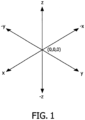
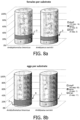
- directions having orthogonal or reversed relations correspond to directions along the 6 axes (positive X, negative X, positive Y, negative Y, positive Z, negative Z) of an imaginary orthogonal (or Cartesian) three dimensional coordinate system in the direction out of the origin (0,0,0), where the mite individual is in the origin. These directions are either perpendicular (orthogonal) or reversed in direction. In three-dimensional space the maximal number of these directions is 6, as is depicted in figure 1 .
- the mite individual when located in a sheltering area, is shielded from its surroundings in at least 3 such directions, preferably in at least 4 of such directions, most preferably in at least 5 of such directions, such as in 5 such directions.
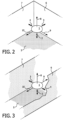
- Shielding in 3 such directions may be provided by a structure similar to a corner formed between 3 planes such as presented in figure 2 or the structure presented in figure 3 .
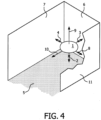
- Shielding in at least 4 of such directions may be provided by a structure such as a "box" open at 2 sides as presented in figure 4 .
- Shielding in 5 directions would be provided in the situation of figure 3 , where a 5 th horizontal plane is placed on the side wall of the 4 plane "box", such that an open cube is obtained.
- the shelters are dimensioned such that the volume of the shelter is from 1-140 mm 3 , such as 2-120 mm 3 , 2-100 mm 3 , 2-80 mm 3 , 2-70 mm 3 , 2-60 mm 3 , 2-50 mm 3 , 2-40 mm 3 , 2-30 mm 3 , 2-25 mm 3 , 2-20 mm 3 , 2-18 mm 3 , 2-16 mm 3 , 2-14 mm 3 , 2-12 mm 3 , 2-10 mm 3 , 2-8 mm 3 , 2-6 mm 3 , or 2-4 mm 3 .
- an area may have an access having an access diameter of at least 0.3- 1.2 mm, such as 0.5-1.0 mm or 0.5-0.8 mm and an access area of at least 0.25 - 1.44 mm 2 , 0.30 - 1.20 mm 2 , 0.30 - 1.00 mm 2 , 0.30 - 0.80 mm 2 , 0.30 -0.90 mm 2 .
- Mite shelters may be provided by voids, such as voids formed by coves, recesses, pores, chambers, cavities, niches, pits, pockets, tubes, domes, tubs and alike structures. Such voids preferably conforming to the dimensions presented above for the volume and/or access are suitable as mite shelters.
- Shelters for the mite individuals may be present on or in individual carrier elements present in the stacking. That is to say individual carrier elements in the stacking comprise structures suitable as mite shelters. Alternatively the mite shelters may be formed between carrier elements in the stacking. That is to say in the stacking of carrier elements a plurality of carrier elements together form structures suitable as mite shelters.
- a "carrier element stacking” is to be understood to mean a three dimensional ordering of a multitude of carrier elements. The term “ordering" includes a random ordering.
- carrier elements derived from chaff may be used.
- chaff is the dry, scaly protective casings (husks) of the seeds of grass species (in particular cereal grains), or similar fine, dry, scaly plant material such as scaly parts of flowers, or finely chopped straw.
- the chaff is derived from a grass ( Poaceae or alternatively Gramineae ) species, most preferably chaff from a cereal species, such as chaff from wheat, oryza species, rye, oats or millet.
- Husks are particularly preferred. Especially husks from millet have excellent external and internal dimensions which make them highly suitable as a mite rearing substrate providing suitable shelters.
- Teff Eragrostis tef
- fonio Digitaria exilis
- the carrier elements are inert in terms of biodegradation.
- the carrier material is a poor growing substrate for microorganisms such as fungi and/or bacteria. This aids in controlling microbial growth, such as fungal growth, which is a potential problem under mite rearing conditions.
- Chaff and in particular the preferred chaff varieties discussed above are poor growing substrates for microorganisms, especially for fungi.
- the present invention relates to a method for rearing a predatory mite comprising:
- Methods for rearing of predatory mites wherein a population of the predator is brought in association with a population of an Astigmatid mite and wherein individuals of the predator are allowed to feed on individuals of the Astigmatid population are known in the art.
- the method according to the present invention is distinguished over the prior art methods in that in the composition according to the invention at least a fraction of ⁇ 50% of the Astigmatid individuals is immobilized by an immobilization treatment and immobilized Astigmatid individuals are contacted with a fungus reducing agent comprising a fungus reducing mite population selected from a mycophagous mite species or an antifungal exudates producing mite species.
- a further aspect of the invention relates to the use of a composition
- a composition comprising a population of individuals from at least one Astigmatid mite species, wherein at least a fraction of ⁇ 50% of the Astigmatid individuals is immobilized by an immobilization treatment, and immobilized Astigmatid individuals are contacted with a fungus reducing agent comprising a fungus reducing mite population selected from a mycophagous mite species or an antifungal exudates producing mite species, for rearing a predatory mite.
- a fungus reducing agent comprising a fungus reducing mite population selected from a mycophagous mite species or an antifungal exudates producing mite species, for rearing a predatory mite.
- a further aspect of the invention relates to a rearing system for rearing a predatory mite, said system comprising a container holding the composition according to the invention.
- the container preferably comprises an exit for at least one motile life stage of the predatory mite, more preferably an exit suitable for providing a sustained release of said at least one motile life stage.
- the invention relates to the use of the composition of the invention or the rearing system according to the invention for controlling a crop pest.
- the pest may be selected from, white flies, such as Trialeurodes vaporariorum or Bemisia tabaci ; thrips, such as Thrips tabaci or Frankliniella spp., such as Frankliniella occidentalis, spider mites such as Tetranychus urticae, or other phytophagous mites such as Polyphagotarsonemus.
- white flies such as Trialeurodes vaporariorum or Bemisia tabaci
- thrips such as Thrips tabaci or Frankliniella spp., such as Frankliniella occidentalis
- spider mites such as Tetranychus urticae
- other phytophagous mites such as Polyphagotarsonemus.
- the crop may be selected from, but is not restricted to (greenhouse) vegetable crops such as tomatoes (Lycopersicon esculentum), peppers ( Capsicum annuum ), eggplants ( Solanum melogena ), Curcubits ( Cucurbitaceae ) such as cucumbers ( cucumis sativa ), melons ( cucumis melo ) watermelons ( Citrullus lanatus ); beans ( Phaseolus vulgaris ); soft fruit (such as strawberries ( Fragaria x annanassa ), raspberries ( Rubus ideaus )) ; (greenhouse) ornamental crops (such as roses, gerberas, chrysanthemums) or tree crops such as Citrus spp.
- vegetable crops such as tomatoes (Lycopersicon esculentum), peppers ( Capsicum annuum ), eggplants ( Solanum melogena ), Curcubits ( Cucurbitaceae ) such as cucumbers ( cucum
- a further aspect of the invention relates to a method for biological pest control in a crop.
- the method comprises providing the composition of the invention to said crop.
- the pest and the crop may be selected as described above.
- the composition may be provided by applying an amount of said composition in the vicinity, such as on or at the basis of a number of crop plants.
- the composition may be provided to the crop plant simply by spreading it on the crop plant or at the basis of the crop plant as is common practice for employing predatory mite compositions for augmentative biological pest control.
- the amount of the composition which may be provided to each individual crop plant by way of spreading may range 20 from 1-20 ml such as 1-10 ml, preferably 2-5 ml.
- the composition may be provided to the number of crop plants in the rearing system according to the invention which is suitable for releasing the predatory mite in a crop.
- the rearing system may be placed in the vicinity, such as in or at the basis, of a number of crop.
- the composition for biological pest control it may not be necessary to provide the composition to all crop plants.
- Commercial crops are 30 normally densely cultivated.
- the predatory mites may spread from one crop plant to another.
- the number of crop plants which must be provided with the composition according to the invention in order to provide sufficient crop protection may depend on the specific circumstances and can be easily determined by the skilled person based on his experience in the field.
- Usually the number of predatory mites released per hectare is more determining. This number may range from 1000 - 3 million per hectare, typically 250.000 - 1 million or 250.000 - 500.000.
- a moulding test was performed on 6 test samples (A), (B), (C), (A+), (B+), (C+). These mixtures were prepared from the following ingredients (1) a population of pure Carpoglyphus lactis consisting of all motile life stages. This sample was not associated with food particles and had a moisture content of 70% ( ⁇ 1%). (2) The mites from (1) frozen at -20°C in a closed container during 24 hours and defrosted prior to use. (3) consisted of Carpoglyphus lactis in its rearing medium (containing bran and food particles), frozen for 4 days at -20°C in a closed container. (4) moist vermicullite (particle sizes ⁇ 2 mm, moisture content 15.8%). Using these ingredients, several mixes were prepared in duplo in small cups.
- Table 1.1 Start-up RH 85% RH 93% Mix Carrier (4) food extra day 4 day 6 day 4 day 6 A - 1 g pure (2) - ++ ++ ++ +++ B - 3 g medium (3) - + +++ +++ +++ C 5 g 1 g pure (2) - + ++ + ++ D 3 g 3 g medium (3) - ++ +++ ++ +++ A+ - 1 g pure (2) live Cl (1) - - + ++ B+ - 3 g medium (3) live Cl (1) - - + - C+ 5 g 1 g pure (2) live Cl (1) + + - ++ D+ 3g 3 g medium (2) live Cl (1) - - - - - - means no moulding, + a litte, ++ mediocre and +++ maximum amount of moulding (food totally covered by fungi and not accessible).
- the type of moulding was different in morphology. When organic matter was in close contact (no carrier or small clumps), mycelium formed a complete network and caused the mixture to clump. When food particles were isolated by the carrier, sporulation was more observed.
- the table shows the number of mites that showed visible activity (per gram of medium at different moments after the ethanol was applied). Untreated material would result in roughly 15000 active individuals per gram (adults, nymphs and larvae combined).Two hours after applying ethanol most mites still showed activity, but mainly uncontrolled movements with their legs. After three hours of exposure to the ethanol the majority of mites were inactive. After 4 hours only few individuals showed only minor movements of the legs. After 1 day nearly all movement had ceased and only an occasional individual could be observed moving around. The first few days hardly any active mites were observed. Mites that were active in this period were of all life stages. After several days mite activity was slowly regained.
- prey mites After 2 days after cups were placed at 25 °C and 93% RH a few prey mites (ca. 1%) were active. The first fungal growth was observed on day 7 with 0-5 small mycelium patches per cup. At this time there were many prey mites active, about 20% of the initial number of mites before the ethanol treatment.
- the first fungal growth was observed on day 3 with 3-6 small mycelium patches per cup. After 5 days 100% of the surface was covered by white mycelium. On day 7 green and yellow sporidia covered 70-100% and 5-20% of surface area respectively.
- the first fungal growth was observed on day 3 in some replicates with 0-1 small mycelium patches per cup. After 5 days 20% of the surface was covered by white mycelium. On day 7 the surface was entirely covered with white mycelium, and green and yellow sporidia covered 20-75% and 1% of surface area respectively.
- Moulding data from rearing test involving a number of Astigmatid prey mites were evaluated in order to determine the fungus reducing effect of motile Astigmatid individuals.
- the data of rearings involving Carpoglyphus lactis (Cl), Lepidoglyphus destructor (Ld), Suidasia pontifica (Sp), Thyreophagus entomophagus (Te) and Tyrophagus putrescentiae (Tp) were collected and analyzed.
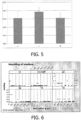
- the dot plots presented in figure 6 show the moulding scores on bran and millet chaff (for Cl only) carrier in relation to prey mite densities for 5 species.
- the fungus reducing effect of Astigmatid mites is apparent. Some mite species are more effective in suppression mould than others. C. lactis and T. entomophagous , for example are effective, under the tested conditions, at densities > 500 mites/gram, whereas L. destructor and S. pontifica need densities of >1000 mites/gram. The results also show that the chaff carrier is less prone to mould formation.
- Astigmatid mites were reared on diets containing bran and yeast and supplied as food .
- the Astigmatid prey mites were offered to the predator in either live or live + frozen form depending on the test.
- the amount of frozen prey mites was twice the amount of live + frozen prey mites (except for S. pontifica, where the amount of frozen prey mites was 4 times the amount of live+frozen prey mites) in order to supply enough food but to maintain the ratio of live prey mites: predatory mites at acceptable levels (ratio ⁇ 10, preferrably 0-5).
- Carrier and prey were offered twice a week in an amount of 50% (w/w) of the inoculum.
- the trials lasted 18-50 days (see graphs) and twice a week 1 sample of each unit was taken.
- the live predatory mites and prey mites were extracted from this sample and counted. This way, the density (per gram) and ratio (live prey mites: live predatory mites) was calculated.
- A. swirskii and A. limonicus Two species of predatory mites, A. swirskii and A. limonicus, were tested with respect to their preference for different carrier types. Mature females were collected approximately 10 days after the start of rearing from the egg stage.
- the 3 offered carriers were millet chaff, a carrier according to the invention, wheat bran, standard carrier and vermicullite (fine grain, all particles ⁇ 2 mm), also a standard carrier. All carriers were simultaneously offered in a moist form (15 ml water/100g added). Of each carrier 2 portions were placed opposite one another on a fixed distance from the release point (4 cm). The tested substrates were all offered in the same volume of 0.5 cc (divided in 2 portions per arena).
- the test was performed in a climate room with conditions of 25°C, 75% RH and 16:8 (L:D) light regime and the RH on the arena was around 85%. After 2 days the number of predator eggs per substrate and the number of adults present were counted(male individuals were excluded from the statistics). For this all carrier particles were scrutinized individually and also checked 2 days later after extra food was added. The results per substrate per species were statistically analysed using the Chi-square Goodness of Fit Test (one variable).
- Bran is the standard carrier used in commercial mite rearing.
- Chaff is a representative for carriers according to the invention with mite shelters
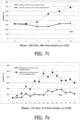
- the results are presented in figure 9 .
- the predator densities in the chaff rearings are increasing in the first and second week, on both food types. In the bran mixes, the rearings are keeping up in the first week, but collapse in the second week. The decrease of predator numbers is followed by an increase of prey mite numbers and this makes continuity of these rearing mixes troublesome.
- the test shows a nett result that is positive for the chaff carrier as compared to the standard bran carrier.
Landscapes
- Life Sciences & Earth Sciences (AREA)
- Zoology (AREA)
- Environmental Sciences (AREA)
- General Health & Medical Sciences (AREA)
- Engineering & Computer Science (AREA)
- Health & Medical Sciences (AREA)
- Wood Science & Technology (AREA)
- Dentistry (AREA)
- Plant Pathology (AREA)
- Agronomy & Crop Science (AREA)
- Pest Control & Pesticides (AREA)
- Microbiology (AREA)
- Biotechnology (AREA)
- Virology (AREA)
- Animal Behavior & Ethology (AREA)
- Animal Husbandry (AREA)
- Biodiversity & Conservation Biology (AREA)
- Insects & Arthropods (AREA)
- Agricultural Chemicals And Associated Chemicals (AREA)
- Feed For Specific Animals (AREA)
Priority Applications (1)
| Application Number | Priority Date | Filing Date | Title |
|---|---|---|---|
| PL12189587.4T PL2612551T5 (pl) | 2012-01-04 | 2012-10-23 | Kompozycja roztoczy zawierająca roztocza drapieżnego i unieruchomiony żer w kontakcie ze środkiem ograniczającym grzyby oraz sposoby i zastosowania dotyczące stosowania wspomnianej kompozycji |
Applications Claiming Priority (1)
| Application Number | Priority Date | Filing Date | Title |
|---|---|---|---|
| US201261583152P | 2012-01-04 | 2012-01-04 |
Publications (3)
| Publication Number | Publication Date |
|---|---|
| EP2612551A1 EP2612551A1 (en) | 2013-07-10 |
| EP2612551B1 EP2612551B1 (en) | 2014-11-05 |
| EP2612551B2 true EP2612551B2 (en) | 2024-10-16 |
Family
ID=47046485
Family Applications (1)
| Application Number | Title | Priority Date | Filing Date |
|---|---|---|---|
| EP12189587.4A Active EP2612551B2 (en) | 2012-01-04 | 2012-10-23 | Mite composition comprising a predatory mite and immobilized prey contacted with a fungus reducing agent and methods and uses related to the use of said composition |
Country Status (17)
| Country | Link |
|---|---|
| US (1) | US9781937B2 (enExample) |
| EP (1) | EP2612551B2 (enExample) |
| JP (2) | JP6397334B2 (enExample) |
| KR (1) | KR102092754B1 (enExample) |
| BR (1) | BR112014016609B1 (enExample) |
| CA (1) | CA2860625C (enExample) |
| DK (1) | DK2612551T4 (enExample) |
| ES (1) | ES2529647T5 (enExample) |
| FI (1) | FI2612551T4 (enExample) |
| IL (1) | IL233526B (enExample) |
| MA (1) | MA35880B1 (enExample) |
| MX (1) | MX357150B (enExample) |
| PL (1) | PL2612551T5 (enExample) |
| PT (1) | PT2612551E (enExample) |
| RU (1) | RU2617961C2 (enExample) |
| UA (1) | UA117341C2 (enExample) |
| WO (1) | WO2013103294A1 (enExample) |
Families Citing this family (24)
| Publication number | Priority date | Publication date | Assignee | Title |
|---|---|---|---|---|
| FR2992148B1 (fr) * | 2012-06-22 | 2019-12-27 | Centre International D'etudes Superieures En Sciences Agronomiques | Composition comprenant des arthropodes et des oeufs d'astigmates |
| EP3253864A4 (en) | 2015-02-02 | 2018-10-17 | The State of Israel, Ministry of Agriculture and Rural Development, Agricultural Research Organisation, Volcani Center | Uses of daldinia sp. or volatile organic compounds derived therefrom |
| NL2016103B1 (en) | 2016-01-15 | 2017-08-02 | Koppert Bv | System for releasing beneficial mites and uses thereof. |
| CN106070070A (zh) * | 2016-06-17 | 2016-11-09 | 盱眙正泰永生物环境科技有限公司 | 一种新型育蝇房 |
| US12102082B2 (en) * | 2017-02-07 | 2024-10-01 | Koppert B.V. | Method and device for distributing a particulate material |
| WO2019017776A1 (en) | 2017-07-16 | 2019-01-24 | Koppert B.V. | SYSTEM FOR RELEASING USEFUL MITES AND USES THEREOF |
| CN107691379A (zh) * | 2017-09-21 | 2018-02-16 | 王琛 | 一种参环毛蚓营养基质、制备方法及参环毛蚓的养殖方法 |
| WO2019162950A1 (en) * | 2018-02-26 | 2019-08-29 | Bio-Bee Sde Eliyahu Ltd. | Maintaining populations of natural enemies on plants |
| IL257892A (en) | 2018-03-05 | 2018-05-02 | Bio Bee Sde Eliyahu Ltd | Novel methods for rearing and controlled release of biological control agents |
| FR3084562B1 (fr) * | 2018-07-31 | 2021-04-02 | Bioline France | Systeme de lutte biologique comprenant des acariens predateurs dans un etui |
| BE1026685B1 (nl) | 2018-10-05 | 2020-05-07 | Biobest Group N V | Mijtensamenstelling en werkwijze voor het kweken van mijten |
| BE1027502B1 (fr) | 2019-09-03 | 2021-05-18 | Bio Bee Sde Eliyahu Ltd | Nouveaux procédés d'élevage et de libération contrôlée d'acariens prédateurs |
| MX2022002690A (es) * | 2019-09-03 | 2022-04-07 | Bio Bee Sde Eliyahu Ltd | Nuevos metodos para la crianza y liberacion controlada de acaros depredadores. |
| FR3100102A1 (fr) | 2019-09-03 | 2021-03-05 | Bio-Bee Sde Eliyahu Ltd. | Nouveaux procédés d’élevage et de libération contrôlée d’acariens prédateurs |
| NL2023756B1 (en) | 2019-09-03 | 2021-10-12 | Bio Bee Sde Eliyahu Ltd | Novel methods for rearing and controlled release of predatory mites |
| BE1027819B1 (nl) * | 2019-12-04 | 2021-07-06 | Biobest Group N V | Mijtensamenstelling en werkwijze voor het kweken van mijten |
| WO2021133368A1 (ru) * | 2019-12-23 | 2021-07-01 | Ярослав Олегович ИВАНОВ | Способ разведения хищных клещей neoseiulus reductus |
| CN110973074A (zh) * | 2020-01-10 | 2020-04-10 | 夏鹏亮 | 一种柑橘粉蚧的养殖方法、装置及天敌昆虫用活体饲料 |
| US12049047B2 (en) * | 2020-06-17 | 2024-07-30 | Mitsubishi Heavy Industries, Ltd. | Jig and composite material processing method |
| CN111543397A (zh) * | 2020-06-23 | 2020-08-18 | 安徽国际旅行卫生保健中心(合肥海关口岸门诊部) | 一种腐食酪螨的快速增殖培养方法 |
| CN112772567A (zh) * | 2021-01-07 | 2021-05-11 | 贵州大学 | 一种菅原毛绥螨及其猎物罗宾根螨的饲养方法 |
| CA3212356A1 (en) * | 2021-03-01 | 2022-09-09 | Bio-Bee Sde Eliyahu Ltd | Food source for biological control agents and methods thereof |
| NL2033005B1 (en) * | 2022-09-12 | 2024-03-22 | Join Beheer B V | Method for cultivating a mite, composition comprising said mite, system for releasing said mite, and use of said mite |
| WO2024223807A1 (en) * | 2023-04-28 | 2024-10-31 | Agrobío, S.L. | Combinations of astigmatid mites for rearing predatory insects and mites |
Citations (1)
| Publication number | Priority date | Publication date | Assignee | Title |
|---|---|---|---|---|
| WO2013043050A1 (en) † | 2011-09-20 | 2013-03-28 | Koppert B.V. | Phytoseiid predatory mite releasing system and method for production. |
Family Cites Families (27)
| Publication number | Priority date | Publication date | Assignee | Title |
|---|---|---|---|---|
| GB2168680B (en) | 1984-12-21 | 1989-06-14 | Bunting Peter Eric | Distribution of living arthropods or the like |
| US4646683A (en) | 1985-10-11 | 1987-03-03 | Biofac, Inc. | Method and apparatus for producing parasitic mites |
| JPH03108433A (ja) | 1989-09-21 | 1991-05-08 | Hokkaido Univ | 微小天敵カブリダニ類の増殖に好適な容器と、この容器を用いた天敵カブリダニ類の大量増殖法と、この容器を用いた天敵カブリダニ類の保存あるいは輸送方法 |
| US5192546A (en) | 1991-01-15 | 1993-03-09 | Mycogen Corporation | Synergistic pesticidal compositions |
| JP3547173B2 (ja) * | 1994-07-28 | 2004-07-28 | 農薬バイオテクノロジー開発技術研究組合 | ダニ類の増殖方法 |
| JP3360506B2 (ja) | 1995-12-04 | 2002-12-24 | 住友化学工業株式会社 | 天敵の飼育及び輸送方法 |
| FR2746259B1 (fr) | 1996-03-21 | 1998-05-15 | Biotop | Procede d'elevage et de conditionnement d'auxiliaires pour la lutte biologique contre les ravageurs des plantes |
| US6129935A (en) | 1998-05-15 | 2000-10-10 | Entomos, Llc | Methods for rearing insects, mites, and other beneficial organisms |
| US20030091657A1 (en) * | 2000-03-17 | 2003-05-15 | Helene Chiasson | Plant acaricidal compositions and method using same |
| JPWO2003065805A1 (ja) | 2002-02-07 | 2005-05-26 | 株式会社クラレ | ダニの防除方法およびそれに用いる装置 |
| CN1224316C (zh) | 2002-02-24 | 2005-10-26 | 张艳璇 | 一种用作捕食螨-胡瓜钝绥螨的人工饲养方法 |
| CA2455156C (en) | 2004-02-17 | 2006-01-24 | Syngenta Bioline Limited | System for providing beneficial insects or mites |
| US7051672B2 (en) | 2004-02-17 | 2006-05-30 | Syngenta Participations Ag | System for providing beneficial insects or mites |
| BRPI0419258B1 (pt) | 2004-12-31 | 2016-03-01 | Koppert Bv | sistema para criação de um ácaro predador fitoseídeo, e método para controle biológico de pragas em uma plantação. |
| DK1686849T3 (da) * | 2004-12-31 | 2008-12-15 | Koppert Bv | Midesammensætning, anvendelse heraf, fremgangsmåde til at opdrætte den phytoseiide rovmide Amblyseius swirskii, opdrætssystem til at opdrætte nævnte phytoseiidmide og fremgangsmåde til biologisk skadedyrskontrol på en afgröde |
| GB0503359D0 (en) * | 2005-02-17 | 2005-03-23 | Livie Biopesticides Ltd | Insecticidal composition |
| RU2312502C2 (ru) * | 2005-11-16 | 2007-12-20 | Государственное научное учреждение Всероссийский селекционно-технологический институт садоводства и питомниководства Россельхозакадемии (ГНУ ВСТИСП) | Способ защиты садовых культур от паутинных клещей |
| PL1965634T3 (pl) * | 2005-12-29 | 2011-03-31 | Koppert Bv | Kompozycja roztoczy zawierająca roztocze Glycyphagidae i dobroczynkowate, jej zastosowanie do hodowania drapieżnych roztoczy dobroczynkowatych, system hodowlany do hodowania tych drapieżnych roztoczy dobroczynkowatych i sposoby biologicznego zwalczania szkodników w uprawach |
| DE102006027730A1 (de) * | 2006-06-16 | 2007-12-20 | Bayer Cropscience Ag | Wirkstoffkombinationen mit insektiziden und akariziden Eigenschaften |
| GB0615358D0 (en) | 2006-08-02 | 2006-09-13 | Syngenta Bioline Ltd | Improvements in or relating to organic compounds |
| WO2008088827A2 (en) * | 2007-01-16 | 2008-07-24 | Tyratech, Inc. | Pest control compositions and methods |
| GB0703672D0 (en) | 2007-02-26 | 2007-04-04 | Biolog Crop Prot Ltd | Mite composition, use thereof, method for rearing a mite, rearing system, use of the composition in biological pest control, and method of biological pest |
| CN101040612A (zh) | 2007-04-09 | 2007-09-26 | 张艳璇 | 捕食螨的生产方法 |
| ES2345594B1 (es) | 2009-03-26 | 2011-07-13 | Agrocontrol 2007, S.L | Composicion de acaros, procedimiento para la cria de los mismos y utilizacion de dicha composicion en programas de control biologico. |
| US20100316738A1 (en) * | 2009-06-12 | 2010-12-16 | Desmond JIMENEZ | Methods of inhibiting, preventing, killing and/or repelling insects using simulated blends of chenopodium extracts |
| PT2380436E (pt) * | 2010-04-23 | 2013-01-22 | Agrobio S L | Composição de ácaros, método para criar uma espécie de ácaro fitosídeo predador de ácaros, e utilização da composição para controlar pragas das culturas |
| JP5271363B2 (ja) * | 2011-01-06 | 2013-08-21 | コッパート・ベスローテン・フェンノートシャップ | ダニ構成物、その使用、捕食性カブリダニAmblyseiusswirskiiを飼育するための方法、前記捕食性カブリダニを飼育するための飼育システム、および作物に対する生物的害虫防除方法 |
-
2012
- 2012-10-23 WO PCT/NL2012/050736 patent/WO2013103294A1/en not_active Ceased
- 2012-10-23 JP JP2014551218A patent/JP6397334B2/ja active Active
- 2012-10-23 DK DK12189587.4T patent/DK2612551T4/da active
- 2012-10-23 MX MX2014008275A patent/MX357150B/es active IP Right Grant
- 2012-10-23 CA CA2860625A patent/CA2860625C/en active Active
- 2012-10-23 EP EP12189587.4A patent/EP2612551B2/en active Active
- 2012-10-23 US US14/370,624 patent/US9781937B2/en active Active
- 2012-10-23 UA UAA201408747A patent/UA117341C2/uk unknown
- 2012-10-23 PT PT121895874T patent/PT2612551E/pt unknown
- 2012-10-23 FI FIEP12189587.4T patent/FI2612551T4/fi active
- 2012-10-23 RU RU2014131952A patent/RU2617961C2/ru active
- 2012-10-23 KR KR1020147021658A patent/KR102092754B1/ko active Active
- 2012-10-23 ES ES12189587T patent/ES2529647T5/es active Active
- 2012-10-23 PL PL12189587.4T patent/PL2612551T5/pl unknown
- 2012-10-23 BR BR112014016609-9A patent/BR112014016609B1/pt active IP Right Grant
-
2014
- 2014-07-06 IL IL233526A patent/IL233526B/en active IP Right Grant
- 2014-07-23 MA MA37235A patent/MA35880B1/fr unknown
-
2016
- 2016-12-19 JP JP2016245583A patent/JP2017123839A/ja active Pending
Patent Citations (1)
| Publication number | Priority date | Publication date | Assignee | Title |
|---|---|---|---|---|
| WO2013043050A1 (en) † | 2011-09-20 | 2013-03-28 | Koppert B.V. | Phytoseiid predatory mite releasing system and method for production. |
Also Published As
| Publication number | Publication date |
|---|---|
| UA117341C2 (uk) | 2018-07-25 |
| JP6397334B2 (ja) | 2018-09-26 |
| DK2612551T3 (en) | 2015-02-16 |
| PL2612551T3 (pl) | 2015-04-30 |
| CA2860625C (en) | 2021-08-24 |
| PT2612551E (pt) | 2015-02-13 |
| RU2617961C2 (ru) | 2017-04-28 |
| RU2014131952A (ru) | 2016-02-20 |
| WO2013103294A1 (en) | 2013-07-11 |
| EP2612551A1 (en) | 2013-07-10 |
| EP2612551B1 (en) | 2014-11-05 |
| FI2612551T4 (fi) | 2025-01-14 |
| KR20140113709A (ko) | 2014-09-24 |
| IL233526A0 (en) | 2014-08-31 |
| JP2015508999A (ja) | 2015-03-26 |
| ES2529647T3 (es) | 2015-02-24 |
| MX2014008275A (es) | 2015-05-11 |
| KR102092754B1 (ko) | 2020-03-25 |
| IL233526B (en) | 2020-03-31 |
| PL2612551T5 (pl) | 2025-02-10 |
| CA2860625A1 (en) | 2013-07-11 |
| BR112014016609A2 (pt) | 2017-06-13 |
| MA35880B1 (fr) | 2014-12-01 |
| BR112014016609B1 (pt) | 2019-05-14 |
| US20150128864A1 (en) | 2015-05-14 |
| JP2017123839A (ja) | 2017-07-20 |
| ES2529647T5 (en) | 2025-03-11 |
| DK2612551T4 (da) | 2025-01-13 |
| BR112014016609A8 (pt) | 2017-07-04 |
| US9781937B2 (en) | 2017-10-10 |
| MX357150B (es) | 2018-06-27 |
Similar Documents
| Publication | Publication Date | Title |
|---|---|---|
| EP2612551B2 (en) | Mite composition comprising a predatory mite and immobilized prey contacted with a fungus reducing agent and methods and uses related to the use of said composition | |
| US20230380426A1 (en) | Mite Composition, Carrier, Method for Rearing Mites and Uses Related Thereto | |
| KR101014095B1 (ko) | 응애 조성물, 그의 용도, 포식성 이리응애인지중해이리응애의 사육 방법, 상기 이리응애를 사육하는사육 시스템 및 작물에서의 생물학적 해충 방제 방법 | |
| JP5393155B2 (ja) | ニクダニ科ダニおよびカブリダニを含むダニ構成物、その使用、捕食性カブリダニを飼育するための方法、前記捕食性カブリダニを飼育するための飼育システム、ならびに作物に対する生物学的害虫防除方法 | |
| MX2007008023A (es) | Composicion de acaros, uso de la misma, metodo para criar un acaro predatorio phytoseiid, sistema de crianza para criar dicho acaro predatorio phytoseiid y metodos para el control biologico de plagas en un cultivo. | |
| KR20070110008A (ko) | 응애 조성물, 그의 용도, 포식성 이리응애의 사육 방법,상기 포식성 이리응애를 사육하는 사육 시스템 및작물에서의 생물학적 해충 방제 방법 |
Legal Events
| Date | Code | Title | Description |
|---|---|---|---|
| PUAI | Public reference made under article 153(3) epc to a published international application that has entered the european phase |
Free format text: ORIGINAL CODE: 0009012 |
|
| 17P | Request for examination filed |
Effective date: 20121023 |
|
| AK | Designated contracting states |
Kind code of ref document: A1 Designated state(s): AL AT BE BG CH CY CZ DE DK EE ES FI FR GB GR HR HU IE IS IT LI LT LU LV MC MK MT NL NO PL PT RO RS SE SI SK SM TR |
|
| AX | Request for extension of the european patent |
Extension state: BA ME |
|
| RBV | Designated contracting states (corrected) |
Designated state(s): AL AT BE BG CH CY CZ DE DK EE ES FI FR GB GR HR HU IE IS IT LI LT LU LV MC MK MT NL NO PL PT RO RS SE SI SK SM TR |
|
| GRAP | Despatch of communication of intention to grant a patent |
Free format text: ORIGINAL CODE: EPIDOSNIGR1 |
|
| GRAS | Grant fee paid |
Free format text: ORIGINAL CODE: EPIDOSNIGR3 |
|
| INTG | Intention to grant announced |
Effective date: 20140901 |
|
| GRAA | (expected) grant |
Free format text: ORIGINAL CODE: 0009210 |
|
| AK | Designated contracting states |
Kind code of ref document: B1 Designated state(s): AL AT BE BG CH CY CZ DE DK EE ES FI FR GB GR HR HU IE IS IT LI LT LU LV MC MK MT NL NO PL PT RO RS SE SI SK SM TR |
|
| REG | Reference to a national code |
Ref country code: GB Ref legal event code: FG4D |
|
| REG | Reference to a national code |
Ref country code: CH Ref legal event code: EP |
|
| REG | Reference to a national code |
Ref country code: AT Ref legal event code: REF Ref document number: 694075 Country of ref document: AT Kind code of ref document: T Effective date: 20141115 |
|
| REG | Reference to a national code |
Ref country code: IE Ref legal event code: FG4D |
|
| REG | Reference to a national code |
Ref country code: DE Ref legal event code: R096 Ref document number: 602012003660 Country of ref document: DE Effective date: 20141218 |
|
| REG | Reference to a national code |
Ref country code: RO Ref legal event code: EPE |
|
| REG | Reference to a national code |
Ref country code: CH Ref legal event code: NV Representative=s name: BOHEST AG, CH Ref country code: PT Ref legal event code: SC4A Free format text: AVAILABILITY OF NATIONAL TRANSLATION Effective date: 20150204 |
|
| REG | Reference to a national code |
Ref country code: DK Ref legal event code: T3 Effective date: 20150213 |
|
| REG | Reference to a national code |
Ref country code: NL Ref legal event code: T3 |
|
| REG | Reference to a national code |
Ref country code: SE Ref legal event code: TRGR Ref country code: ES Ref legal event code: FG2A Ref document number: 2529647 Country of ref document: ES Kind code of ref document: T3 Effective date: 20150224 |
|
| REG | Reference to a national code |
Ref country code: NO Ref legal event code: T2 Effective date: 20141105 |
|
| REG | Reference to a national code |
Ref country code: GR Ref legal event code: EP Ref document number: 20150400222 Country of ref document: GR Effective date: 20150318 |
|
| REG | Reference to a national code |
Ref country code: LT Ref legal event code: MG4D |
|
| PG25 | Lapsed in a contracting state [announced via postgrant information from national office to epo] |
Ref country code: LT Free format text: LAPSE BECAUSE OF FAILURE TO SUBMIT A TRANSLATION OF THE DESCRIPTION OR TO PAY THE FEE WITHIN THE PRESCRIBED TIME-LIMIT Effective date: 20141105 Ref country code: IS Free format text: LAPSE BECAUSE OF FAILURE TO SUBMIT A TRANSLATION OF THE DESCRIPTION OR TO PAY THE FEE WITHIN THE PRESCRIBED TIME-LIMIT Effective date: 20150305 |
|
| REG | Reference to a national code |
Ref country code: PL Ref legal event code: T3 |
|
| PG25 | Lapsed in a contracting state [announced via postgrant information from national office to epo] |
Ref country code: HR Free format text: LAPSE BECAUSE OF FAILURE TO SUBMIT A TRANSLATION OF THE DESCRIPTION OR TO PAY THE FEE WITHIN THE PRESCRIBED TIME-LIMIT Effective date: 20141105 Ref country code: RS Free format text: LAPSE BECAUSE OF FAILURE TO SUBMIT A TRANSLATION OF THE DESCRIPTION OR TO PAY THE FEE WITHIN THE PRESCRIBED TIME-LIMIT Effective date: 20141105 Ref country code: LV Free format text: LAPSE BECAUSE OF FAILURE TO SUBMIT A TRANSLATION OF THE DESCRIPTION OR TO PAY THE FEE WITHIN THE PRESCRIBED TIME-LIMIT Effective date: 20141105 Ref country code: CY Free format text: LAPSE BECAUSE OF FAILURE TO SUBMIT A TRANSLATION OF THE DESCRIPTION OR TO PAY THE FEE WITHIN THE PRESCRIBED TIME-LIMIT Effective date: 20141105 |
|
| REG | Reference to a national code |
Ref country code: DE Ref legal event code: R026 Ref document number: 602012003660 Country of ref document: DE |
|
| PG25 | Lapsed in a contracting state [announced via postgrant information from national office to epo] |
Ref country code: EE Free format text: LAPSE BECAUSE OF FAILURE TO SUBMIT A TRANSLATION OF THE DESCRIPTION OR TO PAY THE FEE WITHIN THE PRESCRIBED TIME-LIMIT Effective date: 20141105 Ref country code: SK Free format text: LAPSE BECAUSE OF FAILURE TO SUBMIT A TRANSLATION OF THE DESCRIPTION OR TO PAY THE FEE WITHIN THE PRESCRIBED TIME-LIMIT Effective date: 20141105 Ref country code: CZ Free format text: LAPSE BECAUSE OF FAILURE TO SUBMIT A TRANSLATION OF THE DESCRIPTION OR TO PAY THE FEE WITHIN THE PRESCRIBED TIME-LIMIT Effective date: 20141105 |
|
| PLBI | Opposition filed |
Free format text: ORIGINAL CODE: 0009260 |
|
| PLBI | Opposition filed |
Free format text: ORIGINAL CODE: 0009260 |
|
| REG | Reference to a national code |
Ref country code: HU Ref legal event code: AG4A Ref document number: E023507 Country of ref document: HU |
|
| 26 | Opposition filed |
Opponent name: KATZ BIOTECH AG/EWH BIOPRODUCTION APS/ BIOTUS OY/M Effective date: 20150729 Opponent name: INVIVO AGROSOLUTIONS Effective date: 20150804 |
|
| 26 | Opposition filed |
Opponent name: AGROBIO S.L. Effective date: 20150805 |
|
| REG | Reference to a national code |
Ref country code: FR Ref legal event code: PLFP Year of fee payment: 4 |
|
| PLAX | Notice of opposition and request to file observation + time limit sent |
Free format text: ORIGINAL CODE: EPIDOSNOBS2 |
|
| PG25 | Lapsed in a contracting state [announced via postgrant information from national office to epo] |
Ref country code: SI Free format text: LAPSE BECAUSE OF FAILURE TO SUBMIT A TRANSLATION OF THE DESCRIPTION OR TO PAY THE FEE WITHIN THE PRESCRIBED TIME-LIMIT Effective date: 20141105 |
|
| PLAF | Information modified related to communication of a notice of opposition and request to file observations + time limit |
Free format text: ORIGINAL CODE: EPIDOSCOBS2 |
|
| REG | Reference to a national code |
Ref country code: AT Ref legal event code: UEP Ref document number: 694075 Country of ref document: AT Kind code of ref document: T Effective date: 20141105 |
|
| PLBB | Reply of patent proprietor to notice(s) of opposition received |
Free format text: ORIGINAL CODE: EPIDOSNOBS3 |
|
| PG25 | Lapsed in a contracting state [announced via postgrant information from national office to epo] |
Ref country code: LU Free format text: LAPSE BECAUSE OF FAILURE TO SUBMIT A TRANSLATION OF THE DESCRIPTION OR TO PAY THE FEE WITHIN THE PRESCRIBED TIME-LIMIT Effective date: 20151023 |
|
| PG25 | Lapsed in a contracting state [announced via postgrant information from national office to epo] |
Ref country code: MC Free format text: LAPSE BECAUSE OF FAILURE TO SUBMIT A TRANSLATION OF THE DESCRIPTION OR TO PAY THE FEE WITHIN THE PRESCRIBED TIME-LIMIT Effective date: 20141105 |
|
| REG | Reference to a national code |
Ref country code: IE Ref legal event code: MM4A |
|
| REG | Reference to a national code |
Ref country code: FR Ref legal event code: PLFP Year of fee payment: 5 |
|
| PG25 | Lapsed in a contracting state [announced via postgrant information from national office to epo] |
Ref country code: IE Free format text: LAPSE BECAUSE OF NON-PAYMENT OF DUE FEES Effective date: 20151023 |
|
| PG25 | Lapsed in a contracting state [announced via postgrant information from national office to epo] |
Ref country code: SM Free format text: LAPSE BECAUSE OF FAILURE TO SUBMIT A TRANSLATION OF THE DESCRIPTION OR TO PAY THE FEE WITHIN THE PRESCRIBED TIME-LIMIT Effective date: 20141105 Ref country code: BG Free format text: LAPSE BECAUSE OF FAILURE TO SUBMIT A TRANSLATION OF THE DESCRIPTION OR TO PAY THE FEE WITHIN THE PRESCRIBED TIME-LIMIT Effective date: 20141105 |
|
| RDAF | Communication despatched that patent is revoked |
Free format text: ORIGINAL CODE: EPIDOSNREV1 |
|
| STAA | Information on the status of an ep patent application or granted ep patent |
Free format text: STATUS: THE PATENT HAS BEEN GRANTED |
|
| APAH | Appeal reference modified |
Free format text: ORIGINAL CODE: EPIDOSCREFNO |
|
| APBM | Appeal reference recorded |
Free format text: ORIGINAL CODE: EPIDOSNREFNO |
|
| APBP | Date of receipt of notice of appeal recorded |
Free format text: ORIGINAL CODE: EPIDOSNNOA2O |
|
| REG | Reference to a national code |
Ref country code: DE Ref legal event code: R082 Ref document number: 602012003660 Country of ref document: DE Representative=s name: KLUNKER IP PATENTANWAELTE PARTG MBB, DE |
|
| PG25 | Lapsed in a contracting state [announced via postgrant information from national office to epo] |
Ref country code: MT Free format text: LAPSE BECAUSE OF FAILURE TO SUBMIT A TRANSLATION OF THE DESCRIPTION OR TO PAY THE FEE WITHIN THE PRESCRIBED TIME-LIMIT Effective date: 20141105 |
|
| REG | Reference to a national code |
Ref country code: FR Ref legal event code: PLFP Year of fee payment: 6 |
|
| PG25 | Lapsed in a contracting state [announced via postgrant information from national office to epo] |
Ref country code: MK Free format text: LAPSE BECAUSE OF FAILURE TO SUBMIT A TRANSLATION OF THE DESCRIPTION OR TO PAY THE FEE WITHIN THE PRESCRIBED TIME-LIMIT Effective date: 20141105 |
|
| PLBP | Opposition withdrawn |
Free format text: ORIGINAL CODE: 0009264 |
|
| REG | Reference to a national code |
Ref country code: FR Ref legal event code: PLFP Year of fee payment: 7 |
|
| PG25 | Lapsed in a contracting state [announced via postgrant information from national office to epo] |
Ref country code: AL Free format text: LAPSE BECAUSE OF FAILURE TO SUBMIT A TRANSLATION OF THE DESCRIPTION OR TO PAY THE FEE WITHIN THE PRESCRIBED TIME-LIMIT Effective date: 20141105 |
|
| APBU | Appeal procedure closed |
Free format text: ORIGINAL CODE: EPIDOSNNOA9O |
|
| APAN | Information on closure of appeal procedure modified |
Free format text: ORIGINAL CODE: EPIDOSCNOA9O |
|
| PLAY | Examination report in opposition despatched + time limit |
Free format text: ORIGINAL CODE: EPIDOSNORE2 |
|
| PLBC | Reply to examination report in opposition received |
Free format text: ORIGINAL CODE: EPIDOSNORE3 |
|
| PLAH | Information related to despatch of examination report in opposition + time limit modified |
Free format text: ORIGINAL CODE: EPIDOSCORE2 |
|
| PLAY | Examination report in opposition despatched + time limit |
Free format text: ORIGINAL CODE: EPIDOSNORE2 |
|
| PGFP | Annual fee paid to national office [announced via postgrant information from national office to epo] |
Ref country code: SE Payment date: 20221027 Year of fee payment: 11 Ref country code: NO Payment date: 20221027 Year of fee payment: 11 |
|
| PLBC | Reply to examination report in opposition received |
Free format text: ORIGINAL CODE: EPIDOSNORE3 |
|
| PLAY | Examination report in opposition despatched + time limit |
Free format text: ORIGINAL CODE: EPIDOSNORE2 |
|
| P01 | Opt-out of the competence of the unified patent court (upc) registered |
Effective date: 20230512 |
|
| PLBC | Reply to examination report in opposition received |
Free format text: ORIGINAL CODE: EPIDOSNORE3 |
|
| PLAY | Examination report in opposition despatched + time limit |
Free format text: ORIGINAL CODE: EPIDOSNORE2 |
|
| REG | Reference to a national code |
Ref country code: SE Ref legal event code: EUG |
|
| PG25 | Lapsed in a contracting state [announced via postgrant information from national office to epo] |
Ref country code: NO Free format text: LAPSE BECAUSE OF NON-PAYMENT OF DUE FEES Effective date: 20231031 |
|
| PG25 | Lapsed in a contracting state [announced via postgrant information from national office to epo] |
Ref country code: SE Free format text: LAPSE BECAUSE OF NON-PAYMENT OF DUE FEES Effective date: 20231024 |
|
| PUAH | Patent maintained in amended form |
Free format text: ORIGINAL CODE: 0009272 |
|
| STAA | Information on the status of an ep patent application or granted ep patent |
Free format text: STATUS: PATENT MAINTAINED AS AMENDED |
|
| 27A | Patent maintained in amended form |
Effective date: 20241016 |
|
| AK | Designated contracting states |
Kind code of ref document: B2 Designated state(s): AL AT BE BG CH CY CZ DE DK EE ES FI FR GB GR HR HU IE IS IT LI LT LU LV MC MK MT NL NO PL PT RO RS SE SI SK SM TR |
|
| REG | Reference to a national code |
Ref country code: DE Ref legal event code: R102 Ref document number: 602012003660 Country of ref document: DE |
|
| PGFP | Annual fee paid to national office [announced via postgrant information from national office to epo] |
Ref country code: DE Payment date: 20241029 Year of fee payment: 13 |
|
| REG | Reference to a national code |
Ref country code: DK Ref legal event code: T4 Effective date: 20250108 |
|
| PGFP | Annual fee paid to national office [announced via postgrant information from national office to epo] |
Ref country code: DK Payment date: 20241025 Year of fee payment: 13 |
|
| PGFP | Annual fee paid to national office [announced via postgrant information from national office to epo] |
Ref country code: PL Payment date: 20241004 Year of fee payment: 13 Ref country code: FI Payment date: 20241025 Year of fee payment: 13 Ref country code: GR Payment date: 20241029 Year of fee payment: 13 Ref country code: BE Payment date: 20241028 Year of fee payment: 13 |
|
| PGFP | Annual fee paid to national office [announced via postgrant information from national office to epo] |
Ref country code: GB Payment date: 20241028 Year of fee payment: 13 |
|
| PGFP | Annual fee paid to national office [announced via postgrant information from national office to epo] |
Ref country code: FR Payment date: 20241025 Year of fee payment: 13 Ref country code: AT Payment date: 20241002 Year of fee payment: 13 |
|
| PGFP | Annual fee paid to national office [announced via postgrant information from national office to epo] |
Ref country code: RO Payment date: 20241007 Year of fee payment: 13 |
|
| PGFP | Annual fee paid to national office [announced via postgrant information from national office to epo] |
Ref country code: ES Payment date: 20241104 Year of fee payment: 13 Ref country code: IT Payment date: 20241021 Year of fee payment: 13 |
|
| PGFP | Annual fee paid to national office [announced via postgrant information from national office to epo] |
Ref country code: CH Payment date: 20241101 Year of fee payment: 13 |
|
| PGFP | Annual fee paid to national office [announced via postgrant information from national office to epo] |
Ref country code: TR Payment date: 20241010 Year of fee payment: 13 |
|
| REG | Reference to a national code |
Ref country code: NL Ref legal event code: FP |
|
| REG | Reference to a national code |
Ref country code: GR Ref legal event code: EP Ref document number: 20250400015 Country of ref document: GR Effective date: 20250211 |
|
| REG | Reference to a national code |
Ref country code: ES Ref legal event code: DC2A Ref document number: 2529647 Country of ref document: ES Kind code of ref document: T5 Effective date: 20250311 |
|
| REG | Reference to a national code |
Ref country code: CH Ref legal event code: U11 Free format text: ST27 STATUS EVENT CODE: U-0-0-U10-U11 (AS PROVIDED BY THE NATIONAL OFFICE) Effective date: 20251101 |
|
| PGFP | Annual fee paid to national office [announced via postgrant information from national office to epo] |
Ref country code: HU Payment date: 20251007 Year of fee payment: 14 |
|
| PGFP | Annual fee paid to national office [announced via postgrant information from national office to epo] |
Ref country code: NL Payment date: 20251026 Year of fee payment: 14 |
|
| PGFP | Annual fee paid to national office [announced via postgrant information from national office to epo] |
Ref country code: PT Payment date: 20251006 Year of fee payment: 14 |