EP2610256B1 - Pyrimidine derivatives as protein kinase inhibitors - Google Patents
Pyrimidine derivatives as protein kinase inhibitors Download PDFInfo
- Publication number
- EP2610256B1 EP2610256B1 EP13156251.4A EP13156251A EP2610256B1 EP 2610256 B1 EP2610256 B1 EP 2610256B1 EP 13156251 A EP13156251 A EP 13156251A EP 2610256 B1 EP2610256 B1 EP 2610256B1
- Authority
- EP
- European Patent Office
- Prior art keywords
- methyl
- pyrimido
- cyclopentyl
- ylamino
- diazepin
- Prior art date
- Legal status (The legal status is an assumption and is not a legal conclusion. Google has not performed a legal analysis and makes no representation as to the accuracy of the status listed.)
- Active
Links
- 0 CC(*=CC(*)=C(C)[*@](CCC(OC)=O)C1CCOCC1)N Chemical compound CC(*=CC(*)=C(C)[*@](CCC(OC)=O)C1CCOCC1)N 0.000 description 11
- WNMOIEHRRYRMBV-UHFFFAOYSA-N CC(C)(CN(C1CCCC1)c(nc(Nc(ccc(C(NC(CC1)CCC1N1CCOCC1)=O)c1)c1OC)nc1)c1N1C)C1=O Chemical compound CC(C)(CN(C1CCCC1)c(nc(Nc(ccc(C(NC(CC1)CCC1N1CCOCC1)=O)c1)c1OC)nc1)c1N1C)C1=O WNMOIEHRRYRMBV-UHFFFAOYSA-N 0.000 description 1
- PLWCTDFACJINEP-UHFFFAOYSA-N CC(C)C(C1)N(C2CCCC2)C([IH]C=C(N=C2)Cl)=C2N(C)C1=O Chemical compound CC(C)C(C1)N(C2CCCC2)C([IH]C=C(N=C2)Cl)=C2N(C)C1=O PLWCTDFACJINEP-UHFFFAOYSA-N 0.000 description 1
- QHHBYAZSBYOTOS-UHFFFAOYSA-N CCN(CC1)CCN1C1CCC(CCC(c(cc2)cc(OC)c2Nc(nc2)nc(N(CC34CC3)C3CCCC3)c2N(C)C4=O)=O)CC1 Chemical compound CCN(CC1)CCN1C1CCC(CCC(c(cc2)cc(OC)c2Nc(nc2)nc(N(CC34CC3)C3CCCC3)c2N(C)C4=O)=O)CC1 QHHBYAZSBYOTOS-UHFFFAOYSA-N 0.000 description 1
- PGGWSUSDGRDUFX-UHFFFAOYSA-N CCOC(CCNC1CCCC1)=O Chemical compound CCOC(CCNC1CCCC1)=O PGGWSUSDGRDUFX-UHFFFAOYSA-N 0.000 description 1
- ALOCUZOKRULSAA-UHFFFAOYSA-N CN(CC1)CCC1N Chemical compound CN(CC1)CCC1N ALOCUZOKRULSAA-UHFFFAOYSA-N 0.000 description 1
- VAFDKVXEVKJBAY-UHFFFAOYSA-N CN(CC1)CCC1NC(c(cc1)ccc1N)=O Chemical compound CN(CC1)CCC1NC(c(cc1)ccc1N)=O VAFDKVXEVKJBAY-UHFFFAOYSA-N 0.000 description 1
- TXLHQYZCSQBWTM-UHFFFAOYSA-N CN(CC1)CCN1NC(c(cc1)cc(OC)c1Nc(nc1N(CC23CCC2)C2CCCC2)ncc1N(C)C3=O)=O Chemical compound CN(CC1)CCN1NC(c(cc1)cc(OC)c1Nc(nc1N(CC23CCC2)C2CCCC2)ncc1N(C)C3=O)=O TXLHQYZCSQBWTM-UHFFFAOYSA-N 0.000 description 1
- YXJAJKBXQHMYLJ-UHFFFAOYSA-N COc1cc(C(NC(CC2)CCC2N2CCN(CC3CC3)CC2)=O)ccc1N Chemical compound COc1cc(C(NC(CC2)CCC2N2CCN(CC3CC3)CC2)=O)ccc1N YXJAJKBXQHMYLJ-UHFFFAOYSA-N 0.000 description 1
- NISGSNTVMOOSJQ-UHFFFAOYSA-N NC1CCCC1 Chemical compound NC1CCCC1 NISGSNTVMOOSJQ-UHFFFAOYSA-N 0.000 description 1
Images

Classifications
-
- C—CHEMISTRY; METALLURGY
- C07—ORGANIC CHEMISTRY
- C07D—HETEROCYCLIC COMPOUNDS
- C07D487/00—Heterocyclic compounds containing nitrogen atoms as the only ring hetero atoms in the condensed system, not provided for by groups C07D451/00 - C07D477/00
- C07D487/02—Heterocyclic compounds containing nitrogen atoms as the only ring hetero atoms in the condensed system, not provided for by groups C07D451/00 - C07D477/00 in which the condensed system contains two hetero rings
- C07D487/04—Ortho-condensed systems
-
- A—HUMAN NECESSITIES
- A61—MEDICAL OR VETERINARY SCIENCE; HYGIENE
- A61K—PREPARATIONS FOR MEDICAL, DENTAL OR TOILETRY PURPOSES
- A61K31/00—Medicinal preparations containing organic active ingredients
- A61K31/33—Heterocyclic compounds
- A61K31/395—Heterocyclic compounds having nitrogen as a ring hetero atom, e.g. guanethidine or rifamycins
- A61K31/55—Heterocyclic compounds having nitrogen as a ring hetero atom, e.g. guanethidine or rifamycins having seven-membered rings, e.g. azelastine, pentylenetetrazole
- A61K31/551—Heterocyclic compounds having nitrogen as a ring hetero atom, e.g. guanethidine or rifamycins having seven-membered rings, e.g. azelastine, pentylenetetrazole having two nitrogen atoms, e.g. dilazep
-
- A—HUMAN NECESSITIES
- A61—MEDICAL OR VETERINARY SCIENCE; HYGIENE
- A61P—SPECIFIC THERAPEUTIC ACTIVITY OF CHEMICAL COMPOUNDS OR MEDICINAL PREPARATIONS
- A61P11/00—Drugs for disorders of the respiratory system
-
- A—HUMAN NECESSITIES
- A61—MEDICAL OR VETERINARY SCIENCE; HYGIENE
- A61P—SPECIFIC THERAPEUTIC ACTIVITY OF CHEMICAL COMPOUNDS OR MEDICINAL PREPARATIONS
- A61P11/00—Drugs for disorders of the respiratory system
- A61P11/06—Antiasthmatics
-
- A—HUMAN NECESSITIES
- A61—MEDICAL OR VETERINARY SCIENCE; HYGIENE
- A61P—SPECIFIC THERAPEUTIC ACTIVITY OF CHEMICAL COMPOUNDS OR MEDICINAL PREPARATIONS
- A61P11/00—Drugs for disorders of the respiratory system
- A61P11/08—Bronchodilators
-
- A—HUMAN NECESSITIES
- A61—MEDICAL OR VETERINARY SCIENCE; HYGIENE
- A61P—SPECIFIC THERAPEUTIC ACTIVITY OF CHEMICAL COMPOUNDS OR MEDICINAL PREPARATIONS
- A61P13/00—Drugs for disorders of the urinary system
- A61P13/12—Drugs for disorders of the urinary system of the kidneys
-
- A—HUMAN NECESSITIES
- A61—MEDICAL OR VETERINARY SCIENCE; HYGIENE
- A61P—SPECIFIC THERAPEUTIC ACTIVITY OF CHEMICAL COMPOUNDS OR MEDICINAL PREPARATIONS
- A61P17/00—Drugs for dermatological disorders
- A61P17/06—Antipsoriatics
-
- A—HUMAN NECESSITIES
- A61—MEDICAL OR VETERINARY SCIENCE; HYGIENE
- A61P—SPECIFIC THERAPEUTIC ACTIVITY OF CHEMICAL COMPOUNDS OR MEDICINAL PREPARATIONS
- A61P19/00—Drugs for skeletal disorders
- A61P19/02—Drugs for skeletal disorders for joint disorders, e.g. arthritis, arthrosis
-
- A—HUMAN NECESSITIES
- A61—MEDICAL OR VETERINARY SCIENCE; HYGIENE
- A61P—SPECIFIC THERAPEUTIC ACTIVITY OF CHEMICAL COMPOUNDS OR MEDICINAL PREPARATIONS
- A61P29/00—Non-central analgesic, antipyretic or antiinflammatory agents, e.g. antirheumatic agents; Non-steroidal antiinflammatory drugs [NSAID]
-
- A—HUMAN NECESSITIES
- A61—MEDICAL OR VETERINARY SCIENCE; HYGIENE
- A61P—SPECIFIC THERAPEUTIC ACTIVITY OF CHEMICAL COMPOUNDS OR MEDICINAL PREPARATIONS
- A61P35/00—Antineoplastic agents
-
- A—HUMAN NECESSITIES
- A61—MEDICAL OR VETERINARY SCIENCE; HYGIENE
- A61P—SPECIFIC THERAPEUTIC ACTIVITY OF CHEMICAL COMPOUNDS OR MEDICINAL PREPARATIONS
- A61P35/00—Antineoplastic agents
- A61P35/02—Antineoplastic agents specific for leukemia
-
- A—HUMAN NECESSITIES
- A61—MEDICAL OR VETERINARY SCIENCE; HYGIENE
- A61P—SPECIFIC THERAPEUTIC ACTIVITY OF CHEMICAL COMPOUNDS OR MEDICINAL PREPARATIONS
- A61P43/00—Drugs for specific purposes, not provided for in groups A61P1/00-A61P41/00
-
- C—CHEMISTRY; METALLURGY
- C07—ORGANIC CHEMISTRY
- C07D—HETEROCYCLIC COMPOUNDS
- C07D453/00—Heterocyclic compounds containing quinuclidine or iso-quinuclidine ring systems, e.g. quinine alkaloids
- C07D453/02—Heterocyclic compounds containing quinuclidine or iso-quinuclidine ring systems, e.g. quinine alkaloids containing not further condensed quinuclidine ring systems
-
- C—CHEMISTRY; METALLURGY
- C07—ORGANIC CHEMISTRY
- C07D—HETEROCYCLIC COMPOUNDS
- C07D487/00—Heterocyclic compounds containing nitrogen atoms as the only ring hetero atoms in the condensed system, not provided for by groups C07D451/00 - C07D477/00
- C07D487/02—Heterocyclic compounds containing nitrogen atoms as the only ring hetero atoms in the condensed system, not provided for by groups C07D451/00 - C07D477/00 in which the condensed system contains two hetero rings
- C07D487/10—Spiro-condensed systems
-
- C—CHEMISTRY; METALLURGY
- C07—ORGANIC CHEMISTRY
- C07D—HETEROCYCLIC COMPOUNDS
- C07D519/00—Heterocyclic compounds containing more than one system of two or more relevant hetero rings condensed among themselves or condensed with a common carbocyclic ring system not provided for in groups C07D453/00 or C07D455/00
-
- Y—GENERAL TAGGING OF NEW TECHNOLOGICAL DEVELOPMENTS; GENERAL TAGGING OF CROSS-SECTIONAL TECHNOLOGIES SPANNING OVER SEVERAL SECTIONS OF THE IPC; TECHNICAL SUBJECTS COVERED BY FORMER USPC CROSS-REFERENCE ART COLLECTIONS [XRACs] AND DIGESTS
- Y02—TECHNOLOGIES OR APPLICATIONS FOR MITIGATION OR ADAPTATION AGAINST CLIMATE CHANGE
- Y02A—TECHNOLOGIES FOR ADAPTATION TO CLIMATE CHANGE
- Y02A50/00—TECHNOLOGIES FOR ADAPTATION TO CLIMATE CHANGE in human health protection, e.g. against extreme weather
- Y02A50/30—Against vector-borne diseases, e.g. mosquito-borne, fly-borne, tick-borne or waterborne diseases whose impact is exacerbated by climate change
Definitions
- the present invention relates to substituted pyrimidine derivatives and their use in therapy. More specifically, but not exclusively, the invention relates to compounds that are capable of inhibiting one or more protein kinases, particularly polo-like kinases.
- Polo-like kinase family consists of key cell cycle regulatory enzymes with integral roles in controlling entry into and progression through mitosis. Many tumour cells express high levels of PLK1 and are responsive to antisense oligonucleotides targeting this protein.
- M-phase promoting factor i. e. the complex between CDK1 and B-type cyclins [ Nurse, P. (1990) Nature, 344, 503-508 ].
- the latter accumulate during the S and G2 phases of the cell cycle and promote the inhibitory phosphorylation of the MPF complex by WEE1, MIK1, and MYT1 kinases.
- WEE1, MIK1, and MYT1 kinases At the end of the G2 phase, corresponding dephosphorylation by the dual-specificity phosphatase CDC25C triggers the activation of MPF [ Nigg, E.A. (2001) Nat. Rev, Mol. Cell Biol, 2, 21-32 ].
- cyclin B localizes to the cytoplasm and becomes phosphorylated during prophase, followed by nuclear translocation.
- the nuclear accumulation of active MPF during prophase is thought to be important for initiating M-phase events [ Takizawa, C.G. and Morgan, D.O. (2000) Curr. Opin. Cell Biol, 12, 658-665 ].
- nuclear MPF is kept inactive by WEE1 unless counteracted by CDC25C.
- the phosphatase CDC25C itself, localized to the cytoplasm during interphase, accumulates in the nucleus in prophase.
- polo-like kinases In humans, there exist three closely related polo-like kinases (PLKs) [ Glover, D.M., Hagan, I.M. and Tavares, A.A. (1998) Genes Dev., 12, 3777-3787 ]. They contain a highly homologous N-terminal catalytic kinase domain and their C-termini contain two or three conserved regions, the polo boxes. The function of the polo boxes remains incompletely understood but polo box-dependent PLK1 activity is required for proper metaphase/anaphase transition and cytokinesis [ Seong, Y.-S., Kamijo, K., Lee, J.-S., Fernandez, E., Kuriyama, R., Miki, T.
- PLK1 is the best characterized; it regulates a number of cell division cycle effects, including the onset of mitosis, DNA-damage checkpoint activation, regulation of the anaphase promoting complex, phosphorylation of the proteasome, and centre some duplication and maturation.
- Mammalian PLK2 also known as SNK
- PLK3 also known as PRK and FNK
- PLK3 kinase activity appears to peak during late S and G2 phase. It is also activated during DNA damage checkpoint activation and severe oxidative stress.
- PLK3 also plays an important role in the regulation of microtubule dynamics and centrosome function in the cell and deregulated PLK3 expression results in cell cycle arrest and apoptosis [ Wang, Q., Xie, S., Chen, J., Fukusawa, K., Naik, U., Traganos, F., Darzynkiewicz, Z., Jhanwar-Uniyal, M. and Dai, W. (2002) Mol. Cell. Biol., 22, 3450-3459 ].
- PLK2 is the least-well understood homologue of the three PLKs.
- Both PLK2 and PLK3 may have additional important post-mitotic functions [ Kauselmann, G., Weiler, M., Wulff, P., Jessberger, S., Konietzko, U., Scafidi, J., Staubli, U., Bereiter-Hahn, J., Strebhardt, K. and Kuhl, D. (1999) EMBO J., 18, 5528-5539 ].
- PLK1-specific antisense oligonucleotides which were shown to induce growth inhibition in cancer cells both in vitro and in vivo [ Spankuch-Schmitt, B., Wolf, G., Solbach, C., Loibl, S., Knecht, R., Stegmuller, M., von Minckwitz, G., Kaufmann, M. and Strebhardt, K. (2002) Oncogene, 21, 3162-3171 ].
- the present invention seeks to elucidate new small molecule PLK inhibitors. More specifically, the invention seeks to provide small molecule PLK inhibitors that have therapeutic applications in the treatment of a range of proliferative disorders.
- a first aspect of the invention relates to a compound which is selected from the following: Cpd Structure Name 73 2-(2,2-Dioxo-2,3-dihydro-1H-2lambda*6*-benzo[c]thiophen-5-ytamino)-9-(2-fluoro-phenyl)-5-methyl-5,7,8,9-tetrahydro-pyrimido[4,5-b][1,4]diazepin-6-one 75 2-(2,2-Dioxo-2,3-dihydro-1H-2lambda*6*-benzo[c]thiophen-5-ylamino)-5-methyl-9-phenyl-5,7,8,9-tetrahydro-pyrimido[4,5-b][1,4]diazepin-6-one and pharmaceutically acceptable salts thereof.
- a second aspect of the invention relates to a pharmaceutical composition
- a pharmaceutical composition comprising a compound as described above admixed with a pharmaceutically acceptable diluent, excipient or carrier.
- a third aspect of the invention relates to the use of a compound as described above in the preparation of a medicament for treating a proliferative disorder.
- a fourth aspect of the invention relates to a compound as described above for use in medicine.
- a fifth aspect of the invention relates to a combination comprising a compound as described above and one or more further active agents.
- one aspect of the invention relates to a compound which is selected from the following: Cpd Structure Name 73 2-(2,2-Dioxo-2,3-dihydro-1H-2lambda*6*-benzo[c]thiophen-5-ylamino)-9-(2-fluoro-phenyl)-5-methyl-5,7,8,9-tetrahydro-pyrimido[4,5-b][1,4]diazepin-6-one 75 2-(2,2-Dioxo-2,3-dihydro-1H-2lambda*6*-benzo[c]thiophen-5-ylamino)-5-methyl-9-phenyl-5,7,8,9-tetrahydro-pyrimido[4,5-b][1,4]diazepin-6-one and pharmaceutically acceptable salts thereof.
- certain compounds of the invention exhibit improved selectivity for one or more kinases compared to structurally related compounds previously known in the art.
- the compound of the invention exhibits selectivity for one or more kinases over one or more other kinases.
- the compounds of the invention exhibit superior solubility and/or pharmacokinetic properties when compared to structurally related compounds already known in the art.
- the compounds of the invention have been found to possess anti-proliferative activity and are therefore believed to be of use in the treatment of proliferative disorders such as cancers, leukaemias and other disorders associated with uncontrolled cellular proliferation such as psoriasis and restenosis.
- one aspect of the invention relates to the use of a compound of the invention, or a pharmaceutically acceptable salt thereof, in the preparation of a medicament for treating a proliferative disorder.
- preparation of a medicament includes the use of one or more of the above described compounds directly as the medicament in addition to its use in a screening programme for further antiproliferative agents or in any stage of the manufacture of such a medicament.
- an anti-proliferative effect within the scope of the present invention may be demonstrated by the ability to inhibit cell proliferation in an in vitro whole cell assay, for example using any of the cell lines AGS, H1299 or SJSA-1. Using such assays it may be determined whether a compound is anti-proliferative in the context of the present invention.
- the proliferative disorder is a cancer or leukaemia.
- the term proliferative disorder is used herein in a broad sense to include any disorder that requires control of the cell cycle, for example cardiovascular disorders such as restenosis and cardiomyopathy, auto-immune disorders such as glomerulonephritis and rheumatoid arthritis, dermatological disorders such as psoriasis, anti-inflammatory, anti-fungal, antiparasitic disorders such as malaria, emphysema and alopecia.
- the compounds of the present invention may induce apoptosis or maintain stasis within the desired cells as required.
- the proliferative disorder is cancer or leukaemia, more preferably cancer.
- the proliferative disorder is a solid tumour.
- the proliferative disorder is a hematological cancer.
- the haematological cancer is leukaemia, more preferably, advanced leukemias or myelodysplastic syndromes (MDS).
- MDS myelodysplastic syndromes
- Other examples include acute myelogenous leukemia (AML), acute lymphocytic leukemia (ALL) or chronic lymphocytic leukemia (CLL).
- the proliferative disorder is glomerulonephritis.
- the proliferative disorder is rheumatoid arthritis.
- the proliferative disorder is psoriasis.
- the proliferative disorder is a chronic obstructive pulmonary disorder.
- the compounds of the invention may inhibit any of the steps or stages in the cell cycle, for example, formation of the nuclear envelope, exit from the quiescent phase of the cell cycle (G0), G1 progression, chromosome decondensation, nuclear envelope breakdown, START, initiation of DNA replication, progression of DNA replication, termination of DNA replication, centrosome duplication, G2 progression, activation of mitotic or meiotic functions, chromosome condensation, centrosome separation, microtubule nucleation, spindle formation and function, interactions with microtubule motor proteins, chromatid separation and segregation, inactivation of mitotic functions, formation of contractile ring, and cytokinesis functions.
- the compounds of the invention may influence certain gene functions such as chromatin binding, formation of replication complexes, replication licensing, phosphorylation or other secondary modification activity, proteolytic degradation, microtubule binding, actin binding, septin binding, microtubule organising centre nucleation activity and binding to components of cell cycle signalling pathways.
- the compound of the invention is administered in an amount sufficient to inhibit at least one aurora kinase.
- the aurora kinase is aurora kinase A, aurora kinase B or aurora kinase C.
- a further aspect of the invention relates to a pharmaceutical composition
- a pharmaceutical composition comprising a compound of the invention admixed with one or more pharmaceutically acceptable diluents, excipients or carriers.
- the compounds of the present invention can be administered alone, they will generally be administered in admixture with a pharmaceutical carrier, excipient or diluent, particularly for human therapy.
- the pharmaceutical compositions may be for human or animal usage in human and veterinary medicine.
- Acceptable carriers or diluents for therapeutic use are well known in the pharmaceutical art, and are described, for example, in Remington's Pharmaceutical Sciences, Mack Publishing Co. (A. R. Gennaro edit. 1985 ).
- suitable carriers include lactose, starch, glucose, methyl cellulose, magnesium stearate, mannitol, sorbitol and the like.
- suitable diluents include ethanol, glycerol and water.
- compositions may comprise as, or in addition to, the carrier, excipient or diluent any suitable binder(s), lubricant(s), suspending agent(s), coating agent(s), solubilising agent(s).
- Suitable binders include starch, gelatin, natural sugars such as glucose, anhydrous lactose, free-flow lactose, beta-lactose, corn sweeteners, natural and synthetic gums, such as acacia, tragacanth or sodium alginate, carboxymethyl cellulose and polyethylene glycol.
- Suitable lubricants include sodium oleate, sodium stearate, magnesium stearate, sodium benzoate, sodium acetate, sodium chloride and the like.
- Preservatives, stabilizers, dyes and even flavoring agents may be provided in the pharmaceutical composition.
- preservatives include sodium benzoate, sorbic acid and esters of p-hydroxybenzoic acid.
- Antioxidants and suspending agents may be also used.
- the compounds of the invention can be present as salts, in particular pharmaceutically acceptable salts.
- salts of the compounds of the invention include suitable acid addition or base salts thereof.
- suitable pharmaceutical salts may be found in Berge et al, J Pharm Sci, 66, 1-19 (1977 ). Salts are formed, for example with strong inorganic acids such as mineral acids, e.g.
- sulphuric acid, phosphoric acid or hydrohalic acids with strong organic carboxylic acids, such as allcanecarboxylic acids of 1 to 4 carbon atoms which are unsubstituted or substituted (e.g., by halogen), such as acetic acid; with saturated or unsaturated dicarboxylic acids, for example oxalic, malonic, succinic, maleic, fumaric, phthalic or tetraphthalic; with hydroxycarboxylic acids, for example ascorbic, glycolic, lactic, malic, tartaric or citric acid; with aminoacids, for example aspartic or glutamic acid; with benzoic acid; or with organic sulfonic acids, such as (C 1 -C 4 )-alkyl- or aryl-sulfonic acids which are unsubstituted or substituted (for example, by a halogen) such as methane- or p-toluene sulfonic acid.
- the invention includes, where appropriate all enantiomers and tautomers of the compounds of the invention.
- the person skilled in the art will recognise compounds that possess an optical properties (one or more chiral carbon atoms) or tautomeric characteristics.
- the corresponding enantiomers and/or tautomers may be isolated/prepared by methods known in the art.
- Some of the compounds of the invention may exist as stereoisomers and/or geometric isomers - e.g. they may possess one or more asymmetric and/or geometric centres and so may exist in two or more stereoisomeric and/or geometric forms.
- the present invention contemplates the use of all the individual stereoisomers and geometric isomers of those inhibitor agents, and mixtures thereof.
- the terms used in the claims encompass these forms, provided said forms retain the appropriate functional activity (though not necessarily to the same degree).
- the present invention also includes all suitable isotopic variations of the agent or a pharmaceutically acceptable salt thereof.
- An isotopic variation of an agent of the present invention or a pharmaceutically acceptable salt thereof is defined as one in which at least one atom is replaced by an atom having the same atomic number but an atomic mass different from the atomic mass usually found in nature.
- isotopes that can be incorporated into the agent and pharmaceutically acceptable salts thereof include isotopes of hydrogen, carbon, nitrogen, oxygen, phosphorus, sulphur, fluorine and chlorine such as 2 H, 3 H, 13 C, 14 C, 15 N, 17 O, 18 O, 31 P, 32 P, 35 S, 18 F and 36 Cl, respectively.
- isotopic variations of the agent and pharmaceutically acceptable salts thereof are useful in drug and/or substrate tissue distribution studies. Tritiated, i.e., 3 H, and carbon-14, i.e., 14 C, isotopes are particularly preferred for their ease of preparation and detectability. Further, substitution with isotopes such as deuterium, i.e., 2 H, may afford certain therapeutic advantages resulting from greater metabolic stability, for example, increased in vivo half-life or reduced dosage requirements and hence may be preferred in some circumstances. Isotopic variations of the agent of the present invention and pharmaceutically acceptable salts thereof of this invention can generally be prepared by conventional procedures using appropriate isotopic variations of suitable reagents.
- the present invention also includes solvate forms of the compounds of the present invention.
- the terms used in the claims encompass these forms.
- the invention furthermore relates to the compounds of the present invention in their various crystalline forms, polymorphic forms and (an)hydrous forms. It is well established within the pharmaceutical industry that chemical compounds may be isolated in any of such forms by slightly varying the method of purification and or isolation form the solvents used in the synthetic preparation of such compounds.
- prodrugs are generally compounds of the invention wherein one or more appropriate groups have been modified such that the modification may be reversed upon administration to a human or mammalian subject.
- Such reversion is usually performed by an enzyme naturally present in such subject, though it is possible for a second agent to be administered together with such a prodrug in order to perform the reversion in vivo.
- modifications include ester (for example, any of those described above), wherein the reversion may be carried out be an esterase etc.
- Other such systems will be well known to those skilled in the art.
- compositions of the present invention may be adapted for oral, rectal, vaginal, parenteral, intramuscular, intraperitoneal, intraarterial, intrathecal, intrabronchial, subcutaneous, intradermal, intravenous, nasal, buccal or sublingual routes of administration.
- compositions For oral administration, particular use is made of compressed tablets, pills, tablets, gellules, drops, and capsules. Preferably, these compositions contain from 1 to 250 mg and more preferably from 10-100 mg, of active ingredient per dose.
- compositions of the present invention may also be in form of suppositories, pessaries, suspensions, emulsions, lotions, ointments, creams, gels, sprays, solutions or dusting powders.
- the active ingredient can be incorporated into a cream consisting of an aqueous emulsion of polyethylene glycols or liquid paraffin.
- the active ingredient can also be incorporated, at a concentration of between 1 and 10% by weight, into an ointment consisting of a white wax or white soft paraffin base together with such stabilisers and preservatives as may be required.
- Injectable forms may contain between 10 - 1000 mg, preferably between 10-250 mg, of active ingredient per dose.
- compositions may be formulated in unit dosage form, i.e., in the form of discrete portions containing a unit dose, or a multiple or sub-unit of a unit dose.
- a person of ordinary skill in the art can easily determine an appropriate dose of one of the instant compositions to administer to a subject without undue experimentation.
- a physician will determine the actual dosage which will be most suitable for an individual patient and it will depend on a variety of factors including the activity of the specific compound employed, the metabolic stability and length of action of that compound, the age, body weight, general health, sex, diet, mode and time of administration, rate of excretion, drug combination, the severity of the particular condition, and the individual undergoing therapy.
- the dosages disclosed herein are exemplary of the average case. There can of course be individual instances where higher or lower dosage ranges are merited, and such are within the scope of this invention.
- the agent may be administered at a dose of from 0.01 to 30 mg/kg body weight, such as from 0.1 to 10 mg/kg, more preferably from 0.1 to 1 mg/kg body weight.
- one or more doses of 10 to 150 mg/day will be administered to the patient for the treatment of malignancy.
- the one or more compounds of the invention are administered in combination with one or more other active agents, for example, existing anticancer drugs available on the market.
- the compounds of the invention may be administered consecutively, simultaneously or sequentially with the one or more other active agents.
- Anticancer drugs in general are more effective when used in combination.
- combination therapy is desirable in order to avoid an overlap of major toxicities, mechanism of action and resistance mechanism(s).
- the major advantages of combining chemotherapeutic drugs are that it may promote additive or possible synergistic effects through biochemical interactions and also may decrease the emergence of resistance in early tumor cells which would have been otherwise responsive to initial chemotherapy with a single agent.
- An example of the use of biochemical interactions in selecting drug combinations is demonstrated by the administration of leucovorin to increase the binding of an active intracellular metabolite of 5-fluorouracil to its target, thymidylate synthase, thus increasing its cytotoxic effects.
- Beneficial combinations may be suggested by studying the growth inhibitory activity of the test compounds with agents known or suspected of being valuable in the treatment of a particular cancer initially or cell lines derived from that cancer. This procedure can also be used to determine the order of administration of the agents, i.e. before, simultaneously, or after delivery. Such scheduling may be a feature of all the cycle acting agents identified herein.
- step (i) comprises heating said compound of formula (II) with NH 4 Cl and Fe in EtOH/H 2 O.
- Analytical and preparative RP-HPLC was performed using either Vydac 218TP54 (250 x 4.6 mm) and Vydac 218TP1022 (250 x 22mm) columns using a linear gradient elution of water/acetonitrile systems (containing 0.1% trifluoroacetic acid) at flow rates of 1 mL/min (analytical) and 9mL/min (preparative).
- ⁇ -Alanine (9.37 g, 0.105 mol), was added to MeOH (50 ml) and the mixture cooled to 0 °C using an ice-bath before the dropwise addition of thionyl chloride [caution: exothermic addition]. Once the addition was complete the reaction was warmed to rt, then refluxed for 2h.
- Methyl 3-aminopropanoate (9.37 g, 0.09 mol) was solubilised in DCM (200 ml) and cyclopentanone (6.43 ml, 0.07 mol), sodium acetate (5.96 g, 0.07 mol) and sodium triacetoxyborohydride (22 g, 0.10 mol) were added. The reaction was stirred at rt for 16h. 20% sodium bicarbonate (100 ml) and 2M sodium hydroxide (50 ml) were then added and the product extracted using DCM/H 2 O.
- Methyl 3-(cyclopentylamino)propanoate (838 mg, 0.005 mol) and K 2 CO 3 (676 mg, 0.005mol) were added to acetone (5 ml) and the resulting mixture cooled to 0 °C using an ice-bath before the addition of 2,4-dichloro-5-nitropyrimidine (1.044 g, 1.1 eq).
- the reaction mixture (RM) was then warmed to rt and stirring continued for an additional 16h before the addition of a further 0.12 eq of the pyrimidine. Stirring was then continued for a further 3h.
- the RM was then evaporated under reduced pressure and the product extracted using EtOAc/H 2 O.
- Step 4 2-Chloro-9-cyclopentyl-5,7,8,9-tetrahydro-6H-pyrimido[4,5-b][1,4]diazepin-6 - one
- Step 5 2-Chloro-9-cyclopentyl-5-methyl-5,7,8,9-tetrahydro-6H-pyrimido[4,5-b][1,4]diazepin-6-one
- Step 6 (Compound [1]) 4-(9-Cyclopentyl-5-methyl-6-oxo-6,7,8,9-tetrahydro-5H-pyrimido[4,5-b][1,4]diazepin-2-ylamino)-benzoic acid.
- Step 7 (Compounds [2]): 4-(9-Cyclopentyl-5-methyl-6-oxo-6,7,8,9-tetrahydro-5H-pyrimido[4,5-b][1,4]diazepin-2-ylamino)-N-(1-methyl-piperidin-4-yl)-benzamide
- Analytical and preparative RP-HPLC-MS was performed using Waters XBridge (50 x 4.6 mm C18 3.5 ⁇ m or 100 x 4.6 mm C18 3.5 ⁇ m) and XBridge (100 x 19mm C18 5 ⁇ m) columns using a linear gradient of solvent A (water containing 0.1% ammonium hydroxide and 5% acetonitrile) / solvent B (acetonitrile) systems.
- Preparative RP-HPLC was performed using Apex Prepsil ODS 10 ⁇ column (22 x 250 mm) using a linear gradient of solvent A (water containing 0.1% TFA) / solvent B (acetonitrile).
- Mass spectra were obtained using a Waters ZQ2000 single quadrupole mass spectrometer with electro spray ionisation (ESI).
- ⁇ -Alanine (9.37 g, 0.105 mol, 1.0 eq), was added to MeOH (50 mL) and the mixture cooled to 0 °C before the dropwise addition of thionyl chloride (16 mL, 0.221 mol, 2.1 eq) [caution: exothermic addition].
- the reaction was allowed to warm to rt then heated at reflux for 2h.
- the solution was concentrated in vacuo, treated with t -butylmethyl ester and the resulting crystals removed by filtration.
- Methyl 3-(cyclopentylamino)propanoate (0.838 g, 0.005 mol, 1 eq) and K 2 CO 3 (0.676 g, 0.005mol, 1 eq) were added to acetone (5 mL) and the resulting mixture cooled to 0 °C before the dropwise addition of 2,4-dichloro-5-nitropyrimidine (1.04 g, 0.0055 mol, 1.1 eq).
- the reaction mixture (RM) was warmed to rt and stirring continued for an additional 16h before the addition of a further 0.12 eq of the pyrimidine. Stirring continued for a further 3h.
- the RM was evaporated under reduced pressure and the product extracted using EtOAc/H 2 O.
- Step 4 2-Chloro-9-cyclopentyl-5,7,8,9-tetrahydro-6H-pyrimido[4,5-b][1,4]diazepin-6-one
- Methyl 3-[cyclopentyl(2-chloro-5-nitropyrimidin-4-yl)amino]propanoate (1.0 g, 0.003 mol, 1 eq) and NH 4 Cl (1.38 g, 0.025 mol, 8.5 eq) were added to EtOH/H 2 O (4:1 , 10 mL) and the mixture heated to reflux.
- Iron powder (1.36 g, 0.024 mol, 8 eq) was added portionwise and after 2 h the RM was hot filtered through celite washing through with EtOAc (10 mL) and EtOH (10 mL) [both hot].
- Step 5 2-chloro-9-cyclopentyl-5-methyl-8,9-dihydro-5H-pyrimido[4,5-b][1,4]diazepin-6(7H)-one
- 4-Amino-N-(trans-4-(4-(cyclopropylmethyl)piperazin-1-yl)cyclohexyl)-3-methoxybenzamide is a compound known in the art and was prepared by the methods described in WO 2007/090844 A1 .
- the RM was stirred at rt for 20 hours before diluting with DCM (30 mL) and washing sequentially with water (2 x 15 mL), 50% saturated aqueous sodium hydrogen carbonate (1 x 20 mL), saturated aqueous potassium carbonate (1 x 20 mL) and saturated brine (1 x 20 mL).
- DCM diluting with DCM (30 mL) and washing sequentially with water (2 x 15 mL), 50% saturated aqueous sodium hydrogen carbonate (1 x 20 mL), saturated aqueous potassium carbonate (1 x 20 mL) and saturated brine (1 x 20 mL).
- the RM was then stirred at rt for 4 hours before purifying by preparative RP-HPLC-MS (Preparative_1) to provide 4-(9'-cyclopentyl-5'-methyl-6'-oxo-5',6',8',9'-tetrahydrospiro[cyclopropane-1,7'-pyrimido[4,5-b][1,4]diazepine]-2'-ylamino)-3-methoxy-N-(4-methylpiperazin-1-yl)benzamide (white solid, 8 mg, 30%).
- the RM was then stirred at rt for 3 hours before purifying by preparative RP-HPLC-MS (preparative_2) to provide ( ⁇ )-4-(9'-cyclopentyl-5'-methyl-6'-oxo-5',6',8',9'-tetrahydrospiro[cyclobutane-1,7'-pyrimido[4,5-b][1,4]diazepine]-2'-ylamino)-3-methoxy-N-(quinuclidin-3-yl)benzamide.
- the RM was then stirred at rt for 3 hours before purifying by preparative RP-HPLC-MS (Preparative_2) to provide 4 - (9'-cyclopmtyl-5'-methyl - 6'-oxo - 5',6',8',9'-tetrahydrospiro[cyclobutane - 1,7'-pyrimido[4,5-b][1,4]diazepine]-2ylamino)-3-methoxy-N-(4-methylpiperazin-1-yl)benzamide.
- Examples 5, 6 could be synthesised by reaction of Intermediates 5 or 6 with the known compound trans-4-(4-cyclopropylmethyl-piperazin-1-yl)-cyclohexylamine (described in US 6,861,422 B2 ) using standard amide bond formation conditions such as those described in Example 1.
- the RM was then stirred at rt for 1 hour before splitting into two equal batches and purifying by preparative RP-HPLC-MS (Preparative_3) to provide 4-(9'-cyclopentyl-5'-methyl - 6 '- oxo - 5 ' ,6',8',9'-tetrahydrospiro[cyclobutane - 1,7'-pyrimido[4,5-b][1,4]diazepine]-2'-ylamino)-3-fluoro - N-(4 - methylpiperazin-1-yl)benzamide (0.05 g, 41%).
- the RM was then stirred at rt for 4 hours before washing with water, concentrating in vacuo and purifying the residue by preparative RP-HPLC-MS (Preparative_1) to provide 4-(9'-cyclopentyl-5'-methyl-6'-oxo-5',6',8',9'-tetrahydrospiro[cyclopropane-1,7'-pyrimido[4,5-b][1,4]diazepine]-2'-ylamino)-3-fluoro-N-(4-methylpiperazin-1-yl)benzamide (0.14 g, 44%).
- the RM was then stirred at rt for 16 hours before purifying by preparative RP-HPLC-MS (Preparative_1) to provide ( ⁇ )-4-(9-cyclopentyl-5, 7 ,7-trimethyl-6-oxo-6,7,8,9-tetrahydro - 5H - pyrimido[4,5 - b][1 , 4]diazepin - 2 - ylamino) - 3 - methoxy - N - (quinuclidin-3-yl)benzamide (8 mg, 32%).
- the RM was then stirred at rt for 16 hours before purifying by preparative RP-HPLC-MS (Preparative_1) to provide ( ⁇ )-4-(9'-cyclopentyl-5'-methyl-6'-oxo-5',6',8',9'-tetrahydrospiro[cyclopropane-1,7'-pyrimido[4,5-b][1,4]diazepine]-2'-ylamino)-3-methoxy-N-(quinuclidin-3-yl)benzamide.
- the RM was then stirred at rt for 16 hours before concentrating in vacuo and purifying by preparative RP-HPLC-MS (Preparative_1) to provide 4-(9'-cyclopentyl-5'-methyl-6'-oxo-5',6',8',9'-tetrahydrospiro[cyclopropane-1,7'-pyrimido[4,5-b][1 , 4]diazepine] - 2'-ylamino) - N-(4-(2 - hydroxyethyl)piperazin-1-yl)-3-methoxybenzamide (24 mg, 39%).
- the RM was then stirred at rt for 16 hours before concentrating in vacuo and purifying by preparative RP-HPLC-MS (Preparative_1) to provide 4 - (9 ' -cyclopentyl-5'-methyl-6'-oxo-5',6',8',9'-tetrahydrospiro[cyclopropane-1,7'-pyrimido[4,5-b][1,4]diazepine]-2'-ylamino)-3-methoxy-N-morpholinobenzamide (26 mg, 44%).
- the RM was then stirred at rt for 16 hours before diluting with DCM and washing sequentially with water (x2), 50% saturated aqueous sodium hydrogen carbonate, saturated aqueous sodium hydrogen carbonate and saturated brine.
- the organic layer was dried (MgSO 4 ) and concentrated in vacuo.
- the RM was then stirred at rt for 16 hours before diluting with DCM and washing sequentially with water (x2), 50% saturated aqueous sodium hydrogen carbonate, saturated aqueous sodium hydrogen carbonate and saturated brine.
- the organic layer was dried (MgSO 4 ) and concentrated in vacuo.
- N -benzyloxycarbonyl-4-aminocyclohexanone a compound known in the art [ WO2007/002181 A2 ] (typically 1 mmol scale)
- THF 5 mL
- the appropriate substituted-piperazine, -homopiperazine, or morpholine along with acetic acid and sodium triacetoxyborohydride.
- the reaction was stirred at ambient temperature for 20 hours.
- the reaction was quenched with NaHCO 3 solution (2 mL) before acidifying to pH2 with 1N HCl solution.
- the mixture was washed with EtOAc before separating the aqueous layer and basifying to pH10 with 2N NaOH solution.
- Each benzyl 4-(amine-substituted)cyclohexylcarbamate were dissolved in methanol to a concentration of 0.05 M. Hydrogenation was conducted using an H-CubeTM (ThalesNano Inc.) flow reactor at 1 mL/mim flow rate over 10% Pd/C catalyst heated to 60 °C under full hydrogen mode. Concentration under reduced pressure provided the desired 4-(amine-substituted)cyclohexanamine product as oils. Solid hydrochloride salts could be obtained by stirring with ethereal HCl.
- step 3 was employed instead of step 2.
- the RM was then stirred at rt for 2 hours before purifying by preparative RP-HPLC-MS (Preparative_2) to provide 4 -( 9 '- cyclopentyl - 5 '- methyl - 6'-oxo-5',6',8',9'-tetrahydrospiro[cyclopropane-1,7'-pyrimido[4,5-b][1,4]diazepine]-2'-ylamino)-N-((trans)-4-(4-ethylpiperazin-1-yl)cyclohexyl)-3-methoxybenzamide (colourless glass, 26 mg, 28%).
- the RM was then stirred at rt for 2 hours before purifying by preparative RP-HPLC-MS (Preparative_2) to provide 4 -( 9 '- cyclopentyl - 5 '- methyl - 6 '- oxo - 5 ', 6 ', 8 ', 9 '- tetrahydrospiro[cyclopropane-1,7'-pyrimido[4,5-b][1,4]diazepine]-2'-ylamino)-N-(4-(4-(cyclopropylmethyl)-1,4-diazepan-1-yl)cyclohexyl)-3-methoxybenzamide as a mixture cis and trans isomers (off-white solid, 67 mg, 50%).
- the RM was then stirred at rt for 2 hours before purifying by preparative RP-HPLC-MS (Preparative_2) to provide 4-(9'-cyclopentyl-5'-methyl-6'-oxo-5',6',8'9'-tetrahydrospiro[cyclopropane-1,7'-pyrimodo[4,5-b][1,4]diazepine]-2'-ylamino)-N-(4-(4-ethyl-1,4-diazepan-1-yl)cyclohexyl)-3-methoxybenzamide as a mixture cis and trans isomers (white solid, 10 mg, 16%).
- the RM was then stirred at rt for 2 hours before purifying by preparative RP-HPLC-MS (Preparative_5) to provide N-(4-(4-benzyl-1,4-diazepan-1-yl)cyclohexyl)-4-(9'-cyclopentyl-5'-methyl-6'-oxo-5',6',8',9'-tetrahydrospiro[cyclopropane-1,7-pyrimido[4,5-b][1,4]diazepine]-2'-ylamino)-3-methoxybenzamide as a mixture cis and trans isomers (off-white solid, 33 mg, 31%).
- the RM was then stirred at rt for 2 hours before purifying by preparative RP-HPLC-MS (Preparative_2 and Preparative_3) to provide 4-(9'-cyclopentyl-5'-methyl-6'-oxo-5',6',8',9'-tetrahydrospiro[cyclopropane-1,7'-pyrimido[4,5-b][1,4]diazepine]-2-ylamino)-N-((trans)-4-(4-methylpiperazin-1-yl)cyclohexyl)-3-methoxybenzamide (white solid, 17 mg, 18%).
- the RM was then stirred at rt for 2 hours before purifying by preparative RP-HPLC-MS (Preparative_2) to provide N-((trans)-4-(4-benzylpiperazin-1 - yl)cyclohexyl)-4-(9'-cyclopentyl-5'-methyl-6'-oxo-5',6',8',9'-tetrahydrospiro[cyclopropane-1,7'-pyrimido[4,5-b][1,4]diazepine]-2'-ylamino)-3-methoxybenzamide (white solid, 13 mg, 13%).
- the RM was then stirred at rt for 2 hours before purifying by preparative RP-HPLC-MS (Preparative_2) to provide 4-(9-cyclopentyl-5,7,7-trimethyl-6 - oxo - 6 , 7 , 8 , 9 - tetrahydro - 5H - pyrimido[4,5-b][1,4]diazepin-2-ylamino)-3-methoxy-N- (( trans )- 4 - morpholinocyclohexyl ) benzamide (off-white solid, 10 mg, 11%).
- the RM was then stirred at rt for 2 hours before purifying by preparative RP-HPLC-MS (Preparative_2) to provide 4-(9'-cyclopentyl-5'-methyl-6'-oxo - 5 ', 6 ', 8 ', 9 '- tetrahydrospiro[cyclopropane - 1 , 7' - pyrimido[4,5-b][1,4]diazepine]-2-ylamino)-3-methoxy-N-((trans)-4-morpholinocyclohexyl)benzamide (off-white solid, 13 mg, 14%).
- CDC25C was expressed in BL21(DE3) RIL bacteria cells, grown in LB media at 37 °C until OD 600nm of 0.6 was reached.
- the expression was induced with 1 mM IPTG and the bacterial culture was grown further for 3 h.
- the bacteria were harvested by centrifugation and the cell pellet was re-suspended in 50 mM Tris pH 7.5 and 10 % sucrose, flash frozen, and stored at -70 °C until used.
- CDC25C protein was purified from E. coli inclusion bodies.
- the inclusion bodies were isolated in a buffer (50 mM Tris pH 8.0, 2 mM EDTA, 100 mM NaCl, 0.5 % triton X-100). After denaturation in the presence of 6 M urea, the protein was refolded via slow dialysis of the urea.
- the protein was stored in 25 mM Tris pH 8.0, 100 mM NaCl, 1 mM DTT, 1 mM EDTA and 10 % glycerol at -70 °C until used.
- a full-length human PLK1 (XM_047240) (amino acids 1-603) clone was amplified from a foetal lung cDNA library using primers incorporating restriction enzyme sites.
- the 5' primer (gccgctagcgacgatgacgataagatgagtgctgcagtgactgcagggaagc) had an Nhe1 site prior to the ATG start codon.
- the 3' primer (ggaattcttaggaggccttgagacgg) incorporated a stop codon prior to the EcoR1 site.
- the PCR product was cloned into the Nhe1/EcoR1 sites of a baculovirus expression vector, pSSP1.
- PLK1 protein was purified on a metal affinity column.
- the insect cell pellet was lysed in a buffer (10 mM Tris-HCl pH 8.0, 150 mM NaCl, 5 mM ⁇ -mercaptoethanol, 1 mM PMSF, 1 mM benzamidine, 20 mM imidazole and protease inhibitor cocktail (Sigma) and the pre-cleared supernatant was loaded onto NiNTA-agarose (Qiagen).
- the affinity column was washed with the lysis buffer and the bound protein was eluted with 250 mM imidazole in the same buffer. After overnight dialysis against 25 mM Tris HCl, pH 7.5, 100 mM NaCl, 1 mM DTT, 1 mM PMSF, 1 mM benzamidine, protease inhibitors cocktail (Sigma) and 10 % glycerol, the purified protein was stored at -70 °C until used.
- PLK1 protein kinase assays were carried out using a 96-well plate format by incubating CDC25C (2 ⁇ g/well) with PLK1 (1 ⁇ g/well) in 20 mM Tris/HCl buffer pH 7.5, supplemented with 25 mM ⁇ -glycerophosphate, 5 mM EGTA, 1 mM DTT and 1 mM NaVO 3 . Serial dilutions of test compound in assay buffer were added. Reaction was initiated by the addition of 100 ⁇ M ATP and 0.5 ⁇ Ci of [ ⁇ - 32 P]-ATP.
- the reaction mixture was incubated at 30 °C for 1 h, then stopped with 75 mM aq orthophosphoric acid, transferred onto a 96-well P81 filter plate (Whatman), dried, and the extent of CDC25C phosphorylation was assessed by scintillation counting using a Packard TopCount plate reader.
- Test compounds were made up in DMSO and a 1/3 dilution series prepared in 100 ⁇ L cell media, added to cells (in triplicates) and incubated for 72 h at 37 °C.
- MTT was made up as a stock of 5 mg/mL in cell media and filter-sterilised. Media was removed from cells followed by a wash with 200 ⁇ L PBS. MTT solution was then added at 20 ⁇ L per well and incubated in the dark at 37 °C for 4 h. MTT solution was removed and cells again washed with 200 ⁇ L PBS. MTT dye was solubilised with 200 ⁇ L per well of DMSO with agitation. Absorbance was read at 540 nm and data analysed using curve-fitting software (GraphPad Prism version 3.00 for Windows, GraphPad Software, San Diego California USA) to determine IC 50 values (concentration of test compound which inhibits cell growth by 50%).
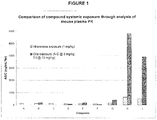
- Plasma was derived from whole blood by centrifugation, frozen and stored at -80 °C prior to analysis. Plasma concentrations were determined by liquid chromatography-tandem mass spectrometry in electrospray positive mode (ESI LC/MS/MS) using calibration curves prepared in the appropriate matrix. The lower level of quantification (LLOQ) in all cases was ca. 5 ng/mL. Plasma concentration-time data was processed using the computer program WinNonLin version 5.2 from which areas under the plasma concentration-time curve (AUC all ) were calculated by non-compartmental analysis using Model 201 (IV-bolus Input) or Model 200 (Extravascular Input).
- In vitro cell viability assays have been used to measure the effect of drug accumulation in paired parental and drug resistant tumour cell lines.
- the pairs used are the human ovarian carcinoma A2780 line with its MDR counterpart A2780/ADR and the human uterine sarcoma MES-SA line with its MDR counterpart MES-SA/Dx5 [ Wesolowska O., et al. (2005) Anticancer Res., 25, 383-389 ].
- Cultivated human tumour cells of the ovarian cell line A2780 and its doxorubicin-resistant pair, A2780/ADR and the uterine cell line MES-SA and its doxorubicin-resistant pair, MES-SA/DX5 were seeded at 3000 cells per well in Nunc 96-well tissue culture plates, 100 ⁇ l per well in DMEM media containing 10% foetal calf serum and penicillin/streptomycin. The wells of the first column in each plate were filled with 100 ⁇ l DMEM media instead of cells to provide a blank control for the Alamar Blue. The cells were incubated overnight at 37°C and 5% CO 2 .
- the compounds of interest dissolved in DMSO, were added on to the cells at various concentrations. Dilutions of the compounds were first prepared in DMEM at twice the final desired concentration and 100 ⁇ l of the dilutions added on to the cells. Each set of compounds were tested in triplicate in each cell line. After 72 hours incubation, 20 ⁇ l Alamar Blue reagent (AbD Serotec) were added to each well and incubated for 3 hours. The plates were then read at 544/595nm.
- the amount of Alamar Blue reagent reacted represents the metabolic activity of the cells.
- the relative cell activity was calculated as a percentage of the control (cells without compound) and the active compound concentration which inhibited the cell activity by 50% (IC 50 ) was derived. The values were calculated from the average of three individual measurements with blank correction (medium-only control).
- the assay was performed on the Biomek FxP, automation platform from Beckman Coulter.
- the plates were read on the Paradigm plate reader supplied by Beckman Coulter.
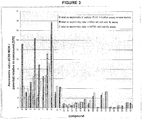
- Asymmetry ratios were calculated as the IC 50 value of the compound in the drug resistant cells divided by the IC 50 value in the parental cells.
- compounds of this invention which exhibit low MDR/parental cell asymmetry in cell viability assays are also more effective at inhibiting PLK1 within MDR tumour cells than compounds of the prior art. Thus, they have greater potential as therapeutic PLK inhibitors.
- the intermediate filament protein vimentin is a cellular target of PLK1 phosphorylation. Inhibition of PLK1 is associated with a decrease in phospho-vimentin. This has been measured in the A2780 - A2780/ADR cell line pair. Method: A2780 cells and A2780/ADR cells were plated in separate 96-well plates (Perkin Elmer) at a density of 20 000 cells/well and incubated overnight at 37°C and 5% CO 2 .
- Test compounds were added to cells at a range of concentrations, with triplicate wells for each concentration (top concentration of DMSO on cells was 0.1%). After 7hrs incubation, the cells were fixed in ice-cold 3.7% formaldehyde for 10mins. The cells were washed in PBS, then permeabilised in cold methanol for 10mins. The cells were washed again in PBS then incubated with PBS containing 0.1% Triton X-100 for 5mins.
- Cells were washed once with PBS containing 1% bovine serum albumin (Sigma) then incubated for 3hrs with antibodies to phospho-histone H3-Ser10 (1:4000; Millipore) and phospho-vimentin-Ser82 (1:1000; MBL), in 1% bovine serum albumin.
- Antibodies were detected with goat anti-mouse IgG conjugated to Alexafluor 488 (Invitrogen) and goat anti-rabbit IgG conjugated to Alexafluor 546 (Invitrogen), in 1% bovine serum albumin with 300nM DAPI (Cambridge Biosciences). Plates were scanned on a Cellomics Arrayscan II HCS Reader (Cellomics) using a 10X objective.
- the Cell Health Profiling V2 Bioapplication (Cellomics) was used to acquire and analyse the images. Phospho-vimentin staining, at intensities above a user-defined threshold, was measured in mitotic cells only (defined by the presence of phospho-histone H3) and the average staining intensity per mitotic cell for each well was reported. IC 50 values were derived using average values from three replicate wells. Asymmetry ratios were calculated as the IC 50 value of the compound in the drug resistant A2780/ADR cells divided by the IC 50 value in the parental A2780 cells.
Landscapes
- Chemical & Material Sciences (AREA)
- Health & Medical Sciences (AREA)
- Organic Chemistry (AREA)
- Life Sciences & Earth Sciences (AREA)
- Veterinary Medicine (AREA)
- Public Health (AREA)
- General Health & Medical Sciences (AREA)
- Medicinal Chemistry (AREA)
- Animal Behavior & Ethology (AREA)
- Pharmacology & Pharmacy (AREA)
- Nuclear Medicine, Radiotherapy & Molecular Imaging (AREA)
- General Chemical & Material Sciences (AREA)
- Chemical Kinetics & Catalysis (AREA)
- Bioinformatics & Cheminformatics (AREA)
- Engineering & Computer Science (AREA)
- Pulmonology (AREA)
- Epidemiology (AREA)
- Rheumatology (AREA)
- Hematology (AREA)
- Pain & Pain Management (AREA)
- Urology & Nephrology (AREA)
- Dermatology (AREA)
- Immunology (AREA)
- Orthopedic Medicine & Surgery (AREA)
- Physical Education & Sports Medicine (AREA)
- Oncology (AREA)
- Pharmaceuticals Containing Other Organic And Inorganic Compounds (AREA)
- Nitrogen Condensed Heterocyclic Rings (AREA)
- Nitrogen And Oxygen Or Sulfur-Condensed Heterocyclic Ring Systems (AREA)
Applications Claiming Priority (3)
| Application Number | Priority Date | Filing Date | Title |
|---|---|---|---|
| GB0719038A GB0719038D0 (en) | 2007-09-28 | 2007-09-28 | Compound |
| GB0806844A GB0806844D0 (en) | 2008-04-15 | 2008-04-15 | Compound |
| EP20080806455 EP2205603B1 (en) | 2007-09-28 | 2008-09-29 | Pyrimidine derivatives as protein kinase inhibitors |
Related Parent Applications (3)
| Application Number | Title | Priority Date | Filing Date |
|---|---|---|---|
| EP20080806455 Division EP2205603B1 (en) | 2007-09-28 | 2008-09-29 | Pyrimidine derivatives as protein kinase inhibitors |
| EP20080806455 Division-Into EP2205603B1 (en) | 2007-09-28 | 2008-09-29 | Pyrimidine derivatives as protein kinase inhibitors |
| EP08806455.5 Division | 2008-09-29 |
Publications (2)
| Publication Number | Publication Date |
|---|---|
| EP2610256A1 EP2610256A1 (en) | 2013-07-03 |
| EP2610256B1 true EP2610256B1 (en) | 2016-04-27 |
Family
ID=40199600
Family Applications (2)
| Application Number | Title | Priority Date | Filing Date |
|---|---|---|---|
| EP13156251.4A Active EP2610256B1 (en) | 2007-09-28 | 2008-09-29 | Pyrimidine derivatives as protein kinase inhibitors |
| EP20080806455 Active EP2205603B1 (en) | 2007-09-28 | 2008-09-29 | Pyrimidine derivatives as protein kinase inhibitors |
Family Applications After (1)
| Application Number | Title | Priority Date | Filing Date |
|---|---|---|---|
| EP20080806455 Active EP2205603B1 (en) | 2007-09-28 | 2008-09-29 | Pyrimidine derivatives as protein kinase inhibitors |
Country Status (9)
| Country | Link |
|---|---|
| US (3) | US8563542B2 (enExample) |
| EP (2) | EP2610256B1 (enExample) |
| JP (2) | JP5410432B2 (enExample) |
| CN (1) | CN101878216B (enExample) |
| CA (1) | CA2700979C (enExample) |
| ES (2) | ES2457394T3 (enExample) |
| PL (2) | PL2205603T3 (enExample) |
| RU (2) | RU2478100C2 (enExample) |
| WO (1) | WO2009040556A1 (enExample) |
Families Citing this family (38)
| Publication number | Priority date | Publication date | Assignee | Title |
|---|---|---|---|---|
| ATE479434T1 (de) | 2006-02-14 | 2010-09-15 | Vertex Pharma | Als protein-kinase-inhibitoren nutzbare dyhydrodiazepine |
| AU2008287339A1 (en) | 2007-08-15 | 2009-02-19 | Vertex Pharmaceuticals Incorporated | 4-(9-(3, 3-difluorocyclopentyl) -5, 7, 7-trimethyl-6-oxo-6, 7, 8, 9-tetrahydro-5H-pyrimido [4, 5-b][1, 4] diazepin-2-ylamino)-3-methoxybenzamide Derivatives as Inhibitors of the Human Protein Kinases PLK1 to PLK4 for the Treatment of Proliferative Diseases |
| BRPI0817315A2 (pt) | 2007-09-25 | 2015-03-17 | Takeda Pharmaceutical | Inibidores de quinase do tipo polo |
| CN101878216B (zh) | 2007-09-28 | 2013-07-10 | 西克拉塞尔有限公司 | 作为蛋白激酶抑制剂的嘧啶衍生物 |
| CA2728729C (en) | 2008-06-23 | 2016-09-27 | Vertex Pharmaceuticals Incorporated | Protein kinase inhibitors |
| EP2318412B1 (en) | 2008-06-23 | 2013-08-14 | Vertex Pharmceuticals Incorporated | Protein kinase inhibitors |
| GEP20207129B (en) | 2009-06-17 | 2020-07-10 | Vertex Pharma | Inhibitors of influenza viruses replication |
| SG179207A1 (en) | 2009-09-25 | 2012-04-27 | Vertex Pharma | Methods for preparing pyrimidine derivatives useful as protein kinase inhibitors |
| MX2012003484A (es) | 2009-09-25 | 2012-04-20 | Vertex Pharma | Metodos para preparar derivados de pirimidina utiles como inhibidores de proteina cinasa. |
| AU2011260323A1 (en) | 2010-06-04 | 2012-11-15 | F. Hoffmann-La Roche Ag | Aminopyrimidine derivatives as LRRK2 modulators |
| KR101566091B1 (ko) | 2010-11-10 | 2015-11-04 | 에프. 호프만-라 로슈 아게 | Lrrk2 조절제로서 피라졸 아미노피리미딘 유도체 |
| RU2013132681A (ru) | 2010-12-16 | 2015-01-27 | Вертекс Фармасьютикалз Инкорпорейтед | Ингибиторы репликации вирусов гриппа |
| UA118010C2 (uk) | 2011-08-01 | 2018-11-12 | Вертекс Фармасьютікалз Інкорпорейтед | Інгібітори реплікації вірусів грипу |
| GB201205752D0 (en) * | 2012-03-30 | 2012-05-16 | Cyclacel Ltd | Treatment |
| EP2970317A4 (en) | 2013-03-15 | 2016-11-02 | Dana Farber Cancer Inst Inc | PYRIMIDODIAZEPINONE COMPOUNDS AND METHOD FOR THE TREATMENT OF DISEASES |
| BR112016001457A2 (pt) | 2013-07-25 | 2017-08-29 | Dana Farber Cancer Inst Inc | Inibidores de fatores de transcrição e usos dos mesmos |
| PT3068776T (pt) | 2013-11-13 | 2019-08-26 | Vertex Pharma | Inibidores da replicação de vírus da gripe |
| HUE038820T2 (hu) | 2013-11-13 | 2018-11-28 | Vertex Pharma | Eljárás influenzavírusok replikációjának inhibitorai elõállítására |
| EP3099693A4 (en) * | 2014-01-31 | 2017-08-16 | Dana-Farber Cancer Institute, Inc. | Uses of diazepane derivatives |
| MX2016009974A (es) | 2014-01-31 | 2016-10-31 | Dana Farber Cancer Inst Inc | Derivados de diaminopirimidina bencensulfona y sus usos. |
| KR101517414B1 (ko) * | 2014-04-24 | 2015-05-04 | 고려대학교 산학협력단 | 염증성 질환의 예방 또는 치료용 약학 조성물 |
| RU2017104897A (ru) | 2014-08-08 | 2018-09-10 | Дана-Фарбер Кэнсер Инститьют, Инк. | Производные диазепана и их применения |
| DK3233882T3 (da) | 2014-12-16 | 2020-01-27 | Kayla Therapeutics | Fluorinerede cykliske dinukleotider til cytokininduktion |
| WO2016183120A1 (en) | 2015-05-13 | 2016-11-17 | Vertex Pharmaceuticals Incorporated | Inhibitors of influenza viruses replication |
| EP3294717B1 (en) | 2015-05-13 | 2020-07-29 | Vertex Pharmaceuticals Inc. | Methods of preparing inhibitors of influenza viruses replication |
| CA2986441A1 (en) | 2015-06-12 | 2016-12-15 | Dana-Farber Cancer Institute, Inc. | Combination therapy of transcription inhibitors and kinase inhibitors |
| US11306105B2 (en) | 2015-09-11 | 2022-04-19 | Dana-Farber Cancer Institute, Inc. | Cyano thienotriazolodiazepines and uses thereof |
| RU2018112953A (ru) | 2015-09-11 | 2019-10-14 | Дана-Фарбер Кэнсер Инститьют, Инк. | Ацетамидтиенотриазолодиазепины и пути их применения |
| WO2017066428A1 (en) | 2015-10-13 | 2017-04-20 | H. Lee Moffitt Cancer Center & Research Institute, Inc. | Brd4-kinase inhibitors as cancer therapeutics |
| CR20180336A (es) | 2015-11-25 | 2018-08-06 | Dana Farber Cancer Inst Inc | Inhibidores de bromodominio bivalentes y usos de los mismos |
| JP2019512459A (ja) * | 2016-03-04 | 2019-05-16 | アンホイ ニュー スター ファーマシューティカル デベロップメント カンパニー,リミテッド | 7員環化合物、その調製方法、その医薬組成物、およびその使用 |
| AU2017248186B2 (en) * | 2016-04-07 | 2021-10-21 | Dana-Farber Cancer Institute, Inc. | Pyrimido-diazepinone kinase scaffold compounds and methods of treating PI3K-mediated disorders |
| JP2021501785A (ja) | 2017-11-02 | 2021-01-21 | カリコ ライフ サイエンシーズ エルエルシー | 統合的ストレス経路の調節剤 |
| SG11202004009TA (en) * | 2017-11-02 | 2020-05-28 | Calico Life Sciences Llc | Modulators of the integrated stress pathway |
| ES3036562T3 (en) * | 2019-08-16 | 2025-09-22 | Cyclacel Pharmaceuticals Inc | Crystalline forms of pyrimidino diazepine derivative |
| US12570660B2 (en) * | 2019-08-16 | 2026-03-10 | Cyclacel Pharmaceuticals, Inc | Process for the preparation of a pyrimidino-diazepine derivative |
| AU2020356484A1 (en) | 2019-09-27 | 2022-03-17 | Dana-Farber Cancer Institute, Inc. | ERK5 degraders as therapeutics in cancer and inflammatory diseases |
| WO2023196943A1 (en) | 2022-04-08 | 2023-10-12 | Inhibrx, Inc. | Dr5 agonist and plk1 inhibitor or cdk inhibitor combination therapy |
Family Cites Families (16)
| Publication number | Priority date | Publication date | Assignee | Title |
|---|---|---|---|---|
| GB9117635D0 (en) | 1991-08-15 | 1991-10-02 | British Telecomm | Phase shifter |
| GB0302220D0 (en) | 2003-01-30 | 2003-03-05 | Cyclacel Ltd | Use |
| DE50307267D1 (de) * | 2003-02-26 | 2007-06-21 | Boehringer Ingelheim Pharma | Dihydropteridinone, verfahren zu deren herstellung und deren verwendung als arzneimittel |
| US6861422B2 (en) | 2003-02-26 | 2005-03-01 | Boehringer Ingelheim Pharma Gmbh & Co. Kg | Dihydropteridinones, processes for preparing them and their use as pharmaceutical compositions |
| US8710009B2 (en) | 2004-05-26 | 2014-04-29 | The Texas A&M University System | HSP20 inhibits amyloidogenesis and neurotoxicity |
| EP1799684B1 (en) * | 2004-10-04 | 2014-12-03 | Millennium Pharmaceuticals, Inc. | Lactam compounds useful as protein kinase inhibitors |
| AU2006262283B2 (en) | 2005-06-24 | 2011-10-13 | Eli Lilly And Company | Tetrahydrocarbazole derivatives useful as androgen receptor modulators (SARM) |
| US7439358B2 (en) | 2006-02-08 | 2008-10-21 | Boehringer Ingelheim International Gmbh | Specific salt, anhydrous and crystalline form of a dihydropteridione derivative |
| ATE479434T1 (de) | 2006-02-14 | 2010-09-15 | Vertex Pharma | Als protein-kinase-inhibitoren nutzbare dyhydrodiazepine |
| TW200808325A (en) * | 2006-07-06 | 2008-02-16 | Astrazeneca Ab | Novel compounds |
| CN101636399B (zh) * | 2007-03-22 | 2012-04-18 | 武田药品工业株式会社 | 可用作plk1抑制剂的取代的嘧啶并二氮杂* |
| BRPI0817315A2 (pt) * | 2007-09-25 | 2015-03-17 | Takeda Pharmaceutical | Inibidores de quinase do tipo polo |
| CN101878216B (zh) | 2007-09-28 | 2013-07-10 | 西克拉塞尔有限公司 | 作为蛋白激酶抑制剂的嘧啶衍生物 |
| WO2009067547A1 (en) * | 2007-11-19 | 2009-05-28 | Takeda Pharmaceutical Company Limited | Polo-like kinase inhibitors |
| US8710068B2 (en) | 2009-01-19 | 2014-04-29 | The Trustees Of The University Of Pennsylvania | Method of treating cancer using a survivin inhibitor |
| GB201205752D0 (en) | 2012-03-30 | 2012-05-16 | Cyclacel Ltd | Treatment |
-
2008
- 2008-09-29 CN CN2008801182902A patent/CN101878216B/zh active Active
- 2008-09-29 EP EP13156251.4A patent/EP2610256B1/en active Active
- 2008-09-29 EP EP20080806455 patent/EP2205603B1/en active Active
- 2008-09-29 US US12/680,353 patent/US8563542B2/en active Active
- 2008-09-29 JP JP2010526364A patent/JP5410432B2/ja active Active
- 2008-09-29 PL PL08806455T patent/PL2205603T3/pl unknown
- 2008-09-29 ES ES08806455T patent/ES2457394T3/es active Active
- 2008-09-29 CA CA2700979A patent/CA2700979C/en active Active
- 2008-09-29 PL PL13156251.4T patent/PL2610256T3/pl unknown
- 2008-09-29 ES ES13156251.4T patent/ES2585110T3/es active Active
- 2008-09-29 RU RU2010116759/04A patent/RU2478100C2/ru active
- 2008-09-29 WO PCT/GB2008/003305 patent/WO2009040556A1/en not_active Ceased
-
2013
- 2013-02-26 RU RU2013108456A patent/RU2623221C2/ru active
- 2013-06-05 US US13/910,349 patent/US9133199B2/en active Active
- 2013-11-06 JP JP2013230231A patent/JP5863196B2/ja not_active Expired - Fee Related
-
2015
- 2015-08-07 US US14/820,711 patent/US9493471B2/en not_active Expired - Fee Related
Non-Patent Citations (2)
| Title |
|---|
| GIRDLER FIONA ET AL: "Validating Aurora B as an anti-cancer drug target.", JOURNAL OF CELL SCIENCE 1 SEP 2006, vol. 119, no. Pt 17, 1 September 2006 (2006-09-01), pages 3664 - 3675, ISSN: 0021-9533 * |
| LI D ET AL: "Overexpression of oncogenic STK15/BTAK/Aurora A kinase in human pancreatic cancer", CLINICAL CANCER RESEARCH 20030301 US, vol. 9, no. 3, 1 March 2003 (2003-03-01), pages 991 - 997, ISSN: 1078-0432 * |
Also Published As
| Publication number | Publication date |
|---|---|
| CA2700979C (en) | 2017-06-20 |
| JP5410432B2 (ja) | 2014-02-05 |
| EP2205603A1 (en) | 2010-07-14 |
| EP2610256A1 (en) | 2013-07-03 |
| ES2457394T3 (es) | 2014-04-25 |
| US9133199B2 (en) | 2015-09-15 |
| ES2585110T3 (es) | 2016-10-03 |
| HK1146042A1 (en) | 2011-05-13 |
| CN101878216A (zh) | 2010-11-03 |
| EP2205603B1 (en) | 2014-01-15 |
| PL2610256T3 (pl) | 2016-11-30 |
| CA2700979A1 (en) | 2009-04-02 |
| WO2009040556A1 (en) | 2009-04-02 |
| JP2010540509A (ja) | 2010-12-24 |
| RU2478100C2 (ru) | 2013-03-27 |
| RU2623221C2 (ru) | 2017-06-23 |
| PL2205603T3 (pl) | 2014-07-31 |
| JP2014076994A (ja) | 2014-05-01 |
| US9493471B2 (en) | 2016-11-15 |
| US20150344486A1 (en) | 2015-12-03 |
| US20140066436A1 (en) | 2014-03-06 |
| US20110046093A1 (en) | 2011-02-24 |
| HK1187895A1 (en) | 2014-04-17 |
| RU2010116759A (ru) | 2011-11-10 |
| JP5863196B2 (ja) | 2016-02-16 |
| CN101878216B (zh) | 2013-07-10 |
| RU2013108456A (ru) | 2014-09-10 |
| US8563542B2 (en) | 2013-10-22 |
Similar Documents
| Publication | Publication Date | Title |
|---|---|---|
| EP2205603B1 (en) | Pyrimidine derivatives as protein kinase inhibitors | |
| AU2011217961B2 (en) | Cyclobutane and methylcyclobutane derivatives as Janus kinase inhibitors | |
| US7709471B2 (en) | Compounds | |
| EP2321315B1 (en) | Substituted alkyl pyrimidin-4-one derivatives | |
| JP6599979B2 (ja) | Betタンパク質阻害剤として用いるための三環式複素環化合物 | |
| EP1786779B1 (en) | 4-arylazo-3,5-diamino-pyrazole compounds and use thereof | |
| EP1589967B1 (en) | Benzthiazole-3 oxides useful for the treatment of proliferative disorders | |
| US9233965B2 (en) | 3,4-dihydropyrrolo[1,2-A]pyrazine-2,8(1H)-dicarboxamide derivatives, preparation thereof and therapeutic use thereof for diseases involving casein kinase 1 epsilon and/or casein kinase 1 delta | |
| KR100935262B1 (ko) | 1-[알킬], 1-[(헤테로아릴)알킬] 및1-[(아릴)알킬]-7-(피리미딘-4-일)-이미다조[1,2-a]피리미딘-5(1H)-온 유도체 | |
| TWI875911B (zh) | Bruton酪胺酸激酶(BTK)抑制劑 | |
| HK1187895B (en) | Pyrimidine derivatives as protein kinase inhibitors | |
| US20230312576A1 (en) | 4-(7h-pyrrolo[2,3-d]pyrimidin-4-yl)-3,6-dihydropyridine-1-(2h)-carboxamide derivatives as limk and/or rock kinases inhibitors for use in the treatment of cancer | |
| HK1146042B (en) | Pyrimidine derivatives as protein kinase inhibitors |
Legal Events
| Date | Code | Title | Description |
|---|---|---|---|
| PUAI | Public reference made under article 153(3) epc to a published international application that has entered the european phase |
Free format text: ORIGINAL CODE: 0009012 |
|
| AC | Divisional application: reference to earlier application |
Ref document number: 2205603 Country of ref document: EP Kind code of ref document: P |
|
| AK | Designated contracting states |
Kind code of ref document: A1 Designated state(s): AT BE BG CH CY CZ DE DK EE ES FI FR GB GR HR HU IE IS IT LI LT LU LV MC MT NL NO PL PT RO SE SI SK TR |
|
| RAP1 | Party data changed (applicant data changed or rights of an application transferred) |
Owner name: CYCLACEL LIMITED |
|
| 17P | Request for examination filed |
Effective date: 20140103 |
|
| RBV | Designated contracting states (corrected) |
Designated state(s): AT BE BG CH CY CZ DE DK EE ES FI FR GB GR HR HU IE IS IT LI LT LU LV MC MT NL NO PL PT RO SE SI SK TR |
|
| 17Q | First examination report despatched |
Effective date: 20140313 |
|
| REG | Reference to a national code |
Ref country code: HK Ref legal event code: DE Ref document number: 1187895 Country of ref document: HK |
|
| GRAP | Despatch of communication of intention to grant a patent |
Free format text: ORIGINAL CODE: EPIDOSNIGR1 |
|
| INTG | Intention to grant announced |
Effective date: 20151111 |
|
| RAP1 | Party data changed (applicant data changed or rights of an application transferred) |
Owner name: CYCLACEL LIMITED |
|
| GRAS | Grant fee paid |
Free format text: ORIGINAL CODE: EPIDOSNIGR3 |
|
| GRAA | (expected) grant |
Free format text: ORIGINAL CODE: 0009210 |
|
| AC | Divisional application: reference to earlier application |
Ref document number: 2205603 Country of ref document: EP Kind code of ref document: P |
|
| AK | Designated contracting states |
Kind code of ref document: B1 Designated state(s): AT BE BG CH CY CZ DE DK EE ES FI FR GB GR HR HU IE IS IT LI LT LU LV MC MT NL NO PL PT RO SE SI SK TR |
|
| REG | Reference to a national code |
Ref country code: GB Ref legal event code: FG4D |
|
| REG | Reference to a national code |
Ref country code: CH Ref legal event code: EP |
|
| REG | Reference to a national code |
Ref country code: AT Ref legal event code: REF Ref document number: 794685 Country of ref document: AT Kind code of ref document: T Effective date: 20160515 |
|
| REG | Reference to a national code |
Ref country code: IE Ref legal event code: FG4D |
|
| REG | Reference to a national code |
Ref country code: DE Ref legal event code: R096 Ref document number: 602008043925 Country of ref document: DE |
|
| REG | Reference to a national code |
Ref country code: SE Ref legal event code: TRGR Ref country code: FR Ref legal event code: PLFP Year of fee payment: 9 |
|
| REG | Reference to a national code |
Ref country code: NL Ref legal event code: FP |
|
| REG | Reference to a national code |
Ref country code: LT Ref legal event code: MG4D |
|
| REG | Reference to a national code |
Ref country code: AT Ref legal event code: MK05 Ref document number: 794685 Country of ref document: AT Kind code of ref document: T Effective date: 20160427 |
|
| REG | Reference to a national code |
Ref country code: ES Ref legal event code: FG2A Ref document number: 2585110 Country of ref document: ES Kind code of ref document: T3 Effective date: 20161003 |
|
| PG25 | Lapsed in a contracting state [announced via postgrant information from national office to epo] |
Ref country code: NO Free format text: LAPSE BECAUSE OF FAILURE TO SUBMIT A TRANSLATION OF THE DESCRIPTION OR TO PAY THE FEE WITHIN THE PRESCRIBED TIME-LIMIT Effective date: 20160727 Ref country code: LT Free format text: LAPSE BECAUSE OF FAILURE TO SUBMIT A TRANSLATION OF THE DESCRIPTION OR TO PAY THE FEE WITHIN THE PRESCRIBED TIME-LIMIT Effective date: 20160427 Ref country code: FI Free format text: LAPSE BECAUSE OF FAILURE TO SUBMIT A TRANSLATION OF THE DESCRIPTION OR TO PAY THE FEE WITHIN THE PRESCRIBED TIME-LIMIT Effective date: 20160427 |
|
| REG | Reference to a national code |
Ref country code: HK Ref legal event code: GR Ref document number: 1187895 Country of ref document: HK |
|
| PG25 | Lapsed in a contracting state [announced via postgrant information from national office to epo] |
Ref country code: LV Free format text: LAPSE BECAUSE OF FAILURE TO SUBMIT A TRANSLATION OF THE DESCRIPTION OR TO PAY THE FEE WITHIN THE PRESCRIBED TIME-LIMIT Effective date: 20160427 Ref country code: GR Free format text: LAPSE BECAUSE OF FAILURE TO SUBMIT A TRANSLATION OF THE DESCRIPTION OR TO PAY THE FEE WITHIN THE PRESCRIBED TIME-LIMIT Effective date: 20160728 Ref country code: PT Free format text: LAPSE BECAUSE OF FAILURE TO SUBMIT A TRANSLATION OF THE DESCRIPTION OR TO PAY THE FEE WITHIN THE PRESCRIBED TIME-LIMIT Effective date: 20160829 Ref country code: AT Free format text: LAPSE BECAUSE OF FAILURE TO SUBMIT A TRANSLATION OF THE DESCRIPTION OR TO PAY THE FEE WITHIN THE PRESCRIBED TIME-LIMIT Effective date: 20160427 Ref country code: HR Free format text: LAPSE BECAUSE OF FAILURE TO SUBMIT A TRANSLATION OF THE DESCRIPTION OR TO PAY THE FEE WITHIN THE PRESCRIBED TIME-LIMIT Effective date: 20160427 |
|
| REG | Reference to a national code |
Ref country code: DE Ref legal event code: R097 Ref document number: 602008043925 Country of ref document: DE |
|
| PG25 | Lapsed in a contracting state [announced via postgrant information from national office to epo] |
Ref country code: SK Free format text: LAPSE BECAUSE OF FAILURE TO SUBMIT A TRANSLATION OF THE DESCRIPTION OR TO PAY THE FEE WITHIN THE PRESCRIBED TIME-LIMIT Effective date: 20160427 Ref country code: EE Free format text: LAPSE BECAUSE OF FAILURE TO SUBMIT A TRANSLATION OF THE DESCRIPTION OR TO PAY THE FEE WITHIN THE PRESCRIBED TIME-LIMIT Effective date: 20160427 Ref country code: RO Free format text: LAPSE BECAUSE OF FAILURE TO SUBMIT A TRANSLATION OF THE DESCRIPTION OR TO PAY THE FEE WITHIN THE PRESCRIBED TIME-LIMIT Effective date: 20160427 Ref country code: CZ Free format text: LAPSE BECAUSE OF FAILURE TO SUBMIT A TRANSLATION OF THE DESCRIPTION OR TO PAY THE FEE WITHIN THE PRESCRIBED TIME-LIMIT Effective date: 20160427 Ref country code: DK Free format text: LAPSE BECAUSE OF FAILURE TO SUBMIT A TRANSLATION OF THE DESCRIPTION OR TO PAY THE FEE WITHIN THE PRESCRIBED TIME-LIMIT Effective date: 20160427 |
|
| PLBE | No opposition filed within time limit |
Free format text: ORIGINAL CODE: 0009261 |
|
| STAA | Information on the status of an ep patent application or granted ep patent |
Free format text: STATUS: NO OPPOSITION FILED WITHIN TIME LIMIT |
|
| 26N | No opposition filed |
Effective date: 20170130 |
|
| PG25 | Lapsed in a contracting state [announced via postgrant information from national office to epo] |
Ref country code: MC Free format text: LAPSE BECAUSE OF FAILURE TO SUBMIT A TRANSLATION OF THE DESCRIPTION OR TO PAY THE FEE WITHIN THE PRESCRIBED TIME-LIMIT Effective date: 20160427 |
|
| PG25 | Lapsed in a contracting state [announced via postgrant information from national office to epo] |
Ref country code: SI Free format text: LAPSE BECAUSE OF FAILURE TO SUBMIT A TRANSLATION OF THE DESCRIPTION OR TO PAY THE FEE WITHIN THE PRESCRIBED TIME-LIMIT Effective date: 20160427 |
|
| REG | Reference to a national code |
Ref country code: IE Ref legal event code: MM4A |
|
| PG25 | Lapsed in a contracting state [announced via postgrant information from national office to epo] |
Ref country code: IE Free format text: LAPSE BECAUSE OF NON-PAYMENT OF DUE FEES Effective date: 20160929 |
|
| REG | Reference to a national code |
Ref country code: FR Ref legal event code: PLFP Year of fee payment: 10 |
|
| PG25 | Lapsed in a contracting state [announced via postgrant information from national office to epo] |
Ref country code: LU Free format text: LAPSE BECAUSE OF NON-PAYMENT OF DUE FEES Effective date: 20160929 |
|
| PG25 | Lapsed in a contracting state [announced via postgrant information from national office to epo] |
Ref country code: CY Free format text: LAPSE BECAUSE OF FAILURE TO SUBMIT A TRANSLATION OF THE DESCRIPTION OR TO PAY THE FEE WITHIN THE PRESCRIBED TIME-LIMIT Effective date: 20160427 Ref country code: HU Free format text: LAPSE BECAUSE OF FAILURE TO SUBMIT A TRANSLATION OF THE DESCRIPTION OR TO PAY THE FEE WITHIN THE PRESCRIBED TIME-LIMIT; INVALID AB INITIO Effective date: 20080929 |
|
| PG25 | Lapsed in a contracting state [announced via postgrant information from national office to epo] |
Ref country code: IS Free format text: LAPSE BECAUSE OF FAILURE TO SUBMIT A TRANSLATION OF THE DESCRIPTION OR TO PAY THE FEE WITHIN THE PRESCRIBED TIME-LIMIT Effective date: 20160427 Ref country code: MT Free format text: LAPSE BECAUSE OF NON-PAYMENT OF DUE FEES Effective date: 20160930 |
|
| PG25 | Lapsed in a contracting state [announced via postgrant information from national office to epo] |
Ref country code: BG Free format text: LAPSE BECAUSE OF FAILURE TO SUBMIT A TRANSLATION OF THE DESCRIPTION OR TO PAY THE FEE WITHIN THE PRESCRIBED TIME-LIMIT Effective date: 20160427 |
|
| REG | Reference to a national code |
Ref country code: FR Ref legal event code: PLFP Year of fee payment: 11 |
|
| REG | Reference to a national code |
Ref country code: DE Ref legal event code: R082 Ref document number: 602008043925 Country of ref document: DE Representative=s name: D YOUNG & CO LLP, DE |
|
| P01 | Opt-out of the competence of the unified patent court (upc) registered |
Effective date: 20230515 |
|
| PGFP | Annual fee paid to national office [announced via postgrant information from national office to epo] |
Ref country code: TR Payment date: 20230918 Year of fee payment: 16 Ref country code: NL Payment date: 20230915 Year of fee payment: 16 Ref country code: IT Payment date: 20230915 Year of fee payment: 16 |
|
| PGFP | Annual fee paid to national office [announced via postgrant information from national office to epo] |
Ref country code: SE Payment date: 20230915 Year of fee payment: 16 Ref country code: PL Payment date: 20230920 Year of fee payment: 16 Ref country code: DE Payment date: 20230907 Year of fee payment: 16 Ref country code: BE Payment date: 20230915 Year of fee payment: 16 |
|
| PGFP | Annual fee paid to national office [announced via postgrant information from national office to epo] |
Ref country code: ES Payment date: 20231005 Year of fee payment: 16 |
|
| PGFP | Annual fee paid to national office [announced via postgrant information from national office to epo] |
Ref country code: CH Payment date: 20231001 Year of fee payment: 16 |
|
| REG | Reference to a national code |
Ref country code: DE Ref legal event code: R119 Ref document number: 602008043925 Country of ref document: DE |
|
| REG | Reference to a national code |
Ref country code: SE Ref legal event code: EUG |
|
| REG | Reference to a national code |
Ref country code: CH Ref legal event code: PL |
|
| REG | Reference to a national code |
Ref country code: NL Ref legal event code: MM Effective date: 20241001 |
|
| PG25 | Lapsed in a contracting state [announced via postgrant information from national office to epo] |
Ref country code: NL Free format text: LAPSE BECAUSE OF NON-PAYMENT OF DUE FEES Effective date: 20241001 |
|
| PG25 | Lapsed in a contracting state [announced via postgrant information from national office to epo] |
Ref country code: DE Free format text: LAPSE BECAUSE OF NON-PAYMENT OF DUE FEES Effective date: 20250401 |
|
| REG | Reference to a national code |
Ref country code: BE Ref legal event code: MM Effective date: 20240930 |
|
| PG25 | Lapsed in a contracting state [announced via postgrant information from national office to epo] |
Ref country code: BE Free format text: LAPSE BECAUSE OF NON-PAYMENT OF DUE FEES Effective date: 20240930 Ref country code: IT Free format text: LAPSE BECAUSE OF NON-PAYMENT OF DUE FEES Effective date: 20240929 |
|
| PG25 | Lapsed in a contracting state [announced via postgrant information from national office to epo] |
Ref country code: CH Free format text: LAPSE BECAUSE OF NON-PAYMENT OF DUE FEES Effective date: 20240930 |
|
| PG25 | Lapsed in a contracting state [announced via postgrant information from national office to epo] |
Ref country code: SE Free format text: LAPSE BECAUSE OF NON-PAYMENT OF DUE FEES Effective date: 20240930 |
|
| PGFP | Annual fee paid to national office [announced via postgrant information from national office to epo] |
Ref country code: GB Payment date: 20250911 Year of fee payment: 18 |
|
| PGFP | Annual fee paid to national office [announced via postgrant information from national office to epo] |
Ref country code: FR Payment date: 20250922 Year of fee payment: 18 |
|
| REG | Reference to a national code |
Ref country code: ES Ref legal event code: FD2A Effective date: 20251104 |
|
| PG25 | Lapsed in a contracting state [announced via postgrant information from national office to epo] |
Ref country code: ES Free format text: LAPSE BECAUSE OF NON-PAYMENT OF DUE FEES Effective date: 20240930 |
|
| PG25 | Lapsed in a contracting state [announced via postgrant information from national office to epo] |
Ref country code: PL Free format text: LAPSE BECAUSE OF NON-PAYMENT OF DUE FEES Effective date: 20240929 |
|
| PG25 | Lapsed in a contracting state [announced via postgrant information from national office to epo] |
Ref country code: TR Free format text: LAPSE BECAUSE OF NON-PAYMENT OF DUE FEES Effective date: 20240929 |