EP2580355B1 - Durch ein oligonukleotid mit veränderter haarnadelstruktur vermittelte reverse transkription und durch base-spacing eingeschränkte quantitative pcr - Google Patents
Durch ein oligonukleotid mit veränderter haarnadelstruktur vermittelte reverse transkription und durch base-spacing eingeschränkte quantitative pcr Download PDFInfo
- Publication number
- EP2580355B1 EP2580355B1 EP11796068.2A EP11796068A EP2580355B1 EP 2580355 B1 EP2580355 B1 EP 2580355B1 EP 11796068 A EP11796068 A EP 11796068A EP 2580355 B1 EP2580355 B1 EP 2580355B1
- Authority
- EP
- European Patent Office
- Prior art keywords
- stem
- dna
- loop
- nucleotides
- oligonucleotide
- Prior art date
- Legal status (The legal status is an assumption and is not a legal conclusion. Google has not performed a legal analysis and makes no representation as to the accuracy of the status listed.)
- Active
Links
Images










Classifications
-
- C—CHEMISTRY; METALLURGY
- C12—BIOCHEMISTRY; BEER; SPIRITS; WINE; VINEGAR; MICROBIOLOGY; ENZYMOLOGY; MUTATION OR GENETIC ENGINEERING
- C12Q—MEASURING OR TESTING PROCESSES INVOLVING ENZYMES, NUCLEIC ACIDS OR MICROORGANISMS; COMPOSITIONS OR TEST PAPERS THEREFOR; PROCESSES OF PREPARING SUCH COMPOSITIONS; CONDITION-RESPONSIVE CONTROL IN MICROBIOLOGICAL OR ENZYMOLOGICAL PROCESSES
- C12Q1/00—Measuring or testing processes involving enzymes, nucleic acids or microorganisms; Compositions therefor; Processes of preparing such compositions
- C12Q1/68—Measuring or testing processes involving enzymes, nucleic acids or microorganisms; Compositions therefor; Processes of preparing such compositions involving nucleic acids
- C12Q1/6844—Nucleic acid amplification reactions
- C12Q1/6853—Nucleic acid amplification reactions using modified primers or templates
-
- C—CHEMISTRY; METALLURGY
- C12—BIOCHEMISTRY; BEER; SPIRITS; WINE; VINEGAR; MICROBIOLOGY; ENZYMOLOGY; MUTATION OR GENETIC ENGINEERING
- C12Q—MEASURING OR TESTING PROCESSES INVOLVING ENZYMES, NUCLEIC ACIDS OR MICROORGANISMS; COMPOSITIONS OR TEST PAPERS THEREFOR; PROCESSES OF PREPARING SUCH COMPOSITIONS; CONDITION-RESPONSIVE CONTROL IN MICROBIOLOGICAL OR ENZYMOLOGICAL PROCESSES
- C12Q1/00—Measuring or testing processes involving enzymes, nucleic acids or microorganisms; Compositions therefor; Processes of preparing such compositions
- C12Q1/68—Measuring or testing processes involving enzymes, nucleic acids or microorganisms; Compositions therefor; Processes of preparing such compositions involving nucleic acids
- C12Q1/6844—Nucleic acid amplification reactions
-
- C—CHEMISTRY; METALLURGY
- C12—BIOCHEMISTRY; BEER; SPIRITS; WINE; VINEGAR; MICROBIOLOGY; ENZYMOLOGY; MUTATION OR GENETIC ENGINEERING
- C12Q—MEASURING OR TESTING PROCESSES INVOLVING ENZYMES, NUCLEIC ACIDS OR MICROORGANISMS; COMPOSITIONS OR TEST PAPERS THEREFOR; PROCESSES OF PREPARING SUCH COMPOSITIONS; CONDITION-RESPONSIVE CONTROL IN MICROBIOLOGICAL OR ENZYMOLOGICAL PROCESSES
- C12Q1/00—Measuring or testing processes involving enzymes, nucleic acids or microorganisms; Compositions therefor; Processes of preparing such compositions
- C12Q1/68—Measuring or testing processes involving enzymes, nucleic acids or microorganisms; Compositions therefor; Processes of preparing such compositions involving nucleic acids
- C12Q1/6844—Nucleic acid amplification reactions
- C12Q1/6846—Common amplification features
-
- C—CHEMISTRY; METALLURGY
- C12—BIOCHEMISTRY; BEER; SPIRITS; WINE; VINEGAR; MICROBIOLOGY; ENZYMOLOGY; MUTATION OR GENETIC ENGINEERING
- C12Q—MEASURING OR TESTING PROCESSES INVOLVING ENZYMES, NUCLEIC ACIDS OR MICROORGANISMS; COMPOSITIONS OR TEST PAPERS THEREFOR; PROCESSES OF PREPARING SUCH COMPOSITIONS; CONDITION-RESPONSIVE CONTROL IN MICROBIOLOGICAL OR ENZYMOLOGICAL PROCESSES
- C12Q2600/00—Oligonucleotides characterized by their use
- C12Q2600/178—Oligonucleotides characterized by their use miRNA, siRNA or ncRNA
Definitions
- the invention relates to methods of detecting a target miRNA in a sample.
- MicroRNAs are small non-coding RNAs (typically about 22 nucleotides in length) that were discovered as important post-transcriptional regulators of gene expression in metazoans (Bartel, 2004). While expression of miRNAs are critical in various physiological processes (Harfe, 2005; Miska, 2005; Carthew, 2006; Lindsay, 2008), dysregulation of miRNAs are implicated in pathologies of many human diseases such as cancer (Visone & Croce, 2009), muscle disorders (Chen et al., 2009a) and neurodegeneration (Hebert & De Strooper, 2009).
- miRNAs were found to be remarkably stable in blood, and thus hold great promise as potential noninvasive biomarkers of human diseases (Chen et al., 2008; Mitchell et al., 2008).
- hundreds of unique miRNAs have been identified in many species and each of these is predicted to regulate diverse target genes (Bartel, 2009).
- profiling of miRNA expression remains an essential tool not only for assessment of distribution and regulation of miRNAs but also for identification of novel biomarkers and potential therapeutic targets.
- Mature miRNAs can be detected by either direct or indirect methods. Although direct detection methods (eg. fluorescent, colorimetric and electrical-based methods) can minimize variations introduced during sample measurements, these methods are limited by low assay sensitivity and poor discrimination among miRNA homologs (reviewed in Hunt et al., 2009).
- direct detection methods eg. fluorescent, colorimetric and electrical-based methods
- these methods are limited by low assay sensitivity and poor discrimination among miRNA homologs (reviewed in Hunt et al., 2009).
- Indirect detection methods include primarily Northern blotting, microarray and reverse transcription PCR (RT-PCR). Although widely used, both Northern blotting and microarray are semi-quantitative and suffer from poor sensitivity and require large amounts of starting RNA. Although microarrays offer high-throughput detection of miRNAs and the potential capability of absolute quantification (Bissels et al., 2009), a recent study showed that real-time PCR remains superior in sensitivity and specificity in comparison (Chen et al., 2009b). Recent attempts to measure miRNA with isothermal methods have met with some success but are labor intensive (Cheng et al., 2009; Yao et al., 2009).
- TaqMan probe-based real-time RT-PCR has been reported and widely used for efficient and specific detection of miRNAs.
- TaqMan assays were not compatible with fast thermo-cycling protocols for rapid detection of miRNAs.
- design of TaqMan probe for each of the novel miRNA is not only cost-prohibitive but also technically challenging and faces practical difficulties (Varkonyi-Gasic et al., 2007).
- WO 2009/135093 discloses a single tube RT-PCR assay for detecting RNA in which it is desired to inhibit the RT primer from participating in the PCR. This is achieved by using a non-replicable RT primer which contains two adjacent C3-spacers.
- WO 2007/025281 discloses a stem-loop oligonucleotide primer with cleavable ribonucleotides in the loop for use in PCR.
- WO 03/100019 discloses the use of uracil in the outer primers in a nested PCR and glycosylase in order to prevent the outer primers from participating in the last stage of the PCR.
- a common strategy of these assays and some other TaqMan assays is to use universal or common reverse PCR primer and/or fluorescent probe for amplification and detection of multiple miRNAs.
- specificity of real-time PCR is only achieved by the forward PCR primer, which is not sufficient for discrimination of many homologous miRNAs.
- it is yet to be determined whether these assays are capable of rapid, multiplexed and direct detection of miRNAs without RNA isolation.
- the invention provides a method, as defined in the claims, of detecting a target miRNA molecule in a sample.
- the methods of the present invention use a combination of reverse transcription (RT) and polymerase chain reaction (PCR) amplification to specifically identify a target RNA from a sample containing the target RNA.
- the methods use a combination of a modified stem-loop RT oligonucleotide and hemi-nested PCR primers to specifically select for the target RNA.
- Use of a modified nucleotide within the RT oligonucleotide provides a block for DNA polymerase to prevent mis-priming during the amplification reaction.
- carry-over of the RT oligonucleotide to the amplification reaction may be reduced or even eliminated, while the specificity for a target miRNA may be enhanced even with the presence of miRNA homologs in the sample.
- the methods of the invention may provide specific and rapid detection of target RNA species, such as mature miRNAs from precursor miRNAs and from homologous family members. It may be possible to use a fast thermo-cycling profile (10 seconds per cycle) yet still retain specificity and sensitivity.
- the methods may also be used in multiplex format, which may be useful for screening and detection of miRNAs directly from cell lysates without the requirement for laborious total RNA isolation.
- the methods of the invention may be tailored to existing real-time PCR methods.
- Real-time PCR has become the standard method for gene expression measurements and has become an extremely useful technique for gene profiling and for biomarker discovery.
- the methods may be economical, high-performance, easy to use, rapid and sensitive.
- the present invention provides a, as defined in the claims, for detecting a target RNA molecule in a sample, the method comprising: reverse transcribing the target RNA contained in the sample using an RT oligonucleotide, the RT oligonucleotide comprising a stem-loop portion containing one or more nucleotides modified or cleavable to block DNA polymerase extension and a target annealing portion that is complementary to a downstream portion of the target RNA, the target annealing portion located 3' to the stem-loop portion, to produce a reverse transcription product that comprises the RT oligonucleotide and a 3' extended region; amplifying the reverse transcription product using (i) a first amplification primer that anneals to a downstream portion of the 3' extended region of the reverse transcription product and (ii) a second amplification primer that anneals to an interface portion of a DNA strand complementary to the reverse transcription product, the interface portion comprising
- the one or more nucleotides modified or cleavable to block DNA polymerase extension is located within the loop of the stem-loop portion.
- the stem-loop portion contains one or more nucleotides modified to block DNA polymerase extension.
- the loop of the stem-loop portion may comprise a nucleotide modified with an aliphatic carbon chain, for example a C6 aliphatic chain.
- the stem-loop portion contains one or more nucleotide cleavable to block DNA polymerase extension and the method further comprises cleaving the cleavable nucleotide prior to the amplifying.
- the modifiable nucleotide may be dU and the modifying may comprise treatment with uracil-DNA glycosylase.
- the loop of the stem-loop portion may comprise one or more ribonucleotides and the modifying may comprise treatment with RNAse.
- the invention provides a method for detecting a target miRNA molecule in a sample, the method comprising: reverse transcribing the target miRNA contained in the sample using an RT oligonucleotide, the RT oligonucleotide comprising a stem-loop portion containing a dU nucleotide and a target annealing portion that is complementary to a downstream portion of the target miRNA, the target annealing portion located 3' to the stem-loop portion, to produce a reverse transcription product that comprises the RT oligonucleotide and a 3' extended region; modifying the dU nucleotide by treatment with uracil-DNA glycosylase; amplifying the reverse transcription product using (i) a first amplification primer that anneals to a downstream portion of the 3' extended region of the reverse transcription product and (ii) a second amplification primer that anneals to an interface portion of a DNA strand complementary to the reverse transcription product, the interface
- the amplification primers have nucleotides that display thermal stability when hybridized to DNA as the 3' terminal nucleotide.
- the nucleotide that displays thermal stability when hybridized to DNA may be locked in an N-type furanose conformation.
- the distance in the sequence of the amplification product between the position of the 3' end of the first amplification primer when annealed to the reverse transcription product and the position of the 3' end of the second amplification primer when annealed to the DNA strand is from -4 to 5 nucleotides.
- the target annealing portion of the RT oligonucleotide is 5 to 15 nucleotides in length.
- the stem portion of the stem-loop is 4 to 6 nucleotides in length and the loop portion of the stem-loop is 4 to 12 nucleotides in length.
- the second amplification primer anneals to a sequence complementary to 13 to 24 nucleotides of the stem-loop portion of the RT oligonucleotide, 5 to 15 nucleotides of the target annealing portion of the RT oligonucleotide and 1 to 5 nucleotides at the 5' end of the 3' extended region of the reverse transcription product.
- the first amplification primer is 12 to 27 nucleotides in length.
- the detecting comprises detecting with a fluorescent intercalating dye.
- the fluorescent intercalating dye may be SYBR Green or Eva Green.
- RNA from a sample there is presently provided a method for detection of RNA from a sample.
- the method may be used to detect any RNA species, and may be useful in detecting mature miRNA, including directly from a cell containing the miRNA.
- the method is an RT-PCR (reverse transcription-PCR) amplification method that combines an RT oligonucleotide primer designed to have stem-loop secondary structure and a nucleotide modified to block DNA polymerase during an amplification reaction together with a pair hemi-nested amplification primers in the amplification reaction.
- RT-PCR reverse transcription-PCR
- Figures 1 and 2 provide a schematic representation of an overview of the method; the 5' and 3' end of each nucleic acid molecule depicted is indicated.
- Figure 1 represents a reverse transcription reaction and
- Figure 2 represents an amplification reaction.
- the initial reaction mixture 100 contains the target RNA 102 that is to be reverse transcribed, and a reverse transcription (RT) oligonucleotide 104 that acts as a primer for the reverse transcription reaction.
- RT oligonucleotide 104 has stem-loop portion 106 and target annealing portion 108.
- the stem-loop portion 106 Under the conditions used in the reverse transcription reaction, for example a reaction temperature of about 37°C, the stem-loop portion 106 is in an annealed conformation having a stem-loop structure, as depicted in Figure 1 .
- the stem-loop portion 106 contains one or more nucleotides 110 modified or modifiable to block DNA polymerase extension.
- the target annealing portion 108 anneals to a downstream portion 112 of target RNA 102 and is then extended by a reverse transcriptase enzyme to produce a reverse transcription product 114 that comprises RT oligonucleotide 104 and a 3' extended region 116.
- the initial reaction mixture 200 contains the reverse transcription product 114, a first amplification primer 202 and a second amplification primer 204.
- the initial reaction mixture 200 may also contain some RT oligonucleotide 104 carried over from the reverse transcription reaction, which may thus also act as a primer.
- the stem-loop portion 106 is in a melted conformation that does not have a stem-loop structure, as depicted in Figure 2 .
- the reverse transcription product 114 acts as a template and the first amplification primer 202 binds to a downstream portion 206 of reverse transcription product 114.
- a DNA polymerase enzyme extends first amplification primer 202 until nucleotide 110 is reached, blocking further extension, thus producing a complementary DNA strand 208 that is complementary to the reverse transcription product and that has a 3' end in the vicinity of the complementary position to nucleotide 110.
- Complementary DNA strand 208 has an interface portion 210 that comprises a region that is complementary to interface in reverse transcription product 114 formed by the interface between the 3' end of RT oligonucleotide 104 and the 5' end of 3' extended region 116.
- second amplification primer 204 anneals to complementary DNA strand 208 at interface portion 210, and complementary DNA strand 208 acts as a template for DNA polymerase extension to produce DNA strand 212. Since second amplification primer 204 is thus nested in from the end of complementary strand 208, DNA strand 212 has a portion of the sequence of reverse transcription product 114, but is shorter than reverse transcription product 114.
- first amplification primer 202 and second amplification primer 204 will anneal to available DNA template strands.
- first amplification primer 202 anneals to DNA strand 212
- the complementary DNA strand 208' that is formed is shorter than complementary DNA strand 208.
- DNA strand 212 and complementary DNA strand 208' thus form amplification product 214.
- some longer DNA strands such as reverse transcription product 114 and complementary DNA strand 208 will be present to serve as template, as the amplification reaction progresses through multiple rounds, more amplification product 214 is produced, due to the inclusion of nucleotide 110 and due to the nesting of second amplification primer 204.
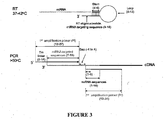
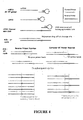
- Figure 3 A further schematic depiction of the method is provided in Figure 3 .
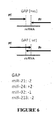
- Figure 4 depicts the effect of the modified nucleotide to block DNA polymerase on the specificity of the amplification reaction.
- reverse amplification primers were designed to anneal directly to sequences in the RT oligonucleotide.
- a unique miRNA-specific fluorescent probe is required to discriminate the targets from nonspecific amplicons (Chen et al., 2005).
- this specificity was compromised for the convenience of throughput by using one common probe for detection.
- increased specificity can be achieved by designing a hemi-nested reverse PCR primer that is designed to anneal to part of the reverse transcription oligonucleotide primer and part of the 3' extended region the product of reverse transcription.
- the method described herein does not require the use of a fluorescent probe, as the hemi-nested reverse amplification primer enhances the assay specificity, and may allow quantification of as little as subzeptomole amounts of miRNA using a fluorescent intercalating dye such as SYBR Green I under rapid thermo-cycling conditions.
- the method comprises a reverse transcription reaction.
- a reverse transcription reaction is performed on a sample that contains the target RNA, using an RT oligonucleotide as a primer for the reaction.
- the RT oligonucleotide thus acts as primer for a reverse transcriptase enzyme that uses the target RNA as a template and extends the RT oligonucleotide to form a reverse transcription product that comprises the RT oligonucleotide at the 5' end and an extended region at the 3' end of the reverse transcripton product.
- the RT oligonucleotide comprises a stem-loop portion and a target annealing portion located 3' to the stem-loop portion.
- the RT oligonucleotide used in the reverse transcription reaction is a DNA oligonucleotide that is designed to have a 5' portion that contains a stem-loop structure.
- the stem-loop structure is a self-annealing structure that has complementary base sequences that pair together to form a short duplex DNA stem.
- the loop is formed by nucleotides that intervene between the two complementary regions that form the stem and forms a single stranded section at one end of the stem, connecting the two portions that form the double stranded stem.
- the stem-loop portion is designed to adopt the stem-loop structure under conditions used for the reverse transcription reaction, meaning under the conditions including the buffer, salt and temperature conditions and any other parameter that would affect DNA secondary structure, which are chosen to permit the reverse transcriptase enzyme used in the reaction conduct the reverse transcription.
- the stem-loop portion is also designed to melt, or to not adopt the stem-loop structure under the conditions used for the amplification reaction as discussed below.
- the sequence of the stem portion may be selected to anneal at the temperature used for reverse transcription, including taking into consideration the relevant buffer conditions, but not to anneal at the temperature used for amplification reaction, again including taking into consideration the relevant buffer conditions.
- the stem-loop portion may adopt the stem-loop structure at 37°C or lower, but may not anneal to form the stem-loop structure at about 50°C or higher.
- the stem-loop portion of the RT oligonucleotide includes a DNA polymerase blocking position.
- the DNA polymerase blocking position is a position in the stem-loop region that, when linearised and not adopting the stem-loop structure, acts as a block for an elongating DNA polymerase that is extended an amplification primer in the amplification reaction, using the reverse transcription product as a template.
- the DNA blocking position may be positioned anywhere within the stem-loop portion of the RT oligonucleotide. In one embodiment, the DNA blocking position is positioned within the loop of the stem-loop portion.
- the DNA blocking position can be any modification to the stem-loop region that blocks primer extension by the elongating DNA polymerase.
- the DNA blocking position may be a modified nucleotide that cannot be read by the DNA polymerase, for example using a derivative of a DNA nucleotide or a modified DNA nucleotide having an attached chemical group.
- the modification may be an altered structure of the nucleic base of the modified nucleotide; that is it may be an analog of A, G, C or T which DNA polymerase cannot use as a template or extend past.
- the modification may be a group that is a substituent on a nucleotide at the DNA blocking position, including a non-nucleotide group, and may be a pendant group or may be attached to two nucleotides so that the group forms part of the oligonucleotide backbone.
- the DNA blocking position may be in the loop region and may include an aliphatic carbon chain connecting two nucleotides, for example a C6 aliphatic chain.
- the modification may include incorporation of a non-nucleotide group, including incorporation into the backbone, in order to block extension by DNA polymerase.
- the DNA blocking position may be already modified so as to block DNA polymerase when the RT oligonucleotide is added to the transcription reaction.
- modified nucleotide 2-amino-5-(2'-deoxy-b-D-ribofuranosyl) pyridine-5'-triphosphate (d*CTP) or 5-(2'-deoxy-b-D-ribofuranosyl)-3-methyl-2-pyridone-5'-triphosphate (d*TTP) may be used. Both modified nucleotides have been demonstrated to exhibit strong inhibition in PCR catalysed by Taq polymerase (Guo et al., 1998).
- the DNA blocking position may be a nucleotide or group that is cleavable upon treatment to block DNA polymerase. That is, when added to the RT reaction, the cleavable nucleotide or group is further treated in order form a modified nucleotide at the DNA blocking position.
- the modifiable nucleotide is a dU nucleotide, which is treated with uracil-DNA glycosylase (UDG).
- the modifiable nucleotide may be a ribonucleotide, which is treated with RNase.
- the modification treatment results in a modified nucleotide, including cleavage of the RT oligonucleotide, effectively preventing extension by DNA polymerase.
- the modification of the modifiable oligonucleotide is performed prior to the amplification reaction, and may be performed after the RT reaction.
- the stem loop portion may be of any suitable length to provide the stem-loop structure during reverse transcription and to melt during the amplification reaction.
- the entire stem loop structure may be from 12 to 24 nucleotides in length.
- the stem portion of the stem-loop may be4 or 6 nucleotides in length.
- the loop portion of the stem-loop may be from 4 to 12 nucleotides in length.
- Design of oligonucleotides that form a stem loop structure is known, and computer programs that will calculate annealing temperature for a given sequence or that will design a stem-loop structure for certain annealing conditions are available, for example MFOLD software.
- the sequence of the stem portion may be designed to anneal at the temperature used for the reverse transcription reaction but to melt at a temperature used for the amplification reaction.
- the RT oligonucleotide includes a target annealing portion.
- the target annealing portion is located 3' to the stem-loop portion and is designed to be complementary to a downstream portion of the target RNA.
- the target annealing portion of the RT oligonucleotide is 5 to 15 nucleotides in length.
- the reverse transcription product is produced, the reverse transcription product comprising the RT oligonucleotide at the 5' end of the RT product, and an extended region 3' to the RT oligonucleotide that is complementary to a downstream portion of the target RNA, downstream of (or located 3' to) the region to which the target annealing portion of the RT oligonucleotide is complementary.
- An amplification reaction is performed on the reverse transcribed sample.
- the PCR methods used may include real-time PCR methods, as are known in the art. Such methods involve the use of a fluorescent probe to detect the amplification product as it is produced.
- the amplification reaction is conducted using a pair of amplification primers, a forward primer and reverse primer.
- the first amplification primer (i.e. forward primer) is designed to anneal to a downstream portion of the 3' extended region of the RT product.
- the primer may be any suitable length to anneal to the desired portion of the 3' extended region of the RT product.
- the length of the primer may be partly determined by the annealing temperature and conditions chosen.
- the design of amplification primers for annealing to a desired sequence within a template nucleic acid is known.
- the first amplification primer is from 12 to 27 nucleotides in length.
- the second amplification primer (i.e. reverse primer) is designed to anneal to an interface portion of a DNA strand complementary to the RT product.
- the interface portion of the complementary DNA strand includes a region that is complementary to point where the RT product transitions from the RT oligonucleotide into the 3' extended portion.
- the interface portion comprises a region that is complementary to a 3' portion of the RT oligonucleotide and a 5' portion of the 3' extended region in the RT product.
- the second amplification primer is designed to anneal to a sequence complementary to 13 to 24 nucleotides of the stem-loop portion of the RT oligonucleotide, 5 to 15 nucleotides of the target annealing portion of the RT oligonucleotide and 1 to 5 nucleotides at the 5' end of the 3' extended region of the reverse transcription product.
- the second amplification primer is from 13 to 24 nucleotides in length.
- the distance in the sequence of the amplification product between the position of the 3' end of the first amplification primer when annealed to the reverse transcription product and the position of the 3' end of the second amplification primer when annealed to the DNA strand is from -4 to 5 nucleotides, meaning there may be an overlap of from 1 to 4 nucleotides between where the 3' end of the first amplification primer anneals to the RT product and where the 3' end of the second amplification primer anneals to the DNA strand that is complementary to the RT product, or there may be a gap of from 1 to 5 nucleotides, or there may be an alignment between the 3' ends of the amplification primers when annealed on the respective template nucleic acids.
- Either or both of the amplification primers may have a nucleotide that displays thermal stability when hybridized to DNA as the 3' terminal nucleotide. Inclusion of such a thermal stable nucleotide allows for use of an increased melting temperature, resulting in preferential annealing of the amplification primer to the DNA as compared to DNA that does not include such a nucleotide.
- the nucleotide that displays thermal stability when hybridized to DNA may be locked in an N-type furanose conformation.
- the amplification reaction is performed and yields an amplification product.
- Detecting the amplification product may involve any method of detecting, including for example hybridizing the amplification product with a microarray having immobilized complementary sequences, size separating using techniques such as gel electrophoresis or using real-time PCR methods to detect the amplification product as it is being produced.
- Detecting may comprise detecting the amplification product with a fluorescent intercalating dye.
- the fluorescent intercalating dye may be SYBR Green or Eva Green.
- a method for detecting a target miRNA molecule in a sample comprising: reverse transcribing a sample containing the target miRNA using an RT oligonucleotide, the RT oligonucleotide comprising a stem-loop portion containing a dU nucleotide and a target annealing portion that is complementary to a downstream portion of the target miRNA, the target annealing portion located 3' to the stem-loop portion, to produce a reverse transcription product that comprises the RT oligonucleotide and a 3' extended region; modifying the dU nucleotide by treatment with uracil-DNA glycosylase; amplifying the sample containing the reverse transcription product using (i) a first amplification primer that anneals to a downstream portion of the 3' extended region of the reverse transcription product and (ii) a second amplification primer that anneals to an interface
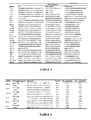
- Mature and precursor miRNA templates and sequence analysis Mature miRNAs were synthesized by Proligo (Sigma, St Louis, MO, USA) or Integrated DNA Technologies (Coralville, IA, USA). T7 promoter sequenced tagged PCR primers were used to clone precursor miRNAs ( Table 2 ). The purified PCR products were validated by sequencing and subjected to MEGAscript T7 Transcription kit (Ambion, Austin, TX, USA) for in vitro transcription of precursor miRNAs according to manufacturer's instructions. Both mature and precursor miRNAs were quantified by spectrophotometry and diluted to desired concentration to serve as standards. Sequence alignment and phylogenetic analysis of miRNA homologs were performed using Vector NTI software version 8.0 (Invitrogen, Carlsbad, CA, USA).
- Human glioblastoma cell lines A172 and U251 were cultured in DMEM supplemented with 10% fetal bovine serum (FBS, Sigma) and antibiotics (100 U/ml penicillin and 100 ⁇ g/ml streptomycin) in a 5% CO2 humidified incubator at 37°C.
- U251 cells were seeded at 200,000 cells per well in 6-well plate for 24 h and incubated with FBS-free DMEM medium for 12-16 h. The cells were then stimulated with 100 ng/ml of GDNF for defined periods of time in DMEM.
- RNA from untreated or GDNF treated glioblastoma cells was isolated using TRIzol reagent (Invitrogen) in the presence of 20 ⁇ g/ml linear acrylamide (Ambion) according to the manufacturer's instructions. The extracted RNA samples were then quantified using spectrophotometry and the integrity examined by denaturing RNA gel electrophoresis.
- RNA samples were treated with RNase-free DNase I (Promega) at 37°C for 30 min. The DNase was inactivated at 80 °C for 5 min.
- RT of primary and precursor miRNAs 100 ng of DNase I treated total RNA or dilutions of in vitro transcribed precursor miRNA standards were initially heated at 80°C in the presence of 150 nM of gene specific reverse primers for 5 min, snapped chilled on ice and reverse transcribed [1x buffer, dNTPs (10 mM), dithiothreitol (DTT), RNase inhibitor, Thermoscript (15 U)] as specified by the manufacturer (Invitrogen).
- RT of mature miRNAs 100 ng of DNase I treated total RNA or dilutions of synthetic human mature miRNA standards were reverse transcribed using 100 U of Improm II (Promega) and 100 nM of either stem-loop or linear RT oligonucleotide in a total volume of 10 ⁇ l for 30 min at 42°C. The reaction was terminated by heating at 70°C for 5 min.
- 100 ng of DNase I treated total RNA samples were reverse transcribed using 400 U of Improm II and 100 nM of each RT oligonucleotide (2.4 ⁇ M of total) in a total volume of 40 ⁇ l for 30 min at 42°C.
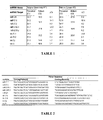
- the cDNA samples were then used for real-time PCR using miRNA-specific primers. Primers for both RT and real-time PCR were listed in Table 3. Linear RT oligonucleotides were listed in Table 4.
- Uracil-DNA Glycosylase UDG treatment.
- RT oligonucleotides with deoxyuridine (dU) incorporation were synthesized by Integrated DNA Technologies. Reverse transcription was performed as described above.
- the cDNA samples were then treated with 5 U UDG (New England Biolabs, Beverley, MA, USA) at 37°C for 10 min. The reaction was inactivated at 95°C for 10 min and subjected to real-time PCR.
- RNA isolation U251 cells in 96-well plate at various cell densities (10 to 10 5 cells per well) were washed once with PBS, lysed and reverse transcribed directly in the wells with 40 ⁇ l of RT mixture containing 0.5% Triton X-100 (Thermo Fisher Scientific, MA, USA), 400 U Improm II (Promega) and 100 nM of each RT oligonucleotide (2.4 ⁇ M of total) in the presence or absence of RNase inhibitor SUPERase-In (1 U/ ⁇ l, Ambion) for 30 min at 42°C. For comparison, total RNA from the identical densities of cells were isolated and reverse transcribed in the same RT mixture. The cDNA samples were then used for real-time PCR.
- Real-time PCR was performed on the CFX96 system (Bio-Rad, Hercules, CA, USA) using SYBR Green I. Real-time PCR for precursor miRNA and U6 snRNA was performed according to previous reports (Schmittgen et al., 2004; Jiang et al., 2005). Fast thermo-cycling of miRNA cDNAs was performed after 10 min initial denaturation at 95°C followed by 50 cycles of 5 s denaturation at 95°C and 5 s annealing/extension at 60°C.
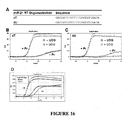
- RT oligonucleotide which adopted a stable stem-loop secondary structure during RT.
- the cDNA sample was then amplified using a tagged forward primer (Pf) and a hemi-nested reverse primer (Pr), where 3-5 nucleotides extend beyond the RT oligonucleotide.
- Amplification of the cDNA sample was monitored in real-time PCR using SYBR Green I.
- RT oligonucleotide can be incorporated with deoxyuridine (dU) residues and the cDNA generated was subsequently treated with Uracil-DNA Glycosylase (UDG) at 37°C before amplification.
- UDG Uracil-DNA Glycosylase
- stem-loop RT oligonucleotides and their corresponding linear RT oligonucleotides were designed to 1) differ by only 4-5 bases at the 5' end; 2) have identical GC content and similar Tm ( ⁇ 1°C difference) and 3) have identical 3' sequence so that same primers can be used in PCR.
- let-7 miRNA homologs Discrimination of human let-7 miRNA homologs.
- miRNA families eg. hsa-let-7, hsa-miR-30
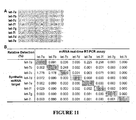
- the eight let-7 family miRNAs share up to 63.6% overall sequence identity, among which let-7a and let-7c, let-7a and let-7f, let-7b and let-7f differ only by a single nucleotide ( Figure 11A ).
- Figure 11A hemi-nested real-time RT-PCR assays for each let-7 miRNA were designed.
- each assay was used to amplify all eight synthetic let-7 miRNAs and the relative detection was compared. Briefly, specific reverse transcription of each let-7 miRNA (10 9 copies per RT) was first achieved using stem-loop RT oligonucleotide targeting the less homologous 3' region. Discrimination of let-7 miRNAs was further improved by a miRNA-specific forward PCR primer and a hemi-nested reverse primer preferably with miRNA-specific 3'-terminal sequence. All of the eight let-7 assays showed excellent discrimination against homologous miRNAs with less than 1% nonspecific detection, except for let-7a assay with 1.778% relative detection against let-7c ( Figure 11B ).
- let-7 miRNAs that differ by 2 nucleotides or more, these assays were able to specifically detect the target miRNA with less than 0.3% cross-target amplification. This result suggests that the hemi-nested real-time RT-PCR assay was capable of discriminating highly homologous miRNAs at levels comparable to fluorescent probe-based real-time RT-PCR assays (Chen et al., 2005), with inexpensive SYBR Green I detection chemistry.
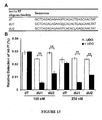
- let-7a RT oligonucleotide for let-7a showed relative detection of 0.03% against let-7f miRNA
- let-7a RT oligonucleotides with dU incorporation at either loop (dU1) or stem (dU2) region were significantly less capable of cross-amplifying let-7f after treatment with UDG ( Figure 13 ).
- Both the let-7a dT and dU RT oligonucleotides were able to prime reverse transcription of let-7a equally well (data not shown).
- miRNAs miR-7, -10b, -15b, -21, -124, -128, -137, -139, -146b, -181a, -181b, -181c, - 218, -221, -222, -425, -451, -486) reported to be dysregulated in human glioblastoma (Pang et al., 2009) and the 8 let-7 family miRNAs. Twenty miRNAs (except for miR-137, -146b, -181c, -451, let-7d and let-7e) were found to be expressed in U251 cells (data not shown).
- Direct and multiplex detection of miRNAs in cell lysates can avoid the time-consuming multistep RNA isolation process and dramatically increase the throughput of the assay.
- both miR-21 and miR-222 can be detected equally well from lysates of 10-1000 cells using this multiplex assay, as compared to isolated RNA controls.
- direct quantification of miRNAs was compromised with lysates from near confluent (10 4 cells/ well) or over confluent cell densities (10 5 cells/ well).
- no significant difference was observed in detection of miRNAs from cell lysates with or without RNase inhibitors, suggestive of remarkable stability of mature miRNAs.
- miRNAs play important roles in modulating gene expression and it has been suggested that up to 60% of human genes are targeted by miRNAs (Friedman et al., 2009). With the increase interest in the expression profiles of miRNAs, rapid, robust and cost-effective methods for the detection of mature miRNAs are highly desirable.
- the hemi-nested real-time RT-PCR assays described herein were simple to design and showed excellent performance and provided the flexibility for the design of any miRNAs that may be identified in the future.
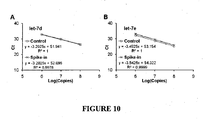
- the hemi-nested real-time RT-PCR assay showed wide dynamic range of at least 7 logs, high sensitivity of as few as 100 molecules per RT (subzeptomoles) and high RT-PCR efficiency of greater than 90%.
- the synthetic miRNA standards could also allow absolute quantification of miRNA expression from total RNA samples.
- stem-loop but not linear RT oligonucleotides preferentially reverse transcribed mature but not precursor miRNAs.
- the stem-loop strategy has been previously applied successfully for specific reverse transcription of sense strand of replicating retrovirus (Anwar et al., 2006). It has been suggested that linear RT oligonucleotides should contain at least 7 nucleotides of miRNA-specific sequence for efficient reverse transcription of mature miRNAs (Raymond et al., 2005).
- MiRNAs are grouped into families (eg. let-7 family) based on identical seed sequence that spans 2-7 nucleotides at 5' of miRNAs, which is a critical determinant of target recognition (Lewis et al., 2005). Although miRNAs of the same family are likely to share some common targets and functions, specific members of the family may be involved in certain physiological processes and disease states. For instance, let-7b was found to be specifically up-regulated with age and responsible for the declined stem cell self-renewal (Nishino et al., 2008).
- let-7d Low expression of let-7d was suggested as prognostic marker for head and neck squamous cell carcinoma (Childs et al., 2009), and let-7i was identified as a novel biomarker for human epithelial ovarian cancer (Yang et al., 2008). As such, specific and quantitative detection of these miRNAs is required for the development of biomarkers and for studies on the biogenesis of miRNAs.
- discrimination of let-7 homologs was achieved with TaqMan real-time RT-PCR assays, whereby after miRNA-specific RT, a common reverse primer was used for PCR and a miRNA-specific TaqMan probe was required for discrimination (Chen et al., 2005).
- RT oligonucleotides can serve as reverse primers during PCR, which will contribute to non-specific amplification. This is problematic especially when the forward primer in PCR can also hybridize to shared sequences (eg. cDNA from homologous miRNAs).
- a common practice to mitigate this problem is to reduce the carryover of RT oligonucleotides by diluting cDNA samples after RT.
- this approach will invariably reduce the assay sensitivity, especially with low abundance target miRNAs.
- the assay is further improved by modifying the RT oligonucleotides with deoxyuridine residues and treating the cDNA with UDG prior to real-time PCR.
- UDG was first purified from E.
- miRNAs are differentially expressed in glioblastoma as compared to normal brain and many of these dysregulated miRNAs are involved in glioblastoma growth, invasion and chemoresistance (Lawler & Chiocca, 2009; Li et al., 2009).
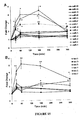
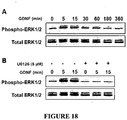
- GDNF was found to regulate the expressions of miR-7, miR-21, miR-218, let-7f, let-7g and let-7i through MEK-ERK1/2 MAPK signaling pathway.
- the functional significance of these GDNF-induced miRNAs remains to be investigated. Using the rapid and high throughput method developed herein, it is now feasible for drug screening by profiling changes in miRNA expression.
- the number of miRNAs in the public domain currently is more than 17,000 (Kozomara & Griffiths-Jones, 2011) and expected to increase with both in silico prediction and in vivo validation such as deep sequencing.
- the hemi-nested real-time RT-PCR assay presented in this study provides a high performance method for the rapid and reliable detection of functional mature miRNAs.
Landscapes
- Chemical & Material Sciences (AREA)
- Life Sciences & Earth Sciences (AREA)
- Organic Chemistry (AREA)
- Engineering & Computer Science (AREA)
- Zoology (AREA)
- Wood Science & Technology (AREA)
- Proteomics, Peptides & Aminoacids (AREA)
- Health & Medical Sciences (AREA)
- Biophysics (AREA)
- Chemical Kinetics & Catalysis (AREA)
- Immunology (AREA)
- Microbiology (AREA)
- Molecular Biology (AREA)
- Analytical Chemistry (AREA)
- Physics & Mathematics (AREA)
- Biotechnology (AREA)
- Biochemistry (AREA)
- Bioinformatics & Cheminformatics (AREA)
- General Engineering & Computer Science (AREA)
- General Health & Medical Sciences (AREA)
- Genetics & Genomics (AREA)
- Measuring Or Testing Involving Enzymes Or Micro-Organisms (AREA)
Claims (15)
- Verfahren zum Nachweis eines Ziel-miRNA-Moleküls in einer Probe, wobei das Verfahren umfasst:Reverse Transkription der in der Probe enthaltenen Ziel-miRNA unter Verwendung eines RT-Oligonukleotids, wobei das RT-Oligonukleotid einen Stammschleifenabschnitt umfasst, der ein oder mehrere modifizierte oder abspaltbare Nukleotide enthält, um DNA-Polymerase Verlängerung zu blockieren und einen Ziel-Bindungs-Teil, der zu einem stromabwärts gelegenen Teil der Ziel-miRNA komplementär ist, wobei der Ziel-Bindungs-Teil 3' zum Stammschleifen-Teil angeordnet ist, um ein reverses Transkriptionsprodukt herzustellen, das das RT-Oligonucleotid und eine 3' erweiterte Region umfasst;Amplifizieren des reversen Transkriptionsprodukts unter Verwendung (i) eines ersten Amplifikationsprimers, der an einen stromabwärts gelegenen Abschnitt der 3'-verlängerten Region des reversen Transkriptionsprodukts bindet, und (ii) eines zweiten Amplifikationsprimers, der an einen Schnittstellenabschnitt eines DNA-Strangs komplementär zu dem reversen Transkriptionsprodukts bindet, wobei der Schnittstellenabschnitt eine Region umfasst, die zu einem 3'-Teil des RT-Oligonukleotids und einem 5'-Teil der 3'-verlängerten Region in dem reversen Transkriptionsprodukt, komplementär ist, um ein Amplifikationsprodukt zu erzeugen;und Detektieren des Amplifikationsprodukts;wobei der Stammschleifenabschnitt eine Stammschleifenstruktur unter Bedingungen, die für die reverse Transkription verwendet werden, annimmt, aber die Stammschleifenstruktur unter Bedingungen, die für das Amplifizieren verwendet werden, nicht annimmt und wobei, wenn der Stammschleifenabschnitt ein oder mehrere Nucleotide enthält, die abspaltbar sind, um die DNA-Polymerase-Verlängerung zu blockieren, das Verfahren ferner das Abspalten des/der Nukleotids(e) vor dem Amplifizieren umfasst.
- Verfahren nach Anspruch 1, wobei das eine oder die mehreren Nukleotide, die zur Blockierung der DNA-Polymerase Verlängerung modifiziert oder abspaltbar sind, innerhalb der Schleife des Stammschleifen-Abschnitts angeordnet sind.
- Verfahren nach Anspruch 1 oder 2, wobei der Stammschleifen-Abschnitt ein oder mehrere Nukleotide enthält, die zur Blockierung der DNA-Polymerase Verlängerung modifiziert sind.
- Verfahren nach Anspruch 3, wobei die Schleife des Stammschleifen-Abschnitt ein Nukleotid umfasst, das mit einer aliphatischen Kohlenstoffkette modifiziert ist.
- Verfahren nach Anspruch 1 oder 2, wobei der Stammschleifen-Abschnitt ein oder mehrere Nukleotide enthält, die zur Blockierung der DNA-Polymerase Verlängerung abspaltbar sind, und das Verfahren ferner das Abspalten des/der Nukleotid(e) vor dem Amplifizieren umfasst.
- Verfahren nach Anspruch 5, wobei das absplatbare Nukleotid dU ist und das Spalten die Behandlung mit Uracil-DNA Glycosylase umfasst.
- Verfahren nach Anspruch 5, wobei die Schleife des Stammschleifen-Abschnitt ein oder mehrere Ribonukleotide umfasst und das Abspalten eine Behandlung mit RNAse umfasst.
- Verfahren nach einem der Ansprüche 1 bis 7, wobei der zweite Amplifikations-Primer ein Nukleotid aufweist, das thermische Stabilität zeigt, wenn es als 3'-terminales Nukleotid an DNA hybridisiert wird.
- Verfahren nach Anspruch 8, wobei das Nukleotid, das thermische Stabilität zeigt, wenn es an DNA hybridisiert wird, in einer N-Typ-Furanose-Konformation arretiert ist.
- Verfahren nach einem der Ansprüche 1 bis 9, wobei der Abstand in der Sequenz des Amplifikationsprodukts zwischen der Position des 3'-Endes des ersten AmplifikationsPrimers, wenn an das reverse Transkriptionsprodukt gebunden, und der Position des 3'- Endes des zweiten Amplifikationsprimers, wenn an den DNA-Strang gebunden, eine Überlappung von 1 oder 2 Nukleotiden vorhanden ist oder ein Abstand von 2 Nukleotiden ist.
- Verfahren nach einem der Ansprüche 1 bis 10, wobei der Ziel-Bindungs-Abschnitt des RT-Oligonukleotids eine Länge von 6 Nukleotiden aufweist.
- Verfahren nach einem der Ansprüche 1 bis 11, wobei der Stammabschnitt der Stammschleife eine Länge von 5 oder 6 Nucleotiden aufweist und der Schleifenabschnitt der Stammschleife eine Länge von 11 Nucleotiden aufweist.
- Verfahren nach einem der Ansprüche 1 bis 12, wobei der zweite Amplifikationsprimer an eine Sequenz bindet, die zu 8 bis 10 Nucleotiden des Stammschleifen-Abschnitts des RT-Oligonukleotids, 6 Nucleotiden des Ziel-Bindungs-Abschnitts des RT-Oligonukleotids und 3 bis 5 Nukleotiden am 5'-Ende der 3'-verlängerten Region des reversen Transkriptionsprodukts komplementär ist.
- Verfahren nach einem der Ansprüche 1 bis 13, wobei der erste Amplifikationsprimer eine Länge von 21 Nukleotiden aufweist.
- Verfahren nach einem der Ansprüche 1 bis 14, wobei das Detektieren das Detektieren mit einem fluoreszierenden interkalierenden Farbstoff umfasst.
Applications Claiming Priority (2)
| Application Number | Priority Date | Filing Date | Title |
|---|---|---|---|
| US35468310P | 2010-06-14 | 2010-06-14 | |
| PCT/SG2011/000210 WO2011159256A1 (en) | 2010-06-14 | 2011-06-13 | Modified stem-loop oligonucleotide mediated reverse transcription and base-spacing constrained quantitative pcr |
Publications (3)
| Publication Number | Publication Date |
|---|---|
| EP2580355A1 EP2580355A1 (de) | 2013-04-17 |
| EP2580355A4 EP2580355A4 (de) | 2013-11-20 |
| EP2580355B1 true EP2580355B1 (de) | 2018-03-07 |
Family
ID=45348446
Family Applications (1)
| Application Number | Title | Priority Date | Filing Date |
|---|---|---|---|
| EP11796068.2A Active EP2580355B1 (de) | 2010-06-14 | 2011-06-13 | Durch ein oligonukleotid mit veränderter haarnadelstruktur vermittelte reverse transkription und durch base-spacing eingeschränkte quantitative pcr |
Country Status (6)
| Country | Link |
|---|---|
| US (1) | US9850527B2 (de) |
| EP (1) | EP2580355B1 (de) |
| JP (1) | JP5851496B2 (de) |
| CN (1) | CN103210092B (de) |
| SG (1) | SG185776A1 (de) |
| WO (1) | WO2011159256A1 (de) |
Cited By (1)
| Publication number | Priority date | Publication date | Assignee | Title |
|---|---|---|---|---|
| WO2024232920A1 (en) * | 2023-05-06 | 2024-11-14 | Miracle Biotechnology Inc. | Method for screening multiplex reverse transcription primer combinations for quantifying multiple mirnas |
Families Citing this family (43)
| Publication number | Priority date | Publication date | Assignee | Title |
|---|---|---|---|---|
| WO2011137533A1 (en) | 2010-05-05 | 2011-11-10 | The Governing Council Of The University Of Toronto | Method of processing dried samples using digital microfluidic device |
| US9850527B2 (en) | 2010-06-14 | 2017-12-26 | National University Of Singapore | Modified stem-loop oligonucleotide mediated reverse transcription and base-spacing constrained quantitative PCR |
| SG190377A1 (en) | 2010-11-24 | 2013-06-28 | Kaneka Corp | Amplified nucleic acid detection method and detection device |
| JP2015507928A (ja) * | 2012-02-14 | 2015-03-16 | ザ・ジョンズ・ホプキンス・ユニバーシティ | Mirna解析方法 |
| CN103509789B (zh) * | 2012-06-26 | 2015-12-16 | 舟山医院 | 一种用于扩增短链rna的引物及其相关方法 |
| WO2014071070A1 (en) * | 2012-11-01 | 2014-05-08 | Pacific Biosciences Of California, Inc. | Compositions and methods for selection of nucleic acids |
| WO2015076356A1 (ja) * | 2013-11-22 | 2015-05-28 | 株式会社カネカ | 短鎖rnaの検出方法 |
| GB201413718D0 (en) | 2014-08-01 | 2014-09-17 | Olink Ab | Method for selecting a target nucleic acid sequence |
| GB201413717D0 (en) | 2014-08-01 | 2014-09-17 | Olink Ab | Method for selecting a target nucleic acid sequence |
| CN107109474B (zh) | 2014-08-19 | 2021-03-19 | 豪夫迈·罗氏有限公司 | 用于核酸检测的方法和组合物 |
| US10464067B2 (en) | 2015-06-05 | 2019-11-05 | Miroculus Inc. | Air-matrix digital microfluidics apparatuses and methods for limiting evaporation and surface fouling |
| WO2016197106A1 (en) | 2015-06-05 | 2016-12-08 | Miroculus Inc. | Evaporation management in digital microfluidic devices |
| EP3325621B1 (de) * | 2015-07-17 | 2021-06-30 | Max-Planck-Gesellschaft zur Förderung der Wissenschaften e.V. | Klonierung von einsträngiger rna |
| EP3118313A1 (de) * | 2015-07-17 | 2017-01-18 | Max-Planck-Gesellschaft zur Förderung der Wissenschaften e.V. | Klonierung von einstrangiger rna |
| CN105132577B (zh) * | 2015-09-30 | 2018-02-09 | 基因科技(上海)有限公司 | 一种对miRNA进行多重定量检测的方法 |
| JP6984137B2 (ja) * | 2016-02-25 | 2021-12-17 | 東ソー株式会社 | マイクロrna検出方法 |
| JP2020501107A (ja) | 2016-08-22 | 2020-01-16 | ミロキュラス インコーポレイテッド | デジタルマイクロ流体デバイスにおける並行小滴制御のためのフィードバックシステム |
| CN107868774A (zh) * | 2016-09-23 | 2018-04-03 | 上海紫众生物科技有限公司 | 一种热启动dna聚合酶、制备方法及其应用 |
| WO2018126082A1 (en) | 2016-12-28 | 2018-07-05 | Miroculis Inc. | Digital microfluidic devices and methods |
| JP6448695B2 (ja) | 2017-03-21 | 2019-01-09 | 株式会社東芝 | Rna増幅方法、rna検出方法及びアッセイキット |
| US11623219B2 (en) | 2017-04-04 | 2023-04-11 | Miroculus Inc. | Digital microfluidics apparatuses and methods for manipulating and processing encapsulated droplets |
| CN106906211B (zh) * | 2017-04-13 | 2020-11-20 | 苏州普瑞迈德医学检验所有限公司 | 一种分子接头及其应用 |
| WO2019023133A1 (en) | 2017-07-24 | 2019-01-31 | Miroculus Inc. | DIGITAL MICROFLUIDIC SYSTEMS AND METHODS WITH INTEGRATED PLASMA COLLECTION DEVICE |
| CN113604564B (zh) * | 2017-08-14 | 2026-01-16 | 江苏为真生物医药技术股份有限公司 | 一种检测外泌体相关microRNA分子的方法 |
| JP7341124B2 (ja) | 2017-09-01 | 2023-09-08 | ミロキュラス インコーポレイテッド | デジタルマイクロ流体デバイスおよびその使用方法 |
| CN108088826B (zh) * | 2017-12-14 | 2020-08-04 | 济南大学 | 一种检测尿嘧啶-dna糖基化酶(udg)的荧光生物传感器 |
| WO2019226919A1 (en) | 2018-05-23 | 2019-11-28 | Miroculus Inc. | Control of evaporation in digital microfluidics |
| CN113543883A (zh) | 2019-01-31 | 2021-10-22 | 米罗库鲁斯公司 | 非结垢组合物以及用于操控和处理包封的微滴的方法 |
| WO2020176816A1 (en) | 2019-02-28 | 2020-09-03 | Miroculus Inc. | Digital microfluidics devices and methods of using them |
| CN119158636A (zh) | 2019-04-08 | 2024-12-20 | 米罗库鲁斯公司 | 多盒式数字微流控装置和使用方法 |
| CN117683886A (zh) | 2019-04-30 | 2024-03-12 | 觅瑞实验室私人有限公司 | 一种检测胃癌的miRNA标志物组合及试剂盒 |
| WO2021016614A1 (en) | 2019-07-25 | 2021-01-28 | Miroculus Inc. | Digital microfluidics devices and methods of use thereof |
| CN113005181B (zh) * | 2020-12-22 | 2022-01-18 | 广州血康陆道培生物技术有限公司 | 一种基于茎环法的多重荧光定量pcr检测非编码小rna的引物组 |
| CN113151413A (zh) * | 2021-04-28 | 2021-07-23 | 杭州觅因生物科技有限公司 | 一种具有校准功能的microRNA检测试剂盒 |
| WO2023023673A2 (en) | 2021-08-20 | 2023-02-23 | Kasa Bio, L.L.C. | Compositions and methods for multiplex detection of mirna and other polynucelotides |
| JP7743246B2 (ja) * | 2021-09-29 | 2025-09-24 | 栄研化学株式会社 | 標的rna検出方法及びプローブキット |
| CN118510913A (zh) | 2021-11-01 | 2024-08-16 | 觅瑞实验室私人有限公司 | 用于检测鼻咽癌的循环微小rna小组及其方法 |
| US11857961B2 (en) | 2022-01-12 | 2024-01-02 | Miroculus Inc. | Sequencing by synthesis using mechanical compression |
| CN114752665B (zh) * | 2022-05-31 | 2024-09-13 | 深圳市萨米医疗中心 | 小片段dna的检测方法及检测试剂盒 |
| CN120603960A (zh) | 2022-12-15 | 2025-09-05 | 觅瑞实验室私人有限公司 | 用于检测肺癌的循环生物标志物及其方法 |
| WO2024147762A2 (en) | 2023-01-04 | 2024-07-11 | National University Of Singapore | Biomarkers, methods and kits for detecting and/or subtyping small b-cell lymphomas |
| CN116240303A (zh) * | 2023-02-28 | 2023-06-09 | 杭州百迈生物股份有限公司 | 一种区分病原体dna/rna的核酸检测方法及试剂盒 |
| WO2024197081A1 (en) | 2023-03-20 | 2024-09-26 | Hc Bioscience, Inc. | Minimally-sized dna threads for trna therapy |
Family Cites Families (14)
| Publication number | Priority date | Publication date | Assignee | Title |
|---|---|---|---|---|
| DE19506561C1 (de) | 1995-02-24 | 1996-10-10 | Deutsches Krebsforsch | Verfahren zur Früherkennung von HPV-assoziierten Karzinomen bzw. von hochgradigen, durch HPV-verursachten Dysplasien |
| US6117635A (en) | 1996-07-16 | 2000-09-12 | Intergen Company | Nucleic acid amplification oligonucleotides with molecular energy transfer labels and methods based thereon |
| WO2002057479A2 (en) | 2000-12-27 | 2002-07-25 | Invitrogen Corporation | Primers and methods for the detection and discrimination of nucleic acids |
| AU2003240795A1 (en) * | 2002-05-24 | 2003-12-12 | Invitrogen Corporation | Nested pcr employing degradable primers |
| AU2003259017A1 (en) | 2002-09-06 | 2004-03-29 | Johns Hopkins Singapore Pte Ltd | Strand specific detection and quantification |
| AU2002951347A0 (en) | 2002-09-09 | 2002-09-26 | Benitec Australia Ltd | Genetic silencing |
| JP4879975B2 (ja) * | 2005-05-31 | 2012-02-22 | アプライド バイオシステムズ リミテッド ライアビリティー カンパニー | 短い核酸のマルチプレックス増幅 |
| US20070054287A1 (en) * | 2005-05-31 | 2007-03-08 | Applera Corporation | Method for identifying medically important cell populations using micro rna as tissue specific biomarkers |
| WO2007018601A1 (en) * | 2005-08-02 | 2007-02-15 | Rubicon Genomics, Inc. | Compositions and methods for processing and amplification of dna, including using multiple enzymes in a single reaction |
| EP1924713B1 (de) * | 2005-08-24 | 2011-11-09 | Life Technologies Corporation | Verfahren zur quantifizierung von sirnas, mirnas und polymorphen mirnas |
| EP2644708B1 (de) * | 2008-04-30 | 2014-12-17 | Integrated Dna Technologies, Inc. | Rnase-h-basierte assays unter verwendung von modifizierten rna monomeren |
| WO2010120853A2 (en) * | 2009-04-16 | 2010-10-21 | Padma Arunachalam | Methods and compositions to detect and differentiate small rnas in rna maturation pathway |
| US9587270B2 (en) * | 2009-06-29 | 2017-03-07 | Luminex Corporation | Chimeric primers with hairpin conformations and methods of using same |
| US9850527B2 (en) | 2010-06-14 | 2017-12-26 | National University Of Singapore | Modified stem-loop oligonucleotide mediated reverse transcription and base-spacing constrained quantitative PCR |
-
2011
- 2011-06-13 US US13/704,482 patent/US9850527B2/en active Active
- 2011-06-13 CN CN201180038333.8A patent/CN103210092B/zh active Active
- 2011-06-13 JP JP2013515301A patent/JP5851496B2/ja active Active
- 2011-06-13 SG SG2012087144A patent/SG185776A1/en unknown
- 2011-06-13 EP EP11796068.2A patent/EP2580355B1/de active Active
- 2011-06-13 WO PCT/SG2011/000210 patent/WO2011159256A1/en not_active Ceased
Cited By (1)
| Publication number | Priority date | Publication date | Assignee | Title |
|---|---|---|---|---|
| WO2024232920A1 (en) * | 2023-05-06 | 2024-11-14 | Miracle Biotechnology Inc. | Method for screening multiplex reverse transcription primer combinations for quantifying multiple mirnas |
Also Published As
| Publication number | Publication date |
|---|---|
| JP5851496B2 (ja) | 2016-02-03 |
| US20130177915A1 (en) | 2013-07-11 |
| US9850527B2 (en) | 2017-12-26 |
| HK1187378A1 (zh) | 2014-04-04 |
| EP2580355A4 (de) | 2013-11-20 |
| WO2011159256A1 (en) | 2011-12-22 |
| JP2013530698A (ja) | 2013-08-01 |
| EP2580355A1 (de) | 2013-04-17 |
| CN103210092B (zh) | 2015-11-25 |
| CN103210092A (zh) | 2013-07-17 |
| SG185776A1 (en) | 2013-01-30 |
Similar Documents
| Publication | Publication Date | Title |
|---|---|---|
| EP2580355B1 (de) | Durch ein oligonukleotid mit veränderter haarnadelstruktur vermittelte reverse transkription und durch base-spacing eingeschränkte quantitative pcr | |
| Wan et al. | High-performance quantification of mature microRNAs by real-time RT-PCR using deoxyuridine-incorporated oligonucleotides and hemi-nested primers | |
| EP2419538B1 (de) | VERFAHREN UND ZUSAMMENSETZUNGEN FÜR DEN NACHWEIS UND DIE DIFFERENZIERUNG VON sRNA IM RNA-REIFUNGSSIGNALWEG | |
| Lages et al. | MicroRNA and target protein patterns reveal physiopathological features of glioma subtypes | |
| Boštjančič et al. | MicroRNA microarray expression profiling in human myocardial infarction | |
| Raabe et al. | Biases in small RNA deep sequencing data | |
| Voellenkle et al. | Deep-sequencing of endothelial cells exposed to hypoxia reveals the complexity of known and novel microRNAs | |
| Schmittgen et al. | Real-time PCR quantification of precursor and mature microRNA | |
| Vaz et al. | Analysis of microRNA transcriptome by deep sequencing of small RNA libraries of peripheral blood | |
| EP2419537B1 (de) | Verfahren und zusammensetzungen für den nachweis von kurzen rna | |
| CA2750029C (en) | Method for quantification of small rna species | |
| US9012149B2 (en) | Methods for detection and quantitation of small RNAs | |
| EP2737086B1 (de) | Analyse einer sequenzierungsvorspannung | |
| Kumar et al. | miR-ID: a novel, circularization-based platform for detection of microRNAs | |
| US20160177376A1 (en) | Detection method of micro-rna with high specificity | |
| Hoefig et al. | Unlocking pathology archives for microRNA-profiling | |
| Parsons et al. | Using hippocampal microRNA expression differences between mouse inbred strains to characterise miRNA function | |
| US10801056B2 (en) | Kit and method for detection of microRNA | |
| Seux et al. | MicroRNAs in pancreatic ductal adenocarcinoma: new diagnostic and therapeutic clues | |
| KR101874089B1 (ko) | 알앤에이 검출용 키트 및 방법 | |
| HK1187378B (en) | Modified stem-loop oligonucleotide mediated reverse transcription and base-spacing constrained quantitative pcr | |
| La Rocca et al. | THE LONG AND WINDING ROAD OF MICRORNA PROFILING FROM BENCH TO BEDSIDE | |
| Xuan et al. | microRNA profiling: strategies and challenges | |
| Curry | Identification and characterization of microRNAs in porcine gametes and pre-implantation embryos | |
| Benes et al. | 6 Analysis of microribonucleic acid expression by quantitative real-time polymerase chain reaction |
Legal Events
| Date | Code | Title | Description |
|---|---|---|---|
| PUAI | Public reference made under article 153(3) epc to a published international application that has entered the european phase |
Free format text: ORIGINAL CODE: 0009012 |
|
| 17P | Request for examination filed |
Effective date: 20130102 |
|
| AK | Designated contracting states |
Kind code of ref document: A1 Designated state(s): AL AT BE BG CH CY CZ DE DK EE ES FI FR GB GR HR HU IE IS IT LI LT LU LV MC MK MT NL NO PL PT RO RS SE SI SK SM TR |
|
| DAX | Request for extension of the european patent (deleted) | ||
| A4 | Supplementary search report drawn up and despatched |
Effective date: 20131023 |
|
| RIC1 | Information provided on ipc code assigned before grant |
Ipc: C12Q 1/68 20060101AFI20131017BHEP |
|
| 17Q | First examination report despatched |
Effective date: 20160530 |
|
| GRAP | Despatch of communication of intention to grant a patent |
Free format text: ORIGINAL CODE: EPIDOSNIGR1 |
|
| INTG | Intention to grant announced |
Effective date: 20170412 |
|
| RIN1 | Information on inventor provided before grant (corrected) |
Inventor name: TOO, HENG, PHON Inventor name: ANWAR, AZLINDA, B. |
|
| GRAJ | Information related to disapproval of communication of intention to grant by the applicant or resumption of examination proceedings by the epo deleted |
Free format text: ORIGINAL CODE: EPIDOSDIGR1 |
|
| GRAP | Despatch of communication of intention to grant a patent |
Free format text: ORIGINAL CODE: EPIDOSNIGR1 |
|
| INTC | Intention to grant announced (deleted) | ||
| INTG | Intention to grant announced |
Effective date: 20170914 |
|
| GRAS | Grant fee paid |
Free format text: ORIGINAL CODE: EPIDOSNIGR3 |
|
| GRAA | (expected) grant |
Free format text: ORIGINAL CODE: 0009210 |
|
| AK | Designated contracting states |
Kind code of ref document: B1 Designated state(s): AL AT BE BG CH CY CZ DE DK EE ES FI FR GB GR HR HU IE IS IT LI LT LU LV MC MK MT NL NO PL PT RO RS SE SI SK SM TR |
|
| REG | Reference to a national code |
Ref country code: GB Ref legal event code: FG4D |
|
| REG | Reference to a national code |
Ref country code: CH Ref legal event code: EP Ref country code: AT Ref legal event code: REF Ref document number: 976620 Country of ref document: AT Kind code of ref document: T Effective date: 20180315 |
|
| REG | Reference to a national code |
Ref country code: IE Ref legal event code: FG4D |
|
| REG | Reference to a national code |
Ref country code: DE Ref legal event code: R096 Ref document number: 602011046335 Country of ref document: DE |
|
| REG | Reference to a national code |
Ref country code: FR Ref legal event code: PLFP Year of fee payment: 8 |
|
| REG | Reference to a national code |
Ref country code: NL Ref legal event code: MP Effective date: 20180307 |
|
| REG | Reference to a national code |
Ref country code: LT Ref legal event code: MG4D |
|
| PG25 | Lapsed in a contracting state [announced via postgrant information from national office to epo] |
Ref country code: ES Free format text: LAPSE BECAUSE OF FAILURE TO SUBMIT A TRANSLATION OF THE DESCRIPTION OR TO PAY THE FEE WITHIN THE PRESCRIBED TIME-LIMIT Effective date: 20180307 Ref country code: NO Free format text: LAPSE BECAUSE OF FAILURE TO SUBMIT A TRANSLATION OF THE DESCRIPTION OR TO PAY THE FEE WITHIN THE PRESCRIBED TIME-LIMIT Effective date: 20180607 Ref country code: FI Free format text: LAPSE BECAUSE OF FAILURE TO SUBMIT A TRANSLATION OF THE DESCRIPTION OR TO PAY THE FEE WITHIN THE PRESCRIBED TIME-LIMIT Effective date: 20180307 Ref country code: CY Free format text: LAPSE BECAUSE OF FAILURE TO SUBMIT A TRANSLATION OF THE DESCRIPTION OR TO PAY THE FEE WITHIN THE PRESCRIBED TIME-LIMIT Effective date: 20180307 Ref country code: HR Free format text: LAPSE BECAUSE OF FAILURE TO SUBMIT A TRANSLATION OF THE DESCRIPTION OR TO PAY THE FEE WITHIN THE PRESCRIBED TIME-LIMIT Effective date: 20180307 Ref country code: LT Free format text: LAPSE BECAUSE OF FAILURE TO SUBMIT A TRANSLATION OF THE DESCRIPTION OR TO PAY THE FEE WITHIN THE PRESCRIBED TIME-LIMIT Effective date: 20180307 |
|
| REG | Reference to a national code |
Ref country code: AT Ref legal event code: MK05 Ref document number: 976620 Country of ref document: AT Kind code of ref document: T Effective date: 20180307 |
|
| PG25 | Lapsed in a contracting state [announced via postgrant information from national office to epo] |
Ref country code: SE Free format text: LAPSE BECAUSE OF FAILURE TO SUBMIT A TRANSLATION OF THE DESCRIPTION OR TO PAY THE FEE WITHIN THE PRESCRIBED TIME-LIMIT Effective date: 20180307 Ref country code: LV Free format text: LAPSE BECAUSE OF FAILURE TO SUBMIT A TRANSLATION OF THE DESCRIPTION OR TO PAY THE FEE WITHIN THE PRESCRIBED TIME-LIMIT Effective date: 20180307 Ref country code: RS Free format text: LAPSE BECAUSE OF FAILURE TO SUBMIT A TRANSLATION OF THE DESCRIPTION OR TO PAY THE FEE WITHIN THE PRESCRIBED TIME-LIMIT Effective date: 20180307 Ref country code: BG Free format text: LAPSE BECAUSE OF FAILURE TO SUBMIT A TRANSLATION OF THE DESCRIPTION OR TO PAY THE FEE WITHIN THE PRESCRIBED TIME-LIMIT Effective date: 20180607 Ref country code: GR Free format text: LAPSE BECAUSE OF FAILURE TO SUBMIT A TRANSLATION OF THE DESCRIPTION OR TO PAY THE FEE WITHIN THE PRESCRIBED TIME-LIMIT Effective date: 20180608 |
|
| PG25 | Lapsed in a contracting state [announced via postgrant information from national office to epo] |
Ref country code: RO Free format text: LAPSE BECAUSE OF FAILURE TO SUBMIT A TRANSLATION OF THE DESCRIPTION OR TO PAY THE FEE WITHIN THE PRESCRIBED TIME-LIMIT Effective date: 20180307 Ref country code: EE Free format text: LAPSE BECAUSE OF FAILURE TO SUBMIT A TRANSLATION OF THE DESCRIPTION OR TO PAY THE FEE WITHIN THE PRESCRIBED TIME-LIMIT Effective date: 20180307 Ref country code: NL Free format text: LAPSE BECAUSE OF FAILURE TO SUBMIT A TRANSLATION OF THE DESCRIPTION OR TO PAY THE FEE WITHIN THE PRESCRIBED TIME-LIMIT Effective date: 20180307 Ref country code: PL Free format text: LAPSE BECAUSE OF FAILURE TO SUBMIT A TRANSLATION OF THE DESCRIPTION OR TO PAY THE FEE WITHIN THE PRESCRIBED TIME-LIMIT Effective date: 20180307 Ref country code: AL Free format text: LAPSE BECAUSE OF FAILURE TO SUBMIT A TRANSLATION OF THE DESCRIPTION OR TO PAY THE FEE WITHIN THE PRESCRIBED TIME-LIMIT Effective date: 20180307 |
|
| PG25 | Lapsed in a contracting state [announced via postgrant information from national office to epo] |
Ref country code: AT Free format text: LAPSE BECAUSE OF FAILURE TO SUBMIT A TRANSLATION OF THE DESCRIPTION OR TO PAY THE FEE WITHIN THE PRESCRIBED TIME-LIMIT Effective date: 20180307 Ref country code: SM Free format text: LAPSE BECAUSE OF FAILURE TO SUBMIT A TRANSLATION OF THE DESCRIPTION OR TO PAY THE FEE WITHIN THE PRESCRIBED TIME-LIMIT Effective date: 20180307 Ref country code: SK Free format text: LAPSE BECAUSE OF FAILURE TO SUBMIT A TRANSLATION OF THE DESCRIPTION OR TO PAY THE FEE WITHIN THE PRESCRIBED TIME-LIMIT Effective date: 20180307 Ref country code: CZ Free format text: LAPSE BECAUSE OF FAILURE TO SUBMIT A TRANSLATION OF THE DESCRIPTION OR TO PAY THE FEE WITHIN THE PRESCRIBED TIME-LIMIT Effective date: 20180307 |
|
| REG | Reference to a national code |
Ref country code: DE Ref legal event code: R097 Ref document number: 602011046335 Country of ref document: DE |
|
| REG | Reference to a national code |
Ref country code: CH Ref legal event code: NV Representative=s name: AMMANN PATENTANWAELTE AG BERN, CH |
|
| PG25 | Lapsed in a contracting state [announced via postgrant information from national office to epo] |
Ref country code: PT Free format text: LAPSE BECAUSE OF FAILURE TO SUBMIT A TRANSLATION OF THE DESCRIPTION OR TO PAY THE FEE WITHIN THE PRESCRIBED TIME-LIMIT Effective date: 20180709 |
|
| PLBE | No opposition filed within time limit |
Free format text: ORIGINAL CODE: 0009261 |
|
| STAA | Information on the status of an ep patent application or granted ep patent |
Free format text: STATUS: NO OPPOSITION FILED WITHIN TIME LIMIT |
|
| PG25 | Lapsed in a contracting state [announced via postgrant information from national office to epo] |
Ref country code: DK Free format text: LAPSE BECAUSE OF FAILURE TO SUBMIT A TRANSLATION OF THE DESCRIPTION OR TO PAY THE FEE WITHIN THE PRESCRIBED TIME-LIMIT Effective date: 20180307 |
|
| 26N | No opposition filed |
Effective date: 20181210 |
|
| PG25 | Lapsed in a contracting state [announced via postgrant information from national office to epo] |
Ref country code: SI Free format text: LAPSE BECAUSE OF FAILURE TO SUBMIT A TRANSLATION OF THE DESCRIPTION OR TO PAY THE FEE WITHIN THE PRESCRIBED TIME-LIMIT Effective date: 20180307 |
|
| REG | Reference to a national code |
Ref country code: BE Ref legal event code: MM Effective date: 20180630 |
|
| REG | Reference to a national code |
Ref country code: IE Ref legal event code: MM4A |
|
| PG25 | Lapsed in a contracting state [announced via postgrant information from national office to epo] |
Ref country code: LU Free format text: LAPSE BECAUSE OF NON-PAYMENT OF DUE FEES Effective date: 20180613 Ref country code: MC Free format text: LAPSE BECAUSE OF FAILURE TO SUBMIT A TRANSLATION OF THE DESCRIPTION OR TO PAY THE FEE WITHIN THE PRESCRIBED TIME-LIMIT Effective date: 20180307 |
|
| PG25 | Lapsed in a contracting state [announced via postgrant information from national office to epo] |
Ref country code: IE Free format text: LAPSE BECAUSE OF NON-PAYMENT OF DUE FEES Effective date: 20180613 |
|
| PG25 | Lapsed in a contracting state [announced via postgrant information from national office to epo] |
Ref country code: BE Free format text: LAPSE BECAUSE OF NON-PAYMENT OF DUE FEES Effective date: 20180630 |
|
| PG25 | Lapsed in a contracting state [announced via postgrant information from national office to epo] |
Ref country code: MT Free format text: LAPSE BECAUSE OF NON-PAYMENT OF DUE FEES Effective date: 20180613 |
|
| PG25 | Lapsed in a contracting state [announced via postgrant information from national office to epo] |
Ref country code: TR Free format text: LAPSE BECAUSE OF FAILURE TO SUBMIT A TRANSLATION OF THE DESCRIPTION OR TO PAY THE FEE WITHIN THE PRESCRIBED TIME-LIMIT Effective date: 20180307 |
|
| PG25 | Lapsed in a contracting state [announced via postgrant information from national office to epo] |
Ref country code: HU Free format text: LAPSE BECAUSE OF FAILURE TO SUBMIT A TRANSLATION OF THE DESCRIPTION OR TO PAY THE FEE WITHIN THE PRESCRIBED TIME-LIMIT; INVALID AB INITIO Effective date: 20110613 |
|
| PG25 | Lapsed in a contracting state [announced via postgrant information from national office to epo] |
Ref country code: MK Free format text: LAPSE BECAUSE OF NON-PAYMENT OF DUE FEES Effective date: 20180307 |
|
| PG25 | Lapsed in a contracting state [announced via postgrant information from national office to epo] |
Ref country code: IS Free format text: LAPSE BECAUSE OF FAILURE TO SUBMIT A TRANSLATION OF THE DESCRIPTION OR TO PAY THE FEE WITHIN THE PRESCRIBED TIME-LIMIT Effective date: 20180707 |
|
| P01 | Opt-out of the competence of the unified patent court (upc) registered |
Effective date: 20230712 |
|
| PGFP | Annual fee paid to national office [announced via postgrant information from national office to epo] |
Ref country code: GB Payment date: 20250630 Year of fee payment: 15 |
|
| PGFP | Annual fee paid to national office [announced via postgrant information from national office to epo] |
Ref country code: FR Payment date: 20250630 Year of fee payment: 15 |
|
| PGFP | Annual fee paid to national office [announced via postgrant information from national office to epo] |
Ref country code: DE Payment date: 20250630 Year of fee payment: 15 |
|
| PGFP | Annual fee paid to national office [announced via postgrant information from national office to epo] |
Ref country code: IT Payment date: 20250630 Year of fee payment: 15 |
|
| PGFP | Annual fee paid to national office [announced via postgrant information from national office to epo] |
Ref country code: CH Payment date: 20250701 Year of fee payment: 15 |