EP2579571A2 - Bildaufnahmeinformationsausgabevorrichtung und Linsenvorrichtung damit - Google Patents
Bildaufnahmeinformationsausgabevorrichtung und Linsenvorrichtung damit Download PDFInfo
- Publication number
- EP2579571A2 EP2579571A2 EP12006785.5A EP12006785A EP2579571A2 EP 2579571 A2 EP2579571 A2 EP 2579571A2 EP 12006785 A EP12006785 A EP 12006785A EP 2579571 A2 EP2579571 A2 EP 2579571A2
- Authority
- EP
- European Patent Office
- Prior art keywords
- image pickup
- pickup condition
- condition
- information
- setting value
- Prior art date
- Legal status (The legal status is an assumption and is not a legal conclusion. Google has not performed a legal analysis and makes no representation as to the accuracy of the status listed.)
- Granted
Links
- 230000003287 optical effect Effects 0.000 claims abstract description 77
- 230000008859 change Effects 0.000 claims description 50
- 238000004321 preservation Methods 0.000 claims description 6
- 238000000034 method Methods 0.000 description 46
- 238000010586 diagram Methods 0.000 description 15
- 238000001514 detection method Methods 0.000 description 10
- 238000012545 processing Methods 0.000 description 10
- 230000008569 process Effects 0.000 description 9
- 230000000694 effects Effects 0.000 description 7
- 101150096252 ctc-2 gene Proteins 0.000 description 3
- 230000001934 delay Effects 0.000 description 3
- 101150030235 CTC1 gene Proteins 0.000 description 2
- 238000012937 correction Methods 0.000 description 2
- 238000012986 modification Methods 0.000 description 2
- 230000004048 modification Effects 0.000 description 2
- 238000004364 calculation method Methods 0.000 description 1
- 238000007796 conventional method Methods 0.000 description 1
- 238000003384 imaging method Methods 0.000 description 1
- 238000012886 linear function Methods 0.000 description 1
- 238000005259 measurement Methods 0.000 description 1
- 238000004091 panning Methods 0.000 description 1
- 230000004044 response Effects 0.000 description 1
Images



Classifications
-
- G—PHYSICS
- G02—OPTICS
- G02B—OPTICAL ELEMENTS, SYSTEMS OR APPARATUS
- G02B7/00—Mountings, adjusting means, or light-tight connections, for optical elements
- G02B7/02—Mountings, adjusting means, or light-tight connections, for optical elements for lenses
- G02B7/04—Mountings, adjusting means, or light-tight connections, for optical elements for lenses with mechanism for focusing or varying magnification
- G02B7/10—Mountings, adjusting means, or light-tight connections, for optical elements for lenses with mechanism for focusing or varying magnification by relative axial movement of several lenses, e.g. of varifocal objective lens
- G02B7/102—Mountings, adjusting means, or light-tight connections, for optical elements for lenses with mechanism for focusing or varying magnification by relative axial movement of several lenses, e.g. of varifocal objective lens controlled by a microcomputer
-
- H—ELECTRICITY
- H04—ELECTRIC COMMUNICATION TECHNIQUE
- H04N—PICTORIAL COMMUNICATION, e.g. TELEVISION
- H04N13/00—Stereoscopic video systems; Multi-view video systems; Details thereof
- H04N13/20—Image signal generators
- H04N13/204—Image signal generators using stereoscopic image cameras
- H04N13/239—Image signal generators using stereoscopic image cameras using two 2D image sensors having a relative position equal to or related to the interocular distance
-
- H—ELECTRICITY
- H04—ELECTRIC COMMUNICATION TECHNIQUE
- H04N—PICTORIAL COMMUNICATION, e.g. TELEVISION
- H04N13/00—Stereoscopic video systems; Multi-view video systems; Details thereof
- H04N13/10—Processing, recording or transmission of stereoscopic or multi-view image signals
- H04N13/106—Processing image signals
- H04N13/128—Adjusting depth or disparity
-
- H—ELECTRICITY
- H04—ELECTRIC COMMUNICATION TECHNIQUE
- H04N—PICTORIAL COMMUNICATION, e.g. TELEVISION
- H04N13/00—Stereoscopic video systems; Multi-view video systems; Details thereof
- H04N13/10—Processing, recording or transmission of stereoscopic or multi-view image signals
- H04N13/106—Processing image signals
- H04N13/172—Processing image signals image signals comprising non-image signal components, e.g. headers or format information
- H04N13/178—Metadata, e.g. disparity information
-
- H—ELECTRICITY
- H04—ELECTRIC COMMUNICATION TECHNIQUE
- H04N—PICTORIAL COMMUNICATION, e.g. TELEVISION
- H04N13/00—Stereoscopic video systems; Multi-view video systems; Details thereof
- H04N13/20—Image signal generators
- H04N13/204—Image signal generators using stereoscopic image cameras
- H04N13/207—Image signal generators using stereoscopic image cameras using a single 2D image sensor
-
- H—ELECTRICITY
- H04—ELECTRIC COMMUNICATION TECHNIQUE
- H04N—PICTORIAL COMMUNICATION, e.g. TELEVISION
- H04N13/00—Stereoscopic video systems; Multi-view video systems; Details thereof
- H04N13/20—Image signal generators
- H04N13/271—Image signal generators wherein the generated image signals comprise depth maps or disparity maps
-
- H—ELECTRICITY
- H04—ELECTRIC COMMUNICATION TECHNIQUE
- H04N—PICTORIAL COMMUNICATION, e.g. TELEVISION
- H04N23/00—Cameras or camera modules comprising electronic image sensors; Control thereof
- H04N23/60—Control of cameras or camera modules
- H04N23/66—Remote control of cameras or camera parts, e.g. by remote control devices
- H04N23/663—Remote control of cameras or camera parts, e.g. by remote control devices for controlling interchangeable camera parts based on electronic image sensor signals
-
- H—ELECTRICITY
- H04—ELECTRIC COMMUNICATION TECHNIQUE
- H04N—PICTORIAL COMMUNICATION, e.g. TELEVISION
- H04N23/00—Cameras or camera modules comprising electronic image sensors; Control thereof
- H04N23/60—Control of cameras or camera modules
- H04N23/69—Control of means for changing angle of the field of view, e.g. optical zoom objectives or electronic zooming
-
- H—ELECTRICITY
- H04—ELECTRIC COMMUNICATION TECHNIQUE
- H04N—PICTORIAL COMMUNICATION, e.g. TELEVISION
- H04N23/00—Cameras or camera modules comprising electronic image sensors; Control thereof
- H04N23/95—Computational photography systems, e.g. light-field imaging systems
- H04N23/958—Computational photography systems, e.g. light-field imaging systems for extended depth of field imaging
- H04N23/959—Computational photography systems, e.g. light-field imaging systems for extended depth of field imaging by adjusting depth of field during image capture, e.g. maximising or setting range based on scene characteristics
-
- H—ELECTRICITY
- H04—ELECTRIC COMMUNICATION TECHNIQUE
- H04N—PICTORIAL COMMUNICATION, e.g. TELEVISION
- H04N23/00—Cameras or camera modules comprising electronic image sensors; Control thereof
- H04N23/60—Control of cameras or camera modules
- H04N23/63—Control of cameras or camera modules by using electronic viewfinders
- H04N23/633—Control of cameras or camera modules by using electronic viewfinders for displaying additional information relating to control or operation of the camera
Definitions
- the present invention relates to an image pickup information output apparatus adapted to output image pickup information on an image pickup system which includes a lens apparatus and an image pickup apparatus, and more particularly, to an image pickup information output apparatus adapted to output image pickup information that the lens apparatus has, in the image pickup system which includes the lens apparatus and image pickup apparatus, as well as to the lens apparatus equipped with the image pickup information output apparatus.
- an image pickup information output apparatus adapted to calculate and display object distance information, focal length information, an f-number, depth of field and an angle of view which are image pickup conditions of a camera is disclosed in Japanese Utility Model Application Laid-Open No. H01-78464 , where the image pickup conditions are calculated from focus lens position, zoom lens position and stop position.
- a three-dimensional image pickup apparatus which varies an optical axis angle (referred to as a convergence angle) between left and right lenses during three-dimensional photography, and thereby adjusts a three-dimensional effect of three-dimensional video.
- a display control apparatus which calculates and records the convergence angle or a convergence distance based on shift lens position and zoom lens position is disclosed in Japanese Patent Application Laid-Open No. 2011-135604 , where the convergence distance is a distance from an image pickup apparatus to a point of intersection between the optical axes of the left and right lenses and the shift lens is used for adjustment of the optical axes.
- Japanese Patent Application Laid-Open No. S63-182620 discloses a technique for automatically correcting a deviation of a focusing position by driving a focus lens according to changes in focal length, the focus lens being a varifocal lens which varies focus lens position depending on zoom lens position even when an object distance, which is an image pickup condition, is constant.
- Japanese Patent Application Laid-Open No. H07-306356 discloses a technique for displaying an object distance by calculating the object distance from zoom lens position and an operating range of a focus lens, where the focus lens is a varifocal lens which varies focus lens position depending on the zoom lens position even when the object distance, which is an image pickup condition, is constant.
- image pickup conditions of an image pickup lens such as the object distance, f-number, focal length, depth of field, angle of view, convergence distance at a given time point to the outside such as to an image pickup operator. Since it is necessary to output information about an actual state in which image pickup is performed, when information about the image pickup conditions are acquired from a state of a lens apparatus itself, the image pickup conditions need to be computed and found from positions of plural optical members including the focus lens, zoom lens, stop, and shift lens. Furthermore, these optical members vary with plural image pickup conditions. This involves trouble because even if the image pickup conditions set by the operator is not changed, if a setting of another image pickup condition is changed, image pickup condition information will change.
- a lens control apparatus which makes automatic corrections such that even if an image pickup condition changes, other image pickup conditions will not be affected.
- image pickup condition information will change due to calculation errors in image pickup condition information even if image pickup conditions are fixed during an automatic correction process if changes occur in position detection accuracy errors as a result of synchronization delays among plural optical members or changes in travel ranges of the optical members.
- the above problem will be described concretely by taking as an example the object distance of a varifocal lens.
- position of the focus lens with respect to a predetermined object distance is a function of zoom lens position, and thus the object distance can be found from the focus lens position and zoom lens position. Therefore, in setting an object distance, a targeted focus lens position is determined from the set object distance and zoom lens position. Furthermore, since the zoom lens position changes during the setting of focal length, in order to keep the object distance constant, the focus lens position needs to be adjusted automatically according to the zoom lens position. Automatic object distance adjustment such as described above is disclosed in Japanese Patent Application Laid-Open No. S63-182620 .
- an object distance display apparatus for a varifocal lens is disclosed in Japanese Patent Application Laid-Open No. H07-306356 , where the display apparatus calculates and displays an object distance based on zoom lens position and focus lens position.
- the object distance can be displayed by maintaining a set object distance.
- the focus lens since the focus lens is driven and the object distance is calculated according to zoom lens position, if there is a delay in driving the focus lens with respect to variations in zoom lens position, the focus lens cannot be moved in an instant to the focus lens position corresponding to targeted object distance in response to a change in the focal length, and consequently, the object distance calculated from the zoom lens position and focus lens position deviates by the amount corresponding to the delay in following the change in the focal length. Furthermore, the travel range of the focus lens from infinity to the closest range varies between when the zoom lens position is on a wide-angle side and when the zoom lens position is on a telephoto side while position detection accuracy remains constant even when the focus lens moves, and consequently, the accuracy of object distance corresponding to the focus lens position varies with the focal length.
- the object distance changes even if the automatic object distance adjustment described above is carried out according to the focal length.
- the change in the object distance may cause the photographer to misunderstand that the lens is malfunctioning.
- the f-number, focal length, depth of field, angle of view, convergence distance in addition to the object distance.
- the present invention provides an image pickup information output apparatus for a camera, wherein when image pickup condition settings are not changed, even if another image pickup condition setting is made, the image pickup information output apparatus does not change image pickup condition information as long as the change of another image pickup condition information is within an allowable range.
- the present invention provides an image pickup information output apparatus which outputs information about an image pickup condition of a lens apparatus by driving a movable optical member so as to satisfy the image pickup condition, the image pickup information being derived from positions of a plurality of image pickup condition decision optical members which are optical members that affect satisfaction of the image pickup condition, the image pickup information output apparatus including: a setting unit adapted to set an image pickup condition setting value as a position of the movable optical member which satisfies the image pickup condition; a drive controller for driving a movable optical member which is one of the image pickup condition decision optical members to control a position or state of the movable optical member based on the image pickup condition setting value; an image pickup condition calculator adapted to calculate the information about the image pickup condition as a calculated image pickup condition based on the positions of the plurality of image pickup condition decision optical members; a determination unit adapted to determine whether or not there is any change in the image pickup condition setting value; a decision unit adapted to determine image pickup condition information to be output, based
- the present invention can provide an image pickup information output apparatus for a camera, wherein when image pickup condition settings are not changed, even if another image pickup condition setting is made, the image pickup information output apparatus does not change image pickup condition information. This prevents the photographer from misunderstanding that the lens is malfunctioning.
- FIG. 1 is a configuration block diagram according to a first embodiment.
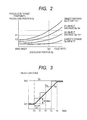
- FIG. 2 is a diagram illustrating a relationship among object distance (in-focus object distance), focus lens position, and zoom lens position.
- FIG. 3 is a diagram illustrating a relationship between sub-target object distance and object distance with the elapsed time.
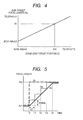
- FIG. 4 is a diagram illustrating a relationship between sub-target focal length and zoom lens target position.
- FIG. 5 is a diagram illustrating a relationship between sub-target object distance and focal length with the elapsed time.
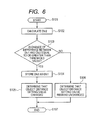
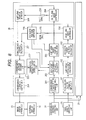
- FIG. 6 is a flowchart diagram illustrating procedures for detecting any change in an object distance setting value (image pickup condition setting value).
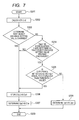
- FIG. 7 is a flowchart diagram illustrating procedures for determining output object distance information.
- FIG. 8 is a configuration block diagram according to a second embodiment.
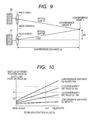
- FIG. 9 is a diagram for illustrating convergence distance.
- FIG. 10 is a diagram illustrating a relationship among convergence distance position, shift lens position, and zoom lens position.
- FIG. 11 is a diagram illustrating a relationship between sub-target convergence distance and convergence distance with the elapsed time.
- FIG. 12 is a flowchart diagram illustrating procedures for detecting any change in a convergence distance setting value (image pickup condition setting value).
- FIG. 13 is a flowchart illustrating procedures for determining output convergence distance information.
- a first embodiment of the present invention will be described below with reference to FIG. 1 .
- FIG. 1 is a configuration block diagram according to the first embodiment.
- a system illustrated by way of example in the first embodiment includes a lens apparatus 10 adapted to control a movable optical member related to picking up image, an object distance operating unit 11 which is a setting unit connected to the lens apparatus 10, a focal length operating unit 12, an image pickup apparatus 13, and an external display apparatus 14 connected to the image pickup apparatus 13.
- the object distance operating unit 11 is used to operate an object distance (in-focus object distance) of the lens apparatus 10 and is made up, for example, of a demand (focus demand) and a camera.
- the focal length operating unit 12 is used to operate focal length of the lens apparatus 10 and is made up, for example, of a demand (zoom demand) and a camera.
- the image pickup apparatus 13, which is, for example, a camera, is adapted to capture an object image formed by the lens apparatus 10.
- the external display apparatus 14 is adapted to display image pickup condition information such as an object distance and is made up, for example, of a viewfinder.
- the lens apparatus 10 includes a focus lens 105 used for focus adjustment and a zoom lens 115 used for zoom adjustment.
- the focus lens 105 is driven under the control of a focus lens drive controller (drive controller) 104 made up of, for example, a control computation unit and a motor. Position of the focus lens 105 is detected by a focus lens position detector 106 made up of, for example, a Hall element. An object distance (image pickup condition) set command value from the object distance operating unit 11 is input to an object distance set command input unit 101. An object distance set command value (image pickup condition setting value) is input to a sub-target object distance calculator 102, which then calculates a sub-target object distance which provides a target position for the object distance in each control cycle. A method of calculating the sub-target object distance will be described later.
- a focus lens target position calculator 103 which is a sub-target value calculator, calculates a target position (movable optical member target position) of the focus lens per unit time. A method of calculating the movable optical member target position (the focus lens target position) will be described later.
- the focus lens drive controller 104 performs drive control such that the focus lens position will match a focus lens target position value.
- the zoom lens 115 is driven under the control of a zoom lens drive controller 114 made up of, for example, a control computation unit and a motor.
- a position of the zoom lens 115 is detected by a zoom lens position detector 116 made up of, for example, a Hall element.
- a focal length set command from the focal length operating unit 12 is input to a focal length setting command input unit 111.
- a focal length set command value is input to a sub-target focal length calculator 112, which then calculates a sub-target focal length which provides a target position for the focal length in each control cycle. A method of calculating the sub-target focal length will be described later.
- a zoom lens target position calculator 113 calculates a target position of the zoom lens per unit time. A method of calculating the zoom lens target position will be described later.
- the zoom lens drive controller 114 performs drive control such that the zoom lens position will match the zoom lens target position.
- An object distance calculator 121 which is an image pickup condition calculator calculates object distance information (image pickup condition information) as a calculated image pickup condition based on the focus lens position from the focus lens position detector 106 and the zoom lens position from the zoom lens position detector 116. A method of calculating the object distance will be described later.
- a set-object-distance-change determination unit 122 which is a decision unit, determines whether or not set object distance changed. A method of determining whether or not set object distance changed will be described later.
- An object distance decision unit 123 which is a decision unit, determines output object distance information, which is object distance information to be output to the outside. A method of determining the output object distance information will be described later.
- An object distance output unit 124 which is an output unit, outputs the output object distance information, which is output image pickup condition information, to the outside. According to the present embodiment, the output object distance information is output from the object distance output unit 124 to the image pickup apparatus 13.
- the focus lens target position Fc can be calculated from sub-target object distance Dtc and zoom lens position Zp.
- FIG. 2 illustrates a relationship among the object distance (in-focus object distance) Dp, focus lens target position Fc, and zoom lens position Zp.
- the object distance Dp and sub-target object distance Dtc have the same units, and can be considered to be equivalent to each other.
- To calculate the focus lens target position Fc it is common practice to convert characteristics as illustrated in FIG. 2 into tabular data in advance and derive the focus lens target position Fc using the object distance Dp and zoom lens position Zp as parameters. For example, if the zoom lens position Zp is Zp1 and the sub-target object distance Dtc is D1, the focus lens target position Fc is F1. Also, if the zoom lens position Zp is Zp1 and the sub-target object distance Dtc is D2, the focus lens target position Fc is F2.
- the set command value of the object distance (in-focus object distance) described above may not necessarily be the object distance (in-focus object distance) itself but can be a normalized value of the object distance (in-focus object distance).
- FIG. 3 illustrates a relationship between the sub-target object distance Dtc and object distance Dp with the elapsed time when the object distance setting value (image pickup condition setting value) Dc changes from Dc1 to Dc2, where T0 represents the time at which the object distance setting value Dc changes from Dc1 to Dc2 and a unit time ⁇ T corresponds to the duration of a control cycle.
- a maximum variation amount DtcMax of the sub-target object distance corresponds to a maximum stroke of the object distance Dp can cover within the unit time ⁇ T.
- the maximum variation amount DtcMax of the sub-target object distance can be calculated based on a maximum stroke FcMax of the focus lens per unit time ⁇ T and tabular data which represents characteristics as illustrated in FIG. 2 .
- Zoom lens target position Zc can be calculated from sub-target focal length Atc.
- FIG. 4 illustrates a relationship between the sub-target focal length Atc and zoom lens target position Zc. As illustrated in FIG. 4 , the relationship between the focal length and zoom lens position is represented by a linear function. To calculate the zoom lens target position Zc, it is common practice to actually measure the relationship between the focal length and zoom lens position as illustrated in FIG. 4 , convert the measurements into tabular data in advance, and derive the zoom lens target position Zc. For example, when the sub-target focal length Atc is A1, the zoom lens target position Zc is Zc2.
- FIG. 5 illustrates a relationship between the sub-target focal length Atc and focal length Ap with the elapsed time when a focal length setting value Ac changes from Ac1 to Ac2, where T0 represents the time at which the focal length setting value Ac changes from Ac1 to Ac2 and a unit time ⁇ T corresponds to the duration of a control cycle.
- a maximum variation amount AtcMax of the sub-target focal length corresponds to a maximum stroke of the focal length Ap within the unit time ⁇ T.
- the maximum variation amount AtcMax of the sub-target focal length can be calculated based on a maximum stroke ZcMax of the zoom lens per unit time ⁇ T and tabular data which represents characteristics as illustrated in FIG. 4 .
- the zoom lens target position Zc is represented by a relationship expressed in Eq. (1).
- Zc Atc ⁇ C ⁇ 11 + C ⁇ 12 where C11 and C12 are predetermined constants determined from measured data.
- ZcMax AtcMax ⁇ C ⁇ 1 + C ⁇ 2
- a value of the sub-target focal length changed by the maximum variation amount AtcMax is calculated every unit time ⁇ T until the sub-target focal length Atc reaches the focal length setting value Ac2.
- the object distance Dp can be calculated from the focus lens position Fp and zoom lens position Zp. That is, the object distance Dp (image pickup condition information) can be calculated by use of the focus lens position Fp and the zoom lens position Zp as a combination of the plurality of image pickup condition decision optical members.
- To calculate the object distance Dp it is common practice to convert characteristics as illustrated in FIG. 2 into tabular data in advance and derive the object distance Dp using the table. For example, when the zoom lens position Zp is Zp1 and the focus lens position Fp is F1, the object distance Dp is D1. Also, when the zoom lens position Zp is Zp1 and the focus lens position Fp is F2, the object distance Dp is D2.
- variation amounts of the focus lens position Fp relative to changes in the object distance are smaller when the zoom lens position Zp is on the wide-angle side than when the zoom lens position Zp is on the telephoto side.
- Position detection accuracy of the focus lens position Fp is equal over the entire operating range of the focus lens, and consequently, the position detection accuracy with respect to changes in the object distance Dp is lower when the zoom lens position Zp is on the wide-angle side than when the zoom lens position Zp is on the telephoto side. Consequently, even if the object distance setting value (image pickup condition setting value) is the same, the object distance Dp has larger position errors when the zoom lens position Zp is on the wide-angle side than when the zoom lens position Zp is on the telephoto side.
- the object distance Dp computed on the wide-angle side of the zoom lens position Zp may have a different value.
- the object distance Dp is displayed as it is, when zoom position is changed, even if the object distance setting value is not changed, the object distance Dp can change as well, causing the photographer to misunderstand that the lens is malfunctioning.
- FIG. 6 is a flowchart illustrating procedures for detecting any change in a setting of the object distance.
- Processing is started in S101, and then the flow goes to S102.
- S103 it is determined whether or not a difference between the sub-target object distance Dtc1 stored in the previous time period and the current sub-target object distance Dtc2 is equal to or greater than a predetermined threshold value greater than 0. If the difference is equal to or greater than the threshold value, the flow goes to S104. If the difference is smaller than the threshold value, the flow goes to S106.
- the current sub-target object distance Dtc2 is held for use in a next determination as a sub-target object distance Dtc1 stored in the previous time period. Then, the flow goes to S105.
- the sub-target object distance Dtc is used as an instance to be determined whether or not the object distance setting value (hereinafter, also referred to as a set-condition-change determination value) changed
- the object distance setting value Dc may be used as a set-condition-change determination value.
- the focus lens target position Fc and zoom lens position Zp may be used as set-condition-change determination values.
- the focus lens target position Fc when the focus lens target position Fc is changed with the zoom lens position Zp remaining unchanged, it can be determined that the focus lens is driven by changes in the object distance setting value rather than by a focal length setting. Therefore, it may be determined that the object distance setting value changed when an amount of change in the focus lens target position Fc is equal to or greater than a predetermined threshold value and an amount of change in the zoom lens position Zp is equal to or smaller than a predetermined threshold value.
- sub-target focal length Atc focal length setting value Ac
- zoom lens target position Zc zoom lens position Zp or focal length Ap
- focal length Ap may be used as a set-condition-change determination value.
- the zoom lens is not moved according to the object distance setting value Dc
- changes in the object distance setting value may be determined based on a relationship between the focus lens target position Fc and zoom lens target position Zc. In that case, when an amount of change in the object distance target position derived from the focus lens target position Fc and zoom lens target position Zc as well as the characteristics in FIG. 2 is within a predetermined threshold value, it may be determined that the object distance setting value remains unchanged.
- FIG. 7 is a flowchart illustrating procedures for determining output object distance information Dpo.
- Processing is started in S201, and then the flow goes to S202.
- the current object distance is calculated as the latest object distance Dp2, and then the flow goes to S203.
- the flow goes to S206. If the difference between the output object distance information Dpo and the latest object distance Dp2 is smaller than the predetermined threshold value ⁇ Dlim (smaller than the first threshold value), the flow goes to S208.
- the threshold value ⁇ Dlim is set to a value larger than an amount of change in the object distance Dp brought about when the focal length is changed from a wide-angle end to a telephoto end, by measuring the amount of change in advance.
- the latest object distance Dp2 is held as a previous object distance Dp1, and then the flow goes to S207.
- the latest object distance Dp2 (first image pickup condition information) is determined to be output object distance information Dpo (output image pickup condition information), and then the flow goes to S209.
- the previous object distance Dp1 (second image pickup condition information) is determined to be output object distance information Dpo, and then the flow goes to S209.
- the processing is finished.
- the sub-target object distance Dtc may be determined as output object distance information. Also, a driving period calculated from the difference between the object distance setting value Dc and object distance Dp may be set as the fixed time period Tlim1. Furthermore, instead of the previous object distance Dp1, the object distance setting value Dc may be determined as the output object distance information Dpo.
- the object distance setting value Dc output from the object distance operating unit 11 is received by the object distance set command input unit 101 and output to the sub-target object distance calculator 102.
- the sub-target object distance calculator 102 calculates the sub-target object distance Dtc from the object distance setting value Dc and outputs the sub-target object distance Dtc to the focus lens target position calculator 103.
- the focus lens target position calculator 103 calculates the focus lens target position Fc from the sub-target object distance Dtc and zoom lens position Zp and outputs the focus lens target position Fc to the focus lens drive controller 104. Based on the focus lens target position Fc, the focus lens drive controller 104 drives the focus lens 105 by performing control such that the focus lens position Fp will match the focus lens target position Fc.
- the focus lens position detector 106 detects the focus lens position Fp and outputs the focus lens position Fp to the object distance calculator 121.
- the focal length setting value Ac output from the focal length operating unit 12 is received by the focal length setting command input unit 111 and output to the sub-target focal length calculator 112.
- the sub-target focal length calculator 112 calculates the sub-target focal length Atc from the focal length setting value Ac and outputs the sub-target focal length Atc to the zoom lens target position calculator 113.
- the zoom lens target position calculator 113 calculates the zoom lens target position Zc from the sub-target focal length Atc and outputs the zoom lens drive target position Zc to the zoom lens drive controller 114. Based on the zoom lens target position Zc, the zoom lens drive controller 114 drives the zoom lens 115 by performing control such that the zoom lens position Zp will match the zoom lens target position Zc.
- the zoom lens position detector 116 detects the zoom lens position Zp and outputs the zoom lens position Zp to the object distance calculator 121.
- the object distance calculator 121 calculates the object distance (in-focus object distance)
- the set-object-distance-change determination unit determines, based on the sub-target object distance Dtc, whether or not the object distance setting value changed and outputs a result of the determination to the object distance decision unit 123. Based on the object distance Dp as well as on the determination result as to whether or not the object distance setting value changed, the object distance decision unit 123 determines output object distance information (information on image pickup conditions to be output) and outputs the output object distance to the object distance output unit 124.
- the object distance output unit 124 outputs the output object distance information to the image pickup apparatus 13.
- the image pickup apparatus 13 outputs the output object distance information to the external display apparatus 14.
- the object distance setting value from the object distance operating unit is a position command which specifies a target position
- similar effects can be obtained even when a velocity command is used.
- This can be implemented by a method in which the object distance set command input unit 101 calculates the object distance setting value Dc from reference position and a velocity command value. For example, when the velocity command value starts to be received, using the object distance Dp as a reference position, the object distance setting value Dc can be calculated by adding an amount of position change corresponding to the velocity command value to the reference position at each lapse of a unit time.
- the display apparatus is installed outside the lens apparatus 10
- the output object distance information may be displayed by installing the display apparatus in the lens apparatus 10.
- the image pickup condition is the object distance (in-focus object distance)
- the movable optical member is the focus lens
- the image pickup condition decision optical members are the focus lens and zoom lens
- similar effects can be obtained when the image pickup condition to be output is depth of field and the movable optical member is a stop and the optical members (image pickup condition decision optical members) which affect the determination (the fulfillment) of the image pickup condition are the focus lens, zoom lens and stop.
- the focus lens position, the zoom lens position and the state of stop (f-number) are used to derive the image pickup condition information (depth of filed). That is, the focus lens position, the zoom lens position and the state of stop (f-number) are used as the combination of the image pickup condition decision optical members.
- the depth of field Df can be calculated from a rear depth of field Dpb and front depth of field Dpf using Eq. (3), where the rear depth of field Dpb is that part of the depth of field which is located behind the object distance Dp (on the infinity side) while the front depth of field is that part of the depth of field which is located in front of the object distance Dp (on the closest side), the depth of field being a range in which the object in focus appears sharp.
- Df Dpb + Dpf
- the rear depth of field Dpb and front depth of field Dpf can be calculated from the object distance Dp, the focal length Ap, a permissible circle of confusion ⁇ , and an f-number Fno, using equations (4) and (5), respectively.
- Dpf ⁇ ⁇ Fno ⁇ Dp 2 / Ap 2 + ⁇ ⁇ Fno ⁇ Dp
- Dpb ⁇ ⁇ Fno ⁇ Dp 2 / Ap 2 - ⁇ ⁇ Fno ⁇ Dp
- the depth of field Df can be calculated using equations (3), (4) and (5).
- an image pickup information output apparatus can be implemented in which the depth of field is neither changed by changes in the focus lens position and zoom lens position unless the depth of field is changed intentionally nor the depth of field is affected by changes in focus lens position detection accuracy.
- FIG. 8 is a configuration block diagram according to the present embodiment, wherein the same components as those in FIG. 1 are denoted by the same reference numerals as the corresponding components in FIG. 1 .
- a lens apparatus 20 and lens apparatus 21 are adapted to control movable optical members for the left eye and right eye, respectively, during photography.
- the lens apparatus 21 is identical in configuration to the lens apparatus 20.
- a convergence distance operating unit 22 serving as a setting unit is used to operate the convergence distance between the lens apparatus 20 and lens apparatus 21 and connected to the lens apparatus 20 and lens apparatus 21.
- the convergence distance operating unit 22 is made up of, for example, a demand and camera.
- the focal length operating unit 23 is used to operate the focal length of the lens apparatus 20 and lens apparatus 21 and connected to the lens apparatus 20 and lens apparatus 21.
- the focal length operating unit 23 is made up of, for example, a demand and camera.
- the lens apparatus 20 includes a shift lens 205 and a shift lens position detector 206, where the shift lens 205 moves in a direction having components perpendicular to optical axes of the respective lens apparatus to move an object image formed on an imaging surface, and thereby producing an effect equivalent to moving optical axis directions of the lens apparatus while the shift lens position detector 206 is made up of, for example, a Hall element.
- the lens apparatus 20 includes a convergence distance setting command input unit 201, a sub-target convergence distance calculator 202, a shift lens target position calculator 203, a shift lens drive controller 204, a convergence distance calculator 221 serving as an image pickup condition calculator, a set-convergence-distance-change determination unit 222, a convergence-distance decision unit 223 and a convergence distance output unit 224.
- the convergence distance setting command input unit 201 receives a convergence distance setting value (image pickup condition setting value) from outside and the sub-target convergence distance calculator 202 calculates a sub-target convergence distance which provides a target position for the convergence distance in each control cycle based on convergence distance setting value received by the convergence distance setting command input unit 201. A method of calculating the sub-target convergence distance will be described later.
- the shift lens target position calculator 203 which is a sub-target value calculator, calculates a target position of the shift lens per unit time. A method of calculating the shift lens target position will be described later.
- the shift lens drive controller 204 which is made up of, for example, a control computation unit and a motor, performs drive control such that the shift lens position will match the shift lens target position.
- the convergence distance calculator 221 calculates the convergence distance based on the shift lens position and zoom lens position. A method of calculating the convergence distance will be described later.
- the set-convergence-distance-change determination unit 222 serving as a determination unit determines whether or not the convergence distance setting value changed. A method of determining whether or not the convergence distance setting value changed will be described later.
- the convergence distance decision unit 223 serving as a decision unit determines convergence distance information to be output to the outside. A method of determining output convergence distance information will be described later.
- the convergence distance output unit 224 serving as an output unit outputs the convergence distance information, which is output image pickup condition information, to the outside.
- FIG. 9 is a diagram illustrating a relationship among a field lens L, a field lens R, the convergence distance Cp, base length a, an optical axis VL, an optical axis VR, a convergence point p and a convergence angle ⁇ .
- the optical axis VL is the optical axis of the lens apparatus 20 while the optical axis VR is the optical axis of the lens apparatus 21.
- the base length a is an interval between the optical axes in the image pickup apparatus, and specifically, is a distance between a center of the field lens L and a center of the field lens R.
- the convergence point p is a point at which the optical axes VL and VR intersect each other.
- the convergence angle ⁇ is an angle formed by the optical axes VL and VR intersecting each other at the convergence point p.
- the convergence distance Cp is the distance from a line joining the field lens L and field lens R of the left and right image pickup apparatuses to the convergence point p.
- the lens apparatus 20 and lens apparatus 21 perform control to drive the shift lenses 205 in opposite directions such that the optical axes VL and VR will move in the opposite directions and intersect each other at the convergence point p.
- a viewer can view three-dimensional video by visually perceiving the video from the lens apparatus 20 with the left eye and the video from the lens apparatus 21 with the right eye.
- the convergence distance Cp which is the distance to the convergence point given as a point of intersection between the optical axes VL and VR is shorter than the distance from the viewer to the screen, the viewer feels as if the object were located in front of the screen and if the convergence distance Cp is longer than the distance from the viewer to the screen, the viewer feels as if the object were located behind the screen.
- the shift lens target position Sc can be calculated from the sub-target convergence distance Ctc and zoom lens position Zp.
- FIG. 10 illustrates a relationship among the convergence distance position Cp, shift lens target position Sc, and zoom lens position Zp.
- the convergence distance position Cp and sub-target convergence distance Ctc have the same units, and can be considered to be equivalent to each other.
- To calculate the shift lens target position Sc it is common practice to convert characteristics as illustrated in FIG. 10 into tabular data in advance and derive the shift lens target position Sc. For example, if the zoom lens position Zp has a value of Zp1 and the sub-target convergence distance Ctc has a value of C1, the shift lens target position Sc has a value of S1. Also, if the zoom lens position Zp has a value of Zp1 and the sub-target convergence distance Ctc has a value of C2, the shift lens target position Sc has a value of S2.
- the lens apparatus 21 is controlled so as to move the optical axis VL by the same amount at the same angle as the optical axis VR in a direction opposite to the optical axis VR of the lens apparatus 20.
- the convergence distance Cp computed on the wide-angle side of the zoom lens position Zp may have a different value.
- displaying the convergence distance Cp with no change may cause the photographer to misunderstand that the lens is malfunctioning because changing zoom position causes the convergence distance Cp changed regardless of the convergence distance setting value being not changed.
- FIG. 11 illustrates a relationship between the sub-target convergence distance Ctc and convergence distance Cp with the elapsed time when a convergence distance setting value (image pickup condition setting value) Cc changes from Cc1 to Cc2, where T0 represents the time at which the convergence distance setting value Cc changes from Cc1 to Cc2 and a unit time ⁇ T corresponds to the duration of a control cycle.
- a maximum variation amount CtcMax of the sub-target convergence distance corresponds to a maximum stroke of the convergence distance Cp within the unit time ⁇ T.
- the maximum variation amount CtcMax of the sub-target convergence distance can be calculated based on a maximum stroke ScMax of the shift lens per unit time ⁇ T and tabular data which represents characteristics as illustrated in FIG. 10 .
- the zoom lens position Zp is Zp1 and the shift lens position Sp is S1
- the maximum stroke ScMax is
- the maximum variation amount CtcMax of the sub-target convergence distance is
- a value changed by the maximum variation amount CtcMax of the sub-target convergence distance is calculated every unit time ⁇ T until the sub-target convergence distance Ctc reaches the convergence distance setting value Cc2.
- FIG. 12 is a flowchart illustrating procedures for detecting any change in the convergence distance setting value.
- Processing is started in S301, and then the flow goes to S302.
- S303 it is determined whether or not a difference between the sub-target convergence distance Ctc1 stored in the previous time period and the current sub-target convergence distance Ctc2 is equal to or greater than a predetermined threshold value greater than 0. If the difference is equal to or greater than the threshold value, the flow goes to S304. If the difference is smaller than the threshold value, the flow goes to S306.
- the convergence distance setting value Cc may be used as an instance to be checked for the change.
- the shift lens target position Sc and zoom lens position Zp may be used as the instances to be checked for the change.
- the shift lens target position Sc is changed with the zoom lens position Zp remaining unchanged, it can be determined that the shift lens is driven by changes in the convergence distance setting value rather than by a focal length setting. Therefore, it may be determined that there is a change in the convergence distance setting value when an amount of change in the shift lens target position Sc is equal to or greater than a predetermined threshold value (equal to or greater than a second threshold value) greater than 0 and an amount of change in the zoom lens position Zp is equal to or smaller than a predetermined threshold value (equal to or smaller than a third threshold value) greater than 0.
- a predetermined threshold value equal to or greater than a second threshold value
- a predetermined threshold value equal to or smaller than a predetermined threshold value (equal to or smaller than a third threshold value) greater than 0.
- sub-target focal length Atc, focal length setting value Ac, zoom lens target position Zc, zoom lens position Zp or focal length Ap may be used as the instance to be checked for the change.
- the zoom lens position is not moved according to the convergence distance setting value Cc
- changes in the convergence distance setting value may be determined based on a relationship between the shift lens target position Sc and zoom lens target position Zc. In that case, when an amount of change in the convergence distance target position derived from the shift lens target position Sc and zoom lens target position Zc as well as the characteristics in FIG. 2 is within a predetermined threshold value greater than 0, it may be determined that there is no change in the convergence distance setting value.
- FIG. 13 is a flowchart illustrating procedures for determining output convergence distance information Cpo.
- the fixed time period Tlim2 is set to the unit time ⁇ T.
- the flow goes to S406. If the difference between the output convergence distance information Cpo and the latest convergence distance Cp2 is smaller than the predetermined threshold value ⁇ Clim (smaller than the first threshold value), the flow goes to S408.
- the threshold value ⁇ Clim is set to a value larger than an amount of change in the convergence distance Cp brought about when the focal length is changed from the wide-angle end to the telephoto end, by measuring the amount of change in advance.
- the latest convergence distance Cp2 is held as a previous convergence distance Cp1, and then the flow goes to S407.
- the latest convergence distance Cp2 (first image pickup condition information) is determined to be output convergence distance information Cpo (output image pickup condition information), and then the flow goes to S409.
- the previous convergence distance Cp1 (second image pickup condition information) is determined to be output convergence distance information Cpo, and then the flow goes to S409.
- the processing is finished.
- convergence distance target position Cpc may be determined as output convergence distance information.
- a driving period calculated from the difference between the convergence distance setting value Cc and convergence distance Cp may be set as the fixed time period Tlim2.
- the convergence distance setting value Cc may be determined as the output convergence distance information Cpo.
- the convergence distance setting value Cc output from the convergence distance operating unit 22 is received by the convergence distance setting command input unit 201 and output to the sub-target convergence distance calculator 202.
- the sub-target convergence distance calculator 202 calculates the sub-target convergence distance Ctc from the convergence distance setting value Cc and outputs the sub-target convergence distance Ctc to the shift lens target position calculator 203.
- the shift lens target position calculator 203 calculates the shift lens target position Sc from the sub-target convergence distance Ctc and zoom lens position Zp and outputs the shift lens target position Sc to the shift lens drive controller 204. Based on the shift lens target position Sc, the shift lens drive controller 204 controls to drive the shift lens 205 so that the shift lens position Sp matches the shift lens target position Sc.
- the shift lens position detector 206 detects the shift lens position Sp and outputs the shift lens position Sp to the convergence distance calculator 221.
- the focal length setting value Ac output from the focal length operating unit 23 is received by the focal length setting command input unit 111 and output to the sub-target focal length calculator 112.
- the sub-target focal length calculator 112 calculates the sub-target focal length Atc from the focal length setting value Ac and outputs the sub-target focal length Atc to the zoom lens target position calculator 113.
- the zoom lens target position calculator 113 calculates the zoom lens target position Zc from the sub-target focal length Atc and outputs the zoom lens target position Zc to the zoom lens drive controller 114. Based on the zoom lens target position Zc, the zoom lens drive controller 114 controls to drive the zoom lens 115 so that the zoom lens position Zp match the zoom lens target position Zc.
- the zoom lens position detector 116 detects the zoom lens position Zp and outputs the zoom lens position Zp to the convergence distance calculator 221.
- the convergence distance calculator 221 calculates the convergence distance Cp based on the shift lens position Sp and zoom lens position Zp and outputs the convergence distance Cp to the convergence distance decision unit 223. That is, the convergence distance Cp (image pickup condition information) can be calculated by use of the shift lens position Sp and the zoom lens position Zp as a combination of the plurality of image pickup condition decision optical members.
- the set-convergence-distance-change determination unit determines, based on the sub-target convergence distance Ctc, whether or not the convergence distance setting value changed and outputs a result of the determination to the convergence distance decision unit 223.
- the convergence distance decision unit 223 determines output convergence distance information and outputs the output convergence distance information to the convergence distance output unit 224.
- the convergence distance output unit 224 outputs the output convergence distance information to the image pickup apparatus 13.
- the image pickup apparatus 13 outputs the output convergence distance information to the external display apparatus 14.
- a shift lens for optical axis adjustment is used to control the convergence distance
- a variable apex angle prism may be used instead of the shift lens.
- similar effects can be obtained if the angle formed by the optical axes of the two lens apparatuses is directly controlled by mechanically panning each of the two lens apparatuses.
- operating units such as the object distance operating unit 11, focal length operating units 12 and 23, and convergence distance operating unit 22 are provided on cameras and demands
- the external display apparatus 14 is connected to the image pickup apparatus 13
- the other components are included in the lens apparatuses 10 and 20.
- the present invention is not limited to this. Except optical components such as the lenses and stop as well as drive controllers and position detectors therefor, the components included in the lens apparatus 10 or 20 illustrated in FIG. 1 or 8 may be provided on apparatuses except the lens apparatus, for example, in a console device, camera, or independent control apparatus.
Landscapes
- Engineering & Computer Science (AREA)
- Multimedia (AREA)
- Signal Processing (AREA)
- Physics & Mathematics (AREA)
- Computing Systems (AREA)
- Theoretical Computer Science (AREA)
- Library & Information Science (AREA)
- General Engineering & Computer Science (AREA)
- General Physics & Mathematics (AREA)
- Optics & Photonics (AREA)
- Studio Devices (AREA)
- Lens Barrels (AREA)
- Stereoscopic And Panoramic Photography (AREA)
- Automatic Focus Adjustment (AREA)
Applications Claiming Priority (1)
| Application Number | Priority Date | Filing Date | Title |
|---|---|---|---|
| JP2011219535A JP6032879B2 (ja) | 2011-10-03 | 2011-10-03 | 撮影情報出力装置及びそれを有するレンズ装置 |
Publications (3)
| Publication Number | Publication Date |
|---|---|
| EP2579571A2 true EP2579571A2 (de) | 2013-04-10 |
| EP2579571A3 EP2579571A3 (de) | 2014-03-19 |
| EP2579571B1 EP2579571B1 (de) | 2016-08-03 |
Family
ID=47044717
Family Applications (1)
| Application Number | Title | Priority Date | Filing Date |
|---|---|---|---|
| EP12006785.5A Active EP2579571B1 (de) | 2011-10-03 | 2012-09-28 | Bildaufnahmeinformationsausgabevorrichtung und Linsenvorrichtung damit |
Country Status (4)
| Country | Link |
|---|---|
| US (2) | US9172861B2 (de) |
| EP (1) | EP2579571B1 (de) |
| JP (1) | JP6032879B2 (de) |
| CN (1) | CN103108119B (de) |
Families Citing this family (9)
| Publication number | Priority date | Publication date | Assignee | Title |
|---|---|---|---|---|
| JP6137921B2 (ja) * | 2013-04-16 | 2017-05-31 | オリンパス株式会社 | 画像処理装置、画像処理方法及びプログラム |
| JP6366230B2 (ja) * | 2013-06-27 | 2018-08-01 | キヤノン株式会社 | 撮像装置、その制御方法、および制御プログラム |
| CN105593736B (zh) * | 2013-09-27 | 2017-12-05 | 富士胶片株式会社 | 摄像装置及对焦控制方法 |
| US10165188B2 (en) * | 2015-04-16 | 2018-12-25 | Canon Kabushiki Kaisha | Optical apparatus, display controlling method, and non-transitory computer readable storage medium storing a program, that display object distance information |
| JP2016213582A (ja) * | 2015-05-01 | 2016-12-15 | オリンパス株式会社 | 観察装置 |
| CN105227836B (zh) * | 2015-09-15 | 2018-12-18 | 广东欧珀移动通信有限公司 | 一种视频终端变焦的方法和装置 |
| CN105208279B (zh) * | 2015-09-30 | 2019-05-21 | 努比亚技术有限公司 | 一种校正焦点的方法和装置 |
| US11019269B2 (en) * | 2018-07-10 | 2021-05-25 | Canon Kabushiki Kaisha | Image capturing apparatus, method of controlling the same, and storage medium |
| CN117221512A (zh) | 2019-04-01 | 2023-12-12 | 谷歌有限责任公司 | 捕获和编辑动态深度图像的技术 |
Citations (4)
| Publication number | Priority date | Publication date | Assignee | Title |
|---|---|---|---|---|
| JPS63182620A (ja) | 1987-01-24 | 1988-07-27 | Ricoh Co Ltd | バリフオ−カルレンズ制御装置 |
| JPH0178464U (de) | 1987-11-13 | 1989-05-26 | ||
| JPH07306356A (ja) | 1995-01-11 | 1995-11-21 | Ricoh Co Ltd | バリフォーカルレンズの被写体距離表示装置 |
| JP2011135604A (ja) | 2009-11-30 | 2011-07-07 | Sharp Corp | 表示制御装置 |
Family Cites Families (20)
| Publication number | Priority date | Publication date | Assignee | Title |
|---|---|---|---|---|
| JPH04275533A (ja) * | 1991-03-04 | 1992-10-01 | Canon Inc | パワーフォーカス装置 |
| EP0843201A1 (de) * | 1992-07-15 | 1998-05-20 | Nikon Corporation | Gerät zur Bildzitterkorrektur |
| JPH1078464A (ja) | 1996-09-03 | 1998-03-24 | Fujitsu Ltd | 電子機器の故障予測方法及び装置 |
| US6989865B1 (en) * | 1997-12-19 | 2006-01-24 | Canon Kabushiki Kaisha | Optical equipment and it control method, and computer-readable storage medium |
| JP3851027B2 (ja) * | 1999-08-27 | 2006-11-29 | 株式会社リコー | オートフォーカス装置およびカメラ |
| JP3812824B2 (ja) * | 2002-03-12 | 2006-08-23 | カシオ計算機株式会社 | 撮像装置、合焦状況表示方法及びプログラム |
| JP2005025118A (ja) * | 2003-07-03 | 2005-01-27 | Sharp Corp | レンズ制御装置 |
| JP5051812B2 (ja) * | 2004-01-14 | 2012-10-17 | 株式会社リコー | 撮像装置、その合焦方法および記録媒体 |
| JP2005252680A (ja) * | 2004-03-04 | 2005-09-15 | Fujinon Corp | レンズシステム |
| JP4095071B2 (ja) | 2004-03-19 | 2008-06-04 | 株式会社リコー | ディスプレイ付き電子装置、ディスプレイ付き電子装置の制御方法、及びプログラム |
| JP2008026788A (ja) * | 2006-07-25 | 2008-02-07 | Canon Inc | 撮像装置及びフォーカス制御方法 |
| JP5251215B2 (ja) * | 2007-04-04 | 2013-07-31 | 株式会社ニコン | デジタルカメラ |
| JP5374862B2 (ja) * | 2007-11-16 | 2013-12-25 | 株式会社ニコン | 焦点検出装置および撮像装置 |
| JP5328384B2 (ja) * | 2009-01-14 | 2013-10-30 | キヤノン株式会社 | レンズ制御装置、光学機器及びレンズ制御方法 |
| JP2011028345A (ja) * | 2009-07-22 | 2011-02-10 | Olympus Imaging Corp | 条件変更装置、カメラ、携帯機器、およびプログラム |
| JP5474528B2 (ja) * | 2009-12-25 | 2014-04-16 | 富士フイルム株式会社 | オートフォーカスシステム |
| KR101663225B1 (ko) * | 2010-01-19 | 2016-10-06 | 삼성전자주식회사 | 디지털 영상처리장치 및 방법 |
| CN102844788B (zh) * | 2010-03-31 | 2016-02-10 | 佳能株式会社 | 图像处理装置及使用该图像处理装置的图像拾取装置 |
| JP5414752B2 (ja) * | 2011-08-08 | 2014-02-12 | キヤノン株式会社 | 画像処理方法、画像処理装置、撮像装置、および、画像処理プログラム |
| WO2013031227A1 (ja) * | 2011-09-01 | 2013-03-07 | パナソニック株式会社 | 撮像装置およびプログラム |
-
2011
- 2011-10-03 JP JP2011219535A patent/JP6032879B2/ja not_active Expired - Fee Related
-
2012
- 2012-09-28 EP EP12006785.5A patent/EP2579571B1/de active Active
- 2012-09-29 CN CN201210375731.5A patent/CN103108119B/zh active Active
- 2012-10-02 US US13/633,542 patent/US9172861B2/en not_active Expired - Fee Related
-
2015
- 2015-09-17 US US14/856,801 patent/US9817207B2/en active Active
Patent Citations (4)
| Publication number | Priority date | Publication date | Assignee | Title |
|---|---|---|---|---|
| JPS63182620A (ja) | 1987-01-24 | 1988-07-27 | Ricoh Co Ltd | バリフオ−カルレンズ制御装置 |
| JPH0178464U (de) | 1987-11-13 | 1989-05-26 | ||
| JPH07306356A (ja) | 1995-01-11 | 1995-11-21 | Ricoh Co Ltd | バリフォーカルレンズの被写体距離表示装置 |
| JP2011135604A (ja) | 2009-11-30 | 2011-07-07 | Sharp Corp | 表示制御装置 |
Also Published As
| Publication number | Publication date |
|---|---|
| JP6032879B2 (ja) | 2016-11-30 |
| EP2579571B1 (de) | 2016-08-03 |
| US9817207B2 (en) | 2017-11-14 |
| CN103108119A (zh) | 2013-05-15 |
| CN103108119B (zh) | 2017-04-12 |
| US20130083234A1 (en) | 2013-04-04 |
| US9172861B2 (en) | 2015-10-27 |
| JP2013080065A (ja) | 2013-05-02 |
| EP2579571A3 (de) | 2014-03-19 |
| US20160004031A1 (en) | 2016-01-07 |
Similar Documents
| Publication | Publication Date | Title |
|---|---|---|
| EP2579571B1 (de) | Bildaufnahmeinformationsausgabevorrichtung und Linsenvorrichtung damit | |
| US8687284B2 (en) | Lens apparatus | |
| JP5328384B2 (ja) | レンズ制御装置、光学機器及びレンズ制御方法 | |
| US8861948B2 (en) | Image pickup apparatus | |
| CN103728813B (zh) | 一种变倍过程中同步聚焦的方法 | |
| EP3296788B1 (de) | Verfahren zur durchführung von autofokus, autofokussystem und kamera mit autofokus-modul | |
| EP0456234B1 (de) | Kontrolleinrichtung für einen Linsenantrieb | |
| CN106054350B (zh) | 光学装置和显示控制方法 | |
| JP4181886B2 (ja) | ズームレンズの制御装置および撮影システム | |
| EP2664953B1 (de) | Auswechselbare Objektive, Kamera und Kamerasystem | |
| JP2008203515A (ja) | フォーカスレンズ、ズームレンズの駆動手段を有する光学機器 | |
| US9529245B2 (en) | Image pickup apparatus including focus operating apparatus and focus control method | |
| JP6639117B2 (ja) | 光学機器およびフォーカス制御プログラム | |
| JPH0545577A (ja) | 撮影装置 | |
| JP2022150602A (ja) | 撮像装置、情報処理装置、撮像装置の制御方法、及びプログラム | |
| JP2004294569A (ja) | カメラシステム | |
| US20110188129A1 (en) | Lens control device having lens position control function for bringing, method of controlling the same, and storage medium | |
| JP2011247988A (ja) | 撮像装置 | |
| JPH07301744A (ja) | カメラ | |
| JP6700698B2 (ja) | 光学機器、表示制御方法および表示制御プログラム | |
| JP2016206267A (ja) | 光学機器およびその制御方法 | |
| JP2011252991A (ja) | 撮像システム | |
| JP6521629B2 (ja) | 制御装置、撮像装置、制御方法、およびプログラム | |
| JP5791245B2 (ja) | 撮像装置 | |
| JP2007163645A (ja) | ズームレンズ及び該ズームレンズのフランジバック調整方法 |
Legal Events
| Date | Code | Title | Description |
|---|---|---|---|
| PUAI | Public reference made under article 153(3) epc to a published international application that has entered the european phase |
Free format text: ORIGINAL CODE: 0009012 |
|
| AK | Designated contracting states |
Kind code of ref document: A2 Designated state(s): AL AT BE BG CH CY CZ DE DK EE ES FI FR GB GR HR HU IE IS IT LI LT LU LV MC MK MT NL NO PL PT RO RS SE SI SK SM TR |
|
| AX | Request for extension of the european patent |
Extension state: BA ME |
|
| PUAL | Search report despatched |
Free format text: ORIGINAL CODE: 0009013 |
|
| AK | Designated contracting states |
Kind code of ref document: A3 Designated state(s): AL AT BE BG CH CY CZ DE DK EE ES FI FR GB GR HR HU IE IS IT LI LT LU LV MC MK MT NL NO PL PT RO RS SE SI SK SM TR |
|
| AX | Request for extension of the european patent |
Extension state: BA ME |
|
| RIC1 | Information provided on ipc code assigned before grant |
Ipc: H04N 5/232 20060101AFI20140212BHEP Ipc: H04N 13/02 20060101ALI20140212BHEP |
|
| 17P | Request for examination filed |
Effective date: 20140919 |
|
| RBV | Designated contracting states (corrected) |
Designated state(s): AL AT BE BG CH CY CZ DE DK EE ES FI FR GB GR HR HU IE IS IT LI LT LU LV MC MK MT NL NO PL PT RO RS SE SI SK SM TR |
|
| 17Q | First examination report despatched |
Effective date: 20141029 |
|
| GRAP | Despatch of communication of intention to grant a patent |
Free format text: ORIGINAL CODE: EPIDOSNIGR1 |
|
| INTG | Intention to grant announced |
Effective date: 20160226 |
|
| GRAS | Grant fee paid |
Free format text: ORIGINAL CODE: EPIDOSNIGR3 |
|
| GRAA | (expected) grant |
Free format text: ORIGINAL CODE: 0009210 |
|
| RAP1 | Party data changed (applicant data changed or rights of an application transferred) |
Owner name: CANON KABUSHIKI KAISHA |
|
| AK | Designated contracting states |
Kind code of ref document: B1 Designated state(s): AL AT BE BG CH CY CZ DE DK EE ES FI FR GB GR HR HU IE IS IT LI LT LU LV MC MK MT NL NO PL PT RO RS SE SI SK SM TR |
|
| REG | Reference to a national code |
Ref country code: GB Ref legal event code: FG4D |
|
| REG | Reference to a national code |
Ref country code: CH Ref legal event code: EP Ref country code: AT Ref legal event code: REF Ref document number: 817991 Country of ref document: AT Kind code of ref document: T Effective date: 20160815 |
|
| REG | Reference to a national code |
Ref country code: IE Ref legal event code: FG4D |
|
| REG | Reference to a national code |
Ref country code: DE Ref legal event code: R096 Ref document number: 602012021136 Country of ref document: DE |
|
| REG | Reference to a national code |
Ref country code: NL Ref legal event code: MP Effective date: 20160803 |
|
| REG | Reference to a national code |
Ref country code: LT Ref legal event code: MG4D |
|
| REG | Reference to a national code |
Ref country code: AT Ref legal event code: MK05 Ref document number: 817991 Country of ref document: AT Kind code of ref document: T Effective date: 20160803 |
|
| PG25 | Lapsed in a contracting state [announced via postgrant information from national office to epo] |
Ref country code: LT Free format text: LAPSE BECAUSE OF FAILURE TO SUBMIT A TRANSLATION OF THE DESCRIPTION OR TO PAY THE FEE WITHIN THE PRESCRIBED TIME-LIMIT Effective date: 20160803 Ref country code: NO Free format text: LAPSE BECAUSE OF FAILURE TO SUBMIT A TRANSLATION OF THE DESCRIPTION OR TO PAY THE FEE WITHIN THE PRESCRIBED TIME-LIMIT Effective date: 20161103 Ref country code: IT Free format text: LAPSE BECAUSE OF FAILURE TO SUBMIT A TRANSLATION OF THE DESCRIPTION OR TO PAY THE FEE WITHIN THE PRESCRIBED TIME-LIMIT Effective date: 20160803 Ref country code: HR Free format text: LAPSE BECAUSE OF FAILURE TO SUBMIT A TRANSLATION OF THE DESCRIPTION OR TO PAY THE FEE WITHIN THE PRESCRIBED TIME-LIMIT Effective date: 20160803 Ref country code: RS Free format text: LAPSE BECAUSE OF FAILURE TO SUBMIT A TRANSLATION OF THE DESCRIPTION OR TO PAY THE FEE WITHIN THE PRESCRIBED TIME-LIMIT Effective date: 20160803 Ref country code: FI Free format text: LAPSE BECAUSE OF FAILURE TO SUBMIT A TRANSLATION OF THE DESCRIPTION OR TO PAY THE FEE WITHIN THE PRESCRIBED TIME-LIMIT Effective date: 20160803 Ref country code: NL Free format text: LAPSE BECAUSE OF FAILURE TO SUBMIT A TRANSLATION OF THE DESCRIPTION OR TO PAY THE FEE WITHIN THE PRESCRIBED TIME-LIMIT Effective date: 20160803 Ref country code: IS Free format text: LAPSE BECAUSE OF FAILURE TO SUBMIT A TRANSLATION OF THE DESCRIPTION OR TO PAY THE FEE WITHIN THE PRESCRIBED TIME-LIMIT Effective date: 20161203 |
|
| PG25 | Lapsed in a contracting state [announced via postgrant information from national office to epo] |
Ref country code: PT Free format text: LAPSE BECAUSE OF FAILURE TO SUBMIT A TRANSLATION OF THE DESCRIPTION OR TO PAY THE FEE WITHIN THE PRESCRIBED TIME-LIMIT Effective date: 20161205 Ref country code: BE Free format text: LAPSE BECAUSE OF NON-PAYMENT OF DUE FEES Effective date: 20160930 Ref country code: SE Free format text: LAPSE BECAUSE OF FAILURE TO SUBMIT A TRANSLATION OF THE DESCRIPTION OR TO PAY THE FEE WITHIN THE PRESCRIBED TIME-LIMIT Effective date: 20160803 Ref country code: AT Free format text: LAPSE BECAUSE OF FAILURE TO SUBMIT A TRANSLATION OF THE DESCRIPTION OR TO PAY THE FEE WITHIN THE PRESCRIBED TIME-LIMIT Effective date: 20160803 Ref country code: LV Free format text: LAPSE BECAUSE OF FAILURE TO SUBMIT A TRANSLATION OF THE DESCRIPTION OR TO PAY THE FEE WITHIN THE PRESCRIBED TIME-LIMIT Effective date: 20160803 Ref country code: GR Free format text: LAPSE BECAUSE OF FAILURE TO SUBMIT A TRANSLATION OF THE DESCRIPTION OR TO PAY THE FEE WITHIN THE PRESCRIBED TIME-LIMIT Effective date: 20161104 Ref country code: ES Free format text: LAPSE BECAUSE OF FAILURE TO SUBMIT A TRANSLATION OF THE DESCRIPTION OR TO PAY THE FEE WITHIN THE PRESCRIBED TIME-LIMIT Effective date: 20160803 Ref country code: PL Free format text: LAPSE BECAUSE OF FAILURE TO SUBMIT A TRANSLATION OF THE DESCRIPTION OR TO PAY THE FEE WITHIN THE PRESCRIBED TIME-LIMIT Effective date: 20160803 |
|
| PG25 | Lapsed in a contracting state [announced via postgrant information from national office to epo] |
Ref country code: RO Free format text: LAPSE BECAUSE OF FAILURE TO SUBMIT A TRANSLATION OF THE DESCRIPTION OR TO PAY THE FEE WITHIN THE PRESCRIBED TIME-LIMIT Effective date: 20160803 Ref country code: EE Free format text: LAPSE BECAUSE OF FAILURE TO SUBMIT A TRANSLATION OF THE DESCRIPTION OR TO PAY THE FEE WITHIN THE PRESCRIBED TIME-LIMIT Effective date: 20160803 |
|
| REG | Reference to a national code |
Ref country code: CH Ref legal event code: PL |
|
| REG | Reference to a national code |
Ref country code: DE Ref legal event code: R097 Ref document number: 602012021136 Country of ref document: DE |
|
| PG25 | Lapsed in a contracting state [announced via postgrant information from national office to epo] |
Ref country code: DK Free format text: LAPSE BECAUSE OF FAILURE TO SUBMIT A TRANSLATION OF THE DESCRIPTION OR TO PAY THE FEE WITHIN THE PRESCRIBED TIME-LIMIT Effective date: 20160803 Ref country code: CZ Free format text: LAPSE BECAUSE OF FAILURE TO SUBMIT A TRANSLATION OF THE DESCRIPTION OR TO PAY THE FEE WITHIN THE PRESCRIBED TIME-LIMIT Effective date: 20160803 Ref country code: SK Free format text: LAPSE BECAUSE OF FAILURE TO SUBMIT A TRANSLATION OF THE DESCRIPTION OR TO PAY THE FEE WITHIN THE PRESCRIBED TIME-LIMIT Effective date: 20160803 Ref country code: BG Free format text: LAPSE BECAUSE OF FAILURE TO SUBMIT A TRANSLATION OF THE DESCRIPTION OR TO PAY THE FEE WITHIN THE PRESCRIBED TIME-LIMIT Effective date: 20161103 Ref country code: BE Free format text: LAPSE BECAUSE OF FAILURE TO SUBMIT A TRANSLATION OF THE DESCRIPTION OR TO PAY THE FEE WITHIN THE PRESCRIBED TIME-LIMIT Effective date: 20160803 Ref country code: SM Free format text: LAPSE BECAUSE OF FAILURE TO SUBMIT A TRANSLATION OF THE DESCRIPTION OR TO PAY THE FEE WITHIN THE PRESCRIBED TIME-LIMIT Effective date: 20160803 |
|
| PLBE | No opposition filed within time limit |
Free format text: ORIGINAL CODE: 0009261 |
|
| STAA | Information on the status of an ep patent application or granted ep patent |
Free format text: STATUS: NO OPPOSITION FILED WITHIN TIME LIMIT |
|
| REG | Reference to a national code |
Ref country code: IE Ref legal event code: MM4A |
|
| PG25 | Lapsed in a contracting state [announced via postgrant information from national office to epo] |
Ref country code: MC Free format text: LAPSE BECAUSE OF FAILURE TO SUBMIT A TRANSLATION OF THE DESCRIPTION OR TO PAY THE FEE WITHIN THE PRESCRIBED TIME-LIMIT Effective date: 20160803 |
|
| REG | Reference to a national code |
Ref country code: FR Ref legal event code: ST Effective date: 20170531 |
|
| 26N | No opposition filed |
Effective date: 20170504 |
|
| GBPC | Gb: european patent ceased through non-payment of renewal fee |
Effective date: 20161103 |
|
| PG25 | Lapsed in a contracting state [announced via postgrant information from national office to epo] |
Ref country code: IE Free format text: LAPSE BECAUSE OF NON-PAYMENT OF DUE FEES Effective date: 20160928 Ref country code: CH Free format text: LAPSE BECAUSE OF NON-PAYMENT OF DUE FEES Effective date: 20160930 Ref country code: FR Free format text: LAPSE BECAUSE OF NON-PAYMENT OF DUE FEES Effective date: 20161003 Ref country code: LI Free format text: LAPSE BECAUSE OF NON-PAYMENT OF DUE FEES Effective date: 20160930 |
|
| PG25 | Lapsed in a contracting state [announced via postgrant information from national office to epo] |
Ref country code: LU Free format text: LAPSE BECAUSE OF NON-PAYMENT OF DUE FEES Effective date: 20160928 Ref country code: SI Free format text: LAPSE BECAUSE OF FAILURE TO SUBMIT A TRANSLATION OF THE DESCRIPTION OR TO PAY THE FEE WITHIN THE PRESCRIBED TIME-LIMIT Effective date: 20160803 |
|
| PG25 | Lapsed in a contracting state [announced via postgrant information from national office to epo] |
Ref country code: GB Free format text: LAPSE BECAUSE OF NON-PAYMENT OF DUE FEES Effective date: 20161103 |
|
| PG25 | Lapsed in a contracting state [announced via postgrant information from national office to epo] |
Ref country code: HU Free format text: LAPSE BECAUSE OF FAILURE TO SUBMIT A TRANSLATION OF THE DESCRIPTION OR TO PAY THE FEE WITHIN THE PRESCRIBED TIME-LIMIT; INVALID AB INITIO Effective date: 20120928 Ref country code: CY Free format text: LAPSE BECAUSE OF FAILURE TO SUBMIT A TRANSLATION OF THE DESCRIPTION OR TO PAY THE FEE WITHIN THE PRESCRIBED TIME-LIMIT Effective date: 20160803 |
|
| PG25 | Lapsed in a contracting state [announced via postgrant information from national office to epo] |
Ref country code: TR Free format text: LAPSE BECAUSE OF FAILURE TO SUBMIT A TRANSLATION OF THE DESCRIPTION OR TO PAY THE FEE WITHIN THE PRESCRIBED TIME-LIMIT Effective date: 20160803 Ref country code: MK Free format text: LAPSE BECAUSE OF FAILURE TO SUBMIT A TRANSLATION OF THE DESCRIPTION OR TO PAY THE FEE WITHIN THE PRESCRIBED TIME-LIMIT Effective date: 20160803 Ref country code: MT Free format text: LAPSE BECAUSE OF NON-PAYMENT OF DUE FEES Effective date: 20160930 |
|
| PG25 | Lapsed in a contracting state [announced via postgrant information from national office to epo] |
Ref country code: AL Free format text: LAPSE BECAUSE OF FAILURE TO SUBMIT A TRANSLATION OF THE DESCRIPTION OR TO PAY THE FEE WITHIN THE PRESCRIBED TIME-LIMIT Effective date: 20160803 |
|
| REG | Reference to a national code |
Ref country code: DE Ref legal event code: R079 Ref document number: 602012021136 Country of ref document: DE Free format text: PREVIOUS MAIN CLASS: H04N0005232000 Ipc: H04N0023600000 |
|
| PGFP | Annual fee paid to national office [announced via postgrant information from national office to epo] |
Ref country code: DE Payment date: 20240820 Year of fee payment: 13 |