EP2563722B1 - Verfahren zur desinfizierung einer elektroentionisierungsvorrichtung - Google Patents
Verfahren zur desinfizierung einer elektroentionisierungsvorrichtung Download PDFInfo
- Publication number
- EP2563722B1 EP2563722B1 EP11717423.5A EP11717423A EP2563722B1 EP 2563722 B1 EP2563722 B1 EP 2563722B1 EP 11717423 A EP11717423 A EP 11717423A EP 2563722 B1 EP2563722 B1 EP 2563722B1
- Authority
- EP
- European Patent Office
- Prior art keywords
- internal chamber
- sanitization
- water purification
- purification system
- edi device
- Prior art date
- Legal status (The legal status is an assumption and is not a legal conclusion. Google has not performed a legal analysis and makes no representation as to the accuracy of the status listed.)
- Active
Links
Images
Classifications
-
- C—CHEMISTRY; METALLURGY
- C02—TREATMENT OF WATER, WASTE WATER, SEWAGE, OR SLUDGE
- C02F—TREATMENT OF WATER, WASTE WATER, SEWAGE, OR SLUDGE
- C02F1/00—Treatment of water, waste water, or sewage
- C02F1/46—Treatment of water, waste water, or sewage by electrochemical methods
- C02F1/469—Treatment of water, waste water, or sewage by electrochemical methods by electrochemical separation, e.g. by electro-osmosis, electrodialysis, electrophoresis
- C02F1/4693—Treatment of water, waste water, or sewage by electrochemical methods by electrochemical separation, e.g. by electro-osmosis, electrodialysis, electrophoresis electrodialysis
- C02F1/4695—Treatment of water, waste water, or sewage by electrochemical methods by electrochemical separation, e.g. by electro-osmosis, electrodialysis, electrophoresis electrodialysis electrodeionisation
-
- A—HUMAN NECESSITIES
- A61—MEDICAL OR VETERINARY SCIENCE; HYGIENE
- A61L—METHODS OR APPARATUS FOR STERILISING MATERIALS OR OBJECTS IN GENERAL; DISINFECTION, STERILISATION OR DEODORISATION OF AIR; CHEMICAL ASPECTS OF BANDAGES, DRESSINGS, ABSORBENT PADS OR SURGICAL ARTICLES; MATERIALS FOR BANDAGES, DRESSINGS, ABSORBENT PADS OR SURGICAL ARTICLES
- A61L2/00—Disinfection or sterilisation of materials or objects, in general; Accessories therefor
- A61L2/02—Disinfection or sterilisation of materials or objects, in general; Accessories therefor using physical processes
- A61L2/03—Electric current
- A61L2/035—Electrolysis
-
- A—HUMAN NECESSITIES
- A61—MEDICAL OR VETERINARY SCIENCE; HYGIENE
- A61L—METHODS OR APPARATUS FOR STERILISING MATERIALS OR OBJECTS IN GENERAL; DISINFECTION, STERILISATION OR DEODORISATION OF AIR; CHEMICAL ASPECTS OF BANDAGES, DRESSINGS, ABSORBENT PADS OR SURGICAL ARTICLES; MATERIALS FOR BANDAGES, DRESSINGS, ABSORBENT PADS OR SURGICAL ARTICLES
- A61L2/00—Disinfection or sterilisation of materials or objects, in general; Accessories therefor
- A61L2/02—Disinfection or sterilisation of materials or objects, in general; Accessories therefor using physical processes
- A61L2/04—Heat
-
- C—CHEMISTRY; METALLURGY
- C25—ELECTROLYTIC OR ELECTROPHORETIC PROCESSES; APPARATUS THEREFOR
- C25B—ELECTROLYTIC OR ELECTROPHORETIC PROCESSES FOR THE PRODUCTION OF COMPOUNDS OR NON-METALS; APPARATUS THEREFOR
- C25B9/00—Cells or assemblies of cells; Constructional parts of cells; Assemblies of constructional parts, e.g. electrode-diaphragm assemblies; Process-related cell features
- C25B9/17—Cells comprising dimensionally-stable non-movable electrodes; Assemblies of constructional parts thereof
- C25B9/19—Cells comprising dimensionally-stable non-movable electrodes; Assemblies of constructional parts thereof with diaphragms
- C25B9/23—Cells comprising dimensionally-stable non-movable electrodes; Assemblies of constructional parts thereof with diaphragms comprising ion-exchange membranes in or on which electrode material is embedded
-
- C—CHEMISTRY; METALLURGY
- C02—TREATMENT OF WATER, WASTE WATER, SEWAGE, OR SLUDGE
- C02F—TREATMENT OF WATER, WASTE WATER, SEWAGE, OR SLUDGE
- C02F1/00—Treatment of water, waste water, or sewage
- C02F1/28—Treatment of water, waste water, or sewage by sorption
- C02F1/283—Treatment of water, waste water, or sewage by sorption using coal, charred products, or inorganic mixtures containing them
-
- C—CHEMISTRY; METALLURGY
- C02—TREATMENT OF WATER, WASTE WATER, SEWAGE, OR SLUDGE
- C02F—TREATMENT OF WATER, WASTE WATER, SEWAGE, OR SLUDGE
- C02F1/00—Treatment of water, waste water, or sewage
- C02F1/44—Treatment of water, waste water, or sewage by dialysis, osmosis or reverse osmosis
- C02F1/441—Treatment of water, waste water, or sewage by dialysis, osmosis or reverse osmosis by reverse osmosis
-
- C—CHEMISTRY; METALLURGY
- C02—TREATMENT OF WATER, WASTE WATER, SEWAGE, OR SLUDGE
- C02F—TREATMENT OF WATER, WASTE WATER, SEWAGE, OR SLUDGE
- C02F1/00—Treatment of water, waste water, or sewage
- C02F1/44—Treatment of water, waste water, or sewage by dialysis, osmosis or reverse osmosis
- C02F1/444—Treatment of water, waste water, or sewage by dialysis, osmosis or reverse osmosis by ultrafiltration or microfiltration
-
- C—CHEMISTRY; METALLURGY
- C02—TREATMENT OF WATER, WASTE WATER, SEWAGE, OR SLUDGE
- C02F—TREATMENT OF WATER, WASTE WATER, SEWAGE, OR SLUDGE
- C02F2201/00—Apparatus for treatment of water, waste water or sewage
- C02F2201/46—Apparatus for electrochemical processes
- C02F2201/461—Electrolysis apparatus
- C02F2201/46105—Details relating to the electrolytic devices
- C02F2201/4612—Controlling or monitoring
- C02F2201/46125—Electrical variables
- C02F2201/46135—Voltage
-
- C—CHEMISTRY; METALLURGY
- C02—TREATMENT OF WATER, WASTE WATER, SEWAGE, OR SLUDGE
- C02F—TREATMENT OF WATER, WASTE WATER, SEWAGE, OR SLUDGE
- C02F2201/00—Apparatus for treatment of water, waste water or sewage
- C02F2201/46—Apparatus for electrochemical processes
- C02F2201/461—Electrolysis apparatus
- C02F2201/46105—Details relating to the electrolytic devices
- C02F2201/4612—Controlling or monitoring
- C02F2201/46125—Electrical variables
- C02F2201/4614—Current
-
- C—CHEMISTRY; METALLURGY
- C02—TREATMENT OF WATER, WASTE WATER, SEWAGE, OR SLUDGE
- C02F—TREATMENT OF WATER, WASTE WATER, SEWAGE, OR SLUDGE
- C02F2303/00—Specific treatment goals
- C02F2303/04—Disinfection
-
- C—CHEMISTRY; METALLURGY
- C02—TREATMENT OF WATER, WASTE WATER, SEWAGE, OR SLUDGE
- C02F—TREATMENT OF WATER, WASTE WATER, SEWAGE, OR SLUDGE
- C02F2303/00—Specific treatment goals
- C02F2303/14—Maintenance of water treatment installations
-
- C—CHEMISTRY; METALLURGY
- C02—TREATMENT OF WATER, WASTE WATER, SEWAGE, OR SLUDGE
- C02F—TREATMENT OF WATER, WASTE WATER, SEWAGE, OR SLUDGE
- C02F9/00—Multistage treatment of water, waste water or sewage
Definitions
- the present invention relates to a water purification system that incorporates an electrodeionization (EDI) device; and more particularly to a method of sanitizing the EDI device.
- EDI electrodeionization
- Electrodeionization generally refers to a process for purifying liquids by combining ion exchange resins, ion exchange membranes, and electricity to purify the liquids.
- the use of water purification systems has increased in many industries. In particular, pure water is used in many industrial processes. Some of these processes include: producing semiconductor chips, power plant operations, petrochemical applications and producing pharmaceuticals.
- Ion exchange resins, reverse osmosis (RO) filtration, and electrodialysis techniques have been used to reduce the concentration of ions in a liquid.
- EDI devices are now commonly used as RO post treatment to reduce the concentration of ions producing ultra-pure water.
- An EDI device generally includes an internal chamber, within which alternating arrangements of cation permeable membranes and anion permeable membranes define compartments.
- the diluting compartments contain ion exchange resin particles, which are regenerated through electric field induced water dissociation.
- the concentrate compartments may contain ion exchange particles or inert plastic netting to maintain membrane separation, and allow water flow.
- An applied electric current induces ion migration from the diluting compartments through the ion exchange media and ion permeable membranes into the concentrating compartments.
- the liquid flowing through the concentrating compartments is discarded or partially recycled.
- the purified liquid flowing through the diluting compartments is recovered as demineralized liquid product.
- Operation of the water purification system infects the EDI device with bacteria and other undesirable substances.
- a sanitization process is used to disinfect the EDI device.
- Some disinfecting methods involve passing a disinfecting solution, which may include a chemical, at a temperature sufficient to inactivate any microorganisms in the EDI device.
- the document US 2007/0108056 A1 discloses a fluid treatment apparatus for treating a fluid, wherein the apparatus comprises an electrochemical cell having fluid orifices to receive and release fluid, and a fluid passageway connecting the orifices with a water-splitting ion exchange membrane is exposed to the fluid in the passageway.
- First and second electrodes are positioned about the membrane.
- the apparatus also comprises a controller to control and operate a power supply and valve system.
- the power supply supplies a current to the first and second electrodes at sufficiently high current density to result in bacteriostasis, deactivation, or a reduction in the microorganisms in the fluid.
- the controller can also operate a set of cells to deionize fluid and regenerate the cells.
- a method of sanitizing an electrodeionization (EDI) device comprising: providing an EDI device comprising an internal chamber comprising: an anode compartment adjacent a first end of the internal chamber, a cathode compartment adjacent an opposite second end of the internal chamber, and a plurality of ionic membranes positioned between the anode and the cathode compartments; stopping a fluid supply to the internal chamber; supplying an electrical power across the anode and the cathode compartments until a temperature within the internal chamber is within a sanitization range; and controlling the electrical power to maintain the temperature within the internal chamber within a sanitization range; wherein the elevated temperature produced by the electrical power sanitizes the EDI device.
- EDI electrodeionization
- a method of sanitizing an electrodeionization (EDI) device associated with a deionized water producing system comprising: providing a water purification system configured for producing deionized water, the water purification system comprising at least one of: a micro-filtration apparatus, an activated carbon tower, or a reverse osmosis apparatus; providing an EDI device, integrated with the water purification system, wherein the EDI device comprises an internal chamber comprising: an anode compartment adjacent a first end of the internal chamber, a cathode compartment adjacent an opposite second end of the internal chamber, and a plurality of ionic membranes positioned between the anode and the cathode compartments; modulating an isolation valve to stop a fluid supply to the internal chamber; supplying an electrical power to the internal chamber to create a temperature rise with the internal chamber; determining whether a temperature within the internal chamber is within a sanitization range; and maintaining the temperature within the sanit
- the present invention has the beneficial effect of disinfecting an EDI device of a water purification system.
- the present invention is applied to an EDI device having an internal chamber comprising ion exchange components.
- the ion exchange components include an anode compartment adjacent a first end of the internal chamber, a cathode compartment adjacent an opposite second end.
- the internal chamber comprises a plurality of ion selective membranes positioned between the anode and the cathode compartments.
- embodiments of the present invention seek to sanitize the EDI device without the use of sanitization chemicals or a secondary hot water supply.
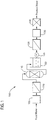
- the water purification system 100 as illustrated in FIGS. 1 and 2 , comprise the following components: a heat exchanger 105; a micro-filtration apparatus 110; an activated carbon tower 115; a tank 120; a pump125; a reverse-osmosis apparatus 130; and an EDI device 140.
- a heat exchanger 105 a micro-filtration apparatus 110
- an activated carbon tower 115 a tank 120
- a pump125 a reverse-osmosis apparatus 130
- an EDI device 140 EDI device 140.
- Embodiments of the present invention are not intended to be limited to a water purification system 100 comprising all of those components. Indeed, embodiments of the present invention may be applied to other water purification systems 100 comprising more or less than the aforementioned components.
- FIG. 1 is a schematic illustrating a known water purification system 100.
- FIG. 1 may be considered a non-limiting example of a known configuration of a water purification system 100.
- Feedwater enters the heat exchanger 105 and is treated by the micro-filtration (MF) apparatus 110 and then by the activated carbon (AC) tower 115.
- the feedwater is fed from the tank 120 to the reverse osmosis (RO) apparatus 130 via the pump 125.
- RO reverse osmosis
- the permeated water from the RO apparatus 130 is conditioned by the heat exchanger 135.
- the feedwater is treated by the EDI device 140.
- a known method of sanitizing the water purification system 100 may involve the following steps. First, for disinfecting purposes, hot water of around 79°C (175 Degrees Fahrenheit) may flow from the heat exchanger 105 to the RO apparatus 130 via the MF apparatus 110, the tower 115, the tank 120, and the pump 125.
- the EDI device 140 is disinfected.
- water at an ambient temperature flows through the heat exchanger 105, the MF apparatus 110, the tower 115, the tank 120, the pump 125, the RO apparatus 130, the heat exchanger 135, and the EDI device 140.
- the heat exchanger 135 heats the ambient water at a specified rate until the temperature reaches around 79°C (175 Degrees Fahrenheit), as the water exits the diluting compartment of the EDI device 140.
- the hot water flows through the EDI device 140 for a designated soak time.
- the hot water is cooled at designated rate until the temperature at the outlet of the diluting compartment is around 35°C (95 Degrees Fahrenheit).
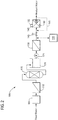
- FIG. 2 is a schematic illustrating a water purification system 100, in accordance with an embodiment of the present invention.
- Embodiments of the present invention provide a system for disinfecting the EDI device 140, without the use of a heated water supply and/or chemicals.
- the majority of the components of the water purification system 100 may be the same or similar to those illustrated in FIG. 1 .
- the discussion of FIG. 2 will focus on the aspects and the features of the present invention.
- embodiments of the present invention do not require the heat exchanger 135 to heat water for use in disinfecting the EDI device 140.
- an isolation valve 145 stops the water supply flowing into the EDI device 140 while the disinfecting process is performed.
- Embodiments of the present invention use electrical power to disinfect the EDI device 140.
- an electrical supply device 160 may use resistive heating to heat the internal chambers of the EDI device 140. The heating may occur until the internal chambers reach a sanitization temperature.
- the resistive heating is a result of the ionic movement through the internal chamber.
- the friction that is created through the ionic movement increases the temperature within the internal chamber.
- the viscosity of the fluid therein decreases, the friction also decreases, and the ionic movement increases. This, along with other water splitting phenomena, may result in an overall decrease in the electrical resistance of the EDI device 140.
- V voltage
- I current
- R resistance
- the temperature of the internal chamber is around 20 Degrees Centigrade, and the voltage around 150 Volts.
- a constant current is applied and the voltage becomes an indication of the resistance.
- the voltage decreases to around 100 Volts when the water within the internal chamber is in the sanitization temperature range.
- the voltage drop across the EDI device 140 may be monitored to determine whether the internal chamber is within the sanitization range.
- Temperature devices such as, but not limiting of, thermocouples, resistance temperature detectors (RTDs), or the like, may also determine when the sanitization temperature has been reached.
- a first embodiment of the temperature device may comprise an external temperature device 155, which may determine the temperature on a surface outside of the EDI device 140. This may be considered the skin temperature and may correlate to temperature within the internal chamber.
- a second embodiment of the temperature device may comprise internal temperature device 150, which may determine the temperature inside the internal chamber.
- a third embodiment of the temperature device may comprise a device that measures a temperature of the water within the internal chamber, which correlates to the temperature inside of the internal chamber.
- a rinse may be performed to remove collected organic and inorganic impurities from the EDI device 140.
- a recirculation system 165 may be integrated with the EDI device 140. This feature may increase the efficiency of the sanitization process.
- the discharge flowing through an outlet of the EDI device 140 is returned to an inlet of the EDI device 140.
- the EDI device 140 may serve as the primary heat source for sanitizing the water purification system 100.
- the water exiting an outlet of the EDI system 100 may be within the sanitization range. This water may be circulated through components of the water purification system 100 which require sanitization.
- the available heat from the EDI device 140 may be inadequate to sanitize some components.
- the embodiments of the present invention may allow for integration with a booster heater 170 or the like. This may comprise the form of a preexisting external heat source, a new external heat source, or combination thereof.
- the EDI device 140 may serve as the primary heat source and the booster heater 170 as the secondary; which collectively operate to provide sufficient heat to sanitize the components of the water purification system 100.
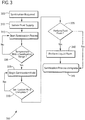
- FIG. 3 is a flowchart illustrating a method 300 of disinfecting an EDI device, in accordance with an embodiment of the present invention.
- the steps of the method 300 may be performed manually; automatically via a control system, or the like; or via a combination of manual and automatic steps.
- the following discussion focuses on an application where the steps of the method 300 are automatically performed via a control system, or the like.
- the present invention may be embodied as a method, system, or computer program product. Accordingly, the present invention may take the form of an entirely hardware embodiment, an entirely software embodiment (including firmware, resident software, micro-code, etc.) or an embodiment combining software and hardware aspects all generally referred to herein as a "circuit", "module,” or “ system”. Furthermore, the present invention may take the form of a computer program product on a computer-usable storage medium having computer-usable program code embodied in the medium.
- the terms "software” and “firmware” are interchangeable, and include any computer program stored in memory for execution by a processor, including RAM memory, ROM memory, EPROM memory, EEPROM memory, and non-volatile RAM (NVRAM) memory.
- RAM memory random access memory
- ROM memory read-only memory
- EPROM memory Erasable Programmable Programmable read-only memory
- EEPROM memory electrically erasable programmable read-only memory
- NVRAM non-volatile RAM
- the computer-usable or computer-readable medium may be, for example but not limited to, an electronic, magnetic, optical, electromagnetic, infrared, or semiconductor system, apparatus, device, or propagation medium. More specific examples (a non exhaustive list) of the computer-readable medium would include the following: an electrical connection having one or more wires, a portable computer diskette, a hard disk, a random access memory (RAM), a read-only memory (ROM), an erasable programmable read-only memory (EPROM or Flash memory), an optical fiber, a portable compact disc read-only memory (CD-ROM), an optical storage device, a transmission media such as those supporting the Internet or an intranet, or a magnetic storage device.
- the computer-usable or computer-readable medium could even be paper or another suitable medium upon which the program is printed, as the program can be electronically captured, via, for instance, optical scanning of the paper or other medium, then compiled, interpreted, or otherwise processed in a suitable manner, if necessary, and then stored in a computer memory.
- a computer-usable or computer-readable medium may be any medium that can contain, store, communicate, propagate, or transport the program for use by or in connection with the instruction execution system, apparatus, or device.
- processor refers to central processing units, microprocessors, microcontrollers, reduced instruction set circuits (RISC), application specific integrated circuits (ASIC), logic circuits, programmable logic controllers (PLCs), and any other circuit or processor capable of executing the functions described herein.
- RISC reduced instruction set circuits
- ASIC application specific integrated circuits
- PLCs programmable logic controllers
- Computer program code for carrying out operations of the present invention may be written in an object oriented programming language such as Java7, Smalltalk or C++, or the like. However, the computer program code for carrying out operations of the present invention may also be written in conventional procedural programming languages, such as the "C" programming language, or a similar language.
- the program code may execute entirely on the user's computer, partly on the user's computer, as a stand-alone software package, partly on the user's computer and partly on a remote computer or entirely on the remote computer. In the latter scenario, the remote computer may be connected to the user's computer through a local area network (LAN) or a wide area network (WAN), or the connection may be made to an external computer (for example, through the Internet using an Internet Service Provider).
- LAN local area network
- WAN wide area network
- Internet Service Provider for example, AT&T, MCI, Sprint, EarthLink, MSN, GTE, etc.
- These computer program instructions may also be stored in a computer-readable memory. These instructions can direct a computer or other programmable data processing apparatus to function in a particular manner. This is such that the instructions stored in the computer-readable memory produce an article of manufacture including instruction means which implement the function/act specified in the flowchart and/or block diagram block or blocks.
- the computer program instructions may also be loaded onto a computer or other programmable data processing apparatus. These instructions may cause a series of operational steps to be performed on the computer or other programmable apparatus to produce a computer implemented process.
- the instructions, which execute on the computer or other programmable apparatus provide steps for implementing the functions/acts specified in the flowchart and/or block diagram blocks.
- step 305 the method 300 has determined that a sanitization of the EDI device is required.
- a sanitization of the EDI device There are many ways to determine when the EDI device requires sanitization. These include, but are not limited to, a time interval, schedule, of the like; or measuring the level of bioactivity in the water purification system; or a decrease in performance; or inspection of EDI device components.
- the method 300 isolates the fluid supply to the EDI device.
- an isolation valve, or the like may be modulated in a manner that restricts the flow of fluid into the EDI device.
- the method 300 starts the sanitization process.
- the EDI device may be substantially drained of fluid present within the internal chamber.
- an electrical supply device provides electrical power across the anode and cathode compartments of the internal chamber.
- the electrical power is controlled such that the temperature within the internal chamber reaches a sanitization range.
- the electrical power may be in the form of current flowing through the components of the internal chamber.
- the magnitude of the current may have a range of up to about 20 milliamperes per squared centimeter.
- step 320 the method 300 determines whether the temperature within the internal chamber is within a sanitization range.
- temperature rise within the internal chamber may be from about 49°C (120 degrees Fahrenheit) to about 100°C (212 degrees Fahrenheit).
- Embodiments of the present invention may use a temperature device to determine the temperature within the internal chamber; as described. If the temperature is within the sanitization range, then the method 300 proceeds to step 325; otherwise the method 300 reverts to step 315 where the electrical supply device may be controlled in a manner that increases the temperature of the internal chamber.
- the method 300 begins a sanitization hold, which may be considered a soak time, or the like.
- the length of the sanitization hold may relate, in part, to the sanitization temperature.
- a higher sanitization temperature may require a shorter hold time, and vice-versa.
- the hold time may comprise a range of from about one hour to about six hours.
- the method 300 may determine whether a sanitization hold is complete. Here, the method 300 may determine if the hold time has elapsed. If the sanitization hold is complete, then the method may proceed to step 335; otherwise the method may revert to step 325.
- the method may determine whether a water flush should be performed.
- a flush may remove collected organic and inorganic impurities produced during the sanitization from the EDI device.
- a flush may also cool the components of the internal chamber. Generally, the flush may be performed until the TOC discharge, discharge temperature, or discharge product resistivity is within an acceptable range. If a flush is to be performed, then the method 300 may proceed to step 340; otherwise the method may proceed to step 345.
- the method 300 may perform the flush.
- the isolation valve may be modulated to a position that allows fluid, such as, but not limiting of, water, to enter the internal chamber.
- a user may determine the duration of flush.
- a user may also determine the physical parameters (temperature, pressure, flowrate) of the fluid performing the flush.
- step 345 the method 300 may be considered complete.
- the water purification system may be ready for regular operation, or the like.
- each step in the flowchart or step diagrams may represent a module, segment, or portion of code, which comprises one or more executable instructions for implementing the specified logical function(s).
- the functions noted in the step may occur out of the order noted in the figures. For example, two steps shown in succession may, in fact, be executed substantially concurrently, or the steps may sometimes be executed in the reverse order, depending upon the functionality involved.
Landscapes
- Health & Medical Sciences (AREA)
- Life Sciences & Earth Sciences (AREA)
- Chemical & Material Sciences (AREA)
- Chemical Kinetics & Catalysis (AREA)
- Engineering & Computer Science (AREA)
- Organic Chemistry (AREA)
- Animal Behavior & Ethology (AREA)
- Veterinary Medicine (AREA)
- Public Health (AREA)
- General Health & Medical Sciences (AREA)
- Epidemiology (AREA)
- Water Supply & Treatment (AREA)
- Environmental & Geological Engineering (AREA)
- Hydrology & Water Resources (AREA)
- Electrochemistry (AREA)
- General Chemical & Material Sciences (AREA)
- Molecular Biology (AREA)
- Analytical Chemistry (AREA)
- Materials Engineering (AREA)
- Metallurgy (AREA)
- Water Treatment By Electricity Or Magnetism (AREA)
- Separation Using Semi-Permeable Membranes (AREA)
- Apparatus For Disinfection Or Sterilisation (AREA)
- Water Treatment By Sorption (AREA)
Claims (15)
- Verfahren (300) zur Desinfektion einer Elektrodendeionisierungsvorrichtung (EDI) (140), wobei das Verfahren Folgendes beinhaltet:Bereitstellen einer EDI-Vorrichtung (140), welche eine innere Kammer beinhaltet, welche Folgendes beinhaltet: ein Anodenfach, welches an ein erstes Ende der inneren Kammer angrenzt, ein Kathodenfach, welches an ein gegenüberliegendes, zweites Ende der inneren Kammer angrenzt, und eine Vielzahl von ionischen Membranen, welche zwischen dem Anoden- und dem Kathodenfach positioniert sind;Stoppen (310) einer Fluidzufuhr an die innere Kammer;Zuführen (315, 320) einer elektrischen Energie durch das Anoden- und das Kathodenfach, bis die Temperatur innerhalb der inneren Kammer innerhalb eines Desinfektionsbereichs liegt; undSteuern der elektrischen Energie, um die Temperatur innerhalb der inneren Kammer innerhalb eines Desinfektionsbereichs zu halten;wobei die elektrische Energie die EDI-Vorrichtung desinfiziert.
- Verfahren nach Anspruch 1, bei welchem der Schritt des Steuerns der elektrischen Energie zum Erhalten der Temperatur zudem das Bestimmen (330) enthält, ob eine Desinfektionshaltedauer (325) beendet ist.
- Verfahren nach Anspruch 2, zudem beinhaltend den Schritt des Spülens (340) der inneren Kammer, nachdem die Desinfektionshaltedauer (325) beendet ist.
- Verfahren nach Anspruch 1, bei welchem der Schritt des Zuführens der elektrischen Energie einen Temperaturanstieg innerhalb der inneren Kammer von ungefähr 49°C (120 Grad Fahrenheit) auf ungefähr 100°C (212 Grad Fahrenheit) hervorruft.
- Verfahren nach Anspruch 2, bei welchem ein Intervall für die Desinfektionshaltedauer (325) einen Bereich von ungefähr 15 Minuten bis ungefähr sechs Stunden beinhaltet.
- Verfahren nach Anspruch 1, bei welchem die elektrische Energie die Form von Strom beinhaltet, welcher in die innere Kammer strömt, und eine Stromdichte einen Bereich von bis zu ungefähr 20 Milliampere pro Quadratzentimeter beinhaltet.
- Verfahren nach Anspruch 1, bei welchem die elektrische Energie die Form von Strom, welcher in die innere Kammer strömt, beinhaltet, und das Verfahren zudem das Überwachen einer Spannung der EDI-Vorrichtung beinhaltet, um zu bestimmen, ob sich die innere Kammer innerhalb des Desinfektionsbereichs befindet.
- Verfahren nach Anspruch 1, weiterhin Umwälzen des Fluids innerhalb der Kammer beinhaltend.
- Verfahren nach Anspruch 1, zudem beinhaltend den Schritt des Bereitstellens eines Wasserreinigungssystems (100), welches konfiguriert ist, um deionisiertes Wasser zu erzeugen, wobei das Wasserreinigungssystem mindestens eines von einem Mikrofiltrationsgerät (110), einem Aktivkohleturm (115) oder einem Umkehrosmosegerät (130) beinhaltet; wobei die EDI-Vorrichtung (140) innerhalb des Wasserreinigungssystems (100) integriert ist.
- Verfahren nach Anspruch 1, bei welchem die EDI-Vorrichtung (140) mit einem System zur Erzeugung von deionisiertem Wasser (100) verbunden ist, wobei das Verfahren zudem Folgendes beinhaltet:Bereitstellen eines Wasserreinigungssystems (100), welches konfiguriert ist, um deionisiertes Wasser zu erzeugen, wobei das Wasserreinigungssystem mindestens eines von einem Mikrofiltrationsgerät (110), einem Aktivkohleturm (115) oder einem Umkehrosmosegerät (130) beinhaltet und wobei die EDI-Vorrichtung (140) mit dem Wasserreinigungssystem (100) integriert ist; undModulieren eines Absperrventils (145) zum Stoppen (310) einer Fluidzufuhr an die innere Kammer.
- Verfahren nach Anspruch 1, zudem beinhaltend den Schritt des Bestimmens (330), ob eine Desinfektionshaltedauer (325) beendet ist.
- Verfahren nach Anspruch 11, zudem beinhaltend den Schritt des Spülens (340) der inneren Kammer, nachdem die Desinfektionshaltedauer (325) beendet ist.
- Verfahren nach Anspruch 10, zudem beinhaltend den Schritt des Gebrauchs der EDI-Vorrichtung (140) zur Desinfektion des Wasserreinigungssystems (100).
- Verfahren nach Anspruch 13, zudem folgende Schritte beinhaltend:a. Modulieren des Absperrventils (145) zum Zulassen der Fluidzufuhr in die innere Kammer;b. Ablassen des Fluids aus der inneren Kammer; undc. Umwälzen des Fluids durch das Wasserreinigungssystem (100).
- Verfahren nach Anspruch 14, zudem beinhaltend das Bereitstellen eines Schnellerhitzers (170) zum Unterstützen der Erhitzung und Temperaturhaltung der Fluidzufuhr innerhalb des Desinfektionsbereichs.
Applications Claiming Priority (2)
| Application Number | Priority Date | Filing Date | Title |
|---|---|---|---|
| US12/771,597 US9790109B2 (en) | 2010-04-30 | 2010-04-30 | Method for sanitizing an electrodeionization device |
| PCT/US2011/033044 WO2011136980A1 (en) | 2010-04-30 | 2011-04-19 | Method for sanitizing an electrodeionization device |
Publications (2)
| Publication Number | Publication Date |
|---|---|
| EP2563722A1 EP2563722A1 (de) | 2013-03-06 |
| EP2563722B1 true EP2563722B1 (de) | 2019-06-12 |
Family
ID=44021914
Family Applications (1)
| Application Number | Title | Priority Date | Filing Date |
|---|---|---|---|
| EP11717423.5A Active EP2563722B1 (de) | 2010-04-30 | 2011-04-19 | Verfahren zur desinfizierung einer elektroentionisierungsvorrichtung |
Country Status (10)
| Country | Link |
|---|---|
| US (1) | US9790109B2 (de) |
| EP (1) | EP2563722B1 (de) |
| JP (1) | JP5903428B2 (de) |
| KR (1) | KR101877068B1 (de) |
| CN (1) | CN102858692A (de) |
| BR (1) | BR112012027872A2 (de) |
| CA (1) | CA2796881C (de) |
| SG (2) | SG185043A1 (de) |
| TW (1) | TWI603922B (de) |
| WO (1) | WO2011136980A1 (de) |
Families Citing this family (4)
| Publication number | Priority date | Publication date | Assignee | Title |
|---|---|---|---|---|
| AU2011291506B2 (en) * | 2010-08-19 | 2016-07-28 | Buck Institute For Age Research | Methods of treating mild cognitive impairment (mci) and related disorders |
| KR101866979B1 (ko) * | 2013-12-10 | 2018-07-24 | 코웨이 주식회사 | Cdi 방식의 수처리 장치 |
| WO2015164318A1 (en) * | 2014-04-22 | 2015-10-29 | Purewater Therapeutics, LLC | Water treatment system |
| JP2023183453A (ja) * | 2022-06-16 | 2023-12-28 | オルガノ株式会社 | 水処理方法、水処理装置、スライム抑制剤、および洗浄方法 |
Family Cites Families (25)
| Publication number | Priority date | Publication date | Assignee | Title |
|---|---|---|---|---|
| US2423589A (en) * | 1943-11-22 | 1947-07-08 | George R Ericson | Engine control device |
| US2423598A (en) * | 1944-08-11 | 1947-07-08 | Lee P Hynes | Electric water heater |
| US4184948A (en) * | 1977-05-31 | 1980-01-22 | Rohm And Haas Company | Water softening method using thermally regenerable ion exchange resin |
| JPH0496650A (ja) * | 1990-08-09 | 1992-03-30 | Seiko Instr Inc | 電子機器 |
| AUPO671597A0 (en) * | 1997-05-09 | 1997-06-05 | Crc For Waste Management And Pollution Control Limited | Electrochemical regeneration of ion exchange resin |
| TW417778U (en) | 1998-08-29 | 2001-01-01 | Tsai Bing Kuen | Steam type of sterilized hot and cold water dispenser |
| US6149788A (en) | 1998-10-16 | 2000-11-21 | E-Cell Corporation | Method and apparatus for preventing scaling in electrodeionization units |
| ES2233368T3 (es) | 1999-04-22 | 2005-06-16 | Eltek S.P.A. | Aparato electrodomestico que utiliza agua, en especial maquina de lavar, con dispositivo mejorado para la eliminacion de dureza del agua. |
| JP3565098B2 (ja) | 1999-07-23 | 2004-09-15 | 栗田工業株式会社 | 超純水の製造方法及び装置 |
| JP3570304B2 (ja) * | 1999-08-11 | 2004-09-29 | 栗田工業株式会社 | 脱イオン水製造装置の殺菌方法及び脱イオン水の製造方法 |
| JP3797034B2 (ja) * | 1999-08-27 | 2006-07-12 | ノーリツ鋼機株式会社 | 現像処理装置 |
| US20020144954A1 (en) | 2000-09-28 | 2002-10-10 | Arba John W. | Electrodeionization device and methods of use |
| US7147785B2 (en) | 2000-09-28 | 2006-12-12 | Usfilter Corporation | Electrodeionization device and methods of use |
| JP4480251B2 (ja) | 2000-10-19 | 2010-06-16 | 日本碍子株式会社 | 電気再生式脱イオン純水器の殺菌法 |
| JP3830098B2 (ja) * | 2002-08-22 | 2006-10-04 | オルガノ株式会社 | 医薬品用精製水の製造方法および装置 |
| US6929748B2 (en) * | 2003-03-28 | 2005-08-16 | Chemitreat Pte Ltd | Apparatus and method for continuous electrodeionization |
| JP4475568B2 (ja) | 2004-03-15 | 2010-06-09 | オルガノ株式会社 | 電気式脱塩水製造装置内の菌発生抑制方法 |
| JP4428633B2 (ja) | 2004-03-15 | 2010-03-10 | オルガノ株式会社 | 被処理水のウィルス失活方法 |
| JP4617696B2 (ja) | 2004-03-31 | 2011-01-26 | 栗田工業株式会社 | 純水製造装置の殺菌方法および純水製造装置 |
| US7329358B2 (en) | 2004-05-27 | 2008-02-12 | Siemens Water Technologies Holding Corp. | Water treatment process |
| JP4867182B2 (ja) | 2005-03-18 | 2012-02-01 | 栗田工業株式会社 | 純水製造装置 |
| JP2007075712A (ja) | 2005-09-13 | 2007-03-29 | Masayoshi Iwahara | 無菌化電気透析方法 |
| US8562803B2 (en) | 2005-10-06 | 2013-10-22 | Pionetics Corporation | Electrochemical ion exchange treatment of fluids |
| JP2007252396A (ja) | 2006-03-20 | 2007-10-04 | Kitasato Gakuen | 医療用透析液の製造装置および製造方法 |
| MX2008016077A (es) * | 2006-06-22 | 2009-01-19 | Siemens Water Tech Corp | Tratamiento de agua con bajo potencial de incrustacion. |
-
2010
- 2010-04-30 US US12/771,597 patent/US9790109B2/en not_active Expired - Fee Related
-
2011
- 2011-04-19 KR KR1020127028289A patent/KR101877068B1/ko not_active Expired - Fee Related
- 2011-04-19 CN CN2011800218877A patent/CN102858692A/zh active Pending
- 2011-04-19 CA CA2796881A patent/CA2796881C/en not_active Expired - Fee Related
- 2011-04-19 BR BR112012027872A patent/BR112012027872A2/pt active Search and Examination
- 2011-04-19 SG SG2012079240A patent/SG185043A1/en unknown
- 2011-04-19 WO PCT/US2011/033044 patent/WO2011136980A1/en not_active Ceased
- 2011-04-19 EP EP11717423.5A patent/EP2563722B1/de active Active
- 2011-04-19 SG SG10201503360PA patent/SG10201503360PA/en unknown
- 2011-04-19 JP JP2013508032A patent/JP5903428B2/ja not_active Expired - Fee Related
- 2011-04-29 TW TW100115221A patent/TWI603922B/zh not_active IP Right Cessation
Non-Patent Citations (1)
| Title |
|---|
| None * |
Also Published As
| Publication number | Publication date |
|---|---|
| US9790109B2 (en) | 2017-10-17 |
| CA2796881A1 (en) | 2011-11-03 |
| TWI603922B (zh) | 2017-11-01 |
| WO2011136980A1 (en) | 2011-11-03 |
| US20110266216A1 (en) | 2011-11-03 |
| SG10201503360PA (en) | 2015-06-29 |
| KR20130100886A (ko) | 2013-09-12 |
| JP5903428B2 (ja) | 2016-04-13 |
| KR101877068B1 (ko) | 2018-07-10 |
| SG185043A1 (en) | 2012-11-29 |
| CN102858692A (zh) | 2013-01-02 |
| BR112012027872A2 (pt) | 2017-07-25 |
| JP2013525003A (ja) | 2013-06-20 |
| TW201144234A (en) | 2011-12-16 |
| EP2563722A1 (de) | 2013-03-06 |
| CA2796881C (en) | 2017-09-26 |
Similar Documents
| Publication | Publication Date | Title |
|---|---|---|
| CN1902135B (zh) | 水处理系统和方法 | |
| CA2566752C (en) | Electrodeionization device and methods of use | |
| KR100874269B1 (ko) | 전처리 공정을 포함한 고효율 해수 전해장치 및 전해방법 | |
| TW200516059A (en) | Water treatment system and method | |
| TW200517344A (en) | Water treatment system and method | |
| US12194417B2 (en) | Electrochemical system with concentration recirculation in cyclic batch mode | |
| KR20170002047A (ko) | 음용수 및 초순수급 냉각수 제조시스템 | |
| CN103732545A (zh) | 可再充电电化学电池 | |
| JP6458302B2 (ja) | 逆浸透膜洗浄方法及び逆浸透膜洗浄装置 | |
| CN107381923A (zh) | 基于膜电容去离子和膜蒸馏的海水淡化处理装置及其方法 | |
| CA2796881C (en) | Method for sanitizing an electrodeionization device | |
| DK2956411T3 (en) | Method and system for treating water | |
| CA3112216A1 (en) | High recovery electrodialysis method | |
| KR20170130815A (ko) | Edi를 이용한 초순수 제조 시스템 | |
| JP2014108381A (ja) | 純水製造装置及び純水製造方法 | |
| JP2017018850A (ja) | 循環水処理設備 | |
| US20190345051A1 (en) | Method for providing ultrapure water | |
| JP2017012968A (ja) | 水処理システム | |
| CA3021463C (en) | Electrochemical system with concentration recirculation in cyclic batch mode |
Legal Events
| Date | Code | Title | Description |
|---|---|---|---|
| PUAI | Public reference made under article 153(3) epc to a published international application that has entered the european phase |
Free format text: ORIGINAL CODE: 0009012 |
|
| 17P | Request for examination filed |
Effective date: 20121130 |
|
| AK | Designated contracting states |
Kind code of ref document: A1 Designated state(s): AL AT BE BG CH CY CZ DE DK EE ES FI FR GB GR HR HU IE IS IT LI LT LU LV MC MK MT NL NO PL PT RO RS SE SI SK SM TR |
|
| DAX | Request for extension of the european patent (deleted) | ||
| 17Q | First examination report despatched |
Effective date: 20150727 |
|
| GRAP | Despatch of communication of intention to grant a patent |
Free format text: ORIGINAL CODE: EPIDOSNIGR1 |
|
| STAA | Information on the status of an ep patent application or granted ep patent |
Free format text: STATUS: GRANT OF PATENT IS INTENDED |
|
| RAP1 | Party data changed (applicant data changed or rights of an application transferred) |
Owner name: BL TECHNOLOGIES, INC. |
|
| RIC1 | Information provided on ipc code assigned before grant |
Ipc: A61L 2/04 20060101ALI20181217BHEP Ipc: C02F 1/28 20060101ALI20181217BHEP Ipc: C02F 9/00 20060101ALI20181217BHEP Ipc: C02F 1/44 20060101ALI20181217BHEP Ipc: C02F 1/46 20060101AFI20181217BHEP Ipc: C02F 1/469 20060101ALI20181217BHEP Ipc: A61L 2/03 20060101ALI20181217BHEP |
|
| INTG | Intention to grant announced |
Effective date: 20190116 |
|
| GRAS | Grant fee paid |
Free format text: ORIGINAL CODE: EPIDOSNIGR3 |
|
| GRAA | (expected) grant |
Free format text: ORIGINAL CODE: 0009210 |
|
| STAA | Information on the status of an ep patent application or granted ep patent |
Free format text: STATUS: THE PATENT HAS BEEN GRANTED |
|
| AK | Designated contracting states |
Kind code of ref document: B1 Designated state(s): AL AT BE BG CH CY CZ DE DK EE ES FI FR GB GR HR HU IE IS IT LI LT LU LV MC MK MT NL NO PL PT RO RS SE SI SK SM TR |
|
| REG | Reference to a national code |
Ref country code: GB Ref legal event code: FG4D |
|
| REG | Reference to a national code |
Ref country code: CH Ref legal event code: EP |
|
| REG | Reference to a national code |
Ref country code: AT Ref legal event code: REF Ref document number: 1142344 Country of ref document: AT Kind code of ref document: T Effective date: 20190615 |
|
| REG | Reference to a national code |
Ref country code: DE Ref legal event code: R096 Ref document number: 602011059617 Country of ref document: DE |
|
| REG | Reference to a national code |
Ref country code: IE Ref legal event code: FG4D |
|
| REG | Reference to a national code |
Ref country code: NL Ref legal event code: FP |
|
| REG | Reference to a national code |
Ref country code: LT Ref legal event code: MG4D |
|
| PG25 | Lapsed in a contracting state [announced via postgrant information from national office to epo] |
Ref country code: SE Free format text: LAPSE BECAUSE OF FAILURE TO SUBMIT A TRANSLATION OF THE DESCRIPTION OR TO PAY THE FEE WITHIN THE PRESCRIBED TIME-LIMIT Effective date: 20190612 Ref country code: HR Free format text: LAPSE BECAUSE OF FAILURE TO SUBMIT A TRANSLATION OF THE DESCRIPTION OR TO PAY THE FEE WITHIN THE PRESCRIBED TIME-LIMIT Effective date: 20190612 Ref country code: ES Free format text: LAPSE BECAUSE OF FAILURE TO SUBMIT A TRANSLATION OF THE DESCRIPTION OR TO PAY THE FEE WITHIN THE PRESCRIBED TIME-LIMIT Effective date: 20190612 Ref country code: LT Free format text: LAPSE BECAUSE OF FAILURE TO SUBMIT A TRANSLATION OF THE DESCRIPTION OR TO PAY THE FEE WITHIN THE PRESCRIBED TIME-LIMIT Effective date: 20190612 Ref country code: NO Free format text: LAPSE BECAUSE OF FAILURE TO SUBMIT A TRANSLATION OF THE DESCRIPTION OR TO PAY THE FEE WITHIN THE PRESCRIBED TIME-LIMIT Effective date: 20190912 Ref country code: AL Free format text: LAPSE BECAUSE OF FAILURE TO SUBMIT A TRANSLATION OF THE DESCRIPTION OR TO PAY THE FEE WITHIN THE PRESCRIBED TIME-LIMIT Effective date: 20190612 Ref country code: FI Free format text: LAPSE BECAUSE OF FAILURE TO SUBMIT A TRANSLATION OF THE DESCRIPTION OR TO PAY THE FEE WITHIN THE PRESCRIBED TIME-LIMIT Effective date: 20190612 |
|
| PG25 | Lapsed in a contracting state [announced via postgrant information from national office to epo] |
Ref country code: GR Free format text: LAPSE BECAUSE OF FAILURE TO SUBMIT A TRANSLATION OF THE DESCRIPTION OR TO PAY THE FEE WITHIN THE PRESCRIBED TIME-LIMIT Effective date: 20190913 Ref country code: BG Free format text: LAPSE BECAUSE OF FAILURE TO SUBMIT A TRANSLATION OF THE DESCRIPTION OR TO PAY THE FEE WITHIN THE PRESCRIBED TIME-LIMIT Effective date: 20190912 Ref country code: RS Free format text: LAPSE BECAUSE OF FAILURE TO SUBMIT A TRANSLATION OF THE DESCRIPTION OR TO PAY THE FEE WITHIN THE PRESCRIBED TIME-LIMIT Effective date: 20190612 Ref country code: LV Free format text: LAPSE BECAUSE OF FAILURE TO SUBMIT A TRANSLATION OF THE DESCRIPTION OR TO PAY THE FEE WITHIN THE PRESCRIBED TIME-LIMIT Effective date: 20190612 |
|
| REG | Reference to a national code |
Ref country code: AT Ref legal event code: MK05 Ref document number: 1142344 Country of ref document: AT Kind code of ref document: T Effective date: 20190612 |
|
| PG25 | Lapsed in a contracting state [announced via postgrant information from national office to epo] |
Ref country code: PT Free format text: LAPSE BECAUSE OF FAILURE TO SUBMIT A TRANSLATION OF THE DESCRIPTION OR TO PAY THE FEE WITHIN THE PRESCRIBED TIME-LIMIT Effective date: 20191014 Ref country code: SK Free format text: LAPSE BECAUSE OF FAILURE TO SUBMIT A TRANSLATION OF THE DESCRIPTION OR TO PAY THE FEE WITHIN THE PRESCRIBED TIME-LIMIT Effective date: 20190612 Ref country code: CZ Free format text: LAPSE BECAUSE OF FAILURE TO SUBMIT A TRANSLATION OF THE DESCRIPTION OR TO PAY THE FEE WITHIN THE PRESCRIBED TIME-LIMIT Effective date: 20190612 Ref country code: RO Free format text: LAPSE BECAUSE OF FAILURE TO SUBMIT A TRANSLATION OF THE DESCRIPTION OR TO PAY THE FEE WITHIN THE PRESCRIBED TIME-LIMIT Effective date: 20190612 Ref country code: EE Free format text: LAPSE BECAUSE OF FAILURE TO SUBMIT A TRANSLATION OF THE DESCRIPTION OR TO PAY THE FEE WITHIN THE PRESCRIBED TIME-LIMIT Effective date: 20190612 Ref country code: AT Free format text: LAPSE BECAUSE OF FAILURE TO SUBMIT A TRANSLATION OF THE DESCRIPTION OR TO PAY THE FEE WITHIN THE PRESCRIBED TIME-LIMIT Effective date: 20190612 |
|
| PG25 | Lapsed in a contracting state [announced via postgrant information from national office to epo] |
Ref country code: IS Free format text: LAPSE BECAUSE OF FAILURE TO SUBMIT A TRANSLATION OF THE DESCRIPTION OR TO PAY THE FEE WITHIN THE PRESCRIBED TIME-LIMIT Effective date: 20191012 Ref country code: IT Free format text: LAPSE BECAUSE OF FAILURE TO SUBMIT A TRANSLATION OF THE DESCRIPTION OR TO PAY THE FEE WITHIN THE PRESCRIBED TIME-LIMIT Effective date: 20190612 Ref country code: SM Free format text: LAPSE BECAUSE OF FAILURE TO SUBMIT A TRANSLATION OF THE DESCRIPTION OR TO PAY THE FEE WITHIN THE PRESCRIBED TIME-LIMIT Effective date: 20190612 |
|
| REG | Reference to a national code |
Ref country code: DE Ref legal event code: R097 Ref document number: 602011059617 Country of ref document: DE |
|
| PG25 | Lapsed in a contracting state [announced via postgrant information from national office to epo] |
Ref country code: TR Free format text: LAPSE BECAUSE OF FAILURE TO SUBMIT A TRANSLATION OF THE DESCRIPTION OR TO PAY THE FEE WITHIN THE PRESCRIBED TIME-LIMIT Effective date: 20190612 |
|
| PLBE | No opposition filed within time limit |
Free format text: ORIGINAL CODE: 0009261 |
|
| STAA | Information on the status of an ep patent application or granted ep patent |
Free format text: STATUS: NO OPPOSITION FILED WITHIN TIME LIMIT |
|
| PG25 | Lapsed in a contracting state [announced via postgrant information from national office to epo] |
Ref country code: DK Free format text: LAPSE BECAUSE OF FAILURE TO SUBMIT A TRANSLATION OF THE DESCRIPTION OR TO PAY THE FEE WITHIN THE PRESCRIBED TIME-LIMIT Effective date: 20190612 Ref country code: PL Free format text: LAPSE BECAUSE OF FAILURE TO SUBMIT A TRANSLATION OF THE DESCRIPTION OR TO PAY THE FEE WITHIN THE PRESCRIBED TIME-LIMIT Effective date: 20190612 |
|
| 26N | No opposition filed |
Effective date: 20200313 |
|
| PG25 | Lapsed in a contracting state [announced via postgrant information from national office to epo] |
Ref country code: IS Free format text: LAPSE BECAUSE OF FAILURE TO SUBMIT A TRANSLATION OF THE DESCRIPTION OR TO PAY THE FEE WITHIN THE PRESCRIBED TIME-LIMIT Effective date: 20200224 Ref country code: SI Free format text: LAPSE BECAUSE OF FAILURE TO SUBMIT A TRANSLATION OF THE DESCRIPTION OR TO PAY THE FEE WITHIN THE PRESCRIBED TIME-LIMIT Effective date: 20190612 |
|
| PG2D | Information on lapse in contracting state deleted |
Ref country code: IS |
|
| REG | Reference to a national code |
Ref country code: DE Ref legal event code: R119 Ref document number: 602011059617 Country of ref document: DE |
|
| PG25 | Lapsed in a contracting state [announced via postgrant information from national office to epo] |
Ref country code: MC Free format text: LAPSE BECAUSE OF FAILURE TO SUBMIT A TRANSLATION OF THE DESCRIPTION OR TO PAY THE FEE WITHIN THE PRESCRIBED TIME-LIMIT Effective date: 20190612 |
|
| REG | Reference to a national code |
Ref country code: CH Ref legal event code: PL |
|
| REG | Reference to a national code |
Ref country code: NL Ref legal event code: MM Effective date: 20200501 |
|
| PG25 | Lapsed in a contracting state [announced via postgrant information from national office to epo] |
Ref country code: LI Free format text: LAPSE BECAUSE OF NON-PAYMENT OF DUE FEES Effective date: 20200430 Ref country code: LU Free format text: LAPSE BECAUSE OF NON-PAYMENT OF DUE FEES Effective date: 20200419 Ref country code: FR Free format text: LAPSE BECAUSE OF NON-PAYMENT OF DUE FEES Effective date: 20200430 Ref country code: DE Free format text: LAPSE BECAUSE OF NON-PAYMENT OF DUE FEES Effective date: 20201103 Ref country code: CH Free format text: LAPSE BECAUSE OF NON-PAYMENT OF DUE FEES Effective date: 20200430 |
|
| REG | Reference to a national code |
Ref country code: BE Ref legal event code: MM Effective date: 20200430 |
|
| PG25 | Lapsed in a contracting state [announced via postgrant information from national office to epo] |
Ref country code: BE Free format text: LAPSE BECAUSE OF NON-PAYMENT OF DUE FEES Effective date: 20200430 |
|
| GBPC | Gb: european patent ceased through non-payment of renewal fee |
Effective date: 20200419 |
|
| PG25 | Lapsed in a contracting state [announced via postgrant information from national office to epo] |
Ref country code: NL Free format text: LAPSE BECAUSE OF NON-PAYMENT OF DUE FEES Effective date: 20200501 |
|
| PG25 | Lapsed in a contracting state [announced via postgrant information from national office to epo] |
Ref country code: GB Free format text: LAPSE BECAUSE OF NON-PAYMENT OF DUE FEES Effective date: 20200419 Ref country code: IE Free format text: LAPSE BECAUSE OF NON-PAYMENT OF DUE FEES Effective date: 20200419 |
|
| PG25 | Lapsed in a contracting state [announced via postgrant information from national office to epo] |
Ref country code: MT Free format text: LAPSE BECAUSE OF FAILURE TO SUBMIT A TRANSLATION OF THE DESCRIPTION OR TO PAY THE FEE WITHIN THE PRESCRIBED TIME-LIMIT Effective date: 20190612 Ref country code: CY Free format text: LAPSE BECAUSE OF FAILURE TO SUBMIT A TRANSLATION OF THE DESCRIPTION OR TO PAY THE FEE WITHIN THE PRESCRIBED TIME-LIMIT Effective date: 20190612 |
|
| PG25 | Lapsed in a contracting state [announced via postgrant information from national office to epo] |
Ref country code: MK Free format text: LAPSE BECAUSE OF FAILURE TO SUBMIT A TRANSLATION OF THE DESCRIPTION OR TO PAY THE FEE WITHIN THE PRESCRIBED TIME-LIMIT Effective date: 20190612 |
|
| P01 | Opt-out of the competence of the unified patent court (upc) registered |
Effective date: 20230521 |