EP2528443B1 - Quantitative analyse von vitamin d3, vitamin d2 und metaboliten davon - Google Patents
Quantitative analyse von vitamin d3, vitamin d2 und metaboliten davon Download PDFInfo
- Publication number
- EP2528443B1 EP2528443B1 EP11735362.3A EP11735362A EP2528443B1 EP 2528443 B1 EP2528443 B1 EP 2528443B1 EP 11735362 A EP11735362 A EP 11735362A EP 2528443 B1 EP2528443 B1 EP 2528443B1
- Authority
- EP
- European Patent Office
- Prior art keywords
- vitamin
- labeled
- analyte
- adduct
- analytes
- Prior art date
- Legal status (The legal status is an assumption and is not a legal conclusion. Google has not performed a legal analysis and makes no representation as to the accuracy of the status listed.)
- Not-in-force
Links
- QYSXJUFSXHHAJI-YRZJJWOYSA-N vitamin D3 Chemical compound C1(/[C@@H]2CC[C@@H]([C@]2(CCC1)C)[C@H](C)CCCC(C)C)=C\C=C1\C[C@@H](O)CCC1=C QYSXJUFSXHHAJI-YRZJJWOYSA-N 0.000 title claims description 55
- 229940021056 vitamin d3 Drugs 0.000 title claims description 33
- MECHNRXZTMCUDQ-RKHKHRCZSA-N vitamin D2 Chemical compound C1(/[C@@H]2CC[C@@H]([C@]2(CCC1)C)[C@H](C)/C=C/[C@H](C)C(C)C)=C\C=C1\C[C@@H](O)CCC1=C MECHNRXZTMCUDQ-RKHKHRCZSA-N 0.000 title claims description 20
- 239000002207 metabolite Substances 0.000 title claims description 17
- 238000004445 quantitative analysis Methods 0.000 title 1
- 239000003153 chemical reaction reagent Substances 0.000 claims description 113
- QYSXJUFSXHHAJI-XFEUOLMDSA-N Vitamin D3 Natural products C1(/[C@@H]2CC[C@@H]([C@]2(CCC1)C)[C@H](C)CCCC(C)C)=C/C=C1\C[C@@H](O)CCC1=C QYSXJUFSXHHAJI-XFEUOLMDSA-N 0.000 claims description 102
- 229930003316 Vitamin D Natural products 0.000 claims description 70
- 235000019166 vitamin D Nutrition 0.000 claims description 70
- 239000011710 vitamin D Substances 0.000 claims description 70
- 150000003710 vitamin D derivatives Chemical class 0.000 claims description 70
- 229940046008 vitamin d Drugs 0.000 claims description 70
- 239000012491 analyte Substances 0.000 claims description 67
- 238000004949 mass spectrometry Methods 0.000 claims description 56
- 238000000034 method Methods 0.000 claims description 53
- 239000011647 vitamin D3 Substances 0.000 claims description 32
- 235000005282 vitamin D3 Nutrition 0.000 claims description 32
- 238000004458 analytical method Methods 0.000 claims description 21
- 238000005698 Diels-Alder reaction Methods 0.000 claims description 20
- MECHNRXZTMCUDQ-UHFFFAOYSA-N Vitamin D2 Natural products C1CCC2(C)C(C(C)C=CC(C)C(C)C)CCC2C1=CC=C1CC(O)CCC1=C MECHNRXZTMCUDQ-UHFFFAOYSA-N 0.000 claims description 19
- 229960002061 ergocalciferol Drugs 0.000 claims description 19
- 239000011653 vitamin D2 Substances 0.000 claims description 19
- 235000001892 vitamin D2 Nutrition 0.000 claims description 19
- 238000002372 labelling Methods 0.000 claims description 14
- 239000000203 mixture Substances 0.000 claims description 14
- 150000003703 vitamin D2 derivatives Chemical class 0.000 claims description 12
- 150000001875 compounds Chemical class 0.000 claims description 11
- 238000001294 liquid chromatography-tandem mass spectrometry Methods 0.000 claims description 8
- 230000007704 transition Effects 0.000 claims description 8
- 239000012634 fragment Substances 0.000 claims description 7
- 238000012544 monitoring process Methods 0.000 claims description 7
- 241000894007 species Species 0.000 claims description 7
- 125000000217 alkyl group Chemical group 0.000 claims description 5
- 125000004435 hydrogen atom Chemical group [H]* 0.000 claims description 5
- 230000007935 neutral effect Effects 0.000 claims description 5
- 238000002156 mixing Methods 0.000 claims description 2
- 239000000523 sample Substances 0.000 description 54
- 125000002344 aminooxy group Chemical group [H]N([H])O[*] 0.000 description 43
- GMRQFYUYWCNGIN-NKMMMXOESA-N calcitriol Chemical compound C1(/[C@@H]2CC[C@@H]([C@]2(CCC1)C)[C@@H](CCCC(C)(C)O)C)=C\C=C1\C[C@@H](O)C[C@H](O)C1=C GMRQFYUYWCNGIN-NKMMMXOESA-N 0.000 description 35
- 239000011612 calcitriol Substances 0.000 description 30
- 238000006243 chemical reaction Methods 0.000 description 24
- 150000002500 ions Chemical class 0.000 description 23
- 239000000047 product Substances 0.000 description 22
- 238000003556 assay Methods 0.000 description 20
- WEVYAHXRMPXWCK-UHFFFAOYSA-N Acetonitrile Chemical compound CC#N WEVYAHXRMPXWCK-UHFFFAOYSA-N 0.000 description 18
- OKKJLVBELUTLKV-UHFFFAOYSA-N Methanol Chemical compound OC OKKJLVBELUTLKV-UHFFFAOYSA-N 0.000 description 18
- LKDPJIGWTPEUEZ-UHFFFAOYSA-N 4-(4-acetylphenyl)-1,2,4-triazolidine-3,5-dione Chemical compound C1=CC(C(=O)C)=CC=C1N1C(=O)NNC1=O LKDPJIGWTPEUEZ-UHFFFAOYSA-N 0.000 description 14
- 238000004811 liquid chromatography Methods 0.000 description 14
- 238000000926 separation method Methods 0.000 description 14
- VYPSYNLAJGMNEJ-UHFFFAOYSA-N Silicium dioxide Chemical compound O=[Si]=O VYPSYNLAJGMNEJ-UHFFFAOYSA-N 0.000 description 12
- 238000004128 high performance liquid chromatography Methods 0.000 description 12
- 239000000243 solution Substances 0.000 description 12
- 238000003786 synthesis reaction Methods 0.000 description 10
- 238000012360 testing method Methods 0.000 description 10
- ISULLEUFOQSBGY-UHFFFAOYSA-N 4-phenyl-1,2,4-triazole-3,5-dione Chemical compound O=C1N=NC(=O)N1C1=CC=CC=C1 ISULLEUFOQSBGY-UHFFFAOYSA-N 0.000 description 9
- ZMXDDKWLCZADIW-UHFFFAOYSA-N N,N-Dimethylformamide Chemical compound CN(C)C=O ZMXDDKWLCZADIW-UHFFFAOYSA-N 0.000 description 9
- YXFVVABEGXRONW-UHFFFAOYSA-N Toluene Chemical compound CC1=CC=CC=C1 YXFVVABEGXRONW-UHFFFAOYSA-N 0.000 description 9
- 230000015572 biosynthetic process Effects 0.000 description 9
- 210000002966 serum Anatomy 0.000 description 9
- 239000007787 solid Substances 0.000 description 9
- 238000002552 multiple reaction monitoring Methods 0.000 description 8
- 239000012071 phase Substances 0.000 description 8
- XLYOFNOQVPJJNP-UHFFFAOYSA-N water Substances O XLYOFNOQVPJJNP-UHFFFAOYSA-N 0.000 description 8
- CPELXLSAUQHCOX-UHFFFAOYSA-M Bromide Chemical compound [Br-] CPELXLSAUQHCOX-UHFFFAOYSA-M 0.000 description 7
- HDFXFDAHZVATMJ-UHFFFAOYSA-N ethyl n-[(4-acetylphenyl)carbamoylamino]carbamate Chemical compound CCOC(=O)NNC(=O)NC1=CC=C(C(C)=O)C=C1 HDFXFDAHZVATMJ-UHFFFAOYSA-N 0.000 description 7
- 125000006853 reporter group Chemical group 0.000 description 7
- 125000001424 substituent group Chemical group 0.000 description 7
- 238000001212 derivatisation Methods 0.000 description 6
- 125000002897 diene group Chemical group 0.000 description 6
- 238000013467 fragmentation Methods 0.000 description 6
- 238000006062 fragmentation reaction Methods 0.000 description 6
- 230000014759 maintenance of location Effects 0.000 description 6
- VLKZOEOYAKHREP-UHFFFAOYSA-N n-Hexane Chemical class CCCCCC VLKZOEOYAKHREP-UHFFFAOYSA-N 0.000 description 6
- 239000000377 silicon dioxide Substances 0.000 description 6
- KFZMGEQAYNKOFK-UHFFFAOYSA-N Isopropanol Chemical compound CC(C)O KFZMGEQAYNKOFK-UHFFFAOYSA-N 0.000 description 5
- 230000003247 decreasing effect Effects 0.000 description 5
- 230000035945 sensitivity Effects 0.000 description 5
- YPJUNDFVDDCYIH-UHFFFAOYSA-M 2,2,3,3,4,4,4-heptafluorobutanoate Chemical compound [O-]C(=O)C(F)(F)C(F)(F)C(F)(F)F YPJUNDFVDDCYIH-UHFFFAOYSA-M 0.000 description 4
- 0 CC*=C(C[C@@](C)(CC(C)C1C)C1=*CC(C)C)CC=C Chemical compound CC*=C(C[C@@](C)(CC(C)C1C)C1=*CC(C)C)CC=C 0.000 description 4
- 229960005084 calcitriol Drugs 0.000 description 4
- 238000010586 diagram Methods 0.000 description 4
- 230000008901 benefit Effects 0.000 description 3
- 239000000872 buffer Substances 0.000 description 3
- 238000002474 experimental method Methods 0.000 description 3
- 239000002244 precipitate Substances 0.000 description 3
- 238000011002 quantification Methods 0.000 description 3
- GPNIJXACCBKBEP-UHFFFAOYSA-M silver;2,2,3,3,4,4,4-heptafluorobutanoate Chemical compound [Ag+].[O-]C(=O)C(F)(F)C(F)(F)C(F)(F)F GPNIJXACCBKBEP-UHFFFAOYSA-M 0.000 description 3
- 239000002904 solvent Substances 0.000 description 3
- 239000000725 suspension Substances 0.000 description 3
- XKRFYHLGVUSROY-UHFFFAOYSA-N Argon Chemical compound [Ar] XKRFYHLGVUSROY-UHFFFAOYSA-N 0.000 description 2
- IJGRMHOSHXDMSA-UHFFFAOYSA-N Atomic nitrogen Chemical compound N#N IJGRMHOSHXDMSA-UHFFFAOYSA-N 0.000 description 2
- ZAFNJMIOTHYJRJ-UHFFFAOYSA-N Diisopropyl ether Chemical compound CC(C)OC(C)C ZAFNJMIOTHYJRJ-UHFFFAOYSA-N 0.000 description 2
- IAZDPXIOMUYVGZ-WFGJKAKNSA-N Dimethyl sulfoxide Chemical compound [2H]C([2H])([2H])S(=O)C([2H])([2H])[2H] IAZDPXIOMUYVGZ-WFGJKAKNSA-N 0.000 description 2
- XEKOWRVHYACXOJ-UHFFFAOYSA-N Ethyl acetate Chemical compound CCOC(C)=O XEKOWRVHYACXOJ-UHFFFAOYSA-N 0.000 description 2
- 125000002777 acetyl group Chemical group [H]C([H])([H])C(*)=O 0.000 description 2
- 125000004429 atom Chemical group 0.000 description 2
- 229940006460 bromide ion Drugs 0.000 description 2
- 238000004587 chromatography analysis Methods 0.000 description 2
- 239000008367 deionised water Substances 0.000 description 2
- 238000013461 design Methods 0.000 description 2
- 239000000706 filtrate Substances 0.000 description 2
- 239000011521 glass Substances 0.000 description 2
- BDAGIHXWWSANSR-UHFFFAOYSA-N methanoic acid Natural products OC=O BDAGIHXWWSANSR-UHFFFAOYSA-N 0.000 description 2
- 238000007837 multiplex assay Methods 0.000 description 2
- 238000002360 preparation method Methods 0.000 description 2
- 239000000126 substance Substances 0.000 description 2
- 238000012546 transfer Methods 0.000 description 2
- 238000004704 ultra performance liquid chromatography Methods 0.000 description 2
- 238000003260 vortexing Methods 0.000 description 2
- 238000005406 washing Methods 0.000 description 2
- MOZSVHZOUDIZMF-UHFFFAOYSA-N 1-(4-isocyanatophenyl)ethanone Chemical compound CC(=O)C1=CC=C(N=C=O)C=C1 MOZSVHZOUDIZMF-UHFFFAOYSA-N 0.000 description 1
- 238000005160 1H NMR spectroscopy Methods 0.000 description 1
- OSWFIVFLDKOXQC-UHFFFAOYSA-N 4-(3-methoxyphenyl)aniline Chemical compound COC1=CC=CC(C=2C=CC(N)=CC=2)=C1 OSWFIVFLDKOXQC-UHFFFAOYSA-N 0.000 description 1
- JSACPXBJRYHNHN-UHFFFAOYSA-N 4-[4-(6-methoxy-1,3-benzoxazol-2-yl)phenyl]-1,2,4-triazole-3,5-dione Chemical compound O1C2=CC(OC)=CC=C2N=C1C(C=C1)=CC=C1N1C(=O)N=NC1=O JSACPXBJRYHNHN-UHFFFAOYSA-N 0.000 description 1
- JZEQMSUMGYKCRA-CFVMTHIKSA-N CCCCC[C@H](C)[C@H]([C@@H](CCC)N)C1CC1 Chemical compound CCCCC[C@H](C)[C@H]([C@@H](CCC)N)C1CC1 JZEQMSUMGYKCRA-CFVMTHIKSA-N 0.000 description 1
- 125000000205 L-threonino group Chemical group [H]OC(=O)[C@@]([H])(N([H])[*])[C@](C([H])([H])[H])([H])O[H] 0.000 description 1
- ZCHPKWUIAASXPV-UHFFFAOYSA-N acetic acid;methanol Chemical compound OC.CC(O)=O ZCHPKWUIAASXPV-UHFFFAOYSA-N 0.000 description 1
- 229910052786 argon Inorganic materials 0.000 description 1
- 239000012300 argon atmosphere Substances 0.000 description 1
- 244000309464 bull Species 0.000 description 1
- 238000005119 centrifugation Methods 0.000 description 1
- PBAYDYUZOSNJGU-UHFFFAOYSA-N chelidonic acid Natural products OC(=O)C1=CC(=O)C=C(C(O)=O)O1 PBAYDYUZOSNJGU-UHFFFAOYSA-N 0.000 description 1
- 238000013375 chromatographic separation Methods 0.000 description 1
- 238000007796 conventional method Methods 0.000 description 1
- 238000012864 cross contamination Methods 0.000 description 1
- 239000012043 crude product Substances 0.000 description 1
- 229910021641 deionized water Inorganic materials 0.000 description 1
- 238000001514 detection method Methods 0.000 description 1
- 239000012470 diluted sample Substances 0.000 description 1
- 238000001035 drying Methods 0.000 description 1
- 238000001962 electrophoresis Methods 0.000 description 1
- 238000002330 electrospray ionisation mass spectrometry Methods 0.000 description 1
- 238000010828 elution Methods 0.000 description 1
- 238000011067 equilibration Methods 0.000 description 1
- 235000019439 ethyl acetate Nutrition 0.000 description 1
- VYSYZMNJHYOXGN-UHFFFAOYSA-N ethyl n-aminocarbamate Chemical compound CCOC(=O)NN VYSYZMNJHYOXGN-UHFFFAOYSA-N 0.000 description 1
- 238000003818 flash chromatography Methods 0.000 description 1
- -1 for example Substances 0.000 description 1
- 235000019253 formic acid Nutrition 0.000 description 1
- 125000000524 functional group Chemical group 0.000 description 1
- 239000007789 gas Substances 0.000 description 1
- 125000002887 hydroxy group Chemical group [H]O* 0.000 description 1
- 238000003018 immunoassay Methods 0.000 description 1
- 238000002347 injection Methods 0.000 description 1
- 239000007924 injection Substances 0.000 description 1
- 239000000543 intermediate Substances 0.000 description 1
- 238000005342 ion exchange Methods 0.000 description 1
- 229960004592 isopropanol Drugs 0.000 description 1
- 238000004895 liquid chromatography mass spectrometry Methods 0.000 description 1
- 238000001819 mass spectrum Methods 0.000 description 1
- 239000011159 matrix material Substances 0.000 description 1
- 238000005259 measurement Methods 0.000 description 1
- 229910052757 nitrogen Inorganic materials 0.000 description 1
- 238000002414 normal-phase solid-phase extraction Methods 0.000 description 1
- 238000010606 normalization Methods 0.000 description 1
- 238000011022 operating instruction Methods 0.000 description 1
- 238000001556 precipitation Methods 0.000 description 1
- 238000005086 pumping Methods 0.000 description 1
- 238000010926 purge Methods 0.000 description 1
- 238000000746 purification Methods 0.000 description 1
- 239000011541 reaction mixture Substances 0.000 description 1
- 238000005070 sampling Methods 0.000 description 1
- 239000007790 solid phase Substances 0.000 description 1
- 238000001228 spectrum Methods 0.000 description 1
- 239000007921 spray Substances 0.000 description 1
- 238000003756 stirring Methods 0.000 description 1
- 239000006228 supernatant Substances 0.000 description 1
- IXZDIALLLMRYOU-UHFFFAOYSA-N tert-butyl hypochlorite Chemical compound CC(C)(C)OCl IXZDIALLLMRYOU-UHFFFAOYSA-N 0.000 description 1
- FFSJPOPLSWBGQY-UHFFFAOYSA-N triazol-4-one Chemical class O=C1C=NN=N1 FFSJPOPLSWBGQY-UHFFFAOYSA-N 0.000 description 1
- 239000005544 vitamin D3 metabolite Substances 0.000 description 1
- 239000003643 water by type Substances 0.000 description 1
Images






Classifications
-
- G—PHYSICS
- G01—MEASURING; TESTING
- G01N—INVESTIGATING OR ANALYSING MATERIALS BY DETERMINING THEIR CHEMICAL OR PHYSICAL PROPERTIES
- G01N33/00—Investigating or analysing materials by specific methods not covered by groups G01N1/00 - G01N31/00
- G01N33/48—Biological material, e.g. blood, urine; Haemocytometers
- G01N33/50—Chemical analysis of biological material, e.g. blood, urine; Testing involving biospecific ligand binding methods; Immunological testing
- G01N33/82—Chemical analysis of biological material, e.g. blood, urine; Testing involving biospecific ligand binding methods; Immunological testing involving vitamins or their receptors
-
- Y—GENERAL TAGGING OF NEW TECHNOLOGICAL DEVELOPMENTS; GENERAL TAGGING OF CROSS-SECTIONAL TECHNOLOGIES SPANNING OVER SEVERAL SECTIONS OF THE IPC; TECHNICAL SUBJECTS COVERED BY FORMER USPC CROSS-REFERENCE ART COLLECTIONS [XRACs] AND DIGESTS
- Y10—TECHNICAL SUBJECTS COVERED BY FORMER USPC
- Y10T—TECHNICAL SUBJECTS COVERED BY FORMER US CLASSIFICATION
- Y10T436/00—Chemistry: analytical and immunological testing
- Y10T436/20—Oxygen containing
-
- Y—GENERAL TAGGING OF NEW TECHNOLOGICAL DEVELOPMENTS; GENERAL TAGGING OF CROSS-SECTIONAL TECHNOLOGIES SPANNING OVER SEVERAL SECTIONS OF THE IPC; TECHNICAL SUBJECTS COVERED BY FORMER USPC CROSS-REFERENCE ART COLLECTIONS [XRACs] AND DIGESTS
- Y10—TECHNICAL SUBJECTS COVERED BY FORMER USPC
- Y10T—TECHNICAL SUBJECTS COVERED BY FORMER US CLASSIFICATION
- Y10T436/00—Chemistry: analytical and immunological testing
- Y10T436/20—Oxygen containing
- Y10T436/200833—Carbonyl, ether, aldehyde or ketone containing
-
- Y—GENERAL TAGGING OF NEW TECHNOLOGICAL DEVELOPMENTS; GENERAL TAGGING OF CROSS-SECTIONAL TECHNOLOGIES SPANNING OVER SEVERAL SECTIONS OF THE IPC; TECHNICAL SUBJECTS COVERED BY FORMER USPC CROSS-REFERENCE ART COLLECTIONS [XRACs] AND DIGESTS
- Y10—TECHNICAL SUBJECTS COVERED BY FORMER USPC
- Y10T—TECHNICAL SUBJECTS COVERED BY FORMER US CLASSIFICATION
- Y10T436/00—Chemistry: analytical and immunological testing
- Y10T436/20—Oxygen containing
- Y10T436/203332—Hydroxyl containing
-
- Y—GENERAL TAGGING OF NEW TECHNOLOGICAL DEVELOPMENTS; GENERAL TAGGING OF CROSS-SECTIONAL TECHNOLOGIES SPANNING OVER SEVERAL SECTIONS OF THE IPC; TECHNICAL SUBJECTS COVERED BY FORMER USPC CROSS-REFERENCE ART COLLECTIONS [XRACs] AND DIGESTS
- Y10—TECHNICAL SUBJECTS COVERED BY FORMER USPC
- Y10T—TECHNICAL SUBJECTS COVERED BY FORMER US CLASSIFICATION
- Y10T436/00—Chemistry: analytical and immunological testing
- Y10T436/24—Nuclear magnetic resonance, electron spin resonance or other spin effects or mass spectrometry
-
- Y—GENERAL TAGGING OF NEW TECHNOLOGICAL DEVELOPMENTS; GENERAL TAGGING OF CROSS-SECTIONAL TECHNOLOGIES SPANNING OVER SEVERAL SECTIONS OF THE IPC; TECHNICAL SUBJECTS COVERED BY FORMER USPC CROSS-REFERENCE ART COLLECTIONS [XRACs] AND DIGESTS
- Y10—TECHNICAL SUBJECTS COVERED BY FORMER USPC
- Y10T—TECHNICAL SUBJECTS COVERED BY FORMER US CLASSIFICATION
- Y10T436/00—Chemistry: analytical and immunological testing
- Y10T436/25—Chemistry: analytical and immunological testing including sample preparation
-
- Y—GENERAL TAGGING OF NEW TECHNOLOGICAL DEVELOPMENTS; GENERAL TAGGING OF CROSS-SECTIONAL TECHNOLOGIES SPANNING OVER SEVERAL SECTIONS OF THE IPC; TECHNICAL SUBJECTS COVERED BY FORMER USPC CROSS-REFERENCE ART COLLECTIONS [XRACs] AND DIGESTS
- Y10—TECHNICAL SUBJECTS COVERED BY FORMER USPC
- Y10T—TECHNICAL SUBJECTS COVERED BY FORMER US CLASSIFICATION
- Y10T436/00—Chemistry: analytical and immunological testing
- Y10T436/25—Chemistry: analytical and immunological testing including sample preparation
- Y10T436/25375—Liberation or purification of sample or separation of material from a sample [e.g., filtering, centrifuging, etc.]
-
- Y—GENERAL TAGGING OF NEW TECHNOLOGICAL DEVELOPMENTS; GENERAL TAGGING OF CROSS-SECTIONAL TECHNOLOGIES SPANNING OVER SEVERAL SECTIONS OF THE IPC; TECHNICAL SUBJECTS COVERED BY FORMER USPC CROSS-REFERENCE ART COLLECTIONS [XRACs] AND DIGESTS
- Y10—TECHNICAL SUBJECTS COVERED BY FORMER USPC
- Y10T—TECHNICAL SUBJECTS COVERED BY FORMER US CLASSIFICATION
- Y10T436/00—Chemistry: analytical and immunological testing
- Y10T436/25—Chemistry: analytical and immunological testing including sample preparation
- Y10T436/25375—Liberation or purification of sample or separation of material from a sample [e.g., filtering, centrifuging, etc.]
- Y10T436/255—Liberation or purification of sample or separation of material from a sample [e.g., filtering, centrifuging, etc.] including use of a solid sorbent, semipermeable membrane, or liquid extraction
-
- Y—GENERAL TAGGING OF NEW TECHNOLOGICAL DEVELOPMENTS; GENERAL TAGGING OF CROSS-SECTIONAL TECHNOLOGIES SPANNING OVER SEVERAL SECTIONS OF THE IPC; TECHNICAL SUBJECTS COVERED BY FORMER USPC CROSS-REFERENCE ART COLLECTIONS [XRACs] AND DIGESTS
- Y10—TECHNICAL SUBJECTS COVERED BY FORMER USPC
- Y10T—TECHNICAL SUBJECTS COVERED BY FORMER US CLASSIFICATION
- Y10T436/00—Chemistry: analytical and immunological testing
- Y10T436/25—Chemistry: analytical and immunological testing including sample preparation
- Y10T436/25875—Gaseous sample or with change of physical state
Definitions
- the present teachings relate to the fields of mass spectrometry and tagging reagents useful for mass spectrometry.
- Vitamin D family of metabolites including, vitamin D3, vitamin D2, and metabolites of vitamin D3 and vitamin D2, such as the 25-hydroxy and the 1,25 dihydroxy analogs, has conventionally been difficult because these analytes are present at low levels in a determining matrix such as plasma.
- Conventional methods of analyzing vitamin D3, vitamin D2, and their metabolites suffer additional drawbacks.
- Immunoassays and LC/UV methods used to analyze vitamin D3 and its metabolites, for example, are not specific and suffer from sample treatment complexity.
- the methods of the present teachings provide a method to quantify vitamin D2, vitamin D3, and metabolites thereof, herein collectively refered to as vitamin D analytes.
- the metabolites can comprise, for example, the monohydroxy and dihydroxy metabolites of vitamin D2 and vitamin D3.
- Quantification of vitamin D2, vitamin D3, and the monohydroxy and dihydroxy metabolites of vitamin D2 and vitamin D3 can comprise labeling the analytes using mass spectrometry (MS) tagging reagents, and LC-MSMS analysis of the labeled analytes using a Multiple Reaction Monitoring (MRM) workflow.
- the labeled analytes can have distinct retention times on a reversed phase column, and distinct masses.
- reporter groups Under high energy collision, reporter groups can be generated. The intensity or the peak area detected for each reporter group can be used not only for identification, but also for quantitation.
- a derivatization process takes advantage of the diene functionality in the family of vitamin D analytes.
- vitamin D analytes are derivatized in a one-step process. Quantitation of the analytes in a test sample can be achieved using an LC-MSMS and MRM workflow. The reagent design increases sensitivity of an assay and provides multi-plexing capability.
- a method for quantitating a vitamin D analyte in a sample comprises treating a vitamin D analyte with a dienophile reagent to form a Diels-Alder adduct.
- the Diels-Alder adduct is then labeled with an aminoxy mass spectrometry (MS) tagging reagent to form a labeled adduct.
- MS aminoxy mass spectrometry
- a one-step tagging reagent is used, for example, a dienophile-containing, labeled Diels-Alder reagent.
- the aminoxy MS tagging reagent can comprise a compound having the following structure: R-(CH 2 ) n -ONH 2 wherein R is R 1 , R 2 , and R 3 can each independently be a hydrogen atom or an alkyl group, and n can be from 1 to 20, from 1 to 15, from 1 to 10, or from 1 to 5.
- the aminoxy MS tagging reagent can comprise a compound having the following structure: R-(CH 2 ) n -ONH 2 wherein R can be, but is not limited to, one or more of these five structures and n can be from 1 to 20, from 1 to 15, from 1 to 10, or from 1 to 5.
- the method can further comprise providing a standard comprising a known concentration of a known vitamin D analyte, treating the known vitamin D analyte of the standard with a dienophile reagent to form a standard Diels-Alder adduct, and labeling the standard Diels-Alder adduct with an aminoxy MS tagging reagent to form a labeled standard adduct.
- the labeled standard can then be mixed with the adduct obtained from the sample and the labeled adduct to form a mixture.
- the mixture can then be separated to form separated labeled analytes, and the separated analytes can be analyzed.
- the aminoxy MS tagging reagent used to label the standard Diels-Alder adduct can comprise a first isobaric tag from a set of isobaric tags.
- the aminoxy MS tagging reagent used to label the Diels-Alder adduct from the sample can comprise a second isobaric tag from the same set of isobaric tags, but that differs from the first isobaric tag.
- the labeled adduct can be analyzed using mass spectrometry, using LC-MSMS analysis of the labeled adduct, using a combination thereof, or the like.
- parent daughter ion transition monitoring (PDITM) of the labeled analytes is performed using a triple quadrupole MS platform. More details about PDITM and its use are described in U.S. Patent Application Publication No. US 2006/0183238 A1 .
- the aminoxy MS tagging reagent undergoes neutral loss during MSMS and leaves a reporter ion that is a charged analyte species.
- the aminoxy MS tagging reagent forms a reporter ion that is a tag fragment during MSMS.
- the vitamin D analyte can comprise a plurality of different vitamin D analytes
- the labeling can comprise labeling each with a plurality of different respective tagging reagents, for example, a different tagging reagent for each different type of analyte.
- the metabolites to be analyzed and for which a kit can be configured to detect can comprise analytes of vitamin D2, for example, a monohydroxy metabolite of vitamin D2 and/or a dihydroxy metabolite of vitamin D2.
- the metabolites are metabolites of vitamin D3 and can comprise a monohydroxy metabolite of vitamin D3 and/or a dihydroxy metabolite of vitamin D3.
- a kit comprising a dienophile reagent and one or more aminoxy MS tagging reagents.
- the aminoxy MS tagging reagent can comprise a compound having the following structure R-(CH 2 ) n -ONH 2 wherein R is R 1 , R 2 , and R 3 can each independently be a hydrogen atom or an alkyl group, and n can be from 1 to 20, from 1 to 15, from 1 to 10, or from 1 to 5.
- the kit can include an aminoxy MS tagging reagent comprising a compound having the following structure R-(CH 2 ) n -ONH 2 wherein R can be, but is not limited to, one or more of these five structures and n can be from 1 to 20, from 1 to 15, from 1 to 10, or from 1 to 5.
- the kit can comprise a standard comprising a known vitamin D analyte.
- the standard can comprise a known concentration of a known vitamin D analyte.
- the aminoxy MS tagging reagent included in the kit can comprise one or more isobaric tags from a set of isobaric tags.
- the kit can comprise a plurality of different isobaric tags from a set of isobaric tags.
- the kit can also comprise instructions for labeling the vitamin D analyte, for example, paper instructions or instructions formatted in an electronic file, for example, on a compact disk.
- the kit can comprise a homogeneous assay in a single container, to which only a sample need be added.
- Other components of the kit can include buffers, other reagents, one or more standards, a mixing container, and the like.
- the present teachings provide a method for the quantitation of one or more of vitamin D2, vitamin D3, and/or metabolites from the vitamin D family, herein collectively referred to as vitamin D analytes.
- Vitamin D analytes can include, for example, vitamin D2, vitamin D3, and/or the monohydroxy, dihydroxy and trihydroxy metabolites of vitamin D2 or vitamin D3 or structurally related compounds or any analyte which has a diene functionality.
- the method for quantification of one or more vitamin D analytes can comprise a two-step chemical reaction to modify the analytes, followed by mass analysis using mass spectrometry.
- the two-step chemical reaction can comprise derivatizing the conjugated diene functionality in a vitamin D analyte to attach a label to the analyte.
- the two-step chemical reaction can comprise first treating the vitamin D analyte with a dienophile reagent having an acetyl group, to form a Diels-Alder adduct.
- the Diels-Alder adduct can then be treated with mass spectrometry (MS) tagging reagent.
- MS mass spectrometry
- liquid chromatography-tandem mass spectrometry LC-MS/MS
- Adducts of different analytes can have different distinct retention times on a reversed phase column, and distinct masses, and can elute from the column at separate times.
- the eluant from the column can be subjected to MSMS analysis.
- reporter groups Under high energy collision, reporter groups can be generated. The intensities or peak areas of the reporter groups can be used for identification and/or quantitation.
- a plurality of mass spectrometry (MS) tagging reagents is provided for labeling or tagging one or more vitamin D analytes.
- the MS tagging reagents can fragment well to provide intense reporter ions.
- the MS tagging reagents can comprise aminoxy MS tagging reagents that are specifically designed for a Multiple Reaction Monitoring (MRM) assay.
- MRM Multiple Reaction Monitoring
- at least two different categories of aminoxy MS tagging reagents can be used to generate reporter groups under high energy collisions. Exemplary compounds from a first and second category or set of aminoxy MS tagging reagents which can be used, are shown below:
- R-(CH 2 ) n -ONH 2 wherein R is R 1 , R 2 , and R 3 can each independently be a hydrogen atom or an alkyl group, and n can be from 1 to 20, from 1 to 15, from 1 to 10, or from 1 to 5; R-(CH 2 ) n -ONH 2 wherein R can be, but is not limited to, one or more of these five structures and n can be from 1 to 20, from 1 to 15, from 1 to 10, or from 1 to 5.
- an aminoxy MS tagging reagent from the first category of aminoxy MS tagging reagents can undergo neutral loss during high energy collision (MSMS) leaving a charged analyte species as the reporter ion, which can then be subjected to MS 3 analysis.
- the vitamin D analyte shown in FIG. 3A is monohydroxy vitamin D3.
- the vitamin D analyte shown in FIG. 3B is dihydroxy vitamin D3.
- An aminoxy MS tagging reagent from the second category of aminoxy MS tagging reagents can yield a tag fragment as the reporter ion, on high energy collision, as illustrated in FIG. 3C .
- the vitamin D analyte shown in FIG. 3C is monohydroxy vitamin D3.
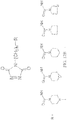
- FIGS. 2A and 2B each respectively depicts a set of isobaric 4-plex aminoxy MS tagging reagents.
- Each set of isobaric tagging reagents can have identical chemical structures and masses but can comprise different combinations and/or positions of isotopes.
- a first isobaric tag from one set of isobaric reagents can be made to contact a standard that can comprise a known vitamin D analyte, for example, at a known concentration. The contact can be made under conditions that favor a reaction between the first isobaric tag and the standard.
- a second isobaric tag from the same set of isobaric reagents as the first isobaric tag can be made to contact a sample comprising an unknown concentration of a vitamin D analyte.
- the tagged analytes of the standard and sample can be mixed together and analyzed to determine the concentration of the analytes in the sample.
- the analysis can comprise separating the mixture to form separated analytes, and analyzing the separated analytes.
- Methods of separation that can be used include gas chromatographic methods, liquid chromatographic methods, other chromatographic methods, electrophoretic methods, electroosmotic methods, mass differential separation methods, and the like.
- liquid chromatography is used to separate the various analytes in the mixture and thus form separated analytes.
- chromatographic separation can be preformed on a reversed phase column and peaks eluting from the column can be subject to subsequent analysis.
- the subsequent analysis can comprise mass spectrometry or, more particularly, Parent Daughter Ion Transition Monitoring (PDITM).
- PDITM Parent Daughter Ion Transition Monitoring
- mass differential tagging reagents instead of isobaric tagging reagents, can be used. Exemplary mass differential reagent pairs are depicted in FIG. 5 .
- the aminoxy MS tagging reagents can be used for relative and absolute quantitation in multiplex assays. According to some embodiments, the aminoxy MS tagging reagents can be used for two-plex, three-plex, four-plex, and other multiplex assays.
- FIGS. 4A and 4B illustrate relative and absolute quantitation for a two-plex assay, respectively.
- the method can begin with labeling a first sample containing a known vitamin D analyte.
- the first sample can be, for example, a standard containing a known concentration of a known vitamin D analyte ( FIG. 4B ).
- the first sample can be labeled with a first isobaric tag from a set of isobaric tags.
- a second sample having an unknown analyte in an unknown concentration can be labeled with a second isobaric tag from the same set of isobaric tags.
- the labeled first sample can then be combined with the labeled second sample to form a mixture.
- the mixture can be subjected to separation, such as liquid chromatography (LC) separation, for example, on a reversed phase column.
- LC liquid chromatography
- the labeled analytes can elute from the column at separate times due to their different and distinct retention times on the column.
- the peaks eluted from the reversed phase column comprise peaks that contain the labeled analytes from the first sample and peaks that contain the labeled analytes from the second sample.
- each peak eluted from the column can be subjected to Parent Daughter Ion Transition Monitoring (PDITM).
- PDITM Parent Daughter Ion Transition Monitoring
- concentration of the labeled standard is known, the specific concentration of the analyte in the sample can be determined, as shown in FIG. 4B .
- FIGS. 4C and 4D illustrate relative and absolute quantitation for a four-plex assay, respectively.
- the method can begin with labeling four samples with first, second, third, and fourth isobaric tags, respectively, that are from the same set of isobaric tags.
- One of the samples can be a standard having a known concentration of a known vitamin D analyte, as depicted in FIG. 4D .
- the labeled samples can be combined to form a mixture. Subsequently, the mixture can be subjected to separation, such as liquid chromatography (LC) separation, for example, on a reversed phase column.
- LC liquid chromatography
- the labeled analytes can be eluted from the column at separate times due to their different and distinct retention times on the column.
- the peaks eluted from the reversed phase column can comprise peaks that contain the labeled analytes and peaks that contain the labeled standard.
- each peak eluted from the column can be subjected to Parent Daughter Ion Transition Monitoring (PDITM).
- PDITM Parent Daughter Ion Transition Monitoring
- the concentration of the labeled standard is known, the specific concentration of each analyte in each of the samples can be determined, as shown in FIG. 4D .
- a method for relative quantitation of one or more vitamin D analytes can comprise labeling the one or more analytes, followed by analysis using mass spectrometry.
- the one or more anlaytes can be vitamin D3 and/or metabolites of vitamin D3.
- the method can comprise labeling both a standard sample containing vitamin D3 and/or metabolites of vitamin D3, and a test sample, with MS tagging reagents.
- the MS tagging reagents can be aminoxy tagging reagents.
- the aminoxy tagging reagents can comprise a set of isobaric tags.
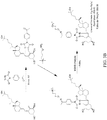
- the standard sample can be labeled with a first isobaric tag from a set of isobaric tags, in two steps, as shown in FIG 1 .
- vitamin D analytes in the standard sample can be treated with a dienophile reagent having an acetyl group, to form a Diels-Alder adduct.
- the Diels-Alder adduct can be treated with the first isobaric tag.
- the test sample can be labeled with a second isobaric tag from the same set of isobaric tags, which is different from the first isobaric tag, in a similar two-step process as is used for the standard sample.
- the labeled standard sample and the labeled test sample can then be combined and the resulting mixture can be subjected to liquid chromatography (LC) separation on a reversed phase column.
- LC liquid chromatography
- the labeled vitamin D3 and/or vitamin D3 metabolites can have distinct retention times and can elute from the column at separate times.
- the eluting peaks can comprise peaks containing the labeled analyte and peaks containing the labeled standard.
- FIG. 6 shows HPLC separation of labeled vitamin D3 analytes.
- the eluant from the column can subsequently be analyzed using mass spectrometry.
- FIG. 7 shows a mass spectrogram of labeled vitamin D3 using MSMS.
- the reporter signal can be subjected to further fragmentation (MS 3 ). Subjecting the reporter signal to further fragmentation can provide peaks that enable confirmatory identification of the analyte by comparing with a standard database.
- the eluant from the column can be subjected to Parent Daughter Ion Transition Monitoring (PDITM).
- PDITM Parent Daughter Ion Transition Monitoring
- FIG. 8 shows a mass spectrogram of labeled vitamin D3, obtained using MS 3 .
- the ratios of the signal intensity or peak area of the reporter signals generated from the standard compared to those generated from the test sample can indicate the concentration of the analyte in the test sample relative to the standard sample.
- FIG. 11 shows an MSMS spectrogram of vitamin D2 that has been labeled in accordance with the present teachings.
- each analyte can have its own internal standard.
- the reporter signals can be specific to the standard sample and to the test sample.
- Isobaric tags allow for multiplexing and provide the only known method to date for multiplexed analysis of vitamin D analytes, and provide high throughput and lower cost of analysis per sample. Since there is one common functional group in all of the vitamin D analytes, only one tag is needed for each analyte, as shown in FIGS. 3A and 3B . In some embodiments, using PDITM increases specificity and reduces the risk of error. The reagent design makes it a good tool for FlashQuantTM application and enables MS 3 capability which helps in confirming the identity of the analyte.
- a method for quantitating a vitamin D analyte in a sample comprises tagging a vitamin D analyte with a one-step tagging reagent, for example, a Diels-Alder adduct.
- a one-step tagging reagent for example, a Diels-Alder adduct.
- the product can then be analyzed using mass spectrometry.
- the tagging reagent can comprise a compound having the structure shown in FIG. 12A . Under high energy collision, a reporter group is generated. The intensity or the peak area of the reporter group is used for quantitation.
- the one-step tagging reagents shown in FIG 12A undergo neutral loss during high energy collision (MSMS) leaving a charged analyte species as the reporter ion, such as shown in FIGS. 14 and 15 , and the reporter ion can then be subjected to MS 3 analysis.
- MSMS high energy collision
- the tagging reagent can comprise a compound having the structure shown in FIG. 12B .
- the one-step tagging reagents shown in FIG 12B generate a tag fragment upon high energy collision, such as shown in FIG. 16 , and the reporter ion can then be subjected to MS 3 analysis.
- the method can further comprise providing a standard comprising a known concentration of a known vitamin D analyte and tagging the known vitamin D analyte of the standard with a one-step tagging reagent according to the present teachings, to form a labeled standard.
- the labeled standard can then be mixed with the labeled sample to form a mixture.
- the mixture can then be separated to form separated labeled analytes, and the separated analytes can be analyzed.
- the one-step reagent used for the labeled standard can comprise a first isobaric tag from a set of isobaric tags.
- the labeled sample can comprise a second isobaric tag from the same set of isobaric tags, but that differs from the first isobaric tag.
- the labeled sample can then be analyzed using mass spectrometry, LC-MSMS analysis of the labeled sample, a combination thereof, or the like.
- the one-step reagent used for the labeled standard can comprise a first mass differential tag from a set of mass differential tags.
- the labeled sample can comprise a second mass differential tag from the same set of mass differential tags, but that differs from the first mass differential tag.
- the labeled sample can then be analyzed using mass spectrometry, LC-MSMS analysis of the labeled sample, a combination thereof, or the like.
- parent daughter ion transition monitoring (PDITM) of the labeled analytes is performed using a triple quadrupole MS platform. More details about PDITM and its use are described in U.S. Patent Application Publication No. US 2006/0183238 A1 .
- the one-step tagging reagent undergoes neutral loss during MSMS and leaves a reporter ion that is a charged analyte species.
- the one-step tagging reagent forms a reporter ion that is a tag fragment during MSMS.
- the vitamin D analyte can comprise a plurality of different respective tagging reagents, for example, a different tagging reagent for each different type of analyte.
- the metabolites to be analyzed and for which a kit can be configured to detect can comprise analytes of vitamin D2, for example, a monohydroxy metabolite of vitamin D2 and/or a dihydroxy metabolite of vitamin D2.
- the metabolites are metabolites of vitamin D3 and can comprise a monohydroxy metabolite of vitamin D3 and/or a dihydroxy metabolite of vitamin D3.
- the present teachings provide a method for the quantitation of one or more of vitamin D2, vitamin D3, and/or metabolites from the vitamin D family, herein collectively referred to as vitamin D analytes.
- Vitamin D analytes can include, for example, vitamin D2, vitamin D3, and/or the monohydroxy, dihydroxy and trihydroxy metabolites of vitamin D2 or vitamin D3.
- the method for quantification of one or more vitamin D analytes can comprise a one-step chemical reaction to modify the analytes, followed by mass analysis using mass spectrometry.
- the one-step chemical reaction can comprise derivatizing the conjugated diene functionality in a vitamin D analyte to attach a dienophile-containing tagging reagent to the analyte, to form a Diels-Alder adduct, as exemplified in FIGS. 13-16 , which show four different respective reactions using four different one-step tagging reagents, and exemplary substituent groups that can comprise moieties of the respective one-step tagging reagents.
- FIG. 17 shows two different sets of exemplary isobaric tags, each set comprising four different reagents that can be used in a four-plex assay, according to various embodiments of the present teachings.
- the heavy atom isotopes can be placed in various positions on the molecule.
- FIG. 18 shows two different sets of exemplary mass differential tags, each set comprising four different reagents that can be used in a four-plex assay, according to various embodiments of the present teachings.
- the heavy atom isotopes can be placed in various positions on the molecule.
- FIG. 19 compares the fragmentation pattern of QAO-C derivatized 1 ⁇ , 25-DihydroxyVitamin-D 3 , PTAD 1 ⁇ , 25-DihydroxyVitamin-D 3 , (PTAD is a Cookson type reagent); and underivatized 1 ⁇ , 25-DihydroxyVitamin-D 3 , according to various embodiments of the present teachings.
- PTAD is a Cookson type reagent
- underivatized 1 ⁇ , 25-DihydroxyVitamin-D 3 according to various embodiments of the present teachings.
- the QAO-C derivatized 1 ⁇ , 25-DihydroxyVitamin-D 3 produces a clean mass spectrum compared to the spectrum of PTAD 1 ⁇ , 25-DihydroxyVitamin-D 3 or that of underivatized 1 ⁇ , 25-DihydroxyVitamin-D 3 .
- FIG. 20 compares the signal intensity of QAO-C derivatized 1 ⁇ , 25-DihydroxyVitamin-D 3 , PTAD 1 ⁇ , 25-DihydroxyVitamin-D 3 , and underivatized 1 ⁇ , 25-DihydroxyVitamin-D 3 , according to various embodiments of the present teachings.
- FIG. 21 shows isobaric Dihydroxy Vitamin D-3 metabolites being resolved by liquid chromatography. According to various embodiments of the present teachings, as shown in FIG. 21 , Vitamin-D 3 isomers that otherwise can interfere with 1 ⁇ , 25-DihydroxyVitamin-D 3 are separated.
- FIG. 22 shows the separation of 1 ⁇ , 25-DihydroxyVitamin-D 3 from Vitamin-D 3 isomers in human serum sample, according to various embodiments of the present teachings.
- FIG. 23 shows the separation of 1 ⁇ , 25-DihydroxyVitamin-D 3 from Vitamin-D 3 isomers in an analysis of human serum sample, according to various embodiments of the present teachings.
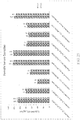
- FIG. 24 shows the quantity of 1 ⁇ , 25-DihydroxyVitamin-D 3 detected in male serum samples from two runs, according to various embodiments of the present teachings.
- FIG. 25 shows the quantity of 1 ⁇ , 25-DihydroxyVitamin-D 3 detected in female serum samples from two runs, according to various embodiments of the present teachings.
- the tagging chemistry and the method can be run on any triple quadrupole instruments, for example, those including FlashQuantTM with a Maldi source.
- Reagent kits, data analysis software, and the MS platform are provided in some embodiments as an analyzer for vitamin D3 and its metabolites. The same method can be employed for vitamin D2 and its metabolites.
- a kit can comprise one or more of a dienophile reagent and an aminoxy MS tagging reagent.
- the aminoxy MS tagging reagent can comprise a compound having the following structure: R-(CH 2 ) n -ONH 2 wherein R is R 1 , R 2 , and R 3 can each independently be a hydrogen atom or an alkyl group, and n can be from 1 to 20, from 1 to 15, from 1 to 10, or from 1 to 5; or the structure: R-(CH 2 ) n -ONH 2 wherein R comprises one or more of these five structures and n can be from 1 to 20, from 1 to 15, from 1 to 10, or from 1 to 5.
- R can be any of the R groups described in connection with the tagging reagents of U.S. Patent No. 7,195,751 to Pappin et al.
- the kit can comprise at least one standard comprising a known concentration of a known vitamin D analyte.
- the aminoxy MS tagging reagent can be an isobaric tag from a set of isobaric tags and in some examples the kit can include a plurality of different isobaric tags from a set of isobaric tags.
- the aminoxy MS tagging reagent can be a mass differential tag from a set of mass differential tags and in some embodiments the kit can include a plurality of different mass differential tags from a set of mass differential tags.
- the kit can comprise a dienophile reagent, an aminoxy MS tagging reagent, a standard comprising a known vitamin D analyte and/or a known concentration of a known vitamin D analyte, and further can comprise instructions for labeling the vitamin D analyte.
- the kit can comprise a one-step tagging reagent as shown in FIG. 12A , a one-step tagging reagent as shown in FIG. 12B , a combination thereof, or the like.
- the kit can also comprise a standard comprising a known vitamin D analyte.
- the standard can comprise a known concentration of a known vitamin D analyte.
- the one-step tagging reagent included in the kit can comprise one or more isobaric tags from a set of isobaric tags.
- the kit can comprise a plurality of different isobaric tags from a set of isobaric tags.
- the one-step tagging reagent included in the kit can comprise one or more mass differential tags from a set of mass differential tags.
- the kit can comprise a plurality of different mass differential tags from a set of mass differential tags.
- the kit can comprise buffers, one or more chromatographic columns, and optionally other reagents and/or components useful in carrying out the assay.
- the kit can comprise, for example, a homogeneous assay such that the user need only add a sample.
- the kit can comprise calibration or normalization reagents or standards.
- Information pertaining to instrument settings that can or should be used to perform an assay can also be included in the kit.
- information pertaining to sample preparation, operating conditions, volumetric amounts, temperature settings, and the like, is included with the kit.
- the kit can be packaged in a hermetically sealed container containing one or more regent vessels and appropriate instructions.
- An electronic medium can be included in the kit, having stored thereon electronic information pertaining to one or more assays, measurement values, transition pairs, operating instructions, software for carrying out operations, a combination thereof, or the like.
- a method can be provided for the synthesis of the QAOC reagent and its intermediates.
- each of the components used in this example can be increased or decreased by an amount in the range of from about 5% to about 20%, for example, each component can be used in an amount that is from 5% less to 5% more than the value used in this example, each component can be used in an amount that is from 10% less to 10% more than the value used in this example, each component can be used in an amount that is from 15% less to 15% more than the value used in this example, or each component can be used in an amount that is from 20% less to 20% more than the value used in this example. In various aspects, the values can be varied by about plus or minus 5% to 20%.
- p-Acetyl-4-phenyl-1-carbethoxysemicarbazide 1 (15 g, 56 mmol) was heated with aqueous 4 M KOH solution (28 mL, 112 mmol) at 70 °C for about 2 h. Leftover granular solid was filtered off using a sintered filter funnel. Filtrate was cooled to room temperature and acidified with concentrated HCl. The precipitate formed was filtered and dried in vacuum oven to give p-acetyl-4-phenylurazole 2 as light yellow solid (12.4 g, 85%).
- each of the components used in this example can be increased or decreased by an amount in the range of from about 5% to about 20%, for example, each component can be used in an amount that is from 5 % less to 5 % more than the value used in this example, each component can be used in an amount that is from 10% less to 10% more than the value used in this example, each component can be used in an amount that is from 15% less to 15% more than the value used in this example, or each component can be used in an amount that is from 20% less to 20% more than the value used in this example. In various aspects, the values can be varied by about plus or minus 5% to 20%.
- each of the components used in this example can be increased or decreased by an amount in the range of from about 5% to about 20%, for example, each component can be used in an amount that is from 5% less to 5% more than the value used in this example, each component can be used in an amount that is from 10% less to 10% more than the value used in this example, each component can be used in an amount that is from 15% less to 15% more than the value used in this example, or each component can be used in an amount that is from 20% less to 20% more than the value used in this example. In various aspects, the values can be varied by about plus or minus 5% to 20%.
- each of the components used in this example can be increased or decreased by an amount in the range of from about 5% to about 20%, for example, each component can be used in an amount that is from 5% less to 5% more than the value used in this example, each component can be used in an amount that is from 10% less to 10% more than the value used in this example, each component can be used in an amount that is from 15% less to 15% more than the value used in this example, or each component can be used in an amount that is from 20% less to 20% more than the value used in this example. In various aspects, the values can be varied by about plus or minus 5% to 20%.
- each of the components used in this example can be increased or decreased by an amount in the range of from about 5% to about 20%, for example, each component can be used in an amount that is from 5% less to 5% more than the value used in this example, each component can be used in an amount that is from 10% less to 10% more than the value used in this example, each component can be used in an amount that is from 15% less to 15% more than the value used in this example, or each component can be used in an amount that is from 20% less to 20% more than the value used in this example. In various aspects, the values can be varied by about plus or minus 5% to 20%.
- Period 1 Scans in Period: 774 Relative Start Time: 0.00 msec Experiments in Period: 1
- MRM Scheduled MRM: No Polarity: Positive Scan Mode: N/A Ion Source: Turbo Spray Resolution Q1: Unit Resolution Q3: Unit Intensity Thres .: 0.00 cps Settling Time: 0.0000 msec MR Pause: 5.0070 msec MCA: No Step Size: 0.00 Da
Landscapes
- Life Sciences & Earth Sciences (AREA)
- Health & Medical Sciences (AREA)
- Engineering & Computer Science (AREA)
- Molecular Biology (AREA)
- Biomedical Technology (AREA)
- Chemical & Material Sciences (AREA)
- Hematology (AREA)
- Immunology (AREA)
- Urology & Nephrology (AREA)
- Cell Biology (AREA)
- Microbiology (AREA)
- Biotechnology (AREA)
- Food Science & Technology (AREA)
- Medicinal Chemistry (AREA)
- Physics & Mathematics (AREA)
- Analytical Chemistry (AREA)
- Biochemistry (AREA)
- General Health & Medical Sciences (AREA)
- General Physics & Mathematics (AREA)
- Pathology (AREA)
- Other Investigation Or Analysis Of Materials By Electrical Means (AREA)
Claims (13)
- Verfahren zur quantitativen Bestimmung eines Vitamin-D-Analyten in einer Probe, wobei der Vitamin-D-Analyt ein oder mehrere von Vitamin D2, Vitamin D3, einem Metaboliten von Vitamin D2, und einem Metaboliten von Vitamin D3 umfasst, wobei das Verfahren folgendes umfasst:Behandeln eines Vitamin-D-Analyten mit einem Dienophil-enthaltenden einstufigen Markierungsreagenz unter Bildung eines markierten Diels-Alder-Addukt; undAnalysieren des markierten Addukts unter Verwendung von Massenspektrometrie,dadurch gekennzeichnet, dass das einstufige Markierungsreagenz eine von folgendem umfasst:die Verbindungen mit der folgenden Struktur:


- Verfahren nach Anspruch 1, weiterhin folgendes umfassend:Bereitstellen eines Standards umfassend eine bekannte Konzentration eines bekannten Vitamin-D-Analyten;Behandeln des bekannten Vitamin-D-Analyten in dem Standard mit einem einstufigen Dienophil-enthaltenden markierten Diels-Alder-Reagenz unter Bildung eines markierten Standard-Addukts;Mischen des markierten Standard-Addukts und des markierten Addukts unter Bildung eines Gemisches; undTrennen des Gemisches unter Bildung von getrennten markierten Analyten;wobei das Analysieren des markierten Addukts das Analysieren der getrennten Analyten umfasst.
- Verfahren nach Anspruch 2, wobei sich das einstufige Dienophil-enthaltende Diels-Alder-Reagenz, das zur Markierung des Standards verwendet wird, von dem einstufigen Dienophil-enthaltenden Diels-Alder-Reagenz unterscheidet, das zur Markierung der Probe verwendet wird.
- Verfahren nach Anspruch 1, wobei das Analysieren des markierten Addukts unter Verwendung von Massenspektrometrie die Anwendung der LC-MSMS-Analyse des markierten Addukts umfasst.
- Verfahren nach Anspruch 4, weiterhin umfassend das Eltern-Tochter-Ion-Übergangsmonitoring (PDITM) der markierten Analyten unter Verwendung einer Triple-Quadrupol-MS-Plattform.
- Verfahren nach Anspruch 5, wobei das markierte Addukt während MSMS entweder Neutralitätsverlust erfährt und ein Reporterion hinterlässt, das eine geladene Analyt-Spezies ist, oder das markierte Addukt während MSMS ein geladenes Fragment verliert.
- Verfahren nach Anspruch 1, wobei:der Vitamin-D-Analyt eine Vielzahl von verschiedenen Vitamin-D-Analyten umfasst,und das Markieren das Markieren mit einer Vielzahl von verschiedenen Markierungsreagenzien umfasst.
- Verfahren nach Anspruch I wobei die Metaboliten von Vitamin D2 einen Monohydroxy-Metaboliten und/oder einen Dihydroxy-Metaboliten von Vitamin D2 umfassen.
- Verfahren nach Anspruch 1, wobei die Metaboliten von Vitamin D3 einen Monohydroxy-Metaboliten und/oder einen Dihydroxy-Metaboliten von Vitamin D3 umfassen.
- Verfahren nach einem der Ansprüche 1 bis 9, wobei die Vielzahl von verschiedenen Markierungsreagenzien isobare Marker umfasst, und die isobaren Marker aus den folgenden Strukturen ausgewählt sind:


- Verfahren nach einem der Ansprüche 1 bis 9, wobei die Vielzahl von verschiedenen Markierungsreagenzien massendifferentielle Marker umfasst, und die massendifferentiellen Marker aus den folgenden Strukturen ausgewählt sind:


- Kit, umfassend ein Dienophil-enthaltendes, markiertes Diels-Alder-Reagenz in einer Packung,
dadurch gekennzeichnet, dass
das markierte Diels-Alder-Reagenz eines von folgendem umfasst:die Verbindungen mit der folgenden Struktur:

- Kit nach Anspruch 12, umfassend einen Standard, umfassend eines von einem bekannten Vitamin-D-Analyten und einer bekannten Konzentration eines bekannten Vitamin-D-Analyt.
Applications Claiming Priority (2)
| Application Number | Priority Date | Filing Date | Title |
|---|---|---|---|
| US29791710P | 2010-01-25 | 2010-01-25 | |
| PCT/US2011/022454 WO2011091436A1 (en) | 2010-01-25 | 2011-01-25 | Quantitative analysis of vitamin d3, vitamin d2, and metabolites thereof |
Publications (3)
| Publication Number | Publication Date |
|---|---|
| EP2528443A1 EP2528443A1 (de) | 2012-12-05 |
| EP2528443A4 EP2528443A4 (de) | 2013-10-02 |
| EP2528443B1 true EP2528443B1 (de) | 2017-01-11 |
Family
ID=44307289
Family Applications (1)
| Application Number | Title | Priority Date | Filing Date |
|---|---|---|---|
| EP11735362.3A Not-in-force EP2528443B1 (de) | 2010-01-25 | 2011-01-25 | Quantitative analyse von vitamin d3, vitamin d2 und metaboliten davon |
Country Status (5)
| Country | Link |
|---|---|
| US (2) | US8617898B2 (de) |
| EP (1) | EP2528443B1 (de) |
| JP (1) | JP5730908B2 (de) |
| CA (1) | CA2787900C (de) |
| WO (1) | WO2011091436A1 (de) |
Families Citing this family (30)
| Publication number | Priority date | Publication date | Assignee | Title |
|---|---|---|---|---|
| US7745226B2 (en) | 2005-04-06 | 2010-06-29 | Quest Diagnostics Investments Incorporated | Methods for detecting vitamin D metabolites |
| EP1968383B1 (de) * | 2005-12-12 | 2011-05-11 | Women and Infants Hospital of Rhode Island | Derivate von vitamin d und ihre verwendung in der therapie |
| US7972868B2 (en) | 2007-11-28 | 2011-07-05 | Quest Diagnostics Investments Incorporated | Methods for detecting dihydroxyvitamin D metabolites by mass spectrometry |
| US9201079B2 (en) * | 2009-10-26 | 2015-12-01 | Georgetown University | Methods for quantifying vitamin D metabolites by mass spectrometry |
| US7977117B2 (en) | 2009-12-03 | 2011-07-12 | Quest Diagnostics Investments Incorprated | Vitamin D metabolite determination utilizing mass spectrometry following derivatization |
| EP4711765A2 (de) | 2009-12-11 | 2026-03-18 | Quest Diagnostics Investments Incorporated | Massenspektrometrie steroidaler verbindungen in multiplexproben |
| US20120025067A1 (en) | 2009-12-11 | 2012-02-02 | Quest Diagnostics Investments Incorporated | Mass spectrometric determination of non-derivatized, non-metabolized vitamin d |
| EP2528443B1 (de) * | 2010-01-25 | 2017-01-11 | DH Technologies Development Pte. Ltd. | Quantitative analyse von vitamin d3, vitamin d2 und metaboliten davon |
| CA2860418A1 (en) * | 2012-01-05 | 2013-07-11 | Dh Technologies Development Pte. Ltd. | Enhancement of sensitivity and specificity of ketosteroids and keto or aldehyde containing analytes |
| JP6324321B2 (ja) * | 2012-01-20 | 2018-05-16 | ディーエイチ テクノロジーズ デベロップメント プライベート リミテッド | 標識化学およびlc−msmsを使用するエストラジオールおよびフェノール性ohを有する分析物の分析 |
| WO2014150900A1 (en) * | 2013-03-15 | 2014-09-25 | Baylor Research Institute | Methods and compositions for enhanced analyte detection from blood |
| CN107003305B (zh) | 2014-12-08 | 2021-04-02 | 豪夫迈·罗氏有限公司 | 用于测量维生素d的方法 |
| CN104502501B (zh) * | 2014-12-26 | 2016-06-15 | 江苏艾兰得营养品有限公司 | 一种快速测定维生素d3含量的色谱方法 |
| CN106198801A (zh) * | 2016-06-28 | 2016-12-07 | 威海百合生物技术股份有限公司 | 一种维生素d3含量的检测方法 |
| WO2018198043A1 (en) * | 2017-04-28 | 2018-11-01 | Waters Technologies Corporation | Methods for quantifying total vitamin d |
| US11071927B2 (en) | 2017-11-15 | 2021-07-27 | Arup Laboratories, Inc. | Separating and quantifying unbound target analytes from biological samples |
| JP6742544B2 (ja) * | 2018-06-12 | 2020-08-19 | 株式会社トクヤマ | セミカルバジド化合物の製造方法 |
| CN108645942A (zh) * | 2018-06-20 | 2018-10-12 | 杭州凯莱谱精准医疗检测技术有限公司 | 血清中25-羟基维生素d的高效液相色谱串联质谱检测方法 |
| BR112021001061A2 (pt) | 2018-07-24 | 2021-04-20 | F. Hoffmann-La Roche Ag | composto, composição, kit, aduto covalente, uso de um composto e método para a determinação de espectrometria de massa |
| JP7547315B2 (ja) | 2018-07-24 | 2024-09-09 | エフ. ホフマン-ラ ロシュ アーゲー | 質量分析のための試薬 |
| WO2020020850A1 (en) | 2018-07-24 | 2020-01-30 | F. Hoffmann-La Roche Ag | Reagent for mass spectrometry |
| CN110824025A (zh) * | 2018-08-09 | 2020-02-21 | 上海医药临床研究中心 | 一种维生素d代谢物的检测方法 |
| CN109001329B (zh) * | 2018-08-21 | 2021-05-28 | 杭州凯莱谱精准医疗检测技术有限公司 | 干血片中25-羟基维生素d的高效液相色谱串联质谱检测方法 |
| CN111307978B (zh) * | 2020-03-13 | 2022-08-23 | 安徽东盛友邦制药有限公司 | 一种脂溶性维生素有关物质检测方法 |
| WO2021233997A1 (en) | 2020-05-20 | 2021-11-25 | F. Hoffmann-La Roche Ag | Reagent for mass spectrometry |
| JP7747664B2 (ja) * | 2020-05-20 | 2025-10-01 | エフ. ホフマン-ラ ロシュ アーゲー | 質量分析のためのベンジルピリジニウム試薬 |
| CN115667934A (zh) | 2020-05-20 | 2023-01-31 | 豪夫迈·罗氏有限公司 | 质谱用试剂 |
| CN115667223A (zh) | 2020-05-20 | 2023-01-31 | 豪夫迈·罗氏有限公司 | 质谱用咪唑鎓试剂 |
| CN115078578A (zh) * | 2022-06-16 | 2022-09-20 | 广州市妇女儿童医疗中心 | 一种基于液质联用的血清维生素d相关代谢物的检测方法 |
| CN120225880A (zh) | 2022-11-21 | 2025-06-27 | 豪夫迈·罗氏有限公司 | 用于激光解吸电离质谱的衍生化剂 |
Family Cites Families (25)
| Publication number | Priority date | Publication date | Assignee | Title |
|---|---|---|---|---|
| US4366320A (en) * | 1980-07-31 | 1982-12-28 | The Upjohn Company | 4-Substituted phenyl-1,2,4-triazoline-3,5-diones and their dihydro analogs as analytical reagents |
| GB2114570B (en) * | 1981-11-02 | 1985-08-07 | Res Inst Medicine Chem | Chemical compounds |
| US4554106A (en) * | 1984-11-01 | 1985-11-19 | Wisconsin Alumni Research Foundation | Method for preparing 1α-hydroxyvitamin D compounds |
| US5187086A (en) * | 1990-01-26 | 1993-02-16 | Scripps Clinic And Research Foundation | Molecules with antibody combining sites that catalyze hydrolysis reactions through use of a charged hapten |
| US5635404A (en) * | 1993-03-29 | 1997-06-03 | New York University | Applications of electrospray ionization mass spectrometry to neutral organic molecules including fullerenes |
| WO1996040662A2 (en) * | 1995-06-07 | 1996-12-19 | Cellpro, Incorporated | Aminooxy-containing linker compounds and their application in conjugates |
| WO1998051663A2 (en) * | 1997-05-16 | 1998-11-19 | F. Hoffmann-La Roche Ag | 3-epi compounds of vitamin d3 and uses thereof |
| DE60223696T2 (de) * | 2001-09-14 | 2009-01-29 | Electrophoretics Ltd., Cobham | Massenmarker |
| AU2003246083A1 (en) * | 2002-06-27 | 2004-01-19 | Chugai Seiyaku Kabushiki Kaisya | Ferrocene compound and use thereof |
| US7556969B2 (en) * | 2002-12-19 | 2009-07-07 | Northeastern University | Intensified neutral loss tags and use thereof in mass spectrometry |
| US7195751B2 (en) | 2003-01-30 | 2007-03-27 | Applera Corporation | Compositions and kits pertaining to analyte determination |
| US7309608B2 (en) * | 2003-09-30 | 2007-12-18 | Hoa Duc Nguyen | Method of analysis of aldehyde and ketone by mass spectrometry |
| EP1687643A4 (de) * | 2003-11-14 | 2010-11-24 | Irm Llc | Fluorierungsmarkierung für die selektive bearbeitung biologisch gewonnener proben |
| JP4566604B2 (ja) * | 2004-03-31 | 2010-10-20 | 塩野義製薬株式会社 | 糖鎖標識試薬 |
| US20050261250A1 (en) * | 2004-05-19 | 2005-11-24 | Merck & Co., Inc., | Compositions and methods for inhibiting bone resorption |
| US20060183238A1 (en) | 2005-02-09 | 2006-08-17 | Applera Corporation | Amine-containing compound analysis methods |
| US9383373B2 (en) * | 2005-11-15 | 2016-07-05 | Semorex Inc. | Methods for detecting fungal infection |
| US8236565B2 (en) * | 2006-05-26 | 2012-08-07 | Dh Technologies Development Pte. Ltd. | Tagging reagents and methods for hydroxylated compounds |
| US7972868B2 (en) * | 2007-11-28 | 2011-07-05 | Quest Diagnostics Investments Incorporated | Methods for detecting dihydroxyvitamin D metabolites by mass spectrometry |
| US20110212534A1 (en) * | 2008-08-11 | 2011-09-01 | Taylor Robert L | Methods for determining levels of 1,25 dihydroxy vitamin d2 and d3 |
| WO2010099108A2 (en) * | 2009-02-24 | 2010-09-02 | Mayo Foundation For Medical Education And Research | Multiplexing derivatized anayltes using mass spectroscopy |
| CA2762277C (en) * | 2009-05-31 | 2018-08-14 | Dh Technologies Development Pte. Ltd. | Specific analysis of ketone and aldehyde analytes using reagent compounds, labeling strategies, and mass spectrometry workflow |
| US7977117B2 (en) * | 2009-12-03 | 2011-07-12 | Quest Diagnostics Investments Incorprated | Vitamin D metabolite determination utilizing mass spectrometry following derivatization |
| US20120025067A1 (en) * | 2009-12-11 | 2012-02-02 | Quest Diagnostics Investments Incorporated | Mass spectrometric determination of non-derivatized, non-metabolized vitamin d |
| EP2528443B1 (de) * | 2010-01-25 | 2017-01-11 | DH Technologies Development Pte. Ltd. | Quantitative analyse von vitamin d3, vitamin d2 und metaboliten davon |
-
2011
- 2011-01-25 EP EP11735362.3A patent/EP2528443B1/de not_active Not-in-force
- 2011-01-25 WO PCT/US2011/022454 patent/WO2011091436A1/en not_active Ceased
- 2011-01-25 CA CA2787900A patent/CA2787900C/en not_active Expired - Fee Related
- 2011-01-25 US US13/013,664 patent/US8617898B2/en active Active
- 2011-01-25 JP JP2012550213A patent/JP5730908B2/ja not_active Expired - Fee Related
-
2013
- 2013-12-12 US US14/104,117 patent/US9188596B2/en active Active
Non-Patent Citations (1)
| Title |
|---|
| None * |
Also Published As
| Publication number | Publication date |
|---|---|
| CA2787900C (en) | 2018-10-02 |
| JP2013518258A (ja) | 2013-05-20 |
| WO2011091436A9 (en) | 2011-09-15 |
| EP2528443A4 (de) | 2013-10-02 |
| US20140127825A1 (en) | 2014-05-08 |
| EP2528443A1 (de) | 2012-12-05 |
| WO2011091436A1 (en) | 2011-07-28 |
| US20110183429A1 (en) | 2011-07-28 |
| JP5730908B2 (ja) | 2015-06-10 |
| US8617898B2 (en) | 2013-12-31 |
| US9188596B2 (en) | 2015-11-17 |
| CA2787900A1 (en) | 2011-07-28 |
Similar Documents
| Publication | Publication Date | Title |
|---|---|---|
| EP2528443B1 (de) | Quantitative analyse von vitamin d3, vitamin d2 und metaboliten davon | |
| US12066446B2 (en) | Methods for detecting dihydroxyvitamin D metabolites by mass spectrometry | |
| JP2013518258A5 (de) | ||
| EP3432001B1 (de) | Verfahren zum nachweis von vitamin-d-metaboliten durch massenspektrometrie | |
| CN103392219A (zh) | 通过质谱法定量胰岛素 | |
| US12174203B2 (en) | Detection of vitamins a and e by tandem mass spectrometry | |
| HK40109081A (en) | Methods for detecting dihydroxyvitamin d metabolites by mass spectrometry |
Legal Events
| Date | Code | Title | Description |
|---|---|---|---|
| PUAI | Public reference made under article 153(3) epc to a published international application that has entered the european phase |
Free format text: ORIGINAL CODE: 0009012 |
|
| 17P | Request for examination filed |
Effective date: 20120824 |
|
| AK | Designated contracting states |
Kind code of ref document: A1 Designated state(s): AL AT BE BG CH CY CZ DE DK EE ES FI FR GB GR HR HU IE IS IT LI LT LU LV MC MK MT NL NO PL PT RO RS SE SI SK SM TR |
|
| DAX | Request for extension of the european patent (deleted) | ||
| A4 | Supplementary search report drawn up and despatched |
Effective date: 20130829 |
|
| RIC1 | Information provided on ipc code assigned before grant |
Ipc: A61K 31/41 20060101ALI20130823BHEP Ipc: G01N 33/82 20060101ALI20130823BHEP Ipc: A61K 31/59 20060101ALI20130823BHEP Ipc: G01N 27/62 20060101ALI20130823BHEP Ipc: A01N 45/00 20060101AFI20130823BHEP Ipc: G01N 33/543 20060101ALI20130823BHEP |
|
| 17Q | First examination report despatched |
Effective date: 20140512 |
|
| GRAP | Despatch of communication of intention to grant a patent |
Free format text: ORIGINAL CODE: EPIDOSNIGR1 |
|
| INTG | Intention to grant announced |
Effective date: 20160802 |
|
| GRAS | Grant fee paid |
Free format text: ORIGINAL CODE: EPIDOSNIGR3 |
|
| STAA | Information on the status of an ep patent application or granted ep patent |
Free format text: STATUS: GRANT OF PATENT IS INTENDED |
|
| GRAA | (expected) grant |
Free format text: ORIGINAL CODE: 0009210 |
|
| STAA | Information on the status of an ep patent application or granted ep patent |
Free format text: STATUS: THE PATENT HAS BEEN GRANTED |
|
| RAP1 | Party data changed (applicant data changed or rights of an application transferred) |
Owner name: DH TECHNOLOGIES DEVELOPMENT PTE. LTD. |
|
| AK | Designated contracting states |
Kind code of ref document: B1 Designated state(s): AL AT BE BG CH CY CZ DE DK EE ES FI FR GB GR HR HU IE IS IT LI LT LU LV MC MK MT NL NO PL PT RO RS SE SI SK SM TR |
|
| REG | Reference to a national code |
Ref country code: GB Ref legal event code: FG4D |
|
| REG | Reference to a national code |
Ref country code: CH Ref legal event code: EP |
|
| REG | Reference to a national code |
Ref country code: AT Ref legal event code: REF Ref document number: 860416 Country of ref document: AT Kind code of ref document: T Effective date: 20170115 |
|
| REG | Reference to a national code |
Ref country code: FR Ref legal event code: PLFP Year of fee payment: 7 |
|
| REG | Reference to a national code |
Ref country code: IE Ref legal event code: FG4D |
|
| REG | Reference to a national code |
Ref country code: DE Ref legal event code: R096 Ref document number: 602011034264 Country of ref document: DE |
|
| REG | Reference to a national code |
Ref country code: LT Ref legal event code: MG4D |
|
| REG | Reference to a national code |
Ref country code: NL Ref legal event code: MP Effective date: 20170111 |
|
| PG25 | Lapsed in a contracting state [announced via postgrant information from national office to epo] |
Ref country code: BE Free format text: LAPSE BECAUSE OF NON-PAYMENT OF DUE FEES Effective date: 20170131 |
|
| REG | Reference to a national code |
Ref country code: AT Ref legal event code: MK05 Ref document number: 860416 Country of ref document: AT Kind code of ref document: T Effective date: 20170111 |
|
| PG25 | Lapsed in a contracting state [announced via postgrant information from national office to epo] |
Ref country code: NL Free format text: LAPSE BECAUSE OF FAILURE TO SUBMIT A TRANSLATION OF THE DESCRIPTION OR TO PAY THE FEE WITHIN THE PRESCRIBED TIME-LIMIT Effective date: 20170111 |
|
| PG25 | Lapsed in a contracting state [announced via postgrant information from national office to epo] |
Ref country code: GR Free format text: LAPSE BECAUSE OF FAILURE TO SUBMIT A TRANSLATION OF THE DESCRIPTION OR TO PAY THE FEE WITHIN THE PRESCRIBED TIME-LIMIT Effective date: 20170412 Ref country code: HR Free format text: LAPSE BECAUSE OF FAILURE TO SUBMIT A TRANSLATION OF THE DESCRIPTION OR TO PAY THE FEE WITHIN THE PRESCRIBED TIME-LIMIT Effective date: 20170111 Ref country code: NO Free format text: LAPSE BECAUSE OF FAILURE TO SUBMIT A TRANSLATION OF THE DESCRIPTION OR TO PAY THE FEE WITHIN THE PRESCRIBED TIME-LIMIT Effective date: 20170411 Ref country code: FI Free format text: LAPSE BECAUSE OF FAILURE TO SUBMIT A TRANSLATION OF THE DESCRIPTION OR TO PAY THE FEE WITHIN THE PRESCRIBED TIME-LIMIT Effective date: 20170111 Ref country code: IS Free format text: LAPSE BECAUSE OF FAILURE TO SUBMIT A TRANSLATION OF THE DESCRIPTION OR TO PAY THE FEE WITHIN THE PRESCRIBED TIME-LIMIT Effective date: 20170511 Ref country code: LT Free format text: LAPSE BECAUSE OF FAILURE TO SUBMIT A TRANSLATION OF THE DESCRIPTION OR TO PAY THE FEE WITHIN THE PRESCRIBED TIME-LIMIT Effective date: 20170111 |
|
| PG25 | Lapsed in a contracting state [announced via postgrant information from national office to epo] |
Ref country code: PL Free format text: LAPSE BECAUSE OF FAILURE TO SUBMIT A TRANSLATION OF THE DESCRIPTION OR TO PAY THE FEE WITHIN THE PRESCRIBED TIME-LIMIT Effective date: 20170111 Ref country code: LV Free format text: LAPSE BECAUSE OF FAILURE TO SUBMIT A TRANSLATION OF THE DESCRIPTION OR TO PAY THE FEE WITHIN THE PRESCRIBED TIME-LIMIT Effective date: 20170111 Ref country code: BG Free format text: LAPSE BECAUSE OF FAILURE TO SUBMIT A TRANSLATION OF THE DESCRIPTION OR TO PAY THE FEE WITHIN THE PRESCRIBED TIME-LIMIT Effective date: 20170411 Ref country code: ES Free format text: LAPSE BECAUSE OF FAILURE TO SUBMIT A TRANSLATION OF THE DESCRIPTION OR TO PAY THE FEE WITHIN THE PRESCRIBED TIME-LIMIT Effective date: 20170111 Ref country code: RS Free format text: LAPSE BECAUSE OF FAILURE TO SUBMIT A TRANSLATION OF THE DESCRIPTION OR TO PAY THE FEE WITHIN THE PRESCRIBED TIME-LIMIT Effective date: 20170111 Ref country code: AT Free format text: LAPSE BECAUSE OF FAILURE TO SUBMIT A TRANSLATION OF THE DESCRIPTION OR TO PAY THE FEE WITHIN THE PRESCRIBED TIME-LIMIT Effective date: 20170111 Ref country code: SE Free format text: LAPSE BECAUSE OF FAILURE TO SUBMIT A TRANSLATION OF THE DESCRIPTION OR TO PAY THE FEE WITHIN THE PRESCRIBED TIME-LIMIT Effective date: 20170111 Ref country code: PT Free format text: LAPSE BECAUSE OF FAILURE TO SUBMIT A TRANSLATION OF THE DESCRIPTION OR TO PAY THE FEE WITHIN THE PRESCRIBED TIME-LIMIT Effective date: 20170511 |
|
| REG | Reference to a national code |
Ref country code: CH Ref legal event code: PL |
|
| REG | Reference to a national code |
Ref country code: DE Ref legal event code: R097 Ref document number: 602011034264 Country of ref document: DE |
|
| PG25 | Lapsed in a contracting state [announced via postgrant information from national office to epo] |
Ref country code: RO Free format text: LAPSE BECAUSE OF FAILURE TO SUBMIT A TRANSLATION OF THE DESCRIPTION OR TO PAY THE FEE WITHIN THE PRESCRIBED TIME-LIMIT Effective date: 20170111 Ref country code: CH Free format text: LAPSE BECAUSE OF NON-PAYMENT OF DUE FEES Effective date: 20170131 Ref country code: LI Free format text: LAPSE BECAUSE OF NON-PAYMENT OF DUE FEES Effective date: 20170131 Ref country code: SK Free format text: LAPSE BECAUSE OF FAILURE TO SUBMIT A TRANSLATION OF THE DESCRIPTION OR TO PAY THE FEE WITHIN THE PRESCRIBED TIME-LIMIT Effective date: 20170111 Ref country code: EE Free format text: LAPSE BECAUSE OF FAILURE TO SUBMIT A TRANSLATION OF THE DESCRIPTION OR TO PAY THE FEE WITHIN THE PRESCRIBED TIME-LIMIT Effective date: 20170111 Ref country code: IT Free format text: LAPSE BECAUSE OF FAILURE TO SUBMIT A TRANSLATION OF THE DESCRIPTION OR TO PAY THE FEE WITHIN THE PRESCRIBED TIME-LIMIT Effective date: 20170111 Ref country code: CZ Free format text: LAPSE BECAUSE OF FAILURE TO SUBMIT A TRANSLATION OF THE DESCRIPTION OR TO PAY THE FEE WITHIN THE PRESCRIBED TIME-LIMIT Effective date: 20170111 |
|
| REG | Reference to a national code |
Ref country code: IE Ref legal event code: MM4A |
|
| PLBE | No opposition filed within time limit |
Free format text: ORIGINAL CODE: 0009261 |
|
| STAA | Information on the status of an ep patent application or granted ep patent |
Free format text: STATUS: NO OPPOSITION FILED WITHIN TIME LIMIT |
|
| PG25 | Lapsed in a contracting state [announced via postgrant information from national office to epo] |
Ref country code: MC Free format text: LAPSE BECAUSE OF FAILURE TO SUBMIT A TRANSLATION OF THE DESCRIPTION OR TO PAY THE FEE WITHIN THE PRESCRIBED TIME-LIMIT Effective date: 20170111 Ref country code: DK Free format text: LAPSE BECAUSE OF FAILURE TO SUBMIT A TRANSLATION OF THE DESCRIPTION OR TO PAY THE FEE WITHIN THE PRESCRIBED TIME-LIMIT Effective date: 20170111 Ref country code: LU Free format text: LAPSE BECAUSE OF NON-PAYMENT OF DUE FEES Effective date: 20170125 Ref country code: SM Free format text: LAPSE BECAUSE OF FAILURE TO SUBMIT A TRANSLATION OF THE DESCRIPTION OR TO PAY THE FEE WITHIN THE PRESCRIBED TIME-LIMIT Effective date: 20170111 |
|
| 26N | No opposition filed |
Effective date: 20171012 |
|
| REG | Reference to a national code |
Ref country code: FR Ref legal event code: PLFP Year of fee payment: 8 |
|
| REG | Reference to a national code |
Ref country code: BE Ref legal event code: MM Effective date: 20170131 |
|
| PG25 | Lapsed in a contracting state [announced via postgrant information from national office to epo] |
Ref country code: SI Free format text: LAPSE BECAUSE OF FAILURE TO SUBMIT A TRANSLATION OF THE DESCRIPTION OR TO PAY THE FEE WITHIN THE PRESCRIBED TIME-LIMIT Effective date: 20170111 Ref country code: IE Free format text: LAPSE BECAUSE OF NON-PAYMENT OF DUE FEES Effective date: 20170125 |
|
| PG25 | Lapsed in a contracting state [announced via postgrant information from national office to epo] |
Ref country code: MT Free format text: LAPSE BECAUSE OF NON-PAYMENT OF DUE FEES Effective date: 20170125 |
|
| PG25 | Lapsed in a contracting state [announced via postgrant information from national office to epo] |
Ref country code: HU Free format text: LAPSE BECAUSE OF FAILURE TO SUBMIT A TRANSLATION OF THE DESCRIPTION OR TO PAY THE FEE WITHIN THE PRESCRIBED TIME-LIMIT; INVALID AB INITIO Effective date: 20110125 |
|
| PG25 | Lapsed in a contracting state [announced via postgrant information from national office to epo] |
Ref country code: CY Free format text: LAPSE BECAUSE OF NON-PAYMENT OF DUE FEES Effective date: 20170111 |
|
| PG25 | Lapsed in a contracting state [announced via postgrant information from national office to epo] |
Ref country code: MK Free format text: LAPSE BECAUSE OF FAILURE TO SUBMIT A TRANSLATION OF THE DESCRIPTION OR TO PAY THE FEE WITHIN THE PRESCRIBED TIME-LIMIT Effective date: 20170111 |
|
| PG25 | Lapsed in a contracting state [announced via postgrant information from national office to epo] |
Ref country code: TR Free format text: LAPSE BECAUSE OF FAILURE TO SUBMIT A TRANSLATION OF THE DESCRIPTION OR TO PAY THE FEE WITHIN THE PRESCRIBED TIME-LIMIT Effective date: 20170111 |
|
| PG25 | Lapsed in a contracting state [announced via postgrant information from national office to epo] |
Ref country code: AL Free format text: LAPSE BECAUSE OF FAILURE TO SUBMIT A TRANSLATION OF THE DESCRIPTION OR TO PAY THE FEE WITHIN THE PRESCRIBED TIME-LIMIT Effective date: 20170111 |
|
| PGFP | Annual fee paid to national office [announced via postgrant information from national office to epo] |
Ref country code: GB Payment date: 20221230 Year of fee payment: 13 |
|
| PGFP | Annual fee paid to national office [announced via postgrant information from national office to epo] |
Ref country code: FR Payment date: 20230110 Year of fee payment: 13 |
|
| PGFP | Annual fee paid to national office [announced via postgrant information from national office to epo] |
Ref country code: DE Payment date: 20221230 Year of fee payment: 13 |
|
| P01 | Opt-out of the competence of the unified patent court (upc) registered |
Effective date: 20230601 |
|
| REG | Reference to a national code |
Ref country code: DE Ref legal event code: R119 Ref document number: 602011034264 Country of ref document: DE |
|
| GBPC | Gb: european patent ceased through non-payment of renewal fee |
Effective date: 20240125 |
|
| PG25 | Lapsed in a contracting state [announced via postgrant information from national office to epo] |
Ref country code: DE Free format text: LAPSE BECAUSE OF NON-PAYMENT OF DUE FEES Effective date: 20240801 |
|
| PG25 | Lapsed in a contracting state [announced via postgrant information from national office to epo] |
Ref country code: GB Free format text: LAPSE BECAUSE OF NON-PAYMENT OF DUE FEES Effective date: 20240125 |
|
| PG25 | Lapsed in a contracting state [announced via postgrant information from national office to epo] |
Ref country code: FR Free format text: LAPSE BECAUSE OF NON-PAYMENT OF DUE FEES Effective date: 20240131 |
|
| PG25 | Lapsed in a contracting state [announced via postgrant information from national office to epo] |
Ref country code: GB Free format text: LAPSE BECAUSE OF NON-PAYMENT OF DUE FEES Effective date: 20240125 Ref country code: FR Free format text: LAPSE BECAUSE OF NON-PAYMENT OF DUE FEES Effective date: 20240131 Ref country code: DE Free format text: LAPSE BECAUSE OF NON-PAYMENT OF DUE FEES Effective date: 20240801 |