EP2502303B1 - Lithiumbatterie ENTHALTEND SAUERSTOFFHALTIGE KONVERSIONSELEKTRODEN - Google Patents
Lithiumbatterie ENTHALTEND SAUERSTOFFHALTIGE KONVERSIONSELEKTRODEN Download PDFInfo
- Publication number
- EP2502303B1 EP2502303B1 EP10781493.1A EP10781493A EP2502303B1 EP 2502303 B1 EP2502303 B1 EP 2502303B1 EP 10781493 A EP10781493 A EP 10781493A EP 2502303 B1 EP2502303 B1 EP 2502303B1
- Authority
- EP
- European Patent Office
- Prior art keywords
- lithium
- oxygen
- lithium battery
- lih
- lioh
- Prior art date
- Legal status (The legal status is an assumption and is not a legal conclusion. Google has not performed a legal analysis and makes no representation as to the accuracy of the status listed.)
- Active
Links
Images


Classifications
-
- H—ELECTRICITY
- H01—ELECTRIC ELEMENTS
- H01M—PROCESSES OR MEANS, e.g. BATTERIES, FOR THE DIRECT CONVERSION OF CHEMICAL ENERGY INTO ELECTRICAL ENERGY
- H01M4/00—Electrodes
- H01M4/02—Electrodes composed of, or comprising, active material
- H01M4/36—Selection of substances as active materials, active masses, active liquids
- H01M4/58—Selection of substances as active materials, active masses, active liquids of inorganic compounds other than oxides or hydroxides, e.g. sulfides, selenides, tellurides, halogenides or LiCoFy; of polyanionic structures, e.g. phosphates, silicates or borates
-
- C—CHEMISTRY; METALLURGY
- C01—INORGANIC CHEMISTRY
- C01D—COMPOUNDS OF ALKALI METALS, i.e. LITHIUM, SODIUM, POTASSIUM, RUBIDIUM, CAESIUM, OR FRANCIUM
- C01D15/00—Lithium compounds
-
- C—CHEMISTRY; METALLURGY
- C01—INORGANIC CHEMISTRY
- C01D—COMPOUNDS OF ALKALI METALS, i.e. LITHIUM, SODIUM, POTASSIUM, RUBIDIUM, CAESIUM, OR FRANCIUM
- C01D15/00—Lithium compounds
- C01D15/02—Oxides; Hydroxides
-
- C—CHEMISTRY; METALLURGY
- C01—INORGANIC CHEMISTRY
- C01G—COMPOUNDS CONTAINING METALS NOT COVERED BY SUBCLASSES C01D OR C01F
- C01G23/00—Compounds of titanium
- C01G23/003—Titanates
- C01G23/005—Alkali titanates
-
- H—ELECTRICITY
- H01—ELECTRIC ELEMENTS
- H01M—PROCESSES OR MEANS, e.g. BATTERIES, FOR THE DIRECT CONVERSION OF CHEMICAL ENERGY INTO ELECTRICAL ENERGY
- H01M10/00—Secondary cells; Manufacture thereof
- H01M10/05—Accumulators with non-aqueous electrolyte
- H01M10/052—Li-accumulators
-
- H—ELECTRICITY
- H01—ELECTRIC ELEMENTS
- H01M—PROCESSES OR MEANS, e.g. BATTERIES, FOR THE DIRECT CONVERSION OF CHEMICAL ENERGY INTO ELECTRICAL ENERGY
- H01M4/00—Electrodes
- H01M4/02—Electrodes composed of, or comprising, active material
- H01M4/36—Selection of substances as active materials, active masses, active liquids
- H01M4/48—Selection of substances as active materials, active masses, active liquids of inorganic oxides or hydroxides
- H01M4/483—Selection of substances as active materials, active masses, active liquids of inorganic oxides or hydroxides for non-aqueous cells
-
- C—CHEMISTRY; METALLURGY
- C01—INORGANIC CHEMISTRY
- C01P—INDEXING SCHEME RELATING TO STRUCTURAL AND PHYSICAL ASPECTS OF SOLID INORGANIC COMPOUNDS
- C01P2006/00—Physical properties of inorganic compounds
- C01P2006/40—Electric properties
-
- Y—GENERAL TAGGING OF NEW TECHNOLOGICAL DEVELOPMENTS; GENERAL TAGGING OF CROSS-SECTIONAL TECHNOLOGIES SPANNING OVER SEVERAL SECTIONS OF THE IPC; TECHNICAL SUBJECTS COVERED BY FORMER USPC CROSS-REFERENCE ART COLLECTIONS [XRACs] AND DIGESTS
- Y02—TECHNOLOGIES OR APPLICATIONS FOR MITIGATION OR ADAPTATION AGAINST CLIMATE CHANGE
- Y02E—REDUCTION OF GREENHOUSE GAS [GHG] EMISSIONS, RELATED TO ENERGY GENERATION, TRANSMISSION OR DISTRIBUTION
- Y02E60/00—Enabling technologies; Technologies with a potential or indirect contribution to GHG emissions mitigation
- Y02E60/10—Energy storage using batteries
-
- Y—GENERAL TAGGING OF NEW TECHNOLOGICAL DEVELOPMENTS; GENERAL TAGGING OF CROSS-SECTIONAL TECHNOLOGIES SPANNING OVER SEVERAL SECTIONS OF THE IPC; TECHNICAL SUBJECTS COVERED BY FORMER USPC CROSS-REFERENCE ART COLLECTIONS [XRACs] AND DIGESTS
- Y02—TECHNOLOGIES OR APPLICATIONS FOR MITIGATION OR ADAPTATION AGAINST CLIMATE CHANGE
- Y02P—CLIMATE CHANGE MITIGATION TECHNOLOGIES IN THE PRODUCTION OR PROCESSING OF GOODS
- Y02P70/00—Climate change mitigation technologies in the production process for final industrial or consumer products
- Y02P70/50—Manufacturing or production processes characterised by the final manufactured product
-
- Y—GENERAL TAGGING OF NEW TECHNOLOGICAL DEVELOPMENTS; GENERAL TAGGING OF CROSS-SECTIONAL TECHNOLOGIES SPANNING OVER SEVERAL SECTIONS OF THE IPC; TECHNICAL SUBJECTS COVERED BY FORMER USPC CROSS-REFERENCE ART COLLECTIONS [XRACs] AND DIGESTS
- Y10—TECHNICAL SUBJECTS COVERED BY FORMER USPC
- Y10T—TECHNICAL SUBJECTS COVERED BY FORMER US CLASSIFICATION
- Y10T29/00—Metal working
- Y10T29/49—Method of mechanical manufacture
- Y10T29/49002—Electrical device making
- Y10T29/49108—Electric battery cell making
Definitions
- the rechargeable lithium batteries currently in use contain graphite as anode material.
- Graphite acts as lithium insertion material and according to the equation Li + 6 C ⁇ LiC 6 a theoretical capacity of 372 mAh/g at a potential of approx. 0.2 V vs Li/Li + .
- the significantly higher storage capacity of lithium metal 3860 mAh/g cannot be used in practical batteries because such batteries are neither safe nor cycle-stable.
- the lithium metal is sometimes deposited not in a planar manner but in the form of outgrowths (dendrites). These outgrowths can detach from the metal anode, causing the electrochemical cell to lose capacity. The consequences are even more serious if needle-shaped dendrites penetrate the separator. This can short-circuit the battery cell, often with catastrophic consequences: thermal run-away, often accompanied by fire.
- lithium alloys As anode material instead of pure lithium metal.
- lithium alloys show extremely strong volume fluctuations when lithium is stored and released (sometimes several 100%, e.g. Li 9 Al 4 : 238%). This is why alloy anodes, with the exception of tin-graphite composites, have not been able to establish themselves on the market.
- tin is a rare and expensive element, which has prevented the widespread use of tin-containing materials.
- the present invention relates to a lithium battery as defined in the appended set of claims.
- Suitable aprotic electrolytes can be solid, liquid or gel-like.
- liquid electrolytes consisting of solutions of an oxidation-stable lithium salt (e.g. LiPF 6 , LiBF 4 , LiBF 2 C 2 O 4 , LiB(C 2 O 4 ) 2 (LiBOB), lithium triflate or lithium imides such as LiTFSI or LFSI) in organic solvents (e.g. carbonic acid esters, carboxylic acid esters and/or nitriles) or ionic liquids or mixtures thereof.
- organic solvents e.g. carbonic acid esters, carboxylic acid esters and/or nitriles
- Electrolytes which do not contain a conductive salt with labile (ie thermo- or hydrolysis-sensitive) element-fluorine bonds are particularly preferred.
- LiPF 6 forms PF 5 , HF and other decomposition products when heated or in contact with water, which can react exothermically with battery materials, for example the largely transition metal-free lithium-oxygen compounds according to the invention.
- LiBOB, LiTFSI or LiClO 4 is preferably used as the conductive salt instead.
- the lithium charging or discharging process of the negative electrode can be described by the following reaction equations: 2 LiOH + 2 Li ⁇ Li 2 O 2 + 2 LiH (2) Li 2 O 2 + 2 Li ⁇ 2 Li 2 O (3)
- the lithium-poor, fully discharged form i.e. LiOH
- the fully charged form mixture of lithium oxide and lithium hydride
- oxygen-containing conversion electrodes essentially transition metal-free lithium-oxygen compounds
- oxygen-containing conversion electrodes in the (partially) discharged state i.e. in the form of LiOH or Li 2 O 2 , optionally in a mixture with lithium hydride
- a lithiated insertion material for example a lithium metal oxide Li n M 3 O y .
- the electrode reactions taking into account the fully discharged and The fully charged form of the oxygen-containing conversion electrodes generally looks as follows when using a metal oxide cathode: n/2 LiOH + Li n M 3 y O z ⁇ n /2 Li 2 O + n /2 LiH + M 3 y O z (5)
- lithium metal oxides are particularly preferred: LiCoO 2 , LiNiO 2 , LiMn 2 O 4 , Li 2 MnO 3 , LiVO 2 and mixed metal oxides such as Li(Ni 1/3 Mn 1/3 Co 1/3 )O 2 , Li(Ni 0.85 Co 0.15 )O 2 , Li(Ni 0.85 Co 0.1 Al 0.05 )O 2 or LiFe 0.5 Mn 1.5 O 4 .
- lithium insertion materials such as lithium phosphates (e.g. LiFePO 4 , LiVPO 4 , LiMnPO 4 ), lithium silicates (e.g. Li 2 FeSiO 4 , Li 2 MnSiO 4 , Li 2 CoSiO 4 ) and mixed lithiated fluorometal oxides can also be used.
- lithium phosphates e.g. LiFePO 4 , LiVPO 4 , LiMnPO 4
- lithium silicates e.g. Li 2 FeSiO 4 , Li 2 MnSiO 4 , Li 2 CoSiO 4
- mixed lithiated fluorometal oxides can also be used.
- the oxygen-containing conversion electrode material is preferably used in the lithium-rich form (ie the charged form, i.e. as Li 2 O, optionally mixed with LiH).
- Lithium insertion materials eg metal oxides such as MnO 2 , NiO 2 or V 2 O 5
- conversion materials preferably metal fluorides such as NiF 2 , CoF 2 , FeF 2 and FeF 3 or metal oxyfluorides such as BiO x F 3 - 2x or FeOF can then be used as the positive mass (cathode).
- lithium-containing conversion electrode of the lithium battery according to the invention in (partially) discharged form to lithium- free cathode materials.
- this lithium source is either pure lithium metal, for example in powder form, or an alloy containing lithium metal. Pure lithium metal is preferably used.
- lithium oxide is formed: Li 2 O 2 + 2 Li ⁇ 2 Li 2 O (3)
- the theoretical gravimetric capacity of LiOH is 2238 Ah/kg according to equation (4), which is about 6 times as much as that of graphite. Based on the effectively present mixture of Li 2 O and LiH, the theoretical capacity of the oxygen-containing conversion electrode material according to the invention is 1417 Ah/kg.
- the lithium in equation (6) can also be used in excess. Then, in addition to lithium hydride, a mixture of lithium metal and lithium oxide or lithium peroxide is formed: 2 LiOH + (2 m + a) Li ⁇ m Li 2 O 2/ m + 2 LiH + a Li (9) a is a number between 0 and 5, preferably between 0 and 2.
- the general electrode redox reaction looks like this: 2 LiH + m Li 2 O 2/ m + M 3 y O z + a Li ⁇ 2 LiOH + Li 2 m M 3 y O z + a Li (10)
- the oxygen-containing conversion electrode in the discharged state, ie in the form of LiOH.
- the galvanic cell then has the following electrode configuration according to the general equation (5): 2 LiMn2O4 // LiOH LiOH + 2 LiMn 2 O 4 ⁇ 2 LiH + Li 2 O + 2 Mn 2 O 4 (5a)
- the discharged transition metal-free oxygen-containing conversion electrode to a mixture of lithium metal and the partially or completely lithium-free lithium insertion cathode.
- the configuration looks, for example, as follows: 2 Li + 2 Mn 2 O 4 // LiOH
- the lithiation of the cathode material can be carried out either ex-situ (i.e. outside the galvanic cell) or in the fully assembled electrochemical cell during cycling.
- the (partially) charged conversion electrode can be installed against a cathode consisting of a suitable manganese dioxide modification: 2 MnO 2 // LiH + Li 2 O LiH + Li 2 O + 2 MnO 2 ⁇ LiOH + 2 LiMnO 2 (10 a) 2 LiH + Li 2 O 2 + 2 MnO 2 ⁇ 2 LiOH + 2 LiMnO 2 (10 b)
- the charged anode form (a Li 2 O/LiH mixture) is formed according to Eq. (4).
- an electrode redox reaction using NiO 2 is shown: 2 NiO 2 // LiH + Li 2 O LiH + Li 2 O + 2 NiO 2 ⁇ LiOH + 2 LiNiO 2 (7a)
- reaction equations and electrode configurations indicate the optimal (i.e. theoretical) stoichiometric ratios. However, it may be advisable to deviate from these ratios, for example to increase the mechanical stability of the electrode.
- the theoretical molar ratio for the charged oxygen-containing conversion electrode according to the invention is 2 LiH : 2 Li 2 O. If less LiH If only a molar ratio of 1:2 is used in relation to Li 2 O, for example, not all of the lithium oxide can be converted into the discharged form, lithium hydroxide (LiOH). Rather, part of the lithium oxide remains unchanged even after charging.
- the electrode configuration and the charge-discharge equations then look as follows when using manganese dioxide as a cathode, for example: 2 MnO 2 // LiH + 2 Li 2 O LiH + 2 Li 2 O + 2 MnO 2 ⁇ LiOH + Li 2 O + 2 LiMnO 2 (7a)
- the lithium oxide which does not participate in the redox process, causes a smaller volume change of the anode during cycling, i.e. it stabilizes it, so that a further improved cycle stability is achieved.
- the oxygen-containing conversion electrode material according to the invention is used in the charged state, the molar ratio between LiH and Li 2 O can take on values between 0.1:1 to 10:1. Similarly, the molar ratio between LiOH and Li metal can take on values between 1:1 to 1:20.
- the oxygen-containing conversion electrode material can be used in a completely discharged form (i.e. as LiOH) or in a mixture with lithium oxide and/or lithium peroxide and/or LiH.
- molar ratios according to the invention between LiOH, Li 2 O, Li 2 O 2 and LiH are in the range between 1:0:0:0 and 1:0.1-2:0.1-2:0.1-12.
- the oxygen-containing conversion electrode material of the lithium battery according to the invention is preferably in powder form.
- the particles are ⁇ 100 ⁇ m, particularly preferably ⁇ 30 ⁇ m in size.
- Conductivity-improving additives for example graphite, conductive carbon black or finely distributed metals (eg Ti powder) are preferably mixed into the oxygen-containing conversion electrode material.
- the conductivity-improving additive is particularly preferably mixed with the oxygen-containing conversion electrode material is ground, for example in a ball or rod mill.
- the discharged oxygen-containing conversion electrode material is produced according to the state of the art, for example by causticizing lithium carbonate with burnt or slaked lime: Li 2 CO 3 + Ca(OH) 2 ⁇ 2 LiOH + CaCO 3 ⁇ (11)
- Lithium peroxide is prepared by reacting lithium hydroxide with hydrogen peroxide.
- Lithium oxide can be obtained by thermal decomposition of lithium peroxide at temperatures above approx. 190 °C 2 Li 2 O 2 ⁇ 2 Li 2 O + O 2 (13) or by reacting lithium hydride with lithium hydroxide at temperatures above 200°C, particularly preferably > 250°C: LiH + LiOH ⁇ Li 2 O + H 2 (14)
- lithium oxide can be produced by reacting lithium peroxide with lithium metal according to 2 Li + Li 2 O 2 ⁇ 2 Li 2 O (15) at temperatures above the lithium melting point, preferably above 300°C in the solid mixture in a closed, pressure-resistant vessel.
- lithium hydride and lithium oxide can be prepared by preparing the two lithium compounds separately and then mixing them. It can also be prepared by reaction between lithium hydroxide and lithium metal according to 2 Li + LiOH ⁇ LiH + Li 2 O (16) either in bulk, ie solvent-free, or as a dispersion in a high-boiling solvent, preferably paraffin oil, at temperatures of 180 to 300°C. This reaction can preferably be carried out under grinding conditions, ie using a mill.
- mixtures of lithium hydroxide and lithium oxide can be prepared by reacting a powder mixture consisting of equimolar amounts of lithium hydride and lithium peroxide at temperatures above 200°C, preferably above 250°C: LiH + Li 2 O 2 ⁇ LiOH + Li 2 O (17) electrode with a more negative potential (e.g. lithium metal or a lithium metal alloy).
- a powder mixture consisting of equimolar amounts of lithium hydride and lithium peroxide at temperatures above 200°C, preferably above 250°C: LiH + Li 2 O 2 ⁇ LiOH + Li 2 O (17) electrode with a more negative potential (e.g. lithium metal or a lithium metal alloy).
- argon (Ar)-filled glove box a mixture consisting of 50 mmol each of lithium hydride (0.40 g) and anhydrous lithium hydroxide (1.20 g) is mixed and pulverized in an agate mortar and then filled into a steel autoclave with a capacity of approx. 5 ml and a pressure indicator and heated to 360°C at a heating rate of 45 K/h. When the temperature exceeds about 200°C, the beginning of gas formation is observed. At the end of the experiment, a pressure of 25 bar has built up.
- the autoclave is cooled to room temperature and the resulting white powder is analyzed by X-ray diffraction. It consists essentially of lithium oxide and traces of remaining reactants.
- a mixture consisting of 60 mmol lithium metal powder (0.42 g) and 30 mmol lithium peroxide (1.38 g) is mixed and pulverized in an agate mortar and then filled into a steel autoclave with a capacity of approximately 5 ml with pressure and temperature indicator and heated to 360°C at a heating rate of 45 K/h.
- the reaction product was analyzed by XRD after cooling to room temperature. It consists of phase-pure Li 2 O.
- a mixture consisting of 80 mmol lithium metal powder (0.56 g) and 40 mmol anhydrous lithium hydroxide (0.96 g) is mixed and pulverized in an agate mortar and then filled into a steel autoclave with a capacity of approximately 5 ml with pressure and temperature indicator and heated to 360°C at a heating rate of 45 K/h.
- the reaction product was analyzed by XRD after cooling to room temperature. It consists of Li 2 O and LiH as well as small amounts of LiOH.
- a mixture consisting of 45 mmol lithium hydride (0.36 g) and 45 mmol lithium peroxide (2.06 g) is mixed and pulverized in an agate mortar and then filled into a steel autoclave with a capacity of approx. 5 ml with pressure and temperature display and heated to 360°C at a heating rate of 45 K/h.
- a 10% solution of LiPF 6 and an 11% solution of lithium bis(oxalato)borate (LiBOB) in a mixture of ethylene carbonate (EC) and ethyl methyl carbonate (EMC) 1:1 (wt:wt) were used as battery electrolytes in Figure 4 .
- the LiPF 6 electrolyte is stable in the presence of lithium peroxide up to about 110°C, but then decomposes with a strong release of energy.
- the LiBOB electrolyte is stable up to about 190°C.
Landscapes
- Chemical & Material Sciences (AREA)
- Organic Chemistry (AREA)
- Inorganic Chemistry (AREA)
- Engineering & Computer Science (AREA)
- Materials Engineering (AREA)
- Chemical Kinetics & Catalysis (AREA)
- Electrochemistry (AREA)
- General Chemical & Material Sciences (AREA)
- Manufacturing & Machinery (AREA)
- General Life Sciences & Earth Sciences (AREA)
- Geology (AREA)
- Environmental & Geological Engineering (AREA)
- Life Sciences & Earth Sciences (AREA)
- Battery Electrode And Active Subsutance (AREA)
- Secondary Cells (AREA)
Description
- Die zur Zeit verwendeten wiederaufladbaren Lithiumbatterien enthalten Graphit als Anodenmaterial. Graphit fungiert als Lithiuminsertionsmaterial und es hat gemäß der Gleichung
Li + 6 C → LiC6
eine theoretische Kapazität von 372 mAh/g bei einem Potential von ca. 0,2 V vs Li/Li+. Die wesentlich höhere Speicherkapazität von Lithiummetall (3860 mAh/g) kann in praxistauglichen Batterien nicht genutzt werden, da solche Batterien weder sicher noch zyklenstabil sind. Beim Zyklen scheidet sich das Lithiummetall teilweise nicht planar, sondern in Form von Auswachsungen (Dendriten) ab. Diese Auswachsungen können sich von der Metallanode lösen, wodurch die elektrochemische Zelle entsprechend an Kapazität verliert. Noch gravierender sind die Folgen, wenn nadelförmige Dendriten den Separator durchdringen. Dadurch kann die Batteriezelle kurzgeschlossen werden mit häufig katastrophalen Folgen: thermischer run-away, häufig begleitet von Feuererscheinungen. - Es gab deshalb Bemühungen, statt reinem Lithiummetall Lithiumlegierungen als Anodenmaterial zu verwenden. Aber Lithiumlegierungen zeigen extrem starke Volumenschwankungen bei der Lithium- Ein- und -Auslagerung (teilweise mehrere 100 %, z.B. Li9Al4: 238 %). Deshalb konnten sich Legierungsanoden mit der Ausnahme von Zinn-Graphit-Kompositen am Markt nicht durchsetzen. Zinn ist jedoch ein seltenes und teures Element, was den breiten Einsatz zinnhaltiger Materialen verhinderte.
- Tarascon und Aymard schlugen eine elektrochemische Zelle vor, bei der Lithiumhydrid als negative Elektrode (Anode) Verwendung findet (
EP2026390A2 ):
MH x + Li ⇔ xLiH + M (1)
mit M = La, Mg, Ni, Na, Ti - Das in o. g. Patentschrift im Detail beschriebene Mg-basierte System weist jedoch eine ausgeprägte Hysterese auf und seine Funktionsfähigkeit in einer echten Lithiumbatterie konnte bisher nicht demonstriert werden.
- Es ist ein Anodenmaterial gesucht, das die Nachteile des Stands der Technik vermeidet, d.h.
- eine hohe Kapazität (>> 372 mAh/g)
- und gleichzeitig eine gute Reversibilität aufweist,
- und dabei keine teuren oder giftigen Bestandteile
- Die vorliegende Erfindung betrifft eine Lithiumbatterie, die im beigefügten Anspruchssatz definiert ist.
- Es wurde überraschend gefunden, dass Lithiumbatterien enthaltend übergangsmetallfreie Lithium-Sauerstoffverbindungen der Formeln
- Li2O und/oder Li2O2 und/oder LiOH
- in der negativen Masse (Anode) eine gute Zyklenstabilität aufweisen. Die sauerstoffhaltigen Elektrodenmaterialien der erfindungsgemäßen Lithiumbatterie können im lithiumreichen, d.h. geladenen Zustand, neben mindestens einer der genannten Lithiumsauerstoffverbindungen weiterhin noch Lithiumhydrid enthalten oder daraus bestehen. Alle genannten weitgehend übergangsmetallfreien lithiumhaltigen Verbindungen sind in gebräuchlichen aprotischen Elektrolyten (d.h. stromleitenden Medien, die keine sauren Wasserstoffatome aufweisen) unlöslich und sie können deshalb in galvanischen Zellen mit solchen aprotischen Elektrolyten, beispielsweise Lithiumbatterien, verwendet werden. Aufgrund ihres niedrigen Potentials gegenüber Li/Li+ werden sie erfindungsgemäß als Anode (negative Elektrode) eingesetzt.
- Geeignete aprotische Elektrolyte können fest, flüssig oder gelartig sein. Insbesondere sind Flüssigelektrolyte bestehend aus Lösungen eines oxidationsstabilen Lithiumsalzes (z.B. LiPF6, LiBF4, LiBF2C2O4, LiB(C2O4)2 (LiBOB), Lithiumtriflat oder Lithiumimide wie LiTFSI oder LFSI) in organischen Lösungsmitteln (z.B. Kohlensäureester, Carbonsäureester und/oder Nitrilen) oder ionischen Flüssigkeiten oder Mischungen daraus geeignet. Besonders bevorzugt sind Elektrolyte, die kein Leitsalz mit labilen (d.h. thermo- oder hydrolyseempfindlichen) Element-Fluorbindungen aufweisen. Beispielsweise ist es bekannt, dass LiPF6 beim Erhitzen oder im Kontakt mit Wasser PF5, HF u.a. Zersetzungsprodukte bildet, die exotherm mit Batteriematerialien, beispielsweise den erfindungsgemäßen weitgehend übergangsmetallfreien Lithium-Sauerstoffverbindungen reagieren können. Bevorzugt wird statt dessen LiBOB, LiTFSI oder LiClO4 als Leitsalz eingesetzt.
- Der Lithiumlade- bzw. -entladeprozeß der negativen Elektrode (Anode) kann durch folgende Reaktionsgleichungen beschrieben werden:
2 LiOH + 2 Li ⇔ Li2O2 + 2 LiH (2)
Li2O2 + 2 Li ⇔ 2 Li2O (3)
- Die Gesamtreaktion ist dann wie folgt:
2 LiOH + 4 Li ⇔ 2 Li2O + 2 LiH (4)
- Links des Reaktionspfeiles von Reaktion (4) wird die lithiumarme, vollentladene Form (also LiOH) gezeigt, während rechts die vollgeladene Form (Mischung aus Lithiumoxid und Lithiumhydrid) aufgezeichnet ist.
- Es gibt verschiedene Möglichkeiten, im Wesentlichen übergangsmetallfreie Lithium-Sauerstoffverbindungen (im folgenden als "sauerstoffhaltige Konversionselektroden" bezeichnet) als Anode für galvanische Elemente zu verwenden. So können sauerstoffhaltige Konversionselektroden im (teil)entladenen Zustand (also in Form von LiOH oder Li2O2, gegebenenfalls im Gemisch mit Lithiumhydrid) gegen ein lithiiertes Insertionsmaterial, beispielsweise ein Lithiummetalloxid Li n M3Oy, geschaltet werden. Die Elektrodenreaktionen unter Berücksichtigung der vollständig entladenen und vollständig geladenen Form der sauerstoffhaltigen Konversionselektroden sehen dann bei der Verwendung einer Metalloxidkathode allgemein wie folgt aus:
n/2 LiOH + Li n M3 y O z ⇔ n/2 Li2O + n/2 LiH + M3 y O z (5)
- Erfindungsgemäß ist es auch möglich, vom teilentladenen Zustand der sauerstoffhaltigen Konversionselektroden auszugehen (5a) oder nur teilweise (bis zur Stufe des Peroxids) zu laden (5b):
n/2 Li2O2 + Li n M3 y O z ⇔ n/2 Li2O + M3 y O z (5a)
n LiOH + Li n M3 y O z ⇔ n/2 Li2O2 + n LiH + M3 y O z (5b)
- M3 ist mindestens ein redoxaktives Metall, ausgewählt aus der Gruppe Co, Ni, Mn, Fe, V, Cr, Mo, Ti, Zr oder eine Mischung daraus;
- n eine ganze Zahl zwischen 1 und 3 und
- y und z sind ganze Zahlen zwischen 1 und 4.
- Besonders bevorzugt sind folgende Lithiummetalloxide: LiCoO2, LiNiO2, LiMn2O4, Li2MnO3, LiVO2 sowie gemischte Metalloxide wie Li(Ni1/3Mn1/3Co1/3)O2, Li(Ni0,85Co0,15)O2, Li(Ni0,85Co0,1Al0,05)O2 oder LiFe0,5Mn1,5O4.
- Statt eines Metalloxides können auch andere Lithiuminsertionsmaterialien, beispielsweise Lithiumphosphate (z.B. LiFePO4, LiVPO4, LiMnPO4), Lithiumsilikate (z.B. Li2FeSiO4, Li2MnSiO4, Li2CoSiO4) und gemischte lithiierte Fluorometalloxide Verwendung finden.
- Wenn eine lithiumfreie oder lithiumdefiziente Kathode verwendet werden soll, so wird das sauerstoffhaltige Konversionselektrodenmaterial bevorzugt in der lithiumreichen (d.h. der geladenen Form, also als Li2O, gegebenenfalls in Mischung mit LiH) verwendet. Es können dann Lithiuminsertionsmaterialien (z.B. Metalloxide wie MnO2, NiO2 oder V2O5) oder Konversionsmaterialien, bevorzugt Metallfluoride wie NiF2, CoF2, FeF2 und FeF3 oder Metalloxyfluoride wie BiOxF3-2x oder FeOF als positive Masse (Kathode) eingesetzt werden.
- Es ist auch möglich, die sauerstoffhaltige Konversionselektrode der erfindungsgemäßen Lithiumbatterie in (teil)entladener Form gegen lithiumfreie Kathodenmaterialen zu verschalten. In diesem Fall ist es notwendig, eine weitere Lithiumquelle zu inkorporieren. Diese Lithiumquelle ist entweder reines Lithiummetall, beispielsweise in Pulverform oder eine Lithiummetall-haltige Legierung. Bevorzugt wird reines Lithiummetall verwendet. Dann bildet sich in situ (beim ersten Ladevorgang) formal eine Mischung aus Lithiumhydrid und Lithiumoxid und/oder Lithiumperoxid:
2 LiOH + 2m Li ⇔ m Li2O2/m + 2 LiH (6)
m = 1 oder 2 - Im Falle der Verwendung des teilentladenen sauerstoffhaltigen Konversionselektrodenmaterials (Li2O2) bildet sich Lithiumoxid:
Li2O2 + 2 Li ⇔ 2 Li2O (3)
- Die Elektrodenredoxreaktionen sind beim Einsatz von Übergangsmetalloxiden als Kathodenmaterial beispielsweise wie folgt zu formulieren:
2 LiH + m Li2O2/m + M3 yOz ⇔ 2 LiOH + Li2m M3 y O z (7)
2oLi2O + M3 yOz ⇔ oLi2O2 + Li2o M3 y O z (8)
mit m, y, z: Bedeutungen s.o. und o = 0,5, 1, 2 oder 3 - Die theoretische gravimetrische Kapazität von LiOH beträgt gem. GI. (4) 2238 Ah/kg und damit etwa 6 mal so viel wie diejenige von Graphit. Bezogen auf die effektiv vorhandene Mischung aus Li2O und LiH beträgt die theoretische Kapazität des erfindungsgemäßen sauerstoffhaltigen Konversionselektrodenmaterials 1417 Ah/kg.
- Das Lithium in Gl. (6) kann auch im Überschuss eingesetzt werden. Dann bildet sich neben Lithiumhydrid ein Gemisch aus Lithiummetall und Lithiumoxid oder Lithiumperoxid:
2 LiOH + (2m + a) Li → m Li2O2/m + 2 LiH + a Li (9)
a ist eine Zahl zwischen 0 und 5, bevorzugt zwischen 0 und 2. - Bei der Verwendung von beispielsweise Übergangsmetalloxiden sieht die allgemeine Elektrodenredoxreaktion dann wie folgt aus:
2 LiH + m Li2O2/m + M3 yOz + a Li ⇔ 2 LiOH + Li2m M3 y O z + a Li (10)
- Bei der Verschaltung gegen eine lithiumbeladene Insertions- oder Konversionskathode ist es bevorzugt, die sauerstoffhaltige Konversionselektrode im entladenen Zustand, d.h. in Form von LiOH zu verwenden. Bei Verwendung von beispielsweise Lithiummanganspinell als Kathode besitzt die galvanische Zelle dann gem. der allgemeinen Gleichung (5) folgende Elektrodenkonfiguration:
2 LiMn2O4 // LiOH
LiOH + 2 LiMn2O4 ⇔ 2 LiH + Li2O + 2 Mn2O4 (5a)
- Erfindungsgemäß ist es auch möglich, die entladene übergangsmetallfreie sauerstoffhaltige Konversionselektrode gegen ein Gemisch aus Lithiummetall und der teilweise oder vollständig lithiumfreien Lithiuminsertionskathode zu verschalten. Die Konfiguration sieht dann beispielsweise wie folgt aus:
2 Li + 2 Mn2O4 // LiOH
- Die Lithiierung des Kathodenmaterials kann entweder ex-situ (d.h. außerhalb der galvanischen Zelle) oder in der fertig montierten elektrochemischen Zelle beim Zyklisieren erfolgen.
- Bei der Kombination einer lithiumfreien (oder -armen) Insertionskathode mit einer sauerstoffhaltigen Konversionselektrode der erfindungsgemäßen Lithiumbatterie ist es bevorzugt, diese im geladenen oder teilgeladenen Zustand zu verwenden. Beispielsweise kann die (teil)geladene Konversionselektrode gegen eine Kathode bestehend aus einer geeigneten Braunsteinmodifikation verbaut werden:
2 MnO2 // LiH + Li2O
LiH + Li2O + 2 MnO2 ⇔ LiOH + 2 LiMnO2 (10 a)
2 LiH + Li2O2 + 2 MnO2 ⇔ 2 LiOH + 2 LiMnO2 (10 b)
- Schließlich ist es möglich, ein Gemisch aus Lithiumhydroxid und Lithiummetall sowie einem lithiumfreien (oder -armen) Übergangsmetalloxid zu verwenden. Dann bildet sich in einem ersten Schritt gem. Gl (4) die geladene Anodenform (ein Li2O/LiH-Gemisch). Als Beispiel wird eine Elektrodenredoxreaktion unter Verwendung von NiO2 gezeigt:
2 NiO2 // LiH + Li2O
LiH + Li2O + 2 NiO2 ⇔ LiOH + 2 LiNiO2 (7a)
- In den obigen Reaktionsgleichungen und Elektrodenkonfigurationen sind die optimalen (also die theoretischen) stöchiometrischen Verhältnisse angegeben. Es kann sich jedoch anbieten, von diesen Verhältnissen abzuweichen, um beispielsweise die mechanische Elektrodenstabilität zu erhöhen.
- Beispielsweise beträgt das theoretische Molverhältnis bei der geladenen erfindungsgemäßen sauerstoffhaltigen Konversionselektrode 2 LiH : 2 Li2O. Wird weniger LiH bezogen auf Li2O verwendet, beispielsweise nur ein Molverhältnis von 1 : 2, so kann nicht alles Lithiumoxid in die entladene Form, das Lithiumhydroxid (LiOH), überführt werden. Vielmehr bleibt ein Teil des Lithiumoxids auch nach der Ladung in unveränderter Form übrig. Die Elektrodenkonfiguration und die Lade- Entladegleichungen sehen dann beispielsweise beim Einsatz von Braunstein als Kathode wie folgt aus:
2 MnO2 // LiH + 2 Li2O
LiH + 2 Li2O + 2 MnO2 ⇔ LiOH + Li2O + 2 LiMnO2 (7a)
- Das nicht am Redoxprozeß teilnehmende Lithiumoxid bewirkt eine geringere Volumenänderung der Anode beim Zyklisieren, d.h. es stabilisiert sie, so dass eine weiter verbesserte Zyklenstabilität erreicht wird.
- Wird das erfindungsgemäße sauerstoffhaltige Konversionselektrodenmaterial im geladenen Zustand verwendet, so kann das Molverhältnis zwischen LiH und Li2O Werte zwischen 0,1:1 bis 10:1 einnehmen. In ähnlicher Weise kann das Molverhältnis zwischen LiOH und Li-metall Werte zwischen 1:1 bis 1:20 einnehmen.
- Das sauerstoffhaltige Konversionselektrodenmaterial kann in völlig entladener Form (also als LiOH) eingesetzt werden oder auch im Gemisch mit Lithiumoxid und /oder Lithiumperoxid und/oder LiH. Im Allgemeinen liegen erfindungsgemäße Molverhältnisse zwischen LiOH, Li2O, Li2O2 und LiH im Bereich zwischen 1 : 0 : 0 : 0 und 1 : 0,1 -2 : 0,1-2 : 0,1 -12.
- Das sauerstoffhaltige Konversionselektrodenmaterial der erfindungsgemäßen Lithiumbatterie liegt bevorzugt in Pulverform vor. Im Allgemeinen sind die Partikel < 100 µm, besonders bevorzugt < 30 µm groß. Bevorzugt werden dem sauerstoffhaltigen Konversionselektrodenmaterial leitfähigkeitsverbessernde Additive, beispielsweise Graphit, Leitruß oder fein verteilte Metalle (z.B. Ti-Pulver) beigemischt. Besonders bevorzugt wird das leitfähigkeitsverbessernde Additiv mit dem sauerstoffhaltigen Konversionselektrodenmaterial vermahlen, beispielsweise in einer Kugel- oder Stabmühle.
- Die Herstellung des entladenen sauerstoffhaltigen Konversionselektrodenmaterials erfolgt nach Stand der Technik beispielsweise durch Kaustifizierung von Lithiumcarbonat mit gebranntem oder gelöschtem Kalk:
Li2CO3 + Ca(OH)2 → 2 LiOH + CaCO3 ↓ (11)
- Lithiumperoxid wird durch Umsetzung von Lithiumhydroxid mit Wasserstoffperoxid gem.
2 LiOH + H2O2 → Li2O2 + 2 H2O (12)
gewonnen. Lithiumoxid kann durch thermische Zersetzung von Lithiumperoxid bei Temperaturen über ca. 190 °C
2 Li2O2 → 2 Li2O + O2 (13)
oder durch Umsetzung von Lithiumhydrid mit Lithiumhydroxid bei Temperaturen oberhalb 200°C, besonders bevorzugt > 250°C hergestellt werden:
LiH + LiOH → Li2O + H2 (14)
- Weiterhin lässt sich Lithiumoxid durch Umsetzung von Lithiumperoxid mit Lithiummetall gemäß
2 Li + Li2O2 → 2 Li2O (15)
bei Temperaturen oberhalb des Lithiumschmelzpunktes, bevorzugt oberhalb 300°C in der Feststoffmischung in einem geschlossenen, druckfesten Gefäß herstellen. - Schließlich kann eine Mischung aus Lithiumhydrid und Lithiumoxid durch getrennte Herstellung der beiden Lithiumverbindungen und anschließende Vermischung hergestellt werden. Sie kann auch durch Reaktion zwischen Lithiumhydroxid und Lithiummetall gemäß
2 Li + LiOH → LiH + Li2O (16)
entweder in Substanz, d.h. lösemittelfrei oder als Dispersion in einem hochsiedenden Lösungsmittel, vorzugsweise Paraffinöl, bei Temperaturen von 180 bis 300°C synthetisiert werden. Bevorzugt kann diese Umsetzung unter Mahlbedingungen, d.h. unter Verwendung einer Mühle durchgeführt werden. - Schließlich können Mischungen aus Lithiumhydroxid und Lithiumoxid durch Umsetzung einer Pulvermischung bestehend aus equimolaren Mengen an Lithiumhydrid und Lithiumperoxid bei Temperaturen über 200°C, bevorzugt über 250°C hergestellt werden:
LiH + Li2O2 → LiOH + Li2O (17)
genelektrode mit einem negativeren Potential (beispielsweise Lithiummetall oder eine Lithium-Metalllegierung). - Im Einzelnen betrifft die Erfindung:
- Eine negative Masse für ein galvanisches Element, die Lithiumhydroxid und/oder Lithiumperoxid und/oder Lithiumoxid sowie im geladenen Zustand zusätzlich Lithiumhydrid enthält oder daraus besteht.
- Eine negative Masse, die ein sauerstoffhaltiges Konversionselektrodenmaterial in völlig entladener Form oder ein Gemisch mit Lithiumoxid und /oder Lithiumperoxid und/oder LiH enthält, wobei die Molverhältnisse zwischen LiOH, Li2O, Li2O2 und LiH im Bereich zwischen 1 : 0 : 0 : 0 und 1 : 0,1 -2 : 0,1-2 : 0,1 -12 liegen.
- Eine negative Masse, in der das sauerstoffhaltige Konversionselektrodenmaterial in Pulverform vorliegt, wobei die Partikel < 100 µm, besonders bevorzugt < 30 µm groß sind.
- Eine negative Masse für ein galvanisches Element, die leitfähigkeitsverbessernde Additive, beispielsweise Graphit oder Leitruß enthält.
- Ein Verfahren zur Herstellung einer negativen Masse, bei dem Lithiumhydrid und Lithiumhydroxid umgesetzt werden.
- Ein Verfahren zur Herstellung einer negativen Masse, bei dem Lithiummetall mit Lithiumperoxid bei Temperaturen oberhalb des Lithiumschmelzpunktes, bevorzugt oberhalb von 300°C in einem geschlossenen, druckfesten Gefäß umgesetzt werden.
- Verfahren zur Herstellung einer negativen Masse, bei dem Lithiummetall und Lithiumhydroxid umgesetzt werden.
- Verfahren zur Herstellung einer negativen Masse, bei dem Lithiumhydrid und Lithiumperoxid umgesetzt werden.
- Eine Lithiumbatterie, bei der eine sauerstoffhaltige Konversionselektrode enthaltend Lithiumhydroxid und/oder Lithiumperoxid und/oder Lithiumoxid sowie im geladenen Zustand zusätzlich Lithiumhydrid mit einer Kathode enthaltend ein Lithiuminsertionsmaterial oder ein Konversionsmaterial durch einen Separator/Elektrolytverbund in Kontakt gebracht ist.
- Eine Lithiumbatterie, deren Anode eine sauerstoffhaltige Konversionselektrode ist, die im entladenen Zustand Lithiumhydroxid und/oder Lithiumperoxid enthält oder daraus besteht.
- Eine Lithiumbatterie, deren Anode eine sauerstoffhaltige Konversionselektrode ist, die im geladenen Zustand Lithiumhydrid enthält.
- Eine Lithiumbatterie, dessen Lithiuminsertionsmaterial ausgewählt ist aus der Gruppe bestehend aus Lithiummetalloxid, einem lithiierten Metallphosphat, einem lithiierten Silikat oder einem gemischt lithiierten Fluorometalloxid und dessen Konversionsmaterial ausgewählt ist aus der Gruppe bestend aus Übergangsmetallfluoriden oder Übergangsmetalloxyfluoriden.
- Verfahren zur Herstellung einer Lithiumbatterie, bei dem eine Anode in Form einer sauerstoffhaltige Konversionselektrode enthaltend Lithiumhydroxid und/oder Lithiumperoxid und/oder Lithiumoxid sowie im geladenen Zustand zusätzlich Lithiumhydrid mit einer Kathode enthaltend ein Lithiuminsertionsmaterial oder ein Konversionsmaterial durch einen Separator / Elektrolytverbund in Kontakt gebracht wird.
- Verfahren zur Herstellung einer Lithiumbatterie, bei dem als Kathode ein Lithiuminsertionsmaterial ausgewählt aus der Gruppe bestehend aus Lithiummetalloxid, Lithiummetallphosphat, Lithiumsilikat oder einen lithiierten Fluorometalloxid oder ein Konversionselektrodenmaterial ausgewählt aus der Gruppe bestehend aus einem Übergangsmetallfluorid oder einen Übergangsmetalloxyfluorid eingesetzt wird.
- Verfahren zur Herstellung einer Lithiumbatterie, bei dem eine Anode enthaltend ein Gemisch aus Lithiumhydrid sowie Lithiumoxid und/oder Lithiumperoxid mit einer teilweise oder vollständig delithiierten oder lithiumfreien Kathode enthaltend ein Lithiuminsertionsmaterial oder ein Konversionsmaterial durch einen Separator/Elektrolytverbund in Kontakt gebracht wird.
- Verfahren zur Herstellung einer Lithiumbatterie, bei dem das sauerstoffhaltige Konversionselektrodenmaterial in völlig entladener Form eingesetzt wird oder im Gemisch mit Lithiumoxid und /oder Lithiumperoxid und/oder LiH, wobei die Molverhältnisse zwischen LiOH, Li2O, Li2O2 und LiH im Bereich zwischen 1 : 0 : 0 : 0 und 1 : 0,1 -2 : 0,1-2 : 0,1 -12 liegen.
- Verfahren zur Herstellung einer Lithiumbatterie, bei dem das sauerstoffhaltige Konversionselektrodenmaterial in Pulverform vorliegt, wobei die Partikel < 100 µm, besonders bevorzugt < 30 µm groß sind.
- Die Erfindung wird nachfolgend an Hand von fünf Beispielen und vier Abbildungen näher erläutert.
- Es zeigen:
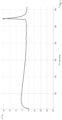
- Figur 1 -
- DSC-Diagramm für die Herstellung gemäß Beispiel 2
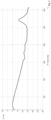
- Figur 2 -
- DSC-Diagramm für die Herstellung gemäß Beispiel 3
- Figur 3 -
- DSC-Diagramm für die Herstellung gemäß Beispiel 4
- Figur 4 -
- DSC-Diagramm der thermischen Elektrolytstabilität gemäß Beispiel 5
- In einer Argon(Ar)-gefüllten Handschuhbox wird eine Mischung bestehend aus jeweils 50 mmol Lithiumhydrid (0,40 g) und wasserfreiem Lithiumhydroxid (1,20 g) in einem Achatmörser vermischt und pulverisiert und dann in einen ca. 5 ml fassenden Stahlautoklaven mit Druckanzeige gefüllt und mit einer Aufheizgeschwindigkeit von 45 K/h auf 360°C erwärmt. Beim Überschreiten von etwa 200°C beobachtet man den Beginn einer Gasbildung. Zum Ende des Experimentes hat sich ein Druck von 25 bar aufgebaut.
- Der Autoklav wird auf Raumtemperatur abgekühlt und das erhaltene weiße Pulver per Röntgendiffraktometrie untersucht. Es besteht im Wesentlichen aus Lithiumoxid neben Spuren an übriggebliebenen Edukten.
- In einer Ar-gefüllten Handschuhbox wird eine Mischung bestehend aus 60 mmol Lithiummetallpulver (0,42 g) und 30 mmol Lithiumperoxid (1,38 g) in einem Achatmörser vermischt und pulverisiert und dann in einen ca. 5 ml fassenden Stahlautoklaven mit Druck- und Temperaturanzeige gefüllt und mit einer Aufheizgeschwindigkeit von 45 K/h auf 360°C erwärmt.
- Beim Überschreiten von etwa 310°C erkennt man das Exotherm der gewünschten Umsetzung in
Figur 1 . - Das Reaktionsprodukt wurde nach Abkühlung auf Raumtemperatur mittels XRD untersucht. Es besteht aus phasenreinem Li2O.
- In einer Ar-gefüllten Handschuhbox wird eine Mischung bestehend aus 80 mmol Lithiummetallpulver (0,56 g) und 40 mmol wasserfreiem Lithiumhydroxid (0,96 g) in einem Achatmörser vermischt und pulverisiert und dann in einen ca. 5 ml fassenden Stahlautoklaven mit Druck- und Temperaturanzeige gefüllt und mit einer Aufheizgeschwindigkeit von 45 K/h auf 360°C erwärmt.
- Beim Überschreiten von etwa 300°C erkennt man das Exotherm der gewünschten Umsetzung in
Figur 2 . - Das Reaktionsprodukt wurde nach Abkühlung auf Raumtemperatur mittels XRD untersucht. Es besteht aus Li2O und LiH neben geringen Resten an LiOH.
- Herstellung einer Mischung aus Lithiumhydroxid und Lithiumoxid durch Umsetzung von Lithiumhydrid mit Lithiumperoxid.
- In einer Ar-gefüllten Handschuhbox wird eine Mischung bestehend aus je 45 mmol Lithiumhydrid (0,36 g) und 45 mmol Lithiumperoxid (2,06 g) in einem Achatmörser vermischt und pulverisiert und dann in einen ca. 5 ml fassenden Stahlautoklaven mit Druck- und Temperaturanzeige gefüllt und mit einer Aufheizgeschwindigkeit von 45 K/h auf 360°C erwärmt.
- Beim Überschreiten von etwa 200°C erkennt man ein breites Exotherm mit Spitzen bei 290 und 310°C in
Figur 3 . - Per XRD lassen sich im abgekühlten Produkt die erwarteten Reflexe von Lithiumoxid und Lithiumhydroxid identifizieren, dagegen nicht mehr die Reflexe von LiH und Li2O2.
- In einen ca. 5 ml fassenden Stahlautoklaven mit Druck- und Temperaturanzeige wurde ein Gemisch bestehend aus je 0,10 g Lithiumperoxid (Lieferant Aldrich, Gehalt min. 90 %) und 2 ml Batterieflüssigelektrolyten gefüllt und mit einer Aufheizgeschwindigkeit von 45 K/h auf 250 oder 300°C erwärmt. Als Batterieelektrolyte kamen eine 10 %ige Lösung von LiPF6 sowie eine 11 %ige Lösung von Lithium bis(oxalato)borat (LiBOB) in einem Gemisch aus Ethylencarbonat (EC) und Ethylmethylcarbonat (EMC) 1 : 1 (wt : wt) zum Einsatz in
Figur 4 . - Man erkennt, dass der LiPF6-Elektrolyt in Gegenwart von Lithiumperoxid bis etwa 110°C stabil ist, sich aber dann unter starker Energiefreisetzung zersetzt. Dagegen ist der LiBOB-Elektrolyt bis etwa 190°C stabil.
Claims (5)
- Lithiumbatterie, enthaltendeine negative Masse als Anode in Form einer übergangsmetallfreien, sauerstoffhaltigen Konversionselektrode,eine übergangsmetallhaltige Kathode undeinen aprotischen Lithiumelektrolyten,wobei die übergangsmetallfreie, sauerstoffhaltige Konversionselektrode in vollentladenem Zustand aus Lithiumhydroxid und gegebenenfalls leitfähigkeitsverbessernden Additiven besteht.
- Lithiumbatterie nach Anspruch 1, dadurch gekennzeichnet, dass die positive Masse (Kathode) ein Lithiuminsertionsmaterial oder ein Konversionsmaterial ist.
- Lithiumbatterie nach Anspruch 1 oder 2, dadurch gekennzeichnet, dass das Lithiuminsertionsmaterial ausgewählt ist aus der Gruppe bestehend aus Lithiummetalloxid, einem lithiierten Metallphosphat, einem lithiierten Silikat oder einem gemischt lithiierten Fluorometalloxid und dass das Konversionsmaterial ausgewählt ist aus der Gruppe bestehend aus Übergangsmetallfluoriden oder Übergangsmetalloxyfluoriden.
- Lithiumbatterie nach einem der Ansprüche 1 bis 3, dadurch gekennzeichnet, dass das sauerstoffhaltige Konversionselektrodenmaterial in Pulverform vorliegt, wobei die Partikel < 100 µm, besonders bevorzugt < 30 µm groß sind.
- Lithiumbatterie nach einem der Ansprüche 1 bis 4, dadurch gekennzeichnet, dass das/die leitfähigkeitsverbessernden Additiven mit dem sauerstoffhaltigen Konversionselektrodenmaterial vermahlen ist/sind.
Applications Claiming Priority (2)
| Application Number | Priority Date | Filing Date | Title |
|---|---|---|---|
| DE102009046916 | 2009-11-20 | ||
| PCT/EP2010/067756 WO2011061256A1 (de) | 2009-11-20 | 2010-11-18 | Galvanische elemente enthaltend sauerstoffhaltige konversionselektroden |
Publications (2)
| Publication Number | Publication Date |
|---|---|
| EP2502303A1 EP2502303A1 (de) | 2012-09-26 |
| EP2502303B1 true EP2502303B1 (de) | 2024-08-14 |
Family
ID=43568177
Family Applications (1)
| Application Number | Title | Priority Date | Filing Date |
|---|---|---|---|
| EP10781493.1A Active EP2502303B1 (de) | 2009-11-20 | 2010-11-18 | Lithiumbatterie ENTHALTEND SAUERSTOFFHALTIGE KONVERSIONSELEKTRODEN |
Country Status (7)
| Country | Link |
|---|---|
| US (1) | US9490482B2 (de) |
| EP (1) | EP2502303B1 (de) |
| JP (1) | JP5980118B2 (de) |
| CN (1) | CN102782924B (de) |
| CA (1) | CA2781633C (de) |
| DE (1) | DE102010044109A1 (de) |
| WO (1) | WO2011061256A1 (de) |
Families Citing this family (11)
| Publication number | Priority date | Publication date | Assignee | Title |
|---|---|---|---|---|
| US9692039B2 (en) | 2012-07-24 | 2017-06-27 | Quantumscape Corporation | Nanostructured materials for electrochemical conversion reactions |
| JP6230149B2 (ja) * | 2012-10-22 | 2017-11-15 | 国立大学法人 東京大学 | 二次電池、正極活物質、正極材料、及び、その製造方法 |
| ES2718917T3 (es) | 2013-05-16 | 2019-07-05 | Albemarle Germany Gmbh | Depósito litio activo para baterías de iones de litio |
| EP2816639A3 (de) * | 2013-06-19 | 2015-05-13 | QuantumScape Corporation | Schutzbeschichtungen für Umwandlungsmaterialkathoden |
| US9466830B1 (en) | 2013-07-25 | 2016-10-11 | Quantumscape Corporation | Method and system for processing lithiated electrode material |
| KR102384822B1 (ko) | 2014-02-25 | 2022-04-08 | 퀀텀스케이프 배터리, 인코포레이티드 | 삽입 및 변환 물질 양자 모두를 갖는 하이브리드 전극 |
| US10326135B2 (en) | 2014-08-15 | 2019-06-18 | Quantumscape Corporation | Doped conversion materials for secondary battery cathodes |
| EP3847711A1 (de) * | 2018-09-05 | 2021-07-14 | Albemarle Germany GmbH | Verfahren zur herstellung einer wiederaufladbaren hochenergie-batterie mit einer anion-redoxaktiven kompositkathode |
| JP7678273B2 (ja) * | 2020-12-18 | 2025-05-16 | 日亜化学工業株式会社 | リチウムニッケル酸化物及びその製造方法 |
| US11380893B1 (en) * | 2021-02-12 | 2022-07-05 | WATTRII, Inc. | High energy cathodes, batteries, and methods of making the same |
| CN114613997A (zh) | 2022-03-09 | 2022-06-10 | 武汉理工大学 | 一种磷酸锰钛铬钠自支撑电极材料及其制备方法与应用 |
Family Cites Families (14)
| Publication number | Priority date | Publication date | Assignee | Title |
|---|---|---|---|---|
| US4071665A (en) * | 1972-09-18 | 1978-01-31 | E. I. Du Pont De Nemours And Company | High energy density battery with dioxolane based electrolyte |
| GB2188917B (en) | 1986-04-11 | 1989-11-22 | Lithium Corp | High purity lithium oxide process |
| JPH01225063A (ja) | 1988-03-01 | 1989-09-07 | Bridgestone Corp | リチウム電池 |
| US4960657A (en) | 1988-03-01 | 1990-10-02 | Bridgestone Corporation | Lithium cells |
| US5283136A (en) | 1992-06-03 | 1994-02-01 | Ramot University Authority For Applied Research And Industrial Development Ltd. | Rechargeable batteries |
| US5436549A (en) | 1993-04-19 | 1995-07-25 | Valence Technology, Inc. | Methods for extending the cycle life of solid, secondary electrolytic cells |
| US6991876B2 (en) | 2001-10-05 | 2006-01-31 | Sri International | Metal/active oxygen batteries |
| CN1921188A (zh) * | 2005-08-23 | 2007-02-28 | 比亚迪股份有限公司 | 一种电池正极和锂离子电池及它们的制备方法 |
| JP4569534B2 (ja) * | 2006-07-19 | 2010-10-27 | トヨタ自動車株式会社 | 組電池 |
| EP2615057B1 (de) * | 2007-02-02 | 2016-06-01 | Rutgers, The State University | Metallfluorid und Phosphat-Nanoverbundstoffe als Elektrodenmaterialien |
| US7736805B2 (en) | 2007-05-16 | 2010-06-15 | Gm Global Technology Operations, Inc. | Lithium hydride negative electrode for rechargeable lithium batteries |
| US20090053594A1 (en) | 2007-08-23 | 2009-02-26 | Johnson Lonnie G | Rechargeable air battery and manufacturing method |
| JP4512151B2 (ja) | 2007-09-28 | 2010-07-28 | トヨタ自動車株式会社 | 水素発生方法、水素発生材料の製造方法、水素製造装置、及び、燃料電池システム |
| US20140075745A1 (en) * | 2012-08-01 | 2014-03-20 | Sharp Laboratories Of America, Inc. | High Capacity Alkali/Oxidant Battery |
-
2010
- 2010-11-18 WO PCT/EP2010/067756 patent/WO2011061256A1/de not_active Ceased
- 2010-11-18 CN CN201080061869.7A patent/CN102782924B/zh active Active
- 2010-11-18 JP JP2012539328A patent/JP5980118B2/ja not_active Expired - Fee Related
- 2010-11-18 EP EP10781493.1A patent/EP2502303B1/de active Active
- 2010-11-18 DE DE102010044109A patent/DE102010044109A1/de active Pending
- 2010-11-18 CA CA2781633A patent/CA2781633C/en active Active
- 2010-11-18 US US13/510,209 patent/US9490482B2/en active Active
Also Published As
| Publication number | Publication date |
|---|---|
| JP2013511802A (ja) | 2013-04-04 |
| US20120225356A1 (en) | 2012-09-06 |
| CN102782924A (zh) | 2012-11-14 |
| DE102010044109A1 (de) | 2011-05-26 |
| EP2502303A1 (de) | 2012-09-26 |
| CA2781633C (en) | 2020-02-25 |
| JP5980118B2 (ja) | 2016-08-31 |
| WO2011061256A1 (de) | 2011-05-26 |
| US9490482B2 (en) | 2016-11-08 |
| CN102782924B (zh) | 2016-11-09 |
| CA2781633A1 (en) | 2011-05-26 |
Similar Documents
| Publication | Publication Date | Title |
|---|---|---|
| EP3794663B9 (de) | Wiederaufladbare batteriezelle | |
| WO2011061256A1 (de) | Galvanische elemente enthaltend sauerstoffhaltige konversionselektroden | |
| DE60128043T2 (de) | Verfahren zur Herstellung von Kathodenaktivmaterial und Verfahren zur Herstellung einer Zelle mit nichtwässrigem Elektrolyten | |
| DE69528563T2 (de) | Kathodenmaterial, Verfahren zu dessen Herstellung und dessen Verwendung in einer Sekundärbatterie der nichtwässrigen Lösungsmittelart | |
| DE69220660T2 (de) | AUFLADBARE BATTERIE MIT EINER Li1+xMn2O4 KATHODE UND EINER KOHLENSTOFFANODE | |
| EP3105803B1 (de) | Stabilisierte (teil)lithiierte graphitmaterialien, verfahren zu deren herstellung und verwendung für lithiumbatterien | |
| DE69524548T2 (de) | Lithium Sekundärbatterie und Verfahren zur Herstellung des Materials für die negative Elektrode zur Verwendung darin. | |
| DE69708833T2 (de) | Elektrode für wiederaufladbaren lithiumenthaltenden elektrochemischen stromgenerator | |
| DE60305203T2 (de) | Boron enthaltende lithiuminterkalationsverbindungen zur verwendung als aktive materialien für elektroden , speichermedien und electrochromische vorrichtungen | |
| WO2015121391A1 (de) | Galvanische zellen und (teil)lithiierte lithiumbatterieanoden mit erhöhter kapazität und verfahren zur herstellung von synthesegraphit-interkalationsverbindungen | |
| EP2494636B1 (de) | Stickstoffhaltige hydridanoden und galvanische elemente enthaltend stickstoffhaltige hydridanoden | |
| DE112017006921T5 (de) | Lithium-Ionen-Zelle und Verfahren zur Herstellung davon | |
| DE112011102161T5 (de) | Herstellungsverfahren für eine Verbindung auf Grundlage von Lithiumsilicat | |
| EP2486616A1 (de) | Hydridanoden auf aluminiumbasis und galvanische elemente enthaltend hydridanoden auf aluminiumbasis | |
| DE102014221782A1 (de) | Lithiumbatterie | |
| DE69907182T2 (de) | Elektrochemische zelle | |
| EP2553748B1 (de) | Metallimidverbindungen als anodenmaterialien für lithiumbatterien und galvanische elemente mit hoher speicherkapazität | |
| WO2022161996A1 (de) | Wiederaufladbare batteriezelle | |
| EP2842193A1 (de) | 1,5-3 v-lithiumbatterien mit überladeschutz | |
| EP4037036A1 (de) | Wiederaufladbare batteriezelle | |
| WO2021121773A1 (de) | Lithiumionen-batterie und verfahren zur herstellung einer lithiumionen-batterie | |
| EP3847710A1 (de) | Wiederaufladbare lithium-batterie mit einer kompositanode | |
| US20130062575A1 (en) | Metal imide compounds as anode materials for lithium batteries and galvanic elements with a high storage capacity | |
| EP3847711A1 (de) | Verfahren zur herstellung einer wiederaufladbaren hochenergie-batterie mit einer anion-redoxaktiven kompositkathode |
Legal Events
| Date | Code | Title | Description |
|---|---|---|---|
| PUAI | Public reference made under article 153(3) epc to a published international application that has entered the european phase |
Free format text: ORIGINAL CODE: 0009012 |
|
| 17P | Request for examination filed |
Effective date: 20120620 |
|
| AK | Designated contracting states |
Kind code of ref document: A1 Designated state(s): AL AT BE BG CH CY CZ DE DK EE ES FI FR GB GR HR HU IE IS IT LI LT LU LV MC MK MT NL NO PL PT RO RS SE SI SK SM TR |
|
| DAX | Request for extension of the european patent (deleted) | ||
| STAA | Information on the status of an ep patent application or granted ep patent |
Free format text: STATUS: EXAMINATION IS IN PROGRESS |
|
| 17Q | First examination report despatched |
Effective date: 20170120 |
|
| RAP1 | Party data changed (applicant data changed or rights of an application transferred) |
Owner name: ALBEMARLE GERMANY GMBH |
|
| RAP3 | Party data changed (applicant data changed or rights of an application transferred) |
Owner name: ALBEMARLE GERMANY GMBH |
|
| GRAP | Despatch of communication of intention to grant a patent |
Free format text: ORIGINAL CODE: EPIDOSNIGR1 |
|
| STAA | Information on the status of an ep patent application or granted ep patent |
Free format text: STATUS: GRANT OF PATENT IS INTENDED |
|
| INTG | Intention to grant announced |
Effective date: 20240322 |
|
| RIC1 | Information provided on ipc code assigned before grant |
Ipc: C01D 15/02 20060101ALI20240311BHEP Ipc: C01D 15/00 20060101ALI20240311BHEP Ipc: C01G 23/00 20060101ALI20240311BHEP Ipc: H01M 4/48 20100101ALI20240311BHEP Ipc: H01M 4/58 20100101ALI20240311BHEP Ipc: H01M 10/052 20100101AFI20240311BHEP |
|
| GRAS | Grant fee paid |
Free format text: ORIGINAL CODE: EPIDOSNIGR3 |
|
| GRAA | (expected) grant |
Free format text: ORIGINAL CODE: 0009210 |
|
| STAA | Information on the status of an ep patent application or granted ep patent |
Free format text: STATUS: THE PATENT HAS BEEN GRANTED |
|
| AK | Designated contracting states |
Kind code of ref document: B1 Designated state(s): AL AT BE BG CH CY CZ DE DK EE ES FI FR GB GR HR HU IE IS IT LI LT LU LV MC MK MT NL NO PL PT RO RS SE SI SK SM TR |
|
| REG | Reference to a national code |
Ref country code: GB Ref legal event code: FG4D Free format text: NOT ENGLISH |
|
| REG | Reference to a national code |
Ref country code: CH Ref legal event code: EP |
|
| REG | Reference to a national code |
Ref country code: DE Ref legal event code: R096 Ref document number: 502010017094 Country of ref document: DE |
|
| REG | Reference to a national code |
Ref country code: IE Ref legal event code: FG4D Free format text: LANGUAGE OF EP DOCUMENT: GERMAN |
|
| REG | Reference to a national code |
Ref country code: LT Ref legal event code: MG9D |
|
| PG25 | Lapsed in a contracting state [announced via postgrant information from national office to epo] |
Ref country code: NO Free format text: LAPSE BECAUSE OF FAILURE TO SUBMIT A TRANSLATION OF THE DESCRIPTION OR TO PAY THE FEE WITHIN THE PRESCRIBED TIME-LIMIT Effective date: 20241114 |
|
| PG25 | Lapsed in a contracting state [announced via postgrant information from national office to epo] |
Ref country code: NL Free format text: LAPSE BECAUSE OF FAILURE TO SUBMIT A TRANSLATION OF THE DESCRIPTION OR TO PAY THE FEE WITHIN THE PRESCRIBED TIME-LIMIT Effective date: 20240814 Ref country code: PL Free format text: LAPSE BECAUSE OF FAILURE TO SUBMIT A TRANSLATION OF THE DESCRIPTION OR TO PAY THE FEE WITHIN THE PRESCRIBED TIME-LIMIT Effective date: 20240814 Ref country code: PT Free format text: LAPSE BECAUSE OF FAILURE TO SUBMIT A TRANSLATION OF THE DESCRIPTION OR TO PAY THE FEE WITHIN THE PRESCRIBED TIME-LIMIT Effective date: 20241216 Ref country code: FI Free format text: LAPSE BECAUSE OF FAILURE TO SUBMIT A TRANSLATION OF THE DESCRIPTION OR TO PAY THE FEE WITHIN THE PRESCRIBED TIME-LIMIT Effective date: 20240814 Ref country code: GR Free format text: LAPSE BECAUSE OF FAILURE TO SUBMIT A TRANSLATION OF THE DESCRIPTION OR TO PAY THE FEE WITHIN THE PRESCRIBED TIME-LIMIT Effective date: 20241115 |
|
| PG25 | Lapsed in a contracting state [announced via postgrant information from national office to epo] |
Ref country code: BG Free format text: LAPSE BECAUSE OF FAILURE TO SUBMIT A TRANSLATION OF THE DESCRIPTION OR TO PAY THE FEE WITHIN THE PRESCRIBED TIME-LIMIT Effective date: 20240814 |
|
| PG25 | Lapsed in a contracting state [announced via postgrant information from national office to epo] |
Ref country code: LV Free format text: LAPSE BECAUSE OF FAILURE TO SUBMIT A TRANSLATION OF THE DESCRIPTION OR TO PAY THE FEE WITHIN THE PRESCRIBED TIME-LIMIT Effective date: 20240814 |
|
| PG25 | Lapsed in a contracting state [announced via postgrant information from national office to epo] |
Ref country code: IS Free format text: LAPSE BECAUSE OF FAILURE TO SUBMIT A TRANSLATION OF THE DESCRIPTION OR TO PAY THE FEE WITHIN THE PRESCRIBED TIME-LIMIT Effective date: 20241214 |
|
| PG25 | Lapsed in a contracting state [announced via postgrant information from national office to epo] |
Ref country code: HR Free format text: LAPSE BECAUSE OF FAILURE TO SUBMIT A TRANSLATION OF THE DESCRIPTION OR TO PAY THE FEE WITHIN THE PRESCRIBED TIME-LIMIT Effective date: 20240814 |
|
| PG25 | Lapsed in a contracting state [announced via postgrant information from national office to epo] |
Ref country code: ES Free format text: LAPSE BECAUSE OF FAILURE TO SUBMIT A TRANSLATION OF THE DESCRIPTION OR TO PAY THE FEE WITHIN THE PRESCRIBED TIME-LIMIT Effective date: 20240814 Ref country code: RS Free format text: LAPSE BECAUSE OF FAILURE TO SUBMIT A TRANSLATION OF THE DESCRIPTION OR TO PAY THE FEE WITHIN THE PRESCRIBED TIME-LIMIT Effective date: 20241114 |
|
| PG25 | Lapsed in a contracting state [announced via postgrant information from national office to epo] |
Ref country code: RS Free format text: LAPSE BECAUSE OF FAILURE TO SUBMIT A TRANSLATION OF THE DESCRIPTION OR TO PAY THE FEE WITHIN THE PRESCRIBED TIME-LIMIT Effective date: 20241114 Ref country code: PT Free format text: LAPSE BECAUSE OF FAILURE TO SUBMIT A TRANSLATION OF THE DESCRIPTION OR TO PAY THE FEE WITHIN THE PRESCRIBED TIME-LIMIT Effective date: 20241216 Ref country code: PL Free format text: LAPSE BECAUSE OF FAILURE TO SUBMIT A TRANSLATION OF THE DESCRIPTION OR TO PAY THE FEE WITHIN THE PRESCRIBED TIME-LIMIT Effective date: 20240814 Ref country code: NO Free format text: LAPSE BECAUSE OF FAILURE TO SUBMIT A TRANSLATION OF THE DESCRIPTION OR TO PAY THE FEE WITHIN THE PRESCRIBED TIME-LIMIT Effective date: 20241114 Ref country code: NL Free format text: LAPSE BECAUSE OF FAILURE TO SUBMIT A TRANSLATION OF THE DESCRIPTION OR TO PAY THE FEE WITHIN THE PRESCRIBED TIME-LIMIT Effective date: 20240814 Ref country code: LV Free format text: LAPSE BECAUSE OF FAILURE TO SUBMIT A TRANSLATION OF THE DESCRIPTION OR TO PAY THE FEE WITHIN THE PRESCRIBED TIME-LIMIT Effective date: 20240814 Ref country code: IS Free format text: LAPSE BECAUSE OF FAILURE TO SUBMIT A TRANSLATION OF THE DESCRIPTION OR TO PAY THE FEE WITHIN THE PRESCRIBED TIME-LIMIT Effective date: 20241214 Ref country code: HR Free format text: LAPSE BECAUSE OF FAILURE TO SUBMIT A TRANSLATION OF THE DESCRIPTION OR TO PAY THE FEE WITHIN THE PRESCRIBED TIME-LIMIT Effective date: 20240814 Ref country code: GR Free format text: LAPSE BECAUSE OF FAILURE TO SUBMIT A TRANSLATION OF THE DESCRIPTION OR TO PAY THE FEE WITHIN THE PRESCRIBED TIME-LIMIT Effective date: 20241115 Ref country code: FI Free format text: LAPSE BECAUSE OF FAILURE TO SUBMIT A TRANSLATION OF THE DESCRIPTION OR TO PAY THE FEE WITHIN THE PRESCRIBED TIME-LIMIT Effective date: 20240814 Ref country code: ES Free format text: LAPSE BECAUSE OF FAILURE TO SUBMIT A TRANSLATION OF THE DESCRIPTION OR TO PAY THE FEE WITHIN THE PRESCRIBED TIME-LIMIT Effective date: 20240814 Ref country code: BG Free format text: LAPSE BECAUSE OF FAILURE TO SUBMIT A TRANSLATION OF THE DESCRIPTION OR TO PAY THE FEE WITHIN THE PRESCRIBED TIME-LIMIT Effective date: 20240814 |
|
| PG25 | Lapsed in a contracting state [announced via postgrant information from national office to epo] |
Ref country code: SM Free format text: LAPSE BECAUSE OF FAILURE TO SUBMIT A TRANSLATION OF THE DESCRIPTION OR TO PAY THE FEE WITHIN THE PRESCRIBED TIME-LIMIT Effective date: 20240814 Ref country code: DK Free format text: LAPSE BECAUSE OF FAILURE TO SUBMIT A TRANSLATION OF THE DESCRIPTION OR TO PAY THE FEE WITHIN THE PRESCRIBED TIME-LIMIT Effective date: 20240814 Ref country code: RO Free format text: LAPSE BECAUSE OF FAILURE TO SUBMIT A TRANSLATION OF THE DESCRIPTION OR TO PAY THE FEE WITHIN THE PRESCRIBED TIME-LIMIT Effective date: 20240814 |
|
| PG25 | Lapsed in a contracting state [announced via postgrant information from national office to epo] |
Ref country code: EE Free format text: LAPSE BECAUSE OF FAILURE TO SUBMIT A TRANSLATION OF THE DESCRIPTION OR TO PAY THE FEE WITHIN THE PRESCRIBED TIME-LIMIT Effective date: 20240814 |
|
| PG25 | Lapsed in a contracting state [announced via postgrant information from national office to epo] |
Ref country code: CZ Free format text: LAPSE BECAUSE OF FAILURE TO SUBMIT A TRANSLATION OF THE DESCRIPTION OR TO PAY THE FEE WITHIN THE PRESCRIBED TIME-LIMIT Effective date: 20240814 |
|
| PG25 | Lapsed in a contracting state [announced via postgrant information from national office to epo] |
Ref country code: IT Free format text: LAPSE BECAUSE OF FAILURE TO SUBMIT A TRANSLATION OF THE DESCRIPTION OR TO PAY THE FEE WITHIN THE PRESCRIBED TIME-LIMIT Effective date: 20240814 Ref country code: SK Free format text: LAPSE BECAUSE OF FAILURE TO SUBMIT A TRANSLATION OF THE DESCRIPTION OR TO PAY THE FEE WITHIN THE PRESCRIBED TIME-LIMIT Effective date: 20240814 |
|
| REG | Reference to a national code |
Ref country code: DE Ref legal event code: R097 Ref document number: 502010017094 Country of ref document: DE |
|
| PLBE | No opposition filed within time limit |
Free format text: ORIGINAL CODE: 0009261 |
|
| STAA | Information on the status of an ep patent application or granted ep patent |
Free format text: STATUS: NO OPPOSITION FILED WITHIN TIME LIMIT |
|
| REG | Reference to a national code |
Ref country code: CH Ref legal event code: PL |
|
| PG25 | Lapsed in a contracting state [announced via postgrant information from national office to epo] |
Ref country code: MC Free format text: LAPSE BECAUSE OF FAILURE TO SUBMIT A TRANSLATION OF THE DESCRIPTION OR TO PAY THE FEE WITHIN THE PRESCRIBED TIME-LIMIT Effective date: 20240814 |
|
| PG25 | Lapsed in a contracting state [announced via postgrant information from national office to epo] |
Ref country code: LU Free format text: LAPSE BECAUSE OF NON-PAYMENT OF DUE FEES Effective date: 20241118 |
|
| REG | Reference to a national code |
Ref country code: CH Ref legal event code: PL |
|
| 26N | No opposition filed |
Effective date: 20250515 |
|
| PG25 | Lapsed in a contracting state [announced via postgrant information from national office to epo] |
Ref country code: CH Free format text: LAPSE BECAUSE OF NON-PAYMENT OF DUE FEES Effective date: 20241130 |
|
| REG | Reference to a national code |
Ref country code: BE Ref legal event code: MM Effective date: 20241130 |
|
| PG25 | Lapsed in a contracting state [announced via postgrant information from national office to epo] |
Ref country code: SE Free format text: LAPSE BECAUSE OF FAILURE TO SUBMIT A TRANSLATION OF THE DESCRIPTION OR TO PAY THE FEE WITHIN THE PRESCRIBED TIME-LIMIT Effective date: 20240814 |
|
| PG25 | Lapsed in a contracting state [announced via postgrant information from national office to epo] |
Ref country code: BE Free format text: LAPSE BECAUSE OF NON-PAYMENT OF DUE FEES Effective date: 20241130 |
|
| PG25 | Lapsed in a contracting state [announced via postgrant information from national office to epo] |
Ref country code: IE Free format text: LAPSE BECAUSE OF NON-PAYMENT OF DUE FEES Effective date: 20241118 |
|
| PGFP | Annual fee paid to national office [announced via postgrant information from national office to epo] |
Ref country code: DE Payment date: 20251128 Year of fee payment: 16 |
|
| PGFP | Annual fee paid to national office [announced via postgrant information from national office to epo] |
Ref country code: GB Payment date: 20251127 Year of fee payment: 16 |
|
| PG25 | Lapsed in a contracting state [announced via postgrant information from national office to epo] |
Ref country code: AT Free format text: LAPSE BECAUSE OF NON-PAYMENT OF DUE FEES Effective date: 20241118 |
|
| PGFP | Annual fee paid to national office [announced via postgrant information from national office to epo] |
Ref country code: FR Payment date: 20251125 Year of fee payment: 16 |
|
| REG | Reference to a national code |
Ref country code: AT Ref legal event code: MM01 Ref document number: 1714139 Country of ref document: AT Kind code of ref document: T Effective date: 20241118 |
|
| PG25 | Lapsed in a contracting state [announced via postgrant information from national office to epo] |
Ref country code: HU Free format text: LAPSE BECAUSE OF FAILURE TO SUBMIT A TRANSLATION OF THE DESCRIPTION OR TO PAY THE FEE WITHIN THE PRESCRIBED TIME-LIMIT; INVALID AB INITIO Effective date: 20101118 |
|
| PG25 | Lapsed in a contracting state [announced via postgrant information from national office to epo] |
Ref country code: CY Free format text: LAPSE BECAUSE OF FAILURE TO SUBMIT A TRANSLATION OF THE DESCRIPTION OR TO PAY THE FEE WITHIN THE PRESCRIBED TIME-LIMIT; INVALID AB INITIO Effective date: 20101118 |