EP2483281B1 - Substituierte tetrazol-1-yl-phenoxymethyl-thiazol-2-yl-piperidinyl-pyrimidinsalze - Google Patents
Substituierte tetrazol-1-yl-phenoxymethyl-thiazol-2-yl-piperidinyl-pyrimidinsalze Download PDFInfo
- Publication number
- EP2483281B1 EP2483281B1 EP10759779.1A EP10759779A EP2483281B1 EP 2483281 B1 EP2483281 B1 EP 2483281B1 EP 10759779 A EP10759779 A EP 10759779A EP 2483281 B1 EP2483281 B1 EP 2483281B1
- Authority
- EP
- European Patent Office
- Prior art keywords
- salt
- polymorph
- crystalline
- hcl
- diabetes
- Prior art date
- Legal status (The legal status is an assumption and is not a legal conclusion. Google has not performed a legal analysis and makes no representation as to the accuracy of the status listed.)
- Active
Links
Images












Classifications
-
- C—CHEMISTRY; METALLURGY
- C07—ORGANIC CHEMISTRY
- C07D—HETEROCYCLIC COMPOUNDS
- C07D417/00—Heterocyclic compounds containing two or more hetero rings, at least one ring having nitrogen and sulfur atoms as the only ring hetero atoms, not provided for by group C07D415/00
- C07D417/14—Heterocyclic compounds containing two or more hetero rings, at least one ring having nitrogen and sulfur atoms as the only ring hetero atoms, not provided for by group C07D415/00 containing three or more hetero rings
-
- A—HUMAN NECESSITIES
- A61—MEDICAL OR VETERINARY SCIENCE; HYGIENE
- A61K—PREPARATIONS FOR MEDICAL, DENTAL OR TOILETRY PURPOSES
- A61K31/00—Medicinal preparations containing organic active ingredients
- A61K31/33—Heterocyclic compounds
- A61K31/395—Heterocyclic compounds having nitrogen as a ring hetero atom, e.g. guanethidine or rifamycins
- A61K31/495—Heterocyclic compounds having nitrogen as a ring hetero atom, e.g. guanethidine or rifamycins having six-membered rings with two or more nitrogen atoms as the only ring heteroatoms, e.g. piperazine or tetrazines
- A61K31/505—Pyrimidines; Hydrogenated pyrimidines, e.g. trimethoprim
- A61K31/506—Pyrimidines; Hydrogenated pyrimidines, e.g. trimethoprim not condensed and containing further heterocyclic rings
-
- A—HUMAN NECESSITIES
- A61—MEDICAL OR VETERINARY SCIENCE; HYGIENE
- A61K—PREPARATIONS FOR MEDICAL, DENTAL OR TOILETRY PURPOSES
- A61K45/00—Medicinal preparations containing active ingredients not provided for in groups A61K31/00 - A61K41/00
- A61K45/06—Mixtures of active ingredients without chemical characterisation, e.g. antiphlogistics and cardiaca
-
- A—HUMAN NECESSITIES
- A61—MEDICAL OR VETERINARY SCIENCE; HYGIENE
- A61P—SPECIFIC THERAPEUTIC ACTIVITY OF CHEMICAL COMPOUNDS OR MEDICINAL PREPARATIONS
- A61P3/00—Drugs for disorders of the metabolism
-
- A—HUMAN NECESSITIES
- A61—MEDICAL OR VETERINARY SCIENCE; HYGIENE
- A61P—SPECIFIC THERAPEUTIC ACTIVITY OF CHEMICAL COMPOUNDS OR MEDICINAL PREPARATIONS
- A61P3/00—Drugs for disorders of the metabolism
- A61P3/06—Antihyperlipidemics
-
- A—HUMAN NECESSITIES
- A61—MEDICAL OR VETERINARY SCIENCE; HYGIENE
- A61P—SPECIFIC THERAPEUTIC ACTIVITY OF CHEMICAL COMPOUNDS OR MEDICINAL PREPARATIONS
- A61P3/00—Drugs for disorders of the metabolism
- A61P3/08—Drugs for disorders of the metabolism for glucose homeostasis
-
- A—HUMAN NECESSITIES
- A61—MEDICAL OR VETERINARY SCIENCE; HYGIENE
- A61P—SPECIFIC THERAPEUTIC ACTIVITY OF CHEMICAL COMPOUNDS OR MEDICINAL PREPARATIONS
- A61P3/00—Drugs for disorders of the metabolism
- A61P3/08—Drugs for disorders of the metabolism for glucose homeostasis
- A61P3/10—Drugs for disorders of the metabolism for glucose homeostasis for hyperglycaemia, e.g. antidiabetics
-
- C—CHEMISTRY; METALLURGY
- C07—ORGANIC CHEMISTRY
- C07D—HETEROCYCLIC COMPOUNDS
- C07D513/00—Heterocyclic compounds containing in the condensed system at least one hetero ring having nitrogen and sulfur atoms as the only ring hetero atoms, not provided for in groups C07D463/00, C07D477/00 or C07D499/00 - C07D507/00
- C07D513/12—Heterocyclic compounds containing in the condensed system at least one hetero ring having nitrogen and sulfur atoms as the only ring hetero atoms, not provided for in groups C07D463/00, C07D477/00 or C07D499/00 - C07D507/00 in which the condensed system contains three hetero rings
- C07D513/14—Ortho-condensed systems
-
- C—CHEMISTRY; METALLURGY
- C07—ORGANIC CHEMISTRY
- C07B—GENERAL METHODS OF ORGANIC CHEMISTRY; APPARATUS THEREFOR
- C07B2200/00—Indexing scheme relating to specific properties of organic compounds
- C07B2200/13—Crystalline forms, e.g. polymorphs
Definitions
- crystalline salts of 5-ethyl-2- ⁇ 4-[4-(4-tetrazol-1-yl-phenoxymethyl)-thiazol-2-yl]-piperidin-1-yl ⁇ -pyrimidine compositions thereof, methods for their preparation, and their use.
- WO 2008/083238 discloses 5-ethyl-2- ⁇ 4-[4-(4-tetrazol-1-yl-phenoxymethyl)-thiazol-2-yl]-piperidin-1-yl ⁇ -pyrimidine and its uses for the treatment of diabetes and metabolic disorders.
- PCT/US2009/038847 discloses uses of oxymethylene compounds including 5-ethyl-2- ⁇ 4-[4-(4-tetrazol-1-yl-phenoxymethyl)-thiazol-2-yl]-piperidin-1-yl ⁇ -pyrimidine in a combination therapy with a dipeptidyl peptidase IV (DPP IV) inhibitor.
- DPP IV dipeptidyl peptidase IV
- the present invention provides crystalline salts of 5-ethyl-2- ⁇ 4-[4-(4-tetrazol-1-yl-phenoxymethyl)-thiazol-2-yl]-piperidin-1-yl ⁇ -pyrimidine selected from the group consisting of a besylate, camsylate, esylate, HBr, HCl, mesylate, sulfate, and tosylate salt.
- polymorphs (Form 1 and Form 2) of 5-ethyl-2- ⁇ 4-[4-(4-tetrazol-1-yl-phenoxymethyl)-thiazol-2-yl]-piperidin-1-yl ⁇ -pyrimidine hydrochloride.
- compositions comprising a crystalline salt or polymorph described herein and a pharmaceutically acceptable carrier.
- a crystalline salt or polymorph described herein for use in a method to treat a disease selected from the group consisting of Type I diabetes, Type II diabetes and metabolic syndrome, and their uses in the preparation of such medicaments.
- a crystalline salt or polymorph described herein for use in one or more of stimulating insulin production, stimulating glucose-dependent insulin secretion, lowering blood glucose, or lowering blood triglyceride levels, and their uses in the preparation of such medicaments.
- a crystalline salt or polymorph described herein for use in a combination therapy with a therapeutically effective amount of a DPP IV inhibitor.
- XRPD x-ray powder diffraction
- DSC differential scanning calorimetry
- TGA thermoographic analysis
- besylate bezene sulfonate salt
- camsylate camphorsulfonate salt
- esylate ethanesulfonate salt
- mesylate methanesulfonate salt
- tosylate p-toluene sulfonate salt
- acetone (CH 3 ) 2 CO); RH (relative humidity).
- compositions and methods are intended to mean that the compositions and methods include the recited elements, but not excluding others.
- crystalline salt encompasses anhydrous and unsolvated crystals, as well as crystals that may be associated with varying degrees of hydrates or solvates.
- the term “substantially” refers to degree of variations of +/- by about 1%, about 5%, about 10%, about 15% or about 20%.
- the term "substantially pure” with respect to a particular polymorphic form of a compound means that the polymorph form contains about less than 30%, or about less than 20%, or about less than 15%, or about less than 10%, or about less than 5%, or about less than 1% by weight of impurities, such impurities may include other polymorphic forms of the same compound or trace solvents.
- the term "pharmaceutically acceptable carrier” includes any and all solvents, dispersion media, coatings, surfactants, antioxidants, preservatives (e.g., antibacterial agents, antifungal agents), isotonic agents, absorption delaying agents, salts, preservatives, drugs, drug stabilizers, binders, excipients, disintegration agents, lubricants, sweetening agents, flavoring agents, dyes, such like materials and combinations thereof, as would be known to one of ordinary skill in the art (See, for example, Remington's Pharmaceutical Sciences, 18th Ed. Mack Printing Company, 1990, pp. 1289- 1329 ). Except insofar as any conventional carrier is incompatible with the active ingredient, its use in the therapeutic or pharmaceutical compositions is contemplated.
- the term "subject” refers to a mammal and includes, without limitation, humans, domestic animals (e.g ., dogs or cats), farm animals (cows, horses, or pigs), and laboratory animals (mice, rats, hamsters, guinea pigs, pigs, rabbits, dogs, or monkeys).
- therapeutically effective amount refers to that amount of an active ingredient that is sufficient to effect treatment, as defined below, when administered to a mammal in need of such treatment.
- the therapeutically effective amount will vary depending upon the subject and disease condition being treated, the weight and age of the subject, the severity of the disease condition, the manner of administration and the like, which can readily be determined by a prescribing physician.
- treatment means any treatment of a disease in a mammal, including: (i) preventing the disease, that is, causing the clinical symptoms of the disease not to develop; (ii) inhibiting the disease, that is, arresting the development of clinical symptoms; and/or (iii) relieving the disease, that is, causing the regression of clinical symptoms.
- diabetes mellitus or "diabetes” means a disease or condition that is generally characterized by metabolic defects in production and utilization of glucose that result in the failure to maintain appropriate blood sugar levels in the body. The result of these defects is elevated blood glucose, referred to as "hyperglycemia.”
- Type I diabetes is generally the result of an absolute deficiency of insulin, the hormone that regulates glucose utilization.
- Type II diabetes often occurs in the face of normal, or even elevated levels of insulin and can result from the inability of tissues to respond appropriately to insulin.
- Type II diabetic subjects are insulin resistant and have a relative deficiency of insulin, in that insulin secretion cannot compensate for the resistance of peripheral tissues to respond to insulin.
- Type II diabetics are obese.
- Other types of disorders of glucose homeostasis include impaired glucose tolerance, which is a metabolic stage intermediate between normal glucose homeostasis and diabetes, and gestational diabetes mellitus, which is glucose intolerance in pregnancy in women with no previous history of Type I or Type II diabetes.
- metabolic syndrome refers to a cluster of metabolic abnormalities including abdominal obesity, insulin resistance, glucose intolerance, diabetes, hypertension, hyperlipidemia, and dyslipidemia. These abnormalities are known to be associated with an increased risk of vascular events.
- abnormal obesity is defined by a cutoff point of waist circumference ⁇ 102 cm in men and ⁇ 80 cm in women, as recommended by the third report of the national cholesterol education program expert panel on detection, evaluation, and treatment of high blood cholesterol in adults (NCEP/ATP Panel III).
- insulin resistance can be defined generally as a disorder of glucose metabolism. More specifically, insulin resistance can be defined as the diminished ability of insulin to exert its biological action across a broad range of concentrations producing less than the expected biologic effect ( see, e.g., Reaven GM, J. Basic & Clin. Phys. & Pharm. (1998) 9:387-406 and Flie J, Ann Rev. Med. (1983) 34:145-60 ). Insulin resistant persons have a diminished ability to properly metabolize glucose and respond poorly, if at all, to insulin therapy.
- Insulin resistance can cause or contribute to polycystic ovarian syndrome, impaired glucose tolerance, gestational diabetes, metabolic syndrome, hypertension, obesity, atherosclerosis and a variety of other disorders. Eventually, the insulin resistant individuals can progress to a point where a diabetic state is reached.
- Atherosclerosis encompasses vascular diseases and conditions that are recognized and understood by physicians practicing in the relevant fields of medicine.
- Atherosclerotic cardiovascular disease, coronary heart disease (also known as coronary artery disease or ischemic heart disease), cerebrovascular disease and peripheral vessel disease are all clinical manifestations of atherosclerosis and are therefore encompassed by the terms “atherosclerosis” and "atherosclerotic disease”.
- symptom of diabetes includes, but is not limited to, polyuria, polydipsia, and polyphagia, as used herein, incorporating their common usage.
- polyuria means the passage of a large volume of urine during a given period
- polydipsia means chronic, excessive thirst
- polyphagia means excessive eating.
- Other symptoms of diabetes include, e.g ., increased susceptibility to certain infections (especially fungal and staphylococcal infections), nausea, and ketoacidosis (enhanced production of ketone bodies in the blood).
- microvascular complications are those complications that generally result in small blood vessel damage. These complications include, e.g ., retinopathy (the impairment or loss of vision due to blood vessel damage in the eyes); neuropathy (nerve damage and foot problems due to blood vessel damage to the nervous system); and nephropathy (kidney disease due to blood vessel damage in the kidneys). Macrovascular complications are those complications that generally result from large blood vessel damage. These complications include, e.g ., cardiovascular disease and peripheral vascular disease. Cardiovascular disease refers to diseases of blood vessels of the heart.
- Cardiovascular disease is generally one of several forms, including, e.g ., hypertension (also referred to as high blood pressure), coronary heart disease, stroke, and rheumatic heart disease.
- hypertension also referred to as high blood pressure
- coronary heart disease stroke
- rheumatic heart disease Peripheral vascular disease refers to diseases of any of the blood vessels outside of the heart. It is often a narrowing of the blood vessels that carry blood to leg and arm muscles.
- dislipidemia refers to abnormal levels of lipoproteins in blood plasma including both depressed and/or elevated levels of lipoproteins (e.g ., elevated levels of LDL and/or VLDL, and depressed levels of HDL).
- hypolipidemia includes, but is not limited to, the following:
- Risk factors for hyperlipidemia include, but are not limited to, the following: (1) disease risk factors, such as a history of Type I diabetes, Type II diabetes, Cushing's syndrome, hypothyroidism and certain types of renal failure; (2) drug risk factors, which include, birth control pills; hormones, such as estrogen, and corticosteroids; certain diuretics; and various ⁇ blockers; (3) dietary risk factors include dietary fat intake per total calories greater than 40%; saturated fat intake per total calories greater than 10%; cholesterol intake greater than 300 mg per day; habitual and excessive alcohol use; and obesity.
- disease risk factors such as a history of Type I diabetes, Type II diabetes, Cushing's syndrome, hypothyroidism and certain types of renal failure
- drug risk factors which include, birth control pills; hormones, such as estrogen, and corticosteroids; certain diuretics; and various ⁇ blockers
- dietary risk factors include dietary fat intake per total calories greater than 40%; saturated fat intake per total calories greater than 10%; cholesterol intake greater than 300 mg per day; habitual and excessive alcohol use
- Obesity refers to, according to the World Health Organization, a Body Mass Index (“BMI") greater than 27.8 kg/m 2 for men and 27.3 kg/m 2 for women (BMI equals weight (kg)/height (m 2 ).
- BMI Body Mass Index
- Obesity is linked to a variety of medical conditions including diabetes and hyperlipidemia. Obesity is also a known risk factor for the development of Type II diabetes ( see, e.g., Barrett-Conner E, Epidemol. Rev. (1989) 11:172-181 ; and Knowler, et al., Am. J. Clin. Nutr. (1991) 53:1543-1551 ).
- salts formed from acetic, adipic, L-ascorbic, L-aspartic, citric, formic, gentisic (2,5-dihydroxybenzoic), L-glutamic, glutaric, lactic, maleic, L-malic, phosphoric, and L-tartaric were found to be oils or gels that were difficult to handle and isolate, and would not be suitable for use in bulk preparations.
- the crystalline besylate, camsylate, esylate, HBr, HCl, mesylate, sulfate, and tosylates salts are therefore superior for use in preparing pharamceutical salts of 5-ethyl-2- ⁇ 4-[4-(4-tetrazol-1-yl-phenoxymethyl)-thiazol-2-yl]-piperidin-1-yl ⁇ -pyrimidine.
- the salts are characterized by a number of solid state techniques such as DSC and TGA. It is understood that melting point temperatures and thermograms can vary depending on instrumentation and the procedures employed, including the heating rate used. Accordingly, the temperature data and graphs disclosed herein are understood to accommodate such variations.
- the salts are also characterized by XRPD (x-ray powder diffraction). Relative intensities and peak assignments can vary depending on a number of factors, including sample preparation, mounting, and the instrument and analytical procedure and settings used to obtain the spectrum. The peak assignments described herein are intended to encompass variations of plus or minus 0.5 degrees 2 theta.
- a crystalline besyalte salt having a DSC endotherm at about 153°C.
- the besylate salt has a DSC or TGA thermogram substantially as shown in Figure 8 .
- the besylate salt has the XRPD pattern substantially as shown in Figure 15 .
- a crystalline camsylate salt having a DSC endotherm at about 184°C.
- the camsylate salt has a DSC or TGA thermogram substantially as shown in Figure 9 .
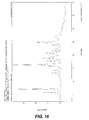
- the camsylate salt has the XRPD pattern substantially as shown in Figure 16 .
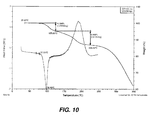
- a crystalline esylate salt having a DSC endotherm at about 99°C.
- the esylate salt has a DSC or TGA thermogram substantially as shown in Figure 10 .
- the esylate salt has the XRPD pattern substantially as shown in Figure 17 .
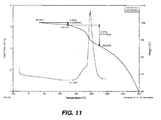
- a crystalline HBr salt having a DSC endotherm at about 142°C.
- the HBr salt has a DSC or TGA thermogram substantially as shown in Figure 11 .
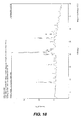
- the HBr salt has the XRPD pattern substantially as shown in Figure 18 .
- a crystalline mesylate salt having a DSC endotherm at about 86°C.
- the mesylate salt has a DSC or TGA thermogram substantially as shown in Figure 12 .
- the mesylate salt has the XRPD pattern substantially as shown in Figure 19 .
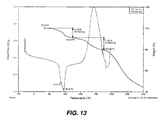
- a crystalline sulfate salt having a DSC endotherm at about 97°C.
- the sulfate salt has a DSC or TGA thermogram substantially as shown in Figure 13 .
- the sulfate salt has the XRPD pattern substantially as shown in Figure 20 .
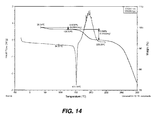
- a crystalline tosylate salt having a DSC endotherm at about 94°C.
- the tosylate salt has a DSC or TGA thermogram substantially as shown in Figure 14 .
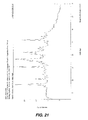
- the tosylate salt has the XRPD pattern substantially as shown in Figure 21 .
- a crystalline HCl salt In one embodiment, provided is a crystalline HCl salt.
- the crytalline HCl salts include the crytstal "pattern O" described below and those described in the Examples (Table 6).
- the HCl salt may also contain a polymorph such as Form I or Form II described below or mixtures thereof.
- the crystalline HCl may also contain trace amounts of solvents such as acetone, ethanol, methanol, and ethyl acetate.
- the Form I polymorph provide herein is substantially pure and may contain residual acetaone.
- the Form II polymorph provide herein is substantially pure may contain residual methanol and/or ethyl acetate.
- a crystalline HCl salt (pattern O) containing trace amounts of ethanol, In one aspect, the ratio of EtOH to HCl salt is approximately 1:6. In one aspect, the HCl salt the XRPD pattern substantially as shown in Figure 22 .
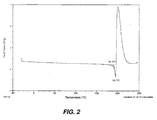
- the Form I polymorph has a DSC thermogram substantially as shown in Figure 2 .
- the Form I polymorph has a TGA thermogram substantially as shown in Figure 3 .
- the Form I polymorph has a Raman spectrum substantially as shown in Figure 4 .
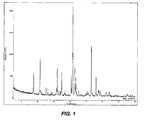
- the Form I polymorph comprises XRPD peaks at degrees 2-theta diffraction angles of about 8.8, 10.8, 16.1, 17.4, 20.4, 20.9, 21.5, 21.7, 26.6, and 28.1.
- the Form I polymorph has the XRPD pattern substantially as shown in Figure 1 . Table 1 lists the observed Form 1 XRPD peaks and Table 2 lists the representative peaks, with relative intensities given in both tables. Table 3 lists the observed Raman peaks for Form I.
- polymorph (Form II) HCl salt having a DSC endotherm onset at about 150°C.
- the Form II polymorph has a DSC thermogram substantially as shown in Figure 6 .
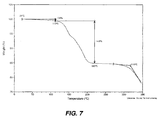
- the Form II polymorph has a TGA thermogram substantially as shown in Figure 7 .
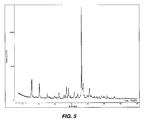
- the Form II polymorph comprises XRPD peaks at degrees 2-theta diffraction angles of about 7.8, 10.1, 12.5, 18.4, 19.0, 20.8, 23.0, and 23.5.
- the Form II polymorph has the XRPD pattern substantially as shown in Figure 5 . Table 4 lists the observed Form II XRPD peaks and Table 5 lists the representative peaks, with relative intensities given in both tables.
- the crystalline salts disclosed herein may be prepared by precipitation from organic or mixed organic solvents and may also be prepared from organic/aqueous solvents.
- Suitable organic solvents include acetone, acetonitrile, dichloromethane, diethyl ether, ethyl acetate, ethanol, heptane, hexane, hexafluoroisopropanol, isopropyl alcohol, isopropyl ether, methyl ethyl ketone, methanol, methyl-tert-butyl ether, 2,2,2-trifluoroethanol, and tetrahydrofuran.
- the HCl salt (Form I) can generally be prepared by addition of HCl to the free base at elevated temperatures in solvent such as acetone, acetonitrile, ethanol/ethyl acetate, methanol/ethyl acetate and THF, optionally followed by further crystallizations in acetone.
- the HCl salt (Form II) can generally be prepared by crystallizations in methanol.
- the methanol solution may optionally contain other solvents such as ethyl acetate or acetone.
- compositions comprising one or more crystalline salts as described herein.
- the salts may also be used in a combination therapy with a DPP IV inhibitor.
- a crystalline salt as described herein for use in a method for one or more of stimulating insulin production, stimulating glucose-dependent insulin secretion, lowering blood glucose, or lowering blood triglyceride levels, said method comprising administering to a subject in need of such treatment an effective amount of a crystalline salt as described herein.
- the DPP IV inhibitors useful in the present invention are sitagliptin (Merck), vildagliptin (Novartis), BMS-477118 (saxagliptin) (Bristol-Myers Squibb), R1438 (aminomethylpyridine) (Roche), NVP DPP728 (Novartis), PSN9301 (Prosidion), P32/98 (isoleucine thiozolidide) (Probiodrug), GSK823093C (Denagliptin) (Glaxo Smithkline), SYR-322 (Alogliptin) (Takeda), NN-7201 (NovoNordisk), ALS2-0426 (Alantos).
- DPP IV inhibitors are sitagliptin, vildagliptin, Denagliptin, saxagliptin, and alogliptin). Even more preferred DPP IV inhibitors are sitagliptin and vildagliptin. Sitagliptin is an approved pharmaceutical marketed as Januvia TM , and vildagliptin is an approved pharmaceutical marked as Galvus TM .
- the crystalline salt and DPP IV inhibitor are administered in a single dosage or in separate dosages.
- the single dosage is administered once a day or multiple times a day.
- the dosages can be administered once a day or multiple times a day.
- the salt and the DPP IV inhibitor when administered in a single dosage, are formulated as a medicament into a single pill, single table, or a single capsule.
- the salt and DPP IV inhibitor are administered in separate dosages, the salt is formulated as a medicament into a pill, tablet or capsule and the DPP IV inhibitor is formulated into a separate pill or capsule.
- the salt can be administered first and the DPP IV inhibitor can be administered next, following administration of the salt.
- the DPP IV inhibitor can be administered first and the salt can be administered next, following administration of the DPP IV inhibitor.
- the time between the sequential first administration and the second administration can be varied by a skilled practitioner.
- the first administration is followed immediately by the second administration (the salt or DPP IV inhibitor).
- the second administration is within 2 minutes, 5 minutes, 10 minutes, 15 minutes, 30 minutes, or 60 minutes, 1 hour, 2 hours, 3 hours, 4 hours, 5 hours, 6 hours, 7 hours, 8 hours, 9 hours, 10 hours, 11 hours, or 12 hours following the first administration.
- Yet another embodiment provides for the administration to a subject the salt and/or DPP IV inhibitor in the morning followed by administration to the previously treated subject the salt and/or DPP IV inhibitor in the evening.
- the salt and DPP IV inhibitor are preferably administered once a day.
- Another aspect of this invention provides a crystalline salt as described herein for use in methods of lowering blood levels of glucose in a subject by administering the salt and a DPP IV inhibitor.
- the method comprises administering an effective amount of the salt and DPP IV inhibitor to the mammal.
- the method further comprises steps to measure blood glucose levels before and after administration of the salt and DPP IV inhibitor.
- Blood glucose levels are easily measured by numerous commercially available glucose monitoring devices that measure blood glucose from samples of blood or urine, or as taught herein. Blood glucose can also be measured by commercially available glucometers that do not require blood or urine samples.
- Another aspect of this invention provides a crystalline salt as described herein for use in methods of lowering blood levels of insulin in a subject by administering the salt and a DPP IV inhibitor.
- the method comprises administering an effective amount of the salt and DPP IV inhibitor to the mammal.
- the method further comprises steps to measure blood insulin levels before and after administration of the salt and a DPP IV inhibitor. Blood insulin levels are easily measured by well-known insulin monitoring assays that measure insulin from samples of blood or urine, or as taught herein.
- this invention provides a crystalline salt as described herein for use in methods of increasing blood levels of incretins in a subject by administering the salt and a DPP IV inhibitor.
- the incretins are GLP-1 and GIP.
- the method comprises administering an effective amount of the salt and DPP IV inhibitor to the mammal.
- the method further comprises steps to measure blood incretin levels before and after administration of the salt and a DPP IV inhibitor. Blood incretin levels are easily measured by well-known incretin monitoring assays that, or as taught herein.
- Yet another aspect of this invention provides a crystalline salt as described herein for use in methods of lowering blood triglyceride levels in a subject by administering the salt and a DPP IV inhibitor.
- the method comprises administering an effective amount of the salt and DPP IV inhibitor to the mammal.
- the method further comprises steps to measure blood triglycerides levels before and after administration of the salt and DPP IV inhibitor. Blood triglyceride levels are easily measured by numerous commercially available devices that measure blood triglyceride levels from samples of blood.
- a further aspect of this invention provides a crystalline salt as described herein for use in methods of lowing gastric emptying in a subject by administering the salt and a DPP IV inhibitor.
- the method comprises administering an effective amount of the salt and DPP IV inhibitor to the mammal.
- the method further comprises steps to measure blood incretin levels before and after administration of the salt and a DPP IV inhibitor. Blood incretin levels are easily measured by well-known incretin monitoring assays, or as taught herein.
- Another aspect of this invention provides a crystalline salt as described herein for use in methods of increasing insulin production in the islet cells of a subject by administering the salt and a DPP IV inhibitor.
- the method comprises administering an effective amount of the salt and DPP IV inhibitor to the mammal.
- the method further comprises steps to measure insulin production in islet cells or the beta cells of the pancreas before and after administration of the salt and a DPP IV inhibitor.
- the insulin production of islets and beta cells are easily measured by well-known assays, or as taught herein.
- this invention provides a crystalline salt as described herein for use in methods of preserving islet function in a subject by administering the salt and a DPP IV inhibitor.
- the method comprises administering an effective amount of the salt and DPP IV inhibitor to the mammal.
- the method further comprises steps to measure the function of islets' or beta cell's ability to produce insulin before and after administration of the salt and a DPP IV inhibitor.
- the insulin production of islets and beta cells are easily measured by well-known assays, or as taught herein.
- a therapeutically effective amount of the salt and DPP IV inhibitor can be used for the preparation of one or more pharmaceutical compositions useful for treating Type II diabetes and/or lowering the plasma level of glucose.
- a therapeutically effective amount of the salt and a DPP IV inhibitor can be used for the preparation of one or more pharmaceutical compositions useful for treating other indications that include diabetes as a component, such as metabolic syndrome, as well as indications that can be improved as a result of increased insulin production (such as the early stages of Type I diabetes).
- compositions of the invention can include the salt and optionally DPP IV inhibitors, pharmaceutically acceptable salts thereof, or a hydrolysable precursor thereof.
- the salt is mixed with suitable carriers or excipient(s) in a therapeutically effective amount.
- a “therapeutically effective dose”, “therapeutically effective amount”, or, interchangeably, “pharmacologically acceptable dose” or “pharmacologically acceptable amount” it is meant that a sufficient amount of the compound of the present invention and a pharmaceutically acceptable carrier will be present in order to achieve a desired result, e.g ., alleviating a symptom or complication of Type II diabetes.
- the MBX-2982 salts that are used in the methods of the present invention can be incorporated into a variety of formulations for therapeutic administration. More particularly, the salts can be formulated into pharmaceutical compositions by combination with appropriate, pharmaceutically acceptable carriers, excipients, or diluents, and can be formulated into preparations in solid or semi-solid forms such as tablets, capsules, pills, powders, granules, dragees, gels, ointments, suppositories, inhalants. Administration can be achieved in various ways, including oral, buccal, rectal, intradermal, and transdermal administration. Moreover, the salt can be administered in a local rather than systemic manner, in a depot or sustained release formulation. In addition, the salts can be administered in a liposome.
- Suitable formulations for use in the present invention are found in Remington's Pharmaceutical Sciences (Mack Publishing Company (1985) Philadelphia, PA, 17th ed .).
- the pharmaceutical compositions described herein can be manufactured in a manner that is known to those of skill in the art, i.e. , by means of conventional mixing, granulating, dragee-making, levigating, emulsifying, encapsulating, or entrapping processes.
- the following methods and excipients are merely exemplary and are in no way limiting.
- the salt can be formulated readily by combining with pharmaceutically acceptable carriers that are well known in the art.
- Pharmaceutical preparations for oral use can be obtained by mixing the compounds with a solid excipient, optionally grinding a resulting mixture, and processing the mixture of granules, after adding suitable auxiliaries, if desired, to obtain tablets or dragee cores.
- Suitable excipients are, in particular, fillers such as sugars, including lactose, sucrose, mannitol, or sorbitol; cellulose preparations such as, for example, maize starch, wheat starch, rice starch, potato starch, gelatin, gum tragacanth, methyl cellulose, hydroxypropylmethylcellulose, sodium carboxymethylcellulose, and/or polyvinylpyrrolidone.
- disintegrating agents can be added, such as the cross-linked polyvinyl pyrrolidone, agar, or alginic acid or the salt thereof such as sodium alginate.
- Dragee cores are provided with suitable coatings.
- suitable coatings can be used, which can optionally contain gum arabic, talc, polyvinyl pyrrolidone, carbopol gel, polyethylene glycol, and/or titanium dioxide, lacquer solutions, and suitable organic solvents or solvent mixtures.
- Dyestuffs or pigments can be added to the tablets or dragee coatings for identification or to characterize different combinations of active compound doses.
- compositions that can be used orally include push-fit capsules made of gelatin, as well as soft, sealed capsules made of gelatin and a plasticizer, such as glycerol or sorbitol.
- the push-fit capsules can contain the active ingredients in admixture with filler such as lactose, binders such as starches, and/or lubricants such as talc or magnesium stearate and, optionally, stabilizers.
- the active compounds can be dissolved or suspended in suitable liquids, such as fatty oils, liquid paraffin, or liquid polyethylene glycols.
- stabilizers can be added. All formulations for oral administration should be in dosages suitable for such administration.
- compositions can take the form of tablets or lozenges formulated in conventional manner.
- the salts according to the present invention are conveniently delivered in the form of an aerosol spray presentation from pressurized packs or a nebulizer, with the use of a suitable propellant, e.g., dichlorodifluoromethane, trichlorofluoromethane, dichlorotetrafluoroethane, carbon dioxide or other suitable gas, or from propellant-free, dry-powder inhalers.
- a suitable propellant e.g., dichlorodifluoromethane, trichlorofluoromethane, dichlorotetrafluoroethane, carbon dioxide or other suitable gas, or from propellant-free, dry-powder inhalers.
- a suitable propellant e.g., dichlorodifluoromethane, trichlorofluoromethane, dichlorotetrafluoroethane, carbon dioxide or other suitable gas
- propellant-free, dry-powder inhalers e.g.,
- the salts can also be formulated in rectal compositions such as suppositories or retention enemas, e.g., containing conventional suppository bases such as cocoa butter, carbowaxes, polyethylene glycols or other glycerides, all of which melt at body temperature, yet are solidified at room temperature.
- rectal compositions such as suppositories or retention enemas, e.g., containing conventional suppository bases such as cocoa butter, carbowaxes, polyethylene glycols or other glycerides, all of which melt at body temperature, yet are solidified at room temperature.
- the salts can also be formulated as a depot preparation. Such long acting formulations can be administered by implantation (for example subcutaneously or intramuscularly) or by intramuscular injection.
- the salts can be formulated with suitable polymeric or hydrophobic materials (for example as an emulsion in an acceptable oil) or ion exchange resins, or as sparingly soluble derivatives, for example, as a sparingly soluble salt.
- hydrophobic pharmaceutical compounds can be employed.
- Liposomes and emulsions are well known examples of delivery vehicles or carriers for hydrophobic drugs.
- long-circulating, i.e. , stealth liposomes can be employed.
- liposomes are generally described in Woodle, et al., U.S. Patent No. 5,013,556 .
- the compounds of the present invention can also be administered by controlled release means and/or delivery devices such as those described in U.S. Patent Nos. 3,845,770 ; 3,916,899 ; 3,536,809 ; 3,598,123 ; and 4,008,719 .
- compositions suitable for use in the present invention include compositions wherein the active ingredients are contained in a therapeutically effective amount.
- the amount of composition administered will, of course, be dependent on the subject being treated, on the subject's weight, the severity of the affliction, the manner of administration and the judgment of the prescribing physician. Determination of an effective amount is well within the capability of those skilled in the art, especially in light of the detailed disclosure provided herein.
- suitable unit doses for the salts can, for example, preferably contain between 0.1 mg to about 1000 mg of the active compound.
- a preferred unit dose is between 1 mg to about 500 mg.
- a more preferred unit dose is between 1 mg to about 300mg.
- Another preferred unit dose is between 1 mg to about 100 mg.
- Other preferred unit doses include 25, 50, 100, 150, 200, 250, 300, 350, 400, 450, and 500 mg.
- the unit does can also be administered 1, 2, 3, 4, 5 or 6 times a day, preferably 1 or 2 times per day, or more preferably once a day so that the total dosage, for example, for a 70 kg adult is in the range of 0.001 to about 15 mg per kg weight of subject per administration.
- a preferred dosage is about 0.5 to about 10 mg, about 0.5 to about 7.5 mg, about 0.5 to about 5 mg, about 0.5 to about 4 mg, about 0.5 to about 3 mg, about 0.5 to about 2 mg, or about 0.5 to about 1 mg, per kg weight of subject per administration, and such therapy can extend for a number of weeks or months, and in some cases, years.
- the specific dose level for any particular subject will depend on a variety of factors including the activity of the specific compound employed; the age, body weight, general health, sex and diet of the individual being treated; the time and route of administration; the rate of excretion; other drugs that have previously been administered; and the severity of the particular disease undergoing therapy, as is well understood by those of skill in the area.
- a typical dosage can be one 1 mg to about 500 mg, or a 25, 50, 75, 100, 125, 150, 175, 200, 250, 300, 350, 400, 450, or 500 mg tablet taken once a day or as a time-release capsule or tablet taken once a day and containing a proportionally higher content of active ingredient.
- the time-release effect can be obtained by capsule materials that dissolve at different pH values, by capsules that release slowly by osmotic pressure, or by any other known means of controlled release.
- kits with unit doses of the salt and/or DPP IV inhibitor either in oral or injectable doses.
- the containers containing the unit doses will be an informational package insert describing the use and attendant benefits of the drugs in treating diabetes, obesity, hyperlipidemia, atherosclerosis and metabolic syndrome, and/or their respective related symptoms, complications and disorders.
- XRPD XRPD patterns were collected using an Inel XRG-3000 diffractometer or PANalytical X'Pert Pro diffractometer.
- Inel Inel XRG-3000 diffractometer equipped with a curved position sensitive detector with a 2 ⁇ range of 120°. An incident beam of Cu K ⁇ radiation (40 kV, 30 mA) was used to collect data in real time at a resolution of 0.03° 2 ⁇ . Prior to the analysis, a silicon standard (NIST SRM 640c) was analyzed to verify the Si 111 peak position. Samples were prepared for analysis by packing them into thin-walled glass capillaries. Each capillary was mounted onto a goniometer head and rotated during data acquisition.
- PANalytical An incident beam of Cu K ⁇ radiation was produced using an Optix long, fine-focus source. An elliptically graded multilayer mirror was used to focus the Cu K ⁇ X-rays of the source through the specimen and onto the detector. Data were collected and analysed using X'Pert Pro Data Collector software (v. 2.2b). Prior to the analysis, a silicon specimen (NIST SRM 640c) was analyzed to verify the Si 111 peak position. The specimen was sandwiched between 3 ⁇ m thick films, analyzed in transmission geometry, and rotated to optimize orientation statistics. Soller slits were used for the incident and diffracted beams to minimize axial divergence. Diffraction patterns were collected using a scanning position-sensitive detector (X'Celerator) located 240 mm from the specimen.
- X'Celerator scanning position-sensitive detector
- DSC was performed using a TA Instruments Q2000 differential scanning calorimeter. Temperature calibration was performed using NIST traceable indium metal. The sample was placed into an aluminum DSC pan, and the weight was accurately recorded. The pan was either covered with a lid perforated with a laser pinhole, and the lid was hermetically sealed or covered with an unperforated lid and crimped. The sample cell was equilibrated at either -30°C or 25 °C and heated under a nitrogen purge at a rate of 10 °C/minute, up to a final temperature of 250 °C. Reported temperatures are at the transition maxima.
- TGA TG analyses were performed using a TA Instruments Q5000 IR thermogravimetric analyzer. Temperature calibration was performed using nickel and Alumel TM . Each sample was placed in an aluminum pan. The pan was hermetically sealed with a lid that was opened using a punching mechanism just before being inserted into the TG furnace. The furnace was heated under nitrogen at a rate of 10 °C/minute to a final temperature of 350 °C.
- FT-Raman spectroscopy Raman spectra were acquired on a Nexus 670 FT-Raman accessory module interfaced to a Nexus 670 FT-IR spectrophotometer (Thermo Nicolet) equipped with an indium gallium arsenide (InGaAs) detector. Wavelength verification was performed using sulfur and cyclohexane. Each sample was prepared for analysis by placing the sample into a glass tube and positioning the tube in a gold-coated tube holder.
- Precipitation Solutions containing free base and an acid of interest were prepared in various solvents at room temperature. If solids persisted, the samples were either heated to facilitate dissolution or kept at ambient temperature and stirred. If a clear solution resulted, the sample was capped and kept at ambient temperature. The samples at elevated temperature were cooled to ambient temperature. Generated solids were collected via vacuum filtration and dried.
- Example 1 Preparation free base 5-ethyl-2- ⁇ 4-[4-(4-tetrazol-1-yl-phenoxymethyl)-thiazol-2-yl]-piperidin-1-yl ⁇ -pyrimidine.
- the besylate salt was generated from an acetone solution volume reduction experiment.
- the material crystallized as stacked plates.
- XRPD analysis indicated the besylate salt was crystalline. After overnight RH stress, the material remained a free-flowing powder.
- Thermal analysis of the stressed sample indicated a slight weight loss (0.9 wt. %) to 125°C and a sharp endotherm centered at 153°C. Associated with the endotherm was a shoulder at approximately 147°C. Rapid weight loss was observed above approximately 155°C. 1 H NMR spectroscopy results indicated a 1:1 salt was present.
- the camsylate salt was generated by a precipitation reaction and a slow cool in acetone.
- the material crystallized in an unknown morphology.
- XRPD analysis indicated the camsylate salt was crystalline. After overnight RH stress, the material remained a free flowing powder.
- Thermal analysis of the unstressed material indicated a slight weight loss (0.3 wt. %) to 125°C and a sharp endotherm centered at 184°C. Rapid weight loss, usually indicative of decomposition, was observed above approximately 180°C. 1 H NMR spectroscopy results indicated that a 1:1 salt had formed.
- the esylate salt was generated through a precipitation reaction in acetone.
- the esylate material existed as stacked plates and tablets.
- XRPD analyses indicated that the esylate salt was crystalline. After overnight stress, the material remained a free flowing powder.
- Thermal analysis of the stressed powder indicated a 4.8% weight loss to 125°C and a sharp endotherm centered at 98.5°C.
- the endothermic event is typically indicative of a melting event.
- the weight loss could be indicative of a solvate or hydrate of the salt. Rapid weight loss, usually indicative of decomposition, was observed above approximately 125°C. 1 H NMR spectroscopy results indicated a 1:1 salt had formed.
- the HBr salt was generated through a precipitation reaction in acetone.
- the material crystallized in an unknown morphology.
- XRPD results indicated that the HBr salt was crystalline.
- the material remained a free flowing powder.
- Thermal analysis of the unstressed material indicated that a wide, weak endotherm existed prior to the sample undergoing decomposition. A 1.5% wt. loss was detected prior to decomposition.
- 1 H NMR spectroscopy indicated that no decomposition product was formed under ambient conditions.
- the salt precipitated in the presence of CDCl 3 and the 1 H NMR analysis was performed in DMSO.
- the mesylate salt was generated in a variety of morphologies using a slow cool/volume reduction technique. XRPD results indicated that the mono-salt was crystalline. After elevated RH stress, the material remained a free flowing powder. Thermal analysis of the post-stress sample indicated an endotherm centered at 86°C and a weight loss of 4.5% up to 125°C. One possible explanation is that solvent (probably water) loss occurs quickly and the sample undergoes decomposition after a melting event. 1 H NMR spectroscopy results confiimed a 1:1 salt was formed.
- XRPD Intel XRG-3000 diffractometer select interlattice plane intervals: d in [ ⁇ ] ( ⁇ 0.1 ⁇ ): 10.23, 6.28, 4.83, 4.75, 4.57, 4.43, 4.32, 3.49, 3.43, 3.32.
- the sulfate salt was generated from precipitation experiments. XRPD results indicated that the mono-salt generated crystalline material. After elevated RH stress, the material turned tacky. Thermal analysis of the unstressed sample indicated a large weight loss (9% to 125°C) was associated with an endotherm centered at 97°C. After this initial weight loss, rapid degradation of the material occurred upon further heating which may be due the loss of water, although this hypothesis was not verified. 1 H NMR spectroscopy results indicated that no decomposition product was formed. The salt precipitated in the presence of CDCl 3 and the 1 H NMR analysis was performed in DMSO.
- the tosylate salt was generated by slow cooling and volume reduction in acetone.
- the material crystallized in an unknown morphology.
- XRPD results indicated that crystalline material existed.
- the material remained a free flowing powder after exposure to elevated RH conditions.
- Thermal analysis of the material indicated minor (0.9%) weight loss to 125°C associated with a very weak endotherm centered at 94°C. This wide, weak endotherm could be indicative of solvent loss.
- 1 H NMR spectroscopy results confirmed a 1:1 salt had formed.
- HCl salt was dissolved in a given solvent. The solution was filtered through a 0.2 ⁇ m nylon filter. For evaporation experiments at ambient, the solutions were left in open vials (fast evaporation) or covered with aluminum foil containing pinholes (slow evaporation). For evaporation experiments under vacuum (rotary evaporation), the sample was placed on the rotary evaporator at ambient or elevated temperature and the solvents evaporated to dryness.
- HCl salt was contacted with a given solvent and the sample was brought to elevated temperature in an oil bath on a hotplate. Selected samples were filtered using a 0.2 ⁇ m nylon filter. The heat source was then turned off and the hotplate and vials were allowed to cool slowly in the oil bath to ambient temperature for slow cool or placed on the lab bench for fast cool. Selected samples that did not produce solids at ambient temperature were placed in a refrigerator or freezer. Solids were recovered by vacuum filtration.
- Vapor Diffusion Small amounts of MBX 2982 HCl were dissolved in a minimum amount of an appropriate solvent. The samples were filtered through a 0.2 ⁇ m nylon filter into a 1 dram vial. Diethyl ether was added to a 20 mL scintillation vial. The 1 dram vials were uncapped and placed into the 20 mL vials. The 20 mL vials were capped and parafilmed. Table 6.
- the free base (46.0 g) contacted with 500 mL EtOH and warmed/stirred. 9.5 mL conc. HCl added to the suspension. Sample was left for approximately 30 minutes and then cooled to RT. The filtered material was vacuum dried (3 days) and identified as "pattern O" containing trace amounts of ethanol.
- the material may initially lose the HCl, which is accompanied by further degradation at higher temperatures.
- the DSC thermogram exhibited a sharp endothermic event at ⁇ 191 °C (onset) followed by immediate heat fluctuation, likely attributable to decomposition.
- Moisture sorption results showed a -0.3 wt% loss upon equilibration at ⁇ 5% RH.
- the small weight loss is comparable with the TGA loss, and is likely associated with the loss of residual acetone.
- a steady ⁇ 0.9 wt% gain was observed between -5% and ⁇ 95% RH.
- FT-Raman spectrum (cm-1): 154, 193, 214, 243, 324, 346, 384, 420, 460, 467, 495, 539, 573, 596, 628, 648, 680, 687, 718, 751, 766, 787, 800, 845, 856, 946, 967, 992, 1009, 1051, 1068, 1094, 1110, 1172, 1203, 1225, 1253, 1282, 1300, 1311, 1334, 1375, 1394, 1404, 1432, 1458, 1474, 1480, 1517, 1533, 1591, 1609, 1637, 2734, 2869, 2903, 2928, 2937, 2967, 2999, 3015, 3030, 3063, 3075.
- Example 12 HCl salt Form I from ethyl acetate
- the results of thermal (DSC, TGA) characterization of Form II suggest that the material is likely unsolvated.
- the TG curve indicates a -0.6 % weight loss between ⁇ 21 °C and ⁇ 113 °C, likely associated with residual methanol and ethyl acetate evaporation.
- a weight loss of approximately 14.6 % between -113 °C and -220 °C was observed, followed by a sharp loss at ⁇ 312 °C (onset) likely due to decomposition.
- the material may initially lose the HCl, which is accompanied by further degradation at higher temperatures.
- the DSC thermogram exhibited an endotheimic event beginning ⁇ 150 °C (onset) followed by a number of heat fluctuations, likely attributable to decomposition.
- Preparation of samples was performed by solvent precipitation of plasma proteins in a 1 mL/well 96-well plate.
- Standards were prepared by spiking 10 ⁇ L of blank plasma with 10 ⁇ L of standard solution (acetonitrile containing MBX-2982 at 0.01, 0.02, 0.05, 0.1, 0.2, 0.5, 1, 2, 5, 10, 20, 50 and 100 ⁇ g/mL) and 300 ⁇ L of 0.1% formic acid in acetonitrile containing 0.2 ⁇ g/mL internal standard.
- Plasma samples were prepared by adding 10 ⁇ L of plasma sample, 10 ⁇ L of acetonitrile, and 300 ⁇ L of 0.2 ⁇ g/mL internal standard in 0.1% formic acid in acetonitrile.
- suspensions for microcrystalline MBX-2982 (free base) and salt forms of MBX-2982 were prepared in 1% carboxymethylcellulose and 2% tween 80 in water (w/w/v).
- MBX-2982 Five groups of animals were given microcrystalline and salt forms suspension doses of MBX-2982 orally at 200 mg/kg, respectively. Food was withheld the night before dose and returned nine hours after dosing. Blood samples were collected at 0.25, 0.5, 1, 2, 4, 6, 9, 24, 30 and 48 h post dose. MBX-2982 plasma concentration from these samples was analyzed by a non-validated high performance liquid chromatography in conjunction with mass spectrometry (LC-MS/MS) method.
- LC-MS/MS mass spectrometry
- Plasma concentration-time data for individual animals were analyzed using WinNonlin software (Professional, version 5.0.1; Pharsight Corp.). A non-compartmental model (model 200) was used. Peak area ratios of MBX-2982 to internal standard and concentration were fitted to a quadratic equation (Calibration Curve) with 1/x weighting using a quadratic regression program in Analyst version 1.4.2 (Applied Biosystem Inc). The equations were then used to interpolate the concentrations of MBX-2982 in samples from peak area to internal standard ratio.
- the plasma level of micronized, free-base MBX-2982 was 0.26 ⁇ g/ml.
- the plasma levels of the salt forms were 7.3 ⁇ g/ml (HCl form I), 12.02 ⁇ g/ml (HCl form II), 0.476 ⁇ g/ml (mesylate), and 4.2 ⁇ g/ml (tosylate).
- the plasma levels of the micronized, free-base MBX-2982 was 0.08 ⁇ g/ml, and the salt forms were 7.52 ⁇ g/l
- the fold difference in the plasma concentrations of the salts of MBX-2982 when compared to the micronized, free-base form of 2982 are 94 fold higher plasma concentration (HCl form I), 186 fold higher plasma concentration (HCl form II), 7 fold higher plasma concentration (mesylate), and 40 fold higher plasma concentration (tosylate).
Landscapes
- Health & Medical Sciences (AREA)
- Chemical & Material Sciences (AREA)
- Organic Chemistry (AREA)
- Medicinal Chemistry (AREA)
- Veterinary Medicine (AREA)
- Public Health (AREA)
- General Health & Medical Sciences (AREA)
- Animal Behavior & Ethology (AREA)
- Life Sciences & Earth Sciences (AREA)
- Pharmacology & Pharmacy (AREA)
- Diabetes (AREA)
- Hematology (AREA)
- Nuclear Medicine, Radiotherapy & Molecular Imaging (AREA)
- General Chemical & Material Sciences (AREA)
- Chemical Kinetics & Catalysis (AREA)
- Obesity (AREA)
- Bioinformatics & Cheminformatics (AREA)
- Engineering & Computer Science (AREA)
- Epidemiology (AREA)
- Endocrinology (AREA)
- Emergency Medicine (AREA)
- Pharmaceuticals Containing Other Organic And Inorganic Compounds (AREA)
- Medicines That Contain Protein Lipid Enzymes And Other Medicines (AREA)
- Plural Heterocyclic Compounds (AREA)
Claims (15)
- Kristallines Salz von 5-Ethyl-2-{4-[4-(4-tetrazol-l-yl-phenoxymethyl)-thiazol-2-yl]-piperidin-1-yl}-pyrimidin, das aus der Gruppe bestehend aus Besylat, Camsylat, Esylat, HBr, HCl, Mesylat, Sulfat und Tosylat ausgewählt ist.
- Salz nach Anspruch 1 mit im Wesentlichen demselben Röntgenpulverdiffraktions-(XRPD)-Muster wie in einer der Figuren 15-21 gezeigt.
- Kristallines HCl-Salz nach Anspruch 1.
- Kristallines HCl-Salz nach Anspruch 3 mit im Wesentlichen demselben XRPD-Muster wie in Figur 22 gezeigt.
- Kristallines HCl-Salz nach Anspruch 3, das ein Polymorph (Form I) mit einem XRPD-Muster ist, das Peaks bei 2-Theta-Diffraktionswinkeln von etwa 8,8, 10,8, 16,1, 17,4, 20,4, 20,9, 21,5, 21,7, 26,6 und 28,1 Grad beinhaltet.
- Polymorph nach Anspruch 5 mit einem oder mehreren der Folgenden:im Wesentlichen demselben XRPD-Muster wie in Figur 1;einem DSC-Thermogramm, das einen endothermen Anfang bei etwa 191°C beinhaltet;einem DSC-Thermogramm, das im Wesentlichen dem in Figur 2 gezeigten entspricht; undeinem Raman-Spektrum, das im Wesentlichen dem in Figur 4 gezeigten entspricht.
- Kristallines HCl-Salz nach Anspruch 3, das ein Polymorph (Form II) mit einem XRPD-Muster ist, das Peaks bei 2-Theta-Diffraktionswinkeln von etwa 7,8, 10,1, 12,5, 18,4, 19,0, 20,8, 23,0 und 23,5 Grad beinhaltet.
- Polymorph nach Anspruch 7 mit einem oder mehreren aus den Folgenden:im Wesentlichen demselben XRPD-Muster wie in Figur 5;einem DSC-Thermogramm, das einen endothermen Anfang bei etwa 150°C beinhaltet; undeinem DSC-Thermogramm, das im Wesentlichen dem in Figur 6 gezeigten entspricht.
- Pharmazeutische Zusammensetzung, die ein kristallines Salz nach irgendeinem der Ansprüche 1 bis 8 beinhaltet.
- Verfahren zur Herstellung des Polymorphs (Form I) nach Anspruch 5, das die Kristallisation von 5-Ethyl-2-{4-[4-(4-tetrazol-1-yl-phenoxymethyl)-thiazol-2-yl]-piperidin-1-yl}-pyrimidinhydrochlorid aus einer Acetonlösung beinhaltet.
- Verfahren zur Herstellung des Polymorphs (Form II) nach Anspruch 7, das die Kristallisation von 5-Ethyl-2-{4-[4-(4-tetrazol-1-yl-phenoxymethyl)-thiazol-2-yl]-piperidin-1-yl}-pyrimidinhydrochlorid aus einer Methanollösung beinhaltet, die optional Ethylacetat oder Aceton enthält.
- Salz nach irgendeinem der Ansprüche 1, 4, 5 oder 7 zur Verwendung bei der Behandlung einer Krankheit, die aus der Gruppe bestehend aus Typ-I-Diabetes, Typ-II-Diabetes und metabolischem Syndrom ausgewählt ist, bei einem Subjekt, das eine solche Behandlung benötigt.
- Salz zur Verwendung nach Anspruch 12, wobei die genannte Krankheit Typ-II-Diabetes ist.
- Salz nach irgendeinem der Ansprüche 1, 4, 5 oder 7 zur Verwendung bei der Stimulation der Insulinproduktion, Stimulation der glukoseabhängigen Insulinsekretion, Senkung des Blutzuckers und/oder Senkung der Bluttriglyceridwerte bei einem Subjekt, das eine solche Behandlung benötigt.
- Salz zur Verwendung nach irgendeinem der Ansprüche 12 bis 14 in Kombination mit einer therapeutisch wirksamen Menge eines DPP-IV-Inhibitors.
Applications Claiming Priority (2)
| Application Number | Priority Date | Filing Date | Title |
|---|---|---|---|
| US24793609P | 2009-10-01 | 2009-10-01 | |
| PCT/US2010/049486 WO2011041154A1 (en) | 2009-10-01 | 2010-09-20 | Substituted tetrazol-1-yl-phenoxymethyl-thiazol-2-yl-piperidinyl-pyrimidine salts |
Publications (2)
| Publication Number | Publication Date |
|---|---|
| EP2483281A1 EP2483281A1 (de) | 2012-08-08 |
| EP2483281B1 true EP2483281B1 (de) | 2014-06-04 |
Family
ID=43037984
Family Applications (1)
| Application Number | Title | Priority Date | Filing Date |
|---|---|---|---|
| EP10759779.1A Active EP2483281B1 (de) | 2009-10-01 | 2010-09-20 | Substituierte tetrazol-1-yl-phenoxymethyl-thiazol-2-yl-piperidinyl-pyrimidinsalze |
Country Status (9)
| Country | Link |
|---|---|
| US (3) | US8410127B2 (de) |
| EP (1) | EP2483281B1 (de) |
| JP (1) | JP5909185B2 (de) |
| CN (1) | CN102666553B (de) |
| AR (1) | AR078434A1 (de) |
| CA (1) | CA2775840C (de) |
| ES (1) | ES2497566T3 (de) |
| TW (1) | TW201120034A (de) |
| WO (1) | WO2011041154A1 (de) |
Families Citing this family (14)
| Publication number | Priority date | Publication date | Assignee | Title |
|---|---|---|---|---|
| US7638541B2 (en) | 2006-12-28 | 2009-12-29 | Metabolex Inc. | 5-ethyl-2-{4-[4-(4-tetrazol-1-yl-phenoxymethyl)-thiazol-2-yl]-piperidin-1-yl}-pyrimidine |
| CA2693169C (en) * | 2007-07-19 | 2016-01-12 | Metabolex, Inc. | N-linked heterocyclic receptor agonists for the treatment of diabetes and metabolic disorders |
| PL2280704T3 (pl) * | 2008-03-31 | 2015-10-30 | Cymabay Therapeutics Inc | Związki oksymetylenoarylowe i ich zastosowania |
| US20110160222A1 (en) * | 2008-11-26 | 2011-06-30 | Metabolex, Inc. | Modulators of glucose homeostasis for the treatment of diabetes and metabolic disorders |
| EP2483281B1 (de) | 2009-10-01 | 2014-06-04 | Cymabay Therapeutics, Inc. | Substituierte tetrazol-1-yl-phenoxymethyl-thiazol-2-yl-piperidinyl-pyrimidinsalze |
| US20110313160A1 (en) * | 2010-06-04 | 2011-12-22 | Metabolex, Inc. | Preparation of 5-ethyl-2--pyrimidine |
| CA2802541A1 (en) | 2010-06-23 | 2011-12-29 | Metabolex, Inc. | Compositions of 5-ethyl-2-{4-[4-(4-tetrazol-1-yl-phenoxymethyl)-thiazol-2-yl]-piperidin-1-yl}-pyrimidine |
| WO2012170867A1 (en) | 2011-06-09 | 2012-12-13 | Rhizen Pharmaceuticals Sa | Novel compounds as modulators of gpr-119 |
| CN103910710B (zh) * | 2012-12-29 | 2017-06-16 | 乳源东阳光药业有限公司 | 阿格列汀新晶型及其制备方法 |
| US20190008864A1 (en) * | 2014-01-23 | 2019-01-10 | Pharmedix.Co., Ltd. | Pharmaceutical composition containing gpr119 ligand as effective ingredient for preventing or treating non-alcoholic steatohepatitis |
| WO2018026890A1 (en) | 2016-08-03 | 2018-02-08 | Cymabay Therapeutics | Oxymethylene aryl compounds for treating inflammatory gastrointestinal diseases or gastrointestinal conditions |
| TW202140440A (zh) | 2020-02-28 | 2021-11-01 | 美商克力歐普股份有限公司 | Gpr40激動劑 |
| AU2021275038A1 (en) | 2020-05-19 | 2022-12-22 | Kallyope, Inc. | AMPK activators |
| CA3183575A1 (en) | 2020-06-26 | 2021-12-30 | Iyassu Sebhat | Ampk activators |
Family Cites Families (132)
| Publication number | Priority date | Publication date | Assignee | Title |
|---|---|---|---|---|
| US3108117A (en) | 1959-02-12 | 1963-10-22 | Mead Johnson & Co | 3-benzyl-1, 2-diloweralkyl-3-pyrrolidinols |
| US3778443A (en) * | 1969-02-13 | 1973-12-11 | Ciba Geigy Ag | 4-tetrahydro pyridyl,hydroxy alkyl pyrazoles |
| US3536809A (en) * | 1969-02-17 | 1970-10-27 | Alza Corp | Medication method |
| US3598123A (en) * | 1969-04-01 | 1971-08-10 | Alza Corp | Bandage for administering drugs |
| US3845770A (en) | 1972-06-05 | 1974-11-05 | Alza Corp | Osmatic dispensing device for releasing beneficial agent |
| GB1422263A (en) | 1973-01-30 | 1976-01-21 | Ferrosan As | 4-phenyl-piperidine compounds |
| US3916899A (en) * | 1973-04-25 | 1975-11-04 | Alza Corp | Osmotic dispensing device with maximum and minimum sizes for the passageway |
| DE2701705A1 (de) | 1976-01-28 | 1977-08-04 | Sandoz Ag | Neue organische verbindungen, ihre verwendung und herstellung |
| US4008719A (en) | 1976-02-02 | 1977-02-22 | Alza Corporation | Osmotic system having laminar arrangement for programming delivery of active agent |
| CA1146866A (en) * | 1979-07-05 | 1983-05-24 | Yamanouchi Pharmaceutical Co. Ltd. | Process for the production of sustained release pharmaceutical composition of solid medical material |
| DE3438830A1 (de) * | 1984-10-23 | 1986-04-30 | Rentschler Arzneimittel | Nifedipin enthaltende darreichungsform und verfahren zu ihrer herstellung |
| US5013556A (en) * | 1989-10-20 | 1991-05-07 | Liposome Technology, Inc. | Liposomes with enhanced circulation time |
| ES2111065T5 (es) * | 1991-04-16 | 2005-06-16 | Nippon Shinyaku Company, Limited | Procedimiento para producir una dispersion solida. |
| US5817667A (en) * | 1991-04-17 | 1998-10-06 | University Of Georgia Research Foudation | Compounds and methods for the treatment of cancer |
| US5187677A (en) | 1991-08-23 | 1993-02-16 | Hewlett-Packard Company | Waveform synthesizer through simulating multiplication |
| US5340591A (en) * | 1992-01-24 | 1994-08-23 | Fujisawa Pharmaceutical Co., Ltd. | Method of producing a solid dispersion of the sparingly water-soluble drug, nilvadipine |
| JP3265680B2 (ja) * | 1992-03-12 | 2002-03-11 | 大正製薬株式会社 | 経口製剤用組成物 |
| AU4444393A (en) * | 1992-09-01 | 1994-03-10 | Zeneca Limited | Pyrrolidine derivatives |
| GB9310713D0 (en) | 1993-05-24 | 1993-07-07 | Zeneca Ltd | Aryl substituted heterocycles |
| AU4437896A (en) * | 1995-01-12 | 1996-07-31 | Glaxo Group Limited | Piperidine derivatives having tachykinin antagonist activity |
| ATE294778T1 (de) | 1995-01-23 | 2005-05-15 | Daiichi Suntory Pharma Co Ltd | Verbesserung oder heilung von durch ischämischen krankheiten hervorgerufenen symtomen und dafür verwendbare phenylpiperidinverbingungen |
| DE19504832A1 (de) * | 1995-02-14 | 1996-08-22 | Basf Ag | Feste Wirkstoff-Zubereitungen |
| DE19519496A1 (de) | 1995-05-27 | 1996-11-28 | Lau Matthias Dipl Ing | Sauerstoffsensitives Einschichtsystem und Verfahren zur Anordnung des Systems |
| KR100384979B1 (ko) * | 1995-09-07 | 2003-10-17 | 에프. 호프만-라 로슈 아게 | 심부전증및신부전증치료용의신규한4-(옥시알콕시페닐)-3-옥시-피페리딘 |
| US5792769A (en) | 1995-09-29 | 1998-08-11 | 3-Dimensional Pharmaceuticals, Inc. | Guanidino protease inhibitors |
| JPH11513382A (ja) | 1995-10-20 | 1999-11-16 | ドクトル カルル トーマエ ゲゼルシャフト ミット ベシュレンクテル ハフツング | 5員複素環化合物、これらの化合物を含む医薬品、それらの使用及びそれらの調製方法 |
| EP0867183B1 (de) | 1996-07-22 | 2004-10-06 | Daiichi Suntory Pharma Co., Ltd. | Arylpiperidinol und arylpiperidin-derivate und sie enthaltende arzneimittel |
| IL127911A0 (en) | 1996-07-25 | 1999-11-30 | Merck Sharp & Dohme | Substituted triazolo-pyridazine derivatives as ligands for gaba receptors |
| US5880138A (en) | 1996-10-01 | 1999-03-09 | Eli Lilly And Company | NMDA receptor selective antagonists |
| EP0901786B1 (de) | 1997-08-11 | 2007-06-13 | Pfizer Products Inc. | Feste pharmazeutische Dispersionen mit erhöhter Bioverfügbarkeit |
| KR100620337B1 (ko) | 1998-03-10 | 2006-09-13 | 오노 야꾸힝 고교 가부시키가이샤 | 카르복실산 유도체와 그 유도체를 유효 성분으로서함유하는 약제 |
| US6274735B1 (en) * | 1998-08-10 | 2001-08-14 | Hoffmann-La Roche Inc. | Process and intermediates for preparation of substituted piperidines |
| IT1303737B1 (it) * | 1998-11-11 | 2001-02-23 | Smithkline Beecham Spa | Derivati fenilpiperidinici procedimento per la loro preparazione eloro uso come ligandi del recettore orl-1. |
| US20030017528A1 (en) * | 1998-11-20 | 2003-01-23 | Ruoping Chen | Human orphan G protein-coupled receptors |
| NZ537625A (en) | 1998-11-20 | 2006-08-31 | Arena Pharm Inc | Human orphan G protein-coupled receptors of nucleotide and peptide SEQ ID NOS: 13 and 14 |
| US6221660B1 (en) * | 1999-02-22 | 2001-04-24 | Synaptic Pharmaceutical Corporation | DNA encoding SNORF25 receptor |
| CN1362947A (zh) | 1999-03-15 | 2002-08-07 | Axys药物公司 | 用作蛋白酶抑制剂的n-氰基甲基酰胺 |
| GB9912416D0 (en) * | 1999-05-28 | 1999-07-28 | Pfizer Ltd | Compounds useful in therapy |
| US6015712A (en) | 1999-07-19 | 2000-01-18 | Isis Pharmaceuticals Inc. | Antisense modulation of FADD expression |
| AR035016A1 (es) | 1999-08-25 | 2004-04-14 | Takeda Chemical Industries Ltd | Composicion de azol promotor de produccion/secrecion de neurotrofina, compuesto prodroga del mismo, composicion farmaceutica que lo comprende y uso del mismo para preparar esta ultima. |
| GB9923177D0 (en) | 1999-09-30 | 1999-12-01 | Pfizer Ltd | Novel polypeptide |
| IL139073A0 (en) | 1999-10-21 | 2001-11-25 | Pfizer | Treatment of neuropathy |
| YU51701A (sh) | 2000-07-28 | 2003-12-31 | Pfizer Inc. | Postupak za dobijanje jedinjenja pirazola/4,3-d/ pirimidin-7-ona i njihovih derivata |
| US6784185B2 (en) * | 2001-03-16 | 2004-08-31 | Pfizer Inc. | Pharmaceutically active compounds |
| US6770645B2 (en) * | 2001-03-16 | 2004-08-03 | Pfizer Inc. | Pharmaceutically active compounds |
| EP1389194A2 (de) | 2001-04-27 | 2004-02-18 | Vertex Pharmaceuticals Incorporated | Bace-inhibitoren |
| US20030003157A1 (en) | 2001-06-06 | 2003-01-02 | University Of Medicine & Dentistry Of New Jersey | Collagen compositions and methods for making and using the same |
| WO2003014110A1 (en) | 2001-08-08 | 2003-02-20 | Takeda Chemical Industries, Ltd. | Benzazepine derivative, process for producing the same, and use |
| EP1480957A1 (de) | 2002-03-01 | 2004-12-01 | Smithkline Beecham Corporation | Hppars-aktivatoren |
| JPWO2003091216A1 (ja) | 2002-04-25 | 2005-09-02 | 住友製薬株式会社 | 新規ピペリジン誘導体 |
| US7091232B2 (en) | 2002-05-21 | 2006-08-15 | Allergan, Inc. | 4-(substituted cycloalkylmethyl) imidazole-2-thiones, 4-(substituted cycloalkenylmethyl) imidazole-2-thiones, 4-(substituted cycloalkylmethyl) imidazol-2-ones and 4-(substituted cycloalkenylmethyl) imidazol-2-ones and related compounds |
| EP1521747B1 (de) | 2002-07-15 | 2018-09-05 | Symphony Evolution, Inc. | Modulatoren von rezeptor-typ-kinase und anwendungsverfahren |
| GB0224919D0 (en) | 2002-10-25 | 2002-12-04 | Pfizer Ltd | Triazole compounds useful in therapy |
| US7084145B2 (en) | 2002-10-25 | 2006-08-01 | Pfizer Inc. | Triazole compounds useful in therapy |
| GB0230162D0 (en) * | 2002-12-24 | 2003-02-05 | Metris Therapeutics Ltd | Compounds useful in inhibiting angiogenesis |
| JP2006518763A (ja) | 2003-02-24 | 2006-08-17 | アリーナ ファーマシューティカルズ, インコーポレイテッド | グルコース代謝のモジュレーターとしてのフェニル−およびピリジルピペリジン誘導体 |
| US7497151B2 (en) | 2003-03-05 | 2009-03-03 | Maus S.P.A. | Method of machining a brake disc |
| GB0308333D0 (en) | 2003-04-10 | 2003-05-14 | Glaxo Group Ltd | Novel compounds |
| US20040220170A1 (en) | 2003-05-01 | 2004-11-04 | Atkinson Robert N. | Pyrazole-amides and sulfonamides as sodium channel modulators |
| CA2525325A1 (en) | 2003-05-01 | 2004-11-18 | Abbott Laboratories | Pyrazole-amides and sulfonamides as sodium channel modulators |
| ATE522525T1 (de) | 2003-05-01 | 2011-09-15 | Bristol Myers Squibb Co | Arylsubstituierte pyrazolamidverbindungen, die als kinase-inhibitoren von nutzen sind |
| WO2004113323A1 (en) | 2003-06-13 | 2004-12-29 | Schering Aktiengesellschaft | Quinolyl amide derivatives as ccr-5 antagonists |
| AR045697A1 (es) * | 2003-07-14 | 2005-11-09 | Arena Pharm Inc | Aril y heteroaril derivados fusionados como moduladores del metabolismo y la prevencion y tratamiento de trastornos relacionados con el mismo |
| CN1829718A (zh) * | 2003-07-14 | 2006-09-06 | 艾尼纳制药公司 | 作为新陈代谢调节剂的稠合芳基和杂芳基衍生物以及预防和治疗与其相关的病症 |
| CA2533898A1 (en) | 2003-07-29 | 2005-02-10 | Xenon Pharmaceuticals Inc. | Pyridyl derivatives and their use as therapeutic agents |
| FR2862647B1 (fr) * | 2003-11-25 | 2008-07-04 | Aventis Pharma Sa | Derives de pyrazolyle, procede de preparation et intermediaires de ce procede a titre de medicaments et de compositions pharmaceutiques les renfermant |
| US7235641B2 (en) | 2003-12-22 | 2007-06-26 | Micromet Ag | Bispecific antibodies |
| WO2005061489A1 (en) | 2003-12-24 | 2005-07-07 | Prosidion Limited | Heterocyclic derivatives as gpcr receptor agonists |
| TW200538433A (en) | 2004-02-24 | 2005-12-01 | Irm Llc | Immunosuppressant compounds and compositiions |
| JP4787529B2 (ja) | 2004-04-09 | 2011-10-05 | 大塚製薬株式会社 | 医薬組成物 |
| TW200539867A (en) | 2004-04-13 | 2005-12-16 | Arena Pharm Inc | Human g protein-coupled receptor and modulators thereof for the treatment of hyperglycemia and related disorders |
| US8710232B2 (en) | 2004-04-22 | 2014-04-29 | Sanofi-Aventis Deutschland Gmbh | Imidazole derivatives used as TAFIa inhibitors |
| DE102004020186A1 (de) | 2004-04-22 | 2005-11-17 | Aventis Pharma Deutschland Gmbh | Heterocyclylessigsäuren als Inhibitoren von TAFla |
| EP2204363A1 (de) | 2004-06-08 | 2010-07-07 | NSAB, Filial af NeuroSearch Sweden AB, Sverige | Neue disubstituierte Phenylpiperidine und Piperazine als Modulatoren der Dopamin-Neurotransmission |
| PL1852433T3 (pl) | 2004-10-29 | 2012-05-31 | Zeria Pharm Co Ltd | Pochodne karbazolu, jej solwat lub jej farmaceutycznie dopuszczalna sól |
| TW200633990A (en) | 2004-11-18 | 2006-10-01 | Takeda Pharmaceuticals Co | Amide compound |
| US20080051418A1 (en) | 2004-11-26 | 2008-02-28 | Tsuyoshi Maekawa | Arylalkanoic Acid Derivative |
| WO2006074057A2 (en) | 2004-12-30 | 2006-07-13 | Exelixis, Inc. | Pyrimidine derivatives as kinase modulators and method of use |
| GB0428526D0 (en) | 2004-12-30 | 2005-02-09 | Novartis Ag | Organic compounds |
| WO2006073167A1 (ja) | 2005-01-07 | 2006-07-13 | Ono Pharmaceutical Co., Ltd. | ピロリジン誘導体 |
| DOP2006000008A (es) | 2005-01-10 | 2006-08-31 | Arena Pharm Inc | Terapia combinada para el tratamiento de la diabetes y afecciones relacionadas y para el tratamiento de afecciones que mejoran mediante un incremento de la concentración sanguínea de glp-1 |
| MY148521A (en) * | 2005-01-10 | 2013-04-30 | Arena Pharm Inc | Substituted pyridinyl and pyrimidinyl derivatives as modulators of metabolism and the treatment of disorders related thereto |
| US8277495B2 (en) | 2005-01-13 | 2012-10-02 | Candela Corporation | Method and apparatus for treating a diseased nail |
| MX2007009949A (es) | 2005-02-16 | 2007-09-26 | Schering Corp | Pirazinil-piperazin-piperidinas sustituidas con heteroarilo con actividad antagonista de cxcr3. |
| GB0504850D0 (en) | 2005-03-09 | 2005-04-13 | Novartis Ag | Organic compounds |
| US20060206074A1 (en) | 2005-03-11 | 2006-09-14 | The Procter & Gamble Company | Absorbent core structures having undulations |
| EP1707202A1 (de) | 2005-03-31 | 2006-10-04 | Speedel Experimenta AG | Organische Verbindungen |
| KR100712289B1 (ko) | 2005-04-07 | 2007-04-27 | 삼성에스디아이 주식회사 | 평판표시장치 및 그의 제조방법 |
| CN101223143A (zh) | 2005-05-18 | 2008-07-16 | 惠氏公司 | 作为tpl2激酶抑制剂的3-氰基喹啉以及其制备和应用方法 |
| US20090170907A1 (en) | 2005-06-06 | 2009-07-02 | Smithkline Beecham Corporation | Chemical Compounds |
| CA2611216A1 (en) | 2005-06-15 | 2006-12-21 | Pfizer Limited | 3-phenylazetidine derivatives as dopamine agonists |
| US20090018123A1 (en) | 2005-06-20 | 2009-01-15 | Milind D Sindkhedkar | Oxazolidinones Bearing Antimicrobial Activity Composition and Methods of Preparation |
| US20090221644A1 (en) | 2005-06-30 | 2009-09-03 | Stuart Edward Bradley | Gpcr Agonists |
| EP1907383A1 (de) | 2005-06-30 | 2008-04-09 | Prosidion Limited | Gpcr-agonisten |
| TW200738701A (en) | 2005-07-26 | 2007-10-16 | Du Pont | Fungicidal carboxamides |
| JP2007045752A (ja) | 2005-08-10 | 2007-02-22 | Takeda Chem Ind Ltd | 5員芳香族複素環誘導体、その製造法および用途 |
| CN101263135A (zh) | 2005-09-16 | 2008-09-10 | 艾尼纳制药公司 | 代谢调节剂和代谢相关病症的治疗 |
| AU2006299091A1 (en) | 2005-09-29 | 2007-04-12 | Sanofi-Aventis | Phenyl- and pyridinyl- 1, 2 , 4 - oxadiazolone derivatives, processes for their preparation and their use as pharmaceuticals |
| JP5201817B2 (ja) | 2005-10-28 | 2013-06-05 | 大塚製薬株式会社 | 医薬組成物 |
| PE20071221A1 (es) | 2006-04-11 | 2007-12-14 | Arena Pharm Inc | Agonistas del receptor gpr119 en metodos para aumentar la masa osea y para tratar la osteoporosis y otras afecciones caracterizadas por masa osea baja, y la terapia combinada relacionada a estos agonistas |
| FR2902767B1 (fr) | 2006-06-22 | 2008-09-19 | J P B Creations Sa | Dispositif de conditionnement d'un produit a base de colle |
| WO2007147843A2 (en) | 2006-06-23 | 2007-12-27 | Ciba Holding Inc. | Reversibly thermochromic compositions |
| WO2008008895A1 (en) | 2006-07-13 | 2008-01-17 | Smithkline Beecham Corporation | Gpr119 agonists for the treatment of diabetes and related disorders |
| EP2059516A1 (de) | 2006-08-30 | 2009-05-20 | BIOVITRUM AB (publ) | Pyridinverbindungen zur behandlung von mit gpr119 in zusammenhang stehenden erkrankungen |
| ES2374952T3 (es) | 2006-12-06 | 2012-02-23 | Glaxosmithkline Llc | Compuestos bicíclicos y uso como antidiabéticos. |
| JP2010512418A (ja) | 2006-12-11 | 2010-04-22 | ワイス エルエルシー | イオンチャネルモジュレータ−としてのカルボキサミド誘導体 |
| US20100267697A1 (en) | 2006-12-11 | 2010-10-21 | Wyeth | Ion channel modulators |
| DK2120932T3 (da) | 2006-12-20 | 2014-10-13 | Nerviano Medical Sciences Srl | Indazolderivater som kinasehæmmere til behandling af kræft |
| CL2007003841A1 (es) | 2006-12-28 | 2008-03-14 | Metabolex Inc | Compuestos derivados de 4(5h-1 lambda-tiazol-2-il)piperidina; composicion farmaceutica que contiene a dichos compuestos; y su uso para tratar diabetes. |
| US7638541B2 (en) * | 2006-12-28 | 2009-12-29 | Metabolex Inc. | 5-ethyl-2-{4-[4-(4-tetrazol-1-yl-phenoxymethyl)-thiazol-2-yl]-piperidin-1-yl}-pyrimidine |
| DE602008002733D1 (de) | 2007-03-08 | 2010-11-04 | Irm Llc | Verbindungen und zusammensetzungen als modulatoren der gpr119-aktivität |
| EP2152707B1 (de) | 2007-05-04 | 2012-06-20 | Bristol-Myers Squibb Company | An gpr119-g-protein gekoppelte [6,5]-bicyclische rezeptoragonisten |
| US20110046137A1 (en) | 2007-05-10 | 2011-02-24 | Glaxo Group Limited | Pyrazole Derivatives as P2X7 Modulators |
| EP2014656A3 (de) | 2007-06-11 | 2011-08-24 | High Point Pharmaceuticals, LLC | Neue heterocyclische H3-Antagonisten |
| KR20100033544A (ko) | 2007-07-19 | 2010-03-30 | 에프. 호프만-라 로슈 아게 | 신규한 헤테로사이클일 화합물 및 이의 케모카인 길항제로서의 용도 |
| FR2918986B1 (fr) | 2007-07-19 | 2009-09-04 | Sanofi Aventis Sa | Derives de 6-cycloamino-3-(pyridazin-4-yl)imidazo[1,2-b]- pyridazine, leur preparation et leur application en therapeutique |
| ES2435779T3 (es) | 2007-07-19 | 2013-12-23 | Sanofi | Agentes citotóxicos que comprenden nuevos derivados de tomaimicina y su uso terapéutico |
| UY31232A1 (es) | 2007-07-19 | 2009-03-02 | Compuestos derivados de dibenzotifenilamino-cromen-4-onas activas sustituidas y sus isomeros y aplicaciones | |
| KR101552742B1 (ko) | 2007-07-19 | 2015-09-11 | 머크 샤프 앤드 돔 코포레이션 | 단백질 키나제 억제제로서의 헤테로사이클릭 아미드 화합물 |
| CA2693169C (en) * | 2007-07-19 | 2016-01-12 | Metabolex, Inc. | N-linked heterocyclic receptor agonists for the treatment of diabetes and metabolic disorders |
| CA2707565A1 (en) | 2007-12-04 | 2009-06-11 | Merck Frosst Canada Ltd. | Renin inhibitors |
| PL2280704T3 (pl) | 2008-03-31 | 2015-10-30 | Cymabay Therapeutics Inc | Związki oksymetylenoarylowe i ich zastosowania |
| US8188098B2 (en) * | 2008-05-19 | 2012-05-29 | Hoffmann-La Roche Inc. | GPR119 receptor agonists |
| BRPI0914891A2 (pt) * | 2008-06-20 | 2015-11-24 | Metabolex Inc | agonistas de aril gpr119 e usos dos mesmos |
| WO2010013849A1 (ja) | 2008-08-01 | 2010-02-04 | 日本ケミファ株式会社 | Gpr119作動薬 |
| KR20110067096A (ko) * | 2008-09-10 | 2011-06-21 | 베링거 인겔하임 인터내셔날 게엠베하 | 당뇨병 및 관련 상태를 치료하기 위한 병용 요법 |
| WO2010048149A2 (en) | 2008-10-20 | 2010-04-29 | Kalypsys, Inc. | Heterocyclic modulators of gpr119 for treatment of disease |
| US20110160222A1 (en) * | 2008-11-26 | 2011-06-30 | Metabolex, Inc. | Modulators of glucose homeostasis for the treatment of diabetes and metabolic disorders |
| EP2483281B1 (de) | 2009-10-01 | 2014-06-04 | Cymabay Therapeutics, Inc. | Substituierte tetrazol-1-yl-phenoxymethyl-thiazol-2-yl-piperidinyl-pyrimidinsalze |
| US20110313160A1 (en) * | 2010-06-04 | 2011-12-22 | Metabolex, Inc. | Preparation of 5-ethyl-2--pyrimidine |
| CA2802541A1 (en) * | 2010-06-23 | 2011-12-29 | Metabolex, Inc. | Compositions of 5-ethyl-2-{4-[4-(4-tetrazol-1-yl-phenoxymethyl)-thiazol-2-yl]-piperidin-1-yl}-pyrimidine |
| US20120184572A1 (en) * | 2011-01-13 | 2012-07-19 | Metabolex, Inc. | Aryl gpr119 agonists and uses thereof |
-
2010
- 2010-09-20 EP EP10759779.1A patent/EP2483281B1/de active Active
- 2010-09-20 ES ES10759779.1T patent/ES2497566T3/es active Active
- 2010-09-20 JP JP2012532124A patent/JP5909185B2/ja not_active Expired - Fee Related
- 2010-09-20 CN CN201080042922.9A patent/CN102666553B/zh not_active Expired - Fee Related
- 2010-09-20 CA CA2775840A patent/CA2775840C/en active Active
- 2010-09-20 WO PCT/US2010/049486 patent/WO2011041154A1/en not_active Ceased
- 2010-09-20 US US12/886,470 patent/US8410127B2/en not_active Expired - Fee Related
- 2010-09-22 AR ARP100103461A patent/AR078434A1/es unknown
- 2010-09-30 TW TW099133406A patent/TW201120034A/zh unknown
-
2013
- 2013-03-28 US US13/853,000 patent/US8815886B2/en active Active
-
2014
- 2014-08-25 US US14/468,253 patent/US9150567B2/en active Active
Also Published As
| Publication number | Publication date |
|---|---|
| ES2497566T3 (es) | 2014-09-23 |
| US9150567B2 (en) | 2015-10-06 |
| HK1174617A1 (en) | 2013-06-14 |
| US20140038971A1 (en) | 2014-02-06 |
| CN102666553B (zh) | 2015-05-06 |
| US8815886B2 (en) | 2014-08-26 |
| US20110152270A1 (en) | 2011-06-23 |
| WO2011041154A1 (en) | 2011-04-07 |
| CA2775840C (en) | 2018-02-06 |
| EP2483281A1 (de) | 2012-08-08 |
| JP2013506670A (ja) | 2013-02-28 |
| JP5909185B2 (ja) | 2016-04-26 |
| US8410127B2 (en) | 2013-04-02 |
| AR078434A1 (es) | 2011-11-09 |
| US20150197518A1 (en) | 2015-07-16 |
| CA2775840A1 (en) | 2011-04-07 |
| CN102666553A (zh) | 2012-09-12 |
| TW201120034A (en) | 2011-06-16 |
Similar Documents
| Publication | Publication Date | Title |
|---|---|---|
| EP2483281B1 (de) | Substituierte tetrazol-1-yl-phenoxymethyl-thiazol-2-yl-piperidinyl-pyrimidinsalze | |
| EP2580200B1 (de) | 5,6-dihydro-2h-[1,4]oxazine-3-yl-amin-derivate als hemmer der beta-sekretase (bace) | |
| US9315480B2 (en) | Compositions of tolperisone | |
| KR20090024779A (ko) | 대사의 조절제 및 대사와 관련된 장애의 치료 | |
| US11339142B2 (en) | Di-substituted pyrazole compounds for the treatment of diseases | |
| CN117083282A (zh) | 可用作hiv整合酶抑制剂的四环杂环化合物 | |
| CA3239813A1 (en) | Crystal forms of thienoimidazole compound and preparation method thereof | |
| CN101671337A (zh) | 枸橼酸爱地那非晶型a及其制备方法和用途 | |
| EP4501929A1 (de) | P2x3-inhibitorverbindung, salz davon, polymorph davon und verwendung davon | |
| KR20140111044A (ko) | 구연산아일데나필 결정 형태 o 및 그의 제조방법과 용도 | |
| WO2009075504A2 (en) | Crystalline form of bepotastine p-toluenesulfonate, method for preparing same and pharmaceutical composition containing same | |
| HK1174617B (en) | Substituted tetrazol-1-yl-phenoxymethyl-thiazol-2-yl-piperidinyl-pyrimidine salts | |
| CN112055590A (zh) | 用于治疗醛固酮增多症的r-法屈唑 | |
| CN113549066A (zh) | 二氢萘啶类化合物的晶型及其用途 | |
| EP3309159B1 (de) | Kristall eines 5-hydroxy-4-(trifluormethyl)pyrazolopyridin-derivats | |
| JPWO2004000841A1 (ja) | 二環性複素環化合物 | |
| JP2020522472A (ja) | Pkc阻害剤の固体状態形態 |
Legal Events
| Date | Code | Title | Description |
|---|---|---|---|
| PUAI | Public reference made under article 153(3) epc to a published international application that has entered the european phase |
Free format text: ORIGINAL CODE: 0009012 |
|
| 17P | Request for examination filed |
Effective date: 20120224 |
|
| AK | Designated contracting states |
Kind code of ref document: A1 Designated state(s): AL AT BE BG CH CY CZ DE DK EE ES FI FR GB GR HR HU IE IS IT LI LT LU LV MC MK MT NL NO PL PT RO SE SI SK SM TR |
|
| DAX | Request for extension of the european patent (deleted) | ||
| REG | Reference to a national code |
Ref country code: HK Ref legal event code: DE Ref document number: 1174617 Country of ref document: HK |
|
| RAP1 | Party data changed (applicant data changed or rights of an application transferred) |
Owner name: CYMABAY THERAPEUTICS, INC. |
|
| GRAP | Despatch of communication of intention to grant a patent |
Free format text: ORIGINAL CODE: EPIDOSNIGR1 |
|
| INTG | Intention to grant announced |
Effective date: 20131218 |
|
| GRAS | Grant fee paid |
Free format text: ORIGINAL CODE: EPIDOSNIGR3 |
|
| GRAA | (expected) grant |
Free format text: ORIGINAL CODE: 0009210 |
|
| AK | Designated contracting states |
Kind code of ref document: B1 Designated state(s): AL AT BE BG CH CY CZ DE DK EE ES FI FR GB GR HR HU IE IS IT LI LT LU LV MC MK MT NL NO PL PT RO SE SI SK SM TR |
|
| RAP1 | Party data changed (applicant data changed or rights of an application transferred) |
Owner name: CYMABAY THERAPEUTICS, INC. |
|
| REG | Reference to a national code |
Ref country code: GB Ref legal event code: FG4D |
|
| REG | Reference to a national code |
Ref country code: CH Ref legal event code: EP |
|
| REG | Reference to a national code |
Ref country code: AT Ref legal event code: REF Ref document number: 671044 Country of ref document: AT Kind code of ref document: T Effective date: 20140615 |
|
| REG | Reference to a national code |
Ref country code: IE Ref legal event code: FG4D |
|
| REG | Reference to a national code |
Ref country code: DE Ref legal event code: R096 Ref document number: 602010016480 Country of ref document: DE Effective date: 20140717 |
|
| REG | Reference to a national code |
Ref country code: ES Ref legal event code: FG2A Ref document number: 2497566 Country of ref document: ES Kind code of ref document: T3 Effective date: 20140923 |
|
| REG | Reference to a national code |
Ref country code: CH Ref legal event code: NV Representative=s name: ISLER AND PEDRAZZINI AG, CH |
|
| REG | Reference to a national code |
Ref country code: NL Ref legal event code: T3 Ref country code: AT Ref legal event code: MK05 Ref document number: 671044 Country of ref document: AT Kind code of ref document: T Effective date: 20140604 |
|
| PG25 | Lapsed in a contracting state [announced via postgrant information from national office to epo] |
Ref country code: LT Free format text: LAPSE BECAUSE OF FAILURE TO SUBMIT A TRANSLATION OF THE DESCRIPTION OR TO PAY THE FEE WITHIN THE PRESCRIBED TIME-LIMIT Effective date: 20140604 Ref country code: FI Free format text: LAPSE BECAUSE OF FAILURE TO SUBMIT A TRANSLATION OF THE DESCRIPTION OR TO PAY THE FEE WITHIN THE PRESCRIBED TIME-LIMIT Effective date: 20140604 Ref country code: NO Free format text: LAPSE BECAUSE OF FAILURE TO SUBMIT A TRANSLATION OF THE DESCRIPTION OR TO PAY THE FEE WITHIN THE PRESCRIBED TIME-LIMIT Effective date: 20140904 Ref country code: GR Free format text: LAPSE BECAUSE OF FAILURE TO SUBMIT A TRANSLATION OF THE DESCRIPTION OR TO PAY THE FEE WITHIN THE PRESCRIBED TIME-LIMIT Effective date: 20140905 Ref country code: CY Free format text: LAPSE BECAUSE OF FAILURE TO SUBMIT A TRANSLATION OF THE DESCRIPTION OR TO PAY THE FEE WITHIN THE PRESCRIBED TIME-LIMIT Effective date: 20140604 |
|
| REG | Reference to a national code |
Ref country code: LT Ref legal event code: MG4D |
|
| PG25 | Lapsed in a contracting state [announced via postgrant information from national office to epo] |
Ref country code: HR Free format text: LAPSE BECAUSE OF FAILURE TO SUBMIT A TRANSLATION OF THE DESCRIPTION OR TO PAY THE FEE WITHIN THE PRESCRIBED TIME-LIMIT Effective date: 20140604 Ref country code: AT Free format text: LAPSE BECAUSE OF FAILURE TO SUBMIT A TRANSLATION OF THE DESCRIPTION OR TO PAY THE FEE WITHIN THE PRESCRIBED TIME-LIMIT Effective date: 20140604 Ref country code: SE Free format text: LAPSE BECAUSE OF FAILURE TO SUBMIT A TRANSLATION OF THE DESCRIPTION OR TO PAY THE FEE WITHIN THE PRESCRIBED TIME-LIMIT Effective date: 20140604 Ref country code: LV Free format text: LAPSE BECAUSE OF FAILURE TO SUBMIT A TRANSLATION OF THE DESCRIPTION OR TO PAY THE FEE WITHIN THE PRESCRIBED TIME-LIMIT Effective date: 20140604 |
|
| PG25 | Lapsed in a contracting state [announced via postgrant information from national office to epo] |
Ref country code: RO Free format text: LAPSE BECAUSE OF FAILURE TO SUBMIT A TRANSLATION OF THE DESCRIPTION OR TO PAY THE FEE WITHIN THE PRESCRIBED TIME-LIMIT Effective date: 20140604 Ref country code: SK Free format text: LAPSE BECAUSE OF FAILURE TO SUBMIT A TRANSLATION OF THE DESCRIPTION OR TO PAY THE FEE WITHIN THE PRESCRIBED TIME-LIMIT Effective date: 20140604 Ref country code: EE Free format text: LAPSE BECAUSE OF FAILURE TO SUBMIT A TRANSLATION OF THE DESCRIPTION OR TO PAY THE FEE WITHIN THE PRESCRIBED TIME-LIMIT Effective date: 20140604 Ref country code: PT Free format text: LAPSE BECAUSE OF FAILURE TO SUBMIT A TRANSLATION OF THE DESCRIPTION OR TO PAY THE FEE WITHIN THE PRESCRIBED TIME-LIMIT Effective date: 20141006 Ref country code: CZ Free format text: LAPSE BECAUSE OF FAILURE TO SUBMIT A TRANSLATION OF THE DESCRIPTION OR TO PAY THE FEE WITHIN THE PRESCRIBED TIME-LIMIT Effective date: 20140604 |
|
| PG25 | Lapsed in a contracting state [announced via postgrant information from national office to epo] |
Ref country code: IS Free format text: LAPSE BECAUSE OF FAILURE TO SUBMIT A TRANSLATION OF THE DESCRIPTION OR TO PAY THE FEE WITHIN THE PRESCRIBED TIME-LIMIT Effective date: 20141004 Ref country code: PL Free format text: LAPSE BECAUSE OF FAILURE TO SUBMIT A TRANSLATION OF THE DESCRIPTION OR TO PAY THE FEE WITHIN THE PRESCRIBED TIME-LIMIT Effective date: 20140604 |
|
| REG | Reference to a national code |
Ref country code: DE Ref legal event code: R097 Ref document number: 602010016480 Country of ref document: DE |
|
| REG | Reference to a national code |
Ref country code: HK Ref legal event code: GR Ref document number: 1174617 Country of ref document: HK |
|
| PLBE | No opposition filed within time limit |
Free format text: ORIGINAL CODE: 0009261 |
|
| STAA | Information on the status of an ep patent application or granted ep patent |
Free format text: STATUS: NO OPPOSITION FILED WITHIN TIME LIMIT |
|
| PG25 | Lapsed in a contracting state [announced via postgrant information from national office to epo] |
Ref country code: DK Free format text: LAPSE BECAUSE OF FAILURE TO SUBMIT A TRANSLATION OF THE DESCRIPTION OR TO PAY THE FEE WITHIN THE PRESCRIBED TIME-LIMIT Effective date: 20140604 Ref country code: LU Free format text: LAPSE BECAUSE OF FAILURE TO SUBMIT A TRANSLATION OF THE DESCRIPTION OR TO PAY THE FEE WITHIN THE PRESCRIBED TIME-LIMIT Effective date: 20140920 Ref country code: MC Free format text: LAPSE BECAUSE OF FAILURE TO SUBMIT A TRANSLATION OF THE DESCRIPTION OR TO PAY THE FEE WITHIN THE PRESCRIBED TIME-LIMIT Effective date: 20140604 |
|
| 26N | No opposition filed |
Effective date: 20150305 |
|
| REG | Reference to a national code |
Ref country code: DE Ref legal event code: R097 Ref document number: 602010016480 Country of ref document: DE Effective date: 20150305 |
|
| PG25 | Lapsed in a contracting state [announced via postgrant information from national office to epo] |
Ref country code: SI Free format text: LAPSE BECAUSE OF FAILURE TO SUBMIT A TRANSLATION OF THE DESCRIPTION OR TO PAY THE FEE WITHIN THE PRESCRIBED TIME-LIMIT Effective date: 20140604 |
|
| PG25 | Lapsed in a contracting state [announced via postgrant information from national office to epo] |
Ref country code: SM Free format text: LAPSE BECAUSE OF FAILURE TO SUBMIT A TRANSLATION OF THE DESCRIPTION OR TO PAY THE FEE WITHIN THE PRESCRIBED TIME-LIMIT Effective date: 20140604 |
|
| PG25 | Lapsed in a contracting state [announced via postgrant information from national office to epo] |
Ref country code: BG Free format text: LAPSE BECAUSE OF FAILURE TO SUBMIT A TRANSLATION OF THE DESCRIPTION OR TO PAY THE FEE WITHIN THE PRESCRIBED TIME-LIMIT Effective date: 20140604 Ref country code: MT Free format text: LAPSE BECAUSE OF FAILURE TO SUBMIT A TRANSLATION OF THE DESCRIPTION OR TO PAY THE FEE WITHIN THE PRESCRIBED TIME-LIMIT Effective date: 20140604 |
|
| PG25 | Lapsed in a contracting state [announced via postgrant information from national office to epo] |
Ref country code: TR Free format text: LAPSE BECAUSE OF FAILURE TO SUBMIT A TRANSLATION OF THE DESCRIPTION OR TO PAY THE FEE WITHIN THE PRESCRIBED TIME-LIMIT Effective date: 20140604 Ref country code: BE Free format text: LAPSE BECAUSE OF FAILURE TO SUBMIT A TRANSLATION OF THE DESCRIPTION OR TO PAY THE FEE WITHIN THE PRESCRIBED TIME-LIMIT Effective date: 20140604 Ref country code: HU Free format text: LAPSE BECAUSE OF FAILURE TO SUBMIT A TRANSLATION OF THE DESCRIPTION OR TO PAY THE FEE WITHIN THE PRESCRIBED TIME-LIMIT; INVALID AB INITIO Effective date: 20100920 |
|
| REG | Reference to a national code |
Ref country code: FR Ref legal event code: PLFP Year of fee payment: 7 |
|
| REG | Reference to a national code |
Ref country code: FR Ref legal event code: PLFP Year of fee payment: 8 |
|
| PG25 | Lapsed in a contracting state [announced via postgrant information from national office to epo] |
Ref country code: MK Free format text: LAPSE BECAUSE OF FAILURE TO SUBMIT A TRANSLATION OF THE DESCRIPTION OR TO PAY THE FEE WITHIN THE PRESCRIBED TIME-LIMIT Effective date: 20140604 |
|
| REG | Reference to a national code |
Ref country code: FR Ref legal event code: PLFP Year of fee payment: 9 |
|
| PG25 | Lapsed in a contracting state [announced via postgrant information from national office to epo] |
Ref country code: AL Free format text: LAPSE BECAUSE OF FAILURE TO SUBMIT A TRANSLATION OF THE DESCRIPTION OR TO PAY THE FEE WITHIN THE PRESCRIBED TIME-LIMIT Effective date: 20140604 |
|
| P01 | Opt-out of the competence of the unified patent court (upc) registered |
Effective date: 20230503 |
|
| PGFP | Annual fee paid to national office [announced via postgrant information from national office to epo] |
Ref country code: NL Payment date: 20230816 Year of fee payment: 14 |
|
| PGFP | Annual fee paid to national office [announced via postgrant information from national office to epo] |
Ref country code: IT Payment date: 20230810 Year of fee payment: 14 Ref country code: IE Payment date: 20230710 Year of fee payment: 14 Ref country code: GB Payment date: 20230727 Year of fee payment: 14 |
|
| PGFP | Annual fee paid to national office [announced via postgrant information from national office to epo] |
Ref country code: FR Payment date: 20230808 Year of fee payment: 14 Ref country code: DE Payment date: 20230726 Year of fee payment: 14 |
|
| PGFP | Annual fee paid to national office [announced via postgrant information from national office to epo] |
Ref country code: ES Payment date: 20231005 Year of fee payment: 14 |
|
| PGFP | Annual fee paid to national office [announced via postgrant information from national office to epo] |
Ref country code: CH Payment date: 20231001 Year of fee payment: 14 |
|
| REG | Reference to a national code |
Ref country code: DE Ref legal event code: R119 Ref document number: 602010016480 Country of ref document: DE |
|
| REG | Reference to a national code |
Ref country code: CH Ref legal event code: PL |
|
| REG | Reference to a national code |
Ref country code: NL Ref legal event code: MM Effective date: 20241001 |
|
| GBPC | Gb: european patent ceased through non-payment of renewal fee |
Effective date: 20240920 |
|
| PG25 | Lapsed in a contracting state [announced via postgrant information from national office to epo] |
Ref country code: NL Free format text: LAPSE BECAUSE OF NON-PAYMENT OF DUE FEES Effective date: 20241001 |
|
| PG25 | Lapsed in a contracting state [announced via postgrant information from national office to epo] |
Ref country code: DE Free format text: LAPSE BECAUSE OF NON-PAYMENT OF DUE FEES Effective date: 20250401 |
|
| PG25 | Lapsed in a contracting state [announced via postgrant information from national office to epo] |
Ref country code: GB Free format text: LAPSE BECAUSE OF NON-PAYMENT OF DUE FEES Effective date: 20240920 |
|
| PG25 | Lapsed in a contracting state [announced via postgrant information from national office to epo] |
Ref country code: IT Free format text: LAPSE BECAUSE OF NON-PAYMENT OF DUE FEES Effective date: 20240920 |
|
| PG25 | Lapsed in a contracting state [announced via postgrant information from national office to epo] |
Ref country code: FR Free format text: LAPSE BECAUSE OF NON-PAYMENT OF DUE FEES Effective date: 20240930 |
|
| PG25 | Lapsed in a contracting state [announced via postgrant information from national office to epo] |
Ref country code: CH Free format text: LAPSE BECAUSE OF NON-PAYMENT OF DUE FEES Effective date: 20240930 |
|
| PG25 | Lapsed in a contracting state [announced via postgrant information from national office to epo] |
Ref country code: IE Free format text: LAPSE BECAUSE OF NON-PAYMENT OF DUE FEES Effective date: 20240920 |
|
| REG | Reference to a national code |
Ref country code: ES Ref legal event code: FD2A Effective date: 20251031 |