EP2417088B1 - Verfahren zur herstellung von 1,6-hexandiol - Google Patents
Verfahren zur herstellung von 1,6-hexandiol Download PDFInfo
- Publication number
- EP2417088B1 EP2417088B1 EP10711879.6A EP10711879A EP2417088B1 EP 2417088 B1 EP2417088 B1 EP 2417088B1 EP 10711879 A EP10711879 A EP 10711879A EP 2417088 B1 EP2417088 B1 EP 2417088B1
- Authority
- EP
- European Patent Office
- Prior art keywords
- acid
- hydrogenation
- esterification
- cyclohexanediols
- stage
- Prior art date
- Legal status (The legal status is an assumption and is not a legal conclusion. Google has not performed a legal analysis and makes no representation as to the accuracy of the status listed.)
- Not-in-force
Links
- XXMIOPMDWAUFGU-UHFFFAOYSA-N hexane-1,6-diol Chemical compound OCCCCCCO XXMIOPMDWAUFGU-UHFFFAOYSA-N 0.000 title claims description 44
- 238000004519 manufacturing process Methods 0.000 title claims description 4
- 238000005984 hydrogenation reaction Methods 0.000 claims description 60
- 239000003054 catalyst Substances 0.000 claims description 58
- 238000005886 esterification reaction Methods 0.000 claims description 45
- 230000032050 esterification Effects 0.000 claims description 40
- OKKJLVBELUTLKV-UHFFFAOYSA-N Methanol Chemical compound OC OKKJLVBELUTLKV-UHFFFAOYSA-N 0.000 claims description 39
- 239000000203 mixture Substances 0.000 claims description 39
- 238000000034 method Methods 0.000 claims description 38
- VKONPUDBRVKQLM-UHFFFAOYSA-N cyclohexane-1,4-diol Chemical class OC1CCC(O)CC1 VKONPUDBRVKQLM-UHFFFAOYSA-N 0.000 claims description 35
- WNLRTRBMVRJNCN-UHFFFAOYSA-N adipic acid Chemical compound OC(=O)CCCCC(O)=O WNLRTRBMVRJNCN-UHFFFAOYSA-N 0.000 claims description 34
- BDAGIHXWWSANSR-UHFFFAOYSA-N methanoic acid Natural products OC=O BDAGIHXWWSANSR-UHFFFAOYSA-N 0.000 claims description 34
- 230000008569 process Effects 0.000 claims description 31
- 150000002148 esters Chemical class 0.000 claims description 29
- GWEVSGVZZGPLCZ-UHFFFAOYSA-N Titan oxide Chemical compound O=[Ti]=O GWEVSGVZZGPLCZ-UHFFFAOYSA-N 0.000 claims description 27
- 238000004821 distillation Methods 0.000 claims description 26
- LFQSCWFLJHTTHZ-UHFFFAOYSA-N Ethanol Chemical compound CCO LFQSCWFLJHTTHZ-UHFFFAOYSA-N 0.000 claims description 20
- 239000000047 product Substances 0.000 claims description 20
- 239000001361 adipic acid Substances 0.000 claims description 17
- 235000011037 adipic acid Nutrition 0.000 claims description 17
- OSWFIVFLDKOXQC-UHFFFAOYSA-N 4-(3-methoxyphenyl)aniline Chemical compound COC1=CC=CC(C=2C=CC(N)=CC=2)=C1 OSWFIVFLDKOXQC-UHFFFAOYSA-N 0.000 claims description 16
- 238000006243 chemical reaction Methods 0.000 claims description 16
- 235000019253 formic acid Nutrition 0.000 claims description 16
- QTBSBXVTEAMEQO-UHFFFAOYSA-N Acetic acid Chemical compound CC(O)=O QTBSBXVTEAMEQO-UHFFFAOYSA-N 0.000 claims description 14
- PXHVJJICTQNCMI-UHFFFAOYSA-N Nickel Chemical compound [Ni] PXHVJJICTQNCMI-UHFFFAOYSA-N 0.000 claims description 14
- KJTLSVCANCCWHF-UHFFFAOYSA-N Ruthenium Chemical compound [Ru] KJTLSVCANCCWHF-UHFFFAOYSA-N 0.000 claims description 14
- 229910052707 ruthenium Inorganic materials 0.000 claims description 14
- 229910052751 metal Inorganic materials 0.000 claims description 13
- 239000002184 metal Substances 0.000 claims description 13
- JHIVVAPYMSGYDF-UHFFFAOYSA-N cyclohexanone Chemical compound O=C1CCCCC1 JHIVVAPYMSGYDF-UHFFFAOYSA-N 0.000 claims description 12
- 239000007789 gas Substances 0.000 claims description 12
- IWHLYPDWHHPVAA-UHFFFAOYSA-N 6-hydroxyhexanoic acid Chemical compound OCCCCCC(O)=O IWHLYPDWHHPVAA-UHFFFAOYSA-N 0.000 claims description 11
- 229910017052 cobalt Inorganic materials 0.000 claims description 11
- 239000010941 cobalt Substances 0.000 claims description 11
- GUTLYIVDDKVIGB-UHFFFAOYSA-N cobalt atom Chemical compound [Co] GUTLYIVDDKVIGB-UHFFFAOYSA-N 0.000 claims description 11
- OKTJSMMVPCPJKN-UHFFFAOYSA-N Carbon Chemical compound [C] OKTJSMMVPCPJKN-UHFFFAOYSA-N 0.000 claims description 10
- RYGMFSIKBFXOCR-UHFFFAOYSA-N Copper Chemical compound [Cu] RYGMFSIKBFXOCR-UHFFFAOYSA-N 0.000 claims description 10
- 239000004408 titanium dioxide Substances 0.000 claims description 10
- 150000002739 metals Chemical class 0.000 claims description 9
- 150000001298 alcohols Chemical class 0.000 claims description 8
- 125000004432 carbon atom Chemical group C* 0.000 claims description 8
- 239000010949 copper Substances 0.000 claims description 8
- BXBJZYXQHHPVGO-UHFFFAOYSA-N 4-hydroxycyclohexan-1-one Chemical compound OC1CCC(=O)CC1 BXBJZYXQHHPVGO-UHFFFAOYSA-N 0.000 claims description 7
- 150000001875 compounds Chemical class 0.000 claims description 7
- 229910052802 copper Inorganic materials 0.000 claims description 7
- HPXRVTGHNJAIIH-UHFFFAOYSA-N cyclohexanol Chemical compound OC1CCCCC1 HPXRVTGHNJAIIH-UHFFFAOYSA-N 0.000 claims description 7
- 229910052760 oxygen Inorganic materials 0.000 claims description 7
- 239000001301 oxygen Substances 0.000 claims description 7
- 239000011541 reaction mixture Substances 0.000 claims description 7
- 229910052702 rhenium Inorganic materials 0.000 claims description 7
- WUAPFZMCVAUBPE-UHFFFAOYSA-N rhenium atom Chemical compound [Re] WUAPFZMCVAUBPE-UHFFFAOYSA-N 0.000 claims description 7
- 238000000926 separation method Methods 0.000 claims description 7
- PNPPVRALIYXJBW-UHFFFAOYSA-N 6-oxohexanoic acid Chemical compound OC(=O)CCCCC=O PNPPVRALIYXJBW-UHFFFAOYSA-N 0.000 claims description 6
- XDTMQSROBMDMFD-UHFFFAOYSA-N Cyclohexane Chemical compound C1CCCCC1 XDTMQSROBMDMFD-UHFFFAOYSA-N 0.000 claims description 6
- QVGXLLKOCUKJST-UHFFFAOYSA-N atomic oxygen Chemical compound [O] QVGXLLKOCUKJST-UHFFFAOYSA-N 0.000 claims description 6
- 230000003197 catalytic effect Effects 0.000 claims description 6
- 150000001991 dicarboxylic acids Chemical class 0.000 claims description 6
- 150000002763 monocarboxylic acids Chemical class 0.000 claims description 6
- 229910052759 nickel Inorganic materials 0.000 claims description 6
- 150000001735 carboxylic acids Chemical class 0.000 claims description 5
- 230000003647 oxidation Effects 0.000 claims description 5
- 238000007254 oxidation reaction Methods 0.000 claims description 5
- NYHNVHGFPZAZGA-UHFFFAOYSA-N 2-hydroxyhexanoic acid Chemical compound CCCCC(O)C(O)=O NYHNVHGFPZAZGA-UHFFFAOYSA-N 0.000 claims description 4
- 150000001299 aldehydes Chemical class 0.000 claims description 4
- 239000006227 byproduct Substances 0.000 claims description 4
- LRHPLDYGYMQRHN-UHFFFAOYSA-N N-Butanol Chemical compound CCCCO LRHPLDYGYMQRHN-UHFFFAOYSA-N 0.000 claims description 3
- 150000001733 carboxylic acid esters Chemical class 0.000 claims description 3
- ZXEKIIBDNHEJCQ-UHFFFAOYSA-N isobutanol Chemical compound CC(C)CO ZXEKIIBDNHEJCQ-UHFFFAOYSA-N 0.000 claims description 3
- 150000002576 ketones Chemical class 0.000 claims description 3
- NQPDZGIKBAWPEJ-UHFFFAOYSA-N valeric acid Chemical class CCCCC(O)=O NQPDZGIKBAWPEJ-UHFFFAOYSA-N 0.000 claims description 3
- 238000003809 water extraction Methods 0.000 claims description 3
- 230000000593 degrading effect Effects 0.000 claims 1
- XLYOFNOQVPJJNP-UHFFFAOYSA-N water Substances O XLYOFNOQVPJJNP-UHFFFAOYSA-N 0.000 description 27
- 239000002253 acid Substances 0.000 description 15
- QAOWNCQODCNURD-UHFFFAOYSA-N Sulfuric acid Chemical compound OS(O)(=O)=O QAOWNCQODCNURD-UHFFFAOYSA-N 0.000 description 14
- -1 1,4-cyclohexanediols ester Chemical class 0.000 description 13
- 150000001732 carboxylic acid derivatives Chemical class 0.000 description 13
- 238000009835 boiling Methods 0.000 description 11
- 239000001257 hydrogen Substances 0.000 description 11
- 229910052739 hydrogen Inorganic materials 0.000 description 11
- 239000000243 solution Substances 0.000 description 11
- OFOBLEOULBTSOW-UHFFFAOYSA-N Malonic acid Chemical compound OC(=O)CC(O)=O OFOBLEOULBTSOW-UHFFFAOYSA-N 0.000 description 10
- PFURGBBHAOXLIO-UHFFFAOYSA-N cyclohexane-1,2-diol Chemical class OC1CCCCC1O PFURGBBHAOXLIO-UHFFFAOYSA-N 0.000 description 9
- OZJPLYNZGCXSJM-UHFFFAOYSA-N 5-valerolactone Chemical compound O=C1CCCCO1 OZJPLYNZGCXSJM-UHFFFAOYSA-N 0.000 description 8
- UFHFLCQGNIYNRP-UHFFFAOYSA-N Hydrogen Chemical compound [H][H] UFHFLCQGNIYNRP-UHFFFAOYSA-N 0.000 description 8
- PMMYEEVYMWASQN-IMJSIDKUSA-N cis-4-Hydroxy-L-proline Chemical compound O[C@@H]1CN[C@H](C(O)=O)C1 PMMYEEVYMWASQN-IMJSIDKUSA-N 0.000 description 7
- 238000002360 preparation method Methods 0.000 description 7
- PHOJOSOUIAQEDH-UHFFFAOYSA-N 5-hydroxypentanoic acid Chemical compound OCCCCC(O)=O PHOJOSOUIAQEDH-UHFFFAOYSA-N 0.000 description 6
- KDLHZDBZIXYQEI-UHFFFAOYSA-N Palladium Chemical compound [Pd] KDLHZDBZIXYQEI-UHFFFAOYSA-N 0.000 description 6
- ALQSHHUCVQOPAS-UHFFFAOYSA-N Pentane-1,5-diol Chemical compound OCCCCCO ALQSHHUCVQOPAS-UHFFFAOYSA-N 0.000 description 6
- NBIIXXVUZAFLBC-UHFFFAOYSA-N Phosphoric acid Chemical compound OP(O)(O)=O NBIIXXVUZAFLBC-UHFFFAOYSA-N 0.000 description 6
- 239000000463 material Substances 0.000 description 6
- HNBDRPTVWVGKBR-UHFFFAOYSA-N n-pentanoic acid methyl ester Natural products CCCCC(=O)OC HNBDRPTVWVGKBR-UHFFFAOYSA-N 0.000 description 6
- RTBFRGCFXZNCOE-UHFFFAOYSA-N 1-methylsulfonylpiperidin-4-one Chemical compound CS(=O)(=O)N1CCC(=O)CC1 RTBFRGCFXZNCOE-UHFFFAOYSA-N 0.000 description 5
- 229910018072 Al 2 O 3 Inorganic materials 0.000 description 5
- 150000007513 acids Chemical class 0.000 description 5
- JFCQEDHGNNZCLN-UHFFFAOYSA-N anhydrous glutaric acid Natural products OC(=O)CCCC(O)=O JFCQEDHGNNZCLN-UHFFFAOYSA-N 0.000 description 5
- 239000000543 intermediate Substances 0.000 description 5
- PAPBSGBWRJIAAV-UHFFFAOYSA-N ε-Caprolactone Chemical compound O=C1CCCCCO1 PAPBSGBWRJIAAV-UHFFFAOYSA-N 0.000 description 5
- VEXZGXHMUGYJMC-UHFFFAOYSA-N Hydrochloric acid Chemical compound Cl VEXZGXHMUGYJMC-UHFFFAOYSA-N 0.000 description 4
- XEEYBQQBJWHFJM-UHFFFAOYSA-N Iron Chemical compound [Fe] XEEYBQQBJWHFJM-UHFFFAOYSA-N 0.000 description 4
- AMQJEAYHLZJPGS-UHFFFAOYSA-N N-Pentanol Chemical compound CCCCCO AMQJEAYHLZJPGS-UHFFFAOYSA-N 0.000 description 4
- 235000011054 acetic acid Nutrition 0.000 description 4
- 239000000969 carrier Substances 0.000 description 4
- XTDYIOOONNVFMA-UHFFFAOYSA-N dimethyl pentanedioate Chemical compound COC(=O)CCCC(=O)OC XTDYIOOONNVFMA-UHFFFAOYSA-N 0.000 description 4
- XBDQKXXYIPTUBI-UHFFFAOYSA-N dimethylselenoniopropionate Natural products CCC(O)=O XBDQKXXYIPTUBI-UHFFFAOYSA-N 0.000 description 4
- ACCCMOQWYVYDOT-UHFFFAOYSA-N hexane-1,1-diol Chemical compound CCCCCC(O)O ACCCMOQWYVYDOT-UHFFFAOYSA-N 0.000 description 4
- 239000002815 homogeneous catalyst Substances 0.000 description 4
- 238000000465 moulding Methods 0.000 description 4
- 239000003921 oil Substances 0.000 description 4
- BASFCYQUMIYNBI-UHFFFAOYSA-N platinum Chemical compound [Pt] BASFCYQUMIYNBI-UHFFFAOYSA-N 0.000 description 4
- 238000010992 reflux Methods 0.000 description 4
- DRKCFHQVAGAUCP-UHFFFAOYSA-N 6,6-dimethoxyhexan-1-ol Chemical compound COC(OC)CCCCCO DRKCFHQVAGAUCP-UHFFFAOYSA-N 0.000 description 3
- CROLBRYGLOVQCD-UHFFFAOYSA-N 6-methoxyhexan-1-ol Chemical compound COCCCCCCO CROLBRYGLOVQCD-UHFFFAOYSA-N 0.000 description 3
- MUBZPKHOEPUJKR-UHFFFAOYSA-N Oxalic acid Chemical compound OC(=O)C(O)=O MUBZPKHOEPUJKR-UHFFFAOYSA-N 0.000 description 3
- 229910004298 SiO 2 Inorganic materials 0.000 description 3
- 229910010413 TiO 2 Inorganic materials 0.000 description 3
- RTAQQCXQSZGOHL-UHFFFAOYSA-N Titanium Chemical compound [Ti] RTAQQCXQSZGOHL-UHFFFAOYSA-N 0.000 description 3
- GEIAQOFPUVMAGM-UHFFFAOYSA-N ZrO Inorganic materials [Zr]=O GEIAQOFPUVMAGM-UHFFFAOYSA-N 0.000 description 3
- 230000002378 acidificating effect Effects 0.000 description 3
- 229910052782 aluminium Inorganic materials 0.000 description 3
- 229910000147 aluminium phosphate Inorganic materials 0.000 description 3
- 239000007864 aqueous solution Substances 0.000 description 3
- 239000002585 base Substances 0.000 description 3
- 229910052799 carbon Inorganic materials 0.000 description 3
- 150000004649 carbonic acid derivatives Chemical class 0.000 description 3
- 150000002009 diols Chemical class 0.000 description 3
- 239000002638 heterogeneous catalyst Substances 0.000 description 3
- 150000002431 hydrogen Chemical class 0.000 description 3
- 239000007788 liquid Substances 0.000 description 3
- 239000007791 liquid phase Substances 0.000 description 3
- 229910044991 metal oxide Inorganic materials 0.000 description 3
- 150000004706 metal oxides Chemical class 0.000 description 3
- 229910052763 palladium Inorganic materials 0.000 description 3
- 230000000737 periodic effect Effects 0.000 description 3
- 239000012071 phase Substances 0.000 description 3
- 239000011949 solid catalyst Substances 0.000 description 3
- ZSDQQJHSRVEGTJ-UHFFFAOYSA-N 2-(6-amino-1h-indol-3-yl)acetonitrile Chemical compound NC1=CC=C2C(CC#N)=CNC2=C1 ZSDQQJHSRVEGTJ-UHFFFAOYSA-N 0.000 description 2
- FERIUCNNQQJTOY-UHFFFAOYSA-N Butyric acid Chemical compound CCCC(O)=O FERIUCNNQQJTOY-UHFFFAOYSA-N 0.000 description 2
- RTZKZFJDLAIYFH-UHFFFAOYSA-N Diethyl ether Chemical compound CCOCC RTZKZFJDLAIYFH-UHFFFAOYSA-N 0.000 description 2
- UDSFAEKRVUSQDD-UHFFFAOYSA-N Dimethyl adipate Chemical compound COC(=O)CCCCC(=O)OC UDSFAEKRVUSQDD-UHFFFAOYSA-N 0.000 description 2
- MUXOBHXGJLMRAB-UHFFFAOYSA-N Dimethyl succinate Chemical compound COC(=O)CCC(=O)OC MUXOBHXGJLMRAB-UHFFFAOYSA-N 0.000 description 2
- KFZMGEQAYNKOFK-UHFFFAOYSA-N Isopropanol Chemical compound CC(C)O KFZMGEQAYNKOFK-UHFFFAOYSA-N 0.000 description 2
- 239000002841 Lewis acid Substances 0.000 description 2
- GRYLNZFGIOXLOG-UHFFFAOYSA-N Nitric acid Chemical compound O[N+]([O-])=O GRYLNZFGIOXLOG-UHFFFAOYSA-N 0.000 description 2
- 239000007868 Raney catalyst Substances 0.000 description 2
- CDBYLPFSWZWCQE-UHFFFAOYSA-L Sodium Carbonate Chemical compound [Na+].[Na+].[O-]C([O-])=O CDBYLPFSWZWCQE-UHFFFAOYSA-L 0.000 description 2
- KDYFGRWQOYBRFD-UHFFFAOYSA-N Succinic acid Natural products OC(=O)CCC(O)=O KDYFGRWQOYBRFD-UHFFFAOYSA-N 0.000 description 2
- NINIDFKCEFEMDL-UHFFFAOYSA-N Sulfur Chemical compound [S] NINIDFKCEFEMDL-UHFFFAOYSA-N 0.000 description 2
- MCMNRKCIXSYSNV-UHFFFAOYSA-N Zirconium dioxide Chemical compound O=[Zr]=O MCMNRKCIXSYSNV-UHFFFAOYSA-N 0.000 description 2
- 230000035508 accumulation Effects 0.000 description 2
- 238000009825 accumulation Methods 0.000 description 2
- XAGFODPZIPBFFR-UHFFFAOYSA-N aluminium Chemical compound [Al] XAGFODPZIPBFFR-UHFFFAOYSA-N 0.000 description 2
- 230000015572 biosynthetic process Effects 0.000 description 2
- WERYXYBDKMZEQL-UHFFFAOYSA-N butane-1,4-diol Chemical compound OCCCCO WERYXYBDKMZEQL-UHFFFAOYSA-N 0.000 description 2
- BVKZGUZCCUSVTD-UHFFFAOYSA-N carbonic acid Chemical class OC(O)=O BVKZGUZCCUSVTD-UHFFFAOYSA-N 0.000 description 2
- 125000003178 carboxy group Chemical group [H]OC(*)=O 0.000 description 2
- 239000012876 carrier material Substances 0.000 description 2
- 239000003795 chemical substances by application Substances 0.000 description 2
- 239000011651 chromium Substances 0.000 description 2
- 238000004140 cleaning Methods 0.000 description 2
- 239000003245 coal Substances 0.000 description 2
- 230000000052 comparative effect Effects 0.000 description 2
- 239000000470 constituent Substances 0.000 description 2
- 238000005260 corrosion Methods 0.000 description 2
- 230000007797 corrosion Effects 0.000 description 2
- HGCIXCUEYOPUTN-UHFFFAOYSA-N cyclohexene Chemical compound C1CCC=CC1 HGCIXCUEYOPUTN-UHFFFAOYSA-N 0.000 description 2
- 230000018044 dehydration Effects 0.000 description 2
- 238000006297 dehydration reaction Methods 0.000 description 2
- 238000004508 fractional distillation Methods 0.000 description 2
- 239000008187 granular material Substances 0.000 description 2
- 238000010438 heat treatment Methods 0.000 description 2
- FUZZWVXGSFPDMH-UHFFFAOYSA-N hexanoic acid Chemical compound CCCCCC(O)=O FUZZWVXGSFPDMH-UHFFFAOYSA-N 0.000 description 2
- 150000004679 hydroxides Chemical class 0.000 description 2
- 229910052500 inorganic mineral Inorganic materials 0.000 description 2
- 150000002500 ions Chemical class 0.000 description 2
- 229910052742 iron Inorganic materials 0.000 description 2
- 150000007517 lewis acids Chemical class 0.000 description 2
- 239000012528 membrane Substances 0.000 description 2
- 150000002736 metal compounds Chemical class 0.000 description 2
- VNWKTOKETHGBQD-UHFFFAOYSA-N methane Chemical compound C VNWKTOKETHGBQD-UHFFFAOYSA-N 0.000 description 2
- JYXTZNBQHSHEKP-UHFFFAOYSA-N methyl 5-hydroxypentanoate Chemical compound COC(=O)CCCCO JYXTZNBQHSHEKP-UHFFFAOYSA-N 0.000 description 2
- NUKZAGXMHTUAFE-UHFFFAOYSA-N methyl hexanoate Chemical compound CCCCCC(=O)OC NUKZAGXMHTUAFE-UHFFFAOYSA-N 0.000 description 2
- 239000011707 mineral Substances 0.000 description 2
- 229910017604 nitric acid Inorganic materials 0.000 description 2
- 238000004806 packaging method and process Methods 0.000 description 2
- 229910052697 platinum Inorganic materials 0.000 description 2
- 235000019260 propionic acid Nutrition 0.000 description 2
- IUVKMZGDUIUOCP-BTNSXGMBSA-N quinbolone Chemical compound O([C@H]1CC[C@H]2[C@H]3[C@@H]([C@]4(C=CC(=O)C=C4CC3)C)CC[C@@]21C)C1=CCCC1 IUVKMZGDUIUOCP-BTNSXGMBSA-N 0.000 description 2
- 150000003303 ruthenium Chemical class 0.000 description 2
- 239000012266 salt solution Substances 0.000 description 2
- 150000003839 salts Chemical class 0.000 description 2
- 239000000126 substance Substances 0.000 description 2
- 229910052717 sulfur Inorganic materials 0.000 description 2
- 239000011593 sulfur Substances 0.000 description 2
- 239000000725 suspension Substances 0.000 description 2
- 238000007669 thermal treatment Methods 0.000 description 2
- 229910052719 titanium Inorganic materials 0.000 description 2
- 239000010936 titanium Substances 0.000 description 2
- VXUYXOFXAQZZMF-UHFFFAOYSA-N titanium(IV) isopropoxide Chemical compound CC(C)O[Ti](OC(C)C)(OC(C)C)OC(C)C VXUYXOFXAQZZMF-UHFFFAOYSA-N 0.000 description 2
- JOXIMZWYDAKGHI-UHFFFAOYSA-N toluene-4-sulfonic acid Chemical compound CC1=CC=C(S(O)(=O)=O)C=C1 JOXIMZWYDAKGHI-UHFFFAOYSA-N 0.000 description 2
- 239000010457 zeolite Substances 0.000 description 2
- IYWJIYWFPADQAN-LNTINUHCSA-N (z)-4-hydroxypent-3-en-2-one;ruthenium Chemical compound [Ru].C\C(O)=C\C(C)=O.C\C(O)=C\C(C)=O.C\C(O)=C\C(C)=O IYWJIYWFPADQAN-LNTINUHCSA-N 0.000 description 1
- YOBOXHGSEJBUPB-MTOQALJVSA-N (z)-4-hydroxypent-3-en-2-one;zirconium Chemical compound [Zr].C\C(O)=C\C(C)=O.C\C(O)=C\C(C)=O.C\C(O)=C\C(C)=O.C\C(O)=C\C(C)=O YOBOXHGSEJBUPB-MTOQALJVSA-N 0.000 description 1
- OTTXIFWBPRRYOG-UHFFFAOYSA-N 2-hydroxyadipic acid Chemical compound OC(=O)C(O)CCCC(O)=O OTTXIFWBPRRYOG-UHFFFAOYSA-N 0.000 description 1
- YVOMYDHIQVMMTA-UHFFFAOYSA-N 3-Hydroxyadipic acid Chemical compound OC(=O)CC(O)CCC(O)=O YVOMYDHIQVMMTA-UHFFFAOYSA-N 0.000 description 1
- SJZRECIVHVDYJC-UHFFFAOYSA-N 4-hydroxybutyric acid Chemical compound OCCCC(O)=O SJZRECIVHVDYJC-UHFFFAOYSA-N 0.000 description 1
- 229940006015 4-hydroxybutyric acid Drugs 0.000 description 1
- ATRRKUHOCOJYRX-UHFFFAOYSA-N Ammonium bicarbonate Chemical compound [NH4+].OC([O-])=O ATRRKUHOCOJYRX-UHFFFAOYSA-N 0.000 description 1
- BVKZGUZCCUSVTD-UHFFFAOYSA-M Bicarbonate Chemical class OC([O-])=O BVKZGUZCCUSVTD-UHFFFAOYSA-M 0.000 description 1
- LSNNMFCWUKXFEE-UHFFFAOYSA-M Bisulfite Chemical compound OS([O-])=O LSNNMFCWUKXFEE-UHFFFAOYSA-M 0.000 description 1
- VYZAMTAEIAYCRO-UHFFFAOYSA-N Chromium Chemical compound [Cr] VYZAMTAEIAYCRO-UHFFFAOYSA-N 0.000 description 1
- 239000002879 Lewis base Substances 0.000 description 1
- ZOKXTWBITQBERF-UHFFFAOYSA-N Molybdenum Chemical compound [Mo] ZOKXTWBITQBERF-UHFFFAOYSA-N 0.000 description 1
- VKONPUDBRVKQLM-IZLXSQMJSA-N O[C@H]1CC[C@H](O)CC1 Chemical class O[C@H]1CC[C@H](O)CC1 VKONPUDBRVKQLM-IZLXSQMJSA-N 0.000 description 1
- 229910019142 PO4 Inorganic materials 0.000 description 1
- 229910000564 Raney nickel Inorganic materials 0.000 description 1
- 229910006404 SnO 2 Inorganic materials 0.000 description 1
- 235000021355 Stearic acid Nutrition 0.000 description 1
- QAOWNCQODCNURD-UHFFFAOYSA-L Sulfate Chemical compound [O-]S([O-])(=O)=O QAOWNCQODCNURD-UHFFFAOYSA-L 0.000 description 1
- ATJFFYVFTNAWJD-UHFFFAOYSA-N Tin Chemical compound [Sn] ATJFFYVFTNAWJD-UHFFFAOYSA-N 0.000 description 1
- HCHKCACWOHOZIP-UHFFFAOYSA-N Zinc Chemical compound [Zn] HCHKCACWOHOZIP-UHFFFAOYSA-N 0.000 description 1
- QCWXUUIWCKQGHC-UHFFFAOYSA-N Zirconium Chemical compound [Zr] QCWXUUIWCKQGHC-UHFFFAOYSA-N 0.000 description 1
- 230000009471 action Effects 0.000 description 1
- 239000004480 active ingredient Substances 0.000 description 1
- 150000001278 adipic acid derivatives Chemical class 0.000 description 1
- 239000003513 alkali Substances 0.000 description 1
- 229910000272 alkali metal oxide Inorganic materials 0.000 description 1
- 150000001340 alkali metals Chemical class 0.000 description 1
- 229910000287 alkaline earth metal oxide Inorganic materials 0.000 description 1
- 150000004703 alkoxides Chemical class 0.000 description 1
- 239000000956 alloy Substances 0.000 description 1
- 229910045601 alloy Inorganic materials 0.000 description 1
- 150000001412 amines Chemical class 0.000 description 1
- 239000001099 ammonium carbonate Substances 0.000 description 1
- 235000012501 ammonium carbonate Nutrition 0.000 description 1
- 230000003321 amplification Effects 0.000 description 1
- 229910052787 antimony Inorganic materials 0.000 description 1
- WATWJIUSRGPENY-UHFFFAOYSA-N antimony atom Chemical compound [Sb] WATWJIUSRGPENY-UHFFFAOYSA-N 0.000 description 1
- 239000007900 aqueous suspension Substances 0.000 description 1
- 230000008901 benefit Effects 0.000 description 1
- 150000001639 boron compounds Chemical class 0.000 description 1
- CDQSJQSWAWPGKG-UHFFFAOYSA-N butane-1,1-diol Chemical compound CCCC(O)O CDQSJQSWAWPGKG-UHFFFAOYSA-N 0.000 description 1
- KDYFGRWQOYBRFD-NUQCWPJISA-N butanedioic acid Chemical compound O[14C](=O)CC[14C](O)=O KDYFGRWQOYBRFD-NUQCWPJISA-N 0.000 description 1
- NQZFAUXPNWSLBI-UHFFFAOYSA-N carbon monoxide;ruthenium Chemical group [Ru].[Ru].[Ru].[O+]#[C-].[O+]#[C-].[O+]#[C-].[O+]#[C-].[O+]#[C-].[O+]#[C-].[O+]#[C-].[O+]#[C-].[O+]#[C-].[O+]#[C-].[O+]#[C-].[O+]#[C-] NQZFAUXPNWSLBI-UHFFFAOYSA-N 0.000 description 1
- 125000002915 carbonyl group Chemical group [*:2]C([*:1])=O 0.000 description 1
- 125000002843 carboxylic acid group Chemical group 0.000 description 1
- 239000012159 carrier gas Substances 0.000 description 1
- 239000012018 catalyst precursor Substances 0.000 description 1
- 238000009903 catalytic hydrogenation reaction Methods 0.000 description 1
- 239000007795 chemical reaction product Substances 0.000 description 1
- 238000005229 chemical vapour deposition Methods 0.000 description 1
- 229910052804 chromium Inorganic materials 0.000 description 1
- 238000007796 conventional method Methods 0.000 description 1
- 238000002425 crystallisation Methods 0.000 description 1
- 230000008025 crystallization Effects 0.000 description 1
- 238000005520 cutting process Methods 0.000 description 1
- DCZFGQYXRKMVFG-UHFFFAOYSA-N cyclohexane-1,4-dione Chemical compound O=C1CCC(=O)CC1 DCZFGQYXRKMVFG-UHFFFAOYSA-N 0.000 description 1
- 238000006356 dehydrogenation reaction Methods 0.000 description 1
- 150000005690 diesters Chemical class 0.000 description 1
- 230000007613 environmental effect Effects 0.000 description 1
- 238000009472 formulation Methods 0.000 description 1
- 238000004817 gas chromatography Methods 0.000 description 1
- 150000004820 halides Chemical class 0.000 description 1
- 238000005470 impregnation Methods 0.000 description 1
- 239000012535 impurity Substances 0.000 description 1
- 239000004615 ingredient Substances 0.000 description 1
- 229910052741 iridium Inorganic materials 0.000 description 1
- GKOZUEZYRPOHIO-UHFFFAOYSA-N iridium atom Chemical compound [Ir] GKOZUEZYRPOHIO-UHFFFAOYSA-N 0.000 description 1
- 150000007527 lewis bases Chemical class 0.000 description 1
- 239000011572 manganese Substances 0.000 description 1
- WPBNNNQJVZRUHP-UHFFFAOYSA-L manganese(2+);methyl n-[[2-(methoxycarbonylcarbamothioylamino)phenyl]carbamothioyl]carbamate;n-[2-(sulfidocarbothioylamino)ethyl]carbamodithioate Chemical compound [Mn+2].[S-]C(=S)NCCNC([S-])=S.COC(=O)NC(=S)NC1=CC=CC=C1NC(=S)NC(=O)OC WPBNNNQJVZRUHP-UHFFFAOYSA-L 0.000 description 1
- 239000000155 melt Substances 0.000 description 1
- 229910021645 metal ion Inorganic materials 0.000 description 1
- 238000002156 mixing Methods 0.000 description 1
- 230000004048 modification Effects 0.000 description 1
- 238000012986 modification Methods 0.000 description 1
- 229910052750 molybdenum Inorganic materials 0.000 description 1
- 239000011733 molybdenum Substances 0.000 description 1
- 239000000178 monomer Substances 0.000 description 1
- 150000002823 nitrates Chemical class 0.000 description 1
- 229910052757 nitrogen Inorganic materials 0.000 description 1
- IJGRMHOSHXDMSA-UHFFFAOYSA-N nitrogen Substances N#N IJGRMHOSHXDMSA-UHFFFAOYSA-N 0.000 description 1
- 238000003199 nucleic acid amplification method Methods 0.000 description 1
- QIQXTHQIDYTFRH-UHFFFAOYSA-N octadecanoic acid Chemical compound CCCCCCCCCCCCCCCCCC(O)=O QIQXTHQIDYTFRH-UHFFFAOYSA-N 0.000 description 1
- OQCDKBAXFALNLD-UHFFFAOYSA-N octadecanoic acid Natural products CCCCCCCC(C)CCCCCCCCC(O)=O OQCDKBAXFALNLD-UHFFFAOYSA-N 0.000 description 1
- 229910052762 osmium Inorganic materials 0.000 description 1
- SYQBFIAQOQZEGI-UHFFFAOYSA-N osmium atom Chemical compound [Os] SYQBFIAQOQZEGI-UHFFFAOYSA-N 0.000 description 1
- 235000006408 oxalic acid Nutrition 0.000 description 1
- 125000004043 oxo group Chemical group O=* 0.000 description 1
- UWJJYHHHVWZFEP-UHFFFAOYSA-N pentane-1,1-diol Chemical compound CCCCC(O)O UWJJYHHHVWZFEP-UHFFFAOYSA-N 0.000 description 1
- 150000004965 peroxy acids Chemical class 0.000 description 1
- 238000005191 phase separation Methods 0.000 description 1
- NBIIXXVUZAFLBC-UHFFFAOYSA-K phosphate Chemical compound [O-]P([O-])([O-])=O NBIIXXVUZAFLBC-UHFFFAOYSA-K 0.000 description 1
- 239000010452 phosphate Substances 0.000 description 1
- AVFBYUADVDVJQL-UHFFFAOYSA-N phosphoric acid;trioxotungsten;hydrate Chemical compound O.O=[W](=O)=O.O=[W](=O)=O.O=[W](=O)=O.O=[W](=O)=O.O=[W](=O)=O.O=[W](=O)=O.O=[W](=O)=O.O=[W](=O)=O.O=[W](=O)=O.O=[W](=O)=O.O=[W](=O)=O.O=[W](=O)=O.OP(O)(O)=O AVFBYUADVDVJQL-UHFFFAOYSA-N 0.000 description 1
- 229910052615 phyllosilicate Inorganic materials 0.000 description 1
- 229920000728 polyester Polymers 0.000 description 1
- 229920000642 polymer Polymers 0.000 description 1
- 229920002635 polyurethane Polymers 0.000 description 1
- 239000004814 polyurethane Substances 0.000 description 1
- 239000011148 porous material Substances 0.000 description 1
- 239000000843 powder Substances 0.000 description 1
- 239000002244 precipitate Substances 0.000 description 1
- 238000001556 precipitation Methods 0.000 description 1
- 238000003825 pressing Methods 0.000 description 1
- BDERNNFJNOPAEC-UHFFFAOYSA-N propan-1-ol Chemical compound CCCO BDERNNFJNOPAEC-UHFFFAOYSA-N 0.000 description 1
- 238000000746 purification Methods 0.000 description 1
- 238000011084 recovery Methods 0.000 description 1
- 230000008929 regeneration Effects 0.000 description 1
- 238000011069 regeneration method Methods 0.000 description 1
- 238000007363 ring formation reaction Methods 0.000 description 1
- 150000003304 ruthenium compounds Chemical class 0.000 description 1
- 229920006395 saturated elastomer Polymers 0.000 description 1
- HBMJWWWQQXIZIP-UHFFFAOYSA-N silicon carbide Chemical compound [Si+]#[C-] HBMJWWWQQXIZIP-UHFFFAOYSA-N 0.000 description 1
- 229910010271 silicon carbide Inorganic materials 0.000 description 1
- 229910000029 sodium carbonate Inorganic materials 0.000 description 1
- 239000002689 soil Substances 0.000 description 1
- 239000007858 starting material Substances 0.000 description 1
- 239000008117 stearic acid Substances 0.000 description 1
- 150000003460 sulfonic acids Chemical class 0.000 description 1
- 150000003467 sulfuric acid derivatives Chemical class 0.000 description 1
- 239000003930 superacid Substances 0.000 description 1
- 150000003568 thioethers Chemical class 0.000 description 1
- 229910052718 tin Inorganic materials 0.000 description 1
- 150000003609 titanium compounds Chemical class 0.000 description 1
- 238000005809 transesterification reaction Methods 0.000 description 1
- 229940005605 valeric acid Drugs 0.000 description 1
- 229910052720 vanadium Inorganic materials 0.000 description 1
- GPPXJZIENCGNKB-UHFFFAOYSA-N vanadium Chemical compound [V]#[V] GPPXJZIENCGNKB-UHFFFAOYSA-N 0.000 description 1
- 239000002699 waste material Substances 0.000 description 1
- 238000010626 work up procedure Methods 0.000 description 1
- 229910052725 zinc Inorganic materials 0.000 description 1
- 239000011701 zinc Substances 0.000 description 1
- 229910052726 zirconium Inorganic materials 0.000 description 1
Images

Classifications
-
- C—CHEMISTRY; METALLURGY
- C07—ORGANIC CHEMISTRY
- C07C—ACYCLIC OR CARBOCYCLIC COMPOUNDS
- C07C29/00—Preparation of compounds having hydroxy or O-metal groups bound to a carbon atom not belonging to a six-membered aromatic ring
- C07C29/132—Preparation of compounds having hydroxy or O-metal groups bound to a carbon atom not belonging to a six-membered aromatic ring by reduction of an oxygen containing functional group
- C07C29/136—Preparation of compounds having hydroxy or O-metal groups bound to a carbon atom not belonging to a six-membered aromatic ring by reduction of an oxygen containing functional group of >C=O containing groups, e.g. —COOH
- C07C29/143—Preparation of compounds having hydroxy or O-metal groups bound to a carbon atom not belonging to a six-membered aromatic ring by reduction of an oxygen containing functional group of >C=O containing groups, e.g. —COOH of ketones
- C07C29/145—Preparation of compounds having hydroxy or O-metal groups bound to a carbon atom not belonging to a six-membered aromatic ring by reduction of an oxygen containing functional group of >C=O containing groups, e.g. —COOH of ketones with hydrogen or hydrogen-containing gases
-
- C—CHEMISTRY; METALLURGY
- C07—ORGANIC CHEMISTRY
- C07C—ACYCLIC OR CARBOCYCLIC COMPOUNDS
- C07C29/00—Preparation of compounds having hydroxy or O-metal groups bound to a carbon atom not belonging to a six-membered aromatic ring
- C07C29/132—Preparation of compounds having hydroxy or O-metal groups bound to a carbon atom not belonging to a six-membered aromatic ring by reduction of an oxygen containing functional group
- C07C29/136—Preparation of compounds having hydroxy or O-metal groups bound to a carbon atom not belonging to a six-membered aromatic ring by reduction of an oxygen containing functional group of >C=O containing groups, e.g. —COOH
- C07C29/147—Preparation of compounds having hydroxy or O-metal groups bound to a carbon atom not belonging to a six-membered aromatic ring by reduction of an oxygen containing functional group of >C=O containing groups, e.g. —COOH of carboxylic acids or derivatives thereof
- C07C29/149—Preparation of compounds having hydroxy or O-metal groups bound to a carbon atom not belonging to a six-membered aromatic ring by reduction of an oxygen containing functional group of >C=O containing groups, e.g. —COOH of carboxylic acids or derivatives thereof with hydrogen or hydrogen-containing gases
-
- C—CHEMISTRY; METALLURGY
- C07—ORGANIC CHEMISTRY
- C07C—ACYCLIC OR CARBOCYCLIC COMPOUNDS
- C07C29/00—Preparation of compounds having hydroxy or O-metal groups bound to a carbon atom not belonging to a six-membered aromatic ring
- C07C29/74—Separation; Purification; Use of additives, e.g. for stabilisation
- C07C29/76—Separation; Purification; Use of additives, e.g. for stabilisation by physical treatment
- C07C29/80—Separation; Purification; Use of additives, e.g. for stabilisation by physical treatment by distillation
-
- C—CHEMISTRY; METALLURGY
- C07—ORGANIC CHEMISTRY
- C07C—ACYCLIC OR CARBOCYCLIC COMPOUNDS
- C07C31/00—Saturated compounds having hydroxy or O-metal groups bound to acyclic carbon atoms
- C07C31/18—Polyhydroxylic acyclic alcohols
- C07C31/20—Dihydroxylic alcohols
-
- C—CHEMISTRY; METALLURGY
- C07—ORGANIC CHEMISTRY
- C07C—ACYCLIC OR CARBOCYCLIC COMPOUNDS
- C07C51/00—Preparation of carboxylic acids or their salts, halides or anhydrides
- C07C51/16—Preparation of carboxylic acids or their salts, halides or anhydrides by oxidation
- C07C51/31—Preparation of carboxylic acids or their salts, halides or anhydrides by oxidation of cyclic compounds with ring-splitting
- C07C51/313—Preparation of carboxylic acids or their salts, halides or anhydrides by oxidation of cyclic compounds with ring-splitting with molecular oxygen
-
- C—CHEMISTRY; METALLURGY
- C07—ORGANIC CHEMISTRY
- C07C—ACYCLIC OR CARBOCYCLIC COMPOUNDS
- C07C67/00—Preparation of carboxylic acid esters
- C07C67/08—Preparation of carboxylic acid esters by reacting carboxylic acids or symmetrical anhydrides with the hydroxy or O-metal group of organic compounds
Definitions
- the invention relates to a process for the preparation of 1,6-hexanediol, preferably of at least 99.5% purity, which are in particular practically free of 1,4-cyclohexanediols, from a carboxylic acid mixture which is a by-product of the catalytic oxidation of cyclohexane to cyclohexanone / Cyclohexanol with oxygen or oxygen-containing gases and by water extraction of the reaction mixture is obtained by hydrogenation of the carboxylic acid mixture, esterification and hydrogenation of a partial stream to 1,6-hexanediol.
- 1,6-hexanediol is a sought-after monomer, which is mainly used in the polyester and polyurethane sectors.
- dicarboxylic acid solution contains (calculated anhydrous in wt .-%) generally between 10 and 40% adipic acid, between 10 and 40% 6-hydroxycaproic acid, between 1 and 10% glutaric acid, between 1 and 10% of 5-hydroxyvaleric acid, between 1 and 5% of 1,2-cyclohexanediols, between 1 and 5% of 1,4-cyclohexanediols, between 2 and 10% of formic acid, between 0,5 and 5% of 4-hydroxycyclohexanone, between 0, 5 and 10% 6-oxocaproic acid and a variety of other mono- and dicarboxylic acids, esters, oxo and oxa compounds whose individual contents generally do not exceed 5%. Examples which may be mentioned are acetic acid, propionic acid, butyric acid, valeric acid, caproic acid, oxalic acid, malonic acid, succinic acid, 4-hydroxybutyric acid
- WO2008 / 152001 describes a process for the catalytic cyclization of adipic acid-containing 6-hydroxycaproic acid to ⁇ -caprolactone in the gas phase.
- DE 10 2004 054047 describes a process for the preparation of 1,6-hexanediol from adipic acid and 6-hydroxycaproic acid containing carboxylic acid mixtures which are contaminated with 1,4-cyclohexanediol.
- the carboxylic acid mixture is first esterified, then freed by distillation from 1,4-cyclohexanediol and finally hydrogenated to the diol.
- WO 2006/005504 describes a similar process in which, moreover, the impurities 1,4-cyclohexanedione and 4-hydroxycyclohexan-1-one are removed by selective hydrogenation after the esterification step and before separation of the 1,4-cyclohexanediol, whereby particularly pure 1,6-hexanediol is obtainable is.
- 1,6-hexanediol is not completely free of undesired 1,4-cyclohexanediols, since these are separated off efficiently as such in the process, but get into the hydrogenation as 4-hydroxycyclohexanone and there again give 1,4-cyclohexanediols, the can be separated only poorly from 1,6-hexanediol.
- secondary products of 6-oxocaproic acid in 1,6-hexanediol are detectable, such as 6,6-dimethoxyhexan-1-ol and 6-methoxyhexan-1-ol.
- These mono-alcohols are generally very troublesome in polymer applications of diols because they block one end in chain building.
- the formic acid present in the DCL causes corrosion problems in the water separation before the esterification stage, so that high-quality, expensive materials must be used.
- step a) The hydrogenation of a DCL is very complex, as many compounds are contained, which can interfere with the actual hydrogenation or are also hydrogenated, which can complicate the following work-up. It was not trivial but surprising that the hydrogenation of the aldehydes in step a) was carried out so selectively that the C6-hydroxycarboxylic acids contained in the DCL were not already converted to 1,6-hexanediol in this step. If this had been the case, the resulting 1,6-hexanediol would then be separated in step d) of the process according to the invention together with the 1,4-cyclohexanediols and thus reduce the yield of 1,6-hexanediol. Furthermore, it was surprising that the catalyst used, despite the corrosive medium has a long life, the formation of high boilers in the
- the esterification can be carried out without the addition of catalysts, preferably under the action of catalysts.
- catalysts preferably under the action of catalysts.
- low molecular weight alcohols are usually those having 1 to 10 carbon atoms, in particular alkanols having 1 to 8 carbon atoms into consideration.
- diols such as butanediol or pentanediol come into consideration in principle.
- the technically preferred alcohols to be used for the esterification are n- or i-butanol and especially methanol.
- the procedure is to obtain, in the distillation stage (d), a carboxylic acid methyl ester fraction freed from 1,4-cyclohexanediols at the top of the column and a bottoms fraction containing the high boilers and the 1,4-cyclohexanediols, and the carboxylic acid methyl ester fraction in the hydrogenation step (e) catalytically hydrogenated.
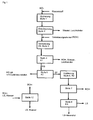
- the dicarboxylic acid solution (DCL) is hydrogenated, after dehydration, fed together with a C 1 - to C 3 -alcohol, preferably methanol, in the esterification reactor R 1 , in which the carboxylic acids are esterified.
- the resulting esterification mixture then passes into the column K 1 , in which the excess alcohol (ROH), water and low boilers (LS) distilled overhead and the ester mixture (EG) withdrawn as the bottom and fed into the column K 2 .
- ROH excess alcohol
- LS low boilers
- EG ester mixture
- the EG is in one of 1,4-cyclohexanediols predominantly liberated (maximum 5 wt .-%, preferably less than 1 wt.% Of the 1,4-cyclohexanediols present in the feed) ester fraction (EF) and a bottom fraction consisting of High boilers (HS) and cis- and trans-1,4-cyclohexanediols (1,4-CHDO) fractionated.
- the ester fraction is then hydrogenated to 1,6-hexanediol and esterification alcohol and pure distilled 1,6-hexanediol in K 3 .
- the process steps are broken down into stages, wherein the stages 1, 2, 3, 4, 5, 6, 7 and 8 as well as 12 are essential for the process and the stages 4 and 5 as well as 7 and 8 can also be combined.
- Steps 9, 10 and 11 are optional, but may be useful to increase the economics of the process.
- stage 1 For the catalytic hydrogenation of the DCL in step a) of the process according to the invention (stage 1) serve catalysts containing at least one metal of the 7th to 12th group of the periodic table, for example ruthenium, palladium, platinum, nickel, cobalt, iron, rhenium, iridium , Copper, osmium and zinc. Preference is given to the metals ruthenium, nickel, cobalt, rhenium and copper. These metals can be used both in the form of metals and their compounds, such as oxides and sulfides.
- full catalysts which contain no carriers and consist of metals, metal oxides or mixtures thereof. Preference is given to iron and in particular cobalt unsupported catalysts.
- the metals or metal compounds can be used without carriers. However, they are preferably supported on carriers, such as. As TiO 2 , Al 2 O 3 , ZrO 2 , SiO 2 , HfO 2 , coal, zeolites or mixtures thereof applied. These supported catalysts can be used in a wide variety of packaging forms, such as. As strands, tablets or rings are used.
- Raney nickel, Raney copper or Raney cobalt can preferably be used in the form of Raney nickel, Raney copper or Raney cobalt.
- the Raney catalysts can be used in all known packaging forms, eg. As tablets, strands or granules are used. Suitable Raney copper catalysts are z.
- B. Raney copper nuggets used in WO-A 99/03801 are described.
- a catalyst comprising ruthenium supported on titania moldings, wherein the titania moldings are prepared by treating titanium dioxide before or after molding into the molded article with 0.1 to 30 wt .-% of an acid in which titanium dioxide is sparingly soluble can be obtained.
- the catalytically active ruthenium is applied by conventional methods, preferably on prefabricated TiO 2 as a carrier material.
- a titanium dioxide support which is preferably suitable for use in the ruthenium-containing catalyst may accordingly be used DE-A 197 38 464 by treating titanium dioxide before or after molding the molded article with 0.1 to 30% by weight of an acid, based on titanium dioxide, in which the titanium dioxide is sparingly soluble. Titanium dioxide is preferably used in the anatase modification.
- acid for example, formic acid, phosphoric acid, nitric acid, acetic acid or stearic acid are suitable.
- the active component ruthenium can be applied in the form of a ruthenium salt solution to the resulting titania support in one or more impregnation stages. Subsequently, the impregnated support is dried and optionally calcined. However, it is also possible to precipitate ruthenium from a ruthenium salt solution, preferably with sodium carbonate, onto a titanium dioxide present as a powder in aqueous suspension. The precipitated precipitates are washed, dried, optionally calcined and deformed.
- volatile ruthenium compounds such as, for example, ruthenium acetylacetonate or rutheniumcarbonyl
- chemical vapor deposition can be converted into the gas phase and applied to the support in a manner known per se, which is referred to as chemical vapor deposition.
- the supported catalysts thus obtained can be present in all known formulation forms. Examples are strands, tablets or granules.
- the ruthenium catalyst precursors are reduced by treatment with hydrogen-containing gas, preferably at temperatures above 100 ° C.
- the catalysts are preferably passivated before use in the process according to the invention at temperatures of 0 to 50 ° C., preferably at room temperature, with oxygen-containing gas mixtures, preferably with air-nitrogen mixtures. It is also possible to incorporate the catalyst into the hydrogenation reactor in oxidic form and to reduce it under reaction conditions.
- the invention particularly preferred catalyst has a ruthenium content of 0.01 to 10 wt .-%, preferably from 0.1 to 6, based on the total weight of the catalyst of catalytically active metal and carrier on.
- the catalyst of the invention may have a sulfur content of 0.01 to 1 wt .-%, based on the total weight of the catalyst, wherein the sulfur determination is carried out coulometrically.
- the ruthenium surface is from 1 to 20 m 2 / g, preferably from 5 to 15 m 2 / g and the BET surface area (determined according to DIN 66 131) of 5 to 500 m 2 / g, preferably from 50 to 200 m 2 /G.
- the catalysts of the invention have a pore volume of 0.1 to 100 ml / g. Furthermore, the catalysts are characterized by a cutting hardness of 1 to 100 N.
- the hydrogenation catalysts may be suspended in the reaction mixture. It is preferred to arrange them firmly in the hydrogenation reactor.
- the hydrogenation can be carried out batchwise or, preferably, continuously.
- the reaction mixture can be passed over the catalyst in bottom or trickle mode.
- the hydrogenation can be carried out in a single reactor or in two reactors connected in series. If two reactors are used, the two reactors may contain the same catalyst or two different catalysts. The two reactors may differ in the hydrogenation temperature and the hydrogen partial pressure.
- the temperature range for the hydrogenation is between 50 and 200 ° C, preferably 70 to 180 ° C, more preferably between 90 and 160 ° C.
- the reaction pressure, generated essentially by hydrogen, is between 5 and 35 bar.
- hydrogen one can use pure hydrogen, but it is also possible, technically even preferred, to use the exhaust gas from another hydrogenation, for example that of the esters to 1,6-hexanediol, for the hydrogenation completely or at least partially.
- the molar excess of hydrogen relative to the component to be hydrogenated is between 1 and 5000 mol%, preferably 10 to 3000 mol%, more preferably 50 to 1000 mol%.
- the dicarboxylic acid solution (DCL) is generally an aqueous solution with a water content of 20 to 80 wt .-%. Since an esterification reaction is an equilibrium reaction in which water is formed, it is useful, especially in esterification with e.g. Methanol to remove existing water prior to the reaction, especially if water is not present during the esterification reaction, e.g. not azeotropic, can be removed.
- the drainage (step 2) in step b) may e.g.
- a membrane system or preferably by a distillation apparatus in which at 10 to 250 ° C, preferably 20 to 200 ° C, particularly preferably 30 to 200 ° C and a pressure of 1 to 1 500 mbar, particularly preferably 5 to 1 100th mbar, most preferably 20 to 1 000 mbar of water overhead and higher monocarboxylic acids, dicarboxylic acids and 1,4-cyclohexanediols are separated off via bottom.
- the bottom temperature is preferably chosen so that the bottom product can be removed liquid.
- the water content in the bottom of the column can be from 0.01 to 10% by weight, preferably from 0.01 to 5% by weight, particularly preferably from 0.01 to 1% by weight.
- the separation of the water can be carried out so that the water is acid-free or you can distill off the lower monocarboxylic acids contained in the DCL - essentially formic acid, if still present - for the most part with the water, preferably 60 - 95 wt .-% of Acids present in the feed, such as formic acid and acetic acid, so that they do not bind any esterification alcohol in the esterification.
- Other components may be separated along with the water, e.g. Cyclohexanol, possibly still existing cyclohexanone. These may e.g. separated by phase separation of water and as valuable products, e.g. are released into the cyclohexanol / cyclohexanone recovery.
- the carboxylic acid stream from stage 2 is mixed with alcohol ROH having 1 to 10 carbon atoms.
- alcohol ROH having 1 to 10 carbon atoms.
- methanol, ethanol, propanol or isopropanol or mixtures of the alcohols but preferably methanol on the one hand or C 4 and higher alcohols, in particular having 4 to 8 carbon atoms and preferably n- or i-butanol or n-pentanol or i Pentanol, on the other hand.
- the mixing ratio of alcohol to carboxylic acid stream may be from 0.1 to 30, preferably from 0.2 to 20, particularly preferably from 0.5 to 10.
- This mixture passes as a melt or solution in the reactor of stage 3, in which the carboxylic acids are esterified with the alcohol.
- the esterification reaction can be carried out at 50 to 400 ° C, preferably 70 to 300 ° C, particularly preferably 90 to 200 ° C.
- An external pressure can be applied, but the esterification is preferably carried out under autogenous pressure of the reaction system.
- an esterification apparatus can be a stirred tank or flow tube or it can each be used several.
- the residence time necessary for the esterification is between 0.3 and 10 hours, preferably 0.5 to 5 hours.
- the esterification reaction can proceed without the addition of a catalyst, but a catalyst is preferably added to increase the reaction rate. It may be a homogeneous dissolved or a solid catalyst.
- homogeneous catalysts are sulfuric acid, phosphoric acid, hydrochloric acid, sulfonic acids such as p-toluenesulfonic acid, heteropolyacids such as tungstophosphoric acid or Lewis acids such as aluminum, vanadium, titanium, boron compounds. Preference is given to mineral acids, in particular sulfuric acid.
- the weight ratio of homogeneous catalyst to carboxylic acid melt is usually 0.0001 to 0.5, preferably 0.001 to 0.3.
- solid catalysts are acidic or superacid materials, for example, acidic and super acidic metal oxides such as SiO 2 , Al 2 O 3 , SnO 2 , ZrO 2 , phyllosilicates or zeolites, which may all be doped for acid amplification with mineral acid residues such as sulfate or phosphate, or organic ion exchangers suitable with sulfonic acid, or carboxylic acid groups.
- the solid catalysts can be arranged as a fixed bed or used as a suspension.
- the water formed in the reaction is conveniently used continuously, e.g. through a membrane or removed by distillation.
- the completeness of the conversion of the free carboxyl groups present in the carboxylic acid melt is determined by the acid number (mg KOH / g) measured after the reaction. It is less the optionally added acid as a catalyst from 0.01 to 50, preferably 0.1 to 10. Not all present in the system carboxyl groups must be present as esters of the alcohol used, but a part may be in the form of dimeric or oligomeric esters with the OH end of hydroxycaproic acid present.
- the esterification mixture is fed in stage 4 into a distillation column. If a dissolved acid was used as a catalyst for the esterification reaction, the esterification mixture is expediently neutralized with a base, wherein 1 to 1.5 base equivalents are added per acid equivalent of the catalyst.
- Bases used are generally alkali metal or alkaline earth metal oxides, carbonates, hydroxides or alkoxides, or amines in substance or dissolved in the esterification alcohol. It is also the use of ion exchangers possible, which are preferably used again and again by regeneration.
- the feed to the column is preferably carried out between the top and the bottom stream.
- the feed to the column is preferably carried out between the top and the bottom stream.
- the feed to the column is preferably carried out between the top and the bottom stream.
- This stream can either be burned or preferably further worked up in stage 12.
- the bottom product obtained is an ester mixture which consists predominantly of the esters of the alcohol ROH used with dicarboxylic acids such as adipic acid and glutaric acid, hydroxycarboxylic acids such as 6-hydroxycaproic acid and 5-hydroxyvaleric acid, and of oligomers and free or esterified 1,4-cyclohexanediols. It may be useful to allow a residual content of water and / or alcohol ROH up to 4% by weight in the ester mixture.
- the bottom temperatures are from 70 to 250.degree. C., preferably from 80 to 220.degree. C., particularly preferably from 100 to 190.degree.
- stage 5 The largely freed from water and esterification alcohol ROH stream from stage 4 is fed to the stage 5.
- This is a distillation column in which the feed takes place between the low-boiling components and the high-boiling components.
- the column is operated at temperatures of 10 to 300 ° C, preferably 20 to 270 ° C, more preferably 30 to 250 ° C and pressures of 1 to 1000 mbar, preferably 5 to 500 mbar, particularly preferably 10 to 200 mbar.
- the top fraction consists predominantly of residual water and residual alcohol ROH, esters of the alcohol ROH with monocarboxylic acids, predominantly C 3 to C 6 monocarboxylic acid esters with hydroxycarboxylic acids such as 6-hydroxycaproic acid, 5-hydroxyvaleric acid and above all the diesters with dicarboxylic acids such as adipic acid, glutaric acid and succinic acid , 1,2-cyclohexanediols, caprolactone and valerolacetone.
- the said components can be separated together overhead or in a further preferred embodiment in the column of the stage 5 in a top stream containing predominantly residual water and residual alcohol and the above-mentioned components having 3 to 5 carbon atoms and a side stream, which predominantly the above mentioned constituents of the C 6 ester, are separated.
- the stream containing the esters of C 6 acids can be completely hydrogenated (step 6).
- the high-boiling components of the stream from stage 4, predominantly consisting of 1,4-cyclohexanediols or their esters, dimeric or oligomeric esters and unspecified polymeric constituents of the DCL, are separated off via the stripping section of the column of stage 5. These may be obtained together or in such a way that predominantly the 1,4-cyclohexanediols and the residue are separated off via a side stream of the column in the stripping section.
- the 1,4-cyclohexanediols thus obtained can be used, for example, as starting material for active ingredients.
- the high boiling components, with or without the content of 1,4-cyclodiols, can be burned.
- Steps 4 and 5 can be summarized, especially if only smaller quantities are processed.
- the C 6 ester stream can be obtained, for example, in a batchwise fractional distillation, again without 1,4-cyclohexanediols getting into the stream fed to the hydrogenation.
- Suitable catalysts are in principle all suitable for the hydrogenation of carbonyl homogeneous and heterogeneous catalysts such as metals, metal oxides, metal compounds or mixtures thereof into consideration.
- Examples of homogeneous catalysts are in H. Kropf, Houben-Weyl, Methods of Organic Chemistry, Volume IV / 1c, Georg Thieme Verlag Stuttgart, 1980, pp 45 to 67
- examples of heterogeneous catalysts are in Houben-Weyl, Methods of Organic Chemistry, Volume IV / 1c, pp. 16 to 26 , described.
- catalysts which contain one or more of the elements from subgroups I and VI. to VIII. of the Periodic Table of the Elements, preferably copper, chromium, molybdenum, manganese, rhenium, ruthenium, cobalt, nickel and palladium, particularly preferably copper, cobalt or rhenium.
- the catalysts may consist solely of the active components or the active components may be supported.
- Suitable carrier materials are, for example, Cr 2 O 3 , Al 2 O 3 , SiO 2 , ZrO 2 , TiO 2 , ZnO 2 , BaO and MgO or mixtures thereof.
- the preparation of these catalysts can, for example, according to the information of EP 0 552 463 by precipitation of sparingly soluble compounds from solutions containing the corresponding metal ions in the form of their salts.
- Suitable salts are, for example, halides, sulfates and nitrates.
- Suitable precipitants are all agents which lead to the formation of such insoluble intermediates, which can be converted by thermal treatment in the oxides.
- Particularly suitable intermediates are the hydroxides and carbonates or bicarbonates, so that alkali carbonates or ammonium carbonate are used as particularly preferred precipitants.
- Important for the preparation of the catalysts is the thermal treatment of the intermediates at temperatures between 500 ° C and 1000 ° C.
- the BET surface area of the catalysts is between 10 and 150 m 2 / g.
- Further preferred hydrogenation catalysts contain, in addition to Cu, La and Al oxides. They are for example in DE-A 10313702 described.
- heterogeneous catalysts are used, which are either fixed or used as a suspension. If the hydrogenation is carried out in the gas phase and over a fixed catalyst, temperatures of 150 to 300 ° C are generally used at pressures of 1 to 100 bar, preferably 15 to 70 bar applied. Expediently, at least as much hydrogen is used as hydrogenating agent and carrier gas so that educts, intermediates and products never become liquid during the reaction. The excess hydrogen is preferably circulated, with a small portion used as exhaust gas to remove inerts such as e.g. Methane can be discharged. It can be used one behind the other, one or more reactors connected in series.
- the hydrogenation in the liquid phase with fixed or suspended catalyst it is generally carried out at temperatures between 100 and 350 ° C, preferably 120 and 300 ° C and pressures of 30 to 350 bar, preferably 40 to 300 bar.
- the hydrogenation can be carried out in one or more reactors connected in series.
- the hydrogenation in liquid phase over a fixed bed can be carried out both in trickle and sump mode.
- several reactors are used, the majority of the esters being hydrogenated in the first reactor and the first reactor preferably operated with liquid circulation for heat removal and the subsequent reactor or reactors preferably without circulation to complete the conversion. Circulating gas is not necessary, especially when trickle down.
- the hydrogenation can be carried out batchwise, preferably continuously.
- the hydrogenation discharge consists essentially of 1,6-hexanediol and the alcohol ROH. Further ingredients are, above all, if the entire low-boiling stream of stage 5 was used, 1,5-pentanediol, 1,4-butanediol, 1,2-cyclohexanediols and small amounts of monoalcohols having 1 to 6 carbon atoms, optionally ether and water.
- the hydrogenation is in the step 7 (a distillation column) in the alcohol ROH, which additionally contains most of the other low-boiling components and a stream containing predominantly 1,6-hexanediol in addition to 1,5-pentanediol and 1,2-cyclohexanediols contains, separated.
- a pressure 10 to 1 500 mbar, preferably 30 to 1 200 mbar, more preferably 50 to 1000 mbar head temperatures from 0 to 120 ° C, preferably 20 to 100 ° C, particularly preferably 30 to 90 ° C and bottom temperatures of 100 to 270 ° C, preferably 140 to 260 ° C, more preferably 160 to 250 ° C set.
- the low-boiling material stream can either be returned directly to the esterification of stage 3 or reach stage 9 or stage 12.
- the 1,6-hexanediol-containing stream is purified in step 8 in a column.
- 1,5-pentanediol, the 1,2-cyclohexanediols and any other low boilers present are separated overhead. If the 1,2-cyclohexanediols and / or 1,5-pentanediol are obtained as additional desired products, they can be separated in a further column. About the swamp any existing high boilers are discharged.
- 1,6-hexanediol is taken from a side stream of the column with a purity of at least 99.5%, preferably at least 99.7%, more preferably over 99.9%.
- stages 7 and 8 can also be combined in a batchwise fractional distillation.
- the predominantly alcohol ROH-containing stream from stage 4 and / or 7 can be worked up in stage 12.
- a column is advantageously used in which components which boil easier than the alcohol ROH overhead, water and components which boil higher than the alcohol ROH, are separated off via bottom of the alcohol ROH, which is obtained in a side stream.
- the column is suitably operated at 500 to 5,000 mbar, preferably at 800 to 3,000 mbar.
- the high-boiling stream from stage 5 is worked up to increase the overall yield of desired products, based on the DCL used.
- stage 9 the proportion of dimeric and oligomeric esters of adipic acid or hydroxycaproic acid is reacted with further amounts of the alcohol ROH, preferably methanol, in the presence of a catalyst.
- the weight ratio of alcohol ROH and the bottom stream from stage 5 is between 0.1 and 20, preferably 0.5 to 10, particularly preferably 1 to 5.
- Suitable catalysts are in principle already described for the esterification in stage 3. However, preference is given to Lewis acids or Lewis bases used.
- Examples of these are compounds or complexes of aluminum, tin, antimony, zirconium or titanium, such as zirconium acetylacetonate or tetraalkyl titanate such as tetraisopropyl titanate, used in concentrations of 1 to 10,000 ppm, preferably 50 to 6,000 ppm, more preferably 100 to 4,000 ppm become. Particularly preferred are titanium compounds.
- the transesterification may be carried out batchwise or continuously, in one or more reactors, in stirred tanks or tubular reactors connected in series at temperatures between 100 and 300 ° C., preferably 120 to 270 ° C., more preferably 140 to 240 ° C., and the inherent pressures which are produced, be performed.
- the residence times required are 0.5 to 10 hours, preferably 1 to 4 hours.
- This stream from step 9 can be in the case of esterification with methanol, e.g. move back to level 4.
- methanol e.g. move back to level 4.
- a substream of the high boilers from stage 5 must then be discharged batchwise or continuously.
- Another possibility is to return the stream from stage 9 not in stage 4, but him, similar to stage 4, in a stage 10 in predominantly alcohol ROH, which can then get back to the stage 3, 9 or 12 and a stream of containing the esters, to separate.
- This ester stream can in principle (with the proviso of avoiding accumulations of 1,4-cyclohexanediols) are recycled to the stage 5 or is preferably in a further stage 11 in the esters of C 6 acids and, in terms of quantity rather insignificant, in the esters the C 5 acids on the one hand, which are introduced either in the stage 5 or directly into the stage 6 and high boilers on the other hand, containing 1,4-cyclohexanediols, separated, whereupon the high boilers are discharged.
- the method will be explained in more detail with reference to the following examples, but in no way limited thereby.
- the data on the composition of the material flows are% by weight determined by gas chromatography.
- dicarboxylic acid solution / h adipic acid, 6-hydroxycaproic acid, 6-oxocaproic acid, 1,4-cyclohexanediols, 4-hydroxycyclohexanone, glutaric acid, 5-hydroxyvaleric acid, formic acid, water
- a distillation apparatus three-way bubble tray column with external oil Heating circuit, oil temperature 150 ° C., soil volume approx. 25 ml each, feed over the bubble cap bottoms
- the top product was 0.045 kg with a formic acid content in the water of about 3%. In the bottom stream (5.5 kg), the water content was about 0.4%.
- the esterification stream from stage 3 was distilled in a column (1015 mbar, 65 ° C. head temperature, up to 125 ° C. bottom temperature). Over the head, 7.0 kg were withdrawn. The bottom product was 6.8 kg.
- the bottom stream from stage 4 was fractionally distilled (10 mbar, 75-90 ° C head temperature, up to 200 ° C bottom temperature). In the swamp, the 1,4-cyclohexanediols were found.
- the hexanediol contained about 0.2% of 1,4-cyclohexanediols and about 0.02% of 6-methoxyhexan-1-ol and 0.1% of 6,6-dimethoxyhexan-1-ol.
- 0.1 kg / h of dicarboxylic acid solution were hydrogenated in a tubular reactor (1 m long, content 100 ml) at 120 ° C and 20 bar hydrogen pressure, 25 standard liters of hydrogen / h of 100 ml of Ru (5%) / titanium dioxide catalyst.
- the hydrogenation was operated for 500 hours without the composition of the hydrogenation effluent changing appreciably.
- the content of 1,6-hexanediol after hydrogenation was less than 0.1% higher than before hydrogenation.
- 0.1 kg / h of dicarboxylic acid solution from stage 1 (adipic acid, 6-hydroxycaproic acid, 1,4-cyclohexanediols, glutaric acid, 5-hydroxyvaleric acid, formic acid, water) were continuously in a distillation apparatus (three-shaft bubble tray column with external oil heating circuit, oil temperature 150 ° C, bottom volume approx. 25 ml each, feed over the bubble cap bottoms) with attached packed column (about 4 theoretical plates, no reflux at the top).
- the top product was 0.04 kg with a formic acid content in the water of about 0.2%. In the bottom stream (5.5 kg), the water content was about 0.4%.
- the comparison between the comparative example and the example according to the invention shows a significantly lower amount of formic acid, whereby a purer end product (see step 7/8) than is known in the prior art is obtained.
- the esterification stream from stage 3 was distilled in a column (1015 mbar, 65 ° C. head temperature, up to 125 ° C. bottom temperature). Over the head, 7.0 kg were withdrawn. The bottom product was 6.8 kg.
- the bottom stream from stage 4 was fractionally distilled (10 mbar, 75-90 ° C head temperature, up to 200 ° C bottom temperature). In the swamp, the 1,4-cyclohexanediols were found.
- 0.3 kg were distilled off as low boilers (dimethyl succinate, methyl valerate, methyl pentanoate, capronic acid methyl ester, 1,2-cyclohexanediols, valerolactone, methyl 5-hydroxyvalerate, glutaric acid dimethyl ester, etc.); 5.5 parts as predominantly dimethyl adipate and 6-hydroxycaproate containing 5.5 kg, which also contained between 2 to 5% of dimethyl glutarate and 5-hydroxyvaleric, between 0.2 and 1% valerolactone and caprolactone.
- Example 2 step 1 was repeated, with the difference that was used as the catalyst Ru (0.5%) on activated carbon. The hydrogenation result was equivalent to Example 2.
- Example 2 stage 1 was repeated, with the difference that the catalyst used was Ni (10% on activated carbon at 150 ° C. and 50 bar) The hydrogenation result was equivalent to Example 2.
- Example 2 stage 1 was repeated, with the difference that Co (10% on activated carbon at 120 ° C. and 50 bar was used as catalyst.
- the hydrogenation result was equivalent to example 2.
Landscapes
- Chemical & Material Sciences (AREA)
- Organic Chemistry (AREA)
- Engineering & Computer Science (AREA)
- Oil, Petroleum & Natural Gas (AREA)
- Organic Low-Molecular-Weight Compounds And Preparation Thereof (AREA)
- Low-Molecular Organic Synthesis Reactions Using Catalysts (AREA)
- Catalysts (AREA)
Priority Applications (1)
| Application Number | Priority Date | Filing Date | Title |
|---|---|---|---|
| EP10711879.6A EP2417088B1 (de) | 2009-04-07 | 2010-03-29 | Verfahren zur herstellung von 1,6-hexandiol |
Applications Claiming Priority (3)
| Application Number | Priority Date | Filing Date | Title |
|---|---|---|---|
| EP09157511 | 2009-04-07 | ||
| PCT/EP2010/054053 WO2010115738A1 (de) | 2009-04-07 | 2010-03-29 | Verfahren zur herstellung von 1,6-hexandiol |
| EP10711879.6A EP2417088B1 (de) | 2009-04-07 | 2010-03-29 | Verfahren zur herstellung von 1,6-hexandiol |
Publications (2)
| Publication Number | Publication Date |
|---|---|
| EP2417088A1 EP2417088A1 (de) | 2012-02-15 |
| EP2417088B1 true EP2417088B1 (de) | 2013-05-29 |
Family
ID=42668286
Family Applications (1)
| Application Number | Title | Priority Date | Filing Date |
|---|---|---|---|
| EP10711879.6A Not-in-force EP2417088B1 (de) | 2009-04-07 | 2010-03-29 | Verfahren zur herstellung von 1,6-hexandiol |
Country Status (9)
| Country | Link |
|---|---|
| US (1) | US8629306B2 (enExample) |
| EP (1) | EP2417088B1 (enExample) |
| JP (1) | JP5586686B2 (enExample) |
| KR (1) | KR20120005018A (enExample) |
| CN (1) | CN102388009B (enExample) |
| CA (1) | CA2755696A1 (enExample) |
| ES (1) | ES2415156T3 (enExample) |
| SG (1) | SG174392A1 (enExample) |
| WO (1) | WO2010115738A1 (enExample) |
Families Citing this family (13)
| Publication number | Priority date | Publication date | Assignee | Title |
|---|---|---|---|---|
| DE102009047194A1 (de) | 2009-11-26 | 2011-06-01 | Basf Se | Verfahren zur Herstellung von Kunststoffen mit 1,6-Hexandiol mit einem Aldehydanteil von kleiner 500ppm |
| DE102009047193A1 (de) | 2009-11-26 | 2011-06-01 | Basf Se | Verfahren zur Herstellung von Diolen durch Hydrierung eines Carbonsäure enthaltenden Gemisches mittels Kobalt enthaltenden Katalysatoren |
| JP2015508401A (ja) | 2011-12-30 | 2015-03-19 | イー・アイ・デュポン・ドウ・ヌムール・アンド・カンパニーE.I.Du Pont De Nemours And Company | イソソルビドからのテトラヒドロフラン−2,5−ジメタノールの生成 |
| EP2797868A4 (en) | 2011-12-30 | 2015-08-12 | Du Pont | PROCESS FOR PRODUCING HEXANEDIOLS |
| US8889912B2 (en) | 2011-12-30 | 2014-11-18 | E I Du Pont De Nemours And Company | Process for preparing 1,6-hexanediol |
| US8865940B2 (en) | 2011-12-30 | 2014-10-21 | E I Du Pont De Nemours And Company | Process for preparing 1,6-hexanediol |
| CN104011002A (zh) | 2011-12-30 | 2014-08-27 | 纳幕尔杜邦公司 | 制备1,6-己二醇的方法 |
| WO2013101970A1 (en) | 2011-12-30 | 2013-07-04 | E. I. Du Pont De Nemours And Company | Production of 5-hydroxymethyl-2-furfural from levoglucosenone |
| US8859826B2 (en) | 2012-04-27 | 2014-10-14 | E I Du Pont De Nemours And Company | Production of alpha, omega-diols |
| US8846985B2 (en) | 2012-04-27 | 2014-09-30 | E I Du Pont De Nemours And Company | Production of alpha, omega-diols |
| US9018423B2 (en) | 2012-04-27 | 2015-04-28 | E I Du Pont De Nemours And Company | Production of alpha, omega-diols |
| CN105727962B (zh) * | 2016-02-02 | 2018-07-31 | 上海华峰新材料研发科技有限公司 | 用于己二酸二甲酯制己二醇的催化剂及其制备方法和应用 |
| TWI905687B (zh) * | 2023-04-13 | 2025-11-21 | 日商Dic股份有限公司 | 六亞甲基(甲基)丙烯酸酯組成物、活性能量線硬化型樹脂組成物、硬化物 |
Family Cites Families (22)
| Publication number | Priority date | Publication date | Assignee | Title |
|---|---|---|---|---|
| DE1235879B (de) | 1964-03-17 | 1967-03-09 | Basf Ag | Verfahren zur Herstellung von Alkoholen durch katalytische Hydrierung von Carbonsaeuren |
| JPS4815314B1 (enExample) * | 1969-08-18 | 1973-05-14 | ||
| DE2060548C3 (de) | 1970-12-09 | 1979-10-11 | Basf Ag, 6700 Ludwigshafen | Verfahren zur Herstellung von sehr reinem 1,6-Hexandiol durch Kristallisation |
| DE2321101C2 (de) | 1973-04-26 | 1982-07-22 | Basf Ag, 6700 Ludwigshafen | Verfahren zur Herstellung im wesentlichen trägerfreier Kobaltkatalysatoren |
| US3933930A (en) * | 1975-03-06 | 1976-01-20 | Celanese Corporation | Hexanediol from cyclohexane |
| DE4141199A1 (de) | 1991-12-13 | 1993-06-17 | Sued Chemie Ag | Chromfreier katalysator fuer die hydrierung von organischen verbindungen, die die carbonylfunktionen enthalten |
| JP2000505468A (ja) * | 1996-03-01 | 2000-05-09 | ビーエーエスエフ アクチェンゲゼルシャフト | 99%を越える純度を有する1,6―ヘキサンジオールの製法 |
| MY118128A (en) * | 1996-03-01 | 2004-09-30 | Basf Ag | The preparation of 1, 6-hexanediol and caprolactone |
| DE19607954A1 (de) | 1996-03-01 | 1997-09-04 | Basf Ag | Verfahren zur Herstellung von 1,6-Hexandiol und Caprolacton |
| DE19730939A1 (de) | 1997-07-18 | 1999-01-21 | Basf Ag | Verfahren zur Hydrierung von Carbonylverbindungen |
| DE19738464A1 (de) | 1997-09-03 | 1999-03-04 | Basf Ag | Verwendung von Formkörpern als Katalysator zur Herstellung von Caprolactam |
| DE10128249A1 (de) * | 2001-06-11 | 2002-12-12 | Basf Ag | Verfahren zur Entfernung von Ameisensäure aus wässrigen Lösungen |
| DE10313702A1 (de) | 2003-03-27 | 2004-10-07 | Basf Ag | Katalysator und Verfahren zur Hydrierung von Carbonylverbindungen |
| DE102004033557A1 (de) * | 2004-07-09 | 2006-02-16 | Basf Ag | Verfahren zur Herstellung von 1,6-Hexandiol in einer Reinheit von über 99,5% |
| DE102004054047A1 (de) | 2004-11-05 | 2006-05-11 | Basf Ag | Verfahren zur Herstellung von 1,6-Hexandiol |
| KR20100020036A (ko) * | 2007-06-14 | 2010-02-19 | 바스프 에스이 | ε-카프로락톤의 제법 |
| CN101848904B (zh) | 2007-11-05 | 2013-05-01 | 巴斯夫欧洲公司 | 生产ε-己内酯的方法 |
| KR20100110830A (ko) | 2007-12-21 | 2010-10-13 | 바스프 에스이 | ε-카프로락톤의 제조 방법 |
| ES2393838T5 (es) | 2008-02-15 | 2016-03-02 | Basf Se | Procedimiento para la obtención de ésteres de ácido 6-hidroxicaprónico |
| EP2417089B1 (de) * | 2009-04-07 | 2013-06-05 | Basf Se | Verfahren zur herstellung von 1,6-hexandiol und caprolacton |
| DE102009047193A1 (de) | 2009-11-26 | 2011-06-01 | Basf Se | Verfahren zur Herstellung von Diolen durch Hydrierung eines Carbonsäure enthaltenden Gemisches mittels Kobalt enthaltenden Katalysatoren |
| DE102009047194A1 (de) | 2009-11-26 | 2011-06-01 | Basf Se | Verfahren zur Herstellung von Kunststoffen mit 1,6-Hexandiol mit einem Aldehydanteil von kleiner 500ppm |
-
2010
- 2010-03-29 EP EP10711879.6A patent/EP2417088B1/de not_active Not-in-force
- 2010-03-29 SG SG2011066388A patent/SG174392A1/en unknown
- 2010-03-29 US US13/257,496 patent/US8629306B2/en not_active Expired - Fee Related
- 2010-03-29 CA CA2755696A patent/CA2755696A1/en not_active Abandoned
- 2010-03-29 ES ES10711879T patent/ES2415156T3/es active Active
- 2010-03-29 JP JP2012503955A patent/JP5586686B2/ja not_active Expired - Fee Related
- 2010-03-29 CN CN201080015253.6A patent/CN102388009B/zh not_active Expired - Fee Related
- 2010-03-29 KR KR1020117026357A patent/KR20120005018A/ko not_active Abandoned
- 2010-03-29 WO PCT/EP2010/054053 patent/WO2010115738A1/de not_active Ceased
Also Published As
| Publication number | Publication date |
|---|---|
| US20120022298A1 (en) | 2012-01-26 |
| JP5586686B2 (ja) | 2014-09-10 |
| SG174392A1 (en) | 2011-11-28 |
| CN102388009A (zh) | 2012-03-21 |
| WO2010115738A1 (de) | 2010-10-14 |
| JP2012522819A (ja) | 2012-09-27 |
| KR20120005018A (ko) | 2012-01-13 |
| ES2415156T3 (es) | 2013-07-24 |
| CA2755696A1 (en) | 2010-10-14 |
| US8629306B2 (en) | 2014-01-14 |
| CN102388009B (zh) | 2014-11-05 |
| EP2417088A1 (de) | 2012-02-15 |
Similar Documents
| Publication | Publication Date | Title |
|---|---|---|
| EP2417089B1 (de) | Verfahren zur herstellung von 1,6-hexandiol und caprolacton | |
| EP2417087B1 (de) | Verfahren zur herstellung von 1,6-hexandiol durch hydrierung von oligo- und polyestern | |
| EP0883590B1 (de) | Verfahren zur herstellung von 1,6-hexandiol mit einer reinheit über 99 % | |
| EP0883591B1 (de) | Verfahren zur herstellung von 1,6-hexandiol und caprolacton | |
| EP2417088A1 (de) | Verfahren zur herstellung von 1,6-hexandiol | |
| EP2225220B1 (de) | Verfahren zur Herstellung von epsilon-Caprolacton | |
| EP2244996B1 (de) | Verfahren zur herstellung von 6-hydroxycapronsäureestern | |
| EP2217587B1 (de) | Verfahren zur herstellung von e-caprolacton | |
| EP1030827A1 (de) | Verfahren zur herstellung von 1,6-hexandiol und 6-hydroxycapronsäure bzw. deren estern | |
| EP2158192A1 (de) | Verfahren zur herstellung -caprolacton | |
| EP1765751B1 (de) | Verfahren zur herstellung von 1,6-hexandiol in einer reinheit von über 99,5% | |
| EP1720818B1 (de) | Verfahren zur herstellung von hexandiol - 1,6 | |
| DE19607954A1 (de) | Verfahren zur Herstellung von 1,6-Hexandiol und Caprolacton | |
| EP2373601B1 (de) | Verfahren zur herstellung von 1,6-hexandiol | |
| EP1082283B1 (de) | Verfahren zur herstellung von hexandiol-1,6 | |
| EP1082282B1 (de) | Verfahren zur herstellung von hexandiol | |
| EP2614056B1 (de) | Verfahren zur herstellung von epsilon-caprolacton und 1,6-hexandiol | |
| DE19647349A1 (de) | Verfahren zur Herstellung von 1,6-Hexandiol und Caprolacton | |
| DE19647348A1 (de) | Verfahren zur Herstellung von 1,6-Hexandiol mit einer Reinheit über 99 % |
Legal Events
| Date | Code | Title | Description |
|---|---|---|---|
| PUAI | Public reference made under article 153(3) epc to a published international application that has entered the european phase |
Free format text: ORIGINAL CODE: 0009012 |
|
| 17P | Request for examination filed |
Effective date: 20111107 |
|
| AK | Designated contracting states |
Kind code of ref document: A1 Designated state(s): AT BE BG CH CY CZ DE DK EE ES FI FR GB GR HR HU IE IS IT LI LT LU LV MC MK MT NL NO PL PT RO SE SI SK SM TR |
|
| DAX | Request for extension of the european patent (deleted) | ||
| RIN1 | Information on inventor provided before grant (corrected) |
Inventor name: TEBBEN, GERD-DIETER, DR. Inventor name: BREUNINGER, DANIEL Inventor name: PINKOS, ROLF |
|
| REG | Reference to a national code |
Ref country code: DE Ref legal event code: R079 Ref document number: 502010003459 Country of ref document: DE Free format text: PREVIOUS MAIN CLASS: C07C0029149000 Ipc: C07C0029145000 |
|
| RIC1 | Information provided on ipc code assigned before grant |
Ipc: C07C 31/20 20060101ALI20121109BHEP Ipc: C07C 29/145 20060101AFI20121109BHEP Ipc: C07C 29/80 20060101ALI20121109BHEP Ipc: C07C 69/02 20060101ALI20121109BHEP Ipc: C07C 35/14 20060101ALI20121109BHEP Ipc: C07C 29/149 20060101ALI20121109BHEP Ipc: C07C 51/31 20060101ALI20121109BHEP Ipc: C07C 59/185 20060101ALI20121109BHEP Ipc: C07C 67/08 20060101ALI20121109BHEP Ipc: C07C 59/01 20060101ALI20121109BHEP |
|
| GRAP | Despatch of communication of intention to grant a patent |
Free format text: ORIGINAL CODE: EPIDOSNIGR1 |
|
| GRAS | Grant fee paid |
Free format text: ORIGINAL CODE: EPIDOSNIGR3 |
|
| GRAA | (expected) grant |
Free format text: ORIGINAL CODE: 0009210 |
|
| AK | Designated contracting states |
Kind code of ref document: B1 Designated state(s): AT BE BG CH CY CZ DE DK EE ES FI FR GB GR HR HU IE IS IT LI LT LU LV MC MK MT NL NO PL PT RO SE SI SK SM TR |
|
| REG | Reference to a national code |
Ref country code: GB Ref legal event code: FG4D Free format text: NOT ENGLISH |
|
| REG | Reference to a national code |
Ref country code: CH Ref legal event code: EP |
|
| REG | Reference to a national code |
Ref country code: AT Ref legal event code: REF Ref document number: 614306 Country of ref document: AT Kind code of ref document: T Effective date: 20130615 |
|
| REG | Reference to a national code |
Ref country code: IE Ref legal event code: FG4D Free format text: LANGUAGE OF EP DOCUMENT: GERMAN |
|
| REG | Reference to a national code |
Ref country code: ES Ref legal event code: FG2A Ref document number: 2415156 Country of ref document: ES Kind code of ref document: T3 Effective date: 20130724 |
|
| REG | Reference to a national code |
Ref country code: DE Ref legal event code: R096 Ref document number: 502010003459 Country of ref document: DE Effective date: 20130725 |
|
| REG | Reference to a national code |
Ref country code: LT Ref legal event code: MG4D |
|
| PG25 | Lapsed in a contracting state [announced via postgrant information from national office to epo] |
Ref country code: FI Free format text: LAPSE BECAUSE OF FAILURE TO SUBMIT A TRANSLATION OF THE DESCRIPTION OR TO PAY THE FEE WITHIN THE PRESCRIBED TIME-LIMIT Effective date: 20130529 Ref country code: LT Free format text: LAPSE BECAUSE OF FAILURE TO SUBMIT A TRANSLATION OF THE DESCRIPTION OR TO PAY THE FEE WITHIN THE PRESCRIBED TIME-LIMIT Effective date: 20130529 Ref country code: SI Free format text: LAPSE BECAUSE OF FAILURE TO SUBMIT A TRANSLATION OF THE DESCRIPTION OR TO PAY THE FEE WITHIN THE PRESCRIBED TIME-LIMIT Effective date: 20130529 Ref country code: GR Free format text: LAPSE BECAUSE OF FAILURE TO SUBMIT A TRANSLATION OF THE DESCRIPTION OR TO PAY THE FEE WITHIN THE PRESCRIBED TIME-LIMIT Effective date: 20130830 Ref country code: PT Free format text: LAPSE BECAUSE OF FAILURE TO SUBMIT A TRANSLATION OF THE DESCRIPTION OR TO PAY THE FEE WITHIN THE PRESCRIBED TIME-LIMIT Effective date: 20130930 Ref country code: IS Free format text: LAPSE BECAUSE OF FAILURE TO SUBMIT A TRANSLATION OF THE DESCRIPTION OR TO PAY THE FEE WITHIN THE PRESCRIBED TIME-LIMIT Effective date: 20130929 Ref country code: SE Free format text: LAPSE BECAUSE OF FAILURE TO SUBMIT A TRANSLATION OF THE DESCRIPTION OR TO PAY THE FEE WITHIN THE PRESCRIBED TIME-LIMIT Effective date: 20130529 Ref country code: NO Free format text: LAPSE BECAUSE OF FAILURE TO SUBMIT A TRANSLATION OF THE DESCRIPTION OR TO PAY THE FEE WITHIN THE PRESCRIBED TIME-LIMIT Effective date: 20130829 |
|
| REG | Reference to a national code |
Ref country code: NL Ref legal event code: VDEP Effective date: 20130529 |
|
| PG25 | Lapsed in a contracting state [announced via postgrant information from national office to epo] |
Ref country code: HR Free format text: LAPSE BECAUSE OF FAILURE TO SUBMIT A TRANSLATION OF THE DESCRIPTION OR TO PAY THE FEE WITHIN THE PRESCRIBED TIME-LIMIT Effective date: 20130529 Ref country code: PL Free format text: LAPSE BECAUSE OF FAILURE TO SUBMIT A TRANSLATION OF THE DESCRIPTION OR TO PAY THE FEE WITHIN THE PRESCRIBED TIME-LIMIT Effective date: 20130529 Ref country code: BG Free format text: LAPSE BECAUSE OF FAILURE TO SUBMIT A TRANSLATION OF THE DESCRIPTION OR TO PAY THE FEE WITHIN THE PRESCRIBED TIME-LIMIT Effective date: 20130829 |
|
| PG25 | Lapsed in a contracting state [announced via postgrant information from national office to epo] |
Ref country code: LV Free format text: LAPSE BECAUSE OF FAILURE TO SUBMIT A TRANSLATION OF THE DESCRIPTION OR TO PAY THE FEE WITHIN THE PRESCRIBED TIME-LIMIT Effective date: 20130529 |
|
| PG25 | Lapsed in a contracting state [announced via postgrant information from national office to epo] |
Ref country code: EE Free format text: LAPSE BECAUSE OF FAILURE TO SUBMIT A TRANSLATION OF THE DESCRIPTION OR TO PAY THE FEE WITHIN THE PRESCRIBED TIME-LIMIT Effective date: 20130529 Ref country code: DK Free format text: LAPSE BECAUSE OF FAILURE TO SUBMIT A TRANSLATION OF THE DESCRIPTION OR TO PAY THE FEE WITHIN THE PRESCRIBED TIME-LIMIT Effective date: 20130529 Ref country code: SK Free format text: LAPSE BECAUSE OF FAILURE TO SUBMIT A TRANSLATION OF THE DESCRIPTION OR TO PAY THE FEE WITHIN THE PRESCRIBED TIME-LIMIT Effective date: 20130529 Ref country code: CZ Free format text: LAPSE BECAUSE OF FAILURE TO SUBMIT A TRANSLATION OF THE DESCRIPTION OR TO PAY THE FEE WITHIN THE PRESCRIBED TIME-LIMIT Effective date: 20130529 |
|
| PG25 | Lapsed in a contracting state [announced via postgrant information from national office to epo] |
Ref country code: NL Free format text: LAPSE BECAUSE OF FAILURE TO SUBMIT A TRANSLATION OF THE DESCRIPTION OR TO PAY THE FEE WITHIN THE PRESCRIBED TIME-LIMIT Effective date: 20130529 Ref country code: RO Free format text: LAPSE BECAUSE OF FAILURE TO SUBMIT A TRANSLATION OF THE DESCRIPTION OR TO PAY THE FEE WITHIN THE PRESCRIBED TIME-LIMIT Effective date: 20130529 |
|
| PLBE | No opposition filed within time limit |
Free format text: ORIGINAL CODE: 0009261 |
|
| STAA | Information on the status of an ep patent application or granted ep patent |
Free format text: STATUS: NO OPPOSITION FILED WITHIN TIME LIMIT |
|
| 26N | No opposition filed |
Effective date: 20140303 |
|
| REG | Reference to a national code |
Ref country code: DE Ref legal event code: R097 Ref document number: 502010003459 Country of ref document: DE Effective date: 20140303 |
|
| PG25 | Lapsed in a contracting state [announced via postgrant information from national office to epo] |
Ref country code: LU Free format text: LAPSE BECAUSE OF FAILURE TO SUBMIT A TRANSLATION OF THE DESCRIPTION OR TO PAY THE FEE WITHIN THE PRESCRIBED TIME-LIMIT Effective date: 20140329 |
|
| REG | Reference to a national code |
Ref country code: CH Ref legal event code: PL |
|
| REG | Reference to a national code |
Ref country code: IE Ref legal event code: MM4A |
|
| PG25 | Lapsed in a contracting state [announced via postgrant information from national office to epo] |
Ref country code: LI Free format text: LAPSE BECAUSE OF NON-PAYMENT OF DUE FEES Effective date: 20140331 Ref country code: CH Free format text: LAPSE BECAUSE OF NON-PAYMENT OF DUE FEES Effective date: 20140331 Ref country code: IE Free format text: LAPSE BECAUSE OF NON-PAYMENT OF DUE FEES Effective date: 20140329 |
|
| PG25 | Lapsed in a contracting state [announced via postgrant information from national office to epo] |
Ref country code: IT Free format text: LAPSE BECAUSE OF NON-PAYMENT OF DUE FEES Effective date: 20140329 |
|
| REG | Reference to a national code |
Ref country code: FR Ref legal event code: PLFP Year of fee payment: 6 |
|
| PG25 | Lapsed in a contracting state [announced via postgrant information from national office to epo] |
Ref country code: MT Free format text: LAPSE BECAUSE OF FAILURE TO SUBMIT A TRANSLATION OF THE DESCRIPTION OR TO PAY THE FEE WITHIN THE PRESCRIBED TIME-LIMIT Effective date: 20130529 |
|
| REG | Reference to a national code |
Ref country code: FR Ref legal event code: PLFP Year of fee payment: 7 |
|
| PG25 | Lapsed in a contracting state [announced via postgrant information from national office to epo] |
Ref country code: SM Free format text: LAPSE BECAUSE OF FAILURE TO SUBMIT A TRANSLATION OF THE DESCRIPTION OR TO PAY THE FEE WITHIN THE PRESCRIBED TIME-LIMIT Effective date: 20130529 |
|
| REG | Reference to a national code |
Ref country code: AT Ref legal event code: MM01 Ref document number: 614306 Country of ref document: AT Kind code of ref document: T Effective date: 20150329 |
|
| PG25 | Lapsed in a contracting state [announced via postgrant information from national office to epo] |
Ref country code: MC Free format text: LAPSE BECAUSE OF FAILURE TO SUBMIT A TRANSLATION OF THE DESCRIPTION OR TO PAY THE FEE WITHIN THE PRESCRIBED TIME-LIMIT Effective date: 20130529 |
|
| PGFP | Annual fee paid to national office [announced via postgrant information from national office to epo] |
Ref country code: FR Payment date: 20160330 Year of fee payment: 7 Ref country code: GB Payment date: 20160331 Year of fee payment: 7 Ref country code: BE Payment date: 20160324 Year of fee payment: 7 |
|
| PG25 | Lapsed in a contracting state [announced via postgrant information from national office to epo] |
Ref country code: CY Free format text: LAPSE BECAUSE OF FAILURE TO SUBMIT A TRANSLATION OF THE DESCRIPTION OR TO PAY THE FEE WITHIN THE PRESCRIBED TIME-LIMIT Effective date: 20130529 |
|
| PG25 | Lapsed in a contracting state [announced via postgrant information from national office to epo] |
Ref country code: HU Free format text: LAPSE BECAUSE OF FAILURE TO SUBMIT A TRANSLATION OF THE DESCRIPTION OR TO PAY THE FEE WITHIN THE PRESCRIBED TIME-LIMIT; INVALID AB INITIO Effective date: 20100329 Ref country code: TR Free format text: LAPSE BECAUSE OF FAILURE TO SUBMIT A TRANSLATION OF THE DESCRIPTION OR TO PAY THE FEE WITHIN THE PRESCRIBED TIME-LIMIT Effective date: 20130529 |
|
| PGFP | Annual fee paid to national office [announced via postgrant information from national office to epo] |
Ref country code: ES Payment date: 20160422 Year of fee payment: 7 Ref country code: DE Payment date: 20160531 Year of fee payment: 7 |
|
| PG25 | Lapsed in a contracting state [announced via postgrant information from national office to epo] |
Ref country code: AT Free format text: LAPSE BECAUSE OF NON-PAYMENT OF DUE FEES Effective date: 20150329 |
|
| REG | Reference to a national code |
Ref country code: DE Ref legal event code: R119 Ref document number: 502010003459 Country of ref document: DE |
|
| GBPC | Gb: european patent ceased through non-payment of renewal fee |
Effective date: 20170329 |
|
| REG | Reference to a national code |
Ref country code: FR Ref legal event code: ST Effective date: 20171130 |
|
| PG25 | Lapsed in a contracting state [announced via postgrant information from national office to epo] |
Ref country code: DE Free format text: LAPSE BECAUSE OF NON-PAYMENT OF DUE FEES Effective date: 20171003 Ref country code: FR Free format text: LAPSE BECAUSE OF NON-PAYMENT OF DUE FEES Effective date: 20170331 |
|
| PG25 | Lapsed in a contracting state [announced via postgrant information from national office to epo] |
Ref country code: GB Free format text: LAPSE BECAUSE OF NON-PAYMENT OF DUE FEES Effective date: 20170329 |
|
| REG | Reference to a national code |
Ref country code: BE Ref legal event code: MM Effective date: 20170331 |
|
| PG25 | Lapsed in a contracting state [announced via postgrant information from national office to epo] |
Ref country code: BE Free format text: LAPSE BECAUSE OF NON-PAYMENT OF DUE FEES Effective date: 20170331 |
|
| PG25 | Lapsed in a contracting state [announced via postgrant information from national office to epo] |
Ref country code: MK Free format text: LAPSE BECAUSE OF FAILURE TO SUBMIT A TRANSLATION OF THE DESCRIPTION OR TO PAY THE FEE WITHIN THE PRESCRIBED TIME-LIMIT Effective date: 20130529 |
|
| REG | Reference to a national code |
Ref country code: ES Ref legal event code: FD2A Effective date: 20180704 |
|
| PG25 | Lapsed in a contracting state [announced via postgrant information from national office to epo] |
Ref country code: ES Free format text: LAPSE BECAUSE OF NON-PAYMENT OF DUE FEES Effective date: 20170330 |