EP2375729B1 - Festkörper-Bildaufnahmevorrichtung und Ansteuerungsverfahren dafür - Google Patents
Festkörper-Bildaufnahmevorrichtung und Ansteuerungsverfahren dafür Download PDFInfo
- Publication number
- EP2375729B1 EP2375729B1 EP11157609.6A EP11157609A EP2375729B1 EP 2375729 B1 EP2375729 B1 EP 2375729B1 EP 11157609 A EP11157609 A EP 11157609A EP 2375729 B1 EP2375729 B1 EP 2375729B1
- Authority
- EP
- European Patent Office
- Prior art keywords
- counter
- row
- field
- reset
- pixel portion
- Prior art date
- Legal status (The legal status is an assumption and is not a legal conclusion. Google has not performed a legal analysis and makes no representation as to the accuracy of the status listed.)
- Not-in-force
Links
- 238000000034 method Methods 0.000 title claims description 20
- 238000006243 chemical reaction Methods 0.000 claims description 8
- 238000009825 accumulation Methods 0.000 description 30
- 238000004891 communication Methods 0.000 description 26
- 238000010586 diagram Methods 0.000 description 11
- 230000003321 amplification Effects 0.000 description 3
- 238000003199 nucleic acid amplification method Methods 0.000 description 3
- 238000005096 rolling process Methods 0.000 description 2
- 208000012661 Dyskinesia Diseases 0.000 description 1
- 230000001934 delay Effects 0.000 description 1
- 230000010354 integration Effects 0.000 description 1
- 239000004065 semiconductor Substances 0.000 description 1
- 239000007787 solid Substances 0.000 description 1
- 230000007704 transition Effects 0.000 description 1
Images




Classifications
-
- H—ELECTRICITY
- H04—ELECTRIC COMMUNICATION TECHNIQUE
- H04N—PICTORIAL COMMUNICATION, e.g. TELEVISION
- H04N25/00—Circuitry of solid-state image sensors [SSIS]; Control thereof
- H04N25/70—SSIS architectures; Circuits associated therewith
- H04N25/76—Addressed sensors, e.g. MOS or CMOS sensors
- H04N25/767—Horizontal readout lines, multiplexers or registers
-
- H—ELECTRICITY
- H04—ELECTRIC COMMUNICATION TECHNIQUE
- H04N—PICTORIAL COMMUNICATION, e.g. TELEVISION
- H04N25/00—Circuitry of solid-state image sensors [SSIS]; Control thereof
- H04N25/50—Control of the SSIS exposure
- H04N25/53—Control of the integration time
- H04N25/531—Control of the integration time by controlling rolling shutters in CMOS SSIS
Definitions
- the present invention relates to solid-state devices and methods of driving the devices.
- one of the two modes is a mode in which fine accumulation period control is performed using an electronic shutter, in a case where the accumulation period is within one vertical scan period.
- the other mode is a mode in which the accumulation period is fixed without using an electronic shutter, and the amplification factor of signal amplifying means is changed in accordance with the brightness of objects, in a case where the accumulation period exceeds one vertical scan period.
- the method of thinning out changes at the time of switching. In other words, two rows are skipped for every three rows during reading in the case of a shorter accumulation period (for example, 1/30 seconds), whereas only one row is skipped for every three rows during reading in the case of a longer accumulation period (for example, 1/15 seconds). This may be recognizable depending on a shot scene, resulting in discomfort.
- the amplification factor of a circuit is changed for scenes with accumulation periods of 1/30 to 1/15 seconds. A change in the amplification factor results in a change in the noise of the circuit. Hence, when dark objects are shot in particular, image quality changes at the time of switching between the accumulation periods. This is also recognizable when viewing, resulting in discomfort.
- Document US 2008/284883 A1 discloses an address generator that generates addresses indicating line positions of a photoelectric conversion element, which are objects of readout processing or reset processing for accumulated charges in an image capturing device, and an image capturing device including the address generator.
- Document WO 02/063869 A1 discloses a system and methods for controlling a rolling shutter imager so that there are minimum delays associated with the changing of rolling shutter image parameters, the parameters including integration time, and widow size blank time.
- the present invention in its first aspect provides an exposure apparatus as specified in claims 1 to 5.
- the present invention in its second aspect provides an exposure method as specified in claims 6 to12 .
- FIG. 1A is a block diagram illustrating an exemplary configuration of a solid-state image pickup device according to a first embodiment of the present invention.
- a solid-state image pickup element 1 includes a pixel portion 11 and pixel driving units 12L and 12R.
- the pixel portion 11 is formed of a plurality of pixels arranged in a two-dimensional array of rows and columns.
- the pixel driving units 12L and 12R generate, respectively for odd-numbered rows and even-numbered rows, signals for driving the pixels, in other words, a transfer signal for transferring electric charges accumulated in photodiodes, and a row selection signal for selecting the pixels of a specific row of the array, for example.
- the pixel portion 11 includes the plurality of pixels each generating a pixel signal through photoelectric conversion performed by a photoelectric conversion element (photodiode).
- Each pixel may be an amplification-type pixel including a photoelectric conversion element and an amplifier unit for outputting a voltage signal based on the charge accumulated in the photoelectric conversion element, for example.
- the solid-state image pickup element 1 includes selection memory units 13L and 13R for respectively storing row selection signals for the odd and even-numbered rows, row address decoders 14L and 14R for selecting one row corresponding to a row count value S15, a row address generation unit 15, a timing generation unit 16, and a row counter control unit 18.
- the row address generation unit 15 includes a readout row counter 151, a reset row counter A (152), a reset row counter B (153), and a selector 150.
- the selector 150 selects one of the row addresses output from the three row counters 151 to 153 and outputs it as the row count value S15.
- the readout row counter 151 generates a readout row address of the pixel portion 11.
- the first reset row counter A (152) generates a row address indicating a row to be reset in an odd-numbered field (first field) of the pixel portion 11.
- the second reset row counter B (153) generates a row address indicating a row to be reset in an even-numbered field (second field) of the pixel portion 11.
- the odd-numbered field and even-numbered field constitute one frame.
- the selector 150 selects one of the row addresses generated by the readout row counter 151, the reset row counter A (152), and the reset row counter B (153).
- the row counter control unit 18 outputs counter control signals S1811 to S1813, such as counter start pulses, respectively to the three row counters 151 to 153, base on a communication signal 19, a vertical synchronization (VD) signal 20, and a horizontal synchronization (HD) signal 21 from an external CPU.
- the row counter control unit 18 controls the row counters 151 to 153.
- the row address decoders 14L and 14R decode a row address selected by the selector 150.
- the selection memory units 13L and 13R receive output bits from the row address decoders 14L and 14R, and store the states thereof.
- the pixel driving units 12L and 12R output row selection signals corresponding to the output bits stored in the selection memory units 13L and 13R.
- the timing generation unit 16 generates a row address generation unit selection signal S1610 for selecting one of the three row counters 151 to 153 on the basis of the communication signal 19 from an external CPU, the vertical synchronization signal 20, and the horizontal synchronization signal 21. Further, the timing generation unit 16 generates a memory unit control signal S162 which is common to the odd-numbered rows and even-numbered rows and controls the selection memory units 13L and 13R, and pixel driving signals S163L and S163R for controlling the pixel driving units 12L and 12R.
- the first pixel driving unit 12L selects an odd-numbered row of the pixel portion 11 corresponding to a row address selected by the selector 150.
- the second pixel driving unit 12R selects an even-numbered row of the pixel portion 11 corresponding to a row address selected by the selector 150.
- the first and second pixel driving units 12L and 12R are configured to control the operations of the pixels through logical sums or logical products of the outputs of the corresponding selection memory units 13L and 13R and a signal, which is not illustrated, provided from the timing generation unit 16.
- the solid-state image pickup element 1, the timing generation unit 16, and the row counter control unit 18 may or may not be integrated on the same semiconductor.
- Fig. 1B is a circuit diagram illustrating an exemplary configuration of the selection memory units 13L and 13R illustrated in Fig. 1A .
- Each of the selection memory units 13L and 13R includes row selection storage circuits 131 provided in a number equal to half the number of rows of the pixel portion 11.
- the row selection storage circuit 131 is configured to include a D latch 135, a logical product (AND) circuit 136, and an SR latch 137.
- Input to the row selection storage circuits 131 are one bit of a decoded signal 132 output from the row address decoders 14L and 14R, a write enable signal wen_rd, a clear signal clear_sh for clearing the SR latch 137, and a set signal wen_sh, which are the memory unit control signals S162.
- the write enable signal wen_rd is input to a clock terminal (CK) of the D latch 135, one bit within the decoded signal 132 is input to a data terminal (D), and a Q output signal of the D latch 135 becomes a row selection signal Lrd (133).
- the clear signal clear_sh is input to a reset terminal (R) of the SR latch 137.
- the set signal wen_sh and one bit within the decoded signal 132 are input to the AND circuit 136 and the logical product thereof are output to a set terminal (S) of the SR latch 137.
- the Q output signal of the SR latch 137 becomes a row selection signal Lsh (134) for selecting a row whose pixels are to be reset.
- the row selection signals Lrd (133) for selecting rows whose pixel signals are to be transferred, generated respectively in the selection memory units 13L and 13R, and the row selection signals Lsh (134) for selecting rows whose pixels are to be reset are input to the pixel driving units 12L and 12R. Thereby the pixel signals of the corresponding rows of the pixel portion 11 selected by the row address decoders 14L and 14R can be transferred and reset.
- Figs. 2A and 2B are schematic timing diagrams illustrating the operations of the row counter control unit 18 illustrated in Fig. 1A , the timing generation unit 16, and the selection memory units 13L and 13R.
- Fig. 2A illustrates input timings of externally input signals.
- the communication signal 19 from a CPU which is prior to a pulse 201 input as the vertical synchronization (VD) signal 20, includes a communication signal 191 for an operation to be performed during the next vertical synchronization period 203.
- the vertical synchronization period 203 is formed of a plurality of horizontal synchronization pulses 211 input as the horizontal synchronization (HD) signal 21.
- Fig. 2B is a schematic timing diagram illustrating a method of driving the solid-state image pickup device during a single horizontal synchronization period 212 illustrated in Fig. 2A .
- the operation during the horizontal synchronization period 212 is roughly divided into processing periods 221 to 225 illustrated as state transition 22.
- the row count value S15 becomes an output signal S151 of the readout row counter 151 during period 221 as a result of a row address generation unit selection signal S1610 of the timing generation unit 16, and becomes an output signal S152 of the reset row counter A (152) during period 222.
- the row count value S15 becomes an output signal S153 of the reset row counter B (153) in other periods.
- the timing generation unit 16 generates a pulse of the write enable signal wen_rd.
- the decoded signal 132 of the output signal S151 of the readout row counter 151 is latched by the D latch 135.
- the illustrated example is a case in which the output signal S151 of the readout row counter 151 selects rows L.
- the level of the row selection signal Lrd (133) indicating a row whose pixel signal is to be transferred goes high only for rows L, whereas those for other rows, rows (L + 1) to N, remain low.
- the row count value S15 is common to the row address decoders 14L and 14R, and the write enable signal wen_rd is also common to the selection memory units 13L and 13R.
- the pixel driving units 12L and 12R select respectively row L from among the group of only odd-numbered rows and row L from among the group of only even-numbered rows.
- the pixel driving unit 12L is controlled by the timing generation unit 16, and pixel signals of row L of the group of only odd-numbered rows in the pixel portion 11 are vertically transferred to a horizontal transfer unit 17.
- the pixel driving unit 12R is controlled by the timing generation unit 16, and pixel signals of row L of the group of only even-numbered rows in the pixel portion 11 are vertically transferred to a horizontal transfer unit 17.
- the pixel signals of row L of the odd-numbered rows and row L of the even-numbered rows which have been vertically transferred under the control of the timing generation unit 16 are horizontally transferred in the horizontal transfer unit 17 and become an output pixel signal of the solid-state image pickup element 1.
- the timing generation unit 16 generates a pulse of the clear signal clear_sh during period 221, and generates a pulse of the set signal wen_sh during period 222 and period 223.
- the illustrated example is an example in which an output signal S152 of the reset row counter A (152) selects rows L + 1, the output signal S153 of the reset row counter B (153) selects rows N, and rows L have been selected in the previous horizontal synchronization period 212.
- the level of Lsh [N] changes from a low level to a high level due to the output of the AND circuit 136, which receives, as inputs, the set signal wen_sh and the decoded signal 132 obtained by decoding row N selected by the output signal S153 of the reset row counter B (153).
- the row count value S15 is common to the row address decoders 14L and 14R, and the clear signal clear_sh, and the set signal wen_sh are also common to the selection memory units 13L and 13R.
- the pixel driving units 12L and 12R respectively select row L + 1 of the odd-numbered rows and row L + 1 of the even-numbered rows, and respectively select row N of the odd-numbered rows and row N of the even-numbered rows.
- the pixel driving units 12L and 12R are controlled by the timing generation unit 16, and the pixels of the selected row L +1 of the odd-numbered rows and row L + 1 of the even-numbered rows of the pixel portion 11, and the pixels of row N of the odd-numbered rows and row N of the even-numbered rows of the pixel portion 11 are reset.
- a pair of neighboring odd-numbered and even-numbered rows can be read, and two pairs of neighboring odd-numbered and even-numbered rows can be reset, during the horizontal synchronization period 212.
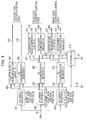
- FIG. 3 illustrates an exemplary configuration of the row counter control unit 18 according to the first embodiment.
- a CPU write register R (401) is a register for control of the readout row counter 151 performed through communication started by the CPU 19.
- the CPU write register R (401) stores a readout scan flag, a readout start row, a readout end row, and a step value for counting up performed by the readout row counter.
- a CPU write register A (402) is a register for controlling the reset row counter A (152) performed through communication from the CPU 19, and stores a reset scan start count, a reset start row, a reset end row, and a step value for counting up performed by the reset row counter A.
- a CPU write register B (403) is a register for control of the reset row counter B (153) performed through communication started by the CPU 19, and stores a reset scan start count, a reset start row, a reset end row, and a step value for counting up performed by the reset row counter B.
- a counter start pulse generation circuit R (407), when the readout scan flag stored in the CPU write register A (402) is not "0" (scanning is off), generates a start pulse 415 of the readout row counter 151 at the timing of the vertical synchronization signal 20.
- the readout end row and the step value for counting up performed by the readout row counter, stored in the CPU write register R (401), are copied and stored in a VD synchronization register R (408), and are input to the readout row counter 151 through a signal line 416.
- the reset scan start count, the reset end row, the step value for counting up performed by the reset row counter A, stored in the CPU write register A (402) are copied and stored in a VD synchronization register A (409).
- An HD counter 414 is a counter which is reset at the timing of the vertical synchronization signal 20, and performs counting up at the timing of the horizontal synchronization signal 21.
- a counter start pulse generation circuit A (417) and an HD counter synchronization register A (419) perform the following operations.
- the counter start pulse generation circuit A (417) generates a start pulse 418 for the reset row counter A (152).
- the reset end row and the step value for counting up performed by the reset row counter A, stored in the VD synchronization register A (409), are copied and stored in the HD counter synchronization register A (419) and output to the reset row counter A (152) as a register value 420.
- a counter start pulse generation circuit B (421) and an HD counter synchronization register B (423) perform the following operations.
- the counter start pulse generation circuit B (421) generates a start pulse 422 for the reset row counter B (153).
- the reset end row and the step value for counting up performed by the reset row counter B, stored in the VD synchronization register B (410), are copied and stored in the HD counter synchronization register B (423) and output to the reset row counter B (153) as a register value 424.
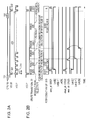
- Fig. 4 is a timing diagram illustrating the operation of the row counter control unit 18 according to the first embodiment illustrated in Fig. 3 , and the operations of the readout row counter 151, the reset row counter A (152), and the reset row counter B (153) based on the control signal output from the row counter control unit 18.
- Fig. 4 illustrates the operations of respective portions while a vertical synchronization period 500 proceeds from period V0 to period V6 due to the vertical synchronization signal 20.
- a CPU write register value 501 shows the timings at which writing is performed for the CPU write register R (401), the CPU write register A (402), and the CPU write register B (403) through communication started by the CPU 19.
- a VD synchronization register value 502 shows the timings at which the content of the CPU write register value 501 is copied to the VD synchronization register R (408), the VD synchronization register A (409), and the VD synchronization register B (410) in synchronization with the vertical synchronization signal 20.
- An HD counter value (413) illustrates how the count value of the counter which is the output of the HD counter 414 counts up, and the count value is reset to zero in synchronization with the vertical synchronization signal 20, and counts up by one every time the horizontal synchronization signal 21 is input.
- the HD counter synchronization register A value 420 is an output of the HD counter synchronization register A (419) and shows the times at which the content of the VD synchronization register A (409) is copied with reference to the HD counter value (413).
- the HD counter synchronization register B value 424 is an output of the HD counter synchronization register B (423) and shows the times at which the content of the VD synchronization register B (410) is copied with reference to the HD counter value (413).
- the counter start pulse R output (415) shows the pulse output times of the counter start pulse generation circuit R (407).
- the counter start pulse A output (418) shows the pulse output timings of the counter start pulse generation circuit A (417).
- the counter start pulse B output (422) shows the pulse output timings of the counter start pulse generation circuit B (421).
- Row address 503 shows the respective addresses of the rows of the pixel portion 11, in correspondence with the row count values S15 which are input for the row address decoders 14L and 14R.
- row 1 of the row address 503 corresponds to the count value 0 for the row address decoder 14L
- row 2 of the row address 503 corresponds to the count value 0 for the row address decoder 14R.
- Reset scans A (505, 509) show reset scans performed by the reset row counter A (152).
- reset scans B (08, 512) show reset scans performed by the reset row counter B (153)
- readout scans 506, 510, 513, and 514 show readout scans performed by the readout row counter 151.
- a readout scan flag is set to "0" (scan is off) in the CPU write register R (401) so as to instruct prohibition of a readout scan.
- An HD counter value (4131) is written into the CPU write register A (402) as a reset scan start count.
- "0" is written as a reset start row
- "n/2 - 1” is written as a reset end row
- "2" is written as a step value for counting up performed by the reset row counter A.
- a value larger than the HD counter value (413) corresponding to one vertical synchronization period is set as a reset scan start count, whereby a reset scan can be practically prohibited.
- the respective CPU write register values 501 written through the communication 5011 are copied (5021) to the VD synchronization register R (408), the VD synchronization register A (409), and the VD synchronization register B (410). Then, when the HD counter value (413) matches the HD counter value (4131), which is the reset scan start count stored in the VD synchronization register A (409), the VD synchronization register A (409) is copied (4201) to the HD counter synchronization register A (419). Further, the counter start pulse generation circuit A (417) generates a start pulse 4181 for the reset row counter A (152). Upon receipt of the start pulse 4181, the reset row counter A (152) starts the reset scan A (505).
- the reset row counter A (152) refers to an HD counter synchronization register A value (4201).
- the reset row counter A (152) starts counting from "0", which is a reset start row, and resets rows 1 and 2 of the pixel portion 11 (5051, 5052).
- the reset row counter A (152) outputs a value, to which the step value "2" for counting up has been added, and resets rows 5 and 6 of the pixel portion 11 (5053, 5054).
- the reset scans are performed until the reset end row "n/2 - 1" is reached, by adding the step value "2" for every horizontal synchronization period.
- the CPU write register value 501 written through communication 5012 is copied (5022) to the VD synchronization register.
- the counter start pulse generation circuit R (407) generates a start pulse 4151, since the readout scan flag is "1" (scan is on).
- the readout row counter 151 starts a readout scan (506) on the basis of the settings of the readout start row "0", the readout end row "n/2 - 1", and the step up value "2" for counting up performed by the readout counter.
- the readout scan (506) is a process of reading odd-numbered field 1 of the pixel portion 11 which has been reset by the reset scan A (505), and a time difference between the reset scan A (505) and the readout scan (506) is an exposure period 507.
- the VD synchronization register B (410) is copied (4241) to the HD counter synchronization register B (423).
- the counter start pulse generation circuit B (421) generates a start pulse 4182 for the reset row counter B (153).
- the reset row counter B (153) starts a reset scan B (508) on the basis of the reset start row "1", the reset end row "n/2", and the step value "2" for counting up.
- the pixels of the even-numbered field formed of rows 3, 4, 7, 8, ⁇ are reset.
- the VD synchronization register A (409) is copied (4202) to the HD counter synchronization register A (419). Further, the counter start pulse generation circuit A (417) generates a start pulse 4152 for the reset row counter A (152). Upon receipt of the start pulse 4152, the reset row counter A (152) starts a reset scan A (509). The pixels of the odd-numbered field formed of rows 1, 2, 5, 6, ⁇ are reset.
- the readout scan 513 is a process of reading odd-numbered field 2 of the pixel portion 11 which has been reset by the reset scan A (509), and a time difference between the reset scan A (509) and the readout scan 513 is an exposure period 511.
- setting is possible such that the exposure period 507 is shorter than the vertical synchronization period, whereas the exposure period 511 is longer than the vertical synchronization period, and this can be controlled by the timing, for the reset operation, of the communication signal 19 from the CPU.
- the communication 5012 for the readout scan 506 for the exposure period 507 is in period V2 and the communication 5011 for the corresponding reset scan A (505) is in period V1, and hence the difference is one vertical scan period.
- the communication 5014 for the readout scan 513 is during period V4
- the communication 5012 for the corresponding reset scan A (509) is performed in period V2, that is, two vertical scan periods in advance
- the exposure period 511 is obtained.
- the reset scan 509 of odd-numbered field 2 is performed before the readout scan 510 of even-numbered field 1.
- scanning is performed in the reset scan 509 such that the readout rows of even-numbered field 1 are skipped due to the step value "2" for counting up, the readout rows of even-numbered field 1 are not reset before being read.
- the pixel driving units 12L and 12R select the rows of the pixel portion 11 as a pair of one odd-numbered row and one neighboring even-numbered row in accordance with a row address selected by the selector 150.
- the exposure period 507 in a shorter accumulation period operation is shorter than one vertical synchronization period, and is short compared with one field cycle.
- odd-numbered pairs of rows of the pixel portion 11 selected by the pixel driving units 12L and 12R are sequentially scanned by the reset scan 505, and the pixel signals of the pixels of odd-numbered field 1 are reset.
- the odd-numbered pairs of rows of the pixel portion 11 selected by the pixel driving units 12L and 12R are sequentially scanned by the readout scan 506, and the pixel signals of the pixels of odd-numbered field 1 are read.
- even-numbered pairs of rows of the pixel portion 11 selected by the pixel driving units 12L and 12R are sequentially scanned, and the pixel signals of the pixels of even-numbered field 1 are reset.
- the even-numbered pairs of rows of the pixel portion 11 selected by the pixel driving units 12L and 12R are sequentially scanned, and the pixel signals of the pixels of even-numbered field 1 are read.
- the exposure period 511 in a longer accumulation period operation is longer than one vertical synchronization period, and is long compared to one field cycle.
- first operation mode a longer accumulation period operation
- odd-numbered pairs of rows of the pixel portion 11 selected by the pixel driving units 12L and 12R are sequentially scanned, and the pixel signals of the pixels of odd-numbered field 2 are reset.
- even-numbered pairs of rows of the pixel portion 11 selected by the pixel driving units 12L and 12R are sequentially scanned, and the pixel signals of the pixels of even-numbered field 2 are reset.
- the odd-numbered pairs of rows of the pixel portion 11 selected by the pixel driving units 12L and 12R are sequentially scanned, and the pixel signals of the pixels of odd-numbered field 2 are read.
- the even-numbered pairs of rows of the pixel portion 11 selected by the pixel driving units 12L and 12R are sequentially scanned, and the pixel signals of the pixels of even-numbered field 2 are read.
- the readout scan 510 for reading the pixel signals of the pixels of even-numbered field 1 in the shorter accumulation period operation is started after the reset scan 509 for resetting the pixel signals of the pixels of odd-numbered field 2 in the longer accumulation period operation has started.
- the readout scan 510 for reading the pixel signals of the pixels of even-numbered field 1 in the shorter accumulation period operation is started before the reset scan 512 for resetting the pixel signals of the pixels of even-numbered field 2 in the longer accumulation period operation is started.
- the readout row counter 151 generates the row address for interlaced readout of an odd-numbered field and an even-numbered field.
- the two reset row counters 152 and 153 perform the following operation.
- the two reset row counters 152 and 153 generate row addresses such that row resetting of the odd-numbered field and row resetting of the even-numbered field are performed so as to respectively skip the readout rows of the even-numbered field and the odd-numbered field.
- the row counter control unit 18 includes the first counter start pulse generation circuit R (407), the horizontal synchronization signal counter 414, the second counter start pulse generation circuit A (417), and the third counter start pulse generation circuit B (421).
- the first counter start pulse generation circuit R (407) generates the counter start pulse 415 for making the readout row counter 151 start counting.
- the second horizontal synchronization signal counter 414 is reset at the timing of the vertical synchronization signal 20 and counts up at the timing of the horizontal synchronization signal 21.
- the counter start pulse generation circuit A (417) in accordance with the counter value of the horizontal synchronization signal counter 414, generates the counter start pulse 418 for making the reset row counter A (152) start counting.
- the third counter start pulse generation circuit B (421) in accordance with the counter value of the horizontal synchronization signal counter 414, generates the counter start pulse 422 for making the second reset row counter B (153) start counting.
- a solid-state image pickup device according to a second embodiment of the present invention will be described centering around the difference from the first embodiment.
- the configuration of the solid-state image pickup device in the present embodiment is the same as that illustrated in Fig. 1A , and operations other than the row counter control unit 18 are also the same as those in the first embodiment.
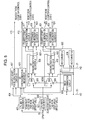
- Fig. 5 illustrates an exemplary configuration of a row counter control unit 18 according to the second embodiment.
- a field determination circuit 604 outputs a field determination result 605 which alternately changes between "0" and "1" in synchronization with the vertical synchronization signal 20.
- the operations of the CPU write register R (401), the counter start pulse generation circuit R (407), and the VD synchronization register R (408) are the same as those described referring to Fig. 3 .
- a register is added for storing an offset value which is a difference in readout start row between a reference odd-numbered field and an even-numbered field.
- a CPU write register S (601) is a setting register common to the reset row counter A (152) and the reset row counter B (153).
- the CPU write register S (601) stores a reset scan start count, a reset start row, a reset end row, a step value for counting up, and an offset value which is a difference in reset start row between a reference odd-numbered field and an even-numbered field.
- An HD counter A (606) is a counter which is reset at the timing of the vertical synchronization signal 20 only when the field determination result 605 is "0", and performs counting up at the timing of the horizontal synchronization signal 21.
- An HD counter B (608) is a counter which is reset at the timing of the vertical synchronization signal 20 only when the field determination result 605 is "1", and performs counting up at the timing of the horizontal synchronization signal 21. Note that the HD counter A (606) and the HD counter B (608) are counters which can count the number of pulses of the horizontal synchronization signal 21 which are input during two vertical synchronization periods.
- the counter start pulse generation circuit A (417) and the HD counter synchronization register A (419) perform the same operations as described referring to Fig.
- the counter start pulse generation circuit B (421) and the HD counter synchronization register B (423) perform the same operations as described referring to Fig. 3 , except that an output signal (HD counter B value) 609 of the HD counter B (608) is referred to in the present embodiment.
- Fig. 6 is a timing diagram illustrating the operation of the row counter control unit 18 according to the second embodiment and the operations of the readout row counter 151, the reset row counter A (152), and the reset row counter B (153) based on the control signal of the row counter control unit 18.
- the HD counter A value (607) is reset in synchronization with the vertical synchronization signal 20 when the field determination result 605 is "0", and performs counting up at every input of the horizontal synchronization signal 21.
- the HD counter B value (609) is reset in synchronization with the vertical synchronization signal 20 when the field determination result 605 is "1" and performs counting up at every input of the horizontal synchronization signal 21.
- the operations and timings of the counter start pulse R output (415), the counter start pulse A output (418), the counter start pulse B output (422), the reset scans A (505, 509), and the reset scans B (508, 512) are the same as those illustrated in Fig. 3 .
- the operations and timings of the readout scans 506, 510, 513, and 514 are also the same as those illustrated in Fig. 3 .
- a readout scan flag is set to "0" (scan is off) in the CPU write register R (401) so as to instruct prohibition of a readout scan.
- the HD counter value A (6071) is written into the CPU write register S (601) as a reset scan start count.
- "0" is written as a reset start row
- "n/2 - 1" is written as a reset end row
- "2" is written as a step value for counting up
- "1" is written as an offset value.
- a reset scan start count value 6071 is larger than the number of pulses of the horizontal synchronization signal 21 input during one vertical synchronization period.
- the value of the CPU write register R (401) is copied (4081) to the VD synchronization register R (408) in synchronization with the vertical synchronization signal 20. Since the field determination result 605 is "0" at the input timing of the vertical synchronization signal 20 during period V1, the value of the CPU write register S (601) is copied (4111) to the VD synchronization register A (409) through the switch 603A. On the other hand, the VD synchronization register B (410) holds the current value, since copying is not performed through the switch 603B. However, the value of the CPU write register S (601) is copied (4121) to the VD synchronization register B (410) at the timing when the field determination result 605 becomes "1" during period V2. At this time, values to which an offset value has been added is stored in the VD synchronization register B (410) as a reset start row and a reset end row.
- a reset scan start count value 6072 is smaller than the number of pulses of the horizontal synchronization signal 21 input during one vertical synchronization period.
- a CPU write register value 701 as a result of communication 7012 is copied (4082) to the VD synchronization register R 408.
- the CPU write register value 701 is copied to the VD synchronization register A (409) but not to the VD synchronization register B (410).
- the counter start pulse generation circuit R (407) generates the start pulse 4151.
- the readout row counter 151 starts the readout scan (506) on the basis of the readout start row "0", the readout end row "n/2 - 1", and the step value "2" for counting up performed by the readout row counter.
- the HD counter value B (609) matches the reset scan start count value (6071), which is the reset scan start count stored in the VD synchronization register B (410)
- the value of the VD synchronization register B (410) is copied (4241) to the HD counter synchronization register B (423).
- the counter start pulse generation circuit B (421) generates the start pulse 4182 for the reset row counter B (153).
- the reset row counter B (153) starts the reset scan B (508) on the basis of the reset start row "1" and the reset end row of "n/2", after addition of the offset, and the count up step value "2".
- the HD counter A value 607 matches the reset scan start count value (6072) of the VD synchronization register A (409), which is a reset scan start count stored in the VD synchronization register A (409)
- the value of the VD synchronization register A (409) is copied (4202) to the HD counter synchronization register A (419).
- the counter start pulse generation circuit A (417) generates the start pulse 4152 for the reset row counter A (152).
- the reset row counter A (152) starts the reset scan A (509).
- the CPU write register value 701 as a result of the communication 7012 during period V3, is copied (4083) to the VD synchronization register R (408).
- the field determination result 605 is "1”
- an offset value of "1” is added to the readout start row and readout end row stored in the VD synchronization register R 408.
- the VD synchronization register A (409) is not copied, and the offset value "1” is added in the VD synchronization register B (410).
- the counter start pulse generation circuit R (407) since the readout scan flag is "1" (scan is on), generates a start pulse 4153.
- the readout row counter 151 starts the readout scan (510) using the readout start row "1" and readout end row "n/2" to which the offset has been added.
- the HD counter B value (609) matches the reset scan start count value (6072), which is the reset scan start count stored in the VD synchronization register B (410)
- the value of the VD synchronization register B (410) is copied (4242) to the HD counter synchronization register B (423).
- the counter start pulse generation circuit B (421) generates a start pulse 4183 for the reset row counter B (153).
- the reset row counter B (153) starts the reset scan B (512) on the basis of the reset start row "1" and the reset end row "n/2", after addition of the offset, and the count up step value "2".
- the row counter control unit 18 includes the first counter start pulse generation circuit R (407), the second counter start pulse generation circuit A (417), and the third counter start pulse generation circuit B (421). Further, the row counter control unit 18 includes the first horizontal synchronization signal counter A (606) and the second horizontal synchronization signal counter B (608).
- the first counter start pulse generation circuit R (407) generates the counter start pulse 415 for making the readout row counter 151 start counting.
- the first horizontal synchronization signal counter A (606) is reset at the timing of every two vertical synchronization signals 20, and is made to perform counting up at the timing of the horizontal synchronization signal 21.
- the second horizontal synchronization signal counter B (608) is reset at the timing of every two vertical synchronization signals 20 and with an offset of one vertical synchronization signal 20 with respect to the HD counter A (606), and made to perform counting up at the timing of the horizontal synchronization signal 21.
- the second counter start pulse generation circuit A (417) generates the counter start pulse 418 for making the first reset row counter A (152) start counting in accordance with the count value of the first horizontal synchronization signal counter A (606).
- the third counter start pulse generation circuit B (421) generates the counter start pulse 422 for making the second reset row counter B (153) start counting in accordance with the counter value of the second horizontal synchronization signal counter B (608).
- the solid-state image pickup devices of the first and second embodiments can be used as solid-state image pickup devices for digital cameras and the like. According to the first and second embodiments, switching of thinning-out methods of readout in the pixel portion 11 is not performed between the case in which setting of an accumulation period within one vertical scan period for a shorter accumulation period operation is required and the case in which setting of an accumulation period exceeding one vertical scan period for a longer accumulation period operation is required. This enables shooting of natural-looking moving images without a change in the image quality before and after switching between a shorter accumulation period operation and a longer accumulation period operation. In addition, the image quality in moving image shooting at times of low illuminance is improved, and simplified control thereof is realized.
- sets of two of the row address decoders 14, the selection memory units 13, and the pixel driving units 12 are provided.
- the pixel portion 11 may be controlled using just one component from each set.
- the total number of decoded values which can be output from a row address decoder becomes double that in the above-described embodiments.
- the number of components is large since the selection memory units 13 are formed of logic circuits, latch circuits, and the like.
- the pixels become finer, it becomes more advantageous for realizing easier layout to provide sets of two of the row address decoders 14, the selection memory units 13, and the pixel driving units 12, as illustrated.
- each row may of course be independently selected.
- first field odd-numbered field
- second field even-numbered field
- a solid-state image pickup device that includes: a pixel portion (11) having a plurality of pixels that are arranged in a two-dimensional array and generate pixel signals; a readout row counter (151) that generates a row address for reading the pixel portion; a first reset row counter (152) that generates row addresses for resetting a first field of the pixel portion; a second reset row counter (153) that generates a row address for resetting a second field of the pixel portion; a selector (150) that selects one of the row addresses generated by the readout row counter, the first reset row counter, and the second reset row counter; and pixel driving units (12L, 12R) that respectively select two rows: an odd-numbered row and a neighboring even-numbered row of the pixel portion corresponding to the selected row address.
Landscapes
- Engineering & Computer Science (AREA)
- Multimedia (AREA)
- Signal Processing (AREA)
- Transforming Light Signals Into Electric Signals (AREA)
Claims (12)
- Festkörperbildaufnahmeeinrichtung, mit:einem Pixelabschnitt (11) mit einer Vielzahl von Pixel, die in einem zweidimensionalen Feld angeordnet sind und Pixelsignale durch fotoelektrische Umwandlung erzeugen,einem Auslesereihenzähler (151), der dazu angepasst ist, Reihenadressen zum Lesen des Pixelabschnitts zu erzeugen;einem ersten Rücksetzreihenzähler (152), der dazu angepasst ist, eine Reihenadresse zum Zurücksetzen eines ersten Feldes des Pixelabschnitts zu erzeugen;einen zweiten Rücksetzreihenzähler (153), der dazu angepasst ist, eine Reihenadresse zum Zurücksetzen eines zweiten Feldes des Pixelabschnitts zu erzeugen, wobei das zweite Feld dem ersten Feld nachfolgt;einem Auswähler (150), der dazu angepasst ist, eine der Reihenadressen, die entsprechend durch den Auslesereihenzähler, den ersten Rücksetzreihenzähler und den zweiten Rücksetzreihenzähler erzeugt wird, auszuwählen; undeiner Pixelansteuereinheit (12L, 12R), die dazu angepasst ist, eine Reihe des Pixelabschnitts auszuwählen,gekennzeichnet durcheine Einrichtung zum Bereitstellen der Pixelansteuereinheit (12L, 12R) miteiner ersten Operationsbetriebsart, in der der erste Rücksetzreihenzähler (152) eine Reihenadresse zum Starten einer Rücksetzabtastung (509) von Reihen des Pixelabschnitts, der in einem ersten Feld zu lesen ist, erzeugt, zum sequenziellen Zurücksetzen der Pixelsignale der Pixel des Pixelabschnittes, der in dem ersten Feld zu lesen ist, dann der zweite Rücksetzreihenzähler (153) eine Reihenadresse erzeugt, die eine Rücksetzabtastung (512) von Reihen des Pixelabschnitts, der in einem zweiten Feld zu lesen ist, startet, zum sequenziellen Zurücksetzen der Pixelsignale der Pixel des Pixelabschnitts, der in dem zweiten Feld zu lesen ist, dann der Auslesereihenzähler (151) eine Reihenadresse zum Starten einer Ausleseabtastung (513) der Reihen des Pixelabschnitts, der in dem ersten Feld zu lesen ist, erzeugt, zum sequenziellen Lesen der Pixelsignale der Pixel des ersten Felds, und dann der Auslesereihenzähler (151) eine Reihenadresse zum Starten einer Ausleseabtastung (514) der Reihen des Pixelabschnitts, der in dem zweiten Feld zu lesen ist, erzeugt, zum sequenziellen Lesen der Pixelsignale der Pixel des zweiten Feldes, undeiner zweiten Betriebsart, in der der erste Rücksetzreihenzähler (152) eine Reihenadresse zum Starten einer Rücksetzabtastung (505) von Reihen des Pixelabschnitts, der in dem ersten Feld zu lesen ist, erzeugt, zum sequenziellen Zurücksetzen der Pixelsignale der Pixel in dem Pixelabschnitt, der in dem ersten Feld zu lesen ist, dann der Auslesereihenzähler (151) eine Reihenadresse zum Starten einer Ausleseabtastung (506) der Reihen des Pixelabschnitts, der in dem ersten Feld zu lesen ist, erzeugt, zum Lesen der Pixelsignale der Pixel des ersten Feldes, dann der zweite Rücksetzreihenzähler (153) einer Reihenadresse zum Starten einer Rücksetzabtastung (508) von Reihen des Pixelabschnitts, der in dem zweiten Feld zu lesen ist, erzeugt, zum sequenziellen Zurücksetzen der Pixelsignale des Pixels des Pixelabschnitts, der in dem zweiten Feld zu lesen ist, und dann der Auslesereihenzähler (151) eine Reihenadresse zum Starten einer Ausleseabtastung (510) der Reihen des Pixelabschnitts, der in dem zweiten Feld zu lesen ist, erzeugt, zum Auslesen der Pixelsignale der Pixel des zweiten Feldes, wobeiwenn eine Operation in der ersten Operationsbetriebsart nachfolgend einer Operation in der zweiten Betriebsart durchgeführt wird, die Ausleseabtastung (510) zum Auslesen der Pixelsignale der Pixel des zweiten Feldes in der zweiten Operationsbetriebsart gestartet wird, nachdem die Rücksetzabtastung (509) der Pixelsignale der Pixel des ersten Feldes in der ersten Operationsbetriebsart gestartet wurde und bevor die Rücksetzabtastung (512) der Pixelsignale der Pixel des zweiten Feldes in der ersten Operationsbetriebsart gestartet wird.
- Festkörperbildaufnahmeeinrichtung gemäß Anspruch 1, weiterhin mit
wobei der Auswähler weiterhin dazu angepasst ist, eine ungeradzahlige Reihe und eine benachbarte geradzahlige Reihe des Pixelabschnitts entsprechend der ausgewählten Reihenadresse auszuwählen. - Festkörperbildaufnahmeeinrichtung gemäß Anspruch 2, weiterhin mit:einer Reihenzählersteuerungseinheit (18), die dazu angepasst ist, den Auslesereihenzähler, den ersten Rücksetzreihenzähler und den zweiten Rücksetzreihenzähler zu steuern,wobei die Reihenzählersteuerungseinheit umfasst:eine erste Zählerstartpulserzeugungsschaltung (407), die dazu angepasst ist, einen Zählstartpuls zu erzeugen, so dass der Auslesereihenzähler ein Zählen startet;einen Horizontalsynchronisationssignalzähler (414), der zu einem Zeitpunkt eines Vertikalsynchronisationssignals zurückgesetzt wird und dazu angepasst ist, ein Aufwärtszählen zu einem Zeitpunkt eines Horizontalsynchronisationssignals durchzuführen;eine zweite Zählerstartpulserzeugungsschaltung (417), die gemäß einem Zählerwert des Horizontalsynchronisationssignalzählers dazu angepasst ist, einen Zählerstartpuls zu erzeugen, so dass der erste Rücksetzreihenzähler ein Zählen startet; undeine dritte Zählerstartpulserzeugungsschaltung (421), die gemäß einem Zählerwert des Horizontalsynchronisationssignalzählers dazu angepasst ist, einen Zählerstartpuls zu erzeugen, so dass der zweite Rücksetzreihenzähler ein Zählen startet.
- Festkörperbildaufnahmeeinrichtung gemäß Anspruch 2, weiterhin mit:einer Reihenzählersteuerungseinheit (18), die dazu angepasst ist, den Auslesereihenzähler, den ersten Rücksetzreihenzähler und den zweiten Rücksetzreihenzähler zu steuern,wobei die Reihenzählersteuerungseinheit aufweist:eine erste Zählerstartpulserzeugungsschaltung (407), die dazu angepasst ist, einen Zählstartpuls zu erzeugen, so dass der Auslesereihenzähler ein Zählen startet;einen ersten Horizontalsynchronisationssignalzähler (606), der zu einem Zeitpunkt von jeweils zwei Vertikalsynchronisationssignalen zurückgesetzt wird und dazu angepasst ist, ein Aufwärtszählen zu einem Zeitpunkt eines Horizontalsynchronisationszeitpunkts durchzuführen;einen zweiten Horizontalsynchronisationssignalzähler (608), der zu einem Zeitpunkt von jeweils zwei Vertikalsynchronisationssignalen und mit einem Versatz von einem Vertikalsynchronisationssignal mit Bezug auf den ersten Horizontalsynchronisationssignalzähler zurückgesetzt wird und ein Aufwärtszählen zu einem Zeitpunkt eines Horizontalsynchronisationszeitpunkts durchführt;eine zweite Zählerstartpulserzeugungsschaltung (417), die gemäß einem Zählwert des ersten Horizontalsynchronisationssignalzählers dazu angepasst ist, einen Zählerstartpuls zu erzeugen, so dass der erste Rücksetzreihenzähler ein Zählen startet; undeine dritte Zählerstartpulserzeugungsschaltung (421), die gemäß einem Zählwert des zweiten Horizontalsynchronisationssignalzählers dazu angepasst ist, einen Zählerstartpuls zu erzeugen, so dass der zweite Rücksetzreihenzähler ein Zählen startet.
- Festkörperbildaufnahmeeinrichtung gemäß Anspruch 1, wobei
eine Zeitperiode zwischen einem Starten einer Rücksetzabtastung von Reihen des Pixelabschnitts, der in dem ersten Feld zu lesen ist, zum sequenziellen Zurücksetzen der Pixelsignale von Pixel des Pixelabschnitts, der in dem ersten Feld zu lesen ist, und einem Starten einer Ausleseabtastung zum sequenziellen Auslesen der Pixelsignale der Pixel des ersten Feldes länger ist als eine Zeitperiode des ersten Feldes;
eine Zeitperiode zwischen einem Starten einer Rücksetzabtastung von Reihen des Pixelabschnitts, der in dem zweiten Feld zu lesen ist, zum sequenziellen Zurücksetzen der Pixelsignale von Pixel in dem Pixelabschnitt, der in dem zweiten Feld zu lesen ist, und einem Starten einer Ausleseabtastung zum sequenziellen Auslesen der Pixelsignale der Pixel des zweiten Feldes länger ist als eine Zeitperiode des zweiten Feldes. - Verfahren des Ansteuerns einer Festkörperbildaufnahmeeinrichtung, die einen Pixelabschnitt mit einer Vielzahl von Pixel, die in einem zweidimensionalen Feld angeordnet sind und Pixelsignale durch fotoelektrische Umwandlung erzeugen, und eine Pixelansteuereinheit, die eine Reihe des Pixelabschnitts auswählt, umfasst, wobei das Verfahren aufweist:einen ersten Schritt des sequenziellen Abtastens (509) von Reihen des Pixelabschnitts, der in einem ersten Feld zu lesen ist, und des Startens eines Zurücksetzens der Pixelsignale des Pixelabschnitts, der in Pixel des ersten Feldes zu lesen ist, dann des sequenziellen Abtastens (512) von Reihen des Pixelabschnitts, der in einem zweiten Feld zu lesen ist, und des Startens des Zurücksetzens der Pixelsignale des Pixelabschnitts, der in Pixel des zweiten Feldes zu lesen ist, dann des sequenziellen Abtastens (513) der Reihen des Pixelabschnitts, der in dem ersten Feld zu lesen ist, und des Startens des Auslesens der Pixelsignale der Pixel des ersten Feldes, und dann des sequenziellen Abtastens (514) der Reihen des Pixelabschnitts, der in dem zweiten Feld zu lesen ist, und des Startens des Auslesens der Pixelsignale der Pixel des zweiten Feldes,einen zweiten Schritt des sequenziellen Abtastens (505) von Reihen des Pixelabschnitts, der in dem ersten Feld zu lesen ist, und des Zurücksetzens der Pixelsignale der Pixel des Pixelabschnitts, der in dem ersten Feld zu lesen ist, dann des sequenziellen Abtastens (506) der Reihen des Pixelabschnitts, der in dem ersten Feld zu lesen ist, und des Lesens der Pixelsignale der Pixel des ersten Feldes, dann des sequenziellen Abtastens (508) von Reihen des Pixelabschnitts, der in dem zweiten Feld zu lesen ist, und des Zurücksetzens der Pixelsignale der Pixel des Pixelabschnitts, der in dem zweiten Feld zu lesen ist, und dann des sequenziellen Abtastens (510) der Reihen des Pixelabschnitts, die in dem zweiten Feld zu lesen sind, und des Lesens der Pixelsignale der Pixel des zweiten Feldes, wobeiwenn eine Operation in dem ersten Schritt nachfolgend einer Operation in dem zweiten Schritt durchgeführt wird, die Ausleseabtastung (510) der Pixelsignale der Pixel des zweiten Feldes in dem zweiten Schritt gestartet wird, nachdem die Rücksetzabtastung (509) der Pixelsignale der Pixel des ersten Feldes in dem ersten Schritt gestartet wurde und bevor die Rücksetzabtastung (512) der Pixelsignale der Pixel des zweiten Feldes in dem ersten Schritt gestartet wird.
- Verfahren gemäß Anspruch 6, weiterhin mit einem Auswählen einer ungeradzahligen Reihe und einer benachbarten geradzahligen Reihe des Pixelabschnitts entsprechend einer ausgewählten Reihenadresse.
- Verfahren gemäß Anspruch 6, weiterhin mit:Erzeugen von Reihenadressen zum Lesen des Pixelabschnitts;Erzeugen einer Reihenadresse zum Zurücksetzen einer Reihe des Pixelabschnitts in einem ersten Feld;Erzeugen einer Reihenadresse zum Zurücksetzen einer Reihe des Pixelabschnitts in einem zweiten Feld, wobei das zweite Feld dem ersten Feld nachfolgt;Auswählen von einer der Reihenadressen, der Reihenadresse zum Zurücksetzen in dem ersten Feld und der Reihenadresse zum Zurücksetzen in dem zweiten Feld; undAuswählen einer Reihe des Pixelabschnitts entsprechend der ausgewählten Reihenadresse.
- Verfahren gemäß Anspruch 8, weiterhin mit:Erzeugen eines Zählstartpulses, so dass der Auslesereihenzähler ein Zählen startet;Zurücksetzen zu einem Zeitpunkt eines Vertikalsynchronisationssignals und Durchführen eines Aufwärtszählens zu einem Zeitpunkt eines Horizontalsynchronisationssignals;Erzeugen eines Zählerstartpulses, so dass der erste Rücksetzreihenzähler ein Zählen startet, gemäß einem Zählerwert des Horizontalsynchronisationssignalzählers; undErzeugen eines Zählerstartpulses, so dass der zweite Rücksetzreihenzähler ein Zählen startet, gemäß einem Zählerwert des Horizontalsynchronisationssignalzählers.
- Verfahren gemäß Anspruch 8, weiterhin mit:Erzeugen eines Zählerstartpulses, so dass der Auslesereihenzähler ein Zählen startet;Zurücksetzen zu einem Zeitpunkt von jeweils zwei Vertikalsynchronisationssignalen und Durchführen eines Aufwärtszählens zu einem Zeitpunkt eines Horizontalsynchronisationszeitpunkts;Zurücksetzen zu einem Zeitpunkt von jeweils zwei Vertikalsynchronisationssignalen und mit einem Versatz von einem Vertikalsynchronisationssignal mit Bezug auf den ersten Horizontalsynchronisationssignalzähler und Durchführen eines Aufwärtszählens zu einem Zeitpunkt eines Horizontalsynchronisationszeitpunkts.
- Verfahren gemäß Anspruch 10, weiterhin mit:Erzeugen eines Zählerstartpulses, so dass der erste Rücksetzreihenzähler ein Zählen startet, gemäß einem Zählerwert des ersten Horizontalsynchronisationssignalzählers; undErzeugen eines Zählerstartpulses, so dass der zweite Rücksetzreihenzähler ein Zählen startet, gemäß einem Zählerwert des zweiten Horizontalsynchronisationssignalzählers.
- Verfahren gemäß Anspruch 6, wobei
eine Zeitperiode zwischen einem Starten eines Zurücksetzens der Pixelsignale der Pixel des Pixelabschnitts, der in dem ersten Feld zu lesen ist, und einem Starten des Lesens der Pixelsignale der Pixel des ersten Feldes länger ist als eine Zeitperiode des ersten Feldes,
eine Zeitperiode zwischen einem Starten eines Zurücksetzens der Pixelsignale der Pixel des Pixelabschnitts, der in dem zweiten Feld zu lesen ist, und einem Starten eines Lesens der Pixelsignale der Pixel des zweiten Feldes länger ist als eine Zeitperiode des zweiten Feldes.
Applications Claiming Priority (1)
| Application Number | Priority Date | Filing Date | Title |
|---|---|---|---|
| JP2010085471A JP5578915B2 (ja) | 2010-04-01 | 2010-04-01 | 固体撮像装置及びその駆動方法 |
Publications (3)
| Publication Number | Publication Date |
|---|---|
| EP2375729A2 EP2375729A2 (de) | 2011-10-12 |
| EP2375729A3 EP2375729A3 (de) | 2013-05-15 |
| EP2375729B1 true EP2375729B1 (de) | 2015-07-29 |
Family
ID=44242718
Family Applications (1)
| Application Number | Title | Priority Date | Filing Date |
|---|---|---|---|
| EP11157609.6A Not-in-force EP2375729B1 (de) | 2010-04-01 | 2011-03-10 | Festkörper-Bildaufnahmevorrichtung und Ansteuerungsverfahren dafür |
Country Status (5)
| Country | Link |
|---|---|
| US (1) | US8634012B2 (de) |
| EP (1) | EP2375729B1 (de) |
| JP (1) | JP5578915B2 (de) |
| CN (1) | CN102215350B (de) |
| RU (1) | RU2458478C1 (de) |
Families Citing this family (11)
| Publication number | Priority date | Publication date | Assignee | Title |
|---|---|---|---|---|
| JP5594362B2 (ja) * | 2010-05-13 | 2014-09-24 | コニカミノルタ株式会社 | 固体撮像装置 |
| KR101663947B1 (ko) * | 2012-12-28 | 2016-10-12 | 캐논 가부시끼가이샤 | 촬상소자, 촬상장치, 그 제어 방법, 및 기억매체 |
| CN105075242B (zh) * | 2013-04-18 | 2018-01-30 | 奥林巴斯株式会社 | 摄像元件、摄像装置、内窥镜、内窥镜系统以及摄像元件的驱动方法 |
| JP6284799B2 (ja) * | 2014-03-25 | 2018-02-28 | 株式会社メガチップス | データ処理装置及びデータ処理方法 |
| EP3035669B1 (de) | 2014-12-16 | 2017-08-23 | Canon Kabushiki Kaisha | Ansteuerungsverfahren für eine bildaufnahmevorrichtung |
| JP6700740B2 (ja) * | 2014-12-16 | 2020-05-27 | キヤノン株式会社 | 撮像装置 |
| JP6711634B2 (ja) * | 2016-02-16 | 2020-06-17 | キヤノン株式会社 | 撮像装置、撮像装置の駆動方法、及び撮像システム |
| JP6788996B2 (ja) * | 2016-04-27 | 2020-11-25 | ラピスセミコンダクタ株式会社 | 半導体装置、映像表示システムおよび映像信号出力方法 |
| JP7183009B2 (ja) * | 2018-11-26 | 2022-12-05 | キヤノン株式会社 | 撮像素子および撮像装置 |
| JP7336217B2 (ja) * | 2019-03-12 | 2023-08-31 | キヤノン株式会社 | 情報処理装置、撮像素子、撮像装置、及び情報処理方法 |
| US11223790B2 (en) * | 2020-06-02 | 2022-01-11 | Foveon, Inc. | Pipelined row decoder topology for faster imager row decoding |
Family Cites Families (22)
| Publication number | Priority date | Publication date | Assignee | Title |
|---|---|---|---|---|
| JP3511772B2 (ja) * | 1995-12-21 | 2004-03-29 | ソニー株式会社 | 固体撮像素子、固体撮像素子の駆動方法、カメラ装置及びカメラシステム |
| KR100280488B1 (ko) * | 1998-06-09 | 2001-02-01 | 김영환 | 전자셔터 기능을 가지는 액티브 픽셀 센서 방식의 픽셀 구조 |
| KR100344505B1 (ko) * | 1998-11-30 | 2002-07-24 | 가부시끼가이샤 도시바 | 고체 이미징 장치 |
| US6876388B1 (en) * | 2000-02-02 | 2005-04-05 | Taiwan Advanced Sensors Corporation | Interlaced alternating pixel design for high sensitivity CMOS Image sensors |
| EP1130568A3 (de) * | 2000-03-01 | 2003-09-10 | Minolta Co., Ltd. | Flüssigkristallanzeige |
| WO2002063869A1 (en) * | 2001-02-02 | 2002-08-15 | Symagery Microsystems Inc. | On-the fly imaging parameter adjustments |
| US7528872B2 (en) * | 2003-08-04 | 2009-05-05 | Olympus Corporation | Image apparatus, driving method, and camera |
| JP4178401B2 (ja) * | 2003-10-15 | 2008-11-12 | ソニー株式会社 | タイミング信号発生装置 |
| JP2006074440A (ja) | 2004-09-02 | 2006-03-16 | Canon Inc | 撮像装置 |
| US7911518B2 (en) * | 2005-02-01 | 2011-03-22 | Samsung Electronics Co., Ltd. | Variable exposure for color image sensor |
| JP2007013698A (ja) * | 2005-06-30 | 2007-01-18 | Sanyo Electric Co Ltd | 固体撮像素子の駆動装置 |
| JP2007150643A (ja) | 2005-11-28 | 2007-06-14 | Sony Corp | 固体撮像素子、固体撮像素子の駆動方法および撮像装置 |
| JP2008028608A (ja) * | 2006-07-20 | 2008-02-07 | Matsushita Electric Ind Co Ltd | 固体撮像装置 |
| JP5100052B2 (ja) | 2006-07-31 | 2012-12-19 | キヤノン株式会社 | 固体撮像素子の駆動回路、方法及び撮像システム |
| JP5076635B2 (ja) * | 2007-05-17 | 2012-11-21 | ソニー株式会社 | イメージセンサ |
| JP2008288946A (ja) * | 2007-05-18 | 2008-11-27 | Seiko Epson Corp | アドレス生成装置及び撮像素子 |
| JP5164531B2 (ja) * | 2007-11-13 | 2013-03-21 | キヤノン株式会社 | 固体撮像装置 |
| JP5053869B2 (ja) | 2008-01-10 | 2012-10-24 | キヤノン株式会社 | 固体撮像装置、撮像システム、及び固体撮像装置の駆動方法 |
| JP5111140B2 (ja) * | 2008-02-06 | 2012-12-26 | キヤノン株式会社 | 固体撮像装置の駆動方法、固体撮像装置、及び撮像システム |
| JP4582198B2 (ja) * | 2008-05-30 | 2010-11-17 | ソニー株式会社 | 固体撮像装置、撮像装置、固体撮像装置の駆動方法 |
| JP2010171868A (ja) * | 2009-01-26 | 2010-08-05 | Fujifilm Corp | 撮像装置及び撮像装置の駆動方法 |
| JP5625298B2 (ja) * | 2009-09-28 | 2014-11-19 | ソニー株式会社 | 撮像装置 |
-
2010
- 2010-04-01 JP JP2010085471A patent/JP5578915B2/ja not_active Expired - Fee Related
-
2011
- 2011-03-10 EP EP11157609.6A patent/EP2375729B1/de not_active Not-in-force
- 2011-03-30 US US13/076,364 patent/US8634012B2/en not_active Expired - Fee Related
- 2011-03-31 RU RU2011112359/07A patent/RU2458478C1/ru not_active IP Right Cessation
- 2011-04-01 CN CN201110082118.XA patent/CN102215350B/zh not_active Expired - Fee Related
Also Published As
| Publication number | Publication date |
|---|---|
| EP2375729A2 (de) | 2011-10-12 |
| JP5578915B2 (ja) | 2014-08-27 |
| US8634012B2 (en) | 2014-01-21 |
| JP2011217280A (ja) | 2011-10-27 |
| CN102215350B (zh) | 2014-07-09 |
| RU2458478C1 (ru) | 2012-08-10 |
| CN102215350A (zh) | 2011-10-12 |
| US20110242383A1 (en) | 2011-10-06 |
| EP2375729A3 (de) | 2013-05-15 |
Similar Documents
| Publication | Publication Date | Title |
|---|---|---|
| EP2375729B1 (de) | Festkörper-Bildaufnahmevorrichtung und Ansteuerungsverfahren dafür | |
| EP3092792B1 (de) | System und verfahren zur erfassung digitaler bilder mit mehreren kurzen belichtungen | |
| CN103376617B (zh) | 图像传感器、图像传感器的控制方法以及成像装置 | |
| US8670058B2 (en) | Solid-state imaging apparatus, imaging system, and driving method of imaging apparatus | |
| JP5243352B2 (ja) | Ad変換装置、固体撮像装置および電子情報機器 | |
| US10038868B2 (en) | Solid-state image sensing device and electronic device | |
| JP6746301B2 (ja) | 撮像装置の駆動方法、撮像装置、撮像システム | |
| US8610809B2 (en) | Solid-state imaging device and camera system that controls a unit of plural rows | |
| US8711262B2 (en) | Solid-state image sensing device and control method of solid-state image sensing device | |
| KR20160145217A (ko) | 카운팅 회로, 그 카운팅 회로를 포함하는 이미지 센싱 장치 및 그 이미지 센싱 장치의 리드아웃 방법 | |
| US7821571B2 (en) | Solid-state imaging device, method of driving solid-state imaging device, and imaging apparatus | |
| JP4286091B2 (ja) | 固体撮像装置 | |
| US20050094012A1 (en) | Solid-state image sensing apparatus | |
| JP5460342B2 (ja) | 固体撮像素子および固体撮像素子の駆動方法 | |
| JP5481230B2 (ja) | 撮像装置及び固体撮像装置 | |
| WO2016167021A1 (ja) | 固体撮像素子、電子機器および固体撮像素子の制御方法 | |
| US20040201762A1 (en) | Solid-state imaging apparatus | |
| JP2000299821A (ja) | 固体撮像装置 | |
| CN119496997A (zh) | 图像感测装置及图像感测方法 | |
| WO2020049937A1 (ja) | 固体撮像素子、撮像装置及び電子機器 | |
| JP2020188335A (ja) | 撮像装置およびその制御方法 |
Legal Events
| Date | Code | Title | Description |
|---|---|---|---|
| PUAI | Public reference made under article 153(3) epc to a published international application that has entered the european phase |
Free format text: ORIGINAL CODE: 0009012 |
|
| AK | Designated contracting states |
Kind code of ref document: A2 Designated state(s): AL AT BE BG CH CY CZ DE DK EE ES FI FR GB GR HR HU IE IS IT LI LT LU LV MC MK MT NL NO PL PT RO RS SE SI SK SM TR |
|
| AX | Request for extension of the european patent |
Extension state: BA ME |
|
| PUAL | Search report despatched |
Free format text: ORIGINAL CODE: 0009013 |
|
| AK | Designated contracting states |
Kind code of ref document: A3 Designated state(s): AL AT BE BG CH CY CZ DE DK EE ES FI FR GB GR HR HU IE IS IT LI LT LU LV MC MK MT NL NO PL PT RO RS SE SI SK SM TR |
|
| AX | Request for extension of the european patent |
Extension state: BA ME |
|
| RIC1 | Information provided on ipc code assigned before grant |
Ipc: H04N 5/374 20110101AFI20130411BHEP Ipc: H04N 5/353 20110101ALI20130411BHEP |
|
| 17P | Request for examination filed |
Effective date: 20131115 |
|
| RBV | Designated contracting states (corrected) |
Designated state(s): AL AT BE BG CH CY CZ DE DK EE ES FI FR GB GR HR HU IE IS IT LI LT LU LV MC MK MT NL NO PL PT RO RS SE SI SK SM TR |
|
| 17Q | First examination report despatched |
Effective date: 20140129 |
|
| GRAP | Despatch of communication of intention to grant a patent |
Free format text: ORIGINAL CODE: EPIDOSNIGR1 |
|
| INTG | Intention to grant announced |
Effective date: 20150209 |
|
| RIN1 | Information on inventor provided before grant (corrected) |
Inventor name: YAMAZAKI, TATSUHIKO Inventor name: TAKENAKA, SHINTARO |
|
| GRAS | Grant fee paid |
Free format text: ORIGINAL CODE: EPIDOSNIGR3 |
|
| GRAA | (expected) grant |
Free format text: ORIGINAL CODE: 0009210 |
|
| AK | Designated contracting states |
Kind code of ref document: B1 Designated state(s): AL AT BE BG CH CY CZ DE DK EE ES FI FR GB GR HR HU IE IS IT LI LT LU LV MC MK MT NL NO PL PT RO RS SE SI SK SM TR |
|
| REG | Reference to a national code |
Ref country code: GB Ref legal event code: FG4D |
|
| REG | Reference to a national code |
Ref country code: CH Ref legal event code: EP |
|
| REG | Reference to a national code |
Ref country code: AT Ref legal event code: REF Ref document number: 740047 Country of ref document: AT Kind code of ref document: T Effective date: 20150815 |
|
| REG | Reference to a national code |
Ref country code: IE Ref legal event code: FG4D |
|
| REG | Reference to a national code |
Ref country code: DE Ref legal event code: R096 Ref document number: 602011018151 Country of ref document: DE |
|
| REG | Reference to a national code |
Ref country code: AT Ref legal event code: MK05 Ref document number: 740047 Country of ref document: AT Kind code of ref document: T Effective date: 20150729 |
|
| REG | Reference to a national code |
Ref country code: LT Ref legal event code: MG4D |
|
| REG | Reference to a national code |
Ref country code: NL Ref legal event code: MP Effective date: 20150729 |
|
| PG25 | Lapsed in a contracting state [announced via postgrant information from national office to epo] |
Ref country code: FI Free format text: LAPSE BECAUSE OF FAILURE TO SUBMIT A TRANSLATION OF THE DESCRIPTION OR TO PAY THE FEE WITHIN THE PRESCRIBED TIME-LIMIT Effective date: 20150729 Ref country code: GR Free format text: LAPSE BECAUSE OF FAILURE TO SUBMIT A TRANSLATION OF THE DESCRIPTION OR TO PAY THE FEE WITHIN THE PRESCRIBED TIME-LIMIT Effective date: 20151030 Ref country code: LV Free format text: LAPSE BECAUSE OF FAILURE TO SUBMIT A TRANSLATION OF THE DESCRIPTION OR TO PAY THE FEE WITHIN THE PRESCRIBED TIME-LIMIT Effective date: 20150729 Ref country code: NO Free format text: LAPSE BECAUSE OF FAILURE TO SUBMIT A TRANSLATION OF THE DESCRIPTION OR TO PAY THE FEE WITHIN THE PRESCRIBED TIME-LIMIT Effective date: 20151029 Ref country code: LT Free format text: LAPSE BECAUSE OF FAILURE TO SUBMIT A TRANSLATION OF THE DESCRIPTION OR TO PAY THE FEE WITHIN THE PRESCRIBED TIME-LIMIT Effective date: 20150729 |
|
| PG25 | Lapsed in a contracting state [announced via postgrant information from national office to epo] |
Ref country code: PL Free format text: LAPSE BECAUSE OF FAILURE TO SUBMIT A TRANSLATION OF THE DESCRIPTION OR TO PAY THE FEE WITHIN THE PRESCRIBED TIME-LIMIT Effective date: 20150729 Ref country code: PT Free format text: LAPSE BECAUSE OF FAILURE TO SUBMIT A TRANSLATION OF THE DESCRIPTION OR TO PAY THE FEE WITHIN THE PRESCRIBED TIME-LIMIT Effective date: 20151130 Ref country code: HR Free format text: LAPSE BECAUSE OF FAILURE TO SUBMIT A TRANSLATION OF THE DESCRIPTION OR TO PAY THE FEE WITHIN THE PRESCRIBED TIME-LIMIT Effective date: 20150729 Ref country code: AT Free format text: LAPSE BECAUSE OF FAILURE TO SUBMIT A TRANSLATION OF THE DESCRIPTION OR TO PAY THE FEE WITHIN THE PRESCRIBED TIME-LIMIT Effective date: 20150729 Ref country code: RS Free format text: LAPSE BECAUSE OF FAILURE TO SUBMIT A TRANSLATION OF THE DESCRIPTION OR TO PAY THE FEE WITHIN THE PRESCRIBED TIME-LIMIT Effective date: 20150729 Ref country code: IS Free format text: LAPSE BECAUSE OF FAILURE TO SUBMIT A TRANSLATION OF THE DESCRIPTION OR TO PAY THE FEE WITHIN THE PRESCRIBED TIME-LIMIT Effective date: 20151129 Ref country code: ES Free format text: LAPSE BECAUSE OF FAILURE TO SUBMIT A TRANSLATION OF THE DESCRIPTION OR TO PAY THE FEE WITHIN THE PRESCRIBED TIME-LIMIT Effective date: 20150729 Ref country code: SE Free format text: LAPSE BECAUSE OF FAILURE TO SUBMIT A TRANSLATION OF THE DESCRIPTION OR TO PAY THE FEE WITHIN THE PRESCRIBED TIME-LIMIT Effective date: 20150729 |
|
| PG25 | Lapsed in a contracting state [announced via postgrant information from national office to epo] |
Ref country code: NL Free format text: LAPSE BECAUSE OF FAILURE TO SUBMIT A TRANSLATION OF THE DESCRIPTION OR TO PAY THE FEE WITHIN THE PRESCRIBED TIME-LIMIT Effective date: 20150729 |
|
| PG25 | Lapsed in a contracting state [announced via postgrant information from national office to epo] |
Ref country code: SK Free format text: LAPSE BECAUSE OF FAILURE TO SUBMIT A TRANSLATION OF THE DESCRIPTION OR TO PAY THE FEE WITHIN THE PRESCRIBED TIME-LIMIT Effective date: 20150729 Ref country code: CZ Free format text: LAPSE BECAUSE OF FAILURE TO SUBMIT A TRANSLATION OF THE DESCRIPTION OR TO PAY THE FEE WITHIN THE PRESCRIBED TIME-LIMIT Effective date: 20150729 Ref country code: IT Free format text: LAPSE BECAUSE OF FAILURE TO SUBMIT A TRANSLATION OF THE DESCRIPTION OR TO PAY THE FEE WITHIN THE PRESCRIBED TIME-LIMIT Effective date: 20150729 Ref country code: DK Free format text: LAPSE BECAUSE OF FAILURE TO SUBMIT A TRANSLATION OF THE DESCRIPTION OR TO PAY THE FEE WITHIN THE PRESCRIBED TIME-LIMIT Effective date: 20150729 Ref country code: EE Free format text: LAPSE BECAUSE OF FAILURE TO SUBMIT A TRANSLATION OF THE DESCRIPTION OR TO PAY THE FEE WITHIN THE PRESCRIBED TIME-LIMIT Effective date: 20150729 |
|
| REG | Reference to a national code |
Ref country code: DE Ref legal event code: R097 Ref document number: 602011018151 Country of ref document: DE |
|
| PG25 | Lapsed in a contracting state [announced via postgrant information from national office to epo] |
Ref country code: RO Free format text: LAPSE BECAUSE OF FAILURE TO SUBMIT A TRANSLATION OF THE DESCRIPTION OR TO PAY THE FEE WITHIN THE PRESCRIBED TIME-LIMIT Effective date: 20150729 |
|
| PLBE | No opposition filed within time limit |
Free format text: ORIGINAL CODE: 0009261 |
|
| STAA | Information on the status of an ep patent application or granted ep patent |
Free format text: STATUS: NO OPPOSITION FILED WITHIN TIME LIMIT |
|
| 26N | No opposition filed |
Effective date: 20160502 |
|
| PG25 | Lapsed in a contracting state [announced via postgrant information from national office to epo] |
Ref country code: SI Free format text: LAPSE BECAUSE OF FAILURE TO SUBMIT A TRANSLATION OF THE DESCRIPTION OR TO PAY THE FEE WITHIN THE PRESCRIBED TIME-LIMIT Effective date: 20150729 Ref country code: BE Free format text: LAPSE BECAUSE OF NON-PAYMENT OF DUE FEES Effective date: 20160331 |
|
| PG25 | Lapsed in a contracting state [announced via postgrant information from national office to epo] |
Ref country code: MC Free format text: LAPSE BECAUSE OF FAILURE TO SUBMIT A TRANSLATION OF THE DESCRIPTION OR TO PAY THE FEE WITHIN THE PRESCRIBED TIME-LIMIT Effective date: 20150729 Ref country code: LU Free format text: LAPSE BECAUSE OF FAILURE TO SUBMIT A TRANSLATION OF THE DESCRIPTION OR TO PAY THE FEE WITHIN THE PRESCRIBED TIME-LIMIT Effective date: 20160310 |
|
| REG | Reference to a national code |
Ref country code: CH Ref legal event code: PL |
|
| GBPC | Gb: european patent ceased through non-payment of renewal fee |
Effective date: 20160310 |
|
| REG | Reference to a national code |
Ref country code: IE Ref legal event code: MM4A |
|
| PG25 | Lapsed in a contracting state [announced via postgrant information from national office to epo] |
Ref country code: BE Free format text: LAPSE BECAUSE OF FAILURE TO SUBMIT A TRANSLATION OF THE DESCRIPTION OR TO PAY THE FEE WITHIN THE PRESCRIBED TIME-LIMIT Effective date: 20150729 |
|
| REG | Reference to a national code |
Ref country code: FR Ref legal event code: ST Effective date: 20161130 |
|
| PG25 | Lapsed in a contracting state [announced via postgrant information from national office to epo] |
Ref country code: FR Free format text: LAPSE BECAUSE OF NON-PAYMENT OF DUE FEES Effective date: 20160331 Ref country code: LI Free format text: LAPSE BECAUSE OF NON-PAYMENT OF DUE FEES Effective date: 20160331 Ref country code: CH Free format text: LAPSE BECAUSE OF NON-PAYMENT OF DUE FEES Effective date: 20160331 Ref country code: IE Free format text: LAPSE BECAUSE OF NON-PAYMENT OF DUE FEES Effective date: 20160310 Ref country code: GB Free format text: LAPSE BECAUSE OF NON-PAYMENT OF DUE FEES Effective date: 20160310 |
|
| PG25 | Lapsed in a contracting state [announced via postgrant information from national office to epo] |
Ref country code: MT Free format text: LAPSE BECAUSE OF FAILURE TO SUBMIT A TRANSLATION OF THE DESCRIPTION OR TO PAY THE FEE WITHIN THE PRESCRIBED TIME-LIMIT Effective date: 20150729 |
|
| PG25 | Lapsed in a contracting state [announced via postgrant information from national office to epo] |
Ref country code: SM Free format text: LAPSE BECAUSE OF FAILURE TO SUBMIT A TRANSLATION OF THE DESCRIPTION OR TO PAY THE FEE WITHIN THE PRESCRIBED TIME-LIMIT Effective date: 20150729 Ref country code: CY Free format text: LAPSE BECAUSE OF FAILURE TO SUBMIT A TRANSLATION OF THE DESCRIPTION OR TO PAY THE FEE WITHIN THE PRESCRIBED TIME-LIMIT Effective date: 20150729 Ref country code: HU Free format text: LAPSE BECAUSE OF FAILURE TO SUBMIT A TRANSLATION OF THE DESCRIPTION OR TO PAY THE FEE WITHIN THE PRESCRIBED TIME-LIMIT; INVALID AB INITIO Effective date: 20110310 |
|
| PG25 | Lapsed in a contracting state [announced via postgrant information from national office to epo] |
Ref country code: MT Free format text: LAPSE BECAUSE OF FAILURE TO SUBMIT A TRANSLATION OF THE DESCRIPTION OR TO PAY THE FEE WITHIN THE PRESCRIBED TIME-LIMIT Effective date: 20160331 Ref country code: TR Free format text: LAPSE BECAUSE OF FAILURE TO SUBMIT A TRANSLATION OF THE DESCRIPTION OR TO PAY THE FEE WITHIN THE PRESCRIBED TIME-LIMIT Effective date: 20150729 Ref country code: MK Free format text: LAPSE BECAUSE OF FAILURE TO SUBMIT A TRANSLATION OF THE DESCRIPTION OR TO PAY THE FEE WITHIN THE PRESCRIBED TIME-LIMIT Effective date: 20150729 |
|
| PG25 | Lapsed in a contracting state [announced via postgrant information from national office to epo] |
Ref country code: BG Free format text: LAPSE BECAUSE OF FAILURE TO SUBMIT A TRANSLATION OF THE DESCRIPTION OR TO PAY THE FEE WITHIN THE PRESCRIBED TIME-LIMIT Effective date: 20150729 |
|
| PG25 | Lapsed in a contracting state [announced via postgrant information from national office to epo] |
Ref country code: AL Free format text: LAPSE BECAUSE OF FAILURE TO SUBMIT A TRANSLATION OF THE DESCRIPTION OR TO PAY THE FEE WITHIN THE PRESCRIBED TIME-LIMIT Effective date: 20150729 |
|
| PGFP | Annual fee paid to national office [announced via postgrant information from national office to epo] |
Ref country code: DE Payment date: 20200528 Year of fee payment: 10 |
|
| REG | Reference to a national code |
Ref country code: DE Ref legal event code: R119 Ref document number: 602011018151 Country of ref document: DE |
|
| PG25 | Lapsed in a contracting state [announced via postgrant information from national office to epo] |
Ref country code: DE Free format text: LAPSE BECAUSE OF NON-PAYMENT OF DUE FEES Effective date: 20211001 |