EP2368708B1 - Kantenleiste für möbelstücke - Google Patents
Kantenleiste für möbelstücke Download PDFInfo
- Publication number
- EP2368708B1 EP2368708B1 EP11003104.4A EP11003104A EP2368708B1 EP 2368708 B1 EP2368708 B1 EP 2368708B1 EP 11003104 A EP11003104 A EP 11003104A EP 2368708 B1 EP2368708 B1 EP 2368708B1
- Authority
- EP
- European Patent Office
- Prior art keywords
- layer
- edge strip
- furniture
- piece
- edge
- Prior art date
- Legal status (The legal status is an assumption and is not a legal conclusion. Google has not performed a legal analysis and makes no representation as to the accuracy of the status listed.)
- Active
Links
Images
Classifications
-
- B—PERFORMING OPERATIONS; TRANSPORTING
- B32—LAYERED PRODUCTS
- B32B—LAYERED PRODUCTS, i.e. PRODUCTS BUILT-UP OF STRATA OF FLAT OR NON-FLAT, e.g. CELLULAR OR HONEYCOMB, FORM
- B32B7/00—Layered products characterised by the relation between layers; Layered products characterised by the relative orientation of features between layers, or by the relative values of a measurable parameter between layers, i.e. products comprising layers having different physical, chemical or physicochemical properties; Layered products characterised by the interconnection of layers
- B32B7/04—Interconnection of layers
- B32B7/12—Interconnection of layers using interposed adhesives or interposed materials with bonding properties
-
- A—HUMAN NECESSITIES
- A47—FURNITURE; DOMESTIC ARTICLES OR APPLIANCES; COFFEE MILLS; SPICE MILLS; SUCTION CLEANERS IN GENERAL
- A47B—TABLES; DESKS; OFFICE FURNITURE; CABINETS; DRAWERS; GENERAL DETAILS OF FURNITURE
- A47B96/00—Details of cabinets, racks or shelf units not covered by a single one of groups A47B43/00 - A47B95/00; General details of furniture
- A47B96/20—Furniture panels or like furniture elements
- A47B96/201—Edge features
-
- B—PERFORMING OPERATIONS; TRANSPORTING
- B27—WORKING OR PRESERVING WOOD OR SIMILAR MATERIAL; NAILING OR STAPLING MACHINES IN GENERAL
- B27D—WORKING VENEER OR PLYWOOD
- B27D5/00—Other working of veneer or plywood specially adapted to veneer or plywood
- B27D5/003—Other working of veneer or plywood specially adapted to veneer or plywood securing a veneer strip to a panel edge
-
- B—PERFORMING OPERATIONS; TRANSPORTING
- B29—WORKING OF PLASTICS; WORKING OF SUBSTANCES IN A PLASTIC STATE IN GENERAL
- B29C—SHAPING OR JOINING OF PLASTICS; SHAPING OF MATERIAL IN A PLASTIC STATE, NOT OTHERWISE PROVIDED FOR; AFTER-TREATMENT OF THE SHAPED PRODUCTS, e.g. REPAIRING
- B29C63/00—Lining or sheathing, i.e. applying preformed layers or sheathings of plastics; Apparatus therefor
- B29C63/0026—Lining or sheathing, i.e. applying preformed layers or sheathings of plastics; Apparatus therefor an edge face with strip material, e.g. a panel edge
-
- B—PERFORMING OPERATIONS; TRANSPORTING
- B29—WORKING OF PLASTICS; WORKING OF SUBSTANCES IN A PLASTIC STATE IN GENERAL
- B29C—SHAPING OR JOINING OF PLASTICS; SHAPING OF MATERIAL IN A PLASTIC STATE, NOT OTHERWISE PROVIDED FOR; AFTER-TREATMENT OF THE SHAPED PRODUCTS, e.g. REPAIRING
- B29C65/00—Joining or sealing of preformed parts, e.g. welding of plastics materials; Apparatus therefor
- B29C65/02—Joining or sealing of preformed parts, e.g. welding of plastics materials; Apparatus therefor by heating, with or without pressure
-
- B—PERFORMING OPERATIONS; TRANSPORTING
- B29—WORKING OF PLASTICS; WORKING OF SUBSTANCES IN A PLASTIC STATE IN GENERAL
- B29C—SHAPING OR JOINING OF PLASTICS; SHAPING OF MATERIAL IN A PLASTIC STATE, NOT OTHERWISE PROVIDED FOR; AFTER-TREATMENT OF THE SHAPED PRODUCTS, e.g. REPAIRING
- B29C65/00—Joining or sealing of preformed parts, e.g. welding of plastics materials; Apparatus therefor
- B29C65/02—Joining or sealing of preformed parts, e.g. welding of plastics materials; Apparatus therefor by heating, with or without pressure
- B29C65/14—Joining or sealing of preformed parts, e.g. welding of plastics materials; Apparatus therefor by heating, with or without pressure using wave energy, i.e. electromagnetic radiation, or particle radiation
- B29C65/1429—Joining or sealing of preformed parts, e.g. welding of plastics materials; Apparatus therefor by heating, with or without pressure using wave energy, i.e. electromagnetic radiation, or particle radiation characterised by the way of heating the interface
- B29C65/1432—Joining or sealing of preformed parts, e.g. welding of plastics materials; Apparatus therefor by heating, with or without pressure using wave energy, i.e. electromagnetic radiation, or particle radiation characterised by the way of heating the interface direct heating of the surfaces to be joined
-
- B—PERFORMING OPERATIONS; TRANSPORTING
- B29—WORKING OF PLASTICS; WORKING OF SUBSTANCES IN A PLASTIC STATE IN GENERAL
- B29C—SHAPING OR JOINING OF PLASTICS; SHAPING OF MATERIAL IN A PLASTIC STATE, NOT OTHERWISE PROVIDED FOR; AFTER-TREATMENT OF THE SHAPED PRODUCTS, e.g. REPAIRING
- B29C65/00—Joining or sealing of preformed parts, e.g. welding of plastics materials; Apparatus therefor
- B29C65/02—Joining or sealing of preformed parts, e.g. welding of plastics materials; Apparatus therefor by heating, with or without pressure
- B29C65/14—Joining or sealing of preformed parts, e.g. welding of plastics materials; Apparatus therefor by heating, with or without pressure using wave energy, i.e. electromagnetic radiation, or particle radiation
- B29C65/1477—Joining or sealing of preformed parts, e.g. welding of plastics materials; Apparatus therefor by heating, with or without pressure using wave energy, i.e. electromagnetic radiation, or particle radiation making use of an absorber or impact modifier
- B29C65/1483—Joining or sealing of preformed parts, e.g. welding of plastics materials; Apparatus therefor by heating, with or without pressure using wave energy, i.e. electromagnetic radiation, or particle radiation making use of an absorber or impact modifier coated on the article
-
- B—PERFORMING OPERATIONS; TRANSPORTING
- B29—WORKING OF PLASTICS; WORKING OF SUBSTANCES IN A PLASTIC STATE IN GENERAL
- B29C—SHAPING OR JOINING OF PLASTICS; SHAPING OF MATERIAL IN A PLASTIC STATE, NOT OTHERWISE PROVIDED FOR; AFTER-TREATMENT OF THE SHAPED PRODUCTS, e.g. REPAIRING
- B29C65/00—Joining or sealing of preformed parts, e.g. welding of plastics materials; Apparatus therefor
- B29C65/02—Joining or sealing of preformed parts, e.g. welding of plastics materials; Apparatus therefor by heating, with or without pressure
- B29C65/14—Joining or sealing of preformed parts, e.g. welding of plastics materials; Apparatus therefor by heating, with or without pressure using wave energy, i.e. electromagnetic radiation, or particle radiation
- B29C65/16—Laser beams
- B29C65/1629—Laser beams characterised by the way of heating the interface
- B29C65/1632—Laser beams characterised by the way of heating the interface direct heating the surfaces to be joined
-
- B—PERFORMING OPERATIONS; TRANSPORTING
- B29—WORKING OF PLASTICS; WORKING OF SUBSTANCES IN A PLASTIC STATE IN GENERAL
- B29C—SHAPING OR JOINING OF PLASTICS; SHAPING OF MATERIAL IN A PLASTIC STATE, NOT OTHERWISE PROVIDED FOR; AFTER-TREATMENT OF THE SHAPED PRODUCTS, e.g. REPAIRING
- B29C65/00—Joining or sealing of preformed parts, e.g. welding of plastics materials; Apparatus therefor
- B29C65/02—Joining or sealing of preformed parts, e.g. welding of plastics materials; Apparatus therefor by heating, with or without pressure
- B29C65/14—Joining or sealing of preformed parts, e.g. welding of plastics materials; Apparatus therefor by heating, with or without pressure using wave energy, i.e. electromagnetic radiation, or particle radiation
- B29C65/16—Laser beams
- B29C65/1677—Laser beams making use of an absorber or impact modifier
- B29C65/1683—Laser beams making use of an absorber or impact modifier coated on the article
-
- B—PERFORMING OPERATIONS; TRANSPORTING
- B29—WORKING OF PLASTICS; WORKING OF SUBSTANCES IN A PLASTIC STATE IN GENERAL
- B29C—SHAPING OR JOINING OF PLASTICS; SHAPING OF MATERIAL IN A PLASTIC STATE, NOT OTHERWISE PROVIDED FOR; AFTER-TREATMENT OF THE SHAPED PRODUCTS, e.g. REPAIRING
- B29C65/00—Joining or sealing of preformed parts, e.g. welding of plastics materials; Apparatus therefor
- B29C65/02—Joining or sealing of preformed parts, e.g. welding of plastics materials; Apparatus therefor by heating, with or without pressure
- B29C65/34—Joining or sealing of preformed parts, e.g. welding of plastics materials; Apparatus therefor by heating, with or without pressure using heated elements which remain in the joint, e.g. "verlorenes Schweisselement"
- B29C65/3404—Joining or sealing of preformed parts, e.g. welding of plastics materials; Apparatus therefor by heating, with or without pressure using heated elements which remain in the joint, e.g. "verlorenes Schweisselement" characterised by the type of heated elements which remain in the joint
- B29C65/3456—Joining or sealing of preformed parts, e.g. welding of plastics materials; Apparatus therefor by heating, with or without pressure using heated elements which remain in the joint, e.g. "verlorenes Schweisselement" characterised by the type of heated elements which remain in the joint being a layer of a multilayer part to be joined, e.g. for joining plastic-metal laminates
-
- B—PERFORMING OPERATIONS; TRANSPORTING
- B29—WORKING OF PLASTICS; WORKING OF SUBSTANCES IN A PLASTIC STATE IN GENERAL
- B29C—SHAPING OR JOINING OF PLASTICS; SHAPING OF MATERIAL IN A PLASTIC STATE, NOT OTHERWISE PROVIDED FOR; AFTER-TREATMENT OF THE SHAPED PRODUCTS, e.g. REPAIRING
- B29C65/00—Joining or sealing of preformed parts, e.g. welding of plastics materials; Apparatus therefor
- B29C65/48—Joining or sealing of preformed parts, e.g. welding of plastics materials; Apparatus therefor using adhesives, i.e. using supplementary joining material; solvent bonding
- B29C65/4805—Joining or sealing of preformed parts, e.g. welding of plastics materials; Apparatus therefor using adhesives, i.e. using supplementary joining material; solvent bonding characterised by the type of adhesives
- B29C65/481—Non-reactive adhesives, e.g. physically hardening adhesives
- B29C65/4815—Hot melt adhesives, e.g. thermoplastic adhesives
-
- B—PERFORMING OPERATIONS; TRANSPORTING
- B29—WORKING OF PLASTICS; WORKING OF SUBSTANCES IN A PLASTIC STATE IN GENERAL
- B29C—SHAPING OR JOINING OF PLASTICS; SHAPING OF MATERIAL IN A PLASTIC STATE, NOT OTHERWISE PROVIDED FOR; AFTER-TREATMENT OF THE SHAPED PRODUCTS, e.g. REPAIRING
- B29C65/00—Joining or sealing of preformed parts, e.g. welding of plastics materials; Apparatus therefor
- B29C65/48—Joining or sealing of preformed parts, e.g. welding of plastics materials; Apparatus therefor using adhesives, i.e. using supplementary joining material; solvent bonding
- B29C65/50—Joining or sealing of preformed parts, e.g. welding of plastics materials; Apparatus therefor using adhesives, i.e. using supplementary joining material; solvent bonding using adhesive tape, e.g. thermoplastic tape; using threads or the like
- B29C65/5057—Joining or sealing of preformed parts, e.g. welding of plastics materials; Apparatus therefor using adhesives, i.e. using supplementary joining material; solvent bonding using adhesive tape, e.g. thermoplastic tape; using threads or the like positioned between the surfaces to be joined
-
- B—PERFORMING OPERATIONS; TRANSPORTING
- B29—WORKING OF PLASTICS; WORKING OF SUBSTANCES IN A PLASTIC STATE IN GENERAL
- B29C—SHAPING OR JOINING OF PLASTICS; SHAPING OF MATERIAL IN A PLASTIC STATE, NOT OTHERWISE PROVIDED FOR; AFTER-TREATMENT OF THE SHAPED PRODUCTS, e.g. REPAIRING
- B29C66/00—General aspects of processes or apparatus for joining preformed parts
- B29C66/01—General aspects dealing with the joint area or with the area to be joined
- B29C66/05—Particular design of joint configurations
- B29C66/10—Particular design of joint configurations particular design of the joint cross-sections
- B29C66/11—Joint cross-sections comprising a single joint-segment, i.e. one of the parts to be joined comprising a single joint-segment in the joint cross-section
- B29C66/112—Single lapped joints
-
- B—PERFORMING OPERATIONS; TRANSPORTING
- B29—WORKING OF PLASTICS; WORKING OF SUBSTANCES IN A PLASTIC STATE IN GENERAL
- B29C—SHAPING OR JOINING OF PLASTICS; SHAPING OF MATERIAL IN A PLASTIC STATE, NOT OTHERWISE PROVIDED FOR; AFTER-TREATMENT OF THE SHAPED PRODUCTS, e.g. REPAIRING
- B29C66/00—General aspects of processes or apparatus for joining preformed parts
- B29C66/01—General aspects dealing with the joint area or with the area to be joined
- B29C66/05—Particular design of joint configurations
- B29C66/10—Particular design of joint configurations particular design of the joint cross-sections
- B29C66/11—Joint cross-sections comprising a single joint-segment, i.e. one of the parts to be joined comprising a single joint-segment in the joint cross-section
- B29C66/114—Single butt joints
-
- B—PERFORMING OPERATIONS; TRANSPORTING
- B29—WORKING OF PLASTICS; WORKING OF SUBSTANCES IN A PLASTIC STATE IN GENERAL
- B29C—SHAPING OR JOINING OF PLASTICS; SHAPING OF MATERIAL IN A PLASTIC STATE, NOT OTHERWISE PROVIDED FOR; AFTER-TREATMENT OF THE SHAPED PRODUCTS, e.g. REPAIRING
- B29C66/00—General aspects of processes or apparatus for joining preformed parts
- B29C66/01—General aspects dealing with the joint area or with the area to be joined
- B29C66/05—Particular design of joint configurations
- B29C66/303—Particular design of joint configurations the joint involving an anchoring effect
- B29C66/3032—Particular design of joint configurations the joint involving an anchoring effect making use of protrusions or cavities belonging to at least one of the parts to be joined
-
- B—PERFORMING OPERATIONS; TRANSPORTING
- B29—WORKING OF PLASTICS; WORKING OF SUBSTANCES IN A PLASTIC STATE IN GENERAL
- B29C—SHAPING OR JOINING OF PLASTICS; SHAPING OF MATERIAL IN A PLASTIC STATE, NOT OTHERWISE PROVIDED FOR; AFTER-TREATMENT OF THE SHAPED PRODUCTS, e.g. REPAIRING
- B29C66/00—General aspects of processes or apparatus for joining preformed parts
- B29C66/01—General aspects dealing with the joint area or with the area to be joined
- B29C66/05—Particular design of joint configurations
- B29C66/303—Particular design of joint configurations the joint involving an anchoring effect
- B29C66/3032—Particular design of joint configurations the joint involving an anchoring effect making use of protrusions or cavities belonging to at least one of the parts to be joined
- B29C66/30321—Particular design of joint configurations the joint involving an anchoring effect making use of protrusions or cavities belonging to at least one of the parts to be joined making use of protrusions belonging to at least one of the parts to be joined
- B29C66/30322—Particular design of joint configurations the joint involving an anchoring effect making use of protrusions or cavities belonging to at least one of the parts to be joined making use of protrusions belonging to at least one of the parts to be joined in the form of rugosity
-
- B—PERFORMING OPERATIONS; TRANSPORTING
- B29—WORKING OF PLASTICS; WORKING OF SUBSTANCES IN A PLASTIC STATE IN GENERAL
- B29C—SHAPING OR JOINING OF PLASTICS; SHAPING OF MATERIAL IN A PLASTIC STATE, NOT OTHERWISE PROVIDED FOR; AFTER-TREATMENT OF THE SHAPED PRODUCTS, e.g. REPAIRING
- B29C66/00—General aspects of processes or apparatus for joining preformed parts
- B29C66/01—General aspects dealing with the joint area or with the area to be joined
- B29C66/05—Particular design of joint configurations
- B29C66/303—Particular design of joint configurations the joint involving an anchoring effect
- B29C66/3032—Particular design of joint configurations the joint involving an anchoring effect making use of protrusions or cavities belonging to at least one of the parts to be joined
- B29C66/30325—Particular design of joint configurations the joint involving an anchoring effect making use of protrusions or cavities belonging to at least one of the parts to be joined making use of cavities belonging to at least one of the parts to be joined
- B29C66/30326—Particular design of joint configurations the joint involving an anchoring effect making use of protrusions or cavities belonging to at least one of the parts to be joined making use of cavities belonging to at least one of the parts to be joined in the form of porosity
-
- B—PERFORMING OPERATIONS; TRANSPORTING
- B29—WORKING OF PLASTICS; WORKING OF SUBSTANCES IN A PLASTIC STATE IN GENERAL
- B29C—SHAPING OR JOINING OF PLASTICS; SHAPING OF MATERIAL IN A PLASTIC STATE, NOT OTHERWISE PROVIDED FOR; AFTER-TREATMENT OF THE SHAPED PRODUCTS, e.g. REPAIRING
- B29C66/00—General aspects of processes or apparatus for joining preformed parts
- B29C66/40—General aspects of joining substantially flat articles, e.g. plates, sheets or web-like materials; Making flat seams in tubular or hollow articles; Joining single elements to substantially flat surfaces
- B29C66/47—Joining single elements to sheets, plates or other substantially flat surfaces
- B29C66/472—Joining single elements to sheets, plates or other substantially flat surfaces said single elements being substantially flat
-
- B—PERFORMING OPERATIONS; TRANSPORTING
- B29—WORKING OF PLASTICS; WORKING OF SUBSTANCES IN A PLASTIC STATE IN GENERAL
- B29C—SHAPING OR JOINING OF PLASTICS; SHAPING OF MATERIAL IN A PLASTIC STATE, NOT OTHERWISE PROVIDED FOR; AFTER-TREATMENT OF THE SHAPED PRODUCTS, e.g. REPAIRING
- B29C66/00—General aspects of processes or apparatus for joining preformed parts
- B29C66/70—General aspects of processes or apparatus for joining preformed parts characterised by the composition, physical properties or the structure of the material of the parts to be joined; Joining with non-plastics material
- B29C66/71—General aspects of processes or apparatus for joining preformed parts characterised by the composition, physical properties or the structure of the material of the parts to be joined; Joining with non-plastics material characterised by the composition of the plastics material of the parts to be joined
- B29C66/712—General aspects of processes or apparatus for joining preformed parts characterised by the composition, physical properties or the structure of the material of the parts to be joined; Joining with non-plastics material characterised by the composition of the plastics material of the parts to be joined the composition of one of the parts to be joined being different from the composition of the other part
-
- B—PERFORMING OPERATIONS; TRANSPORTING
- B29—WORKING OF PLASTICS; WORKING OF SUBSTANCES IN A PLASTIC STATE IN GENERAL
- B29C—SHAPING OR JOINING OF PLASTICS; SHAPING OF MATERIAL IN A PLASTIC STATE, NOT OTHERWISE PROVIDED FOR; AFTER-TREATMENT OF THE SHAPED PRODUCTS, e.g. REPAIRING
- B29C66/00—General aspects of processes or apparatus for joining preformed parts
- B29C66/70—General aspects of processes or apparatus for joining preformed parts characterised by the composition, physical properties or the structure of the material of the parts to be joined; Joining with non-plastics material
- B29C66/72—General aspects of processes or apparatus for joining preformed parts characterised by the composition, physical properties or the structure of the material of the parts to be joined; Joining with non-plastics material characterised by the structure of the material of the parts to be joined
- B29C66/723—General aspects of processes or apparatus for joining preformed parts characterised by the composition, physical properties or the structure of the material of the parts to be joined; Joining with non-plastics material characterised by the structure of the material of the parts to be joined being multi-layered
-
- B—PERFORMING OPERATIONS; TRANSPORTING
- B29—WORKING OF PLASTICS; WORKING OF SUBSTANCES IN A PLASTIC STATE IN GENERAL
- B29C—SHAPING OR JOINING OF PLASTICS; SHAPING OF MATERIAL IN A PLASTIC STATE, NOT OTHERWISE PROVIDED FOR; AFTER-TREATMENT OF THE SHAPED PRODUCTS, e.g. REPAIRING
- B29C66/00—General aspects of processes or apparatus for joining preformed parts
- B29C66/70—General aspects of processes or apparatus for joining preformed parts characterised by the composition, physical properties or the structure of the material of the parts to be joined; Joining with non-plastics material
- B29C66/73—General aspects of processes or apparatus for joining preformed parts characterised by the composition, physical properties or the structure of the material of the parts to be joined; Joining with non-plastics material characterised by the intensive physical properties of the material of the parts to be joined, by the optical properties of the material of the parts to be joined, by the extensive physical properties of the parts to be joined, by the state of the material of the parts to be joined or by the material of the parts to be joined being a thermoplastic or a thermoset
- B29C66/731—General aspects of processes or apparatus for joining preformed parts characterised by the composition, physical properties or the structure of the material of the parts to be joined; Joining with non-plastics material characterised by the intensive physical properties of the material of the parts to be joined, by the optical properties of the material of the parts to be joined, by the extensive physical properties of the parts to be joined, by the state of the material of the parts to be joined or by the material of the parts to be joined being a thermoplastic or a thermoset characterised by the intensive physical properties of the material of the parts to be joined
- B29C66/7316—Surface properties
- B29C66/73161—Roughness or rugosity
- B29C66/73162—Roughness or rugosity of different roughness or rugosity, i.e. the roughness or rugosity of the surface of one of the parts to be joined being different from the roughness or rugosity of the surface of the other part
-
- B—PERFORMING OPERATIONS; TRANSPORTING
- B29—WORKING OF PLASTICS; WORKING OF SUBSTANCES IN A PLASTIC STATE IN GENERAL
- B29C—SHAPING OR JOINING OF PLASTICS; SHAPING OF MATERIAL IN A PLASTIC STATE, NOT OTHERWISE PROVIDED FOR; AFTER-TREATMENT OF THE SHAPED PRODUCTS, e.g. REPAIRING
- B29C66/00—General aspects of processes or apparatus for joining preformed parts
- B29C66/70—General aspects of processes or apparatus for joining preformed parts characterised by the composition, physical properties or the structure of the material of the parts to be joined; Joining with non-plastics material
- B29C66/73—General aspects of processes or apparatus for joining preformed parts characterised by the composition, physical properties or the structure of the material of the parts to be joined; Joining with non-plastics material characterised by the intensive physical properties of the material of the parts to be joined, by the optical properties of the material of the parts to be joined, by the extensive physical properties of the parts to be joined, by the state of the material of the parts to be joined or by the material of the parts to be joined being a thermoplastic or a thermoset
- B29C66/739—General aspects of processes or apparatus for joining preformed parts characterised by the composition, physical properties or the structure of the material of the parts to be joined; Joining with non-plastics material characterised by the intensive physical properties of the material of the parts to be joined, by the optical properties of the material of the parts to be joined, by the extensive physical properties of the parts to be joined, by the state of the material of the parts to be joined or by the material of the parts to be joined being a thermoplastic or a thermoset characterised by the material of the parts to be joined being a thermoplastic or a thermoset
- B29C66/7392—General aspects of processes or apparatus for joining preformed parts characterised by the composition, physical properties or the structure of the material of the parts to be joined; Joining with non-plastics material characterised by the intensive physical properties of the material of the parts to be joined, by the optical properties of the material of the parts to be joined, by the extensive physical properties of the parts to be joined, by the state of the material of the parts to be joined or by the material of the parts to be joined being a thermoplastic or a thermoset characterised by the material of the parts to be joined being a thermoplastic or a thermoset characterised by the material of at least one of the parts being a thermoplastic
-
- B—PERFORMING OPERATIONS; TRANSPORTING
- B29—WORKING OF PLASTICS; WORKING OF SUBSTANCES IN A PLASTIC STATE IN GENERAL
- B29C—SHAPING OR JOINING OF PLASTICS; SHAPING OF MATERIAL IN A PLASTIC STATE, NOT OTHERWISE PROVIDED FOR; AFTER-TREATMENT OF THE SHAPED PRODUCTS, e.g. REPAIRING
- B29C66/00—General aspects of processes or apparatus for joining preformed parts
- B29C66/70—General aspects of processes or apparatus for joining preformed parts characterised by the composition, physical properties or the structure of the material of the parts to be joined; Joining with non-plastics material
- B29C66/74—Joining plastics material to non-plastics material
- B29C66/748—Joining plastics material to non-plastics material to natural products or their composites, not provided for in groups B29C66/742 - B29C66/746
- B29C66/7487—Wood
-
- B—PERFORMING OPERATIONS; TRANSPORTING
- B32—LAYERED PRODUCTS
- B32B—LAYERED PRODUCTS, i.e. PRODUCTS BUILT-UP OF STRATA OF FLAT OR NON-FLAT, e.g. CELLULAR OR HONEYCOMB, FORM
- B32B27/00—Layered products comprising a layer of synthetic resin
- B32B27/06—Layered products comprising a layer of synthetic resin as the main or only constituent of a layer, which is next to another layer of the same or of a different material
- B32B27/08—Layered products comprising a layer of synthetic resin as the main or only constituent of a layer, which is next to another layer of the same or of a different material of synthetic resin
-
- B—PERFORMING OPERATIONS; TRANSPORTING
- B32—LAYERED PRODUCTS
- B32B—LAYERED PRODUCTS, i.e. PRODUCTS BUILT-UP OF STRATA OF FLAT OR NON-FLAT, e.g. CELLULAR OR HONEYCOMB, FORM
- B32B27/00—Layered products comprising a layer of synthetic resin
- B32B27/32—Layered products comprising a layer of synthetic resin comprising polyolefins
-
- B—PERFORMING OPERATIONS; TRANSPORTING
- B29—WORKING OF PLASTICS; WORKING OF SUBSTANCES IN A PLASTIC STATE IN GENERAL
- B29C—SHAPING OR JOINING OF PLASTICS; SHAPING OF MATERIAL IN A PLASTIC STATE, NOT OTHERWISE PROVIDED FOR; AFTER-TREATMENT OF THE SHAPED PRODUCTS, e.g. REPAIRING
- B29C65/00—Joining or sealing of preformed parts, e.g. welding of plastics materials; Apparatus therefor
- B29C65/02—Joining or sealing of preformed parts, e.g. welding of plastics materials; Apparatus therefor by heating, with or without pressure
- B29C65/08—Joining or sealing of preformed parts, e.g. welding of plastics materials; Apparatus therefor by heating, with or without pressure using ultrasonic vibrations
-
- B—PERFORMING OPERATIONS; TRANSPORTING
- B29—WORKING OF PLASTICS; WORKING OF SUBSTANCES IN A PLASTIC STATE IN GENERAL
- B29C—SHAPING OR JOINING OF PLASTICS; SHAPING OF MATERIAL IN A PLASTIC STATE, NOT OTHERWISE PROVIDED FOR; AFTER-TREATMENT OF THE SHAPED PRODUCTS, e.g. REPAIRING
- B29C65/00—Joining or sealing of preformed parts, e.g. welding of plastics materials; Apparatus therefor
- B29C65/02—Joining or sealing of preformed parts, e.g. welding of plastics materials; Apparatus therefor by heating, with or without pressure
- B29C65/10—Joining or sealing of preformed parts, e.g. welding of plastics materials; Apparatus therefor by heating, with or without pressure using hot gases (e.g. combustion gases) or flames coming in contact with at least one of the parts to be joined
- B29C65/103—Joining or sealing of preformed parts, e.g. welding of plastics materials; Apparatus therefor by heating, with or without pressure using hot gases (e.g. combustion gases) or flames coming in contact with at least one of the parts to be joined direct heating both surfaces to be joined
-
- B—PERFORMING OPERATIONS; TRANSPORTING
- B29—WORKING OF PLASTICS; WORKING OF SUBSTANCES IN A PLASTIC STATE IN GENERAL
- B29C—SHAPING OR JOINING OF PLASTICS; SHAPING OF MATERIAL IN A PLASTIC STATE, NOT OTHERWISE PROVIDED FOR; AFTER-TREATMENT OF THE SHAPED PRODUCTS, e.g. REPAIRING
- B29C65/00—Joining or sealing of preformed parts, e.g. welding of plastics materials; Apparatus therefor
- B29C65/02—Joining or sealing of preformed parts, e.g. welding of plastics materials; Apparatus therefor by heating, with or without pressure
- B29C65/14—Joining or sealing of preformed parts, e.g. welding of plastics materials; Apparatus therefor by heating, with or without pressure using wave energy, i.e. electromagnetic radiation, or particle radiation
- B29C65/1403—Joining or sealing of preformed parts, e.g. welding of plastics materials; Apparatus therefor by heating, with or without pressure using wave energy, i.e. electromagnetic radiation, or particle radiation characterised by the type of electromagnetic or particle radiation
- B29C65/1406—Ultraviolet [UV] radiation
-
- B—PERFORMING OPERATIONS; TRANSPORTING
- B29—WORKING OF PLASTICS; WORKING OF SUBSTANCES IN A PLASTIC STATE IN GENERAL
- B29C—SHAPING OR JOINING OF PLASTICS; SHAPING OF MATERIAL IN A PLASTIC STATE, NOT OTHERWISE PROVIDED FOR; AFTER-TREATMENT OF THE SHAPED PRODUCTS, e.g. REPAIRING
- B29C65/00—Joining or sealing of preformed parts, e.g. welding of plastics materials; Apparatus therefor
- B29C65/02—Joining or sealing of preformed parts, e.g. welding of plastics materials; Apparatus therefor by heating, with or without pressure
- B29C65/14—Joining or sealing of preformed parts, e.g. welding of plastics materials; Apparatus therefor by heating, with or without pressure using wave energy, i.e. electromagnetic radiation, or particle radiation
- B29C65/1403—Joining or sealing of preformed parts, e.g. welding of plastics materials; Apparatus therefor by heating, with or without pressure using wave energy, i.e. electromagnetic radiation, or particle radiation characterised by the type of electromagnetic or particle radiation
- B29C65/1425—Microwave radiation
-
- B—PERFORMING OPERATIONS; TRANSPORTING
- B29—WORKING OF PLASTICS; WORKING OF SUBSTANCES IN A PLASTIC STATE IN GENERAL
- B29C—SHAPING OR JOINING OF PLASTICS; SHAPING OF MATERIAL IN A PLASTIC STATE, NOT OTHERWISE PROVIDED FOR; AFTER-TREATMENT OF THE SHAPED PRODUCTS, e.g. REPAIRING
- B29C65/00—Joining or sealing of preformed parts, e.g. welding of plastics materials; Apparatus therefor
- B29C65/02—Joining or sealing of preformed parts, e.g. welding of plastics materials; Apparatus therefor by heating, with or without pressure
- B29C65/14—Joining or sealing of preformed parts, e.g. welding of plastics materials; Apparatus therefor by heating, with or without pressure using wave energy, i.e. electromagnetic radiation, or particle radiation
- B29C65/1429—Joining or sealing of preformed parts, e.g. welding of plastics materials; Apparatus therefor by heating, with or without pressure using wave energy, i.e. electromagnetic radiation, or particle radiation characterised by the way of heating the interface
- B29C65/1454—Joining or sealing of preformed parts, e.g. welding of plastics materials; Apparatus therefor by heating, with or without pressure using wave energy, i.e. electromagnetic radiation, or particle radiation characterised by the way of heating the interface scanning at least one of the parts to be joined
-
- B—PERFORMING OPERATIONS; TRANSPORTING
- B29—WORKING OF PLASTICS; WORKING OF SUBSTANCES IN A PLASTIC STATE IN GENERAL
- B29C—SHAPING OR JOINING OF PLASTICS; SHAPING OF MATERIAL IN A PLASTIC STATE, NOT OTHERWISE PROVIDED FOR; AFTER-TREATMENT OF THE SHAPED PRODUCTS, e.g. REPAIRING
- B29C65/00—Joining or sealing of preformed parts, e.g. welding of plastics materials; Apparatus therefor
- B29C65/02—Joining or sealing of preformed parts, e.g. welding of plastics materials; Apparatus therefor by heating, with or without pressure
- B29C65/14—Joining or sealing of preformed parts, e.g. welding of plastics materials; Apparatus therefor by heating, with or without pressure using wave energy, i.e. electromagnetic radiation, or particle radiation
- B29C65/16—Laser beams
- B29C65/1629—Laser beams characterised by the way of heating the interface
- B29C65/1654—Laser beams characterised by the way of heating the interface scanning at least one of the parts to be joined
-
- B—PERFORMING OPERATIONS; TRANSPORTING
- B29—WORKING OF PLASTICS; WORKING OF SUBSTANCES IN A PLASTIC STATE IN GENERAL
- B29C—SHAPING OR JOINING OF PLASTICS; SHAPING OF MATERIAL IN A PLASTIC STATE, NOT OTHERWISE PROVIDED FOR; AFTER-TREATMENT OF THE SHAPED PRODUCTS, e.g. REPAIRING
- B29C65/00—Joining or sealing of preformed parts, e.g. welding of plastics materials; Apparatus therefor
- B29C65/48—Joining or sealing of preformed parts, e.g. welding of plastics materials; Apparatus therefor using adhesives, i.e. using supplementary joining material; solvent bonding
- B29C65/4805—Joining or sealing of preformed parts, e.g. welding of plastics materials; Apparatus therefor using adhesives, i.e. using supplementary joining material; solvent bonding characterised by the type of adhesives
- B29C65/483—Reactive adhesives, e.g. chemically curing adhesives
-
- B—PERFORMING OPERATIONS; TRANSPORTING
- B29—WORKING OF PLASTICS; WORKING OF SUBSTANCES IN A PLASTIC STATE IN GENERAL
- B29C—SHAPING OR JOINING OF PLASTICS; SHAPING OF MATERIAL IN A PLASTIC STATE, NOT OTHERWISE PROVIDED FOR; AFTER-TREATMENT OF THE SHAPED PRODUCTS, e.g. REPAIRING
- B29C65/00—Joining or sealing of preformed parts, e.g. welding of plastics materials; Apparatus therefor
- B29C65/48—Joining or sealing of preformed parts, e.g. welding of plastics materials; Apparatus therefor using adhesives, i.e. using supplementary joining material; solvent bonding
- B29C65/4865—Joining or sealing of preformed parts, e.g. welding of plastics materials; Apparatus therefor using adhesives, i.e. using supplementary joining material; solvent bonding containing additives
-
- B—PERFORMING OPERATIONS; TRANSPORTING
- B29—WORKING OF PLASTICS; WORKING OF SUBSTANCES IN A PLASTIC STATE IN GENERAL
- B29C—SHAPING OR JOINING OF PLASTICS; SHAPING OF MATERIAL IN A PLASTIC STATE, NOT OTHERWISE PROVIDED FOR; AFTER-TREATMENT OF THE SHAPED PRODUCTS, e.g. REPAIRING
- B29C66/00—General aspects of processes or apparatus for joining preformed parts
- B29C66/01—General aspects dealing with the joint area or with the area to be joined
- B29C66/02—Preparation of the material, in the area to be joined, prior to joining or welding
- B29C66/022—Mechanical pre-treatments, e.g. reshaping
-
- B—PERFORMING OPERATIONS; TRANSPORTING
- B29—WORKING OF PLASTICS; WORKING OF SUBSTANCES IN A PLASTIC STATE IN GENERAL
- B29C—SHAPING OR JOINING OF PLASTICS; SHAPING OF MATERIAL IN A PLASTIC STATE, NOT OTHERWISE PROVIDED FOR; AFTER-TREATMENT OF THE SHAPED PRODUCTS, e.g. REPAIRING
- B29C66/00—General aspects of processes or apparatus for joining preformed parts
- B29C66/70—General aspects of processes or apparatus for joining preformed parts characterised by the composition, physical properties or the structure of the material of the parts to be joined; Joining with non-plastics material
- B29C66/71—General aspects of processes or apparatus for joining preformed parts characterised by the composition, physical properties or the structure of the material of the parts to be joined; Joining with non-plastics material characterised by the composition of the plastics material of the parts to be joined
-
- B—PERFORMING OPERATIONS; TRANSPORTING
- B29—WORKING OF PLASTICS; WORKING OF SUBSTANCES IN A PLASTIC STATE IN GENERAL
- B29C—SHAPING OR JOINING OF PLASTICS; SHAPING OF MATERIAL IN A PLASTIC STATE, NOT OTHERWISE PROVIDED FOR; AFTER-TREATMENT OF THE SHAPED PRODUCTS, e.g. REPAIRING
- B29C66/00—General aspects of processes or apparatus for joining preformed parts
- B29C66/70—General aspects of processes or apparatus for joining preformed parts characterised by the composition, physical properties or the structure of the material of the parts to be joined; Joining with non-plastics material
- B29C66/72—General aspects of processes or apparatus for joining preformed parts characterised by the composition, physical properties or the structure of the material of the parts to be joined; Joining with non-plastics material characterised by the structure of the material of the parts to be joined
- B29C66/723—General aspects of processes or apparatus for joining preformed parts characterised by the composition, physical properties or the structure of the material of the parts to be joined; Joining with non-plastics material characterised by the structure of the material of the parts to be joined being multi-layered
- B29C66/7232—General aspects of processes or apparatus for joining preformed parts characterised by the composition, physical properties or the structure of the material of the parts to be joined; Joining with non-plastics material characterised by the structure of the material of the parts to be joined being multi-layered comprising a non-plastics layer
- B29C66/72321—General aspects of processes or apparatus for joining preformed parts characterised by the composition, physical properties or the structure of the material of the parts to be joined; Joining with non-plastics material characterised by the structure of the material of the parts to be joined being multi-layered comprising a non-plastics layer consisting of metals or their alloys
-
- B—PERFORMING OPERATIONS; TRANSPORTING
- B29—WORKING OF PLASTICS; WORKING OF SUBSTANCES IN A PLASTIC STATE IN GENERAL
- B29C—SHAPING OR JOINING OF PLASTICS; SHAPING OF MATERIAL IN A PLASTIC STATE, NOT OTHERWISE PROVIDED FOR; AFTER-TREATMENT OF THE SHAPED PRODUCTS, e.g. REPAIRING
- B29C66/00—General aspects of processes or apparatus for joining preformed parts
- B29C66/70—General aspects of processes or apparatus for joining preformed parts characterised by the composition, physical properties or the structure of the material of the parts to be joined; Joining with non-plastics material
- B29C66/72—General aspects of processes or apparatus for joining preformed parts characterised by the composition, physical properties or the structure of the material of the parts to be joined; Joining with non-plastics material characterised by the structure of the material of the parts to be joined
- B29C66/723—General aspects of processes or apparatus for joining preformed parts characterised by the composition, physical properties or the structure of the material of the parts to be joined; Joining with non-plastics material characterised by the structure of the material of the parts to be joined being multi-layered
- B29C66/7232—General aspects of processes or apparatus for joining preformed parts characterised by the composition, physical properties or the structure of the material of the parts to be joined; Joining with non-plastics material characterised by the structure of the material of the parts to be joined being multi-layered comprising a non-plastics layer
- B29C66/72324—General aspects of processes or apparatus for joining preformed parts characterised by the composition, physical properties or the structure of the material of the parts to be joined; Joining with non-plastics material characterised by the structure of the material of the parts to be joined being multi-layered comprising a non-plastics layer consisting of inorganic materials not provided for in B29C66/72321 - B29C66/72322
- B29C66/72325—Ceramics
-
- B—PERFORMING OPERATIONS; TRANSPORTING
- B29—WORKING OF PLASTICS; WORKING OF SUBSTANCES IN A PLASTIC STATE IN GENERAL
- B29C—SHAPING OR JOINING OF PLASTICS; SHAPING OF MATERIAL IN A PLASTIC STATE, NOT OTHERWISE PROVIDED FOR; AFTER-TREATMENT OF THE SHAPED PRODUCTS, e.g. REPAIRING
- B29C66/00—General aspects of processes or apparatus for joining preformed parts
- B29C66/70—General aspects of processes or apparatus for joining preformed parts characterised by the composition, physical properties or the structure of the material of the parts to be joined; Joining with non-plastics material
- B29C66/72—General aspects of processes or apparatus for joining preformed parts characterised by the composition, physical properties or the structure of the material of the parts to be joined; Joining with non-plastics material characterised by the structure of the material of the parts to be joined
- B29C66/723—General aspects of processes or apparatus for joining preformed parts characterised by the composition, physical properties or the structure of the material of the parts to be joined; Joining with non-plastics material characterised by the structure of the material of the parts to be joined being multi-layered
- B29C66/7232—General aspects of processes or apparatus for joining preformed parts characterised by the composition, physical properties or the structure of the material of the parts to be joined; Joining with non-plastics material characterised by the structure of the material of the parts to be joined being multi-layered comprising a non-plastics layer
- B29C66/72324—General aspects of processes or apparatus for joining preformed parts characterised by the composition, physical properties or the structure of the material of the parts to be joined; Joining with non-plastics material characterised by the structure of the material of the parts to be joined being multi-layered comprising a non-plastics layer consisting of inorganic materials not provided for in B29C66/72321 - B29C66/72322
- B29C66/72326—Glass
-
- B—PERFORMING OPERATIONS; TRANSPORTING
- B29—WORKING OF PLASTICS; WORKING OF SUBSTANCES IN A PLASTIC STATE IN GENERAL
- B29C—SHAPING OR JOINING OF PLASTICS; SHAPING OF MATERIAL IN A PLASTIC STATE, NOT OTHERWISE PROVIDED FOR; AFTER-TREATMENT OF THE SHAPED PRODUCTS, e.g. REPAIRING
- B29C66/00—General aspects of processes or apparatus for joining preformed parts
- B29C66/70—General aspects of processes or apparatus for joining preformed parts characterised by the composition, physical properties or the structure of the material of the parts to be joined; Joining with non-plastics material
- B29C66/72—General aspects of processes or apparatus for joining preformed parts characterised by the composition, physical properties or the structure of the material of the parts to be joined; Joining with non-plastics material characterised by the structure of the material of the parts to be joined
- B29C66/723—General aspects of processes or apparatus for joining preformed parts characterised by the composition, physical properties or the structure of the material of the parts to be joined; Joining with non-plastics material characterised by the structure of the material of the parts to be joined being multi-layered
- B29C66/7232—General aspects of processes or apparatus for joining preformed parts characterised by the composition, physical properties or the structure of the material of the parts to be joined; Joining with non-plastics material characterised by the structure of the material of the parts to be joined being multi-layered comprising a non-plastics layer
- B29C66/72327—General aspects of processes or apparatus for joining preformed parts characterised by the composition, physical properties or the structure of the material of the parts to be joined; Joining with non-plastics material characterised by the structure of the material of the parts to be joined being multi-layered comprising a non-plastics layer consisting of natural products or their composites, not provided for in B29C66/72321 - B29C66/72324
- B29C66/72329—Wood
-
- B—PERFORMING OPERATIONS; TRANSPORTING
- B29—WORKING OF PLASTICS; WORKING OF SUBSTANCES IN A PLASTIC STATE IN GENERAL
- B29K—INDEXING SCHEME ASSOCIATED WITH SUBCLASSES B29B, B29C OR B29D, RELATING TO MOULDING MATERIALS OR TO MATERIALS FOR MOULDS, REINFORCEMENTS, FILLERS OR PREFORMED PARTS, e.g. INSERTS
- B29K2311/00—Use of natural products or their composites, not provided for in groups B29K2201/00 - B29K2309/00, as reinforcement
- B29K2311/14—Wood, e.g. woodboard or fibreboard
-
- B—PERFORMING OPERATIONS; TRANSPORTING
- B29—WORKING OF PLASTICS; WORKING OF SUBSTANCES IN A PLASTIC STATE IN GENERAL
- B29K—INDEXING SCHEME ASSOCIATED WITH SUBCLASSES B29B, B29C OR B29D, RELATING TO MOULDING MATERIALS OR TO MATERIALS FOR MOULDS, REINFORCEMENTS, FILLERS OR PREFORMED PARTS, e.g. INSERTS
- B29K2705/00—Use of metals, their alloys or their compounds, for preformed parts, e.g. for inserts
-
- B—PERFORMING OPERATIONS; TRANSPORTING
- B29—WORKING OF PLASTICS; WORKING OF SUBSTANCES IN A PLASTIC STATE IN GENERAL
- B29K—INDEXING SCHEME ASSOCIATED WITH SUBCLASSES B29B, B29C OR B29D, RELATING TO MOULDING MATERIALS OR TO MATERIALS FOR MOULDS, REINFORCEMENTS, FILLERS OR PREFORMED PARTS, e.g. INSERTS
- B29K2709/00—Use of inorganic materials not provided for in groups B29K2703/00 - B29K2707/00, for preformed parts, e.g. for inserts
- B29K2709/02—Ceramics
-
- B—PERFORMING OPERATIONS; TRANSPORTING
- B29—WORKING OF PLASTICS; WORKING OF SUBSTANCES IN A PLASTIC STATE IN GENERAL
- B29K—INDEXING SCHEME ASSOCIATED WITH SUBCLASSES B29B, B29C OR B29D, RELATING TO MOULDING MATERIALS OR TO MATERIALS FOR MOULDS, REINFORCEMENTS, FILLERS OR PREFORMED PARTS, e.g. INSERTS
- B29K2709/00—Use of inorganic materials not provided for in groups B29K2703/00 - B29K2707/00, for preformed parts, e.g. for inserts
- B29K2709/06—Concrete
-
- B—PERFORMING OPERATIONS; TRANSPORTING
- B29—WORKING OF PLASTICS; WORKING OF SUBSTANCES IN A PLASTIC STATE IN GENERAL
- B29K—INDEXING SCHEME ASSOCIATED WITH SUBCLASSES B29B, B29C OR B29D, RELATING TO MOULDING MATERIALS OR TO MATERIALS FOR MOULDS, REINFORCEMENTS, FILLERS OR PREFORMED PARTS, e.g. INSERTS
- B29K2709/00—Use of inorganic materials not provided for in groups B29K2703/00 - B29K2707/00, for preformed parts, e.g. for inserts
- B29K2709/08—Glass
-
- B—PERFORMING OPERATIONS; TRANSPORTING
- B29—WORKING OF PLASTICS; WORKING OF SUBSTANCES IN A PLASTIC STATE IN GENERAL
- B29K—INDEXING SCHEME ASSOCIATED WITH SUBCLASSES B29B, B29C OR B29D, RELATING TO MOULDING MATERIALS OR TO MATERIALS FOR MOULDS, REINFORCEMENTS, FILLERS OR PREFORMED PARTS, e.g. INSERTS
- B29K2711/00—Use of natural products or their composites, not provided for in groups B29K2601/00 - B29K2709/00, for preformed parts, e.g. for inserts
-
- B—PERFORMING OPERATIONS; TRANSPORTING
- B29—WORKING OF PLASTICS; WORKING OF SUBSTANCES IN A PLASTIC STATE IN GENERAL
- B29L—INDEXING SCHEME ASSOCIATED WITH SUBCLASS B29C, RELATING TO PARTICULAR ARTICLES
- B29L2031/00—Other particular articles
- B29L2031/44—Furniture or parts thereof
-
- Y—GENERAL TAGGING OF NEW TECHNOLOGICAL DEVELOPMENTS; GENERAL TAGGING OF CROSS-SECTIONAL TECHNOLOGIES SPANNING OVER SEVERAL SECTIONS OF THE IPC; TECHNICAL SUBJECTS COVERED BY FORMER USPC CROSS-REFERENCE ART COLLECTIONS [XRACs] AND DIGESTS
- Y10—TECHNICAL SUBJECTS COVERED BY FORMER USPC
- Y10T—TECHNICAL SUBJECTS COVERED BY FORMER US CLASSIFICATION
- Y10T428/00—Stock material or miscellaneous articles
- Y10T428/24—Structurally defined web or sheet [e.g., overall dimension, etc.]
- Y10T428/24777—Edge feature
-
- Y—GENERAL TAGGING OF NEW TECHNOLOGICAL DEVELOPMENTS; GENERAL TAGGING OF CROSS-SECTIONAL TECHNOLOGIES SPANNING OVER SEVERAL SECTIONS OF THE IPC; TECHNICAL SUBJECTS COVERED BY FORMER USPC CROSS-REFERENCE ART COLLECTIONS [XRACs] AND DIGESTS
- Y10—TECHNICAL SUBJECTS COVERED BY FORMER USPC
- Y10T—TECHNICAL SUBJECTS COVERED BY FORMER US CLASSIFICATION
- Y10T428/00—Stock material or miscellaneous articles
- Y10T428/24—Structurally defined web or sheet [e.g., overall dimension, etc.]
- Y10T428/24802—Discontinuous or differential coating, impregnation or bond [e.g., artwork, printing, retouched photograph, etc.]
-
- Y—GENERAL TAGGING OF NEW TECHNOLOGICAL DEVELOPMENTS; GENERAL TAGGING OF CROSS-SECTIONAL TECHNOLOGIES SPANNING OVER SEVERAL SECTIONS OF THE IPC; TECHNICAL SUBJECTS COVERED BY FORMER USPC CROSS-REFERENCE ART COLLECTIONS [XRACs] AND DIGESTS
- Y10—TECHNICAL SUBJECTS COVERED BY FORMER USPC
- Y10T—TECHNICAL SUBJECTS COVERED BY FORMER US CLASSIFICATION
- Y10T428/00—Stock material or miscellaneous articles
- Y10T428/26—Web or sheet containing structurally defined element or component, the element or component having a specified physical dimension
- Y10T428/269—Web or sheet containing structurally defined element or component, the element or component having a specified physical dimension including synthetic resin or polymer layer or component
-
- Y—GENERAL TAGGING OF NEW TECHNOLOGICAL DEVELOPMENTS; GENERAL TAGGING OF CROSS-SECTIONAL TECHNOLOGIES SPANNING OVER SEVERAL SECTIONS OF THE IPC; TECHNICAL SUBJECTS COVERED BY FORMER USPC CROSS-REFERENCE ART COLLECTIONS [XRACs] AND DIGESTS
- Y10—TECHNICAL SUBJECTS COVERED BY FORMER USPC
- Y10T—TECHNICAL SUBJECTS COVERED BY FORMER US CLASSIFICATION
- Y10T428/00—Stock material or miscellaneous articles
- Y10T428/28—Web or sheet containing structurally defined element or component and having an adhesive outermost layer
- Y10T428/2809—Web or sheet containing structurally defined element or component and having an adhesive outermost layer including irradiated or wave energy treated component
-
- Y—GENERAL TAGGING OF NEW TECHNOLOGICAL DEVELOPMENTS; GENERAL TAGGING OF CROSS-SECTIONAL TECHNOLOGIES SPANNING OVER SEVERAL SECTIONS OF THE IPC; TECHNICAL SUBJECTS COVERED BY FORMER USPC CROSS-REFERENCE ART COLLECTIONS [XRACs] AND DIGESTS
- Y10—TECHNICAL SUBJECTS COVERED BY FORMER USPC
- Y10T—TECHNICAL SUBJECTS COVERED BY FORMER US CLASSIFICATION
- Y10T428/00—Stock material or miscellaneous articles
- Y10T428/28—Web or sheet containing structurally defined element or component and having an adhesive outermost layer
- Y10T428/2813—Heat or solvent activated or sealable
- Y10T428/2817—Heat sealable
-
- Y—GENERAL TAGGING OF NEW TECHNOLOGICAL DEVELOPMENTS; GENERAL TAGGING OF CROSS-SECTIONAL TECHNOLOGIES SPANNING OVER SEVERAL SECTIONS OF THE IPC; TECHNICAL SUBJECTS COVERED BY FORMER USPC CROSS-REFERENCE ART COLLECTIONS [XRACs] AND DIGESTS
- Y10—TECHNICAL SUBJECTS COVERED BY FORMER USPC
- Y10T—TECHNICAL SUBJECTS COVERED BY FORMER US CLASSIFICATION
- Y10T428/00—Stock material or miscellaneous articles
- Y10T428/28—Web or sheet containing structurally defined element or component and having an adhesive outermost layer
- Y10T428/2813—Heat or solvent activated or sealable
- Y10T428/2817—Heat sealable
- Y10T428/2826—Synthetic resin or polymer
-
- Y—GENERAL TAGGING OF NEW TECHNOLOGICAL DEVELOPMENTS; GENERAL TAGGING OF CROSS-SECTIONAL TECHNOLOGIES SPANNING OVER SEVERAL SECTIONS OF THE IPC; TECHNICAL SUBJECTS COVERED BY FORMER USPC CROSS-REFERENCE ART COLLECTIONS [XRACs] AND DIGESTS
- Y10—TECHNICAL SUBJECTS COVERED BY FORMER USPC
- Y10T—TECHNICAL SUBJECTS COVERED BY FORMER US CLASSIFICATION
- Y10T428/00—Stock material or miscellaneous articles
- Y10T428/31504—Composite [nonstructural laminate]
- Y10T428/31551—Of polyamidoester [polyurethane, polyisocyanate, polycarbamate, etc.]
- Y10T428/31616—Next to polyester [e.g., alkyd]
-
- Y—GENERAL TAGGING OF NEW TECHNOLOGICAL DEVELOPMENTS; GENERAL TAGGING OF CROSS-SECTIONAL TECHNOLOGIES SPANNING OVER SEVERAL SECTIONS OF THE IPC; TECHNICAL SUBJECTS COVERED BY FORMER USPC CROSS-REFERENCE ART COLLECTIONS [XRACs] AND DIGESTS
- Y10—TECHNICAL SUBJECTS COVERED BY FORMER USPC
- Y10T—TECHNICAL SUBJECTS COVERED BY FORMER US CLASSIFICATION
- Y10T428/00—Stock material or miscellaneous articles
- Y10T428/31504—Composite [nonstructural laminate]
- Y10T428/31551—Of polyamidoester [polyurethane, polyisocyanate, polycarbamate, etc.]
- Y10T428/31645—Next to addition polymer from unsaturated monomers
-
- Y—GENERAL TAGGING OF NEW TECHNOLOGICAL DEVELOPMENTS; GENERAL TAGGING OF CROSS-SECTIONAL TECHNOLOGIES SPANNING OVER SEVERAL SECTIONS OF THE IPC; TECHNICAL SUBJECTS COVERED BY FORMER USPC CROSS-REFERENCE ART COLLECTIONS [XRACs] AND DIGESTS
- Y10—TECHNICAL SUBJECTS COVERED BY FORMER USPC
- Y10T—TECHNICAL SUBJECTS COVERED BY FORMER US CLASSIFICATION
- Y10T428/00—Stock material or miscellaneous articles
- Y10T428/31504—Composite [nonstructural laminate]
- Y10T428/31678—Of metal
- Y10T428/31681—Next to polyester, polyamide or polyimide [e.g., alkyd, glue, or nylon, etc.]
-
- Y—GENERAL TAGGING OF NEW TECHNOLOGICAL DEVELOPMENTS; GENERAL TAGGING OF CROSS-SECTIONAL TECHNOLOGIES SPANNING OVER SEVERAL SECTIONS OF THE IPC; TECHNICAL SUBJECTS COVERED BY FORMER USPC CROSS-REFERENCE ART COLLECTIONS [XRACs] AND DIGESTS
- Y10—TECHNICAL SUBJECTS COVERED BY FORMER USPC
- Y10T—TECHNICAL SUBJECTS COVERED BY FORMER US CLASSIFICATION
- Y10T428/00—Stock material or miscellaneous articles
- Y10T428/31504—Composite [nonstructural laminate]
- Y10T428/31678—Of metal
- Y10T428/31692—Next to addition polymer from unsaturated monomers
-
- Y—GENERAL TAGGING OF NEW TECHNOLOGICAL DEVELOPMENTS; GENERAL TAGGING OF CROSS-SECTIONAL TECHNOLOGIES SPANNING OVER SEVERAL SECTIONS OF THE IPC; TECHNICAL SUBJECTS COVERED BY FORMER USPC CROSS-REFERENCE ART COLLECTIONS [XRACs] AND DIGESTS
- Y10—TECHNICAL SUBJECTS COVERED BY FORMER USPC
- Y10T—TECHNICAL SUBJECTS COVERED BY FORMER US CLASSIFICATION
- Y10T428/00—Stock material or miscellaneous articles
- Y10T428/31504—Composite [nonstructural laminate]
- Y10T428/31855—Of addition polymer from unsaturated monomers
-
- Y—GENERAL TAGGING OF NEW TECHNOLOGICAL DEVELOPMENTS; GENERAL TAGGING OF CROSS-SECTIONAL TECHNOLOGIES SPANNING OVER SEVERAL SECTIONS OF THE IPC; TECHNICAL SUBJECTS COVERED BY FORMER USPC CROSS-REFERENCE ART COLLECTIONS [XRACs] AND DIGESTS
- Y10—TECHNICAL SUBJECTS COVERED BY FORMER USPC
- Y10T—TECHNICAL SUBJECTS COVERED BY FORMER US CLASSIFICATION
- Y10T428/00—Stock material or miscellaneous articles
- Y10T428/31504—Composite [nonstructural laminate]
- Y10T428/31855—Of addition polymer from unsaturated monomers
- Y10T428/3188—Next to cellulosic
- Y10T428/31895—Paper or wood
Definitions
- the invention relates to an edge strip for furniture, comprising a melt layer.
- the invention provides an edge strip for pieces of furniture according to claim 1, comprising a melt layer, wherein the melt layer contains both polar and non-polar components in the molecular structure, so that the edge strip can be connected to pieces of furniture made of a wide variety of materials by supplying energy, for example through light and/or radiation.
- the melt layer can be directly bonded to polar and non-polar materials by melting.
- melt layer has polar and/or reactive molecular groups so that adhesive and/or covalent and/or ionic bonds can be achieved.
- the best results in bonding the edge strip according to the invention are achieved when the polymer of the melt layer has very good flowability.
- Such polar and/or reactive groups can be easily incorporated into the molecular structure of the melt layer, e.g. by appropriate copolymerization and/or grafting and/or subsequent surface treatment (flaming, corona or plasma processes).
- the reactive groups can also form chemical bonds between the melt layer and the respective bonding partner in the piece of furniture and thus ensure a particularly high bond strength.
- melt layer has molecular groups based on carboxylic acids or their esters or salts, in particular acrylic acid, acrylic acid esters, methacrylic acid, methacrylic acid esters, methyl methacrylic acid esters; epoxides, isocyanates, phenol-formaldehyde resin, silanes, titanates, alcohols, amides, imides, ammonium compounds or sulfonic acids or their esters or salts or the like.
- carboxylic acids or their esters or salts in particular acrylic acid, acrylic acid esters, methacrylic acid, methacrylic acid esters, methyl methacrylic acid esters; epoxides, isocyanates, phenol-formaldehyde resin, silanes, titanates, alcohols, amides, imides, ammonium compounds or sulfonic acids or their esters or salts or the like.
- the melt layer is based on the material from which the structural layer is made. This measure has the advantage that a particularly strong bond is created between the layers of the edge strip.
- the material of the melt layer is a graft copolymer.
- This measure has the advantage that the material composition, in particular the proportion of polar groups in the molecular structure, and thus the material properties can be specifically adjusted.
- the material of the melt layer according to the invention is a maleic acid-grafted polypropylene.
- the melt layer forms the underlayer of the edge strip, which defines a bottom side or contact side of the edge side.
- This measure has the advantage that the melt layer can be welded directly to a front side of a piece of furniture that is to be covered, e.g. a wood-based panel (chipboard, MDF panel).
- the melt layer is designed as a thermoplastic functional layer, which for the first time makes it possible to fix an edge strip according to the previously described embodiments to a narrow side of a piece of furniture without adhesive and without a visible joint.
- a further preferred embodiment of the invention relates to an edge strip according to one of the preceding embodiments, wherein the structural layer and the melt layer are bonded together.
- This measure has the advantage that the layers of the edge strip are bonded particularly firmly.
- a further preferred embodiment of the invention relates to an edge strip according to one of the preceding embodiments, wherein the structural layer and the melt layer are coextruded. This measure has the advantage that the shaping of the edge strip is particularly simple.
- a further preferred embodiment of the invention relates to an edge strip according to one of the preceding embodiments, wherein the melt layer contains energy-absorbing additives, preferably light and/or radiation-absorbing additives, e.g. laser pigments.
- energy-absorbing additives preferably light and/or radiation-absorbing additives, e.g. laser pigments.
- the energy-absorbing additives are preferably contained in certain melt sections in the melt layer, which are melted in a targeted manner, wherein the melt sections can be arranged in any pattern, e.g. as parallel lines along the longitudinal edges of the edge strip.
- a further preferred embodiment of the invention relates to an edge strip according to one of the preceding embodiments, wherein the structural layer forms the upper layer of the edge strip, which defines a top or visible side of the edge strip.
- This measure has the advantage that the appearance of the edge strip remains unchanged on the visible side even after the melting layer has been melted and welded to a piece of furniture, e.g. a wood-based panel (chipboard, MDF panel).
- the term "chemically bonded” refers to a chemical bond due to a chemical reaction between a reactive molecule group contained in the melt layer and a corresponding bonding partner or the edge of the piece of furniture.
- the reactive molecule group contained in the melt layer and the bonding partner are not limited as long as they are able to form a chemical bond with one another.
- the chemical bond between the group of molecules in the melt layer and the respective bonding partner in the piece of furniture ensures a particularly high bond strength.
- a further preferred embodiment of the invention relates to a piece of furniture according to the previous embodiment, wherein the underside of the edge strip is bonded to the edge of the piece of furniture over its entire surface in a materially bonded and/or chemically bonded manner.
- This measure has the advantage that the melt layer is securely and permanently bonded to the piece of furniture.
- a further preferred embodiment of the invention relates to a piece of furniture according to one of the preceding embodiments, wherein the material of the piece of furniture is selected from the group of wood materials, wood substitute materials, metals, glass, plastics, stone, ceramics or combinations thereof.
- Wood for example, contains approx. 40% cellulose, approx. 25% holocellulose and approx. 30% lignin.
- the cellulose is a linear chain molecule (up to 8 ⁇ m long) and is responsible in particular for the tensile strength of the wood.
- the holocelluloses are made up of different sugars, the chains are much shorter and have side groups and branches.
- all materials that have corresponding reactive groups on the surface that come into contact with the edges of, for example, pieces of furniture are suitable for chemical bonds. If necessary, the materials can first be surface-modified if a chemical bond between the edge strip and the furniture material is desired and the materials per se do not have any or insufficiently chemically reactive bonding partners.
- a further preferred embodiment of the invention relates to a piece of furniture according to one of the preceding embodiments, wherein the material of the structural layer is selected from the group of wood materials, wood substitute materials, metals, glasses, plastics, stones, ceramics or combinations thereof.
- This measure has the advantage that there is the greatest possible freedom with regard to the selection of the material of the structural layer.
- the edge strip 1 according to the invention for pieces of furniture 4 comprises a melt layer 3 which contains both polar and non-polar components in the molecular structure.
- the melt layer 3 is made from a material which is chemically modified so that it contains both polar and non-polar components in the molecular structure.
- the melt layer 3 can be bonded directly to polar or non-polar materials by melting.
- the edge strip 1 only comprises the melt layer 3, i.e. the edge strip 1 is made from the chemically modified material which contains both polar and non-polar components in the molecular structure.
- the edge strip 1 for furniture 4 comprises a structural layer 2 and the melt layer 3 made of the chemically modified material, which contains both polar and non-polar components in the molecular structure. Between the structural layer 2 and the melt layer 3, there can be no intermediate layers, one intermediate layer or several intermediate layers, so that the structural layer 2 and the melt layer 3 are at least indirectly connected, preferably directly.
- the structural layer 2 can be omitted if the melt layer 3 has a sufficient thickness to give the edge strip 1 the necessary rigidity. Since the chemically modified material of the melt layer 3 is generally more expensive than the material of the structural layer 2, the variant with the structural layer 2 is preferred.
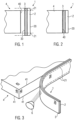
- Figure 1 shows a schematic sectional view of a piece of furniture edge 4 and an edge strip 1 according to the invention to be connected thereto.
- a structural layer 2 is a layer that essentially gives the edge strip 1 its structure.
- a material of the structural layer 2 can be selected from any materials, e.g. the group of wood materials, wood substitute materials, metals, glasses, plastics, stones, ceramics or combinations thereof.
- the structural layer 2 is made of a thermoplastic polymer, preferably polypropylene, acrylonitrile-butadiene-styrene copolymer, polyvinyl chloride, polymethyl methacrylate, polyethylene terephthalate and the like.
- the structural layer 2 simultaneously forms the upper layer 2 of the edge strip 1, which defines a top or visible side 20 of the edge strip 1.
- one or more layers are arranged above the structural layer 2, for example a decorative layer or decorative film with a decorated surface.
- the structural layer 2 has a thickness of 0.8 mm to 5.0 mm, preferably 1.0 to 3.0 mm.
- melt layer 3 refers to a layer consisting of a meltable material which preferably softens when the temperature is increased above the melting point and assumes a viscous or viscoplastic state, and solidifies again when cooled.
- the material of the melt layer 3 is a graft copolymer, preferably a polypropylene grafted with maleic anhydride.
- the material of the melt layer 3 contains a proportion of up to four percent polar and/or reactive groups in the molecular structure, preferably between 0.5 and 2%, preferably 1%.
- the melt layer 3 has a thickness of 0.1 mm to 1.5 mm, preferably 0.2 mm to 0.5 mm.
- the piece of furniture 4 comprises a plate (e.g. table top, kitchen worktop, etc.) made of a material selected from any materials, e.g. the group of wood materials, wood substitute materials, metals, glasses, plastics, stones, ceramics or combinations thereof.
- a plate e.g. table top, kitchen worktop, etc.
- any materials e.g. the group of wood materials, wood substitute materials, metals, glasses, plastics, stones, ceramics or combinations thereof.
- the piece of furniture 4 is a panel made of a wood-based material, in particular a chipboard or an MDF board.
- the piece of furniture 4 comprises edges 40 which are defined and bordered by edge edges 41, a top or storage side 42 and a bottom side (not shown).
- the edge strip 1 comprises in the embodiment according to Fig. 3 the preferred construction with a structural layer 2 defining the visible side 20 and a melt layer 3 defining the contact side 30, and has a flexible structure.
- the energy is supplied in any form, preferably in the form of laser light, hot air, microwaves, ultrasound, etc., whereby an energy absorption agent (e.g. laser pigments) preferably contained in the melt layer 3 absorbs the energy supplied by the energy application agent 6 and heats the melt layer 3 above the melting point. It is not necessary for the melt layer 3 to be completely melted, but rather that the melt layer 3 is only softened on the contact side 30, so that the melt layer 3 assumes a viscous or viscoplastic state at least in sections and, when the edge strip 1 is pressed onto the edge 40 of the piece of furniture 4, mechanically engages the preferably rough surface structure of the edge 40 of the piece of furniture 4. Due to the set chemical properties of the edge strip 1, the melt layer 3 is additionally bonded to the edge 40 of the workpiece 4 in a materially bonded manner.
- an energy absorption agent e.g. laser pigments
- a melt layer 3, which has reactive molecular groups, is preferably supplied with enough energy by the energy application means 6 to exceed an activation energy in order to trigger a chemical reaction and to create a chemical bond between the melt layer 3 and the respective connection partner, here the piece of furniture 4.
- the application of energy to the melt layer 3 in order to bring about a chemical reaction between the melt layer 3 and the edge 40 of the piece of furniture 4 in order to chemically bond the melt layer 3 and the edge 40 of the piece of furniture 4 takes place optionally simultaneously or independently of the application of energy to the melt layer 3 to melt the melt layer 3.
- the edge strip 1 is usually manufactured with an oversize and is brought to the edge 40 of the piece of furniture 4 in such a way that an overhang area is created on both sides of the edge strip 1 between the dashed lines 21 and the edges of the edge strip 1 in the connected state. This excess material is machined off by means of a machining process so that the longitudinal edges of the edge strip 1 and the storage surface 42 as well as the underside (not shown) of the piece of furniture 4 are flush.
- the contact side 30 of the edge strip 1 is at least partially connected or welded to the edge 40 of the piece of furniture 4 in a materially bonded and/or chemically manner.
- Point-shaped, line-shaped or checkerboard-like welding patterns are possible, which can be achieved, for example, by targeted exposure of the melt layer 3 to energy-absorbing additives.
- the melt layer 3 is connected or welded over its entire surface to the edge 40 of the piece of furniture 4. This applies in particular to the corner areas of the piece of furniture 4, where the edge strips 1 are arranged adjacent to one another, e.g. at an angle, in order to prevent the edge strips 1 from detaching from the corner areas of the piece of furniture 4.
- Figure 2 shows the connected state of the edge strip 1 according to the invention and the piece of furniture 4. It is shown how the initially melted and subsequently solidified material of the melt layer 3 engages in the rough or porous or microporous surface structure on the edge 40 of the piece of furniture 4, so that the melt layer 3 is connected to the piece of furniture 4 in a material-locking and - if the surface structure of the piece of furniture 4 allows it - also in a form-fitting manner.
- Variants of the edge strip 1 are listed below with details of the respective materials: Variant 1 (PP edge) structural layer: polypropylene (PP); enamel layer: PP-maleic anhydride Variant 2 (ABS edge) structural layer: Acrylonitrile-butadiene-styrene copolymer (ABS); enamel layer: Ethylene vinyl acetate, ethylene vinyl acetate-maleic anhydride, ethylene methacrylate, polyurethane (thermoplastic), ABS-maleic anhydride or styrene-ethylene-butylene-styrene block copolymer-maleic anhydride, adhesion-modified copolyamide; Variant 3 (PVC edge) structural layer: Polyvinyl chloride (PVC); enamel layer: PVC-ethylene vinyl acetate copolymer or PVC-polyacrylate, adhesion-modified copolyamide; ABS-maleic anhydride Variant 4 (PMMA/PET edge) structural layer: Polymethyl methacrylate (
Landscapes
- Engineering & Computer Science (AREA)
- Mechanical Engineering (AREA)
- Physics & Mathematics (AREA)
- Health & Medical Sciences (AREA)
- Toxicology (AREA)
- Electromagnetism (AREA)
- Life Sciences & Earth Sciences (AREA)
- Wood Science & Technology (AREA)
- Optics & Photonics (AREA)
- Chemical & Material Sciences (AREA)
- Composite Materials (AREA)
- Manufacturing & Machinery (AREA)
- Forests & Forestry (AREA)
- Laminated Bodies (AREA)
- Vehicle Interior And Exterior Ornaments, Soundproofing, And Insulation (AREA)
- Extrusion Moulding Of Plastics Or The Like (AREA)
- Dry Formation Of Fiberboard And The Like (AREA)
- Details Of Garments (AREA)
- Adornments (AREA)
- Adhesive Tapes (AREA)
Description
- Die Erfindung betrifft eine Kantenleiste für Möbelstücke, umfassend eine Schmelzschicht.
- Aus der
EP 1 163 864 ist eine Möbelplatte und ein Verfahren zu deren Herstellung bekannt. Dort wird eine gattungsgemäße Kantenleiste beschrieben, bei der die Schmelzschicht mit Holzwerkstoffen über Lasertechnik verschweißt werden kann. - Zur Fixierung der Kantenleiste am Möbelstück ist es bei einigen Werkstoffen schwierig, einen sicheren Halt am Möbelstück zu bewerkstelligen.
- Weiterer verwandter Stand der Technik ist in der
WO 93/06995 A1 DD 124 170 A1 DE 101 44 524 A1 ,WO 02/068192 A1 DE 42 08 991 A1 offenbart sowie in Wust "Schmalflächenbeschichtung mit dem Laser - Alte Technologien in neuem Licht, Teil 2: der Fügeprozess an der Kantenanleimmaschine", 01.01.2006, Seiten 24-29, XP093135309. - Der Erfindung liegt die Aufgabe zugrunde, eine Kantenleiste für Möbelstücke bereitzustellen, die unabhängig vom Werkstoff eines Möbelstücks, an wenigstens einer Kante des Möbelstücks optisch ohne Trennfuge und klebstofffrei fixierbar ist.
- Um diese Aufgabe zu lösen, stellt die Erfindung eine Kantenleiste für Möbelstücke nach Anspruch 1 bereit, umfassend eine Schmelzschicht, wobei die Schmelzschicht sowohl polare als auch unpolare Anteile im Molekülaufbau enthält, so dass die Kantenleiste durch die Zufuhr von Energie durch beispielsweise Licht und/oder Strahlung mit Möbelstücken aus unterschiedlichsten Werkstoffen verbunden werden kann. Dadurch ist die Schmelzschicht durch Aufschmelzen stoffschlüssig an polaren und unpolaren Werkstoffen unmittelbar anbindbar.
- Eine mechanische Adhäsion wird beispielsweise erreicht, in dem die Schmelzschicht in eine Zellstruktur des Möbelstücks eindringt, diese umklammert und aushärtet. Eine spezifische Adhäsion wird durch verschiedene Effekte erreicht: Die Schmelzschicht mit polaren als auch unpolaren Anteilen im Molekülaufbau zeigt eine gute Affinität zu Werkstoffen wie Holz, um ein Eindiffundieren zu erleichtern. Beispielsweise zeigen die in Holzwerkstoffen enthaltenen Cellulosen, die OH-Gruppen enthalten, sehr starken Dipolcharakter und damit Adhäsion zu polaren Stoffen.
- Bevorzugte Ausführungen der erfindungsgemäßen Kantenleiste werden in den Unteransprüchen beansprucht.
- Erfindungsgemäß weist die Kantenleiste eine mit der Schmelzschicht verbundene Strukturschicht auf. Diese Maßnahme hat den Vorteil, dass die Strukturschicht der Kantenleiste ungeachtet der Funktion der Schmelzschicht die eigentliche Struktur verleiht, wobei die Schmelzschicht und die Strukturschicht jeweils funktional ausgelegt werden können.
- Es kann von Vorteil sein, wenn die Schmelzschicht polare und/oder reaktive Molekülgruppen aufweist, so dass adhäsive und/oder kovalente und/oder ionische Anbindungen erreichbar sind. Die besten Ergebnisse bei der Anbindung der erfindungsgemäßen Kantenleiste werden erzielt, wenn das Polymer der Schmelzschicht eine sehr gute Fließfähigkeit aufweist.
- Derartige polare und/oder reaktive Gruppen können, z.B. durch entsprechende Copolymerisation und/oder Pfropfung und/oder nachträglicher Oberflächenbehandlung (Beflammen, Corona- oder Plasmaverfahren) einfach in den Molekülaufbau der Schmelzschicht eingebaut sein. Die reaktiven Gruppen können zusätzlich chemische Bindungen zwischen der Schmelzschicht und dem jeweiligen Verbindungspartner im Möbelstück bilden und dadurch für eine besonders hohe Verbindungsfestigkeit sorgen. Es kann sich als hilfreich erweisen, wenn die Schmelzschicht Molekülgruppen basierend auf Carbonsäuren bzw. deren Ester bzw. Salze insbesondere Acrylsäure, Acrylsäureester, Metacrylsäure, Metacrylsäureester, Methylmetacrylsäureester; Epoxide, Isocyanaten, Phenol-Formaldehydharz, Silanen, Titanaten, Alkoholen, Amiden, Imiden, Ammoniumverbindungen oder Sulfonsäuren bzw. deren Estern oder Salzen oder dgl. aufweist.
- Erfindungsgemäß basiert die Schmelzschicht auf dem Werkstoff, aus welchem die Strukturschicht gefertigt ist. Diese Maßnahme hat den Vorteil, dass zwischen den Schichten der Kantenleiste ein besonders fester Verbund entsteht.
- Erfindungsgemäß ist die Strukturschicht aus einem thermoplastischen Polymer, nämlich Polypropylen, gefertigt. Diese Maßnahme hat den Vorteil, dass dieser Werkstoff kostengünstig verfügbar und gut verarbeitbar ist.
- Erfindungsgemäß ist der Werkstoff der Schmelzschicht ein Pfropfcopolymer. Diese Maßnahme hat den Vorteil, dass sich die Werkstoffzusammensetzung, insbesondere der Anteil polarer Gruppen im Molekülaufbau, und damit die Werkstoffeigenschaften gezielt einstellen lassen. Konkret ist der Werkstoff der Schmelzschicht erfindungsgemäß ein Maleinsäure-gepfropftes Polypropylen.
- Erfindungsgemäß bildet die Schmelzschicht die Unterschicht der Kantenleiste, die eine Unterseite bzw. Anlageseite der Kantenseite definiert. Diese Maßnahme hat den Vorteil, dass die Schmelzschicht unmittelbar mit einer zu verdeckenden Stirnseite eines Möbelstücks, z.B. einer Holzwerkstoffplatte (Spanplatte, MDF-Platte), verschweißbar ist.
- In einer weiter bevorzugten Ausführungsform ist die Schmelzschicht als thermoplastische Funktionsschicht ausgebildet, die es erstmals ermöglicht, eine Kantenleiste nach den vorher beschriebenen Ausführungsformen klebstofffrei und ohne eine sichtbare Fuge an einer Schmalseite eines Möbelstückes zu fixieren.
- Eine weitere bevorzugte Ausführung der Erfindung betrifft eine Kantenleiste nach einer der vorangegangenen Ausführungen, wobei die Strukturschicht und die Schmelzschicht stoffschlüssig verbunden sind. Diese Maßnahme hat den Vorteil, dass die Schichten der Kantenleiste besonders fest verbunden sind.
- Eine weitere bevorzugte Ausführung der Erfindung betrifft eine Kantenleiste nach einer der vorangegangenen Ausführungen, wobei die Strukturschicht und die Schmelzschicht koextrudiert sind. Diese Maßnahme hat den Vorteil, dass sich die Formgebung der Kantenleiste besonders einfach gestaltet.
- Eine weitere bevorzugte Ausführung der Erfindung betrifft eine Kantenleiste nach einer der vorangegangenen Ausführungen, wobei die Schmelzschicht Energie absorbierende Zusatzstoffe, vorzugsweise Licht und/oder Strahlung absorbierende Zusatzstoffe, bspw. Laserpigmente enthält. Diese Maßnahme hat den Vorteil, dass die Schmelzschicht gezielt mit Energie beaufschlagbar und über den Schmelzpunkt erwärmbar ist. Vorzugsweise sind die Energie absorbierenden Zusatzstoffe in bestimmten Schmelzabschnitten in der Schmelzschicht enthalten, die gezielt aufgeschmolzen werden, wobei die Schmelzabschnitte in beliebigen Mustern angeordnet sein können, z.B. als parallele Linien entlang der längsrandseitigen Kanten der Kantenleiste.
- Eine weitere bevorzugte Ausführung der Erfindung betrifft eine Kantenleiste nach einer der vorangegangenen Ausführungen, wobei die Strukturschicht die Oberschicht der Kantenleiste bildet, die eine Oberseite bzw. Sichtseite der Kantenleiste definiert. Diese Maßnahme hat den Vorteil, dass das Erscheinungsbild der Kantenleiste auch nach dem Aufschmelzen und Verschweißen der Schmelzschicht an einem Möbelstück, z.B. einer Holzwerkstoffplatte (Spanplatte, MDF-Platte) an der Sichtseite unverändert erhalten bleibt.
- Eine weitere bevorzugte Ausführung der Erfindung betrifft eine Kantenleiste nach einer der vorangegangenen Ausführungen, wobei die Oberseite der Kantenleiste ein Dekor aufweist. Diese Maßnahme hat den Vorteil, dass die Kantenleiste trotz eines im Wesentlichen identischen strukturellen Aufbaus unterschiedliche Dekorierungen aufweisen kann, z.B. eine auf eine Ablagefläche des Möbelstücks abgestimmte Dekorierung.
- In einer weiteren vorteilhaften Ausgestaltung der Erfindung weist die Schmelzschicht Zusatzstoffe auf, wie bspw. Farbstoffe, Pigmente und dgl., die zu einer vorteilhaften farblichen Übereinstimmung zwischen der Schmelzschicht und der Deckschicht, aber auch zur Oberseite des Möbelstücks führen. Die aus dem Stand der Technik bekannte, optisch sichtbare, Trennfuge zwischen der Kante des Möbelstücks und der Deckschicht wird somit vermieden.
- Eine weitere bevorzugte Ausführung der Erfindung betrifft eine Kantenleiste nach einer der vorangegangenen Ausführungen, wobei die Strukturschicht eine Dicke von 0,8 bis 1,6 mm, vorzugsweise 1,0 bis 5,0 mm aufweist. Diese Maßnahme hat den Vorteil, dass die Strukturschicht der Kantenleiste eine ausreichend steife Struktur verleiht.
- Eine weitere bevorzugte Ausführung der Erfindung betrifft eine Kantenleiste nach einer der vorangegangenen Ausführungen, wobei die Schmelzschicht eine Dicke von 0,1 bis 0,5 mm, vorzugsweise 0,2 bis 0,5 mm aufweist. Diese Maßnahme hat den Vorteil, dass die Schmelzschicht nur in einer erforderlichen Dicke ausgeführt ist, um die Anbindung an das Möbelstück zu bewerkstelligen. Dadurch wird der im Verhältnis zum Werkstoff der Strukturschicht teurere Werkstoff der Schmelzschicht eingespart.
- Eine weitere bevorzugte Ausführung der Erfindung betrifft ein Möbelstück mit einer Kantenleiste nach einer der vorangegangenen Ausführungen, wobei die Schmelzschicht zumindest abschnittsweise mit einer Kante des Möbelstücks stoffschlüssig und/oder chemisch verbunden ist. Diese Maßnahme hat den Vorteil, dass die Schmelzschicht stoffschlüssig und/oder chemisch und ggf. auch formschlüssig mit dem Möbelstück verbunden ist. Durch die partielle Verschweißung, wonach die Schmelzschicht nur abschnittsweise mit der Kante des Möbelstücks verschweißt wird, die Kante aber vollständig durch die Kantenleiste verkleidet wird, ist die Schmelzschicht nur an ausgewählten Stellen mit Energie zu beaufschlagen, so dass Zeit und Energie eingespart werden. Die Bezeichnung "chemisch verbunden" bezeichnet eine chemische Bindung aufgrund einer chemischen Reaktion zwischen einer in der Schmelzschicht enthaltenen, reaktiven Molekülgruppe und einem entsprechenden Verbindungspartner bzw. der Kante des Möbelstücks. Die in der Schmelzschicht enthaltene, reaktive Molekülgruppe und der Verbindungspartner sind dabei nicht eingeschränkt, solange sie in der Lage sind, eine chemische Bildung miteinander eingehen zu können. Die chemische Bindung zwischen der Molekülgruppe in der Schmelzschicht und dem jeweiligen Verbindungspartner im Möbelstück sorgt für eine besonders hohe Verbindungsfestigkeit.
- Eine weitere bevorzugte Ausführung der Erfindung betrifft ein Möbelstück nach der vorangegangenen Ausführung, wobei die Unterseite der Kantenleiste vollflächig mit der Kante des Möbelstücks stoffschlüssig und/oder chemisch verbunden ist. Diese Maßnahme hat den Vorteil, dass die Schmelzschicht sicher und dauerfest mit dem Möbelstück verbunden ist.
- Eine weitere bevorzugte Ausführung der Erfindung betrifft ein Möbelstück nach einer der vorangegangenen Ausführungen, wobei der Werkstoff des Möbelstücks ausgewählt ist aus der Gruppe der Holzwerkstoffe, der Holzersatzwerkstoffe, der Metalle, der Gläser, der Kunststoffe, der Steine, der Keramiken oder Kombinationen davon. Diese Maßnahme hat den Vorteil, dass hinsichtlich der Werkstoffauswahl des Möbelstücks größtmögliche Freiheiten bestehen. Holz enthält beispielsweise ca. 40 % Cellulose, ca. 25 % Holocellulose und ca. 30 % Lignin. Die Cellulose ist ein lineares Kettenmolekül (bis zu 8 µm lang) und ist insbesondere für die Zugfestigkeit des Holzes verantwortlich. Die Holocellulosen sind aus unterschiedlichen Zuckern aufgebaut, die Ketten sind wesentlich kürzer und weisen Seitengruppen und Verzweigungen auf. Die Holocellulosen sind durch kovalente Bindungen mit dem Lignin in der Zellwand verbunden. Insbesondere die Cellulosen weisen eine Vielzahl von OH-Gruppen auf, die für den inneren Zusammenhalt des Holzes erforderlich sind, aber auch für die äußere Anbindung der Schmelzschicht nutzbar sind. Diese OH-Gruppen sind besonders geeignet, eine chemische Bindung mit in der Schmelzschicht enthaltenen, reaktiven Molekülgruppen bilden.
- Grundsätzlich sind alle Werkstoffe, die entsprechende reaktive Gruppen an der Oberfläche haben, die mit den Kanten von bspw. Möbelstücken in Berührung kommen, für chemische Bindungen geeignet. Gegebenenfalls können die Werkstoffe zunächst oberflächenmodifiziert werden, falls eine chemische Bindung zwischen Kanteleiste und Möbelwerkstoff gewünscht ist und die Werkstoffe per se keine oder nicht ausreichend chemisch reaktive Verbindungspartner aufweisen.
- Eine weitere bevorzugte Ausführung der Erfindung betrifft ein Möbelstück nach einer der vorangegangenen Ausführungen, wobei der Werkstoff der Strukturschicht ausgewählt ist aus der Gruppe der Holzwerkstoffe, der Holzersatzwerkstoffe, der Metalle, der Gläser, der Kunststoffe, der Steine, der Keramiken oder Kombinationen davon. Diese Maßnahme hat den Vorteil, dass hinsichtlich der Werkstoffauswahl der Strukturschicht größtmögliche Freiheiten bestehen.
-
- Figur 1
- zeigt eine schematische Schnittansicht einer Möbelstückkante und einer daran anzubindenden erfindungsgemäßen Kantenleiste.
- Figur 2
- zeigt eine schematische Schnittansicht einer Möbelstückkante und der daran angebundenen erfindungsgemäßen Kantenleiste.
- Figur 3
- zeigt eine schematische und perspektivische Ansicht einer Möbelstückkante mit einer teilweise angebundenen, erfindungsgemäßen Kantenleiste, zur Erläuterung eines Verfahrens zum Anbringen der Kantenleiste an der Möbelstückkante.
- Die erfindungsgemäße Kantenleiste 1 wird nachstehend mit Bezug auf die beiliegenden Figuren beschrieben.
- Die erfindungsgemäße Kantenleiste 1 für Möbelstücke 4 umfasst eine Schmelzschicht 3 die sowohl polare als auch unpolare Anteile im Molekülaufbau enthält. Dazu ist die Schmelzschicht 3 aus einem Werkstoff gefertigt, der chemisch modifiziert ist, so dass er sowohl polare als auch unpolare Anteile im Molekülaufbau enthält. Dadurch ist die Schmelzschicht 3 durch Aufschmelzen stoffschlüssig an polaren oder unpolaren Werkstoffen unmittelbar anbindbar. In der einfachsten Variante umfasst die Kantenleiste 1 ausschließlich die Schmelzschicht 3, d.h. die Kantenleiste 1 ist aus dem chemisch modifizierten Werkstoff gefertigt, der sowohl polare als auch unpolare Anteile im Molekülaufbau enthält.
- Die erfindungsgemäße Kantenleiste 1 für Möbelstücke 4 umfasst eine Strukturschicht 2 und die Schmelzschicht 3 aus dem chemisch modifizierten Werkstoff, der sowohl polare als auch unpolare Anteile im Molekülaufbau enthält. Zwischen der Strukturschicht 2 und der Schmelzschicht 3 können keine, eine oder mehrere Zwischenschichten vorgesehen sein, so dass die Strukturschicht 2 und die Schmelzschicht 3 zumindest mittelbar, vorzugsweise unmittelbar verbunden sind. Die Strukturschicht 2 kann weggelassen werden, wenn die Schmelzschicht 3 eine ausreichende Dicke aufweist, um der Kantenleiste 1 die notwendige Steifigkeit zu verleihen. Da der chemisch modifizierte Werkstoff der Schmelzschicht 3 i.d.R. teurer als der Werkstoff der Strukturschicht 2 ist, wird die Variante mit Strukturschicht 2 bevorzugt.
-
Figur 1 zeigt eine schematische Schnittansicht einer Möbelstückkante 4 und einer daran anzubindenden erfindungsgemäßen Kantenleiste 1. - Als Strukturschicht 2 wird im Sinne der Erfindung eine Schicht bezeichnet, die der Kantenleiste 1 im Wesentlichen ihre Struktur verleiht. Ein Werkstoff der Strukturschicht 2 kann ausgewählt sein aus beliebigen Werkstoffen, z.B. der Gruppe der Holzwerkstoffe, der Holzersatzwerkstoffe, der Metalle, der Gläser, der Kunststoffe, der Steine, der Keramiken oder Kombinationen davon.
- In einem bevorzugten Ausführungsbeispiel ist die Strukturschicht 2 aus einem thermoplastischen Polymer, bevorzugt Polypropylen, Acrylnitril-Butadien-Styrol-Copolymerisat, Polyvinylchlorid, Polymethylmethacrylat, Polyethylenterephthalat und dgl. gefertigt.
- Die Strukturschicht 2 bildet in den dargestellten Ausführungsbeispielen gleichzeitig die Oberschicht 2 der Kantenleiste 1, die eine Oberseite bzw. Sichtseite 20 der Kantenleiste 1 definiert. Alternativ sind über der Strukturschicht 2 eine oder mehrere Schichten angeordnet, beispielsweise eine Dekorschicht bzw. Dekorfolie mit einer dekorierten Oberfläche. Die Strukturschicht 2 weist eine Dicke von 0,8 mm bis 5,0 mm, vorzugsweise 1,0 bis 3,0 mm auf.
- Als Schmelzschicht 3 wird ihm Rahmen dieser Beschreibung eine Schicht bezeichnet, die aus einem schmelzfähigen Werkstoff besteht, der vorzugsweise bei Temperaturerhöhung auf über den Schmelzpunkt erweicht und einen zähflüssigen bzw. zähplastischen Zustand einnimmt, und bei Abkühlung wieder erstarrt.
- Der Werkstoff der Schmelzschicht 3 ist derart chemisch modifiziert, dass er polare und/oder unpolare und/oder reaktive Molekülgruppen enthält. Demnach wird der Werkstoff der Schmelzschicht 3 auch als Phasenvermittler bezeichnet. Durch Aufschmelzen ist der Werkstoff der Schmelzschicht 3 stoffschlüssig an polaren und unpolaren Werkstoffen unmittelbar anbindbar. Die Schmelzschicht 3 basiert erfindungsgemäß auf dem gleichen Werkstoff wie die Strukturschicht 2, d. h. auf einem unpolaren Werkstoff, vorzugsweise Kunststoff, bevorzugt Polypropylen, Acrylnitril-Butadien-Styrol-Copolymerisat, Polyvinylchlorid, Polymethylmethacrylat, Polyethylenterephthalat und dgl., ist aber chemisch modifiziert. Erfindungsgemäß ist der Werkstoff der Schmelzschicht 3 ein Pfropfcopolymer, bevorzugt ein mit Maleinsäureanhydrid-gepfropftes Polypropylen. Der Werkstoff der Schmelzschicht 3 enthält einen Anteil von bis zu vier Prozent polare und/oder reaktive Gruppen im Molekülaufbau, bevorzugt zwischen 0,5 und 2%, vorzugsweise 1%. Die Schmelzschicht 3 weist eine Dicke von 0,1 mm bis 1,5 mm, vorzugsweise 0,2 mm bis 0,5 mm auf. Bevorzugt enthält die Schmelzschicht eine oder mehrere der Molekülgruppen basierend auf Carbonsäuren bzw. deren Ester bzw. Salze insbesondere Acrylsäure, Acrylsäureester, Metacrylsäure, Metacrylsäureester, Methylmetacrylsäureester; Epoxide, Isocyanaten, Phenol-Formaldehydharz, Silanen, Titanaten, Alkoholen, Amiden, Imiden, Ammoniumverbindungen oder Sulfonsäuren bzw. deren Estern oder Salzen oder dgl. aufweist.
- Die Strukturschicht 2 und die Schmelzschicht 3 sind vorzugsweise stoffschlüssig verbunden, bevorzugt koextrudiert. Der Werkstoff der Schmelzschicht 3 weist vorzugsweise einen niedrigeren Schmelzpunkt auf, als der Werkstoff der Strukturschicht 2. Wird die Kantenleiste 1 auf eine vorgegebene Temperatur erhitzt, die über dem Schmelzpunkt des Werkstoffs der Schmelzschicht 3 aber unter dem Schmelzpunkt der Strukturschicht 2 liegt, so wird nur der Werkstoff der Schmelzschicht 3 erweicht bzw. aufgeschmolzen, was wünschenswert ist.
-
Figur 3 zeigt eine schematische und perspektivische Ansicht eines Möbelstücks 4 mit der erfindungsgemäßen Kantenleiste 1, wobei die Schmelzschicht 3 der Kantenleiste 1 stoffschlüssig mit einer Kante 40 des Möbelstücks 4 unmittelbar verbunden ist, bzw. verbunden wird. - Das Möbelstück 4 umfasst eine Platte (z.B. Tischplatte, Küchenarbeitsplatte, etc.) aus einem Werkstoff, der ausgewählt ist aus beliebigen Werkstoffen, z.B. der Gruppe der Holzwerkstoffe, der Holzersatzwerkstoffe, der Metalle, der Gläser, der Kunststoffe, der Steine, der Keramiken oder Kombinationen davon.
- Im vorliegenden Beispiel ist das Möbelstück 4 eine Platte aus einem Holzwerkstoff, insbesondere eine Spanplatte oder eine MDF-Platte. Das Möbelstück 4 umfasst Kanten 40, die von Kantenrändern 41 definiert und umrandet sind, eine Oberseite bzw. Ablageseite 42 und eine Unterseite (nicht dargestellt).
- Die Kantenleiste 1 umfasst im Ausführungsbeispiel gemäß
Fig. 3 den bevorzugten Aufbau mit einer die Sichtseite 20 definierenden Strukturschicht 2 und einer die Anlageseite 30 definierenden Schmelzschicht 3, und weist eine flexible Struktur auf. - Der Werkstoff der Strukturschicht 2 ist Polypropylen. Der Werkstoff der Schmelzschicht 3 ist Maleinsäureanhydrid-gepfropftes Polypropylen. Die Kantenleiste 1 wird in einem im Wesentlichen herkömmlichen Verfahren an die zu verkleidende Kante 40 des Möbelstücks 4 angefahren, wobei die Anlageseite 30 der Schmelzschicht 3 unmittelbar vor dem Anfahren der Kantenleiste 1 an die Kante 40 durch ein Energiebeaufschlagungsmittel 6 mit Energie beaufschlagt wird. Durch Beaufschlagung mit Energie wird die Schmelzschicht 3 erwärmt.
- Die Energie wird in beliebiger Form, vorzugsweise in Form von Laserlicht, Heißluft, Mikrowellen, Ultraschall etc. zugeführt, wobei ein vorzugsweise in der Schmelzschicht 3 enthaltenes Energieabsorptionsmittel (z.B. Laserpigmente) die durch das Energiebeaufschlagungsmittel 6 zugeführte Energie aufnimmt und die Schmelzschicht 3 über den Schmelzpunkt erwärmt. Dabei ist nicht erforderlich, dass die Schmelzschicht 3 vollständig aufgeschmolzen wird, sondern dass die Schmelzschicht 3 lediglich an der Anlageseite 30 aufgeweicht wird, so dass die Schmelzschicht 3 zumindest abschnittsweise einen zähflüssigen bzw. zähplastischen Zustand einnimmt und beim Andrücken der Kantenleiste 1 an die Kante 40 des Möbelstücks 4 mechanisch in die vorzugsweise raue Oberflächenstruktur der Kante 40 des Möbelstücks 4 eingreift. Durch die eingestellten chemischen Eigenschaften der Kantenleiste 1, wird die Schmelzschicht 3 zusätzlich stoffschlüssig mit der Kante 40 des Werkstücks 4 verbunden.
- Einer Schmelzschicht 3, die reaktive Molekülgruppen aufweist, wird durch das Energiebeaufschlagungsmittel 6 vorzugsweise soviel Energie zugeführt, dass eine Aktivierungsenergie überschritten wird, um eine chemische Reaktion auszulösen und eine chemische Bindung zwischen der Schmelzschicht 3 und dem jeweiligen Verbindungspartner, hier dem Möbelstück 4, zu bewerkstelligen. Das Beaufschlagen der Schmelzschicht 3 mit Energie, um eine chemische Reaktion zwischen der Schmelzschicht 3 und der Kante 40 des Möbelstücks 4 herbeizuführen, um die Schmelzschicht 3 und die Kante 40 des Möbelstücks 4 chemisch zu verbinden, erfolgt wahlweise gleichzeitig oder unabhängig von dem Beaufschlagen der Schmelzschicht 3 mit Energie zum Aufschmelzen der Schmelzschicht 3.
- Die Aktivierungsenergie, um eine chemische Bindung zwischen der Schmelzschicht 3 und dem jeweiligen Verbindungspartner, hier dem Möbelstück 4, zu bewerkstelligen, wird unter anderem durch folgende Parameter beeinflusst:
- Temperatur
- Strahlung (Laser, UV-Licht)
- Anpresskraft
- Fügespalt
- Schichtdicke
- Aushärtezeit
- Umgebungsluft (Feuchtigkeit, Sauerstoffgehalt)
- Substratoberfläche
- Vorbehandlung
- Bei einer Schmelzschicht 3 aus Maleinsäureanhydrid-gepfropftem Polypropylen (PP-MAH) wird die Schmelzschicht 3 beispielsweise auf eine Temperatur von größer + 135°C erwärmt. Diese Temperatur ist in der Regel ausreichend hoch, so dass das Maleinsäureanhydrid (MAH) mit den OH-Gruppen des Holzes reagiert, um eine chemische Bindung zu bewerkstelligen.
- Die Kantenleiste 1 wird i.d.R. mit Übermaß gefertigt und derart an die Kante 40 des Möbelstücks 4 angefahren, dass beidseitig der Kantenleiste 1 ein Überstandsbereich zwischen den gestrichelten Linien 21 und den Rändern der Kantenleiste 1 im angebundenen Zustand entsteht. Dieser Materialüberstand wird im Wege einer spanabhebenden Bearbeitung abgearbeitet, so dass die längsrandseitigen Kanten der Kantenleiste 1 und die Ablagefläche 42 sowie die Unterseite (nicht dargestellt) des Möbelstücks 4 bündig verlaufen.
- Es reicht aus, wenn die Anlageseite 30 der Kantenleiste 1 zumindest abschnittsweise stoffschlüssig und/oder chemisch mit der Kante 40 des Möbelstücks 4 verbunden bzw. verschweißt ist. Dabei sind punktförmige, strichförmige oder schachbrettartige Schweißmuster möglich, die beispielsweise durch gezielte Beaufschlagung der Schmelzschicht 3 mit Energie absorbierenden Zusatzstoffen bewerkstelligt werden können. Es ist jedoch bevorzugt, dass die Schmelzschicht 3 vollflächig mit der Kante 40 des Möbelstücks 4 verbunden, bzw. verschweißt wird. Dies gilt insbesondere für die Eckbereiche des Möbelstücks 4, wo die Kantenleisten 1 z.B. über Eck benachbart angeordnet werden, um ein Ablösen der Kantenleisten 1 ausgehend von den Eckbereichen des Möbelstücks 4 zu verhindern.
-
Figur 2 zeigt den verbundenen Zustand der erfindungsgemäßen Kantenleiste 1 und des Möbelstücks 4. Dabei ist dargestellt, wie der zunächst aufgeschmolzene und nachträglich erstarre Werkstoff der Schmelzschicht 3 in die raue bzw. poröse bzw. mikroporöse Oberflächenstruktur an der Kante 40 des Möbelstücks 4 eingreift, so dass die Schmelzschicht 3 stoffschlüssig und - wenn es die Oberflächenstruktur des Möbelstücks 4 zulässt - auch formschlüssig mit dem Möbelstück 4 verbunden ist. - Varianten der Kantenleiste 1 sind nachfolgend unter Angabe der jeweiligen Werkstoffe angeführt:
Variante 1 (PP-Kante) Strukturschicht: Polypropylen (PP); Schmelzschicht: PP-Maleinsäureanhydrid Variante 2 (ABS-Kante) Strukturschicht: Acrylnitril-Butadien-Styrol-Copolymerisat (ABS); Schmelzschicht: Ethylenvinylacetat, Ethylenvinylacetat-Maleinsäureanhydrid, Ethylenmethacrylat, Polyurethan (thermoplastisch), ABS-Maleinsäureanhydrid oder Styrol-Ethylen-Butylen-Styrol-Blockcopolymer-Maleinsäureanhydrid, haftungsmodifiziertes Copolyamid; Variante 3 (PVC-Kante) Strukturschicht: Polyvinylchlorid (PVC); Schmelzschicht: PVC- Ethylenvinylacetat- Copolymer oder PVC-Polyacrylester, haftungsmodifiziertes Copolyamid; ABS-Maleinsäureanhydrid Variante 4 (PMMA/PET-Kante) Strukturschicht: Polymethylmethacrylat (PMMA) bzw. Polyethylenterephthalat (PET); Schmelzschicht: Ethylenbutylenacrylat, Ethylenmethacrylat, Ethylenvinylacetat, epoxidiertes Acrylat, Polyester (Maleinsäureanhydrid-gepfropft). Variante 5 (PP-Kante) Struktur- und Schmelzschicht: PP-Maleinsäureanhydrid gepfropft
Claims (9)
- Kantenleiste (1) für Möbelstücke, umfassend eine Schmelzschicht (3) und eine mit der Schmelzschicht (3) verbundene Strukturschicht (2) aus Kunststoff, wobei die Schmelzschicht (3) eine Anlageseite (30) der Kantenleiste (1) definiert und der Werkstoff der Schmelzschicht (3) sowohl polare als auch unpolare Anteile im Molekülaufbau enthält, dadurch gekennzeichnet, dass die Schmelzschicht (3) auf dem Werkstoff basiert, aus welchem die Strukturschicht (2) gefertigt ist, wobei die Strukturschicht (2) aus Polypropylen gefertigt ist und der Werkstoff der Schmelzschicht (3) ein Maleinsäureanhydrid-gepfropftes Polypropylen ist.
- Kantenleiste (1) nach Anspruch 1, wobei die Strukturschicht (2) und die Schmelzschicht (3) unmittelbar verbunden sind.
- Kantenleiste (1) nach einem der vorangegangenen Ansprüche, wobei die Strukturschicht (2) und die Schmelzschicht (3) stoffschlüssig verbunden sind.
- Kantenleiste (1) nach einem der vorangegangenen Ansprüche, wobei die Strukturschicht (2) und die Schmelzschicht (3) koextrudiert sind.
- Kantenleiste (1) nach einem der vorangegangenen Ansprüche, wobei die Schmelzschicht (3) Licht und/oder Strahlung absorbierende Zusatzstoffe, bevorzugt Laserpigmente, enthält.
- Kantenleiste (1) nach einem der vorangegangenen Ansprüche, wobei die Strukturschicht (2) die Oberschicht der Kantenleiste (1) bildet, die eine Oberseite bzw. Sichtseite (20) der Kantenleiste (1) definiert.
- Kantenleiste (1) nach einem der vorangegangenen Ansprüche, wobei die Schmelzschicht (3) eine Dicke von 0,1 bis 1,5 mm, vorzugsweise 0,2 bis 0,5 mm aufweist.
- Möbelstück (4) mit einer Kantenleiste (1) nach einem der vorangegangenen Ansprüche, wobei die Schmelzschicht (3) zumindest abschnittsweise mit einer Kante (40) des Möbelstücks (4) stoffschlüssig verbunden ist.
- Möbelstück (4) nach Anspruch 8, wobei die Unterseite (30) der Kantenleiste (1) vollflächig mit der Kante (40) des Möbelstücks (4) stoffschlüssig verbunden ist.
Applications Claiming Priority (3)
| Application Number | Priority Date | Filing Date | Title |
|---|---|---|---|
| DE202007011911U DE202007011911U1 (de) | 2007-08-24 | 2007-08-24 | Kantenleiste für Möbelstücke |
| EP08801452A EP2180995B1 (de) | 2007-08-24 | 2008-06-06 | Kantenleiste für möbelstücke |
| PCT/EP2008/004520 WO2009026977A1 (de) | 2007-08-24 | 2008-06-06 | Kantenleiste für möbelstücke |
Related Parent Applications (3)
| Application Number | Title | Priority Date | Filing Date |
|---|---|---|---|
| EP08801452.7 Division | 2008-06-06 | ||
| EP08801452A Division EP2180995B1 (de) | 2007-08-24 | 2008-06-06 | Kantenleiste für möbelstücke |
| EP08801452A Division-Into EP2180995B1 (de) | 2007-08-24 | 2008-06-06 | Kantenleiste für möbelstücke |
Publications (2)
| Publication Number | Publication Date |
|---|---|
| EP2368708A1 EP2368708A1 (de) | 2011-09-28 |
| EP2368708B1 true EP2368708B1 (de) | 2025-03-05 |
Family
ID=39812010
Family Applications (4)
| Application Number | Title | Priority Date | Filing Date |
|---|---|---|---|
| EP08801452A Revoked EP2180995B1 (de) | 2007-08-24 | 2008-06-06 | Kantenleiste für möbelstücke |
| EP11003104.4A Active EP2368708B1 (de) | 2007-08-24 | 2008-06-06 | Kantenleiste für möbelstücke |
| EP20110003103 Ceased EP2363283A1 (de) | 2007-08-24 | 2008-06-06 | Kantenleiste für Möbelstücke |
| EP11003102.8A Active EP2366542B1 (de) | 2007-08-24 | 2008-06-06 | Kantenleiste für möbelstücke |
Family Applications Before (1)
| Application Number | Title | Priority Date | Filing Date |
|---|---|---|---|
| EP08801452A Revoked EP2180995B1 (de) | 2007-08-24 | 2008-06-06 | Kantenleiste für möbelstücke |
Family Applications After (2)
| Application Number | Title | Priority Date | Filing Date |
|---|---|---|---|
| EP20110003103 Ceased EP2363283A1 (de) | 2007-08-24 | 2008-06-06 | Kantenleiste für Möbelstücke |
| EP11003102.8A Active EP2366542B1 (de) | 2007-08-24 | 2008-06-06 | Kantenleiste für möbelstücke |
Country Status (12)
| Country | Link |
|---|---|
| US (1) | US8603610B2 (de) |
| EP (4) | EP2180995B1 (de) |
| CN (2) | CN103584531B (de) |
| AT (1) | ATE523330T1 (de) |
| BR (2) | BRPI0812620A2 (de) |
| DE (7) | DE202007011911U1 (de) |
| ES (2) | ES2776951T3 (de) |
| LT (2) | LT2180995T (de) |
| MX (1) | MX341949B (de) |
| PL (2) | PL2368708T3 (de) |
| RU (2) | RU2524931C2 (de) |
| WO (1) | WO2009026977A1 (de) |
Families Citing this family (56)
| Publication number | Priority date | Publication date | Assignee | Title |
|---|---|---|---|---|
| DE202007011911U1 (de) | 2007-08-24 | 2009-01-08 | Rehau Ag + Co | Kantenleiste für Möbelstücke |
| BRPI0916310A2 (pt) * | 2008-07-21 | 2017-08-22 | Karl W Niemann Gmbh & Co Kg | Método para aplicar tiras de borda em superfícies estreitas, em particular de peças em elaboração conformadas em placa e peças em elaboração obtidas em dita maneira |
| DE202008015878U1 (de) * | 2008-12-01 | 2010-04-15 | Homag Holzbearbeitungssysteme Ag | Vorrichtung zum Beschichten von Werkstücken |
| ES2459296T5 (es) † | 2009-04-22 | 2022-06-29 | Homag Holzbearbeitungssysteme Ag | Dispositivo y procedimiento para el recubrimiento de piezas de trabajo |
| DE202009011403U1 (de) * | 2009-08-21 | 2010-12-30 | Rehau Ag + Co. | Profilleiste |
| DE202009011402U1 (de) | 2009-08-21 | 2010-12-30 | Rehau Ag + Co. | Leichtbauplatte |
| CA2684769A1 (en) * | 2009-11-06 | 2011-05-06 | Global Wood Concepts Ltd. | Edgebanding tape |
| DE202010004931U1 (de) | 2010-03-15 | 2010-07-29 | MKT Moderne Kunststoff-Technik Gebrüder Eschbach GmbH | Kantenleiste aus thermoplastischem Kunststoffmaterial, insbesondere für Möbelplatten |
| DE102010014776A1 (de) | 2010-03-15 | 2011-09-15 | MKT Moderne Kunststoff-Technik Gebrüder Eschbach GmbH | Kantenleiste aus thermoplastischem Kunststoffmaterial, insbesondere für Möbelplatten |
| EP2374587B1 (de) * | 2010-04-09 | 2015-07-29 | Homag Holzbearbeitungssysteme AG | Verfahren zum Herstellen von Beschichtungsmaterial |
| DE102010041521A1 (de) | 2010-09-28 | 2012-03-29 | Klebchemie M.G. Becker Gmbh & Co. Kg | Reaktivierbare Schmelzklebstoffzusammensetzung und Verwendung derselben |
| DE102011104980A1 (de) | 2011-06-20 | 2012-12-20 | MKT Moderne Kunststoff-Technik Gebrüder Eschbach GmbH | Kantenleiste aus thermoplastischem Kunststoffmaterial, insbesondere für Möbelplatten |
| DE102012007281A1 (de) | 2012-04-12 | 2013-10-17 | Bulthaup Gmbh & Co. Kg | Kunststoffkante, Möbelpaneel und Verfahren zur Herstellung eines Möbelpaneels mit Kunststoffkante |
| DE102012008401B4 (de) * | 2012-04-20 | 2015-10-22 | Jowat Ag | Verfahren zur Anbringung eines Kantenbands, auf diese Weise hergestellte Produkte sowie deren Verwendung |
| DE102012008402B4 (de) * | 2012-04-20 | 2015-10-15 | Jowat Ag | Verfahren zur Anbringung eines Kantenbands, Kantenband, damit hergestellte Produkte sowie deren Verwendung |
| FR2991900B1 (fr) * | 2012-06-14 | 2014-08-01 | Faurecia Interieur Ind | Procede de realisation d'un element de garnissage comprenant une couche de materiau ligneux subissant une operation d'assouplissement |
| DE102012112606B4 (de) | 2012-12-19 | 2020-07-09 | Surteco Gmbh | Verfahren zur Herstellung einer Kantenleiste, Kantenleiste und Verwendung einer Kantenleiste |
| DE102013005394A1 (de) * | 2013-02-12 | 2014-08-14 | Printec Gmbh | Verfahren zum medienfreien, temperaturgestützten adhäsiven Verbinden |
| DE102013102227A1 (de) | 2013-03-06 | 2014-09-11 | W. Döllken & Co. GmbH | Kantenleiste |
| DE102013216113A1 (de) | 2013-08-14 | 2015-03-05 | Homag Holzbearbeitungssysteme Gmbh | Beschichtungsaggregat |
| DE102013218483A1 (de) * | 2013-09-16 | 2015-03-19 | Homag Holzbearbeitungssysteme Gmbh | Verfahren zur Laserbearbeitung sowie Bearbeitungsmaschine |
| CN105939834B (zh) * | 2013-12-13 | 2019-03-29 | 伍德韦尔丁公司 | 用于加强和/或加衬材料的方法 |
| EP2886301B1 (de) | 2013-12-19 | 2020-04-15 | REHAU AG + Co | Verfahren zur anbringung von kantenbändern an möbelplatten |
| DE102013022086A1 (de) | 2013-12-23 | 2015-06-25 | MKT Moderne Kunststoff-Technik Gebrüder Eschbach GmbH | Kantenleiste |
| KR101514774B1 (ko) * | 2014-01-03 | 2015-05-04 | (주)캠퍼스라인 | 복합판재 제조방법과 이에 의해 제조된 복합판재 |
| US9815257B2 (en) * | 2014-01-22 | 2017-11-14 | Coach, Inc. | Trim assembly |
| DE102014101211A1 (de) | 2014-01-31 | 2015-08-06 | Rehau Ag + Co. | Verfahren zur Herstellung eines Kantenbandes |
| DE202014102639U1 (de) | 2014-06-05 | 2015-09-10 | Rehau Ag + Co | Möbelplatte |
| DE102014109750A1 (de) * | 2014-07-11 | 2016-01-14 | Döllken-Kunststoffverarbeitung Gmbh | Kantenleiste |
| EP2990171B1 (de) * | 2014-08-21 | 2018-12-05 | G.P. Consulting di Giuseppe Pritelli & C. S.a.s. | Verfahren und vorrichtung für lokalisiertes thermisches schmelzen |
| DE202014106170U1 (de) * | 2014-12-19 | 2016-03-23 | Rehau Ag + Co | Kantenleiste für Möbelstücke |
| US10954412B1 (en) * | 2015-02-05 | 2021-03-23 | Ultra Tech Extrusions of Tennessee, inc. | Extended melt-temp range and low energy absorptive edge banding adhesive system and edge banding |
| DE102015106241A1 (de) * | 2015-04-23 | 2016-10-27 | Döllken-Kunststoffverarbeitung Gmbh | Verfahren zum Herstellen eines dekorativen Profilkörpers, insbesondere einer Kantenleiste |
| DE102015208172A1 (de) | 2015-05-04 | 2016-11-10 | Homag Holzbearbeitungssysteme Gmbh | Beschichtungsmaterial zur Beschichtung unsteter Oberflächen sowie Verfahren |
| DE202015104158U1 (de) | 2015-08-07 | 2015-08-18 | Döllken-Kunststoffverarbeitung Gmbh | Kantenleiste |
| DE102015118055A1 (de) | 2015-10-22 | 2017-04-27 | Fritz Egger Gmbh & Co. Og | Kantenprofil für einen plattenförmigen Werkstoff und plattenförmiger Werkstoff |
| DE202015106625U1 (de) * | 2015-12-04 | 2017-03-07 | Rehau Ag + Co | Kantenleisten für Möbelstücke |
| DE202016103409U1 (de) * | 2016-06-28 | 2017-09-29 | Rehau Ag + Co | Kantenleiste für Möbelstücke |
| CN106239899A (zh) * | 2016-07-27 | 2016-12-21 | 无锡长冈电子机械科技有限公司 | 一种海绵与塑料扎带激光焊接加工工艺 |
| DE102016118644A1 (de) | 2016-09-30 | 2018-04-05 | Döllken-Kunststoffverarbeitung Gmbh | Kantenleiste |
| DE202017102859U1 (de) | 2017-05-12 | 2018-08-23 | Döllken-Kunststoffverarbeitung Gmbh | Kantenleiste |
| PL239257B1 (pl) * | 2018-02-09 | 2021-11-22 | Defendoor Spolka Z Ograniczona Odpowiedzialnoscia | Sposób otrzymywania kompozycji na osnowie polipropylenu z dodatkiem recyklatu MDF |
| CN109265629A (zh) * | 2018-08-01 | 2019-01-25 | 南京京锦元科技实业有限公司 | 一种用于铝塑复合粘结的可溶解型马来酸酐接枝pp |
| DE102018125609B4 (de) * | 2018-10-16 | 2021-11-25 | Surteco Gmbh | Verfahren und Vorrichtung zum Befestigen einer Kantenleiste |
| DE202018107256U1 (de) * | 2018-12-19 | 2020-03-20 | Rehau Ag + Co | Bauelement, insbesondere Plattenelement |
| PL3950868T3 (pl) * | 2020-08-07 | 2023-10-09 | Fritz Egger Gmbh & Co. Og | Listwa krawędziowa do przedmiotów obrabianych, w szczególności mebli |
| DE102021122622A1 (de) | 2021-07-02 | 2023-01-05 | Jowat Se | Kantenbeschichtung von insbesondere plattenförmigen Substraten |
| JP7707327B2 (ja) | 2021-07-02 | 2025-07-14 | ジョワット エスイー | 基材、特に板状基材のエッジコーティング |
| ES2992441T3 (es) | 2021-07-23 | 2024-12-12 | Fritz Egger Gmbh & Co Og | Cantonera y procedimiento para fabricar una cantonera |
| DE102022112010A1 (de) | 2022-05-13 | 2023-11-16 | REHAU Industries SE & Co. KG | Verfahren zur Herstellung eines Profilkörpers |
| DE102022116591A1 (de) | 2022-07-04 | 2024-01-04 | Homag Gmbh | Verfahren zum Beschichten von Schmalflächen eines Werkstücks sowie Werkstück |
| DE102022118568A1 (de) | 2022-07-25 | 2024-01-25 | REHAU Industries SE & Co. KG | Verfahren zur Herstellung eines Profilkörpers |
| CN115302754A (zh) * | 2022-07-28 | 2022-11-08 | 深圳源辉表面装饰科技有限公司 | 塑料材质工件包膜修边方法 |
| EP4438690A1 (de) | 2023-03-31 | 2024-10-02 | Fritz Egger GmbH & Co. OG | Verfahren zur herstellung von kantenleisten und kantenleiste |
| KR102689469B1 (ko) * | 2023-12-15 | 2024-07-29 | 박채형 | 열풍 반응 접합형 pet 엣지밴드가 마감 처리된 가구용 패널 및 이를 이용한 수납가구 |
| KR102790076B1 (ko) * | 2024-04-01 | 2025-04-01 | 박채형 | 기능성 압출성형 엣지밴드가 열 접합 마감 처리된 가구용 패널 |
Citations (38)
| Publication number | Priority date | Publication date | Assignee | Title |
|---|---|---|---|---|
| DE1479239A1 (de) | 1965-12-27 | 1969-06-04 | Hoechst Ag | Verfahren zum Verbinden von Gebilden aus thermoplastischen Kunststoffen unter Waermeeinfluss |
| DE2123182A1 (de) | 1971-05-11 | 1972-11-23 | Farbenfabriken Bayer Ag, 5090 Leverkusen | Verfahren zum Kleben von Kunststofffurnieren auf Holz |
| DE2530726A1 (de) | 1975-07-10 | 1977-01-20 | Rudolf Hinterwaldner | Verwendung von gepfropften olefincopolymeren als schmelzklebstoffmassen |
| DD124170A1 (de) | 1974-10-08 | 1977-02-09 | ||
| DE3445450A1 (de) | 1984-12-13 | 1986-06-19 | Welle Gmbh & Co Kg, 4790 Paderborn | Kunststoffueberzogene moebelteile oder moebelplatten mit einem um ecken umlaufenden, gekruemmten randprofil |
| DD257797A1 (de) | 1987-02-27 | 1988-06-29 | Wtz Holzverarbeitende Ind | Verfahren zur herstellung von klebstofffreien verbindungen aus thermoplast- und holzwerkstoff |
| DE3829675A1 (de) | 1988-09-01 | 1990-03-15 | Rehau Ag & Co | Verfahren zur vorbereitung einer klebeverbindung |
| DE3912949A1 (de) | 1989-04-20 | 1990-10-25 | Huels Chemische Werke Ag | Schmelzkleber- und beschichtungsmasse |
| WO1993006995A1 (en) | 1991-10-10 | 1993-04-15 | Byggelit Lockne Ab | Method for fixing an edge list on a wood fibreboard and an edge list for making the method possible |
| DE4215755C1 (en) | 1992-05-13 | 1993-06-03 | W. Doellken & Co. Gmbh, 4300 Essen, De | Polyolefin edging material for wood and fibre boards - is extruded with a fine bulking material for adhesion surface to be closed by corona gas discharge |
| DE4208991A1 (de) * | 1992-03-20 | 1993-09-23 | Alkor Gmbh | Kantenband aus kunststoff, verfahren zu dessen herstellung und verwendung |
| WO1994003548A1 (de) | 1992-08-06 | 1994-02-17 | Henkel Kommanditgesellschaft Auf Aktien | Thermoplastischer schmelzklebstoff |
| EP0782917A1 (de) * | 1996-01-02 | 1997-07-09 | Taal Manufacturers of Plywood Kvuzath Mishmaroth Ltd. | Beschichtete Holzplatte |
| EP0795398A1 (de) | 1996-03-14 | 1997-09-17 | Citotec Technische Folien GmbH & Co. KG | Folie zur Beschichtung von nachbearbeitbaren Substraten |
| DE19648895A1 (de) | 1996-11-26 | 1998-05-28 | Clariant Gmbh | Polar modifizierte Polypropylen-Wachse |
| DE29817408U1 (de) | 1998-09-29 | 1998-11-26 | Dorus Klebetechnik GmbH & Co. KG, 73441 Bopfingen | Andruckelemente zum Beschichten von Schmalflächen eines Plattenelements und ein derartiges Plattenelement |
| DE29903734U1 (de) | 1999-03-02 | 1999-05-27 | Dorus Klebetechnik GmbH & Co. KG, 73441 Bopfingen | Andruckelement und System von Andruckelementen zum Beschichten von geraden Schmalflächen eines Plattenelements |
| US5989657A (en) | 1997-01-18 | 1999-11-23 | W. Dollken & Co. Gmbh | Trim strip |
| DE19921134A1 (de) | 1998-05-13 | 1999-12-02 | Dorus Klebetechnik Gmbh & Co K | Anleimen eines bandförmigen Belages an eine Schmalfläche eines Plattenelements |
| WO2000021751A1 (en) | 1998-10-09 | 2000-04-20 | Ineos Acrylics Uk Limited | Composite material |
| DE19921579A1 (de) | 1999-05-10 | 2000-11-16 | Kurz Leonhard Fa | Verfahren zur bereichsweisen Übertragung der Dekorlage einer Transferfolie auf ein Substrat sowie hierfür geeignete Transferfolie |
| EP1080854A2 (de) | 1999-08-25 | 2001-03-07 | W. Döllken & Co GmbH | Verfahren zum Befestigen von Deckleisten auf den Schmalseiten von Möbelplatten |
| EP1136252A1 (de) | 2000-03-21 | 2001-09-26 | Mitsui Chemicals, Inc. | Modifizierte Polypropylen-Harzzusammensetzung und Verwendung zu Laminaten |
| EP1163864A1 (de) | 2000-06-13 | 2001-12-19 | bluthaup GmbH & Co. KG Küchensysteme | Möbelplatte und Verfahren zu deren Herstellung |
| KR20020028275A (ko) | 2000-10-09 | 2002-04-17 | 유승렬 | 폴리올레핀계 열접착성 수지조성물 |
| DE10124307C1 (de) | 2001-05-17 | 2002-06-13 | Klessmann Ima Gmbh Holzbearbei | Kantenfräsaggregat für eine programmgesteuerte Durchlaufmaschine |
| WO2002061011A1 (en) | 2001-01-29 | 2002-08-08 | Gluco Ltd | Adhesive |
| WO2002060988A1 (en) | 2000-11-14 | 2002-08-08 | Solutia, Inc. | Infrared (ir) absorbing polyvinyl butyral composition, sheet thereof and laminate containing the same |
| DE10106630A1 (de) | 2001-02-12 | 2002-08-22 | Jowat Lobers U Frank Gmbh & Co | Selbsttragendes reaktives Schmelzklebeelement und seine Verwendung |
| WO2002068192A1 (de) | 2001-02-26 | 2002-09-06 | Trespaphan Gmbh | Lasermarkierbares laminat |
| DE10144524A1 (de) | 2001-09-05 | 2003-03-27 | Jowat Lobers U Frank Gmbh & Co | Verkleben von Kunststoffextrudaten mit Werkstoffoberflächen |
| US20040030384A1 (en) | 2002-08-12 | 2004-02-12 | Wissman Lawrence Y. | Method for laser welding flexible polymers |
| WO2004076578A1 (en) | 2003-02-22 | 2004-09-10 | National Starch And Chemical Investment Holding Corporation | Reactivatable adhesive |
| EP1645608A1 (de) | 2004-10-06 | 2006-04-12 | Clariant Produkte (Deutschland) GmbH | Verwendung von Polyolefinwachsen in Heissschmelzmassen |
| WO2006050899A1 (de) | 2004-11-10 | 2006-05-18 | Rehau Ag+Co | Profilkörper |
| WO2007062183A1 (en) | 2005-11-23 | 2007-05-31 | Milliken & Company | Radiation absorbing compositions, methods and articles made by applying such compositions |
| EP1800813A2 (de) | 2005-11-23 | 2007-06-27 | Technische Universität Dresden | Verfahren zur Beschichtung von Bauteilen |
| EP1852242A1 (de) | 2006-05-06 | 2007-11-07 | W. Döllken & Co GmbH | Deckleiste |
Family Cites Families (11)
| Publication number | Priority date | Publication date | Assignee | Title |
|---|---|---|---|---|
| GB1537494A (en) * | 1975-04-24 | 1978-12-29 | Ici Ltd | Thermoplastics articles having a surface keyed to cloth |
| TW234703B (de) * | 1991-10-10 | 1994-11-21 | Hoechst Ag | |
| GB9321251D0 (en) * | 1993-10-14 | 1993-12-01 | Du Pont Canada | Bounding polyvinyl chloride to cellulosic material |
| JP3658714B2 (ja) * | 1996-02-09 | 2005-06-08 | アイン興産株式会社 | 木質合成板の模様形成方法 |
| JP3961613B2 (ja) | 1997-04-18 | 2007-08-22 | バーグ・テクノロジー・インコーポレーテッド | カードコネクタ |
| DE29908140U1 (de) * | 1999-05-10 | 1999-09-09 | Hülsta-Werke Hüls GmbH & Co KG, 48703 Stadtlohn | Platte zur Herstellung von Möbelteilen |
| CA2320410A1 (en) * | 2000-02-14 | 2001-08-14 | Manco, Inc. | Liner structures |
| JP3961949B2 (ja) * | 2000-09-14 | 2007-08-22 | ローム アンド ハース カンパニー | 熱可塑性ポリマーを強靱化する方法およびそれにより調製される熱可塑性樹脂組成物 |
| CA2392455A1 (en) * | 2000-09-28 | 2002-04-04 | Gunze Co., Ltd. | Laminating film and laminate |
| RU2294944C2 (ru) * | 2000-11-14 | 2007-03-10 | Солютиа Инк. | Поглощающая инфракрасное излучение (ик) поливинилбутиральная композиция, изготовленный из нее слой и содержащее его многослойное стекло |
| DE202007011911U1 (de) | 2007-08-24 | 2009-01-08 | Rehau Ag + Co | Kantenleiste für Möbelstücke |
-
2007
- 2007-08-24 DE DE202007011911U patent/DE202007011911U1/de not_active Expired - Lifetime
-
2008
- 2008-06-06 ES ES08801452T patent/ES2776951T3/es active Active
- 2008-06-06 CN CN201310627196.2A patent/CN103584531B/zh active Active
- 2008-06-06 MX MX2015010906A patent/MX341949B/es unknown
- 2008-06-06 LT LTEP08801452.7T patent/LT2180995T/lt unknown
- 2008-06-06 EP EP08801452A patent/EP2180995B1/de not_active Revoked
- 2008-06-06 CN CN200880024730.8A patent/CN101743120B/zh active Active
- 2008-06-06 ES ES11003104T patent/ES3020936T3/es active Active
- 2008-06-06 BR BRPI0812620A patent/BRPI0812620A2/pt active IP Right Grant
- 2008-06-06 DE DE202008018633.1U patent/DE202008018633U1/de not_active Expired - Lifetime
- 2008-06-06 WO PCT/EP2008/004520 patent/WO2009026977A1/de not_active Ceased
- 2008-06-06 RU RU2012144354/05A patent/RU2524931C2/ru active
- 2008-06-06 LT LTEP11003104.4T patent/LT2368708T/lt unknown
- 2008-06-06 RU RU2010111127/05A patent/RU2475359C2/ru active
- 2008-06-06 US US12/666,649 patent/US8603610B2/en active Active
- 2008-06-06 BR BR122017006096A patent/BR122017006096A8/pt not_active Application Discontinuation
- 2008-06-06 DE DE202008018641.2U patent/DE202008018641U1/de not_active Expired - Lifetime
- 2008-06-06 DE DE202008018014U patent/DE202008018014U1/de not_active Expired - Lifetime
- 2008-06-06 PL PL11003104.4T patent/PL2368708T3/pl unknown
- 2008-06-06 EP EP11003104.4A patent/EP2368708B1/de active Active
- 2008-06-06 DE DE202008018034U patent/DE202008018034U1/de not_active Expired - Lifetime
- 2008-06-06 EP EP20110003103 patent/EP2363283A1/de not_active Ceased
- 2008-06-06 DE DE200820017798 patent/DE202008017798U1/de not_active Expired - Lifetime
- 2008-06-06 PL PL08801452T patent/PL2180995T3/pl unknown
- 2008-06-06 EP EP11003102.8A patent/EP2366542B1/de active Active
- 2008-06-06 DE DE202008018036U patent/DE202008018036U1/de not_active Expired - Lifetime
- 2008-06-06 AT AT08801452T patent/ATE523330T1/de active
Patent Citations (42)
| Publication number | Priority date | Publication date | Assignee | Title |
|---|---|---|---|---|
| DE1479239A1 (de) | 1965-12-27 | 1969-06-04 | Hoechst Ag | Verfahren zum Verbinden von Gebilden aus thermoplastischen Kunststoffen unter Waermeeinfluss |
| DE2123182A1 (de) | 1971-05-11 | 1972-11-23 | Farbenfabriken Bayer Ag, 5090 Leverkusen | Verfahren zum Kleben von Kunststofffurnieren auf Holz |
| DD124170A1 (de) | 1974-10-08 | 1977-02-09 | ||
| DE2530726A1 (de) | 1975-07-10 | 1977-01-20 | Rudolf Hinterwaldner | Verwendung von gepfropften olefincopolymeren als schmelzklebstoffmassen |
| DE3445450A1 (de) | 1984-12-13 | 1986-06-19 | Welle Gmbh & Co Kg, 4790 Paderborn | Kunststoffueberzogene moebelteile oder moebelplatten mit einem um ecken umlaufenden, gekruemmten randprofil |
| DD257797A1 (de) | 1987-02-27 | 1988-06-29 | Wtz Holzverarbeitende Ind | Verfahren zur herstellung von klebstofffreien verbindungen aus thermoplast- und holzwerkstoff |
| DE3829675A1 (de) | 1988-09-01 | 1990-03-15 | Rehau Ag & Co | Verfahren zur vorbereitung einer klebeverbindung |
| DE3912949A1 (de) | 1989-04-20 | 1990-10-25 | Huels Chemische Werke Ag | Schmelzkleber- und beschichtungsmasse |
| WO1993006995A1 (en) | 1991-10-10 | 1993-04-15 | Byggelit Lockne Ab | Method for fixing an edge list on a wood fibreboard and an edge list for making the method possible |
| DE4208991A1 (de) * | 1992-03-20 | 1993-09-23 | Alkor Gmbh | Kantenband aus kunststoff, verfahren zu dessen herstellung und verwendung |
| EP0562166A1 (de) | 1992-03-20 | 1993-09-29 | Alkor Gmbh Kunststoffe | Kantenband aus Kunststoff, Verfahren zu dessen Herstellung und Verwendung |
| DE4215755C1 (en) | 1992-05-13 | 1993-06-03 | W. Doellken & Co. Gmbh, 4300 Essen, De | Polyolefin edging material for wood and fibre boards - is extruded with a fine bulking material for adhesion surface to be closed by corona gas discharge |
| WO1994003548A1 (de) | 1992-08-06 | 1994-02-17 | Henkel Kommanditgesellschaft Auf Aktien | Thermoplastischer schmelzklebstoff |
| EP0782917A1 (de) * | 1996-01-02 | 1997-07-09 | Taal Manufacturers of Plywood Kvuzath Mishmaroth Ltd. | Beschichtete Holzplatte |
| EP0795398A1 (de) | 1996-03-14 | 1997-09-17 | Citotec Technische Folien GmbH & Co. KG | Folie zur Beschichtung von nachbearbeitbaren Substraten |
| DE19648895A1 (de) | 1996-11-26 | 1998-05-28 | Clariant Gmbh | Polar modifizierte Polypropylen-Wachse |
| US5989657A (en) | 1997-01-18 | 1999-11-23 | W. Dollken & Co. Gmbh | Trim strip |
| DE19921134A1 (de) | 1998-05-13 | 1999-12-02 | Dorus Klebetechnik Gmbh & Co K | Anleimen eines bandförmigen Belages an eine Schmalfläche eines Plattenelements |
| DE29817408U1 (de) | 1998-09-29 | 1998-11-26 | Dorus Klebetechnik GmbH & Co. KG, 73441 Bopfingen | Andruckelemente zum Beschichten von Schmalflächen eines Plattenelements und ein derartiges Plattenelement |
| WO2000021751A1 (en) | 1998-10-09 | 2000-04-20 | Ineos Acrylics Uk Limited | Composite material |
| EP1119456B1 (de) | 1998-10-09 | 2003-04-16 | Lucite International UK Limited | Verbundwerkstoff |
| DE29903734U1 (de) | 1999-03-02 | 1999-05-27 | Dorus Klebetechnik GmbH & Co. KG, 73441 Bopfingen | Andruckelement und System von Andruckelementen zum Beschichten von geraden Schmalflächen eines Plattenelements |
| DE19921579A1 (de) | 1999-05-10 | 2000-11-16 | Kurz Leonhard Fa | Verfahren zur bereichsweisen Übertragung der Dekorlage einer Transferfolie auf ein Substrat sowie hierfür geeignete Transferfolie |
| US6508899B1 (en) | 1999-08-25 | 2003-01-21 | W. Dollken & Co. Gmbh | System for applying edge trim to furniture panel |
| EP1080854A2 (de) | 1999-08-25 | 2001-03-07 | W. Döllken & Co GmbH | Verfahren zum Befestigen von Deckleisten auf den Schmalseiten von Möbelplatten |
| EP1136252A1 (de) | 2000-03-21 | 2001-09-26 | Mitsui Chemicals, Inc. | Modifizierte Polypropylen-Harzzusammensetzung und Verwendung zu Laminaten |
| EP1163864A1 (de) | 2000-06-13 | 2001-12-19 | bluthaup GmbH & Co. KG Küchensysteme | Möbelplatte und Verfahren zu deren Herstellung |
| KR20020028275A (ko) | 2000-10-09 | 2002-04-17 | 유승렬 | 폴리올레핀계 열접착성 수지조성물 |
| WO2002060988A1 (en) | 2000-11-14 | 2002-08-08 | Solutia, Inc. | Infrared (ir) absorbing polyvinyl butyral composition, sheet thereof and laminate containing the same |
| WO2002061011A1 (en) | 2001-01-29 | 2002-08-08 | Gluco Ltd | Adhesive |
| DE10106630A1 (de) | 2001-02-12 | 2002-08-22 | Jowat Lobers U Frank Gmbh & Co | Selbsttragendes reaktives Schmelzklebeelement und seine Verwendung |
| WO2002068192A1 (de) | 2001-02-26 | 2002-09-06 | Trespaphan Gmbh | Lasermarkierbares laminat |
| US20040071994A1 (en) | 2001-02-26 | 2004-04-15 | Detlef Busch | Laser-markable laminate |
| DE10124307C1 (de) | 2001-05-17 | 2002-06-13 | Klessmann Ima Gmbh Holzbearbei | Kantenfräsaggregat für eine programmgesteuerte Durchlaufmaschine |
| DE10144524A1 (de) | 2001-09-05 | 2003-03-27 | Jowat Lobers U Frank Gmbh & Co | Verkleben von Kunststoffextrudaten mit Werkstoffoberflächen |
| US20040030384A1 (en) | 2002-08-12 | 2004-02-12 | Wissman Lawrence Y. | Method for laser welding flexible polymers |
| WO2004076578A1 (en) | 2003-02-22 | 2004-09-10 | National Starch And Chemical Investment Holding Corporation | Reactivatable adhesive |
| EP1645608A1 (de) | 2004-10-06 | 2006-04-12 | Clariant Produkte (Deutschland) GmbH | Verwendung von Polyolefinwachsen in Heissschmelzmassen |
| WO2006050899A1 (de) | 2004-11-10 | 2006-05-18 | Rehau Ag+Co | Profilkörper |
| WO2007062183A1 (en) | 2005-11-23 | 2007-05-31 | Milliken & Company | Radiation absorbing compositions, methods and articles made by applying such compositions |
| EP1800813A2 (de) | 2005-11-23 | 2007-06-27 | Technische Universität Dresden | Verfahren zur Beschichtung von Bauteilen |
| EP1852242A1 (de) | 2006-05-06 | 2007-11-07 | W. Döllken & Co GmbH | Deckleiste |
Non-Patent Citations (28)
| Title |
|---|
| ANONNMOUS: "Farbstoffe", WIKIPEDIA, 15 June 2020 (2020-06-15), XP055736426 |
| ANONNMOUS: "Lösungsmittel", WIKIPEDIA, 30 July 2020 (2020-07-30), XP055736420 |
| ANONNMOUS: "Relative Permittivity", WIKIPEDIA, 27 August 2020 (2020-08-27), XP055736412 |
| ANONNMOUS: "Technomelt PW 280/2 KNOWN AS dorus us 280/2", HENKEL, 30 May 2015 (2015-05-30), pages 1 - 9, XP055736688 |
| ANONYMOUS: "Elektronegativität ", WIKIPEDIA, 28 October 2021 (2021-10-28), XP093347871, Retrieved from the Internet <URL:https://de.wikipedia.org/w/index.php?title=Elektronegativit%C3%A4t&oldid=216751332> |
| ANONYMOUS: "EXXELOR™ Modifiers for Technical Polymers - Exxelor PO 1015 Maleic anhydride functionalized polypropylene", EXXON MOBIL CHEMICAL, 1 May 2003 (2003-05-01), pages 1 - 2, XP055740754 |
| ANONYMOUS: "Laserschweißen in beliebiger Farbkombination", K-ZEITUNG, vol. 24, 1 January 2004 (2004-01-01), XP055740759 |
| ANONYMOUS: "Liste der Lasertypen – Wikipedia", 25 August 2021 (2021-08-25), pages 1 - 3, XP055895139, Retrieved from the Internet <URL:https://de.wikipedia.org/w/index.php?title=Liste_der_Lasertypen&oldid=215045300> |
| ANONYMOUS: "polarity", INTERNATIONAL UNION OF PURE AND APPLIED CHEMISTRY, COMPENDIUM OF CHEMICAL TERMINOLOGY, GOLD BOOK, VERSION 2.3.3, 24 February 2014 (2014-02-24), pages 1142 - 1143, XP093347851 |
| ANONYMOUS: "Rehau-Prospekt: Raukantex", REHAU, 11 November 2004 (2004-11-11), XP055736668 |
| ANONYMOUS: "VEBA – Wikipedia", 27 March 2020 (2020-03-27), pages 1 - 4, XP055740729, Retrieved from the Internet <URL:https://de.wikipedia.org/wiki/VEBA> |
| CREANOVA: "Klebrohstoffe für Hot-melt Anwendungen - VESTOPLAST", ANNOUNCEMENT DEGUSSA-HUELS, XX, XX, 1 August 1996 (1996-08-01), XX , pages 1 - 36, XP002176337 |
| D10b - Firmeninformation über die Hüls AG (1 Seite) |
| D59 - Auszug aus dem RÖMPP Onlinelexikon für Baryt, Calciumsulfate und Kaoline |
| D60 - Infrarotspektren verschiedener Pigmente und Füllstoffe |
| D63 - Beschwerdeentscheidung zum Einspruchsbeschwerdeverfahren mit dem Beschwerdeaktenzeichen T 1615/22-3.3.09 betreffend das EP- Stammpatent EP 2 180 995 / 08 801 452.7 |
| D64 - Werbeprospekt der Firma GRIGGIO für eine Kantenanleimmaschine |
| D65 - Auszug aus der Homepage der Firma Höchsmann GmbH zur Kantenanleimmaschine GRIGGIO GR 2/3. |
| ENDRES H.-J., K. HAUSMANN, P. HELMKE: "Untersuchung des Einflusses unterschiedlicher Haftvermittler und Haftvermittlergehalte auf PP-Holzmehl-Compounds", ROHSTOFFE UND ANWENDUNGEN, 1 July 2006 (2006-07-01), pages 399 - 404, XP093347878 |
| GOTTFRIED W. EHRENSTEIN: "Handbuch Kunststoff- Verbindungstechnik", 2004, HANSER, ISBN: 3-446-22340-1, article "Kapitel 3; Kapitel 4", pages: 232-239; 494-504 |
| GRABNER, HAUKE, OTTENSCHLÄGER, ROTTMAR: "Der perfekte Tischler, Teil 2; 5. Auflage", 1 January 1988, BOHMANN VERLAG, ISBN: 3-7002-0551-1, article GRABNER, FRIEDRICH: "Passage; 3.7 Maschinen zum Leimen, Furnieren und Pressen", pages: 30 - 31, XP009564460 |
| GÜNTER ZEPPENFELD: "Klebstoffe in der Holz- und Möbelindustrie", 1991, FACHBUCHVERLAG LEIPZIG, ISBN: 3-343-00521-5, pages: 156-158 |
| H. WUST: "Schmalflächenbeschichtung mit dem Laser-alte Technologie in neuem Licht Teil 2: Der Fügeprozess an der Kantenanleimmaschine", HOLZTECHNOLOGIE, vol. 47, no. 5, 1 January 2006 (2006-01-01), pages 24 - 29, XP055740739 |
| HENDRIK WUST, ET AL: "Schmalflächenbeschichtung mit dem Laser - alte Technologie im neuen Licht", HOLZTECHNOLOGIE, vol. 47, no. 3, 1 May 2006 (2006-05-01), pages 37 - 42, XP055276553 |
| HENDRIK WUST, IRENE JANSEN, MICHAEL OERTEL, ULRICH SCHWARZ, ANDRE WAGENFüHR, ECKHARD BEYER: "Lasergestütztes Fügeverfahren am Beispiel der Kantenanleimung", GEMEINSAME FORSCHUNG IN DER KLEBTECHNIK 6. KOLLOQUIUM, 22 February 2006 (2006-02-22), pages 16pp, XP055740749 |
| JÜRGEN FALBE, MANFRED REGITZ: "Römpp Lexikon Chemie, 10. Auflage", 1997, THIEME, ISBN: 3-13-734810-2, article "Klebstoffe", pages: 2168-2170 |
| JÜRGEN FALBE, MANFRED REGITZ: "RÖMPP Lexikon Chemie, 10. Auflage", 1999, THIEME, article "Schmelzklebstoffe", pages: 3975 |
| WUST: "Schmalflächenbeschichtung mit dem Laser - Alte Technologien in neuem Licht Teil 2: Der Fügeprozess an der Kantenanleimmaschine", 1 January 2006 (2006-01-01), pages 24 - 29, XP093135309, Retrieved from the Internet <URL:https://www.researchgate.net/publication/272885881_Schmalflachenbeschichtung_mit_dem_Laser_-_Alte_Technologien_in_neuem_Licht_Teil_2_Der_Fugeprozess_an_der_Kantenanleimmaschine> [retrieved on 20240227] * |
Also Published As
Similar Documents
| Publication | Publication Date | Title |
|---|---|---|
| EP2368708B1 (de) | Kantenleiste für möbelstücke | |
| DE202009011403U1 (de) | Profilleiste | |
| EP3086911B1 (de) | Kantenleiste | |
| EP2933089A1 (de) | Kaschierverfahren mit rasterförmigem Klebstoffauftrag | |
| WO2000053434A1 (de) | Verfahren zur herstellung eines verkleidungsteils aus bruchgefäherdetem material | |
| DE202014106167U1 (de) | Kantenleiste für Möbelstücke | |
| EP2467254B1 (de) | Leichtbauplatte | |
| DE102015121551A1 (de) | Kantenleiste für Möbelstücke | |
| EP3722072B1 (de) | Verfahren zur herstellung eines dekorativen profilkörpers, insbesondere einer kantenleiste | |
| EP4058299A1 (de) | Transferfolie zum übertragen von beschichtungsmaterialien auf bauteile | |
| EP3651955B1 (de) | Kantenleiste und verfahren zum befestigen einer kantenleiste | |
| DE102008058324B4 (de) | Formbauteil aus Kunststoff und Verfahren zu dessen Herstellung | |
| DE102005046309A1 (de) | Verbundmaterial | |
| EP4622504A1 (de) | Profilanordnung und möbelplatte | |
| EP1154096A2 (de) | Treppenstufe mit Dämpfungsschicht | |
| EP1153719A1 (de) | Folie aus Holzmehl und Polyolefin, Verfahren zum Herstellen einer solchen Folie und Verwendung derselben | |
| DE102006033368A1 (de) | Verfahren zur Herstellung einer Verklebung und Fahrzeugdach mit textilem Verdeckstoff | |
| WO2011121116A1 (de) | Verfahren zur herstellung eines zierteils mit einer lackfolie sowie das zierteil | |
| HK1191197A (en) | Edge trim for pieces of furniture | |
| HK1191197B (en) | Edge trim for pieces of furniture |
Legal Events
| Date | Code | Title | Description |
|---|---|---|---|
| PUAI | Public reference made under article 153(3) epc to a published international application that has entered the european phase |
Free format text: ORIGINAL CODE: 0009012 |
|
| AC | Divisional application: reference to earlier application |
Ref document number: 2180995 Country of ref document: EP Kind code of ref document: P |
|
| AK | Designated contracting states |
Kind code of ref document: A1 Designated state(s): AT BE BG CH CY CZ DE DK EE ES FI FR GB GR HR HU IE IS IT LI LT LU LV MC MT NL NO PL PT RO SE SI SK TR |
|
| 19A | Proceedings stayed before grant |
Effective date: 20110928 |
|
| 19F | Resumption of proceedings before grant (after stay of proceedings) |
Effective date: 20190603 |
|
| RAP1 | Party data changed (applicant data changed or rights of an application transferred) |
Owner name: REHAU AG & CO Owner name: BULTHAUP GMBH & CO KG |
|
| STAA | Information on the status of an ep patent application or granted ep patent |
Free format text: STATUS: REQUEST FOR EXAMINATION WAS MADE |
|
| 17P | Request for examination filed |
Effective date: 20191129 |
|
| RBV | Designated contracting states (corrected) |
Designated state(s): AT BE BG CH CY CZ DE DK EE ES FI FR GB GR HR HU IE IS IT LI LT LU LV MC MT NL NO PL PT RO SE SI SK TR |
|
| TPAC | Observations filed by third parties |
Free format text: ORIGINAL CODE: EPIDOSNTIPA |
|
| STAA | Information on the status of an ep patent application or granted ep patent |
Free format text: STATUS: EXAMINATION IS IN PROGRESS |
|
| 17Q | First examination report despatched |
Effective date: 20200813 |
|
| RAP1 | Party data changed (applicant data changed or rights of an application transferred) |
Owner name: REHAU AG + CO Owner name: BULTHAUP GMBH & CO KG |
|
| RAP1 | Party data changed (applicant data changed or rights of an application transferred) |
Owner name: BULTHAUP GMBH & CO KG Owner name: REHAU INDUSTRIES SE & CO. KG |
|
| TPAC | Observations filed by third parties |
Free format text: ORIGINAL CODE: EPIDOSNTIPA |
|
| P01 | Opt-out of the competence of the unified patent court (upc) registered |
Effective date: 20230605 |
|
| REG | Reference to a national code |
Ref country code: DE Ref legal event code: R079 Ref document number: 502008017277 Country of ref document: DE Free format text: PREVIOUS MAIN CLASS: B32B0007120000 Ipc: B32B0027320000 Ref country code: DE Ref legal event code: R079 Free format text: PREVIOUS MAIN CLASS: B32B0007120000 Ipc: B32B0027320000 |
|
| GRAP | Despatch of communication of intention to grant a patent |
Free format text: ORIGINAL CODE: EPIDOSNIGR1 |
|
| STAA | Information on the status of an ep patent application or granted ep patent |
Free format text: STATUS: GRANT OF PATENT IS INTENDED |
|
| RIC1 | Information provided on ipc code assigned before grant |
Ipc: B29C 65/02 20060101ALI20240927BHEP Ipc: B32B 27/32 20060101AFI20240927BHEP |
|
| INTG | Intention to grant announced |
Effective date: 20241105 |
|
| GRAS | Grant fee paid |
Free format text: ORIGINAL CODE: EPIDOSNIGR3 |
|
| GRAA | (expected) grant |
Free format text: ORIGINAL CODE: 0009210 |
|
| STAA | Information on the status of an ep patent application or granted ep patent |
Free format text: STATUS: THE PATENT HAS BEEN GRANTED |
|
| AC | Divisional application: reference to earlier application |
Ref document number: 2180995 Country of ref document: EP Kind code of ref document: P |
|
| AK | Designated contracting states |
Kind code of ref document: B1 Designated state(s): AT BE BG CH CY CZ DE DK EE ES FI FR GB GR HR HU IE IS IT LI LT LU LV MC MT NL NO PL PT RO SE SI SK TR |
|
| REG | Reference to a national code |
Ref country code: GB Ref legal event code: FG4D Free format text: NOT ENGLISH |
|
| REG | Reference to a national code |
Ref country code: CH Ref legal event code: EP |
|
| REG | Reference to a national code |
Ref country code: IE Ref legal event code: FG4D Free format text: LANGUAGE OF EP DOCUMENT: GERMAN |
|
| REG | Reference to a national code |
Ref country code: DE Ref legal event code: R096 Ref document number: 502008017277 Country of ref document: DE |
|
| REG | Reference to a national code |
Ref country code: NL Ref legal event code: FP |
|
| REG | Reference to a national code |
Ref country code: ES Ref legal event code: FG2A Ref document number: 3020936 Country of ref document: ES Kind code of ref document: T3 Effective date: 20250523 |
|
| PG25 | Lapsed in a contracting state [announced via postgrant information from national office to epo] |
Ref country code: FI Free format text: LAPSE BECAUSE OF FAILURE TO SUBMIT A TRANSLATION OF THE DESCRIPTION OR TO PAY THE FEE WITHIN THE PRESCRIBED TIME-LIMIT Effective date: 20250305 |
|
| PGFP | Annual fee paid to national office [announced via postgrant information from national office to epo] |
Ref country code: PL Payment date: 20250605 Year of fee payment: 18 |
|
| PGFP | Annual fee paid to national office [announced via postgrant information from national office to epo] |
Ref country code: GB Payment date: 20250618 Year of fee payment: 18 |
|
| PGFP | Annual fee paid to national office [announced via postgrant information from national office to epo] |
Ref country code: LT Payment date: 20250605 Year of fee payment: 18 |
|
| PG25 | Lapsed in a contracting state [announced via postgrant information from national office to epo] |
Ref country code: NO Free format text: LAPSE BECAUSE OF FAILURE TO SUBMIT A TRANSLATION OF THE DESCRIPTION OR TO PAY THE FEE WITHIN THE PRESCRIBED TIME-LIMIT Effective date: 20250605 |
|
| PGFP | Annual fee paid to national office [announced via postgrant information from national office to epo] |
Ref country code: NL Payment date: 20250618 Year of fee payment: 18 Ref country code: BE Payment date: 20250618 Year of fee payment: 18 |
|
| PG25 | Lapsed in a contracting state [announced via postgrant information from national office to epo] |
Ref country code: HR Free format text: LAPSE BECAUSE OF FAILURE TO SUBMIT A TRANSLATION OF THE DESCRIPTION OR TO PAY THE FEE WITHIN THE PRESCRIBED TIME-LIMIT Effective date: 20250305 |
|
| PG25 | Lapsed in a contracting state [announced via postgrant information from national office to epo] |
Ref country code: LV Free format text: LAPSE BECAUSE OF FAILURE TO SUBMIT A TRANSLATION OF THE DESCRIPTION OR TO PAY THE FEE WITHIN THE PRESCRIBED TIME-LIMIT Effective date: 20250305 |
|
| PGFP | Annual fee paid to national office [announced via postgrant information from national office to epo] |
Ref country code: FR Payment date: 20250624 Year of fee payment: 18 |
|
| PG25 | Lapsed in a contracting state [announced via postgrant information from national office to epo] |
Ref country code: GR Free format text: LAPSE BECAUSE OF FAILURE TO SUBMIT A TRANSLATION OF THE DESCRIPTION OR TO PAY THE FEE WITHIN THE PRESCRIBED TIME-LIMIT Effective date: 20250606 Ref country code: BG Free format text: LAPSE BECAUSE OF FAILURE TO SUBMIT A TRANSLATION OF THE DESCRIPTION OR TO PAY THE FEE WITHIN THE PRESCRIBED TIME-LIMIT Effective date: 20250305 |
|
| PGFP | Annual fee paid to national office [announced via postgrant information from national office to epo] |
Ref country code: RO Payment date: 20250605 Year of fee payment: 18 Ref country code: AT Payment date: 20250620 Year of fee payment: 18 |
|
| PGFP | Annual fee paid to national office [announced via postgrant information from national office to epo] |
Ref country code: TR Payment date: 20250604 Year of fee payment: 18 |
|
| PG25 | Lapsed in a contracting state [announced via postgrant information from national office to epo] |
Ref country code: PT Free format text: LAPSE BECAUSE OF FAILURE TO SUBMIT A TRANSLATION OF THE DESCRIPTION OR TO PAY THE FEE WITHIN THE PRESCRIBED TIME-LIMIT Effective date: 20250707 |
|
| PGFP | Annual fee paid to national office [announced via postgrant information from national office to epo] |
Ref country code: ES Payment date: 20250728 Year of fee payment: 18 |
|
| PGFP | Annual fee paid to national office [announced via postgrant information from national office to epo] |
Ref country code: DE Payment date: 20250630 Year of fee payment: 18 |
|
| PGFP | Annual fee paid to national office [announced via postgrant information from national office to epo] |
Ref country code: IT Payment date: 20250627 Year of fee payment: 18 |
|
| PGFP | Annual fee paid to national office [announced via postgrant information from national office to epo] |
Ref country code: CH Payment date: 20250701 Year of fee payment: 18 |
|
| PG25 | Lapsed in a contracting state [announced via postgrant information from national office to epo] |
Ref country code: EE Free format text: LAPSE BECAUSE OF FAILURE TO SUBMIT A TRANSLATION OF THE DESCRIPTION OR TO PAY THE FEE WITHIN THE PRESCRIBED TIME-LIMIT Effective date: 20250305 Ref country code: CZ Free format text: LAPSE BECAUSE OF FAILURE TO SUBMIT A TRANSLATION OF THE DESCRIPTION OR TO PAY THE FEE WITHIN THE PRESCRIBED TIME-LIMIT Effective date: 20250305 |
|
| PG25 | Lapsed in a contracting state [announced via postgrant information from national office to epo] |
Ref country code: SK Free format text: LAPSE BECAUSE OF FAILURE TO SUBMIT A TRANSLATION OF THE DESCRIPTION OR TO PAY THE FEE WITHIN THE PRESCRIBED TIME-LIMIT Effective date: 20250305 |
|
| PG25 | Lapsed in a contracting state [announced via postgrant information from national office to epo] |
Ref country code: IS Free format text: LAPSE BECAUSE OF FAILURE TO SUBMIT A TRANSLATION OF THE DESCRIPTION OR TO PAY THE FEE WITHIN THE PRESCRIBED TIME-LIMIT Effective date: 20250705 |
|
| REG | Reference to a national code |
Ref country code: DE Ref legal event code: R026 Ref document number: 502008017277 Country of ref document: DE |
|
| PLBI | Opposition filed |
Free format text: ORIGINAL CODE: 0009260 |