EP2359659B1 - Wireless access point supporting control by multiple applications - Google Patents
Wireless access point supporting control by multiple applications Download PDFInfo
- Publication number
- EP2359659B1 EP2359659B1 EP09837777.3A EP09837777A EP2359659B1 EP 2359659 B1 EP2359659 B1 EP 2359659B1 EP 09837777 A EP09837777 A EP 09837777A EP 2359659 B1 EP2359659 B1 EP 2359659B1
- Authority
- EP
- European Patent Office
- Prior art keywords
- access point
- state
- command
- hosted applications
- beaconing
- Prior art date
- Legal status (The legal status is an assumption and is not a legal conclusion. Google has not performed a legal analysis and makes no representation as to the accuracy of the status listed.)
- Active
Links
Images



Classifications
-
- H—ELECTRICITY
- H04—ELECTRIC COMMUNICATION TECHNIQUE
- H04L—TRANSMISSION OF DIGITAL INFORMATION, e.g. TELEGRAPHIC COMMUNICATION
- H04L67/00—Network arrangements or protocols for supporting network services or applications
- H04L67/01—Protocols
- H04L67/02—Protocols based on web technology, e.g. hypertext transfer protocol [HTTP]
- H04L67/025—Protocols based on web technology, e.g. hypertext transfer protocol [HTTP] for remote control or remote monitoring of applications
-
- H—ELECTRICITY
- H04—ELECTRIC COMMUNICATION TECHNIQUE
- H04L—TRANSMISSION OF DIGITAL INFORMATION, e.g. TELEGRAPHIC COMMUNICATION
- H04L67/00—Network arrangements or protocols for supporting network services or applications
- H04L67/01—Protocols
- H04L67/10—Protocols in which an application is distributed across nodes in the network
- H04L67/1095—Replication or mirroring of data, e.g. scheduling or transport for data synchronisation between network nodes
-
- H—ELECTRICITY
- H04—ELECTRIC COMMUNICATION TECHNIQUE
- H04L—TRANSMISSION OF DIGITAL INFORMATION, e.g. TELEGRAPHIC COMMUNICATION
- H04L67/00—Network arrangements or protocols for supporting network services or applications
- H04L67/34—Network arrangements or protocols for supporting network services or applications involving the movement of software or configuration parameters
-
- H—ELECTRICITY
- H04—ELECTRIC COMMUNICATION TECHNIQUE
- H04W—WIRELESS COMMUNICATION NETWORKS
- H04W48/00—Access restriction; Network selection; Access point selection
- H04W48/08—Access restriction or access information delivery, e.g. discovery data delivery
- H04W48/12—Access restriction or access information delivery, e.g. discovery data delivery using downlink control channel
-
- H—ELECTRICITY
- H04—ELECTRIC COMMUNICATION TECHNIQUE
- H04W—WIRELESS COMMUNICATION NETWORKS
- H04W76/00—Connection management
- H04W76/20—Manipulation of established connections
- H04W76/27—Transitions between radio resource control [RRC] states
-
- H—ELECTRICITY
- H04—ELECTRIC COMMUNICATION TECHNIQUE
- H04W—WIRELESS COMMUNICATION NETWORKS
- H04W88/00—Devices specially adapted for wireless communication networks, e.g. terminals, base stations or access point devices
- H04W88/08—Access point devices
Definitions
- the use of wireless communication for connections between computing devices has resulted in increased flexibility and mobility for computer users.
- Wireless connections between a computer and another computing device may be made in a variety of ways.
- Computing devices may communicate directly with one another using a wireless peer-to-peer protocol.
- devices suited for low data rates may communicate over a protocol such as Bluetooth or ZigBee.
- Some devices also support Wi-Fi protocol ad-hoc mode, which is another example of a peer-to-peer protocol, as it supports devices communicating directly with one another.
- Wi-Fi devices supporting the Wi-Fi protocol may also operate in infrastructure mode, in which they do not connect directly to one another as in a peer-to-peer protocol, but communicate over a wireless local area network (WLAN).
- WLAN wireless local area network
- a wireless client such as a computer or a device (e.g., MP3 player, PDA)
- AP access point
- Wireless access points frequently advertise their presence by broadcasting beacons at regular intervals.
- the broadcasted beacons may enable wireless clients to locate an access point and may also serve as a timing mechanism so that communications to and from devices connected in the network may be synchronized.
- APs may be self-contained hardware devices.
- computing devices e.g., laptops or mobile phones
- Such software-based access points or "soft APs" may allow a wireless client to access services not only on a network to which the computing device is connected but also on the computing device itself.
- US 2005/0154933 A1 discloses a system and method for energy conservation in wireless networks including techniques for powering down a soft access point device while still maintaining compliance with the "always on" requirement for access points in wireless networks.
- the system and method includes a technique for causing a host system having a soft access point device integrated therein to go into a low power, or energy conservation mode when no wireless activity has occurred over a predetermined period, and for monitoring to identify appropriate signals even while in the low power mode. If an appropriate signal is detected, a wake up signal is generated and the host system, including the soft access point device, is returned to normal functionality.
- US 2007/0130456 A1 discloses initiating a virtual presence at a physical access point in response to a request for a service from a wireless access device.
- a particular wireless service may be provided to a subscriber on an on-demand basis according to location and/or type of service requested.
- the service may be terminated when demand for the service comes to an end whereby a common wireless service infrastructure may be shared amongst service providers.
- a computer configured to operate as wireless access point may serve as a wireless host to a number of devices, each of which may interact with one or more applications executing on the computer.
- An interface to the access point conditionally responds to events that can alter the operating state of the access point. Processing in response to such events places the access point in a state in which it can satisfy the requirements of each of the one or more applications.
- the events to which the interface responds may include commands from applications to set the state of the access point or indications that wireless devices have associated or disassociated from the access point.
- Processing in response to these events may be based on the nature of the event, the operating state of the access point and other state information, such as a number of previous commands processed.
- the access point supports multiple operating states, including an active state in which the access point both beacons and listens for association requests from wireless devices, an inactive state in which the access point neither beacons nor listens for association requests from wireless devices and a silent state of operation in which the access point listens for association requests from wireless devices without beaconing.
- the wireless access point may update state information, and transition to the silent state, in which it listens for connection requests from devices.
- the start command may be sent when the syncing application starts execution, indicating a request to communicate with a device, such as the PDA device.
- the hosted access point While the hosted access point is in the silent state, when the application sends an advertise command over the application programming interface, the hosted access point may update its state information and transition to the active state. The hosted access point may also transition to active state when a device successfully associates with the computer.
- the access point may update its state information. Based on the state information, the access point may transition back to the silent state. Though, for some values of the state information, the access point may not change state.
- the wireless access point may update its state information. Based on the state information, the wireless access point may transition back to the inactive state. Though, for some values of the state information, the access point may not change state.
- control mechanisms for wireless access points may simplify their use and increase the number of applications that can use wireless communications.
- applications can be written more simply while still taking advantage of the functionality of the wireless access point. Nonetheless, multiple applications concurrently using an access point to exchange data with other devices wirelessly can perform in a more intuitive fashion by avoiding conflicts between those applications as they use the wireless access point functionality.
- wireless technology may be more readily applied to control, program, or transfer data between devices and applications on a computer. This capability can be used, for example, to synchronize wireless devices, such as PDAs or smart phones, with applications on a computer, or to wirelessly access devices, such as printers.
- an improved control interface is provided for a wireless access point, such as may be hosted on a computing device that also hosts multiple applications, each of which may control the operating state of the wireless access point.
- the control mechanism may determine an appropriate state transition. The state transition may depend both on the current operating state of the wireless access point and other conditions, such as the number of applications using the access point or the number of clients associated with it.
- control mechanism may update stored state information so that subsequent events may also be conditionally processed based on up-to-date state information.
- the state information may include, for example, the number of applications using the access point, the number of applications using the access point in one or more states or the number of client devices associated with the wireless access point.
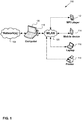
- FIG. 1 is a conceptual block diagram of a computer environment 100 in which embodiments of the invention may be practiced.
- the computer environment 100 may be in any suitable location, including home or office and indoor or outdoor, as the invention is not limited in this respect.
- Computer environment 100 includes a computer, such as laptop computer 106. While laptop computer 106 is a mobile computer, the invention is not limited to being practiced in environments with a mobile computer. In some environments in which the invention is practiced, laptop computer 106 may be connected to one or more external computer network(s) 108, such as the Internet.
- a computer such as laptop computer 106 may not have any connection to any external network, such as external computer network(s) 108. If there exists a connection between laptop computer 106 and external computer networks(s) 108, the connection may be over any suitable communications medium, including wired or wireless communications media, as the invention is not limited in this respect.
- Laptop computer 106 may include a wireless network interface, and may be configured to act as a wireless access point 110 over the wireless network interface.
- the wireless access point 110 may communicate using any suitable wireless protocol (e.g., Wi-Fi), as the invention is not limited in this respect.
- Access point functionality may allow one or more wireless devices to communicate through laptop computer 106 to network 108 or to other devices also associated with the access point in a wireless local area network (WLAN) 120.
- WLAN wireless local area network
- any number or type of devices may communicate with laptop computer 106 by connecting to the wireless access point 110 provided on laptop computer 106.
- the devices may be any suitable computing devices capable of communicating over a wireless protocol understood by the wireless access point 110.
- the devices illustrated are MP3 player 112, mobile device 114, laptop 116, and printer 118.
- each device is of a different device type and serves a different function, but it is to be appreciated that the type or number of devices is not a limiting feature of this invention, as long as each device is capable of communicating over a wireless protocol understood by the wireless access point 110.
- a wireless network connection between laptop computer 106 and a device, such as mobile device 114, may be established in any suitable way, as the invention is not limited in this respect.
- the laptop computer 106 and mobile device 114 may engage in a Wi-Fi Protected Setup handshake, involving inputs from the user, or any other suitable form of enrollment, such as, for example, manual configuration of mobile device 114.
- the mobile device 114 and laptop computer 106 may then perform an 802.11i and 802.1X key exchange.
- laptop computer 106 may be configured to use different pre-shared-keys (PSKs) for different devices.
- PSKs pre-shared-keys
- connection may be successfully established at this point.
- the steps described above for establishing a connection serve as an example, as any suitable way of establishing a connection between a device and laptop computer 106 may be used.
- the device comprises a portion of the wireless local area network (WLAN 120) hosted by laptop computer 106.
- WLAN 120 wireless local area network
- Applications running on laptop computer 106 may communicate with the devices connected to WLAN 120. For example, the user may wish to synchronize email, calendar, or contact information between laptop computer 106 and mobile device 114 using a synchronization application running on laptop computer 106. As an another example, the user of laptop computer 106 may wish to transfer music files between MP3 player 112 and an application running on laptop computer 106 that serves a digital music library. As a third example, the user of laptop computer 106 may wish to run a peer-to-peer application that exchanges data with laptop 116. Laptop computer 106 may also be configured with an application such as a device center that provides a user interface for displaying or managing connections to devices, such as mobile device 114, connecting over the wireless access point 110.
- an application such as a device center that provides a user interface for displaying or managing connections to devices, such as mobile device 114, connecting over the wireless access point 110.
- Wireless access point 110 may operate at different times in different states.
- the operating state of wireless access point 110 at any time may be influenced by actions of the applications executing on laptop computer 106 that access devices connected to WLAN 120. Actions of devices associated with or requesting to associate with wireless access point 110 may also influence the operating state of wireless access point 110.
- wireless access point 110 may operate in an "active state" in which it is actively beaconing. When operating in a "silent state,” wireless access point 110 may listen for communications from devices, without actively beaconing. The wireless access point 110, when operating in an "inactive state,” may neither beacon nor listen for communications from wireless devices.
- the wireless access point 110 may configure its operating state based on its processing of events, which may originate from any of a plurality of sources.
- the events may be the receipt of commands originating from software components executing on laptop computer 106.
- the events in some embodiments may additionally or alternatively be communications originating from devices other than laptop computer 106 and be sent over a computer communications medium to which laptop computer 106 is connected.
- the events may be messages sent over external computer network(s) 108 or may be sent over WLAN 120 by a device such as mobile device 114 and be received through the wireless access point 110.
- the events may originate from any suitable source or via any suitable communications medium (if the event is not originating from laptop computer 106), as the invention is not limited in this respect.
- the wireless access point 110 may conditionally respond to the events, with the response dependent on the state of the wireless access point 110 at the time of the event and other considerations. For example, in some scenarios, when the wireless access point 110 receives a particular type of event, it may change its configuration to operate in a different state. In other scenarios, however, the wireless access point 110 may respond to the same type of event without making any configuration change.
- any suitable considerations may influence the conditional processing of events, as the invention is not limited in this respect.
- the considerations taken into account may include the number of applications actively using the wireless access point 110 and/or the number of devices associated with the wireless access point.
- the conditional processing may additionally or alternatively be based on a state of operation of the wireless access point 110.
- the wireless access point 110 may be by default in the inactive state.
- commands may be sent to the wireless access point 110 from software applications executing on laptop computer 106.
- an application running on laptop computer 106 that has requested the wireless access point to start communication with one of the devices may send a "start" command to the wireless access point 110.
- the functions of the application that trigger such a start command are not critical to the invention. However, the command could be triggered by a user starting the synchronization application, for example, to exchange data with a device over WLAN 120, such as mobile device 114.
- the wireless access point 110 may process the start command, and, based on a number of conditions, may change its state to the silent state. If other applications running on the laptop computer 106 also each send a start command to the wireless access point 110 while it is already in the silent state, the wireless access point may not make any change to its state. In some embodiments of the invention, the wireless access point 110 may keep track of a number of applications which have sent a start command, and use that information as part of its conditional processing. While this may be done in any suitable way as the invention is not limited in this respect, in some embodiments, the wireless access point 110 may maintain one or more counters for this purpose.
- an application executing on the laptop computer 106 may send a stop command to the wireless access point 110.
- the stop command may be sent from the application to the wireless access point 110 in any suitable way, including via an application programming interface.
- the stop command may constitute a notification that the application, such as a synchronization application, requests to no longer communicate with devices over WLAN 120.
- wireless access point 110 may process it, and based on one or more conditions, it may change its state from the silent state to the inactive state.
- the wireless access point 110 upon processing the stop command, may not make a state change. This decision may take into account any suitable considerations, as the invention is not limited in this respect.
- the wireless access point 110 may take into account a number of software applications which have indicated a request to initiate communication over WLAN 120, such as by issuing a start command, which may be tracked in any suitable way, as discussed above. In some embodiments, when the wireless access point 110 determines that no applications have indicated a request to access devices over WLAN 120, in response to a stop command from an application, it may change its state to the inactive state, although the decision to change state may also take into account additional or alternative considerations.
- events may originate from any suitable source, including from a device, such as mobile device 114, indicating a request to initiate communication with the laptop computer 106 over WLAN 120.
- Events may take any suitable form.
- the successful association of a device with wireless access point 110 may constitute another example of an event.
- the wireless access point 110 may configure itself to operate in a different state.
- the decision by wireless access point 110 to operate in a different state may take into account any suitable considerations, as the invention is not limited in this respect.
- the decision may be at least partly based on the current state of the wireless access point 110.
- the wireless access point 110 may be operating in the silent state, but based on its processing of an association event, the wireless access point 110 may transition the active state. However, the wireless access point 110 may not make any configuration state change upon receiving an association event if it is currently already in the active state.
- FIG. 2 illustrates an architecture of a computing device, such as laptop computer 106, that may be configured as a wireless access point according to some embodiments of the invention.
- Computing device 200 may include an operating system, which may be any suitable operating system 202, such as a version of Windows Vista® produced by the Microsoft Corporation.
- Computing device 200 may also include a wireless network interface 204, which may be any suitable combination of hardware and software capable of communicating using a wireless protocol and may be configured to operate in one or more states appropriate for a wireless access point.
- Network interface 204 may also comprise a component for the physical transmission of signals over a wireless medium, such as radio 210.
- components pictured as separate components in FIG. 2 may be grouped together in a single component in some embodiments of the invention, while other embodiments of the invention may include several components to implement the functionality ascribed to a single component in the embodiment illustrated in FIG. 2 . Additionally, in some embodiments of the invention, the components may be distributed differently between the operating system 202 and the wireless network interface 204. Components illustrated as being within the wireless network interface 204 may additionally or alternatively be comprised within the operating system 202, and vice versa.
- wireless network interface 204 may comprise a driver 206, which may communicate over an application programming interface (API) 208 to other software components executing on the computing device 200.
- the driver 206 may control radio 210. Radio 210 may be operable in multiple states which may be set by commands sent to the driver 206 through API 208.
- the computing device 200 may include a logic component 212, which may conditionally process events, and may communicate with the wireless network interface 204 via the API 208.
- Logic component 212 may be implemented using computer-executable instructions or using any other suitable implementation.
- Logic component 212 may respond to events to determine the operating state of the wireless access point and may generate commands to the wireless network interface 204. The commands may cause configuration changes of the wireless network interface 204 according to the state determined by the logic component 212.
- One or more application(s) 214 may be executing on the operating system 202. The application(s) 214 may also communicate with the logic component 212 via an API 216.
- An example application may be a synchronization application which initiates a request to communicate with a device, such as mobile device 114, through the wireless access point 110 in order to synchronize data with the device, as discussed in conjunction with FIG. 1 .
- a command sent by the synchronization application such as a "start" command, may be sent over API 216 to the logic component 212 for conditional processing.
- the association event may be sent to the logic component 212 from the wireless network interface 204 over the API 208 for processing.
- events may be sent from any suitable source as the invention is not limited in this respect, in the example illustrated in FIG.
- logic component 212 may receive events from either application(s) 214 over API 216 or from the wireless network interface 204 via API 208. However, in other embodiments, events may be received from other sources both within and external to the wireless access point 110, as well as via any other suitable computer communications medium.
- the wireless access point may be configured to operate in multiple states.
- the logic component 212 may store state information 218 associated with the wireless access point.
- at least a portion of the state information may be one or more counters 220, which may track, for example, a number of currently associated devices, or a number of the application(s) 214 which have requested the wireless access point to start communication with one or more devices.
- state information 218 may be tracked in any suitable way, as the invention is not limited in this respect.
- FIG. 3 illustrates a state diagram for embodiments of the invention in which a wireless access point may be configured to operate in a number of states, and may be able to transition between at least a portion of the states based on the receipt and processing of events.
- the decision whether or not to transition between states may be made at least partly by a software component in the wireless access point, such as logic 212 in FIG. 2 .
- Transitions between states may be effected by commands sent to a wireless network interface, such as wireless network interface 204 illustrated in FIG. 2 .
- the device may operate in any suitable number or type of states, as this invention is not limited in this respect.
- the example illustrated in FIG. 3 shows four states: the inactive state 300, the silent state 302, the active state 304, and the unavailable state 306.
- the inactive state 300 as discussed in conjunction with FIG. 1 , the device may be powered on, but not listening to requests from devices and not sending wireless beacons. If the device is in the silent state 302, it does actively listen for device requests, but does not send wireless beacons. When the device is operating in the active state 304, it both listens for device requests and sends wireless beacons. Additionally, the device may be in an unavailable state 306 in which it cannot readily transition based on the receipt of one or more events to any of states 300, 302, or 304.
- the wireless access point may be unavailable. As indicated by transitions 308, 310, and 312, the wireless access point may transition from any of states 300, 302, or 304 to the unavailable state 306. Multiple possible events or scenarios could cause the functionality provided by the wireless access point to become unavailable.
- the determination whether to make the wireless access point unavailable may be done in any suitable way, as the invention is not limited in this respect. Additionally, in some embodiments of the invention, a transition to the unavailable state may not be intentional. For example, it may be as a result of a hardware or software failure.
- the processing, such as by the logic component 212 in FIG. 2 , of an event may lead the device to transition to the silent state 302.
- the transition 314 from the inactive state 300 to the silent state 302 may be as a result of receiving a "start" command from an application.
- the start command may indicate that the application has requested that the wireless access point start communication with a device.
- a synchronization application may request that the wireless access point start communication with a device, such as mobile device 114, in order to synchronize calendar or email data.
- Commands from applications to the wireless access point may be sent in any suitable way.
- commands from applications are sent over an API, such as the API 216 in FIG. 2 .
- the wireless access point may also implement a transition 316 between the silent state 302 and the inactive state 300.
- Transition 316 may be caused by an application issuing a "stop" command, which may indicate that the application has requested to no longer communicate with any devices through the wireless access point.
- the transition 316 does not occur at every receipt of a stop command, but, conditionally, only upon the receipt of the stop command from the last application which had sent a start command but no follow-on stop command.
- transition 318 from the silent state 302 to the active state 304 may also occur as the result of the processing of events.
- transition 318 may result if any application issues an "advertise" command, in which it indicates that it has requested that the wireless access point advertise the device network.
- Transition 318 may alternatively or additionally be caused when a device successfully associates with the wireless access point, as discussed in conjunction with FIG. 1 .
- a transition 320 is also possible in the reverse direction, from the active state 304 to the silent state 302.
- Transition 320 may occur conditionally when the last active application issues a "hide" command, indicating a request to the wireless access point to hide the device network.
- This last remaining application in transition 320 refers to the last remaining application which had issued an "advertise" command but no hide command.
- transition 320 may also occur for other reasons.
- transition 320 may be caused by an event, such as the receipt of an indication that the last active client has disconnected, or disassociated, from the wireless access point.
- Embodiments of the invention may process any number or type of events.
- FIGs. 4 through 7 illustrate processing in response to events that may occur in some embodiments of the invention.
- FIG. 4 illustrates a flowchart for the conditional processing of the wireless access point of a "start device network" command 400 in accordance with an embodiment of the invention.
- a start device network command may be sent from an application executing on the wireless access point, and may indicate that the application has requested that the wireless access point start communication with an external device, such as mobile device 114.
- This flowchart may be implemented in any suitable way.
- the logic of the flowchart may be implemented by the logic component 212.
- the flowchart starts at block 402 with the receipt of the start device network command 400.
- the process may check whether the wireless access point is currently in the inactive state. Checking the current state of the wireless access point may be done in any suitable way. In the embodiment illustrated by FIG. 2 , the process may do so by means of checking state information 218 maintained by logic component 212. Alternatively, the state of the wireless access point may be determined by polling the wireless network interface, such as wireless network interface 204 illustrated by FIG. 2 , through API 208.
- the current state of the wireless access point if the current state is the inactive state, it checks at block 406 if this is the first time the wireless access point has received a request to start communication with any devices (i.e., the wireless access point has not hosted a wireless network before). If so, it may, at block 408, create a secure profile for the hosted network, such as WLAN 120.
- the secure profile may be created any suitable way, as the invention is not limited in this respect.
- the operating system 202 may be configured to select wireless settings that are sufficiently secure and unique by default to host a wireless network.
- the wireless access point may keep track of the number of current applications which have issued a request to communicate with devices over the wireless access point. While various embodiments of the invention may keep track of this information in a variety of ways, the embodiments illustrated by FIGs. 3 and 4 do so by means of at least one counter. The embodiments of FIGs. 4-7 make use of two counters for this purpose, although other embodiments may make use of a lesser or greater number of counters.
- a global access point counter (Global AP Count) maintains counts across all applications, and may be used for determining when to start or stop the hosted wireless device network.
- a per-application access point counter maintains a counter for each application.
- the per-Application AP count may be used to validate events received from applications, as well as to clean up the Global AP Count in the event that an application exits abnormally, such as via a crash.
- the process may initialize the Global AP Count and per-Application AP Count to one. If, at block 406, it was determined that this was not the first time that the wireless access point has received a request to start communication with any devices, the process may skip the secure profile creation at block 408, proceeding to block 410, and performing the same steps as described above.
- Some embodiments of the invention also keep track of a number of entities which have indicated a request for the wireless access point to send out beaconing information. While the invention is not limited to the type of entity which has requested beaconing from the wireless access point, in some embodiments of the invention, a device may trigger an event indicating a request for beaconing. In other embodiments, an application executing instructions on the same computing device as that which is configured to act as a wireless access point may also request beaconing from the wireless access point. As in the discussion of the AP count above, this information may be tracked in any suitable way. In the embodiment of the invention illustrated by FIG. 4 , the information is tracked using an additional set of one or more counters, referred to in this embodiment as beacon counters.
- a Global Beacon Count may record references across all applications, and may be used for determining when to advertise or hide the wireless device network. Additionally, a per-Application Beacon Count may be maintained for each application, and may be useful for validating events received from applications, as well as to clean up the Global Beacon Count in the event that an application exits abnormally, such as via a crash. In block 412, both the Global Beacon Count and the per-Application Beacon Count may be initialized to zero. In the embodiment of the invention illustrated by FIG.
- the sending of a start device network command by an application does not indicate that the application requests beaconing.
- Other embodiments of the invention may have different states or different types of commands from the embodiment illustrated by FIG. 4 , in which case the one or more beacon counters may be set to a value other than zero.
- the process may branch depending on the current operating state.
- the wireless access point determines that its current state is not the inactive state, the flow proceeds to block 416, in which it increments the Global AP Count and the per-Application AP Count, discussed in conjunction with block 410 above.
- the discussion above does not take into account embodiments which may include an "unavailable state," as discussed in conjunction with FIG. 3 . In embodiments with the unavailable state, the Global AP Count and the per-Application AP Count would not be incremented if the current state is the unavailable state.
- the processing of the start device network command may be finished at this point; accordingly, the flow may proceed to end block 418.
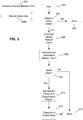
- FIG. 5 illustrates a flowchart for the conditional processing of an "advertise device network" command 500 in accordance with an embodiment of the invention.
- the advertise device network command may be sent from an application executing on a device, such as computing device 200 in FIG. 2 , configured to act as a wireless access point, and may signify that the application requests beaconing from the wireless access point.
- the process of the flowchart of FIG. 5 may be controlled by logic component 212.
- the flowchart starts at block 502 with the receipt of the advertise device network command 500.
- the process may check if the access point is currently operating in the silent state or the active state. As discussed in conjunction with FIG. 4 , in the embodiment illustrated by FIG. 2 , the process may check the state by means of state information 218. If the current state is not the silent state or the active state, the process may terminate with an error at block 506. The process may perform any suitable processing in response to an error condition, and different error conditions may elicit different responses, as the invention is not limited in this respect. In an embodiment of the invention, the advertise command 500 may only be validly received while the wireless access point is operating in the silent state or the active state.
- the flowchart proceeds to blocks 508 and 509, in which it may increment the Global Beacon Count and per-Application Beacon Count, respectively, discussed in conjunction with FIG. 4 .
- the process may then branch at block 510, depending on whether the wireless access point is in the silent state. If it is not in the silent state, in some embodiments of the invention, the process may assume it is already in the active state, at which point it may be done processing the advertise command, and may proceed to block 512.
- the process determines at block 510 that it is in the silent state, it proceeds to block 514, in which it may set the beacon period and transmission power.
- the beacon period and transmission power may be set in such a way as to reduce the power consumption of the wireless access point, as well as the power consumption of any devices connecting through it.
- setting the beacon period and transmission power may effectively turn on beaconing. Setting the beacon period and transmission power may be done in any suitable way, including in the embodiment of FIG. 2 by sending one or more commands to the wireless network interface 204 through API 208.
- the processing of the advertise device network command may be finished at this point, and the process may proceed to end block 512.
- the receipt of additional or alternative events may also signify a requirement for the access point to send beacons.
- the successful association 500b of a device may follow a similar process as that illustrated by the flowchart of FIG. 5 .
- the successful association 500b of a device follows an identical process as the receipt of an advertise device network command with the exception of block 509, illustrated with a dashed border, which may not apply to the successful association 500b of a device.
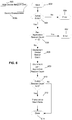
- FIG. 6 illustrates a flowchart for the conditional processing of a "hide device network" command 600 in accordance with an embodiment of the invention.
- the hide device network command may be sent from an application executing on the wireless network, and may signify that the application no longer requires beaconing from the wireless access point.
- the process of the flowchart may be controlled by logic component 212.
- the flowchart starts at block 602 with the receipt of the hide device network command 600.
- the process may check whether it is in the active state. As discussed in conjunction with FIGs. 4 and 5 , in the embodiment illustrated by FIG. 2 , the process may check its state by means of state information 218. If the process determines at block 604 that the wireless access point is not currently operating in active state, the process may proceed to block 605, in which it may terminate with an error.
- the hide device network command cannot be validly processed if the per-Application Beacon Count, discussed in conjunction with FIG. 4 , is not greater than zero, since the per-Application Beacon Count should have been incremented upon the receipt of a corresponding advertise network command 500 for the same application. Accordingly, at block 606, the process may check whether the per-Application Beacon Count is less than or equal to zero, and if so, it may terminate with an error at block 607.
- the process may proceed to block 608, at which point it may decrement the Global Beacon Count, which was discussed in conjunction with FIGs. 4 and 5 above. Proceeding to block 609, the process may then decrement the per-Application Beacon Count. At step 610, the process may then check if the current Global Beacon Count is set to zero. If not, then the processing of the hide device network command may be finished, and the flow may proceed to end block 614. If the current beacon count is set to zero, in block 612, the process may transition to the silent state, as discussed in conjunction with FIG. 3 , and then may proceed to end block 614.
- the receipt of additional or alternative events may signify that the device no longer requires beaconing from the wireless access point.
- disassociation 600b of a device may follow a similar process as that illustrated by the flowchart of FIG. 6 .
- the disassociation 600b of a device with the access point follows an identical process as the receipt of a hide device network command with the exception of blocks 606 and 609, illustrated with a dashed border, which may not apply to the disassociation 600b of a device.
- FIG. 7 illustrates a flowchart for the conditional processing of a "stop device network" command 700 in accordance with an embodiment of the invention.
- the stop device network command may be sent from an application executing on the wireless network, and may indicate that the application has issued a request to no longer communicate with an external device, such as mobile device 114, through the wireless access point.
- the logic of the flowchart may be implemented by logic component 212.
- the flowchart starts at block 702 with the receipt of the stop device network command 700.
- the process may check whether it is in the inactive state. As discussed in conjunction with FIG. 4 , in the embodiment illustrated by FIG. 2 , the process may check its state by means of state information 218. In some embodiments of the invention, if the process determines at block 704 that it is currently operating in the inactive state, it may proceed to block 706, in which it may terminate with an error.
- the process proceeds to block 708, in which it may check whether the per-Application AP Count, discussed in conjunction with FIG. 4 , is less than or equal to zero. If it is, the process may terminate with an error in block 710. If not, at block 712, the process may check if the per-Application AP Count is equal to 1 and the per-Application Beacon Count is greater than zero. If both conditions are true, the process may terminate with an error in block 714.
- the process proceeds to block 716 in which it checks whether its current state of operation is the silent state. If it is not in the silent state, in some embodiments of the invention, the process may then assume it is in the active state. It may then proceed to block 718, in which it may decrement the Global AP count and per-Application AP Count, which was discussed in conjunction with FIG. 4 . Some embodiments of the invention may have at that point finished processing stop device network command, and proceed to end block 720.
- the process may decrement the Global AP count and per-Application AP Count.
- the process may then check to see whether the Global AP count is set to zero. If the Global AP count is not set to zero, the processing may be finished at this point, and it may proceed to end block 720. If, on the other hand, the Global AP count is set to zero, the process may transition in block 726 to the inactive state, at which point the process may now have finished processing the stop device network command, and may proceed to end block 720.
- the above-described embodiments of the present invention can be implemented in any of numerous ways.
- the embodiments may be implemented using hardware, software or a combination thereof.
- the software code can be executed on any suitable processor or collection of processors, whether provided in a single computer or distributed among multiple computers.
- a computer may be embodied in any of a number of forms, such as a rack-mounted computer, a desktop computer, a laptop computer, or a tablet computer. Additionally, a computer may be embedded in a device not generally regarded as a computer but with suitable processing capabilities, including a Personal Digital Assistant (PDA), a smart phone or any other suitable portable or fixed electronic device.
- PDA Personal Digital Assistant
- a computer may have one or more input and output devices. These devices can be used, among other things, to present a user interface. Examples of output devices that can be used to provide a user interface include printers or display screens for visual presentation of output and speakers or other sound generating devices for audible presentation of output. Examples of input devices that can be used for a user interface include keyboards, and pointing devices, such as mice, touch pads, and digitizing tablets. As another example, a computer may receive input information through speech recognition or in other audible format.
- Such computers may be interconnected by one or more networks in any suitable form, including as a local area network or a wide area network, such as an enterprise network or the Internet.
- networks may be based on any suitable technology and may operate according to any suitable protocol and may include wireless networks, wired networks or fiber optic networks.
- the various methods or processes outlined herein may be coded as software that is executable on one or more processors that employ any one of a variety of operating systems or platforms. Additionally, such software may be written using any of a number of suitable programming languages and/or programming or scripting tools, and also may be compiled as executable machine language code or intermediate code that is executed on a framework or virtual machine.
- embodiments of the invention may be provided using a computer readable medium (or multiple computer readable media) (e.g., a computer memory, one or more floppy discs, compact discs, optical discs, magnetic tapes, flash memories, circuit configurations in Field Programmable Gate Arrays or other semiconductor devices, or other tangible computer storage medium) encoded with one or more programs that, when executed on one or more computers or other processors, perform methods that implement the various embodiments of the invention discussed above.
- the computer readable medium or media can be transportable, such that the program or programs stored thereon can be loaded onto one or more different computers or other processors to implement various aspects of the present invention as discussed above.
- program or “software” are used herein in a generic sense to refer to any type of computer code or set of computer-executable instructions that can be employed to program a computer or other processor to implement various aspects of the present invention as discussed above. Additionally, it should be appreciated that according to one aspect of this embodiment, one or more computer programs that when executed perform methods of the present invention need not reside on a single computer or processor, but may be distributed in a modular fashion amongst a number of different computers or processors to implement various aspects of the present invention.
- Computer-executable instructions may be in many forms, such as program modules, executed by one or more computers or other devices.
- program modules include routines, programs, objects, components, data structures, etc. that perform particular tasks or implement particular abstract data types.
- functionality of the program modules may be combined or distributed as desired in various embodiments.
- data structures may be stored in computer-readable media in any suitable form.
- data structures may be shown to have fields that are related through location in the data structure. Such relationships may likewise be achieved by assigning storage for the fields with locations in a computer-readable medium that conveys relationship between the fields.
- any suitable mechanism may be used to establish a relationship between information in fields of a data structure, including through the use of pointers, tags or other mechanisms that establish relationship between data elements.
- embodiments of the invention may be provided via a method, of which an example has been provided.
- the acts performed as part of the method may be ordered in any suitable way. Accordingly, embodiments may be constructed in which acts are performed in an order different than illustrated, which may include performing some acts simultaneously, even though shown as sequential acts in illustrative embodiments.
Landscapes
- Engineering & Computer Science (AREA)
- Computer Networks & Wireless Communication (AREA)
- Signal Processing (AREA)
- Mobile Radio Communication Systems (AREA)
Applications Claiming Priority (2)
| Application Number | Priority Date | Filing Date | Title |
|---|---|---|---|
| US12/338,277 US8855087B2 (en) | 2008-12-18 | 2008-12-18 | Wireless access point supporting control by multiple applications |
| PCT/US2009/064844 WO2010080211A1 (en) | 2008-12-18 | 2009-11-17 | Wireless access point supporting control by multiple applications |
Publications (3)
| Publication Number | Publication Date |
|---|---|
| EP2359659A1 EP2359659A1 (en) | 2011-08-24 |
| EP2359659A4 EP2359659A4 (en) | 2014-12-03 |
| EP2359659B1 true EP2359659B1 (en) | 2017-08-30 |
Family
ID=42265977
Family Applications (1)
| Application Number | Title | Priority Date | Filing Date |
|---|---|---|---|
| EP09837777.3A Active EP2359659B1 (en) | 2008-12-18 | 2009-11-17 | Wireless access point supporting control by multiple applications |
Country Status (6)
| Country | Link |
|---|---|
| US (1) | US8855087B2 (enExample) |
| EP (1) | EP2359659B1 (enExample) |
| JP (1) | JP5607067B2 (enExample) |
| CN (1) | CN102257870B (enExample) |
| TW (1) | TWI470967B (enExample) |
| WO (1) | WO2010080211A1 (enExample) |
Families Citing this family (19)
| Publication number | Priority date | Publication date | Assignee | Title |
|---|---|---|---|---|
| US8625552B2 (en) | 2008-12-31 | 2014-01-07 | Microsoft Corporation | Wireless provisioning a device for a network using a soft access point |
| JP2012004997A (ja) * | 2010-06-18 | 2012-01-05 | Kyocera Corp | 無線通信システム、無線基地局、及び消費電力制御方法 |
| US8774145B2 (en) * | 2011-04-01 | 2014-07-08 | Intel Corporation | Techniques to determine user presence |
| US8681361B2 (en) * | 2011-12-02 | 2014-03-25 | Apple Inc. | Authenticating printers prior to pairing with portable electronic devices |
| US20130148556A1 (en) * | 2011-12-07 | 2013-06-13 | Qualcomm Atheros, Inc. | System And Method For Access Point Power Save |
| CN102523276B (zh) * | 2011-12-09 | 2016-02-24 | 华为终端有限公司 | 一种管理移动宽带设备的方法、设备及系统 |
| JP5668751B2 (ja) * | 2012-12-28 | 2015-02-12 | ブラザー工業株式会社 | カラオケシステム |
| CN103906122A (zh) * | 2012-12-28 | 2014-07-02 | 腾讯科技(深圳)有限公司 | 一种网络切换检测方法及相关装置 |
| CA2897007C (en) * | 2013-01-03 | 2021-03-23 | Lg Electronics Inc. | Method and apparatus for changing services in wireless communication system |
| US20140279870A1 (en) * | 2013-03-12 | 2014-09-18 | Samsung Electronics Co. Ltd. | Method and apparatus for synchronizing shared data in mobile terminal and server |
| US9479896B2 (en) * | 2014-05-06 | 2016-10-25 | Qualcomm Incorporated | Small cell activation control of portable multi-purpose wireless device |
| US10085211B2 (en) * | 2014-09-02 | 2018-09-25 | Apple Inc. | Communication of processor state information |
| US9961619B2 (en) * | 2015-05-05 | 2018-05-01 | Motorola Solutions, Inc. | Method for intelligently and dynamically selecting beacon transmitting nodes in ad-hoc networks |
| CN105635448B (zh) * | 2015-12-25 | 2019-02-19 | 小米科技有限责任公司 | 消息发送方法及装置 |
| US10484942B2 (en) | 2016-04-21 | 2019-11-19 | Arris Enterprises Llc | Wireless access point managing apparatus |
| JP6832794B2 (ja) * | 2017-06-05 | 2021-02-24 | ルネサスエレクトロニクス株式会社 | 無線通信システム |
| US11057769B2 (en) * | 2018-03-12 | 2021-07-06 | At&T Digital Life, Inc. | Detecting unauthorized access to a wireless network |
| US10778519B2 (en) * | 2018-08-27 | 2020-09-15 | Hewlett Packard Enterprise Development Lp | Intelligent upgrades for network devices |
| JP2024141564A (ja) * | 2023-03-29 | 2024-10-10 | キヤノン株式会社 | 情報処理装置、制御方法及びプログラム |
Family Cites Families (133)
| Publication number | Priority date | Publication date | Assignee | Title |
|---|---|---|---|---|
| US4210780A (en) | 1978-03-27 | 1980-07-01 | The Mitre Corporation | Multiple access digital communications system |
| FR2701178A1 (fr) | 1993-02-03 | 1994-08-05 | Philips Electronique Lab | Système de communication par étalement de spectre à multiutilisateurs. |
| FR2721461B1 (fr) | 1994-06-16 | 1996-09-06 | France Telecom | Signal formé d'une pluralité de fréquences porteuses orthogonales organisé de façon à simplifier la réception d'un des signaux source le composant, procédé d'émission et récepteur correspondants. |
| US6292181B1 (en) * | 1994-09-02 | 2001-09-18 | Nec Corporation | Structure and method for controlling a host computer using a remote hand-held interface device |
| US5790516A (en) | 1995-07-14 | 1998-08-04 | Telefonaktiebolaget Lm Ericsson | Pulse shaping for data transmission in an orthogonal frequency division multiplexed system |
| US5838720A (en) | 1996-02-23 | 1998-11-17 | Teletransactions, Inc. | Transceiver control with sleep mode operation |
| TW353164B (en) * | 1996-10-04 | 1999-02-21 | Compaq Computer Corp | Computer system wake-up mechanism |
| US6175550B1 (en) | 1997-04-01 | 2001-01-16 | Lucent Technologies, Inc. | Orthogonal frequency division multiplexing system with dynamically scalable operating parameters and method thereof |
| JPH1117643A (ja) | 1997-06-19 | 1999-01-22 | Hitachi Denshi Ltd | Ofdm変調器 |
| US5867478A (en) | 1997-06-20 | 1999-02-02 | Motorola, Inc. | Synchronous coherent orthogonal frequency division multiplexing system, method, software and device |
| JP3724940B2 (ja) | 1998-01-08 | 2005-12-07 | 株式会社東芝 | Ofdmダイバーシチ受信装置 |
| DE69940235D1 (de) | 1998-05-26 | 2009-02-26 | Panasonic Corp | Modulator, Demodulator, und Übertragungssystem für OFDM-Übertragung |
| JP3515690B2 (ja) | 1998-06-02 | 2004-04-05 | 松下電器産業株式会社 | Ofdma信号伝送装置及び方法 |
| DE69831857T2 (de) | 1998-06-10 | 2006-06-14 | Sun Microsystems Inc | Verfahren und Vorrichtung zum Zeitplanen von Prozessen für Betriebsmittelzuteilung |
| US6609039B1 (en) | 1998-07-27 | 2003-08-19 | Neil Charles Schoen | Simultaneous multi-user audio re-transmission digital radio module |
| CN1172439C (zh) | 1998-11-12 | 2004-10-20 | 松下电器产业株式会社 | 数字地面波广播用接收机及其接收频道选台方法 |
| US7020071B2 (en) | 1998-11-25 | 2006-03-28 | Lucent Technologies Inc. | Methods and apparatus for wireless communication using orthogonal frequency division multiplexing |
| US7260369B2 (en) | 2005-08-03 | 2007-08-21 | Kamilo Feher | Location finder, tracker, communication and remote control system |
| US6763072B1 (en) | 1999-08-25 | 2004-07-13 | Victor Company Of Japan, Ltd. | Method and apparatus for modulation and demodulation related to orthogonal frequency division multiplexing |
| US6449246B1 (en) | 1999-09-15 | 2002-09-10 | Telcordia Technologies, Inc. | Multicarrier personal access communication system |
| US6397368B1 (en) | 1999-12-06 | 2002-05-28 | Intellon Corporation | Forward error correction with channel adaptation |
| US6952454B1 (en) | 2000-03-22 | 2005-10-04 | Qualcomm, Incorporated | Multiplexing of real time services and non-real time services for OFDM systems |
| US7020072B1 (en) | 2000-05-09 | 2006-03-28 | Lucent Technologies, Inc. | Orthogonal frequency division multiplexing transmit diversity system for frequency-selective fading channels |
| US6519462B1 (en) | 2000-05-11 | 2003-02-11 | Lucent Technologies Inc. | Method and apparatus for multi-user resource management in wireless communication systems |
| EP1283995B1 (en) | 2000-05-26 | 2003-11-19 | Roke Manor Research Limited | Management module for software defined radio |
| US6870808B1 (en) | 2000-10-18 | 2005-03-22 | Adaptix, Inc. | Channel allocation in broadband orthogonal frequency-division multiple-access/space-division multiple-access networks |
| US20020086707A1 (en) | 2000-11-15 | 2002-07-04 | Struhsaker Paul F. | Wireless communication system using block filtering and fast equalization-demodulation and method of operation |
| US6947748B2 (en) | 2000-12-15 | 2005-09-20 | Adaptix, Inc. | OFDMA with adaptive subcarrier-cluster configuration and selective loading |
| US6961388B2 (en) | 2001-02-01 | 2005-11-01 | Qualcomm, Incorporated | Coding scheme for a wireless communication system |
| JP3893881B2 (ja) | 2001-02-16 | 2007-03-14 | 株式会社日立製作所 | ソフトウェア無線機および無線システム、ソフトウェア無線機の認定方式 |
| US20020157058A1 (en) | 2001-02-20 | 2002-10-24 | Cute Ltd. | System and method for feedback-based unequal error protection coding |
| US6976202B1 (en) | 2001-03-09 | 2005-12-13 | Ikanos Communication Inc. | Method and apparatus for time-frequency domain forward error correction for digital communication systems |
| US6934340B1 (en) | 2001-03-19 | 2005-08-23 | Cisco Technology, Inc. | Adaptive control system for interference rejections in a wireless communications system |
| JP2002300181A (ja) | 2001-03-30 | 2002-10-11 | Nec Corp | 統合ネットワークQoS制御方式 |
| US7035201B2 (en) | 2001-04-20 | 2006-04-25 | Mediatek Inc. | Programmable transceiver structure of multi-rate OFDM-CDMA for wireless multimedia communications |
| US7206840B2 (en) | 2001-05-11 | 2007-04-17 | Koninklike Philips Electronics N.V. | Dynamic frequency selection scheme for IEEE 802.11 WLANs |
| US7072413B2 (en) | 2001-05-17 | 2006-07-04 | Qualcomm, Incorporated | Method and apparatus for processing data for transmission in a multi-channel communication system using selective channel inversion |
| ES2188373B1 (es) | 2001-05-25 | 2004-10-16 | Diseño De Sistemas En Silencio, S.A. | Procedimiento de optimizacion de la comunicacion para sistema de transmision digital ofdm multiusuario sobre red electrica. |
| EP1267513A3 (en) | 2001-06-11 | 2006-07-26 | Unique Broadband Systems, Inc. | Multiplexing of multicarrier signals |
| US7151925B2 (en) | 2001-09-10 | 2006-12-19 | Industrial Technology Research Institute | Software defined radio (SDR) architecture for wireless digital communication systems |
| US7164649B2 (en) | 2001-11-02 | 2007-01-16 | Qualcomm, Incorporated | Adaptive rate control for OFDM communication system |
| US7012883B2 (en) | 2001-11-21 | 2006-03-14 | Qualcomm Incorporated | Rate selection for an OFDM system |
| US6771957B2 (en) | 2001-11-30 | 2004-08-03 | Interdigital Technology Corporation | Cognition models for wireless communication systems and method and apparatus for optimal utilization of a radio channel based on cognition model data |
| US7126984B2 (en) | 2001-12-19 | 2006-10-24 | Stmicroelectronics, Inc. | Near-end crosstalk noise minimization and power reduction for digital subscriber loops |
| WO2003081848A1 (en) | 2002-03-21 | 2003-10-02 | Cognio, Inc. | Ad-hoc control protocol governing use of an unlicensed or shared radio frequency band |
| KR100911138B1 (ko) | 2002-04-25 | 2009-08-06 | 삼성전자주식회사 | 전력이 조절되는 적응 변조 및 코딩 방식의 이동통신시스템 및 그 방법 |
| US7043681B2 (en) | 2002-05-03 | 2006-05-09 | Ibiquity Digital Corporation | Digital audio broadcasting method and apparatus using complementary pattern-mapped convolutional codes |
| TWI540863B (zh) | 2002-05-10 | 2016-07-01 | 無線創新信號信託公司 | 以容量分佈為基礎之認識流控制 |
| JP2003348104A (ja) * | 2002-05-28 | 2003-12-05 | Canon Inc | 無線アクセスポイント |
| US7184713B2 (en) | 2002-06-20 | 2007-02-27 | Qualcomm, Incorporated | Rate control for multi-channel communication systems |
| US20040005010A1 (en) | 2002-07-05 | 2004-01-08 | National University Of Singapore | Channel estimator and equalizer for OFDM systems |
| KR20050071488A (ko) | 2002-09-10 | 2005-07-07 | 코닌클리즈케 필립스 일렉트로닉스 엔.브이. | Ofmd 무선 통신 시스템 관리 방법, ofmd 무선 통신시스템, 슈퍼바이저 장치, 인터페이스 장치 및 컴퓨터 판독 가능 매체 |
| JP3654284B2 (ja) | 2002-10-03 | 2005-06-02 | 日本電気株式会社 | 無線端末装置及びそれを用いた無線通信システム |
| US7417971B2 (en) * | 2002-10-04 | 2008-08-26 | Ntt Docomo, Inc. | Method and apparatus for dormant mode support with paging |
| US7698550B2 (en) | 2002-11-27 | 2010-04-13 | Microsoft Corporation | Native wi-fi architecture for 802.11 networks |
| JP2004180115A (ja) | 2002-11-28 | 2004-06-24 | Nec Infrontia Corp | 無線lanシステム |
| US7284062B2 (en) | 2002-12-06 | 2007-10-16 | Microsoft Corporation | Increasing the level of automation when provisioning a computer system to access a network |
| US7756002B2 (en) | 2003-01-30 | 2010-07-13 | Texas Instruments Incorporated | Time-frequency interleaved orthogonal frequency division multiplexing ultra wide band physical layer |
| US7333460B2 (en) | 2003-03-25 | 2008-02-19 | Nokia Corporation | Adaptive beacon interval in WLAN |
| CA2427403C (en) | 2003-04-21 | 2008-10-28 | Regents Of The University Of Minnesota | Space-time-frequency coded ofdm over frequency-selective fading channels |
| KR20040092830A (ko) | 2003-04-29 | 2004-11-04 | 삼성전자주식회사 | 광대역 무선 접속 통신 시스템에서 슬립 구간 설정 방법 |
| US7065150B2 (en) | 2003-06-16 | 2006-06-20 | Motorola, Inc. | System and method for generating a root raised cosine orthogonal frequency division multiplexing (RRC OFDM) modulation |
| US7103111B2 (en) | 2003-06-16 | 2006-09-05 | Motorola, Inc. | System and method for generating a spectral efficient root raised cosine (RRC) pulse for increasing spectral efficiency |
| US6934246B2 (en) | 2003-06-16 | 2005-08-23 | Motorola, Inc. | System and method for reducing adjacent channel interference (ACI) in a multicarrier modulation system |
| TW200511868A (en) | 2003-07-22 | 2005-03-16 | Pctel Inc | Method and apparatus for automatic configuration of wireless networks |
| CN1816789A (zh) | 2003-07-22 | 2006-08-09 | 皮科特有限公司 | 用于唤醒无线局域网的系统和方法 |
| KR100640461B1 (ko) | 2003-07-30 | 2006-10-30 | 삼성전자주식회사 | 직교 주파수 분할 다중 접속 방식을 사용하는 이동 통신시스템에서 서브 채널 할당 장치 및 방법 |
| CN1275480C (zh) | 2003-07-31 | 2006-09-13 | 上海贝尔阿尔卡特股份有限公司 | 一种多标准软件无线电(sdr)基带处理方法 |
| WO2005015775A1 (en) | 2003-08-11 | 2005-02-17 | Nortel Networks Limited | System and method for embedding ofdm in cdma systems |
| US20050078759A1 (en) | 2003-08-27 | 2005-04-14 | Interdigital Technology Corporation | Subcarrier and bit allocation for real time services in multiuser orthogonal frequency division multiplex (OFDM) systems |
| KR100542348B1 (ko) * | 2003-09-03 | 2006-01-10 | 삼성전자주식회사 | 무선 랜 시스템의 전력 감소 방법 및 그 장치 |
| US7349544B2 (en) | 2003-09-22 | 2008-03-25 | Blueleaf Llc | Wireless perimeter security device and network using same |
| US7586864B2 (en) * | 2003-09-30 | 2009-09-08 | Sharp Kabushiki Kaisha | Communication system, base station, terminal, communication device, communication management method, control program, and computer-readable recording medium containing the same |
| KR100557158B1 (ko) | 2003-11-12 | 2006-03-03 | 삼성전자주식회사 | 직교 주파수 분할 다중 방식을 사용하는 이동통신시스템에서 부반송파 할당을 위한 장치 및 방법 |
| KR100975720B1 (ko) | 2003-11-13 | 2010-08-12 | 삼성전자주식회사 | 다중 송수신 안테나를 구비하는 직교주파수분할다중화 시스템에서 공간 분할 다중화를 고려하여 채널 할당을 수행하는 방법 및 시스템 |
| US8406235B2 (en) | 2003-11-26 | 2013-03-26 | Qualcomm Incorporated | Quality of service scheduler for a wireless network |
| KR100557191B1 (ko) | 2003-12-01 | 2006-03-03 | 삼성전자주식회사 | 광대역 무선 접속 통신 시스템에서 셀 커버 영역에 따라 변조 방식을 가변적으로 전환할 수 있는 소프트 변조 전환방법 |
| JP3910956B2 (ja) | 2003-12-26 | 2007-04-25 | 株式会社東芝 | Ofdm無線通信システムのための伝搬路推定器及びこれを用いた受信装置 |
| ATE362683T1 (de) | 2004-01-06 | 2007-06-15 | Ibm | Modulation und demodulation von ofdm-signalen |
| US7570953B2 (en) | 2004-01-12 | 2009-08-04 | Intel Corporation | Multicarrier communication system and methods for link adaptation using uniform bit loading and subcarrier puncturing |
| US7123580B2 (en) | 2004-01-16 | 2006-10-17 | Nokia Corporation | Multiple user adaptive modulation scheme for MC-CDMA |
| US7430741B2 (en) | 2004-01-20 | 2008-09-30 | International Business Machines Corporation | Application-aware system that dynamically partitions and allocates resources on demand |
| US8045494B2 (en) | 2004-02-06 | 2011-10-25 | Koninklijke Philips Electronics N.V. | System and method for hibernation mode for beaconing devices |
| US7216365B2 (en) | 2004-02-11 | 2007-05-08 | Airtight Networks, Inc. | Automated sniffer apparatus and method for wireless local area network security |
| KR100810247B1 (ko) | 2004-03-05 | 2008-03-06 | 삼성전자주식회사 | 직교 주파수 분할 다중 접속 시스템에서 채널 할당 방법및 장치 |
| US7827557B2 (en) | 2004-03-24 | 2010-11-02 | Hewlett-Packard Development Company, L.P. | Method and apparatus for allocating resources to applications using a linearized objective function |
| KR101067772B1 (ko) | 2004-04-22 | 2011-09-28 | 엘지전자 주식회사 | 직교 주파수 분할 다중화 방식에 적용되는 부반송파 할당방법 |
| US8023466B2 (en) | 2004-06-22 | 2011-09-20 | Jianglei Ma | Soft handoff in OFDMA system |
| US7289972B2 (en) | 2004-06-25 | 2007-10-30 | Virginia Tech Intellectual Properties, Inc. | Cognitive radio engine based on genetic algorithms in a network |
| US7502615B2 (en) | 2004-07-16 | 2009-03-10 | Bridgeport Networks, Inc. | Handoff for cellular and internet protocol telephony |
| US8270512B2 (en) | 2004-08-12 | 2012-09-18 | Interdigital Technology Corporation | Method and apparatus for subcarrier and antenna selection in MIMO-OFDM system |
| JP4757464B2 (ja) | 2004-08-18 | 2011-08-24 | Necインフロンティア株式会社 | 無線lanシステム、無線lanアクセスポイント、無線lan端末及びそれらに用いる起動制御方法 |
| EP1784967A2 (en) | 2004-08-25 | 2007-05-16 | Padcom Holdings, Inc. | Multi-network seamless roaming through a software-defined-radio |
| US7852746B2 (en) | 2004-08-25 | 2010-12-14 | Qualcomm Incorporated | Transmission of signaling in an OFDM-based system |
| KR100754593B1 (ko) | 2004-10-11 | 2007-09-05 | 삼성전자주식회사 | 직교 주파수 분할 다중 접속 시스템에서 부채널 및 전력할당 장치 및 방법 |
| JP4735145B2 (ja) | 2004-10-18 | 2011-07-27 | ソニー株式会社 | 無線通信システム,無線通信装置,およびコンピュータプログラム |
| EP1813063A4 (en) | 2004-11-19 | 2009-08-12 | Stevens Inst Technology | END UNIT WITH MULTI-ACCESS AND THE POSSIBILITY OF SIMULTANEOUS CONNECTIVITY TO MULTIPLE COMMUNICATION CHANNELS |
| US8537760B2 (en) | 2004-12-17 | 2013-09-17 | Samsung Electronics Co., Ltd | Method and system for dynamic hybrid multiple access in an OFDM-based wireless network |
| SG124302A1 (en) | 2005-01-13 | 2006-08-30 | Oki Techno Ct Singapore Pte | Architecture and protocol for software defined radio system |
| US7525988B2 (en) | 2005-01-17 | 2009-04-28 | Broadcom Corporation | Method and system for rate selection algorithm to maximize throughput in closed loop multiple input multiple output (MIMO) wireless local area network (WLAN) system |
| US7372890B2 (en) | 2005-01-28 | 2008-05-13 | Texas Instruments Incorporated | Methods and systems for detecting and mitigating interference for a wireless device |
| US7554979B2 (en) | 2005-02-03 | 2009-06-30 | Canon Kabushiki Kaisha | Communication apparatus and method having function of transmitting notification signal while hiding group identification information |
| WO2006088135A1 (ja) * | 2005-02-17 | 2006-08-24 | Pioneer Corporation | 通信装置および通信方法 |
| US7769912B2 (en) | 2005-02-17 | 2010-08-03 | Samsung Electronics Co., Ltd. | Multistandard SDR architecture using context-based operation reconfigurable instruction set processors |
| US8279985B2 (en) | 2005-02-22 | 2012-10-02 | Adaptix, Inc. | Intelligent demodulation systems and methods in an OFDMA multicell network |
| CN101238655B (zh) | 2005-03-08 | 2011-11-09 | 高通股份有限公司 | 用于组合和/或发射多重符号流的方法和设备 |
| US20060203850A1 (en) | 2005-03-14 | 2006-09-14 | Johnson Walter L | Method and apparatus for distributing timing information in an asynchronous wireless communication system |
| US20060211395A1 (en) | 2005-03-15 | 2006-09-21 | Intel Corporation | Apparatus and method of detecting pilot carriers received on a fading channel |
| JP4639877B2 (ja) * | 2005-03-18 | 2011-02-23 | トヨタ自動車株式会社 | 電力変換装置およびそれを搭載した車両 |
| JP4667100B2 (ja) | 2005-03-31 | 2011-04-06 | 株式会社エヌ・ティ・ティ・ドコモ | 無線通信装置および無線通信システム |
| KR20060106223A (ko) | 2005-04-06 | 2006-10-12 | 삼성전자주식회사 | 직교 주파수 분할 다중 시스템에서 비트 삽입 및 코드 변조방식의 송신 장치 및 방법 |
| US7814322B2 (en) | 2005-05-03 | 2010-10-12 | Sri International | Discovery and authentication scheme for wireless mesh networks |
| JP4577088B2 (ja) * | 2005-05-24 | 2010-11-10 | 富士通株式会社 | 無線アクセスポイント |
| KR20060125087A (ko) | 2005-06-01 | 2006-12-06 | 삼성전자주식회사 | 직교 주파수 분할 다중 접속 통신 시스템의 부/복호화 장치및 그 설계 방법 |
| US8463319B2 (en) | 2005-06-17 | 2013-06-11 | Honeywell International Inc. | Wireless application installation, configuration and management tool |
| US20060285528A1 (en) | 2005-06-21 | 2006-12-21 | Xia Gao | Method and apparatus for power saving in beacon generation of wireless networks in ad hoc mode |
| US7656831B2 (en) | 2005-06-21 | 2010-02-02 | Ntt Docomo, Inc. | Method and apparatus for power saving in beacon generation of wireless networks in ad hoc mode |
| KR100713506B1 (ko) | 2005-07-05 | 2007-04-30 | 삼성전자주식회사 | 통신 시스템에서 신호 송신 방법 및 장치 |
| US7551641B2 (en) | 2005-07-26 | 2009-06-23 | Dell Products L.P. | Systems and methods for distribution of wireless network access |
| TW200715774A (en) | 2005-08-16 | 2007-04-16 | Wionics Research | Packet detection |
| US8116809B2 (en) | 2005-08-29 | 2012-02-14 | Intel Corporation | Method and apparatus of multiple entity wireless communication adapter |
| US7681239B2 (en) | 2005-09-30 | 2010-03-16 | Microsoft Corporation | Modularly constructing a software defined radio |
| US8335152B2 (en) | 2005-11-04 | 2012-12-18 | Telefonaktiebolaget Lm Ericsson (Publ) | Method and transmission unit for adaptive coding, modulation and transmission of data words in a wireless communication system |
| EP2763443B1 (en) | 2005-12-01 | 2019-05-22 | Ruckus Wireless, Inc. | On-demand services by wireless base station virtualization |
| US7652979B2 (en) | 2005-12-08 | 2010-01-26 | University Of South Florida | Cognitive ultrawideband-orthogonal frequency division multiplexing |
| JP4851798B2 (ja) | 2006-01-25 | 2012-01-11 | Necインフロンティア株式会社 | 無線通信システム、無線lan基地局及びそれらに用いる設定内容確認/変更方法 |
| US7613156B2 (en) | 2006-06-08 | 2009-11-03 | Motorola, Inc. | Method for energy efficient prospective peer discovery in an ad hoc network |
| JP4860381B2 (ja) * | 2006-07-10 | 2012-01-25 | 日本電気通信システム株式会社 | 無線通信システム、システム制御装置、無線基地局、無線通信端末、通信制御方法、および通信制御プログラム |
| JP4976776B2 (ja) | 2006-07-31 | 2012-07-18 | キヤノン株式会社 | 通信装置、通信方法、並びに当該通信方法をコンピュータに実行させるためのコンピュータプログラム |
| US20080031208A1 (en) | 2006-08-04 | 2008-02-07 | Microsoft Corporation | Synchronization between wireless devices while saving power |
| US20080072292A1 (en) | 2006-09-01 | 2008-03-20 | Narjala Ranjit S | Secure device introduction with capabilities assessment |
| US7970085B2 (en) | 2007-05-08 | 2011-06-28 | Microsoft Corporation | OFDM transmission and reception for non-OFDMA signals |
| KR101098759B1 (ko) | 2008-04-21 | 2011-12-26 | 주식회사 코아로직 | 통합 모드 검출 장치, 그 검출 장치의 fft-모드검출장치, 가드-모드 검출장치 및 메모리 공유 구조 및통합 모드 검출방법 |
-
2008
- 2008-12-18 US US12/338,277 patent/US8855087B2/en active Active
-
2009
- 2009-11-06 TW TW98137845A patent/TWI470967B/zh not_active IP Right Cessation
- 2009-11-17 EP EP09837777.3A patent/EP2359659B1/en active Active
- 2009-11-17 CN CN200980151836.9A patent/CN102257870B/zh not_active Expired - Fee Related
- 2009-11-17 WO PCT/US2009/064844 patent/WO2010080211A1/en not_active Ceased
- 2009-11-17 JP JP2011542181A patent/JP5607067B2/ja not_active Expired - Fee Related
Non-Patent Citations (1)
| Title |
|---|
| None * |
Also Published As
| Publication number | Publication date |
|---|---|
| TWI470967B (zh) | 2015-01-21 |
| EP2359659A1 (en) | 2011-08-24 |
| EP2359659A4 (en) | 2014-12-03 |
| JP2012513162A (ja) | 2012-06-07 |
| US8855087B2 (en) | 2014-10-07 |
| JP5607067B2 (ja) | 2014-10-15 |
| CN102257870B (zh) | 2014-10-29 |
| US20100157960A1 (en) | 2010-06-24 |
| WO2010080211A1 (en) | 2010-07-15 |
| CN102257870A (zh) | 2011-11-23 |
| TW201025922A (en) | 2010-07-01 |
Similar Documents
| Publication | Publication Date | Title |
|---|---|---|
| US8855087B2 (en) | Wireless access point supporting control by multiple applications | |
| US10257314B2 (en) | End-to-end user experiences with a digital assistant | |
| US10045181B2 (en) | Method and apparatus for Bluetooth connection | |
| US9699593B2 (en) | Scanning enhancements for short-range wireless devices | |
| CN106664668B (zh) | 借助蓝牙低功耗的距离管理 | |
| EP2863705B1 (en) | Method, device and computer-readable recording medium for operating a device as an access point | |
| EP2695327B1 (en) | Systems and methods for implementing multicasting using personal area network (pan) wireless technology | |
| US8374159B2 (en) | Wireless network host in silent mode | |
| CN102882637B (zh) | 一种用于传输或接收信标消息的方法和设备 | |
| US8963693B2 (en) | System and method for controlling meeting resources | |
| US20070021065A1 (en) | Methods and apparatus for operating an ensemble of wireless electronic devices based on user activity | |
| US20160105485A1 (en) | Fast join of peer to peer group with power saving mode | |
| US9185648B2 (en) | Intelligent beaconing by software-enabled access point | |
| US20170339536A1 (en) | Offline peer-assisted notification delivery | |
| CN107889092A (zh) | 蓝牙设备通信控制方法、装置、终端设备及存储介质 | |
| CN108696848B (zh) | 用于短距离通信的电子设备及其覆盖补偿方法 | |
| US10404487B2 (en) | Communication method, computer readable storage medium and information processing device | |
| US12020661B2 (en) | Synchronous display blinking | |
| CN108112022A (zh) | 一种系统信息块传输方法、终端和网络侧设备 | |
| US11653307B2 (en) | Modifying idle mode DRX on wireless devices | |
| EP3518513A1 (en) | Streaming data acquisition method, device, and system | |
| Sommer et al. | Competition: Energy-Efficient Many-to-Many Communication with Channel-Hopping | |
| KR20130142267A (ko) | 듀얼 모드 이동 단말기 및 그 제어방법 |
Legal Events
| Date | Code | Title | Description |
|---|---|---|---|
| PUAI | Public reference made under article 153(3) epc to a published international application that has entered the european phase |
Free format text: ORIGINAL CODE: 0009012 |
|
| 17P | Request for examination filed |
Effective date: 20110427 |
|
| AK | Designated contracting states |
Kind code of ref document: A1 Designated state(s): AT BE BG CH CY CZ DE DK EE ES FI FR GB GR HR HU IE IS IT LI LT LU LV MC MK MT NL NO PL PT RO SE SI SK SM TR |
|
| DAX | Request for extension of the european patent (deleted) | ||
| A4 | Supplementary search report drawn up and despatched |
Effective date: 20141103 |
|
| RIC1 | Information provided on ipc code assigned before grant |
Ipc: H04W 88/04 20090101ALI20141028BHEP Ipc: H04W 88/08 20090101ALI20141028BHEP Ipc: H04W 74/04 20090101AFI20141028BHEP Ipc: H04W 84/12 20090101ALI20141028BHEP |
|
| RAP1 | Party data changed (applicant data changed or rights of an application transferred) |
Owner name: MICROSOFT TECHNOLOGY LICENSING, LLC |
|
| 17Q | First examination report despatched |
Effective date: 20160226 |
|
| GRAP | Despatch of communication of intention to grant a patent |
Free format text: ORIGINAL CODE: EPIDOSNIGR1 |
|
| INTG | Intention to grant announced |
Effective date: 20170222 |
|
| GRAS | Grant fee paid |
Free format text: ORIGINAL CODE: EPIDOSNIGR3 |
|
| GRAA | (expected) grant |
Free format text: ORIGINAL CODE: 0009210 |
|
| AK | Designated contracting states |
Kind code of ref document: B1 Designated state(s): AT BE BG CH CY CZ DE DK EE ES FI FR GB GR HR HU IE IS IT LI LT LU LV MC MK MT NL NO PL PT RO SE SI SK SM TR |
|
| REG | Reference to a national code |
Ref country code: GB Ref legal event code: FG4D |
|
| REG | Reference to a national code |
Ref country code: CH Ref legal event code: EP |
|
| REG | Reference to a national code |
Ref country code: AT Ref legal event code: REF Ref document number: 924799 Country of ref document: AT Kind code of ref document: T Effective date: 20170915 |
|
| REG | Reference to a national code |
Ref country code: IE Ref legal event code: FG4D |
|
| REG | Reference to a national code |
Ref country code: DE Ref legal event code: R096 Ref document number: 602009048106 Country of ref document: DE Ref country code: FR Ref legal event code: PLFP Year of fee payment: 9 |
|
| REG | Reference to a national code |
Ref country code: NL Ref legal event code: FP |
|
| REG | Reference to a national code |
Ref country code: LT Ref legal event code: MG4D |
|
| REG | Reference to a national code |
Ref country code: AT Ref legal event code: MK05 Ref document number: 924799 Country of ref document: AT Kind code of ref document: T Effective date: 20170830 |
|
| PG25 | Lapsed in a contracting state [announced via postgrant information from national office to epo] |
Ref country code: LT Free format text: LAPSE BECAUSE OF FAILURE TO SUBMIT A TRANSLATION OF THE DESCRIPTION OR TO PAY THE FEE WITHIN THE PRESCRIBED TIME-LIMIT Effective date: 20170830 Ref country code: NO Free format text: LAPSE BECAUSE OF FAILURE TO SUBMIT A TRANSLATION OF THE DESCRIPTION OR TO PAY THE FEE WITHIN THE PRESCRIBED TIME-LIMIT Effective date: 20171130 Ref country code: SE Free format text: LAPSE BECAUSE OF FAILURE TO SUBMIT A TRANSLATION OF THE DESCRIPTION OR TO PAY THE FEE WITHIN THE PRESCRIBED TIME-LIMIT Effective date: 20170830 Ref country code: AT Free format text: LAPSE BECAUSE OF FAILURE TO SUBMIT A TRANSLATION OF THE DESCRIPTION OR TO PAY THE FEE WITHIN THE PRESCRIBED TIME-LIMIT Effective date: 20170830 Ref country code: HR Free format text: LAPSE BECAUSE OF FAILURE TO SUBMIT A TRANSLATION OF THE DESCRIPTION OR TO PAY THE FEE WITHIN THE PRESCRIBED TIME-LIMIT Effective date: 20170830 Ref country code: FI Free format text: LAPSE BECAUSE OF FAILURE TO SUBMIT A TRANSLATION OF THE DESCRIPTION OR TO PAY THE FEE WITHIN THE PRESCRIBED TIME-LIMIT Effective date: 20170830 |
|
| PG25 | Lapsed in a contracting state [announced via postgrant information from national office to epo] |
Ref country code: BG Free format text: LAPSE BECAUSE OF FAILURE TO SUBMIT A TRANSLATION OF THE DESCRIPTION OR TO PAY THE FEE WITHIN THE PRESCRIBED TIME-LIMIT Effective date: 20171130 Ref country code: ES Free format text: LAPSE BECAUSE OF FAILURE TO SUBMIT A TRANSLATION OF THE DESCRIPTION OR TO PAY THE FEE WITHIN THE PRESCRIBED TIME-LIMIT Effective date: 20170830 Ref country code: GR Free format text: LAPSE BECAUSE OF FAILURE TO SUBMIT A TRANSLATION OF THE DESCRIPTION OR TO PAY THE FEE WITHIN THE PRESCRIBED TIME-LIMIT Effective date: 20171201 Ref country code: IS Free format text: LAPSE BECAUSE OF FAILURE TO SUBMIT A TRANSLATION OF THE DESCRIPTION OR TO PAY THE FEE WITHIN THE PRESCRIBED TIME-LIMIT Effective date: 20171230 Ref country code: LV Free format text: LAPSE BECAUSE OF FAILURE TO SUBMIT A TRANSLATION OF THE DESCRIPTION OR TO PAY THE FEE WITHIN THE PRESCRIBED TIME-LIMIT Effective date: 20170830 |
|
| PG25 | Lapsed in a contracting state [announced via postgrant information from national office to epo] |
Ref country code: PL Free format text: LAPSE BECAUSE OF FAILURE TO SUBMIT A TRANSLATION OF THE DESCRIPTION OR TO PAY THE FEE WITHIN THE PRESCRIBED TIME-LIMIT Effective date: 20170830 Ref country code: DK Free format text: LAPSE BECAUSE OF FAILURE TO SUBMIT A TRANSLATION OF THE DESCRIPTION OR TO PAY THE FEE WITHIN THE PRESCRIBED TIME-LIMIT Effective date: 20170830 Ref country code: RO Free format text: LAPSE BECAUSE OF FAILURE TO SUBMIT A TRANSLATION OF THE DESCRIPTION OR TO PAY THE FEE WITHIN THE PRESCRIBED TIME-LIMIT Effective date: 20170830 Ref country code: CZ Free format text: LAPSE BECAUSE OF FAILURE TO SUBMIT A TRANSLATION OF THE DESCRIPTION OR TO PAY THE FEE WITHIN THE PRESCRIBED TIME-LIMIT Effective date: 20170830 |
|
| PG25 | Lapsed in a contracting state [announced via postgrant information from national office to epo] |
Ref country code: SM Free format text: LAPSE BECAUSE OF FAILURE TO SUBMIT A TRANSLATION OF THE DESCRIPTION OR TO PAY THE FEE WITHIN THE PRESCRIBED TIME-LIMIT Effective date: 20170830 Ref country code: IT Free format text: LAPSE BECAUSE OF FAILURE TO SUBMIT A TRANSLATION OF THE DESCRIPTION OR TO PAY THE FEE WITHIN THE PRESCRIBED TIME-LIMIT Effective date: 20170830 Ref country code: EE Free format text: LAPSE BECAUSE OF FAILURE TO SUBMIT A TRANSLATION OF THE DESCRIPTION OR TO PAY THE FEE WITHIN THE PRESCRIBED TIME-LIMIT Effective date: 20170830 Ref country code: SK Free format text: LAPSE BECAUSE OF FAILURE TO SUBMIT A TRANSLATION OF THE DESCRIPTION OR TO PAY THE FEE WITHIN THE PRESCRIBED TIME-LIMIT Effective date: 20170830 |
|
| REG | Reference to a national code |
Ref country code: DE Ref legal event code: R097 Ref document number: 602009048106 Country of ref document: DE |
|
| PG25 | Lapsed in a contracting state [announced via postgrant information from national office to epo] |
Ref country code: MC Free format text: LAPSE BECAUSE OF FAILURE TO SUBMIT A TRANSLATION OF THE DESCRIPTION OR TO PAY THE FEE WITHIN THE PRESCRIBED TIME-LIMIT Effective date: 20170830 |
|
| PLBE | No opposition filed within time limit |
Free format text: ORIGINAL CODE: 0009261 |
|
| STAA | Information on the status of an ep patent application or granted ep patent |
Free format text: STATUS: NO OPPOSITION FILED WITHIN TIME LIMIT |
|
| PG25 | Lapsed in a contracting state [announced via postgrant information from national office to epo] |
Ref country code: CH Free format text: LAPSE BECAUSE OF NON-PAYMENT OF DUE FEES Effective date: 20171130 Ref country code: LI Free format text: LAPSE BECAUSE OF NON-PAYMENT OF DUE FEES Effective date: 20171130 |
|
| 26N | No opposition filed |
Effective date: 20180531 |
|
| PG25 | Lapsed in a contracting state [announced via postgrant information from national office to epo] |
Ref country code: SI Free format text: LAPSE BECAUSE OF FAILURE TO SUBMIT A TRANSLATION OF THE DESCRIPTION OR TO PAY THE FEE WITHIN THE PRESCRIBED TIME-LIMIT Effective date: 20170830 Ref country code: LU Free format text: LAPSE BECAUSE OF NON-PAYMENT OF DUE FEES Effective date: 20171117 |
|
| REG | Reference to a national code |
Ref country code: BE Ref legal event code: MM Effective date: 20171130 |
|
| REG | Reference to a national code |
Ref country code: IE Ref legal event code: MM4A |
|
| PG25 | Lapsed in a contracting state [announced via postgrant information from national office to epo] |
Ref country code: MT Free format text: LAPSE BECAUSE OF NON-PAYMENT OF DUE FEES Effective date: 20171117 |
|
| REG | Reference to a national code |
Ref country code: FR Ref legal event code: PLFP Year of fee payment: 10 |
|
| PG25 | Lapsed in a contracting state [announced via postgrant information from national office to epo] |
Ref country code: IE Free format text: LAPSE BECAUSE OF NON-PAYMENT OF DUE FEES Effective date: 20171117 |
|
| PG25 | Lapsed in a contracting state [announced via postgrant information from national office to epo] |
Ref country code: BE Free format text: LAPSE BECAUSE OF NON-PAYMENT OF DUE FEES Effective date: 20171130 |
|
| PG25 | Lapsed in a contracting state [announced via postgrant information from national office to epo] |
Ref country code: HU Free format text: LAPSE BECAUSE OF FAILURE TO SUBMIT A TRANSLATION OF THE DESCRIPTION OR TO PAY THE FEE WITHIN THE PRESCRIBED TIME-LIMIT; INVALID AB INITIO Effective date: 20091117 |
|
| PG25 | Lapsed in a contracting state [announced via postgrant information from national office to epo] |
Ref country code: CY Free format text: LAPSE BECAUSE OF NON-PAYMENT OF DUE FEES Effective date: 20170830 |
|
| PG25 | Lapsed in a contracting state [announced via postgrant information from national office to epo] |
Ref country code: MK Free format text: LAPSE BECAUSE OF FAILURE TO SUBMIT A TRANSLATION OF THE DESCRIPTION OR TO PAY THE FEE WITHIN THE PRESCRIBED TIME-LIMIT Effective date: 20170830 |
|
| REG | Reference to a national code |
Ref country code: DE Ref legal event code: R082 Ref document number: 602009048106 Country of ref document: DE Representative=s name: GRUENECKER PATENT- UND RECHTSANWAELTE PARTG MB, DE |
|
| PG25 | Lapsed in a contracting state [announced via postgrant information from national office to epo] |
Ref country code: TR Free format text: LAPSE BECAUSE OF FAILURE TO SUBMIT A TRANSLATION OF THE DESCRIPTION OR TO PAY THE FEE WITHIN THE PRESCRIBED TIME-LIMIT Effective date: 20170830 |
|
| PG25 | Lapsed in a contracting state [announced via postgrant information from national office to epo] |
Ref country code: PT Free format text: LAPSE BECAUSE OF FAILURE TO SUBMIT A TRANSLATION OF THE DESCRIPTION OR TO PAY THE FEE WITHIN THE PRESCRIBED TIME-LIMIT Effective date: 20170830 |
|
| P01 | Opt-out of the competence of the unified patent court (upc) registered |
Effective date: 20230505 |
|
| PGFP | Annual fee paid to national office [announced via postgrant information from national office to epo] |
Ref country code: NL Payment date: 20231020 Year of fee payment: 15 |
|
| PGFP | Annual fee paid to national office [announced via postgrant information from national office to epo] |
Ref country code: FR Payment date: 20231019 Year of fee payment: 15 |
|
| REG | Reference to a national code |
Ref country code: NL Ref legal event code: MM Effective date: 20241201 |
|
| PG25 | Lapsed in a contracting state [announced via postgrant information from national office to epo] |
Ref country code: NL Free format text: LAPSE BECAUSE OF NON-PAYMENT OF DUE FEES Effective date: 20241201 |
|
| PG25 | Lapsed in a contracting state [announced via postgrant information from national office to epo] |
Ref country code: FR Free format text: LAPSE BECAUSE OF NON-PAYMENT OF DUE FEES Effective date: 20241130 |
|
| PGFP | Annual fee paid to national office [announced via postgrant information from national office to epo] |
Ref country code: DE Payment date: 20251022 Year of fee payment: 17 |
|
| PGFP | Annual fee paid to national office [announced via postgrant information from national office to epo] |
Ref country code: GB Payment date: 20251022 Year of fee payment: 17 |