EP2265720B1 - Use of glucoamylase and buttiauxella phytase during saccharification - Google Patents
Use of glucoamylase and buttiauxella phytase during saccharification Download PDFInfo
- Publication number
- EP2265720B1 EP2265720B1 EP09719801.4A EP09719801A EP2265720B1 EP 2265720 B1 EP2265720 B1 EP 2265720B1 EP 09719801 A EP09719801 A EP 09719801A EP 2265720 B1 EP2265720 B1 EP 2265720B1
- Authority
- EP
- European Patent Office
- Prior art keywords
- phytase
- seq
- sequence
- ddgs
- glucoamylase
- Prior art date
- Legal status (The legal status is an assumption and is not a legal conclusion. Google has not performed a legal analysis and makes no representation as to the accuracy of the status listed.)
- Active
Links
Images
Classifications
-
- C—CHEMISTRY; METALLURGY
- C12—BIOCHEMISTRY; BEER; SPIRITS; WINE; VINEGAR; MICROBIOLOGY; ENZYMOLOGY; MUTATION OR GENETIC ENGINEERING
- C12P—FERMENTATION OR ENZYME-USING PROCESSES TO SYNTHESISE A DESIRED CHEMICAL COMPOUND OR COMPOSITION OR TO SEPARATE OPTICAL ISOMERS FROM A RACEMIC MIXTURE
- C12P19/00—Preparation of compounds containing saccharide radicals
-
- C—CHEMISTRY; METALLURGY
- C12—BIOCHEMISTRY; BEER; SPIRITS; WINE; VINEGAR; MICROBIOLOGY; ENZYMOLOGY; MUTATION OR GENETIC ENGINEERING
- C12P—FERMENTATION OR ENZYME-USING PROCESSES TO SYNTHESISE A DESIRED CHEMICAL COMPOUND OR COMPOSITION OR TO SEPARATE OPTICAL ISOMERS FROM A RACEMIC MIXTURE
- C12P7/00—Preparation of oxygen-containing organic compounds
- C12P7/02—Preparation of oxygen-containing organic compounds containing a hydroxy group
- C12P7/04—Preparation of oxygen-containing organic compounds containing a hydroxy group acyclic
- C12P7/06—Ethanol, i.e. non-beverage
-
- Y—GENERAL TAGGING OF NEW TECHNOLOGICAL DEVELOPMENTS; GENERAL TAGGING OF CROSS-SECTIONAL TECHNOLOGIES SPANNING OVER SEVERAL SECTIONS OF THE IPC; TECHNICAL SUBJECTS COVERED BY FORMER USPC CROSS-REFERENCE ART COLLECTIONS [XRACs] AND DIGESTS
- Y02—TECHNOLOGIES OR APPLICATIONS FOR MITIGATION OR ADAPTATION AGAINST CLIMATE CHANGE
- Y02E—REDUCTION OF GREENHOUSE GAS [GHG] EMISSIONS, RELATED TO ENERGY GENERATION, TRANSMISSION OR DISTRIBUTION
- Y02E50/00—Technologies for the production of fuel of non-fossil origin
- Y02E50/10—Biofuels, e.g. bio-diesel
Definitions
- the described methods relate to the use of glucoamylase and a Buttiauxella spp. phytase in a starch conversion processes, e.g ., for the production of DDGS for animal feed or in fermentation processes for producing organic compounds such as ethanol.
- glucose is produced from the enzymatic conversion of substrates comprising starch and cellulose (e.g ., whole milled cereal grains).
- starch e.g ., whole milled cereal grains.
- the processing of starch to produce glucose generally involves two steps, namely liquefaction of granular starch and saccharification of the liquefied starch to produce glucose.
- Further steps may include purification and isomerization, e.g ., when the desired end-product is a purified dextrose or fructose, or fermentation and distillation, e.g ., when the desired end-product is an alcohol (e.g ., ethanol).
- purification and isomerization e.g ., when the desired end-product is a purified dextrose or fructose
- fermentation and distillation e.g ., when the desired end-product is an alcohol (e.g ., ethanol).
- Liquifaction converts a slurry of starch polymer granules into a solution of shorter chain length dextrins of lower viscosity.
- the saccharification step further converts those shorter-chain dextrins into glucose.
- the starch is liquefied by exposure to an elevated temperature and enzymatic bioconversion.
- thermostable bacterial alpha ( ⁇ )-amylase e.g., SPEZYME ® FRED or SPEZYME ® XTRA (Danisco US, Inc, Genencor Division) or TERMAMYL® SC or TERMAMYLTM 120L (Novozymes)
- a thermostable bacterial alpha ( ⁇ )-amylase e.g., SPEZYME ® FRED or SPEZYME ® XTRA (Danisco US, Inc, Genencor Division) or TERMAMYL® SC or TERMAMYLTM 120L (Novozymes)
- a thermostable bacterial alpha ( ⁇ )-amylase e.g., SPEZYME ® FRED or SPEZYME ® XTRA (Danisco US, Inc, Genencor Division) or TERMAMYL® SC or TERMAMYLTM 120L (Novozymes)
- the pH is adjusted to between 5.5 to 6.5 and the temperature is elevated
- saccharification takes place in the presence of glucoamylase enzymes such as glucoamylase from Aspergillus niger (e.g., OPTIDEX® L-400 (Danisco US, Inc. Genencor Division)) at a more acidic pH than that used in the liquefaction step.
- the pH of a typical saccharification step is around pH 4.0 to 5.0.
- the resulting sugars are then fermented to provide the desired end-products (i.e., ethanol).
- side-products and waste-products such as distillers dried grains and solubles (DDGS) are produced and used for feed. Further, the resulting liquid from the process (i.e., the thin stillage) is recycled by mixing it with slurry.
- WO 2008/097620 describes methods for starch hydrolysis employing an alpha-amylase and a phytase. Specific phytases, and their use in starch hydrolysis, are described in WO 2008/097619 (August 2008 ).
- WO 2008/097619 describes methods for starch hydrolysis employing an alpha-amylase and a phytase.
- Specific phytases, and their use in starch hydrolysis, are described in WO 2008/097619 (August 2008 ).
- Shi et al, Aquaculture, 275 (January 2008), 70-75 disclose phytases from Buttiauxella, isolated from grass carp intestine.
- a process may be used for the production of organic compounds such as ethanol, the production of DDGS for animal feed, or both.
- the methods comprise adding an enzyme blend comprising a glucoamylase, and phytase to a starch conversion processes during pre-saccharification, saccharification, and/or combined saccharification/fermentation.
- Such methods provide certain advantages over the use of a glucoamylase alone.
- the invention provides a method of producing an alcohol, comprising:
- the starch substrate is a milled grain and the milled grain is chosen from maize, barley, wheat, rice, sorghum, rye, millet, and/or triticale.
- the phytase has an alanine at amino acid 92 and/or at least one of the following amino acids: a threonine at position 89, an isoleucine at position 134, a serine at position 164, a lysine at position 176, a proline at position 178, a glutamic acid at position 207, a serine at position 209, a leucine at position 248, a tyrosine at position 256, a glutamic acid at position 261, and a lysine at position 269.
- the phytase has at least one of the following amino acid changes: A89T, D92A, T134I, F164S, T176K, A178P, K207E, A209S, S248L, Q256Y, A261E, and N269K.
- the phytase is wild-type Buttiauxella spp., phytase (BP-WT) or a variant selected from BP-11 and BP-17.
- the phytase has the amino acid sequence set forth in SEQ ID NO: 5 or SEQ ID NO: 8.
- the method also includes contacting the oligosaccharides with at least one other/additional enzyme chosen from an ⁇ -amylase, a second glucoamylase, a second phytase, a cellulose, a pullulanase, a protease, and/or a laccase.
- the alcohol can be ethanol.
- the invention also provides a method for reducing phytic acid during ethanol fermentation comprising:
- the glucoamylase is from a filamentous fungus chosen from Trichoderma, Penicillium, Taleromyces, Aspergillus, and/or Humicola.
- the Trichodema is Trichoderma reesei.
- the phytase is BP-17.
- the DDGS have active residual phytase.
- the DDGS can be blended into a feed.
- the active phytase reduces the phytic acid in the feed.
- the starch substrate is a milled grain, such as maize, barley, millet, wheat, rice, sorghum, rye, and/or triticale.
- the invention also provides a method of reducing phytic acid in DDGS, comprising
- the methods of the invention may make use of a single composition comprising a blend of a glucoamylase in combination with a phytase. Such a blend may be added during the pre-saccharification, saccharification, and/or combined saccharification/fermentation steps of a starch conversion process.
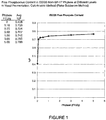
- Figure 1 shows the free phosphorus content in DDGS obtained using an enzyme composition including BP-17 phytase at different levels in a yeast fermentation of corn.
- compositions and methods which relate to an enzyme blend including a glucoamylase in combination with at least one phytase for use in a starch conversion processes, e.g ., for the production of DDGS for animal feed or in a fermentation processes for producing organic compounds such as ethanol.
- the compositions and methods may be used for the reduction of phytic acid during saccharification, fermentation and/or simultaneous saccharification and fermentation (SSF), resulting in a reduction in phytic acid in the products or by-products of the fermentation (e.g ., the DDGS and the thin stillage).
- SSF simultaneous saccharification and fermentation
- the phytase used in the methods of the invention has at least 90% sequence identity to SEQ ID NO: 5, including at least 91%, at least 92%, at least 93%, at least 94%, at least 95%, at least 96%, at least 97%, at least 98%, at least 99%, and up to and including 100%.
- the phytase further includes an alanine at position 92.
- the phytase includes an alanine at position 92, and additionally has at least one of the following amino acid sequence features: a threonine at position 89, an isoleucine at position 134, a serine at position 164, a lysine at position 176, a proline at position 178 , a glutamic acid at position 207, a serine at position 209, a leucine at position 248, a tyrosine at position 256, a glutamic acid at position 261, and a lysine at position 269.
- the phytase has at least one of the following amino acid substitutions: A89T, T134I, F164S, T176K, A178P, K207E, A209S, S248L, Q256Y, A261E, and N269K, with or without the additional substitution D92A.
- the glucoamylase is obtained from a filamentous fungus.
- the glucoamylase has at least about 90% sequence identity to Trichoderma reesei glucoamylase (TrGA; SEQ ID NO: 1), including at least 91%, at least 92%, at least 93%, at least 94%, at least 95%, at least 96%, at least 97%, at least 98%, at least 99%, and up to 100%.
- TrGA Trichoderma reesei glucoamylase
- the present methods involve conventional techniques commonly used in molecular biology, protein engineering, recombinant DNA techniques, microbiology, cell biology, cell culture, transgenic biology, immunology, and protein purification. Such techniques are known to those with skill in the art and are described in numerous texts and reference works. Although particular methods and materials are exemplified, similar or equivalent methods and materials can be used. Unless defined otherwise, all technical and scientific terms should be accorded their ordinary meaning. The following terms are defined for clarity:
- GSH granular starch hydrolyzing
- GSH enzymes having granular starch hydrolyzing
- the term "functional equivalent” refers to a molecule, e.g ., an enzyme, that has the same functional characteristics (such as enzymatic activity) of another molecule.
- variant when used with reference to an enzyme (e.g ., an ⁇ -amylase, a glucoamylase, an acid fungal protease, a phytase, or the like), refers to an enzyme derived from a parent enzyme but having a substitution, insertion, or deletion of one or more amino acids as compared to the parent enzyme.
- the term also includes hybrid forms of the enzyme, wherein, for example, the enzyme may have a C-terminus derived from one Bacillus spp. ( e.g., B.
- a variant may have one or more altered properties compared to the parent enzyme such as increased thermal stability, increased proteolytic stability, increase specific activity, broader substrate specificity, broader activity over a pH range, resistance to inhibition ( e.g ., substrate), or combinations thereof.
- a "parent enzyme” refers to an enzyme that is used as a starting point for modifications.
- a parent enzyme may be a naturally-occurring or "wild-type" enzyme.
- liquefaction or “to liquefy” refers to a process by which starch is converted to shorter-chain, less-viscous dextrins.
- glucose refers to short chain polymers of glucose (e.g., 2 to 10 units).
- starch refers to any material comprised of the complex polysaccharide carbohydrates (amylose and amylopectin) having the formula (C 6 H 10 O 5 ) x , wherein x is any number.
- granular starch means raw starch, i.e., starch that has not been subject to a temperature at which gelatinization occurs.
- sacharifying enzyme and “glucoamylase” are used interchangeably and refer to any enzyme that is capable of catalyzing the release of D-glucose from the non-reducing ends of starch and related oligosaccharides and polysaccharides.
- oligosaccharide refers to molecules having 2 to 10 monosaccharide units joined in glycosidic linkages.
- the monosaccharides may be glucose and/or other sugars. Oligosaccharides include dextrins and starch.
- Fermentable sugars refers to sugars that are capable of being fermented by a fermenting organism. Fermentable sugars include, but are not limited to, oligosaccharides and dextrins.
- Dextrose equivalent refers to an industry standard for measuring the concentration of total reducing sugars, calculated as D-glucose on a dry weight basis. Unhydrolyzed granular starch has a DE that is essentially 0 and D-glucose has a DE of 100.
- total sugar content refers to the total sugar content present in a starch composition.
- the “total sugar content” can be measured at various times or points in a process.
- dry solids or “ds” refers to the total solids within a slurry expressed as a percentage on a dry weight basis.
- percent (%) sequence identity with respect to an amino acid or nucleotide sequence refers to the percentage of amino acid residues or nucleotides in a one sequence that are identical to the amino acid residues or nucleotides in another sequence, as determined by aligning the sequences and introducing gaps, where necessary, to achieve the best alignment (i.e. , maximum percent sequence identity), and not considering conservative substitutions in determining sequence identity.
- Methods for performing sequence alignment and determining sequence identity are known and can be performed without undue experimentation to obtain definitive values.
- a number of algorithms are available for aligning sequences and determining sequence identity, including but not limited to: the homology alignment algorithm of Needleman et al., (1970) J. Mol. Biol.
- Computerized programs using these algorithms are also available, and include, but are not limited to: ALIGN or Megalign (DNASTAR) software, or WU-BLAST-2 (see, e.g., Altschul et al. (1996) Meth. Enzym. 266:460-480 ); or GAP, BESTFIT, BLAST ( e.g., Altschul et al., supra, FASTA, and TFASTA, available in the Genetics Computing Group (GCG) package, Version 8, Madison, Wis., USA); and CLUSTAL in the PC/Gene program by Intelligenetics, Mountain View, CA, USA.
- GCG Genetics Computing Group
- sequence identity is determined using the default parameters determined by the program.
- sequence identity can be determined by the Smith-Waterman homology search algorithm (see e.g., ( 1997) Meth. Mol. Biol. 70:173-187 ) as implemented in MSPRCH program (Oxford Molecular, Accelrys Ltd., Oxford England) using an affine gap search with the following search parameters: gap open penalty of 12, and gap extension penalty of 1.
- paired amino acid comparisons can be carried out using the GAP program of the GCG sequence analysis software package of Genetics Computer Group, Inc., Madison, Wis., employing the blosum62 amino acid substitution matrix, with a gap weight of 12 and a length weight of 2.
- the contiguous segment of the variant amino acid sequence may have at least one additional amino acid residue or at least one deleted amino acid residue with respect to the reference amino acid sequence.
- the contiguous segment used for comparison to the reference amino acid sequence includes at least about 20 contiguous amino acid residues and can include at least about 30, at least about 40, at least about 50 or more amino acid residues. Corrections for increased sequence identity associated with inclusion of gaps in the derivative's amino acid sequence can be made by assigning gap penalties.
- Sequence searches are typically carried out using the BLASTN program when evaluating a given nucleic acid sequence relative to nucleic acid sequences in the GENBANK® DNA Sequence database and other public databases.
- the BLASTX program is preferred for searching nucleic acid sequences that have been translated in all reading frames against amino acid sequences in the GENBANK®Protein Sequences and other public databases. Both BLASTN and BLASTX are typically run using default parameters of an open gap penalty of 11.0, and an extended gap penalty of 1.0, and utilize the BLOSUM-62 matrix (see, e.g., Altschul et al. (1997)).
- Alignments of selected sequences find use in determining % identity (a term that is used interchangeably herein with the term % homology) between two or more sequences.
- the CLUSTAL-W program in MacVector version 6.5 operated with default parameters, including an open gap penalty of 10.0, an extended gap penalty of 0.1, and a BLOSUM 30 similarity matrix can be used.
- milled refers to plant material that has been reduced in size, e.g., by grinding, crushing, fractionating or any other means of particle size reduction or selection.
- the term encompasses dry and wet milling.
- “Dry milling” refers to the milling of whole dry grain, while “wet milling” refers to a process whereby grain is first soaked ( i.e., steeped) in water to soften the grain.
- gelatinization refers to the solubilization of a starch molecule, generally by cooking at an elevated temperature, to form a viscous suspension.
- gelatinization temperature refers to the temperature at which gelatinization of a starch-containing substrate begins. In some embodiments, this is the lowest temperature at which gelatinization of a starch containing substrate begins. The exact temperature of gelatinization depends on the specific form of starch present and may vary depending on factors such as plant species, environmental conditions, growth conditions, and other parameters.
- the term “below the gelatinization temperature” refers to a temperature that is less than the gelatinization temperature.
- slurry refers to an aqueous mixture comprising insoluble solids (e.g ., granular starch).
- fermentation refers to the enzymatic breakdown of organic substances by microorganisms to produce simpler organic compounds. While fermentation occurs under anaerobic conditions it is not intended that the term be solely limited to strict anaerobic conditions, as fermentation also occurs in the presence of oxygen (e.g ., under microaerophilic and other conditions).
- saccharification and fermentation refers to a process in the production of an end-product in which a fermenting organism, such as an ethanol producing microorganism, and at least one enzyme, such as a saccharifying enzyme, are combined in the same process step in the same vessel.
- a fermenting organism such as an ethanol producing microorganism
- at least one enzyme such as a saccharifying enzyme
- thin stillage means the liquid portion of stillage separated from the solids (e.g., by screening or centrifugation) which contains suspended fine particles and dissolved material.
- backset is generally used to mean recycled thin stillage.
- end-product refers to a carbon-source derived product which is enzymatically converted from a fermentable substrate.
- the end-product is an alcohol (e.g ., ethanol).
- derived from encompasses the terms “originated from,” “obtained from,” “obtainable from,” and “isolated from.”
- the term "fermenting organism” refers to a microorganism or cell that is suitable for use in fermentation methods for directly or indirectly producing an end-product.
- the fermentating organism is eukaryotic (e.g ., fungi), while in others it is prokaryotic ( e.g ., bacteria).
- ethanol producer or ethanol producing microorganism refers to a fermenting organism that is capable of producing ethanol from a mono- or oligosaccharide.
- the terms “recovered,” “isolated,” and “separated” refer to a protein, cell, nucleic acid, or amino acid that is removed from at least one component with which it is naturally associated.
- protein and “polypeptide” are used interchangeably to refer to a series of amino acid residue linked via peptide bonds. Both the conventional one-letter and three-letter codes for amino acid residues are used. The 3-letter code is in conformity with the IUPAC-IUB Joint Commission on Biochemical Nomenclature (JCBN). It is understood that a polypeptide can be encoded by more than one nucleotide sequence due to the degeneracy of the genetic code. Unless otherwise indicated amino acids are written left to right in amino to carboxy orientation.
- the term "phytase” refers to an enzyme which is capable of catalyzing the hydrolysis of esters of phosphoric acid, including phytate, and releasing inorganic phosphate and inositol. In some embodiments, in addition to phytate, the phytase is capable of hydrolyzing at least one of the inositol-phosphates of intermediate degrees of phosphorylation.
- wild-type refers to a naturally-occurring (native) polypeptide or polynucleotide.
- wild-type may, in some cases, be used interchangeably with the terms “parent” or “parent sequence.”
- the terms “contacting” and “exposing” refer to placing at least one enzyme in sufficient proximity to its cognate substrate to enable the enzyme to convert the substrate to at least one end-product.
- the end-product may be a "product of interest” (i.e. , an end-product that is the desired outcome of the fermentation reaction).
- Contacting includes mixing a solution comprising an enzyme with the cognate substrate.
- glucoamylases (E.C. 3.2.1.3) may be used in the invention.
- the GA are endogenously expressed by bacteria, plants, and/or fungi, while in other embodiments the GA are heterologous to the host cells ( e.g ., bacteria, plants and/or fungi).
- the GA are produced by strains of filamentous fungi and yeast, e.g ., commercially available GA produced by strains of Aspergillus and Trichoderma.
- Suitable GA include naturally occurring wild-type enzymes as well as variant and genetically engineered mutant enzyme, such as hybrid GA.
- Hybrid GA include those having a catalytic domain from a GA from one organism (e.g ., Talaromyces GA) and a starch binding domain (SBD) from a GA from a different organism (e.g., Trichoderma GA).
- the linker is included with the starch binding domain (SBD) or the catalytic domain.
- Aspergillus niger G1 and G2 GA see e.g., Boel et al. (1984) EMBO J.
- Additional GA include those obtained from strains of Talaromyces (e.g., T. emersonii, T. leycettanus, T. duponti and T. thermophilus (see e.g., WO 99/28488 ; U.S. Pat. No. RE 32,153 ; U.S. Pat. No. 4,587,215 ); strains of Trichoderma ( e.g., T. reesei ); strains of Rhizopus, ( e.g., R. niveus and R. oryzae ); strains of Mucor and strains of Humicola, ( e.g., H. grisea (see, e.g., Boel et al.
- Talaromyces e.g., T. emersonii, T. leycettanus, T. duponti and T. thermophilus (see e.g., WO 99/28488 ; U.S. Pat
- the GA has at least about 85%, at least about 90%, at least about 92%, at least about 94%, at least about 95%, at least about 96%, at least about 97%, at least about 98% and even at least about 99% sequence identity to the amino acid sequence of SEQ ID NO: 3 of WO 05/052148 .
- Other GA useful in the present invention include those obtained from Athelia rolfsii and variants thereof (see, e.g., WO 04/111218 ) and Penicillium spp. (see, e.g., Penicillium chrysogenum ).
- GA suitable for use as described include but are not limited to DISTILLASE®, OPTIDEX® L-400 and G ZYME® G990 4X, GC480, G-ZYME 480, FERMGEN® 1-400 (Danisco US, Inc, Genencor Division) CU.CONC® (Shin Nihon Chemicals, Japan), GLUCZYME (Amano Pharmaceuticals, Japan (see e.g. Takahashi et al. (1985) J. Biochem. 98:663-671 )).
- Additional enzymes for use as described include three forms of GA (E.C.3.2.1.3) produced by a Rhizopus spp., namely "Gluc1" (MW 74,000), “Gluc2” (MW 58,600), and “Gluc3” (MW 61,400).
- GA Rhizopus spp.
- Gluc1 MW 74,000
- Gluc2 MW 58,600
- Gluc3 MW 61,400
- any suitable GA can be used in accordance with the present composition and methods.
- the mature amino acid sequence (SEQ ID NO: 1) of the Trichoderma reesei GA (TrGA) is shown below.
- the sequence has 599 amino acids, the catalytic domain (SEQ ID NO: 2) is underlined and corresponds to residues 1-453; the linker region (SEQ ID NO: 3) corresponds to residues 453-491; and the starch binding domain SEQ ID NO: 4 (in italics) corresponds to residues 492-599.
- Mature protein sequence of Trichoderma reesei glucoamylase (TrGA) (SEQ ID NO: 1)
- the GA has at least about 85%, at least about 90%, at least about 91%, at least about 92%, at least about 93%, at least about 94%, at least about 95%, at least about 96%, at least about 97%, at least about 98% and even at least about 99% sequence identity to the amino acid sequence of SEQ ID NOs: 1 or 2.
- the GA is the TrGA disclosed in U.S. Pat. No. 7,413,887 .
- phytases as defined in the claims may be used in the invention.
- Useful phytases include those capable of hydrolyzing phytic acid under the defined conditions of saccharification, fermentation and/or simultaneous saccharification and fermentation described herein.
- the methods involve the addition of at least one phytase to a saccharification and/or SSF and the phytase is capable of liberating at least one inorganic phosphate from an inositol hexaphosphate ( e.g. , phytic acid).
- the phytase is obtained from a Buttiauxiella spp, such as B. agrestis, B. brennerae, B. ferragutiase, B.
- Buttiauxella spp. are available from DSMZ, the German National Resource Center for Biological Material (Inhoffenstrabe 7B, 38124 Braunschweig, Germany) and other repositories.
- the phytase has at least 90%, e.g. at least about 91%, at least about 92%, at least about 93%, at least about 94%, at least about 95%, at least about 96%, at least about 97%, at least about 98% and even at least about 99% sequence identity to Buttiauxiella spp. phytase, having the amino acid sequence set forth in SEQ ID NO: 5.
- a variant of Buttiauxiella spp. phytase having an alanine at amino acid 92 is set forth in SEQ ID NO: 6.
- the phytase is Buttiauxella phytase variant BP-11, having the amino acid sequence set forth in SEQ ID NO: 7, and which includes substitutions at amino acid residues A89, T134, F164, T176, A178, K207, A209, S248, Q256, A261, and N269, relative to the sequence of the wild-type enzyme (SEQ ID NO: 5).
- the particular substitutions are A89T, T134I, F164S, T176K, A178P, K207E, A209S, S248L, Q256Y, A261E, and N269K.
- the phytase has an alanine at position 92 (as set forth in SEQ ID NO: 6), and at least one of the following amino acids: a threonine at position 89, an isoleucine at position 134, a serine at position 164, a lysine at position 176, a proline at position 178, a glutamic acid at position 207, a serine at position 209, a leucine at position 248, a tyrosine at position 256, a glutamic acid at position 261, and a lysine at position 269.
- the phytase has at least one of the following amino acid changes: A89T, D92A, T134I, F164S, T176K, A178P, K207E, A209S, S248L, Q256Y, A261E, and N269K.
- the phytase is Buttiauxella phytase variant BP-17, having the amino acid sequence set forth in SEQ ID NO: 8, and which includes substitutions at amino acid residues A89, D92, T134, F164, T176, A178 , K207, A209, S248, Q256, A261, and N269, relative to the sequence of the wild-type enzyme (SEQ IFD NO: 5).
- substitutions are A89T, D92A, T134I, F164S, T176K, A178P, K207E, A209S, S248L, Q256Y, A261E, and N269K.
- the methods described herein may optionally include other enzymes, including but are not limited to ⁇ -amylases, acid fungal proteases, other GA, other phytases, cellulases, hemicellulases, xylanases, proteases, pullulanases, beta amylases, lipases, cutinases, pectinases, ⁇ -glucosidases, galactosidases, esterases, cyclodextrin transglycosyltransferases (CGTases), oxido-reductases, esterases, ⁇ -amylases, and combinations thereof.
- the secondary enzyme is a second GA, including any GA mentioned, above.
- the additional enzyme is a second phytase, including any bacterial or fungal phytase, such as those mentioned, above.
- a (first) ⁇ -amylase is always present in step (a).
- the additional enzyme is an ⁇ -amylase, such as an acid stable ⁇ -amylase which, when added in an effective amount, has activity in the pH range of about 3.0 to about 7.0, including from about 3.5 to about 6.5.
- ⁇ -amylases that find use in the present invention include but are not limited to, fungal ⁇ -amylases or bacterial ⁇ -amylases.
- the ⁇ -amylase is a wild-type ⁇ -amylase, a variant or fragment thereof, or a hybrid ⁇ -amylase that is derived from, for example, a catalytic domain from one enzyme and a starch binding domain from another.
- ⁇ -amylases include acid stable ⁇ -amylases and ⁇ -amylases having granular starch hydrolyzing activity (GSHE).
- ⁇ -amylases include those obtained from filamentous fungal strains including but not limited to strains such as Aspergillus ( e.g., A. niger, A. kawachi, and A. oryzae ); Trichoderma spp., Rhizopus spp., Mucor spp., and Penicillium spp.
- the ⁇ -amylase is obtained from a strain of Aspergillus kawachi or a strain of Trichoderma reesei.
- the ⁇ -amylase is a GSHE such as TrAA or AkAA.
- the ⁇ -amylase is a hybrid enzyme comprising a fragments derived from enzymes obtained from A. kawachi and A. niger.
- Additional ⁇ -amylases useful as secondary enzymes include those obtained from bacteria such as Bacillus (e.g., B. licheniformis, B. lentus, B. coagulans, B. amyloliquefaciens, B. stearothermophilus, B subtilis, and hybrids, mutants and variants thereof (see, e.g., U.S. Pat Nos. 5,763,385 , 5,824,532 , 5,958,739 , 6,008,026 , and 6,361,809 ).
- Bacillus e.g., B. licheniformis, B. lentus, B. coagulans, B. amyloliquefaciens, B. stearothermophilus, B subtilis, and hybrids, mutants and variants thereof (see, e.g., U.S. Pat Nos. 5,763,385 , 5,824,532 , 5,958,739 , 6,008,026 , and 6,361,809
- amylases are commercially available, e.g ., TERMAMYL®, LIQUEZYME® SC, and SUPRA® available from Novo Nordisk A/S, ULTRATHIN® from Diversa, and SPEZYME® FRED, SPEZYME® XTRA, and GZYME® G997 available from Danisco US, Inc, Genencor Division.
- the secondary enzyme is a cellulase.
- Cellulases are enzymes that hydrolyze cellulose ( ⁇ -1, 4-D-glucan linkages) and/or derivatives thereof, such as phosphoric acid swollen cellulose.
- Cellulases include exo-cellobiohydrolases (CBH), endoglucanases (EG) and ⁇ -glucosidases (BG) (EC3.2.191, EC3.2.1.4 and EC3.2.1.21).
- suitable cellulases include, but are not limited to, those from Penicillium, Trichoderma, Humicola, Fusarium, Thermomonospora, Cellulomonas, Clostridium, and Aspergillus.
- ⁇ -glucanases such as ROVABIO® (Adisseo), NATUGRAIN® (BASF), MULTIFECT® BGL (Danisco Genencor), and ECONASE® (AB Enzymes).
- the secondary enzyme is a xylanase.
- Xylanases e.g . endo- ⁇ -xylanases (E.C. 3.2.1.8) hydrolyze xylan backbone chains.
- Suitable xylanases include those obtained from bacterial sources (e.g., Bacillus, Streptomyces, Clostridium, Acidothermus, Microtetrapsora, and Thermonospora ), and from fungal sources (e.g., Aspergillus, Trichoderma, Neurospora, Humicola, Penicillium, and Fusarium (see, e.g., EP 473 545 , U.S. Pat No.
- the secondary enzyme is a protease.
- the protease is obtained from Bacillus ( e.g., B. amyloliquefaciens, B. lentus, B. licheniformis, and B. subtilis ). These enzymes include subtilisins (see, e.g., U.S. Pat. No. 4,760,025 ). Suitable commercial protease include MULTIFECT® P 3000 (Danisco US, Inc. Genencor Division) and SUMIZYME® FP (Shin Nihon).
- the protease is derived from a fungal source (e.g., Trichoderma NSP- 24, Aspergillus, Humicola, and Penicillium ).
- the protease is an acid fungal protease (AFP) including but not limited to those obtained from Aspergillus, Trichoderma, Mucor and Rhizopus, such as A. niger, A. awamori, A. oryzae, and M. miehei.
- AFP acid fungal protease
- Proteases can be obtained from the heterologous or endogenous protein expression of bacteria, plants, and fungi sources. Proteases include naturally occurring wild-type proteases as well as variant and genetically engineered mutant proteases, including those described in U.S. Pat. No. 7,429,476 .
- the secondary component is at least one fermenting organism.
- compositions for use in the methods of the invention are provided.
- the methods of the invention may employ a composition comprising blended or formulated enzymes, including at least one glucoamylase and at least one phytase.
- the phytase is a Buttiauxella spp. phytase as defined in the claims.
- the phytase is a BP-WT, BP-11, or BP-17 phytase.
- the phytase has an alanine at position 92.
- the phytase may further include other mutations described herein.
- the enzyme components of the composition are a blended formulation comprising at least the two enzyme components mixed together.
- the compositions comprise a GA and phytase formulated in a sutable enzyme formulation.
- the formulated enzyme composition provides a specific preselected ratio of GA and phytase and, optionally, other secondary enzymes.
- the enzyme components are individually added during one or more process steps to produce a composition comprising the two enzymes. This may involve adding the separate components of the composition in a time or step-wise manner such that a ratio is maintained, or adding the components simultaneously.
- the amount of phytase used is from about 0.01 to about 10 FTU/g, including about 0.01, 0.02, 0.03, 0.04, 0.05, 0.06, 0.07, 0.08, 0.09, 0.1, 0.11, 0.12, 0.13, 0.14, 0.15, 0.16, 0.17, 0.18, 0.19, 0.2, 0.25, 0.28, 0.3, 0.35, 0.4, 0.45, 0.5, 0.55, 0.6, 0.65, 0.7, 0.75, 0.8, 0.85, 0.9, 0.95, 1.0, 1.1, 1.5, 1.8, 2, 2.5, 3, 3.5, 4, 4.5, 5, 5.5, 6, 6.5, 7, 7.5, 8, 8.5, 9, 9.5, 10, 11, 12, 13, 14, 15, 16, 17, 18, 19, and 20.
- the about of phytase used is from about 0.01 to about 1.0 FTU/g. In some embodiments, the amount of phytase used is at least about 0.01 FTU/g, including at least about 0.02, 0.03, 0.04, 0.05, 0.06, 0.07, 0.08, 0.09, 0.1, 0.11, 0.12, 0.13, 0.14, 0.15, 0.16, 0.17, 0.18, 0.19, 0.2, 0.25, 0.28, 0.3, 0.35, 0.4, 0.45, 0.5, 0.55, 0.6, 0.65, 0.7, 0.75, 0.8 FTU/g.
- the methods described use a glucoamylase in combination with a phytase during saccharification, fermentation, and/or SSF in a starch conversion processes, resulting in a process that produces less phytic acid end-products and/or by-products than are produced using conventional methods.
- the process results in DDGS with reduced phytic acid compared to conventional methods.
- the process results in ethanol and provides thin stillage with reduced phytic acid compared to conventional methods.
- the plant material is grain.
- the plant material is obtained from wheat, corn, rye, sorghum (e.g ., milo), rice, millet, barley, triticale, cassava ( e.g ., tapioca), potato, sweet potato, sugar beets, sugarcane, and legumes such as soybean and peas, and combinations thereof.
- Plant materials include hybrid varieties and genetically modified varieties (e.g ., transgenic corn, barley, or soybeans comprising heterologous genes).
- any part of the plant can be used as a substrate, including but not limited to, leaves, stems, hulls, husks, tubers, cobs, grains, and the like.
- essentially the entire plant is used, for example, the entire corn stover.
- whole grain is used as a source of granular starch.
- Whole grains include corn, wheat, rye, barley, sorghum, and combinations thereof.
- granular starch is obtained from fractionated cereal grains including fiber, endosperm, and/or germ components. Methods for fractionating plant material, such as corn and wheat, are known in the art.
- plant material obtained from different sources is mixed ( e.g . corn and milo or corn and barley).
- the plant material is prepared by means such as milling. Two general milling processes are wet milling and dry milling. In dry milling, the whole grain is milled and used, while in wet milling, the grain is separated ( e.g ., the germ from the meal). Means of milling whole cereal grains are known and include the use of hammer mills and roller mills. Reference is made TO THE ALCOHOL TEXTBOOK: A REFERENCE FOR THE BEVERAGE, FUEL AND INDUSTRIAL ALCOHOL INDUSTRIES 3rd ED. K.A. Jacques et al., Eds, (1999) Nottingham University Press. See, Chapters 2 and 4 .
- the plant material containing a starch substrate is hydrolyzed and/or liquefied using an ⁇ -amylase to produce oligosaccharides.
- an alpha ⁇ -amylase is added to a slurry of milled starch substrate (e.g ., milled grain) to produce a liquefact containing dextrins and/or oligosaccharides.
- milled starch substrate e.g ., milled grain
- the skilled person will be able to determine the effective dosage, pH, and contact time of ⁇ -amylase to be used in the processes.
- the optimal usage level in a liquifaction depends upon processing parameters such as type of plant material, viscosity, processing time, pH, temperature and ds.
- the liquefact containing dextrins and/or oligosaccharides from the liquefaction is subjected to saccharification, fermentation, and/or simultaneous saccharification and fermentation (SSF). Saccharification further reduces the sugars in a liquefact containing dextrins, and/or oligosaccharides to fermentable sugars.
- the fermentable sugars are then converted by fermenting microorganisms to obtain end-products such as alcohols and DDGS, which can be recovered using a suitable method.
- saccharification and fermentation occur simultaneously, in a process called simultaneous saccharification fermentation (SSF).
- SSF simultaneous saccharification fermentation
- the saccharification and fermentation occur separately.
- the GA/phytase enzyme composition is added during a pre-saccharification step, during the saccharification process, during the fermentation process, or during the SSF process.
- the saccharification process lasts for 12 to 120 hours. However, it is common to perform a pre-saccharification step for 30 minutes to 2 hours (including for example, 30 to 60 minutes) and then to complete saccharification during fermentation. Saccharification is commonly carried out at temperatures of 30 to 65°C and typically at pH of 4.0 to 5.0. Where a pre-saccharification step is included, the phytase is added during the pre-saccharification step.
- the enzyme compositions are added at the beginning of the saccharification step as a GA/phytase blend.
- the GA and phytase are added separately.
- the GA is added at the beginning of the saccharification step and the phytase is added later but before the fermentation step is completed.
- saccharification and fermentation are conducted simultaneously and a GA/phytase blend is added during simultaneous saccharification/fermentation (SSF).
- SSF simultaneous saccharification/fermentation
- the resulting fermentable sugars are subjected to fermentation with fermenting microorganisms.
- the contacting step and the fermenting step are performed simultaneously in the same reaction vessel.
- these steps are performed sequentially. Fermentation processes are generally described in The Alcohol Textbook 3rd ED, A Reference for the Beverage, Fuel and Industrial Alcohol Industries, Eds. Jacques et al., (1999) Nottingham University Press, UK .
- the fermentable sugars or dextrins (e.g . glucose) resulting from the saccharification are used as a fermentation feedstock in microbial fermentations under suitable conditions to obtain end-products, such as alcohol (e.g., ethanol), organic acids (e.g., succinic acid, lactic acid), sugar alcohols ( e.g ., glycerol), ascorbic acid intermediates ( e.g., gluconate, DKG, KLG) amino acids ( e.g., lysine), and/or proteins ( e.g., antibodies and fragment thereof).
- alcohol e.g., ethanol
- organic acids e.g., succinic acid, lactic acid
- sugar alcohols e.g ., glycerol
- ascorbic acid intermediates e.g., gluconate, DKG, KLG
- amino acids e.g., lysine
- proteins e.g., antibodies and fragment thereof.
- the fermentable sugars may be fermented with yeast at temperatures in the range of about 15 to about 40°C, about 20 to about 38°C, and even about 25 to about 35°C; at a pH range of about 3.0 to about 6.5; about 3.0 to about 6.0; about 3.0 to about 5.5, about 3.5 to about 5.0, and even about 3.5 to about 4.5; and for a period of time of about 5 hrs to about 120 hours, including about 12 to about 120 and from about 24 to about 90 hours, to produce an alcohol product, such as ethanol.
- Yeast cells may be provided in an amount of about 10 4 to about 10 12 cells, or from about 10 7 to about 10 10 viable yeast cells per ml of fermentation broth.
- the fermentation process may include the addition of raw materials, such as nutrients, acids, and additional enzymes, as well as supplements such as vitamins (e.g ., biotin, folic acid, nicotinic acid, riboflavin), cofactors, macro-nutrients, micro-nutrients and salts (e.g ., (NH4) 2 SO 4 ; K 2 HPO 4 ; NaCl; MgSO 4 H 3 BO 3 ; ZnCl 2 ; and CaCl 2 ).
- vitamins e.g ., biotin, folic acid, nicotinic acid, riboflavin
- cofactors e.g ., (NH4) 2 SO 4 ; K 2 HPO 4 ; NaCl; MgSO 4 H 3 BO 3 ; ZnCl 2 ; and CaCl 2
- Any suitable fermenting organism may be used with the present methods.
- suitable fermenting organisms are ethanologenic microorganisms or ethanol producing microorganisms such as ethanologenic bacteria which express alcohol dehydrogenase and pyruvate dehydrogenase, which can be obtained from Zymomonas moblis (see e.g., U.S. Pat. Nos. 5,000,000 , 5,028,539 , 5,424,202 , 5,514,583 , and 5,554,520 ).
- the ethanologenic microorganisms may express xylose reductase and xylitol dehydrogenase, which are enzymes that convert xylose to xylulose.
- xylose isomerase is used to convert xylose to xylulose.
- a microorganism capable of fermenting both pentoses and hexoses to ethanol may be utilized.
- the microorganism can be a naturally-occurring or non-genetically engineered microorganism or an engineered or recombinant microorganism.
- Fermenting microorganisms include bacterial strains from Bacillus, Lactobacillus, E. coli, Erwinia, Pantoea ( e.g., P. citrea ), Pseudomonas and Klebsiella ( e.g., K. oxytoca ) (see e.g. U.S. Pat. Nos. 5,028,539 and 5,424,202 and WO 95/13362 ).
- the fermenting microorganism selected depends on the end-product to be produced.
- the ethanol-producing microorganism may be a fungal microorganism, such as a Saccharomyces strain including but not limited to S. cerevisiae (see, e.g., U.S. Pat. No. 4,316,956 ).
- S. cerevisiae are commercially available and include but are not limited to FALI® (Fleischmann's Yeast), SUPERSTART® (Alltech), FERMIOL® (DSM Specialties), RED STAR® (Lesaffre), and ANGEL ALCOHOL YEAST® (Angel Yeast Company, China).
- the end product of the fermentation process is an alcohol (e.g ., ethanol or butanol), which can be separated and/or purified from the fermentation media.
- alcohol e.g ., ethanol or butanol
- Methods for separation and purification are known in the art and include methods such as subjecting the media to extraction, distillation, column chromatography, molecular sieve dehydration, or ultra filtration.
- the end-product may be identified directly by submitting the media to high-pressure liquid chromatography (HPLC) or gas chromatography (CG) analysis.
- HPLC high-pressure liquid chromatography
- CG gas chromatography
- the end-product is ethanol
- it may be used for fuel, cleaning, or chemical synthesis, or injected as a beverage.
- Fermentation co-products such as distillers dried grains (DDG) and distiller's dried grain plus solubles (DDGS) can be used as an animal feed.
- DDG distillers dried grains
- DDGS distiller's dried grain plus solubles
- the present methods can reduce the phytic acid content of the fermentation broth, the thin stillage and/or the co-products of the fermentation such as distillers dried grains (DDG); distillers dried grains with solubles (DDGS); distillers wet grains (DWG), and distillers wet grains with solubles (DWGS).
- DDG distillers dried grains
- DDGS distillers dried grains with solubles
- DWG distillers wet grains
- DWGS distillers wet grains with solubles
- the compositions and methods can reduce the phytic acid content of fermentation filtrate by at least about 60%, at least about 65%, at least about 70%, at least about 75%, at least about 80%, at least about 85% and even at least about 90% or more as compared to essentially the same process but without the phytase.
- the amount of phytate found in the DDGS can be reduced by at least about 50%, at least about 70%, at least about 80% and at least about 90% as compared to the phytate content in DDGS from a corresponding process which is essentially the same as the claimed process but without a phytase pretreatment incubation.
- % phytate content in commercial samples of DDGS may vary, a general range of % phytate is be from about 1% to about 3% or higher.
- the % phytate in the DDGS obtained using the current process is less than about 1.0%, less than about 0.8% and even less than about 0.5%.
- DDGS can be added to an animal feed before or after pelletization and may include active phytase
- the thin stillage has a lower phytic acid content compared to that obtained using a onventional method.
- the reduction in phytic acid may result from the addition of phytase during a pretreatment step, during saccharification, during saccharification/fermentation, or a combination, thereof.
- the reduction in phytic acid content of the thin stillage may be at least about 60%, at least about 65%, at least about 70%, at least about 75%, at least about 80%, at least about 85% or even at least about 90% or more, compared to essentially the same process but without the phytase.
- the amount of phytate found in the thin stillage can be reduced by at least about 50%, at least about 60%, at least about 70%, at least about 80% or even at least about 90% compared to the phytate content in thin stillage resulting from an otherwise similar process that lacks a phytase.
- a glass cooker -viscometer, LR-2.ST system IKA was used to determine viscosity.
- the viscometer consists of a 2,000 ml double-walled glass vessel with an anchor mixer that is stirred by a Eurostar Labortechnik power control-viscometer.
- the viscosity range of the viscometer is 0-600 Ncm.
- a slurry comprising a starch substrate and an appropriate amount of enzyme was poured into the viscometer vessel. The temperature and viscosity were recorded during heating to 85°C and incubation was continued for additional 60 to 120 mins. Viscosity was measured in Ncm and recorded at intervals.
- EXAMPLE 2 Use of a Glucoamylase and a Phytase in Ethanol Fermentation
- This example shows the efficacy of glucoamylase (GA) and phytase in ethanol fermentation for producing DDGS and thin stillage with a lower phytate content than obtained using a conventional method.
- the GA used was the Trichoderma reesei GA (TrGA) corresponding to SEQ ID NO: 1 (see e.g., U.S. Pat Nos. 7,354,752 and 7,413,887 ).
- the phytase used was Buttiauxella phytase, BP-17 corresponding to SEQ ID NO: 8.
- Glucoamylase activity units were defined as the amount of enzyme required to produce 1 g of reducing sugar calculated as glucose per hour from a soluble starch substrate at pH 4.2 and 60°C.
- the PNPG assay is used to measure the activity of glucoamylase.
- Phytase activity was measured by the release of inorganic phosphate, which forms a yellow complex with acidic molybdate/vandate reagent that can be measured at a wavelength of 415 nm in a spectrophometer.
- the released inorganic phosphate was quantified with a phosphate standard curve.
- One unit of phytase (FTU) was defined as the amount of enzyme that releases 1 micromole of inorganic phosphate from phytate per minute under the reaction conditions given in the European Standard (CEN/TC 327, 2005-TC327WI 003270XX).
- phytic acid was extracted from a sample by adjusting the pH of a 5% slurry (for dry samples) to pH 10.0, and then using an HPLC ion exchange column to bind the phytic acid, which was eluted from the column using a NaOH gradient system.
- the phytic acid content in the liquid was calculated by comparing phytic acid to a standard.
- DDGS Disillers Dry Grain Solids with Solubles
- a component in some animal feeds that is derived from ethanol processing plants, contains phytic acid that is non-digestible by non-ruminants like poultry, fish and pigs.
- the phytic acid then is discharged through manure resulting in a phosphate pollution.
- adding a phytic acid hydrolyzing enzyme like phytase in combination with glucoamylase during the simultaneous saccharification/fermentation process reduces the levels of phytic acid in DDGS.
- a liquefact from a conventional starch liquefaction process using corn as the feedstock was prepared and frozen for use in the experiment.
- the liquefact was thawed, 200 ppm urea was added, and the solids were adjusted to 32.9% ds prior to adjusting the pH to 4.2 with 6N sulfuric acid.
- Fermentations were conducted in 250 ml flasks containing an aliquot of 200 gm of mash (i.e., the liquefact-containing mixture).
- the enzymes were diluted so that 1.0 ml of each at the designated activity was added to the flasks. Each condition was replicated.
- the flasks were inoculated by adding 1 ml of 10% yeast slurry containing 1% glucose about one hour prior to use.
- BP-17 phytase was added in the 1.0 ml sample at different levels of activity (0, 0.1, 0.25, 0.5, 1.0, 3.0, and 5.0 FTU/gds corn) during simultaneous saccharification/fermentation.
- Trichoderma GA was also added to hydrolyze the soluble dextrins for providing glucose.
- the DDGS was analyzed for free phosphorous/free phosphate. Free phosphate was determined by following the colorimetric method of Fiske-Subbarow (see e.g., Fiske, C.H. and Subbarow, Y. (1925) J.
- Figure 1 is a graph showing the effect of BP-17 phytase concentration during yeast fermentation on the phytic acid reductions.
- 32% whole ground corn containing 50% thin stillage was used at a pH of 4.2 containing 0.325 GAU/gds, GC147.
- the graph shows that the level of free phosphorous reached a plateau of about 0.75 % free phosphorous with the addition of about 0.7 FTU/g phytase.
- the levels of phytic acid were reduced with the addition of a very small amount of phytase, i.e., 0.1 FTU/gds, such that more than 80% of the phytic acid was removed.
Landscapes
- Organic Chemistry (AREA)
- Chemical & Material Sciences (AREA)
- Engineering & Computer Science (AREA)
- Zoology (AREA)
- Life Sciences & Earth Sciences (AREA)
- Wood Science & Technology (AREA)
- Chemical Kinetics & Catalysis (AREA)
- Microbiology (AREA)
- General Chemical & Material Sciences (AREA)
- Biotechnology (AREA)
- Health & Medical Sciences (AREA)
- Biochemistry (AREA)
- Bioinformatics & Cheminformatics (AREA)
- General Engineering & Computer Science (AREA)
- General Health & Medical Sciences (AREA)
- Genetics & Genomics (AREA)
- Enzymes And Modification Thereof (AREA)
- Preparation Of Compounds By Using Micro-Organisms (AREA)
- Fodder In General (AREA)
Priority Applications (1)
| Application Number | Priority Date | Filing Date | Title |
|---|---|---|---|
| PL09719801T PL2265720T3 (pl) | 2008-03-11 | 2009-03-09 | Zastosowanie glukoamylazy i fitazy z buttiauxella w scukrzaniu |
Applications Claiming Priority (2)
| Application Number | Priority Date | Filing Date | Title |
|---|---|---|---|
| US3567208P | 2008-03-11 | 2008-03-11 | |
| PCT/US2009/036477 WO2009114451A1 (en) | 2008-03-11 | 2009-03-09 | Glucoamylase and buttiauxiella phytase during saccharification |
Publications (2)
| Publication Number | Publication Date |
|---|---|
| EP2265720A1 EP2265720A1 (en) | 2010-12-29 |
| EP2265720B1 true EP2265720B1 (en) | 2017-06-21 |
Family
ID=40934088
Family Applications (1)
| Application Number | Title | Priority Date | Filing Date |
|---|---|---|---|
| EP09719801.4A Active EP2265720B1 (en) | 2008-03-11 | 2009-03-09 | Use of glucoamylase and buttiauxella phytase during saccharification |
Country Status (10)
| Country | Link |
|---|---|
| US (1) | US8354256B2 (pl) |
| EP (1) | EP2265720B1 (pl) |
| JP (1) | JP5564441B2 (pl) |
| CN (1) | CN101960015A (pl) |
| BR (1) | BRPI0909143A2 (pl) |
| CA (1) | CA2718017C (pl) |
| HU (1) | HUE034509T2 (pl) |
| MX (1) | MX2010009652A (pl) |
| PL (1) | PL2265720T3 (pl) |
| WO (1) | WO2009114451A1 (pl) |
Families Citing this family (14)
| Publication number | Priority date | Publication date | Assignee | Title |
|---|---|---|---|---|
| US7968318B2 (en) * | 2006-06-06 | 2011-06-28 | Genencor International, Inc. | Process for conversion of granular starch to ethanol |
| US8247208B2 (en) * | 2008-12-22 | 2012-08-21 | Alliance For Sustainable Energy Llc | Zymomonas with improved xylose utilization in stress conditions |
| CA2807558A1 (en) * | 2010-08-06 | 2012-02-09 | Danisco Us Inc. | Production of isoprene under neutral ph conditions |
| JP5655544B2 (ja) * | 2010-12-20 | 2015-01-21 | トヨタ紡織株式会社 | 車両用シート |
| BR112013032319A2 (pt) * | 2011-06-17 | 2016-12-20 | Butamax Advanced Biofuels Llc | métodos da geração de coprodutos de destilação, coprodutos de destilação, método para atenuar o impacto de contaminantes de fermentação, método para a redução da contaminação por micotoxinas, método para a redução da variabilidade do teor de lipídeos, método para aumento do teor de triglicerídeos, método de produção de um coproduto de destilação para o combustível e método de produção de um coproduto destilação para o biodiesel |
| WO2013022799A1 (en) | 2011-08-05 | 2013-02-14 | Danisco Us Inc. | PRODUCTION OF ISOPRENOIDS UNDER NEUTRAL pH CONDITIONS |
| CN102399833A (zh) * | 2011-10-27 | 2012-04-04 | 多尔鑫谷生物科技(上海)有限公司 | 赖氨酸的生产工艺 |
| CN104487571A (zh) * | 2012-02-07 | 2015-04-01 | 丹尼斯科美国公司 | 糖基化作为植酸酶的稳定剂 |
| PE20151140A1 (es) * | 2012-08-16 | 2015-08-07 | Janssen Pharmaceutica Nv | Pirazoles sustituidos como bloqueadores del canal de calcio tipo n |
| US9453002B2 (en) | 2013-08-16 | 2016-09-27 | Janssen Pharmaceutica Nv | Substituted imidazoles as N-type calcium channel blockers |
| CN103695386B (zh) * | 2013-12-25 | 2015-09-16 | 南宁邦尔克生物技术有限责任公司 | 一种耐酸性高温β-淀粉酶突变体及其应用 |
| JP2017035005A (ja) * | 2015-08-06 | 2017-02-16 | 国立研究開発法人国際農林水産業研究センター | 動物又は魚類用飼料の製造方法及び動物又は魚類用飼料 |
| CN108949864B (zh) * | 2018-08-07 | 2020-12-25 | 梁山菱花生物科技有限公司 | 谷氨酸发酵用糖的制备方法和应用 |
| JP6887631B2 (ja) * | 2020-03-24 | 2021-06-16 | 国立研究開発法人国際農林水産業研究センター | キャッサバ発酵残物の利用方法 |
Citations (1)
| Publication number | Priority date | Publication date | Assignee | Title |
|---|---|---|---|---|
| WO2008097620A1 (en) * | 2007-02-07 | 2008-08-14 | Danisco Us, Inc., Genencor Division | Starch hydrolysis using phytase with an alpha amylase |
Family Cites Families (40)
| Publication number | Priority date | Publication date | Assignee | Title |
|---|---|---|---|---|
| JPS5646831B2 (pl) | 1974-11-26 | 1981-11-05 | ||
| JPS5534046A (en) | 1978-09-01 | 1980-03-10 | Cpc International Inc | Novel glucoamyrase having excellent heat resistance and production |
| US4316956A (en) | 1980-02-06 | 1982-02-23 | Novo Industri A/S | Fermentation process |
| GB2089836B (en) | 1980-12-16 | 1984-06-20 | Suntory Ltd | Process for producing alcohol by fermentation without cooking |
| NO840200L (no) | 1983-01-28 | 1984-07-30 | Cefus Corp | Glukoamylase cdna. |
| US4760025A (en) | 1984-05-29 | 1988-07-26 | Genencor, Inc. | Modified enzymes and methods for making same |
| US4587215A (en) | 1984-06-25 | 1986-05-06 | Uop Inc. | Highly thermostable amyloglucosidase |
| US4618579A (en) | 1984-09-28 | 1986-10-21 | Genencor, Inc. | Raw starch saccharification |
| US5554520A (en) | 1988-08-31 | 1996-09-10 | Bioenergy International, L.C. | Ethanol production by recombinant hosts |
| US5000000A (en) | 1988-08-31 | 1991-03-19 | University Of Florida | Ethanol production by Escherichia coli strains co-expressing Zymomonas PDC and ADH genes |
| US5028539A (en) | 1988-08-31 | 1991-07-02 | The University Of Florida | Ethanol production using engineered mutant E. coli |
| US5424202A (en) | 1988-08-31 | 1995-06-13 | The University Of Florida | Ethanol production by recombinant hosts |
| US5162210A (en) | 1990-06-29 | 1992-11-10 | Iowa State University Research Foundation | Process for enzymatic hydrolysis of starch to glucose |
| GB9018426D0 (en) | 1990-08-22 | 1990-10-03 | Sandoz Ltd | Improvements in or relating to novel compounds |
| DK0553280T4 (da) | 1990-10-05 | 2010-11-15 | Genencor Int | Fremgangsmåde til behandling af bomuldsholdige tekstiler med cellulase |
| CN1104499C (zh) | 1993-02-11 | 2003-04-02 | 吉恩康国际有限公司 | 氧化作用稳定的α-淀粉酶 |
| DK114893D0 (pl) | 1993-10-14 | 1993-10-14 | Novo Nordisk As | |
| US5789210A (en) | 1993-11-08 | 1998-08-04 | Purdue Research Foundation | Recombinant yeasts for effective fermentation of glucose and xylose |
| US5514583A (en) | 1994-04-15 | 1996-05-07 | Midwest Research Institute | Recombinant zymomonas for pentose fermentation |
| GB9416841D0 (en) | 1994-08-19 | 1994-10-12 | Finnfeeds Int Ltd | An enzyme feed additive and animal feed including it |
| US5902581A (en) | 1995-12-04 | 1999-05-11 | Genencor International, Inc. | Xylanase from acidothermus cellulolyticus |
| US5763385A (en) | 1996-05-14 | 1998-06-09 | Genencor International, Inc. | Modified α-amylases having altered calcium binding properties |
| US5958739A (en) | 1996-06-06 | 1999-09-28 | Genencor International Inc. | Mutant α-amylase |
| US6008026A (en) | 1997-07-11 | 1999-12-28 | Genencor International, Inc. | Mutant α-amylase having introduced therein a disulfide bond |
| DE19752855C2 (de) | 1997-11-28 | 2003-04-03 | Bundesrepublik Deutschland Let | Retrovirale Pseudotyp-Vektoren mit modifizierten Oberflächen-Hüllproteinen und Verpackungszelle zu ihrer Herstellung für den selektiven Gentransfer |
| US6352851B1 (en) | 1998-07-15 | 2002-03-05 | Novozymes A/S | Glucoamylase variants |
| CA2331340A1 (en) | 1998-07-15 | 2000-01-27 | Novozymes A/S | Glucoamylase variants |
| EP1335982A2 (en) * | 2000-11-10 | 2003-08-20 | Novozymes A/S | Secondary liquefaction of starch in ethanol production |
| AU2003272059A1 (en) * | 2002-10-17 | 2004-05-04 | Ramot At Tel Aviv University Ltd. | A radiofrequency magnetic field resonator and a method of designing the same |
| WO2004111218A2 (en) | 2003-06-13 | 2004-12-23 | Novozymes A/S | Method for producing glucoamylases and their uses |
| KR20070019961A (ko) | 2003-11-21 | 2007-02-16 | 제넨코 인터내셔날 인코포레이티드 | 트리코데르마에서의 과립 전분 가수분해 효소의 발현 및과립 전분 기질로부터의 글루코스 생성 방법 |
| CA2567485C (en) | 2004-05-27 | 2015-01-06 | Genencor International, Inc. | Acid-stable alpha amylases having granular starch hydrolyzing activity and enzyme compositions |
| US7413887B2 (en) * | 2004-05-27 | 2008-08-19 | Genecor International, Inc. | Trichoderma reesei glucoamylase and homologs thereof |
| DE102004026152A1 (de) * | 2004-05-28 | 2005-12-15 | Basf Ag | Fermentative Herstellung von Feinchemikalien |
| GB0423139D0 (en) | 2004-10-18 | 2004-11-17 | Danisco | Enzymes |
| CN101094918B (zh) | 2004-12-30 | 2014-05-14 | 金克克国际有限公司 | 酸性真菌蛋白酶 |
| US7968318B2 (en) * | 2006-06-06 | 2011-06-28 | Genencor International, Inc. | Process for conversion of granular starch to ethanol |
| ES2336846T3 (es) | 2006-06-15 | 2010-04-16 | Novozymes A/S | Procesos para la produccion de un hidrolizado de almidon. |
| CN101495642B (zh) | 2006-08-11 | 2013-06-19 | 丹尼斯科美国公司 | 用于颗粒状淀粉水解的酶组合物中天然的谷物淀粉酶 |
| CA2677643C (en) | 2007-02-07 | 2016-06-07 | Danisco Us Inc., Genencor Division | Starch hydrolysis using phytase with an alpha amylase |
-
2009
- 2009-03-09 WO PCT/US2009/036477 patent/WO2009114451A1/en not_active Ceased
- 2009-03-09 CN CN2009801076664A patent/CN101960015A/zh active Pending
- 2009-03-09 BR BRPI0909143-2A patent/BRPI0909143A2/pt not_active Application Discontinuation
- 2009-03-09 PL PL09719801T patent/PL2265720T3/pl unknown
- 2009-03-09 CA CA2718017A patent/CA2718017C/en active Active
- 2009-03-09 US US12/400,732 patent/US8354256B2/en active Active
- 2009-03-09 HU HUE09719801A patent/HUE034509T2/en unknown
- 2009-03-09 MX MX2010009652A patent/MX2010009652A/es active IP Right Grant
- 2009-03-09 EP EP09719801.4A patent/EP2265720B1/en active Active
- 2009-03-09 JP JP2010550795A patent/JP5564441B2/ja not_active Expired - Fee Related
Patent Citations (1)
| Publication number | Priority date | Publication date | Assignee | Title |
|---|---|---|---|---|
| WO2008097620A1 (en) * | 2007-02-07 | 2008-08-14 | Danisco Us, Inc., Genencor Division | Starch hydrolysis using phytase with an alpha amylase |
Non-Patent Citations (1)
| Title |
|---|
| SHI ET AL: "A novel phytase gene appA from Buttiauxella sp. GC21 isolated from grass carp intestine", AQUACULTURE, vol. 275, January 2008 (2008-01-01), pages 70 - 75, XP022526028 * |
Also Published As
| Publication number | Publication date |
|---|---|
| PL2265720T3 (pl) | 2017-10-31 |
| JP5564441B2 (ja) | 2014-07-30 |
| HUE034509T2 (en) | 2018-02-28 |
| MX2010009652A (es) | 2010-09-30 |
| CA2718017A1 (en) | 2009-09-17 |
| JP2011512873A (ja) | 2011-04-28 |
| BRPI0909143A2 (pt) | 2015-08-04 |
| US20090246845A1 (en) | 2009-10-01 |
| EP2265720A1 (en) | 2010-12-29 |
| US8354256B2 (en) | 2013-01-15 |
| CN101960015A (zh) | 2011-01-26 |
| CA2718017C (en) | 2017-10-10 |
| WO2009114451A1 (en) | 2009-09-17 |
Similar Documents
| Publication | Publication Date | Title |
|---|---|---|
| EP2265720B1 (en) | Use of glucoamylase and buttiauxella phytase during saccharification | |
| CA2702949C (en) | Enzyme blends for fermentation | |
| CA2677643C (en) | Starch hydrolysis using phytase with an alpha amylase | |
| CA2654776C (en) | Process for conversion of granular starch to ethanol | |
| DK2276848T3 (en) | Improved fermentation using molasses | |
| WO2008097620A1 (en) | Starch hydrolysis using phytase with an alpha amylase | |
| EP2049673A1 (en) | Native grain amylases in enzyme combinations for granular starch hydrolysis | |
| JP2011510682A (ja) | 発酵性糖及びアルコールの生成のためのpH調製不要システム | |
| CN102046799A (zh) | 由收籽高粱生产醇和副产品的工艺 | |
| US20080299622A1 (en) | Starch Hydrolysis Using Phytase with an Alpha Amylase | |
| ES2639575T3 (es) | Utilización de glucoamilasa y fitasa de Buttiauxella durante la sacarificación | |
| AU2017203294A1 (en) | Process for conversion of granular starch to ethanol | |
| AU2012251931A1 (en) | Process for conversion of granular starch to ethanol |
Legal Events
| Date | Code | Title | Description |
|---|---|---|---|
| PUAI | Public reference made under article 153(3) epc to a published international application that has entered the european phase |
Free format text: ORIGINAL CODE: 0009012 |
|
| 17P | Request for examination filed |
Effective date: 20101007 |
|
| AK | Designated contracting states |
Kind code of ref document: A1 Designated state(s): AT BE BG CH CY CZ DE DK EE ES FI FR GB GR HR HU IE IS IT LI LT LU LV MC MK MT NL NO PL PT RO SE SI SK TR |
|
| AX | Request for extension of the european patent |
Extension state: AL BA RS |
|
| DAX | Request for extension of the european patent (deleted) | ||
| 17Q | First examination report despatched |
Effective date: 20120803 |
|
| GRAP | Despatch of communication of intention to grant a patent |
Free format text: ORIGINAL CODE: EPIDOSNIGR1 |
|
| INTG | Intention to grant announced |
Effective date: 20170104 |
|
| GRAS | Grant fee paid |
Free format text: ORIGINAL CODE: EPIDOSNIGR3 |
|
| GRAA | (expected) grant |
Free format text: ORIGINAL CODE: 0009210 |
|
| AK | Designated contracting states |
Kind code of ref document: B1 Designated state(s): AT BE BG CH CY CZ DE DK EE ES FI FR GB GR HR HU IE IS IT LI LT LU LV MC MK MT NL NO PL PT RO SE SI SK TR |
|
| REG | Reference to a national code |
Ref country code: GB Ref legal event code: FG4D |
|
| REG | Reference to a national code |
Ref country code: CH Ref legal event code: EP |
|
| REG | Reference to a national code |
Ref country code: IE Ref legal event code: FG4D |
|
| REG | Reference to a national code |
Ref country code: AT Ref legal event code: REF Ref document number: 902981 Country of ref document: AT Kind code of ref document: T Effective date: 20170715 |
|
| REG | Reference to a national code |
Ref country code: DE Ref legal event code: R096 Ref document number: 602009046717 Country of ref document: DE |
|
| REG | Reference to a national code |
Ref country code: NL Ref legal event code: FP |
|
| REG | Reference to a national code |
Ref country code: ES Ref legal event code: FG2A Ref document number: 2639575 Country of ref document: ES Kind code of ref document: T3 Effective date: 20171027 |
|
| PG25 | Lapsed in a contracting state [announced via postgrant information from national office to epo] |
Ref country code: GR Free format text: LAPSE BECAUSE OF FAILURE TO SUBMIT A TRANSLATION OF THE DESCRIPTION OR TO PAY THE FEE WITHIN THE PRESCRIBED TIME-LIMIT Effective date: 20170922 Ref country code: FI Free format text: LAPSE BECAUSE OF FAILURE TO SUBMIT A TRANSLATION OF THE DESCRIPTION OR TO PAY THE FEE WITHIN THE PRESCRIBED TIME-LIMIT Effective date: 20170621 Ref country code: NO Free format text: LAPSE BECAUSE OF FAILURE TO SUBMIT A TRANSLATION OF THE DESCRIPTION OR TO PAY THE FEE WITHIN THE PRESCRIBED TIME-LIMIT Effective date: 20170921 Ref country code: LT Free format text: LAPSE BECAUSE OF FAILURE TO SUBMIT A TRANSLATION OF THE DESCRIPTION OR TO PAY THE FEE WITHIN THE PRESCRIBED TIME-LIMIT Effective date: 20170621 Ref country code: HR Free format text: LAPSE BECAUSE OF FAILURE TO SUBMIT A TRANSLATION OF THE DESCRIPTION OR TO PAY THE FEE WITHIN THE PRESCRIBED TIME-LIMIT Effective date: 20170621 |
|
| REG | Reference to a national code |
Ref country code: LT Ref legal event code: MG4D |
|
| REG | Reference to a national code |
Ref country code: AT Ref legal event code: MK05 Ref document number: 902981 Country of ref document: AT Kind code of ref document: T Effective date: 20170621 |
|
| PG25 | Lapsed in a contracting state [announced via postgrant information from national office to epo] |
Ref country code: LV Free format text: LAPSE BECAUSE OF FAILURE TO SUBMIT A TRANSLATION OF THE DESCRIPTION OR TO PAY THE FEE WITHIN THE PRESCRIBED TIME-LIMIT Effective date: 20170621 Ref country code: BG Free format text: LAPSE BECAUSE OF FAILURE TO SUBMIT A TRANSLATION OF THE DESCRIPTION OR TO PAY THE FEE WITHIN THE PRESCRIBED TIME-LIMIT Effective date: 20170921 Ref country code: SE Free format text: LAPSE BECAUSE OF FAILURE TO SUBMIT A TRANSLATION OF THE DESCRIPTION OR TO PAY THE FEE WITHIN THE PRESCRIBED TIME-LIMIT Effective date: 20170621 |
|
| PG25 | Lapsed in a contracting state [announced via postgrant information from national office to epo] |
Ref country code: CZ Free format text: LAPSE BECAUSE OF FAILURE TO SUBMIT A TRANSLATION OF THE DESCRIPTION OR TO PAY THE FEE WITHIN THE PRESCRIBED TIME-LIMIT Effective date: 20170621 Ref country code: AT Free format text: LAPSE BECAUSE OF FAILURE TO SUBMIT A TRANSLATION OF THE DESCRIPTION OR TO PAY THE FEE WITHIN THE PRESCRIBED TIME-LIMIT Effective date: 20170621 Ref country code: EE Free format text: LAPSE BECAUSE OF FAILURE TO SUBMIT A TRANSLATION OF THE DESCRIPTION OR TO PAY THE FEE WITHIN THE PRESCRIBED TIME-LIMIT Effective date: 20170621 Ref country code: RO Free format text: LAPSE BECAUSE OF FAILURE TO SUBMIT A TRANSLATION OF THE DESCRIPTION OR TO PAY THE FEE WITHIN THE PRESCRIBED TIME-LIMIT Effective date: 20170621 |
|
| REG | Reference to a national code |
Ref country code: SK Ref legal event code: T3 Ref document number: E 25263 Country of ref document: SK |
|
| REG | Reference to a national code |
Ref country code: FR Ref legal event code: PLFP Year of fee payment: 10 |
|
| PG25 | Lapsed in a contracting state [announced via postgrant information from national office to epo] |
Ref country code: IT Free format text: LAPSE BECAUSE OF FAILURE TO SUBMIT A TRANSLATION OF THE DESCRIPTION OR TO PAY THE FEE WITHIN THE PRESCRIBED TIME-LIMIT Effective date: 20170621 Ref country code: IS Free format text: LAPSE BECAUSE OF FAILURE TO SUBMIT A TRANSLATION OF THE DESCRIPTION OR TO PAY THE FEE WITHIN THE PRESCRIBED TIME-LIMIT Effective date: 20171021 |
|
| REG | Reference to a national code |
Ref country code: HU Ref legal event code: AG4A Ref document number: E034509 Country of ref document: HU |
|
| REG | Reference to a national code |
Ref country code: DE Ref legal event code: R097 Ref document number: 602009046717 Country of ref document: DE |
|
| PLBE | No opposition filed within time limit |
Free format text: ORIGINAL CODE: 0009261 |
|
| STAA | Information on the status of an ep patent application or granted ep patent |
Free format text: STATUS: NO OPPOSITION FILED WITHIN TIME LIMIT |
|
| PG25 | Lapsed in a contracting state [announced via postgrant information from national office to epo] |
Ref country code: DK Free format text: LAPSE BECAUSE OF FAILURE TO SUBMIT A TRANSLATION OF THE DESCRIPTION OR TO PAY THE FEE WITHIN THE PRESCRIBED TIME-LIMIT Effective date: 20170621 |
|
| 26N | No opposition filed |
Effective date: 20180322 |
|
| PG25 | Lapsed in a contracting state [announced via postgrant information from national office to epo] |
Ref country code: SI Free format text: LAPSE BECAUSE OF FAILURE TO SUBMIT A TRANSLATION OF THE DESCRIPTION OR TO PAY THE FEE WITHIN THE PRESCRIBED TIME-LIMIT Effective date: 20170621 |
|
| REG | Reference to a national code |
Ref country code: DE Ref legal event code: R119 Ref document number: 602009046717 Country of ref document: DE |
|
| REG | Reference to a national code |
Ref country code: CH Ref legal event code: PL |
|
| GBPC | Gb: european patent ceased through non-payment of renewal fee |
Effective date: 20180309 |
|
| PG25 | Lapsed in a contracting state [announced via postgrant information from national office to epo] |
Ref country code: MC Free format text: LAPSE BECAUSE OF FAILURE TO SUBMIT A TRANSLATION OF THE DESCRIPTION OR TO PAY THE FEE WITHIN THE PRESCRIBED TIME-LIMIT Effective date: 20170621 |
|
| REG | Reference to a national code |
Ref country code: IE Ref legal event code: MM4A |
|
| PG25 | Lapsed in a contracting state [announced via postgrant information from national office to epo] |
Ref country code: LU Free format text: LAPSE BECAUSE OF NON-PAYMENT OF DUE FEES Effective date: 20180309 |
|
| PG25 | Lapsed in a contracting state [announced via postgrant information from national office to epo] |
Ref country code: IE Free format text: LAPSE BECAUSE OF NON-PAYMENT OF DUE FEES Effective date: 20180309 Ref country code: DE Free format text: LAPSE BECAUSE OF NON-PAYMENT OF DUE FEES Effective date: 20181002 |
|
| PG25 | Lapsed in a contracting state [announced via postgrant information from national office to epo] |
Ref country code: LI Free format text: LAPSE BECAUSE OF NON-PAYMENT OF DUE FEES Effective date: 20180331 Ref country code: CH Free format text: LAPSE BECAUSE OF NON-PAYMENT OF DUE FEES Effective date: 20180331 Ref country code: GB Free format text: LAPSE BECAUSE OF NON-PAYMENT OF DUE FEES Effective date: 20180309 |
|
| PG25 | Lapsed in a contracting state [announced via postgrant information from national office to epo] |
Ref country code: MT Free format text: LAPSE BECAUSE OF NON-PAYMENT OF DUE FEES Effective date: 20180309 |
|
| PG25 | Lapsed in a contracting state [announced via postgrant information from national office to epo] |
Ref country code: TR Free format text: LAPSE BECAUSE OF FAILURE TO SUBMIT A TRANSLATION OF THE DESCRIPTION OR TO PAY THE FEE WITHIN THE PRESCRIBED TIME-LIMIT Effective date: 20170621 |
|
| PG25 | Lapsed in a contracting state [announced via postgrant information from national office to epo] |
Ref country code: PT Free format text: LAPSE BECAUSE OF FAILURE TO SUBMIT A TRANSLATION OF THE DESCRIPTION OR TO PAY THE FEE WITHIN THE PRESCRIBED TIME-LIMIT Effective date: 20170621 |
|
| PG25 | Lapsed in a contracting state [announced via postgrant information from national office to epo] |
Ref country code: CY Free format text: LAPSE BECAUSE OF FAILURE TO SUBMIT A TRANSLATION OF THE DESCRIPTION OR TO PAY THE FEE WITHIN THE PRESCRIBED TIME-LIMIT Effective date: 20170621 Ref country code: MK Free format text: LAPSE BECAUSE OF NON-PAYMENT OF DUE FEES Effective date: 20170621 |
|
| P01 | Opt-out of the competence of the unified patent court (upc) registered |
Effective date: 20230530 |
|
| PGFP | Annual fee paid to national office [announced via postgrant information from national office to epo] |
Ref country code: NL Payment date: 20250218 Year of fee payment: 17 |
|
| PGFP | Annual fee paid to national office [announced via postgrant information from national office to epo] |
Ref country code: HU Payment date: 20250224 Year of fee payment: 17 |
|
| PGFP | Annual fee paid to national office [announced via postgrant information from national office to epo] |
Ref country code: BE Payment date: 20250214 Year of fee payment: 17 |
|
| PGFP | Annual fee paid to national office [announced via postgrant information from national office to epo] |
Ref country code: FR Payment date: 20250210 Year of fee payment: 17 Ref country code: PL Payment date: 20250205 Year of fee payment: 17 |
|
| PGFP | Annual fee paid to national office [announced via postgrant information from national office to epo] |
Ref country code: SK Payment date: 20250212 Year of fee payment: 17 |
|
| PGFP | Annual fee paid to national office [announced via postgrant information from national office to epo] |
Ref country code: ES Payment date: 20250404 Year of fee payment: 17 |