EP2259068B1 - Capture compounds and methods for analyzing the proteome - Google Patents
Capture compounds and methods for analyzing the proteome Download PDFInfo
- Publication number
- EP2259068B1 EP2259068B1 EP10179588.8A EP10179588A EP2259068B1 EP 2259068 B1 EP2259068 B1 EP 2259068B1 EP 10179588 A EP10179588 A EP 10179588A EP 2259068 B1 EP2259068 B1 EP 2259068B1
- Authority
- EP
- European Patent Office
- Prior art keywords
- proteins
- drug
- moiety
- capture
- target
- Prior art date
- Legal status (The legal status is an assumption and is not a legal conclusion. Google has not performed a legal analysis and makes no representation as to the accuracy of the status listed.)
- Expired - Lifetime
Links
- 0 *=C(C1=CC1)c1ccc(C=[U])cc1 Chemical compound *=C(C1=CC1)c1ccc(C=[U])cc1 0.000 description 7
Images
























Classifications
-
- C—CHEMISTRY; METALLURGY
- C07—ORGANIC CHEMISTRY
- C07D—HETEROCYCLIC COMPOUNDS
- C07D495/00—Heterocyclic compounds containing in the condensed system at least one hetero ring having sulfur atoms as the only ring hetero atoms
- C07D495/02—Heterocyclic compounds containing in the condensed system at least one hetero ring having sulfur atoms as the only ring hetero atoms in which the condensed system contains two hetero rings
- C07D495/04—Ortho-condensed systems
-
- C—CHEMISTRY; METALLURGY
- C07—ORGANIC CHEMISTRY
- C07C—ACYCLIC OR CARBOCYCLIC COMPOUNDS
- C07C69/00—Esters of carboxylic acids; Esters of carbonic or haloformic acids
- C07C69/76—Esters of carboxylic acids having a carboxyl group bound to a carbon atom of a six-membered aromatic ring
-
- C—CHEMISTRY; METALLURGY
- C07—ORGANIC CHEMISTRY
- C07C—ACYCLIC OR CARBOCYCLIC COMPOUNDS
- C07C69/00—Esters of carboxylic acids; Esters of carbonic or haloformic acids
- C07C69/96—Esters of carbonic or haloformic acids
-
- C—CHEMISTRY; METALLURGY
- C07—ORGANIC CHEMISTRY
- C07D—HETEROCYCLIC COMPOUNDS
- C07D207/00—Heterocyclic compounds containing five-membered rings not condensed with other rings, with one nitrogen atom as the only ring hetero atom
- C07D207/02—Heterocyclic compounds containing five-membered rings not condensed with other rings, with one nitrogen atom as the only ring hetero atom with only hydrogen or carbon atoms directly attached to the ring nitrogen atom
- C07D207/30—Heterocyclic compounds containing five-membered rings not condensed with other rings, with one nitrogen atom as the only ring hetero atom with only hydrogen or carbon atoms directly attached to the ring nitrogen atom having two double bonds between ring members or between ring members and non-ring members
- C07D207/34—Heterocyclic compounds containing five-membered rings not condensed with other rings, with one nitrogen atom as the only ring hetero atom with only hydrogen or carbon atoms directly attached to the ring nitrogen atom having two double bonds between ring members or between ring members and non-ring members with hetero atoms or with carbon atoms having three bonds to hetero atoms with at the most one bond to halogen, e.g. ester or nitrile radicals, directly attached to ring carbon atoms
- C07D207/36—Oxygen or sulfur atoms
- C07D207/40—2,5-Pyrrolidine-diones
- C07D207/404—2,5-Pyrrolidine-diones with only hydrogen atoms or radicals containing only hydrogen and carbon atoms directly attached to other ring carbon atoms, e.g. succinimide
-
- C—CHEMISTRY; METALLURGY
- C07—ORGANIC CHEMISTRY
- C07D—HETEROCYCLIC COMPOUNDS
- C07D207/00—Heterocyclic compounds containing five-membered rings not condensed with other rings, with one nitrogen atom as the only ring hetero atom
- C07D207/46—Heterocyclic compounds containing five-membered rings not condensed with other rings, with one nitrogen atom as the only ring hetero atom with hetero atoms directly attached to the ring nitrogen atom
-
- C—CHEMISTRY; METALLURGY
- C07—ORGANIC CHEMISTRY
- C07D—HETEROCYCLIC COMPOUNDS
- C07D209/00—Heterocyclic compounds containing five-membered rings, condensed with other rings, with one nitrogen atom as the only ring hetero atom
- C07D209/02—Heterocyclic compounds containing five-membered rings, condensed with other rings, with one nitrogen atom as the only ring hetero atom condensed with one carbocyclic ring
- C07D209/44—Iso-indoles; Hydrogenated iso-indoles
- C07D209/48—Iso-indoles; Hydrogenated iso-indoles with oxygen atoms in positions 1 and 3, e.g. phthalimide
-
- C—CHEMISTRY; METALLURGY
- C07—ORGANIC CHEMISTRY
- C07D—HETEROCYCLIC COMPOUNDS
- C07D211/00—Heterocyclic compounds containing hydrogenated pyridine rings, not condensed with other rings
- C07D211/04—Heterocyclic compounds containing hydrogenated pyridine rings, not condensed with other rings with only hydrogen or carbon atoms directly attached to the ring nitrogen atom
- C07D211/06—Heterocyclic compounds containing hydrogenated pyridine rings, not condensed with other rings with only hydrogen or carbon atoms directly attached to the ring nitrogen atom having no double bonds between ring members or between ring members and non-ring members
- C07D211/36—Heterocyclic compounds containing hydrogenated pyridine rings, not condensed with other rings with only hydrogen or carbon atoms directly attached to the ring nitrogen atom having no double bonds between ring members or between ring members and non-ring members with hetero atoms or with carbon atoms having three bonds to hetero atoms with at the most one bond to halogen, e.g. ester or nitrile radicals, directly attached to ring carbon atoms
- C07D211/60—Carbon atoms having three bonds to hetero atoms with at the most one bond to halogen, e.g. ester or nitrile radicals
-
- C—CHEMISTRY; METALLURGY
- C07—ORGANIC CHEMISTRY
- C07D—HETEROCYCLIC COMPOUNDS
- C07D211/00—Heterocyclic compounds containing hydrogenated pyridine rings, not condensed with other rings
- C07D211/04—Heterocyclic compounds containing hydrogenated pyridine rings, not condensed with other rings with only hydrogen or carbon atoms directly attached to the ring nitrogen atom
- C07D211/68—Heterocyclic compounds containing hydrogenated pyridine rings, not condensed with other rings with only hydrogen or carbon atoms directly attached to the ring nitrogen atom having one double bond between ring members or between a ring member and a non-ring member
- C07D211/72—Heterocyclic compounds containing hydrogenated pyridine rings, not condensed with other rings with only hydrogen or carbon atoms directly attached to the ring nitrogen atom having one double bond between ring members or between a ring member and a non-ring member with hetero atoms or with carbon atoms having three bonds to hetero atoms, with at the most one bond to halogen, directly attached to ring carbon atoms
- C07D211/78—Carbon atoms having three bonds to hetero atoms with at the most one bond to halogen
-
- C—CHEMISTRY; METALLURGY
- C07—ORGANIC CHEMISTRY
- C07D—HETEROCYCLIC COMPOUNDS
- C07D213/00—Heterocyclic compounds containing six-membered rings, not condensed with other rings, with one nitrogen atom as the only ring hetero atom and three or more double bonds between ring members or between ring members and non-ring members
- C07D213/02—Heterocyclic compounds containing six-membered rings, not condensed with other rings, with one nitrogen atom as the only ring hetero atom and three or more double bonds between ring members or between ring members and non-ring members having three double bonds between ring members or between ring members and non-ring members
- C07D213/04—Heterocyclic compounds containing six-membered rings, not condensed with other rings, with one nitrogen atom as the only ring hetero atom and three or more double bonds between ring members or between ring members and non-ring members having three double bonds between ring members or between ring members and non-ring members having no bond between the ring nitrogen atom and a non-ring member or having only hydrogen or carbon atoms directly attached to the ring nitrogen atom
- C07D213/60—Heterocyclic compounds containing six-membered rings, not condensed with other rings, with one nitrogen atom as the only ring hetero atom and three or more double bonds between ring members or between ring members and non-ring members having three double bonds between ring members or between ring members and non-ring members having no bond between the ring nitrogen atom and a non-ring member or having only hydrogen or carbon atoms directly attached to the ring nitrogen atom with hetero atoms or with carbon atoms having three bonds to hetero atoms with at the most one bond to halogen, e.g. ester or nitrile radicals, directly attached to ring carbon atoms
- C07D213/78—Carbon atoms having three bonds to hetero atoms, with at the most one bond to halogen, e.g. ester or nitrile radicals
- C07D213/79—Acids; Esters
-
- C—CHEMISTRY; METALLURGY
- C07—ORGANIC CHEMISTRY
- C07D—HETEROCYCLIC COMPOUNDS
- C07D215/00—Heterocyclic compounds containing quinoline or hydrogenated quinoline ring systems
- C07D215/02—Heterocyclic compounds containing quinoline or hydrogenated quinoline ring systems having no bond between the ring nitrogen atom and a non-ring member or having only hydrogen atoms or carbon atoms directly attached to the ring nitrogen atom
- C07D215/16—Heterocyclic compounds containing quinoline or hydrogenated quinoline ring systems having no bond between the ring nitrogen atom and a non-ring member or having only hydrogen atoms or carbon atoms directly attached to the ring nitrogen atom with hetero atoms or with carbon atoms having three bonds to hetero atoms with at the most one bond to halogen, e.g. ester or nitrile radicals, directly attached to ring carbon atoms
- C07D215/48—Carbon atoms having three bonds to hetero atoms with at the most one bond to halogen
-
- C—CHEMISTRY; METALLURGY
- C07—ORGANIC CHEMISTRY
- C07D—HETEROCYCLIC COMPOUNDS
- C07D239/00—Heterocyclic compounds containing 1,3-diazine or hydrogenated 1,3-diazine rings
- C07D239/02—Heterocyclic compounds containing 1,3-diazine or hydrogenated 1,3-diazine rings not condensed with other rings
- C07D239/24—Heterocyclic compounds containing 1,3-diazine or hydrogenated 1,3-diazine rings not condensed with other rings having three or more double bonds between ring members or between ring members and non-ring members
- C07D239/28—Heterocyclic compounds containing 1,3-diazine or hydrogenated 1,3-diazine rings not condensed with other rings having three or more double bonds between ring members or between ring members and non-ring members with hetero atoms or with carbon atoms having three bonds to hetero atoms with at the most one bond to halogen, directly attached to ring carbon atoms
- C07D239/46—Two or more oxygen, sulphur or nitrogen atoms
- C07D239/52—Two oxygen atoms
- C07D239/54—Two oxygen atoms as doubly bound oxygen atoms or as unsubstituted hydroxy radicals
-
- C—CHEMISTRY; METALLURGY
- C07—ORGANIC CHEMISTRY
- C07D—HETEROCYCLIC COMPOUNDS
- C07D239/00—Heterocyclic compounds containing 1,3-diazine or hydrogenated 1,3-diazine rings
- C07D239/02—Heterocyclic compounds containing 1,3-diazine or hydrogenated 1,3-diazine rings not condensed with other rings
- C07D239/24—Heterocyclic compounds containing 1,3-diazine or hydrogenated 1,3-diazine rings not condensed with other rings having three or more double bonds between ring members or between ring members and non-ring members
- C07D239/28—Heterocyclic compounds containing 1,3-diazine or hydrogenated 1,3-diazine rings not condensed with other rings having three or more double bonds between ring members or between ring members and non-ring members with hetero atoms or with carbon atoms having three bonds to hetero atoms with at the most one bond to halogen, directly attached to ring carbon atoms
- C07D239/46—Two or more oxygen, sulphur or nitrogen atoms
- C07D239/52—Two oxygen atoms
- C07D239/54—Two oxygen atoms as doubly bound oxygen atoms or as unsubstituted hydroxy radicals
- C07D239/545—Two oxygen atoms as doubly bound oxygen atoms or as unsubstituted hydroxy radicals with other hetero atoms or with carbon atoms having three bonds to hetero atoms with at the most one bond to halogen, directly attached to ring carbon atoms
-
- C—CHEMISTRY; METALLURGY
- C07—ORGANIC CHEMISTRY
- C07D—HETEROCYCLIC COMPOUNDS
- C07D241/00—Heterocyclic compounds containing 1,4-diazine or hydrogenated 1,4-diazine rings
- C07D241/36—Heterocyclic compounds containing 1,4-diazine or hydrogenated 1,4-diazine rings condensed with carbocyclic rings or ring systems
- C07D241/38—Heterocyclic compounds containing 1,4-diazine or hydrogenated 1,4-diazine rings condensed with carbocyclic rings or ring systems with only hydrogen or carbon atoms directly attached to the ring nitrogen atoms
- C07D241/40—Benzopyrazines
- C07D241/44—Benzopyrazines with hetero atoms or with carbon atoms having three bonds to hetero atoms with at the most one bond to halogen, e.g. ester or nitrile radicals, directly attached to carbon atoms of the hetero ring
-
- C—CHEMISTRY; METALLURGY
- C07—ORGANIC CHEMISTRY
- C07D—HETEROCYCLIC COMPOUNDS
- C07D261/00—Heterocyclic compounds containing 1,2-oxazole or hydrogenated 1,2-oxazole rings
- C07D261/02—Heterocyclic compounds containing 1,2-oxazole or hydrogenated 1,2-oxazole rings not condensed with other rings
- C07D261/06—Heterocyclic compounds containing 1,2-oxazole or hydrogenated 1,2-oxazole rings not condensed with other rings having two or more double bonds between ring members or between ring members and non-ring members
- C07D261/10—Heterocyclic compounds containing 1,2-oxazole or hydrogenated 1,2-oxazole rings not condensed with other rings having two or more double bonds between ring members or between ring members and non-ring members with hetero atoms or with carbon atoms having three bonds to hetero atoms with at the most one bond to halogen, e.g. ester or nitrile radicals, directly attached to ring carbon atoms
- C07D261/12—Oxygen atoms
-
- C—CHEMISTRY; METALLURGY
- C07—ORGANIC CHEMISTRY
- C07D—HETEROCYCLIC COMPOUNDS
- C07D271/00—Heterocyclic compounds containing five-membered rings having two nitrogen atoms and one oxygen atom as the only ring hetero atoms
- C07D271/02—Heterocyclic compounds containing five-membered rings having two nitrogen atoms and one oxygen atom as the only ring hetero atoms not condensed with other rings
- C07D271/06—1,2,4-Oxadiazoles; Hydrogenated 1,2,4-oxadiazoles
- C07D271/07—1,2,4-Oxadiazoles; Hydrogenated 1,2,4-oxadiazoles with oxygen, sulfur or nitrogen atoms, directly attached to ring carbon atoms, the nitrogen atoms not forming part of a nitro radical
-
- C—CHEMISTRY; METALLURGY
- C07—ORGANIC CHEMISTRY
- C07D—HETEROCYCLIC COMPOUNDS
- C07D303/00—Compounds containing three-membered rings having one oxygen atom as the only ring hetero atom
- C07D303/02—Compounds containing oxirane rings
- C07D303/12—Compounds containing oxirane rings with hydrocarbon radicals, substituted by singly or doubly bound oxygen atoms
- C07D303/14—Compounds containing oxirane rings with hydrocarbon radicals, substituted by singly or doubly bound oxygen atoms by free hydroxyl radicals
-
- C—CHEMISTRY; METALLURGY
- C07—ORGANIC CHEMISTRY
- C07D—HETEROCYCLIC COMPOUNDS
- C07D303/00—Compounds containing three-membered rings having one oxygen atom as the only ring hetero atom
- C07D303/02—Compounds containing oxirane rings
- C07D303/12—Compounds containing oxirane rings with hydrocarbon radicals, substituted by singly or doubly bound oxygen atoms
- C07D303/16—Compounds containing oxirane rings with hydrocarbon radicals, substituted by singly or doubly bound oxygen atoms by esterified hydroxyl radicals
-
- C—CHEMISTRY; METALLURGY
- C07—ORGANIC CHEMISTRY
- C07D—HETEROCYCLIC COMPOUNDS
- C07D317/00—Heterocyclic compounds containing five-membered rings having two oxygen atoms as the only ring hetero atoms
- C07D317/08—Heterocyclic compounds containing five-membered rings having two oxygen atoms as the only ring hetero atoms having the hetero atoms in positions 1 and 3
- C07D317/10—Heterocyclic compounds containing five-membered rings having two oxygen atoms as the only ring hetero atoms having the hetero atoms in positions 1 and 3 not condensed with other rings
- C07D317/32—Heterocyclic compounds containing five-membered rings having two oxygen atoms as the only ring hetero atoms having the hetero atoms in positions 1 and 3 not condensed with other rings with hetero atoms or with carbon atoms having three bonds to hetero atoms with at the most one bond to halogen, e.g. ester or nitrile radicals, directly attached to ring carbon atoms
- C07D317/34—Oxygen atoms
- C07D317/36—Alkylene carbonates; Substituted alkylene carbonates
-
- C—CHEMISTRY; METALLURGY
- C07—ORGANIC CHEMISTRY
- C07D—HETEROCYCLIC COMPOUNDS
- C07D401/00—Heterocyclic compounds containing two or more hetero rings, having nitrogen atoms as the only ring hetero atoms, at least one ring being a six-membered ring with only one nitrogen atom
- C07D401/02—Heterocyclic compounds containing two or more hetero rings, having nitrogen atoms as the only ring hetero atoms, at least one ring being a six-membered ring with only one nitrogen atom containing two hetero rings
- C07D401/12—Heterocyclic compounds containing two or more hetero rings, having nitrogen atoms as the only ring hetero atoms, at least one ring being a six-membered ring with only one nitrogen atom containing two hetero rings linked by a chain containing hetero atoms as chain links
-
- C—CHEMISTRY; METALLURGY
- C07—ORGANIC CHEMISTRY
- C07D—HETEROCYCLIC COMPOUNDS
- C07D405/00—Heterocyclic compounds containing both one or more hetero rings having oxygen atoms as the only ring hetero atoms, and one or more rings having nitrogen as the only ring hetero atom
- C07D405/02—Heterocyclic compounds containing both one or more hetero rings having oxygen atoms as the only ring hetero atoms, and one or more rings having nitrogen as the only ring hetero atom containing two hetero rings
- C07D405/10—Heterocyclic compounds containing both one or more hetero rings having oxygen atoms as the only ring hetero atoms, and one or more rings having nitrogen as the only ring hetero atom containing two hetero rings linked by a carbon chain containing aromatic rings
-
- C—CHEMISTRY; METALLURGY
- C07—ORGANIC CHEMISTRY
- C07D—HETEROCYCLIC COMPOUNDS
- C07D405/00—Heterocyclic compounds containing both one or more hetero rings having oxygen atoms as the only ring hetero atoms, and one or more rings having nitrogen as the only ring hetero atom
- C07D405/02—Heterocyclic compounds containing both one or more hetero rings having oxygen atoms as the only ring hetero atoms, and one or more rings having nitrogen as the only ring hetero atom containing two hetero rings
- C07D405/12—Heterocyclic compounds containing both one or more hetero rings having oxygen atoms as the only ring hetero atoms, and one or more rings having nitrogen as the only ring hetero atom containing two hetero rings linked by a chain containing hetero atoms as chain links
-
- C—CHEMISTRY; METALLURGY
- C07—ORGANIC CHEMISTRY
- C07D—HETEROCYCLIC COMPOUNDS
- C07D417/00—Heterocyclic compounds containing two or more hetero rings, at least one ring having nitrogen and sulfur atoms as the only ring hetero atoms, not provided for by group C07D415/00
- C07D417/02—Heterocyclic compounds containing two or more hetero rings, at least one ring having nitrogen and sulfur atoms as the only ring hetero atoms, not provided for by group C07D415/00 containing two hetero rings
- C07D417/12—Heterocyclic compounds containing two or more hetero rings, at least one ring having nitrogen and sulfur atoms as the only ring hetero atoms, not provided for by group C07D415/00 containing two hetero rings linked by a chain containing hetero atoms as chain links
-
- C—CHEMISTRY; METALLURGY
- C07—ORGANIC CHEMISTRY
- C07D—HETEROCYCLIC COMPOUNDS
- C07D417/00—Heterocyclic compounds containing two or more hetero rings, at least one ring having nitrogen and sulfur atoms as the only ring hetero atoms, not provided for by group C07D415/00
- C07D417/14—Heterocyclic compounds containing two or more hetero rings, at least one ring having nitrogen and sulfur atoms as the only ring hetero atoms, not provided for by group C07D415/00 containing three or more hetero rings
-
- C—CHEMISTRY; METALLURGY
- C07—ORGANIC CHEMISTRY
- C07D—HETEROCYCLIC COMPOUNDS
- C07D519/00—Heterocyclic compounds containing more than one system of two or more relevant hetero rings condensed among themselves or condensed with a common carbocyclic ring system not provided for in groups C07D453/00 or C07D455/00
-
- G—PHYSICS
- G01—MEASURING; TESTING
- G01N—INVESTIGATING OR ANALYSING MATERIALS BY DETERMINING THEIR CHEMICAL OR PHYSICAL PROPERTIES
- G01N33/00—Investigating or analysing materials by specific methods not covered by groups G01N1/00 - G01N31/00
- G01N33/48—Biological material, e.g. blood, urine; Haemocytometers
- G01N33/50—Chemical analysis of biological material, e.g. blood, urine; Testing involving biospecific ligand binding methods; Immunological testing
- G01N33/68—Chemical analysis of biological material, e.g. blood, urine; Testing involving biospecific ligand binding methods; Immunological testing involving proteins, peptides or amino acids
- G01N33/6803—General methods of protein analysis not limited to specific proteins or families of proteins
-
- G—PHYSICS
- G01—MEASURING; TESTING
- G01N—INVESTIGATING OR ANALYSING MATERIALS BY DETERMINING THEIR CHEMICAL OR PHYSICAL PROPERTIES
- G01N33/00—Investigating or analysing materials by specific methods not covered by groups G01N1/00 - G01N31/00
- G01N33/48—Biological material, e.g. blood, urine; Haemocytometers
- G01N33/50—Chemical analysis of biological material, e.g. blood, urine; Testing involving biospecific ligand binding methods; Immunological testing
- G01N33/68—Chemical analysis of biological material, e.g. blood, urine; Testing involving biospecific ligand binding methods; Immunological testing involving proteins, peptides or amino acids
- G01N33/6803—General methods of protein analysis not limited to specific proteins or families of proteins
- G01N33/6842—Proteomic analysis of subsets of protein mixtures with reduced complexity, e.g. membrane proteins, phosphoproteins, organelle proteins
-
- G—PHYSICS
- G01—MEASURING; TESTING
- G01N—INVESTIGATING OR ANALYSING MATERIALS BY DETERMINING THEIR CHEMICAL OR PHYSICAL PROPERTIES
- G01N33/00—Investigating or analysing materials by specific methods not covered by groups G01N1/00 - G01N31/00
- G01N33/48—Biological material, e.g. blood, urine; Haemocytometers
- G01N33/50—Chemical analysis of biological material, e.g. blood, urine; Testing involving biospecific ligand binding methods; Immunological testing
- G01N33/68—Chemical analysis of biological material, e.g. blood, urine; Testing involving biospecific ligand binding methods; Immunological testing involving proteins, peptides or amino acids
- G01N33/6803—General methods of protein analysis not limited to specific proteins or families of proteins
- G01N33/6845—Methods of identifying protein-protein interactions in protein mixtures
-
- G—PHYSICS
- G01—MEASURING; TESTING
- G01N—INVESTIGATING OR ANALYSING MATERIALS BY DETERMINING THEIR CHEMICAL OR PHYSICAL PROPERTIES
- G01N33/00—Investigating or analysing materials by specific methods not covered by groups G01N1/00 - G01N31/00
- G01N33/48—Biological material, e.g. blood, urine; Haemocytometers
- G01N33/50—Chemical analysis of biological material, e.g. blood, urine; Testing involving biospecific ligand binding methods; Immunological testing
- G01N33/68—Chemical analysis of biological material, e.g. blood, urine; Testing involving biospecific ligand binding methods; Immunological testing involving proteins, peptides or amino acids
- G01N33/6803—General methods of protein analysis not limited to specific proteins or families of proteins
- G01N33/6848—Methods of protein analysis involving mass spectrometry
-
- C—CHEMISTRY; METALLURGY
- C07—ORGANIC CHEMISTRY
- C07C—ACYCLIC OR CARBOCYCLIC COMPOUNDS
- C07C2603/00—Systems containing at least three condensed rings
- C07C2603/56—Ring systems containing bridged rings
- C07C2603/58—Ring systems containing bridged rings containing three rings
- C07C2603/70—Ring systems containing bridged rings containing three rings containing only six-membered rings
- C07C2603/74—Adamantanes
Definitions
- the compounds and methods are useful for analyzing the proteome.
- Proteins form the important structural and functional machinery of the cell, and are the molecular entities with which nearly all of today's marketed drugs interact. Proteins are thus drug targets. Furthermore, identifying "non-target" proteins with which the drug interacts to trigger side effects has been especially elusive. It is believed that side effects of many drugs could be diminished with a greater understanding of the mechanism of action involving their target and the non-target proteins.
- WO02/071066A1 shows linear probe molecules having an "tag” function and a “probe”or affinity function modified to covalently bind target molecules.
- Romero et al. shows linear peptide derivatives having a photoreactive group and biotin for retrieval of formed complexes from solution.
- capture compounds also referred to herein as capture agents
- the methods and capture compounds permit sorting of complex mixtures of biomolecules.
- the capture compounds and methods can be used to provide targets for drug development. The increased understanding of target proteins permits the design of higher efficiency therapeutics.
- the capture compounds and methods provided herein also permit screening of biomolecules, including but not limited to receptor proteins and enzymes, which are drug targets and non-targets, as defined herein, that interact with pharmaceutical drugs under physiological conditions.
- the screening of biomolecules provides increased understanding of the mechanism of action of the pharmaceutical drugs or drug fragments, metabolites or synthetic intermediates in the drug syntheses, thereby helping the design of more target specific drugs.
- the methods also provide for identification of non-target biomolecules, such as proteins including but not limited to receptors and enzymes, that interact with pharmaceutical drugs, thereby causing side effects and other undesired therapeutic effects.
- non-target biomolecules such as proteins including but not limited to receptors and enzymes, that interact with pharmaceutical drugs, thereby causing side effects and other undesired therapeutic effects.
- various attachments of the drugs or drug fragments, metabolites or synthetic intermediates in the drug syntheses to the capture compounds are used to determine which functionalities of the drugs or drug fragments, metabolites or synthetic intermediates in the drug syntheses interact with the target and non-target biomolecules.
- the non-target functionalities are then eliminated from the drug, resulting in an improved drug that exhibits fewer side effects.
- a drug is included in the capture compound, proteins that interact with the drug are isolated and identified, the proteins are related to function, and the drug is re- engineered to eliminate or reduce interactions with non-target proteins. The method may be repeated on the re-engineered drug, as desired.
- Capture compounds and methods that use the compounds, singly or in collections thereof, provided herein are designed to capture, separate and analyze biomolecules, including, but not limited to, mixtures of proteins, including individual or membrane proteins.
- a capture compound according to the invention is characterized by the formula wherein moiety X is an arylazide or diazirine; moiety Y is a small molecule drug, and moiety Z for presenting X, Y and Q contains three functionalities that are each capable of being derivatized selectively in the presence of the other two functionalities; m is 1 and n is 1; Q is a sorting function and comprises a biotin moiety, a (His)6 moiety, a BODIPY moiety (4, 4-difluoro-4-bora-3a, 4a-diaza-s-indacene) or an oligonucleotide.
- Chemical reactivity group X (also referred to herein as a function or a functionality), effects the covalent or a high binding affinity (high K d ) binding.
- Selectivity function Y modulates the interaction of a biomolecule with the reactivity function, and sorting function Q is for addressing the components of the collection.
- An optional solubility function W alters solubility of the capture compound, such as by increasing the solubility of the capture compound under selected conditions, such as various physiological conditions, including hydrophobic conditions of cell membranes. Hence, for example, if membrane proteins are targeted, then the capture compounds in the collection are designed with solubility functions that increase or provide for solubility in such environment.
- Selectivity functions interact noncovalently with target proteins to alter the specificity or binding of the reactivity function.
- the capture compounds also include a sorting function for separation or addressing of each capture compound according to its structure.
- the sorting function for example, can be a single-stranded (or partially single-stranded) unprotected or suitably protected oligonucleotide or oligonucleotide analog, typically containing between at least about 5 and up to 25, 35, 50 100 or any desired number of nucleotides (or analogs thereof) containing a sequence-permuted region and optionally flanking regions.
- Each such block has a multitude of sequence permutations with or without flanking conserved regions, which is capable of hybridizing with a base- complementary single stranded nucleic acid molecule or a nucleic acid analog. Any functionality that permits sorting of each set of capture compounds to permit separate analysis of bound biomolecules is contemplated.
- the capture compounds are provided as collections, generally as collections of sets of different compounds that differ in all functionalities.
- the collection includes diverse capture compound members so that, for example, when they are arrayed, each locus of the array contains 0 to 100, generally, 5 to 50 and desirably 1 to 20, typically 5 to 20, different biomolecules at each locus in the array.
- a collection of capture compounds is contacted with a biomolecule mixture and the bound molecules are assessed using, for example, mass spectrometry, followed by optional application of tagging, such as fluorescence tagging, after arraying to identify low abundance proteins.
- tagging such as fluorescence tagging
- a single capture compound is contacted with one or a plurality of biomolecules, and the bound molecules are assessed.
- the oligonucleotide portion, or analog thereof, of these compounds is allowed to hybridize to a complementary strand of immobilized oligonucleotide (s), or analog (s) thereof, to allow separation, isolation and subsequent analysis of bound proteins, by, for example, mass spectrometry, such as matrix assisted laser desorption ionization-time of flight (MALDI-TOF) mass spectrometry, colorimetric, fluorescent or chemiluminescent tagging, or to allow for increased resolution by mass spectrometry, including MALDI-TOF mass spectrometry.
- mass spectrometry such as matrix assisted laser desorption ionization-time of flight (MALDI-TOF) mass spectrometry, colorimetric, fluorescent or chemiluminescent tagging, or to allow for increased resolution by mass spectrometry, including MALDI-TOF mass spectrometry.
- MALDI-TOF matrix assisted laser desorption ionization-time of flight
- Samples for analysis include any biomolecules, particularly protein- containing samples, such as protein mixtures, including, but not limited to, natural and synthetic sources.
- the capture compounds provided herein are designed to selectively capture different post- translational modifications of the same protein (i. e., phosphorylation patterns (e. g. , oncogenes), glycosylation and other post-translational modifications).
- the captured protein is isolated with biotin and identified using mass spectrometry.
- Figure 31 shows selective protein capture using capture compounds.
- Capture compounds A and B containing sulfonamide interact with Carbonic Anhydrase.
- its K d for CA II isoform is ⁇ 10nM
- for CA I is ⁇ 1 ⁇ M (both values independently confirmed using activity assay).
- affinity and capture efficiency is highest for Carbonic II, lower for CA I, and negligible for other purified proteins tested.
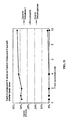
- Figure 32 shows relative binding strengths of protein isoforms to a known ligand for capture compound B.
- FIG 33 shows isolation of Carbonic Anhydrase from complex protein mixtures using capture compound A.
- CA II was doped into a FPLC purified protein mixture from the human kidney cell line HEK293,.
- the doped CAII was pulled out from all other proteins using avidin-coated (SoftLink) resin. Other proteins were discarded, yielding purified protein ready for further analysis.
- SoftLink avidin-coated
- Figure 34 shows isolation of Carbonic Anhydrase from highly complex protein mixtures using capture compound A.
- CA II was doped into the whole cytosolic extract from the human kidney cell line H EK293,.
- the doped CAN was pulled out from all other proteins using avidin-coated (SoftLink) resin.
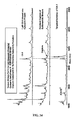
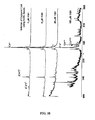
- Figure 35 shows capture and isolation of Carbonic Anhydrase from lysed red blood cells.
- the top spectrum in the figure shows direct MALDI of lysed red blood cells (no purification) wherein signal for Hemoglobin, which is in huge excess over all other proteins, can be seen. Signals are seen for the alpha and beta chains, and also for non-specific dimers (-30 kiloDaltons).
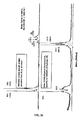
- Figure 36 shows direct capture of Carbonic Anhydrase from red blood cells, without pre-lysis of the cells.
- Figure 37 shows capture of Carbonic Anhydrase from red blood cell lysate when unbiotinylated proteins including Carbonic Anhydrase are in huge excess.
- Figure 38 shows capture of proteins with lower affinities using very high concentrations of capture compound A.
- an oligonucleotide means a linear sequence of up to about 20, about 50, or about 100, nucleotides joined by phosphodiester bonds. Above this length the term polynucleotide begins to be used.
- an oligonucleotide analog means a linear sequence of up to about 20, about 50, or about 100, nucleotide analogs, or linear sequence of up to about 20, about 50, or about 100 nucleotides linked by a "backbone" bond other than a phosphodiester bond, for example, a phosphotriester bond, a phosphoramidate bond, a phophorothioate bond, a methylphosphonate diester bond, a thioester bond, or a peptide bond (peptide nucleic acid).
- proteome means all the proteins present within a cell.
- Biomolecule is any compound found in nature, or derivatives thereof.
- Biomolecules include, but are not limited to oligonucleotides, oligonucleosides, proteins, peptides, amino acids, lipids, steroids, oligosaccharides and monosaccharides.
- MALDI-TOF refers to matrix assisted laser desorption ionization-time of flight mass spectrometry.
- a drug refers to any compound that is a candidate for use as a therapeutic or as a lead compound for designing a therapeutic or that is a known pharmaceutical.
- Such compounds can be small molecules, including small organic molecules, peptides, peptide mimetics, antisense molecules, antibodies, fragments of antibodies or recombinant antibodies.
- drugs that have specific binding properties so that they can be used as selectivity groups or can be used as for sorting of the capture compounds, either a sorting functionality that binds to a target on a support, or linked to a solid support, where the sorting functionality is the drug target.
- a drug metabolite refers to any compound that is formed after transformation of a drug following its metabolism in the body that results in a different molecule that may be more or less active than the parent drug.
- a drug fragment refers to a molecule that is a portion or moiety of a drug.
- a drug synthetic intermediate is a compound that is used as an intermediate in the chemical synthesis of a drug.
- a drug target is a protein including but not limited to receptors and enzymes that the drug is to interact with in vivo, thereby exerting the desired therapeutic effects.
- a drug non-target is a protein including but not limited to receptors and enzymes that the drug is not intended to interact with in vivo.
- the interaction of a drug with drug non- targets may result in undesired therapeutic effects such as side effects.
- nucleic acid refers to single-stranded and/or double-stranded polynucleotides such as deoxyribonucleic acid (DNA), and ribonucleic acid (RNA) as well as analogs or derivatives of either RNA or DNA. Also included in the term “nucleic acid” are analogs of nucleic acids such as peptide nucleic acid (PNA), phosphorothioate DNA, and other such analogs and derivatives or combinations thereof.
- PNA peptide nucleic acid
- PNA peptide nucleic acid
- polynucleotide refers to an oligomer or polymer containing at least two linked nucleotides or nucleotide derivatives, including a deoxyribonucleic acid (DNA), a ribonucleic acid (RNA), and a DNA or RNA derivative containing, for example, a nucteotide analog or a "backbone” bond other than a phosphodiester bond, for example, a phosphotriester bond, a phosphoramidate bond, a methylphosphonate diester bond, a phophorothioate bond, a thioester bond, or a peptide bond (peptide nucleic acid).
- DNA deoxyribonucleic acid
- RNA ribonucleic acid
- DNA or RNA derivative containing, for example, a nucteotide analog or a "backbone” bond other than a phosphodiester bond, for example, a phosphotriester bond, a phosphoramidate bond
- oligonucleotide also is used herein essentially synonymously with “polynucleotide,” although those in the art recognize that oligonucleotides, for example, PCR primers, generally are less than about fifty to one hundred nucleotides in length.
- a “mass modification,” with respect to a biomolecule to be analyzed for mass spectrometry, refers to the inclusion of changes in consituent atoms or groups that change the molecular weight of the resulting molecule in defined increments detectable by mass spectrometric analysis.
- polypeptide means at least two amino acids, or amino acid derivatives, including mass modified amino acids and amino acid analogs, which are linked by a peptide bond and which can be a modified peptide bond.
- polypeptide and “protein” are used essentially synonymously herein, although the skilled artisan recognizes that peptides generally contain fewer than about fifty to one hundred amino acid residues, and that proteins often are obtained from a natural source and can contain, for example, post-translational modifications.
- sample refers to a composition containing a material to be detected.
- sample refers to anything which can contain an biomolecule.
- samples include biological samples (e. g. , any material obtained from a source originating from a living being (e. g. , human, animal, plant, bacteria, fungi, protist, virus).
- the biological sample can be in any form, including solid materials (e. g. , tissue, cell pellets and biopsies, tissues from cadavers) and biological fluids (e. g. , urine, blood, saliva, amniotic fluid and mouth wash (containing buccal cells)).
- solid support means a non-gaseous, non- liquid material having a surface.
- a solid support can be a flat surface constructed, for example, of glass, silicon, metal, plastic or a composite; or can be in the form of a bead such as a silica gel, a controlled pore glass, a magnetic or cellulose bead; or can be a pin, including an array of pins suitable for combinatorial synthesis or analysis.
- a collection refers to combination of two or more members, generally 3, 5, 10, 50, 100, 500, 1000 or more members. In particular a collection refers to such combination of the capture compounds as provided herein.
- an array refers to a collection of elements, such as the capture compounds, containing three or more members.
- An addressable array is one in that the members of the array are identifiable, typically by position on a solid phase support but also by virtue of an identifier or detectable label. Hence, in general the members of an array are be immobilized to discrete identifiable loci on the surface of a solid phase.
- a plurality of the compounds are attached to a support, such as an array (i. e., a pattern of two or more) on the surface of a support, such as a silicon chip or other surface, generally through binding of the sorting functionality with a group or compound on the surface of the support.
- Addressing can be achieved by labeling each member electronically, such as with an radio- frequency (RF) tag, through the use of color coded beads or other such identifiable and color coded labels and through molecular weight.
- RF radio- frequency
- These labels for addressing serve as sorting functions "Q.”
- the members of the array are immobilized to discrete identifiable loci on the surface of a solid phase or directly or indirectly linked to or otherwise associated with the identifiable label, such as affixed to a microsphere or other particulate support (herein referred to as beads) and suspended in solution or spread out on a surface.
- substrate refers to an insoluble support onto which a sample and/or matrix is deposited.
- Support can be fabricated from virtually any insoluble or solid material.
- silica gel, glass e. g., controlled- pore glass (CPG)
- nylon Wang resin, Merrifield resin, dextran cross-linked with epichlorohydrin (e. g., Sephadex), agarose (e. g., Sepharose), cellulose, magnetic beads, Dynabeads, a metal surface (e. g., steel, gold, silver, aluminum, silicon and copper), a plastic material (e. g., polyethylene, polypropylene, polyamide, polyester, polyvinylidenedifluoride (PVDF)).
- flat surfaces include those with hydrophobic regions surrounding hydrophilic loci for receiving, containing or binding a sample.
- the supports can be particulate or can be in the form of a continuous surface, such as a microtiter dish or well, a glass slide, a silicon chip, a nitrocellulose sheet, nylon mesh, or other such materials.
- the particles When particulate, typically the particles have at least one dimension in the 510 ⁇ m range or smaller.
- Such particles referred collectively herein as "beads”, are often, but not necessarily, spherical. Reference to"bead”, however, does not constrain the geometry of the matrix, which can be any shape, including random shapes, needles, fibers, and elongated.”Beads", particularly microspheres that are sufficiently small to be used in the liquid phase, are also contemplated.
- The"beads" can include additional components, such as magnetic or paramagnetic particles (see, e. g.” Dyna beads (Dynal, Oslo, Norway)) for separation using magnets, as long as the additional components do not interfere with the methods and analyses herein.
- additional components such as magnetic or paramagnetic particles (see, e. g.” Dyna beads (Dynal, Oslo, Norway)) for separation using magnets, as long as the additional components do not interfere with the methods and analyses herein.
- amino acids which occur in the various amino acid sequences appearing herein, are identified according to their three-letter or one-letter abbreviations.
- the nucleotides, which occur in the various DNA fragments, are designated with the standard single-letter designations used routinely in the art.
- a cleavable bond or moiety refers to a bond or moiety that is cleaved or cleavable under the specific conditions, such as chemically, enzymatically or photolytically. Where not specified herein, such bond is cleavable under conditions of MALDI-MS analysis, such as by a UV or IR laser.
- a "selectively cleavable" moiety is a moiety that can be selectively cleaved without affecting or altering the composition of the other portions of the compound of interest.
- a cleavable moiety L of the compounds provided herein is one that can be cleaved by chemical, enzymatic, photolytic, or other means without affecting or altering composition (e. g. , the chemical composition) of the conjugated biomolecule, including a protein.
- “Non-cleavable" moieties are those that cannot be selectively cleaved without affecting or altering the composition of the other portions of the compound of interest.
- the compounds provided herein are multifunctional synthetic small molecules that can select, covalently bind ("capture") and isolate proteins based on their unique surface features.
- the solubility of the compound may be modulated in the chemical synthesis process such that water soluble (cytosolic) or insoluble (membrane) protein mixtures may be analyzed.
- the compound employs three critical functionalities: (1) a reactivity function; (2) a selectivity function; and (3) a sorting function.
- the selectivity function interacts via non-covalent interactions with a protein e. g. in the active site of enzymes or ligand binding site of receptors ("Biased approach” for e. g. non-target identification), or at a surface affinity motif (SAM) outside of the binding site ("Unbiased approach” for e. g. target discovery).
- a biased selectivity group enables isolation of specific proteins from complex mixtures.
- the selectivity function is a drug (or metabolite thereof) known to cause side effects, attached in several different orientations to make different parts of the molecule accessible to proteins.
- the reactivity function covalently "captures” or binds to the selected protein. While the selectivity function serves as the bait, the reactivity function serves as the hook. A protein thus captured will be able to survive downstream purification and analytical processes. Reactivity functions employed require an activation step (i. e. light) prior to forming covalent bond (e. g. photoactivated moiety such as azide which forms a nitrene radical).
- the sorting (pull-out) function isolates the specific protein from its complex cellular environment using a solid support (e. g. magnetic bead, DNA chip), enabling subsequent structural and functional characterization.
- a solid support e. g. magnetic bead, DNA chip
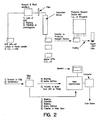
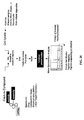
- the analytical process ( Figure 30 ) is simple and highly amenable to automation.
- a protein mixture from the cells of interest is incubated with a capture compound in buffer conditions which retain the native structural features of the proteins.
- the selectivity function reversibly interacts and comes to equilibrium with those proteins for which it has an affinity.
- the reactivity function then forms a covalent bond irreversibly linking the compound to those proteins for which there was an affinity.
- Our data indicates that the higher the affinity between the protein and the capture compound, the higher is the percentage covalently captured.
- the covalently captured proteins are isolated onto a solid support and the uncaptured cellular components and proteins washed away. If the sorting function chosen is a biotin, then avidin or streptavidin beads are used as the solid support.
- Mass spectrometry MS is used to detect the captured proteins.
- MS is used for protein identification.
- This initial mass spectrum provides the molecular weights of all proteins captured. The identity of each can then be determined by conventional means (e. g. digestion and analysis or peptide fragments and genome/proteome database searches).
- Use of the capture compounds allows the researcher to further analyze and characterize the protein, since it is physically isolated from all others (e. g. mass spectrum identification, or x-ray crystallography after removal from beads). To do so, the protein is washed from the solid support (e. g.
- solubility functions if present, which are selected to permit assaying in a selected environment, can differ among the compounds, or can be the same among all sets.
- Capture compounds also referred to as capture agents.
- the capture compounds include a core "Z” that presents one reactivity functions "X” and a selectivity function “Y” and a sorting function "Q”, and also optionally one or more solubility functions "W.” Additionally, cleavable linkers and other functions are included in the molecules.
- the particular manner in which the functions are presented on the core or scaffold is a matter of design choice, but are selected such that the resulting molecule has the property that it captures biomolecules, particularly proteins, with sufficient specificity and either covalently or with bonds of sufficient stability or affinity to permit analysis, such as by mass spectrometry, including MALDI mass spectrometric analysis, so that at least a portion of bound biomolecules remain bound (generally a binding affinity of 10 9 , 10 10 , 10 11 liters/mole or greater, or a Kq Of 10 9 , 10 10 , 10 11 , 10 12 or greater).
- X the reactivity functionality
- Y is selected to be an arylazide or diazirine.
- the selectivity functionality Y is a group that "looks" at the topology of the protein, and is selected tob e a small molecule drug. It selects the environment of the groups with which the reactivity function interacts.
- Q is a sorting function and comprises a biotin moiety, a (His) 6 moiety, a BODIPY moiety (4, 4-difluoro-4-bora-3a, 4a-diaza-s-indacene) or an oligonucleotide, providing a means for separating each set of capture compounds from the others, such as by arraying, and includes, groups such as biotin, generally a spacer, binding to an avidin on a surface (or vice versa) array, oligonucleotides for binding oligonucleotide arrays or any molecule that has a cognate binding partner to which it binds with sufficient affinitity to survive mass spectrometric analysis, such as MALDI-MS analysis, can be selected.
- groups such as biotin, generally a spacer, binding to an avidin on a surface (or vice versa) array, oligonucleotides for binding oligonucleotide arrays or any molecule that
- the solubility function W permits alteration in properties of the capture compound components of the collection.
- W can be selected so that the capture compounds are soluble or not in a particular reaction medium or environment, such as a hydrophobic environment, thereby permitting reactions with membrane components.
- the collections include sets of capture compounds, each of which set differs in Q and at least one or both X and Y.
- the sorting function can be selectively cleavable to permit its removal. More detailed description and discussion of each functionality and non- limiting exemplary embodiments follow.
- Z is a moiety that is cleavable prior to or during analysis of the biomolecule, including mass spectral analysis, without altering the chemical structure of the biomolecule, including, but not limited to, a protein.
- Z is trifunctional containing three functionalities that are each capable of being derivatized selectively in the presence of the other two functionalities.
- trifunctional moieties include amino acids that possess a functionality on the side chain (e. g., tyrosine, cysteine, aspartic acid, glutamic acid, lysine, threonine, serine, etc.).
- Such amino acids include natural and non-natural amino acids.
- the methods provided herein include a step of mass spectral analysis of proteins, which are displayed in an addressable format.
- the compounds are then bound to an array of single oligonucleotides that include single-stranded portions (or portions that can be made single-stranded) that are complementary to the oligonucleotide portions, or oligonucleotide analog portions, (Q, the sorting function) of the capture compounds.
- Z can be selected to be a group that is (i) stable to the reaction conditions required for reaction of the compounds provided herein with the biomolecule, such as a protein, (ii) stable to the conditions required for hybridization of the Q moiety with the single stranded oligonucleotides, and (iii) cleavable prior to or during analysis of the biomolecule.
- Z with the linked functional groups can be designed so that with the Q, X, Y and, optionally, W it dissolved into lipid bilayers of a cell membrane, thereby contacting internal portions of cell membrane proteins through the X and Y functions.
- the support captures proteins, such as membrane proteins and organelle proteins, including proteins within cell membranes.
- the capture compounds and functional group can be selected so that the resulting capture compounds function under selected physiological conditions.
- a lipid bilayer such as those used for forming liposomes and other micelles, can be provided on the surface of a support as a way of maintaining the structures of membrane proteins to make a lipid bilayer on the surface.
- This can be employed where the support is the "Z" function and the other functions are linked thereto, or where the compounds are linked to a support through a Q group, such as by double- stranded oligonucleotides.
- the resulting immobilized capture compounds can be coated with or dissolved in a lipid coating.
- an organic film membrane is composed of a linear-dendritic diblock copolymer composed of polyamidoamine (PAMAM) dendrimer attached to one end of a linear polyethylene oxide (PEO) block.
- PAMAM polyamidoamine
- PEO linear polyethylene oxide
- Z is a photocleavable group that is cleaved by a laser used in MALDI-TOF mass spectrometry.
- Z is an acid labile group that is cleaved upon application of a matrix for mass spectrometric analysis to arrayed, such as hybridized compound-biomolecule conjugates, or by exposure to acids (e. g., trifluoroacetic or hydrochloric acids) in a vapor or liquid form, prior to analysis.
- the matrix maintains the spacial integrity of the array, allowing for addressable analysis of the array.
- the capture compounds for use in the methods provided herein have a Z moiety that is not cleavable under conditions used for analysis of biomolecules, including, but not limited to, mass spectrometry, such as matrix assisted laser desorption ionization-time of flight (MALDI-TOF) mass spectrometry.
- mass spectrometry such as matrix assisted laser desorption ionization-time of flight (MALDI-TOF) mass spectrometry.
- Capture compounds of these embodiments can be used, for example, in methods provided herein for identifying biomolecules in mixtures thereof, for determining biomolecule-biomolecule, including protein-protein, interactions, and for determining biomolecule-small molecule, including protein-drug or protein-drug candidate, interactions. In these embodiments, it is not necessary for the Z group to be cleaved for the analysis.
- Z can be virtually any moiety that serves as a core to present the binding (the selectivity and reactivity functions) and the solubility and sorting functions.
- Z includes a mass modifying tag.
- Reactivity functions confer the ability on the compounds to bind covalently to proteins, including functional groups thereon, which include post-translationally added groups.
- X is an arylazide or diazirine.
- X is a photoactivatable group.
- the capture compound contains a selectivity function and is allowed to interact with a biomolecular mixture until, for example, equilibrium is reached.
- the X group is then activated by exposure to the appropriate wavelength of light, whereby the X group then reacts with a surface group of the biomolecule to capture it.
- the photoactivatable group is an arylazide, such as a phenylazide. Following exposure to light, the resulting nitrene will react with, e. g., the side chain of tyrosine to capture the protein.
- the photoactivatable group is a diazirine group, such as 3-trifluoromethyidiazirine.
- the reactivity functionality X is linked to the central core Z, via a spacer S.
- a spacer can be any group that provides for spacing, typically without altering desired functional properties of the capture compounds and/or capture compound/biomolecule complexes.
- the reactive functionality X linked with the spacer can be extended from the central core Z, to reach to the active sites on the surface of the biomolecule, such as proteins. Those of skill in the art in the light of the disclosure herein, can readily select suitable spacers.
- the selectivity functions serves to modulate the reactivity function by reducing the number of groups to which the reactivity functions bind.
- Selectivity functions increase the selectivity of the reactivity group so that it binds to fewer different biomolecules than in the absence of the selectivity function or binds with greater affinity to biolmolecules than in its absence.
- Y is a small molecule drug.
- the selectivity function is such that the compounds bind to or react with (via the reactivity function) greater specificity and higher affinity.
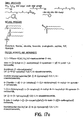
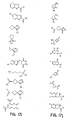
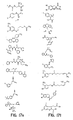
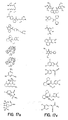
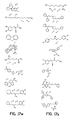
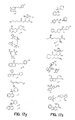
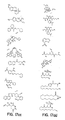
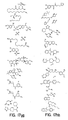
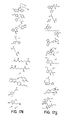
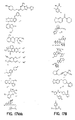
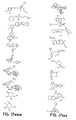
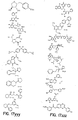
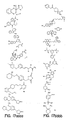
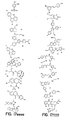
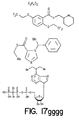
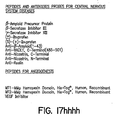
- the selectivity function can be attached directly to a compound or can be attached via a linker, such as CH 2 CO 2 or CH 2 -O-(CH 2 ) n -O, where n is an integer from 1 to 12, or 1 to 6, or 2 to 4. See, e. g. , Figure 17 and the discussion below for exemplary selectivity functions.
- the linker is chosen such that the selectivity function can reach the binding pocket of a target or non-target protein.
- the selectivity function is a chiral group, which allows for stereoselective capture of biomolecules.
- Y is a pharmaceutical drug or drug fragment, a prodrug or drug metabolite that modifies the selectivity of the capture compounds or collections thereof, to interact with the biomolecules or mixtures thereof, including, but not limited to specific receptors, to form covalent bonds.
- the capture compounds/collections thereof have a selectivity function, which is a cox-2 inhibitor, and a mixture of biomolecules contains cox receptors among other biomolecules.
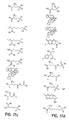
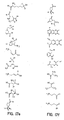
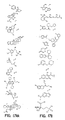
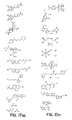
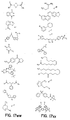
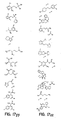
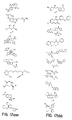
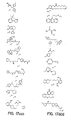
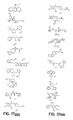
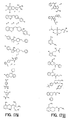
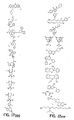
- the selectivity function is selected from pharmaceutical drugs or drug fragments set forth below, where attachment of exemplary pharmaceutical drugs to a central core is shown below.
- the selectivity function is a drug, drug fragment, drug metabolite, or a drug synthetic intermediate.
- the pharmaceutical drugs or drug fragments can be attached to the central core Z, in different orientations via different points of attachment, thereby modulating the selectivity of the capture compound.
- the attachment of a drug/drug fragment to the central core can be carried out by methods known to a person with skill in the art. Attachment of some exemplary pharmaceutical drugs at various points, to the central core Z is set forth below.
- the capture compounds provided herein include those where the selectivity function is a drug, drug fragment, drug metabolite or a prodrug.
- the capture compounds also contain a reactivity function, as defined elsewhere herein.
- the capture compounds also contain a sorting function, as defined elsewhere herein.
- the capture compounds that contain drug, drug fragment, drug metabolite or prodrug selectivity functions contain an amino acid core.
- the amino acid core may be an amino acid that possesses a functionality on the side chain for attachment of a third function.
- amino acid cores include, but are not limited to, serine, threonine, lysine, tyrosine and cysteine.
- the capture compound contains a reactivity function, a sorting function and a selectivity function, which are attached to the amino, carboxy and side chain functional groups of the amino acid.
- the core is tyrosine and the capture compounds have the formula: where "drug” refers to a drug, drug fragment, drug metabolite or prodrug.
- the drug is LIPITOR (atorvastatin calcium) and the capture compounds have the formulae:
- the drug is CELEBREX (celecoxib) and the capture compounds have the formulae:
- the drug is VIOXX (rofecoxib) and the capture compounds have the formulae :
- the drug is BAYCOL (cerivastatin sodium) and the capture compounds have the formulae:
- the drug is methotrexate and the capture compounds have the formulae :
- Examplary selectivity functions include, but are not limited to, ligands that bind to receptors; enzyme substrates; lipid structures; prostaglandins ; antibiotics; steroids; therapeutic drugs; enzyme inhibitors; transition state analogs; statins; functionalities, such as dyes and other compounds and moieties employed for protein purification and affinity chromatraphy. See e. g. , Figure 17 .
- the compounds provided herein can include a sorting function ("Q"), which permits the compounds to be addressed, such as by capture in a 2-D array.
- the sorting function is selected to not interact with the biomolecules (e. g. target and non-target proteins) in the sample.
- the sorting functions are "tags", such as oligonucleotide tags, such that when the compounds are bathed over an array of complementary oligonucleotides linked to solid supports, such as beads, chips, under suitable binding conditions, the oligonucleotides hybridize.
- the identity of the capture compound can be known by virtue of its position in the array.
- the sorting function is selected to permit physical arraying or other addressable separation method suitable for analysis, particularly mass spectrometric, including MALDI analysis.
- Sorting functions for use in the compounds provided herein include biotin, (His) 6 , BODIPY (4, 4-difluoro-4-bora-3a, 4a-diaza-s-indacene) and oligonucleotides.
- the sorting function is an oligonucleotide, particularly, either a single-stranded or partially single-stranded oligonucleotide to permit hybridization to single-stranded regions on complementary oligonucleotides on solid supports.
- Q is a single stranded unprotected or suitably protected oligonucleotide or oligonucleotide analog (e. g.
- PNA PNA of up to 50 building blocks, which is capable of hybridizing with a base-complementary single stranded nucleic acid molecule.
- Q contains from about 5 up to about 10, 15, 25, 30, 35, 40, 45 or 50 building blocks.
- Protein mixtures can have different hydrophobicities (solubility) than the compounds provided herein.
- the reaction in order to achieve high reaction yields between the functionality X on the compounds provided herein and the protein surface, the reaction is performed in solution. In other embodiments, the reaction is performed at a solid/liquid or liquid/liquid interface. In certain embodiments, the solubility properties of the compounds provided herein are dominated by the Q moiety. A change in the structure of Q can, in these embodiments, accommodate different solubilities.
- Q can have natural phosphodiester linkages; if the biomolecular mixture is very hydrophobic (lipids, glycolipids, membrane proteins, lipoproteins), Q can have it's phosphodiester bonds protected as phosphotriesters, or alternatively, these bonds can be methylphosphonatediesters or peptide nucleic acids (PNAs). If the biomolecule mixture is of an intermediate hydrophobicity, solubility is achieved, e. g. , with phosphothioate diester bonds. Intermediate solubility also can be attained by mixing phosphodiester with phosphotriester linkages.
- 2D gel electrophoresis is useful only for analysis of water soluble proteins with the result that about 30 to 35% of all cellular proteins, such as those residing in the cell membrane cannot be analyzed by this method. This is a severe limitation of 2D gel electrophoresis since many proteins, including, but not limited to, those involved in tissue specific cell-cell contacts, signal transduction, ion channels and receptors, are localized in the cell membrane.
- the compounds after reaction or complexation of the compounds provided herein with a biomolecule, including, but not limited to, a protein, the compounds are brought into contact with a set of spatially resolved complementary sequences on a flat support, beads or microtiter plates under hybridization conditions.
- the compounds for use in the methods provided herein have formula: where Q is a single-stranded unprotected or suitably protected oligonucleotide or oligonucleotide analog (e. g. , peptide nucleic acid (PNA) ) of up to 50 building blocks, which is capable of hybridizing with a base- complementary single stranded nucleic acid molecule ;
- Q is a single-stranded unprotected or suitably protected oligonucleotide or oligonucleotide analog (e. g. , peptide nucleic acid (PNA) ) of up to 50 building blocks, which is capable of hybridizing with a base- complementary single stranded nucleic acid molecule ;
- PNA peptide nucleic acid
- the compounds for use in the methods provided herein have formula: where Q is a sorting function that is a compound which is capable of specific noncovalent binding to a known compound to produce a tighly bound capture compound; Z is a moiety that is cleavable prior to or during analysis of a biomolecule, including mass spectral analysis, without altering the structure of the protein; X is a functional group that interacts with and/or reacts with functionalities on the surface of a protein, to form covalent bonds and Y is a functional group that interacts with and/or reacts by imposing unique selectivity by introducing functionalities that interact noncovalently with target proteins.
- the compounds for use in the methods provided herein have the formulae : , where Q, Z, X and Y are as defined above ; m is 1; and n is 1.
- X is a pharmaceutical drug.
- the compounds of these embodiments can be used in drug screening by capturing biomolecules, including but not limited to proteins, which bind to the pharmaceutical drug. Mutations in the biomolecules interfering with binding to the pharmaceutical drug are identified, thereby determining possible mechanisms of drug resistance.
- the compounds for use in the methods provided herein include :
- exemplary capture compounds Preparation of exemplary capture compounds is described below. Any capture compound or similar capture compound can be synthesized according to a method discussed in general below or by minor modification of the methods by selecting appropriate starting materials or by methods known to those of skill in the art.
- An exemplary photoactivatable capture compound may be prepared by the following method:
- photoactivatable capture compounds may be prepared as follows :
- the capture compounds provided herein can be used for the analysis, quantification, purification and/or identification of the components of protein mixtures. They can be used to screen libraries of small molecules to identify drug candidates, and they can be used to assess biomolecule-biomolecule interactions and to identify biomolecule complexes and intermediates, such as those in biochemical pathways and other biological intermediates.
- FIG. 20a depicts an exemplary capture assay in which capture compounds are bound to biomolecules and analyzed by MALDI-TOF MS.
- the collections provided herein have a wide variety of applications, including reducing the complexity of mixtures of molecules, particularly biomolecules, by contacting the collection with the mixtures to permit covalent binding of molecules in the mixtures.
- the capture compounds can be arrayed by virtue of the sorting function either before, during or after the contacting. Following contacting and arraying the loci of the array each contain a subset of the molecules in the mixture. The array can then be analyzed, such as by using mass spectrometry.
- proteins are isolated from biological fluids and/or tissues by cell lysis followed, for example, by either precipitation methods (e. g., ammonium sulfate) or enzymatic degradation of the nucleic acids and carbohydrates (if necessary) and the low molecular weight material is removed by molecular sieving. Proteins also can be obtained from expression libraries. Aliquots of the protein mixture are reacted with the collections of capture compounds, generally members of the collection have different functionalities, such as different reactivity and/or selectivity, to separate the mixture into separate protein families according to the selected reactivity of X or the reactivity function plus the selectivity function. The diversity (number of different) selected for the sorting function Q depends on the complexity of the target mixture of proteins.
- the separation of proteins from a complex mixture is achieved by virtue of the compound-protein products bound to different members of the collection.
- the supernatant, which contains the capture compound-protein products is contacted with support bound or otherwise labeled or addressed recipient molecules, such as oligonucleotides on a support and allowed to bind, such as by hybridization to an array of complementary oligonucleotides.
- a flat solid support that carries at spatially distinct locations, an array of oligonucleotides or oligonucleotide analogs that is complementary to the selected N 1 m B i N 2 n oligonucleotide or oligonucleotide analog, is hybridized to the capture compound-biomolecule products.
- the methods herein use mixtures of the compounds provided herein that have permuted Q groups to achieve sorting of the biomolecules following reaction with the compounds.
- Reaction of the subsets separately with an aliquot of the biomolecule mixture to be analyzed results in conjugate mixtures that can be aligned with, e. g. , a microtiter plate format (e. g., 96, 384, 1536, etc. ). Analysis using these subsets of compound mixtures provides further sorting of the biomolecules prior to analysis.
- proteins to be analyzed were fluorescently labeled prior to (or after) reaction with the compound but prior to hybridization, these labeled proteins also can be detected on the array. In this way the positions that carry a hybrid can be detected prior to scanning over the array with MALDI-TOF mass spectrometry and the time to analyze the array minimized.
- Mass spectrometers of various kinds can be applied to analyze the proteins (e. g., linear or with reflectron, with or without delayed extraction, with TOF, Q- TOFs or Fourier Transform analyzer with lasers of different wavelengths and xy sample stages).
- proteins e. g., linear or with reflectron, with or without delayed extraction, with TOF, Q- TOFs or Fourier Transform analyzer with lasers of different wavelengths and xy sample stages).
- Mass spectrometry formats for use herein, include, but are not limited to, matrix assisted laser desorption ionization (MALDI), continuous or pulsed electrospray (ES) ionization, ionspray, thermospray, or massive cluster impact mass spectrometry and a detection format such as linear time-of-flight (TOF), reflectron time-of-flight, single quadruple, multiple quadruple, single magnetic sector, multiple magnetic sector, Fourier transform, ion cyclotron resonance (ICR), ion trap, and combinations thereof such as MALDI TOF spectrometry.
- MALDI TOF matrix assisted laser desorption ionization
- ES electrospray
- ionspray ionspray
- thermospray thermospray
- massive cluster impact mass spectrometry and a detection format such as linear time-of-flight (TOF), reflectron time-of-flight, single quadruple, multiple quadruple, single magnetic sector, multiple magnetic sector,
- the samples dissolved in water or in a volatile buffer, are injected either continuously or discontinuously into an atmospheric pressure ionization interface (API) and then mass analyzed by a quadrupole.
- API atmospheric pressure ionization interface
- MALDI mass spectrometry In MALDI mass spectrometry (MALDI-MS), various mass analyzers can be used, e. g. , magnetic sector/magnetic deflection instruments in single or triple quadrupole mode (MS/MS), Fourier transform and time of flight (TOF), including orthogonal time-of-flight (O-TOF), configurations as is known in the art of mass spectrometry.
- mass analyzers e. g. , magnetic sector/magnetic deflection instruments in single or triple quadrupole mode (MS/MS), Fourier transform and time of flight (TOF), including orthogonal time-of-flight (O-TOF), configurations as is known in the art of mass spectrometry.
- TOF Fourier transform and time of flight
- OF-TOF orthogonal time-of-flight
- MALDI-MS requires the biomolecule to be incorporated into a matrix.
- a laser such as a UV or IR laser
- MALDI-MS has been performed on polypeptides, glycerol, and other liquids as a matrix.
- Biomolecules such as proteins are sorted using a covalent or noncovalent interaction with immobilized capture compounds. Collections, such as arrays of capture compounds bound to biomolecules, such as from cell lysates, then can be used to screen libraries or other mixtures of drug candidates or to further screen mixtures of biomolecules to see what binds to the bound biomolecules.
- the capture biomolecule-biomolecule complexes or biomolecule-drug candidate complexes can be analyzed to identify biochemical pathways and also to identify targets with the candidate drug.
- test compounds typically small molecules, including small organic molecules and other such compounds that can serve as drug candidates or lead compounds.
- Bound small molecules are identified by mass spectrometry or other analytical methods.
- Many pharmaceutical drugs have side effects that may arise from the interaction of the drugs, drug fragments, drug metabolites or prodrugs with drug non-target biomolecules under physiological conditions.
- Cox-2 inhibitors such as Cox-2 inhibitors such as 4- [5- (4-methylphenyl)-3- (trifluoromethyl)-1H-pyrazol-1-yl] benzenesulfonamide, (Celebrex ® ) or 4-(4-(methylsulfonyl) phenyl)-3-phenyl- 2 (5H)-furanone have side effects that may be the result of interaction of the drug with non-target biomolecules.
- the thiazolidinedione (TDZ) class of antidiabetic drugs are PPAR- ⁇ activators.
- the PPAR- ⁇ protein is a receptor important in the regulation of genes involved in the metabolism of glucose and lipids. TDZs are prescribed to diabetic patients in whom blood sugar (glucose) is not properly metabolized.
- TDZ's are known to also interact with PPAR- ⁇ , a protein with a similar structure involved in the synthetic pathway of triglycerides, known to be associated with cardiovascular disease.
- the TDZ Rezulin was withdrawn from the market due to liver toxicity, and Actos and Avandia were recently reported in a Mayo Clinic study to have cardiovascular side effects.
- Drug metabolites can also cause toxicity.
- Cytochrome P450 family primarily located in the liver. These proteins work by attaching functional groups to the (usually lipophilic) drug molecules. These functional groups subsequently allow other enzymes to conjugate moieties (glucuronidation, sulfation, etc. ) to the metabolites rendering them water- soluble and thus facilitating excretion.
- Toxicity can occur if a polymorphic form of an enzyme involved in the metabolism malfunction, or a metabolite irreversibly inactivates a cytochrome P450 (suicide inhibition), compromising its excretion potentially leading to a toxic accumulation in the liver.
- these metabolizing enzyme systems in e. g. kidneys, lung, or heart, similar drug toxicities can be observed in those organs.
- the capture compounds/collections thereof provided herein can be used to identify the drug non-target biomolecules that interact with the pharmaceutical drugs/drug fragments, drug metabolites or prodrugs including but not limited to, receptors and enzymes.
- the identification and characterization of the drug interacting proteins can also lead to unexpected alternative pharmacological benefits. It is not unlikely that drug targets in other unexpected biological pathways would be found, which allow the application of the drug to treat other diseases. A failed drug that might not be efficacious (or too toxic) for one disease could be turned into a blockbuster for another disease.
- the capture compounds/collections thereof are designed to contain pharmaceutical drugs/drug fragments, drug metabolites or prodrugs as the selectivity function and suitable reactivity and sorting functionality.
- the capture compound/collections thereof are allowed to interact with a mixture of drug target and non-target biomolecules, including but not limited to, receptor proteins.
- the captured biomolecules are then analyzed to identify drug target and non-target biomolecules. Screening and identification of drug non-target biomolecules can help in understanding side effects of the pharmaceutical drugs and permit modification of the drug structure to eliminate or minimize the side effects while maintaining the efficacy.
- Exemplary drug molecules that can be used in the methods and collections provided herein are set forth elsewhere herein, and include, but are not limited to, atorvastatin calcium, celecoxib, refecoxib and cerivastatin sodium.
- bioinformatics and functional genomic tools are available. These include in silico approaches (bioinformatics) including sequence alignment, pharmacophores, homology models and protein motif correlation ; in vitro approaches including liver midrosomes metabolic pathways (e. g. P450), cDNA-expressed enzymes, signal pathways and back-mapping to yeast pathways, simulations and protein/protein interaction of pull-out proteins; in vivo approaches including native polymorphisms, knock-out/knock-in, flow cytometry, therapeutic activity of the drug (i. e. therapeutic profile) and experimental toxicity, and prospective genotyping and prospective phenotyping. Using these in conjunction with cell-based assays and ribozyme-based knock-in/knock-out technology, which of the proteins identified above are associated with the therapeutic or toxic effect can be determined.
- the selectivity function of the capture compound is a drug molecule or one of its metabolites, attached in different chemically relevant orientations.
- the proteins (target and non-targets) that interact with the drug and their respective putative function are identified, screening against all cell types potentially involved in the therapeutic or side-effect-related pathways.
- NCE new chemical entity
- Exemplary diseases that may be studied using these methods include :
- HEK293 cellular fractions are FPLC fractionated and multiple fractions collected along the salt gradient.
- Dissolve capture compound in 10 mM DMSO stock Make working stock of capture compound A in methanol. Make new stock every week and keep it on ice with aluminum foil to protect it from light. Pierce spin columns (about 500 ul bed volume). It handles as little as 20 ⁇ l and up to 100 ⁇ l je sample.
- Washing buffer for pull-down Hepes/NaCl/TX100/EDTA/DTT. Make the buffer stock with the first 4 components at the right concentration and pH first, then separately make 1 M DTT stock and freeze it down in small aliquots until use. Right before the washing procedures in the pull-down experiment (step H), thaw a DTT stock tube and add DTT stock at the required final.
- Each pull-down tube requires-1 ml washing buffer).
- the FT fraction in the mixture is diluted 2 fold in the final mixture. For S100, more than 3-fold dilution is required. In certain embodiments, use 15 ul for S100 in a 50 ul reaction and change the buffer volume accordingly.
- step G Spin and remove supernatant as described in step G. J. Following 4x washes by the washing buffer, switch to water, carry out another 4x washes. After the last wash in water, completely take out the supernatant, add 2 ⁇ l water on top.
- L If SDS-PAGE is required for the sample, silver staining (Invitrogen's Silver Quest Kit) may be used to detect proteins in the pull-down.
- the substrate is a biotinylated compound
- ORAL HYPOGLYCEMICS/ANTIDIABETICS Thiazolidinediones (Glitazones) : Troglitazone (Rezulin TM ) Rosiglitazone (Avandia TM ) and Pioglitazone (Actos TM )
- Troglitazone (Rezulin) was the first thiazolidinedione marketed and was indicated for insulin-resistant patients who are receiving insulin and also as monotherapy. Troglitazone has since been removed from the market due to concerns of hepatic toxicity.
- the thiazolidinediones are dependent on the presence of insulin for activity, however, they do NOT affect insulin secretion.
- the thiazolidinediones are highly selective and potent agonists for the peroxisome proliferator activated receptor (PPAR) gamma that regulates the transcription of a number of insulin responsive genes.
- PPAR receptors can be found in key target tissues for insulin action such as adipose tissue, skeletal muscle, and liver. Activation of PPAR-gamma receptors regulates the transcription of insulin-responsive genes involved in the control of glucose production, transport, and utilization. For example, stimulation of these receptors may result in increased production of GLUT1 and GLUT 4 receptors.
- PPAR-gamma responsive genes also play a role in the regulation of fatty acid metabolism. Unlike oral sulfonylureas, rosiglitazone enhances tissue sensitivity to insulin rather than stimulates insulin secretion. Also, based on this mechanism, it may take several weeks for these drugs to fully express their activity (and thus to assess their potential).
- the FDA recommends monitoring hepatic function at the start of glitazones therapy and every two months during the first year of treatment.
- Patients should also be advised to monitor for signs and symptoms suggestive of hepatic dysfunction such as nausea, vomiting, abdominal pain, fatigue, anorexia, dark urine, or jaundice.
- CPK creatinine phosphokinase
- Thiazolidinediones are ligands of the PPAR- ⁇ 2.
- PPAR- ⁇ 2 is predominantly expressed in adipocytes, intestine, and macrophages. There is some evidence that a low level expression might also occur in muscle cells.
- the PPAR- ⁇ receptor is a transcription factor that controls the expression of numerous genes. It is assumed that the effect of thiazolidinediones on insulin sensitivity is mediated through altered expression of PPAR- ⁇ 2-dependent genes.
- Thiazolidinediones (Glitazones): Troglitazone (Rezulin TM ) Rosiglitazone (Avandia TM ) and Pioglitazone (Actos TM ) will be attached to the"Capture Compound (CC)."
- the CC-Thiazolidinediones will be incubated with kidney, liver, pancreatic, colonic epithelium and muscle cells.
- Rezulin, Avandia and Actos should capture PPAR- ⁇ , PPAR-a as well as non-target proteins.
- These three drugs have different metabolism and pharmacokinetics, therefore it is expected that they should capture different non-target proteins.
- antidiabetic activity of thiazolidinediones is caused by binding to PPAR- ⁇ protein.
- Structure Activity Relationship (SAR) of thiazolidinediones and crystal structures of and PPAR-a co-crystallized with thiazolidinediones is known in the literature.
- thiazolidinediones could be due to its interaction with PPAR-a and non-target proteins.
- the ToxPro application of CCMS will be used to identify all proteins which bind to each drug, and their respective binding constants. After identifying non-target proteins with CCMS technology, the thiazolidinediones will be chemically re- engineered, through an iterative process, to prevent their binding to PPAR-a and non-target proteins while maintaining the interaction with the target protein PPAR- ⁇ .
- Rezulin Capture Compound Structures I and II are incubated with kidney, liver, pancreatic, colon epithelium, and muscle cells.
- the target protein PPAR- ⁇ as well as non-target protein PPAR- ⁇ and protein A, B and C are captured.
- Avandia is attached to the capture compound as depicted below :
- Avandia metabolizes to aromatic hydroxy metabolites. Therefore two possible metabolites are attached to the capture compound as depicted below :
- Avandia and its metabolites attached to the Capture Compound are incubated with kidney, liver, pancreatic, colon epithelium, and muscle cells.
- A, B and C are captured.
- Actos' possible metabolite is attached to the capture compound as depicted below :
- Actos and its metabolites attached to the Capture Compound are incubated with kidney, liver, pancreatic, colon epithelium, and muscle cells.
- the target protein PPAR- ⁇ as well as non-target protein PPAR- ⁇ and protein A, B and C are captured.
Landscapes
- Chemical & Material Sciences (AREA)
- Organic Chemistry (AREA)
- Life Sciences & Earth Sciences (AREA)
- Health & Medical Sciences (AREA)
- Engineering & Computer Science (AREA)
- Molecular Biology (AREA)
- Physics & Mathematics (AREA)
- Hematology (AREA)
- Biomedical Technology (AREA)
- Urology & Nephrology (AREA)
- Immunology (AREA)
- Bioinformatics & Cheminformatics (AREA)
- Bioinformatics & Computational Biology (AREA)
- Biophysics (AREA)
- Food Science & Technology (AREA)
- Cell Biology (AREA)
- Microbiology (AREA)
- Biotechnology (AREA)
- Proteomics, Peptides & Aminoacids (AREA)
- Medicinal Chemistry (AREA)
- Analytical Chemistry (AREA)
- Biochemistry (AREA)
- General Health & Medical Sciences (AREA)
- General Physics & Mathematics (AREA)
- Pathology (AREA)
- Spectroscopy & Molecular Physics (AREA)
- Investigating Or Analysing Biological Materials (AREA)
- Measuring Or Testing Involving Enzymes Or Micro-Organisms (AREA)
- Other Investigation Or Analysis Of Materials By Electrical Means (AREA)
- Peptides Or Proteins (AREA)
- Pyrrole Compounds (AREA)
- Investigating Or Analysing Materials By The Use Of Chemical Reactions (AREA)
- Investigating Or Analyzing Non-Biological Materials By The Use Of Chemical Means (AREA)
- Organic Low-Molecular-Weight Compounds And Preparation Thereof (AREA)
- Medicines That Contain Protein Lipid Enzymes And Other Medicines (AREA)
- Medicines Containing Antibodies Or Antigens For Use As Internal Diagnostic Agents (AREA)
- Investigating Or Analysing Materials By Optical Means (AREA)
Applications Claiming Priority (2)
| Application Number | Priority Date | Filing Date | Title |
|---|---|---|---|
| US44139803P | 2003-01-16 | 2003-01-16 | |
| EP04702919A EP1583972B1 (en) | 2003-01-16 | 2004-01-16 | Methods for identifying drug non-target proteins |
Related Parent Applications (1)
| Application Number | Title | Priority Date | Filing Date |
|---|---|---|---|
| EP04702919.4 Division | 2004-01-16 |
Publications (3)
| Publication Number | Publication Date |
|---|---|
| EP2259068A2 EP2259068A2 (en) | 2010-12-08 |
| EP2259068A3 EP2259068A3 (en) | 2011-10-19 |
| EP2259068B1 true EP2259068B1 (en) | 2013-08-14 |
Family
ID=32771925
Family Applications (2)
| Application Number | Title | Priority Date | Filing Date |
|---|---|---|---|
| EP04702919A Expired - Lifetime EP1583972B1 (en) | 2003-01-16 | 2004-01-16 | Methods for identifying drug non-target proteins |
| EP10179588.8A Expired - Lifetime EP2259068B1 (en) | 2003-01-16 | 2004-01-16 | Capture compounds and methods for analyzing the proteome |
Family Applications Before (1)
| Application Number | Title | Priority Date | Filing Date |
|---|---|---|---|
| EP04702919A Expired - Lifetime EP1583972B1 (en) | 2003-01-16 | 2004-01-16 | Methods for identifying drug non-target proteins |
Country Status (11)
| Country | Link |
|---|---|
| US (3) | US20060051879A9 (enExample) |
| EP (2) | EP1583972B1 (enExample) |
| JP (2) | JP4741458B2 (enExample) |
| AT (1) | ATE489629T1 (enExample) |
| AU (1) | AU2004206856B9 (enExample) |
| CA (2) | CA2658334C (enExample) |
| DE (1) | DE602004030212D1 (enExample) |
| DK (1) | DK2259068T3 (enExample) |
| IL (3) | IL169437A (enExample) |
| SG (1) | SG153699A1 (enExample) |
| WO (1) | WO2004064972A2 (enExample) |
Families Citing this family (43)
| Publication number | Priority date | Publication date | Assignee | Title |
|---|---|---|---|---|
| EP2053406A3 (en) | 2001-07-16 | 2009-06-24 | caprotec bioanalytics GmbH | Capture compounds, collections thereof and methods for analyzing the proteome and complex compositions |
| DK1502102T3 (da) * | 2002-03-11 | 2009-05-04 | Caprotec Bioanalytics Gmbh | Forbindelser og fremgangsmåder til analysering af proteomet |
| EP1583972B1 (en) * | 2003-01-16 | 2010-11-24 | caprotec bioanalytics GmbH | Methods for identifying drug non-target proteins |
| US20060210982A1 (en) * | 2003-01-31 | 2006-09-21 | Hiroshi Yanagawa | Cleavable assigned molecules and screening method using the same |
| WO2006044650A2 (en) * | 2004-10-15 | 2006-04-27 | Genencor International, Inc. | Competitive differential screening |
| GB0515323D0 (en) | 2005-07-26 | 2005-08-31 | Electrophoretics Ltd | Mass labels |
| US7837626B2 (en) * | 2005-08-05 | 2010-11-23 | Siemens Medical Solutions Usa, Inc. | Contrast agent manipulation with medical ultrasound imaging |
| US8168181B2 (en) | 2006-02-13 | 2012-05-01 | Alethia Biotherapeutics, Inc. | Methods of impairing osteoclast differentiation using antibodies that bind siglec-15 |
| EP2438962A3 (en) | 2006-02-13 | 2012-07-18 | Alethia Biotherapeutics Inc. | Polynucleotides and polypeptide sequences involved in the process of bone remodeling |
| US8084734B2 (en) * | 2006-05-26 | 2011-12-27 | The George Washington University | Laser desorption ionization and peptide sequencing on laser induced silicon microcolumn arrays |
| US20080017512A1 (en) * | 2006-07-24 | 2008-01-24 | Bordunov Andrei V | Coatings for capillaries capable of capturing analytes |
| US8110796B2 (en) | 2009-01-17 | 2012-02-07 | The George Washington University | Nanophotonic production, modulation and switching of ions by silicon microcolumn arrays |
| WO2010089138A1 (en) | 2009-02-09 | 2010-08-12 | Caprotec Bioanalytics Gmbh | Devices, systems and methods for separating magnetic particles |
| US20100281003A1 (en) * | 2009-04-02 | 2010-11-04 | New York University | System and uses for generating databases of protein secondary structures involved in inter-chain protein interactions |
| US9490113B2 (en) | 2009-04-07 | 2016-11-08 | The George Washington University | Tailored nanopost arrays (NAPA) for laser desorption ionization in mass spectrometry |
| GB0916881D0 (en) * | 2009-09-25 | 2009-11-11 | Electrophoretics Ltd | Mass labels |
| GB201014023D0 (en) | 2010-08-20 | 2010-10-06 | Ucl Business Plc | Process for producing bioconjugates and products thereof |
| DE102010060498B4 (de) | 2010-11-11 | 2013-04-18 | Caprotec Bioanalytics Gmbh | Isolierung und funktionale Identifizierung ganzer Zellen |
| DE102011050363A1 (de) | 2011-05-13 | 2012-11-15 | Caprotec Bioanalytics Gmbh | Stufenweise aufbaubare Fängerverbindungen und Verfahren zur Proteinisolierung aus komplexen Gemischen |
| CA3191015A1 (en) | 2012-02-07 | 2013-08-15 | Vibrant Holdings, Llc | Substrates, peptide arrays, and methods |
| US9598713B2 (en) * | 2012-03-02 | 2017-03-21 | Japanese Science And Technology Agency | Method for constructing functional nucleic acid molecule, and nucleic acid combination to be used in said method |
| US9354237B2 (en) * | 2012-05-18 | 2016-05-31 | Purdue Research Foundation | Methods for isolating proteins |
| EP2875051B1 (en) | 2012-07-19 | 2019-02-20 | Daiichi Sankyo Company, Limited | Anti-siglec-15 antibodies |
| DE102012216346A1 (de) | 2012-09-13 | 2014-03-13 | Fraunhofer-Gesellschaft zur Förderung der angewandten Forschung e.V. | Verfahren zum Markieren oder Immobilisieren einer Zielstruktur |
| US10006909B2 (en) | 2012-09-28 | 2018-06-26 | Vibrant Holdings, Llc | Methods, systems, and arrays for biomolecular analysis |
| US10286376B2 (en) | 2012-11-14 | 2019-05-14 | Vibrant Holdings, Llc | Substrates, systems, and methods for array synthesis and biomolecular analysis |
| EP2913674A1 (en) | 2014-02-28 | 2015-09-02 | Caprotec Bioanalytics GmbH | Stepwise assembled capture compounds comprising a cleavable function and method for isolating and/or characterizing biomolecules or biomolecule fragments, in particular proteins or protein fragments, of complex mixtures |
| CN104483445B (zh) * | 2014-12-03 | 2016-10-12 | 广东省食品药品检验所 | 一种噻唑烷二酮快速检测试剂盒及其检测方法 |
| EP4170348A1 (en) * | 2015-03-12 | 2023-04-26 | Vibrant Holdings, LLC | Polypeptide arrays and methods of attaching polypeptides to an array |
| WO2017029194A1 (en) * | 2015-08-14 | 2017-02-23 | Johannes Kepler Universität Linz | Regenerative biosensor |
| JPWO2018143357A1 (ja) * | 2017-02-01 | 2019-11-21 | 国立大学法人浜松医科大学 | 標的物質と親和性の高い物質をスクリーニングする方法 |
| CN110325491B (zh) * | 2017-03-17 | 2022-04-19 | 成都先导药物开发股份有限公司 | 编码库的合成方法及组合物 |
| CN107102079A (zh) * | 2017-04-26 | 2017-08-29 | 苏州海科医药技术有限公司 | 检测人血浆中阿托伐他汀及代谢物的液相色谱‑串联质谱方法及临床药动学研究的应用 |
| EP3701027A1 (en) * | 2017-10-26 | 2020-09-02 | Les Laboratoires Servier SAS | Methods and pharmaceutical compositions for treating tubulin carboxypeptidases associated diseases |
| CN108061777B (zh) * | 2017-11-27 | 2020-05-08 | 浙江公正检验中心有限公司 | 减肥类保健食品中34种非法添加药物残留量的检测方法 |
| WO2019126734A1 (en) * | 2017-12-22 | 2019-06-27 | Pacific Biosciences Of California, Inc. | Modified biotin-binding proteins for immobilization |
| AU2019308231B2 (en) * | 2018-07-16 | 2022-12-22 | The Scripps Research Institute | Opioid haptens, conjugates, vaccines, and methods of generating antibodies |
| CN109682912A (zh) * | 2019-01-16 | 2019-04-26 | 徐州立兴佳正医药科技有限公司 | 一种液质联用测定血浆中塞来昔布浓度的方法 |
| DE102019109771B4 (de) * | 2019-04-12 | 2022-06-30 | Bruker Daltonics GmbH & Co. KG | Auswertung komplexer Massenspektrometrie-Daten von biologischen Proben |
| US12048926B2 (en) * | 2019-06-26 | 2024-07-30 | Waters Technologies Corporation | Coatings with immobilized affinity ligands and enzymes and use thereof in liquid chromatography assays |
| CN116829922A (zh) * | 2020-12-17 | 2023-09-29 | 豪夫迈·罗氏有限公司 | 用于质谱法的基于蒸发的样品制备工作流程 |
| CN114112980B (zh) * | 2022-01-24 | 2022-05-10 | 武汉宏韧生物医药股份有限公司 | 一种基于数据分析的药物组分检测方法与系统 |
| CN116136595B (zh) * | 2023-02-24 | 2025-09-30 | 西安电子科技大学 | 基于两级尺度微调的协同探测双基前视sar成像处理方法 |
Family Cites Families (124)
| Publication number | Priority date | Publication date | Assignee | Title |
|---|---|---|---|---|
| US4415732A (en) * | 1981-03-27 | 1983-11-15 | University Patents, Inc. | Phosphoramidite compounds and processes |
| DE3239888A1 (de) | 1982-10-28 | 1984-05-03 | Hubert Prof. Dr. 2000 Hamburg Köster | Verfahren zur herstellung von oligonucleosidphosphonaten |
| DE3239887A1 (de) | 1982-10-28 | 1984-05-03 | Hubert Prof. Dr. 2000 Hamburg Köster | Verfahren zur herstellung von oligonucleotiden |
| US5198540A (en) * | 1982-10-28 | 1993-03-30 | Hubert Koster | Process for the preparation of oligonucleotides in solution |
| DE3326520A1 (de) | 1983-07-22 | 1985-01-31 | Hubert Prof. Dr. 2000 Hamburg Köster | Verfahren zur definierten verknuepfung doppelhelikaler dna-fragmente mittels einer linker-dna sowie als linker-dna geeignete oligonucletide |
| DE3329892A1 (de) * | 1983-08-18 | 1985-03-07 | Köster, Hubert, Prof. Dr., 2000 Hamburg | Verfahren zur herstellung von oligonucleotiden |
| DE3537403C2 (de) * | 1985-10-21 | 1995-06-01 | Papst Motoren Gmbh & Co Kg | Kollektorloser Gleichstrommotor mit oder für einen Lüfter |
| EP0285675A1 (de) | 1987-02-06 | 1988-10-12 | BIOSYNTECH Biochemische Synthesetechnik GmbH | Synthetische DNA-Kassetten mit Kodierung fuer artifizielle Proteine und deren Expression |
| US4923901A (en) | 1987-09-04 | 1990-05-08 | Millipore Corporation | Membranes with bound oligonucleotides and peptides |
| JPS6455181U (enExample) | 1987-09-30 | 1989-04-05 | ||
| EP0310361A3 (en) | 1987-09-30 | 1989-05-24 | Beckman Instruments, Inc. | Tridentate conjugate and method of use thereof |
| US5770625A (en) * | 1988-02-08 | 1998-06-23 | The Trustees Of Columbia University In The City Of New York | Butyryl-tyrosinyl spermine, analogs thereof and methods of preparing and using same |
| US5011861A (en) | 1988-06-28 | 1991-04-30 | Millipore Corporation | Membranes for solid phase protein sequencing |
| US5547839A (en) * | 1989-06-07 | 1996-08-20 | Affymax Technologies N.V. | Sequencing of surface immobilized polymers utilizing microflourescence detection |
| US5143854A (en) * | 1989-06-07 | 1992-09-01 | Affymax Technologies N.V. | Large scale photolithographic solid phase synthesis of polypeptides and receptor binding screening thereof |
| EP0445299A4 (en) * | 1989-09-22 | 1992-03-18 | Mitsui Toatsu Chemicals, Inc. | Inositol derivative and production thereof |
| US5410068A (en) * | 1989-10-23 | 1995-04-25 | Perseptive Biosystems, Inc. | Succinimidyl trityl compounds and a process for preparing same |
| US5723286A (en) * | 1990-06-20 | 1998-03-03 | Affymax Technologies N.V. | Peptide library and screening systems |
| HUT66827A (en) * | 1990-09-24 | 1995-01-30 | Brent | Screening assays |
| CA2148252C (en) * | 1992-10-30 | 2007-06-12 | Roger Brent | Interaction trap system for isolating novel proteins |
| US6436635B1 (en) * | 1992-11-06 | 2002-08-20 | Boston University | Solid phase sequencing of double-stranded nucleic acids |
| US5605798A (en) * | 1993-01-07 | 1997-02-25 | Sequenom, Inc. | DNA diagnostic based on mass spectrometry |
| EP1262564A3 (en) | 1993-01-07 | 2004-03-31 | Sequenom, Inc. | Dna sequencing by mass spectrometry |
| US6194144B1 (en) * | 1993-01-07 | 2001-02-27 | Sequenom, Inc. | DNA sequencing by mass spectrometry |
| US5512473A (en) * | 1993-01-29 | 1996-04-30 | Brent; Roger | Max-interacting proteins and related molecules and methods |
| US6074823A (en) * | 1993-03-19 | 2000-06-13 | Sequenom, Inc. | DNA sequencing by mass spectrometry via exonuclease degradation |
| WO1994021822A1 (en) | 1993-03-19 | 1994-09-29 | Sequenom, Inc. | Dna sequencing by mass spectrometry via exonuclease degradation |
| CA2162568C (en) | 1993-05-10 | 2001-10-30 | Yuichi Oku | Method and reagent for simultaneously assaying one or more ligands in a group of preselected ligands |
| US5695941A (en) * | 1994-06-22 | 1997-12-09 | The General Hospital Corporation | Interaction trap systems for analysis of protein networks |
| US6428955B1 (en) * | 1995-03-17 | 2002-08-06 | Sequenom, Inc. | DNA diagnostics based on mass spectrometry |
| CA2218188A1 (en) | 1995-04-11 | 1996-10-17 | Trustees Of Boston University | Solid phase sequencing of biopolymers |
| WO1996032503A1 (en) * | 1995-04-11 | 1996-10-17 | The General Hospital Corporation | Reverse two-hybrid systems |
| US6025129A (en) * | 1995-04-25 | 2000-02-15 | Irori | Remotely programmable matrices with memories and uses thereof |
| US6017496A (en) * | 1995-06-07 | 2000-01-25 | Irori | Matrices with memories and uses thereof |
| US5925562A (en) * | 1995-04-25 | 1999-07-20 | Irori | Remotely programmable matrices with memories |
| US5961923A (en) * | 1995-04-25 | 1999-10-05 | Irori | Matrices with memories and uses thereof |
| US5741462A (en) * | 1995-04-25 | 1998-04-21 | Irori | Remotely programmable matrices with memories |
| US5751629A (en) * | 1995-04-25 | 1998-05-12 | Irori | Remotely programmable matrices with memories |
| US5874214A (en) * | 1995-04-25 | 1999-02-23 | Irori | Remotely programmable matrices with memories |
| US5532379A (en) * | 1995-05-05 | 1996-07-02 | Pierce Chemical Company | Biotin containing heterobifunctional cleavable compounds |
| US5625184A (en) * | 1995-05-19 | 1997-04-29 | Perseptive Biosystems, Inc. | Time-of-flight mass spectrometry analysis of biomolecules |
| US5777888A (en) * | 1995-08-09 | 1998-07-07 | Regents Of The University Of California | Systems for generating and analyzing stimulus-response output signal matrices |
| US5807525A (en) * | 1995-08-17 | 1998-09-15 | Hybridon, Inc. | Apparatus and process for multi stage solid phase synthesis of long chained organic molecules |
| AU6456496A (en) | 1995-08-17 | 1997-03-12 | Hybridon, Inc. | Apparatus and process for multi-stage solid-phase synthesis of long-chained organic molecules |
| US6146854A (en) | 1995-08-31 | 2000-11-14 | Sequenom, Inc. | Filtration processes, kits and devices for isolating plasmids |
| US5654545A (en) * | 1995-09-19 | 1997-08-05 | Bruker-Franzen Analytik Gmbh | Mass resolution in time-of-flight mass spectrometers with reflectors |
| US5742049A (en) * | 1995-12-21 | 1998-04-21 | Bruker-Franzen Analytik Gmbh | Method of improving mass resolution in time-of-flight mass spectrometry |
| US5641959A (en) * | 1995-12-21 | 1997-06-24 | Bruker-Franzen Analytik Gmbh | Method for improved mass resolution with a TOF-LD source |
| JP2000508624A (ja) | 1996-03-08 | 2000-07-11 | スミスクライン・ビーチャム・コーポレイション | コンビナトリアルライブラリーのスクリーニングの間にタンパク質の化学物質に対する親和性を測定する方法 |
| WO1997037041A2 (en) | 1996-03-18 | 1997-10-09 | Sequenom, Inc. | Dna sequencing by mass spectrometry |
| US6475807B1 (en) | 1996-04-08 | 2002-11-05 | Smithkline Beecham Corporation | Mass-based encoding and qualitative analysis of combinatorial libraries |
| CA2255599C (en) | 1996-04-25 | 2006-09-05 | Bioarray Solutions, Llc | Light-controlled electrokinetic assembly of particles near surfaces |
| GB9609262D0 (en) | 1996-05-02 | 1996-07-03 | Isis Innovation | Peptide library and method |
| US5777325A (en) * | 1996-05-06 | 1998-07-07 | Hewlett-Packard Company | Device for time lag focusing time-of-flight mass spectrometry |
| US5928906A (en) * | 1996-05-09 | 1999-07-27 | Sequenom, Inc. | Process for direct sequencing during template amplification |
| US6022688A (en) | 1996-05-13 | 2000-02-08 | Sequenom, Inc. | Method for dissociating biotin complexes |
| CN1173776C (zh) * | 1996-06-28 | 2004-11-03 | 卡钳技术有限公司 | 在微规模流体性设备里的高通过量的筛选分析系统 |
| IL119029A0 (en) * | 1996-08-07 | 1996-11-14 | Yeda Res & Dev | Long-acting drugs and pharamaceutical compositions comprising them |
| US6117631A (en) * | 1996-10-29 | 2000-09-12 | Polyprobe, Inc. | Detection of antigens via oligonucleotide antibody conjugates |
| EP0954612A2 (en) * | 1996-11-06 | 1999-11-10 | Sequenom, Inc. | Dna diagnostics based on mass spectrometry |
| US5900481A (en) * | 1996-11-06 | 1999-05-04 | Sequenom, Inc. | Bead linkers for immobilizing nucleic acids to solid supports |
| CA2268740C (en) | 1996-11-06 | 2010-07-20 | Sequenom, Inc. | High density immobilization of nucleic acids |
| ATE204290T1 (de) | 1996-11-06 | 2001-09-15 | Sequenom Inc | Zusammensetzungen und verfahren zur immobilisierung von nukleinsäure auf festträgern |
| US6133436A (en) * | 1996-11-06 | 2000-10-17 | Sequenom, Inc. | Beads bound to a solid support and to nucleic acids |
| US6024925A (en) * | 1997-01-23 | 2000-02-15 | Sequenom, Inc. | Systems and methods for preparing low volume analyte array elements |
| US6140053A (en) * | 1996-11-06 | 2000-10-31 | Sequenom, Inc. | DNA sequencing by mass spectrometry via exonuclease degradation |
| US5812272A (en) * | 1997-01-30 | 1998-09-22 | Hewlett-Packard Company | Apparatus and method with tiled light source array for integrated assay sensing |
| DE19882066T1 (de) * | 1997-02-04 | 2000-01-05 | Hubert Koester | Reversibles stöchiometrisches Verfahren zum Konjugieren von Biomolekülen |
| JP2002507197A (ja) * | 1997-05-30 | 2002-03-05 | ビーエーエスエフ アクチェンゲゼルシャフト | 置換チオピリジン |
| NZ516848A (en) | 1997-06-20 | 2004-03-26 | Ciphergen Biosystems Inc | Retentate chromatography apparatus with applications in biology and medicine |
| EP0990051A1 (en) * | 1997-07-07 | 2000-04-05 | Florida State University | Identification of molecular targets |
| WO1999005320A1 (en) | 1997-07-22 | 1999-02-04 | Rapigene, Inc. | Multiple functionalities within an array element and uses thereof |
| US5972639A (en) * | 1997-07-24 | 1999-10-26 | Irori | Fluorescence-based assays for measuring cell proliferation |
| GB9718129D0 (en) * | 1997-08-27 | 1997-10-29 | Isis Innovation | Branched structures |
| US6207370B1 (en) * | 1997-09-02 | 2001-03-27 | Sequenom, Inc. | Diagnostics based on mass spectrometric detection of translated target polypeptides |
| JP3232052B2 (ja) * | 1997-10-31 | 2001-11-26 | 松下電器産業株式会社 | 画像復号化方法 |
| US5922617A (en) * | 1997-11-12 | 1999-07-13 | Functional Genetics, Inc. | Rapid screening assay methods and devices |
| US6268131B1 (en) * | 1997-12-15 | 2001-07-31 | Sequenom, Inc. | Mass spectrometric methods for sequencing nucleic acids |
| DE69831598D1 (de) | 1997-12-19 | 2005-10-20 | Hk Pharmaceuticals Inc | Nicht-bakterielles klonierungssystem zur verabreichung und expression von nukleinsäuren |
| US6083682A (en) * | 1997-12-19 | 2000-07-04 | Glaxo Group Limited | System and method for solid-phase parallel synthesis of a combinatorial collection of compounds |
| CA2323638A1 (en) | 1998-04-03 | 1999-10-14 | Phylos, Inc. | Addressable protein arrays |
| US7094943B2 (en) | 1998-04-27 | 2006-08-22 | Hubert Köster | Solution phase biopolymer synthesis |
| US6723564B2 (en) | 1998-05-07 | 2004-04-20 | Sequenom, Inc. | IR MALDI mass spectrometry of nucleic acids using liquid matrices |
| CA2332862A1 (en) * | 1998-05-15 | 1999-11-25 | Isis Innovation Ltd. | Libraries of oligomers labelled with different tags |
| US6406921B1 (en) * | 1998-07-14 | 2002-06-18 | Zyomyx, Incorporated | Protein arrays for high-throughput screening |
| AU755334C (en) | 1998-08-25 | 2004-02-26 | University Of Washington | Rapid quantitative analysis of proteins or protein function in complex mixtures |
| US6225061B1 (en) * | 1999-03-10 | 2001-05-01 | Sequenom, Inc. | Systems and methods for performing reactions in an unsealed environment |
| US6629040B1 (en) * | 1999-03-19 | 2003-09-30 | University Of Washington | Isotope distribution encoded tags for protein identification |
| US20020009394A1 (en) | 1999-04-02 | 2002-01-24 | Hubert Koster | Automated process line |
| US6391649B1 (en) * | 1999-05-04 | 2002-05-21 | The Rockefeller University | Method for the comparative quantitative analysis of proteins and other biological material by isotopic labeling and mass spectroscopy |
| WO2001018234A1 (en) * | 1999-09-03 | 2001-03-15 | Yale University | Method to identify gene function using small molecule probes |
| WO2001018627A2 (en) * | 1999-09-06 | 2001-03-15 | National University Of Singapore | Method and apparatus for computer automated detection of protein and nucleic acid targets of a chemical compound |
| ATE444532T1 (de) | 1999-10-13 | 2009-10-15 | Sequenom Inc | Verfahren zur identifizierung von polymorphen genetischen markern |
| EP1138781A3 (en) | 2000-03-31 | 2004-07-14 | Health Research, Inc. | Method for Quantifying DNA binding activity of DNA binding proteins |
| AU2001227280A1 (en) * | 2000-04-10 | 2001-10-23 | The Scripps Research Institute | Proteomic analysis using activity-based probe libraries |
| US20020037506A1 (en) * | 2000-04-18 | 2002-03-28 | Yun Lin | Aptamer based two-site binding assay |
| US6680178B2 (en) * | 2000-06-02 | 2004-01-20 | The Regents Of The University Of California | Profiling of protease specificity using combinatorial fluorogenic substrate libraries |
| WO2001096607A2 (en) | 2000-06-13 | 2001-12-20 | The Trustees Of Boston University | Use of nucleotide analogs in the analysis of oligonucleotide mixtures and in highly multiplexed nucleic acid sequencing |
| CA2418735A1 (en) * | 2000-08-14 | 2002-02-21 | Isis Innovation Limited | Mass spectrometry |
| US6531297B2 (en) | 2000-10-20 | 2003-03-11 | Applera Corporation | Isolated human drug-metabolizing proteins, nucleic acid molecules encoding human drug-metabolizing proteins, and uses thereof |
| WO2002058533A2 (en) * | 2000-11-17 | 2002-08-01 | Slanetz Alfred E | Process for determining target function and identifying drug leads |
| US6797523B2 (en) * | 2000-11-30 | 2004-09-28 | Affinium Pharmaceuticals, Inc. | Methods for systematic identification of protein—protein interactions |
| WO2002048403A2 (en) | 2000-12-11 | 2002-06-20 | Hk Pharmaceuticals, Inc. | Multiplexed protein expression and activity assay |
| US6887667B2 (en) | 2000-12-28 | 2005-05-03 | Alfred E. Mann Institute For Biomedical Engineering At The University Of Southern California | Method and apparatus to identify small variations of biomolecules |
| WO2002063271A2 (en) * | 2001-02-05 | 2002-08-15 | Activx Biosciences, Inc. | Activity based probe analysis |
| DE60237194D1 (de) * | 2001-03-02 | 2010-09-16 | Activx Biosciences Inc | Plattform für protein-profiling |
| EP1383920B1 (en) | 2001-04-03 | 2010-09-29 | Thermo Finnigan Llc | Methods and kits useful for the simplification of complex peptide mixtures |
| US20020146684A1 (en) * | 2001-04-09 | 2002-10-10 | Meldal Morten Peter | One dimensional unichemo protection (UCP) in organic synthesis |
| US7045296B2 (en) | 2001-05-08 | 2006-05-16 | Applera Corporation | Process for analyzing protein samples |
| US7183116B2 (en) * | 2001-05-14 | 2007-02-27 | The Institute For Systems Biology | Methods for isolation and labeling of sample molecules |
| GB0116143D0 (en) | 2001-07-02 | 2001-08-22 | Amersham Pharm Biotech Uk Ltd | Chemical capture reagent |
| EP2053406A3 (en) * | 2001-07-16 | 2009-06-24 | caprotec bioanalytics GmbH | Capture compounds, collections thereof and methods for analyzing the proteome and complex compositions |
| EP1319954A1 (en) | 2001-12-12 | 2003-06-18 | Centre National de Genotypage | Methods for protein analysis using protein capture arrays |
| EP1468120A1 (en) * | 2002-01-28 | 2004-10-20 | MDS Proteomics, Inc. | Chemical proteomics |
| US20030166007A1 (en) * | 2002-01-28 | 2003-09-04 | Mds Proteomics Inc. | Chemical proteomics |
| DK1502102T3 (da) | 2002-03-11 | 2009-05-04 | Caprotec Bioanalytics Gmbh | Forbindelser og fremgangsmåder til analysering af proteomet |
| EP1514107B1 (en) * | 2002-06-03 | 2013-05-15 | The Institute for Systems Biology | Methods for quantitative proteome analysis of glycoproteins |
| AU2003259029A1 (en) * | 2002-06-04 | 2003-12-19 | The Institute For Systems Biology | Methods for high throughput and quantitative proteome analysis |
| HUP0202212A2 (hu) * | 2002-07-10 | 2004-04-28 | Comgenex Rt. | Új kombinatorikus fehérjemarker molekulakönyvtárak, eljárás azok előállítására és alkalmazására |
| US7473535B2 (en) * | 2002-08-20 | 2009-01-06 | The Institute For Systems Biology | Chemical reagents and methods for detection and quantification of proteins in complex mixtures |
| US7135288B2 (en) * | 2002-09-27 | 2006-11-14 | Ut-Battelle, Llc | Combinatorial synthesis of ceramic materials |
| EP1583972B1 (en) * | 2003-01-16 | 2010-11-24 | caprotec bioanalytics GmbH | Methods for identifying drug non-target proteins |
| WO2006085899A2 (en) * | 2004-05-21 | 2006-08-17 | The Regents Of The University Of California | Method for enhancing production of isoprenoid compounds |
| EP2371394A1 (en) | 2005-06-16 | 2011-10-05 | Mohammed Saeed | Composition and method for inhibiting, preventing, or ameliorating complications associated with ingestion of a medicinal, chemical, or biological substance or agent |
-
2004
- 2004-01-16 EP EP04702919A patent/EP1583972B1/en not_active Expired - Lifetime
- 2004-01-16 EP EP10179588.8A patent/EP2259068B1/en not_active Expired - Lifetime
- 2004-01-16 CA CA2658334A patent/CA2658334C/en not_active Expired - Fee Related
- 2004-01-16 US US10/760,085 patent/US20060051879A9/en not_active Abandoned
- 2004-01-16 SG SG200719016-8A patent/SG153699A1/en unknown
- 2004-01-16 JP JP2006500969A patent/JP4741458B2/ja not_active Expired - Fee Related
- 2004-01-16 AU AU2004206856A patent/AU2004206856B9/en not_active Ceased
- 2004-01-16 AT AT04702919T patent/ATE489629T1/de not_active IP Right Cessation
- 2004-01-16 DK DK10179588.8T patent/DK2259068T3/da active
- 2004-01-16 CA CA002513549A patent/CA2513549C/en not_active Expired - Fee Related
- 2004-01-16 WO PCT/US2004/001037 patent/WO2004064972A2/en not_active Ceased
- 2004-01-16 DE DE602004030212T patent/DE602004030212D1/de not_active Expired - Lifetime
-
2005
- 2005-06-28 IL IL169437A patent/IL169437A/en active IP Right Grant
-
2007
- 2007-11-08 JP JP2007290981A patent/JP4842914B2/ja not_active Expired - Fee Related
- 2007-11-22 IL IL187592A patent/IL187592A/en active IP Right Grant
-
2010
- 2010-02-26 US US12/660,511 patent/US9034798B2/en not_active Expired - Fee Related
- 2010-04-07 US US12/798,624 patent/US20100298168A1/en not_active Abandoned
- 2010-04-28 IL IL205388A patent/IL205388A0/en active IP Right Grant
Also Published As
Similar Documents
| Publication | Publication Date | Title |
|---|---|---|
| EP2259068B1 (en) | Capture compounds and methods for analyzing the proteome | |
| Oda et al. | Quantitative chemical proteomics for identifying candidate drug targets | |
| Kang et al. | Microfluidics for drug discovery and development: from target selection to product lifecycle management | |
| Sternson et al. | Split− pool synthesis of 1, 3-dioxanes leading to arrayed stock solutions of single compounds sufficient for multiple phenotypic and protein-binding assays | |
| Ma et al. | Chemical microarray: a new tool for drug screening and discovery | |
| Tao et al. | Tailored biosensors for drug screening, efficacy assessment, and toxicity evaluation | |
| Foong et al. | Current advances in peptide and small molecule microarray technologies | |
| Kodadek et al. | Synthetic molecules as antibody replacements | |
| Homan et al. | Photoaffinity labelling with small molecules | |
| Cui et al. | An update of label-free protein target identification methods for natural active products | |
| Morris et al. | Single-molecule kinetic investigation of cocaine-dependent split-aptamer assembly | |
| Darvas et al. | Recent advances in chemical genomics | |
| Stevens et al. | Innovative, combinatorial and high-throughput approaches to degrader synthesis | |
| WO2008003100A2 (en) | Make and use of surface molecules of varied densities | |
| Hui et al. | Advances in Spatial Omics Technologies | |
| Shraga et al. | Covalent fragment screening | |
| Oh et al. | Growing trend of CE at the omics level: the frontier of systems biology | |
| Mugherli et al. | In situ assembly and screening of enzyme inhibitors with surface-tension microarrays | |
| WO2005016230A2 (en) | Evaluating protein signatures | |
| Flehr et al. | Photophysical characterization of a FRET system using tailor-made DNA oligonucleotide sequences | |
| Silverman et al. | Combinatorial chemistry and molecular diversity: Tools for molecular diversification and their applications in chemical biology | |
| WO2002079393A2 (en) | Dynamic action reference tools | |
| JP2004264068A (ja) | バイオセンサーチップ | |
| Jackson et al. | Appendage-and Scaffold-Diverse Electrophilic and Photoreactive Probes for Integrated Phenotypic Screening–Target Identification Campaigns via a Minimalist Bifunctional Isocyanide | |
| Banerjee et al. | Applications for Mass Spectrometry-based Proteomics and Phosphoproteomics in Precision Medicine |
Legal Events
| Date | Code | Title | Description |
|---|---|---|---|
| PUAI | Public reference made under article 153(3) epc to a published international application that has entered the european phase |
Free format text: ORIGINAL CODE: 0009012 |
|
| AC | Divisional application: reference to earlier application |
Ref document number: 1583972 Country of ref document: EP Kind code of ref document: P |
|
| AK | Designated contracting states |
Kind code of ref document: A2 Designated state(s): AT BE BG CH CY CZ DE DK EE ES FI FR GB GR HU IE IT LI LU MC NL PT RO SE SI SK TR |
|
| AX | Request for extension of the european patent |
Extension state: AL LT LV MK |
|
| RIN1 | Information on inventor provided before grant (corrected) |
Inventor name: HASSMANN, CHESTER FREDERICK III Inventor name: SIDDIQI, SUHAIB MAHMOOD Inventor name: KOESTER, HUBERT Inventor name: LITTLE, DANIEL PAUL Inventor name: YIP, PING Inventor name: MARAPPAN, SUBRAMANIAN Inventor name: GREALISH, MATTHEW PETER |
|
| RIN1 | Information on inventor provided before grant (corrected) |
Inventor name: HASSMANN, CHESTER FREDERICK III Inventor name: MARAPPAN, SUBRAMANIAN Inventor name: YIP, PING Inventor name: GREALISH, MATTHEW PETER Inventor name: SIDDIQI, SUHAIB MAHMOOD Inventor name: KOESTER, HUBERT Inventor name: LITTLE, DANIEL PAUL |
|
| PUAL | Search report despatched |
Free format text: ORIGINAL CODE: 0009013 |
|
| AK | Designated contracting states |
Kind code of ref document: A3 Designated state(s): AT BE BG CH CY CZ DE DK EE ES FI FR GB GR HU IE IT LI LU MC NL PT RO SE SI SK TR |
|
| AX | Request for extension of the european patent |
Extension state: AL LT LV MK |
|
| RIC1 | Information provided on ipc code assigned before grant |
Ipc: C07D 207/44 20060101ALI20110909BHEP Ipc: C07D 317/36 20060101ALI20110909BHEP Ipc: C07D 295/02 20060101ALI20110909BHEP Ipc: G01N 33/68 20060101AFI20110909BHEP Ipc: C07D 495/04 20060101ALI20110909BHEP Ipc: C07C 69/76 20060101ALI20110909BHEP Ipc: C07D 231/10 20060101ALI20110909BHEP Ipc: C07D 311/82 20060101ALI20110909BHEP Ipc: C07D 207/32 20060101ALI20110909BHEP Ipc: G01N 33/94 20060101ALI20110909BHEP Ipc: C07D 303/14 20060101ALI20110909BHEP Ipc: C07D 303/16 20060101ALI20110909BHEP Ipc: C07D 209/48 20060101ALI20110909BHEP Ipc: C07D 207/40 20060101ALI20110909BHEP |
|
| 17P | Request for examination filed |
Effective date: 20120419 |
|
| 17Q | First examination report despatched |
Effective date: 20120704 |
|
| GRAP | Despatch of communication of intention to grant a patent |
Free format text: ORIGINAL CODE: EPIDOSNIGR1 |
|
| GRAS | Grant fee paid |
Free format text: ORIGINAL CODE: EPIDOSNIGR3 |
|
| GRAA | (expected) grant |
Free format text: ORIGINAL CODE: 0009210 |
|
| AC | Divisional application: reference to earlier application |
Ref document number: 1583972 Country of ref document: EP Kind code of ref document: P |
|
| AK | Designated contracting states |
Kind code of ref document: B1 Designated state(s): AT BE BG CH CY CZ DE DK EE ES FI FR GB GR HU IE IT LI LU MC NL PT RO SE SI SK TR |
|
| REG | Reference to a national code |
Ref country code: GB Ref legal event code: FG4D |
|
| REG | Reference to a national code |
Ref country code: AT Ref legal event code: REF Ref document number: 627141 Country of ref document: AT Kind code of ref document: T Effective date: 20130815 Ref country code: CH Ref legal event code: EP |
|
| REG | Reference to a national code |
Ref country code: DE Ref legal event code: R082 Ref document number: 602004043069 Country of ref document: DE Representative=s name: PATENTANWAELTE SCHULZ JUNGHANS, DE Ref country code: DE Ref legal event code: R082 Ref document number: 602004043069 Country of ref document: DE Representative=s name: SCHULZ JUNGHANS PATENTANWAELTE PARTGMBB, DE |
|
| REG | Reference to a national code |
Ref country code: IE Ref legal event code: FG4D |
|
| REG | Reference to a national code |
Ref country code: DE Ref legal event code: R096 Ref document number: 602004043069 Country of ref document: DE Effective date: 20131010 |
|
| REG | Reference to a national code |
Ref country code: DK Ref legal event code: T3 Effective date: 20131105 |
|
| REG | Reference to a national code |
Ref country code: SE Ref legal event code: TRGR |
|
| REG | Reference to a national code |
Ref country code: NL Ref legal event code: T3 |
|
| REG | Reference to a national code |
Ref country code: AT Ref legal event code: MK05 Ref document number: 627141 Country of ref document: AT Kind code of ref document: T Effective date: 20130814 |
|
| PG25 | Lapsed in a contracting state [announced via postgrant information from national office to epo] |
Ref country code: AT Free format text: LAPSE BECAUSE OF FAILURE TO SUBMIT A TRANSLATION OF THE DESCRIPTION OR TO PAY THE FEE WITHIN THE PRESCRIBED TIME-LIMIT Effective date: 20130814 Ref country code: CY Free format text: LAPSE BECAUSE OF FAILURE TO SUBMIT A TRANSLATION OF THE DESCRIPTION OR TO PAY THE FEE WITHIN THE PRESCRIBED TIME-LIMIT Effective date: 20130911 Ref country code: PT Free format text: LAPSE BECAUSE OF FAILURE TO SUBMIT A TRANSLATION OF THE DESCRIPTION OR TO PAY THE FEE WITHIN THE PRESCRIBED TIME-LIMIT Effective date: 20131216 |
|
| PG25 | Lapsed in a contracting state [announced via postgrant information from national office to epo] |
Ref country code: GR Free format text: LAPSE BECAUSE OF FAILURE TO SUBMIT A TRANSLATION OF THE DESCRIPTION OR TO PAY THE FEE WITHIN THE PRESCRIBED TIME-LIMIT Effective date: 20131115 Ref country code: SI Free format text: LAPSE BECAUSE OF FAILURE TO SUBMIT A TRANSLATION OF THE DESCRIPTION OR TO PAY THE FEE WITHIN THE PRESCRIBED TIME-LIMIT Effective date: 20130814 Ref country code: BE Free format text: LAPSE BECAUSE OF FAILURE TO SUBMIT A TRANSLATION OF THE DESCRIPTION OR TO PAY THE FEE WITHIN THE PRESCRIBED TIME-LIMIT Effective date: 20130814 Ref country code: FI Free format text: LAPSE BECAUSE OF FAILURE TO SUBMIT A TRANSLATION OF THE DESCRIPTION OR TO PAY THE FEE WITHIN THE PRESCRIBED TIME-LIMIT Effective date: 20130814 |
|
| PG25 | Lapsed in a contracting state [announced via postgrant information from national office to epo] |
Ref country code: CY Free format text: LAPSE BECAUSE OF FAILURE TO SUBMIT A TRANSLATION OF THE DESCRIPTION OR TO PAY THE FEE WITHIN THE PRESCRIBED TIME-LIMIT Effective date: 20130814 |
|
| PG25 | Lapsed in a contracting state [announced via postgrant information from national office to epo] |
Ref country code: EE Free format text: LAPSE BECAUSE OF FAILURE TO SUBMIT A TRANSLATION OF THE DESCRIPTION OR TO PAY THE FEE WITHIN THE PRESCRIBED TIME-LIMIT Effective date: 20130814 Ref country code: SK Free format text: LAPSE BECAUSE OF FAILURE TO SUBMIT A TRANSLATION OF THE DESCRIPTION OR TO PAY THE FEE WITHIN THE PRESCRIBED TIME-LIMIT Effective date: 20130814 Ref country code: CZ Free format text: LAPSE BECAUSE OF FAILURE TO SUBMIT A TRANSLATION OF THE DESCRIPTION OR TO PAY THE FEE WITHIN THE PRESCRIBED TIME-LIMIT Effective date: 20130814 Ref country code: RO Free format text: LAPSE BECAUSE OF FAILURE TO SUBMIT A TRANSLATION OF THE DESCRIPTION OR TO PAY THE FEE WITHIN THE PRESCRIBED TIME-LIMIT Effective date: 20130814 |
|
| PGFP | Annual fee paid to national office [announced via postgrant information from national office to epo] |
Ref country code: SE Payment date: 20140123 Year of fee payment: 11 Ref country code: DK Payment date: 20140127 Year of fee payment: 11 |
|
| PG25 | Lapsed in a contracting state [announced via postgrant information from national office to epo] |
Ref country code: IT Free format text: LAPSE BECAUSE OF FAILURE TO SUBMIT A TRANSLATION OF THE DESCRIPTION OR TO PAY THE FEE WITHIN THE PRESCRIBED TIME-LIMIT Effective date: 20130814 Ref country code: ES Free format text: LAPSE BECAUSE OF FAILURE TO SUBMIT A TRANSLATION OF THE DESCRIPTION OR TO PAY THE FEE WITHIN THE PRESCRIBED TIME-LIMIT Effective date: 20130814 |
|
| PLBE | No opposition filed within time limit |
Free format text: ORIGINAL CODE: 0009261 |
|
| STAA | Information on the status of an ep patent application or granted ep patent |
Free format text: STATUS: NO OPPOSITION FILED WITHIN TIME LIMIT |
|
| 26N | No opposition filed |
Effective date: 20140515 |
|
| REG | Reference to a national code |
Ref country code: DE Ref legal event code: R097 Ref document number: 602004043069 Country of ref document: DE Effective date: 20140515 |
|
| PG25 | Lapsed in a contracting state [announced via postgrant information from national office to epo] |
Ref country code: MC Free format text: LAPSE BECAUSE OF FAILURE TO SUBMIT A TRANSLATION OF THE DESCRIPTION OR TO PAY THE FEE WITHIN THE PRESCRIBED TIME-LIMIT Effective date: 20130814 Ref country code: LU Free format text: LAPSE BECAUSE OF FAILURE TO SUBMIT A TRANSLATION OF THE DESCRIPTION OR TO PAY THE FEE WITHIN THE PRESCRIBED TIME-LIMIT Effective date: 20140116 |
|
| REG | Reference to a national code |
Ref country code: IE Ref legal event code: MM4A |
|
| PG25 | Lapsed in a contracting state [announced via postgrant information from national office to epo] |
Ref country code: IE Free format text: LAPSE BECAUSE OF NON-PAYMENT OF DUE FEES Effective date: 20140116 |
|
| REG | Reference to a national code |
Ref country code: DK Ref legal event code: EBP Effective date: 20150131 |
|
| REG | Reference to a national code |
Ref country code: SE Ref legal event code: EUG |
|
| PG25 | Lapsed in a contracting state [announced via postgrant information from national office to epo] |
Ref country code: SE Free format text: LAPSE BECAUSE OF NON-PAYMENT OF DUE FEES Effective date: 20150117 |
|
| REG | Reference to a national code |
Ref country code: FR Ref legal event code: PLFP Year of fee payment: 13 |
|
| PG25 | Lapsed in a contracting state [announced via postgrant information from national office to epo] |
Ref country code: DK Free format text: LAPSE BECAUSE OF NON-PAYMENT OF DUE FEES Effective date: 20150131 |
|
| PG25 | Lapsed in a contracting state [announced via postgrant information from national office to epo] |
Ref country code: BG Free format text: LAPSE BECAUSE OF FAILURE TO SUBMIT A TRANSLATION OF THE DESCRIPTION OR TO PAY THE FEE WITHIN THE PRESCRIBED TIME-LIMIT Effective date: 20130814 |
|
| PG25 | Lapsed in a contracting state [announced via postgrant information from national office to epo] |
Ref country code: HU Free format text: LAPSE BECAUSE OF FAILURE TO SUBMIT A TRANSLATION OF THE DESCRIPTION OR TO PAY THE FEE WITHIN THE PRESCRIBED TIME-LIMIT; INVALID AB INITIO Effective date: 20040116 Ref country code: TR Free format text: LAPSE BECAUSE OF FAILURE TO SUBMIT A TRANSLATION OF THE DESCRIPTION OR TO PAY THE FEE WITHIN THE PRESCRIBED TIME-LIMIT Effective date: 20130814 |
|
| REG | Reference to a national code |
Ref country code: FR Ref legal event code: PLFP Year of fee payment: 14 |
|
| REG | Reference to a national code |
Ref country code: FR Ref legal event code: PLFP Year of fee payment: 15 |
|
| PGFP | Annual fee paid to national office [announced via postgrant information from national office to epo] |
Ref country code: NL Payment date: 20190122 Year of fee payment: 16 Ref country code: CH Payment date: 20190124 Year of fee payment: 16 Ref country code: GB Payment date: 20190124 Year of fee payment: 16 Ref country code: FR Payment date: 20190123 Year of fee payment: 16 Ref country code: DE Payment date: 20190124 Year of fee payment: 16 |
|
| REG | Reference to a national code |
Ref country code: DE Ref legal event code: R119 Ref document number: 602004043069 Country of ref document: DE |
|
| REG | Reference to a national code |
Ref country code: CH Ref legal event code: PL |
|
| REG | Reference to a national code |
Ref country code: NL Ref legal event code: MM Effective date: 20200201 |
|
| GBPC | Gb: european patent ceased through non-payment of renewal fee |
Effective date: 20200116 |
|
| PG25 | Lapsed in a contracting state [announced via postgrant information from national office to epo] |
Ref country code: DE Free format text: LAPSE BECAUSE OF NON-PAYMENT OF DUE FEES Effective date: 20200801 Ref country code: FR Free format text: LAPSE BECAUSE OF NON-PAYMENT OF DUE FEES Effective date: 20200131 Ref country code: NL Free format text: LAPSE BECAUSE OF NON-PAYMENT OF DUE FEES Effective date: 20200201 Ref country code: GB Free format text: LAPSE BECAUSE OF NON-PAYMENT OF DUE FEES Effective date: 20200116 |
|
| PG25 | Lapsed in a contracting state [announced via postgrant information from national office to epo] |
Ref country code: LI Free format text: LAPSE BECAUSE OF NON-PAYMENT OF DUE FEES Effective date: 20200131 Ref country code: CH Free format text: LAPSE BECAUSE OF NON-PAYMENT OF DUE FEES Effective date: 20200131 |