EP2247568B1 - A process for the preparation of bronopol - Google Patents
A process for the preparation of bronopol Download PDFInfo
- Publication number
- EP2247568B1 EP2247568B1 EP09716009A EP09716009A EP2247568B1 EP 2247568 B1 EP2247568 B1 EP 2247568B1 EP 09716009 A EP09716009 A EP 09716009A EP 09716009 A EP09716009 A EP 09716009A EP 2247568 B1 EP2247568 B1 EP 2247568B1
- Authority
- EP
- European Patent Office
- Prior art keywords
- base
- reaction
- propanediol
- nitro
- bromo
- Prior art date
- Legal status (The legal status is an assumption and is not a legal conclusion. Google has not performed a legal analysis and makes no representation as to the accuracy of the status listed.)
- Not-in-force
Links
- LVDKZNITIUWNER-UHFFFAOYSA-N Bronopol Chemical compound OCC(Br)(CO)[N+]([O-])=O LVDKZNITIUWNER-UHFFFAOYSA-N 0.000 title claims abstract description 87
- 238000000034 method Methods 0.000 title claims abstract description 41
- 229960003168 bronopol Drugs 0.000 title abstract description 5
- 238000002360 preparation method Methods 0.000 title description 17
- 238000006243 chemical reaction Methods 0.000 claims abstract description 111
- 239000011541 reaction mixture Substances 0.000 claims abstract description 66
- QQZIUHOKWDFXEY-UHFFFAOYSA-N tribromo(nitro)methane Chemical compound [O-][N+](=O)C(Br)(Br)Br QQZIUHOKWDFXEY-UHFFFAOYSA-N 0.000 claims abstract description 46
- XLYOFNOQVPJJNP-UHFFFAOYSA-N water Substances O XLYOFNOQVPJJNP-UHFFFAOYSA-N 0.000 claims abstract description 39
- LYGJENNIWJXYER-UHFFFAOYSA-N nitromethane Chemical compound C[N+]([O-])=O LYGJENNIWJXYER-UHFFFAOYSA-N 0.000 claims abstract description 37
- 229930040373 Paraformaldehyde Natural products 0.000 claims abstract description 20
- 229920002866 paraformaldehyde Polymers 0.000 claims abstract description 20
- 238000003756 stirring Methods 0.000 claims abstract description 18
- 238000004519 manufacturing process Methods 0.000 claims abstract description 5
- HEMHJVSKTPXQMS-UHFFFAOYSA-M Sodium hydroxide Chemical compound [OH-].[Na+] HEMHJVSKTPXQMS-UHFFFAOYSA-M 0.000 claims description 106
- WSFSSNUMVMOOMR-UHFFFAOYSA-N Formaldehyde Chemical compound O=C WSFSSNUMVMOOMR-UHFFFAOYSA-N 0.000 claims description 33
- 238000004128 high performance liquid chromatography Methods 0.000 claims description 20
- 239000007858 starting material Substances 0.000 claims description 16
- FMNZAHDAULEOSO-UHFFFAOYSA-N 2,2-dibromo-2-nitroethanol Chemical compound OCC(Br)(Br)[N+]([O-])=O FMNZAHDAULEOSO-UHFFFAOYSA-N 0.000 claims description 12
- 239000007864 aqueous solution Substances 0.000 claims description 12
- GDTBXPJZTBHREO-UHFFFAOYSA-N bromine Substances BrBr GDTBXPJZTBHREO-UHFFFAOYSA-N 0.000 claims description 7
- WKBOTKDWSSQWDR-UHFFFAOYSA-N Bromine atom Chemical compound [Br] WKBOTKDWSSQWDR-UHFFFAOYSA-N 0.000 claims description 6
- 229910052794 bromium Inorganic materials 0.000 claims description 6
- 239000008346 aqueous phase Substances 0.000 claims description 3
- 239000012074 organic phase Substances 0.000 claims description 3
- 230000002045 lasting effect Effects 0.000 claims 1
- 239000002585 base Substances 0.000 description 96
- 239000000203 mixture Substances 0.000 description 25
- 239000000243 solution Substances 0.000 description 20
- 239000000047 product Substances 0.000 description 17
- 238000002425 crystallisation Methods 0.000 description 12
- 230000008025 crystallization Effects 0.000 description 12
- 239000000706 filtrate Substances 0.000 description 11
- 230000002572 peristaltic effect Effects 0.000 description 9
- 239000002002 slurry Substances 0.000 description 9
- 239000007791 liquid phase Substances 0.000 description 7
- CDBYLPFSWZWCQE-UHFFFAOYSA-L sodium carbonate Substances [Na+].[Na+].[O-]C([O-])=O CDBYLPFSWZWCQE-UHFFFAOYSA-L 0.000 description 6
- 239000007836 KH2PO4 Substances 0.000 description 5
- 238000003556 assay Methods 0.000 description 5
- 238000001816 cooling Methods 0.000 description 5
- 238000001704 evaporation Methods 0.000 description 5
- 230000008020 evaporation Effects 0.000 description 5
- 229910000402 monopotassium phosphate Inorganic materials 0.000 description 5
- 239000012071 phase Substances 0.000 description 5
- GNSKLFRGEWLPPA-UHFFFAOYSA-M potassium dihydrogen phosphate Chemical compound [K+].OP(O)([O-])=O GNSKLFRGEWLPPA-UHFFFAOYSA-M 0.000 description 5
- 230000035484 reaction time Effects 0.000 description 5
- OLQJQHSAWMFDJE-UHFFFAOYSA-N 2-(hydroxymethyl)-2-nitropropane-1,3-diol Chemical compound OCC(CO)(CO)[N+]([O-])=O OLQJQHSAWMFDJE-UHFFFAOYSA-N 0.000 description 4
- 230000020169 heat generation Effects 0.000 description 4
- 238000004458 analytical method Methods 0.000 description 3
- 239000006227 byproduct Substances 0.000 description 3
- 239000003153 chemical reaction reagent Substances 0.000 description 3
- 238000001914 filtration Methods 0.000 description 3
- 238000010438 heat treatment Methods 0.000 description 3
- 238000013021 overheating Methods 0.000 description 3
- 238000006116 polymerization reaction Methods 0.000 description 3
- 229910000029 sodium carbonate Inorganic materials 0.000 description 3
- 239000003637 basic solution Substances 0.000 description 2
- 230000015572 biosynthetic process Effects 0.000 description 2
- 238000006555 catalytic reaction Methods 0.000 description 2
- 230000000052 comparative effect Effects 0.000 description 2
- 230000008034 disappearance Effects 0.000 description 2
- 238000002474 experimental method Methods 0.000 description 2
- 238000007031 hydroxymethylation reaction Methods 0.000 description 2
- 238000002347 injection Methods 0.000 description 2
- 239000007924 injection Substances 0.000 description 2
- 238000002844 melting Methods 0.000 description 2
- 230000008018 melting Effects 0.000 description 2
- 238000002156 mixing Methods 0.000 description 2
- 238000012856 packing Methods 0.000 description 2
- 239000000376 reactant Substances 0.000 description 2
- JHJLBTNAGRQEKS-UHFFFAOYSA-M sodium bromide Chemical compound [Na+].[Br-] JHJLBTNAGRQEKS-UHFFFAOYSA-M 0.000 description 2
- 239000007787 solid Substances 0.000 description 2
- 239000012265 solid product Substances 0.000 description 2
- 239000002904 solvent Substances 0.000 description 2
- YTIXGBHAPNMOKU-UHFFFAOYSA-N 2-nitropropane-1,3-diol Chemical compound OCC(CO)[N+]([O-])=O YTIXGBHAPNMOKU-UHFFFAOYSA-N 0.000 description 1
- 238000010268 HPLC based assay Methods 0.000 description 1
- DGAQECJNVWCQMB-PUAWFVPOSA-M Ilexoside XXIX Chemical compound C[C@@H]1CC[C@@]2(CC[C@@]3(C(=CC[C@H]4[C@]3(CC[C@@H]5[C@@]4(CC[C@@H](C5(C)C)OS(=O)(=O)[O-])C)C)[C@@H]2[C@]1(C)O)C)C(=O)O[C@H]6[C@@H]([C@H]([C@@H]([C@H](O6)CO)O)O)O.[Na+] DGAQECJNVWCQMB-PUAWFVPOSA-M 0.000 description 1
- 238000013019 agitation Methods 0.000 description 1
- 239000003513 alkali Substances 0.000 description 1
- 229910001854 alkali hydroxide Inorganic materials 0.000 description 1
- 229910052783 alkali metal Inorganic materials 0.000 description 1
- 150000008044 alkali metal hydroxides Chemical class 0.000 description 1
- 150000001340 alkali metals Chemical class 0.000 description 1
- 239000004599 antimicrobial Substances 0.000 description 1
- 239000012736 aqueous medium Substances 0.000 description 1
- 230000031709 bromination Effects 0.000 description 1
- 238000005893 bromination reaction Methods 0.000 description 1
- 150000004649 carbonic acid derivatives Chemical class 0.000 description 1
- 239000003054 catalyst Substances 0.000 description 1
- 230000003197 catalytic effect Effects 0.000 description 1
- 239000002537 cosmetic Substances 0.000 description 1
- 239000012043 crude product Substances 0.000 description 1
- 238000011161 development Methods 0.000 description 1
- 238000001035 drying Methods 0.000 description 1
- 230000002349 favourable effect Effects 0.000 description 1
- 239000012456 homogeneous solution Substances 0.000 description 1
- 238000011065 in-situ storage Methods 0.000 description 1
- 239000010842 industrial wastewater Substances 0.000 description 1
- 238000002955 isolation Methods 0.000 description 1
- WSFSSNUMVMOOMR-NJFSPNSNSA-N methanone Chemical compound O=[14CH2] WSFSSNUMVMOOMR-NJFSPNSNSA-N 0.000 description 1
- 238000012544 monitoring process Methods 0.000 description 1
- 238000010899 nucleation Methods 0.000 description 1
- 229920000642 polymer Polymers 0.000 description 1
- 239000000843 powder Substances 0.000 description 1
- 238000001953 recrystallisation Methods 0.000 description 1
- 230000000452 restraining effect Effects 0.000 description 1
- 239000012047 saturated solution Substances 0.000 description 1
- 238000000926 separation method Methods 0.000 description 1
- 229910052708 sodium Inorganic materials 0.000 description 1
- 239000011734 sodium Substances 0.000 description 1
- 239000000126 substance Substances 0.000 description 1
- 238000012546 transfer Methods 0.000 description 1
Images
Classifications
-
- C—CHEMISTRY; METALLURGY
- C07—ORGANIC CHEMISTRY
- C07C—ACYCLIC OR CARBOCYCLIC COMPOUNDS
- C07C201/00—Preparation of esters of nitric or nitrous acid or of compounds containing nitro or nitroso groups bound to a carbon skeleton
- C07C201/06—Preparation of nitro compounds
- C07C201/10—Preparation of nitro compounds by substitution of functional groups by nitro groups
-
- C—CHEMISTRY; METALLURGY
- C07—ORGANIC CHEMISTRY
- C07C—ACYCLIC OR CARBOCYCLIC COMPOUNDS
- C07C201/00—Preparation of esters of nitric or nitrous acid or of compounds containing nitro or nitroso groups bound to a carbon skeleton
- C07C201/06—Preparation of nitro compounds
- C07C201/12—Preparation of nitro compounds by reactions not involving the formation of nitro groups
Definitions
- 2-bromo-2-nitro-1,3-propanediol also known as bronopol, has the following formula:
- 2-Bromo-2-nitro-1,3-propanediol is an antimicrobial agent used, inter alia, in the cosmetic industry and in the treatment of industrial waste water.
- the first route involves the hydroxymethylation of nitromethane, to give 2-nitro-1,3-propanediol, followed by the bromination of said intermediate to give 2-bromo-2-nitro-1,3-propanediol.
- the aforementioned sequence of reactions is applied in a reverse order, such that nitromethane is first brominated and the intermediate obtained is subsequently subjected to hydroxymethylation.
- the present invention relates to the preparation of 2-bromo-2-nitro-1,3-propanediol using tribromonitromethane (CBr 3 NO 2 , also known as bromopicrin; abbreviated BP). More specifically, the invention relates to the base-catalyzed reaction of bromopicrin, nitromethane and formaldehyde to give 2-bromo-2-nitro-1,3-propanediol, as shown by the following reaction scheme (in which sodium hydroxide is indicated as a possible base):
- the rate of the reaction may be favorably modified by adjusting one or more of the following factors:
- the process provided by the present invention for preparing 2-bromo-2-nitro-1,3-propanediol comprises charging a reaction vessel with water, bromopicrin, nitromethane and paraformaldehyde, gradually feeding a base into said reaction vessel under stirring, wherein at least a portion of the base is fed while the temperature in the reaction mixture is above 41°C, bringing the reaction to completion and separating 2-bromo-2-nitro-1,3-propanediol from the aqueous reaction mixture.
- bromopicrin, nitromethane and paraformaldehyde are reacted in an aqueous medium, in the presence of a catalytic amount of a base, wherein the base is preferably selected from the group consisting of alkali hydroxides and alkali carbonates, with sodium hydroxide and sodium carbonate being especially preferred.
- a base is preferably selected from the group consisting of alkali hydroxides and alkali carbonates, with sodium hydroxide and sodium carbonate being especially preferred.
- Water, and the reactants indicated above are introduced into the reaction vessel, the reaction mixture is heated and an aqueous solution of the base (preferably a relatively dilute solution) is added gradually thereto, whereby the reaction is effectively controlled.
- the bromopicrin starting material can be prepared by various synthetic routes.
- bromopicrin may be conveniently produced according to the procedures described in WO 2007/023496 and WO 2008/146277 .
- the relevant reaction is represented by the following chemical equation: CH 3 NO 2 + 3Br 2 + 3MOH ⁇ CBr 3 NO 2 + 3MBr + 3H 2 O
- Bromopicrin is obtained by charging a reaction vessel with water, nitromethane and bromine, followed by the gradual addition of a concentrated aqueous base (NaOH) solution.
- a concentrated aqueous base NaOH
- the reaction to give the bromopicrin starting material proceeds according to the rate of addition of the base.
- the reaction is exothermic, fast, and stops immediately after completing the feed of the base.
- the end of the reaction may be determined by the disappearance of the bromine and an increase in the pH in the reaction mixture from 6 to 9.
- the reaction mixture is brought to room temperature ( ⁇ 25°C) and the stirring is stopped.
- two phases are obtained.
- the reaction mixture is separated into an aqueous phase and an organic phase, with the latter consisting essentially of the bromopicrin.
- the selectivity of the reaction to bromopicrin is more than 99% and the yield is about 97%, based on nitromethane.
- a complete preparative procedure illustrating the obtainment of the bromopicrin starting material is provided below.
- Nitromethane to be used as a starting material according to the invention is commercially available. Nitomethane may be used in a slight molar excess relative to the bromopicrin starting material. More specifically, the molar ratio nitromethane:bromopicrin may be in the range between 2:1 and 2.05:1, preferably around 2.03:1.
- the formaldehyde used in the process is generated in-situ in the reaction vessel from paraformaldehyde, which is a high molecular weight solid polymer represented by the formula: HOCH 2 (OCH 2 ) n-2 OCH 2 OH, wherein n indicates the degree of polymerization.
- paraformaldehyde which is a high molecular weight solid polymer represented by the formula: HOCH 2 (OCH 2 ) n-2 OCH 2 OH, wherein n indicates the degree of polymerization.
- the solid paraformaldehyde gradually dissolves in the reaction mixture upon heating in an alkaline environment, undergoing de-polymerization to give the formaldehyde which participates in the reaction.
- the gradual generation of the formaldehyde in the reaction vessel slows the rate of development of the reaction heat, as compared to the relatively fast heat release observed when aqueous formaldehyde is employed.
- Paraformaldehyde suitable for use according to the invention may be in the form of fine powder, flakes or prills.
- the particulate form of the paraformaldehyde should be capable of providing the formaldehyde as consumed by the reaction.
- paraformaldehyde with a degree of polymerization (n) in the range between 10 and 30, and assay, as formaldehyde, of about 95% may be utilized in the process.
- the molar ratio between paraformaldehyde and bromopicrin is approximately stoichiometric, namely, around 6:1.
- a slight excess of paraformaldyde may be employed, for example up to about 6.1:1.
- aqueous solution in which the 2-bromo-2-nitro-1,3-propanediol concentration is about 50-60 (w/w).
- the base is generally used in the form of an aqueous solution, contributing water to the aqueous reaction mixture. More specifically, the concentration of the bromopicrin starting material in the reaction mixture before the addition of the base is preferably in the range between 33-37% w/w.
- the reaction mixture prior to the commencement of the reaction, i.e., before the addition of the base into the reaction vessel, the reaction mixture comprises three phases and thus vigorous stirring is required in order to assure an effective mixing of the reagents.
- suitable agitators e.g., an anchor-type stirrer
- impellers are mounted in the reaction vessel and are operated with a rotation speed in the range of 100 to 500 revolutions per minute (rpm).
- rpm revolutions per minute
- the reaction vessel is heated, preferably to about 35-40°C and the feeding of the base is allowed to start.
- the nitromethane starting material and the base are preferably sequentially charged into the reaction zone, such that the addition of the base succeeds the addition of the nitromethane.
- the reverse order of addition namely, the case wherein the last reactant added to the reaction vessel is nitromethane, instead of the base, has been found to be less favorable from selectivity and efficacy perspectives.
- the consumption of the base is higher and the selectivity of the reaction to 2-bromo-2-nitro-1,3-propanediol is lower, with the amount of tris(hydroxymethyl)nitromethane (THMNM) by-product formed being considerably higher (the reaction mixture comprises less than 3% of said by-product when the addition of the base follows the addition of the nitromethane; when the reverse order of addition is applied, the level of the THMNM by-product increases to about 8%).
- THMNM tris(hydroxymethyl)nitromethane
- the molar ratio between the total amount of the base catalyst (e.g., sodium hydroxide) introduced into the reaction zone and the bromopicrin starting material is in the range of 1:100-10:100, and more preferably in the range of 3:100-7:100, and most preferably in the range between 4:100 and 6:100. It has been found that it is preferable, from a heat control perspective, to deliver the base to the reaction zone by means of an aqueous solution, in which the concentration of the base is preferably between 0.1 and 1.25N, and more preferably between 0.1 and 1N, and most preferably between 0.2 and 0.5N.
- the concentration of the base is preferably between 0.1 and 1.25N, and more preferably between 0.1 and 1N, and most preferably between 0.2 and 0.5N.
- an aqueous sodium hydroxide solution in which the weight concentration of the base is between about 0.9 and 2.0%, and more specifically between 0.9 and 1.5% is considered sufficiently effective from selectivity, yield and heat control perspectives.
- Aqueous sodium hydroxide having a concentration of 1% is especially preferred.
- the reaction proceeds under stirring, preferably at a temperature in the range between 35 and 60°C, preferably for 1-8 hours, more preferably for not less than 2 hours, even more preferably for not less than 3 hours, for example, for about 3-7 hours, specifically for about 4-5 hours.
- the duration of the reaction may vary according to the rate of addition of the base and the removal of heat from the reaction mixture.
- At least a portion of the base (at least 30%, and preferably between 50-100% of the total amount of the base) is fed to the reaction mixture, wherein the temperature in the reaction mixture is above 41°C, e.g., between 45 and 60°C, and more preferably between 45 and 55°C. It has been found that feeding a relatively dilute aqueous base solution as set forth above, while maintaining the temperature of the reaction within the range indicated above, allows the reaction to reach completion with a moderate base consumption.
- the rate of heat evolved by the reaction during the addition of the base is not constant over time. More than 60% of the total heat, and more specifically, about 70-80% of the total heat generated by the reaction, is released during the addition of less than one third, and even less than one quarter of the total amount of the base. The remaining heat (about 20-30%) is gradually and decreasingly released, to the end of the base feeding.
- the invention accordingly provides a process for preparing 2-bromo-2-nitro-1,3-propanediol, which process comprises charging a reaction vessel with water, bromopicrin, nitromethane and formaldehyde source which is paraformaldehyde, gradually feeding a base into said reaction vessel under stirring, maintaining, during said feeding, a time-temperature-pH profile whereby the selectivity of the reaction to 2-bromo-2-nitro-1,3-propanediol is maximized while the amount of the base employed is minimized, wherein the gradual feeding of the base into the reaction vessel comprises switching from a first feeding rate to a second, increased, feeding rate, and separating 2-bromo-2-nitro-1,3-propanediol from the aqueous reaction mixture.
- the selectivity of the reaction is preferably not less than 90% (HPLC, area %), more preferably not less than 93%, e.g., between 93-97%, with a low base consumption, preferably in the range between 3-7 mol%, more preferably 4-6 mol%, relative to the bromopicrin starting material.
- the gradual feeding schemes to be employed are such that the time-temperature-pH profile of the reaction includes feeding at least a portion of the base at a temperature above 41°C, more specifically between 41 and 60°C, preferably between 45 and 55°C, while the pH of the reaction mixture is kept within the range between 6 and 8.
- an aqueous solution of the base having a concentration in the range between 0.1 and 1N, is fed to the reaction mixture at a substantially constant rate during a period of not less than 2 hours, preferably not less than 3 hours, more preferably between 3 to 7 hours, and even more preferably between 4 to 5 hours, wherein during at least a portion of said feeding period, and possibly during the entire feeding period, the temperature in the reaction mixture is above 41°C, more preferably above 44°C, and most preferably between 45 and 55°C.
- substantially constant rate is meant that the total amount of the base is uniformly supplied to the reaction mixture during the reaction period, with short intermissions, if necessary, in order to prevent overheating of the reaction mass, namely, increasing the reaction time.
- an aqueous solution of a base with a concentration between 0.2 and 1N such as sodium hydroxide solution with a concentration in the range between 0.8 and 4.0 wt%, then at least 30%, and preferably between 50-100% of the total amount of the base can be added to the reaction mixture at a temperature in the range between 41 and 55°C, over a period of time of not less than 3 hours (3-7 hours).
- Such a feeding scheme has been found effective in preventing the overheating of the reaction mixture, allowing the reaction to proceed smoothly with an acceptable heat removal rate, excellent selectivity and low base consumption, e.g., between 3-7 mol% relative to the bromopicrin starting material.
- the rate of addition of the base to the reaction mixture is not kept constant during the reaction; the rate of addition is increased during the progress of the reaction.
- the gradual feeding of the base into the reaction vessel comprises switching from a first feeding rate to a second, increased, feeding rate.
- the switching from the first, relatively slow feeding rate to the second, relatively fast feeding rate is carried out after the completion of the first stage of the reaction, namely, after the obtainment of the 2,2-dibromo-2-nitroethanol (DBNE) intermediate.
- DBNE 2,2-dibromo-2-nitroethanol
- the first stage of the reaction from bromopicrin to 2,2-dibromo-2-nitroethanol (DBNE) is fast, and a relatively small quantity of base (10-20%), and lower temperature, is required than the second stage, from DBNE to 2-bromo-2-nitro-1,3-propanediol.
- the first stage of the reaction is accompanied by an extensive heat release. During the first stage, the base is carefully added at a slow rate, restraining the rate of heat release.
- the remaining amount of the base may be fed at an increased rate, with the temperature in the reaction mixture being maintained at about 45-55°C.
- the selectivity to 2-bromo-2-nitro-1,3-propanediol at the end of the addition of the base is approximately 95%, with the amount of base consumed being fairly small (between 3-7 mol% relative to the bromopicrin starting material).
- a second, less sharp exothermic peak, followed by the obtainment of a clear solution, is indicative of the essentially complete formation of 2-bromo-2-nitro-1,3-propanediol.
- a preferred mode of practicing the gradual feeding of the base into said reaction vessel as described above, namely, employing a non-constant feeding rate, comprises feeding a first quantity of the base to the reaction mixture at a first rate, said first quantity being preferably not more than 40%, more specifically between 10 to 30% of the total amount of the base, and subsequently feeding a second quantity of the base to the reaction mixture at second rate, wherein the first rate is slower, e.g., 2-5, preferably 3-4 fold slower, than the second rate.
- the first feeding rate is employed while the temperature of the reaction mixture is between 35 and 45°C, whereas the second, increased feeding rate is employed with the temperature of the reaction being in the range between 45 and 55°C, the reaction being brought to completion at a temperature in the range between 45 and 55°C.
- the reaction may be finished after 3 to 7 hours, with a selectivity of 93-95%, and a base consumption of less than 7 mol% relative to the bromopicrin starting material.
- the method of the present invention may be practiced by feeding the base at a constant rate, using a dilute aqueous solution of the base, with intermissions during the feeding intended to prevent overheating, such that the reaction time is preferably between 3 and 7 hours.
- the non-constant base feeding rate method set forth above over the constant feeding rate method.
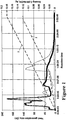
- Figure 1 illustrates the advantage associated with the non-constant base feeding rate.
- the abscissa indicates the reaction time (hours)
- the left ordinate indicates the heat generation rate
- the right ordinate indicates the amount of base fed to the reaction mixture (0.5N NaOH solution).
- the experiment was carried in RC1 reactor with 1.5 mole BP.
- the dotted lines represent the amount of base added to the reaction mixture as a function of time, for two distinct feeding schemes.
- the dotted line indicated by numeral 1 corresponds to the feeding of the base under a constant rate, as evident by the slope of said line.
- the dotted line indicated by numeral 2 is characterized by two different slopes, indicative of a switching from a first, relatively slow feeding rate to a faster rate (the switching occurred about 75 minutes after the start of the reaction; the feeding rate employed after 75 minutes is equal to the feeding rate according to line 1).
- the continuous lines represent the rate of heat generated by the reaction as a function of time under the two feeding methods set forth above.
- the thick and thin continuous lines represent the heat generation rate under the constant base feeding rate method (line 1) and the non-constant base feeding rate method (line 2), respectively.
- the heat generation rate for the reaction is a function of the dosing rate of the 0.5N NaOH and the reaction time. As shown in the graph, during the first stage of the reaction, the heat generation rate strongly depends on the base dosing rate. More specifically, the thick continuous line exhibits two sharp peaks already within the first 30 minutes from the start of the reaction, indicating that a considerable amount of the heat generated by the reaction is released within a short period. As clearly shown in the graph, the non-constant base feeding rate allows the heat to be more evenly released during the reaction, reducing the risk of a rapid temperature raise in the reaction mixture. Notably, the feeding scheme involving the switching from a first, relatively slow feeding rate to a second, faster rate also allows a considerable reduction in the total base consumption (approximately 30%).
- the concentration of the product present in the final reaction mixture is in the range of 50 and 60% (w/w).
- the product is isolated from the reaction mixture by cooling the same to about 0 and 20°C, whereby 2-bromo-2-nitro-1,3-propanediol crystallizes from the reaction mixture (the crystallization may be induced by means of seeding).
- the solid product is readily separable from the liquid phase, e.g., by filtration, in a purity of not less than 99.0%.
- the direct yield of the process is about 70-80%, and more specifically around 75%.
- a useful procedure for the isolation of the product from the reaction mixture involves cooling the reaction mixture at a rate of about 0.3-0.5°C per minute, whereby a slurry of 2-bromo-2-nitro-1,3-propanediol in water is formed. During the cooling, an over-saturated solution is obtained and the addition of a small amount of pure 2-bromo-2-nitro-1,3-propanediol (about 1 g per 1 mol starting BP) to the reaction vessel at about 35°C induces the crystallization of the 2-bromo-2-nitro-1,3-propanediol. The crystallization stage is complete when the temperature in the reaction vessel reaches 7°C.
- the product is washed, preferably using cold water (at about 10°C) in an amount of 200-400 g, more preferably 250-350g, per kg of the 2-bromo-2-nitro-1,3-propanediol product.
- the washed product is finally dried, for example in a rotary evaporator at a vacuum of 2.7-4.0 KPa, starting at 25°C-50°C for 2 h, followed by a further drying at 50-70°C for 1 h, to constant weight.
- the 2-bromo-2-nitro-1,3-propanediol obtained is of high purity.
- the preferred purity level of the product is in the range between 99.5 and 99.9% (by HPLC, area%), with a melting point in the range between 131 and 133°C, more preferably between 132 and 133°C.
- the improved purity profile indicated above is directly attainable by the process, without the need to apply re-crystallization procedures.
- the aqueous liquid phase obtained following the separation of the product may be treated in order to recover further crops of the product.
- the aqueous liquid phase is concentrated by partial evaporation to approximately one third of the original weight of the liquid phase.
- the residue obtained is cooled, and the 2-bromo-2-nitro-1,3-propanediol which crystallizes is collected by filtration.
- the purity of this second crop (96-99%) is higher than the selectivity of the reaction (93-95%) and it is charged into the reaction mixture of a subsequent reaction followed by the crystallization procedure as describe above.
- the total yield of the product accordingly is increased to more than 80%, more specifically between 83-90%.
- the melting point (m.p.) of 2-bromo-2-nitro-1,3-propanediol was measured on an Optimelt MPA 100 instrument.
- the mixture obtained was stirred for 0.5 h at 41->24°C (the set point of the Lauda was 20°C). The stirring was then stopped and two phases were obtained.
- the heavy organic phase (474 g) was bromopicrin in a purity of >99% (GC, area %) and a yield of 97.1%, based on nitromethane.
- the aqueous phase (1270 g) can be treated to obtain aq. 42-44% NaBr solution or aq. HBr, or to recover the bromine.
- the mixture was then heated to 44°C and aq. 1% NaOH (200 g) was added dropwise to the reactor over 200 min. During the addition of the base, the temperature in the reactor did not rise above 55°C.
- the reaction mixture comprises three phases.
- the mixture was vigorously stirred ( ⁇ 400 rpm).
- a single liquid phase is obtained.
- the mixture was then heated to 44°C and aq. 1% NaOH (200 g) was added dropwise to the reactor over 200 min: the first 65 g in 120 min and the remaining 135 g in 100 min. During the addition of the base, the temperature in the reactor did not rise above 55°C.
- the reaction mixture comprises three phases.
- the mixture was vigorously stirred ( ⁇ 400 rpm).
- a single liquid phase is obtained.
- the mixture obtained was stirred for 30 min. at ⁇ 50°C.
- the mixture was then cooled to 15°C and the crude 2-bromo-2-nitro-1,3-propanediol crystallized out.
- the slurry was filtered and washed with water (170 g) at 15°C.
Landscapes
- Chemical & Material Sciences (AREA)
- Organic Chemistry (AREA)
- Chemical Kinetics & Catalysis (AREA)
- Organic Low-Molecular-Weight Compounds And Preparation Thereof (AREA)
Applications Claiming Priority (2)
| Application Number | Priority Date | Filing Date | Title |
|---|---|---|---|
| US6432808P | 2008-02-28 | 2008-02-28 | |
| PCT/IL2009/000218 WO2009107133A1 (en) | 2008-02-28 | 2009-02-26 | A process for the preparation of bronopol |
Publications (2)
| Publication Number | Publication Date |
|---|---|
| EP2247568A1 EP2247568A1 (en) | 2010-11-10 |
| EP2247568B1 true EP2247568B1 (en) | 2012-04-25 |
Family
ID=40707861
Family Applications (1)
| Application Number | Title | Priority Date | Filing Date |
|---|---|---|---|
| EP09716009A Not-in-force EP2247568B1 (en) | 2008-02-28 | 2009-02-26 | A process for the preparation of bronopol |
Country Status (6)
| Country | Link |
|---|---|
| US (2) | US8546619B2 (https=) |
| EP (1) | EP2247568B1 (https=) |
| JP (1) | JP5575668B2 (https=) |
| CN (2) | CN103396317B (https=) |
| AT (1) | ATE555076T1 (https=) |
| WO (1) | WO2009107133A1 (https=) |
Families Citing this family (6)
| Publication number | Priority date | Publication date | Assignee | Title |
|---|---|---|---|---|
| CN108614044A (zh) * | 2018-04-25 | 2018-10-02 | 上海海洋大学 | 溴硝醇有关物质的测定方法 |
| US12557812B2 (en) | 2019-05-28 | 2026-02-24 | Bromine Compounds Ltd | Method and composition for water treatment |
| WO2022118312A1 (en) | 2020-12-02 | 2022-06-09 | Bromine Compounds Ltd. | Method and composition for water treatment |
| WO2022118313A1 (en) | 2020-12-02 | 2022-06-09 | Bromine Compounds Ltd. | Method and composition for water treatment |
| CN112679359B (zh) * | 2020-12-29 | 2022-11-22 | 苏州亚科科技股份有限公司 | 一种溴硝醇的制备方法 |
| US12076675B2 (en) * | 2021-01-27 | 2024-09-03 | John Ruszkowski | Air filter inactivation of viruses and micro-organisms |
Family Cites Families (13)
| Publication number | Priority date | Publication date | Assignee | Title |
|---|---|---|---|---|
| FR96391E (https=) * | 1968-10-19 | 1972-06-16 | ||
| BE757999A (fr) * | 1969-10-28 | 1971-04-26 | Henkel & Cie Gmbh | Procede de preparation de bromonitro-alcools. |
| BE758026A (fr) * | 1969-10-30 | 1971-04-01 | Lonza Ag | Procede de fabrication de dinitrile d'acide malonique |
| JPS4970911A (https=) * | 1972-11-09 | 1974-07-09 | ||
| JPS572242A (en) * | 1980-06-06 | 1982-01-07 | Kumiai Chem Ind Co Ltd | Preparation of 2-bromo-2-nitro-1,3-propanediol |
| JPS59199643A (ja) * | 1983-04-26 | 1984-11-12 | Nippon Shokubai Kagaku Kogyo Co Ltd | エチレングリコ−ルの製造方法 |
| JP3214904B2 (ja) * | 1992-06-18 | 2001-10-02 | ケイ・アイ化成株式会社 | 1,3−プロパンジオール誘導体の製造法 |
| JP2928044B2 (ja) | 1993-04-09 | 1999-07-28 | 株式会社片山化学工業研究所 | ブロモニトロアルコール化合物の製造法 |
| JPH1087538A (ja) * | 1996-09-09 | 1998-04-07 | Arakawa Chem Ind Co Ltd | ポリヒドロキシ化合物、その製造法およびエポキシ樹脂組成物 |
| DE10137829A1 (de) * | 2001-08-02 | 2003-02-13 | Basf Ag | Verfahren zur kontinuierlichen Herstellung von 2-Brom-2-nitro-1,3-propandiol |
| CN101243037B (zh) | 2005-08-26 | 2013-01-09 | 溴化合物有限公司 | 制备溴化苦的方法 |
| CN100522923C (zh) | 2006-08-11 | 2009-08-05 | 江苏联化科技有限公司 | 2-溴-2-硝基-1,3-丙二醇的制备方法 |
| IL183445A (en) | 2007-05-27 | 2013-02-28 | Bromine Compounds Ltd | Continuous process of preparing bromopicrin |
-
2009
- 2009-02-26 CN CN201310330322.8A patent/CN103396317B/zh not_active Expired - Fee Related
- 2009-02-26 JP JP2010548244A patent/JP5575668B2/ja not_active Expired - Fee Related
- 2009-02-26 AT AT09716009T patent/ATE555076T1/de active
- 2009-02-26 CN CN200980106944.4A patent/CN101959842B/zh not_active Expired - Fee Related
- 2009-02-26 WO PCT/IL2009/000218 patent/WO2009107133A1/en not_active Ceased
- 2009-02-26 EP EP09716009A patent/EP2247568B1/en not_active Not-in-force
- 2009-02-26 US US12/735,886 patent/US8546619B2/en not_active Expired - Fee Related
-
2013
- 2013-08-28 US US14/012,411 patent/US8729314B2/en not_active Expired - Fee Related
Also Published As
| Publication number | Publication date |
|---|---|
| US8729314B2 (en) | 2014-05-20 |
| JP2011513297A (ja) | 2011-04-28 |
| JP5575668B2 (ja) | 2014-08-20 |
| CN103396317B (zh) | 2016-04-27 |
| CN103396317A (zh) | 2013-11-20 |
| WO2009107133A1 (en) | 2009-09-03 |
| EP2247568A1 (en) | 2010-11-10 |
| CN101959842B (zh) | 2014-09-10 |
| CN101959842A (zh) | 2011-01-26 |
| US20110065964A1 (en) | 2011-03-17 |
| US8546619B2 (en) | 2013-10-01 |
| US20140066662A1 (en) | 2014-03-06 |
| ATE555076T1 (de) | 2012-05-15 |
Similar Documents
| Publication | Publication Date | Title |
|---|---|---|
| EP2247568B1 (en) | A process for the preparation of bronopol | |
| KR101652547B1 (ko) | 11-브로모운데칸산의 암모니아분해 방법 | |
| JP4938773B2 (ja) | ペンタエリトリトールの製造方法 | |
| JPS6155902B2 (https=) | ||
| EP0462283B1 (en) | Process for producing dipentaerythritol | |
| EP2401249B1 (en) | Process for producing 3,4' dihydroxybenzophenone as an intermediate for producing 3,4' diacetoxybenzophenone | |
| JP4537678B2 (ja) | 2’−(1h−テトラゾール−5−イル)ビフェニル−4−カルボアルデヒド結晶およびその製造方法 | |
| WO2009039257A1 (en) | Methods for production of 1,2,4-triazol-3-one | |
| JPH0699361B2 (ja) | エーテルカルボキシレートの製造方法 | |
| CN100398507C (zh) | Dl-扁桃酸的制备方法 | |
| JPH10509450A (ja) | ビス(2,2−ジニトロプロピル)ホルマール(bdnpf)の合成 | |
| WO2008071214A1 (en) | Production of tris (2,4,6-tribromophenoxy-1,3,5-triazine) | |
| JP5236887B2 (ja) | ジヒドロキシベンゼン誘導体の連続式製造方法 | |
| US20010030008A1 (en) | Energetic plasticizer comprising bis(2,2-dinitropropyl) formal and bis(2,2-dinitropropyl) diformal, and preparation method thereof | |
| WO1998007675A1 (en) | Process for the production of 2-butyl-2-ethyl-1,3-propanediol | |
| RU2152381C1 (ru) | Способ получения ароматических хлорсодержащих соединений | |
| PL86547B1 (https=) | ||
| CN101200430A (zh) | 一种溴硝醇的改进合成方法 | |
| JP3728804B2 (ja) | Dl−アスパラギン酸の製造方法 | |
| EP0486452A2 (en) | Preparation of 2,2'-oxydisuccinate | |
| JPH0147456B2 (https=) | ||
| JP2007099681A (ja) | ジオキサングリコールの製造方法 | |
| JPH0616589A (ja) | ソジオホルミルアセトンの製造法 | |
| JP2000290281A (ja) | グリコールウリルの連続製造法 | |
| JPH07196591A (ja) | 3−アミノ−2,4,5−トリフルオロ安息香酸の製法 |
Legal Events
| Date | Code | Title | Description |
|---|---|---|---|
| PUAI | Public reference made under article 153(3) epc to a published international application that has entered the european phase |
Free format text: ORIGINAL CODE: 0009012 |
|
| 17P | Request for examination filed |
Effective date: 20100825 |
|
| AK | Designated contracting states |
Kind code of ref document: A1 Designated state(s): AT BE BG CH CY CZ DE DK EE ES FI FR GB GR HR HU IE IS IT LI LT LU LV MC MK MT NL NO PL PT RO SE SI SK TR |
|
| AX | Request for extension of the european patent |
Extension state: AL BA RS |
|
| DAX | Request for extension of the european patent (deleted) | ||
| 17Q | First examination report despatched |
Effective date: 20110216 |
|
| GRAP | Despatch of communication of intention to grant a patent |
Free format text: ORIGINAL CODE: EPIDOSNIGR1 |
|
| RAP1 | Party data changed (applicant data changed or rights of an application transferred) |
Owner name: BROMINE COMPOUNDS LTD. |
|
| GRAS | Grant fee paid |
Free format text: ORIGINAL CODE: EPIDOSNIGR3 |
|
| GRAA | (expected) grant |
Free format text: ORIGINAL CODE: 0009210 |
|
| AK | Designated contracting states |
Kind code of ref document: B1 Designated state(s): AT BE BG CH CY CZ DE DK EE ES FI FR GB GR HR HU IE IS IT LI LT LU LV MC MK MT NL NO PL PT RO SE SI SK TR |
|
| REG | Reference to a national code |
Ref country code: GB Ref legal event code: FG4D |
|
| REG | Reference to a national code |
Ref country code: CH Ref legal event code: EP |
|
| REG | Reference to a national code |
Ref country code: AT Ref legal event code: REF Ref document number: 555076 Country of ref document: AT Kind code of ref document: T Effective date: 20120515 |
|
| REG | Reference to a national code |
Ref country code: IE Ref legal event code: FG4D |
|
| REG | Reference to a national code |
Ref country code: DE Ref legal event code: R096 Ref document number: 602009006574 Country of ref document: DE Effective date: 20120621 |
|
| REG | Reference to a national code |
Ref country code: NL Ref legal event code: VDEP Effective date: 20120425 |
|
| REG | Reference to a national code |
Ref country code: AT Ref legal event code: MK05 Ref document number: 555076 Country of ref document: AT Kind code of ref document: T Effective date: 20120425 |
|
| LTIE | Lt: invalidation of european patent or patent extension |
Effective date: 20120425 |
|
| PG25 | Lapsed in a contracting state [announced via postgrant information from national office to epo] |
Ref country code: IS Free format text: LAPSE BECAUSE OF FAILURE TO SUBMIT A TRANSLATION OF THE DESCRIPTION OR TO PAY THE FEE WITHIN THE PRESCRIBED TIME-LIMIT Effective date: 20120825 Ref country code: FI Free format text: LAPSE BECAUSE OF FAILURE TO SUBMIT A TRANSLATION OF THE DESCRIPTION OR TO PAY THE FEE WITHIN THE PRESCRIBED TIME-LIMIT Effective date: 20120425 Ref country code: NO Free format text: LAPSE BECAUSE OF FAILURE TO SUBMIT A TRANSLATION OF THE DESCRIPTION OR TO PAY THE FEE WITHIN THE PRESCRIBED TIME-LIMIT Effective date: 20120725 Ref country code: SE Free format text: LAPSE BECAUSE OF FAILURE TO SUBMIT A TRANSLATION OF THE DESCRIPTION OR TO PAY THE FEE WITHIN THE PRESCRIBED TIME-LIMIT Effective date: 20120425 Ref country code: CY Free format text: LAPSE BECAUSE OF FAILURE TO SUBMIT A TRANSLATION OF THE DESCRIPTION OR TO PAY THE FEE WITHIN THE PRESCRIBED TIME-LIMIT Effective date: 20120425 Ref country code: LT Free format text: LAPSE BECAUSE OF FAILURE TO SUBMIT A TRANSLATION OF THE DESCRIPTION OR TO PAY THE FEE WITHIN THE PRESCRIBED TIME-LIMIT Effective date: 20120425 Ref country code: PL Free format text: LAPSE BECAUSE OF FAILURE TO SUBMIT A TRANSLATION OF THE DESCRIPTION OR TO PAY THE FEE WITHIN THE PRESCRIBED TIME-LIMIT Effective date: 20120425 |
|
| PG25 | Lapsed in a contracting state [announced via postgrant information from national office to epo] |
Ref country code: SI Free format text: LAPSE BECAUSE OF FAILURE TO SUBMIT A TRANSLATION OF THE DESCRIPTION OR TO PAY THE FEE WITHIN THE PRESCRIBED TIME-LIMIT Effective date: 20120425 Ref country code: LV Free format text: LAPSE BECAUSE OF FAILURE TO SUBMIT A TRANSLATION OF THE DESCRIPTION OR TO PAY THE FEE WITHIN THE PRESCRIBED TIME-LIMIT Effective date: 20120425 Ref country code: PT Free format text: LAPSE BECAUSE OF FAILURE TO SUBMIT A TRANSLATION OF THE DESCRIPTION OR TO PAY THE FEE WITHIN THE PRESCRIBED TIME-LIMIT Effective date: 20120827 Ref country code: HR Free format text: LAPSE BECAUSE OF FAILURE TO SUBMIT A TRANSLATION OF THE DESCRIPTION OR TO PAY THE FEE WITHIN THE PRESCRIBED TIME-LIMIT Effective date: 20120425 Ref country code: GR Free format text: LAPSE BECAUSE OF FAILURE TO SUBMIT A TRANSLATION OF THE DESCRIPTION OR TO PAY THE FEE WITHIN THE PRESCRIBED TIME-LIMIT Effective date: 20120726 |
|
| PG25 | Lapsed in a contracting state [announced via postgrant information from national office to epo] |
Ref country code: BE Free format text: LAPSE BECAUSE OF FAILURE TO SUBMIT A TRANSLATION OF THE DESCRIPTION OR TO PAY THE FEE WITHIN THE PRESCRIBED TIME-LIMIT Effective date: 20120425 |
|
| PG25 | Lapsed in a contracting state [announced via postgrant information from national office to epo] |
Ref country code: NL Free format text: LAPSE BECAUSE OF FAILURE TO SUBMIT A TRANSLATION OF THE DESCRIPTION OR TO PAY THE FEE WITHIN THE PRESCRIBED TIME-LIMIT Effective date: 20120425 Ref country code: AT Free format text: LAPSE BECAUSE OF FAILURE TO SUBMIT A TRANSLATION OF THE DESCRIPTION OR TO PAY THE FEE WITHIN THE PRESCRIBED TIME-LIMIT Effective date: 20120425 Ref country code: SK Free format text: LAPSE BECAUSE OF FAILURE TO SUBMIT A TRANSLATION OF THE DESCRIPTION OR TO PAY THE FEE WITHIN THE PRESCRIBED TIME-LIMIT Effective date: 20120425 Ref country code: EE Free format text: LAPSE BECAUSE OF FAILURE TO SUBMIT A TRANSLATION OF THE DESCRIPTION OR TO PAY THE FEE WITHIN THE PRESCRIBED TIME-LIMIT Effective date: 20120425 Ref country code: CZ Free format text: LAPSE BECAUSE OF FAILURE TO SUBMIT A TRANSLATION OF THE DESCRIPTION OR TO PAY THE FEE WITHIN THE PRESCRIBED TIME-LIMIT Effective date: 20120425 Ref country code: DK Free format text: LAPSE BECAUSE OF FAILURE TO SUBMIT A TRANSLATION OF THE DESCRIPTION OR TO PAY THE FEE WITHIN THE PRESCRIBED TIME-LIMIT Effective date: 20120425 Ref country code: RO Free format text: LAPSE BECAUSE OF FAILURE TO SUBMIT A TRANSLATION OF THE DESCRIPTION OR TO PAY THE FEE WITHIN THE PRESCRIBED TIME-LIMIT Effective date: 20120425 |
|
| PG25 | Lapsed in a contracting state [announced via postgrant information from national office to epo] |
Ref country code: IT Free format text: LAPSE BECAUSE OF FAILURE TO SUBMIT A TRANSLATION OF THE DESCRIPTION OR TO PAY THE FEE WITHIN THE PRESCRIBED TIME-LIMIT Effective date: 20120425 |
|
| PLBE | No opposition filed within time limit |
Free format text: ORIGINAL CODE: 0009261 |
|
| STAA | Information on the status of an ep patent application or granted ep patent |
Free format text: STATUS: NO OPPOSITION FILED WITHIN TIME LIMIT |
|
| 26N | No opposition filed |
Effective date: 20130128 |
|
| PG25 | Lapsed in a contracting state [announced via postgrant information from national office to epo] |
Ref country code: ES Free format text: LAPSE BECAUSE OF FAILURE TO SUBMIT A TRANSLATION OF THE DESCRIPTION OR TO PAY THE FEE WITHIN THE PRESCRIBED TIME-LIMIT Effective date: 20120805 |
|
| REG | Reference to a national code |
Ref country code: DE Ref legal event code: R097 Ref document number: 602009006574 Country of ref document: DE Effective date: 20130128 |
|
| PG25 | Lapsed in a contracting state [announced via postgrant information from national office to epo] |
Ref country code: BG Free format text: LAPSE BECAUSE OF FAILURE TO SUBMIT A TRANSLATION OF THE DESCRIPTION OR TO PAY THE FEE WITHIN THE PRESCRIBED TIME-LIMIT Effective date: 20120725 |
|
| PG25 | Lapsed in a contracting state [announced via postgrant information from national office to epo] |
Ref country code: MC Free format text: LAPSE BECAUSE OF NON-PAYMENT OF DUE FEES Effective date: 20130228 |
|
| REG | Reference to a national code |
Ref country code: CH Ref legal event code: PL |
|
| PG25 | Lapsed in a contracting state [announced via postgrant information from national office to epo] |
Ref country code: LI Free format text: LAPSE BECAUSE OF NON-PAYMENT OF DUE FEES Effective date: 20130228 Ref country code: CH Free format text: LAPSE BECAUSE OF NON-PAYMENT OF DUE FEES Effective date: 20130228 |
|
| REG | Reference to a national code |
Ref country code: IE Ref legal event code: MM4A |
|
| PG25 | Lapsed in a contracting state [announced via postgrant information from national office to epo] |
Ref country code: IE Free format text: LAPSE BECAUSE OF NON-PAYMENT OF DUE FEES Effective date: 20130226 |
|
| PG25 | Lapsed in a contracting state [announced via postgrant information from national office to epo] |
Ref country code: MT Free format text: LAPSE BECAUSE OF FAILURE TO SUBMIT A TRANSLATION OF THE DESCRIPTION OR TO PAY THE FEE WITHIN THE PRESCRIBED TIME-LIMIT Effective date: 20120425 |
|
| PG25 | Lapsed in a contracting state [announced via postgrant information from national office to epo] |
Ref country code: TR Free format text: LAPSE BECAUSE OF FAILURE TO SUBMIT A TRANSLATION OF THE DESCRIPTION OR TO PAY THE FEE WITHIN THE PRESCRIBED TIME-LIMIT Effective date: 20120425 |
|
| PG25 | Lapsed in a contracting state [announced via postgrant information from national office to epo] |
Ref country code: MK Free format text: LAPSE BECAUSE OF FAILURE TO SUBMIT A TRANSLATION OF THE DESCRIPTION OR TO PAY THE FEE WITHIN THE PRESCRIBED TIME-LIMIT Effective date: 20120425 Ref country code: HU Free format text: LAPSE BECAUSE OF FAILURE TO SUBMIT A TRANSLATION OF THE DESCRIPTION OR TO PAY THE FEE WITHIN THE PRESCRIBED TIME-LIMIT; INVALID AB INITIO Effective date: 20090226 Ref country code: LU Free format text: LAPSE BECAUSE OF NON-PAYMENT OF DUE FEES Effective date: 20130226 |
|
| REG | Reference to a national code |
Ref country code: FR Ref legal event code: PLFP Year of fee payment: 8 |
|
| REG | Reference to a national code |
Ref country code: FR Ref legal event code: PLFP Year of fee payment: 9 |
|
| REG | Reference to a national code |
Ref country code: FR Ref legal event code: PLFP Year of fee payment: 10 |
|
| PGFP | Annual fee paid to national office [announced via postgrant information from national office to epo] |
Ref country code: FR Payment date: 20210223 Year of fee payment: 13 |
|
| PGFP | Annual fee paid to national office [announced via postgrant information from national office to epo] |
Ref country code: DE Payment date: 20210225 Year of fee payment: 13 Ref country code: GB Payment date: 20210225 Year of fee payment: 13 |
|
| REG | Reference to a national code |
Ref country code: DE Ref legal event code: R119 Ref document number: 602009006574 Country of ref document: DE |
|
| GBPC | Gb: european patent ceased through non-payment of renewal fee |
Effective date: 20220226 |
|
| PG25 | Lapsed in a contracting state [announced via postgrant information from national office to epo] |
Ref country code: FR Free format text: LAPSE BECAUSE OF NON-PAYMENT OF DUE FEES Effective date: 20220228 |
|
| PG25 | Lapsed in a contracting state [announced via postgrant information from national office to epo] |
Ref country code: GB Free format text: LAPSE BECAUSE OF NON-PAYMENT OF DUE FEES Effective date: 20220226 Ref country code: DE Free format text: LAPSE BECAUSE OF NON-PAYMENT OF DUE FEES Effective date: 20220901 |