EP2196199B9 - Behandlung von Phantomphänomenen - Google Patents
Behandlung von Phantomphänomenen Download PDFInfo
- Publication number
- EP2196199B9 EP2196199B9 EP10158404.3A EP10158404A EP2196199B9 EP 2196199 B9 EP2196199 B9 EP 2196199B9 EP 10158404 A EP10158404 A EP 10158404A EP 2196199 B9 EP2196199 B9 EP 2196199B9
- Authority
- EP
- European Patent Office
- Prior art keywords
- bdnf
- tinnitus
- signal transduction
- expression
- transduction cascade
- Prior art date
- Legal status (The legal status is an assumption and is not a legal conclusion. Google has not performed a legal analysis and makes no representation as to the accuracy of the status listed.)
- Expired - Lifetime
Links
Images



Classifications
-
- A—HUMAN NECESSITIES
- A61—MEDICAL OR VETERINARY SCIENCE; HYGIENE
- A61K—PREPARATIONS FOR MEDICAL, DENTAL OR TOILETRY PURPOSES
- A61K38/00—Medicinal preparations containing peptides
- A61K38/04—Peptides having up to 20 amino acids in a fully defined sequence; Derivatives thereof
- A61K38/12—Cyclic peptides, e.g. bacitracins; Polymyxins; Gramicidins S, C; Tyrocidins A, B or C
-
- A—HUMAN NECESSITIES
- A61—MEDICAL OR VETERINARY SCIENCE; HYGIENE
- A61K—PREPARATIONS FOR MEDICAL, DENTAL OR TOILETRY PURPOSES
- A61K31/00—Medicinal preparations containing organic active ingredients
-
- A—HUMAN NECESSITIES
- A61—MEDICAL OR VETERINARY SCIENCE; HYGIENE
- A61K—PREPARATIONS FOR MEDICAL, DENTAL OR TOILETRY PURPOSES
- A61K31/00—Medicinal preparations containing organic active ingredients
- A61K31/185—Acids; Anhydrides, halides or salts thereof, e.g. sulfur acids, imidic, hydrazonic or hydroximic acids
- A61K31/19—Carboxylic acids, e.g. valproic acid
- A61K31/195—Carboxylic acids, e.g. valproic acid having an amino group
-
- A—HUMAN NECESSITIES
- A61—MEDICAL OR VETERINARY SCIENCE; HYGIENE
- A61K—PREPARATIONS FOR MEDICAL, DENTAL OR TOILETRY PURPOSES
- A61K31/00—Medicinal preparations containing organic active ingredients
- A61K31/33—Heterocyclic compounds
- A61K31/395—Heterocyclic compounds having nitrogen as a ring hetero atom, e.g. guanethidine or rifamycins
- A61K31/435—Heterocyclic compounds having nitrogen as a ring hetero atom, e.g. guanethidine or rifamycins having six-membered rings with one nitrogen as the only ring hetero atom
- A61K31/44—Non condensed pyridines; Hydrogenated derivatives thereof
- A61K31/4418—Non condensed pyridines; Hydrogenated derivatives thereof having a carbocyclic group directly attached to the heterocyclic ring, e.g. cyproheptadine
-
- A—HUMAN NECESSITIES
- A61—MEDICAL OR VETERINARY SCIENCE; HYGIENE
- A61K—PREPARATIONS FOR MEDICAL, DENTAL OR TOILETRY PURPOSES
- A61K31/00—Medicinal preparations containing organic active ingredients
- A61K31/33—Heterocyclic compounds
- A61K31/395—Heterocyclic compounds having nitrogen as a ring hetero atom, e.g. guanethidine or rifamycins
- A61K31/435—Heterocyclic compounds having nitrogen as a ring hetero atom, e.g. guanethidine or rifamycins having six-membered rings with one nitrogen as the only ring hetero atom
- A61K31/44—Non condensed pyridines; Hydrogenated derivatives thereof
- A61K31/4422—1,4-Dihydropyridines, e.g. nifedipine, nicardipine
-
- A—HUMAN NECESSITIES
- A61—MEDICAL OR VETERINARY SCIENCE; HYGIENE
- A61K—PREPARATIONS FOR MEDICAL, DENTAL OR TOILETRY PURPOSES
- A61K31/00—Medicinal preparations containing organic active ingredients
- A61K31/33—Heterocyclic compounds
- A61K31/395—Heterocyclic compounds having nitrogen as a ring hetero atom, e.g. guanethidine or rifamycins
- A61K31/435—Heterocyclic compounds having nitrogen as a ring hetero atom, e.g. guanethidine or rifamycins having six-membered rings with one nitrogen as the only ring hetero atom
- A61K31/44—Non condensed pyridines; Hydrogenated derivatives thereof
- A61K31/4427—Non condensed pyridines; Hydrogenated derivatives thereof containing further heterocyclic ring systems
- A61K31/4439—Non condensed pyridines; Hydrogenated derivatives thereof containing further heterocyclic ring systems containing a five-membered ring with nitrogen as a ring hetero atom, e.g. omeprazole
-
- A—HUMAN NECESSITIES
- A61—MEDICAL OR VETERINARY SCIENCE; HYGIENE
- A61K—PREPARATIONS FOR MEDICAL, DENTAL OR TOILETRY PURPOSES
- A61K31/00—Medicinal preparations containing organic active ingredients
- A61K31/33—Heterocyclic compounds
- A61K31/395—Heterocyclic compounds having nitrogen as a ring hetero atom, e.g. guanethidine or rifamycins
- A61K31/55—Heterocyclic compounds having nitrogen as a ring hetero atom, e.g. guanethidine or rifamycins having seven-membered rings, e.g. azelastine, pentylenetetrazole
- A61K31/551—Heterocyclic compounds having nitrogen as a ring hetero atom, e.g. guanethidine or rifamycins having seven-membered rings, e.g. azelastine, pentylenetetrazole having two nitrogen atoms, e.g. dilazep
- A61K31/5513—1,4-Benzodiazepines, e.g. diazepam or clozapine
-
- A—HUMAN NECESSITIES
- A61—MEDICAL OR VETERINARY SCIENCE; HYGIENE
- A61K—PREPARATIONS FOR MEDICAL, DENTAL OR TOILETRY PURPOSES
- A61K31/00—Medicinal preparations containing organic active ingredients
- A61K31/33—Heterocyclic compounds
- A61K31/395—Heterocyclic compounds having nitrogen as a ring hetero atom, e.g. guanethidine or rifamycins
- A61K31/55—Heterocyclic compounds having nitrogen as a ring hetero atom, e.g. guanethidine or rifamycins having seven-membered rings, e.g. azelastine, pentylenetetrazole
- A61K31/551—Heterocyclic compounds having nitrogen as a ring hetero atom, e.g. guanethidine or rifamycins having seven-membered rings, e.g. azelastine, pentylenetetrazole having two nitrogen atoms, e.g. dilazep
- A61K31/5513—1,4-Benzodiazepines, e.g. diazepam or clozapine
- A61K31/5517—1,4-Benzodiazepines, e.g. diazepam or clozapine condensed with five-membered rings having nitrogen as a ring hetero atom, e.g. imidazobenzodiazepines, triazolam
-
- A—HUMAN NECESSITIES
- A61—MEDICAL OR VETERINARY SCIENCE; HYGIENE
- A61K—PREPARATIONS FOR MEDICAL, DENTAL OR TOILETRY PURPOSES
- A61K9/00—Medicinal preparations characterised by special physical form
- A61K9/0012—Galenical forms characterised by the site of application
- A61K9/0046—Ear
-
- A—HUMAN NECESSITIES
- A61—MEDICAL OR VETERINARY SCIENCE; HYGIENE
- A61P—SPECIFIC THERAPEUTIC ACTIVITY OF CHEMICAL COMPOUNDS OR MEDICINAL PREPARATIONS
- A61P25/00—Drugs for disorders of the nervous system
-
- A—HUMAN NECESSITIES
- A61—MEDICAL OR VETERINARY SCIENCE; HYGIENE
- A61P—SPECIFIC THERAPEUTIC ACTIVITY OF CHEMICAL COMPOUNDS OR MEDICINAL PREPARATIONS
- A61P27/00—Drugs for disorders of the senses
-
- A—HUMAN NECESSITIES
- A61—MEDICAL OR VETERINARY SCIENCE; HYGIENE
- A61P—SPECIFIC THERAPEUTIC ACTIVITY OF CHEMICAL COMPOUNDS OR MEDICINAL PREPARATIONS
- A61P27/00—Drugs for disorders of the senses
- A61P27/16—Otologicals
-
- A—HUMAN NECESSITIES
- A61—MEDICAL OR VETERINARY SCIENCE; HYGIENE
- A61P—SPECIFIC THERAPEUTIC ACTIVITY OF CHEMICAL COMPOUNDS OR MEDICINAL PREPARATIONS
- A61P43/00—Drugs for specific purposes, not provided for in groups A61P1/00-A61P41/00
-
- C—CHEMISTRY; METALLURGY
- C12—BIOCHEMISTRY; BEER; SPIRITS; WINE; VINEGAR; MICROBIOLOGY; ENZYMOLOGY; MUTATION OR GENETIC ENGINEERING
- C12Q—MEASURING OR TESTING PROCESSES INVOLVING ENZYMES, NUCLEIC ACIDS OR MICROORGANISMS; COMPOSITIONS OR TEST PAPERS THEREFOR; PROCESSES OF PREPARING SUCH COMPOSITIONS; CONDITION-RESPONSIVE CONTROL IN MICROBIOLOGICAL OR ENZYMOLOGICAL PROCESSES
- C12Q1/00—Measuring or testing processes involving enzymes, nucleic acids or microorganisms; Compositions therefor; Processes of preparing such compositions
- C12Q1/68—Measuring or testing processes involving enzymes, nucleic acids or microorganisms; Compositions therefor; Processes of preparing such compositions involving nucleic acids
- C12Q1/6876—Nucleic acid products used in the analysis of nucleic acids, e.g. primers or probes
-
- C—CHEMISTRY; METALLURGY
- C12—BIOCHEMISTRY; BEER; SPIRITS; WINE; VINEGAR; MICROBIOLOGY; ENZYMOLOGY; MUTATION OR GENETIC ENGINEERING
- C12Q—MEASURING OR TESTING PROCESSES INVOLVING ENZYMES, NUCLEIC ACIDS OR MICROORGANISMS; COMPOSITIONS OR TEST PAPERS THEREFOR; PROCESSES OF PREPARING SUCH COMPOSITIONS; CONDITION-RESPONSIVE CONTROL IN MICROBIOLOGICAL OR ENZYMOLOGICAL PROCESSES
- C12Q2600/00—Oligonucleotides characterized by their use
- C12Q2600/158—Expression markers
Definitions
- the present invention relates to a substance for the treatment of phantom phenomena, namely acute tinnitus.
- tinnitus The phantom phenomenon of tinnitus is understood to be a patient's perceived sounds produced by the ear and the auditory system. Tinnitus, which has been in existence for only a few weeks to three months, is referred to as acute tinnitus. If the tinnitus lasts longer than a year, it is called chronic. According to epidemiological surveys, approximately three million adults in Germany, i. about 4% of the population affected by chronic tinnitus. Globally, there are about ten million people annually tinnitus, which passes in about 340,000 from an acute to a chronic form, so-called new disease rate.
- tinnitus Among the many causes of tinnitus include chronic noise, acute bang injuries, hearing loss and other disorders associated with hearing loss. Associations with sensorineural hearing loss as a chronic progressive form or as noise-induced deafness, followed by Meniere's disease and acute hearing loss, are more than two-thirds related to tinnitus according to clinical studies. The development and maintenance of tinnitus also involves diseases of the cervical spine as well as the temporomandibular joint and the musculoskeletal system. Tinnitus also seems to have a psychic component, so in this context psychogenic tinnitus is used. In many cases, however, despite intensive diagnostics, no reliable cause of tinnitus can be detected.
- the WO 02/15907 A1 suggests the treatment of tinnitus by the administration of the potassium channel opener flupirtin.
- This treatment has the disadvantage that flupirtine is additionally a muscle-relaxing analgesic, whereby an application with unacceptable side effects would be associated.
- Nimodipine is an inhibitor of the Ca ++ channel Cav1.3. It has been found, however, that the blockage of the Cav1.3 channel in the auditory system would lead directly to deafness, so that nimodipine is completely unsuitable for the treatment of tinnitus.
- NMDA N-methyl-D-aspartate
- a treatment concept for tinnitus is proposed, which is based on the stimulation of the expression of brain-derived nerve growth factor (BDNF).
- BDNF brain-derived nerve growth factor
- the authors describe that in chronic cochlear and inferior colliculus chronic tinnitus there is a decrease in BDNF expression, suggesting that the stimulation of BDNF expression is proposed as a therapeutic approach.
- the authors there have specifically and exclusively examined the situation with chronic tinnitus.
- the rats used in the animal model were treated with salicylates for three months, which is known to induce chronic tinnitus; see.
- Nimodipine is a calcium antagonist derivative of dihydropyridines with a predictive effect on the cerebral vasculature.
- GABA receptor agonists for the treatment of tinnitus will by Eggermont et al. (Trends in Neurosciences, Vol. 27, No. 11, 2004 ).
- Ciocon et al. Journal of the American Geriatric Society, 45, No. 9, 1997, page 41 ) that oxazepam could be used to treat tinnitus.
- Object of the present invention is therefore to provide a substance for the treatment of acute tinnitus, with or the disadvantages of the prior art are prevented.
- it is intended to provide a substance with which the phantom phenomena of acute tinnitus can be treated in a targeted manner.
- This task is accomplished by providing a substance interacting with the BDNF signal transduction cascade.
- BDNF Brain-derived Nerve Growth Factor
- BDNF Brain-derived Nerve Growth Factor
- BDNF is a basic protein made up of central nervous system neurons consisting of 252 amino acids.
- BDNF is a growth factor that is involved in the development of the nervous system and u.a. plays a role in the formation of the plasticity of the synapses.
- the effect of BDNF is mediated via specific receptors, for example via the BDNF receptor trkB, which in turn regulates downstream factors such as the MAP kinase or Cam kinase in their activity or mode of action.
- BDNF is itself regulated, for example via calcium.
- BDNF signal transduction cascade All factors affecting BDNF in its activity, expression, mode of action, etc. influence or regulate, or all factors that are influenced or regulated by BDNF in this way, form the so-called BDNF signal transduction cascade.
- the BDNF signal transduction cascade can be subdivided into a cascade which precedes the BDNF receptor trkB and one downstream of it.
- the trkB downstream signal transduction cascade is initiated by the binding of BDNF and other members of the neurotropin family to the trk receptor. This leads to a trk dimerization and activation of the tyrosine kinase activity of the receptor.
- BDNF expression is activity-dependent regulated by different stimuli, such as electrical stimulation or injury, pure physical movement, or even by the daily rhythm.
- stimuli such as electrical stimulation or injury, pure physical movement, or even by the daily rhythm.
- the above-mentioned stimuli regulate the expression of various untranslated BDNF exons, which then together with the common 5 'exon ultimately form different BDNF transcripts.
- the stimuli appear to act on the promoters of the various BDNF exons via different Ca ++ -induced signal cascades.
- the blockade or inhibition of the BDNF receptor and the receptor downstream BDNF signal transduction cascade is addressed. It goes without saying that trkB itself is also part of the BDNF signal transduction cascade.
- BDNF is known to be involved in a variety of diseases, cf. Binder, DK (2004), The role of BDNF in epilepsy and other diseases of the nervous system, Recent Advances in Epilepsy Research, pages 34 to 56 ,
- a substance which causes blockade or inhibition of the BDNF receptor or interacts with the downstream BDNF signal transduction cascade may be of any configuration, i. it may be such a substance that is both chemically and biochemically or biologically defined, which is a chemically synthesized compound of any form, a molecule, ion, atom, protein, peptide, antibody, nucleic acid, aptamer, represents a virus, bacterium etc.
- interaction means the direct or indirect interaction of this substance with a factor of the downstream BDNF signal transduction cascade, which results in a modification of the physiological signal transduction within this cascade.
- BDNF signal transduction cascade Such interacting substances are well described in the art.
- the object of the present invention is completely solved by the provision of such a substance.
- the inventors have for the first time provided a use of such substances for therapy for the phantom phenomena of acute tinnitus.
- such an interacting substance which causes a blockade or inhibition of the BDNF receptor or of the BDNF signal transduction cascade following this receptor.
- a blockade or inhibition is understood to mean that the signal transmission within the BDNF signal transduction cascade is slowed, worsened, reduced or completely suppressed in relation to the physiological situation.
- the inventors of the present invention have induced acute tinnitus in rats by short-term administration of salicylates and found increased expression of BDNF in the cochlear ganglia.
- the inventors were able to prove that the conditions in the induction of chronic tinnitus exactly On the other hand, there is thus a reduced expression of BDNF in the cochlear ganglia.
- Acute tinnitus is therefore according to the invention via an inhibition or blockade of the BDNF signal transduction cascade, for example.
- the inventors present molecular data showing the mechanisms of the pathology of tinnitus, thus enriching the basic sciences and medicine with a better understanding of these phantom phenomena and, at the same time, showing a causal therapeutic approach.
- such a substance is also provided for use, which causes a blockade or inhibition of the trkB downstream signal transduction cascade.
- Substances that inhibit factors of the BDNF signal transduction cascade are readily detectable through activity or inhibition assays that are routine to a molecular biologist or clinical chemist or pharmacologist.
- such a substance is alternatively provided, which causes a blockade or inhibition of the BDNF receptor (trkB) or the downstream of this signal transduction cascade.
- trkB itself can be blocked by means of suitable substances known in the art and thus the entire subsequent BDNF signal transduction cascade.
- suitable substances interacting with this receptor can be developed on the basis of crystallographic data on trkB, which are advantageous active ingredients for a medicament for the treatment of acute tinnitus or phantom pain.
- Factors that are trkB downstream in the signal transduction cascade such as, PLC, PI3 kinase or Shc, are suitable targets for a use of the substance according to the invention. Shutting down or inhibiting these factors also leads to a suitable blockade of the BDNF signal transduction cascade.
- MAP kinase a MAP kinase, a cam kinase inhibitor or a trkB antagonist.
- MAP kinase inhibitors are the substances U 0126 or PD 98058.
- U 0126, MEK1 / 2 inhibitor, and PD 98058, a MEK1 inhibitor can be obtained from Cell Signaling Technology, Inc., Beverly, MA, United States of America.
- the choice of the concentration used is the responsibility of the person skilled in the art and is dependent on the severity of the disease, the remainder of the therapy concept as well as individual factors to be treated by the patient to be treated. Against this background, the concentration used for each individual case is determined by the person skilled in the art using routine measures.
- the substance is locally on or in the ear.
- biodegradable hydrogel which serves as a carrier matrix for the substance.
- biodegradable hydrogel has already been successfully used in the animal model for local application of BDNF to the round window of the inner ear; Ito et al. (2005), A new method for drug application to the inner ear, J. Otorhinolaryngol. Relat. Spec., Pages 272-275 ,
- the inventors have found that local application of the substance causing the blockade or inhibition of the BDNF receptor or the substance interacting with the downstream BDNF signal transduction cascade is particularly advantageous because, as the inventors have found in further experiments, in acute Tinnitus BDNF expression in the auditory cortex, in contrast to the situation in the cochlear ganglia is surprisingly reduced.
- a systemic application of the BDNF signal transduction cascade inhibiting substances would therefore lead in the cortex to an even further reduction in BDNF expression and thus have harmful effects on the organism.
- acute tinnitus therefore, systemic administration of the substance that inhibits the BDNF signal transduction cascade would be contraindicated.
- a further subject matter of the present invention relates to a substance for therapeutic and / or prophylactic treatment of the phantom phenomena of acute tinnitus in a human or animal organism, which is selected from the group consisting of: MAP kinase inhibitor, in particular U 0126 or PD 98058, Cam kinase inhibitor and trkB antagonist.
- the inventors have recognized and proposed a specific medical application of the abovementioned substances in connection with phantom phenomena, namely acute tinnitus.
- Another unclaimed subject matter relates to a method of diagnosing the phantom phenomena of acute tinnitus in an animal or human subject, comprising the steps of: (a) providing a biological sample of the subject, (b) determining the level of expression of BDNF in the biological Sample, (c) comparing the level of step (b) with a reference value from a healthy subject, and (d) correlating a level above that of a healthy subject with a positive diagnosis.
- any such biological sample may be used, but is preferably derived from the ear, such as a tissue sample, cells, e.g., cochlear ganglia or nerve cells.
- the biological sample may also be a systemic blood sample; Lang et al. (2005), Association of BNDF serum levels with central serotonergic activity: Evidence from auditory signal processing, Neuropsychopharmacology 30 (6), pages 1148-1153 , Care should be taken to ensure that the removal of tissue from the ear does not damage the patient 's tissue Hearing comes, but such a precautionary measure can not be observed if it is a tinnitus that forms centrally to a no longer intact ear.
- Such a sampling for determining the level of expression of BDNF can then also be used simultaneously to measure the functionality of the transmission and use of centrally located nerves, for example to optimize the efficiency of implantation of a cochlear implant.
- the unclaimed method is carried out in a suitable biological system using common buffers such as Tris or HEPES buffer.
- the expression level in step (b) is determined by conventional molecular or cell biological methods, such as ELISA technique and Western blot at the protein level, or Northern blot at the mRNA level. Suitable molecular biological methods are described, for example, in Sambrook, J. and Russel, DW (2001), Molecular Cloning - A Laboratory Manual, 3rd Edition, Cold Spring Harbor Laboratory Press, Cold Spring Harbor, New York , the contents of this publication are incorporated herein by reference.
- a molecular biology diagnosis of acute tinnitus can be established and provided.
- the following steps may be performed: (a) providing a drug comprising a substance causing blockade or inhibition of the BDNF receptor or interacting with the BDNF signal transduction cascade and a pharmaceutically acceptable carrier and optionally and (b) applying, optionally locally, the drug to the animal, and optionally (c) repeating steps (a) and (b).
- active ingredients are, for example, classic tinnitus agents in question.
- the rats were treated according to the procedure by Guitton, MJ et al. (2003), Salicylate induces tinnitus through activation of cochlear NMDA receptors, J. Neurosci. 23, pages 3944-3952 , anesthetized intraperitoneally to place a so-called Gelfoam (Gelita tampon, B. Braun Medical, Melsungen, Germany) over the round window of both ears.
- the gelfoam was soaked as indicated with salicylate diluted in artificial perilymph solution (70 mg / ml) or with the appropriate volume of artificial perilymph alone.
- the gelfoam was placed on the niche of the round window as described; Guitton J. et al. (Supra).
- the salicylate was applied locally for 20 hours. After this time, the animals were sacrificed and the cochlea and auditory cortex were removed.
- the animals were deeply anesthetized with carbon dioxide and subsequently decapitated.
- the cochleae were isolated and prepared as previously described; see. Knipper, M. et al. (2000), Thyroid hormone deficiency before the onset of hearing causes irreversible damage to peripheral and central auditory systems, J. Neurophysiol.
- the cochleates were fixed by immersion in 2% paraformaldehyde, 125 mM sucrose in 100 mM phosphate buffered saline (PBS), pH 7.4, for two hours after fixation for 45 minutes in rapid bone decalcifier (# 904687, Eurobio , Fisher-Scientific, 61130 Nidderau, Germany), followed by an overnight incubation in 25% sucrose, 1 mM protease inhibitor (Pefabloc, Roche) in Hanks buffered saline After overnight incubation, the cochleates were cultured in OCT compound (Miles Laboratories, Elkhart, Ind., U.S.A.) and the tissues were then at 10 ⁇ m thickness for in situ hybridization cryosectioned, stored on SuperFrost * / plus slides and stored at -20 ° C before use.
- OCT compound Miles Laboratories, Elkhart, Ind., U.S.A.
- RNA preparations the tissues were immediately frozen in liquid nitrogen and stored at -70 ° C prior to use.
- Rat liver tissue genomic DNA was isolated using the Invitrogen Easy DNA kit according to the manufacturer's instructions. A polymerase chain reaction was performed to amplify all four non-coding 5 'exons of the BDNF gene.
- a sense-primer (5'acc cac ttt ccc att cac cg 3 ') and an antisense primer (5' cct ttt tca act act tg 3 ') corresponding respectively to the nucleotide positions 536 to 555 and 957 to 976 of the genomic fragment B ( Timmusk, T. et al. (1995), Identification of brain-derived neurotrophic factor promoter regions mediating tissue-specific, axotomy, and neuronal activity-induced expression in transgenic mice, J. Cell. Biol. 128, pages 185 to 199 , used.
- a sense primer (5 'cca atc gaa gct caa ccg a 3') and an antisense primer (5 'tca ggg tcc aca caa agc tc 3') corresponding to nucleotide positions 1732 to 1751 were used and 2059 to 2078 of genomic fragment B (Timmusk, T. et al., supra).
- a sense primer (5 'gag gac cagag gtt cg 3') and an antisense primer (5 'ttt atc tgc cgc tgt gac 3') were used.
- a sense primer (5 'gac ttt tgc gca gat ctg tc 3') and an antisense primer (5 'ctg ctc tac ttt gcc cct tc 3') were added corresponding to respective nucleotide positions 276 to 295 and 508 to 527 of the cDNA used (accession number X06769).
- the genomic DNA was first denatured for four minutes at 94 ° C, followed by 30 cycles of one minute at 94 ° C, one minute at 55 ° C, and one minute at 72 ° C.
- the extension reaction was carried out at 72 ° C for ten minutes.
- the amplified fragments were separated in a 1% agarose gel in 1 x TAE buffer. Fragments corresponding to the expected lengths of the gene-specific probes were extracted using Qiagen's QIAquick Gel Extraction Kit.
- the expected lengths of the amplified fragments were 351 nucleotides (exon III), 347 nucleotides (exon IV), 243 nucleotides (exon V) and 252 nucleotides (c-fos). These fragments were cloned into a pCR II Topo vector (Invitrogen) and their nucleotide sequences were verified by an automatic sequencer.
- the plasmids were isolated using a QIAprep Spin Miniprep kit from Qiagen. To synthesize linearized plasmids for the synthesis of sense riboprobes, the plasmids were first linearized with appropriate restriction enzymes. Riboprobes were synthesized using Sp6, T3 or T7 RNA polymerases and labeled using rNTP mix containing digoxigenin-labeled uridine triphosphates. All restriction enzymes, RNA polymerases and digoxigenin-labeled rNTPs were purchased from Roche Diagnostics. In situ hybridization was performed as described previously ( Wiechers, B. et al.
- GPDH glyceraldehyde-3-phosphate dehydrogenase
- the PCR primer sequences for arc were 5 'cagtgt cct gca gat tg 3' and 5 'tgt tgg cat agg ggc ta ca 3'; for BDNF these were 5 'tcgac ccc gcc cgc cgt gg3' and 5 'ccc ctttta atg gtc agt gt 3'; for c-fos these 5 'gac ttt tgc gca gat ctg tc 3' and 5 'att cct ttc cct tcg gat tc 3'; for GAPDH, these 5 'tct act gc gtc ttc ac acc a 3' and 5 'agg aga caa cct ggt cct cag t 3'.
- the PCR was performed in a 25 ⁇ l final reaction volume, using both primers for GAPDH and the activity-dependent genes simultaneously.
- a housekeeping gene provides an internal control in the same PCR reaction so that the intensity of the activity-dependent gene can be unambiguously compared to the control and the treated samples.
- Amershan Pharmacia PCR-ready-to-go beads were used to standardize PCR conditions and reduce contamination during pipetting.
- the PCR products were analyzed on a 2% agarose gel visualized by ethidium bromide staining and densitometric analysis using an Biometra 2200 Alpha Imager. The intensity of the amplified activity-dependent gene was normalized for each reaction to the level of co-amplified GAPDH.
- the amplification conditions for arc, BDNF, c-fos and GAPDH were for the initial denaturation phase of 94 ° C for three minutes, 30 cycles of one minute denaturation (94 ° C), one minute annealing (54 ° C), 1.5 Minutes extension (72 ° C) and a final extension phase of ten minutes at 72 ° C.
- the PCR fragments were cloned and sequenced as previously described.
- ABR auditory brainstem response
- the BDNF exon III and IV splice variants In the auditory cortex, the BDNF exon III and IV splice variants, the common BDNF exon V and c-fos transcripts were amplified (data not shown). Auditory cortices were obtained from animals in which the cochlea was examined for the dose-dependent effect of the salicylate, the mRNA was isolated and RT-PCR was performed as described under Materials and Methods.
- the inventors examined whether the phenomenon first observed in acute tinnitus abolished increased BDNF expression using isradipine, an L-type Ca ++ channel antagonist that affects the signal transduction cascade upstream of the BDNF receptor can be.
- BDNF exon IV the expression of BDNF exon IV is shown under the conditions mentioned above.
- salicylate causes upregulation of BDNF in cochlear neurons ( Fig. 6A , right lane), while the upregulation of BDNF is inhibited in the animal group in the identical manner in which isradipine was used in place of saline.
- the inventors have further investigated whether the increased tuberculosis associated with increased BDNF expression by the administration of GABA receptor agonists with the upstream Signal transduction cascade interact like benzodiazepines can be inhibited.
- GABA receptor agonists with the upstream Signal transduction cascade interact like benzodiazepines.
- Mcy salicylate
- an increase in the expression of the BDNF exon IV transcript in the cochlear neurons and a decrease in the expression of the activity-dependent cytoskeletal protein Arc in the auditory cortex were found.
- the rats were administered systemically 350 mg / kg salicylate.
- systemic administration of salicylate also leads to increased expression of BDNF exon IV (see picture) for local round window application.
- Fig. 7B above
- a decrease in the expression of Arc Fig. 7B , below
- BDNF exon IV not shown
- c-fos Fig. 7C , below
- BDNF antagonists according to the invention are substances which are fundamentally suitable for the treatment of acute tinnitus.
- the inventors were able to show for the first time that substances which effectively blockade or inhibit the BDNF receptor or interact with or inhibit the downstream BDNF signal transduction cascade can effectively treat acute tinnitus.
Landscapes
- Health & Medical Sciences (AREA)
- Life Sciences & Earth Sciences (AREA)
- Chemical & Material Sciences (AREA)
- General Health & Medical Sciences (AREA)
- Medicinal Chemistry (AREA)
- Public Health (AREA)
- Veterinary Medicine (AREA)
- Pharmacology & Pharmacy (AREA)
- Animal Behavior & Ethology (AREA)
- Epidemiology (AREA)
- Engineering & Computer Science (AREA)
- Organic Chemistry (AREA)
- Bioinformatics & Cheminformatics (AREA)
- Proteomics, Peptides & Aminoacids (AREA)
- Nuclear Medicine, Radiotherapy & Molecular Imaging (AREA)
- General Chemical & Material Sciences (AREA)
- Chemical Kinetics & Catalysis (AREA)
- Immunology (AREA)
- Analytical Chemistry (AREA)
- Zoology (AREA)
- Wood Science & Technology (AREA)
- Gastroenterology & Hepatology (AREA)
- Microbiology (AREA)
- General Engineering & Computer Science (AREA)
- Biophysics (AREA)
- Biotechnology (AREA)
- Genetics & Genomics (AREA)
- Molecular Biology (AREA)
- Physics & Mathematics (AREA)
- Biochemistry (AREA)
- Biomedical Technology (AREA)
- Neurology (AREA)
- Neurosurgery (AREA)
- Pharmaceuticals Containing Other Organic And Inorganic Compounds (AREA)
- Medicines That Contain Protein Lipid Enzymes And Other Medicines (AREA)
- Inorganic Insulating Materials (AREA)
- Magnetic Resonance Imaging Apparatus (AREA)
- Dental Preparations (AREA)
- Diaphragms For Electromechanical Transducers (AREA)
- Investigating Or Analysing Biological Materials (AREA)
Description
- Die vorliegende Erfindung betrifft eine Substanz zur Behandlung von Phantomphänomenen, nämlich dem akuten Tinnitus.
- Derartige Substanzen sind im Stand der Technik allgemein bekannt.
- Unter dem Phantomphänomen des Tinnitus werden von einem Patienten wahrgenommene Geräusche verstanden, die durch das Ohr und das auditorische System erzeugt werden. Tinnitus, der erst seit wenigen Wochen bis drei Monaten besteht, wird als akuter Tinnitus bezeichnet. Besteht der Tinnitus länger als ein Jahr, wird er als chronisch bezeichnet. Nach epidemiologischen Erhebungen sind in Deutschland ca. drei Millionen Erwachsene, d.h. etwa 4 % der Bevölkerung, von chronischem Tinnitus betroffen. Global betrachtet kommt es jährlich bei ca. zehn Millionen Menschen zu Tinnitus, der bei ca. 340.000 von einer akuten in eine chronische Form übergeht, sog. Neuerkrankungsrate.
- Zu den vielfältigen Ursachen des Tinnitus gehören chronische Lärmschädigungen, akute Knallverletzungen des Gehörs, Hörsturz und anderweitige Erkrankungen, die mit einem Hörverlust einhergehen. Zusammenhänge mit Innenohrschwerhörigkeit als chronischfortschreitende Form oder als Lärmschwerhörigkeit, gefolgt von Morbus Menière und Hörsturz stehen gemäß klinischen Studien bei mehr als zwei Drittel im Zusammenhang mit Tinnitus. An der Entstehung und Aufrechterhaltung des Tinnitus sind auch Erkrankungen der Halswirbelsäule sowie des Kiefergelenks und Kaumuskelsystems beteiligt. Tinnitus scheint auch eine psychische Komponente aufzuweisen, so dass in diesem Zusammenhang von psychogenem Tinnitus gesprochen wird. In vielen Fällen lässt sich jedoch trotz intensiver Diagnostik keine sichere Ursache des Tinnitus erkennen.
- Derzeit wird Tinnitus mit psychosomatischer Behandlung, Relaxationstherapie, Biofeedback, Hypnotherapie, elektrischer Stimulation, Lidocain, Iontophorese oder Maskierung therapiert. Hierbei handelt es sich jedoch um ausschließlich symptomatische Therapiekonzepte.
- Die
WO 02/15907 A1 - Wang et al. (2000), Evaluating effects of some medicine on tinnitus with animal behavioral model in rats, Zhonghua Er. Bi. Yan. Hou. Ke. Za. Zhi. 35 (5), abstract, schlagen die Verabreichung von Nimodipin zur Behandlung von Tinnitus vor. Bei Nimodipin handelt es sich um einen Inhibitor des Ca++-Kanals Cav1.3. Dabei hat sich allerdings ergeben, dass die Blockade des Cav1.3-Kanals im auditorischen System unmittelbar zur Taubheit führen würde, so dass Nimodipin für die Behandlung von Tinnitus gänzlich ungeeignet ist.
- In der
WO 2004/022069 A1 werden als eine der möglichen Ursachen von Tinnitus aberrante NMDA(N-Methyl-D-Aspartat)-Rezeptoren beschrieben. Diese veränderten sog. Glutamatrezeptorkanäle, die u.a. von auditorischen Nervenzellen exprimiert werden, führen zu verstärktem Einstrom von Calcium in die Zelle. In diesem Dokument wird vorgeschlagen, zur Behandlung von Tinnitus NMDA-Rezeptor-Antagonisten einzusetzen. Völlig unklar bleibt allerdings, ob mit diesen Substanzen die akute oder chronische Situation des Tinnitus zu behandeln ist. Ferner finden sich keinerlei Hinweise, wie die Applikation der Substanzen zu erfolgen hat. - In der
DE 101 24 953 A1 wird ein Behandlungskonzept bei Tinnitus vorgeschlagen, das in der Stimulation der Expression des "Brain-derived Nerve Growth Factors" (BDNF) liegt. Die dortigen Autoren beschreiben auf der Grundlage eines Tiermodelles, dass bei chronischem Tinnitus in der Cochlea und im inferioren Colliculus eine Erniedrigung der BDNF-Expression vorherrscht, weshalb als therapeutischer Ansatz die Stimulation der BDNF-Expression vorgeschlagen wird. Die dortigen Autoren haben jedoch ganz konkret und ausschließlich die Situation bei chronischem Tinnitus untersucht. So wurden die in dem Tiermodell verwendeten Ratten über drei Monate mit Salicylaten behandelt, wodurch bekanntermaßen chronischer Tinnitus induziert wird; vgl. Penner M. J., und Jastreboff P. J. (1996), Tinnitus: Psycho-physical observations in humans and animal models, in: Van de Water, Popper A. N., Fax, R. R. (Ed.), Clinical aspects of hearing, Springer, New York, Heidelberg, Seiten 208 bis 304; und Bauer, C. A., et al. (1999), A behavioral model of chronic Tinnitus in rats. Otolaryngol. Head Neck Surg. 121, Seiten 457 bis 462. - Nicht erkannt wurde von den Autoren der
DE 101 24 953 A1 jedoch, dass es signifikante Unterschiede zwischen der Behandlung von chronischem und akutem Tinnitus geben muss. - Ein Überblick über das Krankheitsbild des Tinnitus findet sich bspw. in Waddell, A., Canter, R. (2004), Tinnitus, Am. Fam. Physician 69, Seiten 591 bis 592.
- Zahlreiche Veröffentlichungen beschäftigen sich mit diversen Substanzen, die potentiell zur Behandlung von Tinnitus eingesetzt werden könnten.
- In
WO 2005/073237 wird die Verwendung des Wirkstoffs Gaboxadol Monohydrat für die Behandlung von neurologischen und psychiatrischen Krankheiten, wie unter anderem Tinnitus, offenbart. - Theopold (Laryng. Rhinol. Otol. 64 (1985) 609-613) beschreibt die Verwendung von Nimodipin als potentielles Therapiekonzept bei Innenohrerkrankungen. Bei Nimodipin handelt es sich um ein kalziumantagonistisches Derivat der Dihydropyridine mit prädilektiver Wirkung auf das zerebrale Gefäßsystem.
- Die Veröffentlichung von Menkes et al. (J. Neurol. Neurosurg. Psychiatry 1998, 65:803) beschreibt die Verwendung von Natriumvalproat für die Behandlung von Tinnitus.
- Szczepaniak et al. (Ann Otol. Rhinol. Laryngol. 104:1996, Seiten 399-404) offenbart die Verwendung von Baclofen bei der Behandlung von Tinnitus im Rattenmodell.
- Die Verwendung von GABA-Rezeptoragonisten zur Behandlung von Tinnitus wird von Eggermont et al. (Trends in Neurosciences, Vol. 27, Nr. 11, 2004) beschrieben.
- Guitton et al. (The Journal of Neuroscience, 2003, 23(9):3944-3952) beschäftigt sich mit der Verwendung von NMDA-Antagonisten zur Behandlung von Salicylat-induziertem Tinnitus. Insbesondere kommt der NMDA-Rezeptorantagonist MK-801 in dieser Untersuchung zum Einsatz.
- Schließlich beschreibt Ciocon et al. (Journal of the American Geriatric Society, 45, Nr. 9, 1997, Seite 41), dass Oxazepam zur Behandlung von Tinnitus eingesetzt werden könnte.
- Aufgabe der vorliegenden Erfindung ist es deshalb, eine Substanz zur Therapie des akuten Tinnitus bereitzustellen, mit der bzw. dem die Nachteile aus dem Stand der Technik verhindert werden. Insbesondere soll eine solche Substanz bereitgestellt werden, mit der gezielt die Phantomphänomene des akuten Tinnitus behandelt werden können.
- Diese Aufgabe wird durch die Bereitstellung einer mit der BDNF-Signaltransduktionskaskade interagierenden Substanz gelöst.
- Bei BDNF ("Brain-derived Nerve Growth Factor") handelt es sich um ein von Neuronen des Zentralnervensystems gebildetes basisches Protein, das aus 252 Aminosäuren besteht. BDNF ist ein Wachstumsfaktor, der in die Entwicklung des Nervensystems involviert ist und u.a. eine Rolle bei der Ausbildung der Plastizität der Synapsen spielt. Die Wirkung von BDNF wird über spezielle Rezeptoren vermittelt, bspw. über den BDNF-Rezeptor trkB, der wiederum nachgeschaltete Faktoren, wie die MAP-Kinase oder Cam-Kinase in ihrer Aktivität bzw. Wirkungsweise reguliert. BDNF wird wiederum selbst reguliert, bspw. über Calcium.
- Sämtliche Faktoren, die BDNF in seiner Aktivität, Expression, Wirkungsweise o.Ä. beeinflussen oder regulieren, bzw. sämtliche Faktoren, die durch BDNF auf diese Art und Weise beeinflusst oder reguliert werden, bilden die sog. BDNF-Signaltransduktionskaskade.
- Die BDNF-Signaltransduktionskaskade kann unterteilt werden in eine Kaskade, die dem BDNF-Rezeptor trkB vorgeschaltet, und eine, die diesem nachgeschaltet ist. Die trkB-nachgeschaltete Signaltransduktionskaskade wird durch die Bindung von BDNF sowie anderer Mitglieder der Neurotropinfamilie an den trk-Rezeptor eingeleitet. Dies führt zu einer trk-Dimerisierung und Aktivierung der Tyrosinkinaseaktivität des Rezeptors. Durch diese ligandenvermittelte Aggregation der Rezeptoren kommt es zur Autophosphorylierung intrazellulärer Domänen, die eine Aktivierung von Signalmolekülen, wie der Phospholipase C (PLC), der Phosphatidyl-Inositol-3-Kinase (PI3-Kinase) und des Adapterproteins Shc (SH-2-enthaltendes Protein), zur Folge haben. Die weiteren Signale, vor allem vermittelt über die ras-abhängige MAP-Kinase, beeinflusst letztendlich zelluläre Gentranskription und Proteinsynthese.
- Die trkB-vorgeschaltete Kaskade betrifft die Regulation von BDNF. So ist es bekannt, dass die BDNF-Expression aktivitätsabhängig durch unterschiedliche Stimuli reguliert wird, wie elektrische Stimulation oder Verletzung, reine physische Bewegung oder auch durch den Tagesrhythmus. Vorstehend genannte Stimuli regulieren die Expression verschiedener nicht-translatierter BDNF-Exone, die dann zusammen mit dem gemeinsamen 5'-Exon letztlich unterschiedliche BDNF-Transkripte bilden. Die Stimuli wirken offenbar über unterschiedliche Ca++-induzierte Signalkaskaden auf die Promotoren der verschiedenen BDNF-Exone.
- Erfindungsgemäß wird die Blockade oder Inhibition des BDNF-Rezeptors und die diesem Rezeptor nachgeschaltete BDNF-Signaltransduktionskaskade adressiert. Es versteht sich, dass auch trkB selbst Bestandteil der BDNF-Signaltransduktionskaskade ist.
- Ein Überblick über die BDNF-Signaltransduktionskaskade findet sich in Gabellini, N. (2004), Transcriptional regulation by cAMP and Ca++ links the Na+/Ca++ exchanger 3 to memory and sensory pathways, Mol. Neurobiol. 30, Seiten 91 bis 116; West et al. (2001), Calcium Regulation of Neuronal Gene Expression, Proc. Natl. Acad. Sci. USA 98, Seiten 11024-11031. Die Inhalte dieser Publikationen sind durch Inbezugnahme Bestandteile der vorliegenden Anmeldung.
- BDNF spielt bekanntermaßen bei einer Vielzahl von Krankheiten eine Rolle, vgl. Binder, D. K. (2004), The role of BDNF in epilepsy and other diseases of the mature nervous system, Recent Advances in Epilepsy Research, Seiten 34 bis 56.
- Erfindungsgemäß kann sich eine die Blockade oder Inhibition des BDNF-Rezeptors bewirkende oder der nachgeschalteten BDNF-Signaltransduktionskaskade interagierende Substanz in jeglicher Ausgestaltung darstellen, d.h. es kann sich um eine solche Substanz handeln, die sowohl chemisch als auch biochemisch oder biologisch definiert ist, die also eine chemisch synthetisierte Verbindung jeglicher Ausprägung ist, ein Molekül, Ion, Atom, ein Protein, Peptid, Antikörper, eine Nucleinsäure, ein Aptamer, ein Virus, Bakterium etc. darstellt.
- Unter Interaktion wird erfindungsgemäß die direkte oder indirekte Wechselwirkung dieser Substanz mit einem Faktor der nachgeschalteten BDNF-Signaltransduktionskaskade verstanden, die in einer Modifizierung der physiologischen Signaltransduktion innerhalb dieser Kaskade resultiert. Derartige interagierende Substanzen sind im Stand der Technik hinreichend beschrieben.
- Die Aufgabe der vorliegenden Erfindung wird mit der Bereitstellung einer solchen Substanz vollständig gelöst. Insbesondere haben die Erfinder erstmals eine Verwendung derartiger Substanzen zur Therapie für die Phantomphänomene des akuten Tinnitus bereitgestellt.
- Es kann nun dank der Erfindung gezielt die akute Ausprägung des Tinnitus behandelt werden und somit im Vorfeld die problematische Chronifizierung dieses Phantomphänomens verhindert werden. Im Stand der Technik wird häufig keinerlei Differenzierung zwischen chronischem und akutem Tinnitus vorgenommen und vielfach lediglich Ansätze zur Behandlung von chronischem Tinnitus vorgeschlagen, wie auch in der oben erwähnten
DE 101 24 953 A1 . - Erfindungsgemäß ist es dabei bevorzugt, wenn eine solche interagierende Substanz vorgesehen wird, die eine Blockade oder Inhibition des BDNF-Rezeptors oder der diesem Rezeptor nachgeschalteten BDNF-Signaltransduktionskaskade bewirkt.
- Erfindungsgemäß wird in diesem Sinne unter einer Blockade oder Inhibition verstanden, dass die Signalweiterleitung innerhalb der BDNF-Signaltransduktionskaskade gegenüber der physiologischen Situation verlangsamt, verschlechtert, reduziert oder völlig unterdrückt wird.
- Diese Erkenntnis der Erfinder war völlig überraschend und steht im Gegensatz zu Erkenntnissen, die in der
DE 101 24 953 A1 für chronischen Tinnitus beschrieben sind. So wird nämlich in dem vorstehend genannten Dokument eine Stimulation der BDNF-Expression gefordert, wohingegen gemäß der Erfindung zur Behandlung von Phantomphänomenen, wie dem akuten Tinnitus, eine Inhibition der BDNF-Expression bzw. BDNF-Signaltransduktion gefordert wird. Die Erfinder haben deshalb erkannt, dass bei akutem Tinnitus eine Therapie zu erfolgen hat, die genau entgegengesetzt ausgestaltet ist, wie dies gemäß dem vorgenannten Dokument für chronischen Tinnitus vorgeschlagen wird. Eine Übertragung dieses bekannten Konzeptes auf den akuten Zustand hätte deshalb fatale Folgen. - Die Erfinder der vorliegenden Erfindung haben bei Ratten durch kurzzeitige Gabe von Salicylaten akuten Tinnitus induziert und in den cochleären Ganglien eine verstärkte Expression von BDNF festgestellt. Die Erfinder konnten nachweisen, dass die Verhältnisse bei der Induktion von chronischem Tinnitus genau umgekehrt liegen, es dort also zu einer verminderten Expression von BDNF in den cochleären Ganglien kommt.
- Es hat sich also überraschenderweise gezeigt, dass eine Differenzierung zwischen akutem und chronischem Tinnitus für die Wahl der richtigen Behandlungsmethode essentiell ist und bislang nicht oder nicht ausreichend im Stand der Technik erfolgt ist. Akuter Tinnitus ist deshalb erfindungsgemäß über eine Inhibition bzw. Blockade der BDNF-Signaltransduktionskaskade, bspw. durch Hemmung der BDNF-Expression, zu behandeln, wohingegen gemäß der
DE 101 24 953 A1 bei chronischem Tinnitus eine Stimulation der BDNF-Expression zu erfolgen hat. - Die Erfinder präsentieren hier erstmals molekulare Daten, die die Mechanismen der Pathologie von Tinnitus aufzeigen, und bereichern damit die Grundlagenwissenschaften und die Medizin um ein besseres Verständnis über diese Phantomphänomene und zeigen gleichzeitig einen ursächlichen Therapieansatz auf.
- Erfindungsgemäß wird auch eine solche Substanz zur Verwendung vorgesehen, die eine Blockade oder Inhibition der trkB nachgeschalteten Signaltransduktionskaskade bewirkt.
- Substanzen, die Faktoren der BDNF-Signaltransduktionskaskade inhibieren, lassen sich leicht über Aktivitäts- bzw. Inhibitionstests ermitteln, die zum Routinehandwerk eines Molekularbiologen oder eines klinischen Chemikers bzw. Pharmakologen gehören.
- Erfindungsgemäß wird alternativ eine solche Substanz vorgesehen, die eine Blockade oder Inhibition des BDNF-Rezeptors (trkB) oder der diesem nachgeschalteten Signaltransduktionskaskade bewirkt.
- Diese Maßnahme hat den Vorteil, dass ein weiterer geeigneter Angriffspunkt für einen therapeutischen Eingriff ausgenutzt wird. So kann trkB selbst mittels geeigneter im Stand der Technik bekannter Substanzen und damit die gesamte nachfolgende BDNF-Signaltransduktionskaskade blockiert werden. Ferner können mittels des "molecular drug designs" anhand von kristallographischen Daten über trkB geeignete, mit diesem Rezeptor interagierende Substanzen entwickelt werden, die vorteilhafte Wirkstoffe für ein Arzneimittel zur Behandlung von akutem Tinnitus oder Phantomschmerz darstellen. Auch Faktoren, die trkB in der Signaltransduktionskaskade nachgeschaltet sind, wie bspw. PLC, PI3-Kinase oder Shc, sind geeignete Angriffspunkte für eine erfindungsgemäße Verwendung der Substanz. Eine Stilllegung oder Inhibition dieser Faktoren führt ebenfalls zu einer geeigneten Blockade der BDNF-Signaltransduktionskaskade.
- Dabei ist es bevorzugt, wenn als Substanz ein MAP-Kinase-, ein Cam-Kinase-Inhibitor oder ein trkB-Antagonist vorgesehen wird. Besonders geeignete MAP-Kinase-Inhibitoren sind erfindungsgemäß die Substanzen U 0126 oder PD 98058.
- Wie die Erfinder feststellen konnten, sind derartige Substanzen zur Behandlung von akutem Tinnitus besonders gut geeignet. U 0126, MEK1/2-Inhibitor, und PD 98058, ein MEK1-Inhibitor können von Cell Signalling Technology, Inc., Beverly, MA, Vereinigte Staaten von Amerika, bezogen werden. Dabei obliegt die Wahl der eingesetzten Konzentration dem Fachmann und ist abhängig von der Ausprägung der Krankheit, dem übrigen Therapiekonzept sowie verschiedenen vom zu behandelnden Patienten individuellen Faktoren. Vor diesem Hintergrund wird die eingesetzte Konzentration für den jeweiligen Einzelfall vom Fachmann unter Verwendung von Routinemaßnahmen festgelegt.
- Nach einer vorteilhaften Weiterbildung der erfindungsgemäßen Verwendung wird die Substanz lokal am oder im Ohr.
- Diese Maßnahme hat den Vorteil, dass die Substanz gezielt am Wirkort verabreicht wird, so dass nur geringe Mengen an Wirksubstanz erforderlich sind. Dadurch wird der Körper des behandelten Patienten im Übrigen weniger belastet und Nebenwirkungen werden weit gehend reduziert. Im Falle einer Behandlung von akutem Tinnitus bietet sich das Mikrodosiersystem an, das von Lehner, R. et al. (1996), A new implantable drug delivery system for local therapy of the middle and inner ear, Ear. Nose Throat 76, Seiten 567 bis 570, beschrieben wird.
- Die lokale Applikation der Substanz kann alternativ auch über die Anwendung von bioabbaubarem Hydrogel erfolgen, das als Trägermatrix für die Substanz dient. Derartiges bioabbaubares Hydrogel wurde bereits erfolgreich im Tiermodell zur lokalen Applikation von BDNF an das runde Fenster des Innenohres angewandt; Ito et al. (2005), A new method for drug application to the inner ear, J. Otorhinolaryngol. Relat. Spec., Seiten 272-275.
- Die Erfinder haben herausgefunden, dass eine lokale Applikation der mit der die Blockade oder Inhibition des BDNF-Rezeptors bewirkenden Substanz oder der mit der nachgeschalteten BDNF-Signaltransduktionskaskade interagierenden Substanz besonders vorteilhaft ist, da nämlich, wie die Erfinder in weiteren Experimenten feststellen konnten, bei akutem Tinnitus die BDNF-Expression im auditorischen Cortex im Gegensatz zur Situation in den cochleären Ganglien überraschenderweise reduziert ist. Eine systemische Applikation von die BDNF-Signaltransduktionskaskade inhibierenden Substanzen würde deshalb im Cortex zu einer noch weiteren Erniedrigung der BDNF-Expression führen und damit schädliche Effekte auf den Organismus haben. Bei akutem Tinnitus wäre deshalb eine systemische Gabe der Substanz, die die BDNF-Signaltransduktionskaskade inhibiert, kontraindikativ.
- Ein weiterer Gegenstand der vorliegenden Erfindung betrifft eine Substanz zur therapeutischen und/oder prophylaktischen Behandlung der Phantomphänomene des akuten Tinnitus bei einem menschlichen oder tierischen Lebewesen, die ausgewählt ist aus der Gruppe bestehend aus: MAP-Kinase-Inhibitor, insbesondere U 0126 oder PD 98058, Cam-Kinase-Inhibitor und trkB-Antagonist.
- Die Erfinder haben erstmals eine konkrete medizinische Anwendung der vorgenannten Substanzen im Zusammenhang mit Phantomphänomenen, nämlich dem akuten Tinnitus erkannt und vorgeschlagen.
- Ein weiterer nicht beanspruchter Gegenstand betrifft ein Verfahren zur Diagnose der Phantomphänomene des akuten Tinnitus bei einem tierischen oder menschlichen Lebewesen, das folgende Schritte aufweist: (a) Bereitstellung einer biologischen Probe des Lebewesens, (b) Bestimmung des Niveaus der Expression von BDNF in der biologischen Probe, (c) Vergleich des Niveaus aus Schritt (b) mit einem Referenzwert aus einem gesunden Lebewesen, und (d) Korrelation eines über dem eines gesunden Lebewesens liegenden Niveaus mit einer positiven Diagnose.
- Es kann eine jegliche derartige biologische Probe verwendet werden, die jedoch vorzugsweise aus dem Ohr stammt, wie eine Gewebeprobe, Zellen, bspw. cochleäre Ganglien oder Nervenzellen. Bei der biologischen Probe kann es sich aber auch um eine systemische Blutprobe handeln; Lang et al. (2005), Association of BNDF serum concentrations with central serotonergic activity: Evidence from auditory signal processing, Neuropsychopharmacology 30 (6), Seiten 1148-1153. Dabei ist darauf zu achten, dass es bei einer Gewebeprobenentnahme aus dem Ohr nicht zur Schädigung des Gehörs kommt, wobei solch eine Vorsichtsmaßnahme dann nicht einzuhalten ist, wenn es sich um einen Tinnitus handelt, der sich zentral zu einem nicht mehr intakten Ohr ausbildet. Eine solche Probenentnahme zur Bestimmung des Niveaus der Expression von BDNF kann dann auch gleichzeitig zur Messung der Funktionsfähigkeit der Übertragung und Nutzung zentralerwärts gelegener Nerven genutzt werden, um z.B. die Effizienz der Implantation eines Cochlea-Implantats zu optimieren.
- Das nicht beanspruchte Verfahren wird in einem geeigneten biologischen System durchgeführt, wobei übliche Puffer wie Tris-oder HEPES-Puffer Verwendung finden können. Die Bestimmung des Expressionsniveaus in Schritt (b) erfolgt über übliche molekular- oder zellbiologische Methoden, wie ELISA-Technik und Westernblot auf Proteinebene, oder Northernblot auf mRNA-Ebene. Geeignete molekularbiologische Methoden sind bspw. beschrieben in Sambrook, J. und Russel, D. W. (2001), Molecular Cloning - A Laboratory Manual, 3rd Edition, Cold Spring Harbor Laboratory Press, Cold Spring Harbor, New York, der Inhalt dieser Publikation ist durch Inbezugnahme Bestandteil der vorliegenden Beschreibung.
- Eine molekularbiologische Diagnose des akuten Tinnitus kann etabliert und bereitgestellt werden.
- Zur Behandlung der Phantomphänomene des akuten Tinnitus bei einem menschlichen Lebewesen können folgende Schrittedurchgeführt werden: (a) Bereitstellen eines Arzneimittels, das eine die Blockade oder Inhibition des BDNF-Rezeptors bewirkende oder mit der BDNF-Signaltransduktionskaskade interagierende Substanz sowie einen pharmazeutisch akzeptablen Träger und ggf. weitere Hilfsstoffe und/oder Wirkstoffe aufweist, und (b) Applizieren, ggf. lokal, des Arzneimittels dem Lebewesen, und ggf. (c) Wiederholen der Schritte (a) und (b).
- Pharmazeutisch akzeptable Träger und weitere Hilfsstoffe sind im Stand der Technik hinreichend bekannt, vgl. bspw. Kibbe, A. H. (2000), Handbook of Pharmaceutical Excipients, 3rd Edition, American Pharmaceutical Association and Pharmaceutical Press, der Inhalt dieser Publikation ist durch Inbezugnahme Bestandteil der vorliegenden Beschreibung.
- Als weitere Wirkstoffe kommen bspw. klassische Tinnitusmittel in Frage.
- Es versteht sich, dass die vorstehend genannten und die nachstehend noch zu erläuternden Merkmale nicht nur in der jeweils angegebenen Kombination, sondern auch in anderen Kombinationen oder in Alleinstellung verwendbar sind.
- Die Erfindung wird nun anhand von Ausführungsbeispielen näher erläutert werden.
- In den beiliegenden Figuren ist Folgendes dargestellt:
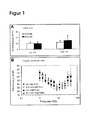
- Fig. 1:
- Die Operation und lokale Zufuhr von Salicylat verändert nicht signifikant die Hörschwellen;
- Fig. 2
- Akute systemische und lokale Applikation von Salicylat führt nach einer bestimmten Zeit zu einer gesteigerten c-fos-Expression in der Cochlea;
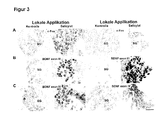
- Fig. 3
- In situ-Hybridisierungsanalyse von c-fos und BDNF-Exon III und Exon IV-Splice-Varianten in der Cochlea von adulten Ratten nach lokaler und systemischer Applikation von Salicylat;
- Fig. 4
- Eine RT-PCR-Analyse zeigt eine dosisabhängige differenzielle Veränderung der Expression von c-fos und BDNF-Exon III- und Exon IV-Expression in der Cochlea nach systemischer und lokaler Applikation von Salicylat;
- Fig. 5
- Die lokale Applikation von Salicylat reduziert die Expression von c-fos, BDNF Exon III- und Exon IV in dem auditorischen Cortex;
- Fig. 6
- Die durch Salicylat bedingte Hochregulation der BDNF-Expression in cochleären Neuronen wird durch den Typ-Ca++-Kanal-Antagonisten Nifedipin inhibiert; und
- Fig. 7
- Die durch Salicylat bedingte Hochregulation der BDNF-Expression in cochleären Neuronen wird durch das Benzodiazepin Midazolam inhibiert.
- Für die Experimente wurden weibliche adulte Wistar-Ratten verwendet, die zwischen 280 und 300 Gramm wogen. Die Behandlung und der Umgang mit diesen Tieren erfolgte in Übereinstimmung mit den Institutsrichtlinien der Universität Tübingen, Tierforschungsanstalt.
- Die Ratten wurden gemäß dem Verfahren von Guitton, M. J. et al. (2003), Salicylate induces tinnitus through activation of cochlear NMDA receptors, J. Neurosci. 23, Seiten 3944 bis 3952, intraperitoneal anästhesiert, um ein sog. Gelfoam (Gelita Tampon; B. Braun Medical, Melsungen, Deutschland) über das runde Fenster beider Ohren zu platzieren. Das Gelfoam wurde wie angegeben mit Salicylat, das in artifizieller Perilymphlösung (70 mg/ml) verdünnt wurde, oder mit dem entsprechenden Volumen von artifizieller Perilymphe alleine, getränkt. Das Gelfoam wurde auf der Nische des runden Fensters platziert, wie beschrieben; Guitton J. et al. (a.a.O.). Das Salicylat wurde so für 20 Stunden lokal appliziert. Nach dieser Zeit wurden die Tiere getötet und die Cochlea und der auditorische Cortex entfernt.
- Die Tiere wurden mit Kohlenstoffdioxid tiefanästhesiert und anschließend decapiert. Die Cochleae wurden isoliert und wie zuvor beschrieben präpariert; vgl. Knipper, M. et al. (2000), Thyroid hormone deficiency before the onset of hearing causes irreversible damage to peripheral and central auditory systems, J. Neurophysiol. 83, Seiten 3101 bis 3112. Kurz, die Cochleae wurden durch Immersion in 2 % Paraformaldehyd, 125 mM Saccharose in 100 mM phosphatgepufferter Saline (PBS), pH 7,4, für zwei Stunden fixiert, nach der Fixierung für 45 Minuten in "Rapid bone decalcifier (#904687, Eurobio, Fisher-Scientific, 61130 Nidderau, Deutschland) decalcifiziert, anschließend gefolgt von einer Inkubation über Nacht in 25 % Saccharose, 1 mM Proteaseinhibitor (Pefabloc, Roche) in Hanks-gepufferter Saline. Nach der Übernachtinkubation wurden die Cochleae in O.C.T.-Verbindung (Miles Laboratories, Elkhart, Ind., USA) eingebettet. Die Gewebe wurden dann bei 10 µm Dicke für die in situ-Hybridisierung kryogeschnitten, gelagert auf SuperFrost*/plus-Objektträger und vor der Verwendung bei -20°C gelagert.
- Die auditorischen Cortices wurden gemäß der Beschreibungen identifiziert, die in Paxinos, G. & Watson, C. (1998), The rat brain in stereotaxic coordinates, Academic Press, Inc., gegeben werden. Für RNA-Präparationen wurden die Gewebe unmittelbar in flüssigem Stickstoff eingefroren und vor der Verwendung bei -70°C gelagert.
- Genomische DNA aus Rattenlebergewebe wurde mittels des Easy-DNA-Kits von Invitrogen gemäß den Angaben des Herstellers isoliert. Eine Polymerasekettenreaktion wurde durchgeführt, um alle vier nicht codierenden 5'-Exons des BDNF-Gens zu amplifizieren.
- Um die Exon-3-spezifische Sonde zu amplifizieren, wurde ein Sinn(Sense)-Primer (5' acc cac ttt ccc att cac cg 3') und ein Gegensinn(Antisense)-Primer (5' cct ttt tca gtc act act tg 3') jeweils entsprechend den Nucleotidpositionen 536 bis 555 und 957 bis 976 des genomischen Fragmentes B (Timmusk, T. et al. (1995), Identification of brain-derived neurotrophic factor promoter regions mediating tissue-specific, axotomy-, and neuronal activity-induced expression in transgenic mice, J. Cell. Biol. 128, Seiten 185 bis 199, verwendet. Für die Exon-4-spezifische Sonde wurde ein Sinn-Primer (5' cca atc gaa gct caa ccg aa 3') und ein Gegensinn-Primer (5' tca ggg tcc aca caa agc tc 3') entsprechend den Nucleotidpositionen 1732 bis 1751 und 2059 bis 2078 des genomischen Fragmentes B verwendet (Timmusk, T. et al., a.a.O.). Um die gemeinsame Ribosonde für das codierende Exon-5 zu amplifizieren, wurde ein Sinn-Primer (5' gag gac cag aag gtt cg 3') und ein Gegensinn-Primer (5' ttt atc tgc cgc tgt gac 3') entsprechend der Nucleotidpositionen 309 bis 325 und 534 bis 551 verwendet (Zugangsnummer M61175). Um die c-fos-Sonde zu synthetisieren, wurde ein Sinn-Primer (5' gac ttt tgc gca gat ctg tc 3') und ein Gegensinn-Primer (5' ctg ctc tac ttt gcc cct tc 3') entsprechend den jeweiligen Nucleotidpositionen 276 bis 295 und 508 bis 527 der cDNA verwendet (Zugriffsnummer X06769).
- In der PCR-Reaktion wurde die genomische DNA zuerst für vier Minuten bei 94°C denaturiert, gefolgt von 30 Zyklen von einer Minute bei 94°C, einer Minute bei 55°C und einer Minute bei 72°C. Die Verlängerungsreaktion wurde bei 72°C für zehn Minuten durchgeführt. Die amplifizierten Fragmente wurden in einem 1%igen Agarosegel in 1 x TAE-Puffer aufgetrennt. Fragmente, die den erwarteten Längen der genspezifischen Sonden entsprechen, wurden unter Verwendung des QIAquick-Gel-Extraction-Kits von Qiagen extrahiert. Die erwarteten Längen der amplifizierten Fragmente waren 351 Nucleotide (Exon-III), 347 Nucleotide (Exon-IV), 243 Nucleotide (Exon-V) und 252 Nucleotide (c-fos). Diese Fragmente wurden in einen pCR II Topo-Vektor (Invitrogen) kloniert und ihre Nucleotidsequenzen wurden mittels eines automatischen Sequenzierers verifiziert.
- Die Plasmide wurden unter Verwendung eines QIAprep Spin Miniprep-Kits von Qiagen isoliert. Um linearisierte Plasmide zur Synthese von Sinn-Ribosonden zu synthetisieren, wurden die Plasmide zuerst mit geeigneten Restriktionsenzymen linearisiert. Ribosonden wurden unter Verwendung von Sp6-, T3- oder T7-RNA-Polymerasen synthetisiert und unter Verwendung von rNTP-Mix markiert, der digoxigeninmarkierte Uridintriphosphate enthält. Sämtliche Restriktionsenzyme, RNA-Polymerasen und digoxigeninmarkierte rNTPs wurden von Roche Diagnostics bezogen. Die in situ-Hybridisierung wurde durchgeführt, wie zuvor beschrieben (Wiechers, B. et al. (1999), A changing pattern of brain-derived neurotrophic factor expression correlates with the rearrangement of fibers during cochlea development of rats and mice, J. Neurosci. 19, Seiten 3033 bis 3042. Die Schnitte wurden mit Moviol (Sigma) bedeckt und unter Verwendung eines Olympus AX70-Mikroskops betrachtet.
- Gesamt-RNA wurde unter Verwendung des Total-RNeasy-Kits von Qiagen sowohl aus der Cochlea als auch aus Hirngewebe isoliert und mit DNase (Ambion) behandelt, um DNA-Kontaminanten zu entfernen. Die RNA wurde anschließend gereinigt und die Konzentrationen mittels spektrometrischer Messungen bestimmt. Die reverse Transkription der Hirngewebe wurde in einem 20 µl Reaktionsvolumen unter Verwendung von 1 µg Gesamt-RNA als Template und SUPERSCRIPT II Rnase H--reverse Transkriptase gemäß dem Protokoll von Invitrogen durchgeführt. Wegen der begrenzten Menge von RNA in den cochleären Geweben wurde unter Verwendung von 50 ng Gesamt-RNA als Template Qiagen Senscript reverse Transkriptase verwendet, wie im Protokoll von Qiagen beschrieben. Für die PCR wurde die Anzahl der Zyklen und die Anlagerungstemperatur optimiert, so dass die Signale, die für BDNF, c-fos und Glyceraldehyd-3-phosphat-Dehydrogenase (GAPDH) erhalten wurden, nicht gesättigt waren.
- Die PCR-Primersequenzen für arc waren 5' caa tgt gat cct gca gat tg 3' und 5' tgt tgg cat agg ggc taa ca 3'; für BDNF waren diese 5' ttc gac ccc gcc cgc cgt gg3' und 5' ccc ctt tta atg gtc agt gt 3'; für c-fos waren diese 5' gac ttt tgc gca gat ctg tc 3' und 5' att cct ttc cct tcg gat tc 3'; für GAPDH waren diese 5' tct act gc gtc ttc ac acc a 3' und 5' agg aga caa cct ggt cct cag t 3'. Die PCR wurde in einem 25 µl Endreaktionsvolumen durchgeführt, wobei gleichzeitig beide Primer für GAPDH und die aktivitätabhängigen Gene verwendet wurden. In dieser Duplex-PCR-Reaktion stellt ein Haushaltsgen in der gleichen PCR-Reaktion eine interne Kontrolle dar, so dass die Intensität des aktivitätsabhängigen Gens unzweideutig mit der Kontrolle und den behandelten Proben verglichen werden kann. PCR-ready-to-go-Beads von Amershan Pharmacia wurden verwendet, um eine Standardisierung der PCR-Bedingungen zu gewährleisten und Kontaminationen beim Pipettieren zu reduzieren. Letztlich wurden die PCR-Produkte in einem 2%igen Agarosegel analysiert, das mittels einer Ethidium-Bromid-Färbung und Densitometrischer Analyse unter Verwendung eines Alpha-Imagers 2200 von Biometra visualisiert wurde. Die Intensität des amplifizierten aktivitätsabhängigen Gens wurde für jede Reaktion auf den Level des coamplifizierten GAPDH normalisiert. Die Amplifizierungsbedingungen für arc, BDNF, c-fos und GAPDH waren für die anfängliche Denaturierungsphase von 94°C für drei Minuten, 30 Zyklen von jeweils einer Minute Denaturierung (94°C), einer Minute Anlagerung (54°C), 1,5 Minuten Verlängerung (72°C) und einer abschließenden Verlängerungsphase von zehn Minuten bei 72°C. Die PCR-Fragmente wurden kloniert und sequenziert, wie zuvor beschrieben.
- Die Anästhesie der Tiere sowie das ABR-Screening wurde durchgeführt, wie zuvor beschrieben ; vgl. Knipper, M. et al. (2000), a.a.O.; Schimmang, T. et al. (2003), Lack of BDNF and trkB signalling in the postnatal cochlea leads to a spatial reshaping of innervation along the tonotopic axis and hearing loss, Development 130, Seiten 4741 bis 4750.
- Wie oben beschrieben, wurde weiblichen Ratten etwa gleichen Gewichts Salicylat in die Nische des runden Fensters lokal appliziert. Um jegliche posttraumatischen Auswirkungen auf die Expression der aktivitätsabhängigen Gene in den cochleären Neuronen auszuschließen, wurden ausschließlich Individuen verwendet, die keine Veränderung des Hörvermögens nach Gelfoam-Applizierung zeigten. Wie in
Fig. 1 gezeigt, wurden keine signifikanten Veränderungen in dem Klick-abhängigen ABR-Screening vor oder 20 Stunden nach der Operation festgestellt. - Die Schwellen im ABR-Screening waren vor und nach der Operation (OP) weitgehend identisch und es zeigten sich weder bei der Applikation von Salicylat (n = 13; 5 µl; 70mg/kg; Salicylat) noch von artifizieller Perilymphe (n = 9; 5 µl; Kontrolle) wesentliche Unterschiede; vgl.
Fig. 1 (A) . Ein frequenzspezifisches ABR-Screening vor und 20 Stunden nach lokaler Applikation von Salicylat (n = 5; 5 µl; 70 mg/kg; Salicylat) oder artifizieller Perilymphe (n = 6; 5 µl, Kont) in die Nische des runden Fensters zeigt, dass es zu keinem Hörverlust kommt; vgl.Fig. 1(B) . - In einem ersten Ansatz zum Herausfinden des geeigneten Zeitpunktes, zu dem entweder lokal oder systemisch appliziertes Salicylat die Cochlea erreicht und die neuronale Erregbarkeit modifiziert, wurde im Cochleagewebe zu verschiedenen Zeitpunkten nach der Salicylatapplizierung über RT-PCR-Analyse die c-fos-Expression untersucht. Dabei wurde festgestellt, dass die Gelfoam-Applikation von Salicylat (5 µl, 70 mg/ml) die c-fos-Expression nicht vor etwa 20 Stunden beeinflusst, möglicherweise auf Grund einer verlangsamten Sekretion der Flüssigkeit aus dem Gelfoam. Eine signifikante Hochregulation von c-fos wurde 20 Stunden, nicht jedoch drei Stunden nach Applizierung festgestellt (
Fig. 2A ). Hierzu im Gegensatz wurde durch systemische Gabe von Salicylat (350 mg/kg Klörpergewicht) über intraperitoneale Injektion bereits nach drei Stunden eine Hochregulation von c-fos beobachtet ohne signifikante Veränderungen bei längeren Zeiten von bis zu 20 Stunden. Die Expression von GAPDH ist sowohl im Kontrollansatz als auch salicylatbehandelten Ansatz gleich, wodurch demonstriert wird, dass in diesen Experimenten gleiche Mengen von RNA (50 ng) verwendet wurden (Fig. 2B ). Um entsprechende akute Wirkungen zu vergleichen, wurden im Folgenden die Effekte von lokal appliziertem Salicylat 20 Stunden und systemisch injiziertem Salicylat drei Stunden nach Applikation untersucht. - In einem weiteren Schritt wurde der Effekt von lokal und systemisch appliziertem Salicylat auf die Expression bestimmter BNDF-Splice-Varianten in den cochleären Spiralganglien (SG) der Ratte mittels in situ-Hybridisierung untersucht. Zum Vergleich wurde die c-fos-Expression beobachtet. Wie exemplarisch in
Fig. 3 für drei individuelle Experimente in Duplikaten gezeigt, waren die Hybridisierungssignale für c-fos (Fig. 3A ), BDNF-Exon-III (Fig. 3B ) und BDNF-Exon IV (Fig. 3C ) in der mittleren basalen cochleären Windung im Vergleich zu der Applizierung des gleichen Volumens von artifizieller Perilymphe (Fig. 3 , Kontrolle) nach sowohl lokaler (links, 5 µl; 70 mg/ml; lokale Applikation) als auch systemischer (rechts, 350 mg/kg Körpergewicht; systemische Applikation) Gabe von Salicylat signifikant erhöht (dunkle Färbung). Unter Verwendung von Sense-Proben wurden keine Hybridisierungssignale beobachtet (Daten nicht gezeigt). Entlang der tonotopischen Achse zeigte die BDNF-Expression eine charakteristische Abnahme von den basalen/mittelbasalen hin zu den mehr apikalen cochleären Windungen (Schimmang, T. et al. (2003) a.a.O.) und der Salicylat induzierte Anstieg in dem Expressionsmuster beeinflusste primär die mehr basal gelegenen cochleären Windungen. - Um mögliche Unterschiede in den Aktivierungsmustern bestimmter BDNF-Transkripte auf verschiedene Anregungsstufen zu untersuchen, wurde der Effekt von verschiedenen Dosierungen von Salicylat analysiert, welche die neuronale Erregbarkeit unterschiedlich beeinflussen könnten; vgl. Kumagai (1992), Effect of intravenous injection of aspirin on the cochlea, Hokkaido Igaku Tasshi 67 (2), Seiten 216 bis 233; Stypulkowski (1990), Mechanisms of salicylate ototoxicity, Hear Res. 46 (1-2), Seiten 113 vis 145. Dazu wurde die Auswirkung von lokal applizierten Gelfoams, getränkt mit verschiedenen Volumina (5, 10, 20 µl) von 70 mg/ml Salicylat und parallel die Auswirkung von verschiedenen Konzentrationen systemisch applizierten Salicylats (250 mg/kg, 350 mg/kg, 500 mg/kg Körpergewicht) untersucht. Unter Verwendung von semiquantitativer RT-PCR-Analyse der Gesamt-RNAs wurden in dem cochleären Gewebe c-fos-, BDNF-Exon-III- und BDNF-Exon-IV-Transkripte untersucht (
Fig. 4 ). - Interessanterweise wurde für beide Applizierungsmethoden ein dosisabhängiger Effekt von Salicylat festgestellt, der im Vergleich zu GADPH zu leichten Veränderungen der Hochregulation der c-fos-Expression führte. Die größten Auswirkungen wurden bei einer Applizierung von 5 µl oder 10 µl Salicylat am runden Fenster bzw. bei einer Injektion von 250 mg/kg oder 350 mg/kg Salicylat festgestellt, wohingegen bei höheren Konzentrationen in beiden Applizierungsmethoden weniger deutliche Auswirkungen festgestellt wurden (
Fig. 4A ). - Unter Verwendung des gleichen Templates, um sowohl BDNF-Exon-III oder -IV zu amplifizieren, zeigte sich ein deutlicher Unterschied im Aktivierungsmuster der verschiedenen aktivitätsabhängigen Gene.
- Unabhängig von der Applizierungsmethode wurde das BDNF-Exon-III mit etwas Verzögerung nach dem BDNF-Exon-IV aktiviert, was bei höheren Konzentrationen von Salicylat in einem Peak der Expression von BDNF-Exon-III (
Fig. 4B ) resultiert, während sowohl c-fos (Fig. 4A ) als auch BDNF-Exon-IV (Fig. 4C ) bereits auf geringere Dosen von Salicylat reagieren. Vergleichbare Ergebnisse wurden in drei Experimenten in Duplikaten erhalten, welche die densitometrische Analyse, die inFig. 4B gezeigt ist, bestätigen, wonach es zu einer signifikanten Erhöhung der Expression des BDNF-Exons-IV (49 ± 12 %, n = 8, p < 0,05) und von c-fos (69 ± 11 %, n = 8, p < 0,05) kommt. - Im auditorischen Cortex wurden die BDNF-Exon-III und -IV-Splice-varianten, das gemeinsame BDNF-Exon-V und c-fos-Transkripte amplifiziert (Daten nicht gezeigt). Es wurden auditorische Cortices untersucht, die aus Tieren erhalten wurden, in denen die Cochlea hinsichtlich der dosisabhängigen Wirkung des Salicylates untersucht wurden, die mRNA wurde isoliert und eine RT-PCR wurde durchgeführt, wie unter Material und Methoden beschrieben.
- Während lokal oder systemisch appliziertes Salicylat zur Erhöhung der Expression der untersuchten aktivitätsabhängigen Gene in der Cochlea führt (
Fig. 4 ), wurde in drei unabhängigen Experimenten in Duplikaten festgestellt, dass beide Methoden im auditorischen Cortex zu entgegengesetzten Effekten auf die aktivitätsabhängigen Gene führen. Im Gegensatz zur Auswirkung auf die cochleären Neuronen führte die lokale Applikation von sämtlichen Dosierungen von Salicylat zur Reduktion der Expression von c-fos (Fig. 5A , links), von BDNF-Exon-III (Fig. 5B , links) und BDNF-Exon-IV (Fig. 5C , links). - Während in der Cochlea für verschiedene Dosierungen und verschiedene BDNF-Transkripte ein unterschiedliches Aktivierungsmuster festgestellt wurde, war der abnehmende Effekt bei höheren Konzentrationen im auditorischen Cortex nicht so eindeutig (
Fig. 5A-C ). Mittels densitometrischer Analyse wurde bestätigt, dass es zu einer signifikanten Abnahme der Expression von BNDF-Exon-IV (49 ± 12 %, n = 8, p < 0,05) und c-fos (69 ± 11 %, n = 8, p < 0,05) kommt. - In einem weiteren Experiment haben die Erfinder untersucht, ob das erstmals bei akutem Tinnitus festgestellte Phänomen der erhöhten BDNF-Expression unter Verwendung von Isradipin, einem L-Typ-Ca++-Kanal-Antagonisten, der die BDNF-Rezeptor vorgeschaltete Signaltransduktionskaskade beeinflusst, aufgehoben werden kann.
- Hierzu wurden 22 Stunden vor der Gewebeentnahme 10 µl 0,9%ige Kochsalzlösung (
Fig. 6A , Saline) und 10 µl einer 10 mM Isradipinlösung (Fig. 6B , Isradipine) lokal in die Nische des runden Fensters, d.h. vor die Rundfenstermembran, appliziert. 3 Stunden vor der Gewebeentnahme an der Cochlea wurde identisches Volumen Kochsalzlösung (C) bzw. 350 mg/kg Körpergewicht Salicylat (Scy) systemisch injiziert. Nach der Entnahme des Gewebes wurde die Expression von BDNF in beiden Ansätzen analysiert. - In
Fig. 6 ist die Expression des BDNF Exon IV unter vorstehend genannten Bedingungen dargestellt. Wie erwartet bewirkt das Salicylat eine Hochregulation von BDNF in den cochleäre Neuronen (Fig. 6A , rechte Spur), während im identisch durchgeführten Ansatz in der Tiergruppe, in der Isradipin anstelle von Kochsalz appliziert wurde, die Hochregulation von BDNF inhibiert wird. - Das vorstehend beschriebene und in
Fig. 6 dargestellte Experiment wurde unter identischen Bedingungen auch für einen weiteren L-Typ-Ca++-Kanal-Antagonisten, Nifedipin, durchgeführt. Dabei wurde ebenfalls ein inhibitorischer Effekt auf die nach der Induktion von akutem Tinnitus erhöhte BDNF-Expression in den cochleären Neuronen nachgewiesen, obgleich weniger stark, als mit Isradipin (Daten nicht gezeigt). - Die Erfinder haben ferner untersucht, ob die mit akutem Tinnitus einhergehende erhöhte BDNF-Expression durch die Verabreichung von GABA-Rezeptor-Agonisten, die mit der vorgeschalteten Signaltransduktionskaskade interagieren, wie Benzodiazepinen, inhibiert werden kann. Wie bereits zuvor beschrieben, wurde weiblichen Ratten steigende Mengen von Salicylat (Scy) in die Nische des runden Fensters lokal appliziert. Dabei zeigte sich, wie auf Grund der zuvor diskutierten Experimente erwartet, eine Zunahme der Expression des BDNF-Exon-IV-Transkriptes in den cochleären Neuronen, und eine Abnahme der Expression des aktivitätsabhängigen Cytoskelettproteins Arc im auditorischen Cortex. Das Ergebnis einer repräsentativen RT-PCR ist in
Fig. 7A für n = 3 mit vergleichbarem Ergebnis gezeigt. - In einem weiteren experimentellen Ansatz wurde den Ratten 350 mg/kg Salicylat systemisch appliziert. Wie in
Fig. 7A für die lokale Rundfensterapplikation gezeigt, führt auch die systemische Gabe von Salicylat zu einer erhöhten Expression von BDNF-Exon-IV (Fig. 7B , oben) und erwartungsgemäß von c-fos (Fig. 7C , oben) in cochleären Neuronen, während im primären auditorischen Cortex eine Abnahme der Expression von Arc (Fig. 7B , unten) und BDNF-Exon-IV (nicht gezeigt) und gelegentlich von c-fos (Fig. 7C , unten) nachweisbar ist. - Zweieinhalb Stunden nach der Induktion von akutem Tinnitus über die Injektion von 350 mg/kg Salicylat wurde den Tieren systemisch Midazolam (Dormicum, Roche, Grenzach-Wyhlen, Deutschland) (0,5 mg/kg Körpergewicht) verabreicht und die Gen-Expression nach Organentnahme mit Hilfe der RT-PCR untersucht. Dabei stellte sich heraus, dass Midazolam (MDZ) zu einer signifikanten Reduktion des Effektes von Salicylat auf die Expression von BDNF-Exon-IV (n = 7) in den cochleären Neuronen und von Arc im auditorischen Cortex führt (
Fig. 7B , rechter Balken, n = 12), die Expression von c-fos jedoch unbeeinflussbar bleibt (Fig. 7C , rechter Balken, n = 7 bis 12). Die statistische Auswertung wurde mit dem "Student's T-test" durchgeführt; * = p < 0,05. - In einem weiteren dem vorstehenden entsprechenden Experiment wurde ein GABA-Rezeptor-Agonist unter ansonsten identischen Bedingungen nicht systemisch sondern lokal in die Nische des Runden Fensters appliziert. Dabei stellte sich heraus, dass die mit akutem Tinnitus verbundene erhöhte BDNF-Exon-IV-Expression in den cochleären Neuronen noch stärker inhibiert wurde und die Auswirkungen auf die Expression von BDNF-Exon-IV im auditiven Cortex deutlich reduziert waren.
- Die lokale Applikation eines BDNF-Antagonisten hebt folglich die bei akutem Tinnitus beobachtete pathologische Fehlregulation der BDNF-Expression auf. Die Erfinder konnten deshalb nachweisen, dass es sich bei erfindungsgemäßen BDNF-Antagonisten um Substanzen handelt, die für die Behandlung von akutem Tinnitus grundsätzlich geeignet sind.
- Die Erfinder konnten erstmals zeigen, dass mittels Substanzen, die die Blockade oder Inhibition des BDNF-Rezetors bewirken bzw. mit der nachgeschalteten BDNF-Signaltransduktionskaskade interagieren bzw. diese inhibieren, wirksam akuter Tinnitus behandelt werden kann.
Claims (6)
- Substanz, die eine Blockade oder Inhibition des BDNF-Rezeptors (trkB) als trkB-Antagonist oder der diesem Rezeptor nachgeschalteten Signaltransduktionskaskade bewirkt zur Verwendung in der Behandlung der Phantomphänomene des akuten Tinnitus bei einem menschlichen oder tierischen Lebewesen.
- Substanz zur Verwendung nach Anspruch 1, dadurch gekennzeichnet, dass als Substanz ein ein MAP-Kinase-Inhibitor, ein Cam-Kinase-Inhibitor, ein PI3-Kinase-Inhibitor, ein PLC-Inhibitor oder ein Shc-Inhibitor vorgesehen wird.
- Substanz zur Verwendung nach Anspruch 2, dadurch gekennzeichnet, dass als MAP-Kinase-Inhibitor U 0126 oder PD 98058 vorgesehen wird.
- Substanz zur Verwendung nach einem der Ansprüche 1 bis 3, dadurch gekennzeichnet, dass die Substanz lokal am oder im Ohr appliziert wird.
- Substanz zur Verwendung nach Anspruch 4, dadurch gekennzeichnet, dass die lokale Applikation durch die Anwendung eines bioabbaubaren Hydrogels erfolgt, das als Trägermatrix für die Substanz dient.
- Substanz zur Verwendung in der therapeutischen oder prophylaktischen Behandlung der Phantomphänomene des akuten Tinnitus bei einem menschlichen oder tierischen Lebewesen, ausgewählt aus der Gruppe bestehend aus MAP-Kinase-Inhibitoren, insbesondere U 0126 oder PD 98058, PLC-Inhibitoren, PI3-Kinase-Inhibitoren, Shc-Inhibitoren und Cam-Kinase-Inhibitoren.
Priority Applications (3)
| Application Number | Priority Date | Filing Date | Title |
|---|---|---|---|
| PL10158404T PL2196199T3 (pl) | 2005-01-25 | 2006-01-19 | Leczenie zjawisk fantomowych |
| SI200631820T SI2196199T1 (sl) | 2005-01-25 | 2006-01-19 | Zdravljenje fantomskega pojava |
| CY20141100852T CY1115638T1 (el) | 2005-01-25 | 2014-10-16 | Θεραπεια ψευδαισθητικων φαινομενων |
Applications Claiming Priority (2)
| Application Number | Priority Date | Filing Date | Title |
|---|---|---|---|
| DE102005004343A DE102005004343A1 (de) | 2005-01-25 | 2005-01-25 | Behandlung von Phantomphänomenen |
| EP06706302A EP1843757B1 (de) | 2005-01-25 | 2006-01-19 | Behandlung von phantomph[nomenen |
Related Parent Applications (2)
| Application Number | Title | Priority Date | Filing Date |
|---|---|---|---|
| EP06706302.4 Division | 2006-01-19 | ||
| EP06706302A Division EP1843757B1 (de) | 2005-01-25 | 2006-01-19 | Behandlung von phantomph[nomenen |
Publications (4)
| Publication Number | Publication Date |
|---|---|
| EP2196199A1 EP2196199A1 (de) | 2010-06-16 |
| EP2196199B1 EP2196199B1 (de) | 2014-08-13 |
| EP2196199B8 EP2196199B8 (de) | 2014-09-24 |
| EP2196199B9 true EP2196199B9 (de) | 2014-12-31 |
Family
ID=36123208
Family Applications (2)
| Application Number | Title | Priority Date | Filing Date |
|---|---|---|---|
| EP06706302A Expired - Lifetime EP1843757B1 (de) | 2005-01-25 | 2006-01-19 | Behandlung von phantomph[nomenen |
| EP10158404.3A Expired - Lifetime EP2196199B9 (de) | 2005-01-25 | 2006-01-19 | Behandlung von Phantomphänomenen |
Family Applications Before (1)
| Application Number | Title | Priority Date | Filing Date |
|---|---|---|---|
| EP06706302A Expired - Lifetime EP1843757B1 (de) | 2005-01-25 | 2006-01-19 | Behandlung von phantomph[nomenen |
Country Status (11)
| Country | Link |
|---|---|
| US (4) | US20080255096A1 (de) |
| EP (2) | EP1843757B1 (de) |
| AT (1) | ATE462422T1 (de) |
| CY (1) | CY1115638T1 (de) |
| DE (2) | DE102005004343A1 (de) |
| DK (2) | DK1843757T3 (de) |
| ES (2) | ES2343691T3 (de) |
| PL (2) | PL2196199T3 (de) |
| PT (2) | PT1843757E (de) |
| SI (2) | SI1843757T1 (de) |
| WO (1) | WO2006079476A1 (de) |
Families Citing this family (9)
| Publication number | Priority date | Publication date | Assignee | Title |
|---|---|---|---|---|
| DE102007063210A1 (de) | 2007-12-20 | 2009-06-25 | Eberhard-Karls-Universität Tübingen Universitätsklinikum | Arzneimittel zur Behandlung von Phantomphänomenen |
| JP5941159B2 (ja) | 2011-12-12 | 2016-06-29 | オトラーヌム アーゲー | 聴覚系における塩素イオン共輸送体nkcc1の調節による耳鳴の治療 |
| EP3328440A4 (de) | 2015-07-28 | 2019-01-16 | Otonomy, Inc. | Behandlung mit verkürzten trk-b- und trk-c-antagonisten |
| US10071083B2 (en) * | 2017-02-03 | 2018-09-11 | Ovid Therapeutics Inc | Use of gaboxadol in the treatment of tinnitus |
| GB2571696B (en) | 2017-10-09 | 2020-05-27 | Compass Pathways Ltd | Large scale method for the preparation of Psilocybin and formulations of Psilocybin so produced |
| US12459965B2 (en) | 2017-10-09 | 2025-11-04 | Compass Pathfinder Limited | Preparation of psilocybin, different polymorphic forms, intermediates, formulations and their use |
| WO2020061410A1 (en) | 2018-09-20 | 2020-03-26 | Ovid Therapeutics Inc. | Use of gaboxadol for the treatment of tourette syndrome, tics and stuttering |
| MX2021007224A (es) | 2018-12-17 | 2021-09-23 | Ovid Therapeutics Inc | Uso de gaboxadol para el tratamiento del trastorno del sue?o vigilia que no es de 24 horas. |
| CA3138094A1 (en) | 2019-04-17 | 2020-10-22 | Compass Pathfinder Limited | Methods for treating anxiety disorders, headache disorders, and eating disorders with psilocybin |
Family Cites Families (22)
| Publication number | Priority date | Publication date | Assignee | Title |
|---|---|---|---|---|
| US3254124A (en) * | 1962-06-29 | 1966-05-31 | Parke Davis & Co | Aminoketones and methods for their production |
| US4954486A (en) * | 1985-06-05 | 1990-09-04 | Tulane Educational Fund | Furosemide as tinnitus suppressant |
| AU5171293A (en) * | 1992-10-14 | 1994-05-09 | Regents Of The University Of Colorado, The | Ion-pairing of drugs for improved efficacy and delivery |
| US5421818A (en) * | 1993-10-18 | 1995-06-06 | Inner Ear Medical Delivery Systems, Inc. | Multi-functional inner ear treatment and diagnostic system |
| WO1996009044A1 (en) * | 1994-09-22 | 1996-03-28 | Richard Alan Smith | Compositions useful for the preparation of medicines for treating a variety of intractable disorders |
| DE19528388A1 (de) * | 1995-08-02 | 1997-02-06 | Hans Peter Prof Dr Med Zenner | Verwendung von Adamantan-Derivaten zur Behandlung von Erkrankungen des Innenohrs |
| US6225282B1 (en) * | 1996-01-05 | 2001-05-01 | Genentech, Inc. | Treatment of hearing impairments |
| AU2676397A (en) * | 1996-04-18 | 1997-11-07 | University Technology Corporation | Methods for treating middle and inner ear disorders |
| US6045528A (en) * | 1997-06-13 | 2000-04-04 | Intraear, Inc. | Inner ear fluid transfer and diagnostic system |
| US6309410B1 (en) * | 1998-08-26 | 2001-10-30 | Advanced Bionics Corporation | Cochlear electrode with drug delivery channel and method of making same |
| DE19853299C2 (de) * | 1998-11-19 | 2003-04-03 | Thomas Lenarz | Katheter zur Applikation von Medikamenten in Flüssigkeitsräumen des menschlichen Innenohrs |
| US6120484A (en) * | 1999-02-17 | 2000-09-19 | Silverstein; Herbert | Otological implant for delivery of medicament and method of using same |
| US6017961A (en) * | 1999-07-08 | 2000-01-25 | Flores; John Anthony | Ketamine and n-butyl-p-aminobezoate in PLO |
| DE10048969A1 (de) * | 2000-08-23 | 2002-03-14 | Mueller Schwefe Gerhard | Verwendung von Flupirtin zur Tinnitusbehandlung |
| DE10124953A1 (de) * | 2001-05-21 | 2002-12-12 | Marlies Knipper | Substanz für die therapeutische Behandlung von Tinnitus |
| US6638981B2 (en) * | 2001-08-17 | 2003-10-28 | Epicept Corporation | Topical compositions and methods for treating pain |
| CA2497867A1 (en) * | 2002-09-06 | 2004-03-18 | Durect Corporation | Delivery of modulators of glutamate-mediated neurotransmission to the inner ear |
| US6969383B2 (en) * | 2002-09-27 | 2005-11-29 | Medtronic, Inc. | Method for treating severe tinnitus |
| US6656172B1 (en) * | 2002-09-27 | 2003-12-02 | Medtronic, Inc. | Method for treating severe tinnitus |
| CN100581621C (zh) * | 2003-05-16 | 2010-01-20 | 拉瓦勒大学 | Cns氯化物调节及其用途 |
| US7196061B2 (en) * | 2003-09-10 | 2007-03-27 | Wyeth | Compounds that modulate neuronal growth and their uses |
| GB0402118D0 (en) * | 2004-01-30 | 2004-03-03 | Merck Sharp & Dohme | Polymorphic forms of a GABAA agonist |
-
2005
- 2005-01-25 DE DE102005004343A patent/DE102005004343A1/de not_active Ceased
-
2006
- 2006-01-19 ES ES06706302T patent/ES2343691T3/es not_active Expired - Lifetime
- 2006-01-19 ES ES10158404.3T patent/ES2521519T3/es not_active Expired - Lifetime
- 2006-01-19 US US11/814,663 patent/US20080255096A1/en not_active Abandoned
- 2006-01-19 DE DE502006006576T patent/DE502006006576D1/de not_active Expired - Lifetime
- 2006-01-19 SI SI200630697T patent/SI1843757T1/sl unknown
- 2006-01-19 PL PL10158404T patent/PL2196199T3/pl unknown
- 2006-01-19 DK DK06706302.4T patent/DK1843757T3/da active
- 2006-01-19 PT PT06706302T patent/PT1843757E/pt unknown
- 2006-01-19 EP EP06706302A patent/EP1843757B1/de not_active Expired - Lifetime
- 2006-01-19 PL PL06706302T patent/PL1843757T3/pl unknown
- 2006-01-19 PT PT101584043T patent/PT2196199E/pt unknown
- 2006-01-19 AT AT06706302T patent/ATE462422T1/de active
- 2006-01-19 EP EP10158404.3A patent/EP2196199B9/de not_active Expired - Lifetime
- 2006-01-19 SI SI200631820T patent/SI2196199T1/sl unknown
- 2006-01-19 WO PCT/EP2006/000446 patent/WO2006079476A1/de not_active Ceased
- 2006-01-19 DK DK10158404.3T patent/DK2196199T3/da active
-
2012
- 2012-06-18 US US13/526,185 patent/US20120302554A1/en not_active Abandoned
-
2014
- 2014-10-16 CY CY20141100852T patent/CY1115638T1/el unknown
- 2014-12-16 US US14/572,376 patent/US20150099742A1/en not_active Abandoned
-
2016
- 2016-11-04 US US15/343,817 patent/US20170072007A1/en not_active Abandoned
Also Published As
| Publication number | Publication date |
|---|---|
| EP2196199A1 (de) | 2010-06-16 |
| PT2196199E (pt) | 2014-09-09 |
| CY1115638T1 (el) | 2017-01-04 |
| ES2343691T3 (es) | 2010-08-06 |
| PL1843757T3 (pl) | 2010-09-30 |
| DK2196199T3 (da) | 2014-11-03 |
| DE502006006576D1 (de) | 2010-05-12 |
| SI1843757T1 (sl) | 2010-09-30 |
| PL2196199T3 (pl) | 2015-01-30 |
| EP1843757A1 (de) | 2007-10-17 |
| US20120302554A1 (en) | 2012-11-29 |
| WO2006079476A1 (de) | 2006-08-03 |
| EP2196199B1 (de) | 2014-08-13 |
| DK1843757T3 (da) | 2010-07-26 |
| ES2521519T3 (es) | 2014-11-12 |
| PT1843757E (pt) | 2010-07-06 |
| ES2521519T9 (es) | 2015-04-07 |
| SI2196199T1 (sl) | 2014-12-31 |
| US20170072007A1 (en) | 2017-03-16 |
| EP2196199B8 (de) | 2014-09-24 |
| US20150099742A1 (en) | 2015-04-09 |
| DE102005004343A1 (de) | 2006-08-10 |
| EP1843757B1 (de) | 2010-03-31 |
| US20080255096A1 (en) | 2008-10-16 |
| ATE462422T1 (de) | 2010-04-15 |
Similar Documents
| Publication | Publication Date | Title |
|---|---|---|
| Addolorato et al. | Novel therapeutic strategies for alcohol and drug addiction: focus on GABA, ion channels and transcranial magnetic stimulation | |
| DE69934120T2 (de) | Inhibitoren der proteasomalen aktivität zur stimulierung des haarwuchses | |
| US20170072007A1 (en) | Phantom phenomena treatment | |
| WO2003035083A1 (de) | Medikament zur behandlung einer fibrotischen erkrankung durch rna interferenz | |
| DE60203847T2 (de) | Zusammensetzungen enthaltend S-Tofisopam sowie Verwendung dieser Zusammenset- zungen zur Herstellung eines Medikaments zur Behandlung oder Vorbeugung von Krämpfen oder Anfällen | |
| Sari et al. | Enhanced pharmacological actions of p, p’-methoxyl-diphenyl diselenide-loaded polymeric nanocapsules in a mouse model of neuropathic pain: behavioral and molecular insights | |
| DE102007063210A1 (de) | Arzneimittel zur Behandlung von Phantomphänomenen | |
| EP1056467A2 (de) | Verfahren zur behandlung von erkrankungen oder störungen des innenohrs | |
| CN101039674A (zh) | 河豚毒素及其衍生物用于治疗中枢神经源性神经痛 | |
| DE10163667B4 (de) | Verwendung von Desoxypeganin zur Behandlung der klinischen Depression | |
| Schneider et al. | Gamma-aminobutyric acid (GABA) and sleep: the influence of di-n-propylacetic acid on sleep in man | |
| DE69930624T2 (de) | Arzneimittel für hinterstrangataxie und zusammensetzung zur behandlung von hinterstrangataxie | |
| EP0912177B1 (de) | Verwendung von flupirtin zur therapie und prophylaxe von myokardinfarkt, schockniere und schocklunge | |
| US20180318379A1 (en) | Inhibition of triggering receptor expressed on myeloid cells 1 (trem1) to treat central nervous system disorders | |
| Matzen et al. | Functional and morphological changes in the dentate gyrus after experimental status epilepticus | |
| EP0774961B1 (de) | Verwendung von selegilin zur behandlung von epileptischen erkrankungen | |
| DE10124953A1 (de) | Substanz für die therapeutische Behandlung von Tinnitus | |
| EP1143942B1 (de) | Verwendung von gaba-b rezeptor liganden zur herstellungen von medikamenten zur behandlung von neurodegenerativen erkrankungen | |
| Hanaya et al. | Modulation of abnormal synaptic transmission in hippocampal CA3 neurons of spontaneously epileptic rats (SERs) by levetiracetam | |
| DE60208347T2 (de) | Verwendung von "xylyloxy alkyl amines" für die Behandlung von Tinnitus | |
| EP0493861A2 (de) | Nicotinamid-adenin-dinukleodid enthaltendes Antidepressionsmittel | |
| EP2548557A1 (de) | Reserpin zur Behandlung von kognitiven Störungen des zentralen Nervensystems | |
| DE102025111094A1 (de) | Behandlung von Autismus-Spektrum-Störungen | |
| DE102008047515A1 (de) | Behandlung einer demyelinisierenden Erkrankung | |
| CN1277019A (zh) | 增强大脑乙酰胆碱释放的药剂 |
Legal Events
| Date | Code | Title | Description |
|---|---|---|---|
| PUAI | Public reference made under article 153(3) epc to a published international application that has entered the european phase |
Free format text: ORIGINAL CODE: 0009012 |
|
| AC | Divisional application: reference to earlier application |
Ref document number: 1843757 Country of ref document: EP Kind code of ref document: P |
|
| AK | Designated contracting states |
Kind code of ref document: A1 Designated state(s): AT BE BG CH CY CZ DE DK EE ES FI FR GB GR HU IE IS IT LI LT LU LV MC NL PL PT RO SE SI SK TR |
|
| RTI1 | Title (correction) |
Free format text: PHANTOM PHENOMENA TREATMENT |
|
| 17P | Request for examination filed |
Effective date: 20100616 |
|
| RAP1 | Party data changed (applicant data changed or rights of an application transferred) |
Owner name: AURIS MEDICAL AG |
|
| 17Q | First examination report despatched |
Effective date: 20110331 |
|
| R17C | First examination report despatched (corrected) |
Effective date: 20110331 |
|
| RAP1 | Party data changed (applicant data changed or rights of an application transferred) |
Owner name: AURIS MEDICAL AG |
|
| GRAP | Despatch of communication of intention to grant a patent |
Free format text: ORIGINAL CODE: EPIDOSNIGR1 |
|
| INTG | Intention to grant announced |
Effective date: 20140303 |
|
| GRAS | Grant fee paid |
Free format text: ORIGINAL CODE: EPIDOSNIGR3 |
|
| GRAA | (expected) grant |
Free format text: ORIGINAL CODE: 0009210 |
|
| AC | Divisional application: reference to earlier application |
Ref document number: 1843757 Country of ref document: EP Kind code of ref document: P |
|
| AK | Designated contracting states |
Kind code of ref document: B1 Designated state(s): AT BE BG CH CY CZ DE DK EE ES FI FR GB GR HU IE IS IT LI LT LU LV MC NL PL PT RO SE SI SK TR |
|
| REG | Reference to a national code |
Ref country code: GB Ref legal event code: FG4D Free format text: NOT ENGLISH |
|
| REG | Reference to a national code |
Ref country code: AT Ref legal event code: REF Ref document number: 681731 Country of ref document: AT Kind code of ref document: T Effective date: 20140815 Ref country code: CH Ref legal event code: EP |
|
| RAP2 | Party data changed (patent owner data changed or rights of a patent transferred) |
Owner name: OTOLANUM AG |
|
| REG | Reference to a national code |
Ref country code: PT Ref legal event code: SC4A Free format text: AVAILABILITY OF NATIONAL TRANSLATION Effective date: 20140829 |
|
| REG | Reference to a national code |
Ref country code: IE Ref legal event code: FG4D Free format text: LANGUAGE OF EP DOCUMENT: GERMAN |
|
| REG | Reference to a national code |
Ref country code: DE Ref legal event code: R096 Ref document number: 502006013914 Country of ref document: DE Effective date: 20140918 |
|
| REG | Reference to a national code |
Ref country code: CH Ref legal event code: NV Representative=s name: RIEDERER HASLER AND PARTNER PATENTANWAELTE AG, LI Ref country code: RO Ref legal event code: EPE |
|
| REG | Reference to a national code |
Ref country code: DK Ref legal event code: T3 Effective date: 20141029 |
|
| REG | Reference to a national code |
Ref country code: NL Ref legal event code: T3 |
|
| REG | Reference to a national code |
Ref country code: SE Ref legal event code: TRGR |
|
| REG | Reference to a national code |
Ref country code: ES Ref legal event code: FG2A Ref document number: 2521519 Country of ref document: ES Kind code of ref document: T3 Effective date: 20141112 |
|
| REG | Reference to a national code |
Ref country code: EE Ref legal event code: FG4A Ref document number: E009643 Country of ref document: EE Effective date: 20140911 |
|
| REG | Reference to a national code |
Ref country code: SK Ref legal event code: T3 Ref document number: E 17310 Country of ref document: SK |
|
| REG | Reference to a national code |
Ref country code: FR Ref legal event code: PLFP Year of fee payment: 10 |
|
| REG | Reference to a national code |
Ref country code: GR Ref legal event code: EP Ref document number: 20140402012 Country of ref document: GR Effective date: 20141121 |
|
| REG | Reference to a national code |
Ref country code: PL Ref legal event code: T3 |
|
| REG | Reference to a national code |
Ref country code: DE Ref legal event code: R097 Ref document number: 502006013914 Country of ref document: DE |
|
| PLBE | No opposition filed within time limit |
Free format text: ORIGINAL CODE: 0009261 |
|
| STAA | Information on the status of an ep patent application or granted ep patent |
Free format text: STATUS: NO OPPOSITION FILED WITHIN TIME LIMIT |
|
| 26N | No opposition filed |
Effective date: 20150515 |
|
| REG | Reference to a national code |
Ref country code: CH Ref legal event code: PL |
|
| REG | Reference to a national code |
Ref country code: HU Ref legal event code: AG4A Ref document number: E023543 Country of ref document: HU |
|
| REG | Reference to a national code |
Ref country code: CH Ref legal event code: AECN Free format text: DAS PATENT IST AUFGRUND DES WEITERBEHANDLUNGSANTRAGS VOM 14. OKTOBER 2015 REAKTIVIERT WORDEN. |
|
| PG25 | Lapsed in a contracting state [announced via postgrant information from national office to epo] |
Ref country code: LI Free format text: LAPSE BECAUSE OF NON-PAYMENT OF DUE FEES Effective date: 20150131 Ref country code: CH Free format text: LAPSE BECAUSE OF NON-PAYMENT OF DUE FEES Effective date: 20150131 |
|
| REG | Reference to a national code |
Ref country code: FR Ref legal event code: PLFP Year of fee payment: 11 |
|
| PGRI | Patent reinstated in contracting state [announced from national office to epo] |
Ref country code: CH Effective date: 20151014 Ref country code: LI Effective date: 20151014 |
|
| REG | Reference to a national code |
Ref country code: FR Ref legal event code: PLFP Year of fee payment: 12 |
|
| REG | Reference to a national code |
Ref country code: FR Ref legal event code: PLFP Year of fee payment: 13 |
|
| PGFP | Annual fee paid to national office [announced via postgrant information from national office to epo] |
Ref country code: LT Payment date: 20181220 Year of fee payment: 14 Ref country code: MC Payment date: 20181228 Year of fee payment: 14 Ref country code: GR Payment date: 20181212 Year of fee payment: 14 Ref country code: EE Payment date: 20181227 Year of fee payment: 14 Ref country code: RO Payment date: 20181227 Year of fee payment: 14 Ref country code: PL Payment date: 20181211 Year of fee payment: 14 Ref country code: IS Payment date: 20181206 Year of fee payment: 14 Ref country code: SK Payment date: 20181213 Year of fee payment: 14 |
|
| PGFP | Annual fee paid to national office [announced via postgrant information from national office to epo] |
Ref country code: BE Payment date: 20181217 Year of fee payment: 14 |
|
| PGFP | Annual fee paid to national office [announced via postgrant information from national office to epo] |
Ref country code: LU Payment date: 20190108 Year of fee payment: 14 |
|
| PGFP | Annual fee paid to national office [announced via postgrant information from national office to epo] |
Ref country code: CZ Payment date: 20181231 Year of fee payment: 14 Ref country code: FI Payment date: 20190109 Year of fee payment: 14 Ref country code: CY Payment date: 20181206 Year of fee payment: 14 Ref country code: NL Payment date: 20190116 Year of fee payment: 14 |
|
| PGFP | Annual fee paid to national office [announced via postgrant information from national office to epo] |
Ref country code: SE Payment date: 20190110 Year of fee payment: 14 Ref country code: TR Payment date: 20190109 Year of fee payment: 14 Ref country code: HU Payment date: 20181220 Year of fee payment: 14 Ref country code: AT Payment date: 20181221 Year of fee payment: 14 Ref country code: SI Payment date: 20181218 Year of fee payment: 14 Ref country code: LV Payment date: 20181228 Year of fee payment: 14 Ref country code: DK Payment date: 20190110 Year of fee payment: 14 |
|
| PGFP | Annual fee paid to national office [announced via postgrant information from national office to epo] |
Ref country code: PT Payment date: 20190118 Year of fee payment: 14 |
|
| REG | Reference to a national code |
Ref country code: FI Ref legal event code: MAE |
|
| PG25 | Lapsed in a contracting state [announced via postgrant information from national office to epo] |
Ref country code: MC Free format text: LAPSE BECAUSE OF NON-PAYMENT OF DUE FEES Effective date: 20200131 |
|
| REG | Reference to a national code |
Ref country code: DK Ref legal event code: EBP Effective date: 20200131 Ref country code: CH Ref legal event code: PL |
|
| REG | Reference to a national code |
Ref country code: SE Ref legal event code: EUG |
|
| REG | Reference to a national code |
Ref country code: NL Ref legal event code: MM Effective date: 20200201 |
|
| REG | Reference to a national code |
Ref country code: AT Ref legal event code: MM01 Ref document number: 681731 Country of ref document: AT Kind code of ref document: T Effective date: 20200119 Ref country code: EE Ref legal event code: MM4A Ref document number: E009643 Country of ref document: EE Effective date: 20200131 |
|
| REG | Reference to a national code |
Ref country code: SE Ref legal event code: EUG |
|
| REG | Reference to a national code |
Ref country code: SK Ref legal event code: MM4A Ref document number: E 17310 Country of ref document: SK Effective date: 20200119 |
|
| REG | Reference to a national code |
Ref country code: BE Ref legal event code: MM Effective date: 20200131 |
|
| REG | Reference to a national code |
Ref country code: LT Ref legal event code: MM4D Effective date: 20200119 |
|
| PG25 | Lapsed in a contracting state [announced via postgrant information from national office to epo] |
Ref country code: PT Free format text: LAPSE BECAUSE OF NON-PAYMENT OF DUE FEES Effective date: 20200820 Ref country code: EE Free format text: LAPSE BECAUSE OF NON-PAYMENT OF DUE FEES Effective date: 20200131 Ref country code: NL Free format text: LAPSE BECAUSE OF NON-PAYMENT OF DUE FEES Effective date: 20200201 Ref country code: SK Free format text: LAPSE BECAUSE OF NON-PAYMENT OF DUE FEES Effective date: 20200119 Ref country code: GR Free format text: LAPSE BECAUSE OF NON-PAYMENT OF DUE FEES Effective date: 20200806 Ref country code: CZ Free format text: LAPSE BECAUSE OF NON-PAYMENT OF DUE FEES Effective date: 20200119 Ref country code: FI Free format text: LAPSE BECAUSE OF NON-PAYMENT OF DUE FEES Effective date: 20200119 Ref country code: RO Free format text: LAPSE BECAUSE OF NON-PAYMENT OF DUE FEES Effective date: 20200119 Ref country code: CY Free format text: LAPSE BECAUSE OF NON-PAYMENT OF DUE FEES Effective date: 20200119 Ref country code: LU Free format text: LAPSE BECAUSE OF NON-PAYMENT OF DUE FEES Effective date: 20200119 Ref country code: SE Free format text: LAPSE BECAUSE OF NON-PAYMENT OF DUE FEES Effective date: 20200120 |
|
| PG25 | Lapsed in a contracting state [announced via postgrant information from national office to epo] |
Ref country code: BE Free format text: LAPSE BECAUSE OF NON-PAYMENT OF DUE FEES Effective date: 20200131 Ref country code: CH Free format text: LAPSE BECAUSE OF NON-PAYMENT OF DUE FEES Effective date: 20200131 Ref country code: BG Free format text: LAPSE BECAUSE OF NON-PAYMENT OF DUE FEES Effective date: 20200731 Ref country code: LI Free format text: LAPSE BECAUSE OF NON-PAYMENT OF DUE FEES Effective date: 20200131 Ref country code: AT Free format text: LAPSE BECAUSE OF NON-PAYMENT OF DUE FEES Effective date: 20200119 Ref country code: SI Free format text: LAPSE BECAUSE OF NON-PAYMENT OF DUE FEES Effective date: 20200120 Ref country code: HU Free format text: LAPSE BECAUSE OF NON-PAYMENT OF DUE FEES Effective date: 20200120 Ref country code: LV Free format text: LAPSE BECAUSE OF NON-PAYMENT OF DUE FEES Effective date: 20200119 |
|
| PG25 | Lapsed in a contracting state [announced via postgrant information from national office to epo] |
Ref country code: DK Free format text: LAPSE BECAUSE OF NON-PAYMENT OF DUE FEES Effective date: 20200131 Ref country code: IE Free format text: LAPSE BECAUSE OF NON-PAYMENT OF DUE FEES Effective date: 20200119 Ref country code: LT Free format text: LAPSE BECAUSE OF NON-PAYMENT OF DUE FEES Effective date: 20200119 |
|
| PGFP | Annual fee paid to national office [announced via postgrant information from national office to epo] |
Ref country code: FR Payment date: 20201210 Year of fee payment: 16 |
|
| PGFP | Annual fee paid to national office [announced via postgrant information from national office to epo] |
Ref country code: IT Payment date: 20201211 Year of fee payment: 16 |
|
| PGFP | Annual fee paid to national office [announced via postgrant information from national office to epo] |
Ref country code: ES Payment date: 20210205 Year of fee payment: 16 Ref country code: GB Payment date: 20210106 Year of fee payment: 16 Ref country code: DE Payment date: 20210105 Year of fee payment: 16 |
|
| PG25 | Lapsed in a contracting state [announced via postgrant information from national office to epo] |
Ref country code: PL Free format text: LAPSE BECAUSE OF NON-PAYMENT OF DUE FEES Effective date: 20200119 |
|
| PG25 | Lapsed in a contracting state [announced via postgrant information from national office to epo] |
Ref country code: TR Free format text: LAPSE BECAUSE OF NON-PAYMENT OF DUE FEES Effective date: 20200119 |
|
| REG | Reference to a national code |
Ref country code: DE Ref legal event code: R119 Ref document number: 502006013914 Country of ref document: DE |
|
| GBPC | Gb: european patent ceased through non-payment of renewal fee |
Effective date: 20220119 |
|
| PG25 | Lapsed in a contracting state [announced via postgrant information from national office to epo] |
Ref country code: GB Free format text: LAPSE BECAUSE OF NON-PAYMENT OF DUE FEES Effective date: 20220119 Ref country code: DE Free format text: LAPSE BECAUSE OF NON-PAYMENT OF DUE FEES Effective date: 20220802 |
|
| PG25 | Lapsed in a contracting state [announced via postgrant information from national office to epo] |
Ref country code: FR Free format text: LAPSE BECAUSE OF NON-PAYMENT OF DUE FEES Effective date: 20220131 |
|
| PG25 | Lapsed in a contracting state [announced via postgrant information from national office to epo] |
Ref country code: IT Free format text: LAPSE BECAUSE OF NON-PAYMENT OF DUE FEES Effective date: 20220119 |
|
| REG | Reference to a national code |
Ref country code: ES Ref legal event code: FD2A Effective date: 20230228 |
|
| PG25 | Lapsed in a contracting state [announced via postgrant information from national office to epo] |
Ref country code: ES Free format text: LAPSE BECAUSE OF NON-PAYMENT OF DUE FEES Effective date: 20220120 |
|
| P01 | Opt-out of the competence of the unified patent court (upc) registered |
Effective date: 20230526 |
|
| PG25 | Lapsed in a contracting state [announced via postgrant information from national office to epo] |
Ref country code: IS Free format text: LAPSE BECAUSE OF NON-PAYMENT OF DUE FEES Effective date: 20200806 |