EP2183263B1 - Verfahren und verbindungen zur herstellung von natriumglucose-co-transporter-2-hemmern - Google Patents
Verfahren und verbindungen zur herstellung von natriumglucose-co-transporter-2-hemmern Download PDFInfo
- Publication number
- EP2183263B1 EP2183263B1 EP08826634A EP08826634A EP2183263B1 EP 2183263 B1 EP2183263 B1 EP 2183263B1 EP 08826634 A EP08826634 A EP 08826634A EP 08826634 A EP08826634 A EP 08826634A EP 2183263 B1 EP2183263 B1 EP 2183263B1
- Authority
- EP
- European Patent Office
- Prior art keywords
- formula
- compound
- carbon
- optionally substituted
- aryl
- Prior art date
- Legal status (The legal status is an assumption and is not a legal conclusion. Google has not performed a legal analysis and makes no representation as to the accuracy of the status listed.)
- Active
Links
- 0 CC*C([C@]([C@]([C@@]1O)O)O)O[C@]1c(cc1)cc(Cc(cc2)ccc2OCC)c1Cl Chemical compound CC*C([C@]([C@]([C@@]1O)O)O)O[C@]1c(cc1)cc(Cc(cc2)ccc2OCC)c1Cl 0.000 description 4
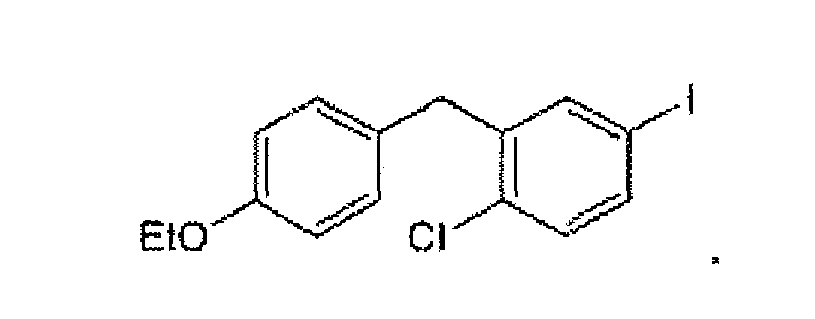
- CZFRIPGHKLGMEU-UHFFFAOYSA-N CCOc1ccc(Cc2cc(I)ccc2Cl)cc1 Chemical compound CCOc1ccc(Cc2cc(I)ccc2Cl)cc1 CZFRIPGHKLGMEU-UHFFFAOYSA-N 0.000 description 1
Images


Classifications
-
- C—CHEMISTRY; METALLURGY
- C07—ORGANIC CHEMISTRY
- C07H—SUGARS; DERIVATIVES THEREOF; NUCLEOSIDES; NUCLEOTIDES; NUCLEIC ACIDS
- C07H5/00—Compounds containing saccharide radicals in which the hetero bonds to oxygen have been replaced by the same number of hetero bonds to halogen, nitrogen, sulfur, selenium, or tellurium
- C07H5/04—Compounds containing saccharide radicals in which the hetero bonds to oxygen have been replaced by the same number of hetero bonds to halogen, nitrogen, sulfur, selenium, or tellurium to nitrogen
-
- A—HUMAN NECESSITIES
- A61—MEDICAL OR VETERINARY SCIENCE; HYGIENE
- A61P—SPECIFIC THERAPEUTIC ACTIVITY OF CHEMICAL COMPOUNDS OR MEDICINAL PREPARATIONS
- A61P3/00—Drugs for disorders of the metabolism
- A61P3/08—Drugs for disorders of the metabolism for glucose homeostasis
- A61P3/10—Drugs for disorders of the metabolism for glucose homeostasis for hyperglycaemia, e.g. antidiabetics
-
- A—HUMAN NECESSITIES
- A61—MEDICAL OR VETERINARY SCIENCE; HYGIENE
- A61P—SPECIFIC THERAPEUTIC ACTIVITY OF CHEMICAL COMPOUNDS OR MEDICINAL PREPARATIONS
- A61P43/00—Drugs for specific purposes, not provided for in groups A61P1/00-A61P41/00
-
- C—CHEMISTRY; METALLURGY
- C07—ORGANIC CHEMISTRY
- C07H—SUGARS; DERIVATIVES THEREOF; NUCLEOSIDES; NUCLEOTIDES; NUCLEIC ACIDS
- C07H15/00—Compounds containing hydrocarbon or substituted hydrocarbon radicals directly attached to hetero atoms of saccharide radicals
- C07H15/02—Acyclic radicals, not substituted by cyclic structures
- C07H15/04—Acyclic radicals, not substituted by cyclic structures attached to an oxygen atom of the saccharide radical
-
- C—CHEMISTRY; METALLURGY
- C07—ORGANIC CHEMISTRY
- C07H—SUGARS; DERIVATIVES THEREOF; NUCLEOSIDES; NUCLEOTIDES; NUCLEIC ACIDS
- C07H7/00—Compounds containing non-saccharide radicals linked to saccharide radicals by a carbon-to-carbon bond
- C07H7/04—Carbocyclic radicals
-
- C—CHEMISTRY; METALLURGY
- C07—ORGANIC CHEMISTRY
- C07H—SUGARS; DERIVATIVES THEREOF; NUCLEOSIDES; NUCLEOTIDES; NUCLEIC ACIDS
- C07H9/00—Compounds containing a hetero ring sharing at least two hetero atoms with a saccharide radical
- C07H9/02—Compounds containing a hetero ring sharing at least two hetero atoms with a saccharide radical the hetero ring containing only oxygen as ring hetero atoms
- C07H9/04—Cyclic acetals
-
- Y—GENERAL TAGGING OF NEW TECHNOLOGICAL DEVELOPMENTS; GENERAL TAGGING OF CROSS-SECTIONAL TECHNOLOGIES SPANNING OVER SEVERAL SECTIONS OF THE IPC; TECHNICAL SUBJECTS COVERED BY FORMER USPC CROSS-REFERENCE ART COLLECTIONS [XRACs] AND DIGESTS
- Y02—TECHNOLOGIES OR APPLICATIONS FOR MITIGATION OR ADAPTATION AGAINST CLIMATE CHANGE
- Y02P—CLIMATE CHANGE MITIGATION TECHNOLOGIES IN THE PRODUCTION OR PROCESSING OF GOODS
- Y02P20/00—Technologies relating to chemical industry
- Y02P20/50—Improvements relating to the production of bulk chemicals
- Y02P20/55—Design of synthesis routes, e.g. reducing the use of auxiliary or protecting groups
Definitions
- This invention relates to methods of preparing inhibitors of sodium glucose co-transporter 2.
- the sodium glucose co-transporter 2 (SGLT2) is a transporter that reabsorbs glucose from the renal filtrate and prevents the loss of glucose in the urine. Because competitive inhibitors of SGLT2 cause the renal excretion of glucose, they may be used to normalize high blood glucose levels associated with diseases such as diabetes. Handlon, A.L., Expert Opin. Ther. Patents 15(11):1531-1540 (2005 ).
- SGLT2 inhibitors In the search for new drugs that may be used to treat diabetes, a number of SGLT2 inhibitors have been disclosed. See, e.g., Handlon, supra ; U.S. patent no. 6,515,117 ; U.S. patent application publication nos. US 2006/0035841 , US 2004/0138439 . At least one inhibitor is in clinical development as a treatment for Type 2 diabetes mellitus.
- This invention encompasses methods of preparing certain inhibitors of SGLT2, as well as compounds useful therein.
- One embodiment of the invention encompasses a method of preparing compounds of formula I: the substitutes of which are defined herein, and salts thereof, which comprises contacting a compound of formula II: with a base under suitable conditions.
- Novel compounds that inhibit the sodium glucose co-transporter 2 were recently disclosed. See U.S. provisional application nos. 60/848,156, filed September 29, 2006 , and 60/905,714, filed March 8, 2007 .
- This invention is based, in part, on the discovery of new methods of preparing those compounds. Particular methods of the invention allow for the compounds' large-scale manufacture.
- alkenyl means a straight chain, branched and/or cyclic hydrocarbon having from 2 to 20 ( e.g., 2 to 10 or 2 to 6) carbon atoms, and including at least one carbon-carbon double bond.
- alkenyl moieties include vinyl, allyl, 1-butenyl, 2-butenyl, isobutylenyl, 1-pentenyl, 2-pentenyl, 3-methyl-l-butenyl, 2-methyl-2-butenyl, 2,3-dimethyl-2-butenyl, 1-hexenyl, 2-hexenyl, 3-hexenyl, 1-heptenyl, 2-heptenyl, 3-heptenyl, 1-octenyl, 2-octenyl, 3-octenyl, 1-nonenyl, 2-nonenyl, 3-nonenyl, 1-decenyl, 2-decenyl and 3-decenyl.
- alkoxy means an -O-alkyl group.
- alkoxy groups include, but are not limited to, -OCH 3 , -OCH 2 CH 3 , -O(CH 2 ) 2 CH 3 , O(CH 2 ) 3 CH 3 , -O(CH 2 ) 4 CH 3 , and -O(CH 2 ) 5 CH 3 .
- alkyl means a straight chain, branched and/or cyclic (“cycloalkyl”) hydrocarbon having from 1 to 20 ( e.g., 1 to 10 or 1 to 4) carbon atoms. Alkyl moieties having from 1 to 4 carbons are referred to as "lower alkyl.” Examples of alkyl groups include, but are not limited to, methyl, ethyl, propyl, isopropyl, n-butyl, t-butyl, isobutyl, pentyl, hexyl, isohexyl, heptyl, 4,4-dimethylpentyl, octyl, 2,2,4-trimethylpentyl, nonyl, decyl, undecyl and dodecyl.
- Cycloalkyl moieties may be monocyclic or multicyclic, and examples include cyclopropyl, cyclobutyl, cyclopentyl, cyclohexyl, and adamantyl. Additional examples of alkyl moieties have linear, branched and/or cyclic portions ( e.g. , 1-ethyl-4-methyl-cyclohexyl).
- alkyl includes saturated hydrocarbons as well as alkenyl and alkynyl moieties.
- alkylaryl or “alkyl-aryl” means an alkyl moiety bound to an aryl moiety.
- alkylheteroaryl or “alkyl-heteroaryl” means an alkyl moiety bound to a heteroaryl moiety.
- alkylheterocycle or “alkyl-heterocycle” means an alkyl moiety bound to a heterocycle moiety.
- alkynyl means a straight chain, branched or cyclic hydrocarbon having from 2 to 20 ( e.g. , 2 to 20 or 2 to 6) carbon atoms, and including at least one carbon-carbon triple bond.
- alkynyl moieties include acetylenyl, propynyl, 1-butynyl, 2-butynyl, 1-pentynyl, 2-pentynyl, 3-methyl-1-butynyl, 4-pentynyl, 1-hexynyl, 2-hexynyl, 5-hexynyl, 1-heptynyl, 2-heptynyl, 6-heptynyl, 1-octynyl, 2-octynyl, 7-octynyl, 1-nonynyl, 2-nonynyl, 8-nonynyl, 1-decynyl, 2-decynyl and 9-decynyl.
- aryl means an aromatic ring or an aromatic or partially aromatic ring system composed of carbon and hydrogen atoms.
- An aryl moiety may comprise multiple rings bound or fused together.
- aryl moieties include, but are not limited to, anthracenyl, azulenyl, biphenyl, fluorenyl, indan, indenyl, naphthyl, phenanthrenyl, phenyl, 1,2,3,4-tetrahydro-naphthalene, and tolyl.
- arylalkyl or "aryl-alkyl” means an aryl moiety bound to an alkyl moiety.
- halogen and halo encompass fluorine, chlorine, bromine, and iodine.
- heteroalkyl refers to an alkyl moiety (e.g. , linear, branched or cyclic) in which at least one of its carbon atoms has been replaced with a heteroatom (e.g. , N, O or S).
- heteroaryl means an aryl moiety wherein at least one of its carbon atoms has been replaced with a heteroatom (e.g. , N, O or S).
- heteroatom e.g. , N, O or S.
- examples include, but are not limited to, acridinyl, benzimidazolyl, benzofuranyl, benzoisothiazolyl, benzoisoxazolyl, benzoquinazolinyl, benzothiazolyl, benzoxazolyl, furyl, imidazolyl, indolyl, isothiazolyl, isoxazolyl, oxadiazolyl, oxazolyl, phthalazinyl, pyrazinyl, pyrazolyl, pyridazinyl, pyridyl, pyrimidinyl, pyrimidyl, pyrrolyl, quinazolinyl, quinolinyl, tetrazolyl
- heteroarylalkyl or “heteroaryl-alkyl” means a heteroaryl moiety bound to an alkyl moiety.
- heterocycle refers to an aromatic, partially aromatic or non-aromatic monocyclic or polycyclic ring or ring system comprised of carbon, hydrogen and at least one heteroatom (e.g. , N, O or S).
- a heterocycle may comprise multiple ( i.e. , two or more) rings fused or bound together.
- Heterocycles include heteroaryls.
- Examples include, but are not limited to, benzo[1,3]dioxolyl, 2,3-dihydro-benzo[1,4]dioxinyl, cinnolinyl, furanyl, hydantoinyl, morpholinyl, oxetanyl, oxiranyl, piperazinyl, piperidinyl, pyrrolidinonyl, pyrrolidinyl, tetrahydrofuranyl, tetrahydropyranyl, tetrahydropyridinyl, tetrahydropyrimidinyl, tetrahydrothiophenyl, tetrahydrothiopyranyl and valerolactamyl.
- heterocyclealkyl or “heterocycle-alkyl” refers to a heterocycle moiety bound to an alkyl moiety.
- heterocycloalkyl refers to a non-aromatic heterocycle.
- heterocycloalkylalkyl refers to a heterocycloalkyl moiety bound to an alkyl moiety.
- pharmaceutically acceptable salts refers to salts prepared from pharmaceutically acceptable non-toxic acids or bases including inorganic acids and bases and organic acids and bases.
- suitable pharmaceutically acceptable base addition salts include, but are not limited to, metallic salts made from aluminum, calcium, lithium, magnesium, potassium, sodium and zinc or organic salts made from lysine, N,N'-dibenzylethylenediamine, chloroprocaine, choline, diethanolamine, ethylenediamine, meglumine (N-methylglucamine) and procaine.
- Suitable non-toxic acids include, but are not limited to, inorganic and organic acids such as acetic, alginic, anthranilic, benzenesulfonic, benzoic, camphorsulfonic, citric, ethenesulfonic, formic, fumaric, furoic, galacturonic, gluconic, glucuronic, glutamic, glycolic, hydrobromic, hydrochloric, isethionic, lactic, maleic, malic, mandelic, methanesulfonic, mucic, nitric, pamoic, pantothenic, phenylacetic, phosphoric, propionic, salicylic, stearic, succinic, sulfanilic, sulfuric, tartaric acid, and p-toluenesulfonic acid.
- inorganic and organic acids such as acetic, alginic, anthranilic, benzenesulfonic, benzoic, camphorsulfonic
- Non-toxic acids include hydrochloric, hydrobromic, phosphoric, sulfuric, and methanesulfonic acids.
- Examples of specific salts thus include hydrochloride and mesylate salts.
- Others are well-known in the art. See, e.g., Remington's Pharmaceutical Sciences, 18th ed. (Mack Publishing, Easton PA: 1990 ) and Remington: The Science and Practice of Pharmacy, 19th ed. (Mack Publishing, Easton PA: 1995 ).
- stereomerically pure means a composition that comprises one stereoisomer of a compound and is substantially free of other stereoisomers of that compound.
- a stereomerically pure composition of a compound having one stereocenter will be substantially free of the opposite stereoisomer of the compound.
- a stereomerically pure composition of a compound having two stereocenters will be substantially free of other diastereomers of the compound.
- a typical stereomerically pure compound comprises greater than about 80% by weight of one stereoisomer of the compound and less than about 20% by weight of other stereoisomers of the compound, greater than about 90% by weight of one stereoisomer of the compound and less than about 10% by weight of the other stereoisomers of the compound, greater than about 95% by weight of one stereoisomer of the compound and less than about 5% by weight of the other stereoisomers of the compound, greater than about 97% by weight of one stereoisomer of the compound and less than about 3% by weight of the other stereoisomers of the compound, or greater than about 99% by weight of one stereoisomer of the compound and less than about 1 % by weight of the other stereoisomers of the compound.
- substituted when used to describe a chemical structure or moiety, refers to a derivative of that structure or moiety wherein one or more of its hydrogen atoms is substituted with a chemical moiety or functional group such as, but not limited to, alcohol, aldehyde, alkoxy, alkanoyloxy, alkoxycarbonyl, alkenyl, alkyl ( e.g.
- CONH 2 as well as CONH-alkyl, CONH-aryl, and CONH-arylalkyl
- carbonyl carboxyl, carboxylic acid, carboxylic acid anhydride, carboxylic acid chloride, cyano, ester, epoxide, ether ( e.g.
- halo haloalkyl (e.g., -CCl 3 , -CF 3 , -C(CF 3 ) 3 ), heteroalkyl, hemiacetal, imine (primary and secondary), isocyanate, isothiocyanate, ketone, nitrile, nitro, oxo, phosphodiester, sulfide, sulfonamido ( e.g.
- the term “include” has the same meaning as “include, but are not limited to,” and the term “includes” has the same meaning as “includes, but is not limited to.” Similarly, the term “such as” has the same meaning as the term “such as, but not limited to.”
- one or more adjectives immediately preceding a series of nouns is to be construed as applying to each of the nouns.
- the phrase "optionally substituted alky, aryl, or heteroaryl” has the same meaning as “optionally substituted alky, optionally substituted aryl, or optionally substituted heteroaryl.”
- a chemical moiety that forms part of a larger compound may be described herein using a name commonly accorded it when it exists as a single molecule or a name commonly accorded its radical.
- the terms “pyridine” and “pyridyl” are accorded the same meaning when used to describe a moiety attached to other chemical moieties.
- the two phrases “XOH, wherein X is pyridyl” and “XOH, wherein X is pyridine” are accorded the same meaning, and encompass the compounds pyridin-2-ol, pyridin-3-ol and pyridin-4-ol.
- any atom shown in a drawing with unsatisfied valences is assumed to be attached to enough hydrogen atoms to satisfy the valences.
- chemical bonds depicted with one solid line parallel to one dashed line encompass both single and double ( e.g. , aromatic) bonds, if valences permit.
- This invention encompasses methods of preparing compounds of formula I: and salts and co-crystals thereof, wherein: Y is O, S, NR 4 , or C(R 4 ) 2 ; Z 1 is O, S,SO, or SO 2; each R 1 is independently hydrogen, halogen, cyano, OR 1A , SR 1A , or optionally substituted alkyl; each R 1A is independently hydrogen or optionally substituted alkyl or aryl; each R 2 is independently hydrogen, halogen, cyano, OR 2A , SR 2A , or optionally substituted alkyl; each R 2A is independently hydrogen or optionally substituted alkyl or aryl; R 3 is optionally substituted alkyl, aryl or heterocycle; each R 4 is independently hydrogen or optionally substituted alkyl or aryl; n is 1-3; and m is 1-3.
- each P 1 is independently a hydroxyl protecting group stable under acidic conditions.
- a compound of formula II(a) is oxidized to provide a compound of formula II, which is then contacted with a base to afford the compound of formula I.
- Suitable oxidation conditions are known in the art, and include the use of peroxy compounds, such as m-chlorophenylperacid, peracetic acid, oxone, a mixture of hydrogen peroxide or its complex ( e.g. , urea hydrogen peroxide) and acid anhydride ( e.g. , phthalic anhydride).
- Suitable bases are also known in the art, and include alkoxides, hydroxide, carbonates and amines.
- Y is C(R 4 ) 2 .
- Z 1 is S, SO or SO 2 .
- each P 1 is independently C(O)R 5 , wherein each R 5 is independently alkyl, aryl, alkylaryl, or arylalkyl. Examples of P 1 include acetyl, benzoyl and pivaloyl.
- R 1 is OR 1A and R 1A is, for example, optionally substituted lower alkyl.
- R 2 is halogen.
- R 3 is lower alkyl ( e.g. , methyl or ethyl).
- R 4 is hydrogen.
- m is 1.
- n is 1.
- Y is CH 2 , Z 1 is S or SO 2 , R 1 is ethoxy, R 2 is chloro, and R 3 is methyl.
- the compound of formula I is of the formula:
- Y is CH 2 , Z 1 is S or SO 2 , R 1 is ethoxy, R 2 is chloro, and R 3 is ethyl.
- the compound of formula I is of the formula:
- the compound of formula II(a) is of formula II(b), which can be prepared as shown below in Scheme 2: wherein X is bromine, iodine, alkanesulfoxy, or alkoxysulfoxy.
- Suitable reaction conditions are known in the art. For example, basic conditions (e.g. , the use of a base such as N,N-diisopropyl ethylamine) can be used.
- the compound of formula II(b) is of the formula:
- a specific compound of formula II(b) is (2S,3S,4R,5S,6R)-2-(4-chloro-3-(4-ethoxybenzyl)phenyl)-6-(methylthio)tetrahydro-2H-pyran-3,4,5-triyl triacetate:
- a particular crystalline form of this compound has a melting point of about 156°C as measured by differential scanning calorimetry (DSC) (onset temperature).
- the form provides a X-ray powder diffraction (XRPD) pattern with peaks at one or more of about 7.7, 11.9, 12.4, 16.9, 19.5, 19.9, 21.9, 23.2, 24.1, and/or 27.7 degrees 2 ⁇ .
- XRPD X-ray powder diffraction
- each P 2 is independently a hydroxyl protecting group stable under acidic conditions, or both P 2 s are taken together to provide a single protecting group;
- X' is chlorine, bromine or iodine;
- X" is a leaving group ( e.g. , amino, alkoxyamino, hydroxy, halogen, alkoxy, phenoxy, carboxy, sulfoxy).
- each P 2 is independently C(O)R 6 , or both P 2 s are taken together to provide C(R 6 ) 2 , wherein each R 6 is independently alkyl, aryl, alkylaryl, or arylalkyl.
- the compound of formula II(a) is obtained by contacting a compound of formula II(d) with reagents and reaction conditions that will depend on the nature of Z 2 .
- the compound of formula II(d) can be contacted with a Lewis acid (e.g. , trimethylsilyl trifluoromethanesulfonate) and thiourea to obtain a compound wherein Z 2 is S ( e.g. , of formula II(c), shown above in Scheme 2).
- the compound of formula II(d) can be contacted with a hydroxyl compound under acidic conditions to afford a compound wherein Z 2 is O.
- Compounds of formula II(d) can be obtained by contacting a compound of formula II(e) with P 1 -X'" under suitable reaction conditions, wherein X'" is chlorine, bromine, iodine, alkylcarboxy, alkanesulfoxy, or alkoxysulfoxy.
- suitable reaction conditions are known in the art.
- the reaction may be catalyzed by a base, such as pyridine.
- the compound of formula II(d) is of the formula: and the salt of P 1 is, for example, acyl chloride or acetic anhydride.
- Compounds of formula II(e) can be prepared by contacting a compound of formula III(a) with an acid under conditions sufficient to provide the compound of formula II(e).
- Suitable acids are known in the art, and include acetic acid, hydrochloric acid, sulfuric acid, phosphoric acid, methanesulfonic acid, and toluenesulfonic acid.
- Compounds of formula III(a) can be prepared by reducing a compound of formula III(b). Suitable reducing conditions are known in the art, and include the use of cerium chloride and sodium borohydride, a borane complex, enzymatic reduction, and hydrogenation or transfer hydrogenation.
- the compound of formula III(b) is of the formula:
- a specific compound of formula III(b) is (4-chloro-3-(4-ethoxybenzyl)phenyl)((3aS,5R,6S,6aS)-6-hydroxy-2,2-dimethyltetrahydrofuro[2,3-d][1,3]dioxol-5-yl)methanone:
- a particular crystalline form of this compound has a melting point of about 113°C as measured by DSC (onset temperature).
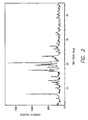
- the form provides a XRPD pattern with peaks at one or more of about 7.6, 13.2, 17.0, 17.4, 18.6, 19.5, 20.5, 20.8 and/or 23.2 degrees 2 ⁇ .
- An example of a XRPD pattern of this crystalline form is provided in Figure 2 .
- Compounds of formula III(b) can be prepared by coupling a compound of formula IV with a compound of formula V.
- Suitable coupling conditions are known in the art, and include the use of metalating (e.g. , magnesium or lithium) or transmetalating agents such as magnesium reagents (e.g. , alkyl magnesium halide, dialkyl magnesium, lithium trialkyl magnesium halide) and organolithium reagents (e.g. , n-butyl lithium, sec-butyl lithium, t-butyl lithium).
- compounds of formula III(b) can be prepared using compounds of formula IV(a): under suitable conditions, wherein M is an appropriate metal, such as Na, K, Li, or Mg, X' is Cl, Br, or I, and p is 0, 1, or 2, depending on the metal.
- M is an appropriate metal, such as Na, K, Li, or Mg
- X' is Cl, Br, or I
- p is 0, 1, or 2, depending on the metal.
- the compound of formula V is such that X" is amino ( e.g. , morpholino).
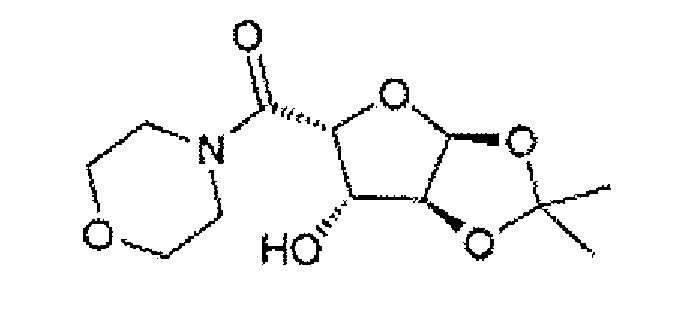
- a specific compound of formula V is ((3aS,5R,6S,6aS)-6-hydroxy-2,2-dimethyltetrahydrofuro[2,3-d][1,3]dioxol-5-yl)(morpholino)methanone:
- a particular crystalline form of this compound has a melting point of about 136°C as measured by DSC (onset temperature). The form provides a XRPD pattern with peaks at one or more of about 9.0, 16.9, 17.6, 18.2, 18.4, 18.8 and/or 22.7 degrees 2 ⁇ .
- An example of a XRPD pattern of this crystalline form is provided in Figure 3 .
- This particular compound of formula V can be prepared by approaches such as that shown below in Scheme 4: Suitable reaction conditions are known in the art, and include those described below in the Examples.
- L-(-)-xylose is cyclized under conditions sufficient to provide compound 1, which is then oxidized to provide compound 2, which is then contacted with morpholine under conditions sufficient to provide ((3aS,5R,6S,6aS)-6-hydroxy-2,2-dimethyltetrahydrofuro[2,3-d][1,3]dioxol-5-yl)(morpholino)methanone.
- This invention encompasses compounds of formulae 1 and 2, including crystalline forms thereof.
- the compound of formula IV is of the formula:
- a specific compound of formula IV is 1-chloro-2-(4-ethoxybenzyl)-4-iodobenzene:
- a particular crystalline form of this compound has a melting point of about 65°C (as determined by m.p. apparatus).
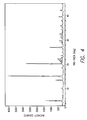
- the form provides a XRPD pattern with peaks at one or more of about 5.1, 13.5, 15.2, 20.3, 22.2 and/or 27.0 degrees 2 ⁇ .
- An example of a XRPD pattern of this crystalline form is provided in Figure 4 .
- Particular compounds of formula IV(a) include those of the formula: More particular compounds are of the formula: Specific compounds of formula IV(a) are (4-chloro-3-(4-ethoxybenzyl)phenyl)magnesium iodide and (4-chloro-3-(4-ethoxybenzyl)phenyl)magnesium chloride, shown below:
- the yellow oil was suspended in 2.5 L water stirring in a 5L three-necked round bottom flask with mechanical stirrer, rubber septum with temperature probe and gas bubbler.
- the pH was adjusted from 9 to 2 with IN aq. HCI (142 mL) and stirred at room temperature for 6 h until GC showed sufficient conversion of the bis-acetonide intermediate to (3aS,5S,6R,6aS)-5-(hydroxymethyl)-2,2-dimethyltetrahydrofuro[2,3-d][1,3]dioxol-6-ol.
- a solution of NaClO 2 (3.12 kg, 80% w/w, 27.6 mole, 1.50 eq) in water (7.0 L) and a solution of K 2 HPO 4 (2.89 kg, 0.90 eq) in water (3.0 L) were prepared with cooling.
- Bleach (3.0L, approximate 6% household grade) was mixed with the K 2 HPO 4 solution.
- the addition rate of the NaClO 2 solution was about 40 mL/min (3-4 h addition) and the addition rate for the bleach/K 2 HPO 4 solution was about 10-12 mL/min (10 hr addition) while maintaining the batch at 15-25°C. Additional charges of TEMPO (14.3g, 0.5 mol%) were performed every 5-6 hr until the reaction went to completion (usually two charges are sufficient). Nitrogen sweep of the headspace to a scrubber with aqueous was performed to keep the green-yellowish gas from accumulating in the vessel. The reaction mixture was cooled to ⁇ 10°C and quenched with Na 2 SO 3 (1.4 kg, 0.6 eq) in three portions over 1 hr.
- the reaction mixture was then acidified with H 3 PO 4 until pH reached 2.0-2.1 (2.5-2.7 L) at 5-15°C.
- the layers were separated and the aqueous layer was extracted with acetonitrile (10.5 L x 3).
- the combined organic layer was concentrated under vacuo ⁇ 100-120 torr) at ⁇ 35°C (28-32°C vapor, 45-50°C bath) to low volume (- 6-7 L) and then flushed with acetonitrile (40 L) until KF of the solution reached ⁇ 1% when diluted to volume of about 12-15Lwith acetonitrile.
- Morpholine (1.61 L, 18.4 mol, 1.0 eq) was added over 4-6 h and the slurry was aged overnight under nitrogen.
- the reaction was warmed to ambient over 30min and was stirred for 17 hours.
- the reaction was diluted with methyl tert-butyl ether (150mL) followed by saturated aq sodium bicarbonate (150mL) which was added over about 1 minutes. Mild gas evolution was noticed and the biphasic solution was stirred at ambient for 45 minutes.
- the upper organic phase was washed with saturated aq. sodium bicarbonate (100 mL), and with saturated aq. sodium chloride (50mL).
- the washed extract was concentrated on a rotary evaporator to about one half of its original volume and was diluted with water (70 mL). Further concentration in vacuo at 45°C was done until white prills formed which were allowed to cool to ambient while stirring.
- the reaction mixture was added to 10 wt% aqueous NH 4 Cl (10 L, 5X) at 0°C with vigorous stirring, and stirred for 30 minutes at 0°C.
- To this mixture was added slowly 6 N HCl (4 L, 2X) at 0°C to obtain a clear solution and stirred for 30 minutes at 10°C.
- the organic layer was washed with 25 wt% aq NaCl (5 L, 2.5X). Then the organic layer was concentrated to a 3X solution under the conditions (200 mbar, bath temp 50°C).
- EtOAc 24 L, 12X was added, and evaporated to a 3X solution under the conditions (150 mbar, bath temp 50°C).
- EtOAc (4 L, 2X) was added and concentrated to dryness (150 mbar, bath temp 50°C). The wet cake was then transferred to a 50 L reactor equipped with a mechanical stirrer, a temperature controller and a nitrogen inlet. After EtOAc was added, the suspension was heated at 70°C to obtain a 2.5X homogeneous solution. To the resulting homogeneous solution was added slowly heptane (5 L, 2.5X) at the same temperature. A homogeneous solution was seeded and heptane (15 L, 7.5X) was added slowly to a little cloudy solution at 70°C.
- TMSOTf trimethylsilyl trifluoromethanesulfonate
- the reaction was quenched with 10 wt% aq NH 4 Cl (2.5 L, 1X) and the mixture was concentrated under vacuum to 5X, diluted with water (10 L, 4X) and MTBE (12.5L, 5X). The mixture was cooled to 10°C and 6 N aq HCl was added until the pH of the mixture reached 2.0. Stirring was continued for 10 minutes and the layers were separated. The organic layer was washed with H 2 O (5L, 2X). The combined aqueous layer was extracted with MTBE (12.5 L, 5X). The combined organic layers were washed with brine (2.5 L, 1X) and concentrated under vacuum to 3X. MeCN (15 L, 6X) was added. The mixture was concentrated again to 10 L (4X) and any solid residue was removed by a polish filtration. The cake was washed with minimal amount of MeCN.
- the organic filtrate was transferred to 50 L reactor, and a pre-prepared 20 mol% aqueous H 2 SO 4 solution (61.8 mL 98% concentrated H 2 SO 4 and 5 L H 2 O) was added.
- the mixture was heated to 80°C for 2 hours and then cooled to 20°C.
- the reaction was quenched with a solution of saturated aqueous K 2 CO 3 (5 L, 2X) and diluted with MTBE (15 L, 6X).
- the organic layer was separated, washed with brine (5 L, 2X) and concentrated under vacuum to 5 L (2X). MeCN (12.5 L, 5X) was added and the mixture was concentrated to 7.5 L (3X).
- MEK (100 kg) was added and the same about of solvent was distilled under vacuum. This MEK addition and distillation was repeated to dry the solution. Enough MEK was added to produce a solution of (2S,3R,4R,5S,6R)-2-(4-chloro-3-(4-ethoxybenzyl)phenyl)-6-(methylthio)tetrahydro-2H-pyran-3,4,5-triol in 50 L MEK. This solution was polish filtered and heptane (100 L) was added at about 80°C. Form 2 seeds (0.1 kg) were added followed by slow addition of heptane (100 L) as 80°C.
Landscapes
- Chemical & Material Sciences (AREA)
- Organic Chemistry (AREA)
- Health & Medical Sciences (AREA)
- Engineering & Computer Science (AREA)
- General Health & Medical Sciences (AREA)
- Life Sciences & Earth Sciences (AREA)
- Molecular Biology (AREA)
- Biochemistry (AREA)
- Biotechnology (AREA)
- Genetics & Genomics (AREA)
- Diabetes (AREA)
- Public Health (AREA)
- Chemical Kinetics & Catalysis (AREA)
- Animal Behavior & Ethology (AREA)
- Veterinary Medicine (AREA)
- General Chemical & Material Sciences (AREA)
- Bioinformatics & Cheminformatics (AREA)
- Pharmacology & Pharmacy (AREA)
- Medicinal Chemistry (AREA)
- Nuclear Medicine, Radiotherapy & Molecular Imaging (AREA)
- Crystallography & Structural Chemistry (AREA)
- Obesity (AREA)
- Hematology (AREA)
- Endocrinology (AREA)
- Emergency Medicine (AREA)
- Pharmaceuticals Containing Other Organic And Inorganic Compounds (AREA)
- Pyrane Compounds (AREA)
- Plural Heterocyclic Compounds (AREA)
- Organic Low-Molecular-Weight Compounds And Preparation Thereof (AREA)
- Saccharide Compounds (AREA)
- Heterocyclic Carbon Compounds Containing A Hetero Ring Having Oxygen Or Sulfur (AREA)
- Peptides Or Proteins (AREA)
- Medicines That Contain Protein Lipid Enzymes And Other Medicines (AREA)
Claims (19)
- Verfahren zur Herstellung einer Verbindung der Formel I:

 Y O, S, NR4 oder C(R4)2 ist;Z1 O, S, SO oder SO2 ist;jedes P1 unabhängig eine Hydroxyl schützende Gruppe ist, die unter sauren Bedingungen stabil ist;jedes R1 unabhängig Wasserstoff, Halogen, Cyano, OR1A, SR1A oder optional substituiertes Alkyl ist;jedes R1A unabhängig Wasserstoff oder optional substituiertes Alkyl oder Aryl ist;jedes R2 unabhängig Wasserstoff, Halogen, Cyano, OR2A, SR2A oder optional substituiertes Alkyl ist;jedes R2A unabhängig Wasserstoff oder optional substituiertes Alkyl oder Aryl ist;R3 optional substituiertes Alkyl, Aryl oder Heterocyclyl ist;Jedes R4 unabhängig Wasserstoff oder optional substituiertes Alkyl oder Aryl ist;n 1-3 ist;m 1-3 ist;"Alkyl" einen geradkettigen, verzweigten und/oder zyklischen ("Cyclalkyl") Kohlenwasserstoff bedeutet, der 1 bis 20 Kohlenstoffatome hat und gesättigte Kohlenwasserstoffe ebenso wie Alkenyl und Alkinyl-Reste einschließt;"Aryl" einen aromatischen Ring oder ein aromatisches oder teilweise aromatisches Ringsystem bezeichnet, welches aus Kohlenstoff- und Wasserstoffatomen zusammengesetzt ist;"Heterocyclyl" einen aromatischen, teilaromatischen oder nichtaromatischen, monozyklischen oder polyzyklischen Ring oder Ringsystem bezeichnet, das aus Kohlenstoff, Wasserstoff und wenigstens einem Heteroatom zusammengesetzt ist; "Alkenyl" einen geradkettigen, verzweigten und/oder zyklischen Kohlenwasserstoff bezeichnet, der 2-20 Kohlenstoffatome hat und wenigstens eine Kohlenstoff-Kohlenstoff Doppelbindung einschließt; und"Alkinyl" einen geradkettigen, verzweigten oder zyklischen Kohlenwasserstoff bezeichnet, der 2-20 Kohlenstoffatome hat und wenigstens eine Kohlenstoff-Kohlenstoff-Dreifachbindung einschließt.
 - Verfahren nach Anspruch 1, wobei die Verbindung der Formel I die Formel hat:


- Verfahren nach Anspruch 1, wobei die Verbindung der Formel II durch Oxidation (beispielsweise unter Verwendung einer Peroxyverbindung wie zum Beispiel m-Chlorophenylpersäure, Peressigsäure, Oxon oder eine Mischung von Wasserstoffperoxid oder Wasserstoffperoxidkomplex (beispielsweise Harnstoffwasserstoffperoxid) und Säureanhydrid (beispielsweise Phthalsäureanhydrid)) einer Verbindung der Formel II(a) hergestellt wird:

- Verfahren nach einem der Ansprüche 1 bis 3, bei welchem man weiterhin die Verbindung der Formel I kristallisiert.
- Verfahren zur Herstellung einer Verbindung der Formel II(b):

 mit einer Verbindung der Formel R3X in Berührung bringt unter Bedingungen, die ausreichen, die Verbindung der Formel II(b) bereitzustellen, worin:X Brom, Iod, Alkansulfoxy oder Alkoxysulfoxy ist;Y O, S, NR4 oder C(R4)2 ist;jedes P1 unabhängig eine Hydroxyl schützende Gruppe ist, die unter sauren Bedingungen stabil ist;jedes R1 unabhängig Wasserstoff, Halogen, Cyano, OR4, SR4 oder optional substituiertes Alkyl ist;jedes R2 unabhängig Wasserstoff, Halogen, Cyano, OR4, SR4 oder optional substituiertes Alkyl ist;R3 optional substituiertes Alkyl, Aryl oder Heterocyclyl ist;jedes R4 unabhängig Wasserstoff oder optional substituiertes Alkyl ist;n 1-2 ist;m 1-2 ist, worin "Alkyl" eine geradkettigen, verzweigten und/oder zyklischen ("Cycloalkyl") Kohlenwasserstoff bezeichnet, der 1 bis 20 Kohlenstoffatome hat und gesättigte Kohlenwasserstoffe ebenso wie Alkenyl- und Alkinyl-Reste einschließt;"Aryl" einen aromatischen Ring oder ein aromatisches oder teilweise aromatisches Ringsystem bezeichnet, welches aus Kohlenstoff- und Wasserstoffatomen zusammengesetzt ist;"Heterocyclyl" einen aromatischen, teilaromatischen oder nichtaromatischen, monozyklischen oder polyzyklische Ring oder Ringsystem bezeichnet, das aus Kohlenstoff, Wasserstoff und wenigstens einem Heteroatom zusammengesetzt ist;"Alkenyl" einen geradkettigen, verzweigten und/oder zyklischen Kohlenwasserstoff bezeichnet, der 2-20 Kohlenstoffatome hat und wenigstens eine Kohlenstoff-Kohlenstoff-Doppelbindung einschließt; und"Alkinyl" einen geradkettigen, verzweigten oder zyklischen Kohlenwasserstoff bezeichnet, der 2-20 Kohlenstoffatome hat und wenigstens eine Kohlenstoff-Kohlenstoff-Dreifachbindung einschließt.
 - Verfahren nach Anspruch 5, worin die Verbindung der Formel II(b) die Formel hat:

- Verfahren nach Anspruch 5, worin die Verbindung der Formel II(c) hergestellt wird, indem man eine Verbindung der Formyl II(d):

- Verfahren zur Herstellung einer Verbindung der Formel II(d):
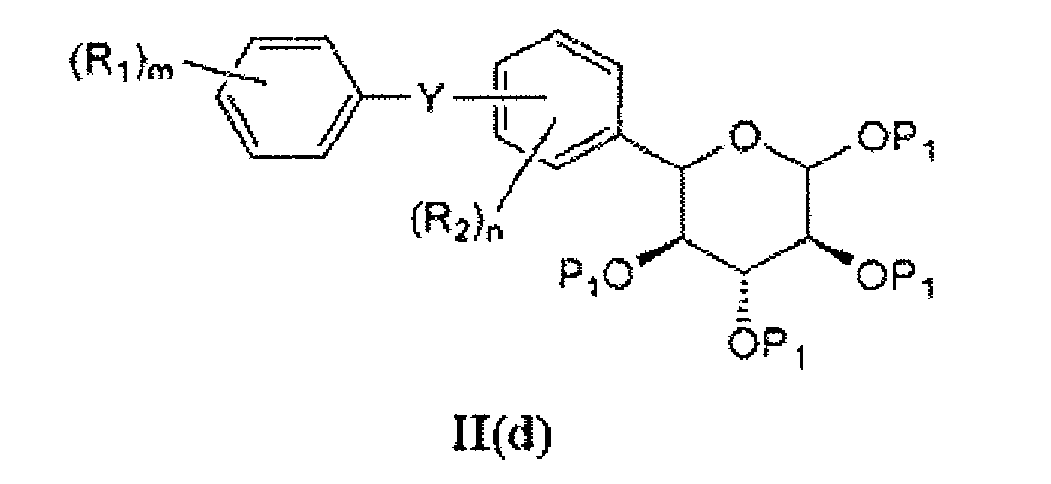
 X"' Brom, Jod, Alkylcarboxy oder Alkansulfoxy oder Alkoxysulfoxy ist;Y O, S, NR4 oder C(R4)2 ist;jedes P1 unabhängig eine Hydroxyl schützende Gruppe ist, die unter sauren Bedingungen stabil ist;jedes R1 unabhängig Wasserstoff, Halogen, Cyano, OR4, SR4 oder optional substituiertes Alkyl ist;jedes R2 unabhängig Wasserstoff, Halogen, Cyano, OR4, SR4 oder optional substituiertes Alkyl ist;jedes R4 unabhängig Wasserstoff oder optional substituiertes Alkyl ist;n 1-2 ist;m 1-2 ist;"Alkyl" einen geradkettigen, verzweigten und/oder zyklischen ("Cycloalkyl") Kohlenwasserstoff bedeutet, der 1 bis 20 Kohlenstoffatome hat und gesättigte Kohlenwasserstoffe ebenso wie Alkenyl- und Alkinyl-Reste einschließt;"AllEenyl" einen geradkettigen, verzweigten und/oder zyklischen Kohlenwasserstoff bezeichnet, der 2-20 Kohlenstoffatome hat und wenigstens eine Kohlenstoff-Kohlenstoff-Doppelbindung einschließt; und"Alkinyl" einen geradkettigen, verzweigten oder zyklischen Kohlenwasserstoff bezeichnet, der 2-20 Kohlenstoffatome hat und wenigstens eine Kohlenstoff-Kohlenstoff-Dreifachbindung einschließt.
 - Verfahren nach Anspruch 8, worin die Verbindung der Formel II(d) die Formel hat:
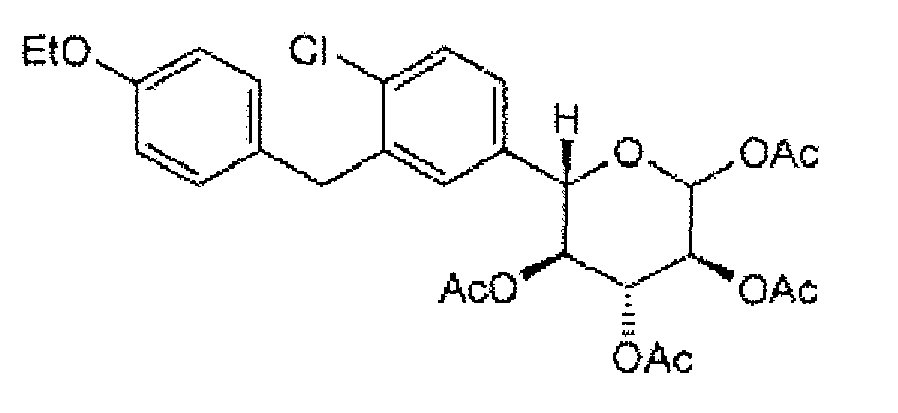
- Verfahren nach Anspruch 8, worin die Verbindung der Formel II(e) hergestellt wird, indem man eine Verbindung der Formel III(a)

- Verfahren nach Anspruch 10, worin die Verbindung der Formel III(a) die Formel hat:
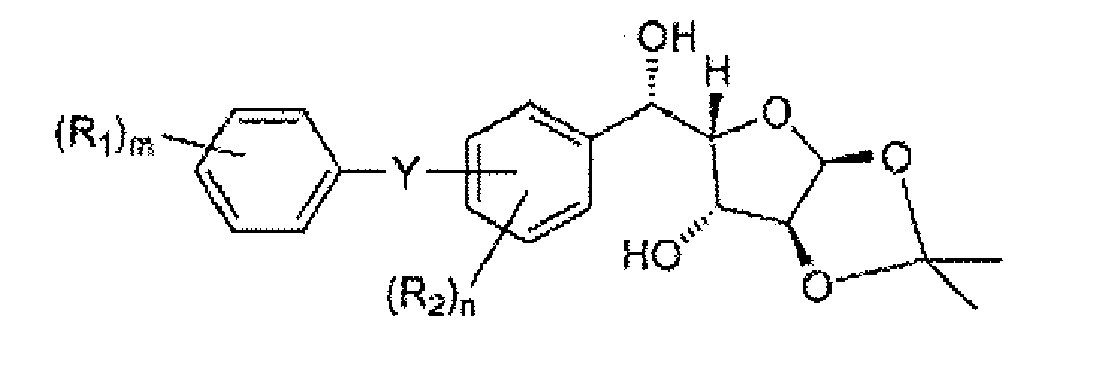
- Verfahren nach Anspruch 10, worin die Verbindung der Formel III(a) hergestellt wird, indem man eine Verbindung der Formel III(b) reduziert.

- Verfahren nach Anspruch 12, wobei die Verbindung der Formel III(b) die Formel hat:

- Verfahren nach Anspruch 12, wobei die Verbindung der Formel III(b) hergestellt wird, indem man eine Verbindung der Formel IV:
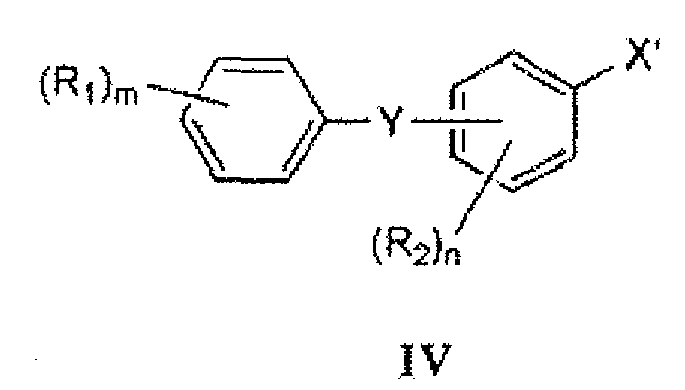

- Verfahren nach Anspruch 14, wobei die Verbindung der Formel IV die Formel hat:


- Verfahren nach Anspruch 14, wobei die Verbindung der Formel V die Formel hat:

- Verfahren zur Herstellung von ((3aS,5R,6S,6aS)-6-Hydroxy-2,2-dimethyltetrahydrofuro[2,3-d][1,3]dioxol-5-yl)(morpholino)methanon:
- Verfahren nach Anspruch 17, worin (3aS,5R,6S,6aS)-6-Hydroxy-2,2-dimethyltetrahydrofuro[2,3-d][1,3]dioxol-5-carbonsäure hergestellt wird, indem man (3aS,5R,6S,6aS)-6-Hydroxy-2,2-dimethyltetrahydrofuro[2,3-d][1,3]dioxol-6-ol oxydiert unter Bedingungen, die ausreichen (3aS,5R,6S,6aS)-6-Hydroxy-2,2-dimethyltetrahydrofuro[2,3-d][1,3]dioxol-5-carbonsäure bereitzustellen, und wobei das (3aS,5R,6S,6aS)-6-Hydroxy-2,2-dimethyltetrahydrofuro[2,3-d][1,3]dioxol-6-ol hergestellt wird, indem man L-(-)-Xylose in Gegenwart von Aceton zyklisiert unter Bedingungen, die ausreichen, (3aS,5R,6S,6aS)-6-Hydroxy-2,2-dimethyltetrahydrofuro[2,3-d][1,3]dioxol-6-ol bereitzustellen.
- Eine Verbindung der Formel:

oder
oder
oder
oder
oder
oder
oder
oder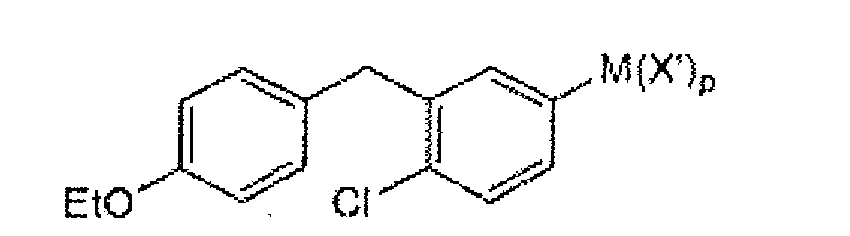
oder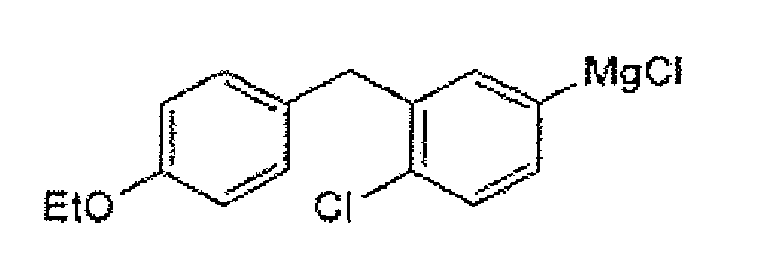
Priority Applications (1)
| Application Number | Priority Date | Filing Date | Title |
|---|---|---|---|
| PL08826634T PL2183263T3 (pl) | 2007-07-26 | 2008-07-17 | Sposoby i związki przydatne do otrzymywania inhibitorów kotransportera 2 sodowo-glukozowego |
Applications Claiming Priority (2)
| Application Number | Priority Date | Filing Date | Title |
|---|---|---|---|
| US95212207P | 2007-07-26 | 2007-07-26 | |
| PCT/US2008/070250 WO2009014970A1 (en) | 2007-07-26 | 2008-07-17 | Methods and compounds useful for the preparation of sodium glucose co-transporter 2 inhibitors |
Publications (2)
| Publication Number | Publication Date |
|---|---|
| EP2183263A1 EP2183263A1 (de) | 2010-05-12 |
| EP2183263B1 true EP2183263B1 (de) | 2011-10-26 |
Family
ID=39877996
Family Applications (1)
| Application Number | Title | Priority Date | Filing Date |
|---|---|---|---|
| EP08826634A Active EP2183263B1 (de) | 2007-07-26 | 2008-07-17 | Verfahren und verbindungen zur herstellung von natriumglucose-co-transporter-2-hemmern |
Country Status (23)
| Country | Link |
|---|---|
| US (2) | US8026347B2 (de) |
| EP (1) | EP2183263B1 (de) |
| JP (2) | JP5653213B2 (de) |
| KR (1) | KR101663324B1 (de) |
| CN (1) | CN101801989B (de) |
| AR (2) | AR067701A1 (de) |
| AT (1) | ATE530558T1 (de) |
| AU (1) | AU2008279424B2 (de) |
| CA (1) | CA2694029C (de) |
| CL (1) | CL2008002169A1 (de) |
| CO (1) | CO6260141A2 (de) |
| DK (1) | DK2183263T3 (de) |
| EA (1) | EA017411B1 (de) |
| EC (1) | ECSP109987A (de) |
| ES (1) | ES2375800T3 (de) |
| IL (1) | IL203209A (de) |
| NZ (1) | NZ582536A (de) |
| PL (1) | PL2183263T3 (de) |
| PT (1) | PT2183263E (de) |
| TW (2) | TWI506024B (de) |
| UA (1) | UA107175C2 (de) |
| WO (1) | WO2009014970A1 (de) |
| ZA (1) | ZA201000219B (de) |
Families Citing this family (46)
| Publication number | Priority date | Publication date | Assignee | Title |
|---|---|---|---|---|
| TWI499414B (zh) * | 2006-09-29 | 2015-09-11 | Lexicon Pharmaceuticals Inc | 鈉與葡萄糖第2型共同運輸體(co-transporter 2)的抑制物與其應用方法 |
| AU2009270936B2 (en) | 2008-07-15 | 2014-12-18 | Theracos, Inc. | Deuterated benzylbenzene derivatives and methods of use |
| TWI472521B (zh) * | 2008-07-17 | 2015-02-11 | Lexicon Pharmaceuticals Inc | (2s,3r,4r,5s,6r)-2-(4-氯-3-(4-乙氧苄基)苯基)-6-(甲硫)四氫-2h-哌喃-3,4,5-三醇的固體形態與其使用方法 |
| AU2009286380B2 (en) | 2008-08-28 | 2011-09-15 | Pfizer Inc. | Dioxa-bicyclo[3.2.1.]octane-2,3,4-triol derivatives |
| RS53827B1 (sr) | 2009-11-02 | 2015-06-30 | Pfizer Inc. | Derivati dioksa-biciklo[3.2.1]oktan-2,3,4-triola |
| ES2689107T3 (es) | 2009-11-13 | 2018-11-08 | Astrazeneca Ab | Formulaciones de tabletas bicapa |
| EP2498759B1 (de) | 2009-11-13 | 2018-08-01 | AstraZeneca AB | Tablettenformulierungen mit sofortiger freisetzung |
| WO2011060255A1 (en) | 2009-11-13 | 2011-05-19 | Bristol-Myers Squibb Company | Reduced mass metformin formulations |
| TWI562775B (en) * | 2010-03-02 | 2016-12-21 | Lexicon Pharmaceuticals Inc | Methods of using inhibitors of sodium-glucose cotransporters 1 and 2 |
| WO2011153712A1 (en) * | 2010-06-12 | 2011-12-15 | Theracos, Inc. | Crystalline form of benzylbenzene sglt2 inhibitor |
| EP2611442B1 (de) | 2010-09-03 | 2018-07-04 | Bristol-Myers Squibb Company | Wirkstoffformulierungen mit waserlöslichen antioxidanzien |
| BR112013019026A2 (pt) | 2011-02-01 | 2016-10-04 | Astrazeneca Uk Ltd | formulações farmacêuticas incluindo um composto amina |
| ES2719656T3 (es) | 2011-06-01 | 2019-07-11 | Green Cross Corp | Derivados de difenilmetano novedosos como inhibidores del SGLT2 |
| BR112013031032A2 (pt) | 2011-06-03 | 2016-11-29 | Boehringer Ingelheim Int | inibidores de sglt-2 para o tratamento de distúrbios metabólicos em pacientes tratados com agentes neurolépticos |
| WO2013152476A1 (en) | 2012-04-10 | 2013-10-17 | Theracos, Inc. | Process for the preparation of benzylbenzene sglt2 inhibitors |
| US9200025B2 (en) * | 2012-11-20 | 2015-12-01 | Lexicon Pharmaceuticals, Inc. | Inhibitors of sodium glucose cotransporter 1 |
| PT2981269T (pt) | 2013-04-04 | 2023-10-10 | Boehringer Ingelheim Vetmedica Gmbh | Tratamento de distúrbios metabólicos em animais equinos |
| ES2605886T3 (es) | 2013-09-27 | 2017-03-16 | Sunshine Lake Pharma Co., Ltd. | Derivados de glucopiranosilo y sus usos en medicina |
| CN105611920B (zh) | 2013-10-12 | 2021-07-16 | 泰拉科斯萨普有限责任公司 | 羟基-二苯甲烷衍生物的制备 |
| ES2969764T3 (es) | 2013-12-17 | 2024-05-22 | Boehringer Ingelheim Vetmedica Gmbh | Un inhibidor de SGLT-2 para usar en el tratamiento de un trastorno metabólico en animales felinos |
| CN115671290A (zh) | 2014-01-23 | 2023-02-03 | 勃林格殷格翰动物保健有限公司 | 犬科动物中代谢紊乱的治疗 |
| WO2015150299A2 (en) | 2014-04-01 | 2015-10-08 | Boehringer Ingelheim Vetmedica Gmbh | Treatment of metabolic disorders in equine animals |
| WO2016046150A1 (en) | 2014-09-25 | 2016-03-31 | Boehringer Ingelheim Vetmedica Gmbh | Combination treatment of sglt2 inhibitors and dopamine agonists for preventing metabolic disorders in equine animals |
| JP6727419B2 (ja) * | 2016-05-25 | 2020-07-22 | クリスタル ファーマシューティカル(スーチョウ)カンパニー,リミテッド | ナトリウム−グルコース共輸送体阻害薬の新規な結晶形及びその製造方法並びに用途 |
| KR102226465B1 (ko) * | 2016-05-28 | 2021-03-11 | 하이난 수안주 파마 코포레이션 리미티드 | 나트륨-글루코스 공수송체 2에 대한 억제제의 결정형 |
| CA3026756C (en) | 2016-06-17 | 2021-03-02 | Daewoong Pharmaceutical Co., Ltd. | Method for producing diphenylmethane derivative |
| US20210212968A1 (en) | 2016-10-19 | 2021-07-15 | Boehringer Ingelheim International Gmbh | Combinations comprising an ssao/vap-1 inhibitor and a sglt2 inhibitor, uses thereof |
| CN107540685B (zh) * | 2017-09-04 | 2020-05-05 | 杭州科巢生物科技有限公司 | 一种Sotagliflozin的制备方法及其中间体 |
| CN111989103A (zh) | 2018-04-17 | 2020-11-24 | 勃林格殷格翰国际有限公司 | 药物组合物、其治疗方法和用途 |
| CN108675976B (zh) * | 2018-05-14 | 2020-07-14 | 浙江宏元药业股份有限公司 | 一种6-卤代葡萄糖碳苷及其制备方法和应用 |
| WO2020036382A1 (ko) | 2018-08-13 | 2020-02-20 | 주식회사 대웅제약 | Sglt 저해제의 합성에 유용한 중간체의 제조 |
| CN110818722B (zh) * | 2018-08-14 | 2022-12-02 | 苏州鹏旭医药科技有限公司 | 三种化合物及其制备方法和在合成索格列净中的用途 |
| US12213970B2 (en) | 2018-10-29 | 2025-02-04 | Boehringer Ingelheim International Gmbh | Pyridinyl sulfonamide derivatives, pharmaceutical compositions and uses thereof |
| KR102812426B1 (ko) | 2018-10-29 | 2025-05-26 | 베링거 인겔하임 인터내셔날 게엠베하 | 피리디닐 설폰아미드 유도체, 약제학적 조성물 및 이의 용도 |
| EP3771480A1 (de) | 2019-08-01 | 2021-02-03 | Lexicon Pharmaceuticals, Inc. | Kontinuierliches verfahren zur herstellung der kristallinen form ii von sotagliflozin |
| EP4064854A1 (de) | 2019-11-28 | 2022-10-05 | Boehringer Ingelheim Vetmedica GmbH | Verwendung von sglt-2-inhibitoren beim trockenstellen nicht-menschlicher säugetiere |
| AU2021222297B2 (en) | 2020-02-17 | 2026-01-22 | Boehringer Ingelheim Vetmedica Gmbh | Use of SGLT-2 inhibitors for the prevention and/or treatment of cardiac diseases in felines |
| JP2024527434A (ja) | 2021-07-28 | 2024-07-24 | ベーリンガー インゲルハイム フェトメディカ ゲーエムベーハー | ネコ科動物を除く非ヒト哺乳動物、特にイヌ科動物における心臓疾患の予防及び/又は治療のためのsglt-2阻害剤の使用 |
| JP2024525981A (ja) | 2021-07-28 | 2024-07-12 | ベーリンガー インゲルハイム フェトメディカ ゲーエムベーハー | ヒト以外の哺乳動物における腎疾患の予防及び/又は治療のためのsglt-2阻害剤の使用 |
| US20240269105A1 (en) | 2021-07-28 | 2024-08-15 | Boehringer Ingelheim Vetmedica Gmbh | Use of sglt-2 inhibitors for the prevention and/or treatment of hypertension in non-human mammals |
| CN113880701A (zh) * | 2021-10-10 | 2022-01-04 | 浙江司太立制药股份有限公司 | 一种抗糖尿病药物中间体及其制备方法 |
| AU2023277704A1 (en) | 2022-05-25 | 2024-12-05 | Boehringer Ingelheim Vetmedica Gmbh | Aqueous pharmaceutical compositions comprising sglt-2 inhibitors |
| EP4676494A1 (de) | 2023-03-06 | 2026-01-14 | Boehringer Ingelheim Vetmedica GmbH | Systeme zur abgabe von flüssigen pharmazeutischen zusammensetzungen, insbesondere mit einem oder mehreren sglt-2-hemmern |
| US20240390317A1 (en) | 2023-05-24 | 2024-11-28 | Boehringer Ingelheim Vetmedica Gmbh | Combination treatment and/or prevention of cardiac diseases in non-human mammals comprising one or more sglt-2 inhibitors and pimobendan and/or telmisartan |
| KR20260019532A (ko) | 2023-05-24 | 2026-02-10 | 베링거잉겔하임베트메디카게엠베하 | 하나 이상의 sglt-2 억제제와 텔미사르탄을 포함하는 비인간 포유류의 신장 질환 및/또는 고혈압의 병용 치료 및/또는 예방 |
| WO2025160910A1 (en) * | 2024-02-01 | 2025-08-07 | New Wish Biotechnology Wuxi Co., Ltd. | Indazole compound and pharmaceutical composition, preparation method and use thereof |
Family Cites Families (21)
| Publication number | Priority date | Publication date | Assignee | Title |
|---|---|---|---|---|
| US5753789A (en) * | 1996-07-26 | 1998-05-19 | Yale University | Oligonucleotides containing L-nucleosides |
| US6515117B2 (en) * | 1999-10-12 | 2003-02-04 | Bristol-Myers Squibb Company | C-aryl glucoside SGLT2 inhibitors and method |
| PH12000002657B1 (en) * | 1999-10-12 | 2006-02-21 | Bristol Myers Squibb Co | C-aryl glucoside SGLT2 inhibitors |
| NZ521369A (en) * | 2000-03-17 | 2004-07-30 | Kissei Pharmaceutical | Glucopyranosyloxybenzylbenzene derivatives, medicinal compositions containing the same and intermediates for the preparation of the derivatives |
| US6683056B2 (en) * | 2000-03-30 | 2004-01-27 | Bristol-Myers Squibb Company | O-aryl glucoside SGLT2 inhibitors and method |
| US6555519B2 (en) * | 2000-03-30 | 2003-04-29 | Bristol-Myers Squibb Company | O-glucosylated benzamide SGLT2 inhibitors and method |
| EP1344780A4 (de) * | 2000-11-30 | 2004-01-28 | Kissei Pharmaceutical | Glucopyranosyloxybenzylbenzolderivate, medizinische zusammensetzungen, die diese verbindungen enthalten, und zwischenprodukte für deren herstellung |
| US6936590B2 (en) * | 2001-03-13 | 2005-08-30 | Bristol Myers Squibb Company | C-aryl glucoside SGLT2 inhibitors and method |
| AU2002254567B2 (en) * | 2001-04-11 | 2007-10-11 | Bristol-Myers Squibb Company | Amino acid complexes of C-aryl glucosides for treatment of diabetes and method |
| US6562791B1 (en) * | 2002-03-29 | 2003-05-13 | Council Of Scientific And Industrial Research | Glucopyranoside, process for isolation thereof, pharmaceutical composition containing same and use thereof |
| MXPA04009986A (es) * | 2002-04-12 | 2005-08-16 | Achillion Pharmaceuticals Inc | Metodo para sintetizar beta-l-5-fluoro-2¦,3¦-didesoxi-2¦,3¦-dideshidrocitidina (¦-l-fd4c). |
| RU2322449C2 (ru) * | 2002-08-09 | 2008-04-20 | Тайсо Фармасьютикал Ко., Лтд. | ПРОИЗВОДНЫЕ АРИЛ 5-ТИО-β-D-ГЛЮКОПИРАНОЗИДА И ТЕРАПЕВТИЧЕСКИЕ СРЕДСТВА ПРИ ДИАБЕТЕ, СОДЕРЖАЩИЕ ИХ |
| JP2006516257A (ja) | 2003-01-03 | 2006-06-29 | ブリストル−マイヤーズ スクイブ カンパニー | C−アリールグルコシドsglt2阻害剤の製造法 |
| US7368475B2 (en) * | 2003-03-12 | 2008-05-06 | Kemin Pharma Bvba | Furanose-type bicyclic carbohydrates with biological activity |
| ES2363941T3 (es) * | 2003-03-14 | 2011-08-19 | Astellas Pharma Inc. | Derivados de c-glucósido para el tratamiento de diabetes. |
| WO2006018150A1 (de) * | 2004-08-11 | 2006-02-23 | Boehringer Ingelheim International Gmbh | D-xylopyranosyl-phenyl-substituierte cyclen, diese verbindungen enthaltende arzneimittel, deren verwendung und verfahren zu ihrer herstellung |
| JP5264183B2 (ja) * | 2005-02-23 | 2013-08-14 | ベーリンガー インゲルハイム インターナショナル ゲゼルシャフト ミット ベシュレンクテル ハフツング | グルコピラノシル置換((ヘテロ)アリールエチニル−ベンジル)−ベンゼン誘導体及びナトリウム依存性グルコース共輸送体2(sglt2)インヒビターとしてのそれらの使用 |
| TWI499414B (zh) * | 2006-09-29 | 2015-09-11 | Lexicon Pharmaceuticals Inc | 鈉與葡萄糖第2型共同運輸體(co-transporter 2)的抑制物與其應用方法 |
| WO2008044268A1 (en) * | 2006-10-05 | 2008-04-17 | Panasonic Corporation | Transmitter apparatus and transmitting method |
| US7846945B2 (en) * | 2007-03-08 | 2010-12-07 | Lexicon Pharmaceuticals, Inc. | Piperdine-based inhibitors of sodium glucose co-transporter 2 and methods of their use |
| TWI472521B (zh) * | 2008-07-17 | 2015-02-11 | Lexicon Pharmaceuticals Inc | (2s,3r,4r,5s,6r)-2-(4-氯-3-(4-乙氧苄基)苯基)-6-(甲硫)四氫-2h-哌喃-3,4,5-三醇的固體形態與其使用方法 |
-
2008
- 2008-07-17 PT PT08826634T patent/PT2183263E/pt unknown
- 2008-07-17 CA CA2694029A patent/CA2694029C/en active Active
- 2008-07-17 US US12/174,722 patent/US8026347B2/en active Active
- 2008-07-17 AU AU2008279424A patent/AU2008279424B2/en active Active
- 2008-07-17 CN CN200880100489.2A patent/CN101801989B/zh active Active
- 2008-07-17 DK DK08826634.1T patent/DK2183263T3/da active
- 2008-07-17 KR KR1020107001659A patent/KR101663324B1/ko active Active
- 2008-07-17 EA EA201070186A patent/EA017411B1/ru not_active IP Right Cessation
- 2008-07-17 UA UAA201002095A patent/UA107175C2/ru unknown
- 2008-07-17 NZ NZ582536A patent/NZ582536A/en unknown
- 2008-07-17 JP JP2010518296A patent/JP5653213B2/ja active Active
- 2008-07-17 AT AT08826634T patent/ATE530558T1/de active
- 2008-07-17 ES ES08826634T patent/ES2375800T3/es active Active
- 2008-07-17 WO PCT/US2008/070250 patent/WO2009014970A1/en not_active Ceased
- 2008-07-17 EP EP08826634A patent/EP2183263B1/de active Active
- 2008-07-17 PL PL08826634T patent/PL2183263T3/pl unknown
- 2008-07-21 TW TW102129521A patent/TWI506024B/zh active
- 2008-07-21 TW TW097127665A patent/TWI419886B/zh active
- 2008-07-24 CL CL2008002169A patent/CL2008002169A1/es unknown
- 2008-07-25 AR ARP080103246A patent/AR067701A1/es active IP Right Grant
-
2010
- 2010-01-10 IL IL203209A patent/IL203209A/en active IP Right Grant
- 2010-01-12 ZA ZA2010/00219A patent/ZA201000219B/en unknown
- 2010-02-23 EC EC2010009987A patent/ECSP109987A/es unknown
- 2010-02-25 CO CO10022864A patent/CO6260141A2/es not_active Application Discontinuation
-
2011
- 2011-08-11 US US13/207,576 patent/US8293878B2/en active Active
-
2013
- 2013-08-28 JP JP2013176646A patent/JP5764174B2/ja active Active
-
2018
- 2018-08-03 AR ARP180102213 patent/AR112669A2/es active IP Right Grant
Also Published As
Similar Documents
| Publication | Publication Date | Title |
|---|---|---|
| EP2183263B1 (de) | Verfahren und verbindungen zur herstellung von natriumglucose-co-transporter-2-hemmern | |
| JP6283337B2 (ja) | (2s,3r,4r,5s,6r)−2−(4−クロロ−3−(4−エトキシベンジル)フェニル)−6−(メチルチオ)テトラヒドロ−2h−ピラン−3,4,5−トリオールの固体形態及びその使用方法 | |
| CA2664688A1 (en) | Phlorizin analogs as inhibitors of sodium glucose co-transporter 2 | |
| WO2008109591A1 (en) | Phlorizin analogs as inhibitors of sodium glucose co-transporter 2 | |
| JP7442663B2 (ja) | Sglt阻害剤の合成に有用な中間体およびこれを用いたsglt阻害剤の製造方法 | |
| AU2013206276A1 (en) | Methods and compounds useful for the preparation of sodium glucose co-transporter 2 inhibitors | |
| HK1143982B (en) | Methods and compounds useful for the preparation of sodium glucose co-transporter 2 inhibitors | |
| BRPI0813840B1 (pt) | Métodos e compostos úteis para a preparação de inibidores de cotransportador 2 de glicose de sódio | |
| RU2802443C1 (ru) | Промежуточное соединение, применяемое для синтеза ингибитора sglt, и способ получения ингибитора sglt с применением указанного промежуточного соединения | |
| JP6117186B2 (ja) | Sglt−2の阻害物質として有用な化合物の製造方法 | |
| HK1153480A (en) | Solid forms of (2s,3r,4r,5s,6r)-2-(4-chloro-3-(4-ethoxybenzyl)phenyl)-6-(methylthio)tetrahydro-2h-pyran-3,4,5-triol and methods of their use |
Legal Events
| Date | Code | Title | Description |
|---|---|---|---|
| PUAI | Public reference made under article 153(3) epc to a published international application that has entered the european phase |
Free format text: ORIGINAL CODE: 0009012 |
|
| 17P | Request for examination filed |
Effective date: 20100224 |
|
| AK | Designated contracting states |
Kind code of ref document: A1 Designated state(s): AT BE BG CH CY CZ DE DK EE ES FI FR GB GR HR HU IE IS IT LI LT LU LV MC MT NL NO PL PT RO SE SI SK TR |
|
| AX | Request for extension of the european patent |
Extension state: AL BA MK RS |
|
| 17Q | First examination report despatched |
Effective date: 20100608 |
|
| RIN1 | Information on inventor provided before grant (corrected) |
Inventor name: ZHAO, MATTHEW, MANGZHU Inventor name: GOODWIN, NICOLE, CATHLEEN Inventor name: MABON, ROSS Inventor name: SONG, QIULING Inventor name: IIMURA, SHINYA Inventor name: ZHANG, HAIMING Inventor name: WU, WENXUE Inventor name: HARRISON, BRYCE, ALDEN Inventor name: YAN, JIE |
|
| DAX | Request for extension of the european patent (deleted) | ||
| GRAP | Despatch of communication of intention to grant a patent |
Free format text: ORIGINAL CODE: EPIDOSNIGR1 |
|
| GRAS | Grant fee paid |
Free format text: ORIGINAL CODE: EPIDOSNIGR3 |
|
| GRAA | (expected) grant |
Free format text: ORIGINAL CODE: 0009210 |
|
| RIN1 | Information on inventor provided before grant (corrected) |
Inventor name: ZHANG, HAIMING Inventor name: MABON, ROSS Inventor name: IIMURA, SHINYA Inventor name: ZHAO, MATTHEW, MANGZHU Inventor name: YAN, JIE Inventor name: SONG, QIULING Inventor name: GOODWIN, NICOLE, CATHLEEN Inventor name: WU, WENXUE Inventor name: HARRISON, BRYCE, ALDEN |
|
| AK | Designated contracting states |
Kind code of ref document: B1 Designated state(s): AT BE BG CH CY CZ DE DK EE ES FI FR GB GR HR HU IE IS IT LI LT LU LV MC MT NL NO PL PT RO SE SI SK TR |
|
| REG | Reference to a national code |
Ref country code: GB Ref legal event code: FG4D |
|
| REG | Reference to a national code |
Ref country code: CH Ref legal event code: EP |
|
| REG | Reference to a national code |
Ref country code: IE Ref legal event code: FG4D |
|
| REG | Reference to a national code |
Ref country code: CH Ref legal event code: NV Representative=s name: SCHMAUDER & PARTNER AG PATENT- UND MARKENANWAELTE |
|
| REG | Reference to a national code |
Ref country code: DE Ref legal event code: R096 Ref document number: 602008010937 Country of ref document: DE Effective date: 20111229 |
|
| REG | Reference to a national code |
Ref country code: PT Ref legal event code: SC4A Free format text: AVAILABILITY OF NATIONAL TRANSLATION Effective date: 20111228 |
|
| REG | Reference to a national code |
Ref country code: RO Ref legal event code: EPE |
|
| REG | Reference to a national code |
Ref country code: DK Ref legal event code: T3 |
|
| REG | Reference to a national code |
Ref country code: SE Ref legal event code: TRGR |
|
| REG | Reference to a national code |
Ref country code: NL Ref legal event code: T3 |
|
| REG | Reference to a national code |
Ref country code: ES Ref legal event code: FG2A Ref document number: 2375800 Country of ref document: ES Kind code of ref document: T3 Effective date: 20120306 |
|
| LTIE | Lt: invalidation of european patent or patent extension |
Effective date: 20111026 |
|
| REG | Reference to a national code |
Ref country code: PL Ref legal event code: T3 |
|
| REG | Reference to a national code |
Ref country code: GR Ref legal event code: EP Ref document number: 20120400010 Country of ref document: GR Effective date: 20120305 |
|
| PG25 | Lapsed in a contracting state [announced via postgrant information from national office to epo] |
Ref country code: LT Free format text: LAPSE BECAUSE OF FAILURE TO SUBMIT A TRANSLATION OF THE DESCRIPTION OR TO PAY THE FEE WITHIN THE PRESCRIBED TIME-LIMIT Effective date: 20111026 Ref country code: NO Free format text: LAPSE BECAUSE OF FAILURE TO SUBMIT A TRANSLATION OF THE DESCRIPTION OR TO PAY THE FEE WITHIN THE PRESCRIBED TIME-LIMIT Effective date: 20120126 Ref country code: IS Free format text: LAPSE BECAUSE OF FAILURE TO SUBMIT A TRANSLATION OF THE DESCRIPTION OR TO PAY THE FEE WITHIN THE PRESCRIBED TIME-LIMIT Effective date: 20120226 |
|
| PG25 | Lapsed in a contracting state [announced via postgrant information from national office to epo] |
Ref country code: LV Free format text: LAPSE BECAUSE OF FAILURE TO SUBMIT A TRANSLATION OF THE DESCRIPTION OR TO PAY THE FEE WITHIN THE PRESCRIBED TIME-LIMIT Effective date: 20111026 Ref country code: SI Free format text: LAPSE BECAUSE OF FAILURE TO SUBMIT A TRANSLATION OF THE DESCRIPTION OR TO PAY THE FEE WITHIN THE PRESCRIBED TIME-LIMIT Effective date: 20111026 Ref country code: HR Free format text: LAPSE BECAUSE OF FAILURE TO SUBMIT A TRANSLATION OF THE DESCRIPTION OR TO PAY THE FEE WITHIN THE PRESCRIBED TIME-LIMIT Effective date: 20111026 |
|
| REG | Reference to a national code |
Ref country code: DE Ref legal event code: R082 Ref document number: 602008010937 Country of ref document: DE Representative=s name: MAI DOERR BESIER PATENTANWAELTE, DE Ref country code: DE Ref legal event code: R082 Ref document number: 602008010937 Country of ref document: DE Representative=s name: MAI DOERR BESIER EUROPEAN PATENT ATTORNEYS - E, DE |
|
| PG25 | Lapsed in a contracting state [announced via postgrant information from national office to epo] |
Ref country code: CY Free format text: LAPSE BECAUSE OF FAILURE TO SUBMIT A TRANSLATION OF THE DESCRIPTION OR TO PAY THE FEE WITHIN THE PRESCRIBED TIME-LIMIT Effective date: 20111026 |
|
| PG25 | Lapsed in a contracting state [announced via postgrant information from national office to epo] |
Ref country code: BG Free format text: LAPSE BECAUSE OF FAILURE TO SUBMIT A TRANSLATION OF THE DESCRIPTION OR TO PAY THE FEE WITHIN THE PRESCRIBED TIME-LIMIT Effective date: 20120126 Ref country code: EE Free format text: LAPSE BECAUSE OF FAILURE TO SUBMIT A TRANSLATION OF THE DESCRIPTION OR TO PAY THE FEE WITHIN THE PRESCRIBED TIME-LIMIT Effective date: 20111026 Ref country code: SK Free format text: LAPSE BECAUSE OF FAILURE TO SUBMIT A TRANSLATION OF THE DESCRIPTION OR TO PAY THE FEE WITHIN THE PRESCRIBED TIME-LIMIT Effective date: 20111026 |
|
| PLBE | No opposition filed within time limit |
Free format text: ORIGINAL CODE: 0009261 |
|
| STAA | Information on the status of an ep patent application or granted ep patent |
Free format text: STATUS: NO OPPOSITION FILED WITHIN TIME LIMIT |
|
| 26N | No opposition filed |
Effective date: 20120727 |
|
| REG | Reference to a national code |
Ref country code: HU Ref legal event code: AG4A Ref document number: E014541 Country of ref document: HU |
|
| REG | Reference to a national code |
Ref country code: DE Ref legal event code: R097 Ref document number: 602008010937 Country of ref document: DE Effective date: 20120727 |
|
| PG25 | Lapsed in a contracting state [announced via postgrant information from national office to epo] |
Ref country code: MC Free format text: LAPSE BECAUSE OF NON-PAYMENT OF DUE FEES Effective date: 20120731 |
|
| PG25 | Lapsed in a contracting state [announced via postgrant information from national office to epo] |
Ref country code: FI Free format text: LAPSE BECAUSE OF FAILURE TO SUBMIT A TRANSLATION OF THE DESCRIPTION OR TO PAY THE FEE WITHIN THE PRESCRIBED TIME-LIMIT Effective date: 20111026 |
|
| PG25 | Lapsed in a contracting state [announced via postgrant information from national office to epo] |
Ref country code: MT Free format text: LAPSE BECAUSE OF FAILURE TO SUBMIT A TRANSLATION OF THE DESCRIPTION OR TO PAY THE FEE WITHIN THE PRESCRIBED TIME-LIMIT Effective date: 20111026 |
|
| PG25 | Lapsed in a contracting state [announced via postgrant information from national office to epo] |
Ref country code: LU Free format text: LAPSE BECAUSE OF NON-PAYMENT OF DUE FEES Effective date: 20120717 |
|
| REG | Reference to a national code |
Ref country code: FR Ref legal event code: PLFP Year of fee payment: 9 |
|
| REG | Reference to a national code |
Ref country code: FR Ref legal event code: PLFP Year of fee payment: 10 |
|
| REG | Reference to a national code |
Ref country code: FR Ref legal event code: PLFP Year of fee payment: 11 |
|
| P01 | Opt-out of the competence of the unified patent court (upc) registered |
Effective date: 20230505 |
|
| PGFP | Annual fee paid to national office [announced via postgrant information from national office to epo] |
Ref country code: PL Payment date: 20250612 Year of fee payment: 18 |
|
| PGFP | Annual fee paid to national office [announced via postgrant information from national office to epo] |
Ref country code: GB Payment date: 20250612 Year of fee payment: 18 |
|
| PGFP | Annual fee paid to national office [announced via postgrant information from national office to epo] |
Ref country code: NL Payment date: 20250613 Year of fee payment: 18 Ref country code: BE Payment date: 20250619 Year of fee payment: 18 |
|
| PGFP | Annual fee paid to national office [announced via postgrant information from national office to epo] |
Ref country code: PT Payment date: 20250630 Year of fee payment: 18 |
|
| PGFP | Annual fee paid to national office [announced via postgrant information from national office to epo] |
Ref country code: FR Payment date: 20250623 Year of fee payment: 18 |
|
| PGFP | Annual fee paid to national office [announced via postgrant information from national office to epo] |
Ref country code: GR Payment date: 20250626 Year of fee payment: 18 |
|
| PGFP | Annual fee paid to national office [announced via postgrant information from national office to epo] |
Ref country code: TR Payment date: 20250626 Year of fee payment: 18 |
|
| PGFP | Annual fee paid to national office [announced via postgrant information from national office to epo] |
Ref country code: IE Payment date: 20250624 Year of fee payment: 18 |
|
| PGFP | Annual fee paid to national office [announced via postgrant information from national office to epo] |
Ref country code: SE Payment date: 20250610 Year of fee payment: 18 |
|
| PGFP | Annual fee paid to national office [announced via postgrant information from national office to epo] |
Ref country code: HU Payment date: 20250711 Year of fee payment: 18 |
|
| PGFP | Annual fee paid to national office [announced via postgrant information from national office to epo] |
Ref country code: ES Payment date: 20250804 Year of fee payment: 18 |
|
| PGFP | Annual fee paid to national office [announced via postgrant information from national office to epo] |
Ref country code: DK Payment date: 20250714 Year of fee payment: 18 Ref country code: DE Payment date: 20250611 Year of fee payment: 18 |
|
| PGFP | Annual fee paid to national office [announced via postgrant information from national office to epo] |
Ref country code: IT Payment date: 20250626 Year of fee payment: 18 |
|
| PGFP | Annual fee paid to national office [announced via postgrant information from national office to epo] |
Ref country code: AT Payment date: 20250625 Year of fee payment: 18 |
|
| PGFP | Annual fee paid to national office [announced via postgrant information from national office to epo] |
Ref country code: CH Payment date: 20250801 Year of fee payment: 18 |
|
| PGFP | Annual fee paid to national office [announced via postgrant information from national office to epo] |
Ref country code: CZ Payment date: 20250701 Year of fee payment: 18 |
|
| PGFP | Annual fee paid to national office [announced via postgrant information from national office to epo] |
Ref country code: RO Payment date: 20250709 Year of fee payment: 18 |
|
| REG | Reference to a national code |
Ref country code: DE Ref legal event code: R082 Ref document number: 602008010937 Country of ref document: DE Representative=s name: BLUMBACH ZINNGREBE PATENTANWAELTE PARTG MBB, DE |