EP2154602B1 - Mobilkommunikationsendgerät, informationsverarbeitungsvorrichtung und programm - Google Patents
Mobilkommunikationsendgerät, informationsverarbeitungsvorrichtung und programm Download PDFInfo
- Publication number
- EP2154602B1 EP2154602B1 EP08722807.8A EP08722807A EP2154602B1 EP 2154602 B1 EP2154602 B1 EP 2154602B1 EP 08722807 A EP08722807 A EP 08722807A EP 2154602 B1 EP2154602 B1 EP 2154602B1
- Authority
- EP
- European Patent Office
- Prior art keywords
- window
- windows
- application
- location
- display
- Prior art date
- Legal status (The legal status is an assumption and is not a legal conclusion. Google has not performed a legal analysis and makes no representation as to the accuracy of the status listed.)
- Not-in-force
Links
Images




Classifications
-
- G—PHYSICS
- G09—EDUCATION; CRYPTOGRAPHY; DISPLAY; ADVERTISING; SEALS
- G09G—ARRANGEMENTS OR CIRCUITS FOR CONTROL OF INDICATING DEVICES USING STATIC MEANS TO PRESENT VARIABLE INFORMATION
- G09G5/00—Control arrangements or circuits for visual indicators common to cathode-ray tube indicators and other visual indicators
- G09G5/14—Display of multiple viewports
-
- G—PHYSICS
- G06—COMPUTING OR CALCULATING; COUNTING
- G06F—ELECTRIC DIGITAL DATA PROCESSING
- G06F3/00—Input arrangements for transferring data to be processed into a form capable of being handled by the computer; Output arrangements for transferring data from processing unit to output unit, e.g. interface arrangements
- G06F3/14—Digital output to display device ; Cooperation and interconnection of the display device with other functional units
-
- G—PHYSICS
- G06—COMPUTING OR CALCULATING; COUNTING
- G06F—ELECTRIC DIGITAL DATA PROCESSING
- G06F3/00—Input arrangements for transferring data to be processed into a form capable of being handled by the computer; Output arrangements for transferring data from processing unit to output unit, e.g. interface arrangements
- G06F3/01—Input arrangements or combined input and output arrangements for interaction between user and computer
- G06F3/048—Interaction techniques based on graphical user interfaces [GUI]
- G06F3/0481—Interaction techniques based on graphical user interfaces [GUI] based on specific properties of the displayed interaction object or a metaphor-based environment, e.g. interaction with desktop elements like windows or icons, or assisted by a cursor's changing behaviour or appearance
-
- G—PHYSICS
- G06—COMPUTING OR CALCULATING; COUNTING
- G06F—ELECTRIC DIGITAL DATA PROCESSING
- G06F3/00—Input arrangements for transferring data to be processed into a form capable of being handled by the computer; Output arrangements for transferring data from processing unit to output unit, e.g. interface arrangements
- G06F3/01—Input arrangements or combined input and output arrangements for interaction between user and computer
- G06F3/048—Interaction techniques based on graphical user interfaces [GUI]
- G06F3/0481—Interaction techniques based on graphical user interfaces [GUI] based on specific properties of the displayed interaction object or a metaphor-based environment, e.g. interaction with desktop elements like windows or icons, or assisted by a cursor's changing behaviour or appearance
- G06F3/0483—Interaction with page-structured environments, e.g. book metaphor
-
- H—ELECTRICITY
- H04—ELECTRIC COMMUNICATION TECHNIQUE
- H04M—TELEPHONIC COMMUNICATION
- H04M1/00—Substation equipment, e.g. for use by subscribers
- H04M1/72—Mobile telephones; Cordless telephones, i.e. devices for establishing wireless links to base stations without route selection
- H04M1/724—User interfaces specially adapted for cordless or mobile telephones
- H04M1/72448—User interfaces specially adapted for cordless or mobile telephones with means for adapting the functionality of the device according to specific conditions
- H04M1/72451—User interfaces specially adapted for cordless or mobile telephones with means for adapting the functionality of the device according to specific conditions according to schedules, e.g. using calendar applications
-
- H—ELECTRICITY
- H04—ELECTRIC COMMUNICATION TECHNIQUE
- H04M—TELEPHONIC COMMUNICATION
- H04M1/00—Substation equipment, e.g. for use by subscribers
- H04M1/72—Mobile telephones; Cordless telephones, i.e. devices for establishing wireless links to base stations without route selection
- H04M1/724—User interfaces specially adapted for cordless or mobile telephones
- H04M1/72448—User interfaces specially adapted for cordless or mobile telephones with means for adapting the functionality of the device according to specific conditions
- H04M1/72457—User interfaces specially adapted for cordless or mobile telephones with means for adapting the functionality of the device according to specific conditions according to geographic location
-
- H—ELECTRICITY
- H04—ELECTRIC COMMUNICATION TECHNIQUE
- H04M—TELEPHONIC COMMUNICATION
- H04M1/00—Substation equipment, e.g. for use by subscribers
- H04M1/72—Mobile telephones; Cordless telephones, i.e. devices for establishing wireless links to base stations without route selection
- H04M1/724—User interfaces specially adapted for cordless or mobile telephones
- H04M1/72469—User interfaces specially adapted for cordless or mobile telephones for operating the device by selecting functions from two or more displayed items, e.g. menus or icons
- H04M1/72472—User interfaces specially adapted for cordless or mobile telephones for operating the device by selecting functions from two or more displayed items, e.g. menus or icons wherein the items are sorted according to specific criteria, e.g. frequency of use
-
- H—ELECTRICITY
- H04—ELECTRIC COMMUNICATION TECHNIQUE
- H04M—TELEPHONIC COMMUNICATION
- H04M2250/00—Details of telephonic subscriber devices
- H04M2250/10—Details of telephonic subscriber devices including a GPS signal receiver
Definitions
- the present invention relates to a GUI (Graphical User Interface).
- JP-A-8-161139 discloses, for example, in a case where at least two windows are displayed on a display screen so that the two windows partly overlap each other, replacing a window in the foreground with a window in the background at predetermined intervals of time, and determining for each window a length of time to display the window in the foreground, depending on the length of time for which the window is used.
- US 2003/142125 A1 discloses the grouping and displaying of contextual objects in a mobile terminal. It is specifically proposed to display icons, which represent messages originating from sources that are at a distance of 100 to 200 feet from the mobile terminal, in a smaller fashion than icons which correspond to messages from sources that are close to the mobile terminal.
- the respective teaching is not concerned with the display of a plurality of windows, wherein the display is based on an actual location or a time.
- US 2003/236893 A1 discloses an automatic execution of an application in a portable terminal. Both a present place and a present time can act as a respective trigger. However, this teaching is not concerned with the execution of a plurality of applications with a corresponding number of windows and concepts of displaying such.
- US 2006/156209 A1 discloses a mobile terminal that has a GPS reception unit for detecting a usage location and a timer for detecting a usage time. In association with this usage location and/or usage time, a usage prediction rule can be created based on which an application corresponding to the current location detected by the GPS and/or to the current time is displayed as a predicted application. Yet further, US 2005/0131992 A1 is concerned with displaying content of web pages and other sources. It is specifically taught to provide custom and user-supplied text messages permitting a user to create custom selections.
- a desired window varies depending on a situation where the windows are displayed. For example, applications frequently used at the office and those frequently used at home may be different, and accordingly, windows frequently viewed at the office and those frequently viewed at home may be different.
- the present invention aims at making it possible to switch display of plural windows depending on a situation such as a time and a place.
- An exemplary mobile communication terminal comprises: a detecting means for detecting a location of the mobile communication terminal; an identifying means for identifying windows overlapping another window on a display means; a storage means for storing the windows and locations associated with the windows; a determining means for determining priority levels of display for the windows identified by the identifying means, so that a priority level of a window stored in the storage means in association with the location detected by the detecting means is higher; and a display control means for displaying a window whose priority level determined by the determining means is higher ahead of a window whose priority level determined by the determining means is lower.
- a "location” includes not only a certain point, but also an area having a certain range.
- An exemplary information processing device comprises: a detecting means for detecting a time; an identifying means for identifying windows overlapping another window on a display means; a storage means for storing the windows and time periods associated with the windows; a determining means for determining priority levels of display for the windows identified by the identifying means, so that a priority level of a window stored in the storage means in association with a time period including the time detected by the detecting means is higher; and a display control means for displaying a window whose priority level determined by the determining means is higher ahead of a window whose priority level determined by the determining means is lower.
- a "time” includes not only a clock time, but also data and hour, and a season.
- the mobile communication terminal or the information processing device may comprise a specifying means for specifying a window, and if a window specified by the specifying means is included in the identified windows, the display control means may display the window on top.
- the mobile communication terminal or the information processing device may comprise a specifying means for specifying a window, and if a window specified by the specifying means is included in the identified windows, the determining means may determine priority levels of display for the windows other than the specified window.
- An exemplary mobile communication terminal may comprise a history storage means for storing for each window displayed by the display means, a display frequency and a display time length, the display frequency and the display time length being stored for each location (or each time period), and if there are plural windows that are stored in the storage means in association with the location detected by the detecting means (or a time period including the time detected by the detecting means), the determining means may set a higher priority level of a window among the plural windows whose frequency or time length stored in the history storage means in association with the location (or the time period) is higher.
- An exemplary program causes a computer to execute the steps of: detecting a location of the mobile communication terminal; identifying windows overlapping another window on a display means; identifying a window, with reference to a storage means for storing the windows and locations associated with the windows, the window being stored in association with the detected location, and determining priority levels of display for the windows so that a priority level of the identified window is higher; and displaying the window whose priority level is higher ahead of a window whose priority level is lower.
- An exemplary program causes a computer to execute the steps of: detecting a time; identifying windows overlapping another window on a display means; determining priority levels of display for the identified windows with reference to a storage means for storing the windows and time periods associated with the windows, so that a priority level of a window stored in association with a time period including the detected time is higher; and displaying the window whose priority level is higher ahead of a window whose priority level is lower.
- a display control is carried out so that a window corresponding to an application associated with a detected location or time is displayed on top. Accordingly, if plural windows overlap each other, display of the plural windows is switched depending on a time or a place.
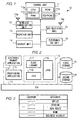
- Fig. 1 is a block diagram showing a configuration of a mobile communication terminal, which is a first embodiment of the present invention.
- mobile communication terminal 10 includes control unit 11, wireless communication unit 12, operation unit 13, display unit 14, GPS receiving unit 15, and electronic tag unit 16.
- mobile communication terminal 10 is a mobile phone.
- Control unit 11 includes CPU (Central Processing Unit) 11a, ROM (Read Only Memory) 11b, RAM (Random Access Memory) 11c, and EEPROM (Electronically Erasable and Programmable ROM).
- CPU 11 a executes a program stored in ROM 11b or EEPROM 11d, using RAM 11a as a work area, thereby controlling operations of components of mobile communication terminal 10.
- Wireless communication unit 12 includes antenna 12a, and performs wireless data communication with a predetermined mobile communication network.
- Operation unit 13 includes operation keys such as buttons, and provides an operation signal corresponding to an operation by a user, to control unit 11.
- Display unit 14 includes a liquid crystal display and a liquid crystal driver circuit, and displays an image corresponding to display data provided from control unit 11.
- GPS receiving unit 15 includes antenna 15a, and receives a radio signal (hereinafter, referred to as "GPS signal") transmitted from so-called GPS (Global Positioning System) satellites.
- Electronic tag unit 16 includes an electronic tag such as an RFID (Radio Frequency IDentification) tag, and realizes a so-called electronic payment function of making payment using data pre-stored data.
- the electronic payment function is realized through communication by mobile communication terminal 10 with a predetermined reader/writer placed in a station or a shop that is approached by the mobile communication terminal.
- ROM 11b pre-stores some programs.
- the programs are hereinafter referred to as “preinstalled programs.”
- the preinstalled programs are specifically a multitasking operating system (hereinafter referred to as "multitasking OS"), a Java (Registered Trademark) platform, and native applications.
- the multitasking OS is an operating system supporting functions such as allocation of virtual memory spaces, which are necessary to realize a pseudo-parallel execution of plural tasks using a TSS (Time-Sharing System).
- the Java platform is a bundle of programs that are described in accordance with a CDC (Connected Device Configuration), which is a configuration for providing Java execution environment 114 (described later) in mobile communication terminal 10 with a multitasking OS.
- Native applications are programs for providing mobile communication terminal 10 with basic functions such as voice communication and positioning, and include an application for receiving a positioning service (positioning application 112 described later) and an application for realizing an electronic payment function (electronic payment application 113 described later).
- EEPROM 11d has a Java application storage area for storing Java applications.
- a Java application consists of: a JAR (Java Archive) file including an entity program that describes a procedure carried out under a Java execution environment, and image files and audio files used when the entity program is running; and an ADF (Application Descriptor File) in which information on installation and execution of the JAR file and attribute information of the JAR file are described.
- a Java application is created by a content provider or a carrier, and stored in an external server, and in response to a request from mobile communication terminal 10, is sent to the device from the external server.
- Fig. 2 is a diagram illustrating a logical configuration of units provided in controller 11 of mobile communication terminal 10 through execution of programs stored in ROM 11b and EEPROM 11d.
- OS 111 of mobile communication terminal 10 executing the programs, positioning application 112, electronic payment application 113, and Java execution environment 114 are provided.
- EEPROM 11d first storage 115 and second storage 116 are secured.
- Positioning application 112 and electronic payment application 113 are realized by native applications stored in ROM 11b.
- Positioning application 112 realizes a function of identifying a location of the terminal on the basis of a GPS signal received by GPS receiving unit 15.
- location information is generated.
- Location information is information indicating a location of the terminal measured using positioning application 112.
- Location information represents a location of the terminal expressed by latitude and longitude.
- Electronic payment application 113 realizes the above-mentioned electronic payment function on the basis of a result of communication by electronic tag unit 16.
- electronic value data representing monetary value (hereinafter, referred to as "electronic value") stored in electronic tag unit 16 is rewritten.
- Electronic payment application 113 in accordance with an instruction from a reader/writer, when goods or services are purchased, rewrites data to reduce an electronic value, and when an electronic value is charged, rewrites data to increase the electronic value.
- Electronic payment application 113 is also able to obtain data representing a location of a reader/writer, when communication with a reader/writer is made. This data represents information indicating a location of the terminal (at a time of payment), which is the same as the above-mentioned location information. Accordingly, information obtained by electronic payment application 13 is hereinafter included in "location information.”
- Java execution environment 114 is provided through execution of Java platform stored in ROM 11b.
- Java execution environment 114 includes class library 117, JVM (Java Virtual Machine) 118, and JAM (Java Application Manager) 119.
- Class library 117 is a collection of program modules (classes) that provide a particular function.
- JVM 118 is a Java execution environment optimized for the above-mentioned CDC, and has a function of interpreting and executing bytecode provided as a Java application.
- JAM 119 has a function of managing download, installation, execution, or termination of a Java application.
- First storage 115 is a storage for storing Java applications (Jar files and ADFs) downloaded under the control of JAM 119.
- Second storage 116 is a storage for storing data that is generated during execution of a Java application, after the application is terminated.
- a storage area of second storage 116 is assigned to each of installed Java applications. Data of a storage area assigned to a Java application can be rewritten during execution of the Java application, and cannot be rewritten during execution of another Java application.
- EEPROM 11d stores, in addition to the above mentioned data, location attribute data and condition data.
- Location attribute data is data representing a location and an attribute associated with the location.
- Condition data is data representing a condition for determining a priority order of windows, with regard to an application executed in mobile communication terminal 10, invoking display of windows by display unit 14.
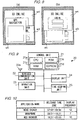
- Fig. 3 is a diagram illustrating location attribute data according to the present embodiment.
- location attribute data is data describing a "location” and an “attribute” in association with each other.
- a "location” is data representing a certain area, which may include plural locations represented by location information.
- An area may be expressed by describing location information defining a boundary of an area, or describing location information included in the area.
- An "attribute” is data representing an attribute associated with an area specified by a "location”.
- An attribute may be any data as long as the data is able to make each area identifiable.
- Fig. 4 shows location attribute data of Fig. 3 shown as an actual map.
- the example of Fig. 4 shows that railroads extend in four directions from A station, and B station is northwest (upper left) of A station.
- the example also shows that a business district is formed around A station and B station, an office of a user is near A station, and a home of a user is near B station.
- Location attribute data may be provided in advance by a manufacturer of mobile communication terminal 10 or a carrier operating a mobile communication network; however, an attribute of a location unique to each user such as the above-mentioned home or office of a user may be preferably defined by a user at his/her discretion.
- categories may be preferably increased or decreased by a user.
- Fig. 5 is a diagram illustrating condition data according to the present embodiment.
- condition data is data describing an "application name", an "application attribute", and a “display frequency” in association with each other.
- An "application name” is data for identifying an application.
- An “application attribute” is data representing an "attribute” of location attribute data to which an application is assigned. For example, an application “groupware” of Fig. 5 has an attribute "Office.”
- a "display frequency” is data representing a frequency at which an application has been executed. In other words, a “display frequency” is data representing a frequency at which a window corresponding to the application has been displayed.
- a “groupware” is an application realizing information sharing among users of an office.
- a “groupware” includes a function of displaying a schedule of each user and a function of displaying a so-called electronic bulletin board relating to business.
- An “electronic ticket” is an application for causing mobile communication terminal 10 to function as a train ticket, and it charges an electronic value, and reduces a charged electronic value at a ticket gate, using electronic tag unit 16.
- An “electronic ticket” has a function of displaying a remaining electronic value and an amount by which the electronic value is reduced.
- a “transfer guide” is an application for displaying a rail route and providing guidance from a starting station to a destination station.
- An “online game” is an application for executing a game using communication via a mobile communication network.
- a “GPS navigation” is an application for displaying a route from a current location of a user (namely, mobile communication terminal 10) to a destination such as a shop using a GPS signal, thereby guiding a user.
- An "application attribute” is data representing a location where an application is frequently used. Accordingly, an example of Fig. 5 shows that a "groupware” is an application frequently used in an office. Also, as in the case of an "online game” of Fig. 5 , plural application attributes may be assigned to a single application. The example of Fig. 5 shows that an "online game” is frequently used not only at home but also during a rail journey (in other words, in a commuting time).
- mobile communication terminal 10 executes plural applications in accordance with a request of a user.
- control unit 11 of mobile communication terminal 10 also functions as a measuring means for measuring a frequency at which the application is executed, which is configured to update a "display frequency" of condition data.
- mobile communication terminal 10 When executing plural applications, mobile communication terminal 10 is able to display plural windows each of which corresponds to one of the plural applications. When doing so, mobile communication terminal 10 displays windows in a so-called overlap window system. Accordingly, mobile communication terminal 10 is able to change a display position of a window or display plural windows in a stack. To this end, control unit 11 of mobile communication terminal 10 stores data on display positions of plural windows (hereinafter referred to as "window data"), and if one of the windows is moved, updates the stored data. If there are overlapping windows, mobile communication terminal 10 displays on top a window that has become active (a status receptive to an operation) most recently. Accordingly, a window displayed on top is a currently active window.
- window data display positions of plural windows
- a "window” means a display area assigned to each application when the application provides a certain function.
- a display area may have any shape or appearance; thus, a display area does not have to have a window-like (rectangular) shape.
- windows are depicted as having a rectangular shape, for convenience of explanation. When a window is displayed on top of another window, only the top window is visible, and a display area of the other window covered by the top window is not visible.
- “bottom” is used to describe a position of a window a part of which is covered by another, "top,” window.
- mobile communication terminal 10 determines a window to be displayed on top, on the basis of a location of the terminal. To do so, mobile communication terminal 10 carries out an operation described below.
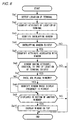
- Fig. 6 is a flowchart showing an operation carried out by control unit 11 of mobile communication terminal 10.
- the operation is realized as a function of a multitasking OS, and is carried out at predetermined intervals.
- control unit 11 initially obtains location information to detect a location of the terminal (step Sa1). When doing so, control unit 11 may obtain location information using a function of positioning application 112 or using a function of electronic payment application 113. Subsequently, control unit 11 identifies an attribute of a location of the terminal on the basis of the detected location (step Sa2). When doing so, control unit 11 identifies an attribute assigned to an area including the obtained location information, with reference to location attribute data.
- control unit 11 recognizes a condition in which windows are displayed on display unit 14 to identify overlapping windows (step Sa3). When doing so, control unit 11 determines presence of overlapping on the basis of stored window data. Also, control unit 11 identifies each of a window obscuring another window and a window obscured by another window as an overlapping window. Namely, if there are overlapping windows, control unit 11 identifies each of a top window and a bottom window as an overlapping window. This applies to a case where three or more windows overlap with each other in a given area.
- control unit 11 determines whether an overlapping window exists by determining whether a window identified at step Sa3 exists (step Sa4). If it is determined that an overlapping window is displayed (step Sa4: YES), control unit 11 identifies an application corresponding to the identified window to identify an attribute associated with the application (step Sa5). When doing so, control unit 11 refers to condition data to retrieve an "application attribute" of an application corresponding to the identified window, thereby identifying an attribute. Control unit 11 identifies an attribute with regard to all overlapping windows. It is to be noted that since a window corresponds to a particular application, an attribute associated with an application can be said to be an attribute associated with a corresponding window.
- control unit 11 determines whether a window exists whose attribute is identical to that of a location of the terminal (namely, the attribute identified at step Sa2) (step Sa6). If such a window exists (step Sa6: YES), control unit 11 determines whether there are plural windows whose attribute is identical to that of a location of the terminal (step Sa7). If there are plural windows whose attribute is identical to that of a location of the terminal (step Sa7: YES), control unit 11 identifies a window whose display frequency is highest among the plural windows (step Sa8). When doing so, control unit 11 refers to condition data to retrieve a "display frequency" of an application having the identified attribute, thereby identifying a window whose display frequency is highest. If there is only a single window whose attribute is identical to that of a location of the terminal (step Sa7: NO), control unit 11 skips an operation of step Sa8 and proceeds to a subsequent operation.
- control unit 11 determines whether a subject window is displayed at the bottom of another window (step Sa9).
- a subject window is the window identified at step Sa8, or if there is only a single window whose attribute is identical to that of a location of the terminal, that window is the subject window.
- Control unit 11 specifies either of the windows as a subject window of step Sa9.
- control unit 11 terminates the operation without changing a display order of windows. This is because in such a case, a window is displayed on top that should be displayed on top.
- location attribute data and condition data are as shown in Figs. 3 to 5 .
- a window of a groupware is referred to as "w1”
- windows of an electronic ticket, a transfer guide, an online game, and a GPS navigation are referred to as "w2", “w3”, “w4", and "w5", respectively.
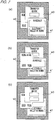
- a groupware, an electronic ticket, and a transfer guide are executed, and their windows are displayed as shown in Fig. 7(a) .
- the whole screen of display unit 14 is indicated by hatching.
- a display of display unit 14 shown in Fig. 7(a) is maintained. This is because window w1 of a groupware has an attribute "office.”
- control unit 11 displays window w2 of an electronic ticket having an attribute "station", on top. Control unit 11 makes the switching immediately after the terminal passes a ticket gate, if location information is obtained using a function of electronic payment application 113.
- control unit 11 displays window w3 of a transfer guide having an attribute "rail route,” on top.
- a transfer guide, an online game, and a GPS navigation are executed, and their windows are displayed as shown in Fig. 8(a) .
- a display of display unit 14 shown in Fig. 8(a) is maintained so that window w5 of a GPS navigation is displayed on top.
- a display of display unit 14 does not change, because no application having an attribute "station” is currently running (see step Sa6 of Fig. 6 ).
- control unit 11 displays window w4 of an online game having an attribute "rail route," on top.
- window w3 of a transfer guide has an attribute "rail route" as well; however, since a display frequency of a transfer guide is lower than that of an online game, window w3 of a transfer guide is not displayed on top (see steps Sa7 and Sa8 of Fig. 6 ).
- Mobile communication terminal 10 by repeatedly carrying out the above operation, changes a display of windows in response to change in a location of the terminal, even if a user does not conduct any operation. Specifically, mobile communication terminal 10 displays the entire area of a window that is likely to be viewed, depending on a positional condition of the terminal, thereby enabling a user to swiftly conduct a subsequent operation.
- the operation achieves a marked effect especially when multitasking is used to perform operations in a small device such as a mobile communication terminal, which has limitations in operation keys and a screen size.
- mobile communication terminal 10 if there are windows having an identical attribute overlap with each other, and mobile communication terminal 10 moves to a location having the attribute, the terminal also displays a window whose display frequency is higher on top. Accordingly, mobile communication terminal 10 is able to preferentially display the entire area of a window that is likely to be viewed, on top.
- Fig. 9 is a block diagram showing an entire configuration of a mobile communication terminal that is a second embodiment of the present invention.
- mobile communication terminal 20 includes control unit 21, wireless communication unit 22, operation unit 23, display unit 24, and time keeping unit 25.
- Control unit 21 includes CPU 21 a, ROM 21b, RAM 21c, and EEPROM 21d.
- Wireless communication unit 22 includes antenna 22a.
- the configurations of control unit 21, wireless communication unit 22, operation unit 23, and display unit 24 are similar to those of control unit 11, wireless communication unit 12, operation unit 13, and display unit 14 of the first embodiment, respectively; accordingly, description of the units is omitted.
- programs and data stored in control unit 21 are partially different from those stored in control unit 11.
- control unit 21 does not have to be able to execute the above-mentioned positioning application 112 or electronic payment application 113. Also, control unit 21 does not have to store location attribute data.
- Time keeping unit 25 includes an internal clock, which outputs time data representing a current time to control unit 21. Time keeping unit 25 keeps time even while mobile communication terminal 20 is powered off. Control unit 21, to detect a current time, may obtain time data from time keeping unit 25 as needed, or obtain time data from time keeping unit 25 when the terminal is powered on, and update the obtained time data internally.
- condition data is data describing an "application name,” a "relevant time zone,” and a “display frequency” in association with each other.
- An "application name” is data for identifying an application.
- a "relevant time zone” is data representing a time zone associated with an application, which represents, for example, a time zone 7:00 a.m. to 9:30 a.m.
- a “display frequency” is data representing a frequency at which an application has been executed. In other words, a "display frequency” is data representing a frequency at which a window corresponding to the application has been displayed.
- a “groupware” is an application similar to the groupware appearing in the first embodiment.
- a “news ticker” is an application that continuously obtains news via a mobile communication network, and sequentially displays the news.
- a “Web browser” is an application that obtains a Web page from the Internet via a mobile communication network, and displays the page.
- a "relevant time zone" is associated with a daily action of a user.
- the example of Fig. 10 shows that a time zone 7:00 a.m. to 9:30 a.m. is commonly a pre-work time for a user, that the user commonly works in an office from 9:31 a.m. to 6:30 p.m., and that the user commonly spends time freely after work.
- mobile communication terminal 20 executes plural applications in accordance with a request of a user.
- the operation of mobile communication terminal 20 is similar to that of mobile communication terminal 10 according to the first embodiment, except for a control for switching a top window, and overlapping description is omitted.
- Mobile communication terminal 20 if there are overlapping windows, determines a window to be displayed on top, on the basis of time. To do so, mobile communication terminal 20 carries out an operation described below.
- Fig. 11 is a flowchart showing an operation carried out by control unit 21 of mobile communication terminal 20.
- control unit 21 initially detects a current time on the basis of time data output from time keeping unit 25 (step Sb1). Subsequently, control unit 21 recognizes a condition in which windows are displayed on display unit 24, on the basis of window data, to identify overlapping windows (step Sb2). Subsequently, control unit 21 determines whether an overlapping window exists by determining whether a window identified at step Sb2 exists (step Sb3).
- control unit 21 determines whether a window associated with the identified current time is included in the overlapping windows (step Sb4). When doing so, control unit 21 refers to condition data to retrieve a "relevant time zone" of an application corresponding to the identified window. If the identified current time is included in the "relevant time zone", control unit 21 determines that the window of the application is a window associated with a current time.
- control unit 21 determines whether there are plural windows associated with a current time, overlapping another window (step Sb5). If there are plural windows associated with a current time, overlapping another window (step Sb5: YES), control unit 21 identifies a window whose display frequency is highest among the plural windows (step Sb6). When doing so, control unit 21 refers to condition data to retrieve a "display frequency" of an application corresponding to the identified window, thereby identifying a window whose display frequency is highest. If only a single window associated with the identified current time overlaps another window (step Sb5: NO), control unit 21 skips an operation of step Sb6 and proceeds to a subsequent operation.
- control unit 21 determines whether a subject window is displayed at the bottom of another window (step Sb7).
- a subject window is the window identified at step Sb6, or if there is only a single window associated with the identified current time, that window is the subject window.
- Control unit 21 specifies either of the windows as a subject window of step Sb7.
- control unit 21 terminates the operation without changing a display order of windows. This is because in such a case, a window is displayed on top that should be displayed on top.
- condition data is as shown in Fig. 10 .
- a window of a groupware is referred to as "w6”
- windows of a news ticker and a Web browser are referred to as "w7" and "w8", respectively.
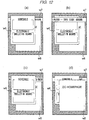
- mobile communication terminal 20 is powered on at 7:00 a.m. If it is also assumed that at the same time, mobile communication terminal 20 sequentially executes a news ticker, a Web browser, and a groupware, windows of the applications are displayed as shown in Fig. 12(a) . Namely, a window corresponding to a last application that has been executed is displayed on top. Subsequently, if control unit 21 carries out the operation shown in Fig. 11 , a display of display unit 24 is changed so that a screen shown in Fig. 12(b) is displayed. Namely, control unit 21 controls display so that window w7 of a news ticker associated with a current time zone is displayed on top.
- control unit 21 displays window w6 of a groupware associated with a current time zone on top.
- control unit 21 displays window w8 of a Web browser associated with a current time zone on top.
- Mobile communication terminal 20 by repeatedly carrying out the above operation, changes a display of windows in response to change in time, even if a user does not conduct any operation. For example, according to the foregoing case, a user is able to check news using a news ticker before s/he goes to work, view a groupware during work, and browse Web pages using a Web browser after work, even if the user does not select a window in advance. Accordingly, mobile communication terminal 10 is able to display an entire area of a window that is likely to be viewed, depending on a temporal condition of the terminal, thereby enabling a user to swiftly conduct a subsequent operation.
- the present invention may be implemented in an embodiment different from the above-mentioned first or second embodiment.
- the present invention may be implemented in embodiments described below. The following modifications may be combined with each other.
- a length of display time may be used, instead of a frequency of display.
- a mobile communication terminal may preferentially display a window on top that has been displayed for a longer time.
- a priority of display may be arbitrarily set by a user, without making it dependent on a history of display such as a frequency or time.
- a control unit may function as a measuring unit for measuring a display time of each window.
- a “display frequency" of condition data may be a value corresponding to an attribute of a location of the terminal at which a window is displayed or a time zone in which a window is displayed.
- a "display frequency" is data representing a frequency at which a corresponding application has been executed
- a "display frequency” may be data representing a frequency at which an application has been executed at a location having an attribute assigned to the application.
- a "display frequency" is data measured for each application, for each location associated with an attribute identical to that of the application.
- Fig. 13 is a diagram illustrating condition data according to the modification.
- items other than a "display frequency" are similar to those shown in Fig. 5 .
- condition data a "display frequency” is data described for each attribute of a location at which a window of an application has been displayed.
- condition data of an online game shows that a display frequency at home is “7,” a display frequency at a rail route is “4,” a display frequency at a station is “1,” and no window has been displayed at the other locations.
- display may be performed more suitable to a condition of the terminal.
- a display frequency may be distinguished between an application used at any location and an application intensively used at a particular location.
- a "display frequency" of the second embodiment may be, similarly, a frequency at which an application has been executed in a time zone associated with the application.
- an attribute corresponding to each application may be determined on the basis of such a "display frequency.” For example, an attribute whose display frequency is highest may be specified as an "application attribute" of an application. Specifically, taking an “online game” of Fig. 13 as an example, an attribute "home,” whose "display frequency" is highest, is specified as an "application attribute" of the application.
- Windows of particular applications may have a fixed priority level that does not depend on the above-mentioned condition data.
- a control unit may store data specifying such a window in advance, and if such a window overlaps another window, display the window according to a fixed priority level, regardless of a location or time. If a user desires that a window of a particular application be displayed on top, s/he may set a highest priority level for the application in advance.
- the present modification may be said to be an embodiment in which windows of specified particular applications are excluded from subjects whose priority level is determined.
- a control unit if there are plural windows overlapping each other, including a specified window, determines a priority level of display for windows other than the specified window.
- the control unit displays the specified window according to a predetermined priority level, and displays the other windows according to priority levels determined on the basis of condition data.
- a specification of a window may be input by a user.
- a control unit is configured to determine only a window to be displayed on top, and a display order of the other windows is not especially mentioned.
- a control unit may determine a priority level for each of overlapping windows on the basis of the above-mentioned condition data, and display the windows so that a window of higher priority level is displayed ahead of a window of lower priority level.
- Operations in this context may include closing a top window and minimizing a top window.
- a control unit may determine a priority level on the basis of an attribute or a location of the terminal and condition data, or determine a priority level on the basis of a current time and condition data.
- windows wa, wb, wc, wd, we, and wf are displayed for plural applications, so that the windows overlap each other, as shown in Fig. 14 .
- attributes assigned to windows wa, wb, and wc are identical to an attribute of a location of the terminal, and attributes assigned to windows wd, we, and wf are not identical to an attribute of a location of the terminal.
- a control unit initially gives a priority level to windows wa, wb, and wc having an attribute identical to an attribute of a location of the terminal, which is higher than that of windows wd, we, and wf.
- control unit determines a priority level for each of windows wa, wb, and wc on the basis of a level of a display frequency, and determines a priority level for each of windows wd, we, and wf on the basis of a level of a display frequency.
- priority levels are determined by the control units, as shown in Fig. 14 .
- display of windows may be changed daily, monthly, or seasonally. Specifically, a control may be performed so that an application relating to business is displayed on top on weekdays, and an application relating to entertainment, such as a game, is displayed on top on holidays.
- the number of windows to be displayed on top does not have to be one.
- a control unit may determine a window to be displayed on top for each group.
- a group in this context means a collection of windows included in an area surrounded by a closed outline.
- windows are classified into group G1 and group G2.
- a control unit may determine a window to be displayed on top for each of group G1 and group G2. Either of the top windows may be active.
- a screen of a display unit may be divided into prescribed areas, and for each area, a window to be displayed on top or a priority level of display of a window may be determined.
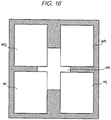
- a control may be performed so that all the windows are displayed on top. For example, if, as shown in Fig. 16 , there are windows wg, wh, wi, and wk not overlapping each other, while they do not overlap window wk; windows wg, wh, wi, and wj each have an attribute identical to an attribute of a location of the terminal; and window wk has an attribute different from an attribute of a location of the terminal, all windows wg, wh, wi, and wj may be displayed on top.
- a single application is associated with a single window; however, the present invention does not have to apply only to such a relationship.
- an application employing an MDI Multiple Document Interface
- plural windows are displayed for a single application. Accordingly, if each window of such an application is able to be associated with an attribute or a time zone, the present invention can be applied.
- an attribute may be assigned to each window, and a top window may be controlled according to a location of the terminal.
- the present invention is applied to a mobile phone; however, the present invention may be applied to other mobile communication terminals.
- the present invention may be applied to a portal communication terminal such as a PDA (Personal Digital Assistance), or a car navigation system.
- a configuration for obtaining location information may be changed depending on a configuration of a communication terminal.
- a communication terminal including a configuration such as electronic tag unit 16, which is able to communicate with a reader/writer so-called presence information (information identifying which reader/writer a communication terminal has communicated with) may be obtained from a reader/writer, and a location of a reader/writer may be used as location information of the terminal.
- area information information identifying which base station in a mobile communication network a mobile phone has communicated with
- location registration may be used as location information.
- the present invention is applied to a mobile communication terminal; however, the present invention may be applied to non-mobile information processing devices.
- the invention described in the second embodiment may be applied to a desktop personal computer.
- time data may be obtained from an external device.
- time data may be obtained from a reader/writer, as in the case of the above-mentioned presence information.
- the present invention is described as a function of an OS; however, the present invention may be realized as an independent application. Alternatively, a function of the present invention may be added to an existing application such as an OS as a plug-in. If such an embodiment is employed, the present invention may be provided as a program for providing a computer (a mobile communication terminal or an information processing device) with the above-mentioned function.
- the program may be provided while being stored in a recording medium such as an optical disk, or provided from a server via a network such as the Internet.
Landscapes
- Engineering & Computer Science (AREA)
- Human Computer Interaction (AREA)
- Theoretical Computer Science (AREA)
- General Engineering & Computer Science (AREA)
- Signal Processing (AREA)
- Physics & Mathematics (AREA)
- General Physics & Mathematics (AREA)
- Computer Networks & Wireless Communication (AREA)
- Environmental & Geological Engineering (AREA)
- Computer Hardware Design (AREA)
- User Interface Of Digital Computer (AREA)
- Digital Computer Display Output (AREA)
- Telephone Function (AREA)
Claims (4)
- Computer, umfassend:ein erstes Speichermittel zum Speichern eines Multitasking-Betriebssystems zum Ausführen einer Mehrzahl von Anwendungen;ein zweites Speichermittel zum Speichern von Ortsattributdaten, die einen Ort und ein Ortsattribut in Assoziation miteinander beschreiben, und Zustandsdaten, die eine Anwendung und ein Ortsattribut in Assoziation miteinander beschreiben;ein Anzeigesteuermittel zum Anzeigen einer Mehrzahl von Fenstern, von denen jedes einer aus der Mehrzahl von Anwendungen entspricht;ein Detektiermittel zum Detektieren eines Ortes des Computers;ein erstes Identifiziermittel zum Identifizieren eines Ortsattributs des von dem Detektiermittel detektierten Ortes;ein zweites Identifiziermittel zum Identifizieren sich überlappender Fenster, wobei auf einem Anzeigemittel ein Fenster aus den sich überlappenden Fenstern ein anderes Fenster aus den sich überlappenden Fenstern verdeckt;ein drittes Identifiziermittel zum Identifizieren, für jedes der sich überlappenden Fenster, eines Ortsattributs, das mit einer dem Fenster entsprechenden Anwendung assoziiert ist, wenn durch das zweite Identifiziermittel identifizierte sich überlappende Fenster vorhanden sindein erstes Bestimmungsmittel zum Bestimmen, ob ein erstes Fenster vorhanden ist, das einer Anwendung entspricht, deren durch das dritte Identifiziermittel identifiziertes Ortsattribut identisch ist mit dem durch das erste Identifiziermittel identifizierten Ortsattribut;ein zweites Bestimmungsmittel zum Bestimmen, wenn durch das erste Bestimmungsmittel bestimmt wird, dass das erste Fenster vorhanden ist, ob das erste Fenster unter einem zweiten Fenster angezeigt wird;ein Änderungsmittel zum Ändern einer Anzeigereihenfolge der Mehrzahl von Fenstern, sodass das erste Fenster oben angezeigt wird, wenn durch das zweite Bestimmungsmittel bestimmt wird, dass das erste Fenster unter dem zweiten Fenster angezeigt wird.
- Computer, umfassend:ein erstes Speichermittel zum Speichern eines Multitasking-Betriebssystems zum Ausführen einer Mehrzahl von Anwendungen;ein Anzeigesteuermittel zum Anzeigen einer Mehrzahl von Fenstern, von denen jedes einer aus der Mehrzahl von Anwendungen entspricht;ein Detektiermittel zum Detektieren einer Zeit;ein erstes Identifiziermittel zum Identifizieren sich überlappender Fenster, wobei auf einem Anzeigemittel ein Fenster aus den sich überlappenden Fenstern ein anderes Fenster aus den sich überlappenden Fenstern verdeckt;ein zweites Speichermittel zum Speichern von Zustandsdaten, die eine Anwendung und eine Zeitzone in Assoziation miteinander beschreiben;ein Abrufmittel zum Abrufen einer Zeitzone einer einem Fenster entsprechenden Anwendung, für jedes der durch das erste Identifiziermittel identifizierten sich überlappenden Fenster;ein zweites Identifiziermittel zum Identifizieren eines der Anwendung entsprechenden ersten Fensters, wenn die durch das Detektiermittel detektierte Zeit in der durch das Abrufmittel abgerufenen Zeitzone enthalten ist;ein Bestimmungsmittel zum Bestimmen, ob das durch das zweite Identifiziermittel identifizierte erste Fenster unter einem zweiten Fenster angezeigt wird; undein Änderungsmittel zum Ändern einer Anzeigereihenfolge der Mehrzahl von Fenstern, sodass das erste Fenster oben angezeigt wird, wenn durch das Bestimmungsmittel bestimmt wird, dass das erste Fenster unter einem zweiten Fenster angezeigt wird.
- Programm zum Veranlassen eines Computers dazu, die Schritte auszuführen des:Speicherns eines Multitasking-Betriebssystems zum Ausführen einer Mehrzahl von Anwendungen;Speicherns von Ortsattributdaten, die einen Ort und ein Ortsattribut in Assoziation miteinander beschreiben, und Zustandsdaten, die eine Anwendung und ein Ortsattribut in Assoziation miteinander beschreiben;Anzeigens einer Mehrzahl von Fenstern, von denen jedes einer aus der Mehrzahl von Anwendungen entspricht;Detektierens eines Ortes des Computers;Identifizierens eines Ortsattributs des detektierten Ortes;Identifizierens sich überlappender Fenster, wobei auf einem Anzeigemittel ein Fenster aus den sich überlappenden Fenstern ein anderes Fenster aus den sich überlappenden Fenstern verdeckt;wenn identifizierte sich überlappende Fenster vorhanden sind, Identifizierens, für jedes der sich überlappenden Fenster, eines Ortsattributs, das mit einer dem Fenster entsprechenden Anwendung assoziiert ist;Bestimmens, ob ein erstes Fenster vorhanden ist, das einer Anwendung entspricht, deren identifiziertes Ortsattribut identisch ist mit dem identifizierten Ortsattribut des detektierten Ortes;wenn bestimmt wird, dass das erste Fenster vorhanden ist, Bestimmens, ob das erste Fenster unter einem zweiten Fenster angezeigt wird;wenn bestimmt wird, dass das erste Fenster unter dem zweiten Fenster angezeigt wird, Änderns einer Anzeigereihenfolge der Mehrzahl von Fenstern, sodass das erste Fenster oben angezeigt wird.
- Programm zum Veranlassen eines Computers dazu, die Schritte auszuführen des:Speicherns eines Multitasking-Betriebssystems zum Ausführen einer Mehrzahl von Anwendungen;Anzeigens einer Mehrzahl von Fenstern, von denen jedes einer aus der Mehrzahl von Anwendungen entspricht;Detektierens einer Zeit;Identifizierens sich überlappender Fenster, wobei auf einem Anzeigemittel ein Fenster aus den sich überlappenden Fenstern ein anderes Fenster aus den sich überlappenden Fenstern verdeckt;Speicherns von Zustandsdaten, die eine Anwendung und eine Zeitzone in Assoziation miteinander beschreiben;Abrufens, für jedes der sich überlappenden Fenster, einer Zeitzone einer dem Fenster entsprechenden Anwendung;wenn die detektierte Zeit in der abgerufenen Zeitzone enthalten ist, Identifizierens eines der Anwendung entsprechenden ersten Fensters;Bestimmens, ob das erste Fenster unter einem zweiten Fenster angezeigt wird;wenn bestimmt wird, dass das erste Fenster unter einem zweiten Fenster angezeigt wird, Änderns einer Anzeigereihenfolge der Mehrzahl von Fenstern, sodass das erste Fenster oben angezeigt wird.
Applications Claiming Priority (2)
| Application Number | Priority Date | Filing Date | Title |
|---|---|---|---|
| JP2007101067A JP4938530B2 (ja) | 2007-04-06 | 2007-04-06 | 移動通信端末及びプログラム |
| PCT/JP2008/055597 WO2008126663A1 (ja) | 2007-04-06 | 2008-03-25 | 移動通信端末、情報処理装置及びプログラム |
Publications (3)
| Publication Number | Publication Date |
|---|---|
| EP2154602A1 EP2154602A1 (de) | 2010-02-17 |
| EP2154602A4 EP2154602A4 (de) | 2013-04-17 |
| EP2154602B1 true EP2154602B1 (de) | 2017-06-28 |
Family
ID=39863781
Family Applications (1)
| Application Number | Title | Priority Date | Filing Date |
|---|---|---|---|
| EP08722807.8A Not-in-force EP2154602B1 (de) | 2007-04-06 | 2008-03-25 | Mobilkommunikationsendgerät, informationsverarbeitungsvorrichtung und programm |
Country Status (8)
| Country | Link |
|---|---|
| US (1) | US8386948B2 (de) |
| EP (1) | EP2154602B1 (de) |
| JP (1) | JP4938530B2 (de) |
| KR (1) | KR101094516B1 (de) |
| CN (1) | CN101663639A (de) |
| BR (1) | BRPI0808319A2 (de) |
| RU (1) | RU2444778C2 (de) |
| WO (1) | WO2008126663A1 (de) |
Cited By (18)
| Publication number | Priority date | Publication date | Assignee | Title |
|---|---|---|---|---|
| US10681179B2 (en) | 2009-01-28 | 2020-06-09 | Headwater Research Llc | Enhanced curfew and protection associated with a device group |
| US10749700B2 (en) | 2009-01-28 | 2020-08-18 | Headwater Research Llc | Device-assisted services for protecting network capacity |
| US10771980B2 (en) | 2009-01-28 | 2020-09-08 | Headwater Research Llc | Communications device with secure data path processing agents |
| US11190545B2 (en) | 2009-01-28 | 2021-11-30 | Headwater Research Llc | Wireless network service interfaces |
| US11219074B2 (en) | 2009-01-28 | 2022-01-04 | Headwater Research Llc | Enterprise access control and accounting allocation for access networks |
| US11363496B2 (en) | 2009-01-28 | 2022-06-14 | Headwater Research Llc | Intermediate networking devices |
| US11425580B2 (en) | 2009-01-28 | 2022-08-23 | Headwater Research Llc | System and method for wireless network offloading |
| US11494837B2 (en) | 2009-01-28 | 2022-11-08 | Headwater Research Llc | Virtualized policy and charging system |
| US11538106B2 (en) | 2009-01-28 | 2022-12-27 | Headwater Research Llc | Wireless end-user device providing ambient or sponsored services |
| US11570309B2 (en) | 2009-01-28 | 2023-01-31 | Headwater Research Llc | Service design center for device assisted services |
| US11582593B2 (en) | 2009-01-28 | 2023-02-14 | Head Water Research Llc | Adapting network policies based on device service processor configuration |
| US11589216B2 (en) | 2009-01-28 | 2023-02-21 | Headwater Research Llc | Service selection set publishing to device agent with on-device service selection |
| US11743717B2 (en) | 2013-03-14 | 2023-08-29 | Headwater Research Llc | Automated credential porting for mobile devices |
| US11985155B2 (en) | 2009-01-28 | 2024-05-14 | Headwater Research Llc | Communications device with secure data path processing agents |
| US12166596B2 (en) | 2009-01-28 | 2024-12-10 | Disney Enterprises, Inc. | Device-assisted services for protecting network capacity |
| US12389218B2 (en) | 2009-01-28 | 2025-08-12 | Headwater Research Llc | Service selection set publishing to device agent with on-device service selection |
| US12452377B2 (en) | 2009-01-28 | 2025-10-21 | Headwater Research Llc | Service design center for device assisted services |
| US12543031B2 (en) | 2009-01-28 | 2026-02-03 | Headwater Research Llc | Adapting network policies based on device service processor configuration |
Families Citing this family (34)
| Publication number | Priority date | Publication date | Assignee | Title |
|---|---|---|---|---|
| JP5031588B2 (ja) * | 2008-01-07 | 2012-09-19 | 株式会社エヌ・ティ・ティ・ドコモ | 情報処理装置及びプログラム |
| US8543933B2 (en) * | 2008-02-21 | 2013-09-24 | Emtrace Technologies Usa, Inc. | Slideshow display of images for user-defined groups of applications |
| US8032666B2 (en) * | 2009-06-12 | 2011-10-04 | Microsoft Corporation | Location enabled bookmark and profile |
| JP4902713B2 (ja) * | 2009-09-28 | 2012-03-21 | 株式会社エヌ・ティ・ティ・ドコモ | 情報処理方法、情報処理装置及びプログラム |
| US20110087975A1 (en) * | 2009-10-13 | 2011-04-14 | Sony Ericsson Mobile Communications Ab | Method and arrangement in a data |
| US8175617B2 (en) * | 2009-10-28 | 2012-05-08 | Digimarc Corporation | Sensor-based mobile search, related methods and systems |
| JPWO2011108109A1 (ja) * | 2010-03-05 | 2013-06-20 | 富士通株式会社 | 画像表示システム、情報処理装置、表示装置、および画像表示方法 |
| WO2011149532A1 (en) * | 2010-05-25 | 2011-12-01 | Headwater Partners I Llc | Device- assisted services for protecting network capacity |
| JP2011257950A (ja) * | 2010-06-08 | 2011-12-22 | Sony Corp | 情報処理装置、情報処理ユニットおよび情報処理方法 |
| KR20120035529A (ko) * | 2010-10-06 | 2012-04-16 | 삼성전자주식회사 | 휴대용 단말기에서 적응적 제스처 인식 장치 및 방법 |
| TWI546700B (zh) * | 2011-01-13 | 2016-08-21 | 宏達國際電子股份有限公司 | 手持電子裝置及其控制方法與電腦程式產品 |
| US8560963B1 (en) * | 2011-07-12 | 2013-10-15 | Sprint Communications Company L.P. | Providing notifications of wireless data consumption in a wireless communication device |
| KR101793999B1 (ko) * | 2011-07-22 | 2017-11-06 | 삼성전자주식회사 | 휴대용 단말기에서 사용자 인터페이스 객체를 배치하는 방법 및 장치 |
| KR20130017241A (ko) | 2011-08-10 | 2013-02-20 | 삼성전자주식회사 | 터치 스크린 단말기에서 입출력 방법 및 장치 |
| CN102591718B (zh) * | 2012-02-06 | 2014-01-15 | 中标软件有限公司 | 触摸屏智能终端的多任务窗口管理方法 |
| JP5882087B2 (ja) * | 2012-03-07 | 2016-03-09 | 船井電機株式会社 | 端末装置、操作キーの表示順変更方法 |
| US20140108448A1 (en) * | 2012-03-30 | 2014-04-17 | Intel Corporation | Multi-sensor velocity dependent context aware voice recognition and summarization |
| JP5923726B2 (ja) * | 2012-07-25 | 2016-05-25 | パナソニックIpマネジメント株式会社 | 表示制御装置、及び、表示制御システム |
| JP2014060651A (ja) * | 2012-09-19 | 2014-04-03 | Sharp Corp | 携帯端末装置、その制御方法、およびその制御プログラム |
| CN103699547B (zh) * | 2012-09-28 | 2019-03-22 | 北京三星通信技术研究有限公司 | 一种应用程序推荐方法及终端 |
| US20140171116A1 (en) * | 2012-12-14 | 2014-06-19 | Anthony G. LaMarca | Location-aware mobile application management |
| US20140181715A1 (en) * | 2012-12-26 | 2014-06-26 | Microsoft Corporation | Dynamic user interfaces adapted to inferred user contexts |
| CN104346047A (zh) * | 2013-07-24 | 2015-02-11 | 中兴通讯股份有限公司 | 图标排列处理方法、装置以及终端 |
| CN103744690B (zh) * | 2013-12-04 | 2017-01-11 | 西安诺瓦电子科技有限公司 | 实现程序窗口上屏显示的方法 |
| CN105700819B (zh) * | 2014-11-28 | 2019-04-12 | 国际商业机器公司 | 用于网络数据存储的方法和系统 |
| CN107908462B (zh) * | 2014-12-31 | 2022-01-25 | Oppo广东移动通信有限公司 | 控制应用运行的方法和移动终端设备和相关介质产品 |
| CN104833944A (zh) * | 2015-05-06 | 2015-08-12 | 国网上海市电力公司 | 一种大用户电能表现场检验系统及方法 |
| US9959839B2 (en) * | 2015-06-24 | 2018-05-01 | Intel Corporation | Predictive screen display method and apparatus |
| JP6494476B2 (ja) * | 2015-09-17 | 2019-04-03 | 株式会社Nttドコモ | 情報処理装置 |
| CN105224277A (zh) * | 2015-11-13 | 2016-01-06 | 韩春丰 | 时钟显示方法及装置 |
| CN106339268B (zh) * | 2016-09-12 | 2018-01-16 | 广东欧珀移动通信有限公司 | 应用程序控制方法和智能终端 |
| KR101969528B1 (ko) * | 2017-09-29 | 2019-04-16 | 에스케이텔레콤 주식회사 | 터치 디스플레이를 제어하는 장치와 방법 및 터치 디스플레이 시스템 |
| CN109274815A (zh) * | 2018-08-22 | 2019-01-25 | 奇酷互联网络科技(深圳)有限公司 | 程序运行控制方法、装置、可读存储介质及移动终端 |
| CN111427657A (zh) * | 2020-04-23 | 2020-07-17 | 湖南快乐阳光互动娱乐传媒有限公司 | 应用窗口的显示方法及装置 |
Family Cites Families (37)
| Publication number | Priority date | Publication date | Assignee | Title |
|---|---|---|---|---|
| JPS58133226A (ja) * | 1982-02-03 | 1983-08-08 | 株式会社日立製作所 | 紺子を具備した内視鏡 |
| JPS62276673A (ja) * | 1986-05-26 | 1987-12-01 | Toshiba Corp | マルチウインドウ表示装置 |
| JPS63133226A (ja) * | 1986-11-26 | 1988-06-06 | Canon Inc | マルチウインドウ方式 |
| JP2638972B2 (ja) | 1988-08-16 | 1997-08-06 | ブラザー工業株式会社 | プリンタ |
| AU617006B2 (en) * | 1988-09-29 | 1991-11-14 | Canon Kabushiki Kaisha | Data processing system and apparatus |
| JPH0511960A (ja) * | 1991-07-08 | 1993-01-22 | Canon Inc | マルチウインドウ制御方式 |
| JPH06149521A (ja) * | 1992-11-06 | 1994-05-27 | Hitachi Ltd | マルチウィンドウ最適化表示方式 |
| US5561753A (en) * | 1993-12-02 | 1996-10-01 | International Business Machines Corporation | Method and system for relocating selectable graphical objects in a graphical user interface environment |
| US5555376A (en) * | 1993-12-03 | 1996-09-10 | Xerox Corporation | Method for granting a user request having locational and contextual attributes consistent with user policies for devices having locational attributes consistent with the user request |
| JPH08161139A (ja) | 1994-12-05 | 1996-06-21 | Mitsubishi Electric Corp | ウィンドウ表示処理装置およびウィンドウ表示処理方法 |
| US5825360A (en) * | 1995-04-07 | 1998-10-20 | Apple Computer, Inc. | Method for arranging windows in a computer workspace |
| JPH10154060A (ja) | 1996-09-25 | 1998-06-09 | Sharp Corp | マルチウィンドウ表示処理装置および表示装置制御プログラムを記録した媒体 |
| JP4331272B2 (ja) | 1996-12-05 | 2009-09-16 | 株式会社東芝 | マルチウインドウ表示制御装置 |
| US20050131992A1 (en) * | 2003-12-11 | 2005-06-16 | Eric Goldstein | System, method and apparatus for selecting, displaying, managing, tracking and transferring access to content of web pages and other sources |
| US6466232B1 (en) * | 1998-12-18 | 2002-10-15 | Tangis Corporation | Method and system for controlling presentation of information to a user based on the user's condition |
| US7107539B2 (en) * | 1998-12-18 | 2006-09-12 | Tangis Corporation | Thematic response to a computer user's context, such as by a wearable personal computer |
| US7417650B1 (en) * | 2000-03-16 | 2008-08-26 | Microsoft Corporation | Display and human-computer interaction for a notification platform |
| US6665868B1 (en) * | 2000-03-21 | 2003-12-16 | International Business Machines Corporation | Optimizing host application presentation space recognition events through matching prioritization |
| US7257777B1 (en) * | 2000-07-19 | 2007-08-14 | International Business Machines Corporation | System and method for automatic control of window viewing |
| JP3633465B2 (ja) * | 2000-09-27 | 2005-03-30 | 日本電気株式会社 | 携帯電話端末及びそれに用いる画面遷移制御方法 |
| US7082576B2 (en) * | 2001-01-04 | 2006-07-25 | Microsoft Corporation | System and process for dynamically displaying prioritized data objects |
| US6507893B2 (en) * | 2001-01-26 | 2003-01-14 | Dell Products, L.P. | System and method for time window access frequency based caching for memory controllers |
| US6934911B2 (en) * | 2002-01-25 | 2005-08-23 | Nokia Corporation | Grouping and displaying of contextual objects |
| JP2003324770A (ja) | 2002-05-07 | 2003-11-14 | Hitachi Ltd | 携帯端末、サーバ及びプログラム実行システム |
| US20040005401A1 (en) * | 2002-07-05 | 2004-01-08 | Robert Becker | Method for applying a washcoat to suppport bodies |
| US20040056900A1 (en) * | 2002-09-23 | 2004-03-25 | Blume Leo R | System and method for window priority rendering |
| JP3669702B2 (ja) | 2003-02-25 | 2005-07-13 | 松下電器産業株式会社 | アプリケーションプログラムの予測方法及び移動体端末 |
| RU2254611C2 (ru) * | 2003-03-13 | 2005-06-20 | Общество с ограниченной ответственностью "Мобилити" | Способ предоставления пользователям мобильных устройств электронной связи актуальной коммерческой информации на альтернативной основе (варианты) и информационная система для его осуществления (варианты) |
| US7164920B2 (en) * | 2003-03-28 | 2007-01-16 | Kyocera Wireless Corp. | System and method for selecting communications coverage network information in a wireless communications device |
| JP2005217522A (ja) | 2004-01-27 | 2005-08-11 | Matsushita Electric Ind Co Ltd | 携帯端末装置 |
| JP4661314B2 (ja) * | 2005-04-04 | 2011-03-30 | ソニー株式会社 | 情報処理装置および方法、記録媒体、並びにプログラム |
| US7925995B2 (en) * | 2005-06-30 | 2011-04-12 | Microsoft Corporation | Integration of location logs, GPS signals, and spatial resources for identifying user activities, goals, and context |
| WO2007016304A2 (en) * | 2005-08-01 | 2007-02-08 | Hector Gomez | Digital system and method for building emergency and disaster plan implementation |
| JP4490350B2 (ja) * | 2005-08-26 | 2010-06-23 | 株式会社日立製作所 | 入力操作支援装置および入力操作支援方法 |
| US8037421B2 (en) * | 2005-10-11 | 2011-10-11 | Research In Motion Limited | System and method for organizing application indicators on an electronic device |
| US20070261055A1 (en) * | 2006-05-04 | 2007-11-08 | Samsung Electronics Co., Ltd. | Method and system for the generic and flexible access of available tasks through a user interface |
| US7681144B2 (en) * | 2006-06-13 | 2010-03-16 | Mlb Advanced Media, L.P. | Prioritized presentation of content |
-
2007
- 2007-04-06 JP JP2007101067A patent/JP4938530B2/ja active Active
-
2008
- 2008-03-25 BR BRPI0808319-3A patent/BRPI0808319A2/pt not_active IP Right Cessation
- 2008-03-25 RU RU2009140984/08A patent/RU2444778C2/ru not_active IP Right Cessation
- 2008-03-25 US US12/594,692 patent/US8386948B2/en not_active Expired - Fee Related
- 2008-03-25 CN CN200880010753A patent/CN101663639A/zh active Pending
- 2008-03-25 KR KR1020097020762A patent/KR101094516B1/ko not_active Expired - Fee Related
- 2008-03-25 WO PCT/JP2008/055597 patent/WO2008126663A1/ja not_active Ceased
- 2008-03-25 EP EP08722807.8A patent/EP2154602B1/de not_active Not-in-force
Non-Patent Citations (1)
| Title |
|---|
| None * |
Cited By (25)
| Publication number | Priority date | Publication date | Assignee | Title |
|---|---|---|---|---|
| US11582593B2 (en) | 2009-01-28 | 2023-02-14 | Head Water Research Llc | Adapting network policies based on device service processor configuration |
| US12389218B2 (en) | 2009-01-28 | 2025-08-12 | Headwater Research Llc | Service selection set publishing to device agent with on-device service selection |
| US10771980B2 (en) | 2009-01-28 | 2020-09-08 | Headwater Research Llc | Communications device with secure data path processing agents |
| US11190545B2 (en) | 2009-01-28 | 2021-11-30 | Headwater Research Llc | Wireless network service interfaces |
| US11219074B2 (en) | 2009-01-28 | 2022-01-04 | Headwater Research Llc | Enterprise access control and accounting allocation for access networks |
| US11363496B2 (en) | 2009-01-28 | 2022-06-14 | Headwater Research Llc | Intermediate networking devices |
| US11405224B2 (en) | 2009-01-28 | 2022-08-02 | Headwater Research Llc | Device-assisted services for protecting network capacity |
| US11425580B2 (en) | 2009-01-28 | 2022-08-23 | Headwater Research Llc | System and method for wireless network offloading |
| US11494837B2 (en) | 2009-01-28 | 2022-11-08 | Headwater Research Llc | Virtualized policy and charging system |
| US11516301B2 (en) | 2009-01-28 | 2022-11-29 | Headwater Research Llc | Enhanced curfew and protection associated with a device group |
| US11538106B2 (en) | 2009-01-28 | 2022-12-27 | Headwater Research Llc | Wireless end-user device providing ambient or sponsored services |
| US11570309B2 (en) | 2009-01-28 | 2023-01-31 | Headwater Research Llc | Service design center for device assisted services |
| US10749700B2 (en) | 2009-01-28 | 2020-08-18 | Headwater Research Llc | Device-assisted services for protecting network capacity |
| US11665186B2 (en) | 2009-01-28 | 2023-05-30 | Headwater Research Llc | Communications device with secure data path processing agents |
| US10681179B2 (en) | 2009-01-28 | 2020-06-09 | Headwater Research Llc | Enhanced curfew and protection associated with a device group |
| US12603845B2 (en) | 2009-01-28 | 2026-04-14 | Headwater Research Llc | Device-assisted services for protecting network capacity |
| US11923995B2 (en) | 2009-01-28 | 2024-03-05 | Headwater Research Llc | Device-assisted services for protecting network capacity |
| US11968234B2 (en) | 2009-01-28 | 2024-04-23 | Headwater Research Llc | Wireless network service interfaces |
| US11985155B2 (en) | 2009-01-28 | 2024-05-14 | Headwater Research Llc | Communications device with secure data path processing agents |
| US12166596B2 (en) | 2009-01-28 | 2024-12-10 | Disney Enterprises, Inc. | Device-assisted services for protecting network capacity |
| US12200786B2 (en) | 2009-01-28 | 2025-01-14 | Headwater Research Llc | Enterprise access control and accounting allocation for access networks |
| US11589216B2 (en) | 2009-01-28 | 2023-02-21 | Headwater Research Llc | Service selection set publishing to device agent with on-device service selection |
| US12452377B2 (en) | 2009-01-28 | 2025-10-21 | Headwater Research Llc | Service design center for device assisted services |
| US12543031B2 (en) | 2009-01-28 | 2026-02-03 | Headwater Research Llc | Adapting network policies based on device service processor configuration |
| US11743717B2 (en) | 2013-03-14 | 2023-08-29 | Headwater Research Llc | Automated credential porting for mobile devices |
Also Published As
| Publication number | Publication date |
|---|---|
| EP2154602A1 (de) | 2010-02-17 |
| KR101094516B1 (ko) | 2011-12-19 |
| BRPI0808319A2 (pt) | 2014-07-08 |
| US20100115461A1 (en) | 2010-05-06 |
| JP4938530B2 (ja) | 2012-05-23 |
| EP2154602A4 (de) | 2013-04-17 |
| JP2008257602A (ja) | 2008-10-23 |
| WO2008126663A1 (ja) | 2008-10-23 |
| RU2009140984A (ru) | 2011-05-20 |
| US8386948B2 (en) | 2013-02-26 |
| KR20090117837A (ko) | 2009-11-12 |
| RU2444778C2 (ru) | 2012-03-10 |
| CN101663639A (zh) | 2010-03-03 |
Similar Documents
| Publication | Publication Date | Title |
|---|---|---|
| EP2154602B1 (de) | Mobilkommunikationsendgerät, informationsverarbeitungsvorrichtung und programm | |
| US8635020B2 (en) | GPS location and favorite prediction based on in-vehicle meta-data | |
| US20210382589A1 (en) | Portable information terminal for automatically displaying software application recommendations | |
| US8744413B2 (en) | Mobile terminal and method for displaying standby screen according to analysis result of user's behavior | |
| CN101910997B (zh) | 信息处理装置 | |
| EP1998250B1 (de) | Informationsverarbeitungsvorrichtung und Programm | |
| US8555197B2 (en) | System and process for prioritizing overlapping windows | |
| JP6659684B2 (ja) | 携帯情報端末、及び、そのアプリケーション推薦方法 | |
| US9154578B2 (en) | Display device with scaling of selected object images | |
| EP2328071A1 (de) | Informationsverarbeitungsvorrichtung und -programm | |
| MX2014007323A (es) | Metodo, sistema, y dispositivo para navegacion basada en lista de cosas por hacer. | |
| CN108362283A (zh) | 一种室内导航方法、终端及计算机可读存储介质 | |
| US6567742B2 (en) | On-board navigation terminal and navigation controller | |
| US6843413B2 (en) | Information providing method and information providing device | |
| CN101617320B (zh) | 终端装置和程序 | |
| JP5437428B2 (ja) | 情報処理装置及びプログラム | |
| JP6838180B2 (ja) | 携帯情報端末、及び、そのアプリケーション推薦方法 | |
| CN117782145A (zh) | 导航实现方法、装置、电子设备及存储介质 | |
| KR20060094252A (ko) | 대기모드용 어플리케이션 구동 방법 및 장치 | |
| KR20140133380A (ko) | 휴대 단말기의 사용 로그를 활용하는 방법 및 이를 이용한 장치 |
Legal Events
| Date | Code | Title | Description |
|---|---|---|---|
| PUAI | Public reference made under article 153(3) epc to a published international application that has entered the european phase |
Free format text: ORIGINAL CODE: 0009012 |
|
| 17P | Request for examination filed |
Effective date: 20091022 |
|
| AK | Designated contracting states |
Kind code of ref document: A1 Designated state(s): AT BE BG CH CY CZ DE DK EE ES FI FR GB GR HR HU IE IS IT LI LT LU LV MC MT NL NO PL PT RO SE SI SK TR |
|
| AX | Request for extension of the european patent |
Extension state: AL BA MK RS |
|
| DAX | Request for extension of the european patent (deleted) | ||
| A4 | Supplementary search report drawn up and despatched |
Effective date: 20130315 |
|
| RIC1 | Information provided on ipc code assigned before grant |
Ipc: G06F 3/048 20130101AFI20130311BHEP Ipc: G06F 3/0481 20130101ALI20130311BHEP Ipc: H04M 1/725 20060101ALI20130311BHEP Ipc: G06F 3/14 20060101ALI20130311BHEP |
|
| 17Q | First examination report despatched |
Effective date: 20131023 |
|
| RIC1 | Information provided on ipc code assigned before grant |
Ipc: G09G 5/14 20060101ALN20170117BHEP Ipc: G06F 3/048 20130101AFI20170117BHEP Ipc: G06F 3/14 20060101ALI20170117BHEP Ipc: H04M 1/725 20060101ALI20170117BHEP Ipc: G06F 3/0481 20130101ALI20170117BHEP |
|
| GRAP | Despatch of communication of intention to grant a patent |
Free format text: ORIGINAL CODE: EPIDOSNIGR1 |
|
| INTG | Intention to grant announced |
Effective date: 20170303 |
|
| RIN1 | Information on inventor provided before grant (corrected) |
Inventor name: MURAKAMI, KEIICHI Inventor name: YAMADA, KAZUHIRO Inventor name: KAMIYA, DAI Inventor name: ONDA, YASUSHI Inventor name: KANO, IZUA Inventor name: YAMADA, EIJU |
|
| GRAS | Grant fee paid |
Free format text: ORIGINAL CODE: EPIDOSNIGR3 |
|
| GRAA | (expected) grant |
Free format text: ORIGINAL CODE: 0009210 |
|
| AK | Designated contracting states |
Kind code of ref document: B1 Designated state(s): AT BE BG CH CY CZ DE DK EE ES FI FR GB GR HR HU IE IS IT LI LT LU LV MC MT NL NO PL PT RO SE SI SK TR |
|
| REG | Reference to a national code |
Ref country code: GB Ref legal event code: FG4D |
|
| REG | Reference to a national code |
Ref country code: CH Ref legal event code: EP |
|
| REG | Reference to a national code |
Ref country code: AT Ref legal event code: REF Ref document number: 905417 Country of ref document: AT Kind code of ref document: T Effective date: 20170715 |
|
| REG | Reference to a national code |
Ref country code: IE Ref legal event code: FG4D |
|
| REG | Reference to a national code |
Ref country code: DE Ref legal event code: R096 Ref document number: 602008050861 Country of ref document: DE |
|
| PG25 | Lapsed in a contracting state [announced via postgrant information from national office to epo] |
Ref country code: HR Free format text: LAPSE BECAUSE OF FAILURE TO SUBMIT A TRANSLATION OF THE DESCRIPTION OR TO PAY THE FEE WITHIN THE PRESCRIBED TIME-LIMIT Effective date: 20170628 Ref country code: LT Free format text: LAPSE BECAUSE OF FAILURE TO SUBMIT A TRANSLATION OF THE DESCRIPTION OR TO PAY THE FEE WITHIN THE PRESCRIBED TIME-LIMIT Effective date: 20170628 Ref country code: GR Free format text: LAPSE BECAUSE OF FAILURE TO SUBMIT A TRANSLATION OF THE DESCRIPTION OR TO PAY THE FEE WITHIN THE PRESCRIBED TIME-LIMIT Effective date: 20170929 Ref country code: NO Free format text: LAPSE BECAUSE OF FAILURE TO SUBMIT A TRANSLATION OF THE DESCRIPTION OR TO PAY THE FEE WITHIN THE PRESCRIBED TIME-LIMIT Effective date: 20170928 Ref country code: FI Free format text: LAPSE BECAUSE OF FAILURE TO SUBMIT A TRANSLATION OF THE DESCRIPTION OR TO PAY THE FEE WITHIN THE PRESCRIBED TIME-LIMIT Effective date: 20170628 |
|
| REG | Reference to a national code |
Ref country code: NL Ref legal event code: MP Effective date: 20170628 |
|
| REG | Reference to a national code |
Ref country code: LT Ref legal event code: MG4D |
|
| REG | Reference to a national code |
Ref country code: AT Ref legal event code: MK05 Ref document number: 905417 Country of ref document: AT Kind code of ref document: T Effective date: 20170628 |
|
| PG25 | Lapsed in a contracting state [announced via postgrant information from national office to epo] |
Ref country code: SE Free format text: LAPSE BECAUSE OF FAILURE TO SUBMIT A TRANSLATION OF THE DESCRIPTION OR TO PAY THE FEE WITHIN THE PRESCRIBED TIME-LIMIT Effective date: 20170628 Ref country code: LV Free format text: LAPSE BECAUSE OF FAILURE TO SUBMIT A TRANSLATION OF THE DESCRIPTION OR TO PAY THE FEE WITHIN THE PRESCRIBED TIME-LIMIT Effective date: 20170628 Ref country code: NL Free format text: LAPSE BECAUSE OF FAILURE TO SUBMIT A TRANSLATION OF THE DESCRIPTION OR TO PAY THE FEE WITHIN THE PRESCRIBED TIME-LIMIT Effective date: 20170628 Ref country code: BG Free format text: LAPSE BECAUSE OF FAILURE TO SUBMIT A TRANSLATION OF THE DESCRIPTION OR TO PAY THE FEE WITHIN THE PRESCRIBED TIME-LIMIT Effective date: 20170928 |
|
| PG25 | Lapsed in a contracting state [announced via postgrant information from national office to epo] |
Ref country code: SK Free format text: LAPSE BECAUSE OF FAILURE TO SUBMIT A TRANSLATION OF THE DESCRIPTION OR TO PAY THE FEE WITHIN THE PRESCRIBED TIME-LIMIT Effective date: 20170628 Ref country code: CZ Free format text: LAPSE BECAUSE OF FAILURE TO SUBMIT A TRANSLATION OF THE DESCRIPTION OR TO PAY THE FEE WITHIN THE PRESCRIBED TIME-LIMIT Effective date: 20170628 Ref country code: RO Free format text: LAPSE BECAUSE OF FAILURE TO SUBMIT A TRANSLATION OF THE DESCRIPTION OR TO PAY THE FEE WITHIN THE PRESCRIBED TIME-LIMIT Effective date: 20170628 Ref country code: AT Free format text: LAPSE BECAUSE OF FAILURE TO SUBMIT A TRANSLATION OF THE DESCRIPTION OR TO PAY THE FEE WITHIN THE PRESCRIBED TIME-LIMIT Effective date: 20170628 Ref country code: EE Free format text: LAPSE BECAUSE OF FAILURE TO SUBMIT A TRANSLATION OF THE DESCRIPTION OR TO PAY THE FEE WITHIN THE PRESCRIBED TIME-LIMIT Effective date: 20170628 |
|
| PG25 | Lapsed in a contracting state [announced via postgrant information from national office to epo] |
Ref country code: IS Free format text: LAPSE BECAUSE OF FAILURE TO SUBMIT A TRANSLATION OF THE DESCRIPTION OR TO PAY THE FEE WITHIN THE PRESCRIBED TIME-LIMIT Effective date: 20171028 Ref country code: PL Free format text: LAPSE BECAUSE OF FAILURE TO SUBMIT A TRANSLATION OF THE DESCRIPTION OR TO PAY THE FEE WITHIN THE PRESCRIBED TIME-LIMIT Effective date: 20170628 Ref country code: ES Free format text: LAPSE BECAUSE OF FAILURE TO SUBMIT A TRANSLATION OF THE DESCRIPTION OR TO PAY THE FEE WITHIN THE PRESCRIBED TIME-LIMIT Effective date: 20170628 Ref country code: IT Free format text: LAPSE BECAUSE OF FAILURE TO SUBMIT A TRANSLATION OF THE DESCRIPTION OR TO PAY THE FEE WITHIN THE PRESCRIBED TIME-LIMIT Effective date: 20170628 |
|
| REG | Reference to a national code |
Ref country code: DE Ref legal event code: R097 Ref document number: 602008050861 Country of ref document: DE |
|
| PG25 | Lapsed in a contracting state [announced via postgrant information from national office to epo] |
Ref country code: DK Free format text: LAPSE BECAUSE OF FAILURE TO SUBMIT A TRANSLATION OF THE DESCRIPTION OR TO PAY THE FEE WITHIN THE PRESCRIBED TIME-LIMIT Effective date: 20170628 |
|
| PLBE | No opposition filed within time limit |
Free format text: ORIGINAL CODE: 0009261 |
|
| STAA | Information on the status of an ep patent application or granted ep patent |
Free format text: STATUS: NO OPPOSITION FILED WITHIN TIME LIMIT |
|
| 26N | No opposition filed |
Effective date: 20180329 |
|
| PG25 | Lapsed in a contracting state [announced via postgrant information from national office to epo] |
Ref country code: SI Free format text: LAPSE BECAUSE OF FAILURE TO SUBMIT A TRANSLATION OF THE DESCRIPTION OR TO PAY THE FEE WITHIN THE PRESCRIBED TIME-LIMIT Effective date: 20170628 |
|
| REG | Reference to a national code |
Ref country code: CH Ref legal event code: PL |
|
| PG25 | Lapsed in a contracting state [announced via postgrant information from national office to epo] |
Ref country code: MC Free format text: LAPSE BECAUSE OF FAILURE TO SUBMIT A TRANSLATION OF THE DESCRIPTION OR TO PAY THE FEE WITHIN THE PRESCRIBED TIME-LIMIT Effective date: 20170628 |
|
| REG | Reference to a national code |
Ref country code: BE Ref legal event code: MM Effective date: 20180331 |
|
| REG | Reference to a national code |
Ref country code: IE Ref legal event code: MM4A |
|
| PG25 | Lapsed in a contracting state [announced via postgrant information from national office to epo] |
Ref country code: LU Free format text: LAPSE BECAUSE OF NON-PAYMENT OF DUE FEES Effective date: 20180325 |
|
| PG25 | Lapsed in a contracting state [announced via postgrant information from national office to epo] |
Ref country code: IE Free format text: LAPSE BECAUSE OF NON-PAYMENT OF DUE FEES Effective date: 20180325 |
|
| PG25 | Lapsed in a contracting state [announced via postgrant information from national office to epo] |
Ref country code: LI Free format text: LAPSE BECAUSE OF NON-PAYMENT OF DUE FEES Effective date: 20180331 Ref country code: BE Free format text: LAPSE BECAUSE OF NON-PAYMENT OF DUE FEES Effective date: 20180331 Ref country code: CH Free format text: LAPSE BECAUSE OF NON-PAYMENT OF DUE FEES Effective date: 20180331 |
|
| PG25 | Lapsed in a contracting state [announced via postgrant information from national office to epo] |
Ref country code: FR Free format text: LAPSE BECAUSE OF NON-PAYMENT OF DUE FEES Effective date: 20180331 |
|
| PG25 | Lapsed in a contracting state [announced via postgrant information from national office to epo] |
Ref country code: MT Free format text: LAPSE BECAUSE OF NON-PAYMENT OF DUE FEES Effective date: 20180325 |
|
| PG25 | Lapsed in a contracting state [announced via postgrant information from national office to epo] |
Ref country code: TR Free format text: LAPSE BECAUSE OF FAILURE TO SUBMIT A TRANSLATION OF THE DESCRIPTION OR TO PAY THE FEE WITHIN THE PRESCRIBED TIME-LIMIT Effective date: 20170628 |
|
| PGFP | Annual fee paid to national office [announced via postgrant information from national office to epo] |
Ref country code: DE Payment date: 20200310 Year of fee payment: 13 Ref country code: GB Payment date: 20200318 Year of fee payment: 13 |
|
| PG25 | Lapsed in a contracting state [announced via postgrant information from national office to epo] |
Ref country code: PT Free format text: LAPSE BECAUSE OF FAILURE TO SUBMIT A TRANSLATION OF THE DESCRIPTION OR TO PAY THE FEE WITHIN THE PRESCRIBED TIME-LIMIT Effective date: 20170628 Ref country code: HU Free format text: LAPSE BECAUSE OF FAILURE TO SUBMIT A TRANSLATION OF THE DESCRIPTION OR TO PAY THE FEE WITHIN THE PRESCRIBED TIME-LIMIT; INVALID AB INITIO Effective date: 20080325 |
|
| PG25 | Lapsed in a contracting state [announced via postgrant information from national office to epo] |
Ref country code: CY Free format text: LAPSE BECAUSE OF FAILURE TO SUBMIT A TRANSLATION OF THE DESCRIPTION OR TO PAY THE FEE WITHIN THE PRESCRIBED TIME-LIMIT Effective date: 20170628 |
|
| REG | Reference to a national code |
Ref country code: DE Ref legal event code: R119 Ref document number: 602008050861 Country of ref document: DE |
|
| GBPC | Gb: european patent ceased through non-payment of renewal fee |
Effective date: 20210325 |
|
| PG25 | Lapsed in a contracting state [announced via postgrant information from national office to epo] |
Ref country code: DE Free format text: LAPSE BECAUSE OF NON-PAYMENT OF DUE FEES Effective date: 20211001 Ref country code: GB Free format text: LAPSE BECAUSE OF NON-PAYMENT OF DUE FEES Effective date: 20210325 |