EP2150619B1 - Mikroorganismus zur herstellung von bernsteinsäure - Google Patents
Mikroorganismus zur herstellung von bernsteinsäure Download PDFInfo
- Publication number
- EP2150619B1 EP2150619B1 EP08757965.2A EP08757965A EP2150619B1 EP 2150619 B1 EP2150619 B1 EP 2150619B1 EP 08757965 A EP08757965 A EP 08757965A EP 2150619 B1 EP2150619 B1 EP 2150619B1
- Authority
- EP
- European Patent Office
- Prior art keywords
- yeast
- gene
- genes
- mdh2
- succinic acid
- Prior art date
- Legal status (The legal status is an assumption and is not a legal conclusion. Google has not performed a legal analysis and makes no representation as to the accuracy of the status listed.)
- Not-in-force
Links
Images

Classifications
-
- C—CHEMISTRY; METALLURGY
- C12—BIOCHEMISTRY; BEER; SPIRITS; WINE; VINEGAR; MICROBIOLOGY; ENZYMOLOGY; MUTATION OR GENETIC ENGINEERING
- C12N—MICROORGANISMS OR ENZYMES; COMPOSITIONS THEREOF; PROPAGATING, PRESERVING, OR MAINTAINING MICROORGANISMS; MUTATION OR GENETIC ENGINEERING; CULTURE MEDIA
- C12N1/00—Microorganisms; Compositions thereof; Processes of propagating, maintaining or preserving microorganisms or compositions thereof; Processes of preparing or isolating a composition containing a microorganism; Culture media therefor
- C12N1/14—Fungi; Culture media therefor
- C12N1/16—Yeasts; Culture media therefor
- C12N1/18—Baker's yeast; Brewer's yeast
-
- C—CHEMISTRY; METALLURGY
- C12—BIOCHEMISTRY; BEER; SPIRITS; WINE; VINEGAR; MICROBIOLOGY; ENZYMOLOGY; MUTATION OR GENETIC ENGINEERING
- C12P—FERMENTATION OR ENZYME-USING PROCESSES TO SYNTHESISE A DESIRED CHEMICAL COMPOUND OR COMPOSITION OR TO SEPARATE OPTICAL ISOMERS FROM A RACEMIC MIXTURE
- C12P7/00—Preparation of oxygen-containing organic compounds
- C12P7/40—Preparation of oxygen-containing organic compounds containing a carboxyl group including Peroxycarboxylic acids
- C12P7/44—Polycarboxylic acids
- C12P7/46—Dicarboxylic acids having four or less carbon atoms, e.g. fumaric acid, maleic acid
-
- C—CHEMISTRY; METALLURGY
- C12—BIOCHEMISTRY; BEER; SPIRITS; WINE; VINEGAR; MICROBIOLOGY; ENZYMOLOGY; MUTATION OR GENETIC ENGINEERING
- C12N—MICROORGANISMS OR ENZYMES; COMPOSITIONS THEREOF; PROPAGATING, PRESERVING, OR MAINTAINING MICROORGANISMS; MUTATION OR GENETIC ENGINEERING; CULTURE MEDIA
- C12N15/00—Mutation or genetic engineering; DNA or RNA concerning genetic engineering, vectors, e.g. plasmids, or their isolation, preparation or purification; Use of hosts therefor
- C12N15/09—Recombinant DNA-technology
- C12N15/11—DNA or RNA fragments; Modified forms thereof; Non-coding nucleic acids having a biological activity
-
- C—CHEMISTRY; METALLURGY
- C12—BIOCHEMISTRY; BEER; SPIRITS; WINE; VINEGAR; MICROBIOLOGY; ENZYMOLOGY; MUTATION OR GENETIC ENGINEERING
- C12N—MICROORGANISMS OR ENZYMES; COMPOSITIONS THEREOF; PROPAGATING, PRESERVING, OR MAINTAINING MICROORGANISMS; MUTATION OR GENETIC ENGINEERING; CULTURE MEDIA
- C12N9/00—Enzymes; Proenzymes; Compositions thereof; Processes for preparing, activating, inhibiting, separating or purifying enzymes
- C12N9/0004—Oxidoreductases (1.)
- C12N9/0006—Oxidoreductases (1.) acting on CH-OH groups as donors (1.1)
-
- C—CHEMISTRY; METALLURGY
- C12—BIOCHEMISTRY; BEER; SPIRITS; WINE; VINEGAR; MICROBIOLOGY; ENZYMOLOGY; MUTATION OR GENETIC ENGINEERING
- C12N—MICROORGANISMS OR ENZYMES; COMPOSITIONS THEREOF; PROPAGATING, PRESERVING, OR MAINTAINING MICROORGANISMS; MUTATION OR GENETIC ENGINEERING; CULTURE MEDIA
- C12N9/00—Enzymes; Proenzymes; Compositions thereof; Processes for preparing, activating, inhibiting, separating or purifying enzymes
- C12N9/88—Lyases (4.)
Definitions
- the invention relates to a microorganism having a truncated variant of the gene MDH 2 , a heterologous fumarase gene, an overexpressed gene FRDS1, and an overexpressed gene PYC1 and / or PYC 2, uses of such a microorganism and a process for its preparation.
- Dicarboxylic acids have great economic potential because they can be used as precursors for many chemicals.
- succinic acid serves as a precursor for the production of plastics based on 1,4-butanediol, tetrahydrofuran and gamma-butyrolactone.
- Succinic acid is today produced chemically by catalytic hydrogenation of maleic anhydride to form succinic anhydride and subsequent water addition, or by direct catalytic hydrogenation of maleic acid.
- Succinic acid is also produced by many microorganisms starting from sugars or amino acids under physiological environmental conditions. Under anaerobic conditions, in addition to succinic acid, further fermentation end products such as ethanol, lactic acid, acetic acid and formic acid are generally formed. The biosynthesis of succinic acid with its high oxygen content requires a reductive CO 2 fixation. Succinic acid is a metabolite that is normally enriched by anaerobic fermentation processes. While the yield and enrichment of the product under anaerobic conditions is often better than under aerobic conditions, the disadvantage lies in an exclusively anaerobic process in a technical limitation of biomass production and a low productivity of the microbial producer. Thus, a relatively low biomass / product efficiency is the result. In addition, it is difficult to handle strictly anaerobic microorganisms technically.
- the first stage of biomass recovery is limited in this process, as the glucose concentration in the fed-batch process must be limited to 1 g / L to avoid acetate enrichment, which interferes with both the biomass recovery process and succinic acid production.
- the biomass extraction is limited possible with this process.
- the biosynthetic pathway for succinic acid in this process undergoes strong catabolite repression because glycolysis, citric acid cycle and glyoxylate pathway genes are highly repressed by glucose, as disclosed in the reference DeRisi JL, Iyer VR, Brown PO, Science. 278 (5338): 680-686 (1997 ) known. This has the consequence that the synthesis of succinic acid in the presence of glucose is largely repressed and thus very limited.
- the invention is therefore based on the technical problem of specifying a method and a microorganism for its implementation, which makes it possible to obtain biomass without limitations in the fermentation process to produce a carboxylic acid of Glyoxylatzyklus, especially succinic acid, without catabolite repression in Biosyntheseweg in the production process and To ensure as little as possible by-product enrichment during the production phase.
- the cytosolic malate dehydrogenase (Mdh2p) is subject to glucose-induced enhanced proteolytic degradation (Hung et al. 2004).
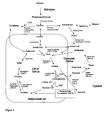
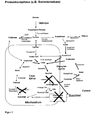
- the cytosolic malate dehydrogenase is used for succinate synthesis via the reductive part of the citrate cycle, starting from pyruvate via oxaloacetate, malate and fumarate to succinate ( FIG. 3 f.) 1).
- the reductive citrate cycle ie the noncyclic back circulation of the citrate cycle ( FIG. 3 f.) is a prerequisite for the stoichiometric maximum molar yield in the production of succinic acid on glucose. Only the reductive citrate cycle in combination with the glyoxylate cycle in the production of succinic acid allows maximum yields of up to 1.71 moles of succinate per mole of glucose by reoxidation of NADH to NAD + and CO 2 fixation.
- Mdh2p cytosolic malate dehydrogenase
- a fumarase enzyme must be expressed heterologously in the yeast, which preferably originates from an organism which naturally operates a mixed acid fermentation. In these organisms, the reductive citrate cycle is much more efficient because in mixed acid fermentation, succinate is a natural fermentation end product.
- the thermodynamics of the fumarase of such organisms is much more favorable in terms of the conversion of malate to fumarate than in Saccharomyces cerevisiae.
- Suitable donor organisms for a heterologously expressed fumarase are, for example, Escherichia coli, Anaerobiospirillum succiniciproducens, Actinobacillus succinogenes, Mannheimia succiniciproducens, Corynebacterium glutamicum .
- the final step in the production of succinate over the reductive citrate cycle is the conversion of fumarate to succinate.
- This reaction is in the cytosol by the enzyme fumarate reductase (Frdslp, FIG. 3 f.) 3). catalyzed. Overexpression of this enzyme increases the efficiency of the reductive succinate production.
- the truncated variant of the gene MDH2 preferably codes for an MDH2 protein which is truncated by the C-terminal proline.
- yeast cells can be done in the usual way and this is the references Schiestl RH, et al., Curr Genet. Dec, 16 (5-6): 339-346 (1989 ), or Manivasakam P., et al., Nucleic Acids Res. Sep 11, 21 (18): 4414-4415 (1993 ), or Morgan AJ, Experientia Suppl., 46: 155-166 (1983 ).
- Vehicles suitable for transformation, in particular plasmids are for example from the literature Naumovski L., et al., J Bacteriol, 152 (1): 323-331 (1982 ) Broach JR, et al., Gene, 8 (1): 121-133 (1979 ) Sikorski RS, et al., Genetics, 122 (1) _19-27 (1989 ). These vectors are Yep24, Yep13, pRS vector series, as well as YCp19 or pYEXBX.
- expression cassettes are typically carried out by fusion of the promoter with the coding for the gene nucleic acid sequence and optionally a terminator according to conventional recombination and cloning techniques, such as in the literature Maniatis T., et al., Molecular Cloning: A Laboratory Manual, Cold Spring Harbor Laboratory, Cold Spring Harbor, NY, USA, 1989 , or Sihlavy TJ, et al., Experiments with Gene Fusion, Cold Spring Harbor Laboratory, Cold Spring Harbor, NY, USA, 1984 , or Ausubel FM, et al., Current Protocols in Molecular Biology, Greene Publishing Assoc. and Wiley-Interscience, 1987 , described.
- the microorganism may be a yeast, in particular selected from the group consisting of "Saccharomyces cerevisiae, Saccharomyces, Saccharomyces copsis, Saccharomyces, Schizosaccharomyces, Wickerhamia, Debayomyces, Hansenula, Hanseniaspora, Pichia, Kloeckera, Candida, Zygosaccharomyces, Ogataea, Kuraishia, Komagataella, Yarrowia, Metschnikowia , Williopsis, Nakazawaea, Kluyveromyces, Cryptococcus, Torulaspora, Bullera, Rhodotorula, Willopsis, Kloeckera, and Sporobolomyces, and the gene FUM1 can be selected from an organism selected from the group consisting of Escherichia coli, Anaerobiospirillum, Actinobacillus, Mannheimia, Corynebacterium be.
- At least one of the genes from the group consisting of "FRDS1, PYC1 and PYC2" may be under the control of a second foreign, constitutively active promoter, for example the ADH1 promoter.
- both natural genes MDH2 and FUM1 are replaced or supplemented and / or wherein both genes overexpress FRDS1 and PYC1.
- Such a microorganism can be used to produce succinic acid with remarkably increased yield. This is done by having a) the microorganism optionally in a growth culture medium b) subsequently the microorganism is cultured under optionally anaerobic conditions and c) subsequently to step b) or during step b) the succinic acid is separated from the culture supernatant and optionally purified.
- stage a) to a cell density of at least 100 g dry biomass / l, preferably at least 120 g / l, most preferably at least 140 g / l, is performed.
- Step b) may be carried out to a carboxylic acid concentration of at least 0.4 mol / l, preferably at least 0.8 mol / l, most preferably at least 1.0 mol / l.
- step b) a pH in the range of 4 to 9, preferably 6 to 8, and a salt concentration in the range of 0.01 to 0.5 mol / l, preferably from 0.05 to 0.2 mol / l, most preferably from 0.05 to 0.1 mol / l.
- Step a) is preferably carried out at a temperature of from 20 to 35 ° C, preferably from 28 to 30 ° C, and for a period of from 1 to 1000 hours, preferably from 2 to 500 hours, most preferably from 2 to 200 hours.
- step b) a run at a temperature of 15 to 40 ° C, preferably 20 to 35 ° C, most preferably 28 to 30 ° C, and for a duration of 1 to 1000 h, preferably from 2 to 500 h, most preferably 2 to 200 hours, preferably.
- culture media for stage a for example, WMVIII medium ( Lang C., Looman AC, Appl Microbiol Biotechnol. 44 (1-2): 147-156 (1995 )).
- the amount of tetracycline in the culture medium is preferably below 20 mg / l, preferably below 10 mg / l. most preferably, below 1 mg / L, to values below the detection limit.
- a culture medium for stage b) is, for example, WMVIII medium in question, also a common molasses medium can be used.
- the amount of tetracycline is preferably above 1 mg / l, most preferably above 3 mg / l. Examples of suitable ranges are 1 to 3 mg / l or 3 to 15 mg / l.
- Step c) can be carried out subsequent to step b). Then the culture supernatant is separated from the microorganisms, for example by filtration or centrifugation. However, stage c) can also be carried out during stage b), continuously or discontinuously. In the latter case, at least part of the culture supernatant is removed and replaced by new culture medium and this process may be repeated several times.
- the succinic acid is obtained from the removed culture supernatant. Continuous separation may be accomplished via suitable membranes or by passing a stream of the culture medium through a succinic acid separation device.
- a microorganism according to the invention can be produced by deleting or inactivating or supplementing one of the wild-type genes MDH2 or FUM1, or both of these genes, in the wild-type microorganism or in a genetically engineered or mutated parent organism respectively variant of the MDH2 gene and / or the foreign FUM1 gene introduced into the microorganism and the microorganism is transformed therewith and / or by at least one of the genes FRDS1, PYC1 and PYC2, preferably at least both genes FRDS1 and PYC1, under the control of the second promoter introduced into the microorganism and the microorganism is transformed therewith.
- pyruvate carboxylase Pyclp and Pyc2p
- the enzymatic conversion of the pyruvate carboxylase represents the first step of the reductive part of the citric acid cycle ( FIG. 3 Gluconeogenesis, ie the structure of the storage substance glycogen, takes place primarily under respiratory conditions (Haurie, Perrot et al., 2001).
- the CO 2 fixation at this enzymatic step enables a process with a balanced or even positive CO 2 balance, which represents a great environmental relevance on the process technology side.
- the propagation of respiration produces by-product formation in the form of glycerol and ethanol (cf. FIG. 3 c.)) and thus reduces yield losses, since glycerol and ethanol are the fermentation end products of yeast.
- the yeast cell not only exhibits catabolite repression on glucose but also on other fermentable C 6 and C 5 sugars, such as galactose or ribose, and to a lesser extent non-fermentable carbon sources, such as Glycerine (Gancedo 1998). Therefore, more efficient production in a glucose dereprim believing strain is to be expected on all fermentable, as well as many non-fermentable carbon sources.
- the Snflp / Snf4p complex belongs to the protein serine / threonine kinases and plays a central role in the reversal of glucose repression in the course of the "diauxic shifts".
- the Snfl / Snf4 complex is in the hierarchy of the cascade, which is responsible for the glucose repression or derepression, very high to settle.
- the Snf1p / Snf4p is phosphorylated by the Snf1 kinases Sak1p, Tos1p, and Elmlp and thus activated (Rubenstein et al., 2006).
- the activated complex is located at the nucleus, where it influences two transcriptional factors located lower in the level of the hierarchy. These are the proteins Miglp and Cat8p (Treitel et al., 1998).
- the zinc finger protein Miglp is a transcriptional repressor that recruits the Tuplp and Cyc8p proteins to then bind as a complex to the corresponding consensus sequence of the promoter of a variety of glucose-repressed genes, thereby preventing transcription of the downstream gene (Treitel and Carlson 1995).
- Cat8p is a transcriptional activator and induces the expression of at least 34 genes when glucose is no longer present in the medium. These are, above all, the genes of the glyoxylate cycle which are needed for efficient production of organic acids in yeast. Furthermore, some genes responsible for the intracellular transport of intermediates of the glyoxylate and citrate cycles are also regulated by Cat8p (Haurie, Perrot et al., 2001).
- the active Snflp / Snf4p complex phosphorylates the Mig1 protein, causing it to be inactivated and translocated from the nucleus (De Vit et al., 1997) and phosphorylates Cat8p and Siplp, its functional homolog, resulting in activation of these two proteins.
- an active Snflp / Snf4p complex localized in the nucleus contributes substantially to the reversal of glucose repression, because it directly influences further transcription factors of the repression cascade.
- This complex is composed of the proteins Snflp and Snf4p, as well as one of the proteins Gal83p, Siplp and Sip2p (Jiang and Carlson 1997). The latter proteins have an influence on the localization of the entire complex within the cell and represent the linker of the complex.
- Snf4p is the regulatory subunit and Snflp is the catalytic subunit.
- Snflp is activated by one of the three redundant kinases Saklp, Toslp or Elmlp phosphorylating the amino acid threonine at position 210. This phosphorylation affects the Glc7p / Reglp type 1 protein phosphatase (Santangelo 2006). Reglp is the regulatory subunit of this protein phosphatase and directs this complex by binding to Glc7p to a variety of substrates involved in various processes, including glucose repression, cell growth, and glycogen formation (Cui et al., 2004).
- Reglp interacts with the kinase domain of the Snf1 protein and directs Glc7p to the activation loop of Snflp, resulting in the dephosphorylation and inactivation of Snflp, and thus in the glucose repression of many genes.
- the protein Saklp which is responsible as the main kinase for the phosphorylation and thus the activation of the Snflp / Snf4p complex, is expressed via transcriptional deregulation of the SAK1 gene.
- Both measures can shift the regulatory duel between Saklp and Glc7p / Reglp towards an active Snflp / Snf4p complex, which significantly contributes to the reversal of glucose repression.
- the Hap2 / 3/4/5 protein complex regulates a large number of glucose-repressed genes. These are mainly genes of the respiratory chain, as well as of the citrate cycle. As an activator it induces the transcription of these genes during the "diauxic shift" and contributes strongly to the shift of respiro-fermentative equilibrium towards respiration.
- the genes HAP2, HAP3 and HAP5 are constitutively expressed (McNabb and Pinto 2005). HAP4 is naturally expressed only on growth on non-fermentable carbon sources.
- Overexpression of Hap4p thus increases the production efficiency of organic carboxylic acids, in particular dicarboxylic acids and hydroxy fatty acids of the respiratory central metabolism of yeast, such as, for example, succinic acid, fumaric acid, malic acid, oxaloacetic acid, with regard to production time and yields.
- organic carboxylic acids in particular dicarboxylic acids and hydroxy fatty acids of the respiratory central metabolism of yeast, such as, for example, succinic acid, fumaric acid, malic acid, oxaloacetic acid, with regard to production time and yields.
- an isolated genetically engineered microorganism is described as Development of the invention described above, wherein one of the genes HAP4 or SAK1, is overexpressed, or wherein both genes HAP4 and SAK1 are overexpressed, and / or wherein the gene REG1 is repressed or deleted.
- Crabtreepositive yeast in particular selected from the group consisting of "Saccharomyces cerevisiae, Saccharomyces, Saccharomyces copsis, Saccharomyces, Schizosaccharomyces, Wickerhamia, Debayomyces, Hansenula, Hanseniaspora, Pichia, Kloeckera, Candida, zygosaccharomyces, Ogataea, Kuraishia, Komagatella , Yarrowia, Metschnikowia, Williopsis, Nakazawaea, Kluyveromyces, Cryptococcus, Torulaspora, Bullera, Rhodotorula, Willopsis, Kloeckera and Sporobolomyces ".
- one of the genes may be HAP4 or SAK1, or both genes, under the control of a second foreign, constitutively active promoter, especially the ADH1 promoter.
- Such microorganisms are generally suitable for the production of organic carboxylic acids, in particular of succinic acid, fumaric acid, malic acid, oxaloacetic acid, lactic acid, acetic acid, and / or formic acid, with increased yields.
- organic carboxylic acids in particular of succinic acid, fumaric acid, malic acid, oxaloacetic acid, lactic acid, acetic acid, and / or formic acid, with increased yields.
- which carboxylic acid is formed in a particularly high yield depends on the further genetic engineering measures as described above. With regard to the preparation of the carboxylic acids, the statements made above apply analogously.
- the invention relates to a method for producing such a microorganism, wherein in the wild-type microorganism or in a genetically modified or mutated wild-type starting organism, the wild-type gene REG1 is deleted or inactivated, and / or wherein at least one of Gene HAP4 or SAK1, preferably both genes, introduced into the microorganism under the control of the second promoter and the microorganism is transformed therewith.
- the measures may additionally be appropriate, which are described above in connection with other variants of microorganisms according to the invention.
- Examples 1 to 8 are comparative examples.
- Example 1 Preparation of a microorganism with tetracycline-regulated promoter system
- genes of this metabolic pathway are controlled by regulatable promoters. It is the gene IDH1, which encodes the first subunit of NAD-dependent isocitrate dehydrogenase and encodes the gene SDH2, which codes for a subunit of succinate dehydrogenase, and the gene DIC1, which codes for the mitochondrial dicarboxylate transporter.
- a Elimination of these enzyme activities means that isocitrate, the substrate of the glyoxylate cycle, is no longer converted into 2-oxoglutarate via the citrate cycle and succinate is not metabolized into fumarate and the succinate from the glyoxylate cycle is no longer transported into the mitochondrion and thus is no longer fed to the mitochondrial-localized citrate cycle.
- the citrate cycle is thus interrupted.
- Promoters have the important property of being active during the growth phase in order to allow the citrate cycle to function and to be as strongly repressed in the production phase as possible by the addition of a repressor.
- tTA transcriptional transactivator
- tTA a transcriptional transactivator
- Antibiotics from the group of tetracyclines induce a conformational change of the tTA, which leads to its detachment from the tetO promoter and thereby the transcription of the downstream gene is suppressed.
- the gene for the tTA must therefore also be integrated into the genome of the corresponding microorganism. For example, the LEU2 locus is available.
- Isocitrate dehydrogenase, succinate dehydrogenase and dicarboxylate transporters are used during the growth phase under the control of the tetracycline repressible tetO promoter.
- the enzyme activities are regulated off. Saccharomyces cerevisiae is modified so that the natural promoters of the three target genes are exchanged by the repressible promoter, for example by targeted integration into the yeast genome.
- Example 2 Microorganism with constitutively active succinic acid synthesis
- the enzyme which is responsible for the anaplerotic replenishment reaction (CO 2 fixation) is preferably transcriptionally deregulated during the production phase for the biosynthesis of succinic acid from glucose.
- the constitutive ADH1 promoter is used, which by modifying the natural sequence over a very long period of time leads to constitutive, glucose and ethanol-independent, expression (see Lang C., Looman AC, Appl Microbiol Biotechnol. 44 (1-2): 147-156. (1995 )).
- the genes PYC1, ACS1, CIT1, ACO1, ICL1, MLS1, MDH3 and CIT2 are deregulated.
- an expression system is used which allows the simultaneous transcriptional deregulated expression of PYC1, ACS1, CIT1, ACO1, ICL1, MLS1, MDH3 and CIT2.
- the individual genes (PYC1, ACS1, CIT1, ACO1, ICL1, MLS1, MDH3 and CIT2) were amplified from chromosomal yeast DNA of the strain S. cerevisiae S288c by PCR and restricted with restriction linkers and then individually into the yeast chromosome under the control of integrated constitutive ADH1 promoter.
- yeast strain S. cerevisiae The construction of the thus obtained yeast strain S. cerevisiae is shown in Table 2.
- Table 2 tribe description GRFura3tTa tTA :: Leu2, tet Oprom :: sdh 2prom, tetO 7 prom :: idh1 prom, repr.SDH2 tet prom : dic1 prom his3, ura3, leu2 repr.IDH1 repr.DIC1
- GRFura3tTA tTA :: Leu2, tetOprom :: sdh2prom, tetO 7 prom :: idh1 prom, repr.SDH2 tetO 7 prom :: dic1 prom, der.PYC1 :: pyc1, his3, ura3, leu2 repr.IDH1 repr.DIC1 of the.
- pYc1 der.ACS1 GRFura3tTA tTA :: Leu2, tetO prom :: sdh 2prom, tetO prom :: idh1 prom, repr.SDH2 tetO prom :: dic1 prom, der.PYC1 :: pyc1, der.ACS1 :: acs1, repr.IDH1 der.CIT1 :: cit1, his3, ura3, leu2 repr.DIC1 of the.
- PYC 1 der.ACS 1 der.CIT1 GRFura3tTA tTA :: Leu2, tetO prom :: sdh 2prom, tetO prom :: idh1 prom, repr.SDH2 tetO prom :: dic1 prom, der.PYC1 :: pyc1, der.ACS1 :: acs1, repr.IDH1 der.CIT1 :: cit1, der.ACO1 :: aco1, his3, ura3, leu2 repr.DIC1 of the.
- the coding nucleic acid sequence for the tTA expression cassette was amplified by PCR using standard methods such that the resulting fragment consists of the following components: loxP-kanMX-loxP-CMVprom.-tTA ( YEAST 20: 1255-1262, 2003 ).
- primer oligonucleotide sequences which contain at the 5 'and 3' overhangs each 5 'or 3' sequence of the LEU2 gene and in the annealing region the sequences 5 'of the loxP region and 3' of the tTA gene . This ensures that on the one hand the entire fragment including KanR and tTA are amplified and on the other hand this fragment can then be transformed into yeast and integrated by homologous recombination this entire fragment in the LEU2 gene locus of the yeast.
- the selection marker is resistance to G418.
- the resulting S. cerevisiae GRFura3 tTA strain contains a copy of the tTA gene under the control of the CMV promoter.
- the resulting yeast strain with the cre recombinase vector pSH47 ( Guldener U, Heck S, Fielder T, Beinhauer J, Hegemann JH. (1996) A new efficient gene disruption cassette for repeated use in budding yeast. Nucleic Acids Res. Jul 1; 24 (13): 2519-24 .) transformed.
- This vector expresses the cre recombinase in the yeast, with the result that the sequence region within the two loxP sequences recombines out.
- the vector pSH47 can then be removed by counterselection on YNB agar plates supplemented with uracil (20 mg / L) and FOA (5-fluoroorotic acid) (1 g / L).
- uracil (20 mg / L
- FOA 5-fluoroorotic acid
- the cells carrying this plasmid must first be cultivated under non-selective conditions and then be grown on FOA-containing selective plates. Under these conditions, only cells can grow that are unable to synthesize uracil itself. these are in this case, cells that no longer contain a plasmid (pSH47).
- Example 4 Expression of SDH2 under the control of the tetracycline-regulatable tetO 7 promoter in S. cerevisiae GRFura3.
- the coding nucleic acid sequence for the tetO 7 promoter cassette was amplified by PCR using standard methods such that the resulting fragment consists of the following components: loxP-kanMX-loxP-ADH1term.-tetO 7 operator-CYC1prom ( YEAST 13: 837-848 (1997 ); Nucleic Acid Research 24 (13): 1519-2524 (1996 )).
- primer oligonucleotide sequences were selected which contain at the 5 'and 3' overhangs each 5 'or 3' sequence of the native promoter of the SDH2 gene and in the annealenden the sequences 5 'of the loxP region and 3' of CYClprom.
- the selection marker is resistance to G418.
- the resulting S. cerevisiae GRFura3 repr.SDH2 strain contains a copy of the SDH2 gene under the control of the tetracycline-regulated tetO 7 promoter and the native SDH2 terminator .
- the resulting yeast strain with the cre recombinase vector pSH47 Guldener U, Heck S, Fielder T, Beinhauer J, Hegemann JH. (1996) A new efficient gene disruption cassette for repeated use in budding yeast. Nucleic Acids Res. Jul 1; 24 (13): 2519-24 .) transformed.
- This vector expresses the cre recombinase in the yeast, with the result that the sequence region within the two loxP sequences recombines out. As a result, only one of the two loxP sequences and the tetO 7 promoter cassette remains in front of the coding sequence of the SDH2 gene. The consequence is that the yeast strain loses the G418 resistance again and thus is suitable for integrating or removing further genes into the yeast strain by means of this cre-lox system.
- the vector pSH47 can then be removed by counterselection on YNB agar plates supplemented with uracil (20 mg / L) and FOA (5-fluoroorotic acid) (1 g / L).
- the cells carrying this plasmid must first be cultivated under non-selective conditions and then be grown on FOA-containing selective plates. Under these conditions, only cells can grow that are unable to synthesize uracil itself. In this case, these are cells that no longer contain a plasmid (pSH47).
- Example 5 Expression of IDH1 under the control of the tetracycline-regulatable tet O 7 promoter in S. cerevisiae GRFura3.
- the coding nucleic acid sequence for the tetO 7 promoter cassette was amplified by PCR using standard methods such that the resulting fragment consists of the following components: loxP-kanMX-loxP-ADH1term.-tetO 7 operator-CYC1prom ( YEAST 13: 837-848 (997 ); Nucleic Acid Research 24 (13): 1519-2524 (1996 )).
- primer oligonucleotide sequences were selected which contain at the 5 'and 3' overhangs each 5 'or 3' sequence of the native promoter of the IDH1 gene and in the annealenden the sequences 5 'of the loxP region and 3' of CYClprom.
- the selection marker is resistance to G418.
- the resulting strain S. cerevisiae GRFura3 repr.IDH1 contains a copy of the IDH1 gene under the control of the tetracycline-regulated tetO 7 promoter and the native IDH1 terminator.
- the resulting yeast strain with the cre recombinase vector pSH47 Guldener U, Heck S, Fielder T, Beinhauer J, Hegemann JH. (1996) A new efficient gene disruption cassette for repeated use in budding yeast. Nucleic Acids Res. Jul 1; 24 (13): 2519-24 .) transformed.
- This vector expresses the cre recombinase in the yeast, with the result that the sequence region within the two loxP sequences recombined out. As a result, only one of the two loxP sequences and the tetO 7 promotor cassette remains in front of the coding sequence of the IDH1 gene. The consequence is that the yeast strain loses the G418 resistance again and thus is suitable for integrating or removing further genes into the yeast strain by means of this cre-lox system.
- the vector pSH47 can then be removed by counterselection on YNB agar plates supplemented with uracil (20 mg / L) and FOA (5-fluoroorotic acid) (1 g / L).
- the cells carrying this plasmid must first be cultivated under non-selective conditions and then be grown on FOA-containing selective plates. Under these conditions, only cells can grow that are unable to synthesize uracil itself. In this case, these are cells that no longer contain a plasmid (pSH47).
- Example 6 Expression of DIC1 under the control of the tetracycline-regulatable tetO 7 promoter in S. cerevisiae GRFura3.
- the coding nucleic acid sequence for the tetO 7 promoter cassette was amplified by PCR using standard methods such that the resulting fragment consists of the following components: loxP-kanMX-loxP-ADH1term.-tetO 7 operator-CYC1prom ( YEAST 13: 837-848 (997 ); Nucleic Acid Research 24 (13): 1519-2524 (1996 )).
- primer oligonucleotide sequences were selected, which at the 5 'and 3' overhangs each 5 'or 3' sequence of native promoter of the DIC1 gene and in the annealenden the sequences 5 'of the loxP region and 3' of CYC1prom.
- the selection marker is resistance to G418.
- the resulting S. cerevisiae GRFura3 repr.DIC1 strain contains a copy of the DIC1 gene under the control of the tetracycline-regulated tetO 7 promoter and the native DIC1 terminator .
- the resulting yeast strain with the cre recombinase vector pSH47 Guldener U, Heck S, Fielder T, Beinhauer J, Hegemann JH. (1996) A new efficient gene disruption cassette for repeated use in budding yeast. Nucleic Acids Res. Jul 1; 24 (13): 2519-24 .) transformed.
- This vector expresses the cre recombinase in the yeast, with the result that the sequence region within the two loxP sequences recombines out. As a result, only one of the two loxP sequences and the tetO 7 promotor cassette remains in front of the coding sequence of the IDH1 gene. The consequence is that the yeast strain loses the G418 resistance again and thus is suitable for integrating or removing further genes into the yeast strain by means of this cre-lox system.
- the vector pSH47 can then be counterselected on YNB agar plates supplanted with uracil (20 mg / L) and FOA (5-fluoroorotic acid) (1 g / L).
- the cells carrying this plasmid must first be cultivated under non-selective conditions and then be grown on FOA-containing selective plates. Under these conditions, only cells can grow that are unable to synthesize uracil itself. In this case, these are cells that no longer contain a plasmid (pSH47).
- Example 7 Expression of PYC1, ACS1, CIT1, ACO1, CIT2, ICL1, MLS1 and MDH3 under the control of the constitutive ADH1 promoter in S. cerevisiae GRFura3tTArepr.SDH2repr.IDH1repr.DIC1.
- the coding nucleic acid sequence for the expression cassette from ADH1prom - PYC1 (ACS1, CIT1, ACO1, CIT2, ICL1, MLS1, MDH3) - TRP1term. was amplified by PCR using standard methods from vector pFlat- PYC1 (ACS1, CIT1, ACO1, CIT2, ICL1, MLS1, MDH3) .
- the resulting DNA fragment was cloned after a Klenow treatment in the vector pUG6 in the EcoRV Blunt-end interface and gave the vector pUG6- PYC1 (ACS1, CIT1, ACO1, CIT2, ICL1, MLS1, MDH3).
- an extended fragment from the Vector pUG6-PYC1 (ACS1, CIT1, ACO1, CIT2, ICL1, MLS1, MDH3) amplified by PCR, so that the resulting fragment consists of the following components: loxP-kanMX-loxP-ADH1prom- PYC1 (ACS1, CIT1, ACO1, CIT2 , ICL1, MLS1, MDH3) -tryptophan terminator.
- primer oligonucleotide sequences which contain at the 5 'and 3' overhangs each 5 'or 3' sequence of the PYC1 (ACS1, CIT1, ACO1, CIT2, ICL1, MLS1, MDH3) gene and in the annealing range the sequences 5 'of the loxP regions and 3' of the tryptophan terminator.
- PYC1 ACS1, CIT1, ACO1, CIT2, ICL1, MLS1, MDH3
- the selection marker used is in each case the resistance to G418.
- the final resulting strain S. cerevisiae GRFura3tTArepr.SDH2repr.IDH1repr.DIC1dereg.PYC1ACS1CIT1ACO 1ICL1MLS1MDH3CIT2 contains one copy each of the genes SDH2, IDH1 and DIC1 under the control of the tetO 7 promoter and the native terminators and one copy each of the genes PYC1, CIT1, ACS1, ACO1, ICL1, MLS1, MDH3 and CIT2 under the control of the constitutive ADH1 promoter and the TRP1 terminator.
- the respective yeast strain is transformed with the cre recombinase vector pSH47 ( Guldener U, Heck S, Fielder T, Beinhauer J, Hegemann JH. (1996) A new efficient gene disruption cassette for repeated use in budding yeast. Nucleic Acids Res. Jul 1; 24 (13): 2519-24 .) transformed.
- This vector expresses the cre recombinase in the yeast, with the result that the sequence region within the two loxP sequences recombines out. As a result, only one of the two loxP sequences and the respective expression cassette remains in the original corresponding gene locus.
- the consequence is that the yeast strain loses the G418 resistance again and thus is suitable for integrating or removing further genes into the yeast strain by means of this cre-lox system.
- the vector pSH47 can then be removed by counterselection on YNB agar plates supplemented with uracil (20 mg / L) and FOA (5-fluoroorotic acid) (1 g / L).
- uracil (20 mg / L)
- FOA 5-fluoroorotic acid
- the cells carrying this plasmid must first be cultured under non-selective conditions and then be grown on FOA-containing selective plates. Under these conditions, only cells can grow that are unable to synthesize uracil itself. In this case, these are cells that no longer contain a plasmid (pSH47).
- Example 8 Determination of the Succinic Acid Content in Yeast Cultures of the Yeast Strain According to the Invention as Described Above in Comparison to the Corresponding Control Strain S cerevisiae GRFura3
- the above-described yeast strain of the present invention and S. cerevisiae GRFura3 are respectively incubated for 48 hours in WMVIII medium (Lang and Lomann, 1995) at 28 ° C and 160 rpm in a 20 ml culture volume. Subsequently, 500 .mu.l of this preculture are transferred into a 50 ml main culture of the same medium and each cultured for 2 days at 28 ° C and 160 rpm in a baffled flask. After obtaining the cell-free culture supernatant, the content of succinic acid, acetic acid and ethanol are determined by HPCL analysis. In the yeast strain according to the invention, greatly increased succinic acid concentrations result compared with the comparison strain.
- Example 9 Microorganism with constitutively active reductive citrate cycle for the production of organic acids, in particular succinic acid
- the reductive citrate cycle ie the noncyclic backward circulation of the citric acid cycle starting from pyruvate via oxaloacetate, malate and fumarate to succinate ( FIG. 3 f.) is a prerequisite for the maximum molar yield in the production of succinic acid on glucose. Only the reductive citrate cycle in combination with the glyoxylate cycle in the production of succinic acid allows maximum yields of up to 1.71 moles of succinate per mole of glucose by reoxidation of NADH to NAD + and CO 2 fixation.
- pYc1 encodes one of the two pyruvate carboxylases that catalyze the CO2-fixing reaction of pyruvate to oxaloacetate, which is the first step in the reductive citrate cycle.
- the next step that is, the conversion of oxalcetate to malate, catalyzes the cytosolic malate dehydrogenase (Mdh2p), which undergoes glucose-induced enhanced proteolytic degradation.
- Mch2p cytosolic malate dehydrogenase
- Mdh2p malate dehydrogenase
- MDH2t, t truncated, shortened
- yeast chromosomal DNA of the strain S. cerevisiae S288c amplified by PCR and provided with restriction linkers and then into the yeast chromosome under the Integrated control of the constitutive ADH1 promoter.
- the constitutive ADH1 promoter is used which, by modifying the natural sequence over a very long period of time, leads to constitutive expression independent of glucose and ethanol (Lang and Looman, 1995).
- the next step in succinate production via the reductive part of the citrate cycle is the reaction of malate to fumarate.
- This reaction is catalyzed by the enzyme fumarase (Fumlp).
- the conversion of malate to fumarate is thermodynamically very unfavorable because the fumarase has a 17-fold higher affinity for fumarate, than for malate.
- a fumarase enzyme is heterologously expressed in the yeast Saccharomyces cerevisiae, which is derived from an organism naturally operating a mixed acid fermentation, since the thermodynamics of the fumarase of such organisms is much more favorable with respect to the conversion of malate to fumarate than in Saccharomyces cerevisiae.
- the gene fumB from chromosomal bacterial DNA strain E. coli JM109 amplified by PCR and provided with restriction linkers and then integrated into the yeast chromosome under the control of the constitutive ADH1 promoter.
- the constitutive ADH1 promoter is used, which by modifying the natural sequence over a very long period of time leads to a constitutive expression independent of glucose and ethanol (Lang and Looman, 1995).
- the final step in the production of succinate over the reductive citrate cycle is the conversion of fumarate to succinate.
- This reaction is catalyzed in the cytosol by the enzyme fumarate reductase (Frdslp). Overexpression of this enzyme increases the efficiency of the reductive succinate production.
- the FRDS1 gene from yeast chromosomal DNA of strain S. cerevisiae S288C amplified by PCR and provided with restriction linkers and then integrated into the yeast chromosome under the control of the constitutive ADH1 promoter.
- the constitutive ADH1 promoter is used which, by modifying the natural sequence over a very long period of time, leads to constitutive expression independent of glucose and ethanol (Lang and Looman, 1995).
- the glucose-induced protetolytic degradation or inactivation by phosphorylation of the yeast's own isocitrate lyase one of the main enzymes of the glyoxylate cycle, is prevented by expressing a heterologous isocitrate lyase in the yeast Saccharomyces cerevisiae.
- This enzyme comes from a microorganism which naturally has a glyoxylate cycle and "Crabtree" is negative, since an isocitrate lyase from such an organism is not subject to the glucose-induced negative regulation, or proteolytic degradation at the protein level.
- An active glycolysis cycle is essential for the efficient production of organic acids with high yields on primary carbon sources.
- the gene aceA is amplified from bacterial DNA of strain E. coli JM109 by PCR and provided with restriction linkers and then integrated into the yeast chromosome under the control of the constitutive ADH1 promoter.
- This gene in the yeast Saccharomyces cerevisiae uses the constitutive ADH1 promoter which, by modifying the natural sequence for a very long time, results in constitutive, glucose and ethanol independent expression (Lang and Looman, 1995).
- Example 10 Production of a microorganism with reduced or inactivated catabolite or glucose repression for the production of organic acids of respiratory central metabolism
- the diminished glucose repression in the presence of glucose is achieved by targeting suitable transcription factors and kinases responsible for glucose repression.
- suitable transcription factors and kinases responsible for glucose repression are targeted by suitable transcription factors and kinases responsible for glucose repression.
- organic carboxylic acids especially dicarboxylic acids and hydroxy fatty acids of respiratory central metabolism of yeast, such as succinic acid, fumaric acid, malic acid, oxaloacetic acid in terms of production time and yields on primary carbon sources, such as glucose and other hexose, and pentoses , increased.
- HAP4 and SAK1 are deregulated.
- Hap4p is part of the transcriptional activator complex Hap2 / 3/4/5 and Saklp is the main kinase for phosphorylation and thus activation of the Snf1 / Snf4 complex.
- an expression system was used which allows the simultaneous transcriptional deregulated expression of HAP4 and SAK1 .
- the two genes ( HAP4 and SAK1 ) are amplified from chromosomal yeast DNA of the strain S. cerevisiae S288c by PCR and provided with restriction linkers and then individually integrated into the yeast chromosome under the control of the constitutive ADH1 promoter.
- a gene of the glucose repression cascade is deleted or controlled by regulatable promoters. It is the gene REG1, which encodes the regulatory subunit of Glc7p / Reglp type 1 protein phosphatase.
- REG1 which encodes the regulatory subunit of Glc7p / Reglp type 1 protein phosphatase.
- An inactive Glc7p / Reglp phosphatase causes the Snf1 / Snf4 complex to be phosphorylated and thus remain active, which significantly reduces or eliminates glucose repression.
- an inactive gene REG1 leads to growth defects in the yeast Saccharomyces cerevisiae, this gene is preceded by the tetracycline-regulated tetO promoter.
- the REG1 gene is expressed under the control of the tetracycline repressible tetO promoter.
- the gene expression and thus the enzyme activity of Reglp is regulated by addition of a cultivation additive, eg tetracycline, to the culture medium regulated.
- Saccharomyces cerevisiae is modified such that the natural promoter of the target gene is exchanged by the repressible promoter, for example by targeted integration into the yeast genome, and that the yeast strain as described in Example 1 contains the transcriptional transactivator (tTA) necessary for the tetO promoter system.
- tTA transcriptional transactivator
Landscapes
- Life Sciences & Earth Sciences (AREA)
- Chemical & Material Sciences (AREA)
- Health & Medical Sciences (AREA)
- Engineering & Computer Science (AREA)
- Organic Chemistry (AREA)
- Zoology (AREA)
- Wood Science & Technology (AREA)
- Genetics & Genomics (AREA)
- Bioinformatics & Cheminformatics (AREA)
- Biotechnology (AREA)
- General Engineering & Computer Science (AREA)
- General Health & Medical Sciences (AREA)
- Biochemistry (AREA)
- Microbiology (AREA)
- Biomedical Technology (AREA)
- Mycology (AREA)
- Medicinal Chemistry (AREA)
- Molecular Biology (AREA)
- Virology (AREA)
- Tropical Medicine & Parasitology (AREA)
- Botany (AREA)
- Chemical Kinetics & Catalysis (AREA)
- General Chemical & Material Sciences (AREA)
- Physics & Mathematics (AREA)
- Biophysics (AREA)
- Plant Pathology (AREA)
- Micro-Organisms Or Cultivation Processes Thereof (AREA)
- Preparation Of Compounds By Using Micro-Organisms (AREA)
Description
- Die Erfindung betrifft einen Mikroorganismus mit einer trunkierten Varianten des Gens MDH2, einem heterologen Fumarase-Gen, einem überexprimiertem Gen FRDS1, und einem überexprimierten Gen PYC1 und/oder PYC 2, Verwendungen eines solchen Mikroorganismus und ein Verfahren zu dessen Herstellung.
- Dicarbonsäuren haben ein großes ökonomisches Potential, weil sie als Vorläufersubstanzen für zahlreiche Chemikalien verwendet werden können. Zum Beispiel dient Bernsteinsäure als Vorstufe für die Herstellung von Kunststoffen auf der Basis von 1,4-Butanediol, Tetrahydrofuran und Gamma-Butyrolacton. Bernsteinsäure wird heute chemisch durch katalytische Hydrierung von Maleinsäureanhydrid zu Bersteinsäureanhydrid und nachfolgender wasseranlagerung, bzw. durch direkte katalytische Hydrierung von Maleinsäure hergestellt.
- Bernsteinsäure wird auch von vielen Mikroorganismen ausgehend von Zuckern oder Aminosäuren unter physiologischen Umgebungsbedingungen gebildet. Unter anaeroben Bedingungen werden in der Regel neben Bernsteinsäure weitere Gärendprodukte wie Ethanol, Milchsäure, Essigsäure und Ameisensäure gebildet. Die Biosynthese von Bernsteinsäure mit ihrem hohen Sauerstoffanteil erfordert eine reduktive CO2-Fixierung. Bernsteinsäure ist ein Metabolit, der normalerweise durch anaerobe Fermentationsprozesse angereichert wird. Während die Ausbeute und Anreicherung des Produktes unter anaeroben Bedingungen vielfach besser ist als unter aeroben Bedingungen, liegt der Nachteil in einem ausschließlich anaeroben Prozess in einer technischen Begrenzung der Biomassen-Herstellung und einer geringen Produktivität des mikrobiellen Produzenten. Somit ist ein relativ geringer Biomassen/Produkt Wirkungsgrad die Folge. Zudem ist es schwierig, strikt anaerobe Mikroorganismen technisch zu handhaben.
- Verschiedene Mikroorganismen, die in Lage sind unter anaeroben Bedingungen Bernsteinsäure zu synthetisieren, sind bekannt. Die Literaturstelle
US 5,143,834 beschreibt eine Variante von A. succiniciproducens. Es handelt sich dabei um einen obligat anaeroben Mikroorganismus, der nur moderate Mengen an Bernsteinsäure herstellen kann und zudem nicht in der Lage ist, hohe osmotische Drücke und Salzkonzentrationen zu tolerieren. Die LiteraturstelleUS 7,063,968 beschreibt ein mikrobielles Isolat aus Rinder-Pansen, Mannheimia sp. 55E, welches in der Lage ist, sowohl unter aeroben als auch anaeroben Bedingungen organische Säuren zu synthetisieren. Dabei handelt es sich allerdings nicht um eine spezifische Anreicherung von Bernsteinsäure, sondern um ein Gemisch aus verschiedenen organischen Säuren, wie Ameisensäure, Essigsäure, Milchsäure und Bernsteinsäure. Nachteil dieses Produzenten ist, dass eine ökonomische Verwendung des Stammes nur schwer möglich, wenn nicht unmöglich ist, da zur Gewinnung von Bernsteinsäure aufwendige Anreicherungs- und Aufreinigungsverfahren angewendet werden müssten. Die LiteraturstelleUS 5,869,301 beschreibt ein Verfahren zur Herstellung von Dicarbonsäuren in einem zweistufigen Fermentationsprozesses mit E. coli AFP-111, wobei in einer ersten Phase mikrobielle Biomasse unter aeroben Bedingungen hergestellt und in einer zweiten Phase die Produktion von Bernsteinsäure anaerob durchgeführt wird. Die erste Phase der Biomassengewinnung ist in diesem Prozess limitiert, da die Glukose-Konzentration im Fed-Batch Prozess auf 1 g/L beschränkt sein muss, um eine Acetat-Anreicherung zu vermeiden, die sowohl den Biomassengewinnungsprozess, als auch die Bernsteinsäureproduktion stört. Somit ist die Biomassengewinnung mit diesem Prozess nur begrenzt möglich. Des weiteren unterliegt der Biosyntheseweg für die Bernsteinsäure in diesem Prozess einer starken Katabolit-Repression, da Gene der Glykolyse, des Zitronensäurezyklus und Glyoxylatweges durch Glukose stark reprimiert sind, wie aus der Literaturstelle DeRisi J.L., Iyer V.R., Brown P.O., Science. 278(5338): 680 - 686 (1997) bekannt. Das hat zur Folge, dass die Synthese von Bernsteinsäure in Gegenwart von Glukose weitestgehend reprimiert und damit stark begrenzt ist. - Aus der Literaturstelle
US 6,190,914 sind Mikroorganismen bekannt, bei welchen durch Modulation von geeigneten Transkriptionsfaktoren und Kinasen die Glucose-Repression diverser Gene vermindert wird. Die Herstellung von organischen Säuren mittels solcher Mikroorganismen, insbesondere aber auch weitergehend für die Produktion organischer Säuren optimierte Mikroorganismen, sind nicht entnehmbar. - Genetische Modifikationen an Mikroorganismen zur Herstellung von Bernsteinsäure sind aus den Literaturstellen
EP 1672077 A und ARIKAWA Y et al: "Effect of gene disruptions of the TCA cycle on production of succinic acid in Saccharomyces cerevisiae", JOURNAL OF BIOSCIENCE AND BIOENGINEERING, Bd. 87, Nr. 1, 1. Januar 1999, Seiten 28-36, bekannt. - Der Erfindung liegt daher das technische Problem zu Grunde, ein Verfahren und einen Mikroorganismus zu dessen Durchführung anzugeben, welches es ermöglicht, Biomasse ohne Limitierungen im Fermentationsprozess zu gewinnen, eine Carbonsäure des Glyoxylatzyklus, insbesondere Bernsteinsäure, ohne Katabolit-Repression im Biosyntheseweg im Produktionsprozess herzustellen und eine möglichst geringe Nebenprodukt-Anreicherung während der Produktionsphase zu gewährleisten.
- Zur Lösung dieses technischen Problems lehrt die Erfindung den Gegenstand des Anspruchs 1. Die cytosolische Malat-Dehydrogenase (Mdh2p) unterliegt einem durch Glucose-induzierten verstärkten proteolytischen Abbau (Hung et al. 2004). Die cytosolische Malat-Dehydrogenase wird zur Succinat-Synthese über den reduktiven Teil des CitratZyklus, ausgehend von Pyruvat über Oxalacetat, Malat und Fumarat zu Succinat, genutzt (
Figur 3 f.) 1). Der reduktive Citratzyklus, also der nicht cyclische rückwärtigen Umlauf des Citratzyklus (Figur 3 f.) ist Voraussetzung für die stöchiometrisch maximale molare Ausbeute bei der Produktion von Bernsteinsäure auf Glucose. Nur der reduktive Citratzyklus in Kombination mit dem Glyoxylatzyklus ermöglicht bei der Produktion von Bernsteinsäure maximale Ausbeuten von bis zu 1,71 mol Succinat pro mol Glucose durch Reoxidation von NADH zu NAD+ und CO2 Fixierung. - Eine Möglichkeit die cytosolische Malat-Dehydrogenase (Mdh2p) der Glucose-induzierten proteolytischen Degradation zu entziehen, ist die Überexpression eines um die ersten 12 N-terminalen Aminosäuren, sowie, optional, des C-terminalen Prolin verkürzten Mdh2p Proteins. Die ersten 12 N-terminalen Aminosäuren, sowie das C-terminale Prolin sind essentiell für die Degradation von Mdh2p (Hung, Brown et al. 2004).
- Ein weiterer Engpass bei der Succinat-Produktion über den reduktiven Teil des Citratzyklus ist die Reaktion von Malat zu Fumarat (
Figur 3 f.) 2). Katalysiert wird diese Umsetzung durch das Enzym Fumarase (Fumlp). Es ist eines der wenigen Enzyme des respirativen zentralmetabolismus, welches keine Isoenzyme aufweist. Trotzdem ist es sowohl im Cytosol, als auch im Mitochondrium lokalisiert. Die Lokalisation des singulären Translationsproduktes wird über die N-terminale mitochondriale Targeting-Sequenz und die Proteinfaltung bestimmt (Sass et al. 2003). - Die Umsetzung von Malat zu Fumarat ist thermodynamisch sehr ungünstig, da die Fumarase eine 17-fach höhere Affinität zu Fumarat, als zu Malat aufweist. Deshalb ist eine effiziente Nutzung des reduktiven Teils des Citratzyklus zur Produktion von Succinat nicht mit der nativen Fumarase der Hefe Saccharomyces cerevisiae möglich.
- Um diese Problematik zu überwinden, muss ein Fumarase-Enzym heterolog in der Hefe exprimiert werden, welche vorzugsweise aus einem Organismus stammt, welcher natürlicherweise eine gemischte Säuregärung betreibt. In diesen Organismen läuft der reduktive Citratzyklus viel effizienter, da bei der gemischten Säuregärung Succinat ein natürliches Gärendprodukt darstellt. Die Thermodymamik der Fumarase solcher Organismen ist im Bezug auf die Umsetzung von Malat zu Fumarat viel günstiger, als in Saccharomyces cerevisiae. Als Spenderorganismen für eine heterolog exprimierte Fumarase kommen zum Beispiel Escherichia coli, Anaerobiospirillum succiniciproducens, Actinobacillus succinogenes, Mannheimia succiniciproducens, Corynebacterium glutamicum in Frage.
- Der letzte Schritt zur Succinat-Produktion über den reduktiven Citratzyklus ist die Umsetzung von Fumarat zu Succinat. Diese Reaktion wird im Cytosol durch das Enzym Fumarat-Reduktase (Frdslp,
Figur 3 f.) 3). katalysiert. Eine Überexpression dieses Enzyms steigert die Effizienz der reduktiven Succinat-Produktion. - Die trunkierte Variante des Gens MDH2 codiert vorzugsweise für ein MDH2 Protein, welches um das C-terminale Prolin verkürzt ist.
- Die Transformation von Hefezellen kann in fachüblicher Weise erfolgen und hierzu wird auf die Literaturstellen Schiestl R.H., et al., Curr Genet. Dec, 16(5-6):339-346 (1989), oder Manivasakam P., et al., Nucleic Acids Res. Sep 11, 21(18):4414-4415 (1993), oder Morgan A.J., Experientia Suppl., 46:155-166 (1983) verwiesen.
- Zur Transformation geeignete Vehikel, insbesondere Plasmide, sind beispielsweise aus den Literaturstelle Naumovski L., et al., J Bacteriol, 152(1) : 323-331 (1982), Broach J.R., eta al., Gene, 8(1):121-133 (1979), Sikorski R.S., et al., Genetics, 122(1)_19-27 (1989). Bei diesen vectoren handelt es sich um Yep24, Yep13, pRS-Vektorserie, sowie um YCp19 oder pYEXBX.
- Die Herstellung von im Rahmen der Erfindung geeigneten Expressionskassetten erfolgt typischerweise durch Fusion des Promotors mit der für das Gen kodierenden Nukleinsäuresequenz und ggf. einem Terminator nach üblichen Rekombinations- und Klonierungstechniken, wie beispielsweise in den Literaturstellen Maniatis T., et al., Molecular Cloning: A Laboratiry Manual, Cold Spring Harbor Laboratory, Cold Spring Harbor, NY, USA, 1989, oder Sihlavy T.J., et al., Experiments with Gene Fusions, Cold Spring Harbor Laboratory, Cold Spring Harbor, NY, USA, 1984, oder Ausubel F.M., et al., Current Protocols in Molecular Biology, Greene Publishing Assoc. and Wiley-Interscience, 1987, beschrieben.
- Der Mikroorganismus kann eine Hefe, insbesondere ausgewählt aus der Gruppe bestehend aus "Saccharomyces cerevisiae, Saccharomyces, Saccharomycecopsis, Saccharomycodes, Schizosaccharomyces, Wickerhamia, Debayomyces, Hansenula, Hanseniaspora, Pichia, Kloeckera, Candida, Zygosaccharomyces, Ogataea, Kuraishia, Komagataella, Yarrowia, Metschnikowia, Williopsis, Nakazawaea, Kluyveromyces, Cryptococcus, Torulaspora, Bullera, Rhodotorula, Willopsis, Kloeckera und Sporobolomyces", sein, und das Gen FUM1 kann aus einem Organismus aus der Gruppe bestehend aus "Escherichia coli, Anaerobiospirillum, Actinobacillus, Mannheimia, Corynebacterium" ausgewählt sein.
- Zumindest eines der Gene aus der Gruppe bestehend aus "FRDS1, PYC1 und PYC2" kann unter der Kontrolle eines zweiten fremden, konstitutiv aktiven Promotors, beispielsweise des ADH1-Promotors, stehen.
- Vorzugsweise sind beide natürlichen Gene MDH2 und FUM1 ersetzt oder ergänzt und/oder wobei beide Gene FRDS1 und PYC1 überexprimiert.
- Ein solcher Mikroorganismus ist zur Herstellung von Bernsteinsäure mit beachtlich erhöhter Ausbeute einsetzbar. Dies erfolgt dadurch, dass a) der Mikroorganismus optional in einem Wachstumskulturmedium unter aeroben Bedingungen kultiviert und vermehrt wird, b) anschließend der Mikroorganismus unter optional anaeroben Bedingungen kultiviert wird und c) anschließend an Stufe b) oder während der Stufe b) die Bernsteinsäure aus dem Kulturüberstand abgetrennt und optional aufgereinigt wird.
- Im Rahmen des erfindungsgemäßen Verfahrens ist es bevorzugt, wenn die Stufe a) bis zu einer Zelldichte von zumindest 100 g Biotrockenmasse/l, vorzugsweise zumindest 120 g/l, höchstvorzugsweise zumindest 140 g/l, durchgeführt wird. Die Stufe b) kann bis zu einer Carbonsäurekonzentration von zumindest 0,4 Mol/l, vorzugsweise zumindest 0,8 Mol/l, höchstvorzugsweise zumindest 1,0 Mol/1, durchgeführt werden. In Stufe a) kann ein pH im Bereich von 4 bis 9, vorzugsweise von 6 bis 8, und eine Salzkonzentration im Bereich von 0,01 bis 0,5 Mol/1, vorzugsweise von 0,05 bis 0,2 Mol/l, höchstvorzugsweise von 0,05 bis 0,1 Mol/l, eingestellt werden. In Stufe b) kann ein pH im Bereich von 4 bis 9, vorzugsweise von 6 bis 8, und eine Salzkonzentration im Bereich von 0,01 bis 0,5 Mol/l, vorzugsweise von 0,05 bis 0,2 Mol/l, höchstvorzugsweise von 0,05 bis 0,1 Mol/l, eingestellt werden. Die Stufe a) wird vorzugsweise bei einer Temperatur von 20 bis 35 °C, vorzugsweise von 28 bis 30 °C, und für eine Dauer von 1 bis 1000 h, vorzugsweise von 2 bis 500 h, höchstvorzugsweise 2 bis 200 h, durchgeführt. In Stufe b) ist eine Durchführung bei einer Temperatur von 15 bis 40 °C, vorzugsweise von 20 bis 35 °C, höchstvorzugsweise 28 bis 30 °C, und für eine Dauer von 1 bis 1000 h, vorzugsweise von 2 bis 500 h, höchstvorzugsweise 2 bis 200 h, bevorzugt.
- Als Kulturmedien für die Stufe a) kommt beispielsweise WMVIII-Medium (Lang C., Looman A.C., Appl Microbiol Biotechnol. 44(1-2) : 147-156 (1995)) in Frage. Dabei liegt die Tetracyclin-Menge im Kulturmedium vorzugsweise unterhalb von 20 mg/l, bevorzugt unterhalb von 10 mg/l. höchstvorzugsweise, unterhalb von 1 mg/l, bis hin zu Werten, die unterhalb der Nachweisgrenze liegen.
- Als Kulturmedium für die Stufe b) kommt beispielsweise WMVIII-Medium in Frage, auch ist ein übliches Melasse-Medium einsetzbar. Dabei liegt die Tetracyclin-Menge bevorzugt oberhalb von 1 mg/l, höchstvorzugsweise oberhalb von 3 mg/l. Als Bereiche kommen beispielsweise 1 bis 3 mg/l oder 3 bis 15 mg/l in Frage.
- Die Stufe c) kann anschließend an die Stufe b) durchgeführt werden. Dann wird der Kulturüberstand von den Mikroorganismen abgetrennt, beispielsweise durch Filtration oder Zentrifugation. Die Stufe c) kann aber auch während der Stufe b) durchgeführt werden, und zwar kontinuierlich oder diskontinuierlich. In letzterem Falle wird zumindest ein Teil des Kulturüberstandes entnommen und durch neues Kulturmedium ersetzt und dieser Vorgang ggf. mehrfach wiederholt. Aus dem entnommenen Kulturüberstand wird die Bernsteinsäure gewonnen. Eine kontinuierliche Abtrennung kann über geeignete Membranen öder durch Leiten eines Stromes des Kulturmediums über eine Vorrichtung zur Abtrennung der Bernsteinsäure erfolgen.
- Ein erfindungsgemäßer Mikroorganismus ist herstellbar, indem in dem wild-Typ Mikroorganismus oder in einem gentechnisch gegenüber dem wild-Typ veränderten oder mutierten Ausgangsorganismus einer der wild-Typ Gene MDH2 oder FUM1, oder beide dieser Gene, deletiert oder inaktiviert oder ergänzt wird, indem die respektive Variante des MDH2 Gens und/oder das fremde FUM1 Gen in den Mikroorganismus eingeführt und der Mikroorganismus hiermit transformiert wird und/oder indem zumindest eines der Gene FRDS1, PYC1 und PYC2, vorzugsweise zumindest beide Gene FRDS1 und PYC1, unter der Kontrolle des zweiten Promotors in den Mikroorganismus eingeführt und der Mikroorganismus hiermit transformiert wird.
- Ein weiterer Vorteil des respirativen Modus für die Produktion von Dicarbonsäuren ist die verstärkte Expression des Enzyms Pyruvat-Carboxylase (Pyclp und Pyc2p), welches die Umsetzung von Pyruvat zu Oxalacetat katalysiert, wobei Kohlenstoff in Form von CO2 fixiert wird (siehe
Figur 3 d )). Die enzymatische Umsetzung der Pyruvat-Carboxylase stellt den ersten Schritt des reduktiven Teils des Citratzyklus (Figur 3 f.)), sowie der Gluconeogenese dar. Die Gluconeogenese, also der Aufbau des Speicherstoffs Glycogen, findet vor allem unter Atmungsbedingungen statt (Haurie, Perrot et al. 2001). - Die CO2 Fixierung bei diesem enzymatischen Schritt ermöglicht einen Prozess mit ausgeglichener oder sogar positiver CO2 Bilanz, was auf prozesstechnischer Seite eine große Umweltrelevanz darstellt.
- Des Weiteren wird in einer folgend erläuterten Weiterbildung der Erfindung durch die Propagierung der Atmung die Nebenproduktbildung in Form von Glycerin und Ethanol (siehe
Figur 3 c.)) und somit Ausbeuteverluste vermindert, da Glycerin und Ethanol die Gärendprodukte der Hefe darstellen. - Die Veränderungen des Expressionsprofils im Verlauf des "diauxischen shifts" betrifft knapp ein Viertel der etwa 6000 Gene in Saccharomyces cerevisiae (Young et al. 2003). Diese tiefgreifenden Veränderungen werden durch einige wenige Kinasen und Transkriptionsfaktören der Katabolit-Repressionskaskade induziert, welche jeweils im Promotorbereich einer Vielzahl von Zielgenen regulatorische Wirkung entfalten. Dies macht deutlich, daß neben den Genen des respirativen Zentralmetabolismus eine enorme Anzahl weiterer Gene durch Glucose reprimiert ist. Zur effizienten Produktion von organischen Säuren in Hefe reicht es deshalb nicht aus ausschließlich die Gene des Zentralmetabolismus durch Überexpression transkriptionell zu deregulieren. Es ist nötig eine Vielzahl weiterer Glucose-reprimierter Gene des respirativen Systems dieser Repression zu entziehen. Dies betrifft Gene, welche für mitochondriale Transportsysteme, Austausch von Redoxequivalenten, Proteine der Atmungskette und die mitochondriale Biogenese kodieren. In einem Hefestamm, welcher keine oder eine verminderte Glucose-Repression aufweist, läuft das gesamte respirative System auf primären und anderen Kohlenstoffquellen effizienter. Da Dicarbonsäuren, wie Bernsteinsäure, Fumarsäure, Apfelsäure und Oxalessigsäure Intermediate des respirativen Metabolismus sind, ist ein solcher Stamm für die Produktion dieser Säuren sehr geeignet. Da aus Gründen der Stammstabilität und der Effizienz nur eine begrenzte Zahl an Genen einzeln transkriptionell dereguliert werden kann, kann die Aufhebung der Glucose induzierten Repression einer Vielzahl von Genen nur durch Beeinflussung von geeigneten Transkriptionsfaktoren, welche für diese Repression verantwortlich sind, auf übergeordneter Ebene erreicht werden.
- In der Hefe Saccharomyces cerevisiae sind mehrere Kinasen und Transkriptionsfaktoren der Katabolit-Repressionskaskade bekannt und untersucht, welche im Promotorbereich ihrer Zielgene des respirativen Systems repressiv wirken. Des Weiteren sind Transkriptionsfaktoren bekannt und untersucht, welche im Verlauf des "diauxischen shifts" zu einer verstärkten Expression ihrer Zielgene führen, also induktiv bzw. aktivierend wirken. Zur Aufhebung oder Verminderung der Glucose-Repression auf übergeordneter Ebene, und somit zur Aktivierung vieler Gene des respirativen Systems, müssen geeignete Kinasen und Transkriptionsfaktoren reprimiert oder aktiviert werden. So kann die Effizienz der Produktion von organischen Säuren des respirativen Systems gesteigert werden.
- Zusammenfassend bietet ein Hefestamm mit verminderter oder aufgehobener Glucose-Repression, durch Aktivierung oder Repression geeigneter Kinasen und Transkriptionsfaktoren, bei der Herstellung von organischen Dicarbonsäuren des respirativen Zentralmetabolismus auf primären Kohlenstoffquellen im Vergleich zu einem Wildtypstamm folgende Vorteile:
- ▪ der Kohlenstofffluss durch den Citrat- und Glyoxylatzyklus ist erhöht
- ▪ der Stamm weist ein höheres und schnelleres Wachstum auf
- ▪ weniger Nebenproduktbildung in Form von Ethanol und Glycerin
- ▪ der Glyoxylatzyklus wird propagiert
- ▪ die Enzyme, welche für die CO2 Fixierung im Zentralmetabolismus verantwortlich sind, werden verstärkt exprimiert
- ▪ sämtliche Gene des respirativen Systems, z.B. der mitochondrialen Transpörtsysteme, der Atmungskette, der mitochondrialen Biogenese und für den Austausch von Redoxequivalenten sind aktiv
- ▪ Enzyme des Citrat- und Glyoxylatzyklus werden der Glucose-induzierten negativen Regulation auf Proteinebene entzogen
- Diese Vorteile führen zu einer effizienteren Produktion hinsichtlich der Produktions -dauer und -ausbeuten. Außerdem wird die Ökoeffizienz gesteigert, indem weniger CO2 gebildet und mehr CO2 fixiert wird.
- Die Hefezelle weist nicht nur auf Glucose die Katabolit-Repression auf, sondern auch auf anderen fermentierbaren C6- und C5- Zuckern, wie zum Beispiel Galactose oder Ribose, und in geringerem Ausmaß auch auf nicht fermentierbaren Kohlenstoffquellen, wie zum Beispiel Glycerin (Gancedo 1998). Deshalb ist eine effizientere Produktion in einem Glucose dereprimierten Stamm auf sämtlichen fermentierbaren, sowie auf vielen nicht fermentierbaren Kohlenstoffquellen zu erwarten.
- In diesem Zusammenhang sind einerseits Transkriptionsfaktoren zu nennen.
- Der Snflp/Snf4p Komplex gehört zu den Protein Serin/Threonin Kinasen und spielt bei der Aufhebung der Glucose-Repression im Zuge des "diauxischen shifts" eine zentrale Rolle. Der Snfl/Snf4 Komplex ist in der Hirarchie der Kaskade, welche für die Glucose-Repression bzw. Derepression verantwortlich ist, sehr weit oben anzusiedeln. Im Verlauf des "diauxischen shifts" wird der der Snf1p/Snf4p durch die Snf1-Kinasen Sak1p, Tos1p und Elmlp phosphoryliert und somit aktiviert (Rubenstein et al. 2006). Der aktivierte Komplex ist im Kern lokalisiert, wo er zwei in der Hirarchieebene weiter unten anzusiedelnde Transkripitionsfaktoren beeinflusst. Dies sind die Proteine Miglp und Cat8p (Treitel et al. 1998).
- Das Zink- Finger-Protein Miglp ist ein transkriptioneller Repressor, welcher die Proteine Tuplp und Cyc8p rekrutiert, um dann als Komplex an die entsprechende Consensus-Sequenz des Promotors einer Vielzahl von Glucose-reprimierten Genen zu binden, wodurch die Transkription des nachgeschalteten Gens verhindert wird (Treitel and Carlson 1995).
- Cat8p ist ein transkriptioneller Aktivator und induziert die Expression von mindestens 34 Genen, wenn keine Glucose mehr im Medium vorhanden ist. Dies sind vor allem die Gene des Glyoxylatzyklus, welcher für eine effiziente Produktion von organischen Säuren in Hefe benötigt wird. Des Weiteren unterliegen auch einige Gene, welche für den intrazellulären Transport von Intermediaten des Glyoxylat-und Citratzyklus verantwortlich sind der Regulation durch Cat8p (Haurie, Perrot et al. 2001).
- Der aktive Snflp/Snf4p Komplex phosphoryliert das Mig1 Protein, wodurch dieses inaktiviert und aus dem Zellkern translokalisiert wird (De Vit et al. 1997) und phosphoryliert Cat8p und Siplp, dessen funktionelles Homolog, was zu einer Aktivierung dieser beiden Proteine führt.
- Somit trägt ein im Zellkern lokalisierter, aktiver Snflp/Snf4p -Komplex wesentlich zur Aufhebung der Glucose-Repression bei, da er weitere Transkriptionsfaktoren der Repressionskaskade unmittelbar beeinflusst. Dieser Komplex setzt sich aus den Proteinen Snflp und Snf4p, sowie jeweils einem der Proteine Gal83p, Siplp und Sip2p zusammen (Jiang and Carlson 1997). Die letztgenannten Proteine haben Einfluss auf die Lokalisation des Gesamtkomplexes innerhalb der Zelle und stellen das Bindeglied des Komplexes dar. Snf4p ist die regulatorische und Snflp die katalytische Untereinheit. Snflp wird aktiviert, indem eine der 3 redundanden Kinasen Saklp, Toslp oder Elmlp die Aminosäure Threonin an Position 210 phosphoryliert. Dieser Phosphorylierung wirkt die Glc7p/Reglp Typ1 Protein-Phosphatase entgegen (Santangelo 2006). Reglp ist die regulatorische Untereinheit dieser Protein-Phosphatase und leitet diesen Komplex durch Bindung an Glc7p zu einer Reihe von Substraten, die in verschiedenen Prozessen einschließlich der Glucose-Repression, des Zellwachstums, und der Glykogen-Bildung involviert sind (Cui et al. 2004). Reglp interagiert mit der Kinase-Domäne des Snf1 Proteins und leitet Glc7p zur Aktivierungsschleife von Snflp, was in der Dephosphorylierung und Inaktivierung von Snflp, und somit in der Glucose-Repression vieler Gene resultiert.
- Frederick et al. (1996) konnten ein Homolog zu Reg1p identifizieren- Reg2p. Eine Δreg1- oder Δreg2-Mutante zeigt ein deutlich verlangsamtes Wachstum auf fermentierbaren und nicht-fermentierbaren Kohlenstoffquellen. Eine Δreg1Δreg2-Doppelmutante zeigt noch gravierendere Mängel (Frederick and Tatchell 1996). Die Überexpression von REG2 in einer Δreg1Δreg2-Mutante mildert diese Mängel im Bezug auf das Wachstum, die stark verminderte Glucose-Repression bleibt jedoch unbeeinflusst. Dies zeigt, daß vor allem Reglp eine Rolle bei der Aufrechterhaltung der Glucose-Repression spielt.
- Um Snflp/Snf4p auch in Anwesenheit von Glucose in einem aktiven Zustand zu halten, bieten sich 2 Mechanismen an. Zum einem ist das Protein Saklp, welches als Hauptkinase für die Phosphorylierung und somit die Aktivierung des Snflp/Snf4p Komplexes verantwortlich ist, durch transkriptionelle Deregulation des Gens SAK1 über zu exprimieren.
- Des Weiteren ist die Dephosphorylierung durch die Glc7p/Reglp Protein-Phosphatase zu verhindern. Die Repression bzw. Deletion von GLC7 führt zu einer nicht lebensfähigen Zelle, weshalb dies nur durch Repression bzw. Deletion des Gens REG1 realisiert werden kann.
- Durch beide Maßnahmen kann das regulatorische Duell zwischen Saklp und Glc7p/Reglp in Richtung eines aktiven Snflp/Snf4p-Konplexes verschoben werden, was wesentlich zur Aufhebung der Glucose-Repression beiträgt.
- Der Hap2/3/4/5 Proteinkomplex reguliert eine große Zahl von Glucose-reprimierten Genen. Dies sind vor allem Gene der Atmungskette, sowie des Citratzyklus. Als Aktivator induziert er die Transkription dieser Gene während des "diauxischen shift" und trägt stark zur Verschiebung des respiro-fermentativen Gleichgewichts in Richtung Respiration bei. Die Gene HAP2, HAP3 und HAP5 werden konstitutiv exprimiert (McNabb and Pinto 2005). HAP4 wird natürlicherweise nur bei Wachstum auf nicht fermentierbaren Kohlenstoffquellen exprimiert. Bei der Kultivierung einer HAP4-Überexpressionsmutante wurde beobachtet, daß diese Mutation im Vergleich zum Wildtyp zu einer erhöhten Wachstumsrate, Biomasse- und Acetat-Produktion, sowie zu einer reduzierten Ethanol und Glycerin Produktion führt (Blom et al. 2000). Der Hap2/3/4/5 Proteinkomplex propagiert das respirative System indem der Kohlenstofffluss durch den Citratzyklus und die respiratorische Kapazität erhöht, sowie die mitochondriale Biogenese gefördert wird.
- Durch die Überexpression von Hap4p wird also die Effizienz der Produktion organischer Carbonsäuren, insbesondere Dicarbonsäuren und Hydroxyfettsäuren des respirativen Zentralmetabolismus der Hefe, wie zum Beispiel Bernsteinsäure, Fumarsäure, Apfelsäure, Oxalessigsäure hinsichtlich der Produktionsdauer und -ausbeuten gesteigert.
- Die meisten Gene, welcher der Glucose-Repression unterliegen, sind durch mehrere Transkriptionsfaktoren reguliert. Im Promotorbereich dieser Gene sind sehr häufig Bindungsdomänen für mehrere Transkriptionsfaktoren, wie zum Beispiel Miglp, Hap2/4/5/6p, Cat8p usw. zu finden. Auch regulieren sich diese Proteine gegenseitig. Die Transkription von Cat8p zum Beispiel unterliegt der strikten Repression in Anwesenheit von Glucose, vor allem durch das Migl Protein, welches auch die Transkriptions des Gens SNF1 reprimiert (Schuller and Entian 1991). Im Promotorbereich des Gens HAP4 wurde ebenfalls eine Miglp Bindungssequenz identifiziert (Gancedo 1998). Es konnte gezeigt werden, daß die Beeinflussung mehrerer Transkriptionsfaktoren der Glucose-Repressionkaskade einen additiven Effekt zeigt (Lascaris et al. 2004). Es wird also deutlich, daß erst die kombinierte Beeinflussung von mehr als einem Transkriptionsfaktor- bzw. Komplex zu einer umfassenden Reduzierung bzw. Ausschaltung der Katabolit-Repression führen kann.
- Daher ist auch ein isolierter gentechnisch veränderter Mikroorganismus beschrieben als Weiterbildung der vorstehend beschriebenen Erfindung, wobei eines der Gene HAP4 oder SAK1, überexprimiert wird, oder wobei beide Gene HAP4 und SAK1 überexprimiert werden, und/oder wobei das Gen REG1 reprimiert oder deletiert ist.
- Dabei handelt es sich vorzugsweise um eine Crabtreepositive Hefe, insbesondere ausgewählt aus der Gruppe bestehend aus "Saccharomyces cerevisiae, Saccharomyces, Saccharomycecopsis, Saccharomycodes, Schizosaccharomyces, Wickerhamia, Debayomyces, Hansenula, Hanseniaspora, Pichia, Kloeckera, Candida, zygosaccharomyces, Ogataea, Kuraishia, Komagatäella, Yarrowia, Metschnikowia, Williopsis, Nakazawaea, Kluyveromyces, Cryptococcus, Torulaspora, Bullera, Rhodotorula, Willopsis, Kloeckera und Sporobolomyces".
- Im Einzelnen kann eines der Gene HAP4 oder SAK1, oder können beide Gene, unter der Kontrolle eines zweiten fremden, konstitutiv aktiven Promotors, insbesondere des ADH1-Promotors, stehen.
- Solche Mikroorganismen sind generell zur Herstellung organischer Carbonsäuren, insbesondere von Bernsteinsäure, Fumarsäure, Apfelsäure, Oxalessigsäure, Milchsäure, Essigsäure, und/oder Ameisensäure, mit erhöhten Ausbeuten geeignet. Welche Carbonsäure mit besonders hoher Ausbeute gebildet wird, hängt von den weiteren gentechnischen Maßnahmen, wie vorstehend beschrieben, ab. Bezüglich der Herstellung der Carbonsäuren gelten die vorstehend angebrachten Ausführungen analog.
- Schließlich betrifft die Weiterbildung ein Verfahren zur Herstellung eines solchen Mikroorganismus, wobei in dem wild-Typ Mikroorganismus oder in einem gentechnisch gegenüber dem wild-Typ veränderten oder mutierten Ausgangsorganismus das wild-Typ Gen REG1 deletiert oder inaktiviert wird, und/oder wobei zumindest eines der Gene HAP4 oder SAK1, vorzugsweise beide Gene, unter der Kontrolle des zweiten Promotors in den Mikroorganismus eingeführt und der Mikroorganismus hiermit transformiert wird. Optional können zusätzlich die Maßnahmen angebracht sein, welche vorstehend im Zusammenhang mit weiteren Varianten erfindungsgemäßer Mikroorganismen beschrieben sind.
- Die in verschiedenen Ausführungsformen verwendeten Gene bzw. deren Nukleinsäuresequenzen sind in der NCBI Datenbank mit den folgenden Accession No. beschrieben:
- IDH1:
- Z71313 Y13139
- SDH2:
- Z73146 Y13138
- DIC1:
- EF059331
- FUM1:
- NC001148
- OSM1:
- NC001142
- PYC1:
- Z72584 Y13135
- ACS1:
- AY723758
- CIT1:
- Z71616 Y13139
- ACO1:
- M33131
- ICL1:
- X65554
- MLS1:
- X64407 S50520
- MDH3:
- M98763
- CIT2:
- Z11113
- HAP4:
- NP_012813
- REG1:
- NP_010311
- SAK1:
- NP_011055
- MDH2:
- NP_014515
- FRDS1:
- NP_010867
- fumB:
- NC_004431
- aceA:
- U00096 AE000111-AE000510
- Vorstehend genannte Literaturstellen weise die folgenden bibliographischen Daten auf:
- Blom, J., M. J. De Mattos and L. A. Grivell (2000). "Redirection of the respiro-fermentative flux distribution in Saccharomyces cerevisiae by overexpression of the transcription factor Hap4p." Appl Environ Microbiol 66(5): 1970-3.
- Cui, D. Y., C. R. Brown and H. L. Chiang (2004). "The type 1 phosphatase Reglp-Glc7p is required for the glucose-induced degradation of fructose-1,6-bisphosphatase in the vacuole." J Biol Chem 279(11): 9713-24.
- De Vit, M. J., J. A. Waddle and M. Johnston (1997). "Regulated nuclear translocation of the Migl glucose repressor." Mol Biol Cell 8(8): 1603-18.
- Frederick, D. L. and K. Tatchell (1996). "The REG2 gene of Saccharomyces cerevisiae encodes a type 1 protein phosphatase-binding protein that functions with Reglp and the Snfl protein kinase to regulate growth." Mol Cell Biol 16 (6) : 2922-31.
- Gancedo, J. M. (1998). "Yeast carbon catabolite repression." Microbiol Mol Biol Rev 62(2): 334-61.
- Haurie, V., M. Perrot, T. Mini, P. Jeno, F. Sagliocco and H. Boucherie (2001). "The transcriptional activator Cat8p provides a major contribution to the reprogramming of carbon metabolism during the diauxic shift in Saccharomyces cerevisiae." J Biol Chem 276(1): 76-85.
- Hung, G. C., C. R. Brown, A. B. Wolfe, J. Liu and H. L. Chiang (2004). "Degradation of the gluconeogenic enzymes fructose-1,6-bisphosphatase and malate dehydrogenase is mediated by distinct proteolytic pathways and signaling events." J Biol Chem 279(47): 49138-50.
- Jiang, R. and M. Carlson (1997). "The Snfl protein kinase and its activating subunit, Snf4, interact with distinct domains of the Sip1/Sip2/Gal83 component in the kinase complex." Mol Cell Biol 17(4): 2099-106.
- Lascaris, R., J. Piwowarski, H. van der Spek, J. Teixeira de Mattos, L. Grivell and J. Blom (2004). "Overexpression of HAP4 in glucose-derepressed yeast cells reveals respiratory control of glucose-regulated genes." Microbiology 150(Pt 4): 929-34.
- Lopez-Boado, Y. S., P. Herrero, T. Fernandez, R. Fernandez and F. Moreno (1988). "Glucose-stimulated phosphorylation of yeast isocitrate lyase in vivo." J Gen Microbiol 134(9): 2499-505.
- McNabb, D. S. and I. Pinto (2005). "Assembly of the Hap2p/Hap3p/Hap4p/Hap5p-DNA complex in Saccharomyces cerevisiae." Eukaryot Cell 4(11): 1829-39.
- Ordiz, I., P. Herrero, R. Rodicio and F. Moreno (1996). "Glucose-induced inactivation of isocitrate lyase in Saccharomyces cerevisiae is mediated by the cAMP-dependent protein kinase catalytic subunits Tpkl and Tpk2." FEBS Lett 385 (1-2) : 43-6.
- Rubenstein, E. M., R. R. McCartney and M. C. Schmidt (2006). "Regulatory domains of Snfl-activating kinases determine pathway specificity." Eukaryot Cell 5(4): 620-7.
- Santangelo, G. M. (2006). "Glucose signaling in Saccharomyces cerevisiae." Microbiol Mol Biol Rev 70(1): 253-82.
- Sass, E., S. Karniely and O. Pines (2003). "Folding of fumarase during mitochondrial import determines its dual targeting in yeast." J Biol Chem 278(46): 45109-16.
- Schuller, H. J. and K. D. Entian (1991). "Extragenic suppressors of yeast glucose derepression mutants leading to constitutive synthesis of several glucose-repressible enzymes." J Bacteriol 173(6): 2045-52.
- Treitel, M. A. and M. Carlson (1995). "Repression by SSN6-TUP1 is directed by MIG1, a repressor/activator protein." Proc Natl Acad Sci U S A 92(8): 3132-6.
- Treitel, M. A., S. Kuchin and M. Carlson (1998). "Snfl protein kinase regulates phosphorylation of the Migl repressor in Saccharomyces cerevisiae." Mol Cell Biol 18(11): 6273-80.
- Young, E. T., K. M. Dombek, C. Tachibana and T. Ideker (2003). "Multiple pathways are co-regulated by the protein kinase Snfl and the transcription factors Adrl and Cat8." J Biol Chem 278(28): 26146-58.
- Im Folgenden wird die Erfindung anhand von Ausführungsbeispielen näher erläutert. Die Beispiele 1 bis 8 sind Vergleichsbeispiele.
- Um eine Unterbrechung des Zitrat-Zyklus nach Beendigung des Biomassezuwachses zu erreichen, werden erfindungsgemäß drei Gene dieses Stoffwechselweges durch regulierbare Promotoren kontrolliert. Es handelt sich um das Gen IDH1, welches die erste Untereinheit der NAD-abhängigen Isozitrat-Dehydrogenase codiert und um das Gen SDH2, welches für eine Untereinheit der Succinat-Dehydrogenase codiert, sowie das Gen DIC1, welches für den mitochondrialen Dicarboxylat-Transporter kodiert. Eine Ausschaltung dieser Enzymaktivitäten hat zur Folge, dass Isozitrat, das Substrat des Glyoxylatzyklus, nicht mehr über den Zitrat-Zyklus in 2-Oxoglutarat umgewandelt wird und Bernsteinsäure nicht in Fumarat verstoffwechselt wird, sowie das Succinat aus dem Glyoxylatzyklus nicht mehr in das Mitochondrium transportiert und somit nicht mehr dem im Mitochondrium lokalisierten Zitratzyklus zugeführt wird. Der Zitrat-Zyklus ist somit unterbrochen. Die zu verwendenden. Promotoren haben die wichtige Eigenschaft, während der Wachstumsphase aktiv zu sein, um ein Funktionieren des Zitrat-Zyklus zu ermöglichen und in der Produktionsphase durch Zugabe eines Repressors möglichst stark reprimiert zu sein. Diese Regulation wird, neben dem reprimierbaren tetO-Promotor, durch die zweite Komponente des Tetracyclin-regulierten Promotorsystems ermöglicht. Hierbei handelt es sich um den transkriptionellen Transaktivator (tTA), welcher ein Fusionsprotein aus einer Operatorbindungsdomäne und einer Aktivierungsdomäne darstellt. tTA bindet an den tetO-Promotor, was die Transkription des nachgeschalteten Gens zur Folge hat. Antibiotika aus der Gruppe der Tetracycline induzieren eine Konformationsänderung des tTA, was zu dessen Ablösung vom tetO-Promotor führt und dadurch die Transkription des nachgeschalteten Gens unterbunden wird. Um die Funktion des tetO-Promotors zu gewährleisten, ist also auch das Gen für den tTA in das Genom des entsprechenden Mikroorganismus zu integrieren. Dafür steht beispielsweise der LEU2-Locus zur Verfügung.
- Isocitrat-Dehydrogenase, Succinat-Dehydrogenase und Dicarboxylat-Transporter werden während der Wachstumsphase unter der Kontrolle des durch Tetracyclin reprimierbaren tetO Promotors exprimiert. Während der Produktionsphase werden die Enzymaktivitäten reguliert ausgeschaltet. Saccharomyces cerevisiae wird so verändert, dass die natürlichen Promotoren der drei Zielgene durch den reprimierbarenbaren Promotor z.B. durch zielgerichtete Integration in das Hefegenom ausgetauscht werden.
- Die Konstruktion des so erhaltenen Hefestammes S. cerevisiae GRFura3 tTA tetOprom-SDH2 und tetOprom-IDH1 und tetOprom-DIC1 ergibt sich aus der folgenden Tabelle 1.
Tabelle 1 Stamm Beschreibung GRFura3 leu2, ura3, his3 GRFura3tTA tTA:: Leu2, leu2, ura3, his3 GRFura3 tTArepr.SDH2 tetOprom::sdh2prom, leu2, his3, ura3 tTA:: Leu2 GRFura3 tTA::Leu2,tetOprom::sdh2prom, tetOprom::idh1prom, repr.SDH2 tetOprom::dic1prom, leu2, his3, ura3 repr.IDH1 repr.DIC1 =GRFura3tTArepr.SDH2 repr.IDH1repr.DIC1 - Da der Glyoxylatzyklus und andere Reaktionen auf dem Weg zur Bernsteinsäurebiosynthese natürlicherweise in der Hefezelle in Anwesenheit von Glukose transkriptiönell stark reprimiert sind, mit der Folge, dass dieser Biosyntheseweg nicht aktiv ist, werden alle, oder eine Auswahl von Enzymen dieses Stoffwechselweges und die Pyruvat-Carboxylase, dem Enzym, welches für die anaplerotischen Auffüllreaktion (CO2 Fixierung) verantwortlich ist, während der Produktionsphase zur Biosynthese von Bernsteinsäure aus Glukose transkriptionell vorzugsweise dereguliert. Für die deregulierte Expression der Gene in der Hefe Saccharomyces cerevisiae wird der konstitutive ADH1 Promotor verwendet, der durch Modifizierung der natürlichen Sequenz über einen sehr langen Zeitraum zu einer konstitutiven, von Glukose und Ethanol unabhängigen, Expression führt (siehe Lang C., Looman A.C., Appl Microbiol Biotechnol. 44(1-2): 147-156. (1995)). Transkriptionell dereguliert werden die Gene PYC1, ACS1, CIT1, ACO1, ICL1, MLS1, MDH3 und CIT2. Zu diesem Zweck wird ein Expressionssystem verwendet, welches die gleichzeitige transkripionell deregulierte Expression von PYC1, ACS1, CIT1, ACO1, ICL1, MLS1, MDH3 und CIT2 ermöglicht. Die einzelnen Gene (PYC1, ACS1, CIT1, ACO1, ICL1, MLS1, MDH3 und CIT2) wurden aus chromosomaler Hefe-DNA des Stammes S. cerevisiae S288c mittels PCR amplifiziert und mit Restriktionslinkern versehen und anschließend einzeln in das Hefe Chromosom unter der Kontrolle des konstitutiven ADH1 Promotors integriert.
- Die Konstruktion des so erhaltenen Hefestammes S. cerevisiae ergibt sich aus der Tabelle 2.
Tabelle 2 Stamm Beschreibung GRFura3tTa tTA::Leu2, tetOprom::sdh2prom, tetO 7prom::idh1prom, repr.SDH2 tetOprom::dic1prom his3, ura3, leu2 repr.IDH1 repr.DIC1 GRFura3tTA tTA::Leu2, tetOprom::sdh2prom, tetO7 prom::idh1prom, repr.SDH2 tetO7 prom::dic1prom, der.PYC1::pyc1, his3, ura3, leu2 repr.IDH1 repr.DIC1 der. PYC1 GRFura3tTA tTA::Leu2, tetOprom::sdh2prom, tetOprom::idh1prom, repr.SDH2 tetOprom::dic1prom, der.PYC1::pyc1, der.ACS1::acs1, his3, ura3, repr.IDH1 leu2 repr.DIC1 der. PYC1 der.ACS1 GRFura3tTA tTA::Leu2, tetOprom::sdh2prom, tetOprom::idh1prom, repr.SDH2 tetOprom::dic1prom, der.PYC1::pyc1, der.ACS1::acs1, repr.IDH1 der.CIT1::cit1, his3, ura3, leu2 repr.DIC1 der. PYC 1 der.ACS 1 der.CIT1 GRFura3tTA tTA::Leu2, tetOprom::sdh2prom, tetOprom::idh1prom, repr.SDH2 tetOprom::dic1prom, der.PYC1::pyc1, der.ACS1::acs1, repr.IDH1 der.CIT1::cit1, der.ACO1::aco1, his3, ura3, leu2 repr.DIC1 der. PYC1 der.ACS1 der.CIT1 der.ACO1 GRFura3tTA tTA::Leu2, tetOprom::sdh2prom, tetOprom::idh1prom, repr.SDH2 tetOprom::dic1prom, der.PYC1::pyc1, der.ACS1::acs1, repr.IDH1 der.CIT1::cit1, der.ACO1::aco1, der.ICL1::icl1, his3, ura3, leu2 repr.DIC1 der. PYC1 der.ACS1 der.CIT1 der.ACO1 der.ICL1 GRFura3tTA tTA::Leu2, tetOprom::sdh2prom, tetOprom::idh1prom, repr.SDH2 tetOprom::dic1prom, der.PYC1::pyc1, der.ACS1::acs1, repr.IDH1 der.CIT1::cit1, der.ACO1::aco1, der.ICL1::icl1, der.MLS1::mls1, repr.DIC1 his3, ura3, leu2 der. PYC1 der.ACS1 der.CIT1 der.ACO1 der.ICL1 der.MLS1 GRFura3tTA tTA::Leu2, tetOprom::sdh2prom, tetOprom::idh1prom, repr.SDH2 tetOprom::dic1prom, der.PYC1::pyc1, der.ACS1::acs1, repr.IDH1 der.CIT1::cit1, der.ACO1::aco1, der.ICL1::icl1, der.MLS1::mls1, repr.DIC1 der.MDH3::mdh3, his3, ura3, leu2 der. PYC1 der.ACS1 der.CIT1 der.ACO1 der.ICL1 der.MLS1 der.MDH3 GRFura3tTA tTA::Leu2, tetOprom::sdh2prom, tetOprom::idh1prom, repr.SDH2 tetOprom::dic1prom, der.PYC1::pyc1, der.ACS1::acs1, repr.IDH1 der.CIT1::cit1, der.ACO1::aco1, der.ICL1::icl1, der.MLS1::mls1, repr.DIC1 der.MDH3::mdh3, der.CIT2::cit2, his3, ura3, leu2 der. PYC1 der.ACS1 der.CIT1 der.ACO1 der.ICL1 der.MLS1 der.MDH3 der.CIT2 - Die kodierende Nukleinsäuresequenz für die tTA-Expressionskassette wurde durch PCR unter Verwendung von Standardmethoden amplifiziert, so dass das resultierende Fragment aus folgenden Komponenten besteht: loxP-kanMX-loxP-CMVprom.-tTA (YEAST 20: 1255-1262, 2003). Als Primer wurden Oligonukleotid-Sequenzen ausgewählt, die an den 5' und 3' Überhängen je die 5' oder die 3' Sequenz des LEU2-Gens enthalten und im annealenden Bereich die Sequenzen 5' der loxP-Region und 3' des tTA-Gens. So ist gewährleistet, dass einerseits das gesamte Fragment inklusive KanR und tTA amplifiziert werden und anderseits dieses Fragment anschließend in Hefe transformiert werden kann und durch homologe Rekombination dieses gesamte Fragment in den LEU2-Genlocus der Hefe integriert.
- Als Selektionsmarker dient die Resistenz gegen G418. Der resultierende Stamm S. cerevisiae GRFura3 tTA enthält eine Kopie des Genes tTA unter der Kontrolle des CMV-Promotors. Um die Resistenz gegen G418 anschließend wieder zu entfernen, wird der entstandene Hefestamm mit dem cre Rekombinase Vektor pSH47 (Guldener U, Heck S, Fielder T, Beinhauer J, Hegemann JH. (1996) A new efficient gene disruption cassette for repeated use in budding yeast. Nucleic Acids Res. Jul 1;24(13): 2519-24.) transformiert. Durch diesen Vektor wird die cre Rekombinase in der Hefe exprimiert, was zur Folge hat, dass der Sequenz-Bereich innerhalb der beiden loxP-Sequenzen heraus rekombiniert. Dies hat zur Folge, dass lediglich eine der beiden loxP-Sequenzen und die CMVprom.-tTA Kassete in dem ursprünglichen LEU2-Genlocus enthalten bleibt. Die Folge ist, das der Hefestamm die G418-Resistenz wieder verliert und damit geeignet ist, weitere Gene mittels dieses cre-lox Systems in den Hefestamm zu integrieren bzw. zu entfernen. Der Vektor pSH47 kann daraufhin durch eine Gegenselektion auf YNB-Agarplatten supplimentiert mit Uracil (20 mg/L) und FOA (5-Fluoroorotic acid) (1 g/L) wieder entfernt werden. Dazu müssen die Zellen, die dieses Plasmid tragen, zunächst unter nicht selektiven Bedingungen kultiviert werden und anschließend auf FOA-haltigen Selektivplatten angezogen werden. Unter diesen Bedingungen können lediglich Zellen wachsen, die nicht in der Lage sind, Uracil selbst zu synthetisieren. Dies sind in diesem Fall Zellen, die kein Plasmid (pSH47) mehr enthalten.
- Die kodierende Nukleinsäuresequenz für die tetO7 -Promotorkassette wurde durch PCR unter Verwendung von Standardmethoden amplifiziert, so dass das resultierende Fragment aus folgenden Komponenten besteht: loxP-kanMX-loxP-ADH1term.-tetO7operator-CYC1prom (YEAST 13:837-848 (1997); Nucleic Acid Research 24(13):1519-2524 (1996)). Als Primer wurden Oligonukleotid-Sequenzen ausgewählt, die an den 5' und 3' Überhängen je die 5' oder die 3' Sequenz des nativen Promotors des SDH2-Gens enthalten und im annealenden Bereich die Sequenzen 5' der loxP-Region und 3' des CYClprom. So ist gewährleistet, dass einerseits das gesamte Fragment inklusive KanR und tetO7-Promotor amplifiziert werden und anderseits dieses Fragment anschließend in Hefe transformiert werden kann und durch homologe Rekombination dieses gesamte Fragment in den SDH2-Genlocus der Hefe, vor den codierenden Bereich des Gens SDH2, integriert.
- Als Selektionsmarker dient die Resistenz gegen G418. Der resultierende Stamm S. cerevisiae GRFura3 repr.SDH2 enthält eine Kopie des Genes SDH2 unter der Kontrolle des Tetracyclin-regulierten tetO7-Promotor und des nativen SDH2-Terminators. Um die Resistenz gegen G418 anschließend wieder zu entfernen, wird der entstandene Hefestamm mit dem cre Rekombinase Vektor pSH47 (Guldener U, Heck S, Fielder T, Beinhauer J, Hegemann JH. (1996) A new efficient gene disruption cassette for repeated use in budding yeast. Nucleic Acids Res. Jul 1;24(13): 2519-24.) transformiert. Durch diesen Vektor wird die cre Rekombinase in der Hefe exprimiert, was zur Folge hat, dass der Sequenz-Bereich innerhalb der beiden loxP-Sequenzen heraus rekombiniert. Dies hat zur Folge, dass lediglich eine der beiden loxP-Sequenzen und die tetO7-Promotorkassete vor der codierenden Sequenz des Gens SDH2 enthalten bleibt. Die Folge ist, das der Hefestamm die G418-Resistenz wieder verliert und damit geeignet ist, weitere Gene mittels dieses cre-lox Systems in den Hefestamm zu integrieren bzw. zu entfernen. Der Vektor pSH47 kann daraufhin durch eine Gegenselektion auf YNB-Agarplatten supplimentiert mit Uracil (20 mg/L) und FOA (5-Fluoroorotic acid) (1 g/L) wieder entfernt werden. Dazu müssen die Zellen, die dieses Plasmid tragen, zunächst unter nicht selektiven Bedingungen kultiviert werden und anschließend auf FOA-haltigen Selektivplatten angezogen werden. Unter diesen Bedingungen können lediglich Zellen wachsen, die nicht in der Lage sind, Uracil selbst zu synthetisieren. Dies sind in diesem Fall Zellen, die kein Plasmid (pSH47) mehr enthalten.
- Die kodierende Nukleinsäuresequenz für die tetO 7-Promotorkassette wurde durch PCR unter Verwendung von Standardmethoden amplifiziert, so dass das resultierende Fragment aus folgenden Komponenten besteht: loxP-kanMX-loxP-ADH1term.-tetO7operator-CYC1prom (YEAST 13:837-848 (997); Nucleic Acid Research 24(13):1519-2524 (1996)). Als Primer wurden Oligonukleotid-Sequenzen ausgewählt, die an den 5' und 3' Überhängen je die 5' oder die 3' Sequenz des nativen Promotors des IDH1-Gens enthalten und im annealenden Bereich die Sequenzen 5' der loxP-Region und 3' des CYClprom. So ist gewährleistet, dass einerseits das gesamte Fragment inklusive KanR und tetO7-Promotor amplifiziert werden und anderseits dieses Fragment anschließend in Hefe transformiert werden kann und durch homologe Rekombination dieses gesamte Fragment in den IDH1-Genlocus der Hefe, vor den codierenden Bereich des Gens IDH1, integriert.
- Als Selektionsmarker dient die Resistenz gegen G418. Der resultierende Stamm S. cerevisiae GRFura3 repr.IDH1 enthält eine Kopie des Genes IDH1 unter der Kontrolle des Tetracyclin-regulierten tetO7-Promotors und des nativen IDH1-Terminators. Um die Resistenz gegen G418 anschließend wieder zu entfernen, wird der entstandene Hefestamm mit dem cre Rekombinase Vektor pSH47 (Guldener U, Heck S, Fielder T, Beinhauer J, Hegemann JH. (1996) A new efficient gene disruption cassette for repeated use in budding yeast. Nucleic Acids Res. Jul 1;24(13): 2519-24.) transformiert. Durch diesen Vektor wird die cre Rekombinase in der Hefe exprimiert, was zur Folge hat, dass der Sequenz-Bereich innerhalb der beiden loxP-Sequenzen heraus rekombiniert. Dies hat zur Folge, dass lediglich eine der beiden loxP-Sequenzen und die tetO7-Promotorkassete vor der codierenden Sequenz des Gens IDH1 enthalten bleibt. Die Folge ist, das der Hefestamm die G418-Resistenz wieder verliert und damit geeignet ist, weitere Gene mittels dieses cre-lox Systems in den Hefestamm zu integrieren bzw. zu entfernen. Der Vektor pSH47 kann daraufhin durch eine Gegenselektion auf YNB-Agarplatten supplimentiert mit Uracil (20 mg/L) und FOA (5-Fluoroorotic acid) (1 g/L) wieder entfernt werden. Dazu müssen die Zellen, die dieses Plasmid tragen, zunächst unter nicht selektiven Bedingungen kultiviert werden und anschließend auf FOA-haltigen Selektivplatten angezogen werden. Unter diesen Bedingungen können lediglich Zellen wachsen, die nicht in der Lage sind, Uracil selbst zu synthetisieren. Dies sind in diesem Fall Zellen, die kein Plasmid (pSH47) mehr enthalten.
- Die kodierende Nukleinsäuresequenz für die tetO 7-Promotorkassette wurde durch PCR unter Verwendung von Standardmethoden amplifiziert, so dass das resultierende Fragment aus folgenden Komponenten besteht: loxP-kanMX-loxP-ADH1term.-tetO7operator-CYC1prom (YEAST 13:837-848 (997); Nucleic Acid Research 24(13):1519-2524 (1996)). Als Primer wurden Oligonukleotid-Sequenzen ausgewählt, die an den 5' und 3' Überhängen je die 5' oder die 3' Sequenz des nativen Promotors des DIC1-Gens enthalten und im annealenden Bereich die Sequenzen 5' der loxP-Region und 3' des CYC1prom. So ist gewährleistet, dass einerseits das gesamte Fragment inklusive KanR und tetO7-Promotor amplifiziert werden und anderseits dieses Fragment anschließend in Hefe transformiert werden kann und durch homologe Rekombination dieses gesamte Fragment in den DIC1-Genlocus der Hefe, vor den codierenden Bereich des Gens DIC1, integriert.
- Als Selektionsmarker dient die Resistenz gegen G418. Der resultierende Stamm S. cerevisiae GRFura3 repr.DIC1 enthält eine Kopie des Genes DIC1 unter der Kontrolle des Tetracyclin-regulierten tetO7-Promotors und des nativen DIC1-Terminators. Um die Resistenz gegen G418 anschließend wieder zu entfernen, wird der entstandene Hefestamm mit dem cre Rekombinase Vektor pSH47 (Guldener U, Heck S, Fielder T, Beinhauer J, Hegemann JH. (1996) A new efficient gene disruption cassette for repeated use in budding yeast. Nucleic Acids Res. Jul 1;24(13): 2519-24.) transformiert. Durch diesen Vektor wird die cre Rekombinase in der Hefe exprimiert, was zur Folge hat, dass der Sequenz-Bereich innerhalb der beiden loxP-Sequenzen heraus rekombiniert. Dies hat zur Folge, dass lediglich eine der beiden loxP-Sequenzen und die tetO7-Promotorkassete vor der codierenden Sequenz des Gens IDH1 enthalten bleibt. Die Folge ist, das der Hefestamm die G418-Resistenz wieder verliert und damit geeignet ist, weitere Gene mittels dieses cre-lox Systems in den Hefestamm zu integrieren bzw. zu entfernen. Der Vektor pSH47 kann daraufhin durch eine Gegenselektion auf YNB-Agarplatten supplimentiert mit Uracil (20 mg/L) und FOA (5-Fluoroorotic acid) (1 g/L) wieder entfernt werden. Dazu müssen die Zellen, die dieses Plasmid tragen, zunächst unter nicht selektiven Bedingungen kultiviert werden und anschließend auf FOA-haltigen Selektivplatten angezogen werden. Unter diesen Bedingungen können lediglich Zellen wachsen, die nicht in der Lage sind, Uracil selbst zu synthetisieren. Dies sind in diesem Fall Zellen, die kein Plasmid (pSH47) mehr enthalten.
- Nachfolgende Beschreibung gilt für die sequenzielle Durchführung der Integration von transkripionell deregulierten Genen für die aufgeführten Gene nach gleichem Ablaufschema.
- Die kodierenden Nukleinsäuresequenz für die Expressionskassette aus ADH1prom - PYC1 (ACS1, CIT1, ACO1, CIT2, ICL1, MLS1, MDH3) - TRP1term. wurde durch PCR unter Verwendung von Standardmethoden aus dem Vektor pFlat-PYC1 (ACS1, CIT1, ACO1, CIT2, ICL1, MLS1, MDH3) amplifiziert. Das erhaltene DNA-Fragment wurde nach einer Klenow-Behandlung in den Vekor pUG6 in die EcoRV-Schnittstelle Blunt-end einkloniert und ergab den Vektor pUG6-PYC1 (ACS1, CIT1, ACO1, CIT2, ICL1, MLS1, MDH3) . Nach Plasmidisolation wurde ein erweitertes Fragment aus dem Vektor pUG6-PYC1 (ACS1, CIT1, ACO1, CIT2, ICL1, MLS1, MDH3) mittels PCR amplifiziert, so dass das resultierende Fragment aus folgenden Komponenten besteht: loxP-kanMX-loxP-ADH1prom- PYC1 (ACS1, CIT1, ACO1, CIT2, ICL1, MLS1, MDH3)-Tryptophan-Terminator. Als Primer wurden Oligonukleotid-Sequenzen ausgewählt, die an den 5' und 3' Überhängen je die 5' oder die 3' Sequenz des PYC1 (ACS1, CIT1, ACO1, CIT2, ICL1, MLS1, MDH3) -Gens enthalten und im annealenden Bereich die Sequenzen 5' der loxP-Regionen und 3' des Tryptophan-Terminators. So ist gewährleistet, dass einerseits das gesamte Fragment inklusive KanR und PYC1 (ACS1, CIT1, ACO1, CIT2, ICL1, MLS1, MDH3) amplifiziert werden und anderseits dieses Fragment anschließend in Hefe transformiert werden kann und durch homologe Rekombination dieses gesamte Fragment entsprechend in den PYC1 (ACS1, CIT1, ACO1, CIT2, ICL1, MLS1, MDH3)-Genlocus der Hefe integriert.
- Als Selektionsmarker dient jeweils die Resistenz gegen G418. Der final resultierende Stamm S. cerevisiae GRFura3tTArepr.SDH2repr.IDH1repr.DIC1dereg.PYC1ACS1CIT1ACO 1ICL1MLS1MDH3CIT2 enthält je eine Kopie der Gene SDH2, IDH1 und DIC1 unter der Kontrolle des tetO7-Promotor und der nativen Terminatoren und je eine Kopie der Gene PYC1, CIT1, ACS1, ACO1, ICL1, MLS1, MDH3 und CIT2 unter der Kontrolle des konstitutiven ADH1 Promotors und des TRP1 Terminators. Um die Resistenz gegen G418 anschließend jeweils wieder zu entfernen, wird der jeweils entstandene Hefestamm mit dem cre Rekombinase Vektor pSH47 (Guldener U, Heck S, Fielder T, Beinhauer J, Hegemann JH. (1996) A new efficient gene disruption cassette for repeated use in budding yeast. Nucleic Acids Res. Jul 1;24(13): 2519-24.) transformiert. Durch diesen Vektor wird die cre Rekombinase in der Hefe exprimiert, was zur Folge hat, dass der Sequenz-Bereich innerhalb der beiden loxP-Sequenzen heraus rekombiniert. Dies hat zur Folge, dass lediglich eine der beiden loxP-Sequenzen und die jeweilige Expressions-Kassette in dem ursprünglichen entsprechenden Genlocus enthalten bleibt. Die Folge ist, das der Hefestamm die G418-Resistenz wieder verliert und damit geeignet ist, weitere Gene mittels dieses cre-lox Systems in den Hefestamm zu integrieren bzw. zu entfernen. Der Vektor pSH47 kann daraufhin durch eine Gegenselektion auf YNB-Agarplatten supplimentiert mit Uracil (20 mg/L) und FOA (5-Flüoroorotic acid) (1 g/L) wieder entfernt werden. Dazu müssen die Zellen, die dieses Plasmid tragen, zunächst unter nicht selektivien Bedingungen kultiviert werden und anschließend auf FOA-haltigen Selektivplatten angezogen werden. Unter diesen Bedingungen können lediglich Zellen wachsen, die nicht in der Lage sind, Uracil selbst zu synthetisieren. Dies sind in diesem Fall Zellen, die kein Plasmid (pSH47) mehr enthalten.
- Der vorstehend beschrieben erfindungsgemäße Hefestamm und S. cerevisiae GRFura3 werden jeweils für 48 Stunden in WMVIII-Medium (Lang und Lomann, 1995) bei 28°C und 160 rpm in einem 20 ml Kulturvolumen kultiviert. Anschließend werden 500 µl dieser Vorkultur in eine 50 ml Hauptkultur des gleichen Mediums überführt und jeweils für 2 Tage bei 28°C und 160 rpm in einem Schikanekolben kultiviert. Nach Gewinnung des zellfreien Kulturüberstandes werden der Gehalt an Bernsteinsäure, Essigsäure und Ethanol mittels HPCL Analyse bestimmt. Es ergeben sich bei dem erfindungsgemäßen Hefestamm stark erhöhte Bernsteinsäurekonzentrationen, verglichen mit dem Vergleichsstamm.
- Der reduktive Citratzyklus, also der nicht cyclische rückwärtigen Umlauf des Citratzyklus ausgehend von Pyruvat über Oxalacetat, Malat und Fumarat zu Succinat (
Figur 3 f.) ist Voraussetzung für die maximale molare Ausbeute bei der Produktion von Bernsteinsäure auf Glucose. Nur der reduktive Citratzyklus in Kombination mit dem Glyoxylatzyklus ermöglicht bei der Produktion von Bernsteinsäure maximale Ausbeuten von bis zu 1,71 mol Succinat pro mol Glucose durch Reoxidation von NADH zu NAD+ und CO2 Fixierung. - Die Umsetzung der transkriptionellen Deregulation des Gens PYC1 ist unter Beispiel 2 und Beispiel 7 ausgeführt. PYC1 kodiert für eine der beiden Pyruvat-Carboxylasen, welche die CO2 fixierende Umsetzung von Pyruvat zu Oxalacetat katalysieren, was den ersten Schritt des reduktiven Citratzyklus darstellt.
- Den nächsten Schritt, also die Umsetzung von Oxalcetat zu Malat, katalysiert die cytosolische Malat-Dehydrogenase (Mdh2p), welche einem durch Glucose-induzierten verstärkten proteolytischen Abbau unterliegt.
- Diese protetolytische Degradation wird verhindert, indem die Malat-Dehydrogenase (Mdh2p) als ein um die ersten 12 N-terminalen Aminosäuren verkürztes Mdh2p Protein exprimiert wird.
- Dazu wird ein zu Beginn des "open reading frames" entsprechend verkürztes MDH2 Gen (MDH2t, t= truncated, verkürzt) aus chromosomaler Hefe-DNA des Stammes S. cerevisiae S288c mittels PCR amplifiziert und mit Restriktionslinkern versehen und anschließend in das Hefe Chromosom unter der Kontrolle des konstitutiven ADH1 Promotors integriert. Für die deregulierte Expression dieses verkürzten Gens in der Hefe Saccharomyces cerevisiae wird der konstitutive ADH1 Promotor verwendet, der durch Modifizierung der natürlichen Sequenz über einen sehr langen Zeitraum zu einer konstitutiven, von Glucose und Ethanol unabhängigen, Expression führt (Lang und Looman, 1995).
- Der nächste Schritt bei der Succinat-Produktion über den reduktiven Teil des Citratzyklus ist die Reaktion von Malat zu Fumarat. Katalysiert wird diese Umsetzung durch das Enzym Fumarase (Fumlp). Die Umsetzung von Malat zu Fumarat ist thermodynamisch sehr ungünstig, da die Fumarase eine 17-fach höhere Affinität zu Fumarat, als zu Malat aufweist.
- Deshalb wird ein Fumarase-Enzym heterolog in der Hefe Saccharomyces cerevisiae exprimiert, welche aus einem Organismus stammt, welcher natürlicherweise eine gemischte Säuregärung betreibt, da die Thermodymamik der Fumarase solcher Organismen im Bezug auf die Umsetzung von Malat zu Fumarat viel günstiger ist, als in Saccharomyces cerevisiae.
- Dazu wird das Gen fumB aus chromosomaler bakterieller DNA des Stammes E. coli JM109 mittels PCR amplifiziert und mit Restriktionslinkern versehen und anschließend in das Hefe Chromosom unter der Kontrolle des konstitutiven ADH1 Promotors integriert. Für die deregulierte Expression dieses Gens in der Hefe Saccharomyces cerevisiae wird der konstitutive ADH1 Promotor verwendet, der durch Modifizierung der natürlichen Sequenz über einen sehr langen Zeitraum zu einer konstitutiven, von Glucose und Ethanol unabhängigen, Expression führt (Lang und Looman, 1995).
- Der letzte Schritt zur Succinat-Produktion über den reduktiven Citratzyklus ist die Umsetzung von Fumarat zu Succinat. Diese Reaktion wird im Cytosol durch das Enzym Fumarat-Reduktase (Frdslp) katalysiert. Eine Überexpression dieses Enzyms steigert die Effizienz der reduktiven Succinat-Produktion. Dazu wird das FRDS1 Gen aus chromosomaler Hefe-DNA des Stammes S. cerevisiae S288C mittels PCR amplifiziert und mit Restriktionslinkern versehen und anschließend in das Hefe Chromosom unter der Kontrolle des konstitutiven ADH1 Promotors integriert. Für die deregulierte Expression dieses verkürzten Gens in der Hefe Saccharomyces cerevisiae wird der konstitutive ADH1 Promotor verwendet, der durch Modifizierung der natürlichen Sequenz über einen sehr langen Zeitraum zu einer konstitutiven, von Glucose und Ethanol unabhängigen, Expression führt (Lang und Looman, 1995).
- Die Glucose-induzierte protetolytische Degradation bzw. Inaktivierung durch Phosphorylierung der Hefe-eigenen Isocitrat-Lyase, einem der Hauptenzyme des Glyoxylatzyklus, wird verhindert, indem eine heterologe Isocitrat-Lyase in der Hefe Saccharomyces cerevisiae exprimiert wird. Dieses Enzym stammt aus einem Mikroorganismus, welcher natürlicherweise einen Glyoxylatzyklus aufweist und "Crabtree" negativ ist, da eine Isocitrat-Lyase aus einem solchen Organismus nicht der durch Glucose-induzierten negativen Regulation, bzw. der proteolytischen Degradation auf Proteinebene unterliegt. Ein aktiver Glyolylatzyklus ist für eine effiziente Produktion von organischen Säuren mit hohen Ausbeuten auf primären Kohlenstoffquellen essentiell.
- Dazu wird das Gen aceA aus bakterieller DNA des Stammes E. coli JM109 mittels PCR amplifiziert und mit Restriktionslinkern versehen und anschließend in das Hefe Chromosom unter der Kontrolle des konstitutiven ADH1 Promotors integriert. Für die deregulierte Expression dieses Gens in der Hefe Saccharomyces cerevisiae wird der konstitutive ADH1 Promotor verwendet, der durch Modifizierung der natürlichen Sequenz über einen sehr langen Zeitraum zu einer konstitutiven, von Glucose und Ethanol unabhängigen, Expression führt (Lang und Looman, 1995) .
- Die folgend beschriebenen Maßnahmen können grundsätzlich zusätzlich zu den Maßnahmen der vorstehend beschriebenen Beispiele angebracht sein, da damit in allen Varianten verbesserte Ausbeuten erhalten werden.
- Die verminderte Glucose-Repression in Anwesenheit von Glucose wird durch gezielte Beeinflussung geeigneter Transkriptionsfaktoren und Kinasen, welche für die Glucose-Repression verantwortlich sind, erreicht. Auf diese Weise wird die Effizienz der Produktion organischer Carbonsäuren, insbesondere Dicarbonsäuren und Hydroxyfettsäuren des respirativen Zentralmetabolismus der Hefe, wie zum Beispiel Bernsteinsäure, Fumarsäure, Apfelsäure, Oxalessigsäure hinsichtlich der Produktionsdauer und -ausbeuten auf primären Kohlenstoffquellen, wie z.B. Glucose und anderen Hexose, sowie Pentosen, gesteigert.
- Diese Steigerung der Produktionseffizienz organischer Carbonsäuren auf primären Kohlenstoffquellen ergibt sich aus folgenden Eigenschaften, welche ein Stamm mit verminderter oder aufgehobener Glucose-Repression im Vergleich zum Wildtyp aufweist:
- ▪ der Kohlenstofffluss durch den Citrat- und Glyoxylatzyklus ist erhöht
- ▪ der Stamm weist ein höheres und schnelleres Wachstum auf
- ▪ weniger Nebenproduktbildung in Form von Ethanol und Glycerin
- ▪ der Glyoxylatzyklus wird propagiert
- ▪ die Enzyme, welche für die CO2 Fixierung im Zentralmetabolismus verantwortlich sind, werden verstärkt exprimiert
- ▪ sämtliche Gene des respirativen Systems, z.B. der mitochondrialen Transportsysteme, der Atmungskette, der mitochondrialen Biogenese und für den Austausch von Redoxequivalenten sind aktiv
- ▪ Enzyme des Citrat- und Glyoxylatzyklus werden der Glucose-induzierten negativen Regulation auf Proteinebene entzogen
- Um eine gezielte Verminderung der Glucose-Repression in Anwesenheit von Glucose oder anderen primären Kohlenstoffquellen zu erreichen, werden 2 Gene transkriptionell dereguliert bzw. überexprimiert, welche in Anwesenheit von Glucose stark reprimiert sind. Für die deregulierte Expression dieser Gene in der Hefe Saccharomyces cerevisiae wird der konstitutive ADH1 Promotor verwendet, der durch Modifizierung der natürlichen Sequenz über einen sehr langen Zeitraum zu einer konstitutiven, von Glucose und Ethanol unabhängigen, Expression führt (Lang und Looman, 1995).
- Transkriptionell dereguliert werden die Gene HAP4 und SAK1. Hap4p ist Teil des transkriptionellen Aktivatorkomplexes Hap2/3/4/5 und Saklp die Hauptkinase für die Phosphorylierung und somit Aktivierung des Snf1/Snf4-Komplexes. Zu diesem Zweck wurde ein Expressionssystem verwendet, welches die gleichzeitige transkripionell deregulierte Expression von HAP4 und SAK1 ermöglicht.
- Die zwei Gene (HAP4 und SAK1) werden aus chromosomaler Hefe-DNA des Stammes S. cerevisiae S288c mittels PCR amplifiziert und mit Restriktionslinkern versehen und anschließend einzeln in das Hefe Chromosom unter der Kontrolle des konstitutiven ADH1 Promotors integriert.
- Um eine gezielte Verminderung der Glucose-Repression in Anwesenheit von Glucose oder anderen primären Kohlenstoffquellen zu erreichen, wird des Weiteren ein Gen der Glucose-Repressionskaskade deletiert oder durch regulierbare Promotoren kontrolliert. Es handelt sich um das Gen REG1, welches die regulatorische Untereinheit der Glc7p/Reglp Typ1 Protein-Phosphatase kodiert. Eine nicht aktive Glc7p/Reglp Phosphatase führt dazu, dass der Snf1/Snf4-Komplex phosphoryliert und somit aktiv bleibt, was erheblich zur Reduzierung bzw. Aufhebung der Glucose Repression beiträgt.
- Da ein inaktives Gen REG1 zu Wachstumsdefekten in der Hefe Saccharomyces cerevisiae führt, wird diesem Gen der durch Tetracyclin-regulierte tetO-Promotor vorgeschaltet. Während der Wachstumsphase des Carbonsäure-Produktionsprozesses wird das Gen REG1 unter der Kontrolle des durch Tetracyclin reprimierbaren tetO Promotors exprimiert. Während der Produktionsphase wird die Genexpression und somit die Enzymaktivität von Reglp durch Zugabe eines Kultivierungszusatzes, z.B. Tetracyclin, zum Kulturmedium reguliert ausgeschaltet.
- Saccharomyces cerevisiae wird so verändert, dass der natürliche Promotor des Zielgens durch den reprimierbaren Promotor z.B. durch zielgerichtete Integration ins Hefegenom ausgetauscht wird, und dass der Hefestamm wie unter Beispiel 1 beschrieben den für das tetO-Promotorsystem nötigen transkriptionellen Transaktivator (tTA) enthält.
- Die praktische Realisierung eines unter dem tetO-Promotors regulierten Gens REG1 kann ganz entsprechend den Beispielen 4 bis 6 erfolgen, wobei lediglich an Stelle der dort als von dem tetO-Promotor kontrollierten Gene das Gen REG1 einzusetzen ist.
ADH1: Lang C., Looman A.C., Appl Microbiol Biotechnol. 44(1-2):147-156 (1995)
Claims (13)
- Isolierte genetisch veränderte Hefe, wobei das natürliche Gen MDH2 durch eine trunkierte Variante des Gens MDH2 ersetzt oder ergänzt ist,
wobei die trunkierte Variante des Gens MDH2 codiert für ein MDH2 Protein, welches um die ersten 12 N-terminalen Aminosäuren verkürzt ist,
und wobei das natürliche Fumarase Gen durch das Fumarase Gen aus einem von der Hefe verschiedenen Organismus ersetzt oder ergänzt ist, und wobei das Gen FRDS1 überexprimiert wird, und,eines der Gene oder beide Gene PYC1 und PYC2 überexprimiert wird. - Isolierte genetisch veränderte Hefe gemäß Anspruch 1, wobei das natürliche Gen MDH2 durch eine trunkierte Variante des Gens MDH2 ersetzt oder ergänzt ist, wobei die trunkierte Variante des Gens MDH2 codiert für ein MDH2 Protein, welches um die ersten 12 N-terminale Aminosäuren verkürzt ist,
und das natürliche Fumarase Gen durch das Fumarase Gen aus einem von der Hefe verschiedenen Organismus ersetzt oder ergänzt ist, und wobei das Gen FRDS1 überexprimiert wird, und wobei das Gen PYC1 überexprimiert wird. - Hefe nach Anspruch 1,
wobei die trunkierte Variante des Gens MDH2 codiert für ein MDH2 Protein, bei welchem zusätzlich das C-terminale Prolin verkürzt ist. - Hefe nach Anspruch 1,
ausgewählt aus der Gruppe bestehend aus "Saccharomyces cerevisiae, Saccharomyces, Saccharomycecopsis, Saccharomycodes, Schizosaccharomyces, Wickerhamia, Debayomyces, Hansenula, Hanseniaspora, Pichia, Kloeckera, Candida, Zygosaccharomyces, Ogataea, Kuraishia, Komagataella, Yarrowia, Metschnikowia, Williopsis, Nakazawaea, Kluyveromyces, Cryptococcus, Torulaspora, Bullera, Rhodotorula, Willopsis, Kloeckera und Sporobolomyces", ist, und wobei das Gen FUM1 aus einem Organismus aus der Gruppe bestehend aus "Escherichia coli, Anaerobiospirillum succiniciproducens, Actinobacillus succinogenes, Mannheimia succiniciproducens, Corynebacterium glutamicum" ausgewählt ist. - Hefe nach Anspruch 1,
wobei zumindest eines der Gene aus der Gruppe bestehend aus "FRDS1, PYC1 und PYC2" unter der Kontrolle eines zweiten fremden, konstitutiv aktiven Promotors, beispielsweise des ADH1-Promotors, steht. - Hefe nach Anspruch 6,
wobei beide natürlichen Gene MDH2 und Fumaraseersetzt sind und wobei beide Gene FRDS1 und PYC1 überexprimiert sind. - Verwendung einer Hefe nach einem der Ansprüche 1 bis 6 in einem Verfahren zur Herstellung von Bernsteinsäure mit den folgenden Verfahrensstufen:a) die Hefe wird optional in einem Wachstumskulturmedium unter aeroben Bedingungen kultiviert und vermehrt,b) anschließend wird die Hefe unter optional anaeroben Bedingungen kultiviert undc) anschließend an Stufe b) oder während der Stufe b) wird die Bernsteinsäure aus dem Kulturüberstand abgetrennt und optional aufgereinigt.
- Verwendung einer Hefe nach einem der Ansprüche 1 bis 6 in einem Verfahren zur Herstellung von Bernsteinsäure gemäß Anspruch 7,
wobei die Stufe a) bis zu einer Zelldichte von zumindest 100 g Biotrockenmasse/l, vorzugsweise zumindest 120 g Biotrockenmasse/l, höchstvorzugsweise zumindest 140 g Biotrockenmasse/l, durchgeführt wird. - Verwendung einer Hefe nach einem der Ansprüche 1 bis 6 in einem Verfahren zur Herstellung von Bernsteinsäure gemäß Anspruch 7,
wobei die Stufe b) bis zu einer Bernsteinsäurekonzentration von zumindest 0,4 Mol/l, vorzugsweise zumindest 0,8 Mol/l, höchstvorzugsweise zumindest 1,0 Mol/l, durchgeführt wird. - Verwendung einer Hefe nach einem der Ansprüche 1 bis 6 in einem Verfahren zur Herstellung von Bernsteinsäure gemäß Anspruch 7,
wobei die Stufe a) bei einer Temperatur von 20 bis 35 °C, vorzugsweise von 28 bis 30 °C, und für eine Dauer von 1 bis 1000 h, vorzugsweise von 2 bis 500 h, höchstvorzugsweise 2 bis 200 h, durchgeführt wird. - Verwendung einer Hefe nach einem der Ansprüche 1 bis 6 in einem Verfahren zur Herstellung von Bernsteinsäure gemäß Anspruch 7,
wobei die Stufe b) bei einer Temperatur von 15 bis 40 °C, vorzugsweise von 20 bis 35 °C, und für eine Dauer von 1 bis 1000 h, vorzugsweise von 2 bis 500 h, höchstvorzugsweise 2 bis 200 h, durchgeführt wird. - Verfahren zur Herstellung einer Hefe nach Anspruch 5, wobei in der wild-Typ Hefe oder in einer gentechnisch gegenüber dem wild-Typ veränderten oder mutierten Ausgangshefe eines der wild-Typ Gene MDH2 und Fumarase deletiert oder inaktiviert oder ergänzt wird,
wobei die respektive Variante des MDH2 Gens und das fremde Fumarase Gen in die Hefe eingeführt und die Hefe hiermit transformiert wird und
wobei zumindest eines der Gene FRDS1, PYC1 und PYC2, vorzugsweise zumindest beide Gene FRDS1 und PYC1, unter der Kontrolle des zweiten Promotors in die Hefe eingeführt und die Hefe hiermit transformiert wird. - Verwendung einer Hefe nach einem der Ansprüche 1 bis 6 zur Herstellung von Bernsteinsäure.
Applications Claiming Priority (2)
| Application Number | Priority Date | Filing Date | Title |
|---|---|---|---|
| DE102007019184A DE102007019184A1 (de) | 2007-04-20 | 2007-04-20 | Mikroorganismus zur Herstellung von Bernsteinsäure |
| PCT/DE2008/000670 WO2008128522A2 (de) | 2007-04-20 | 2008-04-16 | Mikroorganismus zur herstellung von bernsteinsäure |
Publications (2)
| Publication Number | Publication Date |
|---|---|
| EP2150619A2 EP2150619A2 (de) | 2010-02-10 |
| EP2150619B1 true EP2150619B1 (de) | 2015-07-22 |
Family
ID=39683754
Family Applications (1)
| Application Number | Title | Priority Date | Filing Date |
|---|---|---|---|
| EP08757965.2A Not-in-force EP2150619B1 (de) | 2007-04-20 | 2008-04-16 | Mikroorganismus zur herstellung von bernsteinsäure |
Country Status (7)
| Country | Link |
|---|---|
| US (1) | US8685704B2 (de) |
| EP (1) | EP2150619B1 (de) |
| KR (1) | KR20100017188A (de) |
| CN (1) | CN101720357B (de) |
| CA (1) | CA2721392A1 (de) |
| DE (1) | DE102007019184A1 (de) |
| WO (1) | WO2008128522A2 (de) |
Families Citing this family (25)
| Publication number | Priority date | Publication date | Assignee | Title |
|---|---|---|---|---|
| DE102008051727A1 (de) | 2008-10-17 | 2010-04-22 | Organo Balance Gmbh | Mikroorganismus zur Herstellung von Bernsteinsäure |
| RU2422526C2 (ru) * | 2009-01-30 | 2011-06-27 | Федеральное государственное унитарное предприятие "Государственный научно-исследовательский институт генетики и селекции промышленных микроорганизмов (ФГУП ГосНИИгенетика) | СПОСОБ ПОЛУЧЕНИЯ ЯНТАРНОЙ КИСЛОТЫ С ИСПОЛЬЗОВАНИЕМ ДРОЖЖЕЙ, ПРИНАДЛЕЖАЩИХ К РОДУ Yarrowia |
| EP2419518A1 (de) | 2009-04-15 | 2012-02-22 | DSM IP Assets B.V. | Dicarbonsäureherstellungsverfahren |
| EP2292741A1 (de) | 2009-08-26 | 2011-03-09 | OrganoBalance GmbH | Genetisch modifizierte Organismen zur Herstellung von Lipiden |
| WO2011064151A1 (en) * | 2009-11-24 | 2011-06-03 | Dsm Ip Assets B.V. | Process for the crystallization of succinic acid |
| WO2012103261A2 (en) | 2011-01-25 | 2012-08-02 | Finley Kenneth R | Compositions and methods for succinate production |
| TWI555800B (zh) | 2011-04-04 | 2016-11-01 | 拜耳材料科學股份有限公司 | 聚胺基甲酸酯脲分散體 |
| WO2013028783A1 (en) * | 2011-08-22 | 2013-02-28 | Suganit Systems, Inc. | Production of bio-butanol and related products |
| DE102011056297A1 (de) | 2011-12-12 | 2013-06-13 | Thyssenkrupp Uhde Gmbh | Verfahren zur biotechnischen Herstellung von Dicarbonsäuren |
| EP3901248A1 (de) | 2012-07-25 | 2021-10-27 | Cargill, Incorporated | Hefezellen mit reduktivem tca-weg von pyruvat zu succinat und überexpression eines exogenen nad(p)+-transhydrogenase-enzyms |
| US11072807B2 (en) * | 2012-09-14 | 2021-07-27 | Ptt Global Chemical Public Company Limited | Production of organic acids by fermentation of genetically engineered yeast cells at low pH |
| CN105121624A (zh) | 2012-12-19 | 2015-12-02 | 沃德金有限公司 | 制备脂肪二羧酸的生物学方法 |
| MY175858A (en) | 2012-12-19 | 2020-07-14 | Corvay Bioproducts Gmbh | Biological methods for preparing a fatty dicarboxylic acid |
| KR102205701B1 (ko) | 2013-12-06 | 2021-01-22 | 삼성전자주식회사 | 피루베이트 카르복실라제가 불활성화되거나 감소된 효모 세포 및 그를 이용한 락테이트를 생산하는 방법 |
| ES2716126T3 (es) | 2015-03-06 | 2019-06-10 | Covestro Deutschland Ag | Dispersión acuosa de poliuretano-urea que contiene grupos ácidos libres |
| ES2708202T3 (es) | 2015-06-25 | 2019-04-09 | Covestro Deutschland Ag | Dispersiones de poliuretano desprovistas de urea |
| CN107012160A (zh) * | 2017-05-15 | 2017-08-04 | 天津大学 | 高产琥珀酸的谷氨酸棒杆菌菌株及构建方法及应用 |
| EP3645554A1 (de) | 2017-06-30 | 2020-05-06 | PTT Global Chemical Public Company Limited | Genetisch modifizierte hefe mit erhöhter bernsteinsäureproduktion |
| EP3636321A1 (de) | 2018-10-10 | 2020-04-15 | Covestro Deutschland AG | Zumindest teilweise aus erneuerbaren quellen stammende polyurethanharnstoffdispersionen sowie deren herstellung und verwendung |
| EP3888627A1 (de) | 2020-03-31 | 2021-10-06 | Covestro Deutschland AG | Biobasierte polyurethan-dispersionen für dekorative kosmetische anwendungen |
| EP3889196A1 (de) | 2020-03-31 | 2021-10-06 | Covestro Deutschland AG | Biobasierte polyurethan-dispersionen für sonnenschutz-anwendungen |
| CN114164237B (zh) * | 2021-11-04 | 2023-03-17 | 山东阜丰发酵有限公司 | 一种生产琥珀酸的方法 |
| FR3137832B1 (fr) | 2022-07-13 | 2025-10-24 | Oreal | Emulsion huile-dans-eau comprenant un polyuréthanne et une charge spécifiques |
| FR3142671A1 (fr) | 2022-12-06 | 2024-06-07 | L'oreal | Composition présentant une stabilité accrue |
| CN119823956B (zh) * | 2025-03-19 | 2025-08-08 | 内蒙古伊品生物科技有限公司 | 一种琥珀酸脱氢酶突变体及其提高谷氨酸产量的应用 |
Family Cites Families (6)
| Publication number | Priority date | Publication date | Assignee | Title |
|---|---|---|---|---|
| US5143834A (en) | 1986-06-11 | 1992-09-01 | Glassner David A | Process for the production and purification of succinic acid |
| US5869301A (en) | 1995-11-02 | 1999-02-09 | Lockhead Martin Energy Research Corporation | Method for the production of dicarboxylic acids |
| CA2274150A1 (en) | 1996-12-12 | 1998-06-18 | Universiteit Van Amsterdam | Methods for modulating metabolic pathways of micro-organisms and micro-organisms obtainable by said methods |
| KR100372218B1 (ko) | 2000-06-29 | 2003-02-14 | 바이오인포메틱스 주식회사 | 유기산을 생산하는 균주 및 이를 이용한 유기산의 생산방법 |
| EP1672077B1 (de) | 2003-08-28 | 2015-01-21 | Mitsubishi Chemical Corporation | Verfahren zur herstellung von bernsteinsäure |
| CN101023178A (zh) | 2004-09-17 | 2007-08-22 | 莱斯大学 | 高琥珀酸产出细菌 |
-
2007
- 2007-04-20 DE DE102007019184A patent/DE102007019184A1/de not_active Withdrawn
-
2008
- 2008-04-16 US US12/596,771 patent/US8685704B2/en not_active Expired - Fee Related
- 2008-04-16 EP EP08757965.2A patent/EP2150619B1/de not_active Not-in-force
- 2008-04-16 WO PCT/DE2008/000670 patent/WO2008128522A2/de not_active Ceased
- 2008-04-16 CA CA2721392A patent/CA2721392A1/en not_active Abandoned
- 2008-04-16 CN CN200880020933.XA patent/CN101720357B/zh not_active Expired - Fee Related
- 2008-04-16 KR KR1020097024214A patent/KR20100017188A/ko not_active Withdrawn
Non-Patent Citations (1)
| Title |
|---|
| LOPEZ-ERRASQUIN ET AL: "Real-Time RT-PCR assay to quantify the expression of fum1 and fum19 genes from the Fumonisin-producing Fusarium verticillioides", JOURNAL OF MICROBIOLOGICAL METHODS, ELSEVIER, AMSTERDAM, NL, vol. 68, no. 2, 27 January 2007 (2007-01-27), pages 312 - 317, XP005863292, ISSN: 0167-7012, DOI: 10.1016/J.MIMET.2006.09.007 * |
Also Published As
| Publication number | Publication date |
|---|---|
| CA2721392A1 (en) | 2008-10-30 |
| DE102007019184A1 (de) | 2008-10-23 |
| CN101720357A (zh) | 2010-06-02 |
| WO2008128522A3 (de) | 2009-04-02 |
| US20110129885A1 (en) | 2011-06-02 |
| CN101720357B (zh) | 2017-03-01 |
| WO2008128522A2 (de) | 2008-10-30 |
| KR20100017188A (ko) | 2010-02-16 |
| EP2150619A2 (de) | 2010-02-10 |
| US8685704B2 (en) | 2014-04-01 |
Similar Documents
| Publication | Publication Date | Title |
|---|---|---|
| EP2150619A2 (de) | Mikroorganismus zur herstellung von bernsteinsäure | |
| DE102008051727A1 (de) | Mikroorganismus zur Herstellung von Bernsteinsäure | |
| DE60029440T2 (de) | Methoden und materialien zur synthese von organischen produkten | |
| DE60315028T2 (de) | Verfahren und materialien zur produktion von d-milchsäure in hefe | |
| US8945888B2 (en) | Method for producing high amount of glycolic acid by fermentation | |
| US9228210B2 (en) | Process for producing an organic compound | |
| JP4963488B2 (ja) | 変異体酵母及びこれを用いた物質生産方法 | |
| US20110143405A1 (en) | Dicarboxylic acid production in a recombinant yeast | |
| JP2012506716A (ja) | グリセロールを化学物質に変換するための微好気性培養 | |
| US9328358B2 (en) | Method of producing 2, 3-butanediol using recombinant yeast | |
| US20250270612A1 (en) | Fungus synthesizing 24-epi-ergosterol, construction method therefor, and use thereof | |
| US8071357B2 (en) | Yeast and method of producing L-lactic acid | |
| DE102007047206A1 (de) | Biotechnologische Fixierung von Kohlenstoffdioxid | |
| Colombie et al. | Control of lactate production by Saccharomyces cerevisiae expressing a bacterial LDH gene | |
| KR20200040585A (ko) | 고활성의 말산 탈수소효소가 도입된 숙신산 생성용 변이 미생물 및 이를 이용한 숙신산 제조방법 | |
| CN110997702A (zh) | 具有增加的琥珀酸产生的基因修饰的酵母 | |
| KR102078715B1 (ko) | 젖산 생산이 향상된 형질전환된 미생물 | |
| EP4720321A1 (de) | Eintopfverfahren zur fermentativen herstellung von glykolat oder anderen hydroxycarbonsäuren | |
| US20120045803A1 (en) | Method for production of substance in candida utilis using xylose as carbon source | |
| EP4095230A1 (de) | Gentechnisch veränderte hefe zur biotechnologischen herstellung von bernsteinsäure aus glycerin | |
| EP4008771A1 (de) | Synthetischer promotor basierend auf einem gen aus säureresistenter hefe | |
| JP2003093060A (ja) | 耐酸性微生物を用いた有機酸及びアルコールの製造方法 | |
| DE102023114310A1 (de) | Gentechnisch veränderte hefezelle | |
| Zelle | Metabolic engineering of Saccharomyces cerevisiae for C4-dicarboxylic acid production | |
| AT526405A1 (de) | Synthetischer Formolaseweg |
Legal Events
| Date | Code | Title | Description |
|---|---|---|---|
| PUAI | Public reference made under article 153(3) epc to a published international application that has entered the european phase |
Free format text: ORIGINAL CODE: 0009012 |
|
| 17P | Request for examination filed |
Effective date: 20091120 |
|
| AK | Designated contracting states |
Kind code of ref document: A2 Designated state(s): AT BE BG CH CY CZ DE DK EE ES FI FR GB GR HR HU IE IS IT LI LT LU LV MC MT NL NO PL PT RO SE SI SK TR |
|
| AX | Request for extension of the european patent |
Extension state: AL BA MK RS |
|
| RIN1 | Information on inventor provided before grant (corrected) |
Inventor name: BOETTNER, MEWES Inventor name: VEEN, MARKUS Inventor name: LANG, CHRISTINE Inventor name: RAAB, ANDREAS |
|
| 17Q | First examination report despatched |
Effective date: 20100203 |
|
| DAX | Request for extension of the european patent (deleted) | ||
| GRAP | Despatch of communication of intention to grant a patent |
Free format text: ORIGINAL CODE: EPIDOSNIGR1 |
|
| INTG | Intention to grant announced |
Effective date: 20150309 |
|
| GRAS | Grant fee paid |
Free format text: ORIGINAL CODE: EPIDOSNIGR3 |
|
| GRAA | (expected) grant |
Free format text: ORIGINAL CODE: 0009210 |
|
| AK | Designated contracting states |
Kind code of ref document: B1 Designated state(s): AT BE BG CH CY CZ DE DK EE ES FI FR GB GR HR HU IE IS IT LI LT LU LV MC MT NL NO PL PT RO SE SI SK TR |
|
| REG | Reference to a national code |
Ref country code: GB Ref legal event code: FG4D Free format text: NOT ENGLISH |
|
| REG | Reference to a national code |
Ref country code: CH Ref legal event code: EP |
|
| REG | Reference to a national code |
Ref country code: IE Ref legal event code: FG4D Free format text: LANGUAGE OF EP DOCUMENT: GERMAN |
|
| REG | Reference to a national code |
Ref country code: AT Ref legal event code: REF Ref document number: 737956 Country of ref document: AT Kind code of ref document: T Effective date: 20150815 |
|
| REG | Reference to a national code |
Ref country code: DE Ref legal event code: R096 Ref document number: 502008013178 Country of ref document: DE |
|
| REG | Reference to a national code |
Ref country code: LT Ref legal event code: MG4D |
|
| REG | Reference to a national code |
Ref country code: NL Ref legal event code: MP Effective date: 20150722 |
|
| PG25 | Lapsed in a contracting state [announced via postgrant information from national office to epo] |
Ref country code: GR Free format text: LAPSE BECAUSE OF FAILURE TO SUBMIT A TRANSLATION OF THE DESCRIPTION OR TO PAY THE FEE WITHIN THE PRESCRIBED TIME-LIMIT Effective date: 20151023 Ref country code: LV Free format text: LAPSE BECAUSE OF FAILURE TO SUBMIT A TRANSLATION OF THE DESCRIPTION OR TO PAY THE FEE WITHIN THE PRESCRIBED TIME-LIMIT Effective date: 20150722 Ref country code: NO Free format text: LAPSE BECAUSE OF FAILURE TO SUBMIT A TRANSLATION OF THE DESCRIPTION OR TO PAY THE FEE WITHIN THE PRESCRIBED TIME-LIMIT Effective date: 20151022 Ref country code: LT Free format text: LAPSE BECAUSE OF FAILURE TO SUBMIT A TRANSLATION OF THE DESCRIPTION OR TO PAY THE FEE WITHIN THE PRESCRIBED TIME-LIMIT Effective date: 20150722 Ref country code: FI Free format text: LAPSE BECAUSE OF FAILURE TO SUBMIT A TRANSLATION OF THE DESCRIPTION OR TO PAY THE FEE WITHIN THE PRESCRIBED TIME-LIMIT Effective date: 20150722 |
|
| PG25 | Lapsed in a contracting state [announced via postgrant information from national office to epo] |
Ref country code: PL Free format text: LAPSE BECAUSE OF FAILURE TO SUBMIT A TRANSLATION OF THE DESCRIPTION OR TO PAY THE FEE WITHIN THE PRESCRIBED TIME-LIMIT Effective date: 20150722 Ref country code: PT Free format text: LAPSE BECAUSE OF FAILURE TO SUBMIT A TRANSLATION OF THE DESCRIPTION OR TO PAY THE FEE WITHIN THE PRESCRIBED TIME-LIMIT Effective date: 20151123 Ref country code: SE Free format text: LAPSE BECAUSE OF FAILURE TO SUBMIT A TRANSLATION OF THE DESCRIPTION OR TO PAY THE FEE WITHIN THE PRESCRIBED TIME-LIMIT Effective date: 20150722 Ref country code: ES Free format text: LAPSE BECAUSE OF FAILURE TO SUBMIT A TRANSLATION OF THE DESCRIPTION OR TO PAY THE FEE WITHIN THE PRESCRIBED TIME-LIMIT Effective date: 20150722 Ref country code: HR Free format text: LAPSE BECAUSE OF FAILURE TO SUBMIT A TRANSLATION OF THE DESCRIPTION OR TO PAY THE FEE WITHIN THE PRESCRIBED TIME-LIMIT Effective date: 20150722 Ref country code: IS Free format text: LAPSE BECAUSE OF FAILURE TO SUBMIT A TRANSLATION OF THE DESCRIPTION OR TO PAY THE FEE WITHIN THE PRESCRIBED TIME-LIMIT Effective date: 20151122 |
|
| REG | Reference to a national code |
Ref country code: DE Ref legal event code: R097 Ref document number: 502008013178 Country of ref document: DE |
|
| PG25 | Lapsed in a contracting state [announced via postgrant information from national office to epo] |
Ref country code: SK Free format text: LAPSE BECAUSE OF FAILURE TO SUBMIT A TRANSLATION OF THE DESCRIPTION OR TO PAY THE FEE WITHIN THE PRESCRIBED TIME-LIMIT Effective date: 20150722 Ref country code: CZ Free format text: LAPSE BECAUSE OF FAILURE TO SUBMIT A TRANSLATION OF THE DESCRIPTION OR TO PAY THE FEE WITHIN THE PRESCRIBED TIME-LIMIT Effective date: 20150722 Ref country code: EE Free format text: LAPSE BECAUSE OF FAILURE TO SUBMIT A TRANSLATION OF THE DESCRIPTION OR TO PAY THE FEE WITHIN THE PRESCRIBED TIME-LIMIT Effective date: 20150722 Ref country code: DK Free format text: LAPSE BECAUSE OF FAILURE TO SUBMIT A TRANSLATION OF THE DESCRIPTION OR TO PAY THE FEE WITHIN THE PRESCRIBED TIME-LIMIT Effective date: 20150722 Ref country code: IT Free format text: LAPSE BECAUSE OF FAILURE TO SUBMIT A TRANSLATION OF THE DESCRIPTION OR TO PAY THE FEE WITHIN THE PRESCRIBED TIME-LIMIT Effective date: 20150722 |
|
| PLBE | No opposition filed within time limit |
Free format text: ORIGINAL CODE: 0009261 |
|
| STAA | Information on the status of an ep patent application or granted ep patent |
Free format text: STATUS: NO OPPOSITION FILED WITHIN TIME LIMIT |
|
| PG25 | Lapsed in a contracting state [announced via postgrant information from national office to epo] |
Ref country code: RO Free format text: LAPSE BECAUSE OF FAILURE TO SUBMIT A TRANSLATION OF THE DESCRIPTION OR TO PAY THE FEE WITHIN THE PRESCRIBED TIME-LIMIT Effective date: 20150722 |
|
| 26N | No opposition filed |
Effective date: 20160425 |
|
| PG25 | Lapsed in a contracting state [announced via postgrant information from national office to epo] |
Ref country code: BE Free format text: LAPSE BECAUSE OF NON-PAYMENT OF DUE FEES Effective date: 20160430 Ref country code: SI Free format text: LAPSE BECAUSE OF FAILURE TO SUBMIT A TRANSLATION OF THE DESCRIPTION OR TO PAY THE FEE WITHIN THE PRESCRIBED TIME-LIMIT Effective date: 20150722 |
|
| REG | Reference to a national code |
Ref country code: DE Ref legal event code: R119 Ref document number: 502008013178 Country of ref document: DE |
|
| REG | Reference to a national code |
Ref country code: CH Ref legal event code: PL |
|
| GBPC | Gb: european patent ceased through non-payment of renewal fee |
Effective date: 20160416 |
|
| PG25 | Lapsed in a contracting state [announced via postgrant information from national office to epo] |
Ref country code: LU Free format text: LAPSE BECAUSE OF FAILURE TO SUBMIT A TRANSLATION OF THE DESCRIPTION OR TO PAY THE FEE WITHIN THE PRESCRIBED TIME-LIMIT Effective date: 20160416 |
|
| REG | Reference to a national code |
Ref country code: IE Ref legal event code: MM4A |
|
| REG | Reference to a national code |
Ref country code: FR Ref legal event code: ST Effective date: 20161230 |
|
| PG25 | Lapsed in a contracting state [announced via postgrant information from national office to epo] |
Ref country code: LI Free format text: LAPSE BECAUSE OF NON-PAYMENT OF DUE FEES Effective date: 20160430 Ref country code: GB Free format text: LAPSE BECAUSE OF NON-PAYMENT OF DUE FEES Effective date: 20160416 Ref country code: DE Free format text: LAPSE BECAUSE OF NON-PAYMENT OF DUE FEES Effective date: 20161101 Ref country code: CH Free format text: LAPSE BECAUSE OF NON-PAYMENT OF DUE FEES Effective date: 20160430 Ref country code: FR Free format text: LAPSE BECAUSE OF NON-PAYMENT OF DUE FEES Effective date: 20160502 |
|
| PG25 | Lapsed in a contracting state [announced via postgrant information from national office to epo] |
Ref country code: IE Free format text: LAPSE BECAUSE OF NON-PAYMENT OF DUE FEES Effective date: 20160416 |
|
| REG | Reference to a national code |
Ref country code: AT Ref legal event code: MM01 Ref document number: 737956 Country of ref document: AT Kind code of ref document: T Effective date: 20160416 |
|
| PG25 | Lapsed in a contracting state [announced via postgrant information from national office to epo] |
Ref country code: NL Free format text: LAPSE BECAUSE OF FAILURE TO SUBMIT A TRANSLATION OF THE DESCRIPTION OR TO PAY THE FEE WITHIN THE PRESCRIBED TIME-LIMIT Effective date: 20150722 |
|
| PG25 | Lapsed in a contracting state [announced via postgrant information from national office to epo] |
Ref country code: AT Free format text: LAPSE BECAUSE OF NON-PAYMENT OF DUE FEES Effective date: 20160416 |
|
| PG25 | Lapsed in a contracting state [announced via postgrant information from national office to epo] |
Ref country code: HU Free format text: LAPSE BECAUSE OF FAILURE TO SUBMIT A TRANSLATION OF THE DESCRIPTION OR TO PAY THE FEE WITHIN THE PRESCRIBED TIME-LIMIT; INVALID AB INITIO Effective date: 20080416 Ref country code: CY Free format text: LAPSE BECAUSE OF FAILURE TO SUBMIT A TRANSLATION OF THE DESCRIPTION OR TO PAY THE FEE WITHIN THE PRESCRIBED TIME-LIMIT Effective date: 20150722 |
|
| PG25 | Lapsed in a contracting state [announced via postgrant information from national office to epo] |
Ref country code: MT Free format text: LAPSE BECAUSE OF FAILURE TO SUBMIT A TRANSLATION OF THE DESCRIPTION OR TO PAY THE FEE WITHIN THE PRESCRIBED TIME-LIMIT Effective date: 20150722 Ref country code: MC Free format text: LAPSE BECAUSE OF FAILURE TO SUBMIT A TRANSLATION OF THE DESCRIPTION OR TO PAY THE FEE WITHIN THE PRESCRIBED TIME-LIMIT Effective date: 20150722 Ref country code: TR Free format text: LAPSE BECAUSE OF FAILURE TO SUBMIT A TRANSLATION OF THE DESCRIPTION OR TO PAY THE FEE WITHIN THE PRESCRIBED TIME-LIMIT Effective date: 20150722 |
|
| PG25 | Lapsed in a contracting state [announced via postgrant information from national office to epo] |
Ref country code: BG Free format text: LAPSE BECAUSE OF FAILURE TO SUBMIT A TRANSLATION OF THE DESCRIPTION OR TO PAY THE FEE WITHIN THE PRESCRIBED TIME-LIMIT Effective date: 20150722 |