EP2145007B1 - Neue herbizidresistenzgene - Google Patents
Neue herbizidresistenzgene Download PDFInfo
- Publication number
- EP2145007B1 EP2145007B1 EP08780621.2A EP08780621A EP2145007B1 EP 2145007 B1 EP2145007 B1 EP 2145007B1 EP 08780621 A EP08780621 A EP 08780621A EP 2145007 B1 EP2145007 B1 EP 2145007B1
- Authority
- EP
- European Patent Office
- Prior art keywords
- aad
- plant
- plants
- protein
- herbicide
- Prior art date
- Legal status (The legal status is an assumption and is not a legal conclusion. Google has not performed a legal analysis and makes no representation as to the accuracy of the status listed.)
- Active
Links
- WNTGYJSOUMFZEP-UHFFFAOYSA-N CC(C(O)=O)Oc(cc1)c(C)cc1Cl Chemical compound CC(C(O)=O)Oc(cc1)c(C)cc1Cl WNTGYJSOUMFZEP-UHFFFAOYSA-N 0.000 description 1
- ZCRBVVKRZYTNFM-UHFFFAOYSA-N OC(COc(ccc(F)c1)c1Cl)=O Chemical compound OC(COc(ccc(F)c1)c1Cl)=O ZCRBVVKRZYTNFM-UHFFFAOYSA-N 0.000 description 1
- ZLWCSQJVUDLHQG-UHFFFAOYSA-O OC(c1cc2cc([N+](O)=O)ccc2[o]1)=O Chemical compound OC(c1cc2cc([N+](O)=O)ccc2[o]1)=O ZLWCSQJVUDLHQG-UHFFFAOYSA-O 0.000 description 1
Images
Classifications
-
- C—CHEMISTRY; METALLURGY
- C12—BIOCHEMISTRY; BEER; SPIRITS; WINE; VINEGAR; MICROBIOLOGY; ENZYMOLOGY; MUTATION OR GENETIC ENGINEERING
- C12N—MICROORGANISMS OR ENZYMES; COMPOSITIONS THEREOF; PROPAGATING, PRESERVING, OR MAINTAINING MICROORGANISMS; MUTATION OR GENETIC ENGINEERING; CULTURE MEDIA
- C12N15/00—Mutation or genetic engineering; DNA or RNA concerning genetic engineering, vectors, e.g. plasmids, or their isolation, preparation or purification; Use of hosts therefor
- C12N15/09—Recombinant DNA-technology
- C12N15/63—Introduction of foreign genetic material using vectors; Vectors; Use of hosts therefor; Regulation of expression
- C12N15/79—Vectors or expression systems specially adapted for eukaryotic hosts
- C12N15/82—Vectors or expression systems specially adapted for eukaryotic hosts for plant cells, e.g. plant artificial chromosomes (PACs)
- C12N15/8241—Phenotypically and genetically modified plants via recombinant DNA technology
- C12N15/8261—Phenotypically and genetically modified plants via recombinant DNA technology with agronomic (input) traits, e.g. crop yield
- C12N15/8271—Phenotypically and genetically modified plants via recombinant DNA technology with agronomic (input) traits, e.g. crop yield for stress resistance, e.g. heavy metal resistance
- C12N15/8274—Phenotypically and genetically modified plants via recombinant DNA technology with agronomic (input) traits, e.g. crop yield for stress resistance, e.g. heavy metal resistance for herbicide resistance
-
- C—CHEMISTRY; METALLURGY
- C12—BIOCHEMISTRY; BEER; SPIRITS; WINE; VINEGAR; MICROBIOLOGY; ENZYMOLOGY; MUTATION OR GENETIC ENGINEERING
- C12N—MICROORGANISMS OR ENZYMES; COMPOSITIONS THEREOF; PROPAGATING, PRESERVING, OR MAINTAINING MICROORGANISMS; MUTATION OR GENETIC ENGINEERING; CULTURE MEDIA
- C12N15/00—Mutation or genetic engineering; DNA or RNA concerning genetic engineering, vectors, e.g. plasmids, or their isolation, preparation or purification; Use of hosts therefor
- C12N15/09—Recombinant DNA-technology
- C12N15/63—Introduction of foreign genetic material using vectors; Vectors; Use of hosts therefor; Regulation of expression
- C12N15/79—Vectors or expression systems specially adapted for eukaryotic hosts
- C12N15/82—Vectors or expression systems specially adapted for eukaryotic hosts for plant cells, e.g. plant artificial chromosomes (PACs)
- C12N15/8241—Phenotypically and genetically modified plants via recombinant DNA technology
- C12N15/8261—Phenotypically and genetically modified plants via recombinant DNA technology with agronomic (input) traits, e.g. crop yield
- C12N15/8271—Phenotypically and genetically modified plants via recombinant DNA technology with agronomic (input) traits, e.g. crop yield for stress resistance, e.g. heavy metal resistance
- C12N15/8274—Phenotypically and genetically modified plants via recombinant DNA technology with agronomic (input) traits, e.g. crop yield for stress resistance, e.g. heavy metal resistance for herbicide resistance
- C12N15/8275—Glyphosate
-
- C—CHEMISTRY; METALLURGY
- C12—BIOCHEMISTRY; BEER; SPIRITS; WINE; VINEGAR; MICROBIOLOGY; ENZYMOLOGY; MUTATION OR GENETIC ENGINEERING
- C12N—MICROORGANISMS OR ENZYMES; COMPOSITIONS THEREOF; PROPAGATING, PRESERVING, OR MAINTAINING MICROORGANISMS; MUTATION OR GENETIC ENGINEERING; CULTURE MEDIA
- C12N9/00—Enzymes; Proenzymes; Compositions thereof; Processes for preparing, activating, inhibiting, separating or purifying enzymes
- C12N9/0004—Oxidoreductases (1.)
Definitions
- Crops such as corn, soybeans, canola, cotton, sugar beets, wheat, turf, and rice, have been developed that are resistant to glyphosate.
- fields with actively growing glyphosate resistant soybeans for example, can be sprayed to control weeds without significantly damaging the soybean plants.
- GTCs glyphosate tolerant crops
- growers were enabled with a simple, convenient, flexible, and inexpensive tool for controlling a wide spectrum of broadleaf and grass weeds unparalleled in agriculture. Consequently, producers were quick to adopt GTCs and in many instances abandon many of the accepted best agronomic practices such as crop rotation, herbicide mode of action rotation, tank mixing, incorporation of mechanical with chemical and cultural weed control.
- glyphosate tolerant soybean, cotton, corn, and canola are commercially available in the United States and elsewhere in the Western Hemisphere.
- Alfalfa was the first perennial GTC introduced, furthering the opportunity for repeated use of glyphosate on the same crop and fields repeatedly over a period of years. More GTCs (e.g., wheat, rice, sugar beets, turf, etc. ) are poised for introduction pending global market acceptance. Many other glyphosate resistant species are in experimental to development stages (e.g., sugar cane, sunflower, beets, peas, carrot, cucumber, lettuce, onion, strawberry, tomato, and tobacco; forestry species like poplar and sweetgum; and horticultural species like marigold, petunia, and begonias; see "isb.vt.edu/cfdocs/fieldtests1.cfm, 2005" website). Additionally, the cost of glyphosate has dropped dramatically in recent years to the point that few conventional weed control programs can effectively compete on price and performance with glyphosate GTC systems.
- GTCs e.g., wheat, rice, sugar beets, turf,
- Glyphosate has been used successfully in burndown and other non-crop areas for total vegetation control for more than 15 years.
- glyphosate has been used 1-3 times per year for 3, 5, 10, up to 15 years in a row.
- Resistant weeds include both grass and broadleaf species-Lolium rigidum, Lolium multiflorum, Eleusine indica, Sorghum halepense, Ambrosia artemisiifolia, Conyza canadensi, Conyza bonariensis, Plantago lanceolata, Amaranthus palmerii. and Amaranthus rudis.
- GTCs which comprise >80% of U.S. cotton and soybean acres and >20% of U.S. corn acres. These weed shifts are occurring predominantly with (but not exclusively) difficult-to-control broadleaf weeds.
- Some examples include Ipomoea, Amaranthus, Chenopodium, Taraxacum, and Commelina species.
- growers can compensate for glyphosate's weaknesses by tank mixing or alternating with other herbicides that will control the missed weeds.
- One popular and efficacious tankmix partner for controlling broadleaf escapes in many instances has been 2,4-dichlorophenoxyacetic acid (2,4-D).
- 2,4-D has been used agronomically and in non-crop situations for broad spectrum, broadleaf weed control for more than 60 years. Individual cases of more tolerant species have been reported, but 2,4-D remains one of the most widely used herbicides globally.
- 2,4-D selectivity in dicot crops like soybean or cotton is very poor, and hence 2,4-D is not typically used on (and generally not near) sensitive dicot crops. Additionally, 2,4-D's use in grass crops is somewhat limited by the nature of crop injury that can occur. 2,4-D in combination with glyphosate has been used to provide a more robust burndown treatment prior to planting no-till soybeans and cotton; however, due to these dicot species' sensitivity to 2,4-D, these burndown treatments must occur at least 14-30 days prior to planting
- 2,4-D is in the phenoxy acid class of herbicides, as is MCPA. 2,4-D has been used in many monocot crops (such as corn, wheat, and rice) for the selective control of broadleaf weeds without severely damaging the desired crop plants. 2,4-D is a synthetic auxin derivative that acts to deregulate normal cell-hormone homeostasis and impede balanced, controlled growth; however, the exact mode of action is still not known. Triclopyr and fluroxypyr are pyridyloxyacetic acid herbicides whose mode of action is as a synthetic auxin, also.
- TfdA catalyzes the conversion of 2,4-D acid to dichlorophenol (DCP) via an ⁇ -ketoglutarate-dependent dioxygenase reaction DCP has little herbicidal activity compared to 2,4-D.
- TfdA has been used in transgenic plants to impart 2,4-D resistance in dicot plants ( e.g ., cotton and tobacco) normally sensitive to 2,4-D.
- tfdA- type genes that encode proteins capable of degrading 2,4-D have been identified from the environment and deposited into the Genbank database.
- Many homologues are similar to tfdA (>85% amino acid identity) and have similar enzymatic properties to tfdA.
- homologues that have a significantly lower identity to tfdA (25-50%), yet have the characteristic residues associated with ⁇ -ketoglutarate dioxygenase Fe +2 dioxygenases. It is therefore not obvious what the substrate specificities of these divergent dioxygenases are.
- HTC herbicide-tolerant crop
- Aryloxyalkanoate chemical substructures are a common entity of many commercialized herbicides including the phenoxyacetate auxins (such as 2,4-D and dichlorprop), pyridyloxyacetate auxins (such as fluroxypyr and triclopyr), aryloxyphenoxypropionates (AOPP) acetyl-coenzyme A carboxylase (ACCase) inhibitors (such as haloxyfop, quizalofop, and diclofop), and 5-substituted phenoxyacetate protoporphyrinogen oxidase IX inhibitors (such as pyraflufen and flumiclorac).
- phenoxyacetate auxins such as 2,4-D and dichlorprop
- pyridyloxyacetate auxins such as fluroxypyr and triclopyr
- AOPP aryloxyphenoxypropionates
- ACCase carboxylase
- strain MH utilizes both enantiomers of the chiral herbicides mecoprop and dichlorprop as sole carbon and energy sources.
- Enantiomer-specific uptake systems are responsible for transporting the acidic substrates across the cell membrane. Catabolism is initiated by two enantiomer-specific alpha-ketoglutarate-dependent dioxygenases that catalyze the cleavage of the ether bond of the respective enantiomer to yield the corresponding phenol and pyruvate. Therefore selective degradation of the enantiomers of mecoprop and dichlorprop by strain MH is not only due to enantioselective catabolism but also to enantioselective transport.
- Müller T.A. et al. Genetic Analysis of Phenoxyalkanoic Acid Degradation in Sphingomonas herbicidovorans MH
- Applied and Environmental Microbiology American Society for Microbiology, vol. 70, no. 10, page 6066-6075 , relates to the genetic analysis of phenoxyalkanoic acid degradation in Sphingomonas herbicidovorans MH and discloses the isolation of several genes involved in dichlor- and mecoprop degradation from the alphaproteobacterium Sphingomonas herbicidovorans MH.
- Two genes for ⁇ -ketoglutarate-dependent dioxygenases, sdpAMH and rdpAMH were found, both of which were adjacent to sequences with potential insertion elements.
- a gene for a dichlorophenol hydroxylase (tfdB), a putative regulatory gene (cadR), two genes for dichlorocatechol 1,2-dioxygenases (dccAI/II), two for dienelactone hydrolases (dccDI/II), part of a gene for maleylacetate reductase (dccE), and one gene for a potential phenoxyalkanoic acid permease were isolated.
- the analysis of these genes suggests a different reservoir and reduced transfer for the genes of the modified ortho-cieavage pathway in Alphaproteobacteria compared with the ones in Beta- and Gammaproteobacteria.
- United States Patent 5,925,806 relates to controlled expression of transgenic constructs in plant plastids and discloses compositions and methods useful for genetic engineering of plant cells by controlling the timing or tissue pattern of expression of foreign DNA sequences inserted into the plant plastid genome.
- Constructs include those for nuclear transformation which provide for expression of a viral single subunit RNA polymerase in plant cell tissues, and targeting of the expressed polymerase protein into the plant cell plastids.
- plastid expression constructs comprising a viral gene promoter region which is specific to the RNA polymerase expressed from the nuclear expression constructs described, and a DNA sequence of interest to be expressed in the transformed plastid cells are provided. Plant cells and plants comprising the nuclear and/or plastid constructs are also disclosed.
- the subject invention provides novel plants that are not only resistant to 2,4-D, but also to pyridyloxyacetate herbicides. Heretofore, there was no expectation or suggestion that a plant with both of these advantageous properties could be produced by the introduction of a single gene.
- the subject invention also includes plants that produce one or more enzymes of the subject invention "stacked" together with one or more other herbicide resistance genes, including, but not limited to, glyphosate-, ALS- (imidazolinone, sulfonylurea), aryloxyalkanoate-, HPPD-, PPO-, and glufosinate-resistance genes, so as to provide herbicide-tolerant plants compatible with broader and more robust weed control and herbicide resistance management options.
- the present invention further includes methods and compositions utilizing homologues of the genes and proteins exemplified herein.
- the invention provides monocot and dicot plants tolerant to 2,4-D, MCPA fluroxypyr, and one or more commercially available herbicides (e.g ., glyphosate, glufosinate, paraquat, ALS-inhibitors (e.g., sulfonylureas, imidazolinones, triazolopyrimidine sulfonanilides, ct al), HPPD inhibitors (e.g, mesothone, isoxaflutole, et al. ) , dicamba, bromoxynil, aryloxyphenoxypropionates, and others).
- herbicides e.g ., glyphosate, glufosinate, paraquat, ALS-inhibitors (e.g., sulfonylureas, imidazolinones, triazolopyrimidine sulfonanilides, ct al)
- HPPD inhibitors e
- Vectors comprising nucleic acid sequences responsible for such herbicide tolerance are also disclosed, as are methods of using such tolerant plants and combinations of herbicides for weed control and prevention of weed population shifts.
- the subject invention enables novel combinations of herbicides to be used in new ways.
- the subject invention enables novel uses of novel combinations of herbicides and crops, including preplant application to an area to be planted immediately prior to planting with seed for plants that would otherwise be sensitive to that herbicide (such as 2,4-D).
- the subject invention relates in part to the identification of an enzyme that is not only able to degrade 2,4-D, but also surprisingly possesses novel properties, which distinguish the enzyme of the subject invention from previously known tfdA-type proteins, for example. More specifically, the subject invention relates to the use of an enzyme that is capable of degrading both 2,4-D and pyridyloxyacetate herbicides. No ⁇ -ketoglutarate-dependent dioxygenase enzyme has previously been reported to have the ability to degrade herbicides of both the phenoxyacetate and pyridyloxyacetates auxin herbicides.
- AAD-13 A ryloxy A lkanoate D ioxygenase
- This invention also relates in part to the identification and use of genes encoding aryloxyalkanoate dioxygenase enzymes that are capable of degrading phenoxyacetate auxin and/or pyridyloxyacetates auxin herbicides.
- the subject invention includes degradation of 2,4-dichlorophenoxyacetic acid and other aryloxyalkanoate auxin herbicides by a recombinantly expressed AAD-13 enzyme.
- 2,4-D resistance gene and subsequent resistant crops provides excellent options for controlling broadleaf, glyphosate-resistant (or highly tolerant and shifted) weed species for in-crop applications.
- 2,4-D is a broad-spectrum, relatively inexpensive, and robust broadleaf herbicide that would provide excellent utility for growers if greater crop tolerance could be provided in dicot and monocot crops alike.
- 2,4-D-tolerant transgenic dicot crops would also have greater flexibility in the timing and rate of application.
- An additional utility of the subject herbicide tolerance trait for 2,4-D is its utility to prevent damage to normally sensitive crops from 2,4-D drift, volatilization, inversion (or other off-site movement phenomenon), misapplication, vandalism, and the like.
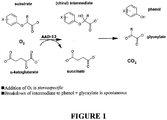
- AAD-13 is able to degrade the pyridyloxyacetates auxin (e . g ., fluroxypyr) in addition to achiral phenoxy auxins (e.g., 2,4-D, MCPA, 4-chlorophenoxyacetic acid). See Table 1. A general illustration of the chemical reactions catalyzed by the subject AAD-13 enzyme is shown in Figure 1 .
- Table 1 defines commercially available pyridyloxy and phenoxy auxins and provides relevant chemical structures. Table 1.
- AAD-13 A single gene ( AAD-13 ) has now been identified which, when genetically engineered for expression in plants, has the properties to allow the use of phenoxy auxin herbicides in plants where inherent tolerance never existed or was not sufficiently high to allow use of these herbicides. Additionally, AAD-13 can provide protection in planta to pyridyloxyacetate herbicides where natural tolerance also was not sufficient to allow selectivity, expanding the potential utility of these herbicides. Plants containing AAD-13 alone now may be treated sequentially or tank mixed with one, two, or a combination of several phenoxy auxin herbicides.
- the rate for each phenoxy auxin herbicide may range from 25 to 4000 g ae/ha, and more typically from 100 to 2000 g ae/ha for the control of a broad spectrum of dicot weeds.
- one, two, or a mixture of several pyridyloxyacetate auxin compounds may be applied to plants expressing AAD-13 with reduced risk of injury from said herbicides.
- the rate for each pyridyloxyacetate herbicide may range from 25 to 2000 g ae/ha, and more typically from 35-840 g ae/ha for the control of additional dicot weeds.
- Glyphosate is used extensively because it controls a very wide spectrum of broadleaf and grass weed species.
- repeated use of glyphosate in GTCs and in non-crop applications has, and will continue to, select for weed shifts to naturally more tolerant species or glyphosate-resistant biotypes.
- Tankmix herbicide partners used at efficacious rates that offer control of the same species but having different modes of action is prescribed by most herbicide resistance management strategies as a method to delay the appearance of resistant weeds.
- Stacking AAD-13 with a glyphosate tolerance trait could provide a mechanism to allow for the control of glyphosate resistant dicot weed species in GTCs by enabling the use of glyphosate, phenoxy auxin(s) (e.g., 2,4-D) and pyridyloxyacetates auxin herbicides (e.g., fluroxypyr)--selectively in the same crop.
- glyphosate e.g., 2,4-D
- pyridyloxyacetates auxin herbicides e.g., fluroxypyr
- Glyphosate applications in a crop with a glyphosate resistance gene/AAD-13 stack could range from about 250-2500 g ae/ha; phenoxy auxin herbicide(s) (one or more) could be applied from about 25-4000 g ae/ha; and pyridyloxyacetates auxin herbicide(s) (one or more) could be applied from 25-2000 g ae/ha.
- the optimal combination(s) and timing of these application(s) will depend on the particular situation, species, and environment, and will be best determined by a person skilled in the art of weed control and having the benefit of the subject disclosure.
- Plantlets are typically resistant throughout the entire growing cycle. Transformed plants will typically be resistant to new herbicide application at any time the gene is expressed. Tolerance is shown herein to 2,4-D across the life cycle using the constitutive promoters tested thus far (primarily CsVMV and AtUbi 10). One would typically expect this, but it is an improvement upon other non-metabolic activities where tolerance can be significantly impacted by the reduced expression of a site of action mechanism of resistance, for example.
- One example is Roundup Ready cotton, where the plants were tolerant if sprayed early, but if sprayed too late the glyphosate concentrated in the meristems (because it is not metabolized and is translocated); viral promoters Monsanto used are not well expressed in the flowers. The subject invention provides an improvement in these regards.
- Herbicide formulations e.g. , ester, acid, or salt formulation; or soluble concentrate, emulsifiable concentrate, or soluble liquid
- tankmix additives e.g. , adjuvants, surfactants, drift retardants, or compatibility agents
- Any combination of these with any of the aforementioned herbicide chemistries is within the scope of this invention.
- glyphosate oxidoreductase GOX
- GAT glufosinate resistance
- glufosinate resistance e.g., Pat, bar
- some additional preferred ALS inhibitors include but are not limited to the sulfonylureas (such as chlorsulfuron, halosulfuron, nicosulfuron, sulfometuron, sulfosulfuron, trifloxysulfuron), imidazoloninones (such as imazamox, imazethapyr, imazaquin), triazolopyrimidine sulfonanilides (such as cloransulam-methyl, diclosulam, florasulam, flumetsulam, metosulam, and penoxsulam), pyrimidinylthiobenzoates (such as bispyribac and pyrithiobac), and flucarbazone.
- sulfonylureas such as chlorsulfuron, halosulfuron, nicosulfuron, sulfometuron, sulfosulfuron, trifloxysulfuron
- Some preferred HPPD inhibitors include but are not limited to mesotrione, isoxaflutole, and sulcotrione.
- Some preferred PPO inhibitors include but are not limited to flumiclorac, flumioxazin, flufenpyr, pyraflufen, fluthiacet, butafenacil, carfentrazone, sulfentrazone, and the diphenylethers (such as acifluorfen, fomesafen, lactofen, and oxyfluorfen).
- AAD-13 alone or stacked with one or more additional HTC traits can be stacked with one or more additional input (e.g ., insect resistance, fungal resistance, or stress tolerance, et al .) or output (e.g., increased yield, improved oil profile, improved fiber quality, et al .) traits.
- additional input e.g ., insect resistance, fungal resistance, or stress tolerance, et al .
- output e.g., increased yield, improved oil profile, improved fiber quality, et al .
- the subject invention can be used to provide a complete agronomic package of improved crop quality with the ability to flexibly and cost effectively control any number of agronomic pests.
- the subject invention relates in part to the identification of an enzyme that is not only able to degrade 2,4-D, but also surprisingly possesses novel properties, which distinguish the enzyme of the subject invention from previously known tfdA proteins, for example. Even though this enzyme has very low homology to tfdA, the genes of the subject invention can still be generally classified in the same overall family of ⁇ -ketoglutarate-dependent dioxygenases. This family of proteins is characterized by three conserved histidine residues in a "HX(D/E)X 23-26 (T/S)X 114-183 HX 10-13 R" motif which comprises the active site.
- the histidines coordinate Fe +2 ion in the active site that is essential for catalytic activity (Hogan et al., 2000).
- the preliminary in vitro expression experiments discussed herein were tailored to help select for novel attributes. These experiments also indicate the AAD-13 enzyme is unique from another disparate enzyme of the same class, disclosed in a previously filed patent application ( WO/2005/107437 ; filed May 2, 2005 ).
- the AAD-1 enzyme of that application shares only about 25% sequence identity with the subject AAD-13 protein.
- the subject invention relates in part to the use of an enzyme that is not only capable of degrading 2,4-D, but also pyridyloxyacetate herbicides.
- No ⁇ -ketoglutarate-dependent dioxygenase enzyme besides the previously identified AAD-1 and AAD-12 enzymes (subject of patent applications PCT US/2005/014737 ( WO 2005/107437 ) and WO 2007/053482 , respectively), has previously been reported to have the ability to degrade herbicides of different chemical classes with different modes of action.
- Preferred enzymes and genes for use according to the subject invention are referred to herein as AAD-13 ( A ryloxy A lkanoate D ioxygenase) genes and proteins.
- This invention also relates in part to the identification and use of genes encoding aryloxyalkanoate dioxygenase enzymes that are capable of degrading phenoxy auxin and pyridyloxyacetate herbicides.
- the subject invention relates in part to the degradation of 2,4-dichlorophenoxyacetic acid, other phenoxyacetic acids, and pyridyloxyacetic acid herbicides by a recombinantly expressed AAD-13 enzyme.
- the subject proteins tested positive for 2,4-D conversion to 2,4-dichlorophenol ("DCP"; herbicidally inactive) in analytical assays.
- DCP 2,4-dichlorophenol
- Partially purified proteins of the subject invention can rapidly convert 2,4-D to DCP in vitro.
- An additional advantage that AAD-13 transformed plants provide is that parent herbicide(s) are metabolized to inactive forms, thereby reducing the potential for harvesting herbicidal residues in grain or stover.
- the subject invention relates in part to surprising discoveries of new uses for and functions of a distantly related enzyme, sdpA, from Sphingobium herbiciaovorans with low homology to tfdA (35% amino acid identity) and low homology to the recently-identified AAD-1 (27% amino acid identity).
- This ⁇ -ketoglutarate-dependent dioxygenase enzyme purified in its native form had previously been shown to degrade 2,4-D and S-dichlorprop.
- no ⁇ -ketoglutarate-dependent dioxygenase enzyme has previously been reported to have the ability to degrade a selective herbicide of the pyridyloxyacetate chemical class.
- SdpA from Sphingabium herbicidovorans
- AAD-13 proteins and genes of the subject invention are referred to herein as AAD-13 proteins and genes.
- AAD-13 was presently confirmed to degrade a variety of phenoxyacetate auxin herbicides in vitro. See Table 5.4.4-1 in Example 5, below. Additionally, this enzyme, as reported for the first time herein, was surprisingly found to also be capable of degrading additional substrates of the class of aryloxyalkanoate molecules. Substrates of significant agronomic importance include the pyridyloxyacetate auxin herbicides. This highly novel discovery is the basis of significant Herbicide Tolerant Crop (HTC) and selectable marker trait opportunities. This enzyme is unique in its ability to deliver herbicide degradative activity to a range of broad spectrum broadleaf herbicides (phenoxyacetate and pyridyloxyacetate auxins).
- the subject invention relates in part to the degradation of 2,4-dichlorophenoxyacetic acid, other phenoxyacetic auxin herbicides, and pyridyloxyacetate herbicides by a recombinantly expressed aryloxyalkanoate dioxygenase enzyme (AAD-13).
- AAD-13 aryloxyalkanoate dioxygenase degrading enzyme
- the subject enzyme enables transgenic expression resulting in tolerance to combinations of herbicides that would control nearly all broadleaf weeds.
- AAD-13 can serve as an excellent herbicide tolerant crop (HTC) trait to stack with other HTC traits [ e.g., glyphosate resistance, glufosinate resistance, ALS-inhibitor (e.g., imidazolinone, sulfonylurea, triazolopyrimidine sulfonanilide) resistance, bromoxynil resistance, HPPD-inhibitor resistance, PPO-inhibitor resistance, et al .], and insect resistance traits ( Cry1F, Cry1Ab, Cry 34 / 45, other Bt.
- HTC herbicide tolerant crop
- AAD-13 Proteins, or insecticidal proteins of a non-Bacillis origin, et al. ) for example. Additionally, AAD-13 can serve as a selectable marker to aid in selection of primary transformants of plants genetically engineered with a second gene or group of genes.
- the subject microbial gene has been redesigned such that the protein is encoded by codons having a bias toward both monocot and dicot plant usage (hemicot).
- Arabidopsis, corn, tobacco, cotton, soybean, canola, and rice have been transformed with AAD-13 -containing constructs and have demonstrated high levels of resistance to both the phenoxy and pyridyloxy auxin herbicides.
- the subject invention also relates to "plant optimized" genes that encode proteins of the subject invention.
- Oxyalkanoate groups are useful for introducing a stable acid functionality into herbicides.
- the acidic group can impart phloem mobility by "acid trapping," a desirable attribute for herbicide action and therefore could be incorporated into new herbicides for mobility purposes.
- Aspects of the subject invention also provide a mechanism of creating HTCs.
- the use of the subject genes can also result in herbicide tolerance to those other herbicides as well.
- HTC traits of the subject invention can be used in novel combinations with other HTC traits (including but not limited to glyphosate tolerance). These combinations of traits give rise to novel methods of controlling weed (and like) species, due to the newly acquired resistance or inherent tolerance to herbicides (e.g., glyphosate). Thus, in addition to the HTC traits, novel methods for controlling weeds using herbicides, for which herbicide tolerance was created by said enzyme in transgenic crops, are within the scope of the invention.
- This invention can be applied in the context of commercializing a 2,4-D resistance trait stacked with current glyphosate resistance traits in soybeans, for example.
- this invention provides a tool to combat broadleaf weed species shifts and/or selection of herbicide resistant broadleaf weeds, which culminates from extremely high reliance by growers on glyphosate for weed control with various crops.
- the transgenic expression of the subject AAD-13 gene is exemplified in, for example, Arabidopsis and tobacco.
- Soybeans are a preferred crop for transformation according to the subject invention.
- this invention can be utilized in multiple other monocot (such as pasture grasses or turf grass) and dicot crops like alfalfa, clover, tree species, et al.
- 2,4-D (or other AAD-13-substrates) can be more positively utilized in grass crops where tolerance is moderate, and increased tolerance via this trait would provide growers the opportunity to use these herbicides at more efficacious rates and over a wider application timing without the risk of crop injury.
- the subject invention provides a single gene that can provide resistance to herbicides that control broadleaf weed. This gene may be utilized in multiple crops to enable the use of a broad spectrum herbicide combination.
- the subject invention can also control weeds resistant to current chemicals, and aids in the control of shifting weed spectra resulting from current agronomic practices.
- the subject AAD-13 can also be used in efforts to effectively detoxify additional herbicide substrates to non-herbicidal forms.
- the subject invention provides for the development of additional HTC traits and/or selectable marker technology.
- the subject genes can also be used as selectable markers for successfully selecting transformants in cell cultures, greenhouses, and in the field. There is high inherent value for the subject genes simply as a selectable marker for biotechnology projects. The promiscuity of AAD-13 for other aryloxyalkanoate auxinic herbicides provides many opportunities to utilize this gene for HTC and/or selectable marker purposes.
- Proteins (and source isolates) of the subject invention provides functional proteins.
- functional activity or “active” it is meant herein that the proteins/enzymes for use according to the subject invention have the ability to degrade or diminish the activity of a herbicide (alone or in combination with other proteins).
- Plants producing proteins of the subject invention will preferably produce "an effective amount" of the protein so that when the plant is treated with a herbicide, the level of protein expression is sufficient to render the plant completely or partially resistant or tolerant to the herbicide (at a typical rate, unless otherwise specified; typical application rates can be found in the well-known Herbicide Handbook (Weed Science Society of America, Eighth Edition, 2002 ), for example).
- the herbicide can be applied at rates that would normally kill the target plant, at normal field use rates and concentrations. (Because of the subject invention, the level and/or concentration can optionally be higher than those that were previously used.)
- plant cells and plants of the subject invention are protected against growth inhibition or injury caused by herbicide treatment.
- Transformed plants and plant cells of the subject invention are preferably rendered resistant or tolerant to an herbicide, as discussed herein, meaning that the transformed plant and plant cells can grow in the presence of effective amounts of one or more herbicides as discussed herein.
- Preferred proteins of the subject invention have catalytic activity to metabolize one or more aryloxyalkanoate compounds.
- HTC Herbicide Tolerant Crops
- HRC Herbicide Resistant Crops
- resistance may be naturally occurring or induced by such techniques as genetic engineering or selection of variants produced by tissue culture or mutagenesis.”
- herbicide “resistance” is heritable and allows a plant to grow and reproduce in the presence of a typical herbicidally effective treatment by an herbicide for a given plant, as suggested by the current edition of The Herbicide Handbook as of the filing of the subject disclosure. As is recognized by those skilled in the art, a plant may still be considered “resistant” even though some degree of plant injury from herbicidal exposure is apparent.
- the term “tolerance” is broader than the term “resistance,” and includes “resistance” as defined herein, as well an improved capacity of a particular plant to withstand the various degrees of herbicidally induced injury that typically result in wild-type plants of the same genotype at the same herbicidal dose.
- Transfer of the functional activity to plant or bacterial systems can involve a nucleic acid sequence, encoding the amino acid sequence for a protein of the subject invention, integrated into a protein expression vector appropriate to the host in which the vector will reside.
- One way to obtain a nucleic acid sequence encoding a protein with functional activity is to isolate the native genetic material from the bacterial species which produce the protein of interest, using information deduced from the protein's amino acid sequence, as disclosed herein.
- the native sequences can be optimized for expression in plants, for example, as discussed in more detail below.
- An optimized polynucleotide can also be designed based on the protein sequence.
- the subject invention discloses classes of proteins having novel activities as identified herein.
- One way to characterize these classes of proteins and the polynucleotides that encode them is by defining a polynucleotide by its ability to hybridize, under a range of specified conditions, with an exemplified nucleotide sequence (the complement thereof and/or a probe or probes derived from either strand) and/or by their ability to be amplified by PCR using primers derived from the exemplified sequences.
- antibodies to the proteins disclosed herein can be used to identify and isolate other proteins from a mixture of proteins. Specifically, antibodies may be raised to the portions of the proteins that are most conserved or most distinct, as compared to other related proteins. These antibodies can then be used to specifically identify equivalent proteins with the characteristic activity by immunoprecipitation, enzyme linked immunosorbent assay (ELISA), or immuno-blotting. Antibodies to the proteins disclosed herein, or to equivalent proteins, or to fragments of these proteins, can be readily prepared using standard procedures. Such antibodies are an aspect of the subject invention. Antibodies of the subject invention include monoclonal and polyclonal antibodies, preferably produced in response to an exemplified or suggested protein.
- proteins (and genes) of the subject invention can be obtained from a variety of sources. Since entire herbicide degradation operons are known to be encoded on transposable elements such as plasmids, as well as genomically integrated, proteins of the subject invention can be obtained from a wide variety of microorganisms, for example, including recombinant and/or wild-type bacteria.
- Mutants of bacterial isolates can be made by procedures that are well known in the art. For example, asporogenous mutants can be obtained through ethylmethane sulfonate (EMS) mutagenesis of an isolate. The mutant strains can also be made using ultraviolet light and nitrosoguanidine by procedures well known in the art.
- EMS ethylmethane sulfonate
- a protein "from” or “obtainable from” any of the subject isolates referred to or suggested herein means that the protein (or a similar protein) can be obtained from the isolate or some other source, such as another bacterial strain or a plant. "Derived from” also has this connotation, and includes proteins obtainable from a given type of bacterium that are modified for expression in a plant, for example.
- a plant can be engineered to produce the protein.
- Antibody preparations can be prepared using the polynucleotide and/or amino acid sequences disclosed herein and used to screen and recover other related genes from other (natural) sources.
- Standard molecular biology techniques may be used to clone and sequence the proteins and genes described herein. Additional information may be found in Sambrook et al., 1989, which is incorporated herein by reference.
- the subject invention further provides nucleic acid sequences that encode proteins for use according to the subject invention,
- the primers produce characteristic gene fragments that can be used in the identification, characterization, and/or isolation of specific genes of interest.
- the nucleotide sequences of the subject invention encode proteins that are distinct from previously described proteins.
- the polynucleotides of the subject invention can be used to form complete "genes" to encode proteins or peptides in a desired host cell.
- the subject polynucleotides can be appropriately placed under the control of a promoter in a host of interest, as is readily known in the art.
- the level of gene expression and temporal/tissue specific expression can greatly impact the utility of the invention. Generally, greater levels of protein expression of a degradative gene will result in faster and more complete degradation of a substrate (in this case a target herbicide). Promoters will be desired to express the target gene at high levels unless the high expression has a consequential negative impact on the health of the plant.
- AAD-13 gene constitutively expressed in all tissues for complete protection of the plant at all growth stages.
- a vegetatively expressed resistance gene would allow use of the target herbicide in-crop for weed control and would subsequently control sexual reproduction of the target crop by application during the flowering stage.
- desired levels and times of expression can also depend on the type of plant and the level of tolerance desired.
- Some preferred embodiments use strong constitutive promoters combined with transcription enhancers and the like to increase expression levels and to enhance tolerance to desired levels.
- DNA typically exists in a double-stranded form. In this arrangement, one strand is complementary to the other strand and vice versa. As DNA is replicated in a plant (for example), additional complementary strands of DNA are produced.
- the "coding strand” is often used in the art to refer to the strand that binds with the anti-sense strand.
- the mRNA is transcribed from the "anti-sense” strand of DNA.
- the "sense” or “coding” strand has a series of codons (a codon is three nucleotides that can be read as a three-residue unit to specify a particular amino acid) that can be read as an open reading frame (ORF) to form a protein or peptide of interest.
- ORF open reading frame
- a strand of DNA is typically transcribed into a complementary strand of mRNA which is used as the template for the protein.
- the subject invention includes the use of the exemplified polynucleotides shown in the attached sequence listing and/or equivalents including the complementary strands.
- RNA and PNA peptide nucleic acids
- bacterial isolates can be cultivated under conditions resulting in high multiplication of the microbe.
- the DNA can be contacted with the primers of the invention and subjected to PCR amplification. Characteristic fragments of genes of interest will be amplified by the procedure, thus identifying the presence of the gene(s) of interest.
- Further aspects of the subject invention include genes and isolates identified using the methods and nucleotide sequences disclosed herein.
- the genes thus identified can encode herbicidal resistance proteins of the subject invention.
- Proteins and genes for use according to the subject invention can be identified and obtained by using oligonucleotide probes, for example. These probes are detectable nucleotide sequences that can be detectable by virtue of an appropriate label or may be made inherently fluorescent as described in International Application No. WO 93/16094 .
- the probes (and the polynucleotides of the subject invention) may be DNA, RNA, or PNA.
- synthetic probes (and polynucleotides) of the subject invention can also have inosine (a neutral base capable of pairing with all four bases; sometimes used in place of a mixture of all four bases in synthetic probes) and/or other synthetic (non-natural) bases.
- inosine a neutral base capable of pairing with all four bases; sometimes used in place of a mixture of all four bases in synthetic probes
- synthetic, degenerate oligonucleotide is referred to herein, and "N” or “n” is used generically, "N” or “n” can be G, A, T, C, or inosine.
- Ambiguity codes as used herein are in accordance with standard IUPAC naming conventions as of the filing of the subject application (for example, R means A or G, Y means C or T, etc.).
- hybridization of the polynucleotide is first conducted followed by washes under conditions of low, moderate, or high stringency by techniques well-known in the art, as described in, for example, Keller, G.H., M.M. Manak (1987) DNA Probes, Stockton Press, New York, NY, pp. 169-170 .
- low stringency conditions can be achieved by first washing with 2x SSC (Standard Saline Citrate)/0.1% SDS (Sodium Dodecyl Sulfate) for 15 minutes at room temperature. Two washes are typically performed. Higher stringency can then be achieved by lowering the salt concentration and/or by raising the temperature.
- the wash described above can be followed by two washings with 0.1x SSC/0.1% SDS for 15 minutes each at room temperature followed by subsequent washes with 0.1x SSC/0.1% SDS for 30 minutes each at 55° C.
- SSPE can be used as the salt instead of SSC, for example).
- the 2x SSC/0.1% SDS can be prepared by adding 50 ml of 20x SSC and 5 ml of 10% SDS to 445 ml of water.
- 20x SSC can be prepared by combining NaCl (175.3 g/0.150 M), sodium citrate (88.2 g/0.015 M), and water, adjusting pH to 7.0 with 10 N NaOH, then adjusting the volume to 1 liter.
- 10% SDS can be prepared by dissolving 10 g of SDS in 50 ml of autoclaved water, then diluting to 100 ml.
- Detection of the probe provides a means for determining in a known manner whether hybridization has been maintained. Such a probe analysis provides a rapid method for identifying genes of the subject invention.
- the nucleotide segments used as probes according to the invention can be synthesized using a DNA synthesizer and standard procedures. These nucleotide sequences can also be used as PCR primers to amplify genes of the subject invention.
- Hybridization characteristics of a molecule can be used to define polynucleotides of the subject invention.
- the subject invention includes polynucleotides (and/or their complements, preferably their full complements) that hybridize with a polynucleotide exemplified herein. That is, one way to define a gene (and the protein it encodes), for example, is by its ability to hybridize (under any of the conditions specifically disclosed herein) with a known or specifically exemplified gene.
- stringent conditions for hybridization refers to conditions which achieve the same, or about the same, degree of specificity of hybridization as the conditions employed by the current applicants.
- hybridization of immobilized DNA on Southern blots with 32 P-labeled gene-specific probes can be performed by standard methods. In general, hybridization and subsequent washes can be carried out under conditions that allow for detection of target sequences.
- hybridization can be carried out overnight at 20-25° C below the melting temperature (Tm) of the DNA hybrid in 6x SSPE, 5x Denhardt's solution, 0.1% SDS, 0.1 mg/ml denatured DNA.
- Tm melting temperature
- Tm 81.5 °C + 16.6 Log Na + + 0.41 % G + C ⁇ 0.61 % formamide ⁇ 600 / length of duplex in base pairs .
- Washes can typically be carried out as follows:
- Tm melting temperature
- Washes can typically be out as follows:
- salt and/or temperature can be altered to change stringency.
- a labeled DNA fragment >70 or so bases in length the following conditions can be used: Low: 1 or 2x SPE, room temperature Low: SPE, 42° C Moderate: 0.2x or 1x SSPE, 65° C High: 0.1x SSPE, 65° C.
- the probe sequences of the subject invention include mutations (both single and multiple), deletions, insertions of the described sequences, and combinations thereof, wherein said mutations, insertions and deletions permit formation of stable hybrids with the target polynucleotide of interest. Mutations, insertions, and deletions can be produced in a given polynucleotide sequence in many ways, and these methods are known to an ordinarily skilled artisan. Other methods may become known in the future.
- PCR Polymerase Chain Reaction
- PCR is based on the enzymatic amplification of a DNA fragment of interest that is flanked by two oligonucleotide primers that hybridize to opposite strands of the target sequence.
- the primers are preferably oriented with the 3' ends pointing towards each other. Repeated cycles of heat denaturation of the template, annealing of the primers to their complementary sequences, and extension of the annealed primers with a DNA polymerase result in the amplification of the segment defined by the 5' ends of the PCR primers.
- the extension product of each primer can serve as a template for the other primer, so each cycle essentially doubles the amount of DNA fragment produced in the previous cycle.
- thermostable DNA polymerase such as Taq polymerase, isolated from the thermophilic bacterium Thermus aquaticus
- the amplification process can be completely automated.
- Other enzymes which can be used are known to those skilled in the art.
- Exemplified DNA sequences, or segments thereof can be used as primers for PCR amplification.
- a certain degree of mismatch can be tolerated between primer and template. Therefore, mutations, deletions, and insertions (especially additions of nucleotides to the 5' end) of the exemplified primers fall within the scope of the subject invention. Mutations, insertions, and deletions can be produced in a given primer by methods known to an ordinarily skilled artisan.
- genes and proteins can be fused to other genes and proteins to produce chimeric or fusion proteins.
- the genes and proteins useful according to the subject invention include not only the specifically exemplified full-length sequences, but also portions, segments and/or fragments (including contiguous fragments and internal and/or terminal deletions compared to the full-length molecules) of these sequences, variants, mutants, chimerics, and fusions thereof. Proteins of the subject invention can have substituted amino acids so long as they retain desired functional activity. "Variant" genes have nucleotide sequences that encode the same proteins or equivalent proteins having activity equivalent or similar to an exemplified protein.
- variant proteins and “equivalent proteins” refer to proteins having the same or essentially the same biological/functional activity against the target substrates and equivalent sequences as the exemplified proteins.
- reference to an "equivalent” sequence refers to sequences having amino acid substitutions, deletions, additions, or insertions that improve or do not adversely affect activity to a significant extent. Fragments retaining activity are also included in this definition. Fragments and other equivalents that retain the same or similar function or activity as a corresponding fragment of an exemplified protein are within the scope of the subject invention.
- Changes such as amino acid substitutions or additions, can be made for a variety of purposes, such as increasing (or decreasing) protease stability of the protein (without materially/substantially decreasing the functional activity of the protein), removing or adding a restriction site, and the like. Variations of genes may be readily constructed using standard techniques for making point mutations, for example.
- U.S. Patent No. 5,605,793 describes methods for generating additional molecular diversity by using DNA reassembly after random or focused fragmentation.
- This can be referred to as gene "shuffling," which typically involves mixing fragments (of a desired size) of two or more different DNA molecules, followed by repeated rounds of renaturation.
- This can improve the activity of a protein encoded by a starting gene.
- the result is a chimeric protein having improved activity, altered substrate specificity, increased enzyme stability, altered stereospecificity, or other characteristics.
- “Shuffling” can be designed and targeted after obtaining and examining the atomic 3D (three dimensional) coordinates and crystal structure of a protein of interest.
- focused shuffling can be directed to certain segments of a protein that are ideal for modification, such as surface-exposed segments, and preferably not internal segments that are involved with protein folding and essential 3D structural integrity.
- the known tauD crystal structure was used as a model dioxygenases to determine active site residues while bound to its inherent substrate taurine.
- Elkins et al. (2002) "X-ray crystal structure of Escerichia coli taurine/alpha-ketoglutarate dioxygenase complexed to ferrous iron and substrates," Biochemistry 41(16):5185-5192 .
- sequence optimization and designability of enzyme active sites see Chakrabarti et al., PNAS, (Aug. 23, 2005), 102(34):12035-12040 .
- Variant genes can be used to produce variant proteins; recombinant hosts can be used to produce the variant proteins. Using these "gene shuffling" techniques, equivalent genes and proteins can be constructed that comprise any 5, 10, or 20 contiguous residues (amino acid or nucleotide) of any sequence exemplified herein.
- the gene shuffling techniques can be adjusted to obtain equivalents having, for example, 3, 4, 5, 6, 7, 8, 9, 10, 11, 12, 13, 14, 15, 16, 17, 18, 19, 20, 21, 22, 23, 24, 25, 26, 27, 28, 29, 30, 31, 32, 33, 34, 35, 36, 37, 38, 39, 40, 41, 42, 43, 44, 45, 46, 47, 48, 49, 50, 51, 52, 53, 54, 55, 56, 57, 58, 59, 60, 61, 62, 63, 64, 65, 66, 67, G8, 69, 70, 71, 72, 73, 74, 75, 76, 77, 78, 79, 80, 81, 82, 83, 84, 85, 86, 87, 88, 89, 90, 91, 92, 93, 94, 95, 96, 97, 98, 99, 100, 101, 102, 103, 104, 105, 106, 107, 108, 109, 110
- Fragments of full-length genes can be made using commercially available exonucleases or endonucleases according to standard procedures. For example, enzymes such as Bal 31 or site-directed mutagenesis can be used to systematically cut off nucleotides from the ends of these genes. Also, genes that encode active fragments may be obtained using a variety of restriction enzymes. Proteases may be used to directly obtain active fragments of these proteins.
- proteins can be truncated and still retain functional activity.
- truncated protein it is meant that a portion of a protein may be cleaved off while the remaining truncated protein retains and exhibits the desired activity after cleavage. Cleavage can be achieved by various proteases.
- effectively cleaved proteins can be produced using molecular biology techniques wherein the DNA bases encoding said protein are removed either through digestion with restriction endonucleases or other techniques available to the skilled artisan. After truncation, said proteins can be expressed in heterologous systems such as E.
- truncated proteins can be successfully produced so that they retain functional activity while having less than the entire, full-length sequence.
- B.t. proteins can be used in a truncated (core protein) form .
- core protein truncated protein
- protein can include functionally active truncations.
- truncated genes that express truncated proteins.
- Preferred truncated genes will typically encode 40, 41, 42, 43, 44, 45, 46, 47, 48, 49, 50, 51, 52, 53, 54, 55, 56, 57, 58, 59, 60, 6I, 62, 63, 64, 65, 66, 67, 68, 69, 70, 71, 72, 73, 74, 75, 76, 77, 78, 79, 80, 81, 82, 83, 84, 85, 86, 87, 88, 89, 90, 91, 92, 93, 94, 95, 96, 97, 98, or 99% of the full-length protein.
- proteins of the subject invention have been specifically exemplified herein- As these proteins are merely exemplary of the proteins of the subject invention, it should be readily apparent that the subject invention comprises variant or equivalent proteins (and nucleotide sequences coding for equivalents thereof) having the same or similar activity of the exemplified proteins.
- Equivalent proteins will have amino acid similarity (and/or homology) with an exemplified protein.
- the amino acid identity will typically be at least 60%, preferably at least 75%, more preferably at least 80%, even more preferably at least 90%, and can be at least 95%.
- Preferred proteins of the subject invention can also be defined in terms of more particular identity and/or similarity ranges.
- the identity and/or similarity can be 49, 50, 51, 52, 53, 54, 55, 56, 57, 58, 59, 60, 61, 62, 63, 64, 65, 66, 67, 68, 69, 70, 71, 72, 73, 74, 75, 76, 77, 78, 79, 80, 81, 82, 83, 84, 85, 86, 87, 88, 89, 90, 91, 92, 93, 94, 95, 96, 97, 98, or 99% as compared to a sequence exemplified or suggested herein. Any number listed above can be used to define the upper and lower limits.
- the AlignX function of Vector NTI Suite 8 (InforMax, Inc., North Bethesda, MD, U.S.A.), was used employing the default parameters. These were: a Gap opening penalty of 15, a Gap extension penalty of 6.66, and a Gap separation penalty range of 8.
- amino acids can be placed in the following classes: non-polar, uncharged polar, basic, and acidic. Conservative substitutions whereby an amino acid of one class is replaced with another amino acid of the same type fall within the scope of the subject invention so long as the substitution is not adverse to the biological activity of the compound.
- Table 2 provides a listing of examples of amino acids belonging to each class.
- non-conservative substitutions can also be made.
- preferred substitutions do not significantly detract from the functional/biological activity of the protein.
- isolated polynucleotides and/or purified proteins refers to these molecules when they are not associated with the other molecules with which they would be found in nature. Thus, reference to “isolated” and/or “purified” signifies the involvement of the "hand of man” as described herein.
- a bacterial "gene” of the subject invention put into a plant for expression is an “isolated polynucleotide.”
- a protein derived from a bacterial protein and produced by a plant is an “isolated protein.”
- DNA sequences can encode the amino acid sequences disclosed herein. It is well within the skill of a person trained in the art to create alternative DNA sequences that encode the same, or essentially the same, proteins. These variant DNA sequences are within the scope of the subject invention. This is also discussed in more detail below in the section entitled "Optimization of sequence for expression in plants.”
- Transgenic hosts The protein-encoding genes of the subject invention can be introduced into a wide variety of microbial or plant hosts.
- the subject invention includes transgenic plant cells and transgenic plants.
- Preferred plants (and plant cells) are corn, Arabidopsis, tobacco, soybeans, cotton, canola, rice, wheat, turf, legume forages (e.g., alafalfa and clover), pasture grasses, and the like.
- Other types of transgenic plants can also be made according to the subject invention, such as fruits, vegetables, ornamental plants, and trees. More generally, dicots and/or monocots can be used in various aspects of the subject invention.
- expression of the gene results, directly or indirectly, in the intracellular production (and maintenance) of the protein(s) of interest.
- Plants can be rendered herbicide-resistant in this manner.
- Such hosts can be referred to as transgenic, recombinant, transformed, and/or transfected hosts and/or cells.
- microbial (preferably bacterial) cells can be produced and used according to standard techniques, with the benefit of the subject disclosure.
- Plant cells transfected with a polynucleotide of the subject invention can be regenerated into whole plants.
- the subject invention includes cell cultures including tissue cell cultures, liquid cultures, and plated cultures. Seeds produced by and/or used to generate plants of the subject invention are also included within the scope of the subject invention. Other plant tissues and parts are also included in the subject invention.
- the subject invention likewise includes methods of producing plants or cells comprising a polynucleotide of the subject invention. One preferred method of producing such plants is by planting a seed of the subject invention.
- the subject invention also includes production of highly active recombinant AAD-13 in a Pseudomonas fluorescens (Pf) host strain, for example.
- the subject invention includes preferred growth temperatures for maintaining soluble active AAD-13 in this host and a formulation process that can store and restore AAD-13 activity in solution; and a lyophilization process that can retain AAD-13 activity for long-term storage and shelf life.
- One aspect of the subject invention is the transformation/transfection of plants, plant cells, and other host cells with polynucleotides of the subject invention that express proteins of the subject invention. Plants transformed in this manner can be rendered resistant to a variety of herbicides with different modes of action.
- Vectors comprising an AAD-13 polynucleotide are included in the scope of the subject invention.
- a large number of cloning vectors comprising a replication system in E. coli and a marker that permits selection of the transformed cells are available for preparation for the insertion of foreign genes into higher plants.
- the vectors comprise, for example, pBR322, pUC series, M13mp series, pACYC184, etc. Accordingly, the sequence encoding the protein can be inserted into the vector at a suitable restriction site.
- the resulting plasmid is used for transformation into E. coli.
- the E. coli cells are cultivated in a suitable nutrient medium, then harvested and lysed.
- the plasmid is recovered by purification away from genomic DNA.
- Sequence analysis, restriction analysis, electrophoresis, and other biochemical-molecular biological methods are generally carried out as methods of analysis.
- the DNA sequence used can be restriction digested and joined to the next DNA sequence.
- Each plasmid sequence can be cloned in the same or other plasmids.
- other DNA sequences may be necessary. If, for example, the Ti or Ri plasmid is used for the transformation of the plant cell, then at least the right border, but often the right and the left border of the Ti or Ri plasmid T-DNA, has to be joined as the flanking region of the genes to be inserted.
- the use of T-DNA for the transformation of plant cells has been intensively researched and described in EP 120 516 ;
- a large number of techniques are available for inserting DNA into a plant host cell. Those techniques include transformation with T-DNA using Agrobacterium tumefaciens or Agrobacterium rhizogenes as transformation agent, fusion, injection, biolistics (microparticle bombardment), silicon carbide whiskers, aerosol beaming, PEG, or electroporation as well as other possible methods. If Agrobacteria are used for the transformation, the DNA to be inserted has to be cloned into special plasmids, namely either into an intermediate vector or into a binary vector. The intermediate vectors can be integrated into the Ti or Ri plasmid by homologous recombination owing to sequences that are homologous to sequences in the T-DNA.
- the Ti or Ri plasmid also comprises the vir region necessary for the transfer of the T-DNA.
- Intermediate vectors cannot replicate themselves in Agrobacteria.
- the intermediate vector can be transferred into Agrobacterium tumefaciens by means of a helper plasmid (conjugation).
- Binary vectors can replicate themselves both in E. coli and in Agrobacteria. They comprise a selection marker gene and a linker or polylinker which are framed by the right and left T-DNA border regions. They can be transformed directly into Agrobacteria
- the Agrobacterium used as host cell is to comprise a plasmid carrying a vir region.
- the vir region is necessary for the transfer of the T-DNA into the plant cell. Additional T-DNA may be contained.
- the bacterium so transformed is used for the transformation of plant cells.
- Plant explants can be cultivated advantageously with Agrobacterium tumefaciena or Agrobacterium rhizogenes for the transfer of the DNA into the plant cell.
- Whole plants can then be regenerated from the infected plant material (for example, pieces of leaf, segments of stalk, roots, but also protoplasts or suspension-cultivated cells) in a suitable medium, which may contain antibiotics or biocides for selection.
- the plants so obtained can then be tested for the presence of the inserted DNA. No special demands are made of the plasmids in the case of injection and electroporation. It is possible to use ordinary plasmids, such as, for example, pUC derivatives.
- the transformed cells grow inside the plants in the usual manner. They can form germ cells and transmit the transformed trait(s) to progeny plants. Such plants can be grown in the normal manner and crossed with plants that have the same transformed hereditary factors or other hereditary factors. The resulting hybrid individuals have the corresponding phenotypic properties.
- genes encoding the bacterial protein are expressed from transcriptional units inserted into the plant genome.
- said transcriptional units are recombinant vectors capable of stable integration into the plant genome and enable selection of transformed plant lines expressing mRNA encoding the proteins.
- the inserted DNA Once the inserted DNA has been integrated in the genome, it is relatively stable there (and does not come out again). It normally contains a selection marker that confers on the transformed plant cells resistance to a biocide or an antibiotic, such as kanamycin, G418, bleomycin, hygromycin, or chloramphenicol, inter alia.
- a biocide or an antibiotic such as kanamycin, G418, bleomycin, hygromycin, or chloramphenicol, inter alia.
- Plant selectable markers also typically can provide resistance to various herbicides such as glufosinate (e.g., PAT / bar ), glyphosate (EPSPS ) , ALS-inhibitors (e.g., imidazolinone, sulfonylurea, triazolopyrimidine sulfonanilide , et al .), bromoxynil, HPPD-inhibitor resistance, PPO-inhibitors, ACC-ase inhibitors, and many others.
- the individually employed marker should accordingly permit the selection of transformed cells rather than cells that do not contain the inserted DNA.
- the gene(s) of interest are preferably expressed either by constitutive or inducible promoters in the plant cell.
- the mRNA is translated into proteins, thereby incorporating amino acids of interest into protein.
- the genes encoding a protein expressed in the plant cells can be under the control of a constitutive promoter, a tissue-specific promoter, or an inducible promoter.
- monocotyledonous plants can be transformed with a viral vector using the methods described in U.S. Patent No. 5,569,597 to Mycogen Plant Science and Ciba-Geigy (now Syngenta), as well as Patent Nos. 5,589,367 and 5,316,931 , both to Biosource, now Large Scale Biology.
- the manner in which the DNA construct is introduced into the plant host is not critical to this invention. Any method that provides for efficient transformation may be employed. For example, various methods for plant cell transformation are described herein and include the use of Ti or Ri-plasmids and the like to perform Agrobacterium mediated transformation. In many instances, it will be desirable to have the construct used for transformation bordered on one or both sides by T-DNA borders, more specifically the right border. This is particularly useful when the construct uses Agrobacterium tumefaciens or Agrobacterium rhizogenes as a mode for transformation, although T-DNA borders may find use with other modes of transformation.
- a vector may be used which may be introduced into the host for homologous recombination with T-DNA or the Ti or Ri plasmid present in the host. Introduction of the vector may be performed via electroporation, triparental mating and other techniques for transforming gram-negative bacteria which are known to those skilled in the art.
- the manner of vector transformation into the Agrobacterium host is not critical to this invention.
- the Ti or Ri plasmid containing the T-DNA for recombination may be capable or incapable of causing gall formation, and is not critical to said invention so long as the vir genes are present in said host.
- the expression construct being within the T-DNA borders will be inserted into a broad spectrum vector such as pRK2 or derivatives thereof as described in EPO 0 120 515 .
- a broad spectrum vector such as pRK2 or derivatives thereof as described in EPO 0 120 515 .
- Included within the expression construct and the T-DNA will be one or more markers as described herein which allow for selection of transformed Agrobacterium and transformed plant cells. The particular marker employed is not essential to this invention, with the preferred marker depending on the host and construction used.
- explants may be combined and incubated with the transformed Agrobacterium for sufficient time to allow transformation thereof. After transformation, the Agrobacteria are killed by selection with the appropriate antibiotic and plant cells are cultured with the appropriate selective medium. Once calli are formed, shoot formation can be encouraged by employing the appropriate plant hormones according to methods well known in the art of plant tissue culturing and plant regeneration. However, a callus intermediate stage is not always necessary. After shoot formation, said plant cells can be transferred to medium which encourages root formation thereby completing plant regeneration. The plants may then be grown to seed and said seed can be used to establish future generations.
- the gene encoding a bacterial protein is preferably incorporated into a gene transfer vector adapted to express said gene in a plant cell by including in the vector a plant promoter regulatory element, as well as 3' non-translated transcriptional termination regions such as Nos and the like.
- tissue that is contacted with the foreign genes may vary as well.
- tissue would include but would not be limited to embryogenic tissue, callus tissue types I, II, and III, hypocotyl, meristem, root tissue, tissues for expression in phloem, and the like. Almost all plant tissues may be transformed during dedifferentiation using appropriate techniques described herein.
- selectable markers can be used, if desired. Preference for a particular marker is at the discretion of the artisan, but any of the following selectable markers may be used along with any other gene not listed herein which could function as a selectable marker.
- selectable markers include but are not limited to aminoglycoside phosphotransferase gene of transposon Tn5 (Aph II) which encodes resistance to the antibiotics kanamycin, neomycin and G41;, hygromycin resistance; methotrexate resistance, as well as those genes which encode for resistance or tolerance to glyphosate; phosphinothricin (bialaphos or glufosinate); ALS-inhibiting herbicides (imidazolinones, sulfonylureas and triazolopyrimidine herbicides), ACC-ase inhibitors (e.g., ayryloxypropionates or cyclohexanediones), and others such as bromoxynil, and HPPD-inhibitors (e.g., mesotrione) and the like.
- reporter gene In addition to a selectable marker, it may be desirous to use a reporter gene. In some instances a reporter gene may be used with or without a selectable marker. Reporter genes are genes that are typically not present in the recipient organism or tissue and typically encode for proteins resulting in some phenotypic change or enzymatic property.
- Preferred reporter genes include the beta-glucuronidase (GUS) of the uidA locus of E. coli, the chloramphenicol acetyl transferase gene from Tn9 of E. coli, the green fluorescent protein from the bioluminescent jellyfish Aequorea victoria, and the luciferase genes from firefly Photinus pyralis.
- GUS beta-glucuronidase
- An assay for detecting reporter gene expression may then be performed at a suitable time after said gene has been introduced into recipient cells.
- a preferred such assay entails the use of the gene encoding beta-glucuronidase (GUS) of the uidA locus of E. coli to identify transformed cells.
- promoter regulatory elements from a variety of sources can be used efficiently in plant cells to express foreign genes.
- promoter regulatory elements of bacterial origin such as the octopine synthase promoter, the nopaline synthase promoter, the mannopine synthase promoter
- promoters of viral origin such as the cauliflower mosaic virus (35S and 19S), 35T (which is a re-engineered 35S promoter, see U.S. Patent No. 6,166,302 , especially Example 7E) and the like may be used.
- Plant promoter regulatory elements include but are not limited to ribulose-1,6-bisphosphate (RUBP) carboxylase small subunit (ssu), beta-conglycinin promoter, beta-phaseolin promoter, ADH promoter, heat-shock promoters, and tissue specific promoters.
- RUBP ribulose-1,6-bisphosphate
- Other elements such as matrix attachment regions, scaffold attachment regions, introns, enhancers, polyadenylation sequences and the like may be present and thus may improve the transcription efficiency or DNA integration.
- Such elements may or may not be necessary for DNA function, although they can provide better expression or functioning of the DNA by affecting transcription, mRNA stability, and the like.
- Such elements may be included in the DNA as desired to obtain optimal performance of the transformed DNA in the plant.
- Typical elements include but are not limited to Adh-intron 1, Adh-intron 6, the alfalfa mosaic virus coat protein leader sequence, osmotin UTR sequences, the maize streak virus coat protein leader sequence, as well as others available to a skilled artisan.
- Constitutive promoter regulatory elements may also be used thereby directing continuous gene expression in all cells types and at all times (e.g. , actin, ubiquitin, CaMV 35S, and the like).
- Tissue specific promoter regulatory elements are responsible for gene expression in specific cell or tissue types, such as the leaves or seeds (e.g ., zein, oleosin, napin, ACP, globulin and the like) and these may also be used.
- Promoter regulatory elements may also be active (or inactive) during a certain stage of the plant's development as well as active in plant tissues and organs. Examples of such include but are not limited to pollen-specific, embryo-specific, com-silk-specific, cotton-fiber-specific, root-specific, seed-endosperm-specific, or vegetative phase-specific promoter regulatory elements and the like. Under certain circumstances it may be desirable to use an inducible promoter regulatory element, which is responsible for expression of genes in response to a specific signal, such as: physical stimulus (heat shock genes), light (RUBP carboxylase), hormone (Em), metabolites, chemical (tetracycline responsive), and stress. Other desirable transcription and translation elements that function in plants may be used. Numerous plant-specific gene transfer vectors are known in the art.
- Plant RNA viral based systems can also be used to express bacterial protein.
- the gene encoding a protein can be inserted into the coat promoter region of a suitable plant virus which will infect the host plant of interest. The protein can then be expressed thus providing protection of the plant from herbicide damage.
- Plant RNA viral based systems are described in U.S. Patent No. 5,500,360 to Mycogen Plant Sciences, Inc. and U.S. Patent Nos. 5,316,931 and 5,589,367 to Biosource, now Large Scale Biology.
- plants of the subject invention can be imparted with novel herbicide resistance traits without observable adverse effects on phenotype including yield. Such plants are within the scope of the subject invention. Plants exemplified and suggested herein can withstand 2X, 3X, 4X, and 5X typical application levels, for example, of at least one subject herbicide. Improvements in these tolerance levels are within the scope of this invention. For example, various techniques are know in the art, and can forseeably be optimized and further developed, for increasing expression of a given gene.
- One such method includes increasing the copy number of the subject AAD-13 genes (in expression cassettes and the like). Transformation events can also be selected for those having multiple copies of the genes.
- Strong promoters and enhancers can be used to "supercharge" expression.
- Examples of such promoters include the preferred 35T promoter which uses 35S enhancers. 35S, maize ubiquitin, Arabidopsis ubiquitin, A.t. actin, and CSMV promoters are included for such uses. Other strong viral promoters are also preferred. Enhancers include 4 OCS and the 35S double enhancer. Matrix attachment regions (MARs) can also be used to increase transformation efficiencies and transgene expression, for example.
- MARs Matrix attachment regions
- Shuffling directed evolution
- transcription factors can also be used for embodiments according to the subject invention.
- Variant proteins can also be designed that differ at the sequence level but that retain the same or similar overall essential three-dimensional structure, surface charge distribution, and the like. See e.g. U.S. Patent No. 7,058,515 ; Larson et al., Protein Sci. 2002 11: 2804-2813, "Thoroughly sampling sequence space: Large-scale protein design of structural ensembles .”; Crameri et al., Nature Biotechnology 15, 436 - 438 (1997), "Molecular evolution of an arsenate detoxification pathway by DNA shuffling .”; Stemmer, W.P.C.1994. DNA shuffling by random fragmentation and reassembly: in vitro recombination for molecular evolution. Proc. Natl. Acad.
- the activity of recombinant polynucleotides inserted into plant cells can be dependent upon the influence of endogenous plant DNA adjacent the insert.
- another option is taking advantage of events that are known to be excellent locations in a plant genome for insertions. See e.g. WO 2005/103266 A1 , relating to cry1F and cry1Ac cotton events; the subject AAD-13 gene can be substituted in those genomic loci in place of the cry1F and/or cry1Ac inserts.
- targeted homologous recombination for example, can be used according to the subject invention.
- This type of technology is the subject of, for example, WO 03/080809 A2 and the corresponding published U.S. application (USPA 20030232410 ), relating to the use of zinc fingers for targeted recombination.
- the use of recombinases cre-lox and flp-frt for example) is also known in the art.
- AAD-13 detoxification is believed to occur in the cytoplasm.
- means for further stabilizing this protein and mRNAs are included in aspects of the subject invention, and art-known techniques can be applied accordingly.
- the subject proteins can be designed to resist degradation by proteases and the like (protease cleavage sites can be effectively removed by re-engineering the amino acid sequence of the protein).
- Such embodiments include the use of 5' and 3' stem loop structures like UTRs from osmotin, and per5 (AU-rich untranslated 5' sequences). 5' caps like 7- methyl or 2'-O-methyl groups, e.g., 7-methylguanylic acid residue, can also be used. See, e.g., : Proc.
- Embodiments of the subject invention can be used in conjunction with naturally evolved or chemically induced mutants (mutants can be selected by screening techniques, then transformed with AAD-13 and possibly other genes). Plants of the subject invention can be combined with ALS resistance and/or evolved glyphosate resistance. Aminopyralid resistance, for example, can also be combined or "stacked" with an AAD-13 gene.
- Safeners typically act to increase plants immune system by activating/expressing cP450. Safeners are chemical agents that reduce the phytotoxicity of herbicides to crop plants by a physiological or molecular mechanism, without compromising weed control efficacy.
- Herbicide safeners include benoxacor, cloquintocet, cyometrinil, dichlormid, dicyclonon, dietholate, fenchlorazole, fenclorim, flurazole, fluxofenim, furilazole, isoxadifen, mefenpyr, mephenate, naphthalic anhydride, and oxabetrinil.
- Plant activators a new class of compounds that protect plants by activating their defense mechanisms
- Plant activators include acibenzolar and probenazole.
- Safeners can be used for the protection of large-seeded grass crops, such as corn, grain sorghum, and wet-sown rice, against preplant-incorporated or preemergence-applied herbicides of the thiocarbamate and chloroacetanilide families. Safeners also have been developed to protect winter cereal crops such as wheat against postemergence applications of aryloxyphenoxypropionate and sulfonylurea herbicides. The use of safeners for the protection of corn and rice against sulfonylurea, imidazolinone, cyclohexanedione, isoxazole, and triketone herbicides is also well-established.
- a safener-induced enhancement of herbicide detoxification in safened plants is widely accepted as the major mechanism involved in safener action.
- Safeners induce cofactors such as glutathione and herbicide-detoxifying enzymes such as glutathione S-transferases, cytochrome P450 monooxygenases, and glucosyl transferases.
- Hatzios KK, Burgos N (2004) "Metabolism-based herbicide resistance: regulation by safeners," Weed Science: Vol. 52, No. 3 pp. 454-467 .
- cytochrome p450 monooxygenase gene stacked with AAD-13 is one preferred embodiment.
- P450s involved in herbicide metabolism cP450 can be of mammalian or plant origin, for example.
- cytochrome P450 monooxygenase P450
- P450 cytochrome P450 monooxygenase
- NADPH-cytochrome P450 oxidoreductase reductase
- Resistance to some herbicides has been reported as a result of the metabolism by P450 as well as glutathione S-transferase.
- a number of microsomal P450 species involved in xenobiotic metabolism in mammals have been characterized by molecular cloning. Some of them were reported to metabolize several herbicides efficiently. Thus, transgenic plants with plant or mammalian P450 can show resistance to several herbicides.
- acetochlor-based products include Surpass®, Keystone®, Keystone LA, FulTime® and TopNotch® herbicides) and/or trifluralin (such as Treflan®).
- Such resistance in soybeans and/or corn is included in some preferred embodiments.
- Auxin transport inhibitors e.g. diflufenzopyr
- 2,4-D can also be used to increase herbicide activity with 2,4-D.
- NCBI National Center for Biotechnology Information
- sdpA single gene was identified from the NCBI database ( see the ncbi.nlm.nih.gov website; accession #AJ628860) as a homologue with only 35% amino acid identity to tfdA. Percent identity was determined by first translating both the sdpA and tfdA DNA sequences deposited in the database to proteins, then using ClustalW in the VectorNTI software package to perform the multiple sequence alignment.
- heterologous genes it may be preferred to re-engineer the protein encoding sequence of the genes so that they are more efficiently expressed in plant cells.
- Maize is one such plant where it may be preferred to re-design the heterologous protein coding region prior to transformation to increase the expression level of the gene and the level of encoded protein in the plant. Therefore, an additional step in the design of genes encoding a bacterial protein is re-engineering of a heterologous gene for optimal expression.
- polyadenylation signal sequences such as AAUAAA, or sequences complementary to small nuclear RNAs involved in pre-mRNA splicing
- RNA instability may lead to RNA instability. Therefore, one goal in the design of genes encoding a bacterial protein for maize expression, more preferably referred to as plant optimized gene(s), is to generate a DNA sequence having a G+C content preferably close to that of maize genes coding for metabolic enzymes.
- Another goal in the design of the plant optimized gene(s) encoding a bacterial protein is to generate a DNA sequence in which the sequence modifications do not hinder translation.
- Table Ex2-1 presents the G+C content of maize genes.
- coding regions of the genes were extracted from GenBank (Release 71) entries, and base compositions were calculated using the MacVectorTM program (Accelerys, San Diego, California). Intron sequences were ignored in the calculations.
- the G+C content of the Sphingobium herbicidovorans AAD-13 protein coding sequence disclosed in SEQ ID NO:2 is 67.2%.
- codon bias can be calculated as the frequency at which a single codon is used relative to the codons for all amino acids.
- the codon bias may be calculated as the frequency at which a single codon is used to encode a particular amino acid, relative to all the other codons for that amino acid (synonymous codons).
- the codon bias for maize is the statistical codon distribution that the plant uses for coding its proteins, and the codon usage calculated from 706 maize genes is shown in Table Ex2-2 , Columns C and I.
- the primary ("first choice") codons preferred by the plant should be determined, as well as the second, third, fourth etc. choices of preferred codons when multiple choices exist.
- a new DNA sequence can then be designed which encodes the amino sequence of the bacterial protein, but the new DNA sequence differs from the native bacterial DNA sequence (encoding the protein) by the substitution of plant (first preferred, second preferred, third preferred, or fourth preferred, etc.) codons to specify the amino acid at each position within the protein amino acid sequence.
- the new sequence is then analyzed for restriction enzyme sites that might have been created by the modifications.
- the identified sites are further modified by replacing the codons with first, second, third, or fourth choice preferred codons.
- Other sites in the sequence which could affect transcription or translation of the gene of interest are the exon:intron junctions (5' or 3'), poly A addition signals, or RNA polymerase termination signals.
- the sequence is further analyzed and modified to reduce the frequency of TA or CG doublets. In addition to the doublets, G or C sequence blocks that have more than about six residues that are the same can affect transcription or translation of the sequence. Therefore, these blocks are advantageously modified by replacing the codons of first or second choice, etc. with the next preferred codon of choice.
- a DNA sequence is designed to encode the amino acid sequence of said protein utilizing a redundant genetic code established from a codon bias table compiled from the gene sequences for the particular plant or plants.
- the resulting DNA sequence has a higher degree of codon diversity, a desirable base composition, can contain strategically placed restriction enzyme recognition sites, and lacks sequences that might interfere with transcription of the gene, or translation of the product mRNA.
- Such synthetic genes that are functionally equivalent to the genes/proteins of the subject invention can be used to transform hosts, including plants. Additional guidance regarding the production of synthetic genes can be found in, for example, U.S. Patent No. 5,380,831 and PCT application WO 97/13402 .
- codons most preferred by each plant type are indicated in bold font, and the second, third, or fourth choices of codons can be identified when multiple choices exist. It is evident that some synonymous codons for some amino acids are found only rarely in plant genes (e.g. AGT in maize and CCG in dicots). Also, maize and dicot plants differ in individual codon usage (e.g. Alanine codon GCG occurs more frequently in maize genes than in dicot genes, while Arginine codon AGA is more often used in dicot genes than in maize genes). Thus, it is obvious that a protein coding region designed to reflect the optimal codon composition of genes of one plant species may have a suboptimal codon composition for expression in another plant species.
- any codon that is used infrequently relative to the other synonymous codons for that amino acid in either type of plant was excluded (indicated by DNU in Columns F and L of Table Ex2-2 ).
- a codon was considered to be rarely used if it is represented at about 10% or less of the time to encode the relevant amino acid in genes of either plant type (indicated by NA in Columns E and K of Table Ex2-2 ) .
- a Weighted Average representation for each codon was calculated, using the formula:
- Weighted Average % of C1 1/(%C1 + %C2 + %C3 + etc.) x %C1 x 100 where C1 is the codon in question and %C2, %C3, etc. represent the % average values for maize and dicots of remaining synonymous codons (% average values for the relevant codons are taken from Columns E and K) of Table Ex2 - 2 .
- a new DNA sequence which encodes essentially the amino acid sequence of the Sphingobium herbicidovorans AAD-13 protein of SEQ ID NO:2 was designed for optimal expression in both maize and dicot cells using a balanced codon distribution of frequently used codons found in maize and dicot genes.
- SEQ ID NO:1 Extensive analysis of the 861 base pairs (bp) of the coding region of the native DNA sequence of AAD-13 (SEQ ID NO:1) revealed the presence of several sequence motifs that are thought to be detrimental to optimal plant expression, as well as a non-optimal codon composition.
- the protein encoded by SEQ ID NO:1 ( AAD-13 ) is presented as SEQ ID NO:2.
- a "plant-optimized" DNA sequence (AAD-13 v1) (SEQ ID NO:3) was developed that encodes a protein (SEQ ID NO:4) which is the same as the native protein disclosed in SEQ ID NO:2 except for the addition of an alanine residue at the second position (underlined in SEQ ID NO:4).
- the additional alanine codon (GCT; underlined in SEQ ID NO:3) encodes part of an Nco I restriction enzyme recognition site (CCATGG) spanning the ATG translational start codon.
- CCATGG Nco I restriction enzyme recognition site
- the proteins encoded by the native and plant-optimized (v1) coding regions are 99.3% identical, differing only at amino acid number 2.
- the native and plant-optimized (v1) DNA sequences of the coding regions are only 77.3% identical.
- Table Ex2-3 shows the differences in codon compositions of the native (Columns A and D) and plant-optimized sequences (Columns B and E), and allows comparison to a theoretical plant-optimized sequence (Columns C and F) that would have precisely the codon composition dictated by columns F and L of Table Ex2-2.
- Table Ex2 - 3 Codon composition comparisons of coding regions of Native AAD-13, Plant-Optimized version (v1) and a Theoretical Plant-Optimized version.
- E. coli Class II genes are defined as those that are highly and continuously expressed during the exponential growth phase of E. coli cells. [REF: Henaut, A. and Danchin, A. (1996) in Escherichia coli and Salmonella typhimurium cellular and molecular biology, vol. 2, pp.
- the native and E . cali -optimized (v2) DNA sequences are 80.2% identical, while the plant-optimized (v1) and E . coli -optimized (v2) DNA sequences are 84.4% identical.
- Table Ex2-4 presents the codon compositions of the native AAD-13 coding region; Columns A and D), the AAD-13 coding region optimized for expression in E. coli (v2; Columns B and E) and the codon composition of a theoretical coding region for the AAD-13 protein having an optimal codon composition of E. coli Class II genes (Columns C and F).
- Table Ex2-4 Codon composition comparisons of coding regions of Native AAD-13, E . coli -Optimized version (v2) and a Theoretical E.
- AAD-13 (v2) pET280 and pCR2.1 : pET280 ligations
- approximately 20 isolated colonies were picked into 6 ml of LB-S/S, and grown at 37 °C for 4 hours with agitation. Each culture was then spotted onto LB + Kanamycin 50 ⁇ g/ml plates, which were incubated at 37 °C overnight. Colonies that grew on the LB-K were assumed to have the pCR2.1 vector ligated in, and were discarded. Plasmids were isolated from the remaining cultures as before, and checked for correctness with digestion by Fsp1. The final expression construct was given the designation pDAB4115.
- the plant optimized gene AAD-13 (v1) was received from Picoscript (the gene rebuild design was completed (see above) and out-sourced to Picoscript for construction)
- the AAD-13 (v1) gene was cloned into pDAB4055 as an Nco I - Sac I fragment.
- the resulting construct was designated pDAB4113, containing: [AtUbi10 promoter: AAD-13 (v1) : AtuORF1 3'UTR] (verified with Nco I and Sac I restriction digests).
- a Not I-Not I fragment containing the described cassette was then cloned into the Not I site of the binary vector pDAB3038.
- the resulting binary vector, pDAB4114 containing the following cassette [AtUbi10 promoter: AAD-13 (v1) : AtuORF1 3'UTR: CsVMV promoter: PAT : ORF25/26 3'UTR] was restriction digested (with SacI) for verification of the correct orientation.
- the verified completed construct (pDAB4114) was used for transformation into Agrobacterium (see Example 6).
- Pseudomonas fluorescens culture media (Yeast extract, 5 g/L; K 2 HPO 4 , 5 g/L; (NH 4 ) 2 PO 4 , 7.5 g/L; (NH 4 ) 2 SO 4 ; MgSO 4 -7H 2 O, 1 g/L; KCl, 0.5 g/L; CaCl 2 -2H 2 O, 0.5 g/L; NaCitrate-2H 2 O, 15 g/L; Glycerol, 95 g/L; Trace element solution, 10 ml/L; Trace element solution: FeCl 3 -6H 2 O, 5.4 g/L; MnCl 2 -4H 2 O, 1 g/L; ZnSO 4 -7H 2 O, 1.45 g/L; CuSO 4 -5H 2 O, 0.25 g/L; H 3 BO 3 , 0.1 g/L; (NH 4 ) 6 MO 7 O
- IPTG Isopropyl ⁇ -D-1-thiogalacto-pyranoside
- each of the glycerol stock will be inoculated a 1 L baffled flask containing 200 ml of LB media supplemented with 30 ⁇ g/ml tetracycline/HCl at 300 rpm and 32 °C for 16-24 hrs.
- the combined culture from three flasks (600 ml) is then aseptically transferred to a 20 L fermentor (B. Braun Bioreactor Systems) containing 10 L of Dow proprietary defined medium (through Teknova, Hollister, CA) designed to support high cell density growth. Growth temperature is maintained at 32 °C and the pH is controlled at the desired set-point through the addition of aqueous ammonia.
- Dissolved oxygen will be maintained at a positive level in the liquid culture by regulating the sparged air flow and the agitation rates.
- the fed-batch fermentation process is carried out for approximately 24 hrs till cell density reaches 170-200 OD 575 .
- IPTG is then added to 1 mM to induce the recombinant protein expression and the temperature is reduced and maintained at 25 °C using circulation of cold-water supply.
- the induction phase of the fermentation will be allowed to continue for another 24 hrs.
- Samples (30 ml) are collected for various analyses to determine cell density and protein expression level at 6, 12, and 18 hrs post-induction time points. At the end of a fermentation run, cells are harvested by centrifugation at 10 krpm for 30 min. The cell pellets are then frozen at -80 °C for further processing.
- the supernatant will be transferred and dialyzed against 10 volumes of 20 mM Tris-HCl, pH 8.5 overnight at 4 °C, or diafiltrated with this buffer and filtered through a 0.45 ⁇ m membrane before applying to the column separations. All subsequent protein separations will be performed using Pharmacia AKTA Explorer 100 and operated at 4°C. Prior to loading, a Q Sepharose Fast Flow column (Pharmacia XK 50/00, 500 ml bed size) is equilibrated with 20 mM Tris-HCl, pH 8.5 buffer. The sample is applied to the column at 15 ml/min and then washed with this buffer until the eluate OD 280 returned to baseline.
- Proteins are eluted with 2 L of linear gradient from 0 to 0.3 M NaCl at a flow rate of 15 ml/min, while 45 ml fractions are collected. Fractions containing AAD-13 activity as determined by the colorimetric enzyme assay and also corresponding to the predicted molecular weight of AAD-13 protein (about 32 kDa band on SDS-PAGE) are to be pooled. Solid ammonium sulfate to final 0.5 M is added to the sample, and then applied to a Phenyl HP column (Pharmacia XK 50/20, 250 ml bed size) equilibrated in 0.5 M ammonium sulfate in 20 mM Tris-HCl, pH 8.0.
- This column is washed with the binding buffer at 10 ml/min until the OD 280 of the eluate returned to baseline, proteins are eluted within 2 column volumes at 10 ml/min by a linear gradient from 0.5 M to 0 Ammonium sulfate in 20 mM Tris-HCl, pH 8.0, and 12.5 ml fractions are collected.
- the main peak fractions containing AAD-13 will be pooled, and if necessary, concentrated using a MWCO 10 kDa cut-off membrane centrifugal filter device (Millipore).
- the sample is further applied to a Superdex 75 gel filtration column (Pharmacia XK 16/60, 110 ml bed size) with PBS buffer at a flow rate of 1 ml/min. Peak fractions containing pure AAD-13 are pooled and stored at -80°C for future use.
- Enzyme activity will be measured by colorimetric detection of the product phenol using a protocol modified from that of Fukumori and Hausinger (1993) (J Biol. Chem. 268: 24311-24317 ) to enable deployment in a 96-well microplate format.
- the colorimetric assay has been described for use in measuring the activity of dioxygenases cleaving 2,4-D and dichlorprop to release the product 2,4-dichlorophenol.
- the color yield from several phenols was compared to that of 2,4-dichlorophenol using the detection method previously described to ascertain which phenol products could be readily detected.
- Phenols and phenol analogs were tested at a final concentration of 100 ⁇ M in 0.15 ml 20 mM MOPS pH 6.75 containing 200 ⁇ M NH 4 (FeSO 4 ) 2 , 200 ⁇ M sodium ascorbate.
- Pyridinols derived from fluroxypyr and triclopyr produced no significant color.
- the color yield of 2,4-dichlorophenol was linear and proportional to the concentration of phenol in the assay up to ⁇ 500 ⁇ M.
- a calibration curve performed under standard assay conditions indicated that an absorbance at 510 nm of 0.1 was obtained from 17.2 ⁇ M phenol.
- Enzyme assays are performed in a total volume of 0.16 ml 20 mM MOPS pH 6.75 containing 200 ⁇ M NH 4 FeSO 4 , 200 ⁇ M sodium ascorbate, 1 mM ⁇ -ketoglutarate, the appropriate substrate (added from a 100 mM stock made up in DMSO), and enzyme. Assays are initiated by addition of the aryloxyalkanoate substrate, enzyme or ⁇ -ketoglutarate at time zero.
- AAD-13 action on potential substrates such as the herbicide triclopyr containing a substituted pyridine (rather than benzene rings) will release a pyridinol on cleavage of the aryloxyalkanoate bond.
- Pyridinols were not detected using the aminoantipyrine/ferricyanide phenol detection described in the preceding section. However, it was found that product chloropyridinols absorb strongly in the near UV with ⁇ max of 325 nm at pH 7 (extinction coefficient ⁇ 8,400 M -1 .cm -1 ). This was used to create a continuous microplate-based spectrophotometric assay.
- Assays are performed in a total volume of 0.2 ml 20 mM MOPS pH 6.75 containing 200 ⁇ M NH 4 FeSO 4 , 200 ⁇ M sodium ascorbate, 1 mM ⁇ -ketoglutarate, the appropriate substrate (added from a 100 mM stock made up in DMSO), and enzyme. Assays are initiated by addition of the aryloxyalkanoate substrate, enzyme or ⁇ -ketoglutarate at time zero and the increase in absorbance followed for 10 minutes at 325 nm in a microplate reader. The first 2 minutes of the reaction will be used to determine initial rates.
- a convenient assay of AAD-13 was devised using 2-(2-chloro,4-nitrophenoxy)propionate (CNPP) as substrate. Cleavage of CNPP by AAD-13 will release 2-chloro,4-nitrophenol. This phenol has a bright yellow absorbance at 410 nm at pH 7 enabling the reaction to be followed continuously or by endpoint analysis. The presence of AAD-13 activity can be monitored visually without the need for addition of further reagents.
- CNPP 2-(2-chloro,4-nitrophenoxy)propionate
- Microplate-based spectrophotometric assays were performed in a total volume of 0.2 ml 20 mM MOPS pH 6.75 containing 200 ⁇ M NH 4 FeSO 4 , 200 ⁇ M sodium ascorbate, 1 mM ⁇ -ketoglutarate, the appropriate amount of CNPP (added from a 10 mM stock made up in DMSO), and enzyme. Assays are initiated by addition of CNPP, enzyme, or ⁇ -ketoglutarate at time zero and the increase in absorbance followed for 10 min at 410 nm in a microplate reader. The first 2 min of the reaction will be used to determine initial rates.
- succinate In order to test a broad range of substrates, the production of succinate from the breakdown of ⁇ -ketoglutarate was detected spectrophotometricly using a protocol based on the method of Luo et. al. (2006) (Anal. Biochem. 353: 69-74 ). As depicted in Figure 3 , the concomitant breakdown of ⁇ -ketoglutarate and the substrate of interest via AAD-13, results in the production of succinate. Succinate is further modified to succinyl-CoA by succinyl-CoA synthetase which consumes ATP and produces ADP.
- ADP is then consumed by the commonly employed pyruvate kinase/lactate dehydrogenase enzymatic coupling system (Sigma P0294).
- the resulting conversion of NADH to NAD is monitored spectrophotometrically at 340 nm.
- the two E. coli genes that encode the synthetase, sucC and sucD, were amplified out of the Top10 strain of E.coli from Invitrogen as a single amplicon. Genomic DNA was obtained by boiling an aliquot of cells for 10 min, then centrifuging, and retaining the supernatant containing the DNA. As template for AAD-13 (v2), the previously created pET clone pDAB4115 was used.
- suc-Nde SEQ ID NO:8
- suc-Xho SEQ ID NO:9
- CTCGAGTTTCAGAACAGTTTTCAGTGCTTC 3' For AAD-13 (v2), the following primers were used: aad-13F (SEQ ID NO:10) 5' CATATGGCGAGCCCGGCG 3' and aad-13R (SEQ ID NO:11) 5' CTCGAGGTGTGCCAGTGCGGTCTC 3'.
- thermal cycler conditions were: 96 °C 2 min, then 35 cycles of 96 °C 30 sec, 53 °C 30 sec, 72 °C 1.5 min, followed by a one final cycle of 72 °C 5 min.
- the resulting amplicons were sub-cloned to verify correct sequence.
- Clones for each containing the correct insert were digested with Nde1/Xbo1 and the inserts were then cloned into the pET-26b(+) expression vector.
- a lawn of transformed BL-21 E. coli was scraped into 50 ml of LB + Kan (50 ⁇ glml) and grown at 37°C for 2 hrs. Two millilers of this culture were transferred into 100 ml of LB + Kan. These flaskes were grown at 37 °C for 4 hrs. Cells were induced with 50 ⁇ M IPTG, and grown overnight at 25 °C. Cultures were centriguged, and cell pellet used for protein purification.
- His-tagged AAD-13 was purified using metal affinity chromatography protocols based on the column manufacturer's directions.
- Cell pellets harvested from 1L of culture and stored at -80°C were thawed and resuspended in 20 mL of extraction buffer (100 mM Tris-HCl, pH 8; 200-300 ⁇ L protease inhibitor cocktail (Sigma P8849), 1mg/mL lysozyme, and 1 mM MgCl 2 ). Resuspended cells incubated at room temperature for 10-15 min prior to treating with DNase to reduce viscosity. All subsequent steps were carried out at 4°C. The extract was centrifuged for 20 min at 20,000 x g to clarify.
- the resulting supernatant was applied to 2 consecutive ImL Co-MACTM Cartridges (EMD/Novagen 71650) previously equilibrated with buffer A (25 mM Tris pH 8.0, 0.5 M NaCl). After the extract was loaded, the column was washed with 5 mM imidazole in buffer A until the OD 280 returned to baseline. Protein was eluted with 50 mM imidazole in buffer A.
- His-tagged succinyl CoA synthetase was purified utilizing consecutive 1mL Co-MACTM Cartridges (EMD/Novagen 71650) and protocols based on the manufacturer's directions.
- Cell pellets that had been stored at -80°C were thawed and resuspended in 50 mL of extraction buffer (100 mM Tris pH 7.2, 200-300 ⁇ L protease inhibitor cocktail (Sigma P8849), 1mg/mL lysozyme, and 1 mM MgCl 2 ) per L of cell culture. Resuspended cells were incubated at room temperature for 10-15 min prior to treating with DNase to reduce viscosity. All subsequent steps were carried out at 4 °C unless noted otherwise.
- the extract was centrifuged for 20 min at 20,000 x g to clarify. At this point, supernatant can either be applied directly to Co-MACTM Cartridges pre-equilibrated with binding buffer (0.5M NaCl, 20 mM Tris-HCl pH 7.9 and 5mM imidazole) or brought to 80% ammonium sulfate.
- binding buffer 0.5M NaCl, 20 mM Tris-HCl pH 7.9 and 5mM imidazole
- the ammonium sulfate treated sample was centrifuged for 20 min at 20,000 x g to pellet protein. Pellet was resuspended in buffer A (20 mM Tris-HCl pH 8.0 and 0.5M NaCl) and residual ammonium sulfate was removed using BG-10 desalting columns (Bio-Rad) pre-equilibrated with buffer A.
- reaction progress was monitored spectrophotometrically at 340 nm in the presence of 100 mM tris pH 8.0, 1 mM PEP 0.4 mM NADH 10 mM MgCl 2 , 0.2 mM CoA, 0.2 mM ATP, 3.5 U/mL PK, 5 U/mL LDH, and SCS. Reaction was initiated by the addition of 1 mM succinate.
- AAD-13 (v2) substrates in vitro was based on enzymatic activity detected during continuous spectrophotometric monitoring of a 0.2 mL reaction volume in a 96 well microtiter plate. Reaction conditions were as follows: 100 mM MOPS pH 7.0, 0.4 mM NADH, 0.4 mM ATP, 0.4 mM CoA, 1mM PEP, 10mM MgCl 2 , 0.1 mM FeSO 4 (solubilized in HCl), and 0.1 mM ascorbate, 1 mM ⁇ -ketoglutarate and sufficient AAD-13 (v2) to produce an observable rate in the presence of 2,4-D.
- Reaction conditions were as follows: 100 mM MOPS pH 7.0, 0.4 mM NADH, 0.4 mM ATP, 0.4 mM CoA, 1mM PEP, 10mM MgCl 2 , 0.1 mM FeSO 4 (solubilized in HCl), and 0.1
- Coupling enzymes were adjusted by batch to ensure adequate coupling, and potential substrates were generally assayed at 1mM. Alterations in substrate concentrations were made as needed to adjust for solubility. Reactions were initiated by either the addition of AAD-13 (v2) or potential substrate. The rate of substrate independent conversion of ⁇ -ketoglutarate to succinate by AAD was monitored under the above assay conditions and subtracted from the observed reaction rates. Reaction rates observed with propionate substrates were divided by two to adjust for the production of pyruvate resulting from the cleavage of these compounds via AAD. Additionally, propionate compounds were checked for pyruvate contaimination by spectrophotometrically monitoring the consumption of NADH in the presense of compound and PK/LDH.
- Table Ex5 displays the AAD-13 (v2) reaction rate observed with multiple chemistries via the in vitro coupled assay. Reaction rates are reported as a percentage of the 2,4-D reaction rate obtained in the same sample set. This data can be used to qualitatively segregate substrates from non-substrates, as well as identify trends in substrate efficiency. It should be noted that faster rates can be more difficult to accurately compare depending on the percentage of available substrate consumed. This is particularly true of propionate compounds which display twice the rate as non-propionate compounds for the equivalent number of enzyme turnovers. As a result, highly efficient substrates will be properly grouped when compared to low efficiency substrates. Within the grouping of highly efficient substrates however, compounds may not be quantitatively separated by a screen using single rates of substrate and AAD.
- AAD-13 is unlike other reported ⁇ -ketoglutarate-dependent dioxygenases who have 2,4-D-degrading activity.
- a key distinction is the broad array of aryloxy and alkyloxy-alkanoate substates, buta number of pyridyloxysubstitutes are effective herbicides and substrates (e.g., fluroxypyr) but other herbicides like triclopyr are considerably poorer substrates. This creates a new opportunity to use alternative herbicides for control of transgenic plants with AAD-13 substrates. It also provides opportunity to complement similar genes in planta to broaden tolerance or improve the breadth of substrates to which the plants are tolerant.
- Wildtype Arabidopsis seed was suspended in a 0.1% Agarose (Sigma Chemical Co., St. Louis, MO) solution. The suspended seed was stored at 4° C for 2 days to complete dormancy requirements and ensure synchronous seed germination (stratification).
- Sunshine Mix LP5 Sun Gro Horticulture, Bellevue, WA was covered with fine vermiculite and sub-irrigated with Hoagland's solution until wet. The soil mix was allowed to drain for 24 hours. Stratified seed was sown onto the vermiculite and covered with humidity domes (KORD Products, Bramalea, Ontario, Canada) for 7 days.
- Seeds were germinated and plants were grown in a Conviron (models CMP4030 and CMP3244, Controlled Environments Limited, Winnipeg, Manitoba, Canada) under long day conditions (16 hours light/8 hours dark) at a light intensity of 120-150 ⁇ mol/m 2 sec under constant temperature (22° C) and humidity (40-50%). Plants were initially watered with Hoagland's solution and subsequently with deionized water to keep the soil moist but not wet.
- LB + agar plate with erythromycin (Sigma Chemical Co., St. Louis, MO) (200mg/L) or spectinomycin (100 mg/L) containing a streaked DH5 ⁇ colony was used to provide a colony to inoculate 4 ml mini prep cultures (liquid LB + erythromycin). The cultures were incubated overnight at 37° C with constant agitation. Qiagen (Valencia, CA) Spin Mini Preps, performed per manufacturer's instructions, were used to purify the plasmid DNA.
- Electro-competent Agrobacterium tumefaciens (strains Z707s, EHA101s, and LBA4404s) cells were prepared using a protocol from Weigel and Glazebrook (2002).
- the competent Agrobacterium cells were transformed using an electroporation method adapted from Weigel and Glazebrook (2002). 50 ⁇ l of competent agro cells were thawed on ice, and 10-25 ng of the desired plasmid was added to the cells. The DNA and cell mix was added to pre-chilled electroporation cuvettes (2 mm).
- An Eppendorf Electroporator 2510 was used for the transformation with the following conditions, Voltage: 2.4kV, Pulse length: 5msec.
- YEP broth per liter: 10 g yeast extract, 10 g Bacto-peptone, 5 g NaCl
- the cells were incubated at 28° C in a water bath with constant agitation for 4 hours.
- the culture was plated on YEP + agar with erythromycin (200 mg/L) or spectinomycin (100 mg/L) and streptomycin (Sigma Chemical Co., St. Louis, MO) (250 mg/L). The plates were incubated for 2-4 days at 28° C.
- Colonies were selected and streaked onto fresh YEP + agar with erythromycin (200 mg/L) or spectinomycin (100 mg/L) and streptomycin (250 mg/L) plates and incubated at 28°C for 1-3 days. Colonies were selected for PCR analysis to verify the presence of the gene insert by using vector specific primers.
- Qiagen Spin Mini Preps performed per manufacturer's instructions, were used to purify the plasmid DNA from selected Agrobacterium colonies with the following exception: 4 ml aliquots of a 15 ml overnight mini prep culture (liquid YEP + erythromycin (200 mg/L) or spectinomycin (100 mg/L)) and streptomycin (250 mg/L)) were used for the DNA purification.
- An alternative to using Qiagen Spin Mini Prep DNA was lysing the transformed Agrobacterium cells, suspended in 10 ⁇ l of water, at 100° C for 5 minutes. Plasmid DNA from the binary vector used in the Agrobacterium transformation was included as a control.
- PCR reaction was completed using Taq DNA polymerase from Takara Mirus Bio Inc. (Madison, Wisconsin) per manufacturer's instructions at 0.5x concentrations. PCR reactions were carried out in a MJ Research Peltier Thermal Cycler programmed with the following conditions; 1) 94° C for 3 minutes, 2) 94° C for 45 seconds, 3) 55° C for 30 seconds, 4) 72° C for 1 minute, for 29 cycles then 1 cycle of 72° C for 10 minutes. The reaction was maintained at 4° C after cycling. The amplification was analyzed by 1% agarose gel electrophoresis and visualized by ethidium bromide staining. A colony was selected whose PCR product was identical to the plasmid control.
- Arabidopsis was transformed using the floral dip method.
- the selected colony was used to inoculate one or more 15-30 ml pre-cultures of YEP broth containing erythromycin (200 mg/L) or spectinomycin (100 mg/L) and streptomycin (250 mg/L).
- the culture(s) was incubated overnight at 28° C with constant agitation at 220 rpm.
- Each pre-culture was used to inoculate two 500 ml cultures of YEP broth containing erythromycin (200 mg/L) or spectinomycin (100 mg/L) and streptomycin (250 mg/L) and the cultures were incubated overnight at 28° C with constant agitation.
- the cells were then pelleted at approx.
- T 1 seed [ AAD - 13 ( v1 ) gene] was allowed to dry for 7 days at room temperature.
- T 1 seed was sown in 26.5 x 51-cm germination trays (T.O. Plastics Inc., Clearwater, MN), each receiving a 200 mg aliquots of stratified T 1 seed ( ⁇ 10,000 seed) that had previously been suspended in 40 ml of 0.1% agarose solution and stored at 4° C for 2 days to complete dormancy requirements and ensure synchronous seed germination.
- Sunshine Mix LP5 (Sun Gro Horticulture Inc., Bellevue, WA) was covered with fine vermiculite and subirrigated with Hoagland's solution until wet, then allowed to gravity drain. Each 40 ml aliquot of stratified seed was sown evenly onto the vermiculite with a pipette and covered with humidity domes (KORD Products, Bramalea, Ontario, Canada) for 4-5 days. Domes were removed 1 day prior to initial transformant selection using glufosinate postemergence spray (selecting for the co-transformed PAT gene).
- T 1 plants Seven days after planting (DAP) and again 11 DAP, T 1 plants (cotyledon and 2-4-lf stage, respectively) were sprayed with a 0.2% solution of Liberty herbicide (200 g ai/L glufosinate, Bayer Crop Sciences, Kansas City, MO) at a spray volume of 10 ml/tray (703 L/ha) using a DeVilbiss compressed air spray tip to deliver an effective rate of 280 g ai/ha glufosinate per application. Survivors (plants actively growing) were identified 4-7 days after the final spraying and transplanted individually into 3-inch pots prepared with potting media (Metro Mix 360).
- Liberty herbicide 200 g ai/L glufosinate, Bayer Crop Sciences, Kansas City, MO
- Transplanted plants were covered with humidity domes for 3-4 days and placed in a 22° C growth chamber as before or moved to directly to the greenhouse. Domes were subsequently removed and plants reared in the greenhouse (22 ⁇ 5° C, 50 ⁇ 30% RH, 14 h light:10 dark, minimum 500 ⁇ E/m 2 s 1 natural + supplemental light) at least 1 day prior to testing for the ability of AAD-13 (v1) to provide phenoxy auxin herbicide resistance.
- T 1 plants were then randomly assigned to various rates of 2,4-D.
- 2,4-D is an effective dose to distinguish sensitive plants from ones with meaningful levels of resistance. Elevated rates were also applied to determine relative levels of resistance (280, 560, 1120, or 2240g ae/ha).
- Tables 11 and 12 show comparisons drawn to an aryloxyalkanoate herbicide resistance gene (AAD-12 (v1)) previously described in PCT/US20061042133 .
- T 1 individuals were subjected to alternative commercial herbicides instead of a phenoxy auxin.
- One point of interest was determining whether the pyridyloxyacetate auxin herbicides, triclopyr and fluroxypyr, could be effectively degraded in planta.
- Herbicides were applied to T 1 plants with use of a track sparyer in a 187 L/ha spray volume. T 1 plants that exhibited tolerance to 2,4-D DMA were further accessed in the T 2 generation.
- the first Arabidopsis transformations were conducted using AAD-13 (v1) (plant optimized gene). T 1 transformants were first selected from the background of untransformed seed using a glufosinate selection scheme. Over 160,000 T 1 seed were screened and 238 glufosinate resistant plants were identified (PAT gene), equating to a transformation/selection frequency of 0.15% which lies in the normal range of selection frequency of constructs where PAT + Liberty are used for selection. T 1 plants selected above were subsequently transplanted to individual pots and sprayed with various rates of commercial aryloxyalkanoate herbicides. Table 11 compares the response of AAD-13 (v1) and control genes to impart 2,4-D resistance to Arabidopsis T 1 transformants.
- AAD-13 plant optimized gene
- % visual injury 2 WAT Data are presented as a histogram of individuals exhibiting little or no injury ( ⁇ 20%), moderate injury (20-40%), or severe injury (>40%). An arithmetic mean and standard deviation is presented for each treatment. The range in individual response is also indicated in the last column for each rate and transformation.
- PAT / Cry1F- transformed Arabidopsis served as an auxin-sensitive transformed control.
- the AAD-13 (v1) gene imparted herbicide resistance to individual T 1 Arabidopsis plants.
- the level of plant response varied greatly and can be attributed to the fact each plant represents an independent transformation event. Of important note, at each 2,4-D rate tested, there were individuals that were unaffected while some were severely affected.
- Table 12 shows a similarly conducted dose response of T 1 Arabidopsis to the phenoxypropionic acid, dichlorprop.
- the data shows that the herbicidally active (R-) isomer of dichlorprop does not serve as a suitable substrate for AAD-13 (v1) or AAD-12 (v1).
- AAD-1 (v3) will metabolize R-dichlorprop well enough to impart commercially acceptable tolerance is one distinguishing characteristic that separates the three genes (Table 12 and Example 7 of WO/2007/053482 (Wright et al., filed October 27, 2006 ), AAD-1 and AAD-13 are considered R- and S-specific ⁇ -ketoglutarate dioxygenases, respectively.
- Table 12 shows a similarly conducted dose response of T 1 Arabidopsis to the phenoxypropionic acid, dichlorprop.
- the data shows that the herbicidally active (R-) isomer of dichlorprop does not serve as a suitable substrate for AAD-13 (v1) or AAD-12 (v1).
- AAD-13 (v1) gene T 1 plants Averages % Injury % Injury ⁇ 20% 20-40% >40% Ave Std dev Range (%) 0 g ae/ha 20 0 0 0 0 0 800 g ae/ha R-dichloroprop 0 0 20 100 0 100 Wildtype (untransformed control) Averages % Injury % Injury ⁇ 20% 20-40% >40% Ave Std dev Range (%) 0 g ae/ha 20 0 0 0 0 800 g ae/ha R-dichloroprop 0 0 20 100 0 100 Homozygous AAD-12 (v1) gene T 4 plants Averages % Injury % Injury ⁇ 20% 20-40% >40% Ave Std dev Range (%) 0 g ae/ha 20 0 0 0 0 800 g ae
- AAD-13 ( v1 ) As a selectable marker using 2,4-D as the selection agent will be was analyzed with Arabidopsis transformed as described above. Approximately 50 T 4 generation Arabidopsis seed (homozygous for AAD-13 (v1) ) will be spiked into approximately 5,000 wildtype (sensitive) seed. Several treatments will be compared, each tray of plants will receive either one or two application timings of 2,4-D in one of the following treatment schemes: 7 DAP, 11 DAP, or 7 followed by 11 DAP. Since all individuals also contain the PAT gene in the same transformation vector, AAD-13 selected with 2,4-D can be directly compared to PAT selected with glufosinate.
- Treatments will be applied with a DeVilbiss spray tip as previously described. Plants will be identified as Resistant or Sensitive 17 DAP.
- the optimum treatment of 75 g ae/ha 2,4-D applied 7 and 11 days after planting (DAP), is equally effective in selection frequency, and results in less herbicidal injury to the transformed individuals than the Liberty selection scheme.
- T 1 events were self-pollinated to produce T 2 seed. These seed were progeny tested by applying Liberty (280 g ae/ha) to 100 random T 2 siblings. Each individual T 2 plant was transplanted to 7.5-cm square pots prior to spray application (track sprayer at 187 L/ha applications rate). Fifty percent of the T 1 families (T 2 plants) segregated in the anticipated 3 Resistant:1 Sensitive model for a dominantly inherited single locus with Mendelian inheritance as determined by Chi square analysis (P>0.05).
- T 3 seed Seed were collected from 12 to 20 T 2 individuals (T 3 seed). Twenty-five T 3 siblings from each of eight randomly-selected T 2 families were progeny tested as previously described. Half of the T 2 families tested were homozygous (non-segregating populations) in each line. These data show will show that AAD-13 (v1) is stably integrated and inherited in a Mendelian fashion to at least three generations.
- AAD-13 (v 1 ) to provide resistance to other aryloxyalkanoate auxin herbicides in transgenic Arabidopsis was determined by foliar application of various substrates. T 2 generation Arabidopsis seed was stratified, and sown into selection trays much like that of Arabidopsis (Example 6.4). A transformed-control line containing PAT and the insect resistance gene Cry1F was planted in a similar manner. Seedlings were transferred to individual 3-inch pots in the greenhouse. All plants were sprayed with the use of a track sprayer set at 187 L/ha.
- the plants were sprayed with a range of pyridyloxyacetate herbicides: 200-800 g ae/ha triclopyr (Garlon 3A, Dow AgroSciences) and 200-800 g ae/ha fluroxypyr (Starane, Dow AgroSciences).
- the 2,4-D metabolite resulting from AAD-13 activity, 2,4-dichlorophenol (DCP, Sigma) (at a molar equivalent to 280-2240 g ae/ha of 2,4-D, technical grade will also be tested. All applications were formulated in water. Each treatment was replicated 3-4 times. Plants were evaluated at 3 and 14 days after treatment.
- AAD-13 -transformed plants were also clearly protected from the fluroxypyr herbicide injury that was seen in the transformed control line, Pat/Cry1F (see Table 13); however, AAD-13 -transformed plants were severely injured by triclopyr.
- AAD-13 (v1) in Arabidopsis provides resistance to the pyridyloxyacetic auxins tested.
- the AAD-13 (v1) gene provided robust resistance up to 400 g ae/ha fluroxypyr, whereas the AAD-12 (v1) gene provided only modest level of tolerance as low as 200 g/ha.
- the AAD-13 (v1) gene provided significantly less tolerance to triclopyr than the AAD-12 ( v1 ) gene.
- Corn may be transformed to provide high levels resistance to 2,4-D and fluroxypyr by utilizing the same techniques previously described in Example #8 of WO 2007/053482 ( PCT/US2006/042133 (Wright et al. ).
- Soybean may be transformed to provide high levels resistance to 2,4-D and fluroxypyr by utilizing the same techniques previously described in Example #11 or Example #13 of WO 2007/053482 ( PCT/US2006/042133 (Wright et al. )).
- Cotton may be transformed to provide high levels resistance to 2,4-D and fluroxypyr by utilizing the same techniques previously described in Examples #14 of patent application WO/2005/107437 (Wright et al., filed May 2,2005 ) or Example #12 of WO 2007/053482 (Wright et al. ).
- Canola may be transformed to provide high levels resistance to 2,4-D and fluroxypyr by utilizing the same techniques previously described in Example #26 of patent application WO/2005/107437 (Wright et al., filed May 2,2005 ) or Example #22 of WO 2007/053482 (Wright et al. ).
- Antibodies and subsequent ELISA assays can be developed and implemented as described in Example 9 of WO 2007/053482 (Wright et al. ), for example.
- Tobacco transformation with Agrobacterium tumefaciens was carried out by a method similar, but not identical, to published methods.
- tobacco seed Nicotiana tabacum cv. KY160
- TOB-medium which is a hormone-free Murashige and Skoog medium solidifed with agar. Plants were grown for 6-8 weeks in a lighted incubator room at 28-30° C and leaves collected sterilely for use in the transformation protocol. Pieces of approximately one square centimeter were sterilely cut from these leaves, excluding the midrib.
- Leaf pieces were dipped in this bacterial suspension for approximately 30 seconds, then blotted dry on sterile paper towels and placed right side up on TOB+ medium (Murashige and Skoog medium containing 1 mg/L indole acetic acid and 2.5 mg/L benzyladenine) and incubated in the dark at 28° C. Two days later the leaf pieces were moved to TOB+ medium containing 250 mg/L cefotaxime (Agri-Bio, North Miami, Florida) and 5 mg/L glufosinate ammonium (active ingredient in Basta, Bayer Crop Sciences) and incubated at 28-30°C in the light.
- TOB+ medium Mirashige and Skoog medium containing 1 mg/L indole acetic acid and 2.5 mg/L benzyladenine
- Leaf pieces were moved to fresh TOB+ medium with cefotaxime and Basta twice per week for the first two weeks and once per week thereafter.
- the DNA samples were diluted to approximately 9 ng/ ⁇ l and then denatured by incubation in a thermocycler at 95° C for 10 minutes.
- Signal Probe mix is then prepared using the provided oligo mix and MgCl 2 (Third Wave Technologies).
- An aliquot of 7.5 ⁇ l is placed in each well of the Invader assay plate followed by an aliquot of 7.5 ⁇ l of controls, standards, and 20 ng/ ⁇ l diluted unknown samples.
- Each well was overlaid with 15 ⁇ l of mineral oil (Sigma).
- the plates were incubated at 63° C for 1.5 hours and read on the fluorometer (Biotek). Calculation of % signal over background for the target probe divided by the % signal over background internal control probe will calculate the ratio.
- the ratio of known copy standards developed and validated with southern blot analysis was used to identify the estimated copy of the unknown events.
- PCR reaction was carried out in the 9700 Geneamp thermocycler (Applied Biosystems), by subjecting the samples to 94° C for 3 minutes and 35 cycles of 94° C for 30 seconds, 64° C for 30 seconds, and 72° C for 1 minute and 45 seconds followed by 72° C for 10 minutes. PCR products were analyzed by electrophoresis on a 1% agarose gel stained with EtBr.
- T 0 plants were then randomly assigned to various rates of 2,4-D DMA ranging from 140 to 2240 g ae/ha at 4-fold increments.
- 140 g ae/ha 2,4-D is an effective dose to distinguish sensitive plants from ones with meaningful levels of resistance.
- Table 14 shows comparisons drawn to T 0 plants transformed with a glufosinate herbicide resistance gene ( PAT / Cry1F- transformed tobacco). Data demonstrated that AAD-13 (v1) when transformed in tobacco plants provides robust tolerance to 2,4-D DMA to at least 2240 g ae/ha. Table 14.
- T1 seed from individual T0 transformants were saved and seed was stratified and sown onto selection trays in the greenhouse much like that of Example 5
- 2,4-D DMA 560 g ae/ha
- Spray applications were made as previous described with a track sprayer calibrated to an application rate of 187 L/ha.
- T 2 seed were collected from 12 to 20 T 2 individuals (T 2 seed). Twenty-five T 3 siblings from each of eight randomly-selected T 2 families will be progeny tested as previously described. Approximately one-third of the T 2 families are anticipated to be homozygous (non-segregating populations) in each line. These data show will show that AAD-13 (v1) is stably integrated and inherited in a Mendelian fashion to at least three generations.
- T 1 plants were then randomly assigned to various rates of 2,4-D.
- 140 g ae/ha 2,4-D is an effective dose to distinguish sensitive plants from ones with meaningful levels of resistance. Elevated rates were also applied to determine relative levels of resistance (140, 560, or 2240g ae/ha).
- Table 15 shows the comparisons drawn to an untranformed control (KY160) variety of tobacco.
- auxin herbicide applications were applied by track sprayer in a 187 L/ha spray volume.
- 2,4-D used was the commercial dimethylamine salt formulation (456 g ae/L, NuFarm, St Joseph, MO).
- T 1 individuals were subjected to alternative commercial herbicides instead of a phenoxy auxin.
- One point of interest was determining whether the pyridyloxyacetate auxin herbicides, triclopyr and fluroxypyr, could be effectively degraded in planta.
- Herbicides were applied to T 1 plants with use of a track sparyer in a 187 L/ha spray volume. T 1 plants that exhibited tolerance to 2,4-D DMA were further accessed in the T 2 generation.
- T 1 transformants were first selected from the background of untransformed plants using a 2,4-D selection scheme.
- Table 15 compares the response of AAD-13 (v1) and control genes to impart 2,4-D resistance to tobacco T 1 transformants. Response is presented in terms of % visual injury 2 WAT. Data are presented as a histogram of individuals exhibiting little or no injury ( ⁇ 20%), moderate injury (20-40%), or severe injury (>40%). An arithmetic mean and standard deviation is presented for each treatment. The range in individual response is also indicated in the last column for each rate and transformation. KY160 untransformed tobacco served as an auxin-sensitive control. The AAD-13 (v1) gene imparted herbicide resistance to individual T 1 tobacco plants. Table 15.
- AAD-13 (v1) transformed T 1 tobacco response to a range of 2,4-D rates applied postemergence, compared to an untransformed, auxin-sensitive control. Wildtype (untransformed control) Averages % Injury % Injury ⁇ 20% 20-40% >40% Ave Std dev Range (%) Untreated control 3 0 0 0.0 0.0 0 140 g ae/ha 2,4-DMA 0 0 3 80.0 0.0 80 560 g ae/ha 2,4-DMA 0 0 3 88.0 1.0 88-89 2240 g ae/ha 2,4-DMA 0 0 3 92.0 3.0 90-95 AAD-13 (v1) gene T 1 plants Averages % Injury % Injury ⁇ 20% 20-40% >40% Ave Std dev ' Range (%) Untreated control 3 0 0 0.0 0.0 0 140 g ae/ha 2,4-DMA 3 0 0 0.0 0.0 0 560 g ae/ha 2,4-DMA 3
- AAD-13 (v1) The ability of AAD-13 (v1) to provide resistance to other aryloxyalkanoate auxin herbicides in transgenic tobacco was determined by foliar application of various substrates. Extra T 1 generation plants following the T1 progeny testing were sprayed with the use of a track sprayer set at 187 L/ha. The plants were sprayed with a range of pyridyloxyacetate herbicides: 140-1120 g ae/ha triclopyr (Garlon 3A, Dow AgroSciences) and 280-1120 g ae/ha fluroxypyr (Starane, Dow AgroSciences). All applications were formulated in water. Each treatment was replicated 3 times. Plants were evaluated at 3 and 14 days after treatment.
- AAD - 13 -transformed plants were poorly protected from the triclopyr but were well protected from fluroxypyr herbicide injury that was seen in the untransformed control line (see Table 16). These results confirm that AAD-13 (v1) in tobacco provides resistance to certain selected pyridyloxyacetic auxin tested.
- the AAD-13 (v1) gene provided significant1 tolerance up to 1120 g ae/ha fluroxypyr, whereas the gene provided only modest level of tolerance to triclopyr as low as 280 g/ha.
- AAD-13 (v1) provides a selectivity bias toward fluroxypyr over triclopyr of the pyridyloxy auxins in multiple species.
- the AAD-13 (v1) gene conferring resistance to 2,4-D can be used to transform Brassica napus with Agrobacterium-mediated transformation using PAT as a selectable marker.
- Seeds can be surface-sterilized with 10% commercial bleach for 10 minutes and rinsed 3 times with sterile distilled water. The seeds will be placed on one half concentration of MS basal medium and maintained under growth regime set at 25° C, and a photoperiod of 16 hrs light/8 hrs dark.
- Hypocotyl segments (3-5 mm) would be excised from 5 - 7 day old seedlings and placed on callus induction medium K1D1 (MS medium with I mg/L kinetin and 1 mg/L 2,4-D) for 3 days as pre-treatment.
- the segments will then be transferred into a petri plate, treated with Agrobacterium Z707S or LBA4404 strain containing pDAB3759.
- the Agrobacterium shall be grown overnight at 28° C in the dark on a shaker at 150 rpm and subsequently re-suspended in the culture medium.
- the hypocotyl segments After 30 min treatment of the hypocotyl segments with Agrobacterium, these would be placed back on the callus induction medium for 3 days. Following co-cultivation, the segments will be placed on K1D1TC (callus induction medium containing 250 mg/L Carbenicillin and 300 mg/L Timentin) for one week or two weeks of recovery. Alternately, the segments would be placed directly on selection medium K1D1H1 (above medium with 1 mg/L Herbiace). Carbenicillin and Timentin antibiotics would be used to kill the Agrobacterium. The selection agent Herbiace allows the growth of the transformed cells.
- B3Z1H1 MS medium, 3 mg/L benzylamino purine, 1 mg/L Zeatin, 0.5 gm/L MES [2-(N-morpholino) ethane sulfonic acid], 5 mg/L silver nitrate, 1 mg/L Herbiace, Carbenicillin and Timentin) shoot regeneration medium.
- B3Z1H3 medium MS medium, 3 mg/L benzylamino purine, 1 mg/L Zeatin, 0.5 gm/L MES [2-(N-morpholino) ethane sulfonic acid], 5 mg/L silver nitrate, 3 mg/L Herbiace, Carbenicillin and Timentin
- Plants would be excised from the hypocotyl segments and transferred to shoot elongation medium MESH5 or MES10 (MS, 0.5 gm/L MES, 5 or 10 mg/L Herbiace, Carbenicillin, Timentin) for 2-4 weeks.
- the elongated shoots are cultured for root induction on MSI.1 (MS with 0.1 mg/L Indolebutyric acid). Once the plants are well established root system, these will be transplanted into soil. The plants are acclimated under controlled environmental conditions in the Conviron for 1-2 weeks before transfer to the greenhouse.
- Oats Avena sativa and strigosa ), Peas ( Pisum, Vigna, and Tetragonolobus spp.), Sunflower ( Helianthus annuus ), Squash ( Cucurbita spp.), Cucumber ( Cucumis sativa ), Tobacco ( Nicotiana spp.), Arabidopsis ( Arabidopsis thaliana ), Turfgrass ( Lolium, Agrostis, Poa, Cynadon, and other genera), Clover ( Tifolium ), Vetch ( Vicia ).
- Such plants, with AAD-13 (v1) genes, for example, are included in the subject invention.
- AAD-13 (v1) has the potential to increase the applicability of key auxinic herbicides for in-season use in many deciduous and evergreen timber cropping systems.
- Triclopyr, 2,4-D, and/or fluroxypyr resistant timber species would increase the flexibility of over-the-top use of these herbicides without injury concerns.
- Alder Alnus spp .
- ash Fraxinus spp .
- aspen and poplar species Populus spp .
- beech Fagus spp .
- birch Betula spp .
- cherry Prunus spp .
- eucalyptus Eucalyptus spp .
- hickory Carya spp .
- maple Acer spp .
- oak Quercus spp
- pine Pinus spp .
- Use of auxin resistance for the selective weed control in ornamental and fruit-bearing species is also within the scope of this invention.
- Examples could include, but not be limited to, rose (Rosa spp.), burning bush (Euonymus spp.), petunia (Petunia spp), begonia (Begonia spp.), rhododendron (Rhododendron spp), crabapple or apple (Malus spp.), pear (Pyrus spp.), peach (Prunus spp), and marigolds (Tagetes spp.).
- AAD-13 (v1) and AAD-2 (v1) did provide detectable 2,4-D resistance versus the transformed and untransformed control lines; however, individuals varied in their ability to impart 2,4-D resistance to individual T 1 Arabidopsis plants.
- AAD-2 (v1) and AAD-2 (v2) transformants were far less resistant to 2,4-D than the AAD-13 (v1) gene, both from a frequency of highly tolerant plants as well as overall average injury.
- AAD-13 (v1) had a population injury average of about 15% when treated with 2,240 g ae/ha 2,4-D (Table 11). Comparison of both AAD-13 and AAD-2 plant optimized genes indicates a significant advantage for AAD-13 (v1) in planta.
- Preplant burndown herbicide applications are intended to kill weeds that have emerged over winter or early spring prior to planting a given crop. Typically these applications are applied in no-till or reduced tillage management systems where physical removal of weeds is not completed prior to planting. An herbicide program, therefore, must control a very wide spectrum of broadleaf and grass weeds present at the time of planting. Glyphosate, gramoxone, and glufosinate are examples of non-selective, non-residual herbicides widely used for preplant burndown herbicide applications.
- Some weeds are difficult to control at this time of the season due to one or more of the following: inherent insensitivity of the weed species or biotype to the herbicide, relatively large size of winter annual weeds, and cool weather conditions limiting herbicide uptake and activity.
- Several herbicide options are available to tankmix with these herbicides to increase spectrum and activity on weeds where the non-selective herbicides are weak.
- An example would be 2,4-D tankmix applications with glyphosate to assist in the control of Conyza canadensis (horseweed).
- Glyphosate can be used from 420 to 1680 g ae/ha, more typically 560 to 840 g ae/ha, for the preplant burndown control of most weeds present; however, 280 - 1120 g ae/ha of 2,4-D can be applied to aid in control of many broadleaf weed species (e.g., horseweed).
- 2,4-D is an herbicide of choice because it is effective on a very wide range of broadleaf weeds, effective even at low temperatures, and extremely inexpensive.
- 2,4-D residues in the soil can negatively impact the crop.
- Soybeans are a sensitive crop and require a minimum time period of 7 days (for 280 g ae/ha 2,4-D rate) to at least 30 days (for 2,4-D applications of 1120 g ae/ha) to occur between burndown applications and planting. 2,4-D is prohibited as a burndown treatment prior to cotton planting (see federal labels, most are available through CPR, 2005 or online at cdms.net/manuf/manuf.asp). With AAD-13 (v1) transformed cotton or soybeans, these crops should be able to survive 2,4-D residues in the soil from burndown applications applied right up to and even after planting before emergence of the crop.
- the unique attributes of AAD-13 allowing degradation of fluroxypyr increase utility by allowing substitution or tank mixes of 35-560 g ae/ha fluroxypyr to increase spectrum and/or increase the abilty to control perennial or viney weed species.
- AAD-13 (v1) can enable the use of phenoxy auxin herbicides (e.g., 2,4-D and MCPA) and pyridyloxy auxins (fluroxypyr) for the control of a wide spectrum of broadleaf weeds directly in crops normally sensitive to 2,4-D.
- 2,4-D at 280 to 2240 g ae/ha would control most broadleaf weed species present in agronomic environments. More typically, 560 - 1120 g ae/ha is used.
- fluroxypyr application rates would typically range from 35-560 g ae/ha, more typically 70-280 ae/ha.
- An advantage to this additional tool is the extremely low cost of the broadleaf herbicide component and potential short-lived residual weed control provided by higher rates of 2,4-D and fluroxypyr when used at higher rates, whereas a non-residual herbicide like glyphosate would provide no control of later germinating weeds.
- This tool also provides a mechanism to combine herbicide modes of action with the convenience of HTC as an integrated herbicide resistance and weed shift management strategy.
- a further advantage this tool provides is the ability to tankmix broad spectrum broadleaf weed control herbicides (e.g., 2,4-D and fluroxypyr) with commonly used residual weed control herbicides. These herbicides are typically applied prior to or at planting, but often are less effective on emerged, established weeds that may exist in the field prior to planting. By extending the utility of these aryloxy auxin herbicides to include at-plant, preemergence, or pre-plant applications, the flexibility of residual weed control programs increases.
- weed control herbicides e.g., 2,4-D and fluroxypyr
- herbicide program will differ based on the crop of interest, but typical programs would include herbicides of the chloracetmide and dinitroaniline herbicide families, but also including herbicides such as clomazone, sulfentrazone, and a variety of ALS-inhibiting, PPO-inhibiting, and HPPD-inhibiting herbicides.
- grass species such as, but not limited to, corn, rice, wheat, barley, or turf and pasture grasses
- AAD-13 v1
- transformation of grass species with AAD-13 (v1) would allow the use of highly efficacious phenoxy and pyridyloxy auxins in crops where normally selectivity is not certain.
- Most grass species have a natural tolerance to auxinic herbicides such as the phenoxy auxins (i.e., 2,4-D.).
- phenoxy auxins i.e., 2,4-D.
- a relatively low level of crop selectivity has resulted in diminished utility in these crops due to a shortened window of application timing or unacceptable injury risk.
- AAD-13 (v1) -transformed monocot crops would, therefore, enable the use of a similar combination of treatments described for dicot crops such as the application of 2,4-D at 280 to 2240 g ae/ha to control most broadleaf weed species. More typically, 560 - 1120 g ae/ha is used.. For fluroxypyr, application rates would typically range from 35-560 g ae/ha, more typically 70-280 ae/ha.
- An advantage to this additional tool is the extremely low cost of the broadleaf herbicide component and potential short-lived residual weed control provided by higher rates of 2,4-D or fluroxypyr.
- a non-residual herbicide like glyphosate would provide no control of later-germinating weeds.
- This tool would also provide a mechanism to rotate herbicide modes of action with the convenience of HTC as an integrated-herbicide-resistance and weed-shift-management strategy in a glyphosate tolerant crop/ AAD-13 (v1) HTC combination strategy, whether one rotates crops species or not.
- a further advantage this tool provides is the ability to tankmix broad spectrum broadleaf weed control herbicides (e.g., 2,4-D and fluroxypyr) with commonly used residual weed control herbicides. These herbicides are typically applied prior to or at planting, but often are less effective on emerged, established weeds that may exist in the field prior to planting. By extending the utility of these aryloxy auxin herbicides to include at-plant, preemergence, or pre-plant applications, the flexibility of residual weed control programs increases.
- weed control herbicides e.g., 2,4-D and fluroxypyr
- herbicide program will differ based on the crop of interest, but typical programs would include herbicides of the chloracetmide and dinitroaniline herbicide families, but also including herbicides such as clomazone, sulfentrazone, and a variety of ALS-inhibiting, PPO-inhibiting, and HPPD-inhibiting herbicides.
- GT glyphosate tolerance
- glyphosate resistant species are in experimental to development stage (e.g., alfalfa, sugar cane, sunflower, beets, peas, carrot, cucumber, lettuce, onion, strawberry, tomato, and tobacco; forestry species like poplar and sweetgum; and horticultural species like marigold, petunia, and begonias; isb.vt.edu/cfdocs/fieldtests1.cfm, 2005 on the World Wide Web).
- GTC's are valuable tools for the sheer breadth of weeds controlled and convenience and cost effectiveness provided by this system.
- glyphosate's utility as a now-standard base treatment is selecting for glyphosate resistant weeds.
- AAD-13 (v1) a GT trait
- weed control efficacy, flexibility, and ability to manage weed shifts and herbicide resistance development could be improved.
- monocot crops will have a higher margin of phenoxy or pyridyloxy auxin safety, and phenoxy auxins can be selectively applied in dicot crops.
- phenoxy auxins can be selectively applied in dicot crops.
- weed control will recognize that use of one or more commercial aryloxy auxin herbicides alone or in combination (sequentially or independently) is enabled by AAD-13 (v1) transformation into crops.
- Specific rates of other herbicides representative of these chemistries can be determined by the herbicide labels compiled in the CPR (Crop Protection Reference) book or similar compilation, labels compiled online (e.g., cdms.net/manuf/manuf.asp), or any commercial or academic crop protection guides such as the Crop Protection Guide from Agriliance (2005).
- Each alternative herbicide enabled for use in HTCs by AAD-13 (v1), whether used alone, tank mixed, or sequentially, is considered within the scope of this invention.
- Glufosinate tolerance ( PAT, bar) is currently present in a number of crops planted in North America either as a selectable marker for an input trait like insect resistance proteins or specifically as an HTC trait. Crops include, but are not limited to, glufosinate tolerant canola, corn, and cotton. Additional glufosinate tolerant crops (e.g., rice, sugar beet, soybeans, and turf) have been under development but have not been commercially released to date. Glufosinate, like glyphosate, is a relatively non-selective, broad spectrum grass and broadleaf herbicide. Glufosinate's mode of action differs from glyphosate.
- AAD-13 (v1) By stacking AAD-13 (v1) with a glufosinate tolerance trait, either through conventional breeding or jointly as a novel transformation event, weed control efficacy, flexibility, and ability to manage weed shifts and herbicide resistance development could be improved.
- AAD-13 (v1) and a glufosinate tolerance trait are stacked in any monocot or dicot crop species:
- weed control will recognize that use of one or more commercial aryloxyacetic auxin herbicides alone or in combination (sequentially or independently) is enabled by AAD-13 (v1) transformation into crops. Specific rates of other herbicides representative of these chemistries can be determined by the herbicide labels compiled in the CPR (Crop Protection Reference) book or similar compilation, labels compiled online (e.g., cdms.net/manuf/manuf.asp), or any commercial or academic crop protection guides such as the Crop Protection Guide from Agriliance (2005). Each alternative herbicide enabled for use in HTCs by AAD-13 (v1), whether used alone, tank mixed, or sequentially, is considered within the scope of this invention.
- CPR Crop Protection Reference
- the subject invention thus includes a transgenic plant (and plant cells) comprising an AAD-13 gene of the subject invention "stacked" with a DSM-2 gene of WO/2008/070845 (filed December 7, 2007 ).
- DSM-2 genes include SEQ ID NOS:1 and 3 of that application.
- Those genes encode proteins comprising SEQ ID NOS:2 and 4 of that application.
- additional herbicide tolerance genes can be included in multiple "stacks" comprising three or more such genes.
- Homozygous AAD-13 (v1) and AAD-1 (v3) plants can be both reciprocally crossed and F 1 seed collected.
- the F 1 seed from two reciprocal crosses of each gene were stratified and treated 4 reps of each cross were treated under the same spray mitine as used for the other testing with one of the following treatments: 70, 140, 280 g ae/ha fluroxypyr (selective for the AAD-12 (v1) gene); 280, 560, 1120 g ae/ha R-dichloroprop (selective for the AAD-1 (v3) gene); or 560, 1120, 2240 g ae/ha 2,4-D DMA (to confirm 2,4-D tolerance).
- Homozygous T 2 plants of each gene were also planted for use as controls. Plants were graded at 3 and 14 DAT. Spray results are shown in Table 24.
- AAD-13 (v1) can be successfully stacked with AAD-1 (v3), thus increasing the spectrum herbicides that may be applied to the crop of interest (phenoxyactetic acids + phenoxypropionic acids vs penoxyacetic acids + pyridyloxyacetic acids for AAD-1 and AAD-13, respectively).
- the complementary nature of herbicide cross resistance patterns allows convenient use of these two genes as complementary and stackable field-selectable markers. In crops where tolerance with a single gene may be marginal, one skilled in the art recognizes that one can increase tolerance by stackinga second tolerance gene for the same herbicide.
- the subject invention thus includes a transgenic plant (and plant cells) comprising an AAD-13 gene of the subject invention "stacked" with an AAD-1 gene of WO 2005/107437 (published November 17, 2005 ; WO/2005/107437 (filed May 2, 2005 )).
- AAD-1 genes include SEQ ID NOS:3, 4, 5, and 12 of that application.
- These genes encode proteins comprising SEQ ID NOS:9, 10, 11, and 13 of that application.
- additional herbicide tolerance genes can be included in multiple "stacks" comprising three or more such genes.
- Homozygous AAD-13 (v1) and AAD-12 (v1) plants can be crossed and F 1 seed was collected.
- the F 1 seed from two reciprocal crosses of each gene can be sown and F1 plants treated under the same spray mitine as used for the other testing with one of the following treatments: 70, 280, 1120 g ae/ha fluroxypyr (selective for the AAD-12 (v1) gene); 70, 280, 1120 g ae/ha triclopyr (selective for the AAD-13 (v1) gene); or 560, 1120, 2240 g ae/ha 2,4-D DMA (to confirm 2,4-D tolerance).
- AAD-13 (v1) can be stacked with AAD-12 ( v1 ), thus increasing the spectrum herbicides that may be applied to the crop of interest (phenoxyactetic acids + triclopyr vs phenoxyacetic acids + fluroxypyr for AAD-12 and AAD-13, respectively).
- the complementary nature of herbicide cross resistance patterns allows convenient use of these two genes as complementary and stackable field-selectable markers. In crops where tolerance with a single gene may be marginal, one skilled in the art recognizes that one can increase tolerance by stacking a second tolerance gene for the same herbicide.
- the subject invention thus includes a transgenic plant (and plant cells) comprising an AAD-13 gene of the subject invention "stacked" with an AAD-12 gene of WO 2007/053482 (published May 10, 2007 ; PCT/US2006/042133 (filed October 27, 2006 )).
- AAD-12 genes include SEQ ID NOS:1, 3, and 5 of that application.
- Those genes encode proteins comprising SEQ ID NOS:2 and 4 of that application.
- additional herbicide tolerance genes can be included in multiple "stacks" comprising three or more such genes.
- Imidazolinone herbicide tolerance (AHAS, et al.) is currently present in a number of crops planted in North America including, but not limited to, corn, rice, and wheat. Additional imidazolinone tolerant crops (e.g., cotton and sugar beet) have been under development but have not been commercially released to date. Many imidazolinone herbicides (e.g., imazamox, imazethapyr, imazaquin, and imazapic) are currently used selectively in various conventional crops. The use of imazethapyr, imazamox, and the non-selective imazapyr has been enabled through imidazolinone tolerance traits like AHAS et al.
- This chemistry class also has significant soil residual activity, thus being able to provide weed control extended beyond the application timing, unlike glyphosate or glufosinate-based systems.
- the spectrum of weeds controlled by imidazolinone herbicides is not as broad as glyphosate .
- imidazolinone herbicides have a mode of action (inhibition of acetolactate synthase, ALS) to which many weeds have developed resistance .
- AAD-13 (v1) By stacking AAD-13 (v1) with an imidazolinone tolerance trait, either through conventional breeding or jointly as a novel transformation event, weed control efficacy, flexibility, and ability to manage weed shifts and herbicide resistance development could be improved.
- AAD-13 (v1) As mentioned in previous examples, by transforming crops with AAD-13 (v1), monoct crops will have a higher margin of phenoxy or pyridyloxy auxin safety, and these auxins can be selectively applied in dicot crops.
- AAD-13 (v1) and an imidazolinone tolerance trait are stacked in any monocot or dicot crop species:
- weed control will recognize that use of any of various commercial imidazolinone herbicides, phenoxyacetic or pyridyloxyacetic auxin herbicides, alone or in multiple combinations, is enabled by AAD-13 (v1) transformation and stacking with any imidazolinone tolerance trait either by conventional breeding or genetic engineering. Specific rates of other herbicides representative of these chemistries can be determined by the herbicide labels compiled in the CPR (Crop Protection Reference) book or similar compilation, labels compiled online ( e.g. , cdms.net/manuf/manuf.asp), or any commercial or academic crop protection guides such as the Crop Protection Guide from Agriliance (2005). Each alternative herbicide enabled for use in HTCs by AAD-13 (v1), whether used alone, tank mixed, or sequentially, is considered within the scope of this invention.
- Insect resistance in crops supplied by a transgenic trait is prevelant in corn and cotton production in North America and across the globe.
- Commercial products having combined IR and HT traits have been developed by multiple seed companies. These include Bt IR traits (e.g. Bt toxins listed at the website lifesci.sussex.ac.uk, 2006) and any or all of the HTC traits mentioned above.
- Bt IR traits e.g. Bt toxins listed at the website lifesci.sussex.ac.uk, 2006
- any or all of the HTC traits mentioned above The value this offering brings is the ability to control multiple pest problems through genetic means in a single offering. The convenience of this offering will be restricted if weed control and insect control are accomplished independent of each other.
- AAD-13 (v1) alone or stacked with one or more additional HTC traits can be stacked with one or more additional input traits (e.g., insect resistance, fungal resistance, or stress tolerance, et al .) (isb.vt.edu/cfdocs/fieldtests1.cfm, 2005) either through conventional breeding or jointly as a novel transformation event.
- additional input traits e.g., insect resistance, fungal resistance, or stress tolerance, et al .
- Benefits include the convenience and flexibility described in previous examples together with the ability to manage insect pests and/or other agronomic stresses in addition to the improved weed control offered by AAD-13 and associated herbicide tolerance.
- the subject invention can be used to provide a complete agronomic package of improved crop quality with the ability to flexibly and cost effectively control any number of agronomic issues.
- Combined traits of IR and HT have application in most agronomic and horticultural/ornamental crops and forestry.
- the combination of AAD-13 and its commensurate herbicide tolerance and insect resistance afforded by any of the number of Bt or non-Bt IR genes are can be applied to the crop species listed (but not limited to) in Example 13.
- AAD-13 v1 transformation and stacking with the corresponding HT trait or IR trait either by conventional breeding or genetic engineering.
Landscapes
- Health & Medical Sciences (AREA)
- Genetics & Genomics (AREA)
- Life Sciences & Earth Sciences (AREA)
- Engineering & Computer Science (AREA)
- Chemical & Material Sciences (AREA)
- Zoology (AREA)
- Organic Chemistry (AREA)
- Bioinformatics & Cheminformatics (AREA)
- Wood Science & Technology (AREA)
- Biomedical Technology (AREA)
- Biotechnology (AREA)
- Molecular Biology (AREA)
- General Engineering & Computer Science (AREA)
- Microbiology (AREA)
- Biochemistry (AREA)
- General Health & Medical Sciences (AREA)
- Cell Biology (AREA)
- Physics & Mathematics (AREA)
- Biophysics (AREA)
- Plant Pathology (AREA)
- Medicinal Chemistry (AREA)
- Breeding Of Plants And Reproduction By Means Of Culturing (AREA)
- Agricultural Chemicals And Associated Chemicals (AREA)
- Micro-Organisms Or Cultivation Processes Thereof (AREA)
- Enzymes And Modification Thereof (AREA)
- Measuring Or Testing Involving Enzymes Or Micro-Organisms (AREA)
Claims (7)
- Ein isoliertes Polynukleotid, welches für ein eine chemische Aryloxyalkanoat Substuktur eines Aryloxyalkanoatherbizids abbauendes Protein kodiert, wobei besagtes Polynukleotid operabel mit einem Pflanzenpromotor oder Pflanzenviruspromotor verknüpft ist, und wobei ein Nukleinsäuremolekül welches für besagtes Protein kodiert unter stringenten Bedingungen mit dem vollen Komplement einer Sequenz ausgewählt aus der Gruppe bestehend aus SEQ ID NO: 1, SEQ ID NO: 3 und SEQ ID NO: 5 hybridisiert und wobei das Protein in der Lage ist, Phenoxyactat- und Pyridyloxyacetat Auxinherbizide abzubauen.
- Das Polynukleotid gemäß Anspruch 1, wobei besagtes Protein mindestens 95% identisch mit einer Sequenz ausgewählt aus der Gruppe bestehend aus SEQ ID NO: 2 und SEQ ID NO: 4 ist.
- Das Polynukleotid gemäß Anspruch 1, wobei besagtes Polynukleotid eine nicht native Kodonzusammensetzung umfasst, welche auf Pflanzenkodonverwendung gerichtet ist, um die Expression des besagten Polynukleotids in einer Pflanze zu erhöhen.
- Das Polynukleotid gemäß Anspruch 3, wobei besagte Kodonzusammensetzung auf Kodonverwendung in dikotylen Pflanzen gerichtet ist.
- Eine Pflanzenzelle, welche ein Polynukleotid umfasst, welches für ein eine chemische Aryloxyalkanoat Substuktur eines Aryloxyalkanoatherbizids abbauendes Protein kodiert, wobei besagtes Polynukleotid operabel mit einen Promotor verknüpft ist, der in eine Pflanze funktional ist und eine nicht native Kodonzusammensetzung umfasst, die auf Kodonverwendung in Pflanzen gerichtet ist, um die Expression des besagten Polynukleotids in einer Pflanze zu erhöhen, wobei ein Nukleinsäuremolekül, welches für besagtes Protein kodiert unter stringenten Bedingungen mit dem vollen Komplement einer Sequenz ausgewählt aus der Gruppe bestehend aus SEQ ID NO: 1, SEQ ID NO: 3 und SEQ ID NO: 5 hybridisiert und wobei besagtes Protein mindestens 95% identisch mit einer Sequenz ausgewählt aus der Gruppe
bestehend aus SEQ ID NO: 2 und SEQ ID NO: 4 ist und wobei das Protein in der Lage ist, Phenoxyactat- und Pyridyloxyacetat Auxinherbizide abzubauen. - Eine Pflanze, welche eine Vielzahl von Pflanzenzellen gemäß Anspruch 5 umfasst.
- Die Pflanze gemäß Anspruch 6, wobei besagte Pflanze eine Dikotyle ist und wobei besagte Pflanze optional eine Sojabohnen Pflanze ist.
Applications Claiming Priority (2)
| Application Number | Priority Date | Filing Date | Title |
|---|---|---|---|
| US92830307P | 2007-05-09 | 2007-05-09 | |
| PCT/US2008/063212 WO2008141154A2 (en) | 2007-05-09 | 2008-05-09 | Novel herbicide resistance genes |
Publications (3)
| Publication Number | Publication Date |
|---|---|
| EP2145007A2 EP2145007A2 (de) | 2010-01-20 |
| EP2145007A4 EP2145007A4 (de) | 2010-08-04 |
| EP2145007B1 true EP2145007B1 (de) | 2017-01-25 |
Family
ID=40002865
Family Applications (1)
| Application Number | Title | Priority Date | Filing Date |
|---|---|---|---|
| EP08780621.2A Active EP2145007B1 (de) | 2007-05-09 | 2008-05-09 | Neue herbizidresistenzgene |
Country Status (14)
| Country | Link |
|---|---|
| US (3) | US8278505B2 (de) |
| EP (1) | EP2145007B1 (de) |
| JP (1) | JP5907657B2 (de) |
| CN (2) | CN101688219B (de) |
| AR (1) | AR066520A1 (de) |
| AU (1) | AU2008251445B2 (de) |
| BR (1) | BRPI0811294B8 (de) |
| CA (1) | CA2686835C (de) |
| CO (1) | CO6241168A2 (de) |
| ES (1) | ES2621919T3 (de) |
| MX (1) | MX2009012120A (de) |
| NZ (1) | NZ581361A (de) |
| WO (1) | WO2008141154A2 (de) |
| ZA (1) | ZA200907746B (de) |
Families Citing this family (83)
| Publication number | Priority date | Publication date | Assignee | Title |
|---|---|---|---|---|
| PL1947926T3 (pl) | 2005-10-28 | 2015-08-31 | Dow Agrosciences Llc | Nowe geny odporności na herbicydy |
| AR066520A1 (es) * | 2007-05-09 | 2009-08-26 | Dow Agrosciences Llc | Nuevos genes de resistencia a herbicidas |
| AU2009333863B2 (en) | 2008-12-17 | 2015-02-05 | Corteva Agriscience Llc | Targeted integration into the Zp15 locus |
| AU2010326672A1 (en) | 2009-07-10 | 2011-08-04 | Syngenta Participations Ag | Novel hydroxyphenylpyruvate dioxygenase polypeptides and methods of use |
| CA2771538C (en) | 2009-08-19 | 2019-06-04 | Dow Agrosciences Llc | Aad-1 event das-40278-9, related transgenic corn lines, and event-specific identification thereof |
| US8598413B2 (en) * | 2009-08-19 | 2013-12-03 | Dow AgroSciecnes, LLC. | AAD-1 event DAS-40278-9, related transgenic corn lines, event-specific identification thereof, and methods of weed control involving AAD-1 |
| EP3036993B1 (de) * | 2009-10-28 | 2018-08-22 | Dow AgroSciences LLC | Synergistische herbizidzusammensetzung enthaltend fluroxypyr und halosulfuron-methyl |
| CN103003443B (zh) | 2009-11-23 | 2016-09-21 | 拜尔作物科学股份有限公司 | 耐除草剂大豆植物及鉴定其的方法 |
| CA2781557C (en) | 2009-11-23 | 2018-01-09 | Bayer Cropscience N.V. | Elite event ee-gm3 and methods and kits for identifying such event in biological samples |
| AU2010324750B2 (en) * | 2009-11-24 | 2015-07-30 | Dow Agrosciences Llc | Control of AAD dicot volunteers in monocot crops |
| AU2010324752B2 (en) * | 2009-11-24 | 2016-04-21 | Dow Agrosciences Llc | AAD-12 event 416, related transgenic soybean lines, and event-specific identification thereof |
| NZ600733A (en) | 2010-01-22 | 2014-09-26 | Dow Agrosciences Llc | Engineered landing pads for gene targeting in plants |
| JP2011246436A (ja) | 2010-04-28 | 2011-12-08 | Sumitomo Chemical Co Ltd | 有害生物防除組成物 |
| KR101863384B1 (ko) * | 2010-06-04 | 2018-05-31 | 다우 아그로사이언시즈 엘엘씨 | 식물에서 2,4-디클로로페녹시아세트산에 내성을 부여하는 효소에 대한 단일클론 항체 검출 방법 |
| AR082654A1 (es) * | 2010-06-17 | 2012-12-26 | Dow Agrosciences Llc | Composicion herbicida sinergica que contiene clopiralid y florasulam |
| DK2616488T3 (en) * | 2010-09-15 | 2015-05-26 | Dow Agrosciences Llc | Monoclonal antibodies and methods for detecting enzymes that confer resistance to 2,4-dichlorophenoxyacetic acid |
| DE112011101358T5 (de) | 2010-09-29 | 2013-02-07 | Tokai Rubber Industries, Ltd. | Kautschukzusammensetzung für einen Wasserschlauch und Wasserschlauch, der unter Verwendung der Kautschukzusammensetzung erhalten worden ist |
| CN103561564B (zh) | 2010-12-03 | 2016-11-16 | 陶氏益农公司 | 叠加的除草剂耐受性事件8264.44.06.1、相关转基因大豆系、及其检测 |
| CA2820706C (en) * | 2010-12-03 | 2018-05-22 | Ms Technologies, Llc | Optimized expression of glyphosate resistance encoding nucleic acid molecules in plant cells |
| US9540656B2 (en) | 2010-12-03 | 2017-01-10 | Dow Agrosciences Llc | Stacked herbicide tolerance event 8291.45.36.2, related transgenic soybean lines, and detection thereof |
| EP2646559A2 (de) | 2010-12-03 | 2013-10-09 | MS Technologies, LLC | Optimierte expression von für glyphosatresistenz kodierenden nukleinsäuremolekülen in pflanzenzellen |
| TWI667347B (zh) | 2010-12-15 | 2019-08-01 | 瑞士商先正達合夥公司 | 大豆品種syht0h2及偵測其之組合物及方法 |
| JP6334169B2 (ja) | 2010-12-16 | 2018-05-30 | ビーエーエスエフ アグロ ベー.ブイ. | 除草剤耐性の増大した植物 |
| JP5842594B2 (ja) | 2010-12-27 | 2016-01-13 | 住友化学株式会社 | ピリダジノン化合物、それを含有する除草剤及び有害節足動物防除剤 |
| UY33860A (es) * | 2011-01-07 | 2012-08-31 | Dow Agrosciences Llc | Tolerancia aumentada de plantas habilitadas por dht a herbicidas auxínicos resultante de diferencias de porciones en estructuras moleculares del herbicida |
| US20130331266A1 (en) | 2011-03-07 | 2013-12-12 | Sumitomo Chemical Company, Limited | Method for controlling weeds in paddy rice cultivation |
| CN103826443B (zh) | 2011-07-13 | 2017-12-19 | 陶氏益农公司 | 叠加的除草剂耐受性事件8264.42.32.1、相关转基因大豆系及其检测方法 |
| CN102286501B (zh) * | 2011-07-25 | 2012-12-12 | 南京农业大学 | 噻吩磺隆水解酶基因tsmE及其应用 |
| BR102012019434B1 (pt) | 2011-07-26 | 2021-11-09 | Dow Agrosciences Llc | Métodos de controle de pestes, de insetos, molécula e sequência de dna diagnóstica para o evento de soja 9582.814.19.1 |
| GB201116131D0 (en) * | 2011-09-19 | 2011-11-02 | Epistem Ltd | Probe |
| CN104427862B (zh) * | 2012-01-23 | 2019-09-24 | 陶氏益农公司 | 除草剂耐受性棉花事件pDAB4468.18.07.1 |
| US9506077B2 (en) * | 2012-02-01 | 2016-11-29 | Dow Agrosciences Llc | Synthetic chloroplast transit peptides |
| AR091489A1 (es) | 2012-06-19 | 2015-02-11 | Basf Se | Plantas que tienen una mayor tolerancia a herbicidas inhibidores de la protoporfirinogeno oxidasa (ppo) |
| US10041087B2 (en) | 2012-06-19 | 2018-08-07 | BASF Agro B.V. | Plants having increased tolerance to herbicides |
| CN102766697B (zh) * | 2012-08-16 | 2013-11-06 | 江苏省农业科学院 | 一种检测甘蓝型油菜抗咪唑啉酮类除草剂基因的分子标记方法 |
| AU2013361374B2 (en) | 2012-12-20 | 2017-03-02 | Corteva Agriscience Llc | Herbicidal compositions comprising fluroxypyr and flumetsulam |
| EP2935593A2 (de) * | 2012-12-21 | 2015-10-28 | Pioneer Hi-Bred International, Inc. | Zusammensetzungen und verfahren zur auxin-analog-konjugation |
| CN103060279B (zh) * | 2012-12-25 | 2014-08-13 | 北京大北农科技集团股份有限公司 | 除草剂抗性蛋白质、其编码基因及用途 |
| CN103255154B (zh) * | 2013-05-16 | 2014-07-02 | 南京农业大学 | 一种加氧酶基因caceO及其编码的蛋白质和应用 |
| BR112016002851B1 (pt) | 2013-08-12 | 2022-02-22 | BASF Agro B.V. | Molécula de ácido nucleico, constructo de ácido nucleico, vetor, polipeptídeo ppo, método para controlar vegetação indesejada e uso do ácido nucleico |
| EP3033426A4 (de) | 2013-08-12 | 2017-08-02 | BASF Agro B.V. | Pflanzen mit erhöhter toleranz gegen herbizide |
| TW201605346A (zh) | 2013-12-10 | 2016-02-16 | 陶氏農業科學公司 | 來自2,4-d-膽鹼與草銨膦之組合的協同性除草劑的雜草控制 |
| US20150173369A1 (en) | 2013-12-20 | 2015-06-25 | Dow Agrosciences Llc | Synergistic herbicidal weed control and improved crop tolerance from combinations of 2,4-d-choline, glyphosate, and glufosinate in 2,4-d-, glyphosate- and glufosinate-tolerant soybeans, corn, cotton and other crop areas |
| CN103740666B (zh) * | 2013-12-26 | 2016-05-18 | 北京大北农科技集团股份有限公司 | 除草剂抗性蛋白质、其编码基因及用途 |
| WO2015150465A2 (en) | 2014-04-03 | 2015-10-08 | Basf Se | Plants having increased tolerance to herbicides |
| AR100785A1 (es) | 2014-06-09 | 2016-11-02 | Dow Agrosciences Llc | Control herbicida de maleza a partir de combinaciones de fluroxipir e inhibidores de als |
| AR103056A1 (es) | 2014-12-16 | 2017-04-12 | Dongbu Farm Hannong Co Ltd | Métodos para conferir o aumentar la resistencia a los herbicidas en plantas y/o algas con variantes de protoporfirinógeno oxidasa |
| EA201791613A1 (ru) | 2015-01-21 | 2017-12-29 | Басф Се | Растения с повышенной устойчивостью к гербицидам |
| CN104611308B (zh) | 2015-02-13 | 2019-01-11 | 北京大北农科技集团股份有限公司 | 除草剂抗性蛋白质、其编码基因及用途 |
| MX389329B (es) | 2015-06-17 | 2025-03-11 | Basf Agro Bv | Plantas que tienen una mayor tolerancia a herbicidas. |
| US12203089B2 (en) | 2015-10-22 | 2025-01-21 | Basf Se | Plants having increased tolerance to herbicides |
| US20180312864A1 (en) | 2015-10-22 | 2018-11-01 | Basf Se | Plants having increased tolerance to herbicides |
| CN106689170A (zh) * | 2015-11-16 | 2017-05-24 | 江苏龙灯化学有限公司 | 一种除草组合物 |
| CN105766992B (zh) * | 2016-03-22 | 2018-06-22 | 北京大北农科技集团股份有限公司 | 除草剂耐受性蛋白质的用途 |
| CN105746255B (zh) * | 2016-03-22 | 2019-01-11 | 北京大北农科技集团股份有限公司 | 除草剂耐受性蛋白质的用途 |
| CN105802933B (zh) * | 2016-03-22 | 2020-05-05 | 北京大北农科技集团股份有限公司 | 除草剂耐受性蛋白质、其编码基因及用途 |
| US11959086B2 (en) | 2016-05-20 | 2024-04-16 | BASF Agro B.V. | Dual transit peptides for targeting polypeptides |
| JP6891198B2 (ja) | 2016-06-16 | 2021-06-18 | ファームハンノン・カンパニー・リミテッドFarmhannong Co., Ltd. | プロトポルフィリノーゲンオキシダーゼまたはその変異体を用いる除草剤耐性付与および/または増進のための組成物および方法 |
| US11339404B2 (en) * | 2016-06-16 | 2022-05-24 | Farmhannong Co., Ltd. | Protoporphyrinogen oxidase variants and methods and compositions for conferring and/or enhancing herbicide tolerance using the same |
| AU2017294685B2 (en) | 2016-07-15 | 2023-10-26 | Basf Se | Plants having increased tolerance to herbicides |
| BR112019001483A2 (pt) | 2016-07-27 | 2019-09-10 | Basf Agro Bv | método para controlar a vegetação indesejada em um local de cultivo de plantas |
| US11879132B2 (en) | 2016-12-20 | 2024-01-23 | BASF Agro B.V. | Plants having increased tolerance to herbicides |
| CN107517977A (zh) * | 2017-10-13 | 2017-12-29 | 北京科发伟业农药技术中心 | 含嘧草硫醚和异噁草松的除草组合物 |
| CR20200233A (es) | 2017-11-29 | 2020-10-02 | Basf Se | Plantas que tienen una mayor tolerancia a herbicidas |
| EP3740578A4 (de) | 2018-01-17 | 2021-12-29 | Basf Se | Pflanzen mit erhöhter toleranz gegen herbizide |
| CA3121610A1 (en) * | 2018-12-26 | 2020-07-02 | Sumitomo Chemical Company, Limited | Method for controlling weed |
| CN110054684B (zh) * | 2019-04-20 | 2021-07-20 | 中国农业科学院植物保护研究所 | 东亚飞蝗丝氨酸蛋白酶抑制剂serpin-5及其编码基因和应用 |
| CA3143319A1 (en) | 2019-06-14 | 2020-12-17 | Farmhannong Co., Ltd. | Methods and compositions for conferring and/or enhancing herbicide tolerance using protoporphyrinogen ix oxidase of various cyanobacteria or variant thereof |
| CA3164811A1 (en) * | 2019-12-19 | 2021-06-24 | Bayer Aktiengesellschaft | 1,5-diphenylpyrazolyl-3-oxyalkyl acids and 1-phenyl-5-thienylpyrazolyl-3-oxyalkyl acids and the use thereof for control of undesired plant growth |
| EP4171224A4 (de) * | 2020-06-29 | 2024-07-31 | Monsanto Technology LLC | Auxin-herbizid- und l-glufosinat-mischungen |
| CN114085849B (zh) * | 2020-08-06 | 2024-03-29 | 青岛清原种子科学有限公司 | 除草剂抗性蛋白、基因和用途 |
| CN117897378A (zh) | 2021-09-03 | 2024-04-16 | 巴斯夫农业种子解决方案美国有限责任公司 | 对除草剂具有增加的耐受性的植物 |
| CN114276954B (zh) * | 2021-12-07 | 2023-09-26 | 广西大学 | 一株发根农杆菌菌株at13及其应用 |
| WO2023222226A1 (en) | 2022-05-19 | 2023-11-23 | Evonik Operations Gmbh | Enzymatic method for producing l-glufosinate |
| WO2023222227A1 (en) | 2022-05-19 | 2023-11-23 | Evonik Operations Gmbh | Enzymatic method for producing l-glufosinate |
| CN115633684A (zh) * | 2022-10-26 | 2023-01-24 | 青岛农业大学 | 一种除草剂及2-氯-4-硝基苯酚作为除草剂活性成分的应用 |
| AU2023398330A1 (en) | 2022-12-12 | 2025-06-19 | Basf Agricultural Solutions Us Llc | Plants having increased tolerance to herbicides |
| WO2024218220A1 (en) | 2023-04-19 | 2024-10-24 | Syngenta Crop Protection Ag | Herbicide resistant plants |
| WO2025038723A1 (en) | 2023-08-14 | 2025-02-20 | The Texas A&M University System | Corn endotype-derived polypeptides capable of metabolizing fumonisin |
| WO2025153595A1 (en) | 2024-01-17 | 2025-07-24 | Basf Se | Plants having increased tolerance to herbicides |
| AR134940A1 (es) | 2024-01-17 | 2026-05-13 | Basf Se | Plantas que tienen una mayor tolerancia a herbicidas |
| WO2026003150A1 (en) | 2024-06-28 | 2026-01-02 | Basf Se | Plants with mutated tubulin polypeptide having increased tolerance to herbicides |
| CN119799660B (zh) * | 2024-12-30 | 2025-09-23 | 东北农业大学 | 一种莠去津降解酶及其相关生物材料与应用 |
Citations (3)
| Publication number | Priority date | Publication date | Assignee | Title |
|---|---|---|---|---|
| US5925806A (en) * | 1995-06-06 | 1999-07-20 | Mcbride; Kevin E. | Controlled expression of transgenic constructs in plant plastids |
| WO2005107437A2 (en) * | 2004-04-30 | 2005-11-17 | Dow Agrosciences Llc | Novel herbicide resistance genes |
| WO2006079045A2 (en) * | 2005-01-24 | 2006-07-27 | The Arizona Board Of Regents On Behalf Of The University Of Arizona | Evaluation of salt tolerance in transgenic arabidopsis plants expressing sos2 mutant alleles . |
Family Cites Families (50)
| Publication number | Priority date | Publication date | Assignee | Title |
|---|---|---|---|---|
| US4762785A (en) | 1982-08-12 | 1988-08-09 | Calgene, Inc. | Novel method and compositions for introducting alien DNA in vivo |
| EP0290799B9 (de) | 1983-01-13 | 2004-09-01 | Max-Planck-Gesellschaft zur Förderung der Wissenschaften e.V. | Transgene dicotyledone Pflanzenzellen und Pflanzen |
| JPS60500438A (ja) | 1983-01-17 | 1985-04-04 | モンサント カンパニ− | 植物細胞を形質転換するためのプラスミド |
| NL8300699A (nl) | 1983-02-24 | 1984-09-17 | Univ Leiden | Werkwijze voor het inbouwen van vreemd dna in het genoom van tweezaadlobbige planten; werkwijze voor het produceren van agrobacterium tumefaciens bacterien; stabiele cointegraat plasmiden; planten en plantecellen met gewijzigde genetische eigenschappen; werkwijze voor het bereiden van chemische en/of farmaceutische produkten. |
| NL8300698A (nl) | 1983-02-24 | 1984-09-17 | Univ Leiden | Werkwijze voor het inbouwen van vreemd dna in het genoom van tweezaadlobbige planten; agrobacterium tumefaciens bacterien en werkwijze voor het produceren daarvan; planten en plantecellen met gewijzigde genetische eigenschappen; werkwijze voor het bereiden van chemische en/of farmaceutische produkten. |
| US5380831A (en) | 1986-04-04 | 1995-01-10 | Mycogen Plant Science, Inc. | Synthetic insecticidal crystal protein gene |
| NL8401048A (nl) | 1984-04-03 | 1985-11-01 | Rijksuniversiteit Leiden En Pr | Werkwijze voor het inbouwen van vreemd dna in het genoom van eenzaadlobbige planten. |
| US5231019A (en) | 1984-05-11 | 1993-07-27 | Ciba-Geigy Corporation | Transformation of hereditary material of plants |
| US5149645A (en) | 1984-06-04 | 1992-09-22 | Rijksuniversiteit Leiden | Process for introducing foreign DNA into the genome of plants |
| NL8401780A (nl) | 1984-06-04 | 1986-01-02 | Rijksuniversiteit Leiden En Pr | Werkwijze voor het inbouwen van vreemd dna in het genoom van planten. |
| US4945050A (en) | 1984-11-13 | 1990-07-31 | Cornell Research Foundation, Inc. | Method for transporting substances into living cells and tissues and apparatus therefor |
| US5569597A (en) | 1985-05-13 | 1996-10-29 | Ciba Geigy Corp. | Methods of inserting viral DNA into plant material |
| AU7360087A (en) | 1986-04-30 | 1987-11-24 | Boyce Thompson Institute For Plant Research Inc. | Electric field mediated dna transformation of plant cells and organelles |
| US5188958A (en) | 1986-05-29 | 1993-02-23 | Calgene, Inc. | Transformation and foreign gene expression in brassica species |
| US5177010A (en) | 1986-06-30 | 1993-01-05 | University Of Toledo | Process for transforming corn and the products thereof |
| DE3629890A1 (de) | 1986-08-29 | 1988-03-10 | Schering Ag | Mikroorganismen und plasmide fuer die 2,4-dichlorphenoxyessigsaeure (2,4-d)-monooxigenase - bildung und verfahren zur herstellung dieser plasmide und staemme |
| EP0267159A3 (de) | 1986-11-07 | 1990-05-02 | Ciba-Geigy Ag | Verfahren zur genetischen Modifikation monokotyler Pflanzen |
| SE455438B (sv) | 1986-11-24 | 1988-07-11 | Aga Ab | Sett att senka en brennares flamtemperatur samt brennare med munstycken for oxygen resp brensle |
| US5004863B2 (en) | 1986-12-03 | 2000-10-17 | Agracetus | Genetic engineering of cotton plants and lines |
| EP0292435B1 (de) | 1987-05-20 | 1995-07-26 | Ciba-Geigy Ag | Zeamays-Pflanzen und transgenetische Zeamays-Pflanzen, die aus Protoplasten oder aus von Protoplasten erhaltenen Zellen regeneriert wurden |
| US5316931A (en) | 1988-02-26 | 1994-05-31 | Biosource Genetics Corp. | Plant viral vectors having heterologous subgenomic promoters for systemic expression of foreign genes |
| US5302523A (en) | 1989-06-21 | 1994-04-12 | Zeneca Limited | Transformation of plant cells |
| US5141131A (en) | 1989-06-30 | 1992-08-25 | Dowelanco | Method and apparatus for the acceleration of a propellable matter |
| JP3234598B2 (ja) | 1990-11-23 | 2001-12-04 | プラント・ジエネテイツク・システムズ・エヌ・ベー | 単子葉植物の形質転換方法 |
| US5384253A (en) | 1990-12-28 | 1995-01-24 | Dekalb Genetics Corporation | Genetic transformation of maize cells by electroporation of cells pretreated with pectin degrading enzymes |
| US5731180A (en) | 1991-07-31 | 1998-03-24 | American Cyanamid Company | Imidazolinone resistant AHAS mutants |
| JPH07505531A (ja) | 1992-04-15 | 1995-06-22 | プラント・ジェネティック・システムズ・エヌ・ブイ | 単子葉植物細胞の形質転換法 |
| DK0604662T3 (da) | 1992-07-07 | 2008-10-20 | Japan Tobacco Inc | Fremgangsmåde til transformering af monocotyledon |
| US5469976A (en) | 1993-04-30 | 1995-11-28 | Burchell; James R. | Shelf allocation and management system |
| EP0627752B1 (de) | 1993-06-04 | 1997-07-23 | CAVIS S.r.l. | Trägheitsschalter zur Ausschaltung der Batterie eines Kraftfahrzeuges |
| US5605793A (en) | 1994-02-17 | 1997-02-25 | Affymax Technologies N.V. | Methods for in vitro recombination |
| WO1997013402A1 (en) | 1995-10-13 | 1997-04-17 | Dow Agrosciences Llc | Modified bacillus thuringiensis gene for lepidopteran control in plants |
| WO1997047771A1 (en) * | 1996-06-14 | 1997-12-18 | Rutgers, The State University Of New Jersey | Editing-based selectable plastid marker genes |
| CA2269666A1 (en) * | 1996-11-07 | 1998-05-14 | Zeneca Limited | Herbicide resistant plants |
| US5792907A (en) * | 1997-01-14 | 1998-08-11 | Pioneer Hi-Bred International, Inc. | Soybean variety 9492 |
| US6376754B1 (en) * | 1997-03-07 | 2002-04-23 | Asgrow Seed Company | Plants having resistance to multiple herbicides and its use |
| US7105724B2 (en) * | 1997-04-04 | 2006-09-12 | Board Of Regents Of University Of Nebraska | Methods and materials for making and using transgenic dicamba-degrading organisms |
| JP2002522089A (ja) * | 1998-08-12 | 2002-07-23 | マキシジェン, インコーポレイテッド | 除草剤選択性作物を生成するためのdnaシャッフリング |
| WO2000042207A2 (en) | 1999-01-14 | 2000-07-20 | Monsanto Technology Llc | Soybean transformation method |
| JP2002534965A (ja) | 1999-01-19 | 2002-10-22 | マキシジェン, インコーポレイテッド | 所望の特徴を有する文字ストリング、ポリヌクレオチドおよびポリペプチドを作製するための方法 |
| US6809232B1 (en) | 1999-11-29 | 2004-10-26 | Midwest Oilseeds, Inc. | Methods and compositions for the introduction of molecules into cells |
| EP1325136A1 (de) * | 2000-09-29 | 2003-07-09 | Syngenta Limited | Herbizid-resistente pflanzen |
| RU2004115606A (ru) * | 2001-10-24 | 2005-03-27 | Дзе Юнайтед Стейтс Оф Америка, Эз Репрезентед Бай Дзе Секретэри Оф Эгрикалчер (Us) | Синтетический ген резистентности к гербициду |
| AR037754A1 (es) * | 2001-12-11 | 2004-12-01 | Syngenta Participations Ag | Herbicidas |
| EP1504092B2 (de) | 2002-03-21 | 2014-06-25 | Sangamo BioSciences, Inc. | Verfahren und zusammensetzungen zur verwendung von zinkfinger-endonukleasen zur verbesserung der homologen rekombination |
| CN1244536C (zh) * | 2003-05-27 | 2006-03-08 | 沈阳化工研究院 | 具有除草活性的芳氧苯氧羧酸酯类化合物 |
| EP1651048B1 (de) * | 2003-08-04 | 2016-08-17 | Dow AgroSciences, LLC | Extrastarke dünnflüssige glyphosate-herbizidformulierungen |
| CN101027396B (zh) | 2004-03-26 | 2011-08-03 | 美国陶氏益农公司 | Cry1F和Cry1Ac转基因棉花株系及其事件特异性鉴定 |
| PL1947926T3 (pl) * | 2005-10-28 | 2015-08-31 | Dow Agrosciences Llc | Nowe geny odporności na herbicydy |
| AR066520A1 (es) * | 2007-05-09 | 2009-08-26 | Dow Agrosciences Llc | Nuevos genes de resistencia a herbicidas |
-
2008
- 2008-05-09 AR ARP080101984A patent/AR066520A1/es not_active Application Discontinuation
- 2008-05-09 CN CN200880023017.1A patent/CN101688219B/zh active Active
- 2008-05-09 US US12/599,385 patent/US8278505B2/en active Active
- 2008-05-09 ES ES08780621.2T patent/ES2621919T3/es active Active
- 2008-05-09 JP JP2010507690A patent/JP5907657B2/ja not_active Expired - Fee Related
- 2008-05-09 EP EP08780621.2A patent/EP2145007B1/de active Active
- 2008-05-09 MX MX2009012120A patent/MX2009012120A/es active IP Right Grant
- 2008-05-09 NZ NZ581361A patent/NZ581361A/xx not_active IP Right Cessation
- 2008-05-09 BR BRPI0811294A patent/BRPI0811294B8/pt active IP Right Grant
- 2008-05-09 CN CN201710396169.7A patent/CN107177606A/zh active Pending
- 2008-05-09 CA CA2686835A patent/CA2686835C/en active Active
- 2008-05-09 WO PCT/US2008/063212 patent/WO2008141154A2/en not_active Ceased
- 2008-05-09 AU AU2008251445A patent/AU2008251445B2/en not_active Ceased
-
2009
- 2009-11-24 ZA ZA200907746A patent/ZA200907746B/xx unknown
- 2009-12-09 CO CO09140880A patent/CO6241168A2/es unknown
-
2012
- 2012-10-02 US US13/633,515 patent/US9062284B2/en active Active
-
2015
- 2015-05-29 US US14/725,328 patent/US9624505B2/en active Active
Patent Citations (3)
| Publication number | Priority date | Publication date | Assignee | Title |
|---|---|---|---|---|
| US5925806A (en) * | 1995-06-06 | 1999-07-20 | Mcbride; Kevin E. | Controlled expression of transgenic constructs in plant plastids |
| WO2005107437A2 (en) * | 2004-04-30 | 2005-11-17 | Dow Agrosciences Llc | Novel herbicide resistance genes |
| WO2006079045A2 (en) * | 2005-01-24 | 2006-07-27 | The Arizona Board Of Regents On Behalf Of The University Of Arizona | Evaluation of salt tolerance in transgenic arabidopsis plants expressing sos2 mutant alleles . |
Also Published As
| Publication number | Publication date |
|---|---|
| JP5907657B2 (ja) | 2016-04-26 |
| BRPI0811294B1 (pt) | 2018-05-29 |
| CA2686835C (en) | 2020-04-21 |
| CN101688219A (zh) | 2010-03-31 |
| EP2145007A2 (de) | 2010-01-20 |
| WO2008141154A3 (en) | 2009-02-05 |
| WO2008141154A2 (en) | 2008-11-20 |
| US20100251432A1 (en) | 2010-09-30 |
| CN101688219B (zh) | 2017-06-30 |
| US8278505B2 (en) | 2012-10-02 |
| US20160002662A1 (en) | 2016-01-07 |
| NZ581361A (en) | 2012-11-30 |
| AU2008251445A1 (en) | 2008-11-20 |
| ES2621919T3 (es) | 2017-07-05 |
| ZA200907746B (en) | 2010-07-28 |
| US9062284B2 (en) | 2015-06-23 |
| AR066520A1 (es) | 2009-08-26 |
| CA2686835A1 (en) | 2008-11-20 |
| US9624505B2 (en) | 2017-04-18 |
| EP2145007A4 (de) | 2010-08-04 |
| CN107177606A (zh) | 2017-09-19 |
| BRPI0811294A2 (pt) | 2014-10-07 |
| AU2008251445B2 (en) | 2014-04-03 |
| US20130040815A1 (en) | 2013-02-14 |
| BRPI0811294B8 (pt) | 2022-06-28 |
| MX2009012120A (es) | 2010-02-12 |
| CO6241168A2 (es) | 2011-01-20 |
| JP2010526535A (ja) | 2010-08-05 |
Similar Documents
| Publication | Publication Date | Title |
|---|---|---|
| US9624505B2 (en) | Uses and detection of herbicide resistance genes for resistance to aryloxyalkanoate herbicides | |
| US20220290175A1 (en) | Herbicide resistance genes | |
| AU2012261523B2 (en) | Novel herbicide resistance genes | |
| HK1142921A (en) | Novel herbicide resistance genes | |
| MX2008005520A (en) | Novel herbicide resistance genes |
Legal Events
| Date | Code | Title | Description |
|---|---|---|---|
| PUAI | Public reference made under article 153(3) epc to a published international application that has entered the european phase |
Free format text: ORIGINAL CODE: 0009012 |
|
| 17P | Request for examination filed |
Effective date: 20091109 |
|
| AK | Designated contracting states |
Kind code of ref document: A2 Designated state(s): AT BE BG CH CY CZ DE DK EE ES FI FR GB GR HR HU IE IS IT LI LT LU LV MC MT NL NO PL PT RO SE SI SK TR |
|
| AX | Request for extension of the european patent |
Extension state: AL BA MK RS |
|
| A4 | Supplementary search report drawn up and despatched |
Effective date: 20100706 |
|
| DAX | Request for extension of the european patent (deleted) | ||
| 17Q | First examination report despatched |
Effective date: 20121106 |
|
| GRAP | Despatch of communication of intention to grant a patent |
Free format text: ORIGINAL CODE: EPIDOSNIGR1 |
|
| INTG | Intention to grant announced |
Effective date: 20160817 |
|
| GRAS | Grant fee paid |
Free format text: ORIGINAL CODE: EPIDOSNIGR3 |
|
| GRAA | (expected) grant |
Free format text: ORIGINAL CODE: 0009210 |
|
| AK | Designated contracting states |
Kind code of ref document: B1 Designated state(s): AT BE BG CH CY CZ DE DK EE ES FI FR GB GR HR HU IE IS IT LI LT LU LV MC MT NL NO PL PT RO SE SI SK TR |
|
| REG | Reference to a national code |
Ref country code: GB Ref legal event code: FG4D |
|
| REG | Reference to a national code |
Ref country code: CH Ref legal event code: EP |
|
| REG | Reference to a national code |
Ref country code: AT Ref legal event code: REF Ref document number: 864171 Country of ref document: AT Kind code of ref document: T Effective date: 20170215 |
|
| REG | Reference to a national code |
Ref country code: IE Ref legal event code: FG4D |
|
| REG | Reference to a national code |
Ref country code: DE Ref legal event code: R096 Ref document number: 602008048576 Country of ref document: DE |
|
| REG | Reference to a national code |
Ref country code: NL Ref legal event code: FP |
|
| REG | Reference to a national code |
Ref country code: CH Ref legal event code: NV Representative=s name: FIAMMENGHI-FIAMMENGHI, CH |
|
| REG | Reference to a national code |
Ref country code: FR Ref legal event code: PLFP Year of fee payment: 10 |
|
| REG | Reference to a national code |
Ref country code: LT Ref legal event code: MG4D |
|
| REG | Reference to a national code |
Ref country code: AT Ref legal event code: MK05 Ref document number: 864171 Country of ref document: AT Kind code of ref document: T Effective date: 20170125 |
|
| REG | Reference to a national code |
Ref country code: ES Ref legal event code: FG2A Ref document number: 2621919 Country of ref document: ES Kind code of ref document: T3 Effective date: 20170705 |
|
| PG25 | Lapsed in a contracting state [announced via postgrant information from national office to epo] |
Ref country code: NO Free format text: LAPSE BECAUSE OF FAILURE TO SUBMIT A TRANSLATION OF THE DESCRIPTION OR TO PAY THE FEE WITHIN THE PRESCRIBED TIME-LIMIT Effective date: 20170425 Ref country code: IS Free format text: LAPSE BECAUSE OF FAILURE TO SUBMIT A TRANSLATION OF THE DESCRIPTION OR TO PAY THE FEE WITHIN THE PRESCRIBED TIME-LIMIT Effective date: 20170525 Ref country code: FI Free format text: LAPSE BECAUSE OF FAILURE TO SUBMIT A TRANSLATION OF THE DESCRIPTION OR TO PAY THE FEE WITHIN THE PRESCRIBED TIME-LIMIT Effective date: 20170125 Ref country code: LT Free format text: LAPSE BECAUSE OF FAILURE TO SUBMIT A TRANSLATION OF THE DESCRIPTION OR TO PAY THE FEE WITHIN THE PRESCRIBED TIME-LIMIT Effective date: 20170125 Ref country code: HR Free format text: LAPSE BECAUSE OF FAILURE TO SUBMIT A TRANSLATION OF THE DESCRIPTION OR TO PAY THE FEE WITHIN THE PRESCRIBED TIME-LIMIT Effective date: 20170125 Ref country code: GR Free format text: LAPSE BECAUSE OF FAILURE TO SUBMIT A TRANSLATION OF THE DESCRIPTION OR TO PAY THE FEE WITHIN THE PRESCRIBED TIME-LIMIT Effective date: 20170426 |
|
| PG25 | Lapsed in a contracting state [announced via postgrant information from national office to epo] |
Ref country code: PL Free format text: LAPSE BECAUSE OF FAILURE TO SUBMIT A TRANSLATION OF THE DESCRIPTION OR TO PAY THE FEE WITHIN THE PRESCRIBED TIME-LIMIT Effective date: 20170125 Ref country code: LU Free format text: LAPSE BECAUSE OF NON-PAYMENT OF DUE FEES Effective date: 20170531 Ref country code: AT Free format text: LAPSE BECAUSE OF FAILURE TO SUBMIT A TRANSLATION OF THE DESCRIPTION OR TO PAY THE FEE WITHIN THE PRESCRIBED TIME-LIMIT Effective date: 20170125 Ref country code: SE Free format text: LAPSE BECAUSE OF FAILURE TO SUBMIT A TRANSLATION OF THE DESCRIPTION OR TO PAY THE FEE WITHIN THE PRESCRIBED TIME-LIMIT Effective date: 20170125 Ref country code: BG Free format text: LAPSE BECAUSE OF FAILURE TO SUBMIT A TRANSLATION OF THE DESCRIPTION OR TO PAY THE FEE WITHIN THE PRESCRIBED TIME-LIMIT Effective date: 20170425 Ref country code: PT Free format text: LAPSE BECAUSE OF FAILURE TO SUBMIT A TRANSLATION OF THE DESCRIPTION OR TO PAY THE FEE WITHIN THE PRESCRIBED TIME-LIMIT Effective date: 20170525 Ref country code: LV Free format text: LAPSE BECAUSE OF FAILURE TO SUBMIT A TRANSLATION OF THE DESCRIPTION OR TO PAY THE FEE WITHIN THE PRESCRIBED TIME-LIMIT Effective date: 20170125 |
|
| REG | Reference to a national code |
Ref country code: DE Ref legal event code: R097 Ref document number: 602008048576 Country of ref document: DE |
|
| PG25 | Lapsed in a contracting state [announced via postgrant information from national office to epo] |
Ref country code: RO Free format text: LAPSE BECAUSE OF FAILURE TO SUBMIT A TRANSLATION OF THE DESCRIPTION OR TO PAY THE FEE WITHIN THE PRESCRIBED TIME-LIMIT Effective date: 20170125 Ref country code: IT Free format text: LAPSE BECAUSE OF FAILURE TO SUBMIT A TRANSLATION OF THE DESCRIPTION OR TO PAY THE FEE WITHIN THE PRESCRIBED TIME-LIMIT Effective date: 20170125 Ref country code: SK Free format text: LAPSE BECAUSE OF FAILURE TO SUBMIT A TRANSLATION OF THE DESCRIPTION OR TO PAY THE FEE WITHIN THE PRESCRIBED TIME-LIMIT Effective date: 20170125 Ref country code: CZ Free format text: LAPSE BECAUSE OF FAILURE TO SUBMIT A TRANSLATION OF THE DESCRIPTION OR TO PAY THE FEE WITHIN THE PRESCRIBED TIME-LIMIT Effective date: 20170125 Ref country code: EE Free format text: LAPSE BECAUSE OF FAILURE TO SUBMIT A TRANSLATION OF THE DESCRIPTION OR TO PAY THE FEE WITHIN THE PRESCRIBED TIME-LIMIT Effective date: 20170125 |
|
| PG25 | Lapsed in a contracting state [announced via postgrant information from national office to epo] |
Ref country code: DK Free format text: LAPSE BECAUSE OF FAILURE TO SUBMIT A TRANSLATION OF THE DESCRIPTION OR TO PAY THE FEE WITHIN THE PRESCRIBED TIME-LIMIT Effective date: 20170125 |
|
| PLBE | No opposition filed within time limit |
Free format text: ORIGINAL CODE: 0009261 |
|
| STAA | Information on the status of an ep patent application or granted ep patent |
Free format text: STATUS: NO OPPOSITION FILED WITHIN TIME LIMIT |
|
| 26N | No opposition filed |
Effective date: 20171026 |
|
| PG25 | Lapsed in a contracting state [announced via postgrant information from national office to epo] |
Ref country code: MC Free format text: LAPSE BECAUSE OF FAILURE TO SUBMIT A TRANSLATION OF THE DESCRIPTION OR TO PAY THE FEE WITHIN THE PRESCRIBED TIME-LIMIT Effective date: 20170125 |
|
| REG | Reference to a national code |
Ref country code: IE Ref legal event code: MM4A |
|
| PG25 | Lapsed in a contracting state [announced via postgrant information from national office to epo] |
Ref country code: SI Free format text: LAPSE BECAUSE OF FAILURE TO SUBMIT A TRANSLATION OF THE DESCRIPTION OR TO PAY THE FEE WITHIN THE PRESCRIBED TIME-LIMIT Effective date: 20170125 |
|
| PG25 | Lapsed in a contracting state [announced via postgrant information from national office to epo] |
Ref country code: LU Free format text: LAPSE BECAUSE OF NON-PAYMENT OF DUE FEES Effective date: 20170509 |
|
| REG | Reference to a national code |
Ref country code: FR Ref legal event code: PLFP Year of fee payment: 11 |
|
| PG25 | Lapsed in a contracting state [announced via postgrant information from national office to epo] |
Ref country code: IE Free format text: LAPSE BECAUSE OF NON-PAYMENT OF DUE FEES Effective date: 20170509 |
|
| PGFP | Annual fee paid to national office [announced via postgrant information from national office to epo] |
Ref country code: ES Payment date: 20180601 Year of fee payment: 11 |
|
| PGFP | Annual fee paid to national office [announced via postgrant information from national office to epo] |
Ref country code: IT Payment date: 20180523 Year of fee payment: 11 |
|
| PG25 | Lapsed in a contracting state [announced via postgrant information from national office to epo] |
Ref country code: MT Free format text: LAPSE BECAUSE OF NON-PAYMENT OF DUE FEES Effective date: 20170509 |
|
| PG25 | Lapsed in a contracting state [announced via postgrant information from national office to epo] |
Ref country code: HU Free format text: LAPSE BECAUSE OF FAILURE TO SUBMIT A TRANSLATION OF THE DESCRIPTION OR TO PAY THE FEE WITHIN THE PRESCRIBED TIME-LIMIT; INVALID AB INITIO Effective date: 20080509 |
|
| PG25 | Lapsed in a contracting state [announced via postgrant information from national office to epo] |
Ref country code: CY Free format text: LAPSE BECAUSE OF NON-PAYMENT OF DUE FEES Effective date: 20170125 |
|
| REG | Reference to a national code |
Ref country code: DE Ref legal event code: R082 Ref document number: 602008048576 Country of ref document: DE Representative=s name: ZWICKER SCHNAPPAUF & PARTNER PATENTANWAELTE PA, DE |
|
| REG | Reference to a national code |
Ref country code: NL Ref legal event code: MM Effective date: 20190601 |
|
| PG25 | Lapsed in a contracting state [announced via postgrant information from national office to epo] |
Ref country code: TR Free format text: LAPSE BECAUSE OF FAILURE TO SUBMIT A TRANSLATION OF THE DESCRIPTION OR TO PAY THE FEE WITHIN THE PRESCRIBED TIME-LIMIT Effective date: 20170125 |
|
| PG25 | Lapsed in a contracting state [announced via postgrant information from national office to epo] |
Ref country code: NL Free format text: LAPSE BECAUSE OF NON-PAYMENT OF DUE FEES Effective date: 20190601 |
|
| REG | Reference to a national code |
Ref country code: ES Ref legal event code: FD2A Effective date: 20200925 |
|
| PG25 | Lapsed in a contracting state [announced via postgrant information from national office to epo] |
Ref country code: ES Free format text: LAPSE BECAUSE OF NON-PAYMENT OF DUE FEES Effective date: 20190510 |
|
| REG | Reference to a national code |
Ref country code: DE Ref legal event code: R081 Ref document number: 602008048576 Country of ref document: DE Owner name: CORTEVA AGRISCIENCE LLC, INDIANAPOLIS, US Free format text: FORMER OWNER: DOW AGROSCIENCES LLC, INDIANAPOLIS, IND., US |
|
| REG | Reference to a national code |
Ref country code: BE Ref legal event code: HC Owner name: CORTEVA AGRISCIENCE LLC; US Free format text: DETAILS ASSIGNMENT: CHANGE OF OWNER(S), CHANGE OF OWNER(S) NAME; FORMER OWNER NAME: DOW AGROSCIENCES LLC Effective date: 20211206 |
|
| REG | Reference to a national code |
Ref country code: FR Ref legal event code: PLFP Year of fee payment: 16 |
|
| REG | Reference to a national code |
Ref country code: CH Ref legal event code: U11 Free format text: ST27 STATUS EVENT CODE: U-0-0-U10-U11 (AS PROVIDED BY THE NATIONAL OFFICE) Effective date: 20260601 |
|
| PGFP | Annual fee paid to national office [announced via postgrant information from national office to epo] |
Ref country code: GB Payment date: 20260506 Year of fee payment: 19 |
|
| PGFP | Annual fee paid to national office [announced via postgrant information from national office to epo] |
Ref country code: DE Payment date: 20260420 Year of fee payment: 19 |
|
| PGFP | Annual fee paid to national office [announced via postgrant information from national office to epo] |
Ref country code: CH Payment date: 20260601 Year of fee payment: 19 Ref country code: BE Payment date: 20260511 Year of fee payment: 19 |
|
| PGFP | Annual fee paid to national office [announced via postgrant information from national office to epo] |
Ref country code: FR Payment date: 20260507 Year of fee payment: 19 |