EP2132305B1 - Genes codant pour la z,z-farnesyl diphosphate synthase et une sesquiterpene synthase a produits multiples et leurs utilisations - Google Patents
Genes codant pour la z,z-farnesyl diphosphate synthase et une sesquiterpene synthase a produits multiples et leurs utilisations Download PDFInfo
- Publication number
- EP2132305B1 EP2132305B1 EP08788102.5A EP08788102A EP2132305B1 EP 2132305 B1 EP2132305 B1 EP 2132305B1 EP 08788102 A EP08788102 A EP 08788102A EP 2132305 B1 EP2132305 B1 EP 2132305B1
- Authority
- EP
- European Patent Office
- Prior art keywords
- cell
- synthase
- fpp
- seq
- identity
- Prior art date
- Legal status (The legal status is an assumption and is not a legal conclusion. Google has not performed a legal analysis and makes no representation as to the accuracy of the status listed.)
- Not-in-force
Links
Images





Classifications
-
- C—CHEMISTRY; METALLURGY
- C12—BIOCHEMISTRY; BEER; SPIRITS; WINE; VINEGAR; MICROBIOLOGY; ENZYMOLOGY; MUTATION OR GENETIC ENGINEERING
- C12P—FERMENTATION OR ENZYME-USING PROCESSES TO SYNTHESISE A DESIRED CHEMICAL COMPOUND OR COMPOSITION OR TO SEPARATE OPTICAL ISOMERS FROM A RACEMIC MIXTURE
- C12P5/00—Preparation of hydrocarbons or halogenated hydrocarbons
- C12P5/007—Preparation of hydrocarbons or halogenated hydrocarbons containing one or more isoprene units, i.e. terpenes
-
- C—CHEMISTRY; METALLURGY
- C12—BIOCHEMISTRY; BEER; SPIRITS; WINE; VINEGAR; MICROBIOLOGY; ENZYMOLOGY; MUTATION OR GENETIC ENGINEERING
- C12N—MICROORGANISMS OR ENZYMES; COMPOSITIONS THEREOF; PROPAGATING, PRESERVING, OR MAINTAINING MICROORGANISMS; MUTATION OR GENETIC ENGINEERING; CULTURE MEDIA
- C12N15/00—Mutation or genetic engineering; DNA or RNA concerning genetic engineering, vectors, e.g. plasmids, or their isolation, preparation or purification; Use of hosts therefor
- C12N15/09—Recombinant DNA-technology
- C12N15/11—DNA or RNA fragments; Modified forms thereof; Non-coding nucleic acids having a biological activity
- C12N15/52—Genes encoding for enzymes or proenzymes
-
- C—CHEMISTRY; METALLURGY
- C12—BIOCHEMISTRY; BEER; SPIRITS; WINE; VINEGAR; MICROBIOLOGY; ENZYMOLOGY; MUTATION OR GENETIC ENGINEERING
- C12N—MICROORGANISMS OR ENZYMES; COMPOSITIONS THEREOF; PROPAGATING, PRESERVING, OR MAINTAINING MICROORGANISMS; MUTATION OR GENETIC ENGINEERING; CULTURE MEDIA
- C12N15/00—Mutation or genetic engineering; DNA or RNA concerning genetic engineering, vectors, e.g. plasmids, or their isolation, preparation or purification; Use of hosts therefor
- C12N15/09—Recombinant DNA-technology
- C12N15/63—Introduction of foreign genetic material using vectors; Vectors; Use of hosts therefor; Regulation of expression
- C12N15/79—Vectors or expression systems specially adapted for eukaryotic hosts
- C12N15/82—Vectors or expression systems specially adapted for eukaryotic hosts for plant cells, e.g. plant artificial chromosomes (PACs)
- C12N15/8241—Phenotypically and genetically modified plants via recombinant DNA technology
- C12N15/8242—Phenotypically and genetically modified plants via recombinant DNA technology with non-agronomic quality (output) traits, e.g. for industrial processing; Value added, non-agronomic traits
- C12N15/8243—Phenotypically and genetically modified plants via recombinant DNA technology with non-agronomic quality (output) traits, e.g. for industrial processing; Value added, non-agronomic traits involving biosynthetic or metabolic pathways, i.e. metabolic engineering, e.g. nicotine, caffeine
-
- C—CHEMISTRY; METALLURGY
- C12—BIOCHEMISTRY; BEER; SPIRITS; WINE; VINEGAR; MICROBIOLOGY; ENZYMOLOGY; MUTATION OR GENETIC ENGINEERING
- C12N—MICROORGANISMS OR ENZYMES; COMPOSITIONS THEREOF; PROPAGATING, PRESERVING, OR MAINTAINING MICROORGANISMS; MUTATION OR GENETIC ENGINEERING; CULTURE MEDIA
- C12N9/00—Enzymes; Proenzymes; Compositions thereof; Processes for preparing, activating, inhibiting, separating or purifying enzymes
- C12N9/10—Transferases (2.)
- C12N9/1085—Transferases (2.) transferring alkyl or aryl groups other than methyl groups (2.5)
-
- C—CHEMISTRY; METALLURGY
- C12—BIOCHEMISTRY; BEER; SPIRITS; WINE; VINEGAR; MICROBIOLOGY; ENZYMOLOGY; MUTATION OR GENETIC ENGINEERING
- C12P—FERMENTATION OR ENZYME-USING PROCESSES TO SYNTHESISE A DESIRED CHEMICAL COMPOUND OR COMPOSITION OR TO SEPARATE OPTICAL ISOMERS FROM A RACEMIC MIXTURE
- C12P7/00—Preparation of oxygen-containing organic compounds
- C12P7/02—Preparation of oxygen-containing organic compounds containing a hydroxy group
- C12P7/04—Preparation of oxygen-containing organic compounds containing a hydroxy group acyclic
-
- C—CHEMISTRY; METALLURGY
- C12—BIOCHEMISTRY; BEER; SPIRITS; WINE; VINEGAR; MICROBIOLOGY; ENZYMOLOGY; MUTATION OR GENETIC ENGINEERING
- C12P—FERMENTATION OR ENZYME-USING PROCESSES TO SYNTHESISE A DESIRED CHEMICAL COMPOUND OR COMPOSITION OR TO SEPARATE OPTICAL ISOMERS FROM A RACEMIC MIXTURE
- C12P9/00—Preparation of organic compounds containing a metal or atom other than H, N, C, O, S or halogen
Definitions
- the present invention relates to two genes responsible for the synthesis of a mixture of sesquiterpenes and their use for the preparation of these compounds in living organisms such as bacteria, yeasts, animal cells and plants.
- Terpenes are molecules found in all living organisms such as bacteria, fungi, animals, and plants. They form the largest class of natural molecules in the living world. In plants, these molecules are present in the primary metabolism as hormones (gibberellins, cytokinins, brassinosteroids and abscisic acid) or as compounds involved in photosynthesis (carotenoids, chlorophylls, plastoquinones and phytol) as well as in the processes of prenylation of proteins, and in the structure of membranes (sterols). However, terpenoids from secondary metabolism account for most of the structural diversity of this class of molecules.
- secondary terpenes are essentially in the field of interactions with the environment, such as the attraction of beneficial insects for the plant (pollination and predators of phytophagous insects), the defense against pathogens and insects, and protection against photo-oxidative stress (Tholl, 2006).
- Terpenes consist of multiple isoprenyl units with 5 carbons.
- the number of isoprenyl units makes it possible to classify them as monoterpenes (compounds with ten carbon atoms or C10), sesquiterpenes (C15), diterpenes (C20), sesterterpenes (C25), triterpenes (C30), tetraterpenes (C40), and right now.
- the universal precursors of all terpenes are isopentenyl diphosphate (IPP) and dimethylallyl diphosphate (DMAPP). Two distinct pathways lead to the formation of IPP and DMAPP.
- mevalonate pathway is localized in the cytoplasm of eukaryotic cells while the other, the methyl-erythritol (MEP) pathway exists only in certain bacteria and plants where it is localized in the chloroplast (Rodriguez-Concepcion and Boronat, 2002). All the steps and all the genes encoding the enzymes of the steps of these two pathways are known in a number of organisms.
- the first step of the terpene biosynthesis from the common precursors IPP and DMAPP is carried out by prenyl diphosphate synthases (or prenyltransferases) which go through the condensation of a homoallyl precursor, IPP, and an allylic precursor (DMAPP). , geranyl diphosphate, farnesyldiphosphate or geranylgeranyldiphosphate), generate prenyldiphosphate chains of variable length.
- prenyl diphosphate synthases cis- prenyltransferases or Z- prenyltransferases and trans- prenyltransferases or E- prenyltransferases.
- Cis- prenyltransferases lead to the formation of a double bond in cis configuration
- trans- prenyltransferases lead to the formation of a double bond in trans configuration
- E- FPS trans- flavnesyldiphosphate synthase
- the addition of a PPI occurs with a stereospecific removal of a proton at the 2-position to form a new DC bond and a new double bond in the product.
- the repetition of this stereospecific condensation of IPP with an allylic prenyl diphosphate leads to the synthesis of a specific chain length prenyl diphosphate and stereochemistry data specific to each enzyme.
- the length of the final product chain can vary considerably from a C10 (geranyl diphosphate) to polyprenyldiphosphate precursors of natural latex compounds of several thousand carbon atoms.
- prenyltransferases can be divided into two different genetic families according to the stereochemistry ( E or Z ) of the double bond formed after each elongation cycle (Poulter, 2006, Liang et al., 2002).
- the E- prenyltransferases characterized to date are responsible for the synthesis of short chain (C10 to C50) prenyl phosphates in the E configuration. These include, for example, geranyl diphosphate synthase (GPS), famesyl diphosphate synthase (SPF), geranyl geranyl diphosphate synthase (GGPS), octaprenyl diphosphate synthase (OPS), solanesyl diphosphate synthase (SPS) and decaprenyl diphosphate.
- GPS geranyl diphosphate synthase
- SPF famesyl diphosphate synthase
- GGPS geranyl geranyl diphosphate synthase
- OPS octaprenyl diphosphate synthase
- SPS solanesyl diphosphate synthase
- decaprenyl diphosphate decaprenyl diphosphate.
- (DPS) which are respectively responsible for the synthesis of (E) -GPP (C10), ( E, E ) -FPP (C15), ( E, E, E ) -GGPP (C20), (E, E, E, E, E, E) - OPP (C40), (E, E, E, E, E, E, E, E ) - SPP (C45), and ( E , E, E, E, E, E, E, E) -DPP (C50).
- ( E, E ) -FPP is generally the substrate for prenyltransferases responsible for the synthesis of chains with more than 20 carbons.
- the first gene encoding a characterized ( E ) -prenyl transferase is that of rat SPF (Clarke et al., 1987).
- the alignment of the sequences coding for E- prenyltransferases made it possible to highlight two conserved motifs of DDXXD type.
- the three-dimensional structure of an E- prenyltransferase, determined for the first time on X-ray FPS (Tarshis et al., 1994), and site-directed mutagenesis studies showed that the two DDXXD motifs were involved in binding with substrates and in the resulting catalytic activity.
- a small number of specific amino acids, located upstream of the first DDXXD motif determined the length of the elongation of the synthesized isoprenyl chain (Wang & Ohnuma, 1999).
- the first gene encoding Z- prenyltransferase has been cloned in Micrococus luteus (Shimizu et al., 1998). It encodes a undecaprenyltransferase (UPS) that uses E -FPP as a substrate to form a 55-carbon prenyl diphosphate that has a Z , E- type stereochemistry. This molecule is involved in the biosynthesis of peptidoglycans in the wall of certain bacteria. A homologous sequence was characterized in Arabidopsis as being responsible for the synthesis of isoprenyl diphosphate in Z , E conformation of 100 to 130 carbons (Oh et al., 2000).
- Isoprenyl diphosphates are the substrates of an enzyme class, terpenes synthases, which allow the formation of the basic skeleton of cyclic terpenes or acyclic C10 (monoterpene), C15 (sesquiterpene), C20 (diterpene), and C30 (triterpene) (Cane 1999, McMillan and Beale 1999, Wise and Croteau 1999).
- the reaction diversity of these enzymes is responsible for the diversity of cyclic terpene skeletons found in nature.
- Glandular trichomes type VI of Solanum habrochaites excrete large quantities of olefin sesquiterpenes belonging to two distinct classes.
- Class I contains germacrene B and class II contains, inter alia, alpha-santalene and alpha-bergamotene.
- the SstlA locus is located on chromosome 6, and the genes of this locus are responsible for the accumulation of class I sesquiterpenes.
- habrochaites located on chromosome 8 controls the accumulation of class II sesquiterpenes such as alpha-santalene but also cis-alpha-bergamotene, trans-alpha-bergamotene, epi-beta-santalene and beta-bergamotene and other unidentified minor compounds. While the coding sequences corresponding to the genes located on the Sstl-A locus have been identified (van der Hoeven et al., 2000), those located on the Sst2 locus have not been identified.
- WO2004 / 111183 and ADW26108 of the EMBL database describe a nucleotide sequence (SEQ ID No. 70) to which no function has been associated.
- AW616634 of the EMBL database describes a sequence to which no function has been associated.
- Adams et al discloses the isolation of a protein fraction having Z, Z-FPP synthase activity.
- the present invention relates to two genes responsible for the synthesis of a sesquiterpene mixture composed mainly of alpha-santalene, epi-beta-santalene, cis-alpha-bergamotene, trans-alpha-bergamotene, and endo-beta-bergamotene and their precursor Z, Z- phenyl diphosphate ( Z, Z- FPP) and their use for the preparation of these compounds in living organisms such as bacteria, yeasts, animal cells and plants .
- this document describes the identification and characterization of two S genes. habrochaites responsible for the synthesis of class II sesquiterpenes (alpha-santalene, epi-beta-santalene, cis-alpha-bergamotene, trans-alpha-bergamotene and endo-beta-bergamotene, among others) of S. habrochaites that we have renamed sesquiterpenes of type SB (for Santalene and Bergamotene) in the rest of the text.
- type SB for Santalene and Bergamotene
- the first gene codes for a Z , Z- phenyl diphosphate synthase and the second gene for a multiple product sesquiterpene synthase which uses Z, Z- fibnesyl diphosphate as the substrate.
- the production of the corresponding recombinant proteins allowed us to demonstrate that the sesquiterpene profile obtained in vitro is identical to that of the tomato Sst2 locus.
- the invention relates to enzymatic activities for the biosynthesis of Z, Z -FPP from IPP and DMAP on the one hand, and a sesquiterpene mixture composed mainly of alpha-santalene, epi-beta -santalene, cis-alpha-bergamotene, trans-alpha-bergamotene and endo-beta-bergamotene from Z, Z -FPP, the peptide sequences responsible for these activities and the nucleic acid sequences encoding these peptide sequences .
- the invention also relates to methods using these enzymatic activities for the production of these compounds or derivatives thereof.
- the present invention relates to an isolated or recombinant protein having Z, Z- FPS activity and a sequence having at least 80% identity with SEQ ID No. 2.
- the description also describes a nucleic acid comprising a nucleotide sequence coding for such protein, or a sequence capable of hybridizing to it under stringent conditions.
- the present invention also relates to an isolated or recombinant protein having an activity of SB synthase type and having a sequence having at least 80% identity with SEQ ID No. 4.
- the description also describes a nucleic acid comprising a nucleotide sequence coding for a such a protein, or a sequence capable of hybridizing thereto under stringent conditions.
- the present invention relates to an expression cassette comprising a heterologous nucleic acid encoding a protein according to the present invention, a vector comprising an expression cassette or a heterologous nucleic acid encoding a protein according to the present invention, a host cell comprising a vector, an expression cassette or a nucleic acid comprising a heterologous sequence coding for a protein according to the present invention, and a non-human transgenic organism comprising a cell, a vector, an expression cassette or a nucleic acid comprising a heterologous sequence coding for a protein according to the present invention.
- the present invention relates to the use of a transgenic protein, nucleic acid, host cell or organism according to the present invention for the preparation of Z, Z- FPP or SB-type sesquiterpenes, such as that alpha-santalene, epi-beta-santalene, cis-alpha-bergamotene, trans-alpha-bergamotene and endo-beta-bergamotene, or derivatives thereof such as alpha-santalol , epi-beta-santalol, cis-alpha-bergamotol, trans-alpha-bergamotol and beta-bergamotol.
- Z, Z- FPP or SB-type sesquiterpenes such as that alpha-santalene, epi-beta-santalene, cis-alpha-bergamotene, trans-alpha-bergamotene and endo-beta-bergamotene, or derivatives thereof such as alpha-sant
- the present invention relates to a non-human transgenic cell or organism, characterized in that the class II sesquiterpenes synthesis pathway is blocked by inactivation of either the gene coding for a Z, Z- FPS according to the present invention, or the gene coding for an SB synthase according to the present invention, that is to say two genes.
- the present invention further relates to the use of a nucleic acid to identify molecular markers for introducing the corresponding genomic sequences into other cultivated tomato species or varieties ( Solanum lycopersicum).
- the nucleotide sequences SEQ ID No. 1 and No. 2 or variants thereof can also be used as molecular markers for the introgression of these sequences into other species or varieties of cultivated tomatoes. .
- the present invention relates to molecular markers comprising all or part of a nucleic acid having at least 80% identity with SEQ ID No. 1 or SEQ ID No. 3 for identifying a genomic polymorphism between S. habrochaites and Solanum type sexually compatible with S. habrochaites to introduce the corresponding genes into these species. It also relates to a method of introducing the zFPS and SBS genes into a non-sexually compatible species with Solanum habrochaites by protoplast fusion.
- the description also describes a method for producing Z, Z- farnesol by dephosphorylation of Z, Z-FPP by phosphatase.
- Z, Z- farnesyl diphosphate synthase or zFPS is meant an enzyme capable of producing Z, Z -farnesyl diphosphate ( (2Z, 6Z) -farnesyldiphosphate or cis, cis-FPP ) , from isopentenyl diphosphate (IPP ) and dimethyl allyl diphosphate (DMAP).
- Z activity , Z- FPS is meant the production of Z, Z- Famesyl diphosphate from IPP and DMAPP. The Z, Z- FPS activity can be measured by measuring the appearance of Z, Z- farnesyl diphosphate.
- SB synthase or SBS is meant an enzyme capable of producing a mixture of sesquiterpenes consisting mainly of alpha-santalene, epi-beta-santalene, cis-alpha-bergamotene, trans-alpha-bergamotene and endo -beta-bergamotene from Z, Z -FPP.
- SB-type activity is meant the production of SB-type sesquiterpenes from Z, Z- Farnesyl diphosphate. SB-type activity can be measured by measuring the occurrence of one or more SB type sesquiterpenes. An exemplary activity measurement of type SB is described in the examples.
- SB-type sesquiterpene is meant a mixture of sesquiterpenes mainly composed of alpha-santalene, epi-beta-santalene, cis-alpha-bergamotene, trans-alpha-bergamotene and endo-beta-bergamotene.
- Stringent Hybridization Conditions Generally, stringent conditions, for a polynucleotide of given size and sequence, are obtained by operating at a temperature below about 5 ° C to 10 ° C at the melting temperature (Tm) of the hybrid formed in the same reaction mixture by this polynucleotide and its complement.
- Stringent hybridization conditions for a given polynucleotide can be identified by those skilled in the art depending on the size and base composition of the polynucleotide of interest, as well as the composition of the hybridization mixture (in particular pH and strength ionic).
- High stringency conditions include a wash step with 0.2 x SSC buffer at 65 ° C.
- heterologous is meant that the gene has been introduced by genetic engineering into the cell. It can be present in episomal or chromosomal form. The origin of the gene may be different from the cell into which it is introduced. However, the gene may also come from the same species as the cell into which it is introduced but is considered heterologous because of its unnatural environment. For example, the gene is said to be heterologous because it is under the control of a promoter other than its natural promoter, it is introduced in a different place from where it is located naturally. The host cell may contain a copy of the endogenous gene prior to the introduction of the heterologous gene or it may not contain an endogenous copy.
- percent identity between two nucleic acid or amino acid sequences within the meaning of the present invention, it is meant to designate a percentage of nucleotides or identical amino acid residues between the two sequences to be compared, obtained after the best alignment, this percentage being purely statistical and the differences between the two sequences being randomly distributed over their entire length.
- the best alignment or alignment is the alignment for which the percentage identity between the two sequences to be compared, as calculated below, is the highest.
- sequence comparisons between two nucleic acid or amino acid sequences are traditionally performed by comparing these sequences after optimally aligning them, said comparison being made by segment or by window of comparison to identify and compare local regions of sequence similarity.
- the optimal alignment of the sequences for the comparison can be realized, besides manually, by means of the algorithm of local homology of Smith and Waterman (1981) (Ad App Math 2: 482 ), using the local homology algorithm of Neddleman and Wunsch (1970) (J. Mol Biol., 48: 443 ), using the similarity search method of Pearson and Lipman (1988) (Proc Natl Acad Sci USA 85: 2444 ), using computer software using these algorithms (GAP, BESTFIT, FASTA and TFASTA in the Wisconsin Genetics Software Package, Genetics Computer Group, 575 Science Dr., Madison, WI).
- the percentage identity between two nucleic acid or amino acid sequences is determined by comparing these two optimally aligned sequences by comparison window in which the region of the nucleic acid or amino acid sequence to be compared. may include additions or deletions relative to the reference sequence for optimal alignment between these two sequences.
- the percentage of identity is calculated by determining the number of identical positions for which the nucleotide or amino acid residue is identical between the two sequences, by dividing this number of identical positions by the total number of positions in the comparison window. and multiplying the result obtained by 100 to obtain the percentage identity between these two sequences.
- the present invention thus describes for the first time the genes encoding the enzymes involved in the synthetic route of several sesquiterpenes.
- the present invention relates to the characterization of a sesquiterpene synthase of multi-product tomato (SB synthase) which allows the production of a mixture of sesquiterpenes referred to as SB compounds and mainly composed of alpha-santalene, d epi-beta-santalene, cis-alpha-bergamotene, trans-alpha-bergamotene and endo-beta-bergamotene from Z, Z- FPP.
- SB synthase multi-product tomato
- the methods of the present invention are more particularly applicable to the production of Z, Z- FPP in microorganisms (bacteria, yeast) and SB-like compounds in plants having secretory glandular trichomes.
- the production of the SB-type sesquiterpenes mixture or derivatives thereof can also be decreased or suppressed in plants, for example tomato, by gene extinguishing techniques or by mutagenesis.
- the sequences identified in the present invention are useful for the identification and / or cloning of genes encoding enzymes having the same activities in other species of organisms, particularly plants.
- polymorphic molecular markers can be identified from nucleic acids encoding zFPS and SB synthase and will track the introduction of the corresponding functional genomic sequences into other cultivated tomato species or varieties ( Solanum lycopersicum ).
- Z, Z- FPP is a potential substrate for sesquiterpene synthases that is not currently commercially available. While the majority of sesquiterpene synthases characterized to date use E, E -FPP, it is also clear that the absence of commercially available Z, Z- FPP has largely limited its use for experimental purposes. Cadinene synthase of cotton is the only example that describes the preferential use of Z, Z-FPP by a sesquiterpene synthase (Heinstein et al., 1970). In this case Z, Z- FPP was produced by chemical synthesis, and the Z, Z -FPP synthase described in this patent provides a means of producing this molecule in an easy and inexpensive manner.
- SB-type sesquiterpenes contain alpha-santalene, itself a direct precursor of alpha-santalol.
- Alpha-santalol is one of the characteristic components of sandalwood essential oil. Sandalwood oil is extremely popular in perfumery and its cost has increased dramatically over the last 10 years due to overexploitation of sandalwood, mainly in India. This overexploitation poses a threat to the viability of the natural resource of sandalwood.
- Alpha-santalol can be obtained from alpha santalene by simple hydroxylation.
- the SB type sesquiterpenes produced are harvested in step c).
- the SB-type sesquiterpenes produced are selected from alpha-santalene, epi-beta-santalene, alpha-bergamotene, beta-bergamotene, and endo-beta-bergamotene.
- the SB-type sesquiterpenes produced are the starting materials to obtain other compounds of interest such as alpha-santalol.
- SB-type sesquiterpenes derivatives are selected from alpha-santalol, epi-beta-santalol, cis-alpha-bergamotol, trans-alpha-bergamotol and endo-beta. -bergamotol.
- said cell produces Z, Z -FPP.
- Z, Z- FPP is provided to the cell.
- the two expression cassettes are carried by the same construction. In another embodiment, the two expression cassettes are carried by two distinct constructions.
- the description describes an isolated or recombinant protein having Z, Z- FPP synthase activity.
- it relates to an isolated or recombinant polypeptide having Z, Z- FPP synthase activity and whose sequence has at least 80%, 85%, 90%, 95%, 97%, 98% or 99% identity.
- the polypeptide has at least 95% identity with SEQ ID No. 2.
- the polypeptide comprises or consists of the sequence SEQ ID No. 2.
- This polypeptide can also include an additional sequence to facilitate the purification of the enzyme, for example a tag sequence comprising several consecutive histidine amino acids.
- the description also discloses an isolated nucleic acid comprising a nucleotide sequence encoding a polypeptide having Z, Z- FPP synthase activity and having a sequence of at least 80%, 85%, 90%, 95%, 97%, 98% or 99% identity with SEQ ID No. 2 or a sequence capable of hybridizing to it under stringent conditions.
- An exemplary nucleic acid is the nucleic acid comprising or consisting of a sequence having at least 80%, 85%, 90%, 95%, 97%, 98% or 99% identity with SEQ ID No. 1 or a sequence complementary to it.
- the disclosure describes an isolated nucleic acid capable of hybridizing under high stringency conditions to a nucleic acid that encodes a polypeptide having Z, Z- FPP synthase activity and the sequence of said polypeptide having at least 95% or 98% d identity with SEQ ID No. 2.
- the nucleic acid comprises or consists of the sequence SEQ ID No. 1.
- the present invention also relates to an expression cassette, a vector, a host cell or a transgenic organism comprising a heterologous nucleic acid according to the present invention.
- the nucleic acids can be genomic DNAs, complementary DNAs (cDNAs) or synthetic DNAs. They can be in simple chain or duplex form or a mixture of both.
- the transcribed nucleic acids are preferably cDNAs devoid of introns.
- the transcribed nucleic acids may be synthetic or semi-synthetic, recombinant, optionally amplified or cloned in vectors, chemically modified or comprising non-natural bases. These are typically isolated DNA molecules, synthesized by recombinant techniques well known to those skilled in the art.
- the present invention also relates to an isolated or recombinant polypeptide having SB synthase activity and whose sequence has at least 80%, 85%, 90%, 95%, 97%, 98% or 99% identity with SEQ ID No 4.
- the polypeptide comprises or consists of the sequence SEQ ID No. 4.
- the present invention relates to an isolated or recombinant polypeptide having SB synthase activity and whose sequence has at least 95% of identity with SEQ ID No. 4.
- This polypeptide may also comprise an additional sequence to facilitate the purification of the enzyme, for example a tag sequence comprising several consecutive histidine amino acids.
- the description also discloses an isolated nucleic acid comprising a nucleotide sequence encoding a polypeptide having SB synthase activity and having a sequence of at least 80%, 85%, 90%, 95%, 97%, 98% or 99% of the sequence. identity with SEQ ID No. 4 or a sequence capable of hybridizing to it under stringent conditions.
- An exemplary nucleic acid is the nucleic acid comprising or consisting of a sequence having at least 80%, 85%, 90%, 95%, 97%, 98% or 99% identity with SEQ ID No. 3 or a sequence complementary to it.
- the disclosure describes an isolated nucleic acid capable of hybridizing under conditions of high stringency to a nucleic acid that encodes a polypeptide having SB synthase activity and the sequence of said polypeptide having at least 95% or 98% identity with the SEQ ID No. 4.
- the nucleic acid comprises or consists of the sequence SEQ ID No. 3.
- the present invention also relates to an expression cassette, a vector, a host cell or a transgenic organism comprising a heterologous nucleic acid according to the present invention.
- the present invention particularly relates to a vector, a host cell or a transgenic organism comprising a nucleic acid comprising a heterologous sequence encoding a polypeptide having SB synthase activity and having a sequence of at least 80%, 85%, 90%, 95%. %, 97%, 98% or 99% identity with SEQ ID No. 4 and a nucleic acid comprising a heterologous sequence encoding a polypeptide having Z, Z -FPP synthase activity and whose sequence has at least 80%, 85%, 90%, 95%, 97%, 98% or 99% identity with SEQ ID No. 2.
- the transgenic organism is a plant, and in particular a trichome plant.
- the present invention also relates to a vector, a host cell or a transgenic organism comprising a nucleic acid comprising a heterologous sequence encoding a polypeptide having SB synthase activity and whose sequence has at least 80%, 85%, 90%, 95% , 97%, 98% or 99% identity with SEQ ID No. 4.
- the present invention further relates to a vector, a host cell or a transgenic organism comprising a nucleic acid comprising a heterologous sequence encoding a polypeptide having a Z, Z- FPP synthase activity, preferably having a sequence of at least 80%, %, 90%, 95%, 97%, 98% or 99% identity with SEQ ID No. 2.
- the description describes a method for producing a mixture of SB-type sesquiterpenes or derivatives thereof from IPP and DMAP comprising contacting IPP and DMAP with a Z, Z- FPP synthase. recombinant or purified having at least 80%, 85%, 90%, 95%, 97%, 98% or 99% identity with SEQ ID No. 3 and a recombinant or purified SB synthase having at least 80%, 85% , 90%, 95%, 97%, 98% or 99% identity with SEQ ID No. 4 under appropriate conditions and harvesting a SB-type sesquiterpene mixture or derivatives thereof.
- the invention relates to the use of a recombinant or purified Z, Z- FPP synthase having at least 80%, 85%, 90%, 95%, 97%, 98% or 99% identity with SEQ ID No 2 and a recombinant or purified SB synthase having at least 80%, 85%, 90%, 95%, 97%, 98% or 99% identity with SEQ ID No. 4 for the preparation of a mixture of sesquiterpene SB or derivatives thereof from IPP and DMAP.
- the disclosure describes a method for producing Z, Z -FPP or derivatives thereof from IPP and DMAP comprising contacting IPP and DMAP with recombinant or purified Z, Z- FPP synthase. having at least 80%, 85%, 90%, 95%, 97%, 98% or 99% identity with SEQ ID No. 2 under appropriate conditions and harvesting Z, Z- FPP or derivatives thereof obtained.
- the method further comprises incubating the obtained Z, Z -FPP with alkaline calf intestinal phosphatase and harvesting Z, Z- carnnesol.
- the present invention relates to the use of a recombinant or purified Z, Z- FPP synthase having at least 80%, 85%, 90%, 95%, 97%, 98% or 99% identity with SEQ ID No. 2 for the preparation of Z, Z -FPP or derivatives thereof from IPP and DMAP.
- the description describes a method for producing a mixture of class II sesquiterpenes or derivatives thereof from Z, Z -FPP comprising contacting Z, Z- FPP with a recombinant or purified SB synthase having at least 80%, 85%, 90%, 95%, 97%, 98% or 99% identity with SEQ ID No. 4 under appropriate conditions and harvesting a mixture of SB-type sesquiterpene or derivatives of these obtained.
- the invention relates to the use of a recombinant or purified SB synthase having at least 80%, 85%, 90%, 95%, 97%, 98% or 99% identity with SEQ ID No. 4 for the preparation of a class II sesquiterpene mixture or derivatives thereof from Z, Z- FPP.
- an expression cassette comprises all the elements necessary for the transcription and translation of the gene into a protein.
- it comprises a promoter, possibly an amplifier, a transcription terminator and the elements allowing the translation.
- the promoter is adapted to the host cell.
- the promoter can be selected from the following promoters: LacI, LacZ, pLacT, ptac, pARA, pBAD, T3 or T7 bacteriophage RNA polymerase promoters, polyhedrin promoter, PR or PL promoter of phage lambda.
- the promoter can be selected from the following promoters: cytomegalovirus (CMV) early promoter, herpes simplex virus (HSV) thymidine kinase promoter, early or late promoter simian virus 40 (SV40), mouse metallothionein-L promoter, and LTR (long terminal repeat) regions of some retroviruses.
- CMV cytomegalovirus
- HSV herpes simplex virus
- SV40 early or late promoter simian virus 40
- mouse metallothionein-L promoter mouse metallothionein-L promoter
- LTR long terminal repeat
- the vector may be a plasmid, a phage, a phagemid, a cosmid, a virus, a YAC, a BAC, an Agrobacterium plasmid pTi , etc.
- the vector may preferably comprise one or more elements selected from an origin of replication, a cloning site multiple and a marker.
- the marker may be a reporter gene that generates a detectable signal.
- the detectable signal may be a fluorescent signal, a color, a light emission.
- the marker may therefore be GFP, EGFP, DsRed, beta-galactosidase, beta-glucosidase, luciferase, etc.
- the marker is preferably a selection marker providing the cell with resistance to an antibiotic or herbicide.
- the gene may be a resistance gene for kanamycin, neomycin, etc.
- the vector is a plasmid. Examples of prokaryotic vectors are listed in the following non-exhaustive list: pQE70, pQE60, pQE-9 (Qiagen), pbs, pD10, phagescript, psiX174, pbluescript SK, pbsks, pNH8A, pNH16A, pNH18A, pNH46A (Stratagene) ); ptrc99a, pKK223-3, pKK233-3, pDR540, pBR322, and pRIT5 (Pharmacia), pET (Novagen) and pQE-30 (QIAGEN).
- eukaryotic vectors examples include pWLNEO, pSV2CAT, pPICZ, pcDNA3.1 (+) Hyg (Invitrogen), pOG44, pXT1, pSG (Stratagene); pSVK3, pBPV, pCI-neo (Stratagene), pMSG, pSVL (Pharmacia);
- the viral vectors may be non-exhaustively adenoviruses, AAVs, HSVs, lentiviruses, etc.
- the expression vector is a plasmid or a viral vector.
- the host cell may be a prokaryote, for example Escherichia coli, Bacillus subtilis, Streptomyces sp, and Pseudomonas sp or a eukaryotic.
- the eukaryote may be a lower eukaryote such as a yeast (eg, Saccharomyces cerevisiae ) or a filamentous fungus (eg Aspergillus genus) or a higher eukaryote such as an insect, mammalian or plant cell.
- the cell may be a mammalian cell, for example a COS cell, CHO ( US 4,889,803 ; US 5,047,335 ).
- the cell is non-human and non-embryonic.
- the cell can be isolated, for example in a culture medium.
- the cells may also be included in organisms, for example transgenic non-human animals or transgenic plants.
- the organism is a non-human animal.
- the body can be a mouse, a rat, a guinea pig, a rabbit, etc.
- the organism is a plant, preferably a glandular trichome plant.
- the description thus describes a method for producing a SB type sesquiterpenes mixture comprising providing a transgenic multicellular organism expressing a Z, Z- FPP synthase according to the present disclosure and an SB synthase according to the present disclosure and the a mixture of SB-type sesquiterpenes produced or derivatives thereof in said transgenic organisms.
- the method makes it possible to produce an SB-type sesquiterpene mixture to organisms that do not produce these compounds or to increase the amount of a SB-type sesquiterpene mixture produced by organisms already producing it.
- the present invention also relates to a method for producing Z, Z- FPP or derivatives thereof comprising providing a transgenic multicellular organism expressing a Z, Z- FPP synthase according to the present disclosure and harvesting Z, Z -FPP produces or derivatives thereof in said transgenic organisms.
- the organism is a non-human animal.
- the body can be a mouse, a rat, a guinea pig, a rabbit, etc.
- the organism is a plant, preferably a glandular trichome plant. The method makes it possible to produce Z, Z- FPP in organisms which do not produce this compound or to increase the amount of Z, Z- FPP produced by organisms.
- the description describes a method for producing a SB-type sesquiterpene mixture or derivatives thereof comprising providing a transgenic multicellular organism expressing an SB synthase according to the present disclosure and harvesting a sesquiterpene mixture of SB type product or derivatives thereof in said transgenic organisms.
- the organism is a non-human animal.
- the body can be a mouse, a rat, a guinea pig, a rabbit, etc.
- the organism is a plant, preferably a plant with secretory trichomes. The method makes it possible to produce a mixture of SB-type sesquiterpenes to organisms that do not produce this compound or to increase the amount of a mixture of SB-type sesquiterpenes produced by organisms.
- the invention is particularly applicable to all plants of families with glandular trichomes, for example the Asteraceae (sunflower, etc.), Solanaceae (tomato, tobacco, potato, pepper, eggplant, etc.), Cannabaceae (ex Cannabis sativa ) and Lamiaceae (mint, basil, lavender, thyme, etc.). It is particularly suitable for plants of the family Solanaceae, such as for example the genera Nicotiana, Solanum, Capsicum, Petunia, Datura, Atropa, etc., and in particular of the genera Solanum and Nicotiana, for example the cultivated tomato ( Solanum lycopersicum).
- the invention can be applied to plants of the following genera: Populus, Nicotiana, Cannabis, Pharbitis, Apteria, Psychotria, Mercurialis, Chrysanthemum, Polypodium, Pelargonium, Mimulus, Matricaria, Monarda, Solanum, Achillea, Valeriana, Ocimum, Medicago, Aesculus, Plumbago, Pityrogramma, Phacelia, Avicennia, Tamarix, Frankenia, Limonium, Foeniculum, Thymus, Salvia, Kadsura, Beyeria, Humulus, Mentha, Artemisia, Nepta, Geraea, Pogostemon, Majorana, Cleome, Cnicus, Parthenium, Ricinocar
- the plant is a plant of the family Asteraceae, Cannabaceae, Solanaceae or Lamiaceae.
- the plant belongs to the genera Solanum or Nicotiana, preferably Solanum esculentum, Solanum habrochaites, Nicotiana tabacum or Nicotiana sylvestris.
- the genes are placed under the control of a promoter allowing expression, preferably specific, in the trichomes of the plant.
- a promoter allowing expression, preferably specific, in the trichomes of the plant.
- the term "specific" promoter is understood to mean a promoter mainly active in a given tissue or cell group. It is understood that a residual expression, generally lower, in other tissues or cells can not be entirely excluded.
- a particular characteristic of the invention resides in the capacity to construct specific promoters of the secretory cells of the glandular trichomes, allowing a modification of the composition of the foliar secretions of the plant, and in particular to express the genes of the present invention making it possible to prepare the SB-type sesquiterpene mixture.
- Z, Z -FPP, and the mixture of SB-type sesquiterpenes or derivatives thereof can be harvested from the trichomes of these plants, particularly in the exudate of trichomes by solvent extraction or by distillation.
- the promoter used in the cassette is derived from the Nicotiana sylvestris NsTPS-02a, 02b, 03, and 04 genes with strong sequence similarity to CYC-2 (CBT-1). ol cyclase, NID: AF401234). These promoter sequences are more fully described in the patent application WO2006040479 (Tissier et al., 2004 ).
- terminator sequences are the NOS terminator (Bevan et al. , 1983), and the terminator of the histone gene ( EPO 633,317 ).
- the expression cassette may comprise a sequence making it possible to increase the expression (“enhancer”), for example certain elements of the CaMV35S promoter and octopine synthase genes ( US 5,290,924 ).
- the activating elements of the CaMV35S promoter are used.
- constructs carrying one or both of the genes of the invention into a plant cell or tissue, including a seed or plant can be carried out by any technique known to those skilled in the art, including in episomal form or chromosome.
- Plant transgenesis techniques are well known in the art, and include, for example, the use of the Agrobacterium tumefaciens bacterium, electroporation, biolistic techniques, transfection with a viral vector in particular, and any other technique known to humans. of career.
- a commonly used technique is based on the use of the bacterium Agrobacterium tumefaciens, which consists essentially in introducing the construction of interest (nucleic acid, cassette, vector, etc.) into the bacterium A. tumefaciens , and then bringing this bacterium into contact transformed with leaf discs of the chosen plant.
- the introduction of the expression cassette into the bacterium is typically carried out using Ti (or T-DNA) plasmid as vector, which can be transferred into the bacterium, for example by thermal shock or electroporation. Incubation of the transformed bacterium with the leaf disks makes it possible to obtain the transfer of the Ti plasmid into the genome of the cells of the disks.
- transgenic plants may optionally be grown under conditions suitable for reconstituting a transgenic plant whose cells comprise the construction of the invention.
- A. tumefaciens one can refer for example to Horsch et al. (1985) or Hooykaas and Schilperoort (1992).
- the expression cassette thus formed is inserted between the left and right borders of the transfer DNA (T-DNA) of a disarmed Ti plasmid for transfer into plant cells by Agrobacterium. tumefaciens.
- T-DNA also includes a gene whose expression confers resistance to an antibiotic or a herbicide and which allows the selection of transformants.
- the transgenic plants can be tested for heterologous expression of the genes of the present invention or the production of a mixture of SB, Z, Z- FPP or Z, Z- fibnesene sesquiterpenes in trichomes. .
- This can be done by harvesting leaf exudate and testing for the presence of the product of interest in this exudate.
- the analysis of the volatiles emitted by the plant can also make it possible to identify the said compounds.
- This can also be done by analyzing the presence of one or more heterologous enzymes of the present invention in the leaves and, more particularly, in the trichome cells (for example by analyzing mRNA or genomic DNA using probes or specific primers). Plants can optionally be selected, crossed, processed, etc. to obtain plants with improved levels of expression.
- Another subject of the invention also resides in a plant or seed comprising a nucleic acid, an expression cassette or a vector as defined above.
- Another subject of the invention relates to the use of a nucleic acid of the present invention as molecular markers to allow the introduction of the corresponding genomic sequences of S. habrochaites in other species or varieties of sexually compatible cultivated tomato (S. lycopersicum) .
- these markers make it possible to control the introduction of the corresponding genomic sequences of S. habrochaites in other species or varieties of sexually compatible cultivated tomato (S. lycopersicum), and thus, for example, to identify and select individuals from a cross between the wildlife species and a cultivated species in which the Introgression of the nucleic acids of the present invention has occurred.
- the use of the nucleic acids of the present invention as molecular markers can be performed by any technique known to those skilled in the art.
- a commonly used technique relies on the identification of a band polymorphism (RFLP) between two genomes digested by different restriction enzymes by molecular hybridization with the nucleic acids of the present invention.
- Another example is to look for a polymorphism using the PCR technique to amplify on the genomes to compare all or part of a nucleic acid of the present invention from primers complementary to the nucleic acid of the present invention for identify after PCR amplification a size polymorphism between the two genomes.
- the polymorphism can also be revealed after digestion of said PCR products by one or more restriction enzymes which will reveal fragments of different size between the compared genomes.
- this information is used, for example, to identify the individuals of a population F2 from a cross between S. habrochaites and a variety of tomato in which introgression of the nucleic acids of the present invention is desired.
- Another subject of the invention concerns the introduction of genomic sequences of S. habrochaites encoding zFPS and SB synthase in non-sexually compatible species by cell fusion, including protoplasts.
- Protoplast fusion techniques are known to those skilled in the art (Zimmermann et al. , 1981, Bates et al. , 1983), and allow to create hybrid cells containing chromosomes belonging to the two fused species. Upon fusion of chromosomes or chromosome fragments of both species are eliminated.
- Hybrid cells which have retained the chromosomal fragment (s) containing the genes of the present invention can then be selected by PCR using primers specific for the gene coding for zFPS (SEQ ID No. 1) or that coding for SB synthase ( SEQ ID NO: 2) or both.
- the present invention finally relates to a non-human transgenic cell or organism, characterized in that the route of synthesis of a SB-type sesquiterpene mixture is blocked by inactivation of the gene coding for a Z, Z -FPP synthase according to the present invention.
- the expression of these genes can be blocked by many techniques available and known to those skilled in the art. Genes can be deleted, mutated (by example by chemical mutagenesis by ethyl methane sulphonate or by ionizing radiation) or interrupted (insertional mutagenesis).
- the blocking of the expression of these genes can also be achieved by gene silencing by expressing an inhibitory transcript.
- the inhibitory transcript is an RNA which can be in the form of a double-stranded RNA, an antisense RNA, a ribozyme, an RNA capable of forming a triple helix, and which has a certain complementarity or specificity with the transcript of the gene to block.
- the description also describes a nucleic acid capable of decreasing or suppressing the expression of a gene encoding a Z, Z -FPP synthase.
- an inhibitory RNA which can be in the form of a double-stranded RNA, an antisense RNA, a ribozyme, an RNA capable of forming a triple helix, and which has a certain complementarity or specificity with the gene coding for Z, Z -FPP synthase can be prepared on the basis of the teaching of the present invention.
- the description describes an inhibitory RNA of the gene encoding a Z, Z -FPP synthase comprising at least 21, 30, 40, 50, 60, 70, 80, 90 or 100 consecutive nucleotides of SEQ ID No. 1 or a complementary sequence thereof.
- a polynucleotide comprising at least 21, 30, 40, 50, 60, 70, 80, 90 or 100 consecutive nucleotides of SEQ ID No. 1 or a complementary sequence thereof. to inhibit the expression of the gene encoding a Z, Z- FPP synthase.
- Inhibition of this enzyme may be useful for stopping or slowing down the synthesis pathway of the SB-type sesquiterpene mixture and making IPP and DMAP available for another synthetic route of interest requiring Z input , Z - FPP.
- the inhibition of this enzyme may make it possible to increase the germacrene production rate B by the glandular cells of tomato leaf trichomes.
- the present invention thus relates to transgenic cells or organisms in which the gene encoding a Z, Z -FPP synthase has been inactivated. Inactivation can be performed by interfering RNA, gene deletion, chemical mutation or homologous recombination inactivation techniques. Thus the level of Z, Z- PFP or SB-type sesquiterpene mixture can be decreased in these transgenic cells or organisms.
- the description also describes a nucleic acid capable of decreasing or suppressing the expression of a gene encoding an SB synthase.
- an inhibitory RNA which can be in the form of a double-stranded RNA, an antisense RNA, a ribozyme, an RNA capable of forming a triple helix, and which has a certain complementarity or Specificity with the gene encoding an SB synthase can be prepared based on the teaching of the present invention.
- description describes an inhibitory RNA of the gene encoding an SB synthase comprising at least 30, 40, 50, 60, 70, 80, 90 or 100 consecutive nucleotides of SEQ ID No. 3.
- a polynucleotide comprising at least 21, 30, 40, 50, 60, 70, 80, 90 or 100 consecutive nucleotides of SEQ ID No. 3 for inhibiting the expression of the gene coding for an SB synthase. Inhibition of this enzyme may be useful for stopping the synthesis pathway of a SB-type sesquiterpene mixture and rendering the Z, Z -FPP available for another synthetic route of interest requiring an addition of this compound, by for example, to prepare Z, Z -FPP derivatives, for example Z, Z farnesol, or other sesquiterpenes which are the product of synthases using Z, Z -FPP as the substrate.
- the present invention thus relates to transgenic cells or organisms in which the gene encoding an SB synthase is inactivated. Inactivation can be performed by interfering RNA, gene deletion, chemical mutation or homologous recombination inactivation techniques. Thus, the level of SB-type sesquiterpenes mixture can be decreased in these transgenic cells or organisms.
- the description also describes a method for identifying or cloning other genes encoding a Z, Z -FPP synthase or SB synthase from another species in which a probe having at least 15, 30, 50, 75, 100 , 200 or 300 consecutive nucleotides of the sequence SEQ ID No. 1 or 3, respectively, is prepared and used to identify or select in a sample a nucleotide sequence capable of hybridizing to said probe.
- the sample may be, for example, a genomic or cDNA library from one or more organisms.
- the method may include an additional step of characterizing the identified or selected sequence. This additional step may include cloning, and / or sequencing, and / or sequence alignment, and / or enzymatic activity testing.
- the corresponding cDNAs were synthesized by reverse transcription from a polyT primer using a reverse transcriptase (Roche, Cat No. 03 531 317) under the reaction conditions recommended by the manufacturer.
- Sh-zFPS SEQ ID No. 1
- Sh-SBS SEQ ID No. 3
- the sequences of Sh-zFPS (SEQ ID No. 1) and Sh-SBS (SEQ ID No. 3) were obtained by PCR from the tomato leaf cDNAs using the primers 5'-A CCATGG GTTCTTTGGTTCTTCAATGTTGGA-3 ' (SEQ ID No. 5) and 5'-A CTCGAG ATATGTGTGTCCACCAAAACGTCTATG-3 '(SEQ ID No. 6) for sequence ID No. 1 and primers 5'-T CCATGG TAGTTGGCTATAGAAGCACAATCA-3' (SEQ ID No. 7) and 5 ' -T CTCGAG CATAAATTCAAATTGAGGGATTAATGA-3 '(SEQ ID No. 8) for sequence ID No. 3.
- PCR amplification was performed with 0.5 units of Taq polymerase (Eurogentec) in the buffer provided by the manufacturer.
- the PCR product was purified on a Qiaquick column (Qiagen) and ligated with T4 DNA ligase (NEB) into the pGEM-T cloning vector (Promega). The clones corresponding to the expected sequence were selected after complete sequencing of the inserts.
- the nucleotide sequence Sh-zFPS (SEQ ID No. 1) has a length of 912 bases and encodes a protein (SEQ ID No. 2) of 303 amino acids.
- Sh -zFPS has an identity percentage of 42% and 39% with putative UPPS of Arabidopis thaliana BAA97345 and AAO63349 respectively. It can also be noted that the Sh- zFPS sequence has a very low degree of identity (24%) with the Z, E- FPS of Micrococcus tuberculosis (053434).
- Table 1 Sequences presenting the highest percentage identity (% identity) obtained by homology search with the BlastP 2.2.13 program (Altschul ⁇ i> et al.
- the nucleotide sequence Sh-SBS (SEQ ID No. 3) has a length of 2334 bases and encodes a protein (SEQ ID No. 4) of 777 amino acids.
- a conserved terpene cyclase protein domain (cd00684.2) has been identified " in silico" with the CCD system (NCBI, Marchler-Bauer A, Bryant SH, 2004. Similar amino acid sequences to Sh-SBS have been sought. in the SwissProt and GenBank protein library using the BlastP program (Altschul et al.
- Table 2 Sequences presenting the highest percentage identity (% identity) obtained by homology search with the BlastP 2.2.13 program (Altschul ⁇ i> et al. ⁇ / I>, 1997) against the SwissProt and GenBank with the Sh-SBS sequence.
- the nucleic sequences coding for Sh- zFPS and Sh-SBS were introduced separately into the pET-30b expression vector (Novagen). To enable the purification of the recombinant proteins, the STOP codons of these sequences were deleted in order to create a fusion protein with a six-histidine tail at the C-terminus.
- the Sh- zFPS-pET30b and Sh- SBS-pET30b vectors thus obtained were introduced by electroporation into Escherichia coli cells modified for the expression of recombinant proteins (BL21-CodonPlus, Stratagene). For protein production, cultures (500 ml) of E.
- the supernatants containing the soluble proteins are desalted on a PD10 column (Amersham), equilibrated with a phosphate buffer (pH 7, 50 mM), and then applied to a nickel-nitrilotriacetic affinity resin (Ni-NTA, Qiagen).
- Ni-NTA nickel-nitrilotriacetic affinity resin
- the manufacturer's elution protocol is strictly followed.
- the most enriched fractions of Sh-zFPS-6His and Sh-SBS-6His proteins are identified by SDS-PAGE gel and then desalted on PD10 equilibrated with a buffer (50 mM Hepes, pH 7.8, 100 mM KCl). An enrichment factor of about 20 was obtained for both proteins relative to the crude protein fraction.
- the activity tests are carried out in a buffer having the following composition: 50 mM Hepes, pH 7.8, 100 mM KCl, 7.5 mM MgCl 2 , 5% glycerol (w / v), and 5 mM DTT.
- 50 mM Hepes, pH 7.8, 100 mM KCl, 7.5 mM MgCl 2 , 5% glycerol (w / v), and 5 mM DTT for the activity tests, 25 or 50 ⁇ g of proteins from the enriched fraction were incubated with the substrates IPP, DMAPP, GPP, FPP, GGPP (Sigma), alone or in combination, at a concentration of 65 ⁇ M each at 32. ° C for 2 hours.
- the reaction products are then dephosphorylated by addition of 20 units of calf intestinal alkaline phosphatase (New England Biolabs) for 1 hour at 37 ° C.
- Terpene alcohols, products of dephosphorylation are then extracted with a chloroform: methanol: water (0.5: 1: 0.4) mixture.
- the aqueous and organic phases are separated by addition of water (0.5 vol) and chloroform (0.5 vol), and centrifuged (2.000 ⁇ g).
- the organic phases are removed and dried under a stream of nitrogen gas, taken up in pentane and analyzed by gas chromatography coupled to a mass spectrometer (GC-MS 5973N, Agilent Technologies).
- Terpene alcohols are identified by comparing their mass spectrum with those of the National Institute of Standards and Technology (NIST) database, and by superimposing retention times with standards of geraniol, farnesol and geranylgeraniol (Fluka).
- the terpenes produced in the reaction are directly extracted (3 times) from the reaction mixtures with pentane (volume to volume).
- the 3 pentane extracts are pooled, concentrated under a stream of nitrogen gas, and analyzed by GC-MS.
- the terpenes produced are identified by interrogation of the base of NIST data and comparison with a chromatogram of Solanum habrochaite exudate extract .
- the recombinant Sh-zFPS-6His protein was incubated with the substrates IPP + DMAPP or IPP + GPP (see Table 1). Only the first combination (IPP + DMAPP) leads, after dephosphorylation, to the formation of a single alcohol terpene of 15 carbon atoms (C15), whose mass spectrum makes it possible to identify it as a farnesol in comparison with the spectrum standard in the NIST database ( figure 4 ). The retention time was compared to a farnesol standard containing a mixture of the four isomers of farnesol ( E, E- carnnesol, E, Z- carnesol, Z, E farnesol and Z, Z- alnesol). The famesol produced by Sh-zFPS-6His has a retention time identical to that of Z, Z- carnnesol
- the recombinant Sh-SBS-6His protein was incubated with the substrates GPP, FPP and GGPP. Regardless of the substrate used, no new terpene could be detected, meaning that the enzyme is inactive on the trans-allylic substrates (Table 1).
- the Sh- zFPS-6His and Sh- SBS-6His enzymes were incubated together with the DMAPP and IPP or GPP and IPP substrates.
- the reaction product was not treated with phosphatase, but extracted with pentane in which any olefin is soluble.
- the chromatographic analysis of the extract reveals the presence of several terpene compounds ( Fig. 5 ).
- the GC profile was compared to the exudate of tomato line TA517. This line is a quasi-isogenic line obtained from the parents S. lycopersicum and S. habrochaites (Monforte and Tanksley, 2000).
- the TA517 line has an introgression fragment of S.
- Sh-zFPS is an enzyme that acts on PPI and DMAPP to produce a phosphorylated compound of the farnesyl diphosphate type.
- the retention time is identical to the standard ( Z, Z ) -farnesol indicating that the famesyldiphosphate produced by Sh-zFPS is characterized by a configuration of Z, Z type.
- Inactivity of Sh-zFPS-6His on E- geranyl diphosphate in combination with IPP indicates that this molecule is not an intermediate product of Sh-zFPS-6His and produces at least one Z- type bond by combining a DMAPP and an IPP.
- Sh-SBS is active only on the farnesyldiphosphate compound produced by the enzyme Sh-zFPS, but produces at least 4 clearly identified sesquiterpenes, the majority of which is alpha-santalene. Finally, the presence of a C-terminal extension by a spacer and 6 histidines, does not modify the activity of the enzyme relative to the native enzymes of the plant of origin ( Fig. 3 ).
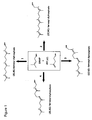
- a trichome-specific tobacco promoter (eCBTS02, Tissier et al. , 2004) was cloned upstream of the Sh-zFPS and Sh-SBS coding sequences to form the eCBTS1.0-Sh- zFPS [# 1] and eCBTS1 constructs. 0- Sh-SBS [# 2]. These two constructs were introduced into the same binary vector for transformation by Agrobacterium, containing a kanamycin resistance gene to give the binary vector pLIBRO-064 ( Fig. 2A ). The construct # 2 was also introduced independently into a binary vector pLIBRO-065 ( Fig. 2B ).
- the vectors were introduced into the Agrobacterium strain LBA4404 by electroporation.
- the strains containing the different vectors were used to carry out the genetic transformation of N. sylvestris by the leaf disk method (Horsch et al. , 1985).
- Transgene-bearing T-DNAs were introduced by genetic transformation into a transgenic N. sylvestris line (ihpCBTS source line) whose expression of the CBTS gene was inhibited by RNA interference (Tissier et al. , 2005). In this line, the amount of CBT-diol of the leaves is very small.
- N. sylvestris a wild tobacco does not produce sesquiterpenes equivalent to those of tomato. About 25 kanamycin resistant plants were obtained for each construct. The presence of transgenes in each plant was confirmed by PCR from genomic leaf DNA. The expression level of the transgenes in the leaves was verified by real-time quantitative PCR from mRNA of tobacco leaves.
- the level of expression of the Sh-SBS transgene was compared to that of an actin gene whose expression is constitutive in tobacco leaves.
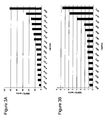
- the results are presented on the figure 3 as an example. They indicate that the selected lines all express the transgene at levels varying from 1 to 50 for the pLIBRO-064 construct and from 1 to 10 for the pLIBRO-065 construct relative to the actin gene.
- olefinic sesquiterpenes are volatile molecules
- the volatile molecules emitted by plants have been analyzed in a controlled atmosphere in a culture chamber. Part of the atmosphere was captured in a bypass circuit containing a SuperQ® filter (Altech) with the ability to adsorb olefinic terpene molecules. The molecules were then eluted with 1 ml of pentane and analyzed by GC / MS.
- An example of a chromatographic profile of the volatile molecules emitted by a transgenic plant is presented on the figure 7 .
- the line # 3877 expressing the Sh-zFPS and Sh-SBS genes contains several new peaks with a signature at the molecular ions 93, 94, 121 and 204 characteristics of the sesquiterpenes of this class.
- the chromatographic profile was compared with that obtained from the exudate of tomato line TA517 which naturally produces these compounds ( Fig. 7 ).
- the two profiles are identical and the mass spectra of each of the peaks are identical to those of the peaks of the TA517 line.
- Sh-zFPS and Sh-SBS transgenes produce alpha-santalene, epi-beta-santalene, cis-alpha-bergamotene, trans-alpha-bergamotene, and endotoxin. beta-bergamotene whereas transgenic lines that have integrated the Sh-SBS gene alone do not produce any of these compounds. These results indicate that the presence of both genes is necessary for the synthesis of SB type sequiterpenes. They confirm the results obtained in vitro with the recombinant enzymes. In conclusion, the Sh-zFPS and Sh-SBS genes are responsible for the biosynthesis of tomato sesquiterpenes located at the Sst2 locus described by van der Hoeven et al. , 2000.
- the zFPS complete gene was amplified by PCR from S genomic DNA. lycopersicum, S. habrochaites and TA517 using primers ACCATGGGTTCTTTGGTTCTTCAATGTTGGA (SEQ ID No. 9) and ACTCGAGATATGTGTGTCCACCAAAACGTCTATG (SEQ ID No. 10).
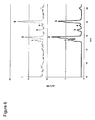
- Two products were amplified in both genomes indicating that there are at least two copies of the gene in both genomes ( Fig. 8 ).
- One of the two products which has a size of about 3000 nucleotides (band A) is common to both genomes.
- the second product has a size of about 2000 nucleotides (band C) in S.
Landscapes
- Life Sciences & Earth Sciences (AREA)
- Health & Medical Sciences (AREA)
- Chemical & Material Sciences (AREA)
- Engineering & Computer Science (AREA)
- Genetics & Genomics (AREA)
- Organic Chemistry (AREA)
- Wood Science & Technology (AREA)
- Zoology (AREA)
- Bioinformatics & Cheminformatics (AREA)
- Biotechnology (AREA)
- General Engineering & Computer Science (AREA)
- General Health & Medical Sciences (AREA)
- Microbiology (AREA)
- Biochemistry (AREA)
- Biomedical Technology (AREA)
- Molecular Biology (AREA)
- General Chemical & Material Sciences (AREA)
- Chemical Kinetics & Catalysis (AREA)
- Plant Pathology (AREA)
- Physics & Mathematics (AREA)
- Biophysics (AREA)
- Medicinal Chemistry (AREA)
- Nutrition Science (AREA)
- Cell Biology (AREA)
- Micro-Organisms Or Cultivation Processes Thereof (AREA)
- Enzymes And Modification Thereof (AREA)
- Preparation Of Compounds By Using Micro-Organisms (AREA)
- Breeding Of Plants And Reproduction By Means Of Culturing (AREA)
- Measuring Or Testing Involving Enzymes Or Micro-Organisms (AREA)
Applications Claiming Priority (2)
| Application Number | Priority Date | Filing Date | Title |
|---|---|---|---|
| FR0754235A FR2914652B1 (fr) | 2007-04-03 | 2007-04-03 | Genes codant pour z,z-farnesyl diphosphate synthase et une sesquiterpene synthase a produits multiples et leurs utilisations |
| PCT/FR2008/050576 WO2008142318A2 (fr) | 2007-04-03 | 2008-04-02 | Genes codant pour la z,z-farnesyl diphosphate synthase et une sesquiterpene synthase a produits multiples et leurs utilisations |
Publications (2)
| Publication Number | Publication Date |
|---|---|
| EP2132305A2 EP2132305A2 (fr) | 2009-12-16 |
| EP2132305B1 true EP2132305B1 (fr) | 2013-05-15 |
Family
ID=38670598
Family Applications (1)
| Application Number | Title | Priority Date | Filing Date |
|---|---|---|---|
| EP08788102.5A Not-in-force EP2132305B1 (fr) | 2007-04-03 | 2008-04-02 | Genes codant pour la z,z-farnesyl diphosphate synthase et une sesquiterpene synthase a produits multiples et leurs utilisations |
Country Status (8)
| Country | Link |
|---|---|
| US (2) | US8629321B2 (enExample) |
| EP (1) | EP2132305B1 (enExample) |
| JP (1) | JP5369089B2 (enExample) |
| CN (1) | CN101688191B (enExample) |
| CA (1) | CA2681878A1 (enExample) |
| ES (1) | ES2426388T3 (enExample) |
| FR (1) | FR2914652B1 (enExample) |
| WO (1) | WO2008142318A2 (enExample) |
Families Citing this family (27)
| Publication number | Priority date | Publication date | Assignee | Title |
|---|---|---|---|---|
| FR2914652B1 (fr) * | 2007-04-03 | 2013-01-18 | Librophyt | Genes codant pour z,z-farnesyl diphosphate synthase et une sesquiterpene synthase a produits multiples et leurs utilisations |
| WO2009109597A1 (en) | 2008-03-06 | 2009-09-11 | Firmenich Sa | Method for producing alpha- santalene |
| WO2010064897A1 (en) * | 2008-12-05 | 2010-06-10 | Keygene N.V. | Farmesene synthase |
| ES2626456T3 (es) * | 2008-12-11 | 2017-07-25 | Firmenich Sa | Procedimiento enzimático para producir beta-santaleno y la enzima correspondiente |
| JP5058332B2 (ja) | 2010-07-14 | 2012-10-24 | 住友ゴム工業株式会社 | イソプレンオリゴマー、ポリイソプレン、及びこれらの製造方法、ゴム組成物、並びに空気入りタイヤ |
| EP2714901B1 (en) | 2011-05-31 | 2024-09-18 | Keygene N.V. | Pest resistant plants |
| US8952221B2 (en) * | 2011-07-06 | 2015-02-10 | Board Of Trustees Of Michigan State University | Enzymes that synthesize zingiberene |
| CN102533600B (zh) * | 2011-12-30 | 2013-02-27 | 中国科学院南海海洋研究所 | 海洋链霉菌、吡喃型倍半萜类化合物及其制备方法和用途 |
| WO2013170265A1 (en) * | 2012-05-11 | 2013-11-14 | Donald Danforth Plant Science Center | Methods for high yield production of terpenes |
| JP6468512B2 (ja) * | 2012-09-12 | 2019-02-13 | 住友ゴム工業株式会社 | イソプレンオリゴマー、ポリイソプレン、及びこれらの製造方法、ゴム組成物、並びに空気入りタイヤ |
| BR112015012270A2 (pt) | 2012-11-30 | 2017-09-26 | Keygene Nv | planta, célula de planta, tecido de planta ou orgão transgênica(o), sequência de ácido nucleico isolada, fragmento, gene quimérico, vetor, célula de planta ou planta transgênica, e, método para produzir uma célula de planta ou planta transgênica |
| US9909145B2 (en) * | 2013-09-19 | 2018-03-06 | Firmenich Sa | Method for producing fragrant alcohols |
| KR101642738B1 (ko) * | 2014-08-08 | 2016-07-26 | 경상대학교산학협력단 | α-산탈렌의 생산 방법 |
| KR101663087B1 (ko) * | 2015-12-30 | 2016-10-06 | 경상대학교산학협력단 | α-산탈렌의 생산 방법 |
| US10499584B2 (en) | 2016-05-27 | 2019-12-10 | New West Genetics | Industrial hemp Cannabis cultivars and seeds with stable cannabinoid profiles |
| NL2018457B1 (en) | 2017-03-02 | 2018-09-21 | Isobionics B V | Santalene Synthase |
| CN106857415B (zh) * | 2017-03-10 | 2020-03-27 | 中国农业科学院植物保护研究所 | 快速定向获取麦长管蚜低龄有翅若蚜的方法 |
| CN106995848B (zh) * | 2017-04-10 | 2019-11-01 | 中国农业科学院蔬菜花卉研究所 | 番茄腺毛性状的连锁标记及其应用 |
| CN108753744B (zh) * | 2018-06-27 | 2022-03-11 | 中国科学院成都生物研究所 | 倍半萜环化酶及其制备与应用、2Z,4E-α-芷香乙烷合成方法 |
| CN109666668B (zh) * | 2019-01-24 | 2022-04-15 | 天津大学 | 一种小萼苔倍半萜合成酶MTa及其基因序列 |
| CA3145253A1 (en) * | 2019-07-01 | 2021-01-07 | 22Nd Century Limited, Llc | Cannabis terpene synthase promoters for the manipulation of terpene biosynthesis in trichomes |
| CN111621508B (zh) * | 2020-06-11 | 2022-07-01 | 云南中烟工业有限责任公司 | 烟草萜类合成酶NtTPS7基因及其载体与应用 |
| CN112626132B (zh) * | 2020-12-15 | 2022-08-26 | 中国农业科学院烟草研究所 | 西柏烷二萜的微生物生产方法 |
| CN112899208B (zh) * | 2021-02-08 | 2022-10-18 | 江南大学 | 一种提高重组菌西柏三烯一醇产量的方法 |
| CN112980809B (zh) * | 2021-03-17 | 2023-04-11 | 云南中烟工业有限责任公司 | 一种烟草法尼基焦磷酸合酶基因及其应用 |
| CN116790572B (zh) * | 2023-06-09 | 2024-04-09 | 中国中医科学院中药研究所 | SoSTPS5在作为倍半萜合酶中的应用 |
| CN119039411B (zh) * | 2024-09-12 | 2025-12-12 | 广西壮族自治区农业科学院 | 檀香SaERF89基因及其在生物合成(Z)-α-反式-香柠檬醇中的应用 |
Family Cites Families (16)
| Publication number | Priority date | Publication date | Assignee | Title |
|---|---|---|---|---|
| IL71691A (en) | 1984-04-27 | 1991-04-15 | Yeda Res & Dev | Production of interferon-ypsilon |
| US5290924A (en) | 1987-02-06 | 1994-03-01 | Last David I | Recombinant promoter for gene expression in monocotyledonous plants |
| US5047335A (en) | 1988-12-21 | 1991-09-10 | The Regents Of The University Of Calif. | Process for controlling intracellular glycosylation of proteins |
| AU2778992A (en) | 1991-10-07 | 1993-05-03 | Idaho Research Foundation Inc., The | Genetic construct for selection of homologous recombinants on a single selective medium |
| FR2706909B1 (enExample) | 1993-06-25 | 1995-09-29 | Rhone Poulenc Agrochimie | |
| US5876964A (en) | 1997-10-16 | 1999-03-02 | Washington State University Research Foundation | Geranyl diphosphate synthase from mint |
| US6342380B1 (en) | 1998-02-02 | 2002-01-29 | The Regents Of The University Of California | Germacrene C synthase gene of Lycopersicon esculentum |
| AR022383A1 (es) | 1998-09-18 | 2002-09-04 | Univ Kentucky Res Found | Sintasas |
| WO2001020008A2 (en) | 1999-09-16 | 2001-03-22 | Universiteit Leiden | Vascular-specific promoters |
| US20040234968A1 (en) | 2000-01-20 | 2004-11-25 | Croteau Rodney B | Plant oil gland nucleic acid molecules and methods of use |
| US6730826B2 (en) | 2000-03-22 | 2004-05-04 | University Of Kentucky Research Foundation | Plant trichome gland specific promoter sequence |
| US20040249219A1 (en) * | 2000-07-05 | 2004-12-09 | Saucy Gabriel G. | Method of making teprenone |
| US7498428B2 (en) * | 2003-06-19 | 2009-03-03 | Evogene Ltd. | Nucleotide sequences for regulating gene expression in plant trichomes and constructs and methods utilizing same |
| FR2876387B1 (fr) | 2004-10-13 | 2010-09-24 | Librophyt | Promoteurs vegetaux et utilisations |
| FR2881143B1 (fr) | 2005-01-27 | 2010-12-17 | Librophyt | Systeme de production de terpenoides dans les plantes |
| FR2914652B1 (fr) * | 2007-04-03 | 2013-01-18 | Librophyt | Genes codant pour z,z-farnesyl diphosphate synthase et une sesquiterpene synthase a produits multiples et leurs utilisations |
-
2007
- 2007-04-03 FR FR0754235A patent/FR2914652B1/fr not_active Expired - Fee Related
-
2008
- 2008-04-02 US US12/593,688 patent/US8629321B2/en not_active Expired - Fee Related
- 2008-04-02 CA CA002681878A patent/CA2681878A1/fr not_active Abandoned
- 2008-04-02 JP JP2010501569A patent/JP5369089B2/ja not_active Expired - Fee Related
- 2008-04-02 WO PCT/FR2008/050576 patent/WO2008142318A2/fr not_active Ceased
- 2008-04-02 ES ES08788102T patent/ES2426388T3/es active Active
- 2008-04-02 CN CN2008800113106A patent/CN101688191B/zh not_active Expired - Fee Related
- 2008-04-02 EP EP08788102.5A patent/EP2132305B1/fr not_active Not-in-force
-
2013
- 2013-12-30 US US14/143,539 patent/US20140154768A1/en not_active Abandoned
Also Published As
| Publication number | Publication date |
|---|---|
| JP5369089B2 (ja) | 2013-12-18 |
| FR2914652B1 (fr) | 2013-01-18 |
| FR2914652A1 (fr) | 2008-10-10 |
| JP2010523099A (ja) | 2010-07-15 |
| US20140154768A1 (en) | 2014-06-05 |
| US8629321B2 (en) | 2014-01-14 |
| US20100138954A1 (en) | 2010-06-03 |
| WO2008142318A3 (fr) | 2009-01-15 |
| WO2008142318A2 (fr) | 2008-11-27 |
| CA2681878A1 (fr) | 2008-11-27 |
| CN101688191B (zh) | 2013-05-01 |
| EP2132305A2 (fr) | 2009-12-16 |
| ES2426388T3 (es) | 2013-10-23 |
| CN101688191A (zh) | 2010-03-31 |
Similar Documents
| Publication | Publication Date | Title |
|---|---|---|
| EP2132305A2 (fr) | Genes codant pour la z,z-farnesyl diphosphate synthase et une sesquiterpene synthase a produits multiples et leurs utilisations | |
| Hemmerlin et al. | Enzymes encoded by the farnesyl diphosphate synthase gene family in the big sagebrush Artemisia tridentata ssp. spiciformis | |
| KR101802547B1 (ko) | 스테비올 글리코시드의 재조합 생산 | |
| CA2595608C (fr) | Systeme de production de terpenoides dans les plantes | |
| JP6327856B2 (ja) | 向上したテルペン生合成に重要である1−デオキシ−d−キシルロース−5−リン酸シンターゼ対立遺伝子 | |
| US20150059018A1 (en) | Methods and compositions for producing drimenol | |
| US8017835B2 (en) | Transformed plants accumulating terpenes | |
| CN112176000A (zh) | 用于生产芳香醇的方法 | |
| CN111225979B (zh) | 产生广藿香醇和榄香醇、以及优选地还有广藿香奥醇的萜烯合成酶 | |
| EP2718309B1 (en) | Transcription factor modulating terpene biosynthesis | |
| US11827915B2 (en) | Method for production of novel diterpene scaffolds | |
| WO2008007031A1 (fr) | Genes codant pour la cis-labda-12,14-dien-8 alpha-ol (cis-abienol) synthase et la syn-copalyl-8-ol diphosphate synthase et leurs utilisations | |
| CN110691850A (zh) | 生产折叶苔醇和/或补身醇的方法 | |
| Ma et al. | Engineering sclareol production on the leaf surface of Nicotiana tabacum | |
| CA2502434A1 (en) | Plant alpha farnesene synthase and polynucleotides encoding same | |
| US12018264B2 (en) | Method for increasing viridiflorol content in tissues | |
| CN115948456A (zh) | 一种可提升广藿香醇合成量的融合基因及方法 | |
| WO2018015512A1 (en) | Biosynthesis of 13r-manoyl oxide derivatives | |
| CA2223030A1 (fr) | Fragment d'acide nucleique codant pour un enzyme implique dans la voie de biosynthese de l'acide abscissique (aba) chez les plantes | |
| WO2007009958A1 (en) | Terpene synthases |
Legal Events
| Date | Code | Title | Description |
|---|---|---|---|
| PUAI | Public reference made under article 153(3) epc to a published international application that has entered the european phase |
Free format text: ORIGINAL CODE: 0009012 |
|
| 17P | Request for examination filed |
Effective date: 20090929 |
|
| AK | Designated contracting states |
Kind code of ref document: A2 Designated state(s): AT BE BG CH CY CZ DE DK EE ES FI FR GB GR HR HU IE IS IT LI LT LU LV MC MT NL NO PL PT RO SE SI SK TR |
|
| 17Q | First examination report despatched |
Effective date: 20100224 |
|
| GRAP | Despatch of communication of intention to grant a patent |
Free format text: ORIGINAL CODE: EPIDOSNIGR1 |
|
| DAX | Request for extension of the european patent (deleted) | ||
| GRAS | Grant fee paid |
Free format text: ORIGINAL CODE: EPIDOSNIGR3 |
|
| GRAP | Despatch of communication of intention to grant a patent |
Free format text: ORIGINAL CODE: EPIDOSNIGR1 |
|
| GRAA | (expected) grant |
Free format text: ORIGINAL CODE: 0009210 |
|
| AK | Designated contracting states |
Kind code of ref document: B1 Designated state(s): AT BE BG CH CY CZ DE DK EE ES FI FR GB GR HR HU IE IS IT LI LT LU LV MC MT NL NO PL PT RO SE SI SK TR |
|
| REG | Reference to a national code |
Ref country code: CH Ref legal event code: EP Ref country code: GB Ref legal event code: FG4D Free format text: NOT ENGLISH |
|
| REG | Reference to a national code |
Ref country code: AT Ref legal event code: REF Ref document number: 612178 Country of ref document: AT Kind code of ref document: T Effective date: 20130615 |
|
| REG | Reference to a national code |
Ref country code: IE Ref legal event code: FG4D Free format text: LANGUAGE OF EP DOCUMENT: FRENCH |
|
| REG | Reference to a national code |
Ref country code: DE Ref legal event code: R096 Ref document number: 602008024611 Country of ref document: DE Effective date: 20130711 |
|
| REG | Reference to a national code |
Ref country code: NL Ref legal event code: T3 |
|
| REG | Reference to a national code |
Ref country code: AT Ref legal event code: MK05 Ref document number: 612178 Country of ref document: AT Kind code of ref document: T Effective date: 20130515 |
|
| REG | Reference to a national code |
Ref country code: ES Ref legal event code: FG2A Ref document number: 2426388 Country of ref document: ES Kind code of ref document: T3 Effective date: 20131023 |
|
| REG | Reference to a national code |
Ref country code: LT Ref legal event code: MG4D |
|
| PG25 | Lapsed in a contracting state [announced via postgrant information from national office to epo] |
Ref country code: FI Free format text: LAPSE BECAUSE OF FAILURE TO SUBMIT A TRANSLATION OF THE DESCRIPTION OR TO PAY THE FEE WITHIN THE PRESCRIBED TIME-LIMIT Effective date: 20130515 Ref country code: IS Free format text: LAPSE BECAUSE OF FAILURE TO SUBMIT A TRANSLATION OF THE DESCRIPTION OR TO PAY THE FEE WITHIN THE PRESCRIBED TIME-LIMIT Effective date: 20130915 Ref country code: SE Free format text: LAPSE BECAUSE OF FAILURE TO SUBMIT A TRANSLATION OF THE DESCRIPTION OR TO PAY THE FEE WITHIN THE PRESCRIBED TIME-LIMIT Effective date: 20130515 Ref country code: SI Free format text: LAPSE BECAUSE OF FAILURE TO SUBMIT A TRANSLATION OF THE DESCRIPTION OR TO PAY THE FEE WITHIN THE PRESCRIBED TIME-LIMIT Effective date: 20130515 Ref country code: LT Free format text: LAPSE BECAUSE OF FAILURE TO SUBMIT A TRANSLATION OF THE DESCRIPTION OR TO PAY THE FEE WITHIN THE PRESCRIBED TIME-LIMIT Effective date: 20130515 Ref country code: NO Free format text: LAPSE BECAUSE OF FAILURE TO SUBMIT A TRANSLATION OF THE DESCRIPTION OR TO PAY THE FEE WITHIN THE PRESCRIBED TIME-LIMIT Effective date: 20130815 Ref country code: AT Free format text: LAPSE BECAUSE OF FAILURE TO SUBMIT A TRANSLATION OF THE DESCRIPTION OR TO PAY THE FEE WITHIN THE PRESCRIBED TIME-LIMIT Effective date: 20130515 Ref country code: GR Free format text: LAPSE BECAUSE OF FAILURE TO SUBMIT A TRANSLATION OF THE DESCRIPTION OR TO PAY THE FEE WITHIN THE PRESCRIBED TIME-LIMIT Effective date: 20130816 Ref country code: PT Free format text: LAPSE BECAUSE OF FAILURE TO SUBMIT A TRANSLATION OF THE DESCRIPTION OR TO PAY THE FEE WITHIN THE PRESCRIBED TIME-LIMIT Effective date: 20130916 |
|
| PG25 | Lapsed in a contracting state [announced via postgrant information from national office to epo] |
Ref country code: HR Free format text: LAPSE BECAUSE OF FAILURE TO SUBMIT A TRANSLATION OF THE DESCRIPTION OR TO PAY THE FEE WITHIN THE PRESCRIBED TIME-LIMIT Effective date: 20130515 Ref country code: PL Free format text: LAPSE BECAUSE OF FAILURE TO SUBMIT A TRANSLATION OF THE DESCRIPTION OR TO PAY THE FEE WITHIN THE PRESCRIBED TIME-LIMIT Effective date: 20130515 Ref country code: BG Free format text: LAPSE BECAUSE OF FAILURE TO SUBMIT A TRANSLATION OF THE DESCRIPTION OR TO PAY THE FEE WITHIN THE PRESCRIBED TIME-LIMIT Effective date: 20130815 |
|
| PG25 | Lapsed in a contracting state [announced via postgrant information from national office to epo] |
Ref country code: LV Free format text: LAPSE BECAUSE OF FAILURE TO SUBMIT A TRANSLATION OF THE DESCRIPTION OR TO PAY THE FEE WITHIN THE PRESCRIBED TIME-LIMIT Effective date: 20130515 |
|
| PG25 | Lapsed in a contracting state [announced via postgrant information from national office to epo] |
Ref country code: SK Free format text: LAPSE BECAUSE OF FAILURE TO SUBMIT A TRANSLATION OF THE DESCRIPTION OR TO PAY THE FEE WITHIN THE PRESCRIBED TIME-LIMIT Effective date: 20130515 Ref country code: DK Free format text: LAPSE BECAUSE OF FAILURE TO SUBMIT A TRANSLATION OF THE DESCRIPTION OR TO PAY THE FEE WITHIN THE PRESCRIBED TIME-LIMIT Effective date: 20130515 Ref country code: CZ Free format text: LAPSE BECAUSE OF FAILURE TO SUBMIT A TRANSLATION OF THE DESCRIPTION OR TO PAY THE FEE WITHIN THE PRESCRIBED TIME-LIMIT Effective date: 20130515 Ref country code: EE Free format text: LAPSE BECAUSE OF FAILURE TO SUBMIT A TRANSLATION OF THE DESCRIPTION OR TO PAY THE FEE WITHIN THE PRESCRIBED TIME-LIMIT Effective date: 20130515 |
|
| PG25 | Lapsed in a contracting state [announced via postgrant information from national office to epo] |
Ref country code: RO Free format text: LAPSE BECAUSE OF FAILURE TO SUBMIT A TRANSLATION OF THE DESCRIPTION OR TO PAY THE FEE WITHIN THE PRESCRIBED TIME-LIMIT Effective date: 20130515 |
|
| PLBE | No opposition filed within time limit |
Free format text: ORIGINAL CODE: 0009261 |
|
| STAA | Information on the status of an ep patent application or granted ep patent |
Free format text: STATUS: NO OPPOSITION FILED WITHIN TIME LIMIT |
|
| 26N | No opposition filed |
Effective date: 20140218 |
|
| REG | Reference to a national code |
Ref country code: DE Ref legal event code: R097 Ref document number: 602008024611 Country of ref document: DE Effective date: 20140218 |
|
| PG25 | Lapsed in a contracting state [announced via postgrant information from national office to epo] |
Ref country code: LU Free format text: LAPSE BECAUSE OF FAILURE TO SUBMIT A TRANSLATION OF THE DESCRIPTION OR TO PAY THE FEE WITHIN THE PRESCRIBED TIME-LIMIT Effective date: 20140402 Ref country code: MC Free format text: LAPSE BECAUSE OF FAILURE TO SUBMIT A TRANSLATION OF THE DESCRIPTION OR TO PAY THE FEE WITHIN THE PRESCRIBED TIME-LIMIT Effective date: 20130515 |
|
| REG | Reference to a national code |
Ref country code: IE Ref legal event code: MM4A |
|
| PG25 | Lapsed in a contracting state [announced via postgrant information from national office to epo] |
Ref country code: IE Free format text: LAPSE BECAUSE OF NON-PAYMENT OF DUE FEES Effective date: 20140402 |
|
| PG25 | Lapsed in a contracting state [announced via postgrant information from national office to epo] |
Ref country code: MT Free format text: LAPSE BECAUSE OF FAILURE TO SUBMIT A TRANSLATION OF THE DESCRIPTION OR TO PAY THE FEE WITHIN THE PRESCRIBED TIME-LIMIT Effective date: 20130515 |
|
| REG | Reference to a national code |
Ref country code: FR Ref legal event code: PLFP Year of fee payment: 9 |
|
| PGFP | Annual fee paid to national office [announced via postgrant information from national office to epo] |
Ref country code: TR Payment date: 20160321 Year of fee payment: 9 |
|
| PG25 | Lapsed in a contracting state [announced via postgrant information from national office to epo] |
Ref country code: CY Free format text: LAPSE BECAUSE OF FAILURE TO SUBMIT A TRANSLATION OF THE DESCRIPTION OR TO PAY THE FEE WITHIN THE PRESCRIBED TIME-LIMIT Effective date: 20130515 |
|
| PGFP | Annual fee paid to national office [announced via postgrant information from national office to epo] |
Ref country code: NL Payment date: 20160420 Year of fee payment: 9 |
|
| PG25 | Lapsed in a contracting state [announced via postgrant information from national office to epo] |
Ref country code: HU Free format text: LAPSE BECAUSE OF FAILURE TO SUBMIT A TRANSLATION OF THE DESCRIPTION OR TO PAY THE FEE WITHIN THE PRESCRIBED TIME-LIMIT; INVALID AB INITIO Effective date: 20080402 |
|
| PGFP | Annual fee paid to national office [announced via postgrant information from national office to epo] |
Ref country code: CH Payment date: 20160420 Year of fee payment: 9 Ref country code: DE Payment date: 20160421 Year of fee payment: 9 Ref country code: ES Payment date: 20160414 Year of fee payment: 9 Ref country code: GB Payment date: 20160421 Year of fee payment: 9 |
|
| PGFP | Annual fee paid to national office [announced via postgrant information from national office to epo] |
Ref country code: BE Payment date: 20160420 Year of fee payment: 9 Ref country code: FR Payment date: 20160421 Year of fee payment: 9 |
|
| PGFP | Annual fee paid to national office [announced via postgrant information from national office to epo] |
Ref country code: IT Payment date: 20160426 Year of fee payment: 9 |
|
| REG | Reference to a national code |
Ref country code: DE Ref legal event code: R119 Ref document number: 602008024611 Country of ref document: DE |
|
| REG | Reference to a national code |
Ref country code: CH Ref legal event code: PL |
|
| REG | Reference to a national code |
Ref country code: NL Ref legal event code: MM Effective date: 20170501 |
|
| GBPC | Gb: european patent ceased through non-payment of renewal fee |
Effective date: 20170402 |
|
| REG | Reference to a national code |
Ref country code: FR Ref legal event code: ST Effective date: 20171229 |
|
| PG25 | Lapsed in a contracting state [announced via postgrant information from national office to epo] |
Ref country code: DE Free format text: LAPSE BECAUSE OF NON-PAYMENT OF DUE FEES Effective date: 20171103 Ref country code: FR Free format text: LAPSE BECAUSE OF NON-PAYMENT OF DUE FEES Effective date: 20170502 Ref country code: NL Free format text: LAPSE BECAUSE OF NON-PAYMENT OF DUE FEES Effective date: 20170501 |
|
| PG25 | Lapsed in a contracting state [announced via postgrant information from national office to epo] |
Ref country code: CH Free format text: LAPSE BECAUSE OF NON-PAYMENT OF DUE FEES Effective date: 20170430 Ref country code: GB Free format text: LAPSE BECAUSE OF NON-PAYMENT OF DUE FEES Effective date: 20170402 Ref country code: LI Free format text: LAPSE BECAUSE OF NON-PAYMENT OF DUE FEES Effective date: 20170430 |
|
| REG | Reference to a national code |
Ref country code: BE Ref legal event code: MM Effective date: 20170430 |
|
| PG25 | Lapsed in a contracting state [announced via postgrant information from national office to epo] |
Ref country code: BE Free format text: LAPSE BECAUSE OF NON-PAYMENT OF DUE FEES Effective date: 20170430 Ref country code: IT Free format text: LAPSE BECAUSE OF NON-PAYMENT OF DUE FEES Effective date: 20170402 |
|
| REG | Reference to a national code |
Ref country code: ES Ref legal event code: FD2A Effective date: 20180629 |
|
| PG25 | Lapsed in a contracting state [announced via postgrant information from national office to epo] |
Ref country code: ES Free format text: LAPSE BECAUSE OF NON-PAYMENT OF DUE FEES Effective date: 20170403 |
|
| PG25 | Lapsed in a contracting state [announced via postgrant information from national office to epo] |
Ref country code: TR Free format text: LAPSE BECAUSE OF NON-PAYMENT OF DUE FEES Effective date: 20170402 |