EP2109619B1 - Modifications of peptide compositions to increase stability and delivery efficiency - Google Patents
Modifications of peptide compositions to increase stability and delivery efficiency Download PDFInfo
- Publication number
- EP2109619B1 EP2109619B1 EP08728081.4A EP08728081A EP2109619B1 EP 2109619 B1 EP2109619 B1 EP 2109619B1 EP 08728081 A EP08728081 A EP 08728081A EP 2109619 B1 EP2109619 B1 EP 2109619B1
- Authority
- EP
- European Patent Office
- Prior art keywords
- peptide
- seq
- peptides
- cargo
- carrier
- Prior art date
- Legal status (The legal status is an assumption and is not a legal conclusion. Google has not performed a legal analysis and makes no representation as to the accuracy of the status listed.)
- Active
Links
Images



Classifications
-
- C—CHEMISTRY; METALLURGY
- C07—ORGANIC CHEMISTRY
- C07K—PEPTIDES
- C07K19/00—Hybrid peptides, i.e. peptides covalently bound to nucleic acids, or non-covalently bound protein-protein complexes
-
- C—CHEMISTRY; METALLURGY
- C12—BIOCHEMISTRY; BEER; SPIRITS; WINE; VINEGAR; MICROBIOLOGY; ENZYMOLOGY; MUTATION OR GENETIC ENGINEERING
- C12N—MICROORGANISMS OR ENZYMES; COMPOSITIONS THEREOF; PROPAGATING, PRESERVING, OR MAINTAINING MICROORGANISMS; MUTATION OR GENETIC ENGINEERING; CULTURE MEDIA
- C12N9/00—Enzymes; Proenzymes; Compositions thereof; Processes for preparing, activating, inhibiting, separating or purifying enzymes
- C12N9/96—Stabilising an enzyme by forming an adduct or a composition; Forming enzyme conjugates
-
- A—HUMAN NECESSITIES
- A61—MEDICAL OR VETERINARY SCIENCE; HYGIENE
- A61K—PREPARATIONS FOR MEDICAL, DENTAL OR TOILETRY PURPOSES
- A61K38/00—Medicinal preparations containing peptides
- A61K38/04—Peptides having up to 20 amino acids in a fully defined sequence; Derivatives thereof
- A61K38/10—Peptides having 12 to 20 amino acids
-
- A—HUMAN NECESSITIES
- A61—MEDICAL OR VETERINARY SCIENCE; HYGIENE
- A61K—PREPARATIONS FOR MEDICAL, DENTAL OR TOILETRY PURPOSES
- A61K38/00—Medicinal preparations containing peptides
- A61K38/16—Peptides having more than 20 amino acids; Gastrins; Somatostatins; Melanotropins; Derivatives thereof
- A61K38/17—Peptides having more than 20 amino acids; Gastrins; Somatostatins; Melanotropins; Derivatives thereof from animals; from humans
-
- A—HUMAN NECESSITIES
- A61—MEDICAL OR VETERINARY SCIENCE; HYGIENE
- A61K—PREPARATIONS FOR MEDICAL, DENTAL OR TOILETRY PURPOSES
- A61K47/00—Medicinal preparations characterised by the non-active ingredients used, e.g. carriers or inert additives; Targeting or modifying agents chemically bound to the active ingredient
- A61K47/50—Medicinal preparations characterised by the non-active ingredients used, e.g. carriers or inert additives; Targeting or modifying agents chemically bound to the active ingredient the non-active ingredient being chemically bound to the active ingredient, e.g. polymer-drug conjugates
- A61K47/51—Medicinal preparations characterised by the non-active ingredients used, e.g. carriers or inert additives; Targeting or modifying agents chemically bound to the active ingredient the non-active ingredient being chemically bound to the active ingredient, e.g. polymer-drug conjugates the non-active ingredient being a modifying agent
- A61K47/62—Medicinal preparations characterised by the non-active ingredients used, e.g. carriers or inert additives; Targeting or modifying agents chemically bound to the active ingredient the non-active ingredient being chemically bound to the active ingredient, e.g. polymer-drug conjugates the non-active ingredient being a modifying agent the modifying agent being a protein, peptide or polyamino acid
- A61K47/64—Drug-peptide, drug-protein or drug-polyamino acid conjugates, i.e. the modifying agent being a peptide, protein or polyamino acid which is covalently bonded or complexed to a therapeutically active agent
-
- A—HUMAN NECESSITIES
- A61—MEDICAL OR VETERINARY SCIENCE; HYGIENE
- A61K—PREPARATIONS FOR MEDICAL, DENTAL OR TOILETRY PURPOSES
- A61K47/00—Medicinal preparations characterised by the non-active ingredients used, e.g. carriers or inert additives; Targeting or modifying agents chemically bound to the active ingredient
- A61K47/50—Medicinal preparations characterised by the non-active ingredients used, e.g. carriers or inert additives; Targeting or modifying agents chemically bound to the active ingredient the non-active ingredient being chemically bound to the active ingredient, e.g. polymer-drug conjugates
- A61K47/51—Medicinal preparations characterised by the non-active ingredients used, e.g. carriers or inert additives; Targeting or modifying agents chemically bound to the active ingredient the non-active ingredient being chemically bound to the active ingredient, e.g. polymer-drug conjugates the non-active ingredient being a modifying agent
- A61K47/62—Medicinal preparations characterised by the non-active ingredients used, e.g. carriers or inert additives; Targeting or modifying agents chemically bound to the active ingredient the non-active ingredient being chemically bound to the active ingredient, e.g. polymer-drug conjugates the non-active ingredient being a modifying agent the modifying agent being a protein, peptide or polyamino acid
- A61K47/64—Drug-peptide, drug-protein or drug-polyamino acid conjugates, i.e. the modifying agent being a peptide, protein or polyamino acid which is covalently bonded or complexed to a therapeutically active agent
- A61K47/645—Polycationic or polyanionic oligopeptides, polypeptides or polyamino acids, e.g. polylysine, polyarginine, polyglutamic acid or peptide TAT
-
- A—HUMAN NECESSITIES
- A61—MEDICAL OR VETERINARY SCIENCE; HYGIENE
- A61P—SPECIFIC THERAPEUTIC ACTIVITY OF CHEMICAL COMPOUNDS OR MEDICINAL PREPARATIONS
- A61P43/00—Drugs for specific purposes, not provided for in groups A61P1/00-A61P41/00
-
- C—CHEMISTRY; METALLURGY
- C07—ORGANIC CHEMISTRY
- C07K—PEPTIDES
- C07K14/00—Peptides having more than 20 amino acids; Gastrins; Somatostatins; Melanotropins; Derivatives thereof
-
- C—CHEMISTRY; METALLURGY
- C07—ORGANIC CHEMISTRY
- C07K—PEPTIDES
- C07K7/00—Peptides having 5 to 20 amino acids in a fully defined sequence; Derivatives thereof
-
- C—CHEMISTRY; METALLURGY
- C07—ORGANIC CHEMISTRY
- C07K—PEPTIDES
- C07K7/00—Peptides having 5 to 20 amino acids in a fully defined sequence; Derivatives thereof
- C07K7/04—Linear peptides containing only normal peptide links
- C07K7/06—Linear peptides containing only normal peptide links having 5 to 11 amino acids
-
- C—CHEMISTRY; METALLURGY
- C12—BIOCHEMISTRY; BEER; SPIRITS; WINE; VINEGAR; MICROBIOLOGY; ENZYMOLOGY; MUTATION OR GENETIC ENGINEERING
- C12N—MICROORGANISMS OR ENZYMES; COMPOSITIONS THEREOF; PROPAGATING, PRESERVING, OR MAINTAINING MICROORGANISMS; MUTATION OR GENETIC ENGINEERING; CULTURE MEDIA
- C12N9/00—Enzymes; Proenzymes; Compositions thereof; Processes for preparing, activating, inhibiting, separating or purifying enzymes
- C12N9/10—Transferases (2.)
- C12N9/12—Transferases (2.) transferring phosphorus containing groups, e.g. kinases (2.7)
-
- C—CHEMISTRY; METALLURGY
- C07—ORGANIC CHEMISTRY
- C07K—PEPTIDES
- C07K2319/00—Fusion polypeptide
- C07K2319/31—Fusion polypeptide fusions, other than Fc, for prolonged plasma life, e.g. albumin
-
- C—CHEMISTRY; METALLURGY
- C12—BIOCHEMISTRY; BEER; SPIRITS; WINE; VINEGAR; MICROBIOLOGY; ENZYMOLOGY; MUTATION OR GENETIC ENGINEERING
- C12Y—ENZYMES
- C12Y207/00—Transferases transferring phosphorus-containing groups (2.7)
- C12Y207/11—Protein-serine/threonine kinases (2.7.11)
- C12Y207/11013—Protein kinase C (2.7.11.13)
Definitions
- compositions and methods to improve carrier of biologically active agents into cells in living tissue.
- the compositions and methods comprise a PKC modulatory peptide conjugated to a modified tat peptide that imparts improved plasma stability to the conjugate, allowing more efficient uptake of the PKC modulatory peptide into cells.
- carrier peptides which are effective to facilitate the crossing of a target cell's membrane by a cargo peptide.
- carrier peptides which are effective to facilitate the crossing of a target cell's membrane by a cargo peptide.
- One example is a peptide sequence derived from the TAT protein of the HIV virus. See U.S. Patent No. 6,316,003 .
- Another well known carrier peptide sequence is the "poly-Arg" sequence. See, e.g., U.S. Patent No. 6,306,993 .
- WO 0207413 discloses conjugates between agonists and antagonists of protein kinase C (PKC) and a transporter moiety.
- PKC protein kinase C
- WO 2007/035782 discloses peptide modulators of protein kinase C (PKC), wherein a PKC inhibitory peptide is conjugated to a carrier peptide,
- the use of a disulfide bond to link the carrier and cargo peptides, producing the therapeutic peptide construct is an effective strategy to solve the problem of targeting soluble peptides to intracellular targets.
- the PKC inhibitory peptide may be conjugated to the carrier peptide by a disulfide bond.
- One theory explaining the usefulness of disulfide bonds holds that once the carrier-cargo construct enters a target cell, the two peptides can separate through disulfide bond reduction. This separation in the intracellular environment may allow a greater diffusion of cargo peptides within the cell as opposed to other linkage mechanisms which maintain the carrier-cargo link.
- the administration of therapeutic peptides still suffers from numerous challenges, such as disulfide bond exchange, proteolytic degradation and efficiency of cellular uptake. Methods directed to controlling these issues will increase the stability and potency of therapeutic peptides.
- Disulfide bond exchange reduces the amount of a carrier-cargo peptide construct in a given sample by allowing a carrier peptide to exchange its cargo peptide for another carrier peptide, thus resulting in a carrier-carrier construct and a cargo-cargo construct.
- the carrier-only construct will have no therapeutic effect.
- the cargo-cargo construct will have a tremendously reduced, if not completely eliminated effect, since the carrier peptide enables the delivery of the cargo to its intracellular target.
- the problem of controlling disulfide bond exchange is important to maximizing the therapeutic potential of a carrier-cargo peptide construct.
- proteolytic degradation Another problem facing the use of therapeutic peptides is proteolytic degradation. Peptides are notoriously unstable molecules and frequently labile to proteolytic attack when administered to a subject. Labile carrier peptides which degrade upon administration will reduce or even eliminate the efficacy of the cargo peptide because the cargo depends upon the carrier peptide to reach the intracellular target. Thus, methods to control or eliminate the labile nature of therapeutic peptides are also important to maximizing a carrier-cargo peptide's therapeutic potential.
- the invention relates to linear therapeutic peptide, consisting of the peptide sequence GKLFIMNLSGYGRKKRRQRRR (SEQ ID NO: 170) or GEEVIRNISGYGRKKRRQRRR. (SEQ ID NO: 171), wherein the peptide is acetylated at its N-terminus and amidated at its C-terminus.
- a therapeutic peptide composition comprising a carrier peptide and a PKC activity modulating cargo peptide, whereby the resulting therapeutic peptide compositions have increased stability and potency relative to an unmodified therapeutic peptide.
- One method of decreasing disulfide bond exchange in a therapeutic peptide composition comprises providing a therapeutic peptide composition, which comprises a carrier peptide comprising a first cysteine residue and a PKC activity modulating cargo peptide comprising a second cysteine residue, wherein the carrier peptide and the cargo peptide are linked by a cysteine-cysteine disulfide bond between the first and second cysteine residues, and introducing at least one aliphatic residue immediately proximate to the first or second cysteine residues, or both, whereby the rate of disulfide bond exchange is decreased relative to an unmodified therapeutic peptide composition.
- a method of decreasing proteolytic degradation of a therapeutic peptide composition comprising providing a therapeutic peptide composition, which comprises a carrier peptide and a PKC activity modulating cargo peptide, and wherein the carrier peptide is linked to the cargo peptide, identifying a proteolytically labile site on the carrier peptide, the cargo peptide, or both peptides, and modifying the amino acid sequence at the labile site such that the rate of proteolytic degradation at the site is decreased relative to an unmodified therapeutic peptide composition.
- a method of increasing plasma stability of a therapeutic peptide composition comprising providing a therapeutic peptide composition, which comprises a carrier peptide and a PKC activity modulating cargo peptide, and wherein the carrier peptide is linked to the cargo peptide, modifying the amino terminal, carboxy terminal or both residues of the carrier peptide, the cargo peptide, or both, such that the plasma stability of the therapeutic peptide composition is increased relative to an unmodified therapeutic peptide composition.
- compositions comprising a protein kinase C (PKC) modulatory peptide composition, comprising a PKC modulatory peptide covalently linked to an intracellular carrier peptide, wherein the intracellular carrier peptide, the modulatory peptide, or both are modified at the N-terminus.
- PKC protein kinase C
- a “therapeutic peptide composition” comprises a “carrier peptide” and a “cargo peptide.”
- a “carrier peptide” is a peptide or amino acid sequence within a peptide that facilitates the cellular uptake of the therapeutic peptide composition.
- the “cargo peptide” is a PKC modulatory peptide.
- Peptide modifications to either the carrier peptide, the cargo peptide, or both, which are described herein increase the stability and delivery efficiency of therapeutic peptide compositions by reducing disulfide bond exchange, physical stability, reducing proteolytic degradation, and increasing efficiency of cellular uptake.
- an example of the therapeutic peptide compositions provides a cargo peptide coupled to a carrier peptide via a disulfide bond between two joining sulfur-containing residues, one in each peptide.
- the disulfide bond of this embodiment can be unstable whether the therapeutic peptide composition is in solution, lyophilized, precipitated, crystallized, or spray-dried, leading to carrier-cargo combinations to degrade to carrier-carrier compositions, which are inactive, and cargo-cargo compositions, which are also inactive and are frequently insoluble.
- the stability of the therapeutic peptide compositions is improved through the use of chemical modifications and by controlling the physical environment of the peptide compositions prior to use.
- the joining sulfur-containing residue can be placed anywhere in the sequence of the carrier or cargo peptides.
- a preferred embodiment of the therapeutic peptide composition typically has the joining sulfur-containing residue at the amino terminus of the carrier and cargo peptides.
- the joining sulfur-containing residues can be placed at the carboxy termini of the peptides, or alternatively at the amino terminus of peptide and at the carboxy terminus of the other peptide.
- the joining sulfur-containing residue can be placed anywhere within the sequence of either or both of the peptides. Placing the joining sulfur-containing residue within the carrier peptide, the cargo peptide, or both has been observed to reduce the rate of disulfide bond exchange.
- An example of chemical modifications useful to stabilize the disulfide bonds of the therapeutic peptide compositions involves optimizing the amino acid residue or residues immediately proximate to the sulfur-containing residues used to join the carrier and cargo peptide.
- a preferred method of stabilizing the disulfide bond involves placing an aliphatic residue immediately proximate to the sulfur-containing residue in the carrier and/or cargo peptides.
- Aliphatic residues include alanine, valine, leucine and isoleucine.
- an aliphatic residue is placed at the penultimate carboxy terminal position of the peptide to reduce the rate of disulfide bond exchange.
- the aliphatic residue can be place at either the amino terminal or carboxy terminal side of the residue, or at both sides.
- cysteine analogs can also be used as the joining cysteine residues in the peptide composition.
- Particular cysteine analogs include D-cysteine, homocysteine, alpha-methyl cysteine, mercaptopropionic acid, mercaptoacetic acid, penicillamine, acetylated forms of those analogs capable of accepting an acetyl group, and cysteine analogs modified with other blocking groups.
- homocysteine, acetylated homocysteine, penicillamine, and acetylated penicillamine in the cargo, the carrier, or both peptides have been shown to stabilize the peptide composition and decrease disulfide bond exchange.
- Alpha-methyl cysteine inhibits disulfide degration because the base-mediated abstraction of the alpha hydrogen from one cysteine is prevented by the presence of the sulfur atom.
- Cargo/carrier peptide conjugates joined by disulfide bonds have been shown to be more resistant to glutathione reduction than unmodified peptides.
- Other cysteine analogs are also useful as joining cysteines.
- stereoisomers of cysteine will inhibit disulfide bond exchange.
- Disulfide bond exchange can be eliminated completely by linking the carrier and cargo peptides to form a single, linear peptide. This method is discussed below.
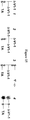
- the physical environment of the disulfide has an effect on stability. As shown (in part) in Figure 10 , stability increases in solution as the pH of the solution decreases (acidic environment better than basic), the temperature of the solution decreases, and as the concentration of the peptide composition in solution decreases. In the lyophilized form, stability increases as the pH decreases, the temperature decreases, and the ratio of the peptide composition to excipient increases. Preferred excipients are discussed in U.S. Patent Application No. 11/240,962, filed September 30, 2005 ,.
- the solubility of a therapeutic peptide impacts the efficiency with which the peptide is taken up by a target cell.
- the amino acid sequence of a carrier or cargo peptide largely determines that solubility the peptide compositions in which they are used.
- Some peptides, particularly cargo peptides, will contain hydrophobic residues, (e.g., Phe, Tyr, Leu), with regular spacing which allows for intramolecular interactions by a "zipper" mechanism leading to aggregation.
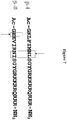
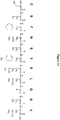
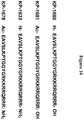
- An example of such a potentially problematic peptide is shown in Figure 14 .
- the illustrated sequence is believed to form a beta-strand in the V1 domain of ⁇ PKC.
- Such peptides have the tendency to form insoluble deposits.
- solubility of such peptides can be improved by making certain modifications to the cargo peptide sequence.
- solubilizing groups at amino and or carboxy termini or on internal residues, such as hydrating groups, like polyethylene glycol (PEG), highly charged groups, like quaternary ammonium salts, or bulky, branched chains of particular amino acid residues will improve the solubility of peptides like the one illustrated in Figure 14 .
- those hydrophobic side chains that are shown not to be required for activity can be eliminated by deletion or substitution with a conservative or non-interfering residue, such as an alanine, glycine, or serine, thus improving the solubility of the peptides.
- Blood and plasma contain proteases which can degrade the protein kinase C modulatory peptides disclosed herein or the carrier peptides which facilitate the cellular uptake of the peptide composition, or both.
- proteases which can degrade the protein kinase C modulatory peptides disclosed herein or the carrier peptides which facilitate the cellular uptake of the peptide composition, or both.
- One method to decrease proteolytic degradation of the carrier or cargo peptides is to mask the targets of the proteases presented by the therapeutic peptide composition.
- Exopeptidases are enzymes that cleave amino acid residues from the amino or carboxy termini of a peptide or protein, and can cleave at specific or non-specific sites. Endopeptidases, which cleave within an amino acid sequence, can also be non-specific, however endopeptidases frequently recognize particular amino sequences (recognition sites) and cleaves the peptide at or near those sites.
- One method of protecting peptide compositions from proteolytic degradation involves the "capping" the amino and/or carboxy termini of the peptides.
- the term “capping” refers to the introduction of a blocking group to the terminus of the peptide via a covalent modification. Suitable blocking groups serve to cap the termini of the peptides without decreasing the biological activity of the peptides. Acetylation of the amino termini of the described peptides is a preferred method of protecting the peptides from proteolytic degradation.
- Other capping moieties are possible. The selection of acylating moiety provides an opportunity to "cap” the peptide as well as adjust the hydrophobicity of the compound.
- hydrophobicity increases for the following acyl group series: formyl, acetyl, propanoyl, hexanoyl, myristoyl, and are also contemplated as capping moieties. Amidation of the carboxy termini of the described peptides is also a preferred method of protecting the peptides from proteolytic degradation.
- Protecting peptides from endopeptidases typically involves identification and elimination of an endopeptidase recognition site from a peptide.
- Protease recognition cites are well known to those of ordinary skill in the art. Thus it is possible to identify a potential endoprotease recognition site and then eliminating that site by altering the amino acid sequence within the recognition site. Residues in the recognition sequence can be moved or removed to destroy the recognition site.
- a conservative substitution is made with one or more of the amino acids which comprise an identified protease recognition site.
- the side chains of these amino acids possess a variety of chemical properties. For the purposes of the present discussion, the most common amino acids are categorized into 9 groups, listed below. Substitution within these groups is considered to be a conservative substitution.
- carrier and cargo peptides may be linked by a peptide bond to form a linear peptide.
- Stability and potency of the therapeutic peptides can also be increased through the construction of peptide multimers, wherein a plurality of cargo peptides is linked to one or more carrier peptides.
- An additional example of a therapeutic peptide composition involving a cleavable linker sequence is also discussed.
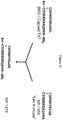
- FIG. 4A Another strategy to improve peptide composition stability involves joining the cargo and carrier peptides into a single peptide as opposed to joining the peptides via a disulfide bond.
- the cargo peptide SEQ ID NO:13
- FIG. 4B A linear version of the cargo and carrier peptides is shown in Figure 4B , where the cargo and carrier peptides are linked via a short dipeptide linker (e.g., Ser-Gly). This linker is exemplary.
- the C-terminus of cargo is linked to the N-terminus of the carrier via the linker.
- the other possible permutations are also contemplated, including linking the peptide via there C-termini, their N-termini, and where the carrier peptide is located at the N-terminal portion of the peptide composition.
- steps discussed above to stabilize a disulfide bond linked peptide composition can also be used with a linear, where appropriate.
- the linear peptide composition shown in Figure 4B has been capped at both its amino and carboxy termini.
- sequences within the peptide can be scrambled or substituted with D-amino acids.
- Another method of improving stability and potency is available by forming multimers with a plurality of cargo peptides associated with one or more carrier peptides. Examples of such formulations are shown in Figure 15 . Branched, multivalent peptide compositions will increase avidity, potency and stability of the compositions. By engineering cleavage sites or other release mechanisms into the multimer compositions, the multiple conjugates can release nearly simultaneously, PKC modulatory cargo peptides inside a target cell. An example of multimeric peptides is discussed in Yu et al. JBC 275(6):3943-9 (2000 ).
- the carrier and cargo are linked by a linkage that can be cleaved by ubiquitous enzymes such as esterases, amidases, and the like. It is assumed that the concentration of such enzymes is higher inside cells rather than in the extracellular milieu. Thus, once the conjugate is inside a cell, it is more likely to encounter an enzyme that can cleave the linkage between cargo and carrier. The enzyme can thus release the biologically active cargo inside a cell, where it presumably is most useful.
- protein kinase C modulatory peptide refers to a peptide derived from a PKC isozyme- and/or variable region.
- PKC isozyme- and variable region-specific peptides have been described and can be used with the presently disclosed invention.
- the PKC modulatory peptide is a V1, V3 or V5-derived peptide.
- carries include octa-Arg, octa-D-Arg, and Antennapedia derived peptides, which are known in the art.
- Plasma stability of capped peptides was compared. KAI-9706 was modified step-wise at its amino and carboxy termini. Plasma stability as measured by the percent of peptide composition remaining after 15 minutes. The results are provided in Table 2.
- the data provided above shows that the peptide composition, comprising unmodified cargo and carrier peptides, was the least stable. Moreover, protection of the carrier peptide alone failed to increase the half life of the peptide composition in plasma. Moreover, modification of the cargo peptide with the carrier peptide unmodified had no apparent effect on half-life stability in plasma. However, the addition of protecting groups to the carrier peptide, whether at the amino or carboxy termini lead to a marked and nearly equivalent increase in plasma stability for the peptide composition. Protection of both groups in the carrier peptide provided additional protection. Interestingly, protection of the cargo peptide had little or no effect on the stability of the composition.
- KAI-9706 was engineered with D-amino acids to determine their impact on peptide composition stability. Unmodified KAI-9706 was compared to a peptide composition with the same amino acid sequence, however the amino acids used were d-enantiomers instead of 1-amino acids. A retro-inverso version and a scrambled version of the peptide composition were also prepared. The data from the experiment is shown in Table 3. Table 3 Plasma Stability of KAI-9706 cargo All-L All-D scrambled R/I All-L 1 0 2 All-D 88 100 67 carrier R/I 100 % parent remaining at 15 mins
- Modification of the carrier showed the great propensity in improving the half life of the composition while modification of the cargo showed little effect.
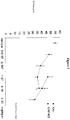
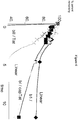
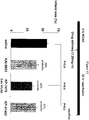
- KAI-1455 was tested in a stroke model. As shown in Figure 2 , the capped version of the peptide composition provided increased protection to brain tissue as judged by percent infract. This data shows that significant protection of brain tissue was achieved at lower doses.
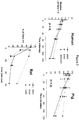
- KAI-1455 modified KAI-9706 peptide
- Figure 3A human
- Figure 3B pig
- Figure 3C rat serum
- KAI-1455 was tested in a stroke model. As shown in Figure 2 , the capped version of the peptide composition provided increased protection to brain tissue as judged by percent infract. This data shows that significant protection of brain tissue was achieved at lower doses.
- KAI-1455 modified KAI-9706 peptide
- Figure 3A human
- Figure 3B pig
- Figure 3C rat serum
- Linear versions of KAI-9803 and BC2-4 were constructed to evaluate their stability relative to disulfide bond linked versions of these and other peptide compositions.
- the peptides were placed in solution at 0.1 mg/ml in PBS (pH 7.4) at 37°C.
- PBS pH 7.4
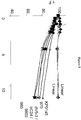
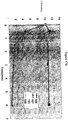
- Figure 5 the linear versions of KAI-9803 and BV2-4 showed increased stability.
- the linear versions of PKC- ⁇ I and PKC- ⁇ II peptide compositions showed improved stability but were also the subject of deamination reactions.
- the Asn residues at position 7 of the ⁇ -I and ⁇ -II peptides and the Gln at position 2 of the ⁇ -II peptide were modified by substituting the Gly immediately C-terminal to the Asn with either Leu in the ⁇ -I peptide composition or Gly to Ile in the ⁇ -II peptide composition.
- the Gln at position 2 of the ⁇ -II peptide composition was also substituted with a Glu residue.
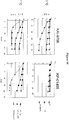
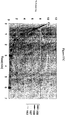
- the stability of the peptides was studied under the conditions described in Example 8. As shown in Figures 8 and 9 , the amino acid substitutions discussed above served to stabilize these linear peptide compositions.
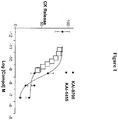
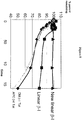
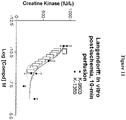
- KAI-1355 A truncated version of KAI-9803, KAI-1355, in which the carboxy terminal leucine was removed was tested for potency. Stability studies with KAI-1355 showed that deletion of the C-terminal Leu residue increased the stability of this cargo peptide. Potency of the derivative peptide composition was compared to that of the full length version, KAI-9803 in a Langendorff in vitro post-ischemia model. The results of the experiment are shown in Figure 11 . As shown, KAI-1355 (the modified version of KAI-9803) is still capable of protecting cardiac tissue from ischemia with potency comparable to that of the full length KAI-9803.
- the modified KAI-1479, KAI-9803 and KAI-1482 peptide compositions were assayed in a rat middle cerebral artery occlusion (MCAO) stroke model to determine the ability of the peptide compositions to inhibit infarct size.
- the rats were subjected to a 2 hour period of cerebral arterial occlusion.
- Each of the peptide compositions or saline was administered to the test animals immediately prior to a 22 hour reperfusion period, after which time the animals were sacrificed and the infarct size was measured.
- the modified KAI-1479 peptide composition showed an increased ability to retard infarct size as compared to KAI-9803.
- KP-01482 has a cargo sequence (CELGSLQAEDD) linked to a TAT peptide with a N-Term Cys, which is capped at both ends and disulfide conjugated to the cargo.
Landscapes
- Health & Medical Sciences (AREA)
- Life Sciences & Earth Sciences (AREA)
- Chemical & Material Sciences (AREA)
- Bioinformatics & Cheminformatics (AREA)
- Engineering & Computer Science (AREA)
- Organic Chemistry (AREA)
- Proteomics, Peptides & Aminoacids (AREA)
- General Health & Medical Sciences (AREA)
- Medicinal Chemistry (AREA)
- Molecular Biology (AREA)
- Genetics & Genomics (AREA)
- Biochemistry (AREA)
- Zoology (AREA)
- Pharmacology & Pharmacy (AREA)
- Animal Behavior & Ethology (AREA)
- Public Health (AREA)
- Veterinary Medicine (AREA)
- Wood Science & Technology (AREA)
- Epidemiology (AREA)
- General Engineering & Computer Science (AREA)
- Biophysics (AREA)
- Gastroenterology & Hepatology (AREA)
- Biomedical Technology (AREA)
- Biotechnology (AREA)
- Microbiology (AREA)
- Immunology (AREA)
- Nuclear Medicine, Radiotherapy & Molecular Imaging (AREA)
- Chemical Kinetics & Catalysis (AREA)
- General Chemical & Material Sciences (AREA)
- Medicines That Contain Protein Lipid Enzymes And Other Medicines (AREA)
- Peptides Or Proteins (AREA)
- Medicinal Preparation (AREA)
Priority Applications (1)
| Application Number | Priority Date | Filing Date | Title |
|---|---|---|---|
| EP17161141.1A EP3248985B1 (en) | 2007-01-19 | 2008-01-22 | Modifications of peptide compositions to increase stability and delivery efficiency |
Applications Claiming Priority (3)
| Application Number | Priority Date | Filing Date | Title |
|---|---|---|---|
| US88141907P | 2007-01-19 | 2007-01-19 | |
| US94528507P | 2007-06-20 | 2007-06-20 | |
| PCT/US2008/051706 WO2008089491A2 (en) | 2007-01-19 | 2008-01-22 | Modifications of peptide compositions to increase stability and delivery efficiency |
Related Child Applications (2)
| Application Number | Title | Priority Date | Filing Date |
|---|---|---|---|
| EP17161141.1A Division EP3248985B1 (en) | 2007-01-19 | 2008-01-22 | Modifications of peptide compositions to increase stability and delivery efficiency |
| EP17161141.1A Division-Into EP3248985B1 (en) | 2007-01-19 | 2008-01-22 | Modifications of peptide compositions to increase stability and delivery efficiency |
Publications (3)
| Publication Number | Publication Date |
|---|---|
| EP2109619A2 EP2109619A2 (en) | 2009-10-21 |
| EP2109619A4 EP2109619A4 (en) | 2013-04-24 |
| EP2109619B1 true EP2109619B1 (en) | 2017-05-03 |
Family
ID=39636771
Family Applications (2)
| Application Number | Title | Priority Date | Filing Date |
|---|---|---|---|
| EP08728081.4A Active EP2109619B1 (en) | 2007-01-19 | 2008-01-22 | Modifications of peptide compositions to increase stability and delivery efficiency |
| EP17161141.1A Active EP3248985B1 (en) | 2007-01-19 | 2008-01-22 | Modifications of peptide compositions to increase stability and delivery efficiency |
Family Applications After (1)
| Application Number | Title | Priority Date | Filing Date |
|---|---|---|---|
| EP17161141.1A Active EP3248985B1 (en) | 2007-01-19 | 2008-01-22 | Modifications of peptide compositions to increase stability and delivery efficiency |
Country Status (8)
| Country | Link |
|---|---|
| US (7) | US8067532B2 (enExample) |
| EP (2) | EP2109619B1 (enExample) |
| JP (7) | JP2010516707A (enExample) |
| KR (4) | KR102274003B1 (enExample) |
| CN (3) | CN101675067B (enExample) |
| AU (1) | AU2008206077A1 (enExample) |
| CA (2) | CA2675665C (enExample) |
| WO (1) | WO2008089491A2 (enExample) |
Families Citing this family (45)
| Publication number | Priority date | Publication date | Assignee | Title |
|---|---|---|---|---|
| US8168181B2 (en) | 2006-02-13 | 2012-05-01 | Alethia Biotherapeutics, Inc. | Methods of impairing osteoclast differentiation using antibodies that bind siglec-15 |
| JP5173838B2 (ja) | 2006-02-13 | 2013-04-03 | アレシア・バイオセラピューティクス・インコーポレーテッド | 骨リモデリングのプロセスと関係があるポリヌクレオチドおよびポリペプチド配列 |
| JP5645408B2 (ja) | 2006-11-16 | 2014-12-24 | カイ ファーマシューティカルズ インコーポレーティッド | 副甲状腺機能亢進症および高カルシウム血症性障害の治療のためのポリカチオン性カルシウムモジュレーターペプチド |
| US8067532B2 (en) * | 2007-01-19 | 2011-11-29 | Kai Pharmaceuticals, Inc. | Modifications of peptide compositions to increase stability and delivery efficiency |
| US20090318351A1 (en) * | 2008-03-12 | 2009-12-24 | Kevin Grimes | Method of treating acute st-elevation myocardial infarction with a delta pkc antagonist |
| US20100311671A1 (en) * | 2009-03-25 | 2010-12-09 | Kai Pharmaceuticals | Transdermal delivery of pkc modulatory peptides through microporated skin |
| EP2459208B1 (en) | 2009-07-29 | 2016-09-28 | Kai Pharmaceuticals, Inc. | Therapeutic agents for reducing parathyroid hormone levels |
| PT2717896T (pt) | 2011-06-08 | 2016-12-23 | Kai Pharmaceuticals Inc | Agentes terapêuticos para a regulação do fósforo sérico |
| WO2013128003A1 (en) * | 2012-03-01 | 2013-09-06 | Novo Nordisk A/S | N-terminally modified oligopeptides and uses thereof |
| AU2013293062A1 (en) | 2012-07-19 | 2014-07-24 | Alethia Biotherapeutics Inc. | Anti-Siglec-15 antibodies |
| EP2986306A4 (en) | 2013-04-18 | 2016-12-07 | Armo Biosciences Inc | METHOD FOR USE OF INTERLEUKIN-10 FOR THE TREATMENT OF ILLNESSES AND SUFFERING |
| CA2914837A1 (en) | 2013-06-17 | 2014-12-24 | Armo Biosciences, Inc. | Method for assessing protein identity and stability |
| PE20160549A1 (es) * | 2013-06-28 | 2016-06-15 | Amgen Inc | Formulacion liquida estable de etelcalcetida (amg 416) |
| US10010588B2 (en) | 2013-08-30 | 2018-07-03 | Armo Biosciences, Inc. | Methods of using pegylated interleukin-10 for treating hyperlipidemia |
| NZ718962A (en) | 2013-10-28 | 2019-12-20 | Ngm Biopharmaceuticals Inc | Cancer models and associated methods |
| KR20160079114A (ko) | 2013-11-11 | 2016-07-05 | 아르모 바이오사이언시스 인코포레이티드 | 질환 및 장애를 치료하기 위한 인터류킨-10을 사용하는 방법 |
| WO2015187295A2 (en) | 2014-06-02 | 2015-12-10 | Armo Biosciences, Inc. | Methods of lowering serum cholesterol |
| EP3206713A4 (en) | 2014-10-14 | 2018-06-27 | Armo Biosciences, Inc. | Interleukin-15 compositions and uses thereof |
| AU2015336101A1 (en) | 2014-10-22 | 2017-04-20 | Armo Biosciences, Inc. | Methods of using interleukin-10 for treating diseases and disorders |
| US10618970B2 (en) | 2015-02-03 | 2020-04-14 | Armo Biosciences, Inc. | Method of treating cancer with IL-10 and antibodies that induce ADCC |
| US10456475B2 (en) | 2015-02-03 | 2019-10-29 | Kennsaw State University Research and Service Foundation, Inc. | Cell penetrating protein adaptor molecules and their application in research and medicine |
| WO2016191587A1 (en) | 2015-05-28 | 2016-12-01 | Armo Biosciences, Inc. | Pegylated interleukin-10 for use in treating cancer |
| HK1245671A1 (zh) | 2015-05-29 | 2018-08-31 | Armo Biosciences, Inc. | 使用白细胞介素-10治疗疾病和病症的方法 |
| US10435446B2 (en) | 2015-06-03 | 2019-10-08 | Kennesaw State University Research and Service Foundation Inc. | Cell penetrating protein adaptor molecules and their application in research and medicine |
| CA2995120A1 (en) | 2015-08-25 | 2017-03-02 | Armo Biosciences, Inc. | Methods of using interleukin-10 for treating diseases and disorders |
| BR112018011096A2 (pt) * | 2015-12-02 | 2018-12-04 | Inst Nat De La Rech Agronomique Inra | novos peptídeos que têm atividade antimicrobiana e nova enzima capaz de converter resíduo de configuração l em aminoácido de configuração d em um peptídeo |
| EP3411387A4 (en) | 2016-02-03 | 2019-12-04 | Kennesaw State University Research And Services Foundation Inc. | SIGNAL MOLECULES AS A CELL PENETRANT |
| WO2018035046A1 (en) | 2016-08-15 | 2018-02-22 | President And Fellows Of Harvard College | Treating infections using idsd from proteus mirabilis |
| KR101772449B1 (ko) * | 2016-12-27 | 2017-08-30 | 주식회사 하이센스바이오 | 신규한 펩타이드 |
| CA3087881A1 (en) | 2017-01-17 | 2018-07-26 | Michael David FORREST | Therapeutic inhibitors of the reverse mode of atp synthase |
| CA3099077A1 (en) | 2017-07-13 | 2019-01-17 | Michael David FORREST | Therapeutic modulators of the reverse mode of atp synthase |
| CN111315398A (zh) | 2017-11-10 | 2020-06-19 | 阿尔莫生物科技股份有限公司 | 白介素-10与免疫检查点途径抑制剂的组合的组合物和使用方法 |
| MX2020010071A (es) * | 2018-03-29 | 2021-01-08 | Contrafect Corp | Polipeptidos anti-microbianos, derivados de bacteriofago, y sus usos contra bacterias gram negativas. |
| JP7097465B2 (ja) | 2018-06-19 | 2022-07-07 | アルモ・バイオサイエンシーズ・インコーポレイテッド | キメラ抗原受容体細胞療法と併用するil-10剤の組成およびその使用方法 |
| US10905738B2 (en) * | 2018-07-05 | 2021-02-02 | Biozeus Desenvolvimento De Produtos Biofarmacêuticos | Synthetic peptides, prodrugs, pharmaceutical compositions and uses |
| GB201903873D0 (en) * | 2019-03-21 | 2019-05-08 | Univ Nottingham | Enhanced transfection |
| WO2021002408A1 (ja) | 2019-07-02 | 2021-01-07 | Agc株式会社 | ペプチド及びその製造方法 |
| EP4058466A1 (en) | 2019-11-13 | 2022-09-21 | Amunix Pharmaceuticals, Inc. | Barcoded xten polypeptides and compositions thereof, and methods for making and using the same |
| WO2021195254A1 (en) * | 2020-03-24 | 2021-09-30 | Young Therapeutics, Llc | Protein kinase c modulators |
| US20250325469A1 (en) | 2021-01-24 | 2025-10-23 | Michael David FORREST | Inhibitors of atp synthase - cosmetic and therapeutic uses |
| WO2023048236A1 (ja) | 2021-09-22 | 2023-03-30 | Agc株式会社 | ペプチド |
| KR102380732B1 (ko) | 2021-09-23 | 2022-04-04 | 엘이솔루션 주식회사 | 축산분뇨처리시스템 |
| US20250082777A1 (en) | 2022-01-10 | 2025-03-13 | Sana Biotechnology, Inc. | Methods of ex vivo dosing and administration of lipid particles or viral vectors and related systems and uses |
| WO2023193015A1 (en) | 2022-04-01 | 2023-10-05 | Sana Biotechnology, Inc. | Cytokine receptor agonist and viral vector combination therapies |
| WO2025135179A1 (ja) | 2023-12-22 | 2025-06-26 | Agc株式会社 | 蛍光増強剤 |
Citations (1)
| Publication number | Priority date | Publication date | Assignee | Title |
|---|---|---|---|---|
| WO2007035782A2 (en) * | 2005-09-19 | 2007-03-29 | Kai Pharmaceuticals, Inc. | Protein kinase c peptide modulators of angiogenesis |
Family Cites Families (37)
| Publication number | Priority date | Publication date | Assignee | Title |
|---|---|---|---|---|
| US615977A (en) * | 1898-12-13 | Car-fender | ||
| US6316003B1 (en) | 1989-12-21 | 2001-11-13 | Whitehead Institute For Biomedical Research | Tat-derived transport polypeptides |
| US5783405A (en) | 1994-02-01 | 1998-07-21 | Terrapin Technologies, Inc. | Rapid screening method for effectors of signal transduction |
| US5935803A (en) * | 1994-02-01 | 1999-08-10 | Terrapin Technologies, Inc. | Methods to identify immunomodulators using cognate interaction of PKC-theta |
| US5776716A (en) * | 1994-02-01 | 1998-07-07 | Terrapin Technologies, Inc. | Methods for identifying agents which block the interaction of fyn with PKC-theta, and uses thereof |
| US6165977A (en) | 1996-10-18 | 2000-12-26 | Board Of Trustees Of The Leland Stanford Junior University | Isozyme-specific activators of protein kinase C methods and compositions |
| ES2210761T3 (es) * | 1997-05-21 | 2004-07-01 | The Board Of Trustees Of The Leland Stanford Junior University | Composicion y procedimiento para mejorar el transporte a traves de las membranas biologicas. |
| AU741546B2 (en) | 1997-07-24 | 2001-12-06 | Perseptive Biosystems, Inc. | Conjugates of transporter peptides and nucleic acid analogs, and their use |
| US6258774B1 (en) * | 1998-03-19 | 2001-07-10 | University Of Medicine And Dentistry Of New Jersey | Carrier for in vivo delivery of a therapeutic agent |
| US20030108539A1 (en) | 2000-02-14 | 2003-06-12 | Christophe Bonny | Cell-permeable peptide inhibitors of the JNK signal transduction pathway |
| EP1267904A4 (en) * | 2000-02-16 | 2006-02-08 | Univ Northwestern | POLYPEPTOIDE PULMONARY SURFACTANTS |
| IL137290A0 (en) | 2000-07-13 | 2001-07-24 | Asher Eldad Ben | An electronic circuit for reducing the danger of exposure to radiation from a transmitter |
| JP3710368B2 (ja) | 2000-09-25 | 2005-10-26 | シャープ株式会社 | 積層フィルムの製造方法 |
| IL155204A0 (en) * | 2000-10-02 | 2003-11-23 | Arizeke Pharmaceuticals Inc | Compositions and methods for the transport of biologically active agents across cellular barriers |
| US20020168354A1 (en) | 2000-11-10 | 2002-11-14 | Daria Mochly-Rosen | psiepsilonRack peptide composition and method for protection against tissue damage due to ischemia |
| CA2434643C (en) | 2001-01-18 | 2013-10-29 | The Board Of Trustees Of The Leland Stanford Junior University | Peptides for activation and inhibition of.delta.pkc |
| AU2002240312A1 (en) * | 2001-02-08 | 2002-08-19 | Pankaj Paranjp | Enhanced oral and transcompartmental delivery of therapeutic or diagnostic agents using polymer conjugates |
| US20090075377A1 (en) * | 2001-08-03 | 2009-03-19 | Arbor Vita Corporation | Molecular interactions in cells |
| WO2003084985A1 (fr) * | 2002-04-11 | 2003-10-16 | Mochida Pharmaceutical Co., Ltd. | Peptide chimiquement modifie a l'aide de polyethyleneglycol |
| JP2005523326A (ja) | 2002-04-22 | 2005-08-04 | ザ ボード オブ トラスティーズ オブ ザ レランド スタンフォード ジュニア ユニバーシティ | プロテインキナーゼcのペプチドインヒビター |
| US6933275B2 (en) | 2002-05-01 | 2005-08-23 | The Board Of Trustees Of The Leland Stanford Junior University | Protein kinase C peptides for use in withdrawal |
| AU2003294401C1 (en) * | 2002-11-22 | 2008-09-18 | Ansun Biopharma, Inc. | Broad spectrum anti-viral therapeutics and prophylaxis |
| US20040175384A1 (en) * | 2003-12-12 | 2004-09-09 | Mohapatra Shyam S. | Protein kinase C as a target for the treatment of respiratory syncytial virus |
| AU2004215133B2 (en) | 2003-02-27 | 2010-10-14 | Yeda Research And Development Co. Ltd. | Nucleic acid molecules, polypeptides, antibodies and compositions containing same useful for treating and detecting influenza virus infection |
| WO2004084805A2 (en) * | 2003-03-19 | 2004-10-07 | The J. David Gladstone Institutes | Acetylated tat polypeptides and methods of use thereof |
| AU2004235396B2 (en) * | 2003-04-29 | 2010-11-25 | Sarepta Therapeutics, Inc. | Compositions for enhancing transport and antisense efficacy of nucleic acid analog into cells |
| US20050187156A1 (en) * | 2003-12-11 | 2005-08-25 | Daria Mochly-Rosen | Isozyme-specific antagonists of protein kinase C |
| EP1784483A2 (en) | 2004-08-02 | 2007-05-16 | The Board Of Trustees Of The Leland Stanford Junior University | Peptide sequence for modulation of delta protein kinase c |
| US7265092B2 (en) * | 2004-09-30 | 2007-09-04 | Kai Pharmaceuticals, Inc. | Pharmaceutical formulation |
| JP4596391B2 (ja) * | 2005-02-10 | 2010-12-08 | 国立大学法人大阪大学 | 細胞透過性ペプチド |
| JP5116663B2 (ja) * | 2005-04-15 | 2013-01-09 | アリゾナ バイオメディカル リサーチ コミッション | 転移癌の処置のための治療用ペプチド |
| US7579318B2 (en) * | 2005-12-06 | 2009-08-25 | Centre De La Recherche De La Scientifique | Cell penetrating peptides for intracellular delivery of molecules |
| US7741290B2 (en) * | 2006-06-01 | 2010-06-22 | The Board of Trustee of The Leland Stanford Juinior University | Method of preventing progression of hypertension-induced heart failure with PKC peptides |
| AU2007305268A1 (en) * | 2006-10-02 | 2008-04-10 | The Board Of Trustees Of The Leland Stanford Junior University | Peptides derived from the C2 domain of epsilon PKC, and use thereof |
| JP5645408B2 (ja) * | 2006-11-16 | 2014-12-24 | カイ ファーマシューティカルズ インコーポレーティッド | 副甲状腺機能亢進症および高カルシウム血症性障害の治療のためのポリカチオン性カルシウムモジュレーターペプチド |
| US8067532B2 (en) * | 2007-01-19 | 2011-11-29 | Kai Pharmaceuticals, Inc. | Modifications of peptide compositions to increase stability and delivery efficiency |
| US8017583B2 (en) * | 2007-01-19 | 2011-09-13 | Kai Pharmaceuticals, Inc. | Methods of use of epsilon inhibitor compounds for the attenuation of pain |
-
2008
- 2008-01-22 US US12/017,985 patent/US8067532B2/en active Active
- 2008-01-22 WO PCT/US2008/051706 patent/WO2008089491A2/en not_active Ceased
- 2008-01-22 KR KR1020197036654A patent/KR102274003B1/ko active Active
- 2008-01-22 KR KR1020157036605A patent/KR101775929B1/ko active Active
- 2008-01-22 EP EP08728081.4A patent/EP2109619B1/en active Active
- 2008-01-22 JP JP2009546577A patent/JP2010516707A/ja not_active Ceased
- 2008-01-22 CN CN2008800085591A patent/CN101675067B/zh active Active
- 2008-01-22 CN CN201810851248.7A patent/CN108948144A/zh active Pending
- 2008-01-22 CA CA2675665A patent/CA2675665C/en active Active
- 2008-01-22 CN CN201310359061.2A patent/CN103524623A/zh active Pending
- 2008-01-22 KR KR1020097017122A patent/KR20090115852A/ko not_active Ceased
- 2008-01-22 KR KR1020177024556A patent/KR20170104634A/ko not_active Ceased
- 2008-01-22 CA CA2989778A patent/CA2989778C/en active Active
- 2008-01-22 EP EP17161141.1A patent/EP3248985B1/en active Active
- 2008-01-22 AU AU2008206077A patent/AU2008206077A1/en not_active Abandoned
-
2011
- 2011-11-28 US US13/305,685 patent/US9255124B2/en active Active
-
2014
- 2014-07-14 JP JP2014143781A patent/JP5937643B2/ja active Active
-
2016
- 2016-01-08 US US14/991,823 patent/US10077438B2/en active Active
- 2016-05-12 JP JP2016096016A patent/JP2016147905A/ja active Pending
-
2018
- 2018-03-26 JP JP2018058012A patent/JP2018111717A/ja active Pending
- 2018-08-31 US US16/120,156 patent/US20180371448A1/en not_active Abandoned
-
2020
- 2020-07-20 US US16/933,749 patent/US20200370032A1/en not_active Abandoned
-
2021
- 2021-03-08 JP JP2021036134A patent/JP2021098725A/ja active Pending
-
2022
- 2022-05-19 US US17/749,004 patent/US20220282239A1/en not_active Abandoned
-
2023
- 2023-03-27 JP JP2023049966A patent/JP2023078424A/ja active Pending
-
2024
- 2024-02-28 US US18/590,842 patent/US20250034545A1/en not_active Abandoned
-
2025
- 2025-10-09 JP JP2025170793A patent/JP2025185093A/ja active Pending
Patent Citations (1)
| Publication number | Priority date | Publication date | Assignee | Title |
|---|---|---|---|---|
| WO2007035782A2 (en) * | 2005-09-19 | 2007-03-29 | Kai Pharmaceuticals, Inc. | Protein kinase c peptide modulators of angiogenesis |
Also Published As
Similar Documents
| Publication | Publication Date | Title |
|---|---|---|
| US20250034545A1 (en) | Modifications of peptide compositions to increase stability and delivery efficiency | |
| US7402556B2 (en) | Prodrugs activated by plasmin and their use in cancer chemotherapy | |
| JP6166312B2 (ja) | ミトコンドリア透過性転移の阻止方法 | |
| US6358924B1 (en) | GLP-1 formulations | |
| AU4412397A (en) | Conjugates useful in the treatment of prostate cancer | |
| NZ504615A (en) | Conjugates useful in the treatment of prostate cancer | |
| FRIIS | Peptide and protein derivatives | |
| NZ621790A (en) | Cardiovascular therapeutics |
Legal Events
| Date | Code | Title | Description |
|---|---|---|---|
| PUAI | Public reference made under article 153(3) epc to a published international application that has entered the european phase |
Free format text: ORIGINAL CODE: 0009012 |
|
| 17P | Request for examination filed |
Effective date: 20090819 |
|
| AK | Designated contracting states |
Kind code of ref document: A2 Designated state(s): AT BE BG CH CY CZ DE DK EE ES FI FR GB GR HR HU IE IS IT LI LT LU LV MC MT NL NO PL PT RO SE SI SK TR |
|
| DAX | Request for extension of the european patent (deleted) | ||
| A4 | Supplementary search report drawn up and despatched |
Effective date: 20130326 |
|
| RIC1 | Information provided on ipc code assigned before grant |
Ipc: A61K 38/10 20060101ALI20130320BHEP Ipc: A61K 47/48 20060101ALI20130320BHEP Ipc: C07K 14/00 20060101AFI20130320BHEP |
|
| 17Q | First examination report despatched |
Effective date: 20140402 |
|
| RIC1 | Information provided on ipc code assigned before grant |
Ipc: A61K 47/48 20060101ALI20160906BHEP Ipc: A61K 38/10 20060101ALI20160906BHEP Ipc: C12N 9/12 20060101AFI20160906BHEP |
|
| GRAP | Despatch of communication of intention to grant a patent |
Free format text: ORIGINAL CODE: EPIDOSNIGR1 |
|
| INTG | Intention to grant announced |
Effective date: 20161102 |
|
| GRAS | Grant fee paid |
Free format text: ORIGINAL CODE: EPIDOSNIGR3 |
|
| REG | Reference to a national code |
Ref country code: DE Ref legal event code: R079 Ref document number: 602008050059 Country of ref document: DE Free format text: PREVIOUS MAIN CLASS: C07K0014000000 Ipc: C12N0009120000 |
|
| GRAA | (expected) grant |
Free format text: ORIGINAL CODE: 0009210 |
|
| AK | Designated contracting states |
Kind code of ref document: B1 Designated state(s): AT BE BG CH CY CZ DE DK EE ES FI FR GB GR HR HU IE IS IT LI LT LU LV MC MT NL NO PL PT RO SE SI SK TR |
|
| REG | Reference to a national code |
Ref country code: GB Ref legal event code: FG4D |
|
| RIC1 | Information provided on ipc code assigned before grant |
Ipc: A61K 47/42 20170101ALI20170329BHEP Ipc: A61K 38/10 20060101ALI20170329BHEP Ipc: C12N 9/12 20060101AFI20170329BHEP |
|
| REG | Reference to a national code |
Ref country code: AT Ref legal event code: REF Ref document number: 890011 Country of ref document: AT Kind code of ref document: T Effective date: 20170515 Ref country code: CH Ref legal event code: EP |
|
| REG | Reference to a national code |
Ref country code: IE Ref legal event code: FG4D |
|
| REG | Reference to a national code |
Ref country code: DE Ref legal event code: R096 Ref document number: 602008050059 Country of ref document: DE |
|
| REG | Reference to a national code |
Ref country code: CH Ref legal event code: NV Representative=s name: SERVOPATENT GMBH, CH |
|
| REG | Reference to a national code |
Ref country code: NL Ref legal event code: MP Effective date: 20170503 |
|
| REG | Reference to a national code |
Ref country code: AT Ref legal event code: MK05 Ref document number: 890011 Country of ref document: AT Kind code of ref document: T Effective date: 20170503 |
|
| REG | Reference to a national code |
Ref country code: LT Ref legal event code: MG4D |
|
| PG25 | Lapsed in a contracting state [announced via postgrant information from national office to epo] |
Ref country code: LT Free format text: LAPSE BECAUSE OF FAILURE TO SUBMIT A TRANSLATION OF THE DESCRIPTION OR TO PAY THE FEE WITHIN THE PRESCRIBED TIME-LIMIT Effective date: 20170503 Ref country code: GR Free format text: LAPSE BECAUSE OF FAILURE TO SUBMIT A TRANSLATION OF THE DESCRIPTION OR TO PAY THE FEE WITHIN THE PRESCRIBED TIME-LIMIT Effective date: 20170804 Ref country code: ES Free format text: LAPSE BECAUSE OF FAILURE TO SUBMIT A TRANSLATION OF THE DESCRIPTION OR TO PAY THE FEE WITHIN THE PRESCRIBED TIME-LIMIT Effective date: 20170503 Ref country code: NO Free format text: LAPSE BECAUSE OF FAILURE TO SUBMIT A TRANSLATION OF THE DESCRIPTION OR TO PAY THE FEE WITHIN THE PRESCRIBED TIME-LIMIT Effective date: 20170803 Ref country code: FI Free format text: LAPSE BECAUSE OF FAILURE TO SUBMIT A TRANSLATION OF THE DESCRIPTION OR TO PAY THE FEE WITHIN THE PRESCRIBED TIME-LIMIT Effective date: 20170503 Ref country code: AT Free format text: LAPSE BECAUSE OF FAILURE TO SUBMIT A TRANSLATION OF THE DESCRIPTION OR TO PAY THE FEE WITHIN THE PRESCRIBED TIME-LIMIT Effective date: 20170503 Ref country code: HR Free format text: LAPSE BECAUSE OF FAILURE TO SUBMIT A TRANSLATION OF THE DESCRIPTION OR TO PAY THE FEE WITHIN THE PRESCRIBED TIME-LIMIT Effective date: 20170503 |
|
| PG25 | Lapsed in a contracting state [announced via postgrant information from national office to epo] |
Ref country code: SE Free format text: LAPSE BECAUSE OF FAILURE TO SUBMIT A TRANSLATION OF THE DESCRIPTION OR TO PAY THE FEE WITHIN THE PRESCRIBED TIME-LIMIT Effective date: 20170503 Ref country code: LV Free format text: LAPSE BECAUSE OF FAILURE TO SUBMIT A TRANSLATION OF THE DESCRIPTION OR TO PAY THE FEE WITHIN THE PRESCRIBED TIME-LIMIT Effective date: 20170503 Ref country code: NL Free format text: LAPSE BECAUSE OF FAILURE TO SUBMIT A TRANSLATION OF THE DESCRIPTION OR TO PAY THE FEE WITHIN THE PRESCRIBED TIME-LIMIT Effective date: 20170503 Ref country code: IS Free format text: LAPSE BECAUSE OF FAILURE TO SUBMIT A TRANSLATION OF THE DESCRIPTION OR TO PAY THE FEE WITHIN THE PRESCRIBED TIME-LIMIT Effective date: 20170903 Ref country code: PL Free format text: LAPSE BECAUSE OF FAILURE TO SUBMIT A TRANSLATION OF THE DESCRIPTION OR TO PAY THE FEE WITHIN THE PRESCRIBED TIME-LIMIT Effective date: 20170503 Ref country code: BG Free format text: LAPSE BECAUSE OF FAILURE TO SUBMIT A TRANSLATION OF THE DESCRIPTION OR TO PAY THE FEE WITHIN THE PRESCRIBED TIME-LIMIT Effective date: 20170803 |
|
| REG | Reference to a national code |
Ref country code: FR Ref legal event code: PLFP Year of fee payment: 11 |
|
| PG25 | Lapsed in a contracting state [announced via postgrant information from national office to epo] |
Ref country code: SK Free format text: LAPSE BECAUSE OF FAILURE TO SUBMIT A TRANSLATION OF THE DESCRIPTION OR TO PAY THE FEE WITHIN THE PRESCRIBED TIME-LIMIT Effective date: 20170503 Ref country code: EE Free format text: LAPSE BECAUSE OF FAILURE TO SUBMIT A TRANSLATION OF THE DESCRIPTION OR TO PAY THE FEE WITHIN THE PRESCRIBED TIME-LIMIT Effective date: 20170503 Ref country code: CZ Free format text: LAPSE BECAUSE OF FAILURE TO SUBMIT A TRANSLATION OF THE DESCRIPTION OR TO PAY THE FEE WITHIN THE PRESCRIBED TIME-LIMIT Effective date: 20170503 Ref country code: DK Free format text: LAPSE BECAUSE OF FAILURE TO SUBMIT A TRANSLATION OF THE DESCRIPTION OR TO PAY THE FEE WITHIN THE PRESCRIBED TIME-LIMIT Effective date: 20170503 Ref country code: RO Free format text: LAPSE BECAUSE OF FAILURE TO SUBMIT A TRANSLATION OF THE DESCRIPTION OR TO PAY THE FEE WITHIN THE PRESCRIBED TIME-LIMIT Effective date: 20170503 |
|
| REG | Reference to a national code |
Ref country code: DE Ref legal event code: R097 Ref document number: 602008050059 Country of ref document: DE |
|
| PG25 | Lapsed in a contracting state [announced via postgrant information from national office to epo] |
Ref country code: IT Free format text: LAPSE BECAUSE OF FAILURE TO SUBMIT A TRANSLATION OF THE DESCRIPTION OR TO PAY THE FEE WITHIN THE PRESCRIBED TIME-LIMIT Effective date: 20170503 |
|
| PLBE | No opposition filed within time limit |
Free format text: ORIGINAL CODE: 0009261 |
|
| STAA | Information on the status of an ep patent application or granted ep patent |
Free format text: STATUS: NO OPPOSITION FILED WITHIN TIME LIMIT |
|
| 26N | No opposition filed |
Effective date: 20180206 |
|
| PG25 | Lapsed in a contracting state [announced via postgrant information from national office to epo] |
Ref country code: SI Free format text: LAPSE BECAUSE OF FAILURE TO SUBMIT A TRANSLATION OF THE DESCRIPTION OR TO PAY THE FEE WITHIN THE PRESCRIBED TIME-LIMIT Effective date: 20170503 |
|
| PG25 | Lapsed in a contracting state [announced via postgrant information from national office to epo] |
Ref country code: LU Free format text: LAPSE BECAUSE OF NON-PAYMENT OF DUE FEES Effective date: 20180122 |
|
| REG | Reference to a national code |
Ref country code: IE Ref legal event code: MM4A |
|
| REG | Reference to a national code |
Ref country code: BE Ref legal event code: MM Effective date: 20180131 |
|
| PG25 | Lapsed in a contracting state [announced via postgrant information from national office to epo] |
Ref country code: BE Free format text: LAPSE BECAUSE OF NON-PAYMENT OF DUE FEES Effective date: 20180131 |
|
| PG25 | Lapsed in a contracting state [announced via postgrant information from national office to epo] |
Ref country code: IE Free format text: LAPSE BECAUSE OF NON-PAYMENT OF DUE FEES Effective date: 20180122 |
|
| PG25 | Lapsed in a contracting state [announced via postgrant information from national office to epo] |
Ref country code: MC Free format text: LAPSE BECAUSE OF FAILURE TO SUBMIT A TRANSLATION OF THE DESCRIPTION OR TO PAY THE FEE WITHIN THE PRESCRIBED TIME-LIMIT Effective date: 20170503 |
|
| PG25 | Lapsed in a contracting state [announced via postgrant information from national office to epo] |
Ref country code: MT Free format text: LAPSE BECAUSE OF NON-PAYMENT OF DUE FEES Effective date: 20180122 |
|
| PG25 | Lapsed in a contracting state [announced via postgrant information from national office to epo] |
Ref country code: TR Free format text: LAPSE BECAUSE OF FAILURE TO SUBMIT A TRANSLATION OF THE DESCRIPTION OR TO PAY THE FEE WITHIN THE PRESCRIBED TIME-LIMIT Effective date: 20170503 |
|
| PG25 | Lapsed in a contracting state [announced via postgrant information from national office to epo] |
Ref country code: HU Free format text: LAPSE BECAUSE OF FAILURE TO SUBMIT A TRANSLATION OF THE DESCRIPTION OR TO PAY THE FEE WITHIN THE PRESCRIBED TIME-LIMIT; INVALID AB INITIO Effective date: 20080122 Ref country code: PT Free format text: LAPSE BECAUSE OF FAILURE TO SUBMIT A TRANSLATION OF THE DESCRIPTION OR TO PAY THE FEE WITHIN THE PRESCRIBED TIME-LIMIT Effective date: 20170503 |
|
| REG | Reference to a national code |
Ref country code: CH Ref legal event code: PCAR Free format text: NEW ADDRESS: WANNERSTRASSE 9/1, 8045 ZUERICH (CH) |
|
| PG25 | Lapsed in a contracting state [announced via postgrant information from national office to epo] |
Ref country code: CY Free format text: LAPSE BECAUSE OF FAILURE TO SUBMIT A TRANSLATION OF THE DESCRIPTION OR TO PAY THE FEE WITHIN THE PRESCRIBED TIME-LIMIT Effective date: 20170503 |
|
| PGFP | Annual fee paid to national office [announced via postgrant information from national office to epo] |
Ref country code: GB Payment date: 20251220 Year of fee payment: 19 |
|
| PGFP | Annual fee paid to national office [announced via postgrant information from national office to epo] |
Ref country code: FR Payment date: 20251217 Year of fee payment: 19 |
|
| REG | Reference to a national code |
Ref country code: CH Ref legal event code: U11 Free format text: ST27 STATUS EVENT CODE: U-0-0-U10-U11 (AS PROVIDED BY THE NATIONAL OFFICE) Effective date: 20260201 |
|
| PGFP | Annual fee paid to national office [announced via postgrant information from national office to epo] |
Ref country code: DE Payment date: 20251217 Year of fee payment: 19 |
|
| PGFP | Annual fee paid to national office [announced via postgrant information from national office to epo] |
Ref country code: CH Payment date: 20260201 Year of fee payment: 19 |